Home Blog Page 5

868 | Davie McPhail – Fly Tying Lessons from a True Master

davie mcphail

Episode Show Notes

Fly tying doesn’t start at the vise. It starts standing midstream, watching bugs drift past your boots and paying attention to what trout actually eat. That idea runs through everything in this conversation.

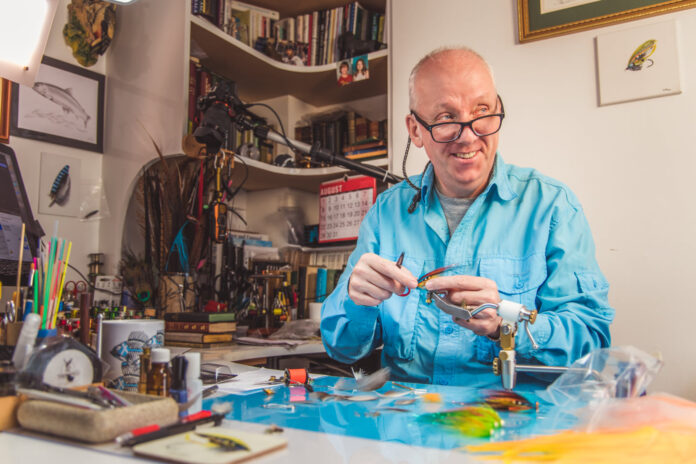
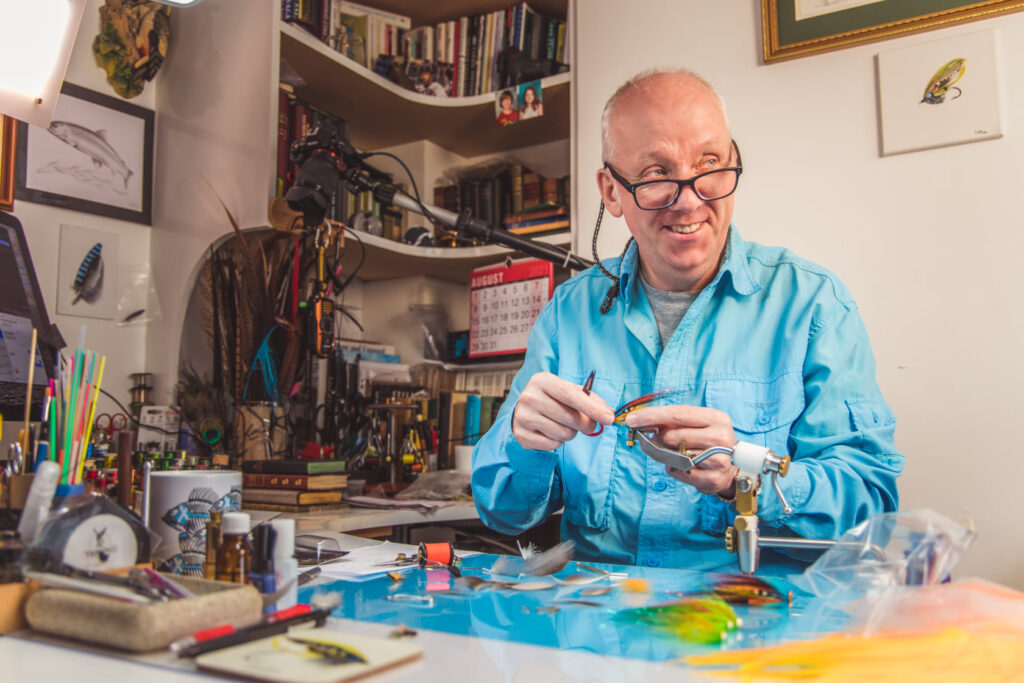
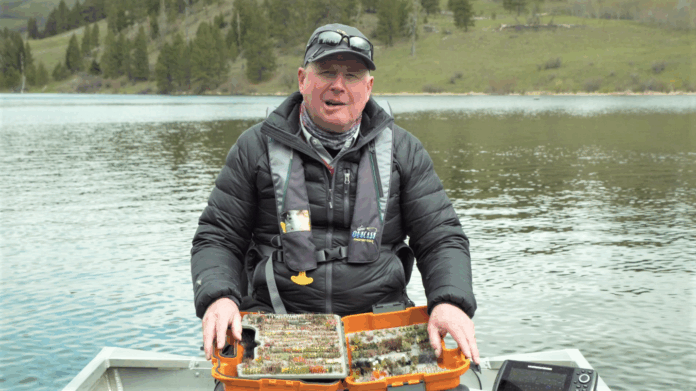
In this episode, I sit down with Davie McPhail, one of the most influential fly tyers of our time. Davie grew up fishing Scottish rivers and lochs, learning fly tying the hard way. By watching insects, experimenting with materials, and tying flies that had to work.

We dig into traditional spiders, modern synthetics, proportions, durability, and why restraint at the vise still matters more than fancy materials.


Hit play to start listening! 👇🏻🎧

apple podcasts

Find the show:  Follow the Show | Overcast | Spotify

Subscribe on Apple Podcasts

Subscribe on Android

Subscribe via RSS

(The full episode transcript is at the bottom of this blogpost) 👇🏻

Sponsors and Podcast Updates


davie mcphail

Show Notes with Davie McPhail

Learning Fly Tying on the Water

Davie explains that his real fly tying education didn’t happen at the vise. It happened on the river, watching insects drift, noticing how light hits wings, and seeing what fish actually respond to.

Instead of copying recipes, he learned by matching size, color, and movement. That mindset shaped his tying style from the very beginning.

Key takeaways:

  • Observe insects before tying flies
  • Match size and behavior, not just appearance
  • Let fish, not patterns, guide your decisions

Why Wax and Thread Control Still Matter

Long before modern threads and materials, Davie learned to tie with silk thread and wax. He explains why wax is still one of the most important tools at the vise.

Thread control, smooth movements, and consistent tension matter more than the material itself. Most fly tying problems start with the thread, not the pattern.

Davie’s tying fundamentals:

  • Waxed thread solves most tying issues
  • Smooth, controlled movements at the vise
  • Consistent bobbin distance prevents breakage

Spiders, Soft Hackles, and Light Transmission

Davie breaks down what “spider” flies really mean in the UK tradition. These sparse patterns let light pass through, creating lifelike movement that trout key in on.

He explains when winged flies work better, when spiders shine, and how light conditions change fly choice.

When to fish spiders:

  • Bright days with strong light
  • Spinner falls and delicate hatches
  • Situations where translucency matters

The Dynamite Harry and Durable Modern Flies

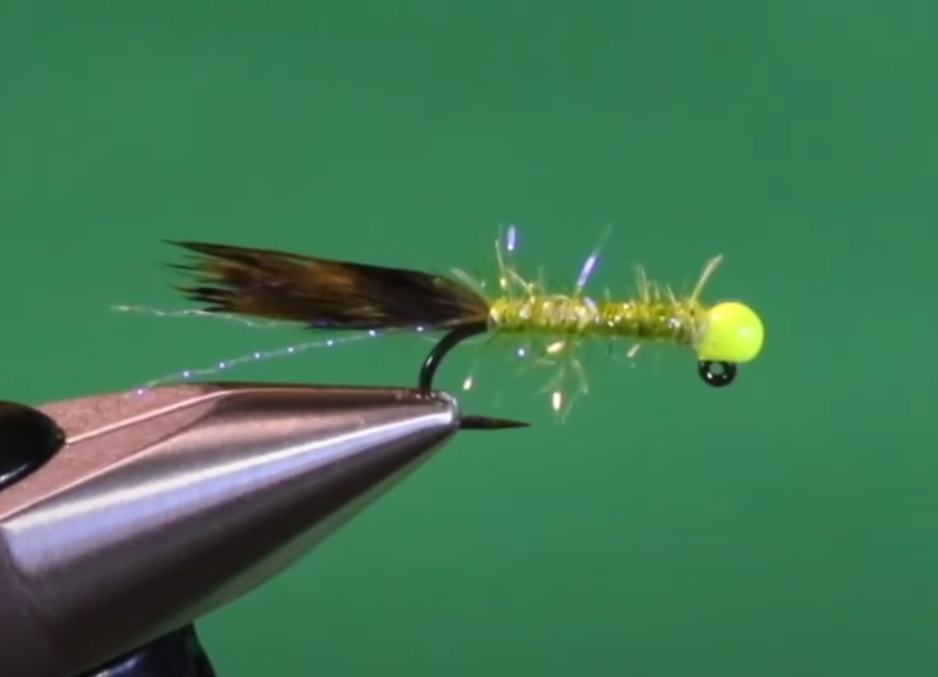
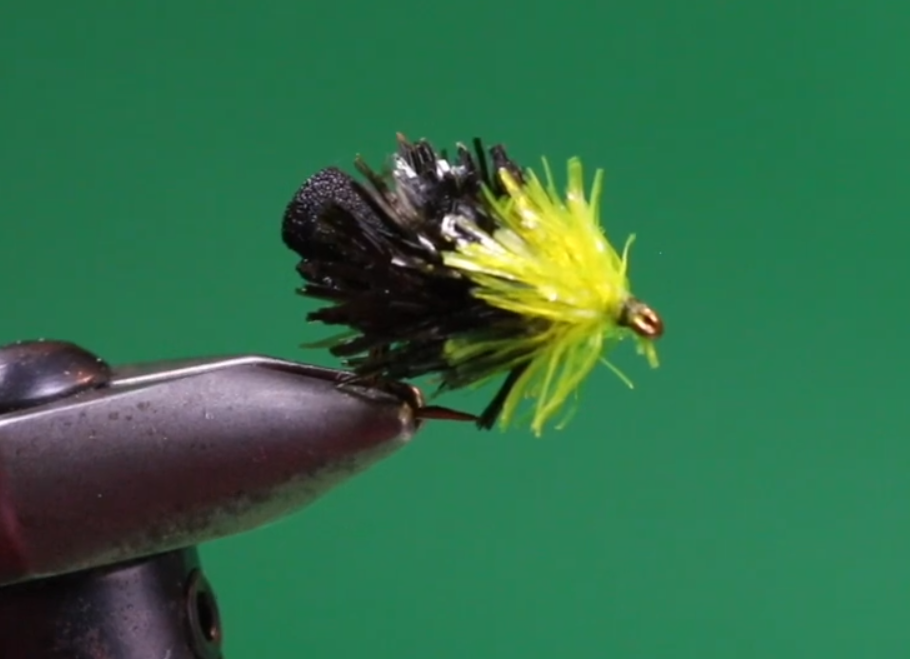
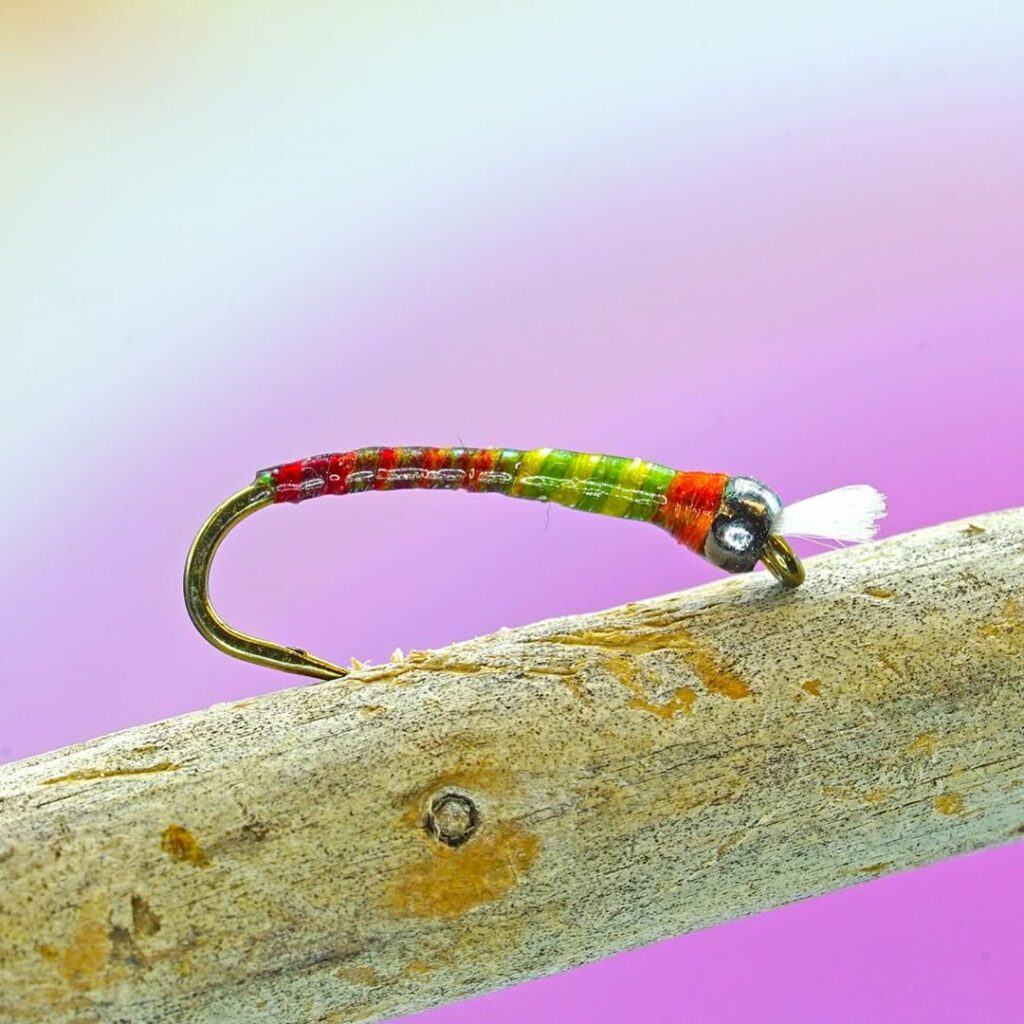
One of Davie’s most popular modern patterns is the Dynamite Harry. It’s sparse, durable, and designed to keep fishing long after traditional dries fall apart.

Originally popular with competition anglers, this fly blends synthetic durability with natural movement. It’s also ideal for dry-dropper rigs thanks to its wide-gape hook.

Why the Dynamite Harry works:

  • Extremely durable
  • Wide gape improves hook-ups
  • Excellent dry-dropper platform

Mixing Natural and Synthetic Materials

Davie explains why he blends natural and synthetic materials in almost every fly. Natural fibers add movement, while synthetics provide durability and floatation.

He demonstrates how blending dubbing creates depth, subtle flash, and lifelike texture that fish respond to.

Blending tips:

  • Combine CDC with synthetics for movement
  • Add subtle UV or flash, not too much
  • Blend colors instead of relying on single tones

Proportions, Dimples, and Presentation

Getting proportions right is more important than exact imitation. Davie focuses on the footprint and dimple a fly leaves on the water’s surface.

Sometimes he wants the fly sitting deep in the film. Other times, he wants long hackles lifting the fly completely off the water.

Presentation matters more than perfection:

  • Hackle length affects surface footprint
  • Dimples trigger trout response
  • Don’t overdress flies

Fly Tying History and Classic Influences

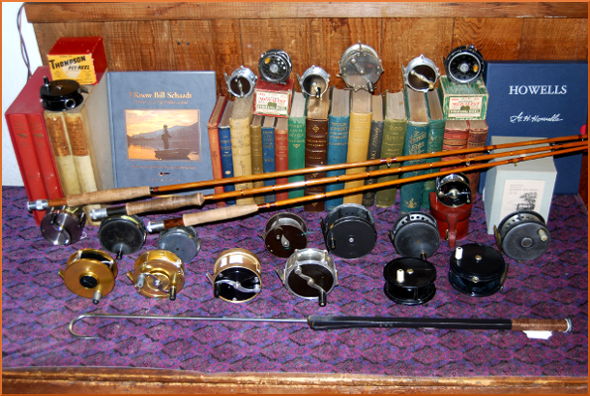
Davie shares his love for classic fly tying books dating back to the 1700s and 1800s. Many of the patterns and ideas haven’t changed, only the materials.

He talks about learning from history, studying classic dressings, and why most “new” flies are simply old ideas with modern materials.


You can find Davie McPhail on YouTube @DavieMcPhail.

You can also check out his flies at FullingMill.com.

fulling mill

Sponsors and Podcast Updates

Resources Noted in the Show


Related Podcast Episodes


Full Podcast Transcript

Episode Transcript
WFS 868 Transcript 00:00:00 Dave: Fly tying doesn’t start on the vice. Fly tying is learned on the water by watching insects drift past your boots, noticing how light hits a wing, and paying special attention to what fish actually respond to. Today’s episode is about learning that way. I’m sitting down with Davey McPhail, one of the most influential fly tyers of our time, and a guy who quietly shaped how thousands of anglers around the world think about materials, proportions and simplicity at the vice. This is the Wet Fly Swing podcast, where I show you the best places to travel to for fly fishing, how to find the best resources and tools to prepare for that big trip, and what you can do to give back to the fish species we all love. Davey McPhail grew up fishing the rivers of Scotland. He started tying flies because he couldn’t buy what he needed and learn by observation. Long before his YouTube channel blew up, he was studying insects, copying what fish actually are eating and building patterns, and teaching himself along the way. By the end of this episode, you’ll discover when traditional spiders and wet flies still outperform modern patterns. Why wax, thread control and restraint matter more than fancy materials? How mixing natural and synthetic materials improves durability and confidence in flies, and what separates flies that look good from flies that keep catching fish all day long. All right, this is a big one. You can find Davie McPhail on YouTube. Here he is Davey McPhail. How are you doing, Davey? 00:01:28 Davie: Hi, Dave. Uh, it’s great to be here and hope you enjoy some of the information I’ll let you have. 00:01:35 Dave: Yeah, definitely. Definitely. No. We’re going to try to get some tips out of you today and talk fly tying and fly fishing. And, you know, it’s cool always when I do these podcasts. It’s been a few years. You know, I’ve been thinking about getting this together and, you know, some of the biggest names in fly fishing and fly tying. I mean, you’re definitely up there. And I remember the first time I met you, it was just your I struggle a lot with fly tying, but your dry flies, especially being able to tie those the way you do it. And I remember when I first watched you. So we’re going to talk about a little bit of that, of how you do it and maybe some secrets to your success. But I want to talk about just first how you got into it. Have you been fly fishing and fly tying most of your life? What’s your first memory there? 00:02:12 Davie: I know I started when I was nineteen, uh, tying the flies. Uh, I got married and when I was nineteen, and, uh, in the following year, I joined a local angling club. I’d never really fly, fished. I didn’t even touch when I was younger, didn’t have a proper fly rod. So a lot of the kids would just use spinning rods, spin bait, that type of thing. Uh, but what we would do when we were kids would we’d have a, a bubble in, in flies. So you’d be spinning by spinning rod. You could put a cast of flies on, and you’d have a clear bubble that you would half fill with water. So it sits quite low in the water, but it adds weight as well. So you could cast it when we were fishing the whole locks, not so much. The river. The hill locks. You remember? I was a kid. I remember being on the river from six because I fell in. So I remember it well. But when we were kids, we’d go up the locks and we’d just cast from the bank and fish the flies that way. And it was because I could get the odd fly for my uncle, my two uncles. Tide flies, though I’d never really seen them. Tide. I saw the flies on the windowsill. Because we would tie the flies. They’d put them along the windowsill and allow them to dry. Just to varnish. To dry. You see. And the first time I seen them was along the windowsill. But anyway, when I was nineteen, I started by. I bought a small wooden box from vineyards. It was a vineyard fly box. And the main reason I did it was when I started fishing. I was trying to get the local patterns and I was trying to get the flies. Anybody I met, they would give some information on flies to use. You couldn’t buy them half the time. You couldn’t get the right size. So. And I was advised, why don’t you tie as well as fly fish? And so I bought a kit. Not always the best thing sometimes to start, but it’s an introduction anyway. And it was a dry fly kit for tying dry flies with vineyards. This is a type of a wooden box like that. This is a salmon one. 00:04:13 Dave: Yeah. It’s just basically a little wooden lightweight wooden box. 00:04:17 Davie: And and I had the, had the small base in it had Parker pliers, had some tinsels and the small Indian Chinese necks for tying the dries. And we touch a dubbing and so on and peels those silk. It was silk threading when I first started. There was no uni threads and utcs and all the rest, so I learned to tie on those threads and wax obviously, and wax being the answer to most problems when people tie flies. This is when I was teaching. The answer is actually a thread. Most times that was it. So that’s how especially YouTube, it turned off. And the reason why I keep it on my finger is to keep it warm. And the other reason is to stop me losing it. There’s a red button of wax. They called it a button. So the shape of a button sits on your finger and you keep it warm and you use it when you’re ready. 00:05:08 Dave: Right. So you always have wax right there on your hand, ready to go. 00:05:11 Davie: It was always there. It was always there. David, that’s, uh, I don’t know. I’ve lost it. Yeah. 00:05:17 Dave: Right. 00:05:18 Davie: There’s hundreds of these buttons. Uh, wax. And I always the wife laughs at me because I lose them all the time. But it normally comes in a block like this. 00:05:28 Dave: Oh, okay. Yeah, like a little. Just plastic. Yeah. It comes in a little plastic bag or a little block. Yeah. 00:05:33 Davie: So basically I started tying the flies so I could get the flies that, that I personally wanted to use. And it was dry fly only dry only dry. 00:05:41 Dave: So you started out just dry flies. That was your thing. 00:05:43 Davie: I’ve been touring the river beginning of the season. I was sitting in the bank. I’d wait for the hatch. I would sit certain way to see the flies come down the river. Then they would start to see the fish rising. Then I would go in and I would fish the drys. 00:05:56 Dave: Did you grow up on, uh, near the river? The creek? 00:05:59 Davie: When I was a boy. I grew up in a small village. The nickname for the village is called The Black Hole because it’s a mining village, you see. So in the CB or the citizens band radio, if you said you were from the black hole, they knew you were from Dalmellington. Dalmellington is a small. It’s a black hole. So it’s a valley. But the top end of the the village. You’ve got locked in the mountains at five hundred feet above sea level, locked in about eight hundred feet. So another three hundred feet and you’d drop it locked in. But all you had to do was just walk over the hill and you’d been locked in to fish. Two main feeder burns run through dalmellington either side that run into the River Doon. So you either went along the road and fished the river or up the hill and fished the Loch Doon, and it was in the gallery house. That’s where it was famed for the Galloway House. And there’s a lot of hill locks up there. It’s all wild fish, wild brown trout. No, they’re not big, but they’re wild fish. 00:07:02 Dave: Yeah, they’re all wild. So wild. And is the loch. Can you spell that? How do you spell the reservoir? That water body, Loch Doon? 00:07:09 Davie: D o n. Well, the river is famous for the Brigadoon. There was the film Brigadoon. Uh, who was the actor? If you look it up, you’ll find it. The Brigadoon. The Brigadoon actually can fish under the Brigadoon. Whether I can personally fish because I was going to in America, Canada, as far as believe you can buy a state licence to fish. And it allows you as long as you get public access to the waters, you need the public access. It’s totally different here in Scotland and UK and even Ireland. You need to have a permit to fish a lot of the waters, right? Lockdown is different. You can actually you’re allowed to fish that because it’s just brown trout. As long as you’ve got access. 00:07:54 Dave: So as a public water. 00:07:56 Davie: Rights public eye you can basically fish that the river is a different kettle of fish is totally different. You basically go have a permit, permission to fish the water. And once you have a permit, you basically in some different stretches, like everybody’s got a like I’m in a small syndicate that that you’ve only got a short piece of the water to fish. I get one day a week and I’ll give you an idea that one day a week costs three hundred pounds, which is about four hundred and fifty dollars for one day a week. I got a Friday on that when the seasons open. 00:08:26 Dave: That seems like that’s one of the challenges for the different. And are you in Scotland now? 00:08:31 Davie: Yeah, yeah. 00:08:32 Dave: Seems like that’s always one of the challenges that you have over there for folks that don’t have the amount of money, especially kids, right. If they’re growing up, how do they, you know, if you pay or is there a. 00:08:41 Davie: Yeah, the club stretch is Stretches like further up. So where I was a kid, I fished in Dalmellington. The the club stretch up there is called Grange and Cares. So when I fished it was fifty pence a season. 00:08:55 Dave: Yeah. So there are some places that kids can actually go yeah, yeah okay. 00:08:59 Davie: And then there’s the stretches below there. It’s the same with the river here. There’s the river era fish, which is five minutes that way. So I can fish the river here. I’ve got two stretches I can fish there. Both are club. They cost me ninety pounds a year and I can fish all that every day a week when the seasons open anyway, whereas the river doing slightly different. There’s a lot of owners and you can get syndicate beats. You get I get annoyed day in the private beat. So it’s because I know, I know, I know the owner and he likes a fly. So yeah. So I gave him a fly and a two and then he gives me a I don’t I get one day one two days a year. I’m quite happy with that though. And, and the other stretch is you get the Stinger, which goes further down at Ballantrae. And that’s the the beats are used to fish down there owned by the Duke of Wellington. Actually, a letter for the Duke of Wellington, uh, because he used to write in the magazine and he wrote a letter to me saying I got the name of the fly wrong. So anyway, it’s another story. Yeah. Um, so, you know, not every day you get a letter from the Duke of Wellington. So anyway, you can get a day ticket to fish, mainly for salmon. The salmon’s the bigger. That’s the one. Mostly the most. The river is not famed for trout in the river, but there’s a lot of good trout in it. I mean, I was a galley underdone. 00:10:20 Dave: Oh, you were a galley for a while. 00:10:21 Davie: I was a galley, yeah. Seven, seven years. I was a fishery manager at a trout fishery for fifteen years, which was just beside the Doon, uh, basically managed a private locks, and you could get day tickets on it. You could fly only. And then there was a lock for the bait fishing and fill it up. So you got a ticket on there. So I did that for a while as well. Uh, I’ve got the taco shop about four years in the Glasgow, England centre. Uh, I used to travel up and down to Glasgow to work in there for a few years. 00:10:56 Dave: So you started. That sounds like dry fly the tying early that you got going on that. When did YouTube and kind of the teaching come into it? Were you always doing a little bit of teaching? 00:11:05 Davie: Well, I did demonstrations, I was demos, I mean I’ve seen that. I’ve found the the first demonstration I did was in nineteen ninety four and it was a fly dressers guild. It was a local was the Ayrshire branch where I live is Ayrshire. I live in the town. This town is called The Air. 00:11:23 Dave: How do you spell that. 00:11:24 Davie: Air in Ayrshire is the the Shire. You’ve got North. 00:11:29 Dave: Ayrshire. Is that a s h s shire. 00:11:32 Davie: E y r s h I r e. 00:11:34 Dave: Oh. Gotcha. Yeah. Ayrshire. Okay. Perfect. 00:11:36 Davie: So this is basically I basically am living here now, but Dalmellington is East Ayrshire, which is fifteen miles from here, so that takes you towards the Galloway Hills. I basically started tying, just as I say, to full moon boxes, uh, to teach. Yeah. I mean, it’s like everything you get, you get pulled different ways. Somebody sees you catching fish and they ask you for a fly. You know, there’s a fly and someone goes to the shop and said, I got these flies from Davie down the river. Do you have any? And then next thing the shop would say, Davie, can I get some of those flies from our customers? You’re right. Okay. And then so you would do some flying slowly. You get drawn in. It happens all the time. 00:12:19 Dave: So slowly you kind of grew. And as people got aware of who you were and wanted your flies and. 00:12:25 Davie: Yeah. And early on, believe it or not, I started tying in eighty three, I started I’ve got letters there. There was a magazine called Trout and Fisherman and uh, what they the. That was, uh, over the winter months, they would have a fly tying competition. So I decided I’ll enter nineteen eighty five. So I entered it. So, uh, lastly, just a I know you can’t see it, but the Benson and Hedges was sponsored by a cigarette company. 00:12:53 Dave: Oh, wow. That’s funny. 00:12:55 Davie: You probably heard of the Benson and Hedges. So you had an open class, which you to enter first. So I won the open class. 00:13:05 Dave: Oh. No kidding. Oh, wow. 00:13:06 Davie: Then you won the. Then you had to the next part of the competition, you had to tie a fly in the advanced class. And then I won advanced class. And then I got into the masters. 00:13:19 Dave: There it is. We’re looking at it. Says Benson and Hedges fly tying competition master Benson and Hedges. Who was that? 00:13:25 Davie: I was, I say it was a huge sponsor. 00:13:28 Dave: Oh, just a sponsored event. 00:13:30 Davie: Yeah, well, they’re a cigarette company. Back then. They could do that. 00:13:33 Dave: Oh, Benson and Hedges was a cigarette company. That was the cigarette company. 00:13:36 Davie: They sponsored the internationals, the home international competitions as well. So back then it was it was okay. Now you don’t get any cigarette. 00:13:45 Dave: Now, back in the day, we’d be sitting here. We’d be smoking right here, right now, over the BBC. 00:13:50 Davie: Well, we’d be sitting having a fag. That’s what they call it here in the UK, a fag effigy. So, uh, I know it’s it’s, uh, it’s means something in different in America. I know that. 00:14:04 Dave: Yeah. Right. Yeah. 00:14:06 Davie: But anyway, that I slowly got into the competitions and I started winning. So you get a name. And I won a few over the years. But I was only happy. I was quite happy winning one. 00:14:17 Dave: Yeah. You weren’t thinking like, I’m going to be a competition master and enter every event from here to, uh. 00:14:21 Davie: I was just I wanted somebody else to have a go. I mean, I would win if I entered the competition once, and they changed the rules. Basically, I had entered four. So by the rules, I’d actually win the competition overall. But then they changed the rules. You had to enter six. 00:14:37 Dave: Oh, wow. 00:14:38 Davie: And because I didn’t I went. So I just let it go. So I came third I let it go. I mean you got fly tying materials. You got money to spend with vineyards, with the fly tying company. 00:14:49 Dave: Do you remember the, uh, the fly that you won with on the first on that competition? 00:14:53 Davie: On the first one was a partridge, an orange. And the next one was, uh, Alexander, which was the advanced version, which was basically peacock SOB for the wing. You had to get them nice and nice. I was over the moon like you got a fly box with the Benson Hedges on it signed and your name on it. So I had two, three boxes. 00:15:15 Dave: So how did you get. So you went. You were good enough to win this competition. How did you get to that level? Were you just tying every day all the time? How did you get good at fly tying? You must have been against some people that were really high level, that had been old guys that have been tying their whole lives and stuff like that. right? 00:15:30 Davie: I just spent a lot of time making sure it was right where I. According to me, it was right anyway. 00:15:36 Dave: And how’d you know it was right? How did you know? Because back then, you didn’t have videos to watch. How did you know what was right? Because I know you could look at. You were looking at the bugs in the stream flying around, right? And all that stuff. But what was your who was your mentor? Who was your teacher back then? 00:15:49 Davie: Just Ty I mean, your pictures. I mean, most of the books I buy, most of the stuff I have is, for reference, more than to read. I bought most of most of the books I have are so that I could tie the patterns for the my customers and our interest as well. And interesting. I mean, the first book I ever read when I started tying flies was this one here. 00:16:11 Dave: Yeah, let’s Fish the Clyde by Robert C sharp. What’s that? Is that just a fly? Shows fly. Pictures of flies. 00:16:19 Davie: Yeah. Had some stays step by steps. But mainly the thing about this book was it had the patterns, you see, and all I did was copy the pattern is to use the dry flies in this book is to start me off as a guide. The main thing when I was in the river, I basically looked at the fly the fish were feeding on and I copied it. I looked at the size, the color. I went back home and I saw it in a tight place, which I thought looked like that fly. So I’d have two versions. You would have your winged version. You remember the dry fly. So I’d either use duck so the different types of duck. If it was small, I would use Starling, which is a finer softer, but sometimes I’d use it in the bigger fly. So it was nice and light. It broke. I actually broke a lot of movement in it because it’s soft. Then you had the spider patterns now as the term sometimes in America’s spider being in soft tacos. 00:17:14 Dave: Oh no, not that pattern. 00:17:16 Davie: No, I know what it is. It’s just the spider is just like a nickname to a fly or a fly dressing, which it doesn’t have a wing that’s like a spider doesn’t see, the spider runs up the wall. They don’t have wings. 00:17:29 Dave: I see, so any wet fly? Any? Pretty much most wet flies out there. Well, not all of them, but wet spider is a wet fly. 00:17:36 Davie: Andres. 00:17:36 Dave: Oh, Andres. 00:17:37 Davie: You call a spider pattern. But it’s a dry fly. Yeah, we call it a spider pattern. Even if it was a wet fly, it was just a soft hackle and a stiff hackle. It’s just a wing. When you said you were fishing a spider, I knew you was fishing one without a wing. So it’s a spider pattern. I mean, I’d have to show you. It seems like it’s. It’s just a simple term. 00:18:00 Dave: Simple, yeah. And it’s not. You know, I think that we could follow up on some of this, but basically let me get. So I always think of traditional wet flies as, you know, the ones you said. I mean, the partridge and orange is a wet fly. Right. That’s a you’ve got those. Which is a body material. Typically they have some sort of a soft hackle. Right. Which makes the. So and those could be spiders. But you’re saying that there’s also what would be a dry fly. That would be a spider. 00:18:23 Davie: When you’re feeling That’s how. That’s how the name is. He’s so like a pathogen would be a spider, but a soft or a wet fly. But the spider pattern, being a dry fly, is just a fly without a wing. 00:18:34 Dave: Yeah I see. And you could float it. You can add floating to it to make that float and sit in the surface. Right. 00:18:39 Davie: Yeah. It’s just a cork. Cork will make it up. But it’s just a it’s just a term you could have mixed tackles like so if I give an impression of a wing on a spider fly, I’d put a gray hackle through a ginger hackle or a grizzle or something, and that would give the impression of the wing, but it would be tied as a spider spider pattern lets more light come through. It’s when you’re fishing certain flies, especially spinner patterns. You want it. You don’t want too much of an impression of a wing because it’s very translucent. So the light shines through. So you need a hackle more than a full wing. So you get a nice the light shines through it, but you still want to give the impression. So you can add like a you could have a mixed hackle, a soft hackle and a cork hackle together will give you the impression of the wing as well as the legs. The terms are slightly different from here in the UK and America. I know it’s soft. I mean, I didn’t know what soft hackle was at one time. I do obviously. 00:19:35 Dave: Yeah. I grew up tying. We just called them soft tackles. You know. I mean we tied a you know like we’re saying these flies, they had a little, um, uh, whatever the wing was, it could have been Partridge. It could have been, you know, whatever the soft hackle was. And we’d tie a really basic pattern. We’d swing them. We used to swing when I was a kid. A lot of fly, that sort of stuff. But I think what you’re talking about is a whole nother level of fly fishing. You know, you’re going into it in deep detail. 00:19:57 Davie: I mean, a lot of people see me when I’m on the river. I’m trying to catch fish, obviously for the camera as well, but I’m trying to explain if I use a dry dropper, say a dropper, a dry fly, a dropper, I’m trying to find fish and if a fish start rising, I take the dry, drop it off and I concentrate on the dry, you see. So basically I’ll fish like that. Um, there’s other ways of fishing If you go really far back and people I used to know fishing the river, they would fish with quite a few flies because remember they were catching fish to actually eat. It was a, it was part, it was a sport obviously, but excuse me, the fish were there to feed the family, but some they would used to use as a sighter. They fished the wet flies upstream more than they’d fish below them. They’d fish a lot upstream, three and four or five flies. But as I say, they used to use the simple thing. They could be some wool they find on a bush or on the on the fence, barbed wire off the sheep. So we just put that in the top and use that as a sighter. So they cast the flies up and they would use that so they could see the takes. It just depends on how the fish want to feed. There’s times they like them swimming across, times they like them dead drifted. You have to work them out. I mean, there’s nothing better than sitting down as a fish rising in the tests Really tests you out. You can see the fly coming and you can’t put your fly over. You think it would just come straight out and take it? And there’s quite a few times that you struggle to get that first fly. You still keep feeding it. Completely ignore your fly. So I like to sit down and try and work out why I watch the flights coming down. Watch how it moves, how it reacts to it. Where it’s. You can. You can see even the simplest thing, like the wing of the flies shines, catches the light. A straight in from a spider pattern. Go for the hackled. Fly straight away. Normally that’s what I’d go for. Even if it’s a done normally the light. The light in the wing. When it’s quite sunny. They don’t see it just as it is, but they don’t see it as much. So when it touches the light, you do see a sparkle. So you add a spider pattern on, you see. But on a dull day I’ve definitely put a wing fly on because the this I see that gray, that they see that mark. Can they really see the shadow? The shadow is there. 00:22:21 Dave: So on a cloudy day, you might use more of a winged fly. 00:22:24 Davie: I mean, I’ll changes this season. The beginning of the season. More winged flies as the season goes on. Mid-season. More spider patterns or hackle dry flies, and then they’ll revert back to the ones more with the wings. I’ll mix and match a lot of modern flies. Now there’s a lot of stuff. My videos are named modern and traditional fly tying methods, so I’ll use modern stuff as much as old stuff. Traditional. I like to mix and I’m open when it comes to that. I’m not stuck to materials. So I mean, like the one of the most popular flies on my channel was the dynamit-harry flies. It’s not my pattern like there is no dressing from forgot the gentleman’s name, but he came up with a fly called the Dynamit-harry. And so I did variants of that flight and all the patterns that I personally fish. So I use the color combinations and then added retouches to the flies with micardis, whether it be mayfly and these things were out fishing my old flies. 00:23:24 Dave: Oh no kidding. 00:23:25 Davie: There were, there was. I couldn’t believe how well they were working and I could. The way they were sitting, I could see the way they were acting and the way they were sitting on the water where the fish came on to them were a lot of confidence, you see. So just come out. Look straight away. There you go. But there is times you’ve got to go back to your old patterns. There’s a lot of pedigree and they catch your fish. So when things get tough going and I always fall back in blow flies. 00:23:52 Dave: Yeah, I’m looking at it now. I just pulled it up. I’ve got a, uh. The dynamite. Harry. Fly dynamite. Harry, it’s just a little. Yeah, that’s an interesting fly. It’s kind of a parachute style pattern. Right. And but it’s really sparse. It’s really sparse. And the hook you’re using is kind of the. What’s that hook you’re using for that fly? 00:24:10 Davie: It’s a nymph. It’s called the nymph. It’s actually meant for them. So obviously you get them. You get a medium weight one and a heavy weight version. I use it, obviously use the lighter one. 00:24:21 Dave: Those are that’s a box of dynamite Harry’s. Yeah, yeah. And it’s got a wide gap hook. Right. 00:24:26 Davie: The reason I like the wide gap is, uh, because it’s a Bible hook. It hooks better. I catch more than a standard hook. They’ve tied them in both standard style hook, and I’ve tied them in and checking them and knowing that style, I find it hooks far better. And as well, it’s very good for doing the dry dropper. And so you can put a small nymph or a wet fly off the bend because it’s a wide gape. It’s you can actually hook in the dry fly. So when they first come onto the dry, at least you’re going to have a chance to hook them up. I mean, there’s a lot I mean, you have no idea the patterns of when I designed flies for the fly tying companies, there was two things was, uh, obviously they’ve got to work, got to be robust, was the main thing. And there’s another reason as well. They’re going to be durable. They’ve got to be got to stay together. So when I was showing him how to tie the fly, they’d be quick and good. Nice part. That one there. I’m going to see a lot of the designs as well. I designed I tied flies for people at fish competitions. Nobody knew this, right? Friends of mine fished in the internationals, Europeans and world championships. So when I was tying for these guys, you were basically tying for the Ferrari drivers of the fly tying fly fishing world, right? 00:25:42 Dave: The best. Yeah. The competition. We’ve talked a lot with a lot of people in the US about that. 00:25:46 Davie: When you’ve got competition, these guys are the one flies that are durable. Last, keep going. Don’t want to change all the time. The dynamite Harry does that. 00:25:55 Dave: How do you make the dynamite Harry. How do you make that durable? Because it’s essentially it’s a dry fly. 00:26:01 Davie: Ice. The synthetic fibers. 00:26:03 Dave: Oh it is. It’s all synthetic. 00:26:04 Davie: Oh, yeah, I can I’ve actually got a fly in there. I don’t know how many fish I’ve had on it, but the thing about it is that if a competition anglers fishing and he’s casting hook fish and I blows, it pings it does what he likes. Straight back out, straight into another fly. The traditional fly starts to wear out. CDC flies unless they’re really picky. CDC is good for fish. It’s looking twice. You see, when you’ve got a good hatch of flies coming off, fish are feeding. You need a fly. It keeps going, keeps going, keeps going. But that that fly will still take fish when they’re hard going as well. So you’ve got all these things piling up. So if I was tying international flies for fishing the home internationals, for instance, the other style of flies, if they came to me and I said, look, if you’re looking for a an olive pattern or a done something that represents a lake, olives, that’s coming up, I’d give that that’s the fly because that’s more durable. It lasts longer. 00:27:05 Dave: Yeah, that that olive Dynamite. Harry is the perfect bluing doll of pattern. And how would you fish? How would you fish that? Would you fish it just like a typical dry fly? Or do you fish it differently? 00:27:17 Davie: Just the same? Just the same? I mean it the good thing. I’ll tell you the first time I fished it. When what happened? Right. The. I got a request on YouTube and David Dynamite Harry and I went, gosh, what’s a dynamite Harry? 00:27:31 Dave: Right. 00:27:31 Davie: So I typed in on the internet. 00:27:33 Dave: And was this a long time ago? Was this early when you started your channel? 00:27:37 Davie: No, no, that was just two thousand and sixteen. Seventeen. 00:27:42 Dave: Okay. Yeah. So almost almost ten years ago. Yeah. 00:27:44 Davie: So it’s a it’s a new it’s a modern fly, you see. So I typed it in I saw the gentleman tying the fly. He, he basically had an upper wing. The wing was a type of poly yarn. There’s lots of para posts that type of stuff. There’s a few you could use, but the trail that you left there. So the length to represent the body, It’s a very simple flight. So basically between the thorax and they tied off. Now it’s a parachute fly. Parachute flies are the best dry flies you could probably tie and you put in your box. They’ll can more consistent than many of the old flies. 00:28:19 Dave: Because they sit they sit down in the film. 00:28:22 Davie: Yeah, yeah. So basically um, Clint Connors and all these type of partners out fish many patterns. But what I did was I’ve added a wee bit extra to the fly. Now, I put the line under the the body. The cork de Leon is a very it’s a translucent fiber. It’s shiny, it’s speckled. I use a medium powder or I use a fiery ginger which gives a brown side. These are the whiting. 00:28:50 Dave: This is the the coke de Leon. 00:28:52 Davie: Yeah, it’s a white and one I use. So I’ll buy the saddles. They’re the best. Well, I personally think they’re the best because you get a lot of fiber out it. They’ve got them here. 00:29:01 Dave: Oh yeah. There you go. What you’ve got. You’re showing a whiting hackle a Cooke de Leon Whiting hackle. 00:29:05 Davie: Yeah. Yeah. That’s one. The two main ones I use is the, the medium pardo, which is a kind of speckly white one. Uh, it throws a gray color and the other one is a bronze grade. The fiery ginger is the other one. But these are natural colors. What you do is with those two colors, you can obviously tie in like a march brown. I use the fiery ginger. And that blends into the depends on the fiber you’re using. It could be powder post. It could be the ultra dry yarn, which I use a lot, but I mix the powder post and the ultra dry yarn because one straight and one crinkly. So I put a strand of each and I brush a brush them together so it gives you a nice mix. So it opens the fiber up. It keeps it in a nice shape. So when you tie it on you have a trailing part of it, and you trim that into a taper over the top of the tail. You’ll see if you follow the look at the video, you’ll see. 00:29:59 Dave: Yeah, yeah. 00:30:00 Davie: So when it’s in the water you’ve got the fiber mixes up into the the para post or whatever you use. 00:30:07 Dave: And is this on? What fly is this you’re describing? What fly can we watch this on? 00:30:10 Davie: I do, I do them all. All of them. 00:30:12 Dave: All of them. Yeah. So pretty much all the parachute style. You can watch this. 00:30:15 Davie: Yeah. Even the cowardice I do that, I do an underwing of the Cote de Leone. So that throws the natural. So you’re mixing natural with synthetic and they float and they keep fishing and they keep catching and they there’s times I see I’ll put it on as a dry dropper. Right. To fish the dropper to search and fish come out of nowhere and take the dry. You just there’s no fish rising and they’ll just come straight onto it. 00:30:41 Dave: Yeah. They’re right. They’ll still do it. 00:30:42 Davie: They’ll still come on to it. Like, and I can honestly say, if you tie a box of them up and then fish them in your waters, different sizes, pick your favorite part and color combination a bit tight and that style, you’ll be surprised how many fish you catch. Don’t overdress it. 00:30:57 Dave: Yeah that’s okay, I was going to ask you about that. How do you? Because I think proportions are a big struggle for a lot of people. What’s your how do you think of proportions or what’s your advice on trying to get the right proportions for a fly? Because the dirty Harry, if you look at the dynamite, Harry, that one is a pretty sparse little body fly, right? There’s not much to it. 00:31:16 Davie: Nobody’s ever done it that many times. I can I can pick a hackle up and I can. I know exactly the type of size of fly I can tie with it. I don’t need a gauge. I don’t need any of these because I’ve tied that many over the years seeing a tie in a parachute. You can exaggerate that hackle. Don’t make it too short. You’re looking for that imprint. You’re looking for that. See the dimple? The dimples is as important as the fly. The fish. See that? Marking the surface? 00:31:43 Dave: Oh, right. The dimple of the. Their body hitting the surface. 00:31:46 Davie: The. See that mark the footprint. They see the footprint of the fly. Now there’s times I’ll encourage that even on standard flies. When I put a floating on the left, the hackle up into the wing so that I get a better presentation. But then there’s other times I don’t do it because I talk about the long hackle dries. If you look that up, the long hackle dries. I want the fly off the water, including the hook. I want the hackles that big. It lifts the whole fly off the water. Because especially there’s one fly that you may call it a sulphur dun or the yellow may. 00:32:22 Dave: Oh sulphur dun. 00:32:23 Davie: Yeah. I mean, they’re very bright, they’re very mobile. And especially when they’re hatching. A lot all flies are they bounce. They come off boink, boink, boink. And then the fish just go grab. If you’ve got a fly, it moves. Get a movement in it. That’s the trigger. 00:32:38 Dave: Yeah. And we talk a lot over here because we I go back to because it’s kind of interesting. The Catskills style dry flies right back in the eastern part of the US. You had these really beautiful. Right. You’ve been there. Yeah. So those beautiful. But you hear from a lot of people that don’t fish them anymore because they don’t maybe they have other dry flies that work better. Like what’s your what’s your take on the Catskills? And are those similar to old traditional Dave Brown? 00:33:03 Davie: I’ve got flies. I met Dave once. I don’t know if you know Dave Brant. 00:33:07 Dave: How do you spell his last name? 00:33:08 Davie: B r a n t is it t? 00:33:10 Dave: Yeah, something like that. Yeah. Brent. Okay. 00:33:12 Davie: Yeah. Years ago I met Dave at the. You’re talking. Oh. He gave me flies the Catskill patterns I’ve got in there and the bee boxes. 00:33:21 Dave: What would you say if somebody new to you if they haven’t followed you. Do they just go to your channel? What’s the first step they do in your channel? Just start watching the first video or what do they do because you got how many how many videos do you think you have? Do you have any idea how many you have out there? 00:33:34 Davie: It’s a very messy. It’s all over the place. I’ve got a playlist, but they’re so badly put together I should really look at it. And there’s over fifteen hundred videos. 00:33:43 Dave: Wow, fifteen hundred crazy. 00:33:45 Davie: And gateways on them. I forget what I’ve done and I really should go in and organize it a bit better. I mean, watch people should really do it. Just watch. Watch me. Tying the bobbin hold is important. As much. Uh, all the movement is smooth. Should be nice and smooth. Nothing jerky. Um, my bobbin holders. I mean, I’ll give you an idea. I have mine all set up, ready to go. So I just grabbed the color I want, and so I just grabbed the bobbin and the bobbins are all adjusted so they run nice and smooth. So when I’m wiping the thread, the thread, the bobbin doesn’t get any, doesn’t get any closer to the fly, doesn’t get any further away. 00:34:25 Dave: Mhm. Right. It’s the same exact distance. 00:34:28 Davie: And it runs maybe an inch and a half or so. Two inches. I don’t know if further away the longer it takes to get around. 00:34:34 Dave: Oh so is that why is that important. So you’re talking about getting your tying thread the same distance. So when you’re wrapping it it’s never getting longer or shorter. 00:34:41 Davie: Uh, you’ll see me speeding along a bit. It’s always the same distance away. Very rarely I’ll let it come in because what’s happening is if you do allow it spin on the same piece of thread, you’ll break it. It’s gotta run nice and smooth. No jerks. You control the pressure with your palm. You have your hard skin with the bobbin holder sits in the palm so I can control it. So you just get into a nice rhythm. Everything should be done. The rice should be set at a height that you don’t lift your elbows. 00:35:10 Dave: Right. You want to keep the elbows lower? 00:35:12 Davie: Right. And if you can’t see it, you need glasses. So whenever you lift your elbows, you put pain in your neck and your back. You imagine if you wanna hold your arms out like this, you’re going to be sore. So if you get your arms on the side and they’re sitting in your side and you’re tying away good light, good background, light blue, blue shirt. 00:35:31 Dave: Oh, there you go. There you go. Yeah. You got your fulling mill shirt on. Let’s see that. You got your. There you go. Nice. 00:35:36 Davie: You gave me a free shot every year. 00:35:38 Dave: Oh good. There you go. There you go. Awesome. 00:35:40 Davie: The thing is, because I’ve started on this keto diet and I’ve lost an awful weight. Huge amount of weight. 00:35:47 Dave: Yeah, we were talking about that off air. You’ve lost. You’ve lost almost twenty five pounds. 00:35:52 Davie: Twenty five pounds? Yeah, just in a year. And it’s only. All I did was stop eating sweeties. Really? Sugar. 00:36:00 Dave: Oh, sugar. So you did that. You did the keto because you were having some issues with your hands. 00:36:04 Davie: I had pains in my fingers, my knuckles. And so I was doing a wee bit of search on. YouTube is a great place, but there’s a lot of a lot of things all over the place as well. And inflammation in your fingers and your bones. And especially if you’ve got arthritis is sugar really goes for these. 00:36:20 Dave: So you cut out sugar out of. So no nothing was sugar including like, you know like whatever all sorts of stuff has sugar. 00:36:27 Davie: But I carbs, I mean carbs, a lot of carbs like bread and stuff. I don’t really bother with that anymore. But so basically I stick to the main things. Fish, eggs, meat. 00:36:38 Dave: Yeah. And no alcohol. Right? No alcohol that has sugar in it. 00:36:41 Davie: Unfortunately, I’ve got the bottles of whiskey up there. I just don’t I mean, I used to because when I was going, I got a bottle of whiskey every week. Two. Three bottles. 00:36:50 Dave: You know what I feel like on the. And I’m the same way. I think we all are. As you get older, your body tells you. You know, it lets you know, like. And if you don’t listen to it, it’s not. It’s. You know what I mean? So I feel like I’m the same way. There are certain things like, you know, beer, for example. You know what I mean? For me, it kind of caused heartburn and stuff like that. So I just realized, like, you know what? That’s something my body’s telling me I probably shouldn’t be doing. It’s just part of the. That’s part of, you know. 00:37:12 Davie: Dave, I don’t want to be like, uh, one of these type of people. I don’t, I don’t I don’t tell anyone to do stuff. No. Like, flight time is a good is a learning process. Right. And it’s enjoy that learning the materials will learn you how to tie the fly, the twist and turn you certain ways. Right. You’ve got to you’ve got to work with them as well as understand how the feather will sit if you put it in a certain way right now, depending how you take it off the feather as well, depending that depends that encourages to sit as well. So there’s lots of techniques and these are things you learn by using the materials you’ve got. Like if you if I was saying to anyone buying see you want it to tie space. Soft taco webs even rise to a point by the skin and look at the skin and say, right, I could use that feather, I could use that feather. Use it. Even if it’s not in the books. You don’t have to get the skin and say, well, like that, that will go with this fly, get that, that’ll go with that fly. 00:38:11 Dave: And learn that skin. Right. Yeah. 00:38:13 Davie: Yeah. So basically I mean it’s like I used to buy a lot of taxidermy birds. Victorian. 00:38:19 Dave: Oh really Victorian like, uh, like classical. 00:38:22 Davie: I bought them so I could use the feathers. I’d only buy them to sit in the shelf. I mean, I’ll give you an I. I know you can’t see this. Believe it or not, I get. I bought this off of eBay. On eBay I never looked the guy was selling a curlew. Right, a stuffed curlew. Now you can’t buy the birds, obviously. So I wanted the feathers to tie certain flies. 00:38:43 Dave: Yeah. And how do you spell that bird? Cutler. 00:38:45 Davie: Curlew. Q r l e w. 00:38:48 Dave: Okay. 00:38:48 Davie: I never looked at the listing properly. Right. I never looked at the bird. I just looked at what the guy said. Curlew. And it was. It was thirty pounds, right. That’s about forty dollars. But he sent me this bird. 00:39:01 Dave: Oh, wow. Is that a curlew? So you’re showing a bird that’s about the size of your hand. A little bigger. 00:39:06 Davie: Thus a snipe. 00:39:07 Dave: Oh, that’s a Snape. Yeah, that’s a Snape. 00:39:09 Davie: It’s a Snape. It’s a Snape. So I emailed the guy. I said, look, that’s not curlew. And he says, well, I don’t know what curlew is. 00:39:17 Dave: Oh, that’s funny. 00:39:18 Davie: But you sold me. I says, look, I says, it’s I’ll keep it. It’s a nice read, Bob, but if you look at the actual bird itself. Right. 00:39:26 Dave: Yep. You got the hard, stiff feathers on the main. 00:39:28 Davie: There’s the wing. Most people will buy the wings. But see the the body feathers, right? 00:39:34 Dave: The soft, the soft stuff. 00:39:36 Davie: These are the ones for the soft tacos, right. 00:39:38 Dave: Those are the soft tackle ones. Yeah. 00:39:40 Davie: You want to be able to use the the other feathers on the head and such like. You can use them in soft tacos, wet flies, but you can also use it in a dry fly by mixing the hackle through a cock hackle so it gives you a softer hen or a soft hen kind of mix. And it’s lovely. They make beautiful flies. So I mean, and I bought a lot of feathers over the years like that. These are taxidermy birds that are badly damaged. This was damaged. That squashed. 00:40:09 Dave: Sure. Like see it. Yeah. It’s squashed. 00:40:11 Davie: Yeah. And like I bought an owl. These are birds that are now they’re protected. But the only way to buy them is to get the old taxidermy. You want to buy the rough feathers, the rough birds. They’re usually cheaper because you’re not going to set it on the shelf and look at it. You’re going to take the feathers off it so it doesn’t have to. And it makes a lovely, a lovely fly, a lovely soft tacos. Because same as CDC, everybody thinks CDC should be for just dry flies, but see for soft tacos are they’ve got the same movement as. Oh so they have so a few cast upstream. The fly is fishing for you. It’s got all the movement, natural movement, any tiny twist and turn in the river, the flies pulsating. And that’s what you get with these soft tacos. And it gives you the option. The option. What do you call it? Tying all these different patterns with your own eye and not with someone else’s. I mean, like this book here. This is a book. This is the tenth edition. 00:41:10 Dave: Oh, what’s that one called? 00:41:11 Davie: It’s called the best Art of angling. This one is dated eighteen fourteen. 00:41:16 Dave: Yeah, yeah. Art of angling. So that that book’s from eighteen fourteen. 00:41:19 Davie: Yeah. And this is the tenth edition. 00:41:21 Dave: Wow. And who’s the author? Who’s the author of that book? 00:41:24 Davie: References. Uh, I’ll send you a link to it. 00:41:27 Dave: Okay. It’s great. We’ll get a link to that. So, the best art of angling. And what does that book describe? Why do you love that book? 00:41:33 Davie: The reason I like this book. Well, what I like to do is dressing the fly fluorescence under and describe the fly in the materials. You should use a set and tie the flies to get an idea of these these patterns and the the thought behind these flies and this is was first published in seventeen ninety. Something like that. 00:41:54 Dave: Wow. Seventeen ninety. 00:41:56 Davie: The flies in there are as good and better than the ones we tied today sometimes. And you’d be surprised how good this is. It’s like somebody wrote this book other than some of the terms they use. You think it was just published today? 00:42:08 Dave: Yeah, right. You never know it. 00:42:10 Davie: You would never know because the it’s surprising how tying. I mean, I’ve got a couple of other books eighteen fourteen the salmon flies. Uh, I mean, the again, there’s patterns in there, the detached bodied mayflies and what they would use for the body, for the detached body would use the quill of the feather. So if they get a feather and they would just tie that on as the they give the impression of the body. They didn’t have ether foam or stuff like that back then. So they used the feather. 00:42:38 Dave: That’s awesome. 00:42:39 Davie: The thought was there. The flies are there. 00:42:41 Dave: Yeah, well, I feel like you’re you’re kind of bridging both worlds. You’ve got this amazing connection to that history. What you probably know, you know as well as, you know, many in the world, right, of tying those flies. But then you also bridge the world of the new because you’re working with some of these companies, like we mentioned it, fulling mill and others out there that have a lot of new synthetic materials. How do you you know, it sounds like you bring those together. When you tie, you bring the two worlds together. 00:43:07 Davie: When I see a material, I think of the kind of there was a material design normally, say for dry flies. I’ll try and think of something else I can use it for before I would use it straight on the dry fly. I mean, the dry wing. I mean there’s other uses for it. I mean, there’s the Dobbins, I use the hooks. I use the Czech nymph hook. It’s not a dry fly hook. I use it for dry flies because they do to the medium weight and the heavy weight. I like a wide gate when I’m using Barbless, I prefer the point to be slightly curls up. And so basically, I mean, I like I remember when flexi floss came out the first time and it was Orvis that brought it out. And you’re talking back in mid nineties and it was just a rubbery rubber legs kind of thing. And it was like the shape of a moustache when it came the rubber band. I remember Robin that worked for Orvis at the time, and I’d met him once and he said, David, I’ve got a new material called Flexi Floss. I’ll send you some. And I said, that’s fine. And I worked because I work at the trout fishery. I was tying a lot of midge with it. I did an article on trout and salmon at the time, because I’ve written a few articles for the magazine. I did forty two articles in a row. Wow. So that’ll give you an idea, because it was mostly YouTube. Every time somebody asked me a question that gives me an idea for another video, another fly or something, because a lot of these flies I’ve never fished before. Never saw. So I was sitting tight. And there we are. Using the methods I’ve learned over many years. So that’s how it’s worked. Same with the magazines. I just kept tying and tying and coming up with some good ideas. Some bad. 00:44:48 Dave: Yeah. Is that the way you still do it to this day? If you for your next YouTube video you have coming, how do you choose your next your next video? Is it the same way. 00:44:56 Davie: I look at all the comments, look at all the suggestions? I’m trying. I mean, I’d love to tie every single one, but I’m trying to tie flies that are different for the ones I’ve got on and different ideas. So if there’s a pattern or two that I’d like to tie with the ideas I’ve been asked, like the mayfly. So I’ll tie the mayflies, but I’ll blend the dubbins, I’ll show them the dubbins I’d prefer, and the reason why I try and make it easier. A lot of times I’ll just try and show them different methods. The only thing that’s different in Flies patterns nowadays is the materials. It’s used in the methods to suit the materials. Everything else has been learnt. There’s very few flies that I don’t like naming a fly after myself because you couldn’t name them. 00:45:40 Dave: It’s all been done. 00:45:42 Davie: It’s been done before. When I went to America, I bought two books. I was in New York State. I was in a small town called Pawling. Uh, so that’s when I went to. I was in the winter time, so I did a demonstration there. And then I went up to Roscoe to the and up to the Catskill. 00:46:00 Dave: Sure. 00:46:00 Davie: The Catskill. So I seen the date’s house. Uh, Paul Jorgensen went into some of the shops, and, uh, I bought the this book here. 00:46:10 Dave: Oh, yeah. Yeah. A hatch guide for New England streams. Okay. And who’s the author on that book? 00:46:15 Davie: Thomas Ames, uh, junior. 00:46:17 Dave: Yeah. Thomas haynes. Yeah, because he’s Thomas Ames junior. Did, uh, did those books for all he did the West Coast, I think he did those all over the country, the US. 00:46:24 Davie: The other book I bought was I thought it was a great book. This one to France. Better? 00:46:29 Dave: Yeah, Fran. Better? Yeah, definitely. I’ve heard of that name for sure. 00:46:32 Davie: Well, he’s a big, big name. He’s a just a he’s a good tired. I’ve seen him I’ve seen him on, on the internet. I mean, he’s I don’t think he’s with us anymore in America I thought was like I’d love to have stayed there. 00:46:44 Dave: Right, right. How was it different? How was it different than Scotland? I mean, you’re you’re a visiting, so it’s a little bit different. But what stuck out to you for your first time coming to New York? 00:46:54 Davie: I went into the house. I was on the river, the house Housatonic. And then there was the Housatonic Outfitters. I think they were called right beside the river. And that’s where I got these books I got I could have got lost in books, but my fly tying materials was endless rods. There was a cast with a a garrison, a pain. These were cane rods, and there were ten thousand dollars each. Wow. Kind of serious money. And I was casting one of these in the car park. 00:47:24 Dave: How’d that feel? Did you notice the ten thousand dollar difference. 00:47:27 Davie: I was trying to cast them because if they broke, I mean, it’d be ten thousand dollars worth, right? Yeah, because of my collectors. But they were quite happy for me to try. I mean, I like cane rods. I don’t have any, to be honest with you. I did have one when I was younger, when I first started. And the cane rod is where it came from. Is America where they were first made? I love the the garrison, the pain. I liked I tried them all. There was a gentleman that I met, and he had a pile of these rods that he’d collected over many years. And I always remember, he says he gave me the rod. He said, this rod to cast. I’m casting it in the car park. I said, that’s not very good, rod, that this is a bit kind of rough. Then he turned it off me. He gave me the the crappy rod first because he wanted to see if I could cast it first before he gave me the the expensive rods to cast. And that’s when I was trying out the these the other ones. Thomas and Thomas. did some lovely roads that made candy cane roads. They are a piece of art. I mean, I love watching people making these things. It’s much like a knot tying flies. It’s. That’s where it can. You can have the dirty side. You can have the the practical side. 00:48:41 Dave: Yeah. How do you do that with your flies? If you get a fly. How do you. Let’s say you get a pattern and you want to tweak it a little bit. How do you do that? What’s your mindset when you think about taking a trout fly and maybe a dry fly and tweaking it? 00:48:53 Davie: The first thing I look is the color combination and the style colors and such. The hook. Uh, look at me. If you don’t want some of the old patterns, they don’t need improved. All they need is something you want to have a different style of that fly because they still work. You don’t want to see that. That doesn’t work. You want to try? If I want to tie a march. Brown, who was tied many years ago. A basic March Brown dry fly. Uh, then to the modern one. Like the dynamite version, you’re just within the cut. You’re within the size and the color combinations. You’ll just get two different styles and they still work. I mean, that fly the Max Brown, even though it’s nothing like the the original mouse brown rather than color. It works well. Like it just keeps fishing and catching. You don’t want to get too far away from the original dressings. You still want to use them because the tried and tested and even the materials. Sometimes I’ve still got these hairs here on the body. Uh, the tail. I mean, I’ve used the if I was dynamite hair, I would use the fiery ginger to give that brown like tail the yellow mix and blend. I would put a wee bit yellow underneath the thorax just to finish it off, and that blends into it. But you can mix a bit of yellow if you’re mixing the wing. You can put that in so you can, like if I’ve got a dubbing, I’d prefer to blend a color to it. 00:50:19 Dave: Oh, okay. Yeah. How do you do that with the dying? dubbing, because I think that’s something where you can get dubbing out of a package or you can blend it. Are you always blending materials to make them? 00:50:27 Davie: Always blending? 00:50:28 Dave: You always blend. And how do you go about that blending like because how do you know when you got the right. Yeah. There you go. You got you got your coffee blender. That’s right. It’s always it’s always right there. And what are you looking for when you blend in. Are you blending synthetics or. Well, I guess it’s mostly synthetic, but are you blending both synthetic and natural or modern? 00:50:46 Davie: Both. You want both the best of both worlds. Uh, you want to try and mix them? I mean, I’ll have, uh, hairs here or adding a bit of sea ultra dry yarn, and I’ll add them in a bit of that synthetic a the sea, a flash, a UV. 00:51:02 Dave: Yeah, a little flash, right? 00:51:03 Davie: UV and I might even take some CDC fiber and blend that in as well. It just it’s amazing. We touch these. They’ll kick in at a certain point. The flash will be there when you need it. The softness will be there. We need the movement. The color will be there with the other materials can, and they’ll give the impression of what you’re looking for. So like, I mean, that’s why I’m happy to tell you is more than traditional and mix and make them work. Pure synthetic. Basically, if it’s a dubbing, like it needs something to make it work because it’s got. No, it’s I used to years ago for a guy, you know, Davy Wooten. 00:51:40 Dave: Oh, yeah. Yeah. Oh, yeah. Dave. Yeah. He’s been on the podcast a couple times. 00:51:43 Davie: Well, I know David, right? I’ve known David for a long, long time. 00:51:46 Dave: Did he grow up in your around your same area? 00:51:48 Davie: No, he’s he’s from Wales. He’s Quinn Brian he was from. 00:51:53 Dave: And Wales is Wales is south south of where you’re at. 00:51:56 Davie: Are you safe? I am yeah I’m thirty miles south of Glasgow on the west coast. 00:52:01 Dave: Oh, wow. Okay. You’re only thirty miles south of Glasgow. 00:52:03 Davie: Yeah. On rates, to give you an idea, a lot of golf courses where I live. 00:52:08 Dave: Oh, right. Yeah. Are you. Yeah. That’s right. There’s some famous golf courses there. 00:52:12 Davie: I Tonbridge just down the road and then Royal Troon is just there. Royal Troon is three miles. Tom Watson won the one hundred and eleventh open. I was working in the executive tent. I served drinks to. 00:52:26 Dave: Tom Watson. 00:52:26 Davie: Tom Watson. Uh, what’s the other guy? Um. Telly Savalas. 00:52:31 Dave: Okay. Telly Savalas. Right? Right, right. Yeah. 00:52:33 Davie: I kind of enjoyed Kojak. Game was Kojak. The lollipop, whoever you call. Anyway, I mean, all these guys, I was serving them beer. 00:52:42 Dave: So the Royal Troon Golf Club is right on the the ocean. Yeah, the west coast. So that’s close. That’s not too far from where you’re at. 00:52:49 Davie: Three miles away. 00:52:50 Dave: Three miles away. Okay, so now we see where you’re at. So you’re kind of right in the middle. You’re at the, the Isle of Arran. 00:52:56 Davie: The island that’s just there. That’s just over there. West is this way. So that’s straight in front of me. 00:53:01 Dave: Yeah. So you’re kind of right in between. You’re right in between Scotland, Northern Ireland, the lower UK, you’re kind of upper north. Yeah. You’re right there. 00:53:09 Davie: Yeah. Well the West Coast, it’s one of the nicest areas. If you ever want to play golf definitely come to Ayrshire. 00:53:14 Dave: Okay. We will. 00:53:16 Davie: Tonbridge just down the road. The Donald Trump Trump Turnberry it’s called now. 00:53:20 Dave: Oh okay. 00:53:21 Davie: ABS stunningly you went to see it. I’ve never seen it shine. Oh he’s made the place look amazing. Like. And if the flag I’ve never seen a flag is big, big flag. 00:53:32 Dave: It’s got, of course. 00:53:36 Davie: A huge flag. I’ve never seen a flag like it in my life. But the actual course is amazing. Like you’ve no idea. I’m not a golfer. Like. 00:53:43 Dave: Oh, you’re not. You’re not a golfer. 00:53:45 Davie: No. I’m just. I’ve played golf a couple of times, uh, with the. I’ve walked there. I know a lot of people play golf. 00:53:53 Dave: We just had a, um. We just had a professional PGA tour golfer on the podcast, and he was talking about, um, you know, flycasting and golf, right? There’s a lot of similarities. 00:54:03 Davie: Yeah. He’s the I think I don’t know if I heard it. I seen the thing on it. I had one of the girls that played for America. I can’t find her name in the caddie. She came down to see us. They were in the women’s open. The they open up at, I think it was Saint Andrew’s and they were in this area and they, they, they gave me a shout out. Could be coming to see you. 00:54:23 Dave: Oh no. 00:54:23 Davie: Kidding. To the fishing. And the caddy came. And the Lassie. I can’t mind her name. She was a lovely Lassie. The American people just appeared at the door. 00:54:33 Dave: Oh, really? No kidding. So you just have people that come up to your door and be like, hey, I’m here randomly. That’s hilarious. Oh, wow. And so, so you’ll literally have somebody that’s traveling and they they track you down, they know where you live, and they’ll just knock on your door and say, hey, Davie, how you doing? 00:54:47 Davie: And then they come in and they sit in a cup of tea. 00:54:49 Dave: That’s so that’s so classic. Wow. 00:54:52 Davie: Like I gave them a flyer to or. So I’ve always got a flag. 00:54:55 Dave: Well, you’ve got I mean yeah, you’ve built a channel that has I mean, you know, whatever it is, fifty million views. You know, you have this massive channel that’s out there, you’re up there with pretty much if you look at the YouTube when you got started, did you think this was going to be where you’re at now? 00:55:12 Davie: I know my first channel was called Pittman p e a t y o. 00:55:17 Dave: Okay. 00:55:18 Davie: And then it’s m a n. It’s actually the name of a fly fishing in colored water, a pity water. 00:55:25 Dave: Okay, Petey. Right? Right. Petey. Right. 00:55:27 Davie: So that was my nickname. But everybody knew me as Petey Man because of the forum. I used to be in a forum called. It was in early two thousand. It was, uh, the Fly Forum. It was famous for the classic flies. It was the classic fly forum, if I remember right, just at the time I knew Edwin Ritz. 00:55:46 Dave: I was going to say I didn’t mention that before, but we had, um, that episode on it was really interesting. Yeah. So you knew him? The guy that the feather thief. 00:55:53 Davie: I knew him only by. I spoke to him a couple of times on Facebook. He wanted some hooks I had. It was a long time ago and I sent him some hooks. I knew long ago his name was on the on the channel. I knew these guys at the time, just talking on the internet, it was you didn’t have your right name. You used that kind of made up name. So I didn’t know their names personally, but I knew after it, like, and, uh, Edmund was, uh, in his brother was. There were two nice boys, but obviously what happened? 00:56:27 Dave: Yeah. Obviously extreme. 00:56:29 Davie: I was a big artist. I left, I went. 00:56:32 Dave: Yeah, that was quite a story. Yeah. I’ll put a link in the show notes. Episode seven sixty two. We had Kirk Johnson on who talked about the whole he wrote the book The Feather Thief, and it. 00:56:40 Davie: Was crazy, like, to be honest with you, it was a shame because it’s like, I, I always remember when it happened and I spoke to this one guy and all I said, I says, look, I says, if it were all angels, we’d have wings, right? 00:56:56 Dave: We’ve all done stuff. 00:56:57 Davie: I said, so people don’t know. I never he didn’t I didn’t know, everybody didn’t know. 00:57:02 Dave: Yeah. You don’t know everything about him. 00:57:04 Davie: No, it’s it’s and it’s like, uh, I don’t know what it felt like when he was maybe ten, and he’d just seen it and went, oh, it was like a fox in a chicken hut. And a chicken just killed everything. Just like got crazy. Instead of thinking what he was doing. 00:57:22 Dave: Well, I think that’s what happens to can happen to people. It’s a slippery slope. You hear that thing said a lot. But you. You get into something so deep and the fly tying is it just shows the passion, the fact that this kid is willing to go for a heist to get flight time materials. It’s so bizarre. But if you’re into the flight, which you are right, we’re all into this thing. We understand that the passion of, you know, trying to it’s a how do you explain that? How would you explain your passion? Because you’ve got a similar passion, right? You’ve done this your whole life. 00:57:51 Davie: When I was tying Classic Fly, I’ve tied quite a few over the years and mainly tied them for collectors. And how it happened was somebody would come to me, David, I want to say a joke, Scott. I want it tied as the original one. Now. It’s quite it’s reasonably simple. The hardest failure to get with token okay. And it’s used in the middle of the body. So type a villain in the middle. The rest of the feathers are straight. Really straightforward. Other than that, you’ve got to try and find. To get a good fly, you need good materials. Very. You can’t get away. You can manage bad materials sometimes, but to get a good big fly, you really need to have the good material. Makes it easier, especially when you’re tying really big flies. 00:58:32 Dave: Big stuff, right? 00:58:33 Davie: I mean, I knew like Megan Boyd, I didn’t know her personally, but I knew her because when I was flying and she stopped tying flies, she basically her customers were contacting me to get flies tied. They would say, David, this is Megan Boyd’s jock Scott, for instance. Or not so much Scott, but say a Stewart’s tail, for instance, a simple hair wing. Could you tie that like Megan? And that’s how I got to know her name, because this is a Megan Boyd fly. This is so tying Megan’s flies without realizing who she really was, because I wasn’t really into it because I didn’t know her. I mean, I’ve got a big collection of Megan Boyd Mobilia, I’ve got all I’ve got books I’ve got. I’ve got three vices that belong to her. Because what happened there was a famous writer called Jimmy Younger. Now, I’ve got letters there from New York Flyers club. They wrote to Megan. I’ve got all the letters that they wrote to. 00:59:31 Dave: Was this the Catskill Fly Tyer Guild? 00:59:33 Davie: Yeah, I mean, it was the Anglers Club Bulletin. They would write to Megan quite regular. Uh, it was the the Anglers Club of New York. This one is dated nineteen seventy seven. I was actually I can’t remember the American gentleman, but he basically met Megan. He used to come over quite regular. And Joseph Bates. I mean, I’ve got the letters for Joseph Bates as well as lots of stuff in there. I’ve got a rice. If you ever see a rice. This is one of the rices she’s photographed here. 01:00:03 Dave: Okay. Yeah, yeah. So we’re looking at a vice, which is, uh. Yeah, it looks different. It’s got a different. I don’t know what you’d call that style. 01:00:10 Davie: She was on the National Geographic magazine, and this is the vice she was using. 01:00:13 Dave: Oh. No kidding. What era was Megan? When was she tying? 01:00:17 Davie: I think she started around about the nineteen, late thirties. Forties all the way up to. She actually started going blind. She stopped tying about the mid eighties. She stopped to be there. She died and I think two thousand and three. But she was huge in America. 01:00:35 Dave: Yeah. No, I know the name. We’ll get a link in the notes here to on some history there. 01:00:40 Davie: Yeah. There was a documentary called Kiss the Water. 01:00:43 Dave: Oh kiss. Yeah, yeah. Kiss the water. Yeah, yeah. 01:00:45 Davie: See when you, when you’re casting. Right. You left off and then you. The line kisses the water before you cast forward. And that acts as the anchor point. So when it kisses the water. 01:00:56 Dave: And I’m looking at it now, we’ll put a link. There’s an IMDb kiss the water twenty thirteen A self-taught craftswoman, Scotland’s Megan Boyd makes the fishing flies their prize. So good. Okay, well, I got a good movie I can watch here later. We can all watch. 01:01:08 Davie: I watched I mean, it’s really interesting. The Jimmy Youngers in there, the Jimmy. What happened? Megan when she died, basically Jimmy got all all the fly tying stuff and what have you. But the problem was Megan tied in a in a kind of like a garage, a hut. So because she hadn’t tied for years, it got really destroyed by the weather, so there wasn’t much left. 01:01:32 Dave: Oh, right. Dang. 01:01:34 Davie: They sold a lot. It basically it was went to auction and it went away. I, I bought a lot of stuff off her. Um, it needs to go in a museum. So if there’s an American museum in America that needs to go somewhere. 01:01:48 Dave: Oh, yeah. Yeah. So where could where is most of her stuff now, do you think. 01:01:52 Davie: Certain. 01:01:53 Dave: You’ve got some of it. 01:01:54 Davie: In the box? Yeah, I’ve got lots of, I’ve got other books I’ve got letters from Prince Charles. 01:02:00 Dave: Oh, wow. Okay. This is crazy. Okay. Yeah. You got all this stuff? 01:02:05 Davie: Oh. It flies. 01:02:06 Dave: Uh, is she the most famous fly tyer other than you from Scotland, do you think? 01:02:11 Davie: She wasn’t. She was born in England. She moved up to, uh, Brora when she was three, as far as I believe. And she tied. She learnt to tie herself. She never fished that. She was, uh, she worked with Jimmy at one time as well. Jimmy Younger, the Jimmy Younger, well known as. 01:02:29 Dave: Yeah, yeah, yeah we know. Yeah. 01:02:30 Davie: There was the Helmsdale Fly Company. I think they were called at one time. Jimmy moved to Hong Kong, set up a fly tying company over there. He was over there for about seven years and then he came back. But I knew Jimmy because I fished and I was in a fly. Uh, basically, I was a small club. It was called the Traveller’s Fly Club. And once a month we would go somewhere all over Scotland And we used to go down to Dumfries, where Jimmy was living at the time, and Jimmy, we fished against their club in a competition. Just a lot of fun. So I knew Jimmy because of that as well as through the magazine. And before Jimmy died, I was actually in LA at the time, uh, and I was doing a demonstration in LA in twenty seventeen, and he died when I was over there. And it was the way back when I was in the airport. I got a ping on my phone. It was to say that Jimmy had died, and he was only in for a. It was sudden. It was. But he was actually putting together a there was a book he did, but he didn’t like it. It was me, Megan Boyd because it wasn’t one hundred percent. It was a bit rushed. And he thought he didn’t, he didn’t like it. But anyway, so he was going to do something else. But before we could do it, he died. And so I bought I had bought a lot of this stuff from Jimmy over the years. It was over about ten years. I bought bits and pieces. And so the collections there, there’s a couple of letters for Joseph Bates there, back and forward from Megan and the Joseph Bates fly that she died. I’ll send you. I’ll send you some photographs. 01:04:10 Dave: Yeah. I think what we can do is follow up with you on this, because I want to get more into the history, you know, as we go. So maybe, maybe we can start to take it out of here with our little segment. And then we’ll follow up with you on some of these other details. The the question I was going to have for you to kind of start to take it away is going back to your twenty five year old self. I always love to think about this like advice you would give yourself, so take it back. I’m not sure where you’re at when you were twenty five, but if you could go back to that twenty five year old and give him some advice about fly tying or really life or anything, what would that be? What would you tell yourself? 01:04:42 Davie: Jeez, I would move to America, right? 01:04:45 Dave: Do you remember that pretty well when you were twenty five? You just had been tying, right? You just started tying. You’d been tying for about six years by then, right? 01:04:52 Davie: Yeah. Really? Yeah. Round about that. I’ll tell you the reason it sounds bad saying that. I mean, Scotland’s a great place. 01:04:58 Dave: That we had that question earlier. The difference between, you know, the US and Scotland. 01:05:02 Davie: Well, I’d like to be able to, to go to different countries. If I had the money, obviously I’d ever done that. Do you have a guiding round the world, stuff like that. If I was twenty five, that’s how I’d be doing. 01:05:14 Dave: Yeah, do more traveling. 01:05:15 Davie: I would probably be this time of the year. I’d be down in Argentina, down in Surrey. I down that way. I’d be fishing on the sea trout or I’d be guiding down that area. I just follow the seasons. I would go round about now, I would do that type of stuff. 01:05:30 Dave: Yeah. So do more, do more fishing. Make sure you do more traveling, especially. 01:05:34 Davie: I was twenty five. That’s what I’d be doing. 01:05:36 Dave: And I think that would be my advice to, to myself is I’d want to, you know, get because I remember when I was twenty five, I was doing some stuff, probably wasn’t as productive as I could have been, you know, and I think that, you know, and I think the travel it’s funny because one, one of our places that we really want to go to top on the list is Scotland, you know. So I think it’s always the grass is greener, you know what I mean? I feel like you always want to go to that other place. 01:05:57 Davie: I mean, Scotland’s a lot. Most of Scotland’s actually open. I mean, the main question I get asked a lot is why am I on the river myself? And I go, well, it’s only a small stretch, but there are a couple of reasons why it’s myself. 01:06:12 Dave: You mean why? Why are you fishing by yourself? 01:06:14 Davie: Well, basically the reason. Fishing. There’s not as many people around as there is in America. If you go into some of the main parts in the Madison or somewhere or Kenya, the houses, you’re going to obviously get people coming out of New York fishing certain areas. So for the Farmington and stuff like that, I mean, I’ve seen some of these rivers, beautiful rivers, absolutely amazing. Like, I mean, I’d love to fish some of the waters. Kelly Gallup, uh, I listened to Kelly Times on, uh, on YouTube, that area, where is it? 01:06:50 Dave: Yeah, he’s kind of right on the Madison. So it’s kind of Montana. Yeah. Idaho in that area. 01:06:55 Davie: I that’s what I would that area I love. 01:06:57 Dave: Yeah it’s all the same. Well now it’s all similar right. Western US yeah. 01:07:01 Davie: Yeah that would suit me fine. So I mean the fishing would be the thing I would prefer is just to point me onto the river and then I would. I don’t mind company, but I like to just disappear. 01:07:14 Dave: Yeah. Disappear. 01:07:15 Davie: As long as there’s no bears about. We don’t have any bears in Scotland. Like. 01:07:19 Dave: No, no bears. 01:07:20 Davie: So there’s really be quite happy. Don’t have anything that bites or tries to attack. Not yet anyway. So so I would I would be certainly I would look at that as a bit of fun. When I was twenty five, I knew I’d loved it one time. 01:07:36 Dave: And now I know me too. That’s good. Well, tell me this about, um, we mentioned Foley Mill a couple times. What is your, um, connection to fulling mill? 01:07:44 Davie: Fulling mill have known for many, many years. I knew when I was demonstrating flight time, the filling agent was standing watching me die. 01:07:52 Dave: Right. So this goes back a long time, and you’re tying. 01:07:55 Davie: I so they’d be watching me tying or asking me this and that. And I gave the the companies that I used to demonstrate. I would go down to a show and I would design flies, a set of flies that would probably tie. I mean, I would get a small royalty. It was ticker shorts, like a short run, not many flies. So I would design a set of flies for a promotion or something. So I would do that and we’d normally there’d be the company would tie these flies. So there was a very long time ago and I knew them over many years. I got offered a job to work in a fly tying company in Thailand. At the same time, I wish I took the job in fooling now. 01:08:36 Dave: Oh really? 01:08:37 Davie: Yeah, Thailand was great, I enjoyed it. I was there for three or four years. The girls get paid first in everything. That was a priority. So when money was short, I get no money for showers. That’s the way it worked. So I could try and try and catch up and get some money for the house. So when thing there was, it was always trying to catch up. It was like, I don’t know. 01:08:59 Dave: So you were just tying flies in Thailand or what? What was your job? 01:09:02 Davie: No, I was teaching I was teaching them how to tie. 01:09:04 Dave: Yeah. You’re teaching. Teaching how to tie. Right. 01:09:07 Davie: The biggest problem was that the money wasn’t coming in quick enough. They were tying the flies. Flies were all going out, and the money wasn’t coming in for a long period, and. And I just felt bad. I was like, and they knew that anyway, so I was always last in the queue. So when it came to getting my wages, it was like I was at the bottom of the list. That was fine. So I just then I, I kept trying to make up the wages so I would, I would still have my customers that I had. You see I just put more pressure. It was it was a long story. Anyway, eventually I left and I just went full time at tying. So I was tying. And that was in twenty fourteen because up until that point, All I did flight time was only a hobby. It was only part of my. It was part of my job because when I was working at the trout fishery, I’d make sure there was flies in the cabinet that people could buy. But I did that through the work, so I was getting paid through my work that way. But when I went full time, then I realized I couldn’t. There was very little money in it. You have no idea how. It’s amazing. You’ve got you tying up a lot of flies. 01:10:07 Dave: You mean tying flies? Like people will call you and they’ll want to order you tie out ten dozen flies or something like that? 01:10:12 Davie: I it was, like, underestimated what you needed to tie. A lot of people think I can tie a hundred. I can tie a thousand flies a week. Well that’s rubbish. 01:10:22 Dave: No, I think when I used to tie, I used to tie. My dad had a little fly shop back in the day when I was a kid and I tied. I felt like if I tied ten dozen flies in a day, that was a that was Max. Max, that was a lot. 01:10:34 Davie: I mean, I tied for a time. Time is you’re ten hours, but you would probably only have six hours of time because you’d be preparing materials. 01:10:42 Dave: Yeah. That’s right. So what was for you? What was a busy day for you back when you were tying a lot? 01:10:47 Davie: Well, if I was salmon flies, I got more money for them. But I’ll tell you again, when I first started dying, I get five pence per fly for trout. Five pence, ten cents. 01:10:56 Dave: Oh, ten cents per fly. 01:10:58 Davie: Yeah. But I got I got the materials to tie them. 01:11:00 Dave: Oh right. And you got tutorials for free. 01:11:01 Davie: So I well I saw well they gave me the hooks and I tied them so I could that’s how I got it. And then I got fifteen pence for a salmon fly. So you had to tie a lot of flies. That was a way, way back. But when I was tying, the hardest thing is to try and work out how much. I mean, your time is how much the materials are. And I was never charging enough because it’s just the way it worked. So my main job is YouTube. 01:11:27 Dave: Oh, you work with YouTube or you get paid for their what’s it called, their YouTube Creators Program. 01:11:32 Davie: They call the partners. Partners. So it’s the adverts. And that’s why they’re important on your videos. Because you get a wage out of that. Not a huge wage, but you get some money out of it. 01:11:43 Dave: Yeah, you get money for advertising. Basically, when YouTube advertises on one of your videos, you get a certain. 01:11:47 Davie: So I concentrate on just doing the film and doing stuff at this time of year is quite quiet because a lot of people obviously Christmas time, you still get views, but you don’t get many. The most views you get are like the beginning of the year, so it goes up a wee bit. So it’s just the way it works. But we’re feeling well. What happens is that the the banner, I get a sponsor, but she’s putting a banner up. That’s all. I’m not. 01:12:10 Dave: Yeah, yeah. You got the banner on your channel fulling mill. 01:12:13 Davie: I still buying the materials when I need them. Like anybody else from them. Uh, still buying materials wherever I want, but I’m not obligated to them. 01:12:21 Dave: Yeah, you don’t have to use just their stuff. You can use whatever you want. 01:12:24 Davie: I don’t have to use it because I can’t. Because it’s not so much. I don’t want to do it. I want to be able to be honest with everyone. If I’m using a product or using a hook or using a thread or using this is because I like it. It’s not because somebody paid me to use it, even though it looks like that. A lot of people think that, but it’s not. It’s not that. It’s because I like it. It’s simple. And because I believe if they use it, they’ll be happy with it. So simple as that. I should be honest with you. A lot of people say I should take more sponsorship. I’m not a businessman. I just flies, right. 01:12:59 Dave: Do what you enjoy. I think that’s good advice for anybody. 01:13:02 Davie: When you go fishing, you go fishing to suit yourself. So I go fishing to enjoy it. And just everyone round about, I mean, the birds singing, the weather, just getting out for two or three hours. 01:13:13 Dave: That’s it. Well, well, Davey, I think we’ll leave it there. As hard as this is for me, because I want to keep talking. I think I’m going to respect your time here, and maybe we’ll get you back on for another. Another little, um, either podcast or something like that down the line, but we’ll send everybody out to, uh, Davey McPhail on YouTube. That’s the main place. That’s the only place where they can find you, and they can track and follow and subscribe to your channel. And we’ll be doing that. And yeah, thanks for all your time today. This has been amazing. 01:13:36 Davie: You’re welcome. You’re welcome. Diva. I’m enjoyed it. 01:13:40 Dave: Before you head out, I want to give a quick note. Uh, hope you enjoyed that one. You can go to. If you’re interested in our wet fly swing pro community. Uh, we are now doing monthly challenges all month long, all year long, and you can jump in there and see what we have going. We’re working on some fly casting right now. If you’re interested in upping your game there or joining us on a trip or connecting with members, you can do that right now. Sign up there and we’ll let you know when we open the doors back up. I want to give you a heads up a couple things before we get out of here. Uh, one thing tomorrow we have a great episode, uh, with the winner of the on Denmark Lodge dry fly school trip. Eric’s going to be here. It’s really it’s going to be our first time actually hearing from a winner of one of our events that we’ve done. So you’re going to hear it from the guy who who won the trip, what it feels like. So catch that tomorrow. And also want to give a shout out to our Montana Spring Creek School, which is going right now. Uh, the Montana Fly Fishing lodge. We’re doing it right now. It just opened up. If you’re interested in entering that giveaway, you can do it right now. Fly! Com slash giveaway. This is your best chance for a shot. And if you want to get access to this trip, we do have a few slots. We’re opening up as paid slots. You can reach out to me Dave at com. Uh, we’ve got a special place in Montana. We’ve been talking a little bit about it. So if you want to get involved in this, check into it now and we’ll give Dave a huge thanks again for the great episode. Hope to get him back on soon. I hope you have a great, uh, great morning, great afternoon or evening wherever you are in the world. And I appreciate you for stopping in today. Have a good one. 01:15:10 Speaker 3: Thanks for listening to the Wet Fly Swing Fly Fishing show. For notes and links from this episode, visit Wet Fly com.

davie mcphail

Conclusion with Davie McPhail

This episode is a reminder that fly tying is about observation, restraint, and confidence. Davie shows how blending old ideas with modern materials leads to flies that last longer and catch more fish.

If you want to improve your tying, slow down, watch the water, and let the fish be your teacher.


Emergers, Wet Flies, and Trout Behavior with Scott Sanchez (Traveled #39)

Episode Show Notes

This Traveled episode connects with conversations sparked by the East Idaho Fly Tying Expo, where anglers gather to share patterns, techniques, and ideas that shape how we fish. Scott Sanchez joins us to break down one of the most important — and often misunderstood — feeding windows in fly fishing: the emerger stage.

We dig into how trout feed in the surface film, how to read rise forms correctly, and why classic wet flies and soft hackles remain so effective when fish aren’t fully committing to dries. It’s a thoughtful, observation-driven discussion rooted in time at the vise and on the water, and a reminder that good fishing starts with paying attention.

Hit play to start listening! 👇🏻🎧


apple podcasts

Find the show:  Follow the Show | Overcast | Spotify

Subscribe on Apple Podcasts

Subscribe on Android

Subscribe via RSS

(The full episode transcript is at the bottom of this blogpost) 👇🏻

Sponsors and Podcast Updates

Episode Recap

00:00 – 03:42 — Setting the Scene at the East Idaho Fly Tying Expo
Dave opens the episode from the East Idaho Fly Tying Expo, explaining why fly tying shows are ideal places for deeper conversations about bugs, behavior, and how trout really feed.

03:42 – 05:16 — Why Trout Behavior Matters More Than Fly Choice
Scott explains why anglers often focus too much on patterns and not enough on understanding how trout are feeding, especially during transitional insect stages.

Photo from www.jeffcurrier.com

05:16 – 07:08 — Emergers Explained: Why Trout Key on the Surface Film
A clear breakdown of the emerger stage—how insects move from larva to adult, why many get trapped in the surface film, and why this makes them easy, energy-efficient targets for trout.

07:08 – 07:44 — Reading Rise Forms: Nose vs Dorsal Fin
Scott teaches how to tell what trout are eating by watching their rise forms, explaining the visual difference between surface feeding and emerger feeding.

Photo from www.jeffcurrier.com

07:44 – 08:30 — Energy Economics: Why Big Trout Eat the Easy Meal
A discussion on trout efficiency—why the biggest fish often conserve energy by feeding on vulnerable insects instead of chasing harder prey.

08:30 – 08:59 — Why Classic Wet Flies and Soft Hackles Still Work
Scott explains why traditional wet flies excel during emerger windows, when insects look similar and movement matters more than perfect imitation.

08:59 – 10:12 — Movement Over Detail During Transitional Hatches
Why trout are less selective during transitions, how “looking alive” beats exact matching, and what this means for fly design and presentation.

10:12 – 12:06 — Where Emergers Collect in the River
A practical look at river structure—seams, foam lines, and surface tension zones—and why these areas concentrate emergers and feeding trout.

12:06 – 14:20 — Knowing When to Change Tactics
Scott explains how missed takes, subtle rises, and frustration feeds signal when it’s time to switch from dries to emergers or wet flies.

14:20 – End — Final Lessons from the Expo and the Water
Closing thoughts on slowing down, observing first, and how conversations at fly tying expos reinforce fundamentals that make anglers more effective everywhere.


Sponsors and Podcast Updates

Resources Noted in the Show

East Idaho Fly Tying Expohttps://srcexpo.org/

Related Videos

Related Episodes

Full Podcast Transcript

Episode Transcript
00;00;02;04 – 00;00;31;01 Dave Today’s episode lives in the space between tradition and transition, where classic wet flies meet modern trout behavior and wear patterns that are centuries old. Still. Outfest The newest thing in the box. Scott Sanchez has spent his life in that zone, and today we’re going to find out how he started at 12 years old and learn from some of the best out there and has been refining his craft over the years from working at Dan Bailey’s in Livingston to his long run at JD High Country Outfitters in Jackson. 00;00;31;14 – 00;00;51;09 Dave Scott’s approach has always been the same. Keep it simple, make it move right and let the fish decide. In this episode, we’re going to break down why it matters. And we’re going to get into all the details today. This is the Travel podcast, right? Show you the best places to travel to for fly fishing and how to find the best resources and tools to get ready for that big trip. 00;00;51;20 – 00;01;14;02 Dave I’m excited to share today’s episode with you. We’re going to get into a bunch of great topics today, including. You’re going to find out how to tell where trout are feeding on a merger’s versus drys by reading their noses and the dorsal fins. We’re going to get into that. We’re going to find out what actually defines and a merger and a cripple and why the trailing shock and the partial part of the body is a key part of this. 00;01;14;15 – 00;01;30;20 Dave We’re going to talk about swing and soft tackles and why this works so well, especially during Cats hatches and other hatches and how a lot of people get this wrong that are fishing out there. We’re going to get into the step by step to fishing and mergers whet flies. We’re going to talk about Scott’s go to patterns. This one is jam packed today. 00;01;30;20 – 00;01;48;15 Dave I’m so excited to share it with you. And we are going to be following up with Scott as we go as well. So let’s just get into it. You can visit Idaho and support Yellowstone Teton Territory as you go. We’re going to be heading there this year. We mentioned at the East Idaho Fly tying Expo. This is a big one this year, March. 00;01;48;27 – 00;02;07;24 Dave So we’re going to talk about that as well. So here he is. Scott Sanchez, let’s get into it. Here’s Scott Sanchez. How are you doing, Scott? Really good. Good. Great to have you on here. We’ve I’ve heard a lot about you over the years on the podcast. Definitely your name has come up a lot. So I’m excited to talk today. 00;02;08;03 – 00;02;24;04 Dave I think flight timing is probably one of the first things that a lot of people, you know, hear about with your name. I know you’re out doing a lot of stuff, so we’re going to talk about that. But I think also focus on, you know, a merger’s tying, you know, mergers, fishing, maybe get in to that that process. 00;02;24;04 – 00;02;36;14 Dave I think that’s a struggle for a lot of people is the difference between dry flies and mergers, how to fish them. So. But first off, before we get into all of that, take us back real quick on fly fishing. I know you’ve been doing this a while. What’s your first memory out there? 00;02;36;27 – 00;02;57;23 Scott I started Fly Fish and Fly Time. I was 12 years old. I grew up in Salt Lake and my brother in law, John Wightman, was our scoutmaster. They had old Kurdish fly Typekit. And you know your five years old, you have a tough time in the summer, right? And just get on our bikes and ride around and learn how to fly fish in City Creek and Salt Lake. 00;02;57;23 – 00;03;03;14 Scott And fortunately there’s some really stupid fish or some really bad flies and some really bad presentations. But we had fun. 00;03;03;28 – 00;03;12;02 Dave Yeah, that’s awesome. So yeah. So you’ve identified Salt Lake and where did you start tying? So you started tying about the same time you started fly fishing. 00;03;12;15 – 00;03;12;26 Scott Yeah. 00;03;13;05 – 00;03;22;02 Dave Yeah. You know what keeps you busy these days? You know? What are you, are you doing more tying or fishing or. Describe that a little bit. I know you get around, do some of the shows, right? 00;03;22;14 – 00;03;46;07 Scott I mean, I work at JD High Country Outfitters and they’ve done the show thing before. Pretty much. The only show I really do is at East Idaho. Fly to an expo in Idaho Falls, which is pretty fun, showing the best fly tying talent. But we’re going to show up four days a week and then they have my bad habit the rest of time fishing, hunting, skiing, bike riding, shooting guns, shooting bows. 00;03;47;08 – 00;03;50;11 Dave They sell pretty much all the outdoor activities you’re into. That’s great. 00;03;50;17 – 00;03;52;28 Scott Yeah. Live in the right place to do it. 00;03;52;28 – 00;04;03;02 Dave Yeah, Jade’s does. I mean, we’ve had Jack Dennis on and we’ve done the podcast rounds, so it’s always, always entertaining, but. So they have some. Right. You guys sell a lot of guns at the shop there, too? 00;04;03;15 – 00;04;12;00 Scott Yeah. We’re like, the only gun place in Teton County, Wyoming. So we’ve got a pretty, pretty big selection of lots of variety. 00;04;12;09 – 00;04;18;21 Dave Yeah, definitely. Okay. And when you’re at the East Idaho show, what do you typically ty there? What’s your focus? 00;04;19;02 – 00;04;35;03 Scott I try everything. I kind of go with the flow. And a lot of the time demos with all the articles I’ve done over the years, people a lot of times ask me to show them some this on our record, and I might be from ten or 15 years ago, but I kind of go with the flow and try to contain it a little bit. 00;04;35;03 – 00;04;37;11 Scott I usually do a clash or two over there as well. 00;04;37;22 – 00;04;42;28 Dave Okay, So yeah, So you’re doing. Yeah, and you pretty much do a little bit of everything, right? Is that the case? 00;04;43;08 – 00;04;50;08 Scott Yeah, I try. Trout fly, salt water, warm water. Santa Claus is Christmas trees, bugs, Bunnies. Yeah. 00;04;51;12 – 00;05;12;20 Dave Nice. Okay, well, you know, I think like you said at the top, you know, I think part of the struggle for some is fishing and tying and mergers and, you know, and the differences between that and maybe emerging patterns and dry flies and all that. But let’s take that back real quick. What do you think are if people are getting wanting to fish in mergers, what are you tying and how are you doing? 00;05;12;20 – 00;05;16;11 Dave And maybe describe that a little bit. What do you think are some of those top patterns that you know? 00;05;16;12 – 00;05;42;21 Scott Well, I think first thing is people realizing when fish are keying on mergers or triples, it means that transitional stage, I mean, and with some mayfly catfish, some of the strong flies, midges, I mean, they start life as underwater as a larva now and then at some time they migrate, drift, swim and change into the adult. And that transition in the film, a lot of them get stopped. 00;05;43;00 – 00;06;06;23 Scott I mean, that’s plain and simple for shedding their shock. You know, basically they’re there’s the fire alarm and they come out with their pants down. They can’t run away. And so the fish key in that, and one of the best ways to pick that out is if they’re eating a dolphin on the surface, you’ll see a nose. If you’re seeing a dorsal fin, you know, maybe the tail, but you’re not seeing the nose or taking something. 00;06;06;23 – 00;06;26;02 Scott Right. The film or slightly below it. So that’s the first thing you need to figure out. And then, you know, attributes of, say, in a merger or cripple. And I like to think of best way to think about imitation when we’re dealing with people and fish is to what would a four or five year old tell you something? 00;06;26;02 – 00;06;46;22 Scott It looks like they’re pretty succinct. He notes the obvious when you’ve got a trilling shark, which is almost like a shed snakeskin, where they’re transferring from that larval mouth, they body that’s trying to get out of that. They got wings. I mean, and the wing case is literally a backpack for wings when they basically inflate like what, their version of blood. 00;06;47;02 – 00;07;03;25 Scott So there’s that stage where they’re kind of stuck. I mean, they have no escape mechanisms like they would if there were a name for a larva. It could swim or, you know, run or whatever. And they can’t fly away like an adult. So it’s easy food for the fish oil and fisher fish. You’re trying to be easy, efficient. 00;07;04;05 – 00;07;08;09 Scott How you become the biggest fish in the river. You should be the laziest and spend the least amount of energy. 00;07;08;22 – 00;07;20;13 Dave Yeah, that’s right. No, that’s awesome. So you mentioned trying to identify them, you know, as they’re coming down. Describe that again. How do you know whether it’s a fish eating bugs on the surface versus like in a merger? 00;07;20;27 – 00;07;39;24 Scott I mean, typically if they’re eating something on a server, she will she knows and may hear that audible pop. You know, they pick out a lot of fish with your ears. But if they’re feeding on a mergers or just in the film or below the surface, you typically see a dorsal fin, but not an out because you’re not coming to the surface. 00;07;39;24 – 00;07;44;29 Scott They’re very close, but their heads are not coming out of the water. Their mouths are not coming out of the water, I should say. 00;07;45;09 – 00;07;56;21 Dave Yeah, that’s it. Okay. And then and then as you’re tying these is thinking about the merger. Describe that in the the stages and then also how the cripples how that’s different maybe than just your typical merger. 00;07;57;00 – 00;08;30;16 Scott Okay. So basically, depending on the species, you probably could be looking at, you know, two level species, sub surface level Weather Channel transitioning they’re trying to make of the surface. Yeah. Which in some case it would be a now for a very sometimes a never this fish very shallow just a few inches below the surface. You know some of the old school won’t fly especially with catfish or super well used my one feather wet fly I mean you’re a traditional fish until soft tackle you know parturition peacock partridge in and hair all work really well. 00;08;30;28 – 00;08;59;21 Scott And then there’s a final transition where they’re in the film and they’re trying to go from basic being, you know, breathing oxygen through water to breathe and oxygen through air. And it’s kind of crazy they can do that in that short amount of time. The but there’s a lot of them that get stuck. I mean, when the colder conditions, you know, or trap I mean, there’s that stage too, where they make of the top and then one comes over and it blows your wing in the water and there’s too much surface tension to get out of it. 00;09;00;05 – 00;09;19;13 Dave Right? Right. So there’s a mix. It’s so yeah, it’s obviously not totally straight, one size fits all, but so you might have the nip. You’re fishing just below the surface a little bit and that might be the So soft tackles can imitate that. And then when you get into the film is your one fly or the one feathered fly that is kind of your wet fly, that’s your go to for just below the surface. 00;09;19;24 – 00;09;42;19 Scott Yeah, that’s one for below the surface. I mean in the surface film, I mean I there’s probably three parents of fish and since all the insects kind of look about the same, regardless of what they are in that stage, you know a shot partial body screwed up wings and legs I’ll fish my PFO a merger which is kind of evolved into a split type of merger. 00;09;43;00 – 00;10;03;02 Scott And the nice thing about that is I could be blowing all of hatch with midges in it and I’ll eat the same fly and then my everything a merger, which is kind of a hybrid, trying to, you know, sparkle down and catfish with my different way of having cripple legs on it. Fluff up the wing to make them fly, smash it down to make a canister stone fly. 00;10;03;21 – 00;10;09;21 Scott Those are probably the three emerge as I fish 95% of the time. Just some different colors and different sizes. 00;10;10;05 – 00;10;17;07 Dave Nice. And we’re just where people can take a look at what would be the best place to see some of these patterns that you’re talking about that you tie. 00;10;17;24 – 00;10;47;13 Scott In the one feather fly. I’m pretty bad on doing the social media or YouTube. I mean, the old and lazy and certainly so many magazine articles teach and fly fish food. And these are either one feather fly at the East Idaho actual last year did get a good video on that I mean they were all those patterns were in when I was the fly trying columnist for American Angler You can look up at the aircraft archives of that and you can find a lot of those in there. 00;10;47;27 – 00;11;06;03 Scott And then there’s a bunch of YouTube videos that we did with, you know, Jack Dennis, you know, the high country outfitters that I went on Tuesday, which are my patterns are we did some of those for a while. And then there’s seems like I find some old videos of me on YouTube without really having to look. 00;11;06;14 – 00;11;13;10 Dave Right right So you got stuff out there that’s awesome. Yeah. Because you’ve been doing this a while. When did you start the first YouTube video? Was that quite a while ago. 00;11;13;22 – 00;11;29;04 Scott I mean, they’re doing the videos before YouTube. You know, Jack Dennis has put a bunch of those old videos on or you’re doing something at a club or something, you know, doing a time demo or teaching. And it seems to filter out to the world of the Internet. 00;11;29;13 – 00;11;46;21 Dave Yeah. Gotcha. Okay. So we’ll search up some of that and I see some of them here of yeah, you’re which AIDS wild world of fly fishing and tying here. We’ll get links to some of those in the show notes and so describe that a little bit for folks that can’t see that right now. The one feather you know whet fly describe that pattern a little bit. 00;11;47;04 – 00;12;09;17 Scott Okay. So it’s pretty simple. I mean, it’s a doubled body. And now if you do them in synthetic you know like and try and type dubbing but here’s they’re kind of peacock color all of an owl rib the body you know tie the body in the rear of the body is about two thirds the length the shank and then they tie in a hand tackle tap. 00;12;09;17 – 00;12;35;01 Scott Or it could use a grouse or partridge feather if you ever tried like the old partridge Cats, which is a great kind of cat, is cripple adult. You tie in the the Hackl tapped softly on top of the hook, shake and actually get wrapped a few times and pulled out the kind of see that no actually kind of fold the wing back, but instead trimming off the bunch of that, you just pull it back and tie it back and then wrap it to make a soft tackle. 00;12;35;14 – 00;12;52;14 Scott When originally this came from like years ago when Whiting Pascall first had those black lace, white, white lace, black tackles. They were such gorgeous feathers and I was trying to figure out what to do with them. It’s like he could do a partridge Kaddish. But then I saw I was like, This is so cool. It could just make the heck out of it. 00;12;52;14 – 00;13;07;23 Scott And so it’s a it is a really fluid, fun fly to tie a lot of hands. I’ll try Crystal Flash and Tanner over the top of it, which might give it a little bit of flash. But I mean, if you want to catch fish or in the case hatches between flies, it’s much more effective than dry flies. 00;13;08;02 – 00;13;24;02 Dave Yeah, this is great, you know. So I see it. Yeah. It’s basically it looks kind of on the surface like a like a soft tack or some type of wet fly. Right. But it’s got the unique thing is it has this what you’re describing as it’s got that soft tackle but it’s also got the tip of a Hackel hanging in the back that Yeah. 00;13;24;02 – 00;13;25;01 Scott That’s the wing. 00;13;25;01 – 00;13;25;22 Dave That’s the wing. 00;13;26;00 – 00;13;44;13 Scott And then being flat also, I mean it’s has a kind of actually makes it wiggle in the water little flutter like you know, gallop through a cougar or something. You got a flat wing almost like a spoon that’s going to kind of make it. Oh, right. I’ll say so. I mean, I didn’t do that intentionally, but I’ll take down log anytime. 00;13;44;22 – 00;13;45;21 Scott No fish those. 00;13;45;26 – 00;13;47;05 Dave That’s awesome. Yeah. How do you fish it. 00;13;47;16 – 00;14;06;09 Scott I mean if fishing at two at a time and I love the show and wet fliers and soft tackles, I mean it’s a very efficient way to cover a run. And where it really excels is callouts where there’s, you know, there’s a big fish bee comes up every 5 minutes, is basically feeding below the surface taken in the cat pupa coming to the top. 00;14;06;21 – 00;14;22;15 Scott And so you can cover every inch of water in a single hand or I have nine and a half to six or eight or play around, have a little kind of half three weight class bay and throw that and it’s you. It takes a lot of skill. It’s not just throwing it out. Let it swing. It seems to work best. 00;14;22;15 – 00;14;43;18 Scott If you made it up or down streams, you get the kick a little bit faster than the current. At the end of the swing, but just kind of like a lot of that, you know, swing and flies. And there’s times too, where you do the, you know, bring me back my ages life, anything left where I might fish like a beet head on the bottom fly and that one feather on the top. 00;14;43;18 – 00;14;59;05 Scott So there’s it comes it’s coming up and swing at the same time like something coming to the surface and you get some pretty good grabs. I mean, I always a fish that at least reacts you know offer the fish don’t seem to care the efficient lighter stuff sounds you’re just pop fish after bigger fish. 00;14;59;17 – 00;15;05;08 Dave Gotcha. So yeah you could fish this with to describe that. What was that? The lasering lift. Well, describe that a little bit. 00;15;05;08 – 00;15;26;05 Scott Oh, I got it from Olajuwon’s first name, but yeah, this goes back in the 50 seconds, you know, and doing him during that a merger thing. But basically you’re trying to get that a merger shrink and then it’s kind of showing up in the water current as well as swinging around, which is really what a lot of the, you know, mergers are doing. 00;15;26;09 – 00;15;31;02 Scott I mean, they come from the bottom to the top, so they kind of mimicking what nature’s doing. 00;15;31;12 – 00;15;52;25 Dave Yeah, that’s right. So it’s lies and it’s lies and reorganizing Ranger Lee I s E and are I in G licensing left. Yeah. One of the it says I’m looking to hear the one of the most misunderstood of the wet fly methods occurring. So yeah. So I’ve seen something from Dave Hughes talking about it here but yes there’s that, but basically what you’re talking about is putting some sort of movement. 00;15;52;25 – 00;15;59;22 Dave You’re not just casting down across it, letting it swing without any emotion or, you know, you’re doing something to the fly. Sounds like. 00;16;00;03 – 00;16;21;15 Scott Yeah, I mean, and a lot of it’s just learning how to control the drift in the swing by Manning up or downstream. It’s much easier in a run where you have consistent flows. It takes a lot more effort. If you’re doing a variable current, you know, like you might be fish and pot of water, you got to fish each little section or slack as an individual visual piece of water. 00;16;21;27 – 00;16;36;10 Scott You can’t just throw it across and expect that to work across multiple currents because you can get multiple speeds. So, I mean, it’s it takes a lot more skill than people think, but when they figure it out, right, it’s pretty fun when you get that grab. That’s actually really nice. 00;16;36;19 – 00;16;48;06 Dave Right. And can you fish so you’re fishing. What flies when you say run? That’s kind of your standard kind of uniform flow, almost like a maybe, you know, steelhead type water, right. You know, for within the water. 00;16;48;07 – 00;16;48;29 Scott Exactly. 00;16;48;29 – 00;16;54;05 Dave Yeah. What are the types of water? Would you be fish in the wet fire efficient in riffles pools? Where else would you fish? 00;16;54;08 – 00;17;14;06 Scott You can fish in the river falls. I mean, that’s where the fish are going to be in the ruffle or just below the riffle if they’re actually feeding. That’s the grocery store. And you know, in the river, I mean, where can goes to drain, you know, work at there? I mean, you can work your classic pool self with the low chop and the water tends to animate your fly more. 00;17;14;23 – 00;17;36;02 Scott I mean, it’s going to you know, wiggle up and down a little bit more than it would if you’re on flat water. And that’s actually you’re probably imitating more cats and anything else. Which cats tend to be in more oxygenated water on that. But you can fish in a lot of different things. And it’s crazy how like you can go through, you can throw a dry a fly, nothing going on. 00;17;36;02 – 00;17;53;22 Scott You go through and swing. It’s like, Oh my God, these fish are actually, you know, you just have to give them what they want. And, and some of it is that the dog seeing up run down the street and it instantly chases after it. And what’s crazy is how hard some of the hits are the dog fish. And then I’m sure it came out of your hand. 00;17;53;22 – 00;17;59;07 Scott And my guess is that the the fish and flier go in the same direction. So the hook points aren’t going the right way. 00;17;59;29 – 00;18;00;13 Dave Right. 00;18;00;26 – 00;18;09;27 Scott And there’s also kind of handy when your fish nose evening hatch is where it’s glittery and it’s almost dark where you’re fishing by field rather than fish and by sight. 00;18;10;04 – 00;18;24;01 Dave Yeah, that’s a good feel you a tug. And that’s what’s cool about this. So and you’re talking for the most part, you’re swinging these wet fly is like casting out and swinging it down. Or are you doing other casting upstream or are you doing other depending on what you’re fishing. 00;18;24;01 – 00;18;49;19 Scott You pass more upstream to get it down deeper. Now you might throw an upstream man, well, it sank shank shank and then get it deeper and then let swing up. And there’s a lot of variety on that. I mean, there’s times where caching almost not straight down, but, you know, pretty close to straight down or that works better I think, or cross for in most situations is probably the most applicable. 00;18;50;00 – 00;18;52;08 Dave Casting just out out and swinging it down. 00;18;52;21 – 00;19;01;28 Scott Yeah. With just, you know, maintaining the, the drift so you get an acceleration at the end, Right. That seems to be the trick is having an acceleration at the end. 00;19;02;08 – 00;19;14;05 Dave Okay. Yeah. And it sounds like it’s pretty similar to I’m not sure if you’ve done much steelhead fishing, but it sounds pretty similar to that. Like it was still had the same thing. The more you are fishing your fly, the better chance is a pretty similar to that. 00;19;14;13 – 00;19;35;28 Scott Yeah, it’s really similar. I mean, when I was living in Livingston, Montana, and worked for a dam for John Bailey, for Dot Dan Bailey’s fly shop, I mean, I mean those guys out there basically still had fish and for, you know, for brown trout, I mean, and John Bailey live learned from his dad and Joe Brooks and kind of masters in the day of that stuff, you know. 00;19;35;28 – 00;20;04;01 Scott So I’ve kind of done I’ve done a lot of wet fly fishing but that kind of gave me some different angles on it with more thinking lines and one time limit. What flies were the standard, do you think, back when, before there were true floating lines, people watched fish. Why flies? Because you couldn’t fish Try a fly. As I remember being younger and being a little Boy Scout camp by Salt Lake, and there was a male creek and we were fish. 00;20;04;01 – 00;20;23;08 Scott And of course, we’re, you know, 13 years old or whatever. I’m not that smart, you know. Yeah, yeah. But this old guy came down. Know we’re an old pair later swinging the old Sandy might fly, which is basically a hair soft tackle, you know, in reality. And just picking fish at a place he would never stop, you know? 00;20;23;08 – 00;20;51;11 Scott And there’s other stuff like Baitfish I mean are very active swimmers and you find this stuff by accident. We’re like, okay, these fish are not quite my fly, but you’re dragging your fly walking up streams like, Wow, I got infections. Like, wow, maybe I should do that more, you know? I mean, it’s a great method for, you know, fishing to fish are taking actively moving lava nymphs. 00;20;51;11 – 00;20;56;17 Scott And this is a great way to cover water. Plus, it’s just fun swinging that especially with a little two hander. 00;20;56;24 – 00;20;59;27 Dave Is that how you do it typically with the doing like to hundred it like space style. 00;21;00;07 – 00;21;17;09 Scott I do it both. I mean, it kind of depends what I have. I mean, I’ll be trying to fish dry flies and so I have a you know, your standard five or six way and I’ll do it with that. But if I really want to go swing and cover, at least with bigger water, I mean the two handers are just efficient. 00;21;17;23 – 00;21;26;29 Scott I just find for two handers. I mean if nothing else, sometimes I talk too much line, I can catch more fish by fishing the last line, but it’s just fun to throw. 00;21;27;09 – 00;21;46;18 Dave Yeah. Yeah, definitely. No, that’s cool. And it’s awesome to hear with the history going back because I think where flies. Yeah, they don’t have as much. I mean yes you saw they but it sounds like you’re saying is that because the Lions weren’t as good back then, wet flies were more effective because you couldn’t fish dry flies. Was that the case or what was the biggest reason we lost? 00;21;46;20 – 00;21;47;00 Dave Yeah, I. 00;21;47;00 – 00;22;11;12 Scott Mean, you mean ever. Anglers was the first one that had basically plastic file, which was that post-World war cheated by 50 years late fifties early sixties and what float floated lines for years until real recently is the glass microspheres it’s the same stuff they make reflective paint out of the little glass bubbles and they put that in the plastic before that. 00;22;11;28 – 00;22;35;28 Scott You know, they’re some of those old lines are so glad to stuff that dry them out every day, you know, put mutual ownership on. I’m cleaning them dry. And I mean, it doesn’t float. We can plan because I fly lunch, dip a little bit after definition. But I mean, basically these guys are efficient intermediate lines and then it might be all fish like, you know, a big hair, like there’s the old bunion bug, you know, from River ran through, which was mad at a bottle. 00;22;35;28 – 00;22;45;10 Scott What a cork, right? Yeah, a trout popper. And he could fish something like that. But in the new modern foil and you’re pretty much a miracle. And they work. 00;22;45;10 – 00;22;53;16 Dave Right. And in some cases, they’re actually too much. Right. That’s why you have to have all the stinky lines, right? Because you want to get down below the surface and not about. 00;22;53;19 – 00;23;15;28 Scott Yeah, I mean, I mean, one of your guidelines or some that intermediates which are intermediates now are that rather fast in a minute, one and a half like there’s clear lines but you know, Sylvestre name was kind of associated with rejuvenated the softer echoes fished a lot of intermediate lines and he is get down below surface tension in the grave for screamers, too. 00;23;16;07 – 00;23;16;26 Scott Yeah. 00;23;16;26 – 00;23;28;08 Dave Is that what you use in when you’re fishing? These wet fly is like the the one we talked about here. The one feather soft tackle is that are you always using some sort of sticky line or did you fish out with the dry line. 00;23;28;15 – 00;23;50;27 Scott No. Most I’m, I’m fishing a you know, a floating line. I isn’t if I need to get a little bit deeper, you know, I might put like says a bead head on the bottom, but there’s times where maybe I have my single hand rod and they have another and a little too hand or even another rod rigged up with an intermediate or with a sinking intermediate thinking leader to get a little bit deeper. 00;23;51;14 – 00;23;59;03 Scott So, I mean, here again, there’s time, a place for both of them, but it’s nice to have that intermediate or slow incline in your arsenal. 00;23;59;15 – 00;24;14;01 Dave Right. How do you know when you’re fishing where the fish are at? I mean, you could see, like you said, whether sipping dries or the mergers, but how do you know if you need to get down a little bit deeper? Is it just like you’re not getting any action so you put a little bit more weight on or how do you look at that? 00;24;14;10 – 00;24;33;25 Scott Yeah, that’s that’s one of it. One of the things, you know, a lot of it may be, you know, a spring or water temperature a little bit cooler and the fish are eating, but they’re not quite as active as you want. And then sometimes, you know, fish and some of your water, it’s like I know for sure, you know, to hear the guy be feeding. 00;24;33;25 – 00;24;40;11 Scott There’s so many bugs out. I’m not really seeing them, but I need to switch up and do something a little bit different. So just go down a little bit deeper. 00;24;40;22 – 00;24;57;17 Dave Yeah, that’s it. Yeah. So basically just a little trial and error to find where they’re at. And then and then once you find that that spot, you know where they’re at, do you find that that’s good for a period of time, an hour or so. And then as temperatures change throughout the day, that also changes. So you have to follow the warming temperatures. 00;24;57;27 – 00;25;27;08 Scott They can change, the insect activity can change it. And then there’s going to be I mean, nearby as well. Yeah, you’re still efficient, you know, a bunch. But there’s certain places in the runner pole that are the right speed. Like part of it might be too fast, part of it might be too slow. And sometimes it’s pretty subtle or something kind of where you dig back in your memory bank of where fish would hang out in this place or in similar rivers and kind of adapting to that. 00;25;27;20 – 00;25;34;21 Dave Right, Right. You know, water that’s worked before in some river. And then you can find that similar water and apply it probably in other areas. 00;25;34;21 – 00;25;35;01 Scott Yeah. 00;25;35;08 – 00;25;47;06 Dave Yeah. Okay. And so if somebody was listening now and they wanted to tie up a few of your patterns, you know, some that I think well the one feather soft tackle and is it the one for their soft pack or do you do you have a different types of names for the style. 00;25;47;18 – 00;25;49;18 Scott And I got a one feather fly. Yeah. 00;25;49;18 – 00;25;50;02 Dave Wet fly. 00;25;50;02 – 00;25;51;17 Scott Okay, I get it. Yeah. 00;25;51;23 – 00;25;59;16 Dave Yeah. One feather went by what would be a few other patterns that would be in that you know, in your in your box for fish in these wet flies and the mergers. 00;25;59;26 – 00;26;18;01 Scott I mean just like I said, the old classic been around for 200 years or more like you know fashion pterosaur tackle and pheasant house work because they look like everything. You know the you know here’s your soft tackle which is usually partridge in hairs here I mean that’s familiar old flier. 00;26;18;07 – 00;26;23;28 Dave Yeah So those things that we think of as nymphs would work just fine as in a merger, depending on where you’re fishing it. 00;26;24;06 – 00;26;47;06 Scott Yeah. I mean, with the softer echo, the wing, you know, the, the Haskell is doing the the work. You mean it’s kind of looks alive, you know, in the water. It gives a profile. It looks like food imitates a lot of things. And then one thing we forget, I think sometimes in imitation is we look so much of the parents with it’s a dry flier now, but it’s like there’s an act. 00;26;47;06 – 00;26;48;15 Scott Like what you’re trying to imitate. 00;26;48;26 – 00;26;54;01 Dave Yeah, Yeah. I like if you’re imitating a cat’s, they’ll vary depending what species you’re imitating. 00;26;54;13 – 00;27;03;00 Scott Yeah, the cat’s pupa. I mean, most of cat pupa, you know, are fairly active mergers compared to a lot of mayflies or drift or mergers. 00;27;03;00 – 00;27;20;29 Dave Gotcha. So that makes sense. So if you know there’s a cat hatch, come let’s just say it’s in the evening, in the summer. You know, there’s cat us all over the place. They’re coming off. You could fish to imitate that. You know, like you said, your fly here, the one feather or another soft tackle. But if it’s more of a mayfly hatch coming off, you might fish. 00;27;20;29 – 00;27;25;04 Dave Maybe a pheasant tail or something that has less movement. Is that the situation? 00;27;25;14 – 00;27;50;23 Scott Yeah. Or I mean, if I’m, you know, seeing that kind of bulging eyelashes, what they emerge or I’m following the fish, everything, a merger or split type of merger, you know, it’s that’s basically dead drifting in the film but every once large which isn’t a bad thing, you know, whether it’s catching the fishes attention or separating from the other thousands of other bugs that are drifting in front and on. 00;27;51;06 – 00;28;02;09 Dave Yeah, I gotcha. That’s that’s what is that kind of what you have to do when you’ve got a thousands of bugs on the surface and there the fish are eating the real ones. You got to separate yourself a little bit and do something different. How do you attract them? 00;28;02;20 – 00;28;23;10 Scott Well, first thing is, the main reason your fly gets eaten is because it keeps going by, I think trying to get eat the natural bugs and do that. I mean, so much of it is figuring out timing where you know of the rise. If it’s just ate something, went down, it’s not going to see or fly and it’s got to be in the lane of where the fish are when they’re feeding selectively. 00;28;23;29 – 00;28;46;26 Scott But yeah, there’s a little twitch. I mean, this guy crazy like whereas the Livingston that Mother’s Day, a catfish hatch which is pretty famous, says like absolutely crazy. You see like back alleys just littered with bugs. Like one of the best fliers was a coachman crew, which is the same color bodies At peak body is Mother’s Day. The freakish entries, but an orange tag on it first until again. 00;28;46;26 – 00;28;53;10 Scott Sometimes, you know, those little highlights can work on fish. I mean, it’s like they can single it out. 00;28;53;20 – 00;28;55;16 Dave Yeah. What was that? Coachmen flight pattern? 00;28;55;23 – 00;29;06;29 Scott Yeah, it’s just your standard coachman trade. So, you know, you’re. You’re trading at a calf tail, peacock body, brown Haskell. But there’s a golden pheasant tippet tail. 00;29;07;10 – 00;29;07;23 Dave Okay. 00;29;08;05 – 00;29;20;00 Scott And so it looks like the natural low extreme, you know, with a little actually little spice on it. And that would have actually worked really well when the fish were actually gorge, because I think they could see that it was different. 00;29;20;00 – 00;29;28;02 Dave Oh, right. Gotcha. And it’s true. What is the tr udy what does that signify the true was that that word mean brood. 00;29;28;14 – 00;29;50;05 Scott Oh is it true. It is You know that goes back to true ranch on the Henrys for it but the mean the basically the trees overall have like a calf telling and I mean there’s a royal coachman truth you know real coachman body with a you know fashion tell the red flash center I mean lion crude which one when the first one flies with a lime body. 00;29;50;09 – 00;30;05;19 Scott So as that pheasant, tippet tail and calf tail wing, you know, fish and what I mean fish and it dries yet a cool fact. I mean a lot of times when they were originally being fish, you fish a dead drift on the surface and they like swing around you, let it, swing it, strip it, and they take it both ways. 00;30;05;19 – 00;30;10;26 Scott So some of the old school patterns that work as the fish haven’t seen them in 30 years. 00;30;11;07 – 00;30;21;27 Dave Yeah. Is that why those work that way? They still work. Is it just because, I mean, the fish literally are seeing hundreds of patterns of the same pattern? Is that kind of one of the things that you throw something that looks different? 00;30;22;14 – 00;30;41;18 Scott I think it’s huge when you look at some of the tail waters and the traffic on them and fish, they have too much fruit is, you know, the the newest, hottest pattern may not be any better. It’s just different imagery all the time with foam, like when Jackson the last there’s just like an Astroturf Chernobyl central right. 00;30;41;18 – 00;30;42;08 Dave Yeah it is. 00;30;42;14 – 00;31;02;14 Scott Why the how fishy purple chubby is on the red is but after a while like one color’s hot and then the fish won’t touch it. I think it’s like what the reverse. Pavlov’s dog get had had enough times the red hammer and avoid the red hammer but can get you at the blue hammer it it’s not very scientific but it works. 00;31;02;14 – 00;31;21;13 Scott I mean guys just flipping out colors on perturbations. Yeah, you know. Yeah. Changing that completely. And it’s pretty interesting what the natural stuff you can kind of see. But like, just switching the weird colors makes no sense. But fish seem to be curious and put them in their mouth. 00;31;21;20 – 00;31;33;04 Dave They hit it. Yeah. And so, yeah. So the true style pattern that comes, it sounds like from the Henry Circuit, that’s just basically adding a your tail is the big part of that. Tying the golden pheasant or some different tail than what the original had. 00;31;33;19 – 00;31;55;18 Scott Well that was the of the original. The feathers are typical. I mean, those flies go I mean, back in 50 years I mean in a fish originally fished as a streamer but like you know in the days before you know the foam I mean they had hair flash When you had raw. WALSH You had the the wolf pattern from Lee Wolf and Dan Bailey with the upright wing. 00;31;55;18 – 00;32;24;27 Scott And then if you think of the parachute, Adam, the generic mayfly, the glove, the trued pad, your generic don’t fly cats, but it’s very visible. It’s easy to see. And I mean, the golden pheasant tail goes back, you know, tradition. I mean, like a little wet flight had it nearly got from the bridge. But sometimes that little flash of color, I mean, you see you see it now with a lot of announce, you know, with your own style, Nance. 00;32;24;27 – 00;32;44;26 Scott I mean, that then become popular like a bright spot on the fly, you know, like a fluorescent orange or red tag on it. I mean, it doesn’t look like anything in nature. A con ed fragments fly now, but is it just it just shows up? You know, it’s that trigger. I mean, and the bash guys have that figured out more than the trout guys. 00;32;45;03 – 00;32;59;09 Scott I mean, those guys are pretty analytical on it. And I see a lot of bash worms and plastic where there’s colored tips on them. You see was from the revelation we get now and it’s like it’s not natural, but is that a trigger because it just catches the the fish. 00;32;59;13 – 00;33;18;08 Dave I Right. Yeah, that’s a big part of it. Just literally because they only have, you know, milliseconds sometimes right. To make a decision and that little that little. Yeah. Something Yeah that’s, that’s awesome. Yeah I like the traditional flies are cool because you know like you said, they’ve fallen out of you don’t see as much about that but they still work. 00;33;18;08 – 00;33;32;23 Dave I mean I’ve used them, I’ve had trips where I’ve got some of the biggest fish on, you know, some of these patterns. And it’s kind of fun to to get the history. What do you think? Are you meshing? You’ve got a little connection. Who do you think are your biggest influence as you look back on your, you know, your history of fly fishing? 00;33;33;08 – 00;33;56;19 Scott I mean, probably one of the biggest are Jet Dennis. I mean, I work from years still a buddy of mine, both him personally and indirectly by all the people I got introduced to him. I mean, if you haven’t seen my book is that unfortunately this is all three of my books are out of print, but the never ending stream is about the people, and the fliers influenced me and Jackson there. 00;33;56;19 – 00;34;21;26 Scott I mean, you know, Mike Lawson, you know, I met to Jack, you know, kind of learn that you’re more of the Spring Creek stuff and Bob Quigley I mean, Shane Stall Cup was amazing, dude. I mean, that’s just really innovative. Fly like is CDC parachute, which is in the parachute, but it’s such a simple way to do it, you know, just Johnny Boyd, good friend of mine that like you go over his house like Charlie. 00;34;21;26 – 00;34;41;17 Scott How did you figure that out? I mean, that’s like, so cool. And I think with a lot of the fly time, it’s is not that complicated things, just the real simple things. I mean, Rene, your hair had plenty and it ruined off the book. You know, look at hair. If I was him and Bonnie and their kids tied, I mean, are immaculate. 00;34;41;17 – 00;35;00;23 Scott They’re beautiful flies. It’s anything but most out free materials. They’re not that many steps. They’re just executed really well. I mean, it’s kind of a good analogy with the good fly tan, I think is is kind of like art, like a cabinet maker or knife maker. Yes, it’s well done, but it’s meant to be used. I mean, then there’s yeah, they’re part of it. 00;35;00;23 – 00;35;42;01 Scott You know, there’s, you know, Atlantic salmon flies with the realistic flies Helmand and Christmas tree flies. I mean are art for art’s sake. But like to me the the flies that are efficient that were there are simple, they’re beautiful. I mean, that’s the from the most important influences. I mean, Doug Swisher I mean like, you know, before the phone flies, I mean, the madam at from a fish, a foam bed madam, a probably my favorite hopper or stone fly, whatever it fly, it’s simple, it works, it wiggles, it jiggles, you know, and some of that simplicity and crooked tie it comes from, you know, I haven’t tried commercially for a long time. 00;35;42;15 – 00;36;03;06 Scott And it’s interesting, my job at Dan Bailey’s originally I was a fly designer and and it worked in house as a wholesale manager was fly designer is retired and flies for production to sell the fishermen and fishermen spend more money than fish do. Yeah. Basically is what things we add to flies the little eyes, a little different things. 00;36;03;06 – 00;36;27;01 Scott And I see the Fishers in seeing eyes on a hopper pattern, you know, that got painted on. But then end your time for yourself and it’s like, okay, I need a need to desert flies for tomorrow. I was like, You start looking at stuff like, what donated, right? What is the important part of the fly? You know, and I see that with a lot of people have tried and yeah, there’s we see some of the YouTube videos are like, Oh my God, how would you fish that streamer? 00;36;27;01 – 00;36;29;01 Scott It took 20 minutes to tie it, man. 00;36;29;01 – 00;36;30;03 Dave I know, You. 00;36;30;03 – 00;36;31;00 Scott Know, I. 00;36;31;00 – 00;36;35;08 Dave Know. Yeah, you’re talking. Yeah. The guide flies, right? Make something you can whip out pretty quick. 00;36;35;17 – 00;36;59;15 Scott Yeah. Yeah. But they can be done really well. I mean, that’s a lot of my influences, you know? I mean, that book too is, you know, rainy riding, that rainy as rain, these flies. I mean, she is the first person I see. So I use in Super glue consistently. I mean, and I use that a ton. I mean, it’s a simple way for a lot of materials to not have your flies to a solid, durable flight. 00;36;59;22 – 00;37;12;05 Scott You know, and especially with some of the big foam flies, I mean, there’s almost no way not to die. You know, some of the saltwater flies like a flesh up crap, man. If you don’t have super glue, it never going to tie it. It’s going to fall off the hook immediately. 00;37;12;18 – 00;37;22;03 Dave Yep. Super glue, for sure. What is the damn babies? What was the now are they. I’m trying to think. Are they still is there still some of that out there? Is Bailey still going out there? 00;37;22;11 – 00;37;28;26 Scott Yeah. So I mean that in John Bailey was the owner and sole proprietor there. I mean any. 00;37;29;03 – 00;37;34;11 Dave Yeah. Damn the history is Dan Bailey goes back quite a ways. Right. Well what was the original? He was like the first. 00;37;34;12 – 00;38;02;10 Scott 30 years, 1938. He grew up in Turkey where she’s a rocket scientist and he buddies with Lee was from Europe. Lee Wolf was doing advertising, and they got connected together. I think teaching a flight on cloud and they became buddies. And then, Dan, that he wanted to move last. I was looking at L.A. and driving from Livingston and trying to go up the Bozeman pass and his car broke down. 00;38;02;10 – 00;38;15;12 Scott So I can’t go very far uphill with a broken car. So I went back to Livingston and they were there for a number of days where the car is getting to fetch. And they said, like, maybe we should stay here. But that was their first major fly shop, you know? 00;38;15;18 – 00;38;16;07 Dave Yeah, I was. 00;38;16;07 – 00;38;41;18 Scott In the Rockies, you know, and I mean the commercial fly time for years. I mean, they passed on to his son John, and John was one of the early guys importing flies. And actually it’s like when the first guys with Copolymer leaders and Tibbets, you know, from Japan was, you know, got a lot of history there. And I mean, definitely a cool place. 00;38;41;18 – 00;39;02;07 Scott I mean, the old fish on the wall, but that’s the old classic shop. I mean, John sold it to Del Sexton, which when I first walked down Bailey’s around the storefront and he had an outdoor shop called Timber Trail for about probably for 20 years. And he bought the business from John. They’re not doing the, you know, the imports and stuff. 00;39;02;07 – 00;39;11;21 Scott He has the fly shop, but it was great because it’s actually somebody that’s familiar with the history that grew up on Livingston that were up there. So you got the classic fish on the wall. 00;39;11;21 – 00;39;13;21 Dave And yeah, So is the shop still out there? 00;39;13;26 – 00;39;18;16 Scott Yeah, I mean, it’s the shop, it’s there as the shop is not There is the imported like it was. 00;39;18;18 – 00;39;19;11 Dave Okay for. 00;39;19;11 – 00;39;21;17 Scott Fly producer but yeah, for the shop. 00;39;21;17 – 00;39;24;20 Dave But you could stop by. Go still go to Dan Bailey’s fly shop. 00;39;24;27 – 00;39;25;07 Scott Yeah. 00;39;25;16 – 00;39;39;24 Dave That’s it. Where’s that. What city is it in Livingston. Yeah. So it’s in Livingston. Gotcha. Yeah. Yeah, that’s cool. Yeah. Dan Bailey’s. I mean, I think I didn’t have a ton of connection, but yeah, they made all sorts of stuff, right? I mean, they made I know they made one pair of waders that I love back in the day. 00;39;39;24 – 00;39;41;23 Dave Those waders, they had boots, right? They had everything. 00;39;42;03 – 00;39;44;29 Scott It was there when we started doing that as a wholesale manager. 00;39;45;05 – 00;39;54;00 Dave Oh, you were there when Bailey started doing the waiters and all that? Yeah, Yeah, those were great waiters. Those, you know, the line I’m talking about. Not sure if you had multiple lions, but those are awesome waiters. 00;39;54;11 – 00;40;04;05 Scott Those lightweights were bombproof. I mean, they lasted forever. I mean, it was the first time that the fly fishing industry had a reasonably place good waiter. 00;40;04;14 – 00;40;05;02 Dave Right? 00;40;05;15 – 00;40;09;13 Scott I mean they imported the Iraqi horsemen leaders for years. 00;40;09;24 – 00;40;21;17 Dave Yeah, that’s cool. So that’s kind of a law on Bailey’s. And then, you know, back to again, the Tang. Remind us again on are you going to be out at the time show you mentioned before on the eastern Idaho. Are you going to be there this year? 00;40;21;28 – 00;40;39;24 Scott Yeah, I’ll be there like it’s like March 21st, 22nd, I believe. Hey, over there. Mean, it’s in the neighborhood. I really like the guys and it’s like it’s sometimes they might be better fly trying talent than they are International Expo you know the well it’s the fly fishing fairs what they call it now. 00;40;40;02 – 00;40;41;11 Dave Oh yeah the one back east. 00;40;41;20 – 00;40;45;09 Scott Word of no, the fly fishing International. I mean used to be the fifth. 00;40;45;19 – 00;40;46;03 Dave Okay. 00;40;46;04 – 00;41;07;15 Scott They just had one in Grand Rapids, but like, there’s just a lot of really good tires within a four hour radius of Idaho Falls, Right. I mean, and you can take classes from really prominent people for 50 bucks, I mean, which is unheard of. They do a great job of that. And they just all fly a tire. Most a lot of good vendors there. 00;41;07;29 – 00;41;08;23 Scott It’s a fun deal. 00;41;09;02 – 00;41;25;03 Dave Yeah, that’s awesome. So that is what makes it cool is that you got a ton of great fly tires, including yourself. There. I mean, yeah, $50 for a classroom. Somebody like that is pretty amazing. And then and then pretty much just like, like a lot of these expos, you sit around and you tie essentially, right? People watch your tie. 00;41;25;11 – 00;41;30;11 Dave What else is going on at that at that event? Is that pretty much and then you have some demonstrations or people get. 00;41;30;11 – 00;41;57;05 Scott Mostly fly tying or and it but there’s you know cashing programs now that’s back in the spring the applied to some like you know cashing fishing workshops last year because of you know snafu they the convention Saturday got in February which now I’m sure really didn’t do it they didn’t realize much on casting or fishing but anyway they’re planning on that this year and they do a great job with the, you know, the kids and the women’s outreach stuff. 00;41;57;15 – 00;41;59;05 Scott I mean, it’s it’s a great event. 00;41;59;16 – 00;42;14;29 Dave Yeah. No, that’s great to hear. I haven’t been that one, but I’m hoping to get there this year in March. Well, we’ll get a link out to that one as well. And then I’m looking at your book to the Never Ending Stream, a tribute to flight tying form and function. So that was one book. We’ll get a link in the show notes to that as well. 00;42;15;14 – 00;42;17;13 Dave What are the other you mentioned a couple other books you had. 00;42;18;16 – 00;42;53;11 Scott The first one I did is Introduction, the Saltwater flier tion, which I did with Jim Pruitt, and I did it because there’s basically no beginner saltwater tying and there’s a lot of recipe books. And at the toot my own horn too, I mean with I’ve been around teaching enough that the biggest thing I have with LA, the Flight handbook for beginners, they’re not logical sequence for tying ability they like they’ll go by a may fly or cat or whatever in that book I did where you know the first fly you tie is a barracuda fly. 00;42;54;00 – 00;43;11;02 Scott If you can’t title on to a hook, you just throw away the book and then, you know, the next step we actually next fly, we tie basically oh it’s it is for pal a worm or like a simple mental but she had a tail and he added a board and it kept building up like that. And is that a prayer? 00;43;11;02 – 00;43;35;11 Scott You find them on Amazon or eBay or whatever. But it’s also a great warm water book. I mean, I covered everything all the way at the here, the hair. You know, I did it. It came out 2005. But it’s still, I think, the best, you know, entry level. That’s really the only truly instructional saltwater book and says there’s plenty of pattern guides and stuff but I find the best there. 00;43;36;01 – 00;44;03;17 Scott And then I did a new generation of trout fly as a tom parallel river press. Those but that book came out 25 it that one came out a little bit quicker than the saltwater. One took a little longer on the saltwater one, but I ran into Tom Para. What a party at Greg Thomas’s house at the end. It’s on the Mass and Fly Fishing Festival 2000 to 2003, somewhere in there and got with him. 00;44;03;17 – 00;44;19;17 Scott And it’s cool. I mean, present a lot of great books and it’s well, refresh is really cool because it’s one of the few independently owned by a person in the publishing business that does not exist anymore. You know, they’re. 00;44;19;17 – 00;44;21;09 Dave All owned by bigger companies now. 00;44;21;20 – 00;44;26;17 Scott Yep. And, well, refreshed. Just look at the layouts and the pictures in the books. I mean, they’re. 00;44;26;24 – 00;44;27;28 Dave Yeah, it’s high quality, premium. 00;44;27;28 – 00;44;52;23 Scott Quality and then the never ending stream I did with pro publishing and like a done, you know, two instructional books. I’ve done tons of instructional fly tying articles. I mean, I, as a columnist for American Angler, did the fly time editor for No Fly Fisherman. I did some stuff for Fly Rod and Rail for Amato for Japanese magazine Group. 00;44;52;23 – 00;45;15;12 Scott I did a bunch and it’s like I wanted to do something beyond the fly time. And so I’ve never external streamers, like basically, you know, the history of the people influence me, which I love the history. And then on this book here, I mean, I did the photos, I did the illustrator Oceans attacks, I did everything but the layout. 00;45;15;12 – 00;45;20;10 Scott So it’s kind of cool. I mean, it’s a little bit of a coffee table book, but that’s amazing. 00;45;20;21 – 00;45;34;28 Dave Yeah. You’ve got so much going here, you know, we won’t be able to capture it all today, but I think we’ll get some people, you know, excited about it. But I want to take it back to we were on that chat with the wet flies and and all of that. You know back to we talked about some of these are mergers. 00;45;34;28 – 00;45;42;10 Dave What about the cripples Have we talked about that? Is that a different kind of fly pattern you’re tying? Are you thinking about fishing it differently? 00;45;42;21 – 00;45;44;17 Scott The ripple and mergers kind of overlap. 00;45;44;17 – 00;45;45;16 Dave Yeah, they overlap, you know. 00;45;45;16 – 00;45;51;29 Scott Basically a cripple as a, you know, a merger that didn’t make it. Yeah, right, right. 00;45;52;01 – 00;45;55;18 Dave It didn’t make it through that surface film. It actually got stuck in. Yeah. 00;45;55;18 – 00;46;32;11 Scott Yeah. You know, and yeah, I mean some of they get stuck in the shark, I mean some of it could be like this is environmental conditions, I mean, and nature survives with small things by having numbers of them, you know, not all of them are going to survive. So you got to have a bazillion of them. But yeah, the transitional thing there, the cripple, is when it doesn’t make it, but it’s also you could lump cripples with, you know, like a mayfly that does emerge and gets out the surface, but then it topples over because the wind or whatever are current and there’s so much surface area they’re never going to get out of the 00;46;32;11 – 00;47;00;05 Scott water. And I think that’s what’s great. What’s nice does emerge is that fish are somewhat generic. They could be a lot of things and the old school dead, drifting, a soft echo works really well. That’s one of the go tos when like the fish won’t eat anything else. You know, you know, basically some of the really simple CDC patterns there, it basically it looks like a fly called the f fly, which works incredible for really picky fashion. 00;47;00;05 – 00;47;21;01 Scott It’s nothing. It’s a sweater dove body with basically a cat, a swing at sea. And you see in there the reference tide, the better it is. But something that kind of looks like something that just swap in there on the shirts, you know. But yeah, the cripples just basically the ones that didn’t make it, you know, on fish don’t care for the bugs alive or dead. 00;47;21;13 – 00;47;26;15 Scott You know, they get the same calories. The dead bugs don’t run away or, you know, crippled folks don’t run away. 00;47;26;15 – 00;47;33;26 Dave Make it easy for them as that with the dead drifting when you we talked about swinging flies, but dead, drifting. How would you do that? How would that be different from the swing? 00;47;34;07 – 00;48;04;21 Scott I mean, you’re basically fishing like a dry fly, but, you know, it could be in the film or lower floating, you know, on. But it’s kind of crazy with when you want talk about activity on a trail, when a trout or brown trout smashing scope or we think of a predator when they’re eating a mayfly adult for basically I mean baits meat and the best way to describe what’s going on with fish being selective as you go up to Canada and there’s a caribou migration, the wolves are waiting. 00;48;04;21 – 00;48;24;24 Scott They’re not moving left or right the way in because it’s a predator, one migration. And then the other thing they’re doing is looking for the healthiest animal and looking for that one with the love for the one or three legs. They’re looking for the, you know, some something signifies weakness, whatever that trade is. And that’s kind of that merger cripple with the shark, right. 00;48;25;06 – 00;48;38;17 Scott Partial body, the little snakeskin is coming out of mass up wing, you know, messed up body, just one of those more key features that say that this one’s not going to make it. So that’s, you know, that’s how to describe cripples. 00;48;38;25 – 00;48;46;12 Dave Yeah, some are different and it is the shock like what would be a cripple pattern like this is your typical is there one you could look at and say that’s a triple pattern. 00;48;46;23 – 00;48;51;12 Scott I mean that’s split top of mind. You look at Quigley Cripple. 00;48;51;17 – 00;48;52;24 Dave Oh yeah. Quigley Cripple, right. 00;48;53;03 – 00;49;21;06 Scott Yeah. No. Matthew Sparkle, the one x cat, when they could be adult, they could be cripple or be dead. That shark in there, I mean, the the ones that did the Schwitters research about that. Oh, book select a trout, which is still a great read if you want to see a lot of that stuff came from and it’s kind of funny like in that book and then they’re all mentioning at time, you know fish, pyramid, cat and rivers like that. 00;49;21;25 – 00;49;33;09 Scott And they were getting refusals. I mean, they’re very analytical filming, you know, catch a bug, raise them in by dumb luck. They were catching fish on a hobby, which made no sense. 00;49;33;12 – 00;49;34;08 Dave Oh, in a humpy. Right. 00;49;34;08 – 00;49;53;22 Scott But then if you look at that hobby profile, it’s a cripple, Right? And when that moose, a hair tail, could be taken for a shark, there’s that cripple over body. So that’s where some of the original ideas came from. And they improved a lot of their flies. They started off with your Haskell tip sharks. 00;49;54;00 – 00;49;56;04 Dave Yeah, I feel tip shops right. 00;49;56;04 – 00;50;26;18 Scott And they fixed the Henry’s fork a lot and a lot of I mean, a lot of their flights originally were tied commercially via the oceans on the hair. Oh, they were tie there was. Yeah. So there’s that kind of interconnection of, you know, transfer ideas, you know, and different locales, but a similar situation, you know, and I mean, you know, Mike and Vinnie and Bonnie, I mean, I said those guys, I’ll tie three incredible flies for difficult fish. 00;50;26;26 – 00;50;27;10 Dave Right. 00;50;27;16 – 00;50;39;16 Scott Now that that’s where the crypto stuff came from. I think mostly always with Swisher Richards and then obviously a a guy is the East Coast East Coast. 00;50;40;20 – 00;50;43;16 Dave Swisher and Richards weren’t they wasn’t weren’t they East coast to. 00;50;43;22 – 00;50;44;21 Scott Now they’re Michigan. 00;50;44;21 – 00;50;46;19 Dave Oh, they’re Michigan. That’s right. That’s right. Michigan. 00;50;46;19 – 00;50;47;22 Scott Yeah. I think a river. 00;50;48;15 – 00;50;52;28 Dave Oh, I know what you’re thinking of up in New York. Yeah, yeah, yeah, yeah, yeah, yeah. I’m drawing a blank. 00;50;53;02 – 00;50;59;04 Scott I got to know the original. Compare it on the Catskills. Yeah, on that there. 00;50;59;18 – 00;51;19;11 Dave Yeah. We’ll have to do a little work on that and add that to the show notes. But. But no, I’m looking at the the pattern. You know, like you said, the the humpy or the Quigley cripple. Yeah. When it sits in the water, the idea being is that it’s mostly below the surface. You got that little tuff sticking out that’s floating and it’s, it’s kind of floating but it’s, it’s like mostly in the surface, right? 00;51;19;19 – 00;51;20;17 Dave Is that how that looks? 00;51;20;26 – 00;51;27;03 Scott Yeah. I mean, you look at your standard dry apply. We always see the pictures. I mean, the old classic picture from the damn Paley catalog. 00;51;27;03 – 00;51;34;24 Dave Like the Catskills, Dries is your traditional, like old, traditional dry fights sitting barely. The hackles are barely touching the surface of the water ice just sitting there. 00;51;35;04 – 00;51;37;11 Scott That’s the theory. You know. 00;51;37;12 – 00;51;55;06 Dave That’s not what the more I do these podcasts with people like yourself and the people that know and the more I realize there’s not many people that fish those patterns. Most of the time they’re fish. And what we’re talking about today, which is in the surface, do you find like when is that time where you can or you would throw on something that’s like way like Catskill style dry. 00;51;55;29 – 00;51;58;00 Scott Erase years and all the new modern patterns? 00;51;58;03 – 00;52;06;13 Dave Yeah, right. So they still, like you said, if you’re seeing their nose, then you know, they might be eaten dry. That might be a time you could throw it on. 00;52;06;22 – 00;52;28;15 Scott Yeah. And the fire thing with others, traditional dries, you know what you have from the tail on the back And this is we see pictures of them perfectly as best most of the time. They’re actually sitting with the closest has in the water. I mean, it’s down to the water, bodies flush. You’d have to have the ultimate perfect condition with the ultralight wire hook. 00;52;29;06 – 00;52;47;04 Scott You know, nothing. The perfect cash. It landed perfectly softly. But most of our flies, we out with traditional hackles, actually are sitting on the surface. So are they taking them for a mayfly done or are they taking them for a murder? You know, for one, a glass of water and a Google glass of water guarantee. Also the body in the water. 00;52;47;15 – 00;53;02;00 Dave Right? Yeah. Nice. What about on your flies? We’ve talked quite a bit about fishing. You mentioned superglue. What would be your tips for somebody trying to get a more durable fly over time? Is that is that something are there some key tips to think about? There? 00;53;02;00 – 00;53;22;29 Scott I mean, adhesives were I mean definitely help out and how I apply a super is I squeeze down a piece of plastic and put out the oh, a toothpick. I got through thick disposable bodkin and we’re talking a smear. We’re not talking about two people. I would glue make you have it. You fly heavy. It’s like, you know what, Hats, man. 00;53;22;29 – 00;53;46;23 Scott Mostly things have a solvent and it works. Water or naphtha or whatever it is, it’s going to evaporate. The heaviest thing I fly it, shred. And one way to make more durable flies to if it’s feasible with the material, is finer thread. You get more wrap, it’s more secure. In the other hand with a big fly out form hairy at there is heavier thread where they tie a lot of one fly flies. 00;53;46;23 – 00;54;27;27 Scott We had parachutes. The last 100 fish is just a smear. Super glue on multiple straps. The t the time to durable flies is usually materials that are durable. I mean for using a hack, you know, a duck quill weighing, you know, still work on the wing shredded but it’s not going to be durable. You know I mean there’s a lot of stuff with parachute poly on GZ tire worth it fairly durable you know peacock quill you know it’s like yeah you’re quill Gordon some the classic firebug pad or buyout patterns are similar it’s a super or wrapping it worth extra fine wire or a piece of minor film what’s going to make it more durable? 00;54;28;12 – 00;54;43;19 Scott But there’s no reason to make the fly any more durable than the weak league on the hook. You know, I joke around with like names. We’ve had names on the got to be durable enough to lose it you know which might be three cast right I’ve spare to make a career out of a bead head now. 00;54;43;27 – 00;55;00;28 Dave Now now that’s this is good So okay, well, and what about you know, we’re going to take it out of here pretty quick here. And, you know, I think, again, we’ll have to follow up with you because this has been great. But let’s think about we mentioned flies again. What are the we talked to mergers. You’ve probably mentioned a number of them. 00;55;00;28 – 00;55;09;18 Dave What would be if somebody was going to go out and try to finish these mergers, do you think, just grabbing a typical soft tackle, tie up a few variations of that? That would be a good start. You know, to get going on this. 00;55;09;27 – 00;55;34;04 Scott We’re on, I think, you know, depending where you live, if you had, you know, a merger pattern’s in 14 to 18, like a dark, a tarnish, tarnish or gray and an old color, you could fly cover most of the hatches in the world. You know, some place you’re going to have bigger stuff because you have trachea shy stuff. 00;55;34;04 – 00;56;06;29 Scott Some places you’re going to have tell orders where you might need 20 or 20 tubes. But the reality is there’s a reasonable manner. Patterns will cover most those situations. And I think like that split top of mind or the foggy, I usually tie it with a pale pink or like an orange color wing, not like fluorescent orange. One of the most important things with any of those fliers get a good a good draft if you can’t see the fly and most time you can’t get a good draft, you don’t know if it’s dragging, you know, on the plane, RAF wing colors if you’re tired. 00;56;07;00 – 00;56;33;26 Scott I mean, black is a great color for post and flat light. It’s contrast, you know, fish and blowing olives always in glare ray dark colored wing can work so and had lots of land fish at reasonable distances motel plenty of people over the years Fish with your feet. Cash with your feet. Cash with your feet Yeah it just because you can make a 60 foot cash tray, but you’re never going to hook a fish and enable they’re going to spot like fish or fishing, eating emergency. 00;56;33;26 – 00;56;40;25 Scott They get as close as you can and get the fly there on the first cash where you want it. A lot of it’s just stealth. 00;56;41;07 – 00;56;52;25 Dave So don’t be afraid. What you’re saying is, yeah, it’s probably smarter to sneak up to within 40 feet or even closer to the fish and get a good cast as opposed to trying to shoot a 60 foot, you know, a Hail Mary, Right? Something like that. 00;56;53;03 – 00;56;59;00 Scott Yeah. Thought efficient, easier to fish at 20. At 20 feet than it is at 60 feet, I tell you that. 00;56;59;06 – 00;57;17;16 Dave Yeah. Yeah, that’s a good tip. I feel like it feels nice to cast long distances. Right. You get good at that. We’re all working on that. But it seems like the the smart anglers are probably the ones that catch fish are the ones that are being more observant, you know, taking their time, being stealthy and getting within. So you could see the fish too, right? 00;57;17;16 – 00;57;19;16 Dave You could really see the fish a little better as you get closer. 00;57;19;24 – 00;57;20;20 Scott Oh, exactly. 00;57;20;29 – 00;57;34;09 Dave Yeah. Wow, This is great. Well, there’s a ton more here, but I just want to take it out of here with our kind of our TIPS segment. We’ve already mentioned we’ve mentioned the book, so we’ve kind of covered the resources. We’ve got a bunch of great books, and it looks like yours are still out there, even though they’re out of print. 00;57;34;21 – 00;57;52;22 Dave Definitely the prices aren’t crazy, so people can still pick those up. We’ll get links in the show notes so people can grab those and all that. But let’s just take it again. Let’s think it flight time. So we’re talking, you know, high level. Somebody wants to tie some of these patterns, maybe, you know, one of your kind of your flight pairs we talked about today or others. 00;57;53;00 – 00;58;10;00 Dave What are a couple of tips you’re giving them on on flight tying in general? Are there some general flight tying things that people should be thinking about to make a good pairing, the higher ups and all the people and yourself, you had to get up to that level? Is it just a matter of practicing or how do they get how do we all get to that next level vacation? 00;58;10;07 – 00;58;10;17 Dave Yeah. 00;58;10;25 – 00;58;35;11 Scott Whether it’s trying for yourself or trying commercially, when you’re starting off the new pattern, always tie the biggest one first, the biggest size you’re going to use. I mean, proportions are much easier. And also tie multiple to the same flight. A lot of this kind of rhythm, you know, get the materials out, the commercial tie and get the materials out and prep them, have all those materials out. 00;58;35;25 – 00;58;54;23 Scott Yes, it makes it quicker, but also makes it more efficient. You’re going to tie butterflies because you’re not scrounging around to find stuff. The other things are really, really simple. It’s like, make sure you have enough lighting. I can’t believe people sometimes with fly time class, just like if you can’t see a fly, you can’t tie it fly. 00;58;54;23 – 00;59;23;24 Scott And the other thing is make sure your vise is at a level where your hands and your eyes work. I mean, that’s oversimplified, but it’s makes a huge, huge difference. And then don’t be afraid to experiment. I mean, I grew up with a lot of research and a lot of resources online flight time. I was at 12 and, you know, big budget plus, you know, the materials we have now don’t feel bad about substituting, you know, tries to use what you feel is the best thing for that fly. 00;59;23;24 – 00;59;47;02 Scott If it works better, it’s easier for you. Try it. You’re not doing anything wrong. You may be inventing a new fly, but repetition is probably the best thing. Good material shared correct materials. And this is where I fly shops and valuable is like, you know, and to go in there and you talk to me, it’s like, okay, I want to tie these type of flies, help me with materials. 00;59;47;25 – 00;59;54;27 Scott And a lot of with natural stuff like hair. I mean, not all hairs created equally, you know, just find the right thing for the right purpose. 00;59;55;06 – 01;00;09;14 Dave Right, right, right. This is awesome. And the fly shop’s a good tip, obviously, you guys and I think you guys went through a little, little upgrade there, right? Change in the shop. You had some renovation and I think so it still is. Is still. Yeah. What was the big change? Are you guys all done with that move? 01;00;09;25 – 01;00;32;23 Scott Yeah. I mean, thank God. You know, I’m still living out of boxes, but yeah, it’s a little it’s a smaller, more concise place. I mean, it’s mean efficient stuff. Not drastically is really isn’t any different, you know, little more refined, but that’s kind of about it. So, yeah, we got there. I mean, well, easier to get location to get to location than the town square, but. 01;00;33;03 – 01;00;46;23 Dave Okay. And we mentioned the of course, Jade’s and we’ve had Jack spent on the podcast a couple of times what said you have a good Jack Dennis story anything that what do you think of Jack you know I’m not sure how often you see him out there but any good stories from the past that you think of? 01;00;47;06 – 01;01;02;15 Scott Oh, yeah. I mean, he’s Jack’s a talker. You probably know that. I mean, he’s got the gift of gab. I remember sometimes the old days would be with me and Jeff Currie and Bruce James would be at a show with him and like who it is tired. And he wanted to go out to dinner with all these people. 01;01;02;15 – 01;01;26;19 Scott Always want to sit around and eat McDonald’s. But like when the great talking stories got from them from a boot sale and it was like basically the first guy, Dan Jackson and Jack work phone his kid at Fort Jackson is he left Jack to run the shop Jack finally, like 14 or 15. And they comes back and Jack’s not there, but he’s he looks down the street and he’s two blocks away still talking to a customer. 01;01;27;25 – 01;01;30;07 Scott So he’s definitely got the the gift of gab. 01;01;30;07 – 01;01;33;21 Dave And he’s followed the customer down the street as they’re outside of the store. 01;01;33;26 – 01;01;34;14 Scott Yeah. 01;01;34;19 – 01;01;49;19 Dave Oh, that’s amazing. That is perfect. I mean, some people just have the. You know what I mean? Like, you’re the I guess that question for you is, are you the type of person that could like Jack talk all day long? You still have energy at the end of the day. Are you do you kind of get burnt out when you’ve been doing the shows and all that stuff? 01;01;49;19 – 01;01;51;14 Dave At the end of the day. 01;01;51;14 – 01;02;06;00 Scott As long as I’m talking to people that are interested in it, you know, they’re passionate about it. Yeah, I mean, I can talk for a long time, you know, if it’s people that are just have a check off list, I mean, that you’re not going to talk to them for as long. But like, people are passionate about it. 01;02;06;00 – 01;02;23;11 Scott I mean, especially like, you know, kids who saw like that enthusiasm that you were, you know, had like on their kids fly time class. And the kids are totally having fun and we’re talking all kinds of crazy stuff. They’re enjoying it. I mean, that’s that’s the fun stuff is when the passions match up. It’s really cool. 01;02;23;24 – 01;02;41;15 Dave Yeah, that’s awesome. Well, it’s been good. Scott. I think we can leave it there for today. We’ve got a lot of great resources. We’ll put on the show notes. The we mentioned, the East Idaho Fly tying Expo is March 20th and 21st, so that’ll be awesome. People connect with you there and then everything else we have in the show notes. 01;02;41;18 – 01;02;47;10 Dave But yeah, I just want to thank you for all your time today. This has been amazing and yeah, looking forward to hopefully seeing you in person. 01;02;47;21 – 01;02;51;10 Scott All right, Thanks, Dave. Take care. 01;02;51;10 – 01;03;08;20 Dave All right. Hope you enjoyed that one. If you are like me, you’re wanting more. As always on this, Scott is a wealth of information. So great to finally get him on the podcast and we are going to be following up with Scott. The best chance for you to follow up with him. If you’re listening to this is check out the East Idaho Fly Tying Expo. 01;03;09;01 – 01;03;30;07 Dave It’s in March this year. It’s always in March. So if you get a chance, as Scott said, it’s a great event. It’s one of the big events he’s at, he mentioned. So if you’re not at the East Idaho Adventure and Tying Expo, this year, you can’t beat $50 flatiron classes from some of the best out there. So big shout out to that if you want to check in with me David Well fly swing dot com send me an email. 01;03;30;07 – 01;03;45;27 Dave We’re doing a lot of good stuff and wet fly swing pro That’s our way that we’re connecting on trips and everything else here. If you want to connect with me, do that at Workplace Swing Pro or I hope you’re having a good one. And I hope you have a chance to live that great trip this year. And I hope you have a chance to explore that road less traveled. 01;03;45;29 – 01;03;54;12 Dave We’ll talk to you then.
Photo by Latham Jenkins from www.livewaterjacksonhole.com

Conclusion

This Traveled episode is a perfect example of why fly-tying expos matter. Conversations at events like the East Idaho Fly Tying Expo slow us down and reconnect us with fundamentals that don’t change — how insects behave and how trout respond. Scott Sanchez reminds us that emergers, wet flies, and careful observation still solve problems that fancy gear can’t. Whether you’re tying flies at a show or standing mid-river watching rise forms, the lesson is the same: pay attention first. The fish will tell you the rest.


866 | Swinging for Alaska Chinook and Great Lakes Browns with Bailey Adamavich

Today’s story bridges two very different worlds: the tight banks and icy tributaries of the Great Lakes, and the raw, tidal power of Western Alaska. Bailey Adamavich learned to fish where forty-foot casts matter and low water forces precision, then carried that foundation straight into blown-out rivers, chrome-bright kings, and some of the most intense Chinook grabs you can imagine.

Bailey was our guide on the Togiak River, and we talked through one of my best days ever swinging for king salmon. We also dig into how Great Lakes tactics translate to Alaska, why simple flies still win, and what it really feels like to guide a full Alaskan season. If you’re curious about Chinook on the swing, Midwest steelhead and browns, or the leap from small water to truly big rivers, this one’s for you.

Hit play to start listening! 👇🏻🎧


apple podcasts

Find the show:  Follow the Show | Overcast | Spotify

Subscribe on Apple Podcasts

Subscribe on Android

Subscribe via RSS

(The full episode transcript is at the bottom of this blogpost) 👇🏻

Sponsors and Podcast Updates


Alaska Chinook and Great Lakes browns

Show Notes with Bailey Adamavich on Swinging for Alaska Chinook and Great Lakes Browns

This episode covers Bailey’s full arc as an angler and guide, from running charter boats on Lake Michigan, learning Spey casting in Alaska, to guiding full seasons on the Togiak River.

We break down Chinook techniques, fly choices, sink tips, Midwest brown trout strategy, and what it’s really like living and guiding in Alaska for an entire season.

Alaska Chinook and Great Lakes browns

Bailey’s First Season at Togiak River Lodge

(02:41) Bailey talks about how he first connected with Togiak River Lodge after spending two seasons guiding on Lake Creek in south-central Alaska near Cook Inlet.

He arrived in early June to high, flooded banks and spent the first stretch getting the lodge ready and learning the river by fishing with other guides. He stayed through mid-September, which meant seeing the river at every stage. King season started with high, bank-full water and heavy Spey fishing, then shifted in mid-July into gear season with kings, chums, and sockeye.

By late summer, the river looked completely different, and there were windows where anglers could realistically check off all five Pacific salmon in one trip.

Alaska Chinook and Great Lakes browns

Our Day on the River: Super Jacks, Adults, and High-Bank Water

(07:56) We dig into the day Bailey guided us on the Togiak. It’s one of my best days swinging flies for fish. I still needed an adult Chinook at that point, having already landed a few “super jacks.”

Super jacks are typically five- to ten-pound fish (giants by trout standards), but just warmups in Alaska. The spot we fished was a high-bank run with deep water tight to shore, loaded with boulders and structure. It didn’t require long casts. Just turning the fly over and getting it fishing was enough to trigger grabs.

The rotation system at the lodge means each group fishes with a different guide each day, and Bailey took us to a spot that had been consistently producing adult fish. Getting there early made all the difference.

Midwest Salmon vs. Alaska Kings

Alaska Chinook and Great Lakes browns

Back home in Wisconsin, Bailey targets fall-run Chinook similar to Columbia River tule fish. These fish enter rivers ready to spawn and are far less willing to eat swung flies.

In contrast, coho, steelhead, and lake-run browns in Wisconsin aggressively eat flies. Bailey often swings when water allows, but during ultra-low flows (as low as 75 CFS), he switches to stripping flies to maintain movement and trigger strikes.

The biggest difference remains water size. Wisconsin rivers are dramatically smaller, requiring lighter rods, lighter tips, and shorter casts.

Bailey’s Wisconsin Guide Setup

13:31 Bailey guides from a raft on Wisconsin tributaries near Sheboygan and Manitowoc, about an hour north of Milwaukee. These rivers often lack boat launches, so he uses a small, maneuverable raft that can be handled solo.

Typical Midwest setups include:

  • 11’ to 11.5’ switch rods
  • 6–8 weight rods, depending on fly size and tips
  • Scientific Anglers TC / Spey Tips instead of T-material
  • Minimal T-material due to low flows

Most fishing is done by stepping down runs, swinging methodically. In spring high water, clients often fish from the raft while Bailey wades and walks the boat down the run.

Seasons, Timing, and Fish Movement in Wisconsin

  • Kings: Mid-September through mid-October
  • Fall trout window: Roughly six weeks
  • Winter: Rivers often freeze solid
  • Spring steelhead: Mid-March through mid-April

Fall-run browns and steelhead hold all winter, leading to excellent post-spawn streamer fishing in spring. Bailey noted that about 40% of steelhead arrive in the fall, with 60% arriving in the spring.

Big lake-run browns are the primary draw, with fish commonly exceeding 10 pounds and occasional fish reaching 20–25 pounds.

The Ed Ward Encounter

Bailey shared a memorable moment from his early Midwest days when he looked over his shoulder while landing a fish and realized Ed Ward was watching.

Ed said only a few words—“good fish”—before leaving. Bailey had to approach him to start the conversation, knowing Ed wouldn’t initiate. It was a quiet but meaningful moment early in Bailey’s Spey journey.

Gear Talk

Bailey works with Guideline and relies heavily on their rods, reels, and running lines. He pairs those with Scientific Anglers shooting heads and tips.

In Wisconsin, his go-to is the Scientific Anglers Skagit Short, while Alaska requires heavier heads in the 650–750 grain range. For kings, he often runs:

  • 13.5’–15’ rods
  • 9–10 weights
  • T14, T17, and occasionally T20

Lighter Midwest water demands sink rates slower than T8, leading Bailey to rely on SA Spey Tips in sink 2–4 ranges.

Alaska Chinook and Great Lakes browns

What a Chinook Eat Really Feels Like

Chinook eats are often subtle at first—just weight. Bailey coached anglers to wait, let the fish chew, and then set hard.

Within seconds, anglers can tell if it’s a Chinook by:

  • Aggressive head shakes
  • Immediate downstream runs
  • Heavy, unstoppable pressure

When necessary, Bailey parks the boat at the bottom of runs to allow downstream pursuit by boat.

About the Guest: Bailey Adamavich


Bailey Adamavich is a Midwest-based fly fishing guide specializing in Great Lakes salmonids and Alaska Chinook. He guides seasonally in Wisconsin and Alaska, blending ultralight Spey tactics with big-water king salmon experience.


Sponsors and Podcast Updates

Check in with Bailey and the Togiak River Lodge crew:

Crazy4Chrome Guide Service
Website
Facebook
Instagram

Togiak River Lodge
Website
Facebook
Instagram

Alaska Chinook and Great Lakes browns


Related Podcast Episodes

Full Podcast Transcript

Episode Transcript
866 Transcript 00:00:00 Dave: Today’s story bridges two worlds the tight walk, the bank grit of the Great Lakes and the raw tidal edge power of Alaska’s Togiak River. Bayley Adamovich learned to fish where forty foot casts and ice cold tributaries shaped. Anglers, then cut his teeth on chrome kings, long rods and blown out Alaskan rivers. By the time he reached Kodiak, he’d lived the full arc, scouting runs, watching big rivers on the rise and guiding anglers, and the kind of eats that turn casters into believers. This is the Wet Fly Swing podcast, where I show you the best places to travel to for fly fishing, how to find the best resources and tools to prepare for that big trip, and what you can do to give back to this fish species we all love. Bailey Adamovich is here today. He’s going to take us in and let us understand what it feels like stepping into an Alaskan guide season and his experience there. We’re going to find out how he’s adapted from eighty foot wide Wisconsin rivers to the big rivers of the Togiak and beyond. We’re also going to get a feel for what this Chinook game feels like from the violent eats and how he coaches anglers. He was our guide on the river when we were up there. So we talk about the story of having one of our best days with Bailey, so that’s exciting to share that we also hear the story about how he looked over his shoulder one day, and Ed Ward was watching him land a fish. He had an Ed Ward encounter. That was an interesting one. And we also get in some ultralight Great Lakes gear, how it transfers over to some of the other stuff he’s doing throughout the year. All right. Bailey’s got a good program. Uh, like all of the guides that we’ve been connecting with here, he’s pretty passionate. So it’s gonna be exciting to hear how he’s chasing Kings Browns and how he’s bringing it all together. You can find Bailey, uh, at crazy for Chrome Guide service, and you can also check him out at Togiak space. Com let’s jump into it. Here he is. Bailey Adamovich. How you doing, Bailey? 00:01:46 Bailey: Good. Dave, how are you doing? 00:01:47 Dave: Not too bad, man. This is, uh, great to reconnect after a trip up in Togiak this year. We, um, I’ve talked quite a bit about it because we had a pretty awesome day, I think. I think the day I was out with you was probably, you know, my best day as far as fish. We, uh. And we’re going to talk about that today. We were swinging for king salmon. But also you’ve got in your home waters, um, in kind of the Midwest, uh, Great Lakes, Wisconsin, you fish for salmon and anadromous fish there as well. So we’re going to we’re going to get into all things, uh, chrome and Anatomy fish. Does that sound like a pretty good plan? 00:02:21 Bailey: Absolutely. Dave. Sounds great. 00:02:22 Dave: Nice. Okay, cool. Well, well, yeah. Let’s take us back before we jump into it. Um, you know, into Wisconsin. Let’s take us back to the, um, you know, that day, uh, maybe on Togiak. Let’s start there. What’s your experience? First, we’re going to dig into that day, but how did you connect to Togiak and kind of lodge up there? 00:02:41 Bailey: Yeah. So this was my third year in Alaska. I did two years over on a place called Lake Creek. And then this past winter, I contacted Jordan, uh, over at togiak and was, uh, seeing if they were looking for anybody for this upcoming season. And sure enough, they were. So I landed that position and that took me over to Togiak this summer. And it was it was wonderful. Great fishery. 00:03:04 Dave: Yeah. So did you know, I guess before that, were you doing a lot of swinging? Was that pretty much some of the techniques you were already doing before that? 00:03:13 Bailey: Yep. Yep. Had, uh, two years, uh, swinging for kings over on Lake Creek? Uh. Oh, okay. Yep. 00:03:19 Dave: And where’s Lake Creek? 00:03:21 Bailey: Uh, it would be kind of south central Alaska, um, on the north end of the Cook Inlet. 00:03:26 Dave: Oh, okay. South central. Gotcha. 00:03:28 Bailey: It’s a tributary of the river. 00:03:31 Dave: Okay. Yeah. Lake Creek. So it’s one of the. I’m trying to get my bearings on some of this because there’s some places that are, you know, have closures now, I think, around the Kenai and stuff. 00:03:40 Bailey: That place is now closed. 00:03:42 Dave: Oh, it is really? Yep. Gotcha. So the same thing you guys, were you seeing some, uh. Was this mostly a, um, kind of like Togiak is where they’re, you know, transitioning mostly a swing fishery for kings. Is that the way Lake Creek was? 00:03:55 Bailey: Uh, we did a lot of gear fishing as well. I would say probably a fifty fifty mix. 00:04:00 Dave: Yep. Gotcha. Gotcha. Wow. Okay, so now you know that day on Togiak. Let’s go back there. So how easy was it for you to get into Togiak and to, you know, understand the system and the river did that. Was that pretty quick and easy or was it quite a bit different from your fishing at Lake Creek? 00:04:16 Bailey: Um, no, it was totally different. Over at Lake Creek, we were fishing much smaller water. Um, more like holding water. Um, the creek, you know, we were fishing was maybe the size of one of the side channels on the togiak. Oh, wow. So, yeah, much, much smaller water. Um, so my first day on the togiak when we fished, you know, some of them bigger main stem runs, it was pretty overwhelming, you know, trying to pick apart that big water. 00:04:44 Dave: No kidding. Yeah. So it was a little bit different. How do you explain togiak. The the river itself, the whole experience up there. You guys are up there for like what, like six weeks. Is that what it is? 00:04:53 Bailey: Yeah, I was actually up there the whole season. But a lot of the what the Spey guys do, they’re up there like Larry and Floyd and Chris are up there for about six weeks. Yep. Uh, but I was there the whole season. I was there till mid September. 00:05:06 Dave: Oh, really? Oh, okay. You were there the whole season. 00:05:08 Bailey: I got to see it all. Yep. 00:05:09 Dave: Oh no kidding. Okay. So yeah, I didn’t realize that. What was that like. So you this was your was this your first year or second year? 00:05:15 Bailey: Togiak first year at Togiak. Yep. 00:05:17 Dave: Gotcha. Right. Okay. First year. Togiak. And and you got up there and when did you first get up there? 00:05:23 Bailey: I think like June sixth, I arrived and you kind of saw it, uh, during King season, the water was super high. Um, yeah. You know, kind of up to the top of the banks, even over the banks in some spots for a while. Yeah. But then during, you know, during, uh, end of July and then into August, I got to see it all the way, basically bone dry, you know, a whole different river, the whole thing. A whole different river system. Yeah, it’s completely different. So. 00:05:47 Dave: Gotcha. So you got up there June, and then what does that look like? Are you jumping right in guiding or talk about the. Yeah. 00:05:54 Bailey: I would I would say it was about, uh, eight days of lodge work, you know, getting stuff ready, fixing stuff that was broken. And then, uh, about five days of, uh, kind of scouting, you know, fishing with all the different guides throughout the program that we had there, uh, each different day. Um, and then I think the first clients showed up on the sixteenth, if I’m correct. Um, and then the six June sixteenth through, I think July sixteenth, somewhere in that range. July fourteenth was our space season. Yep. So we were guiding that portion of the year for Kings. Yeah. 00:06:30 Dave: And then after July. So we wrap that up, we had uh, we were up there. I guess I’m trying to think now. I think it was earlier July, but you wrapped up in mid-July. And then what did you go to next? What was after that? 00:06:40 Bailey: Togiak we kind of switched over to what would be their what they consider their gear season? Uh-Uh, um, like, uh, gear fishing for kings, chums and then sockeyes as well. Um, kind of a mixed bag. Uh, we did do fly fishing as well during that time, but it was not Spey oriented like the first five or six weeks were, um, mainly, uh, you know, stripping flies for chums and backwaters and stuff like that. Yeah. Um, and then, uh, and a lot of sockeye fishing, too, for people that wanted to harvest fish. Yep. 00:07:10 Dave: Right, right. Sockeye. Yeah. So you have so basically up there, they have pretty much everything. Right. All five Pacific salmon. Did you, uh, at that time are you getting, uh, I guess, yeah. July. August. You’re kind of have a chance at everything. 00:07:22 Bailey: Yeah, absolutely. Yeah. End of July, early August. You can get the grand slam with all five. Yep. 00:07:28 Dave: Yeah. Grand slam. That’s amazing. So you go up there. So that’s, uh, through August. September, and then you head out in, like, September. 00:07:34 Bailey: Yeah, I was home, uh, September seventeenth this year. 00:07:38 Dave: Yeah. September seventeenth. Okay. Well, take us to that day because I think I’m not sure if you remember it. Uh, completely, but we were we jumped out. I don’t even remember what day it was on, you know, but we were up there the week. But we get out there with you and you take us up to a spot. And do you remember that day when we were up there and we had some action? 00:07:56 Bailey: Yep. Absolutely. Vividly. 00:07:58 Dave: Oh, you did. So I remember um, I don’t remember exactly, but I think we got into a number of fish and I think I sat back there, we kind of took turns. Right. But talk about that. What was that day? The spot we went to talk about the you know, how you chose that spot. How does that work at Togiak? Because you’ve got your other guides going to different places, right? 00:08:18 Bailey: Yeah. So we kind of do like a rotation, um, each day with a different each client will fish with a different guide each day. Um, yeah. So you’re not fishing the same guide each day. Uh, so you guys were paired with me and I, I think either you. I think you still needed a fish, if I’m correct. And adult fish. Um. 00:08:36 Dave: That’s right, that’s right. 00:08:37 Bailey: Yeah. Um, and this spot that we are talking about was kind of consistently putting out, you know, nice adult fish. So we had first pick at it. So we went there first thing in the morning and we did pretty well. 00:08:49 Dave: Yeah, that’s right. That’s what it was. Yeah it was I had got they called what do they call the fish uh, Super Jacks. Is that what. Yeah. And those are fish that are. What are the Super Jacks versus the adults. 00:08:59 Bailey: Yeah. We call super Jack like a five to ten pound fish. 00:09:03 Dave: Yeah. So most people the trout fish, that would be a, uh, you know, a giant fish. Right. Five to ten pound. But in Alaska that’s just a super jack. Right? So I was pretty stoked actually, when I got into, you know, the super Jack and stuff. But yeah, we get up to this spot and, um, describe the spot a little bit because it’s kind of, you’ve got this bank. It’s not like a big, wide, uh, floodplain. Right? You’re kind of right in against the bank, but it’s a deep slot, right? 00:09:27 Bailey: You’re fishing a high bank. Yep, yep. It’s a pretty short cast. You know, it doesn’t have to be anything special. Just get the fly out there. Uh, just turn the fly over, get it fishing, and if you get it fishing, you’re very likely to get a grab in that spot, right? The fish hold very close to shore. There’s a lot of boulders in that spot. Um, yeah. Great spot. 00:09:47 Dave: That’s it. And we definitely had some action there. What is the you know, that experience kind of swinging there. How similar is that to what you do out. Because you fish for salmon right. Chinook up in your home waters in Wisconsin. Is there are there some similarities there. 00:10:02 Bailey: Yeah. So our fish are fall run fish like the tule fish, you know, in the Columbia stream. Yep. Um, so they’re not too keen on taking flies. Uh, when they come in the rivers. Um, I do a lot of bait fishing for them with bobber and eggs. Um, but our cohos and steelhead and browns are absolutely keen to taking flies. Um, do a lot of swinging for them when we have water. Um, this fall, we had probably the lowest water I’ve ever seen at around like seventy five cfs. So, uh, at that low, we did a lot of stripping flies just to keep the fly animated and keep them enticed. 00:10:38 Dave: Right. 00:10:39 Bailey: But our water is way smaller than the togiak. It is way, way smaller. Yep. 00:10:44 Dave: Yeah. Gotcha. Yeah. Togiak. Bigger river. What is it? Describe that a little bit on those rivers. So you’ve got, uh, coho, steelhead, browns and Chinook. Um, but what are the. Yeah. Describe your your operation up there a little bit. 00:10:56 Bailey: Yeah. So I do, uh, float trips out of a raft, a smaller raft than you would consider. Um, you know, for out west, um, we don’t have boat launches here in Wisconsin on a lot of our places. So I need something that I can maneuver, you know, by myself or with my clients super easily. Uh, so we do the floats in a raft, and we get out typically in the runs. We’ll, you know, if we’re swinging, we’ll we’ll get out in the raft and step down the runs with typically using switch rods here, uh, like eleven or eleven and a half foot, seven or eight weight rods, depending on what you’re throwing as far as sink tips and size flies. But yeah, a lot smaller stuff. I don’t use hardly any T material here, uh, because of our low flows. I use more of those scientific anglers. Uh, T.C. tips, those lighter, um, sink rate tips. Okay. And, you know, in the spring, you can get away with some T material here. But for the most part, in the fall when we’re swinging, it’s super light. Um, sometimes even just along monofilament leader with a, you know, a weighted fly. 00:11:59 Dave: Okay. Yeah. And what’s the timing on there? When is the area you’re covering for? Salmon up there or I guess salmon, coho or steelhead. 00:12:06 Bailey: Yeah. Our king started in like mid September. And then they’ll go through mid-October and then they’ll start to spawn. And then when they start to spawn, I’ll kind of take about a two or three week break and kind of wait for the trout to come in. And then I’ll start back up like around, uh, first week of November, uh, for steelhead and brown trout and coho fishing. And then that’ll go through until we freeze, uh, which is kind of different every year. This year we’re actually frozen right now. 00:12:33 Dave: Oh. 00:12:33 Bailey: You are. It’s actually eleven degrees outside right now where I’m sitting. So. 00:12:37 Dave: Yeah. So December and it’s kind of December second range right now. Right. 00:12:41 Bailey: Today kind of an abnormal year. Uh, typically we’re fishing until about Christmas time with open water. But winter decided to come early this year. 00:12:50 Dave: So yeah. So what does that happen when it comes early. Does that pretty much shut you down completely? 00:12:54 Bailey: Yep. I do a little bit of ice fishing here and there, but a lot of ice time, you know, time flies. Uh, yeah, I do all my own tying for Alaska, so I spend a lot of my winter time prepping for Alaska. 00:13:06 Dave: Yep. Right. And so. And does it, uh, potentially. Is that I. If you get a warm snap, can you be out there fishing again, or is this pretty much close up. 00:13:14 Bailey: On our Lake Michigan tributaries? Not so much. Now we do have I’m pretty close to what we consider the Driftless Region. And those, uh, spring fed creeks will open up in the middle of winter if we get a warm snap, but our Lake Michigan tributaries will stay frozen until probably mid March on average. 00:13:32 Dave: Yeah, I’m in March. Okay. And describe that again. Like kind of geographically where you’re located or where were you physically now? What’s your town? You’re in there. 00:13:41 Bailey: So I live in a little town called Baraboo, Wisconsin, which is about an hour north of Madison, kind of central Wisconsin. But I do all my guiding over, um, about an hour north of Milwaukee, uh, in the Sheboygan Manitowoc area. 00:13:57 Dave: Gotcha. And what does that describe the, um, you know, so you have it sounds like it’s not a super long season. You got the fall, the winter season. And is there also a spring season there? 00:14:06 Bailey: Correct. Yeah. We have our spring run steelhead season, which so in the fall we have about six weeks of fishing. And in the spring we have about six weeks of fishing. Uh, for our trout. 00:14:16 Dave: For your trout. Right. And that’s the steelhead, the migratory rainbow trout. 00:14:20 Bailey: Correct. 00:14:21 Dave: Yep. Yeah. 00:14:22 Bailey: And so our our fish that come in and fall will sit in the river all winter long and then even well into springtime. So we’ll catch spawned out brown trout uh, well into April typically. And then we’ll get, I would say about forty percent of our run for steelhead comes in in fall. And then the other sixty percent comes in in spring. And then in spring is when the majority of them do their spawning. 00:14:44 Dave: Okay. Yeah. And and then what do you think is the most out of what you do. What’s the species that most people are coming for? And, you know, in Wisconsin there. 00:14:53 Bailey: I would say our big lake run brown trout for sure. 00:14:55 Dave: Oh, so Brown’s right. 00:14:57 Bailey: Yep. 00:14:57 Dave: And that’s the one that we haven’t talked quite as much about. You know, we’ve definitely talked steelhead salmon I guess coho is another one that you don’t hear as much about but is coho. Is that a similar to Alaska where the fish are really aggressive and stripping, you know, flies and stuff? 00:15:12 Bailey: Correct. Yeah. Our coho love to eat strip flies here. Actually, you know, very similar to what we would do in Alaska with bunny leeches and, um, just simple, you know, Clouser style patterns on a floating line with a eight or nine foot leader and a slow or medium, uh, Retrieve back to the boat. 00:15:33 Dave: Right. That’s awesome. Okay, so and then you have the Browns. And is the Browns pretty similar to, you know, steelhead or what is the you know, what are you guys doing. Are you swinging there. 00:15:42 Bailey: Yep. Yeah. Swinging I do a little bit of indicator fishing as well. But um the tight line grab is what I’m there for when we have the water. Uh, like I mentioned earlier this year, it was a single hand kind of stripping game just because our water was so low. But yeah, our Browns will come in and fall and they’ll do their spawn, so we’ll target fish, you know, kind of staging up before they move up onto the reds. Uh, we’ll target them in the deeper poling pools and the deeper runs. Mhm. Um and then they’ll do their spawn typically that like end of November time frame and then uh in the springtime when they’re, when they’re postponed, we’ll get a real good post-spawn brown trout bite eat first streamer fishing again in the spring. 00:16:26 Dave: So November. So basically now yeah the spawns done but it’s frozen now. So did you get a what’s the window look like for fishing for browns in the kind of fall winter? 00:16:34 Bailey: Yeah. Typically like November first till about mid December is our average time frame. Uh, this year it was, uh, we ended two days ago, so like the November thirtieth or thirty first. But typically, like I said, we’re fishing till mid December or even up to Christmas on an average year. 00:16:52 Dave: Yep. Okay. And then you swing around and then when does it kick off again? Just after. Kind of ice out the next year. 00:16:57 Bailey: Yep. Yep. Kind of like mid March like the March fifteenth time frame somewhere in there. Yeah. And then it’ll go all the way till mid April okay. 00:17:06 Dave: So take us back a little bit. We haven’t heard about your kind of uh you know your story getting into it. Have you been fly fishing for a while or did you get into this a little bit later? 00:17:14 Bailey: Uh, I started fly fishing when I started my business, which would be, uh, four years ago now, so I haven’t I haven’t been fly fishing a ton. Um, but in the four years I’ve put in a ton of time, um, three of those years were guiding in Alaska, so. 00:17:27 Dave: All right. 00:17:28 Bailey: That’s a lot of time. 00:17:29 Dave: That is. Yeah, that’s what they say. The the Alaska thing. You go up there and guide where you, um, I don’t know, it kind of breaks you in. Right? Is that what it was like? 00:17:37 Bailey: Yeah. It’s where a lot of people cut their teeth. Yep. 00:17:39 Dave: Yeah. What was that, like your first year in Alaska? You get up there. This was at the lake. Uh, was it Lake? Creek? 00:17:46 Bailey: Lake. Creek? Yep. 00:17:47 Dave: Yeah. What was your first season up there? Was it just, uh, was it a whirlwind or what was that like? 00:17:51 Bailey: Yeah. Yep. I had no idea what to expect. Um, I had done, uh, so we’ll kind of backtrack. I worked on Lake Michigan for nine years as a deckhand and then as a captain, uh, running a charter boat out there for trolling, you know, deep water salmon and trout. I did that for a number of years and got tired of that. And and Alaska had always been, you know, in my back of my head as a dream to go up there and guide. So finally, one day, I just out of a whim, applied to this place and got the job. Yep. So fast forward to June. I’m up in Alaska and I’ve never been there before. It’s extremely overwhelming. You know, the rivers are are huge compared to the rivers here in in the Midwest, in Wisconsin, a lot more fish than we have here. Yeah. Typically, um, a lot brighter fish as well. A lot lots more silver fish. 00:18:45 Dave: Um. 00:18:45 Bailey: But yeah, it was good. I did a mix of fly fishing and gear fishing my first couple of years. Um, and it was good. We had all five species there as well, so it was a good, good time. 00:18:55 Dave: So you go up there and you don’t know. Basically, you haven’t been fly fishing and you’re in Alaska learning to. How did you learn? 00:19:02 Bailey: Yeah, I had fly fished for maybe two years. Oh, okay. Yeah. And, uh, really just single hand fishing? 00:19:08 Dave: Yeah. Single hand. Okay, so you’ve been fly fishing. You got a couple years under your belt. Now you’re in Alaska kind of doing the guiding thing. And are you are guys up there? Is there a Spey casting going on or is it mostly single hand there? 00:19:18 Bailey: Correct. No. For our Chinook season we were doing, uh, Spey fishing. 00:19:22 Dave: Yeah. That’s right. So was that something you had to pick up while you’re up there? The spay or did you? 00:19:26 Bailey: Were you a little bit? Yeah. Um, I had kind of went up there with the intention of, of learning, um, it was something that I always wanted to do. And especially for the Kings. They’re probably the number one fish you can target on a two handed rod. 00:19:39 Dave: So definitely, definitely. And what was the what was your journey like when you first learned to fly cast. Did you kind of teach yourself. What what did that look like? 00:19:47 Bailey: Yep. I’m all self-taught. Um. Basically everything. Yeah. I spent a lot of time on the internet, uh, at night and then going out, you know, the next day and and just practicing it over and over and over again. Yep. 00:20:01 Dave: Exactly. Yeah. I think a lot of people do that. We that’s basically how I taught myself to Spey cast. And you know obviously there’s you know can be some struggles and things like that. But um, but yeah I think casting is that number one thing when you’re up in Alaska. People come up there. What’s the biggest hurdle like let’s just take it to Togiak. So you got the Spey, you got somebody coming up there. What do you find? Do you find more people are experienced or are kind of new to the Spey casting? 00:20:27 Bailey: I would say not experienced. 00:20:29 Dave: Not experienced. 00:20:30 Bailey: Especially for that size of water that we’re fishing. 00:20:33 Dave: Yeah that’s right because you have to. There’s some areas right where getting a longer cast is beneficial. Do you think that’s um, on the togiak is, you know, having a long cast. Is that going to help you out out there? 00:20:45 Bailey: Um, yes and no. Uh, you know, there’s plenty of places where the fish are close to the bank, you know, within, within fifty or sixty feet. But there’s also, you know, a few spots where the farther you can chuck it, the better. 00:20:59 Dave: Yeah, yeah. And who are the guys? Remind us again on the guys that you mentioned. A few of them. We had Floyd. Uh, Chris, uh, who else were the guys? We had the fly guy. Uh, Spey guides. 00:21:08 Bailey: Yeah. So, Floyd. Chris. Uh, Larry. 00:21:12 Dave: Larry. 00:21:13 Bailey: Um. 00:21:15 Dave: Who are we missing? Floyd. Chris. Uh, well, Aaron wasn’t guiding. 00:21:18 Bailey: Yep. 00:21:18 Dave: Big Aaron. 00:21:19 Bailey: And Ryan. Pitcher. 00:21:21 Dave: Oh. And Ryan. Yep. Yeah. That’s right. And Ryan and those guys are all, um, a mix. I mean, everybody’s kind of coming from different areas, right? Fishing around all over the place. I think Chris is out in Oregon doing some stuff and yeah. 00:21:33 Bailey: He’s on the Deschutes. 00:21:34 Dave: Yep. 00:21:34 Bailey: Deschutes Floyds kind of based out of Portland, but he guides on the Klickitat and the. 00:21:39 Dave: That’s right. 00:21:39 Bailey: Forks area. Larry’s over here in my area up on the southern end of Lake Michigan. 00:21:44 Dave: Okay, so he’s on the southern end. Okay. 00:21:47 Bailey: Yep. He’s down in Michigan City, Indiana. So down in Indiana. 00:21:51 Dave: Oh, really? 00:21:52 Bailey: Yep, yep. 00:21:53 Dave: Michigan City okay. 00:21:55 Bailey: And then, uh, Ryan Ryan is near the Clearwater system in Idaho. And Aaron, uh, is kind of in that Grays Harbor area, I believe. 00:22:06 Dave: That’s right. Yeah, yeah. So, yeah, you and you and Larry are definitely the furthest out of the the the. 00:22:11 Bailey: We’re the odd ones out of the, out of the bunch here from the Midwest. Yep. 00:22:15 Dave: Yeah, exactly. But you guys are still we do a ton of stuff, you know, with, uh, folks out there. So I think there’s obviously tons of overlap. And there’s I think, as you know, I’m not sure if there’s as many, but I think some of the best Spey anglers and. 00:22:28 Bailey: Absolutely. 00:22:29 Dave: Anatomy fish are from the Midwest, you know, because it’s it’s pretty cool that evolution. You’re a younger you know, you’re younger to this. But do you know a little bit of the history. Do you read up. Do you know about how kind of that Spey revolution happened and stuff? 00:22:43 Bailey: Uh, here in the Midwest or just in general? 00:22:45 Dave: Yeah, just in general or in the Midwest? 00:22:47 Bailey: Yeah, I’ve, I’ve listened to a lot of your podcasts, you know, with the OG guys. 00:22:50 Dave: Okay. Yeah. You’ve heard them. 00:22:51 Bailey: So I kind of know the history of it. Um, as far as, uh, actually, Ed Ward used to live in my hometown. 00:22:58 Dave: Oh. No kidding. 00:22:59 Bailey: I’ve actually, uh, had a few chats with Ed. Oh, cool. Back in the my earlier years of fly fishing. Nothing too in depth, but great guy, uh, super willing to help out. 00:23:09 Dave: Where was that hometown? Your original hometown? 00:23:11 Bailey: Uh, in Sheboygan. 00:23:12 Dave: Oh, Sheboygan. Okay. Yeah. That’s okay. That’s where he was from. Yeah. Ed is definitely a quieter. He’s one of the quiet. Um, whatever you call that, you know? 00:23:20 Bailey: Yeah, absolutely. 00:23:21 Dave: He’s the man. But he’s hard to get Ahold of. 00:23:23 Bailey: Absolutely. He watched me catch a fish behind my back one day. 00:23:27 Dave: Oh, really? 00:23:28 Bailey: I had to go up to him and get some words out of him before, because I knew he wasn’t going to come up and say anything. Yep. 00:23:33 Dave: Now what happened? So you were on the river with Ed and he was watching you? 00:23:36 Bailey: I was just fishing by myself, and I was landing a fish, and I kind of looked over my shoulder and I was like, Holy man, there’s. There’s that ward. 00:23:44 Dave: Really? 00:23:45 Bailey: Yep. 00:23:45 Dave: Yeah. And he was just hanging out. Just kind of like fish in the same area. 00:23:48 Bailey: Yeah, he was watching me. Fish? Yep. You know, we were kind of near a public parking area, so. 00:23:53 Dave: Oh, okay. 00:23:54 Bailey: He kind of. I’m sure he noticed me fighting a fish and kind of walked down and. 00:23:58 Dave: Yep. 00:23:58 Bailey: Yep. 00:23:59 Dave: And what were your words? What did you say to him? 00:24:01 Bailey: I you know, I kind of was like, man. Hey, man, are you Ed Ward? You know, I was a little nervous, you know? Right. Kind of had watched some of his videos, you know, Skagit master and stuff like that. 00:24:11 Dave: That’s awesome. What did he say? Did he say. He just said. Yeah. Yeah. 00:24:14 Bailey: You know, he didn’t say much. He said maybe a couple of words, you know. Good fish buddy. And. Right. I think he left. He had his dog with him and and then he left after that. 00:24:23 Dave: Yep. That’s it. Yeah. That’s it is kind of. It is. I haven’t kept up with Opst recently. I think they’re still going out there, uh, you know, going strong. But, you know, I mean, there’s a lot of obviously all the brands, you know, spay even though it’s a tiny it’s a tiny little niche. Right. Spay is still I think all the companies have a real focus. Like there’s a line of rods and lines and everything. 00:24:43 Bailey: Absolutely. Yeah. I think if you’re brand specific, you can stick with one brand. Yeah. You know, FA Bank makes a lot of good stuff. Uh, I work with, uh, guideline with Max. Oh, yeah. They make a lot of good stuff. Um, scientific anglers. I run a lot of their lines and sink tips and stuff, so. 00:25:00 Dave: Oh, cool. Yeah, we just had. I can’t remember the name of the episode. I think we just had it, um, with, uh, a guideline episode. We talked about kind of some of the history of, of that brand. It’s it’s yeah, it’s pretty cool because they, they’re on the other side, you know, over on the other side of the pond in Europe, you know, and stuff. But they, um, you know, doing the same things just a little bit differently. Right. What do you think? How is guideline, you know, is it seem differently than maybe because they have lines and everything, right. They kind of cover it all. 00:25:29 Bailey: Correct. Yeah. They cover it all. Yep. They even have waiters and packs and fly boxes and everything. Yep. 00:25:34 Dave: Are you guys mostly using or were you mostly using rods or were you using other gear from guideline? 00:25:39 Bailey: Yeah, I mainly use their rods and their running lines and then um, rods, running lines, reels. Uh, and then I used a lot of the scientific anglers for shooting heads. Their Skagit short is probably my go to here. 00:25:52 Dave: Skagit short. Okay. Is that the line you use for, uh, in Wisconsin or, uh, both in Alaska? 00:25:58 Bailey: Correct. Uh, just in Wisconsin. Here. Uh, they don’t offer, uh, that line in, uh, more than, like a five seventy grain. Okay. So up in Alaska, we’re throwing, you know, six fifty to seven fifty grain Lines. Um, so there I’m throwing I believe I have a airflow Skagit and, uh, a real game changer for, uh, one of my setups. 00:26:22 Dave: Yep. Gotcha. Yeah. So it’s all heavier stuff. It’s up there for the Kings. It’s, uh, nine and ten weights. Right? Bigger stuff. So where you’re at? You’re fishing more. So the Skagit short and then you mentioned the the tips. What were the tips that. So you’re not using any of the Te because it’s just too heavy. What’s the lowest Te I guess they have. Is it kind of uh, you guys use. 00:26:41 Bailey: Uh, T8 is what I believe most companies offer as far as te material. Yeah. So the tips I’m using are from Scientific anglers. They’ve renamed them. I think they’re called. They’re spey tips now. 00:26:52 Dave: Okay. 00:26:53 Bailey: Um, but they used to be called their TK tips. 00:26:55 Dave: Gotcha. 00:26:56 Bailey: Um, but they offer them from a floating tip. Um, and then they have, like, a sink one a sink two, a sink four, a sink five and a sink. Six. So they’re all all of those sink tips. Sink lighter or slower, I should say, than the lightest T material. I think T8 sinks at like seven inches or six inches per second, um, which is just too fast for the slower, shallower water that I’m fishing. 00:27:24 Dave: Yep. 00:27:24 Bailey: So a lot of times I’m fishing. I would say my go to sink tip here is a ten foot of a sink. Two sink four. Uh, it’s kind of a dual density tip from scientific anglers. 00:27:36 Dave: A dual density. Gotcha. So you’re kind of going light, and it even sounds like when the waters get low, you’re even going with, like, no tip at all or just. Right. 00:27:44 Bailey: Yeah. Correct. Even lighter, like a sink one or an intermediate tip or even just casting, uh, like a floating leader or a floating tip with a long monofilament leader. 00:27:57 Dave: Right. That’s awesome. And that’s. Is that more a, I guess depending on the conditions, you could be using that in the fall or the spring, correct? 00:28:04 Bailey: Yes. The the lighter, lighter game is typically in the fall. Uh, we typically have a dry summer and a dry fall here in the Midwest, so our waters are typically pretty low. And then in the spring, we have our snow melt here and our ice push out. So our waters are typically high and very off colored in the springtime. 00:28:23 Dave: Mhm. Gotcha. Okay. And so on that I mean like we said there’s some overlap. But the big difference is the biggest difference between salmon fishing. Let’s just take it to steelhead salmon. You know versus that versus togiak is just the size of the gear you’re using. Is that pretty much the big or what are some of the other differences. 00:28:40 Bailey: For the most part, yeah. So in Togiak we’re using, you know, thirteen and a half to fifteen foot rods. 00:28:48 Dave: Mhm. 00:28:48 Bailey: Um, you know more in that fourteen or fifteen foot range, nine and ten weight rods, you know, T14 in a lot of places, even T17 or T20. Um, here I’m using, uh, eleven or eleven and a half foot switch rods in that six, seven or eight weight range with a lot shorter heads just because our waters are so much smaller. Yeah, I would say the rivers I fish on average are eighty feet wide. 00:29:16 Dave: Yeah, eighty feet wide. Right. So that’s still decent. I mean eighty feet. It’s. Yeah. But you’re like you said in Togiak that could be a side channel. 00:29:23 Bailey: Correct. Yeah. That’s a side channel on the Togiak. Yeah. 00:29:25 Dave: Right. Yeah. I’m not even sure how wide the togiak is, but I remember we were looking at the CFS numbers. I mean, there’s lots of variation from, you know, high and low, but it’s pumping. I mean, it’s a big, bigger than a lot of the western rivers even out. 00:29:38 Bailey: Absolutely. Yeah. I think a lot of when I looked at the gauge during our King season, it was hovering around twenty thousand. 00:29:45 Speaker 3: We’ve heard many of the stories on this podcast. Togiak River Lodge is one of the great destinations for swinging flies, for Chinook, stripping for coho all day, and unwinding in a lodge right on the riverbank of the Togiak River, with access to all five. 00:29:59 Dave: Salmon species plus rainbows, Dolly Varden and more, Togiak offers a true Alaskan experience. Picture over thirty miles of river, seasoned guides, high quality boats and low fishing pressure. It’s fly fishing. Alaska at its best. I’ll be heading up this summer, so reach out to Jordan and the crew to see what dates they have available this year. You can learn more right now at Wet Fly. That’s togiak. Alaskan fly fishing like you’ve always dreamed about. What is the. So we talked about that, um, kind of week we were there. But take us through the whole King season when you were up there. So you get up there, you guys kind of get, uh, you know, a few days of scouting, checking stuff out, making sure, you know, you’re dialed in on everything. And then. And then the first crew comes up. What was that like when the first group came up there? I guess that was right before us, I think. Right. That was probably, uh, maybe a crew or two before we got there, correct? Yeah. What was that like when you get the first group and you’re like, all right, we’re sitting there because you guys are visiting. I mean, when we got there, you were at the airport. I think you all came in and helped, right? To pick up the at the the runway. Right? 00:31:07 Bailey: Yep. So, uh, a few of us will go down, uh, to. Town in the boats. Um, there’s two vehicles that we take. One is a van, the other is a Ford Excursion. And we pull the boats out of the water and we head down to the Togiak airport, and we pick up the customers. Pick you guys up? Yeah. Um, and then we drive back to the beach and then, you know, offload the boats again, drive back up to the lodge. It’s about a four mile run or so. 00:31:32 Dave: Yeah, we roll up there and that first phase we’ve talked a lot about a little bit, but it is, you know, coming into Togiak Lodge, right, is a whole you realize right away you’re not in the you’re not in the lower forty eight. Right. It’s kind of. 00:31:43 Bailey: No. 00:31:44 Dave: No. 00:31:44 Bailey: Yeah. It’s a huge, huge river system. It’s kind of cool that you actually enter from the bay. You actually kind of come up the same route. The fish come up. 00:31:52 Dave: Yeah, right through Bristol. That’s Bristol Bay right. 00:31:54 Bailey: Yep. That’s western Bristol Bay. Yep. 00:31:57 Dave: Yeah. Which is a name I mean definitely. We’ve heard about that for years. So that’s Bristol Bay. You’re literally sitting there and and what you get there is I guess Bristol Bay can bring in that part. Anywhere in Alaska can bring some pretty decent storms. Did you guys see that throughout the season when you were there? Did you get some big rain events? 00:32:12 Bailey: Absolutely. Yep. Yeah. Uh, during our King season, it rained quite a bit on June, but then again in August. August is the rainy season. 00:32:21 Dave: Oh it is. 00:32:22 Bailey: Yep. 00:32:22 Dave: Right. So you had that. And and what did it blow out at all. Did it come up. 00:32:26 Bailey: Oh yeah. 00:32:27 Dave: Yeah it did. 00:32:28 Bailey: Absolutely. Yeah. It went from you know bone dry super super low to up over the banks in one night. 00:32:35 Dave: And one night. 00:32:36 Bailey: Yeah. 00:32:37 Dave: Holy cow. So when that happens, you kind of just batten down the hatches and hold tight for a little bit and then wait for it to start dropping again. 00:32:44 Bailey: Uh, you know, we were actually still out fishing, but, yeah, it was tough. Fishing was tough. Yep. 00:32:49 Dave: Right. Because the. Yeah, obviously the water’s up. It’s good, but I’m guessing. Yeah. Depending on what goes on, you know, the river can drop back in into shape pretty quick. And we’ve heard some of those stories. I know Floyd was talking about the first year before he was up with, um, with Togiak. They had their operation where they were camping. Um, and he told the story about how same thing, you know, the river came up and it was like flooding their camp, and it was just like, crazy, right? And and I think that part that’s partly how they connected with Togiak and Jordan and, you know, and the guys. But, um, okay. So obviously, yeah, fishing is fishing and you’re going to have some different conditions. But overall like what was it like fishing wise you saw? I mean, you were there for us when we got in. I got into my first adult Chinook. What’s that like for you seeing these chrome bright fish come in, you know. And is it a little bit different than when you see a Chinook come in through Wisconsin? 00:33:39 Bailey: Oh, absolutely. Yeah. We rarely see a chrome fish here in the Great Lakes. 00:33:44 Dave: Yeah, because they’re just turning quick. They’re chrome in the out in the Michigan in Lake Michigan they’re chrome and they turn dark quick. 00:33:50 Bailey: Yeah. It’s just a lot of it is our strain of fish our fall run fish. Uh, enter our rivers ready to spawn. Yeah. Versus those Alaskan fish are coming in, and they’re not spawning for another two or three months yet. 00:34:04 Dave: Oh, right. 00:34:05 Bailey: So they’re coming in. And where Togiak is situated on the river, it’s, you know, down in basically on the upper end of tidewater and you’re catching fish with sea lice on them every single day that are fresh off the tide. Yeah. 00:34:18 Dave: And how do you explain that, that, uh, that take of, you know, the togiak, uh, you know, just the Chinook just down there on in Alaska. What’s that? The swinging. You’ve done a little bit. The Lake Creek thing, it sounds like was similar, but what’s that tug feel like? How do you explain it? 00:34:33 Bailey: There’s really nothing. Nothing that compares, really? Um, a lot of times it gets heavy, you know, there’s some times where they smoke it, but a lot of times it just it gets heavy and then, you know, you gotta wait. I know you had a I had to coach you a few times to wait. 00:34:47 Dave: Yep. That’s right. Yeah. I farmed a few before uh, that’s pretty much the, you know, again back to the, the George Cook, the the chewing the gum. Right. You let him correct you, let him chew the gum, and then you got to set it hard, right? 00:35:00 Bailey: Because, yeah, they got a nice, hard, nice hard mouth. Yep. 00:35:04 Dave: Yeah. He said it hard. And then there’s that little question mark there for a second where you’re like okay what is that. Is that a Chinook. Is that a chum. Is that something else? 00:35:13 Bailey: Typically you can tell within the first two to three seconds if you got a Chinook or not. 00:35:17 Dave: Yeah. What is that in the two or three. How do you know it’s a Chinook. 00:35:20 Bailey: Uh, a lot more aggressive head shakes than a lot of times they’re pulling line off off your reel. 00:35:25 Dave: Right there and they’re going. And then you’ve probably seen some of these fish. Have you seen some people. Just the fish is going and they’re pretty. Then they’re not stopping it. 00:35:33 Bailey: Oh yeah. Absolutely. I watched a few that you know, you can’t do anything about it. You just gotta hang on and hope something doesn’t give. But unfortunately, a lot of times something gives on those big ones. 00:35:46 Dave: Right. Have you guys had to, uh, have you done the boat thing where you jump in the boat and chase it down, or is that something? 00:35:51 Bailey: Absolutely. Yeah. Yep. 00:35:53 Dave: Seems like that would be kind of a crazy moment where you’re somebody got a fish and you’re falling down. Does that usually turn out where you’re landing the fish or how’s that look? 00:36:02 Bailey: Um, you know, it’s a it’s kind of angler driven. Um, I usually park my boat at the bottom of the run so that if a fish does decide to leave, we can walk, you know, walk down with the fish and then get in the boat and chase it, right, rather than walking back up to the top of the run while the fish is running down. 00:36:19 Dave: Right, right, right. Good idea. Yeah, because they’re typically not running up. They’re going to be heading out downstream. 00:36:25 Bailey: Yeah. They’re typically when they’re taking off they’re going back towards the ocean. Yeah. They’re going. 00:36:29 Dave: Right. 00:36:29 Bailey: Path of least resistance. Yep. 00:36:30 Dave: Gotcha. That’s smart. Yeah. So park down below. Um. That’s cool. Well you’re I mean basically you’re sitting there now kind of hanging out, getting ready to tie some flies. What are the what are the flies that you’re, you know, for toga you’re getting ready for next year. What are the flies that you’re using there. 00:36:45 Bailey: Yeah. Uh, a lot of just super simple marabou patterns. Um, you know, pink is a great color on the togiak. Blue and chartreuse is good. Black and blue is good. Um, really, I, I learned now the last three years. Uh, just keep it simple. Uh, so you’re not, uh, you know, getting butt hurt when you have a client send one into a tree, which there’s plenty of. And, you know, in certain spots, there’s a lot of sunken wood on the togiak in spots, but, uh, yeah, just simple, weighted and unweighted. Um, okay. And sparsely tied. So they’re easy to cast and turn over. 00:37:20 Dave: Oh, right. So weighted. So how what wait, what would you use for the weight? 00:37:24 Bailey: Uh, I like, like a medium dumbbell I yeah. 00:37:27 Dave: So dumbbell just enough to get down and then and sparse being you’re using marabou what would be uh, you know, like the body on one of those flies. What would you be using? 00:37:36 Bailey: So I use a lot of, uh, uv polar chenille. Um, uh, so like two or three wraps of UV polar chenille and then either one or two marabou feathers over that with some flashes is all you need. Really. 00:37:49 Dave: Okay. Yep. So pretty simple. And and like you said, the bulkier the fly, the harder it is to cast. So you want to keep it at the least material as possible. And probably if you can, when would you be going to something? You know, you’ve got a weighted fly and unweighted fly. When are you going to, you know, what’s the conditions where you would throw on the weighted fly? 00:38:06 Bailey: Uh, so I’m going to fish a weighted fly when, uh, we’re fishing a high bank area where the the water is fairly deep, close to us. I’m gonna throw an unweighted fly when we’re fishing. More of that. Gradually tapering, you know, quintessential swing run, um, where it’s kind of gradually tapering. And you want that fly to hover on the inside and not get hung up on the bottom right. Then I’ll typically throw an unweighted, uh, when I’m trying to get that more hang down fish on that. Yeah, that last third of the swing. But a lot of the pools, you know, like the one we were talking about earlier, that’s a weighted fly. 00:38:43 Dave: That’s a weighted fly pool. Yeah. Yep. That’s right. How do you work your fly when you’re swinging it for, you know, on Togiak or is it pretty much, you know, downstream and across. Are you doing anything while the fly is swinging? 00:38:56 Bailey: Uh, you know, you can pump it. Um, if a lot of guys will pump it for Chinook. I don’t, I like to let mine just come across, but yeah, like a sixty degree angle cast. Typically, you know, if we’re just talking on average, um, and I like putting a belly in mine so that that flies coming across broadside. So they get a nice big profile to that. 00:39:17 Dave: Oh okay. So put a like a downstream mend in it. 00:39:20 Bailey: Um, you know, depending on the situation. Uh, yes. But really just casting and a lot of times not mending or doing a pullback mend instead of an upstream mend. 00:39:30 Dave: Oh, right. Okay. Um, yeah. 00:39:33 Bailey: It seems like when you get that fly to come across broadside, you get a more positive hookup to. 00:39:38 Dave: Yeah. And you don’t need to cast like straight out. Right. There’s no reason you’d be you’re usually casting down and across at that sixty. 00:39:45 Bailey: Yeah. Sometimes we’ll cast straight out at ninety if we’re really trying to get down, you know, deep. Um, but for the most part, it’s like that sixty sixty degree angle seems to be like the sweet spot. 00:39:56 Dave: Yeah. The sixty degree. Okay. So, yeah, get it out. And then and then you’re just kind of working slowly, just like steelhead. Right? Methodically through the run, taking a couple steps, working down through these runs. Right. 00:40:07 Bailey: Yep. I kind of tell people, um, you know, base it how clear the water is. So if you have four foot of visibility, you know, step three to four feet each time. Um, typically one or two steps in between each cast. 00:40:19 Dave: Yep. Gotcha. What is it like? Uh togiak. Up there at the lodge. Is that similar to Lake Creek? Do they have a lodge setting out there as well? 00:40:27 Bailey: Yeah. Very similar. Um, you know, main lodge with, uh, guest cabins on one side and, uh, guide cabins on the other. Very similar setup. Yep. 00:40:36 Dave: Is that hard to get used to? To go up to Alaska and be up there for the. Sounds like you’re up there for a good part of the summer? Or is it, uh, what’s the hardest thing up there to get used to in Alaska. 00:40:46 Bailey: For a lot of people probably being away from family and, you know, their significant others. Yeah. Which is, you know, that’s definitely one of mine. Um, I would say for me, it would be the twenty four hours of daylight. 00:40:58 Dave: Right? Yeah. That’s a hard thing to get used to just because you’re. What is it about that? Because, I mean, we were up there that time and. Yeah, you wake up at midnight and it still looks like it’s early morning. Right? It’s light. 00:41:10 Bailey: Yep. It’s hard to fall asleep. It feels like it’s eight o’clock at night when really, it’s two in the morning. 00:41:15 Dave: Right, right. And are you typically more of a night owl when you’re back in Wisconsin, or are you kind of. 00:41:21 Bailey: Uh, no. Not really. 00:41:22 Dave: So that makes it even harder. So you’re kind of. It’s weird. Yeah. Getting up. Um, but yeah, I guess you have the, uh. What is the shut out blinds, right? Something like that. Is that kind of. Does that help? 00:41:32 Bailey: Blackout curtains are in almost every room, I think. Yep. 00:41:35 Dave: Yeah. What about the bugs? We always talk about the bugs and the bears. I know we didn’t see. You guys don’t see a lot of bears up there. Although there was one bear I think they did have at the upper pool. Um, but, ah. The bugs. Is that something you’re, uh, you get used to, uh, up there? No problem. 00:41:49 Bailey: Yeah. You know, the a lot of the clients, you know, it takes a while for them to get used to it, but. Yeah, for being a guide out there. You’re out there every day. Uh, you get pretty used to them. Yeah, but they get bad. They’re. They’re the worst I’ve ever seen, that’s for sure. 00:42:04 Dave: Yeah, we joked about it. I can’t remember who I was talking about, but that mosquito hole right up there, which is also kind of a bang, not a high bank, but it’s a deep slot. Man, that place is. That was some serious mosquitoes up there. 00:42:16 Bailey: Yep. Mosquito. And then, uh, Stevie Morrow has a spot he calls malaria. 00:42:21 Dave: Malaria, right. Yeah. Well, this has been good. I want to hear just a little bit before, you know, we take it out here. I want to give a quick shout out to our wet fly swing pro, uh, kind of group there. We’ve got, uh, I was just chatting with Adam, who’s up in Alberta. He’s a new member of Wet Fly Swing Pro. We’d love to give a shout out to our members in the group there. Um, we’re kind of traveling around looking for trips, you know, and all that stuff. He’s, um, he’s talking a lot about Stillwater fishing, right? Getting into a little bit more in stool and fly tying. I think that’s a big part of it. What’s your experience on fly tying? Is that something where you. It sounds like you’re pretty into it. Have you been doing that since day one or is that something more recent for you? 00:42:57 Bailey: Yeah, no, I kind of started tying when I started fly fishing, so about four or five years ago now. Yeah. Um, but I’ve tied I tie all my flies, uh, for my own guide service here in the Midwest, and then all all my own flies for Alaska as well. 00:43:11 Dave: What are your flies on the Midwest? If you’re. Let’s take it to brown trout. What are your typical similar type of flies for that? 00:43:18 Bailey: Yeah. Um, I throw a lot of Kevin Feenstra patterns here. Oh, yeah? Yeah, like a grapefruit leech or a Halloween leech or probably my go tos, but yeah, just a simple, you know, reverse marabou with, you know, some polar chenille, you know, marabou and some flash catches fish here too. 00:43:34 Dave: That’s it. But how far are you from the, uh, what are Finster’s rivers? 00:43:38 Bailey: The Muskegon. 00:43:40 Dave: Yep. Yeah. 00:43:41 Bailey: Uh, so I’m, like, directly across Lake Michigan from Muskegon. 00:43:44 Dave: Oh. That’s right. Yeah. You’re across. 00:43:46 Bailey: Yep, yep. So he’s over in Michigan and I’m in Wisconsin. Yep. 00:43:49 Dave: Yeah, I forgot about that. So he’s in Michigan. What is that like, uh, on Lake Michigan? How what does that take? If you’re in a boat and you’re gonna motor across, are you? How long does that take to get from Milwaukee over to the other side? 00:44:01 Bailey: Uh, roughly like four hours. 00:44:03 Dave: Oh, wow. Four hours? 00:44:04 Bailey: Yep. 00:44:05 Dave: And what’s your boat there? You’re running typically. Are you doing lake stuff? Are you mostly in tributaries? 00:44:09 Bailey: Uh, now. Now, on my own guide service. I’m all tributaries out of a raft. Uh, but when I did work on Lake Michigan, it was out of a thirty foot, uh, Baja cruiser. 00:44:19 Dave: Okay. Right, right. That’s awesome. Yeah. And what’s your raft? What are you using there for your boat on the water? 00:44:24 Bailey: Uh, I got a fourteen foot up river boat works out of Georgia. 00:44:28 Dave: Oh, really? Up river boat. Okay. Yeah. I haven’t heard of those guys. 00:44:31 Bailey: Yeah, they’re fairly new. Pretty good boats. Pretty pretty nice. Nice guy to work with as well. 00:44:35 Dave: Yep. So are you running like a twelve foot or fourteen. What’s your length? 00:44:39 Bailey: It’s a fourteen. 00:44:40 Dave: Yep. Fourteen. And you got the frame. Is it a custom frame or is it like DNR’s? 00:44:44 Bailey: Yeah, it’s a frame that comes with it. Yep. 00:44:47 Dave: Okay. 00:44:47 Bailey: It’s, uh. I got a seat. One seat in front, one seat in back, and then the, you know, myself in the middle. Rowing. 00:44:54 Dave: Yeah. So it’s your standard kind of fly fishing kind of frame where people can stand up and and do all that. Are you guys doing mostly are you doing any fishing out of the boat, or is it mostly getting to spots to swing and all that? 00:45:05 Bailey: Uh, it’s kind of, you know, water level dependent in the fall and we have low water will absolutely get out and walk down the runs. Uh, in the spring, though, when our water is high, we do a lot of fishing from the raft. 00:45:16 Dave: Oh, you do right. When it’s high, you do. And what is that? Is that kind of nymphing or what do you do in there? 00:45:21 Bailey: Uh, we do, so I do a lot. Yeah, a lot of chucking indicators in the spring when the water is high, but a lot of swinging as well. And if the client, you know, isn’t, uh, very wade friendly, I’ll just have them stand in the front of the boat, and I’ll actually just walk the boat down the run. Oh, right. Like you would. But I’ll hop out and wade because I’m a little stronger. Wader, you know, than most clients. So a lot of times I’ll walk them down while they’re standing in the front of the boat swinging. So. 00:45:48 Dave: Yeah. Yeah. And they’ve got a standing platform that they’re using there. Yep, yep. Nice. Yeah. That’s one thing I think would be cool when I was up there last kind of on, um, you know, more towards Ohio. We were swinging. It was, you know, I got a brown but it was steelhead fishing. Right. And I haven’t, but I know that would be cool. What is the brown how size wise. What do you see in there? What would be a large, uh, see or not see run, but a lake run Brown. 00:46:13 Bailey: So a a large one for a lot of people would be, you know, over in that ten pound plus. 00:46:19 Dave: ten pound. 00:46:20 Bailey: Uh, but we see fish in that twenty twenty five pound class range every year. 00:46:25 Dave: Oh you do. 00:46:25 Bailey: Yeah. With a lot of fish in that, uh, you know, fifteen to twenty pound range as well. Um, a lot of, you know, our fish are Tierra del Fuego sized fish here. Oh, right in Lake Michigan. But yeah, they’re big fish we have here. Definitely. You know, over thirty inches is a big one. Yep. 00:46:41 Dave: Yep, that is a big fish no matter where you are. Is the Milwaukee side a lot different? Have you fished any of the Michigan side? Are there a lot of similarities. What’s the biggest difference. Or is it you know because there’s browns. They’re going both sides right. 00:46:54 Bailey: Uh yeah. So they the Michigan doesn’t stock a lot of browns but they do still have some. Okay I would say Wisconsin has more Browns than Michigan does. Yeah. So it’s more of a steelhead fishery in Michigan. Uh, especially in the fall. And in Wisconsin, it’s more of a brown trout fishery with the chance that steelhead I would say. 00:47:15 Dave: Yeah. Gotcha. 00:47:17 Bailey: And then, um, our rivers here in Wisconsin are a lot smaller. Our drainages are a lot smaller here, as far as, you know, square mileage. A lot of those rivers in Michigan are tailwaters, too. So they have consistent water kind of year round. Yeah, for the most part, a lot of our rivers are kind of precipitation dependent. So when we don’t have, you know, water coming down in the sky, we don’t have water. 00:47:42 Dave: Oh, right. Yep. That’s right. Wow. So cool. Well, and I mentioned, um, we mentioned our wet fly swing pro, uh, shout out with, uh, with Adam. I want to he had a couple questions. Actually, some of his challenges he mentioned were, you know, identifying holding water. He’s got, you know, a few things he noted. What does that look like when you’re, um, you know, let’s just stay on the brown trout when you’re out there in your streams. How do you identify holding water for fish? What are the biggest things that you’re you know, if you’re on a new water? 00:48:10 Bailey: Uh, I’m looking for water where I can’t see the bottom typically. Um, you know, that slower, kind of slower than walking speed. Pace, water. Yep. You know, three to six feet deep, typically, you know, sometimes deeper. But yeah, I tell people a lot of times that that water where you can’t see the bottom. Yeah, a lot of times, even if it’s, you know, two and a half, three foot of water and there’s some chop on top of the water, there could possibly be a fish there. Absolutely. Um, but yeah, like your typical trout holding pool is kind of what we fish here in Wisconsin. You know that four or five, six foot of water, you know, right behind a a riffle. 00:48:50 Dave: Right, right, right behind a riffle. So the riffle dropping into like into a pool sort of thing. 00:48:54 Bailey: Correct. 00:48:55 Dave: Yep. Okay. Yeah. Yeah. And that would be similar for the same advice for steelhead is there. I mean there’s a lot of overlap right between steelhead and browns. 00:49:02 Bailey: Absolutely. Yeah. Our fish sit in the in the same water here. 00:49:05 Dave: Yeah. Right. So you could be swimming. When is the best time where you could have a chance at hooking a steal. It is a spring or a fall. Better for hooking a steelhead or and or brown. 00:49:14 Bailey: Uh, for a chance at both. Uh, I would say in the fall. 00:49:18 Speaker 4: The fall? 00:49:19 Bailey: Yep. Uh, anytime in November. Uh, so our, our browns are in spawning that time of year. Uh, and we get steelhead in as well that come in to eat. They eat the salmon and brown trout eggs that are coming. 00:49:30 Speaker 4: Down the river. Right? 00:49:32 Dave: Yep. And then the spring, you’ve got the browns, which are well, I guess they’re all coming out of the ice sort of thing. And they’re. But is the spring not as good to catch? Is it easier to catch a brown or a steelhead in the spring? 00:49:42 Bailey: Um, there’s more steelhead in our rivers here in spring. Okay, so you’re more prone to catch steelhead? I would say, than a brown trout. 00:49:50 Speaker 4: Okay. 00:49:50 Dave: And, uh, another thing that, uh, Adam was mentioning is, uh, you know, getting accurate with this cast. Uh, that’s another challenge, I think, for a lot of people. Right. Getting whether you’re a dry fly fishing for trout or, you know, trying to hit that spot. Is that something? Do you find, uh, you’re using these switch rods, right? This eleven and a half foot with the Skagit, is that. I mean, you’re kind of teaching folks. Is that pretty easy to get accurate? Do you have to be pretty accurate on that using those? 00:50:15 Bailey: No. Definitely not. For the most part, we’re casting past the fish and bringing the fly to them. Yeah, but the swing, you don’t have to be super accurate. And a lot of times on the rivers I’m fishing if you can cast forty feet, you’re in the game. 00:50:30 Speaker 4: You’re. 00:50:30 Dave: Yeah. That’s it. So you cast and then if you make a bad cast, you, just like you said, pull it back, straighten it out, and you’re fishing. 00:50:36 Speaker 4: Yep. 00:50:37 Bailey: Just pull it under tension and you’re fishing. Yep. 00:50:39 Speaker 4: Yeah. 00:50:39 Dave: That’s it. Nice. Well, this has been good. Uh, I think we can, uh, take it out of here. Bailey. Here. In just a couple of minutes. I was going to get a couple of, you know, take it away with a couple of togiak tips. Um, so again, we’re out there. You know, I think the Chinook thing is obviously a little bit different in where you’re at in Wisconsin. You got these fish that aren’t biting as much. But you know, what would be your tips on kings? Uh, for togiak. So somebody coming in there, what are you telling them? You know, day one to have a little bit more success. Is there something that you tell all your clients that come through there? 00:51:10 Bailey: Um, for the most part, I think a lot of people are overwhelmed when they get there. 00:51:15 Speaker 4: Um. 00:51:15 Bailey: Um, especially at the size of the water. But for the most part, you know, you don’t have to cast far. Um, I tell a lot of people to, you know, let your cast fish, you know, even. 00:51:25 Speaker 4: If. 00:51:26 Bailey: You pile up a cast and it’s a terrible cast, if your fly’s fishing, you have a shot at a fish. I saw it plenty of times where people would strip their bad cast back in and, you know, not have a shot at a fish. And then the guy behind him would play cleanup, you know, all day long. 00:51:40 Dave: Oh, right. Right. Because. And the same thing with steelhead and really browns, all those species. Right? You if you make a cast and it’s crappy, you could easily hook a fish on that. Just as easy as any other cast. 00:51:51 Bailey: Absolutely. 00:51:51 Speaker 4: Yep. 00:51:51 Dave: That’s right. Yeah. There’s a lot of microcurrents and stuff going on. But at the end of the day, you know, you don’t know what those fish are yet to fly their fish. And it’s they might take a crap cast just as easy. 00:52:04 Bailey: And those fish there haven’t ever seen a fly in their life. They, you know, they they just showed up from the ocean, right? 00:52:10 Speaker 4: That’s the other thing. Yeah. 00:52:12 Dave: That’s right. Yeah. They also haven’t seen any. That’s the other big thing. They have not seen a fly. It’s brand new, which is pretty crazy to think about. Which in your area up in Wisconsin. Right. These fish have seen they’re coming in from the lake, but some of them, they’re getting some pressure, so they’re probably seeing some lures and stuff like that. 00:52:27 Bailey: Absolutely. There’s a lot of pressure here. Yep. 00:52:29 Speaker 4: Yep. 00:52:30 Dave: Cool, man. Well, I guess your program wise, you’re, you know, as you go in, like you said, tie a lot of flies, get ready for the spring. And then, I mean, it comes quick, doesn’t it, because you got your spring time in when you get going on fishing there. How quick does June come for you as you’re in the middle of the winter? 00:52:45 Bailey: Yeah, it comes quick. Yeah. March will be here before you know it. And I’ll be guiding for steelhead here. Yeah, and then I’ll kind of do a little bit of smallmouth bass fishing in May. But then, yeah, June comes quick and then I’m back up there for four months. 00:52:57 Speaker 4: Yeah. It does. 00:52:58 Dave: What’s kind of your, um, you know, uh, cold weather. You’re up there in the cold. Do you have any tips for. We got a lot of anglers that are in some places where they can fish throughout the winter. How do you stay warm up there? You know, Togiak or even the Wisconsin. What’s your big tip? 00:53:13 Bailey: Uh, I like wearing wool fingerless gloves. 00:53:15 Speaker 4: Yep. 00:53:16 Bailey: Uh, to keep my hands warm. I know a lot of people don’t like wearing gloves, but that’s probably my biggest tip for a lot of people, uh, even when they’re wet, they still keep your hands warm. 00:53:25 Dave: Totally. 00:53:26 Bailey: And then just wool wool socks for Alaska and for Wisconsin. 00:53:31 Dave: Yeah. Well, so do you do, like, a double wool sock? How do you. Because you got your waders and it’s just one pair of wool socks or. Yeah. 00:53:37 Bailey: So it depends on how warm the water is. 00:53:39 Dave: Yeah. What if it’s cold? What if it’s super like it’s freezing. Like the temps are super low. What would be low in Wisconsin but like thirty nine degrees or something? 00:53:47 Bailey: Uh, below freezing. 00:53:48 Dave: Oh, right. Even below. Okay. 00:53:50 Bailey: Yeah. So this past weekend, it was a high of thirty. Most days, thirty degrees. Yeah. So we’re fishing, you know, the twenty to thirty degree range. A lot of times this time of year. So below freezing here in Wisconsin, uh, up on the togiak. A cold day, I would say, is, you know, forty during our King season. Um, later in the season, in August and September, it’ll get below freezing up there as well. But during our King season, it’s forty to fifty degrees. A lot of days. 00:54:17 Dave: Yeah. And on the fingers, gloves I agree. I think that’s a big thing because it’s just, what are your gloves? What do you use? Do you have a special brand? 00:54:24 Bailey: I think they’re Fox River glove company. 00:54:26 Dave: Oh, yeah. Fox River, we got the same one. Yeah. I found those, I can’t remember where I first found it. It might have been from Rei, but they’re just basic, super lightweight. Right. And they’re just nothing to them. But they’re the best because you almost. You really don’t even feel like you have them on. 00:54:40 Bailey: Yeah, I love them. Yep. 00:54:42 Dave: They’re the only gloves. I’ve recommended those before. Good. I’m glad you brought up the Fox River. So they’re still out there going strong and, uh. Yep. Cool, man. Well, I think we can leave it there. Bailey, this has been awesome to catch up with you on the trip. Um, yeah. Like I said, I think we’re going to be, um. Definitely. I don’t think I’ll be up there this year, but I’m hoping to get back up there and, um, you know, we’re going to. I would love to get out to your neck of the woods, too, in Wisconsin. I think that’s a place where I’ve done some driftless fishing, but I haven’t done anything with the anatomist fish. Right. So I think it’d be awesome to catch up with you eventually there as well. 00:55:11 Bailey: Yeah, definitely. Maybe we could line something up with, uh, with Mister Jeff. 00:55:15 Dave: Yeah. Yeah, totally. Yeah. Sounds good. All right, Bailey, we’ll, uh, we’ll send everybody out to crazy for chrome net. That’s crazy. The number four or crazy? The number four. Chrome net. If they have questions for you. And then also you’re on Instagram and remind us again where you’re at on Instagram. 00:55:30 Bailey: Yep. So my personal is Bailey Dot Adamovich. And then underscore crazy for Chrome uh is my business. 00:55:39 Dave: Yeah. Underscore crazy for chrome. Perfect. All right Bailey thanks again. And, uh we’ll be in touch. 00:55:44 Bailey: Sounds good Dave. Thank you. 00:55:47 Dave: Before you take off, uh, please, uh, check in with Wet Fly swing pro. Uh, we’re doing a bunch of good stuff in there. We’d love to hear from you. If you’re interested in taking this conversation further and connecting to a community of like minded anglers and doing stuff on the inside building trips together, check out Fly Swing Pro. You can go to Swing Pro anytime and check in there. We’ll let you know when the next, uh, launch and cohort opens up. Also want to let you know we have a big week coming. Next week. We’re launching into Montana Week. So Montana we are going to be fishing some waters that you probably haven’t heard of before. This is exciting next week because we’re going into some Spring Creek, some cool areas that doesn’t get as much press. So I’m excited to share that big event, big giveaway next week and all the trips we have going. So, uh, that’s all I have for you today. I hope you’re enjoying this one. If you get a chance, send me an email. Let me know if you heard this one to the very end. And, uh, and I hope you’re able to check in with Togiak River Lodge as well, if you’re interested in chasing kings this year. Uh, that’s what I got for you. Thanks again for stopping in today. Uh, this afternoon. And I hope you’re having a good day, a good evening or good morning. And we’ll see you on the next one. Have a good one.


Alaska Chinook and Great Lakes browns


Conclusion with Bailey Adamavich on Swinging for Alaska Chinook and Great Lakes Browns

This episode shows how much overlap exists between Midwest chrome and Alaska kings when you strip things down to fundamentals—presentation, water reading, and patience.

Bailey’s story proves that you don’t need decades of fly fishing to become deadly with a Spey rod—just time on the water, good mentors, and a willingness to learn.


A Fly Fisher’s Guide to Jackson Hole with Fish the Fly Guide Service

jackson hole

Episode Show Notes

Jason Balogh is back from Fish the Fly Guide Service to recap his season around Jackson Hole and break down how he introduces new anglers to fly fishing. We cover beginner-friendly gear, dry dropper setups, casting basics, and how to read water on big Western rivers like the Snake.


Hit play to start listening! 👇🏻🎧

apple podcasts

Find the show:  Follow the Show | Overcast | Spotify

Subscribe on Apple Podcasts

Subscribe on Android

Subscribe via RSS

(The full episode transcript is at the bottom of this blogpost) 👇🏻

Sponsors and Podcast Updates


jackson hole

Show Notes with Jason Balogh on A Fly Fisher’s Guide to Jackson Hole

Season Recap: Low Water, Early Spring, and Adjustments

Jason’s season started early thanks to a warm, dry spring. That meant earlier access to the Snake River and strong early-season fishing with midges, blue-winged olives, and stoneflies.

Runoff came fast, pushing trips toward the Green and New Fork Rivers. Despite lower flows, water temps held surprisingly well through most of the summer, keeping fishing solid longer than expected.

Key rivers mentioned:

  • Snake River
  • Green River
  • New Fork River
  • Salt River
jackson hole
Photo via: https://fishthefly.com/guided-fly-fishing-trips-wyoming/jackson-hole-backcountry-fly-fishing/

Beginner Gear Breakdown: Simple and Budget-Friendly

Jason keeps beginner gear straightforward and durable. Most Snake River trips use 5 and 6-weight rods, with six-weights doing most of the work due to wind and hopper-dropper rigs.

Beginner rod and reel setup:

  • 9-foot 5-weight or 6-weight rod
  • Entry-level combo rods are ideal
  • Weight-forward floating line

Recommended beginner options:

Jason notes that modern reels are overbuilt for trout, so there’s no need to overspend.

Redington Field Kit – Trout 590-4 (Photo via: https://farbank.com/products/redington-field-kit-trout-590-4)

Essential Flies for New Anglers

Rather than overwhelming beginners with fly boxes, Jason focuses on a short list that works almost everywhere in the West.

Go-to dry flies:

  • Chubby Chernobyl
  • Circus Peanut
  • Parachute Adams
  • Ant patterns
Screenshot via: https://fishthefly.com/guided-fly-fishing-trips-wyoming/jackson-hole-backcountry-fly-fishing/

Nymph staples:

  • Pheasant Tail
  • Hare’s Ear
  • Perdigon-style nymphs
Screenshot via: https://fishthefly.com/guided-fly-fishing-trips-wyoming/jackson-hole-backcountry-fly-fishing/

Ant patterns stand out because trout eat them aggressively, making strikes easier to see for beginners.

Dry Dropper Explained: Why It Works So Well

The dry-dropper rig is Jason’s top beginner setup. It’s visual, forgiving, and effective in a wide range of conditions.

Typical setup:

  • Large foam dry fly on top
  • Nymph dropped 2–4 feet below
  • Adjust depth based on hatch activity and water temps

During hot summer afternoons, Jason drops the nymph deeper. During active hatches, he shortens the dropper to keep flies in the film.

Teaching Casting Without Overloading Beginners

Jason starts casting lessons without hooks to remove fear and tension. The focus is rhythm, not perfection.

Casting priorities:

  • Simple backcast and forward cast
  • Finding rhythm before adding flies
  • Teaching mending early

Jason emphasizes that mending matters as much as casting, especially on the Snake where currents can sink fly lines quickly.

Fighting Fish: What Beginners Need to Know

Landing fish is where beginners often struggle most. Jason walks anglers through the entire fight before hooks ever hit the water.

Key fight concepts:

  • Strip line when fish moves toward you
  • Let line slide when fish runs
  • Use rod angle to turn the fish’s head
  • Avoid the “death grip”

Barbless hooks are strongly recommended to protect both anglers and fish.

Leader, Tippet, and Rigging Basics

Jason keeps leader systems simple and adaptable.

Standard leader setup:

  • 7.5-foot 3X leader
  • Build off with 3X or 4X tippet
  • Fluorocarbon for droppers

Indicator options:

For nymphing, Jason often uses a long butt section with a hinge-style setup to get flies down fast and maintain control.

Orvis Oros Indicators

Waders, Packs, and Must-Have Tools

Most summer Snake River trips don’t require waders, but Jason uses them early and late season or in bad weather.

Beginner-friendly gear:

Jason calls sunglasses “magic glasses” for cutting glare and spotting fish.

How Beginners Should Read Water

Jason keeps water reading simple for new anglers.

Start with:

  • Seams where fast and slow water meet
  • Riffles and broken water
  • Drop-offs and buckets below shallow shelves

As water warms, trout move toward oxygenated water, including faster riffles and wave trains.

Jason’s Advice for First-Time Fly Fishers

Jason’s biggest tip is simple: practice casting before your trip.

Even 10 minutes a day in the yard helps build muscle memory. Using targets like a hula hoop makes practice more effective and less intimidating.

Hiring a guide when visiting a new fishery can shorten the learning curve dramatically and make limited time on the water count.


Resources Noted in the Show

You can find Fish the Fly on Instagram @fishtheflyguideservice.

Facebook at Fish the Fly Guide Service

Visit their website at FishtheFly.com.

Drifthook


Sponsors and Podcast Updates


Full Podcast Transcript

Episode Transcript
WFS 865b Transcript 00:00:00 Dave: If you’ve spent any time chasing trout around Jackson Hole, you’ve probably floated past the obvious spots. The cut banks everyone rows, the gravel bars, everyone pounds the foam lines that rack up summer boat traffic. But anglers who fish with today’s guests quickly realize how much of the system they’ve never actually seen. He’s one of the main guides who knows the snake, the green, the new fork, and the high mountain creeks and lakes on a level not matched by many others out there. The summer flows, the tricky currents, and those secret alpine pockets that stay cold when the valleys cook. This is the Wet Fly Swing podcast, where I show you the best places to travel to for fly fishing, how to find the best resources and tools to prepare for that big trip, and what you can do to give back to the fish species we all love. JB is back here from Fish to Fly guide service. We’re going to be finding out what his summer was like this summer. We’re going to get into his style. Quiet, efficient and technical, built around rigging and and fishing a diversity of techniques. We’re going to find out what decisions you need to make when you’re fishing pressure waters and how to read water. The right way to find the fish. We’re going to get into tons of stuff in this, including the lidar system he trusts April through October, how he adjusts his rigs in the heat and the low flow with spooky fish and his sip to win dropper system that keeps the best fish going out there all day long. All right, too much good stuff, you guys. You can check out JB at fishthefly.com. here he is. JB how’s it going JB? 00:01:32 JB: Uh going great Dave good to be back on. Thanks for having me. 00:01:35 Dave: Yeah, yeah, I’m excited to get caught up with you because we, uh, had you on the podcast. I can’t remember exactly. We’ll have a link in the show notes to that. We had a solo episode with you where you kind of did a rundown on, you know, the season in your area, kind of in the Jackson Hole area and everything, everything around the Tetons. And we also have a short we have another, um, video we did, which the video wasn’t as high quality as we would as this is that we’re looking at here. So but that is going to be out there as well. And I think that was actually a great episode we did because you and Cooper were on and you guys talked about really the early season hatches, you know, stoneflies. And we had some video. So we’ll have a link to that as well. Today we’re going to talk about maybe some gear, maybe some tips on a person if they’re new to it, or maybe if they have a friend that they’re bringing along on a trip. So we’re going to get into that today and talk a little bit of gear, a little bit of tips and tricks. But let’s bring us back to the season. Like how did it go? I want to hear the update on, you know, how your season go. Give us an update on all that. 00:02:28 JB: Yeah. No it was it was a good season. It was a really good season. I was just thinking that, uh, I’m more of a fisherman than like a techie guy, right? Upgraded my, uh, my tech world here a little bit, uh, into the twenty first century. 00:02:41 Dave: Oh, is that what we got? Is this a new laptop? 00:02:43 JB: Yeah, a new MacBook, so. But, yeah, no, season was great. It started early this year. It was, um, we had kind of a warm, dryer spring than usual, so that allowed us to get on the river and really kind of get out. And after our, you know, we got midges, blue wings and then but we’ve got the whole host of stoneflies, early season little black stones, brownstones, Squalus. So we were able to get out on the snake especially and enjoy that. And then springtime runoff kind of rolls in here. We head down towards the green and the new fork, which was really good this year. It was a quicker window, I think, on on those rivers than a little bit usual. I mean, just because of that drier spring, like a lot, we typically get a ton of moisture in the spring. 00:03:32 Dave: It was a little bit lower, a little bit drier, not as high water. 00:03:35 JB: Yeah. It was you know we we started out with a good snowpack, you know, through like say the end of March and then come April it just kind of switched into more like this is going to be summer now. 00:03:44 Dave: Wow. So flows were low because that’s not a tailwater right. The green is not a tailwater. So flows were a little bit lower this year. 00:03:50 JB: Yeah. The green is not a tail water. The snake technically is even though it draws mid column. So like hatch wise, it’s still kind of. It fishes like a freestone. But yeah, those rivers fished well and they held pretty good water temp surprisingly well. You know that was a concern for sure. But that was they held pretty well for us this year and we were able to even though they were low like the salt rivers. Another one that’s that’s cold during the summer. But it was low. And then especially where it breeds, it gets hard to go in a drift boat, but we were able to still get after it. We got a fly craft that we use, which is a really fun boat to use, especially in those lower water scenarios. 00:04:31 Dave: Like a ten footer or something like that. 00:04:33 JB: Uh, I’ve got the fourteen foot, the three man. It’s the, uh, the guide model. 00:04:37 Dave: Yeah. Oh, wow. 00:04:39 JB: You know, typically I like to just go with two people on that and just put all the gear in the back to kind of balance out your weight. But, um, a lot of times we’ll, you know, with guide trips, you know, it’s often two people in a boat. So we’ll go with that one. And it works well, works really well, you know, because all those rivers get low. The salt, the green, the new fork all kind of get low and a little tight. 00:04:59 Dave: So you’re dragging them or you kind of dragging them over bars and stuff at later in the season. 00:05:03 JB: Yeah. You can’t be, especially in a drift boat like a common boat you see out here is a sixteen foot LP from Alaska. And that is can be a big boat in that scenario. And you can grind on those gravel bars a little bit, whereas, you know, you’ll go right over it in the fly craft, you’ll be expecting to grind it and then you go like, oh really? Yeah. So it’s pretty cool that way. But you know, it really fished well. I was like I said, I was a little surprised. I was concerned about water temps, but they held up well I mean they got it got warm. Uh, towards the end of July, we just started running trips on the snake earlier and then we kind of when that happens, we are lucky to here locally have one of the only programs where you can go up into the mountains and do that backcountry creek stuff, and those tend to be colder. It’s small water walkways only, but you know, it’s a refuge for us as guides, but also that cold water in the trout that are seeking it. 00:05:57 Dave: That was later season. So later you guys actually headed up into the more of the mountains and got when it was hotter. 00:06:03 JB: Yeah. Like, um, you know, we could really count on it in mid to late July and through August and into September. You know, after somewhere in August, the nights start to get longer around here and so the water temps become less of a concern just because you got longer, you know, everything’s cooling down more overnight. 00:06:21 Dave: Right. It cools down enough. 00:06:23 JB: Yeah. And the snake comes back around. We get really good. Uh, stonefly mayfly hatches, especially in September. So. 00:06:30 Dave: So now we’re talking kind of November. Thanksgiving’s next week. Right. So when did you guys wrap up your season, or were you wrapping up by November? Were you already done or did you go through October a little bit? 00:06:39 JB: I mean, we went all the way through October, and this year I just closed on October thirty one. A lot of times we’ll go into November and this year’s the weather really allowed for it. Like the snake actually fished well into November. You know, I personally had places I wanted to go and fish, you know. Right. Yeah. 00:06:58 Dave: Yeah. So. Right. You still get out there right. And do a little fishing on your own still. 00:07:01 JB: Oh, yeah. Of course. Um. Still love what I do. I went down to. I took a trip down to New Orleans and then south from there and fished, uh, the bull redfish and the Louisiana marsh, which is is a hoot. You know, I would suggest that for anybody that’s that is looking to kind of get into that game. That’s a great place to go. It’s a it’s an amazing place to catch a trophy redfish or a black drum or even sheepshead in the weather’s great. And, you know, if you’re based out of New Orleans, New Orleans is always a fun town, too. 00:07:34 Dave: Good place to hang out. Yeah. And when were you guys there? When was that? That trip. 00:07:37 JB: So that for me, was literally. I left on November first. I did, uh, Halloween with the kids and then, you know, packed up and left the next morning. 00:07:47 Dave: There you go. 00:07:48 JB: Yeah. No, it was great. It was seventies down there and sunny. It was, you know, kind of right back into summer somewhat, you know. 00:07:54 Dave: That’s cool. Yeah. We’re we’re trying to right now working on building a trip to New Orleans. We’re trying to figure out all the details and stuff. So I think we’re going to get some listeners down there this next year, hopefully. 00:08:05 JB: Oh yeah. It’s it’s great. Really cool. And you know, I love sight fishing. 00:08:09 Dave: Yeah. Is that what you guys do. Do you do a little bit of that when you’re doing your normal program back. You know in kind of Jackson Hole the snake is that sight fishing. Is there much sight fishing? 00:08:17 JB: There can be. Yeah. If there’s a hatch on and there’s heads up, then you’re kind of, you know, you’ll see a head and kind of stop and focus on one fish. A lot of times it’s with the single dry is the best way to get that fish. But, um, you know, it’s not unusual for to have a hopper dropper set up on, on the snake. You know, if you run that over and they don’t eat it, then you’ll kind of size it down to either a mayfly or a small ant pattern. Typically small ant or beetle? 00:08:45 Dave: Yeah. Would you be in a situation where you could. You’re in a pool, maybe, and you’re seeing the fish. You can see them coming up or before they hit. 00:08:52 JB: Yeah. No. That’s the beautiful thing about a cutthroat is they like to eat off the surface. So as a guide, you know, you’re kind of you’re rowing down and you’re you’re watching your anglers drift and kind of talking to them about what we’re doing and we’re looking at. But you’re also kind of looking downstream for that nose on the bank. 00:09:07 Dave: Oh you are. Right, right. So you’re always you’re always like, you got eyes going all over, you’re looking for fish the whole time. Heads and all that. 00:09:14 JB: Oh, yeah. Totally. Like I say, being a guide’s like being a drummer in the band. Because you’re rowing, you know, you’re all your body parts are doing different things, like. And you’re looking in three different places and you’re talking here, but you’re also looking out there and it’s. So you kind of have to, you know, it’s multitasking really what it is. That’s good. You know. 00:09:34 Dave: Nice. How many when you have a out of the anglers you’ve fished with your clients this summer, You know what percentage of them were like brand new versus more experienced? Do you have a diversity of clients? 00:09:45 JB: We get the full gamut. You know, return clientele is you know, obviously they’re experienced, have fished with us or fished around the world. You get a lot of guys that have fished all over and are here for the family trip. And and so you’ll have, say, the family trip is, you know, dad’s traveled everywhere and fished every species. The kids have done some of this. 00:10:06 Dave: Oh, right. So yeah, you’ve got you might have somebody where it’s a family. Maybe the guy has a ton of experience. He’s traveled, but then he’s bringing the kids, maybe his wife, and they’re kind of new to it, and they might be on your boats and you’re maybe getting all of them or some of them out there on the water. 00:10:20 JB: Yeah. So we’ll do two, three boat trips, you know, as a family or. Oh that’s cool that. So we’ll go down and, and typically we’ll say especially if it’s a two boat trip, we’ll put them on the same section. And that’s kind of the cool thing about the snake is that it really works well as a fishery for all those ability levels. You know, you can throw the big dry like a big foam hopper. 00:10:43 Dave: Is that because of the because of these cutthroat trout? Because of the species. They’re so aggressive and to the dry fly. 00:10:49 JB: Yeah, they are aggressive. I call them social. Yeah, social. They like to come say hello. Um, but yeah. Yes it’s that and then. But you get those fish like like we were just talking about that are, um, certainly keyed into a hatch or a certain bug or a stage of that bug. And so it can be a technical fishery for those fish that are, you know, larger fish for sure. And so, yeah. So dad can, you know, site fish with the single dry, the kids can throw the, you know, the big hopper, a hopper dropper. And everybody can still expect to catch fish and kind of meet, meet their needs of the the whole crew there. 00:11:25 Dave: That’s awesome. Okay. So and that’s actually the question I think we get listener questions, you know throughout the week from listeners. And sometimes they’re really great and sometimes they’re, you know, maybe even greater. But this one, I think, came from Patrick Patrick Pope. And he reached out and he really wanted to know he’s got he’s into fly fishing like we’re talking about. But his I think it was his partner or his friend. Somebody was brand new, had never done it before. And he was thinking like, hey, can you do an episode that talks about how you would prepare that person, that new person, for a trip, like gear, you know, what are you doing? You got all this stuff casting. So I wanted to go down that a little bit, and we’re going to bounce around a little bit and probably hop back in as we go, but maybe talk about that on this trip. So let’s take a family. Maybe you’ve got somebody there that is kind of new to it. First on the gear, do you guys cover the gear? Do you kind of have everything for them or do you what does that look like? 00:12:14 JB: Yeah. So gear is included with us. If you’re going out on the snake, what we would have or what guide has is five and six weight rods. The five weight is great for that single dry presentation. The six weight is great for nymphs and the dry dropper, or maybe even a small streamer if you want, you know, and I mean there’s a few good gear options. I mean, if you’re if you’re just getting into it and not necessarily looking to spend a lot of money like the, you know, a lot of my guides use the Orvis Clearwater’s, um, they’re good all around rods can kind of do a little bit of everything casting wise, but and they don’t break the bank. And then, you know, Orvis is great about um, they’re good customer service. Honestly, it’s good to find replacements for those rods even mid-season. 00:13:04 Dave: Okay. So you think a nine foot because I know some people, you hear people using nine and a half or ten feet, you know, as common as the nine foot five weight or nine foot six. Probably the best for a person starting out. 00:13:15 JB: Yeah, I would say so, for sure. Um, I was just thinking, like Reddington makes a good entry. Entry level rods. 00:13:21 Dave: They both did. Probably a similar price, right? We’re talking. I mean, you’re probably getting in the price. I mean, Rod’s going to cost you, what, one hundred and fifty, two hundred bucks, right? For entry level? 00:13:30 JB: Yeah. And, I mean, you don’t have to break the bank on a real either. You know, all the reels. Honestly, they’re somewhat over made for trout these days. So you can get a lower end, nicer reel versus the old school click and Paul reel and it doesn’t break the bank. Maybe for three hundred bucks tops. You can get everything. 00:13:51 Dave: And probably a line too. I mean I think Redington, probably Orvis, they probably all have the package thing too, right? Which is the is that the better thing to do? Is it too good to buy one? I don’t even know if they still do that. Right. But you got the plastic, the package. Are those still out there or is it better to get an actual right. Get the three, put them together. 00:14:06 JB: They’re still out there. Um, in Reddington’s a good one for that. That’s the one that’s coming to mind. 00:14:12 Dave: Yeah. We just had an episode with Mark bail, who worked for, uh, far Bank for forty five years. So he was there at the start when sage first, before he told the whole story about how sage came together. And in ninety three, I think they bought Redington, Rio Redington. Right. That whole thing. And then and it was really interesting because he was asking like sage, white sage, talk about a rod that’s been out there doing good things. But he basically said it was a combination of two people, and I’m drawing a blank on the names. One of the Greens worked for Fenwick, so. Right. Fenwick back in the seventies used to be the biggest company, but they sold out and went downhill. And the guy who worked for Fenwick was one of the greens he started. Sage and his partner, his co-founder was, um. Again, I’m drawing a blank on the name, but it starts with a K. Well, the K is K2. His dad and his uncle were the guys who founded K2, and so he’s the marketing guy. So the guy in K2 was. So he had the marketing guy and you had the product guy green was the product guy for sage. You brought those two together and Mark was like, it was the perfect combination. They just knew how to take sage to, you know what I mean? So that’s that’s the story. 00:15:18 JB: That makes sense. Yeah. And then skiing was, you know, that was kind of the heyday of skiing was the seventies and 80s and then kind of, you know, sort of take that experience and then apply it to the fly fishing world after the nineties and beyond. 00:15:32 Dave: Yeah. So whenever you mentioned Reddington, I kind of it’s cool because we have that story now. So Reddington is still. Yeah, they’re doing awesome. And you got far Bank who runs owns, I guess, those four companies. But so you mentioned. So you have the package so somebody can get out there and go get a Reddington or Orvis package and just kind of. Everything’s there. You think the nine foot. I mean, what if you had to say between nine and six? I tend to lean towards six because of windy conditions. But do you think for a beginner, is it better to go five weight or six weight? 00:15:58 JB: Well, for here we use a lot of six weights. Honestly, if I’m going to hop on the snake, then I’ve got a few sixes and then maybe a one or two fives, maybe in the boat, but mostly sixes. Just because I know we’re going to throw that hopper dropper, or if they’re not looking up, or at least to start in the morning, you’re going to throw the nymph a little bit. And so it’s just much easier to handle. And then there’s there’s almost always some wind, you know. 00:16:23 Dave: Yeah that’s right. That’s the way. And I think for the bigger. Yeah. And there’s the you got the really small stuff and you got the big for the snake and maybe medium to bigger waters. The six weight might be the better one. So so we got the rod, the reel and the line. You know basically just get a well let me ask you this pretty much it’s a weight forward line. But do you remember the the old back in the day. Right. They used to have double taper which I think some people still love them especially for like like dry fly stuff. But is anybody using double tapers out there? 00:16:48 JB: I know, I think I’m pretty sure Rio still makes one of that double taper. And, uh, it’s great because you the thing on the double taper is honestly you don’t you’re going to use that front half and then you can, you could just flip your line around and reattach the the end that you had been using and make that your tie that to your backing. And then you still got a whole new front section. 00:17:12 Dave: That’s two lines for the price of one. 00:17:14 JB: Yeah, exactly. So you can go for a long time. That’s a beautiful way to go about it. I mean, honestly, I use a lot of weight forward stuff these days. Um, myself honestly, just to punch it through the wind. And it seems to match those faster action rods that you see more on the market these days. 00:17:31 Dave: So we got the rod, the reel, the line. What do you think are the let’s just go there to the leader flies for a second. What are the few flies for the keep it on the snake? Or are there some general patterns that just kind of you got to have for anywhere in the West, or maybe even in the country? 00:17:44 JB: Well, you know, the foam bug thing is great, especially for the snake. But you know, anywhere out here you’ve got stoneflies and hoppers. 00:17:52 Dave: The chubby, the chubby, right. 00:17:54 JB: Chubby’s great. The circus peanuts. Great. Um, I mean, there’s, you know, any number of attractors these days, but, uh, those, I mean, Parachute Adams kind of covers in different sizes, covers all your mayflies. And then, you know, I love little ants. Honestly, I just love away. A trout eats an ant. They don’t often sip it. They come up and snatch it off the surface. 00:18:17 Dave: Yeah. Ants are good. So you got your terrestrial? 00:18:19 JB: Yeah. So, um, you know, when they snatch it, it’s just easier. Especially for somebody that’s just learning. It’s they can see the take because it’s an aggressive take and they come up and grab and they turn immediately and go down with it. 00:18:32 Dave: So now as we’re saying, let’s just say we’re talking five, five, five or six. So these are all dries. Do you think for a beginner they should have because that’s a challenge. Again I know as a beginner there’s a lot of confusion. We haven’t even talked about casting yet. But you’ve got a lot of confusion. Like you got wet flies, you got dry flies, you got nymphs, you got streamers. Trust all this stuff. So how do you how do you break that down for somebody new on your boat? And I mean, you’re the guy, but how would they get ready? Should they just stick with maybe one type dry flies only or what do they do? 00:19:00 JB: Yes, maybe to start. But if you’re putting all your eggs in one basket and the dry fly world, sometimes it doesn’t pay out, right? So I mean, nymphs, you know, a pheasant tail or a hare’s ear is kind of gotta have a nymph flies. 00:19:14 Dave: Yeah. Pheasant tail. That’s right. 00:19:16 JB: I mean, pentagon versions of that get down and sink really quick these days. But a pheasant tail, you could fish pretty much year round. In different sizes. So like that’s a good one, you know. And it’s it is overwhelming for somebody that’s just getting into it all because there is so much. And so I, I try not to get too deep into it honestly. Uh, and, and keep it somewhat simple and be, you know, and the beauty of it, especially here on the snake, is that you can expect that a cutthroat is going to come up. At the very least, look at your fly, eat it. So you start there a lot. And they’re it’s easy to easier to cast. If it’s not the best cast, you can kind of mend it out and it’ll you’ll still get a good drift. And then that visual aspect of watching the fish come up to to look at it. I think that really kind of gets you really excited about it. You know, their eyes go wide. 00:20:09 Dave: Is the dry dropper, you know, a chubby with a little pheasant tail below. Is that or something like that? Is that a good beginner thing to to do out there? 00:20:16 Speaker 3: Yeah, we do that a lot. 00:20:18 Dave: That’s it. It floats it. So they’re not getting snagged. That’s the challenge with Nymphing, right? Because if you’re not at the right level or two down, maybe you’re you’re either getting snagged or you’re not at the right level. That’s the challenge with Nymphing. How do you rights but with a dry dropper? So why is that dry dropper. And I’m guessing are you just under the surface eighteen inches or twelve inches. How far are you typically below? 00:20:36 JB: Yeah I mean well it’s two to four feet. 00:20:40 Dave: Oh two to four. 00:20:40 JB: Wow. It can be a little bit deeper. Uh, it’s kind of think of it as a shallow nymphing rig, almost with, you know, four feet, you know, and I think it’s like I said, the Cutties love to eat off the surface. So if you know a bug, a big bug floats. They at least look up at it. You know, maybe they’re like, yeah, I don’t want to go up there. But this other little morsels coming, right, you know, closer to their face, you know, and they’re like, yeah, I’ll eat that for sure. 00:21:08 Dave: How do you know when to go? Two feet down, four feet down, three feet down. How do you know where to put that fly? You know, are you doing it in relation to how deep you think the water is, or more from the surface. 00:21:18 JB: You know, it kind of if we’ve got like a good hatch going on mayfly hatch and then I tend to be a little bit shorter because they’re probably already more surface oriented or in the film. But, you know, if we’re kind of talking dog days of summer where you’re just hopper dropper, then I’m definitely dropping it deeper. 00:21:36 Dave: Oh, right. So yeah, when the water is, maybe it’s hotter out or you gotta or maybe they’re spookier in the middle of the day. You got to go deeper because they’re not going to be near the surface as much. 00:21:44 JB: Yeah they’ll look up there but they might not come all the way up. You know, a caddis pattern I was just thinking would be another. You’d be remiss if you didn’t have one of those. Honestly. 00:21:53 Dave: Oh, the cast, what would be the caddis pattern you’d throw in here on our list? 00:21:56 JB: I mean, a hare’s ear works great for that. 00:21:58 Dave: Oh, here’s her. So here’s her. Imitates a caddis, right? Of course. Any color, different color. Like rock, green rock worm. It could be anything. 00:22:05 JB: Right. So you have those green ones. You know, our summer caddis here are the species is hydroxy. But if they’re not, I mean, even if they’re in their casing, it’s kind of brown, but like out of their casing, they’re very tan. And so the hairs of your covers kind of both scenarios pretty well. 00:22:22 Dave: That’s it. And so you got the hairs here. You got the pheasant tail. The Pentagon is a good just all around, you know, whatever you call that a tractor. It gets down quick. Right. It’s the Euro nymph craze, right. Which works amazing out there. 00:22:33 JB: Yeah. No, it’s it’s just, uh, an improvement in fly design. It’s sleeker, and that tungsten bead is heavier, so it just gets down to where it needs to be quicker and stays there, even if you’re dropping it and say, like a shallow riffle shelf, you can expect even though the water is moving really fast, you can expect that that fly is still going to drop to depth, right? 00:22:56 Dave: Yeah, and the snake has a lot. I know when we were there I remember fishing a lot of those. You were on a bar. I remember one time we were there with Pete Erickson. I was fishing with him next to him, and he was. We were like, like two feet off the bank, dropping it right off this thing, and it just dropped deep. It was pretty fast, but there was this little seam right in close. I remember I hooked a few and Pete was kind of coaching me there. But yeah, the river is unique because you don’t have to cast way out there on the snake, do you, to catch fish? 00:23:19 JB: No, I mean forty feet. Yeah. You know, honestly, most fish are caught within forty feet, I would say. And it’s all about just, you know, don’t spook them first. Yeah. 00:23:29 Dave: So this is good. So we’re getting a few flies I think, you know, I don’t know if we want to go into streamers. Maybe we’ll table that for a little bit. Talk about the casting now. So that’s the other big thing you got somebody let’s say they’re new to it. They’re coming on your boat. Are you doing something before you’re getting out there. How do you take a brand new angler and get them ready? Do you get that a lot where people are really either brand new or just struggling with the cast? 00:23:51 JB: Yeah, absolutely. We get that here. Um, Jackson, because a lot of folks come for the national parks, but then fly fishing is just kind of one of those bucket list things. So they’re like, hey, I’m just at least going to try this. Um, and so, you know, never, ever don’t really every once in a while you get somebody who’s never even held a fishing rod. Period. And so how do you go about that? And what I’ll do if that is the case. We’re going. We’re heading down. We’re chatting on the way to the river. Figure that out. And then I’m like, okay, when we get to the river, I’m like, hey, let’s we’ll get everything in, we’ll load, and then we’ll just float down the river a little bit so you can get used to what it’s like to be in a boat on a river and just kind of absorb that a little bit. 00:24:32 Dave: And experience it. Right. That’s the other thing. Some of those people are getting this touch of, I mean, which is amazing. You do it every day. Some people, it might be their first time floating in a drift boat and they’re like, wow, I mean, that just that experience is pretty crazy. 00:24:43 JB: Yeah, a lot of people have never seen a drift boat. They’re like, wow, this is really cool boat. And I was like, they’re amazing because they’re built just for this, just. 00:24:50 Dave: For this. 00:24:50 JB: Area. Yeah. Or they’re built just for this purpose. Like stand up. Like you got the leg lock to stand up in. 00:24:57 Dave: Those boats the first time. Because again, with Pete, I think that was the first time I went down there. I actually I rented one of the boats from there was a boat rental company. You probably know them there. 00:25:06 JB: I think there’s one in town. 00:25:07 Dave: Yeah, yeah, There’s one. But I rented one of the boats and I had to hide. It was the first time I’d ever used the Lo Pro because I have a standard Koffler. Like a normal, like, boat for Whitewater. And, man, when I got into that hide with the lo the skiff, I guess style, right? I mean, I couldn’t believe how nice that thing was to get in and out of the boat. I mean, there is just no comparison that lo skiff side just makes it so much easier, right? I mean, it’s in the wind, and, I mean, it’s better for everything except for whitewater. If you’re going to go through Whitewater. It’s a little sketchy, right? 00:25:36 JB: Yeah. No, um, I have both, but I rode the skiff more these days. Just because after you’ve done it a while. Yeah. You really appreciate how easy it is to handle where you can tuck that boat into it. They’re great in the wind. Like I said, you’re always going to have some of it. And then, um. Yeah, it’s not the best for Whitewater. Um, but you learn to kind of read your waves and be like, oh, just skirt it. Just mean it’d be no problem. 00:26:02 Dave: Okay, so the casting. So you’ve got somebody, so you get him down there. What is the first step when you get down to get him out, they have the rod. Do you go through a full casting? You know, how do you do that? How do you teach somebody that’s kind of new to it? 00:26:14 JB: So I’ll take, uh, you know, we stop the boat, pull into an eddy, pull out a rod, I clip off the flies, you know, and just kind of explain. Talk to him. I’m like, hey, this is a nine foot rod. It’s really no weight in this fly. That’s why this line is kind of designed as such. And then we’ll just kind of go through the very basics of casting, and I’ll just kind of go again, just try to keep it as simple as possible. Um, not to overwhelm folks. And then I’ll hand them a rod and say, all right, let’s try some of this. And again, this is without the flies. So they’re not worried about hooking you. A lot of folks get kind of paranoid about like hooking you. And I’m like, you’re not gonna hook me. There’s no hook there. Just flail away. Do your thing. We’re just trying to find rhythm, right? 00:27:00 Dave: Yeah. Get the rhythm. The ten and two. Right. The ten and two. 00:27:03 Speaker 3: Yeah. 00:27:04 JB: As soon as we can find rhythm, you know, I’ll even hop out and, uh, I’ll play the fish in, like, you can get the cast. You can get the teach the mend. And this is how you hook a fish. Like, there’s kind of, like, three different things. Um, it’s kind of the way I break it down for folks. I’m like, this is just basic casting. This is what it’s like to mend, you know, majority of time you’re just mending, you know, upstream. 00:27:31 Dave: Yeah. So a mend is is critical. Mend is a thing they need to know right away. Right? Because if you’re not mending, your fly is getting. It’s just not fishing. Right. So you that’s as critical as the cast is. 00:27:41 Speaker 3: The mend goes under almost immediately. 00:27:43 JB: Yeah, yeah. The snake there’s all the all kinds of currents. Right. So that line in between the boat and the fly or the angler and the fly will get sucked under in no time. And so, yeah, I mean, most, most times I’m like, hey, just mend upstream and then we’ll take out the slack and then just follow it down and we’ll be good. But then I do. I talk about, you know, hey, if we’re sitting in this Eddie and we’re fishing, say the inside. Turn there. Where the water’s a little bit faster. You put your flies into there and you’ll mend downstream. So, you know, everything kind of moves together and, you know, a little more natural presentation. And then after we’ve kind of keyed all that in, like I said, I’ll hop out and I’ll be the fish. I’m like, all right, I’m I’m your fish. Yep. Here’s my lifelong dream, right? I get to be the fish. And, you know, how do you present it to me? Do your mend. Get your slack line out. All right. You’re following. And this time you ate it. And then we talk about just, um, what it’s like to come up, you know, and use your hand versus the reel to slack out and then not not the death grip we call it, you know? Right. And it happens, you know, you get super excited. 00:28:51 Dave: Oh, we’ve all done it. I mean, I still occasionally will do it. Right. You get so excited. 00:28:56 JB: Oh, totally. It happens. I had a buddy that actually we were down in New Orleans or in the marsh. They hooked this huge redfish. I mean, I was just like, oh my God, you know. And you totally had that, had it on. And it started to peel a line and just pop like thirty pound test, you know, which is kind of crazy. 00:29:12 Dave: Really? 00:29:13 JB: Yeah. I mean, so I was just like, oh my God, you know. 00:29:17 Dave: Yeah. How like, this is like, what is a big redfish is like what, like twenty, thirty pounds? 00:29:21 JB: Uh, yeah. I mean, you see fish down there, you see fifteen to twenty five, thirty pounds. Like I landed one on this trip that was, uh, guide actually wanted to measure it, so we did. And it was thirty seven inches. I mean, it was probably like twenty five pounds. 00:29:39 Dave: Twenty five pounds. 00:29:40 JB: I mean, it was heavy. 00:29:41 Dave: That’s gigantic. I mean, I know what a twenty pound. I mean, we were just out Chinook fishing, swinging for Chinook in Alaska, you know, at togiak. And it was I mean, I don’t think did I catch one? I can’t remember if I got one. I mean, no, I don’t think I did get one maybe close to twenty right in that range. And those were giant fish, you know? I mean, those were big fish and twenty five. You’re talking twenty five. And the funny thing is, I think a Chinook I said that I think it looks a little weirdly looks like a redfish in some ways with those big shoulders. They got the big head. 00:30:10 JB: I mean, yeah, it’s all on redfish. It’s the head and the shoulders and it’s super tapered body. Yeah. So it’s like, you know, really heavy in whatever hand you’re holding the head in. It’s super heavy. 00:30:23 Dave: So that’s the redfish. But you’ve got somebody out there who maybe never caught a fish. And now they got this trout and they can do the same thing. They could farm farm that fish too. 00:30:30 JB: Yeah. Super easy to do. I mean, we’re using much finer tippet, you know, four, maybe five. Um, so not hard to break a fish off if it’s in faster current, right? It’s so simple to do. And so we talk about all that, you know. What’s it like? All right. The fish is on. You come up and you got the fish tight. If he’s moving towards you, practice stripping the line in. Oh, the fish sees the boat and he runs. Now you gotta let him go. And it’s important that this is this trigger finger. Your index finger is really, uh. It’s a flow point. Really. It’s another guide on the rod is really what it is. And then, um, you know how to angle your rod to keep them away from rocks or trees or whatever, just to kind of essentially, you know, especially on the snake, you’re bringing them out of that quicker water into whatever quiet or water so you can, you know, have a better chance of landing fish. 00:31:21 Dave: Yeah. Are you you’re turning them a lot of times. Are you trying to get your rod low and turn them into where you want them to go? Is that kind of how you do it? 00:31:27 JB: Yeah. You’re turning the head. Right. So like, say, if they’re running over here to what would be my left, I would say, hey, turn your ride to the right because he wants to take you to this tree stump that he he knows he’s done this before. Yeah. 00:31:39 Dave: Right. Right. 00:31:39 JB: He’s gonna go over to his favorite tree stump and puts your fly out next to all the other ones that are over there. And he’s like, look at this collection I’ve got, um, but, uh, you know, so you turn his head to kind of keep him from going over there and, um. Yeah. Just so really, the point is, you know, a lot of people get super excited about it. And I’m like, hey, this is kind of bringing it back in. Like the excitement is awesome, but let’s give it back to where, hey, you’re here and present, and then you’re kind of controlling how this goes. And if you do that, then, um, we got a much better chance of landing that fish. 00:32:11 Dave: Yeah. That’s it. Okay, so you keep under control. So they they’re out there, they’re practicing. And then eventually you put a hook on there. At what point do you know when you put the hook on so they don’t snag themselves or you. 00:32:21 JB: It’s at that point like so that you know, depending that’s a half hour sometimes maybe up to an hour with folks to start your day. Right. So you’re like, at that point they want to fish, I want to fish. I’m like, let’s do this. You know, we’ll just work it out. And it just kind of depending on how well they grasped all those things, they’ll be kind of somewhat determines what I’m going to put on first. You know, I have a good idea of what they’re eating. Am I going to go ahead and put the dropper below that big bug, or we’re just going to stick with the big bug? Or is it just a straight nymph thing? So the nymph, you know, nymphs are easier to teach folks because it’s heavier, and so it’s easier to teach folks to load the rod. You can just kind of I call it painting the rainbow, where you just kind of have this big wide open loop and so you don’t tangle things and you just kind of plop it in. And sometimes that’s what we do with kids a lot. 00:33:17 Dave: Yeah. And then you’re just floating down the river. You’re kind of floating down. They got it in the river. 00:33:21 JB: Yeah. And then they’re I mean, the snakes got tons of cooties, but it’s got a lot of whitefish in there, too. Um, which is great fun. You know, if you’re talking ten year old kid who’s never caught a fish before in a fly rod, it doesn’t matter what it is. Whitefish is great. Yeah, Whitefish are awesome that way. So that’s just kind of. It’s all about getting them engaged. 00:33:42 Dave: Yeah, it is, it is. Yeah. Get them some action. You don’t want them to. You don’t want them to go out there and not touch a fish all day. That would be. That’d be a tough for a kid, especially. 00:33:50 JB: No. And, you know, that’s another beautiful thing about the snake is that rarely happens here. The river’s great. There’s those cutthroat are social. And those whitefish. I guess we’re social, too. 00:34:02 Dave: Right, right. That’s cool. So. And then what about on you mentioned the tippet. What’s your typical tippet for? Is it pretty standard for like a dry dropper? What do you just get a built tippet or just get a package out of the package. Throw it on a forex or something like that. 00:34:14 JB: Um, so I buy a lot of seven and a half, three, three x liters, uh, seven and a half foot, three x liter. And then you can just tie your big bug straight onto that, or you can tie another stretch of three x onto there, or you can tie four x on if you’re going for a smaller fly. So that’s kind of my base. And then I build off of that. But um, I use a lot of three x, uh, midsummer and then a lot of my droppers I’m putting on uh, forex underneath and then I’ll use fluoro underneath. I don’t know if it always matters, but it fluoro has a an index of refraction that’s closer to water itself. So you know quote unquote disappears underwater. So I feel like it works really well for those droppers. You know, they just see the, the nymph and not not really seeing line at all. 00:35:06 Dave: Wow. So that’s so pretty straightforward. You get your three x leader you add on. So you tie your your chubby on your big fly maybe and then you come off. Do you typically tie your dropper. Do you tie it off the hook shank. Or do you have another dropper coming off of your leader. How you do your dropper typically. 00:35:22 JB: You know, I do a lot of the hook shank. That’s just kind of what I learned back in the day. And um, I learned a system as a guide to how to tie the clinch knot in midair so I can tuck the oars under my, my knees. And and I call it the spin to win, you know, tie the fly on. And then I just, you know, Spin it, you know, take it, fold it over, spin it, and create that, uh, clinch knot in midair, and then wrap it onto the shank of the hook. And it can do it really quickly. 00:35:56 Dave: Oh, so you’re tying the clinch? Not so typically the way I would tie. I would just yeah. You stick it through the hook, I you wrap it seven or eight or ten times or something like that. Right. Wrap it around, then you stick it back through the hole and you pull it tight. So you don’t do that. You do a different thing than that. 00:36:08 JB: I do that for the regular fly. When I’m tying on, say, a dropper, I’ll tie the fly on like I normally would. But when I’m going to add the dropper to that top fly, do that and I can, uh, what I call the spin to win. And it’s just a quick way to. 00:36:24 Dave: Yeah. Because that’s hard to do. Yeah. Because you don’t have a hook. You’re tying it. I always yeah, sometimes I’ll be doing that and then it’ll slip off the hook off of the eye or the hook, and then I’ll have to redo it. So you have a way you do it without. So you don’t avoid that. You can avoid that. 00:36:36 JB: Yeah. So I mean I just take that section of tippet, like I said, and fold it over that tag into the standing line and spin and roll it in my fingers. And then so it creates those three four wraps already. You take that tag end and put it up through the loop that you created. And then I just dump it right back down through the other one, and then just add it onto the shank and pull tight. 00:36:58 Dave: Boom. Oh yeah. That makes a lot of sense. Yeah. You do it ahead. Okay. 00:37:02 JB: Yeah. So it’s, uh, it’s just quicker. So since I’m so used to doing that and maybe a creature of habit, but yeah, I just that’s just the way I do it, you know? 00:37:11 Dave: You got your thing. Everybody has their things that work. You know, I think, uh, we just had a Lance gray was on. He was talking about Stillwater fishing, and he uses, uh, I think it was called the tie fast tool. It’s a little knot. It’s basically a nail knot tool. You know, it’s it’s been out there forever. And he says he uses that for everything. He ties leader to leader together. He ties floral to mono together. He uses that thing for everything. And he’s like, man, this is the greatest tool ever. 00:37:33 JB: Yeah, that is a handy tool. I use that one some too. Um, but, you know, I’m we don’t build as many of our own leaders or don’t necessarily have to. If you’re nymphing, you might do some more of that. Honestly, just kind of to build a nymphing rig it, you know, these days, you know, you do your twenty thirty pound stretch or a stretch of that, uh, a little mono loop at the end and then tie off of that so you get more of the straight hinge. 00:38:02 Dave: Oh. Oh, sure. 00:38:04 JB: Your flies being out here like this and the drift you can expect they’ll swing under. 00:38:09 Dave: So you get a hint. So what you’re describing is you’ve got your thick butt section which is going from your line. But then off of that you tie a floral on and it creates a almost like a right angle which goes straight down into the water that fluoro. Now your leader is down, straight down into the water. It’s almost like a hinge. Then you can almost. If you didn’t have an indicator that would almost be like an indicator, right? You could fish it. Or why does that butt section work so well like that? 00:38:31 JB: Well, it’s easier to turn it over, right? You know, from the leader and when you attach it to there. But then if you’re going to use an indicator, you’re going to put it in that button section somewhere. So say it’s a three foot butt section and you can adjust the depth that you’re fishing from that by sliding your indicator within that three feet. And then you take, you know, four or five, six feet, whatever it is, and drop it off. That and um, if you use like the inline nymph system, then a lot of times they’re hanging in the drift kind of at an angle. And um, kind of the old adage used to be is tie it on it, you know, one and a half times whatever depth you want your flies to be at. Well, you can kind of skip that and do this other system where it’ll drop down straight to that and you can say, I want to fish about six feet, so you have six feet of line from that, uh, mono loop down straight. It’s an effective way to nymph, honestly. 00:39:26 Dave: Yeah. What’s your indicator you like to use if you’re using indicator? 00:39:30 JB: Um, I use the old thing of Weber or the Thingamabobs are great. Um, and then the oros in oros. Yeah, yeah. Those ones that you screw lock in. Yeah, yeah, those are great. Easy to work with. Especially the Oros is great because you can just unscrew it a little bit. You don’t have to take it all the way off. You can slide it up and down really, really quickly. 00:39:52 Dave: Yep. Yeah that’s cool. So we’ve talked about a little bit on the gear. Um, what about like are you getting people into waiters when they’re. What about the other boots. All that stuff. Are they. What’s that look like for you? 00:40:03 JB: You know, not as much just because we’re talking majority of what we do is mid-summer. 00:40:10 Dave: Oh, right. 00:40:10 JB: Right, right in the boat. 00:40:12 Dave: Yeah. You can wait. Wet. It’s it’s nice out there. 00:40:14 JB: Yeah. Unless you’re on a weight loss program. Yeah. Yeah. You don’t really need those. Um, but we do use them. Like, if it’s going to rain, um, or be chilly, then we’ll use them just to keep folks dry. Even if you’re not really using them to fish out of the water, it keeps you dry in the boat. We do use them early and later in the season. 00:40:33 Dave: Yeah. What do you guys do for your waders? Do you have waders you let people use or what’s your what’s your budget friendly is that I guess Reddington has some more has that stuff, too. And Orvis, I’m sure. Right. 00:40:43 JB: Yeah. Um, I get a lot of those from Reddington. They make a really good boot. That’s really light. Um, so it’s easy for folks to. You know, we use the same boots for our backcountry program. And so I like to use something that has, like, a Vibram sole that’s pretty good to hike in. Um, but that’s light. So it’s just not like lugging something around all day on your feet. Reddington. Is is great. Um. That way. I mean, you can go super high end and get Patagonia eight hundred dollars waders, but you necessarily need to. Honestly. 00:41:15 Dave: No, no, not for somebody just getting into it. Right. Yeah. They wouldn’t need. So if they’re on your boat or they can go out there and yeah, if they want, if they got into it then they can go pick up a pair probably, I’m guessing. Yeah. Reddington. They’re probably in the. You know, I’m not even sure. A few hundred dollars range. You know, I’m sure somewhere in there, which is. 00:41:30 JB: Yeah. I mean, they’ve got different, uh, levels, but, um, uh, Their basic waiters, you know, one hundred, one hundred and fifty bucks and a boot, maybe one hundred bucks or two fifty ish. You got everything you need, and you can expect that it’s going to last a while. 00:41:45 Dave: What about your, um, like the vest again? This would be somebody that maybe they’re on their own. You know, there’s still some vests out there. Should they get a vest? Should they get a sling pack? Do they need anything? What do you think? If they’re if they’re on their own, they’re kind of into it. What do you recommend? 00:41:59 JB: You know I’ve used all of the above. And these days I use more of a sling pack. 00:42:04 Dave: It’s just the common. 00:42:05 JB: Yeah. It’s just easier to kind of just spin around and and put on it. But it also it’s nice when it’s out, uh, behind you and you’re hiking and casting and what have you like the, the vest you get, you’d have, you know, eighty two things and it’d be all front loaded. And it’s almost like you’re leaning into the water because you got much gear, right? Uh, I got nothing against the vest, honestly, like I said, I. That’s how I started to. 00:42:30 Dave: Yeah. I’m looking when we had, uh, had Patagonia on recently. They talked about one of their new slings they have. And this thing. Apparently it’s a sling, but it transfers into like ten different things. It could be a hip pack. It could be a, you know, it’s all. So I was like, man, this sounds like a pretty, you know, pretty diverse product. So you got the so you got that the vest. What about other tools like let’s round this out a little bit. What else should somebody if they’re on their own. Do they need pliers nippers I guess. What else would they have to have on if they’re out there. Trout fishing do you think. 00:42:58 JB: Yeah. I mean yeah. Pliers or forceps or key and then nippers for sure. And those are the main two. Like I have a little lanyard. It’s one of those fly on lanyards. And I have my forceps, my nippers. And then I also have a thermometer on there. And that’s my, my everyday I put that on every day and take it out with me. 00:43:21 Dave: Yeah. And what about, um, I guess sunglasses are good too, because you don’t want to hook yourself in the eye. That’s probably always a good one to have on there. 00:43:28 JB: Yeah. Oh yeah. For sure. And just being able to see into the water is huge. Cutting the glare off the water these days. I mean, it’s, you know, honestly, it’s everything. I call them the magic glasses. Yeah. Hang onto my son. He’s like, dad, I want to see your magic glasses. And he puts them on. He’s like, oh, I can see everything. You know, I was like, yeah, yeah, that’s right. 00:43:47 Dave: That’s what’s your brand? I know there’s a lot of different brands out there. What do you use? 00:43:51 JB: I use the Smith. Yeah, the guide’s choice. I’ve been using it forever, but I’ve also got a low light lens from those guys. Um, the yellow lens for those rainy, cloudy days that you can. It really helps to kind of make everything pop. 00:44:07 Dave: So that’s. I mean, if you think about it, the rod, the reel, the line we talked about flies. Learning to cast. What else are we missing here? If somebody’s listening this and they’re kind of new, or they want to give this episode to somebody who is brand new. Are we missing anything on the steps to get that person into their first fit? I guess I guess there’s the gear. There might be some other gear items, but also once they catch that fish, like you said, what do you do when you land it? And do you net. Is that a requirement? You have to have a net these days. 00:44:34 JB: I view it as such. You know, it’s probably the one piece of gear that folks wouldn’t, wouldn’t get, you know, after they’ve gotten all these other things, like, do I really need a net? I mean, you can go get a twenty dollars net from your local sporting goods store, and that’s just as good as anything, right? And I do suggest it just because it’s much easier on the fish. I’ve got a bigger, like one of those fish pond nets. They’re great. 00:44:56 Dave: Oh the big. Yeah. You got the one that’s like the boat. The boat net. 00:44:59 JB: The boat net. Huge, huge hoop to land a fish and a huge net bag. So why you have the fish? You take the fly out. But that fish is still can sit in the water the whole time you’re doing this. And then they’re really only coming out if you’re going to maybe take a picture real quick. So you just really you want to be conscious of being friendly to the fish that way. Um, not handling them a lot if you’re not going to take a photo. Um, you know, definitely pinch your barbs and go barbless. 00:45:29 Dave: Yeah, barbless is huge, especially for a beginner, because you’re likely going to hook yourself if you’re a beginner. At some point. 00:45:35 JB: You’re going to hook yourself. And if I’m your buddy, you might hook me, right? Yeah. And, uh, and I booked and been hooked plenty, but, uh, by myself more than anybody, probably. Um. Yes. And and then, um, what I was going to say is we do, like I said, we fish a lot of those phone bugs. So if they eat it and you catch it and you bring them in, you can reach down without even using the net, grab the fly and just kind of back the hook out like that and never touch the fish. 00:46:03 Dave: Yeah, that’s pretty good. That is nice. Yeah, the net is huge. I think for any beginner I think it’s almost a must have. You’re new to it. You’re going to struggle with handling the fish anyway, so why not make it easier on the fish and for you and get a net. So a couple other things I guess. Floating, right. Dry fly floating. If you’re on dries do you use a lot of floating. Is that something. And then also split shot on the opposite end. What’s your floating of choice? 00:46:25 JB: Um, I mean, the old school geek is good. 00:46:27 Dave: Loon has some stuff we’ve talked about. They’ve got a few different things. 00:46:30 JB: Yeah. Quell is good. Um, yeah, they’re a little bit more conscious, environmentally wise. And then, um, it’s the fly Agra. But I’m high and dry. High and dry. It’s a little less, um, toxic, but that stuff as well. Like, I’ll dunk it. And I have a towel that’s in my boat, and I let it sit. Sometimes I even do this while I’m getting the boat ready in the morning. Like, first thing I’ll do is dunk flies, let them sit while I’m putting everything else together, getting out and getting the boat situated and let it all soak in. 00:47:02 Dave: And these are dunked in that. It’s just like a powder. 00:47:04 JB: Uh, this is a liquid. 00:47:05 Dave: Oh, this is liquid. Okay. 00:47:07 JB: Yeah. So that works really well. I mean, honestly, if you let it soak in like that, they’ll float all day. 00:47:12 Dave: Oh, really? Wow. So you let them soak? You won’t have to re add anything the rest of the day. 00:47:16 JB: You don’t. Not necessarily. Maybe later in the afternoon if the fish is thirty, fish have eaten it. 00:47:22 Dave: And it’s. 00:47:23 JB: Gotten waterlogged. But, um, you know, maybe. But it’s pretty amazing. That stuff is really good. That way. 00:47:29 Dave: If you’re getting that dry fly, let’s just say it’s a little an Adams. It’s getting chopped up a little bit. You know, you get a bunch of fish. Do you leave that thing on and even though it gets all ready and chopped up, or do you switch up eventually? 00:47:40 JB: Uh, maybe eventually if it’s just becoming fully unraveled. But it’s kind of fun to have a fly that’s been chewed on like that. And then it gets honestly, those those smaller bugs get a little buggier, you know, because they’ve been chewed on some. So, yeah, no, I like to keep using the same fly if I can. I mean, then if, if the hackle comes unraveled or whatever, then yeah, I will because it probably won’t float as well after that. 00:48:03 Dave: Yeah. And what about split shot? Is that something? I know your nips are pretty heavy. Do you have some split shot in your bag? 00:48:09 JB: Yeah, I use the, uh, gremlins. The water gremlins? They’re just not lead. I don’t know if any of those metals are great, but lead is the one we’ve chosen. That’s not the best. Yeah, but it works the best, honestly. 00:48:22 Dave: Yeah. It does. 00:48:23 JB: I mean, it drops it. It’s heavy. It’s like the tungsten, you know, it drops quickly through the water column. 00:48:30 Dave: That’s right. Talk about your nymph rig. How does that look if you’re just doing a nymphing with split shot? How would you do that? 00:48:36 JB: Well, like a lot. Like I said, you know that setup we were talking about earlier where that got that long but section and. 00:48:42 Dave: Yeah. Okay. So that that’s it. Yeah. That’s the one. 00:48:44 JB: That’s a lot of that. I mean we you can do a lot of in-line nymphing. So where you just instead of having that hinge point or you just kind of put your indicator on your normal leader setup and then just go straight down, time flies to themselves. And that actually works reasonably well here on the snake. Just because, um, it doesn’t always have to get super deep. Like I said, cutthroat hold six ish feet deep and they tend to look up. So, you know, as long as you’re in that zone and they can see it, you got a good chance that they’ll eat it. 00:49:18 Dave: Okay, so that’s the zone. Yeah. That’s what you said earlier. The two to four feet is a good zone. So we talked about casting. What about um, this is maybe we’ll leave this as our final little, uh, question segment here on the new. The new person is there out in the water. They got all this gear we just talked about. They know how to cast. How do they read the water? How do they know where to cast? What’s your quick tip on that? Just in general? 00:49:40 JB: Well, I would look for what I, you know, a seam a seam is where two different speeds of current meet and it tends to make a line in the water that will collect bugs and therefore fish so that and they come off of rocks like you have a seam that comes off of a rock. Um, or on that inside turn of the riffle in the eddy there. Like so. If you’re standing in the eddy, fish out towards that riffle. And kind of I talk about being the point of the pie and fishing the crust, you know, out here. But, uh, I mean, there’s a lot that goes to that, like we get, you know, that works really well here. And then once we get warmer water temps, a lot of our fish move to where the water is more oxygenated, so it won’t be in they won’t be in holding in that slower water like they were say early July. They’ll move under that fast water sometimes into these little wave trains, almost because it’s oxygenated like trout need cool water temps or they need oxygen. And if they don’t have those cool water temps, they’ll go to the most oxygenated spot to kind of make up for it. 00:50:49 Dave: Gotcha. 00:50:49 JB: But that’s you’re starting to get a little techy for folks on that, right? 00:50:52 Dave: That’s that’s passed. That’s the next level. That’s the two oh one. Right. We’re still talking beginner. Yeah. 00:50:57 JB: I mean riffle environments I would say is, you know, probably the easiest for somebody that’s new to it all to read and say, hey, I want to put the fly out here in the current. And then kind of, you know, I’m standing out of the current, so I’m not going to go swimming, you know. 00:51:13 Dave: Yeah. Right, right. And find those seams. That’s the thing. Just if you’re in that riffle, find that little seam. Maybe it’s a little broken water, a little line or something. That’s that’s creating a, I guess, an area that’s kind of a place to hang out, essentially. Right. That’s kind of what it’s doing. 00:51:27 JB: Yeah. And then you can, uh, visually talk about a shelf or a dump or whatever you want a bucket, you know, you hear a lot of terms for that same thing where, you know, the shallow riffle shelf, and then it drops and, you know, fish are maybe hanging up on the shelf in that super shallow water. But, you know, nine, eight times out of ten, maybe they’re hanging in that bucket. So, you know, it’s easier to explain that, like if I’m talking to you and you’re going to go out, I’m like, look for this. 00:51:59 Dave: Oh yeah. Right. 00:52:00 JB: You know, so it’s an easy one to visualize for folks. 00:52:02 Dave: That’s cool. Well, that’s why I think we talk about this a lot, but that’s why it’s so great to have, you know, guys like you out there because people, if they’re new to it or maybe they have experience, they can get out with you on the boat, maybe get some action, learn about some of these things, and then maybe the next day or down the line, they can go out on their own and start putting some of that stuff. They learn into action, right? 00:52:22 JB: Absolutely. You know, I always want folks to be able to get out and do it on their own. I’ve done all this a thousand times, but I, you know, I still hire guys. If I go to a new place, I always hire a guide. They’re going to dial you right in to really quickly and make that, you know, you only get so much time on the water. So let’s make it productive. 00:52:39 Dave: That’s right, that’s right. So we talked about a lot on the intro series here, which is great. Talk about a little bit. We talked about The Snake. Remind us again on your program. Where else are you fishing. You mentioned the green. Any other places you’re out there. And what can folks expect. Because you’re going to be out. You’re kind of when do you start up again? When’s your season? Right now it’s in November. When do you kick this off? In twenty six. 00:53:00 JB: We might run a handful of walkway trips on the snake over the course of the winter for folks to reach out, but honestly, it starts in in March, March fifteenth, our first. cup, we have a couple of boat ramps that get plowed and you can actually, you know, float. 00:53:15 Dave: Wow. What are those like at March first when those when those get plowed out, is it just like instantly you got a lineup of people ready to ready to go in for it or what does that look at the first season, or is that still a little. 00:53:25 JB: You know, only the the hardcores, but, you know, I’m ready to get at it. But, um, you know, yeah, it’s more of a trickle. And then once April hits, it’s actually pretty. It’s really good to be there. The dry fly fishing is is good. 00:53:42 Dave: And it’s a big river. Right. The snake is like there’s lots of room. Like even when there’s a lot of boats on the water that you really run, it’s not that big of a deal. I remember when we were there, we. I think there were boats lined up. Yeah, there was a lot of people putting in, but once we got out there, it’s such a big river. You don’t feel that crowded? 00:53:57 JB: No. It’s easy to spread out. And you know, the guides are good like that around here. We don’t stack up on each other. Yeah, and it is a big river. And then, uh, some sections are really braided, so it’s easy to just go off in one of these braids and you might not see a boat for, you know, an hour or two because you’re out of stem, out of the main flow. 00:54:17 Dave: Oh, sure. So you’re going down. You’re taking like a side channel totally off the main stem, and you might fish that for an hour and just kick back in there. 00:54:24 JB: Yeah, if I do that, a lot of times I’ll hop out and wade fish it. And it’s easier to break it down for folks. It’s sometimes for those newer folks, I’m like, all right, the boat’s not moving, you know? And we can kind of break it down and hop out of the boat. And I can really, you know, stand with somebody and work with them and really help them dial it all in because out of the boat, sometimes a lot of it’s you’re kind of fishing forward to fish in the future. We say a lot and it’s that whole comes or you didn’t get the drift you wanted, and you kind of cast him back, you know, backwards or down or upstream. And I’m like, well, that hole’s past. You know, we kind of got to keep out here and be kind of like combat fishing can be combat phishing to folks, and it’s just it’s too much. Maybe sometimes. 00:55:09 Dave: Right? Right, right. 00:55:10 JB: Slow it down. You know, maybe if you’re gonna stop, have lunch, hop out, Wade fish, throw on a smaller fly. Usually in those side channels. 00:55:20 Dave: That’s perfect. This has been good, I think. Give us before we get out of here. I want to get a few. Maybe, uh, maybe a couple tips. Again, let’s think of that person that’s new to it. They’ve got all their gear. They’re getting ready to get on the water. What are a couple things you’re telling them to maybe have more success. And we’re kind of keeping this general, but we can kind of think about the snake. What would be your advice? Maybe a tip or two for them? 00:55:40 JB: I mean, if you’ve got the opportunity before you even go to the water, practice casting. If you got a pond or something to to work with, great. But, you know, just cast on the lawn by yourself just to kind of work it out. I’m like, what is this thing I’m working with? 00:55:58 Dave: Yeah. And even like even five or ten minutes a day doing over a period of time even that right, is enough. You don’t have to go out there for like two hours necessarily. You can just go out there for ten, fifteen minutes and practice. 00:56:10 JB: Yeah, totally. I say that to a lot of folks because they’ll ask that I talk to them when they’re booking their trip and they’re, you know, a month, two months, three months, whatever out. And I’m like, well, if you got time, you know, grab like a hula hoop or whatever and throw it in the lawn and see if you can land your fly into that hula hoop. And then if you’re doing that, then, okay, start changing your angle. And then, um, if the wind’s blowing a certain direction, put it at your back or in your face or coming from the side. So you kind of get used to all the little things. Um, just familiarizing yourself so it’s not fully foreign once you get there. I mean, I still do some of that even with for salt water every once in a while, especially if I’m going like bigger, heavier rods, like ten or eleven or whatever, you know, I’ll be like, hey, I need to get out and kind of practice casting this rod again. 00:57:00 Dave: Yeah, I get used to it. What was your rod down for? Redfish. What weight were you using? 00:57:05 JB: Uh, that was a nine weight. But a ten weight is not uncommon down there just because it does. It’s always windy down there. And the flies are good size. They’re fairly heavy. So. Yeah. Um, nines and tens, but like the best rod for down there I think it has a good you know but section. So you have stiffness in the rod. But you got to have a little softer tip so you can load it at short distances. Those fish show up within fifty sixty feet. And then it’s, you know, drop the fly, maybe a false cast or sometimes you’re just kind of plopping it right in in front of them before they disappear. Um, so there’s a lot of short casts. 00:57:45 Dave: That’s awesome. Well, maybe we’ll talk more about that, uh, that redfish trip on the next one. I think that, um, I think this has been great today. I feel like we’ve given somebody a chance to understand, you know, if they’re just getting started. But remind us again. So you have the green. Did we miss any of the waters you’re fishing other than the green, you’ve got some of the mountain. What are the. Tell us about your program again. Just give us a little update on that. 00:58:05 JB: Yeah, sure, sure. The main bread and butter is the snake. But we also other rivers that we fish or float in. Drip oats are the salt, the green and the new fork. And then we have a backcountry creek program. So, um, that’s Wade fishing only. So you’ll drive, you know, from Jackson, say the heart of town is about an hour in any direction, honestly, and then maybe hike a little bit and then fish. And so that’s a little bit more of it. It’s a totally different experience than the boat. 00:58:35 Dave: But that’s awesome too, right? I mean, what we talked about today could be applied to if someone wanted to go hike their stream or a little tributary. There’s all sorts of little small things people can check out. 00:58:44 JB: Oh yeah, there’s tons of that here. And that’s where that five weight that we kind of talked about a little bit is, is a little bit better on those. I mean, the wind can still affect you, but you’re fishing. Uh, you know, typically, you know, the average size of fish is a little bit smaller, but it’s smaller bugs and just a little more intimate of a space. And you can you can get out of the wind, honestly. Whereas on a big river it’s kind of hard to hide from the wind sometimes. 00:59:12 Dave: Yeah. It is, it is perfect. JB I think we could leave it there. We will send everybody out to fish the Fly Guide service if they want to connect with you, have questions on trips or if they’re going to be out in the area. And yeah, I just want to thank you again. This has been awesome today. I’m glad we were able to put this together. We mentioned Patrick Pope at the beginning. So Patrick and anybody else, we’ll definitely have this in our intro series for people coming in to to get started and have a nice little piece of content to check into. But yeah, thanks for all your time, JB. 00:59:39 JB: Absolutely. No, I appreciate you having me on and uh, hope you have a good winter and find a few fish even. All right, if. 00:59:47 Dave: You get a chance, I want to appreciate you for stopping in today. Like we said, fish the Fly Guide service, if you’re interested. If you’re going to be out in this neck of the woods, Jackson Hole, uh, any of the great rivers out in the Teton area. Check in with JB right now. Let them know you heard this podcast. If you’re interested in going on a trip, check in with me, Dave at racing.com. We’re always interested in connecting with folks in our community where we’re taking this conversation further, and if you want to get access to that, you can just go to anytime. All right. Like we said, we’re going to be heading out to this neck of the woods this year. So if you’re interested, we’d love to connect with you. Uh, I’m out of here. Hope you’re having a good afternoon. Uh. Good evening. Or if it’s morning. Appreciate you for stopping and listening to this episode and all the support, and we will talk to you very soon. 01:00:33 Speaker 4: Thanks for listening to the Wet Fly Swing Fly Fishing show. For notes and links from this episode, visit Wet Fly.

jackson hole

Conclusion with Jason Balogh on A Fly Fisher’s Guide to Jackson Hole

Whether you’re brand new to fly fishing or trying to introduce someone else to it, this episode breaks things down in a way that actually makes sense. Jason’s approach keeps things simple without cutting corners.

If you’re heading to Jackson Hole or just want a better way to bring new anglers into the sport, this one’s worth bookmarking.


865 | Trout Spey Set Up and Casting Fundamentals with Nick Conklin

TFO Fly Rods

Last month on the Madison, I watched a perfect example of why Trout Spey exists. Wind ripping. Skinny water. A high bank behind us. Indicator rigs are getting ripped out of the drift the second they touch down.

One angler finally stepped out of the rut, grabbed an 11-foot two-hander, and swung flies through water that had shut everyone else down. He wasn’t being heroic. He was listening to what the river was asking for.

That moment frames this episode with Nick Conklin. We dig into Trout Spey setup, casting fundamentals, and why indicator fishing, high sticking, and swinging are all equal tools. The difference is knowing when to use each and being willing to adapt when conditions get ugly.

Hit play to start listening! 👇🏻🎧

apple podcasts

Find the show:  Follow the Show | Overcast | Spotify

Subscribe on Apple Podcasts

Subscribe on Android

Subscribe via RSS

(The full episode transcript is at the bottom of this blogpost) 👇🏻

Sponsors and Podcast Updates


Trout Spey with Nick Conklin

Show Notes with Nick Conklin on Trout Spey

Nick Conklin’s Role at TFO Rods

02:45 – Nick serves as Category Manager at Temple Fork Outfitters, overseeing rod design, development, testing, and working closely with advisors and ambassadors.

He works directly with anglers like Jason Randall and Ed Jovanovski, blending real-world fishing needs with casting science.

Casting Is the Skill That Unlocks Everything

05:00 – No matter the technique, Nick comes back to casting fundamentals. When your cast clicks, fishing feels effortless. When it doesn’t, frustration piles up fast.

He stresses practice away from the water, including:

  • Working with instructors at shows or events
  • Casting in a park
  • Filming yourself to spot issues

Indicator vs High Stick vs Swinging Flies (15:00)

Nick hates the word “versus” when it comes to techniques. Indicator fishing, high sticking, and swinging all belong in the same toolbox.

Trout Spey Rod Lengths, Weights, and Grain Windows (22:30)

Nick’s go-to Trout Spey setup on the Madison:

  • Rod: 11-foot 4-weight
  • Head: ~300 grain Skagit
  • Tip: Short sink tip for wind and depth

General Trout Spey guidelines:

  • 3–4 weight rods cover most trout water
  • 11 to 11.5 feet hits the sweet spot
  • 200–300 grain heads fit most scenarios

Nick’s TFO recommendation:

Trout Spey Setup in Montana
The Pro III two-handed rod series

Skagit vs Scandi for Trout Spey (29:30)

Nick leans toward a short Skagit head for most Trout Spey situations because it’s forgiving and efficient. It helps in wind, turns over bigger streamers more consistently, and doesn’t require a ton of room or perfect timing to get a good cast out.

Scandi-style heads still have a place, especially when you’re swinging lighter flies and want a more delicate presentation. If you’re going soft hackles, smaller patterns, or just want a cleaner, more tapered delivery, Scandi can feel smoother. But for covering water fast with confidence, Nick tends to start Skagit and branch out from there.

Rod Technology: Why Modern Two-Handers Feel So Good (31:30)

We also hit on how much rod design has changed. Nick remembers the days of heavier Spey setups, even adding weight to reels just to get the balance right. Modern graphite and component improvements have made today’s two-handers lighter, more responsive, and easier to fish for long stretches without fatigue.

That shift matters, especially for Trout Spey. If you’re swinging all day, a lighter rod and better balance can be the difference between staying sharp and falling apart by mid-afternoon.

Combo Kits for New and Advancing Anglers (37:30)

Nick’s big on quality combo kits because they remove a massive barrier for anglers who are just getting started or upgrading. Instead of trying to match rods, reels, and lines from scratch, you get something fishable right away, then you can fine-tune later once you know what you like.

He mentions the NXT Black Label, plus two newer kit options aimed at simplifying the process while still giving anglers gear that will hold up over time.

Fly Fishing Pressured Water and Nick’s New Book (46:30)

Nick’s new book, Fly Fishing Pressured Waters, came out of watching crowded rivers and noticing that frustration usually isn’t about flies or guides. It’s about preparation and expectations, especially for anglers who only get a couple trips a year.

The book focuses less on ultra-technical fly lists and more on what helps people actually have a better day: practicing before trips, understanding technique options, and getting gear dialed so you’re not fighting it on the water.

Trout Spey - New Book of Nick Conklin

Packs, Gear, and Simplicity on the Water (50:30)

Nick’s mostly a hip-pack guy these days. His big test is simple: if your hands are cold and you’re tired, can you still access what you need without fumbling? He likes setups that are straightforward, easy to operate, and not overloaded with pockets that turn into black holes.

We also talked about waterproof versus water-resistant packs, and how fewer pockets sometimes means less junk, less duplicate gear, and fewer “I forgot I even had that” moments.

Getting Started with Trout Spey: Nick’s Advice (55:00)

Nick’s best tip for new Trout Spey anglers is to back off the power. A lot of people over-muscle the cast because the rod is longer and feels like it needs more effort. In reality, Trout Spey is often more efficient and relaxed once you get anchor placement, rod tip path, and tempo under control.

The fundamentals don’t change just because you picked up a two-hander. The rod rewards smooth timing, clean stops, and letting the line do the work.


You can find guest on templeforkoutfitters and swing4steel – on their website at

Top 10 Takeaways from Trout Spey Set Up and Casting Fundamentals

  1. Trout Spey exists to solve problems, not replace other techniques. Wind, tight banks, and bad casting angles are where it shines most.
  2. Indicator, high stick, and swinging are equal tools. None are better. Conditions decide which one works.
  3. Wind exposes casting fundamentals fast. Poor anchor placement, rushed tempo, and overpowering the rod show up immediately.
  4. An 11-foot 3–4 weight covers most Trout Spey water. It’s the closest equivalent to a 9-foot 5-weight in the single-hand world.
  5. Short Skagit heads are the most forgiving starting point. They handle wind, turn over streamers, and work in tight quarters.
  6. Modern Trout Spey rods are dramatically lighter than rods from 10–15 years ago, reducing fatigue and improving efficiency.
  7. You don’t need a huge fly selection when swinging for trout. A few confidence patterns fished well beat constant fly changes.
  8. Trout respond better to an active swing. Vary angles, speed, and retrieve instead of repeating the same step-and-swing.
  9. Combo kits remove friction for new anglers by solving rod, reel, and line matching before it becomes overwhelming.
  10. Preparation off the water matters as much as time on it. Practicing casts, dialing gear, and understanding technique options leads to better days on pressured rivers.

Sponsors and Podcast Updates

Trout Spey Resources Noted in the Show

Trout Spey - New Book of Nick Conklin

Trout Spey with Nick Conklin Videos Noted in the Show


Related Podcast Episodes

Full Podcast Transcript

Episode Transcript
00:00:00 Dave: Last month on the Madison, a buddy of Nick Conklin’s tried everything he could to force an indicator into a skinny, windblown run thirty mile an hour gusts, a five foot high bank behind him and flies that kept getting yanked through the surface as it touched the water. He finally picked up an eleven foot two hander, took a couple of steps in the same water that shut down everyone else. He swung up to healthy Madison Browns not because he’s a hero, but because he was willing to change the technique when the river clearly demanded it. This is the Wet Fly Swing podcast, where I show you the best places to travel to for fly fishing, how to find the best resources and tools to prepare for that big trip, and what you can do to give back to the fish species we all love. That little moment says everything about today’s episode. Nick Conklin has spent years traveling from Montana to North Carolina to the Texas coast. He’s been involved in the designing of TFO rods, testing new materials and breaking down casting from some of the greats like Jason Randall and Ed Jovanovski. Today we’re going to get into high sticking versus indicator versus swinging and why none are better, but why you might choose either of those and how on windy days this exposes your casting fundamentals. We’re also going to get into the Skagit heads and lighter two handed, and where this is going to fit well as far as Trout Spey. If you’re interested in learning more about Trout Spey and getting into that, we’re going to get into some rods and lines that you need to get started. We’re going to hopefully take the guesswork out of it today. And we’re also going to get some background on what he’s into most and how that’s been successful through TFO. All right. Let’s get into it. You can check in with Nick at TFO rods. Com here he is Nick Conklin. How you doing, Nick? 00:01:40 Nick: Doing very well. How are you this morning I’m great. 00:01:43 Dave: Great to have you back on here. On the podcast we had we were just looking back at it. It’s going to be turning around to twenty six. It’s going to be a couple of years. Episode five ninety nine. When we had you on and we were talking about, um, kind of fishing pressured waters, you had a new book, I think, that was coming out at the time. And then we talked about some outfits with TFO. Today we’re going to get a little bit of an update on some other stories. I think we’re going to focus a little bit on indicator versus high sticking and some other techniques out there, but I also want to get an update on TFO. What’s new there? Give me an update. What have you been the last year and a half or so? What’s been anything new out there with you or TFO? 00:02:17 Nick: Yeah, I’ve been fishing a lot. Been working on a bunch of new rides. Um, you know, on the TFO side things, doing a lot of the consumer shows still and getting out, talking to folks and getting them to cast rides, talk about rides, talk about reels. Some new, exciting projects. This year we’ve got two new combo kits that we just introduced this past summer at Icast, and then a kind of more of a high end, premium, faster, stiffer type of saltwater ride. So, you know, just trying to keep refreshing things and provide some high quality tools for people and encourage them to keep fishing and enjoying the sport. 00:02:46 Dave: Nice. Remind us again, what is your role with TFO there? 00:02:49 Nick: Yeah, so I am the category manager, which is just a corporate fancy term for the guy that handles all the product design, development, sales, and I work with our sales reps and our advisors, you know, folks like Jason Randall, people like that you’ve had on your show before, um, and walk all the consumer shows and events. I run that component of the business as well. 00:03:08 Dave: That’s right. Yeah, we’ve talked about that. We’ve had some, uh, a number of different TFO, um, you know, ambassadors and folks on this on the show and part of the TFO, the history, just so that if those don’t know what their new is that TFO really. I mean, I guess you can go back to the original founder. He made a connection with Lefty Craig, and really some of the biggest names in fly fishing was able to bring them into the TFO world, and that really seems like that helped to launch them. Is that do you think that’s a big part of the success early on with TFO? 00:03:35 Nick: Oh, absolutely. And he was able to bring in some pretty diverse personalities. You know, you had someone like a lefty who had really no formal education or physics science background, but was able to describe how to load a rod, how to unroll a fly line in a very interesting way that connected with a lot of people. Then on the opposite side, he had someone like Ed Jovanovski, who’s been an absolute student and still is, which, you know, there’s a lot of mornings we’ll have an email exchange or be on the phone, and I’m just blown away by his energy. He’s in his eighties now, but he comes. He came from it and comes from it from much more of a physics science background. And, you know, he’ll spend time working with golfers and he does a golf, but he just likes to understand how they proceed through a swing and hit the ball. And he was able to bring in Rick Pope was able to bring in a lot of interesting personalities that approach the sport from a lot of different point of views, and that’s definitely helped, you know, helped start the business, helped start the company. And then since then, a lot of just good personalities that are entrenched in the sport, that are really good with working with people and really understand different techniques and different areas of the country, different areas of the world, and just how to help improve people’s time on the water and get them to get them to a place where they can cast so they can fish and have fun and really start to, you know, build the skills to become a proficient angler. 00:04:45 Dave: Right. And and casting is kind of the the number one. I keep going with our group. You know, we have a wet fly swing pro our community. It’s I’m trying to build some, you know, some information there around. What’s the first thing people need to work on, you know, when they come in, if they’re, you know, whether they’re experienced or new and it feels like casting is the one, it’s always the thing, you know, you got fly time, you know, you name the thing reading water. But it feels like casting is the biggest thing. Do you focus on like, how do you guys think about the casting? Do you? Because I know you do a lot. You got the two handed stuff, you got everything. How do you focus to help? Just providing value for anglers out there short of like obviously the rods you deliver. 00:05:19 Nick: Yeah. Outside of the rod component I mean a cast right? When you hit it, you hit it and you feel like an all star. But when you’re not hitting it, you get frustrated, right? And everything else starts to fall pretty quickly, and then you’re pissed off and heading back to the truck and just frustrated where I think most anglers can understand, well, this fish didn’t really care for this fly. Let me try something different, right? There’s just a different level of frustration, but also to me, a different level of success and happiness when it comes to really nailing your cast and understanding what’s working. Right. Yep. So yeah, the tackle, the equipment definitely helps. But to me it’s always just time spent doing it. You know, I see a lot of folks that maybe don’t eat fish once or twice a year, and then they put the right away and they never really take the time to go out and practice. Right. Go practice in a park. Go practice somewhere that’s just not on the water like the first day of your trip, right? 00:06:05 Dave: Right. 00:06:06 Nick: So there’s that element of that preparation that I think a lot of people, either under luck or just forget that’s critical to being good at any sport. Right. You know. 00:06:14 Dave: That’s right. 00:06:15 Nick: Any professional athlete doesn’t just step on the field and all of a sudden they’re they’re an all star, right? It takes a lot of time and practice and at times can be tricky. Right. Because this is a leisure time sport for folks. You know, I know you want to have fun doing it, but with a little bit of work, a little bit of practice, finding the good instructors out there or just simply watching people, you know, that’s what I think a lot of people forget, right? Yep. Fly fishing. Fishing in general. We spend all our time staring at what other people are wearing, what rods they’re buying, what they’re buying, everything else about them. Right? We’re freakishly visual and obsessed with people, but we never really take the next step to understand. Well, this is how this person’s being successful, right? 00:06:51 Dave: This is how they’re doing it. 00:06:53 Nick: Right. And retain some of that information. 00:06:55 Dave: Yeah. And you mentioned Ed I think that he would be a good guy to probably follow and study. Right. Does he have I know we talked about fly casting. I know the episode. We’ll put a link to the show notes that we did with him, and it was really awesome. And he broke things down. If somebody’s struggling with the cast, you know, does Ed have information out there? Where would you send somebody if they’re kind of wanting to get their next step on, you know, kind of helping? 00:07:16 Nick: You know, some of his most recent book is a great opportunity to learn, but there’s a lot of good videos if you just learn in a different, different space. Um, then the other thing is, you know, come to a consumer show, Ed works a lot of them for TFO. He’s there. He’s always willing and happy to talk to people. You know, at some point you may need to stop him because he could be three hours into a conversation and your brain may be exploding with different information. But if you’re not a learner that can pick things up, reading a book or watching a video, you know there’s a lot of good in-person resources still, and that’s definitely a great place to just can ask some questions or let somebody watch you to, you know, that’s one of the things I carry cell phones around all the time, but people forget. Why don’t you videotape yourself casting? And if you’re not comfortable doing it in front of other people, or taking a lesson at a shop, or with a guide, casting instructor or whomever, it’s just video yourself and you can sit and watch my rod tips kind of dip in here. It’s not staying on a steady path, or my hand is not following that line back up to the strip of guide well enough, or whatever the scenario is. There’s there’s some ways you could do it. If you just aren’t comfortable in a public setting or working with new people. 00:08:19 Dave: Yeah, the video is a great and that’s something we’re doing in pro community is we’ve got some amazing instructors who will take a video. If you video yourself, they’ll analyze it and they’ll they’ll give you some feedback. And I’m just looking back at Ed Jovanovski. He’s got two seminal books on flycasting. The cast was two thousand and five and perfecting the cast in twenty twenty one. Those are a couple of big ones, and I know he has more out there, right? 00:08:41 Nick: Yeah, some some really great resources. And he’s still pretty active on the club circuit too. So a lot of local events and doing presentations for folks, and there’s a lot of good instructors out there and a lot of them that aren’t in that lefty stratosphere, but they can be very helpful, right? You just kind of have to search them out and find the find the instructor that works and you can understand and relate to. 00:09:03 Dave: That’s right. Who are some of the other? I know you mentioned, um, a few of your ambassadors, I guess, who are some of the other people working with TFO that you’re spending time talking to about rods and all that stuff? 00:09:13 Nick: Yep. So one of one of the guys I work with, probably most, and if I don’t talk to him once a week, it’s probably two or three times a week. Is, uh, Jason Randall, who I know you had on his show. And, you know, he brings a very interesting and different angle, different technique approach to the TFO family, which has been great. So been able to work with him closely the last few years. And you’ve got to blame chocolate, right? Yeah. Oh, another flip side of flies and lines and what he requires out of a rod to make his, you know, his specific techniques and his objectives attainable. Um, then we’ve got again number of folks. Rob Fordyce down in the keys who has helped us a lot in the big game side of things. Jake Jordan too. Again, another totally different personality and aspect of fishing, right? Where he’s chasing Marlin big, you know, big game stuff on a fly rod. And what he requires out of a tool is going to be totally different than the Jason and vice versa. So it’s been it’s been a unique environment and a unique group of people. And we’ve had a number of really great folks before have come and really imparted some great wisdom and been great supporters and great advisors and, you know, always looking for people that have a little different point of view on something and can contribute in different areas. As you know, more and more techniques evolve and people get really hyper focused, right? That’s been another interesting component because early on, you know, like a lefty was very heavily trout focused and smallmouth bass focused and things like that. Yes, he did a lot on the saltwater side, but it was a really diverse kind of international type following as the sport. As the industry has evolved, you find a lot more people that are really hyper focused in a certain area with a certain technique. Certain species. And they have a lot of cool things to share. And we’ve been trying to again, build a team of friends and family that are good at sharing that type of information and can provide the the greater fishing community with something. 00:10:55 Dave: That’s where you answered my original question of like, how do you help people take it to the next step? And the great thing is you have the rods, but then you have all these people, the, the Jason’s and Ed’s, who are out there and you could say, hey, you know, this person can help, you know, whatever coach or read their book, right? So you have these people that are using your stuff and they can help people through their information, right? 00:11:15 Nick: Absolutely. And it’s yeah, it’s about sharing information, not showing. Right. And those folks are are great at sharing that information and just helping people improve their time on the water. And it’s not all about making a big cast or catch a big fish, right. It’s just kind of figuring out what it is to get that, get them to the next step or they’re incompetent, happy, productive angler, right? 00:11:33 Dave: Yeah, totally. This is great. Okay. And what about I know Rick Pope I haven’t heard recently. I know he was struggling with some stuff. He’s still with us or. 00:11:42 Nick: Yep. He is. Um, you know, he’s down down at his ranch and kind of the Hill country, Texas, enjoying his time. And, you know, he’s not, uh, not as involved really anymore. Frank Paul King’s been running the company for the last couple of years, but, uh, he’s doing well. He’s still around, and he was just, uh. 00:11:56 Dave: Oh, that’s great to hear. 00:11:57 Nick: Yeah. Just awarded, uh, we support the, uh, false albacore fest in North Carolina, and he was just given a kind of a lifetime achievement award up there. And they did a little video on on him. And that was cool to see. And, you know, he’s he’s hanging out. He’s got a good tan and wearing a Hawaiian shirt. 00:12:12 Dave: So yeah, that’s good to hear because I think last time maybe I was he was struggling. But like all of us right. We all struggle with stuff. There’s health stuff that comes up, but you gotta work through it, right? Sounds like he’s doing better. That’s great to hear. And the false albacore. So that is, um, is because that’s something in your wheelhouse, right? Not just the that those species, but like, you’re into salt quite a bit too. Or do you kind of do a little bit of everything out there? 00:12:33 Nick: Yes. I’ve definitely, uh, have the advantage, the opportunity lucky enough to do a little bit of everything. And, you know, I still get teased by my partner or even by my parents. Like, what are you doing? Well, I’m in Montana now. I’m out in North Carolina now. I was just out on the Texas coast. And it’s work. It’s product development. It’s understanding how people are fishing. But, uh, that was my first time in North Carolina doing the Albie thing, and I can definitely see how that’s an awesome opportunity and just a ton of fun. And if you want to test a rod and a reel and lions and flies, that’s a great proving ground. If you haven’t done it, definitely consider it right. 00:13:08 Dave: What comparison? I know we’ve had a couple episodes on, uh, false albacore, but how does that one compare to any of the other species out there? As far as what would be the closest comparison species wise to them? 00:13:18 Nick: You know, I kept thinking about it when I was running around on the boat with these guys, and we were doing a lot of filming and, you know, content, photos and stuff. But we fished quite a bit and I was like, man, this is just a obtainable tuna. I have a big thing for yellowfin tuna fish in the summer down in the Gulf, but it can be a challenging prospect, right? You know, on the on the Gulf side of things, you typically have to have a larger boat. You have to run. I mean, I think we ran one hundred miles so it could be expensive. It can be time consuming. You have the higher end expensive tackle component with these albies for the most part, right? I mean, we’re in ten, fifteen minutes from the dock and you know, you still have to chase them. It’s still a challenge. But to me it’s like this is just a more obtainable tuna for anglers. And if anglers really want to get sharp and understand how to quickly load a rod and unload it. Line management how to fight a fish I mean, this is the place to do it. That’s reasonable, right? Not difficult to get to. Don’t have to have a ton of money or a big sport fishing boat, anything like that. Like you can get it done and they will kick your butt and you will learn a lot about what you’re not doing. Right? 00:14:17 Dave: Yeah, that’s that’s it. That’s a big benefit. So yeah, you can get them in in closer than going hundreds of miles out. 00:14:22 Nick: Mhm. You can get them in close. And again it’s just to me it’s just a obtainable baby tuna that fights just as hard and just a really beautiful look to it. I’m not a fisheries biologist at all. But the coloring on them and just how their body is shaped is something that’s incredibly fascinating to me. 00:14:38 Dave: That’s sweet. This is good. I love getting the update and we’ll have a few more update questions for you. I want to talk. You have a story I think we’re going to talk share about kind of indicator versus uh, versus like timeline versus indicator. And I think that’s something we just had a kind of a live webinar. And Bob Lindquist was talking about watching, um, you know, kind of the under hatch, you know, basically the emerger stage. And he was talking about like how the indicator was a very key technique for that. But talk about your story and tell me how how these two things differ and how you would know which one to fish because they feel like they both work well. But, you know, when do you use which ones? So what do you have going in Montana there. 00:15:12 Nick: So I mean absolutely. And both are important tools to have in the toolbox. I hate when people say versus right because there is a there is that, uh, back and forth of, well. 00:15:21 Dave: Like one is the better one. 00:15:22 Nick: Yeah. One better than the other. And you know, they shouldn’t be. No one technique is better than the other, but to me is to be able to have that in your back pocket, be able to fish those effectively. Right. Because conditions are going to change. And the anecdote I was thinking about last night when I was sitting up awake was I was in Montana a couple of weeks ago with some friends. Good anglers, some work in the industry, some work outside of it. But they’re serious anglers. And you know, it was tough, right? The winds were gusting twenty, thirty knots. It was November. Southwest Montana right. So it’s not going to be beautiful. Granted we had a few fifty sixty degree sunny days, which as you know, bright sun presents its own. 00:15:57 Dave: Not as good either, right? Not always good. Right. 00:15:59 Nick: Exactly. Challenges. But, you know, we were in this, um, in this stretch rowing the Madison as IT guys. The water’s pretty skinny. We’re going to be dragging bottom and playing bumper cars here. I’ll try to get you guys in some good streamer sections, but it’s going to be fast and furious and tough. And one of my very good friends, who I’ve fished a lot with and have some industry work with in the past, he’s a very skilled, very serious indicator angler, and that’s what he wanted to do. And as a man, I get it. That’s what you want to do and that’s where you find success, right? Which is another component to the story because he has a fish Montana a ton, but he’s like, I find success in a lot of different waters around this country, in the world. I mean, he’s an internationally traveled angler, and that’s kind of that confidence approach, right? This is the technique. I know I can catch fish just about anywhere, and it’s all right, I get that. But the water’s not really presenting well for that. The shots aren’t going to be great. Then add in a upstream or downstream wind. Right. And it’s just going to be really tough to keep. Keep that indicator down and keep those flies from pulling out. So like, man, let’s pull over to this spot. There’s probably one hundred one hundred and fifty yard run. It’s like let’s swing some flies to this. This isn’t going to be a good indicator water, but to me throwing a streamer swinging a streamer is probably the best shot we’re going to get. We had a bank above us that was probably just over shoulder height, so call it five five and a half feet. So a traditional single hand rod I was going I don’t know if this is going to work either guys. So one of the so I was floating two guys. My buddy wanted to indicator fish and I was like, all right, well I’ve got two little white two handed rods rigged up ready to go. He said, I’m going to try an indicator fishing. All right. We’ve got a downstream breeze that’s just, you know, making life challenging. He wandered up to try to fish the indicator other angler on the boat again. Scale. The fish and angler wanted a single hand. Cast it. I was all right, guys, I’m just going to sit here for ten fifteen minutes. But you all fish it through, let you struggle, right? The guy throwing. 00:17:44 Dave: one, guy swinging, swinging flies and one guy’s indicator fishing. 00:17:47 Nick: Yeah, but he was swinging on a single hand right at the start. Okay, so he had to really adjust his cast, throw that back, cast high up over the bank, and then you’d be on with line management. Right. You know, I know don’t ever like to tell anybody. Well, this is what you should do, right? Okay. Everyone can kind of fish their own way and figure it out. But here’s what I might suggest. And I only brought a little light, two handed rods in the boat. I wasn’t going to even mess with anything else, because I kind of knew what was going to how it was going to play out. So they fish it through. Yeah. The one guy’s kind of struggling with line management. I mean, again, it’s gusting winds. We got to make a high back cast and try to kick a line out. 00:18:23 Dave: Yeah. And thirty knots. Is is that equal. Is that less or more than thirty miles per hour. 00:18:27 Nick: So I mean it’s it’s a weird mathematical equation. It’s a little bit more. but I try to keep it in the nuts for the the technical folks out there, for the for the Coast Guard captains out there. 00:18:37 Dave: Yeah. The Coast Guard. Yeah. To me that’s like a foreign language, but yeah, it’s close. 00:18:40 Nick: Yeah. I mean it’s one point something miles more. 00:18:43 Dave: It’s a okay. 00:18:44 Nick: Again I don’t know why they use that measurement difference but call it gusting. You know twenty miles to about low thirties ballpark. So they both fish just through and they’re kind of struggling and nothing’s happening. You know I’m rolling them down the river in the drift boat. And I’m like, you never want to be the angler. That’s right guys. Well, I’m rowing you, but I’m going to step up here and catch all these fish. 00:19:03 Dave: You’re like the guide. Almost. 00:19:05 Nick: Yeah, you’re kind of guiding and you’re the host. And, like, you don’t want to show people up. But, yeah, this isn’t the conditions for these techniques. So grab the little two handed rod slung probably seventy five yards through this really nice, almost steelhead esque run on the Madison. And, you know, picked up two nice brown trout. And I was going, well I’m happy with this. This is probably be the extent of what we’re going to accomplish today. And finally they picked it up, which was great because they were all enthusiastic once they were doing it, but it’s one of those things. Well, if you’re not practicing this type of technique or you don’t spend some time doing it, whatever the technique is, you’re going to struggle, right? People tend to wait until they get on the water and are forced into. And you’re fishing this way, right? Till they go, oh, I have to figure this out. Okay, well, now’s not the time to be, uh, really working on your technique and working on your cast, right? Try to show up prepared for all three techniques or four techniques, whatever it is, and you’ll be a little bit more effective. But. And then the same thing happened a day later. We were fishing much smaller water, kind of more pocket water behind a dam and buddies. Same thing. I just want to indicator fish it. The wind was gusting downriver, gusting through this canyon like you could not believe. And I mean, I could tell, right? Second, the indicator hits the water. The flies are pulling up and, well, maybe this is the time to high stick it right. Real thin leader, real small flies. And even then, it was a challenge, right? My slider. Everything was blowing way downriver and it was a struggle. But the point of that anecdote is I get there’s confidence techniques everyone has, but like try to spend some time working on other techniques and just having that in your back pocket. When those conditions don’t allow for the type of fishing you’re most confident in. 00:20:34 Dave: Be ready to change. 00:20:35 Nick: Yeah, be ready to change and be, you know, be able to adapt. But don’t let this change. This is the first time I picked up this type of rod in a year or two years. Right? 00:20:43 Dave: Like, yeah. Be ready. 00:20:44 Nick: Try to spend a little time being flexible. 00:20:47 Dave: That’s something that I struggle with because I think you mentioned, you know, the indicator fishing. It’s almost like I think you’ve done some steelhead fishing, right? I mean, it’s almost like the, the, you know, any of these species, there’s overlap. But yeah, indicator fishing, single hand casting, two handed casting. There’s going to be times when yeah, indicator is going to work better. Um, although some people feel like, you know, like the swinging flies, some people are just swinging flies, you know, and that’s all they do. And I think that’s like the thing they, you know, it sounds like that’s your indicator. Your indicator. Guest. Like that’s what he loved. He wanted to make that happen. But you know, in some cases it’s not going to work as effectively as as changing it up. 00:21:19 Nick: Yeah. Not going to work as effectively. And to be honest, I’m just as stubborn just from the other side. Right. Yep. It’s fall in the work. I’m going to throw streamers or I’m going to swing streamers because I have a lot of confidence in that. I know I could do it well, and yeah, you probably won’t hit the numbers, the higher numbers that most people want or expect, but it’s a confidence technique. And some of those two handed techniques, right. You could fish and nest your weather or when the wind’s not favorable or you don’t have the room to cast where other techniques just just won’t work, right? Yeah. You just can’t make it happen despite trying your hardest as hard as you want. 00:21:51 Dave: So you guys had a little success or what was the final, you know, on that day when you had the all the different techniques? 00:21:57 Nick: Oh, after probably about a three or four hour float. And like I said, a lot of dragging bottom and pulling over and trying to make stuff happen. Swung up three or four fish. And one of the other anglers, my buddy, who eventually switched over to a handed rod, hooked into a few fish and I could all but guarantee anybody else that floated the river that day, regardless of their technique, probably just struggled. So to me, three or four fish on the swing, a couple nice browns was, you know, something to be very happy about, right? Yeah. All right. 00:22:24 Dave: I would be happy with one fish on a swing, you know, like, you know, especially like the trout Spey because that’s something, you know, I think a lot of us out there haven’t done a lot of. I think there’s definitely people that are either single hand only and they’re thinking about the Trout Spey or, you know, two handed stuff, or there’s maybe steelhead angler that’s maybe like, well, maybe I’ll drop down the steelhead numbers aren’t great this year. Maybe I’ll go down and try some trout. Spey. What does that look like for you guys? Maybe talk about your lineup and your two handed game and do you cover kind of everything there. Trout Spey from low all the way up to the higher bigger stuff. 00:22:53 Nick: Yeah we do still um, you know, as a recovering steelhead angler, as I like to joke, gotten really into and I found the effectiveness and the enjoyment and and the lighter two handed rods, um, you know, we make rods two eight, four, eight, six weight. So cover a lot of the lighter swinging applications outside of trout too, right? I mean, they’re great two handed overhead rods if you’re going out to Pyramid Lake or fishing some Stillwater, if you’re in an area with striped bass, right, you have some river striped bass or hybrids, whatever. Great opportunity. Great tool to swing some of those streamers for those fish, and all the way up to the kind of or more traditional larger salmon steelhead rods. Thirteen footers, thirteen and a half footers. I know our steelhead and salmon populations here domestically are not in great shape really outside of the Great Lakes. So folks, you know, heading to Iceland or doing some Atlantic salmon fishing, other places, we’ve got some of those heavier, longer rods, but seeing a lot of growth and a lot of interest in some of the lighter, two handed, lighter swinging type of rods. 00:23:53 Dave: Would you like to level up your fly fishing game this year? Head over to Smitty’s Fly Box.com, your one stop shop for top quality flies, tying materials, gear and accessories online. Whether you’re hunting trout in riffles, stock and steelhead in a slick or tie in in your garage late at night, Smitty’s has the hooks, beads, dubbing and everything you need to get the job done. Check out Smitty’s right now at Wet Fly. That’s s I t While Smitty’s get what you need at Smitty’s Box.com. Experience the waters of Bristol Bay at Togiak River Lodge, where fly fishing meets Alaska’s rugged beauty. This is the place to complete the Alaska Grand Slam with all five salmon species, rainbow trout, Arctic char and more. Where each day offers a new Alaskan adventure, you can visit Togiak Lodge right now to start planning your Bristol Bay experience with Togiak River Lodge. Yeah. That’s great. We’ve been mixed around, you know, kind of, uh, just got up to, uh, Alaska Togiak River Lodge. We were swinging for Chinook my first time swinging, you know, nine and ten weights, you know, and it was similar to steelhead, you know, just heavier gear, right. What about on the lighter end? So what were you using that day when you were swinging on the Madison? What was your length and weight there? 00:25:15 Nick: A little eleven foot four weight. So grain window wise I had about a three hundred grain, uh, real short scientific anglers there. One of their Spey light Skagit Heads, which is about fifteen to seventeen feet. But typically on that type of four weight. Right. I’ll fish a two fifty to two seventy five. Again, a little bit more wind sufficient, a little heavier fly just to get down. So bumping up the drainage definitely helped. But you know, kind of that two hundred to three hundred grain range seems to be pretty ideal for most trout fishing scenarios. Again, it depends on the rod, depends on on the tip and the fly and a number of factors. But that lighter drainage. And you know, if you think about it right, it’s really not too much different than your, your seven or eight weight single hand rod just to me, more efficient, easier to pick up and reposition the line, which you, uh, you enjoyed fishing those heavier rods for salmon, right? 00:26:01 Dave: Yeah. Because we were casting. I mean, that was my first time, I think casting the like the t17 t I can’t remember. T18 we were using heavy stuff and big and heavy, you know, it was just it was heavy. And then also when you get a big fish on, you know, I mean, those Chinook are definitely different than a steelhead. 00:26:16 Nick: Definitely behave differently. But yeah, that’s that’s a lot of weight to move. And if you can have a little bit longer lever to pick it up and reposition it, to me that makes life easy, right? 00:26:25 Dave: Yep. The lever was the other big thing because they were fourteen footers for the most part. And that was a big part of just yeah, you realize you know, you know when you’re spay, you know, you’re out in the water, shallow water and your ankles up to your, you know, your waist that changes the whole cast. You know, that makes it harder in a lot of ways. You know, unless you have a good lever. 00:26:41 Nick: Yeah. And it it may not seem like a huge change, but when you’re trying to pick up that head and pick up a big long sink tip or even a shorter sink tip, right? I mean, it definitely has an impact on your on your casting stroke and your positioning for sure. 00:26:53 Dave: Yep. Exactly. Well, this is cool. I love that we’ve transitioned into the two handed because I think that definitely like I said, lots of people are wanting to get into this. So if they were if somebody listening here and they’re thinking the trout spay, you think that eleven foot like is the four way, what do you think is all around the nine foot five weight for two handed trout spey rods? What would that be? 00:27:11 Nick: You know drainage wise there’ll be some variance between rod manufacturers and and companies, but I kind of think that three four way can cover a lot. Um, right. That mass and that had gives you a little bit more flexibility for throwing streamers doesn’t mean you can’t dial it down. Right. And put a Scandi style head and little intermediate tip right. Throw some soft hackles or something lighter. But I think in most scenarios that seems to be a good kind of all around. Like you said, kind of your nine foot five weight, you could do a couple things with it. You could fish it a lot of different places, different styles apply. 00:27:42 Dave: What’s your rod? What’s the name of your rod? Do you do do you have a few different styles or what’s the rod if they’re going to pick that up. 00:27:48 Nick: Yeah. So in our in our lighter rod lineup it’s called the professional three series. And for the lighter rods in that in that family we do a eleven foot two, eleven foot four and then eleven foot six weight and feel that covers a lot of your trout fishing, freshwater stuff, even some warm, warm water applications. 00:28:06 Dave: And you think the eleven foot, is that a good all round? Not not eleven, five or eleven is kind of what you think is the best length or for what you guys do. 00:28:14 Nick: That seems to kind of hit middle of the fairway, and some of that will have to do with the length of the head, right length of your tip. Right, just to be able to pick that up efficiently. But for the most part, and not just TFO wise, that seems to be the more common length. Just because line and head development has mean a million miles away from what it used to be, right? 00:28:34 Dave: Yeah. 00:28:35 Nick: Back in the day. Right. I know last time we spoke, we were talking about when I was in Michigan trying to figure out how to cut down old woodcutter, fifty five foot lines and fish smaller rivers with the heads and the tips that were available. 00:28:45 Dave: That’s right. Yeah. You were there early in the early days. You remember the wind cutter? 00:28:49 Nick: Yes. Um, I’d say fortunately, because that’s what we had. But we had fourteen foot eight, nine weight rods, wind cutter lines. And we were cutting up, you know, old Cortland sink tip trolling lines for the Great Lakes to try to make tips and try to make try to make it work and figure out how to fish these smaller rivers more effectively. So now, I mean, granted, it still is complicated when you’re getting into drainages and grams and different things like that, but the lines available now have are so much farther ahead, so much more advanced. That seems like an eleven foot or eleven and a half foot seems to be a little bit more common length rod, because it pairs well with these, with these shorter heads and lines. 00:29:27 Dave: Yeah, the shorter heads. And then that’s the other cool thing is that with the trout Spey is that you have a couple of things you can go into the the bigger heavier, you know, meaty flies. But then you can also cut back down to say just soft tackles right. Swinging light soft tackle. And if the difference is what would be the line for if you had an all around line, it sounds like you have some scientific anglers. What would be that line for if you had to pick one? Is it that one you mentioned? 00:29:51 Nick: Yeah, I would probably pick something like a shorter Skagit head again, kind of hit that two hundred three hundred grain window. But something in that fifteen to maybe seventeen, fifteen to eighteen foot range still allows you to fish in close or if you’re in tight quarters, but you can still carry carry some line. A lot of great Scandi or more tapered fly lines out there that definitely work when I’m Swinging a light two hander and punching out a big streamer, right? I want something big and nasty to kick that, fly out and unroll that fly line and oftentimes nasty wind, and sometimes something a little bit more tapered doesn’t always work or might take a little bit more time to dial in. 00:30:26 Dave: Right. And like anything, you get your quiver, you get going. And then eventually you’ll add some, right? You’ll have your setup and then then you’ll have, you know, your twelve rods or whatever, everything covered, you know, as we go. 00:30:36 Nick: Yeah. The spiral comes on pretty quick and then you’ll be you’ll have too many rods and too many lines and like everything, you fly fishing, right? Then you’ll go down the wormhole. And. 00:30:46 Dave: That’s right. So getting started. But this is good. I like to simplify it. So getting started. The eleven or eleven and a half foot in that range. And then you you you it’s called your um professional three series. Is that. That’s the series. Yeah. 00:30:57 Nick: Professional three series is a good lighter two handed rod to start. And we have some some heavier lengths too, if you’re steelhead or salmon fishing or if you just wanted to do more two handed overhead casting. Right. And that’s one of the great advantages of of a lighter two handed rod now these days. Right. You could two hand overhead cast it a lot easier. So if you’re just struggling. Setting your anchor, getting the line out there. Right. You could just do a little simple two hand overhead cast. Dump that, fly out and get flies in the water and you’re fishing. 00:31:23 Dave: So how are those rods? And you’ll be the perfect person to answer this because I have a TFO rod. It’s I think I want to say it’s an eight weight, maybe a thirteen foot something. And it’s it’s a great rod. It still is a great rod. And it’s I think I’m not sure if it says lefty Kreh on it, but it’s it’s one of the series. I probably bought it in the twenty tens, so it’s probably fifteen years old. How does that rod compare to, say, the new eight weight thirteen foot? Is that rod still a good rod out there? 00:31:47 Nick: Well, absolutely. I mean, there’s no real bad rods out there if they work for your for your casting stroke and you enjoy fishing them. But one of the key things to consider, even if you’re not really into the techy side of things or materials, is what we’ve been able to do, and the materials that we have. The advantage of now is there’s so much lighter, so much more responsive. And again, at the end of the day, if you’re just carrying casting less weight. Going to be more efficient. Going to enjoy it more. And but the material advancements. 00:32:12 Dave: So the rods are lighter. That’s the biggest thing. The rods are quite a bit lighter now than fifteen years ago. 00:32:16 Nick: Yeah, quite a bit lighter. You know cork handle materials have improved, guides have improved. There’s been a lot of really cool material advancements that definitely have helped just improve the tool. Right. It’s about improving a tool and making someone’s job a little bit easier. 00:32:30 Dave: Yeah. Do you think those are the what do you think are the biggest improvements? Say like keep on that last fifteen years or so, you know, without giving away any secrets obviously. But what do you think with what your, your lineup or maybe just fly rods in general? What do you think are the top few things that have changed in that time? 00:32:45 Nick: Yeah, just the graphite carbon fiber we’re able to use in the the access to we the access we have to it now is so much different than even three years ago, five years ago. Right. The material advancements and a lot of that’s credit to the aerospace engineer industry and a lot of other industries that are fun focused. Right? They’re about a business and they’re about some serious things. but after that’s filtered down to fly around manufacturing the materials and the rod, the blank have improved greatly and guide materials to just thinner, lighter, stronger guides have definitely made the whole process much, much easier. 00:33:20 Dave: Oh, it has so even a guide like a little lighter guide that makes a difference on the rod action and everything. 00:33:26 Nick: Oh yeah, it affects action. But again, if you’re handling it and I always have this debate with the with the Euro nymph high sticking folks because, you know, you hold up something and you might not really notice a tenth of an ounce or whatever, really lightweight. But at the end of the day, if you’re holding that rod in the air, it’s going to show up and it’s going to affect you. 00:33:43 Dave: And yeah, it adds up. That is the big thing. 00:33:45 Nick: Well, it all adds up. You know, at the end of the day, it definitely all adds up. 00:33:48 Dave: Yeah, that is a big thing I think with the Spain again look back at the history of you know the heavy rods is like yeah, if it’s a super heavy rod, you’re holding that thing, you’re casting it. At the end of the day you’re tired versus say a light, nice, light, efficient rod. You can I mean, you can sit there all day long. And that’s what happened with the two handed game. right, is that they got to a point where it was just as easy to hold and cast a two handed rod as it was a nine foot, you know what I mean? Like, I don’t know when that change happened, but somewhere it happened. Was there a time where you can kind of look back and say, you know, that year or that period, things really just got lighter or the tech got. 00:34:21 Nick: I don’t know if I have a specific, specific time, excuse me, but I do remember fishing those longer fourteen foot thirteen and a half foot rods and putting, like I said, lead core line on the reel before putting backing in a fly line on there, just trying to help balance it out and make. 00:34:36 Dave: Oh, right. 00:34:37 Nick: Right. A little less cumbersome. And, you know, probably the last ten, fifteen years maybe as advancements across the board have have come about. Well, I’m not going to wait the way this reel down to try to help balance this rod and. 00:34:47 Dave: No kidding. 00:34:48 Nick: Right. The rod’s getting lighter, the reels are getting lighter, and everything’s just becoming more efficient. Now it’s. I mean, I could sit and fish a little eleven footer all day and. 00:34:56 Dave: What’s your take on? We had recently had an episode with, uh, with Mark Bale who talked about some of the real Reddington, the history there. And it was really, really interesting because you go back to the the guys behind that and stuff. But we talked a little bit about two on the line. Um, what do you call it? The I’ve heard it called the nuclear arms race or the fly. You know, like you got these rods that start like we’re saying, they started slower and then the rods got faster and the lines had to keep up with them. Right? Yeah. Because they’re getting faster and faster. And then all of a sudden you turn around, you’re like, wow, we got these super fast rods. Now people are kind of saying, well, maybe that slower action rod is is still good. What’s your take on that? Do you feel like you’ve seen that happen since you’ve been here? And how have you guys played into that with your lineup? 00:35:37 Nick: Yep. I find that, uh, one that phrase is hilarious, but I find just the premise of the whole thing confusing. But also one of those, I just kind of turned my head to chuckle at, right? 00:35:47 Dave: Yeah, totally. 00:35:48 Nick: Rod’s got faster and stiffer, and people either they couldn’t load it, couldn’t figure out how to load it, or it just wasn’t the right rod for them, but they were told or conditioned to believe. Well, this is going to make you a better caster in saltwater or highway or wherever, right? 00:36:01 Dave: And then line up and then just do a one heavier line or two two weights heavier to make it work. 00:36:05 Nick: Yep. So then I felt like line manufacturers got pushed into a weird position. Well, now we have to make all these lines so much heavier. It totally changes the foundation of the rod. And I still get that question all the time. Well, I just put a line or two heavier on it. Well, maybe that’s not the right rod for you because we make a lot of moderate, softer, slower rods that probably will work better for your casting stroke and your style that you don’t have to overload. You don’t have to fight or try to learn how to change your casting stroke to adapt to the rod. And it’s funny now, and there are some companies that are like, well, we’re going back to more moderate, moderate fast type rods because, you know, we’re the first ones to do it. And I was kind of chuckled. Well, a lot of companies have done it for a while, but it kind of got out of, you know, out of trend and became ghost, a fish, a moderate action or a slower rod. I don’t understand that. To me, that’s why companies make a bunch of different rods. Right. 00:36:51 Dave: Exactly. 00:36:52 Nick: So we can make a bunch of money. Let’s have different tools for different style styles of anglers and different scenarios. Right. So it’s it’s kind of a funny thing and I’m I’m happy in some respects to see it start to go back the other direction, where it’s not just this is the latest, greatest, fastest stiff rod that you need, but you got to put, you know, another fifty hundred or more grains on the rod to actually load it and make it feel good for you. 00:37:14 Dave: So that’s it. It’s cool to hear. Yeah. Because you’re in the middle of it and you see it and stuff, and I feel like, you know, where the challenge comes is people especially that are that are new, you know, you come into it and you’re like, okay, what do I need? But but again, that’s where it goes back to these packages. Boy, that’s such a solid, um, option. And maybe let’s hear that because we talked about that a little bit on the last one. But I think the the rod combos are great for beginners, man, because, you know, you don’t have to worry about all this stuff. You literally can just go grab a thing and you’re and you’re fishing. Talk about your rod combos. Have has that changed in the last year or so or do you guys still I think I can’t remember the last one was the next. 00:37:50 Nick: Yep. So the NXT Black Label is one of our more recent combo kits, and we’ve had the NXT combo kit in our lineup for a number of years for a lot of important reasons. I mean, it just eases that burden into getting into the sport, cuts out a lot of the BS, right? Trying to understand how to match a real how to match a line. And there’s a there’s the cost component too, right? I mean, as great as fly lines are now, I mean, they’re expensive and they have to be expensive, right? But that could be challenging for people just getting into it. Or if you’re trying to upgrade, improve your your tool set a little bit like that’s that’s a big bite, right. If you don’t really know if it’s going to work for where you’re fishing, how you’re fishing, or if you’re going to fish multiple places, right. That could be a serious barrier to entry. So we’ve always tried to focus hard and heavy on high quality combo kits, which has been kind of a cool shift in the industry lately. Yes, there are some really low priced entry level combo kits, and not to be disparaging, but you know, they have their place. But I think more and more companies are doing a really good job lately, the last couple of years and putting out some really high quality kits, really nice reels on quality rods, improving the fly line right? Every time they do a reintroduction, it seems like the lions are getting better and better, higher quality. I think that helps a lot of people and it just makes it, again, a little bit easier to get into. Or if you’re trying to upgrade or if you’re getting into a going on a trip, right. New technique, new fish that you don’t know if you’re going to become obsessed with or you’re only efficient once a year. Or maybe this is a one time deal, so it just makes that whole process a little bit easier. Um, you know, we’ve been challenged with tariffs and price increases. So we’ve fought hard to try to introduce kits. We have two new kits out, one that’s kind of more entry level limited models right a five and eight weight which still middle of the fairway everywhere. Right. You could fish a five and an eight pretty much everywhere. Then we introduced another kind of higher end combo kit, a little nicer reel, a little nicer line on it, and some of those things for those anglers that want to get started, want to get started seriously right? They don’t maybe want to buy a combo kit off the internet that’s got flies and leaders and waiters and all kinds of other stuff with it, but they’re really serious about it. We’re good. They’re serious about improving the equipment they have now and want to step up to something that is serious. It’s going to last them a long time and and hold up to the rigors of their fishing. 00:40:11 Dave: Yeah. What is that? Uh, the next level of that combo kit. What’s that one called? 00:40:15 Nick: Yeah. So that’s called the dispatch combo kit. So that one is a is a four model offering four way through an eight weight, all four piece rods. But we were able to, uh, get a cast aluminum and a machine reel made. So it’s going to be a fully sealed drag system, which isn’t isn’t often offered in the combo kit space. So real that will handle some salt water. Or if you’re just fishing sandy, muddy creeks, things like that. Again, moderate fast action. So a great learning tool, but also a tool. Most anglers I feel like they could continue to work through their angling career and be successful with and enjoy casting the thing. And then again, it’s just improving the fly lines, right? Fly lines are tricky and you know you don’t want to force people into a real expensive fly line right out of the gate. But you also want to have something they can fish with and be confident fishing. 00:40:59 Dave: Be good to go. And the fly lines is an interesting piece to are your fly lines. How do you guys do that? 00:41:04 Nick: That’s a that’s an OEM, a special project line. We get made for us from one of our, one of our suppliers, but we try to keep them as we as we continue to evolve. I’m trying to keep kind of more general, call it a trout style taper, right. Kind of a multi-purpose, do it all type of line. Um, I’ve always been hesitant to get too specific and, you know, fish or technique specific kits because then it gets gets tricky, right? Everyone has their own preference and style. 00:41:28 Dave: Yeah, but the combo kit, it’s good to be general, right? I think that this is the place where being the generalist is probably the best for a combo kit, right? 00:41:35 Nick: Absolutely. Be a generalist. And if you decide you want to upgrade your line or find a different taper line, different style line, definitely an option, but you’re not starting off dropping over one hundred dollars on a line that you just don’t know if it’s going to work, or you’ll just be scared to cast it into law and cast it in the driveway. That’s why I always tell people, like when you’re not fishing. Go cast this line somewhere else and just get comfortable with the whole setup and. 00:41:56 Dave: And check it out. 00:41:57 Nick: Right then. If you if you thrash it, tear it up and you’re not out a hundred bucks or more. 00:42:02 Dave: Yeah. No. It’s cool. And again, going back to Jason and some of your other, uh, the great folks, you know, in your network, you know, you could basically. Yeah. Have them there casting right there. Well, they’re not only casting, but they’re telling you, you know, giving you feedback, but they’re the ones that could say, you know, nay, you know, yay or nay, right on these things. Like, is this one good to go and and it’s cool. So you got the five weight, the eight weight, the dispatch combo. So that kind of covers your combos. So if somebody’s coming in you got kind of one for whoever whoever you need there. 00:42:29 Nick: Yep. So we’ve got two options. The pilot combo kit which is just the five and the eight weight. Um, then the dispatch which is four or five, six and eight. So a little everything and the freshwater side and even up to a light saltwater application combo. 00:42:42 Dave: Perfect. Well, let’s go back. I want to I don’t want to leave. Uh, trout Spey we were talking about. So we talked about the rods. I think we have that set up. We talked about the line. What else when you’re. Have you done a lot of trout Spey. Now do you feel like you’re doing as much as the steelhead now or or how does that look. Because it feels like trout. Spey is still I hear a lot about it. Feels like it’s growing. Do you see that in out there in folks with you know anglers. 00:43:05 Nick: See some growth. Again it tends to be more experienced anglers that have probably swung for steelhead or for salmon. But I have trout, rivers, trout, fisheries close to them or trout fisheries that they just spend more time. You know, I it’s been a while since I’ve touched a steelhead. Nothing against them. Just. 00:43:22 Dave: No, I know I’m the same way. I mean, I’m my home River. I mean, I know the numbers are a little bit better, but, I mean, I took a break. I don’t think I didn’t fish for a couple years, you know, like. And that’s not saying that’s the right thing. I’m just saying that that was me. I was busy and stuff. But it’s tough, right? When the numbers are down, you’re like, well, okay, I don’t know, am I impacting things or what. Right. But I feel like there are some positives. We have done some episodes where we’ve talked about steal, so steel, so I don’t think it’s all negative. I think there are some positives, but I hear what you’re saying basically, you know, expand out and try new species whether it’s more abundant. 00:43:56 Nick: Yeah I agree. Not all negative unfortunately. It’s kind of taken that connotation lately. And I’ll still, in between the show season, go out and try to swing around Washington state or go fishing Clearwater. And it’s kind of one of those challenging things with any river, right? It’s well, the news is all bad. People stop traveling there, stop fishing it. It’s like, well, to me, it’s like if people aren’t invested and care about a river or a resource, exactly. Then it’s you’re less likely to be able to rebuild it and have enough momentum to to fire it up again. And the people in power to care. 00:44:24 Dave: Yeah, I think the media there is a little bit too on that is that you hear all this and it’s almost like how, you know, you hear things that aren’t necessarily fully true. You know, I mean, it’s like you hear the negative, negative, negative. But you know, there are some positives in there that maybe you’re not hearing as much about. 00:44:39 Nick: Yeah, there’s positives. And again, it’s about people that care about it. And if you’re not traveling there to fish it or if you’re not talking to your elected leaders or whomever are making policies, right? Less people talking about it, less people being obnoxious about it. It’s never a good thing. And I hate to see that on the salmon and steelhead rivers. Seems like there’s some better, more positive energy coming. But I kind of see that happening in some trout rivers too. Right. 00:45:03 Dave: Oh you do? 00:45:03 Nick: Um, just the amount of people that are traveling there and fishing it and, you know, you fish the same techniques, fish the same flies, same style. And I think there’s a higher opportunity for people to get frustrated with it. Right? Instead of looking right, maybe I can swing this river, or maybe I could adjust my technique and do something a little bit different and and be successful. 00:45:21 Dave: Let’s take a break and check in with Jackson Hole Fly Company right now. The right gear can turn a good day on the water into an unforgettable one. Jackson Hole Fly Company’s combo kits are built to match the rhythm of the river, giving you everything you need in one simple package. Each kit pairs a perfectly matched rod and reel with essential accessories, ready to fish right out of the box from the beginner friendly Crystal Creek to the high performance Flat Creek. There’s a setup for every angler. And don’t forget about their packs and slings. I’ve been loving my Jackson Hole Sling pack for a number of years now. The perfect size to fit all your gear, but not too heavy and not too big to drag you down. Check out their slings and rods and much more at Jackson Hole. Fly Company.com and you can support this podcast by checking in with Jackson Hole Fly Company today. That’s perfect. That’s a perfect segue into the you know, I think your book, which I wanted to touch on, I think we touched on it last time, but, you know, pressured waters, right? Some of these areas around the country, we just did that episode on the, um, you know, with Bob and we were talking about, uh, back in New York, you know, and some of the pressure waters, the Delaware. Right. I mean, there’s super technical, but can be pretty heavily pressured. Uh, talk about your book. Give us a heads up before we start to take it out of here. Um, you know, first off, what’s the name? How is that going? And are you thinking about writing another one? 00:46:44 Nick: Yeah. So the book that’s going to be out, it’s available for presale right now, but it’ll be officially shipped and released, uh, the sixteenth of December. It’s called Fly Fishing pressured waters. Um, wrote it with a longtime friend, great industry colleague of mine. And, you know, we were sitting on a bridge in the Madison River and watching forty, fifty drift boats go by one day and just kind of watching how people fished it and started talking about their levels of success and really happiness with it. Right? Because again, fishing is leisure time for most people. And we were just kind of struggling to see if people were really enjoying it and having the success they wanted. And, you know, it’s one of those funny lines to tell as you want these rivers to be busy and want people traveling. They’re spending money in town doing all those things. But on the flip side is, well, it’s the resource being protected. Are people being thoughtful of what they’re doing? And if they’re only doing one or two trips a year, like, are they preparing themselves to be successful enough to have a good time to come back? Right. Because you hate to see, Just like anything. Someone go on a trip one time. Get frustrated. Most of the time it’s not because of the guide, it’s not because of the flies. It’s because their lack of preparation. So we talk a lot about preparing in the off season, preparing for a trip. You know, if you’re going to go out with a guide, have some clear expectations, clear line of communication, kind of understand what you’re getting into and trying to have people leave with a more positive experience, not just blame the environment, the situation, the pressure drivers, whatever it is. Kind of look inward a little bit more, right? 00:48:13 Dave: Yeah. That’s great. And we’ll put a link to that. The great thing is when this goes live here, that’ll be out there, people can take a look. Where’s the best place to pick that book up or is it is it going to be everywhere. 00:48:23 Nick: Well hopefully everywhere. Knock on wood. You know, right now it’s available barnesandnoble.com Amazon. Um, Simon and Schuster, the big publishing house, picked up the distribution, so we’re hoping it’ll be a lot of places and we’ll start doing the consumer shows and doing a lot of dealer visits and events like that to to get the word out. But we like to think it takes a little bit different approach than most fly fishing books that are maybe heavy on the technical side, heavy on flies and casting. We don’t really talk about fly design, development, things like that, but it’s kind of more of that preparation and getting comfortable casting different, different ways, different fishing techniques and, you know, understanding your gear to something I think a lot of people forget about is selecting a net, selecting a hip pack, and making some conscious notes during the season of what works, what doesn’t work because that’s, you know, another big barrier to entry. 00:49:11 Dave: Yeah. The gear. 00:49:13 Nick: Okay. You’re about the rod. You’re about the reel, the line. But what about all the other gear? Yeah. How do you take care of it? Does it actually work for where you’re fishing for your body type? All those little nuance things that unfortunately, probably for us. Right. A lot of it’s trial and error and we I’m sure we both could admit to spending a lot of time and money investing in a different gear that, yeah, maybe it works really well. Or no, this doesn’t fit for what I like. 00:49:37 Dave: The gear is great. Yeah, I love the gear talk because there’s so much. And you’re right, you have one thing, and then you maybe try something else and you’re like, well, that’s not quite right. And you got a net. And then maybe you need a large handled net. Do you need a small handled net? How does it fit on your vest, your sling, um, all that stuff. So it’s a good talk. Well, maybe we’ll hold some of the gear talk for the next one, and that’ll be great. But let’s take it out of here. Um, we’d love to do a little segment. You mentioned it. Um, our wet Fly Swing Pro segment today. I’m going to give a shout out to, uh, Percy, who I talked to on the phone, and we were chatting about what he’s interested in. He’s one of those guys that’s, you know, basically kind of a new member in the community, but he’s kind of new and wants to get into this trout Spey, you know, and really just two handed rods in general. And he’s sucking up the information and and all that stuff. So let’s give a give a shout out to Wet Fly Swing Pro I wanted to mention um Patagonia. They’re a big partner of ours this year. Um, and we’re going to give a shout out to the Swift Current waders, I think, on the gear talk. That’s again, something that, uh, we love chatting about. But Patagonia also talked about when we did a podcast with them, they talked about this new, um, I guess it’s kind of a hip sling cross pack. It’s like a it’s not waterproof. Totally, but it’s kind of a convertible pack. So let’s start there. We’re going to give a shout out to Patagonia Wet Play Swing Pro. But for you, what is your pack right now. Are you using a pack or using a vest. What’s your thing? Do you have a bunch of different things out there? 00:50:55 Nick: Mostly hip packs. 00:50:56 Dave: Um, okay. Hip packs? Yeah. 00:50:59 Nick: You know, I used to use the vest back in the day, but. 00:51:01 Dave: Me too. 00:51:02 Nick: Right? They could be cumbersome and kind of get in the way, um, you know, different slings and different packs, and, you know, I still go through it as. I’ll go try it out in the shop, right. Play around with it and see, you know, and I’ll go in the nastiest, coldest, grossest conditions. And. All right, if I’m standing in the river, my fingers are freezing. Can I operate it? You know, behind my back. Can I get to the zippers? Easy. 00:51:23 Dave: Oh, right. 00:51:24 Nick: Right. So there’s a lot of those little nuance things that I think people forget about, right? I see this cool pack. I think, oh, this is great. Is this going to work for what you’re doing? And can you manipulate it when you’re not in the best of shape or. It’s been a long day, right? You’ve been swinging a fly all day. No tugs. It’s cold. It’s rainy. Right? Do you still have the dexterity to work it? Can you get to your net easily? Can you get to some other things? 00:51:46 Dave: That’s true. Are you a full waterproof bag type of guy or do you go to hybrid or have both? 00:51:52 Nick: I use both, kind of depending on the scenario. Um, and that’s that’s an important thing to kind of figure out when you’re first buying one, right? Is where are you going to be most times, and are you going to have a camera or a phone in there and you need the waterproof? Or can you get away with something that’s water resistant to some, some degree? Um, then after that, are you a conscientious person? That’s going to be great. This isn’t a fully waterproof bag. Maybe. I took a tumble. It got wet. Am I going to spend the time after fishing to dry it out, make sure everything’s cleaned out? 00:52:23 Dave: I feel like I’m more of the waterproof, mainly because the fishing, right? Steelhead and water, but also the environment if it’s raining a lot and then and then I’m also that type of person that, you know, if I take a dunk, I like to have stuff where I don’t have to fiddle with it, you know? But the disadvantage. Is there a disadvantage of a waterproof pack? What do you think? Is there one? I mean, it’s more expensive, but any other disadvantages? 00:52:44 Nick: I think some, yeah. Sometimes the cost can be a hurdle. The amount of pockets which I will kind of split down the middle is sometimes it’s a disadvantage. A lot of times it’s an advantage. Um, and I’m trying to speak generally not specifically all waterproof packs, but they tend to have less pockets. And to me, less pockets is are less places you could hide stuff or forget about something important. Right. Um, you know, I use a lot of different water resistant or even not water resistant packs, and they’re great because they have a lot of pockets. But then halfway through a trip or at the end of the season, I’ll find out I have three or four of something in there because I kind of forgot where I put it. 00:53:19 Dave: That’s right. 00:53:21 Nick: Or, you know, you have a tendency to accumulate more stuff which not utilize. Typically you’re not going to utilize that stuff if you don’t remember where it is or if you have it stuck somewhere. Yeah. You know, you’re just spending more time and money on something. And again, then you have to carry it all day. Right. Even though it’s a minuscule amount of weight, it’s still something that’s going to be strapped to your hips or strapped to your back. And it’s easy to lose things in packs that have a lot more pockets, unless you’re really focused. And I’m unfortunately not. 00:53:45 Dave: No. Me neither. That’s a good point. So. So there’s simplicity, right? That’s a part of it. Like, actually it can be a good thing. 00:53:52 Nick: Yeah. I think simplicity is an important factor to keep in mind. And sometimes less pockets are helpful. But if you’re doing a big, uh, big day hike or if you’re fishing with a couple other anglers and you need to carry more, you know, maybe yield to a larger pack with some more pockets and different things. So advantages, disadvantages of everything. You just kind of have to spend some time. 00:54:11 Dave: Checking it out. 00:54:12 Nick: Yeah. Checking it out. And then just, you know, I say make, uh, you know, make good notes at the end of the year, during the season or what’s working, what’s not working, and spend some time digging through it and make sure you’re not just leaving a bunch of junk in there. Right. 00:54:24 Dave: I love it, I love it. I think that’s the fun thing about fly fishing. Another part of the aspect, right? The fact that the gear, it is kind of fun to like right now, right. We’re getting the winter. It’s winter time. We’re getting ready to think. Okay. Next year, what am I going to look like right now? I’m already thinking. You know, I’ve got this new sling, you know, that I’m going to think about, you know. Getting out there and testing, you know, over the winter, but, um. But cool. Well, this is this has been good. Nick, I want to give you a couple random ones, and then we’ll get out of here. But give me a couple of tips to take that spray stuff away. So if somebody is. We talked about Percy. He’s wanting to do a trout spray. Let’s say he picks up one of your TFO sets setups. He’s got his trout spray. It’s a four way. He’s going to be going out there on a Montana stream. What is your couple of tips? You’re telling him to have more success out there. 00:55:04 Nick: You know outside of this the connecting your gear. When I say connecting a gear, meaning finding a rod action, you like pairing an appropriate line for it. Finding a couple flies no different than the steelhead game, right? Most trout anglers will have to dial back the amount of flies they bring. But you know I’ll fish two or three flies. Usually tends to. No offense to my fly tying friends out there, but you don’t need to bring as much. No? Then spend some time practicing. Find a good instructor that can kind of help you, because one of the things I see, regardless of the angular skill level or experiences, because it’s a little bit longer, heavier rod, they try to power, put so much power into it. And to me it’s it’s a little bit lazier, a little bit easier type of fishing because you’re not carrying a bunch of line in the air, right? You’re setting your anchor, making your loop, kicking the fly out there. So getting people to kind of dial back the the energy and the enthusiasm sometimes is a good thing to focus on. And then keeping just your standard casting principles in mind, right. It’s not all that much different principle wise, right? You need to set your anchor. You need to have a consistent rod tip path. You need to keep an eye on your tempo right, your speed, your cast, and still make your starting and stopping points and focus on where that rod tip’s going. So a lot of those transition over, and I, I fear that sometimes that gets lost in the mix. Right. Switching from to a to a two handed rod. 00:56:22 Dave: Yeah it’s the same the same principles that, you know, a single hand instructor will tell you apply exactly to the two handed game, right? It’s a little bit different, but the principles are all the same. 00:56:33 Nick: Yeah, principles are all the same. Then with the two handed rod to me, you have a much greater ability to to learn to cast off of different shoulders. Right. Switch hands, make some casts that you probably wouldn’t be able to unless you’re an incredible athlete. Very ambidextrous as a single handed angler. Like you could learn some casts that could really improve your odds. And again, it gets the fly back in the water much more efficiently than if you were going to try to struggle and make it work with a single hand type of setup. 00:57:01 Dave: That’s right. When you’re out there swinging, when you make that cast, let’s just take it to the soft tackles. I’m not sure how much of that you do, but some of the smaller, smaller stuff say you’re swinging a little soft tackle. Do you tend to just cast at a forty five degree down sixty. What’s your is it just your typical swing and then step just like you would steelhead fishing? 00:57:18 Nick: You know I’ll mix it up. Um, some things I like to do. I like to at least try to remind myself when I’m swinging for trout or striped bass or whatever it is that our steelhead salmon is be a little bit more of an active swinger. Like I won’t just make the same, you know, downstream forty five degree angle cast every time, right? Sometimes I’ll power out a cast and strip it in real fast, right. Like a standard streamer retrieve or I’ll jig the rod, kind of pump it a little bit, and until I kind of figure out what’s working, just mix it up a lot more than you would with your traditional, traditional, quote unquote two handed cast. Um, or, you know, sometimes I’ll just pick it up and do a two handed over cast just to cover some water. So I think the ability to mix it up, change your retrieves a little bit and just animate the fly a little bit more. Right. Active swinging. Um, then varying your, your steps and your pace too. Right. I won’t just commit myself to, you know, a two foot or a meter long step. I’ll take a couple steps or I’ll go back up. If I swing through a run, sometimes I’ll make a cast straight upstream and strip it down real quick. So yeah, to me you have a little bit more flexibility and you can have a little bit more of an active swing sometimes. 00:58:26 Dave: Yeah. And is that. I guess that’s because the difference with steelhead fishing is that they’re just anatomist fish. You know, they’re not really feeding. They’re coming in and you’re doing this thing which is just getting, you know, they’re not eating. But with trout swinging, these are fish that are feeding. Is that the biggest difference why you want to mix up all these different techniques? 00:58:43 Nick: I think that’s a part of it they’ll hold in different areas. Well, I still take the mantra of I’m gonna swing this fly and try to push a fish down and really just try to piss it off, anger it into a strike. Right. 00:58:53 Dave: You’re still trying to piss it off. You’re still trying to do that. 00:58:55 Nick: I’m still trying to piss it off. But to me, they’ll hold in different areas. And with the two handed rod, I think you can manipulate the cast a little bit more, dump a fly in front of a boulder and then right behind it. Or fish, you know, especially with some soft tackles and things, fish, some of that real riffle kind of bouldery water that you walk by. It doesn’t look like anyone’s sitting there. But to me, if there’s a little depression or a little holding area, a trout will tend to hold there more frequently than, say, a steelhead or any type of anadromous fish. So you can have a little bit more flexibility with it. I think you find probably more success doing that instead of your traditional I’m gonna swing it down and try to push this fish to the back of the pool until they have no choice but to be angry. 00:59:34 Dave: Yeah. That’s awesome. Cool. Well, a couple of, uh, just kind of more random ones here, and then we’ll let you get out of here. Um, so you mentioned the shows at the start. You it sounds like you do a lot of the different shows. Do you have one that you, um, you feel like is is a big one for you guys or one you really enjoy out there? I know there’s a number of them. What would be a good one for consumers to go to? What do you think are the best out there? 00:59:56 Nick: Oh, I enjoy any consumer show where people show up and want to cast rods and talk. You know, it’s one of those things where fly rods are meant to be picked up and played with and, you know, you still get some shows where people just walk by and yeah, they may say something nice, but they won’t come into the booth and cast a rod and ask some questions. Um, you know, we’re big supporters of the fly fishing show group shows, um, because that’s how we market and advertise, um, last number of years. The Denver show. I know that’s a big population area. That’s been a really positive one. A lot of excitement there. You know, new Jersey still has a good crowd. Um, unfortunately, the Atlanta show is not happening this year, but that’s been a strong one. 01:00:32 Dave: Oh it’s not. Oh that’s right. They changed their venue. They had some some stuff right. Some change ups there. 01:00:37 Nick: Yeah. They had some issues with scheduling and venue, which is too bad because that was a really exciting, enthusiastic crowd. Both fresh water, salt water. Some younger folks, um, working on some events in the state of Georgia just because the, the crowds and the energy there have been so strong. But. 01:00:53 Dave: Okay. And what is the dealer? What would a dealer event be? What would that look like? 01:00:58 Nick: Oh, so some of the stronger dealers that we work with in the state of Georgia are Fishhawk and Atlanta, Alpharetta Outfitters, which is just kind of north of there. So I’ll probably spend a little bit of time here. And I guess it would be January, February out there doing some some dealer events. And that seems to be a thing post-Covid. That’s that’s picked up and been a little bit more obtainable for people that may not be local to one of the larger consumer shows is dealers, and not just tfio dealers. Dealers around the country have really picked up on doing a lot of in-store events and casting day. 01:01:30 Dave: Oh, these could be like a big like a fly shop could run some sort of event. 01:01:33 Nick: Yeah, retail shops are doing some really cool events and they seem to have good crowd and energy. Again, a little bit more attainable to people, you know, they don’t have to pay a big ticket price to get in. They’re not forced to walk around the convention center. If that’s just not the environment they’re comfortable with. Right. They can go to a local dealer or hang out with their friends, talk to some of the shop folks, and I think, you know, kind of a positive shift post-Covid, more, more fly shops and retailers seem enthusiastic about doing those things and getting people out, you know, more casual environment, all crude and music and things like that. 01:02:04 Dave: Totally. And that seems like a great thing to do. I feel like, you know, there’s some work there, obviously getting prepared, but I feel like bringing TFO down and maybe, you know, you or any ambassadors to be there and then have an event around it where maybe you’re drinking some beverages and hanging out right and talking. It seems like that would be pretty cool. 01:02:21 Nick: Oh, yeah, it’s a lot of fun. And some of the more casual environments too. Right. I could I could have a few beers and engage with people and tell stories and jokes and jokes and. 01:02:29 Dave: Exactly. 01:02:30 Nick: You just get a little bit different crowd and some younger folks and people that are in really interested in it, but may not have a big show close to them. Right. Or it may not be able to spend that, you know, ticket price to go into a convention center and walk around. Or maybe that’s just not the environment for them. So a lot more dealer events and come up and a lot of schools to have been popping up and. 01:02:49 Dave: Oh schools right. 01:02:50 Nick: Yep, yep. Schools have been doing we do I do three now a year with Jason Randall all around the country. And a lot of those learning environments and opportunities have definitely picked up. And there seems to be some high interest and kind of more of that one on one type of learning and getting people ready to go before the season starts. 01:03:05 Dave: Is that the school? I know, you know, there’s different names for things out there and all that stuff. But when you think of a school, is that what does that look like to you? Bring Jason out. How is that different from, say, anything else out there. 01:03:18 Nick: Because we could do both kind of more classroom education, right? So we could do some presentations. I mean, I do a lot of stuff on fish fighting and product design and kind of more of the streamer angler angle where Jason does more of the Euro nymph, high sticking, reading water, understanding trout behavior. But then we have the component to take people on the river, right? So it’s almost like a couple day guided adventure, if you will, where you could work with different people and kind of really help them refine things and help them understand their technique or the river they’re fishing a little bit differently than if you were just sitting, you know, sitting in a convention center watching a slide show go by. 01:03:52 Dave: So, yeah, it’s a little hybrid. Yeah. And that’s kind of how we look at it too. I think that the you get a little bit of classroom, but you know, there’s a big chunk of on the water too because I feel like, you know. 01:04:02 Nick: Yeah. On the water. And it’s not a high pressure situation. Right. Then usually afterwards we have happy hours. So we’re hanging out drinking and people are talking and you’re I think you’re just engaging with, with anglers regardless of your position. Right. It’s not a Jason and I talking to people. It’s we’re talking with them and having conversations. And I get to learn a lot about what works for these anglers or what they’re struggling with. And they can share a lot with me, which has been been pretty interesting the last few years. 01:04:27 Dave: That’s great. Well, I think, Nick, this is probably a good place to leave it. I think I was just thinking about, you know, on the first episode we did, you had, I think, a pre list checklist where I think what we’re going to do is put a little link to that so people can take a look at that checklist that you had there, because I think that’s a good one on, you know, getting ready for the trip and all that. But um, but if anybody wants to connect with you or all your rods TFO rods com is the best place. And, um. Yeah, man, thanks for the time again today. This has been great, and I’m glad we were able to dig into some new topics and we’ll be in touch. 01:04:56 Nick: Thank you very much, I appreciate it. Have a good rest of your, uh, winter and spring here and look forward to seeing you again on the road. 01:05:04 Dave: Hope you enjoyed that one with Nick. If you get a chance, check in with him. Let him know you heard this podcast. You can also, we mentioned it Wet Fly Pro if you’re interested in getting access to our members group. We gave a shout out to Percy today. If you’re interested in taking this conversation deeper and learning and getting your casting to the next level, Wet Fly Swing Pro is the best place. We’re also building trips together as we go. We got some good ones this year, if you’re interested. I know Atlantic salmon. I’ve heard about pike, a number of species out there. If you’re interested in connecting with anglers who are learning, who are heading out on trips together, this is your best place. And that’s how we do it here in Wet Fly Swing Pro. All right. Thanks for joining today. Hope you enjoyed this one and I’m excited to hear about your next adventure. If you haven’t checked in with me send me an email anytime Dave at com. Hope you’re having a good morning, good afternoon or evening wherever in the world and the country you are, and hope to hear from you and talk to you soon. 01:06:00 Speaker 3: Thanks for listening to the Wet Fly Swing Fly Fishing show. For notes and links from this episode, visit Wet Fly com.

Conclusion with Nick Conklin on Trout Spey

Nick Conklin is a fly fishing industry veteran and Category Manager at Temple Fork Outfitters. He’s fished across North America, worked with top casting instructors, and helped design rods for trout, steelhead, and saltwater anglers.

Nick brings a rare mix of practical fishing experience and deep product knowledge, always focused on making fly fishing more approachable and effective.


Using Attractor Patterns to Trigger Stillwater Trout with Phil Rowley (Littoral Zone #21)

Episode Show Notes

Stillwater trout don’t always eat because they’re hungry — and that’s where many anglers get stuck. In this solo episode of the Littoral Zone Podcast, Phil Rowley breaks down the power of attraction and explains why trout often strike flies for reasons that have nothing to do with feeding. When matching the hatch fails, attractor patterns can trigger responses rooted in curiosity, aggression, and territorial instinct.

Drawing from decades of stillwater experience, Phil explores when and why attractor flies work, how to fish them responsibly, and which patterns consistently provoke strikes from otherwise inactive trout. From blobs and boobies to FABs, worms, and exaggerated chironomids, this episode reframes how anglers should think about fly choice, presentation, and trout behavior in lakes.

Hit play to start listening! 👇🏻🎧

apple podcasts

Find the show:  Follow the Show | Overcast | Spotify

Subscribe on Apple Podcasts

Subscribe on Android

Subscribe via RSS

(The full episode transcript is at the bottom of this blogpost) 👇🏻

Sponsors and Podcast Updates

Episode Recap

02:15 – 08:30 — Listener Questions: Multi-Fly Rigs, Droppers, and Surface Feeders
Phil answers listener questions about selecting flies for multi-fly rigs, including how to use contrast (size, color, movement) to your advantage. He also explains how to approach surface-feeding trout using dries, emergers, or a combination of both—plus how rise forms reveal what trout are actually eating.

08:30 – 10:45 — Introducing the Power of Attraction
Phil defines what attractor patterns really are and why trout often eat flies for reasons other than hunger. He outlines the episode roadmap: the history of attractors, when to use them, how to present them, and which patterns consistently produce.

10:45 – 14:30 — Why Trout Eat Attractors (Even When They’re Not Feeding)
A breakdown of how attractor patterns trigger strikes through curiosity, aggression, and territorial behavior. Phil draws parallels to steelhead, salmon, bass fishing, and saltwater fly fishing to show that attraction-based tactics are nothing new.

14:30 – 18:45 — Reaction Strikes, Competition Influence, and Aggressive Techniques
Phil explains how competitive fly fishing and conventional bass fishing have shaped modern attractor tactics. He discusses reaction baits, covering water efficiently, and why aggressive retrieves often outperform finesse approaches in stillwater situations.

18:45 – 22:30 — When and Why Attractors Excel in Stillwaters
Key situations where attractor patterns shine: changing weather systems, inactive or suspended trout, stocked fish, and times when fish are feeding on tiny or difficult-to-imitate food sources.

22:30 – 26:00 — The Three Core Triggers: Curiosity, Aggression, and Territoriality
Phil breaks down the three main responses attractors provoke, using clear examples of how trout sample objects, defend space, or attack fleeing prey—plus how retrieve speed and fly profile influence each trigger.

26:00 – 30:15 — Zooplankton, Daphnia, and the Attractor Advantage
An in-depth explanation of zooplankton feeding behavior, why trout become difficult to catch when focused on microscopic food, and how bright, translucent attractor flies exploit this feeding mode.

Daphnia Leech-A Zooplankton

30:15 – 36:30 — Classic Stillwater Attractors: Boobies and Blobs
Phil walks through the history, design, and fishing techniques for Boobies and Blobs, including buoyancy control, sink rates, retrieve styles, and why these flies remain staples in stillwater fly fishing worldwide.

36:30 – 40:45 — F.A.B.s and the Washing Line System
A detailed explanation of FAB flies (Foam-Assisted Blobs), how they differ from Boobies, and why they excel in washing-line presentations to control depth while fishing multiple flies.

F.A.B.

40:45 – 45:30 — Whatsits, Jelly Mops, and Indicator Fishing
Phil explains how mop-style attractors work, when to fish them under indicators, why tungsten beads matter, and how movement and connection reduce deep hooking.

Jelly Mop

45:30 – 49:45 — Apps Worms, Shower Spiders, and High-Motion Attractors
A breakdown of leggy, high-movement attractors, how to fish them on intermediate and sinking lines, and why these flies have a very clear “on/off switch” depending on trout mood.

Apps Worm-Attractor

49:45 – 52:45 — Balanced Leeches, Candy Corns, and Hybrid Attractors
Phil discusses blending realism with attraction, including balanced leeches, exaggerated chironomids, and hybrid designs that trigger strikes when standard patterns fail.

Slush Jelly Blob

52:45 – 56:00 — Attractor Chironomids: When Trout Won’t Eat Yours
How upsizing, adding color, and fishing chironomids more aggressively can turn a frustrating hatch into a productive session—even when trout are feeding selectively.

56:00 – 60:30 — Presentation: Lines, Retrieves, and Depth Control
Phil explains how to fish attractors using floating, intermediate, fast-sinking, and sweep lines, including retrieve styles like strip-pause, roly-poly, and lock-style drifting.

60:30 – 63:30 — Sweep Lines and Finding the Feeding Zone
A clear explanation of sweep line design, how multiple sink rates create a searching arc through the water column, and how strike timing reveals trout depth.

63:30 – End — Final Takeaways and Practical Advice
Phil summarizes when to reach for attractor patterns, how to fish them responsibly, and why understanding trout behavior—not just fly selection—is the real key to consistent stillwater success.


Sponsors and Podcast Updates

Find Phil Rowley & the Podcast Online

Resources Noted in the Show

Attractor Pattern Material Sources

Other Flies (YouTube Links)

Related Episodes

Full Podcast Transcript

Episode Transcript
00;00;01;09 – 00;00;32;01 Phil Welcome to the Littoral Zone podcast. I’m your host, Phil Rowley. Littoral zone or Show. Larry The Lake is a place with the majority of the action takes place. My podcast is intended to do the same. Put you where the action is to help you improve your Stillwater fly fishing. On each broadcast, I, along with guests from all over the world, will be providing you with information, tips and tricks, flies, presentation techniques along with different lakes or regions to explore. 00;00;32;18 – 00;00;58;02 Phil I hope you enjoy today’s podcast. Please feel free to email me with your Stillwater related Fly fishing questions and comments. I do my best to answer as many as we can prior to each episode just before the main content. Thanks for listening. I hope you enjoy today’s show. Hi Phil here and thanks for taking the time to join me on my Littoral Zone podcast. 00;00;58;29 – 00;01;24;00 Phil First, I want to apologize for not delivering this episode to you sooner. The past few months have been a whirlwind for me. This past fall, I finished the last of my destination, Stillwater Schools. My Final Guide Days of the season and my annual hosted trips to chase Giant Rainbows on Argentina’s Jurassic Lake with Estancia, Laguna Verde and Golden Dorado on the Parana system through the Golden Dorado River Cruiser. 00;01;24;21 – 00;01;50;16 Phil Soon after those trips, I also squeezed in a week at issue like Mexico as a guest of each, like paradise, fly fishing lodge. Here I targeted Bonefish, Tarpon permits, snook jacks and Barracuda. Now, you might think the ocean differs from lakes, but believe it or not, there are many similarities. I tend to see the ocean as a massive lake, and many of my Stillwater presentation techniques often work well here. 00;01;51;06 – 00;02;13;16 Phil So keep an eye on my website for updates about future hosted trips and be sure to subscribe to my newsletter so you don’t miss out. If you want to join me on one of my trips or schools in the future, the links will be posted in the show notes. Now, before we discuss the power of attraction, I want to answer a question I recently received from Kirsten about droppers and surface feeding trout. 00;02;14;23 – 00;02;42;21 Phil So let’s get to Kirsten’s questions. Dear Phil, really enjoying your laterals on podcast, you have asked four questions which could form the basis of future podcasts. I have two questions nagging me. First, your best combinations from multiply rigs. A number of options, big ones, small, different silhouettes, different colors, different weight movement. Do you have a preferred approach to combinations on multi rigs? 00;02;43;04 – 00;03;03;14 Phil Well, let’s answer this question first. This is an excellent question, and I’ve got a couple of answers. Actually, I got several answers when selecting multiple fly risks for dropper rigs or sorry, multiple flies for dropper rigs. I try to avoid preset pattern choices. I base my selection on what I observe when I arrive at a lake or when I’m out on the water. 00;03;03;25 – 00;03;25;08 Phil That said, I do follow some guiding principles. I often make contrast based choices. For example, contrast can be a different size. It can be a different color. And if I’m fishing with small flies, I may use a larger animated pattern such as a leech or an attractor, to draw a fish’s attention to a smaller fly or smaller flies. 00;03;25;29 – 00;03;53;29 Phil If I’m faced with a Hatch situation, I may offer different variations on the hatch. For example, of chronometer staging and hatching. I would opt for a darker fly on the point to suggest a staging pupil that’s hovering and suspending near the bottom at the same time on a dropper further up the system. I might choose a brighter chroma style pupa to suggest an ascending gassed up pupa when fishing during early spring and fall when boatman and back streamer falls typically occur. 00;03;54;13 – 00;04;14;09 Phil Fish can switch preferences throughout the day, eating boatmen for a while, then switching the back. Swimmers and then going back to boatman and then back to back swimmers. In these instances I would fish a rig featuring both patterns so that at any one time I’m offering the fish a food source they will eat and the one that best matches their switching preferences. 00;04;15;02 – 00;04;48;27 Phil Pattern function can also play a role. If I am fishing a washing line to set up and control my presentation depth when retrieving flies horizontally, I’ll offer a buoyant pattern on the point such as a. Fab foam based dragon water boatman, back swimmer or even a dry fly a fish are feeding at or below the surface. There’s lots of options here and I like to keep them open, but there’s just some that I look for when I’m considering what patterns to put into a multiple fly rig and which sequence to put them in. 00;04;49;25 – 00;05;18;12 Phil Kristen Second question deals with an approach between fishing dries and mergers. Do I differentiate between the approaches to fishing purely Dreiser and mergers, or would you prefer a combined rig to cover both? Would you be able to use different approaches and tactics when tackling adults or mergers or both simultaneously? This is another great question. Often when fish are taking dries in or mergers, I will fish multiple flies as well. 00;05;18;18 – 00;05;36;13 Phil I mentioned that in my previous question. I’ll often mix an adult within a merger pattern and try to fish those patterns in a washing line setup, perhaps a dry dropper or some other way to keep those flies up near the surface where the fish are feeding. And I also tend to pay attention to the rise forms as well. 00;05;36;14 – 00;06;04;15 Phil I think that’s really critical when fishing dries, as I may, fish to dries or two or mergers or three dries and two or mergers or some combination like that, depending on if I’m allowed to fish droppers and how many. And it’s easy to react to arise that you see by immediately choosing a dry fly to imitate the adult phase of a hatch trout like any other fish, are opportunists and tend to focus on the easiest prey source in the case of a hatch. 00;06;04;16 – 00;06;29;19 Phil This is typically an emerging nymph or pupa in the process of transforming into a winged adult. Often, the adult opportunity is short lived as the adult insect, almost sensing its vulnerability, takes flight as soon as possible. When faced with surface feeding fish, I always try to suppress my excitement, which isn’t always easy, and watch the rise form for clues about what stage the trout are feeding on. 00;06;29;19 – 00;06;57;17 Phil To guide my pattern presentation and my pattern choice. When taking dries, trout poke their noses out of the water and many times you can see them take the adult. You’ll often see the nose poke followed by the dorsal fin and back as they arc through the surface fill. Be sure to keep an eye out on the bow wave and the speed of the rise as this provides clues to the direction of travel and their cruising speed so you can accurately lead them to where the next rise might be. 00;06;58;10 – 00;07;18;06 Phil Another key to watch is for the telltale air bubble of a surface feeding trout. The bubble is a result of the trout not only taking the adult insect, but a gulp of air, rather, which they expel as they descend down into the depths. An air bubble in the middle of a rise is a pretty good sign that trout are feeding on something on the surface. 00;07;18;26 – 00;07;44;10 Phil Now trout feeding on a mergers tend to show only their backs and dorsal fins as they target ascending or suspending pupa at the surface or just below the surface. The rise is usually slower and more deliberate as the emerging insect is helpless and cannot escape like an adult. In most situations I’ve encountered with rising fish, I find it more effective to imitate emerging insects or pupa than the adults. 00;07;44;24 – 00;08;07;21 Phil It might not be as fun as catching fish on dry ice, but it’s usually more successful. So based on those, again, that’s going to guide when I’m fishing dries or emerges and my rig settings, again, if I think they’re eating in mergers, I’m going to fish emerges exclusively. If I see them or believe them to be fishing dries and emerges, then I’m going to have a combination of both. 00;08;08;00 – 00;08;29;12 Phil And of course, if they are feeding on adults all the way around, if one is good, two is better. But if it’s flat, calm, little wind, clear water, really, really challenging conditions, then a lot of times I’m going to opt for a single fly as I worry sometimes multiple flies landing all around a surface, feeding fish may be too much and spooked them. 00;08;30;02 – 00;08;56;20 Phil Now, these were great questions. Thanks again, Kirsten, for taking the time to send them to me. I really appreciate it. If any of you have specific Stillwater questions or frankly other fly fishing questions, please don’t hesitate to reach out to me through my website. Phil Really fly fishing dot com or via email at Phil Rollie at Phil Reilly fly fishing dot com or check out my social pages and send me a message there through my Instagram, Facebook or YouTube. 00;08;57;05 – 00;09;19;02 Phil Just search for Phil Rollie five fishing and you’ll find me. Now let’s get on with our podcast. Okay, let’s get to the meat of the sandwich. Today’s podcast, A Tractor. Patterns and techniques are, as I prefer to call it, the power of Attraction. So what are we going to talk about today? We’re going to touch a little bit of the history of tractors and fly fishing. 00;09;19;18 – 00;09;36;29 Phil What we’re trying to do, which is basically trigger a reaction from a non feeding fish so we can talk about those triggers. We’re going to talk about why you want to use the tractors anyway, when you’d want to use the tractors. Talk about some presentation techniques and then I’m going to talk about some of my favorite attractor patterns. 00;09;37;03 – 00;09;58;05 Phil And many of these are available on my YouTube channel and I’ll try and put some pictures and recipes in the show notes as well, along with links to those tagging instructions so you can see them. Because I realize in the podcast, obviously it’s not easy to see flies. So the power of attraction, when you think about fly fishing, it’s really founded on the principle of a match, the hatch philosophy. 00;09;58;14 – 00;10;25;04 Phil So you observe or you see, which is the same thing, of course, a trout feeding on a natural food item. You imitate that food item with your pattern and your presentation techniques and you catch that fish. However, what I’ve learned is that fish don’t always eat our flies out of a feeding response. Often there’s other things, other triggers that come into play that are not to do with feeding, but other things that make the trout put that fly in your mouth. 00;10;25;16 – 00;10;47;18 Phil Now, attractor patterns are nothing new to other disciplines of fly fishing. Steelhead fly fishers have used them for years to attract basically a non feeding trout sorry, a non feeding steelhead, a steelhead that is perhaps more focused on reproduction than feeding salmon when they return to spawn and live out their lives. I’m talking Pacific salmon here and of course Atlantic salmon too. 00;10;47;18 – 00;11;12;27 Phil To some degree. They’re aggressive and they will chase down things that are not necessarily food items as a fly invading their space or just somehow flips a switch and they’ll take it. Saltwater flies use a lot of attraction as well. Not all the flies aren’t matching natural food items. There’s an element of attraction to them, either in the colors you tie them or where you put that colors and how you fish them, of course. 00;11;13;08 – 00;11;38;02 Phil Trout particularly, I’m talking about river and stream anglers have long used some form of attraction to help them increase their catch. And when you look at non-trade species like Pike and Muskie, we often fish louder colors at larger flies at an aggressive pace to trigger a reaction out of these naturally aggressive predators. So attractors is nothing new in fly fishing. 00;11;38;02 – 00;12;03;10 Phil But for some of you, and maybe something new to think about in Stillwater, fly fishing. Now, if you look around fishing in general, there is a couple of anglers that come to mind that have, you know, understand the power of attraction, if you will. And if you look in the conventional world. Recently retired bass angler Kevin Van Dam is one of the the best, if arguably the greatest of all time when it comes to tournament bass fishing. 00;12;03;20 – 00;12;23;02 Phil He’s won numerous Bassmaster Classic Angler, the year titles to his name. He’s made a lot of money fishing in bass tournaments and in his Dawson’s and power fishing is his key to ongoing success. If you follow that, you know, when you’re in a tournament, you have a limited amount of time. You’ve got to catch as many fish as you can. 00;12;23;10 – 00;12;48;11 Phil So your finesse techniques, if you’re thinking about conventional fishing, like drop shotting, take time. And it’s a slow, dedicated presentation technique. You don’t necessarily have that time. You need to run and gun fish aggressively using what they call often reaction baits, swim jigs, spinner baits, crank baits, rattle baits, etc. These are baits designed to take advantage of those aggressive fish and their naturally aggressive tendencies to catch them. 00;12;48;11 – 00;13;05;07 Phil You just don’t have the time in a tournament to spend lots of time doing finesse techniques that you would perhaps if you were fishing more recreationally. Of course there are times in tournaments that that technique and that approach is required, but most of the time you’re fishing fast, covering a lot of water, trying to catch as many fish as you can. 00;13;05;08 – 00;13;25;17 Phil This is also the same if you ever get into fly fishing competitions as well, particularly in Stillwater, fishing is it’s a lot of aggressive flies and techniques because you just don’t have the time to sit and fish chronometers and fish them slowly, for example. And of course a lot of the rules in competitive fly fishing, don’t you allow you to fish indicators and things like that. 00;13;25;17 – 00;13;50;03 Phil So there’s a different approach when it comes in and attractor patterns and attractor techniques are part of that. You know, Kelly Gallop is an angler I respect. He is known for his streamer techniques and patterns. He’s was originally born in Michigan. He now resides in Montana. He owns and operates the Slide River Inn in along the banks of the Madison River and his book, Modern Streamers. 00;13;50;03 – 00;14;20;10 Phil For many of us changed how we look at streamers and fishing, how we tie them and how we fish them. And Kelly has loves to, you know, look at conventional fishing and apply those techniques and theories to fly fishing as well. And he realized the importance of reaction bait. So he’s someone else that I would look to. And his philosophies have also been incorporated into my philosophies when it comes to using attractor patterns on lakes. 00;14;20;10 – 00;14;43;23 Phil Well, if you think about it as well, we start looking at flies. Attractor drives have been very popular. Dry flows and use. If you think about flies like the royal coachman, the Royal wolf, the Madame X Turks, Tarantula, Fat Albert’s royal humpies. These are large, gangly flies that are designed to trigger a response from a fish. You can fish these flies at times when they’re feeding on. 00;14;44;08 – 00;15;03;28 Phil Maybe they are in a match. The hatch scenario and, you know, all the imitative stuff, the emerges that cripples the specific adult patterns you may be trying to fish are just not getting a success since somebody comes in and drifts a bit. Gladiator actor through them and they respond to it like a kid seeing Halloween candy for the first time. 00;15;03;28 – 00;15;28;20 Phil So tractor drives have long been part of fly fishing and they also work well on lakes do at certain times. Attractor nymphs are popular, particularly with European style nymphs or contact nymphs or straight line nymphomania. So many terms for that nowadays. And it’s just a fly that’s looks a little unorthodox. It stands out in the crowd and it gives trout something else to keep on. 00;15;28;29 – 00;15;53;15 Phil It’s a very popular philosophy in Europe. It’s become increasingly popular in North America, particularly with competition anglers, which I mentioned earlier. So these flies feature hot spots, tag and bright tails and vibrant color beads. You know, a couple of my favorite flies I like to use are Lance Egan’s Red Dart and his Blue Dart, for example. These are a little larger flies. 00;15;53;15 – 00;16;32;20 Phil They’ve got some flashy colors in them and they really draw the attention of trout. And we can do that as well with our Stillwater Flies because we can add a splash of attraction to our flies as well. So we incorporate a tractor traits to existing pattern. So we may take, you know, I like to do this on perhaps more realistic patterns in the form of hotspots, little bright components, eyes beads, fluorescent beads have become very popular, as I mentioned earlier, competitive anglers when they’re fishing lifestyle techniques on lakes because you’re not allowed to anchor use a lot of attractive style patterns with long flowing tails or perhaps little hotspot beads. 00;16;32;20 – 00;16;59;11 Phil You fluorescent orange are true pinks as well. I tell you, if you check my YouTube channel, I’ve got a couple of patterns there. The striptease damsel that features prominent chartreuse eyes tied out of knotted vinyl or worm chenille. I also fish flies like my balance leeches, my CBO, Canadian black and orange. The orange stands for the fluorescent off orange beads. 00;16;59;17 – 00;17;21;25 Phil My Bruce Leech, which has been a long time staple of mine, originally tied with black blue Arizona semi seal, a black marabou tail and a gold bead has now in recent years tends to see more hot pink beads, fluorescent pinks, fluorescent orange and fluorescent chartreuse just to stand out in the crowd a little bit and get the attention of the trout. 00;17;21;25 – 00;17;32;13 Phil So that splash of attraction is one way of up in your game a little bit and perhaps catching more fish. I’ll have links to those flies in the show notes. 00;17;32;13 – 00;17;54;13 Speaker 2 When it comes to high quality flies that truly elevate your fly fishing game. Drift hokum is a trusted source you need. I’ve been using drift hooks, expertly selected flies for a while now, and they never disappoint. Plus they stand behind their products with a money back guarantee. Are you ready to upgrade your fly box? Head over to drift hokum today and use the code swing at check out to get 15% off your first order. 00;17;54;22 – 00;18;14;24 Speaker 2 That’s drift hook d. R i. F t h. Okay dot com. Don’t miss out. San Juan rod work started with a simple belief great fly rods and gear shouldn’t cost a fortune. As a family run company, they focus on building high quality fly fishing products that perform on the water without the premium price tag. You can try San Juan. 00;18;14;24 – 00;18;30;22 Speaker 2 Rod works for 30 days risk free right now, and if you’re not satisfied, send it back for a full refund. You can go to San Juan Rod works dot com that’s Sanjay you and Rod works dot com. 00;18;30;22 – 00;18;52;02 Phil So why would you want to use Stillwater tractors and when would you want to use them? Well often you get weather systems can impact feeding patterns of trout they go on and off the bite you know during that period of transition and change is one system moves in and another one is pushed out, Trout can become very aggressive and feed aggressively. 00;18;52;02 – 00;19;11;01 Phil And conversely, they can also shut down and will not respond to natural presentations. So you go to using a tractor patterns is one way to snap them out of that slumber. Trout love them as we do. They often focus on tiny prey items that are almost impossible to imitate. We’ll talk about a couple of those in a second. 00;19;11;01 – 00;19;41;26 Phil And I see on a regular basis, at times when trout aren’t feeding, they will go suspend and stage in deeper water, not feeding regularly. Attractor patterns are great ways to provoke a response or a tractor. Techniques to provoke a response from these non feeding inactive fish. You can use a tractor patterns and presentations to target aggressive fish fish that are just, you know, an aggressive state of mind and and like a bit of a rabid dog or just in a mood that day or that portion of the day to chase things down and crush them. 00;19;42;08 – 00;20;22;09 Phil We also use attractors in a multi fly system if that’s allowed where you fish, you know, we’re fishing droppers, we’ll often incorporate in a tractor somewhere in that system, either perhaps in the upper position or on the point fly fish. See that larger, gaudy, more animated pattern come over to investigate. They may eat it or they may slide up or down of that fly in your in your presentation and your leaders set up and eat a more natural pattern so you can use a larger, more noxious fly to draw fish in, to eat smaller flies and pull them in simply because that fly attracted the fish and pull them over to have a look. 00;20;22;26 – 00;20;50;01 Phil Whereas if you were just fishing that small natural fly by itself, it might be more difficult for the fish to find and see. Recently stalked fish are suckers for attractors, you know, when I’m talking fished or stalked at a catchable size, you know, if you think about it, they’ve perhaps spent a year or two of their life, depending on the stalking practices in a pond, at a hatchery and things of lunch dropped in on a regular basis and life was pretty good. 00;20;50;01 – 00;21;09;08 Phil And then one day they’re put in a truck, taken for a ride, deposited into a new body of water, and they’re left to fend for themselves. So they have to figure out what is and is not food. So conversely, they are very good candidates to use. Attract your patterns and techniques on because they are going to put flies in your mouth because they’re not sure what it is. 00;21;09;08 – 00;21;30;26 Phil We’re going to talk about these triggers and curiosity is one of the triggers that we can use to catch fish using attractor patterns and the aggressive takes. When your fishing attractor patterns, we tend to fish a little larger flies. We’re turning the fish them a little more aggressively, move them faster through the water, a faster retrieve pace, if you will, and the fish respond with an aggressive, hard take. 00;21;30;26 – 00;21;52;10 Phil And that’s that’s a lot of fun. We do fish a lot of in lakes, as you probably aware, a lot of small flies like Chronometer. The best example that can a very subtle takes an almost six seven sense to recognize those takes and be effective attractor patterns tend to get taken with a little bit more gusto and every once in a while it’s nice to get a good yank on the end of the line and not be going. 00;21;52;10 – 00;22;11;05 Phil Was that or wasn’t there to take? So how are we getting fish to eat our attractor pattern? What are we trying to trigger out of them? One of the first ones, and these are no priority but first we’ll talk about briefly is curiosity. Fish are tactile feeders. Their hands. So are their mouth, are their hands. That’s how they sample things. 00;22;11;05 – 00;22;30;08 Phil You you may have seen video on YouTube or in other sources where you see trout in a river, you know, moving back and forth in a run or holding and things drift by. And they’re not food that could be a stick. The leaf or some other item that is not food. They put it in your mouth. They bounce it around in here for a few seconds or a half second. 00;22;30;18 – 00;22;55;11 Phil The food spit it up. So they’re sampling. They’re going, Oh, what’s that? And they put it in your mouth and they take so their mouth off their hands and they take sample bites. You know, I always talk about when I speak in some of my seminars in schools, if you think about a great white shark, which is probably the ultimate example of a sample bite, when they are transitioning from feeding on fish to more mammals in their diets, it’s a learned behavior. 00;22;55;11 – 00;23;13;16 Phil It’s not something that’s instinctive. So when you think about a surfer sitting on a surfboard, that shark looks up, that looks very much like a resting seal. They come up, they take a bite out of it thinking it’s lunch. It’s not. It’s Styrofoam. Unfortunately, a human body part may get in the way and then they they back off. 00;23;13;16 – 00;23;35;00 Phil And that wasn’t what they thought it was. So they’re taking that’s only an extreme example of a sample bite. So sometimes our attractor patterns and techniques, we are triggering them to take our fly out of a curious sample bite response. They don’t know what it is and they put it in their mouth. So that’s why, you know, when we talk about attractor patterns later on in this podcast, you know, a lot of them don’t look like anything. 00;23;35;00 – 00;23;54;28 Phil They’re gaudy, they’re bright, they don’t resemble anything in nature, but try to find them interesting and they’re curious about what they are. And they put it in their mouth. And I jokingly say, if a trout puts the fly in the mouth, that’s all we really want, and then we can do the rest from there. Another one that’s probably makes more sense or pops to the forefront is aggression. 00;23;55;14 – 00;24;21;08 Phil Trout are predators. All predators are aggressive. They have that naturally aggressive nature in them. And you can just trigger a reaction by the fly you use in the manner in which you present it to trigger an aggressive, predatory response to your fly. So typically, we are fishing attractor patterns at pace. We’re using aggressive retrieves. We’re triggering, often referred to in some circles as a flee response. 00;24;21;08 – 00;24;40;04 Phil If you’ve ever taken a bear aware course, you know you bump into a bear on the trail or out on your travels, you know, don’t make eye contact back away slowly, don’t appear aggressive. If you sprint and run away and get scared, which is a natural reaction, you could trigger that. That bear being a predator to go, whoa, food runs. 00;24;40;15 – 00;25;01;05 Phil You must be food and I’ll go get you and you suffer the consequences. So flea response, you’re triggering that, by the way. You fish to fire you basically angering or pardon my French pissing the fish off and it takes your fly accordingly. Another response is territoriality. You know, you bring a fly close to a fish, it gets a defensive response. 00;25;01;05 – 00;25;20;27 Phil It you’ve crowded their space, it snaps out at it. You know, if you’re fishing rivers and streams. You know, I referred to Kelly Gallop. He talks about putting his flies into places where trout may be resting and non feeding. You invade their living room and strip it away. You’re going to get that snapping dog response that chases it down and eats it again. 00;25;20;27 – 00;25;39;12 Phil All it matters is we have triggered a response of a fish, puts that fly in its mouth that is not necessarily retreating. So in summary, again, we can trigger a response out of curiosity. Trout’s not sure what your fly is, puts it in its mouth to take a sample and we can hook them. They’re aggression. They’re just predators. 00;25;39;26 – 00;25;58;22 Phil We make that fly, run away from them or swim by them, and they’re a predator. They just respond to it and they attack it or you get that a little close to them and they didn’t like that. You crowded their space, they get angry and they snap out it again. Three ways to trigger a response. And as long as the fish put it in their mouth, it’s all good. 00;25;59;14 – 00;26;19;03 Phil So I talked about, you know, one of the things that can be irritating with trout and why we use attractors is when they get focused on small things, that’s one of the beauties of trout. They, they eat small things are constantly grazing and snacking, if you will. They’re not a a fish that necessarily eats a big food item and then sulks off and digests it. 00;26;19;03 – 00;26;38;09 Phil Maybe like a northern pike that’s a big 40 inch fish is just eaten a 25 inch pike and is sitting in a shallow bay using that warm water to help the digestion process. They almost become like pork constrictors in a zoo about you guys, but in girls. But whenever I went to the zoo and looked at a big python or a boa constrictor, it never moved, right? 00;26;38;09 – 00;27;06;18 Phil Because it just been eating something and it’s all resting and digesting, right? It’s not actively moving around. So, you know, the trout aren’t like that. They tend to eat small things. And one of the things that they can eat, which can be quite frustrating when they’re on, is zooplankton, often referred to as Daphnia. Although Daphnia is a species of zooplankton, this is a calorie rich, easy to consume food source trout just swim through clouds of this, basically strain them out of the water with their gill rakers. 00;27;06;18 – 00;27;25;21 Phil It’s an easy way to eat and it gets them a lot of calories. They can get quite healthy and fat on these. It’s a common food source for trout to feed upon during late spring and into early summer when the water temperatures warm and trout spend less time in the shallows because the oxygen content due to the warming water isn’t there. 00;27;25;26 – 00;27;47;24 Phil When they go stage in deep water and again during late summer into early fall when again those trout have been out in that deeper water over the warm summer periods feeding and focusing on soil plankton and start to slide back into the shallows. You’ll see zooplankton feeding so we can use attractor patterns to take advantage of that. So plankton is light sensitive. 00;27;47;24 – 00;28;17;23 Phil It feeds on phyto and actually phytoplankton is light sensitive, so zooplankton tends to follow its prey. Phytoplankton stays typically in deeper areas, stays down out of the sun’s rays, and comes up at night when the sun has left the water and the prey follows them. So I often use a trout that has a heavy if I do a careful throat sample, has zooplankton, and as an indicator that they are feeding in deeper water and attractor patterns and attractor techniques may be in order. 00;28;18;04 – 00;28;44;15 Phil So that’s Daphnia. And there’s different times as Rotifers, as Copepods, as a family called Claudius Herons, which Daphnia or water Fleas, as they’re often referred to live in. But typically these are very small. They come in subtle colors, they can come as almost fluorescent looking colors of pinks, reds, oranges, light greens, chartreuse. So think about those colors when we talk about fly patterns. 00;28;44;15 – 00;29;08;29 Phil That’s why you’ll see a lot of those color combinations in the attractor patterns we to today, they’re active. If you ever do a throw pump sample of them, you’ll see zooplankton moving and darting around their members. A lot of them are members of the crustacean family again. So they’re rich in calories. So attractor techniques are often a way to get or attractor patterns are often a way to get fish to take your fly when they’re targeting zooplankton. 00;29;08;29 – 00;29;29;06 Phil Years ago, when they’re on zooplankton, we basically shrug their shoulders and almost gave up. Now, with the advent of the popularity and our increasing awareness of attractor patterns and techniques, we can cope with this challenge. The other thing we see a lot of times, and this isn’t always prevalent in lakes that I fish, but when they are they can be quite frustrating. 00;29;29;06 – 00;29;59;19 Phil And that’s a cousin of the corona mid called k arborists. chh0bor U.S.. These are often nicknamed glass worms. The larva is clear and translucent. It’s free living. It often has two black spots at about one third and two thirds marks on their body. They are predators and they feed a lot on zooplankton. So it’s quite common when fish are targeting zooplankton that they’ll also ingest cobra’s larva as well. 00;29;59;25 – 00;30;25;09 Phil The larva transforms into the pupa, the pupa, or also typically the bodies. The abdomens are transparent, the thorax is are dark or light brown in coloration, and they have two signature little horns on their head. They look like cranham and pupa at first glance. But the two keys rather I look for when fish are on cobras is those prominent little black horns and no white gills. 00;30;25;09 – 00;30;51;11 Phil White gills are common to Cranham and pupa, but not to Cobra’s pupa. And also they’re quite active. Kratom and Pupa tend to ride much like a snake on her snake charmer music, whereas cobras are quite active. They’ll take a little rest and then they’ll wiggle, you know, almost like little jumping beans, wiggle and move around. So when trout get on a translucent food source, they can be tough. 00;30;51;11 – 00;31;11;00 Phil So attractor patterns and techniques are one way to shake them out of this and try and get a few fish to your hand when you’re fishing. So let’s talk about attractor patterns now. Let’s get into that and then we’ll get into some of the presentation techniques. Attractor patterns tend to be large and gaudy, and by gaudy I mean by colors. 00;31;11;00 – 00;31;31;22 Phil We’re talking a lot of fluorescent colors. They’re designed to stand out in a crowd and easy for for fish to find and target them. And probably the most famous attractor we have in our arsenal is the boobie. Now, this is a fly name because of the prominent round eyeballs form eyeballs that are tied in at the front of the fly right behind the hook. 00;31;32;01 – 00;31;56;00 Phil It was designed by an Englishman, Gordon Fraser, in the 1950s. It’s a little controversial in some circles. It’s been banned on several English still waters. I think more for the presentation techniques that were involved in this. Some of the English fisheries are, I believe, are very traditional based and would rather you fish more natural patterns and techniques and not just strip attractor patterns around. 00;31;56;08 – 00;32;17;12 Phil In fact, you know, the stalking practices in many English lakes, they’re stocked not seasonally like a lot of our lakes in North America, tend to be stocked in a spring. In the fall. They trickle new stockings in throughout the season. And these fish, as I mentioned, Stockfish, are susceptible to attractor patterns and techniques. And it’s common. If you want to catch fish, use attractor patterns. 00;32;17;12 – 00;32;44;04 Phil It’s actually got a nickname in England called Stocky bashing. But the buoyant nature of this fly, those round foam eyeballs, you have to use a full sinking line to drag them down. You can use them at the surface as a disturbance fly. The weak that they create when you retrieve them can attract fish. But typically we’re fishing them on fast sinking lines to drag them down in the water and then stripping them back aggressively, using 4 to 6 inch strips with pauses. 00;32;44;13 – 00;33;09;20 Phil And those that fly, the form causes that fly. When you strip it, the fly pulls down. When you pause, it rises up. It wobbles, it shakes, it’s got marabou in it. Scotty material, the body material. Talk about in a second Fritz or Chanel’s. And but you got to keep the pace up on it. We’ll talk about the perils of buoyant flies in a second, because buoyancy is a feature common to a number of popular attractor patterns. 00;33;09;20 – 00;33;35;24 Phil And you will see a theme that many of these attractor patterns have come out of England and have emigrated their way into North American Stillwater, fly fishing, probably the most popular color we use here in North America is tequila colored with white or yellow foam eyeballs on them. A The signature fritz or chenille translucent chenille bodies and a little marabou tail. 00;33;35;24 – 00;34;01;23 Phil So tequila is a yellow back end, a yellow tail and bud section on the fly, and then a fluorescent safety orange or fluorescent orange front section as well. Just again, not your typical insect. I don’t think there’s anything in lakes that looks like that. But when trout see one wobble by at pace, they react to it sometimes. So the core of this fly and many of these flies is a product called Fritz or different kinds of signals. 00;34;01;23 – 00;34;21;18 Phil It’s a synthetic body material. They’re strong cause they’re translucent. So we we pack them on the fly. We do as many wraps as we can get on there. This material, when it gets wet, has subtle movement. It’s translucent. Light will pass through it. I find the best way to tie with some of these materials is to wet the material first. 00;34;21;23 – 00;34;51;17 Phil So I’ll cut a length off. I will dip it in a glass of water, stroke the majority of the water out of it, but it’s still wet. I’ll tie material in and then start winding it forward and close touching turns sweeping those fibers back to build up a dense underbody. One of the tricks you can do as well is is using white threads and the white eyeballs, not necessarily as a part of the fly to represent something, but white reflects light and further lights up these translucent materials. 00;34;51;17 – 00;35;12;08 Phil You can also do mylar under bodies as well to help make those materials pop. But we’re using, again, a lot of gaudy colors in this fluorescent orange is sunburst orange shell, pinks, biscuits. You’re going to see a lot of these unique colors and their names that come over from England and Europe, where these flies have become really popular. 00;35;12;08 – 00;35;35;08 Phil So you really need to see the packaging to understand what watermelon is, what biscuit is all, those kind of colors, but very popular material. And the form of course you we get round form cylinders are very popular. You can also buy block foam and use a cutter. And we are using a to create a tube, if you will, typically in the 5 to 7 millimeters diameter. 00;35;35;19 – 00;36;09;14 Phil We then cut them to a short length. I often use the distance from the hook eye to the point as a gauge, you know, 10 to 12 millimeters length. And then you round the eyes. You can do that a number of ways depending on the form types. You’re harder phones you can take once you’ve made that cut and sometimes will pre round the eyes a little bit once we’ve cut them with a curved pair of scissors or just a regular pair of scissors, you get the edge of the form in the back jaws of the scissors and just sort of rotate the form as you’re cutting around to, to round those edges. 00;36;09;20 – 00;36;33;20 Phil And then you can, if you’re really an eye fanatic, you can further round them. If you’re using hard foam use a Dremel tool, a concave bit. I think the number is 932 to round those further. If it’s a softer form, which I tend to use, I don’t want to use a super high buoyant form I like. It’s got to be buoyant, but not, you know, really hard forms can be really buoyant. 00;36;34;01 – 00;36;50;28 Phil You can use a lighter, careful application of heat, just move the lighter in and out against the edges can help melt and round those eyes even further. And of course, you can buy premade boobies. They’re already ready to go. Usually they’ve done the work for you. You’re going to pay a little bit more for them, but you get nice, consistent eyes. 00;36;51;07 – 00;37;10;07 Phil Or you can buy these boob tubes or foam cylinders or booby forming blocks, cut your own and make your own. And it’s the kind of thing I do when I’m doing this. I sit down in a session and pre make a whole pile of ice. So the next thing I will talk about it also incorporates a lot of material is the Blob. 00;37;10;13 – 00;37;33;28 Phil And the blob was originally designed, as I understand it, to be an attractor pattern in a team of flies. I remember I talked about attractors can be used to draw fish into your flies. You’re more natural flies and it’s typically in the upper position in a two or three fly system. Again, if you’re allowed to use multiple flies in the waters you fish, it can be weighted or unrated. 00;37;33;28 – 00;37;58;29 Phil The original was an unweighted fly tide entirely out of Frits. It has a no foam on it. There’s no buoyancy in this fly whatsoever other than those synthetic materials that are used for the body. Now we have evolved this to use beat head versions under indicators when they’re targeting zooplankton or just an attractor in the waters. Fish in western North America primary as well. 00;37;58;29 – 00;38;19;08 Phil I’ve also used them to good effect in Argentina as well, hanging a blob under an indicator it can be a deadly way to fish, both to suggest a cluster of zooplankton or just again, you’ve got that curious response to what is that gaudy thing hanging in front of me. Let’s go take a bite out of it and see what it is so you can fish this fly static under an indicator. 00;38;19;16 – 00;38;49;15 Phil You can use a slow hand with the trees on an indicator, or you can fish this on from floating lines to the fastest sinking lines and strip them through the water as well. A variation of the blob is a fly called Fab, and it’s basically a blend of a bob and a boobie. And it’s got a pretty interesting history as it was told to me that in competitions, eyes with in certain competitions in England flies with form in the front was banned. 00;38;49;28 – 00;39;18;06 Phil And so a Scottish team, as I understand it, looked at this problem and asked well what if the form is located in the back of the fly? And I guess that slipped through the loophole. So this often features taking those boobie, the boobie caught or the boobie form five or seven millimeter, tying it in like a tail. I was taught to split it as well with a straight edge, which increases the buoyancy and it’s tied in the back. 00;39;18;06 – 00;39;37;21 Phil And then it’s got that regular Frits or you know, Crystal Chenille body, depending on the manufacturer, what they call the products to use. And this fly has a different action. When you strip a boobie, it kind of pulls down on the strip and rises up and kind of wobbles and shakes through the strip. The fab as you strip, it moves horizontally. 00;39;37;21 – 00;39;57;27 Phil And when you pause it, the back end kicks up. It also tends to sink a little faster than the boobie. So sometimes a boobie doesn’t sink fast enough for the situation you’re fishing in. The fab is often an excellent choice. If you want to get your attractive flies down a little faster. Truthfully, it’s arguably one of my favorite attractors. 00;39;57;27 – 00;40;24;04 Phil So where does the name Fab? What does it mean? Well, it stands for a full Mars blob. So if you can visualize that, a blob with that chenille body with a split form tail at the back, it’s an excellent fly for a washing line presentation, which is when you put it’s a dropper set up where you put a buoyant fly on the point that allows you to hang regular normal flies, imitative flies off independent droppers. 00;40;24;04 – 00;40;47;06 Phil So they hang like clothes on a washing line. It is a deadly Stillwater technique that I use all the time. I love to fish it whenever possible and wherever legal, if to again to referring back to the use of multiple flies because similar to an indicator, it allows you to present flies at a set depth depending on the buoyancy of your point fly and the fly line you choose. 00;40;47;06 – 00;41;17;13 Phil So it’s an excellent presentation. Now, one of the things when you’re fishing buoyant flies I’ll touch on is there’s always a parallel to doing this because trout, you know, can take a buoyant fly deeply and we don’t want that. And what tends to happen is when you pause a buoyant fly, whether that’s a boobie, a fab, a spun and clipped your hair drag in a foam based water boatman and back swimmer, if you pause them, that fly is going to, you know, start to rise up. 00;41;17;18 – 00;41;43;21 Phil And that puts a little bit of slack in your leader and you lose contact with your fly. The fish puts their mouth on that, feels no opposition and tends to swallow it and gets deeply hooked. So you’ve always got to be cognizant when you’re fishing. Buoyant flies, whether you’re fishing an imitative, spinning clip, dragging a water boatman or a bad swimmer with a foam back because fish often target those insects at the surface or an attractive pattern like a fab or a boobie that has form in it. 00;41;44;03 – 00;42;08;24 Phil You want to fish them, be constantly in touch with them, use active retrieves. Don’t let them pause too long to stay in touch with them. If you let them just sit there, they can take it deeply. And that was one of the issues in my research years ago about boobies. And it was a lot of times anglers, bank anglers would fish a short leader, tie on a boobie maybe 4 to 6 feet, just so the fly will hang just above the bottom structure, weeds, debris, that kind of thing. 00;42;09;01 – 00;42;28;02 Phil Fast thinking like chuck, it out, let that line lie along the bottom and just let the boobie sit there and wait for the fish to swim up, eat it, swallow it, and you land it. And of course, in that situation, the fish most of the time swallows their fly rather deeply. And in a catch and release scenario, that’s going to be tough to remove that deeply hooked fly from a fish. 00;42;28;02 – 00;42;47;02 Phil And if you don’t want to be reaching around the gill rakers of a fish and causing it to bleed, because once those skills start to bleed, it just the fish continues to bleed, the blood doesn’t clot and the fish will bleed out and die. So if does happen, the lesser of two evils is to literally cut the tippet off the fly and leave the fly in the fish and let that fly. 00;42;47;09 – 00;42;49;07 Phil Hopefully over time work its way out. 00;42;51;07 – 00;43;13;10 Speaker 2 Onto Mark Lodge offers a world class experience with one of the finest rainbow trout and brown trout fisheries in the world. Their family owned and operated Missouri River Lodge offers comfortable accommodations, delicious home cooked meals and personalized service that make you feel like family days on the water are capped off by appetizers, beverages, dinner and stories on the back deck and around the campfire. 00;43;13;24 – 00;43;41;08 Speaker 2 Book your stay for an unforgettable fly fishing adventure where memories are made and fish stories are real. You can head over right now to wet flights wycombe’s slash on D mark that’s owned DMA r k on Mark Right now to book your magical Missouri River trip, Discover the Montana fly fishing lodge ness along the federally designated wild and Scenic East Rosebud River with 1.5 miles of exclusive private frontage. 00;43;41;18 – 00;44;09;21 Speaker 2 Their all inclusive luxury experiences combine world class fly fishing on legendary waters like the Yellowstone, the Bighorn and Stillwater Rivers with rustic elegance in their spacious lodge and luxurious canvas cabins. Beyond fishing explore the stunning abs of Roca Beartooth wilderness through guided adventures, or simply relax on their outdoor firepit, surrounded by quaking aspen and cottonwoods with capacity for up to 18 guests, Private Spring Creek stocked trout ponds and a fully equipped fly shop. 00;44;10;02 – 00;44;36;25 Speaker 2 Every detail is designed for the perfect Montana escape you can book now and experience that ultimate combination of responsible fishing practices, breathtaking scenery and unmatched hospitality at Montana’s premier fly fishing destination. You can head over to Montana, fly fishing lodge icon right now and check in with them and see what they have available. That’s Montana fly fishing lodge icon. 00;44;36;25 – 00;44;58;05 Phil Another fly that has popular use and still Waters is a variation of the map. Yes, the map has made it to Stillwater’s. Mark flies just by themselves work well, but a mop is basically a bead. Sorry, a whatsit or a jelly mop is a basically a blob often tied with a bead head, tungsten bead or a brass bead. 00;44;58;05 – 00;45;21;01 Phil I use tungsten beads most often because this is a fly. You can fish under an indicator. And when I’m fishing bead head blobs. And in this case what’s it’s under indicators. So again a whatsit is basically a blob with a mop tail that mop that microfiber tail, once it gets wet it just has seductive movement. The trout find hard to resist in rivers and lakes and probably everywhere else. 00;45;21;01 – 00;45;44;10 Phil If you tried that for other fish as well, they probably like it. We want to fish those flies for fishing them under indicators as tight connection as we can on the leader. So I like to use tungsten beads that when the fly hangs on the leader or the dropper is going to hang tight. If the fish takes that fly, I’m going to be able to recognize those take quickly and efficiently and hook that fish and not have the fish take the fly deeply. 00;45;44;10 – 00;46;07;22 Phil So I strongly recommend if you’re going to hang blobs and what’s it so jelly mops under an indicator to use tungsten beads to get that more direct connection, you get the mop tails if you’re not familiar with them from floor mats, car wash mitts, just mops. Many fly time manufacturers such as Semper Fly, who I work with, have a product called Monster Chenille. 00;46;08;02 – 00;46;26;27 Phil They make their own now. So now it comes in different colors. It comes in a tractor colors that comes with little tractor highlights in it that you can cut to length and you singe the ends. Or you could cut a mop finger again from those floor mops, dust mops, car wash mitts and tie them in. It’s available in a wide range of colors. 00;46;27;12 – 00;46;46;18 Phil Again, you get them from fly shops or you can go prowl Wal-Marts, grocery stores, automotive stores for, you know, one of my best stories. I was in Costco years ago and I saw the most beautiful fluorescent. Oh, no, it’s a sunburst orange mop. And I saw that and I threw that in the it was actually a car wash. 00;46;46;21 – 00;47;06;12 Phil It I put it in the shopping cart and I get up there to the end and starting to put that stuff through the checkout. My wife catches it and goes, What’s that? And unfortunately, this beautiful car wash, it came with a $25 worth of other car wash accessories I didn’t really need, but I really wanted that mop. So unfortunately she made me put that back. 00;47;06;12 – 00;47;22;19 Phil I felt like a little kid who had taken that cereal box out of the cereal aisle because it had the cool toy in it. It made the promise of a parents. I would eat all the cereal so I could get the toy inside. But of course, I never did. All I wanted was the toy. So anyway, so that’s one of my favorite stories when it comes to looking for mops. 00;47;23;19 – 00;47;49;09 Phil Another pattern that has become really important in my repertoire is the APS worm. It’s Peter Applebee, another Englishman developed this fly for fishing blood, worms, and it’s essentially a small hook, a size ten or 12 hook with super floors, stretch floors, sexy floors, span, flex legs tip. You can tie like a fork tail out the back to antenna out the front. 00;47;49;09 – 00;48;13;27 Phil And if you really want to add animation, which I like to do, you tie a set of legs along each side at the midpoint, it’s tied with fluorescent glow, bright floss as the body. It’s slender. And a friend of mine who I had on a previous YouTube live event, Reece from Wales, put a link to that video in the show notes as well. 00;48;14;09 – 00;48;33;23 Phil He said to me, You know, Phil, you need to finish these on intermediate lines, type three lines, and let them sink and strip them back. And when you strip this at 4 to 5 inch strips with pauses, those legs because they’re long there. Peter used to tie them using a wooden matchstick as a guide. That’s how long each of these legs are. 00;48;33;23 – 00;49;02;14 Phil So that kicks and moves and goes anywhere. So that’s the ABS worm I have. And again, all patterns I’m talking about are on my YouTube channel and I’ll put the links to them in the show notes. I took a version down on a jig hook with a tungsten head turner bead, and I tied it in the same manner, but I wanted it on the jig hook for Argentina because it’s rocky bottoms and red is a popular color down there for flies like red, copper, johns, things like that. 00;49;02;25 – 00;49;21;13 Phil And so after day three, I thought, I’m going to give this thing a try. Is tied on like a size 12 standard jig hook, these long legs. I cast it out, floating line 12, 9 to 12 foot leader. We were always fishing around the edges, pretty shallow and started stripping it back. And I had three fish between 15 and £18. 00;49;21;13 – 00;49;39;05 Phil Follow this thing almost into my boots and then they saw me and turned away. I flopped it back out there, gave it to strips and they ate it. So when the takes on this are very aggressive. This is a favorite pattern for me to fish. When I’m fishing in deep water, I’m using sweep lines. We’ll talk about those in a second. 00;49;39;05 – 00;49;56;07 Phil Just it just again, this flies just like it’s having a seizure in a some kind of an attack down there in the water. And I’ll tell you, it has a definite on off switch. You can fish the beat had a version. The shower spider, I call it under an indicator as well. But when you fish it, I fish it for ten or 15 minutes. 00;49;56;07 – 00;50;13;17 Phil If they want it, they’re all over it. If they don’t eat it, take it off, do something else. It has a definite on off switch, but I love fishing apps, worms and shower spiders, typically in cast and retrieve fashion, those legs kick. You can tie them in reds, you can tie them in olives, you can tie them in amber. 00;50;13;17 – 00;50;37;23 Phil And it takes to this fly when they want it. It’s hard. It’s aggressive and that’s part of the appeal of an attractor of attractor patterns and techniques. Another fly you can think of is an ecstatic worm. Ecstatic is a chenille like material that simple fly makes. It’s like a blob. It’s got a bead head on it, but you leave a long tail of the body material. 00;50;37;23 – 00;51;03;26 Phil So when it gets wet, it moves and swims. You want to sense the end or touch the cut end with a little bit of superglue. You can fish it under an indicator or you can fish it on a long leader and very slowly and just using image tip or a floating line in deep water and just watch for that fly like to twitch and move sometimes attracted takes are not always aggressive. 00;51;03;26 – 00;51;23;16 Phil You think of blobs on an indicator, but most times we’re stripping these things and it’s just a long, bright leech looking fly tails about 2 to 3 times the shank length sticking out again of the body material. And then you tie that tail in, trim it to length, singe the end, or a little superglue to protect it from unraveling within the bounds of the material. 00;51;23;16 – 00;51;46;09 Phil Up the shank, tie it off behind the bead and you’re good to go. The one thing about these attractor patterns for the most, they are not complicated ties, but you’d be amazed how quickly you can fish a fly box with attractor patterns. I never thought I’d see the day when my attractor patterns and sizes and colors and different types of attractors would rival the sheer volume of chronomat patterns. 00;51;46;09 – 00;52;11;11 Phil Primary pupil patterns. I love to take on the water with me as well. Balanced flies. Typically balanced. Leach’s, for example, are another candidate for attractors. A friend of mine, Dave Green, tied a pattern we jokingly call. He called it the candy corn. It had an olive rabbit or squirrel tail. It had an iced up body, orange ice, double and a front head section of fluorescent orange ice tub with a gold bead. 00;52;11;22 – 00;52;34;09 Phil And we all kind of laughed and snickered at that when he first tried it out. And then after about 2 hours of him catching fish and not we had some of these candy coins in our box as well. So again, balance flies. As I mentioned earlier, you can have a splash of attraction or you can make an entirely balanced, attractive fly attract your current image are something we also do as well. 00;52;34;09 – 00;52;54;22 Phil And people often feel that chronometers are images or buzzers, depending what you want to call them. All the same thing we’re talking about. The pupil stages primarily are always typically thought of as a as an imitative approach to fly fishing. You know, Chronometers are the number one food source of trout in productive still waters. And we use a lot of natural techniques. 00;52;55;00 – 00;53;24;01 Phil But there are times when they are feeding on chronometers and you can’t get the fish to eat the natural stuff, but you put something out that’s a little different and they’re all over it. So we’re exaggerating things in here. So we’re exaggerating the size. Our tractor chronometers tend to be larger. They are often tied in gaudy colors, lines, fluorescent orange beads on them, things like that, pink beads and how we present them, we tend to fish them a little bit more aggressively. 00;53;24;01 – 00;53;49;21 Phil Typical Chronomat presentation techniques are very slow pedestrian retrieves to match the slow wiggle. But often when we’re fishing them, particularly on our indicators, we’re doing long 12 inch poles, which raises the fly up and and settles it down. That rise fall motion attracts fish to the fly. They see it, they eat it. So a little more aggressive. So sometimes fish want two of these three items size, color and presentation. 00;53;49;21 – 00;54;14;16 Phil Sometimes they just want one. Sometimes they want all three together. An example of this Many years ago I was doing an used to schools out in Manitoba. We were all fishing in early spring, crow ornaments were definitely on the menu. We had got to a lake. We started fishing. We caught some fish on current amidst the throat samples we took revealed they were feeding on consignments and decent numbers, but our catch rate didn’t match what we saw in the throat. 00;54;14;16 – 00;54;35;15 Phil Samples and the bugs we saw coming off. And one of my students arrived late, anchored up amongst us, made his first cast under an indicator and boom, he’s got a fish on. And we’re like, Oh, great, beginner’s luck. Well, after about the six cast with the six fish, we’re starting to perk up like prairie dogs and say, Hey, what do you do? 00;54;35;15 – 00;54;53;00 Phil And so this gentleman, his name was Dave. So I said, We said, Dave, what are you doing? And he said, Well, Phil, I’m using one of the flies from yours. And Brian’s online fly fishing stories, Stillwater fly fishing story, and I’ll put links to that in the show notes too, if you’re not familiar with it. And he was using one of Brian’s bead head chronomat bombers. 00;54;53;00 – 00;55;19;22 Phil This thing was a size 12, two x, three X, or maybe even a ten black body, red rib, prominent white bead. The fish we had pumped had been feeding on size 14 and 16 was kind of somewhat gunmetal. Gray These chronomat were just in transition, starting to elevate. So definitely not ten three x, but man, those those trout, when they saw that big fly hanging down there, they were all over it. 00;55;19;22 – 00;55;40;10 Phil So again, a bit of an example of how size increase size can attract fish over and they take it even when they’re focused on feeding on natural stuff. So a tractor current image, bright, gaudy ones, slightly larger fish aggressively can be a real game saver at times. Particularly, we would do this when trout are feeding on current image. 00;55;40;12 – 00;56;02;06 Phil As I jokingly say, they’re feeding on current. It’s just not yours. This is one way to get them to feed on. Yours is using an attractor. Chronomat fished a little bit more aggressively than you’d fish It’s normally. So when we’re talking about attractors it’s talk a little bit about presentation. Typically we are using sinking lines anywhere from an intermediate through the fastest sinking type seven. 00;56;02;06 – 00;56;24;25 Phil These are to drag buoyant flies like boobies and fabs, even blobs down into the depths. Remember, one of the times we like to fish attractor patterns is when fish or staging in deep water. Of course, we can also use floating lines. A boobie on the surface can wake and attract fish to the surface. You could be fishing during a hatch situation. 00;56;25;14 – 00;56;47;07 Phil Maybe the small cranium is coming off or cat us or or calibrate us mayflies or whatever mayfly species you have in your local lakes. And you can use a boobie or a fab on the point to create a little bit of wake. And again, one of the benefits of an attractor pattern is it can bring fish in to have look and then maybe see your more natural presentations and take that as well. 00;56;47;29 – 00;57;07;25 Phil We also use sweep lines and the washing line technique, which I talked about earlier. The washing line again is a drop or technique where we have our buoyant fly like a boobie or a fab on the point to help control depth in conjunction with the fly line. We make a flying we make to suspend other flies of independent drop or so they hang like clothes off a washing line. 00;57;08;02 – 00;57;26;06 Phil And it’s a very common technique to do in when fish are on current image and you want to use cast and retrieve techniques and fish are feeding in shallow water or the upper part of the water column using image tip, but you can use it on a clear intermediate, a type three, a type six or type seven if you want, you can have that buoyant fly on there. 00;57;26;12 – 00;57;52;28 Phil It’s a way of controlling the depth of your presentation to target a specific depth by blending the choice of the buoyant nature of the fly you’re using in conjunction with the fly, and you choose to prospect that specific depth. We tend to fish attractive flies aggressively using CAS and retrieve techniques 4 to 6 inch strip paws retrieves or the roly poly where you tuck the rod and reel under your armpit to hold it in place. 00;57;52;28 – 00;58;11;09 Phil Rod tip down and use a hand overhand motion to pull the flies through the water aggressively. Now people ask me all, when you’re fishing that, how do you set the hook? You’re fishing aggressively. You’re going to essentially strip straight these flies as the fish takes the fly. You just keep stripping until you pull that fly into the into the fish’s mouth. 00;58;11;09 – 00;58;32;28 Phil It hooks itself and the fight is on. We also use a lot of lock style techniques. I love fishing style. Well, I’ve done a we touched on it in a couple of presenters sorry, previous podcasts with David Olson, for example, put links to that as well. It’s the way you have to fish in lakes in competition. You’re not allowed to anchor the beauty of locks styles. 00;58;32;28 – 00;58;59;19 Phil You can cover a lot of water and always present your flies to fresh fish. So I mentioned the sweep line. We’ll come back to the lifestyle in a second. A sweep line is a line that has differing densities throughout its length, so the ones I use from reel typically come in two formulas a fast and a slow. The slow features a two inch per second seven foot tip section, a midsection that sinks at about four inches per second and a back end. 00;58;59;19 – 00;59;32;22 Phil That sinks as the running line sinks at four inches per second. The fast features that same seven foot intermediate tip, a type six midsection head section, and then the type four back section. And what these lines do is encourage your flies to be retrieved through the water in an arc. So this is a favorite line for me when I’m fishing off a point or off a drop off into deep water or when I’m locked styling drifting over deep open water where fish may suspend five feet down, ten feet down, 15, 20 feet down. 00;59;33;00 – 00;59;53;01 Phil This line allows me to sweep my flies through and the sweep motion is enhanced when you put a buoyant fly on a point in kind of a washing line configuration to sweep those flies through the water column and figure out what depth they’re feeding at. And typically, if the fish are higher in the water, you’re going to get more of your takes early in the retrieve. 00;59;53;10 – 01;00;13;13 Phil As that fly sweeps down through to the mid portion retrieve and the end of you retrieve when that line swings back up in a more vertical manner, which many fly fish are particularly competition. Fly fishers like bringing that fly vertically up through the water. You can get an idea of where the fish are feeding. So if they’re taking it late in the retrieve, they’re down deeper. 01;00;13;19 – 01;00;33;22 Phil You may be able to change up your presentation and use a fast sinking line to consistently target that deeper zone or something under an indicator. For example, sweep lines are a great line for, you know, exploring the water column vertically and figuring out where the fish are. But a lot of times I just use them as is and they work very well. 01;00;33;28 – 01;00;59;13 Phil The key thing with a sweep line to get all of those densities working for you, you have to be able to cast into the running line. So you get those three different densities working for you. If you only can cast the head section only, then you’re only getting that intermediate tip. In the case of the real clean sweeps I like to use and that heavy head’s head section in there, you want to use a long cast to get all three densities working for you. 01;00;59;29 – 01;01;26;08 Phil Again, just touching back on the washing line, it’s that buoyant fly on the point used in conjunction with your fly line choice to suspend other flies of independent droppers. So they hang like at close of a washing line, allowing you to target a specific depth using cast and retrieve techniques. I typically want to keep my flies about 3 to 5 feet apart to each give them time to move in their own space and attract fish over to them. 01;01;26;08 – 01;01;45;13 Phil But the only time I really compress by my drop or spacing in any scenario is when I’m fishing dries at the surface and I’ve got rising fish and I want to cover a rise. I want to drop as many flies as I can in the vicinity of the fish, or if I’m fishing baitfish where trout are in the shallows, crashing through schools of baitfish, breaking them up to target individuals. 01;01;45;13 – 01;02;10;03 Phil Those individuals are going to try and reform into schools as fast as they can to get the benefit of that protection. Being in a school to overwhelm the Predator, its targeting system can’t seem to accommodate a lot of fish together, but two or three separated from the school is a lot more manageable for them to attack. Then I’ll compress those flies, you know, have two streamers close together to suggest a people reforming. 01;02;10;03 – 01;02;34;08 Phil If you think conventional anglers using umbrella rigs or Alabama rigs, that’s like a umbrella frame, if you will, that’s got soft plastics on each of the arms of the umbrella that looks like a small school of baitfish bass. Fishermen love to use that very effective lure. Washing line also works well fishing in shallow waters, too. You know, a lot of times fishing, boatmen and back swimmers will have a podcast about those guys someday. 01;02;34;15 – 01;02;57;19 Phil But, you know, the washing line works well. You could be in late fall fishing into ten feet of water. You’ve got five feet of weeds growing up off the bottom. You’ve really only got five feet of fishable water between the surface and the wheat tops. A washing line system is a great way to control the sink rate of your presentation, allowing you to successfully explore and prospect that five feet of open water and catch fish. 01;02;58;03 – 01;03;16;19 Phil I mentioned lock style locks, Style is controlled drift and we’ll do a separate podcast on this because there’s so much more to it I’m going to touch on in the next few minutes. It’s a common practice in Europe and in competitions. You’re using a big underwater parachute called a drogue or a sea anchor that slows and controls your drift. 01;03;16;19 – 01;03;35;01 Phil If you drift a boat just by itself, it’s going to spin and rotate, and you spend more time fighting the boat than you do fishing. When you deploy the drogue, it’s going to make that boat drift downwind with the wind at your back square and controlled and allow you to cover water. You are still using gas and retrieved techniques. 01;03;35;01 – 01;03;58;11 Phil You are not trolling, you are casting downwind, allowing those flies to sink and then retrieving them back just like you would if you’re fishing from an anchored position. Proponents of this method and I love to do it when in when it’s right to do and it’s just fun to do sometimes something else to do other than anchoring, you’re always presenting your fly to fresh fish because you are your flies perceive you as opposed to trolling. 01;03;58;11 – 01;04;28;06 Phil For example, you move through the area first and your flies follow. And in certain scenarios, like shallow, clear waters, you can scare those fish away and not catch any fish with long style. Your flies always precede you and you’re always covering fresh fish. You are not covering fish that have come around you and anchored. Sometimes when you anchor you can have some great success and then all those fish in that close proximity, your anchor boat sort of become aware you’re there because they’ve been hooked a few times or hooks probably helped once and let go and it dries up with life style. 01;04;28;06 – 01;04;50;06 Phil You can cover a lot of water and always find fresh fish and it’s a great way to cover large expanses of water, a large shoal down, a large drop off or over deep water when it’s, you know, safe and unwise to anchor. So it’s a great way to cover. I mentioned large shoals and drop offs when trout are holding and deep water when anchor tactics simply aren’t working. 01;04;50;06 – 01;05;05;29 Phil You need to move around. You need to find fish. You can drift through areas and find concentrations of fish, go through there a couple of times there seems to be a pocket of fish holding there and of that one particular piece of structure or something, perhaps then maybe you can come in and anchor up and work to those fish more effectively. 01;05;05;29 – 01;05;25;00 Phil But the lifestyle helped you find them. Again, I mentioned deep water. When it’s impractical or unwise to anchor nobody, you know, I fish some eastern lakes where they’re 80, 90 feet deep and the trout are suspended feeding on zooplankton 10 to 15 feet down. And the one thing about trout in deep water is they can meander. There’s no structure to hold them. 01;05;25;00 – 01;05;43;03 Phil So lifestyle allows you to drift through them and catch them. And of course, I don’t want to anchor an 80, 90 feet of water doesn’t make sense. And basically you can walk still any time. So but something I do a lot when I’m fishing attract your patterns. You can also use it lifestyle techniques from float tubes are pontoon boats. 01;05;43;03 – 01;06;05;23 Phil You just take a conical style sea anchor there like a cone and attach it to the rear anchor of your pontoon boat. That’s what I most often do it. And with the single attachment point, you might have to do a few kicks at your friends down in or the odd rod pool to drift is drift square, but you can drift down wind just like you would out of a boat that uses a larger square drogue we call a paratrooper. 01;06;05;23 – 01;06;26;08 Phil Again, we’ll we’re going to get into I’m going to have we’re going to talk about lifestyle in detail on a future podcast. Well, one thing about I’ll say about lifestyle as well is because there’s more casting, you know, in anchored techniques, your cast, you allow your fly to sink and and then retreat as a fly with lifestyles, a lot more casting, more repetitive casting. 01;06;27;00 – 01;06;47;07 Phil So you tend to want to make the tool do the job. So maybe you’re using five and six weights for your lifestyle, for your regular anchor techniques. Lifestyle, you tend to use six sevens and even eight weights are not uncommon. So it’s all about letting the raw do the work and not you, the angler with your effort. You still want to be enjoying yourself out there and not work yourself to death. 01;06;47;17 – 01;07;21;18 Phil Our presentation tactics differ a little bit. The faster you’re drifting, the faster the sink rate line you have to do. You can on a light wind eight fish indicators quite effectively. You’re still going to cast that fly out. Let it sink. Use countdown techniques so you can consistently target different depths and retrieve the fly so you can still fish the washing line and one of the things when you’re fishing lifestyle and I mentioned it during my Thinking Line podcast, is fishing, a technique called the Hanging Fish Love to fall off flies, particularly attractive flies that you’re moving at pace. 01;07;21;27 – 01;07;46;16 Phil They latch on, they get interested, they follow. And at the end of the cast, when you raise the rod to cast those flies, sweep up and change direction and change speed, and that triggers the fish to take them. So when I’m fishing attractors, I always do my retrieve and at the end of the retrieve, I always do a slow rod raise and bring the flies right up at or near the surface and let them hang for a few seconds, a number of seconds. 01;07;46;24 – 01;08;11;03 Phil I can do a fast rod, raise a slow rod raise, and you’re basically triggering that fish that was following the fly to take the fly. If you add the hang not only to attractors, but any time you’re using cast and retrieve techniques, you’ll add 20 30% to your catch rate. Now, it’s always not always easy with sinking lines because they’re dark to know where you are in the end of retrieve and when to induce the hang. 01;08;11;21 – 01;08;37;05 Phil Many line manufacturers now incorporate hanging markers towards the front of the line to let you know when you’re getting near that and to retrieve. And it’s time to start incorporating the hang into your presentation. The lines I helped design with real fly lines, the fathom series. We incorporate a hanging marker at the 20 foot mark. This allows you one of the benefits of having the line at the 20 foot mark. 01;08;37;05 – 01;09;07;20 Phil If you just want to cast again. If you stop, you retrieve. Right When that mark hits the tip of your rod, you have 20 feet of line out. You have enough line to roll that line up to the surface, initiate a false cast, load the rod and present the fly again. The other benefit, because we like to use long rods, nine and a half, ten foot rods when we’re still water fly fishing is I can incorporate the hang at the rod tip halfway down the rod or when that hang marker I see it or I feel it at my rod hand and I’ll experiment with. 01;09;07;20 – 01;09;35;17 Phil But typically I’m going to incorporate the hang when the rod is. The marker is in my right hand when I’m using long leader setups, floating lines, Midge tips, perhaps slow intermediates or hover lines. If I’m fishing faster, sinking lines where I may have shorter lines, shorter leaders on, you know, single fly, often faster to sink rate shorter the leader so your leader and flier in the same vicinity as your line when it sinks And then I’m probably going to hang that fly at the rod tip a little further away. 01;09;35;17 – 01;09;54;21 Phil There’s still an element of stealth and separation you want, so you don’t spook the fish when you raise the rod and it looks up and sees you sitting or standing there. So again, we talked about a lot here today. We’ve talked, you know, why would you want to use attractors again, just to review whether systems that impact feeding behavior choke off the bite. 01;09;54;21 – 01;10;27;11 Phil A tractor flies and techniques are a great way to continue to catch fish when they don’t seem to be feeding. When trout focus on my new prey items, we talked about zooplankton and clobbers a tractor. Flies are often a great way to shake them out of that food when they stage in deep water. Those weather systems or water conditions or environmental conditions, a move the trout into deep water where they’re suspending, stripping a tractor flies through them, using full sinking lines or whatever line it takes to get to the depth you believe they’re to be holding out. 01;10;27;19 – 01;10;45;11 Phil Maybe you’re experimenting, maybe you’ve got a sounder and you’re marking them and they’ll sweep lines really come in that you can sweep lines through. So that’s a great place to to think about attractors again. We use them to target aggressive fish. So maybe you’ve got fish that are chasing your flies in and all that kind of stuff and just seem to be all over the place. 01;10;45;11 – 01;11;05;08 Phil This is a great time to try a tractor and have some fun with them and really take advantage of their aggressive nature at that point in the day or that day. Again, remembering that an attractor fly in a multi fly system can be used to pull fish into the fly. So you know that the fish see that larger Gaudi or mobile fly moving into through the water. 01;11;05;08 – 01;11;29;13 Phil They come over to investigate, maybe they eat it, maybe they don’t. But then they look around that fly and see your other more natural flies there and take one of those and that larger Gaudi or fly pulled those fish in that may not have had the chance to easily see your smaller flies. And again, probably the most fun thing about this is when a fish typically takes a fly, an attractive fly, it’s a hard, aggressive take, and that’s a lot of fun. 01;11;29;13 – 01;11;48;08 Phil So many Stillwater techniques are subtle in nature, subtle techniques. If you think about chronometer small nymphs, fish are not going to take those typically very aggressively and you can mistakes and it’s you know takes a bit of focus to get those fish. It’s nice every once in a while to get a good solid tug and catch fish that way. 01;11;48;08 – 01;12;14;29 Phil So again, hopefully enjoyed today’s podcast, The Power of Attraction, and you can get more information on this through my Orvis Guides Stillwater Trout fishing book as well. I’ll have that in the show notes. So again, I hope you enjoy today’s presentation. I hope you’ll consider adding a tractor flies and presentation techniques to your Stillwater repertoire and if you’ve got any questions, be sure to send me an email. 01;12;14;29 – 01;12;45;26 Phil I look forward to reaching out to you through another podcast. Thanks for listening. As with my previous laterals on podcast episodes, I hope you enjoyed today’s episode and found the content helpful. Be sure to check out the show notes for the pattern, images and recipes I mentioned today, along with links to Devin Olsson’s podcast, where I mentioned we talked about previously lifestyle fishing and my YouTube channel for detailed video tutorials on the attractor patterns I mentioned in today’s discussion. 01;12;46;17 – 01;13;06;01 Phil The next time you’re on the water and fish are ignoring your match, the hatch efforts consider using a tractor patterns and techniques to shake them out of their slumber. As I mentioned in my podcast, if you want to learn more about a tractor patterns and presentation techniques, I recommend picking up a copy of my Orvis Guide to Stillwater Trout Fishing if you haven’t already. 01;13;06;16 – 01;13;24;13 Phil You can pick up your autographed copy from mine and Brian. Can Stillwater fly Store. Please follow the link in the show notes to get your signed copy today. Until next time, I hope we get a chance to get out on the water and enjoy Stillwater fly fishing as much as I do.

Conclusion

Attractor patterns give stillwater anglers a powerful edge when trout refuse to cooperate, shifting the focus from imitation to triggering instinct. By understanding when to use attraction, how to present flies effectively, and what behaviors drive reaction strikes, anglers can adapt to changing conditions, solve tough fishing days, and consistently connect with trout when traditional approaches fall short.


The River Retreat Lodge with John and Liz Douville (Traveled #38)

If you’re trying to figure out where you can find giant stoneflies in July, chase technical midge eaters in March, and explore private spring creeks, all while staying in a five-star lodge that’s not priced like Jackson Hole, this episode shows you exactly where that place exists.

Today we’re heading into Swan Valley, right in the heart of one of the most epic fishing zones in the West, with John and Liz Douville, owners of River Retreat Lodge. We dig into how they ended up buying a lodge in the middle of COVID, why March might actually be one of the best fishing months of the year, and how this area quietly sits at the crossroads of the South Fork, spring creeks, big wildlife, and wide-open country.

Hit play to start listening! 👇🏻🎧


apple podcasts

Find the show:  Follow the Show | Overcast | Spotify

Subscribe on Apple Podcasts

Subscribe on Android

Subscribe via RSS

(The full episode transcript is at the bottom of this blog post) 👇🏻

Sponsors and Podcast Updates

River Retreat Lodge
Photo via River Retreat Lodge

Show Notes with Liz and John Douville on the River Retreat Lodge

John and Liz take us through the long road that led them from Vermont trout streams and guiding days around Jackson Hole to owning a lodge in the middle of Idaho’s Swan Valley.

We dig into why the shoulder seasons matter here, how technical March midge fishing really gets, what makes the stonefly hatch legendary, and how this area delivers world-class fly fishing without the crowds or Jackson-level price tags.

Buying a Lodge in the Middle of COVID

(02:15) Liz walks us through buying River Retreat Lodge in 2020, right in the thick of COVID. With a background in hospitality, accounting, and marketing, she and John jumped into a full remodel, refurnishing, and reopening, only to face massive delays that pushed their opening from April to July.

Despite the challenges, their first season exploded with visitors. Camping was packed, outdoor recreation surged, and the lodge launched alongside a brand-new restaurant operation. It was intense, fast, and unexpected—but it confirmed they were exactly where they needed to be.

River Retreat Lodge

John’s Fly Fishing Roots: Vermont to Jackson Hole

(04:18) John’s fly fishing story starts in Vermont near Lake Champlain, where trout water was scarce and required serious effort. Everything changed when he moved West in 1992, landing first in Jackson Hole. Right around the time the movie A River Runs Through It came out.

He guided on the upper Snake near Jackson for several summers, running dozens of trips each year. But guiding alone was not enough to make a living long term. To keep the dream alive, he stepped away from guiding, built houses for years, and worked toward owning a lodge.

Now based in Idaho, he sits right in the middle of it all. The South Fork of the Snake is just minutes away, and decades of exploring creeks, rivers, and back roads have given him deep knowledge of the area. For him, the real draw has always been simple. Being outside, finding new water, and having a piece of the river that feels like it is yours.

Photo via River Retreat Lodge

Inside the River Retreat Lodge: The Swan Valley Detour Destination

(11:05) River Retreat Lodge sits in Swan Valley, close to the South Fork of the Snake. It is quiet, scenic, and far from crowds. The lodge itself is a log build with a true western feel that never goes out of style. It was built in 2008, and it features:

  • Six suites, all private
  • Eleven beds total, plus a separate cabin
  • Space for small groups or larger gatherings
  • A log build that feels classic and never dated

In total, the lodge can accommodate up to 26 guests, which makes it ideal for families, groups, or hosted fishing trips. And while fly fishing is a big draw, it’s not the only one. Swan Valley brings hikers, bikers, photographers, and bird watchers. Eagles, hawks, falcons, and wide open space are all part of the experience.

Year-Round Operation at River Retreat Lodge

The lodge stays open almost all year. They only close part of November so everyone can reset and have Thanksgiving. After that, they’re back open by December with winter activities mixed in.

John fishes whenever conditions allow. If the temps are in the 30s, he is usually out there. Once it drops into the teens or below zero, that is when he takes a break.

Spring is where things really shine.

  • Late February: Afternoons start warming up, and fishing begins again
  • March: One of the best months of the year with low flows and heavy midge hatches
  • Early April: Still strong fishing with very little pressure

Flows below the dam stay clean even as water levels rise. Summer flows ramp up slowly, which keeps fishing consistent instead of blowing it out overnight.

Private Water and Spring Creek Access with John

(20:56) John has access to private sections of the Upper Salt River, including spring creek water above drift boat access. This fishery shines from spring through mid-July and holds:

  • Yellowstone cutthroat
  • Brown trout
  • Brook trout

Early season fishing is forgiving, while lower summer flows demand technical presentations. Guests staying at the lodge can arrange access, either fishing independently or with John’s local guidance.

River Retreat Lodge

When Is the Best Time to Fish?

(24:39) Fishing runs from March through October. March is better than most people expect, with solid water and active fish.

Dry fly timing depends on where you fish:

  • Private water: Good dry fly fishing until about mid-July.
  • South Fork of the Snake: Best from late May through July.

Early season is more nymphing while flows rise. Once water levels settle, fish move up. The peak dry fly window is usually early to mid-July during the big stonefly hatch. After that, summer heat makes things tougher, but cooler nearby creeks still fish well.

Affordable Five-Star Lodging Without Jackson Prices

(49:33) John makes a key point: River Retreat Lodge delivers a five-star experience at roughly one-third the cost of major South Fork lodges.

Typical rates fall around $200–$250 per person per night for anglers who want comfort, great food, and prime access without luxury-lodge sticker shock.

Breakfast is included, dinners are optional and feature Western cuisine like bison, elk, seafood, and local favorites, and the lodge holds a full liquor license.

River Retreat Lodge

Plan a Stay at River Retreat Lodge

If you want to fish great water and still be close to everything else, River Retreat Lodge is a solid home base.

Reel Adventure. Pure Relaxation. Curated Dining. Check them out now:

River Retreat Lodge

This episode is brought to you by Yellowstone Teton Territory. Make sure to check them out when visiting Idaho.

Sponsors and Podcast Updates

Related Podcast Episodes

Full Podcast Transcript

Episode Transcript
WFS 863 Transcript 00:00:00 Dave: If you’re trying to figure out where you can find giant stoneflies in July, chase midge eaters in March, and explore private spring creeks, all while staying in a five star lodge that isn’t priced like Jackson Hole. This episode shows you exactly where that place exists before they ever own the River Retreat Lodge. Liz and John Douville were on two very different paths Liz building a career in hospitality, accounting and marketing, and John spending decades fishing everywhere from Vermont trout water to the small hidden creeks above Jackson. They didn’t know it then, but those early casts, those long days guiding in the upper snake and even buying a lodge in mid Covid would eventually put them right in the center of one of the most epic fishing zones in the West. Hey, I’m Dave, host of the travel podcast series Exploring the Waters the people and places that define the spirit of fly fishing. And today, that story takes us into Swan Valley, a mile from the South Fork, minutes from Palisades Creek, an hour from the Henrys Fork, and surrounded by spring creeks. Raptor habitat. Big game Wildlife range. National parks. In this episode, you’re going to find out how Liz and John came to be owners of this lodge. What makes March Midge fishing so technical? We’re going to get into the stonefly hatch and how that plays out throughout the year, and why you might want to think about getting a day on private water with John. This episode is presented by Visit Idaho and Yellowstone, Teton Territory, home to some of the most storied and scenic trout waters of the American West. All right, let’s get into it. You can find Liz and John at River Retreat Lodge com. How are you both doing? 00:01:33 Liz: Doing great. 00:01:34 Dave: Excellent, awesome. Yeah. This is great to have you on here. We’ve been doing this really cool series, uh, called traveled, uh, you know, on the podcast for a little while here. It’s been awesome because, you know, I’ve been connecting with different lodges and outfitters and guides and kind of everybody in your neck of the woods, and it’s this amazing place because you’re right at the heart, you know, right near the national park and just, you know, all these cool things. But you also have this lodge, the River Retreat lodge we’re going to talk about today and maybe give people some shed some light on what you do out there. But before we get into that, maybe take us back on on the lodge itself and maybe fly fishing. Have you both been doing this a while, or where did you when did you find yourself into the lodge? Uh, arena. 00:02:15 Liz: Um, so I have a hospitality background from quite a while ago. Um, but I’m also involved with accounting and also involved with marketing. So it’s kind of a roundabout thing that I have. And I would say we bought this lodge in twenty twenty right during the middle of Covid. 00:02:32 Dave: Right? 00:02:33 Liz: So it was a bit of a challenge to get going here. Um, yeah. We did a remodel. We did, uh, furnishings. We did the whole gambit here. And it was it was quite a challenge. 00:02:45 Dave: Did you buy it before you knew about Covid or did you already know about Covid and you bought it? 00:02:49 Liz: No. It was. We were in the middle of Covid. We knew about Covid. Um, yeah. We were not expecting to sell our other house so quickly, we did not realize the market had started to take off in our area where we were, and when we sold, we were under the gun because we had like thirty days to close, right? 00:03:07 Dave: Yeah. Oh my gosh. We’ve heard a lot of stories. You know, a lot of them have been people that were either, um, you know, already had something going and then they got hit by Covid. And, you know, we’ve pretty much heard everything. But what was it like for you? You kind of started at, you know, Covid was interesting, right? Because it was oh, it was dead for a while, but then you had a bunch of people that were out. It probably got kind of busy there. What was that like for you? What was the transition? 00:03:30 Liz: So our first year we wanted to open like April first right before the season starts here. Our main season for fishing here is like April through October. 00:03:41 Dave: Okay. 00:03:41 Liz: But we did not get open till July first due to all the delays from Covid. Right. But we saw such an influx of people here. I mean, I’ve never seen so many people camping, so many people around. We had a chef that we started with. We had a great restaurant business going at the same time we opened the lodge. So it was like quite a quite a lot of activity that first year. 00:04:05 Dave: Wow. That’s awesome. And, uh, John, how about you? Did you were you able to get some fishing in during the, uh, the Covid times? What was that like for you? Was it, uh, I guess it sounds like you maybe do a little bit of guiding or talk about what you do out there. 00:04:18 John: Well, we we bought the lodge in two thousand and we moved in. Yeah. Two twenty twenty. And we moved in here. Uh, October twenty six is when we actually moved in. Um, but as far as my, uh, fishing, I grew up in Vermont, where I grew up fishing everything. We were just a mile or two from Lake Champlain, so we had a lot of really good freshwater fishing on the lake. But my favorite thing to do was was trout fishing. And that’s Vermont really lacks. 00:04:57 Dave: Uh oh. 00:04:59 John: For very good trout fishing. I mean, you can fish a piece of nice water back there and not not have any fish in it. So when I moved out here in ninety two, it was, uh, you know, just with the open spaces and all the water out here was, uh, kind of overwhelming. So when I first got here, I knew I was here to stay. And I lived in Jackson for the first, uh, four years. I was here before moving to alpine about forty five minutes away. So, yeah, as far as as that, you know, my first eight or ten years here, I was fishing one hundred, uh, one hundred and fifty days a year or even more. And then, uh, uh, the late nineties to early two thousand, I did guide on the upper snake from Wilson to South Park outside of Jackson, and I did that for about five summers, and I was doing, uh, maybe fifty five to sixty trips a year. But like we spoke about earlier, to make a living doing fly fishing is, yeah, not almost impossible. So I just, uh, and I, I was wanted kind of the whole thing I wanted if I was going to stay in it and do it, I wanted to have the lodge and to be a fishing guide and have the whole thing. So that part, my guiding kind of ended in the early two thousand, and I started building houses, um, just to make a living and make enough money to get to where we could buy this and get started on, you know, the whole dream. And, uh, but as far as the area, um, I would say within an hour or an hour and a half of Jackson. There’s almost no little creeks or streams or anything that I haven’t. 00:06:56 Dave: Oh, right. 00:06:57 John: Gotten into because, you know, you fish a one hundred to one hundred and fifty days a year and. 00:07:03 Dave: You’re seeing it all. 00:07:05 John: You are. And and that’s kind of the draw to the whole thing, not only being outside on a piece of water that’s just yours, uh, is just getting out into new places and, uh, discovering and enjoying as much of it as you can. So, um, my knowledge of the area is pretty vast, and we didn’t move very far from alpine here to the lodge. Maybe forty minutes. 00:07:33 Dave: Okay. 00:07:34 John: Yeah. So we’re we moved, but, you know, we’re still in the same area. So now that I’m over here in Idaho, which now we’re about an hour and ten minutes from Jackson. We’re about thirty minutes from alpine. Thirty to forty minutes from Victor Driggs. 00:07:52 Dave: So right in the middle. 00:07:53 John: Yeah, we’re in the epicenter of, uh, the fly fishing world, for sure. I’m not sure we could be any more centered in the whole thing, but, uh. 00:08:04 Dave: Great. 00:08:05 John: Yeah. So now that I’m over here having the south fork of the snake outside, you know, I’m like. And leave, put my waders on and literally be down there fishing in ten minutes. 00:08:17 Dave: Yeah. And that’s what I want to hear. So I want to hear more about the lodge too and get a description of it. But it sounds like you can, uh, well, you know, walk down to the lodge from where you’re at or walk down to the river. 00:08:27 John: Uh, not walk. It’s, uh, you know, as the crow flies, we’re about a mile from the river. 00:08:34 Dave: Oh, about a mile. Okay. 00:08:35 John: Yeah, within, depending on where you go. I mean, you know, we fish below the dam mostly on the first section here, so it’s just a few minutes. You’re done. 00:08:45 Dave: Just a few minutes. Not a big deal. Well, I think I love what you talk about the story, and I love hearing these stories because I feel like a lot of people in fly fishing, you know, it’s like a way of life, right? Like, it sounds like you change. You did what you had to do, which is amazing, right? You built houses, and then eventually you have the dream. You’ve got this lodge. And so I think that’s pretty amazing to hear that. And then the other thing you mentioned was nineteen ninety two. You know, it sounds like that’s when you kind of got there, which is right just before River Runs through. It came out. We just had, um, John McClain, who was the son of Norman McClain, you know, in the famous movie. And, you know, ninety two, ninety three was crazy because things blew up then, too, right? Two times in history. Were they really blown up? Is ninety two in twenty twenty? Do you remember that at all the ninety three? Did it seem like did you remember that movie? Did you hear about it? 00:09:31 John: Well, I’ve seen the movie many times. 00:09:34 Liz: This. 00:09:34 John: Whole time. 00:09:35 Dave: Yeah, I’ve seen it. I’ve probably seen it like, I’m guessing like a lot, you know what I mean? Like maybe one hundred. It’s a good movie. 00:09:41 John: So it meant more to me. it meant mean something different to anyone who watches it, but it certainly meant a lot to me. Just having a passion for that and then moving here about the same time that came out. And it’s funny, you mentioned the movie because we just had, uh, John Dietsch here. 00:10:01 Dave: Oh, yeah. John. Yeah, he’s been on the podcast. Yep. 00:10:03 John: Yeah. Well, he came here and they’re doing, uh, he spent three days here doing some filming with, uh, another guy. Oh, nice. Tyler. And, uh, so we’re going to have a short minute and a half to two minute video, and we did the filming, uh, about an hour south of here, um, on some private water that, uh, I can go guide on. So that’s kind of. And he’s, he’s given me. Yeah, he’s and he’s probably coming back out probably in March. He’s talking about coming out and possibly running the whole lodge and doing a little bit of our spring fishing because oddly enough, some of our best or even our best fishing here is in the shoulder seasons. It can be in March, first week of April and then October, and then even all the way through November. And nobody’s here. 00:11:05 Dave: Yeah, I’ve heard that. We fished it last time in October. We were out there with Pete Erickson and the crew, and it was. Yeah, it was great. It wasn’t quite as crowded. The flows were still, you know, all was good. Yeah. John Dietsch, he was on um, we talked he was the he was the guy who was the stunt double, right, for Brad Pitt. 00:11:22 John: He did and did all the fishing scenes and, uh, so yeah, it was, you know, he he actually stopped in here last year. Um, um, yeah, he, he might be doing another short film for someone else here up on the Palisades Creek next year, but oh yeah, he stopped in here for a day or two just looking for lodging and. And then that’s how we by chance, got to meet him. So he stayed at our lodge and yeah, he was very impressed with it. Our lodge is it’s six rooms there all have their own. There’s six suites. And the two on the ends are kind of the masters there. Jetted tub, fireplaces and then the four inside ones. Um, they each have a loft with another queen bed. Uh, upstairs. One of the rooms has three beds, so the lodge itself has eleven beds. We also have a cabin so we can. 00:12:23 Dave: Yeah. 00:12:23 John: Sleep. Um, you know, seven people in their own room. Or we can sleep up to as many as, uh, you know, large groups of, you know, twenty six people. That’s amazing. Yeah, yeah. And the lodge is, uh, it’s log, so it’s definitely a. 00:12:39 Dave: Beautiful. 00:12:39 John: Boutique setting. And I don’t know if you’ve seen any of the okay. 00:12:44 Dave: I’ve seen the photos. Yeah, it’s a log. I mean it’s a beautiful not just a log cabin. It’s a yeah, it’s pretty amazing. Is it, is that now you bought that as is or did you do. 00:12:53 John: So we bought it as is. It was actually built in two thousand and eight. It’s the same year we built the spec home we lived in that we moved out of to come here. So it’s, uh, still somewhat new, but being log, it just kind of has that, you know, authentic Western feeling that, uh, that part of the look and feel doesn’t get outdated. Um, and then the people who built it, they were a landscaper by trade. So we have a beautiful, uh, garden setting around the lodge. 00:13:28 Dave: Did they build it for just was the focus, you know, fly fishing, just all outdoor. I mean, river retreat lodge. I mean, the name, obviously, You know, it’s kind of bigger than just fly fishing, right? Do you get a mix of people coming through there? 00:13:40 Liz: We do. Yes. We get quite a mix of people, people who love to hike up here. We get a lot of hikers, a lot of bikers, and also some photographers who like the birding around here because they are in a Swan Valley is a raptor center. So it has lots of, you know, eagles, hawks, everything you can imagine, peregrine falcons, everything down here. 00:14:00 Dave: Right. So what does that look like for you? Take us through maybe a season or a year. So we’re you know we’re talking now. It’s just before Thanksgiving. And then we’re going to be heading into December. Does the winter come down once it hits. Are you pretty well locked in or are you staying out in the area throughout the whole year? 00:14:17 Liz: So we are actually open all year. Oh, wow. Yeah. We only close, uh, part of the month of November so we can actually have Thanksgiving. We close, we let staff go do their thing. We normally reopen December first. We do Christmas parties, uh, Parties, things like that. We’re working with a local snowmobiler who just started this year. 00:14:38 Dave: Nice. 00:14:39 Liz: And do some rentals with them. And we have great snowmobiling here, just like we have great fishing here. That’s right. It kind of goes hand in hand, right. 00:14:46 Dave: We’ve heard a lot about we haven’t done a snowmobile podcast yet, but I know that I’m interested in it because it looks like a lot of fun. It looks like to me for somebody on the outside of it, I’m not sure if you’ve done much of it, but it looks like it would be kind of scary at times. Like, you got to be careful because you might be able to, you know, almost too much power. Do you do a little bit? Have you ever done the snowmobiling or any of that stuff? 00:15:05 Liz: Oh yeah, we have. We’ve actually done some extensive snowmobiling. Cool, cool. Um, uh, we’ve even gone on overnights. Snowmobiling trips. It’s kind of fun. 00:15:14 Dave: Oh, wow. 00:15:14 Liz: Yeah. Um, I’m not huge on the, uh, tricks and everything that my husband can do with snowmobiling. I like the speed. 00:15:22 Dave: Right, right. Like tricks. Like what? Like flips and stuff like that. 00:15:26 Liz: Uh, no. More like just going up the hills and having some powder behind you. It’s just. Oh, yeah. You know, it’s just like you’re untethered when you’re out there snowmobiling, right? 00:15:35 Dave: Yeah, it looks like fun. I’m gonna definitely have to add that to the list this next year. So yeah. So you have basically all the winter activities. So you’re open throughout the year and people are come there for whatever the fishing, you know, I guess probably slows down a little bit. And are there still people that hop in there and or you see them out there fishing say December, January, February? 00:15:53 John: Well, if it’s warm enough, I’m out there and warm enough would be in the thirties. But you know, when the eyelids start freezing, it gets certainly more challenging. But, uh, I’m still fishing now because it’s still warm enough. But there’s a point there where, you know, we get really low teens and subzero and then. Yeah, so that’s kind of my time off. But then when you start getting after the middle of February, the afternoons start getting warmer. So I would say toward the third week of February, I’m starting to get out there a little bit more. But the month of March I will fish. I fish almost every day the month of March just because, well, our water levels were below the dam here and our. So the call for water downstream in the summer is huge. So once they start opening it up, it’s twelve to fourteen thousand cfs in the summer, but in the spring it’s around eight hundred and fifty cfs, so there’s hardly any. Totally. And then we get huge mid catches all winter, and then they get prolific in the spring. And that’s uh. 00:17:07 Dave: Mm. 00:17:08 John: So the spring is definitely that’s my month to get out there. And so typically a march day would be me going down there when it’s thirty five, thirty seven degrees. And you know, the fish just get really active on the midges. 00:17:24 Dave: Down to the south. And you’re talking the South fork of the snake. 00:17:26 John: South fork of the snake. Yes. And that’s what we’re trying to push our, uh, shoulder seasons because of, you know, it’s it’s good fishing, and we don’t, you know, we just don’t have very many or anyone in here then, so. 00:17:41 Dave: Right. 00:17:41 John: Really the time to come and fish, but certainly there. Uh, yeah. It gets it gets prolific. It ramps up, you know, second, third week in March, even close to the first week of April. Yeah. And it gets really good until they. And then they have to start opening up the water. 00:17:59 Dave: What happens when that when they open up the water and it goes from eight hundred to, you know, twelve thousand. Does the river shut down for a while or are people still. Do they does it sell down? What happens to the fishing then? 00:18:11 John: Well, we’re sheltered below the dam. Oh, right. You don’t get you know, the dam filters out the, uh, the dirty runoff. 00:18:21 Dave: Water. 00:18:22 John: So it’s always clean enough to fish, uh, below the dam, and they don’t open the water up. You know, they’ll do it slowly. You know, a few hundred cfs a couple days a week. Typically it’s Monday when they like to raise it, but then when it starts to get later spring, you know, they’ll, you know, it might come up eight hundred to a thousand cfs a week and then, you know, by second week of July, then it’s kind of at its high point, then, you know, twelve, fourteen thousand. And then that can depend a little bit on how much water the entire area is getting. I mean, the drier it is, the more water they need downstream. So. 00:19:04 Dave: Right. 00:19:05 John: You know, they need water anyways. But yeah, this last year we had a super dry year. 00:19:10 Dave: Oh it was dry. Last year. 00:19:11 John: It was. So it was opened up running hard all summer. And then I mean they they actually took the reservoir down to six percent, which is about as low as they can take it down to. Yeah. 00:19:24 Dave: Almost dry like literally, the reservoir is almost now in the reservoir or is that a are there fishing opportunities in the reservoir? 00:19:31 John: Um, well, you can, but because of the nature of the reservoir and steep banks, I wouldn’t say there’s much fishing banks, but we have a lot of, uh, uh, well, and typically people who fly fish aren’t really out in, like, lake boats, but there’s a lot of, uh. 00:19:47 Dave: Yeah, there’s a. 00:19:48 John: Lot of creeks and streams that run into, uh, the Palisades Reservoir and a lot of them within ten to thirty minutes of here. There’s several, and they run hard all year. So they have good water flow and good hatches, um, all year. So that’s. Yeah, but a lot of the smaller creeks will get low enough where the fish push out in the spring just because of the water comes down, they move out. But there’s three or four around here that are that are really pretty good. And, you know, if you’re able to get out and walk, you know, three, four or five miles to get a little further back. They’re unbelievable. They’re super production productive for, you know, for the most part. 00:20:34 Dave: Right. For those. And are those the Yellowstone cutthroat? Is that the species. 00:20:38 John: These are the Yellowstone or in the Yellowstone drainage. So yes, they’re all Yellowstone cutthroat. Yes. 00:20:45 Dave: Is that the you mentioned the private water, um, that you have. Can you talk about that a little bit? If somebody came in, would they have to just pay a fee to get access and go on a trip or describe how you do that? 00:20:56 John: Well, they can stay with me here at the Lodge. And from here I they can either go with me or I can send them down there. Now, that water down there is the upper part of the salt River, which is high enough where nobody can float it anymore. It’s just it’s the section above the highest point you can put in a drift boat. And they have, uh, quite a bit of Spring Creek. uh, water in there. So you have these little spring creeks, which is its own little own little animal as far as fly fishing goes, which can be really challenging. And then the upper part of the salt River right there. And in the spring when the water levels are up, there’s a lot of fish in there. That fish is really good until, uh, till about the middle of July. And there’s they’re mostly cutties in there, but there’s, uh, browns and even brook trout in there. But it’s so for a while in the spring until middle of July, it’s really good. It’s definitely a five star little fishery. And then as it goes down, there’s still fish that stay in there all summer. But then it gets, you know, gets a little bit more challenging. So someone with not much experience in the spring can go in there and you know they’re going to be able to catch fish. And then as the water goes down, then it becomes more challenging. And of course the water is lower. The fish are. They’re just more sensitive to the line on the water, and they can see it. So you can still catch fish, but then it becomes a, you know, you need to be a better fisherman at that point. 00:22:36 Dave: Yeah. Well, that’s what it’s known for. I think we hear, you know, the Henry’s Fork. We’ve talked quite a bit about that. You know, it’s just how technical it is. And you know, you got to be you got to have another level right, of fishing. But I think this is interesting because I, you know, there’s a lot of opportunities up here, you know, and I wanted to, you know, if people are listening, what do you do. You do, you do. People come in for days. Is it typically a week or do you kind of like if somebody was trying to plan something, you know, what would you say would be a good plan? Is it better to stick around there for a couple of days or you know, what sort of operation? 00:23:06 John: Well, it makes a good base camp here just because it is close enough to the Henry’s Fork, the South Fork right here, and you can get into the upper snake of Salt River, the Grays River. So within an hour and a half of here, getting up early and going out and doing something you can’t, you’d have to stay here all summer to fish everything. 00:23:27 Liz: I mean, we’ll get some people here that, um, like to fish a few days. They like to run over to Jackson just for a day to see what’s going on there. They like to hop over to Grand Teton, which is really only about an hour and twenty minutes from here. Um, you know, go check out the Tetons, what’s going on there? And then they’re back here again for another day of fishing, whether it be walk in or whatever. And then they like to hike right up, you know, beyond our lodge at Palisades Creek. 00:23:53 Dave: Oh, right. Right, right. Gotcha. Yeah. It’s. Yeah, you’re kind of right. Like we said at the start, you’re kind of in the middle of it. So there’s a bunch of opportunities. So it sounds like, you know, the fishing would be, you know, like you said, probably march through October. Is there a time in there that you think would be, you know, for especially for dry flies, is there something there, you know, that you like, you think is maybe the popular time when people are coming there. What is the most popular time. 00:24:16 John: Yeah. You’d have, you’d have to. You definitely have to include the month of March. March. Then the water starts to come up, and then, uh, September. Yeah, I mean, September. You’d have to include November two. But if you’re talking like dry flies, uh, the private water I have down here is good until middle of July. 00:24:39 Dave: Okay. 00:24:40 John: But out here on the snake River, the south fork of the snake, when people typically come here to start fishing, which would be, you know, people really start like the toward the end of May, then June. July. Yeah. Uh, in the spring, it’s a lot of nymphing until the fish kind of get stabilized because the water just keeps ramping up and up, and then once it gets up there and then it’s more consistent, and then they just become more active on the surface. Now last year out here on the South Fork, it ramped up to I would say. that July tenth to the twentieth was kind of the peak of our dry fly. You know, where you’re able to use, uh, really big fall patterns. And, uh, because it didn’t that time period didn’t matter whether you knew how to cast or mend or that was just kind of peaked out. So no matter who went out there, they were catching a lot of fish. But our our giant stonefly hatch, um, which starts down on the Henry’s Fork, um, it’s all kind of based off water temperature. But the last thing to hatch is the last hatch of the giant stoneflies is right out here below the dam, right next to the house. Because the water coming out of the dam is the coolest. And so the hatch just kind of works its way up the South Fork and kind of peeks out. You know, about the time I just mentioned sometime in, you know, first part to middle of July and then then the fishing can get, you know, some of the fish during that hatch can get seventy or eighty percent of their food source in just a few weeks. Uh, for the year. And so, you know, and then, uh, you get into the dog days of summer when it’s super hot, and then and then the river becomes more challenging. Yeah. 00:26:40 Dave: That’s the toughest time. 00:26:41 John: Yeah. All the rivers around here kind of peak out and do their own thing with the fish really well, and they just get tougher. I mean, the fish don’t like the heat either. 00:26:50 Dave: Um, right. 00:26:51 John: Yeah. So as far as the peak time, it depends on if they’re wanting to fish the south fork of the snake. I mean, it fishes good. Uh, June to through July typically kind of peaks out in the middle of July. Okay. And then there are other Small creeks around here that stay cooler. Um, yeah. So we can depend on, you know, there’s always fish to catch, right? Depending on when someone wants to come out. 00:27:23 Dave: There’s a place where every bend in the river feels like it’s been waiting for you. Where the air smells of sage and pine and trout rise beneath the shadows of the Tetons. That place is visit Idaho’s Yellowstone Teton territory, the heartbeat of fly fishing in the west, from the legendary Henrys Fork to the winding South Fork of the snake. This is where big fish and bigger stories live. You’ll find endless waters welcoming towns and locals who still wave as you drive by, with drift boat in tow. This is your starting point for world class fly fishing, year round recreation, and wild country that stays with you long after you’ve packed up your gear. Check it out right now. That’s wet fly. Visit Idaho for yourself and support this podcast while you go. If somebody was coming in and they were, you know, wanted to get a guide to go on the South Fork. Do you have a connection? How does that work? Do you have connections to that? 00:28:18 Speaker 4: Well, we work with. 00:28:19 John: three other, uh, fly shops that have, uh, guides. Yeah, they have guides. And, you know, so we’re, we’re able to pretty much get people on the water now. The only thing that I would suggest is people making their trips as early as they can, because once the super busy part of summer gets here, um, occasionally we have someone come in here wanting to stay and wanting a guide, and everyone can be booked up. 00:28:48 Dave: Is it better to like, if somebody wanted to come and fish the stone fly hatch or something like that? Would it be better to book that, you know, like now or like way ahead of time to save? 00:28:58 John: Well, I would say, yeah. Yeah. The sooner you can because this I mean, the whole area around here is I mean, that’s the world famous stonefly hatch. 00:29:07 Dave: It is. Why is that hatch? Because I know we have a little. We have a stonefly hatch. That’s pretty decent, but what is it about the stonefly hatch out there? That’s. So. Is it just the sheer numbers of bugs? 00:29:17 John: The sheer. The sheer numbers of bugs, the size of the bug. The main. 00:29:20 Dave: These are the giant. Are these the giant stone? 00:29:22 John: These are the giant stone flies. So you’re actually. I mean, you’re using a foam pattern. Yeah, yeah, it’s to your your bugs, your flies to almost two inches long, inch and a half to two inches long, as opposed to most of the spring fishing I do or we’re down on number twenty and twenty two. 00:29:41 Dave: Right. So you still do the small stuff because even, you know myself, I’m thinking the small stuff. The older I get, the more it’s harder to fish, the really small. How do you what’s your tip on that if you’re fishing twenty and twenty twos? You just have really good glasses. 00:29:55 John: Well, I, I had a lens replacement a few years. 00:29:58 Dave: Wow. Nice. 00:29:59 John: Yeah. Basically they put contacts in the back of your eye. 00:30:04 Dave: And. 00:30:05 John: You know, I’m not reaching for. 00:30:07 Dave: So you don’t even need glasses. Are you out there without glasses? You can see perfectly. 00:30:10 John: Well when it gets down to a twenty four. I have sunglasses that have a tiny little cheater on the bottom. Sure. Um, the whole thing is, um, not having good light is going to make it hard to find that eyelid. I don’t care how good your eyes are. If it’s a number twenty two, you’re having to go to at least six to get it in there. And so. Yeah. 00:30:33 Dave: Yeah, but you like that stuff. It sounds like you’re okay trying to go to the mall and you can and obviously smaller a lot of times works. It might be the only thing that works. Right. 00:30:41 John: Well, in the spring it is when it’s all made fishing here the month of March and it’s and they can be any different type of nymph. Uh, a lot of nights they’re taking Emergers six inches under the surface or two inches under, or sometimes they’re taking mergers on the surface and then they’re taking they’re taking duns or they’re taking spinners. And it can be challenging because there’s there can be thousands, tens of thousands of flies on the water. And they have to, you know, you’re basically throwing the same thing. So what I’ve learned over the years, I tie my own flies and I tie flies that look a tiny little bit different to the fish’s viewpoint because they’re looking up. And so just over the years, I’ve figured out little tricks down here to, uh, because you’re casting on the water, there’s thousands of other flies. Why are they going to take the fly? You have. So a lot of that is me just going to a lot of frustrating nights down there. Um, yeah. There’s nothing like you think. You have the right fly on and, uh, you have all these giant trout coming up feeding, and you’re still not catching any fish, and that still happens. But, you know, I mean, some nights you see flies all over the water, but they’re they’re taking emergers or they’re or they’re taking a spinner and you have to be able to. Yeah, you have to be able to identify that. And you, you know, the whole thing. Is it. The whole thing is a visual thing. I’m not an entomologist. I fish with people who could identify six hundred flies. And then a year ago, I had one older guy tell me, you know, it’s it’s all about what you can see. Um, you just have to look and figure out what they’re feeding on. You don’t I mean, you know, that’s a whole thing in itself, being an entomologist, but, uh. 00:32:45 Speaker 5: Yeah. 00:32:46 John: Yeah. So, yeah, I enjoy fishing smaller flies, uh, because primarily when it starts to get ramped up in the spring, it’s, um, it’s on the surface, they’re taking stuff off therapists. So you’re able to get that visual. And that’s what everybody likes. Fly fishing is watching that fish come out and open his mouth and take your fly and roll back down. Um, so the the drug is the tug, but. 00:33:13 Dave: Yeah. Yeah. Well, we, we had, uh, we had, uh, Bob Lindquist on, uh, and he was talking about the Delaware River, which is sounds like near closer to where you grew up. Maybe, uh, but he was talking about fishing the under hatch, you know, like kind of that idea of, you know, the flies aren’t necessarily right on the surface, but, you know, I guess it’s more of that emerger maybe that emerging bug, but is that something you do out there, or do you fish mostly. Do you ever fish emergers or patterns just under the surface? 00:33:38 John: Yeah, all the time. And especially in the spring with, uh, with these midges, because a lot of nights that you can just see a light disturbance on the top of the water and it’s actually a fish down, you know, six or eight inches or two inches, and then you just gotta I usually in that case we’ll put in the merger and there’s several different mergers that I’ll use. 00:34:03 Dave: Like a soft tackle sort of thing, or more like a. 00:34:06 John: Yes, but in different colors, because mergers aren’t always black. A lot of times they’re gray here and kind of an in-between gray and a black. But I like to put it behind a bigger fly and just drop it off the back so that I can control how far the fly sinks or. Yeah, its depth. 00:34:25 Speaker 5: Its depth. 00:34:27 John: Yeah. And then, uh, but, you know, we we haven’t talked a lot about our fall, uh, fishing and that’s, you know, I just did, um. 00:34:36 Speaker 5: Yeah. 00:34:37 Dave: You just had. Right. We’re coming out of the fall, so you’re probably. 00:34:39 Speaker 5: Yeah, I’m. 00:34:40 John: Still in it. I mean, I, I’ve gone down a couple times to fish. Uh, uh, the browns they spawn here in the fall. And so if you know where to go, I mean, that can be prolific as well. Just as good or better than the, the spring fishing. because in the spring it’s mostly cooties and rainbows because they’re moving up into these areas to spawn. And then in the fall, it’s mostly browns off an egg pattern, like a chartreuse. But then when I found that when I was putting on an orange egg, that the the cutthroat and rainbows were more apt to take it. Um, my. Believe it or not, the color of the egg was definitely having an impact on, uh, what type of trout I was. 00:35:27 Speaker 5: Really. 00:35:28 John: I don’t catch a lot of browns up here, so I was after Brown, so I just left a chartreuse on and then a couple of hours of fishing each day. I definitely got my fix. 00:35:40 Speaker 5: I. 00:35:41 John: You know. 00:35:42 Dave: Those those browns are sitting behind the spawning rainbow and that is it kind of like that or. 00:35:48 Speaker 4: Uh, no. 00:35:48 John: These the, the browns are the ones that are in their spawning in the fall. 00:35:52 Speaker 5: Oh right. 00:35:52 Dave: Yeah. Yeah. 00:35:53 Speaker 5: Browns. 00:35:53 John: But yeah, it’s the cooties and the cooties and rainbows that were in there picking up their eggs. 00:36:00 Speaker 5: Oh. So they’re. 00:36:00 Dave: Yeah, they’re hanging behind the browns, right? 00:36:03 John: Yeah. And they’re, you know, typically in water that’s deep up to your waist. And, you know, they’re kind of looking for water that’s moving. But it also is not moving very fast. And the type of gravel and they’re very picky with, uh, so when you find these areas over the years and get into them, you can almost you can almost put it on your calendar that that’s where you go next year. Um, so there’s definitely an advantage of, uh, living in an area like this and just, uh, and hitting all the high points. It’s kind of like living next to a ski mountain, right? 00:36:44 Speaker 5: Same thing. 00:36:45 John: Yeah. 00:36:45 Speaker 5: Getting, uh. Yeah. 00:36:46 John: You know, when it snows, a foot of snow, then. Well, that’s when you go ski for two days, right? 00:36:51 Dave: That’s when you wait for it. No, this is cool. Well, take us back on. I want to get like a, you know, a year in review again, thinking about where you’re at. So if you take it now we’re, you know in November holiday season. So December first who’s coming in. What’s typical. What are the activities out there December first say December January. What are people doing. Is it mostly maybe talk about that a little bit. 00:37:10 Speaker 4: Well yeah. Go ahead. Well I would. 00:37:12 Liz: Say from December first through December fifteenth we get a lot of locals in here. We have, you know, just a lot of local activities from tree lightings to different, uh, we have a little parade of Christmas parade down here. And a lot of the local towns here have different activities. 00:37:27 Speaker 5: From like, you’re talking. 00:37:29 Dave: About Swan, Swan Valley. Is that the closest valley? 00:37:31 Liz: Yeah. 00:37:32 Speaker 5: Yeah. 00:37:33 Liz: And then, uh, as we get towards Christmas, it’s more the holiday thing where people are just here to do the holidays and then they’ll take some. If we have good snow, they’ll go over to the ski resort. They’ll go over to Targhee. 00:37:43 Dave: Oh, Targhee. 00:37:44 Speaker 5: Right. 00:37:44 Liz: Or Jackson Hole ski resort, or we have a smaller family ski resort that’s within an hour. That’s Kelly Canyon. Okay, we’re on the way to Idaho Falls. 00:37:53 Speaker 5: Gotcha. 00:37:54 Liz: So there’s a lot to do here for holiday, you know. And then the snowmobiling, of course, starts, too, as soon as we get a good snowfall. 00:38:00 Dave: And then when doesn’t that take you through the, like, January? February? Yeah. There’s probably. Is there a cross country skiing and stuff like that too out there? 00:38:08 Liz: Yeah. So we actually have a little cross country ski trail right below the dam here that they maintain in the winter. Um, and then over in alpine, they have a little extensive, uh, cross trail over there that they also do around the Palisades Dam or about around the Palisades Reservoir. 00:38:24 Speaker 5: Yeah. Gotcha. 00:38:25 Liz: So there’s some there’s just so much to do here, both in the summer and in the winter. It’s just incredible. 00:38:30 Speaker 5: Yeah. 00:38:31 Dave: And what are the. As you take it through into the spring, you’ll say you get into March. We talked about that. The fishing march, April, May. If you’re not fly fishing what else are people doing I guess hiking and checking out the park, things like that. 00:38:42 Liz: Yeah. We have a lot of outdoor water activities on the reservoir here. So they do paddle boarding. They do. There’s lessons out here. There’s rentals of speedboats, every kind of boat you can imagine. Canoe. 00:38:54 Speaker 5: Oh, right. Yeah. 00:38:55 Dave: So the Palisades Lake is a huge reservoir, right? 00:38:57 Liz: Yes it is, it’s really large. Um, it is cold in the spring. Of course, in the summer it gets a little bit better, but we have quite an extensive boat crew that here likes to go out and do some things from the area. Yeah. And a little boat club down here. It’s just a beautiful reservoir. Oh, cool. Um, a lot of camping too. 00:39:15 Speaker 5: And lots of camping. 00:39:16 Dave: Yeah. So people come and camping and do you see many canoes out there floating around? 00:39:21 Liz: Oh, we do actually. So, um, we see just about everything from jet skis, canoes, uh, motorboats, uh, drift boats. 00:39:29 Speaker 5: Right. 00:39:29 John: All the put ins at the lake are full in the summer. Are our. Yeah. The reservoir here gets an incredible volume of people. 00:39:39 Speaker 5: Right that. 00:39:40 John: Get out there. But also when you talk about what’s to do in the spring, when the, when the parks open up, when people want to come here and see wildlife. 00:39:49 Speaker 5: Yeah. 00:39:50 John: This spring is the best time. 00:39:51 Speaker 5: Because it is. 00:39:52 John: Into the dog days of summer, when it’s ninety degrees. If you’re not, if you’re not in the park at six o’clock, by eight o’clock, it’s already warm. And the animals are there. They’re in the shade. 00:40:04 Speaker 5: So. Oh, right. 00:40:05 John: You know, we encourage people. 00:40:07 Speaker 5: Yeah. 00:40:08 John: And that goes, uh, you know, and, uh, when they, when they open it, uh, until maybe sometime early part of July then, but it’s in the winter is even the better time to see the wildlife because everything is so much snow in the backcountry. Everything, not everything, but a lot of animals come down into the different feed grounds and, uh, come in to get, uh, like, around our house here, I have a fence that encloses our backyard because this is a winter range for deer. And out around here, we literally have. 00:40:44 Liz: Hundreds of each. 00:40:45 Speaker 5: Oh, yeah. 00:40:45 Dave: You have elk right in the backyard. 00:40:47 John: There’s probably a few. There could be as many as a thousand deer in the valley roaming around here in the Swan Valley. And then we have maybe, uh, one hundred and fifty to two hundred head of elk that, um, that are starting to come in the valley. More in the winter. 00:41:03 Speaker 5: Right. 00:41:04 Dave: I guess there’s that too. Right. You have. I’m sure there’s plenty of hunting out in that area too, right? 00:41:08 John: We have huge hunting here. Yes. And that’s something I’ve, uh, I used to do a lot more of than I do now, but we have a lot of big game hunting, and, yeah, there’s, uh, a lot of there’s. We have good waterfowl out here on, uh, the river and the in the fall. Um, you know, we don’t have, uh, really the habitat for ducks and geese here, but. So it’s mostly they’re mostly just traveling through. So you get them in waves in the fall is when they’re, you know, when the weather’s bad to the north of here, then it, you know, it pushes them down. So. 00:41:47 Speaker 5: Right. 00:41:47 John: And then there are some a couple places around here. People wanted to come pheasant hunting. There’s some of that here too. 00:41:54 Speaker 5: So exactly. 00:41:55 John: But plenty of bird hunting. 00:41:57 Speaker 5: Yeah. 00:41:57 Dave: That’s that’s cool. How far is it from, like, Teton National Park is closer, right? How far is it to get to Teton and then up to Yellowstone? 00:42:05 John: Well, it’s about an hour and ten minutes to Jackson. But if you take the back way up by the Moose Wilson Road, that goes, uh, up by the Jackson Hole ski area, you know, you’re probably looking at less than an hour and a half to the moose entrance into Teton Park. 00:42:26 Speaker 5: Yeah. 00:42:27 Dave: That’s right. So you could do a. Yeah, make a if you’re staying there, make a day of it or, you know, do a, you could circle through the park, hang out and then come back down through. 00:42:36 John: Yeah. And you know a lot of the groups we get Will I mean they’ll hike for a day. They’ll go to the park for a day. A lot of people like the a lot of people will go up to Jackson Hole for a day. Uh, and they’ll fish for a couple days. So, you know, not everybody comes here and, you know, wants to fish for five days. They might come here and fish for two, and then they’re they’re out doing other activities. 00:42:59 Speaker 5: Yeah. 00:42:59 Dave: I think that’s what’s cool about it is that yeah, it fly fishing. Of course, a lot of us love fly fishing, but there’s a lot of other activities. It’d be fun to mix it in, you know, with, uh, the park and, you know, like you said, everything else you have going. 00:43:10 Speaker 4: Yeah, we have a lot of. 00:43:11 John: Trailheads within a few miles of the house. So the Palisades Creek trailhead, which is just over two miles away, there’s two beautiful lakes to walk up to there, the lower lakes four point four miles. And, and it’s another three or three and a half to the upper lake, but that follows the Palisades Creek all the way up, goes up through a beautiful canyon. And that’s that is one of the busiest trailheads in in the state of Idaho, because Idaho does not have a national park. 00:43:42 Speaker 5: Oh it. 00:43:42 Dave: Doesn’t. Right. Well, that’s the interesting thing. Yeah. You have, you have, uh, like we were saying, the Yellowstone, Teton Territory, it’s kind of the Idaho, but, yeah, the national parks are just on the other side of the border, right. In Wyoming. 00:43:52 John: Yes. And they. So those. Yeah, a lot of people who stay here will they’re definitely close enough even to do the loop up through Yellowstone and go all the way up through West Yellowstone and then come back down through Island Park and then get back down to here. That’s a long day for people. But, you know, ten or twelve hours, uh. 00:44:14 Speaker 5: That’s doable. 00:44:14 John: People get it in. Yes. 00:44:15 Speaker 5: Oh, yeah. 00:44:16 Dave: So, yeah, I just want to want to circle back around with what we’ve kind of covered here. We’re going to do a little random segment as we take it out here today. And and I want to get a few John I want to get a few more, uh, fishing tips out of you before we get out of here. But let’s hear more about the I want to talk about the area. So we’ve been chatting about this. There’s this. You know, a lot to do around there. You know, Swan Valley, Idaho Falls. What is that like? You know, as far as the do you know, a little bit of the history of that area, have you or either of you kind of history buffs or what’s your take on kind of just that general area? 00:44:47 Liz: Yeah. So Swan Valley, I know a little bit of the history here and some of the older families that have been here since the eighteen hundreds. 00:44:54 Speaker 5: Yeah. 00:44:54 Liz: And they their generations just keep going and going here. 00:44:57 Speaker 5: Right. 00:44:58 Liz: Um, uh, even where we were here originally, when the first owners, um, built this, there was a little trapper’s cabin on here. 00:45:06 Speaker 5: Oh, wow. 00:45:07 Liz: Uh, on the property that they kept a little portion of the trapper’s cabin in the lodge. So it’s kind of interesting to know that, you know, the history goes back to pioneer days and. Yeah, um, you know, to when you had even the Native Americans down here, the Blackfoot or. 00:45:23 Speaker 5: Oh, wow. 00:45:23 Liz: You know, another tribe. Yeah. I mean, the Teton Sioux, all kinds of different tribes came down into the area. Um, and this was actually back probably early nineteen hundreds, a big wetlands at that time. 00:45:35 Speaker 5: Oh, yeah. 00:45:37 Liz: Um, and, you know, we kind of that’s kind of gone away a little bit with our climate and everything, but, um, and the, the growth that we’ve got around here, but I don’t think it’s inhibited anything because it’s just still beautiful country here. Yeah. Uh, in Swan Valley. 00:45:51 Speaker 5: Right. 00:45:51 Dave: It’s not like it’s not, uh, you wouldn’t say overpopulated, right? It’s still there’s still lots of, you know, your Swan Valley is not a giant town, right? 00:45:59 Liz: Right. Correct. It’s a very small, small little area. 00:46:02 Speaker 5: Yeah. Probably. 00:46:04 Liz: Okay. In the summer, it really gently grows because of the fishing. 00:46:08 Speaker 5: Well, what. 00:46:08 Dave: Is the population of in the winter time of Swan Valley? 00:46:11 Liz: I think we’re only at, like, five hundred people. 00:46:13 Speaker 5: Yeah, yeah, it’s five. And then Idaho Falls. 00:46:16 Dave: Which is the big town. Big city, right. Or the. 00:46:18 Speaker 5: Bigger. 00:46:19 Dave: Out there and it’s probably, I’m guessing probably a hundred thousand, few hundred thousand, something like that. 00:46:24 Liz: Yeah. And then I mean, there’s the Idaho Falls, Blackfoot and um, Pocatello area. It’s a huge. 00:46:31 Dave: You know, center. 00:46:32 Liz: Here where we get so many people from. We get people here in our lodge from Pocatello. Who’ll drive three and a half, four hours just to come stay with us or come eat dinner. 00:46:39 Dave: Right. So that’s Pocatello. Yeah, Pocatello is down south. That’s about three hours from you. 00:46:43 Speaker 4: Yeah. 00:46:43 Dave: Mhm. Correct. Yeah. That’d be great. Yeah a three hour. Nice drive out to the you know the river retreat. Right. That’s what’s cool about it because you’re within distance from some of those bigger towns that people can make it. Then people that are traveling across the country, like you said, it’s an easy spot to kind of stage and kind of cover this all everything we’ve been talking about today. 00:47:03 Liz: Yeah. And I would also say that we’re not probably at the higher price range, you know, of lodging like you would find over in Jackson or. Right, or, you know, touristy area. Yeah. We try to keep our rates at a decent rate but still be competitive here. Um, and still so you can, you can go out and do all the things you like to do. So it’s not so cost prohibitive that you can’t. 00:47:24 Speaker 4: Yeah, right. 00:47:25 Liz: You can’t have a good time. 00:47:26 Speaker 4: Yeah. 00:47:27 Dave: And it sounds like you got a pretty good situation where if you had a family, some kids and stuff like that, you could maybe, you know, get a cabin or how does that work? Is there plenty of room for that sort of thing? 00:47:37 Liz: Um, yeah. We have well, we only have one cabin. The other one, all the other suites are in the lodge. Yeah. Um, but we rent out the whole lodge to families. 00:47:45 Dave: Oh, okay. 00:47:45 Liz: Um, we try to keep, um, because we get a lot of, I would say the major part of our group that we get in here is between, you know, thirty five to sixty five or seventy even. We get a lot quite a few older folks here in the fall, um, who are excellent fly fishermen. 00:48:03 Speaker 4: There you go. Yeah. 00:48:04 Liz: Um, but we try to keep our, our kid level, like, from twelve and up. Anything? 00:48:08 Speaker 4: Yeah. 00:48:09 Liz: You know, when we have different groups, different people here in the lodge, just individuals. But when we have a group, we allow whatever they want to bring in. 00:48:16 Dave: Okay. And do you at the lodge, do you do, um, uh, like dining food, all that stuff or. 00:48:22 Speaker 4: Yeah. 00:48:22 Liz: Um, breakfast, lunch and dinner. We can do lunch on the go. Um, we don’t normally do lunch in the dining room, but we’ll sure send it out with you. And then we do have a dinner at night and then breakfast in the morning. 00:48:33 Dave: Oh, cool. Yeah. So that’s part of the lodging. If you get a night there, you kind of get the dinner. And how does that work? 00:48:38 Speaker 4: Yeah. 00:48:39 Liz: So breakfast is normally included with the rate. And then dinner is separate because we do different dinners each night. I see you know, and it’s more of like what. You only get one or two choices with dinner. Aha. Um, but it’s some fantastic choices. We try to do seafood, we try to do something that’s typical of the West here, whether it be bison or buffalo or, uh, elk meat. We just, you know, we try to really cater to people’s tastes to know, you know, what are you wanting to try? 00:49:06 Dave: That’s great. 00:49:07 Speaker 4: That’s great. 00:49:07 Liz: And then in the lodge, I would say that most people don’t know. We have a little panorama of like a mount in the lodge in our great room. So it looks kind of like a Cabela’s. 00:49:16 Dave: Oh, right. 00:49:17 Liz: It does when you’re dining. So most people don’t know that and don’t see it till they come in and turn around and they go, oh my gosh. And then we have all the types of fish also up on the walls. 00:49:26 Dave: Oh you do. So you have a bunch of different amounts of fish and wildlife. 00:49:29 Liz: Oh yeah. 00:49:30 Speaker 4: We do. 00:49:31 Dave: Oh. That’s awesome. That’s really cool. 00:49:32 Speaker 4: Yeah. 00:49:33 John: And we’re we do maintain a five star rating. We have other really big famous lodges in the area, and we’re, you know, we’re at a at a price point because that’s. We should talk about that. We’re we’re really, uh, at a third of the cost. 00:49:51 Speaker 4: Per. 00:49:52 John: Person at that. These other lodges are. Now, we’re not on the water, but we do have a five star rating. And everything here is beautiful. So that’s one thing we really need to push is that, uh, for a lot of people who fly fish. 00:50:10 Speaker 4: Yeah. 00:50:11 John: Can not, you know, a lot of people can’t stay a thousand dollars a day per person to stay somewhere. And we’re offering a five star setting at, you know, one third of the price. So we’re trying to get into that market of people. Certainly. We’re always going to get the super high end people. But you know, we’re talking about the average person, right? 00:50:35 Dave: So you could get into something for like two hundred dollars, two hundred and fifty dollars for a night at your place. Is that kind of a typical average rate? 00:50:43 Speaker 4: Yeah. 00:50:44 John: Per person, you know? Uh, yeah. Yeah, we can get into something like that. And, you know, then we would have people. Not everyone eats here. Uh, we can get a package and sales. 00:50:58 Dave: But if they did that, would they? Also, if somebody came in, could they? You mentioned the guiding. Could they get on the water with you to the private? Would that be a separate kind of guided day on the water kind of fee there. 00:51:08 John: Yes. So anybody can uh, in this club that I belong to, we don’t have just that ranch. There’s one hundred miles of creeks and rivers in the west that, um, that I have access, right? 00:51:25 Dave: That isn’t hammered. Isn’t as hammered as some of the other areas. 00:51:28 Speaker 4: Oh, some. 00:51:28 John: Of it doesn’t get fished at all. The only the only thing with that is, I mean, a lot of it would be, uh, it’s further away. I mean, it would almost. Yeah, it would be a little bit more of a mission to get to. But for somebody who really likes that kind of thing, then we could even go do a camp out on those properties. Um, but there’s lots of access there. But, uh, yeah, I guess the point I’m trying to make is we we are trying to get into the market of fly fishermen that these other lodges kind of price themselves out. 00:52:03 Dave: Yeah. No, I get it. I think we, you know, in fact, we have a community in our, our wet fly swing pro community. And we talk about that. You know, there’s definitely, you know, people that have plenty of money, but there’s a lot of people that yeah, can’t afford really expensive Lodge and all this stuff. And they’re trying to find ways to put together a trip, kind of like a DIY trip. But I could see this working really well for them, where maybe, you know, because there’s camping in your area, somebody could come up and maybe stay there for a night or two, and then go out and explore some other areas in camp, or maybe. 00:52:29 Speaker 4: Bring your own or bring your own boat. 00:52:31 John: And then you do your own float. 00:52:33 Speaker 4: Exactly. 00:52:34 John: There’s companies around here that do all the different shuttles. 00:52:37 Speaker 4: There’s. Right. 00:52:38 John: There’s really five major sections here on the South Fork of the snake. But for somebody who would come and do that and want to take a day to go fish on the private water. But once again, the earlier they make their trip, then the earlier than the easier it is to get everything planned ahead of time. 00:52:56 Dave: Yeah, you don’t want to wait till last minute on that, but that’s what I would love. I would take the drift boat and I would probably go, you know, get a guide trip for maybe the first day. Right. Gets to learn it a little bit, maybe save a day for you on the water, you know, one of those private waters and then and then maybe have a few days on your own and float in the river right with you. 00:53:14 Speaker 4: Absolutely. 00:53:15 John: And that’s really what I would promote somebody to do. I mean, even when I go somewhere For several days. I like to use a local guide for one day in the area, and then getting out and doing my own thing after that. 00:53:32 Dave: That’s cool. It’s cool. You’re in a really amazing place because you’re in the South Fork. You know, like you said, there’s these different sections. We’ve talked about them on other podcasts, but you know, and there’s like you said, there’s some other lodges, you know, they I think, um, you’ve got the, uh, the Palisades not too far from you. You got, uh, Palisades Creek, you got, uh, the Jimmy Kimmel Lodge, right. Which is down there somewhere in Oliver South Fork. The South Fork Lodge is down there. So you’ve got, you know, definitely some of these bigger lodges. But the cool thing is, like you said, is that you can get the experience without the big price tag if you need that. And I think opportunities are really important for, you know, a diversity of for everybody. 00:54:08 John: Yeah, we will customize the dinners here for groups. And we do have our we do have a liquor license here. So yeah. So we’re able to take. 00:54:18 Speaker 4: Care. 00:54:18 John: Of. 00:54:19 Speaker 4: It’s. 00:54:19 Liz: Kind of fun. Do the Buffalo Trace whiskey dots at night when they come in. 00:54:23 Speaker 4: There you go. 00:54:25 Dave: That sounds perfect. That sounds perfect. Yeah, I know, I know, a number of our listeners are love some of the spirits and, you know, that sort of stuff. So it’s good. Yeah. Um. Well, perfect. I think we could probably leave it there. I think this has been definitely a great chat on, um, you know, where where people can head. Well, let me, um, just let me get John before we hop out of here. One more, you know, fishing tip. What would be your. We’re coming there to fish in in March. You know, I’m going to be there. What would be your big tip for me to have more success on the water during March? 00:54:54 John: Well, their biggest tip would be coming to stay with me. And then I can come and I can direct. 00:55:01 Speaker 4: You where to go. Uh. That’s good. 00:55:03 John: I can’t guide you on that water, but I can. I can go down and fish with you in those areas. 00:55:08 Speaker 4: There you go. 00:55:08 John: But you really need to get a surplus of midges. 00:55:12 Dave: For midges. 00:55:13 Speaker 4: That’s the key. 00:55:14 John: Thing. You’re going to want different types of emergers. 00:55:18 Speaker 4: Uh, yeah. 00:55:19 John: You know, and then you’re going to want, you know, you want you’re going to want duns and spinners and everything. So you just and that’s and that’s, that’s going to be it. You coming March. Yeah. Other than throwing a streamer occasionally you’re all mages. So you’re not going to need a lot of you’re going to need one giant box of flies and they’re going to be mages. And then so that’s kind of what you’re going to be at. And you will also, uh, if you have snowshoes, bring them. If you don’t, we’ll bring yours because I typically you can walk into these for the most part. There’s sometimes there’s a boot path, but a lot of times there’s not. 00:55:59 Speaker 4: No shoes, no. 00:56:00 John: Snowshoes. 00:56:00 Dave: That’s something we didn’t even talk about snowshoeing. Right? I mean, there’s a whole thing you could do right there. 00:56:04 Liz: Yeah, we do that. 00:56:05 Speaker 4: Yeah. 00:56:06 John: It’s certainly a lot of people do go up Palisades Creek. And in the winter, um, that trail gets used by Snowshoers as well as exciting. 00:56:17 Dave: Well, I’m glad we were able to do this. I think we can send everybody out to River retreat if they have questions for you. Uh, and, yeah, this is, uh, we’re definitely going to be heading out there. There’s lots of cool stuff coming back. I know, um, not sure if you heard, but team USA, the competition is going to be back in, uh, in that area next year. And that’ll be the men’s. I don’t know if you heard also the women’s and the, uh, the well, the kids, they won the World Championships there this year. 00:56:43 Speaker 4: Oh, wow. 00:56:43 Dave: So we have two of the basically team USA, you know, competition fly fishing is kind of on top of the the world now. And they’ve been fishing that area. I think they’re staying in Idaho Falls. So. So yeah that’s exciting too. But um but yeah, thanks for all your time. And, uh, we’ll stay in touch with you. 00:56:58 Liz: Sounds great. Thanks for having us. 00:57:00 Speaker 4: Thank you. 00:57:02 Dave: If those conversations hit the spot, if you’re interested in getting out here, maybe finding a little location in the winter. Uh, maybe in the spring or summer. Check in with them. River retreat Lodge com. It’s best place to go if you want to get access and find out more about trips we’re doing. You can go to Wet Fly Swing Pro. Ask me. Check in with me there anytime and I would love to hear from you. Uh, I just want to give you a heads up. We’ve got some good stuff coming up on the podcast. Looking ahead, um, as we, uh, as we kick off the new year, it’s pretty amazing. We’re we’re already in twenty twenty six. Uh, next week we got in the bucket coming back, so stay tuned for that. In the bucket is always good. Phil Roy will be here to launch into that next week. And I’m gonna leave it there for today because we’re heading out on the road right now as we speak, uh, heading out in the camper, uh, winter time. But it’s going to be a good one. So I want to thank you for tuning in today, and I hope you get a chance to explore new waters and experience that road less traveled.


Conclusion with Liz and John Douville on the River Retreat Lodge

If this episode got you thinking about chasing March midges, timing the stonefly hatch, or building a trip that mixes fly fishing with hiking, wildlife, and quiet water, River Retreat Lodge is a great place to start.

John and Liz can help you plan everything from shoulder-season fishing to private water access, guided days, or a full lodge stay for your group—without the Jackson Hole price tag.


862 | Inside the Hidden World of Fly-Fishing Collectibles with Jim Adams

There’s a certain kind of fly fishing knowledge you don’t get from a quick scroll or a gear review. You get it from someone who’s been there when the “new” stuff was being invented, watched it cycle back around, and saved the paper trail along the way. That’s what this conversation with Jim Adams felt like: a walk through the hidden world of fly-fishing collectibles, rare books, and the history behind the gear we all obsess over.

Jim’s story starts way back in 1943, tying his first fly at nine years old, and stretches through Florida Keys tarpon on bamboo, world travel, Alaska salmon research, and a lifetime of collecting and selling some of the rarest angling books and tackle out there. If you’ve ever wondered what makes a bamboo rod truly collectible, why some reels hit five figures, or how fly fishing keeps reinventing itself, this one’s for you.

Hit play to start listening! 👇🏻🎧

apple podcasts

Find the show:  Follow the Show | Overcast | Spotify

Subscribe on Apple Podcasts

Subscribe on Android

Subscribe via RSS

(The full episode transcript is at the bottom of this blogpost) 👇🏻

Sponsors and Podcast Updates


Hidden World of Fly-Fishig Collectibles with Jim Adams
Old & Rare Books on Fishing, Hunting, and Natural History Photo Provided by: https://www.adamsanglingbooks.com/

Show Notes with Jim Adams on Fly Fishing Collectibles

Jim Adams has been collecting, selling, and studying fly-fishing books and vintage gear for decades, building one of the most fascinating windows into the sport’s past. We dig into rare books, high-dollar reels, bamboo rods, and the authors and innovators who shaped modern fly fishing. Along the way, Jim shares how he learned to spot first editions, what makes certain tackle “museum-level,” and why he thinks the next generation is missing something by skipping the books.

Visit Adamsanglingbooks.com to see more Quality Fly Fishing Tackle, Old & Rare Book on Fishing, Hunting, and Natural History.

Tying Flies at 9 and Fishing the World at 93

01:40 – Jim tied his first fly in 1943, and at the time of this episode he’s 93 years old and still living and breathing fly fishing. He retired early at 54 and spent the decades after that fishing around the world, building a life where passion and curiosity never really slowed down.

He talks candidly about aging, balance, eyesight, and how fishing evolves as your body changes. The big takeaway: the passion doesn’t fade, it just shifts. Steelhead becomes more appealing. Boat pushing for tarpon becomes harder. But the obsession stays the same.

Adams Angling Books: From UC Berkeley to 53,000 Books Sold

02:47 – Jim’s path into rare books started with a UC Berkeley course on book buying, taken alongside his second wife, who was a librarian. They learned how books are made, how to spot first editions (especially tricky British firsts), and how the collecting world really works.

By 1977, Jim formally became Adams Angling Books, and over time he sold nearly 53,000 books across fishing, hunting, and natural history. He still has a personal library around 7,000 books, and he even talks about selling the whole thing to a customer so his kids don’t inherit a mountain of collectibles.

“Nothing Is New in Fly Fishing” and Why Books Still Matter

05:20 – Jim doesn’t mince words here. He believes a lot of modern anglers are missing out because they don’t read books anymore. If it isn’t online, it “doesn’t exist,” and that drives him nuts because fly fishing has been written about in depth for more than a century.

He drops a great reminder that things like tapered lines and weight-forward concepts were being developed way back in the 1800s. The patterns and materials may change, but the core ideas repeat. If you want to see how fly fishing evolves, you don’t need the latest trend. You need the history.

Rare Fly-Fishing Books and Five-Figure Collectibles

14:11 – Jim digs into the world of truly rare fly-fishing books, including oversized limited editions, feather-illustrated volumes, and books that have sold for $7,000 to $10,000. These are the kinds of pieces that blur the line between fishing literature and fine art.

Many of these high-end titles rotate through Jim’s inventory and sell quickly when they appear.

You may check Books on Sale on Abe Books.

16:49 – In 1954, Jim drove from California to the Florida Keys with a 48 Plymouth, an 8-foot plywood pram, and a 5-horsepower motor. He caught his first tarpon and bonefish on bamboo rods, right as saltwater fly fishing was taking shape. Joe Brooks and Ted Williams were down there, and Jim was watching the best guides… through binoculars… and literally following them to the flats.

No guide service. No social media. Just observation, curiosity, and a pram.

He also fished Everglades National Park back when it was brand new and still incredibly primitive. That’s a version of the Keys and the Everglades none of us will ever see again.

Book on How to Cast, Read Water, and Catch More Fish with Confidence.

Fly-Fishing Collectibles - Salwwater Fly Fishing Book by Joe Brooks
Saltwater Fly Fishing – Photo Provided by: https://www.amazon.com/dp/B0FF35MQPK

28:18 – Jim breaks down what makes a bamboo rod truly collectible, starting with pre-fire Leonard rods and moving into makers like Payne, Garrison, and Gillum. He explains how rod actions changed over time and why earlier rods often command much higher prices.

Jim regularly lists classic bamboo rods on his site, including hard-to-find pre-fire examples.

34:24 – This episode is loaded with names, but a few stand out as pillars in Jim’s world:

  • Roderick Haig-Brown: Jim calls him one of his heroes and became friends with him. He even brought Haig-Brown down for a fundraiser around 1965 for the Hat Creek project and shares an unreal story of snorkeling while Haig-Brown fed caddis larvae to trout underwater with a Nikon camera.
  • Ted Trueblood: another hero for Jim, though he regrets never meeting him when he had the chance.
  • Joe Brooks: saltwater pioneer, approachable, and hugely influential.
  • Ray Bergman: Trout was one of Jim’s earliest foundational books.
  • Gary LaFontaine: Jim calls him one of the most innovative tiers ever, praising his underwater observation work and scientific approach to fly design.

If you want a reading list that actually shaped modern fly fishing, this is a strong start. Let’s start by knowing more about Roderick’s Books of “A River Never Sleeps.”

Fly Fishing Collectible: Fishing Books
Roderick Haig’s Books: Photo Provided by: https://share.google/kMpG1cngppFeKYJXs

51:06 – Jim’s critique of modern fly fishing is sharp and worth sitting with. He feels too many anglers focus on numbers: how many fish, how fast, how consistent. That pushes guiding toward bobber-style nymphing where, as he puts it, the guide “moves the guy’s bobber around” to put it in front of fish.

He’s not anti-indicator entirely. He talks about subtle indicators, including the old-school New Zealand trick of using a bit of sheep’s wool pulled from a fence, naturally oily and low-profile. What he’s against is the mentality of fishing becoming a fish-counting contest.

His preference is clear: he wants to see fish, fish in a way that feels connected, and lean into the parts of fly fishing that aren’t measured by a clicker.


You can find the guest on his website at Adamanglingbooks.com

Top 10 Tips for Fly Fishing Collectibles:

  1.  Forward tapers, weight-forward lines, and many “modern” ideas were already being developed in the 1800s. Reading old books helps you recognize recycled trends faster.
  2. Collect niches, not everything – Jim didn’t try to own every book or rod. He focused on specific interests like bamboo rods, classic authors, and rare reels. Narrow focus builds deeper knowledge and better collections.
  3. Pre-fire gear often matters more than brand names
    With bamboo rods like Leonard, the era matters as much as the maker. Fires, ownership changes, and lost tapers can completely change how a rod fishes and its value.
  4. Great rod makers were often great casters
    Many legendary bamboo makers were tournament casters themselves. Casting skill influenced rod tapers more than marketing ever did.
  5. Great rod makers were often great casters
    Many legendary bamboo makers were tournament casters themselves. Casting skill influenced rod tapers more than marketing ever did.
  6. Observe before acting on the water
    In the Florida Keys, Jim followed guides with binoculars before ever fishing. Observation teaches more than instruction, especially in new water.
  7. Fish don’t sink fast, so flies shouldn’t either
    Jim prefers slower-sinking presentations, especially for nymphs. Insects drift naturally and gradually, not like dropped stones.
  8. Indicators should be subtle, not dominant
    Big, flashy indicators can educate fish. Jim favors small, neutral indicators or natural materials like sheep’s wool that blend into the drift.
  9. Fish for experience, not numbers
    Jim believes modern fly fishing focuses too much on fish counts. He values seeing fish, understanding water, and the quality of the encounter more than tally marks.
  10. Read the original sources
    Want to understand fly fishing deeply? Read authors like Haig-Brown, Bergman, Trueblood, Brooks, and Lafontaine. They explain why techniques work, not just how.

Sponsors and Podcast Updates

Fly Fishing Collectibles Resources Noted in the Show

Fly-Fishing Collectibles - Salwwater Fly Fishing Book by Joe Brooks
Saltwater Fly Fishing – Photo Provided by: https://www.amazon.com/dp/B0FF35MQPK
Fly Fishing Collectible: Fishing Books
Roderick Haig’s Books: Photo Provided by: https://share.google/kMpG1cngppFeKYJXs

Related Podcast Episodes

Full Podcast Transcript

Episode Transcript
00:02:00 Dave: The first thing you notice isn’t a fish. It’s the heat coming off the Florida Flats in nineteen fifty four. A twenty two year old kid from California is standing in a plywood pram with a bamboo rod, binoculars in his pocket, quietly tailing the best guides in the keys. Joe Brooks is somewhere on the island. Ted Williams is too, and the kid is about to stumble into the early days of saltwater fly fishing without even knowing it. This is the Wet Fly Swing podcast, where I show you the best places to travel to for fly fishing, how to find the best resources and tools to prepare for that big trip, and what you can do to give back to the fish species we all love. That kid is Jim Adams, and he grew up to become one of the great fly fishing book and gear archivists over the last seventy years. Today you’re going to learn how fly fishing ideas actually evolve. What makes a bamboo rod collectible? We’re gonna find out how rare reels are found and fake. Also talk about some of the authors who shaped modern angling and what nearly a century on the water teaches you about fish gear and life. It’s all here today. Let’s jump into it and hear all the stories you can find Jim Adams at Adams Books.com. How’s it going, Jim? Fine. Great to have you on the show here today. We’ve done a number of episodes over the years on Vintage Gear. You know, just the history of fly fishing, really. And I’m excited to talk to you because you have you get into, you know, books, gear. You have a lot of rare and vintage books. I want to talk about that today. I want to. I see some reels on your website that there’s some pretty expensive reels as well, and I want to hear about the background, maybe to help some people, you know, find out where they can get access or if they want to get into this. Um, you know, this range, this field. But take us back real quick before we jump into all the rare and vintage gear. Have you been in fly fishing for a while? What’s your first memory? 00:01:40 Jim: Yes, I tied my first fly in nineteen forty three. I was born in nineteen thirty two, and I’m. I’m ninety three years old right now, and I was lucky enough to be able to retire when I was fifty four. And I’ve been fishing around the world ever since. 00:01:57 Dave: No kidding. 00:01:57 Jim: Yeah. 00:01:58 Dave: That’s amazing. This is going to be fun because we’ve done a number of episodes actually with, you know, people in their nineties. You know, I think I’m trying to think of the last one we had on, you know, but it’s great because I feel like there’s something about fly fishing. Maybe it’s the outdoors, maybe it’s the getting out. But it keeps you healthy, right? Do you feel like what’s your secret to your success? You’re ninety three. You’re feeling good out there. How have you done it? 00:02:19 Jim: Yes, actually, it’s my passion in life and it’s helped kept me pretty healthy. And I had some problems right now because I broke my big toe over in Norway in twenty nineteen, and they were going to cut my toe off, and I pleaded with them and they sewed it back on and everything else. And I can’t walk as well as I used to, and I have I used to do lots of tarpon fishing, boat fishing down in the Florida Keys, and I can’t push pull a tarpon boat around anymore. I don’t have the sense of balance. I’m just too old. 00:02:47 Dave: Yeah, yeah, I got you. That’s amazing. Maybe take us to the, um. You know, the website Adams Angling Books.com. When did that start? When did all this? Um, kind of the website. 00:02:57 Jim: I was my second wife was a librarian in, uh, school, and, uh, UC Berkeley offered a course on book buying for pleasure and profit, question mark, and is offered through the library there at UC Berkeley. And so we both took it, and it was a eight week long course, uh, three hours a night once a week. And we visited all the major printing presses in the greater Bay area, in the lino types of the newspapers and a lot of lead type, really old fashioned presses. And, uh, we learned how books are made. We learned how they’re fabricated. We learned how paper was made. We learned how everything was put together. We learned how to identify first editions, especially British first editions, because it’s a confusing area. And, uh, we had a great time and my wife became a letterpress printer and bought a little press with lead type and everything else, and started trying to print her own books. And, uh, I decided to become a book dealer because I loved books. And my mother started giving me fly fishing books back in nineteen forty six and forty seven. Ray Bergman’s Trout and things like that and, uh, Crider steelhead and all these other things. And so anyway, so, uh, we started a business in nineteen seventy, our respective businesses. In nineteen seventy seven, I became Adams Angling Books and my wife became Pool Press, and she ended up printing over eighty books. And she did a lot of small books, and she was in international competitions. She won lots of prizes. And, uh, I just sold books. As I said in my website, I’ve sold, uh, nearly fifty three thousand books on fishing and hunting, mostly on fishing and natural history. Uh, since I started, I still have my own personal library of, uh, seven thousand books, which is in the house on fishing and, uh. 00:04:45 Dave: That’s amazing. 00:04:46 Jim: Uh, one of my customers wants to buy my library, and I’m gonna sell it to him in a low price. And I don’t leave a huge pile for my kids. 00:04:54 Dave: Oh, good. So somebody’s going to keep the tradition going here. And when we. When you head out. 00:04:58 Jim: Yes. Right. 00:04:59 Dave: Oh that’s amazing. So. And who is the person that’s going to take it over? He’s your not your son but your who’s going to take over the library? 00:05:05 Jim: Uh, well no. One of my customers. Yeah. 00:05:07 Dave: Oh. Oh, customers. Okay. Yeah, yeah. I was going to say because it seems like you hear some of these stories, you know, about people when they when they head out that, you know, different things happen. I feel like yours. This should be in, like, a natural history museum, you know. 00:05:20 Jim: Well, you know, the new problem. Uh, David, you probably know the new generation of fly fishermen don’t read books, right? 00:05:27 Dave: They don’t read books. 00:05:28 Jim: Uh, if it’s not on a website, they don’t believe it. But nothing’s new in fly fishing, you know. Sure. We, you know, we have beat headed nymphs and stuff like that. And we have some much better imitations of aquatic insects. But the fish will eat anything at various times, and you don’t need much to delude them. And, uh, anyway, uh, but I’ve always enjoyed books, and I feel a great pleasure, but I’m really sorry that the people are missing out on so much because nothing is new in fly fishing. People have written about everything. Forward tapered lines were developed in the eighteen eighties over in England, you know. Weight forward lines. 00:06:01 Dave: And yeah, it just repeats. It’s history repeats itself. Right. We’re doing the same. Yeah. So you back so like you said, back in nineteen forty three, which is pretty amazing because that’s like right in he takes us back to the history, you know World War two. How old are you in nineteen forty three. 00:06:15 Jim: Well, I was born in nineteen thirty two. 00:06:17 Dave: Yeah. Thirty two. Okay. So you’re so you’re nine. So. So you tied your first fly about somewhere in that range. You’re nine. 00:06:22 Jim: Well, there’s nine years old. 00:06:23 Dave: Yeah, yeah, nine years old. And then basically. Yeah, you have, uh, you know, obviously you get in, you’re into fly fishing early. What you know, over the years you’ve seen lots of changes, I’m sure. But, um, have you been in California most of most of your life? 00:06:37 Jim: Yeah, mostly in California, but I’ve gone all over the world. I’ve been to New Zealand forty times, and I fished in, uh, Russia for Atlantic salmon for forty eight weeks. Uh, I’ve been down to South America a number of times. I’ve fished all over Europe, fished Yugoslavia, fished Sweden and Norway, Ireland, Great Britain, Scotland, of course, and Germany and Austria. France. I knew lots of the great casters in the world. I’m a member of the Golden Gate Angling Casting Club, and I’ve been that for years, and I met a lot of the important tournament casters all over the world, both here in San Francisco and over in Europe. I knew Charlie Rich and I knew Jim Hardy. I knew Captain Tommy Edwards of the British casting teams. I knew lots of the major casters and all the different countries. And I attended the internationals over in Oslo, Norway in nineteen sixty one. And, uh, I met these fishermen and casters from all over Europe, and they all invited me to go fishing with them and all these different countries. I was over at the time on, on a, uh, I was collecting fish for the California Academy of Sciences and for UC Berkeley under contract with the university. And so I was over in my Volkswagen bus in Europe for nine months collecting fish. I started off in Iceland and went over to, uh, to England and then on over to the continent, into Norway and Sweden, and met all these cashiers at the internationals up at and Buddy and John Tarantino of San Francisco, who was the world champion caster about ten years running it at that time, was casting over there along with Myron Gregory, who was the guy that standardized line weights the whole thing on weight, forward lines by weight rather than by diameter. Um, they were over there and they’re well known in the European casting circuit. So I met all these fishermen and watched buddy walk off with the twelve different events. And he he won the all around most of the time. This is the tenth time he had won the all around trophy for all the twelve different events. 00:08:34 Dave: Wow, this is for the casting championship. 00:08:37 Jim: He was an amazing caster, a great guy. 00:08:40 Dave: What was his name again? 00:08:41 Jim: Joe Tarantino. 00:08:43 Dave: Yeah. John Tarantino. 00:08:44 Jim: Yeah. And of course, Steve Rajeff is a world champion right now. He’s also from San Francisco. He’s a member of the Golden Gate. 00:08:51 Dave: Yeah. We’ve done we’ve covered the Golden Gate Club quite a bit. It’s been awesome. We’ve, you know, haven’t had Steve on yet. We’re working on we’ve had his brother on a few times. And uh, so we’re going to hopefully have Steve on soon. So yeah, you’ve been basically you’ve been all around the world, you know, all the greatest names throughout really the history of the twentieth century, it sounds like. 00:09:10 Jim: Well, yeah, I do and I taught fly fishing schools back in Yellowstone with Andy Pouillon at through, uh, Mike Lawson and his shop, you know. 00:09:19 Dave: Yeah. 00:09:20 Jim: And I used to teach aquatic entomology and identification. 00:09:23 Dave: Oh. You did. So what was your background? So. 00:09:26 Speaker 3: Well, I have a. 00:09:27 Jim: Bachelor’s and master’s in fishery biology at Humboldt State. And later on, I got my PhD at the University of Washington, also in fisheries. 00:09:34 Dave: Yeah, that makes sense. 00:09:36 Jim: I was trained scientifically, and I’ve worked in that field. And the only job, the only I worked on temporary jobs for Cal Fish and Game and for the Federal Fish and Wildlife Service. My first one was working in Yellowstone National Park in nineteen fifty two as a biologist on Yellowstone cutthroat, and I was there for two and a half months. And then I, uh, I of course, I went fishing. 00:09:58 Dave: Yeah. 00:09:59 Jim: You know, we were, uh, netting cutthroats and casting them on, uh, at, uh, at collecting weirs and things like that and tagging them to all kinds of. 00:10:08 Dave: Oh, right. What’s your take on the. Do you keep up with just the changes in climate and fish populations and, you know, like you’ve been there since nineteen forty three that’s been you know, we’re pushing, like we said, ninety years. Like what have you seen. Have you seen a lot of changes. You must have been involved in that back in the. 00:10:24 Speaker 3: Oh yeah. Yeah. The, uh. 00:10:26 Jim: The thing that happened, uh, some, uh, a lot of bad things happened and some good things happened. But, you know, if you look at the history of of what was going on in Fish and game in the United States by the eighteen sixties and eighteen seventies, The sportsmen’s clubs were complaining about what was happening to the streams from the pollution, the logging. 00:10:45 Dave: Yeah, because that’s when it was first starting. Right. That’s when we were really hammering stuff was in the late. 00:10:48 Jim: They really started the entire environmental movement. It wasn’t it wasn’t it wasn’t, uh, Audubon and all those, it was really the sportsmen’s clubs that got together and pushed for Congress to pass all these laws to eventually start cleaning up the water and all the. And we kept on getting more sophisticated as we knew more and more about it. And they’re very responsible for lots of the progress that we’ve made. And now we have wonderful things like a restoration in the Klamath River in California, which I’m sure you’ve heard about. 00:11:18 Dave: Yeah, I. 00:11:18 Speaker 3: Have. 00:11:19 Jim: I’ve been pushing for that for years, along with the restoration of the eel and quite a few other rivers. I have, uh, worked in some river rehabilitation products. I designed the Hat Creek project in Northern California, where we went ahead and, uh, electroshock the stream to pull out whatever trout were left in it. And then we chemically treated to remove all the other non-game fish that were in there. And then we put the trout back in all wild trout, no hatchery fish. And we had one of the best trout streams in the world for a while. 00:11:46 Dave: Right. Yeah. We’ve heard about the Hat Creek. 00:11:48 Jim: No, that was my project. Yeah. 00:11:50 Dave: Okay. That was amazing. Well, I think that the, um, part of the history, the challenge is, is that, like, right now, as we speak, you know, twenty twenty five, we’re hearing, I mean, really terrible stuff, you know, closures of Chinook salmon in Alaska, steelhead populations, you know, tanking Atlantic salmon, brook trout. You know, we do episodes, conservation episodes all around the world. And we hear all these things that are going on. And I think we’ve done a lot of good work. Right. But what’s your take on, you know, where do you think we’re heading? Do you think we’re you got a positive outlook? 00:12:20 Jim: Well, I used to be very positive. 00:12:22 Dave: And what’s changed since like if you think about it, you you’ve been there in the sixties and seventies. 80s. You know, we’ve gone through the environmental crisis then and now. You know what? What’s changed? Are we just on a trajectory like what’s your take there? 00:12:34 Jim: We’re a lot more knowledgeable about what’s happening in the environment. We know lots more things because of all the scientific work that’s been done right now. The present administration doesn’t believe in science, and they’re dismantling the Clean Water Act. They’re dismantling all the protections for many of the wild areas. And while they want to go ahead and explore for oil and not in national parks, where things are lots of wild areas, um, all the protections for the rivers is out the window. You know, the, uh, the compact is going to be worked out for the Columbia River, uh, to, uh, try to get the salmon, the wild salmon and wild steelhead back rather than hatchery fish are a great president. Cancelled that. And, uh, so that’s that’s not viable anymore right now. Climate change is happening. People don’t want to admit it. Some people don’t want to admit it. 00:13:20 Dave: Yeah, well, I think climate change is there’s no question. I mean, we’ve talked to people, like I said, all around the country, and it’s clear, you know, I mean, I just talked to somebody up in northern Saskatchewan, you know, like in one of the most probably protected areas you can imagine. But they’re seeing changes in, you know, uh, fishing, it’s different, but so I think. Yeah, I think I think what we’re talking about here, there’s a lot going on. I think, um, you know, I want to circle back just kind of a little bit more to the book, just to make sure we stay on track on that, and we don’t miss that. I think we might have to. Jim, have you back on later on for another episode, but let’s take it back in. You got such a crazy, amazing history of of all these years and all these people and places. But I did want to take it back to the books. So when you think about fly fishing books, um, you know, or really any of the books you have there, do you have a few that are just, you know, the top of the top, the, the, the most expensive, the most rare books? Do you have that list? Is that something that’s out there? 00:14:11 Jim: Yes, I do, I have some of that on my website. I have lots of it all in my other my own collection. I siphoned out pieces of my own collection. I sold books on a smoker. Paul Smukler, who you probably know of, put together some fantastic things. He did some limited editions. Uh, one of them was, uh, his first big book that he did. I had an illustrated all the feathers. He made several copies of a two volume edition that had all the feathers in the back. And these were huge books. These things were two feet by two feet. And the second edition, I sold my I bought two copies of that and I sold one for ten thousand dollars. 00:14:50 Dave: No kidding. Yeah, one book for ten thousand dollars. 00:14:53 Jim: Yeah. And I sold several books for seven or eight thousand dollars. 00:14:57 Dave: Did those books do you typically where do you find those books? 00:15:00 Jim: All over the world. 00:15:02 Dave: So you’ll find a book and you’ll know since you’re educated on it. 00:15:05 Jim: You buy low and sell high. 00:15:07 Dave: You buy low. So that book for ten thousand dollars. 00:15:09 Jim: And I supported my fishing from my from my business, Adams angling. All the trips that I take throughout the world are are a write off, a tax write off against my, my business. And so that works out very well. And in some years they don’t make much money. I mean, I make a lot of money, but I spend it on fishing trips. And so it’s a business because I meet all these. When you travel Internationally. That’s where you meet the famous people. That’s where you meet the people with money. We used to sit in the airports, wherever we were in the world, and if we saw it was back before TSA and all these. If we saw somebody carrying a rod tube, a fishing tube, we would go down and talk to him. We may not know him, but we all have mutual friends because the people that travel internationally are very small group. And, you know, whether you’re going to South America or down in New Zealand, I’ve been to New Zealand forty times, for example. Uh, so anyway, it’s a very small group. And uh, and they became many of them have become very good customers. I’ll be going back to fishing in the Grand Cascapedia in Quebec this year. 00:16:07 Dave: Oh, you are for Atlantic salmon. 00:16:09 Jim: thirtieth, thirtieth year up there. 00:16:11 Dave: Yeah. So you’ve been up there for Atlantic Salmon. 00:16:14 Jim: Fishing River with the same same guides and the same pools and all that stuff. Yeah, yeah. 00:16:19 Dave: Wow. That’s that’s amazing. So what’s your species? What? Number one, if you had to choose one species to to only fish for. 00:16:26 Jim: Well my favorite fish probably is a steelhead. My next favorite fish is tarpon, but I really can’t do that anymore because my balance, my sense of balance. Because of spinal stenosis, I can’t stand up and push pull a boat anymore. I could hardly stand up to make a good cast. And if you can’t see the fish, you can’t. You’re out of it. 00:16:45 Dave: But you’re in the game for tarpon for a long time. That’s pretty. How many years did you fish for tarpon? 00:16:49 Jim: I went down to Florida Keys. I was waiting to get drafted. This inspector in the Korean War. 00:16:55 Dave: So what year? So nineteen fifty nine. 00:16:57 Jim: Yeah, it was in the nineteen fifties. Fifty, fifty four and fifty five. And so my draft board said, well, you can go ahead and vote. I didn’t want to go in for three years. I just wanted to go in for two years and do my duty, you know. Yeah. And so I volunteered for the draft for nine months before I got in. But my draft board said, all you have to do is let us know by postcard of a phone that you want to be put at the head of the draft list for that month. And so I did that for for nine months. But in the meantime, I took off and they said, well, if if you want to go to Florida, that’s fine. So in in nineteen fifty four, the eel River went over its banks. I was fishing up in the eel River, and, uh, I had quit college and I was working in a lumber mill to make money and fishing during the day and working in the lumber mill at night. And the eel River went over its banks, and the fishing wasn’t any good in November. So somebody said, I wonder how the bonefish are biting in Florida. And I said, I wonder how they are. So I hopped in my forty eight Plymouth and my eight foot plywood frame, my five horsepower motor, and drove down to Florida for three months. And I caught my first tarpon and my first bonefish on bamboo rods in the Florida Keys. 00:18:05 Dave: And. 00:18:05 Jim: fifty four in nineteen fifty four and fifty five. Yes. 00:18:08 Dave: Wow. Who is fishing for tarpon in nineteen fifty four? Who are the people out? 00:18:12 Jim: Well, Joe Brooks was down there, and, uh, Ted Williams was down there. 00:18:16 Dave: Yep. Ted Williams. 00:18:17 Jim: Yeah. And, uh, the different guys, the major guides, you know, and, uh, but I didn’t use any guides. I used my binoculars and I would follow the guides out from their house, out to their boats and follow them across the flats and see where they were fishing. 00:18:31 Dave: Right. 00:18:32 Jim: And so and then I would go out there and try to duplicate it. 00:18:35 Dave: And so you brought your own skiff out there or your own boat? 00:18:37 Jim: Yeah. I had my little eight foot pram. Yeah. 00:18:40 Dave: Oh your pram. You brought your pram out there. 00:18:42 Jim: I had a horsepower motor, a plywood pram. Yeah. 00:18:45 Dave: Plywood pram all the way out in fifty four and fish. Yeah. And you stayed down there for three months and then you went back year after year. 00:18:51 Jim: And I fished Everglades National Park when it was first opened. That was back in the nineteen fifties. And it was really primitive. It was hardly anything. A few johns scattered here and there and a ranger station or two, and that was it. And, uh, that was pretty incredible fishing. And, uh. 00:19:06 Dave: So you were traveling really? You know, you’re probably one of the few people that were traveling around the country, around the world back then. Right? Did you always have that travel bug in you from the young age? 00:19:15 Jim: Oh, yes, I did. Yeah. You know, I worked up in Alaska as a fish biologist from nineteen fifty three through Nineteen sixty two and with time out from military and school and stuff like that. But I was I worked up there during the summer. I made enough money in Alaska to see me through school for the rest of the year. 00:19:34 Dave: Trout Routes by Onyx is built for fly anglers who want better Intel without spending hours digging for the information. You’ll get access to public land maps, stream access points, regulations, and even road and trail maps all in one place. It’s become my go to app for scouting new trips. You can check them out right now. Go to web, fly complex routes and download the app today. Fishing Guide Service is dedicated to sharing the incredible fly fishing opportunities around Jackson Hole. Whether floating the scenic snake River in search of native cutthroat trout, or hiking into the mountains to explore pristine tributaries. Every day on the water is an adventure. You can join them for an unforgettable fly fishing experience in the heart of the Tetons at Fish Thefly.com. Wow. What’d you do up there in Alaska? 00:20:23 Jim: Working for the Fish and Wildlife Service on salmon research. 00:20:25 Dave: So you were doing, like, a surveys and things like that? 00:20:28 Jim: Mostly. I was mostly in Bristol Bay, but I was out in the Alaska Peninsula. I was down in Southeast Alaska. I was in the Anchorage area. ET cetera. ET cetera. I covered it pretty well and did lots of stream and lake surveys, uh, salmon stocks and, uh, knew lots of the major researchers and all that stuff. 00:20:46 Dave: Do you keep up with that at all? What do you think? What’s your take with the. 00:20:49 Speaker 4: Oh, yeah. Sure I’m sure. You know, once you. 00:20:52 Jim: Work with salmon or steelhead management, you can’t quit it even if you don’t actually have the responsibility to manage it anymore. Yeah. You follow all the latest scientific works, you know, and Berkeley has a fantastic library here. I’ve had access to that for years. 00:21:06 Dave: If you think about this, what is the top kind of rarest book you think of in fly fishing? 00:21:11 Speaker 4: Well, for example, uh. 00:21:12 Jim: Halford wrote a number of books where he. The second came in two volumes, and usually the first volume. Uh, it was a one of seventy five or one of one hundred and twenty five copies. Second volume had the actual flies in there. 00:21:29 Dave: Oh, wow. Well, I wonder, is there a resource online where we can go look at the list of books that are the rarest the books, the oldest books out there? 00:21:37 Jim: Well, you can look for books that are for sale, like on a books or something like that, which is owned by Amazon. But, you know, you really have to get into it. 00:21:46 Dave: Yeah, you have to get into it. What would you tell somebody now who’s listening, who really loves the rare and vintage stuff, wants to get more into it, but they don’t, you know, but they want to like, learn like about how it all works. How would they start collecting? What would you tell them? 00:21:58 Jim: Well, if I really wanted to, uh, Thatcher wrote a book on on collectible books in which she summarized, uh, all the major fly fishing books and the prices that they’re being offered for and things like that. And it’s a pretty good history. But, uh, there’s quite a few books on the history of fly fishing for trout that have been written by various people. Charlie Waterman did a pretty good work on that. Hills did a great job for the British. 00:22:22 Dave: Ryan Hills. Yep. 00:22:23 Jim: History of fly fishing for trout. And, uh. Uh, Hank Brown has written a lot about books. And his his writing I knew had Brown. 00:22:31 Dave: Oh. You did? 00:22:32 Jim: Yeah. And I, I had my heroes when I was growing up. Of course, I loved Ted Trueblood. 00:22:36 Dave: Yeah. Who were they? Give me your top heroes when you were growing up. 00:22:39 Jim: Well, uh, Ray Bergman, who wrote for Outdoor Life, and Ted Trueblood, who wrote for, uh, Field and Stream, uh, and people like that. And then all the other writers like Joe Brooks. I met Joe Brooks and talked to him. And when I went down to Florida in nineteen fifty four. 00:22:55 Dave: Did you spend some time around Joe Brooks? 00:22:57 Jim: Uh, well, only very briefly, because he wrote a book on saltwater fly fishing. And that was my Bible when I went down to Florida in nineteen fifty four. And he talked about a fly fishing reel. I was using a Pflueger medalist at the time, and they weren’t very good. They were good enough. You know, you can catch fish on them when I did. 00:23:15 Dave: Right. 00:23:16 Jim: But he talked about a book called An Otto Zwaag Flywheel. It was made originally in New York and later on down in Florida. And he talked about it as having a very good dragon, an excellent saltwater reel. I went down to Florida every tackle shop I stopped in. I asked them if they knew about Otto’s flywheel and they knew nothing about it. Never heard of it. And finally I got all the way down to the Florida Keys, and I’ve been down there fishing for quite a few weeks, and I was in la mirada. I was tying flies in one of the outdoor benches out there, and I said, God, I’d love to find one of these reels. And Joe Brooks’s book. Oh, he says, well, Joe lives right over there in Alvarado. Why don’t you give him a call? He’s very open. So I called Joe Brooks in the afternoon, and we talked for a couple of hours on the phone. He said, I’m leaving for my first trip to South America tomorrow morning, so I can’t go fishing with you. But I’d love to talk to you. But I’m going to be gone for a month and a half or two months. And so anyway, so I talked to him extensively, and he told me about lots of things on the Florida Keys and places to go and things like that. I really admire him. And they made a misprint in the book on the price of the war. It sold for much more money than it said it was in the book. 00:24:26 Dave: Oh, really? 00:24:26 Jim: So and I’ve had quite a few reels for sale since they usually sell for, uh, uh, three or three or four thousand dollars. Yeah. 00:24:36 Dave: That’s amazing. What does it look like when we walk into your your house or your fly fishing room? What’s that look like? 00:24:41 Jim: Well, it’s wall to wall books and quite a few stuffed fish. I got one hundred and forty pound tarpon on the wall, and I got the stream record steelhead and stuff like that. Stuffed, you know. 00:24:51 Dave: Yeah. And do you have all your do you have, like, all these bamboo rods that are for sale or is that. 00:24:56 Jim: I have a usually a hundred or so fly rods for sale and uh, many more reels. And uh, and I had my own collection of rods and reels. I have like sixty five fly rods in my own collection. I said, I can’t use sixty five rods anymore, Moore. I’m starting to sell those. I’m trying to get rid of things and cut, cut down on it. 00:25:15 Dave: Yeah, you’re you’re trying to cut down a little bit. What’s the. When you think of the Adams books, Adams angling books, the initial vision when you started in the nineteen seventy seven, what’s the initial vision versus what it turned out to be? Was it similar or a lot different? 00:25:33 Jim: Well, uh, at that time, what you did, you wrote it, you put together a catalog. That’s the way it was before the internet. And so you put together a catalog and you mailed it out to customers. And what I did, I, I knew the membership in the Federation of Fly Fishing, for example, I went back to their annual conclave in, in in Wyoming or in Montana, Yellowstone in that area every year for a number of years as a sponsoring member. And so I met all these people back there who were interested in fly fishing, and many of them who were interested in books and started building it up. And, you know, I started out with a couple hundred. Pretty soon my mailing list was up to over three thousand. Mm. Yeah. All over the world. Wow. I sold lots of fly rods to Japanese customers. 00:26:15 Dave: Oh, really? 00:26:16 Jim: Yeah. One Japanese customer, for example, who was a very, very well known fisherman and fly tyer. He bought fly rods, mostly bamboo fly rods, for me and his. And I had a running account of all the sales, two hundred and eighty thousand dollars with this one guy. 00:26:35 Dave: Wow. 00:26:36 Jim: Yeah. 00:26:36 Dave: One guy spent two hundred and eighty k one guy. 00:26:38 Jim: Yeah. He spent, you know, not not all of them one time, but over the years. Yeah. 00:26:43 Dave: But still. Yeah. Yeah. He’s about as hardcore as you are. Right. Spend that much money? 00:26:47 Jim: Oh, yeah. He really is. Yeah. He came over with a Japanese film crew to the, uh, one of the fly fishing shows in West Yellowstone, and, uh, I had a parabolic, uh, parabolic fifteen fly rod for a five or six line, and he wanted to cast it. So he and the film crew went over there, and we cast the rod, and he bought the rod. And so that caused lots of excitement because that was the first Paul Young Rod ever had. 00:27:10 Dave: Oh, wow. 00:27:11 Jim: And then he started buying lots of rods from me. Pretty soon when he came over to the States, he didn’t speak very good English. It was a great guy. He would always communicate and, uh, he had me arranging trips for him. He said, I want to go to this river and I want to stay in a good motel near there. And then I want to go on over to this river and fish this area and fish this spring Creek, etc., and crossing state lines. He didn’t care about money. He gave me his credit card and had me making reservations at the hotels for him, at the motels and, uh, and for the rental cars and all that. He told me what flights he was coming in on and when he was leaving, etcetera, etcetera. 00:27:47 Dave: That’s amazing. 00:27:47 Jim: He had a very he didn’t have a good understanding of geography. And he thought that hot creek in Southern California, on the other side of the Sierras, was just a hop, skip and a jump from San Francisco. He didn’t realize he had to drive through Yosemite Park to get to it. And so I picked him up at the airport and went to the Fairmont Hotel overnight. And then the next morning we took off from my van and drove to Hot Creek and went over Tioga Pass, you know, through the. 00:28:12 Dave: Yeah. 00:28:12 Jim: nine thousand feet elevation and all that stuff. And he was absolutely amazed. And we had a great fishing time here. 00:28:18 Dave: That’s amazing. I’m looking at on your website, you have a number of rods, lots of I mean, there’s actually lots of bamboo rods that are only a few hundred dollars. I’m looking at one that’s two thousand four hundred dollars. It’s a seven foot Leonard forty eight DF. Yes, price. But now talk about Leonard. What is the most famous bamboo rod out there? Is Leonard? Was he the guy? 00:28:36 Jim: Well, Leonard was was very popular for a long time. Um, unfortunately, they had a fire in the nineteen seventies and the buildings burned to the ground, including all the taper sticks for their actions. So they had to rebuild the whole thing. At that time, people had changed their preferences and rod actions, rather than something where the entire rod did the work. They went to tip action rods. That made them very fast and they were for poor catches. They worked out fine for poor casters. The better fishermen didn’t like them. But anyway, they, uh, they were very popular for a while, but now they fall out of favor except for the ones made before the fire. Entirely different actions. And so the Pre-fire Leonards are very good and sell for high prices. And the post-fire Leonards just don’t sell very well. 00:29:19 Dave: No kidding. And was Leonard when was Leonard? When was the fire? When did that happen? 00:29:23 Jim: Uh, they started before the turn of the century. 00:29:25 Dave: Turn of the century. So. And what about I’m looking at another one for four thousand seven hundred dollars. It’s Mike. Uh, how do you pronounce it? Montag. 00:29:31 Jim: Mike Montag. Yeah, well, he was a wild guy. He was. He’s a genius. When he was twelve or thirteen years old, he was designing ballistic tables for cartridges. And, uh, he’s a computer jock, and he wanted to build the fastest bamboo fly rod in the world. And he built that. He built a four sided rod, what we call a quad. But it wasn’t a true quad. It wasn’t a regular. It was a rectangular quad. And so the rod is wider across than it was from top to bottom, and the top to bottom was very narrow, and so it bent along one preferred line. And if you tipped off slightly off that line, the cast would blow up. So I had to have real control. 00:30:12 Dave: It’d be perfect. This is for the perfect caster. 00:30:14 Jim: Oh, you had to have perfect control. And you can cast a mile with the damn things. And they’re very expensive. He made very few of them. But he said even if I sold them for five thousand dollars, I could make a living on it. So he quit it. 00:30:26 Dave: What year was he building those rods? 00:30:27 Jim: Uh, thirty years ago. 00:30:30 Dave: Oh, really? Just recently. 00:30:31 Jim: Oh, yeah. Yeah. You’re right. Yeah. 00:30:32 Dave: Oh, wow. So these are newer. 00:30:34 Jim: You live here in California? Yeah. 00:30:35 Dave: Okay, so we’re talking in the nineteen, uh, thirty years ago, like nineteen, uh, not too far. Thirty years, you know. Take us back. Like. 00:30:42 Jim: That’s right. Yeah, yeah. 00:30:43 Dave: Wow. That’s crazy. Okay. 00:30:44 Jim: Yeah. And he he had amazing rods and they they’re come, come up for sale very seldom. And, uh, they’re a bitch to cast. If you twist your wrist just slightly, the cast folds up. You can’t do it. Otherwise, if you cast properly, you could drive a huge, narrow loop. and he was a very avid steelhead fisherman and he knew about cast and everything. 00:31:05 Dave: Yeah, I’m looking at another one made by um, uh, made by. This is a eight foot pain made by Jim Pain before his death in nineteen sixty eight. So now pain is another big name. Leonard’s huge pain. 00:31:16 Jim: Well, you will pain, pain. Uh, there was two pains. There was Jim pain. And his father. His father started the business in the nineteen twenties. 00:31:24 Dave: Oh, okay. 00:31:25 Jim: And pain continued as an apprentice and eventually owned the thing. And and pain made a beautiful rod. I didn’t like most of his actions. Beautiful looking rod, exquisite fishing finish and everything like that. And then there’s gills and things like that. And there’s, uh, other rods. 00:31:41 Dave: Which are those? The top? If you think about the top most classic, uh, raw bamboo rods. Who is it? 00:31:48 Jim: Yeah, probably. Probably pains and gills and, uh, garrisons and, uh, things like that. Yeah. Those are some of the big names. 00:31:55 Dave: I see some other one, pal. I guess Powell also made bamboo. Right. There was some of those folks. 00:31:59 Jim: The thing about Powell, in fact, all the really good rod actors were guys that were tournament casters, and Granger was a tournament caster. Goodwin Granger was a turning caster. Bill Philipson was a tournament caster. 00:32:11 Dave: Yeah, well, look at this one. The Jim Echo fly rods. Think of that, right? 00:32:16 Jim: Yeah. Well, that’s that is a Chris Cork. 00:32:19 Dave: We’ve had we’ve had Chris on the podcast. He did a real awesome episode. 00:32:22 Jim: Yeah yeah yeah. He’s he’s a hell of a guy. Yeah. 00:32:24 Dave: Yeah he is. 00:32:25 Jim: He speaks fluent Russian. And he was running a Russian fishing camp over in Russia when I was over there. 00:32:30 Dave: Oh, right. 00:32:31 Jim: Yeah. Right. 00:32:32 Dave: Yeah, yeah. Because you were over in Russia. Wow. 00:32:34 Jim: Yeah. We knew each other very well because he lived here in San Francisco for a long time. 00:32:38 Dave: Yeah. And of course, there’s Winston, which we’ve talked a lot about. They’ve obviously still around, but they were back in the early days. Yeah. Wow. Okay. So so this is now tell me this. If you think about you’ve been doing this a while. Take us back to your twenty five year old self. What would be what would be your advice to that person knowing what you know now, if you could go back and give yourself advice at your twenty five years. 00:33:01 Jim: Fishing is such an individual passion. Uh, all fishing is fun. Some fishing is more fun than others. And what you do is you develop niches in the fishing world where you feel happier. And so you tend to do that more frequently, and you can become pretty good in some of these narrow niches. Uh, I love spring creeks. I like saltwater fly fishing, I like steelhead fishing and all that. So I indulged in all that. And as I get older, my eyesight gets poorer. I do more steelhead fishing. 00:33:31 Dave: All right. Me too. That’s the thing. I feel like we’re all, you know, we’re all on that path of getting older, you know what I mean? And things don’t work as good as they used to. 00:33:41 Jim: Yeah. Yeah. I’m waiting for a cataract operation right now because I could hardly read the type on a cell phone. I carry a magnifying glass and and, uh, you know, and I’m in line for cataract operation, probably in January or so I know. 00:33:56 Dave: Well, we’re all with you at just different levels, you know? I mean, yeah, glasses. I remember the time when I didn’t wear glasses my whole life and then I my fly tying, it was like I quit tying flies. Oh, yeah. And I didn’t know what it was. And then finally I picked up a pair of glasses and I was like, oh my God, fly tying is great again. Yeah. You know. Yeah, it’s just part of the thing. Well, tell me this. We talked a little bit about books. Who do you think maybe you’ve mentioned before, but what authors do you think really have shaped, um, the Western fly fishing literature most out there? 00:34:24 Jim: I love Haig-brown and I met him. He’s one of the one of my heroes. Um, that I, I actually had somebody write a letter of introduction for me. I just didn’t want to barge into his house up at Campbell River in British Columbia without letting him know in advance who I was. You know what? Why? I wanted to meet him. And so I became very good friends with him. And, uh, we when we were when I was doing my Hat Creek project, we bought Haig-brown down from British Columbia for the fundraiser. Oh, wow. For the Hat Creek project. 00:34:55 Dave: What year was that when you brought him down? 00:34:57 Jim: That was in the mid nineteen sixties. Nineteen sixty five. And so he and his wife drove down in their Jaguar sedan. And we met up in the fall River in Northern California. And he had several reasons to come down to California. He wanted to get a new wetsuit, and they were much cheaper in California than they were in British Columbia. And so anyway, so we were up there in fall River in one of the, uh, one of the streams up there and, uh, he, I had my wetsuit with me and my, one of my other biologists, Brian Waters, had his wetsuit with him, and Brian Waters gave his wetsuit to Haig Brown. And Haig Brown and I were in there, and Haig-brown had his underwater Nikon camera and was feeding caddis larva to the trout in that stream underwater. And uh, and I was there with him. And you know what? We never got a picture of him doing this. 00:35:47 Dave: Oh, you didn’t now, but you got the memory, and we’re capturing it right now. You got the story. What were you guys doing down there? What was haig-brown. What were you? Were you snorkeling or what were you doing with the in the water? 00:35:55 Jim: You was snorkeling? Yeah, I was just snorkeling. 00:35:57 Dave: And what were you doing with the project? Were you just counting fish or what was the snorkeling you were doing? 00:36:00 Jim: Well, I designed the project and so. 00:36:04 Dave: Did describe that a little bit. What was that Hat Creek project? 00:36:06 Jim: Hat Creek project was it was a stream of that, uh, headed up a mountain and then flew north and went into the rising River and, and then, uh, went on down finally into the pit River and, uh, and, uh, it had a series of hydro dams on it that were built back in the teens and the twenties, uh, to have one or two powerhouse and turn them out. This last interruption of twenty fifteen, the entire stream got killed by the hot volcanic eruption coming down Hat Creek and killed all the fish population off. 00:36:45 Dave: Oh, now, what year was this when it erupted? 00:36:48 Jim: Uh, that was nineteen fourteen nineteen fifteen, a series of eruptions and this ball of superheated water and volcanic sand and everything else. 00:36:58 Dave: Right. Probably similar to like Mount Saint Helens. Right. In the eighties. 00:37:01 Jim: That’s right. Exactly. Yeah. The same. Same thing. Yeah. Blew his top. Yeah. And it took a long time for it to come back. And, uh, rising River was famous. Bing Crosby had a ranch up there, and that’s the ranch that, uh, Clint Eastwood bought. Eventually, it was Bing Crosby’s ranch on the Russian River. And I got involved on, uh, on the open part of it down below the powerhouses. When I came to work for PGE, I’d already been fishing a Hat Creek quite a bit. The upper part, it was still available. The public access part. The lower part just had a whole group of, uh, of non-game fish in it, uh, the hardheads and squawfish and suckers or the primary inhabitants. And they were eating up everything. And the trout population was very small, although there were some very big trout in there. And, I said, God, if we go ahead and build a barrier down at the lower end of the of Hat Creek, where before it goes into Lake Britton, we could stop these non-game fish from coming up out of this lake down there, this hydro lake. And we could put trout in there and get a world class stream. We did this and we got everybody together. The only people that didn’t get together at that time was a real mistake. We didn’t get the Indian tribes up there that owned the land actually owned. But we had all those clubs. We had the Bureau of Land Management, U.S. Forest Service, US Fish and Wildlife Service, California Department of Fish and Game, the local sportsmen’s clubs, and everything else all behind it. But we never got the Indians involved till later on went in and we, uh, we electroshock the stream first at the part that we were going to poison because to get all the wild trout out both round browns and rainbows in electroshock. And we took out some very big fish. Yeah. And I actually participated in that. We took out a seventeen pound brown trout and a fifteen pound rainbow trout. 00:38:46 Dave: Wow. In the. And these are fish living in the creek. 00:38:49 Jim: Yeah. Living in the creek. Yeah. 00:38:50 Dave: Wow. 00:38:50 Jim: And we were eating the other fish, you know, there. But there were very few of those. Yeah. And so we took all those fish out and put them in a body of water in one of the hatcheries up there. And then we chemically treated the entire stream. And we took out, I think it was eight tons of fish. 00:39:06 Dave: And what were the invasive fish? Mostly? 00:39:09 Jim: Uh, well, they were native fish, but they had just proliferated because they weren’t being fished for. And they consisted of squawfish and hardheads, the pikeminnow, the the scourge of the Columbia River right now. 00:39:20 Dave: Which are actually native fish. Right? They’re native to the area, native fish. 00:39:24 Jim: But they had taken over the stream because so many of them and they they had both a hard edge and the fish took a fly very well, but you couldn’t get the slime off your hands. And it smelled horrible. 00:39:35 Dave: Yeah. 00:39:36 Jim: And so we cleaned them out and then we got lots of suckers out of there. And of course, they were just grazing down on the, uh, all the algae and eating all the insects that ruin the algae. 00:39:46 Dave: They are. Which is interesting because the suckers are also native, right? Especially the tribes. 00:39:50 Jim: They’re also native. They’re all native fish. They were all eaten by the Indian tribes up there. In fact, the Indians preferred suckers to trout because they had a higher fat content. But anyway. So we cleaned those out and we had, you know, lots of publicity and all that stuff. And then when it opened up, we had all wild trout, no hatchery fish, even though the fish hatchery right nearby. And, uh, and it was a fantastic fishery for a number of years. And then we had to go ahead and and rephrase it, because some of the sand from the Mount Lassen eruption was still coming down through hatchery and coming into the rising river, and it was coming all the way through, and it was smothering the aquatic vegetation, and there was no insect life. Yeah. 00:40:31 Dave: Oh. So it ended up impacting. So you guys so haig-brown back to him. So you guys were there just doing a getting, uh, funding opportunity, right? Raising money and all that? Yeah. 00:40:39 Jim: Right. It was raising money, essentially. and raising awareness and getting everybody together to work for it. 00:40:45 Dave: Yeah. What was haig-brown? What was he like? 00:40:47 Jim: Oh, he was a super guy. He was just as I went in there and he he was he was a judge, you know, up in the, in the British Columbia courts, uh, along with other things. But that was his primary job as being the judge. 00:40:59 Dave: Oh, that was his Haig-brown was a judge. 00:41:01 Jim: He was a judge. Yeah. 00:41:02 Dave: Wow. 00:41:03 Jim: He was also a chancellor of the University of British Columbia later on. And he was also a member of the International Salmon Commission that managed the Fraser River, which is split by, uh, us fishermen and Canadian fishermen and various other things. But anyway, he, uh, he was a great guy. Uh, we stayed up there at a motel near near his house, and I would go in and talk to him in the morning and have breakfast with him. He was shaving. He said, come on in the bathroom and keep on talking, you know. So he was in shaving away. 00:41:30 Dave: Right? 00:41:32 Jim: And talking and talking about everything and talking about books and talking about authors and talking about rivers and things like that, and lots of mutual friends that we had. And, uh, And so we became very good. Oh, and when he came down to do this fundraiser for Hat Creek later on. Anyway, he had a maserati sports car up there. This guy. And so he haig-brown got to drive the Maserati sports car over all these dirt roads up the fall River. He really enjoyed that. He was a wild man when he was a kid. 00:42:01 Dave: Big shout out to Smitty’s fly box. They’ve quietly become one of my favorite places to grab flies and tying materials online. The Smitty’s experience is simple, clean, and it’s all the stuff you actually use. Patterns that fish well, solid hooks, tungsten beads, dubbing, foam, feathers, tools, none of the stuff you don’t need and all the stuff you do. And the cool thing is, these flies and materials come from folks who fish the same waters we do. Their patterns are built around real conditions, cool mornings, slow afternoons, and picky fish. So if you’re looking to restock for the season or just want to refresh the bench before your next tying session, check out Smitty’s Fly box. They’ve got nymphs, dries. Warm water pattern streamers and everything you need to tie your own. You can head over to Wet Fly. Right now. That’s s as in mama I TT y as in yes s. Check em out now. Right? Yeah. That’s his for the Jaguar. Wow. So? So Haig Brown’s one influential, uh, you know author. Who else would you add? Maybe a few other couple other people. 00:43:03 Jim: Uh, Ted Trueblood I love. And Ted Trueblood came to do an article on Jim Frey, the fly tyer from Eureka, who died in nineteen fifty three. And, uh, he was down there at praise House every day, and everybody said he was good, but I, I was in such awe of troops that I wouldn’t go down to meet him. He was my hero, and I didn’t want to. I don’t know, I was really silly. 00:43:26 Dave: Right. So. So you didn’t meet him? 00:43:27 Jim: No, I never did meet him. Yeah. 00:43:29 Dave: Ted. And what was Ted? What was he known for? 00:43:31 Jim: Oh, he was an outdoor writer. Uh, he was from, uh, Idaho originally. And he had to go back to New York City to become the fishing editor of Field and Stream, which he hated. He hated New York, and so he became a roving correspondent for, for, and still wrote articles every month for Field and Stream. But he was no longer stationed in New York, and he was just a great all around fisherman. 00:43:53 Dave: Just a okay, so so you got Ted and who would be some more a couple other people for that list? 00:43:59 Jim: Well, some other people, Joe Brooks, of course, and, uh, and, and, uh, Joe Bates fished together with Joe Bush quite a bit. And I knew Bates pretty well later on. Uh, never fished with him, but I saw him at conferences and things like that. The Federation of Fly Fishing Meetings had all the world. Many of the fishermen of the world there, you know, from all over the place and, uh, South America and Europe and everything. And, uh, I was lucky enough to meet these people later on. And, uh. 00:44:27 Dave: So really haig-brown, uh, Ted Trueblood, Joe Brooks are probably three of the, you know, probably shaped Western. 00:44:32 Jim: Or a lot of others. Uh, Ray Bergman, of course, is my hero, but I’ve never met him. And, uh, because he. The first book I had on Fisher, my wife, my mother gave it to me in nineteen forty six, I think it was. And that was trout. 00:44:45 Dave: Yeah, trout, of course. 00:44:46 Jim: And then another book was by Claude Kreider, who wrote a book on on steelhead. 00:44:51 Dave: Oh, really? Claude Kreider. 00:44:52 Jim: That was nineteen forty nine. And then there was a McDowell who wrote a book on Western trout. And then there was, uh, Charles McDermott, who wrote books on Kings Canyon trout and the waters of the golden trout country. And he was a salesman of the Emporium Sporting Goods in San Francisco. I met him and I met Claude Kreider, who also made bamboo fly rods, and I sold some of his rods, a tremendous number of other writers. 00:45:15 Dave: Yeah, there’s a bunch. But yeah, like you said, Haig-brown. 00:45:18 Jim: You know, a John Goodrich and all the people like that. I met those at the shows and, uh. 00:45:23 Dave: Yeah. You see all that? Exactly. Yeah. What about your books you found? What do you think? Is there a most surprising book that you found over the years that you just couldn’t believe you found this thing? Is there a story there? 00:45:33 Jim: Well, the book that I enjoyed the most was was A River Never Sleeps by Haig-brown. It’s just a fantastic bit of writing and everything. And he, of course, he wrote every other book imaginable. I’ve had, I’ve had I had a complete collection of all the Haig-brown books, plus all the signed ones and things like that that he had done for me and, uh, yeah. And, um, very important, uh, and the whole literature of fly fishing, uh, there’s no one person that’s responsible for it, but there’s a lot of individuals that made individual contributions to it are extremely important. One of the most innovative tires was Gary Lafontaine. 00:46:09 Dave: Yeah. Gary. 00:46:10 Jim: He was amazing. Yeah, he was the only you know, he was trained as a psychologist and everything else. And he had teams of scuba divers going underwater and have them record the reactions of the fish to particular flies to see how they acted, and had two or three guys underwater watching and recording. I mean, God, what a what a fantastic. 00:46:27 Dave: Guy that is. 00:46:28 Jim: It was really bad that he died when he did. He was he was amazing. 00:46:31 Dave: Yeah. Gary. Gary Lafontaine, we I’ve definitely talked. He would be on that list of most influential authors. Right. For sure. In fly fishing. 00:46:38 Jim: Yeah. 00:46:39 Dave: You also did some other stuff, right. You also did like a little hunting and natural history talk about your other, um, kind of niches. 00:46:45 Jim: Well, you know, when I, when I grew up, my dad was an avid duck hunter. He was a geologist. And so he would go out and sit on oil wells and gas wells in the greater California area and also in, in Utah and Wyoming and Colorado and, uh, Idaho, everyplace else imaginable and down in Texas. And, uh, so he was wandering around for an oil company and, uh, he liked to hunt and so that he would line up places to go hunt either pheasants or ducks or geese in California when he’s out sitting on these oil rigs. 00:47:16 Dave: Right. 00:47:16 Jim: But I decided, right. I went with him when I was in grade. He said he used to take me out of grade school for two or three days at a time. He’d get permission from the teachers and I would go with them. And overnight, of course, all the geese were flying. And, you know, in in the fall of the year and things like that. And what I decided right away is I saw how these ranchers lived at twenty four hours a day, you know, especially the cattle ranchers, you know, they had milk herds and all that stuff. And I said, God, I never want to be a rancher. 00:47:43 Dave: Yeah, that’s a tough job. 00:47:44 Jim: A farmer like that. Well, you’re tied to the animals for twenty four hours a day for the rest of your life. And that’s why I decided I wanted to be allowed, but I didn’t even. I started off at UC Berkeley in nineteen fifty. I didn’t know anything about fish biology, but I thought you became a game warden or something like that, you know? And I, of course, in my life. And so I majored in surface water hydrology, which is a civil engineering course at Berkeley, because I wanted to be around water. And so I and then, then I heard about Humboldt State having a course in fisheries. And so I zapped up to Humboldt State in nineteen fifty one and never looked back. And, uh, I was a speed reader. I took courses from Evelyn Woods and Reading dynamics and how to speed read a book. And I if you look at my old catalogs, I used to go into some great detail in certain books because I actually glanced at the entire book before I wrote a description of what it was about and everything like that. But now that my vision is going to hell and I can’t do that anymore. 00:48:46 Dave: No, but but you do have. The great thing is your vision might be gone, but maybe the surgery will help fix that, right? Possibly. 00:48:53 Jim: Oh it should. Yeah. That’s right. It’s my near sight. I can’t read the writing. Uh, unless the light is just right on my cell phone. I carry a magnifying glass. There’s a pain in the ass to deal with it that way. 00:49:04 Dave: I know, I hear you, I’m looking at a real now on your website, and this is a good one, because this one is seventeen thousand dollars. 00:49:11 Jim: Yeah. Right. 00:49:12 Dave: And, um, it’s a two and five eighths inch Philbrook and pain. Marbleized flywheel. Um, raised pillar design circa eighteen seventy. Talk about that one. What’s the Philbrook and pain? 00:49:22 Jim: Well, it’s a very small company. They all made reels in the eighteen seventies and eighteen nineties. In that time period, uh, and uh, they used actually the marbleized finish as a, a particular type of mud that they mixed together to get that really beautiful black and orange color. And if they didn’t make any solid nickel silver and very fine fittings, excellent construction. I’ve had three of those you have. 00:49:46 Dave: And what makes that one so expensive? 00:49:48 Jim: Uh, I bought it at auctions, and I used to bid on lots of auctions. And what you would do is you, you you knew what your margin was and you knew what was going to cost you with all the fees and everything like that and the shipping, etcetera, etcetera. And so you could decide and, and those Philbrick trains are sold for, uh, some of them up to twenty and thirty thousand dollars. Yeah. 00:50:09 Dave: No kidding. And what did you pay for that one when you got at the auction? 00:50:12 Jim: Uh, I don’t remember, but it was very little. 00:50:14 Dave: Very little. It wasn’t. It wasn’t thousands. 00:50:17 Jim: For maybe seven or eight thousand dollars. 00:50:20 Dave: Wow. Yeah. This is cool. So. So you have that reel, and that’s eighteen seventy seven. What are the it seems like Hardee’s, right? I mean, what are the most, uh, rarest, most expensive classic? 00:50:31 Jim: Yeah, some of the early Hardee’s bring lots of money. I’ve had some pretty early ones, uh, you know, most of the more expensive Hardee’s that I’ve had were in the, uh, oh, three to five thousand, six thousand dollars bracket. And, uh, I’ve had those in the past. 00:50:46 Dave: Wow. This is this is cool. You’ve got a bunch of stuff on your site. We’ll have a link out, obviously, to all your stuff on the blog here. Um, what do you think? Now, tell me this. We’re going to take it out of here in a little bit. But as far as fly fishing, you know, back when you started to. Now what do you think we’ve lost? What do you think modern fly fishing has lost? That maybe we we shouldn’t have over the years. Is there something there that you really, you know, back in your sixties. 00:51:06 Jim: The things that I’m really disturbed about is people are concerned about numbers. How many fish did you hit today? And that’s what the guide’s philosophy is. Their clients have to catch lots of fish. So they’ve gone to bobber fishing, where essentially the guide moves the guy’s bobber around. 00:51:21 Dave: And that’s right. 00:51:23 Jim: In front of the fish. 00:51:24 Dave: So you’re not for you’re not for the bobber indicator fishing except. 00:51:28 Jim: And I know down in New Zealand and other streams I use, I use a little bit of fluorescent floss or even white floss. Uh, the people that I met down in New Zealand used a little bit of sheep’s wool that pull off a wire fence, and they used that as their bobber. And that works out very well because sheep’s wool has a natural oil in it. And so it floats and it’s kind of a dirty white. And so that it looks like stuff is coming down the river all the time anyway. And so the fish don’t. But for example, uh, Adams is a great fly down in New Zealand for some of the limitations of the, uh, but the parachute Adams, because of the white wing, the fish will refuse. After a while. They see too many of them. 00:52:07 Dave: That’s right. So you still use their indicator can work, right? You still use indicator sometimes. But I see what you’re saying. It’s the it’s the numbers. 00:52:15 Jim: Yeah, yeah, but I just use a very small one to, uh, keep track of things. And, uh, I met Frank Sawyer over in England in nineteen, uh, sixty one, and he showed me how to tie the Sawyer pheasant tail. 00:52:28 Dave: Oh, right. Did he now? Did he do did he write any books or anything? Or was it just the Pheasant Tail? 00:52:32 Jim: And he was writing books? Yeah. Keeper of the stream was one of them. And, uh, and he wrote two books, and he’s a fantastic guy. And, uh, I spent quite a bit of time walking the River dove, uh, Avon with him. And his wife was tying all his flies for him, and he showed me how to tie a pheasant tail using my hands. And. No, no lice use copper wire and pheasant tail. And that’s all you needed. 00:52:55 Dave: Oh, really? So you just tied a fly in hand? Yeah. How do you do that? How would you describe that to somebody? How would you. 00:52:59 Jim: You hold the hook in one hand and you have the copper wire, and you start up at the head, and then you want it on back, and then you tie in some strands of pheasant tail. 00:53:07 Dave: Are you using a bobbin? Are you. How are you doing the thread. 00:53:09 Jim: No, no. You don’t use a bobber at all. Just use this copper. Very fine copper wire. 00:53:14 Dave: Oh, so there’s no thread at all? Yeah I see. Wow. 00:53:17 Jim: And then you wrap and you learn how to build up the body with copper. It’s not like lead. It doesn’t sink like lead. It sinks more slowly. It’s a real fast sinking. Fly is an insult to the fish. The fish don’t see a fast sinking insect. Insects sink slowly, you know, and move slow. They’re not. They’re not jerking around all the time. 00:53:36 Dave: You’re right. Yeah, you’re definitely right on that one. 00:53:38 Jim: And surely it’s an excellent site. Fisherman. 00:53:40 Dave: Yeah. Sawyer. No. Well, the cool thing about Sawyer is we’ve interviewed many of the greatest, you know, competition fishing. You know, team USA, just a lot of the greatest anglers. 00:53:48 Speaker 5: Oh, yeah. 00:53:50 Jim: Fish in Europe. Euro and all this. 00:53:51 Dave: Yeah. Euro. Exactly. They’re still using the pheasant tail. Is is still number one extremely effective? 00:53:57 Jim: No question. I just don’t enjoy it that much. I don’t care about what numbers I catch. I care about I want to see the fish. Actually I love I use skating flies for Atlantic salmon and steelhead muddler minnows, right. Muddlers and all over the world. And people say, oh, you can’t catch them on a muddler. Well, I’ve caught them on a muddler. 00:54:14 Dave: Yeah. Is that your place out of all the travels you’ve done? What’s your number one? If you had to go back, where would that place be? 00:54:20 Speaker 5: Well. 00:54:20 Jim: I don’t know. I probably like you after Russia again. 00:54:23 Dave: Yeah. Russia. What was that? You were down there in Russia. And were you fishing for steelhead or Atlantic salmon? 00:54:29 Jim: I saw Atlantic salmon for Kola Peninsula. This is on the Kola Peninsula, is up around Murmansk and all that area. And I fished twenty six different rivers over there. I did a lot of exploratory work. 00:54:40 Dave: How did that come together? Was that a research project? 00:54:43 Speaker 5: No, no. It was. 00:54:44 Jim: It cost money. Um, the cost of the, uh, just the trip alone. I mean, of the, uh, staying at the lodge or whatever it was or the tents, usually, uh, was anywhere from, um, six or seven thousand dollars a week, up to twenty five thousand dollars a week. 00:54:59 Dave: Wow. 00:55:00 Jim: Yeah. And I had that money. I made it with Adams angling, and I spent it, and I was over there for forty. I fished forty eight weeks in Russia. 00:55:07 Dave: Forty eight weeks at the same like over the years. 00:55:10 Jim: Yeah, right. Yes. I was usually there for one week, Sometimes two or three weeks. 00:55:15 Dave: Forty eight weeks. 00:55:17 Speaker 5: Yeah. 00:55:17 Dave: What was the fishing like for Atlantic salmon, say, versus, say, Quebec? 00:55:21 Jim: Well, on some rivers it was fantastic. Some, some days were twenty and thirty first days and other days were two or three fish days. Like any place, any kind of fishing, it depends on where the fish were in the river and how you’re fishing and what was going on in the time of the year and everything else. It was a question of landing on top of the runs, and I really enjoyed that. And it was very wild and the guides were fantastic. All the guides spoke English, and we had people there that were working in nuclear science on reactors, uh, that had summer jobs as guides and make more money as guides for the Americans and the Brits, and they’d made in their regular job. 00:55:57 Dave: Right? 00:55:57 Jim: Yeah. And so it was like a three month season over there, and that was it. 00:56:00 Dave: Wow. The Russia thing. What is it that really brought you back for forty eight weeks other than the fishing? What? How do you explain Russia up there? 00:56:07 Jim: Well, I love wild places, I love Alaska, but when my my first wife and I, met my my first wife over in, uh, Great Britain under the tail end of my, uh, stay over there for collecting all those fish. When I was gone for nine months in my Volkswagen camper. And, uh, I stopped off at the Isaac Walton Hotel, which is on the River dove, and it was near the Charles Cotton and Isaac Walton fishing on the River dove. And she was the receptionist at the hotel there. And her cousin, the Duke of Rutland, owned the hotel. And so she was a Persian and all that stuff. And, uh, she was in the stud book, as you call it, you know, the book of periods and all that junk. And, uh, I didn’t know it at the time, but anyway, uh, so anyway, uh, I came back there after a couple of weeks and went back to meet her again to see her, and, uh, they I got a job at the hotel bringing the workers in. They were rehabilitating this fourteenth century farmhouse that had made into a motel a hotel, and they’re cleaning it all up. And so that, uh, I was there for the opening Christmas weekend and there for a month and a half, I guess. And, uh, anyway, I decided this was the person in my life I want to have. And so I proposed to her, and we had a big church wedding. And, uh, then I brought her back to the States, and, um, I didn’t want to land in New York. I didn’t like New York at that time, and I wanted to do something else. So I knew from some of the guidebooks that I had that you could leave from Vigo, Spain, and go by the way of the Madeira Islands, the Canary Islands, Curacao, Caracas, Venezuela, San Juan, Puerto Rico, and landing in Port Everglades for the same price as going from Liverpool to New York. And besides that, they would put my Volkswagen bus on the ship, coming on second class as a piece of luggage rather than as a, as something a truck, you know, a van thing. And so we had all of her her possessions in the van, in the and in all the fish that I caught over there were shipped back by different fishery agencies throughout Europe. It was all set up by Paul. Doctor Paul Netto at UC Berkeley for me. And so I didn’t have to carry the fish around that I was collecting for very long anyway. So she’ll be landing in Florida, and we fish down there for three weeks for tarpon. And then, um, we drove to Alaska. And the reason for that was that when I went to get a green card for my wife, they said, well, that’s fine, you can get a green card and you can go ahead. And you’ve never had a job, a permanent job before. So you have to go over there and get a job in the United States, and you could send for your wife and bring her with you and get her over to the States. 00:58:52 Dave: Oh, right. You hadn’t had a job yet. 00:58:53 Jim: Yeah. And so I worked all these temporary jobs up in Alaska. So I wrote a telegram. I telegrammed my boss up there, Chuck Costanzo. Doctor Costanzo, he said I need a job. And he said, yes, you’re hired at this Alaska seasonal salary, which is all inflated twenty five percent cost of living allowance for Alaska in all kinds of extras. And so that they allow me to bring her with me. And she learned to drive down the Florida Keys. Both her brother and her father were avid fly fisherman, but the women didn’t fly fish. 00:59:25 Dave: Oh no kidding. So she didn’t she didn’t fly fish. You had to teach her how to fly fish. 00:59:28 Jim: No, no she didn’t. But she learned how to fly fish. And she became very, very good. You know, we start off in the Florida Keys and catching things like. 00:59:35 Dave: What was that Volkswagen van that you took across the ocean? What year was that thing? 00:59:40 Jim: Oh, that was a sixty one, sixty one. Yeah. Nineteen sixty one. Yeah. 00:59:43 Dave: Was it just was it like a a camper build out or was it just the. 00:59:46 Jim: It was a camper van. You had a camper in it. You could see two people easily or even more. And yeah, but two, two were about right. And so that’s the thing that we drove to Alaska and we decided that we were up in Alaska for three months, and I was in charge of at that time, Alaska had become a state and the Federal Fish and Wildlife Service had managed Alaska’s territory for a long time. Had to turn all their data over to the state of Alaska. And I was in charge of doing all that data transfer, because I’d been working on it for so long. I knew I’d been on lots of streams and knew where the stuff was and everything. And so I was in charge of that. Had a bunch of people working for me. And, uh, anyway, we decided the fishing we were living in, uh, in Juneau, Alaska, and working at the laboratory of the US Fish and Wildlife Service. And the problem was that the fishing was so easy in Alaska there was no fun. 01:00:39 Dave: What were you fishing for? What’s your Alaska species? 01:00:42 Jim: We were fishing for, uh, sea run cutthroat, uh, lost in many of the streams and in, in in the lakes and some rainbows. Uh, and then lots of salmon, both coho salmon and chum salmon and, uh, were very common in the fall of the year. And you couldn’t keep them off. They were just crazy, you know. 01:01:02 Dave: Right. 01:01:02 Jim: And my wife learned how to play fish up there, and she was very good. She became a very good caster, using a glass rod and reel and all that stuff. Then we later on went down to the Kispiox. So it went from Alaska down and were there for two weeks. And uh, it was a year when the fish were just really numerous and you’d go out and catch two or three or four or five steelhead in the morning and fish up into the mid twenties and things like that, you know, and uh, and uh, so we had a grand time there. But anyway, she got pregnant there on the kispiox with her first child. 01:01:36 Dave: No kidding. 01:01:37 Jim: Okay. And so then I had to get a job that had maternity benefits. 01:01:42 Dave: Oh, right. And then what was your job? What job did you get for maternity benefits? 01:01:46 Jim: Well, so, uh, I had some friends who were rooting for me in, in, uh, because of my connections to the Golden Gate and all that stuff and various other things. And my father, uh, P-g-a needed a biologist. They were hiring consultants. Fisheries consultants. I didn’t know what consultants to hire. And one of my major professors, Doctor Ernie Schiller at Humboldt State, said, they’re hiring me as a consultant. They need somebody on the ground that’ll tell them what consultants to hire for a particular problem, you know. And so he recommended me for the job. And so I went to work in, in October of, of nineteen sixty one sixty two for Pacific Gas and electric companies, the first biologists. 01:02:27 Dave: And what did you do for them? 01:02:28 Jim: I was there for twenty five years. I retired as director of of ecological studies, and I had eighty people working for me, forty biologists and forty other engineers and scientists and stuff like that. 01:02:39 Dave: Oh that’s amazing. What did you do for PG and E? 01:02:43 Jim: Uh, well, we had, uh, we had twelve fossil fuel power plants. We had eighty two hydroelectric power plants. We had AEC license number one, and we had AEC license number seven for nuclear power plants were designed in nuclear power plant at Bodega Head. We had all these hydro plants that had problems with fish and things like that because flow, flow variations. And so I, I was told to design a marine monitoring program for bodega, bodega Bay Nuclear Power Plant right on the coast. And of course, we had all the whole Berkeley coalition opposed to nuclear power. 01:03:21 Dave: Right. Well, as I say, part of the interesting thing here is the fact that, you know, PG and E, there was a big movie, Erin Brockovich, a three hundred, you know. 01:03:29 Jim: Oh yeah. Right. Yeah. Yeah. That was. 01:03:31 Dave: You know, and it was like the interesting thing. 01:03:33 Jim: Very well depicted. But it was a. 01:03:35 Dave: Great no, but a great movie. But you worked for a company, you know, you’re in the fish, but you work for a company that was doing some harmful things, you know, some stuff. 01:03:43 Jim: Well, you know, the thing that I found, first of all, I met a lot of the presidents and vice presidents of PGE through the years and, um, many avid fishermen and the highest number of Sierra Club members of any power company in the United States. 01:04:00 Dave: Really? 01:04:01 Jim: Yeah, right. Yeah, they they were they were they? Sierra Club high trips and all that stuff. They were really. Why do people hate us so much? Well, they hated you because they had to pay your bill every month. 01:04:12 Dave: Oh, right. Yeah. That’s right. 01:04:16 Jim: And and the company went through lots of changes. It was a company managed by engineers. It was. The lawyers weren’t managing it. And I got out when I heard that a whole string of lawyers were coming in to take over the company and to raise the profits for the stockholders. And when that happened, I knew that was coming, because I heard all the scuttlebutt through my friends in San Francisco. Um, and so, um, I decided to get out. And so I was able to retire when I was fifty four years old. 01:04:46 Dave: Oh, you did so fifty four. You retired. 01:04:48 Jim: twenty four years. Twenty five years at the company? Yeah. And that was the only permanent job I ever had. 01:04:52 Dave: Right. That was it. PG and E P.g.a. Amazing. 01:04:55 Jim: So I had lifetime medical and had a lifetime salary and all that stuff, you know? 01:04:59 Dave: Oh, really? 01:05:00 Jim: Yeah. I had a big four hundred and one K and still living on that. 01:05:03 Dave: Oh no kidding. So you still have. So you have your medical is all covered through p.g.a. 01:05:07 Jim: I yeah, I had all that, but I still drive ratty old cars. 01:05:11 Dave: Yeah. Hey, you know, I think why change? You know, I think, uh, we’ve had some episodes where we’ve had some pretty famous people that still drive old cars. You know, I think there’s something to that. 01:05:20 Jim: Yeah, well, right now, there’s so much problem with thievery, you know, going people picking up certain models. I have a nineteen ninety nine Dodge van. 01:05:29 Dave: Nice. Nineteen ninety nine Dodge van. 01:05:32 Jim: Hundred and seventy thousand miles. And it’s been all over the place. And, uh, uh, anyway, it’s all falling apart. It’s, uh. But, uh, I’ll leave it parked out in front because then everybody says, oh, God, that car. That guy must really be poor driving that van, you know, he can’t. He can’t have any good stuff. 01:05:47 Dave: That’s right. I’m the same way. I’m the same way. I feel like this is good. Well, well, Jim, let’s take it out here. We got a little segment we call our listener. Shout out we’re going to do real quick here. This is a wet fly swing pro. We have a community of listeners who are in there in our membership group. I want to give a shout out to Percy. He’s the newest member I just saw. He just came in here this week. We’re going to give Percy a big shout out. This one today, um, is presented by Patagonia Swift Current waders. Uh, Patagonia is a big sponsor of the podcast, and we’re helping to get the word out on their great products and all the good stuff they’re doing here. But but I want to check with you. Percy was saying in the group. He said, you know, Scotland is a place that he really wants. He’s a big spey guy too. He wants to go to Scotland. He’s never been there. Have you been what’s your take on you fished that area kind of Scotland for. 01:06:30 Jim: Yes I did, I fished and I fished the Spey in Scotland. 01:06:33 Dave: Tell us that. What’s that like? 01:06:35 Jim: It’s so different from anything in the States because the landowner controls the fishery. And I met researchers that lived on the River Tay their entire life at the Pitlochry Marine Laboratory, for example, on the Tay. They had no idea of how many fish went up the Tay River because the people that controlled the river would not tell them. And you can’t manage the fishery if you don’t know what’s going on there, you know. And so it was very frustrating for them and some of the best biologists I’ve ever met. Tom Stewart, uh, was at Pitlochry. Anyway, uh, so you dealt with individual. It was also Europe too. That was a whole new, whole new way. Uh, all the rivers were controlled by particular people and syndicates and things like that. And you had to go to them if you wanted to try to fish there. And, uh, sometimes you had to pay money, but often just. 01:07:24 Dave: The fishing itself when you’re on the river. Was it similar to the swinging of the flies, the gear, or was it similar to to back in California or anywhere else? 01:07:32 Jim: It wasn’t like New Zealand or South America, South America, to a certain extent. You had to contact the landowner to go on some of the property, but often you just rode free and New Zealand even more so. Um, but in Europe especially, and especially in Yugoslavia, you had to know exactly who it was when I was in Yugoslavia fishing in sixty one. Uh. Tito was still in charge. He hadn’t died yet. And, uh, uh, it was, um, pretty complicated. The language problem was really something. 01:08:02 Dave: Gotcha. Okay, well, tell me this. I want to take it out here on just a couple of quick tips on, uh, again, going back to people that want to learn more about all this gear. They got your website, vintage, you know, all the stuff you have going there, what would be a tip or two you’d give them? Or maybe a resource to learn more about, you know, the gear, how to get started, how to learn, where would you send them to learn about, you know, how to do this? Is there a good book? 01:08:24 Jim: Well, of course, everybody’s on YouTube nowadays. You could learn how to learn. If you have a splice rod, you can learn how to fix your splice, you know, by going on YouTube and things like that. And, uh, and everybody’s looking at anyway. 01:08:36 Dave: But what about if it was collecting? What if it was like, I want to become I want to learn more about the gear, where to find it, the collecting of the gear. Is there a is there a resource or book on that or video? 01:08:46 Jim: There probably are. But the thing you do is just, uh, if you pick literate author like John Goodrich and read through him, he gives you some ideas and what he likes and, and, you know, and that’s a really good place to go. 01:09:00 Dave: So find an author. So find somebody like maybe Haig-brown and read his stuff. 01:09:04 Jim: Learn about and maybe buy or look at all his books or something like that. I went into Haig-brown that way because he covers such a wide area and uh, and, uh, and I did that with quite a few other people and uh, uh, a lot of contemporary people who are writing right now are excellent. And it’s hard to write papers because. 01:09:24 Dave: Yeah, it’s hard to play favorites. Yeah. People could probably also connect with you, maybe check in with you by email if they wanted, if they had questions about if they had a real. 01:09:31 Jim: Oh yes. Right. Yes. Yeah. I’m talking all the time. I’m not traveling as much as I used to. I used to be gone six or eight months out of the year, year round. 01:09:39 Dave: More. Okay, good. I think, Jim, we could probably leave it there for today. This has been amazing. I think, uh, we’ll have to keep in touch with you and maybe get you back on at a later point and dig in more. 01:09:48 Jim: Sure. Okay. 01:09:49 Dave: Awesome. All right. Jim, well, we’ll send everybody out to Adams Angling Books.com if they have questions for you. And. Yeah, just thanks for all the time. This has been a lot of fun. 01:09:56 Jim: All right, well, good talking to you, Dave. Thanks again. 01:10:01 Dave: If you enjoyed this episode, if you want to connect more, check in with Jim. You can check in with me and you can go to his website, see what he has going. We we covered a lot of it today. Some of the books and some of the gear, some of the the seventeen thousand dollars reel. That was a cool one to look at. Take a look at, uh, at Jim’s website. If you’re interested in following this show. You can do that any time. If you’re on Apple Podcasts or Spotify or anywhere out there, I’d love to hear where you’re coming from. Send me an email Dave at com. It’ll make my day. As always, if I see from you out there and I get an email, that would be great. Quick heads up on next episode and trips we are heading to Montana. We got a big event coming up next month for Montana, so if you’re interested in hearing some secret spots in Montana and these are definitely some places you probably haven’t heard about. So if you thought Montana was just completely blown up all over the place, it’s not. We got a couple of secret spots that’s coming in for some content this next month. I want to give a shout out to, um, our Newfoundland trip. It is going to be on. We got an episode tomorrow on brook trout. Giant brook trout fishing. If you’ve ever fished for brookies, you know some of them can be small, but they do get big in some areas. And and Newfoundland is one of those places. We’re heading back there tomorrow, so stay tuned for that. And that’s all I have for you. I hope you’re having a good afternoon. Hope you have a good morning and hope to see you. If it’s evening, uh, somewhere online and we will talk to you soon. Have a good one. 01:11:21 Speaker 6: Thanks for listening to the Wet Fly Swing Fly Fishing show. For notes and links from this episode, visit Wet Fly Comm.

Conclusion with Jim Adams on Fly Fishing Collectibles

This one felt like opening a door into a part of fly fishing most of us only glimpse, the rare books, the forgotten makers, the reels with century-old craftsmanship, and the stories behind how it all got here. Jim’s lived through nearly every era of modern fly fishing, and he’s still connecting dots between rivers, people, and ideas the way a true collector does.

All links, products, and host promises have been flagged inline throughout the post.


861 | How Wooldridge Boats Shaped Jet Boat History from the Rogue River to Togiak River and Beyond

Episode Show Notes

Grant Wooldridge carries one of the most influential river-boating legacies in the West. As the great-grandson of Glen Wooldridge, who grew up on the Rogue River and helped pioneer early river boat innovation, Grant brings a family perspective shaped by generations of river travel and experimentation. While Grant was raised in Washington, the Rogue River stories and lessons passed down through his family remain central to the Wooldridge Boats legacy.

We dig into early wooden boats, the evolution of jet technology, and why Wooldridge Boats continues to balance innovation with durability and safety. From historic Rogue River runs to modern materials testing and restoration work, this conversation is about respecting river history while building boats designed for the future.

Hit play to start listening! 👇🏻🎧

apple podcasts

Find the show:  Follow the Show | Overcast | Spotify

Subscribe on Apple Podcasts

Subscribe on Android

Subscribe via RSS

(The full episode transcript is at the bottom of this blogpost) 👇🏻

Sponsors and Podcast Updates

Episode Recap

00:00 – 06:15 — Dave introduces Grant Woolridge and sets the stage with the overlooked history of Rogue River boats and early river exploration.

06:15 – 12:30 — Grant shares childhood memories of boating with his great-grandfather Glen, and how storytelling preserved early river-running history.

Photo Source: WooldridgeBoats.com

12:30 – 19:05 — Early Rogue River runs and what it meant to navigate rapids like Blossom Bar before river modifications and blasting.

19:05 – 25:40 — How early boat builders experimented with motors, lifts, and designs to move upriver when no one believed it was possible.

25:40 – 32:10 — Jet boat evolution: what changed, what stayed the same, and why hull shape still matters in shallow water.

Photo Source: WooldridgeBoats.com

32:10 – 39:20 — The development of the jet tunnel and how improper airflow (cavitation) can make or break performance.

39:20 – 45:55 — Why Wooldridge continues to build aluminum boats and how material choice affects safety, flexibility, and repairability.

45:55 – 53:30 — Modern materials testing: intentionally damaging boats off-river to understand real-world impacts and failure points.

53:30 – 59:45 — Preserving history: restoring a 1955 Woolridge boat and keeping legacy builds intact rather than parting them out.

59:45 – End — Family, faith, and why shared river experiences matter more than gear or possessions.

Photo Source: WooldridgeBoats.com

Sponsors and Podcast Updates

Togiak River Lodge

Resources Noted in the Show

Related Videos

Related Episodes

Full Podcast Transcript

Episode Transcript
00;00;02;01 – 00;00;25;17 Dave I fish a lot of rivers in the west, from the rogue to the Skeena and beyond. And I’ll be honest, I’ve completely missed the story behind the boats that shaped half the fisheries I love. Somewhere between grants passed and the Upper Skagit, the entire history of modern River boating was written blowing up rivers to access wild and scenic areas, hand-built drift boats and one wild idea at a time. 00;00;26;03 – 00;00;48;01 Dave And at the center of it all was a kid who built his first boat for $6, pointed it into the Rogue River with zero experience and decided the only way to learn the river was to run it. That kid grew up to be Glen Woolridge, the man who carved out channels of the rogue ran the Salmon River of no return before anyone believed that could be done and mentored the inventor of the jet pump. 00;00;48;18 – 00;01;14;06 Dave This is the way I Swim podcast, where I show you the best places to travel to for fly fishing, how to find the best resources and tools to prepare for that big trip, and what you can do to give back to the fish species. We all love. Grant Woolridge, great grandson of Glen Roll Ridge, is here today and he’s going to take us into a bunch of the great stories about the man who conquered The Rogue and first floated down it and came back up in a jet boat. 00;01;14;26 – 00;01;31;16 Dave We’re going to find out what this first run was like. We’re going to go back to the 19, the mid 1940s. And even earlier we’re going to talk about the first motors that allowed Glenn to go up the river. We’re going to hear about this insane jack ass motor lift and why Boatmen of the day. This was a game changer. 00;01;31;28 – 00;01;46;15 Dave And we’re also going to get the real history of Blossom Bar. We talk about Blossom Bar and the picket fence, a rapid IV run, that super technical, super hard for me. But when Glenn was running it before they blew it out with dynamite, he was running a real rough river. So we’re going to get into all those stories. 00;01;46;15 – 00;02;03;27 Dave This one’s amazing. Excited to share this with you. We’ll get into a little bit of everything, including some Alaska chats. And so I hope you enjoy this one. Here he is, Grant Wooldridge. You can find him at Wooldridge Boats, CNN.com. How’s it going, Grant? 00;02;04;07 – 00;02;06;16 Grant Doing great, Dave. Thanks for having me, man. 00;02;06;19 – 00;02;28;01 Dave Yeah, yeah. I’m really excited about this and I’ve been thinking a lot about this ever since I was up at Togiak River Lodge, and I picked up the book about your great grandfather, Glenn Wooldridge, And we I’ve had a long love of the Rogue River, you know, and so I’ve been on that river and through the wild and scenic and, you know, and on boats as my other things, you know, boats. 00;02;28;01 – 00;02;40;04 Dave I love boats. So. So I’m excited because we get to talk about the rogue, the boats and then you, and then how this all came to be. But maybe take us back real quick. It’s kind of hard to find a place to start, but what’s keeping you guys busy this time of year? 00;02;40;16 – 00;03;02;19 Grant Oh, man. What’s keeping us busy? Well, we’re never bored down here, which is an exciting thing. So never go home from work wondering what happened to the day. I mean, we’re always wandering, and it just goes by fast. But right now, we’re a lot of it’s preparation for spring. You know, we have numerous dealers that during the winter all the is hard whether it’s the dealers in Alaska or Canada. 00;03;02;19 – 00;03;26;21 Grant So by the time the water starts melting and getting soft, everybody’s anxious to have their toy because the seasons are short. So they all get orders in well in advance. And so we’re busy trying to be prepared for for springtime and and all that. So even though sometimes people might assume November, December, we’re slow now, we’re jamming on all the stuff that we want to have everyone next spring. 00;03;26;21 – 00;03;41;02 Dave The next spring. And yeah, and part of that is like we said at Togiak, we were up there this year and it was amazing because we were chasing those Chinook, you know, up there and, and the boats, I think the pretty much most of their boats were your guys’s boats. You tell us about those boats a little bit. 00;03;41;02 – 00;03;46;04 Dave First up at Togiak, are those all do you guys sell a lot of those boats? Is that a pretty common boat you guys have? 00;03;46;14 – 00;03;52;27 Grant Yeah, they they have four of the big a lot. Well, first of all, aren’t the Togiak guys just awesome? 00;03;53;01 – 00;03;55;20 Dave Yeah. Yeah. Jordan and Zach? Yeah, the whole gang. Yeah. Yeah. 00;03;55;20 – 00;04;24;00 Grant You couldn’t come up with a better quality group of good people and, you know, the location is just a bonus as far as I’m concerned. But who you’re with up there is just, just awesome but known them since before they had the lodge, before their dad even had a Aldridge boat and even meeting them at the sportsman shows when they were young teens with the desire to someday they come in our booth want an older boat someday always showing Dad, and they were just always the coolest guys. 00;04;24;00 – 00;04;38;26 Grant And one day they, you know, hey, guess what? We’re we’re going to be, you know, we went to this lodge in Alaska and we’re going to go up and work up there. And, you know, they’re going to do some guiding and Jordan’s going to do some filming and on and it wasn’t long that they came in another time. 00;04;38;26 – 00;04;56;18 Grant And I guess what we finally made it that point. Dad’s once a Wooldridge boat, you know because they lived down here on the Squali and love playing around. And so we built Dad a cool boat and wasn’t long after that that they, they mentioned, hey, looks like we may have a big opportunity of a lifetime here to, to take this lodge. 00;04;56;18 – 00;05;24;17 Grant And so at the time there, there was a couple of used Wooldridge boats available, some Alaskan XLS. So they have four of those those two the biggest of the Alaskan series. We have four boats in the Alaskan series family and so they got four, they got a number of those and I don’t remember which one was the first one, but they have four now and then they have two Alaskan Altis, which are our smallest boat in the Alaskan series Lightweight, agile, really cool little boat. 00;05;24;17 – 00;05;32;27 Grant And then they have a Alaskan XLT. And I’m trying to remember what the eighth one was, but they have that green one. That’s just the 20. Oh, yeah. 00;05;32;27 – 00;05;34;01 Dave The green one. Yeah. 00;05;34;02 – 00;05;35;05 Grant Cool boat. Really neat. 00;05;35;05 – 00;05;35;18 Dave That’s cool. 00;05;35;18 – 00;05;44;08 Grant But yeah, they’re, they’re also they’re all in the same family, the boats that they have up there and Yeah, I was up there a couple of years ago and it’s just a special place but. 00;05;44;08 – 00;06;06;17 Dave Yeah, yeah it is a special place outside. And we had a great trip, had my first chance, really got into Chinook, you know, and that was really cool. So, so we’re going to, like you said, we’re going to try to jump around a little bit. I do want to take it back, you know, go way back on this because, you know, back to the rogue, maybe talk about your connection to, you know, So Glenn, was your great grandfather, right? 00;06;06;17 – 00;06;08;21 Dave He’s the person who started the company. 00;06;08;29 – 00;06;09;14 Grant That’s right. 00;06;09;22 – 00;06;18;03 Dave Yeah. What was your first memory of of the boats like you, I’m assuming you’ve been at your whole life. What was your first like? What boat were you first in out there? 00;06;18;16 – 00;06;38;11 Grant Oh, I have memories. Back to just even being a tiny little guy in boats. I mean, so small that were in rough water. Well, up there, you know, above where you’re at, running up the Upper Skagit. We had a friend who was an engineer at the dam. And so we’d go up there and he had a jet boat and the dam on some jet boats up there on the Skagit. 00;06;38;11 – 00;06;52;20 Grant And, and we’d go up and there’s some, there’s some decent rapids if you get up there a little ways and just going up jet bond as a little kid small enough that I can’t see over the side of the boat. But all I know is we are in the water because I just feel bouncing and jumping and I’m can’t stay on my feet type of thing. 00;06;53;01 – 00;07;14;25 Grant And so as a young guy, I mean, boats were just just what we did. And of course, you know, it is it memory or is it because I think a photo. But yeah, lots of the photos of me as a little one in boats. I remember that as far as Great Grandpa Glen is concerned, I remember as a little guy, I remember sitting on his lap on the couch, just him being great grandpa, you know, I remember that. 00;07;15;19 – 00;07;32;25 Grant And then, you know, and the boats that I went in that he was in at the same time as me at that point, it was more my dad driving and great grandpa’s with us, just having a hoot of a time because he’s been there, done that. But now he’s going out with his grandson and great grandson, you know? 00;07;32;25 – 00;07;40;12 Grant So those are like my boating memories with great grandpa. And then the memories continue to increase with grandpa and dad. 00;07;40;12 – 00;07;44;09 Dave So that’s really cool. So you had memories of your great grandfather. You remember those? 00;07;44;13 – 00;08;08;18 Grant Yeah. Yeah. No, I remember going down to Grant’s path and going to his house down there. And my grandmother, Mary, who was his wife, and she was just a sweet, sweet, amazing lady because, you know, my great grandfather’s first wife passed away, and when my grandfather was just six, and then then his next wife, she passed away also. 00;08;08;18 – 00;08;32;22 Grant And then then he married Mary, who survived him. And she was who I remember as great grandma. So my interactions with her and then I remember him coming up to visit up to Seattle, and I have memories of him at my parents place to my grandparents place up up here. So they were all good. And he was just a just a strong, cool man. 00;08;32;22 – 00;08;38;28 Grant And, you know, you always look back at those who, if you have lost and just like, oh, man, if I could ask him this story now, I. 00;08;39;00 – 00;08;39;14 Dave Hate. 00;08;39;21 – 00;08;59;29 Grant Ask about this because one thing he was was just and anyone who knew him knows this. He was just a great storyteller. And he had stories, you know, And so just the way he would tell stories, people always marvel at that. And my grandfather had the same gift, too. So grandpa could recite a lot of the cool stories, and he looked a lot like great grandpa. 00;09;00;12 – 00;09;18;03 Grant So being with my grandfather, Bob, when we were saying Grants Pass or floating the rogue and running into people who knew Great grandpa, they would all like double take and like, Oh my kidding. You’re you look just like him and you talk like him. And he wasn’t as tall as them, but he he just had that face and that that glint in his eye, you know? 00;09;18;07 – 00;09;36;12 Dave Right. That’s really cool. Wow. So. So, yeah. So he was a storyteller. I mean, that it’s pretty amazing. So it started down in Grants Pass, right? So maybe talk about that, you know, a little with that history of the original. You know, take us back to, you know, Glen, your great grandfather prior to maybe getting started. How did that all come to him? 00;09;36;25 – 00;10;02;19 Grant Well, it was never like, hey, I should be in the boat business. And it’s still not necessarily that for us, for him, even as a young boy, he was fascinated with the water and watching it. You know, he grew up in Grants Pass along the Row river and at the time there was no documents, kid, no documenting of what the river really was like between Grant’s path and Gold Beach at the coast. 00;10;02;19 – 00;10;10;03 Grant Everyone knew it made it to the coast, but there was no like, oh, this is this rapid down here going around. And he just was fascinated with it. 00;10;10;21 – 00;10;18;03 Dave Basically. Yeah. So nobody knew back in the day. And we’re talking back in the day. When was this when was when he’s getting going on his boat? Was this like early 1900s? 00;10;18;10 – 00;10;43;21 Grant Well, the first boat built was 1915. And so leading up to that, yeah, he he knew that he liked the water and was intrigued by it from, you know, whether sticking a chunk of wood in the water or little ripples and watching what the wood would do around a ripple or something, just a little even a creek two feet wide, just watching what water would do and how it would react and what it looked like going over a rock and what it looked like going over a stick. 00;10;43;21 – 00;11;05;05 Grant And so he he was intrigued by it and he was intrigued by what’s between here and the coast, like what’s the river really like? And so he was just in high school, young teens, and him and another buddy pooled together between the two of them, $6, bought some lumber and built the boat with no boat knowledge at all. 00;11;05;21 – 00;11;08;25 Grant But they built the boat and said, Let’s go on an adventure. 00;11;08;25 – 00;11;16;09 Dave Wow. So they built a boat for $6 back in the day and then just built this boat. No experience and just let’s go. Let’s go for it. 00;11;16;12 – 00;11;33;26 Grant Let’s see what happens. What an adventure. Right. Well, the best way to get down. There’s, you know, a boat. So let’s build one. And so they did that. And they. They launched the boat. And for all I know, like parents and everything didn’t really care. Noticed that they’re heading off to go on an adventure, you know. But anyhow, they built the boat and headed off. 00;11;33;26 – 00;11;55;04 Grant And what they found is what stuck with him for life. He fell in love with the game, the fish, the canyon. Just like this is special. And and, you know, the things that he did find that people would not find today because of another story. But like there was there is that this river is it’s impassable. You can’t float this river. 00;11;55;04 – 00;12;17;09 Dave Yeah like one spot and I’ve been down in a number of times. I mean, it is for those that don’t know the rogue. The Rogue River is special for a lot of reasons. But it’s got this wild and scenic section which I float adrift. But most of the time and I’ve done some technical stuff, but down there, when I’ve taken my boat down there, it is like Blossom Bar, you know, is one that I think back in the day when your dad was right, I think, didn’t they have to dynamite that out just so you can run it eventually? 00;12;17;13 – 00;12;38;08 Grant Well, yeah. He he dynamited a whole lot of people wouldn’t like to hear this, but because everyone can go enjoy and feel nature’s behind him because of him, there are sections in the river, including Blossom, but other sections that, you know, a hundred yards you have to portage about. Oh yea. Like it’s not just like, oh, there’s a couple of rocks in the way. 00;12;38;08 – 00;13;05;16 Grant This is a hundred yards of just land mine field of boulders that it’s just impassable Swiss cheese. It’s like a, a fence all the way through trees and so they have to unload all the gear out of the boat, carry a very heavy waterlogged boat, 100 yards to carry all the gear down, reload it, go. And oh, man, here we get to do this again and so, you know, the Forest Service would give him expired dynamite. 00;13;05;26 – 00;13;22;10 Grant And so how else are you going to get rid of it? Well, give it to the crazy old guy and grant that and so what’s he going to do with it? Well, he’s going to blow all the rocks out of the river so it’s run a ball. And later in life, he admitted he’s like, you know, if there’s one thing I’d change, I wouldn’t have made this river so easy to run. 00;13;22;21 – 00;13;40;15 Grant And there’s a lot of people who run it today. This is so technical. He considered it easy when he was done with it. The story with Blossom is that, you know, when you’re running down the river, heading down River Fay, you’re floating, which is most common. You come down in the left side of the river is where all this rocks are. 00;13;40;15 – 00;13;42;21 Dave Picket fence, the picket fence, as they call it. 00;13;42;21 – 00;14;06;21 Grant And so you need to very strongly row your your craft over to the right side and then thread down through the deal. And so that that’s the trick to it. It’s not just a straight flush. You got to come down then rural horizontally or perpendicular to the river and then come down. And so for years he would blow the rocks out of there and then high water in the winter, the rocks would come back down. 00;14;06;21 – 00;14;25;14 Grant So he over and over and over, so blossom bar, if you would, of went through his quote unquote photo album of the year, looked every different every year because it would refill back up and there was a few years where he had it where it stayed clear on the left side, which had been the easiest way to run it, just run straight down the left bank. 00;14;25;14 – 00;14;39;25 Grant And he had that for a while. But then finally the rocks would fall back in and he just left at one point. And I don’t know the details on this, but there was a point is like, I just leave it. It’s doable. Yeah, to leave it. So that’s kind of what’s up with Boy, oh my gosh. And even. 00;14;39;25 – 00;14;40;11 Dave Amazing. 00;14;40;11 – 00;14;47;04 Grant Yeah. You know, the rainy falls, the little chute on the side, you know, that chute that they line them down, that’s him, too, you know. 00;14;47;17 – 00;15;06;25 Dave He blasted that. Yeah, that’s great. Well, I think we all. Yeah, I mean, I think that’s pretty amazing. He did that because it allowed a lot of people I mean, the first time that I experienced the rogue, I hiked up from the bottom before I even floated. And I remember in that wild and scenic and looking and watching boats, I remember watching drift boats anchored up, just hanging out, you know, down the canyon and tell myself, Man, I’m going to run that someday. 00;15;07;03 – 00;15;20;02 Dave But he did everything. It wasn’t just these boats. I mean, when he was doing the boats, who like, how did he learn? Because there were some adrift boats right back in the day. Was he how did he eventually get to a point where he had this amazing boat? And then when did the motors come and play? 00;15;20;10 – 00;15;37;16 Grant Yeah. Yeah. Good question. So him and a buddy, obviously they made it to the coast, right? And so they gillnet it. Once they got there, then he could take home. And there’s that point. It’s like, okay, I’m going to build another boat, not because I need boats, but that’s the means to be on the river and that’s the means to get to the game and the fish. 00;15;37;27 – 00;15;54;24 Grant So each boat is like, Well, I’m going to try this now because I was a little wonky on the last one. I wonder if I can shape it. And so he, you know, arguably is the inventor of that shape of drift boat. He was the one creating that and making that shape, obviously, way back in wood and then into aluminum. 00;15;55;02 – 00;16;15;16 Grant But he would just keep making different shapes to do what he wanted to do to grow it better, easier. And then people, you know, the river had a reputation of being quite fierce. And so he thought he had some people who wanted to go with him. So he took numerous people, including Clark Gable, Ginger Rogers, Herbert Hoover, Zane Gray. 00;16;15;23 – 00;16;19;15 Grant Mr. Coleman, if you ever, ever had a Coleman camping bag or Coleman lantern, you know you. 00;16;19;17 – 00;16;20;09 Dave Mr. Coleman. 00;16;20;12 – 00;16;22;04 Grant Mr. Coleman Yeah, right. 00;16;22;04 – 00;16;33;23 Dave Yeah. Because what happened was the rogue it became, and probably partly because of Glenn, maybe a big part, but it became this river where all these famous people wanted to come to the Rogue. And did Glenn get that going like you happened? All that. 00;16;33;28 – 00;17;03;20 Grant He did. But he really struggled to at first because it had a scary reputation. And so what he did, he was he was a pretty brilliant marketer. I guess he went to the hospitals and offered free trips to nurses. So what he did is he took women nurses down the river and of course they’d report back. And now what guy can be now choose to be afraid When a bunch of nurses went down and there was an article written about it and how much because he got the he was friends with some publicist at the newspaper. 00;17;03;20 – 00;17;26;04 Grant So they come up with an article about the nurses from whatever local hospital going with him, and he would do this on a regular basis. And then it’s like, okay, I guess we can’t be afraid. And so then other people would go and then it, it kind of went from there and he would have different different trips, you know, his three day trip back in the day with 75 bucks, you know, and that was the food and all the stuff and everything. 00;17;26;04 – 00;17;35;26 Grant Yeah. And so he had different versions of it. Glen’s Hellgate adventures. He had some different brochures. I’ve got one of those old brochures hanging here in the showroom. It’s pretty cool. 00;17;36;09 – 00;17;40;22 Dave Yeah. Guys. HELLGATE Yeah, Yeah. The Hellgate. Is that what they call that? That area? The Hellgate. 00;17;40;22 – 00;18;07;02 Grant Yeah. So it gets confusing because there’s a Hells Gate up on the Fraser River in Canada, but there’s Hellgate with not Hell’s Gate, but there’s Hellgate down there, you know, on the Rogue River there’s a section called Hellgate right there near Grants Pass. And that’s a common like, you know the one those big jet boat tours will take you out of Hellgate to or not down through the wild and scenic but so he called it Hellgate Adventures and Tours was was great grandpa Wow. 00;18;07;06 – 00;18;19;13 Dave Yeah okay And then and so he has these boats go and so he’s basically crafting some of the first wooden drift boats you know what boats and at what point when does that come in like he motors and going up river. When does that start. 00;18;19;13 – 00;18;42;13 Grant Yeah, that’s good question too. So the first documented upriver run and he’s just chomping at the bit I imagine to do this. That was in 47 so. Oh 47. Yeah. So 47 he and anybody ran up it with an Evinrude or a Johnson. Actually Evinrude on it and, and it was quite an adventure and is a big deal to run up it. 00;18;42;13 – 00;19;02;25 Grant And Mercury heard of that and thought that that was pretty cool but they should have some marketing involved in that so they basically had him redo recreate the whole trip again with Mercury and Mercury filmed it and took photos and a bunch of stuff. So most of the photos you see today show Mercury. Okay. Yeah. Because that that’s where all the great footage comes from. 00;19;02;29 – 00;19;23;26 Grant Is that. And then right at the same time, you know, he, he was told about this river in Idaho called the River of No Return. You know, the salmon River, and that it’s unreasonable. And so he says, well, then I’m going to go run it without sight unseen. Let’s go run that, too. You know, since we’re on a roll here, I might as well go run that. 00;19;23;26 – 00;19;42;16 Grant And, you know, he had friends that would say, You can’t run now. That’s that’s suicide and you can’t do that. And he would just listen to people. But then as they would go away, he would say, How do they know what I can or can’t do? Don’t let anyone ever tell you what you can’t do. And so he went and he ran it. 00;19;42;16 – 00;19;48;07 Grant He ran that from Reagan’s up to Salmon City. And so that was the first time that had ever been been run. 00;19;48;07 – 00;19;49;18 Dave And and no kidding, he. 00;19;49;18 – 00;19;50;02 Grant Did that. 00;19;50;12 – 00;19;57;06 Dave Where people back then were people other people using motors like in the forties up doing it, going up rapids and stuff. 00;19;57;17 – 00;20;26;00 Grant Not like he was because what you realized real quick with rapids and outboard propeller engines is you’re going to destroy lower units and you’re going to destroy props and you’re going to be stuck in a hard to reach spot. And so he realized that pretty quick. And so he had a couple of different inventions that he had to to help him and one, have one sitting on my desk over here. 00;20;26;00 – 00;20;44;29 Grant My great uncle down there gave it to me, these brass heel guards that would basically go on the lower unit of of a prop. And so it would cover the gag, it would cover the right in front of the prop where that that job is. And each shape each one different to match the shape of the bottom of that deal. 00;20;44;29 – 00;21;05;07 Grant And they would clamp it around there. So if he whacked it in here, this armor, all the next thing was he started off with the motor lift. He called the lift or upper and he later in the lift or up or was it it said what the thing did, but it didn’t gain a lot of traction. So he renamed it the jackass motor lift. 00;21;05;07 – 00;21;20;29 Grant Why? I don’t know. Maybe because it’s kicking the engine up like a donkey weight or something, but he renamed it that and it got a lot of traction. And basically what it would do is you have a your tiller handle in one hand for the engine, for throttle and steering, and in the other hand you have this motor left handle. 00;21;20;29 – 00;21;42;27 Grant And so he created a cam and there were the first generations you’d push down on this hand, we’re coming to shallow water. Oh, man, let’s keep our momentum full throttle. Full throttle, full throttle. Okay, cut the throttle. Right hand. Push down motor lift. Jack, this engine up. Slide over. Stop. We slide over. Boom! Drop it back down and we go and then later he reversed the. 00;21;42;27 – 00;21;57;21 Grant It did a little bit engineering and he made it where he didn’t have to crouch to push down. He could stand there and just pull up and that would also raise the engine up. We got a few different versions of it here. There’s a 1955 Wooldridge here in the showroom that he made and it has one on it. 00;21;57;21 – 00;21;58;10 Grant It’s kind of cool. 00;21;58;15 – 00;22;12;29 Dave Wow. Wow, that’s really cool. It sounds like a lot of the tech these new inventions are. I mean, he’s involved in all of this. I’m guessing at some point there’s other boat builders out there kind of doing things, but when did the jet pump thing come to be right? Because that was probably big tech technology. 00;22;13;13 – 00;22;33;22 Grant Yup. Yup. So early sixties. So the oldest one in existence is sitting here in our showroom. It’s an old Johnson with with a jet on it. The second one created. So Dick Stallman, he’s the inventor. He’s the genius behind the jet pump. So Dick Stallman had a family, He was an engineer, and he had a family cabin on a river in California. 00;22;34;02 – 00;22;53;23 Grant And so to get the family up to the cabin, he he’d run a prop boat and he destroyed many props and lower units any. So he came up with an idea to make this thing called the jet. And so he made the jet and but the river, he was on wasn’t necessarily super technical, but it did get shallow enough to destroy a propeller case. 00;22;54;10 – 00;23;10;28 Grant And he wanted to learn how to go run more technical water. Now, he was not a jet boat driver or the super complex, so to speak, but he’s this great engineer. And so someone told him, Well, man, if you want to learn how to run the wild Rivers, you need to go talk to the crazy old man in Grants Pass, Oregon. 00;23;11;07 – 00;23;30;07 Grant And so they got connected and they actually became fast friends. And there’s a cool picture we have in here from 1962, running up some of the wild section of the road where my great grandfather’s in a boat running and not, you know, 100 yards behind him is Dick Stallman running and great grandpa stay and follow me. I’m going to teach you. 00;23;30;07 – 00;23;51;04 Grant And so so that was 62 was the right in the beginning there. And so the oldest one in existence here in the showroom is it’s a 1955 Johnson Power head. But of course he’s trying a thing out. And the first one he made, he cannibalized it to make the next version. So there’s pieces from the first one here and this one here. 00;23;51;08 – 00;24;19;00 Grant Okay. And so, yeah, so then that started their relationship. And then my great grandfather became the first and only dealer for outboard jets for forever. Really, For a long time. Not forever, but for a really long time. And, and we worked and close family friends with the Thalmann family for four years as dad would innovate different things. And you know, he’d tell Dick Stallman, Hey, you know, I got this idea, you guys should do it. 00;24;19;00 – 00;24;33;26 Grant And Dick, like, I’m I got a lot going on. And Dad would say, Are you opposed to me doing it? And Dick’s like, No, you go for it and I’ll even support you. So it’s nice. It’s like when Dad came up with instead of a three blade aluminum pillars, it would have been the four blades and using stainless steel and and such. 00;24;33;26 – 00;24;38;29 Grant And then dad innovating the the tunnel of the outboard jet. And so yeah. 00;24;39;03 – 00;24;49;15 Dave Wow. When you were doing it in the back in this period, the 5060s, what was going on with the business at this point? Was he shipping boats just locally or were they going all over the state or country? 00;24;49;25 – 00;25;10;05 Grant Most of it was hanging locally, but he did have boats going places. Yeah, but most of it was still still local. Yeah, I was the when my grandparents really started getting involved is when they started going further, like heading up to Alaska and such and getting outside of the lower 48. And that’s when things really started booming. 00;25;10;14 – 00;25;30;14 Dave That’s right. Because your boats are made for I mean, just like you said early on from the very day one, you know, you’re you know, Glenn was it was all about the Whitewater really getting down the river, going down and going up. So feels like your boats have always been crafted for that. You now make a diversity of boats or have you stuck with that same model where you really focus on that same style? 00;25;31;00 – 00;25;53;14 Grant Yeah, we our heartbeat surely is the shallow water and whitewater and such, but we build a lot of stuff. But the passion is still the same. It’s, you know, what’s the tool that can have me on the river and further and safer and just to experience what the river or the water body water run has to offer, you know, and take people with me and feel secure doing it. 00;25;53;26 – 00;26;12;21 Grant So it’s like we feel like that’s where we want to be. I mean, a lot of the guys that work here, they show me Steelhead pictures today. One of the guys, man, look where I was this week. And, you know, I mean, that’s who we are, right? But yes, I mean, we right now, currently in this shop will build as big as a 33 foot by ten foot wide off shore boat. 00;26;12;21 – 00;26;26;15 Grant We call that the deep water really robust stuff. Awesome boat, So great, like six pack boat, tuna boat. And we’ve got a number of them, some lodges in Alaska. And it’s just a big brawny. It’s the king Yeah. 00;26;26;20 – 00;26;29;15 Dave Made for like the ocean and rough water and all that stuff. 00;26;29;15 – 00;26;43;25 Grant Yeah. We make a number of boats and boats, you know, even down as far as, you know, 18, 20, 23, 24, all the way up to 2930. But the big deepwater, it’s it’s a flagship. It’s, it’s Yeah. Heads above water, all the other stuff we built. Yeah. 00;26;44;00 – 00;27;02;04 Dave Gotcha. Gotcha. What about the going back a little bit on the drift boats. I feel like I’m I’m not as I’ve been in and I love the boats but I’ve done a lot more drift boating. But you guys had some drift boats and he slowly move out of the drift boat or is that something you guys still had for a while in the we yeah we. 00;27;02;12 – 00;27;30;20 Grant We still built drip boats for quite some time and we built one of the best rowing lightweight good rock or drift boats that there were and it’s just a wood but we at the same time we were also really doing a lot of jet boat stuff, a lot of powerboat stuff. And then there was quite a few guys coming into the game that were just making nice drift boats too, and it was hard to compete on such a small thing is like Ben, they’re doing a fantastic job, in fact, where they build them, there’s more drift boat stuff. 00;27;30;20 – 00;27;41;11 Grant It’s kind of like we just kind of phased out of it. I still have the old plans for all of great grandpa shapes and our shapes and whatnot. We’ve got all that gear, you know, people like corn. Please do it, man. 00;27;41;21 – 00;27;43;00 Dave Do some more. I know. 00;27;43;00 – 00;28;00;25 Grant And I’m not opposed to it. And people just like, begging for it, but like, man, there’s there’s some boats you look at. They’re just ridiculous how many cool little things and features they got on. I’m like, well, if I’ve got to match every little feature they have, I’m not too interested in. You just want the great performance shape and some of the basics. 00;28;00;25 – 00;28;04;12 Grant I have an interest in that, I think. Yeah, but yeah, yeah. 00;28;04;12 – 00;28;22;05 Dave It’s interesting. Yeah. The drift phase is gone, a whole nother thing because you’ve got these skiff now skiffs in Montana. The they’re really low sighted, They look totally different than the normal rock, you know. But we’ve done a couple of, we did a whole season on kind of boats and really focused on drift boats got into the door is on the Grand Canyon. 00;28;22;05 – 00;28;30;01 Dave I’m sure you’re you’re I’m sure Glen would have read. Did he ever get involved in that? Did he ever go down the Grand Canyon in a in a boat for his time or after his time? 00;28;30;01 – 00;28;34;07 Grant He would have it was after his time. He would have absolutely ate it up. You know, he would. 00;28;34;07 – 00;28;44;25 Dave Only do that because that’s a crazy that design was I’m sure. I mean, those guys probably learned some or there was probably some connection, right? The guys building those boats that flipped upside down, you could roll them and they were decked over and all that. 00;28;45;06 – 00;29;03;06 Grant You know, maybe I can’t I’d hate to speak for it without confidence, you know, but the yeah, he, he surely had lots of influence when he did and he wasn’t afraid of big water, you know, you know when he ran hell’s Hell’s Gate up on the Fraser River at that time no boat had ever been up that, that was some treacherous big water. 00;29;03;16 – 00;29;19;18 Grant If you’ve ever been on the tram that goes above it or looked at it, I got some serious, serious white water on the only boat that had been up. And at that point, I think there was a some type of stern wheeler that like 300 or 500 guys showed up with a rope through the rabbit or something like that. 00;29;19;18 – 00;29;19;25 Dave Right. 00;29;19;26 – 00;29;46;25 Grant So but then that was 1975 and he was 79 when he ran that and no one had ever run it. And then, you know, after that was done, he went up the Thompson Dispensers Bridge, you know, later that the next day. I think so. Oh, wow. He saw that. He he would have been to every big whitewater place that someone said, hey, this is unreasonable water here have been like, let’s go. 00;29;47;00 – 00;29;47;24 Dave He would have been on it. 00;29;47;29 – 00;30;08;05 Grant Yeah, that’s what he liked. And then my gran father ran some white water. I got a picture right outside. Well, right here in my office of Grandpa running Health Canyon, but. Oh, he, he did more of that with my dad. My dad was the real like, let’s go for it. Big whitewater type of guy, too. 00;30;08;05 – 00;30;09;25 Dave So. Oh, your dad was Your dad got it? 00;30;09;25 – 00;30;21;10 Grant Yeah, he he he got the bug from great Grandpa, and he spent a lot of time with great grandpa on the summers down there. And that was just great. Grandpa’s the hero. He’s the king. You want to be like him? That’s what we’re doing, right? 00;30;21;10 – 00;30;34;26 Dave That’s right. Now you’re kind of at the helm there. What is that like now? Feeling where you are? I’m not sure. Assuming it’s still a fully family run business, but you must think about that a lot, like the history and where you guys are at. 00;30;34;26 – 00;30;52;16 Grant And I do. I don’t take it for granted. I am so thankful. God’s really been gracious to us. You know, we you don’t you don’t deserve to do what you’re doing, you know, but just the grace of God and ideas that he gives and putting it into practice and then, you know, going and doing it, it just it just works. 00;30;52;16 – 00;31;00;06 Grant You know, me, you know, just just because the proximity to the type of water that I have, you know, I’ve got all these Western Washington rivers, you know? All right. 00;31;00;06 – 00;31;02;09 Dave Yeah. Where are you guys at? Where’s your where are you located? 00;31;02;09 – 00;31;04;24 Grant We’re south of Seattle. By 10 minutes, we’re in. 00;31;04;24 – 00;31;05;00 Dave Okay. 00;31;05;01 – 00;31;37;25 Grant Temple Boulevard Park area. But like, you know, I mean, the Green River is right across the street, but we like to go up to the sky or the Snoqualmie or Snohomish or, you know, the Skagit or the on the Cowlitz or whatever. And there’s lots of little rivers you can go run. But so I’m used to technical in the on the side of super shallow gravel bar left right the read the water at a very, very shallow level is kind of where I’ve got my teeth though I sure enjoy the big water to time over on the on the salmon and the snake and that to me that’s just so much fun. 00;31;37;25 – 00;31;45;08 Grant So much fun. We’re building a few boats for that type of water here now, and I just can’t wait to get them out and go play a cool. 00;31;45;08 – 00;32;11;18 Dave We’ve heard many of the stories on this podcast. Togiak River Lodge is one of the great destinations for swing and flies, for Chinook stripping for Coho all day and unwinding in a lodge right on the riverbank of the Togiak River with access to all five salmon species plus rainbows and more. Togiak offers a true Alaskan experience. Picture over 30 miles of river season guides, high quality boats and low fishing pressure. 00;32;11;18 – 00;32;33;08 Dave It’s fly fishing Alaska at its best. I’ll be heading up the summer, so reach out to Jordan and the crew to see what dates they have available this year. You can learn more right now at wet flight swing dot com slash togiak. That’s togiak towing ojai ak alaskan fly fishing like you’ve always dreamed about. Yeah. You guys have a diversity for me. 00;32;33;08 – 00;32;50;03 Dave I don’t know as much about the the jet sleds, you know, the motor and all that, but yeah, it looks like a diversity has over time. What does that look like? You know the evolution. Have you guys, you know, can you see that? Is it interesting or do you see still boat designs you have now that really are similar to, say, back to the seventies and sixties? 00;32;50;03 – 00;33;11;20 Grant There has been a lot that’s changed and there’s certain key things that stayed the same. You know, Dad coming up with proving and creating a very well working outboard jet. Tunnell in the early eighties, patenting that and and it really being untouchable even to this day there’s been people tried to duplicate it and if you don’t get it right, it’s better to not have it. 00;33;12;00 – 00;33;14;23 Dave All right. And what is the jet tunnel? What is a jet tunnel? 00;33;15;01 – 00;33;38;20 Grant Yeah. So conventionally on the outward jet boat or like you’d see my great grandpa running when the Jets first came out a complete flat bottom. And you have your your water intake, jet foot intake hanging down below the bottom of the boat to suck water in by the impeller spinning and spin it around the stale shell of a jet and blasted out this small nozzle to then propel the boat forward. 00;33;38;29 – 00;34;04;05 Grant And so though we’re not nearly as vulnerable as the prop engine, you still have three inches of something hanging down below the bottom of the boat. And so the idea is if you can create a tunnel that gets the foot above the bottom of the boat, then we can’t smack that thing. Well, the problem is any bits of air fed to our jet is not good because that’s called cavitation. 00;34;04;05 – 00;34;24;27 Grant As soon as there’s cavitation, we lose our ability to stay on top of the water. We lose our ability to corner aggressively at corner, aggressively comes with throttle and the right shape of boat. And so dad coming up with a tunnel, trying it in flat bottoms and realizing this doesn’t work, because if you’re a flat bottomed boat, you’re just basically carrying any air that you riffle, that you run over at the front of. 00;34;24;27 – 00;34;41;01 Grant The boat’s just going to run straight back to the jet and just feed right in. And so having some dead rise in the boat so we don’t do flat bottomed boats, we all have a little bit of a dead rise, a little bit of air. And so now a boat, when it goes into a corner, it can still slightly lean like it naturally wants to wear a flat bottomed boat. 00;34;41;01 – 00;34;58;02 Grant You go into a corner once the lean, but it can’t because it’s flat. So grabs and hops and skips and slides. And it’s just a very situation. If you’re truly in technical water where we got to go left and then we got to go right, maybe we might make it. Luckily, if we got one big left hand sweep or one big right hand sweeper, but if you got an obstacle course, where you going? 00;34;58;02 – 00;35;16;19 Grant Left, Right. Boy, you’re you’re on the rocks pretty quick. And so having some dead rise in there in combination. So the shape of the bottom key then getting this tunnel that lifts this jet foot up above the bottom about, okay, now we’ve got clearance. None of that matters, though. In a straight line. You can make a tunnel and run straight on the river and be. 00;35;16;19 – 00;35;37;28 Grant But what rivers are straight forever. And so now this boat has to be able to corner aggressively. And that’s where we really come into our own as we make a boat with a shape of our bottom, with the shape of the tunnel that allows that jet foot to be up, to run shallow to now corner aggressively, because now either side of that tunnel wall in combination with dead rise that allows the boat to lean. 00;35;37;28 – 00;35;53;09 Grant Now the tunnel walls grab there at the rear. They grab some water when you’re leaning in the corner and it keeps your rear end from sliding out on you. And it helps force feed clean water into the jet. If you get that shape wrong, you’re going to create air right there at the back of the boat and put it in the jet. 00;35;53;09 – 00;35;55;12 Grant So the tunnel is a big, big deal. 00;35;55;12 – 00;36;02;23 Dave Real big. That’s huge. So basically, it allows you to maneuver around while you’re turning it very shallow water, which you couldn’t do before. 00;36;02;28 – 00;36;21;06 Grant Yeah. Yeah. So because shallow so you can run really shallow. Well, good for you. But can you corner too? It means nothing unless you corner aggressively and get on the throttle. Mid-Corner If you’re in this fine line of there’s this point. If I give it too much throttle, I’m going to lose the rear end. What’s the point? I want to go up here and be confident. 00;36;21;06 – 00;36;34;09 Grant I want to take somebody. I want to be a guide. I want to like, not risk. Everyone’s life. Every time I’m trying to go through the skinny section at this time of year, the water’s low. But we all know the good fish are just up here and I got to be able to get there. So I want to be able to do it safely. 00;36;34;09 – 00;36;41;18 Grant I’m not trying to be a cowboy. I just want to take people up safe and take them back down safe. That’s the whole point. And so that’s what we’re trying to create. 00;36;41;19 – 00;36;55;13 Dave That’s cool. Well, and as they’re Ben, so that sounds like a very big kind of improvement on the design of there have been some other over the years, some others lots of those types of things or have there been some big ones that have really changed the game and Well, that. 00;36;55;13 – 00;37;06;13 Grant Is a huge one and we’ve improved it and continue to fine tune it. I’ve seen people come into the game who put them in their boats, major brand manufacturers. I see them them back out because they’re like, Man, we just. 00;37;06;13 – 00;37;06;28 Dave Don’t get it. 00;37;07;01 – 00;37;35;28 Grant You don’t get it right. It’s bad. Other shapes that people kind of connect to. Wooldridge would be the square nose, though We build square nose, we build kind of ball noses, we build pointing nose. I do them all. But the square nose is something that evolved from like big whitewater stuff. So a big broad bow create lift and big whitewater, you know, where appointed nose would point right into a big roller and then you’d VSP, you’d be fighting. 00;37;35;28 – 00;37;50;20 Grant The thing’s going to turn. You left, right? Because the hydraulics are like you put a it’s like putting your hand out the window when the car is going 70 miles an hour, you raise it up and down how quick the wind aims the direction of your hand appointed nose right into a big roller. Same thing. It’s going to want to spin around. 00;37;50;20 – 00;38;18;07 Grant So big, broad, wide noses when we hit big Whitewater, you know, big class four or five Whitewater, they create lift and then we can power up and over the top, hopefully. And that’s the desire. And so we started taking that design and putting it in some of the smaller, even shallow water. Jet boats were really a guys probably not taking this in big Whitewater, but that broad nose became so popular because it increases square footage of a said length boat over another same length boat with a different shape. 00;38;18;09 – 00;38;38;22 Grant Ours has so much more efficient area and load and people in and out, in the front. Or if we’re hunting in Alaska, get some animals in and out and like it made it so much easier. So that’s one of those designs that stuck and kind of people it’s kind of quintessential. Walters The two piece walk through windshield, a lot of boats convention would have a three piece with you walk through the center and we do some of those. 00;38;38;22 – 00;38;58;17 Grant But that’s what everybody did forever. And, you know, big uncle, Uncle Bachmann getting him through that center door is a struggle, let alone carrying a cooler through at the same time. And so dad came up with the two piece, which, you know, we get the port side over there, opens up just huge and broad. Big guy can go in and out easily, carry a cooler. 00;38;58;24 – 00;39;15;02 Grant Now we have two pieces of glass. So in crummy weather, it’s easier visibility than the three, you know. And so that was something that we do. But, you know, that’s just in a front windshield boat. A lot of people want the same shape boat, but would rather have a center console or tiller. And that’s fine. But that that’s something. 00;39;15;02 – 00;39;30;09 Grant And then just just we’re known for just the durability and toughness. We’re not an assembly line. We build them all really tough. If a guy saw the beautiful show welds on the gunnels, he pulls the floor up. He’s going to see the same quality under the floor that someone will never see unless they pull the bar. 00;39;30;09 – 00;39;31;22 Dave So that’s amazing. 00;39;31;25 – 00;39;49;28 Grant Besides that, some other real big innovations is here. We launched a little about a year ago, the the HDPE high density polyethylene jet boat that we’re making, and we’ve been playing around with that for a while, but launched a video kind of explaining it in this last January. And that’s kind of gone a little bit bonkers. 00;39;49;28 – 00;39;52;08 Dave So yeah, And what are those? What’s polyester? What is that? 00;39;52;15 – 00;40;15;29 Grant But it’s a plastic, basically. There’s lots and lots of plastic, so but there’s lots and lots of polymer. So and there’s very big differences in the properties of different materials you’ve heard about over the years. Probab Well, let’s start with something as simple as a drift boat. You know, a lot of people are going to put glove it or wetland or on the bottom of an aluminum drift boat because you know, this is not a planing haul. 00;40;15;29 – 00;40;35;11 Grant Obviously I’m just floating down the river and when we go through that shallow section of rocks with a aluminum boat, especially compared to, say, a fiberglass drift boat, the aluminum, it sticks, you know, and that’s what aluminum does when they hit rock. So we paint glove. It or wetland or people will bolt on a real thin sheet of plastic. 00;40;35;11 – 00;40;56;20 Grant And it would be usually UHF, W and, and maybe even the the HDP. And then people with big jet boats do that too. And for two full pulling on and off the beaches, we have a little bit more slick or if we accidentally hit a rock, we’ve got a more of a slick glancing blow than, oh man, we stopped really quick because the aluminum sticks to the rock. 00;40;56;27 – 00;41;09;12 Grant And so people have been put in plastic on the bottom of jet boats for quite a while. But the problem still exists. If I hit a rock hard enough on this plastic, I’m still going to really damage my aluminum hall. 00;41;09;21 – 00;41;10;03 Dave Right? 00;41;10;11 – 00;41;31;00 Grant You can hold a piece of plastic next to your truck door and smack that plastic with a sledgehammer. And the plastic is fine, but the door behind it dented. You know, I mean, so that’s kind of an example that’s not really justifying because an aluminum boat’s much thicker with proper structure, but you can still damage aluminum hall. And so the HDP thing is not new. 00;41;31;09 – 00;41;52;18 Grant I’ve seen them built overseas for years, but different applications. People build them because they don’t have saltwater issues. You know, and and no corrosion issues and such. And so I was dad and I were next to one a few years ago. I’m not new to these things. I’ve seen them. But it was just kind of one of those light bulb moments where you now are looking at this prop driven plastic boat. 00;41;53;00 – 00;42;13;01 Grant And I’m like, What are you thinking? What I’m thinking, Why are we not making outboard boat? Oh, my goodness, we fixed enough outboard jet boats for people who smack stuff. Why would we not make one out of this? And he’s like, why wouldn’t we? So let’s do it. So we did that. And the two most important things to us was, number one, it has to handle like a Wooldridge. 00;42;13;01 – 00;42;32;18 Grant It has to because not all outward jet boats do and people don’t understand that till they’ve driven a few of them in aggressively. And so that’s got to handle like our Alaskan dad. So let’s shape it just like our Alaskan. So let’s make a five and a half foot wide bottom, let’s make nine degree dad drives, let’s put the same tunnel in there, let’s get a keel, let’s hang the engine the same way and let’s go see. 00;42;32;18 – 00;42;54;16 Grant And we built a prototype and well, man, we the handling. This is fantastic. A corner so hard. This is cool. Secondarily. Well, the whole point of building it all this material is it’s got to be durable, like it has to be. Otherwise Why are we making the boats look uglier, you know? And so we did some abuse the thing and they took the abuse is like, okay, great. 00;42;54;20 – 00;43;14;21 Grant Does it? All right. Next thing, let’s just keep refining the form factor and pretty shape to it, you know? And so that’s what we got. So you don’t need this to go catch steelhead. You don’t need this to get up the river where you need this is you know, you’re the guy like me who gets it bored sometimes and want to just go run a ripple and go check what’s up further up this river. 00;43;14;21 – 00;43;41;24 Grant Let’s go on an adventure. And I’m not trying to be careless. I’m not one of those guys who wants to go jump beaver dams or goes go across dry ground. That doesn’t interest me because that takes no talent. I just want to cleanly get up the river and back cleanly. But here maybe there’s a little technical section that I would be pretty nervous to take an aluminum boat through and say, I’m off by four, six inches, and I knocked the bottom with this boat. 00;43;42;03 – 00;44;01;14 Grant There’s no consequence. Like I with the aluminum. That’s why we built it. Not to be a cowboy. You can be a cowboy with the boat, but it’s not the purpose. The purpose was like, can I still get people safely up here? The river level change. They shut down the dam. Oh, my goodness. I didn’t calculate this right. We got to get up there. 00;44;01;14 – 00;44;26;11 Grant I don’t want to put half a golf ball sized dent in my boat and be embarrassed now when it’s on the trailer because everybody sees that little dent there really doesn’t matter and doesn’t affect the handling. But, you know, I’m just I’m self-conscious. So that’s the why behind it or for those guys, we built a lot of boats for first responders, sheriff’s departments, police departments, fire and rescue, Department of Fish and Wildlife, Water, just all sorts of those guys. 00;44;26;21 – 00;44;49;19 Grant And here’s a tool that they have. And sometimes the job requires us to sacrifice the tool to save the life or to get the bad guy. And in that case, I don’t want to have to fix their tool all the time when because of training or whatever and here the thing just goes on and keeps ticking and it can take that abuse or that lack of knowledge when we’re running. 00;44;49;29 – 00;44;52;05 Grant And it’s pretty impressive that way. 00;44;52;05 – 00;44;54;15 Dave So these are out there right now, these these boats. 00;44;54;15 – 00;44;55;16 Grant Oh yeah, yeah, yeah. 00;44;55;16 – 00;44;57;08 Dave And what are they call what’s, what’s the name of the. 00;44;57;08 – 00;44;59;11 Grant Well we named it The Rock. 00;44;59;17 – 00;45;07;18 Dave Yeah, the rock. Okay, I’m looking, I am looking at the photos of the rock. Yeah. So it’s like actually when you look at the photos, it’s hard to tell from It almost looks like it’s aluminum boat. 00;45;07;25 – 00;45;34;15 Grant Yeah, it’s got similar shape. We’re. We’re trying to make anything look any different. The shape and what our boats do in shallow water is absolutely what makes us special. One of the biggest things. So let’s stick with that for sure. But now let’s make a platform that works with this material. Material moves differently than aluminum. You can’t necessarily bend it and form it the same way you can aluminum, but so there’s different limitations, but also things that are great to me. 00;45;34;15 – 00;45;40;17 Dave Yeah, that’s amazing. So that’s something that you basically you and your your dad or you guys kind of came up with this idea. 00;45;40;28 – 00;45;51;13 Grant What we came up with was let’s make an outboard jet boat of a thing, you know? Yeah, I yeah. So that’s the and I don’t see anybody, any other major players doing this. Why isn’t anybody doing this. 00;45;51;13 – 00;46;10;29 Dave Oh why is it. Yeah. I wonder about that. Because the drift boats the same thing and you got these, you got, you know still even today you got wood boats, you got aluminum, you got fiberglass and you got some plastic boats too, out there. I think that’s the main thing. And and you think of so what is when you go back to aluminum, what is the aluminum for somebody that maybe says guy, you know, why is an aluminum good? 00;46;10;29 – 00;46;18;03 Dave What is an aluminum good? If you compare it to, say, I guess we’ll just say fiberglass, plastic and aluminum, What is alumina do better? 00;46;18;15 – 00;46;36;02 Grant Aluminum is fantastic. People ask me, well you’re building the the rogue now or you guys just stop aluminum. No, you like I said, you don’t need plastic to go catch fish. Aluminum is such an art form. It’s so beautiful. It’s one of those metals that’s so light but so strong and you can do so much cool stuff with it. 00;46;36;02 – 00;46;49;04 Grant I absolutely love aluminum. We are going to keep building aluminum and they’ll be predominantly what we use is aluminum. Why is it different than fiberglass? Well, there’s a difference there. So a fiberglass, let’s just say an offshore world. 00;46;49;04 – 00;46;50;05 Dave You’re not sure. Right? 00;46;50;05 – 00;47;11;18 Grant So the difference would be, well, with aluminum, I’m not restricted to a mold. Okay. So the fiberglass guys, there’s a certain mold shape and so until they make enough boats to justify the cost of that mold, they don’t really change the mold unless there’s something wrong with it. Or they need a new shape of cabin or windshield or floorplan or or bottom. 00;47;11;18 – 00;47;32;07 Grant Right. So once they’ve committed to it and hopefully they’re got a good enough engineers and designers that what they decide, it’s just a really great haul and they don’t need to change anything. And that’s the case for many glass boats out there. However, one of the beauties with aluminum is like from one boat to literally the very next I can go, let’s make the fish box hatch a little bigger, like it’s no big deal. 00;47;32;07 – 00;47;51;02 Grant I’m not restricted by a mold. I’m just like, Well, let’s cut it and bend it bigger. And if we like that, let’s put it into the Caddy. So the next ones we were out. Are that just that way? It’s like, Let’s try this. Let’s cut the windshield shorter, you know, or let’s, you know, like that. We have a lot of freedom with aluminum to just change things. 00;47;51;02 – 00;48;11;16 Grant So then aluminum is lighter. So if the shape of the boat say we take apples to apples, a 24 foot glass boat at 24 foot aluminum boat, if their bottom shapes are exactly the same and they got the same power, the aluminum boat’s going to burn less gas. It just is because it’s lighter. It’s not because anything other more special than that, It’s just it’s just lighter. 00;48;11;26 – 00;48;31;22 Grant So the fiberglass, the advantage to it. Well, because it’s just heavier, not for any negative of its own because it’s heavier. It might ride a hair smoother. Right. Because it’s heavier now. It’s you don’t ever intentionally add weight to a boat. But if I threw the same amount of weight in the aluminum version. Now, what’s the point then, though, at that point? 00;48;31;22 – 00;48;43;13 Grant So and then just really the durability, when it goes to the riverside, you don’t see fiberglass jet boats. There are some, but they’re going to be more careful. You see fiberglass drift boats in that race. 00;48;43;13 – 00;48;44;18 Dave Yeah, yeah, yeah. 00;48;44;18 – 00;49;07;02 Grant So there’s some really nice ones, Clark And, and whatever you come down and your your drift in over the rocks, you don’t stick like you would an aluminum boat with the glide right there, you slide And so that’s, that’s a huge beauty there. But boy you’re getting risky now if we have a fiberglass jet boat because now we’ve changed the game when instead of drifting into some rocks, we’re actually a power with weight in the boat. 00;49;07;02 – 00;49;26;06 Grant So it changes the whole ballgame. People say you should make a HDP drift boat. I for, I guess for kicks and giggles. That’s cool. But you don’t need to we don’t have impact the same way with a drift boat that you do when you’ve got propulsion here. And so if you just want it for novelty sake, fine, but it’ll be slippery. 00;49;26;06 – 00;49;35;26 Grant Sure, you don’t have to coat the bottom or anything, but you you don’t need that in the regards that you do with a jet boat. The jet. But when we hit something hard. 00;49;36;07 – 00;49;51;13 Dave Man, you’re hitting it hard. It’s whack it. Yeah. Yeah. It’s going to put a hole in a fiberglass, a wood boat, I mean, yeah, all that. But the plastic and the aluminum. Aluminum is going to most likely dent in plastic. What you’re saying is it’s just going to it’s not what’s it going to do, flex and bounce off. 00;49;51;14 – 00;50;15;08 Grant That’s right. Now you got to be careful. Nothing is indestructible. You know, you can destroy anything. You can destroy an Abrams tank or Apache helicopter. Okay. But there’s reasons why that they’re in the application that they are is because they’re tougher than other things. Okay. And so, yeah, yes. With the properties of what we use, which is really important, is pipe grade, virgin HDP. 00;50;15;08 – 00;50;42;24 Grant That’s all very, very important versus recycled material, which would cost me a whole lot less money, lots and lots less. But the virgin stuff just has is more robust. When you’re thinking about that impact, it wouldn’t matter if is the drift boat or saltwater boat or something, but because the purpose of me doing an outdoor jet boat out of this stuff, the purpose is if that just in case when that oh when that sacrificed the thing to save the life situation comes into play. 00;50;42;24 – 00;51;15;17 Grant I want to have spent the most money on the best material to handle that impact. That’s my why okay so and and then the pipe grade is just the really tough stuff. But you’re exactly right. There’s a flexibility to it that you can hit. I’ve hit some stuff I’ve gone out testing because in my video people will see me, my buddy comes down with an excavator and we drop things like we put a boat upside down in our parking lot and we drop like a V8 engine block and a boulder that weighs £557 on it. 00;51;15;17 – 00;51;44;26 Grant We do all this without showing me being reckless in a river, which I don’t want to do, but showing me trying to hurt it. I launch it off a launch out in our parking lot, like trying to hurt the thing, you know, and, and we don’t. But just for my own knowledge, me and some guys really trying to look for trouble, too, to see if we could hit the boat hard in a river, have done that and not hurt the boat in any further testing would require me to be in a helmet and suit to not get injured. 00;51;44;26 – 00;52;02;23 Dave So yeah, that’s amazing. Well, that’s pretty cool because, I mean, you look at the technology again, I was asking whether they were down now or over 100 years since, you know, the first boats that your great grandfather built and, you know, he was using wood back then. Right. And are there any wood boats from the day? Do you guys still have an old wood boat back? 00;52;02;23 – 00;52;06;05 Dave What’s the oldest Woolridge Aldridge boat that’s out there. 00;52;06;05 – 00;52;20;03 Grant That’s old man. So there’s one at a forest Service station down, I believe, near Exxon. This or maybe it’s really an undercover. There’s one at Paradise Lodge. 00;52;20;08 – 00;52;22;27 Dave Okay. And these are old boats from, like, the early days. 00;52;23;03 – 00;52;52;14 Grant Yeah Yeah. And then I have the coolest one to my opinion is here. I got a 1955 one here right now, But it’s a prop boat, so it’s has a prop mercury, old key Hopper. Mercury with one of my great grandpa’s old motor left. And it was built for a guy whose name was Lyle Woodcock, who lived down in the Applegate River Valley, who went fishing with my great grandpa and loved multiple times the fish and women says, I want you to build me a boat. 00;52;52;14 – 00;53;15;16 Grant So great Grandpa built him this boat, and Lyle used it and loved it. And eventually Lyle passed away. But his daughter, Kit, her name’s Kit Allen, called me and years ago, and it’s like, you know, I’ve got this boat that’s been in our barn, and it’s one of your great grandfathers. And people have called me and tried to like, get the engine or the motor lift or different things. 00;53;15;16 – 00;53;30;09 Grant And it just doesn’t seem right. It seems like it should all stay together. She’s like, well, what’s what’s this boat worth? I’m like, Can you send me some pictures? And she sent me pictures. I’m like, Oh, that’s cool. That’s sure is an older thing. I doubt the engine runs. The trailer definitely needs to be thrown away, but it’s cool looking, you know? 00;53;30;09 – 00;53;45;25 Grant And she’s like, What’s it worth? I says, Well, as a functioning river or fishing boat, nothing. But sentimentally I think it’s priceless. It’s so cool. You know, She was like, Well, people keep wanting to buy this part in that and such. I just don’t think that’s right. She’s like, If you had it, what would you do with it? 00;53;46;07 – 00;54;03;12 Grant I’d put it right here in the showroom with a story about your great grandfather. She’s like, It’s yours. Come and get it. That’s cool. I’m like, Wow. So me and Grandpa, who was alive at the time, and my cousin drove down there with a flatbed and and met her and Kit and Ron, her and her husband and and heard more of the story and took the boat. 00;54;03;12 – 00;54;06;27 Grant And so we have that here in the showroom. And it’s a really cool piece in the showroom. 00;54;07;04 – 00;54;13;02 Dave That’s really cool. So people could somebody could go there now and go is public is this You go, Oh, yeah, stop by. Yeah, the. 00;54;13;02 – 00;54;21;13 Grant Showroom is like coming into a I don’t know, a Bass Pro or Cabela’s. There’s right cons and tons of historic photos. There’s mounts all over. 00;54;21;13 – 00;54;22;09 Dave That’s amazing. 00;54;22;10 – 00;54;29;16 Grant There’s some neat steelhead mounts and big things and there’s a bunch, you know, there’s three elk and lots of deer and some bear. And I’m. 00;54;29;16 – 00;54;36;07 Dave I have to stop by. I’m going to be up there. I think the the show, the fly fishing show is coming up early next year. So I have to swing by and check it out, see what I love. 00;54;36;07 – 00;54;37;04 Grant To have you give you. 00;54;37;04 – 00;54;54;13 Dave Totally. It’s fun. It’s really awesome. So so this is cool. So basically there’s a history. I was going to ask you about that, too. You know, you have all this history of and we’re not we’re only touching the surface on stories. We haven’t even got into all that. But we’re I would somebody follow up on this. And if they want to learn about, you know, your family and all the history there of your great grandfather, where could they read? 00;54;54;13 – 00;54;59;25 Dave I mean, they had the book, right? That’s one place to talk about that. Is that book a good place to just hear some of these stories? 00;54;59;25 – 00;55;25;17 Grant Oh, it’s a fun spot. The Rogue River to run. Florence Almon co-wrote that. Well, basically what she did, which was really cool, she was good friends with my great grandfather. He he always had stories and and she is really smart what she did. She took a recorder, a voice or tape recorder at the time, and they would just sit down, whether it was driving in the car or at a cafe or at her house. 00;55;25;17 – 00;55;52;06 Grant And she just set the recorder down and hit record. And he would just tell stories. And so if someone opens up the book and if anyone who’s a fan of outdoors at all or the Rogue River especially or many others, they would enjoy it because it’s one it’s chock full of cool, old historic photos. And then the way it’s written is so everything she’s recorded so verbatim, she writes exactly off the tape recorder and it’s in bold. 00;55;52;07 – 00;56;02;07 Grant So, you know, in its normal font that she’s just connecting the dots and telling the story. And then it goes to a whole section of all bold, which is basically exactly what he said. 00;56;02;14 – 00;56;06;23 Dave It’s yeah, it’s actually his that’s the cool thing is it’s actually him talking Right. Yeah. 00;56;06;28 – 00;56;31;18 Grant So cool. And dad, my dad got these recordings. He got them all. They’re not of any great audio value, but we went through and listened to a lot of them and put them over some cool video. So on our cool on YouTube, we’re going to organize our YouTube even better. We’re going to. But if you scroll down through the videos, there’s lots of historic ones that someone can watch there and there’s some pretty cool stuff. 00;56;32;04 – 00;56;42;14 Dave I think it might be cool. You know, again, as a as a podcaster, I think it’d be really cool to hear some of those audio clips. Maybe we can get one of those from you just so people can hear what your great grandfather sounded like and throw them in the attic. 00;56;42;14 – 00;57;04;03 Grant Oh yes, there’s some fun ones. The audio and then audio with him, him on on the screen to tell the inner being interviewed after you know running Hells Gate up on the Fraser you know there was a reporter there and it was a big deal that day when he did it and you know people talking to him about don’t you think this is dangerous? 00;57;04;03 – 00;57;17;26 Grant And he’s like, well, no, he’s like driving an automobile. All seems more dangerous, right? He’s like, you know, you’re not going to find me too high up on a mountain peak. But there’s people who love to do that. But you’ll find me here in the river looking for the wild, you know? 00;57;17;28 – 00;57;37;06 Dave That’s great. He must have had some. I mean, I’ve been on, you know, kind of my home River is the Deschutes, and I’ve definitely been floating by and floated over 20 foot jet sleds upside down below. And, you know, I mean, like just gone through, you know, big, rapid. I mean, you’re drenched. You must have had that. He must have had some stories where he flipped boats and all that stuff or what does that look like? 00;57;37;06 – 00;57;38;17 Dave You hear some of those stories over the years. 00;57;38;19 – 00;57;57;24 Grant Oh, yeah. Yeah. Well, real quick, the Deschutes. I love the Deschutes. I grew up going in camp, Jet boat and camping up on the. Oh, cool. That’s a special, special place that is. And it is deceiving people who don’t know it. It can get them because it reads different the way the rock shelves are and they’re don’t read the same way that like boulders and ripples do. 00;57;57;24 – 00;57;59;05 Grant Yeah and other river so. 00;57;59;09 – 00;58;16;28 Dave And I’ve seen that in the wind and when you throw the window we’ve been down there and some really bad guys you get that Columbia River gorge wind coming up and I’ve seen we’ve been floating down again. I’ve been on some sleds. In fact, Frank Amato, who yeah, of course, you know, famous Frank Amato. I had him on the podcast a number of years ago, but we talked about this story when I was going down right as a kid. 00;58;16;28 – 00;58;23;11 Dave I was like a teenager. I was letting my buddy were going down. The wind kicked us. We were in a raft and it flipped upside down. It was like yard sale gear everywhere. 00;58;23;11 – 00;58;23;18 Grant Oh my. 00;58;23;18 – 00;58;35;12 Dave Like I was the only person on the river was Frank Amato, And he came up in this old wooden I think it was a wooden jet boat or but it was maybe it wasn’t wooden, but it was all. And he came up and it was only about it. Like it seemed like it was like 16 or 17 feet. 00;58;35;12 – 00;58;49;14 Dave And he he said, Hey, you guys need some help. And he picked us up at the bottom, three mile down, and he brought us back up. And I’m telling you, he went through I think it was Gordon Red. He hit that first wave and a wall of water covered the boat. And I was like, wow. Frank Amato, you must know a little bit of Frank. 00;58;49;21 – 00;58;51;10 Dave Have you connected with him over the years? 00;58;51;14 – 00;58;55;12 Grant Yeah, yeah, yeah, yeah. Danny, who works here, really knows and well. 00;58;55;17 – 00;59;01;07 Dave Okay, so, Frank, I mean, again, I love because there’s all this history of the Jets, but did your great grandfather ever lose a boat? 00;59;01;23 – 00;59;31;26 Grant No, he never did lose the boat. He had some wild ride, for sure. It’s the most notorious wild ride was there was a there’s a flood that took the main one of the main bridges there in town. I think a couple of them. And basically if you put in well, I think it’s where if you put in at galley and you’re going down that first big bridge, you see when you go under you can see painted up on the abutment where the flood levels were over the years. 00;59;31;26 – 00;59;59;28 Grant You know, and great grandpa had a good friend named Fred Hale and Fred Hale was a pilot and Fred Hale would often times take deliveries down into Paradise or Black Bar Lodge, and he had taken a delivery down into Black Bar Lodge and Great Grandpa knew of it, but there was quite the storm of the century, so to speak, and the river was at the highest flood level had ever been extremely, extremely treacherous. 01;00;00;10 – 01;00;26;26 Grant And of course, there’s not telephone communication. But Fred Hale went down to go drop off stuff, a black bar lodge where there’s a little grass strip and he didn’t come back and what had happened and unbeknownst to great grandpa, what had happened is Fred Hale had had plane issues and crashed crashed in the hillside up above Black bar Lodge crashed this plane, which if you go to Black Bar Lodge, you can hike up the hillside and see the wreckage. 01;00;26;26 – 01;00;46;28 Grant To this day, I’ve been up there and seen it. And so Fred Hale was in a bad way, burns all over his body, busted up. And he’s they’re needing of real medical assistance, which they just don’t have great grandpa. I don’t know how it was. One of the things I’d love to ask him. He just had a premonition that Fred needed help. 01;00;47;11 – 01;01;08;19 Grant And. But this is flood stage the most extreme flood stage the rogue had been in in his lifetime. So he took my great uncle, Uncle Bruce. And who was the good Auburn as well, young man at the time. And they got in a boat and headed downriver looking for Fred. And it was just one of the most treacherous wild rides you can imagine. 01;01;08;19 – 01;01;42;07 Grant Just constant, but just going for it. And they get there at a black bar lodge, which of course, the water’s way high and they go in there and sure enough, there’s Fred and Fred looked up at great grandpa and he says, I knew you’d come for me, you know, And he’s on it. He’s on a board. And so they they take him out and they get him on into the boat and they tie him the best that they can to the board and the board sitting on the benches in the boat and they go rowing back down the river to try to get him to where they can drive him out and get some help. 01;01;42;16 – 01;02;00;04 Grant And there’s so much water in the boat at times that he’s literally floating on his back board in the boat. Oh, bouncing around and they’re bailing at the same time. But they, they get Fred out there and they they’ve. Fred. Yeah. And there’s some good stories and pictures of Fred and great grandpa, but that’s not the closest. 01;02;00;04 – 01;02;01;17 Dave Do you know what year that was? Roughly. 01;02;01;20 – 01;02;04;04 Grant I should. Yeah. 01;02;04;15 – 01;02;17;14 Dave I mean I tried to go back and I should because again, I’m thinking true because these were drift boats, Right. These were when they were before you had the motor. So. And I remember seeing those old photos. You’re right. The book is really cool because there’s all sorts of amazing old photos in there. 01;02;17;14 – 01;02;22;03 Grant But yeah, 1964 was the 100 year flood on the river. 01;02;22;03 – 01;02;23;04 Dave That was 100 year flood. 01;02;23;07 – 01;02;26;06 Grant Yes, hundred year flood. That’s when went and got him. Oh, it. 01;02;26;06 – 01;02;30;27 Dave Was so 64. So. Wow so he boated the road in the 64 flood which is that huge. 01;02;31;02 – 01;02;31;29 Grant That’s, that’s the one. 01;02;32;07 – 01;02;43;16 Dave Oh okay. That’s what a story. And then in the boats they had were, you know you had these what looked like drive boats but they had these higher sides they put on them right in the front. What do you call that, that thing. You know, they put like taller sides. 01;02;43;19 – 01;03;05;07 Grant Well he just wanted extra, you know, splashed flare. He was real there. Yeah. He was real big on on flare in the sides out of a boat because you could have a narrower bottom boat. But if you had all this flare on the sides as you went down into the water, incrementally gained more displacement, every inch you draw up, you know, to help push, push you back up and out of there, you know. 01;03;05;07 – 01;03;23;08 Grant And so that’s that was the that was the big deal to be able to be pushed back up as we hit those. And so depending on water level, time of year would be which which boat is running, you know, because obviously you can get away without that. The boat’s lighter and and everything else. But if you’re in that type of water that’s that’s what you do. 01;03;23;15 – 01;03;37;02 Dave Yeah, that’s what you do. Wow. This is cool. Yeah. I think, you know, there’s so many good stories. I think we we might have to follow up with you and get some more history. Maybe we could talk when we get up there to see how. But when did that change take for you? So you had, you know, your great grandfather. 01;03;37;02 – 01;03;42;02 Dave He was down in the the rogue area. When did the move up to Seattle? When did you guys make that as a family? 01;03;42;08 – 01;04;03;18 Grant Well, my great or my grandfather did. He moved up here. My Grandfather traveled around. He worked in San Francisco as a taxi driver, moved up here, started working out on the base and in Bremerton and met the love of his life, which kept him here in Seattle. My grandmother. And there you go. And and there is a point that he did a number of things. 01;04;03;18 – 01;04;21;25 Grant He was a mechanic and he just felt like he wanted to work for himself. He wanted to do his own thing. And he he felt like God told him to start his own business, a boat business. But he wanted to do that in conjunction with his dad. Great grandfather, who was Peter and out really down in Oregon, still selling some boats and not really, you know, I guess. 01;04;22;03 – 01;04;41;11 Grant Yeah. And so what he did is he wanted to check with both his his brother, who was Bruce, and he wanted to check with his dad separately because they both kind of were into building boats, but not really branching out any further. Then the grants pass too much, and Bruce built a very unique type of version of the Wooldridge boat. 01;04;41;11 – 01;04;53;28 Dave Oh, so you had so basically you had Glen, your great grandfather was Bill in these boats. He was slowly petering out and then you had your grandfather and then his brother Bruce were building different boats at their own from the same style of what Glen did. 01;04;54;02 – 01;05;11;26 Grant Not even quite that yet, because so great Grandpa had two sons, Bruce and Bob, who love each other and all that. And but Bob, my grandfather, didn’t have a ton of interest to continue in it, and so he was off doing his own thing up here. But then he’s like, you know, I think I want to do the boat thing. 01;05;11;26 – 01;05;28;09 Grant I think it could do well up here. And so he went down there and talked to each one individually. Would either of you care or be opposed to me doing this up in Seattle, continue in the Wooldridge boat’s name up there and he said if either even if one of them said yes, but neither one said no, he said he wouldn’t have done it. 01;05;28;19 – 01;05;46;29 Grant But they both said no, go for it man. So he did a combination of taking their boats, hauling them up here and selling know Glenn Wooldridge boats, our Bruce Wooldridge boats and bringing them up. And then, you know, as he started going he’d have a design and the idea that he’d want to do and, and they maybe didn’t want to do that. 01;05;46;29 – 01;06;06;04 Grant Same designer liked what they’re doing. So he’s like, okay, if I build it like this, go for it. So he started very in out and build things and then my, my dad came to work for him eventually, which is another story. But then Dad really had some innovative ideas and it just came to a point where we really just started ramping up with what was going on up here versus what they were doing. 01;06;06;04 – 01;06;21;16 Grant And they they eventually just kind of petered out of it. And we’re happy to and in full support of what we were doing. And so that’s kind of how it got moved to Seattle was because of that. So in that late sixties, early seventies is when that went on. And then my dad there in the seventies came to work for him. 01;06;21;27 – 01;06;26;22 Grant I was born in 78 and, you know, I was all grew up around the shop. 01;06;26;26 – 01;06;30;03 Dave Yeah, you did? Yeah, you grew up. That’s all you knew was growing up around the shop. 01;06;30;13 – 01;06;50;05 Grant Yup. And I was never forced to come and do it. They said, Go do what you want. Go to college. Go try what you want. If you want to come work here, you can. And I remember, you know, working on the summers when I was like 15 and such and enjoying it and and then going to college and doing fine there, but then coming and getting work in another summer and being like, Man, this is pretty cool. 01;06;50;13 – 01;06;57;07 Grant Now, they didn’t let me touch all the cool stuff. For a long time. I was moving floors and cleaning and flowerbeds and that’s what you got to do. 01;06;57;07 – 01;06;58;01 Dave Yeah, that’s awesome. 01;06;58;11 – 01;07;12;20 Grant Which is the right way. And doing doing all that stuff and then getting to do build little things here and there and then growing up well, and then building all the stuff and now managing and working the team and, and doing everything else. And it’s a great joy and a blessing. 01;07;12;27 – 01;07;14;12 Dave Yeah. That’s so cool. Wow. 01;07;14;14 – 01;07;18;13 Grant I got five little girls, and some of them like to come in now. And where are you doing that? 01;07;18;16 – 01;07;26;00 Dave Yeah, there you go. That’s pretty cool. Yeah, I have a couple girls as well, and it’s a pretty it’s pretty exciting. I remember you probably. So you don’t have any boys? 01;07;26;08 – 01;07;28;11 Grant No, I have a chocolate lab named Roger. 01;07;28;16 – 01;07;35;21 Dave There you go. There you go. That’s awesome. Yeah. Yeah, it’s. It’s pretty amazing. Are the girls are they are they into the the boating and all that stuff? 01;07;35;21 – 01;07;55;22 Grant They love everything outdoors. They I mean, they want to be with me, which I sure them cherishing My oldest is 15 and the youngest is eight months. Really. Wow They they love doing it. I mean they my oldest is I’ve taken the nine year olds up on the high hunts before and we go fishing up in the he and river you know, in September. 01;07;55;22 – 01;08;17;18 Grant And they’ve all been out in the ocean fishing They just a couple of months ago in the pink came in we were all pink fishing together We we go dominate the trout derby at the local lake and they they just love doing it. They’re all outdoorsy. They know how to put a pack on their back and go dry camping in the woods for days without, you know, digging our own holes and cooking our own food and filtering our own water. 01;08;17;18 – 01;08;19;25 Grant They they all do that. And it’s it’s a gift. 01;08;19;25 – 01;08;20;21 Dave That’s so cool. 01;08;20;21 – 01;08;21;18 Grant Yeah, they’re a lot of fun. 01;08;21;27 – 01;08;37;18 Dave That’s great. Yeah, I think I think that’s a probably a good segue way to take us out of here. Like, we start at the start. You mentioned the family. You know, Jordan and Jack and the family. I mean, that’s what I think, you know, Togiak River Lodge has is the farm. I think really that’s you know, there’s nothing bigger than that. 01;08;37;18 – 01;08;43;17 Dave Right. Or better than than having this family atmosphere. And it feels like that’s what you guys have built over 100 years. Right. And you still have it going. 01;08;43;24 – 01;09;14;10 Grant Yeah. No, it’s it’s it’s the truth. Yeah. Family’s everything. And the crew here is is family. I mean, we just came out of a big company dinner here this last week and down here and having the crew in here and just having a good time with everybody and. And. Yeah, I’m real thankful for family. I’m thankful for the Lord who’s led us and, you know, and just having those times with your kids out, out, whether it’s in the woods or on the water and just talking to them and and building that type of relationship and sharing with them the neat things that you’ve got to experience out there. 01;09;14;10 – 01;09;34;17 Grant You know, when you if you asked your kid, you know, tell me five things you remember getting for Christmas last year, right? You’re going to have a hard time remembering that, if you could say, what adventures did we go on? They’re going to remember them, you know? And so like, I just think of building memories is important. I think quantity time is important. 01;09;34;17 – 01;09;55;21 Grant People say quality time is more important. Well, you can have the dad who’s pretty absent most of the year but takes his kid on a wonderful Hawaii vacation and Sea World vacation each year. But he wasn’t. He missed all the in-between things. You know, he wasn’t there and thought that I think it’s the quantity time which becomes truly the quality if you’re there for that little that battery that came down now. 01;09;55;22 – 01;10;06;00 Grant Yeah. And you would have never noticed it if you’re too busy like to, to dive in and see what’s going on and check in on them, you know, and do real life together and have all the conversations, that’s what really matters, you know? 01;10;06;08 – 01;10;15;23 Dave Yeah, you’re right. You’re right. Well, this is perfect, Grant. I think we can leave it there. We’ll send everybody out to Aldridge boats or actually, Walter Edgecomb if they want to check in with everything you have. And you just. 01;10;15;23 – 01;10;16;29 Grant Want both dot com. 01;10;16;29 – 01;10;18;23 Dave Yeah, it is. It is. Walter Jpost.com. 01;10;18;23 – 01;10;27;12 Grant Yep. And then on social media, it’s just I believe at Walter Reed, both Facebook comments as official and then Instagram as at Walter Reed. 01;10;27;13 – 01;10;38;24 Dave Both Yeah, that’s right. Walter is both stuck on perfect. So we got that in there and then then we’ll be in touch with you. Like I said, hopefully we can get up there and swing by and take a look at some of the old history as well in person. Yeah. Thanks for all your time today. It’s been awesome. 01;10;39;01 – 01;10;44;19 Grant No, I really appreciate the conversation. Can’t wait to hear more about you someday too. 01;10;44;19 – 01;11;03;17 Dave All right, before we get out of here, I just want to give you a heads up. Remind you, if you haven’t already checked in with old bridge boats, check in and let Grant you heard this podcast that’s at Wooldridge dot com. If you’re interested in taking this to the next level and grabbing some trips with us, go to FIA swing dot com slash pro and join pro. 01;11;03;17 – 01;11;21;23 Dave That’s where we’re building trips, We’re building a community and we’re traveling around and fishing the country. One trip we do have going this year is to mountain waters resorts, Atlantic salmon. If this is on your bucket list check in with me Dave at white fly swing dot com and I’ll let you know what we have for availability moving ahead here. 01;11;21;23 – 01;11;38;26 Dave So that’s all I have for you. I hope you enjoyed this one. I know I did. And I hope if you are loving the boat episodes we do, send me an email. I’d love to hear from you, Dave. At flightaware.com, it’s the way I know that we should do more of these boat episodes. So if you’re like in this one, the history and I know there’s some other people out there checking with me and let me know. 01;11;39;11 – 01;11;56;27 Dave All right, I got to get out of here. I hope you’re having a great afternoon. If it’s evening. Hope you’re having a wonderful evening. If it’s morning, I hope you have a good day. And I hope you find some fish and and have a good have a good journey out there. We’ll talk to you soon. Thanks for listening to the wet fly swing fly fishing show for notes and links from this episode. 01;11;56;29 – 01;12;05;18 Dave Visit Wet fly, swing, dotcom or.

Conclusion

This episode is a deep look into how river access, safety, and innovation evolved together. Grant Woolridge shows that modern jet boats didn’t appear overnight—they were built through years of experimentation, risk, and respect for the river. By preserving old boats and stories while continuing to innovate, Wooldridge Boats bridges past and present. It’s a reminder that rivers shape people just as much as people shape boats. The legacy lives on every time a hull touches moving water.


860 | Scandinavian Fly Fishing with Marcus Bohlin of Nam Products

Today, I sat down with Marcus Bohlin of Nam Products to talk through the things Scandinavian anglers think about differently. Rod length. True line weight. Leader diameter. Presentation. We get into why a 14-foot 7-weight can actually feel easier to fish on rivers like the Deschutes, how Baltic salmon behave compared to Atlantic salmon and steelhead, and why Sweden keeps coming up as a place more anglers should be paying attention to.

We also dig into Nám’s leaders, why six-piece two-hand rods make more sense than most people expect, and how line choice matters less in some situations and more in others. This one reshaped how I think about modern spey gear and where it really comes from.

Hit play to start listening! 👇🏻🎧


apple podcasts

Find the show:  Follow the Show | Overcast | Spotify

Subscribe on Apple Podcasts

Subscribe on Android

Subscribe via RSS

(The full episode transcript is at the bottom of this blogpost) 👇🏻

Sponsors and Podcast Updates

Nam Products

Show Notes with Marcus Bohlin on Scandinavian Fly Fishing

From the Deschutes Canyon to the Baltic salmon rivers of Sweden, this one felt like sitting down with someone who has truly lived the two-handed life. Marcus Bohlin grew up fishing before he could talk, came up through the Scandinavian salmon scene, and now helps lead the U.S. side of Nám.

Growing Up With a Rod in Hand

(02:10) Marcus grew up fishing before he could talk, with photos of him wearing a life vest and holding rods as a toddler. Fishing stuck with him while his brother went another direction, and Marcus believes some people are simply wired for it.

In 2004, he started working in the fly fishing industry with Guideline, which opened the door to fishing all over Europe and beyond. His approach has changed over time. He’s not racing from pool to pool anymore. Now it’s more about slowing down and enjoying the whole experience.

Marcus says the Deschutes is his favorite river. He even jokes that when he’s gone, that’s where his ashes should end up.

Falling in Love with the Deschutes

(05:58) Marcus’s first Deschutes trip came through Chris O’Donnell from Bend Fly Shop, who took him jet-boating through the canyon. Even without seeing fish that day, the desert landscape, cold tailwater, long casts, and floating-line steelhead left a lasting impression.

A couple of years later, he came back for a trip with Curtis that meant sleeping under the stars and spending days in the canyon. He talks about the Deschutes as a full package. A big, cold river cutting through the desert, summer steelhead moving in from the Columbia, and nights spent outside with nothing overhead but stars.

He says not many anglers from Sweden come to Oregon for steelhead; most head to Canada instead. To him, that’s a miss, because the Deschutes is a special place that stays with you.

Nám Products

Nam’s leader material has gained attention for being extremely strong for its diameter. Marcus explains the Scandinavian mindset: anglers focus on diameter, not pounhttps://youtu.be/Fd9e6HjkO98?si=lblm70l8YxLVLHoHd-test. Their leader uses a fluorocarbon core with a mono coating, blending low memory, suppleness, and strength.

Compared to Maxima, Nam leaders are significantly thinner at the same breaking strength. Because of that, Marcus recommends anglers size up in strength compared to what they’re used to.

Key points:

  • Thinner leaders move flies better
  • Strength matters when fighting fish near rocks
  • Leaders must still break before fly lines or heads

For steelhead on the Deschutes, Marcus recommends 26 lb (0.33 mm) as a sweet spot.

Nam Products

Sweden vs Norway vs Iceland

Marcus breaks down how these countries fish very differently. Sweden feels closest to steelhead fishing. You buy a public license and explore miles of river on your own. It’s open, flexible, and built for anglers who like to move and figure things out.

Norway is more structured. Most rivers are leased by beats, often short stretches you fish all week. It can be productive, especially for first-time visitors, but it’s more expensive and less free-roaming.

Iceland sits on the far end of the spectrum. Access is usually tightly controlled, often guided or lodge-based. The fishing can be incredible, but it’s the hardest place to do on your own.

For anglers who want room to roam and the freedom to explore, Marcus makes a strong case that Sweden deserves a serious look.

Scandi, Skagit, and Why Longer Rods Make Sense

(23:37) Marcus explains that the gap between Scandinavian and North American spey styles is smaller than people think. Once you get past labels, anglers tend to like the same things. What changed was how rods and lines were named and matched, not how they actually fish.

Summer Steelhead Setup

  • A Ren Double-hand 14 ft 7 wt rod is a great fit for rivers like the Deschutes
  • Around 450 grains hits the sweet spot, with room to go heavier if you prefer
  • Longer rods help when backcasts are tight and you’re wading deep
  • A longer rod puts the D-loop more in front of you, which actually makes casting easier
Nam Products

Why Nám Builds Many 6-Piece Rods

Nám builds six-piece rods for travel and performance. Marcus sees no downside in action, and sometimes even better performance compared to four-piece rods.

Benefits:

  • Easier airline travel
  • Fits into standard luggage
  • Fewer lost-rod disasters
  • Ideal for Spey lengths

Marcus believes more ferrules can actually improve rod feel when designed correctly.

What’s Coming Next

Nam started with extreme rods (17-foot salmon tools) because long rods are hardest to balance. From there, they worked downward. They even built an 18-foot rod for competition casting, which anglers began using on a famous Swedish pool below a waterfall. The furthest caster ruled the day.

Now, Nam is expanding Trout Spey and what Marcus calls “Light Spey”.

  • Nam is building 5- and 6-wt spey rods
  • They sit above trout spey but stay light and fun

Resources Noted in the Show

Want to explore the gear Marcus talks about? Check out Nam Products.

Sponsors and Podcast Updates

Related Podcast Episodes

Full Podcast Transcript

Episode Transcript
WFS 860 Transcript 00:00:00 Speaker 1: From the Deschutes Canyon to the big Baltic rivers of Sweden. Today’s guest has spent a lifetime chasing migratory fish with two hands on the cork. He grew up fishing before he could talk, cut his teeth in the Scandinavian salmon world, and now helps the US expansion of a brand that’s been quietly influencing the modern space scene for years. If you’ve wondered why Scandinavian anglers obsess over rod length, liter diameter and the true line weight, or why fourteen foot seven weight might actually make more sense on the Deschutes River than some of the shorter rods, this episode is your window into that world. This is the podcast where I show you the best places to travel to for fly fishing, how to find the best resources and tools to prepare for that big trip, and what you can do to give back to the fish species we all love. Marcus Bolin from Nom products is here to break down how Sweden’s public water salmon system compares to Norway, Iceland and even steelhead rivers, and why you might want to think about Sweden this year. Why Nom builds so many six piece two handers and why more ferals might actually cast better. We’re going to get into the truth about skinny versus Skagit, and why those differences matter less now than most anglers think, and how to choose leaders based on water speed and not just depth. This is an amazing one. We’ve heard about non products and their leaders, how they’re breaking the mold and producing a product that is comparable to maxima. We’re going to get into that conversation as well. Here we go Marcus. You can find him at products. How are you doing Marcus. 00:01:31 Speaker 2: Yeah. Thank you I’m really good. Um, excited. 00:01:34 Speaker 1: Yeah, I’m excited too. I think what I’ve been hearing out there is I’m really excited because, you know, nom products, you guys have a number of great products out there. You know, Spey and, you know, single hand, double hand everything is really a big thing for us because we got a lot of people swinging flies. And so we’re going to get into all that. We’re going to talk about your product line. And I think we’re going to focus on some micro Spey too as well, because I know trout fishing and some smaller species is definitely popular as well, but maybe take us back real quick. Talk about where are you located physically now and take us all the way back to to fly fishing. How did you first get into all this? 00:02:10 Speaker 2: Yeah, well, I’m located in Sweden and, uh, well, I’ve been fishing all my life since I could talk. There’s some pictures at my parents house where I have a life vest on and, uh, rods and, uh. Yeah, at least. Yeah. I just had started to walk, I guess maybe. Yeah. Was that two years? 00:02:32 Speaker 1: Yeah. 00:02:32 Speaker 2: Uh, or you walk in first year and then you talk in second year. 00:02:37 Speaker 1: Yeah. I always forget. 00:02:38 Speaker 2: That, but I forgot. 00:02:39 Speaker 1: Yeah, yeah. You walk well. Yeah. You, I remember myself. It’s interesting where I’m at because I’m doing this podcast and talking to, you know, literally hundreds of people. But I didn’t start talking. I started walking probably at one or something like that, but I didn’t start talking until I was about four or five. It was way late. I was kind of a shy kid, but yeah, I think that’s right. So go ahead. 00:02:58 Speaker 2: Yeah, yeah. So been fishing all my life and, uh, I guess I’m just born. I have a brother, and he had the same upbringing, and he didn’t get into fishing. I got crazy in with too much, I would say. And I guess you’re born with it. I thought a lot about that. Uh, if you can learn to like it or if you just like it from the start and it seems like, uh, with my kids, I have three kids. And. Yeah, I don’t know if I have actually convinced any of those three. 00:03:32 Speaker 1: Uh oh. Right. 00:03:33 Speaker 2: That it’s fun. 00:03:34 Speaker 1: I have. Now tell me this because I have two kids. I have two girls, and they’re they’re nine and eleven or. Sorry, I always say that they’re eleven and thirteen and I haven’t been pushing them hard for it. You know, we’ve just been there. But we actually had this trip. We did a road trip and they both got into really nice rainbows and stuff, but they I feel like maybe they’re getting into it now, but I didn’t push them. How did you do it? Did you? Sounds like you didn’t push them either. 00:03:58 Speaker 2: No, I haven’t pushed them either. And, um, I can’t really explain why they haven’t gotten us in touch with it as as I was as a kid. But in February, we’re actually going to Bahamas. And my daughter, she likes clear water and and warm weather and all that. So. And she’s fifteen. So. And I think I’m gonna stick a fly rod in her hand and see what maybe in that environment, maybe she will get more. We’ll see. Um, but yeah. So I’ve been fishing all my life, and I did track and field in as a youngster. And then to relax, I went fishing, um, kind of clear the brain. And then I started to work. In two thousand and four, I started at a company called guideline, uh, which is a European brand. Yeah. I was really fortunate to get into the business and, um, start working with it. And I still enjoy, even if I’m not. Before it was kind of crazy fishing in Norway, uh, going from pool to pool and, and then almost running in between the pools and no sleep, um, little food and everything. Uh, now I enjoy the full package, so I’m more relaxed. Uh, fishing. Um, I don’t know if it’s the age or if it’s just that this is also, uh, my profession. Um, or a combination. Maybe so, but, yeah, I’m really fortunate to be able to travel the world and fish in different, uh, places. Actually, we’ve been going we had a round last year with a few Americans, actually, uh, around the table, which, uh, was the favorite river of everyone. And, uh, actually, my favorite river is the Deschutes. Oh, really? Yeah. So I tell my wife when I die, she should spread my ashes in the Deschutes. 00:05:58 Speaker 1: So this is pretty cool. I bet the more you talk, the more it sounds like I’m hearing somebody that sounds like myself. And now that you say the Deschutes, that’s actually my home river, so. Oh, yeah. 00:06:08 Speaker 2: Wow. 00:06:08 Speaker 1: Yeah. Yeah. So I’m about four. Well, I’m four hours from it, but the Deschutes, that’s pretty cool to hear. So what’s your let’s take that tangent a little bit on the Deschutes. What was your first trip out there on the Deschutes? What got you hooked on the Deschutes? 00:06:21 Speaker 2: Uh, it was first, I think there was actually a test from a guy called Chris O’Donnell. He runs Bend Fly shop. Sure. Um, and he was kind enough to take us out with his jetboat the first day. I think this is maybe now four years ago. Uh huh. And we didn’t actually see a steel or nothing, but just a pure environment of. Yeah, um, desert cold water, uh, Floating line, still quite longer casts and just a type of fishery, and just the surrounding of being in that canyon. And, uh, yeah, just a full package. And then we did the two years after that, we did a trip with, uh, Barrett and Curtis, uh, and, uh, yeah, that was just sleeping under the sky. Yeah. It’s it’s just. Yeah. So it’s just a perfect combination of being there in September. It’s warm outside. The river is cold. So you’re always comfortable. Um, yeah. It’s just everything, uh, around it, uh, is just lovely. How how the fish, uh. 00:07:33 Speaker 1: The fish are active, right? Yeah. Yeah, yeah. The summer steelhead. Yeah, there’s. We’ve done, you know, probably like you, you know, we’ve traveled around and done a lot of different steelhead episodes or, you know, steelhead trips. But yeah, the Deschutes, for those that haven’t been there, what makes it special is it’s on the the east side of the mountain range in Oregon, which makes it it’s the desert. Everything. People don’t realize. I think a lot of people think of Oregon as a big, super rainy, and it is the West side. But when you get to the east, it’s it’s less than ten inches of rain and it’s the desert. But within that you’ve got this giant four thousand five hundred cfs river flowing right through the middle of the desert. And it’s cold and it’s a tail water. And you have steelhead migrating up from, you know, through the Columbia River, the biggest river in the western United States. And they’re turning into the Deschutes for that cold water. And then. Right. And you’re out. You’re out there under the stars and enjoying it and swinging up a fish. 00:08:24 Speaker 2: Yeah, yeah, yeah, it’s just lovely. And so that’s the big upside of, uh, of this job to travel and get to see places like that. It’s very most, I would say Swedish people that go for steel and they have, uh, it’s more common. They go to Canada and to BC. uh, very few Swedish people actually go to Oregon for for Steeler fishing. Right. Um, and that’s a shame a little bit, because they miss, uh, such a beautiful place. Uh, I think. Yeah. And, um. Yeah, I obviously also love to fish. Uh, um, back home as well. Sweden. Uh, Norway. Uh. 00:09:10 Speaker 1: Sure. Yeah. You guys have some good. Have some amazing rivers back in your neck of the woods, too. Well, I think I was thinking today to to talk microspin. We’ll probably mix up a little bit, but the fact that you mentioned the Deschutes, I think we should get into a conversation as well about steelhead. You know, choosing the right gear, uh, for something there. But let’s take it back high level on, you know, Nam and I’ve heard a number of great things. One thing is, you know, the leaders that you guys have, some leaders that are really, you know, amazing. You know, I think maxima is the leader a lot of people hear about for steelhead for a number of reasons. But, um, let’s go down that just because I know Brian Niska on or in the Bucket podcast has talked about this. What is it about those leaders? Why is there so much buzz? You know, what did you guys create there? 00:09:52 Speaker 2: Yeah, well, it’s kind of a also we’re trying to adapt to the American market there a little bit because we over here we don’t talk about how strong the material is. We talk about how thick it is and also in millimeters, which confuse, uh, you guys even more. 00:10:10 Speaker 3: Yeah, right. We’re not that smart. No. 00:10:13 Speaker 2: No. So what we were looking for was actually, um, material which is thin and strong, um, and we think, and it has very little memory. Also the material, it’s, uh, it’s a coated, uh, it has a fluorocarbon core, and then it has a mono coating on it. So it kind of have the benefits of both fluorocarbon and mono. 00:10:40 Speaker 1: Is it mono though? It’s not fluoro. 00:10:42 Speaker 2: No. Nah. It’s both. 00:10:43 Speaker 3: Oh it’s both, it is. So you got. 00:10:44 Speaker 2: Both. Yeah. So it’s both. And that makes it so it has very little memory. Uh, it’s supple enough and it’s very strong for its diameter. Um. 00:10:57 Speaker 3: Yeah. Right. 00:10:58 Speaker 2: Uh, or for how thick it is, uh, as we see it. Because, uh, back here, we fish with as strong material as we can find, but still, we don’t want it to be too stiff or too fat, because then, yeah, the fly doesn’t move, right? Um, yeah. At least when you fish with a smaller, maybe hook salmon fly. Um, than it’s than the material if you can have an open nut. But it’s not the same really. So then you have lots of benefits of being able to use really strong material, which is not too thick. Um, and I guess that’s the difference. Um, maxima is really nice and soft and but if you compare how strong our material is to maxima, uh, it’s way thinner. So we actually recommend, if you, uh, buy our material, take much, much stronger than you used to. Also, if it’s too thin, uh, if you have the same strength as maxima, you could get problems. Uh, if the leader, uh, goes on rock, fight the fish or something like that. If the material is thinner, it’s not as strong as it is with a thicker material. So it has some ups and and. Yeah, but yeah, you just have to find the. 00:12:23 Speaker 3: Perfect. 00:12:24 Speaker 2: Size for you and also that. So you don’t want your tipping material to be too strong because then if you get stuck or snag somewhere. 00:12:33 Speaker 3: Right. 00:12:33 Speaker 2: Then you might break your line instead of the tip. You always want to tip it to break. Uh. So. 00:12:39 Speaker 1: Yeah, I got you. Is this the, um. The density, the. How do you pronounce? Is it zentai? Zentai. High density. 00:12:44 Speaker 2: Yeah. Well, it’s just something. It’s in Japanese. It’s, uh. The meaning of it is, uh, whole. As I understand, it’s a Japanese material, and we just wanted some, uh. 00:12:56 Speaker 1: Some connection to. 00:12:57 Speaker 2: Name on it. 00:12:57 Speaker 1: Yeah, yeah. No, I like it. Zentai. Well, what is the, um, you know, in maxima? I just think, you know, we use everything from, you know, typically eight pound. I even use some. I’ve used some of that for trout, but it’s mostly like steelhead. So it’s, you know, eight pound, ten pound I think on the Skeena Brian uses twenty pound. What would be the if you were going to be using, let’s just say for normal steelhead fishing, let’s say the Deschutes. Let’s just go to Deschutes. What would you be using on the Deschutes? What millimeter for that. For liter for tippet? 00:13:23 Speaker 2: Uh, yeah. Well, I would use our, uh. What’s most common, I think, is our twenty six pound, actually. 00:13:29 Speaker 1: Yeah. Twenty six. 00:13:30 Speaker 2: And that’s in millimeters. 00:13:32 Speaker 1: Zero point three, three point three three. Yeah. So twenty six. So you have I’m looking now. You got twenty six pounds. Thirty five. So when you look at that, yeah, you would think that it’s a little well it’s twenty six pounds versus like I said, you know, so with twenty six pounds how would that compare to a maxima. Do you know much on the comparison. Like if I was using, you know, twelve pound maxima, would that be similar or. Yeah, I would. 00:13:55 Speaker 2: Imagine that that’s quite in how thick the material is. Probably about the same. 00:14:00 Speaker 1: Yeah I guess just look at the thickness. Yeah, yeah, yeah. That’s the key. 00:14:03 Speaker 2: Uh, yeah. So it’s just, I mean, we, we made it first for Atlantic salmon fishing and then we used way, uh, thicker and stronger actually for Atlantic salmon fishing. And then it was just a coincidence that it’s also really nice material to use for steelhead fishing. Yeah, but the main thing from the start was to find a material which was really suitable for salmon fishing. And then we use really strong stuff. Um, uh, there’s, uh, I don’t know if you do it in steelhead, but in some places in Sweden, um, fish above rapids and things like that. So you there’s a word for it. You call it to walk the dog. 00:14:47 Speaker 1: Oh, yeah. 00:14:47 Speaker 2: So you pretty much. Yeah. You pretty much just lock the reel and then you walk with the fish instead. 00:14:52 Speaker 1: Um. 00:14:53 Speaker 2: So those, those guys they really like with everything is strong. 00:14:57 Speaker 1: Oh, right. So they’ll get a fish and they’ll have a fish that they got to really lock up and not let it run. 00:15:02 Speaker 2: Yeah. Otherwise it goes out the rapids and then you lose all your line. You lose everything. Everything is gone. 00:15:09 Speaker 1: Located in Boulder, Colorado, Intrepid Camp Gear is dedicated to designing and manufacturing the best and most highly engineered automotive camp gear on the market. Intrepid Camp Gear specializes in rooftop tents and aluminum cargo cases designed for skis, rods, hunting gear, and any other gear you may be hauling. Elevate your adventure with Intrepid Camp gear right now. Head over to Wet Fly. Right now that’s intrepid I and. Intrepid camp gear experienced the waters of Bristol Bay at Togiak River Lodge, where fly fishing meets Alaska’s rugged beauty. This is the place to complete the Alaska Grand Slam with all five salmon species, rainbow trout, Arctic char and more. Where each day offers a new Alaskan adventure, you can visit Togiak Lodge right now to start planning your Bristol Bay experience with Togiak River Lodge. Well, this is great to hear because I’m kind of in mine too. I’m getting ready for an Atlantic salmon trip. Um, you know, we’re heading to Newfoundland to Mountain Waters Resort, and and so I’ve never fished for Atlantic. I’ve fished for summer steelhead and winters and all the steelhead. But this will be my first time. And I’ve heard these fish can be pretty crazy, right? They can just go and you can’t stop. It sounds like that’s what you guys have. You have a leader that really is meant to. If you need to stop those fish from running. Is that is that the idea? 00:16:29 Speaker 2: Yeah, a little bit. Uh, I actually like to steelhead because it burns out way faster. So it’s more spectacular in the beginning compared to the Atlantic salmon. But, uh, I think that salmon, it seems like they can go longer and for longer time, and they can. I’m not that experienced in steelhead fishing, but in some big rivers with Atlantic salmon, they use the current a lot. And if the current is really strong then it’s really difficult to be able to hold the fish. 00:17:02 Speaker 1: Difficult? 00:17:03 Speaker 2: Yeah. Yeah yeah. 00:17:04 Speaker 1: How does that work on your you know. So you fish the Deschutes. You know what that river is like. How does that compare to, say, let’s take us over to Norway or Sweden. You know, we hear a lot more about Norway, but does Sweden also have some rivers there we haven’t heard about? 00:17:16 Speaker 2: Yeah. Sweden has uh, I actually enjoy them because it’s more similarity to, uh, steelhead fishery to go to Sweden for salmon fishing, because then you just buy a public license and then you go fishing. It’s miles and miles and miles to go fish. Uh, when you go to Norway, you most often, uh, rent or lease a beat, and then you maybe have a normal is maybe half a mile or one mile. And then during that week you have that stretch that you fish all week, just one stretch going up and down. And that’s a comparison to steelhead, where you kind of are more used to see more of the river. Uh, Sweden is more comparable way and it’s the areas is vast. And you can spend a lifetime up there and just explore. 00:18:10 Speaker 1: Uh, you can. 00:18:11 Speaker 2: Yeah. And it’s instead of Atlantic salmon, it’s Baltic salmon. We have the Baltic Sea. 00:18:16 Speaker 1: Uh, Baltic. 00:18:17 Speaker 2: Yeah. On the east side of Sweden, where the Baltic Sea, uh, which we share with Finland and a little bit of Russia. 00:18:26 Speaker 1: Oh, really? Russia’s in there somewhere. Yeah. 00:18:29 Speaker 2: Russia. 00:18:29 Speaker 1: They have. Oh, by Saint Petersburg, right? 00:18:31 Speaker 2: Yeah. Yeah, exactly. Yeah. Um, and Poland. So. And those fish are a little bit, uh, different in temper. Uh, they’re a little bit more aggressive. Uh oh. Wow. So if you want to be spoiled or and then, then it’s actually a better place to go to Sweden and try to hook a fish there than to Norway in general. The fish is a little bit calmer. Uh, the temper. It’s quite unusual to get spoiled in the same way. Norway, uh, for the Atlantic salmon. 00:19:03 Speaker 1: When you compare Norway to Sweden, uh, fishing wise, just let’s just say numbers, you know, you go there, are you going to have a better chance to, um, you know, get a fish, more fish in Sweden versus Norway. Are they about equal? 00:19:17 Speaker 2: Um, yeah, just like with steel. And it depends on, uh, the river. I would say if you just have one week, uh, and you have no experience, You have way better chances in Norway compared to Sweden. Gotcha. But if you have a really good guide and that knows where to go in Sweden, uh, then you have a better chance. So it depends a little bit on who you know and what contacts you have. And it’s the fish can be bigger in Sweden also and bigger. 00:19:49 Speaker 1: Yeah. I feel like that’s what I some people would be doing. I might do it if it was just me. You know, where you have a, you know, maybe I don’t know if you can DIY it, but you go in there and you get a guide maybe for a day or two or something like that. You learn the area and then you go on your own and spend a few weeks there, maybe a month or something like that. Fishing. Could you do that in Sweden? 00:20:05 Speaker 2: Yeah, absolutely. That you could do in Sweden. It would be way more difficult to do that in Norway because it’s. 00:20:12 Speaker 1: Expensive and it’s. 00:20:14 Speaker 2: Expensive. And Iceland would be even tougher to do that. Uh, even if Iceland, you can get what you can. Yeah. It’s normally really good and safe fishing. 00:20:24 Speaker 1: I think that’s what’s cool about this, You know, in talking to you. Because, you know, we’ve heard a lot about Norway. We’ve done some episodes, but we really haven’t had anybody talk about this. The fact that it feels like Norway is really pay to play. You got to have a lot of money, you know, you got to get on these beats and all this stuff. But but it sounds like, yeah, Sweden. There’s some areas over there where you can kind of maybe, you know, get your ticket and go explore, right and go check some stuff out. 00:20:48 Speaker 2: There’s, uh, more and more actually going to Sweden exploring more and more British people. Uh, yeah. It’s, um, it’s an easy country to travel around in and, um, really easy access or to, to buy a license. It’s very easy, just like BC it’s very easy as well. And in general, with this deal, it seems quite easy. 00:21:12 Speaker 1: That’s great. That’s awesome. 00:21:14 Speaker 2: Well, yeah. 00:21:15 Speaker 1: So I think I think we will well, I think, you know, the challenge here is Marcus’s, um, you know, I love when I have these podcasts because, I mean, I could just tell you, we could talk for hours and hours and we wouldn’t run out of stuff because you got so many. So I think I’m already realizing we’re going to have to bring you back on for another one. But but let’s jump into today. I want to talk about, like we said, we’ve got the steelhead, we got the leaders. I really want to talk about them and what they’re doing differently because I feel like in the US, you know, we’ve talked about this, the revolution right from early in the days to now where we’re doing these really, it’s all Skagit. It’s all heavy, it’s all short, and Nam is doing something different. Talk about your Spey line. Maybe, maybe focus on that a little bit and talk about, you know, what you guys are doing there. You know Scandi versus Skagit and all that. 00:21:58 Speaker 2: Yeah. Actually when we started in the, in the, uh, North America, we or I thought that it was a huge difference in culture when it came to what rods do people like, what lines do people like to put on their rods? And we had to adapt a lot to that. What, uh, line weight. We should put on rods. Uh, what is the seven weight? What is six weight? What is nitrate? And then the more and more, uh, I fished in the US and the more and more people we brought over here to us, I realized that it’s actually not a huge difference, actually. And also there’s been a between Norway and Swedes. Uh, in the past, people had talked that the Swedes like way lighter line than the Norwegian, but then it’s just, um, I think misunderstanding in just how long lighter do you use? And if so, if you have to fish with people. People seem to have quite similar taste. Um, so we started out with having a different stock actually in the US, our program, uh, road program was different from in the US compared to the European warehouse we had and the stock we had here. So we labeled the rod a little bit differently. And then we realized, ah, it seems like people actually want to have same lines as we want to have on. So when it comes to Scandi casting, Skagit casting, uh, long lines, uh, all that different. It’s quite people, uh, in my opinion, actually like the same stuff. 00:23:37 Speaker 1: Mm. What would be the like? Let’s take it to the Deschutes, because I think we both have fished that. What would be? We’re getting ready to go summer steelhead fishing. And again, for those that don’t know summer steelheads a little bit different than winter steelhead. You know the weights and stuff. Summer is more lighter. You know you’re and again I’ve talked about this before. I learned when I was a kid about steelhead fishing, reading books on Atlantic salmon. You know, we had some great books from eastern Canada and stuff like that. But but talk about on the Deschutes. What would be the perfect line to use for summer steelhead on the Deschutes? 00:24:06 Speaker 2: Yeah, we actually made a rod last year, a fourteen foot seven weight. And on that rod I think most common is had around four hundred and fifty, uh, grains. Maybe if you like it heavy, you could go up to five hundred. And that’s about a normal, um, seven weight is. Yeah, between four hundred five hundred range somewhere around there. Yeah. And, um, when it comes to length, um, I can’t really say because in my mind, I have everything in meters and I have to translate it into. 00:24:45 Speaker 1: Feet, but. That’s right. Yeah, but the fourteen foot seven weight is something. Yeah. Or a thirteen and a half or sometimes people go a little bit shorter, but, um. Yeah. You know, somewhere in there. 00:24:55 Speaker 2: Yeah. It’s long. Um, well, maybe unusual, long to have a fourteen foot. But we think in the Deschutes, uh, and I would imagine also in the Clearwater, it’s practical to be able to and actually that’s in many places in, in, in the Deschutes, you have no space to do a back cast and you’re deep waiting. You have no room. And actually, in my mind. 00:25:19 Speaker 1: fourteen is. 00:25:20 Speaker 2: Better. Um, yeah. I’ve learned that it’s actually easier with a longer rod than with a short one, because you make the you have the d-loop more in front of you, or are able to have a d-loop more in front of you with a longer one than you have with a shorter. 00:25:33 Speaker 1: Awesome. That’s awesome. 00:25:34 Speaker 2: So there’s a lot of benefits with, uh, to use longer rods. Um, and that’s maybe a little bit of our niche is, uh, also over here is to in general, our rods is a little bit longer, uh, than people maybe are used to. We have, uh, switch rods and all that, and that’s super fun to use. Um, if there’s a really small river and if you don’t have to do long casts and all that, but, uh, yeah, there’s. If you have a rod that’s light enough, uh, in the tip not to tip heavy. There’s just so many benefits of using a longer rod. 00:26:14 Speaker 1: I love this I love where this is going to. because, you know, we we were fishing up at Togiak River Lodge this year for Chinook salmon up there in Alaska. And and all the rods there we used were the bigger, you know, they’re heavier too, because we were fishing for bigger fish, but they were longer rods and you didn’t know the difference. And the nice thing is, is what’s happened is the technology, right in rods, has gotten to the point where they’re not super heavy anymore. So you can get a fourteen foot rod that’s light in the hand now. 00:26:39 Speaker 2: Yeah. Yeah. Absolutely agree. So that that would be my goal today. Now that we have that rod we’re also working on. Um, we were supposed to talk about Micro Spey or Trout Spey and, and then our American colleague said yeah, well uh, Trout Spey only goes up to four. 00:27:02 Speaker 1: Oh, right. 00:27:02 Speaker 2: But we wanted to make a five weight and a six weight. So, uh, we thought about it, and maybe. So maybe we had to invent a new term. Um, so I don’t know if it’s right that trout spey isn’t available. It may be in five and six, but we wanted to make a rod in five and six. That is kind of in the same series or the same style as our trout spirals. So that’s what we’re doing and we’re calling it light Spey. 00:27:29 Speaker 1: O light Spey. 00:27:30 Speaker 2: Yeah. I don’t know if that’s right or wrong, but um, yeah. Just to kind. 00:27:34 Speaker 1: Of get your own series. I’m looking at one now, the Trout Spey I’m looking at. So you have six piece rods, two you’re doing there. 00:27:40 Speaker 2: Yeah. We we don’t see any downside when it comes to rod action on the six piece. We actually think they perform as good or sometimes even better than the four piece. So to make them in six piece, uh, it’s really practical. Um, there’s lots of customers maybe fishing, uh, both steelhead, or they go down to Argentina and the flights also up to BC. I understand lots of people lose their luggage. And so it’s really practical to have a six piece. 00:28:12 Speaker 1: It Is it especially for Sp-a? And we’ve been talking a lot about this because we’ve had another company, um, Pescador, on the fly, who does a trout rod. They’re mostly focused on trout and it’s a six piece. And the man I’ve been using that traveling around the country and it just disappears. I mean, you could throw it in any bag, pretty much. And it’s gone. You don’t have to check it. It’s just. No, you know, it’s just there. So then that’s a cool thing because the Spey rod, if you’re talking a fourteen foot rod, thirteen whatever a four piece rod is gigantic. So you’re talking six pieces makes a difference when you’re traveling. 00:28:42 Speaker 2: Yes. Yeah. So yeah, we lean a lot on the six piece in general. Uh, we make a lot of six piece and more and more is coming. Uh, maybe not a nine footer with we have in generally, uh, we have five piece in nine foot as well. But most of our, uh, our four piece, uh. 00:29:07 Speaker 1: four piece. 00:29:08 Speaker 2: We try to make a two piece for, uh, Tarpon fishing, but it seems like most people wanted for peace down there as well. Um, for peace. So yeah, we’re in one piece, but that’s so. 00:29:22 Speaker 1: Yeah. You guys. So what is your focus? So take let’s go back high level on non product. So what do you think is the thing. It sounds like you guys are doing a lot out there. What’s your what did you get started with. What was your first kind of rod line. And what do you think is your sweet spot now that you guys are really focusing on is it spay or is it trout or single hand? What do you think? Are you do it all? 00:29:41 Speaker 4: Yeah. 00:29:41 Speaker 2: We became a little bit of a spay brand. And maybe that’s because how we started with, uh, we had the idea that if we start from the top. So we actually started with a seventeen foot rod, uh, long, because it’s the longer rod in what I believe, uh, is harder to make or to make it good and balanced. 00:30:04 Speaker 1: Right. 00:30:05 Speaker 2: Um, and so we started from the top and then went, uh, shorter and shorter and shorter. So over here, first year, twenty eighteen was probably our first year. Um, then our most sold rods was our sixteen foot rod. So, yeah, we’re kind of known for, uh, bigger rod than for especially Atlantic salmon. 00:30:31 Speaker 1: And Atlantic salmon. Yeah. So you started there as, like, salmon with the long rods. And these are traditional, like long belly. You’re not talking about Skagit or really Scandi or talk about that a little bit. Were these what lines were you casting. 00:30:42 Speaker 2: No we’re using quite short shooting heads. Okay. On the long rods. Um, again, if it’s no room for a back cast, uh, and you have a really heavy sinking line on, sometimes you need to find fish. Really? So it’s a full sinking line. The full head is sinking. 00:31:02 Speaker 1: So you got a bigger. 00:31:03 Speaker 2: Yeah. 00:31:03 Speaker 1: Yeah. And you got a bigger lever. 00:31:05 Speaker 2: Yeah. And then it’s way easier to do that with a long To just lift the line out of the water is way easier. Actually, with a longer rod and everything just becomes way easier. Uh, fishing with that program. So yeah. 00:31:19 Speaker 1: Is there a, you know, we talk about seventeen foot, which sounds like a super long rod, but could there be a, you know, like take it to the extreme, you know, an eighteen, nineteen, twenty foot rod, right. Could you build something? Would there be an advantage of even going bigger? 00:31:31 Speaker 2: Yeah. We have we had an eighteen foot, which we actually made for, uh, competition casting for, for the people that compete in casting. But we sold a few for competitor casters, but most we actually sold for people that were fishing. And there’s, uh, one pool up in the northern part of Sweden where the people, it’s kind of famous and it’s below a big waterfall. And, uh, people believe that a guy that cast the furthest is the one that catch the fish. So if you come there with a sixteen foot, the next guy come with a seventeen and then the next guy with eighteen. The cast brother. 00:32:11 Speaker 1: Yeah. 00:32:11 Speaker 2: So we sold most of those roads actually up there, uh, to that specific pool actually, because it’s. Yeah, it’s so famous. And the guy that is throwing the first first, as I said, is the king for the day and and that’s it. 00:32:25 Speaker 1: Yeah. That’s pretty good. 00:32:27 Speaker 2: Yeah. It’s fishing, but it’s still a little bit of, uh, I shouldn’t say competing. It’s still fun, but it’s still. Yeah, it’s extreme. 00:32:38 Speaker 1: As you say, up there when you look at northern Sweden. So you mentioned the Baltic Sea on the kind of the, on that side there as you look north, is there a connection in northern Sweden out to the Norwegian Sea? Is there a direct or tributaries flowing in from Sweden, through Norway, out into the Norwegian Sea? 00:32:55 Speaker 2: Uh. 00:32:57 Speaker 1: Or is it is there a mountain range? It looks like there might be mountains. 00:33:00 Speaker 2: Yeah, it could be a few rivers. Might start in Sweden and then go into Norway and then out to the Atlantic sea. Yeah, there are probably a few of those. And obviously there’s lots of people because the Swedish river gets warm way faster than the Norwegian because it’s more, um, meltwater, more snow, uh, in the going into the Norwegian rivers. Yeah. And, uh, so people start their season in Sweden, and then when it gets too warm, then they drive over to Norway instead and fish. Norway. Oh, right. So they can lengthen their season that way. So I would say Sweden is good in May or late May and June is safe to go. And then after that people tend to go to Norway after that. Uh that’s most common. 00:33:48 Speaker 1: Okay. That makes sense. I’m looking at your lines here on uh, non products. Uh, well, I guess you’ve got the dash, you’ve got the USA both different depending on where you’re at. But I see a rod here, the original DHL six pieces. What would be the rod again for the Deschutes. Let’s say you want to pick up that. You said the fourteen foot seven weight. What would be the line if we want to look at it here? Because I see the Wren double hand I see the the OS double hand. Which one is that? One you’re thinking for the Deschutes. 00:34:13 Speaker 2: Yeah, that was the Wren. Fourteen foot seven weight. 00:34:17 Speaker 1: Yeah. 00:34:17 Speaker 2: Fourteen Brown rod. 00:34:18 Speaker 1: Yeah. And five pieces or six. You have a five piece there too. 00:34:21 Speaker 2: That one there is five piece. 00:34:23 Speaker 1: Oh five. Yeah. The Wren double hand. 00:34:25 Speaker 2: Uh, a little bit weird because when some people, as I understand over here we use rod racks. So we put the rods on the car and then we drive from pool to pool in some areas. That’s not so smart to do. Then you want to pick your, uh, maybe in two pieces or three pieces and then put it in your car instead. Yeah. And then when it’s three piece or five piece, then it’s a little bit trickier because okay, you can’t split it in, in the middle. 00:34:53 Speaker 1: Oh right. Yeah. You can’t break it down in half. Yeah. 00:34:55 Speaker 2: Yeah. Exactly. So a few people are kind of confused on that, but uh, we just see the the five P’s as new, uh, as a new three piece, a kind of a little bit more old school in a way. 00:35:08 Speaker 1: Yeah. The three piece. Yeah, I remember the three piece as well. Yeah. It’s funny because the way this rod has gone, right. We started out with, you know, I’m old enough to remember when the two piece rod was all you had. It was the two piece rod and that was what you had. And then you got to a four piece and you’re like, wow, this is great. But I do remember Eko specifically, you know, Eko had a three piece rod back in the whenever that was. And it and I still have it, you know, I still have it, but I always wondered, like, why the three piece rod versus the four? And it was probably, maybe the tech wasn’t there to keep it as light or why do you guys why did you go for the five just to switch it up a little bit? 00:35:39 Speaker 2: Yeah. Just. Yeah. Exactly. 00:35:41 Speaker 1: Yeah. 00:35:42 Speaker 2: And um, five is a little bit easier to travel with than a four, but a six is even better when it comes to traveling. Yeah. Um, and when it comes to rod action, we have noticed that actually almost the more pieces, the better. Almost. 00:36:00 Speaker 1: Oh, really? Like like you might even be, like, thinking an eight piece. 00:36:04 Speaker 2: Maybe if we make a really longer. Otherwise, if we make a short rod in a piece, it will be very, very short. 00:36:10 Speaker 1: Very short. Maybe in your back pocket. 00:36:12 Speaker 2: It’s just a hassle to put the rod together. 00:36:15 Speaker 1: Yeah. Too much. 00:36:15 Speaker 2: Work. Yeah, yeah, yeah, exactly. But, uh, yeah. Six might be just the perfect number. 00:36:23 Speaker 1: Let’s take a break and check in with Jackson Hole Flight Company right now. The right gear can turn a good day on the water into an unforgettable one. Jackson Hole Flight Company’s combo kits are built to match the rhythm of the river, giving you everything you need in one simple package. Each kit pairs a perfectly matched rod and reel with essential accessories, ready to fish right out of the box. From the beginner friendly Crystal Creek to the high performance Flat Creek, there’s a setup for every angler, and don’t forget about their packs and slings. I’ve been loving my Jackson Hole Sling pack for a number of years now. The perfect size to fit all your gear, but not too heavy and not too big to drag you down. Check out their slings and rods and much more at Jackson Hole. Fly Company.com and you can support this podcast by checking in with Jackson Hole Fly Company today. Well, this is awesome. So I’m looking at it now and we’ll put a link in the show notes to the Wren five piece. That’s the five piece we’re talking about here. And obviously you have the six but I see yeah the ninety one forty. You got the everything we talked about. So that’s the rod. And then you guys and talk about. So you got the rods and I guess uh line wise now are you guys doing. Do you have the lines or are you guys focused more on rods and and tippet. 00:37:39 Speaker 2: Yeah. Well, we really enjoy to, uh, design lines and to make lines as much as, uh, designing rods. Rods. Uh, we’re really fortunate to have a really good manufacturer or a factory. Um, lines has been more difficult to actually find somebody to work with, or even we have even looked into, um, building our own line factory. So we really, really want to make lines. But it’s been tricky to to find the right, uh. 00:38:10 Speaker 1: Manufacturer because there’s only a few. Right. I think we’ve talked about that in the US. We’ve had a number of the big, all the big brands on and we’ve heard that story. In fact, we had, uh, you know, interesting episode recently. Well, airflow is a good example. Airflow was over on your side and it’s come across and now I think it’s owned over here. But yeah, I feel like lines or there’s only a few, uh, companies that actually build the lines right for everybody else. So you’ve got, you know. Yeah. And so it sounds like it’s the same way over in Europe. 00:38:37 Speaker 2: Yes. Yeah. Yeah. Exactly. It’s very few, uh, on the planet that make it’s complicated where when we looked into it, it’s quite easy to make, uh, a coated line, just, uh, like a running line or a t material t tip. Just a straight. just have a core and then have a coating around it. It’s not too difficult, but as soon as you start to the taper, that’s the tricky part. The taper. 00:39:04 Speaker 1: Right. 00:39:04 Speaker 2: Yeah. How to have a machine to make the taper. And so we have some smaller factories that we make, uh, some lines that we sell over here, but we want to scale up and also have, uh, available, uh, lines in the States eventually. 00:39:23 Speaker 1: Yeah. 00:39:23 Speaker 2: So that’s something that we, we’re working on. And it’s so much fun actually to design lines also. That’s cool. Um, yeah. So that’s on the to do list that’s coming. 00:39:34 Speaker 1: That’s our to do list. Well I like what you I like what you guys have done because you have I feel like the, um, you know, there’s this saying that I’ve said a lot, but it’s the the riches are in the niches. You know, you start in niches in Canada, I think. And, you know, they say niches. But essentially the idea being like business, you start very niched down in one thing and then you become the best at that thing. And then eventually you grow out of that. So like, you guys obviously. Well, you know, we said two things, but the leader thing that you guys have you know that. And then the rods. Right. Those are your two things. And then eventually it sounds like you’ve nailed that. You maybe get into lines later on. 00:40:08 Speaker 2: Yes, exactly. And we’re we we make products for the fishing that we like. And it’s hard to design something that you have no experience in. Really. Right. Uh. We’re curious. We could learn, but it’s. Yeah. Uh, it’s. 00:40:25 Speaker 1: It takes some time. It takes. 00:40:26 Speaker 2: Some time. Yeah. It’s it’s trickier. And, um, um, it’s more fun to. 00:40:33 Speaker 1: To get to. 00:40:34 Speaker 2: Go. Yeah. To go out and actually design the products that we actually use in the company, uh, the people that are involved in the company. 00:40:42 Speaker 1: And so the rod lines you guys have, you have the Spey rods, the I mean, it sounds like, you know, really any whether you have a heavy Skagit or a light Scandi or anything else, you guys, your rods kind of cover that is that you guys kind of cover it all with your rod lines as far as putting a line on it. 00:40:56 Speaker 2: Yeah, yeah, I would say so. Uh, we have British people that use long lines on some different models, and we have, uh, yeah. From all the different lines from short to long, I would say, um, and we, um, when we started here in Sweden, there was always this, as I mentioned earlier, um, kind of an argument between Swedish people and Norwegian people about line weight to put on the rod. So then, uh, we started out just for line recommendation. We started here. Uh, it would be too complicated to have that in the States, but over here we started in grams, and then we had, uh, from weight, and then we added a plus. So let’s say an eight weight had, uh, thirty two grams plus. So for all the Norwegians that want to have thirty eight grams or maybe forty grams on the rod that Swedes normally use. Thirty two um. Then we added a plus and then we didn’t say that they were wrong to use that ahead. Everything is right. It’s just a matter of culture and and and taste. And also in my opinion, actually in general, the Swedes used way longer leaders. And you don’t really take the leader in to the account when you kind of pick your line and pick your what way to use, uh, on your rod. 00:42:27 Speaker 1: Yeah. 00:42:28 Speaker 2: So if you have a longer leader, you can have a lighter line. And if you have a short leader, you need a heavier line. Um, and that’s something that I believe that people forget a little bit. 00:42:38 Speaker 1: Oh, right. Right. Short leader, heavy line, longer leader. Uh, well, what was that again? So you have the. Yeah. 00:42:43 Speaker 2: If you have a really long leader, you can have a lighter line. And if you have a short leader, you will need to load the rod equally. Uh, you will have to have a heavier line with your short leader. Yeah, sure. Right. So the leader can vary a lot. I mean, all in between seven foot to twenty feet. And that’s quite a big difference. 00:43:09 Speaker 1: What’s your leader? I know a lot of people sometimes, you know, either build out a leader or they just buy something from the store. What do you do for Atlantic salmon if you’re. Let’s just take it to Sweden. If you’re fishing Sweden, what is your leader look like? 00:43:21 Speaker 2: Yeah. Then then we use uh, in general we use, uh, approximately. A normal leader is between ten feet and fifteen feet. And most common now is to use, uh, then a thicker material as a bot and then a thinner. So you have two tickets, uh, on one leader. Uh, so you just taper it in one step down. Uh, and that’s enough. I think you can step into three three steps as well. If you want to spend more time and make the perfect leader, but you don’t have to to. You can go up to fifteen foot with just two steps and the fly will turn over. Good. 00:44:00 Speaker 1: And yeah. 00:44:01 Speaker 2: It will work really well. 00:44:02 Speaker 1: Is that what you do? And would you use the zentai is for your whole thing. Just use a thicker one. What would be your one tied to the line. What thickness would you use or what weight? 00:44:11 Speaker 2: Yeah, well then I would. The most common maybe is to use the zero point five three in the back, and then maybe go down to the forty three in the front. Uh, that would be a typical Salomon leader I would say that we’re using now. Yeah. And about twelve feet is, uh, yeah, you can use that in most cases, uh, uh, depending some. Yeah. There’s some theories that say that if you have a fast thinking line, you need a short leader. And if you if you have a slow sinking line or a floating line, then you have a longer leader. But there’s. Yeah, there’s different theories in that as well. There’s if you have a bigger river, uh, it can sometimes be very effective to actually have a long leader, even on a fast thinking line. So that’s also something you can nerd into. 00:45:03 Speaker 1: Yeah. Right. Yeah. You can get that whole thing about where you want your fly when you’re fishing Atlantic salmon. I’ve heard differences there too. Like we’re heading to Newfoundland, you know, to the place where Lee Wolfe, you know, his cabins. He used to have his lodge, the same lodge, same area. But, you know, we hear these fish are very active over there. They’re coming to the surface. It’s all dry flies, but I’ve heard I mean, Atlantic salmon isn’t always like that right there. What’s Sweden like? Is there a lot of surface activity. Would you describe that a little bit? 00:45:29 Speaker 2: No. In Sweden, very little surface activity. Even if the water is warm. Um, and it sometimes can get too warm to actually get the fish to bite. 00:45:38 Speaker 1: Oh, right. 00:45:38 Speaker 2: But there’s in general, if you use a full floating line, you’re kind of a weird guy. Uh, that that’s unusual. Uh, yeah, I like to use it if if it’s not stupid to use it, if it’s a chance to actually catch a fish up on a floating line. I prefer to use a floating line. But, uh, if it’s way more effective use of sinking line, I, I obviously go to sinking line. Um, but in many cases and in Sweden in general, it’s I would say you need a lot of different lines and you need to adapt the line to the conditions, uh, that’s in front of you when it comes to water temperature, how much how, how much water is. And so you need to really adapt and you need to have maybe actually more lines than different patterns in place. Right. So you can go a session and you can change maybe lines three times in one day, uh, just to have it perfect. Some people actually have, uh, maybe two of the same rods, and then they have two different line setups on those rods, so they don’t have to actually switch lines on the rods they have. So that’s also effective. 00:46:56 Speaker 1: Within the same session. You might come through. 00:46:58 Speaker 2: Within the same session. Uh, I know a Norwegian guy. He, he’s the most effective, uh, fisherman in Norwegian River. And he has three of the rods. So he puts the two of the rods that he doesn’t use, he puts on on the part of the stretch where specifically that line is the perfect line. So then he starts from the top of the pool, and then he, uh, used the first rod, and then he went in and then take the second rod because that line is perfect there. And then he wants that in and take the third rod. And so the lines are, yeah, we change a lot, uh, when it comes to line when it comes to salmon fishing. 00:47:39 Speaker 1: And you’re trying to get to that right level for Sam, and you’re trying to figure out like, yes, you know, where like and where are in Sweden? Where are those fish? Do they they change their location depending on whether they’re on, are they ever on the bottom or are they ever on the top? Talk about where they’re at. 00:47:54 Speaker 2: And that’s a good question. I think it has a little bit more to do with, uh, the speed of the water. Just when it’s really high speed, then you just need a faster sinking line to get to the perfect depth, uh, on the fish to actually get interested into your fly. Right. Um, so it has more to do, I would almost say, with the speed of the water than on of the depth of the water. 00:48:25 Speaker 1: The speed. Yeah. 00:48:26 Speaker 2: Yeah. Uh, to adapt the perfect line for the actual speed. 00:48:31 Speaker 1: Yeah. To get the right presentation. To get that fly. So it’s not you know, we’ve talked about that a lot. Right. Mending getting it so the flies presented, right? So it’s not just zipping by the fish, it’s actually getting the fish to take it. Right. So you got to figure that in the the right sinking line is going to make the fly perform correctly. 00:48:48 Speaker 2: Yes, yes. Uh, so yeah, speed is really crucial in general. And and I would probably when you go up there and you will I would say ninety nine percent use a full floating line, uh, going up to Newfoundland. Um, but also when it comes to, uh, up there, I would imagine that speed, uh, what speed? I would imagine that stripping the fly do things that I did when I started, uh, steelhead fishing. And the guy told me, don’t do that. Don’t touch the line. 00:49:20 Speaker 1: Right, right. You’re stripping and making it. Yeah. Right. 00:49:23 Speaker 2: Yeah. So I want to trigger the fish to bite in that Atlantic salmon. But when it comes to steel. And I’m quite amazed how slow you can present the fly and still the the steel that takes it. 00:49:35 Speaker 1: They still take it, I know. Yeah. It is pretty amazing. Well, summer still had especially. It’s different when you get to winters because the water is colder and you’re down deeper and, you know, things are changing. Um, but no, it’s pretty awesome. I’m really excited about seeing it finally, you know, and hopefully eventually I can get up in your neck of the woods to get up to Sweden. I would love to swing some flies and check that out up there too. So. Well, tell us before, you know, we’re going to start to take it out here in a bit. But talk about, um, you know, anything else we’re missing with Nam as far as the products because we talked about the rods, um, you know, we haven’t dug in deep on trout. Do you want to touch base on some of the other lineup? Yeah. Talk talk about that. Are you are you fishing for trout in Sweden as well? 00:50:14 Speaker 2: Yes. Uh, definitely. Sweden is a good destination for, uh, kind of a classical nine foot five weight, uh, fishery. Uh, so we have lots of that in general. In, in the more southern part of Europe, uh, urine.if is more popular, but we still have the chances of actually getting child to go up and take it dry. In Sweden, we don’t have that. Uh, there’s still rivers. That is not to, uh, to populated or too many people actually going there. So, uh, you can still get some interest on a dry fly. Uh, in the southern part of Europe, there’s lots of, uh, good trout fishing as well. But it’s so much more effective with the urine.if, uh, techniques. 00:51:06 Speaker 1: Yeah. 00:51:07 Speaker 2: Um, so far we don’t have any urinary setups. Uh, but we have lots of different options when it comes to classic, uh, trout fishery, when you use a floating line and dry fly or for, uh, more traditional ways. Uh, we went to. What’s that now? Three years ago, um, to, uh, Montana, to Yellowstone. Nice. Uh, try the fishery there. And actually, first time for me that I did Trout Spey. 00:51:39 Speaker 1: Oh, yeah. 00:51:40 Speaker 2: And it was amazing because it was so practical to actually go. We just got recommended, uh, area, which was really big. So we actually didn’t know have a clue where the fish were. So instead of using a nine to five weight, uh, doing all those false casts that you usually do, and it’s not time effective. We used, uh, trout, spey rods. We did. Just like fishing for steelhead and covered so much more water, so much faster. And we could still fish very delicate with long leaders and, um. Yeah. So we didn’t spook the fish and, uh. Yeah, it was really, really effective. 00:52:23 Speaker 1: Wow. What flies were you using there when you’re fishing the trout Spey? 00:52:27 Speaker 2: Uh, soft tackles. Uh, soft tackles. Yeah. 00:52:30 Speaker 1: Swinging flies. 00:52:31 Speaker 2: Yeah, and long, maybe fifteen foot litres, uh, with a trout spey. Uh, quite short, uh, head. And yeah, it was really, really effective to do that and a lot of fun. Uh, we caught a lot of fish, and, uh, it was as fun or even maybe more fun than on a traditional nine foot, uh, five. Right? I would say so. So there are benefits if the. And but still some rivers are smaller and and um, or if you’re in a lake I know in Japan I’ve heard that they use two hundred rods, uh, going around in a lake because it’s not allowed to use a boat. So they have to cast really far. But from the bank in the lakes, that’s quite common in Japan. But, uh, other than otherwise, if you fish Stillwater, I prefer to use a rod. Of course. 00:53:24 Speaker 1: Yeah. And the rods I’m looking at here. Back to those Trout Spey series you’ve got. Yeah, I see the, um, the eleven foot six three way and then the four way. Right. The forty one. Yeah. 00:53:36 Speaker 2: And that’s something that we’re working on now in growing that program. So we’re going to make a lot of more options in trout Spey and right. And even do a five and six uh up there. And we have a thirteen foot six weight that I, I’m dreaming about using in the Deschutes. 00:53:56 Speaker 1: Oh, right. Thirty one. So right now you guys don’t have a thirty. Uh, yeah. The not a six. 00:54:01 Speaker 2: Weight in thirteen foot. 00:54:03 Speaker 1: We have thirteen foot. 00:54:03 Speaker 2: Yeah, yeah, we have a twelve. 00:54:05 Speaker 1: So that’s the rod. Yeah. You’re right. So that when you said fourteen foot I definitely am thinking like okay. Yeah, but you’re right on. So when you get that rod, you let me know. And, uh. Yeah. 00:54:14 Speaker 2: Thirteen point six weight in the Deschutes. Yeah. 00:54:16 Speaker 1: Yeah. That would be the perfect like. Yeah. Because it’s super light. And the steelhead, you know there’s definitely occasionally you’ll get into a big B run fish. You know the fish that’s migrating up the Columbia and turns in. But a lot of steelhead on the Deschutes. You know, some of them aren’t huge. You know, so you might definitely get a five pound steelhead. You could get a six pound. And that’s where that six weight and even up to ten pound. Right. You can land. I mean, I’ve landed Deschutes fish. I’ve hooked fish on trout, like you said, wet flies, fishing for trout landed them on five weights. You know you can do it. 00:54:45 Speaker 2: Yeah, yeah, yeah. I don’t think that’s, um. No, I. And if that would be the case that the too big of a fish takes your fly. Yeah, well, that’s a luxury. Probably takes it a little bit. 00:54:58 Speaker 1: Yeah, yeah, he takes it. Okay. So you got the trout or the trout. Spey is amazing because I think again a lot of people are getting into that. The trout Spey. So you can do that in Sweden. Is that something that you’re able. And what are the trout species that are there in Sweden you’re fishing for. 00:55:13 Speaker 2: Yeah. Well it’s mostly I would say brown trout and sea trout. That’s the two in Sweden. 00:55:20 Speaker 1: And sea trout are the migratory, the anadromous brown trout right. 00:55:24 Speaker 2: Yeah. So they, they, they, they are brown trout that go out to the, uh, into the sea, uh, both in the Baltic Sea and in the Atlantic. Yeah, in Norway they have some Arctic char, but not so much more in Iceland. And a lot of people are going, uh, for destination fishing in Greenland, for Arctic char. Uh, that’s also a beautiful fish. 00:55:49 Speaker 1: That’s really cool. Well, this has been good. Let’s take it out of here. We have a segment we call our Conservation Corner. And we love doing this one because we love focusing on, uh, conservation groups and some of the good work going out there today. This is presented by Patagonia. There’s swift current waders. They’re amazing. They’re doing great stuff obviously around the conservation as well. Um, we’ve been using their waders. It’s been awesome to have kind of Patagonia on board here for you. So first shout out to Patagonia. Talk about that. First let’s start on gear and then we’ll move into some of the other stuff. First on gear. What’s your because you mentioned guideline I think that company I think kind of does everything right. What are your what are you using for waders out there? First off. 00:56:29 Speaker 2: Uh, at the moment I’m using Patagonia, actually. 00:56:32 Speaker 5: Oh, there you go. Patagonia. 00:56:34 Speaker 2: Yeah, yeah, I really like them. The pouches you have underneath is just so comfortable. And I’ve been using my pair now, I think, for four years, and. 00:56:44 Speaker 5: Oh, wow. 00:56:44 Speaker 2: No. No issues. Yeah. 00:56:47 Speaker 5: And are these the, are these. 00:56:48 Speaker 1: The swift current. Do you know what model is that. Are these. 00:56:51 Speaker 5: Yeah. 00:56:51 Speaker 2: It’s the equator. The first uh. 00:56:54 Speaker 5: The first series. 00:56:55 Speaker 2: Yeah yeah. 00:56:55 Speaker 5: Yeah yeah. 00:56:56 Speaker 2: Dark green model. Uh, yeah. And they’re, they’re really, really, really good. Uh, but there’s, uh, there’s also, there’s new brands coming into waders and, and that’s exciting I think because I think there’s been too few in the past. Yeah. They make waders. Uh, and I understand because it’s tricky. 00:57:17 Speaker 5: Yeah, yeah. 00:57:18 Speaker 1: Well, it’s we did an episode recently with Patagonia and we talked about how they developed the waiters. And, you know, the challenge is, is the waiters is your ultimate thing. You know, I mean, first off, if it leaks on you, you know, it almost ruins your trip, right? So it’s that product. But then it’s not going to last forever either. But I think that’s where Patagonia has got it, right, because they’ve really put an effort into service. So if you do have problems, you know they’re going to fix it or replace it. You know what I mean? Usually at no charge. 00:57:44 Speaker 2: Yeah. And also I realized that most of the time that you actually use your waiters, you’re on land and actually not in the water. So you should be comfortable on land and you should be dry when you’re in the water. And that’s quite tricky. Yeah. I don’t know if waiters are actually breathing or if they’re semi breathing or, but it’s uh, yeah. Just not to get too. And I realized that some waiters actually if you go into the water and then out of the water on some waiters, which is really good with the Patagonia ones, is that, uh, it’s a good repellent or the water actually goes off, uh, the waiter. So you dry out really fast. 00:58:24 Speaker 5: Oh, right. Right, right. 00:58:25 Speaker 2: And some waiters, they kind of go into the water and out of the water, and the water is still on the waiter. 00:58:31 Speaker 5: Still, there’s no repellant. 00:58:33 Speaker 2: And so you still kind of. And then you sit down on a log or something like that, and then you. 00:58:38 Speaker 5: Kind of. 00:58:39 Speaker 2: Get that moisture pushed into. Yeah. So, uh, that’s something that I really enjoy with waiters that dry really fast. When you go out of the water, then you just feel like you’re more dry or more comfortable. 00:58:52 Speaker 1: I can’t explain, we talked about it on the podcast, but they’re doing a number of things. Obviously, conservation is always big. They’re getting rid of forever chemicals. You know, that’s the one thing they’ve got out of their line is they’ve created these waiters that don’t have any of those terrible chemicals that never go away. And the environment. Right. So they’re they’re doing their part. So that’s awesome. So that’s a nice big shout out to Patagonia. Talk about the conservation. Are there groups um local groups up in Sweden? I’m sure you guys have seen ups and downs with Atlantic salmon numbers just like other places. Is that something you guys are thinking about, or are there groups up there doing work or what are your thoughts? 00:59:24 Speaker 5: Yeah, there’s. 00:59:25 Speaker 2: People doing great, great things and they’re trying to buy out old, uh, netting. Uh. 00:59:35 Speaker 5: Right. 00:59:36 Speaker 2: You can see and and that because just yeah, the Baltic salmon is a really great fish when it comes to sport fishing or because they’re so aggressive. But when the sea is, there’s, um, it is a sea and it’s connected to the Atlantic salmon, but the water isn’t really, uh, changed a lot. So, uh, then when it comes to heavy metals in the fish. So it’s a little bit it’s not. So if you’re pregnant, you’re not allowed to eat Baltic fish more than once a month or something like that, or even not eat it. So it’s not really healthy for you. So it would be better just to let the fish be because it’s not healthy food anyhow. Yeah, and then eat healthy fish. 01:00:25 Speaker 5: Right. 01:00:26 Speaker 2: From another sea. Or, um, as I understand, uh, if you should buy salmon, the ones in Alaska is good for you. Or because there’s no fish farming in Alaska, as I understand it. 01:00:42 Speaker 5: Yeah. 01:00:42 Speaker 1: There’s no fish farming. Yeah. Yeah, that’s the big thing you guys have to deal with is the. Yeah, we’ve heard about that a lot. The fish farming, the net pins, there’s diseases that start there and that affects the the wild population because you guys still have we’re talking these are wild fish that are coming back. You’re fishing for right. Or do you have hatcheries that are coming back as well into the stream. 01:01:00 Speaker 2: Yeah. In the Baltic Sea there’s wild fish that’s wild. Yeah. And most of it in Norway. There are some rivers in Iceland that’s too cold for the fish to spawn. So that’s the actually the most famous ones are hatchery fish, but in general it’s wild fish that you fish for. 01:01:21 Speaker 1: It’s wild fish. 01:01:22 Speaker 5: Okay. Yeah. 01:01:23 Speaker 1: This is perfect. Well, I’ve got a couple more for you. Then we’ll get out here really quick. One thing I just want to give a heads up. We mentioned again on the The Leader. We talked about the diameter, which is the big thing. We talked about the leader you like was I think you said I’m going to look at the zentai. You mentioned. You build your twelve foot leader. It’s got starts with sixty pounds at the butt and then down to forty five, but that’s zero point five three and zero point four three millimeters, which is really interesting because you’re talking sixty pound and forty five. I just looked at it in maxima at eight pounds. So eight pound, which is, you know, a lot less zero point two five millimeters. Right. So we’re literally looking at it’s closer to oh point two. I’m just looking at your other. Yeah. So your zero point two five millimeters is sixteen pounds. So it’s like twice the poundage right of the equivalent millimeters. Yeah. 01:02:11 Speaker 2: It’s really really strong. Uh but you should be careful going to. 01:02:17 Speaker 1: Uh, too heavy or too thin. 01:02:21 Speaker 2: Also, uh, because of the abrasion, uh. 01:02:24 Speaker 1: The abrasion. Right? 01:02:25 Speaker 2: Yeah. Yeah, yeah, it’s, uh, it makes a big difference if the material is thicker when it comes to abrasion. 01:02:32 Speaker 1: Yeah. It’s thicker. Okay. Yeah. So if I was going to use it on the Deschutes, I might go with maybe you think that zero point three three or do you think the oh point four four three. 01:02:41 Speaker 2: Yeah. Yeah. No the three three is the twenty six pound is is perfect for the Deschutes I would say okay. 01:02:48 Speaker 1: There you go. So I’m going to pick some of that up. So good. So we got that. And let’s talk one more and then we’ll get out of here. So cold weather. How do you we talked about waders. How are you staying. You’re in an area that gets some cold weather. How do you stay warm in the winter. What’s your tip. You know so you don’t freeze out there. 01:03:01 Speaker 2: There’s so many brands out there now that make good on the layer. And it’s, uh, uh, I have those Patagonia ones which has, uh, there’s like small pillows in the parent. apparent. And I think that’s. 01:03:15 Speaker 1: Oh really? 01:03:15 Speaker 2: Quite. Yeah. The green one I don’t know. I don’t remember what it’s called, but it’s. 01:03:19 Speaker 1: Okay. 01:03:20 Speaker 2: I think because you don’t want your waiter to be too close to your. You want some? 01:03:25 Speaker 1: No. 01:03:26 Speaker 2: Um. 01:03:27 Speaker 1: Yeah. 01:03:27 Speaker 2: Yeah. There’s this. Cool. I don’t know if you’ve heard about it. There’s a cool brand called Loch Waiters. No I haven’t. Yeah, they have a cool invention. So they have a 3D mesh inside of their waiter, which make a little bit of cushion between you and the outer fabric. So even if you sweat, you never feel the sweat on your body. And. Wow, I realized this because working at guideline, they had lots of warranty that actually weren’t warranties. It was just people that thought that the waiters were leaking. 01:04:01 Speaker 1: Right? They were sweating. 01:04:03 Speaker 2: Yeah, they were sweating. And then you go into cold water and then, uh, the fabric just goes straight onto your leg. Kind of. Yeah. The pressure of the work. Uh, so then it feels like, oh, wow, it gets cold, but the waiters aren’t leaking. Actually, it’s just that all that sweat just suddenly goes up to your skin, and then you feel, uh, wetter and colder. So just to get to. Yeah. When it comes to waiters and when it comes to, uh, how to layer is just to try to have something that, uh, that doesn’t touch your skin too much, something that kind of, uh, pushes the fabric, uh, the inner fabric of your waiters away as much as possible. Yeah. Amazing. And, uh. But, yeah. Waiters, it’s quite cool. Yeah. Locke. 01:04:54 Speaker 1: Locke. Yeah. Locke. Waiters. Yeah. They’re in Sweden too, right? Are they. Are they near your I see. Yeah. Yeah, yeah. How do you pronounce that? Ling ling sauce. How do you pronounce the city? 01:05:02 Speaker 2: Yeah, it’s. Yeah, it’s where the companies, uh, but, yeah, it’s really close to me. And it’s it’s friend of mine, and it seems like quite a lot of steel had people like it because it’s very, very strong. Uh, waiters, that’s. And if you’re up in BC or wherever you are, uh, in general, it’s quite cold. They’re super durable waiters. I think they have some Kevlar in the fabric and really strong Kevlar. 01:05:30 Speaker 1: Right, right, right. Yeah. I’m looking at now they got a they got a whole thing on here on how to dress too and stuff like that. As far as your feet. That’s the big thing for me. I find that I do well. My feet are the one thing that occasionally I’ve been in New York fishing for steelhead and frozen my feet off because I didn’t have, you know, the right, uh, the gear. But, um, same thing. It’s just layering, having good wool and all that stuff. 01:05:50 Speaker 6: Yes, yes. 01:05:51 Speaker 1: Yeah. 01:05:52 Speaker 6: Perfect. So, yeah. 01:05:53 Speaker 2: That’s, uh. Yeah. You have to be comfortable when you’re out fishing and sometimes it’s cold. 01:05:58 Speaker 1: Yeah, it is cold. It is cold. Good. Well, well, Marcus, this has been great. I think we can I know you got to get going here. So I think we can leave it there for today and we’ll send everybody out to non products. That’s Nam as in mom, if they want to check in with all your lineup. And yeah, I just want to thank you for all the all the great work out there. And it’s been good. We’ve been doing some events a little bit here with you guys, and I’m excited to see the new line. We get that thirteen footer six weight. That’ll be fun. Yeah yeah. So thanks again for all your time. 01:06:25 Speaker 2: Yeah. Thank you. Thank you. It’s been a pleasure. 01:06:29 Speaker 1: Hope you enjoyed that one. If you get a chance haven’t already you can follow us on Spotify and Apple. Just click that follow button. You’ll get the next episode delivered to your inbox. If you’re interested in going on a trip with us getting first access, Wet Fly Swing Pro is the best place. If you’re already a member, you know you have first access to all trips and also everything. All the other goodness in the group connecting with the community. Go to Wet Fly Swing Pro Pro. Uh, we mentioned the trip. We’re heading for Pike. We’re heading up to Saskatchewan for pike fishing. If you want to go and have an amazing northern pike fishing opportunity, this is your chance. Uh, again, check in with me and we’ll put together. I got to get out of here. Got a big day today on the water. Hope you’re enjoying your day and hope you have a great morning, a great afternoon, and if it’s evening, hope you have a wonderful evening. Get some rest tonight and get ready for that big day on the water fishing tomorrow. Check in with me. If I haven’t heard from you before, send me a message. I’d love to hear where you’re going, what you’re doing. Uh, Dave at com. I always love to hear from people, uh, that haven’t checked in yet. So if you haven’t emailed me, you can do that right now. And I read every single email. Uh, I would love to hear where you’re coming from in the in the country and the world. And that’s all I got for you. Thanks again. And we will see you and talk to you on the next episode. Have a good one.
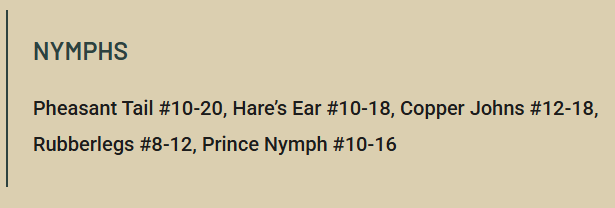
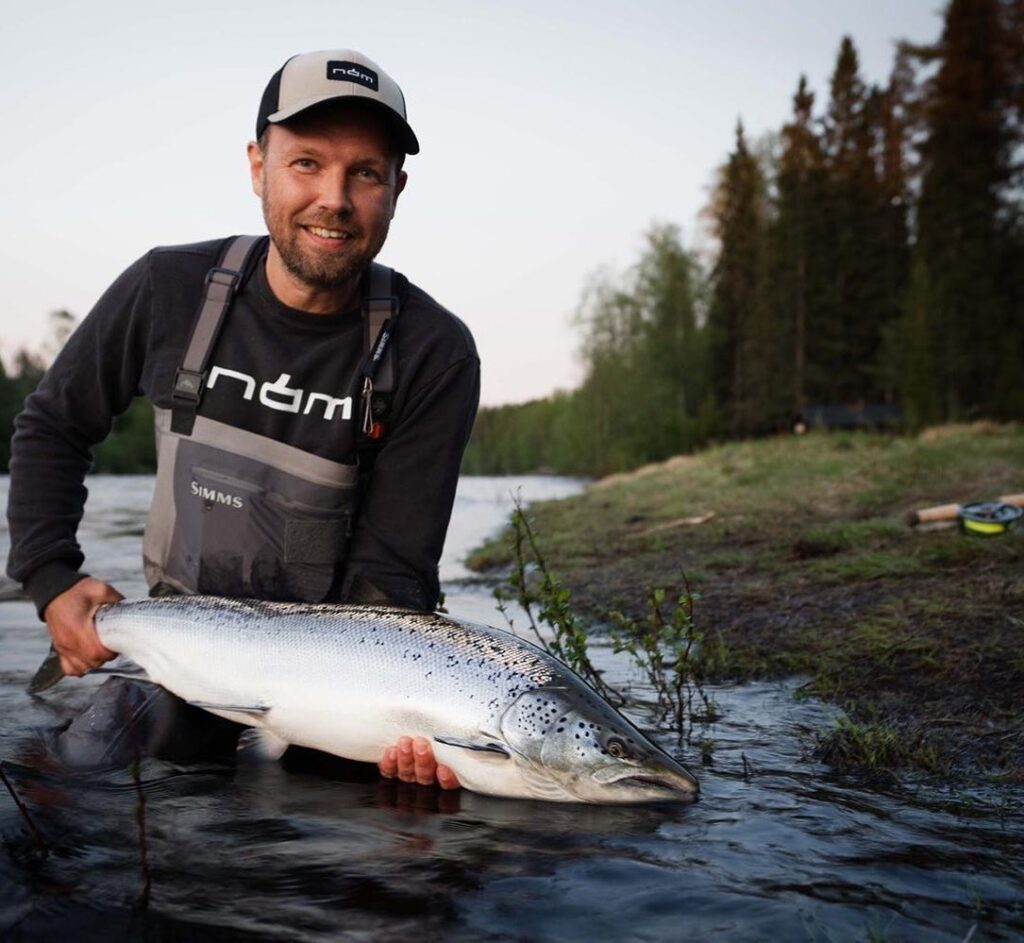
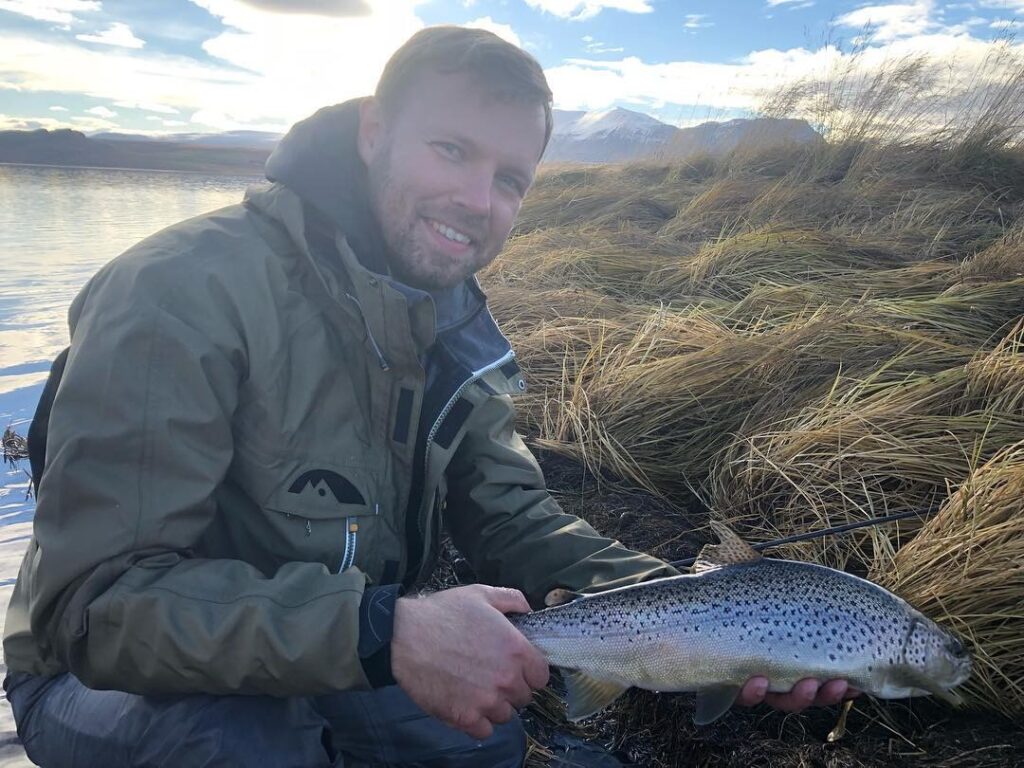
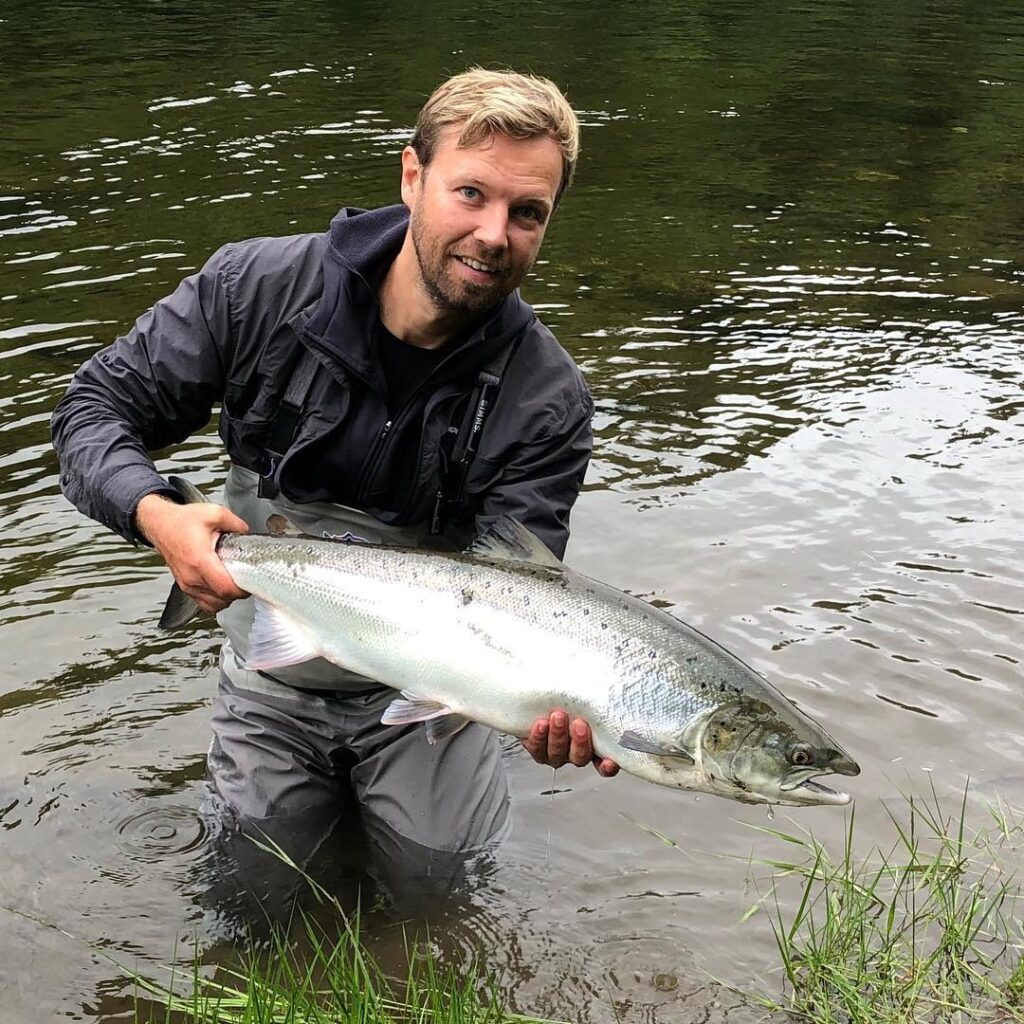
Nam Products

Conclusion with Marcus Bohlin

This episode bridges two worlds—Scandinavian salmon tradition and modern steelhead culture. Marcus Bohlin shows how rod length, leader diameter, and presentation philosophy translate across continents. If you’ve ever questioned your setup or dreamed of fishing Sweden, this one opens the door.

         
Support Our Podcast Sponsors         
Support Our Podcast Sponsors       
Support Our Podcast Sponsors         

Support Our Podcast Sponsors

         
Support Our Podcast Sponsors         

POPULAR ARTICLES