Home Blog Page 10

GLD #15 | Bulkley River Fly Fishing with Dave Whitey Evans – Great Lakes Dude Podcast

bulkley river

Episode Show Notes

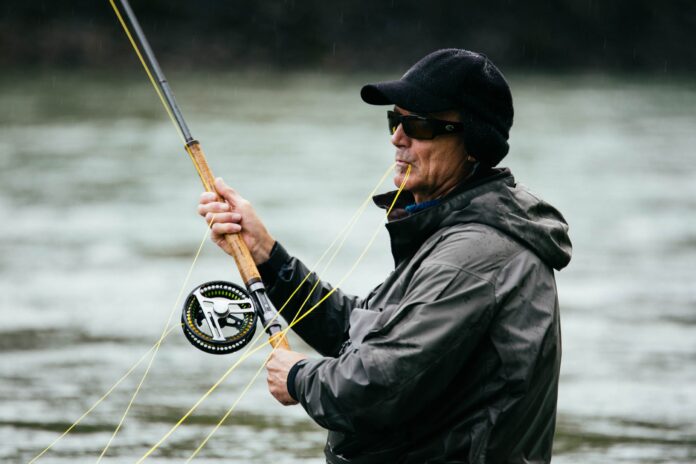
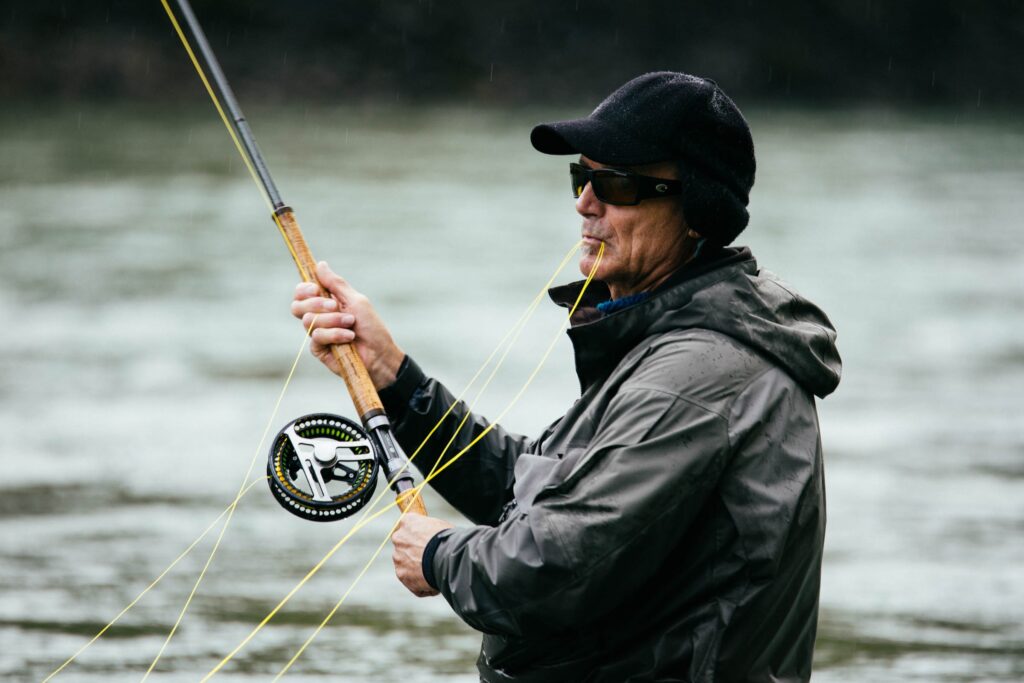
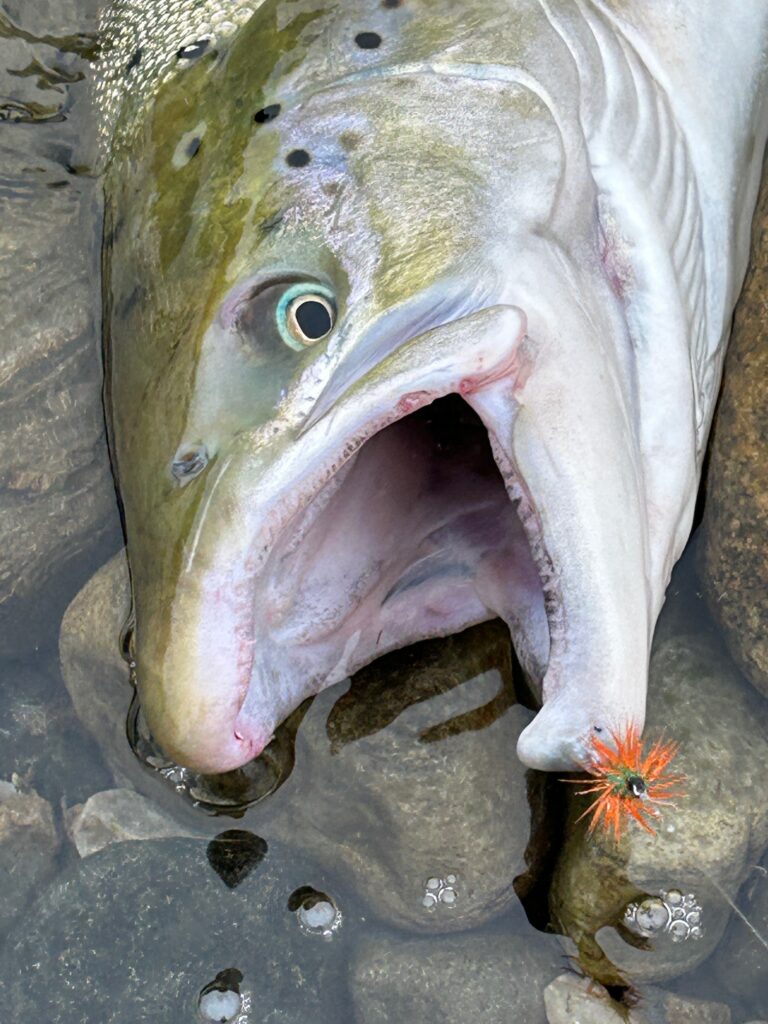
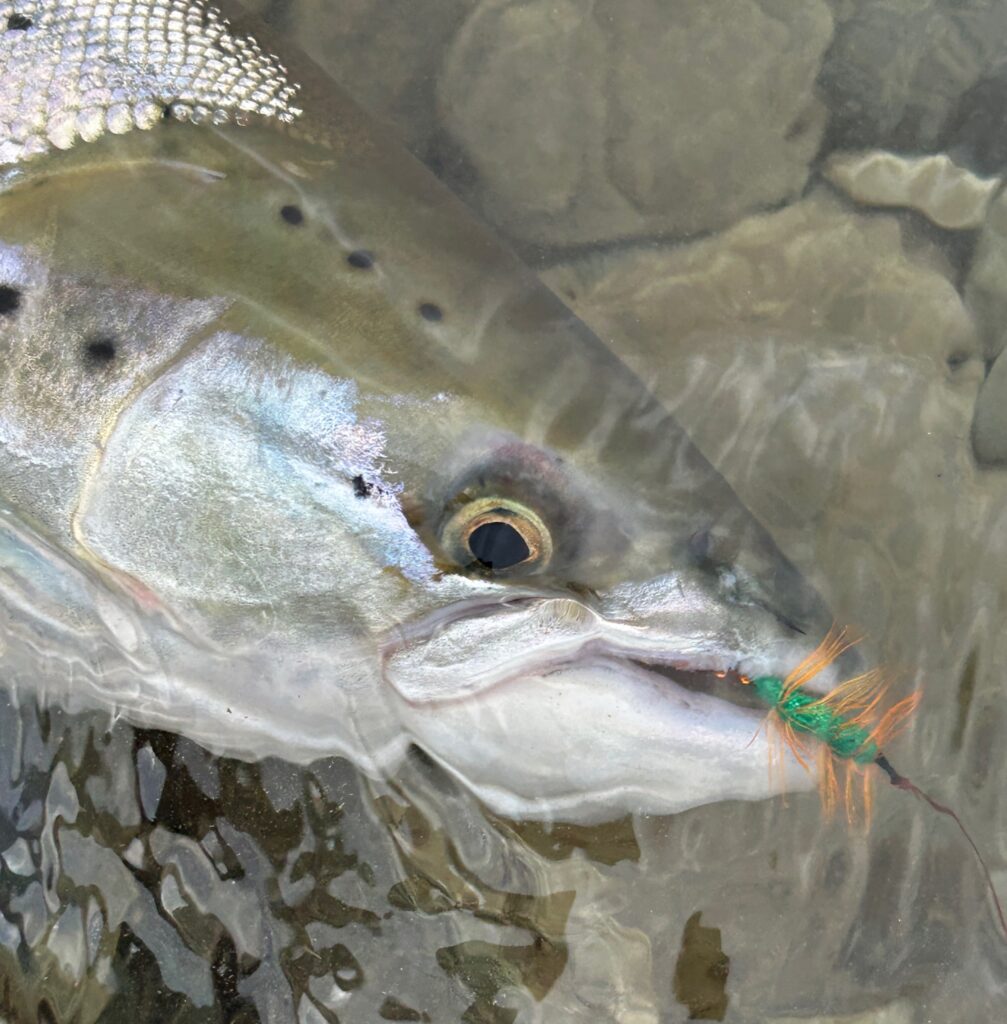
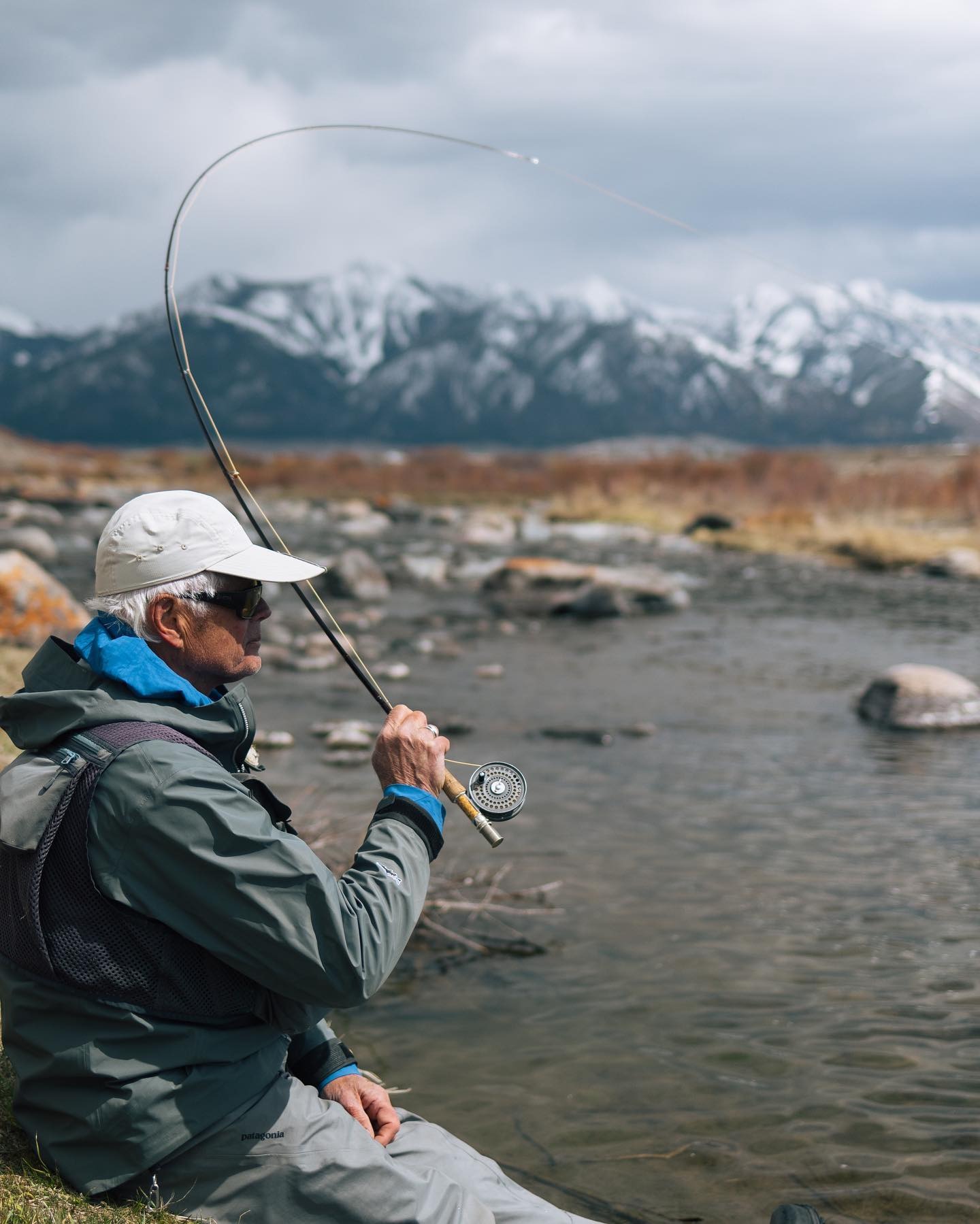
In this episode, host Jeff Liskay and Dave Whitey Evans takes us into Bulkley River Fly Fishing. They dive into stories from the Bulkley River system, talk about what makes this water so special for steelhead, and share what life is like running a world-class fishing lodge in British Columbia. With Dave’s humor and deep experience, this episode is a mix of laughs, wisdom, and a genuine love for fishing and community.


Hit play to start listening! 👇🏻🎧


apple podcasts

Find the show:  Follow the Show | Overcast | Spotify

Subscribe on Apple Podcasts

Subscribe on Android

Subscribe via RSS

(The full episode transcript is at the bottom of this blogpost) 👇🏻

Sponsors and Podcast Updates


bulkley river

Show Notes with Dave Whitey Evans on Bulkley River Fly Fishing

How Whitey Found the Bulkley

Dave “Whitey” Evans didn’t plan to be a fishing guide. Back in the mid-80s, he was a whitewater rafting examiner traveling around British Columbia testing river guides. One day, he met a lodge owner named Colin Shadrach from Smithers who needed help on the Bulkley River.

Dave had never fished before and thought fly fishing “looked boring,” but the job sounded good—catch-and-release, rowing dories, and steady fall work. He took the job and ended up falling in love with the fish, the river, and the valley.

Over time, he learned from other guides, shared his whitewater skills, and picked up steelhead knowledge fast. That mix of teamwork and river sense helped shape the guide he is today.

Building a Dream on the Bulkley

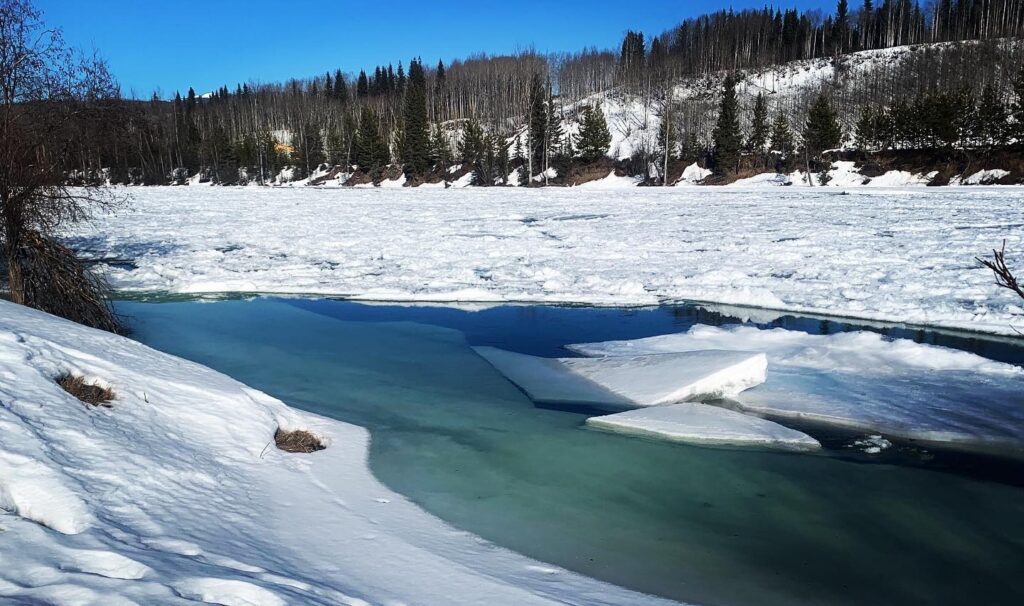
Now called Bulkley River Lodge, it’s more than a fishing spot — it’s a tight-knit crew of passionate guides and loyal guests who return year after year. The river itself is legendary, stretching nearly 90 miles of prime steelhead water, from slow freestone runs to rocky canyon pools. With strong steelhead runs, crisp fall colors, and a team that feels like family, it’s no wonder the Bulkley has become a bucket-list destination for anglers across North America.

bulkley river

The Bulkley River Experience

At Bulkley River Lodge, every trip is built around the angler. Dave and his team guide across 50–60 miles of prime steelhead water, tailoring each beat to skill level. Newer anglers fish the easy gravel runs. Experienced casters tackle the canyons.

With two guests per guide, each trip is personal, focused on learning and improving every cast. The goal? To make you a better steelheader while enjoying one of the most beautiful rivers in British Columbia. Whether you’re swinging flies or fine-tuning your presentation, the crew makes sure every day on the Bulkley counts.

Keeping Steelhead Rivers Alive

Dave knows that fishing the Bulkley River isn’t about one perfect day — it’s about a lifetime on the water. Some years are full of fish, others aren’t. That’s just steelheading. He explained how changing water patterns and melting glaciers are already affecting the rivers. As glaciers shrink, rivers will see:

  • Big spring floods
  • Low summer flows
  • Warmer water until fall rains return

To protect the future of steelhead, Dave and other guides focus on catch and release and push for better management. He says the key is simple — “Just get out of the fish’s way.” When salmon and steelhead run, they feed the whole system: trees, bears, and everything in between.

The Dry Fly Game

For Dave, nothing beats watching a steelhead crush a dry fly. Most days on the Bulkley River start with dries—there’s just something special about seeing a big fish rise to the surface.

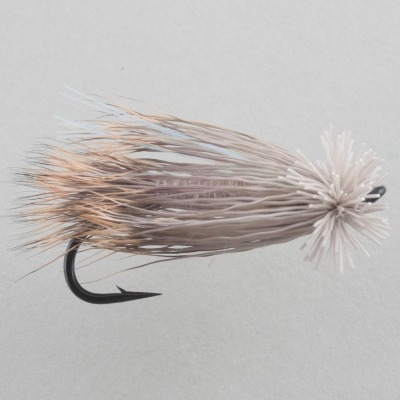
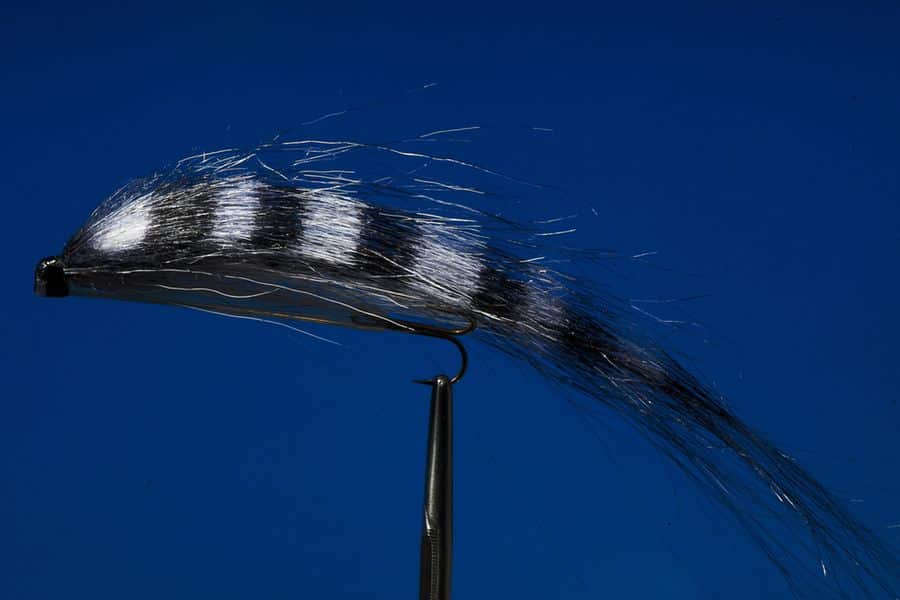
He says old-school guides used to fish deer hair patterns like the Bulkley Mouse, keeping them tight and moving with tension. Today, foam flies make things easier. They stay on top and keep waking with less effort. When fish go deep, Whitey keeps it simple: “Can’t go wrong with a wiggly fly.”

His best advice? Don’t rush the hook set. When a steelhead eats, give it a second to turn before tightening up. Steelhead move through, not stay put like trout, so patience and timing matter most. As Whitey says, “The tug is the drug.”

bulkley river
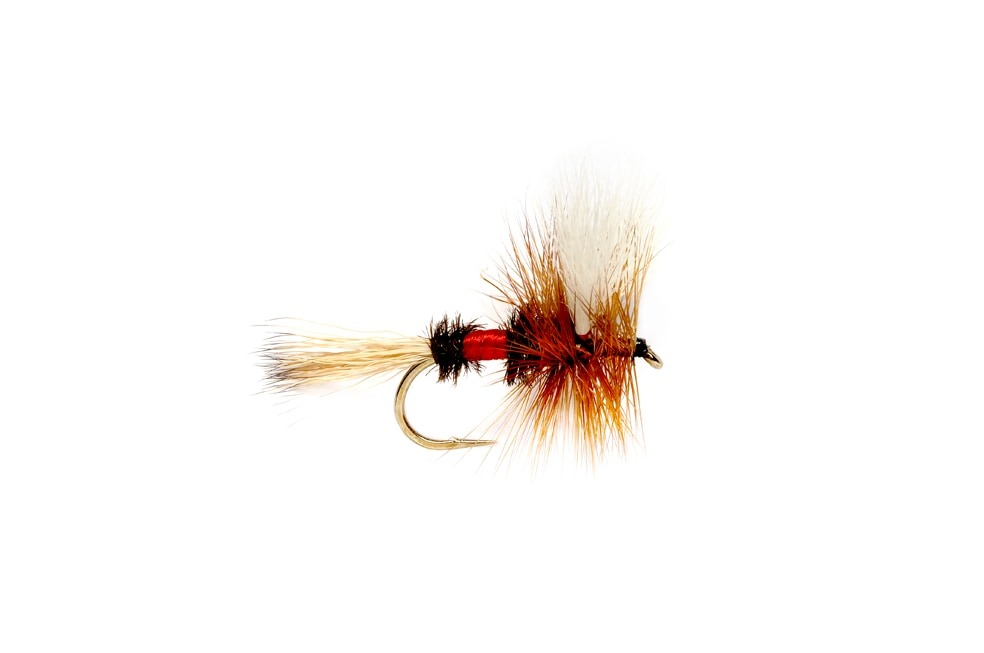
Photo via: https://littlefort.com/product/bulkley-mouse

Enjoy the Process

Dave says fly fishing isn’t just about catching fish — it’s about the process. Every cast, every missed take, and every new skill you pick up on the river is part of what makes it special. He reminds anglers to slow down, learn from others, and soak up the quiet moments between fish. Everyone wants the biggest steelhead, but the real reward comes from time spent on the water.

As Whitey puts it best: “Everything I’ve learned about steelheading in 35 years can be summed up in one word — sometimes.”


You can find Dave Whitey Evans on Instagram @bulkleyriverlodge.

Visit their website at steelheadbc.com.

bulkley river

Full Podcast Transcript

Episode Transcript
Jeff (2s): Hey, hey, this is your Great Lakes dude, Jeff Li K coming to you on the Wet Fly Swinging podcast where we’re gonna be going Rage angler on all things Great lakes from gear fly big water and swinging flies. Of course, if it concerns the Great Lakes, we’ve ve got you covered. So stay tuned to this next episode. Welcome to the Wetly Swing Great Lakes podcast. I’m your host, Jeff Liske, AKA Great Lakes dude. Well, we’re gonna do a little spin on some great lakes and we are going to be in British Columbia. That is where I am at right now. Jeff (42s): I am sitting next to a really good friend at his lodge, Dave Whitey Evans. He is the owner of Bulky River Lodge and I’m blessed to be here for this week. I was with Brian Ska down at Skiena Spay and I’m with my Canadian friends and I can’t think of a better interview to do. Super nice guy. But overall you’re gonna get a lot of good information about the Bulky River system. You’re going to be impressed of how long Dave has been doing this. And I will go on record that Dave is one of the most contagious, funniest, and when you get along with him or you get out in the water with him at the lodge, all your troubles go away. Jeff (1m 30s): So Dave, I’m gonna call you Whitey and welcome to the show. Dave Whitey Evans (1m 35s): Cheers, everybody. It’s nice to be here and sitting in my home chair and spending some time with Jeff and Crew. And yeah, it’s gonna be a fun little chat talking about my life and times here on the bulky. Jeff (1m 49s): Nice. Well, Dave, I we’re gonna call you Whitey from now. And so how, where did the nickname Whitey come from? Man? Dave Whitey Evans (1m 55s): Well, it’s kind of funny ’cause sometimes nowadays they get to the airport and they see my white hair and they go, oh, Whitey, no. Or they hear, I did some work with Sharks. And they go, oh, that’s where, no, it actually started when I first became a fishing guide and they were trying to figure who the new guy was. And I came from a, a whitewater rafting background, so I was the whitewater guy. So who’s the new guy? Oh, he’s the whitewater guy. So that nickname changed over time and now it’s stuck with Whitey. For a long time people just knew me, only in the fishing world is Whitey, but now seems to be following me around everywhere I go, you know? Dave Whitey Evans (2m 37s): So you’ll have to refresh my memory, but you started in the mid eighties, right? This, the guiding up here on the bulky system. Kind of bit of a funny story. I was one of the provincial examiners of the province for Whitewater. And so I was touring the province, you know, basically testing guides to get their license. 0 (2m 56s): And I was in a place called Kunal, which is close to here, and there was a fellow here from Smithers and he had a lodge on the bulky, and his name was Colin Shadrach. And him and I got chatting and oh, it sounded very interesting. Oh, it was catch and release was rowing Doris on Rivers. It was in the fall time, which was right. My downtime, the money sounded pretty good fly fishing. I didn’t know what the hell that was and I didn’t know what a steelhead was. And basically I said to him, yeah, it looks Denver fished a day in my life, looks like the most boring thing in the world, but I’m interested. 0 (3m 44s): And he hired me and I came up and worked for him. And that started this, you know, long journey of falling in love with the fish, the river, this incredible valley. And yeah. So then around 2000 you took over then, correct? Yeah, I, I worked for Colin Shadrach. He was, he had a lodge in Telco. He had a satellite lodge, which I went to and worked out of there. And that was kind of in the more of the canyon stretches, so it had a little bit more white water. Another funny story there. 0 (4m 24s): So all the guides were super excited to show me the rapids that they were having to, to navigate. And what they were doing was they would line them through some of the rapids and lining’s a technique where you tie your, you have a line on your boat instead of rowing it through the rapid people walk around it and then you line the boat down through the Rapid. So they were super excited. We get in and we go down to Driftwood and they’re all excited to show me this big rapid and I get out and have a look at it and then I said, okay, let’s go. 0 (5m 5s): And they were not used to rowing it and it wasn’t like I was that it was because it was so hot, it just wasn’t that hard. Right. So then, then we just jumped in and off we went. Then after that we just started to row that stuff. So, well, it looks pretty hard to me when I’m in the boat. You make it do make it look easy. Yeah, maybe. So how many canyons are on the Buckley? Well, there’s a bunch of different ones, and it was, some of it’s because the way we broke up beets or sections, we kind of designate two areas of canyons, right? So Collins operation was set up that we had these river camps, which was pretty cool. 0 (5m 48s): So there was a stretch between basically town and TR Creek. There was a camp in there. And then down below Morristown there was another camp, which was kind of a really unique situation where you would stay in the main lodge and then every second night you would go stay in one of these river camps, which was kind of cool, right? ’cause you’re right on the river, you could fish late into the day. And yeah, it was always very memorable for people. And Of course lots of stories of snores and pack rats and porcupines waking people up and scaring the out ’em in the middle of the night. 0 (6m 30s): Yeah. So it’s pretty remote down in there. I will say it’s a special place. Yeah. And especially back then, right? You know, that’s quite a few years ago that when we first started and or when I first started working for Colin and there was not a lot of people here. Right. And the interesting thing with Colin, I mean, the bulk Lee is noted for being some of the best dry fly fishing, you know, in the steelhead world. Right. So these fish definitely are looking up and definitely will come to the fly. And so for the first two years that I guided, we were only allowed to use floating lines. 0 (7m 11s): Oh. Down even in the canyon. Oh yeah. Oh my goodness. Right. And so then I didn’t really know any different as I, I wasn’t from the fishing world, so it was, it was cool. It was like, okay. And that’s what we did. We did that from the start of the season to the end. So in very cold weather. And even today when some of the guides I hear them talk about that runs not a drive fly run back, back in the day we just fished everything with dry lines, even big tanks, low tanks, all that stuff. So it was quite a, an education and where fish were steelhead pulled on this, on this particular system. 0 (7m 51s): Right? ’cause you can cover all sorts of water. Took a little while to figure it out. A couple years to start really getting a feel for it. Right? I bet. Yeah. And it was interesting that even though I had not really any fishing background, I had a bunch of crossover skills. So my learning curve was quite steep because when we first started training, I didn’t really have to worry about how to row a boat. I already knew that. And even simple stuff like trailering and all that stuff. So I didn’t need to worry about that. And I could just focus on, okay, what type of water these fish hang out in? And because I could read water fairly quickly into it, I started to realize that these fish hold in a certain water speed. 0 (8m 36s): Right? And so then all of a sudden it’s like, oh, you guys give or catch fish over there? No. And then I go over there and catch a few. It was pretty cool. And when I first started the, the guides kind of had open arms towards me because I could share a bunch of whitewater knowledge and they were more than happy to share all their steelhead knowledge that they have gained over the years. Right. So it was, it was a real open, you know, communication amongst us all, just sharing a bunch of knowledge. So you could learn pretty quickly. Yeah. The networking, you know, maybe you should tell the listeners, like the whitewater experience you have is just, just not on level one. 0 (9m 17s): It’s the level five. So once you, the ecotourism stuff you do up in the Arctic, just to let everybody know, like when you go where you’re going and you’re doing those up in the Arctic, what it is compared to like the canyon, why it made it look so easy. Why don’t you tell us a little bit about that too? Yeah, I, I’ve been running expedition rafting trips for, I’m gonna have to date myself, but for, you know, 40 years and every summer, that’s what I did. And you know, I started off doing day trips and then that morphed into do the multi-day expedition stuff. Most of those are, those rivers are in the Yukon. So big river systems, really some of the most wild places in North America and yeah. 0 (10m 0s): With a bunch of big white water on it. So that’s what I do and have been doing for 30, 40 years. Isn’t there like a reindeer migration or something like that? It goes through there. You tell me about one time. Yeah. So like the last number of years I’ve been running a, a river called the Firth River. And it’s in a Valic National Park, flows into the Arctic Ocean, actually starts in Alaska and then hooks around and goes north and dumps into the Arctic Ocean. It is one of the wildest places in North America, and it’s a really unique part of the world. It’s a non glaciated river. I think it’s like one of the oldest rivers in North America. So, you know, most of North America is shaped by ice. 0 (10m 45s): 20,000 years ago when we were outta that continental glaciers. And so that this particular river was in that ice free corridor. So it’s really kind of unique land forms for Northern River. It’s not just a tundra river. We try to intercept the porcupine caribou herd. It’s like 240,000 caribou across the river after, after calving on the north slope. And yeah, spectacular, unbelievable muskox, northern breeding ground and doll sheep, peregrines, Jer Fal cans, Of course grizzly bears. There’s, there’s grayling throughout the whole system. And then there’s darval and char that come up the river, migrate up the river spawn and then head back. 0 (11m 28s): So, but it is not a fishing trip, it’s a sightseeing trip that people go on and it’s like mind blowing. People are changed forever after going on those things. Yeah. Spectacular couple of great places in more than more than that, including the broccoli. Even on the Barkley today we saw, you know, we saw a deer across the river with a wolf follow it right outta the woods. And then we got to the water and we just, the fishing was secondary. Once you see stuff like that that he’s like, Hey, it didn’t wanna cross to pursue the deer across the river. It stopped to the water, went back in the woods. But just the fishing goes away and you just observe what’s really goes around the settings. It’s pretty cool. Yeah, it’s, I think lots of our listeners are probably fishermen, you know, and If you think of all the different environments that these that go with the fish that you pursue. 0 (12m 15s): And I had a 80-year-old woman sit at the table next to me one day and she said to me, I always remember the quote was, one of the cool things about fish white is they all live in beautiful places, you know, and with each species it has that unique ecosystem, right. That resonates with you, which matches the fish. Which Of course a big part of steelhead is big rivers, mountainous regions in the fall time. Right. So all these, yeah, just natural part of the steelhead world. We’re pretty lucky to be hanging out in, they do live in some beautiful places. 0 (12m 55s): So, well, let’s dig back into the fishing and the lodge. What drives you to run a steelhead lodge? Yeah, hard, hard to say. You know, I, when I first started rafting, I just didn’t wanna just be a guide. I wanted to lead the trips. And then when I started to get into the fishing, same thing, I was like, okay, yeah, I’d like to do that too, for sure. But then the opportunity for a fishing lodge, when I first got into it, actually my dream was like, oh, okay, cabins on a lake and float plane. I went, even got, went and got my commercial pilot’s license and had that vision in my head. 0 (13m 36s): And so, kind of always wanted to eventually want to do that. And like an incredible story for me was, I had a client, a guy named John Woodward, and him and I fished together for a long time at Collin’s Place. We hit it off, we were always chatting and we always talked about how we could do it better. And Collin was doing, and one time he came up to me and he said, Hey, why do, If you ever want to buy a fishing lodge, I’ll put the money up and you can work it off. Right. Which is pretty incredible opportunity. 0 (14m 16s): Super generous to kind of, yeah, I think he saw that I had a dream and he wanted to help fulfill that for me. Like it’s a, it is an incredible story. And hence in 2000, this one came up for sale, we bought it. And that was in 2000. It was owned by Jimmy Isman, Northland Steelhead Lodge, it was what it was called. And we bought that thing and here we are, whatever, 25 years later, still going strong, you know. Well, I think he picked the right man for the job. Yeah, maybe. I don’t know. I’m just gonna say that there’s probably not, there’s a lot of great lodges, but this is, it’s like family and like with your personality bigger than life and the whole crew and the great guide you have here, I don’t think there’s anything that a person going still head fishing with a check the box list wouldn’t get here at this lodge. 0 (15m 12s): The fish have to be there. But guess what? Sometimes, you know, there are not as many, but overall, if there’s fish around, your crew’s gonna find them. Yeah. I mean, no doubt that blessed in many ways, obviously bulky is, you know, one of the greatest steelhead, rivers, rivers in North America. So you have that, the bulky valley, one of the stunning beautiful valley in the fall with all those leaves turning as the land of the valley of gold. Right? And then you have these credible numbers of steelhead coming up here, right? And you’re gonna over winter spawn in the spring, go back, and then you put that with this kind of cool little spot at the side of the river with some cabins. 0 (15m 56s): And then have stable staff. Some of my guys have been, they’ve been working for these 16 years, right? Same guys. Same people. Yeah. So it’s this vortex of really, really good, passionate people coming here every year to kind of share a passion and a pursuit. You know, it’s pretty magical Dave (16m 17s): Experience. The waters of Bristol Bay at Togiak River Lodge where fly fishing meets Alaska’s rugged beauty. This is the place to complete the Alaska Grand Slam with all five salmon species, rainbow trout, arctic char, and more where each day offers a new Alaskan adventure. You can visit togiak lodge.com right now to start planning your Bristol Bay experience with Togiak River Lodge. Trout routes by Onyx is built for fly anglers who want better intel without spending hours digging for the information. You’ll get access to public land maps, stream access points, regulations, and even road and trail maps all in one place. It’s become my go-to app for scouting new trips. Dave (16m 58s): You can check ’em out right now. Go to westly swing.com/trout routes and download the app today. Jeff (17m 7s): So let’s dig in a little bit, maybe a little bit about the bulky river history. Right? And we know it’s one, you know, it’s still absolutely fantastic fishing. It has been this week. So let’s just, maybe a little history like from the canyon time and up to now, and just, just a brief little history of like the fisher itself. Dave Whitey Evans (17m 24s): It’s a big river, right? I think it’s like 90 miles of river that we are fishable water. So that’s, there’s a lot of water we can fish. It is probably one of the rivers that has the most singable water, water on any river that I’ve been to, right? All these sections of just endless runs that could hold steelhead and super diverse from the upper part of the rivers that are more classic slow Freestone River. And then as you go further down towards the Skeena, we get into canyon, more ledge, rocky pools, and just this kind of incredible diversity of it. Dave Whitey Evans (18m 6s): So you have that going on. You have really healthy populations. So our, our base level of steelhead is pretty high. You got steelhead that are looking up. So you have dry fly fishing, right? So, and we have a short window of opportunity to intercept those fish, which is in the fall. Right. Jeff (18m 27s): But you have the, a lot of the, a lot of the bulk of the flow comes in from the Maurice too, right? Dave Whitey Evans (18m 32s): So, so the upper reaches of the bulky is the Maurice. So the Maurice Lake outflow into the Maurice. And in that, in a town of Houston, the river changes its name and it turns into the bulky, but If you looked on a map, it is basically the same watercourse, right. But then just they arbitrarily changed it to the bulky, right. So you have these Maurice River, bulkly river heading down to the Skeena, the bulky river’s, the largest tributary of the Skeena. And the Skeena is a massive river system that drains kind of the northwest of bc. Dave Whitey Evans (19m 13s): And the Telco river is the largest tributary on the bulky, Jeff (19m 17s): so correct me if I’m wrong, the bulky system gets close to 50% or more of the s skinner run, correct? Dave Whitey Evans (19m 26s): Yeah, yeah. It’s by far the, the largest tributary as far as numbers too, right. Of fish returning. Okay. Jeff (19m 34s): Yep. I don’t think, I can’t fish at ta. I see it where it comes in. But is there steelhead that run up aqua too? Yeah. Okay. Dave Whitey Evans (19m 41s): And what they’ve done is some of the, some of the tributaries, they’ve, they are closed to guiding and then some of the rivers are closed to non-residents. So they have an attempt to kind of have some kind of almost private water for Canadian residents. So, and I think the tel was one of those, I didn’t spend a bunch of time interesting exploring the telco. ’cause I thought, oh, maybe that’s like an un, I didn’t really know of any very many people fishing it, especially up high. And so I thought, oh my God, maybe there’s, yeah, maybe there’s a bunch of them going up there. Right? And so I spent some time in there and even hiked in there in the middle of the winter to the lake. Dave Whitey Evans (20m 23s): I was like, yeah, I’m gonna go do some ice fishing and maybe that’s really over winter. Got my ice auger in there, open it up. Oh it was frozen to the bottom. So no steel head up there. So. Jeff (20m 38s): So you, we’ve talked a little bit about you setting up the camps. We’ve talked a little bit about that. So I think overall as a steel header, and I am a full on steelhead bomb, I would say the program you have here on the bulkly is my most appealing that I’ve ever anywhere on a steelhead lodge type basis. Maybe you could just tell how, what your program involves and why, why it’s so alluring to, you know, a steel header. Dave Whitey Evans (21m 4s): Yeah. We, we once again, we’re blessed with having so many sections, right? You know, or beets that we can fish and we have the ability to kind of tailor them towards angler’s ability, right? So you, If you are not a strong waiter, we have sections that you can go up and it’s more pe gravel, you got more sturdier on your feet waiters than we got canyon that we can challenge the best of them. And so you have, you have that going for you. And we have four cabins. So that’s, we have two guests per guide. So they get a lot of personal service and attention and we kind of take the approach that we are going to try to make you the best steel header that you can be. Dave Whitey Evans (21m 53s): And so a lot of effort goes into teaching and explaining and that goes from just tuning up your casting, but also to trying to get your head into the game of what we’re looking for, what type of water you’re looking for. And one, it makes it way more enjoyable for you ’cause it’s an, a massive amount of education you can get in a short period of time. But you know, ultimately you’re gonna be a more successful steel header, which then makes our job easier. ’cause you’re happier catching more fish and hey a guy’s most happy when you got guest catching fish. Yep. Right. So Jeff (22m 30s): we’re not looking for a boat ride, I guess. Dave Whitey Evans (22m 32s): No, no. And then, like I said, so basically we have four guides going out through it a day and we have jet boats, but we also have RAFs. Jeff (22m 43s): Yeah. It’s amazing to me every night in dinner when you, everybody comes back and give the report, it’s how many miles we’re apart. Dave Whitey Evans (22m 52s): Yeah. Right, right. Jeff (22m 53s): I mean, what that would be, what is that about? Dave Whitey Evans (22m 55s): Well, it could be easily 50 miles. Oh yeah. 60 miles right from one section, the lower section to the top section. Right. Even, even maybe even longer. Jeff (23m 6s): Two days ago we caught fish 50 miles apart from the the top end guy. Oh yeah. That’s crazy. Easily. Yeah. That’s crazy. I was like, wow, that’s pretty amazing. So let’s talk, you know how the fishery is now, maybe when you started, let’s talk a little bit about, maybe you can elaborate a little bit about maybe how’s the management going on the fishery? You know, something like that. So people have an awareness of, you know, what’s going on with the ecosystem with it, the management, how they do the fishery, and then just in your eyes, like is it getting better, worse or, or how could it get better? Dave Whitey Evans (23m 40s): You know, back in the days we, we ran the whole, the river in indoor. We didn’t, oh we did, Colin chose to row Doris. Right? Not jet boats. There were jet boats on the river. But we did his, you know, his philosophy was he wanted to row and drive fly, right? Sure. And back in the day it was all single handed casting and we were getting a lot of people that came from routing background. Well, casting for steelhead and casting for trout is a much different game, even though it is with a single hand rod. And so there was a lot of teaching that went on there and you know, the game there was to try to steelheading, you’re making a lot of casts, right? 0 (24m 28s): And long casts are beneficial. Not always, but overall. So being able to pick up a lot of line with very few false casts and then do a directional change and lay it out there. Right. And that was an art and that was also a skill that took a while. Right? So there was, back then If you were expert single-handed caster, that means you probably had to put a lot of time in that. Right. And the good guys that could do that caught more fish for sure. And there was always runs that only expert casters could do. One that’s tight banks, overhanging trees. 0 (25m 10s): That was really good to be able to pick up that line and lay it out there so that, that I would say 99, it would be rare back then to see us two handed rod rare. Wow. Right. So 99.9% of the anglers back then were all using signal added and you’re talking 7, 8, 9 weights. Yeah. You know, my drive setup was a 7, 8, 10 foot. Right. So you could pick up lots and layer down there. Then after we got away from only kind of being allowed to, to use dry lines, then we started getting into sink tips. Right. 0 (25m 50s): And our line of choice was a teeny 200. Oh right. And trying to learn how to cast that effectively. Effortlessly. And yeah, it was pretty cool. You could fire that thing across the river once you got to hang up it seeing pictures of you holding the shooting line in your teeth. Yeah. Right. Because you’re waiting up to your neck. Yeah. Right. Because I came in with no, no fishing background. So it was like, oh, why you trying to hold your hands? And all these loops, it’s like, just stick it in your teeth. Yeah. So that teeny line was, how long were the, were the sinking of 25 foot or so? Yeah, 24 feet. 24 feet. Okay. I wonder how that would equate to a sink tip with a spay rod, because that seems like quite a bit. 0 (26m 32s): Yeah. Heavy. So did you, like you had to actually keep it moving. ’cause otherwise it would just always tank, right? Yeah. You had to be on detention for sure. Okay. Right. But it would slink in there pretty good. Oh, I bet. Okay. But once again, it took a while to learn that. Right. So that learning curve, you know, back then was a journey. Right. You had to put your time in to get really good at it. Right. You know, and you could be proficient tr fishermen, but that did not equate to being a proficient steel header. Right. As you know. Right. And then eventually we started seeing bay casting come into the game. Right. And I remember Colin, he got a bunch of rods from Bruce and Walker, but they were like 14 foot 10 weights. 0 (27m 16s): And we, the first time we saw those was like fishing with a telephone pole heavy. Oh my god. Right. And you’re used to whipping around a, you know, seven weight, 10 footer, you know, and then all of a sudden get this thing and it’s just like, oh, this is who would wanna fish with this? So, but slowly over time people started to use them and realized that for this game Yeah. With the amount of casting that you do, that’s really the technology that works the best. You can still do single-handed casting for sure. That doesn’t stop you from catching a fish, but it’s just easier. Right. Learning curves steeper. 0 (27m 57s): You, you don’t have to be a proficient caster to have overhanging trees with a spay rod in some ways, in a very short time. You can get a lot of line out. You may may not look pretty, but it can flop it out there. Right. More so than you could with a single handed rod. For sure. I can’t even imagine. Like I could barely handle those fish in the canyon on this river with a seven or eight weight, two handed rod and you’re fishing in a single hand, seven weight and, and you get anything over 14 to 20 pounds. I can’t imagine what that was like. Yeah. Battle right. Battles like you were never in control. No, no, no. 0 (28m 39s): Yeah. They were, they they were in charge. Right. Absolutely. And, and the contest today, it would be rare to see a single Lancaster. Yeah. I haven’t seen one for a while unless you sneak out. Yeah. You see the odd one out there. Right. Every once in a while I dust off mild set up and go out there. You realize how inefficient it is. Right. How stripping in more line put ’em all on your teeth and off you go. So, but clearly, so that’s one of the other big changes. And then the other one to is way more boat jet boat traffic. They become more available obviously for a long time now, but we’ll see way more jet boats and the bulk creek’s a big river too, so. 0 (29m 25s): Right. I’ve seeing a lot of inflatable jet boats and stuff. That’s what I’ve been seeing buzzing around. Even on the skiing is like, oh, that’s, those weren’t around, you know, a little while back. Yeah. That’s definitely a change. You know, more people. Right. So I think the boat traffic, probably the, the dry fly fishing was better back then, I would think. Yeah. Less people, less things flying over their heads. And it’s not like you can’t get ’em on the dry fly here definitely can Dave (29m 52s): Step into the world where the river whispers and the fishing is nothing short of legendary. This year I ventured into the heart of Eastern Idaho’s Yellowstone Teton territory where the fish were larger than life and the waters held the secrets of the best fly fishing out West Yellowstone Teton territory is not just a location, it’s a gateway to adventures that will etch themselves into your memory with crystal clear rivers like the Henry’s Fork and the South Fork of the Snake and enough lakes to keep you going all year long. Make your way to Yellowstone Teton territory and embark on a journey to one of North America’s finest fly fishing destinations. Whether you’re planning your trip now or just dreaming it up, the YTT is where those dreams turn into reality. Dave (30m 35s): Remember Yellowstone Teton territory? That’s Teton. T-E-T-O-N. It’s time to experience eastern Idaho for yourself and support this podcast at the same time. Do you think you need a bush plane to fish Alaska’s legendary waters? Think again. Fish Hound Expeditions specializes in road accessible adventures that don’t skip on excitement. Picture yourself fishing for massive rainbow trout, arctic grayling, and plenty of salmon species all within Alaska’s epic road system. It’s doable. I fished the road system on our first day with Adam and the crew and it did not disappoint. The largest leopard rainbow I caught and landed was right off the road system. Dave (31m 15s): And we’ll be driving up again this year heading up from the lower 48 all the way up to Alaska to hit those streams again. You’ll experience the breathtaking beauty of Alaska’s wilderness from mountain streams to hidden rivers. Perfect for anglers of all levels. Fish hound expeditions makes it easy to explore Alaska. Why wait? Your Alaska adventure is just a drive away. Book your spot now before spaces fill up. That’s fish hound exhibitions.com. F-I-S-H-H-O-U-N-D expeditions.com. Don’t miss out. 0 (31m 48s): So we say, okay, the two handed sur are taken over the techniques, which we all love, right? We’re all, it’s great casting, it’s fun crane to learn, but does as far as the fishery, the health of the fishery, what’s your thoughts on the management? Or do you think, where do you think this fishery could be? Give us a little thoughts on that. I think anybody that’s steel heading understands it’s your steel has experience is not measured over a single event, it’s measured over a lifetime. So you’re gonna have years where you have tons of fish and lousy water conditions, no fish with really good water conditions. So you have weeks where the fish aren’t there, you got weeks that are high water, low water, all these things, right? 0 (32m 29s): So some of the challenges that you have as a steelhead angler is conditions. So lots of times people talk about the good old days and we for sure had good old days, but there weren’t good old days every day. Right? They were the same as what you do now. Some days you get ’em, some days you don’t. You get big ones, you get small ones, you get your ass kicked. That’s steelhead. So that is consistent, right? So, you know, wasn’t like, we had huge numbers every year back then. So we have massive fluctuations in survival rates of them in the ocean and the, and in the rivers environment. And the last number of years we’ve had some low returns and then last year like had record breaking year, right? 0 (33m 14s): So it’s kind of all over the place. You know, lots of environmental factors, right? One of the, the reality of the world of steelheading and glaciated environments is we’re losing our glaciers, right? So the predictions will be that we’re gonna get a rivers now which are filled with melting glaciers, right? That gives us the volume and the temperatures that’s stable throughout the whole season till winter, you know? Now what we’re gonna happen is as those glaciers recede and we have less of cold water reserves, we’re gonna get big volume increase in the spring, low volume flows in the summer, and then wait for the fall rain. 0 (34m 1s): So we, we started to see some of that now. But predictions are, you know, that’s, that’s where we will be heading. You know, we’re as steelhead operators, you know, we’re in it for the long haul, right? We try to do all sorts of things to make sure that we have fish coming back for generations and generations. Hence we do catch and release. And I think what we’re lacking as far as conservation is just a lack of solid overall plan that makes sure that we have steelhead coming to the upper reaches and other species too. 0 (34m 41s): Right. And the province who manages that, they don’t really do a good job at that. Right? So we’re trying to put some pressure on government to let’s make a good solid plan to make sure that we get fish coming to the upper reaches to be able to spawn and continue this amazing life cycle, right? That so many things species and people can enjoy for recreation, for food, for, you know, just the pleasure of seeing them. You know, so we’re, we’re trying to put more pressure on our provincial government to, to make sure we have that. And we certainly are missing that, but hopefully we’ll make some headways with those guys. 0 (35m 22s): I’m sure you will if you’re in Raf. Any part of that for sure. Yeah. Right. Okay. But you gotta, you gotta push hard for it. Right? Right. Sometimes they don’t like the bend, you know how it’s, it’s politics but Right. Hopefully that it will, like you said. And if they, if we just leave ’em alone for a while or dos, we don’t let it do their thing, the fish will be just fine. Yeah. I always, I always say that all we need to do is just get outta their way. Yeah. You have this massive influx every season of steelhead and salmon that come up to these rivers. It’s really a transfer of nutrient from the ocean to the river in salmon where they come and die. Right. 0 (36m 2s): And inject interior. Right. All that nitrogen base, it’s kind of a wild Right. And everything benefits from that. So it’s like a huge biomass that kind of gets taken from the ocean swim, upstream dump and die there. Trees get bigger, bears get fatter, right? Yeah. The pinks are in here pretty good. So yeah, it’s very good for the system. 100%. They’re the fertilizer, right? We talk about that. The sound being the fertilizer of our reverse. So just start wrapping up a little bit, but we should always touch a little bit on the dry fly game and your technique. I know you started with a single hand, you got a little two handed, now you started out with the dry fly and I’m sure that’s still your preferred way. 0 (36m 44s): A lot of us usually fish at least half the day with a dry fly. What’s your thoughts on the dry fly? Do you have a few favorite flies? If somebody could try? In general for steelhead, doesn’t have to be for the bulky, but in general, steelhead the steelhead, right? Yeah. Yeah. I mean here we wanna, we’re trying to fish them under tension and they are waking right and swinging right. And that waking fly, you know, definitely gets their attention and yeah. So our program here, you know, most days we’re starting off with the dryly Right. And see what’s happening and, and you know, just to see that thrill of the visual thrill of, you know, these giant, giant trout coming up and eating that bug. 0 (37m 27s): Right. You know, so back in the day we used to use the, you know, the bulky mouse, you know Oh yes. Designed and, and tied by Andre LaPorte, right? Yes. And it was a deer hair thing and you had Yeah. All sorts of techniques to keep it up on the surface and always had to be under tension and just an art to get that thing awakened. Nowadays, hey foam, it’s a magical thing. You don’t have to do anything, just wing it out there and it starts to wake. Right? So if you’re not dry fly fishing and the fish are a little doward down, do you have a certain type of fly that you is like a go-to? Wily, can’t go wrong with a wiggle, right? I think I talk to every steel header, it’s like, yeah, you do all this fancy time, but it’s like, as long as it’s wiggly, it pisses ’em off and they’re gonna go for it. 0 (38m 14s): Yeah. I always say too, with steelhead, they’re harder to find than they’re to fish. Right. Or to catch. Sorry. Yeah. It can shut down on you at times. But you know, it is, it’s the search for them, right. And, and getting into the process. Right. Just enjoy the process of looking and hanging out in the river and trying to perfect the cast, trying to perfect your knowledge of what kind of water they live in and Yeah, the tug is the drug, as we say in this game, right? Oh yeah. Sometimes it can go days and you don’t think you’re, you don’t think you’re doing anything right. It’s just a fish. They’re just like, you know, not having it. Right. They’re, they’re not in the runs ’cause air migratory. Right. And sometimes they’re just like, no, they’re just, yeah. The other day we had that all bright, sunny daylight. 0 (38m 56s): Super windy, high pressure. They were a little tough. Yeah, A little tough. That’s for sure. You know, we ended up getting some of the shades, so you know, the guides, you adjust, you adjust and you’re like, oh, we’re gonna scale down and sure enough, boom, bang, crash, we connect with a few. No that is the steel heading. Yeah. And they’re not residents, right. They’re traveling through. Right. So they’re, you know, and like Johnny, the brown trope behind that rug and he lives there and if he’s hungry and you do the great job and put the right food in it, he’s gonna eat it. Well Sammy, the steelhead doesn’t live there. He is just passing through. Maybe stop and rest for a while. But he’s, he doesn’t live Here. He is all simple thing guides like myself. Were like, oh we got him there yesterday. We’re gonna go back and start there and you make a few casts and you’re like, crickets. 0 (39m 40s): I was like, listen, they do move. Right. They do move. But yeah. And it’s a interesting, fun game, right? It does. I think you either like it or you don’t. Right. It seems like people very rarely do we get some people that, oh, it’s kind of okay. It’s either like, oh that’s too much work for me, or oh my God, I’m hooked. Right. I’m hooked. Cut me in next year. Right, exactly. Cut me in next year before they leave the lodge, you take ’em to the airport. You don’t even have to ask them. They’re just like, yeah, pencil me in. I joke with them all the time. There goes your TROs fishing, hey. Exactly. Yeah, yeah. Once you this, these are home records. 0 (40m 21s): Let me tell you, once you come up one week, one year, you’re like, man, I got I, I gotta come again. Yeah. So I will have to ask you. Everybody has this thing. It was like, and we had this conversation over the fire the other night, a little bit of tequila and when Whitey speaks or one of the guides speak around here, we all listen ’cause they’re just, their finger is plugged in the a steelhead pulse machine. When a steelhead engages to your fly, what do you do Whitey? Do you like hold loops? Do you feed them? Do you let the drag go? But give us your skinny on like once a steelhead is engaged to your fly. Yeah. There’s a bunch of different theories, right? Every guy’s got a theory on how, how you do it. 0 (41m 2s): I think the commonality is would be, don’t quite set the moment you feel it. Just kind of give it a, you know, not wait too long, but don’t like a trout. Don’t nail it as soon as you know, give it a chance, stick it in a mouth and turn. Okay. Yeah. The whole turning thing, right? Yeah. You were saying something like you even like some, you even bow the rod a little bit. Some guys, I don’t hold a loop. I don’t know a lot of Steelers that hold a loop. I think it’s an lack of salmon thing, but somehow you gotta let that fish get a little bit turned away from you. Yeah. Especially, especially dryly. Right. You have to, you have to definitely do that. Okay. Exactly. Because they’re not eating it sort of right. 0 (41m 43s): In a way. Right. So if they engage the dryly, most of the time people just pull away from, but once you get the, the nerve and the patients, you wait till you feel the weight. Is that sort of the way that you do it? Yeah. Yeah. Okay. So he’s got it. He’s turned down, he is moving. You got a little bit of slack in your system, the rod starts bending down, then you, then you go ahead. Okay. Is there anything else? I’m gonna ask you to tell me your favorite story, but is there anything else you wanna chit chat a little bit about? Yeah, there’s so many reasons why we should be going efficient. Right. It’s a process, not a goal. And so when you immerse yourself in that game, enjoy every step of the way, right? 0 (42m 23s): Of all the learning that you’re gonna require to become a good steel header. And yes, we all have the goal ’cause we want to get them and we wanna get the most, we wanna get the biggest that’s a given. Okay. Once we’ve realized that’s what everybody wants, you know, really try to just enjoy the process, right. And yeah, enjoy the ride, right. Of all these different things that you can learn from ’em. And Of course just that quiet time on the river is good too, right? Yeah. Each one of the each, each individual guide, each individual steel header, we all learn from each other. It’s amazing. You know, it’s like I probably learned five things today and you’re just like, put that in your cache memory and you’re like, all all right when I get my teeth knocked out, going up that bumpy road. 0 (43m 7s): Yeah. It’s like I should probably have a like that. A few of those smaller flies. Right. Well I, I always say too, everything that I’ve learned about steelheading in the last 35 years can be summed up into one word. Sum times. Exactly. Yeah. And when somebody tells you this is exactly how you do it, you realize you don’t really know what he’s talking about. That’s exactly. Yeah, exactly. But alright, well I’m gonna ask you, give me a favorite story. I don’t wanna put you on the spot, but If you have one In my other life I used to ride horses and jump horses and breed horses and we had a stallion that we were using for breeding and they’re valuable horses. 0 (43m 56s): So you collect the semen and then you super cool it and then you inject it into the marere. ’cause you don’t wanna have live cover as we call it, because you’re both horses, which are valuable could get hurt. So we were new to this and so it was like a big learning curve and I built this mounting dummy for the stallion. And because it was the first time that we were doing this, we had a bunch of experienced people there and I built a teasing wall, which is a T-shaped wall that you could put the mirror on the other side of the wall and you bring the stallion up to the wall and he sniffs the mirror, gets excited, you walk him around to the mountain dummy and then you collect them. 0 (44m 42s): So you, you’ve kind of got all these people around, you’ve got all the safety measures, you’ve thought it through a million times. And it’s not like you walk a stallion with a breeding mare and it’s just a walk over to the wall. Anyways, he kind of drags you over there and the wall is there to protect the ma and me the handler. But my guy decided he’s gonna jump the wall to get at the mirror and he does, but he doesn’t get quite all the way over. Oh right. So now he’s high centered and now he can’t get off and I look over there and he’s stuck on the wall and I’m thinking, oh, how am I gonna get him off? 0 (45m 28s): And now, now I’m thinking, oh, okay, now he is caught on the fence. This is an expensive. Exactly. Then okay, how am I gonna get him off? I try to push him off, pull him off. Right now everybody’s standing around like, oh my god, what are you gonna do? Run into the barn, grab the chainsaw and cut the boards off and kick it off. Normally he was always trying to kick me, bite me every minute of his life. And so kick the boards off, he gets off and all of a sudden for the first time in his life, he’s thankful. 0 (46m 9s): So he’s coming in, he is nuzzling me. I’m like, okay, what’s wrong with you? Anyways, look back. Oh, he is still excited. So I take him around to the mountain dummy, off he goes, jumps on there, we collect him and we breed the mare. And so that was my, yeah. My journey into the world of horse breeding and chainsaw work. Yeah, exactly. Well that’s a good one. ’cause that was, I didn’t know that was your past history of your livelihood. Glad you turned into a steelhead lodge owner, right? Yeah. Safer. Way safer. I don’t see any stallions here, so I think we’re good. But Well I can’t Thank you enough to coming on. I highly recommend if anybody will be giving out Whiting, his lovely wife Missy, who runs it and is his right hand wife and unbelievable woman that just keeps the place together too. 0 (47m 1s): We will love sharing all of your, your knowledge in the 35 years of steelhead and we can’t appreciate and your passion for protecting the river too. Super cool. Yeah. Well Thank you. Appreciate having the opportunity and hi out there to everybody and happy fishing. Dave (47m 19s): That is a wrap. You can grab all of the show notes@wetflyswing.com and please follow us on Instagram and share this episode out with someone you love. Please send me an email, dave@wetlyswing.com If you have any feedback or want us to put together an episode on this podcast for you. Check in anytime. I hope you enjoyed this podcast and would love to meet up with you on the water. We have new fly fishing schools going all year long and all around the country, so If you want to connect, let’s do it right now. All right, time to get outta here. I hope you have a great evening. I hope you have a great morning or great afternoon wherever in the world you are and I appreciate you for stopping by and checking out the show today. Dave (48m 1s): We’ll talk to you soon.

bulkley river

 Conclusion with Dave Whitey Evans on Bulkley River Fly Fishing

Whether you’ve dreamed of chasing steelhead in British Columbia or just love hearing from passionate guides who live the fly fishing life, this episode delivers. Dave Whitey Evans reminds us that great fishing is about more than hookups—it’s about the people, the stories, and the river that brings it all together.


828 | Fishing For All with Evan Griggs – Fly Fishing Minnesota, Saint Croix and Mississippi River, Warm-water Species

Episode Show Notes

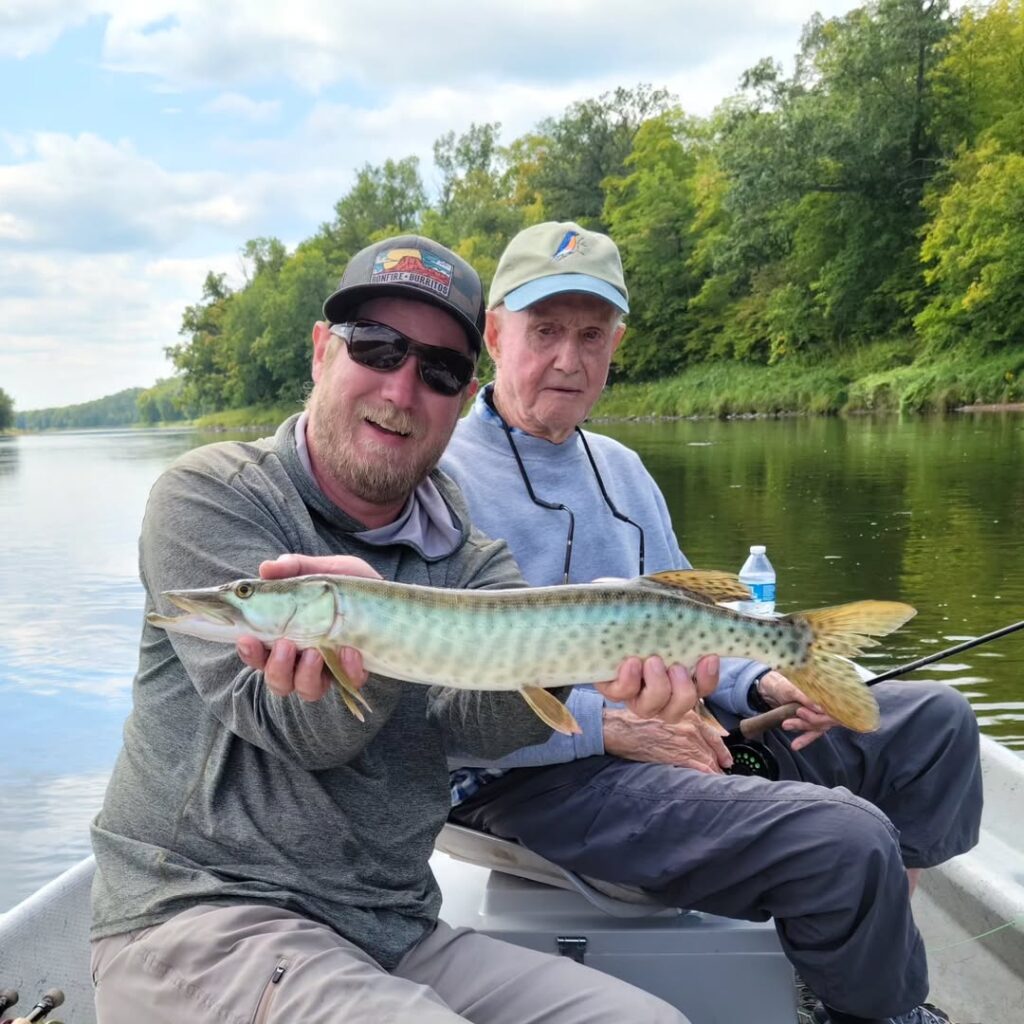
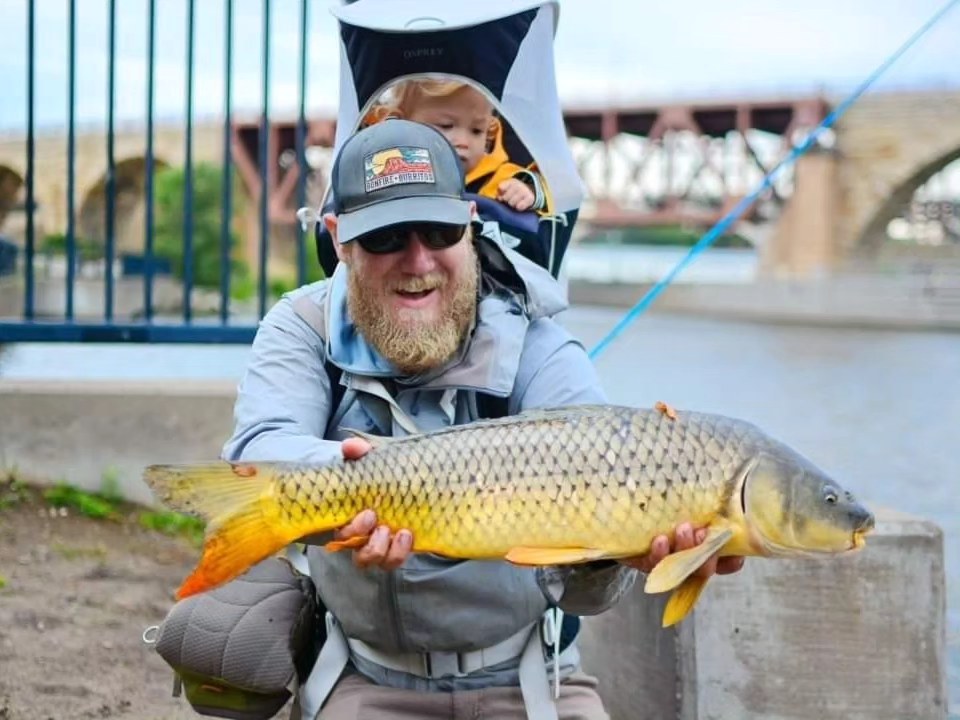
Evan Griggs, founder of Fishing For All, walks us through Minnesota’s surprising, varied fisheries — from tight spring-fed trout creeks to the big, free-flowing Saint Croix and the Mississippi in the Twin Cities. He explains why smallmouth migrate up to 80–100 miles each season, how guide days look (drift boats, 8-wts, mice and popper windows), and why locals are seeing epic multi-species opportunities — muskie, pike, carp, native sunfish, and big smallmouth. Evan mixes practical trip planning, conservation wins (catch-and-release protections), and stories about teaching new anglers and building a guiding business that shows people how close great fishing can be.

Hit play to start listening! 👇🏻🎧

apple podcasts

Find the show:  Follow the Show | Overcast | Spotify

Subscribe on Apple Podcasts

Subscribe on Android

Subscribe via RSS

(The full episode transcript is at the bottom of this blog post 👇🏻)

Sponsors and Podcast Updates

Episode Recap

00:00 – 05:03 — Dave introduces Evan Griggs and Fishing For All, covering Minnesota’s overlooked fly fishing scene and the Saint Croix River’s wild character.

05:03 – 12:18 — How Evan started guiding, his passion for teaching beginners, and the growth of fly fishing in the Twin Cities region.

12:18 – 18:49 — The Saint Croix River: its wild and scenic designation, species mix, and why it’s a perfect guide’s classroom.

18:49 – 25:50 — Smallmouth bass patterns, migratory behavior, and prime topwater windows on the Saint Croix and Rum Rivers.

25:50 – 33:15 — Float trips and watercraft: how Evan uses rafts, drift boats, and canoes depending on season and water levels.

33:15 – 39:44 — Multi-species opportunities: chasing muskie, pike, carp, and warmwater species during slower smallmouth windows.

39:44 – 44:58 — Conservation progress: Minnesota DNR’s smallmouth catch-and-release rule and how guides helped make it happen.

44:58 – 50:41 — Community and outreach: schools, casting clinics, and Fishing For All’s education programs for kids and families.

50:41 – 57:13 — Gear talk: 7- to 8-weight rods, sink-tips vs. float lines, and streamers that move fish in stained river systems.

57:13 – End — Reflections on guiding in Minnesota, gratitude for accessible fisheries, and how Evan’s building a legacy that’s bigger than fishing.


 🔗 Guest Resources & Links

  • Fishing For All (Evan Griggs / outfitter)fishing-for-all.com
  • Instagram@fishingforall.mn
  • Saint Croix River (National Scenic Riverway)nps.gov/sacn
  • Minnesota DNR (River and species info) — dnr.state.mn.us/fishing
  • Local conservation note — Saint Croix smallmouth catch-and-release initiative (MN DNR partnership)

💼 Mentions / Partners


Related Episodes

Full Podcast Transcript

Episode Transcript
00;00;01;29 – 00;00;24;05 Dave Today’s guest has built his life around fishing. Minnesota’s diverse waters from spring fed drifters creeks to the broad wild stretches of the Saint Croix and the Mississippi rivers. By the end of this episode, you’ll know why Minnesota is more than flyover country. What makes the drift list? Trout Fisheries such a hidden gem? And how smallmouth bass migrate more than 100 miles each season and how to chase them. 00;00;24;19 – 00;00;46;27 Dave Evan also shares his philosophy on teaching new anglers the gear and flies he trusts and what it’s like guiding on rivers where you might see black bears swimming across or £30 buffalo slipping on the surface. This is the Fly swim podcast ratio of the best places to travel to for fly fishing. How to find the best resources and tools to prepare for that big trip and what you can do to give back the fish species we all love. 00;00;47;18 – 00;01;06;07 Dave Evan Griggs is the founder of Fishing for All and Outfitter. That puts anglers on everything from trout to smallmouth bass to carp pike muskie right in the heart of the Midwest. All right, let’s get into it. You can find Evan at fishing for all. Here he is. Evan Griggs. How’s it going, Evan? 00;01;06;18 – 00;01;08;00 Evan Very well. How are you, Dave? 00;01;08;10 – 00;01;18;26 Dave Not too bad. Not too bad. We are getting a little bit of rain out here. How’s? It’s kind of weird going into that October period. What’s going on for you guys this time of the year? What’s keeping you busy? 00;01;19;05 – 00;01;37;15 Evan Oh, man, I wish we were getting rain and some cold. We’ve hit our second summer for the year before. It’s about 90 degrees all week. So, yeah, hopefully, hopefully we’ll have some fall here soon in the north land of Minnesota. So. 00;01;37;16 – 00;01;46;11 Dave Yeah. So you get a longer summer. How often do your summers now go? Like when is it change? Because you guys get some cold weather too. When does that typically change? 00;01;46;21 – 00;02;04;03 Evan Oh yeah. You know, normal years. We’ll see it mid-September. You’ll really start to feel the chill. But boy, the last three weeks have been super hot. I’m not complaining. You know, we’re doing a lot of smallmouth bass trips and they like it hot. So bass fishing has been really epic. 00;02;04;03 – 00;02;09;09 Dave This fall. They do. So the drift less and the trout stuff isn’t quite as hot this time of year. 00;02;09;19 – 00;02;23;00 Evan Yeah, it’s it’s good for good for terrestrial fishing for sure. With our hot weather here, the grasshoppers are still going slow and they’re all spring fed creeks. Dominance of water temps an issue. 00;02;23;03 – 00;02;48;09 Dave Oh, right. Yeah. Gotcha. Okay. Well, we’re going to dig into some I think we’re going to keep it fairly general on Minnesota and your operation down there. You cover a number of different species. So we’re going to kind of keep it open today, but maybe we could just walk through, you know, your season’s a little rhino. You know, we’re talking about right now, September, October, what’s the shut off point when you guys or what do you do once things hit and you got some snow coming in? 00;02;48;22 – 00;03;14;06 Evan Absolutely. Yeah. So we’re kind of in the tail end of our season right now. We depending on before things freeze or before snow starts to fly. Most years we’ll get our first snow around Halloween and we’ll depending if anglers are super hardy and want to keep targeting big trophy Muskies and Pike, we’ll go into November. Even our season closes early December for those guys. 00;03;14;06 – 00;03;24;11 Evan So if you want to fish in your full parka and yeah, dodge ice birds down the river, we’ll keep going. But generally we’ll wrap up at the end of October. 00;03;24;13 – 00;03;32;11 Dave Okay. Okay. And are you are you doing is it kind of equal Pike and Muskie for trips out there or whatever? Sure. Yeah. 00;03;32;21 – 00;03;46;19 Evan Yeah. Here. UPS of all times are Prime Muskie prime type times, especially for the bigger fish they need to up before the great freeze comes. So they’re all getting really bitey this time of year. 00;03;47;02 – 00;04;03;13 Dave Yeah. So it seems like, you know, just in general and fly fishing, you know, trout still is the dominant rate. I think a lot of people, depending on where you are, you know, trout fishing is still the big thing. But, you know, all these other species that you mentioned, pike, muskie, carp, some of these other ones are kind of growing. 00;04;03;14 – 00;04;11;22 Dave Do you find that out there? You’re getting more those are getting the equal of the trout stuff or what’s like if you look at the whole year, well, what’s the distribution look like? 00;04;12;04 – 00;04;36;02 Evan Yeah, that’s a great question. I would say our bread and butter for our operation at fishing for all is our smallmouth bass floats on the Saint Croix River or the Mississippi rivers or various of their kind of backwoods tributaries. It’s really easy access to our less trout streams here, which is a major blessing compared to a lot of Western states or even eastern states. 00;04;36;18 – 00;04;54;04 Evan How we’ve kind of structured our trout trips is we’ll teach people how to fly fish on our trout streams and encourage them to go back to the spots that we guided them on. And once they kind of hone their skills, then it’s like, Okay. Yeah. And the drift boat, let’s go catch some fish now, you know? 00;04;54;18 – 00;05;08;23 Dave Gotcha. Yeah. So you get them started understanding the drift. Less fishing, getting some fish, but then step it up to some of the bigger fish. Right. Because the the drift loss has it does have some brown trout or decent size. Right. But for the most part they’re smaller and some of those streams. 00;05;09;03 – 00;05;37;24 Evan Absolutely. So we’re mostly seeing average trout, I don’t know, 8 to 10 inches. We do get some big 20 plus inch rounds, not in huge frequency, but they’re out there, especially if you’re willing to throw big articulated streamers or things like that. But yeah, for our bass, you know, or rather for our trout, we’ll be throwing 3 to 5 weight rods, six, six tippet little tiny nymphs or dries. 00;05;38;21 – 00;06;05;04 Evan It’s all 30 foot casks or less because their streams are very narrow and overgrown, a little bit technical compared to our small mouth streams or our small mouth floats where we’re throwing eight weeks, seven or eight intermediate lines or huge your hair poppers or wood poppers or big old streamers. But from the drift boat, you can you don’t have to worry about getting snagged behind you as much. 00;06;05;19 – 00;06;24;09 Evan And you know, it’s hard to complain with a with a fish that will hit a popper that’s blaze orange on top of the water. And then we’ll pull line off of you and we’ll have to try to sit down with the drift boat. So it’s you know, we get a lot of out of town travelers, especially from the west. 00;06;24;09 – 00;06;37;10 Evan They’ll come into Minneapolis for business or something and it’s like, oh, let’s go trout fishing. Like, now let’s, you know, our crown jewel here is our big rivers in our in our brown bass. Let’s let’s show you something really cool, right? 00;06;37;10 – 00;06;37;20 Dave Right. 00;06;37;21 – 00;06;39;28 Evan And he always gets a pretty mind blown. 00;06;39;28 – 00;06;49;28 Dave Yeah, well, it’s a and yes. And it’s all pretty much you guys are floating. What’s the the river is the Saint Croix. Is that is that your big one. Do you have a few different rivers your fishing for bass For sure. 00;06;49;28 – 00;07;14;16 Evan Yeah. So the Saint Croix is, is what we work on the most. It’s also my backyard it’s the Sinclair way was one of the first eight original rivers to get designated wild and scenic with the Wild Rivers Act in 1968. And so it’s you know, National Park for most of its 250 mile length course. There’s very, very little development. 00;07;14;16 – 00;07;26;11 Evan It’s all natural shorelines. You’ll see black bears swimming across the Eagles and Ospreys and all that. So even a few wolves that pick it up way up on the headwaters. 00;07;26;19 – 00;07;27;04 Dave Crazy. 00;07;27;12 – 00;07;51;01 Evan It’s kind of and you know, and it’s only an hour from downtown Minneapolis and a few million people in the metro. Wow. So the Mississippi would be our other one. And that one’s probably more well known for especially its bass fishery. But interesting juxtaposition that one is a wild and wild scenic state designated, but that designation is a lot lower than the federal. 00;07;51;01 – 00;08;01;08 Evan So we have lots of buildings and lots of developments along the shoreline. And it’s not necessarily impeded the fishing, but it, you know, very different vibe. 00;08;02;00 – 00;08;06;07 Dave Yeah, Yeah, definitely. And does the Saint Croix, does that flow into the Mississippi? 00;08;06;14 – 00;08;19;02 Evan Correct? Yep. It’s a big, big main artery of the Mississippi. It forms the Minnesota and Wisconsin border for much of its course. And then it hit the Mississippi River just south of metro area. 00;08;19;10 – 00;08;27;06 Dave Just south. Okay. Yeah. So and then the Mississippi and it heads up into the headwaters release. It goes north. Right? That was just somewhere in Ontario, up in Canada. 00;08;27;16 – 00;08;56;14 Evan Almost. Yeah. Yeah, it’s in northern Minnesota. Kind of makes a funny question mark. Sheep after a whole bunch of various glacial movements, but it starts up by Bemidji, Minnesota, and this little swamp, which is now protected by the state’s largest state park called Itasca State Park. And you can most people don’t sit up there, but there are lots of people who will start out of that little swamp and canoe all the way to New Orleans. 00;08;57;25 – 00;09;00;18 Evan Over along that course is takes a few months. 00;09;00;18 – 00;09;05;18 Dave Usually people put in at the very much the headwaters and float all the way down into the Mississippi and down. 00;09;05;18 – 00;09;16;16 Evan Yeah you know a fair number of them we’ll see them when we’re out guiding we’ll see them paddling through on the sections that we guide closer to Minneapolis. And they’re always looking pretty to shuffle. 00;09;17;04 – 00;09;21;02 Dave Right right there on a what’s that take up? I take months probably that it. 00;09;21;21 – 00;09;25;24 Evan Takes like I think it’s like three months at least to do the whole river. 00;09;25;24 – 00;09;27;09 Dave But see that would be great. 00;09;27;26 – 00;09;29;11 Evan Yeah but because the. 00;09;29;26 – 00;09;48;21 Dave Okay so yeah you have, you have this I mean the Saint Croix is definitely I mean obviously you still have the Saint Croix rise. I always go back to that, you know the brand there which. Oh sure. Going out there strong. Right. But but yeah it’s a I didn’t realize it was a federally designated river. And did you also say it’s a national park. 00;09;49;04 – 00;10;01;03 Evan Yes. The National Park Service manages the wild and scenic river way. Yep, yep, yep. So it’s a separate designation than like a Yellowstone. But yeah, the National Park Service maintains it all. 00;10;01;13 – 00;10;13;18 Dave Okay. Okay, good. And and so at the small mouth fishing, is it kind of I mean, you got a pretty decent season, right? Because you get hit in lake in the spring early and then all the way through the summer into the fall. What’s the season look like for you guys? 00;10;13;25 – 00;10;38;08 Evan Yeah, correct. Yep. So our base season in Minnesota starts in May, mid-to-late May. And what’s really cool about the Saint Croix fishery, because there is a lack of dams, which is why it was federally protected to keep to maintain its free flowing nature. Our bars do a11 up to a 100 mile, make reason one way every spring and then all the way back down in the fall. 00;10;38;22 – 00;11;05;04 Evan Wow. So there’s one only one dam on the kind of the lower Middle Saint Croix and Taylors Falls that produces a little bit of hydroelectric. But back in the eighties or early nineties, they did a radio tag study on these fish and they would netted them tagged them in the in the fluids above the dam and throughout the season they would catch them further and further up the river. 00;11;05;28 – 00;11;22;14 Evan And some of the largest fish that were found in the study were tagged in the study were also found the furthest up river and and some of those were reaching 80 to almost 100 miles upriver. Wow. We’re I don’t think anyone thinks of bass as a migratory. No. 00;11;23;00 – 00;11;25;02 Dave No. What is that? What are they migrating for? 00;11;25;25 – 00;11;52;12 Evan So they’re swimming up from the lake all the way up to some really rocky sections. Fast, rocky water up, some tributary trees or just vast sections of the Saint Croix and further spawn. So kind of the trigger in the spring would be this the high water push of snow melts and ice off. And they they hit that high water usually late May or sorry, early May, late April. 00;11;52;20 – 00;12;06;29 Evan And they will just truck nonstop up river. So our early season, May and June we are fishing like really cool Northwoods rocky fast cascading sections of the Croix and its tributaries. 00;12;07;07 – 00;12;09;17 Dave So you’re kind of following those fish up to fishermen. 00;12;09;18 – 00;12;30;08 Evan Yeah. Yep. Yep. Exactly. So we start up high and then throughout the season, as the waters drop, those fish will slowly spread out. And eventually by September for sure, early October on most of those fish, you’re back down in the lower river, back in that flow and Taylors Falls. 00;12;30;18 – 00;12;41;08 Dave Is falls and and what do you if we were, you know, calling you to say a trip we had an open you know, time we can go any time. What do you typically recommend? Is there a better time that you like out there? 00;12;41;12 – 00;13;17;21 Evan Oh, man. Yeah. Yeah. Our my favorite time would be that late May through through June, that high water time where all the fish are, all hot and bothered. And that fast, fast, really cool water, very woodsy wilderness feel to it. You know that these are fish are compared to our Mississippi fishery where there’s many many dams. They did a comparable to radio take study on the Mississippi where those fish move three miles at three miles in a year compared to 80 to 100 miles. 00;13;17;24 – 00;13;20;25 Dave And where are those fish spawning if they’re not going to the cold. 00;13;20;25 – 00;13;50;24 Evan Those fish, because they’re so limited? There is like gravelly sections and riffles. So many people envision the Mississippi, like lower down where there’s huge barges and stuff and Mississippi and much of Minnesota is comparable to like, I don’t know, say, the Yellowstone River through Central Montana. It’s very broad water with older gardens and riffles and braided channels. So it’s a it is a really cool fishery to explore in Minnesota. 00;13;51;06 – 00;14;07;14 Evan Like I’ve had a couple from Alabama come up years ago and they were expecting to see barges and all sorts of trash and stuff is like, wow, this looks like, uh, Montana trout rivers like, Yeah, yeah. But we’re using eight weights and poppers. It’s great. 00;14;07;27 – 00;14;18;02 Dave Right? Right. That’s awesome. And so you guys are going so upriver when you target them, what’s the closest town to some of those upper areas where you’re going in May and June? 00;14;18;20 – 00;14;19;23 Evan Oh, boy. 00;14;20;25 – 00;14;21;28 Dave There’s not a lot of towns up there. 00;14;22;07 – 00;14;51;01 Evan No, not a lot of major towns. The closest town that would be big enough to recognize would be Saint Cloud or Brainerd, Minnesota, where we normally guide. We’re up in the Monticello section, which is kind of in between the metro and Saint Cloud. And that section is really cool because back in the nineties after that radio tag study and they found that those fish don’t move and they were getting over pressured. 00;14;51;14 – 00;15;11;04 Evan Back in the day we had a small mouth alliance and a conservation group and they were able to get legislation and protections passed for a catch and release slot for all Bass 12 to 20 inches. And right now we’re seeing the fruits of that labor with some really awesome, awesome fish. 00;15;11;12 – 00;15;14;16 Dave So and that’s the cool thing because these are native to this area, right? 00;15;14;22 – 00;15;19;24 Evan Yes. Yep, yep. They are native to our to our watersheds here. 00;15;19;24 – 00;15;25;23 Dave And is that the one end of the species you guys fish? Is the bass the only native one or the Muskie. 00;15;25;23 – 00;16;02;04 Evan Also Muskie are also native hiker, also native. Okay. Yeah, we run we run guided trips in downtown Minneapolis on the Mississippi as well. And we’ll target you know, everyone’s favorite invasive the common carp. All right they’re awesome and but we will also see native native rockfish like largemouth buffalo or quill back suckers, red horse suckers. So even in downtown, yeah, it’s littered how there’s, you know, concrete jungle right up to the water’s edge. 00;16;02;04 – 00;16;05;08 Evan But there’s still a really cool, interesting fishery as well. 00;16;05;20 – 00;16;11;16 Dave All right. Yeah. The cool back sucker. That’s interesting. It’s got a cool dorsal fin with a big gray ray off the top. 00;16;11;16 – 00;16;15;19 Evan Yeah, They’re like the the Midwestern permit. That’s pretty cool, right? 00;16;15;28 – 00;16;18;24 Dave Is that pretty similar to fishing? Like a carp? 00;16;19;16 – 00;16;33;29 Evan Yes, very similar. The quill backs are way spookier, though. If you’ve ever gone fly fishing for like redfish and Louisiana. You know, the sheep head. The sheep head are ridiculously hard to catch. That’s right. 00;16;34;10 – 00;16;35;01 Dave Yeah. They’re tough. 00;16;35;05 – 00;17;09;10 Evan Yeah. And the quill backs act very similarly. You’ll see them. They kind of like hop around feeding on the bottom. If you splash too close to them, they’ll spook. Our carp in Buffalo are both sort of bottom feeders and filter feeders. So often we’ll hop on some old factory ruins on the river and there’ll be a big scuzzy eddy right behind some of the infrastructure, and you’ll see carp and buffalo, kind of just slurping on the surface all the scores and slurping off of flip flops or old Styrofoam cups. 00;17;09;10 – 00;17;24;26 Evan And so we’ll like throw big terrestrial patterns and try to land them right off of that flip flop. And almost like Whac-A-Mole, I’ll try to get these big, big, big fish on on dry flies right in downtown. It’s awesome. 00;17;24;26 – 00;17;25;25 Dave How big do those get? 00;17;26;14 – 00;17;39;28 Evan The buffalo will get up to £40. Our biggest carp we’ve landed was about £30 on average. We’ll see, you know, 10 to 15 or £18 is really, really regular. 00;17;39;28 – 00;18;12;12 Dave Discover Smitty’s fly box for premium flies. Their monthly subscription service delivers expertly crafted flies and materials tailored to your fishing environment, boasting over 30 years of experience, Smitty’s is your trusted source for a diverse range of flies. Enhance your fishing experience and make life easier with their carefully created selections. You can subscribe right now at Smitty’s five Vox.com, enjoying a community of passionate anglers since 1972, For Real Campers has been building a rugged, lightweight campers designed to fit almost any truck in every kind of adventure. 00;18;12;23 – 00;18;32;17 Dave Whether you’re keeping it simple like me with the project AM or gearing up for full time off the grid travel. There’s a four wheel camper built to match your lifestyle. You can head over to four wheel campers. Com right now to use the builder tool to find your perfect topper slide in or flatbed camper for your next journey. 00;18;32;17 – 00;18;46;07 Dave And then and we’re here. I mean I guess we’re talking kind of native species here or there if you were going up there in that May June Irwin would be the best time to get here. If you want to catch a few different of the native fish you guys have won would be the best time. 00;18;46;17 – 00;19;21;10 Evan Yeah. Like doing a grand tour that this sweet I would come June or July for all the species probably June because the drift was trout streams. We have epic carries hatches, brewing olives kind of tapering off by June. The Somalis are prime in both the Mississippi and Saint Croix watersheds. And then you could also get on to some metro swamps or or along some lakes or streams in the in the spring in the city and go get some huge carp, too. 00;19;21;20 – 00;19;31;14 Dave Okay. So June would be a good time for that. And could you do it? Would it be doable that you could catch maybe. I mean, how many species do you think you could catch if you’re out there for a week? 00;19;31;29 – 00;19;40;23 Evan MAN Well, we have 160 DNR, Department of Natural Resources, Classified Species Game, species of fish. 00;19;41;13 – 00;19;47;07 Dave Oh, wow. Wow. How many of those do you think are native, or what about ones that are native to your area? Is that most of those? 00;19;47;07 – 00;20;06;22 Evan Yeah, most of them are native. Most of them that are non-native would be a lot of our cold water species. Oh really? Only native cold water fish are brook trout in our lake. Trout. We do have brook brown rainbow. We’ll stir the pot and call them Great Lakes Steelhead. 00;20;07;05 – 00;20;09;02 Dave Yeah, yeah. You got those the brewer, right. 00;20;09;02 – 00;20;33;23 Evan The brewers in the Brule in the north shore of Lake Superior. Yep. We have very small salmon runs as well. Cohoes and pinks. So there there’s that. Otherwise most of our warm water fish species are all native, which is pretty dang cool. One of the local fly shops used to run a tournament called Grand Slam and it was literally like the winter. 00;20;33;23 – 00;20;44;27 Evan You have a weekend or a week or something and whoever catches the most species of fish wins. And I think one of the winners one year cut 39 different species. 00;20;45;08 – 00;20;46;01 Dave That’s cool. 00;20;46;02 – 00;20;46;28 Evan To fly. Yeah. 00;20;47;06 – 00;21;08;24 Dave Man, that’s great. Yeah, that’s the we’re starting to get into that a little bit. We’ve been talking a lot about some of the there’s like a Western trout channel native trout challenge and there’s some different ones. But I think just having a fish species challenge, right, native fish species would be kind of cool because no matter where you are, you could find your, you know, sometimes I mean, trout obviously are kind of everywhere. 00;21;08;24 – 00;21;17;05 Dave But yeah, I think it’s more unique to find those ones sometimes the smaller fish, right? You guys, probably they’re not all £40, right? You have a mix of no small. Right. Yeah. 00;21;17;15 – 00;21;41;10 Evan You have like a lot of our, a lot of our sunfish. Our sunfish family has like ten different species in it alone. And even our largemouth and smallmouth bass are in that camilli capiz, bluegills, green, sunfish, rock bass, all sorts of different stuff. So something we really like to highlight with fishing for all is like fish, local fish. 00;21;41;27 – 00;22;14;22 Evan So we’re in flyover country. You know, we, we acknowledge that, I acknowledge that. But man, we have such cool fisheries not that far away from us or even right in a major metropolitan area. Whether you want to drive an hour and legit see black bears swimming across the river while you’re catching bass and muskies on the Saint Croix, or if you want to drive up to the Mississippi, catch huge bass and Muskies there, or drive an hour down to the drift less or drive 10 minutes to the Gulf Park pond behind your house. 00;22;15;07 – 00;22;22;14 Evan You know, it’s it’s been a pretty amazing opportunity for flying colors if you’re well into the catch more than just throughout. 00;22;22;26 – 00;22;39;04 Dave Hey, you have some options. Well, let’s get back to the and the bass that we were talking about there a little bit. Let’s say we were coming in June, maybe break that out. What does that look like on your trips? Were you guys kind of sounds like you have drift boats. Are you guys fishing? Kind of, you know, talk about that a little bit. 00;22;39;04 – 00;22;40;08 Dave What would that first day be like? 00;22;40;14 – 00;23;05;20 Evan Yeah, absolutely. So our average day, eight hour day, we would start probably 8 a.m. We’ll meet you at the boat ramp, will loads everything in. We’ll be throwing probably eight weights that time of year with the higher water. And depending on the water temperature, if it’s mid-sixties or above, we’ll be throwing the top water flies right at this lot of grass. 00;23;06;07 – 00;23;36;24 Evan A couple of years ago we had a really mild winter and there was a lot of mice that survived over winter. So come May we had a super wet spring, so it was very flooded and there were mice everywhere in the water. It was like fishing in Alaska. We were fishing. A big old mice flies in the middle of the day, just slamming them right along this banks in these shoreline eddies and these respond bass coming up, inhaling these mice flies. 00;23;37;26 – 00;23;42;20 Evan So they’re they’re just kind of dominate aggressive, especially pre spawn. 00;23;42;25 – 00;23;45;20 Dave And pre spawn as before. What’s the response time. 00;23;46;00 – 00;24;07;08 Evan Depends on water temps typically like a mid mid-May is pre spawn for most of our fish will be spawning by a early June and it will kind of give them a little break and then we’ll hit them hard again. Post spawn, which is like mid-June that to the rest of June. Yeah. 00;24;07;16 – 00;24;14;05 Dave The rest of the June. Okay. And then this is up in the upper the water. So you’re floating the upper to the, you’re talking about the upper river. 00;24;14;08 – 00;24;45;10 Evan Right. So. Yep. Yep. This is on the Upper Saint Croix or the upper Mississippi, especially with higher flows we can get on some really on Crescent tributaries that have really crummy like boat access. But we just shove our rafts or our drift boats in right below a road bridge, and we can get into these really cool rivers that are really rocky and definitely where some of the only flies and lures that these these fish see. 00;24;46;05 – 00;25;08;16 Evan But yeah, they’ll they’ll swim up some really cool rivers for us but yeah otherwise it’s giant top waters and really big streamers. These fish are kind of fattening up again after a long, cold winter, especially if they’re in the Saint Croix. They’re just getting done swim in 100 miles there. They’re angry in there and they’re hungry. 00;25;08;16 – 00;25;14;10 Dave They’re hungry and they’re hungry. And what are the typical if they’re not on mice, what other top water flies? 00;25;14;10 – 00;25;39;13 Evan Sure. Frogs we have up here created by Larry Dahlberg. Larry, during the famous hunt for big fish. He’s a Saint Croix River legend up here. All right. We still see him a couple times this summer up on the water here. But he invented, that’s all, bird diver, which is kind of a deer hair frog pattern. So that’s super effective. 00;25;40;13 – 00;25;54;12 Evan Also just big like bugle bud poppers, yellow or white or black, all easy to see colors. Otherwise for streamers will do big like Murdock minnows or team changers, things like that. 00;25;54;20 – 00;26;01;20 Dave Yeah. Okay. And in the Dahlberg diver, describe that pattern a little more of such a pattern. Yeah. 00;26;01;20 – 00;26;32;14 Evan Yeah, It’s so it’s. It takes like, 2 hours to tie. It’s. It’s all pain in the butt, but they look super cool. They kind of have some hair coming off the back of this. Yeah. Big wide gaps. Passbook with some tinsel and rubber legs, and then you jam the front of the hook super tight with this spin the deer hair and you take a razor blade and you kind of shave it into almost like a cone from the hook eye to the middle of the shank. 00;26;32;14 – 00;26;57;17 Evan And then you leave a little sliver of deer hair behind that cone and essentially that shape, when you strip it in the line, we’ll help that fly dive under the water a couple inches. And then thanks to the deer hair being so buoyant, it slowly floats back up to the surface. So it makes this cool, kind of like, boy, maybe even like a pencil metal popper kind of thing. 00;26;58;01 – 00;27;21;24 Evan But it’s a diving action with a sweet bubble trail behind it. And then it’s like a very slow natural flow back up. That’s usually where we’ll get the bass to come up. And they’ll either just destroy it and inhale the saying where they’ll be. Sometimes that they’re feeling a little more data. They’ll just slurp it like a little little tricot or something that’s kind of cool. 00;27;21;29 – 00;27;31;28 Dave Oh, wow. Yeah. So describe that. So you have your fish and for the most part, you fish in, you know, riffles, runs pools. Like what? What are those banks looking like? How are you? 00;27;32;06 – 00;28;10;05 Evan So, yeah, especially early season, May, June, even early July, we’ll be hitting water deep eddies typically on the outside bands of fast, fast, older water. The deeper and more bubbly, the eddy is, the better. So you’re you can kind of visualize it. We’re we’re rolling like hell through this fast water and we come up on this big scuzzy eddy and you throw your big your hair frog in there and you can see it kind of part the bubbles on the surface of the eddy. 00;28;10;05 – 00;28;29;17 Evan And then all of a sudden it’s like a toilet bowl flushing. It’s a giant 20 inch, £5 small mouth on the end of your line. And then we have to chase it down the rapids. It’s just so, so cool. Yeah. So we’re we’re fish in very, very similar water to, like western trout rivers for sure. Yeah. 00;28;29;23 – 00;28;38;28 Dave Yeah. So it’s similar water. So it’s kind of so they’re in different times, pools are kind of in everything. But it is the thing is you want to get it to that bank because of the undercuts and things like. 00;28;38;28 – 00;29;02;15 Evan That, right? Yep. Undercuts. They just don’t love fighting currents so they want to be close to it, just like a big, big trout. But they want to be sitting in that slack so they don’t have to burn all that energy. Yeah, it’s so we’re looking for. I think that’s why, like when we do get western trout anglers out here, they feel pretty comfortable with the fishing. 00;29;02;15 – 00;29;11;14 Evan It’s because we’re hitting the same spots that you would for big brown trout out west. You know, same so same sort of holding water. 00;29;11;14 – 00;29;21;14 Dave So I gotcha. Yeah. Yeah that’s And when do you guys trend is it transition from the top stuff is that just water temperature if the water cools down or describe that when do you go to the streamers. 00;29;21;19 – 00;29;57;22 Evan Yeah. So we we always start with top water because if they are hitting top water, it’s going to be an epic day. Typically, if we don’t get pretty consistent action right away on top water, we’ll switch to a unweighted streamer like a murdoch minnow and we’ll see if they’re active in that mid-water column. If we’re not hitting there, then we’re going to put on like a really big game changer or a claw dad or or other big heavy streamer patterns, sex dungeons or things like that. 00;29;57;22 – 00;30;02;16 Evan So yeah, we kind of let the water temps depend or the fishes behavior depends. 00;30;02;24 – 00;30;08;01 Dave Okay. And what is and is it 60 degrees? Is that kind of the big thing or what would be what are you looking for? 00;30;08;01 – 00;30;50;02 Evan Yeah, I think it’s 65 and above. They really get turned on and especially the warmer the better for them. You know, if it’s 70 to 75, it’s going to be a really epic day for a smallmouth bass float. 65 to 70. It could be good that we might not get a lot of like really explosive hits on top water, but we’ll get more subtle, kind of trout Slurpee kind of hits, which is kind of cool, but we’ll probably be like mid column flies or or dredging the bottom with heavy stuff if it’s less than 65, we’re definitely dredging the bottom air. 00;30;50;03 – 00;30;56;28 Dave Okay, So that’s the so so 68 again. So the one the top one, you know, top water is going to be on what is that temp. 00;30;57;06 – 00;30;58;22 Evan You have like 70 plus. 00;30;59;04 – 00;31;10;05 Dave 70 plus. Okay. And then you guys mix and there’s that the case throughout the whole year is is it kind of could you get top water as easy early spring as you can later in the fall. 00;31;10;17 – 00;31;37;28 Evan We’ll have a shorter a shorter top water window per day, depending on the spring or the fall. And it, you know, climatically. It’s so weather dependent. And we could have like this last spring we had snow. We still had ice on the lakes in late April, entering early May. So that kind of set us back a little bit this season. 00;31;38;09 – 00;32;02;19 Evan So yeah, there’s some variability, but between spring or fall for top water, I think we’ll get more consistent action on top water in the spring. They’re just a little more aggressive that time of year come the fall of we can get some top water, but we have fewer frogs out in about. We have fewer dragonflies or dams or flies zooming around. 00;32;03;13 – 00;32;07;21 Evan So there are more keyed in on like big crayfish or big minnows in the fall. 00;32;08;02 – 00;32;29;08 Dave Yeah, but okay. And I’m looking at the app. So we had an episode with Larry Dahlberg back in after week 241 and we talked about the hunt for big fish and everything he has gone. So I’ll put a link out in the show notes to that one so people can check that out. Yeah, okay. He’s definitely got some more where he’s kind of famous because of I know the Dahlberg diver, but did he ever show or what was his. 00;32;29;15 – 00;32;32;09 Evan Yeah. Yeah. Because his hunt for big fish. Yeah. Yeah. 00;32;32;11 – 00;32;32;20 Dave That was. 00;32;32;20 – 00;32;34;15 Evan This was like Saturday morning. 00;32;34;16 – 00;32;36;18 Dave Did you watch that show when you’re when you’re younger. 00;32;36;26 – 00;32;37;06 Evan Yeah. 00;32;37;13 – 00;32;43;08 Dave Yeah. Is that when you watch your. Did you get into fly fishing kind of earlier. What, what’s your head. 00;32;43;09 – 00;33;22;09 Evan Yeah I was, I was fortunate to grow up in a outdoorsy family in the city. So every Saturday my dad would drive me down, which was trout stream near Redwing, Minnesota. And we would. We just started with, like, spin gear throwing rooster tails, spinners or crappie minnows or something. But my dad watched a river runs through it and then, you know, like so many others, try to take up the sport and I remember being around ten years old and watching him flail around and it’s like, I got to learn how to do this and see if you can actually catch a fish on it. 00;33;23;03 – 00;33;42;20 Evan That’s cool. So I borrowed is Throw Me Cortland set up that he had at the time and put my back against our fence. So my rod swing when go too far behind my my shoulder. I knew if I could hit the hedge on the far side of the yard. That was like a 40 or 50 foot cast and that would be good enough. 00;33;43;07 – 00;33;59;03 Evan Yeah. And then, you know, every second I could, I’d hop on my bike and bike to Lake Harriet or Lake Calhoun or Minnehaha Creek or the Mississippi in downtown. All, you know, all natural waters catching bluegills and large mouth and pike and stuff. 00;33;59;03 – 00;33;59;24 Dave And that’s cool. 00;34;00;05 – 00;34;19;00 Evan And it took me three years to catch my first trout on the fly. And I remember we were on this little stream we would go to in Redwing Co Hay Creek, and it there was just this shallow little run with this school of fish. I sat in that bank throwing random dry flies at him for what seemed like hours. 00;34;19;08 – 00;34;42;10 Evan Finally, one of them took pity on me and zero 180 slammed the fly just to get me out of there, set the hook and brought it in. And it was a little six inch brownie. I remember that like it was yesterday. Wow. They were like, Oh, Lord, yeah. We bring it home and eat it right? So when I did, I brought it home. 00;34;42;10 – 00;34;42;25 Evan I made them. 00;34;43;08 – 00;34;54;01 Dave Yeah. So, yeah, that’s cool. That’s really awesome. Well, when did the and then eventually how did the kind of the guiding that started was that did you always see that coming up or. 00;34;54;25 – 00;35;20;27 Evan I was about I was after that fish I was addicted to fly fishing and probably when I was 13 I was a terrible student in school, but I had a notebook full of like, like large design signs or fly shop designs. I would peruse topographical maps and be like, Yeah, I want to lives right on that creek or that lake, you know? 00;35;21;13 – 00;35;48;12 Evan And I finally went on my first backpacking trip when I was 16 to Yellowstone. And there are two two cool dudes who I’m still friends with today leading that group. And it was like, Wait, you’re getting paid to go backpacking. That’s fishing in Yellowstone. I want that job right? So I just just decided from then in there that that’s going to be my lifestyle. 00;35;48;12 – 00;36;04;02 Evan Graduated Minneapolis Public High School packs my car three days later and drove to Montana for the first time. I’d never had been. I drove the closest good trout fishing in Montana to us is the Big Horn River. 00;36;04;10 – 00;36;06;12 Dave Oh, the Big Horny. I live on the Far East Side. 00;36;06;22 – 00;36;30;08 Evan Nice. Yep, yep, yep. On the east side there. So I rolled up to Cottonwood Campground near three Mile Access and walked into the little shop, and there was an old timer sitting behind the desk and I said, I want to be a fishing guide. And he just laughed at me. But he saw my Minnesota license plate and said, Where are you from in Minnesota? 00;36;30;17 – 00;36;39;28 Evan Said, Oh, Minneapolis. He said, Oh, what blocks is like, oh, 51st beer? He’s like, I used to live on 48th and Queen just a few blocks apart from each other. 00;36;40;04 – 00;36;40;22 Dave No way. 00;36;41;09 – 00;36;54;13 Evan So he took pity on me and let me live in a cat infested camper in the back of the property and pay me eight bucks an hour to work 16 hour days and do all the grunt work. And I absolutely loved it. 00;36;54;22 – 00;36;55;15 Dave And the fly shop. 00;36;55;24 – 00;37;03;26 Evan App in the shop and managing the lodge grounds, running shuttles, running school oats. 00;37;03;26 – 00;37;21;24 Dave Some places are just different. You feel it. The second you step into the water. Mount Waters Resort sits on the legendary Portland Creek, a place where Atlantic salmon runs strong and where fly fishing history was written. Lee Wolf himself fished these waters, and now you get to experience the same world class fishing in a setting that feels untouched by time. 00;37;22;01 – 00;37;38;26 Dave Whether you’re swinging flies for fresh chrome or kicking back in a cozy riverside cabin. This is the kind of trip you’ll be talking about for years and years to come. And guess what? I’ll be there this year as well. But here’s the deal. Prime time season fills up fast, so don’t wait. Check in now and join me on this historic river this year. 00;37;39;05 – 00;38;02;09 Dave You can head over to whet fly swing dot com slash mountain waters right now that’s Mount waters resort you can go to whet fly swing dot com slash mountain waters right now and save your spot for this epic adventure. So there’s a whole they had a whole fly shop and lodge and unbelievable. Who is that. Who is that person. 00;38;02;22 – 00;38;25;14 Evan Cottonwood Campground. The Dude, I first met was named Roger. He. I don’t know if he’s still there or not, but that was a long time ago. Now, after 15 years, my 15th year guiding and yeah, it’s it’s cool from coming from going to Montana not even knowing how to row a boat or back up a trailer at all. 00;38;25;14 – 00;38;27;12 Dave There you learned all that learned it all there. 00;38;27;12 – 00;38;39;11 Evan And now I own my own outfitter here on my home waters and have a team of eight fly fishing guides in for me. And yeah, so it’s it’s been a it’s been a labor of love for sure. 00;38;39;13 – 00;38;51;14 Dave That’s really cool. Has it been you know, is it been cool? I mean, has it been kind of a slowly adding guides over the years, over those 15 years? Is that been our I guess you had this master plan, right? So you’ve kind of already seen it. 00;38;51;28 – 00;39;17;07 Evan Yeah. It’s so most of because Minnesota doesn’t have a big fly fishing community. We’ve had to like we’ve had to build our clientele first off. So most of our clientele aren’t fly fishers that are one on one class or something. And now, you know, we’ve we’ve kept growing their skills. That’s a big thing that we’re all about is growing anglers skills. 00;39;17;09 – 00;39;32;17 Dave Oh right. So you’ve actually instead of I mean you do get people that come in from out of state, but you’ve a lot of this has been like people in Minnesota who don’t even know about fly fishing. You start with fly fishing one on one and then eventually they keep growing their skills and then maybe they’re even traveling with you guys eventually. 00;39;32;25 – 00;39;43;16 Evan Yeah, absolutely. Now we have people that travel to us on hosted trips for redfish, or we’re next week we’re going to run a muskie camp on the Upper St Croix here. So. 00;39;43;18 – 00;39;45;22 Dave Oh, you are. So you’re doing Muskie there, too? 00;39;46;03 – 00;39;46;26 Evan Oh, yeah. Yep. 00;39;46;26 – 00;39;56;21 Dave Big time. Yeah. Wow, man. So the Sea Crew is pretty amazing. I mean, it has one of the species there you talked about the hundreds of species, but the big ones are. It’s got Muskie and Pike. 00;39;57;01 – 00;40;24;20 Evan Yes, the Muskie, pike and smallmouth bass. We also also have the opportunity to catch walleye. We see sturgeon all the time. They’re big, six footers jumping out of the water. They don’t eat flies, but we see them. Yeah, we catch random bluegills. It’s tons of those suckers rent horse suckers. And there’s various species of those up here that are all native. 00;40;25;18 – 00;40;28;15 Evan So, yeah, it’s it’s an amazing ecosystem. 00;40;28;23 – 00;40;38;22 Dave What is the if somebody is there and they fish, they’ve never fished for Muskie or Pike, what do you tell them if they have one trip to do it, you say you should go for Pike or Muskie or what? What do you say? 00;40;39;19 – 00;40;44;01 Evan I am going to have to say they got to go between just those two. 00;40;44;08 – 00;40;48;17 Dave Yeah, just those two. I mean, because Mike is known as the one that you’re going to have a better chance, right? 00;40;48;25 – 00;41;01;08 Evan Yes. The pike are there, so they’re in the same fish family. I like to describe Pike as the drunk cousin no one likes to invite to the holiday party because he’s. 00;41;01;15 – 00;41;05;03 Dave Why is that? Just because it’s so. Well, they’re just so aggressive. 00;41;05;03 – 00;41;13;23 Evan Yeah. They want to fight all the time. They don’t care what you throw at them. It’s just like, God, Terri’s here or God damn it. 00;41;14;08 – 00;41;19;19 Dave That’s right. Is it harder? I mean, I’m guessing bass is the easier one, but between bass and Pike, are they both. 00;41;20;03 – 00;41;51;14 Evan Bass? Bass? They’re the most forgiving to start with, for sure. Yeah, But if you want to go for, like, those upper echelon, more apex predators between Pike and Musky Pike is the better way to start. If you have to attack Muskie like you’re going on a trophy, elk or moose hunts. Like we’re going out there throwing a 12 weight flier odds, 500 plus grain sinking lines, our flies are 12 to 15 inches long. 00;41;51;26 – 00;42;06;16 Evan You just use most of a buck tail and fly. Wow. So it’s going for the muskies are your best shots is this time of year October, early November. But we are going to be working. 00;42;06;24 – 00;42;10;05 Dave You are? Yeah. You’re going to be working for a fish sometimes, right? That’s. 00;42;10;05 – 00;42;46;03 Evan Yes. Yeah. Yes. Well, I mean, we’ll see multiple fish in a day, but they just wear Cousin Terry is super extroverted and crazy and willing to kill stuff. Muskies are like the introverted weird cousin. Yeah, that’s a legit study. Study their food before they eat it. And they will always for tens of feet, all way to the boat and they will follow it into a circle next to the boat, multiple whacks and for some dumb reason they will be like, Nah. 00;42;47;00 – 00;42;47;23 Dave No. 00;42;47;23 – 00;42;48;02 Speaker 3 Yeah. 00;42;48;28 – 00;43;02;12 Dave Yeah. It is really interesting because they’re so closely related. Yeah. The other the Muskie or just I don’t know if they’re smarter, you know, but they’re there’s something about them that they just they are sometimes they don’t take as readily for some reason. 00;43;02;18 – 00;43;05;08 Evan Yeah. Yeah. If you can figure it out. Know. 00;43;05;14 – 00;43;16;07 Dave Yeah. You don’t know. Yeah. Well what about let’s take it back on the class. So you do for those people that are brand new. What is that one? Okay, one class look like for you guys. So you have somebody coming in. What? What do you. What’s that look. 00;43;16;07 – 00;43;35;07 Evan Like? Yeah. So we really specialize in our beginner anglers. We’ll either start people out on a two and a half hour lesson on a lake for Bluegills just to get the basic mechanics down to gills. Or like the best self-esteem booster there is especially. 00;43;35;08 – 00;43;38;04 Dave Easy shows are the easiest fish to catch on the fly. Yeah. 00;43;38;07 – 00;44;08;15 Evan Yeah. They’re like midwestern piranhas, man. They will eat anything. Yeah, as great. So we’ll start a lot of them out of that and then they’ll usually get addicted and come back for tribulus trout because they everyone visualizes or associates fly fishing with trout. We’ll go do that with them next. Usually a four hour trip and then they’ll get really addicted and they’ll sign up for some of our camps with you. 00;44;08;19 – 00;44;19;14 Evan We have a lot of local hosted trips that we do on the Saint Croix or the Mississippi or things, so they’ll come back for a camp or a bass floats. 00;44;19;25 – 00;44;23;14 Dave And what is the camp? What is the camp is that we’re like, oh, a group of people over there. 00;44;23;22 – 00;44;37;28 Evan Yes. So it’s a group of people. We own a little dental cabin up here on the Sink Croix. So we’ll get a group of six people up for all inclusive, right on the water, all, all skill levels. Welcome. 00;44;38;06 – 00;44;42;10 Dave Oh, wow. So this is your lodge. So you’ve your your your dream. Early on, we did it. 00;44;42;14 – 00;44;44;16 Speaker 3 We did it. 00;44;44;16 – 00;44;45;29 Dave You did it. You got the lodge. 00;44;46;11 – 00;44;53;01 Evan Yeah. Yeah. So it’s not full blown lodge yet, but it’s just a little fishing shack to start. 00;44;53;01 – 00;44;54;11 Dave Yeah, that’s great. 00;44;54;21 – 00;45;09;09 Evan But yeah, we’re just all about building community. That’s just been the biggest secret to our success here in a place that isn’t known for fly fishing. Everyone here associates, walleye or lakes Walleye. 00;45;09;09 – 00;45;30;05 Dave Yeah. It’s interesting for me, and I’ve been there. I, you know, I fish the drift less, but I haven’t been there a ton. And for me it’s always like just because we’re in the fly fishing world, it feels like everybody’s fly fishing in Minnesota, you know, just because we’ve done interesting, you know, because we’ve talked about so much from steelhead to salmon, all these species, I just it kind of feels like, man, it’s no different than any of the western states or the eastern states. 00;45;30;15 – 00;45;45;24 Dave It just seems like you guys have as much diversity as anybody else, maybe more so. But I think that I think it is what it is there is that you’ve just got to also a strong conventional, you know. Right. And probably if we come back and talk to you in ten or 20 years, my guess is there’s going to be a lot more fly anglers. 00;45;45;24 – 00;45;46;18 Dave Would you agree? 00;45;46;28 – 00;46;14;18 Evan Yes, I would. I would agree. I think you’ll see a lot more trout fishers, especially in the drift less because their access is so easy. Here we have a ton of public easements as well as like our water access laws you can access or many bridge crossing or public lands spot. And even if it’s not easements it, as long as your feet are wet, you can go anywhere you want, which is that’s. 00;46;14;18 – 00;46;20;04 Dave Awesome is Wisconsin do you probably don’t go to Wisconsin much but the surrounding states do they have the same law. 00;46;20;15 – 00;46;41;28 Evan Yep Wisconsin is very similar. They actually allow you to get out of the water. If there’s an obstruction in the way through on easement, it lands. So Minnesota and Wisconsin have really epic water access laws. But we’ve seen even since COVID, I mean, COVID was the biggest boom for the outdoor world in general. 00;46;41;28 – 00;46;42;16 Dave Yeah, was. 00;46;42;25 – 00;46;56;17 Evan But even since COVID, we’re seeing a lot more trout anglers on some of the bigger systems. I think bass fishing on my big rivers will be a little longer just because you need a boats in order to get to it. 00;46;56;27 – 00;47;03;28 Dave Yeah, you need a boat. That’s right. And what you and you guys are fishing. It sounds like drift boats or rafts, depending on the water. Yeah. 00;47;03;28 – 00;47;05;04 Evan Yep. We have both. Yeah. 00;47;05;13 – 00;47;22;11 Dave Nice. Well, this is very cool. I think we can start to take it out of here. We’ve done a good little high level, you know, kind of summary of what you have going here. I was going to do kind of. We have like a product spotlight segment where we talk about some products. I’m always I love the gear talk today. 00;47;22;11 – 00;47;38;27 Dave This one’s presented by Patagonia Swift Current Waders. They’re a big partner for us this year. We’re excited to have them. I was just I was just doing an episode the other day, actually, it was this week, I think. And I was talking to a guest in Denmark who was fishing for Atlantic salmon, and I asked him the same or I was talking about the same segment. 00;47;38;27 – 00;47;57;26 Dave And I mentioned Patagonia and he knew Yvon Synnott. He was like, Oh yeah, I know Yvon. I, we, you know, he sent me some fliers the other day and stuff and but I love Patagonia is because of their, you know, their conservation ethic and things like that. But they also have some good products. And the swift current waders are a set a pair of waders that I’ve been wearing have been pretty awesome. 00;47;58;11 – 00;48;11;12 Dave So first, we will start with that. That’s our product. Shout here for Patagonia for you. What is it? Do you have a few products? We talk boats. Are there a few things out there you kind of don’t leave home without on the on the gear. The gear and oh man. 00;48;11;23 – 00;48;21;03 Evan I never leave home without my tfo flier rods. We use the mangroves out of the drift boats. Seven weights for the generally. 00;48;21;03 – 00;48;21;17 Dave Okay. 00;48;21;25 – 00;48;31;01 Evan SC Fly lines. Yeah. Orvis Boat bags for the waterproof ability. Fish pond waterproof bags. So. Oh, yeah, yeah. 00;48;31;02 – 00;48;34;22 Dave Oh, those are of a spot, right? Yeah, they’re 100% waterproof. You can just throw them in the bottom. 00;48;35;00 – 00;48;40;15 Evan Yeah, absolutely. Yep. So we’re going through those big rapids. It’s like, problem. 00;48;40;29 – 00;48;45;22 Dave No problem. Well, what are you guys as we’ve talked drift boats quite a bit. What are the drift boats you guys are using there. 00;48;46;00 – 00;48;57;23 Evan Oh, yeah. So I’m a big Clark, a craft guy. Always have been, always will be. Few of my other guides have, Clark does, and the other half have adipose and adipose. 00;48;57;23 – 00;49;04;12 Dave Yeah. Yeah, definitely. In adipose or the or the adipose. The. What are those made out of fiberglass too. 00;49;04;22 – 00;49;10;25 Evan Yes. Yep. They’re all fiberglass boats. I think adipose is made in Kraig, Montana. 00;49;11;07 – 00;49;11;18 Dave Okay. 00;49;12;00 – 00;49;23;20 Evan Because obviously in Idaho and Oregon. But yeah, we we rock those them in our rafts. We have Saturn with an inner rowing frame with two leg bars. 00;49;23;24 – 00;49;24;20 Dave Saturn rafts? 00;49;24;29 – 00;49;35;21 Evan Yep. Saturn raft. Yep. Yeah. And we also have a couple fly crafts on the team and a couple of river rats on the team. So those are all rafts. 00;49;35;29 – 00;49;45;21 Dave There you go. Yeah, I’d say, yeah, Rafts are awesome. That’s one of those tools that when you can’t get the drift, but in right there, the raft can pretty much go anywhere. Throw off the bridge, do whatever you need know. 00;49;45;25 – 00;49;49;19 Evan There. There’s the Swiss army knives for sure of our of our flotilla. 00;49;49;19 – 00;50;07;22 Dave So nice. That’s it. Cool. Well, that’s our that’s kind of our gear segment here. And as we take it out here, I want to get a few more tips. We talked about bass, small mouth. I want to stay on that. So if some of these out there, they’re in your area, maybe they’re fishing their first time or they’re hitting smallmouth, what are a few things you’re telling those people, a few tips to have more success? 00;50;08;02 – 00;50;39;01 Evan Absolutely. A lot of times our bass are known for being super aggressive, but there are days out there where it’s like, what the heck is going on? And they do require more finesse tactics. So a really popular thing we’ll do, especially like July and August. We didn’t talk about those months, months, but with our really low, really clear water, pretty warm water that time of year, sometimes our bass can get a little finicky. 00;50;39;23 – 00;51;10;23 Evan So you can use a fly called a mr. Wiggly. One of the guys are tight lines. Fly shop in Wisconsin came up with it and it’s become a staple on our arsenal. It’s just like a big grasshopper with super long rubber legs. And so if you drift that through even like water, you wouldn’t think there was fish in like super slow, weedy froggy water or really shallow gravelly water, just fish it and switch it like a grasshopper out west. 00;51;11;20 – 00;51;15;06 Evan And these fish will come up and slurp it like a like a dry fly. 00;51;15;13 – 00;51;19;17 Dave So twitch what’s that twitch look like when you guys are doing the twitch for those with the Mr. Wiggly. 00;51;19;17 – 00;51;27;27 Evan Yeah, just like, almost like a skates on the surface. Little skates or a little. Just little kind of shaking. The rods hit side to side a little bit. 00;51;27;27 – 00;51;33;07 Dave Yeah. So you just kind of go side to side, a little bit of wiggle the tip wiggle off. Yeah, the side. Yeah. 00;51;33;18 – 00;51;34;29 Evan Exactly. Skittering. 00;51;35;05 – 00;51;37;14 Dave Skittering. Is that skittering. Is that what’s skittering? 00;51;37;14 – 00;52;03;15 Evan Yeah. That’s a good way to do it. Yep. Yep. So, so that, that’ll get them jazzed up. Same thing with this late season. You can almost tight line with really big heavy crayfish because our waters are usually kind of tannic stained or kind of brown stained, but they will get clear enough to see the structure on the bottom and sometimes even the fish. 00;52;03;27 – 00;52;26;05 Evan Yeah, so you can kind of tight line with a big heavy claw dad fly that’s my go to and just kind of like pickpocket these holes as we’re drifting through and you know, same sort of deal just really little movements. And so that’s always been a really good tactic when the bass aren’t being their usual super aggressive cells. 00;52;26;16 – 00;52;40;22 Dave Yeah, there you go. So that’s a few awesome tips there in the Clyde ad is one we’ve heard about and we did have you mentioned the Mr. Wigley, I think with Tim Land, where we had him on the podcast to 73 was Tim and he’s up in your neck of the woods right near you. 00;52;41;00 – 00;52;43;06 Evan Yeah, see up he’s in northern Wisconsin. In northern. 00;52;43;06 – 00;52;43;18 Dave Wisconsin. 00;52;43;18 – 00;52;44;23 Evan That’s right. North of Green Bay. 00;52;45;04 – 00;52;59;22 Dave Yeah, yeah, yeah. So we’ll put a link out to that one as well. I think we did talk about small mouth that that’s a cool thing. There’s a number of, you know, depending what state you’re on it seems like there’s always some big small mouth guys out there, right? Tim’s one you got. Oh yeah. At Schultz down in Michigan. 00;53;00;04 – 00;53;13;09 Dave Who’s the do you have a small mouth person shot down if you think you know you got that Minnesota, Wisconsin missing. What about Iowa or what about I guess the Iowa north go south so you don’t really see small my third. 00;53;13;09 – 00;53;32;01 Evan Year there’s Iowa’s kind of like Minnesota’s Mexico. Oh, it is you. That’s awesome. Yeah. Yeah. They’ve got the drift list. Region extends into the northeast corner of Iowa and some of their warm water rivers do have some pretty epic small east. 00;53;32;05 – 00;53;32;14 Dave They do? 00;53;33;14 – 00;53;50;00 Evan Yeah, there is I think it’s the Cedar River. Yeah. And kind of central. North central Iowa. Okay. It’s pretty well known for its Somalis, but I don’t think to my knowledge there’s not much not much guiding or targeting going on for them. 00;53;50;00 – 00;54;03;22 Dave Yeah, there’s just not as much water. And then you got that vertical state, you know, North Dakota, South Dakota, Nebraska, Kansas, right where it’s just I think it’s just What is that? I mean, what do they call that or is that kind of the high? There’s just not as much water, right, The high plains. 00;54;03;22 – 00;54;04;05 Evan Or the Great. 00;54;04;19 – 00;54;05;01 Dave Plains. 00;54;05;01 – 00;54;30;25 Evan Yeah, yeah, yeah. So we have there’s not a ton of Somalis in South Dakota. You could maybe find some in the Missouri River or some of the tributaries out there. I know in western Minnesota, which flows in this and South Dakota rivers, there’s the Otter Tail River and that is an amazing small mouth stream that’s very easily way able. 00;54;31;18 – 00;54;38;18 Evan But yeah, otherwise the narrows that topography is rolling hills and yeah, tall grass and yeah. 00;54;38;27 – 00;54;48;17 Dave That’s it. Yeah. And you guys up for I mean you’re on the other side of Minneapolis, it’s kind of the east side of Minnesota, but driving like you said, the Montana, that’s where you can do that in a day, right? Pretty easy. 00;54;48;17 – 00;54;50;29 Evan Yes. Yeah. You have 12 hours. Yeah. Yeah. 00;54;50;29 – 00;55;06;24 Dave So you’re not I mean, that’s not too bad. If you want to shoot over to Montana or Wyoming or really any of the Western states. Right. You’re not you’re absolutely. You’re kind of in a good spot, right, for traveling for the drive, because you can drive south, you can go hit the Arkansas know White River. You can get to the East Coast. 00;55;06;24 – 00;55;17;02 Dave Yeah. You know, and even up in Canada, it feels like you guys are actually the everybody talks about Denver, Colorado. Right. Being the central hub because of all that. But I feel like you guys were kind of there, too. 00;55;17;11 – 00;55;27;15 Evan Yes. Yeah. In terms of like if you’re willing to catch other stuff than trout. Yeah, you can throw a rock and probably hit a pretty epic fisheries fishery. 00;55;27;15 – 00;55;39;29 Dave That’s so nice. Or just as we take it out of here. You mentioned some of the hosts of stuff. Are you guys is that something you do? It sounds like you’re are you taking groups out, traveling around? Do you have any trips you’re thinking about maybe traveling to outside of your state? 00;55;40;08 – 00;55;57;26 Evan For sure, yeah. We have a DIY float fishing trip on the Bighorn River this winter. There you go. It’s kind of one of my favorite times to fish out there. There’s no crowds and it’s the best time to throw huge streamers for big brown trout. 00;55;57;26 – 00;56;00;09 Dave That is just like October, November. 00;56;00;27 – 00;56;02;07 Evan This is going to be in January. 00;56;02;08 – 00;56;02;22 Dave Oh, wow. 00;56;02;22 – 00;56;04;13 Evan So every 1 to 10. 00;56;04;22 – 00;56;12;08 Dave Yeah, that’s amazing. So I would think that January in Montana would be really cold and snowy and maybe not fishing. 00;56;12;20 – 00;56;13;14 Speaker 3 Yeah, it does. 00;56;14;01 – 00;56;38;24 Evan And that’s why the crowds are there for sure. You know, we’ve been out there where there is. You’re we’re kind of on the foothills. You’re not quite in the high elevation yet on the Bighorn. So we’ve had days where it’s forties or fifties and sunny and that’s pretty epic. We’ve also had days when it’s zero degrees with 30 mile an hour winds and sleeting sideways. 00;56;38;24 – 00;56;42;05 Dave And then what are you guys doing? What is doing that? What do you where do you stand? 00;56;42;10 – 00;57;00;10 Evan Where stay? And we’re renting a cabin right in Fort Smith. They’re okay. We’re going to thankfully, it’s a damn fed river. So if you hop in the hop in the water, it’s probably 50 degree water, which is a lot better than zero degree air temperature. Oh, yeah. And you know, us being crazy, Minnesotans are we’re used to cold. 00;57;00;10 – 00;57;04;03 Dave No big deal. Yeah, they call they call in the bugs, right, You guys, that’s a no problem. 00;57;04;03 – 00;57;04;24 Evan Oh, yeah. 00;57;06;05 – 00;57;22;07 Dave Yeah, that’s that’s the thing. We we were I did some Alaska stuff this summer and we had one trip that was up to Togiak was great, but the bugs, man, you just realize you’re you’re like, but you guys have the bugs in your place. Can get really like, what are the where are the mosquitoes? What what do you think is the worst bug you have? 00;57;22;07 – 00;57;48;10 Evan I can I’ll lay it out for the whole season for you. So first we’re going to get ticks in the spring and then a late spring through July. It is mosquito heaven and then July through early September, it’s biting flies, horse flies and deer flying. Yeah. So unfortunately, the best fishing of the year happens when there is the worst bugs. 00;57;48;10 – 00;57;54;05 Dave So we’re supposed. Do you ever I’m guessing you don’t. Do you ever see anybody wearing the head, the head net things out there. 00;57;54;15 – 00;58;01;09 Evan Oh absolutely, yeah. Where do you have one. I don’t I, I just grin through it. 00;58;01;09 – 00;58;02;01 Dave But yeah, there’s. 00;58;02;01 – 00;58;03;15 Evan Something about that. So aware of that. 00;58;03;15 – 00;58;18;11 Dave That’s the same way with Alaska. As I went up to Alaska and I had my head and I was like, Right, I’m probably I’m going to try not to wear this, but it got so bad. There is one hole they called it was just called Mosquito was the whole the whole, you know, But I put mine on in mosquito and we were sitting there and I was I was super happy. 00;58;18;11 – 00;58;31;13 Dave I had my gloves on. There were bugs are thousands of bugs around my head, but the guides and everybody else wasn’t wearing it. It was like a you know, I mean, a badge of honor, like, no, they don’t. Yeah, yeah. Right. So it’s kind of what that’s what it is, right? You just say kind of your your Minnesota. 00;58;31;13 – 00;58;32;09 Dave So you going to deal with it. 00;58;32;17 – 00;58;36;09 Evan Yep. Their mosquitoes are our state bird. So. 00;58;36;11 – 00;58;38;05 Dave Yeah that’s right. Nice. 00;58;38;21 – 00;58;39;28 Evan We have we got to love them. 00;58;40;06 – 00;58;47;06 Dave Well this is this is cool. Anything else you want to leave us with about you know, what you have going with your operation that you want to make sure people know before we get out of here? 00;58;47;14 – 00;59;04;25 Evan Absolutely will open invite everyone and anyone. You’re coming to Minnesota, Minneapolis, Saint Paul, bring a fly rod. Give us a call at fishing for all. And we’d love this. Show your home water and gets you on some big bass or carp or whatever you want to catch. 00;59;04;25 – 00;59;05;02 Dave Yeah. 00;59;05;08 – 00;59;18;13 Evan Awesome. Yeah, Yeah. We’re we’re. We’re here for a good time. We cook lunches on all of our day trips. There you go. And, yeah, we’re we’re here for fun. We’re here for the community and repping our local waters. 00;59;18;13 – 00;59;35;22 Dave Sounds perfect. Yeah. And I think the Saint Croix, for me, it would be really cool. I love getting the different species, but also the rivers and lakes is like, it’d be cool if it’s the Saint Croix just because it’s one. It’s kind of a famous it is a famous river, you know, And then to see it and to drift it and it sounds like, yeah, it’s amazing with the national park. 00;59;35;23 – 00;59;43;23 Evan So it’s that it’s kind of akin to like the old Sable River in Michigan. You know, it’s got a lot of lower to it for sure. 00;59;43;29 – 00;59;52;27 Dave It does. Good. Well, hopefully we’ll stay in touch with you here even as we go and we’ll maybe get out on the water eventually. And looking forward to keeping in touch. Thanks again for all the time. 00;59;53;08 – 00;59;54;20 Evan Thank you. Appreciate it. 00;59;56;18 – 01;00;13;29 Dave There you go. Check in with Evan if you get a chance fishing for all, let him know you heard this podcast. That would be amazing. If you’re interested in heading out to this neck of the woods, check in with me, Dave. I will fly. So income, we’ll get you in touch with our Web fly swing pro community. This is where you can build trips together and connect with anglers around the country. 01;00;14;19 – 01;00;30;17 Dave And we’ve got another big one come up next week. We’re kicking off our Atlantic salmon Week. If you’re interested in checking into that, send me an email and I’ll let you know. We have a few spots available. We’ve already got some spots that have been taken, but we do still have a few spots available for the Atlantic Salmon School. 01;00;30;17 – 01;00;49;04 Dave This is going to be a big event. We’re heading out to Newfoundland and to chase the trophy waters of the Atlantic Salmon. You can also hit our giveaway. What flightaware.com says giveaway. All right, I’m going to get out of here. Thanks for your time today. Enjoy. I hope you enjoyed it. And you have a great morning. Great afternoon. 01;00;49;04 – 01;00;56;25 Dave Or if it’s evening, I hope you have a good evening. We’ll talk to you on that next episode. Outro 01;00;56;25 – 01;00;57;25 Thanks for listening to the wet fly, swing, fly fishing show for notes and links from this episode, Visit Wet Fly Swing Dotcom.

Conclusion

Evan Griggs shows that fly fishing doesn’t have to be complicated — just close, clean, and community-driven. The Saint Croix and Mississippi rivers aren’t just fisheries; they’re classrooms, connecting people to water and each other. Through Fishing For All, Evan’s proving that great guiding is really about giving — time, knowledge, and access. Minnesota might not be the first state people think of for fly fishing, but after this episode, it just might be.


827 | Tube Flies and the Riffle Hitch for Atlantic Salmon with Jesper Forhmann of Fishmadman

Episode Show Notes

Ever wonder why some anglers swear by tube flies or why that little hitch on the surface can make a salmon go wild?

Today, we’re hanging out with Jesper Fohrmann, the creative mind behind Fishmadman and one of the most passionate salmon anglers out there. Jesper’s spent decades chasing Atlantic salmon and sea trout across Denmark, Norway, and the UK, perfecting flies and techniques that have earned a cult following from Scandinavia to Newfoundland.

We dig into why tube flies can outfish hooks, what makes the riffle hitch so deadly in cold water, and how Jesper approaches leaders, rods, and presentation. Plus, we talk about his favorite patterns, the Scandinavian underhand style, and how all of it connects to steelhead fishing around the world.


Hit play to start listening! 👇🏻🎧


apple podcasts

Find the show:  Follow the Show | Overcast | Spotify

Subscribe on Apple Podcasts

Subscribe on Android

Subscribe via RSS

(The full episode transcript is at the bottom of this blogpost) 👇🏻

Sponsors and Podcast Updates


Jesper Fohrmann on tube flies

Show Notes with Jesper Fohrmann on Tube Flies and the Riffle Hitch for Atlantic Salmon

Jesper runs Fishmadman and spends his time chasing salmon and sea trout across Europe. Most of his Atlantic salmon fishing happens in Norway and England, but when he’s home, it’s all about the local sea-run brown trout or sea trout, as they call them there.

Denmark’s rivers are flatter and slower than Norway’s or Scotland’s, but Jesper says there’s still plenty of good salmon and trout fishing if you know where to go. He loves the fast, clear rivers up north, though, where the water has more power and life.

When it comes to flies, Jesper explains that tube flies are like a whole different deck of cards compared to hook flies. They’re not for every cast or every river, but they shine in certain spots. Tube flies open new opportunities, especially when conditions get tricky.

Jesper Fohrmann on tube flies

Flies for Atlantic Salmon

Jesper says colors and materials play a big role when fishing for Atlantic salmon. He compares the fly to a little vessel you throw into the water to attract fish. How it’s made, how it moves, and how it looks all matter. The way it fetches on the water, the materials, and the coloration can all make a difference.

He also points out that the mystery is part of what makes salmon fishing so interesting. No one really knows what triggers a salmon to bite.

Salmon behavior changes once they enter the river, and Jesper says your fly choice should follow. When they first come in from the sea, salmon are still fired up and aggressive, remembering how they hunted in saltwater. That’s when a big fly like the classic Sunray Shadow (a go-to tube fly for salmon) works best.

Photo via https://www.fishmadman.com/archives/5709

Things shift after a few days or weeks in the river, and they calm down and act more like trout. That’s when smaller, more delicate flies (or even surface flies) could work. Jesper says it all comes down to timing. The longer the salmon has been in the river, the subtler your approach needs to be.

Why Tube Flies Make Sense for Big Salmon

Jesper explains that tube flies shine when you’re fishing bigger patterns, anything larger than a size 6 hook. He says there are two big reasons to go with a tube:

  1. Tube flies let you fish a big pattern with a small hook, so you’re less likely to damage a salmon’s mouth when you release it.
  2. With single-hook flies, big fish can use the long shank as leverage to shake free. But with tube flies, the hook separates from the tube once the fish is hooked, making it harder for them to throw it and easier for you to land them.

Jesper also adds that tube flies are easier to cast with smaller rods, which is a nice bonus when you’re throwing bigger patterns.

Jesper Fohrmann on tube flies

Choosing the Right Hooks for Tube Flies

In Denmark and Norway, anglers can still use double or treble hooks, especially the tiny trebles that give a more three-dimensional grab for small riffle hitch flies.

But for North America, Jesper says it’s all about single hooks. He recommends coarse fishing hooks that are built for carp. These types of hooks have a wide gape, a short shank, and are super strong.

Here are some of his recommendations:

  1. Chinu — a standard style made by many brands, including Owner.
  2. Iseama — another common and reliable pattern for tube flies.
Photo via https://cabraloutdoors.com/products/owner-chinu-with-eye-hook-size-3

Jesper’s Go-To Gear for Atlantic Salmon

Jesper fishes Atlantic salmon with his 25-year-old Sage Z-Axis rods, about 10ft to 12 ft long. They’re switch rods, but he uses them like long single-hand rods for better control with hitch and small flies.

For lines, he’s all in on Scientific Anglers Spey Lite Integrated lines.

  • 420 grain for his 8-wt rod
  • 380 grain for his 7-wt
  • Around 30 meters long with an 8.2-meter head

Jesper says he also sticks with floating lines most of the time.

Underhand Cast

Jesper uses what Scandinavians call an underhand cast, where the line stays anchored to the water, and with one smooth motion, he flips it forward. Simple, quick, and perfect for tight river spots.

The underhand cast is all about comfort and control, not distance. He keeps his setup light with short 5–7 ft leaders, which still handle big dry flies or a small heavy tube when needed.

For Jesper, the underhand cast is just a smoother, simpler way to fish small rivers all day without wearing himself out.

Check out this YouTube video to see the underhand cast in action:

The V-Fly

The V-Fly pattern is a tiny, clear 1.5 cm tube fly that’s super simple but incredibly effective. It’s lightly dressed with just a few hairs—nothing flashy, nothing loud.

Its secret? It’s almost invisible. Jesper says salmon have been playing hide-and-seek for thousands of years, spotting tiny prey even in the sea. So a fly that barely shows itself just feels more natural to them.

Fishing near the surface, whether with a dry fly, bomber, or hitch fly, often makes it easier to draw a strike, even in tough, cold, or windy conditions.

Jesper Fohrmann on tube flies

Fishing the Riffle Hitch

Jesper says the Riffle Hitch isn’t always better than other flies. It’s just another card to play when the fishing gets tough. When it’s cold, rainy, or windy, or on those days when nothing seems to work, the hitch can still turn things around. It has this little “key” effect that somehow wakes up salmon when other patterns fail.

Here’s how it works:

  • The hitch fly is tied so the line runs through a small hole in the belly of the tube instead of straight through.
  • This makes the fly skate sideways across the surface, creating that subtle wake salmon can’t resist.
  • It’s easy to fish, and the same setup works whether you’re on the left or right bank.

Jesper keeps his setup simple: short leaders (5–7 ft), poly leaders made by Airflo, and soft tippet material for lifelike movement.

Short leaders don’t scare the fish as long as they’re slightly under the surface—no shadow, no spook. Using a hover or intermediate leader keeps things just below the surface, perfect for shallow or clear water.

Jesper Fohrmann on tube flies
riffling hitch on tube

Finding and Presenting the Fly

Early in the season (June or July) in Scandinavia, you can often see salmon show themselves when they enter a pool. Even fish already holding there will rise or roll when new ones arrive. That makes it easier to know where to cast.

There’s a “golden zone” for presenting the fly:

  • Land it about 10–20 cm in front of the fish, then let it swing right over its head.
  • Never pull the fly away from the fish. Salmon like food that comes toward them, not something that escapes.
  • A fly that swings across or down toward the fish works best because it looks natural and easy to grab.

Jesper also likes to fish fast runs and shallow water. He’ll sometimes cast upstream, give the fly speed, and pull it down over the fish. He says salmon love that chase.

When to Switch from Hitch to Bugs and Wet Flies

The riffling hitch shines when fresh fish are moving in, usually through mid-August. But around that time, things start to change. The hitch bite slows down, and that’s when bugs start taking over.

One popular fly is the Green Machine, which can be fished just under or right on the surface. It’s perfect for slow pools where a standard 45-degree swing won’t cut it. The fly is made mostly of natural stuff like deer hair and feathers, which Jesper says are materials fish seem to love instinctively.

As the season moves later into August, Jesper switches to small single-hook wet flies like the Blue Charm (a dull gray-black pattern with a touch of blue). It works great when the days get darker, the water’s tinted, and caddis hatches start picking up.

👉 Check out more of Jesper’s work and fly designs at Fishmadman.com

👉Follow him on Instagram and Facebook for more Atlantic salmon inspiration

Full Podcast Transcript

Episode Transcript
00:00:00 Dave: Today’s guest has built a lifetime around Atlantic salmon and sea trout, exploring the rivers of Denmark, Norway and the UK with a fly box full of tube flies and hitch patterns. Jesper Forman is the creative mind behind Fish Madman, a voice for traditional salmon fishing and a designer of flies that have earned cult status from Newfoundland to Scandinavia. By the end of this episode, you’ll know why. Tube flies can out fish hooks in tough conditions. What makes the riffle hitch such a powerful presentation in cold water, and how Jesper thinks about leaders, rods, and even the hooks that keep salmon pinned. This is the Fly Swing podcast, where I show you the best places to travel to for fly fishing, how to find the best resources and tools to prepare for that big trip, and what you can do to give back to the fish species we all love. Jesper is here to share his philosophy on salmon fishing, the details that make his flies work so well, and why he still finds joy in casting for grilse sea trout and salmon across Europe’s rivers. We also dig into the gear. He trusts the flies like the fly. That definitely has been shouted out here by listeners on this podcast, and we’re going to get into the Scandinavian underhand style and how that translates into steelhead fishing and anglers worldwide. All right. You can explore all of his work at Fish Madman. Com. Here he is. Jesper. How you doing? Jesper. 00:01:24 Jesper: Oh thank you Dave. I’m fine. And yourself? 00:01:27 Dave: Good. I’m really excited to talk about this. You, uh. This podcast started from a listener request from focused on two flies. I know that was. We have questions out there. We’ve got a lot of people that fish for Atlantic salmon and steelhead and all those anadromous species. So you’re at fish Madman. So we’re going to talk about what you do. And the cool thing is is that you’re not in North America. You’re on kind of the other side of the pond, as they say, I guess. But take us back. First off, maybe tell folks where you are right now, where you’re sitting and kind of what you’re fishing for out there. 00:01:58 Jesper: Yeah, yeah. Well, sure. I’m, uh, we are in, uh, Denmark where we have, uh, fish Madeleine. And I would say most of my fishing for Atlantic salmon is done in Norway and England. So neighboring countries to Denmark. But if I were to go and fish for my in my backyard, so to speak, I would fish for, uh, sea run brown trout, which is, uh, what we call them here. We call them sea trout. So that’s my kind of fishing. So, um, more or less fly fishing all over. 00:02:31 Dave: Yeah. That’s it. So. And I love both of those species are great. We, you know, have, uh, brown trout is huge over here. Um, Atlantic salmon is one of those species that everybody is kind of on the bucket list. So and then also, I think one of the interesting things is, is two flies versus shanks. And there’s different flies. The traditional flies, there’s all sorts of. So we’re going to get into that conversation today because you have a fly that really is working awesome I know because I’ve been talking to some listeners who use it. And so we’re going to talk about these tubes. But let’s start with first off you mentioned Denmark. So does Denmark. When you compare Denmark to Norway versus UK, do you guys not have is Atlantic salmon not a species that are is there? I’m not even totally familiar with that area. 00:03:14 Jesper: Well we have Atlantic salmon and we have some fairly good rivers in Denmark. And historically we’ve been known for salmon fishing. But Denmark, compared to, uh, England or Norway especially, it’s quite a flat country. So we’ll get, uh, slow flowing rivers. And as opposed to if you go to Norway or Scotland, where they have, uh, mountains and, you know, kind of rivers that you would see in the northwest of America. And that’s my kind of fishing. I like, um, fast flowing rivers, clear water, everything that you will get if you travel in these European countries. We don’t get that in Denmark, but we have fairly good salmon and sea trout fishing, so there’s always an opportunity for that as well. 00:04:04 Dave: Okay. And on the the tube flies. Are you using those pretty much all around for all both of those species, everything out there or is it more focused on one or the other? 00:04:14 Jesper: Well, it’s like tube flies, if you were to describe it to somebody who doesn’t do tube flies or fish with them, it’s a different fly from the fly. It’s you. If you were if it was a deck of cards, you would say, you got to hook flies and there’s various kinds of those. And then you’ve got the tube flies, which will be different cards. So if you open your box and go fishing for Atlantic salmon, you will have places where you would put in a small hook fly, and you would have other places or other days that you would put on a tube fly. So tube fly is not sort of like the answer for every cast or fishing opportunity. It’s sort of like an opportunity to do something different, or fishing places that otherwise would be not open to you, or difficult to fish with a with a hook fly, if it makes sense. 00:05:09 Dave: Yeah, it does make total sense. So. And do you find that another thing we talk about sometimes and this is maybe more for steelhead fishing. But you know sometimes people say you know the fly isn’t as critical as getting it. You know, the other stuff getting it where the fish are. Do you find how critical is the fly pattern? Um, you know, whether that’s a two versus something else or just colors and patterns. Do you find it is really important for fishing up there? 00:05:33 Jesper: Well, that’s a huge question. I would say, um, it’s colors and material are important for when you fish Atlantic salmon, things like coloration of flies or how the flies made its you could look upon it as a little vessel that you would then chuck in the water and then attract the fish. And in those regards, of course, material, how it’s made and how it fetches on the water is important. And a great extent also coloration and details. If you were to speak to anybody else fishing for Atlantic salmon, I think that’s the most interesting part about Atlantic salmon fishing. Actually, we do not really know what it is that makes the sound bite. 00:06:20 Dave: Yeah. So you don’t know. That’s the thing is that they’re biting these things, but they’re not biting them for food. They’re just biting them. There’s some trigger that maybe it’s a memory from salt, or maybe it’s a freshwater. But that’s interesting too, because the flies are pretty sparse, or a lot of them at least. Right. Talk about that. What is a typical fly you’d be using up there in Norway or, you know, or the UK anywhere there? 00:06:43 Jesper: Yeah, yeah. Well typical fly is then when the salmon comes in from the sea Those first days of of them entering the river. It’s like they have all the memory of being greedy and feisty at sea. And so a big flyer would work for them like a big sun ray shadow, which is a very typical tube fly for salmon fishing. Could be a good option. But as soon as the salmon stayed in the river. So for a couple of days and maybe a week, maybe month, even when you go to England, then they turn into sort of like baby trout, like fish and a very small fly or a fly which is presented on the surface, could actually be the right thing. So there’s very specific options with salmon fishing, which has to do with the time that the salmon has stayed in the river. 00:07:33 Dave: Right, right. Exactly. So if they’re super fresh right out of the ocean, you’re down low. They’re going to be more active some of the bigger stuff. And then as they start to maybe get closer to spawning, you got to get a little more subtle. And what would be a small, um, maybe describe that. When is the tube fly? If somebody’s sitting there thinking about it? And again, I haven’t fished Norway, but I’m thinking, you know, Atlantic salmon and Newfoundland or the east part of North America. When would you use a tube fly, say, over another type of fly? 00:08:00 Jesper: Well, there’s two special reasons to use that. If you were using a big fly, say in my book, a big fly would be anything bigger than size six as a single hook. Then above that, that in my book is a big fly. And when you use a pattern bigger than that, then you have various options with a tube fly, and one of them is that you can put a small hook on and you would have like a big fly with a small hook on. And why would you do that? Because, uh, first of all, most of the salmon that we catch, we will put them back, say the vast majority of them go go back to for catch and release purpose. And if you target such fish with big hooks, you can easily destroy their mouth. But secondly, if you fish with a a a, say a size two or one tube fly, it’s easier to cast with on a small rod, which is a good thing. And last but not least, if you fish with such big hooks as size four two or one zero, or even bigger, when the fish bite that and you have a single hook fly. They tend to use these long shank hooks as a leverage, like a crowbar. You could say, and then break free of the hook hole. But if you’re using a a tube fly, the, uh, the little hook which is connected to the tube fly will will come off the tube and then you’re good to go. It’s easier to fight them as well. 00:09:33 Dave: Right. Yeah. Because that’s the other cool thing about the tubes is that, yeah, once you hook them now, the tube goes away and you’ve got just this little nice little octopus or whatever. The hook is right in the perfectly. Yeah. So that’s a big bonus. What is the. And typically hooks. What are you using for your hooks. What would you recommend. 00:09:50 Jesper: Well in in Denmark or no way you can use double hooks or treble hooks. And I think that the, the aspect of the, the tiny treble hook, the three dimensional aspect is what I would use on a small riffling edge flies. But if you were to fish in, say, North America for salmon, then it’s a no go. They would use the single hook, and for that I would recommend some of the small, coarse fishing hooks that people use for fishing carp, which is quite common to use over here for Atlantic salmon and sea trout as well. So it’s like hooks or similar hooks, but like white gate, but with a short shank on. I think that defines the the hook that I would recommend using on two flies. 00:10:36 Dave: And how do you spell that? Is it the Chinook hook here? 00:10:39 Jesper: We uh, these are from owner, which are a good Japanese brand. 00:10:43 Dave: Oh, yeah. 00:10:44 Jesper: Probably buy them over there, but it’s spelled c h I n u. 00:10:49 Dave: Okay. Yeah, yeah. Gotcha. 00:10:51 Jesper: It’s more or less a standard within, uh, hook companies. Many companies makes these hooks. And also another brand. Which or brand or brand name is Ikema, which is I s e a m a. 00:11:06 Dave: Yeah. Okay. So cheenu is like a style of hook. A style of hook. Yeah. So I’m looking at one here. I’m not sure if I’m looking at the owner. Cheenu five zero three five five single tube fly hook. 00:11:16 Jesper: Yeah that’s the. 00:11:17 Dave: one. That’s one. Okay, so so cool. So we got some hooks there and yeah those are just an owner obviously are super sharp great hooks. So so that’s the hook. And then well let’s just go in. We’re going to talk more about the hooks and the tubes and stuff. But let’s get into the gear because I want to hear what you’re using. So you know what’s your typical rod kind of length line that you’re using up there when you’re fishing for Atlantic salmon? 00:11:38 Jesper: Well, I’m I’m probably not the very typical guy in terms of what kind of tech I would use, but I use um, of course I use my safe rides and I, I absolutely love my old sage Z access rights, which I bought back in the day. Um, I think they’re probably twenty five years old. So I would use, um, switch rods, which is like a light double handed rod, but I would use it as a single rod, which is, um, something I do because it makes it enables me to control my hitch flies and my small flies. Great. And I love the lengths of such a long single hand rod as I use them. So I think they are about ten eleven foot or eleven twelve foot, some of them. So it’s a fairly long single hand rod, I would say. 00:12:38 Dave: Yeah. 00:12:39 Jesper: And those spots I use are actually a scientific endless line. And I brought this out just to be sure that I got all the details right. Yeah, I think I rate these as probably the best lines on the market. And it’s the Scientific Anglers call spotlight and it’s an integrated version. I use this like a for my eight rods. I use a four hundred and twenty grain integrated line. 00:13:06 Dave: And yeah. 00:13:07 Jesper: I think it’s almost thirty meters long. And I think the head is eight point two meters. I don’t know how much feet. 00:13:15 Dave: Yeah, it’s about twenty. 00:13:16 Jesper: The four hundred and twenty grain line, which is the heavier, heaviest version of the Speedlight from TGM, is for the eight rod. And then I have a three hundred and eighty grain which I use for my size seven rods. 00:13:30 Dave: Seven rod. Okay. And so now and are you casting this rod single hand or are you doing like Spey casting. 00:13:36 Jesper: Well I use it as a single hand rod. But I do what we Scandinavians call underhand hand. Cast. So it is a line which is locked on the water surface. And then I sort of like switch forward or roller coaster forward. And that specific line from three PM is really good for that. But at the same time, I can lift the whole thing out of the water and do a very long cast if I need that. And I might want to mention that almost all my salmon fishing is done with floating lines. 00:14:09 Dave: Yeah. 00:14:10 Jesper: And I think that’s also a great charm with the Atlantic salmon. Is it actually comes to the surface very curious on on things on the surface as the steelhead as well. 00:14:23 Dave: Yeah. That’s why we love them. Right. That’s why you love them. The action. The Atlantic salmon are known for coming to the surface. Dry flies. Riffle hitch. It’s interesting. We’ve talked. Um, I’m no spey master. You know, I do well enough that I can catch fish out there. But we’ve heard about the underhand cast. And over here, you know, a lot of times we’ll say a lot of people use Skagit now for all sorts of stuff, just because it makes it easier. You can cast floating lines, all that. But the Scandi stuff is great too, because it’s lighter. It works better, probably for summer steelhead and when you want to be on the surface, but it’s not as heavy, so it’s sometimes harder to cast what is. Now. Describe the underhand. How is an underhand cast? Maybe. I know it’s going to be hard here, but how is the underhand? What are you doing with cast? How is that different than, say, a snap t a any of the other Spey casts? 00:15:09 Jesper: Well, I think that the underhand cast is just a a way to proceed. I mean, to walk down the river and fish and it’s it’s just a comfortable, easy way to fish. I mean, we don’t use heavy equipment during the season, so a light switch forward is, is enabling me to pick up my leader, which is quite short, by the way. I use fairly short leaders about five foot and then an extension to that, which is uh, a bit of tippet material. So altogether like six or seven foot, um, leader. That’s it. Yeah. And then the uh, three, uh, Spey line, actually Spey light line is actually called. There’s a bit of confusion there on the box, but it enables me to also pick up fairly big flies like big dry fly bombers or a if I now and then use a, a heavy tube like a small heavy tube, which I also do on occasions. And um, the switch casting is just I think it’s a way of operating your, your fishing. Everything is quite close when fishing. When I fish, I fish smallish rivers and I then depend on, uh, flocking sixty feet of line out in the middle of the river. I tend to fish close to the bank. 00:16:32 Dave: Right. 00:16:33 Jesper: And target those fish that that are there. It’s a it’s a way of of fishing. Actually. 00:16:40 Dave: This year I ventured into the heart of eastern Idaho, Yellowstone, Teton Territory, where the fish were larger than life, and the waters held the secrets of the best fly fishing out west with crystal clear rivers like the Henrys Fork and the South Fork of the snake, and enough lakes to keep you going all year long. Make your way to Yellowstone, Teton Territory, and embark on a journey to one of North America’s finest fly fishing destinations. It’s time to experience Eastern Idaho for yourself and support this podcast at the same time. Fish the Fly Guide service is dedicated to sharing the incredible fly fishing opportunities around Jackson Hole. Whether floating the scenic snake River in search of native cutthroat trout, or hiking into the mountains to explore pristine tributaries, every day on the water is an adventure. You can join them for an unforgettable fly fishing experience in the heart of the Tetons at Fish Shutterfly dot com. It sounds like it’s an easier I mean, why would you cast more line or work your. I mean, the idea with the Spey rod is that it makes it easier. So you can fish all day even as you get into older age. Right. And that’s what’s great. Yeah. So essentially is it kind of a the underhand cast is basically you’re kind of doing it like a single Spey cast. Is that basically what it is? 00:17:51 Jesper: Yeah, you could say that. You could say that. And of course if the wind is upstream or the obstacles, then you could you could easily turn your switch rod into a a little spey fishing rod as it is made for both hands. But again, I tend just to use it as a just a long single rod, which is a great way to fish for salmon. I think it’s just convenient and nice to catch. Um, uh, small salmon. Yeah. And that’s what I mainly fish for. I fish many, many, many weeks during the season. I tend to do the whole season and the majority of the fish that I catch is fish. Around two kilos or one and a half, two kilos, which we call grilse. And then, now and then I catch a bigger fish would then will be a salmon, which is then fished more than four or five kilos. 00:18:45 Dave: Yeah, four or five. And I’m always trying to remember the conversion on the the kilos. Um, it’s, uh, let me just do it really quick. Yeah. You said. Yeah, basically two kilos. What is the conversion? Kilos to pounds. 00:19:00 Speaker 3: It’s about about. 00:19:01 Jesper: five pounds, I think. 00:19:02 Dave: Yeah, yeah. That’s right. It’s about double. Yeah. 00:19:04 Speaker 3: It’s about. 00:19:04 Jesper: five pounds. That’s the, the limit for some rivers they say grows is also four kilos which about nine, ten pounds. Yeah. Generally we would say that it becomes a salmon in fishing terms when it enters ten, twelve pounds. 00:19:22 Dave: It’s interesting on the weight thing because we all have them for different. I was up fishing for Chinook salmon on the swing in Alaska for the first time this year. And and they had these things called Super Jacks, which are adult Chinook. They just aren’t out at the ocean as long. It’s probably similar to this, and they almost aren’t even counted. You know, it’s like, okay, until you get a twenty pound Chinook or, you know, or fifteen, maybe you’re not even. And I and I get it, it is a bigger fish. But I think a lot of people fly fishing for not only these species, but all species. Size isn’t always the thing. You know, I think that a lot of people are catching. I mean, there’s people in our area catching four inch trout, like, literally four inches that are like, stoked because they’re a native fish. They’re up in the place. There’s only one place in the country you can find them. So I feel like, do you guys get some of that, or do you think the size it sounds like you’re more on that game where you’re not as worried about catching a giant fish. Do you think people, for the most part, are kind of trophy hunting, or do you think there’s a mix. 00:20:16 Jesper: A wooden point fingers than anybody? I would, I would rather say that I’m more volume man. I’m more volume person. I can’t afford fishing for big salmon. I mean, if you go to rivers where you expect to catch a big salmon, if they’re big, holding pools, great holding pools with big fishing, you would also expect be expect to pay quite a lot of money for that. And I as I fish so much I can’t do that. Simply it would be too expensive. Yeah but I for for me a salmon is a salmon. I mean my enjoyment of catching uh, one salmon during the season, which is difficult, could be the most interesting fish during the whole season, even if it’s just a small guy in the three pound range or something like that. It’s more the fish than it’s the size of them. Yeah, but saying that Atlantic salmon and Atlantic salmon is always interesting, because you might go down the river and catch a one and a three pound fish, and the next fish could actually be a forty pounder. Right. That’s how it is. It is like that with Atlantic salmon. They come in mixed in size, and even small rivers can have runs of very big fish, as you also have with the all Pacific salmon on the West coast. Some of those small rivers really have some big fish. Yeah, that’s what I’ve heard. 00:21:35 Dave: Yeah they do. Yeah. There’s a good mix of fish to there. So. So this is great. Well let’s hear you know specifically let’s talk about the tube. So we got your gear. We know you’re using lighter rods. You’ve got the spade lights. You’re using liters. That doesn’t sound like they’re super long. Um, no. Talk about the tube. And I have, you know, I know Calvin, I want to mention this because he he did have kind of a question. He said he said, well, he just made a comment. He said the fly tube was magical in Newfoundland for Atlantic salmon. So he had a great Atlantic salmon trip this year. I think he hooked seventeen fish mostly on your stuff that fishing like what is that v fly tube and why is it magical? 00:22:10 Speaker 3: That’s a. 00:22:11 Jesper: Good question. I’m quite humble about why a fly is good, and people who follow my page and read some of the stuff that I write about, it’s it’s often I’m not trying to be superstitious or voodoo type or anything, but I cannot put a a specific finger on something and say this is why it works. And I think that’s some of the great stuff. Also with the V line, which is a very simple fly, it’s about one point five centimeters. So really small, clear tube, sparsely dressed with some hairs on. And it doesn’t show much off on the surface as, as you would when you think about wake flies and flies. For Stuart, you might think about something that turns up in the surface and makes a little splash there. But with some of these really miniature, uh, salmon flies as as the fly that Calvin mentioned, it doesn’t really show up on the surface. It’s just there. We know it’s in the surface, and I think that’s what they like. If I were to say, what is it that brings the good out of this boy? It’s actually so invisible. And I think that the part about being invisible. I think that’s the main thing between salmon and their prey. I mean, they’ve been practicing hide and seek for one hundred thousand years. And even at sea salmon, even rather big salmon would eat really small crustaceans. Really tiny stuff that you and I would think. How can they see that? I think our way of perceiving salmon and trout, we think that we need to show them something that they can see. But I think we we don’t really know how good they are at at perceiving things. I think they’re really, really good at it. So I think some of the magic about fishing small flies, as I do most of the season, and these flies that we mentioned before, the fly, which is a really tiny fly, it’s about tapping into the real world of salmon and trout. They’re so good at it. So they already know that. They already know that what they’re looking for is almost invisible. When that brings us to the surface. And that’s where the Wi-Fi is. And that’s where Calvin’s been fishing in Newfoundland. And I think fishing in the surface, which is our my prime sport and what, what we’re really interested in fishing is, is easier to catch salmon and trout, uh, probably also uh, to some extent steelhead in the surface. It’s just easier to trick them. It’s like if you fish underwater, you have to be really skilled and you have to be that ghillie type that stays at the river all, all season, like me. And then you, you’ll know the things change during season from day to day and and tapping into that, being a guest, coming to the river and listening to the guides and the locals and they will say, oh, you have to do this and you have to do that. But if you are at the surface and fish are interested in stuff as a surface, then it’s really easy. So that brings it down to the thing about why you fly when you go to Newfoundland or places like that. It’s just easier to catch them, the easier to trick. On the surface, for some reason, they are. 00:25:24 Dave: Yeah, right. So it’s easier to. And by the surface you mean like in the surface film with a wet fly or on the surface or both? 00:25:32 Speaker 3: Well, it. 00:25:32 Jesper: Would be both in, in this case, one of the great ways that you can catch Atlantic salmon during summertime and fairly early in the season as well. It’s like on a dry fly, which in itself is just great. Just think about the possibility of catching a a twenty pound fish on a on a dry fly. I mean, that is magic. I think that is something to look forward to when going fishing. But more than that, catching them on the fly seems so easy when it when they undertake. And that especially is with the the fresh incoming. But also later in the season they become interested in in a in a strange thing like a bomber, you know the the big dry drive like that? Yeah, that is so well connected with Atlantic salmon fishing. But at the same time, that’s when that doesn’t work. Things like Riffling Hitch and a Little fly can be really great, even in really difficult conditions. If I were to say something that that people can bring back to their own Atlantic salmon fishing, I would say that fishing with riffling hitch flies, like the fly or tiny flies, is one of the really few methods and flies that that work in extremely difficult conditions, like, you know, cold northerly winds. Uh, when it’s that cold that you can’t even unbuckle your shirt or something. 00:27:00 Speaker 3: Right. 00:27:00 Jesper: That that’s the conditions that you wouldn’t expect that the Atlantic salmon would come to the surface. But that is, in fact, one of the times when the tiny riffling hitch fly can work magic. And I don’t think many people think no, that. But that’s trick. 00:27:15 Dave: No, that is true. So? So it gets colder. Conditions aren’t perfect. And what you’re saying is the riffle hitch can work better than some of these other methods out there. What? What is maybe. Describe that. I know it’s not easy on this, but why does riffle hitch work better than, say, any other technique for Atlantic salmon that could be just fish in a bomber or fish in a wet fly? What is it about riffle hitch? 00:27:35 Jesper: Well, I’ll just start right off the bat then, saying it doesn’t work better than the others. It’s just like it’s just another card on your hand. I mean, there will be times where where the linkage is. Absolutely. The will catch most of the fish on the day. 00:27:52 Dave: So like you said, the hitch, like when it’s colder, the riffle hitch can work better. So why could it work better in that situation? 00:27:59 Jesper: All right, all right. Yeah, I don’t know. 00:28:01 Dave: Yeah. 00:28:02 Jesper: I don’t have to be very humble with that as well. Right. It’s just something that I’ve my, my thousands of hours spent at the river and often in, in horrendous conditions. That’s one of the few things that I’ve actually seen with, with the specifically with the linkage that it really works in these conditions and opposed to many of the other things. That doesn’t work like sunken flies or your dry flies. And it’s like the niche has that little key unlocking stuff, which is worth thinking. It’s something about if you are there on you say many Americans go to Iceland to fish for Atlantic salmon, that’s worth knowing that you can actually, on such horrible days with sleet and rain and whatnot, one degree Celsius temperature, you can actually unlock those salmon with a tiny ripping hitch. It’s worth remembering. 00:28:54 Dave: I think it is worth know. I love that know. And I’m excited because I’m going to be fishing that in Newfoundland, where we’re going at Mountain Waters Resort. They call it the Portland hitch, I guess down there because it’s a unique. But I think it essentially is just a hitch. And what it is, is you can take a wet fly like your fly or any wet fly, and you can put the riffle hitch in. It becomes kind of a I don’t know, do you call it a wake or a skater? It creates a, a little commotion on the surface right as it’s swinging. 00:29:19 Jesper: It’s the, it’s the way to go for riffling hitch fly fishermen on Newfoundland and mainland Canada as well. It would be the way that they fish. I’ve been to Newfoundland once and it was a great experience, and we met nobody who fished with the hitch in, in the way that we do. And just to describe that, some of your listeners are thinking, what is this with the rippling hitch and the tube? It’s like we just take small tube flies and then we have I mean, the line would normally run straight through and you would tie your hook at one end and then you would and the fly would be on your tippet. But on the rippling hitch version, we sort of have a hole which is situated in the belly of the fly. So it’s a bit like dragging a otter. Or if you were to drag your boat in the river and the ghillie would be on shore and pulling the boat. You can also do it. 00:30:18 Dave: With. 00:30:19 Jesper: Bigger vessels like that. So the fly actually pulls sideways and it will pull. If it’s designed well, it will pull to the surface and then it will stay there. So it’s quite an easy way to fish. What you would do with the Portland hitch and the double hitch on the small hooks. 00:30:35 Dave: Yeah, yeah, yeah. That’s right. And do you when you guys fish those maybe describe how you do it. Do you fish it differently whether you’re on river left or river right. Or are you tying the knot differently or talk about that or and on top of that, some of this that we can’t see tell us where we could go to see some of this, this stuff. 00:30:53 Jesper: Well yeah. Well you, you can go to our main, we have, I think, one hundred pages on fish comm, which is, um, mainly surface fishing for salmon and trout and steelhead, of course, which is where the trout type fish as well. So we dedicated these pages to trying to document historic things like when was this? Wake fly made or when who made the first hitch flies. And there there’s also descriptions on how to do your own. Uh riffling hitch flies and techniques regarding this, so that I would recommend that. But if you were to, you asked me if I how I would tie it on depending on where I fished, on what bank on the river. There’s some discussion about that, that you can have a hole in one side of your tube, and you can have it in the left on the right side, depending on what side of the river that you fish. I tend to have my tube flies just with a hole in the belly, so it doesn’t matter if I’m on left or right bank. Uh, so I think that describes it quite well. Yeah. I would like to mention something when we’re talking about, uh, difficult fish and hitch, uh, flies and me using short leaders. There will be probably some of your listeners out there thinking, do you not scare the fish when you fish with short. 00:32:21 Dave: Right. 00:32:21 Jesper: And to some extent, yes. And I mean people fishing sinking fly lines know that they also scare the fish with the sinking line. And on that they have a very short leader, very often at least over here. But they will still hook up with salmon and sea trout as well. And that’s what I’ve learned. Fishing quite short leaders on my, uh, floating fly lines doesn’t pose a problem as long as the leader is on the water. As soon as floats on the water, it casts a shadow. And that shadow is what frightens the fish in my book anyway. So when fishing on low water in general, I use, uh, hover leaders or intermediate leaders. Even when I fish for with rippling headshot dry flies, the short leader doesn’t pose as a problem. It doesn’t drown the fly, and there’s no shadow to be cast on the on the fish. So it’s quite a good way to approach fish on shallow water is to use, uh, these sinking, I say, thinking, but they are like slightly sinking leaders. 00:33:32 Dave: Yeah, just below the surface. And then what was your length again? Did you say five feet or what’s your typical leader length? 00:33:36 Jesper: Yeah, yeah, I use these, uh, pulley leaders, which is now it used to be an English company called Airflo, but it’s been bought by Americans now. And I would say that leaders like that in the five to seven foot range is, is something that really works magic on when you’re fishing small flies. When you’re fishing for Atlantic salmon, many people tend to use too heavy equipment. 00:34:02 Dave: Yeah. 00:34:02 Jesper: That’s okay. I mean, if you if you’re there with a sketch line or you know that you will have to put a leader on it. And if you’re there with a size ten or eleven, uh, floating salmon fly line, it’s a good idea to attach something to that fly line or sketch line that will make your fly come alive. Because I think some anglers tend to forget that they are fishing for species like Atlantic and Atlantic salmon and sea trout. These can be difficult fish to, to, uh, to get to the hook. So if you make it all too stiff and rigid, you just scare more fish. And I think that one of the foremost, um, fish attractors on my equipment is the fact that I use these lively, soft leaders that I do, which is actually an extension to my fly line. 00:34:56 Dave: Yeah, right. 00:34:57 Jesper: See through extension. I do recommend them for anybody Fishing for difficult fish. Just try it out. I think people will be amazed with that. 00:35:06 Dave: And that makes sense. I mean, maybe you can clarify in the poly leaders for those that haven’t used those. So you have your you have your Spey line. You talked about it. You’ve got your kind of the the Spey Lite. Right. So you’ve got this and you also have on the end of that Spey line, that Spey Lite a tip like a floating tip or is it just what does that look like. 00:35:24 Jesper: Well you have your, your floating Spey lite uh, in my case line. And then to that I direct I attach the poly leader. 00:35:35 Dave: Yeah. The poly leader. So so that is your essentially that’s your tip. 00:35:38 Jesper: That is my extension. Yeah. And then to that poly leader I attach a piece of tippet material which will be in most cases it will be like a ten twelve pound leader material. 00:35:50 Dave: Just straight straight ten. 00:35:51 Jesper: Sometimes a bit thicker depending on what fish is in the river or what kind of fly fish with. 00:35:56 Dave: Yeah I see, so you use the poly leader which is clear. And then you have your tip. So essentially it’s almost like you got this a ten foot poly leader with your five foot leaders, like a fifteen foot leader, kind of. Right? 00:36:06 Jesper: No, it’s like I have my poly leader, which will be about five to six foot or seven foot. I make them myself, depending on what I need. Gotcha. And then to that I attach a fifty centimeter piece of nylon tippet material. So it will be maybe total length will be seven eight foot. So not not much. 00:36:26 Dave: Okay. Seven eight. Gotcha. Yeah. So pretty short. 00:36:28 Jesper: If I need something longer than that, say, I want to be more stealthy or or have a, like a more sinking action at the end, because that’s what it is. If you if you put on a ten or fifteen foot intermediate leader on, you will drag your fly further down underwater than I actually want when fishing on the surface or that’s the problem. Yeah, well, it’s not a problem. It’s an option. So I want if I wanted to go say Five centimetres below, which is about ten inches, which is the normal way to alter fish for Atlantic salmon. I would then use maybe a ten ten foot intermediate leader, but for most of my fishing it would be a fairly short pulley leader and then a piece of fairly soft tippet material, which is also something I advocate about or something. When I recommend something to people, I say think about your leader as the very last bit of um, how would you say helping helping hand on on. 00:37:31 Dave: Movement. 00:37:32 Jesper: On the fly there? If you put a too stiff leader on at the very end where you tie a fly on, you will get less fish on your on your hook. 00:37:40 Dave: That’s interesting. I love this conversation because in the steelhead world over here, and I think at some Atlantic salmon people maybe use this as well. But maxima has been the standard for leader and I use it. I love I’ve always loved eight pound. You know, just because we’re not huge fish, I feel like it gives it more movement. But people like when we’re going to Skeena, they use twenty pound maxima. And I feel like like they’re still steelhead and I guess they still get the what? What is your take? What is the actual brand of material you use? 00:38:08 Jesper: Well, it’s just like you. I mean, my go to, uh, tippet material is the, uh, maxima chameleon. The brown. 00:38:16 Dave: Oh, yes. 00:38:16 Jesper: Material. Yeah, yeah, yeah. And there’s lots of talks about will the salmon see this material and why is it brown? And don’t you need clear and all that? And from my experience, which is many thousand Atlantic salmon and most of them have been caught on brown maxima, it doesn’t pose a problem. I mean, there’s there’s lots of other species that break away from, uh, material like brown maxima, lots of saltwater fish that wouldn’t like that. And I also hear this when I speak to fellow anglers that they prefer their fluorocarbon, which is also something that you and I wrote about earlier that this is something I don’t use. I don’t I don’t see that it makes any difference in the amount of fish that are caught over the years using fluorocarbon in the aspect of the fish. See the leader. If they do, they don’t care at least. So it might not be such a big problem as people tend to think. 00:39:15 Dave: Yeah, okay, well this is awesome. I think this is good where we’re going here. Talk about now you’re in the water. You’ve got the um, essentially you’ve got your setup. Let’s just take it to the v fly that we talked about with the riffle hitch. When you’re sitting there, talk about how you’re fishing that fly, um, you know, where you’re casting, how you’re swinging it. Do you fish it or is this just, like, cast out and let it swing? 00:39:38 Jesper: Well, it’s like, um, people who fish with hitch know that this is a low water technique more than anything. I mean, if you are on the bottom and you are your salmon and you’re looking upwards, the window that you look through is quite small and the more shallow it gets, the more difficult it actually is for the fish to see stuff coming its way. So fishing on the surface is with a riffling hitch would be something I would use in a low water type condition, like in a fast run for instance. I like I really love fishing these these tiny riffling hitch fly like the fly in a fast run. And many people would would maybe pass by a fast run and think, well, the salmon will only be here for a short while. Yes, it will only be there for a short while. And if there’s an obstacle out there, they might stay there a bit longer. But it’s not the preferred place for salmon to stay. So many of these fast runs, people will pass by and find a pool where they will go and fish. I prefer those places. I prefer that fast run, and I would seek out the salmon there with my hitch, and I look for them, see if they make a little shimmering thing out in the water, or I see a little splash from the moving in the water. And then I would put my fly across on the fish, or I would tap them on the water. I don’t know if you got this in America, but dabbing is like you put your fly on and then you just like up and down, like in a in a pulsing movement. 00:41:12 Dave: Oh, right. Right. You’re moving. You’re moving your tip up and down. 00:41:15 Jesper: Yeah. It’s just like it’s a technique that you also use on on lakes in Scotland and Ireland. Yeah. Where you fish with dry flies just like they hop. They like jump on the surface, which is a really good technique as well with dry flies for salmon. But that’s another story. But that’s how I literally would fish it. I would target fish in places where I know they are in shallow water, and then I would fish across or position the fly right on them and expect them to hit it immediately, immediately. 00:41:43 Dave: So yeah, you see a fish that and that’s the cool thing about these fish is you will see they will well Atlantic salmon make their presence known. Is that how you know where they’re at? 00:41:53 Jesper: Especially in the beginning of the season, is in Scandinavia. It will be June, end of June, July. They show themselves quite well, and often when they come into a pool, they will show, and some of the fish that are already in the pool very often show when new fish arrive. Even if the new arrivals don’t show themselves, the the occupants will show themselves. So in that way the salmon is is an obvious target. We know where they are very often, and in that way I would then fish for them where they I know where they are. 00:42:29 Dave: Check out Jackson Hole Fly Company today. Premium fly gear straight to your door without the premium price. Jackson Hole Fly Company designs and builds their own fly rods, reels, flies and gear, delivering quality you can trust at prices that let you fish more and spend less. Whether you’re picking up a fly rod for the first time or guiding every day. They’ve got what you need. Check them out right now. That’s Jackson hole company.com. Jackson hole company.com. And what would it look like when you’re fishing there? You see the sand. What is the salmon doing? And then what is your first cast? Are you casting that fly so it drops a couple inches above it or right on top of it. What does that look like? 00:43:11 Jesper: Well, this actually a, um, sort of like a, a golden zone for, for this action. And if you were to speak to the old hand on the river, he knows exactly or she knows exactly where to position the fly, and that can vary from place to place, obviously, because it has to do with the depth. But I would say that the I would like the fly to be like in the ten twenty centimeter in front of the fish, swinging over the fish. And if it is like this with the Atlantic salmon, ninety nine percent of them will not take the fly if you pull the fly away from them for some reason. And if you were. I remember speaking to my my dear old friend Bill Bryden, who’s a guide and used to be a guide on on Newfoundland was written with for numerous years, and he would say it has to do something with the way that the pa, the salmon pa lived in the river system. If the food coming towards the fish present itself as something that salmon can go and grab without using much energy, it will do that, right. It would just flicker its fins and then rise to the surface and then grab the food. But if the food and how you say fly away from. 00:44:32 Dave: The escapes tries to get away from him. 00:44:34 Jesper: Yeah, it won’t use the same amount of effort or energy to consume it or try to consume it. And I think the Darwin will agree with me that if it did so, it probably would die at some point. So it has sort of like a, a level of curiosity. And then beyond that it’s sort of like, yeah, I’m not doing that. So that is with with the Atlantic salmon. It likes things coming towards it, rubbing down on it or even coming sideways on it, but being pulled upwards. No good, no good. So a well presented fly lands near the fish and then swings over its head. 00:45:13 Dave: Yeah. 00:45:13 Jesper: And then it will come up and grab it. Hopefully. 00:45:16 Dave: So you could be if that fish was directly out at you at ninety degrees, you could make that cast or if it was forty five. Or is the degree matter, you know, whether you’re going broadside or more down and across. 00:45:27 Jesper: Well, it’s a good question. If the fish is ninety degree, you know, right in front of me, I would probably back up a bit upstream and then present the fly for it. But saying that the Atlantic salmon really likes to be fished on a ninety degree thing. It’s just another situation. It’s another, maybe even another fly. And if you were talking about fishing ninety degree on fish, which is something I do really often, I and if it was a wet fly or say a fly, I would then fish it across the fish pulling it like that or um, even having it coming upstream. So I would fish it a bit upstream and then pull down on the fish. They like that. Salmon really likes that. 00:46:16 Dave: And what do you mean by pulling down on the fish? 00:46:18 Jesper: Well, it’s like if you were casting upstream, obviously everything would come, come down towards the fish at some point. Yeah. But you need to give the fly some speed. And speed is a is a killer with salmon and sea trout as well. As long as it’s ninety degree on it or coming upstream, it works well with salmon. And they will actually chase that downstream. It’s sort of like it gives them the upper hand on, on the whole situation, and they will come rushing through it. So if you were, as you describe, seeing a fish on a ninety degree thing, I would then put on a, a small tube fry like a small sunray or like a half an inch or something like that, and then fish that right on the fish right across its back, and then pull like you were fishing in saltwater. For tropical species, fish speed is a key thing with with Atlantic salmon. Definitely. Okay. So that’s another. 00:47:16 Dave: That’s a key. And then but then what you’re saying is you’re casting more down across. You don’t want to take the fly away from them. Right. Because you want it to make it easy. 00:47:23 Jesper: No, you don’t want to pull it upstream. In any case you want to you can fish straight across ninety degrees, or you can cast upstream and pull the fly down on the fish. Or you can fish, uh, fishing across them downstream forty five degrees, like a regular way of fishing. 00:47:41 Dave: Just letting it swing. Yeah. Do you? When you’re fishing out there, you know. Are you doing the cast? Step down. You know, work your way down a run or. Because I know in Newfoundland it’s more you get your spot. And I don’t know if that’s because there’s more, you know, limited spots, but what does it look like for you? 00:47:57 Speaker 4: Well, it’s like. 00:47:58 Jesper: I remember being in in Newfoundland. It was like, I remember we were fishing at something called, uh, Upper Humber, which is the famous place. You should go there. Okay. It’s a treat. Yeah. And it was like being at the pier. I think everybody was coming out in the waves. Everybody saying hello, buddy. I thought that everybody in Newfoundland would call buddy. Yeah. It was just an endearment for being a your friend. Your friend like that. And so they went, uh, neck and neck and, uh, just waiting for the fish coming through, which they did, like, it’s like a if anybody has tried it, it’s like. It’s like a silver wave of fish coming upstream. Yeah. They come in on the tide, which is another thing that we could talk about one day, but the whole tidal thing, and then they would expect to hook up with one or maybe more fish, depending on what their license were. And but my fishing, and I think for many Scandinavians is that you would take a cast and then fish your line and then take another cast depending on obviously if you were fishing, uh, like dry fryer would readily fish my dry fries upstream or across the stream. Then then it’s a different scene. But yes, I would take a step and do another cast. And on that note, another really important detail that which I tell people when I go guiding is that if you fish on shallow water or low water, taking a step can be too much. I mean, if you are fishing for fish on half a meter or a meter of water, you need to really pay attention and then only Let out, say, ten centimetres of line on each cast. So you actually you have to be very thorough, uh, with low water. It’s different when you fish on deeper water. You can do a cast, and then you can take a couple of steps or one step, and then you will be covering the fish. But if you are on very low water, you have to take out a little bit of line and then do your next cast or just to do a little step if you like, because the fish don’t see you fly in the same manner as they do on deeper water. So shallow water, shallow water. 00:50:13 Dave: Yeah. 00:50:13 Jesper: Take it easy. And then on deeper water. Yeah a cast and then forty five degree and then take a step. 00:50:20 Dave: Yeah that’s. 00:50:21 Jesper: Right. This is different. 00:50:22 Dave: There it is. What is the deepest water you might fish for Atlantic salmon. 00:50:27 Jesper: Oh yeah. During the season three metres I think. 00:50:31 Dave: Yeah three metres. So pretty deep. 00:50:32 Jesper: I have friends who fish very deep water like eight ten meters water. 00:50:37 Dave: Wow. 00:50:38 Jesper: And up in Norway. And they would use a really hefty sinking line and lots of how you say, um, heavy grains of of sink. Tip for. 00:50:48 Dave: That. Yeah. 00:50:50 Jesper: Biggish flies. It’s not my kind of fishing, but I’m more low water person. 00:50:55 Dave: Yeah, yeah. Low water. No, I love it. No, this is cool. So. So we’ve got this. So we’ve got an idea of how you’re swinging. Um, anything else we should be thinking about here for, you know, fishing these flies. Like, when would the. You talked about the riffle hitch? When would you not want to fish a riffle hitch? When would you just fish a wet fly? Your tube, say the fly just was straight, you know, without anything. 00:51:16 Speaker 4: It depends on what. 00:51:18 Jesper: River I’m fishing. But normally my riffling hitch fishing is in periods and a great period is with the fresh fish coming in and then into August, mid August, in mid-August. It’s sort of like a change with things and if I was bold, I would say that it has to do with the insect life and whatnot, but I’m not sure about that. But it’s sort of like it switches off at some point and I cannot put a ring around the date, but it’s sort of like mid late August. It tends to, um, be fewer fish on, on the, uh, on the riffling hitch. And immediately after that it really works well with like small bucks, which is also a like type drive like type fly that you would fish just subsurface. I know that the people fishing for steelhead is well acquainted with the word buck, but. 00:52:14 Dave: What is that. 00:52:14 Jesper: Called. 00:52:15 Dave: What’s that called again? 00:52:16 Jesper: A buck sort of like bug. It’s um, you have like a, well, a famous buck, which everybody knows I think is called the Green Machine. 00:52:26 Dave: Oh, the green machine. Yeah, yeah. 00:52:28 Jesper: Yeah, yeah. Well, that’s a bug in in the that kind of family of, um, of interesting, uh, flies that you could fish both floating and as a wet fly. It’s actually, if it’s fish correctly in my book, it’s more or less how you say same weight as water. 00:52:50 Dave: Oh, right. 00:52:50 Jesper: It will present itself in such a manner that you can actually fish for fish that you wouldn’t be able to fish with, with a normal forty five degree technique, or even ripping flies, and you wouldn’t be able to fish in really these really slow pools. 00:53:07 Dave: Right. 00:53:08 Jesper: That you you tend. 00:53:09 Dave: To see. 00:53:10 Jesper: The salmon. And I know that some of the steelhead fishermen fished there. Yeah, I like the box for that because and they, they tend to like fill out a little void when the fishing is over. And then you could you can either grease them up and fish them just on the surface or just below the surface, but right in those pockets of really slow water where the fish are lying. Oh, those are great. I think that many people do not see that, at least over here in Scandinavia. I need those of you who come from Canada and Newfoundland. You know exactly what we’re talking about. It’s another speciality that we, you and I could have a whole program on. 00:53:51 Dave: No, this is a whole nother thing. The bugs are. I mean, this is new to me. I mean, I mean, I’ve seen these, but I have never really fished this. But it is, is just a, you know, it’s just a fly without a wing, you know? It’s like a hackle, a heavily hackled fly that’s got a kind of a fatter body. It looks like it kind of looks like it might be a wet fly, but also kind of a dry fly. It’s almost like. It’s almost like a, you know, I’m trying to think of what a bomber looks like, but the idea being is it’s not going to sit down in the surface because it’s got these hackles that are almost armored. It looks like, or maybe. 00:54:22 Jesper: Some of them are like miniature bombers in the way that they have this little body made out of their hair. 00:54:27 Dave: Oh, that’s deer hair. That’s like diet. I’m looking at a green one. So this is deer hair. Body? 00:54:32 Speaker 4: Yes. 00:54:33 Jesper: Deer hand. 00:54:33 Speaker 4: Itself. 00:54:34 Jesper: Is also a magical thing. I mean, if you were to you’ve asked me questions about why is this line good and why is this line good? I would say that natural materials like feathers, hair, and especially deer hair just have that magnetic effect on trout and salmon. It definitely has that. I mean, even back from Roman times, some of the descriptions from old literature, it’s back to the old things. It’s wool, its feathers from capes of hens and cocks and that and it just has that effect. I think that if there weren’t much food, I think that fish would eat readily, eat feathers and pelts and hair and stuff like that. It just has some form of protein in it that they will eat that. Those are one of some of the few things that you will find inside trout and salmon if you kill them to eat them. Sometimes you actually find stuff like, oh. 00:55:29 Dave: And bugs. 00:55:30 Jesper: They do eat that. They don’t eat little pieces of bark and plants and stuff like that. You never find anything like that or small rocks, but you will find the organic materials like feathers and. Yeah, yeah, sorry about the nerdy thing, but that’s like another thing. 00:55:45 Dave: I like it. This is good. So we got that pattern. So that’s kind of it. So as you get into mid-August you might be switching to something, getting away from the hitch, getting to something more like a bug. And then when would just a straight up like wet fly, you know, when. 00:55:57 Jesper: It will be. It will be in the same period. It’s sort of like with the tiny box that I use. And I also turn on to really small, um, single hook flies like your size twelve and your size ten, and even smaller than that. And one pattern which I like is the, the, the blue charm, which is like a dull greyish black fly with a bit of blue on it. 00:56:22 Dave: Right. 00:56:22 Jesper: And it goes well into when you come into August like it becomes. The forest becomes a bit darker some. The water gets a bit tinted, even if it’s very low, but also if there’s a bit of rain. And I think the where I fish up in northern Norway, but the hatches of of cats picks up, as it does in late season for steelhead as well in the northwest. And I think that that hatch of, of caddis flies makes the, um, the salmon more prone to hitting small single hook patterns like the blue, like little dull greyish things. They like that. 00:57:01 Dave: Yeah. That’s awesome. Well, one of my. I’m actually heading out steelhead fishing this weekend. I’m going to be hitting the Deschutes. It’s like it’s prime time. You know we’re talking mid September October. And one of my favorite patterns is kind of after my dad, who invented the Max Canyon, was an orange and black. You know, orange is a color that wasn’t. And so but we tie a fly we call it the Stuart kind of after our namesake, but we it’s more just a black fly. It’s got a little bit of orange. It’s got a couple strands of crystal flash. It’s like size eight usually maybe size six, but it’s really sparse, you know, almost low water style, just a little speck in the water. And that thing is a killer out there for him. It works great you know. Yeah. Similar probably to Blue charm because a blue charm is not a bulky fly. It’s pretty sparse, right? 00:57:43 Jesper: It is in. The patterns I use are definitely sparse. And I think I think what you can do with small flies in general, you can just present your fly in such a way that you can actually lure a great majority of the fish which are in the pool. Say if you were to fish across these fish, this is something we haven’t spoken about. The attention span of fish. If you’re if you’re fishing for Atlantic salmon, I don’t know how it works with steelhead, but I imagine it would be more or less the same. If you come to the pool and you’re the first guy to fish. Yeah, you have the opportunity of presenting your fly to these fish in a way that actually will probably stir some of them up, and they will bite. If you were there as number five or number six, it will be more difficult. And they will be that for several reasons. But first of all, you’ve used up some of the attention that the that the fish has. If I were just going to focus on the Atlantic salmon, I would say that the attention of the salmon is like a glass of malt whisky. There’s a little bit in the bottom and that’s good, but as soon as you start presenting your fly there, that little bit of attention, which is described as the whiskey in the glass, it disappears quickly. And if you want that attention again, you have to wait for. 00:59:02 Dave: The next pour. 00:59:03 Jesper: Yeah, the next couple of hours, or for some instance, some fish, even the next day. 00:59:08 Dave: The next. 00:59:08 Jesper: Day, or maybe a couple of. 00:59:09 Dave: Days, which is what’s great, which is what’s great about Atlantic salmon. An anadromous fish is that you can, you know, the next day, the next morning, they’re likely might be some new fish coming in from the ocean. 00:59:18 Jesper: Yeah, yeah. But going back to the small flies in, in terms of what we just talked about, the attention span, if you were to fish these fish, for instance, like if you were to fish for this same Atlantic salmon with a dry fly, which is something I often start with, then you don’t use the attention from the fish in the same way, if you were to present it with a rather big fly. It’s actually like you can fish for them with the dry fly, and then you can fish for them with the wet fly. 00:59:48 Dave: Oh, right. 00:59:49 Jesper: Yeah. 00:59:49 Dave: So start with the dry fly if you can, because you’re not going to use as much attention. And then if, if you don’t get one come back with a wet fly in your second pass. 00:59:57 Jesper: But if also in terms of fishing with small patterns or big patterns, if you were fishing in a pool, say there were two or three Atlantic salmon there in the spot, and you were to present those fish with a like a common pattern, which is a general practitioner, which is like a, a prawn or shrimp like fly. You might get a bite, but you might also scare the other fish and you might take all the attention away from the fish. Rather, fish for those fish start out by. Like I said, you could start fishing with the dry fly on them, and then afterwards you could maybe present a fly on them. And then later in this you could put a tiny wet fly on them in such a way that if you do this, you will have more attention. You will have more to work with than rather rushing down the pool with a big wet. 01:00:51 Dave: Big wet fly. Do you find when you’re. I’m not sure how you’re waiting, but in some of the runs we fish, there’s an opportunity because the water is only a few feet deep. You can wait out. There are ways. Do you find the waiting? Or people walking on the rocks is just as much of a way to spook fish as what you’re saying here. Are you worried much about that when you’re out there fishing? 01:01:11 Jesper: Well, it’s a another interesting thing to talk about. And I’ll probably viewers, our listeners out there saying he’s all wrong. 01:01:19 Dave: My right. 01:01:20 Jesper: My my approach on this is that if you fish for sea trout or sea run brown trout, they’re really difficult. It’s like fishing for fish that are inside a drum. If you make a noise or flick of your hand, or even the the sun shining on your rod and sending these out to the sea trout, they’ll be scared and they won’t come back and all that. And that’s true with the Atlantic salmon. The Atlantic salmon is scared if you make a shadow. Yeah, they are aware of predators coming from above. Maybe in the back in the day. Eagles and bears and whatnot. But you can actually walk straight up to Atlantic salmon in your waders without scaring it. It might sound stupid, but it’s part of it. I mean, they’re not as scared as the timid as as the trout. Definitely not so. 01:02:09 Dave: Yeah. 01:02:10 Jesper: As long as you don’t jump around on the bank and wave your arms and and whatnot, You’re fairly good with wading in the water. 01:02:18 Dave: Right? So if somebody’s out there, I’m thinking you’re in a run. You got your friend ahead of you. He fishes through, doesn’t hook anything. Maybe you’re maybe he’s waiting out to his knees and fishing out. You know, you get, you know, hookups in the in the hang down a lot with steelhead. But. And then I come through behind him and I’ve done this before where I’ve hooked fish behind people that are in front of me and vice versa. And that’s just because the fish are there. They might move out of maybe that little spot, that little bucket, but maybe they come back in. What do you think they’re doing? Or do you think they’re just holding there while your friends walk and buy them twenty feet away or whatever? 01:02:50 Jesper: It’s a good question. Well, it’s nice to know. I mean, I’ve heard this about, uh, actually, now that you say it, I’ve heard about other steelhead fishermen picking fish out of the, uh, the guy in front of pocket. I don’t know what you. 01:03:04 Dave: Describe it, but. Yeah. 01:03:06 Jesper: Yeah, but the they are anglers that actually also like the, um, this form of fishing that they all come in as number two and number three and then catch fish behind the other guys. And I think what these guys are doing is more or less what I’m doing. They would fish a really small fly. They would actually just aim to get those really difficult fish that’s seen many flies and are not interested in a big presentation, something, some kind of fish that are more into the hatching of insects. That’s probably what you’re seeing when you. 01:03:40 Dave: That’s what it is when. 01:03:41 Jesper: You. 01:03:42 Dave: When. 01:03:42 Jesper: You fish through and and you come. 01:03:44 Dave: In subtle. 01:03:45 Jesper: Yeah, I think so. 01:03:46 Dave: I think that’s awesome. Well, cool. Jesper. Well, this has been great. We’re going to take it out of here with our wet fly swing Pro shout out and section. And then I got a couple random questions for you, and then we’ll take it out of here. So today this is presented by Patagonia’s Swift Current Waders. They’re an awesome partner this year for us. We’re excited I’ve been loving my Patagonia waders. They’ve got a couple of cool features on them. I’m one of those guys that I just love putting on waders. I don’t know what it is, but I know some people hate it. But I put on my waders and I remember when I was on the Skeena for the first time, we went in the fall and it was freezing. It was like we were camping out of our boat, and I literally wore the waders. I got out of my tent and I put the waiters on. I wore them all day until I went to bed and you know what I mean? So. So you’re the same. So first off, we want to give a big shout out to Patagonia. They got some good stuff going. They’re great on the conservation end. And our shout out to our wet fly swing pro community is to Calvin. We mentioned before Calvin’s been doing some great stuff with your your patterns. And so we want to give Calvin a big shout out here for you. My question for you starting off on the gear is you know, what is that maybe talk about that. I always am interested on the other side of the pond where you guys are at. What’s your gear? Are you, um, you know, it sounds like you got some waders on. What’s your waiter of choice? 01:04:53 Jesper: Well, my my waders of choice is, of course, the Patagonia waders. Um, I’m not sponsored. I’m good friends with the. 01:05:01 Dave: Oh. You are. Oh, wow. Yeah. Amazing. Yeah. 01:05:04 Jesper: And he’s he’s actually the guy that you would if he comes in behind you when you still hit fishing, he’ll be the guy picking them out of your pocket, right? 01:05:12 Dave: Because he’ll be using the pheasant tail, right? He’ll use something like he’s got. 01:05:16 Jesper: He wants. He sent me one of his, uh, uh, speciality flies, which is made for that. And I think that some of the people listening in will probably know the fly as a toothpick. Fly? It’s actually a sort of like a little surface fly. I might be persuaded to show it, show it to the viewers one day, but it’s a little fly with a little thing tied on top of it. So it actually scratches the surface. Okay, it has some peacock material in it and some brown feathers, and that’s all that’s about what I would say. But back to my equipment. 01:05:51 Dave: Yeah. So, so so you got the Patagonia. That’s a good connection with Yvonne there. So so you’ve got Patagonia going and you mentioned a couple other ones. What’s your give us a couple other brands or some gear that you love when you’re out there. 01:06:03 Jesper: Of course I’m on my sagebrush. So I have um I tend to buy a new modern state right now and then. And sometimes I’m given a road by Sage in Denmark. But I must say that the foremost greatest of them is still the Z axis. And shout out to everybody who, uh, who made these ruts. I think that they were just the thing. And at least in my world where I, I, I have close combat with fish. I mean, you you hook up with the salmon, it will be right in front of you within minutes or seconds sometimes. And that’s what it is. I mean, you have a sort of like accommodating rod that the z axis is, I mean, the method and, and some of the other rods that they made, which I also enjoy, but for other purposes were just a bit too stiff. And you would lose, uh, some fish on the invite. But saying that. 01:06:55 Dave: Yeah. 01:06:56 Jesper: I do enjoy some of the other sage works as well, but for my fishing it will be the Z axis, uh, size eight or the size seven, and even the size six during my summer. And for that I have my I tend to buy a old school either follows or yeah, Hardy real really like nineteen oh nine or nineteen twenties with a nice ratchet on which I then will listen to during the whole summer. Right. And then I would put it on the shelf, and then I would go looking for another one in that same. 01:07:28 Dave: So you’re a you’re a collector. It sounds like you’ve got a few, you’re a collector, you’ve got some good stuff. And you like the older stuff too. 01:07:35 Jesper: Well, I’m not as much as a collector as, um, I just like the sound of these old reels. And the fact that somebody else has used it before me is just great, I love that. 01:07:44 Dave: Yeah. That’s awesome. No, that’s. Yeah, I just got a new, um, one of the reels we love over here is lamps. And Nick is a good friend of mine as well. And so I got a new lamp. So I’m going to be using this week, which is exciting. It’s a yeah. Doesn’t have any click. Pretty quiet. The opposite. But um, so that’s good. Well, the question I have for you here a couple well just one here. So on steelhead flies. If somebody was I’m going steelhead fishing. What would you recommend I use for steelhead? And I’m not sure you know how much steelhead fishing you’ve done or if you talk to people about it, but like I’m going for summer steelhead, which I always feel like summer steel is about as close to Atlantic salmon as you can get. Because yeah, you know, a lot of the stuff I do, I learn from reading Atlantic Salmon books when I was a kid, you know, and stuff like that. But what fly would you recommend? Do you have one do you think might work? 01:08:30 Jesper: Well, I would just start out by saying that I have no experience with steelhead fishing in you and I’s part of the world. Yeah. It’s just, um, I mean, when I went that way, it was mostly for surface fishing for tuna. I went to Central America for ten years, but that’s another story. 01:08:47 Dave: Well, I was going to say the one thing I will say, just the when I look at that fly, the fly. We talked about the fly, that one. If I just tied that on a wet fly, just I mean, I feel like that fly would be a great pattern. 01:09:00 Jesper: Well, it’s like when we start out, uh, doing two flies and showing them to Americans. Fishing for steelhead. We actually hope that somebody would pick up on this and say, oh, that’s a smart technique that I can present a really how you say almost invisible fly, but still in the surface, right. And now and then I get letters from people that are actually tied. It’s like similar wake flies, uh, as it is as the flies, also as a term that’s a wake fly, but a subtle one. But that’s what I would suggest. You maybe use something in the line of, of the V line and maybe target some of those difficult fish that nobody really people really were interested in. I think that that could be a thing. 01:09:47 Dave: Yeah. Would it be okay if I fished that? Would fishing that fly just with a wet fly without any riffle hitch? Just a straight right. 01:09:53 Jesper: I do, I do fish it as a wet fly without a hitch as well. Definitely it is a is a see through fly and see through is is part of the mystery of flies for trout and salmon. Definitely. 01:10:06 Dave: Yeah. That’s what you want. Well, this is awesome. You know, I think the cool thing, Jasper, is we’re going to follow up with you and get more, maybe get you on on a webinar and we’ll dig more. I’m looking at your website now, fish. Com and I’m just looking at an article, the Riffling hitch article. You got a bunch of stuff in here on the history, even Portland Creek, you got a ton of stuff. So we’ll be sending people out to your blog to check you out. And, uh, this has been awesome until the next one. I appreciate all your time today, Dave. 01:10:31 Jesper: Same to you. It was nice speaking to you. 01:10:35 Dave: You can find Jasper’s Flies writing and resources at fish madman com. He dives deep into two, flies into hitching everything we talked about today. Go to his website right now. Let them know you heard this podcast on social media. That would be amazing. If you want to connect more and maybe get out for Atlantic salmon, you can check in with us. Wet Fly Swing Pro. This is our pro community. You can go to sign up there and we’ll follow up with you with some details. We’ll let you know when we open that up next. All right. We’ve got Atlantic salmon. Perfect timing. We’ve got Atlantic salmon week starting next week. If you’re interested to hear about this, we’re gonna have a big giveaway event. We’ve got a trip coming up here to Newfoundland. We talked about that today. So if you want to get involved in that stay tuned next week. As always, you can check there if you want to get in on this trip. We have a few slots that will be available that are still available. Send me an email Dave at com and I’ll let you know how that’s going. We’re heading to Mountain Waters Resort. It’s going to be an awesome trip uh, this year. So if you’re interested, check in with me now. I gotta get out of here. Hope you’re having a great morning. Uh, great afternoon. Or if it’s evening. Hope you’re enjoying it, and we’ll look forward to talking to you on the next episode.


Jesper Fohrmann on tube flies


Conclusion with Jesper Fohrmann on Tube Flies and the Riffle Hitch for Atlantic Salmon

That’s a wrap for today’s episode with Jesper Fohrmann. We got into the magic of tiny tube flies and the riffle hitch, and why subtlety often wins when chasing Atlantic salmon.

You can find more about Jesper’s flies at Fishmadman.com. He dives deep into tube flies, hitching, and everything we talked about today. Check out his site and let him know you heard this episode. He’d love to hear from you!


826 | Texas Hill Country Fly Fishing with Chris Johnson – Guadalupe Bass, Rio Grande Cichlids, Living Waters Fly Fishing, Fly Fish the Republic

Episode Show Notes

Texas Hill Country is its own little ecosystem — limestone banks, spring-fed creeks, and a species list that reads like a road map of surprises. Chris Johnson of Living Waters Fly Fishing walks us through why central Texas fishes year-round: the state-endemic Guadalupe bass, the only U.S. native Rio Grande cichlid, water that fishes like trout one month and bass the next, and a shop-led conservation program (Fly Fish the Republic) that’s funding real science. We get practical rigging and fly choices (sink-tips and diving hair bugs for big bass, tiny jigs for picky cichlids), how to read fall windows for multi-species trips, and the backstory on a Texas-built fly line — the Texas Taper — developed with Scientific Anglers and sold through the shop.

Hit play to start listening! 👇🏻🎧

apple podcasts

Find the show:  Follow the Show | Overcast | Spotify

Subscribe on Apple Podcasts

Subscribe on Android

Subscribe via RSS

(The full episode transcript is at the bottom of this blog post 👇🏻)

Sponsors and Podcast Updates

Episode Recap

00:00 – 05:03 — Intro: Chris sets the scene for Texas Hill Country — limestone creeks, year-round fishing, and the two headline species (Guadalupe bass, Rio Grande cichlid).

05:03 – 12:03 — Species primer: What Guadalupe bass are (unique to central Texas) and why Rio Grande cichlids are so unusual and beloved by local anglers.

12:03 – 19:14 — Seasonal windows: best months (spring & fall), when warm-water and cold-water fisheries overlap, and how to plan a multi-species trip.

19:14 – 24:43 — Guadalupe bass tactics: crawfish patterns, size/rod recommendations (three- to five-weight creek gear on small water; heavier gear on larger rivers), and where to look in current.

24:43 – 29:59 — Finding fish: wade vs float, local waters (Brushy Creek, Llano, San Marcos, Upper Guadalupe) and locating pure-genetics Guadalupe populations.

29:59 – 36:58 — Flies & gear specifics: diving hair bugs, sink-tips vs floating lines, leader and tippet choices for clear limestone water.

36:58 – 44:11 — Rio Grande cichlid deep dive: behavior, aggressive defense during spawning, ideal fly sizes (12–16), and why euro/e-nymph/tanker tactics often work best.

44:11 – 50:30 — Techniques in practice: short strips, loop knots, tight leaders in small water, and the actual retrieves that trigger bass and cichlids.

50:30 – 59:00 — Business & product notes: Fly Fish the Republic conservation work, funding research (cichlid genome project), and the development of the Texas Taper line.

59:00 – End — Closing: how to connect with Living Waters, book trips, follow on Instagram, and final conservation/education encouragement.


Resources Noted

Living Waters Fly Fishing (Chris Johnson / shop)livingwatersflyfishing.com

Instagram — @livingwatersflyfishing

Fly patterns & local flies referencedRio Bandito, Rio Geter, Pinch Hitter, Fry Candy, Carpet Bomb (commercial patterns tied by local designers).

Texas Taper (Scientific Anglers line — created for Texas & sold through Living Waters) — available via the shop (call or shop page).

Conservation program — Fly Fish the Republic (shop program that funds local conservation and research, e.g., Rio Grande cichlid genome funding).

Related Videos

Related Episodes

Full Podcast Transcript

Episode Transcript
00;00;01;29 – 00;00;26;13 Chris In today’s episode, we’re heading deep into the heart of Texas Hill Country picture limestone, cliffs, spring fed creeks and a fishery unlike anywhere in the U.S.. By the end of this episode, you’ll know why this area and these rivers are a 365 day fishery which flies the pack. If you’re planning a fall trip and how techniques borrowed from trout streams can unlock big bass in fast water. 00;00;27;00 – 00;00;47;27 Chris You also hear about conservation projects that stretch from Texas to the Rockies, including work with the Rio Grande, cutthroat trout and the community model that’s protecting hill country waters for the next generation. This is the Fly Swing podcast ratio, the best place to travel to for fly fishing, how to find the best resources and tools to prepare for that big trip and what you can do to give back. 00;00;47;28 – 00;01;08;28 Chris Fish species We all love. Chris Johnson, the owner of Living Waters, fly fishing in Round Rock, Texas, is going to take us into the hill country today. He’s a guide fly designer, conservation leader. We’re going to get into it all. We’re going to talk about two key species today. The focus is going to be on Guadalupe, a bass. 00;01;09;08 – 00;01;27;27 Chris And we’re also going to get into Cichlids. We’re going to talk about a cichlid species you probably may not have heard about before. It’s all here today. You can find Chris Johnson at Living Waters Fly fishing. Com here he is. Chris Johnson. How are you doing, Chris? 00;01;28;08 – 00;01;30;07 Chris Doing great. Happy to be here. Thank you so much, Dave. 00;01;30;15 – 00;01;46;19 Chris Yeah. Yeah. This is going to be an exciting one. We definitely have a number of listeners in the in your part of the world and I’m not as familiar. We’re going to talk about the Texas kind of the Hill country, which I’ve heard a lot about. I know there’s some famous water, some species we’re going to dig into today. 00;01;46;19 – 00;01;56;14 Chris But first, let’s get started just on, you know, what you have going this time of year. We’re talking now. It’s almost October. What’s it look like there for you guys? Are you guys winding down or still gearing up? 00;01;56;25 – 00;02;17;27 Chris If anything? We’re probably gearing up. Thankfully, we’re at 365 day fishery in central Texas. We’ve got everything from bass and sunfish and Cichlids, which I’m sure we’ll talk more about later. All the warm water assembly that you could possibly want in terms of fish species. But then when you look at we actually have a cold water trout fishery through the winter. 00;02;17;27 – 00;02;24;29 Chris So we’re not even to that season yet. But yeah, we’re just ramping up landfalls, knocking on our door and it’s about to get great around here. 00;02;25;09 – 00;02;38;22 Chris Nice, nice. And so if somebody calls you up, they’ve maybe they’re going to Texas or they’re in the area, they’re swinging by. What is the species? Do you think most people or is there one that sticks out or is they kind of cover covered everything? 00;02;39;11 – 00;02;59;05 Chris Honestly, I think that people that travel to our area, especially, we’ve kind of made I’m not going to say we’ve made our name by this, but it’s something that I think we’re known for is really kind of being a home water fly shop where we really do specialize in the Texas Hill country and we can get you equipped to go anywhere if you want to go to Belize, Alaska, Florida, whatever, we’ve got that stuff. 00;02;59;05 – 00;03;20;13 Chris But I think when people travel to the hill country, there’s two species that kind of take front and center simply because they’re found nowhere else on earth, one of which is our state fish. The Guadalupe bass and the Guadalupe bass exist nowhere else on earth but in central Texas. And the other one is the United States only native cichlid species, and that’s the Rio Grande Cichlid. 00;03;20;13 – 00;03;29;10 Chris And we have those throughout the whole country as well. So a lot of people that travel here are looking for those two specifically just because it’s the only shot you’re going to get at both of those. 00;03;29;20 – 00;03;37;23 Chris Okay, perfect. And it may maybe also defined just before we get into it, the Texas Hill country. What is what is that area? What are the boundaries of that, would you say. 00;03;38;03 – 00;04;01;15 Chris Ooh, I like this question. That’s a that’s kind of a funny question because it’s a little bit I think it’s kind of arbitrary depending on who you ask. Basically what I’ll say is it’s kind of the middle of Texas is kind of that heart attack this and then move a little bit west. So if you’re kind of looking at we’re just a few minutes north of Austin, Texas, if you are you know, if you’re driving the, you know, I-35 corridor, for instance, you’re not in the hill country. 00;04;01;15 – 00;04;34;02 Chris You’re right at the gateway of it. As soon as you head west of I-35, that’s where you start seeing, you know, it gets real hilly, the topography changes. You’re up on the Edwards Plateau. The further you head west, the more hilly it gets. And it’s just really incredible if you’re, you know, fishing down towards like the Medina, the frio, the new faces, some of those rivers, I mean, like even the South L.A. out junction, those rivers that I mean, there’s actually some pretty formidable cliffs and some really neat I mean, I’m not going to call them mountains because they’re not, but they’re they’re sizable hills. 00;04;34;02 – 00;04;53;06 Chris And it’s just really, really intriguing country. I would say it ranges as far north. And some people might argue with me on this one, but I mean, as soon as you head like west of Waco a little bit, it actually there’s some topography out there that kind of mirrors it. But I wouldn’t consider that, you know, kind of I would say it’s hill country. 00;04;53;06 – 00;05;04;29 Chris ESQ Right. You put it that way. But yeah, I would say just kind of that area west and kind of southwest of Austin is really where you would see you just up on the Edwards Plateau is really where you’re going to see most of the hill country. 00;05;05;10 – 00;05;24;16 Chris Okay, perfect. In in the species. You mentioned the Guadalupe Bass and the Rio Grande Cichlid Maybe describe it a little bit and let’s first start with the bass. Are those I mean, most people of know a little bit about large mouth, small mouth. Are these similar species or is there a lot of differences there between the Guadalupe and the other bass species? 00;05;24;26 – 00;05;46;07 Chris Great question. Guadalupe Bass are their own thing. They did achieve species status, but they are more most closely related to spotted bass. Oddly enough, they are in no means close to a large mouth or small mouth. You know, as far as family tree goes, if you look at them from an identification standpoint, you’re looking at just, you know, physiological traits. 00;05;46;07 – 00;06;04;26 Chris They’re going to have a more mottled pattern to their back, a kind of almost like a leopard spot kind of thing where you’re going to have this modeling across their back. They have lateral striping on the ventral side of the fish. On the bottom side, you’re going to see that lateral striping. But if you open their mouth, they’ll have a spot on their tongue, a little tooth patch right in the middle of their tongue. 00;06;05;14 – 00;06;27;00 Chris Very similar to a spotted bass where large mouth and small mouth don’t have that typically. So that’s one of those things that, you know, within the Guadalupe Bass, they’re in Dimock only to the Hill country, but they actually do have some range overlap naturally with spotted bass that are found in East Texas. So there is a little bit of natural integration on the eastern edge of the range. 00;06;27;14 – 00;06;39;12 Chris Eastern Edge. Okay. And then as far as the techniques, are they going to be similar to if somebody was fishing, small mouth or large mouth, that they’re going to be similar to that? Or what’s the technique you guys are using to catch the Guadalupe the bass there? 00;06;39;19 – 00;07;03;17 Chris Absolutely. In terms of techniques, they are we have to look at Texas just from a water standpoint. There is only one natural lake in the entire state and it’s actually kind of on our eastern border right there at the border of Texas and Louisiana. It’s Caddo Lake. And while the lake has since been impounded, it was the only natural lake that we had in Texas at the time and still boasts that moniker. 00;07;03;17 – 00;07;25;23 Chris But in terms of Guadalupe Bass, they only live in rivers traditionally. Now we have the Highland Lakes chain in the system all throughout. But now, you know, when we go fish form as a guide service were primarily targeting creeks, rivers, things like that. And that’s the part where I would highly encourage people to fish for them, much like you’d fish river small mouth elsewhere or even trout and things like that. 00;07;26;05 – 00;07;35;25 Chris Okay, perfect. And do the techniques that we’re going to talk about today, because we’re going to get into that, probably focusing on the bass or are they going to apply, you think, to smallmouth bass in other areas of the country? 00;07;36;08 – 00;08;03;02 Chris I would truly believe so, because I think one of the things that we really key on as a fly shop is Guadalupe Basketball. They’ll eat bait fish and terrestrials. And, you know, if you want to throw a mouse at them, they’ll eat a mouse, they’ll eat a frog, they’ll eat a lot of things. But if you look at a dietary study of adult, like very large adult Guadalupe Bass, they eat a larger proportion or percentage of invertebrates than the equivalent size large mouth bass. 00;08;03;02 – 00;08;23;28 Chris What that means to us is fly anglers is if you’re targeting large Guadalupe bass, you really want to be throwing a crayfish pattern of some sort. And I tend to find that crayfish when the going gets tough, or if you’re kind of caught between seasons or condition changes. A lot of times that that crawfish can make that difference of catching a lot versus a little. 00;08;24;09 – 00;08;35;25 Chris Okay, great. So that’s a little taste on the on the bass. And then what about the Rio Grande? Cichlid? Maybe describe that for somebody who has never heard of what a cichlid is, what is a cichlid and then talk about that species. 00;08;36;07 – 00;08;57;28 Chris The first thing you need to do if you’re listening to this is go look up a picture of one, because they’re just that. They’re the weirdest looking fish ever. They’re so cool. They’re they literally are the US’s only native cichlid species and cichlids I mean, what I mean by that, they aren’t cousins to any sunfish, so I mean even bass or in the Sunfish family as a as a parent family. 00;08;57;28 – 00;09;30;02 Chris But you’re looking at cichlids. So this is a one off. It’s their closer cousins to Peacock bass down to the Amazon there. Anything else that we have in the U.S., they’re, you know, kind of a gray colored fish typically with kind of a they’ve got bright turquoise polka dots all over them during breeding and spawning season, you know, and when they’re guarding their fry as well, because both parents guard the fry until they’re able to swim off on their own and kind of, you know, fend for themselves, they actually the front half of the fish will turn bright white and the back half of the fish will be charcoal gray. 00;09;30;02 – 00;09;51;19 Chris And they use it as a defense mechanism to scare off intruders, predators, anything like that. I have literally seen cichlids as large as my hand, just full on ram a large mouth bass of £5 and send it running. All that bass had to do is yawn and that cichlid was lunch. And they just do not have any fear by cowardice is not a word in their vocabulary. 00;09;51;19 – 00;10;11;13 Chris They just they don’t have it. They are the absolute baddest fish and fins in Texas. Freshwater. They’re just so cool. They can be incredibly selective and picky. I have spent the last probably nine or ten years of my fly fishing career really drilling down on that species just because so little was known about them. And we’re finding things out now. 00;10;11;13 – 00;10;38;17 Chris In fact, I got a call a couple of weeks ago from a biologist friend of mine and man, it was so cool. We’re finding out things now that we’ve never known before about the species, how they eat, how they behave. And this stuff has never been scientifically documented until now. So it’s really exciting to see, you know, species that so little has been known about in the scientific world and even the angling world, and seeing kind of those those two things start to marry up and talk together has been really exciting. 00;10;38;17 – 00;11;03;06 Chris So neat species, very much a omnivorous species. They’ll eat detritus and algae and things like that in the summer as adults when they’re rearing their young because they’re not out hunting. And then in the fall and in the spring, before so fall before dormancy in the winter, because they’ll go darn near dormant in the winter and then in spring before they before they get active in the spawning kind of cycle and all that, they’ll feed very heavily on invertebrates. 00;11;03;06 – 00;11;13;11 Chris So using smaller flies like size 12 and smaller artificial, a lot of 14 for them and you’ll catch cichlids that are literally I mean, we’ll catch them where they’re as big as a sheet of notebook paper. 00;11;13;22 – 00;11;28;27 Chris Well, and they do. So yeah, they look a lot like kind of the sunfish, like you said, either a crop or any of those species. But they have, like you said, they have nothing. They’re a complete separate the family order, whatever that species. Right. They’re totally separate. 00;11;29;08 – 00;11;58;10 Chris Absolutely. Yeah. They’re totally separate. And their behavioral traits are they could not be more different in many ways. I mean just even how they rear their young, how they behave during spawning season, even how they physically eat a fly. If you want to look at like I mean, everybody thinks about bass because it’s really easy to picture. We see videos of it all the time and where they’ll come up behind a fly and they’ll open their mouth, flare their gills, and they’ll suck the fly in through the act of cavitation, where they’ll actually pull in that whatever fly or prey item thereafter. 00;11;58;22 – 00;12;18;20 Chris Cichlids They can do that a little bit, but they’re much more tactile in the way that they eat a fly, which is really interesting because if you’re fishing in an area that in most they’ll live in similar places to bass and sunfish, But I’ve fished for them enough now and have caught, I don’t know how many thousands upon thousands and thousands of these have caught over the last decade. 00;12;19;03 – 00;12;29;14 Chris But the thing that is really interesting is I can oftentimes tell when it’s a cycle that needs to fly versus a sunfish just based on how they the way that it feels in my hand when they take the fly. 00;12;29;26 – 00;12;34;17 Chris Gotcha. Yes. So you have all the other species, too, all the sunfish, the crappie, all that stuff. 00;12;35;00 – 00;12;59;27 Chris Oh, yeah. We’ve got I mean just I mean just in the creek across the street from 90 seconds, from where I’m sitting right now, we’ve got, you know, green sunfish, red deer, sunfish, bluegill, long ear, sunfish, redbreast, sunfish, warm mouth, cichlids. We’ve got largemouth bass, guadeloupe bass. We’ve got crappie in there. I’ve seen white bass in there, we’ve got gar freshwater drum buffalo, you know, common carp, I mean, and that’s just in one and all the catfish as well. 00;13;00;09 – 00;13;09;27 Chris I mean that’s not even a full species listing, but that’s literally right across the street in one waterbody. So we are, unlike the Western states, we are not a monoculture of trout now. 00;13;09;27 – 00;13;13;10 Chris But you do you do have trout too, right? You have a user. 00;13;13;27 – 00;13;36;03 Chris We do. So the Guadalupe River below Canyon Lake is actually a cold water tail race that boasts an impressive trout fishery. And thanks to cold water releases, there are still trout in the river. I mean, it could be 110 degrees here sometimes in the summer, and that river will still support trout. We don’t really recommend fishing for them during that time, obviously, just because it’s so hot. 00;13;36;22 – 00;13;57;06 Chris But the water temperatures are still suitable in the upper portion of the tail rates for trout to basically over summer. And whether our Texas heat and then once the weather kind of, you know, gets a little bit more mild and things kind of level out, some moving into fall, we’ll have a lot of what we call people that go chase holdovers where they’re, you know, fish that were stocked, you know, years prior that have made it through the summer. 00;13;57;15 – 00;14;24;25 Chris And they’re big, they’re beautiful, they fight hard. And we used to have brown trout in the fishery as well. But oddly enough, I know to many people’s dismay, the brown trout don’t seem to do as well in the Guadalupe River as the rainbow trout strain that we have in there, which is the Emerson strain out of Missouri. And they’re more temperature tolerant than just about any trout known to mankind that I’ve talked to the Crystal Lake fisheries that actually rears that that genetic strain. 00;14;25;06 – 00;14;36;09 Chris And they’ve had specimens, whether water temperatures in the eighties, as long as they cool it back down at night. So kind of that’s not all of them by any means. But we’ve had some of that where they can withstand Texas heat. 00;14;36;20 – 00;14;50;11 Chris There you go. What is the if we were, you know, kind of calling you and wanting to come out for a trip, what sort of time frame? What do you think would be a good time to if we’re interested in getting as many species as we could, maybe some of these natives. What do you tell people. 00;14;50;23 – 00;15;06;05 Chris Man? Spring and fall. Just kind of look at those shoulder seasons, you know, it’s not that. I mean, if you’re doing the trout thing, winters obviously show Central around here. And the other thing that’s kind of nice about that is it’s, you know, a lot of the warm water fisheries have kind of subsided a little bit. Not that you can’t go catch bass. 00;15;06;19 – 00;15;33;02 Chris It’s just not going to be at its peak performance. When you if I were going to say two months, look at like the month of April, May for the spring, and then in the fall, I would look at like I would look through October, through middle of November, depending on how the fronts fall. It’s just if you’re going to kind of look at those time frames that April May is amazing and it’s good all the way into June, but it just kind of that spring bracket, it’s going to start getting hot in June, but the fishing just gets amazing. 00;15;33;02 – 00;15;40;28 Chris So obviously rains and fronts and things like that play a role. But by and large, those are peak seasons. 00;15;40;28 – 00;15;59;18 Chris If you’re looking for a world class fly fishing experience, it’s time to check out Mountain Waters Resort, nestled along the Newfoundland’s legendary Portland Creek. This spot has a history that runs as deep as the Atlantic salmon. They call it home. Once a fly fishing retreat for the Great Wolf. Today, it’s your turn to step into these historic waters and swing up your salmon. 00;15;59;18 – 00;16;23;04 Chris This year, you can head over to whet fly swinging dot com slash mountain waters right now and make it happen. That’s what fly swing dot com slash mountain waters Let’s get out there today let on to Mark lodge give you the Montana fly fishing experience you deserve the gin clear waters of the Missouri River offer a world class experience with one of the finest rainbow trout and brown trout fisheries in the world. 00;16;23;18 – 00;16;45;23 Chris Whether you’re a seasoned angler or new to the sport, their family of guides will tailor a trip just for you. You can head over to onto Mark Lodge Icon to fish, one of the great trout streams in the country. Okay, so in October this episode will probably go live here in October, so let’s take it to that. So if we were coming there, what does that look like or what is the what would a day look like? 00;16;45;23 – 00;16;49;00 Chris What species will we be chasing? What rivers would we be on? 00;16;49;14 – 00;16;52;23 Chris I mean, that’s the beautiful part is pick one. 00;16;53;00 – 00;16;57;24 Chris Let’s start with your home water, I think. What is the home water that’s kind of closest to you guys, where you guys spend a lot of time? 00;16;58;06 – 00;17;16;15 Chris Absolutely. Brushy Creek is the one that’s right across the street from the fly shop. So, I mean, in the hill country kind of is our backyard in general. So, I mean, everything we talk about will apply across the board to any fishery for the most part that you would want to go explore. But October, you’re looking at you’ve got so many different opportunities. 00;17;16;15 – 00;17;34;25 Chris You have some fish that are actively feeding before winter dormancy and bass that are going to be gaining a lot of weight in a hurry, knowing that their metabolic rates are going to be slowing down for winter, they’re going to take as much advantage as they can of feeding on, you know, baitfish in the shallows. Your Guadeloupe bass, of course, are going to be feeding on crayfish like crazy. 00;17;35;06 – 00;17;56;01 Chris You’re going to I mean, basically you can just almost do whatever you want at that point. You’re cichlids they’re going to be, you know, really nymph driven and small invertebrates. You’re going to be looking at, you know, really small crawfish imitations and nymph imitations, especially like euro style patterns where they’re jig headed. I’ve got a pattern called the Rio Bandito that I fish a lot. 00;17;56;18 – 00;18;19;10 Chris There’s several other patterns out there. Another one that’s really well known around here is the Rio Geter, tied by a friend of mine, Matt Bennett. Those are great patterns for prospecting for REOs in any condition. Once again, fishing them smaller, you know, 12, 14 or even sixteens can really be beneficial, especially if they get finicky. But in the fall the REOs will tend to aggregate and they’ll be in large groups, which is nice. 00;18;19;10 – 00;18;39;12 Chris So if you find one, you’ve likely found more sunfish. They’ll be spread throughout the fishery and just kind of, you know, opportunistic wherever you want to get on the bass. This is a really good time to start throwing larger patterns, baitfish patterns, larger crawfish patterns for those bigger fish. If you’re just wanting to go have some fun in prospect, throw like a size four crawfish, you’ll be fine. 00;18;39;22 – 00;18;58;25 Chris Anything like that will do really, really well just to kind of generally search and prospect for large mouth and Guadeloupe bass alike and then tail end of the month when the temperatures start dropping. If you want to go down and fish for trout, you can do all that. So I mean, that’s the beautiful part about late October is you can literally come here and do everything we have to offer. 00;18;59;04 – 00;19;14;16 Chris That would be cool. So yeah, if you there for a few days or longer, you could hit potentially. And that’s the cool thing because we’ve been talking a little bit about some of the, the native trout challenges, but it’s really just native species challenge, right? I’m starting to think around the country, this would be a good place where you could do that. 00;19;14;16 – 00;19;24;04 Chris If you were trying to check off on your list, you could have the Cichlid, the Guadalupe Bass be you catch some rainbows. And what other species out there do you think would be good to add to that list if you could? 00;19;24;18 – 00;19;45;13 Chris I mean, if you’re it’s really neat. We have some species that obviously are native in other parts of the country, but I mean, smallmouth bass were introduced in a couple of fisheries down here and there. We’re trying to actually kind of eliminate that just in favor of our native bass. But there are you know, for instance, the Guadalupe River below Canyon Lake, where the trout fishery is, it’s actually a pretty, pretty solid small mal fishery. 00;19;45;13 – 00;20;05;00 Chris There’s some good small mouth in there. You also have introduced rock bass in there as well. There’s striped bass in that fishery. There’s a lot of really great fish that are if you’re out trout fishing that you can pivot and go do all that. I mean, we’ve got striped bass in the Guadalupe River over £40. So and they get that big because they eat a lot of trout. 00;20;05;00 – 00;20;21;13 Chris But I think the thing that you have to look at is if you want to go fish for, you know, a fish, that’s as long as your arm it’s there and a predatory fish at that that you’re throwing a, you know, 8 to 10 weight fly rod at in flies that are, you know, as long as many of the fish that I catch on a normal basis. 00;20;21;13 – 00;20;42;20 Chris But the idea is you can practically do it all. And then literally if you want to take another day and from where I’m sitting right now, it’s 3 hours to the Texas coast. So you’ve got redfish, sea trout, tarpon, you know, flounder, whatever you want there in a you know, the ocean’s huge. It’s got, you know, more species than we can count just about we’re still finding new ones. 00;20;43;03 – 00;21;08;02 Chris But that’s the thing that’s wonderful is that Texas is a multi species. Anglers paradise. I mean, I haven’t even caught some of the ones that are available to me within a several hour drive. I mean, if you go to East Texas, you wind up with both in and chain pickerel and really unique sunfish species like fliers and stuff like that that are just so special and so unique that, you know, people don’t really fly fish for them on the regular. 00;21;08;02 – 00;21;25;22 Chris It doesn’t get a lot of press. There’s no articles written about it. It’s kind of that unsung side of Texas is between, you know, kind of behind the pine curtain of East Texas, if you will. There’s so much available in the state that if you were to sit right in the middle of the state and drive 3 hours in any direction, you can almost do it all. 00;21;26;03 – 00;21;40;29 Chris You can do it. All right. Right. That is cool. And that’s that’s one of the great things about, you know, you hear a lot about other areas in Texas. You do hear a lot. I mean, we’ve talked some more on saltwater probably than anything else. But the cool thing is, yeah, you’re right in the hotspot for all these other species. 00;21;41;14 – 00;21;56;00 Chris Let’s go to the Guadalupe Bass. So if we’re with for fishing, we’re coming in. Let’s just talk about that October window. Maybe just talk about a little bit on the gear and kind of what we’d be bringing down there and kind of the set up. It sounds like the crawfish is a pattern that you would definitely have in your box. 00;21;56;12 – 00;22;10;27 Chris Absolute leap in terms of gear. I mean, if we were to start at just a basic level, I mean, most of what you need to do on our rivers around here can be done with a floating line and you can use a sinking line if you’re fishing and something that’s really dirty to do in the fall, especially after some fronts. 00;22;11;10 – 00;22;26;02 Chris I really like fishing. Diving here, bugs a lot of it’s one of my if I had one way to bass fish just where it’s visual, it’s intriguing. I like fishing a sink tip or a full sink line with a diving hair bug where you can actually walk it. You retrieve it much like you would a crank bait or a jerk bait. 00;22;26;02 – 00;22;43;16 Chris You know where it’s in the conventional world where if you let the line sink a little bit, it actually kind of makes a parabolic path of the fly that it dives down, achieves depth, and then kind of, you know, moves back up towards you at the boat or even as a waiting angler back towards you, where that’s kind of a unique thing in the fly world. 00;22;43;18 – 00;23;08;03 Chris You know, in a floating realm, you’re kind of either jigging a fly up off the bottom if you’re retrieving it, or if it’s a top water fly. Of course it’s, you know, just kind of gliding along the surface. But when you throw a sink tip or a full sink line with a fly that was most people consider to be a top water, those diving bugs when they swim, if especially if it’s a baitfish pattern with longer feathered tails, there’s not a whole lot out there that can beat that kind of effectiveness. 00;23;08;13 – 00;23;29;04 Chris And that’s something that I do a lot in the fall because I don’t mind fishing. I’m starting on a floating line, but if we can’t get them to come up, I’ll throw a sink tip or a full sink and dive that bug down to them. And it is so fun just to watch. You usually see a large mouth or Guadalupe just blink it out like it’s just know you’re watching the bug and then it’s just gone and there’s a little flash of white and it just comes tight. 00;23;29;04 – 00;23;48;09 Chris You set the hook and it’s absolutely fantastic on our smaller creeks and rivers. That’s where I’ll tend to favor the crawfish. I’ll do a little hair bug work, but I kind of match. I’m a little bit more size appropriate to the fish. I mean, if they’re if they’re going to be, you know, smaller fish, you know, something that’s going to be top and out of the foot. 00;23;48;18 – 00;24;09;26 Chris I’ll probably throw something like a size six, a size four on the top end and don’t go any larger. But if I’m on larger rivers like, say, the Colorado, just east of Austin, that’s where the world record Guadalupe Bass came from. I’m not scared to throw, you know, an eight weight with a large hair bug and you’ll be moving Guadalupe Bass, you know, in the 16 or 17 inch range sometimes those are fish that are capable of eating a full sized bass fly. 00;24;09;26 – 00;24;32;28 Chris And I’m not scared to throw, you know, bigger lines, bigger flies in those type of environments just simply because the water is not as clear. The fish aren’t nearly as selective when you get in clear water, small water stuff throughout the hill country, you have to kind of put on your A-game and that’s where I’ll even downsize my rods to, you know, three weights a lot of times where I’ll I’ll take smaller creek gear to go chase these fish in smaller water. 00;24;32;28 – 00;24;39;16 Chris But by and large, if you’re going to come out, I just a good all round five weight will get the job done more often than not. 00;24;39;26 – 00;24;50;28 Chris Yep. Gotcha. Okay. And then, well let’s go back to on the fish. So first you’re there. How are you finding these fish or how would somebody find these if they were out there? And are you guys doing this kind of foot or are there boats involved? 00;24;51;11 – 00;25;10;01 Chris You can do both. That’s another beautiful thing. It just depends on the fishery. Like if you’re going to fish the San Marcus River just south of us, that’s primarily a float river. It’s spring fed, it’s beautiful. The water’s really clear. Site fishing is a lot of fun, but that’s primarily a flow river. If you go to the Llano, there’s parts that are better floated, there’s parts that are better weighted. 00;25;10;20 – 00;25;25;24 Chris And that’s something that obviously through the fly shop, we’re happy to point you in those directions. So if anybody’s like, Hey, I’m not going to have a boat, we’re going to give you more access than you can wade in a year. I mean, honestly, there’s there’s we don’t keep secrets like that. We’re here to help people have a great time in our backyard. 00;25;26;05 – 00;25;49;23 Chris But as far as finding them, first and foremost, make sure if you’re after Guadalupe, make sure they’re their number one. So for us, most of the rivers we fish like the Llano, the San Marcus, you know, even the Upper Guadalupe. If you look at Brushy Creek, the San Gabriel just up the street, 15 minutes north of us, all of those those populations of Guadalupe Bass or, you know, the San Marcos, they’re more hybridized. 00;25;49;23 – 00;26;07;04 Chris But Brushy Creek, right across the street from us here, they’re genetically pure, are some of the purest genetics in the state and in the world are literally right across the street from where I’m sitting right now. So if you’re wanting one, that’s you know, that a gray doesn’t get any better relic population. Guadalupe, Mass. We’ve got it. So it’s really awesome. 00;26;07;04 – 00;26;26;24 Chris So finding a location that has them number one, once you’re in those locations, they do tend to be a little bit more trout like overall, they’re going to orientate to current. They’re going to be in those little backwater pockets where you’ll have in fact, I had some day before yesterday, I was actually Fish and Brushy just east of town, and they were right where they were supposed to be. 00;26;26;24 – 00;26;43;05 Chris You know, we had fast flowing current with phone lines and they were in the little eddies and back pockets right up against those undercut banks. And that’s where the guadeloupe’s were. I mean, they could be off ledges adjacent to current. I’ve literally watched them crash baitfish right in the middle of a rapid. So don’t be afraid of fast water. 00;26;43;05 – 00;26;57;22 Chris When fishing for Guadalupe Basin. I would say that about many of the fisheries we have here, the L.A. included, they will orient to current much like a trout does, and just hop and something along the bottom, swim in something in front of their face. They a lot of times will if they want it, I’ll put it this way. 00;26;57;22 – 00;27;00;08 Chris If they want your fly, there’s nothing you can do to get it away from them. 00;27;00;15 – 00;27;06;08 Chris Gotcha. And on those deer, the hare bugs. What are you emitting there? Describe some of those flies a little bit. 00;27;06;15 – 00;27;30;14 Chris Absolutely. I mean, my favorite, like from a produced version, is that it’s called an Uncle swim in Baitfish. And they they sell it in a larger size. They sell it to one out. They also sell it in a size for the size for maybe my favorite bass hair bug of all time. That’s production available. I tie on my own, but if I’m going to go buy something out of a bin that is the best one to just go prospect with. 00;27;30;14 – 00;27;50;18 Chris And if you take that in a one shot for bigger large mouth and things like that, and then you have the size for just to go skate around and rivers and creeks and things, it does such a phenomenal job and on a pretty small bass can put that fly away. We’ve had some fish eat it. But the number one thing I would say is that one, you know, fishing it on top and kind of spit and sputter and walk in it, it’s great. 00;27;50;27 – 00;28;22;16 Chris But when you dive it, it’s just a totally different deal by fish and like scientific anglers makes a line called the Trout Express. That’s a great line for that fly. Yeah, it’s just a front heavy line. Turns the bug over really well. Short sync head dives it down right where you need it, gets you an up depth to be in the strike zone but you’re you’re running line floating so you’re not getting all tangled up around your feet if you’re awaiting angler really really helps just from that end to make sure that you know you’re getting in the strike zone, keeping it in front of the fish and really allows it to swim the way 00;28;22;16 – 00;28;41;06 Chris it was made to swim. You can walk those kind of side to side. You know, if you fished in the conventional world like a jerk bait or even a soft plastic jerk bait, like a super fluke or something like that, you can use this fly kind of in place of that, if you will. And it triggers the same reactions, the beautiful partizans, it has feathers out the backside. 00;28;41;06 – 00;28;46;16 Chris Those things are waving and, you know, tossing from side to side as you retrieve it. The bass just can’t stand it. 00;28;46;27 – 00;29;01;28 Chris That’s amazing. So basically, yeah, you’re out there in the water types. It sounds like they’re pretty diverse. They’re not just in pools, they’re in fast water, slow water. Like if you’re out there, you just kind of cover the water. And you also mentioned finding groups of them. Talk about that a little bit. And what do you do when you find those groups? 00;29;02;15 – 00;29;24;27 Chris Certainly so, Guadalupe Bass, I mean, you’ll find, you know, little groups of smaller fish a lot. Typically when you find bigger fish, you might find a large fish in a spot. They typically are more dominant. Occasionally you’ll find when they’re hunting in packs in the fall, and I’ve even seen it in late summer to where they’ll, you know, kind of gang up a little bit and they’ll start running together at the tail end of kind of the sunfish spawning season. 00;29;25;14 – 00;29;38;28 Chris You will see a little bit of, you know, pack hunting if you will. But a lot of those larger fish are fairly you know, I’m not going to say solitary, but they they’ve earned the right to sit where they’re sitting. The smaller fish, you’ll find groups of them and you can pick them off one, one after the other. 00;29;38;28 – 00;30;00;01 Chris But those larger fish, a lot of times when you peg one like that, he might have been the only thing sitting there, especially in a in a river where there’s, you know, a little pocket or a single back eddy or a little pool. That fish was the only thing in there. He earned the right to be there. But when I find groups, you know, I’ll typically catch one, try to steer it away from the group, land the fish, and then throw back in front of the others. 00;30;00;01 – 00;30;17;03 Chris And it’s not uncommon to catch, you know, a half dozen fish in some of these spots where they’re still really hot to feed. And they they get excited and they get very competitive. So just by catching one fish out of an area, I don’t give up on it until after I’ve thrown a cast or two more just to make sure I’ve thoroughly covered it. 00;30;17;03 – 00;30;23;18 Chris And whether that be using a bait fish pattern and swinging it through there, whether it be a crawfish pattern across the bottom, it doesn’t matter. 00;30;24;01 – 00;30;41;21 Chris Okay, great. And the pattern and describe that again. So you have this sinking line. You mentioned the Trout Express with the with the hair bug. So let’s say you’re casting into a pool. Describe again how you’re giving that fly the action or just describe a typical kind of, you know, methods on the water. 00;30;42;04 – 00;31;02;16 Chris Absolutely. So I will typically if it’s a is say I’ve got current running in front of me, I’m going to try to get that fly as close to the bank as is humanly possible. The closer to the bank I can get it, the better just because there is going to be some sort of current break or alleviate in there that they can they can conserve energy and feed, you know, fairly, you know, opportunistically, if you will. 00;31;02;27 – 00;31;31;06 Chris And so I’m going to put the fly at the bank. I’m immediately going to start my retrieve. I normally and I’m a big fan of lots of really short, sharp strips where it’s just really short, really abrupt, very quick. And that’s what makes that fly kind of jerk side to side. And I’m almost I’m a very big proponent of using a loop, not in your rigging just because it will cause that fly to sway more at the whim of every little microcurrent That’s what I’m after. 00;31;31;06 – 00;31;49;16 Chris So I use loop knots exclusively now and then pretty much all of my fly fishing, whether it be trout or bass, just because it imparts more emotion to the fly. So short quick strips retrieving back to me. If it’s if I’m fishing current, a lot of times I’m kind of a down and across. I’ll throw across the current, retrieve into those edges. 00;31;49;28 – 00;31;56;20 Chris If I have a fish that’s chasing it, I’ll just kind of chug the fly across the faster water and a lot of times they’ll chase it right into the fast stuff and blow up on it. 00;31;57;01 – 00;32;06;10 Chris That’s awesome. When the loop not is. I agree. That’s great for a lot of different species. Is there a nice What is the knot you use? Is it just the loop not. Or is there a name on that. 00;32;06;25 – 00;32;29;19 Chris Yeah. I mean you can whichever one you’re more comfortable tying. I use the non-slip mono loop or it’s also called let these loop. I know let these loop is what a lot of people know it by that knot is so simple to tie with a little bit of practice and just it’s exceptionally strong. It does an amazing job at, you know basically just retaining not strength in high pressure, you know, kind of, I would say kind of high stakes environments. 00;32;29;19 – 00;32;48;24 Chris It holds up. And I mean, I’ve used that for, you know, saltwater, freshwater alike. And it just it doesn’t quit. And it’s such a wonderful knot. And and I think the fact that, you know, even a an intermediate level fly Fisher can tie that knot with a little bit of practice. So, you know, I think you have one session where you learn it and then you get comfortable with it. 00;32;49;04 – 00;32;53;23 Chris If you force yourself to tie it on the water, you’re going to get very proficient with it in a very short time. 00;32;53;23 – 00;33;05;20 Chris Yeah, that’s right. And I think that’s the one that I use. I just call it the mono non-slip. Mono little bit. Yeah. You put a you have a link in the show notes here. There’s plenty of videos on that how to use it or how to tie it. So we have that Perfect. And then what about your leader? 00;33;05;25 – 00;33;08;24 Chris Is that an important part of this whole equation and tip it? 00;33;09;09 – 00;33;26;15 Chris It can be. I would say as far as the leader goes, I would be I’m more inclined, like if I’m in creeks, I’m going to fish stuff that’s shorter, seven and a half to six foot because I don’t want to spend all my time in the trees. So I’m going to really I mean, and that’s the beautiful thing is our hill country, creeks, some of them do get really tight and really small. 00;33;27;06 – 00;33;45;09 Chris So it is a lot like, you know, cutthroat fishing or brook fishing. You know, you’re in small water and you’re doing some of this and have to be pretty creative in some of your approaches. And there’s a lot of bow and arrow casting and stuff like that. So that’s a place where I would favor something like a six foot, you know, small condensed leader as you get to, you know, kind of more open environments. 00;33;45;18 – 00;34;05;12 Chris I favor a seven and a half across the board for most of my fishing. Very rare. The times that I feel like I need a nine footer. That being said, I use nylon leaders more often than not in a floating situation. And then I’ll use fluorocarbon tip it pretty much exclusively. Our water is clear and fluorocarbon is very abrasion resistant. 00;34;05;29 – 00;34;20;26 Chris We have a lot of limestone, a lot of granite, there’s a lot of trees and tree roots and stuff like that. So anything you can have in your corner to kind of make sure that, you know, your terminal tackle stays in good shape, that’s a great thing. But the fact of the matter is fluorocarbon goes fully transparent under the water. 00;34;20;26 – 00;34;51;03 Chris The last, you know, 14 to 18 inches is what the fish is staring at anyway. And so that’s the part that I want, that invisible if that if at all possible. So I tend to favor nylon leaders with fluorocarbon tippet in a typical floating line scenario, and then in a sinking line scenario, I fish vastly shorter leaders. I probably say like six foot on the top end just because I want that fly more closely, relating with the end of that sinking fly line to where it’s actually getting pulled down at the same rate as the fly lines are typically fish. 00;34;51;20 – 00;35;11;11 Chris I would say 5 to 6 foot leaders there, but six foot on the top end. And I typically home build those all out of fluorocarbon where I’ll just you know, typically it’s two two into I’ll take two foot or something two more feet and then taper that down. So like say 2016 12 where I’ll step those down or you know, 25, 2016, something like that. 00;35;11;11 – 00;35;23;21 Chris We’re all kind of keep those leaders a little bit thinner, if possible, just to keep those sinking flies getting down quickly and moving, moving, kind of similarly to the sinking line itself. 00;35;23;21 – 00;35;43;21 Chris If you’ve been holding off on getting a new fly rod because of the price tag, San Juan roadworks, just change the game. These rods are dialed in with the right action. Clean design built to fish hard without the high price tag, whether you’re stripping streamers, tight lining or dead drift and dries, they’ve got a set up that feels right from the first cast. 00;35;43;21 – 00;36;03;01 Chris And the best part is you can try any rod, reel or fly line for 30 days, risk free. And if you’re not 100% satisfied, you can send it back for a full refund check them out. Right now that San Juan Rod Works Dotcom S.A., NJ You and Rod works dot com. You support this podcast by checking in with San Juan. 00;36;03;01 – 00;36;14;24 Chris Now it sounds like that would get somebody going if they were out there looking to catch one of those species. Anything else you would throw out there for on the bat species? The Guadalupe specifically? 00;36;14;24 – 00;36;35;20 Chris Yeah. If you’re doing Guadalupe bass, I mean there’s a, there’s a number of just great fly patterns. So if you’re trying to load a fly box, I mean there’s so many out there and we’re really blessed to have Central Texas has a number of really great fly designers that have commercial patterns out of the market. People like Chase Smith with Montana Fly Company myself, Matt Bennett, Josh Smitherman through Umpqua Feather Merchants. 00;36;36;01 – 00;36;51;10 Chris A lot of you know, our patterns were born and bred for here. So the thing that’s really great about that is if you want to fish the stuff that we’re fishing, it’s available commercially and that’s pretty special. So I mean, patterns like, you know, Josh has one called the Fry candy. That’s a great baitfish pattern for the whole country. 00;36;51;19 – 00;37;09;00 Chris I’ve got one called called the pinch hitter. That is my number one crawfish pattern for Guadalupe Bass. Like, if I’m just going to fish one crawfish, it’s going to be a pinch hitter. It’s tied pretty uniquely where it’s got legs in the rear of the fly that actually float that pull the the fly up into kind of a defensive posture. 00;37;09;00 – 00;37;26;00 Chris And even the most discerning large mouth, the Guadalupe Bass, they tend to not be able to leave one alone. You know, other flies like Matt Bennet’s carpet bomb, It’s primarily used as a cart pattern, but it catches absolutely everything. So if you’re kind of just looking at like, I want to catch a little bit of everything, that’s a great fly to tie on. 00;37;26;11 – 00;37;47;03 Chris Matt has another one called A Lunch Money. That’s a good subsurface kind of fast thinking streamer. There’s so many great patterns that you can use. And then some of the ones that are more commonly known across the country that aren’t necessarily regionalized, like the Creel Minnow, the Murdoch minnow, Bill Murdoch’s pattern, just a just a great, great streamer for around here if you’re looking at doing stuff like that. 00;37;47;03 – 00;38;07;02 Chris So pick your favorite baitfish that’s in like a size eight to a size four and you’re probably going to be just fine. Charlie Craven’s Dirty Hippies. Another really good one for Down here. So there’s so many great patterns that people probably already have in their box that do a great job here. But if you ever do want to find, you know, the local patterns, they are commercially available for the most part. 00;38;07;11 – 00;38;15;00 Chris Okay. And as you switch over to some of those cichlids now, is that a completely different ball game on how you’re fishing and what you use in that whole set up for them. 00;38;15;13 – 00;38;32;02 Chris Could not be more different. That’s the I think that’s probably the the wonderful and annoying side all at the same time. You know, bass and sunfish, they’re they’re predatory. They will, they will hunt, they will, you know, go smack a fly really hard. I mean, if you watch a sunfish eat an ant or a hopper, it will just make your blood boil. 00;38;32;02 – 00;38;51;03 Chris It’s so fun watching them crash a terrestrial. It’s just great. Cichlids They are not nearly they’re evil when it comes to their attitudes. I mean, it’s the only it’s the only fish I’ve talked about in this presentation that there have been documented human attacks from it. So yeah, it’s awesome. They’re just that they’re a terrible little thing. 00;38;51;19 – 00;38;54;15 Chris Those human attacks be like, like how would that happen? 00;38;54;18 – 00;39;15;28 Chris It’s pretty funny. It’s nothing that, you know, you need to be scared of. We have in the summer months. I mean, let’s be honest, the fish tops out at, you know, roughly a pound and a half. I mean, so they’re not huge by any means. They they top out at roughly a foot, but during spawning season, when they’re after they spawn and they’re rearing their fly as a couple, they’re very, very aggressive towards any sort of intruder. 00;39;16;10 – 00;39;36;24 Chris And so you have to look at the fact that that intruder can be other cichlids that can be, you know, predatory bass, it can be sunfish. They’re aggressive towards any any competitor, any sort of intruder. However, I have seen them full on ram turtles. I’ve seen them chase off snakes. I’ve seen them chase off just about everything imaginable. 00;39;36;24 – 00;39;57;16 Chris In fact, we have the Texas State Aquarium down in Corpus Christi. There is a tank full of cichlids. There is only one other organism that actually occupies that exhibit, and it’s alligators. I think that’s the only thing. And what was hilarious is I chuckled when I saw it, an alligator in it. And they’re not big alligators. They’re probably, you know, four footers, you know, something like that. 00;39;57;17 – 00;40;13;17 Chris You know, they’re not huge. One of those dove in the tank and got too close to a nesting pair of cichlids and they straight up ran the alligator and got him to move. And I’m just like, you have got to be kidding me. I mean, like, I’m not going to go do that. These cichlids just they have no fear. 00;40;13;27 – 00;40;32;00 Chris So the human attacks happened where we had inner tubes floating down a Texas river in the hill country and their legs were dangling out of the inner tube and went through the cloud of fry that those sickly regarding. And they just lit those people up. There’s all these little donut shaped bite marks that are about the size of it. 00;40;32;03 – 00;40;45;25 Chris Not Yeah, it’s just little, little red rings on their legs about the size of a dime. They have little bitty teeth and they can’t, you know, they don’t typically draw blood, but they’ll leave a little whelp if they hit. Wow. But it’s funny, man. I’ve watched his follow up to a lot of different stuff. 00;40;46;06 – 00;41;00;20 Chris That is amazing. Cool. So. So yeah, the Cichlids, they have that aggressive part of it. So what is that? Maybe gets a little little summary on that real quick. So you talked a little bit about it. There are fish and different things, bugs and but let’s say it’s that October, you’re trying to add another species to your list. 00;41;00;20 – 00;41;03;17 Chris You’re up there in mid to late October. What would you be using then? 00;41;03;29 – 00;41;23;22 Chris Absolutely. My favorite time of year for Cichlids And I tell people this, I give a presentation at different Fly clubs and here at the shop on Rio Grande Cichlid specifically, and I tell people all the time, I’m like, if I had just one month of the year, if all I had, if I could fish every day of that one month period, I would give up the rest of the year for Cichlids. 00;41;24;04 – 00;41;47;27 Chris And typically it’s like the second week of October through the first week in November, if I could have those four weeks, because cichlids in that time frame, they are they’re coming out of spawning season, their aggregate up and groups of I’ve seen Cichlids 80 to 100 in a group where they aggregate up before going into their wintering areas which are typically undercut banks within flowing groundwater. 00;41;48;10 – 00;42;11;11 Chris They’re going to use that groundwater to basically persist through the winter cichlids die and typically water temps in the mid-forties or kill them. But in Texas, our water temps can fall below that in a winter storm pretty regularly. And that’s actually not all in common. Brushy Creek a few years ago, it actually froze over. So, I mean, I don’t know how much people know about water, but typically 32 is what makes it hard. 00;42;11;29 – 00;42;44;01 Chris So you’re looking at if you’ve got the if water no longer is a liquid and becomes a solid cichlid should long be gone. Yet they’re still here. And that lets you know that they are using those undercut banks with thermal insulation from the bank and they’ll tuck right up in the back of that. And then we have a lot of inflow and groundwater under those undercuts for a lot of our hill country rivers and that’s where these fish will literally aggregate And just kind of think about it, you know, as a group of people huddled around a campfire, that’s what these fish are doing in the winter up under these undercut banks. 00;42;44;01 – 00;43;03;22 Chris So in the dead of winter, they’re very very difficult to fish for unless you’re fishing the, you know, headwaters of a spring fed river where that water temperature stays more constant. But if it is if you’re looking at the first few fronts that come through of the year, it starts to get that water temperature dropping and those cichlids know it and they eat like crazy. 00;43;04;00 – 00;43;24;02 Chris They will eat invertebrates with just absolute vengeance. And it is not uncommon. My wife and I was at last year, last year, year before, I can’t remember it all blends together after a while we typically try to take a trip or two out to the western hill country a year just to go stay out there for a few days and just fall head over heels in love with Texas all over again. 00;43;24;02 – 00;43;44;14 Chris I mean, it’s it’s a wonderful place. And you’ve got, you know, native madrone trees. And I mean, there’s even Pinyon pines a little bit further west out there. I mean, it’s so cool that it’s just a very arid, you know, different environment than what you see even along the I-35 corridor, just a couple of hours away. But we go out there in those cichlids and we were catching them when they were aggregating. 00;43;44;14 – 00;43;51;19 Chris I think we fished one river for two and a half, 3 hours. And between us, we probably had 150 Cichlids. 00;43;52;02 – 00;43;52;16 Chris Oh, wow. 00;43;53;04 – 00;44;11;05 Chris I mean, where where it’s when they’re, when they’re aggregated like that. Now, mind you, we’re very proficient at it. And that’s what I’ve fished for the most over the last ten years of my fly fishing career. But the way we’re doing that, I would say just for for folks, if I were to summarize it, your flies need to be small and your strips need to be short. 00;44;11;20 – 00;44;35;16 Chris I typically fish and I mean it. Y’all can turn your nose up at it if you want. But I still to this day believe that the most effective way to target Cichlids is with a tinker rod. And the reason why is because Cichlids don’t linear movement on a fly. They want the fly to move a lot, but they would prefer almost an up and down or jig motion or even just sitting in place rattling. 00;44;35;27 – 00;44;54;28 Chris You know, where you’re like, If you can just jiggle a fly in place, they’ll stare it down and then just eat it. But they’re very discerning a lot of times. But in the fall they’re out to eat. But the deal is, the longer you can keep it in that aggregation of fish, instead of stripping a fly through fish, you’re bouncing a fly on top of fish, if you will. 00;44;54;28 – 00;45;16;14 Chris And I mean, and that’s fly is still linearly moving towards you a little bit, but not nearly as much of a rate with tinkerer as it would be with, you know, traditional fly rods. So I still think euro, you know, euro nim thing style techniques where it’s kind of more of a vertical tight line presentation or a tank car, a rod that is by far the most effective way to target them. 00;45;16;24 – 00;45;36;00 Chris If you’re going to do it with a Western fly rod, just keep keep your strips really short. Think lots of very short quick strips that when I’m talking short, I’m talking like an inch, you know, where it’s just a real sharp little one inch tug. Think about it like that, where that flies kind of bouncing, if you will, versus dragging through fish. 00;45;36;12 – 00;45;54;03 Chris Your effectiveness will go through the roof on that when it comes to actually presenting the fish, because it lets the fish get on the fly, stay on the fly and be aware that in the fall, especially if you find groups of fish, they will eat that fly on the drop. They love eating flies on the drop and that’s a very hard strike to detect. 00;45;54;13 – 00;46;02;00 Chris So really watch your line as the fly falls. If it does anything out of the ordinary. Hook sets are free. Make a lot of them. 00;46;02;14 – 00;46;15;18 Chris Okay, perfect. And and so the technique are in the euro. You’re basically you’re saying you just have more of a connection to to work that fire. Keep it in the zone. Talk about that. How is that different than, say, if you were just using a a light trout rod out there with the reel, that sort of thing? 00;46;16;00 – 00;46;34;16 Chris Sure. Absolutely. I think the number one difference is line control. I don’t think that you can. There’s things that you can do with your own tanker. And this has been proved in the tournament fly fishing realm. And it’s also been proved by folks that are, you know, hardcore tanker anglers. If you go trout fish with an in-car rod, what are you not doing that everybody else with the fly rods doing? 00;46;34;17 – 00;46;50;10 Chris You’re not mending. You don’t have to bend at all. And even at a tight line or high stick presentation with a dry fly, you’re still having to hold a very a very heavy fly line up out of the water. And that’s difficult to do. And so you’ll see a lot of tight line guys where they’re pretty much fish in a liter. 00;46;50;10 – 00;47;10;07 Chris And it’s not all that much different than, you know, euro, you know, euro style methods. Instead of doing it with a nymph, they’re doing it with a dry fly in a cichlid realm. If you’re doing it with Sankara, for one, your line is physically thinner and those level lines are made of fluorocarbon so they will sink. So I’m going to be fishing subsurface and near the bottom for Cichlids almost always. 00;47;10;15 – 00;47;26;29 Chris It’s not that they won’t come up in either top water, but it’s very rare in I would say in the grand scheme there are certain rivers where it is more common like the South L.A. and you know, stuff like that out a little bit further west of here. And there’s even time periods where they’re a little bit more apt to do it as well. 00;47;27;10 – 00;47;55;09 Chris But if you want to catch not just a few on top order, you want to catch a lot of cichlids, but I’m talking lots of cichlids. I’m talking dozens of Cichlids If you’re wanting to do that, it is a sub surface game, no questions asked. And by being able to place the fly, let the fly vertically drop along the line or off a ledge or on a rock pile where it’s sinking basically, wherever that splash was, it’s going straight down or really close to with a traditional fly rod. 00;47;55;09 – 00;48;23;09 Chris You lay that cast down, think about it. You’re floating line sitting there on top of the water and your leader is sinking. Well, that fly is actually swinging towards you ever so slightly. So in many cases, you have to overshoot, you know, your target to get it to fall where you want it. But if you’re casting a bank or i.e., an undercut bank, that’s going to be a potential wintering area for these cichlids, every cast you make that fly is more or less pulling back towards you slightly with tinkerer, you’re able to hold the you make the shot hold up. 00;48;23;09 – 00;48;50;06 Chris You kind of reach the rod back into the target. It’s almost a straight vertical drop right against that bank. And you’re keeping that fly in front of more fish than you ever could with a traditional fly rod. So that line control and the ability of that fly to sink in a straight line or at least as close as you can get it to at the target that you’ve dropped it on is really a very, very precious commodity with Cichlids because they do occupy the concentrated such tight areas. 00;48;50;06 – 00;48;56;07 Chris And that’s something that to really be noted is when you find one, you’ve again, you’ve probably found a lot of them. 00;48;56;17 – 00;49;08;10 Chris Yeah, okay, that makes sense. So in with Tinker, you said the euro sniffing style, that would work really effectively as well because you can get it down right away, right on the bottom, right next to the bank and fish it more effectively. 00;49;08;19 – 00;49;25;07 Chris Exactly. And as far as retrieve of the ten car, because I’m still retrieving the fly, I’m not drifting the fly in many of these instances because they aren’t Cichlids don’t relate to current as much as say, like, you know, a guadaloupe asteroid. They are pretty lethargic. They like slow static water in many cases. It’s not that they won’t relate to current. 00;49;25;07 – 00;49;40;28 Chris I see a lot of juvenile cichlids and even mid-sized cichlids relate to moderate current when they’re feeding on nymphs. I will see that a lot at the very, very, very end to fall. They start get real nymphs and they will be in currents and we can actually fish dry droppers and things like that for them. And that’s a lot of fun. 00;49;41;13 – 00;50;04;29 Chris But if I’m prospecting for Cichlids, like with a ten car rod, basically I’ll make the cast and you’ve got your finger, your, your index finger on top of the rod versus your thumb. And I basically just quiver my hand. And as I do that, I just kind of raise my arm at the same time that basically what I’m doing is the fly is staying depth, but it’s just kind of jiggling in place and I’m dragging it along the bottom while it’s jiggling and oh my goodness, when they pop it, you’ll feel it. 00;50;04;29 – 00;50;08;10 Chris It’s just a thump. And they they dramatically hit it. 00;50;08;10 – 00;50;14;24 Chris That sounds awesome when you’re doing that technique, the wiggling back and forth, what are you imitating there specifically? 00;50;15;05 – 00;50;36;26 Chris It’s I don’t even know if I’m imitating much. It kind of just looks like mean I’m using nine out of ten times of fishing my fly the Rio Bandito and it imitates a juvenile crayfish. The idea is to try to keep the fly moving as much as possible, like just in motion. So weather and I use a lot of, you know, natural furs and marabou and rubber legs on my cichlid flies. 00;50;36;26 – 00;50;50;12 Chris And I try to keep the tails really short because they’ll they love nipping at flies. But if you can get them to when they bite the fly, if they get the whole thing in their mouth, I mean that’s great. If you have a short tail on the fly, the odds they’re going to have steel in their mouth. And that’s the idea. 00;50;50;12 – 00;51;10;20 Chris But I mean, basically it looks like I’ve got the shakes when I’m doing car fishing. I mean, it literally does. I’ve just got I’ve got one hand up there that’s just barely quivering and I’m just basically kind of tilting that back towards me. At the same time. When that happens, the fly is kind of quivering and vibrating, if you will, up and down, but linearly. 00;51;10;20 – 00;51;18;27 Chris It’s not moving a whole lot. And that’s that’s the idea is trying to give those cichlids more time to stare it down. But the whole time the flies in motion. 00;51;19;10 – 00;51;26;02 Chris Amazing. Yeah. And I’m looking at the fly it’s got is that what is the body and is that like a hairs? It looks kind of like a hair. Is there? 00;51;26;04 – 00;51;49;25 Chris Some of it is very close. You’re very, very close. It’s actually Australian possum. Okay. And that color, oddly enough, efficient. The bird orange a lot The two colors I fish most commonly in the bandito are that you know red headed burnt orange color with those pumpkin legs. And if you’re looking for burnt orange Australian possum, you’re going to have to call the fly shop where the only people that have it, like I actually get that custom dyed hair lined up and used to carry it. 00;51;49;25 – 00;52;21;17 Chris And they the one color of Australian possum that they cut was the one that I actually used. I was like, Come on. Anyway, I called them and I didn’t gripe, but you know, I was like, Please and nothing. So we now have to get we have to get that custom dyed now. But anyway, nonetheless, we have a lot of it and the other color that our fish is an olive and orange where it’s got orange rubber legs out the back are really dark, almost like a forest green olive, if you will, what is called olive a lot if you’re looking at it in kind of traditional fly, It’s kind of a sooty lake, olive, if 00;52;21;17 – 00;52;41;20 Chris you will. I like that kind of it has a little bit more blue to it and less yellow, if you will. And so I use that body with an orange bead head. And if I would have been smart enough, I would have called it peas and carrots, because it’s literally that it’s just that all of an orange set up that between those two colors, if I can’t get it done there, I’m probably not going to get it done at all. 00;52;41;22 – 00;53;05;26 Chris I know a lot of people that say black is a great color for them. That may be true, but again, I’m a little bit more on the train of they are omnivores. They are eating either algae detritus or an invertebrate. And those invertebrates will be, you know, nymphs and small crayfish. And so I’m going to try to put my flies from the science background, not just the anecdotal background. 00;53;05;26 – 00;53;23;01 Chris I’m going to try to put them in the categories of food that that fish is going to eat 365 days a year if it gets the chance. And so if they’re used to eating green stuff, I’m going to throw in olive fly. I mean, in the summer. I think that does play a role. But man, come fall that everything goes. 00;53;23;03 – 00;53;25;03 Chris It’s it’s amazing. They just want to eat. 00;53;25;13 – 00;53;43;28 Chris That’s awesome. Yeah, it looks like a killer pattern. Well, this has been this has been awesome. Chris, I want to take it out of here with our Conservation Corner segment today. And we’re to get a couple of I know you’re doing some good work down there. So today is presented by Patagonia’s Swift, Current waders. We’ve been loving and using Patagonia’s waders. 00;53;43;28 – 00;53;57;23 Chris I just want to give a shout out. I’m heading out on a trip this weekend, going to be fish in deep. And I think one of the features I like is the pockets. They’ve got like a bunch of internal pockets. They’ve got a waterproof. That’s one of the features I love about them. So first shout out to Patagonia. 00;53;57;23 – 00;54;09;22 Chris They’re doing great stuff there and in conservation as well. But as we kick this off, talk about that. I think you have a is it a movie out there, unspoken talk about what you’ve been doing in the conservation arena in your area? 00;54;10;04 – 00;54;30;06 Chris Absolutely. I mean, the three tenants of living slide fishing is a fly shop and a guide service. It’s education, community conservation. And I mean, if you are going to look at it from that standpoint, you educate the public and we don’t charge for classes up here. So anything we do on weekends and we do some online events as well and things like that, all of it’s free. 00;54;30;14 – 00;54;51;09 Chris So come up, be a part of it. We educate people when we do that, we by default have built community. That community will then protect what they love. And so that’s kind of our model is we educate, we build community. That community we can mobilize for conservation. So unspoken was really kind of one of our forays into real grand cutthroat trout conservation. 00;54;51;09 – 00;55;10;22 Chris And I personally am part of the range wide team. That’s the conservation team for that species. They if anybody asked me what my favorite fish was, I would feel like I was cheating on my Guadalupe Bass and my cichlids a little bit, but I got a pretty soft spot for Rio Grande cutthroats, and that is why my travels in the Mountain West are probably a little bit more condensed than what they should be. 00;55;11;01 – 00;55;35;27 Chris Just because I spend so much time in that fish’s range and just love on on it, pursuing it, conserving it and teaching others about it. And so Unspoken was literally a film that I co-produced with a friend mine that we shot it, just the two of us in the backcountry of Colorado, New Mexico. And when we were done, we were like, Man, it sure would be cool to help raise funds for this fish by using this film and people aren’t going to pay to see it. 00;55;35;27 – 00;55;54;12 Chris That’s not the point. But we opened a donation link and we wound up raising, you know, a decent bit of money that we then spent on Sedges and Willows for riparian work on a creek that I have since gone to fish and is a major cutthroat success story. And it’s publicly accessible. So, you know, it was really, really exciting to see. 00;55;54;18 – 00;56;11;18 Chris I think that was kind of the first thing of like, Wow, we can make a difference for a fish. That it was the only native trout to Texas. Rio Grande cutthroat would have been. We don’t have them here any more, sadly, but it was Texas native trout, so it’s kind of my tie to it. And the fact of, you know, it’s the closest native trout that I have to Texas. 00;56;11;18 – 00;56;28;18 Chris And so we started really kind of down that path of what can we do more for this fish? And, you know, being part of range wide team has been great. I hosted a couple of guide trips up in Colorado every summer on a private ranch that we partner with that we’re actually doing hands on conservation work with clientele for the species. 00;56;28;18 – 00;56;49;06 Chris So for this year, we had kind of a first of its kind. We actually were able to relocate Cutthroat through angling, where we actually had two groups of anglers that in the course of, I think it was only two days of fishing, we moved 60 adult Rio Grande cutthroat out of the stream that was about to be known and treated because there’s brook trout present as well. 00;56;49;14 – 00;57;06;15 Chris So it will eventually be restored in the interim. It’s obviously going to go through. PESCA Side treatment. But we were able to take A-rated Yeti coolers that Yeti had donated to the fly shop for another conservation event we were doing locally. We took them up to the mountains, hooked the aerators up again, caught the cutthroats and moved them over. 00;57;06;15 – 00;57;28;13 Chris You know, obviously, Colorado Parks and Wildlife was involved in all the necessary, you know, the legalities were checked, but we were able to move them over to a stream that had already been treated and there was a cutthroat reintroduction project going on. So we saved these fish from an otherwise pretty gnarly death. And they’re going to be active breeding adult fish this next spring. 00;57;28;13 – 00;57;44;18 Chris And it’s going to be awesome because we’re going to see that, you know, their lineage continue in a creek that’s now those fish will never have to compete with a brook trout the rest of their lives. And so pretty awesome to see that anglers were the ones that doing the work there. And it was really neat because we had an ELECTROFISHING team come behind the anglers. 00;57;45;03 – 00;58;06;15 Chris They didn’t catch a whole lot, so it was good. Our anglers, they were good sticks. We wound up making a very positive difference for that. So those are just a few things that we’re doing for angler conservation and just awareness and education on the Rio Grande front. But in Texas we’ve got, you know, Guadalupe Bass, Conservation’s front line and then even Cichlids, you know, so little is known about them. 00;58;06;15 – 00;58;25;01 Chris But I mean, we do obviously like the the trash cleanups and things like that. But I think the the part that is really special and something that’s unique to the Fly shop specifically is our program called Fly Fish the Republic and it’s kind of rooted in the idea that Texas was once a republic and it once was its own country. 00;58;25;01 – 00;58;30;12 Chris And so, you know, and I’m not saying that everything that once was Texans should still be Texas. 00;58;30;23 – 00;58;31;02 Chris Right? 00;58;31;03 – 00;58;49;03 Chris Or you listeners out there I’m not that person. Yeah but what’s kind of cool is that the old Republic of Texas stretched all the way up through New Mexico, Colorado, into Wyoming. And so I was like, you know, that’s a really cool way where we can take, you know, those states and kind of connect them to a cause in Texas that. 00;58;49;03 – 00;59;05;04 Chris You know, if we had a Fly Fish, the Republic program, I’m not trying to reclaim that territory. What I’m saying is if we just name it something like that, that’s unique, we have products in store that are branded fly fish, the Republic, and it has the old Republic of Texas flag on it and stuff like that, the days of the flag. 00;59;05;04 – 00;59;29;06 Chris And it’s really cool and it’s a thing down here and it’s not necessarily a, you know, a multistate thing, but down here locally, people love it. And so when people buy those products and store a portion of those proceeds goes directly to a conservation fund that we are spending that money in Texas, Colorado and New Mexico. And so we’re able to, you know, do all kinds of work, you know, for Rio Grande cutthroats. 00;59;29;06 – 00;59;48;20 Chris We do it for Guadalupe Bass. We you know, most recently we actually were able to give a student through Texas State who’s working on a program where he’s actually doing the entire Rio Grande cichlid genome for the Hi, Rick, this family of Cichlids, he’s going to use the Rio Grande Cichlid for that genome. It’s never been done before. 00;59;48;20 – 01;00;09;15 Chris We were able to fully fund that project through fly fish, the Republic. So we’re making differences for warm water and cold water fish through products that are essentially available nowhere else. And most notably, and I would say the most recent is I’ve designed a fly line with scientific anglers that’s meant for it’s literally built for Texas. It’s called the Texas Taper. 01;00;10;01 – 01;00;28;28 Chris It’s only available through living waters, fly fishing here at the shop, and we should have those online by the end of the year. But right now, if you want one, you just have to call the shop and that line, it’s the first of its kind. It’s actually a blended warm and cold water coating to where it tolerates our Texas heat, but still remains pliable when you take it to the high country. 01;00;29;08 – 01;00;46;00 Chris So I wanted a line that when you think about the old Republic of Texas, that’s, you know, current day, Texas, plus, you know, some of the sangria, Crystal Mountains and all that sort of stuff. And I’m like, I want a line that can fish anywhere. And we field tested that line all the way from the, you know, 100 plus degrees in south Texas all the way. 01;00;46;00 – 01;01;03;05 Chris I had one one employee took it all the way up to Alaska and fished it up there, and it did fine. So it’s really cool to see a line that, you know, it’s camo tipped has a textured tip that it were it’s textured only in the tip where it floats really, really high. And it’s really unique. But the coating is so special and it’s is very unique. 01;01;03;15 – 01;01;20;10 Chris It’s got a presentation tip on it, but it still can deliver flies with authority and windy conditions if you get, you know, 30 plus foot of line out, you’re going to be sending something. So it’s pretty cool that it’s meant for everything from bow and arrow, casting tight creeks to open water and needing to leverage over a larger weighted pattern. 01;01;20;21 – 01;01;30;09 Chris That’s perfect. Yeah. So the Texas paper line, that’s great. And they’re just quickly back on the Rio Grande, the cutter. So what is the current status in Texas of that species? 01;01;30;21 – 01;01;48;04 Chris So they’re not here currently. There has been. So basically I were to put Texas trout in a nutshell. We have one tail water fishery that persists on a year round basis just south of me. They’ll never get introduced there. That’s not in their native range and it’s not really in the scope of, I would say, a reintroduction project for Texas. 01;01;48;13 – 01;02;08;00 Chris But there is one other trout population in Texas that is it’s not native, but it is wild and it is literally was stocked 100 years ago in the Guadalupe Mountains. So right up on the New Mexican border in Guadalupe Mountains National Park, and that’s McKittrick Creek. There’s a 100 year old population of rainbow trout that were introduced there. 01;02;08;12 – 01;02;38;02 Chris And it could potentially it’s a stretch and there needs to be more study done on it, but it is potentially a viable reintroduction site for the species. There’s a lot of red tape being that it’s inside a national park and things like that. And several things that may not allow it to be done. But you’re looking at the thresholds of the current rainbows that are there and Rio Grande cutthroat as far as temperature tolerances and, you know, biological thresholds and tolerances, they were going to be very much the same. 01;02;38;14 – 01;02;47;29 Chris And so we’ve got 100 year proof that trout can make it in that stream, whether or not it ever comes to fruition is another story. But it’s a really fun thing to think about my spare time. 01;02;48;09 – 01;03;03;16 Chris Awesome. Well, that’s cool. Chris. It sounds like you got some definitely some good work going there. I think we can leave it there today. We’ll send everybody out to living waters, fly fishing dot com if they want to connect with you on any of the native species or really any of the species you have in your area and touch base more. 01;03;03;16 – 01;03;07;15 Chris Thanks again for all the time. Really appreciate this and looking forward to keeping in touch with you here. 01;03;07;25 – 01;03;12;04 Chris Absolutely. Thank you so much and always a pleasure to be on. 01;03;12;12 – 01;03;32;07 Chris All right. If you get a chance, check in with Chris at Living Waters, fly fishing dot com. You can follow along with him on Instagram. Living waters, fly fishing, check in. Let him know you heard this podcast. If you’re interested in learning more about Guadalupe de Bass or Rio Grande Cichlids, you can check in with him right now and get some information there. 01;03;32;07 – 01;03;52;19 Chris I may have said in the intro that incorrectly on the species, so if I did, I apologize. It is a long day here, so I’m excited that you stuck around today. If you want to hear more, if you’re interested in heading to Texas Hill Country, check in with me a fly swing pro any time and you can get out how to get involved in that. 01;03;53;06 – 01;04;12;10 Chris We got a big trip launched in a way with a giveaway Atlantic Salmon, Newfoundland. If you’re interested in this trip, we’ve got a few spots available now. Check in with me. Send me an email, Dave at flightaware.com and in the comments or in the subject line, just put Atlantic salmon and I’ll get you more information. All right. I’m out of here. 01;04;12;10 – 01;04;28;05 Chris I hope you enjoyed that one. I’m glad you stuck around to the very end and I hope you’re having a great afternoon. A great evening. And or if it’s morning, I hope you’re having a good morning and enjoying it. Maybe with a nice a nice hot beverage and getting ready for to start your day. Appreciate you for stopping in hope. 01;04;28;05 – 01;04;39;12 Chris If you get a chance, please share this podcast out with someone you know out there in the world. Much appreciated. We’ll talk to you on the next one. 01;04;39;17 – 01;04;40;23 Outro Thanks for listening to the wet fly, swing, fly fishing show. For notes and links from episode, visit wet fly, swing, dotcom.

Conclusion

Talking with Chris Johnson reminds us that fly fishing doesn’t have to be about chasing distance or exotic species — sometimes the most surprising waters are right in our own backyard. From the colorful flash of a Rio Grande cichlid to the wild pull of a Guadalupe bass, Texas proves that adventure lives close to home. Through Living Waters Fly Fishing and Fly Fish the Republic, Chris continues to show what passion and community can do for conservation. If you ever find yourself near the Hill Country, stop by the shop, grab a Texas Taper, and see for yourself why this region keeps anglers coming back.


CJ’s Reel Southern Podcast #7 | Seasons and Strategies on the White River with Morgan Guss and Matt Millner

Episode Show Notes

This episode of CJ’s Reel Southern Podcast brings together two seasoned Arkansas guides, Morgan Guss of Diamond State Fly Co. and Matt Millner of Rising River Guides. They’ll walk us through the White River’s changing seasons and the strategies that keep anglers successful year-round.

Hit play to start listening! 👇🏻🎧


apple podcasts

Find the show:  Follow the Show | Overcast | Spotify

Subscribe on Apple Podcasts

Subscribe on Android

Subscribe via RSS

(The full episode transcript is at the bottom of this blogpost) 👇🏻

Sponsors and Podcast Updates


seasons and strategies on the White River

October Fishing Report with Morgan

Fall is the best time for wade fishing since the water’s usually lower. Rainbows are biting good, and midges under an indicator or a hopper dropper setup works well.

Big browns are harder to find here, so don’t expect a big fall run like out West. But it’s still a great time to get out, bring beginners, and enjoy the cooler weather.

About our Guests

seasons and strategies on the White River

Matt Millner

Matt grew up fishing the Little Red with his dad and even guided there for a while. He and his wife later moved to Cotter, where they started Rising River Guides.

Matt says he loved the Little Red but wanted more variety, and Cotter gave him bigger water, more options, and a stronger fly fishing scene. For him, it was about finding new opportunities and being part of a growing community of anglers.

seasons and strategies on the White River

Morgan Guss

You already know Morgan Guss as the guy behind our fishing reports, but he’s also the owner and manager of Diamond State Fly Co in Cotter, Arkansas. Morgan’s story started in Steamboat Springs, Colorado, where he met his wife, who was from Arkansas.

When she wanted to move closer to family, Morgan saw the perfect chance to chase fly fishing full-time. Instead of splitting seasons between guiding and resort work, Cotter gave him year-round water, a strong fly fishing scene, and friends like Matt and Ellie to help him settle in. For Morgan, it was a no-brainer: plenty of fish, a tight community, and a life built around the sport he loves.

Seasons and Strategies on the White River

Winter on the White River

Winter is when the big streamer game kicks off. Chad says he doesn’t really start until the last week of January now, while Matt takes January off and fires back up in February. Morgan starts mid-January, after he’s done with shop inventory. Some guides step away, but there’s always someone working if you want to fish.

Streamer season is the main deal, but it’s not the only way. You don’t have to chuck a 7-inch streamer all day on an 8-weight. There are other ways to catch fish if that’s not your style.

  • Streamers & Minnows – Chad fishes almost all streamer stuff in the early season. Morgan mixes in smaller baitfish patterns like white woolly buggers and jig buggers. Depth and weight change depending on grass lines, troughs, or banks.
  • Nymphing & Indicators – Morgan likes pushing up against the bank with nymph rigs. The same fish that might eat a streamer will sometimes just take a drift. Matt talks about girdle bugs, mop flies, minnow patterns, and fished tight to edges. Not just blind casting. You’ve got to read transitions—rock to grass, grass to gravel.

Winter is not “just bobber fishing.” Feeding seams, keeping dead drifts, knowing where your fly is in the water column—it’s way more technical. It’s a mental game. You’re fishing with imagination because you can’t see your fly.

Winter is cold, technical, and challenging. But it’s also one of the best times to find a big brown if you’re willing to put in the work.

Spring on the White River

Spring used to be all about caddis. Back in the day, Chad remembers being able to circle March 15 on the calendar. That’s when the caddis hatch would roll in. People tied up bugs, fish came up, and while it wasn’t a massive blanket hatch, it was good enough to get excited about.

Matt adds that the minimum flow has changed a lot. Wade spots got tougher, but bug life exploded. The river is still “young” in bug years, and over time, cold-water bugs have built up stronger.

Guides are scrambling. They’re booking trips months ahead, trying to line customers up with the “right” days. But the hatch is moving around, so it’s a bit of a gamble. It’s like scratching lottery tickets.

But fishing is still awesome… Even if the bugs don’t line up, rainbows are eating, browns are chewing caddis, and big fish are showing up. Some days you’ll see eagles, some days it’s streamers, some days hoppers.

As Chad sums it up for spring: This isn’t Disney. You don’t get the same ride every time. Nature decides what you get. But no matter what, the White River keeps delivering. Even a “tough” day there means 20 fish and bent rods all day long.

Caddis Tactics: Low vs. High Water

seasons and strategies on the White River

Spring caddis fishing can flip everything you think you know. Chad points out that sometimes they’re nymphing in dead low water, other times they’re throwing dries in high water, totally backwards from what you’d expect.

Morgan breaks down his favorite setup:

  • Start the morning on low water with nymphs (usually picking off browns and steady action).
  • When the water bumps in the afternoon, switch to dry flies. Fish pod up in slower seams, and you’ll find rising trout stacked in the right spots.

Big water forces fish into tight pods. 50% of the fish crammed into 10% of the water. It looks odd, but it makes sense once you see where the food funnels. It’s always about the food. Lower ends of runs, current seams, anywhere bugs drift into fish lanes — that’s where they’ll be.

Matt also shares that low water dries are fun for beginners since you don’t always need a perfect drift. Rainbows will smash sketchy drifts, but browns? They’re harder. Browns feel safer in high water. On low flows, they’re edgy and looking over their shoulder.

Summer Sulfurs, Hoppers, and Terrestrials

Summer fishing means quick shifts. Sulfurs now run deep into July, stacking fish in tight spots. Browns won’t move sideways — you’ve got to land the drift right in their lane. Three feet of clean drift is all you get.

Dry fly fishing is humbling. Short windows, no forgiveness. Even good anglers get beat. Guides often recommend one-on-one trips this time of year.

Once sulfurs fade, beetles and hoppers take over. Hoppers are more forgiving — longer drifts, easier mends, and more water to cover. But on hot bluebird days, a hopper-dropper (with a girdle bug or smaller bug trailing) keeps fish eating.

Fall Fishing on the White

seasons and strategies on the White River

Fall isn’t about big brown trout runs on the White River; it’s rainbow season. Browns are harder to target, moving into deeper water or thinking about beds. But every now and then, someone still hooks into a giant.

This is the season guides love for beginners and families. The weather’s perfect — not freezing, not scorching. The crowds are gone, flows are steadier, and the river feels wide open. You see eagles, color-changing hardwoods, and way fewer motors buzzing around.

Tactics shift too. Most guides lean on attractor nymphs like lightning bugs, thrashers, or midges. On Norfolk, that midge often needs to trail behind an egg. Worms and pink worms also crush in the fall, especially below the confluence. It’s all about numbers — lots of bent rods and smiling faces.

Want easy fishing? Fall is it. As Chad said, “If you just want to catch ‘em, come during the fall. That’s what we’re doing. Catching the crap out of fish.”

Book a trip with Matt at Rising River Guide Service.

Find him on Instagram @risingriverguides or @millnermoves

Connect with Morgan at Diamond State Fly Shop

Follow the shop at @diamondstateflyco or catch Morgan on @morgan_guss_flyfishing

Related Podcast Episodes

Full Podcast Transcript

Episode Transcript
Chad (00:02) Welcome to CJ’s Real Southern Podcast. I’m your host, Chad Johnson, fly fishing guide, storyteller, and southern soul through and through. From the front porch to the river banks, this podcast is gonna be about connection, friends, and maybe learning a trick or two about trophy fishing. So grab a sweet tea, tie on your favorite fly, and let’s go fishing. Hey, we’re here with Morgan Gus from Diamond State Fly Shop. He’s going to give us our October fishing report. How we doing, Mr. Morgan? Man, we’re killing it. ⁓ What should people be looking for or trying to do come October? Morgan (00:41) How are you, Chet? October I think is a really good time to Generally and I want to say generally come out and see a little bit lower water Generally, mm-hmm never hold me to that Chad (00:58) Yeah. Nah, it’s a tailwad. Morgan (01:04) That’s when I like to push a lot of those guys that are coming out trying to do some wade fishing. I tell them that that’s your best opportunity to get a chance at wade. Chad (01:13) Fall is the best time to get that opportunity. That’s right. Morgan (01:16) Rainbow bites really good. So we’re catching a lot of rainbows, especially in that minimum flow throwing a couple midges Under an indicator works really good hopper dropper fishing still working really good The bigger brown trout can be a little bit harder to come by doesn’t mean you can’t catch them But for doing that longer casts hopper dropper seems to be working the best for me Chad (01:31) That’s right. Yeah, and we just don’t have that big fall run that everybody else gets. It’s not a brown trout time of year for us. Morgan (01:43) Yeah, I think we get a lot of guys coming out here trying to do like the fall streamer thing for big brown trout Chad (01:47) Yeah. And it’s just because everywhere else that makes sense. Morgan (01:53) Stay out West if you want to do that. You know, if you want to come catch a bunch of fish, have a good time. Chad (02:00) Family yeah, yeah bring your beginners Morgan (02:03) Yeah, if you’re just getting into the sport, it’s a great time to be out here and take a guided trip. You’ll get a lot of repetitions, which is really nice. And it’s fairly user friendly fishing. Chad (02:13) Beautiful that time of year gorgeous not burning up So yeah great time to bring those guys in and get some wading in and or get your beginners going and all right awesome so what ⁓ You kind of spoke on it a little bit. So you’re thinking we’re talking midges and Just really low water fare, right? Yeah, but towards ⁓ The further we get closer we get to winter and the further we get away from summer the fewer hatches we have other than our mid chat. So it’s going to be predominantly me. Morgan (02:48) Predominantly midges or what I like to call those attractor style patterns. Yeah, like lightning bugs. Yeah cells things of that nature Chad (02:55) Yep. Even though there’s no maple eyes in the water at that time of Matt (03:00) Yeah, but I mean… Chad (03:02) No, that trick. Morgan (03:02) I’ve never seen a pearl mayfly. Chad (03:04) No, me either or not. Not once. That’s right. There’s so many of those patterns. Morgan (03:11) You know what I’m talking about. Yes, like I’ve never seen one with pink ribbing on it Not that fluorescent pink but yeah those kind of patterns Hopper dropper stuff something that’s gonna be buoyant visible that can work as a bobber Chad (03:15) No. No, not one. Yep, and it’s still fun. You still get one every once in a while come up and slap on it and catch a brown for the day. Yeah, yeah, that’s right. And with our lower water, it’s just very conducive. All right. Well, that’s what we’re going to be doing during October, guys. Today, I’m excited. We’re going to keep Morgan Gus online with us. We’re not going to kick him off this time. Finally. Morgan (03:35) It is, yeah. Chad (03:51) And then I have a good friend, Matt Milner from Rising River Guide Service that’s here with me. Matt, good to have you. Matt (03:59) Thanks for having me, Chad. Look forward to talking with you guys. Chad (04:01) Yep, absolutely. So Matt has He’s kind of one of our old school guys. He’s been in the area a long time He got it down on the Little Red for a period of time Then he and him and his wife moved up here to Cotter and started a service here several years ago and he had already got it on these waters a lot where he would travel up from the Little Red and fish this fishery combined with that one depending on what the water flow was and who his customers were. We’ll let him talk a little bit about that. ⁓ Matt (04:36) Well, Chad, you know, I grew up fishing the Little Red and my dad had a place down there and that was kind of, you know, how I fell in love with Arkansas. We fished up here. We fished Mountain View a lot and we fished the confluence a lot would stay at Peel’s, but really my wife and I met out in Steamboat Springs, Colorado. And when I realized that I missed Arkansas and wanted to come back, I don’t want to say I had mastered the Little Red because I no one masters anything, but I, felt like I had figured it out pretty good. And you know, sometimes you just get tired of launching at Cotter every day. You want to go somewhere else. A little red is a little bit smaller river. didn’t have quite the diversity that I had up here. And so we landed on Cotter when we came back, just so we had a little bit more opportunity for, you know, just some more water to fish really. Chad (05:25) Yeah, yeah. And I mean, there’s really a ⁓ little bit bigger fly fishing scene up here. Not that there’s not plenty going on on the Little Red, but a little more of a scene up here, if you will. Absolutely. And so that’s actually been a lot of fun just to see over the last few years how so many people like you and myself and different people that have moved into the area that’s making it that fly fishing community. You know, think of the number of guys. know I was fixing to reach out and go and then Mr. Morgan come to us from out of state as well. So it kind of tell us where, ⁓ how’d you end up here, Mr. Morgan. And by the way, Morgan is the owner ⁓ and manager at Diamond State Fly Shop here in Cotter, Arkansas. Morgan (06:15) Yeah, so funnily, I met my wife who’s from Northwest Arkansas out in Steamboat Springs. Matt (06:24) Both of us met Arkansas girls to come back to Arkansas. In Colorado. Yeah, exactly. In Steamboat. Morgan (06:30) ⁓ Chad (06:31) Yeah Morgan (06:33) So she wanted to be closer to family back in Arkansas, Northwest Arkansas. I wanted to be in the fly fishing industry year round as I was out when I was in steamboat. was guiding in the summers, working on the resorts in the winter. So flip flopping, you know, I’ll still take some guide trips in the winter, but. Chad (06:51) But having to have another source of income. Matt (06:54) you have a huge grasshopper crawling on your ⁓ like right behind your back. Chad (06:59) And that’s what we do. We bring our work into the office with us. So he’s going to tie something to look like that way. Yeah. Research and develop. Matt (07:11) Research project. Morgan (07:15) ⁓ yeah, so met her out there. She wanted to come back here. We kind of landed on. Caught her just because of the fish ability. We knew Matt and Ellie, out from steamed up that thing just hop off. ⁓ so we, we came out here. it was nice to have some people we knew friends in the community, ⁓ to kind of get us started, especially for me, not being, you know, I moved out to Arkansas pretty much on a whim. Chad (07:45) And kind of that fly fishing scene kind of drew you and you were like, okay, well, there’s enough of this going on in Arkansas to do something. Morgan (07:56) I would be sitting in lift watching videos of you know, like you guys did the streamer Chronicles That kind of thing some of Matt’s videos from back in the day And I was just like, man, it just looks like a fun place to be I can fish year-round It worked out and I just wanted to come out here. So that’s where we made Chad (08:14) That is one of the great things about it is the year round part of it. Getting to have a year round fishery where, and not just a fishery, like we have multiple fisheries we can go to at any point in time and fish for multiple different species of fish, which I just think is so cool. You bet. Right. ⁓ the diversity is ridiculous. ⁓ so that’s actually what we’re going to talk about a little bit tonight. You know, we talk about. trophy hunting, but we also want to talk a little bit about the White River and trophy hunting here and you know, maybe giving some tips, but maybe managing some expectations and just kind of telling you what each season offers so that you can kind of better decide when you’d like to come to the Ozarks or when you’d like to visit the area. And so ⁓ we’re just going to start. by walking through the season. So I don’t know about you guys, I typically don’t start up anymore. I used to start at the beginning of January. Now I start at the end of January. I start the last week of January every year. ⁓ And of course that’s into basically our streamer season, but our streamer season can be anything from guys dead drifting minnows under indicators to… streamer fishing to multiple different things. It’s just almost, not all, almost all done with ⁓ bait fish or minnow ⁓ during the winter. But what time of the year do y’all start typically? Matt (09:54) Well, know, Chad, I’m kind of with you. I like to take part of January off, you know, we enjoy going back out to steamboat and skiing some and, know, just doing a little bit of a reset and January’s cold. so I normally take January off and kick back into gear on February 1st when they opened the dam back up and fish that through, you know, December really. Chad (10:15) Mm-hmm. What about you Morgan? Morgan (10:17) Yeah, I’m about middle January. So beginning of the year is when we do inventory, kind of reset the shop for the year. So we get done with that. And then, you know, about the 15th is usually when I try and start to kick off my season. Chad (10:32) Okay. And then make no mistake guys, any of our, outfitter services can obviously set you up any time of the year. There’s just, ⁓ you know, a few of us take off and go do something and there’s still some people here working. So we have some people still here working for you, but, ⁓ we’re just lucky enough to get to take that time off. But of course, Morgan’s saying who’s getting off. He’s over here counting flies for the season. ⁓ Morgan (11:00) I’m still going to be just out on the rig. Chad (11:02) You’re not going to be over skiing or in Turks shooting at bone fish or no, you’re going to be counting bones. Morgan (11:08) of the year I’m going to be over here counting. Chad (11:10) giving us a very bad look right now, guys. Matt (11:13) There were many years, Chad, I didn’t take any time off in January either. Well, you couldn’t. And I know you couldn’t. Yeah. The phone didn’t ring enough, so when it rang, you took it. Chad (11:18) I didn’t either. You went to work. Yeah. I mean, that’s a thing that I think just as we’ve gotten later, I don’t work weekends anymore. Like I had to work for 15 years to get to the point where my customers went, okay, yeah, we don’t need to go on the weekends. We can go during the week when there’s not as many people. But that took a long time to get there. I used to work every for 15 years. I worked every weekend. That’s right. Right. That’s right. Yeah. And so it’s just as we get older and as we’re getting to maybe play just a little bit more but just talking about that time of year I know for me specifically ⁓ I just have enough streamer guys that I’m 99.9 percent streamer fishing through those through that early season January February beginning of March There’s a lot of different ways to catch these fish. You don’t have to be a streamer fisherman to come that time of year and still catch fish. I know you guys are doing some stuff other than streamer fishing during the year. What kind of tactics or techniques would they be looking at? If somebody said I wanted to come during the winter and have the opportunity at a nicer fish, but I can’t throw a seven inch streamer with a sinking line on an eight weight all day. What would that look like? What would we be doing, Morgan? ⁓ Morgan (12:47) Mostly I’m going to be nymph fishing, but there’s usually going to be some version of a bait fish pattern. Smaller, you know, ⁓ even, mean, I get away with white wooly buggers, white jig wooly bugger works pretty good, you know, and varying depth just on how I’m fishing those, whether it’s up tight against the bank or fishing some grass lines or deep troughs or whatever. Chad (12:56) Wiggle minnows, whatever. Yeah. Morgan (13:17) That depth can vary and that weight can vary ⁓ Personally for the indicator side of it I like pushing up against the bank and looking for those fish that would Come out and chase a streamer or something Chad (13:28) like that same fish that would bite on a feed that wouldn’t chase a fly. Right. Yeah. And what about you, Matt? I mean, I know that time of year, I mean, there’s, like I say, there’s so many different ways to catch fish. like whether it be with the indicator, not with the indicator, like, mean, whether, mean, a lot of it, we go up to the dam and we fish a floating minnow as an indicator. And that is loads of big fish. So like what, give me another. like technique that we would be using other than just the deep water nip and sure. Matt (14:04) Sure, I think Morgan kind of covered the nymph and stuff or even fishing the edges like we do our girdle bugging You know, we kind of do that with some mott flies. Yeah some minnow patterns Chad (14:13) People don’t think about that. What do you mean when you say just like we do our girdle bugs, expand on that just a little bit. What’s your rig look like? What are you doing? Matt (14:22) I’m usually about nipple deep, no matter what the flow is. You know, that’s kind of, if I’m on those edges, I’m trying to fish it somewhere around four foot deep or so. And ⁓ I’m fishing it right, just as tight as I can get it on the areas with fast currents and color changes and, you know, transition water where rock turns to grass or where grass turns to gravel or, you know, just kind of hunting those edges, not just blind casting 10 foot off of it. Chad (14:50) Right. Matt (14:51) down the guts, know what I mean? Really finesse fit in it. Chad (14:53) your fate. So people think sometimes that as soon as we put them under a bobber that they’re just bobber fishing. Well, back in the day, that was kind of true. Cause back in the day, I know when I first got here, like you get pink one on, you get that sucker as long as you can with a big old split shot and you you plop it over the edge. ⁓ so I know at times I’ve got people from my Mississippi club that go, Matt (15:10) Warm on. Chad (15:25) no, we don’t like that trout fishing. You’re just looking at a bobber and that’s cause that’s the mentality and that’s what they’ve done with the bobber. But if you come out here and you fish our girdle bugs with us or fish our mop rigs with us, when we’re fishing tight to the bank and fishing like you’re talking about, you better know what you’re doing. You better be able to feed those seams and keep a good dead drift. And it’s not as easy as people think it is. I see a lot of people that don’t get anywhere close to what I’m wanting them. Matt (15:57) That’s right, three feet, three feet too far away. Chad (16:00) Yes. Morgan (16:00) I think it’s way more technical than people make it out to you. Yes. It’s like, it takes a little bit more of a mental game of knowing how that bug’s going to sink through water column drift, where it is under that indicator, how it’s moving through that water column. You know, when do you pick up in front of that rock? How far do you let it drift? Whereas, you know, like hopper fishing, it’s a hopper. You can see it. You know, if it’s coming up to that stick, you can. skated out of there. Chad (16:30) Yeah, you’re fishing with your imagination when you kind of have to know where that bug is so you know if you’re tight enough how far out you are and at that point you got to realize that we’re throwing close enough that we’re worried about all that stuff that goes back to what Matt said if you’re Tim just throwing 10 foot out and going okay I’m fishing then You know, that’s just a little different style. That’s not what we’re looking for. We’re trying to pull those big Browns off the bank by doing that. And, ⁓ so yeah, much more technical if you’re doing it right. Yeah, that’s right. ⁓ and so I would say that the bulk of people that are fishing during the winter are covering that. know there are, there are certain amount of guys out there that, you know, Morgan (17:07) Turn it right. Chad (17:24) It’s kind of hard to say you get in trouble with all everything. You know, we try very, very hard that time of year to stay off of the beds. And when you’re fishing the banks, you’re not on the beds. And those fish are not on beds if they’re overfeeding on banks. And it’s just a really good way to stay off of them. If you know me, I had to throw that in there. I’m trying to take care of Whitlock’s babies. There aren’t many of them left. And so that’s just my little two cents. Nobody has to say anything about that. Sorry, I always have to throw that in when we’re talking about our winter fishing, man. If we all want to make our living off of brown trout and we want to, people want to come to town and catch brown trout, we have to let them do their thing. You know, otherwise they’re not going to give us anymore. And that’s that bitter root strain that Whitlock brought to us. You know, the hatchery can’t put that back in. So there’s just worth protecting guys so if you’re listening to this and you’re coming down and fishing one good way to know that you’re Not fishing Reds is to fish the banks and you’ve just heard all of us guys talk about catching really nice fish that way and so Yeah, anyway think about that as we move on to ⁓ spring Matt (18:45) Absolutely. No, you’re, you’re right, Chad. mean, those fish are, they’re special. And if we could all get collectively, leave them alone or, know, they would repay us leaps and bounds. They would. That’s just the thing is it’s everybody wants a picture these days and a lot of guys aren’t willing to put in the work to catch a nice fish on a way that may be more challenging than using a, a, an egg, you know? so it’s just, that’s been the culture in Arkansas for a long time. ⁓ I think. Arkansas trout fishing got put on the map with quite frankly, Cal Shoals on the Little Red River coming to catch a monster brown. Chad (19:22) Bullshattering down. That’s why they closed it down. Absolutely. Is because of the ridiculousness. Yeah. But anyway, we’ll move on to spring. Get everybody else sending us emails and fussing at us. And the guy don’t ever cussing us. so, all right. ⁓ But anyway, you know, our spring is ⁓ Matt (19:34) for different topics. Chad (19:48) It’s just so different for us than it was back in the day when I first got here. When I first got here, I don’t know, Matt, you got to fish it as a kid. You’ve probably seen it before there was any. But when I got here, there was the catas were beginning to happen. Like I kind of felt like that I could mark my calendar about March 15th when Sal bug come to town. Everybody would be tying caddis flies and there would be caddis in the airs every time we done sal bug. And it was enough of a hatch that it was worth doing. It was fun. was, you know, there were some bugs, some fish would come up to them, but it wasn’t a prolific hatch. I mean, it wasn’t like this big catastrophic bugs everywhere. We would get a couple of weeks of Matt (20:21) Absolutely Chad (20:45) some nice hatches. Matt (20:46) That’s right. lot of rainbows feeding on the top and you know, it was a lot of fun back then. I think minimum flow afforded us the ability to keep a lot of those larva wet longer, you know, and gave us the opportunity to build better hatches. Chad (21:00) Yes. my God. Yeah. Our minimum flow may have taken a lot of Wade fishing spots away from Wade fishermen, but making a mistake is incredible for our bug life. And something to think about our river on the bug life is we’re a young river. You know, when I came here, the river was 50 years old. Right. Right. And so it was a warm water fishery. And so we had warm water bugs on it. And so it’s taken a matter of a period of time for these bugs, these cold water bugs to establish themselves. And we’ve kind of been fortunate enough that it’s kind of happening right in front of our eyes. Like we’re here through that time that they’re beginning to establish themselves. So like, I don’t know about you, Morgan, but like, as far as just numbers of brown trout, I don’t know if I catch any more numbers of brown trout than through catas season. mean, it’s- just as far as numbers. Morgan (22:01) Yeah, numbers wise, when they’re eating those caddis, they’re eating those caddis. Chad (22:06) Yeah. Every fish in the river. I’ve heard the bait fishermen say that they can’t even catch their minnows that time of year. Cause all their dang minnows are eating the caddis. Yeah. Morgan (22:17) Um, but going back to what you were saying about, used to be March. It’s seemingly starting to trickle back. feel like I’ve even seen that since I’ve been here and I’ve been here since 2020. I feel like we’re seeing those caddis just a little bit later. Chad (22:35) absolutely. mean, Matt, we were kind of talking about the fact that like we can mark March 15th with it, but how hard has it been to get your customers on the right dates over these last few years? We are getting to see all of these things change in front of us, but they’re also they’re changing in front of us. So like we’re trying to keep up. We’re doing the best we can with where to put people to get what they want, but We’re literally seeing it change in front of our eyes, right? Matt (23:08) Absolutely. and caddis are so temperature dependent, you know, and when you and I both started working on the white river or in Arkansas, I don’t believe our winters were as cold. You know, we would get cold snaps and even some snows, like, we get almost every winter, a couple of weeks of sub freezing temperatures. Yeah. And that lake flips every year in March. And all of a sudden we now have. 39 degree water rolling through the dam and that very very very rarely used to happen 15 years ago. Chad (23:44) I think that’s spot on exactly what’s causing the delay. Matt (23:48) So we’ll be lined up, you know, and all of a sudden then that lake flips and, you know, everything above the water is moving into spring. know, red buds are popping, mushrooms are starting to come up. Where are the caddis? Well, the water is still too cold, you know? Yep, that’s right. And that’s what’s affecting us. We can’t predict that. Chad (24:07) And it’s all water dependent. Absolutely. We can’t predict it. mean, it’s whether, like you say, a lot of us guides, Morgan, all of us, get booked well in advance. So like we can’t wait and go, okay, what kind of winter did we have? We’ve got to book dates and like we’re trying to put everybody on the right dates and that type thing, but it’s really crazy the way it’s changing in front of us like this. And so we’re seeing that hatch kind of. back up and it’s a little tough to determine what time in spring that hatch is going to start for us anymore. Matt (24:43) I tell people ⁓ I used to kind of plan it. I used to could tell you, you you could be here April 15th and there’d be low water for the farmers or, you know, I used to have an idea and now I tell them it’s just scratching lottery tickets. Chad (24:56) Yeah, that’s exactly right. And I mean, here’s the thing. No matter what, it’s an incredible fishery. You’re going to have a good time. We’re going to see some nice fish. It can be the difference in how many of those you see and how cool it is the way you get to catch them. I mean, obviously, we understand what people are coming here for. But, you know, a good angler also knows when it’s time to change tactics and do something a little different. anytime you come to one of these tailwaters, no matter what season you’re coming for, you’re going to be looking at that. I mean, that’s part of our fishery. For caddis, we’d like to see lower water. For hoppers, we’d like to higher water. For streamers, we’d like to higher water. We’d like to see lower water during our fall. But if you came for any of those and it was different, we’re still going to have some cool fishing for you. Matt (25:50) That’s right. You’re still going to see eagles. You’re still going to see a giants from under the boat. mean, you know, we’re spoiled because a tough day on the white river is still better than most days on a lot of fisheries in this country. Chad (26:04) Whoa. Isn’t that the truth? So how crazy is it when you’re getting customers in your boat and they’re going, go, ⁓ yeah. You know, we kind of got just kind of average rainbows and they catch one and they go, my God, these are nice. And I’m going, ⁓ these are, yeah, these are great. mean, you know, so Morgan (26:06) heck of a lot better. mean, like, I think it’s, we do get spoiled and it’s hard to kind of bounce ourselves out of that in some of those days where you’re like, man, I only caught 20 fish today. know, 20 fish is, it’s a good amount of fish in a lot of places. You know, and your rod’s bent most of the day. You know, for us, no, it’s not a good day. You know, we expect more, but we know what we can do out here and what this fishery can provide. Chad (26:42) Yes. Yeah, Jade, well, it’s easy for our customers as well. You know, they come one time and they do something and they get something through a season and they come back the next time and it’s totally different. And they’re just like, well, what happened? It’s like, this is not a Disney ride. You do not pay your ticket and get to go down the same trail every single time. That’s not the way this game works. We are in nature. Matt (27:21) interacting with wildlife. Chad (27:23) Yeah, that’s right. But ⁓ something for us that has kind of not happened, I’m kind of jumping on here. Well, you know what, before I do, let’s talk real quick about the tactics we would use for some of our caddis, because it can be really different, because at times we’re dead low water and we’re nymph in the middle of the river. The next time it’s high water and we’re dry fly fishing behind a bush which seems totally backwards. It seems like you would be dry fly fishing on low water and you would be nymphing on high water but that’s not the case for us. So one of you guys pick somebody talk about it I’ve been talking a lot. Morgan (28:14) ⁓ For me, I particularly like when we see those air temperatures. I feel like this is what I’ve started to pattern as those air temperatures start to climb in the spring when we get a low water morning and at least a little bit of a bump in the afternoon. That’s my favorite Tata setup. We can go out in the morning. You might still be able to catch some fish on dries, getting some egg layers or something like that, but mostly it’s nymphin. And can go nymph, catch your fish, usually catch some brown trout. And then you can, if you get that bump, you can get some of those fish looking up top and throwing dry flies. And I think that’s the ultimate setup for me. We can still, I still throw dry flies on low water. You can find them. I feel like those fish don’t congregate as well in that low water. It’s a little bit harder to pick them out. Whereas in the high water, you’re getting some congregation, some of that slower water and you can have. pots of fish. Chad (29:14) Yes, and I don’t know why, but I mean, has it just made that seem so backwards? I don’t know, you know, the lower the water, the more concentrated the fish are. But I mean, I know, obviously it’s absolutely not the case that that big water puts like 50 % of the fish in 10 % of the water. You know, I mean, it’s ridiculous the way it pods them up, but God, that just seems so backwards to Morgan (29:41) I mean, but if, if you think like, if you’ve been on this river and you think about it, you know, like, and where a lot of that food’s going to be pushing, like Matt said, it’s going to be in prime position. Like they’re going to be in position a spots. And if you know all these position a spots where these fish can hold and where that food’s going to funnel into, it starts to narrow the window quite a bit. Matt (29:43) It’s all about the food. Chad (30:05) Mm-hmm. Lots of lower ends of runs for us because that’s where the water slows down. That’s where they can get up in the current seams and feed without fighting it. You don’t find as many on upper ends of runs. That type thing. Wow. It is all about the Wild Banks. The Howitz. Matt (30:21) banks. It’s all about the wild bank. highway department, know, that has a section of road that they don’t maintain, that’s where we find risers. You know, the section of woods that’s never going to get developed under a bluff, that’s where we find risers. Chad (30:37) That is a hundred percent correct. Name me one of their concrete runs that they’re telling us works. That there’s a dry fly bite on. That’s right. I don’t know one. guys, know y’all can’t, y’all can’t see us in here, but there’s a lot of heads shaking. Morgan (30:58) It’s a really good point. mean, anywhere where we have that really good natural bank, that good riparian bank, you see so much more bug life. You see so many more fish. Chad (31:00) Right, yeah. That’s where it’s at. ⁓ It’s just better. mean, guys listen to us. If you’re moving to a river and you want your fish to be at your spot, leave it alone. Like those are the guys that have nice fish under them or the guys that are leaving those banks wild. Matt (31:31) Don’t pave paradise and put up a parking lot. Chad (31:34) Dang right, Keep your pavement on the roads. Morgan (31:38) That has been a big deal where we’re starting to lose some spots. Matt (31:43) Absolutely. year. Luckily the high water this year helped us out. know, I can’t do it, but, ⁓ talking about the dry fly fishing for Katas for me, the low water stuff is, is fun, for someone, especially that’s never done any dry fly fishing. You don’t have to necessarily have that perfect drift. can kind of get some that are skeeting and the rainbows will jump up and grab them or, know, I don’t know where a Brown will eat it, but. There’s no target practice in the low water. And that’s what we like. We like finding that head in the foam line. That’s, you know, got 15 different currents by him. That’s really hard to catch. And that’s where the high water and our Browns are just, they feel better in high water. Our Brown trout are happier in high water. And I think that’s why, you know, low water, they’re just, constantly looking over their shoulder, you know, who’s going to run them over or snatch them up out of the water. Chad (32:37) Well mean crap Matt, I remember a day too where if the water came up the caddis didn’t hatch. Too cold. Matt (32:44) too cold. Low water that would warm up the river bed get it to degrees then that the bump would hit and it was like well party’s over because the bump 48. Chad (32:48) Yeah Yeah, and it’s just, I guess it’s just so prolific now that once that temperature finally hits right, there’s just so many. Matt (33:01) which is actually nice because it stretches it out for us. Chad (33:04) it’s wonderful. I mean, it was hard to look at that customer too, that you said, yeah, come for our caddis season. Then the water would be on and you’d go, yeah, there’s no caddis. Yeah. know, I’ve seen two all year. Yeah. So no, that part’s been really nice. But, as we’re talking about bug life and we’re going to kind of slip off into summer here that, ⁓ Matt (33:15) Ciao. Morgan (33:17) I’ve seen two. Chad (33:33) You know, I remember a day when our hopper bike started in June and now we have this little orange friend called a sulfur that comes in June. And so they don’t eat hoppers in June anymore. And so we’ve really seen that good hopper bike get pushed back. Morgan (33:46) see a lot of those. Chad (33:59) because and we’ll talk about the hoppers in a minute because they definitely come after the sulfurs but now we are just getting every since minimum flow we are getting these giant prolific sulfur hatchets. Matt (34:13) This year it went, ⁓ I had some good days up until August, like 22nd. So sulfur fishing. mean, not August, July, sorry. Not like they were in June, but an hour or two of really good fishing. Yes. know, through July, July 22nd. That’s ⁓ Chad (34:31) And they just hung on and hung on and said like water and it’s the same thing guys it’s it’s typically we’re gonna have high water through our sulfurs and They’re gonna be stacked up, you know in these said places where we talked about That they’re potted up and you may pull up and see you know two and you may pull up and see twelve eating sulfurs and Obviously we’re just targeting them with dry flies. mean, you guess you could target them with, you know, wet flies or something, but they’re beating dry. So I don’t know why you wouldn’t throw drys to them. They want the the drys. They’re gang-raped, do. And so during that season, I mean, Matt (35:16) And then they want to the cripples. Chad (35:26) What does that look like for you, Matt? I know you kind of do it a little different than we do in that time of year. You kind of go into half days and a few different things. So what’s that sulfur season kind of look like? Matt (35:39) I’ve really, you know, been fortunate to, um, develop some really great relationships with some of my customers that have really fell in love with the dry fly fishing with me. so June for me, I spend just the whole month dry fly fishing really. mean, you know, and, uh, if we have low water in the morning, sometimes there’s a little hatch around 10 o’clock and you can get a couple fish to eat those. Um, but you know, a lot of days I start at noon and fish to eight or I run a six hour trip. just depends on the customer, but I’m purely. hunting heads in that time of year for me. I’m not going to do anything else. Chad (36:13) Yeah, I mean, it’s so much fun too. mean, it’s like for us, I mean, I don’t know about you, y’all, both of you guys got to spend some time in Colorado. So y’all got dry fly fishing and that type thing. But for us down here, that wasn’t a thing in the past. you know, 15 years ago, I wasn’t running around throwing dry flies, you know? And so like, it’s new for us down here and it’s so cool. ⁓ kind of refreshing to have something new, learn something new, be able to put these people on something new and I, my God guys, how hard have y’all learned that it is to get people to get a drift with a dry ⁓ fly. Matt (36:55) It’ll humble a guy pretty quick. A guy thinks he’s a real good fisherman until you’re like, no, you’re not quite as good as you thought because that fish is educating you right now. Morgan (37:06) I had one of my best buddies just crumble at the knees and he just could not Like he just got and he’s good angler like really good angler. It’s a different guy He got whooped by these fish Chad (37:12) Do it. Well, I mean, the deal is, when we’re throwing streamers, none of it matters. You’re you’re stripping it back in. You don’t have to have a drift, right? And when we’re throwing hoppers and indicators and everything else, you can mend. You can’t really mend these dry flies too much. I mean, you get a little mend in here and there, but you need to get it dripped into them without having to mend it. And that brings up all kinds of different issues. Matt (37:49) I tend to think you know if you move that fly it’s done. You know you need to reach cast in the air You need to put that fly two foot above that fish’s head and slip it in his mouth That’s the way I do it. I mean I guys will fish him with long drifts and you know that and ⁓ To me it’s like yeah if that fly wiggles You know, no sir Morgan (37:53) Good to hear. Chad (38:06) No. The longer you drift it, the least likely chance you have of putting it where it needs to be with a dead drift. Because by then all the slack is out of your leader, all the slack’s out of your line, the current’s starting to move it, and you’re shot in the foot six inches in front of his face. You need to be two foot in front of his face with a reach cast. Matt (38:31) That’s right. Morgan (38:37) There’s very few spots on this river in high water for low sulfurs that you can get more than a 3-4 foot drift. Very few. Matt (38:45) Three feet is kind of my rule for almost everything. Like if I can get three feet out of somebody when I’m fishing an edge, I feel like that’s a good goal. Chad (38:55) Yeah Morgan (38:56) I mean, that translates same until next season where we go into hoppers, but specifically for those sulfurs where it’s so visual. I’m like, have to see that fish. No worries coming up. He’s those brown trout do not move left and right. ⁓ Not really. And you have to put it right in front of them and give them two to three feet of drift or else it’s toast. Matt (39:17) I love it when a guy will throw a cast right in the middle of it and you’re like, and there’s like 20 fish are just chomping and you can hear their mouth smacking. he’s like, I can’t believe they’re not eating it. It’s like, you have to pick one out to feed. They’re not just going to swim over and eat your fly. What people don’t realize is like they’re in a lane. I mean, they’re not going to move just because you put a good drift out there. Chad (39:32) No. Yeah, there are foods in that lane. Matt (39:43) That’s right, it’s a conveyor belt. Yeah, you gotta put it on the conveyor belt. Chad (39:48) no, it’s ⁓ pretty wild too. mean, how many times? Well, I got it right over his head. That’s right. With drag. know, yeah, but you moved the fly three inches right before he got to it because you tried to man like guys, all of those things matter. Like you have that. Matt (39:50) different. Morgan (39:57) With Fly torch and move in and then especially not like yeah, it may well Went over him like friggin lightning McQueen. Yeah, it’s Catch it Chad (40:15) There’s no forgiveness. Matt (40:24) There’s 24,000 real ones going over his head too. Chad (40:28) And you are already at a disadvantage. know, you’re already the low man on the totem pole out there, let alone when you’re out there acting like a retard, jumping all the freaking sinking right before he gets there, splashing it on his head. Like, come on, man. Morgan (40:47) But I think it is a really fun time for people to come out and get a really good challenge on dry flies. Chad (40:52) Absolutely. If you want to come out and you want to learn a southerners and we don’t have what they have out West and all y’all want to come see what drop-line fishing is it’s it’s it’s happening here now. It’s world-class. phenomenal and it is world-class. Matt (41:10) to go catch 20, you know, remarkable fish in a day with a phenomenal single angler in your boat and, know, pick every one of them out. mean, show me somewhere else in the world. can go do that for six weeks. I mean, you know, and while I said to pit as a phenomenal angler, I’m not saying every that’s available to every, but if you’re a good angler, it’s available to you. Chad (41:24) You can’t. ⁓ no. Yeah. I mean, if me or you or one of us went out and fished it for an eight hour day. ⁓ absolutely. Like I kicked the boy out of my boat here a while back because I needed to go fish for a minute. And so I pushed back out and went and fished and we caught like two for the day. And I went and fished for like an hour and got 13. You know what I mean? So like guys, it matters. And it is that. Matt (41:56) think that’s right. Chad (42:03) big of a difference. Morgan (42:04) Dude, I hadn’t touched a fly rod almost all year until I got to sulfur season and it’s tough. It’s tough for me. mean, yeah, dude, I threw so many tailing loops in there. That leader came out like a Braille yardstick. You could just like, it’s hard, you know, and like I’m setting up on the front deck and I was like, okay, this is what I’m trying to get my guys to do. And I think I’m a decent angler. I’m pretty good. Yeah. it humbled me. Chad (42:17) Like. It’s challenging. Yeah, yeah, yeah, that’s right ⁓ Matt (42:43) you’re too fast. Too fast. You’re too fast. Morgan (42:45) Sometimes it’s easier sitting in the middle of the boat. Chad (42:47) yeah. There’s no doubt. something that’s, it’s often easier sitting in the boat. Matt (42:55) It is a time I do encourage my guys to come by themselves. ⁓ You know, I think it’s a really cool time to spend one-on-one with people and really improve their game and like really, you know, turn it up to the next level. And it’s really the only time of year I think it’s like super advantageous to come by yourself because two people really can’t do it the way I like to do it anyways. You know, I kind of let one guy fish at a time anyhow. Chad (43:21) Yep. Well, you’ve all seen it. As soon as you have two in the boat and you’re okay guys, and we’re going to have to be patient here and we’re going to have to take turns and we’re going to have to, you know, we’re going to be good Indians on this one, as Dwayne would say. And, ⁓ as soon as you pull into the hole, both of them are firing off and all the fish are down by the time you get set up and you’re just like, where’d they go? ⁓ we beat them down. ⁓ I thought, okay, all right, let’s go somewhere else. ⁓ Well, that’s how that one went, guys. That could have been a fun spot, but it is. You’re right. It’s not everybody can afford to do that. That’s understandable. Come with your partner, but if you can manage it and you can pull it off, it is a wonderful time to get one-on-one with your guide. Morgan (43:58) they look like. Matt (44:00) Could have been fun. Chad (44:20) where he can really hone in on just you and you’d be amazed at the difference at times. When it comes to the dry floppers. You make the yeah, that’s right. Because again, the guide can then focus on you and he’s not busy all day trying to maintain two people. So once all of that mayhem is over and I mean once it’s over, I mean it. Matt (44:30) Good improvements. Anger. Chad (44:48) I mean, not that you can’t drift over those fish that are still suspended and catch a couple on hoppers, but man, I don’t know about you guys, but these last couple of two or three years, my hopper bite has not started until they’re gone. Now, I mean, obviously I can move down where they hadn’t been. And if you have the water, as far as up top where all of that bug life is, I can’t get a hopper bite up there until they’re gone. Matt (45:08) if you have. Morgan (45:17) The solvers? Yeah. Yeah, I know. Matt (45:18) I’ve had to ⁓ create a beetle bite, know, kind of pre-season to hopper, you get that beetle bite. I was just about to say… I Japanese beetle. Morgan (45:26) If I downsize and not go to my summertime hoppers, I can start to get some eats on film. Matt (45:33) if your first drift is good. Like when you come over that pod, it seems like if your first drift is good, they’ll eat it. Chad (45:35) Yeah. Yep. But picking up and going back and picking up and going back. Yeah, that’s all. That’s tough. Yeah. Which you get away with a little bit with the sulfur. You can, you can cast that to them more than once. Absolutely. Absolutely. But once you introduce that beetle in sulfur season, yeah, they’re just not as interested in them. And so finally they’ll get out of there and we’ll start a hopper bite guys that like our beetle and hopper bite is bar none as well. Matt (45:46) They want those yellow bucks. Chad (46:11) Amen. Matt (46:12) It certainly can be. Chad (46:13) yeah, mean obviously we have good and bad views just like anywhere, but I mean the HopperBot is good. Matt (46:20) constant flow this year has done us a lot of favors and you know, given you a lot of opportunities. You may not have anglers that can capitalize on them every day, but the official chew them if you can put it in the right spot with that constant flow. Chad (46:32) and flow. Morgan (46:33) feel like he can get away with a little bit more on the hopper bite. There’s a little bit more grace with those fish. Matt (46:37) yeah. Chad (46:37) Go. they can do that easier than the drop line. Yeah, yeah, absolutely. Morgan (46:45) I mean, not saying it’s not hard, high water, up under trees where we really want them to be 95 % of the time. It’s a lot of casting. You’re going to lose some bugs. But yeah, I’ve had a handful of fish eat out over big grass flats and stuff where it’s not super, super technical. Get a little bit longer drift, get a little more grace on those hoppers than you do on the, the sulfurs sometimes. Matt (47:12) You can mend that hop or some, can extend the drift, you know, every. Chad (47:15) Yeah, once you move in, it’s done. But I love our Fomba. I always tell people I love catching brown trout in flip-flops. Absolutely. You know, it’s one thing. It’s nice during the winter to go for those giants and that kind of thing. But it’s also just a lot of fun to be out there during the summer when it’s nice. Jump in, take a swim. Matt (47:17) out of structure, know, or pull that sulfur and she sings. Chad (47:44) jump back in the boat, go catch a couple of brown trout on hoppers. I’m Mississippi boy. I kinda like the summertime a little more than I like the heat, even though there’s maybe a little bigger fish during the winter or something. But yeah, I’m a summertime guy. Where are you at on the summer, Morgan? Morgan (48:02) ⁓ summertime throwing hoppers hands down my favorite. If we have that big water and the bites good, it’s my favorite. And, mostly because I don’t like the heat that much, but I do like warmer weather. like flip flops. like shorts, but I think when this water gets up on this river, all these banks for the most part are so target rich for hopper fishing and you’re just, you’re not fishing. You can go miles and miles and miles on this river and find good hopper banks. Chad (48:36) You don’t have to be on a sulfur bite or a hatch or that’s right. I do like that about it. Morgan (48:43) For miles. Matt (48:44) spreads us out to, which is fun. After everybody’s on that upper eight miles during the caddis and the sulfurs, really the hopper season, especially this year when we’ve had water, it’s been really nice because, know, you put in at any ramp you want, know, any, anywhere you want to fish, you can go fish. Morgan (48:45) Yeah Chad (49:02) and have room and have clean banks and yeah that has been so nice and then a lot of times we we need to mention that you know a lot of times when you guys come during hopper season you know it’s not every day we get to fish hoppers all day I mean it is summertime you get here and you get the big bluebird day I mean we’re gonna pull off some morning fish and We’re gonna pull off a couple shady bank fish, but you can obviously get to a point in the day where they don’t wanna come up and stare into that sun and eat that hopper. And I think we all do a lot of girdle bug fishing that time of year where if they don’t wanna come up to it, we’ll either do the hopper-dropper game to a girdle bug or indicator to a girdle bug and just kinda take that terrestrial down to them and that kinda. par for the course for the summer fishing for the Browns anyway. sure. Yeah. Yeah. I mean, I know this year y’all caught a lot on a dropper. I would assume you’ve probably been fishing all dries and hoppers, but if you’re throwing a girdle bug at all right now, or this season, it was amazing how much the dropper caught behind the girdle bug because Morgan (50:16) behind that Chad (50:20) I typically don’t fish a job or behind my girdle, but I don’t like to either girdle bug. I’m fishing a girdle bug, but I had rainbow fishermen and I wanted to be in the brown trout game. And so I was fishing them a girdle bug down to a rain, you know, down to like a lightening bug. And all of a sudden I studied kitchen, like all my Browns on the lightening bug under the girdle bug. And I was like, crap normally I wouldn’t have got that fish. Or would he have eaten the girdle bug? is the million dollar question. He ate that because it was there. Matt (50:56) million dollars. That takes me back to your Dave Whitlock story and you know the caddis and the midge and the brown trout eating the midge right? So if he’s got the girdle bug or the lightning bug maybe he’s eating the lightning bug because it’s there. Chad (51:16) That’s it. You know what Matt’s talking about is ⁓ one time I walked up to Dave Whitlock. We had been catching having nice catus hatches and we were putting on a catus with a little brown midge under it and they were eating the little brown midge in the middle of the catus hatch instead of the catus. And so I went to him and I was like, well, Dave, why is this happening? And you look down in my hand and you looked at him and he goes, well, Johnson, if you had two pieces of s*** in your hand and you had to eat one of them, which one would you eat? And I said, well, I guess I’d eat the little one. So I didn’t have to eat so much s***. And he goes, yeah, I think that’s what they’re I went, Dave, are you just calling my fly s***, man? And he goes, ⁓ you know me, Johnson. I like to catch my fish on pretty flies. ⁓ He did back off later and tell me they were eating it as a caddis casing, but. Not before he poked on me a little bit in true Whitlock fashion. Matt (52:21) It all depends on my angler, right? If I’ve got an angler that can get it into the rocks and into the wood and it can actually fish it, the dropper, I think, hinders me. Yes. But if I’ve got an angler that’s a little more timid, he’s not going to take those shots, you know, under the trees and get in as tight, then I’m with you. do. The moss line. Yeah, then I will put a dropper on. But if I’m hunting a brown and, you know, then I really usually will take it off. Chad (52:39) and you’re fishing out on that moss. Matt (52:50) I’m asking them to put it in places where they’re gonna be losing flies and I hate to lose them two at a time Chad (52:54) Well, not just that. How hard is it for you to get up there with an indicator and throw a two fly rig in the places that we’re asking them to throw? It’s tough. That’s tough. Quickly too. Quickly. Quickly. Morgan (53:06) I think the same way about running like a hopper and with a dropper underneath it. If I can have a guy that can put it an inch from the bank all day long, take the dropper off. Chad (53:10) Yeah. Matt (53:18) Cause then he’s not going to get it as close. Chad (53:20) bank. That’s Well, that’s the same with the dropper. That’s what I was saying. That’s just further. You’ve got to be off of the bank. Yep. And so, ⁓ yeah, I tend to fish that by itself too, which has been a great bite this year. The girdle bug bite has been good. Matt (53:36) What it boils down to is these fish are happy because we’ve had continuous flow. I agree. know, if you look back, anytime our water is stable, you know, I mean, there’s some variations, but we’re not getting 10,000 CFS or 20,000 CFS variations. Those fish are much, much happier. Chad (53:42) no no Or even when we’re going from 3 to 10, 3 to 12 and back down to 3, anytime we can get a little bit of stable flow, which doesn’t really exist here. Yeah. Or not much anyway. They don’t know steady flows. But then guys, we kind of trickle off into and we talked just a little bit about it in the fishing report. But as we kind of trickle off into the fall, which we’re doing now which even through September I know I will I know these guys will we’ll fish kind of the hopper, dropper, hopper, girdle bug, girdle bug, dropper some variation of that through September. ⁓ By the time you’re getting into October most of that’s slowing down if I’m still might still would use a hopper as an indicator through some shoals but it really it’s going to start slowing down and we’re going to begin to not have that water right we’re going to begin to have the lower water typically believe you’re fixing to see that start coming down and we’ll start going into our fall patterns which can go into ⁓ you got to remember we don’t have this big fall brown trout run and so we’ll begin to fish for our rainbows more than anything We’ll still have opportunities here and there at Brown Trout through the day, depending on what’s going on. But it’s when for me anyway, I’m going to bring, you know, beginners and family and people that want to get out during decent weather where they don’t want to freeze and they don’t want to burn up. But they also don’t want to come during spring when it’s crowded and that type thing. And they just want a nice getaway. You cannot beat the White River during the fall. on a getaway. Matt (55:51) No, the color change. mean, our hardwoods are turning oranges and reds and yellows and extra eagles have come down with the migratory birds. mean, fall is a remarkable time to be here. And you can bump into a good one too. You know, we say it’s rainbow fishing, but every now and then you’ll bump into one of the best fish you catch all year. You know, and it’s usually a beginner fisherman that gets to catch it, which is great. Chad (56:11) October. Morgan (56:16) Yeah, I love the fall. I like the weather. It’s great. I mean, fishing is still great. Catching a lot of numbers, low water. I feel like those brown trout are less targetable, but like you were saying, you still bump into them. know, those, those fish just tend to, they move all over the place. They’re moving out, moving wherever into those deeper ditches. And like I said, they’re harder to target. Chad (56:41) They’re thinking about getting on beds. ⁓ Morgan (56:43) And they’re, yeah. Matt (56:45) or they’ve gone into dry run, you know? Morgan (56:47) out of those lower. They’re just moving. ⁓ so it’s, yeah, like I said, it’s harder to target them. Not saying we don’t catch good fish, you know, good Brown trout, but yeah, it was like you were saying Chad, typically time I try and get my either my anglers that are just getting into it or families, kids, stuff like that. Get a lot of reps in. Chad (57:12) Well, another thing that happens for us during that time of year is because we get a little lower, more consistent flows, we’re way spread out, right? So the crowd is gone, you know, and we spread out so much that like, like I say, you do begin to see more wildlife. You do begin to not hear roaring motors everywhere and wakes everywhere and all the things we go through when we tend to get a little jammed up here. You kind of get away from that during the fall. And so for me, like Morgan said, that time of year, I’m typically fishing some sort of a tractor, like your lightning bugs and your thrashers and things like that, even the Carentine, but to a midge. I mean, I’m pretty much fishing midges during the fall for me anyway. That’s, And if we go over to Norfolk, I’ve got to lead that midge with an egg. Yeah, I got to lead that with an egg, which I don’t do much. I have maybe a half a dozen in my boat. I just don’t do it. Matt (58:11) I was gonna say a lot of glow bugs. Blob makes you feel better now, it’s not quite done. Chad (58:25) ⁓ No, it’s, it’s just as bad. And you know that I think I could, I think I could say this. I’ll bet I have not tied an egg pattern on, on the white river in years. I fish a egg pattern when I go to Norfolk during the fall because that’s what they’re eating. Morgan (58:28) me a pattern. Matt (58:50) very need it what they’re Chad (58:52) And other than that, I tend to catch a lot of my fish on bugs, but I know that eggs are phenomenal during the fall, and that’s typically what everybody moves to. Matt (59:04) Worms too, know the big jumbo worms work really good in the fall for me as well. Especially down below the confluence, we’re just bashing numbers. Morgan (59:11) just about fish influence with a pink worm. A water jig or a Ruby midge under it. Chad (59:11) the Matt (59:14) Hard to beat. ⁓ Chad (59:19) Yeah. And numbers and that’s really all we’re looking for. we’re kind of… It’s fun. It’s fun. Yeah. Cause there’s, there’s no pressure. Everybody’s smiling. Everybody’s catching the crap out of fish. Like I got several customers that are, that are like, yeah, we don’t want to come work for them. want to come catch them. All right. Well, if you want to come, just catch them, come during the fall. That’s what we’re doing. We’re just catching them. Matt (59:39) Easy catch ya! Chad (59:49) And so the fall, obviously, we really have as much exciting bugs and that kind of thing to talk about. So I knew fall wasn’t going to be quite as long, but there’s people kind of all through fall, winter. There’s no month of the year. You guys can’t come up and fish. We’re fishing year round. Us guys may take a little hiatus or something. I know Morgan’s working through November, December and has several guides that are, I Matt has several guides that are, have guides that are, there are guides working. don’t take, I’m just saying, reconfirming that so you don’t take by our podcast that us guys that are taking off during that time of year, that nobody’s here working. That is not the case. Matt (1:00:38) A lot of guys really hungry in January. Chad (1:00:40) There are a lot of really hungry guys in January, December and January that are happy to take anybody fishing. And we’re happy to set you up on those. But I think we’re kind of walked through our seasons. We kind of walked through most of our fishing and all. One of the things I was going to touch on with customers and we kind of did with each season, we kind of just talked about how hard it was or how. easy this was or what have you. You know, I think I kind of consider this a guide night. Like it’s just us guys hanging out in here talking and I know for us, you know, a huge, huge, huge thing is managing expectation. Matt (1:01:23) Most people get in my boat and I’ve talked the day down so bad, the end of the day they’re like, dang Matt, you had me thinking it was gonna be the worst day of trout fishing I ever had and that was the best day I’ve ever had. I probably always undersell and try to over deliver. I try to manage that expectations really hard. Chad (1:01:44) Yeah, I’ve had people ask me during streamer season like dang Chad are you trying to talk me into coming or out of coming and I’m like, no, I mean I want you to come I just want you to really know what you’re getting into Morgan (1:01:56) I think, you know, when you jump on the phone and you’re looking to book a guide trip and you’re called any of us, you call me at diamond state or Matt over at rising river guides, I would suggest start with your expectations and a fairly open calendar. And if you call Matt and you say, want X, Y, Z, he’s going to do his best to line you up in the season that you can go. That’ll work best for you. I think I find. works. I try and start my conversations like that a lot in the shop is like, what are you looking to do? You know, obviously we get a lot of people that I just want to catch a big brown trout. It’s okay. What’s your skill level? You know, where are you at? What have you done? What can you do? And we can pair you up with a guide that can meet that expectations in the right time of year. Chad (1:02:47) Start by not bringing them here during the time they can’t manage. Correct. You start the process there. Morgan (1:02:54) Like, you know, we’ve, had a guy that he was adamant about wanting to catch small mouth, but he also adamant about coming in September. ⁓ And I was like, I can’t do both of those things. I can put you on small mouth or I can fish you in September, but doing the same thing, doing both of those probably ain’t going to happen. Chad (1:03:16) Get. Matt (1:03:17) notoriously low water in September in our warm water creeks. Chad (1:03:23) It’s all about Morgan (1:03:24) I mean, it’s just, yeah. mean, most of us, you know, all of us three here, Brennan businesses know when we can generally put you in that window that was should fit for you best for what you’re looking to accomplish on your trip. Matt (1:03:26) condition. Chad (1:03:42) And then I think if we better do a good job at like putting you in the timeframe that you belong in or that you fit best in. That’s a good start on managing those expectations. And then just, I don’t know about you guys, but I get the feeling from a lot of people when they get in my boat, they’re like, they’ve come to the white river, like big Browns are going to jump in the boat, right? And it’s like, no, no, they’re not. Matt (1:04:12) Most people think there’s more Browns in the river than rainbows. You know, like, I thought we were going to catch all Browns. It’s like, well, I’m sorry. We do tend to post pictures of the Brown trout. That often puts that illusion in people’s mind that, you know, the river’s just got two footers swimming around everywhere. When the reality is, you know, Chad (1:04:23) That’s You don’t see all the other. That’s right. And so you are seeing our best of the day. Remember when you’re seeing those and we’re trying to catch a nice brown trout a day, you know, so when you see that picture, don’t think that’s what we called all day. That was our best catch of the day. The picture you seen was the best catch of our day. And so like, ⁓ it’s just nice. know. Matt (1:04:35) You might only take a picture of one. Chad (1:05:03) to just go and the expectations is this too, not just what can the river put out, but what can you do? You know, I mean, there’s a difference when a guy’s putting a hopper two inches off the bank or putting it three foot off the bank. There’s a difference. There’s a difference when he’s getting that dry fly lined up in that eight inch gap instead of trying to make him swim two foot. There’s a difference. So like. Matt (1:05:29) Takes two to tango right. Chad (1:05:30) Yeah, it takes two to tango, right? So, I mean, the customer has to do his part as well as the guy doing his part. And I think we all work our best to get you there. But at the same time, just know that like, if you get in my boat and I say, hey, what size tip it is on here? And you tell me, I don’t know whatever you tied on there last year. You may not be ready to go throw hoppers under treetops. Yeah. And so that’s what I mean a little bit when I mean that managing expectations as well as just like the reality and the truth of this sport, it easy. It’s not, it’s very technical. It’s very hard. I’ve heard it related to a golf swing, how many times. And so like. how are you gonna come do it? You’re gonna go play in a golf tournament but you hadn’t touched your clubs in a year. Well you’re coming to the Super Bowl expecting something miraculous but you hadn’t picked up your bat in a year. Morgan (1:06:40) Right. And I think that’s where coming with the expectations that you have and being honest about what you can do helps us out a lot. And just because we put you in a season that works really well for kind of what you fit into, doesn’t mean that it’s going to be perfect. I mean, you know, we might put you on in a good hopper window and the river bottoms out on us and there’s just nothing we can do about that. know, so. coming with that too is that it might not be perfect. Chad (1:07:12) Yeah, knowing that, if you’re coming to the White River at any point in time to do anything, you better be ready to change tactics just in case. The government runs it, What did you expect, man? I mean, that should be just enough said. All right, guys, we’re going to wrap this thing up. I really appreciate you guys coming in and chatting with me. These are the podcasts that I enjoy most is when it’s just Matt (1:07:24) you expect. Chad (1:07:42) kind of my buddies chatting around, chatting, not, you know. Yeah, easy. Yeah. And so I really hope you guys got something out of it. I hope you guys understand kind of a little better maybe when to come and what we’re doing here on the white. And of course, you know, Morgan’s here at Diamond State Fly Shop and Matt is with Rising River Guides. Matt (1:08:06) Appreciate you Chad. Thanks for having us on. This was a lot of fun. Thanks for hosting us. ⁓ Morgan (1:08:11) Yeah, thanks boys. Chad (1:08:13) Absolutely. Thanks, guys.


Conclusion

That wraps up another episode of CJ’s Reel Southern Podcast. Big thanks to Matt Millner and Morgan Guss for sharing their knowledge and giving us a true insider’s look at the White River through all four seasons.

If you’re planning a trip, be sure to check out Rising River Guides to book a day on the water with Matt, and swing by Diamond State Fly Co. in Cotter, Arkansas to connect with Morgan and his crew.


824 | Pheasant Tail Simplicity: Yvon Chouinard, Craig Mathews, and Mauro Mazzo’s New Book

pheasant tail simplicity

Episode Show Notes

In this episode, we sit down with legendary fly angler Craig Mathews to explore their new book Pheasant Tail Simplicity. Craig shares why fewer flies, better observation, and thoughtful presentation often lead to more success on the water. From fishing caddis hatches to choosing the right dry fly, this conversation is full of practical tips and timeless wisdom for anglers of all skill levels.


Hit play to start listening! 👇🏻🎧


apple podcasts

Find the show:  Follow the Show | Overcast | Spotify

Subscribe on Apple Podcasts

Subscribe on Android

Subscribe via RSS

(The full episode transcript is at the bottom of this blogpost) 👇🏻

Sponsors and Podcast Updates


pheasant tail simplicity

Show Notes with Craig Mathews on Pheasant Tail Simplicity

Inside Pheasant Tail Simplicity

Craig Mathews shares the story behind Pheasant Tail Simplicity, his new book co-written with Yvon Chouinard and Mauro Mazzo. It’s not your typical fly tying guide. Instead of flashy gear or complex patterns, this book focuses on using just one material—pheasant tail—to tie simple flies that really work.

You’ll find:

  • 17–18 new fly patterns (dry flies, nymphs, and soft hackles)
  • A mix of tying techniques and real on-the-water fishing tips
  • QR codes in the book that link to videos showing how to tie and fish each fly

The book is perfect for anglers who believe less is more and want to improve by focusing on observation, technique, and simplicity.


Tying Dry Flies with Pheasant Tail

Craig explains how pheasant tail isn’t just for nymphs—it’s great for dry flies too. Many anglers struggle with dubbing when tying dry flies, but pheasant tail fibers make it easier. They’re simple to wind, easy to reinforce with thread, and super durable.

Some key points:

  • Wild bird feathers (like pheasant and Hungarian partridge) are best—less damage, better fibers.
  • Pheasant tail absorbs floatant well and floats like a cork when treated.
  • It’s perfect for imitating stages like emergers and floating nymphs.
  • Craig blends pheasant tail with other materials like CDC, deer hair, or dubbing to match specific insects like the amber-to-brown shift in a Hydropsyche caddis.

How Craig Mathews Got Started in Fly Fishing

Craig first learned to fly fish as a kid in northern Michigan, chasing bluegills with simple flies tied from seagull feathers. That early love for fishing and tying only grew stronger over the years. He moved to Montana, served as the police chief of West Yellowstone, and eventually started Blue Ribbon Flies—one of the most iconic fly shops in the West.

Craig also helped develop the famous Sparkle Dun pattern after observing trout feeding on impaired duns caught in their shucks. That fly became a game-changer. He’s fished and learned alongside legends like Ennie Schwiebert and Yvon Chouinard, and now, decades later, Craig is still getting after it—fishing, hiking, hunting, and staying sharp by staying active.

Cracking the Code on Caddis flies

Craig says caddis flies are the most misunderstood insects in fly fishing but also the most important. In Pheasant Tail Simplicity, Craig dives deep into how to fish caddis hatches, when to use specific flies, and how to read the clues that a hatch is happening even if you can’t see any insects on the water.

3 signs of a caddis hatch:

  • Small fish launching out of the water
  • No visible insects on the surface
  • Then suddenly, bigger fish start rising after dark

When that moment hits, Craig reaches for two go-to patterns from the book:

  • Iris Caddis – Imitates an emerging caddis stuck in its shuck, with a visible bubble-like wing
  • X-Caddis – Easy to see, skitters well, and has a trailing shuck that big fish love

Both flies sit low in the water but can be twitched or skittered if needed. Craig notes that even during major hatches like salmon flies, a size 14–16 caddis often outperforms big bugs. Fish get picky—and caddis just works.

Make It Last: Craig’s Tip for Durable Pheasant Tail Flies

Pheasant tail fibers are beautiful but they can fall apart after a few fish. Craig fixes that with a simple trick: once you’ve wrapped the fibers forward on the hook, just crisscross back through them with your tying thread. This X-pattern reinforces the fly without changing how it floats. Craig calls the result indestructible.

Two Bonus Dry Flies: The Zon Midge and the Foam Beetle

Craig also shared two more favorites from Pheasant Tail Simplicity:

  • Zelon Midge – Great for winter fishing when trout are rising to midges, even in below-zero temps. A simple pattern that fishes well all winter.
  • Foam Beetle – A year-round fly that plops! Craig uses pheasant tail for the body, foam over the top, and rubber legs. The extra weight helps the fly land with a splash—exactly how a real beetle would.

To get that “plop,” Craig uses what he calls a splat cast—a firm delivery that lands the fly with purpose and lets the fish know it’s there.

Conservation Spotlight: 1% for the Planet

Craig shared the story behind one of the biggest conservation wins in fly fishing: the founding of 1% for the Planet. Co-founded with Yvon Chouinard nearly 25 years ago, the idea was simple—give back 1% of gross sales (not just profit) to conservation work.

That small idea turned into something massive.

Key Impact:

  • Nearly $1 billion in conservation giving to date
  • 5,000+ businesses worldwide contributing
  • Millions invested locally in Montana and beyond
  • Businesses choose where their money goes—making every donation personal and impactful

Craig Mathews’ Top Tips for Dry Fly Success

Before wrapping up, Craig shared a few simple but powerful tips for anglers heading out this summer:

  • Hire a guide for one day— Not just a float trip, but an instructor. Tell them you want to learn, not just drift and cast indicators. This sets you up for long-term success.
  • Sit and watch the water— Spend 10 minutes just observing before casting. Look for rising fish, bug activity, and what’s really happening on the surface.
  • Visit a fly shop— Ask for 6 fly patterns that match what’s currently hatching. Lean on their local knowledge.
  • Practice your casting— Don’t wait until you’re on the river. Take a lesson ahead of time or get help from a shop once you arrive.

Top 11 Pheasant Tail Mistakes to Avoid – Youtube Summary

Meet Craig and Yvon in Montana This October

Craig is kicking off their new book with two in-person events this fall. If you’re near Montana, here’s your chance to meet Craig and co-author Yvon Chouinard, ask questions, and even watch them tie flies live.

Event Details:

If you’re nearby, mark your calendar and swing by!

pheasant tail simplicity
Photo via: https://pheasanttailmsu.splashthat.com

You can find Craig Mathews on Instagram @CraigMathewsYellowstone.

Visit his website at craigmathewsyellowstone.com.


Resources Noted in the Show

pheasant tail simplicity


Full Podcast Transcript

Episode Transcript
Dave (2s): Lee Wulff once said, game fish are too valuable to be caught only once. That philosophy, simplicity, respect, and letting the river teach you runs through today’s conversation all day long. Today’s guest has spent a lifetime proving that you don’t need thousands of flies. To fool a trout from his early days co-founding Blue Ribbon flies to co-authoring books with Yvonne Chouinard. Craig has shown that a handful of pheasant tail fibers the right presentation and sharp observation can out fish the most complicated patterns. This is the Wet Fly Swing podcast where I show you the best places to travel to for fly fishing, how to find the best resources and tools to prepare for that big trip, And what you can do to give back to the fish species we all love. Dave (44s): Craig Mathews is on the podcast today, and we are gonna dig into his brand new book, Pheasant Tail Simplicity: Recipes and Techniques for Successful Fly Fishing. You’re gonna hear why Craig believes restricting your fly options actually makes you a better angler. How to fish caddis hatches without getting fooled and why listening to the river is the most important skill. You can practice tons of stuff today, we’re gonna cover it all- pheasant tails, we’re talking match in the hatch dries, the X caddis, the iris caddis, it’s all here. This is another awesome one. Hope you enjoy it. You can check in with Craig in the new book at patagonia.com. Here he is, Craig Mathews. Dave (1m 24s): How you doing Craig? Craig (1m 24s): Doing great, Dave. Thanks for having me back. Dave (1m 26s): Yeah, yeah, definitely. This is fun. We had the last episode. I don’t have it in front of me, but it was a pretty epic one we had you and Yvonne Chenard on. That’s an episode that still gets talked about Out there, of course, because you guys are such powerhouses, but that’s great to hear. Yeah, no, that was awesome. I appreciate that was such a good episode, and I think it’s really awesome now because we’re coming back here really to, to actually have another connection to Patagonia and, and this new book you have coming, it’s called Pheasant Tail Simplicity Recipes and Techniques for Successful Fly Fishing. And so I’m excited to hear about that today because I know you guys have been going strong, Yvonne, especially on how simplicity, right. One fly. So first off, gimme an update since that last episode we did with with Yvonne, what have you been up to? Dave (2m 10s): Oh Craig (2m 10s): God, we’ve been, I’ve spent only 167 days on the river This year so far. Geez. And yeah, a lot of fishing, fair amount of writing, a lot of several podcasts such as this. And just spreading the word for 1% for the planet, our, our organization that, our conservation organization and doing some great work out here in Yellowstone country. Dave (2m 34s): Perfect. Yeah, that’s awesome. Well, and 1% obviously is, is huge. I think that we talked about that on the last episode there as well. But, but let’s jump into this book. ’cause I feel like pheasant tail, I, I think it’s perfect. I always, I think if I, if I have to think of my favorite fly, the favorite material is probably between like peacock, pheasant tail, like those two are, are key. And it’s just so simple, right? Because a pheasant tail is the most simple pattern Out there. But, but talk about that. When did this book hit you guys? When did this idea come to be? You know, take us back a little bit. Craig (3m 5s): You know, several years ago, I think 10 or 12 years ago in our previous book, simple Fly Fishing, we made the case to replace a lot of unnecessary gear in fly fishing with, basically with knowledge and technique. And since that time, we’ve done just that and in pheasant tail simplicity, we, we propose that the barbs of a ring neck, pheasant tail can be used to tie simple bodies on, on nu and soft tackles and dry flies and mergers and terrestrials and that are more or equally or more effective than the thousands of otherly patterns that you can find in fly shops around the world. Craig (3m 47s): And it’s kinda interesting, this book, really our new book is really not intended for beginners nor for gear junkies that I guess believe that the secret to success lies in buying even more equipment and more flies. And the book really isn’t for serious anglers who don’t tie flies because you can’t buy a lot of the flies that we describe in our book, but it’s for the person, the angler who knows that restricting options forces you to be be more creative. And if you understand that limiting your fly options and relying on, on basic skills and knowledge and technique that leads not only to success but satisfaction, then this book is, is right down your alley. Craig (4m 32s): This book is for you. Dave (4m 33s): Perfect. So what you’re saying is the patterns in this book you’re not gonna find in, in a fly shop probably, is that, is that the case? Craig (4m 40s): Most of them, yeah. We, we introduced 17 or 18 new fly patterns in the pages of this new book. There Dave (4m 47s): You go. Okay. And, and are the fly patterns a mix of, you know, dries, nymphs streamers, all sorts of things? Or are they, because I’m picturing the pheasant tail nymph, right? Just wrapping around the hook shank and kind of, is that kind of, or describe it a little bit. Craig (5m 1s): Maro Mazo from Italy, Yvonne and I are the authors of the book, and I do six or seven dry flies. Maro does six nymphs and Yvonne does half a dozen soft tackle patterns. So there’s 17 or 18 new flies that e equally spread between the three of us. Dave (5m 19s): Okay, that makes sense. And, and maybe describe that we know Yvonne Chenard, you know, he’s obviously Patagonia, the man behind that, but now the person you talked about a ma ma, I can’t even say it right. Can you pronounce that for me and tell me who this, this person is? Craig (5m 33s): Maro Mazo, M-A-Z-Z-O, marrow’s a, a juvenile delinquent like Yvonne and I Dave (5m 40s): Do everything the opposite. Right? You guys have done everything the opposite of everybody else. And Craig (5m 43s): MA’s from Italy spends a fair amount of time here in the US fishing with us. And whenever we’re together, we’re a dangerous threesome. Roy’s up to something. Dave (5m 53s): Okay, good. So, so we got this, this is already sounding really awesome because I think, think we’re gonna get some new flies out of this book. And do you talk about, you know, technique, describe the book. Is it more a fly tying type book or what, what could we expect? Craig (6m 6s): It mixes, technique mixes a lot of observations. It gives our thought on fly design, hence the new patterns that we’ve come up with. What’s really cool about the book is it has a QR code on it that you can scan and give you online access to content that contains our, our fly tying instructions for each one of the patterns we’re short videos of us fishing the flies featuring techniques and our thoughts on fishing the flies, and an actual video of us fishing the flies. Dave (6m 38s): Oh, amazing. There you go. So there’s a huge resource. So if you get the book, you can actually yeah. QR code into, and this will go into videos of all three of you guys fishing or the, Craig (6m 48s): The three of us. Yep. The three of us fishing mar fishing, n Yvonne, fishing soft tackles, and myself presenting drive flies to rising fish. And, you know, it contains the book contains also written stories that we’ve written. For instance, Yvonne does one on fishing for fish as if they’re all spooked. And it’s a lesson that he learned. He had me down one time to fish a little Spring Creek where these big cutthroats are cruising. They’re very shy. And Yvonne, you know, he is small in stature, but he, and he always stands up and fly fishes where I approach it a little different. I, I sit down and scooch along in my butt or walk on my knees. I try to get close to fish and observe what they’re doing. Craig (7m 30s): And Yvonne loves to tell that story. As a matter of fact, on a zoom call, we did it the other day, we do a weekly zoom talking about flies and, and, and our adventures. Yvonne was saying that he was at that Spring Creek, very Spring Creek again, and he sat down and he, he hooked several fish just by sitting down, keeping low profile and sneaking along. And we always maintain in our fly fishing that you should wear the, the butt or the knee pads out of a pair of waiters before you do the feet because we do a lot of, you know, a lot of scooching along and covering very little water, but fishing, divisible fish. Dave (8m 5s): Amazing. That’s so good. Yeah. And I love you mentioned waiters because I’ve been, I’ve got a pair of Patagonia Swift current waiters I’ve been wearing and been loving them. And the knee pads are, are huge. Yep. The knee pads are huge. Craig (8m 16s): Well, that was my 10 cents years ago in the pair of waiters. Dave (8m 18s): Oh, was it? Yeah. Craig (8m 20s): I said, you’ve gotta have knee pads and waiters. Dave (8m 22s): Yep. It’s huge. It actually, because you don’t realize it, but like you said, I mean, if you’re gonna get some of these spooky fish, you can’t be standing up. You need to get down as low as possible. Craig (8m 31s): Totally. Yep, yep. You know, we, we’ve always said that successfully catching wild native trout is less about having thousands of flies in your vest and more about having faith in the few flies in fishing it where and when and how it should be fished. And you know, we talk a lot about technique and, and confidence and skill and how they always trump dozens of fly boxes that you have and you need, you totally need to do what the river tells you to do. It reads like an open book and match the flies to the technique to each specific situation. And we always contended focus, concentration and I guess observation are the keystone factors to successful fly fishing. Craig (9m 11s): Simply doing again what the river tells you to do. Dave (9m 14s): Right. That’s so awesome. Yeah. So don’t, don’t have any preconceived notions about what the day’s gonna be like. Just get Out there and be ready to adjust based on the conditions sort of thing. Totally. Yep. Yeah. Okay. And I just saw it here. So it’s episode 5 36 was the one that we did with, with you and Yvonne, where we talked about just your whole story in the background. So if people wanna take that further, they can listen to that one and hear some of the background. But I wanna hear on the dry, I think that’s, you know, without giving away too many secrets on the book, I think pheasant tails, I always think of nips, you know, the pheasant tail nph of course, but even wet flies ’cause there’s that. But dry flies. What does that look like with pheasant tail? Maybe describe that without giving away any secrets, what we’re gonna be looking at on your dry flies. Craig (9m 54s): Well, you know, the, the, and we talk about materials in the book and how to select pheasant tails and how to select Hungarian partridge, how you wanna get wild birds because the feathers and the fibers aren’t, aren’t nicked to, you know, you use cage birds, tame birds, and they’re always fighting and wild birds or not. And what’s really cool about tying, for instance, dry flies with pheasant is a lot of people have trouble with dubbing. They can’t seem to go the dubbing down as fine as they need to in terms of achieving proper proportion of dry flies. So you just take a couple of pheasant tail fibers and wind them and then reinforce them back by crisscrossing your them with your working thread. Craig (10m 38s): It’s basically indestructible. And by their frilly nature and by their coloration, they look exactly like 99% of the species, the insect aquatic insects that you’re trying to imitate anyway. And of course, pheasant tail in and of itself will sink like a rock. It will absorb a ton of water, but it also absorbs floating. So if you’re tying a dryly and you put floating on it flows like a cork. Dave (11m 4s): Wow. There you go. So, so describe a little bit of what this, like what would a wing be just your typical wing? Are you talking about tying, you know, I’m just thinking of the different dry flies that are Out there. A lot of the dry flies we hear about that work really well are the ones that sit down in the water surface a little bit. Right. Is that kind of the style that we’re looking at here? Well, Craig (11m 20s): Yeah. Yep. These flies, and again, they’re imitate different stages of dry flies, whether they’re mergers floating nymphs nymphs. But for some of the wings we use a blend of CDC and Zon or CDC and para post, for instance, our ex cadis who we use deer hair for the win. And we use pheasant tail fibers for the abdomen and the thorax. We use a dubbing, maybe a third of the fly, a third of the abdomen and thorax as, as a dubbing material to imitate the coloration of the natural insect. For instance, when a hydros psyche cadi, which is the main cas on the Madison River, when they emerge, they’re usually a very distinct amber. Craig (12m 6s): A bright amber for just a few seconds, and then they turn totally brown. Well, we imitate that amber coloration as it’s, as it’s emerging out of the pheasant tail fiber, the brown that’s imitated by the pheasant tail. So it, it kills two birds with one stone, so to speak. And while coloration isn’t entirely all that important at times, there are times when it is, so why not do the right thing and, and just put that little amber thorax in conjunction with the pheasant tail fiber. Dave (12m 36s): There you go. Perfect. And I’m actually looking now, I just looked for the title we mentioned pheasant tail simplicity. It’s actually on Amazon, it just popped up on top of Google for pre-order. Yeah, Craig (12m 47s): It’s just now, I guess it’s just now available. Dave (12m 49s): Yeah. So there he goes. And there’s a little summary of what people can expect here. So this is cool. Well, yeah, I’m excited about this. And there’s even, I can see a couple of the flies on, on the cover. So do you think on the flies that you guys have in there, there, yeah, it sounds like there’s a mix of dry flies of emerge then. What is Yvonne? What is his patterns that he’s covering? Craig (13m 8s): He does flims, he does soft tackles. He does an an Aerus pattern for an Aerus salmon and steelhead, and he also ties a bonefish fly just using pheasant tail and, and peacock dubbing. Dave (13m 23s): Oh wow. That’s awesome. Well, here’s the question for you. Do you know, I mean, I’m guessing you do, he is kind of different area, but Jim Tini, have you heard about Jim Tini? Oh, sure, yeah, yeah, yeah. You know Jim, well, Jim, he’s kind of a friend. We, you know, I’ve known him since I was a little kid and he came up with his, you know, the teeny nph, right? It was exactly, it was kind of his, and it was basically a similar thing, you know, but he maybe even simpler because his is literally just wrapping, you know, dyed pheasant tail around. He, I’ve had him say on the podcast, he’s caught, I mean, almost every, he’s never fished anything but that fly. And he’s caught tarpon and you name the species around the world. So it’s kind of a similar thing. Right. The fact that you don’t have to get too crazy with these flies, you can catch anything on a basic pattern. Craig (14m 2s): Exactly. Yeah. And, and Ivan has done the same thing. You know, I’ve caught a lot of warm water species and bowling fish on, on flies tied with pheasant tail. And you know, it, a lot of people, probably one of the coolest books I ever read was by Datu prop or what the Trout said, going back to trout fishing. And he relates that he knows that so many excellent fly tires and anglers who simply cannot tie these complicated fly patterns that you see nowadays. And I feel the same that fine anglers catch more fish than their peers. And as they explain, there’s no need really to tie difficult time consumed fly patterns just to achieve the purpose. Craig (14m 44s): And myself included, you know, the purpose for tying flies in the first place is to catch fish. So I tie simple fly patterns that do just that. Dave (14m 53s): Yeah, that’s so good. I love this because you’re kind of speaking to me a little bit. I always said for myself, my fishing, I, I’ve never been to the greatest fly tire and all that. So I, like, I’ve just had, you know, patterns that work for me or if I’m given patterns, but I’ve always felt like I’m a better fisherman than a fly tire than, you know what I mean? Like, I can, if I’m on the water, you know, gimme a fly and I’ll make it work somehow. Right. And it feels like you’re saying that’s okay to be that way. Craig (15m 17s): Yeah. You know, trout really aren’t impressed by complicated artsy flies or by human emotions. They’re impressed by simple functional fly patterns that they recognize in Keon that imitate the insects that they selectively defeat on. So why not just imitate those simple fly patterns? Dave (15m 36s): Perfect. This is great. Well, let’s take a quick little break here and for those people, because we probably have a lot of new people that didn’t hear that last episode or, or the first one we did with you back in the, you know, the day as well. But give us a little update on your background, just on, you know, because you obviously have a long background in all this. So give us the high level of how you kinda came to, not the connection with Yvonne, but just the fly fishing and everything you did previously. Yeah. Craig (15m 59s): When I was a little kid, I learned to fly fish by a couple old timers in northern Michigan. We had a summer home on a lake there, and I’d fish for blue gills. And then I got involved with tying flies when I was six and seven years old out of seagull feathers. And I was just intrigued with, with simple fly patterns at that time that caught blue gills and bass and that transitioned into trout. I, I developed a love for trout very young and ended up moving here to Montana as a police officer, the police chief of West Yellowstone. And we started our fly fishing business and I learned more and more about flies and fly patterns. And I had the luxury of being introduced to so many famous anglers, famous fly tires. Craig (16m 43s): My old, our old partner in, in the shop, John Ek, he and I one time, we spent as much time on our butts and our knees watching fish behavior and how they would take instance on the crossover fence that the Henry’s fork. We sat there watching these huge rainbow trout very selectively feeding on emerging pale morning duns. Wow. And we could not catch those fish. And as we sat and watched, it finally dawned on us that these big fish were taking, they weren’t taking fully upright duns, they were taking impaired duns that were caught in their, their nle shuck and Swisher and Richards, Carl Richards and Doug Switcher in their great book mergers came off the idea of, of a trailing shuck. Craig (17m 28s): But they used mostly duck qui segments that really didn’t impart any life. They didn’t impart that shimmering shimmering glow, if you will, of a nle shock attached, still attached to the Dunn’s legs or wings. So John and I went back and we used a material at that time by Jack Vic in Phoenixville, Pennsylvania. It’s called Sparkle, just a sparkle dubbing material that we use for shuck. So we transitioned from that to Zon, but we thought we were really onto something with our sparkle done that incorporated a sparkly shimmering shuck. And we thought, boy, look what we invented. Well, I was reading Colonel ew Harding’s book in his story about sparkly shimmering shucks that he wrote in 1937. Craig (18m 16s): Yeah. So really, I like to say originality in fly time is merely undetected plagiarism. It’s done before. Been done before. Dave (18m 24s): That’s been done before. Exactly. And, but the sparkle dun is a pattern that I remember when I first learned about it as a kid. It was, I mean that was a famous pattern, but that is one that you kinda came up with. Obviously everything’s been done before, but, but that’s the, the sparkle done pattern is something we can find Out there, right? Craig (18m 39s): Yes, yes. And one of the, one of those gratifying stories I can tell about the Sparkle Dunn, a couple days later, we’re right back at the crossover fence and it’s raining and the pale morning duns are just emerging in number. And these big rainbows are selectively taking impaired duns, you know, caught in their, caught in their shuck. And, and we were just railing the fish. And someone walks up behind me and says, what in the heck fly are you guys using? Turn around. And it was Ernie Sweer, you know? Dave (19m 9s): Oh, no way. Craig (19m 10s): Yeah, andwe, we, we became instant friends. We showed him our sparkle done patterns and he thought that was the greatest thing in the world. I’ll never forget that. Dave (19m 18s): That’s so cool. Yeah. What is that like, because you’re, I mean, you’ve got this big name in the fly fishing, you’ve been in forever. You’ve had your whole, what was the name of your original fly shops you had? Craig (19m 28s): We owned Blue Ribbon Flies. There were three blue ribbon flies in Montana. And there we started one in Mountain Home, Arkansas, many years ago. Dave (19m 36s): Okay. In Arkansas Near the White River Craig (19m 38s): On, right? Yeah, in Mountain Home. Right where the white and the Norfolk come together. Dave (19m 43s): Oh, the Norfolk. Wow. That’s great. Yeah. I’m, I’m hoping to get out to that area this next year, but, but yeah, you, you’re such a big name Out there. You, we mentioned Yvonne, you know, Sweer, all these guys who are contemporaries of you. What, what does that feel like now as you look back? Do you look back and say, well, you know, we kind of expected to become these biggest names in fly fishing that everybody knows your kind of household names now, you Craig (20m 4s): Know, back when we were just fish bums and I guess we’re still fish bums, you know, we’re odds we have a great time and all of a sudden we’re the old men. Everybody that came before is gone and Right. All of a sudden. Yeah. I’ll be 77 years old the next time. No Dave (20m 22s): Kidding. Yeah. That’s amazing. That’s a what, what’s been your, your secret because you definitely don’t look like you’re 77. What’s been your secret to the success? Craig (20m 30s): Well, you know, you gotta keep chugging and again, you keep fishing. And I love to climb mountains. I love to elk hunt. We wore out four Nordic tracks and we just got a new Nordic incline machine because we wore out a Nordic incline machine. No Dave (20m 44s): Kidding here Craig (20m 45s): A couple weeks ago. Yeah. So I keep, you know, I keep on the Nordic Incline machine. I try to keep in shape, I watch the diet, I work out so that I can keep climbing these mountains, not only for hunting, but also to hike and fish high country lakes, which I love to Dave (20m 59s): Do. That’s awesome. So there, yeah, that is the secret. Just get outdoors, stay active and, and get in the Nordic track. Get in Nordic tract as well. Turn Craig (21m 5s): Race. Dave (21m 6s): All right, well, so this is awesome, I think, and the sparkle done I think is awesome too because I know when I was a kid, my dad tied the fly and the way we tied it, he kind of taught me is that, you remember there used to be that old green shag carpet Out there. We in different colors, we would take that shag carpet and that was our, that was our shock or you know, that’s what we would use for the sparkle. Oh Craig (21m 24s): Yeah, yeah, yeah. We used to sell chunks of shag carpet in the shop, different colors. Then we discovered zon and we just went to Zon ’cause it was very easy to dye. And we bought, we bought 526 pounds of it from DuPont. It was the last that they had. We bought a skid of it in the shipping was more than the material. Dave (21m 45s): Nice. So, so cool. So that’s, yeah, the sparkling down. Well, let’s go into, I know on the first episode we did episode 4 27, we talked a little bit about Caddisflies. I mean, of course there’s another famous person that, what’s the Caddisfly book? The probably the most famous book. Craig (21m 58s): Oh shoot. Gary Laine’s book. It’s the best book Out there on the subject, cataly. And I urge everybody to get a copy and read it. Dave (22m 5s): Yeah. Gary’s book. That’s awesome. And, but today, maybe we could talk a little about and stay on this book that some of the dry flies you, you know, have in there and then how you would fish those. And let’s talk may flies. Do you have a mix of may flies, cataly stone flies in that book. Yeah, Craig (22m 18s): May flies Cadis Midges. We have a a, a little sel and zon Midge that’s really simple to tie. It’s a takeoff of our old Zeon Midge pattern. Very easy to tie. But you know, going back to Cadis, yeah, I think that cadis are probably the insect that really baffles anglers. Dave (22m 39s): Yes. It baffles me too, for sure. Craig (22m 42s): Yep. They’re least understood by anglers and they’re probably the most significant two anglers, even above Mayflies. And there’s an amazing number of dryly patterns intended to imitate these insects that confuse anglers as well. And my wife and my wife Jackie and the ex cas everybody down and I credit for it, but it was Jackie, we’re sitting there trying to come up with a cas pattern just after our sparkle done for Mayflies. And Jackie said, why aren’t you just put a god dang shuck out the back of a, of a Cass on a bear hook and then dub some zon or Antron dubbing, and then put a simple gear here or elk air wing and it take an emerging cas and it works like a dream. Craig (23m 27s): And that was her, you know, her invention. And I think the main dilemma that most anglers face is recognizing Cadi hatchet. And they really have a problem with that. And it’s so simple. And I know Gary outlined three factors, three important factors that Im, that really angler should recognize because they lead to recognizing a cas emergence or a cas activity. And there are three clues. The first clue, and I love to, I love to fish evening cadi. And nearly every evening in the summertime, late June, all the way into, into the month of August, they start to fade ca emergences. Craig (24m 6s): But nearly every evening you can go to the Madison River that flows right through here and sit on the water and see small fish rising like crazy. They’re, they’re launching themself out of the water after, after merging cadi. So when you see a lot of fish jumping out of the water, that’s your first and probably one of your most important clues that you have a CAAs hatch ca occurring. But the second and strongest clue to a CAAs hatch, you do not see cadi on the water. Dave (24m 38s): Oh really? Craig (24m 39s): You can put your nose right to the surface of water and you won’t see any goddamn insects on it. Oh wow. But you’ll see small fish rising aggressively and then all of a sudden just before dark, everything goes dead. You don’t see any insects, you don’t see any rises, you don’t see any little fish launching out of the water. But now’s the time you wanna sit tie on tippet and get ready to roll with a, either an iris cadis or an ex cadis. Because about 10 minutes later, after all the activity stops, you’ll see a dimple and then you’ll see a porus roll and then you’ll see some tails breaking the surface. And that’s the bigger fish. They come out and kick the little fish out. Craig (25m 20s): And now the big boys are out and they’re feeding on cadi and they have taken over the pools and they own the pools. And now is the time you wanna single out. Hopefully the biggest fish don’t flock. Shoot there, be several rising fish in each pool and do your thing with the cas. Dave (25m 38s): Wow, that is awesome. And how do you know when you’re looking, how do you single out the big fish? Can you just see it coming up? Craig (25m 44s): Yeah, usually, you know, they’ll boil with probably the most volume of water as they roll in these porus rolls. But again, you’ll see a big tail. And yet if you see a smaller tail and then you see a great big tail, you go, I gotta have that big boy. And it literally, there’ll be dozens of fish in certain pools that’ll be rising to ca and I’ll, the anglers on the other side of the river running upstream, casting nymph, they just do not sit and concentrate and focus on these pools and watch for cadi activities develop. Dave (26m 14s): So, so finding a pool, ’cause there’s lots of ways to fish cadi, but if you’re fishing with a dry fly and, and a pool is, is a good place to be. And, and then also, what would be one of your flies that’s in the book that would be good for the situation? Craig (26m 26s): Well, I, I usually go initially with an Irish cas and an Irish cadis imitates, you know, a single emerging cas has a low profile but has a very visible wing because it has a wing, it also does double duty. It not only imitates the wing, but the gaseous bubble that the pupa utilizes to gain the surface of the water to emerge. And if you dress that with any kind of ict, you can see that white bubble, that white, you know, bubble that you make with zeon or a pose material. And that imitates the emerging cadis. Now as things get, as it gets darker and harder to see, I’ll actually go to an ex cadi which has an upright or kind of an upright wing of deer hair flared so that you can see that easily in contrast to the surface of the water and the, the beauty of virus and, and X cadis, you can skidder ’em some cat species like Centris, mother’s Day, Cadis actually skidder a little bit to try to get rid of that shuck. Craig (27m 28s): They’re trapped in it and they’ll skidder around the surface of the water. So you can do just that. You can pull just with a little twitch or you can pull your pattern to imitate that skittering aspect, that big fish golf keon. Dave (27m 41s): Right. That’s, this is great. So, so you got the Iris Cas, the Xga and the iris. So is that cadis, would that be called a, like an AER or a dryer, what would that be called? Craig (27m 52s): It is really an aer, it really imitates the pupa that’s caught in the shuck and you know, because the way that cat emerged, they rapidly emerged by that gas bubble in their exoskeleton that propels ’em up to the surface. They’re subject to all kinds of emergence difficulties and impairments. So quite a few of ’em, if you put a saint in the water, sometime leave your fly rod in your vehicle and go down some evening during a cat emergence with a little stain and you can stain up so many of these impaired cadi that are stuck in the shuck. Dave (28m 22s): Wow, this is great. So then you have the, and then the ex cadis might be for when you get to that point where you’re saying later when the fish are actually those big guys are coming out, the xca might be the one to use? Yeah, it’s Craig (28m 31s): Far more visible than they, whether they’re cas pattern. And so you can see it, but yet at lays on the water perfectly and it still has the trailing shuck that big selective trout keon. Dave (28m 42s): Yeah. And it looks like when you look at it, there’s different variations, but like an elk care cas just with the trailing shuck. Is that kind of what what It kind is, yes. Craig (28m 50s): Yep. Dave (28m 51s): Yeah, that’s it. Okay. And then body color can vary depending on what you want. But, and on, on the elk care cas you typically use elk care or do you use deer hair? Craig (28m 58s): Oh, you know, an elk care cas TROs elk care cadi is a very valuable pattern to have when fish are taking egg, laying cadi, you know, skittering egg laying cas. So that’s certainly one to have in your arsenal. But you can do the same thing with an xca just by skittering it. Mm, Dave (29m 15s): Gotcha. And is that how you fish? So if you were at that pool, it was in the evening, you’re in that just what you described and it’s getting dark and there’s these fish that are coming up, how would you fish that? Would you cast that xca it and then, then you do a little bit of skittering? Or would you let it sit? You Craig (29m 29s): Really have to observe and quite often fish are taking dead drifted cas then just give it to ’em straight upstream, dead drifted. But some of the bigger fish sometimes will only take, they’ll only seem to recognize in ke on a skittering cadis. So you have to get slightly upstream from them so that you can just barely skidder the cadis. Or sometimes they’re taking flies that are just popping up to the surface. And the beauty of of an ex cadis, you can pull it under, under just by a quick jerk and then allow it to pop right up because of that deer hair wing pop right up in front of the feeding fish. Dave (30m 5s): Oh wow. And Craig (30m 6s): It’s really a challenge. But it’s so cool to be able in the failing light to position yourself, you know, in that last light where you can still see that steely surface of the water and you can see those big noses and tails coming up and you watch that xca as you skidder it disappear under a big slurping brown trout, a big old hook nose rod brown trout. It’s so great to see. Dave (30m 31s): And, and is it, you know, we’re talking evenings or later in the day, is, are cadis, can you fish those early mornings midday, you know, throughout the day? Craig (30m 38s): You know, that’s the beauty of cas emergences and cas activity. Fish recognize that and they’ll feed on cas all summer long. And even during a salmon fly hatch, we find, you know, for a day or two the fish are on that big bug, but in the long run they really don’t want to eat that great big thing. They become very suspicious of huge flies like that. So I usually just fish a cas throughout the entire salmon fly emergence and just kill ’em on cadi. Dave (31m 5s): Oh you do? So when the salmon flies are hitting, you go just with a little smaller little cadis pat, like a what size 14 or something like that. Craig (31m 11s): 14 or 16. They, they take that much more readily than a big bug. They might bump a big size four salmon fly adult with their nose. But quite often, you know, you’ll hear anglers, they come in, Jesus crap, I had a hundred refusals. Well that’s what they were doing. They were just bumping it. Just fish a smaller fly a small cass and you’ll do very well. Dave (31m 31s): Okay, perfect. So, so that’s awesome. So that’s a little bit on the cadis and, and you have some CADs you mentioned in your, the new book, right? You have some cadis in there? Oh Craig (31m 39s): Yeah. Yep. We’ve got two very important cadis that you should, you know, the ex cadis and I caddis are in there tied with peasant tail and those are really the only CADs you need to fish cadis emergencies. Dave (31m 50s): Oh, gotcha. So the pheasant tail and so is the body basically the pheasant tail on the, on the xca? Yes. Oh, this is cool. So you’ve taken, you’ve taken some very famous, I mean the Xca is probably one of the most known names Out there and you’ve just tweaked it a little bit, just Craig (32m 4s): Tweak it a little bit and, and again, made it simpler. A lot of guys have a problem with dubbing. All they have to do is tie on four fibers from a pheasant tail and wrap ’em. And it does the same thing as dubbing. Dave (32m 14s): I know a dubbing isn’t, again, one of my nemesis. I always like everybody you strongly put too much on or too little. And then, well, Craig (32m 20s): And that’s the beauty of this little zon midge that that’s featured in the book for a dryly, you know, you take one or two pheasant tail fibers and just figure eight ’em around a wing of zon and you’re good to go. You don’t have to sit there and dub. And so many people have trouble dubbing a, a body of a midge, a 22, 24, 26 Midge, when all they have to do is wrap one or two strands of pheasant tail. Dave (32m 42s): There you go. So you just solved, you made a lot of people’s days better right now. So, okay. And and that’s it. And then the tip, because that is one thing because pheasant tail, if, if you don’t do it right, it can, like a fish eats it and all of a sudden it all breaks apart. So you’re saying talk about that. How do you protect it so it doesn’t break apart? Craig (32m 59s): Well, I’ll wrap up the pheasant tail material. Say I’m tying an xca if I tie the shuck in and I tie three or four strands of pheasant tail and I wrap ’em forward halfway. And then what I do with my working thread is I go back and crisscross through the pheasant tail material, just making four or three x’s, if you will, crisscrossing with your working thread. That fly is, is indestructible. The first time I ever used pheasant tail for any fly was tying big steelhead flies, dry flies fishing the dean in the bulky river years ago. And I would just take a big october ca pattern wrap pheasant tail, and then go back over it and figure eight or X through the, the body, the abdomen with my working thread. Craig (33m 44s): It’s indestructible. Dave (33m 45s): Okay. So that’s it. So basically, yeah, you wrap your pheasant tail up and then you just go back over it with a few wraps back and then back to the front and you’re good. Craig (33m 52s): Back to the front. It does not impact the, the flowability of the fly, but it greatly enhances the durability. So it’s worth just a couple wraps through with your working Dave (34m 1s): Thread. Okay, perfect. Well do you wanna, you mentioned the z om midge, we’re kind of, you wanna mention one more you have there on, on the dry so we can start thinking about this thing. Yeah. Craig (34m 11s): Matter of fact I’ll mention two more if you don’t mind. Yeah. One is the Elon Midge and one is the the beetle, but the Zon Midge, I stayed away from Midge fishing for so many years, like a lot of anglers. So you think, God, you know, a 24 26 fly with a big fish, we’re gonna be able to hook and land that fish. Well the beauty of of hooking a a, a fish that large with a small fly, you have a heck of a time even getting a barbless hook out of a fish. A lot of times I leave that barbless little midge in the fish in their jaw ’cause it’s hard to get out. Those little hooks bury into the material of a fish’s mouth. But at no time during the course of the fly fishing season will you find more rising fish than you will during the winter when they’re taking winter midges every day they’re on Midges. Craig (34m 55s): I’ve caught fish on Midges when it was six degree one time it was 22 below zero, geez. And Reynolds Pass who had the famous fly tire from Boston, Jack Garside. And Jack was off for Christmas spending time in Yellowstone. He said, I wanna go, go down and catch a winter Midge fish. I said, Jack, you know, it was 35 below zero in West Yellowstone. I said, you know, it’s gonna be 20 below. And the Madison, we get down to Reynolds pass, left my truck running, went down in between fish, we’d run up and warm our hands Wow. In the, in the truck. But they feed on Midges all winter long and it’s a lot of fun. Very few people take advantage of that. Dave (35m 32s): Yeah, that is true. Midges are huge. So throughout the winter you’ve got the midges and, and Bluing dogs. Right? Well you’ll see like later, but I guess more as you get towards spring. Yeah. Craig (35m 41s): You’ll, you’ll see bluing, you know, they kind of end here in, in November. Sometimes it’ll go as late as Thanksgiving and then they come back again in March. So, you know, and they’re multi brooded and I, I brought up the beetle only because I tie a very simple beetle pattern with foam and with pheasant tail for the body, you can make a big bulbous body out of pheasant tail and then just pull the foam over the top, put a couple of rubber legs out the side and you can imitate beetle. And I’ve caught fish God on living Livingston Spring Creeks and on the Madison Gallatin Henry’s for 12 months out of the year on beetles. Wow. And you know, a beetle has to plop, a beetle cannot land like a may fly just gently on the surface of the water they have to plop. Craig (36m 25s): And that’s why you tie a pheasant tail body to create a little bit more weight. So it plops when you cast it and fish a lot of times tear that fly land and they just roar out and grab it. Dave (36m 36s): Oh, right. And, and to make it plop. Is that something where, talk about that as you kind of, how do you do your cast so it plops? Craig (36m 42s): Well, you know, I fish what I call a splat cast. People look at me when I cast and they go, what in the heck are you doing? And it’s almost like making a pile cast. When I come forward with my cast, a lot of times it’s not a real delicate stop it at at nine o’clock and let it flutter down gently to the surface. I drive it into the water well ahead of the rising fish so that I can see my fly where it lands on the water, particularly small flies. And I call it a splat cast. My buddy Forrest Mankins from Whitefish came up the talented, the photographer from from Whitefish came up with it. He said, man, he said, you’re landing your fly with a splat. Craig (37m 23s): And I probably see why so that you can see where your fly landed and keep track of your fly. Dave (37m 28s): Nice. Yeah. The splat cast. That’s good. Yeah. And that’s how I know, I guess that’s kind of what I do too, when you try to get that thing just to, we were fishing mice up in Alaska and those, those splat just on their selves. But there are times that you know, you wanna make a, you wanna let them know it’s there. Right. Yeah. You want And it’s kind of similar with a beetle. Yes. Craig (37m 44s): Similar with a beetle and with an ant, you know, you want ’em to splat. Dave (37m 48s): Okay. Talk about that a little bit. So we, we talked about cat, that’s a good one. Right now as we’re talking, it’s, it’s, you know, mid-August. This episode’s probably gonna go live in October, so we’re kind of in the summertime, fall summer. But are those beetles, so you can fish those year round? Is that the case? I Craig (38m 3s): Fish bees year round. Yeah. It’s kind of interesting. You go down 30 degrees in the wintertime, 32 degrees, and you’re standing there on the Madison, you sit down, all of a sudden you see fish rising to midges and you’ll get a fish or two every now and then that won’t take a midge. And you can see particularly these big browns, you can see them waving around on the current and they’re taking subsurface midge pupil. What I do is I launch a beetle Out there and they’ll come over and they’ll just inhale that beetle. It’ll just make a small sucking noise as they suck the beetle in. Dave (38m 35s): Right. Cool. So beetles and then ants, is that probably the next number two terrestrial you should have in your box? Yeah. Craig (38m 42s): And you know, ants and you can tie ants with pheasant tails. One isn’t featured in the book, but just simply use the pheasant tail to create the ant, the gaster on ants, you know, a four gaster and wrap, one or two turns of hackle between. And man, you’re, you’re fishing ants, you can tie that fly in 30 seconds works like a groove. And this is, this is ant time right now. The flying ants swarms are out and the fish real, the big fish Keon ants. Dave (39m 9s): Oh, okay. So August is a good time for ants. Yep. Craig (39m 11s): August is your time for France and Yellowstone Country. Dave (39m 13s): Yellowstone. Okay. And this, it sounds, it seems like a lot of what we’re talking about too would apply. I mean, I’m heading out to the Deschutes next week and we’re gonna be middle of summer, it’s probably gonna be 90, a hundred degrees, but there’s gonna be trout fishing and it sounds like a lot of this could apply Out there too. I’m, I’m guessing ’cause cadis are huge Out there. Yep. Craig (39m 29s): Tomorrow uses all, all our fly patterns in Italy. We fished these flies all the way down into Patagonia, Argentina, Chile, Germany, Sweden, they’ve been fished all over the world, Japan. And they work wherever Trotter found. Perfect. Dave (39m 44s): Well this has been great. I I I’m glad we got into a little bit of the, because I know people love this, you know, getting some tips on the fishing back to the book a little bit here. You got this book coming out as you get ready that this goes live, I think this episode’s gonna go live when the, the book’s out so that people can check it out here. Are you thinking already a another book or is this kind of, what are your thoughts there? You always have another book thinking about it? Or are you kind of not? Craig (40m 6s): Oh, I’ve been working on a book for years about my police chief time in, in, in Yellowstone. And my old friend Tom Broka, a lot of you remember Tom, he was with nbc Oh yeah. News and him and Dave Gru and, and our, all our wives were having dinner one night. Dave did sound effects for on Golden Pond and some other other hits. And Tom says, would you tell us a few stories about your police chief here? And we won’t get into that. But I told the few stories I had on their hands and knees laughing. And Tom said, you gotta promise me that you’re gonna write, write this up. Oh, Dave (40m 41s): Nice. And I thought Craig (40m 42s): That a hundred thousand words, and every time I think I’m closing in on it, one of my old buddies calls up and says, you gotta tell this story. And you got, so I got a list a mile long again of some other stories I have to tell in this book. Dave (40m 54s): Oh, that’s great. Craig (40m 55s): It’d be my only, I think I’ve authored and co-authored nine or 10 fly fishing books and this would be my only non fly fishing book title. Dave (41m 3s): You gotta do it. I think I, I agree. I think you told a couple stories on the first podcast we did where it was a unique time, right? You had the, there was a biker gang right in West Yellowstone at the time. Craig (41m 12s): Oh God. There was a local gang and of course all the gangs hadn’t to Sturgis would stop in, in West Yellowstone and raise holy heck. And you know, we had a great relationship with the bike gangs, we got campgrounds for ’em and and treated them right. And they treated us right and everybody got along harm. Dave (41m 30s): That’s cool. Yeah, I think that’s the success on all this stuff stuff is that, you know, everybody Out there has got a different, you know, whatever agenda, but everybody’s pe just people, most people are good people. Right. So it feels like, yeah, some Craig (41m 42s): Of our, our first, some of our first fly tires were prisoners and the judge, local judge at the time when we, we, I was still the police chief when we started our business for the first couple years. And she would let me give them the key to their jail cell and they would go to blue ribbon flies at night and tie flies all night long. Pay for their upkeep, pay for their meals. Wow. It worked out for everybody. It was great. Dave (42m 5s): There you go. That is crazy. That good stuff. Nice. And of course, yeah, Tom broke eye, you gotta whatever he says you gotta go with. Right. He, oh God, I love watching him because back in the day he had that style. It was almost, I don’t know, how would you explain Tom Broka style? He was like serious, but at the same time not he had this funny comedy right behind it. Yeah. Craig (42m 23s): He always had that little smile and we had that, that liquid, liquid voice. And he was so, such an honest reporter, he never very totally unbiased. And he told news exactly like it was. And we had the privilege of spending time with Tom and, and his wife Meredith at their place in New York for a few years. And we go to the production of NBC Nightly News every night with Tom. And it was quite a joy to watch that whole production. He was, he was the best. Dave (42m 53s): Yeah, definitely. So you were there, so you actually saw that whole production on whatever the, I think it was at Channel eight, right? Or the NBC, right? Craig (43m 1s): NBC, yep. NBC Nightly News with Tom Broka. And I, I have photos of Jackie and I sitting there at the desk at Tom’s desk with NBC Nightly news, you know, the sign right above our head Dave (43m 13s): Right there. Nice guys. Well on this book, you know, so you got another one coming, likely, hopefully we’ll see this one. What is that experience like for you? Is it just easy to pump out a book or is that a serious effort? Is it take a lot of challenge Craig (43m 26s): Once you get going? You know, once you start writing and you, you put your mind to it and you write, you know, a few hundred words a day and then you move on, you go fishy. You know, I certainly can’t sit there for eight hours and write and some that you, you, you might write for an hour or other days you might write for four hours, but you have to write when the mood hits you. Sometimes you wake up in the middle of the night and you go, God, I gotta write this right now. And I do that quite a bit as well. But I get excited, I get excited writing about fly time and, and you know, and, and fly fishing and Yvonne Marrow and I always talk about that we are so excited to write, to put our thoughts and do a little bit of this QR code filming for this. Craig (44m 10s): And we’re so excited for this book to come out. Dave (44m 13s): Yeah, I think that’s a great idea. I I feel like the, the book is great because books, you know, are never gonna go away. Things have changed, you know, we’re doing a podcast now with audio only, but I feel like being able to take it the next step, like people listening now, how do they take it to the next step? Well, they can listen to some podcasts we did maybe read, they can read your books. But for what you do with the QR code, people can actually watch you guys on the water doing the techniques and they can implement this stuff. Right. Yeah. Craig (44m 37s): And you know what’s, what’s really cool is we try to bring this to, you know, so many anglers make fly time and fly fishing seem like something that they have to do to conquer. You know, it’s, we have to do this to conquer what we like to think of in our pursuits of fly fishing and fly tiger. It is just opportunities to learn. And, you know, there, when we focus on simplicity, enjoyment, fun and efficiency and effectiveness, they’ll follow along. Once, once you’re having a great time and you do what the river tells you to do and you tie your flies accordingly. Dave (45m 12s): Yep. And on that note, just what the river tells you is really a key, but what does that mean for you? So you get out to the river, it means looking at the hatches, seeing, just sitting there, right? Like observing for a little bit before you jump in. You know, Craig (45m 24s): I’m not a patient person. I’ve become more patient elk hunting and, and wild Turkey hunting. Mm. Dave (45m 31s): Yeah. Craig (45m 31s): Taught me patience. But I’d like to get to the river, not even tie on any tippet, just walk to the river, sit on the bank, string my rod, tie on tippet and just watch what’s going on. Watch for surface activity, look for insects along the bank. And again, it j it unfolds just like opening up a book. I’ll never forget, I had people move here from Las Vegas a few years ago just to slow down. They were kind of retiring and, and they wanted to winter midge fish. So I get ’em down to the river and we’re sitting on, I’m sitting on the bank and they’re standing there and I said, now of course you see all those fish rise and they’re nervously walking around in the snow. I thought they were cold. Craig (46m 12s): No, they were looking for rising fish, but they didn’t see ’em. And I said, it finally dawned on me, they were winking at each other when I’d say, see those fish? And it, when yeah, sure. I said, sit on the bank. And we sat down and I watched, I’ll never forget the young lady’s eyes got real big and she went, oh my God, look at the fish. They didn’t see ’em because number one, they were very impatient. They were stomping around number two, just getting on the level, sitting on, on the bank. And all of a sudden they started seeing those noses and tails and their eyes got big and we tied on flies and they each caught a few fish and it really made a difference to them. Dave (46m 49s): There it is. That is, so observe is a good tip from this episode today. Patagonia (46m 53s): Let’s take it outta here with our, this is our conservation corner segment where we’re gonna talk about, you know, I know you guys have done some amazing work Out there, so I wanna touch on that today. This is presented by Patagonia. Obviously they can go to patagonia.com, they can check out the book and all the great stuff that Patagonia has going. But first let’s do that. So, so people can find the book that’s easy, that’s gonna be Out there everywhere. Give us a conservation, maybe something you’ve done in the past, something people can check out or, or what you, what would be a takeaway message you would have. Because obviously Patagonia has done some amazing stuff over the years as well. 1% for the Planet (47m 26s): Well, you know, it’s cool that Yvonne and I co-founded 1% for the Planet and next year, this upcoming year is, is our 25th anniversary. Hmm. And it’s really cool because it coincides with the fact that we’re gonna break $1 billion in conservation giving 1,000,000,001 billion. That’s amazing. We’re almost there any, any, any week now. We’re gonna cross that, that magic $1 billion mark. And neither one of us a few years ago thought we, we’d see that. But it’s, that’s so gratifying to see a little, little deal that was started. He and I sitting on the bank of the Matt River talking about the, the little projects that we’re involved in from a conservation standpoint, not knowing, even though we had been close friends for many years, that we were both doing at least 1% of our gross, The same thing. Sales, The same thing. Not net profit, but gross sale. And we started the found or the organization at that time, at 25 years ago, almost 25 years ago to the day we were sitting there talking about what we were gonna do. And we did it and, and now we’ve stepped back. But to watch what that organization has done and some of the conservation projects and locally, you know, a lot of people in Montana go, whoa, what’s 1% done for, well, you know, it’s done million dollars worth of conservation in the state of Montana. Oh, it has? Yeah. Yeah. And you know, businesses, member businesses can dictate where their money goes to conservation. So if it’s really, it’s like paying your income tax, but telling the government where you want your money to go Where you want. So that’s the cool thing about 1% is that once you get involved, you can actually direct your money to certain places that you want to see it. Exactly. So it, and it’s infectious once you start it, you know, the first check’s the hardest check, you write it and you go, God, I hope we can do this. And all of a sudden you can’t wait to write the next check. And from an advertising standpoint, it was huge. We didn’t, that was not our intent. But when customers find out that you’re supporting what they love, they support you big time. Yeah. That’s so great. And if people want to check out 1%, they can just go to just 1% for the planet and they can get more information. 1% for the planet. Yep. Dot org, and they’ll see all the projects. Our biggest growth right now is in France. We’re signing up hundreds of members from business. Oh really? From France. Yeah. So you’re going all over basically. This is not just the us this is all over the world. Yes. All over the world. We have almost 5,000 businesses now. Love It. Yeah. Dave (49m 56s): It seems like we’re, I was just watching, I’ve been watching some history, you know, and it, you go back to the, you know, the founding fathers, George Washington, Abe Lincoln, during the Civil War, you know, the, the World War ii, like all these huge giant things, which were big, right? The biggest, I mean, it could have gone the different way. I feel like the environment is that next thing. Do you feel like that is the thing we’re at now similar to all these other big events in the past that we have to take this on? Is that how you guys feel about it? Craig (50m 23s): It, it better be here. We’re all done. You know, I mean, when you look at climate change and when you look all the, at the environmental factors that are coming at us like a freight train, we better start to invest and investigate and do something about ’em, or we’re not gonna be able to be good ancestors to our kids and grandkids. Dave (50m 43s): Exactly. No, this is so cool. And I think that’s what’s been awesome for me to have you on and Yvonne, and you know, really just be talking about this because the more people that take action, you know, that’s how we’re gonna get there. And so this is good. Well, let’s, we will definitely put links out to that for 1% for the planet. Let’s get a couple of tips out here and then we’ll take it out. One, you know, just on what we were talking about, you gave us a bunch, but what else? Somebody’s going out this summer and they want to go catch some fish on dry eyes. What else would you tell ’em? Is there a tip or two you’d tell them to have more success? Craig (51m 13s): Well, you know, there’s so much information Out there and you really have to shuffle and be able to separate the good information from the bad information. But what I really stress, if you’re a beginner and you’ve never been before, let’s say you’re gonna wanna come out and fish the Yellowstone River or the Madison or Henry’s Fork, whatever, take one day, walk into a fly shop and say, I need an instructor guide. I need somebody to show me the ropes. And I don’t wanna sit in a boat all day and throw, take a rig with two bobbers and mindfully watch two bobbers. I wanna learn how to fish, whether it’s dryly, nymph, whatever. And you make that known to your instructor. I think that pay sets huge dividends to beginning anglers. Craig (51m 56s): And for, so guys become a little bit more patient. I know a lot of guys are here for four or five days and they want to fish as much as they can, but just go down, park at the parking lot, walk to the river and sit on the bank and spend 10 minutes just watching what goes on. And watch the insects. Take a look at your flies or walk into a fly shop and say, you know, I’m here to fish a couple of of days. Can you gimme a half a dozen fly patterns that are gonna work and do what the river tells you to do? And you’re gonna have a great experience. Practice your casting before you get here, or take a casting instruction lesson. I know my old fly shop, they give lessons. Craig (52m 38s): My old buddy John Ek gives caption lessons. The dividends at that half an hour casting session pace is well worth the small price to take that lesson. Dave (52m 48s): Yep, definitely. Awesome. All right, Craig. Well that’s well said. We will send everybody out to check out pheasant tail simplicity recipes and techniques for successful fly fishing. If they wanna check out the book, that’s gonna be, I’m sure everywhere they can go to patagonia.com. But yeah, appreciate all your time today, Craig. This has been awesome and we’ll hopefully keep in touch with you as we go. And Craig (53m 6s): Do me one favor, if you’re around Bozeman on October 7th, come to Montana State University and come do our kickoff event. We’re gonna have Keith McCafferty’s gonna moderate it, MSU libraries and James th are gonna host it. Oh, nice. It’s gonna be a great, great event. We’re gonna have a lot of fun there. Dave (53m 23s): Oh, perfect. So this is October 7th, 2025, right? Yes. And this will be at Montana State University? Craig (53m 30s): Yes. At seven, probably seven o’clock. There’ll be a whole bunch of information coming out of it. And the following day on October 8th, if you happen to be in Di Montana at the Patagonia outlet story, Vaughn and I will be there in person. We’re gonna tie a few flies and answer a whole lot of questions and have a great book signed Oh, sweet. On that date. So please, if you get a chance, be there. Dave (53m 53s): This is awesome. I think that this is great because I think this is the perfect segue and so everybody can do that. I hopefully we’ll maybe be able to get Out there as well. So October 8th, and then, then I can see you guys in person as well, get some, are you doing like a little book signing? Yeah, Craig (54m 6s): We’re gonna be signing books on the eighth at, at the Patagonia store. And on the seventh we’re gonna just have a big party and, and a big kickoff event that night. And a, a key question and answer time moderated by Keith, so it’ll be a fun event. Dave (54m 21s): Okay, great, Greg, well, we’ll get all links in the show notes for everything we talked about today and then until then, yeah, definitely have a great rest of the summer and we’ll, we’ll talk to you soon. Craig (54m 28s): And likewise, Dave, thanks so much for this. Dave (54m 31s): Like we said, you can find Craig’s book and Yvonne’s book here at Pheasant Tail Simplicity, pheasant tail simplicity, we mentioned it. patagonia.com will have it anywhere Out there. Search it up and let Craig know you heard this podcast and, and we will hopefully get him back on the podcast down the line. Always an amazing episode. If you haven’t checked into Wet Fly Swing Pro, this is your best chance to connect with our community, build trips together. And we’ve got some good ones coming. The Atlantic Salmon Newfoundland trip is right around the corner. We’re gonna be giving away a big trip to that here shortly. So if you’re interested in that trip and want to get a spot, send me an email, dave@wetlyswing.com. That’s the best way to find out and get access to all the good stuff we go have going for Atlantic Salmon, everything this coming year. Dave (55m 17s): All right. That’s all I have for you today. Hope you have a great afternoon. Hope you have a great evening, and if it’s a morning, hope you’re enjoying it. I’m not sure where you are. Maybe right now you are out hunting, getting ready to do a little bit of hunting. You’re listening to a little fishing podcast to get you fired up, Craig. Hope this gave you some energy on your day, and we’ll look forward to talking to you soon and seeing you on that next podcast. Outro (55m 40s): Thanks for listening to the Wet Fly, swing Fly fishing show. For notes and links from this episode, visit wet fly swing.com.

pheasant tail simplicity

 Conclusion with Craig Mathews on Pheasant Tail Simplicity

Craig Mathews reminds us that fly fishing doesn’t have to be complicated to be effective. With just a few trusted patterns, a sharp eye, and a willingness to let the river be your teacher, you can become a more mindful and successful angler. Be sure to check out Pheasant Tail Simplicity at patagonia.com for recipes and insights straight from Craig’s fly box.


823 | Erik Johnson on TroutRoutes – OnX Integration, Stream Gauges, Offline Maps, and E-Scouting for Anglers

Episode Show Notes

Erik Johnson of TroutRoutes (now part of OnX) returns to share how digital mapping is transforming trout fishing across the country. He walks us through new features like integrated OnX cartography, live stream gauges, offline maps, custom markers, and Android/iOS upgrades

Hit play to start listening! 👇🏻🎧

apple podcasts

Find the show:  Follow the Show | Overcast | Spotify

Subscribe on Apple Podcasts

Subscribe on Android

Subscribe via RSS

(The full episode transcript is at the bottom of this blogpost) 👇🏻

Sponsors and Podcast Updates


Erik also talks about trout lakes, stream classifications, and how anglers can use TroutRoutes for everything from blue-lining in the Driftless to planning multi-day backcountry trips. Along the way, he shares insights on safety, boats and rowing, fly shop shoutouts, and what it’s like to grow from a 5-person startup into part of a 400+ employee mapping powerhouse.

Episode Recap

00:00 – 05:03 — Dave introduces Erik Johnson and TroutRoutes. Erik walks through the OnX integration, access clarity, new icons, and cartography upgrades.

05:03 – 12:03 — Key features: access points, public land boundaries, live stream gauges, trout lakes, and seasonal water conditions.

12:03 – 19:21 — Stream classifications and blue-lining tools, with updated Android and iOS features plus syncing custom markers across devices.

19:21 – 24:43 — Stream card overhaul: access points, ramps, campgrounds, fly shops, and other critical trip info in one scrollable view.

24:43 – 34:09 — Planning a trip: using search, custom markers, offline maps, GPS navigation, and syncing notes/photos after a day on the water.

34:09 – 36:58 — Membership options: single-state plan vs TroutRoutes Pro, with pricing details and what each tier includes.

36:58 – 40:51 — Growth story: from a five-person startup to joining OnX and tapping into 400+ employees, dev resources, and mapping specialists.

40:51 – 44:56 — Community connections: Fly Shop Friday with Anglers All, plus Erik’s own boat and rowing experiences.

44:56 – 48:21 — Tech and safety: battery and charging tips, CarPlay integration, and navigating confidently with offline maps and compass backup.

48:21 – End — Reflections on safety, confidence on the water, and where to connect with TroutRoutes and Erik online.


Resources Noted in the Show

TroutRoutes Websitehttps://troutroutes.com

Instagram@troutroutes


Related Videos

Related Episodes

Full Podcast Transcript

Episode Transcript
Speaker 1 (00:02.062) Today’s guest has been leading the charge in digital mapping for trout anglers across the country. Eric Johnson of Trout Routes, now part of the Onyx family, is back to share the latest updates on how the platform is helping anglers discover water, stay safe, and plan trips with confidence. By the end of this episode, you’ll hear how Trout Routes has integrated Onyx cartography to highlight public access more clearly, why live stream gauges and trout lake data are changing the way anglers prepare for trips, and how new features like offline maps, custom markers, and Android iOS upgrades make it easier than ever to scout from home and navigate in the field. This is the Webfly Swing Podcast, where I show you the best places to travel to for fly fishing, how to find the best resources and tools to prepare for that big trip, and what you can do to give back to the fish species we all love. Eric Johnson is here to talk about the future of mapping and how trout routes is making access easier for anglers everywhere. Today we’re gonna talk about what’s upcoming next for Trout Routes, Eric’s own time fishing the Driftless area and why he’s been diving deeper into rowing and boats. We’re gonna talk about boats. You know I love a good boat chat today. All right, let’s hear it. Let’s get caught up with Eric. Here he is. You can find him at troutroutes.com. How’s it going, Eric? Hey Dave, I’m doing great, it’s great to be back. Speaker 1 (01:19.992) Yeah, great to have you on here. Definitely excited to talk about some of the updates. It’s been over a year now since you were on and we talked about some of the updates. We’ve had a number of guests and different listeners who’ve talked about trout routes, some of the features they love. And today we’re going to go into some what’s new kind of on trout routes. And maybe we’ll, we might recap and go back on some stuff too, but maybe give us, let’s start with an update first on, you know, how things are going over there. know trout routes by Onyx. It’s pretty exciting news with all that, the curb, but give people an update on that. Yeah, absolutely. I mean, I can’t believe that it’s already been a year since we last chatted here on the podcast. So I’m really excited to be back. But it’s been a lot of fun for the Trout Routes team to get really integrated with some more of the folks over at ONNX. And it’s been a really exciting year for us. So I’m happy to be back and happy to talk through some of the recent updates that we made to the product over the last couple of months, really, especially over the last few weeks here at the end of summer. If you have poked around in the app recently at all, I’m sure you’ve noticed and recognized some of these changes, but we had an opportunity to connect Trout Routes and our development team with some of the folks on the OnX cartography team, which means that we were able to bring in some of the OnX iconography and make some subtle adjustments to the look and the feel of some things to really help the data stand out, to really accentuate some things for our anglers and our user base. And so I’m… Really looking forward to digging into a few of those here with you this morning. I think what I would maybe want to start out with would really just be some of the look and the feel adjustments that we made. As you know, when you open up the map, you can see all of those streamlines across the country, right? And it’s an awful lot of water to look at and try to make sense of. And so one of the first things that our development team really dug into was finding some ways to fine tune the way that we show where that public access is. So if you’re, if you remember, of course we have all of those access point icons to tell people exactly where the fishing access is, but they made some really interesting and unique changes to the way that those streamlines are drawn. So now when you look at any river or trout stream in the app, it’s really clear where the public water is flowing through public land boundaries. And the way they did that was by adjusting our color system a little bit, but really honing in on those public land stretches and highlighting them. Speaker 2 (03:41.61) in a pretty simple way to make it very obvious that if you’re looking at a section of water that flows through a green public land parcel, now you’ve got this really nice highlighted section to really call out that public water. Yep, that’s awesome. That’s huge. that is, and this is directly, you know, because of Onyx, this is allowing you guys to do some really cool stuff. Is that kind of what’s going on? Yeah, exactly. I ONNX has teams that really specialize in all areas of mapping and mapping technology, but it was really exciting for us to connect with this cartography team in particular because they are truly the experts in finding some ways to make some of the data stand out, to make the icons and all the access points and all the other data that we’ve incorporated into drought routes easier to navigate through and easier to understand. So not only do we change the way those streamlines are being mapped visually, but we’ve also adjusted the icons a little bit to really help people identify access points and other river information that they might be looking for. So you might notice that some of the icons have changed a little bit, but what that has allowed us to also do is pull us further into the Onyx ecosystem. So now if you’re familiar with say an Onyx hunt or Onyx backcountry or off-road, or even if you’ve poked around an Onyx fish, you’re going to notice some similarities. to help you understand all of that information. Speaker 1 (05:03.502) There you go. That’s awesome. Yeah. So that’s definitely a big part of it because that’s one of the first things you see in updating that is huge because you have public private. We’ve talked a lot about that. You know how critical that I’ve used that tons just knowing where you’re at. Right. That’s a big part of trout routes. What do you think. What are some other maybe give us a high level kind of just in general first for maybe people that didn’t hear the last kind of episode the features you think are the most popular and then talk more about some other updates you guys have going. Yeah, absolutely. So if you aren’t familiar with trout routes, what we’ve done is mapped trout streams and rivers across the country. I’m sure most of your audience is pretty well aware of what we’ve got going on. But if you’re kind of new to trout fishing or to fly fishing, we really try and help anglers find trout water across the country and then hone in on where the access is. So I would say our users are really dialed into those access point icons and then just being able to understand those public and private land boundaries, right? So they know Once they find an access point, they can get a very clear picture of how much of that section of water they can legally access via land, or if they are trying to understand where they might be able to connect some access points together. think using access points in tandem with our public land boundaries as well has been probably our key feature set. But one other thing that I think a lot of anglers are really starting to dig into more are going to be things like stream gauges and all of that live data that we’re pulling in from USGS and a few other stream gaged data sources from across the country to get an idea of what the water might be doing at any given time. So we actually are able to pull in historic data to give anglers an idea of some seasonal conditions or what some historic conditions might look like and then make sense of what the current conditions are. So they can get a sense of that water before they even step out of the truck or before they even leave their house and feel extra confident that the section of water that they’re headed to is going to fish away. Speaker 1 (07:00.59) Right, yeah, and definitely that’s another big one is the, maybe describe that a little bit. I’ve heard that, I haven’t used that as much as some of the other features, but this is where you can kind of look on trout routes and get a feel for what kind of water you’re gonna see, whether that’s like good fishing water with riffles, pools, is that kind of what we’re talking about here? I mean, you might be able to get a sense of that using some satellite imagery, which we’ve also incorporated. But what stream gauges are really going to allow you to do is see what the real time stream conditions are. And those icons are in blue, blue and white. And when you click on those icons, it will actually pull in that data into a chart so you can. interact with some of the historical data you can see, you know, up to the last year’s worth of stream flows, but you can really hone in on the last few days to see, you know, is the water level rising or is the water level falling? How might I change my tactics depending on what those current conditions are? And it’s really great too, because being able to interact, you know, with that data, I think allows you to wrap your head around, you know, what some of those numbers might mean. So it might, you might not be as familiar with, you know, CFS or stream flow necessarily. But if you can see what the last couple of days have been doing, we’re hoping that you’re able to get a sense of how the water might be behaving. So if there was a major rain event that came through, you might see that the water levels have risen in the last 24 hours. So maybe you would intuit that that water might be a little bit stained or cloudy, and I might want to either look for something else or I might want to change my tactics for how I would fish that section of water. That’s it. Okay. Yeah. And definitely that’s a big one because you, instead of having to go back in the old days, right? Where we’d think you go and get all your stream gauge data from multiple places and dig them up online. Now it’s all there, right? Trout routes has pretty much all the stream gauge data for, is it pretty much, how does that work? Is that every stream that has a USGS gauge? Speaker 2 (08:55.266) Yep, we’re pulling in every USGS stream gauge, but then there are a few other data sets that we pull in. know Colorado on the state level has a set of gauges that the state manages. So we found those data sets as well and we’ve plugged those in. So we try to find as much of this data as possible, but you’re right. It’s all coming directly from USGS. It’s all being pulled in in real time. And what makes it really useful is you’re absolutely right. In the old days, you would have had to go to the USGS website. search for a specific stream gauge to find that information. But now you can see where those gauges are on the river. And you can click through or click between different gauges to see, the gauge upstream similar to the gauge further downstream? how do I? It allows users to put some of those pieces together rather than having to click between a bunch of tabs on a web browser and really make it easy for you to interact with that information. Perfect, perfect. And a few other things I kind of going to note here is trout lakes. Is that something, is that a new feature that’s been out there? I’ve heard about that a little bit. Yeah. Trout lakes have been in trout routes for a little while, but that’s another great call out is if you click on your map filters menu, you can turn on the trout lakes feature and you’ll be able to see a blue dot on all of those lakes or an awful lot of trout lakes across the country that we’ve identified. So you can actually click on those icons and it’ll give you some more information about that particular trout lake. Okay, cool, and that’s one of things I’m excited for this week. I think it’s always cool I’m heading out. We haven’t done a ton of lake fishing, you know, of recent, you know, but we’re gonna be doing that. We’re heading out kind of to the areas that have some good lakes that I haven’t been to in a while. I’m excited about that, And I guess that’s the different, mean, lakes are a little bit different, right? Because they’re, for the most part, I mean, they’re still the public private, so you’ll still have those layers on there and all that. Speaker 2 (10:45.452) Yep, you’ll still see where those access points are. You’ll see a lot of boat launch information as well, which is especially useful for lake fishing. You know, you’re definitely taking a slightly different approach. If you’re fishing for trout on a lake, then you might on some moving water. But we think that those opportunities are just as important to be able to show off to people and hopefully encourage people to maybe try something new. If they might not have realized that maybe they’ve got a trout lake closer to them than they had originally thought. And now you’ve got another opportunity. to chase trout in maybe a slightly different way. Perfect. Perfect. And are you kind of a trout lake? Are you both stream? Do you kind of do it all out there? I mostly stick to streams. We don’t have a whole lot of lakes in my neck of the woods, but we’ve got an awful lot of trout streams. I’m up in the driftless in the upper Midwest. And so we are very fortunate to have an awful lot of opportunities to fish moving water. A lot of spring fed creeks and a lot of smaller water is kind of my kind of my bread and butter out here. And when it’s what I’ve been digging into this summer, but I’ve had higher Alpine trout lakes on my bucket list for a long time. And I know a lot of folks, especially out West really love to take advantage of that. Being able to find out where some of those higher elevation trout lakes are and plan some backpacking, hike in adventures to go chase trout in some other locations. Speaker 1 (12:03.982) That’s right. Yeah, that’s it. And that’s kind of the also goes in line with like the blue lining, right? You probably hear about that a little bit and trout rush would probably be pretty useful for that as well, right? You’re trying to find these streams. Um, and also the, we’ve talked about the trout challenges or the native, you know, the challenges around, is this a tool that probably would help that process? Yeah, absolutely. It’s actually quite easy for folks to identify blue lines in particular. You can actually toggle between the different classifications that we’ve used to describe trout streams and rivers across the country. And so by looking at those class three streams, depending on where you are in the country, and oftentimes a lot of those are going to be those true blue lines that may have different or may have slightly less public access. and might be a little bit more challenging to get into, but we are still able to show you where those streams are and then where you’re going to be able to find access to them. So whether that’s a single access point, you know, much further downstream that you can get on that water and hike your way in, or if that might mean a few other access points further upstream, that’s a really easy way to do that. And just to explain how someone might find those as well, you again go back to that map filters. menu and toggle off gold medal class one and class two and then what you’ll be left with will be all of those class three streams across the country. All the class three, OK, yeah, and those are the ones that are the is that maybe describe that a little bit? The classification system, how you guys rank that or how that’s all ranked. Speaker 2 (13:31.286) Yeah, absolutely. So across the country, there are a number of different regional systems that state agencies might use or other groups might use to classify and identify drought water. And what we’ve done is taken those regional systems and rolled them into a single classification system that also takes into account the amount of public access, the amount of public water that you might be able to get on to make it easy for people to understand if you are looking at water that might be somewhat unfamiliar to you. to help you get a pretty clear sense of is this stream going to have a lot of trout? Is it going to have a lot of habitat? Or is it maybe going to have less access, maybe fewer trout, and it might be a little bit more challenging? And that is also called out on the map with that color coding system. So again, like I was mentioning at the top with the way that we’ve highlighted these streams for that public access, we’ve also highlighted them in different colors. So you can see between gold metal class one, gold metal, of course, is in a bright yellow. that would also take into account those blue ribbon streams. When you move it down into class one, you’re looking at bright green, class two is a light blue and class three is a dark blue. So it’s really easy to see at a high level, know, am I looking at water that’s going to have a lot of trout, a lot of access, or maybe it’ll have less access and maybe less trout, but a really easy way to get at a glance some of the differences in the trout water that exists across the country and then all those different access opportunities. Nice. Okay. And you know, there have been a ton of changing since onyx you guys joined forces. There’s been a lot of we’ve talked about it. Some of them today. What do you foresee? Do you kind of as you look out, you know, ahead, do you guys have some big things coming? You can kind of shed some light on or give us a quick update on Yeah, absolutely. So we’ve been talking a little bit more high level on some of the stylistic elements of the map that you’ll see whether you’re logging into the desktop platform or on your mobile device. But one other major update and major improvement that we’ve made just really in the last couple of weeks has brought our Android app really up to speed. And in the world of software development, developing products for Android versus iOS is challenging because they’re different platforms. Speaker 2 (15:43.61) And oftentimes, folks will really focus and hone in on the iOS platform and leave some of those other ones by the wayside. And we thought it was really important to make sure our Android users had access to the same clarity and the same level of detail that they were finding elsewhere. And so we made a massive upgrade into the Android product this year, which I’m very excited about. This is something that has been on our radar for a while. And we were really fortunate to be able to take advantage of some more development muscle. and our Android team did a fantastic job bringing trout routes on Android really up to speed. So if you’re an Android customer, you may have noticed that you’ll see some vast improvements, not only with the way that the map looks, but how you’re able to interact with all the information. So it’s much more in line with what we’ve had on our iOS platform. So we’re really excited about making that release. And that was a release that came out just in the last couple of weeks. So it’s still a little bit brand new. But if you haven’t jumped into the program for a little while, Android, would really encourage you to jump back in because I think you’ll be very impressed with those. Yeah, that is huge. I’m mostly in iOS, you know, in that world, but I know definitely Android. mean, it must be, is it an equal amount or what? Do you guys know how many people are Android versus iOS? Generally in the world of software, iOS tends to have a higher number of users. But we’ve always found, especially when we connect with anglers in person, that there’s quite a diversity in the different pieces of hardware that folks are using to access this information. So while it’s not split down the middle, we definitely have a lot of Android customers that we are happy to have in the platform. And we’re really happy to finally be able to give them some of that upgrade that they certainly deserve. Speaker 2 (17:32.332) What’s really nice actually about trout routes is you can access the program. You can access the tool on your mobile device, but you can also jump in on a desktop so you can see a larger map view, but you can also pull up trout routes on a tablet. And of course there are a number of different tablet styles out there that you could put the app on. But what makes it really cool is your trout routes account will travel with you no matter where you’re logging in. So if you open up the desktop view and you’re on your computer at home and you want to drop some maybe some custom markers for some access points that look really good or you want to highlight some sections of the stream. You can do that on your desktop and then when you open the app up on your mobile device, you’ll be able to see those notations as well. So all the information that you’re dropping in as a user will carry through no matter how you’re viewing the data, which is really interesting. And one thing I should call out too is we’re not using any of that information internally. So anything that a user will plug in stays private to their account. You’re not giving away any of your secret spots or anything, but it makes it really easy for you to customize your experience, take notes, add some waypoints for a really memorable catch or do some e-scouting that I know we’ll dig into down the road. But really exciting to be able to show off on Android and iOS, on desktop, on mobile. your account will truly travel with you no matter where you’re headed. That’s so cool. No, that’s huge to have because you can be on your bigger device and you can kind of plan things out and search and put placeholders and all that stuff. And then also the fact that it’s not public. Like anything you’re putting into this, you guys are not using. Nobody else is going to see these secret points or places you’re fishing, right? That’s the take. Speaker 2 (19:21.742) Yeah, exactly. mean, then that’s really important, especially for trout anglers. We want to make sure that the data that we’re presenting to you is the most accurate. All of the information is being curated and vetted by our internal teams so that you can have the utmost confidence that you are on public water and you’re headed in the right direction without having any concern that anything that you’re dropping in there is being seen by any other angler. Great. I recently got a new phone and I guess that’s something people go through, right? You get new phones and then when I was trying to log in, just recently I saw it has at the top Onyx or email or Google. That’s kind of the first header. so Onyx now, like if you had an Onyx account, you could actually log in through that or talk about what that is. Yeah, exactly. That’s allowing existing ONNX users to use that same login information to have an easy way to log in across platforms. Now, if you logged into Trout Routes with your ONNX account, it’s not automatically going to pull in any of your ONNX saved pins or saved data. There are some ways to do that. You can export that content out of those other platforms and then pull them into Trout Routes. So there is some functionality there, but we thought that was an easy way for existing customers. to have a more straightforward line into trout route. Yeah, that’s perfect. Okay, so we’ve hit on some, whole ton, I mean so far a ton of key features. Speaker 2 (20:48.33) Yeah, and I want to jump into one other major update that we made, which is to the stream card. So if you have listeners who are familiar with trout routes, you of course know that when you tap on a stream, we pull in a lot of information to help you understand where the access points are, where the nearest fly shops are. We touched on stream gauges already a little bit. We show you a list of what those stream gauges are on that particular section of water. And we actually made a pretty significant upgrade and update to the way that you can now see that information. So before we had some of that information split between different tabs that you had to click through. And now you can really just scroll through and see all that information. And what’s really cool, I think, about this update is it also allowed us an opportunity to help sort of make sense of some of that information. So if you’ve tapped on a stream, You used to also need to look at the entire length of the stream to know where those access points are. But now we can show you at a glance exactly how many access points there are going to be on that stream. And that shows up right at the top of that stream card. We pull in how many boat ramps or campgrounds, but then also how many miles of public shoreline you’re going to have access to. So it makes it really easy to see and to understand that if you are looking at a particular zoom level, if I tap on a stream, now I can very clearly understand how many miles of access I’ve got on that body of water. it’s a really, really great way for us to harness the power of that data and make it more interactive and easier to understand if you may be a little bit less familiar with having to check the legend in the bottom corner or having to count the number of access points. We try and pull all that in so at a glance, really it’s making it easier for you to understand. How much access do I have? Where is the access going to be? And how do I find out where it is, right? Speaker 1 (22:42.798) That’s so cool. No, that’s huge. maybe we can tee this up a little bit now and use an example of, you know, we’re getting ready to head out on the road. We’re going to be hitting probably a mix of things, you know, maybe some lakes, some streams, but there is one stream. I’m not going to announce any names, but it’s in remote, you know, it’s near, near Nevada. It’s near, you know, it’s kind of way out there. But so what would be, let’s say I’m getting ready for this thing, you know, this big trip. haven’t been to this stream. It’s a I don’t know much about it. How would I prepare to use trout routes to get ready for this? Yeah, totally. I want to ask you to name it on the air, but maybe you can drop it into the chat for me and we can look it up together later. Yeah, yeah, I will. that’s a great question. it’s really like that, I think, gets truly at the core of what trout routes does really well. So I would say if you are completely unfamiliar, the first thing you might do is just jump into the search box, search the name of that stream and find it on the map. So we make it really easy for you to find where these bodies of water are. And once you’ve figured out where you are, in trout routes, clicking on that stream, like I said, is going to pull up the stream card. And some of the first things that I might look for if I was exploring a brand new body of water would be, before I even truly dig into the stream card data, let’s just take a look at the high level view of the map. So I’m looking at the stream itself and I’m looking at the base map behind it. And I can see really clearly that that stream has, or maybe it doesn’t have a lot of green land. as the background. the green polygons within trout routes are all of those public land parcels. So it’s pretty easy to see where the public land is in relationship to that particular body of water. And then the other thing that I’m going to be looking for once I’ve tapped on the stream are going to be where those blue fishing access icons are. And that’s going to tell me exactly where I can legally access from the road or from the trail to get onto that water. Speaker 2 (24:43.522) Taking a look at the green polygons for public land, as well as those blue access point icons, are probably the first two things that I do. And I’ll even do this on water that I’m familiar with, because sometimes I might know exactly where my favorite access point is, but I might not realize that there’s an access point a quarter mile upstream that I haven’t explored. So it’s a really great way for you to understand where all the access is, of course, but then… how you might start planning out your approach. So if I’ve never fished it before, maybe taking a look at the distances between access points, or if I see a cluster of access points on a particular bend, maybe I’ll think I’ve got many opportunities to head over here. So maybe I’ll start on that section of water before I start branching out, if that makes sense. Right. Yeah, it does. OK, that’s perfect. So that’s that’s the star. So that’s a easy kind of getting into it, getting your bearings. What else would you be thinking about once you’ve got that first part taken care of maybe or on the stream or you’re getting close? What other things should we be thinking about? Yeah, and once I kind of have identified, you know, I’ve gotten my bearings, I know where I’m headed, I have an idea of where some access points are going to be, I might start digging into, you know, the actual streamline itself. So I really like to fish deeper pools and big bends of rivers. And so I start to look at the streamline itself to see where the river, you know, turns left and right, or maybe it has a couple of oxbow bends. And so I’ll start looking at the actual shape. to get a sense of some of the water that I know how to fish and how I end up eventually getting there once I’ve found those access points. taking a look at the shape of the river itself is a really helpful tool. And if I found some of those spots that look particularly good or I think they might fish really well, I’m going to start dropping some access points in there. Sorry, not access points, but custom icons. So dropping pins and taking some notes or even just like Speaker 2 (26:43.384) changing the icon to something specific that I’ll recognize when I’m out in the wild, it’s going to help me remember that, yeah, when I was looking at this before, I saw this bend, I’ve marked it, and now I can really easily figure out how I can get there when I’m actually on the water. So that’s kind of the second thing that I’m doing is trying to understand the general shape and flow of the river or stream, and then dropping in a couple of those custom markers to see, you know, here are some things that I want to keep in mind. when I’m headed out there and to make sure that I don’t lose track of them when I’m looking at the map on my phone. Once I’ve done that, I think the next thing that I’ll try and do, especially when I start to get closer to actually venturing out, would be double checking those stream gauges. So taking a look at the trends of those flows and river heights to see what the river has been up to in the last week or so, it’s really helpful. But what’s also really great on that stream card that I mentioned earlier is you can actually see a list of all of those stream gauges under the stream flow header. So you can very easily see if that body of water has gauges on it and then what those live readings are right at a glance. Yep, right at a glance. That’s so perfect. that’s stream gauges. then you get on the stream. And I guess that’s the cool thing is now you’ve got all the before. You’ve done your research. You’ve got out there. Maybe you found a nearby fly shop. That’s another potential way to stop by before you get there. And then you get on the stream. And then when you’re on the stream, what is now you’re just accessing those pins you dropped and any other things once you’re there. Well, there’s actually one more thing that I’ll do before I head out to the stream and that’s to download that section of the river available offline. So oftentimes, and you know, honestly, some of the best trout fishing I think is, is well outside of cell coverage. There are, there are places where you aren’t going to be able to get any signal at all. And so I want to make sure that I have captured that data and I can see it on my mobile device when I’m out in the wild. So that would be the last thing that I’ll do is, is. Speaker 2 (28:48.002) identify that section that I’m headed to, download the map. And what’s great about downloading those offline maps is that it will also capture any of those custom markers that you’ve dropped. So you’ll be able to see any of those pins that you’ve highlighted. Maybe you’ve selected a couple of access points that you want to remember as well. Now, when I go out in the wild, I’m going to have all that data in my pocket so I can navigate really confidently. can know exactly where I’m headed to get to those access points. And then I can use that tool to get myself to all of those particular bends or corners or whatever I’ve already identified with those custom markers. Love it. No, that’s a great. I’m glad you remind us on that. So basically, can you do that when you go into your desktop? Is that the easiest way to do it? Download maps there and then they go to your phone. You’re going to want to do it on your phone to make sure that the data is captured on your mobile device, but it’s really easy to do that. And there are actually a couple of different ways you could download some offline maps. can actually download the entire stream or river if you wanted to capture the whole thing. And maybe you wanted to have access to more than just a smaller window. But you can also create a new offline map. And that’s using the Create tool that’s on the bottom of your screen and then tapping the Offline Maps button. And that will bring up a window. where you can then zoom in, zoom out, pan the map around a little bit to make sure that whatever is in that rectangle, you want to make sure you capture. And then it’s as easy as hitting Download, naming that offline map something unique if you’d like. So you can easily access it in your folder of offline maps. And then hit OK, and you’re good to go. Speaker 1 (30:23.648) Okay cool talk about the iOS update we talked about the Android was there a recent iOS or what was the most recent and and what what happened there any any new features or updates? Yeah, of course, iOS is going to have the same mapping updates that we have already touched on. So those subtle changes in icons, the way that the river is being highlighted, all of that’s going to show up on iOS as well. And really, the majority of those stream card updates are hitting iOS too. So it won’t be long until the same stream card view is going to hit Android. But the way that we’re pulling in info on the stream card on iOS is really the major update that we’ve made this summer. But again, As we have already kind of touched on making it easier to understand where the access is, how close it is to you, how many access points there are on that particular stretch is the big update there. OK. Cool, cool, yeah, I got that. So let’s talk really quickly about, so we’re kind of running out of this idea of, a new stream, you mentioned it, start with searching for the stream, getting the stream card, going with all the detail. You’re on the stream now. You’re utilizing some of those points and things like that. Is there anything else before we jump off to my next big question for you on kind of just using it on our example here? Yeah, I mean, I think one thing to call out is once you’ve got that offline map downloaded, you can then use that to navigate even if you are outside of cell coverage. using your GPS location on your phone is going to help you see that blue dot where you are on the map and get a really clear sense of as you approach some of those land boundaries or as you start hiking into those bends in the river that you’ve already marked yourself. Speaker 2 (32:06.92) Using your offline map to help you navigate is really easy. It’s as simple as making sure your GPS is turned on and using that familiar GPS dot to see where you are on the map is also going to be critical. So that would be one other thing that I’ll call out. But then too, as you’ve been using custom markers as your e-scouting in advance of your trip, you can also utilize those custom markers when you’re out on the water. So if you happen to come across another section of the river that looks especially good that you weren’t able to see while you were looking at the map on your desktop but now you’re in the wild and you’ve found a bend that is fishing really well or is definitely worth coming back to. You can continue to add those custom markers and save those particularly good spots for you to come back to later. And once you come back in the cell coverage all of that information will sync with your account so you won’t lose any of those waypoints. But that would be another thing that I would call out that’s really helpful in I like to use that not only to identify maybe some new bends or some new really good sections of water, but I also like to maybe log a catch. If I catch a really nice fish and I want to remember where I caught it, I’ll drop a marker and I’ll take a few notes. I could even upload a photo or two if I want to include some of that information as well. So making sure that you’re remembering to use those custom markers is great because you can start developing this sort of fishing log of all of these really interesting spots that you’ve gone to. that make it really easy for you to come back to at a later date. Or even maybe you’re fishing right now, we’re heading into the end of the summer season, but I might want to come back to that spot in the spring. So I’ll jot down a couple of notes and I’ll remind myself, this spot was fishing well, but I think in the springtime, this is going to fish really well too. So I’ll drop a marker and I’ll have those spots to come back to later on. Yeah, that’s perfect. Yeah, I think that goes into the journaling, right? Which, you know, you’ve heard from a lot of people that that’s a big part of it, you know, keeping notes of what you’re doing out there, you know. Yeah, absolutely. That’s awesome. Speaker 2 (34:09.698) Yeah, I’m not particularly good about that either because I end up having so many different notebooks or little memo pads or things like that. So my fishing log is spread out all over the place when I’m trying to do it analog style. But it’s really nice to have a single source digitally that I can access no matter where I’m jumping into trout routes. So that’s definitely another great key component there of those custom markers. Yeah, that’s perfect. Well, if somebody is brand new to it, talk about what it, getting into it, the cost, the, can you get into it, the pro versus other versions. And I know there’s also, is there also a single state sort of subscription that changed there? is we also rolled out that single state option this summer as well. So if you are really only fishing in a single state in the country, you no longer need to purchase a subscription for the entire country. You can just grab the data for whatever state you’re in and whatever state you’re fishing the most. And those single state plans are $19.99, but it gives you access to all of the same data that you would have from our national subscription, our trout routes pro subscription at a lower cost. Now, if you are going to be doing a little bit of traveling, the cost for trout routes pro across the country is only $58.99. So I like to think of that as a fairly average trip for me to the fly shop if I’m picking up some flies and some tippets. So I think it’s fairly reasonable, especially if you are considering or if you do fish a few states throughout the season, to be able to have the amount of data and accuracy and the confidence to be able to find those access points no matter where you’re fishing. But that’s what our Trout Routes Pro plan looks like. It’s $58.99. But if you are new to Trout Routes, I would also encourage you just to check it out, because you can try Trout Routes for free for seven days to get a sense of the information, to maybe even check out some of your local spots to see what level of detail we have. And I think you’ll be impressed by how much information is truly in Trout Routes and how much information you have access to to help you find Speaker 2 (36:17.418) so many new opportunities. Yeah, yeah, no, and that’s totally I mean, $20, know, for and that’s for the year. Yeah, that’s for a year for a single state. exactly. I mean, that’s just, yeah, super, you know, super reasonable. And then the, you know, the six stars as well. I mean, that’s, we’re talking, you know, filling up your gas tank, you know, for one time is, know, you’re, you’re in that range and you get trout routes for a year or so. No, and I think that all the features, the cool thing about it is too, is that you guys are going to be rolling out new things probably that we haven’t even been talking about or thinking about here, like in the future. What do you see? must be pretty exciting being there that knowing and not even knowing what could come. you? Do you have a grass? that get you fired up knowing that you guys have a powerhouse that you’re working with? Speaker 2 (36:58.218) Yeah, absolutely. mean, ONNX has been at the forefront of mapping technology for years, decades really, and to now have some connectivity with some of these teams that are doing incredible work on the data analysis side, on the development side, on the cartography side. Getting these updates this summer has been really exciting for us because I think we’re really starting to see the potential and some of the long-term potential for where TrailRoutes is going to go. We’ve got an awful lot of ideas that we’re working toward and working through right now. I’m not going to give away any secrets, absolutely stay tuned. Yeah, there’s some really great things coming. And like I said, just even just this update from the last few weeks has been a major overhaul and a major improvement. And what I’m really excited about is allowing our teams to start plugging in and creating some new tools built off of the experience and, you know, the the pedigree of where ONNX has come over the last several years and being able to use some of that experience and some of that knowledge to improve the way that we’re showing off data, the way we’re pulling in new sources of information and helping people find much more access. Yeah, more access. What was it like on the team? when Trout Routes before, when you guys were in there, what was it? Just numbers of people. I mean, what was it, the Trout Routes team and then what was the Onyx team? Yeah, our original startup Trout Routes team was really just five full-time employees. So it was a very small group and we were working as fast as we can. And it was truly that startup, that fast and furious approach to trying to get as much incorporated into the product as possible and help spread the word to as many angles as we could. that was really exciting and a lot of fun. Speaker 2 (38:50.038) Now, of course, Onyx Maps as a parent company has over 400 employees. And like I’ve already mentioned, I mean, they have teams that specialize in cartography. They have teams that specialize in software development and data analysis. And one of the things that I’ve been, I think, most impressed by is before when we were still our small startup, we would have to try and tackle these new ideas and new projects pretty independently. and sort of work from the ground up. And now when we’ve got some ideas, we can more often than not take that idea to another team and say, we’re thinking about doing something like this. Have you experienced that before? Do you have any ideas? And that team will either point us to the expert or they will wrap their heads around it and help us approach these new challenges with so much more knowledge and experience to really accentuate the experience and trout routes and you know. take all of their data and their knowledge and their experience and help us find these really cool paths to success that I’ve been very, very pleased to be a part of. Nice. Well, I’m excited to see all the great stuff to come and a couple random ones. We’re gonna get out of here in a sec. Let’s do our, you know, kind of our Fly Shop Friday segment, which we love to do here. Give a shout out to the little cops. So before we get into our final random segment, give us a fly shop. I know we, I think he asked you on the last one, maybe what’s another shop you’ve been working with or you’ve been connected with or maybe is close by your area that you’d give a shout out. Yeah, totally. think I called out a local shop last time, so I’m going to shout out one that’s a little bit further away from me this time. But I’m going to give a special shout out to the folks at Anglers All in Colorado. They’re in Denver in the Littleton area. They’ve got a fantastic new boathouse where they have all kinds of rafts and boats and additional gear. But that entire team has really adopted Trout Routes as a tool for them to help their customers find some new access. And they’ve been really great for us to work with because Speaker 2 (40:51.832) They’ve got some great experience and they cover a lot of water out west and to now have their support to help people find some new access and some new public water has been really special. And so if you’re in that area or if you’re heading out to Colorado, absolutely put those folks on your, on your list. They’re very knowledgeable. They’ve got a ton of experience and they know trout routes incredibly well. So they’re able to help you pick up some flies, pick up some new gear. and then absolutely points you in a couple of cool directions if you’re new to the area or if you’ve got some experience and they’re able to help you kind of dive into some new opportunities out there. And where is the anglers all at? What city are they in? They’ve got a shop in Denver and they’ve got a shop in Littleton, which is just a little bit south of the Denver Metro. And the Littleton shop is where their new boathouse extension is as well. And I’ve been to that shop a number of times in the last year. And they’ve got a great selection. And like I said, very knowledgeable staff and always willing to help out folks when they stop in. So anglers all in Colorado, make sure you check them out. That’s it. OK, good. Yeah, we’re going to be hitting Colorado with Landon Mayer and some folks here on listeners of the show. that’s going to be Perfect. We’ll have to stop by and check out. I love the boats. I’m about it. like I’m trying to think of my favorite thing. I love boats. That’s good. I love campers a little bit. I’m kind of more than a little bit. What’s your thing? So start the random saying, what’s your thing? Do you kind of geek out on anything specific? Do you have a you know, is there a gear type thing that you really know or geek out on? Speaker 2 (42:23.682) Yeah, I am just getting down the path of fishing more out of boats. Like I said earlier, we’ve got so much little spring fed creek water out here. So that’s usually my bread and butter. But when I have an opportunity to fish for trout out of a boat, it’s really fun because it’s such a different approach and it’s just a different way of experiencing water. And I think that’s a lot of fun. So I think that’s one thing that I’m diving into. I’ll give another quick shout out to the folks over at Watermaster. I’ve been fishing a little bit out of them. Bruin, which is a three man raft, but they’ve got some other great. It was the Bruin, yeah, be our UI in. And that’s been an amazing boat for me to sort of wrapping my head around learning to row and getting more familiar on the oars and then being able to bring some more folks out with us on the water has been a lot of fun. So I definitely check them out as well. That’s also another, you know, I think, cool segue into some late season fishing is is that. single person. Speaker 1 (43:01.656) Okay. Speaker 2 (43:21.358) Now’s a great opportunity to try something different. If you’ve been fishing a particular style throughout the season and you want to try something else, maybe consider picking up another piece of gear if you’re thinking about getting into some watercraft. It’s just another really fun way to expand your horizon and challenge yourself a little bit. Yeah, it is. No, I love it. I mean, rowing is something I always love. I love rowing. I love teaching people about rowing. What has been for you? What’s been the biggest challenge to picking it up? Or what would be your tip for somebody who’s new to rowing to get better at it? I would say be patient with yourself. It’s a skill that does take a bit of time and it can be little bit confusing. Some of the things and some of the techniques might be a little bit counterintuitive if you are just getting off the ground and just starting to figure it out. But one of the things that for me personally that I love about fly fishing is that every season is a new journey, a new experience, and a new opportunity to, like I said, expand those horizons. And so I think being patient with yourself and giving yourself a little bit of grace to make mistakes and enjoy the process along the way is going to help you in the long run. Yeah, that’s good advice. Yeah, because there will be for sure mistakes, right? Have you been in a situation yet where you’ve made a mistake that, you know, mean, there’s little mistakes and there’s small mistakes. I always think of the whitewater and I’m not sure if you’ve done much of that, but you get in whitewater and you have mistakes that you can make and be okay. And then sometimes those mistakes might make you end up upside down in the river. Have you been close to anything like that? Speaker 2 (44:56.768) I have been fortunate enough to not make any of those major mistakes, but I think there have certainly been some circumstances where I might have maybe been a little overconfident or took the wrong line and learned that, well, I should maybe consider a different line next time or something like that. yeah, for the most part, everything’s gone really well. like I said, we don’t have a ton of whitewater out in my neck of the woods, so I’ve had a chance to get out and just do some of that. some of those repetition practice trips and just work on some of the basics. Yep, nice. Okay, well we’ll be talking more about that in the future because I love talking rowing in boats so we’ll hit you up later on that. Yeah, definitely. Absolutely. So a couple of random ones and then we’ll let you get out of here. So one is like phone charging, right? So this obviously everybody’s got a phone in their pocket. It’s like just part of the, that’s why trout routes is so amazing, you know, is that it’s there. So why not use the app when you need it to help you out? But how do you, when you’re out in the field, did you, what’s your charging method if you’re on a longer trip? Do you have to deal with that much? That’s a good question. Here’s another quick feature plug that I think will tap into this. So I am almost always plugging my phone into my car when I’m driving around. But one of the things that helps me remember to do that is if your vehicle has CarPlay, you can actually pull up trout routes on the dash display. And so as long as I got my phone plugged in, I know it’s charging. But then I can also see where that trout water is as I’m driving around. So that’s kind of a neat little extra feature. But one other thing that I do travel with and this has been relatively new for me this year just as I’ve been traveling a bit more and have been spending a bit more time on the road is I do carry a charging brick with me just to be on the safe side and I’m forgetting the brand. I think a lot of those do pretty much the same thing and as long as you remember to charge it up before you go, I’m not particularly brand conscious on the charging front but I do think that’s really important. Speaker 2 (46:59.7) extra piece of gear, especially as we all have become more used to and reliant on our phones for navigation, and especially in a sense of wanting to be sure that you’ve got all of that data with you on trout routes, making sure your phone’s got enough batteries is absolutely key. That is key. Yeah, a couple of battery tips. are probably some people probably know this is obvious. But if you, you know, if you’re not using, example, your your phone’s off, you know, or if it’s on, you can turn it on to airplane mode. That will not allow the GPS and then trout routes obviously wouldn’t work with that for that period. But that would save them better if you want to save them battery for that time. And then also closing your apps. If you’ve got like 50 apps open, those are draining your battery. Yeah, totally. Little things like that are helpful. And provided you’ve got your offline map downloaded, you can turn off your cell or can turn on airplane mode and you can still see and access your trout routes data. you’ll still be able to navigate. As long as you’ve got it downloaded ahead of time, it’ll still show up for you. so you can still, so AirPlay mode, you still get the satellites. I believe so. could also toggle off your cellular signal. That’s right. Independently. Yeah. Right. So I know that that is something else that will start to interfere, especially if you are outside of cell service. Your phone is always trying to reconnect you and that can also start draining your battery pretty quickly. Speaker 1 (48:21.334) Okay, cool. Yeah, no, this is great. And I think that obviously there’s safety involved here too. think part of what you guys do is a safety thing too. know, I mean, this is safety from running into landowners on the wrong property, know, and then also safety from river gauges and stuff. Do you feel like trout routes is keeping folks safer out there? Is that something you guys talk about? Yeah, absolutely. I mean, I think there’s so much variety in trout water across the country and not all of it is going to be in environments that are particularly dangerous. But if you are inclined to explore and get off the beaten path, I think it’s incredibly important to make sure that you are prepared and you have those mapping and navigational resources sorted out ahead of time in case you run into some bad weather or you get disoriented or something. And like you said, I think also just making sure that you are not getting too close or you’re not crossing into private land accidentally is also key. there again, access to water is not the same across the country. And there are certainly some states that are quite a bit more rigid and protective of private land. So being able to see exactly where those boundaries are and feel absolutely confident that you are not only headed in the right direction, but you are fishing and exploring in areas that you legally have the opportunity to do is key. So yeah, I certainly think it’s not only important for your personal safety, but then also for your enjoyment. If you have all of that information in your pocket, I think you can head out into the wilderness and into the wild and not have that anxiety looming over you. You’ve got the data, you’ve got your maps, you know where you’re going, and you’re able to see where you are. And it kind of removes that from the equation, that anxiety anyway. It does. That’s cool. think I’ve always, one of the things I’ve never done fully is the, you mentioned Cartographer, but like the mapping, the compass map, it’s a good skill to have, right? It’s like a skill. And I recommend for sure anybody who wants to do it, it. I never have done it. I’ve always had, the phone has never knocked on what has never let me down. So I feel like, I don’t know, you know what mean? That’s been me. But are you a big safety? Have you done that sort of, you know? Speaker 2 (50:34.232) I yeah, and I would absolutely encourage everyone to learn a little bit about compass navigation. It’s a little bit more straightforward than I think people realize. it takes a little bit to understand how to use a compass and then how to use it with a map. But it’s a skill that could come in handy when you least expect it. yeah, I would definitely encourage it. It’s also kind of fun, too, to pull out the old compass and navigate. a little bit old school and sort of test yourself and you know, you can do it. I mean, that’s something that you can do in the backyard if you if you’re interested, you know, you could or find find some public land or even take something out with you when you’re on the stream next time and put yourself to the test. But especially if you are or if you know you’re headed somewhere for an extended period of time, making sure that you’ve got some of those backups on hand is certainly key. That’s it. Perfect. Okay, Eric, well, I think we can leave it there for today until the next one. I think we’re going to be doing some more stuff, getting kind of probably on video on the next one. So we’ll send everybody out to troutroutes.com if they have questions and appreciate all the update and really excited to keep in touch and all the good stuff you guys have coming. Yeah, absolutely. I appreciate the time here today. And yeah, I’m looking forward to digging into some of that e-scouting and some of those visuals that we’ll bring on next time. But if you are unfamiliar with Trout Routes, like you said, head over to troutroutes.com, but also keep in touch with us on our socials, just at Trout Routes, across platforms. And yeah, keep an eye out there. We always like to throw out updates and other exciting things that we’ve got going on. with the team and other opportunities out across the country as well. So check that out to keep in touch. And yeah, we’re looking forward to the next one. Sounds good, Dave. Thanks. Speaker 1 (52:16.546) Alright, we’ll see you then. Speaker 1 (52:20.728) There it is, you can find Eric right now if you go to troutroutes.com, you can connect with him at trout routes on social media. He’s always up for taking questions, answering anything that comes up, so check in right now. If you’re interested in getting a little promo and getting access to trout routes for a bonus through Wetflyswing Pro, you can do that right now. Just go to wetflieswing.com slash pro, sign up there, we’ll follow up with you and you can email me directly. Dave at WebflySwing.com and we’ll let you know how to get access to some good trout routes bonuses. We got a great next episode coming up. Craig Matthews is back. We’re gonna be talking Patagonia. They’ve got a new book, Him and Yvonne Chouinard. It’s all about simplicity and pheasant tales. So we’re gonna talk about that today. Stay tuned with the big episode. Craig Matthews is back and he always brings a good time. I want thank you for stopping in today and listening to the very end. Appreciate you and appreciate everything you are doing to support this podcast. I hope you’re having a great afternoon. Hope you’re having a great evening or if it’s morning. Hope you have a great day and look forward to catching up with you on that next episode. We’ll see you then. Thanks for listening to the WetFly Swing fly fishing show. For notes and links from this episode, visit wetflyswing.com.
         

822 | Montana Fly Fishing and Photography Tips with Drew Baker

Iceberg Fly Fishing Photography Photo Provided by Drew Baker

In this episode with Drew Baker, we will discuss the fly fishing photography tips. From shoulder surgery rehab to 10 guiding seasons across Rock Creek, the Blackfoot, and the Big Hole, Montana guide and photographer Drew Baker shares how he turned days on the oars into a career behind the lens. In this episode, Drew shows why the best Montana fly fishing photography tips aren’t about megapixels—they’re about telling a real story on the water.

You’ll learn how to capture authentic moments (not just grip-and-grins), build a simple kit that travels well, and plan your shots so you protect fish and still come home with wall-worthy images. We also dig into summer strategy across Montana, when to pivot rivers, and the underrated power of the point-and-shoot in your waders.

Hit play to start listening! 👇🏻🎧

apple podcasts

Find the show:  Follow the Show | Overcast | Spotify

Subscribe on Apple Podcasts

Subscribe on Android

Subscribe via RSS

(The full episode transcript is at the bottom of this blogpost) 👇🏻

Sponsors and Podcast Updates

Fly Fishing Photography photo provided by: DrewBakerPhoto

Show Notes with Drew Baker on Fly Fishing Photography

02:57 – Drew shared how photography became his focus, noting that breaking into the hunting industry was easier than fly fishing since many fishing content creators were established early, but his passion for photos began with fly fishing.

Tools of the Trade Montana Fly Fishing Photo Provided by DrewBakerPhoto

 04:30 – He recounted how rehabbing a shoulder surgery in college led him to daily fly fishing, on the advice of his physical therapist, which eventually turned into guiding in 2015.

The calm view of Fly Fishing Montana posted by DrewBakerPhoto on Instagram: https://www.instagram.com/p/B5CHu2ohaDj/
The calm view of Fly Fishing Montana posted by DrewBakerPhoto on Instagram

06:08 – Drew explained that Philipsburg, Montana, offers access within 90 minutes to major rivers like the Bitterroot, Blackfoot, Clark Fork, Big Hole, and Beaverhead, giving guides flexibility depending on flows and client lodging.

07:19 – He described guiding on the upper 14 miles of Rock Creek, where outfitters without Forest Service permits are restricted, and how this stretch provides prime opportunities close to town.

Watch the Overview of Fishing Rock Creek in Montana here.

09:11 – Drew talked about his collaboration with Jeff from Pescador on the Fly, capturing lifestyle product photography and storytelling video while fishing on the Missouri.

10:28 – He discussed filming Happy Hustle masterminds, where entrepreneurs combine survival skills, fishing, and camping with business problem-solving, which has shaped how he organizes his own guiding and photography business.

You may visit Montana Mastermind Epic Camping Adventure here to learn more.

14;21 – Drew explained that while phones can work for casual anglers, carrying a small point-and-shoot camera can inspire more creativity and story-driven photos.

16:19 – He detailed his pro setup: two Sony bodies, one wide-angle lens for scenery and one telephoto for wildlife or tight fishing shots, since swapping lenses mid-float risks water damage.

Photo Provided by Drew Baker Photo in Instagram https://www.instagram.com/drewbakerphoto/p/BthjiddDQmv/
Photo provided by Drew Baker Photo in Instagram https://www.instagram.com/drewbakerphoto/p/BthjiddDQmv/

18:12 – On the Pescador shoot, Drew used his Sony A7 IV, a wide and tight lens, a DJI Pocket 3 gimbal camera for stabilized boat footage, and a drone to capture varied perspectives.

You may see further details and guides about Sony a7 IV here.

Drew baker set on Fly Fishing Photography - Sony a7 iV (Budget to Premium) Set Photo Provided by: https://share.google/images/DmleLC840rVusbzmd
Drew baker set on Fly Fishing Photography – Sony a7 iV (Budget to Premium) Set Photo Provided by: https://share.google/images/DmleLC840rVusbzmd

19:58 – He described how gimbals stabilize video, eliminating distracting shake, and why the DJI Pocket 3 has become a game-changer for filming on water.

22:03 – Drew highlighted the DJI Pocket 3’s “creator combo,” which includes a wireless mic with 10-bit float audio, ensuring clear sound even in high wind conditions.

DJI Osmo Pocket 3 4k Gimbal Camera Creator Combo Photo Provided by: https://share.google/images/b1KxSkQDeSGfsmdzj

Check out here for more details about this DJI Osmo Pocket 3 set.

24:31 – He emphasized must-have accessories like a circular polarizer filter to cut water glare, an air puffer to clear droplets before wiping a lens, and a waterproof camera bag to safely store gear but keep it accessible.

26:46 – Drew encouraged anglers to document the whole story of a day-sunrise, fly selection, facial expressions, net shots, and release rather than just grip-and-grin photos.

31:22- When asked whether photography or video tells a better story, Drew chose photography, explaining that a single strong image can convey a complete narrative.

43:55 – Drew described how he rotates between the Upper Clark Fork, the Blackfoot, and the Big Hole depending on water temps and flows, with each river offering unique opportunities.

47:19 – He noted how “hoot-owl” restrictions (afternoon closures to protect trout in warm water) have become more common in Montana, even recently affecting Rock Creek.

If you wanted to know more about “What are Hoot Owl Restrictions?” in Montana. Visit this site.

50:08 – Drew recommended planning trips for post-runoff (mid to late June into early July) or in September–October, when water is cooler, flows are stable, and fish are more active.

51:42 – He said dry-dropper rigs are the go-to setup, covering trout feeding on the surface and subsurface, while streamer fishing is reserved for targeting trophy browns.

Watch How to Set up a Dry Dropper Rig here.

53:57 – Drew shared that while the chubby Chernobyl is the go-to dry fly, he also uses smaller, lower-profile “Plan B” patterns when fish become selective.

58:06 – He stressed planning your fish photo before lifting the fish, so the process is quick, safe, and effective—protecting trout while still capturing the shot.

Sample fistart photography of a browntrout by Drebakerphoto on Instagram
Sample fish art of a brown trout, Fly Fishing Photography by Drebakerphoto on Instagram

59:36 – Drew discussed working with light on water, suggesting backlighting for silhouettes or droplets and using reflected water light to illuminate faces and fish.

1:01:20 – He recommended YouTube as the best free resource for anglers learning photography skills like lighting and framing, since fly fishing-specific tutorials are limited.

Here’s an example Tutorial for you. Watch it here.

How to Take Better Fishing Catch Photos

1:02:21 – Drew recalled one of his most memorable hunting assignments in the Yukon, filming caribou, moose, and bear hunts in rugged terrain that tested him physically and mentally.

1:05:21 – He shared his fly fishing bucket list, with New Zealand and Iceland topping the list for both giant brown trout and stunning photography opportunities.

1:06:00 – Drew mentioned his new yellow lab puppy, destined to be both a boat companion and a shed-hunting partner.

Drew Baker with his Brown Lab little pup Photo Provided by DrewBakerPhoto

You can find Drew Baker on Instagram or on his Website.

Top 10 tips on Fly Fishing Photography Bullet Points for this Blog Post:

  1.  Shoot wide, medium, and tight across the whole day—prep, flies, casting, net, release, high-fives—to build a narrative arc.
  2. A small point-and-shoot in your waders sparks creativity and keeps you shooting when a big rig feels like too much.
  3. A circular polarizer cuts water glare for truer color, better fish detail, and cleaner release shots.
  4. Blow droplets off with an air puffer before wiping with a microfiber to avoid smears.
  5. Choose angle, background, timer, and hold while the fish rests in the net. Fish safety first; fast in-and-out.
  6. A pocket gimbal cam (e.g., DJI Pocket 3) gives smooth boat shots, timelapses, and even subject-follow for self-filming.
  7. One wide (14–18mm) for scene and action, one mid-tele (35–150mm) for eats, birds, and tight moments—avoid mid-range lens swaps.
  8. When the sun’s behind your subject, water can bounce fill light back onto faces and fish without harsh highlights.
  9. Dry-droppers cover two feeding temperaments; throw streamers when you and clients want to swing for a single, bigger bite.
  10. Montana summers demand flexibility. Post-runoff through early July and fall often offer the best combo of temps, flows, and light.


Fly Fishing Photography Videos Noted in the Show

Full Podcast Transcript

Episode Transcript
Dave (2s): What does it take for a Montana guy to turn a shoulder surgery into a full-time career on the water and then add a camera and photography business into the mix? By the end of this episode, you’ll hear how Drew Baker went from rehab sessions to guiding 10 seasons around Rock Creek, the Blackfoot, and the Big Hole. And also, you’re gonna get his tips for telling the fishing story, not just the grip and grin. This is the Wet Fly Swing podcast where I show you the best places to travel to for fly fishing, how to find the best resources and tools to prepare for that big trip, And what you can do to give back to the fish species we all love. Drew Baker is here to talk about his guiding out of Philipsburg, Montana. We’re gonna find out how he captures the authentic moments of brands like Pescado on the Fly and why a point and shoot in your waiters might be your best investment this year. Dave (49s): It’s not all about the phones. Let’s talk more detail about this today. Plus we’re gonna find out how to navigate the summer seasons of Montana and, and how you navigate that as well. Here he is. This is Drew Baker. You can find his work at Drew Baker photo.com or on Instagram at Drew Baker photo. How you doing Drew? Drew (1m 9s): Doing good, Dave. How are you? Dave (1m 11s): Not too bad. We’re here to jump back into a little bit on a Montana where you guide. I’m also pretty excited about this one because we’re gonna talk about photography and you know, everything you do there. You got some amazing photos, not only in fishing, but a ton on your website. You know, you could check ’em out from hunting as well, which we, I know we have a big chunk. I’m, I’m a little bit of a hunter as well, so, we’ll, we’ll probably talk about that and whatever else comes up today. But maybe, first off, give us a heads up right now as we’re talking. It’s kind of mid-August, we’re like right in the heat of the summer. What, what’s going on for you right now? Drew (1m 42s): Right now we’re still kind of grinding with the guiding here. It’s been a pretty wet August so far, so we’re hanging by a thread as far as water temperatures and levels go. But the last few days it’s back to the, you know, regular scheduled August, you know, 90 plus degree days and, and our rivers are tanking and getting pretty warm. So it’s a lot of, you know, meet your clients at five 30 in the morning, drive an hour and a half to find some cold water and you’re back on the road by, you know, one o’clock, two o’clock in the afternoon, just taking care of our fish, rolling with the punches. Drew (2m 22s): But yeah, here pretty soon I’m in September, we will start seeing some colder tempts and guide season slows down a bit for me and then I kind of shift gears to a little bit more photography and, and videography based stuff. So yeah, just whatever I can do to play outside. Yeah, Dave (2m 39s): That’s your frame. That’s it. I mean it’s, it’s pretty cool because the fall we, we’ve talked about this quite a bit, the fact that, you know, what is the best time of the year? You know, like fishing just outdoors. I mean, the fall seems like it. And so you get into all the hunting, right? Is that, is that more your focus on photography right now? Is it more hunting and kind of some of the fishing? Yeah, Drew (2m 57s): It’s, it’s definitely starting to shift gears a little bit to where it’s, let’s say 60 40 hunting. The fly fishing industry has been a little bit tougher not to crack as, as far as professional work, just ’cause it seems like the established, you know, content creators have been like the OGs since social media came out. And with hunting, there’s so many, you know, newer brands and new rifle companies and this and that popping up. It was a lot easier to kind of crack into that. So for the last, I call it five years or better, the main focus definitely was hunting, but I, I fell in love with photography due to fly fishing. Drew (3m 39s): So that’s kind of where my heart is. So I’ve just been trying to, to slowly break in and just kind of paying my dues and we’re getting there. That’s Dave (3m 48s): Right. You and you’ll get there. That’s the cool thing about it, you know, it’s just like life or business, you know, it’s just, if you stick with it, it’ll happen. Like it’s just a matter of time. That’s the cool thing. Drew (3m 57s): Absolutely. Just gotta stay consistent. Dave (3m 59s): Yep. Consistent. Well this is cool. So we’re gonna talk a little on that, the photography. I wanna get some tips, like I said, and then, and talk more too on your guiding, ’cause you’re in this really amazing area. We had Jake Hensley on where we chatted about like mostly Rock Creek, which is a place I’ve been to. I haven’t really fished a lot of the bigger rivers. And so I think we’re gonna talk about that today. But before we get in there, let, let’s just maybe circle back real quick on your background. It sounds like you’ve been fly fishing for a little while. Have you been doing this since you were young or did you just get started later in life? I Drew (4m 30s): Guess I didn’t really catch, like the bug as they call it, where it took over my life until towards the end of like my college career there. And I was rehabbing a, a shoulder surgery and I was tired of driving, you know, an hour and a half to Missoula, four or five days a week to do physical therapy. And he is like, well, do you fly fish? And I was like, oh, a little bit. He is like, do it every day. And So I, and I couldn’t work. I was operating equipment, you know, before that and the physical therapist just said, you know, hit the river every day and just absolutely consumed my life. And I started guiding right after that and or not right after, but after, you know, I got very comfortable and knowledgeable on the waters and just kind of one of those things. Drew (5m 15s): It was, worked out how it was supposed to and that was back, or gosh, around like 2013 and then started guiding and 15. So this is my 10th season outside of Phillipsburg Montana here. And yeah, I love it. Dave (5m 29s): That’s some pretty cool stuff from your, your physical trainer, you know, basically, yeah, go out, forget about all the other stuff, just go fly fishing. That’s, that’s pretty awesome. Drew (5m 38s): Right, Dave (5m 39s): And it worked. Did it work? Did it, so was it a shoulder issue? Drew (5m 42s): Yeah, I had two of them fixed and one of ’em, I lived in the gym and that one still is giving me problems. And the one I rehabbed with fly fishing is good as new, even 10 years later. Longer than that it’s doing great. So if anyone needs to rehab a shoulder surgery, definitely hit the river. It’s a good excuse to get out there. Dave (6m 3s): Cool. And and did you say, was it, what was the city you’re in? Drew (6m 7s): Phillipsburg, Montana. Dave (6m 8s): Oh, Phillipsburg. Yep. So you’re, and you’re not far from, you know, kind of all the Missoula and, and the, and all that area. Yeah, Drew (6m 15s): Phillipsburg kind of seems to be, it’s not close to anything, but it’s not far from anything. So we’re about an hour and a half from Bitterroot to Blackfoot, the Clark Fork, the big hole the beaver hit, like very located. So every day we have a lot of different options, which is super nice depending on what’s fishing and which direction our clients are coming from. Since it is a smaller town, a lot of our clients fly into say Bozeman or Missoula and it’s, their lodging opportunity is a lot better in those bigger cities obviously. So they stay there. And so we can always like kind of reconnect or meet up at a more convenient place for everybody just to alleviate some of the window time. Drew (6m 60s): Just since Phillipsburg is a little bit further away from some of the other places. But during June we have Rock Creek, which is, you know, a 20 minute drive outside of town. Dave (7m 10s): Okay, so is Rock Creek from you? What’s the So Phillipsburg Yeah, you’re on the highway, whatever the highway is that goes north. What, what highway? Highway one. Highway Drew (7m 19s): One. Dave (7m 19s): Yep. And so if you go, do, you just go up Highway one and then you’re right there at Rock Creek, Drew (7m 23s): You have to turn off on, I think it’s us 3 48 and then it’s like a 15 minute, 20 minute drive. Just would it be west of town here to get to the top 14 miles of Rock Creek. Dave (7m 37s): Oh, I see. Yeah. So you’re, you’re in the upper, that’s the cool thing. You’re kind of the upper watershed and you turn into it Drew (7m 42s): Right, which is, is perfect. Just without the Special National Forest permits, we can only guide on the top 14 miles here. It works out awesome. Just so we’re not driving all the way around to the Missoula side to guide. Dave (7m 57s): To guide. Right. And I remember that’s the cool thing about doing the, you know, the episode with Jake and, and this One is, it’s bringing back memories of Creek, you know, it’s not huge, I guess it’s big for a creek, but so the 14 miles is, where does that, if you go downstream, where does it end on Rock Creek? I can’t remember how many miles it is from the mouth up. Drew (8m 13s): I think it’s 52 miles from the Confluence at the top of Rock Creek down to where it dumps into the Clark Fork right there on I 90. It’s pretty decent. Dave (8m 23s): Yeah. Drew (8m 23s): Lots of fishy water through that stretch. Nice. Dave (8m 26s): Well like you said, I think we’re gonna jump in and talk a little on some of that, the guiding there. But let’s start with, you know, kind of on the photography. ’cause that is a big thing. People obviously are out there every day and you know, I was just out on a trip and you got these phones now full of, you know, pictures that, that, you know, some are good, some are not good, but you are doing this for, you know, like as a pro and I wanna talk about some things there. So first off, maybe we could kick this off with the, the, the Jeff at Pescador on the fly. He’s the person that connected us, I think originally. And, and, and Jeff has been awesome. He’s got, you know, Pesca on the fly, these rods we’ve been talking about his six piece rods, he’s got just super kinda lightweight, these cool rods. But so talk about that first, what is your connection with Jeff and I think, did you do like a photo shoot or something like that on the water? Drew (9m 11s): Yeah, So I actually was connected to Jeff through Jake Hensley. So he said he had, you know, like that Guy Day on the Missouri, I think Jake refers to a few times any of your guys’ podcasts there with Jeff and yeah, he just kind of had a vision and had Jake reach out to me and, and met him over on the Missouri and spent a day together and that was kind of our, our first introduction there. But we absolutely hit it off. And then come to find out we have some other connections through’s, some like business mastermind stuff. Jeff is, you know, very into the mastermind stuff, like optimizing your life and all that. Yeah, Dave (9m 49s): He is. Drew (9m 50s): And So I do a bunch of work for a mastermind company called the Hasi Happy Hustle Club and little did we know we were both in that. Oh Dave (9m 59s): Cool. This is awesome. Well, well this’ll be for business, so this segment, you know, our business folks out there, you know, but I’m, I’m a big fan. I feel like the, you know, the Mastermind is something I’ve always actually, I’m not in one right now and for those that don’t know, it’s just basically a meeting of people. It could be anything. It doesn’t have to be business. It could be like-minded people to kind of, you know, learn from each other. Right. And kind of try to meet your goals essentially. Is is that what the Happy Hustler would describe that? Just give us a little minute summary of what that is, what that’s about. Drew (10m 28s): Yeah, so it’s kind of a group of men that they meet up at these masterminds and there’s like an online club as well and they just kind of mix business with pleasure. So I’ll film like backcountry masterminds where, you know, 10 guys get together, they learn survival skills, fly fishing. Some of ’em have never camped or like been in the back country or seen a grizzly bear or moose or anything. And then every night there’s like table prompts over lunch and stuff where they talk about business adversaries or problems and everyone kind of workshops it and includes them, all these different spins on business. And yeah, I’m kind of just a fly on the wall and I just listening to the super high performing entrepreneurs has been absolutely game changing for my photography and, and guiding and just how I deal with clients and organize my books and just the, the little things that go a long ways yet it’s been very beneficial for myself and just seeing what these guys come out of it with after, you know, a week in the backcountry camping with no cell phones or anything. Drew (11m 32s): It’s truly some life changing events I’ve been able to document. It’s pretty cool. Dave (11m 37s): Wow, that’s great. So this is, And it looks like I’m looking at it now, there’s a happy hustle. Hustle. Is it Happy Hustle or Happy Hustler, Drew (11m 43s): Happy Hustle. Dave (11m 44s): See yeah, there’s a podcast too. Happy Hustle podcast here. Yep. Achieve balance and avoid burnout. So that’s cool. So you’re involved in that on basically taking photography photos of, of the trips and that sounds amazing too, the actually going on, you know, doing the trips and then mixing business with pleasure kinda. Drew (12m 1s): Yeah, it’s been been awesome. They do two backcountry ones in Montana and then we head up to Alaska here in a few weeks in September. They do a ski mastermind and they kind of all attract, you know, different types of entrepreneurs, you know, some are really into skiing versus some want to go fish in Alaska or, or they do, I think they’re doing a couples one in Columbia and one in Guatemala and all over the place. So yeah, it’s, it’s been a very cool opportunity. Dave (12m 32s): So Cool. I love the, the, the podcast. Of course, you know, I’m high on the podcast here, but it’s great because I, whenever you see a podcast from a brand which they have, like that’s the first thing on Google that searched up. It’s cool because now you can actually listen to the podcast and get a feel for me like, okay, is this something that is in my wheel? It’s something I’m interested in even. Right. And so you can kind of get a take on and then if it is, but of course you guys sounds like a pretty awesome, we’ll table that and maybe we’ll follow up with you on another call to chat more on that, but that’s, that’s awesome. So essentially, yeah, you guys connect with Jeff, you’re doing a trip, you’re taking photos of the trip and then you realize, hey, this happy hustle thing, you guys have this in common and he kind of hit it off and Jeff’s obviously a super cool guy, so that’s probably not hard to do. Dave (13m 13s): Right, Drew (13m 13s): Right. Yeah, Jeff’s one of the nicest guys ever. He is just kind of the salt of the earth and he has a, this vision and, and it’s cool that he is, he reached out and is kind of bringing me along, you know, to document some of the, the progression of these rods, these building. And we’ve definitely had talks about, you know, getting out on more fishy adventures probably with Jake and it just, everything flowed so seamlessly when we were all together and none of us were in each other’s ways and everyone kind of knew what to do and, and where to be and where to look and this and that. So it was just a pleasure to work with Jeff and Jake and we, we just hit it off and had a blast out on the water. So looking forward to the, to continue that relationship. Drew (13m 54s): Yeah. Dave (13m 54s): Perfect. Well let’s, let’s talk on the photos. Let’s keep it, maybe start high level on, on this and you know, I always start, like we said, the phone, everybody’s got the phone in their pocket, of course we could take photos, but I’m curious with you, what does it look like? Has that changed now in the pro photography area where you’ve got your DSR and you’re using that equally with a phone or maybe talk about what should somebody be thinking about what’s the gear look like for you and then what would look like, could it look like for just your average fisherman? Drew (14m 21s): So I would say we’ll start with the average fisherman. The phone works fine, obviously there, there is a difference in quality once you start getting into, you know, pro level cameras. But just having the camera with you that’s accessible I think is one of the most important things. Whether that’s a little point and shoot or even when I go out and fish for myself, I carry like a Fuji camera from 2001 just to kind of inspire me creatively and the quality’s kind of garbage, but, but it’s just something different And it keeps the camera in my hand. It’s small enough I can stuff in my waders, you know, as a $400 camera so it’s not breaking the bank if it does get wet or, Dave (15m 2s): So that’s one of the tips is that yeah, you got your phone in your pocket, like if your average fisherman, but you know, I mean it might be a good idea to have like a point and shoot just to give you a, a different perspective on things and like kind of mix up a little bit. Drew (15m 15s): Yeah, I, I think gear can definitely inspire creativity. Some people they think, oh, it’s just a phone, you know, so they don’t pull it out to take the, the pictures or the videos or, or maybe they’ll just get the quick grip and grin or something. But you start intentionally packing around, even if it is an older point in shoot, you kind of start reframing how you think about taking the photos and you can, can really start kind of workshopping your own creativity, approaching fishing and, you know, focusing on telling the whole story rather than just the gripping grin. So that’s where I’d probably start with just kind of your average fisherman. Once you get into like pro level stuff and you start carrying the bigger mirrorless cameras with the mics and cages and stuff, then, then the whole vibe changes and you’re, you’re looking at, you know, much bulkier gear stuff that you really don’t want to drop in the river because it, you know, costs as much as an used pickup. Dave (16m 12s): So the, the cameras are still, yeah, I’m not sure. Well maybe just talk about that. What is the, the camera you use there, what’s your main camera, your big camera? Drew (16m 19s): For photos I run the Sony a seven four and it’s a good hybrid camera, so it does shoot very good video, which I’ll use professionally. And I, on a boat typically I run two bodies. I’ll run a wide angle lens like a 14 millimeter f 2.8 or like a 18 to 28 tamron lens. Just something a little wider. That seems to work pretty good. If I’m in a boat and then I run another body, which some, depending on if it’s film focused or photo focused, I will run like the A seven S3, which is a video focused Sony camera and I’ll run the Tamron 35 to one 50 F two lens, which is a telephoto. Drew (17m 3s): So say we see, you know, an eagle or a good hat coming off, I can really get in there or if I’m filming a dry fly waiting for a eat or a, a bobber to go under or something, it has a little bit more zoom on it. So then I’m, it’s a ton of gear, but I’m kind of covering all my bases rather than trying to swap lens lenses. When you’re out there on the water, whether it’s dusty or rainy or wet, you gotta be real careful swapping lenses so you don’t get moisture dust on your sensors. Yeah, Dave (17m 30s): I gotcha. Yeah, there’s a lot going on there. So that’s a good tip is that for you, you want to have the, kinda like the, the fly rod we talked about the other day. I think we had somebody on that was talking about the, the euro nipping rod that he uses for not just euro but for all, he’s got the right line, so he uses it for dry flies kind of everything because he doesn’t wanna have to bring it along three rods when he is out there. And so he’s got this kind of a jack of all trades sort of thing, but well maybe what does it look like? Let’s talk, we mentioned Pescador maybe that would describe a little bit about your, kind of your, how you do it, what did it look like there? Did you bring on out all these cameras where you guys floating in the boat and then talk about the story you were telling there with, with the pescador, I’m not sure if this was like a full day on the water or whatever. Drew (18m 12s): Yeah, it, it was, and one when we kind of started, we didn’t know like the exact objectives, so it was like obviously product photos, I’m a big fan of like lifestyle photos to tell a brand story versus just like, you know, the roding the boat. But they all kind of meshed together and then it was like content with the origin story or excuse me, video for the origin story. And then I just shot video to tell the story throughout the day of, of just our day on the water. So it was kind of like four or five different objectives that we didn’t know that we had at the beginning of the day. Drew (18m 53s): Oh right. Yeah. And as far as gear goes, I, I just brought the a seven four and a wide and a tight and then I have a little DGI pocket three, which is a, a very handy little video focused camera that’s on a gimbal and you can get a lot of really unique stabilized shots and time lapses and motion lapses and all this stuff that work really well when you’re in a boat because as a wider, I wanna say it’s a 14 millimeter equivalent lens on it, so it’s pretty wide. So filming video in the boat is awesome ’cause it’s stabilized. And then I also brought my drone with us out there and So I just able to kind of throughout the day and, and Jeff’s very well versed, so he, so it’s Jake, so just like the audio bites and everything just kind of flowed naturally to be able to build, you know, a, a cohesive story throughout the day, even though that we didn’t know exactly which direction we were heading with it. Drew (19m 50s): Right. Dave (19m 51s): And and so the, and you mentioned the gimbal, the gimbal, that is the, the, the anti shake. Describe that again. What is the Gimbal? Drew (19m 58s): So a gimbal is like a a three access stabilizer And it has a little lens built on it with a a handle and this thing’s small enough it can fit in your pocket so you definitely have to check it out for, for little quick videos and stuff. This thing is a beast And it shoots the same like color codex as my, you know, $3,000 camera bodies. And I think you can pick this thing up for like 600 bucks now. It’s pretty affordable. Gimbal basically just stabilizes the video footage to get rid of all that shake when you’re, whether you’re walking or panning or following a boat down a river or something, it just gets rid of all that annoying shake that can really, sometimes it works on a video and the added movement’s nice, but still video is usually better. Mountain Waters Resort (20m 46s): If you’re looking for a world fly fishing experience, it’s time to check out Mountain Waters Resort. Nestled along Newfoundland’s legendary Portland Creek. This spot has a history that runs as deep as the Atlantic Salmon that call it home once they fly fishing retreat for the great Lee Wolf. Today it’s your turn to step into these historic waters and swing up your salmon this year. You can head over to wetly swing.com/mountain Waters right now and make it happen. That’s wet fly swing.com/mountain Waters. Let’s get out there today, San Juan Rod Works (21m 19s): San Juan Rod works started with a simple belief, great fly rods and gear shouldn’t cost a fortune as a family run company. They focus on building high quality fly fishing products that perform on the water without the premium price tag. You can try San Juan Rod works for 30 days risk free right now and if you’re not satisfied send it back for a full refund. You can go to san juan rod works.com. That’s S-A-N-J-U-A-N rod works.com. It is, right, so you can get still video while you’re floating down a river. Drew (21m 53s): Yeah, that, that little camera’s been a game changer. So definitely check, look into that or if any of your listeners are looking for a affordable quality little video camera. That thing is, Dave (22m 3s): Yeah, what was the video camera again? Drew (22m 5s): It’s the DJI pocket three and there’s a little creator combo, so it comes with a lav mic that syncs as soon as you turn it on and it has this new newish technology that’s called 10 bit float. So the audio doesn’t clip like whether it’s super windy or anything, it salvages makes like a backtrack that salvages all your audio. So if you’re outside and it’s crazy windy, you can still get, you know, good voiceover stuff or or quality audio out of it. So yeah, it it’s a, a sweet little setup. Dave (22m 41s): So I’m looking at it here. I’m looking at the DJI pocket three Osmo. Is that the right? Yep, Drew (22m 46s): The creator combos the one that comes with like the battery handle and the mic. Dave (22m 52s): Okay. So and I’m looking at it, it looks like, yeah it looks like a unique thing. It’s got, it’s like a, a long rectangle stretched out with a camera on top. Is that kind of the the device? Drew (23m 0s): Yeah. Yep, that’s it. Dave (23m 1s): Yeah, that’s unique that, that looks totally different. That does not look like a regular camera. Drew (23m 6s): Yeah, DJI is they’re cruising then the like drawing a blank on it but they’re making a lot of really cool stuff. Dave (23m 12s): Totally. I see it. Yeah, so this is a good company to follow DGI and then the guy, I see this, the Osmo pocket three, it’s got GI pocket gimbal camera, So I guess it’s got the gimbal and then it’s got, it looks like you put a phone on it. Is that on the front or is that, it’s that maybe that’s part of the camera. It looks like a phone that’s kind of magnetized on the front. Drew (23m 31s): Oh yeah, there’s the little screen that’s only like a two inch by one inch little flip out screen on it. And so that way you can still monitor what you’re filming and your audio levels and stuff or else you can actually hook your phone up to it and have a little bigger screen. Dave (23m 47s): Gotcha. This is cool. Yeah, so basically it looks like it’s about, it’s under a thousand, like 800 bucks, something like that. Drew (23m 52s): Yeah, for the creator combo. Dave (23m 54s): So you have this thing and the reason that that’s nice is that as you can see, I mean it’s not that big you can, looks like you can put in your pocket but it’s a high quality camera video kind of Got it. Has it both or mo mostly video? Drew (24m 4s): It’s mostly video focused. I don’t think it, your phone would be better for stills. We’ll put it that way for just taking photos. But that thing will take better video and with the stabilization it’ll cross your phone in the video compartment. Sweet. Dave (24m 18s): So we got a nice little, little product shout out there. That’s good. And then yeah, what other, maybe staying on that, what other accessories would you say you, maybe you have or people should be thinking about kind of must haves? Drew (24m 31s): So out on the water it a polarizer filter, which Whether you have a, the DJI pocket three or say a 24 to 70 on a a Sony A seven four, you want a polarizer filter and that will cut the glare on the water kind of just like polarized shades do. So that’s super crucial when you’re out there. One thing that I think is really important is having one of those little air puffers, if it’s like a little bulb with a stem on it that you can like puff air out of and it’s used to get dust off your camera sensor if you get dirt in there when you’re swapping lenses. Drew (25m 12s): But if you get water droplets on your lens, if you go straight for the microfiber cloth to clean your lens, you’ll get smudges. But if you use that little puffer to blow off the end of your lens, then it’s kind of a smudge free situation. So that’s been huge, whether you’re in the, the mountains or anywhere you’re dealing with moisture, that’s been absolute game changer for me. And I, I think just having the right like camera bag set up, whether it’s a a roll top dry bag or I use the Orvis boat bag just ’cause you can kind of organize the dividers in there and I can bring fishing stuff and camera gear And it, you know, waterproof with the right zipper on it. Drew (25m 55s): Just having a place to safely store your camera that you can get to it quick I think is super important. So whatever works best, whether you’re wade fishing or in a boat scenario where your gear’s gonna be safe, that’s huge. ’cause if you can’t get to your camera, you know, you see the eagle fly overhead, you’re not gonna dig out your camera to get this the photo. So I think that’s super important. Dave (26m 17s): Yeah, that’s great. No, I think that, and we’ve heard about that, the Orvis boat bag for sure. People are loving that. So we’ll get some links out in the show notes where people can take, take a look at this as well, what if, if somebody, let’s, let’s take it to the, you know, the person out there fishing, they’re just gonna be out there. Maybe they have a phone, maybe they got something more, but what are you telling them if they’re alone, how do they get shots? It sounds like maybe the storytelling is a big part of it. Like what is your, you know, we’re all in it for different reasons. Some, you know, sometimes you just want the fish, but I feel like getting that story of the day or whatever you’re talking about is that for you, you mentioned that before, how do you start to think about that story and what, what does that really mean when you’re telling the story? Drew (26m 56s): So I I think by focusing on like the whole story rather than the grip and grin. Dave (27m 4s): Yeah. Like instead of just the one, you know, you catch this amazing 25 inch brown trout that’s just like has a, maybe has a great, that’s where the podcast comes in, right? Because you catch that and then we’ll we’ll hear the story here, people talking about it, but you could also capture that on video, right? And not just the fish, like the whole thing. So what would that be, let’s just say that you’ve got this big, the, the day ends and in the evening when you land this massive fish is the story just taking some photos along the way, video of, of how the day went, how, you know, how the food was, that sort of stuff or describe that a little bit. I Drew (27m 36s): Think it is a lot of that kind of the, you know, the sunrise all the way down to like the tight shots of like the hand selecting, you know, the fly that that brown trout may have eaten to the fish in the net to the release shot, to the high fives kind of building like the emotion maybe of the struggle of a day where you get your butt kicked for three quarters of the day working for that one brown trout. I think really focusing in on like authentic facial expressions and just like how the struggle that we’ve all faced out there when we’re hunting the big fish and, and they’re not around every, you know, little rock or boulder or anything. Drew (28m 18s): So I, I think really building that in and finding ways to capture that authentically without the staged like frustration or anything. I think that’s kind of the objective is to just really build emotion into those photos to where it kind of tells the whole story and say it is evening when you catch that brown trout. Like what can you take a picture of to illustrate that you fished all day and you didn’t catch that fish till the evening. So just start reframing how you think about telling the whole story of the day to get to the end product of that fish. I guess you could say. Dave (28m 55s): That’s right. Let’s just take it in this day. You’re fishing say this day and you’ve gotta get photos throughout the day. So you’re taking photos, right? Lots of photos, hundreds, maybe thousands of photos and then you’re going back through and grabbing, like you said, maybe that photo that typifies that piece, the fact that it was a struggle all day, right? Maybe it’s the facial expression of somebody that’s, you know, kind of broke off a fish or something like that. Is that kind of where you’re, what you’re talking about here? Drew (29m 19s): Yeah, absolutely. Snapped off fish or people even though they don’t know that they’re doing it, they tell a lot what their facial expressions. And so that’s kinda my job is to not really steer how they should be expressing themselves, but just to kind of be the fly on the walls, Dave (29m 36s): Right? Like you’re not there. And I heard that from some of your, I think you have a video on your website, I think it’s mostly hunting companies or brands. You’re out there with them and they were saying that’s what they were loving about your style is that you’re just out there that, you know, they almost don’t even know you’re there and you’re, and you’re snapping, you’re part of the group, right? You’re part of the team that’s the hunting group. Yeah, Drew (29m 54s): Absolutely. And that, that’s been my goal since day One is, is just to more or less be the fly on the wall. Just especially with client work. I know how special these moments are and I, I know what, you know, some people pay to go on a very big adventure hunt or even a, a fly fishing trip in Montana, So I don’t wanna be there in the way or, or you know, steering my own narrative. I, I kind of just want to always be that fly on the wall and I’m more than happy to, you know, give direction and kind of hop in when I see fits or when it’s appropriate. But outside of that, like I, I don’t want people to really even know I’m there whether it is hunting or fishing. Dave (30m 34s): No, I love what you’re talking about with the, the facial expressions and just how you’re trying to capture that. I, I go back to, I’ve been kind of doing some history, like I’m back in this history little segment of myself while kind of watching some stuff out there and you know, some of those photos of Abraham Lincoln are really, you know, I’ve heard people talk about that. Like you can see and probably any president, but you could see the years of the Civil War those few years there of the difference and just a few years of his face going from kind of this like normal kind of young person and then three years later he’s chiseled and his, he’s got those, right, his skin is all changed and, and those photos, they, they snap that and when you look at those you’re like, wow, that’s, that’s the power of the photo. Dave (31m 14s): Right. Do you feel like the photo or video, like if this is probably hard to do, but if you had to pick one to tell the story, which one would you go with? Drew (31m 22s): Photography a hundred percent. Dave (31m 23s): Oh, no kidding. Yeah. Drew (31m 25s): Wow. Yeah, I, I think I can, it slows things down I guess for me. And I started as a photographer. Video as everyone knows, has kind of just come into play the last handful of years with social media And it just is seems like such a fast-paced ever evolving thing where I feel like photography, like you said, dating all the way back to Ola has kind of always been this, like you can tell a whole story with, you know, one or two pictures. You don’t need, you know, a half an hour segment to tell that what Abe went through back then. So I, I think with good pictures and, and that, that has taken me and it’s a, a work in progress just like, you know, learning fly fishing, you could, you could do this for a whole lifetime and every time you go out you’re still learning new techniques and stuff. Drew (32m 15s): So there’s a lot of parallels to like fly fishing and photography with the evolving and, and honing your craft. But I think photography to me is to tell the story in as few photos as possible is kind of like the objective that like motivates me internally when I go out there. Dave (32m 30s): Wow, that’s awesome. Yeah, I think it’s, it’s cool that you’re kinda getting us thinking about a different perspective, right? I think instead of just the taking the photo of the fish, which is, which is great, it’s more of this whole story when you get into, you know, when you’re doing this kind of some of the work, how is this coming out in the, how are people seeing it? Is this where there’s a bunch of different things that may might be a social media post or, or what typically, I don’t know if you wanna talk about some of the hunting stuff or the fishing. What are people seeing where, where are they seeing these photos? Drew (32m 60s): I would say mostly social media or like ad campaigns, websites, things like that is mostly where the stuff is getting broadcasted. Some people still want like prints for to hang on their wall or photo books, things like that. But I’d say most of especially the professional side of things definitely lives on the web or social media. Dave (33m 22s): That’s right. And maybe we could just take, we were kinda using some examples here and I wanna talk, like you said, we wanna get a little bit into some of the trip stuff too, but let, let’s say you have a new client who’s on the water maybe, maybe it’s something where you’re on a trip with a few people, they’re fishing, you got this group, where do you start? That’s just to say it’s a lodge. Where do you start with them on figuring out what the plan is for like what, what the story’s gonna be? I always go back to, you know, we had John Gear Rock on here before he passed away and I remember him saying that writing obviously different medium, but he was saying that you don’t want your books to be like your uncle’s boring trip to Hawaii story. Like you started here like a of A to Z, right? Dave (34m 3s): How do you make it so it’s not boring? How, how do you make your tell your stories or, or you know, describe that process a little bit. Drew (34m 9s): I think that kind of just steers us back to like capturing the emotion, whether it is showing up at a lodge. Obviously there’s anticipation over coffee or you know, like excitement on a, a flight across the country or you know, even in the airport, which no one’s really excited in the airport, but you Dave (34m 29s): Are excited. I mean you, you’re excited like me. I mean I know I am on the airport. I’m one of those people that kinda loves the travel and so that’s kinda cool. But the last, the one of the last trips we did this summer, you know, we flew into Togiak River Lodge And it was one of those ones where you went to, and I’m sure you’ve done this sort of stuff plenty of times, but you go into Anchorage and then you take a flight, you know, a 20 passenger airplane and then drop onto a gravel runway in the village of Togiak and, and everybody hops out and they’re getting their gear and you could just see it, it’s like, and the river’s there, you could see it now and, and like everybody, I imagine if we would’ve got pictures of those people’s faces, it would’ve been, it probably would’ve told a lot about where, what was going on. Do you think that would be the case? Drew (35m 10s): Oh ab absolutely. Yeah. And that’s kind of where I, I like to start too and, and I like to, you know, in those scenarios too, like find movement that’s kind of like steering up the narrative from like point A to point B if that makes sense. So whether you’re like pulling your fly fishing gear or hunting gear out of a, a beaver on a mountain lake and you’re in, you know, the Yukon or something, it’s a movement to show that you’re are here at a new place. It’s not just a stagnant selfie in the plane. So trying to like keep the story moving through the photos and then find like the twinkle in the eye or the subtlety smirk of the old guy who, this is his bucket list trip and he is finally here. Drew (35m 51s): You know, there’s those little subtlety things that show themselves some big ways and photos and then just to keep the story moving through the photos I think is how I approach it anyways. Dave (36m 1s): And then use the video to kind of add to the photo story or you know, is, is that kinda how you look at the video comes in when you need it and the photos telling the main story? Drew (36m 11s): It, it depends on the objective of the project. I would say any more video is just so much more popular that most of the professional work in like the fly fishing or hunting spaces video focused. So the, the video’s like the main story in the photos are the supplement. Right, Dave (36m 33s): Okay. Yeah, it’s the opposite. And that makes sense ’cause yeah, video’s so big on all the social media channels and yeah and videos. Do you know, you know, same like a photo, it’s similar, it can tell that story pretty quick. You can get a 32nd clip and people, you know, again this day and age with all the attention issues, you know, you might only have that short time to capture I, I did see this video this, it’s this ad thing, right? Again, how do you get people’s attention online? And it was this thing, it was for, you’ll appreciate this ’cause it was like a business thing. And the thing was for, it was an ad I think on Instagram And it was for, I can’t remember now, it was some business thing but the first two seconds was like two women walking. They were all dressed up, dude it upright and they were walking in the city, you know, but it had had nothing to do with the video that was just like, that was the capture of the moment. Dave (37m 20s): And then, and then I’m sure and then they went through a series of, you know, checking the boxes of who you are. And I’m sure for men that probably, you know, a majority of you know, a lot of people are clicking or lit are watching that and then there and then you can figure out, right. So I mean that’s that sort of, I don’t know, that’s almost is that kind of spammy I guess. I don’t know. I guess it works so maybe not. Drew (37m 40s): It definitely does work and that’s with short form stuff, I think that flies by And it, it works for some people I think with video just showing up authentically and not like playing on people’s emotions that way. I kind of stay away from most of that. Yeah, Dave (37m 57s): That is kind of, that’d be weird in a, a fishing or hunting thing to have some weird thing like that. I Drew (38m 2s): Maybe in the right scenario it could work. They could be in waiters walking down the beach or something and you can still get the same attention. Dave (38m 9s): Yeah, definitely. Okay, well and I think we passed the, the, I was mentioning earlier on the shot, you know, if you’re alone, so let’s take it back to that. Somebody’s on the water, maybe they have their phone, maybe they have a camera. What are a few tips you’re giving them to, you know, get, kind of get that shot or maybe get a, you know, something different? What, what would you be telling them Drew (38m 26s): If you were alone? I would say find ways to set your camera up, which can be a little tricky if you’re waiting. One cool thing I’ll touch back about that pocket three is it has like a follow mode on it. So you can like draw a little box around yourself. Say you want to like fish, you know, 20 yard riffle or something, you can lock it on you via your phone in your pocket, it’s on the bank or from a different far away perspective. And you could fish that whole thing and it’ll like kind of pan along with you. Or if you were to walk back, you know, with the fish and the net to get like pulling the fish outta the water and stuff like it, it’ll follow you around. Drew (39m 8s): So that, that’s been huge for just kind of the short form, self filming type stuff. And then I think going into it with a plan, so like where you set your camera up, think about the lights and make sure your camera’s not gonna tip over into the river if there’s wind or just having a little forethought with that. And then just get comfortable with timers and we’re working with a fish that’s, you know, more or less thinking for itself and can flop outta your hands and we gotta take care of them first and foremost above everything. So you really want to have that game plan to like, okay, the camera’s here, I know if I just hit the shutter button, the timer’s gonna count down 3, 2, 1 fishes outta the water picture. Let ’em go. Drew (39m 48s): I think yeah, just having like that forethought and the plan of what it’s all gonna look like before it actually happens is super important and just get, get creative with it. Get comfortable with how a tripod works and shooting like top down so you can still get like the intricate shots of you selecting the fly that catches said fish that you’re after and then shoot a bunch, all these cameras, even iPhones, what are they like? You can get ’em up, up to a terabyte now or 256 gig memory card that’ll shoot thousands of photos. Shoot a bunch hits a pain in the butt when you get home ’cause you have to sort through it. But I’ll be darn if I’m gonna miss, you know that one shot that tells this story because I was trying to save memory card space or something. Pescador on the Fly (40m 37s): Pescador on the fly offers a full spectrum of fly fishing gear for any angler at any budget. By bringing high performance rods directly to the angler, they eliminate the middleman markup, saving you time and money. The top tiered El Ray series is designed for serious anglers with the el ray G six being the most packable high performance rod on the market. And most anglers who try the G six can’t believe it is a six piece rod. It performs just like a four piece. There’s no difference in performance. Whether you’re fishing local streams or embarking on your next adventure across the world, the G six delivers precision and power wherever you go. You can get 10% off your next order right now if you use the code wet fly swing at checkout, that’s pescador on the fly.com. Use the code wet fly swing for 10% off, never fly without your G six. Discover the L race series and more at pescado on the fly.com. Fish the Fly Guide Service (41m 27s): Fish to Fly guide service is passionate about sharing Jackson Hole’s world class fishing from its iconic rivers to hidden backcountry waters. The legendary mutant stone and other fantastic hatches bring explosive top water eats during peak season. Backcountry creeks hold hidden gems where every bend offers something new and wild. Trout rise in untouched waters. Jackson Hole sits in the golden circle for trout home to the headwaters of three major river systems. The snake, the green, and the Yellowstone. Here you can chase native cutthroat trout, big browns, wild rainbows, and even K on the fly. If this is your kind of fishing fish, the fly guide service is ready to take you there. Book your trip right now@fishthefly.com. Dave (42m 11s): Bri, on your photos do you find that Yeah out of all the photos you take, you know you take a thousand photos and then you use, you narrow that down to like just a few or 50 or something like that that are the the real high quality ones. Drew (42m 22s): Yeah, that’s usually how it goes. I, I think when I went out with Jeff that day, I think I shot from like the put in to takeout. Gosh I probably shot three or 4,000 photos. Oh wow. It, yeah I, I let the shutter rip and I think yeah probably boiled it down to like four or 500 like good photos and then there was like 75 like bangers that, or on social media all over, right? Yeah, I, I’m really, I need to get better about getting like harder on my work I guess just to, to coal my photos more ruthlessly. ’cause I’ll, you know, I’ll shoot 4,000 photos and I, I’ll go through the first colon And it’s like, well I called it down to 2000 that took half, half a day. Drew (43m 9s): And then you have to do it, you know, a few more times to get it down to your client deliverables. That’s something I, I don’t know if I’ll ever be good at just ’cause you get attached to like gosh but the water’s kind of dripping off that fish’s lip but a little more in this one. But it depends on what he is using this photo for that could both work and then you’re, you know, sending a thousand photo. Dave (43m 30s): Yeah then you still have your 2000. Yeah, no that’s awesome. Well we got a ton here on the photos I think. I’m glad you know, we kinda touched, I feel like we just scratched the surface on this and maybe we’ll talk more, you know, down the line. But let’s jump in real quick on your fishing, some of the areas. So last time we mentioned with Jake, we talked Rock Creek. Let’s, let’s talk about the other rivers maybe you got the, is it the Clark Fork and the Blackfoot? Are those the two other kind of big rivers you’re fishing? Drew (43m 55s): Yeah, I spend a fair bit of time on the Upper Clark so it like east of Drummond there. So I, that would be like upper, upper Clark Fork I guess. And then the upper black foot, I’m up there quite a bit and then as of like the last three years I’ve been guiding on the big holes a lot as well. Dave (44m 16s): Okay. The big hole and not the big, I always get those confused. The big ho horn and hole. The big yeah. Horn is the one that’s further east right over there. Yeah, Drew (44m 24s): That one’s like south of Billings there. Yeah, that one’s a long, long ways away. Long way. Yep. Dave (44m 31s): Yeah, so the big hole. Yeah. And we’ve talked about the big hole, so that’s, I mean which one out of those, are you guiding equally on those or there’s, is there one that you’re spending more time on? Drew (44m 40s): It really depends on like how the, the water year is shaping up. If the upper Clark Fork is hanging onto water and temperatures. I like there quite a bit. It’s kind of, you know, a sneaker spot because it is far away, it’s closer to me than say Missoula or Butte guides or anything. So you can kind of work through some of the, the guide pressure and the foot traffic and stuff. So that’s a, a very fun place to fish. And when it’s, I, I know Jake touched on it, when it’s on, it’s on, this Dave (45m 14s): Is the Clark Drew (45m 14s): Fork? Yeah, the like the upper upper stuff closer to Deer Lodge than, you know, Missoula or Drummond. I like it there on when the temperatures and the water levels are right. And then the Upper Blackfoot this year for instance has just been hanging onto water a lot better than the Clark Forks. I’ve spent most of my second half of July and and into August here on the Upper Blackfoot. And then the big hole, I started actually guiding on that a fair bit through like May and June and I think I had a few weeks on it in July there that, that’s kind of been my, if I am with the outfitter, with permits kind of where I’ve enjoyed going the most just ’cause it’s the potential of a, you know, a mega brown trout is there and so really honing in on, on that river, it’s been an absolute blast. Dave (46m 11s): Yeah. Well what is the on, so let’s say it was September. It sounds like you transitioned over into more kind of the fall stuff, but are you still fishing out there in the month of September? If Drew (46m 22s): The big holes open, I, I have a few days on the books over there if there’s enough water, I know there’s talk about, you know, full closures on it and they did it last year, which is the right thing to do if the water is getting that low. And then if there might be some like middle Clark Fork stuff in there or even lower Blackfoot just every day projecting out a month this time of year gets a little tricky just because if we don’t get any more moisture in August, I, there might be full closures on a lot more rivers. Yeah, yeah, it’s, it’s Dave (46m 56s): Tough to tell right now. Right. So you kinda hope for, I mean in the last few years there’s been closures obviously in the last say five years. Has there been any year where there hasn’t been closures or is that pretty much the norm now? Drew (47m 9s): It seems like it’s the norm or it’s becoming more and more the norm than it was, you know Yeah, five or 10 years ago. Even with like Rock creeks hoo out right now. Dave (47m 19s): Oh it is, right. Right now. Hot Rock Creek is just Drew (47m 21s): The upper part And it happened last year as well, which were the first two times where I feel like in my guiding career that I recall it getting hoot out these last two years. And if that’s getting hoot out, that’s, that’s not a good situation just ’cause that is typically way colder water than, you know, the Clark Fork or Bitterroot or Blackfoot or anything. So that is a bit scary that there’s slapping that restriction on, and it’s been del, I wanna say since like mid-July actually that for part of Rock Creek, Dave (47m 54s): So on these rivers. So yeah, there’s lots of variation but eventually once, when does the al stuff typically come off? Is that, does that go into September on a bad year? I guess Drew (48m 3s): It probably could. I think last year by September we started getting some more consistent moisture around here anyways. Which kind of salvages, you know, the rest of your fall as in terms of water temperatures and the restrictions. Yeah. Dave (48m 18s): It’s just kind of tough to, tough to figure. Drew (48m 21s): Yeah. And this is the, the hardest part of the year to, you know, put a on anything. ’cause ev every day is so different. It could be, you know, a hundred degrees the next two days. Right. Dave (48m 31s): That must be tough with the planning. Like, ’cause like we do some of these trips, we’re planning out a year sometimes, you know, two years in advance, you know, if we came to you and said that again, you know, like, okay, we want to go in 2026, what should we plan? How do people, how would we plan that? What would be your advice there? Do you pick a time and then you don’t plan on necessarily one river, you just say, Hey, we wanna come and fish with you, and we’ll decide depending on the, the situation when we get there. Yeah, Drew (48m 55s): I, I would say prepare to be flexible when you show up. I mean, we can build, build out a, a pretty intricate plan as far as what rivers we want to fish. But with the, the weather changing and, and things so rapidly around Montana, you just kind of have to roll with the punches And it usually everyone leaves still, you know, more than stoked that we were on, you know, the Blackfoot over the Clark Fork or, or something. I think just coming into it with a flexible mindset and like willing to adapt and to trust us as guides that are out there every day I think is super important. And, and we’ll just make sure that we’ll go to where the best fishing is, no matter, you know, the window time coming from Phillipsburg here, if that is the situation, and we’ll make sure we get you on some Fitch. Dave (49m 45s): And so the, and let’s just, if we did say the Clark Fork, if that was the one we were hitting is, are these are all, we’re gonna be drifting in a drift boat or a raft on, on that river, most Drew (49m 54s): Likely a raft come if you came in, you know, what Dave (49m 58s): Would be the way, let’s, let’s just say, yeah, we were coming in. Do you typically, is it earlier in the spring? Yeah, because, because you have the spring flow too. Like when, when is the best time do you think to, to roll out there? Drew (50m 8s): I I like that, you know, mid to late June is kind of my, in my experience, the safest bet for con or consistent flows into like the first half of July Dave (50m 18s): That that’s kind of after runoff, things drop back down, they’re in shape and before it starts heating up. Yeah, Drew (50m 24s): Exactly. That’s, that’s kind of the, the bread and butter of the season is that, you know, post runoff pre-summer heat situation is, is definitely, if you can, I’d recommend coming out in those times, but there still are, you know, two, the last two weeks in August, we’ve got rain in the rivers. Were, you know, upper 50 degree temps every day. And, And it provided some incredible fishing in August, which I don’t think a lot of people were expecting just because our runoff this year was pretty minimal compared to years past, even when we get hooed out in August on those years. So I, I don’t think, or I guess I should say there is still great fishing, you know, outside of that little window. Drew (51m 8s): September, October, like there is some primetime fall fishing seems like you get some bigger fish to eat and then pre-run off on, especially on, you know, rock Creek up here, you get the squalls and, and a lot of that, you know, pre-run off stuff, there’s a little less traffic on the rivers so it, yeah, there’s, there’s definitely still windows throughout the year where you can have some phenomenal fishing around here. Dave (51m 33s): Yeah. Okay. And then are you mixing up the techniques between, you know, dry dropper nymphs streamers or you kinda do a little bit of everything throughout the year? Drew (51m 42s): Yeah, I, I would say dry droppers kind of where it’s at. Just targeting, you know, two temperaments of, of fish, the fish that have the energy to eat the dry fly and the fish that you’re gonna eat the nymph. So I think that kind of covers our, our basis, especially with when we have some clients out there just trying to Dave (52m 3s): Make it easier. Drew (52m 4s): Yeah, exactly. And give us as much opportunity as possible. A lot of clients, you know, the longer I do this and you start getting return clients and they’re like, well we had big fish number, you know, a few years ago, let’s, let’s target the big guy this year and, and they wanna rip some streamers around or do the slop rig or something like that. So we start experimenting with new techniques maybe to the fishermen to see what we can find out there. But I would say traditionally it’s mostly a dry dropper set up, especially with all the big stone flies we get coming off around this part of the state. Dave (52m 39s): Cool. You know, I think there’s lots of, that’s the, sounds like that’s the cool thing about the areas. It’s pretty diverse. We were doing an episode on the, actually the other side of the country in the Delaware and guest was talking about the dry dropper still, but there it was more like dry dropper with a technical dry fly and then off the shank, I think he was saying they fished like a little, almost in a merger or something in this film. Right. And so that, and he said that on the takes in a day if you got 10 fish, I think like seven of them would be on the merger or you know, on that fly that’s in the surface. Right, right. Yeah. Do you find that’s the same way it’s not, I mean ’cause the chubby Chernobyl obviously is this great pattern. I feel like the big flies depending on the year, you’re getting lots of takes on the big flies too, not, or what do you think, do you think it’s even split dropper versus the, the main fly? Drew (53m 22s): I would say tr typically, yeah, I would say you’re getting most of your eats on the dropper unless you get that day where the fish, or maybe it’s not a whole day but say a a morning or something where the fish are really keyed in. I’m a big fan of a ch Chernobyl that’s like bread and butter around southwest Montana. Dave (53m 42s): Yeah, definitely is epic. You would think. And I guess it just keeps working because yeah, it’s just fish, right? They’re just fish. But I mean, what’s your thinking on that because there’s different, like what would be the, if you didn’t use a chubby Chernobyl, what would be another pattern you’d use that might be do a similar thing? That Drew (53m 57s): The, the plan B is kind of a new fly that doesn’t have like the big, you know, white fluff on the back. So, and, and every once in a while if you get, you know, somebody that can mend real well and like keep a, a smaller profile fly floating that thing cruses just ’cause I don’t think a lot of people step away from the chubby though. It’s just something a little different that they’re not seeing as often. So I think just kind of throwing a curve ball at the fish can, can make for some really good dry fly days and it’ll still float a pretty sizable dropper, but you definitely have to be on top of the, like the, the back men’s to keep that thing like buoyant. Drew (54m 38s): It’s obviously not gonna be as floatable for as long as a chubby, Dave (54m 43s): It’s still buoyant. Drew (54m 44s): Yeah, that chubby works so good though. Dave (54m 46s): Yeah, it does. So I love it. So plan B, that’s a good one for sure. And then do you have to grease up or, you know, put floating on any of your big, the big flies, the big flies you’re doing out there using out there? Yeah, Drew (54m 58s): I, I still do. I I just use the, the gel stuff drawing a blank like the loon like gel stuff. Dave (55m 6s): Yeah. That quail or whatever the, or is it quail I guess? I don’t know if that’s, I guess that’s gel. Yeah, they’ve got a couple, I know Matt was on here, he was talking about one of their new new, I can’t remember the name of it, but they got, they have a lot of stuff going. It, it really probably doesn’t matter. There’s a few different types and you could even make your own. Right, Drew (55m 21s): Right. I haven’t dove that far in into the making my own stuff. Granted it, it would probably be more financially responsible to do so just since we’re out there so often. Right. Dave (55m 33s): But time is money too and you gotta, you know, right. Make make the stuff, so, Drew (55m 37s): Yeah, exactly. But yeah, I used the loon, the loon stuff and then I started carrying like a, a little old spent, you know, toothbrush where you could use a new one and with, especially with like the Chubbies like kind of fluffing up the, on the back there just so it, they start soaking up water quite a bit after a while so you can dry ’em off and flu ’em up with like a little toothbrush or a little, you know, pocket comb situation and that seems to add a little bit of life to ’em and a a little bit more buoyancy. Yeah, Dave (56m 5s): That’s good. Okay, well let’s, let’s take it outta here. This is our Fly Shop Friday segment and you know, today we’re gonna talk about, you know, I’m gonna have, I’m gonna get a few more tips from you that those might be photos and, and maybe phishing as well. But today this One is presented by our Wetly Swing Pro membership, which is where we’re gonna talk. We’ve been talking trips today. We’ve got people in there that are actually not only, you know, building trips together, but also learning. We have a fly casting challenge going right now. We’ve got all sorts of stuff going and September’s a big month. So first wanna give a shout out to that. What is your, you know, just on fly shops, I think you’re a little bit further east of Missoula. Are there any fly shops out there? Dave (56m 45s): I remember there used to be one up on Rock Creek. I feel like there was one we used to stop at, maybe down the lower end. But is there, are there any shops nearby you or what’s your home shop? Drew (56m 53s): Yeah, we have a shop here in Phillipsburg. It’s called Flint Creek Outdoors. And if you’ve been to Missoula, they, there’s the Blackfoot River Outfitter shop there. So they, they actually own this shop up here in Phillipsburg. So the outfitter, there’s the same, but yeah, it’s, it’s a smaller shop than what you’d traditionally find in Missoula or Billings or anywhere Closeman. But it has everything we need. They have a great fly selection, they have a little coffee shop in there so you can go up and load up on caffeine and bugs before you hit the river. Dave (57m 27s): Yeah. Do they have a lot of, are they, they have like tons of fly time materials or, I know there’s shop some shops that have lots of fly time shop, some shops that don’t have as much, they Drew (57m 34s): Have quite a few. Yeah, they have a kind of a basement section that’s dedicated to the fly tires of the community here. So they, they seem to keep pretty stock shelves with everything for fly tying. Okay, Dave (57m 46s): Perfect. Great. So there’s our fly shop Friday, shout out here and then, and then yeah, just let’s kind of go back, let’s start back on the photography. So somebody, again, they’re out there, they’re going on a trip tomorrow. What are a few things you’re telling them that maybe you haven’t touched on yet that would be some tips that would help them get a better, you know, shot either of the fish or just the experience out there? Drew (58m 6s): I would kind of go back to touching on, have a plan, especially when it comes to even your trophy fish photo or, or your grip and grin. Have, have a plan of how you wanna hold the fish. Like are you gonna dip in the water to get the water drops or kind of like see the objective before you take the fish out of the water. Just to be as quick as possible to save our, our fishy pals out there. And then I think just really focus on the story shoot wide, medium and tight. Everything you can just to, you know, build the, the scenery you can shoot, you know, the big landscape photos. You can get the, the mediums of a fishermen casting or a fishermen from a little bit of distance away you can like releasing the fish and you then you can shoot the tights of the flies and the, the fishermen tying the knots or the, you know, the spots on a fish or the water droplets, things like that. Drew (59m 3s): And just shoot a bunch, like even if you have to, you know, delete photos off your phone and that’s what you’re carrying out there, like get rid of ’em, make room to, to just go out on the river and just let the, the shutter rip so you can focus on telling that whole story. Dave (59m 18s): Just go for it. Okay, perfect. And and what is the, you, we know like light obviously is a huge part of this. What what are some high level lighting things to be thinking about? I mean you obviously you don’t want to necessarily shoot into the sun, right? That’s not ever that great. What, what, what are you telling people now to understand lighting? ’cause that’s a big challenge, right? Drew (59m 36s): That is pretty tricky out on the water and depending on where you are in the river and what time of day it is, there’s so many variables. I mean you could catch that giant 25 inch brown trout and you could be out in a pasture with no shade protection. It could be high noon and you still have to, you know, roll the, those punches and, and what mother nature’s giving you there. Or you might be in like a, a canyon at that point in time or it’s almost dark. So you really just have to let the light work for you. And depending on what you wanna shoot, if you want like water droplets or silhouettes, I think you want subjects backlit. Drew (1h 0m 18s): So you just get like the light rim around the water droplets or behind the, the fishermen. One thing I noticed, especially with my specific Sony set up, if I have the sun behind me, a my, my shadow might be on the fish or the fishermen, which isn’t gonna work and fish almost reflect back to a camera white unless you like super underexpose the picture. And so it really starts, doesn’t focus a lot on like the finite details of the fish. So just letting the light work for you, given the situation. A lot of times you can use the water to reflect light back up onto a fisherman’s face or a fish and still get away with, you know, not having the bright sun on the fishermen. Drew (1h 1m 3s): That’s a, a tricky one just ’cause it That Dave (1h 1m 5s): Is a tricky one. Drew (1h 1m 6s): Yeah. There’s so many circumstances or situations out there. Yeah. Dave (1h 1m 10s): Where would is that just, I mean some of it’s just learning being out there, but is there another place, another resource where people can maybe learn more about photography and lighting and all that stuff? Drew (1h 1m 20s): YouTube is where I’ve learned a majority of, of everything I know about pecking a camera. There’s just so many good teachers on there and just, And it, it’s almost overwhelming how much knowledge is on YouTube, but you could search exactly what you were after. Outside of fly fishing, there’s not a lot of like fly fishing, photography focused stuff out there, but you could search like how to deal with lights on a, taking pictures on a river and you’d probably turn up 10 videos that will change how you approach it. Dave (1h 1m 54s): Yeah. Search YouTube, find somebody who’s, who’s got a bunch of stuff and then follow them and just, it’s what they call it YouTube university. Right. It’s all there. Drew (1h 2m 2s): Yeah. Right. Dave (1h 2m 3s): Nice. Okay, well we got a couple random ones for you and then we’ll, we’ll take it outta here. So the hunting I think is interesting. That’s obviously not random, but that’s, it’s pretty cool. It looks like you’ve been on some pretty amazing trips. Do you, is there a, you know, one memorable one that sticks out or have you kind of been out there on these hunting trips for like all sorts of different species? Drew (1h 2m 21s): Yeah, I’ve been fortunate enough to, to go to, you know, all over the world. My favorite, well, I’ll put it this way, the one place I would go back to hunting experience myself would be up in the Yukon Territories for Caribou. We flew in on like a series of little planes to get to this little lake, remote lake with a little cabin, like a base camp on it in the middle of nowhere, outside of, I wanna say it was Dawson City. Then we packed in on horses, a handful of miles and I, I filmed a, a moose, a bear and a caribou hunt up there And it was the most like rugged, like kick your butt rain every day, get bucked off horses, dealing with grizzly bears and, and all the joy that they bring. Drew (1h 3m 11s): It was the most like physically demanding and mentally challenging camera gear aside. Like it just broke all of us down. But flying home on that trip And it was just like, that was the coolest thing I’ve ever done in my entire life. There Dave (1h 3m 26s): You go. And the Yukon is, is that, and that’s the Yukon is actually Canada, right? Drew (1h 3m 30s): Yeah. Up in the Yukon territories there. You Dave (1h 3m 33s): Forget about it and whenever you hear Yukon, you sometimes I think of, of Alaska because it is right there, right. Depending where Yeah, Dawson city isn’t far from as far as latitude like Fairbanks. So you’re up there pretty far. Drew (1h 3m 44s): Yeah. You’re up there away. It, it’s, And it was probably the most beautiful place I’ve ever been in my life. And that’s coming from someone that lives, you know, in the midst of tons of mountain ranges in Montanas. Dave (1h 3m 55s): Really what does it look like? So what is the Yukon, how is it different from say all the Montana mountain ranges and or how would you describe that area? Drew (1h 4m 2s): It just, it was never ending like you were in the mountain ranges, but it would just never stopped. Where here in southwest Montana we have these like giant valley floors And it, you just see like the one mountain range that kind of frames the horizon. And up there it was just, you kind of cruised around on these like ridges And it would just be like mountain range, mountain range, mountain range with these big valleys cutting through ’em. And it, it just looked like you were above Timberline. So if you could think of like that, you know, Colorado, 14,000 feet, like above timberline alpine stuff, it just was never ending, you know, big avalanche shoots And it, it’s tough to even put into words. Drew (1h 4m 45s): I have a ton of pictures on my website. Right. Dave (1h 4m 49s): We can look it up. So we can go to your website and look search for what, what would we search? Just Yukon? Drew (1h 4m 53s): It should just be in places, photographer or, So I have people, places and wild things and then most of the, the scenery will show up in places there. In Dave (1h 5m 2s): Places. Okay. Yeah, you got it all there. So people can check out your stuff and, and go there. Okay, cool. So that’s the, the bucket list honey shirt. Now what about fishing? ’cause you’re, you know, just as much kind of obviously guiding and you’re in that space. Have you, have you thought much about that, some of those other bucket list fly fishing destinations that you might want to go on, you know, sometime in your life? Drew (1h 5m 21s): Yeah, I would love to obviously get to New Zealand just ’cause I, I’m a sucker for giant brown trout or Iceland. Those are probably the, the two, hopefully in the next few years I can check off the list and they both just to even go there, fishing aside with the camera in my hand would be, would be all good and well. So, but definitely would love to to go to both of those places I think. Yeah, Dave (1h 5m 49s): Those are good. Nice. Right on. Well, and you mentioned, let’s just circle back to that, the puppy you mentioned. What’s the dog you got there? Is this a like a bird dog or just a dog around the house? What, what, what are you looking at? Drew (1h 5m 59s): So it’s a little yellow lab puppy, mostly just a, you know, a boat buddy and then she’ll be a shed hunting machine in the spring before guy kicks off, so Dave (1h 6m 11s): Oh, shed hunting, right? Drew (1h 6m 12s): Yeah, that’s gonna be the main focus is shed hunting and then just good boat dog Dave (1h 6m 18s): And boat dog. And have you had her out on the, how old is she? Drew (1h 6m 21s): She is nine weeks. I’ve only had her for five days. Dave (1h 6m 26s): Oh man, super. So she’s, she’s getting ready to like chew up. You gotta be careful she doesn’t chew up everything in the house, all that stuff. Drew (1h 6m 32s): Oh, this morning before we hopped on the phone, it She is, yeah, I definitely have my hands full. She’s a little menace right now, but it’s, it’s all good and fun. I can deal with being tired for a few years I guess, Dave (1h 6m 45s): But eventually we can hopefully we’ll be seeing her on the boat if we get up there with you. Drew (1h 6m 49s): Oh, absolutely. She’ll be there. Dave (1h 6m 51s): Okay, cool. Yeah, I’m just, I’m searching through all your photos on your website and they’re, yeah, they’re pretty epic. And I see the, like we said, the storytelling is cool because not only are they beautiful photos, you know, but you’re starting to just, even though I have no idea where they are, you’re starting to like, you can see the story and you know, like this one I’m looking at here on the beach, it looks like you’re on a beach somewhere. You’ve got a tree that’s kind of mangled. So yeah, this is pretty cool man. Well I think, I think we could leave it there for today and you know, maybe when we follow up with you down the line we could talk more, maybe dig into one of these fishing locations and we can talk more about that. But yeah, drew, this has been a lot of fun today. We’ll send everybody out to Drew Baker photo.com or same thing on Instagram and yeah, I appreciate all your time. Dave (1h 7m 33s): Did you feel like we did justice to a little bit of the photos today? Give people a few tips to, to get, you know, have some better success out there. Drew (1h 7m 41s): Yeah, absolutely. And if, if anybody is interested there has more camera questions or recommendations or anything, reach out to me on Instagram or send me an email. It’s just, yeah, Drew Baker photo across the boards pretty easy to get ahold of. So more, more than happy if we did miss something or someone has a question more than happy to help anyone out. Okay, Dave (1h 8m 2s): Perfect. Yeah, I think that’s great. We’ll send people out there on Instagram and then, like we said, we didn’t dig fully deep into all the, the technical stuff on the fishing, but that’s obviously somebody, if they’re heading to Montana, you’re right there in the, the middle of it and kind of a famous area too, so, so cool Drew. Well thanks again for all your time. We’ll be in touch. Drew (1h 8m 21s): Yeah, sounds great Dave. Thank you. I appreciate the opportunity to come on. Dave (1h 8m 41s): All right, you can see more of Drew’s photography at Drew Baker photo.com and you can follow him on Instagram, Drew Baker at Drew Baker photo. If you’re curious about his guide trips as well, you can always check in there and see what he, he’s got going. If you want to get a trip lined up and you want to join Wet Fly Swing Pro, this is the best chance to connect with the community. We’ve got all sorts of bonuses there, including our fly casting challenge coming up here. We’ve got a chance for you to get ad free content on the podcast to also not only get that, you can also get, what are we gonna also give out here, we’re gonna give out a little bit of bonus, which is gonna be focused around early content. Dave (1h 9m 21s): So if you wanna get some of that as well on the podcast, we’re trying to deliver some of this good stuff. If you’re thinking about Montana, you know where to find me, you know where to find Drew now. And I would wanna appreciate and Thank you for sticking around here this afternoon. If it’s afternoon, if it’s evening, or if it’s morning, wherever you’re in the world. Appreciate you for the support and I will see you and talk on the next episode. See you then. 3 (1h 9m 42s): Thanks for listening to the Wet Fly Swing Fly fishing show. For notes and links from This episode, visit wet fly swing.com.

Conclusion with Drew Baker on Fly Fishing Photography

From Rock Creek dawn patrols to late-day Blackfoot light, Drew’s approach proves that powerful images come from intention and empathy—being ready, reading the water and the humans, and doing right by the fish.

If you had to pick one tip to try on your very next outing, which would it be: adding a polarizer, planning the fish shot before the lift, or telling your day’s story in three shots (wide, medium, tight)?


821 | Fishing Micro Streamers with Brian at Trout Tornado – Delaware River

fishing micro streamers

Big browns don’t always fall for big flies. Sometimes the secret is going smaller. On today’s episode, we’re digging into the world of fishing micro streamers with Brian from Trout Tornado.

Brian shares how downsizing can unlock the biggest fish in the system, why two-fly rigs shine during the minnow hatch, and the loop knot trick that makes streamers swim like they’re alive. We’ll also get into reading water, knowing when browns are staging, and how to fish them right.

Hit play to start listening! 👇🏻🎧


apple podcasts

Find the show:  Follow the Show | Overcast | Spotify

Subscribe on Apple Podcasts

Subscribe on Android

Subscribe via RSS

(The full episode transcript is at the bottom of this blogpost) 👇🏻

Sponsors and Podcast Updates

fishing micro streamers

About our Guest

Brian grew up spin fishing with his parents, but his fly fishing story began in college while working at an environmental education camp in De Bruce, New York. The camp was right in the Catskills, and near famous waters like the Willowemoc, Beaverkill, and Delaware system.

The camp director noticed how much Brian loved fishing and suggested he try fly fishing. That’s when he met Floyd Frank, who turned out to be a casting instructor at the Lee Wulff School, head of a local fly fishing chapter, and a founding member of the Catskill Fly Tyers Guild. And so every week for two summers, Brian learned how to cast and tie flies from Floyd.

When COVID hit, Brian wanted to keep teaching even though he was stuck at home. So he started making YouTube videos. Turns out, people really liked them. Now he’s got around 6,000 subscribers and more than 750,000 views.

5 Tiny Streamers that Catch Huge Trout

Show Notes with Brian at Trout Tornado on Fishing Micro Streamers on the Delaware

For Brian, a micro streamer is anything under four inches. Living in New York, most of his rivers are small and tight, which makes throwing the giant Kelly Galloup-style streamers tough.

No big back casts, no boat, and a full sink line just didn’t fit the water he had. Micro streamers became his solution. It was his way to still fish streamers and get the same action without needing big rivers or extra gear.

How Small Can Micro Streamers Get?
Brian says his go-to micro streamer is the Microburst, a tiny fly just 1–1.5 inches long. People often overlook it because it looks too plain, but tied in different colors, it can match almost any small baitfish.

That’s the real secret: trout and bass don’t just chase bugs, they also feed on the yearly “minnow hatch.” Every season, rivers are full of vulnerable young trout and minnows. Most never make it to adulthood, and predators know it. A tiny baitfish gives them way more calories than a nymph, which makes small streamers like the Microburst deadly effective.

Check out this video of the Microburst:

Do Micro Streamers Still Catch Big Fish?

Brian proves that small flies can fool giants. He’s landed a 27-inch brown on a streamer barely 2.5–3 inches long, plus a 25-incher, more 20s, a 27-inch walleye, and some big smallmouth.

His take? Big fish have seen the oversized streamers before. With smaller patterns, they see an easy meal with less risk. Brian also changes fly size with the seasons. He uses tiny flies in spring when baitfish are young, then larger ones as the year goes on.

To “cheat the system,” he often fishes two flies at once: a light one on top and a heavier one below, a trick he picked up from Davy Wotton and Kenney Abrames.

How to Rig a Two-Fly Setup Without Getting Tangled

Here’s Brian’s go-to way of running two flies without the mess.

  1. Pick your rod setup – Brian usually runs either a 5-weight trout rod with an Airflo trout leader or a two-handed rig.
  2. Add an integrated leader + barrel swivel.
    • Use a small Spro size 10 micro swivel.
    • This does two things: keeps twist out of your line and gives you a spot to tie your dropper.
  3. Run your main leader.
    • Tie on 5–7 feet of mono (Brian uses 10-pound Maxima Ultragreen). This connects straight to your primary fly.
  4. Tie the primary (bottom) fly.
    • This one’s always the heavier fly, so it sinks and keeps the rig balanced.
  5. Add the dropper (top) fly.
    • Tie it right off the barrel swivel with a short 3–4 inch dropper line.
    • Brian says trout and smallmouth aren’t shy about leader material here—stick with 10-pound all the way.
  6. Finish with a loop knot.
    • Use a loop knot on your streamer to let it move and ride the current naturally.

Watch Brian’s four-step loop knot on YouTube

Brian uses Airflo tips (5- or 10-ft) with different sink rates for his streamer rigs. On skinny, quiet water, he fishes a 5-weight with a double-taper floating line for stealth. On bigger rivers, he uses the Echo SR-3 with a 275-grain Skagit (Rio Max Short SHD 275GR).

Reading Water for Micro Streamers

Brian says good water depends on the season. In spring and summer, when temps are above 48°, look for fast water (faster than you can comfortably walk through).

But in the fall, it’s a different game. Trout start feeding hard before spawning, so they stage near gravelly areas where they’ll eventually spawn. Instead of fishing right on top of spawning fish, Brian focuses on nearby glides and buckets. That’s where the big, aggressive trout hang out and eat.

Follow Brian for more tips and streamer tactics on Instagram and check out his tutorials on YouTube.


Related Podcast Episodes

Full Podcast Transcript

Episode Transcript
Dave (2s): Roderick Hague Brown once wrote in fishing as in life, we sometimes must lose in order to win that reminder that subtlety, often outsmarts force feels right at home on the Delaware decades after Lee Wolfe shaped the river’s culture. Anglers here continue to refine how they fool big trout and pressured water. On today’s episode, we’re diving into the world of micro streamers. Instead of chasing the giant meat fly trend, we’re showing how downsizing can actually unlock the biggest browns in the system. From Loop Knot tricks that make it fly, swim like they’re alive. Today’s guest is carrying forward a tradition of innovation like Lee Wolf himself. This is the Wet Fly Swing podcast where I show you the best places to travel to for fly fishing, how to find the best resources and tools to prepare for that big trip And what you can do to give back to the fish species we all love. Dave (48s): Brian from Trout, tornado is here to show us how he fishes micro streamers. We’re gonna talk about the rigging setups he uses for two flies and why small patterns dominate the minow hatch. Plus, we’re gonna get some tips on reading water and how to know when Browns are staging and how to fish them. Right? Okay, here we go. You can find Brian on Instagram at trout tornado. How you doing Brian? 0 (1m 14s): I’m great today. Thank you. Dave (1m 15s): Yeah, thanks for setting some time today to talk about. I think we’re gonna dig in fully on micro streamers, something that, you know, I think a lot of people are interested in, just streamers in general. You know, it feels like it’s always maybe a better chance to catch a bigger fish on a streamer, but it’s interesting ’cause a lot of people think giant streamers. But we’re gonna talk a little bit smaller today. We’re gonna get into all of that and maybe get a little bit on your background as well. But give us a heads up right now as we’re talking. It’s kind of mid-August, this is probably gonna go live in October. What’s going on for you this summer? How are things going? 0 (1m 48s): Yeah, it’s been going great. I live in upstate New York, so you know, we’ve had a, a nice summer. We’ve got some great small mouth fishing up here, so I’ve been harassing the, the local small mouth with the streamers. So good year so far. Dave (2m 5s): Good, good, good. So yeah, I want to jump into Today I want to talk micro streamers and kind of what you do out there. You’ve got a YouTube channel, which is great, and just talk about some of the details there. But before we get into it, take us back real quick. You’re up in a, a area where we have a lot of listeners kind of in New York. Have you been doing this a while? Are you kind of getting into it late to tell us your background on fly fishing? 0 (2m 27s): Yeah, no, I’ve been doing this for a long time. I started, when I was in college, I was actually in a environmental education camp and I was a camp counselor there and I had been a spin fisherman all growing up with my parents doing the whole warm water thing. And when I was at this, you know, DEC kids camp in De Bruce, New York, which is located, you know, right in the heart of the Catskills. So we have pretty awesome streams that were there. Like the, the Willow, we mock the Delaware system, the beaver kill. And you know, the head of the camp was like, Hey Brian, you love to fish, how about doing this fly fishing thing? 0 (3m 9s): And I really had no idea about it. But this guy came in and he would come in every week and he would teach the kids. His name was Floyd Frank and I didn’t know, but Floyd was actually the head of the local fly fishing chapter. He was a casting instructor at Lee Wolf School. He was a founding member of the Catskill Fly Tires Guild. And So I had, I had Floyd coming in every week for two years during the summers teaching me how to cast, how to tie flies. 0 (3m 49s): And I was the biggest kid And it, it really opened me up to the whole Delaware River system and Yep. A love for child fishing. Dave (3m 57s): Nice, nice. And when did you get started on kind of more of the YouTube and more of the stuff you’re doing now with education and fly fishing? 0 (4m 5s): Yeah, so I’ve been, you know, doing the education side for a long time. Always had a passion helping my local clubs out. But the whole YouTube thing came up during COVID, you know, kinda house bound and really wanted to continue to be able to teach people and just started making videos and the, the videos hit so Yep. You know, got about 6,000 subscribers, which is cool and over 750,000 views on the, the videos. So it resonates with people. Dave (4m 37s): Yeah, nice. And we’ll talk about that a little bit as we go. I think that’ll give people some other resources to take this conversation further on, on streamers today. So, you know, I guess the big thing here, a big question is, you know, micro streamers versus kind of the, you know, maybe the biggest streamers. Like what is the difference? Is there a size? When does it become a micro streamer? 0 (4m 58s): Yeah, So I would say anything that’s below four inches would be considered a micro streamer. Okay. And you know, that’s just my own gauge. I really wanted to, like, I, as I mentioned, I live in New York and our streams for the most part are small. The rivers that I fish on are small and I really wanted to do the whole, you know, Kelly Gallup technique of throwing the big streamers and, but our rivers are tight, they’re small, a lot of them you don’t have the ability to get a back cast and I didn’t have a boat so it was a challenge, you know, to take a full sink line and to get a big back cast behind you and, and get it out. 0 (5m 45s): So yeah, the micro streamers really grew out of a, an innovation to try and still be able to fish streamers but not having the luxury of a big river or being able to get out in a boat. Dave (5m 58s): Yeah. Okay. And what is your home water or what’s the river you fish most? 0 (6m 3s): It would be the Delaware system. So we got the West, the main stem, the east in Connecticut. I fish the Farmington a lot and then, you know, local to me we have the, the bat and kill river. Dave (6m 18s): Okay. And then what would be on that same line with the streamer, so you have say four inches is on the upper end. How small do the micro streamers get? Are you fishing them? 0 (6m 26s): Yeah, my favorite micro streamer is a microburst and it’s only about an inch and an inch and a half long and it’s just made with a little bit of bu a little bit of ice stub And it just articulates and you know, comes alive in the water, so. Dave (6m 46s): Okay. So pretty small, the microburst And it is the microburst. Is that one of your patterns? You have a few out there, right? 0 (6m 51s): Yeah, yeah, yeah. That’s definitely one of ’em, it’s one of the unsung heroes because it’s so simple and I think people look at it and they’re like, nah, that’s not gonna catch fish. But I think it does a really nice job because you can tie it in all different colors so it can imitate any of the small bait fish that are out there. And I, I think that’s kind of the difference is that a lot of people don’t recognize that every year, you know, we all are familiar with insect hatches, but there’s somewhat of a, a minow hatch that happens every year in our rivers and you know, our lakes and our streams as well. Dave (7m 31s): Yeah. The minow hatch. So, and that’s basically what you’re imitating for the most part with the most of your micro streamers is some sort of minnow. Is that typically what it is? 0 (7m 40s): Yeah, correct. So we’ve got days, we have young of the year trout, you know, in the fall and the spring. The, the fish, you know, they spawn when they spawn, obviously the young of the year are born and there’s always that cycle of the young of the year coming up and growing and getting to a point where they’re adults and let’s face it, I mean, I don’t know how many thousands and thousands of eggs, you know, the fish lay in the stream. Yeah. You know, billions we right. When you think about all the fish. But the reality is there’s a very small percentage of those that actually make it to the adult version. 0 (8m 26s): And that whole, you know, sequence from when they’re, you know, just born and they’ve got that sack hanging off of ’em to the point that they’re two to three inches, they’re incredibly vulnerable and the trout, the small mouth, they’re smart. I mean they’re predators and they’re looking for a high caloric intake and they can eat, you know, one small minnow, one small trout or small mouth and they get a heck of a lot higher calorie intake than, you know, eating a nymph or something small like that. Dave (9m 7s): Right. And do you find that with these smaller streamers that you could still find some bigger fish? Is there any any truth to that where, you know, the larger the fly, the bigger the fish or you know, vice versa? 0 (9m 19s): I’m sure there is, you can definitely catch bigger big fish. You know, I, I, I try not to be a a numbers guy, but you know, this year I got a a 27 inch brown on a streamer that’s two and a half, three inches long. I got a a 25 inch brown and then multiple twenties, you know, walleye got a, a walleye that was 27 and a couple small mouth around 18. So the real reason I think that I, you know, I think it was Gary Lafon, he’s like, you know, fish wear others and how others don’t. 0 (10m 1s): And the whole micro streamer piece is really untapped where, you know, a lot of the big fish I think have been pricked by the, you know, the bigger streamers, but they’re just like, ah, there’s an easy meal, you know, and I can eat that without any Yeah. Any repercussions. Dave (10m 21s): Right. They seen the bigger stuff. Yeah. We were, we were fishing. I mean our most recent trip we were fishing, I mean essentially they’re streamers, they were more of the, you know, intruder style or, or similar to that we were fishing for salmon in Alaska. You know, they weren’t huge. They were probably close to that maybe in that four inch range. You know, they weren’t like gigantic, but they were, but they were pretty heavy and big. ’cause we were fishing with like nine, 10 weight spay rods, you know, so, you know, and I don’t know if that, I mean, how do you, like when you get into your fly development or are these things, how do you decide when the thing’s gonna be four inches versus two inches or kind of anything in between? 0 (11m 0s): Yeah, so a couple things. It’s, it’s really dependent on the time of the year and what I’m trying to imitate. You know, if you think about the spring of the year, right, there’s a lot of really small fish that are, are born in the rivers and as the year progresses, obviously they get bigger and they grow And it, I don’t think, you know, small mouth or trout or, you know, that discriminate that they’d be like, oh, that’s a one inch fly versus a three inch fly and I’m not going to eat it. Yeah. But there’s definitely a time when you want to, you know, progress the size of your, your flies. And I kind of cheat, I use two flies and I fish two flies all the time. 0 (11m 45s): I run typically, you know, a lighter weight fly up on the top and then, you know, down below I’ll, I’ll use a, a heavier fly. And I learned those techniques from, you know, like Davey Watton and his whole, you know, wet fly way. And another guy by the name of Kenny Abrams, who’s a a salt water guy, he fished for striped bass using two to three flies. Wow. So you can get away with using two flies and you can cheat the system. Right? Yeah. It’s right. Dave (12m 19s): It’s nuts. How do you do that without, that seems like that’s one of the challenges with especially bigger flies getting tangled. What’s your setup, your rig look like on that and how do you keep it from kinda getting all tangled up? 0 (12m 29s): Yeah, so it’s pretty easy. Typically I’ll have two setups. I have like my five way, just my regular trout casting rod and they’re those airflow leaders that you can put on there like the trout leaders. And then I also have a, a two-handed rig. But either way you end up and you put one of those integrated leaders that are on there and you put a barrel swivel, they’re small spro size number 10, they’re micro swivels. And then I run like a seven foot or five six foot mono liter off of that. And I’ll tie my primary fly. 0 (13m 9s): That’s gonna be the one that’s at the bottom and that’s always the heavier fly. And then up top going back to that barrel swivel. ’cause it serves two purposes. One is to keep the twist out of your line and then the other, you can just tie a dropper on right up on that barrel swivel. And the dropper itself is only three to four inches. And you know, what I found is the small mouth, the trout, I think, you know, we all create this illusion that they’re shy when it comes to leader material. I use 10 pound ultra green. Hmm. And the trout, when they’re keyed in on one of these, you know, small streamers, they don’t care Whether, you know, your line is black or purple or green, they’re just gonna crush that Dave (13m 54s): Thing. Right. Yeah. And what is the, the five a six diameter or the tip it and is that 10 pound as well? Yeah, 0 (14m 0s): Yeah, yeah. The dropper is the exact same. It’s 10 pound. Yeah. Dave (14m 4s): Okay. Yeah, that makes sense. Yeah. And then if you’re gonna go to a small, say a inch and a half fly, just smart, you drop down on your diameter of your tipt. Nope. 0 (14m 13s): No, Dave (14m 13s): But 0 (14m 13s): What I’ll do is I’ll put a loop knot in there and typically I’ll run a, a loop knot and you know, on my streamers. ’cause I, you know, I do believe that it helps with the articulation and if you put a loop knot in front of one of your small micro streamers, even with that, you know, 10 pound, it’s gonna give that fly the ability to, to move to Undulate to, you know, just ride the currents and yeah, it works Dave (14m 43s): Great. Okay. And the loop knot, is that the, what’s the name of it? Is that like the open loop or what’s the name of that knot? 0 (14m 49s): It’s on my YouTube channel. It’s actually the, I just called a loop Knot. Yeah. And it’s got, I don’t know, 104,000 views on it, so. Oh Dave (14m 57s): Really? Yep. 0 (14m 57s): Yeah, guys like it, it’s pretty simple. It’s just a four step loop knot. Dave (15m 3s): Okay. Yeah. And it’s just a couple, I, I am trying to think of the name of the, there’s a few different names of, of the loop knots out there, but essentially it’s a few wraps around And it creates an open loop and then it allows it to a lot more movement is what you’re getting versus having a clinch knot. 0 (15m 17s): Yes. Yeah, exactly. And there’s another little trick that I’ll do with that loop knot too. There’s times when you’re fishing the streamers, let’s say you’ve got a, a floating line on your, you know, your five weight, but you’re not getting any strikes and you’re like, okay, I want to get down into the next water column. Right? Another foot or two down. What you can do is take a, a small brass bead, a small tungsten, and put like a three 16th on there if you wanted to really drop it. If you can envision a loop knot that’s tied to your fly and on the bottom of that loop knot, there’s, you know, that little bow in it, you can actually slide a tungsten bead on there or brass bead and then finish constructing and tying your loop knot and it’ll drop your fly down into the water column and you know, you can twitch and fish it And it becomes like a, a jig fly, which is really, really cool too. 0 (16m 17s): It’s a cool little, you know, tip and trick. Dave (16m 21s): Pescador on the fly offers a full range of fly fishing gear for any angler at any budget with premium barrage delivered directly to you. The LRA G six is the most packable high performance fly rod on the market, performing like a four piece rod, but with unmatched portability in six pieces. And you can get 10% off your next order right now if you use the code wet fly swing at pescador on the fly.com. Never fly without your G six. Discover the L race series and more at pescador on the fly.com. Since 19 72, 4 wheel campers has been building rugged, lightweight campers designed to fit almost any truck and every kind of adventure. Whether you’re keeping it simple like me with a Project M or gearing up for full-time off the grid travel, there’s a four wheel camper built to match your lifestyle. Dave (17m 5s): You can head over to four wheel campers.com right now to use the builder tool to find your perfect topper slide in or flatbed camper for your next journey. So the Ts and Beat is going on the loop, not not just on the leader above it sliding down. It’s actually on the loop. 0 (17m 23s): Yeah, correct. Dave (17m 24s): Okay. Is that on your YouTube channel? Yeah, 0 (17m 26s): Yeah. Oh, it’s, that’s on Dave (17m 27s): YouTube. Okay, good. Yeah, it’s cool. Good. We’ll, we’ll have a link out to that so we can take a look. So that’s the, that’s kinda the open loop. And what was from the, from the swivel up to your fly line, what are you typically using again for your leader? 0 (17m 38s): I’m using one of the, the airflow, they have five foot and 10 foot tips and they come in, I think there’s like seven or eight different variations. So you have floating, hover, intermediate, slow, medium. Okay. Fast sink. Yep. Yeah. Dave (17m 56s): And what are you using for that on this setup? 0 (17m 59s): Like, for my five weight, I’m just using like a, a double taper floating line. Yeah. For my double hand I’m using a S gadget. Okay. Dave (18m 10s): Yeah. That’s great. Yeah, and I think that’s something of interest. I, we obviously we’re hearing more about the trout space stuff. So you find yourself using kind of equally the two, or I guess is this a two-handed sort of trout setup or talk about that? What is this versus when would you use one versus the other? 0 (18m 27s): So the five weight I would use when I’m on dt, you know, in quiet waters, like the Farmington River, you know, isn’t that big. The Batten kill isn’t that big, like 15, 20 yards across at the most, if I’m really trying to be stealthy. ’cause I, you know, I, I believe in the, the lateral line, you know Jason Randall and his book on Trout Sense. Yep. I think we’ve all seen it right. Where you hop into the water and if you’re, you know, lazy or careless, it’ll just scare everything. Yeah. So if I’m in skinny water, I’ll use the five weight, you know, setup. And then for big waters, like if I’m on the, the main stem of the, the Delaware for example, I’m using a two handed rod. 0 (19m 14s): It’s a echo SR three in the realm of fly rods. It’s one of the, the least expensive rods. And then I throw a 275 grain Skagit line on that. So it’s a Rio, I think they call it max short two seventy five. And then I throw that airflow and then, you know, the micro swivel and Oh, Dave (19m 38s): Okay. Yeah. And the rest of the 0 (19m 39s): Rest of the, Dave (19m 39s): Yeah. And is the echo, is that a, the SR three, is that a three weight or it is or Yeah, essentially it’s a three weight. So it would be a, yeah, like a five weight. It’d be similar to a five weight And it would be similar to your five weight single hand rod. Right. Pretty close to that. 0 (19m 51s): Yeah. Correct. And I just want to share something ’cause it’s kind of funny, like the three weight that I use when I first bought it and I was trying to, you know, figure out how the heck to do this stuff with this gadget. ’cause you know, O-P-S-T-I was watching a video, I saw those guys out there, you know, just casting with the single hand rods and fell in love with that whole technique. Anyway, I had that SR three out and I was casting the OPST lines and the tip broke. And actually this is a good story, not the tip broke on it. And I was really, you know, cranky. ’cause I was just into the beginning of my, my fishing day. 0 (20m 33s): Yep. And I took my pair of forceps, I clicked the remnant off. So like two to three inches came off of the tip. Well like two inches. It went to the, the second trail or to the The second. Second guide. Second guide, yeah. And I started casting it and I started fishing it and I started manipulating And it was a hundred times better. Dave (20m 57s): This is the echo. 0 (20m 58s): This is the echo SR three. Okay. So now what I do is I, when I get, you know, the, the tip, I have it professionally trimmed, remove that first two inches and then put a new, no kidding. A new line on there. Dave (21m 14s): So did you fish it? So you put a new tip top on there and and go with it? 0 (21m 18s): Yeah. It’s awesome. Dave (21m 19s): Yeah. So what length is that Rod? 0 (21m 21s): So it’s 10 and a half feet. Dave (21m 24s): 10 and a half. So it’s 10 and a half minus your two makes it 10 foot three inches. 0 (21m 29s): Yeah, yeah, Dave (21m 30s): Yeah, yeah. Okay. Yeah, you should definitely tell the, the echo crew out there. Let ’em know what you got going. I’m sure they’d be interested to hear that. You know, ’cause I know I have heard that from Steve Ray. Jeff, we had an episode, gosh, I’m trying to think which one it was. But it was a flight casting instructor who was telling, telling Tim about the, I think it was when their fir their glass came out, I believe that’s what it was. But he basically gave him some advice. He said, Hey Tim, this glass, I think he said it should be shorter or something. Right. And, and they, and he listened, you know, and I think Echo changed it up. Right. So I think feedback from customers is probably, so you might have something there, you know what I mean? That two inches, it sounds like you got something figured out. 0 (22m 8s): Yeah. And just real quick, I mean, I ended up sharing my story with, of Rod Builder. His name is Steve Godell. So he is Fly Works and he ended up designing a, a fly rod that I use as well. That’s a two-hander. That’s just, it’s an absolute canon. So yeah, if you want, you can do the, you know, the SR three or you can also check out Steve stuff at Fly Works. Dave (22m 37s): Yeah. Flywheel. I’ve heard of them too. That’s awesome. So you’re in, how has that transition been? I’m always interested, you know, we have a lot of spay people and spay curious all that stuff. I mean, you’re, as you get into the two handed stuff, what’s your take on it? Are you kind of going all in on it? Or is it something like kind of maybe just do it for a while and maybe not forever? 0 (22m 56s): No, I, I’m addicted to it. Yeah. I love it. I mean, I fish things a little bit differently than most of the, the trout spay guys in that, like, the majority of my manipulation is, you know, casting upstream, bringing the fly downstream. It’s very rarely that down and a cross. But I love the two hand because one, you know, you can cast forever and your arm never gets tired. The rods are built so they’re super sensitive and powerful. Yep. And then you can manipulate the heck out of the flies, which in my mind, you know, you have to be able to manipulate properly to be successful. 0 (23m 42s): Hmm. Dave (23m 42s): Yeah. And I think that’s something we should dig into here definitely on, on just the techniques and how you do it. Because I think it sounds like you’re bringing together a, a mix. You mentioned Davey Wadden who’s obviously, you know, got his stuff together. And I have heard too, you know, on the casting that the casting a trout spa like you have is actually harder in a lot of ways. And that, that, if you can dial that in, that the bigger stuff is just easier. And I think George Cook said it’s like casting in a phone booth. You know, you gotta keep everything super tight when you’re doing the trout space stuff. So I think that’s cool. You’ve probably, if you’re able to get that out there, you’re probably gonna be, if you wanna ever step it up into the, the bigger stuff, you’ve probably got that. But take us there, like on the water. So, you know, you mentioned a few different waters. Dave (24m 23s): So let’s say what, what was the one common one you’re fishing? The, the, the space stuff? The, the two handed, 0 (24m 28s): I would say the main stem of the Delaware. Dave (24m 30s): Yeah. So main stem of Delaware. This is great. ’cause we’ve talked a little bit about the Delaware, so take us to the way there, you know, first talk about water. Let’s just talk about reading water. How do you know, it sounds like you’re doing some more upstream stuff. What does good water look like for these micro streamers you’re doing? 0 (24m 45s): Well, it depends on the time of the year. So not to get too technical, but you know, let’s say the spring and the summer when the water is, you know, above like that 48 degree mark, you’re gonna wanna be in that faster water. And I would say water that’s moving faster than you can walk, you know, comfortably. But in the, in the cooler months, like in the, you know, the fall Dave (25m 12s): Into, yeah. September, is that when it happens? Yeah. So there, let’s say your fish, the Delaware does, because This episode probably will go out kind of in that range September, October. Well this will be a good time to get out there and the water’s cooler and do some other stuff there. 0 (25m 25s): Yeah. It’s an amazing time to be on the water. Absolutely. Okay. Yeah. The, the trout, you know, they’re packing on the calories, right? It’s the whole pres spawn feed. It’s the aggressive, I want to kill everything. But I just wanna highlight too, Dave, I know a lot of people get pigeonholed into, you know, we should only fish streamers in the fall. Yeah. I think that’s another fallacy. You can fish streamers 24 7, 365, you know, so Dave (25m 51s): Yeah, that’s good. Yeah, so you fish ’em and Yeah. As long as you know, you, you know where to find the fish. And, and now has that changed? So you mentioned water type, so riffles, you know, versus say in the fall, so in October that fall time, what, what are those waters you’re looking like? Is this more like a glide or what are you working there? 0 (26m 9s): They’re getting into that tree spawn mode. So they’ll be in and around the spawning areas, but obviously they won’t be, you know, up on, and I, I will never, you know, fish in and around the spawn. So yeah, it’s just that, it’s that pres spawn. So if you know where the fish are gonna be staging, right? ’cause they’re looking for that gravelly area. If you can get into those glides and those buckets that are in and around it, you can do fantastic. And I’ll tell you a little story that I think any of the people around, you know, I think a lot of of people appreciate because the reason why I went to this whole upstream presentation and working my flies downstream as opposed to, you know, across and or down is the Delaware River, like in the fall, and I’m sure there’s other areas like this where you get, you know, a lot of vegetation and as it starts to cool off, the vegetation will break down and start to move down through, you know, the, the water. 0 (27m 16s): And if you do a typical down in the cross presentation, you’re going to get hung up on the, the mud. Hmm. Or the, the Hmong, you know, the weeds, all the crap that’s in there. But, you know, I was standing on the river literally, and all this crap was coming down to catch catching weeds. I started casting upstream and bringing my fly down and I had one of the best, you know, afternoon streamer fishing ever. You know, it was September, it was sunny. There were other people standing around who weren’t catching, you know, fish period, you know, and I caught multiple browns and, and rainbows because they would see that as a natural movement. 0 (27m 58s): Having that fly come down and then just keeping your fly clean of that debris was just an absolute trigger. Dave (28m 4s): Nice. Okay. So that’s another good tip on that. What does it look like? So you found your water, it’s the nice, I’m kind of picturing kind of that water. So let’s just say that they’re staging up, getting ready to spawn in these tail outs and then down below you’ve got a riffle or, or where is the water? Yeah. What is the water you’re fishing? Is it more like pool type water or how, what’s the speed look like? 0 (28m 26s): Yeah, so the, the riffle would, you know, where, you know that the, the browns are gonna be staging and spawning, right? Yeah. Come November, December timeframe and you’ve got these large, you know, glides Yeah. Pools. And typically you’re gonna find, you know, the, the browns in those areas, in those pools. And you’ll know because you know, you can start, you know, casting and typically you’ll find out within the first five, 10 minutes if there’s fish there. Yeah. I also believe, you know, if you don’t get a reaction or response from, you know, fish in a pool, you know, you, it’s time to change up pattern style, color depth and give it, you know, a a little bit more of a, a go, but then get outta there. 0 (29m 15s): You know, you just don’t keep getting the same water over and over. Dave (29m 18s): Right? Yeah. If you don’t know if there’s fish there or not. And then what does it look like? Talk about that upstream cast a little bit. What are you doing there? It, it sounds like you’ve got two flies on once you make the cast, describe that whole process. How are you finding the fish and then like the retrieve and all that? 0 (29m 33s): Yeah, so always start close, right? Even though we all wanna make the hero cast, I cast typically directly upstream. And I’m talking five, 10% up. ’cause you never know if fish are gonna be, you know, at your feet, you’ve taken your time right? Getting into position, so you’re not putting waves out across the water. You’re not wearing fluorescent pink, you know, you’re in cam, you’re in drab clothes. Yeah. And then you put a bow. So you’ve cast it up, you have tension on your line. You put a bow in your line going downstream, and now you’re using your rod tip to manipulate the fly line. And the flies obviously, and you’re using your pulling your fly rod upstream connected to that fly line. 0 (30m 22s): Your fly is coming down, I call it the J hook. Yeah. So your fly comes down, your line comes down, it bends in that j it’s connected to your rod and you’re pulsing your rod and you’re stripping the line. And what it’s doing is it’s effectively pulsing that fly as it comes directly downstream. So your top fly, you know, another really awesome top fly is called an m and m, it’s a micro minnow. It’s a super tiny lene chocolate articulated, you know, pattern. And it’ll twitch on top. And then I’ll have something like a, a copper top on the bottom. And you will have, you’ll be fishing two different water columns as you come down. 0 (31m 5s): That microburst is like within the top two to three inches of the water. And then the, the copper top, which is got a three 16th beat on it and it’s articulated, is moving down probably two to three inches in the, in the water column. So it’s coming down directly in front of you. You know, if you get a strike or a fish, cool. If not, you just keep broadening the distance that you’re casting out. So if you start at 10 degrees upstream, then you go 15, 20, 25, 30 mm And as you go, you’re still doing that J hook where you cast upstream. You let your fly line loop down below and you’re manipulating your fly upstream. 0 (31m 48s): Upstream now. Yeah. Your fly rod is moving upstream. Dave (31m 52s): Gotcha. 0 (31m 54s): One of the things too that, you know, Davey, Davey taught me. I, I went down there and I fished with him. Oh you Dave (31m 60s): Did? Yeah. On the Arkansas, yeah, 0 (32m 2s): On the white. Dave (32m 3s): Oh, sorry, sorry. Yeah, yeah. On, on the white. Yeah. Yeah. That’s cool. 0 (32m 6s): And this was wet fly fishing, which I was in love with for a while too. Yeah. But is that trout will take in different ways. Like Davey taught me the whole, you know, hey, you need to fishies upstream. Right? Cool. But sometimes they don’t like it coming directly upstream. Sometimes they like it coming across, sometimes they like it a little bit more downstream. So yeah, you kind of walk and work through methodically until you figure out the way that the trout want the fly that day. That’s cool. And once you understand how they want it manipulated and you understand the water column that the fish are in, and this is the same with small mouth striped bass, it doesn’t matter. 0 (32m 47s): Then you repeat and you replicate that. And so if you know that fish are gonna be in that, you know, three to five foot section, you know, you make sure that your flies are gonna stay within that zone in that section and you can change your retrieves. So for example, you know, one of the retrieves that I like to do is just a, a very fast rapid pulse, you know, with the rod tip because the micro streamers, you want to make sure that you’re not doing the zombie strip where you’re doing like two to three foot strips. If you do that, you’re not imitating what a small minnow does. 0 (33m 27s): So with that crazy pulse, you’re just manipulating the rod tip in incredibly fast and your small flies, those small micro streamers are just gonna play off of each other and just look, you know, amazing in the water. Hmm. Given those fish, you know, just that I gotta, I gotta kill it. Yeah. You know, it’s an easy meal. It’s high Dave (33m 53s): Value and it’s darting so it’s kind of making quick twitches. So it’s almost like it’s trying to get away. What, and now are you, once you get in there and you cover the water systematically on your way, you know, from short out, are you working your way upstream, like walking upstream once you’ve covered all those degrees there above you 0 (34m 9s): Typically? No, no. I’m lazy. So I’ll get, I’ll get into position in the pool, I’ll fish upstream and then I’ll fish down and then I’ll start walking out into the, into the pool. So I’ll do my best to cover the water close and then I’ll work my way out and then I’ll step, you know, step down. ’cause in the waters that I fish too, I really believe that if you, you get mud into the water, you know, if you create a disturbance, you know the fish are gonna gonna know. Yeah. I do use a, a water master, so I don’t know if folks know what that is. 0 (34m 50s): Oh yeah. Dave (34m 51s): So it’s a little one man basically one man kind of raft that’s got, does it have a open bottom if you need it? Can you stand? It does, 0 (34m 57s): Yeah. So you can stand up and you can fish and then I’ll just sit down in my water master, I’ll go down another, you know, 10, 15 yards, stand back up and you know, fish the pool. Dave (35m 9s): Yeah. Okay. So when you’re out there doing your, like you said, the Jay hook, you cast your fly, you’re covering the water, you basically, usually you’re doing that pulsing, which is it just like a quick little up, like kinda like twitch upstream sort of thing? Is it like a quick little rod tip twitch? Yes. Yeah, yeah. Just like boom, like boom, boom, boom, boom. Like that sort of thing. Or do you, do you change the speeds of that rod tip twitch? 0 (35m 31s): So the short answer is yes. Part of the reason why, you know, I love that shorter SR three and that, you know, fly rod from Fly works is because the speed that the tip recovers is incredibly fast. And the value in having the tip of your fly rod recover fast is that you’re able to manipulate the fly quicker. So think about like, if you have a fiberglass, right? Yeah. And you have a slow tip, you pull, it’s gonna take, I’m gonna make it up a second for that fly rod to recover. If you have a fast rod and a fast tip when you pull on the rod, it’s going to instantly give energy to the fly line, which gives energy to the flies. 0 (36m 20s): Yeah. So with these small micro flies, you’re able to almost create, you know, a, a machine gun, right? It’s like it very fast moving. So it’s ba ba, ba as you’re moving those small articulated flies around. And in my patterns, I try to build materials into the flies. Like articulations, even on these crazy, like the m and m is only an inch and a half long. It’s got, you know, blas micro shanks in there. And so with a little bead in it, and when you’re moving the rod, when you’re bringing it through current, it absolutely comes alive. 0 (37m 3s): And these things look like little, you know, little minnows. It’s not, you know, the old great ghosts that are, you know, our fathers and grandfathers used the fish. These things move and look like they’re, you know, they’re alive. And I think that’s part of the, the trigger. You know, these browns, these small mouth, they see ’em and they just absolutely annihilate ’em. And I love the light, you know, the light rods and the light lines because you connect to one of these, you know, big fish and it’s, it’s game On Dave (37m 37s): Today’s episode is brought to you by trout Routes by OnX, the ultimate mapping app for trout anglers. Whether you’re planning a big road trip or sneaking away for an afternoon session, trout routes helps you find and explore new waters fast. You’ll get detailed maps that include public land boundaries, stream access points, regulations, and other extras like hiking trails and parking spots. I’ve been using it to plan my trips and it’s taken the guesswork out of the process. No more bouncing between multiple tools. Everything you need in one spot, give it a try right now at wetly swing.com/trout routes and download the app to start exploring smarter today. When it comes to premium flies that deliver results, drift hook.com is the name to trust the season. Dave (38m 22s): Whether you’re chasing trout with dryly, swinging streamers are dialing in those euro nmps. They’ve got everything you need. Here’s a quick story. I was fishing a tricky Spring Creek earlier this year and nothing was working then. I pulled out a royal wolf from the drift hook box. I cast upstream letting it drift effortlessly toward a holding fish. It was textbook one of the biggest fish in the run. Rose sipped the fly and the fight was on. That’s definitely a moment I’ll never forget their fly kit. Ship free straight to your door, fully stocked and ready for action. You can support a great small business right now in this podcast by heading over to drift hook.com today. That’s Drift hook. Dave (38m 59s): D-R-I-F-T-H-O-O-K. Use the code swing at checkout to get 15% off your first order. Do you think the, you know, you’re talking about movement or now are you doing any, any sort of stripping or anything with the fly line when you’re doing, you know, taking these back across the water? 0 (39m 18s): Yes. Yeah. Yeah. I do as much as I can with water tension. But you’ve always gotta be, and again, you know, credit to Davey Watton, just to take a step back, like when I was doing wet flies, you know, Davey taught me, you know, multiple flies. He taught me to be able to have line control. You have to be in touch with your line at all times. If you want your flies to animate, you have to be in connection with them. And you know, Davies techniques are, you know, doing the figure eight hand twist retrieve with your left hand and your right hand. You’ve got the rod tip and you’re moving the rod tip. 0 (40m 1s): It’s the same thing with these micro streamers, except it’s a bigger scale, right? You’re using your five-way, you’re using that three-way double hand. So, but you are bringing that line in. You are moving the tip of the rod and you can do the, the rod movement, you know, side to side, up, down, whatever makes you happy. But at the end of the day, you’ve gotta have connection with that fly line because when it goes tight, you know, you gotta be ready to do that strip set. You gotta be able to rip that line, you know, hard and fast. Dave (40m 39s): And what does that typically feel like when the fish takes, was that a pretty It’s awesome. Yeah. And then, and you do a strip set. So this isn’t like setting with your rod, you’re actually strip setting. 0 (40m 50s): Yeah, you gotta strip set the heck out of it. And these big fish, I was out fishing for small mouth a week ago and I was using my two flies. I was using my two handed, you know, fly rod three weight and I had a microburst up top. I had a, a micro clouder on the bottom, which is a killer combo. I’ll talk about that in a second. But the fly hit the water and I started twitching and moving it downstream And it stopped. I set the hook, an 18 inch small mouth went bat, you know, bat crazy. Yeah. Starts running downstream and then like a 14 inch small mouth grabbed the microburst. 0 (41m 32s): And it took me, you know, ’cause I put everything on a, a GoPro So I can watch and learn from it. But I got them in and I was just like, oh my god. That’s insane. Dave (41m 42s): You got ’em both in Yeah, I 0 (41m 44s): Got ’em both in. Yeah. I got the, yeah, the 14 and the 18. It was, it was awesome. It was like catching the striped bass. Yeah. You know, out on Cape Cod, right? Yeah, it was super cool. Dave (41m 53s): What do you, like you we always talk both small and trout fishing and I and is it mostly brown trout or you, you’re catching the equal amount of browns and rainbows there. 0 (42m 2s): Browns are definitely more aggressive than the rainbows, but the rainbows, you know, they definitely eat streamers. And I’ll tell you this too, they eat ’em at night. I was out last week with one of my buddies. It was like four in the morning we’re floating along. I was exhausted. My fly is just dragging along the, the side of the boat. I was, you know, up front. All of a sudden I got a, I had a fish on and I was like, what the heck is that? Got it in And it was a 17 inch bow. Yeah. And it had hit in the pitch dark of night in a foot of water as we were just floating down the river. You know, obviously on a long rod it’s twitching. 0 (42m 45s): Mm. It was a complete surprise. Dave (42m 47s): Right. That’s the great thing. It’s you, you never know, right? It’s always yeah. Nice. So, so cool. So that’s a little bit, I mean I think we’ve covered some high level on this. We talk flies a little bit. Maybe give us some other, are we missing anything on the flies? You want a heads up? Like if somebody’s getting into this and they’re want to get into this micro, so, which sounds a little bit like, I mean it’s basically Davey Watton kind of the wetly kind of wet flyways, but with streamers, right? Is that kind of, if you had to summarize it, is that kind of what it’s, ’cause Davey doesn’t really use streamers, right? He’s all wet flies. 0 (43m 19s): He’s all wet flies. Yeah. I mean he uses some classics, but I think that’s a really good, yeah, it’s high. Yeah. Yeah. I think it really is. Dave (43m 27s): So if somebody, you know, wanted to go learn from Davey, they would probably be getting prepared to basically do what you’re saying as well. Just add some streamers and then do some, obviously some different techniques. But what are the flies a little bit? Maybe describe that. You mentioned a few. Are we missing anything? If somebody wanted to have a few set up to, you know, cover things, what would they need? 0 (43m 48s): I would say number one, as I mentioned is the microburst. It’s awesome because it’s versatile, it’s easy to tie, it’s easy to cast with any rod that anybody has. The copper top is another one that’s got almost 75,000 views out on, on YouTube. It’s a take off of, you know, one of Gallup’s patterns. I mentioned a couple of the different micro game changers. I love them. There’s one that I use again using those micro shanks that’s called a freshwater flounder. That thing’s pretty crazy in the water. It looks like a leach. And I’m sure that’s what the small mouth and the, the trout think it is. 0 (44m 32s): And, and then if anybody out there is a, a carp fisherman, ’cause I love doing that. But the techniques are completely different. There’s one, it’s called the carpet fuzz, which is really fun. And then closing it out, there’s just, if there was one fly that I had to fish for the rest of my life, it would be the clouser style patterns. I’m addicted to those. And I’ve got three different versions. That 27 inch brown that I talked about at the beginning, I caught on a pattern called the S skim fish. Hmm. Clouser, it’s a synthetic clouser, but it’s tied, again, only two and a half, three inches long. 0 (45m 16s): Incredibly sparse. And it’s got some really sweet tungsten eyes on it, which give it some amazing movement in the water. So I think any combination of those would just be a great, you know, a great start. Perfect. Dave (45m 33s): And is the, as you’re talking about the flies, I mean it sounds like some of these have a different take is, you know, you’ve got movement, you got profile and movement, you know, and the, and kind of when you’re fishing, what do you think is the, the most important? Are you kind of thinking about both of those as you’re getting ready to kind of tie and, and fish out there? 0 (45m 50s): Geez, I would say movement is huge. And figuring out, you know, what water column you want to actually have your fly in. Dave (45m 58s): And how do you find, let’s say you’re out there, how would you know? Is that just trial and error? You, you add, you put it out there if you don’t think you’re deep enough, you get down. Or how would you find that level where the fish are 0 (46m 9s): Definitely trial and error. Again, I’d speak, you know, by using those two flies. But I’ll start, you know, shallow and then typically I’ll go heavier because I just find it’s, you know, easier to cast and more pleasurable for me to cast the lighter flies than it is the, the bigger and heavier flies Dave (46m 28s): That it is. Okay. So that’s a good, so start lighter that, that makes sense. And then get heavier. Do you ever, are you ever getting to a point where you’re actually touching the bottom and still and that’s a good place to be in you’re hooking fish? Yeah, 0 (46m 39s): Like in the, in the winter time when that order is, you know, below that 48 mark, you definitely want to be below in using flies that have the, the cones, you know, or the, the lead eyes ts and eyes on ’em to get ’em down there. Yep. Dave (46m 54s): Okay. Nice. Well this, this has been great. I think we could take it outta here. We’re gonna do our, our segment, our our gear talk segment today. This, this one. And we’ll get a few more tips outta here. But I wanna just give a quick shout out to Patagonia Swift current waiters today. This is presented by Patagonia. We love to give them a shout out. They’re doing some great stuff. I’ve been wearing the swift current waiters this year and, and they’ve been pretty sweet, you know, obviously can’t say enough about the company. So we wanna give a big shout off to Patagonia first, and as we start this segment first on your gear, maybe talk about that, we haven’t gone into the gear here, but what, other than the rods, reels, lines and stuff, what else should we be thinking about that would help us with these kind of micro streamers that could be fly tying or fishing? 0 (47m 38s): I would just always say when you, and this is more of a tip than anything. Yeah. As you approach a stream, always take your time and do your best to minimize your impact on the water. Yeah. You know, whether it’s camo, whether it’s stealth. I mean, we spend all sorts of money on equipment, travel, you know, food bev lodging, and then you run into your, you know, your favorite pool and your scary fish down. Yeah. So always take your time to get into position. Dave (48m 8s): Yeah, definitely. How do you, when you’re out there, you know, we’re talking, it’s summer now, it’s probably, I’m guessing pretty hot out there, but as the fall cool down, you get into the winter, are you still fishing? Like when do you cut things off? Are you, are you fishing throughout the winter? 0 (48m 23s): I fish 365 24 7. Yeah, you Dave (48m 26s): Do. So 0 (48m 27s): You Dave (48m 27s): Can, yeah. That’s a great thing. And even where you are, that’s a cool thing. Even though New York gets some rough weather, it’s fishable. You can pick your times. 0 (48m 34s): Yeah, I grew up steelheading and you know, the cold, the winters, you know, I’m known for being crazy, so Dave (48m 44s): Yeah, 0 (48m 44s): It doesn’t matter. It Dave (48m 45s): Doesn’t matter. What’s your, for the winter time as that’s, you know, that’s the other, you know, we’re way away from that. But do you have a cold weather tip? How do you stay warm out there in the winter? 0 (48m 54s): I would say invest in great clothing. Here’s a goofy story for you. Yeah. You know, I was out, the daytime temperature high was gonna be like 32, 33 degrees. It has started. And it was low twenties. I was riding my e-bike in the winter to get to a spot. I had my water master on my back. Dave (49m 17s): Oh, nice. 0 (49m 17s): Got everything, got everything pumped up, all ready to go. My rods rigged. My e-bike battery was dead and I went for a swim. So I was sitting on a, on a bench, you know, in 20 degree weather and just wring my clothes out. And I was wearing, you know, some Under armor. You mentioned Patagonia. I had my Patagonia on Dave (49m 43s): Your Patagonia, was this your jacket? Yeah, my jacket. Like the puffy, was this the puffy jacket or what was 0 (49m 48s): The nano Dave (49m 48s): Puff? Yeah, the nano puff. Yeah, I’ve heard about that one. 0 (49m 51s): I love, I love that stuff. Anyway, I was able to ring it out, school bus cream driving by. The kids all looked at me like I was crazy. I put that stuff back on. I got back into the water and I was able to fish the entire day. Dave (50m 4s): Oh wow. No kidding. Yeah, 0 (50m 7s): I did have to drain my waiters a couple times. Dave (50m 9s): And how did, now how did you fall? So you were on your bike. How did you fall in the water? How did that happen? 0 (50m 14s): I was launching my boat and I was stepping down the, the hill and just my bike went into the water. I went into the water, everything. Oh wow. Except for obviously my boat. Dave (50m 26s): Yeah. So you were, were riding up, you had this e-bike with your Yeah. With your, your boat on your back, and then the rods. Where, where were your rods at? How were you carrying those? 0 (50m 35s): They were in tubes. They were in the water massacre? Yeah. Dave (50m 38s): Oh, okay. In the, so the whole thing’s there and then, and then you’re backing your bike down into the water or how are you, and then describe that a little bit. 0 (50m 45s): Yeah, so my boat was blown up. Yeah. My bike was on the back of my boat and as I’m stepping down backwards like a goof, I just slipped and I fell and my, my bike went completely into the water and I just completely submerged. I was in like two and a half, three feet of water and I was covered from head to toe. I tell you what. Yeah, it woke me up. Dave (51m 5s): Right. And this was in, and this was like winter time, 20, 30 degrees, whatever it was out there. Yeah. 0 (51m 10s): Yeah. It was December. Dave (51m 11s): That says a lot. That definitely says a lot about, about you. That the, you know what I mean, like, a lot of people would be, they’d be kind of just taking it, packing it up and heading home. Right. But you squeezed up your stuff, like got everything, you know what I mean? It’s still wet and you and you went for it. 0 (51m 26s): Yeah, I was helicoptering it over my heads. The kids on the school bus were, you know, I’m sitting there in my skis. Dave (51m 33s): Yeah, that’s pretty. 0 (51m 33s): And I’m sitting on that bench. Right. And they’re just looking at me, I’m sure. Like I’m freaking crazy. Dave (51m 39s): That’s pretty hardcore. That’s good. And, and what is the, so are you still, is the e-bike, is that something you still have around the planet? Yeah, 0 (51m 45s): Yeah, yeah. It’s a rad mini, it’s a photo foldable. If my buddies aren’t able to join me, I do that. So I put my water master all my stuff in there, my lunch, throw it on my back, like 75, 80 pounds and throw it on the bike and away I go. Wow. And yeah, Dave (52m 5s): It’s pretty cool because there’s a whole bunch of e-bikes out there. Do they, what is the best thing about the e-bike? Obviously you don’t have to pedal or there’s certain times you don’t, but what do you love about the e-bike and then how long does a battery last on the e-bike? If you’re going like up and down hills and stuff? 0 (52m 20s): Well, you can go about 22, 23 miles an hour on them, which is great. So I usually do between an eight and a 10 mile float. So it takes me about, you know, 20, 30 minutes to go. It gives you a hundred percent freedom to hit any water that you want between the water master and the e-bike. The battery will, will last. You know, like on that day it lasted, I think that was nine miles, you know. Oh, wow. In, in 20 degrees. So, but they’ll go further if you pedal. I’m lazy because I’m all geared up So I my Dave (52m 59s): Start 0 (52m 59s): Sweating and I don’t wanna Yeah, exactly. Dave (53m 1s): Yeah. So night miles. So basically you take off your, and then do you do the thing with your shuttle, so you drop your boat? Or how do you do that? How do you do your shuttle or describe that a little bit. 0 (53m 10s): Yeah, my truck is at the takeout. Yep. Everything’s in the backpack. I got my e-bike. I hop on my e-bike, that’s it. I ride up river. Yep. And then Dave (53m 19s): Drop it in. 0 (53m 20s): Drop it in, Dave (53m 20s): And then lock your bike up to a tree or something. 0 (53m 23s): No, no, it’s foldable. So the cool thing is it goes right on the back of my boat. Dave (53m 26s): Oh wow. So your bike actually, so those boats, what are they called again? The, the one man, 0 (53m 32s): It’s called a Rad Mini. Oh, Dave (53m 33s): Your Rad Mini. And then the boat. The boat you’re floating in. 0 (53m 35s): It’s a water master Kodiak. Dave (53m 37s): Yeah. So the Water Masters have enough room that you could actually throw a bike, which probably isn’t super light on the back. 0 (53m 43s): Yeah, correct. It’s awesome. Wow. Dave (53m 45s): You got quite the setup and 0 (53m 46s): That Rad mini you can fold in half, so it’s not the entire, you know, the, the entire bike length isn’t laying outside. Dave (53m 53s): That’s sweet. Yeah. This is like the ultimate setup for Yeah. Doing it yourself, for sure. Yeah. Do those boats, how do they do in through, I don’t know if you’ve had ’em through Whitewater or any rapids like stuff to, how do they do through that? 0 (54m 6s): They do great. I’ve had it through two Rapids by mistake And it wasn’t great planning on my part. But yeah, they do incredibly well. I’ll just say this, it made me pucker. The boat did fine, but yeah, I didn’t wanna do it again. Dave (54m 22s): That’s sweet. Yeah, the Water Master is definitely, there’s tons of boats out there, but they feel like they’re one that’s been going strong for a while. That’s great. Okay. Yeah, so yeah. Well let’s get back in. Just take us outta here, here with a couple more tips. So, you know, we’re talked today about the micro streamers and you know, anything below four inches, which is still a pretty decent size, but you know, you can get down to smaller one inch or in that range. What are a few tips you’re telling us today if we’re thinking, okay, this sounds like something we wanna get ready for, you know, you’re on the water, what would you be telling me if I were to have more success Today? 0 (54m 54s): I would say, take your time, be methodical. Don’t be frustrated, you know, show up at the river that you’re gonna fish with a fly that’s gonna fish appropriately. And what I mean by that is if you show up in the spring and the water’s cruising, you know, don’t use a a light fly that’s gonna skip across the top of the water column. You want one that’s gonna get down to where the fish are, you know, understand what your forage is within the river. Like the small mount fishery that I have that’s close to my house has adult river herring blue back herring that go up from the Atlantic Ocean every year. And they come up through the Hudson, they spawn, and then right now there’s like inch and a half to two inch blue back herring that are in there, and the small mount just gorge on them. 0 (55m 45s): So if you went in there with a, you know, a four inch fly, you wouldn’t do squat. But when you start fishing, the the right size fly for the forage that’s in the river, you’re gonna see your catch rates go up incredibly. Dave (56m 0s): Okay. Yeah. Blueback herring. That’s, that’s, that’s a cool thing about that river system, right? You’ve got all sorts of species and you know, it, it seems like it’s hard to get a handle on. Do you feel like, you know, the Delaware, that entire thing from bottom to top pretty well? 0 (56m 15s): No. Yeah. Anybody that does, I think they’re full of it, but, but you can at least have some patterns that, you know, approximate the size of the different species that are in there, which makes it a lot of fun. Dave (56m 29s): Okay, cool. And what’s your, take us away with the, with the YouTube. You got this channel, we’re, I’m looking at some of the popular videos you’ve got. Yeah. I mean, you get a ton of views. You got the, the knots, you got some of your fly patterns, all this. What’s been your secret to success? Just providing great content or how have you got all of the views and what, you know, how has that worked for you? 0 (56m 47s): I just, I try to put myself in the seat of a beginner, intermediate, or an expert fly fishermen. I try to put different content on the channel that’s gonna help everyone. So my, my tying videos, I do them multi-angle. So you’ve got top-down view, you’ve got facing view. I go through them in a timely fashion trying to make sure that people can, you know, understand the steps that you’re going through. I’ve done some high speed, you know, like Brian Wise does Yeah. With the Ozarks. But I enjoy doing the, the long ties to help people. 0 (57m 27s): And then I also, there’s a, a particular piece that I’ve been doing recently, which is called I it before You Tie it, because what I try to share are only patterns that I trust and believe in and that I’ve caught fish on. And So I think a lot of people get caught in the, it’s a sexy looking fly, so it’s gonna catch fish. Yeah. And the, the eye before you tie it is, All right, Brian, you know, alright, trout tornado, show me what the heck you got, let’s see this fly in action. And I do underwater shots showing how it looks underwater. 0 (58m 9s): And then I take people out and I show ’em a successful day of, you know, fishing with that fly, whether it’s for trout or small mouth or carb or striped bass. So, you know, trying to give people that, All right, this is legit. It’s not some fly that was created to sell, you know, fly tiny materials. Dave (58m 27s): Right. That hasn’t caught fish or fished. And are you, are you doing some guiding out there as well? 0 (58m 32s): Zero guiding. I’m just a guy that loves, like I’ll, you know, I teach try to unlimited kids camp. I teach casting for recovery. I do, I do local, local clubs. So, you know, if people wanna reach out to me, I’m happy to do, you know, presentations either, you know, in person or, or remote. Dave (58m 55s): Perfect. Well, I think that’s enough resources to get people going here. So we will send everybody out to at Trout tornado on Instagram and on YouTube as well. I guess that’s everywhere. Those are the, the main channels, right? To track you down and see what you got going. 0 (59m 10s): Yeah. Yes. Yep. And people feel free to reach out to me on those. I check it, you know, daily and, and get back to people and always welcome, you know, questions. Dave (59m 21s): Okay. Awesome. All right, Brian. Well thanks for all the, the time today and all the great knowledge and we’ll definitely look forward to keeping in touch and, and trying out some of these micro streamers coming up this year. Thanks again. 0 (59m 33s): Yeah, I love it. Thank you. Thanks Dave. Dave (59m 36s): All right, hope you enjoyed that one. Check in with Brian at Trout Tornado on YouTube. Check out all of his videos. You can follow up with him anytime. Let him know you heard this podcast. If you’re into a trip out to the Delaware, I’d love to hear from you. We’ve got new trips going on all around the country. Go to web fly swing.com/pro if you wanna get connected to our community and take this the next step further. All right, I gotta get outta here. That’s all I have. Appreciate you for stopping in all the way till the very end here and hope you have a great day. Hope you have a great evening or morning, wherever it is in the world you are. And look forward to talking to you on that next episode. Have a good one.


820 | Delaware River Dry Fly Fishing with Mike Bachkosky – Rise Forms, Sulphurs, Unusual

delaware river

Episode Show Notes

Mike Bachkosky has spent more than fifty years on the Delaware River, watching hatches, studying rise forms, and learning every detail of this legendary fishery. As a signature fly tyer for Umpqua and a dedicated dry fly angler, Mike brings deep knowledge of sulphur hatches, rise form reading, and the history of classic patterns like the Haystack and the Unusual. In this episode, he shares his simple one-minute fly approach, why presentation often matters more than pattern, and his personal philosophy on dry fly design. We also discuss his work with the Delaware River Labradors and how dogs and trout have shaped his life on the water.


Hit play to start listening! 👇🏻🎧

apple podcasts

Find the show:  Follow the Show | Overcast | Spotify

Subscribe on Apple Podcasts

Subscribe on Android

Subscribe via RSS

(The full episode transcript is at the bottom of this blogpost) 👇🏻

Sponsors and Podcast Updates


delaware river

Show Notes with Mike Bachkosky on Delaware River Dry Fly Fishing

Mike’s Start on the Delaware

Mike first came to the Delaware River in 1961. He was just a kid, and back then, most folks were bait fishing for walleyes, shad, and bluegills. Fly fishing wasn’t common. Inspired by Joe Brooks’ stories, Mike begged his dad for a fly rod and started catching bluegills on the fly. That early success hooked him.

Over time, Mike worked his way into trout. The river was warmer then, so smallmouth and panfish were everywhere. But with bottom releases from the dams, the river changed. Cold water boosted the trout population, while warmwater fish moved downstream. Today, the West Branch is the go-to stretch for summer trout, while the East Branch still shines in early season with higher flows.

The Sulphur Hatch on the Delaware

Mike says the Delaware hatch cycle kicks off with Hendricksons in April, followed by a blizzard of caddis. After a short lull, sulphurs arrive and they can stick around as late as Halloween.

When fishing sulphurs, Mike keeps it simple:

  • Overcast days can bring mid-afternoon action.
  • Sunny days often mean spinner falls right before dark.
  • His go-to fly is a one-minute poly wing spinner—quick to tie, effective, and easy to see.

For Mike, the key is to slow down and watch. If trout refuse your fly, look closer at what’s happening. The water usually tells you everything you need to know.

One-Minute Sulphur Patterns

When it comes to sulphur duns, Mike keeps his flies simple. He drew inspiration from Fran Betters’ Haystack and the Ausable Wulff, then added his own twist with snowshoe rabbit wings and an orange dubbed body. The result? A fly he can tie in about a minute.

Mike ties this same style in many colors—orange, olive, cream, yellow, even mahogany—and calls them true “guide flies.” They’re quick, effective, and catch fish. His advice: don’t overthink it. If trout are eating the fly, that’s what matters.


The Usual, the Unusual, and a Touch of Tradition

Mike explained how his Unusual pattern grew out of Fran Betters’ famous Usual. Both use snowshoe hare, which is surprisingly buoyant. The Usual sits low in the film, while the Unusual props the wing up haystack-style for visibility.

He laughs about how some thought these flies looked like “navel lint,” but they work and that’s what matters. Mike says he hasn’t fished a hackled dry in years, except for one classic: the Royal Wulff. When isonychias are on, a size 10 Royal Wulff still gets the job done.

Photo via: https://www.fullingmill.com/Royal-Wulff-S14-US

The One Fly Mike Wouldn’t Fish Without

If Mike had to pick one fly for the Delaware, it would be his simplified pheasant tail emerger. It’s quick to tie—just pheasant tail, thin copper wire, and a snowshoe wing—and deadly effective when trout get picky.

Mike fishes it as a dry, keeping the wing treated so it floats in the film while the body rides just below the surface. His trick is to watch for subtle clues like nervous water or a dorsal fin breaking the surface. That’s a sign fish are feeding on emergers. He’ll cast a few feet above the fish, tug the fly under, then let the wing pop it back up.

This pattern has fooled countless Delaware trout, proving again that simple flies often work best.

Reading Rise Forms and Making the Right Cast

Mike says the biggest mistake anglers make is rushing to cast instead of slowing down to watch. Not every rise means a trout is taking a dry. Sometimes it’s a nose sipping spinners, other times it’s a dorsal fin showing they’re after emergers just under the surface.

His advice is simple:

  • Slow down and look before casting.
  • Miss short, not long. If your fly lands just shy, the fish won’t spook. Cast past the fish, and your leader might end the game.
  • Position slightly above and across so the trout sees your fly first, not the leader.

On the Delaware, you may only get one good shot at a rising fish—make it count.

Leaders, Rock Lessons, and Fishing with Bob

Mike keeps his setup simple: a 12-foot leader with a 2–3 foot tippet, usually 5X in clear water. He fishes just one fly at a time—precision matters more than extra hooks.

He also shared the story of meeting his friend Bob Lindquist. For years, Mike sat on the same rock in the Delaware, fishing from the side with less glare. Bob used to cross the river just to avoid disturbing him, until one day he asked why Mike always fished there. The answer was simple: from that rock, Mike could see everything clearly. It was a lesson in how small details—like light and glare—make a big difference on the water.

Changing Hatches and Why the Delaware is Special

Mike notes that hatches on the Delaware have shifted. Once-famous green drake and whitefly hatches are now just a shadow of what they used to be, especially in his home water near Callicoon. The reason isn’t clear, though upriver anglers still see them.

Even with changes, the Delaware remains one of the toughest and most rewarding rivers to fish. Its size, wild trout, and heavy pressure make it a true test of skill. Mike stresses that casting and presentation matter most. A sloppy cast or drag across currents will ruin your chances.

His advice:

  • Focus on presentation first, then silhouette, then color.
  • Cast above the fish and let the fly land softly.
  • Don’t overcast across multiple currents—drag kills the drift.
  • Classics like the Adams and Parachute Adams still work, especially for larger hatches like isonychia or drakes.

On the Delaware, success comes from slowing down, reading the water, and putting the fly in front of trout the right way.

Mike’s Flies at Umpqua

Mike has several patterns listed with Umpqua, though he jokes he’s not sure if he’s still under contract since the royalty checks stopped coming. Still, his flies are out there, and they continue to catch fish.

The lineup includes:

  • Ref Gray Fox
  • Ref Isonychia Emerger
  • Ref Paralep (a small olive species)
  • Ref Quill

Mike says each of these patterns is proven on the Delaware and beyond. They reflect his style—simple, effective, and designed to catch fish, not fishermen.

Mike’s Passion for Labradors

When Mike isn’t fishing the Delaware, he’s training and competing with his pointing Labradors. He splits time between New York and North Carolina so he can work with his dogs year-round in AKC and HRC retriever tests.

For Mike, it’s not about shooting birds—it’s about watching the dogs work. He loves seeing their instincts kick in: covering a field, catching scent, marking a fall, and bringing a bird straight back. He says labs are pure joy, always ready for the next ride or adventure.

Mike’s oldest dog, Satch, is turning eleven, and the two are “slowing down together.” Still, the bond they share is clear—it’s about fun, loyalty, and the simple joy of being outside.

delaware river
Photo via: https://www.delawareriverlabradors.com/sachel

You can find Mike on Instagram @mikebachkosky.

Visit his website at DelawareRiverLabradors.com.


Full Podcast Transcript

Episode Transcript
00:00:00 Dave: Today’s guest has spent more than five decades on the Delaware River, learning every rise, form, hatch and holding rock along its banks. A signature fly tire at Umpqua, long time dry fly angler and trainer of Delaware River Labradors. By the end of this episode, you’ll hear why Sulphurs are our guests favorite hatch. How to read Rise Forms to know if trout are eating done, spinners or mergers, and the simple one minute flies he relies on when fishing gets technical. We’re also going to dig into the history of patterns like the haystack, the usual, and the unusual variation. Plus, why presentation often matters more than pattern. This is the Wet Fly Swing podcast, where I show you the best places to travel to for fly fishing, how to find the best resources and tools to prepare for that big trip, and what you can do to give back to the fish species we all love. Mike Bachkosky is here to share his approach to dry fly fishing with a focus on the Delaware. We’re going to get his philosophy on dry fly design and the joy he finds both in dogs and in trout. You can find his flies through Umpqua and follow his Labrador work at DelawareRiverLabradors.com. Here he is, Mike Bachkosky. How you doing, Mike? 00:01:11 Mike: I’m doing pretty well. How about yourself? 00:01:13 Dave: Not too bad. Not too bad. How’s, uh, how’s things looking out there this time of year? We’re kind of September. October range. Are you guys. Are you getting some fishing on the water some time in? 00:01:22 Mike: Well, I have unfortunately been unable to fish this year. Probably not what you want to hear. I’ve got a inconvenient torn right rotator cuff. 00:01:32 Dave: On your fishing arm. Is it your casting arm? 00:01:34 Mike: Yeah, yeah. Pretty left handed. I’m pretty. I’m pretty much useless. But right handed, I do pretty well. But, uh, I’ve kind of been impaired by that a little bit. So, uh, hasn’t been a year for me as far as fishing this year. 00:01:49 Dave: Yeah. This year. Okay. But you’re going to get back in the game. You’re not. You’re not ending your fly. 00:01:53 Mike: Oh no no no I’m not I haven’t sold my rods yet. 00:01:56 Dave: Okay, good. So we’ll get into more of that. And today I think what we’re going to talk about, you know, the Delaware River, which is, you know, really a famous river. We’ve talked about it a number of times on the podcast here. I haven’t been to it yet, but I’m hopeful here. Maybe in the next year I’ll be out there. Uh, we’re going to talk. You have some flies at Umpqua. You have been fishing it for a long time. So we’re going to get into a little history and maybe some on dry fly fishing with maybe a focus on sulphurs. And so we can help some people find some more fish, but, um, but maybe let’s just start there a little bit on the Delaware. Maybe you can bring us back to the history of the Delaware. What’s your history? How far does the Delaware go back for you? 00:02:33 Mike: I live on River Road in Callicoon, New York, which is about twenty, twenty five miles down from Hancock, where the confluence of the East and West Branch are. And fortunately, I had a neighbor who belonged to a camp across. That is the vagaries of life. I now have a house right across from the old camp I lived across there, and I see ghosts on that porch. but he brought me up here in 1961. So 64 years of experience fishing the same water. I’m a lucky guy. 00:03:04 Dave: There you. 00:03:04 Mike: Go. And, uh, in those days, we came up. We. Nobody fly fished. Uh, that gang, uh, they were all bait fishermen fishing for small wild walleyes. You know, shad. During the spring when the shad run was on. And at fourteen, I started fly fishing from, you know, reading the old Joe Brooks articles about these massive fish that he was catching on, flies around the country. And I begged my father for a fly rod. And I came up here and, uh, didn’t start with trout. The river at that time was full of schools of river bluegills, and I fortunately started fly fishing for bluegills. And when you’re a kid, you just want to catch fish. You don’t care where they are. And I was I was able to catch just tons of them. And I think any anybody who has a young guy or a young girl that was trying to going to teach how to fly fish. Don’t take them trout fishing the first time, you know, let them catch fish. I mean, it was a fortunate experience for me, but, uh, that’s how I started here. And then I, I started, okay, I’m going to buy some flies, and I did, and, uh, stumbled into a few trout. And the trout that were here then were, uh, it was a warmer river. The water releases hadn’t really been regulated yet. I was able to stumble onto a few trout, and these trout just fought so hard it was like, whoa, this is really different. And it started reading, asking questions. I’m a self-taught fly caster, so, you know, I was pretty crude there for a while until I started grasping the rhythms of fly casting and, uh, eventually evolved into reading books on entomology, trying to learn more. It grabbed me. It was a gradual, sometimes painful process, but I stayed with it, fortunately, and have had quite a time. 00:04:57 Dave: Right. So since you said nineteen, when you’re catching those bluegill, I was like early sixties, sixty one. What do you think is are the biggest? Has there been a lot more changes recently or what’s it look like over time? 00:05:08 Mike: Uh, we used to come up here to fish for, for smallmouth and, uh, bass and bluegills. Whatever we caught, I used to go out in the boat as a kid, and he’d look below you, and it was like it looked like a coral reef. There were fish underneath your boat all the time. Bluegills, rock bass, little smallies. Now you go out in the boat and you don’t see fish. They’ve moved down river. With the advent of the water releases, the main water temperature dropped. Uh, and we’re pretty far down. I mean, we reach during the summer, typically a six to sometimes eight week period where you don’t want to fly fish because the water’s too warm. So, you know, first thing you have to do is breathe. Everybody worries about what they’re going to eat. Well, they like cooler water. The trout started to population increase. And it seems to me that the water classified as warm water fish, the bluegills and many of the smallmouths, they move downstream where it was warmer. I think that’s what happened, you know, layman’s terms. It just they went to the more comfortable room in the old house. 00:06:15 Dave: And is that a good thing for the river that those bluegills. 00:06:18 Mike: Well, I you don’t see kids fishing here anymore. You see you see drift boats coming by, you know, when the water temperatures are, are suitable and people trying to fly fish. Uh. Now, are there smallmouths here? Yes. Not in the numbers we had, but still pretty good smallmouth river. Every now and then I enjoy trolling for walleyes. We’ve got a reasonable walleye population. Walleyes are different. Fishing. It’s trolling is kind of boring at times, but there’s some pretty good walleyes in here. and, uh, but mainly, you know, it’s become a trout river. 00:06:51 Dave: Okay. So. Yeah. So basically what you’re saying is, you know, back in before they changed the, you know, basically where they were taking water out. I mean, it used to be a warmer river and now the dams are they’re probably releasing like colder water. And that’s increased the trout. 00:07:04 Mike: Well, yeah, it’s a bottom release. It’s a tail water fishery. And the West Branch is, uh, that’s the hot spot now. 00:07:11 Dave: Yeah. Okay. 00:07:12 Mike: Yeah. They’re right right up near the reservoir. The water stays pretty cold year round now with the water releases. So, you know, during the time of the year, mid June to early August, most people are that are going to fly. Fish are going to the West Branch. The East Branch has got a minimal release of just a trickle so early in the year. The East Branch is a wonderful brown trout river, and when you have snow runoff, if we have winter with a lot of snowfall, you get a lot of snow melt. The tribs are higher, it gets a better flow. And there’s people that just love the East Branch. But access is difficult on the East Branch, so it’s kind of limited. And most people go to the West Branch. 00:07:56 Dave: Okay, let’s talk a little on the, um, you know, some of the hatches throughout the year. We’ve talked a little bit about this, but it sounds like, um, sulphurs are a hatch that are around. They’re around now and they’re around for a decent time. What is what is it throughout the year that you get excited about for dry fly fishing? 00:08:11 Mike: Well, I mean, it starts with the Hendrickson hatch here. Uh, the Hendrickson is still a very, very good hatch. And that, you know, you can argue about climate change, but things are happening earlier. It’s apparent. And, you know, now in April, we’re getting you may start seeing your your Hendrickson start, uh, depending on is it a warm spring, is it a cooler, more temperate spring, you know, can control weather. And from year to year, it varies a little bit. But when as soon as the, uh, hendrickson’s go away, there seems to be a part of the big Grantham hatch, which is the major caddis hatch. And that’s just a blizzard hatch. And, uh, I hate fishing that hatch. 00:08:54 Dave: How big are those granin’s like, size wise? How big are the granin’s? 00:08:56 Mike: Yeah. Fourteen. 00:08:58 Dave: Yeah, fourteen. Okay. 00:08:59 Mike: But there’s just blizzards of them, and, uh, that lasts for a few days. And, uh, after that, there’s there seems to be a lull. Oh, the old tire from, uh, Roscoe, New York, uh, Walt deti used to call it the dogwood doldrums. Uh, after the Grantham stay home, paint the porch, do all the little projects your wife wants you to do, and then come back in about ten days to two weeks, and then the sulphurs start. 00:09:26 Dave: And when do they start? When do the sulphurs start? 00:09:28 Mike: Uh, usually, uh, it can be early May, depending again on the year early to mid May. 00:09:34 Dave: And they go through. And when do they end? 00:09:36 Speaker 3: Uh. 00:09:37 Mike: I’ve caught fish on what are generically called sulphurs on Halloween afternoon. I used to come up here pheasant hunting, you know, with my dog, and I’d go on early morning to public land where they stock them. And, you know, I’d come back in the afternoon. It was. I remember one day it was Halloween and it was nice, sixty, sixty five degree late October day. And I’ll go fishing for a while. So I went up and I started seeing fish come up. I said, what’s going on? And I looked and I see these are sulphurs. I didn’t believe it myself. But, uh, you know, there’s there are more than several species of what are generically called considered to be sulphurs on the river. It’s not the same dorotheas that you see early in the year, but they’re called sulphurs and, you know, sixteen to eighteen. And, uh, right now we’ve got sulphurs on at this time of the year up here. 00:10:29 Dave: Yeah, right now and right now as we’re talking, it’s, it’s kind of mid September getting to October. So if in this episode probably will go live in October. So people could potentially still fish sulphurs when this goes out. 00:10:40 Mike: Oh, yeah. Sulfur’s Isonychia or the second brood of Isonychia are hatching now. I would imagine I’m sitting here looking at the river, so I do wander down every once in a while. Even though. 00:10:51 Dave: Yeah, you’re there, you’re there. How does that look for you? How do you approach sulphurs talk about that. Like if you’re going to fish them in the peak time, what does that look like? Are you trying early morning, late in the day? How does that look? 00:11:03 Mike: Depends on the day. You know, you can have uh, if you get a nice overcast and perfect there’s a slightly just misty, drizzly day. You can see him in the middle of the afternoon, but typically it’s later. And if you got a bright, sunny day, you know you’re probably going to end up fishing a spinner fall right near dark. 00:11:24 Dave: A spinner fall of sulphurs. Yeah, maybe. Talk about, do you know the life history of a sulfur a little bit? Talk about how that applies to. 00:11:31 Mike: Well, you know, they live in the riffles under the rocks and, uh, you know, they, they swim to the top. And there are times, Bob Lindquist that you know. Yep. You know, Bob loves fishing wets. Oh, okay. I’ve gone through the evolution that I think many fly fishers do. Where now I’m concerned at this stage of how I catch fish. So I now fish probably exclusively dry. I haven’t fished a subsurface fly in years. I may grease up what an a merger and but fish it in the film if I see rising fish that are being picky. But basically I’m dry fly fishing. And, uh, if there are fish coming up and taking Dunn’s. Well, okay, you do that, but typically, uh, later in the day, you’re going to get your spinner full. I could send you, uh, I took a really neat picture a couple of years ago with my camera, which is terrible. Uh, but I was sitting out in my boat. I have a fourteen foot John boat rigged up, and I dropped the anchor, and I’m sitting there, and I looked up river, and it had to be three hundred and fifty to four hundred four hundred yards away. I said, why is that cloud of fog up there? And I said, wait a minute, that fog is kind of orange. It was the biggest, most massive ball of sulfur that you’ve ever seen. Wow. And I could see them that far away. 00:12:53 Dave: They were spinners. 00:12:54 Mike: Yeah, they were spinners. Wow. At that distance, I could see them. I was amazed by that. That’s cool. They, uh, they typically, uh, when once they start hitting the water, you better have a spent wing on. 00:13:06 Dave: Okay. And what is the fly? What would a good fly? I know you have a couple Umpqua patterns. What would be a good spent wing pattern to fish on the fall? 00:13:15 Mike: I have I have become a big fan of one minute flies. Okay. 00:13:20 Dave: Yep. 00:13:21 Mike: Uh, nothing too complicated. Jeff, fly over is a friend. He’s the president. Umpqua. And I tell him the most. I look at the catalog and I say, this is the most. This is like fiction. And an old, old friend of mine, when I decided to become a commercial tire, told me, you can tie for fish or fishermen. Fish don’t carry wallets. That’s right. So, uh, you know, I’ve gone simple, and, uh, I just use a a a poly wing, simple poly wing spinner. Uh, and that works just fine with the spinner pattern. You don’t have to get complicated. You’re not dealing with hackle and ribbing, and, you know all the other things that that people are attracted to. 00:14:05 Dave: So what is the key on a on a poly wing spinner if you talk about it. So you have the tail, you have a thin body and the thorax. 00:14:14 Mike: Oh that’s just I just continue the body up and, you know, figure eight, the dubbing, you know, around to build up a thorax. There’s not a thorax for my pattern is not tied as a separate piece. It’s just a continuation of the body. 00:14:29 Dave: Yeah, that makes sense. So you figure eight, then you get your poly yarn on there or whatever. That’s usually white. Is that the color? 00:14:34 Mike: Oh, I just put white. 00:14:35 Dave: Yeah. Just white. 00:14:36 Mike: Yeah. The picture looking up and whether it’s, uh, it’s white or maybe a pale gray color. It doesn’t make a difference. 00:14:45 Dave: Just what about pink or something like crazy like that? 00:14:48 Mike: Well, you know, I mean, I remember reading in Fly Fisherman magazine, probably around nineteen eighty. George Harvey wrote an article. 00:14:57 Dave: Oh, yeah. 00:14:58 Mike: Right. Okay. And where he’s fishing down on Spruce Creek. Down near State College, Pennsylvania, on the limestone streams down there. And he’s talking about aging and being able to see his flies. And he wrote an article on upright wings in fluorescent colors, pink, yellow, and how it made no difference to the fish because their fish live in a backlit their whole lives. Everything’s backlit. 00:15:24 Dave: It’s bright. Yeah, yeah. So when they see a pink or purple, they’re not seeing the same colors we see. They’re seeing a shadow. 00:15:30 Mike: They’re looking up. They see black. I used to when I was giving demonstrations, uh, somebody would ask me about that, and I would hand them a flyer and I’d say, hold it up to the fluorescent light. What color do you see? 00:15:42 Dave: Right. So that’s not critical. It’s really making sure you can see it. 00:15:46 Mike: Size silhouette and presentation. 00:15:47 Dave: Size, silhouette presentation. Okay. And then if you think about the size we got that fourteen sixteen silhouette is just like you said getting the body and all that. Right. And then presentation. 00:15:58 Mike: Well we do have smaller sulfurs up here that can go down to eighteen. You know, I mean so it depends on on the time of year and what specifically is hatching. 00:16:07 Dave: Okay. How do you know when you’re on the river? Describe, um, say the duns versus the spinner fall. How do you know? You know, kind of what’s what to use on that day or maybe something more in the surface. 00:16:18 Mike: I look. 00:16:19 Dave: Yeah, just look to see what they’re. 00:16:20 Mike: Doing. I’m not trying to be snarky here, but your best source of information, after you’ve read every website and and talked to talk to everybody you can prior to your trip or your own set of eyes. I mean, just okay. 00:16:34 Dave: And spinners are just literally they’re kind of spinning down and dropping their eggs. So that’s real obvious. 00:16:38 Mike: They’re dropping their eggs. And, uh, if I’m fishing a done and I’m putting the fly over fish and they’re refusing it, okay, it’s time to slow down and take a look, you know, and just start watching the water. And, uh, usually all the information you need is right there in front of you. If you stop and look. 00:16:59 Dave: Check out Jackson Hole Fly Company today. Premium fly gear straight to your door without the premium price. Jackson Hole Fly Company designs and builds their own fly rods, reels, flies and gear, delivering quality you can trust at prices that let you fish more and spend less. Whether you’re picking up a fly rod for the first time or guiding every day, they’ve got what you need. Check them out right now. That’s Jackson Hole fly company, Jackson Hole fly Company.com. Discover Smitty’s Fly box for premium flies. Their monthly subscription service delivers expertly crafted flies and materials tailored to your fishing environment. Boasting over thirty years of experience, Smitty’s is your trusted source for a diverse range of flies. Enhance your fishing experience and make life easier with their carefully curated selections. You can subscribe right now at Smitty’s Fly Box.com and join a community of passionate anglers. What is the sulfur for a done pattern? What would be a typical pattern? 00:18:01 Mike: I have a fly that I’ve been using. It’s a takeoff on to a friend. Betters patterns. Uh, the old Adirondack tire. He came up with the haystack, uh, which was the first, uh, spread wing pattern. Deer hair wing, you know? Yeah. Like it? Well, the comparison is a takeoff on that. 00:18:19 Dave: Oh, it is. So the comparison comes from this person you just mentioned. 00:18:24 Mike: No, that was owl. Al Croce. 00:18:26 Dave: Oh, yeah. Al. Right. 00:18:27 Mike: All he did was take the haystack and split the tails. And he had a new pattern, that’s all. 00:18:33 Dave: Okay. And the haystack. And describe who was behind the haystack pattern. 00:18:37 Mike: Fran betters. 00:18:38 Dave: Fran betters. Okay. And that idea is that basically, you have this done pattern, and then you have the deer hair that’s split a split winged deer hair? 00:18:45 Mike: No. Well, what I did was he had the hay, and then he had the sable wolf, which had an orange body. 00:18:50 Dave: Oh, yeah. Sable wolf. Right. 00:18:52 Mike: Okay, so now you’ve got a haystack. And the au sable wolf is tied like a traditional wolf. Upright wings. You know, the hackle. And I looked at that and I said, gee. And I took some snowshoe, rabbit, small clump, and just lashed it to the hook with the tips facing backwards over the bend. And I spread, popped up the wing and built a thread dam and with my thumbnail displayed it, and I tied an orange dubbed body to it. After I’d done a couple of them, I figured out I could do them less than a minute and fifteen seconds, which to me is perfect. 00:19:31 Dave: That’s amazing. 00:19:33 Mike: Yeah. You know, I could sit down and in ten minutes, tie a half a dozen. I’m ready to go fishing that afternoon or evening. 00:19:39 Dave: That’s my style. That’s definitely my fly tying style, too. 00:19:42 Mike: Oh, yeah. You know, a lot of a lot of people in the industry call them guide flies. You know, something really, really simple that you can produce quickly and are effective. And I started tying that in. It was for the Dorothea hatch was kind of an orangey body, but I started using fluorescent orange dubbing and people would look at it and say, that’s too orange, it’ll never work until they used it. And, uh, I started tying olives. Same pattern. A light Cahill cream body, same thing. I’ve tied them in yellow. I think I’ve tied them in every color but black for my hendrixes. Yeah, okay. Mahogany body Anybody just tied on a size fourteen hook. A little bit bigger. And the fly is amazingly effective. And people ask me for years now, you know, do you think they they take it for an a merger or for a done. And I said you’re thinking way too much. What difference does it make if they take the fly. Do you care. 00:20:42 Dave: Right. 00:20:43 Mike: You know, stop thinking. 00:20:45 Dave: Is that the good when you come up to if you’re in the sulfur range and you come up to the river, are you starting with a done. Is that your first pattern you’re starting with? 00:20:52 Mike: I start watching, yeah. I don’t fish subsurface anymore. 00:20:56 Dave: Yeah. What about something that’s kind of not one of these like wolves or something sitting on top? It’s kind of down in, you know, that’s maybe not a wet fly or what’s the trend? When does it become a dry fly versus a wet fly? Because you hear these dry flies. A lot of people are talking about that. They sit way low in the surface. 00:21:11 Mike: Well, yeah, they sit in the surface. And that’s kind of what the unusual does, because it’s got no hackle to prop it up above the surface. It kind of sits in the film with the wing exposed, which means you can see it. And for those, by the way, I have tied them with orange and yellow wings. So. 00:21:29 Dave: And what pattern is that? 00:21:31 Mike: I call it an unusual third pattern was the usual, which was a snowshoe with a dubbed body and, uh, the wing extending forward. And, uh, I just propped it up and called it unusual. Oh, right. Based on the haystack wing. 00:21:48 Dave: Yeah, it’s a usual pattern. Just with the wing. That’s. 00:21:50 Mike: Yeah. So I combined a couple of friends patterns, and I years ago sent him a couple, and I said, why didn’t you think of this? And I don’t know, Fran Betters. I never had the pleasure of meeting the man, but, uh, he did respond, and he said I should have. 00:22:05 Dave: Huh? Yeah. So the usual? Yeah, the usual pattern is what’s the wing on? The usual pattern. 00:22:11 Mike: It’s snowshoe. 00:22:12 Dave: Yeah. Snowshoe. Snowshoe Hare. Yeah. So how does that pattern even float? It seems like it would sink a little bit. 00:22:19 Mike: Snowshoe is amazingly buoyant and, you know, a little whatever float you use, you know, in the dubbing it just after you catch a fish, it kind of helps it float after that better, you know, it stays up on top a little better so you don’t have to retreat it right away. 00:22:34 Dave: Wow, that’s so cool. What a cool fly. I mean, that thing definitely is not your typical Catskills dry fly, right? You’re talking. You know the opposite, right? 00:22:42 Mike: Oh, yeah. I mean, I used to give demonstrations up at the museum in Roscoe, and I do some of these things. And, you know, Paul Jorgensen sitting there one day, and he looks at me, he says, what the hell’s that? 00:22:56 Dave: God. That’s great. 00:22:57 Mike: I think he I think he described it as navel lint. 00:23:00 Dave: Navel lint. 00:23:01 Mike: Yeah. We put on a new sweat shirt and you get sweaty and you get a whole bunch of lint in your navel. 00:23:08 Dave: Or navel lint, right? Oh, my God. 00:23:13 Mike: That looks like navel. And I said, yeah, well, it’s got a hook in it and it works. 00:23:17 Dave: Yeah. So that’s the usual. Then you’re saying the unusual is just that snowshoe hare wing? What do you do differently with it? 00:23:23 Mike: It just prop it up like a the haystack type style. 00:23:26 Dave: Or. 00:23:27 Mike: Paradigm style wing. And I flare it. 00:23:29 Dave: And you flare it into two wings. 00:23:31 Mike: No. One wing. 00:23:32 Dave: When would you use the usual or the unusual versus, say, a different, more of a standard done style pattern? 00:23:38 Mike: Oh heck, I don’t know. The only the only hackled fly I’ve fished in probably two decades is and I’m not making this up is a royal wolf. 00:23:49 Dave: Yeah, the royal wolf. One of the classics. 00:23:52 Mike: I’ve just come up number ten, Royal wolf up here. When the isonychia on, they eat it. 00:23:56 Dave: Royal wolf. God, that’s a great. I’ve caught some amazing fish on the royal wolf. Sometimes those traditional patterns, I mean, they still work, right? That’s the great thing. 00:24:03 Mike: They still work. They really, really do. That’s why I told Jeff Fry over from Uncle Jeff this. Some of these patterns are so overthought. And, you know, No. He laughs at me. 00:24:15 Dave: Yeah. They’re selling. They’re selling. No. It’s good. Um, so this is awesome. I mean, there’s such a but it sounds like. So you don’t use hackled. So really, you’re fishing dry flies, like you said. But there’s a really fine line between, you know, when that when does that usually become, like, a wet fly or what would be the what’s a wet fly that’s most similar to a dry fly? I always think a wet fly is okay. It’s like traditional wet flies have that wing and it sits down like Davey Watson’s, you know, that sort of stuff. But there’s also like tied down caddis is a wet fly. 00:24:46 Mike: There’s well yeah that’s a that. Yeah. Okay. That’s a ten wing style fly. Something like that. Yeah. Well you know you’ve got plenty of plenty of cabinets, patterns uh that work and, and what I used to do when I, if I’m fishing a cat is dry because they’re taking caddis that day and they’re not taking them on top. I’ll just tug them under and let them swing. 00:25:08 Dave: Oh, tug. What? Like, what’s your caddis pattern you’d be using. 00:25:12 Mike: Just a standard elk hair. 00:25:13 Dave: Yeah. And just tuck it under and pull it. And then does it pull out and then does it pop back up. 00:25:17 Mike: If I put enough floating on it. And then one of my friends loves fishing. Wet. That’s all. He likes to fish. And he’s still trying to figure out how to get a wooly bugger to float. 00:25:28 Dave: So what do you think is the the number? We always joke about that. But the woolly bugger, the you know, you talk about the royal wolf. What’s the greatest if you had to have one fly pattern, what is the one you’d only use one for the rest of your days on the Delaware. 00:25:41 Mike: Uh, I tie a very simplified merger, and it’s nothing. This is another minute and fifteen second fly. It’s nothing but pheasant tail wrap forward counter wrapped, of course, with some very, very thin copper wire and a snowshoe wing just extending straight out over the eye of the hook. 00:26:04 Dave: How long? How far over the eye? 00:26:06 Mike: Probably two thirds the body length of the hook. Hook. Shank. And I just kink up the wing. 00:26:13 Dave: Yeah. You kink up the wing so it becomes a dry fly, essentially. 00:26:16 Mike: It’s floating again. That one is in the film. And that has been an amazingly, uh, effective pattern I gave when I came up with it, uh, a few years ago. I gave some to my neighbor here, and, uh, I came up where I was away, and I’d been away for a couple of weeks, and it was like the first week of June, and I had given him these things to fish the Hendrickson hatch. They were tied on size fourteen hooks, I guess. And, uh, he was out in his canoe and I went up my boat and his rod is bent. And I said, what you got on? And he says that, uh, Pheasant tail emerger you gave me. I said, you’re still fishing. That he says when they stop eating it, I’ll stop using it. 00:26:59 Dave: Nice. 00:27:02 Mike: And, uh, it’s just an amazing pattern when they’re being picky. They like that. They like that, uh, you know, there’s an element of truth to the fact that they’ll take even an emerging nymph before they’ll take a dry fly. 00:27:15 Dave: Oh, and how would you fish that pheasant tail? 00:27:18 Mike: That fly just as a dry fly. 00:27:20 Dave: You’d fish as a dry fly. 00:27:21 Mike: Okay, I see a fish. And. And you can tell when you’ve looked at enough fish, when you see what they call down in the bonefish. Last nervous water where the fish are just under the surface. You can tell that. Okay. Or you’ll see instead of a sip, you’ll see a dorsal fin that tells you they’re taking something that’s emerging just under the surface. You got a reading water, reading the fish, and you know that you drink up the put floating on the wing. Just the wing, not the entire body of the fly. You want that in the film? Oh, I’ll even hold it in my mouth and squeeze saliva into it to make it just a little bit heavier. So it does break the surface. And when it’s floating towards a fish, I will pull it under and just let the wing. Just bring it back to the surface and get some some fairly solid takes. 00:28:15 Dave: Right. God, that’s so cool. So you might be on the stream, you’re looking, you’re watching, and there’s something going on, maybe some nervous waters. And all of a sudden you see a a dorsal fin but nothing sipping. And then you’re like, okay, that’s definitely below the surface. 00:28:26 Mike: Okay, that’s a clue. Again, the information you need is usually right in front of you if you slow down and pay attention. 00:28:34 Dave: So you would know that is below the surface and you could have this pheasant tail fly cast it. How would you know? Would you kind of know where the fish is, is you cast like right near. 00:28:44 Mike: Well, you know, you’re watching, you’re if you’re watching, if you see the dorsal fin, you know where the fish is. And typically, even with a dry fly here on the Delaware, they’re very, very, very picky. These are really smart fish. And the optimum angle is to be slightly above the fish and fishing it down and across a little bit. 00:29:05 Dave: Oh down across. So if the fish was, if you’re on like river right. Fish is going. You saw the fish there, you would cast just a bit up above him. 00:29:13 Mike: two or three feet, you know, three feet above the fish and give it a tug under and just. And then as it approaches the fish, just give it some slack. And the, the kink on the wing will pop it right up and bang. 00:29:24 Dave: Dang, you’re doing your own. You’re creating your own hatch. So that’s a done. Getting ready to hatch is what you’re a nymph or, well, a wet fly. 00:29:31 Mike: Well, yeah. Most of the mayfly nymphs swim to the surface, you know, and they will crawl to the edge. You know, they’ll usually emerge on rocks where most of your mayflies swim up from the bottom. 00:29:43 Dave: Yeah, they do, and that’s what this does. The sulfur. Does it swim up from the bottom? Yeah, yeah. Swims up from the bottom and hatches. And then, um. Man, this is so cool how it works. And how do you set the hook? What does that look like? If it’s under the surface, you feel something. 00:29:55 Mike: Oh, just raise the rod tip. They’ll set the hook when they go down. Yeah, yeah. If you’re using fine leaders, if you’re using in five or six snippets. You don’t want to put too much pressure on that, right? 00:30:07 Dave: What else should we know about rise forms if somebody on the stream and they’re not familiar with it? You talked about a couple here. Any other to know what to do? What about these these fish that are eating, um, the eyes that are, you know, the spinners. 00:30:20 Mike: That you’ll see noses, you know, you just see a little, little sip or maybe you don’t see the nose, but it’s a very, very, very quiet, quiet take. 00:30:29 Dave: So. Yeah, I just want to. I know you’re kind of known for I like rise forms and stuff like that. So I’d love to help somebody understand more about rise forms. Have we talked about everything we need to know about understanding the rise forms of fish and how to know what to use? 00:30:42 Speaker 4: I mean. 00:30:43 Mike: Back, I guess, when I was a rookie, I mean, how many times? And it was more than several times I didn’t know what I was looking at. And, you know, about reading Rise Forms and how many times I fished through an amazing emergence of mayflies and didn’t catch a fish because I didn’t read the rise forms that they were taking themselves subsurface. You get in a frenzy. And you stop. You. You’re looking, but you. But you’re not seeing. Is that the right way to say that? You know, I mean, read the rise form. Is that a nose you’re looking at, or is it a dorsal fin, or is that disturbing? Is it merely a disturbance just right below the very surface? And that’s good information to have, because I can tell you I remember, yeah, I remember fishing a grey fox hatch up here one day, and I fished the entire thing, and I was so frustrated by it. And they were taking two mergers. I know now I didn’t then to me the disturbance was the fish was taking a dry fly. Well it wasn’t. I started after this happened several times. I started watching the water and I’d see a gun floating down and dones are floating right through all these. what I thought were rising fish. But they weren’t taking the Dunns. Well, what are they doing? Again, I think the biggest mistake that people make is just to not slow down and really, really take a look. 00:32:13 Dave: Yeah. If you’re on a stream, slow down, don’t make a cast. Look at what’s going on. If there’s bugs on the water, if you see Sulfurs or whatever, you’re like, okay, there’s some sulfurs. Are they spinners? Are they dunns? 00:32:23 Mike: Yeah. I mean, people tend to end up going casting instead of fishing. 00:32:27 Dave: Yeah. You want to wait? Yeah. Don’t. Because you might get you find that on especially on the Delaware rivers. They’re technical. You might get one cast out of fish a good fish. And if you miss it, you’re out of luck on that fish. 00:32:38 Mike: Rule number one is Miss Short. 00:32:40 Dave: Miss short. Okay. How short is, like, too close. When would you spook the fish? 00:32:44 Mike: If you cast beyond it, you cast two or three inches beyond it. These fish during. I’ve seen them where they see a leader and they’re done. So don’t show them a leader. That’s why I try to position myself slightly above and across. 00:32:57 Dave: Oh, right. Slightly above. 00:32:58 Mike: The first thing they see is the fly. 00:33:01 Dave: Gotcha. 00:33:02 Mike: And the downward drift. And put as much slack into the tippet. The leader and tippet that you need. But try to make it so the first thing they see is the fly. And you can. You can miss thirty five times short. You’re not going to bother them because you’re not showing them anything. 00:33:17 Dave: Right. So start short. What is your leader? Is that pretty simple? Like what is your leader setup look like? Is it always the same? 00:33:22 Mike: Oh, typically I use a I like to use a twelve foot leader with probably two and a half to three foot tippet. 00:33:29 Dave: Yep. And what type of tippet? Like a five x or four O? 00:33:33 Mike: It depends on the conditions. I mean Clearwater, I generally don’t go below five. 00:33:38 Dave: Okay. And do you always use one fly? Ever use more than one? 00:33:41 Mike: I argue this with Bobby Lindquist all the time. He’s into all this. He likes, you know, tie a tippet to the the bend of the hook of your dry fly and fishing a merger or a nymph underneath it? Nah. I fish one at a time. You know, you. If I’m trying to be precise, I’m not going to be as precise with two flies as I am with one. 00:34:05 Dave: Not many companies are building their own gear these days, but intrepid camp gear is changing that. Based in Boulder, Colorado, intrepid designs and manufactures some of the most rugged, technically advanced rooftop tents and aluminum cargo cases on the market. Their gear is built in-house, with patented designs that stand up to the elements and the miles. Whether you’re chasing elk deep in the backcountry, hunting for fresh powder, or heading out for your next fly fishing trip, intrepid gives you the confidence to go further. Their rooftop tents keep you warm, dry, and off the ground. Their cargo cases bomb proof, weather tight and ready for just about anything. So stop settling for flimsy, mass produced gear. Level up with the gear that’s built to last and engineered for real adventure. Go to intrepid right now to get started. That’s in R e p I intrepid camp gear get started right now. You’ve mentioned Bob a couple times here. He was on the podcast episode eight hundred and that was a little bit ago, not too long ago. But describe that. Tell us who who Bob is and how you connected. For those people that didn’t hear that episode. 00:35:12 Mike: Bob’s mother in law, uh, owns a house. Oh, about two hundred and fifty yards up the road from me. And we met up here many, many years ago. And, uh, the kind of a funny story. There’s a rock in the river that I’ve been sitting on since, what, nineteen sixty four? Fifty five? 00:35:32 Dave: The same rock. 00:35:33 Mike: Same rock. Uh, Bob’s father in law used to call it Mike’s Rock. And Bob would come down and he’d see me. We hadn’t met. He’d see me, and he didn’t want to bother me. So he’d wait across the river. And you know, the river is, what, sixty five, seventy yards wide? He’d wade across and fish from the other side so as to not disturb me, which I appreciated. it. And, uh, one day I was sitting on the rock, and he comes down and to talk to me. And that’s when he first met. And he says, uh, he said, why do you always fish from this rock? And I looked at him and I said, well, what don’t you see? He said, what? I said, what don’t you see? What don’t I see? Yeah. What don’t you see? And he’s thinking and thinking and thinking. I said, how about glare? 00:36:20 Dave: Oh, glare. Right. 00:36:21 Mike: The light was different. Yeah. Over where he was. There was so much glare on that side of the river at that time of day. And where I was, everything was perfectly visible. And he just went like one of those slap yourselves in the forehead moments, you know? Yeah. Oh. 00:36:39 Dave: So that rock. And is that rock still good? It still produces. 00:36:42 Mike: Fish. Oh, yeah. I caught one guy. I had it installed. 00:36:44 Dave: Yeah, right. Right, right. How big is this rock? Like, what’s the diameter? 00:36:48 Mike: Oh, it’s big enough for maybe two people to sit on. And, you know, there’s there’s no secret. There’s no it’s not a special place. The truth of it is I can sit down. Yeah. That’s it. And I can see. 00:37:02 Dave: Right. What’s that water look like from the rock? Are you looking at a riffle or run? What? What does it look like? What’s the water? 00:37:08 Mike: Um, looking at a run, the riff would be above me. It’s just starting to smooth out before it goes down into the eddy. 00:37:17 Dave: Into it. And there’s a pool down there below you. Yeah. Now, remind us again. Where are you at? Is that something we could let people and not. You know. Exactly. But we’re in the river system. Are you again? 00:37:25 Mike: Oh, I’m four miles above the village of Callicoon, New York. The biggest problem down here is access. I mean, it’s all private property. Pretty much. You have to access it with a drift boat. 00:37:36 Dave: Oh, you do. So you can legally float the river. That’s no problem. Yeah. Oh, yeah. So you’re on the. That’s why I didn’t realize the border of the Pennsylvania. New York is divided. 00:37:45 Mike: I ride across the river. I’m looking at Pennsylvania. 00:37:48 Dave: Yeah, you’re right there Pennsylvania. That’s really awesome. So okay, so that gives us in Callicoon. I see that now. Yeah. It’s a little pretty, uh, nice little small town there. Looks like. 00:37:57 Speaker 4: Um, a little village. 00:37:58 Dave: Cool. Okay, so we’re talking, um, you know, sulfurs today, I guess, before we’re going to start to transition out of here a little bit with our, uh, Fly Shop Friday segment. But, um, before we get there, maybe any other items you want to make sure we talk about here? If we’re thinking somebody’s preparing for, you know, maybe to fish the sulfurs. Have we covered a decent amount here? One thing we haven’t talked about is your flies, right. 00:38:20 Mike: Hatches have changed over the years. For instance, down here, we used to I used to plan vacations around the around the green Drake hatch. It was marvelous. We’ve lost them. Pretty much. They’re not extinct. You’ll see a few. But, I mean, I’m talking about blanket hatches. We don’t see them anymore. 00:38:38 Dave: Yeah. Is that just climate changes? 00:38:40 Mike: No, I don’t believe it is. Because they have. There’s green drakes just upriver of it now. I don’t know what happened down here. There’s no pollution. 00:38:48 Speaker 4: Huh? 00:38:49 Mike: I efforted this for a while, trying to call the Department of Environmental Conservation in New York, talk to their biologists. And I finally got the guy on the phone one day, and I said, look, you got you had hatches that are disappearing here. I think you got a problem. And he really didn’t want to talk about it. 00:39:08 Speaker 4: Yeah. 00:39:10 Mike: Okay. I guess asking a state employee to do his job is expecting too much. And that that kind of ended the conversation, so I can’t imagine why. 00:39:20 Dave: So you think there’s something specifically going on? You’re in Hankins, right. Was that the area you were kind of in? 00:39:25 Speaker 4: Oh, just below Hankins. 00:39:26 Mike: Hankins is two miles up river from me and just above Hankins. They’re telling me that, yeah, they’re seeing green drakes. And the further they get towards Hancock. Yeah, they’re getting heavier and heavier and up in the branches. They still have the old fashioned green Drake hatches, but not here. Now. Why? 00:39:41 Dave: And so you have no idea that we are stumped on that. 00:39:44 Mike: No idea. I mean, they’re they’re burrowers. They burrow in mud. The old mud banks are still here. To my view, nothing has changed. And I’m curious as to why. 00:39:54 Dave: Right. We’ll have to put a shout out to somebody who’s smarter than both of us. That can maybe have an idea on why that. Because it seems like. Yeah, such a small little segment of river. 00:40:03 Speaker 4: Well, here’s something. 00:40:04 Mike: Else about that is that there are three bugs that have pretty much the same thing has happened to them. One is a green drink, one is a brown drink. Okay. They hatched at the same time of year. But in August and early September we used to have huge whitefly hatches. Now, what are those three bugs have in common? They all burrow in mud. They don’t live in riffles. Well, and they they have lessened to the point where there are, like I say, they’re not extinct. But boy, it’s not like it used to be. And there’s no real reason the railroad didn’t dump a car, a hydrocyanic acid in it and kill everything that didn’t happen. 00:40:40 Dave: How big of a section are we talking about here that you think is doesn’t have them. And then the section that versus that does. 00:40:45 Mike: Oh heck, I don’t know. I know I don’t have them here. That’s it. 00:40:48 Dave: Yeah. So you’re a mile a few miles, whatever it is. 00:40:51 Mike: Couple. All my fishing is done right here. My, my trout rods haven’t seen the inside of a vehicle in decades. 00:40:56 Dave: Right. So you’re right there within within your hankins and down to the callicoon that that’s your area. 00:41:02 Mike: That was when in seventy six, when this became a national wild River area. Callicoon was established as the bottom of the trout area. Then when they started restricting the water releases, as is now the habit, the water started getting warmer and well, it’s no longer considered the bottom of the trout area. While there are trout here and below here, I mean there’s wonderful fly fishing down to Coshocton and all the way down to, uh, Skinners Falls, which is about, uh, Skinners is, what, eight, ten miles below me. But when the water is cool, wonderful trout fishing. But it’s not considered in the trout area. 00:41:42 Dave: Gotcha. You’re below it now. On a busy day, if you’re sitting on your deck there looking out, how many boats might you see on a busy day float by? 00:41:50 Mike: Well, right now, none, because the flows are greatly reduced in September. Everybody is up. And the hatches? The hatches have been marginal here at this time of the year. I’ve been sitting out here in the afternoon with, you know, with the dogs doing stuff, and I constantly looking and I haven’t seen much coming up lately. I think we’re in a kind of a lull hatch wise, except for the late, late, late evening where you might get a spinner fall, but I haven’t seen a lot of activity on the river at this right now. I think it will improve as it typically does the later we get into September. I think it will improve, but it hasn’t yet. 00:42:25 Dave: Hasn’t yet. Okay. And what is the on the Delaware? You know, for somebody who hasn’t been there, why would somebody want to go there and fish. What is it about the Delaware? I mean obviously it’s a famous river, but what makes it what it is? 00:42:36 Mike: The fish are truly special. They are. First off, they’re very, very difficult. This is a very technical river. It really is. I have friends over the years that have come up that have been good small stream fishermen over in Pennsylvania, and they get here and number one is the size of it. It’s like it’s not like fishing Bowman’s Creek over behind Wolfsburg where it’s, you know, twenty yards wide. Now they got all this water. 00:43:00 Dave: Yeah. Where do you fish? Right, a giant river. Where do you start? 00:43:03 Mike: Yeah. You know, they’re just looking at it like, how do I do this? That’s one thing. The other thing is, is that these fish are not stockfish like you see in the streams over there. These are smart fish, and it’s been fished heavily. They probably know umpquas fly pattern book. 00:43:21 Dave: They know it, right? They’ve seen every single fly out there. 00:43:24 Mike: They’ve seen them, you know, and you and you can’t make mistakes. Too many people. The biggest mistake I see is that people that don’t, don’t aren’t good casters. And I talk to the guides and they say I’ve been putting them on fish all day and they can’t hit one, right? 00:43:37 Dave: Casting is not easy. I mean, it can be. You can work on. But I think what I’ve learned over the years of doing this podcast is that, you know, this is a no brainer, but you have to practice. You know, you have to practice your casting to get good at casting. 00:43:50 Mike: Well, dry fly fishing is more you have to be more accurate and delicate with dry fly fishing than you do swinging weights. 00:43:57 Dave: How do you cast a delicate? What does it take to do a delicate presentation to a spooky fish. 00:44:01 Mike: Cast far enough above it? Don’t slap your leader, you know. Don’t slap it down. Let it come down delicately. The fly should come to rest, not splash. The fly should be allowed to come. To rest on the water is the best way I can think of saying that. 00:44:16 Dave: Yeah. And are you doing a lot of reach casts to put slack in the line? 00:44:19 Mike: Depending on the water you’re in? I mean, the big thing is, is don’t cast you far here, because if you’re going to try to make a seventy foot cast to a fish, which many, many people can do, but you might be casting over three or four different currents and the rocks aren’t always visible. It could be a boulder underneath that’s causing a minor swirl on top, and it’s going to put a bend in your presentation. And if that happens three or four times, by the time your fly gets to the fish, it’s immediate drag. And as I think Nick Lyons wrote in a book once about this, uh, if you had a pork chop on your plate and it moved, would you eat it? 00:44:58 Dave: Well, it depends on how hungry you are. I mean, I guess, but no, probably not. 00:45:02 Mike: No. But it’s kind of the same thing. You’re a fish. Think of it from a fish’s point of view. You’re sitting there and there’s a bug. There’s a bug. Here’s a bug floating freely, floating freely. And all kinds one comes dragging across in front of you. 00:45:15 Dave: Yeah. You’re not going to eat that one because it just doesn’t look right. 00:45:18 Mike: That’s why I say presentation is probably more important than than pattern. Absolutely. 00:45:23 Dave: What is the most important? What was your steps? Presentation is above. 00:45:26 Mike: Say silhouette presentation then. Then the colors should be the last thing, last consideration. I mean, how many million fish were caught on Adams. 00:45:34 Dave: Yeah. Does the Adams still work? 00:45:36 Mike: Of course it does. 00:45:37 Dave: What about the. Do you fish the Adams or the. What about the parachute? Adams? 00:45:42 Mike: If I’m fishing, the bigger bugs, uh, the marsh browns and isonychia dry. Or if I see a few drakes on the water and I gotta go really big, I choose to fish them in parachute. 00:45:54 Dave: Okay, so the big ones, you go, like, what would it be? Big. Like a size twelve or something. 00:45:58 Mike: Twelve. Ten. 00:45:59 Dave: Yeah. And why is that? Why would you fish the parachute with bigger. 00:46:01 Mike: Just the way they, they rest on the water. The fish get a good look at it and, uh, they sit right. And then, you know, with the parachutes, if it lands properly and is floating properly, you can get a good look at the wing. You know where it is. 00:46:15 Dave: That’s awesome. Okay, well, this is good, Mike. Let’s take it out of here. Like I mentioned the Fly Shop Friday segment we’re going to do, we’re going to give a shout out to, uh, the local fly shop if there is one nearby. Today this is presented by Patagonia’s Swiftcurrent Waders. We’ve been wearing Patagonia’s waders here recently. They’re a great company doing some great stuff. We have them on this year as a sponsor, so we’re super excited for them. So I want to give a big shout out to Patagonia and all the great work they’re doing. Let’s just start this off. First off, we talked about the fly shop. Do you have a local shop you go to when you need gear or products? No you don’t. There’s no shops up there. 00:46:47 Mike: Not until you get up to Hancock. 00:46:50 Dave: Wow. Okay. You got to go to Hancock to get a shop. 00:46:52 Mike: There’s not. No, uh, it used to be Joe McFadden had a wonderful fly shop in Hankins there. I supplied all his flies. Oh, yeah. I was doing twelve hundred to fifteen hundred dozen flies a year for him. 00:47:02 Dave: Oh, wow. When did Hankins when did that shop go away? 00:47:05 Mike: Oh, that closed probably. I can’t remember exactly ten, twelve years ago. That was a good shop I haven’t oh my God, I haven’t been in a fly shop in twenty years. 00:47:13 Dave: Right. Yeah I guess you I mean, you don’t need to. When you got all your gear and you got your flies, and. 00:47:18 Mike: You know, if I, if I need tippet or floating or things like that, I order it from Umpqua. 00:47:23 Dave: Yeah. You just get from Umpqua. That’s right. Umpqua. So let’s talk about that. You mentioned Umpqua. So you do have some flies on Umpqua. So what would you. 00:47:29 Mike: I don’t know if I’m still under contract or not. 00:47:32 Dave: Well, your flies are out there. I can still see your flies on their website. 00:47:35 Mike: Well, they’re not they’re not going to talk to fry over because he’s not sending me any royalties. 00:47:40 Dave: You gotta hit him up because you’re definitely still on there. 00:47:43 Mike: The only time I see fry over now is he has a really, really good young pointing lab dog. And I’ll see Jeff at an occasional test when I travel. Did you ever meet Jeff? 00:47:52 Dave: Uh, we haven’t had Jeff on the podcast, but we’d love to. That’d be awesome. We’ve done a. 00:47:56 Mike: Jeff is one of the all time good guys. 00:47:57 Dave: Oh, good. 00:47:58 Mike: And just do me a favor. Don’t tell him I said that. 00:48:01 Dave: I won’t, I won’t. No, we’ll get him. Where can I get him on? We have, um, Umpqua is pretty cool because we’ve had a couple of stories on the history. Umpqua because I’m from Oregon. That’s where Umpqua started. And they’ve got a really interesting history about how those guys used to travel around the West and just get on the road and sell their flies. The original founders, it’s a pretty cool story. 00:48:18 Mike: Oh, yeah. Well, hey, you know what? Look at Cabela’s. 00:48:21 Dave: Yeah. Did they do the same thing? 00:48:23 Mike: The two brothers were selling flies for twenty five cents apiece. 00:48:26 Dave: There you go. That shows you how long you know, you go back here. But I’m looking at on Umpqua right now. Signature fly tire shop. Mike’s batch flies right here. I’ve got the the ref, gray Fox, the ref. Isonychia merger, the parallel and the quill. 00:48:41 Mike: And I’m not. I gotta talk to fry. Over. 00:48:44 Dave: Well, what’s the talk about this? What’s the ah what’s ref? It says ref gray fox. What’s that? 00:48:49 Mike: Rainbows and flies. That used to be my. The name of my business. 00:48:53 Dave: Oh, okay. Yeah, yeah. Okay. So. So talk about this. I’ll let you catch up with Mike on the, the royalties. But as far as the flies, you have four flies up. There are those good flies. Those still catch fish. 00:49:03 Mike: Of course they were. 00:49:04 Dave: Those are all good. So the gray fox, the isonychia, the emerger. You got a you got the para. Is it the. 00:49:10 Mike: Paraleptophlebia? Adoptive is a fly species. 00:49:14 Dave: Oh, it’s a species. Okay. 00:49:15 Mike: Probably a small olive. 00:49:16 Dave: Yep. Yeah, it’s a small. And then you got the quill okay. So just shout out. Yeah. So we’ll we’ll definitely work on it when we get him on here. When we get Jeff on we’ll ask him what’s up with this. 00:49:26 Mike: But oh my man, I miss seeing Jeff. 00:49:29 Dave: Okay, well the more important thing is this is our random segment. We’ll let you get out of here in a second. But I got a couple random questions for you. You mentioned it before. Tell me about the dogs, because I think there’s quite a few people that are into bird hunting that also fly fishermen. Have you been doing the dogs for a while? 00:49:42 Mike: Yeah, I three years ago I bought a house in North Carolina because, uh, during the winter, if you’re I compete in AKC test, uh, UK HRC tests, which are retriever tests and then the American Pointing Labrador Association. And up here in New York during the winter GR water turns hard, uh, it freezes and it kind of limits your training. So three years ago, I bought a house in North Carolina, and I’ll be going down there soon so I can continue my training with the dogs in competition with the dogs, because they run their hunt tests down there during the winter months and up here during the summer. 00:50:18 Dave: So you’re training dogs. That’s what you’re. You have a business training dogs? 00:50:21 Mike: No, I don’t have a business. I train my own. 00:50:23 Dave: Oh, yeah. You just train your own for the love of it. 00:50:25 Mike: Yeah. I joined the train and compete. That’s, you know, a friend of mine, a neighbor of mine said, oh, man, North Carolina, you can play golf every day. It’s a golf course. I’m only seventy four years old. That’s where you old guys. 00:50:38 Dave: You’re not. You’re not quite there yet. 00:50:40 Mike: I’ll take up golf again. 00:50:41 Dave: That sounds awesome. I think the train, because you hear a lot about that with bird hunters especially. They say it’s all about the dog, you know? That’s why they love the bird hunting. 00:50:49 Mike: I go to South Dakota every year to watch my dogs on. I don’t care if I shoot another pheasant. I do not care if I squeeze the trigger. I just want to see the dogs work. 00:50:57 Dave: God, what is it? When you get a dog, what is it about for somebody that’s never hunted with a dog? When you’re hunting with a dog, what do you really love? What’s that one thing there that you just. 00:51:06 Mike: Just watching them work. There’s. If you’re training for competition, that takes a lot of formal training. But just watching the dog’s natural instincts and how they how do they cover a field? What do they do when they recognize they’re in a scent cone of birds? Then how do they behave themselves? How well do they mark the fall of a shot bird and and go out and pick it up and bring it directly back to you? And not to mention just the pure joy that dogs, dogs have to be the happiest animals on world in the world I know. 00:51:35 Dave: Especially labs. 00:51:36 Mike: Well, yeah. You know, and I mean, seriously, if I have sat out here, my my old guy, uh, I opened the door to the truck. He’s the first. He dives in like he doesn’t care where we’re going. He wants to go for a ride. Doesn’t matter where we’re going. 00:51:49 Dave: Yeah. How old is Satch? 00:51:50 Mike: Satch will be eleven in, uh, in December. 00:51:54 Dave: Yeah. He’s got some good years ahead of him still. 00:51:56 Mike: Well, he got he’s he’s getting like me. We’re both slowing down together. 00:52:00 Dave: That’s right. Yeah. Nice. So. No. Okay. That makes sense. So yeah it’s the dogs and just seeing because that that would be amazing because you train them. But then when they’re on they’re doing their thing. They they’re probably doing their thing and doing stuff. You’re like wow. 00:52:11 Mike: Oh my God. They’re having more fun than me. They really are. 00:52:14 Dave: But you trained them. That’s cool. Okay. So that’s dogs. People can if they want to see. How could they follow up more on the dog stuff? 00:52:22 Mike: Well, uh, you know, I have a Facebook page with Delaware River Labradors, and and I have a website, Delaware River Labradors dot com, and, uh, they can follow me there if they if they care. I am the dog’s biggest problem. It’s never the dog. It’s always the handler. I’m his anchor. I’m his handicap. If we’re going to do better, I got to get better. Yeah. 00:52:42 Dave: Nice. Nice. Mike. Well, I think we could leave it there for today. We’ll definitely, uh, try to get you back on down the line. We’ll talk more about maybe some other hatches, but this has been a lot of fun. Today. We’ll, like you said, send everybody out to Delaware River Labradors dot com if they have questions. And yeah, thanks for all your time today. Appreciate everything. 00:52:58 Mike: Dave. Thank you for the opportunity. Truly enjoyed it. 00:53:02 Dave: All right. You can find Mike’s flies. Like we said through Umpqua. You can go to Delaware River Labradors if you want to check in with him. Dot com Delaware River laboratories dot com. Let them know you heard this podcast. If you’re interested in taking this to the next step, you’ll want to check in with Wet Fly Swing Pro. Go to Wet Pro, and if you get in there, you can request some webinars and some videos that are going to take this conversation further. So check it out right now. Next episode we got a lot going on here. We’ve got the Trout tornado. If you want to find out what the Trout tornado is all about, check in with us this week. That’s the next episode. It’s going to be a big one. Uh, we’re right in the middle of giveaways, so we got another one of those coming out. We’re not even gonna announce that now. And we’re going to get out of here. So hope you’re having a good day. Hope you’re having a great afternoon. Great evening. And if it’s morning, uh, hope to maybe see you, uh, early morning having some coffee on the river sometime soon. Uh, and I hope you’re enjoying it. We’ll talk to you then. 00:53:55 Speaker 5: Thanks for listening to the wet fly swing Fly fishing show. For notes and links from this episode, visit Wet Fly.


delaware river

Conclusion with Mike Bachkosky on Delaware River Dry Fly Fishing

Mike’s stories and lessons remind us that dry fly fishing is as much about careful observation and presentation as it is about the fly itself. From sulphur hatches to the history behind timeless patterns, his insights give anglers new ways to approach technical trout water. If you’d like to see Mike’s flies, check them out through Umpqua and follow his work with dogs. This conversation is packed with knowledge for anyone who loves dry fly fishing and the rivers that keep us coming back.

         
Support Our Podcast Sponsors         
Support Our Podcast Sponsors       
Support Our Podcast Sponsors         

Support Our Podcast Sponsors

         
Support Our Podcast Sponsors         

POPULAR ARTICLES