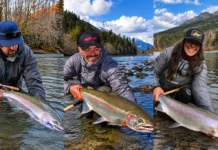
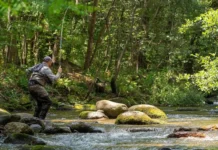
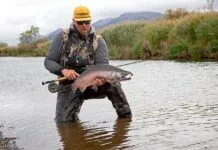
Ever wonder what it’s like to grow up where fly fishing isn’t just a hobby — it’s the family business?
Today we’re heading to Eastern Idaho, where the Berry family has spent over a century guiding anglers through the waters of the Teton, Henry’s Fork, and South Fork of the Snake. Our guest, Brian Berry of Teton Valley Lodge, shares the incredible story of how his great-grandfather turned a handful of guided trips in 1919 into one of the oldest operating lodges in the West.
Brian takes us deep into the history, craftsmanship, and conservation that have defined his family’s life on the river — from wooden boats and stagecoach travelers to modern-day drift boats and the rebirth of wild trout in the Teton River.
Brian Berry shares how his family’s story is deeply tied to the roots of fly fishing in the West. His great-grandfather, Alma McKenzie, founded what would later become Teton Valley Lodge back in 1919.
Alma was born in 1901, right in Teton Valley, Idaho. Back then, life was tough. People farmed, trapped, and did whatever they could to get by. It was when Yellowstone and Grand Teton National Parks became popular travel spots that Alma’s guiding career began. Travelers who wanted to fish kept hearing the same advice: “Go find Alma.”
That early passion for guiding turned into a legacy that still lives on today. A portrait of Alma now hangs above the bar at the lodge, a reminder of the hard work and love that built it.
Today, Brian carries that legacy forward. A lifetime at the lodge has made him part of its story — not just as an owner, but as a steward of the place his family built. With generations of returning guests and guides who’ve become like family, Teton Valley Lodge continues to represent the spirit of fly fishing in Idaho.
Brian spends most of his days guiding guests on Idaho’s legendary rivers — the Henry’s Fork, South Fork, and Teton. Running a lodge means doing it all, from fixing pipes to rowing boats, but he still finds plenty of time to fish.
Brian says it’s impossible to predict when the best day to come is (and he gets asked about this a lot!). Some days during the salmonfly hatch can be slow, while a random hot day in August might turn out amazing.
For years, Brian’s family built their own drift boats for guides at Teton Valley Lodge. Back in the ’70s and ’80s, when fiberglass boats were heavy and there weren’t many guides around, Brian’s dad started making foam-cored fiberglass boats inspired by the classic Keith Steele wood designs out of Oregon.
Over the decades, they kept refining the process, and now they’re taking it to the next level. They’ve launched a new company called Let M Run, built in a new factory in Victor, Idaho. Each boat is vacuum-infused and foam-cored for maximum strength without the weight.
They’re also expanding into rafts (13- and 14-foot models), with carbon fiber and aluminum frames. Plus, a smaller 10-foot two-man version is coming soon.
In Idaho, drift boats still rule the rivers. Brian explains that for every raft out there, you’ll probably see ten drift boats. They’re simply more comfortable — better seats, dry feet, solid floors, and space to move around.
But not every stretch of river allows them. On some BLM and Forest Service sections, guides are required to use rafts. The reason? Supposed erosion concerns from hard boats.
From the upper section near Teton Valley Lodge, the river starts as calm, meadow water. Downstream, it carves into a deep canyon known as The Narrows, dropping nearly a thousand feet and offering a totally different fishing experience.
The Teton is mostly a dry fly river, known for steady surface action and sight fishing to rising cutthroat. But what makes it truly unique is how it’s fished. Instead of drift boats or rafts, guides at Teton Valley Lodge still use what they call “Teton boats.” They’re long, flat-bottomed wooden boats (about 20 feet long and just 3 feet wide) and built for shallow water and narrow channels.
Brian says the river really comes alive after runoff, usually late June through fall. Early season can be slow, but once the flows settle, it’s dry-fly heaven. The Teton is known for clear water, cold temps, and incredible hatches that keep fish looking up.
A few decades ago, the Teton was struggling. Over-stocking had pushed out wild fish, and a flood in 1997 nearly wrecked the system. But when stocking stopped and restoration began, the native trout rebounded fast. Today, surveys show over 2,500 fish per mile. That’s a stunning recovery driven by clean water and strong food sources.
When the big bugs start hatching on the Teton like salmon flies, goldens, or green drakes, Brian keeps things simple but smart. He says success comes from paying attention to what’s happening that day and not being afraid to experiment.
Episode Transcript
00:00:00 Dave: The solution to any problem work, love, money, whatever is to go fishing. And the worse the problem, the longer the trip should be. John Gierach R.I.P.. Today’s guest has lived that pursuit for generations, from a family legacy that began in nineteen nineteen, when his great grandfather guided early Yellowstone travelers through Idaho’s wild waters to today’s thriving Teton Valley Lodge. Brian Berry has spent a lifetime studying rivers, boats and the people drawn to them. In this episode, we’re going to explore the story of one of the West’s oldest fly fishing lodges, the evolution of the Teton River fishery, and how a fourth generation outfitter is keeping craftsmanship, conservation and community at the heart of modern fly fishing. Hey, how’s it going? I’m Dave, host of the travel podcast series where we’re exploring waters of the West, people and the places that define the spirit of fly fishing. Brian Berry of Teton Valley Lodge joins us to share his family’s one hundred year connection to Idaho’s waters, from wooden drift boats to the rebirth of native cutthroat in the Teton and Y, the Teton remains one of the most underrated trout rivers in the West. This episode is presented by Visit Idaho and Yellowstone, Teton Territory, home to some of the most storied scenic waters in the American West. All right. Are you ready to jump into this one? It’s a good one. We’re going to get into all the history. We’re going to talk boats. We’re going to talk rafts, drift boats, lodges, fishing. We got it all excited for this one. Here he is Brian Berry. You can find him at Teton Valley Lodge dot com. How you doing, Brian? 00:01:33 Brian: I’m doing great, man. Thanks for having me. 00:01:35 Dave: Yeah, yeah. Thanks for setting some time aside to talk fishing. Talk East Idaho. I think we’re going to touch on some of the famous great rivers I’ve fished some of them. I’ve actually now fished the Henrys Fork, fished the South Fork, had some good success on both of them. And maybe we’ll touch on the Teton. That was one I know when we were up there last, we talked about it, and I think one of the guys that was on the trip headed out there for a day. So I don’t know about that. We’re going to talk about that. But also the lodge you you run. That’s been doing great for a while, kind of Teton Valley Lodge. We’re going to dig into that and really get your background. So before we jump into the tips and tricks and some of the fishing, why don’t you take us back real quick on fly fishing? Have you been doing this for a while or what’s your first memory out there? 00:02:15 Brian: Yeah, I’ve been, uh, I’m forty seven. When I was born, my parents lived at the lodge. Oh, wow. So, uh, this is really the only place I’ve ever worked my whole life, actually. Um, but my great grandfather started our place in nineteen nineteen. Wow. Been around a long time. 00:02:33 Dave: Holy cow. This is great. Yeah, I didn’t realize the full backstory, man. So your great grandfather, was it your great grandfather? Your grandfather? 00:02:40 Brian: My great grandfather? Yeah. Yeah, my mother’s grandfather. 00:02:43 Dave: Wow. So your mother’s grandfather started this lodge that you’re in currently? Yeah, yeah. Take us back. 00:02:49 Brian: Called McKenzie’s Lodge. Okay. Back then, that was his name. And then, uh, when my dad and his partner took it over, they changed it to Teton Valley Lodge. Okay, maybe a little bit more marketable. That was in seventy one. 00:03:00 Dave: Seventy one? Yeah. What was his name again? The name of the lodge. 00:03:03 Brian: Alma. Alma is a a name out of the Book of Mormon. So. Okay. My great great grandpa was, uh, converted LDS in Switzerland in, like, I don’t know, like eighteen eighty or sometime like that. And then they were pioneers. Came across over to, uh, Salt Lake and then headed up this way. That’s amazing. And then farmed and did all kinds of stuff in alma. Alma was born here in the valley, just up the road from the lodge in nineteen oh one. And then, uh, uh, they did everything they could do to survive. You know, in those days they farmed and trapped and they did everything. Cows and dairies and creameries and whatever. You know, it was a lot different back then because it was everybody lived very isolated, you know, traveling to like, say, Idaho Falls, which is an hour away, was kind of like, you know, trip of a lifetime almost for those people. 00:03:56 Dave: Right. Wow, this is cool. So you have a huge history here was the and fly fishing. So when the lodge started, was fly fishing a focus or was that even a thing then it was. 00:04:06 Brian: So the way it started was um, which is really, you know, kind of the story of all Western fly fishing. It’s around, uh, national parks. So in Grand Teton and Yellowstone became parks. Yellowstone really. Um, people would come out here on the train to visit Yellowstone right back in the. 00:04:26 Dave: Um. 00:04:27 Brian: In the early days, early nineteen hundreds. And, and in those days, uh, before airplanes, Victor and Driggs, our valley, Teton Valley, as opposed to Jackson Hole was the bigger, much bigger town because we had to train. All right. So when people come out of Jackson, they’d ride the train up to west and get out and then go on a stagecoach through Yellowstone, come out in Jackson, come over the pass to Victor, and that’s where the train was to go home. And, uh, people started. Uh, you know, I’ve imagined they used to spend a bit of time in Victor because they were tired from, you know, the long trip through Yellowstone on a stagecoach and all that jazz. So they would be hanging out there, and you just had it was kind of like, now you just have these wealthy guys that come in from back east or California or something, and they want to go fishing. Yeah. And, uh, same story, just a different, uh, kind of dynamic. 00:05:19 Dave: one hundred years later. 00:05:21 Brian: Yeah, exactly. So he just started people started asking around for somebody to take him fishing, and people would say, go find alma, because he was just known as a good fisherman and a good hunter. So he guided hunting, fishing, everything. Oh, yeah. And, uh, started doing that instead of hauling milk and doing everything else he was doing to survive, you know? So it’s kind of pretty cool. 00:05:41 Dave: That is cool. So he was actually fly fishing back then? 00:05:45 Brian: Yeah, I’m sure they did all kinds of things, you know. Yeah. 00:05:48 Dave: A little bit of everything. 00:05:49 Brian: Yeah. Yeah. But they definitely fly fish. But it was people from Um, and I don’t know that he fly fished per se on his own. Yeah. That much before that? I don’t really know. Yeah, but, uh, it was eastern guys that would come out and wanted to fly fish, you know, and he probably learned a lot from those guys and then went from there. 00:06:08 Dave: Right, right. That’s interesting. Yeah. It all obviously came out from the East. And we’ve talked about some of these stories around the the country, you know, the Western exploration like California. Right. Steelhead fishing kind of started I guess, down in the Northern California. But guys from the east brought out their stuff and Atlantic salmon and all that. And I’ve got a little history in it too, with some of our rivers, like the Deschutes and my dad being a him and my grandpa fishing that river way back in the day, you know, probably the fifties, forties before there were many people there. But yeah, it’s cool the history. Do you feel like as you’re there now, you’ve been there your whole life and built this? I’m sure even a cooler lodge now. But do you kind of look back, think about the history a lot and kind of. 00:06:47 Brian: Oh, all, all the time? Yeah. I mean, I’ve got, uh, we’ve got a painting of alma from his last, last year of his life that hangs up. And I never met him. He died in sixty five. I was born in seventy eight, but, uh, his picture sits over the bar. Oh, wow. Yeah, we, uh, my mom and dad and they had two partners, uh, John and Christy Pearson, that ran it. They all worked here when they were kids. They took it over in the seventies for my uncle. And then, uh, you know, our families, we grew up doing every job you can imagine, right? You know, so it’s just kind of like part of who you are. And but you also feel a, um. At least I do, like, you know, uh, what they did was really hard, you know? Yeah. Um, what we do now, you know, the industry is huge. There’s people everywhere, there’s guides everywhere. There’s boats everywhere. There’s people, you know, there’s, you know, people know about it. I mean, those guys were starving to death, eking it out, you know, trying to make a living and keep it going because of their love. So, you know, you feel a responsibility. You got to do a good job. And. And you’re kind of like a caretaker. Not really an owner. 00:07:55 Dave: Right? Right. Yeah. You don’t want to I I’d imagine, you know, you don’t want to kind of sell out, I guess. Right? You hear some of these stories of you build this business and then you get it big enough, and then you sell it to some big whatever. 00:08:07 Brian: Oh, I’m. 00:08:07 Dave: Guessing that’s not the story on this one. That’s not going to be the story. 00:08:10 Brian: No. I’ll die in this place. I’m not I’m not this I mean, yeah, I love it. It’s great. I love being here. I love the guides, the customers. One other great thing is our customers. I mean, there’s customers that we have lots of customers that are multiple generational, a lot of them that have been here longer than I’ve been around, you know. And so they. 00:08:30 Dave: They that’s really. 00:08:31 Brian: Cool. You know, you feel a responsibility to them. But they’re like your family. So. 00:08:35 Dave: Yeah, definitely. Well this is great. No, this is a great start. I’m a big, uh, you know, history. I love getting some of the history in fly fishing. So that’s awesome there. But I want to talk also about your program. But before we jump into that or now what are you doing typically are you kind of out kind of in the office most of the time, or do you get out there much and do some fishing? 00:08:54 Brian: Uh, no, I guide a lot. Uh, so we do, you know, you got to do everything. I go everything from climbing in the sewer to fix the septic tank to get. 00:09:04 Dave: Yeah, you do it all day. 00:09:05 Brian: You know, it’s just what you do when you own a lodge. Sure. But, uh, I guide as much as I can. I haven’t guided quite as much the last couple years because we’re starting another business, and that’s been keeping me really busy. But, um, hopefully that’ll be all up and running really well soon, and then I’ll be back to guiding a lot more. But I still guide for sure. 00:09:25 Dave: Yeah, definitely. That’s great. And when people, you know, call you up or you get a new person that is coming to the area, maybe and says, hey, I want to go fish, what do you tell them? Or what are some questions you’re asking because you guys cover a few rivers out there, right? 00:09:37 Brian: What do we ask them? Or what do they ask us? 00:09:39 Dave: Yeah. Or yeah. What do they ask you? Or where do you think is the place that people are fishing most. 00:09:43 Brian: Well, the number one by far question people ask always, even if they’ve come for twenty years. When is the best time to come? 00:09:50 Dave: Yeah. When is the best time? 00:09:52 Brian: Yeah, that’s always the question, right? Yeah. And, uh, it’s an impossible question to answer because there’s so many variables that go into it. You know, you can be what I’ll tell people is they’ll say, you know, you can come. I’ll tell you when. Sam fly hatch typically happens on the Henry’s Fork and on the Teton and on the South Fork. And you can come and float the canyon on the Henry’s Fork. And there’s four hundred million salmon flies going everywhere, and the fishing’s awful. And you can go, you know, in the middle of August, and it’s really hot and conditions aren’t great. And you can have an amazing day of fishing. You just. Yeah. I mean, that’s not the typical, you know, you have more likelihood of success during the Sam fly hatch or whatever, you know, but, uh, your peak times, but you never know. It’s fishing, you know? Yeah. 00:10:37 Dave: You never know. 00:10:38 Brian: The best time to go fishing is tomorrow. That’s what I tell them. Yeah. You never know when you’re going to go again, man. Just go. Just go. You never know. It might be the best day you ever had. 00:10:48 Dave: Definitely. Do you guys on your program there? Do you guys, uh, when does it kind of end or when does the fishing? 00:10:54 Brian: We’re about wrapping up right now. Okay. Uh, for the lodge, uh, we wrap up about. Right about Halloween. 00:11:00 Dave: Yeah. Halloween. Okay. 00:11:02 Brian: Um, and the fishing, you know, fishing keeps going, but there’s just not the demand to justify keeping the lodge open. It’s like. I mean, this morning, it’s about twelve degrees. 00:11:11 Dave: Oh, wow. It’s getting cold. 00:11:13 Brian: Yeah. So. And, you know, that’s not always right this time of year, but, I mean, people are just moving on to other things right now. So understandable. The South forks down to like nine hundred cfs and the Tetons very low and the Henrys Fork super low. So, you know, it’s time to go find some permit or do something else. 00:11:31 Dave: That’s right, that’s right. Is that what you, uh, in the off season, are you kind of closing things up and heading south? 00:11:37 Brian: Uh, we do that. We go. Do we go do trips? For sure. But I have four kids, two still in high school, so I’m around here still a lot. Um, and, uh, yeah, we’re going to football games and wrestling matches and skiing and all that kind of stuff. More than traveling. 00:11:52 Dave: Sure. 00:11:53 Brian: But we do get out and go, and then we have other guys that take trips. Some of the other boys take people on some trips, other places. But for the most part, we’re here all year. And then. And then, uh, we build boats all winter, so. 00:12:03 Dave: Oh. You do. 00:12:04 Brian: Time flies. So. 00:12:06 Dave: And we gotta. I gotta hear on the boat. What are the boats you’re building there? 00:12:10 Brian: Well, so that’s the other business that we’re really getting going right now. Um, we’ve always built our own boats. Um, but it used to be like, um, like there used to be a million drift boats around, and they didn’t used to be a million guides around. Right, right. So, uh, in the seventies and 80s in particular, and even into the nineties, what my dad would do is they would go to colleges and they would they go to Utah State and Idaho State and Montana State, and they would recruit and get a crew of like twelve to fifteen college kids that would work for four or five years. They’d put them up in a house and provide them with all the boats and trucks and everything, because they were broke and didn’t have any equipment. Right? They’d train them and teach them. Now there’s guides that, you know, people. It’s just totally different these days. In those days, you had these crews of, you know, we had a big crew of guides and none of them had any money. So we had our own boats, and we didn’t like the boats that were being built because they were very heavy fiberglass boats. We’ve always had a very, very, uh, aggressive, I would say, or, you know, really going hard, guiding style. So they wanted, they used to use, uh, Keith steel wood boats and they wanted to get them as light as they could like those. So a guy showed him from down by Idaho Falls, showed him in, in the early about nineteen eighty about building foam cored boats out of fiberglass. So they just started making their own. And then we’ve done that over and over and over again for the last, you know, whatever, forty years. And we’ve kind of perfected it. So now we’re we’ve been, uh, retooling all of our molds and designs and everything, and we’re about to launch that here, uh, right away. They’re called, uh, let them run drift boats. 00:13:53 Dave: Let them run? 00:13:54 Brian: Yep. Let them run. Yeah. 00:13:56 Dave: Wow. This is pretty exciting. I mean, yeah. 00:13:58 Brian: You’ll see a bunch of that stuff here pretty soon. We just. We just built a new factory in Victor. An unbelievable factory. And, uh. Yeah, we’ll be moving all our. We’ve been building them at the lodge here, you know, forever. And, uh, now we’re going to be building them in there and. Yeah, they’re awesome. We do, uh, we do three different rafts, and we do. Oh, you rafts. Yep. Skiff and a drift boat and, uh, other other couple drift boats and a and a skiff, so. 00:14:25 Dave: Oh, my. Yeah, you got it going. This is great. You’re really, uh. You really start this one off. Good. Because we did a whole season. I’m a big drift boat guy. I kind of, uh. And just boating in general. We did a whole season, a whole series on drift boats and really boats. And it’s it’s really interesting because Idaho is such a famous place. You know, you got some of the western, uh, the rafting companies, right? Air and some of those. But then. Yep. 00:14:47 Brian: Great. 00:14:48 Dave: Yeah. Nice. 00:14:49 Brian: Yeah, totally. 00:14:50 Dave: Yeah. So, no. It’s great. 00:14:51 Brian: Yeah. There’s a lot of boats in Idaho. Hide. You know, here. And plaque has their main sales office here and. 00:14:57 Dave: Yeah, lots of fiberglass. Yeah. We’re it’s interesting too, because the boat, you know, if you look around the country, you know where I’m from, tons of tons of fiberglass. But, you know, I have aluminum boat and aluminum in a lot of places is still a popular boat for, um, I guess a number of reasons. I’m not sure, because, you know, the fiberglass boats are so cool, so useful. 00:15:15 Brian: That a guy asked me that the other day. It’s mostly northwest. It feels like. 00:15:19 Dave: Yeah, maybe it is just at this point, northwest. Maybe it’s just a history thing of like, uh, I know one thing. 00:15:23 Brian: I’m not sure exactly why we’ve run some aluminum boats in the past, and I’m not one hundred percent sure why people are drawn to them. I mean, you can make them pretty light. Yeah. For sure. 00:15:31 Dave: Yeah, I think it’s more a history thing. I mean, obviously the the boats are good. If you get a good one you’ll Willys you know koffler’s boats. But you know, one thing on the boats is you can leave an aluminum boat outside for, you know, forever and not have to worry. I’m not sure on fiberglass. Can you leave a fiberglass boat outside without hurting it? 00:15:49 Brian: Yeah. Oh, yeah. You can. I mean, you can get some oxidation in the color. 00:15:54 Dave: But it’s not going to ruin them. 00:15:55 Brian: Well, I mean, it depends on how you store them like, anything, you know? I mean, if you fill them up with water and freeze them back and forth, you can crack stuff for sure. But you could, you know, you could do that with metal too. 00:16:05 Dave: Yeah. You could do that with metal. Right, right. Anyways, that’s a whole nother story. But, um, but you mentioned Keith Steel and I’ve heard that name. Was he a wood boat builder? 00:16:13 Brian: Yeah, he was like, he was the guy out of Oregon. Yeah, I think it was Oregon that made. He made the best boats. Yeah. 00:16:20 Dave: Yeah. Keith Steel, that’s right. 00:16:21 Brian: Yeah. So they were just beautiful, like the best design. Whatever. So they tried to model them after those, uh, you know. Yeah. And they’re totally different now than they were back then because they were, you know, things have changed, but, um, but yeah, that’s what they wanted. They wanted. They wanted, uh, you know, really like, boats that they could roll the heck out of and work the water really well, and, and, uh, you know, just get after it. So that’s what we tried to build on our drift boats. 00:16:49 Dave: That’s cool. Yeah. We, uh, one of the episodes we started off with was a guy who wrote the basically the history of drift boats and building drift boats. Um, and I’m trying to look it up now. Yeah. Roger Fletcher. 00:17:01 Brian: Huh? I’ll look it up. I don’t know him. 00:17:03 Dave: Yeah. Roger Fletcher. Yeah. Episode one seventy seven The History of Drift Boats with Roger Fletcher. He talked about he wrote a book that basically covered the whole history of the different styles of drift boats. You know, the Mackenzie style and the dory and the rogue. We got into the Grand Canyon, the whole. It’s a really interesting story, because if you look at some of that, right, those Grand Canyon dories, those big dories that are going down through the crazy whitewater, you know, you got all that history with those boats and then and then you’re in, you’re part of. That’s what’s really cool. I hadn’t heard this part. And so you guys are launching, um, you know, the new boats. What is that like on, you know, kind of you’re, they’re getting ready to launch this thing. Is there more anxiety or more excitement right now? 00:17:40 Brian: Uh, it’s excitement. It’s I mean, it’s kind of like, uh, a little bit of frustration. It takes so long to do everything. But we had everything ready to launch really well during Covid. And then Covid, just, like killed on our rafts. We started with rafts to sell, and then, uh, Covid was just a nightmare, man. Yeah. Nightmare. So then we had to kind of retool. We had some pretty good traction going, and we’re ready to really pop. And then Covid just killed us. Yeah, we’re in a good spot now. We’ll be back. So it’s alright. It’s great. You’re good to go now. We got a lot of products coming out. Yep. And we’ve really retooled everything over and over and over again. And we’ve got a fantastic like, uh, you know, we got thirty five guides and writing every single day. And we have an amazing kind of testing pool, right? 00:18:27 Dave: Yeah. You got you got your own. So I’m imagining these boats are going to be, um. Well, is there a place we could look at those boats right now or just whatever you’ve been using? 00:18:34 Brian: Not yet. The website is just about to launch. Okay. Hopefully by the time this comes out. Yes, it will. It will be, uh, let em run. Boats.com. 00:18:43 Dave: Okay. Yeah, yeah. And you guys are is there. There’s probably on your social. Should probably see some of the boats you guys have used over the years. 00:18:48 Brian: A little bit. We’ve taken a break on social until we get to the website live and start showing everything. So we don’t want to show everything on there yet. But, uh. Yeah, but it’s a cameraman. 00:18:58 Dave: Okay. Yeah, I’m looking at one at at your website. Uh, Teton Valley Lodge, dot Teton. There’s a drift boat. Somebody catching a big fish with the mountains. It’s a white boat. I’m assuming that’s one of yours. 00:19:09 Brian: Uh, probably. 00:19:10 Dave: Probably. Is the style going to be more your typical drift boat, or is it going to be low profile or the skiff or. What’s what are the boats you guys run? 00:19:18 Brian: So they’re a lot different than your typical drift boat. Um, everything is vacuum infused and we’ve been doing that since about. We started vacuuming, fusing our boats in about twenty twelve. Um, so we’ve had a lot of practice with it over, over the years, uh, to perfect that, uh, the process so and everything is chord. So everything is built with a closed cell division cell foam coring. 00:19:43 Dave: Oh is this similar to like a surfboard technology or that sort of thing. 00:19:47 Brian: Similar. I mean, it’s the same way they make like, uh, hell’s Bay makes their boats that way, makes the boats that way. Most actually most, you know, other than drift boats, most boats are sandwich. 00:19:58 Dave: Oh, okay. 00:19:59 Brian: Yeah. Um, it’s a pretty common thing. Okay. But, uh, what you get when you add foam is you get a tremendous amount of rigidity without the weight. Uh, so you can have way less fiberglass, um, when you put fiberglass on both sides of foam. Um, it’s kind of like taking a sheet of plywood, and you can bend it and wobble it, and then you throw a stringer across it of a two by four or a joist, you know, and it becomes extremely rigid. And the two separate are not that strong, but when you put them together, the combination makes an amazingly strong structure. So, um, another thing that’s different on our boats is everything is molded. So there’s no, uh, post painting or like, uh, class B finish, everything’s class A finished. So we build, like, on our skiff, you know, a low side, like a, you know, like a headhunter or a Montana skiff, whatever that style, you know? Yeah. Um, but it’s only two other. There’s two knee braces that are separate parts. The front and rear knee brace are removable, but the rest of it, it’s two parts. So there’s one whole mold and one interior mold, one piece. So we infuse both those parts and then we just glue them together. So there’s no uh, there’s no post, uh, sanding and glassing anything together. So it’s very similar to the way they make like, you know, a ski boat or a ranger boat or whatever. That’s how, you know, most boats are made. Gotcha. Um, So it’s really cool. It’s. They’re beautiful. They’re very sleek. There’s no, uh, we think about everything through the lens of fishing. Whatever is going to make a guide mad, you know, or a customer mad. Like catching your line to convenience, to having your bags in the right spot to have in your rods and reels everything. So they’re kind of psychotically, uh, perfectionists and always almost to our detriment, redesigning and reconfiguring everything like every other day, trying to make it better. Yeah. 00:22:07 Dave: Right. Right, right. Wow, this is great. 00:22:09 Brian: That makes it hard. Sometimes I I’m my own worst enemy. I’m like, okay, I just gotta shut up and just go with this. 00:22:13 Dave: Yeah, just go with it. Right. It was like the, uh, going back to the model T, right? You know, Henry came out and he said, you know what? This is what people want. And they’re going to have black, you know, basically one thing, right? You know, he was like, this is it. And, you know, obviously that’s changed over the years, but, um, no, this is cool. And on the rafts. 00:22:29 Brian: I love doing it. I love trying to make it better and trying to, you know, and it’s all about just making it so you can catch more fish. 00:22:35 Dave: Right. Yeah. This is great. No, this is super awesome. Exciting. So do you. And on the rafts, are you guys actually making the raft itself or the frame or what? Is that part of it? 00:22:45 Brian: So when we started out, we were using air, uh, Super Pumas mostly. And we still use those, uh, but we also started manufacturing our own, uh, rubber also. So we do a thirteen and a fourteen foot, and we’re working on a, on a ten foot two man, uh, right now. And then we do two different kind of frames. We do a steel or not steel aluminum frame, metal frame, I should say. And a metal. It’s metal and fiberglass. Uh, kind of, uh. 00:23:14 Dave: Yeah. Mix. 00:23:15 Brian: Uh, mix. And then, uh, and then we do a fully, uh, composite carbon fiber frame. 00:23:20 Dave: Oh, wow. 00:23:21 Brian: So that’s just a one piece frame. 00:23:24 Dave: Okay. 00:23:24 Brian: Uh, yeah. 00:23:25 Dave: Yeah. Do you guys see out there guys using the boats? Just in general in Idaho. Do you think it’s fishing wise? Is it a good mix of rafts and drift boats or more drift boats, do you think? 00:23:35 Brian: Oh, not even close. Way more boats. Way, way more drift boats. So the thing on rafts is we use drift. So we guide like thirty five different sections of river between the Henrys Fork, South Fork, and Teton. And, um, we, you know, there’s, uh, let me think for that, we mainly use raphson out of all those. And, uh, the way we do our guide program, like the guides have their own cars and boats, but we provide all the rafts for them so that and we’ve got about fifteen rafts for our guide service. So we can go all those places every day. Yeah. But, um. Yeah, if you didn’t need to use a raft, uh, you would never take a raft. 00:24:14 Dave: No. 00:24:15 Brian: You know. 00:24:15 Dave: Yeah. 00:24:15 Brian: You would take a drift boat. Drift boats. Just more comfortable. It’s nice, you know? It’s nicer. Whatever. But we have all those places that we guide in rafts. Now, we used to guide drift boats, and we got in rafts now because of the abuse, either dragging them down into canyons or the whitewater problems and sinking drift boats. And, uh, some places the Forest Service or the BLM has mandated that you got to use rubber instead of hard boat for whatever reason. Oh, wow. Makes no sense. Makes no sense. 00:24:46 Dave: Yeah, I wonder why that is. 00:24:48 Brian: But, well, they say the hard boats create more erosion or something, which is ridiculous, but whatever. So some places we have to use rafts. Yeah. 00:24:57 Dave: Gotcha. 00:24:58 Brian: Because whatever. It’s just the government. But, um, we have all these old customers, and we didn’t build these to sell them. We started building them because we had to start using rafts. 00:25:08 Dave: Mhm. 00:25:09 Brian: And so we bought rafts and did nice deals and reconfigured and just, you know, the whole thing did whatever we could to try to make these rafts work. And the customers just hated them. The customers hated them and the guides hated them. And they would you know, the guys would complain and then the customers would complain. So we’d try something else and then it would be worse the other way or better the other way. Whatever. Yeah, it was just never working. And most rafts are, you know, they’re uncomfortable. You catch your line a lot there. There’s nowhere to put your stuff. There’s it’s just kind of a pain. The floor is not stable. All kinds of different things. And, uh, no knee braces. So customers can’t stand up. And all these customers of ours were used to going in our drift boats down on the river. So they’re like, man, I used to have this great day going down this float. Now I’m in this stupid raft and I’m uncomfortable and my feet are wet and and, you know, you know, they just weren’t happy. Yeah. So we had to figure out something to appease the guides, the government and our customers. So we just. I mean, it’s taken us a long, long time, but we finally made a boat that, um. I tell you what, I knew it worked out was when guides in the wintertime would leave their drift boat and ask if they could take a raft home with them for the winter to fish out of. 00:26:27 Dave: Oh, wow. 00:26:28 Brian: Well, now, now, now you got some. Yeah. Now they actually like it. You know, they’re going to go fishing out in their own and customers like them. You know, I will say customers still like fishing out of a drift boat more. Yeah. And so do I. Yeah. 00:26:39 Dave: But it’s a good second. 00:26:41 Brian: Yeah. We we’ve tried to make it the best we can make it just for fishing. It has nothing to do with rafting. It’s just about fishing. But then you just have rubber on the bottom, you know? 00:26:50 Dave: So yeah. No, it makes sense. It’s, you know, and I’ve used both, you know, probably more drift boat. But yeah, drift boats are great until you get to that point where you’re, you’re it’s a little technical and you’re maybe hitting rocks and you just. Yeah, you don’t want to hit a broadside with a drift boat. It’s just. Yeah. Rafts are more forgiving. That’s bottom line, right? That’s the biggest thing. 00:27:08 Brian: Definitely. Yeah. They’re more forgiving, a little more versatile. Um, but if you didn’t need one. Yeah. I mean, if you drive around, like Teton Valley now, I mean, it’s like drift boat mania, you know, or even anywhere, anywhere in the West, really. You know, it’s going to be at least ten to one drift boat to rest easy. 00:27:28 Dave: Step into the world where the river whispers and the fishing is nothing short of legendary. This year I ventured into the heart of eastern Idaho, Yellowstone, Teton Territory, where the fish were larger than life, and the waters held the secrets of the best fly fishing out west. Yellowstone. Teton territory is not just a location, it’s a gateway to adventures that will etch themselves into your memory. With crystal clear rivers like the Henrys Fork and the South Fork of the snake, and enough lakes to keep you going all year long. Make your way to Yellowstone, Teton Territory, and embark on a journey to one of North America’s finest flyfishing destinations. Whether you’re planning your trip now or just dreaming it up, the white is where those dreams turn into reality. Remember Yellowstone, Teton territory? That’s Teton t e t o n. It’s time to experience eastern Idaho for yourself and support this podcast at the same time. though, this has been great and it would be awesome to follow you guys and see as the boats come out and keep on that. But one of the the rivers, you know, and I’m sure you guys, I’m not sure if you do more rafts or drift boats is the Teton we haven’t talked a ton about. I was hoping to get a little background on that. Maybe. Maybe describe the Teton River. You know, that versus, say, the Henrys Fork, South Fork, the snake. What is the big difference? Is the Teton quite a bit different than those other two? 00:28:47 Brian: Yeah. Yeah, we’re really lucky in that we have so much water here and that they’re very unique and diverse, you know? So I feel like we live in the greatest place you could ever live to be a fishing guide. But, um, I’m looking at Teton right now. So we sit on the banks of the Teton. And the Teton is different in that it is completely undammed, um, than the Henrys Fork and the South Fork. It’s Spring Creek, it’s the giant Spring Creek. We sit on the very upper section of the Teton, our lodge. And so from where we sit, Victor Idaho is about ten miles to the southeast. You can look across and see it, but if you drive to Victor, you never cross the river. There’s no there. It just comes out of the ground right about halfway between us and town. So about five miles upstream, it just comes out of the ground in a lot of different places, and it’s a pretty good sized river. It runs, you know, you know, in the summertime, it’s like three hundred and fifty to six hundred cfs, you know? And so and that all just comes out of the ground. There are several tributaries, but most of them get pretty dry by, you know, after runoff. Um, or they’re not a huge contributor. It’s pretty much Spring Creek. So where we sit, it is like what you would imagine, you know, Railroad Ranch, Silver Creek, that kind of stuff. It’s flat Spring Creek, the river. Then it goes down. You get down below us a couple miles and you start getting into Oxbow, you know, bendy, uh, you know, meadow River, going through cow pastures, basically in willows and a few cottonwoods, but mostly willows. Uh, and it winds down through there, uh, very, very tranquil. A lot of paddle boarders these days, a lot of inner tube floaters and stuff, which is kind of a nightmare, but. 00:30:41 Dave: Right. 00:30:42 Brian: Um, that’s a new phenomenon. But it’s beautiful through there. Tons of moose. Really beautiful, amazing views of the Tetons. It’s a it’s a pretty gorgeous place. Yeah. And then it drops as you get down in the valley. Out of the valley at the end. I said the north end of the valley. It’s flowing south to north, almost directly north. It runs into starts going into the canyon, which we call the narrows. And then, uh, you get a couple more pretty big tributaries, Badger Creek and Birch Creek that come into it. So it it gets maybe half again as big down there. And then, uh, it’s in a deep, deep canyon. It’s completely different river than it is up here. Um, you’re in, like, you know, a thousand foot deep canyon. 00:31:25 Dave: Is that where it turns west when it hits those big trips? 00:31:28 Brian: Yeah. It takes a ninety degree angle. West. Yep, yep. And then it runs down through that canyon for about twenty some odd miles. And then, uh, there’s the old dam site that they tried to dam up back in seventy six. It broke. And then, uh, and then it goes down into the, into another, you know, the lower valley for a little while where it’s pretty much completely, uh, diverted and spread out all over the place and then dumps into the Henry’s Fork that dumps into the South Fork, not very far below that, down by Rexburg. 00:32:01 Dave: Okay. And is that where it dumps into the Henry’s Fork at Rexburg? 00:32:04 Brian: Yeah. It goes through the town of Rexburg, just outside of Rexburg. It dumps into the Henry’s Fork down at a place called Beaver Dick. Yep. Beaver Dick campground. 00:32:12 Dave: Okay, there you go. Are you guys fishing? Uh, most of that river. What do you guys focus on? 00:32:17 Brian: Yeah, we fish the whole thing. The very bottom end. You don’t fish near as much because it gets really dewatered later in the year, you know? Yeah, it’s not nearly as productive. Water. There’s some big fish down there and there’s definitely fish down there, but it’s a lot warmer. And, you know, all the diversion stuff makes it. It’s not nearly as, uh, populated. 00:32:35 Dave: Right. Wow. Okay. So especially like you said, Spring Creek up top is mostly, you know, the Spring Creek. Is that different than the Henry’s Fork? I mean, is the fishing quite a bit different because it’s kind of a spring creek? 00:32:47 Brian: It’s a lot different. It’s a lot different than Henry’s Fork in that, um, well, I’ve never caught a cutthroat in the Henry’s fork, ever. 00:32:56 Dave: Um. 00:32:57 Brian: I know there are some here and there. Once in a while, you see somebody with a picture of a holdover, you know, but not very many. Uh, the Teton is primarily cutthroat, which is awesome. And, uh, they’re beautiful. Big, beautiful cutties. I mean, there are rainbows, and there are actually now a few browns in there. Um. Um, and getting to be more browns, but that’s kind of a new thing. So that’s a big difference. Um, there’s great hatches on the Teton. One of the problems the Henrys Fork has is Island Park Reservoir, uh, which is where the water comes out at Box Canyon, which is basically the beginning of the river for all intensive purposes. Um, it really warms up the river a lot. Uh, that’s a very shallow reservoir, and the water gets a lot warmer, which is kind of a pretty big problem. And the Teton just stays cold. It’s coming out of the ground, you know, directly. And, uh, the hatches, uh, are quite a bit more resilient on the Teton than the Henrys Fork. So that’s a big difference. So caddy’s that and there’s less people on the Teton. I mean, Henrys Fork, you know, most famous river in the world, probably. Right. 00:34:07 Dave: So yeah. 00:34:07 Brian: Yeah, it gets pretty hammered. 00:34:09 Dave: It is. Yeah. It’s definitely a fantasy river. And you think it sounds like that the Teton would be a pretty awesome river to fish up there. Why do you think the Henry’s Fork just, you know, in the Teton has not had as much of the, you know, the press, I guess, over the years? 00:34:24 Brian: Well, I mean, there was nobody here. 00:34:28 Dave: Yeah, just that’s the thing. Yeah. You go back to your grandpa, your great grandfather, like there was, you know, nobody there then. And then he. 00:34:33 Brian: Was he was the publicist. He publicized things. He did a lot of things to get things going. Yeah. And then, you know. But that was a long time ago. 00:34:42 Dave: There wasn’t that many people then. There were there weren’t eight billion people or whatever. Yeah, yeah. 00:34:47 Brian: And then you go to my dad and his partner, and they didn’t want to tell anybody anything about anything. They didn’t care if anybody knew their name from Adam, you know, they just wanted. 00:34:56 Dave: They were fishermen. They were fishermen. 00:34:58 Brian: They were not writing an article about anything. They were not going to sell one of their flies. They were not going to try to publicize anything. They just wanted to catch fish and take their customers guiding. And they were very secretive about stuff, so they didn’t try to publicize it, which I appreciate that a lot. Um, you know, nowadays it’s almost impossible. It’s just like. 00:35:18 Dave: A social media and everything, right? 00:35:21 Brian: Yeah. 00:35:21 Dave: Yeah. 00:35:22 Brian: But, uh. And everybody knows there’s no secrets anymore. You know, people act like they’re secrets. There’s no secrets. 00:35:28 Dave: Right. Definitely. So what would a day on the Teton be like for you guys if we were coming in there? I guess doesn’t really matter when in the year you’d be there. But let’s say there was a big hatch on. 00:35:38 Brian: For the most part. Doesn’t really start. The Teton is a little bit different because of that. The no reservoir, you can fish it early in the year. Um, you know, talking like May, June, whatever, you can fish it. It’s not amazingly productive. It’s very, very, very low until runoff happens. 00:35:55 Dave: Okay. 00:35:56 Brian: Uh, and then the runoff lasts until, you know, sometimes into July, it’s usually the end of June, beginning of July, depending on on snowpack and how it melts. Um, that when the Teton really gets going. So we’re not fishing it a lot before that. Okay. And the Teton is an amazing dry fly river. Amazing dry fly river, primarily dry fly river. Really? Um, but you don’t. You’re not going to get a lot of hatches before that time of the year. So. Yeah. Um, we don’t fish a lot before that. We’re we’re more on the Henry’s Fork and the South Fork, but, um, the Teton is so diverse, you know, all those different areas, like, we fish it down in those oxbow areas. We do them in drift boats down in the canyon. We do them in, uh, rafts, um, up here by the lodge on the Spring Creek stuff. We use a boat we call a Teton boat, which was a boat that my great grandpa would have started guiding in, which was what he had. You know, he’d never seen a drift boat or a raft in his life in nineteen nineteen. And, uh, they had these long. They’re kind of like they kind of, uh, what do they call those? I’ve heard people call them. Well, kind of similar to those Atlantic salmon canoes a little bit. 00:37:06 Dave: Oh, yeah. The canoes. Right. So narrow. 00:37:08 Brian: But they’re kind of like a poor man’s version of that. So you gotta think these guys were really, really poor. Uh, frontiersmen, basically. And one of the big things that they did was trap, trap and hunt. And this river is real shallow. And there’s a lot of narrow little sloughs and creeks, whatever. So they made these long. They’re like, uh, they’re almost thirty feet long, uh, like three feet wide or I said thirty, twenty, sorry, twenty feet long. 00:37:34 Dave: twenty. 00:37:34 Brian: By and like, like three feet long or wide. And then, uh, flat bottom, they’re basically like a giant coffin, you know, they’re just a long square. Yeah. Plywood boat. 00:37:46 Dave: And why was that? Why do you think they built that style? Where’d that come from? 00:37:49 Brian: Well, they could float really shallow and they could push them up into all these sloughs, and they could fill them up with traps and pelts and ducks and. 00:37:57 Dave: Right. 00:37:58 Brian: Moose, whatever, you know. 00:37:59 Dave: But not the best going through whitewater or technical. Right? 00:38:02 Brian: Oh, any kind of fast water, they’re not that great in. But on this river, on this flat river that we fish on, It’s still the best boat out here. Like I wouldn’t fish this river in a drift boat. That boat is amazing for out here and anywhere else. No good. Yeah. So the way we fish this river out here is we have a boathouse, um, with a channel that goes into the river, and we just leave the boats in the water, and they’ve got little nine horse motors on them, and, uh, you motor out, the guide sits in the back, cut the fisherman one in the one, uh, kind of a third of the way up. Another guy in the front, and you fish sitting down the whole time, and the guide sits in the back with two, uh, lodgepole that we cut down and sand down and varnish, and you manipulate the boat sitting down with these two poles on the upstream and downstream side of the boat, and you hold the boat perpendicular to the river, and then you float downstream at feeding fish, and you cast at them. And then the guide between the guide and the fisherman, you let the fly float down into the fish. You’re always fishing down. Almost always fishing downstream at feeding fish. 00:39:11 Dave: Wow. 00:39:11 Brian: It’s very unique. 00:39:12 Dave: Yeah. It is. And on the polling, is this polling? Are you actually using the polls to, like you would in a skiff out in the saltwater. 00:39:18 Brian: Similar to that? Um, but you drift with the current. Yeah. Um, so you’re drifting downstream, even though it’s very, very slow. And a lot of times you look out there and it looks like it’s still. But it’s moving, but it’s slow. And, uh, basically what you do is you just use angles on with the sticks and control the boat going, um, the right angle. 00:39:42 Dave: Yeah. 00:39:42 Brian: And then and the speed. So you’re either slowing it down, speeding it up, stopping it. 00:39:48 Dave: Do the sticks have actual, um, do they have paddles on the end or is it just actual a pole? 00:39:52 Brian: No, it’s just a it’s actually just a lodgepole pine. We just chop, we find dead standing lodge poles that are about, you know, about an inch thick on top and about two and a half inches thick on bottom. And sand them down and varnish them. And there you go. 00:40:06 Dave: There you go. 00:40:07 Brian: They’re about, like, fifteen foot long sticks and. Yeah. 00:40:10 Dave: Yeah. And then how do you get to when you’re out there? Do you have oars on it? Could you set the oars to row it to shore, or do you have the motor. You have the motor there. 00:40:17 Brian: Yeah. Yeah. We do have a little nine horse on there. No. You float down and motor back up and motor around. Wow. Whatever. Yeah, yeah. No, no. And in the old days, they didn’t have motors. They just pull them, you know? 00:40:26 Dave: Oh, just pull them. Right? Right. Gotcha. Yeah, yeah. Cool. Well, there you go. Yeah, it makes sense. You guys obviously have a boat company, so that’s, you know, easy for you to put that together. But cool. So that’s the pulling session. So what do you think if we were talking and we were going to, you know, come out there and fish with you. What’s a good start on the Teton is it, do you think this poling section or what would be if you had a few days, let’s say you had three days. 00:40:46 Brian: That’s by far my favorite place to fish in the whole world. Yeah, it’s not for everybody. Not everybody likes, you know, uh, Spring Creek style, you know? Yeah. Spot and stalk, like, uh, you know, sounds amazing. Straight up dry fly fishing, but it’s. Yeah. It’s unbelievable. It’s my. It’s so fun. Um, but it’s also a little bit technical. So it’s not the greatest for some people either, because you’ve got to be able to cast a fair amount, you know. Yeah. And uh, and you just you just have to have your expectations, right? You know, that it’s, you know, there’s failure. Yeah. You’re gonna fail and it’s going to be challenging. 00:41:22 Dave: You could get skunked or have a rough day, like anywhere. 00:41:24 Brian: Yeah, but it’s amazing, I love it. Um, but then you go down to the next section. The next section is down on the Oxbow. They’re they’re fantastic. So I’ll tell you, we did a deal. We went shocking with the fish and game the other day to do a a survey. And so we floated from the South Bates Bridge to the Buxton Bridge, which is about that’s not a full day float for us if we were guiding it like a half a day. 00:41:51 Dave: Is that above two forks South Bates Bridge down. 00:41:54 Brian: It’s, uh, two Forks is in between. Yeah, in the middle of that. Okay. Yep yep yep. So we floated that with them and shocked. And they shocked. I think we put in the bucket two thousand five hundred fish that day. 00:42:09 Dave: Wow. 00:42:09 Brian: And, uh, it was, uh, it’s unbelievable the amount of fish. I’ll tell you something that’s amazing about that. That river is so prolific. There’s so many fish in there. And. And I would really want to figure out how to get an aquatic or a invertebrate. Numbers. Oh, right. River has an unbelievable amount of food in it, but, um, so, uh, and they used to stock the Teton super heavy, like insane. 00:42:39 Dave: Like with rainbows, browns. 00:42:40 Brian: Yeah. All Chamber of Commerce stuff, you know, and trying to just get people to come in all through the thirties, forties, fifties, sixties, just like millions of fish in there to try to, you know, get people to come up and stay in the hotels or whatever. Um, and they kind of quit. They kept stocking until the late nineties when they stopped stocking the Teton. And then the town really suffered like ninety seven. We had a gigantic biggest flood in the history of Idaho, and it really messed up the river. And it was really struggling for a number of years because of silt and the hatches were down. And then we had a lot of droughts and the river. It was just tough. So and then we had then Teton Valley started exploding with, uh, development, and they started building the first really big golf course in Victor and my dad super concerned. So he got with, uh, the head, uh, hydrologist from, uh, the Henry’s Fork Foundation, Rob Van Kirk and a couple other people. And they started, uh, friends of the Teton River to try to protect the river. And, uh, uh, that was like in early two thousand. So they the numbers that they started really, you know, doing the science on boiling it down. And there was like less than a hundred cutthroat trout per mile on Teton. 00:43:57 Dave: The native, the native species. 00:44:00 Brian: Yep. Up and and they attributed that really, you know, they started doing all kinds of. Restoration projects and all these different things, which definitely helped a lot. But come to find out what really, really changed that river was stopping stocking. So when they stock all those fish, right, there’s a finite amount of food in the river. The stock fish eat a bunch of the food, and then winter comes, and then there’s a natural amount of fish that die, because there’s just too much competition for the amount of food. And over one hundred years of doing that, you know, the native or wild fish population was just decimated. So there was like, we never fished down there because there were no fish. You know, there was just no fish down there. We wouldn’t go down there. This is back in the nineties, you know, very seldom would you go down there. So by about mid two thousand, uh, like twenty ten, two thousand. Right. Well yeah, about twenty ten, twenty fifteen, somewhere in there just from not stocking that river trout numbers are up to like Two thousand five hundred to like almost four thousand. 00:45:02 Dave: On their own. Literally. They just stopped for fifteen years. They stopped. They didn’t do anything else, and they just let native the wild fish do their thing. 00:45:09 Brian: Yeah. And I’ll tell you, this river right here is the model that every fishing game person around the country should look at for not stocking. It’s unbelievable the numbers. Now, it might not work in every situation, but man alive, they should at least look at this as a case study because it’s unbelievable what’s happened. The amount of fish when we were shocking that we didn’t catch and the ones that we did is unreal. We videoed the whole thing and we’re going to put out a video on it with the fish and game. It is incredible the amount of fish in that river. Wow. So that river is very productive. The one problem is you get all these paddle boarders and float tubers and they’re just having a good time, you know, and they’re not doing anything wrong. But man, it really takes away from your experience. So it’s hard to figure out here. 00:45:55 Dave: We call them the splash and giggle right out there. That’s what you got. The splash and giggle crowd. 00:45:59 Brian: Yeah. Oh, man. Which, you know, you can’t blame them. 00:46:01 Dave: No. They’re enjoying. They’re enjoying nature. 00:46:03 Brian: It’s wonderful, you know. 00:46:04 Dave: Yeah. 00:46:05 Brian: It just kind of takes away from your deal. But I’ll tell you, it’s crazy. Like, even the day we were shocking, we had a boat guided boat on there that day, and we got started really early. We’re down shock in the river, and I’m. We would shock it and then pull over and start counting the fish and tagging them, whatever weighing them. And the fish are feeding like right where we just went through and other guide boat rolls up and I’m like, how’s it going? And he’s like, oh, we’re getting them. Yeah. It’s great, you know? And we had just gone through there with four. Shocking. Wow. You know electric. 00:46:39 Dave: Even shock them all. 00:46:40 Brian: Basically covering a bank to bank. 00:46:42 Dave: Right. 00:46:43 Brian: And the fish don’t care. So those paddle boarders float by. I just say that because paddle boarders float by and you think it’s going to ruin the day. The fish don’t really care. It’s more, you know, the person perspective. You’re like, ah, this is annoying, but the fish don’t care. 00:46:56 Dave: We’ve heard that on some, you know, other rivers like steelhead specifically, you know, where you got a jet boat that just busts by. And we’ve had, you know, guys and guides talk about the fact that sometimes that’s actually a good thing, you know. Yeah. You know. 00:47:07 Brian: Some. 00:47:08 Dave: Food. Yeah. 00:47:08 Brian: Get some moves. Them. 00:47:10 Dave: Yeah. So maybe that’s not bad. Well, this is an interesting story too, because you got a story of recovery and what sounds like an amazing river now with native. And are these native fish? Which species is this? What are these? Are the these the, um. Is it Yellowstone? Cutthroat? What are the cutthroat species here? 00:47:26 Brian: So, I mean, well, I got an argument with one of the biologists this year about an argument with a conversation because, you know, Yellowstone is goes to the Mississippi. Oh, right. And snake River goes to the Columbia. So we sit right on the we sit right on the on the continental divide here basically, you know, so supposedly genetically, they’re they’re the same fish. Okay. Supposedly. But I don’t know how that can be. I mean, you know, ours would be snake River, but they’ve been cross. You know, they’ve been planted and moved around so many times. Different places, different hatcheries over the last hundred, some odd years. Right. You get you get Yellowstone and Snake River and you get a mixture and you get. And then you got rainbows mixed in with them. And it’s just a hodgepodge of whatever, you know. 00:48:14 Dave: Yeah. Right. And those fish that came back, you know, after they stopped stocking came from probably everywhere tributaries downstream, upstream, and just filled the gap once those fish left. Something like that. 00:48:24 Brian: Yep. Yeah. They just I mean, there’s so much food. You know, if you have food and water, you’re going to be good. 00:48:30 Dave: Yeah. 00:48:31 Brian: Yeah. Wow. And there’s, you know, it’s just a very, uh. And nobody kills fish anymore. 00:48:36 Dave: No, that’s the other thing. Yeah. Nobody’s killing fish. 00:48:38 Brian: Yeah. I mean, I’ve never in my entire life and I fish a lot. Been asked to look in my cooler ever. Right. 00:48:47 Dave: That’s not a. 00:48:47 Brian: Thing. 00:48:48 Dave: Is bait fishing, you know. Is that allowed out there? Do you see that at all? 00:48:52 Brian: You can do anything out of the Teton. Yeah, you can do it. I mean, basically, I don’t know about anything. I don’t do any of it. 00:48:57 Dave: But you can kill fish if you wanted to. 00:48:58 Brian: You can’t kill cooties. You can’t kill cutthroat. Um, but you can kill, uh, yeah. Browns and rainbows. You can kill all the rainbows you want, basically. 00:49:06 Dave: That’s right. They’re trying to kill, like in South Fork, right? They’re trying to kill as many as they can. 00:49:09 Brian: Yeah, yeah, they’ve been trying for a long time to get rid of them. And they’re doing the same thing on the Tetons. 00:49:14 Dave: Oh they. 00:49:14 Brian: Are. Yeah. 00:49:15 Dave: Out of those two thousand five hundred fish, what was the, um, uh, kind of size? Average, largest fish you saw in there. 00:49:21 Brian: You know, they go well, the largest one that we got that day was a twenty. It was like twenty four, twenty four inches and it was almost eight pounds. No, this one was a rainbow. 00:49:32 Dave: Oh, rainbow. Right, right. 00:49:33 Brian: It was a monster, man. It was huge. 00:49:36 Dave: eight pounds. 00:49:36 Brian: But, uh, yeah, it was a toad. It was huge, actually. The guy, the biologist, the head guy there, he said it was the biggest one he’d ever seen. Yeah. Shocked out of there. Um, it was a really cool fish, but there’s a lot of nice size fish. But there’s tons of little tiny fish, too. And the other thing, there’s a lot of brookies in the Tetons. 00:49:53 Dave: Oh, there are. 00:49:53 Brian: Yeah. They brought rookies out. Uh, actually, my great grandpa’s family, they used to have a pond that they raised him in. Uh, and it was for food, you know. 00:50:03 Dave: Mhm. 00:50:03 Brian: But, uh, and they let him go. But there’s tons of brookies in the Teton which they’re trying to get rid of right now because they eat a lot of cutthroat fry up in the tributaries. Yeah. But there’s a lot of brookies. But you know, if you catch a big one, he’s a fourteen inchers like a gigantic one, you know? 00:50:19 Dave: Yeah, that’d be a big one. And then a big what would it be, a big cutthroat that you’d catch in there? 00:50:23 Brian: Uh, I mean, they get huge, but, you know, you catch a lot the Teton. You catch a lot of nice sized, great average size. So you get a lot of like, uh, fourteen to to eighteen inch cutthroat, a lot of those. But you can catch them. You can catch some really big cutthroat on the Teton for sure. But for the most part, you know, you get like, if we had we have, like, a big fish contest for our customers. Yeah. And like, you know, whoever wins catches the biggest fish, wins. The Teton rarely wins that. 00:50:50 Dave: Oh, right. 00:50:51 Brian: Mostly the South Fork and then the Henrys Fork, and then the teeth. 00:50:54 Dave: And then the Teton. 00:50:55 Brian: But they’re in there. Yeah, there are big bows and there are Brent. Now they’re starting to be a lot more browns, too. Um, which is which kind of got the fish and game freaked out, but. 00:51:03 Dave: Right. But that’s the cool thing about cutthroat, right? They’re known for the surface oriented they come to. Are you guys fishing those mostly on the surface? A lot of the year, yeah. 00:51:11 Brian: The Teton, you mostly fish dry fly. I mean, you can and they love streamers. Cody’s love streamers, but, uh, and you can get them on nymphs, of course. But the great thing about the Teton is it’s really good dry fly fishing. And the hatches, there’s great hatches on the Teton. 00:51:26 Dave: And you mentioned a couple of stamps. So do you guys have all the big hatches, salmon fly, all the different ones you think on in the West? 00:51:32 Brian: Yeah. I mean you don’t get a huge salmon fly hatch in the valley itself. You get a big one in the canyon. Um, and they’ll fly up like you’ll even get them all the way up here. I’ve, you know, salmon flies. They’ll fly to the lodge sometimes. But that’s a long ways from where they’re hatching, because up here it’s great silt. Okay. You know, so there’s no salmon flies hatching here. We do get tons of golden stones and tons of yellow sallys in the valley. Um, and then you get really big PMD hatches, you get bluing, olives, you get a lot of tracos, you get, uh, betas and, and, uh, Calabasas, and you get green drakes in the spring and gray drakes in the fall and mahoganies and then, of course, tons and tons of different caddis. 00:52:13 Dave: Yep. Caddis and midges and all that in the winter and stuff. Olives. Yeah, yeah, yeah. 00:52:18 Brian: The winter is not great. Uh, for the Teton. Yeah, it’s pretty hard, right? Usually. 00:52:25 Dave: Yeah. What happens in the winter? Cold here? It’s just cold. 00:52:27 Brian: And, uh. Yeah, it’s really cold and really windy in the winter. And the river fills up with snow and ice. And the most of most of the Teton is frozen most of the winter. 00:52:37 Dave: Gotcha. Okay. 00:52:37 Brian: And it’s a slow moving river, too, so. 00:52:39 Dave: Right. But like you said, July, August, September, October. Those would all be great months. The summer would be awesome. 00:52:45 Brian: Fantastic. 00:52:46 Dave: Yeah, yeah, and it’s spring, so you’re going to get cool. What is the water temperature there? Pretty much. Is it the same year round? 00:52:52 Brian: You know, it’s in the fifties. Uh, high fifties to low sixties on the in front of the lodge. It’ll get warmer when you get down in the canyon in August. Yeah. Uh, if you have a dry year. Not always, but, uh, if you have a drier year. But, you know, we start getting frost. Uh, I mean, July is the only month that you’re probably not going to get frost. You’re definitely going to get a frost every other month of the year. Mm. Um, it’s a horrible place to be a farmer. 00:53:19 Dave: Oh, right. I noticed there are some farms around you, you know, on the west side, right? 00:53:22 Brian: Oh, it’s primarily agriculture. You know, historically. But, man, you had to be one tough SOB to be a farmer here. 00:53:29 Dave: Oh, right. Yeah. Yeah, it’s pretty spectacular when you look at a map and you zoom out because you’ve got the Grand Teton and the mountains just to your east, just boom. And then there’s some smaller mountains right to the west. You’re kind of in this little cool valley. Yeah. The valley. Right. The Teton Valley, yeah. 00:53:44 Brian: It’s an amazingly it’s awesome. It’s a wonderful place. And we’re super centrally located, which is really great to go to the, you know, the South Forks, thirty miles over the over Piney Pass, the Lower Henrys Forks, like thirty five miles to the north, to the Lower Henrys Fork. 00:53:58 Dave: And Victor, like you said, Victor’s right there. 00:54:00 Brian: Yeah, you got a lot of stuff to do. 00:54:02 Dave: You’re on your way. Yeah. You hop over the the Teton. You’re in. Jackson’s right there. You’re on the. Just hop on the highway. 00:54:07 Brian: At Jackson’s thirty miles away. 00:54:08 Dave: Yeah. Wow. I didn’t realize how how where and kind of the opportunities are. This is really good. Well, let’s take it out of here with our, uh, kind of a conservation corner segment. And we already talked about it a little bit. I’d love to get a feedback, some feedback on what’s going on there, but I’m going to get a couple of tips on you for fishing dries here in a second. But take it back there on the conservation piece. It sounds like you’ve been involved in that and your family has. Is that something that you guys are ongoing? I know the Henry’s Fork Foundation is a good group out there. Do you see? Are you pretty. 00:54:35 Brian: Out in my mind is the best trout fishery conservation group in the world. They’re amazing. 00:54:42 Dave: Yeah they’ve done and I from my experience and we had them on the podcast a while back that they’re really good at working. 00:54:48 Brian: With Brandon. 00:54:48 Dave: On there. Yeah, we had Brandon on. Yeah, and. 00:54:50 Brian: Brandon’s a stud. 00:54:51 Dave: Yeah. Brandon, it was great because what he basically said was like, we’re, you know, they’re really good at working with everybody. I feel like the worst thing you can do is like, cut somebody out, even if they have a different opinion. And then you’re, like, fighting. 00:55:03 Brian: Yep. That is the a one hundred percent. You nailed it. What? They do better than anybody. No. They have they have the best science probably than everybody also. But you know, if you went to Driggs or Victor or whatever, you went across the street from me to the farmer and you said Nature Conservancy or something like that to one of those farmers, they’re going to be like, screw those guys. Yeah. Because they’ve become an antagonistic, you know, uh. 00:55:27 Dave: Lawsuits and stuff like that. 00:55:28 Brian: Yeah, yeah. We’re anti you guys, you know? And even if it’s not true, that’s how they feel. The Henry’s Fork Foundation, what they do, which is unbelievable is build relationships of trust with the irrigators, which if you don’t have the irrigators on your side then you’re just spinning your wheels because they run the whole thing. You gotta have them on your side. Yeah. And the other thing is, it’s very presumptive of most of these groups to think that these people don’t care and they just want to exploit. Exactly. My family, I have tons of most of my extended relatives, you know, they spent their most their lives not fishing to make a living. They were farming or some kind of ag in this valley, and they put their blood, sweat and tears into living here, farming. And to say that they don’t love this place just because they don’t fish, right, or whatever, or they’re not, you know, they don’t have a sticker on their truck that says they’re part of some group that’s very, uh. 00:56:29 Dave: They’re just as invested in it as anybody. Yeah. 00:56:33 Brian: More so they’ve put their whole lives into it. These guys. I got neighbors up the road here. They could sell off their land. They could be multi, multi, multi millionaires if they wanted to, Do you know in a minute. But they work their butts off to farm every day and keep this place open and beautiful. Man, I appreciate those guys. That’s really. It’s very arrogant to think that those people don’t care about this place. Yeah, but that’s what the Henry’s Fork Foundation does. That’s the only reason I’m bringing that up. Henry’s Fork Foundation is amazing at that. And Brandon particularly. 00:57:03 Dave: Yeah. We’ll get a link out to that episode we did with Brandon in the show notes so people can have a listen if they missed it. But yeah, we’re going to definitely bring them back on and talk more about all the good stuff they have going. But let’s jump into a couple tips, then we’ll let you get out of here on the fishing. So we’re talking dry fly fishing. Somebody coming out there to fish. Maybe they’re on their own. Maybe they’re with you guys. What are a few things you’re telling them when they’re on the water to have more success with dries? And I don’t know if you want to talk about a specific hatch or. Or is there anything in general you could talk about a little bit there? 00:57:32 Brian: Um, you know, the best way to be successful? Dry fly. Let me think about that for a second. So, I mean, I guess, uh, you just got to know what’s going on hatch wise, right? Talk to people and figure out what’s going on. You know, in the local area, if you’re coming to the town. 00:57:50 Dave: If you’re fishing the salmon fly hatch, let’s say that pop, does that come off like in a like June, like late June? 00:57:56 Brian: Yeah, late June or early July, depending on the water. 00:57:58 Dave: Late June. Okay. On that hatch, what is the typical setup you’re using there? Is that a dry dropper or are you just using a big bug. What are you using for that? 00:58:07 Brian: Uh, well, I would say when I’m fishing or guiding, you know, a lot of times you’re fishing a dry dropper anymore. Yeah. Um, but if they’re eating the dry, good enough, just cut that thing off. Yeah, just go straight dry, you know? 00:58:20 Dave: Yeah. Just go big. 00:58:20 Brian: Yeah. 00:58:21 Dave: What’s your fly, or is it chubby? Chernobyl. Is that your big fly on the end of that? 00:58:24 Brian: Yeah. We use a lot of Chernobyl. Yeah, a lot of Chernobyl, but also a lot of other, you know, more traditional salmon flies, you know, like, uh, you know, sofa pillows and Jughead’s all that kind of stuff. But a lot of pretty much, I would say primarily chernobyl’s now foam. Yeah. For the most. 00:58:40 Dave: Part, Apart from this home. 00:58:42 Brian: Just works so great. But, um, the other really great one, one that people don’t do a lot on salmon flies is, uh, especially, I would imagine, most places. But salmon flies come out when there’s pretty big water for the most part. Right. That’s, you know, the it’s the first hatch that really pops after the runoff starts to subside. But a lot of times there’s runoff still going on. Um, and so there’s big water, a lot of water, uh, push in and they’re in fast water a lot of times, you know, salmon flies like to be in, in rocky, fast water. So, uh, I really love fishing. Uh, a sunken salmon fly. 00:59:17 Dave: Oh, really? 00:59:17 Brian: A lot. Yeah. So we tie a fly, we tie, like, uh, basically a sofa pillow, but we put, uh, lead, tie lead in the body and have a real sparkling and then just fish it. Not a lot of lead, but a little bit. So you can fish it like an inch or two under the water or even just take like an actual dry cut down all the hair really trim and, and then, the what my dad would say. The way you dress it is you. You drop it in the bottom of the boat, spit on it and step on it. 00:59:47 Dave: Nice. 00:59:47 Brian: I mean, he just get it to sink just a little bit, you know? And then, uh, a lot of times those bugs are hanging on the rocks for dear life. And. 00:59:55 Dave: That’s right. 00:59:55 Brian: You know, the waves are on them, and they just get churned up in that water. And, boy, that works really good. And you can see it a lot of times because it’s just barely under the water. It’s like a dry fly. Yeah. Because you can see it, you know. 01:00:06 Dave: You can see it and it’s a big bug. The cool thing about that is we’ve heard a lot of great fly, uh, you know, dry fly fishermen talk about that. The fact that. Yeah, you’re you’re probably not fishing a Catskills dry like sitting high on the surface. Sometimes it’s better to get that dry fly down in a little bit. Right. Yeah. Like you said. And the cool thing about the sofa is a huge fly, right? This is a size what size? Six or something like that. Size four. 01:00:25 Brian: Yeah. We’re fishing mostly. We’re fishing a lot of twos and fours twos. And for the most part on salmon flies. Yeah, we fish really big bugs. And we also fish very heavy tippet. Yeah. Um, like salmon fly hatch. I’m using Zero to two x on my drive. Like, don’t screw around, you know? 01:00:43 Dave: Right. 01:00:44 Brian: And, uh. And they don’t care. Fish in our area. I don’t know about other areas, but our fish do not care about tippet size. Really? Um, and especially when they’re eating salmon flies. And the other thing is, if there’s any golden stones out, I don’t know what it is. They must taste sweeter or something. Yeah. 01:01:02 Dave: Right. 01:01:02 Brian: Because they love golden. They they prefer gold stones over salmon flies, for sure. Most of the time it feels like there’s even a few goldens out. I like to fish, uh, salmon fly with a golden off the back. That’s it. And man, they love they love Goldens. 01:01:17 Dave: That’s a good time to be on the river. So right after. So you get the high water and it’s coming down. And you guys are right away. Is that when the hatch starts kicking off? 01:01:25 Brian: Usually, yeah. Yeah. And on the Teton it’s a little different because the Teton, uh, is not dam controlled. And so it’s real weather dependent. So you’ll get like, you know, it might be middle of June and it, it’s got really hot. So the river’s up and raging really, really fast. And then you start getting cold nights and it subdues and comes down a little, and then they’ll start popping, you know, and you can get in there for a while, and then it might get hot again and rage again and then it goes off. You know, they’re still out, but it’s too high and muddy for them to be eating them. So anytime you can get that flow down just a little bit, you know, but still high, the bugs start popping. Yeah. Um, yeah. That’s just man, that’s a fun time of year. That is fun. The other thing that happens at those time of year, a lot of times on the Teton and on the South Fork, is a lot of times you get green drakes out at the same time. 01:02:14 Dave: Oh, during the salmon fly. 01:02:15 Brian: Yeah. Which man when. And they really love those things. Right man alive. Wow. You can have a million salmon flies out and you get a hundred green drakes. And they really key on that thing. That’s a lot of fun when they’re doing that. 01:02:28 Dave: Yeah man. And does that stretch into a little bit into July like early July. 01:02:33 Brian: Yeah. Well it all depends. You know it just depends on how warm the spring is. Even if you have low snowpack or high snowpack, if you have, depending on how the how it comes out of the mountain, how hot it is, that’s what makes the difference. Right on when it happens. Um, for the Teton around here anyhow. Yeah. Um, but yeah, I mean, there’s times when you don’t even get in. You can’t even get in on the Teton until after the Fourth of July because there’s so much water for sure. Gotcha. But that’s rare anymore. Um, but dry fly fishing, you know, just stick with it and try a different stuff. Don’t be stuck on something. Um, like one trick that, you know, my dad taught me was, uh, you’re eating fish. A lot of parachutes. 01:03:19 Dave: Oh, yeah. 01:03:20 Brian: So you’re fishing? Yeah. You know. Yeah. Whatever. Whatever. Parachutes. Whatever. Yeah, whatever. And, uh, they might be eating it really good. Sometimes they get a little bit picky. Is tear the hackle off of your parachute. 01:03:32 Dave: Oh, wow. Yeah. So just have the the post and no hackle. 01:03:36 Brian: Yeah, yeah. Sometimes that makes a difference. Or fishing that sunk a little bit like we’ll fish. Uh, a lot of times they really liked fish. Like, um, a parachute Adams off the back of a Chernobyl. And don’t grease it. Let it sink just a little bit in there. Or a renegade. 01:03:52 Dave: Yeah. The renegade. 01:03:53 Brian: Murder bug. Yeah, that’s a killer. 01:03:55 Dave: The Renegades works out there. 01:03:57 Brian: Oh, amazing. Yeah, yeah. No, I’m sure most, uh, twenty somethings don’t even know what a renegade is. 01:04:02 Dave: Yeah, the renegade is amazing. I just asked a comp we had a comp fisherman on, and I asked him about Peacock. I was like, what’s your favorite material? And I said, I kind of love the peacock. It’s a cool material. It looks cool. And he was like, ah, he’s not his favorite, you know what I mean? But the renegade is basically really unique because it’s got these brown hackle and a weird the back of the fly, and it’s got this white hackle, the front and peacock. Right. It’s a really strange looking fly compared to a normal dry flies. 01:04:25 Brian: It’s just an old. Yeah it’s an old traditional fly. Well that used to be what they called the holy. The Holy Trinity. Right. Was the the peacock. Brown and white combo. If you look back at most flies from back then, you got like, you know, you got you got renegade, you got a bug, a prince. 01:04:43 Dave: A royal wolf, or the wolf’s. 01:04:45 Brian: Royal wolf, a trude, you know, a million different spruce fly. There’s a million of. 01:04:50 Dave: Them, right? 01:04:51 Brian: Yeah, but it was always had there would, you know, they might throw in a different little thing, like the renegade has a little red tinsel on their little tinsel. Not red. I mean, gold tinsel on the shank. And then you got a royal wolf as a red and, you know, all those different things. But I always had those three components peacock, brown and white. 01:05:09 Dave: You’re right. Yeah. I didn’t even think about that. 01:05:11 Brian: Yeah, like a prince has the white. White. 01:05:14 Dave: Yeah. And doesn’t the atoms have a white a white and. No, it’s got a grizzly hackle. What does the hackle. Yeah. Yeah. 01:05:20 Brian: It’s a grizzly and brown. 01:05:21 Dave: Grizzly and brown. Right. Yeah. Yeah, yeah. Wow. 01:05:24 Brian: This is cool. A lot of flies like that renegade. But that renegade is a killer, man. 01:05:28 Dave: It is. And you fish that kind of sunk. 01:05:31 Brian: Yeah, it’s really visual. I mean, it both. It fishes great. It’s a great Mitch pattern. It’s a great. Just like sometimes you or a spinner or just sometimes something different. You know, it’s just. It’s whatever it is. Who the heck knows why, right? 01:05:47 Dave: Yeah. What is that brown hackle on the back that doesn’t. 01:05:49 Brian: Look like anything. 01:05:50 Dave: No, no, but. 01:05:52 Brian: It just looks buggy, you know? And people give fish too much credit. Fish are not smart, right? No, they’re not smart. They’re not their brains the size of a pencil eraser. Their instinctual. So just because it doesn’t look like something to you doesn’t mean if it works, it works. Don’t think about it too much. And that renegade has worked for, who knows, one hundred some odd years. Yeah. Fish haven’t changed. They’ll still eat it. I used to talk to my dad, and I used to tie flies, like twelve hours a day all winter long for production. And in the night we would start tying for fun. We’d tie like, you know, a million, whatever we were tying all day. And then at night, we’d just tie for fun. Listen to a ball game or something, and he’d start tying some fly from the fifties that I’d never seen before. And I’d say, what did tell me? All these stories about how he used to kill them and it was so great. Whatever, whatever, whatever. And I’d say, well, why, why, why, uh, why did you stop using it? Why don’t we use that anymore? And invariably it was like, I don’t know. Right. 01:06:54 Dave: Yeah, yeah. 01:06:55 Brian: Start doing something else, you know? 01:06:56 Dave: Yeah, yeah, yeah. 01:06:58 Brian: But that stuff still works. You know, people just don’t do it. People get so caught up in whatever is on whatever some guy told him or whatever they used last. But they don’t change. They don’t try something. 01:07:10 Dave: They Euro nymph or whatever it is, right? 01:07:13 Brian: Oh man. All my guys. Now, if you don’t have a jig head on a nymph, it’s never going to work, right? Give me a break people. 01:07:20 Dave: I know. 01:07:20 Brian: But you can’t convince those guys of that. That’s what it’s gotta be like that. 01:07:25 Dave: That’s great. That’s great. Awesome. Well, this has been great, Brian. Um, I think we could probably leave it there. I’ve been loving the chat today, and maybe we can get you back on for to dig into another topic at a later point, but we’ll send everybody out to Teton Valley Lodge if they want to check in with you guys on availability and any of your operations. But yeah, I just want to thank you for all the time and the history and yeah, definitely love what you have going and yeah man. 01:07:46 Brian: Anytime. Yeah. Super fun to talk to you. Appreciate it. 01:07:48 Dave: All right. All right Brian we’ll be in touch. 01:07:50 Brian: All right man have a great one. 01:07:53 Dave: If you want to connect with Brian Berry we mentioned it there. If you want to get some trips, if you want to connect with the history more, which I’m loving. Go to Teton Valley Lodge Comm. If you want to get access to one of these trips, you can send me an email Dave at. We’re going to be doing some great stuff this year with Brian and the crew at Yellowstone Teton, so if you get a chance, I would love to hear from you. You can also go to. If you want to join our members group, put your email there and we’ll follow up with you the next time we launch this, which should be very soon. Uh, wet Fly Swing pro. This is where we’re building trips, connecting with the community. And and you’re getting first access at some of the great stuff we’re doing. All right. Well, let’s see, what do we have going? Let’s take a look back in the, uh, in the machine, the daily machine. Um, you know what? We’re looking out now at November. It’s pretty open right now. I know we do have a, uh, an episode coming up with CJ’s Real Southern podcast. We’ve also got the littoral zone. We’ve got Great Lakes. Dude, we got some good stuff coming. I’m just going to let you know that if you haven’t already, you can subscribe right now and get all this information delivered right to your inbox when the next episode comes live, because that’s the easiest way to do it. Uh, and just want to let you know and thank you for sticking in all the way to the very end. Hope you’re enjoying your travels, and I hope you experience that road less traveled this year. We’ll talk to you then.