If you’ve ever wondered what it’s like to truly dial in Idaho fly fishing, today’s episode is for you. We’re joined by David Raisch, longtime guide at the Lodge at Palisades Creek and co-founder of Hawgfish, who has spent the last 25 years exploring some of the most diverse and overlooked fisheries in the West.
From the famous Henry’s Fork to the sprawling South Fork of the Snake, all the way to the ledges of American Falls, David has seen it all. And today he’s sharing the lessons learned. You’ll hear why Idaho might be one of the most underrated fly fishing destinations, how to rethink your setup for big winter trout, and why those smallmouth bass flats deserve way more of your attention this summer.
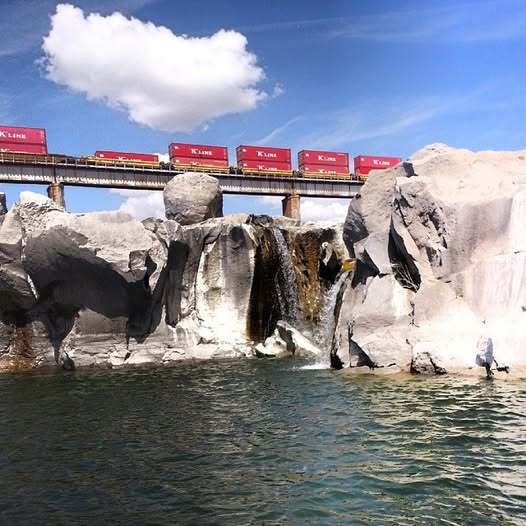
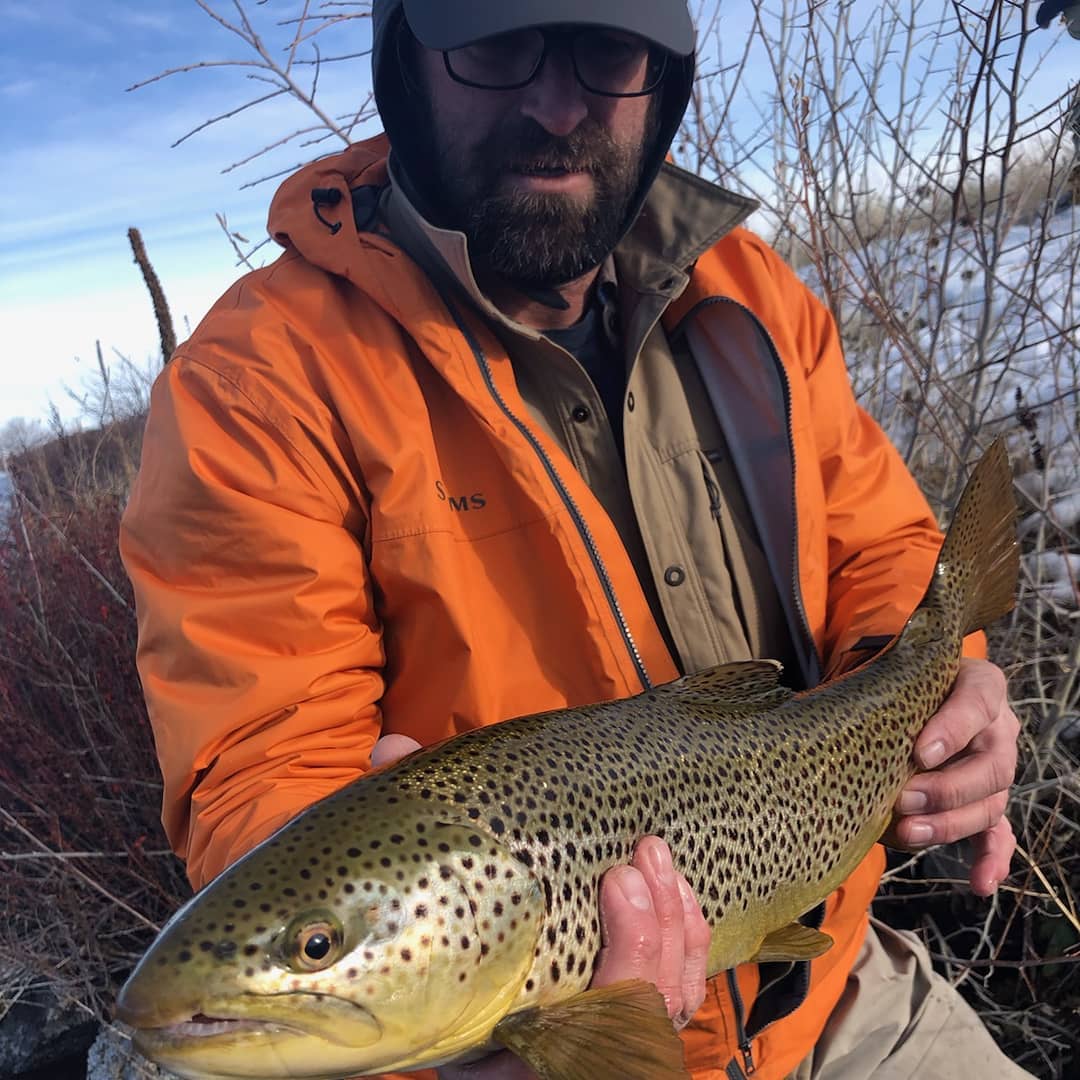
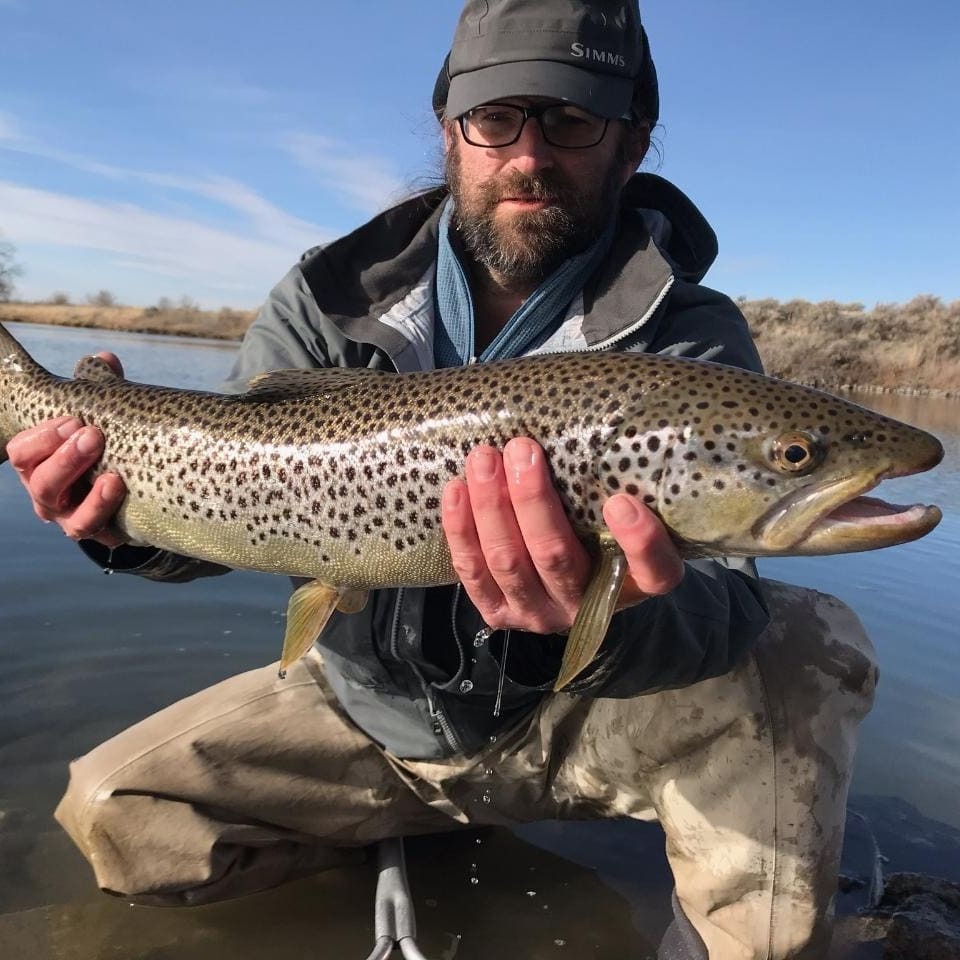
David has spent years dialing in the waters below American Falls Reservoir and it’s not your average trout spot. This section of the Snake River offers some of Idaho’s best winter fishing for big trout.
The secret? It’s all about timing. When irrigation season ends in October, the river drops, making the water perfect for walk-and-wade fishing. The fish get packed into smaller areas, especially along the lava rock ledges that line the riverbed.
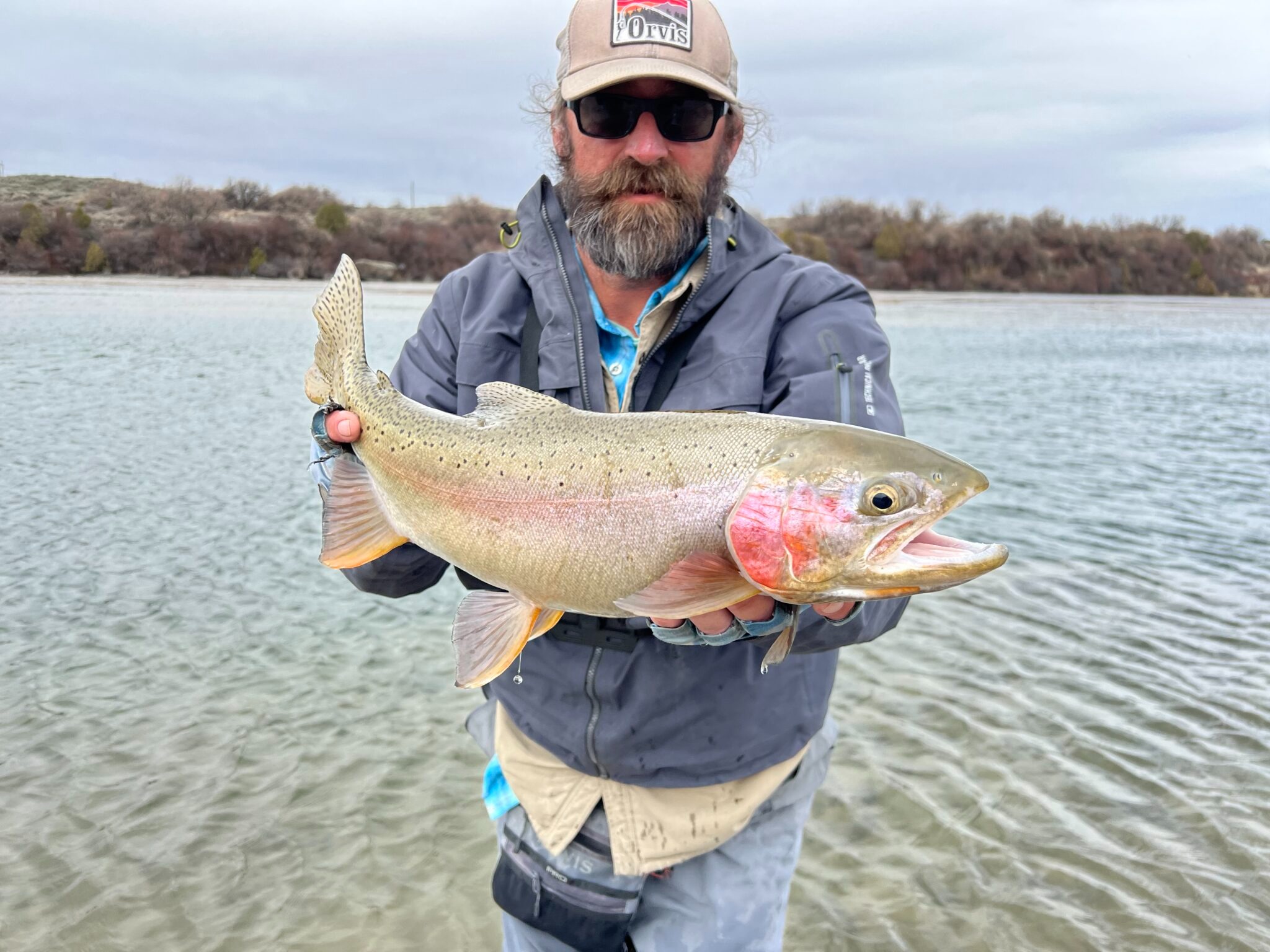
When the water drops after irrigation season, it’s prime time for nymph fishing around American Falls. David keeps it simple with a Thingamabobber for his indicator and uses tungsten nymphs like size 14 or 16 Frenchies. Big fish? No problem. David isn’t afraid to fish heavy tippet like 1X or 2X. The fish aren’t that picky.
Pro Tip: Let your drift run long even below you. Most hits come right in front of you or just downstream. And in colder months, get your flies close to the bottom, about 6 to 8 inches off. Warmer days? The fish might come up for your fly, so you don’t always need to hit the bottom.
If you’re fishing the South Fork in summer, you’re in luck. It’s packed with hatches from now through fall. You’ll see stoneflies, yellow sallies, PMDs, and plenty of caddis. And when July rolls around, hopper season kicks off — one of the most fun ways to fish this river.
David says you can’t go wrong with a Chubby Chernobyl. Foam, rubber legs, and that big white wing make it easy to see and trout love it. Some anglers also like the Morrish Hopper for a different look.
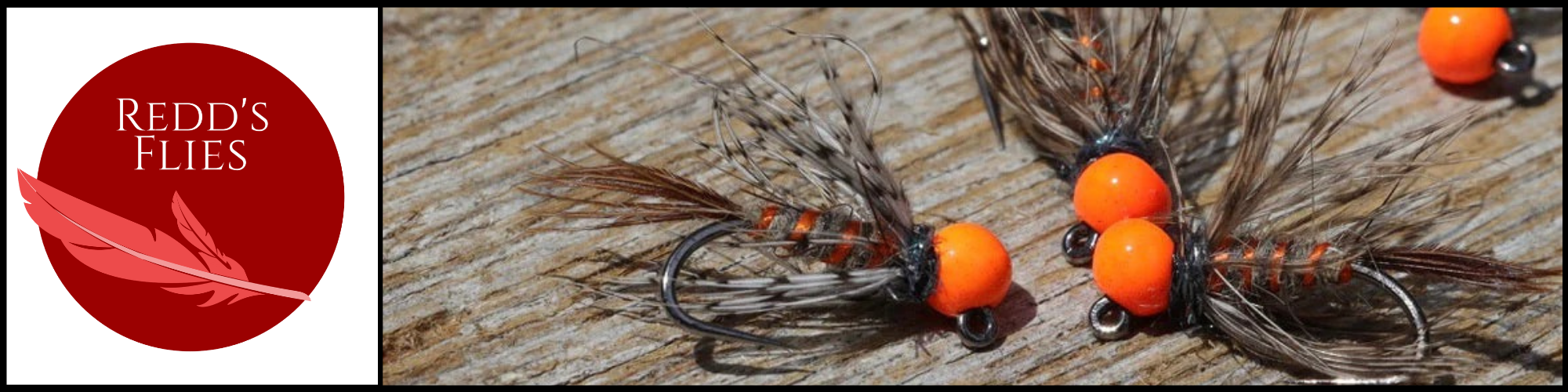
David’s other go-to? Simple, tough dry flies with good floatability. He ties them using materials from Hawgfish.
If you’re trying to plan the perfect trip on the Snake River, timing is everything. David breaks it down simple:
If you’re heading to Pocatello for a fishing trip, you’ve got a few great spots to grab a bite. First stop? 5th Street Bagelry, owned by David Raisch himself. It’s a local favorite for breakfast and lunch, serving up best-selling bagel sandwiches like the Adobo and the California. Perfect for a quick breakfast or grabbing guide lunches before you hit the water.
Things to do besides fishing? Mountain biking and rock climbing, hot springs at Lava Hot Springs, bird hunting and big game hunting, and whitewater rafting or kayaking.
Episode Transcript
Dave (2s):
Today’s guest packed up for Idaho in the late 1990s chasing powder and trout streams, and never looked back from the technical waters of the Henry’s Fork to the sprawling South Fork and LA ledges of American Falls. He spent the last 25 years dialing in some of the most diverse overlooked waters out west. By the end of this episode, you’ll rethink how you rig for big winter trout. You’re gonna hear the secrets to catching fish during the fall irrigation dropped, and see why smallmouth bass season just might be Idaho’s best kept fly fishing secret. This is the Traveled podcast series, and I’m gonna take you on a journey today. We take you to new places, give you tools, and the success you need to travel.
Dave (45s):
This year, David Raisch, Guide for the Lodge at Palisades Creek and co-founder of Hawgfish is here to help you get into more fish this season. And maybe think twice before skipping over that, that small mouth bass flats in the summer, we’re gonna help you cover hatches, dig into trophy trout, and learn everything about the Snake River. This episode of travel is presented by Yellowstone Teton territory home to some of the best fishing and wild country out west, and we encourage you to visit Idaho this year. You ready to rethink Idaho? Let’s jump into it. Here he is, David Raisch. How are you doing, David? Doing
David (1m 24s):
Great, thank you.
Dave (1m 25s):
Yeah, thanks for coming on here. We are gonna dig into a bunch of stuff. You know, we’ve mentioned Lodge at Palade Creek. We’re doing a amazing event here. We’re doing a giveaway event, giving away a couple of spots here. We’ve got a bunch of brands on board, but you also have a bunch of other stuff going here, which I’m excited to hear about around fly tying and some of the other stuff you do. It sounds like some other businesses and, and things in fly fishing. So we we’re gonna get into that and maybe just remind us right off the top, your flight tying, you have kind of a a site. What’s the best place there for that?
David (1m 55s):
We have myself and a partner. We’re a small company called Hogfish, H-A-W-G-F-I-S h.com. We sell innovative and, and new fly tying materials to the market. I do a lot of expos. You can find us there at some of the big expos.
Dave (2m 11s):
Perfect. Awesome. Well, we’ll get into that today. I think it’s gonna be a, a fun one. We always love to chat on flight tying, but, so we’re gonna talk about, you know, basically fishing the South Fork of the Snake. I mean, you know, a famous river that’s out there. We’re gonna talk about that today. Maybe just take us back real quick here. Have you been out in that part of the country for a long time or what, what’s your story there?
David (2m 30s):
Yeah, I was born in pa but grew up in Ohio, Dayton, Columbus moved to Idaho in 98 to pursue, you know, skiing and fishing, fly fishing, and ended up back in graduate school at Idaho State University. Didn’t plan on staying in Idaho more than about five years, but fell in love with it. The South Fork of the Snake beat was the obvious favorite river right off the bat. I mean, just driving through there without even fishing, it kind of fell in love with it. Although I cut my teeth a lot on the Henrys Fork, which is its neighbor and the port enough river here out of Pocatello where I live.
David (3m 11s):
But the South Fork was a bigger river and just provided opportunities at bigger fish and less people when I first moved here in 98. And you could just, you know, fall in love with it very easily.
Dave (3m 24s):
Yeah, that’s right. And how far is it from Pocatello up to, if you’re gonna fish the, like at the lot to the lodge at Palisades Creek there,
David (3m 32s):
It’s about an hour and a half to the lodge up to Swan Valley where I like fishing. It’s about an hour. So the lower South work there, you know, in the past there’s less people there, a lot of good streamer fishing, bigger fish and opportunities. And it’s a little bit closer to home at this point. Yeah, it
Dave (3m 52s):
Is. Okay. And you, but you spend a lot of your time these days down near Pocatello. Is that more of your time guiding?
David (3m 58s):
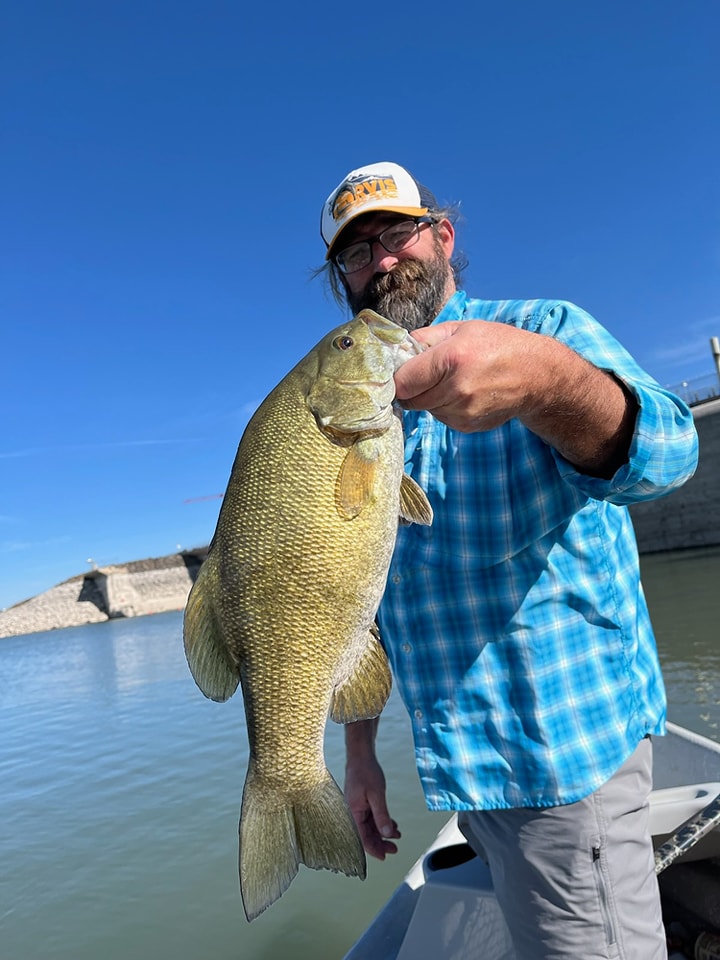
That’s correct. We’re about 20 minutes from American Falls Reservoir and that includes, you know, the dam and the waters below it. There’s 10 to 15 miles below it, all the way down to Masco Rocks. I fell in love with that because it has huge fish. They grow quick. There weren’t the crowds at the South Fork or the Henry’s work receives it. And it’s a very diverse fishery down here. Summer, it’s a, it’s a bass fishery and then our off season on the South Fork further up in Swan Valley is prime time down here for trout. So we’re talking October, November, January, February and March we have an amazing trout fishery, and then it switches gears from June, July and August to a bass fishery.
Dave (4m 43s):
Right, right. Gotcha. So, so is the way you have American Falls, which is, is that a natural falls there? Is that what’s going on there? Describe that a little bit, that whole system in that area.
David (4m 53s):
Yeah, American Falls Reservoir is a bigger reservoir. It does have a dam. You’ve got Palisades further up river towards Jackson, and those two reservoirs are the largest in southeast Idaho, mostly for irrigation, flood control, some energy production, but really they grow a lot of fish quickly. That one of my favorite parts about American Falls. The lake itself, it’s shallow and it’s big. So it’s actually a food factory in that it has cooler water temperatures, but receives more nutrients from agriculture, which allows the rate of fish growth to just be excessive.
David (5m 35s):
You go further up the Snake River towards the South Fork, you have much cooler water, not as many nutrients, and the fish grow slower. So we’re right at the sweet spot with American Falls and that it has a, a good nutrient content and cold water temperatures, which allow trout to grow some of the fastest in the state or the fastest in the world.
Dave (5m 57s):
Right, right. Awesome. And where is the confluence? So the Henry’s Fork and the South Fork come together. Where is that, where does that occur?
David (6m 4s):
That is close to Manan, Idaho. You know, you, one of your last kind of towns on the Henry’s fork is St. Anthony, and then you have Rigby, which is really close to the south work there. So just below that, a few miles, a place called Manan is closest to the confluent.
Dave (6m 23s):
Gotcha. Okay. So they come together there and then it becomes the snake and then through Idaho Falls and then down, like you said, an hour or so down to where you’re at down there. Let’s talk about that. You mentioned, I mean, I, the cool thing is you have the winter fishery right up there. What, what does that look like? So come October, you could still fish the South fork snake, but eventually, you know things right, the weather changes and things get colder and all that. So are you in November, December, describe that a little bit on the, you know, American Falls area.
David (6m 50s):
Yeah, it’s a lot of, it’s tied to irrigation. So we have an irrigation season, which runs, you know, the second week of April through the second week of October when irrigation season ends, you have a marked drop in flows that come out of those dams. And what that does is sets up a fishery that’s walk and wade accessible. There’s some floating available down to about 2000, but when the river drops below that, it tends to become a walk and wade fishery. So there’s quite a bit of large fish squished into a much smaller volume of water with a great lava substrate. You, you don’t tend to have a lot of dry fly fishing.
David (7m 33s):
What happens after you leave Idaho Falls? The Snake River kind of becomes a predatory fishing system with not those classic hatches. It becomes more bait fish and cray fish oriented, so it grows fish a little bit quicker on those, those diets.
Dave (7m 50s):
And then as you get down into, so talk about that maybe if you know the area that you’re guiding or you’re out there most often, how long of a section is it and is it, are you pretty focused in a, you know, a little area down there?
David (8m 2s):
Yeah, it’s, it’s actually, you know, there’s at least 10, 10 miles before the water starts to back up into a flat water, slow moving, you know, river. So we have enough moving water through that, up that stretch below the dam to keep the trout in there. October and November is great fishing. You know, I don’t fish a lot in December and January, even though it still is a, a good winter fishery, it’s just colder. But by that time you hit February and March, it kicks back in the mid start hatching. There’s blue wings down there, but once again, you’re not throwing dries. It’s, this is all gonna be subsurface, snis, worm patterns, you know, some streamers right off the bat, once the water temps get cold enough, I’ve noticed a little diminished return on streamers.
Dave (8m 54s):
So that’s what you’re doing doing mostly, you’re kind of nipping, is it kind of a nipping game nipping in streamers throughout like October through the winter?
David (9m 1s):
That’s correct. And by, by Thanksgiving the water temps have hit, you know, not rock bottom, but they’ve, they’ve definitely gone cold enough where the fish metabolism slows down. You’re getting a lot more fish on nymphs or balanced leches. I do a lot of leches, slower moving leches under a strike indicator. You can still strip leches just a little bit slower and works the fine.
Dave (9m 25s):
And so That, and, but, and this is in the river, it’s a kind of a more of a slower moving river type. And maybe describe that a little bit. What does that look like when you’re fishing a balanced leach in the river?
David (9m 33s):
Yeah, the typical depths, you know, there’s holes that get over 10 feet deep, but a lot of what I’m fishing is four to six feet deep water. The substrate in this stretch is not a free stone gravel stretch like you might have in the South Fork. It’s a sheeted lava rock, much more like you would see on the up, you know, parts of the Henry’s Fork where it’s this big black lava sheets. So you can walk out on these sheets and then you’ll walk up to a ledge, which has four to eight feet deep water, very slow moving, but that’s where the trout holt all winter. And it’s, it’s really unique substrate down there.
David (10m 13s):
If you haven’t fished, you know, sheeted lava, it’s a lot of fun. You can spend time, sometimes you’ll walk up to a ledge and one more step will be over your head, right?
Dave (10m 24s):
You gotta be careful.
David (10m 25s):
It doesn’t gradually get deeper. It just, you know, kind of drops off. And often I’ll tell people, Hey, don’t, don’t walk up to that ledge and just throw to the middle. You might stand back from the ledge and actually run your flies right along these drop-offs. And the bigger fish will get the spots they like so they can, they can be right next to the lava walls.
Dave (10m 46s):
Oh, right. That’s awesome. So six to eight feet and they’re in this, this water. What, what is it, what’s your typical setup look like when you’re nipping? Is it, is that more often, are you more often nipping than you are like doing pulling streamers or something like that?
David (10m 59s):
Yeah, I mean, I, I’ll throw streamers as soon as the water drops in mid-October into the first week of November, those first three weeks. I mean, the, the water temps are still warmer, they’re perfect for streamers, they’re perfect for nipping. But if you really wanna throw streamers that, that three week opportunities there, as the water temperatures drop, you’re gonna throw nymphs. It can be anywhere from two feet under a strike indicator and you’re just slaying fish. Or if you find the deeper spots, you might be six to 10 feet deep under a strike indicator. But they’re more than willing. I mean, the, the fish there tend to eat first and think second.
David (11m 41s):
The beauty of this irrigation season ending is these trout haven’t been fished for possibly for months. It’s not got the summer pressure that the, the Henry’s Fork and the South Fork do. So right out of the gate, mid to late October and November can just be a fantastic bite. The fish are large, their bellies are full and they just keep eating. Wow.
Dave (12m 7s):
No, that sounds amazing. So that’s, you know, it gives more options, right? The snake, that’s the cool thing about it. It’s a pretty diverse river from what you’re talking about up higher, which is interesting this year because they’re, the championships are coming, you know, team USA, the youth and the women are gonna be fishing the South Fork and, and the Henry’s Fork this year and some still waters. So, but that’s a totally different game it sounds like, than this area. And then how does it, how does it work as you go down? Have you spent much time down below? Is there a continued trout fishing as you go down the Snake River?
David (12m 37s):
It does there, you know, you might have some, some gaps in the river between say, massacre rocks and Rupert and Burleigh, there’s another dam anywhere. There’s some either a dam or cold water spring inputs, you’re gonna, you know, see more of a trout population all the way down past Twin Falls. But you, you need some kind of an input. It tends to flatten out. The river can be really wide and shallow, so they have to find the right spots to have either moving water, colder water, there’s brown trout, there’s cutthroat trout, there’s rainbows, there’s hybrids, and they all get to well over 20 inches if not 30 inches.
David (13m 23s):
And they just, they’re fast growing. Right,
Dave (13m 25s):
Right. Nice. So, so yeah, we’re talking mid, you know, mid October, November, and let’s go back to that nymph kind of setup really quick. So you’re talking about, maybe describe that a little bit if somebody’s gonna be fishing that, you know, those nymphs kind of in that period, the fall, it sounds like it’s pretty diverse, like you’re kind of run your indicator. What, first off, maybe talk about your indicator, what are you using there?
David (13m 46s):
I mostly do thema bobber. It just, for me it’s, it’s easier to move and they hold up fairly well. Other folks like the newer, you know, twist ons and and so on to each their own on that. I tend to prefer the small thingama bobber if I’m fishing up by the waterfalls and kind of, there’s a deep four bay up under the dam where we will use the drift boat and a lot of times I’ll use the medium or three quarter inch thing bobber. Typically there’s not a ton of weight on these flies. I’m not throwing extra split shot. A lot of my nymphs are tungsten size fourteens and twelves and sixteens.
David (14m 29s):
So you know, if we’re gonna hook a good size fish, 20 to 30 inch fish, try not to hook ’em on size eighteens and twenties. You just don’t need it. The other thing that is imperative is a really solid, strong hook. If you bring the light wire, cheapy nymph stuff, you’re gonna, the fish you came to hook, you’re gonna be disappointed. It’ll bend you out or break you off if you’re using too light a tip, it so think big and, and the fish aren’t that picky. So you’re getting away with larger nymphs, heavier tipt so That you’re able to land the big ones. Yep,
Dave (15m 7s):
There you go. So you’re not afraid, you’re not really worried about spooking many of these guys?
David (15m 12s):
No, no. A lot of my tidbits one x two x, you know, at the, for the most part, if I was doing streamers I’d be using zero X and so on, but,
Dave (15m 23s):
Okay, cool. Yeah, I’m on your site here taking a look at the, at Hogfish and you got some, you know, basically yeah, you got a mix here. Like you said you got some balance, some leches and you’ve got some stones a mix here and then yeah, you’ve got a, and then some streamers. What do you find yourself tying? What, what do you like these days? Do you have anything you specifically kinda really enjoy tying? I’d
David (15m 45s):
Like the new stuff. Balanced leeches, using the new materials. You know, I kinda get bored with some of the nymphs and so on. So it’s fun to build something that’s a little bit bigger. But also, you know, most of my flies are guide flies. So three minutes, three to five minute bug, two or three steps. And that was part of hog fish’s design wasn’t to necessarily sell the angler a a, a ton of materials just to sell them effective materials, simplify some patterns so kids can get into it easier. If there’s one fly I would have at American Falls, it would probably be a Frenchy. And in fact there’s times I’ll tie two frenchies on rather than anything else.
David (16m 27s):
Yeah. But worm patterns have worked great. You know, squirmy worms still work, that kind of stuff. But all the midges are gonna work. I use a split case, nymph quite a bit down there. There’s a flight called a blue pill that I came up with. That’s, I mean, it is dynamite down there and works in a lot of other places.
Dave (16m 47s):
Nice. So that’s good. So we got a couple of good pads of the frenchie definitely is a good one. On your, on that nymph setup, so you would have, what would be a typical with the frenchie, let’s just say, or a size what, 14, 16? Is that typical or are you going a little bit bigger?
David (16m 60s):
Yep, yep. 14, 16, a decent sized, you know, gold or copper, tungsten head on ’em.
Dave (17m 7s):
How do you fish that frenchie? So you got the indicator, are you typically casting upstream, sinking down? Like let’s say you’re fishing off those ledges, what would be your tip there to get the fly down and are you having to get down to the bottom or are you, where are you at in the column?
David (17m 21s):
Yeah, because the currents aren’t very fast, your flies should be able to take you down to the depth you need pretty quickly. As anywhere in Idaho, a long drift is great. So not only am I throwing ’em, you know, up river, I’m gonna let ’em float by me and continue about the same amount of distance down river, even though most of my hits are gonna happen right in front of me or below. So in Idaho, that’s kind of the classic drift is a long drift. And the further you can let it float below you, the better downstream. I will say this about American Falls, it’s really been a fun fishery as a fly tire because things that you would not traditionally throw on the South fork or the Henry’s fork may work very well down there.
David (18m 9s):
So we come back to the fish not being so picky, you know, be creative, try something new.
Dave (18m 15s):
Yeah, that’s right. No, it’s pretty, it sounds like a pretty diverse area down there, so, okay, so, and that’s it. So let you want to get a drift out. So if you’re flies are drifting down, how do you find that depth? Let’s just say, do you typically down there, if you know the depth of water is six feet deep, are you trying to get it down to a certain level, you know, above the bottom of the river? What, what does that look like?
David (18m 35s):
I would say early in the fall, you know, after the water has dropped, you’re going to get away with your nymphs being in different parts of the water column, we’re talking mid-level and deeper, where at the deeper and colder it gets in the winter, you’re typically finding yourself running those flies a little bit deeper, trying to, you know, keep ’em six or eight inches off the bottom, where when the water’s a little bit warmer, the fish will come up, eat your fly, and then dive. So if, if you’re in that scenario, don’t, you may not want to put your nymphs right on the bottom. You may not detect the hits as well.
David (19m 15s):
And also if you can get a fish to swim up, eat your presentation, and then dive, you get a much better look and hook set with your strike indicator as well. Gotcha.
Dave (19m 27s):
Are you fishing the, when you’re fishing the indicator, say with a balanced leach versus like a Frenchy? Are you fishing those differently or is it a similar drift?
David (19m 35s):
Similar, same depths. The, you know, it’s not uncommon to tie a nymph on first and then that second fly might be a leach. So it doesn’t always have to be two leches. It could be a Wireworm and a Frenchy or a Wireworm and a Omi Scuds is another popular food down there, scuds. Yeah,
Dave (19m 57s):
It sounds like you come outta the summer on that section, we’re just talking about this section of, I mean, do you call it American Falls? Is that what you call that area? Yep. Yeah, American Falls. So you have this American Falls, which is, it’s hot in the summer, obviously you’re in the desert, so it’s super hot and it’s a reservoir. So you’ve got these warm temperatures and lots of the, the great warm water species we all love, right. Bass and everything. But then there’s this, is it a quick switch when they like turn the water? Talk about that. What happens when, how does it switch over from that summer, that warmer to October, where it sounds like the things switch? Is it, is it pretty drastic like that?
David (20m 30s):
It’s pretty major. You’re gonna see, you know, August the irrigation demand starts to drop a little bit in September it drops a little bit more. Typically your reservoirs in September in Idaho are pretty low. So we, we start seeing some color in the water coming through the dam in September. And then when we hit that, that hard irrigation end, the second week of October, you’re gonna have a reservoir that’s almost empty, could be 5% full, or it could be 25% full, but it’s very rarely over 50% full, which means you’d have much cleaner water coming through.
David (21m 10s):
So right out of the gate down there, it’s a hard drop. In September it might be 7,000 or 5,000. And then as soon as irrigation ends, we go down to 2000 and then we go to 300 CFS. Wow. Yeah. And that is within a week you may see the off color water coming through, But I can tell you, as soon as it’s down to those levels, the fish are going to eat. Even if, even if the water’s off color, it’s still gonna be a smorgasbord.
Dave (21m 37s):
Oh, wow. So in the summertime, what are all these trout doing? Are they hunkering down in around springs, or how are they surviving that warm water
David (21m 44s):
Depths, that’s really it. You’ve got, you’ve got a, a really wide river channel in the summer, very shallow. And then if you think about the winter channel, which has dug down deeper in the lava rock, it’s basically like cracks in the lava that go a little bit deeper. That’s where the trout are gonna be. And they, they hold there in the summer. They also hold there in the winter because there’s nowhere else that’s deep enough for them to be, so they’re very inaccessible in summer for fly guys. And then they drop, you know, they’re in those, most of those same spots after the, the irrigation ends.
Dave (22m 22s):
Wow. And so, so that’s it. And then at some point that irrigation changes in the springtime again, or, or when water flows, when does that switch back to where you start getting the, the flows again?
David (22m 32s):
The second week of April.
Dave (22m 33s):
Okay. So they just turn it on. So
David (22m 35s):
Assuming we have an average water year flows are not gonna go up much in February and March, and then second week of April hits, boom, you see flows go to 2000 and 5,000. Now you’re out of walk and Wade range, you’re in a drift boat at that point. One other phenomenon that kind of happens right when they, they take that water down so quickly and you have all this porous lava rock substrate. Well, the cadi that is in that pore space is biblical numbers of cadi. So if you’re there when that water drops from 2000 or 1200 down to 400, you are gonna see little small pools of cadi by the thousands.
David (23m 21s):
Oh
Dave (23m 22s):
Wow. Are these all sorts of different species of cadi?
David (23m 25s):
No, mostly just the, the, you know, the little green standard.
Dave (23m 29s):
Oh, the free living, the green rock, rock worm or whatever it is.
David (23m 31s):
Yep. You know, they’re good size, they’re fourteens and twelves when they’re, when they’re dry in the summer. But what these fish, they’ll just sit at these exits where these cat are pouring outta these little pools back into the, the channel right. Where there’s deeper water and the trout will just sit there with their mouths open. Wow. And, and gorge on cadi, even though I’m still using Frenchies and, and some other flies, Cadis are gonna work great, but the fish are just fattening up. So right off the bat, as that water drops, there’s a feed that happens that’s, that’s just insane.
Dave (24m 7s):
That’s cool. And is that, that can sounds like it’d be, it can be timed pretty good because the, the change is usually a similar time during the year.
David (24m 13s):
That’s correct. I’ve seen people swing flies cat presentations during that period and do really well. I mean, not gonna catch ’em on the surface, but anywhere in the water column while that seed is happening, those first couple weeks of the water drop.
Dave (24m 29s):
Yeah. Okay. And is the, the ca you’re fishing, so the Frenchy works, do you have a specific CAS pattern or do all those nips, those euro nip style flies work Well, yeah,
David (24m 38s):
You know, the little bright green cas, any or olive colored cadi nymphs are gonna work fine with, you know, a little blackhead on ’em. And same thing a 14.
Dave (24m 50s):
Okay, so kind of like a, like a nymph or more of a, well you, like you said, or a wet fly, people are swinging fly, so, but it’s somewhere in the surf, in the column water column. Yeah,
David (24m 58s):
Yeah. I mean they’re gonna do a little better a little bit deeper, but the swing thing where you see water pouring off of the little channels, pouring out of the lava rock swinging cas sometimes is the trick there. Gotcha.
Dave (25m 13s):
Okay. Let’s switch a little bit here and go back up the river. And you know, Justin at the lodge of Palisades Creek, we’ve had him on the podcast, we’ve talked about that. We’ve done a number of episodes in that upper area. Let’s say somebody was coming in out to where the lodge is located in that upper part of the, I guess do you consider that the upper South fork? Or what do you consider that? Where, where the lodge is?
David (25m 32s):
The South Fork? Yeah,
Dave (25m 33s):
Yeah, just the South Fork. Yeah. Yeah.
David (25m 35s):
Anything below where it comes out of Palisades Reservoir all the way down to the confluence with the Henrys, I would refer to that as just the South Fork.
Dave (25m 44s):
Okay. So that’s the South fork, and that’s what basically all the other guides that are there out of the lodge are fishing. Right. You guys are covering that with drift boats throughout the whole season? The summer, yeah, basically. Yeah.
David (25m 54s):
Yep. From here on out into October, it fishes very well. It stays cold. Right now, the water temps there are, you know, 56 degrees. So the stones are, are really starting to pop hard down. Where I’m at, we’re already at 69 degrees. Oh wow. Yeah. Okay. So the, the bass game over the last three weeks to a month has been kicking in, I mean, just phenomenal. But up on the South Fork you got all the classic hatches. We mentioned that the green Drakes are gone right now the stones are starting to pop, which includes the giants and then the yellow Sallys, that’s, that’s a prolific hatch that goes much longer into the season.
David (26m 36s):
You’ve got plenty of mayflies. And then the cataly probably are the biggest or the longest hatch throughout the season. They start early and they go all the way into fall, where eventually you’ll go into Blue Wing olives and Midges. Yep.
Dave (26m 51s):
Are you fishing the up there is the Cas just as popular as the other hatches, the yellow Sally stone flies all the other stuff. Yeah,
David (26m 58s):
They’re just widespread and you know, if I, some of the like evening fishing, if you’re gonna fish right up until dark, sometimes that cat is, is the best pattern. You’ll still do well with PMDs in the evening times all afternoon long where, you know, your giant stone fly hatch moves through an area and you’re getting ’em on those dries, but the other one’s grasshoppers, you know, so once, once you kind of end the big bug in late July, they’re still goldens around. So we have both the goldens and the Giants and then Salas early in the season. So, I mean, stone flies actually have a pretty long season there too.
Dave (27m 39s):
Yeah, they do. That’s right. Yeah. You forget, I always forget about that. There’s a lot of different species of stone flies as well and may fly. I mean, that’s the thing, it’s a diversity of, right. The South Fork has that a very diverse, and then you go to the Henry’s Fork and you got everything there, which is known as a little more technical. Is that what you’d say? The big difference between the Henry’s Fork and the South Fork is,
David (27m 58s):
I would agree with that. You know, I spent plenty of time on the Henry’s Fork in the first 15 years in Idaho and it was, you know, I I, I’m not gonna say easier water to fish, it’s smaller and it’s, it’s not as deep. But the South fork man, if you, if you dry flies all year, if that’s what you like fishing, you know, I mean that’s, that’s the reason a lot of people come there.
Dave (28m 23s):
Right, right, right. That’s awesome. Well, we mentioned at the start the, the giveaway we have going, this is pretty awesome because you know, there’s gonna be a couple people that are gonna win this trip to hit the lodge. I’m not sure exactly where they’re gonna fish. I’m gonna leave that up to Justin to figure that out. But you know, they do have a South fork. They’ve got a lot of water here. Maybe let’s just take it back to the timing right now. So it’s July, it’s early July as we’re kinda, you know, publishing this July into later July into August. So you’re, the hatches that you just mentioned are all out there. Stone flies ies PMDs pretty much is July, August, is that where it’s really like the most productive as far as hatches? Or does it kind of get hot there and a period and slows down a little bit?
David (29m 5s):
I think that’s right. The most diverse for sure. And then, you know, your studies later in the season, August, September, a lot of hopper dropper rigs, I mean, you can’t go wrong with that. A good hopper day is hard to beat. You’re still gonna see PMDs. That one actually goes for a pretty long time for the midday hatches sitting on riffles and so on. You’re gonna do, you’re gonna be able to fish PMDs all year. The bigger bugs early in the season, especially with some cleaner water, are gonna do really well as you get into August and September. You know, you might be looking for a little cloudier day if it’s gonna perk everything up, whether you’re throwing grasshopper dries or streamers.
David (29m 52s):
So, but you might scale down a little bit during that time of year, size wise.
Dave (29m 57s):
Okay. What’s your, as far as Hoppers, the hopper dropper, what’s your go-to? Is it, does it matter what hopper you have on there? Or just something big and and bulky?
David (30m 6s):
Yeah, I, I think it, I mean it matters a little bit between different, different folks. I still use a lot of just chub les and some years it’s, you know, a certain color purple or yellow. I like something with a little, once we get the hopper season, a little bit of red flash in the butt, you know, but not, it’s not the grand hopper. What’s that other one that Moish or something?
Dave (30m 30s):
Oh, the Moish Hopper. Yeah, he, yeah, he does have a hopper.
David (30m 32s):
That one it became real popular for a couple years there.
Dave (30m 36s):
Yeah, Morris Hopper, it’s got a, it’s got the bright foam on top
David (30m 40s):
And it’s a little, just shaped a little different where the, the grant hopper’s a little more squared off. You know, the Morris Hopper had a little different profile to it, but we’re still gonna throw chubs and water walkers and so on.
Dave (30m 55s):
Yeah, the chubby, I I, that’s one that you just keep coming back to. It feels like you can’t go wrong with the chubby. I’m not sure why that thing works so good. Why do you think that is? Is it because it’s got so much foam or what, what is it about that fly?
David (31m 6s):
Yeah, you know, that’s a, that’s a good question. I mean, it obviously has to have the right profile. Sometimes I wonder if it’s the, you know, the wing, what we use is to see the fly. Is that kinda white bushy wing on it or something? Maybe it, it just is a little bit softer look to the fish and they’re attracted to something that’s, that’s a little more flexible and goes down the gullet a little bit easier.
Dave (31m 32s):
Yeah, maybe. Yeah, because it’s got the big, the big white, I mean it’s a pretty basic fly too, that’s the thing, right? It’s just foam tied on top with some rubber legs and the big, the big white poly yarn. Right.
David (31m 43s):
Yeah. The indicator, you know, I think can make a difference. Or the belly, sometimes it’s their trigger and with that, a little sparkle in the belly. Oh
Dave (31m 52s):
Right. Yep.
David (31m 53s):
Some duck or something under there and you know, people have their favorites whether purple or something.
Dave (31m 60s):
Right on. What do you got as you’re behind the vice these days? Do you have some new materials, some things out there you’ve been testing you love working with out there?
David (32m 9s):
As far as dry flies, I do more kind of a bear hair style. Some of the winging material, the hog wing that we carry with Hogfish is old school makes a fly one float really well, but it’s just that the visibility and the light penetration that can come through that material looks like a natural wing. And that’s, that’s hog wing and you can get it in a lot of different colors, not just white, you know, whether you want it in pink or purple or a tan or done colored, I think that matters a lot. Sometimes I’ll put a couple pieces of C, DC, other guys prefer the bear hair, which obviously floats really well, but it’s harder to come by.
Dave (32m 51s):
Now this isn’t bare anything to do with a real bear, but this is the name of the, what you call your material. Because these are all synthetics for the most part you have on your, your site.
David (32m 59s):
That’s correct. I mean, I don’t sell bear hair, but No, but trust me that, and you know, if you’re seeing bear hair flies, it might not be a $3 fly, it might be a $20 fly.
Dave (33m 10s):
Right. Yeah. Bear hair is hard to come by. Right.
David (33m 12s):
’cause of its float ability. Yeah.
Dave (33m 14s):
Not, not illegal. Probably not illegal to use bare hair. Right. But you don’t see it that often out there.
David (33m 19s):
Exactly.
Dave (33m 20s):
What about the Area 51? What’s that? Is that like a chail
David (33m 24s):
Those were, you know, products that were kind of test worthy and were, you know, I didn’t know what category to put some of them in. So when you think of experimental materials, that’s where we kind of put some of the stuff into there.
Dave (33m 39s):
Gotcha. So are you guys, are you now kind of creating these, making these materials or sourcing them from somewhere? Or they
David (33m 46s):
Yeah, that’s correct. There are products and we wanna keep developing, you know, part of the idea behind Hogfish was to bring new materials to the market that don’t overlap with, with what is already available. The other idea was, hey, you know, let’s let fishermen and shops help steer what they would like to see. Sometimes it’s colors, mixtures and things like that where we’ve had the same ideas in our dubbings forever. We just felt like there’s room for, for new items to come out, whether it’s the rubber legs that are there, one of a kind hog legs and then a lot of our dubbings incorporate UV in ’em and so on.
David (34m 26s):
We’ve had really good luck there. But the Dubbings have been a top seller of the last two years at the expos and just leads people into the other stuff as well.
Dave (34m 36s):
Yeah, okay, perfect. Yeah, and we will, like I said, we’ll get a link out to that, to Hogfish in the show notes here. So, well let’s take it to the person. So there’s gonna be a couple people that are gonna win this trip with, you know, the lodge, the Palisades Creek. And if they came to you and they said, Hey, we’ve got these, these spots, we wanna go fishing anywhere in the, you know, the Snake River, what time of year, what would you be telling them if you could pick any, you know, the best time, let’s just say they have some experience they can cast and they’re, you know, they wanna just get out and go for it. Yeah,
David (35m 5s):
Down here there is year-round fishing and it’s pretty awesome right now if somebody wants to catch a bunch of fish, if they wanna learn to fish streamers, if they want to just have a fun day and flip flops and you know, get some sun and catch fish, we’re catching about a hundred smallies a day, really? Eventually. And it’s the easiest good fishing. It reminds me of just being a kid like, man, I can’t believe it’s this incredible,
Dave (35m 35s):
Are you just, are you fishing off the bank or floating or what are you doing? How do you get in the small mouth?
David (35m 39s):
Yeah, we’re in a drift boat. Yeah. Yep. Absolutely drift it and work. You know, just pitching flies back, usually dry dropper rig works really good. If you would rather throw streamers or for someone that is new to streamer fishing, I would totally recommend the bass game. If you’re after Big Trout, you know, that’s, that’s the last part of October. All of November, all of February and all of March down on this end of the river. Okay. Those trout seasons aren’t necessarily what you go to the south for. For, I’ve had good fishing into October on the South Fork and then, you know, the water temps are cold for such a long time.
David (36m 24s):
I would say wait till March and April or May even to go up to the South Fork. So it, it just depends what they’re after. If you’re after that classic mountain, you know, kind of teton feel, deep river, big system, you know, this summer up on the South Fork’s gonna be great Down here where I’m at American Falls, you know, you have a transition to more of a desert. So we have mountain desert down here, lots of sage brush. Nice. But once again, there’s not a lot of people down here.
Dave (36m 53s):
Oh, there isn’t. So it’s not crowded for fly fisher, just fishing in general?
David (36m 57s):
Both. I mean, I don’t, I don’t hardly see a fly fisherman on the river.
Dave (37m 1s):
That’s amazing.
David (37m 2s):
All, you know, most of where I’m fishing all summer. Yep.
Dave (37m 5s):
There’s a big bonus right there. No pressure.
David (37m 7s):
Yeah. You know, you’re getting a few walking wade people if that come in for the trout season in October, November. But there’s still plenty of space. Like we’re gonna take, you know, we’re gonna go places that there aren’t a lot of people. We may fish up by the dam some out of a drift boat, so it could be an option. We just kind of feel it out and decide what, what kinda trip they’re after. If you’re after a classic drift boat trip in the summer on the South Fork, that’s fine. And then you come down here it’s, you know, for the trout it’s mostly Ming and streamers. If you come down here for the bass right now they’re actually eating size two grasshoppers off the surface.
David (37m 49s):
They’re eating leeches under the surface. They’re eating streamers readily. It’s not uncommon to catch two bass on two flies down there.
Dave (37m 57s):
Oh
David (37m 58s):
Yeah. So it’s you, you’ll see ’em, you know, friends show up and they start charging flies and it just becomes a berserk.
Dave (38m 5s):
That’s why the bass is great. So, so you got streamers with small mouth bass and trout. Is it, which one do you prefer?
David (38m 12s):
You know, because I fish trout almost exclusively for the first 20 years living in Idaho right now. My favorite’s the bass and it’s just, it’s warmer. They eat everything. They’re not small bass. I mean we catch bass up to six pounds, smallies nice in the summer. We’ve got sturgeon down here up to eight feet below American Falls Dam.
Dave (38m 36s):
Are you catching, or that’s one thing I haven’t heard about it. Is anybody catching a sturgeon on a fly that seems like one species, you can’t do it.
David (38m 42s):
Nobody’s catching sturgeon on a fly. I’ve seen it. But he was targeting big trout and swinging flies and he had about a six foot sturgeon on and, and I see this guy, he is in a pontoon. He is like, what do I do? You know, I’m sitting on the rock. I knew what he had, I was like, come over here, you know, I’m anchored on the rock. And he came over and we finally landed this, oh, you did this six foot sturgeon on his fly rod. What,
Dave (39m 9s):
What’d he landed on? What did, what did he eat?
David (39m 12s):
Just a big streamer and this guy’s a streamer junkie and chases big trout, but he was hooked into a sturgeon. We landed it, took some pictures right up in the lava, lava rocks and, but you know, you’re not gonna target ’em. I guarantee you. I’ve seen him lay in there, I’ve tried to throw at ’em, but it doesn’t happen.
Dave (39m 31s):
Doesn’t happen. But smallmouth, yeah, they do. So That, that’s pretty good. So yeah, that is one option. I think coming down there being, if somebody wanted to focus, like right now, I mean it’s, it’s summertime, but you know, as you get into the prime, reminds us again the prime time season for Smallmouth
David (39m 47s):
Prime time. June, July, August, September. Even October. But June, July, August.
Dave (39m 55s):
Yeah. So ju you have to pick three. Abby, June, July, August. All right. So you’re, so that’s what you’re gonna be focusing on here for yourself the next whatever, couple months here?
David (40m 3s):
That’s correct. Yeah.
Dave (40m 4s):
Okay. So how does it work with, you know, at the lodge? So you, you work with, I mean I, I don’t, we haven’t talked to everybody up there, but are you still doing some stuff or do you kind of have your own showdown where you’re at or describe that or how’d you connect with Justin on the first time?
David (40m 18s):
I guide through Palisades Creek. There’s, I don’t have a permit. They’re pretty rare down here. So every trip I run is out of Palisades Creek.
Dave (40m 26s):
Oh it is? Okay. Yeah. So all those trips are out of Palisades Creek. Okay.
David (40m 30s):
That’s correct. We are licensed from Palisades Reservoir all the way down to Massacre. But you know, it’s not a ton of trips that I do like the bass trips. It’s not, you don’t gotta be there at seven or 8:00 AM We can show up at noon and slay bass, you know, and it’s a little different down in Pocatello when guests will stay here in October through March. They’ll typically stay in Pocatello when our guests are here for the lodge of Palisades Creek in the summertime, they’re typically staying either at the lodge in the, in the cabins or the A-frame or they might come over from Jackson Hole, they might come in from Idaho Falls.
David (41m 12s):
But when we have people down here for the trout season, our lodge is closed so they’ll stay at a hotel close to Pocatello. Oh,
Dave (41m 20s):
Gotcha. So yeah, you guys have a lodge. So you have the lodge of Palisades Creek and then that’s the only lodge in that people can stay at or is there another lodge there?
David (41m 27s):
No, just the one up in, in Swan Valley. Yep.
Dave (41m 30s):
Okay. Yeah, yeah. Gotcha. And what is that for? Reminds again on that lodge I think, was there, is there a new fly shop there or has there always been a fly shop or describe that the lodge again, what people would expect there.
David (41m 40s):
Yeah, there’s always been a fly shop right at the lodge in Irwin. It’s probably at least two years, maybe three years that the lo or the fly shop down at the T where you turn to go up to Victor and Driggs or back to Idaho Falls, you know, kind of a main intersection there. We have a fly shop there as well.
Dave (42m 1s):
Oh, okay. Yep. So there you go. So there’s the connection and, and good. And I think we’re gonna be doing a little more as we get into this event and hopefully I, I’ve been out there but it’s been a little while and I’d like to get back, you know, going on it again. I think, again, I feel like the small mouth is a pretty good opportunity. But like you said, the dry fly is another thing that I’ve been thinking a lot about. So, and right now dry fly is, are gonna be going what through, like you said, through the summer, you could probably get some action up on the South Fork too.
David (42m 26s):
Yeah, no, I, I still run a, you know, a trip once in a while. If I have one of my return guests and they would like me to take them to the South Fork, I’ll go up there and do it. And I, I don’t run as many trips as the guides do up there that are going back to back to back all summer. Mine are a little more spread out and we target, you know, specific windows where it’s gonna be the best. If they really want to catch a bunch of bass, let’s time it. And same with the trout. My, you know, my peak guiding for trout down here, trophy trout is, you know, October 20 through November 10. I mean it’s good outside of that. And then once again, the last two weeks of February and all of March, because we can predict that irrigation hasn’t kicked in.
David (43m 15s):
That happens the second week of April and it just gets better and better in March. Big fish, a lot of colored up fish, you know, that’s spawning season for rainbows and cutthroats, so you’re seeing a lot more color in them if you’re targeting brown trout down at American Falls, that last part of October and all of November is your best season. ’cause they kind of disappear by the time we get to December and so on. So you can kind of pick the fish you, you know, you would want Chase. We were talking about it, me and a friend yesterday about the bass and why, you know, a lot of fly anglers just they really want the trout and probably more so on dry flies and why the bass does not appeal to everybody just blows our mind, but Right.
David (44m 0s):
That’s how it is and what we’re okay with that. Yeah.
Dave (44m 3s):
’cause they’re just as exciting, right? The, you get a bass eat or a whatever, right. They fight, they fight fine and all that stuff.
David (44m 10s):
Oh man. I mean it and it’s just nonstop. A good bass day is like nothing, you know? Yeah, right. It’s not the same. Lots of doubles, lots of good size ones. These aren’t small bas a lot of these bas you’d be happy if you caught in Minnesota or y you know, up around Great Lakes in Michigan, these are, you know, a lot of ’em are two to two to three pounds and some between five and six pounds. So
Dave (44m 37s):
Yeah, I feel like it’s, it, it’s probably slowly changing. I think that, you know, we’ve been talking more about it, you know, and, and not just smallmouth bass like all species, you know, it seems like there’s somebody out there chasing just about everything. Right. And I feel that as time goes on, people realize, well yeah, I mean it’s not just about the trout, although, you know, I still struggle with dry fly fishing, you know, I always talk about that, how that’s something I could get better at, like a lot of these things. So it’s kind of a lifelong, you know, lifelong journey. Is that kind of how you feel with where you’re at? I mean, you’re guiding, you know, you’re at a higher level. Do you feel like you used to have a lot to learn in, you know, fly fishing and different types of techniques and topics, stuff like that?
David (45m 16s):
I, I do. I feel like, you know, the more you fly fish, the more you have to, you know, the harder it is to break outside of that box. So for me now it’s going to pyramid and chase, you know, real big trout or it’s going after stripers in the Delta or it’s going to Florida and chasing saltwater fish. But for, you know, 20 to 25 years, trout was enough. And Idaho has has plenty of that. I’ll quite often get my first trip with a guy and his friend, you know, a couple, a combo there. You know, the first trip will be pretty good anglers. They come in, they go, wow, this is, this is really cool, good fishing, easy to get ’em to eat.
David (45m 60s):
And then they start talking about, hey, and I would like to bring my kid here. I would like to bring my wife here because of how simple some of this fishing down here at American Falls is. And they feel like they’re gonna have a, a good day versus going to more technical waters and, and you know, throwing size 18 cripples all day and, and missing fish, you know, we’re these fish down here are gonna eat it and they’re gonna hold on. And so we land almost all the fish, we get chances at we and they say, whoa, I, I think my my son or daughter could do this very easily and have a great day. So, right.
David (46m 40s):
That’s the difference. And, and that’s partially why I love it down here after fishing, the Henry’s fork in the South Fork for so long is the diversity, the ease of which it can happen. Yeah,
Dave (46m 51s):
Yeah. No, you’ve, yeah, I mean I think, like I said, you that you’ve evolved too, right? You’ve had trout forever and, but now you’re kind of on your different journey and traveled around the country and hitting all these different species too. So yeah, everybody’s on a different thing. I mean at some point, I remember when I was there, right? It was all about the same thing. Trout, I feel like that’s the more common thing, right? Everybody, you start in trout a lot of times and then as you get into it more you realize, oh, there’s this other stuff, you know, and that might be in your backyard or across the country or world. Right. Maybe as we start to take it outta here, maybe we could talk about that. Like what do you have on your list? Sounds like you’ve been a few places. Do you have any species around the country, the world that you’re thinking, man, this would be cool to hit before, you know, I head outta here sort of thing.
David (47m 33s):
Yeah, I, I just got back from Florida and had a blast down there the first year I went down there, it was like all about fly rod and catching fish on a fly rod and, and some species you’re just not gonna get on a fly rod. But, you know, trying and I, this last season I was like, you know how many, how many people throw a strike indicator in salt water and nobody, it’s pretty much the answer. So I started doing some of that and caught some snapper and some of these other smaller species haven’t, you know, hooked a tarpon under an indicator or anything like that. But I think Golden Dorado would be fun to go and try some South America stuff, whether it’s the RA or you know, there’s one species, Barracuda, I haven’t gone on a fly Rod would love to go do that.
David (48m 21s):
And there was a phase where, you know, I was in, in Idaho here and for about 10 years wanted to do nothing but throw streamers like on south work and it, it paid off. I mean we started hooking the, some of the biggest and best fish we could in the south work. But then you change gears and you, you’re like, man, I can’t give up on Ming. And so having the diversity makes it a, a much more fun situation to be able to just switch and say, I’m going back to nipping or dry flies and so on. But yeah.
Dave (48m 54s):
Yeah, it sounds like you kinda have the best of both worlds there, right? You got the winter time you can fish, I mean year round, which is cool. You know, not everybody can say that fishing year round in your home waters. Right?
David (49m 4s):
That’s right. You know, and one, one of the best things about guiding one, you know, I had caught so many fish and did it my way. And then to be able to give back, you hope people learn some new techniques and so on, but really you’re trying to inspire, you’re trying to inspire people to love what they’re doing and where they’re at and to try new things and, and open your mind that way and it’s gonna happen. So.
Dave (49m 28s):
Yep. Awesome. Well give us, before we head out here a couple. And so you’re in Pocatello, right? That’s your kind of hometown? That’s
David (49m 34s):
Correct.
Dave (49m 34s):
Yeah. So let’s say some of these coming in here, you know, this, this summer. Where’s a couple of places, if they’re staying in Pocatello, where, where would they be? Where would you send them to get some, some food? Let’s just take it out. They’re having dinner out there. Is, is there some pretty decent options there?
David (49m 49s):
Yeah, Pocatello doesn’t have a ton. The bagel shop that I own is, is Oh really? One of the places, if you’re looking for breakfast or lunch, it’s one of a kind, it’s called Fifth Street Bagely. Oh wow. There’s now two locations.
Dave (50m 3s):
Amazing. So you own, you own a bagel shop in Pocatello? Yeah.
David (50m 7s):
Yeah. Cool. Nobody, you know, I tell that some of the employees, it’s like, you have no idea why I own a bagel shop.
Dave (50m 14s):
This is awesome. I love bagel It it, is this bagels and coffee or is it just bagels?
David (50m 18s):
Oh it’s bagel sandwiches. It’s, I mean we, we win all kinds of awards there for our hot sandwiches. We serve breakfast all,
Dave (50m 26s):
What’s a good, good bagel? If I was gonna like try to make a good bagel sandwich or what would be one you have that people love?
David (50m 32s):
You know, our top sellers, we’ve got the Adobo, which has a Chipotle, mayo, Turkey, and a bunch of other goodies. And then the California, it’s got avocado and sprouts and Turkey. Yeah, Turkey sounds good. And so on as far as breakfast sandwiches, we have the spicy red and white, the Vos, which is really good. Green chilies, nice take the meat and stuff. But getting a mural done in there, we’ve got a lot of southeast Idaho flavor there. Some of it fly fishing, big brown trout on the wall. But I love it. I can, I get all my guide lunches from there or down in this neck of the woods. The lodge has their own program there so the guides can pick up, you know, the, the client’s lunches before they go out that day.
David (51m 18s):
But down here we can touch base, figure out what kinda lunches to do out the bagel shop, coffees in the morning, if they forgot anything, we can certainly get ’em fed and get ’em a good coffee to start the day. Dinner restaurants, probably the Sandpiper. Okay. It’s by far, you know, steaks and seafood there. Jakers is a favorite in Idaho. We just don’t have a lot in Pocatello. I mean it’s growing, it’s growing fast. But those are my recommendations.
Dave (51m 46s):
Those are perfect. Okay, and, and then other than fishing in Pocatello around there, what is there to do? What would you be doing if you came in other than fly fishing?
David (51m 55s):
Yeah. Desert Mountain, you know, bike riding, rock climbing, people come in for the hunting, you know, bird season, big animals there. But a lot of guys like the birds Whitewater. I mean there’s Idaho’s full of whitewater if you’re a kayaker or a rafter and all those rivers have fish in them too. Hot springs locally. There’s lava, hot Springs.
Dave (52m 20s):
Oh yeah, lava. That’s right.
David (52m 22s):
Yep. There’s good fishing right out of there. Close to, you know, close to Pocatello.
Dave (52m 26s):
Yeah, that’s right. So Pocatello awesome. Yeah, I haven’t spent a ton of time. And then you got Twin Falls, which is the, probably the bigger city, just down downstream of you there.
David (52m 34s):
Yep. To the west. Yep. And then Idaho Falls, so it’s, you know, the eastern side of the state, Idaho Falls and Pocatello. And then as you get Central Twin and then Boise. Right,
Dave (52m 46s):
Right, right. Yeah. So you’re still, yeah, you’re definitely, Pocatello is Eastern Idaho.
David (52m 49s):
Yep. You could fly, you know, I’m two hours from Salt Lake, so you know, if people are gonna fly in from somewhere, you could fly into Salt Lake, be in Pocatello the same day. I would recommend, if you’re gonna get lodging stay here, American Falls just doesn’t have anything that’s, that’s gonna put people up.
Dave (53m 8s):
Oh, okay. So there is a town. Yeah, American Falls. There’s a town there that’s smaller.
David (53m 11s):
Yep, yep. Kinda reminds you of, you know, Midwest little small towns in Pennsylvania where I was born, you know, and
Dave (53m 20s):
Cool. Well I think we can leave it there. David, this has been awesome. I, I think, you know, we’ve talked a little bit on past episodes about this area, but never, you know, quite the full year round. So it’s good to check in with you here. We’re like we said, we’ve got this giveaway event we’re doing. We’ll send everybody out to swing.com/giveaway. They can enter to win this thing. And then we’re gonna be following up with you and, and Justin here as we move forward. And hopefully we’ll get on the water with you. But yeah, thanks again for all your time today and we’ll be in touch. Alright,
David (53m 49s):
Glad to be on the show.
Dave (53m 51s):
If you’ve ever thought about chasing trout and bass across Idaho’s High Desert with nothing but a fly rod drift boat and a few good streamer patterns. As you can tell, Dave showed us today, so please connect with him. If you get a chance, you can do that right now. Go to TA pc.com, the lodge, Palade Creek or hogfish.com. And I wanna appreciate and thank you for stopping In today and checking out this episode of Travel. We got a lot going on. If you get a chance, would love to see you out on the South Fork or any part of Idaho this year. We’re gonna be out there as well. So check in with me anytime, dave@webflyswing.com and hope you have a great day and we will talk to you soon.
Idaho has no shortage of famous rivers, but as David shared today, some of its best fishing still flies under the radar. Whether it’s chasing winter trout, dialing in the fall irrigation drop, or exploring the smallmouth bass flats, there’s more to discover than most anglers realize.
A huge thanks to David for sharing his stories and knowledge from the Snake River and beyond. If you’re planning a trip to Idaho or looking to level up your fishing this season, keep an open mind — the best-kept secrets might just surprise you.