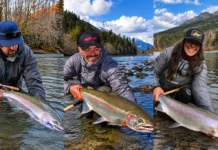
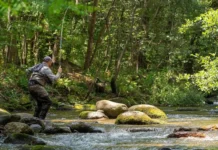
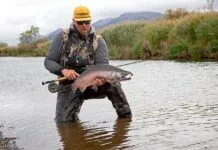
Texas Hill Country is its own little ecosystem — limestone banks, spring-fed creeks, and a species list that reads like a road map of surprises. Chris Johnson of Living Waters Fly Fishing walks us through why central Texas fishes year-round: the state-endemic Guadalupe bass, the only U.S. native Rio Grande cichlid, water that fishes like trout one month and bass the next, and a shop-led conservation program (Fly Fish the Republic) that’s funding real science. We get practical rigging and fly choices (sink-tips and diving hair bugs for big bass, tiny jigs for picky cichlids), how to read fall windows for multi-species trips, and the backstory on a Texas-built fly line — the Texas Taper — developed with Scientific Anglers and sold through the shop.
00:00 – 05:03 — Intro: Chris sets the scene for Texas Hill Country — limestone creeks, year-round fishing, and the two headline species (Guadalupe bass, Rio Grande cichlid).
05:03 – 12:03 — Species primer: What Guadalupe bass are (unique to central Texas) and why Rio Grande cichlids are so unusual and beloved by local anglers.
12:03 – 19:14 — Seasonal windows: best months (spring & fall), when warm-water and cold-water fisheries overlap, and how to plan a multi-species trip.
19:14 – 24:43 — Guadalupe bass tactics: crawfish patterns, size/rod recommendations (three- to five-weight creek gear on small water; heavier gear on larger rivers), and where to look in current.
24:43 – 29:59 — Finding fish: wade vs float, local waters (Brushy Creek, Llano, San Marcos, Upper Guadalupe) and locating pure-genetics Guadalupe populations.
29:59 – 36:58 — Flies & gear specifics: diving hair bugs, sink-tips vs floating lines, leader and tippet choices for clear limestone water.
36:58 – 44:11 — Rio Grande cichlid deep dive: behavior, aggressive defense during spawning, ideal fly sizes (12–16), and why euro/e-nymph/tanker tactics often work best.
44:11 – 50:30 — Techniques in practice: short strips, loop knots, tight leaders in small water, and the actual retrieves that trigger bass and cichlids.
50:30 – 59:00 — Business & product notes: Fly Fish the Republic conservation work, funding research (cichlid genome project), and the development of the Texas Taper line.
59:00 – End — Closing: how to connect with Living Waters, book trips, follow on Instagram, and final conservation/education encouragement.
Episode Transcript
00;00;01;29 – 00;00;26;13 Chris In today’s episode, we’re heading deep into the heart of Texas Hill Country picture limestone, cliffs, spring fed creeks and a fishery unlike anywhere in the U.S.. By the end of this episode, you’ll know why this area and these rivers are a 365 day fishery which flies the pack. If you’re planning a fall trip and how techniques borrowed from trout streams can unlock big bass in fast water. 00;00;27;00 – 00;00;47;27 Chris You also hear about conservation projects that stretch from Texas to the Rockies, including work with the Rio Grande, cutthroat trout and the community model that’s protecting hill country waters for the next generation. This is the Fly Swing podcast ratio, the best place to travel to for fly fishing, how to find the best resources and tools to prepare for that big trip and what you can do to give back. 00;00;47;28 – 00;01;08;28 Chris Fish species We all love. Chris Johnson, the owner of Living Waters, fly fishing in Round Rock, Texas, is going to take us into the hill country today. He’s a guide fly designer, conservation leader. We’re going to get into it all. We’re going to talk about two key species today. The focus is going to be on Guadalupe, a bass. 00;01;09;08 – 00;01;27;27 Chris And we’re also going to get into Cichlids. We’re going to talk about a cichlid species you probably may not have heard about before. It’s all here today. You can find Chris Johnson at Living Waters Fly fishing. Com here he is. Chris Johnson. How are you doing, Chris? 00;01;28;08 – 00;01;30;07 Chris Doing great. Happy to be here. Thank you so much, Dave. 00;01;30;15 – 00;01;46;19 Chris Yeah. Yeah. This is going to be an exciting one. We definitely have a number of listeners in the in your part of the world and I’m not as familiar. We’re going to talk about the Texas kind of the Hill country, which I’ve heard a lot about. I know there’s some famous water, some species we’re going to dig into today. 00;01;46;19 – 00;01;56;14 Chris But first, let’s get started just on, you know, what you have going this time of year. We’re talking now. It’s almost October. What’s it look like there for you guys? Are you guys winding down or still gearing up? 00;01;56;25 – 00;02;17;27 Chris If anything? We’re probably gearing up. Thankfully, we’re at 365 day fishery in central Texas. We’ve got everything from bass and sunfish and Cichlids, which I’m sure we’ll talk more about later. All the warm water assembly that you could possibly want in terms of fish species. But then when you look at we actually have a cold water trout fishery through the winter. 00;02;17;27 – 00;02;24;29 Chris So we’re not even to that season yet. But yeah, we’re just ramping up landfalls, knocking on our door and it’s about to get great around here. 00;02;25;09 – 00;02;38;22 Chris Nice, nice. And so if somebody calls you up, they’ve maybe they’re going to Texas or they’re in the area, they’re swinging by. What is the species? Do you think most people or is there one that sticks out or is they kind of cover covered everything? 00;02;39;11 – 00;02;59;05 Chris Honestly, I think that people that travel to our area, especially, we’ve kind of made I’m not going to say we’ve made our name by this, but it’s something that I think we’re known for is really kind of being a home water fly shop where we really do specialize in the Texas Hill country and we can get you equipped to go anywhere if you want to go to Belize, Alaska, Florida, whatever, we’ve got that stuff. 00;02;59;05 – 00;03;20;13 Chris But I think when people travel to the hill country, there’s two species that kind of take front and center simply because they’re found nowhere else on earth, one of which is our state fish. The Guadalupe bass and the Guadalupe bass exist nowhere else on earth but in central Texas. And the other one is the United States only native cichlid species, and that’s the Rio Grande Cichlid. 00;03;20;13 – 00;03;29;10 Chris And we have those throughout the whole country as well. So a lot of people that travel here are looking for those two specifically just because it’s the only shot you’re going to get at both of those. 00;03;29;20 – 00;03;37;23 Chris Okay, perfect. And it may maybe also defined just before we get into it, the Texas Hill country. What is what is that area? What are the boundaries of that, would you say. 00;03;38;03 – 00;04;01;15 Chris Ooh, I like this question. That’s a that’s kind of a funny question because it’s a little bit I think it’s kind of arbitrary depending on who you ask. Basically what I’ll say is it’s kind of the middle of Texas is kind of that heart attack this and then move a little bit west. So if you’re kind of looking at we’re just a few minutes north of Austin, Texas, if you are you know, if you’re driving the, you know, I-35 corridor, for instance, you’re not in the hill country. 00;04;01;15 – 00;04;34;02 Chris You’re right at the gateway of it. As soon as you head west of I-35, that’s where you start seeing, you know, it gets real hilly, the topography changes. You’re up on the Edwards Plateau. The further you head west, the more hilly it gets. And it’s just really incredible if you’re, you know, fishing down towards like the Medina, the frio, the new faces, some of those rivers, I mean, like even the South L.A. out junction, those rivers that I mean, there’s actually some pretty formidable cliffs and some really neat I mean, I’m not going to call them mountains because they’re not, but they’re they’re sizable hills. 00;04;34;02 – 00;04;53;06 Chris And it’s just really, really intriguing country. I would say it ranges as far north. And some people might argue with me on this one, but I mean, as soon as you head like west of Waco a little bit, it actually there’s some topography out there that kind of mirrors it. But I wouldn’t consider that, you know, kind of I would say it’s hill country. 00;04;53;06 – 00;05;04;29 Chris ESQ Right. You put it that way. But yeah, I would say just kind of that area west and kind of southwest of Austin is really where you would see you just up on the Edwards Plateau is really where you’re going to see most of the hill country. 00;05;05;10 – 00;05;24;16 Chris Okay, perfect. In in the species. You mentioned the Guadalupe Bass and the Rio Grande Cichlid Maybe describe it a little bit and let’s first start with the bass. Are those I mean, most people of know a little bit about large mouth, small mouth. Are these similar species or is there a lot of differences there between the Guadalupe and the other bass species? 00;05;24;26 – 00;05;46;07 Chris Great question. Guadalupe Bass are their own thing. They did achieve species status, but they are more most closely related to spotted bass. Oddly enough, they are in no means close to a large mouth or small mouth. You know, as far as family tree goes, if you look at them from an identification standpoint, you’re looking at just, you know, physiological traits. 00;05;46;07 – 00;06;04;26 Chris They’re going to have a more mottled pattern to their back, a kind of almost like a leopard spot kind of thing where you’re going to have this modeling across their back. They have lateral striping on the ventral side of the fish. On the bottom side, you’re going to see that lateral striping. But if you open their mouth, they’ll have a spot on their tongue, a little tooth patch right in the middle of their tongue. 00;06;05;14 – 00;06;27;00 Chris Very similar to a spotted bass where large mouth and small mouth don’t have that typically. So that’s one of those things that, you know, within the Guadalupe Bass, they’re in Dimock only to the Hill country, but they actually do have some range overlap naturally with spotted bass that are found in East Texas. So there is a little bit of natural integration on the eastern edge of the range. 00;06;27;14 – 00;06;39;12 Chris Eastern Edge. Okay. And then as far as the techniques, are they going to be similar to if somebody was fishing, small mouth or large mouth, that they’re going to be similar to that? Or what’s the technique you guys are using to catch the Guadalupe the bass there? 00;06;39;19 – 00;07;03;17 Chris Absolutely. In terms of techniques, they are we have to look at Texas just from a water standpoint. There is only one natural lake in the entire state and it’s actually kind of on our eastern border right there at the border of Texas and Louisiana. It’s Caddo Lake. And while the lake has since been impounded, it was the only natural lake that we had in Texas at the time and still boasts that moniker. 00;07;03;17 – 00;07;25;23 Chris But in terms of Guadalupe Bass, they only live in rivers traditionally. Now we have the Highland Lakes chain in the system all throughout. But now, you know, when we go fish form as a guide service were primarily targeting creeks, rivers, things like that. And that’s the part where I would highly encourage people to fish for them, much like you’d fish river small mouth elsewhere or even trout and things like that. 00;07;26;05 – 00;07;35;25 Chris Okay, perfect. And do the techniques that we’re going to talk about today, because we’re going to get into that, probably focusing on the bass or are they going to apply, you think, to smallmouth bass in other areas of the country? 00;07;36;08 – 00;08;03;02 Chris I would truly believe so, because I think one of the things that we really key on as a fly shop is Guadalupe Basketball. They’ll eat bait fish and terrestrials. And, you know, if you want to throw a mouse at them, they’ll eat a mouse, they’ll eat a frog, they’ll eat a lot of things. But if you look at a dietary study of adult, like very large adult Guadalupe Bass, they eat a larger proportion or percentage of invertebrates than the equivalent size large mouth bass. 00;08;03;02 – 00;08;23;28 Chris What that means to us is fly anglers is if you’re targeting large Guadalupe bass, you really want to be throwing a crayfish pattern of some sort. And I tend to find that crayfish when the going gets tough, or if you’re kind of caught between seasons or condition changes. A lot of times that that crawfish can make that difference of catching a lot versus a little. 00;08;24;09 – 00;08;35;25 Chris Okay, great. So that’s a little taste on the on the bass. And then what about the Rio Grande? Cichlid? Maybe describe that for somebody who has never heard of what a cichlid is, what is a cichlid and then talk about that species. 00;08;36;07 – 00;08;57;28 Chris The first thing you need to do if you’re listening to this is go look up a picture of one, because they’re just that. They’re the weirdest looking fish ever. They’re so cool. They’re they literally are the US’s only native cichlid species and cichlids I mean, what I mean by that, they aren’t cousins to any sunfish, so I mean even bass or in the Sunfish family as a as a parent family. 00;08;57;28 – 00;09;30;02 Chris But you’re looking at cichlids. So this is a one off. It’s their closer cousins to Peacock bass down to the Amazon there. Anything else that we have in the U.S., they’re, you know, kind of a gray colored fish typically with kind of a they’ve got bright turquoise polka dots all over them during breeding and spawning season, you know, and when they’re guarding their fry as well, because both parents guard the fry until they’re able to swim off on their own and kind of, you know, fend for themselves, they actually the front half of the fish will turn bright white and the back half of the fish will be charcoal gray. 00;09;30;02 – 00;09;51;19 Chris And they use it as a defense mechanism to scare off intruders, predators, anything like that. I have literally seen cichlids as large as my hand, just full on ram a large mouth bass of £5 and send it running. All that bass had to do is yawn and that cichlid was lunch. And they just do not have any fear by cowardice is not a word in their vocabulary. 00;09;51;19 – 00;10;11;13 Chris They just they don’t have it. They are the absolute baddest fish and fins in Texas. Freshwater. They’re just so cool. They can be incredibly selective and picky. I have spent the last probably nine or ten years of my fly fishing career really drilling down on that species just because so little was known about them. And we’re finding things out now. 00;10;11;13 – 00;10;38;17 Chris In fact, I got a call a couple of weeks ago from a biologist friend of mine and man, it was so cool. We’re finding out things now that we’ve never known before about the species, how they eat, how they behave. And this stuff has never been scientifically documented until now. So it’s really exciting to see, you know, species that so little has been known about in the scientific world and even the angling world, and seeing kind of those those two things start to marry up and talk together has been really exciting. 00;10;38;17 – 00;11;03;06 Chris So neat species, very much a omnivorous species. They’ll eat detritus and algae and things like that in the summer as adults when they’re rearing their young because they’re not out hunting. And then in the fall and in the spring, before so fall before dormancy in the winter, because they’ll go darn near dormant in the winter and then in spring before they before they get active in the spawning kind of cycle and all that, they’ll feed very heavily on invertebrates. 00;11;03;06 – 00;11;13;11 Chris So using smaller flies like size 12 and smaller artificial, a lot of 14 for them and you’ll catch cichlids that are literally I mean, we’ll catch them where they’re as big as a sheet of notebook paper. 00;11;13;22 – 00;11;28;27 Chris Well, and they do. So yeah, they look a lot like kind of the sunfish, like you said, either a crop or any of those species. But they have, like you said, they have nothing. They’re a complete separate the family order, whatever that species. Right. They’re totally separate. 00;11;29;08 – 00;11;58;10 Chris Absolutely. Yeah. They’re totally separate. And their behavioral traits are they could not be more different in many ways. I mean just even how they rear their young, how they behave during spawning season, even how they physically eat a fly. If you want to look at like I mean, everybody thinks about bass because it’s really easy to picture. We see videos of it all the time and where they’ll come up behind a fly and they’ll open their mouth, flare their gills, and they’ll suck the fly in through the act of cavitation, where they’ll actually pull in that whatever fly or prey item thereafter. 00;11;58;22 – 00;12;18;20 Chris Cichlids They can do that a little bit, but they’re much more tactile in the way that they eat a fly, which is really interesting because if you’re fishing in an area that in most they’ll live in similar places to bass and sunfish, But I’ve fished for them enough now and have caught, I don’t know how many thousands upon thousands and thousands of these have caught over the last decade. 00;12;19;03 – 00;12;29;14 Chris But the thing that is really interesting is I can oftentimes tell when it’s a cycle that needs to fly versus a sunfish just based on how they the way that it feels in my hand when they take the fly. 00;12;29;26 – 00;12;34;17 Chris Gotcha. Yes. So you have all the other species, too, all the sunfish, the crappie, all that stuff. 00;12;35;00 – 00;12;59;27 Chris Oh, yeah. We’ve got I mean just I mean just in the creek across the street from 90 seconds, from where I’m sitting right now, we’ve got, you know, green sunfish, red deer, sunfish, bluegill, long ear, sunfish, redbreast, sunfish, warm mouth, cichlids. We’ve got largemouth bass, guadeloupe bass. We’ve got crappie in there. I’ve seen white bass in there, we’ve got gar freshwater drum buffalo, you know, common carp, I mean, and that’s just in one and all the catfish as well. 00;13;00;09 – 00;13;09;27 Chris I mean that’s not even a full species listing, but that’s literally right across the street in one waterbody. So we are, unlike the Western states, we are not a monoculture of trout now. 00;13;09;27 – 00;13;13;10 Chris But you do you do have trout too, right? You have a user. 00;13;13;27 – 00;13;36;03 Chris We do. So the Guadalupe River below Canyon Lake is actually a cold water tail race that boasts an impressive trout fishery. And thanks to cold water releases, there are still trout in the river. I mean, it could be 110 degrees here sometimes in the summer, and that river will still support trout. We don’t really recommend fishing for them during that time, obviously, just because it’s so hot. 00;13;36;22 – 00;13;57;06 Chris But the water temperatures are still suitable in the upper portion of the tail rates for trout to basically over summer. And whether our Texas heat and then once the weather kind of, you know, gets a little bit more mild and things kind of level out, some moving into fall, we’ll have a lot of what we call people that go chase holdovers where they’re, you know, fish that were stocked, you know, years prior that have made it through the summer. 00;13;57;15 – 00;14;24;25 Chris And they’re big, they’re beautiful, they fight hard. And we used to have brown trout in the fishery as well. But oddly enough, I know to many people’s dismay, the brown trout don’t seem to do as well in the Guadalupe River as the rainbow trout strain that we have in there, which is the Emerson strain out of Missouri. And they’re more temperature tolerant than just about any trout known to mankind that I’ve talked to the Crystal Lake fisheries that actually rears that that genetic strain. 00;14;25;06 – 00;14;36;09 Chris And they’ve had specimens, whether water temperatures in the eighties, as long as they cool it back down at night. So kind of that’s not all of them by any means. But we’ve had some of that where they can withstand Texas heat. 00;14;36;20 – 00;14;50;11 Chris There you go. What is the if we were, you know, kind of calling you and wanting to come out for a trip, what sort of time frame? What do you think would be a good time to if we’re interested in getting as many species as we could, maybe some of these natives. What do you tell people. 00;14;50;23 – 00;15;06;05 Chris Man? Spring and fall. Just kind of look at those shoulder seasons, you know, it’s not that. I mean, if you’re doing the trout thing, winters obviously show Central around here. And the other thing that’s kind of nice about that is it’s, you know, a lot of the warm water fisheries have kind of subsided a little bit. Not that you can’t go catch bass. 00;15;06;19 – 00;15;33;02 Chris It’s just not going to be at its peak performance. When you if I were going to say two months, look at like the month of April, May for the spring, and then in the fall, I would look at like I would look through October, through middle of November, depending on how the fronts fall. It’s just if you’re going to kind of look at those time frames that April May is amazing and it’s good all the way into June, but it just kind of that spring bracket, it’s going to start getting hot in June, but the fishing just gets amazing. 00;15;33;02 – 00;15;40;28 Chris So obviously rains and fronts and things like that play a role. But by and large, those are peak seasons. 00;15;40;28 – 00;15;59;18 Chris If you’re looking for a world class fly fishing experience, it’s time to check out Mountain Waters Resort, nestled along the Newfoundland’s legendary Portland Creek. This spot has a history that runs as deep as the Atlantic salmon. They call it home. Once a fly fishing retreat for the Great Wolf. Today, it’s your turn to step into these historic waters and swing up your salmon. 00;15;59;18 – 00;16;23;04 Chris This year, you can head over to whet fly swinging dot com slash mountain waters right now and make it happen. That’s what fly swing dot com slash mountain waters Let’s get out there today let on to Mark lodge give you the Montana fly fishing experience you deserve the gin clear waters of the Missouri River offer a world class experience with one of the finest rainbow trout and brown trout fisheries in the world. 00;16;23;18 – 00;16;45;23 Chris Whether you’re a seasoned angler or new to the sport, their family of guides will tailor a trip just for you. You can head over to onto Mark Lodge Icon to fish, one of the great trout streams in the country. Okay, so in October this episode will probably go live here in October, so let’s take it to that. So if we were coming there, what does that look like or what is the what would a day look like? 00;16;45;23 – 00;16;49;00 Chris What species will we be chasing? What rivers would we be on? 00;16;49;14 – 00;16;52;23 Chris I mean, that’s the beautiful part is pick one. 00;16;53;00 – 00;16;57;24 Chris Let’s start with your home water, I think. What is the home water that’s kind of closest to you guys, where you guys spend a lot of time? 00;16;58;06 – 00;17;16;15 Chris Absolutely. Brushy Creek is the one that’s right across the street from the fly shop. So, I mean, in the hill country kind of is our backyard in general. So, I mean, everything we talk about will apply across the board to any fishery for the most part that you would want to go explore. But October, you’re looking at you’ve got so many different opportunities. 00;17;16;15 – 00;17;34;25 Chris You have some fish that are actively feeding before winter dormancy and bass that are going to be gaining a lot of weight in a hurry, knowing that their metabolic rates are going to be slowing down for winter, they’re going to take as much advantage as they can of feeding on, you know, baitfish in the shallows. Your Guadeloupe bass, of course, are going to be feeding on crayfish like crazy. 00;17;35;06 – 00;17;56;01 Chris You’re going to I mean, basically you can just almost do whatever you want at that point. You’re cichlids they’re going to be, you know, really nymph driven and small invertebrates. You’re going to be looking at, you know, really small crawfish imitations and nymph imitations, especially like euro style patterns where they’re jig headed. I’ve got a pattern called the Rio Bandito that I fish a lot. 00;17;56;18 – 00;18;19;10 Chris There’s several other patterns out there. Another one that’s really well known around here is the Rio Geter, tied by a friend of mine, Matt Bennett. Those are great patterns for prospecting for REOs in any condition. Once again, fishing them smaller, you know, 12, 14 or even sixteens can really be beneficial, especially if they get finicky. But in the fall the REOs will tend to aggregate and they’ll be in large groups, which is nice. 00;18;19;10 – 00;18;39;12 Chris So if you find one, you’ve likely found more sunfish. They’ll be spread throughout the fishery and just kind of, you know, opportunistic wherever you want to get on the bass. This is a really good time to start throwing larger patterns, baitfish patterns, larger crawfish patterns for those bigger fish. If you’re just wanting to go have some fun in prospect, throw like a size four crawfish, you’ll be fine. 00;18;39;22 – 00;18;58;25 Chris Anything like that will do really, really well just to kind of generally search and prospect for large mouth and Guadeloupe bass alike and then tail end of the month when the temperatures start dropping. If you want to go down and fish for trout, you can do all that. So I mean, that’s the beautiful part about late October is you can literally come here and do everything we have to offer. 00;18;59;04 – 00;19;14;16 Chris That would be cool. So yeah, if you there for a few days or longer, you could hit potentially. And that’s the cool thing because we’ve been talking a little bit about some of the, the native trout challenges, but it’s really just native species challenge, right? I’m starting to think around the country, this would be a good place where you could do that. 00;19;14;16 – 00;19;24;04 Chris If you were trying to check off on your list, you could have the Cichlid, the Guadalupe Bass be you catch some rainbows. And what other species out there do you think would be good to add to that list if you could? 00;19;24;18 – 00;19;45;13 Chris I mean, if you’re it’s really neat. We have some species that obviously are native in other parts of the country, but I mean, smallmouth bass were introduced in a couple of fisheries down here and there. We’re trying to actually kind of eliminate that just in favor of our native bass. But there are you know, for instance, the Guadalupe River below Canyon Lake, where the trout fishery is, it’s actually a pretty, pretty solid small mal fishery. 00;19;45;13 – 00;20;05;00 Chris There’s some good small mouth in there. You also have introduced rock bass in there as well. There’s striped bass in that fishery. There’s a lot of really great fish that are if you’re out trout fishing that you can pivot and go do all that. I mean, we’ve got striped bass in the Guadalupe River over £40. So and they get that big because they eat a lot of trout. 00;20;05;00 – 00;20;21;13 Chris But I think the thing that you have to look at is if you want to go fish for, you know, a fish, that’s as long as your arm it’s there and a predatory fish at that that you’re throwing a, you know, 8 to 10 weight fly rod at in flies that are, you know, as long as many of the fish that I catch on a normal basis. 00;20;21;13 – 00;20;42;20 Chris But the idea is you can practically do it all. And then literally if you want to take another day and from where I’m sitting right now, it’s 3 hours to the Texas coast. So you’ve got redfish, sea trout, tarpon, you know, flounder, whatever you want there in a you know, the ocean’s huge. It’s got, you know, more species than we can count just about we’re still finding new ones. 00;20;43;03 – 00;21;08;02 Chris But that’s the thing that’s wonderful is that Texas is a multi species. Anglers paradise. I mean, I haven’t even caught some of the ones that are available to me within a several hour drive. I mean, if you go to East Texas, you wind up with both in and chain pickerel and really unique sunfish species like fliers and stuff like that that are just so special and so unique that, you know, people don’t really fly fish for them on the regular. 00;21;08;02 – 00;21;25;22 Chris It doesn’t get a lot of press. There’s no articles written about it. It’s kind of that unsung side of Texas is between, you know, kind of behind the pine curtain of East Texas, if you will. There’s so much available in the state that if you were to sit right in the middle of the state and drive 3 hours in any direction, you can almost do it all. 00;21;26;03 – 00;21;40;29 Chris You can do it. All right. Right. That is cool. And that’s that’s one of the great things about, you know, you hear a lot about other areas in Texas. You do hear a lot. I mean, we’ve talked some more on saltwater probably than anything else. But the cool thing is, yeah, you’re right in the hotspot for all these other species. 00;21;41;14 – 00;21;56;00 Chris Let’s go to the Guadalupe Bass. So if we’re with for fishing, we’re coming in. Let’s just talk about that October window. Maybe just talk about a little bit on the gear and kind of what we’d be bringing down there and kind of the set up. It sounds like the crawfish is a pattern that you would definitely have in your box. 00;21;56;12 – 00;22;10;27 Chris Absolute leap in terms of gear. I mean, if we were to start at just a basic level, I mean, most of what you need to do on our rivers around here can be done with a floating line and you can use a sinking line if you’re fishing and something that’s really dirty to do in the fall, especially after some fronts. 00;22;11;10 – 00;22;26;02 Chris I really like fishing. Diving here, bugs a lot of it’s one of my if I had one way to bass fish just where it’s visual, it’s intriguing. I like fishing a sink tip or a full sink line with a diving hair bug where you can actually walk it. You retrieve it much like you would a crank bait or a jerk bait. 00;22;26;02 – 00;22;43;16 Chris You know where it’s in the conventional world where if you let the line sink a little bit, it actually kind of makes a parabolic path of the fly that it dives down, achieves depth, and then kind of, you know, moves back up towards you at the boat or even as a waiting angler back towards you, where that’s kind of a unique thing in the fly world. 00;22;43;18 – 00;23;08;03 Chris You know, in a floating realm, you’re kind of either jigging a fly up off the bottom if you’re retrieving it, or if it’s a top water fly. Of course it’s, you know, just kind of gliding along the surface. But when you throw a sink tip or a full sink line with a fly that was most people consider to be a top water, those diving bugs when they swim, if especially if it’s a baitfish pattern with longer feathered tails, there’s not a whole lot out there that can beat that kind of effectiveness. 00;23;08;13 – 00;23;29;04 Chris And that’s something that I do a lot in the fall because I don’t mind fishing. I’m starting on a floating line, but if we can’t get them to come up, I’ll throw a sink tip or a full sink and dive that bug down to them. And it is so fun just to watch. You usually see a large mouth or Guadalupe just blink it out like it’s just know you’re watching the bug and then it’s just gone and there’s a little flash of white and it just comes tight. 00;23;29;04 – 00;23;48;09 Chris You set the hook and it’s absolutely fantastic on our smaller creeks and rivers. That’s where I’ll tend to favor the crawfish. I’ll do a little hair bug work, but I kind of match. I’m a little bit more size appropriate to the fish. I mean, if they’re if they’re going to be, you know, smaller fish, you know, something that’s going to be top and out of the foot. 00;23;48;18 – 00;24;09;26 Chris I’ll probably throw something like a size six, a size four on the top end and don’t go any larger. But if I’m on larger rivers like, say, the Colorado, just east of Austin, that’s where the world record Guadalupe Bass came from. I’m not scared to throw, you know, an eight weight with a large hair bug and you’ll be moving Guadalupe Bass, you know, in the 16 or 17 inch range sometimes those are fish that are capable of eating a full sized bass fly. 00;24;09;26 – 00;24;32;28 Chris And I’m not scared to throw, you know, bigger lines, bigger flies in those type of environments just simply because the water is not as clear. The fish aren’t nearly as selective when you get in clear water, small water stuff throughout the hill country, you have to kind of put on your A-game and that’s where I’ll even downsize my rods to, you know, three weights a lot of times where I’ll I’ll take smaller creek gear to go chase these fish in smaller water. 00;24;32;28 – 00;24;39;16 Chris But by and large, if you’re going to come out, I just a good all round five weight will get the job done more often than not. 00;24;39;26 – 00;24;50;28 Chris Yep. Gotcha. Okay. And then, well let’s go back to on the fish. So first you’re there. How are you finding these fish or how would somebody find these if they were out there? And are you guys doing this kind of foot or are there boats involved? 00;24;51;11 – 00;25;10;01 Chris You can do both. That’s another beautiful thing. It just depends on the fishery. Like if you’re going to fish the San Marcus River just south of us, that’s primarily a float river. It’s spring fed, it’s beautiful. The water’s really clear. Site fishing is a lot of fun, but that’s primarily a flow river. If you go to the Llano, there’s parts that are better floated, there’s parts that are better weighted. 00;25;10;20 – 00;25;25;24 Chris And that’s something that obviously through the fly shop, we’re happy to point you in those directions. So if anybody’s like, Hey, I’m not going to have a boat, we’re going to give you more access than you can wade in a year. I mean, honestly, there’s there’s we don’t keep secrets like that. We’re here to help people have a great time in our backyard. 00;25;26;05 – 00;25;49;23 Chris But as far as finding them, first and foremost, make sure if you’re after Guadalupe, make sure they’re their number one. So for us, most of the rivers we fish like the Llano, the San Marcus, you know, even the Upper Guadalupe. If you look at Brushy Creek, the San Gabriel just up the street, 15 minutes north of us, all of those those populations of Guadalupe Bass or, you know, the San Marcos, they’re more hybridized. 00;25;49;23 – 00;26;07;04 Chris But Brushy Creek, right across the street from us here, they’re genetically pure, are some of the purest genetics in the state and in the world are literally right across the street from where I’m sitting right now. So if you’re wanting one, that’s you know, that a gray doesn’t get any better relic population. Guadalupe, Mass. We’ve got it. So it’s really awesome. 00;26;07;04 – 00;26;26;24 Chris So finding a location that has them number one, once you’re in those locations, they do tend to be a little bit more trout like overall, they’re going to orientate to current. They’re going to be in those little backwater pockets where you’ll have in fact, I had some day before yesterday, I was actually Fish and Brushy just east of town, and they were right where they were supposed to be. 00;26;26;24 – 00;26;43;05 Chris You know, we had fast flowing current with phone lines and they were in the little eddies and back pockets right up against those undercut banks. And that’s where the guadeloupe’s were. I mean, they could be off ledges adjacent to current. I’ve literally watched them crash baitfish right in the middle of a rapid. So don’t be afraid of fast water. 00;26;43;05 – 00;26;57;22 Chris When fishing for Guadalupe Basin. I would say that about many of the fisheries we have here, the L.A. included, they will orient to current much like a trout does, and just hop and something along the bottom, swim in something in front of their face. They a lot of times will if they want it, I’ll put it this way. 00;26;57;22 – 00;27;00;08 Chris If they want your fly, there’s nothing you can do to get it away from them. 00;27;00;15 – 00;27;06;08 Chris Gotcha. And on those deer, the hare bugs. What are you emitting there? Describe some of those flies a little bit. 00;27;06;15 – 00;27;30;14 Chris Absolutely. I mean, my favorite, like from a produced version, is that it’s called an Uncle swim in Baitfish. And they they sell it in a larger size. They sell it to one out. They also sell it in a size for the size for maybe my favorite bass hair bug of all time. That’s production available. I tie on my own, but if I’m going to go buy something out of a bin that is the best one to just go prospect with. 00;27;30;14 – 00;27;50;18 Chris And if you take that in a one shot for bigger large mouth and things like that, and then you have the size for just to go skate around and rivers and creeks and things, it does such a phenomenal job and on a pretty small bass can put that fly away. We’ve had some fish eat it. But the number one thing I would say is that one, you know, fishing it on top and kind of spit and sputter and walk in it, it’s great. 00;27;50;27 – 00;28;22;16 Chris But when you dive it, it’s just a totally different deal by fish and like scientific anglers makes a line called the Trout Express. That’s a great line for that fly. Yeah, it’s just a front heavy line. Turns the bug over really well. Short sync head dives it down right where you need it, gets you an up depth to be in the strike zone but you’re you’re running line floating so you’re not getting all tangled up around your feet if you’re awaiting angler really really helps just from that end to make sure that you know you’re getting in the strike zone, keeping it in front of the fish and really allows it to swim the way 00;28;22;16 – 00;28;41;06 Chris it was made to swim. You can walk those kind of side to side. You know, if you fished in the conventional world like a jerk bait or even a soft plastic jerk bait, like a super fluke or something like that, you can use this fly kind of in place of that, if you will. And it triggers the same reactions, the beautiful partizans, it has feathers out the backside. 00;28;41;06 – 00;28;46;16 Chris Those things are waving and, you know, tossing from side to side as you retrieve it. The bass just can’t stand it. 00;28;46;27 – 00;29;01;28 Chris That’s amazing. So basically, yeah, you’re out there in the water types. It sounds like they’re pretty diverse. They’re not just in pools, they’re in fast water, slow water. Like if you’re out there, you just kind of cover the water. And you also mentioned finding groups of them. Talk about that a little bit. And what do you do when you find those groups? 00;29;02;15 – 00;29;24;27 Chris Certainly so, Guadalupe Bass, I mean, you’ll find, you know, little groups of smaller fish a lot. Typically when you find bigger fish, you might find a large fish in a spot. They typically are more dominant. Occasionally you’ll find when they’re hunting in packs in the fall, and I’ve even seen it in late summer to where they’ll, you know, kind of gang up a little bit and they’ll start running together at the tail end of kind of the sunfish spawning season. 00;29;25;14 – 00;29;38;28 Chris You will see a little bit of, you know, pack hunting if you will. But a lot of those larger fish are fairly you know, I’m not going to say solitary, but they they’ve earned the right to sit where they’re sitting. The smaller fish, you’ll find groups of them and you can pick them off one, one after the other. 00;29;38;28 – 00;30;00;01 Chris But those larger fish, a lot of times when you peg one like that, he might have been the only thing sitting there, especially in a in a river where there’s, you know, a little pocket or a single back eddy or a little pool. That fish was the only thing in there. He earned the right to be there. But when I find groups, you know, I’ll typically catch one, try to steer it away from the group, land the fish, and then throw back in front of the others. 00;30;00;01 – 00;30;17;03 Chris And it’s not uncommon to catch, you know, a half dozen fish in some of these spots where they’re still really hot to feed. And they they get excited and they get very competitive. So just by catching one fish out of an area, I don’t give up on it until after I’ve thrown a cast or two more just to make sure I’ve thoroughly covered it. 00;30;17;03 – 00;30;23;18 Chris And whether that be using a bait fish pattern and swinging it through there, whether it be a crawfish pattern across the bottom, it doesn’t matter. 00;30;24;01 – 00;30;41;21 Chris Okay, great. And the pattern and describe that again. So you have this sinking line. You mentioned the Trout Express with the with the hair bug. So let’s say you’re casting into a pool. Describe again how you’re giving that fly the action or just describe a typical kind of, you know, methods on the water. 00;30;42;04 – 00;31;02;16 Chris Absolutely. So I will typically if it’s a is say I’ve got current running in front of me, I’m going to try to get that fly as close to the bank as is humanly possible. The closer to the bank I can get it, the better just because there is going to be some sort of current break or alleviate in there that they can they can conserve energy and feed, you know, fairly, you know, opportunistically, if you will. 00;31;02;27 – 00;31;31;06 Chris And so I’m going to put the fly at the bank. I’m immediately going to start my retrieve. I normally and I’m a big fan of lots of really short, sharp strips where it’s just really short, really abrupt, very quick. And that’s what makes that fly kind of jerk side to side. And I’m almost I’m a very big proponent of using a loop, not in your rigging just because it will cause that fly to sway more at the whim of every little microcurrent That’s what I’m after. 00;31;31;06 – 00;31;49;16 Chris So I use loop knots exclusively now and then pretty much all of my fly fishing, whether it be trout or bass, just because it imparts more emotion to the fly. So short quick strips retrieving back to me. If it’s if I’m fishing current, a lot of times I’m kind of a down and across. I’ll throw across the current, retrieve into those edges. 00;31;49;28 – 00;31;56;20 Chris If I have a fish that’s chasing it, I’ll just kind of chug the fly across the faster water and a lot of times they’ll chase it right into the fast stuff and blow up on it. 00;31;57;01 – 00;32;06;10 Chris That’s awesome. When the loop not is. I agree. That’s great for a lot of different species. Is there a nice What is the knot you use? Is it just the loop not. Or is there a name on that. 00;32;06;25 – 00;32;29;19 Chris Yeah. I mean you can whichever one you’re more comfortable tying. I use the non-slip mono loop or it’s also called let these loop. I know let these loop is what a lot of people know it by that knot is so simple to tie with a little bit of practice and just it’s exceptionally strong. It does an amazing job at, you know basically just retaining not strength in high pressure, you know, kind of, I would say kind of high stakes environments. 00;32;29;19 – 00;32;48;24 Chris It holds up. And I mean, I’ve used that for, you know, saltwater, freshwater alike. And it just it doesn’t quit. And it’s such a wonderful knot. And and I think the fact that, you know, even a an intermediate level fly Fisher can tie that knot with a little bit of practice. So, you know, I think you have one session where you learn it and then you get comfortable with it. 00;32;49;04 – 00;32;53;23 Chris If you force yourself to tie it on the water, you’re going to get very proficient with it in a very short time. 00;32;53;23 – 00;33;05;20 Chris Yeah, that’s right. And I think that’s the one that I use. I just call it the mono non-slip. Mono little bit. Yeah. You put a you have a link in the show notes here. There’s plenty of videos on that how to use it or how to tie it. So we have that Perfect. And then what about your leader? 00;33;05;25 – 00;33;08;24 Chris Is that an important part of this whole equation and tip it? 00;33;09;09 – 00;33;26;15 Chris It can be. I would say as far as the leader goes, I would be I’m more inclined, like if I’m in creeks, I’m going to fish stuff that’s shorter, seven and a half to six foot because I don’t want to spend all my time in the trees. So I’m going to really I mean, and that’s the beautiful thing is our hill country, creeks, some of them do get really tight and really small. 00;33;27;06 – 00;33;45;09 Chris So it is a lot like, you know, cutthroat fishing or brook fishing. You know, you’re in small water and you’re doing some of this and have to be pretty creative in some of your approaches. And there’s a lot of bow and arrow casting and stuff like that. So that’s a place where I would favor something like a six foot, you know, small condensed leader as you get to, you know, kind of more open environments. 00;33;45;18 – 00;34;05;12 Chris I favor a seven and a half across the board for most of my fishing. Very rare. The times that I feel like I need a nine footer. That being said, I use nylon leaders more often than not in a floating situation. And then I’ll use fluorocarbon tip it pretty much exclusively. Our water is clear and fluorocarbon is very abrasion resistant. 00;34;05;29 – 00;34;20;26 Chris We have a lot of limestone, a lot of granite, there’s a lot of trees and tree roots and stuff like that. So anything you can have in your corner to kind of make sure that, you know, your terminal tackle stays in good shape, that’s a great thing. But the fact of the matter is fluorocarbon goes fully transparent under the water. 00;34;20;26 – 00;34;51;03 Chris The last, you know, 14 to 18 inches is what the fish is staring at anyway. And so that’s the part that I want, that invisible if that if at all possible. So I tend to favor nylon leaders with fluorocarbon tippet in a typical floating line scenario, and then in a sinking line scenario, I fish vastly shorter leaders. I probably say like six foot on the top end just because I want that fly more closely, relating with the end of that sinking fly line to where it’s actually getting pulled down at the same rate as the fly lines are typically fish. 00;34;51;20 – 00;35;11;11 Chris I would say 5 to 6 foot leaders there, but six foot on the top end. And I typically home build those all out of fluorocarbon where I’ll just you know, typically it’s two two into I’ll take two foot or something two more feet and then taper that down. So like say 2016 12 where I’ll step those down or you know, 25, 2016, something like that. 00;35;11;11 – 00;35;23;21 Chris We’re all kind of keep those leaders a little bit thinner, if possible, just to keep those sinking flies getting down quickly and moving, moving, kind of similarly to the sinking line itself. 00;35;23;21 – 00;35;43;21 Chris If you’ve been holding off on getting a new fly rod because of the price tag, San Juan roadworks, just change the game. These rods are dialed in with the right action. Clean design built to fish hard without the high price tag, whether you’re stripping streamers, tight lining or dead drift and dries, they’ve got a set up that feels right from the first cast. 00;35;43;21 – 00;36;03;01 Chris And the best part is you can try any rod, reel or fly line for 30 days, risk free. And if you’re not 100% satisfied, you can send it back for a full refund check them out. Right now that San Juan Rod Works Dotcom S.A., NJ You and Rod works dot com. You support this podcast by checking in with San Juan. 00;36;03;01 – 00;36;14;24 Chris Now it sounds like that would get somebody going if they were out there looking to catch one of those species. Anything else you would throw out there for on the bat species? The Guadalupe specifically? 00;36;14;24 – 00;36;35;20 Chris Yeah. If you’re doing Guadalupe bass, I mean there’s a, there’s a number of just great fly patterns. So if you’re trying to load a fly box, I mean there’s so many out there and we’re really blessed to have Central Texas has a number of really great fly designers that have commercial patterns out of the market. People like Chase Smith with Montana Fly Company myself, Matt Bennett, Josh Smitherman through Umpqua Feather Merchants. 00;36;36;01 – 00;36;51;10 Chris A lot of you know, our patterns were born and bred for here. So the thing that’s really great about that is if you want to fish the stuff that we’re fishing, it’s available commercially and that’s pretty special. So I mean, patterns like, you know, Josh has one called the Fry candy. That’s a great baitfish pattern for the whole country. 00;36;51;19 – 00;37;09;00 Chris I’ve got one called called the pinch hitter. That is my number one crawfish pattern for Guadalupe Bass. Like, if I’m just going to fish one crawfish, it’s going to be a pinch hitter. It’s tied pretty uniquely where it’s got legs in the rear of the fly that actually float that pull the the fly up into kind of a defensive posture. 00;37;09;00 – 00;37;26;00 Chris And even the most discerning large mouth, the Guadalupe Bass, they tend to not be able to leave one alone. You know, other flies like Matt Bennet’s carpet bomb, It’s primarily used as a cart pattern, but it catches absolutely everything. So if you’re kind of just looking at like, I want to catch a little bit of everything, that’s a great fly to tie on. 00;37;26;11 – 00;37;47;03 Chris Matt has another one called A Lunch Money. That’s a good subsurface kind of fast thinking streamer. There’s so many great patterns that you can use. And then some of the ones that are more commonly known across the country that aren’t necessarily regionalized, like the Creel Minnow, the Murdoch minnow, Bill Murdoch’s pattern, just a just a great, great streamer for around here if you’re looking at doing stuff like that. 00;37;47;03 – 00;38;07;02 Chris So pick your favorite baitfish that’s in like a size eight to a size four and you’re probably going to be just fine. Charlie Craven’s Dirty Hippies. Another really good one for Down here. So there’s so many great patterns that people probably already have in their box that do a great job here. But if you ever do want to find, you know, the local patterns, they are commercially available for the most part. 00;38;07;11 – 00;38;15;00 Chris Okay. And as you switch over to some of those cichlids now, is that a completely different ball game on how you’re fishing and what you use in that whole set up for them. 00;38;15;13 – 00;38;32;02 Chris Could not be more different. That’s the I think that’s probably the the wonderful and annoying side all at the same time. You know, bass and sunfish, they’re they’re predatory. They will, they will hunt, they will, you know, go smack a fly really hard. I mean, if you watch a sunfish eat an ant or a hopper, it will just make your blood boil. 00;38;32;02 – 00;38;51;03 Chris It’s so fun watching them crash a terrestrial. It’s just great. Cichlids They are not nearly they’re evil when it comes to their attitudes. I mean, it’s the only it’s the only fish I’ve talked about in this presentation that there have been documented human attacks from it. So yeah, it’s awesome. They’re just that they’re a terrible little thing. 00;38;51;19 – 00;38;54;15 Chris Those human attacks be like, like how would that happen? 00;38;54;18 – 00;39;15;28 Chris It’s pretty funny. It’s nothing that, you know, you need to be scared of. We have in the summer months. I mean, let’s be honest, the fish tops out at, you know, roughly a pound and a half. I mean, so they’re not huge by any means. They they top out at roughly a foot, but during spawning season, when they’re after they spawn and they’re rearing their fly as a couple, they’re very, very aggressive towards any sort of intruder. 00;39;16;10 – 00;39;36;24 Chris And so you have to look at the fact that that intruder can be other cichlids that can be, you know, predatory bass, it can be sunfish. They’re aggressive towards any any competitor, any sort of intruder. However, I have seen them full on ram turtles. I’ve seen them chase off snakes. I’ve seen them chase off just about everything imaginable. 00;39;36;24 – 00;39;57;16 Chris In fact, we have the Texas State Aquarium down in Corpus Christi. There is a tank full of cichlids. There is only one other organism that actually occupies that exhibit, and it’s alligators. I think that’s the only thing. And what was hilarious is I chuckled when I saw it, an alligator in it. And they’re not big alligators. They’re probably, you know, four footers, you know, something like that. 00;39;57;17 – 00;40;13;17 Chris You know, they’re not huge. One of those dove in the tank and got too close to a nesting pair of cichlids and they straight up ran the alligator and got him to move. And I’m just like, you have got to be kidding me. I mean, like, I’m not going to go do that. These cichlids just they have no fear. 00;40;13;27 – 00;40;32;00 Chris So the human attacks happened where we had inner tubes floating down a Texas river in the hill country and their legs were dangling out of the inner tube and went through the cloud of fry that those sickly regarding. And they just lit those people up. There’s all these little donut shaped bite marks that are about the size of it. 00;40;32;03 – 00;40;45;25 Chris Not Yeah, it’s just little, little red rings on their legs about the size of a dime. They have little bitty teeth and they can’t, you know, they don’t typically draw blood, but they’ll leave a little whelp if they hit. Wow. But it’s funny, man. I’ve watched his follow up to a lot of different stuff. 00;40;46;06 – 00;41;00;20 Chris That is amazing. Cool. So. So yeah, the Cichlids, they have that aggressive part of it. So what is that? Maybe gets a little little summary on that real quick. So you talked a little bit about it. There are fish and different things, bugs and but let’s say it’s that October, you’re trying to add another species to your list. 00;41;00;20 – 00;41;03;17 Chris You’re up there in mid to late October. What would you be using then? 00;41;03;29 – 00;41;23;22 Chris Absolutely. My favorite time of year for Cichlids And I tell people this, I give a presentation at different Fly clubs and here at the shop on Rio Grande Cichlid specifically, and I tell people all the time, I’m like, if I had just one month of the year, if all I had, if I could fish every day of that one month period, I would give up the rest of the year for Cichlids. 00;41;24;04 – 00;41;47;27 Chris And typically it’s like the second week of October through the first week in November, if I could have those four weeks, because cichlids in that time frame, they are they’re coming out of spawning season, their aggregate up and groups of I’ve seen Cichlids 80 to 100 in a group where they aggregate up before going into their wintering areas which are typically undercut banks within flowing groundwater. 00;41;48;10 – 00;42;11;11 Chris They’re going to use that groundwater to basically persist through the winter cichlids die and typically water temps in the mid-forties or kill them. But in Texas, our water temps can fall below that in a winter storm pretty regularly. And that’s actually not all in common. Brushy Creek a few years ago, it actually froze over. So, I mean, I don’t know how much people know about water, but typically 32 is what makes it hard. 00;42;11;29 – 00;42;44;01 Chris So you’re looking at if you’ve got the if water no longer is a liquid and becomes a solid cichlid should long be gone. Yet they’re still here. And that lets you know that they are using those undercut banks with thermal insulation from the bank and they’ll tuck right up in the back of that. And then we have a lot of inflow and groundwater under those undercuts for a lot of our hill country rivers and that’s where these fish will literally aggregate And just kind of think about it, you know, as a group of people huddled around a campfire, that’s what these fish are doing in the winter up under these undercut banks. 00;42;44;01 – 00;43;03;22 Chris So in the dead of winter, they’re very very difficult to fish for unless you’re fishing the, you know, headwaters of a spring fed river where that water temperature stays more constant. But if it is if you’re looking at the first few fronts that come through of the year, it starts to get that water temperature dropping and those cichlids know it and they eat like crazy. 00;43;04;00 – 00;43;24;02 Chris They will eat invertebrates with just absolute vengeance. And it is not uncommon. My wife and I was at last year, last year, year before, I can’t remember it all blends together after a while we typically try to take a trip or two out to the western hill country a year just to go stay out there for a few days and just fall head over heels in love with Texas all over again. 00;43;24;02 – 00;43;44;14 Chris I mean, it’s it’s a wonderful place. And you’ve got, you know, native madrone trees. And I mean, there’s even Pinyon pines a little bit further west out there. I mean, it’s so cool that it’s just a very arid, you know, different environment than what you see even along the I-35 corridor, just a couple of hours away. But we go out there in those cichlids and we were catching them when they were aggregating. 00;43;44;14 – 00;43;51;19 Chris I think we fished one river for two and a half, 3 hours. And between us, we probably had 150 Cichlids. 00;43;52;02 – 00;43;52;16 Chris Oh, wow. 00;43;53;04 – 00;44;11;05 Chris I mean, where where it’s when they’re, when they’re aggregated like that. Now, mind you, we’re very proficient at it. And that’s what I’ve fished for the most over the last ten years of my fly fishing career. But the way we’re doing that, I would say just for for folks, if I were to summarize it, your flies need to be small and your strips need to be short. 00;44;11;20 – 00;44;35;16 Chris I typically fish and I mean it. Y’all can turn your nose up at it if you want. But I still to this day believe that the most effective way to target Cichlids is with a tinker rod. And the reason why is because Cichlids don’t linear movement on a fly. They want the fly to move a lot, but they would prefer almost an up and down or jig motion or even just sitting in place rattling. 00;44;35;27 – 00;44;54;28 Chris You know, where you’re like, If you can just jiggle a fly in place, they’ll stare it down and then just eat it. But they’re very discerning a lot of times. But in the fall they’re out to eat. But the deal is, the longer you can keep it in that aggregation of fish, instead of stripping a fly through fish, you’re bouncing a fly on top of fish, if you will. 00;44;54;28 – 00;45;16;14 Chris And I mean, and that’s fly is still linearly moving towards you a little bit, but not nearly as much of a rate with tinkerer as it would be with, you know, traditional fly rods. So I still think euro, you know, euro nim thing style techniques where it’s kind of more of a vertical tight line presentation or a tank car, a rod that is by far the most effective way to target them. 00;45;16;24 – 00;45;36;00 Chris If you’re going to do it with a Western fly rod, just keep keep your strips really short. Think lots of very short quick strips that when I’m talking short, I’m talking like an inch, you know, where it’s just a real sharp little one inch tug. Think about it like that, where that flies kind of bouncing, if you will, versus dragging through fish. 00;45;36;12 – 00;45;54;03 Chris Your effectiveness will go through the roof on that when it comes to actually presenting the fish, because it lets the fish get on the fly, stay on the fly and be aware that in the fall, especially if you find groups of fish, they will eat that fly on the drop. They love eating flies on the drop and that’s a very hard strike to detect. 00;45;54;13 – 00;46;02;00 Chris So really watch your line as the fly falls. If it does anything out of the ordinary. Hook sets are free. Make a lot of them. 00;46;02;14 – 00;46;15;18 Chris Okay, perfect. And and so the technique are in the euro. You’re basically you’re saying you just have more of a connection to to work that fire. Keep it in the zone. Talk about that. How is that different than, say, if you were just using a a light trout rod out there with the reel, that sort of thing? 00;46;16;00 – 00;46;34;16 Chris Sure. Absolutely. I think the number one difference is line control. I don’t think that you can. There’s things that you can do with your own tanker. And this has been proved in the tournament fly fishing realm. And it’s also been proved by folks that are, you know, hardcore tanker anglers. If you go trout fish with an in-car rod, what are you not doing that everybody else with the fly rods doing? 00;46;34;17 – 00;46;50;10 Chris You’re not mending. You don’t have to bend at all. And even at a tight line or high stick presentation with a dry fly, you’re still having to hold a very a very heavy fly line up out of the water. And that’s difficult to do. And so you’ll see a lot of tight line guys where they’re pretty much fish in a liter. 00;46;50;10 – 00;47;10;07 Chris And it’s not all that much different than, you know, euro, you know, euro style methods. Instead of doing it with a nymph, they’re doing it with a dry fly in a cichlid realm. If you’re doing it with Sankara, for one, your line is physically thinner and those level lines are made of fluorocarbon so they will sink. So I’m going to be fishing subsurface and near the bottom for Cichlids almost always. 00;47;10;15 – 00;47;26;29 Chris It’s not that they won’t come up in either top water, but it’s very rare in I would say in the grand scheme there are certain rivers where it is more common like the South L.A. and you know, stuff like that out a little bit further west of here. And there’s even time periods where they’re a little bit more apt to do it as well. 00;47;27;10 – 00;47;55;09 Chris But if you want to catch not just a few on top order, you want to catch a lot of cichlids, but I’m talking lots of cichlids. I’m talking dozens of Cichlids If you’re wanting to do that, it is a sub surface game, no questions asked. And by being able to place the fly, let the fly vertically drop along the line or off a ledge or on a rock pile where it’s sinking basically, wherever that splash was, it’s going straight down or really close to with a traditional fly rod. 00;47;55;09 – 00;48;23;09 Chris You lay that cast down, think about it. You’re floating line sitting there on top of the water and your leader is sinking. Well, that fly is actually swinging towards you ever so slightly. So in many cases, you have to overshoot, you know, your target to get it to fall where you want it. But if you’re casting a bank or i.e., an undercut bank, that’s going to be a potential wintering area for these cichlids, every cast you make that fly is more or less pulling back towards you slightly with tinkerer, you’re able to hold the you make the shot hold up. 00;48;23;09 – 00;48;50;06 Chris You kind of reach the rod back into the target. It’s almost a straight vertical drop right against that bank. And you’re keeping that fly in front of more fish than you ever could with a traditional fly rod. So that line control and the ability of that fly to sink in a straight line or at least as close as you can get it to at the target that you’ve dropped it on is really a very, very precious commodity with Cichlids because they do occupy the concentrated such tight areas. 00;48;50;06 – 00;48;56;07 Chris And that’s something that to really be noted is when you find one, you’ve again, you’ve probably found a lot of them. 00;48;56;17 – 00;49;08;10 Chris Yeah, okay, that makes sense. So in with Tinker, you said the euro sniffing style, that would work really effectively as well because you can get it down right away, right on the bottom, right next to the bank and fish it more effectively. 00;49;08;19 – 00;49;25;07 Chris Exactly. And as far as retrieve of the ten car, because I’m still retrieving the fly, I’m not drifting the fly in many of these instances because they aren’t Cichlids don’t relate to current as much as say, like, you know, a guadaloupe asteroid. They are pretty lethargic. They like slow static water in many cases. It’s not that they won’t relate to current. 00;49;25;07 – 00;49;40;28 Chris I see a lot of juvenile cichlids and even mid-sized cichlids relate to moderate current when they’re feeding on nymphs. I will see that a lot at the very, very, very end to fall. They start get real nymphs and they will be in currents and we can actually fish dry droppers and things like that for them. And that’s a lot of fun. 00;49;41;13 – 00;50;04;29 Chris But if I’m prospecting for Cichlids, like with a ten car rod, basically I’ll make the cast and you’ve got your finger, your, your index finger on top of the rod versus your thumb. And I basically just quiver my hand. And as I do that, I just kind of raise my arm at the same time that basically what I’m doing is the fly is staying depth, but it’s just kind of jiggling in place and I’m dragging it along the bottom while it’s jiggling and oh my goodness, when they pop it, you’ll feel it. 00;50;04;29 – 00;50;08;10 Chris It’s just a thump. And they they dramatically hit it. 00;50;08;10 – 00;50;14;24 Chris That sounds awesome when you’re doing that technique, the wiggling back and forth, what are you imitating there specifically? 00;50;15;05 – 00;50;36;26 Chris It’s I don’t even know if I’m imitating much. It kind of just looks like mean I’m using nine out of ten times of fishing my fly the Rio Bandito and it imitates a juvenile crayfish. The idea is to try to keep the fly moving as much as possible, like just in motion. So weather and I use a lot of, you know, natural furs and marabou and rubber legs on my cichlid flies. 00;50;36;26 – 00;50;50;12 Chris And I try to keep the tails really short because they’ll they love nipping at flies. But if you can get them to when they bite the fly, if they get the whole thing in their mouth, I mean that’s great. If you have a short tail on the fly, the odds they’re going to have steel in their mouth. And that’s the idea. 00;50;50;12 – 00;51;10;20 Chris But I mean, basically it looks like I’ve got the shakes when I’m doing car fishing. I mean, it literally does. I’ve just got I’ve got one hand up there that’s just barely quivering and I’m just basically kind of tilting that back towards me. At the same time. When that happens, the fly is kind of quivering and vibrating, if you will, up and down, but linearly. 00;51;10;20 – 00;51;18;27 Chris It’s not moving a whole lot. And that’s that’s the idea is trying to give those cichlids more time to stare it down. But the whole time the flies in motion. 00;51;19;10 – 00;51;26;02 Chris Amazing. Yeah. And I’m looking at the fly it’s got is that what is the body and is that like a hairs? It looks kind of like a hair. Is there? 00;51;26;04 – 00;51;49;25 Chris Some of it is very close. You’re very, very close. It’s actually Australian possum. Okay. And that color, oddly enough, efficient. The bird orange a lot The two colors I fish most commonly in the bandito are that you know red headed burnt orange color with those pumpkin legs. And if you’re looking for burnt orange Australian possum, you’re going to have to call the fly shop where the only people that have it, like I actually get that custom dyed hair lined up and used to carry it. 00;51;49;25 – 00;52;21;17 Chris And they the one color of Australian possum that they cut was the one that I actually used. I was like, Come on. Anyway, I called them and I didn’t gripe, but you know, I was like, Please and nothing. So we now have to get we have to get that custom dyed now. But anyway, nonetheless, we have a lot of it and the other color that our fish is an olive and orange where it’s got orange rubber legs out the back are really dark, almost like a forest green olive, if you will, what is called olive a lot if you’re looking at it in kind of traditional fly, It’s kind of a sooty lake, olive, if 00;52;21;17 – 00;52;41;20 Chris you will. I like that kind of it has a little bit more blue to it and less yellow, if you will. And so I use that body with an orange bead head. And if I would have been smart enough, I would have called it peas and carrots, because it’s literally that it’s just that all of an orange set up that between those two colors, if I can’t get it done there, I’m probably not going to get it done at all. 00;52;41;22 – 00;53;05;26 Chris I know a lot of people that say black is a great color for them. That may be true, but again, I’m a little bit more on the train of they are omnivores. They are eating either algae detritus or an invertebrate. And those invertebrates will be, you know, nymphs and small crayfish. And so I’m going to try to put my flies from the science background, not just the anecdotal background. 00;53;05;26 – 00;53;23;01 Chris I’m going to try to put them in the categories of food that that fish is going to eat 365 days a year if it gets the chance. And so if they’re used to eating green stuff, I’m going to throw in olive fly. I mean, in the summer. I think that does play a role. But man, come fall that everything goes. 00;53;23;03 – 00;53;25;03 Chris It’s it’s amazing. They just want to eat. 00;53;25;13 – 00;53;43;28 Chris That’s awesome. Yeah, it looks like a killer pattern. Well, this has been this has been awesome. Chris, I want to take it out of here with our Conservation Corner segment today. And we’re to get a couple of I know you’re doing some good work down there. So today is presented by Patagonia’s Swift, Current waders. We’ve been loving and using Patagonia’s waders. 00;53;43;28 – 00;53;57;23 Chris I just want to give a shout out. I’m heading out on a trip this weekend, going to be fish in deep. And I think one of the features I like is the pockets. They’ve got like a bunch of internal pockets. They’ve got a waterproof. That’s one of the features I love about them. So first shout out to Patagonia. 00;53;57;23 – 00;54;09;22 Chris They’re doing great stuff there and in conservation as well. But as we kick this off, talk about that. I think you have a is it a movie out there, unspoken talk about what you’ve been doing in the conservation arena in your area? 00;54;10;04 – 00;54;30;06 Chris Absolutely. I mean, the three tenants of living slide fishing is a fly shop and a guide service. It’s education, community conservation. And I mean, if you are going to look at it from that standpoint, you educate the public and we don’t charge for classes up here. So anything we do on weekends and we do some online events as well and things like that, all of it’s free. 00;54;30;14 – 00;54;51;09 Chris So come up, be a part of it. We educate people when we do that, we by default have built community. That community will then protect what they love. And so that’s kind of our model is we educate, we build community. That community we can mobilize for conservation. So unspoken was really kind of one of our forays into real grand cutthroat trout conservation. 00;54;51;09 – 00;55;10;22 Chris And I personally am part of the range wide team. That’s the conservation team for that species. They if anybody asked me what my favorite fish was, I would feel like I was cheating on my Guadalupe Bass and my cichlids a little bit, but I got a pretty soft spot for Rio Grande cutthroats, and that is why my travels in the Mountain West are probably a little bit more condensed than what they should be. 00;55;11;01 – 00;55;35;27 Chris Just because I spend so much time in that fish’s range and just love on on it, pursuing it, conserving it and teaching others about it. And so Unspoken was literally a film that I co-produced with a friend mine that we shot it, just the two of us in the backcountry of Colorado, New Mexico. And when we were done, we were like, Man, it sure would be cool to help raise funds for this fish by using this film and people aren’t going to pay to see it. 00;55;35;27 – 00;55;54;12 Chris That’s not the point. But we opened a donation link and we wound up raising, you know, a decent bit of money that we then spent on Sedges and Willows for riparian work on a creek that I have since gone to fish and is a major cutthroat success story. And it’s publicly accessible. So, you know, it was really, really exciting to see. 00;55;54;18 – 00;56;11;18 Chris I think that was kind of the first thing of like, Wow, we can make a difference for a fish. That it was the only native trout to Texas. Rio Grande cutthroat would have been. We don’t have them here any more, sadly, but it was Texas native trout, so it’s kind of my tie to it. And the fact of, you know, it’s the closest native trout that I have to Texas. 00;56;11;18 – 00;56;28;18 Chris And so we started really kind of down that path of what can we do more for this fish? And, you know, being part of range wide team has been great. I hosted a couple of guide trips up in Colorado every summer on a private ranch that we partner with that we’re actually doing hands on conservation work with clientele for the species. 00;56;28;18 – 00;56;49;06 Chris So for this year, we had kind of a first of its kind. We actually were able to relocate Cutthroat through angling, where we actually had two groups of anglers that in the course of, I think it was only two days of fishing, we moved 60 adult Rio Grande cutthroat out of the stream that was about to be known and treated because there’s brook trout present as well. 00;56;49;14 – 00;57;06;15 Chris So it will eventually be restored in the interim. It’s obviously going to go through. PESCA Side treatment. But we were able to take A-rated Yeti coolers that Yeti had donated to the fly shop for another conservation event we were doing locally. We took them up to the mountains, hooked the aerators up again, caught the cutthroats and moved them over. 00;57;06;15 – 00;57;28;13 Chris You know, obviously, Colorado Parks and Wildlife was involved in all the necessary, you know, the legalities were checked, but we were able to move them over to a stream that had already been treated and there was a cutthroat reintroduction project going on. So we saved these fish from an otherwise pretty gnarly death. And they’re going to be active breeding adult fish this next spring. 00;57;28;13 – 00;57;44;18 Chris And it’s going to be awesome because we’re going to see that, you know, their lineage continue in a creek that’s now those fish will never have to compete with a brook trout the rest of their lives. And so pretty awesome to see that anglers were the ones that doing the work there. And it was really neat because we had an ELECTROFISHING team come behind the anglers. 00;57;45;03 – 00;58;06;15 Chris They didn’t catch a whole lot, so it was good. Our anglers, they were good sticks. We wound up making a very positive difference for that. So those are just a few things that we’re doing for angler conservation and just awareness and education on the Rio Grande front. But in Texas we’ve got, you know, Guadalupe Bass, Conservation’s front line and then even Cichlids, you know, so little is known about them. 00;58;06;15 – 00;58;25;01 Chris But I mean, we do obviously like the the trash cleanups and things like that. But I think the the part that is really special and something that’s unique to the Fly shop specifically is our program called Fly Fish the Republic and it’s kind of rooted in the idea that Texas was once a republic and it once was its own country. 00;58;25;01 – 00;58;30;12 Chris And so, you know, and I’m not saying that everything that once was Texans should still be Texas. 00;58;30;23 – 00;58;31;02 Chris Right? 00;58;31;03 – 00;58;49;03 Chris Or you listeners out there I’m not that person. Yeah but what’s kind of cool is that the old Republic of Texas stretched all the way up through New Mexico, Colorado, into Wyoming. And so I was like, you know, that’s a really cool way where we can take, you know, those states and kind of connect them to a cause in Texas that. 00;58;49;03 – 00;59;05;04 Chris You know, if we had a Fly Fish, the Republic program, I’m not trying to reclaim that territory. What I’m saying is if we just name it something like that, that’s unique, we have products in store that are branded fly fish, the Republic, and it has the old Republic of Texas flag on it and stuff like that, the days of the flag. 00;59;05;04 – 00;59;29;06 Chris And it’s really cool and it’s a thing down here and it’s not necessarily a, you know, a multistate thing, but down here locally, people love it. And so when people buy those products and store a portion of those proceeds goes directly to a conservation fund that we are spending that money in Texas, Colorado and New Mexico. And so we’re able to, you know, do all kinds of work, you know, for Rio Grande cutthroats. 00;59;29;06 – 00;59;48;20 Chris We do it for Guadalupe Bass. We you know, most recently we actually were able to give a student through Texas State who’s working on a program where he’s actually doing the entire Rio Grande cichlid genome for the Hi, Rick, this family of Cichlids, he’s going to use the Rio Grande Cichlid for that genome. It’s never been done before. 00;59;48;20 – 01;00;09;15 Chris We were able to fully fund that project through fly fish, the Republic. So we’re making differences for warm water and cold water fish through products that are essentially available nowhere else. And most notably, and I would say the most recent is I’ve designed a fly line with scientific anglers that’s meant for it’s literally built for Texas. It’s called the Texas Taper. 01;00;10;01 – 01;00;28;28 Chris It’s only available through living waters, fly fishing here at the shop, and we should have those online by the end of the year. But right now, if you want one, you just have to call the shop and that line, it’s the first of its kind. It’s actually a blended warm and cold water coating to where it tolerates our Texas heat, but still remains pliable when you take it to the high country. 01;00;29;08 – 01;00;46;00 Chris So I wanted a line that when you think about the old Republic of Texas, that’s, you know, current day, Texas, plus, you know, some of the sangria, Crystal Mountains and all that sort of stuff. And I’m like, I want a line that can fish anywhere. And we field tested that line all the way from the, you know, 100 plus degrees in south Texas all the way. 01;00;46;00 – 01;01;03;05 Chris I had one one employee took it all the way up to Alaska and fished it up there, and it did fine. So it’s really cool to see a line that, you know, it’s camo tipped has a textured tip that it were it’s textured only in the tip where it floats really, really high. And it’s really unique. But the coating is so special and it’s is very unique. 01;01;03;15 – 01;01;20;10 Chris It’s got a presentation tip on it, but it still can deliver flies with authority and windy conditions if you get, you know, 30 plus foot of line out, you’re going to be sending something. So it’s pretty cool that it’s meant for everything from bow and arrow, casting tight creeks to open water and needing to leverage over a larger weighted pattern. 01;01;20;21 – 01;01;30;09 Chris That’s perfect. Yeah. So the Texas paper line, that’s great. And they’re just quickly back on the Rio Grande, the cutter. So what is the current status in Texas of that species? 01;01;30;21 – 01;01;48;04 Chris So they’re not here currently. There has been. So basically I were to put Texas trout in a nutshell. We have one tail water fishery that persists on a year round basis just south of me. They’ll never get introduced there. That’s not in their native range and it’s not really in the scope of, I would say, a reintroduction project for Texas. 01;01;48;13 – 01;02;08;00 Chris But there is one other trout population in Texas that is it’s not native, but it is wild and it is literally was stocked 100 years ago in the Guadalupe Mountains. So right up on the New Mexican border in Guadalupe Mountains National Park, and that’s McKittrick Creek. There’s a 100 year old population of rainbow trout that were introduced there. 01;02;08;12 – 01;02;38;02 Chris And it could potentially it’s a stretch and there needs to be more study done on it, but it is potentially a viable reintroduction site for the species. There’s a lot of red tape being that it’s inside a national park and things like that. And several things that may not allow it to be done. But you’re looking at the thresholds of the current rainbows that are there and Rio Grande cutthroat as far as temperature tolerances and, you know, biological thresholds and tolerances, they were going to be very much the same. 01;02;38;14 – 01;02;47;29 Chris And so we’ve got 100 year proof that trout can make it in that stream, whether or not it ever comes to fruition is another story. But it’s a really fun thing to think about my spare time. 01;02;48;09 – 01;03;03;16 Chris Awesome. Well, that’s cool. Chris. It sounds like you got some definitely some good work going there. I think we can leave it there today. We’ll send everybody out to living waters, fly fishing dot com if they want to connect with you on any of the native species or really any of the species you have in your area and touch base more. 01;03;03;16 – 01;03;07;15 Chris Thanks again for all the time. Really appreciate this and looking forward to keeping in touch with you here. 01;03;07;25 – 01;03;12;04 Chris Absolutely. Thank you so much and always a pleasure to be on. 01;03;12;12 – 01;03;32;07 Chris All right. If you get a chance, check in with Chris at Living Waters, fly fishing dot com. You can follow along with him on Instagram. Living waters, fly fishing, check in. Let him know you heard this podcast. If you’re interested in learning more about Guadalupe de Bass or Rio Grande Cichlids, you can check in with him right now and get some information there. 01;03;32;07 – 01;03;52;19 Chris I may have said in the intro that incorrectly on the species, so if I did, I apologize. It is a long day here, so I’m excited that you stuck around today. If you want to hear more, if you’re interested in heading to Texas Hill Country, check in with me a fly swing pro any time and you can get out how to get involved in that. 01;03;53;06 – 01;04;12;10 Chris We got a big trip launched in a way with a giveaway Atlantic Salmon, Newfoundland. If you’re interested in this trip, we’ve got a few spots available now. Check in with me. Send me an email, Dave at flightaware.com and in the comments or in the subject line, just put Atlantic salmon and I’ll get you more information. All right. I’m out of here. 01;04;12;10 – 01;04;28;05 Chris I hope you enjoyed that one. I’m glad you stuck around to the very end and I hope you’re having a great afternoon. A great evening. And or if it’s morning, I hope you’re having a good morning and enjoying it. Maybe with a nice a nice hot beverage and getting ready for to start your day. Appreciate you for stopping in hope. 01;04;28;05 – 01;04;39;12 Chris If you get a chance, please share this podcast out with someone you know out there in the world. Much appreciated. We’ll talk to you on the next one. 01;04;39;17 – 01;04;40;23 Outro Thanks for listening to the wet fly, swing, fly fishing show. For notes and links from episode, visit wet fly, swing, dotcom.
Talking with Chris Johnson reminds us that fly fishing doesn’t have to be about chasing distance or exotic species — sometimes the most surprising waters are right in our own backyard. From the colorful flash of a Rio Grande cichlid to the wild pull of a Guadalupe bass, Texas proves that adventure lives close to home. Through Living Waters Fly Fishing and Fly Fish the Republic, Chris continues to show what passion and community can do for conservation. If you ever find yourself near the Hill Country, stop by the shop, grab a Texas Taper, and see for yourself why this region keeps anglers coming back.