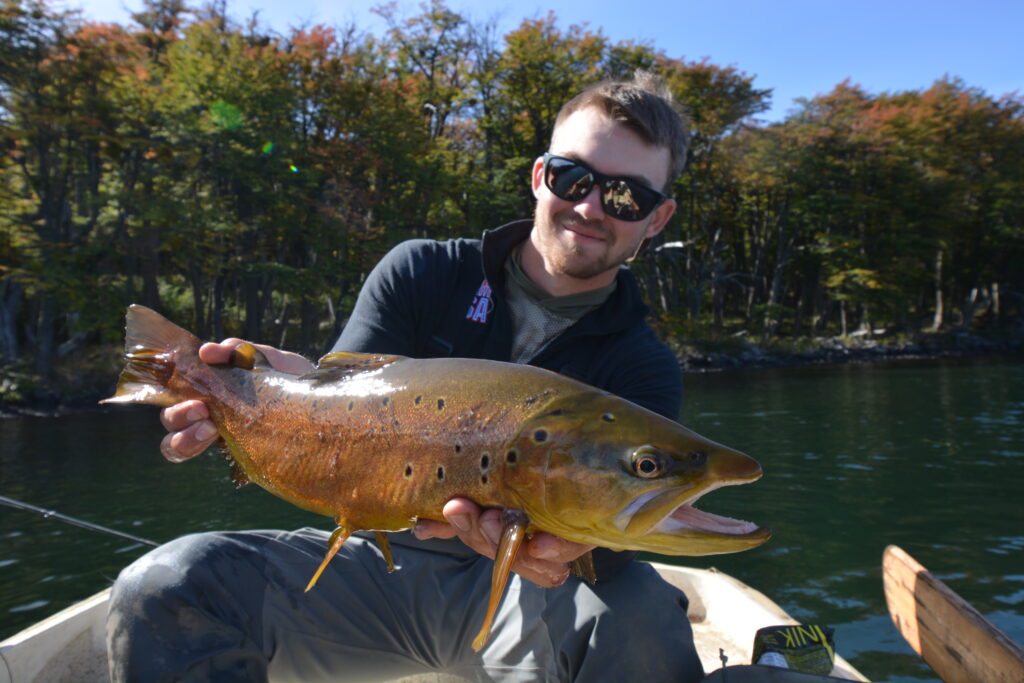
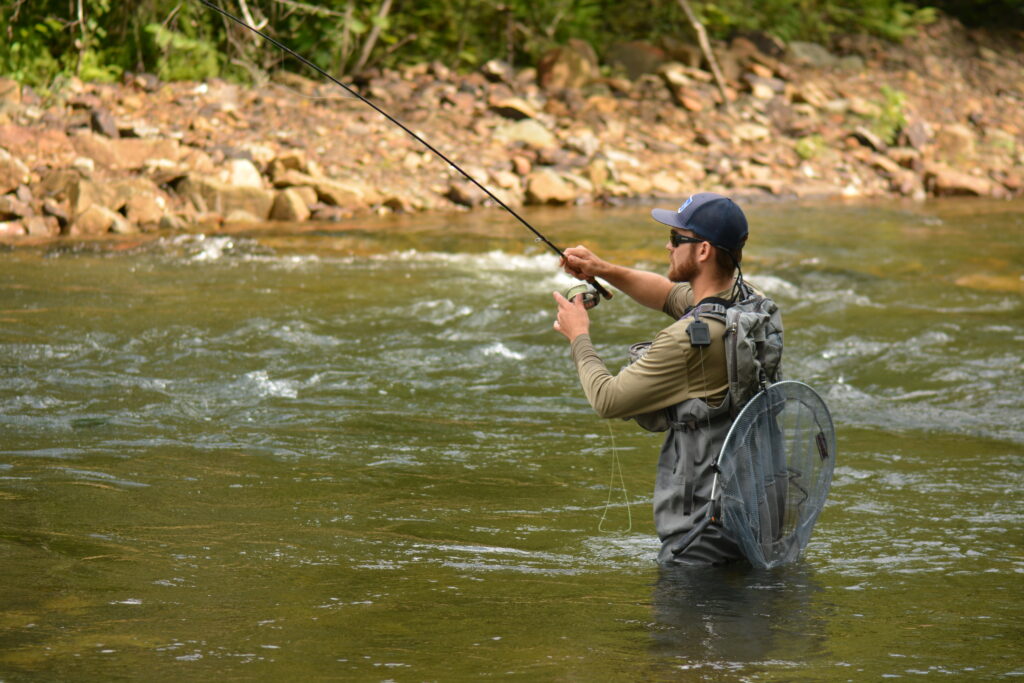
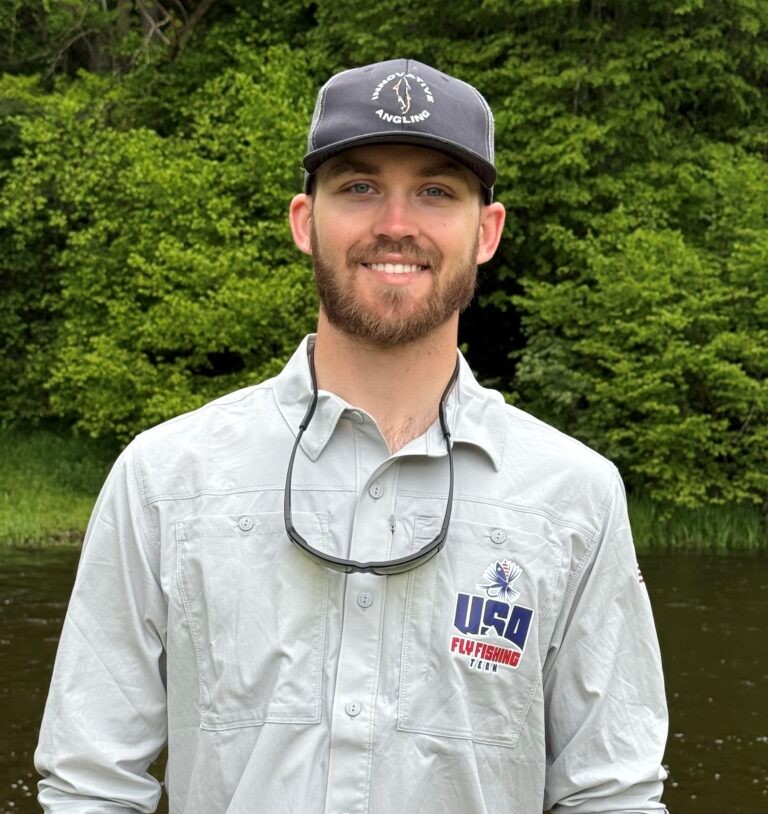
Mike Komara walks us through the mindset of a competitor — and how that mindset makes you a better everyday angler. From hand-me-down rods in Pittsburgh to medals with Team USA, Mike explains why simplicity wins: a single-fly approach, smart microleader setups, and a handful of adaptable rods. We talk translating spring-creek precision to big western rivers, reading water and bugs the moment you step out of the car, and the small technical moves (tuck casts, inverted drifts, matching bottom speed) that turn drifts into fish. It’s part practical how-to, part origin story, and a reminder that good fishing usually comes from thinking less about gear and more about the water.
00:00 – 05:03 — Dave introduces Mike Komara, setting up his journey from Pennsylvania spring creeks to Team USA and the World Fly Fishing Championships.
05:03 – 11:28 — Mike shares his background in competition fishing, early mentors, and how the Youth Team USA program shaped his approach to water and mindset.
11:28 – 18:15 — Comparing fisheries: how he transitioned from delicate eastern streams to the powerful western rivers of Idaho, Montana, and Wyoming.
18:15 – 24:47 — Inside Team USA: travel routines, minimalist gear setups, and how practicing under pressure translates to better everyday fishing.
24:47 – 31:32 — Euro nymphing deep dive — why Mike fishes a single-fly 80% of the time and how that improves efficiency and drift control.
31:32 – 37:51 — Adapting to conditions: how he reads bugs, birds, current speed, and bottom contour before making a cast on unfamiliar water.
37:51 – 43:49 — Technical lessons: micro leaders, matching bottom speed, side pressure, and why drift speed beats perfect fly choice.
43:49 – 50:37 — Fishing smart with less: how simplicity leads to more focus, better decisions, and fewer tangles on the water.
50:37 – 56:19 — Stillwater and boat tactics — applying Euro-style drifts from foot to float and finding consistency across different fisheries.
56:19 – End — Final reflections: staying curious, fishing light, and learning from the current every time you wade in.
Episode Transcript
00;00;01;29 – 00;00;23;18
Dave
Today’s guest has spent decades learning how to adapt from gin clear spring creeks of the East Coast to broad powerful flows of the Yellowstone Teton region. In this episode, we’re going to dig into what it takes to prepare for a world fly fishing championship and how fishing under pressure sharpens your skills for everyday anglers. By In this episode, you understand how to scout new rivers with intention.
00;00;23;25 – 00;00;55;24
Dave
Why seasonal shifts in the Tetons can completely change your game plan and what separates comp ready anglers from weekend explorers. This is the Travel podcast series where we bring you new places to fish, new tools. You can prepare for that trip and the mindset you need to make every trip count. Today’s guest, Mike Kamara, shares his process for fishing big western waters versus the intimate spring creeks of Pennsylvania, his go to routine and prep for the world championships and tactics he trusts in the drift counts most.
00;00;56;13 – 00;01;13;21
Dave
This episode is presented by Visit Idaho’s Yellowstone Teton Territory, home to some of the most famous and diverse waters in the country. All right, let’s jump into it. Here we go. This is my camera. You can find them at innovative angling. Com. How you do? Mike.
00;01;13;29 – 00;01;15;09
Mike
Hey. Good. How are you doing, Dave?
00;01;15;17 – 00;01;38;23
Dave
Not too bad. Not too bad. This is going to be a fun episode. I always love some of the episodes we deal with. You know, competition and talking about competition, you’re nipping. Team USA. We’ve done a number of them over the years where I think the exciting thing now is that it’s all back to the home waters. So I think the youth team, the women’s were in eastern Idaho fishing this year and now you guys are going to be back for the men’s.
00;01;38;23 – 00;01;52;28
Dave
But you’ve also got a big history. I think you’ve got a number of medals under your belt. So we’re going to talk about that. But before we jump into, I want you to give us a background, you know, kind of what you got going now where you’re at and, you know, kind of how things got going for you.
00;01;53;08 – 00;02;26;13
Mike
The after thing. So I’ve been competing since about 2014. So pretty much all of my my childhood and all my adulthood so far has been been spent in competition and learning competition tactics. I also love fishing for pretty much anything outside of trout. Too big Muskie. But yeah, so that’s my main fly fishing background has been competition here in the eastern U.S. I’ve been on the world team.
00;02;26;13 – 00;02;58;13
Mike
I started with the youth team in 2016 when I was 16 years old, went to three worlds with them over the next three years in Slovenia, Poland and the Czech Republic took a little break for college, slash covered and then got back into it when I kind of graduated and with the men’s team kind of overhauled their like application era qualification process.
00;02;58;28 – 00;03;23;06
Mike
And so it was a whole new way of doing it. And I got involved in that, ended up doing pretty well, and I was added to the worlds team for 2024, 20, 25, and that was France in 2024 where we got a bronze and then actually back to the same waters that I fished in the Czech Republic for the Youth World Championships this year.
00;03;23;10 – 00;03;25;09
Mike
That got another bronze there.
00;03;25;10 – 00;03;28;09
Dave
Oh, you did? Yeah. So you guys have another bronze this year?
00;03;28;19 – 00;03;29;16
Mike
Yeah. Yeah.
00;03;29;20 – 00;03;39;08
Dave
Which is pretty big, right, For if you look at the history of the adults is that it’s been it’s pretty challenging. Getting any sort of a medal in that arena is pretty tough right.
00;03;39;08 – 00;04;05;24
Mike
Yeah it’s definitely the, the senior championships are the stiffest competition out there. You have, you know, pretty much all the all the best anglers in the world in that at the moment. So it’s it’s always been tough. We’ve definitely evolved as a country really well over the past couple of years. And, you know, we’re we’re feeling pretty confident now, but we’ll we’ll see how things go.
00;04;05;27 – 00;04;12;22
Dave
Right, Right. It’s coming up now. Did you see I’m sure you kept up a little bit with it the how the women and the youth did this year out there.
00;04;13;02 – 00;04;25;12
Mike
Yeah. Yeah, for sure. It was really awesome to see them out there dominate on the on the home field. And I keep even in touch with everyone as it was happening. So great live updates.
00;04;25;20 – 00;04;36;06
Dave
Nice. How is that look now is your thinking are you already kind of preparing? Is that how that works for getting ready for, you know, what that’s going to look like? I guess is that going to be kind of in July and 26?
00;04;36;17 – 00;05;03;01
Mike
Yeah, for sure. It’ll so ours will be in September. Oh, okay. So it’s going to be sometime around the middle of September there. But so we actually had we’ve had a few larger competitions out there over the past year, some regionals and into regionals to kind of get a handle on the venues and then just like three, three weeks ago now, we had our national championships on the same waters.
00;05;03;01 – 00;05;29;21
Mike
So we’re kind of using that as a practice for and to to gain some intel on that water before we get to worlds. And I think it’s worked out really well. I think we’re all going in and feeling pretty confident about our ability to fish that area. And it’s, you know, really, really nice going into the world Championships, actually having some recent info on on what you’re going to fish, you know, prior to a week before.
00;05;30;01 – 00;05;41;05
Dave
Right. Do you guys know at this point it’s like basically a year from now or do you know kind of what streams or what areas or just kind of in general that area, You know, what you’re going to fish.
00;05;42;01 – 00;06;09;14
Mike
Just in general kind of for that area. So we’ve, you know, tried to maintain similar to what the the youth and women’s was, and it should be pretty similar to that. But as far as specifically, we’re still still looking into that. As things evolve, it’ll make a difference how many teams actually sign up to come over. You know, if we get a ton of teams, it’ll be harder to do it on some certain venues and it might have to change.
00;06;09;14 – 00;06;11;11
Mike
So it’s going to depend on that.
00;06;11;20 – 00;06;21;14
Dave
That’s right. And now how many have you done? So you’ve done two now and they both. So this will be your first on your home ground, right? Your first one with the world. With the with the adults. Seniors.
00;06;21;26 – 00;06;34;21
Mike
Yeah, Yeah. First first one on the home ground. I missed it in the youth by a year or two. So looking forward to it. And it’s going to definitely be a lot more comfortable if nothing else.
00;06;35;00 – 00;06;51;24
Dave
Yeah. Is it when you’re you know, you look at your home waters where you’re fishing, guiding kind of in Pennsylvania, all the famous creeks out there. Is it a big change when you’re, you know, fishing that versus heading over to maybe some of the bigger stuff or just that waters of kind of, you know, Yellowstone area?
00;06;52;05 – 00;07;14;25
Mike
Yeah, Yeah. It’s it’s a massive change, you know, especially the really clear high gradient rivers over there. And just, you know, I don’t really have many streams in Pennsylvania where I’m going to fish and he and he flies heavier than, you know, three go on on a regular basis. So pretty big difference as far as, you know, set up and how you’re fishing it.
00;07;15;10 – 00;07;21;26
Mike
You know, obviously the fishing itself resonates, but you got to adapt a little bit for that kind of stuff.
00;07;22;05 – 00;07;41;22
Dave
Yeah, just conditions. It’s higher gradient. So you’re using I mean, is your rig I mean, we talk about that a little bit. You know, we’ve heard a lot about different methods, you know, especially from competition anglers on, you know, rods and set ups. What is yours look like? Are do you have a certain rig you use kind of anywhere, everywhere.
00;07;41;22 – 00;07;42;13
Dave
What does that look like?
00;07;43;01 – 00;08;06;04
Mike
So I’m a I’m a big single fly guy kind of fish that is probably 80% of the time out here in Pennsylvania. So I like to try and stick with what I’m comfortable with wherever I’m on fishing. And, you know, you can be a lot more efficient with one fly than to get less tangles, less break offs and trees and that kind of stuff.
00;08;06;17 – 00;08;24;11
Mike
So try and stick with that and just adapted to the different conditions. You know, sometimes you you have to change up based on what the fish are doing and what they want. But I’m big on, you know, taking what you know and adapting it to whatever you come across. Yeah.
00;08;24;11 – 00;08;33;00
Dave
So single flies and is are the techniques diverse? And what you do is you kind of I’m sure you kind of do a little bit of everything, but you know, anything is a big part of it.
00;08;33;15 – 00;09;00;03
Mike
Yeah. Yeah. So you’re anything is, you know, definitely probably the biggest of the techniques we use. You know, it’s a lot broader set of techniques than it kind of started out as originally. So we’re doing all sorts of stuff, you know, from floating the cider to dry droppers and you know, for a lot of places there’s a lot of actual single dry fly fishing.
00;09;00;14 – 00;09;13;16
Mike
So just always just trying to meet the fish on their terms. You know, they, they dictate what they want and it’s up to us to abide by that. So, you know, just got to be really dynamic with it.
00;09;13;16 – 00;09;22;21
Dave
Well, maybe tell us those take us back to kind of what you’re doing there. And are you in the kind of Pennsylvania most of the year and unless you’re traveling, is that kind of where it looks like.
00;09;22;21 – 00;09;44;01
Mike
Yeah, yeah. So I’m in well, right now, southern Pennsylvania, so kind of around Harrisburg in about a week, moving up to Belmont, which is right around State College, kind of the central fishing area, you know, all the famous central limestone streams and that’s where I spend most of my time.
00;09;44;09 – 00;09;55;06
Dave
Okay. And what are the is that a pretty you know, if you just look at Pennsylvania in general, where are you living now to where you’re traveling or there are some big changes there or is pretty much similar deal?
00;09;56;04 – 00;10;23;24
Mike
It’s similar just a lot more water around that that central region. I have some cool stuff around me. I live on the little court, which is obviously really famous Spring Creek for the East Coast. And then the yellow breaches is is near me as well, and I’ll still continue guiding those. But for the most part, the, you know, really abundant fishing is right around that like Central Park area.
00;10;23;24 – 00;10;33;17
Mike
You got the junior out of Spring Creek, Penns Creek, Fishing Creek, and just a whole bunch of other less famous stuff that’s just as good, if not better.
00;10;33;25 – 00;10;45;04
Dave
Right? Right. There’s tons. And that’s and that’s the unique thing. Is it all I mean, you have all these spring creeks, which are what it kind of is known for that area. But are there other diverse kind of stream types out there?
00;10;45;18 – 00;11;19;17
Mike
There definitely are. Pretty much all of them do have at least a little bit of spring influence in in the upper parts. You know, that whole valley is just a geologic anomaly and you get springs popping out of all sorts of different places. But as you start going a little bit north of that, it does become a little more and more kind of freestone character to a lot of the rivers, you know, a little bit less limestone, but there’s great fishing pretty much all through kind of depending on what you’re looking for.
00;11;19;28 – 00;11;36;21
Dave
Okay, then now so you’ve got all this going. How do you maybe just think about that a little bit on preparation. So as you get ready for, you know, a year from now, what does that look like for you? Or maybe it’s not even maybe it’s a month from now you’re going somewhere new. How are you kind of preparing for that?
00;11;36;21 – 00;11;39;08
Dave
What does that look like? Or maybe you can use the world as an example.
00;11;39;20 – 00;12;05;16
Mike
Yeah. So, I mean, I like to say that fish or fish, and especially when you’re talking about trout, pretty much everywhere I fish for them, they have more in common than they they don’t. So I try and keep things like I was talking about pretty consistent with the way I fish in, in central Pennsylvania during a lot of a lot of them thing being prepared for if they decide they want something else.
00;12;06;03 – 00;12;31;27
Mike
But I try and keep it simple. Try and keep it as I condensed as possible with the gear I travel with, especially with the price of airline baggage these days. So yeah, so I have, you know, my, my set of rods and rails that I bring. I’ve got my ten and a half foot limping rods that I use for nothing for dry flies.
00;12;31;27 – 00;13;13;20
Mike
They’re very adaptable pieces of equipment. And that’s kind of what I’m fishing the majority of the time. You’ve got your lines off of that, which I can use depending on the leader, a microliter system or a, you know, more tapered style leader. And through dry eyes and dry dropper out to 250 feet on it. So just trying to really use that gear for the majority of my fishing and then got standard dry fly rods for, you know, bigger rivers casting flies far away and, you know, late gear for fishing streamers and rivers and and lakes.
00;13;13;20 – 00;13;37;09
Mike
So ten foot seven weight rods and a plethora of singing lines. But it’s you know, a lot of people think that competitors must have just a crazy amount of equipment later on. But I really, you know, four trout rods. I only have probably six rods that I really use and maybe one or two others that are sitting around as backups.
00;13;37;14 – 00;13;37;27
Mike
So.
00;13;38;03 – 00;13;52;25
Dave
That’s right. Okay. So that’s that’s it. So on the Nifty, maybe let’s jump into that a little bit. What do you think? You know, maybe that’s there’s overlap here, but as you get ready for this, the World’s End 26, what is that rig? So you missed a ten and a half foot. Is that kind of a three weight?
00;13;52;25 – 00;13;58;16
Dave
And what is your kind of leader set up and rig look like there for that or what do you what do you think you’d be starting with?
00;13;58;26 – 00;14;22;24
Mike
Yeah, so I’m fishing ten and a half foot rods. You know, that’s a personal preference. A lot of people like ten footers. I like a little bit extra reach, especially for the way I’m fishing here in Pennsylvania. What it’s, you know, kind of flipping flies out there under bushes and stuff like that. And then when you get over to some of the bigger rivers, the extra, you know, six inches helps you get across some of those currents a little easier.
00;14;23;11 – 00;14;48;03
Mike
So fishing that I having to abide by its rules use a euro line on my real. If I didn’t, I would be using just straight monofilament for probably 50 feet and then I fish a microliter system for the vast majority of my nymph thing. They’re really effective systems. Once you get the hang of it and they can be really versatile.
00;14;48;16 – 00;15;12;26
Mike
But I’m just fishing the Pierre Samba material, which is probably the most popular or one of the most popular liter materials in point 12 or point 14. Mm. Depending on the situation. Okay. For me, that’s double the rod length, you know, as a competitor. But for just a a regular angler, I would sport up as, as much as you want to cast.
00;15;13;05 – 00;15;23;23
Dave
Yeah. Okay. Yeah. And is that I’ve heard of the pure simply is that something that you can kind of go out there and pick up or is that something that you got to have some connections?
00;15;23;23 – 00;15;28;09
Mike
You can get it on my teammate Devon’s store tactical fly fishing.
00;15;28;10 – 00;15;29;00
Dave
You can. Okay.
00;15;29;16 – 00;15;36;10
Mike
I think he’s the only person in the U.S. that sells it, but he has a whole bunch of it. So it’s, well, attainable.
00;15;36;15 – 00;15;49;16
Dave
Yeah, it is. Okay, good. And and so you said the the euro. And how is the euro lane different from just do like you said if you could go mano like leader like what’s the difference there. What is the euro line is it just tapered a little bit or how is that different.
00;15;49;27 – 00;16;11;14
Mike
So the euro line is pretty much a work around from the FIPS rules to limit the weight of the line while staying legal. So it’s a point to two inch level diameter fly line thing. It’s it’s an £8 core with just a coating over it. So it’s as small as you can go with that with being FIPS legal.
00;16;11;29 – 00;16;39;18
Mike
So it works fine for what we need it to. But the disparity between the leader eyes and the fine line size now is pretty massive as far as weight goes. So if you’re, you know, going to be fishing one of those microliter systems, it’s much better to just have 50 feet of that so that you never have to deal with any SAG as opposed to a big heavy line kind of hanging out of your guides when you get any distance out there.
00;16;39;24 – 00;16;47;10
Dave
Right? Right. And then you said so with that rig you can cover, how far can you cover or would you cover? I would say if you’re limping.
00;16;48;05 – 00;17;28;19
Mike
You know, it depends on on the tactic for kind of the site or floating type tactics. You know, you can cast the whole leader, which is 21 feet or so, and then another ten feet of line or so out. And, you know, with the rod length that’s about 40 feet and cover all that water above you or out a little bit with regular got a new thing the standard way holding the leader off the water you’re usually trying to keep the line within the guides so somewhere around 30 feet with that leader extended 2530 feet is where we’re fishing primarily.
00;17;29;00 – 00;17;30;13
Mike
But on the average.
00;17;30;13 – 00;17;41;13
Dave
Yeah, on the average. And describe that a little bit on the site or the floating site or rig. Is that how are you doing that and how is that different from just your typical euro kind of sniffing set up?
00;17;41;13 – 00;18;19;25
Mike
So that’s something I do a lot here in Pennsylvania with our kind of slower Spring Creek waters. And it’s, you know, people like to call it tight line them thing, you know, to refer to all these tactics. But it’s not really fishing on a tell line. It’s casting up and using the leader as your strike indicator still, but it’s on the water kind of floating with the current and you’re just watching that for movements similar as you would to to holding it up but you can fish really light flies far away from you with with that method because you’re not influencing them at all.
00;18;19;25 – 00;18;26;02
Mike
It’s just letting the current do what it wants with the fly and the leader and you’re just watching for any little movement there.
00;18;26;09 – 00;18;31;28
Dave
Okay. Is it kind of like similar to like the dry dropper if you had a that sort of set up on there?
00;18;32;11 – 00;18;50;17
Mike
It’s sort of similar. But the the leader isn’t really acting as the suspension device. Everything’s kind of flowing down at once. So your your leader of flow there is the fly is sinking. But then as soon as that fly, it touches bottom. You know, that kind of leader insider will dip under the water and you can still continue fishing.
00;18;50;17 – 00;19;07;26
Mike
It you just kind of watch further back on the slider as it sinks further and further. And that’s that’s how I like to fish a lot. You can get some very, very finessed presentations in areas that you really wouldn’t be able to with the standard type line tactics.
00;19;07;29 – 00;19;23;15
Dave
Okay. And as all of this today, I think you mentioned everything we’re talking about here, this could apply to what you’re going to be doing in Idaho next year. Is that is that the case? Just maybe a heavier how would you change that from what we’re talking about now as you get into some of these different larger or faster streams?
00;19;23;28 – 00;19;44;12
Mike
So for sure it could apply. It’s just kind of within the Pacific areas on on those rivers. So when you find some of those longer flights that will have, you know, on any river, really, it can can definitely play a role. You will usually be fish and a little bit heavier, a little bit longer tippet and those bigger rivers.
00;19;44;12 – 00;19;49;14
Mike
But it’s the same tactic just kind of adapted to the situation.
00;19;49;22 – 00;20;08;18
Dave
Okay. And one of the streams that, you know, there are some famous streams on both sides, west and east. You have a bunch of them there. You mentioned the Henry’s Fork is one. I’m not sure. I’m guessing you guys will be fishing that. Have you fished that before? And how different is that stream versus some of those spring creeks that you’re fishing back, you know, in your neck?
00;20;08;27 – 00;20;12;20
Dave
Because I know that the Henry’s Fork is known as a pretty technical stream, right?
00;20;13;04 – 00;20;33;06
Mike
Yeah. So the the Henry’s fork is pretty different from from the streams we have out here. I did fish it during our national championships a few weeks ago, but that was my my first experience. But I will kind of refrain from giving any specific info on it to maintain whatever competitive advantage we have.
00;20;33;12 – 00;20;52;04
Dave
Yeah, definitely. Definitely. You know, I think that and we’ve talked a ton about it, you know, from a number of different guests. But yeah, I mean, it sounds like it’s just it’s technical for a number of reasons. I’m sure it gets a lot of pressure, But are the species that you’re focusing on, are they going to be the same species?
00;20;52;04 – 00;20;57;07
Dave
Are we talking about it’s, you know, rainbow trout? Is that kind of the focus of both areas?
00;20;57;07 – 00;21;20;08
Mike
So over in my neck of the woods were mostly fishing for wild brown trout. That’s kind of the main draw for our our streams. We do have a very small amount of wild rainbows. And then obviously stock rainbows are a big deal out here, but over there it’s kind of flipped. They have a lot more rainbows on average than they do brown trout.
00;21;20;18 – 00;21;36;28
Mike
And no, I don’t think any stock or maybe a little bit of stock in some of the watershed, but mostly wild fish. So same species, different proportions. And on some waters we’ll have cutthroat and white fish as well, and whitefish.
00;21;36;28 – 00;21;47;07
Dave
And like you said, they’re trout, so they’re not that much different. You know, the things that you’re using for one species are applying an across the board, right? That’s whether it’s brook trout or any of these trout species.
00;21;47;18 – 00;22;06;22
Mike
Yeah, for sure. Yeah. Like the first time I fish, the Henry Fork fish did pretty much the same as I fish. Some of our smaller high grading of rivers out here. And did you know perfectly well and different species, you know, different water type but eat the same fight the same.
00;22;07;05 – 00;22;26;23
Dave
That’s right. That’s right. Nice. Well, I want to get into more of some on the technical side of it, but I want to take it back real quick to, you know, kind of you mentioned 2014 getting started. How did that start for you? Were you fishing? You know, fly fishing well before that or that seems like there’s such a small amount of people that are in that in the arena where you guys are with Team USA?
00;22;27;00 – 00;22;28;16
Dave
How’d that all kind of get started?
00;22;29;00 – 00;22;41;03
Mike
Yeah, So I started fly fishing when I was around eight. I was gifted the intro set up from a relative and I’ve always enjoyed fishing in general.
00;22;41;03 – 00;22;47;20
Dave
So you had a relative? It was a relative, like an uncle that was a big fly angler and said, Hey, this eight year old kid should check this out.
00;22;48;03 – 00;22;53;09
Mike
Not quite. There was an aunt that bought the equipment and then decided she didn’t like it.
00;22;53;12 – 00;22;54;05
Dave
Oh, there you go.
00;22;54;10 – 00;22;58;28
Mike
So I got her her hand-me-downs and did not really have much.
00;22;59;07 – 00;22;59;20
Dave
As far.
00;22;59;23 – 00;23;01;19
Mike
Tutelage for the first couple of years.
00;23;01;19 – 00;23;07;14
Dave
Was this aunt on your your mom’s side or your dad side? Mom’s mom’s. Okay. So little more.
00;23;07;14 – 00;23;28;12
Mike
Of a more of an aunt by proxy. Okay, friend, that is. You’re very close. But so got the equipment from her. But no, no real mentorship there as far as how to do it. So I think for the first couple of years, I thought you had to you know, bounce the fly off the top of the water is to get the fish to come up and eat it.
00;23;28;28 – 00;23;49;20
Mike
So I didn’t have too much success till I was about ten, but I had a local L.L. Bean store that offered fly tying and fly fishing classes, and I got into some of those and that really kind of started it off for me with some success on on Pan Fish and that kind of stuff. Yeah.
00;23;49;22 – 00;23;50;21
Dave
Was that in Pennsylvania?
00;23;51;01 – 00;23;54;17
Mike
Yeah, that was in Pittsburgh. Where? Where I grew up. So yeah.
00;23;54;17 – 00;23;57;04
Dave
Pittsburgh. A little bit different than where you are now.
00;23;57;16 – 00;24;17;01
Mike
Pittsburgh is is very different from where I am now. Not too much in the way of trout out that way. We have some, some stock streams but they’re, they’re not great. I had good places to practice with that get to get a feel for it. And obviously when you’re a kid, any fish is is super awesome and is good as any other one.
00;24;17;23 – 00;24;43;13
Mike
So that’s kind of how I got really started into it. And then the youth team is based in State College, Pennsylvania, and my parents took me up there as a summer trip, a little vacation type deal, and I just kind of learned about it through the fly shop up there. I think I George Daniel was still still working there at that time.
00;24;43;13 – 00;25;10;07
Mike
And his this was circa 2011, 2012. So his book was at the height of its popularity and thing and so they heard talk of it in there and saw somewhere. I’m not sure where that the youth team was holding a clinic in on Fish and Creek. And so I went to that when I was 13. I think my celebrated my birthday there.
00;25;11;05 – 00;25;22;07
Mike
So 13 and 14. And then I did my first competition. I liked what I saw, did my first competition a week later and have been doing it pretty hard ever since.
00;25;22;07 – 00;25;25;29
Dave
Yeah, that’s right. Well, it was that first competition. Was that do you remember that pretty well?
00;25;26;05 – 00;25;50;19
Mike
I do, actually. It was on a stream called Sandy Creek in northwest Pennsylvania, about an hour north of Pittsburgh, 2 hours somewhere in there. And it was terrible. I think the winner caught like four fish. I caught one, but for some reason I liked it and I kept coming back and yeah, it got got better from there.
00;25;50;27 – 00;26;11;17
Dave
Nice, nice. And then it just kind of rolled into eventually. Well, when you first got going, you were kind of for it, I think You said you’re 16 when you first got onto the youth team, correct? Yeah, Yeah. 16. So at that time, things were they had they evolved or they had a good system for the whole selections is or it was, is it different than it is now.
00;26;11;17 – 00;26;35;28
Mike
I’m not totally sure how the youth team still does it now. At that time it was mostly coaches choice and how are you did in, you know national championships That’s the only only competition we had that was youth specific and I think it’s still relatively similar. But we we usually only had, you know, 25 kids to 30 kids competing at any time.
00;26;35;28 – 00;26;39;21
Mike
So about half of everyone that wanted to got on the youth team back then.
00;26;40;12 – 00;26;47;04
Dave
Yeah, there’s a lot more a lot more now. And that’s part of the reason why it’s such a great a good team. There’s just more competition and higher level.
00;26;47;17 – 00;27;01;06
Mike
Yeah, Yeah, for sure. Some of the kids these days are just crazy, crazy good. I work with a lot of them, you know, for lessons they would far outpace me if if we were both there back in the day. Yeah.
00;27;01;16 – 00;27;20;02
Dave
The competition. That’s always the funny thing. I always love to go back to the sports analogies and like basketball, you know, I was just actually just, I was YouTube and out yesterday and I was watching all Dr. J videos on YouTube and man, that guy was spectacular. But, you know, you bring in Jordan, right, LeBron? And it’s like a different game, right?
00;27;20;02 – 00;27;31;06
Dave
Things have changed or even Stefan Curry shooting these shots from half court Is it kind of same and fly fishing that the level like is that that things change and things are just a whole another level higher than they were.
00;27;31;14 – 00;28;03;17
Mike
Yeah for sure it’s the access to information and good equipment these days is 100 times what it was when I started. And then the techniques have progressed. You know, the Microliter systems are popular now. The casting is much better than than when I started just in the general angling population. So it’s a big mix of that. And just these kids really, really enjoy it.
00;28;03;18 – 00;28;13;04
Mike
It’s it’s not even as common these days to get out on the water is is a kid then when I started so the kids that are out there really just loving.
00;28;13;04 – 00;28;22;07
Dave
It Yeah definitely nice and and you had a couple you had some medals right under your belt. It was that with the youth romance again on that. Did you have some there too?
00;28;22;18 – 00;28;58;26
Mike
I did, yeah. So I got team Silver in Slovenia or. I’m sorry, Team bronze in Slovenia and a team silver in the Czech Republic. So it was definitely a big learning experience for me through the years and growth is a team just the way the youth team operates and how things go by. Definitely prepared me very well for what I’m doing now with with the men’s team in the way that we we worked as a unit and really put an emphasis on on the team aspect of the sport.
00;28;58;28 – 00;29;14;05
Dave
Yeah team is that’s the huge that’s the huge game changer for you guys it sounds like. So what is let’s take it back again. We don’t have to get into super specifics, but let’s just think a new water, right? You’re getting ready for something or somebody listening is getting ready for that. What is that? What do you think?
00;29;14;05 – 00;29;29;00
Dave
And as you’re so you got all the prep to get there before you get there. But as you get on the water, say you’re going to new area. What are you you know, how should some be preparing as they kind of walk up to the stream? They’re in their car. They haven’t ever fished this stream before. Well, what would you tell them for advice?
00;29;29;12 – 00;29;51;29
Mike
Yeah. So, I mean, the first thing that I look at is and walk after the stream. Any bugs flying around, any bird activity that may indicate there’s some dry fly action possible? Obviously, any rises that are visible from from just walking up probably most of the time that’s not the case. But when it is, it’s it’s a lucky day.
00;29;51;29 – 00;30;13;08
Mike
And I’ll run back to the car and grab my my dry fly rod and spend the day doing that. But when it’s not the case, then I second thing I look at is water temperature. You know, how cold or warm is the water. And that’s going to really dictate what the fish are doing. And what I kind of start out with as far as tactics and flyweights go.
00;30;13;22 – 00;30;38;26
Mike
So when the water is colder, going to start lower and heavier, when it’s kind of that nice, like 63 degrees range 60 to 63, get it probably start out a little, little higher and faster because those fish are more active and then usually more fast or roughly water when the warmer the water gets up until that kind of cut off point where you don’t want to fish anymore.
00;30;39;21 – 00;31;11;15
Mike
So going to take that into consideration rig up. I usually start with kind of the same length a tip at right around 4 to 5 feet. If the water’s really on the shallow side, I’m going to tend towards four of if it’s on average three or less, and if it’s on a little bit of the deeper side of that four foot to six foot range on average that I’m going to start with kind of that five foot and like two to keep it pretty consistent just to have a really good idea of where that fly is at all times.
00;31;11;28 – 00;31;41;23
Mike
If you’re changing your tip it to match a lot of scenarios. Exactly. It gets hard to have an intuitive picture of of what’s happening under the water. So I usually adjust that by holding my slider slash leader a little more above the water for shallow water or sinking it in in deeper water. That’s definitely the benefit of these smaller leaders, is that you can sink them pretty well without affecting the drift too drastically.
00;31;42;07 – 00;32;02;06
Mike
And so starting out with that, and I’ll start with I have three drifts that I do pretty consistently. One is high and a little fast, and I always like to start with that one because there’s any fish that are extra active, they’re going to eat fast and if you give them too much slack on the first drift, you’re going to miss them.
00;32;02;23 – 00;32;07;04
Dave
And high and fast is kind of like within the first foot of the below the surface sort of thing.
00;32;07;13 – 00;32;30;28
Mike
Yeah. So that kind of first 6 to 18 inches depending on the water depth, you know, kind of relative. But it’s going to be a low side or angle. So slider off the water is going to be 15 to 20 degrees or so and leading about the water speed, if not a little bit faster depending on the temperature and the bug activity.
00;32;30;28 – 00;33;10;12
Mike
And what it may seem like the the fish activity is going to be. And then after that or kind of go a little deeper, a little slower with a kind of mid column drift side or angle around like that, 45 degrees, kind of the more classic drift. You see nothing there that I’ll go a little bit deeper kind of at the bottom bouncing that a lot of people associate with with the tight line tactics and that kind of steeper side or angle, slower drift with, you know, matching the bottom current speed and usually one of those is going to put up, you know, if you do it in enough places, do it enough times, starting
00;33;10;12 – 00;33;34;20
Mike
out in some some good looking water, one of those is going to result in some action. And if not, then I’ll start trying different things like stand further back in sight or floating some really light flies to, you know, see if they want a a little bit more finesse, drift dry, some some junk flies out and see if they’re just being a little snotty and need a good reason to eat.
00;33;34;20 – 00;33;46;23
Mike
But just really situational as far as you know, what the progression is going to be kind of got up, play off the conditions and meet the fish where you expect them to to be.
00;33;46;29 – 00;33;57;26
Dave
Yeah. Can you do that technique? I’m picturing like the South Fork, the Snake, a big river. Could you do that same technique? And how would you find, you know, the fish on such a big river like that?
00;33;58;09 – 00;34;38;04
Mike
So when I’m fish in a bigger river, I try and break it into a smaller river. At least to start out to get a picture of of where those fish might be for really big river that’s usually going to be fishing some of the bank water where it’s kind of most defined. So I’m going to find some some bigger rocks off the bank or some blow downs, drop offs, some sort of obvious structure there and just start there with the same kind of progression, you know, adjusting the Flyaway to meet whatever the the water depth or condition may be and just kind of work work that stuff until I get into some fish and gain
00;34;38;04 – 00;35;10;21
Mike
a little confidence about type of water. They’re sitting in speed of water, depth, all that. And once I have that then I’ll probably work a little bit into some of the main water if it’s accessible. You know, the south fork of the snake really can’t take too many steps off the bank there. But, you know, with some of the bigger but still manageable rivers, you can can weight around a little bit and I’ll just kind of pick through that water until I have just a really good idea of where they are with, you know, massive rivers like the South Fork.
00;35;11;01 – 00;35;36;00
Mike
Usually you’re going to be kind of stuck fishing up the bank. And in that case, it’s much easier because your options are limited for you. All you got is that bank water and you should be able to kind of pick up where they are, what they’re sitting in and how they’re feeding relatively quickly because rivers like that can honestly have less fishable water than a small stream if you’re, you know, really on on high water.
00;35;36;08 – 00;35;48;27
Dave
Right? Right. That’s true. And now these techniques out there, especially in the West, is lots of people are fishing out of boats. Can you do that? Is that something you’ve done before with this style of, you know, kind of, you know, your sniffing?
00;35;49;06 – 00;36;10;04
Mike
Yeah, Yeah, you certainly can. It depends on, you know, what the the water is specifically out here in Pennsylvania with our rivers are pretty well defined even through the middle. They’re not crazy deep or crazy fast. And we do that a bunch, I know, out west with some of those really big deep rivers that would be a little bit harder.
00;36;10;04 – 00;36;34;19
Mike
But the good thing about this technique is you can always throw an indicator on the end and get some really awesome, massively long drifts fishing. That kind of style. You know, you’re a new thing has kind of been pigeonholed into a relatively small set of tactics, but the real mindset behind it is being adaptive and meeting the fish on their terms.
00;36;34;19 – 00;36;53;15
Mike
And if you’re not following a set of rules like like in a competition, you can adapt that whatever way you see fit. So fishing it out of a boat with an indicator is something I do relatively often and it’s probably the most effective way to throw them from a boat.
00;36;53;19 – 00;37;11;07
Dave
Yeah, to cover. And, and you mentioned the kind of the three drifts the in depending on water temperature high and fast mid them deeper on the deeper you said matching the currents the bottom speed of the current. How do you do that when you’re fishing down and what speed is the current going out at the bottom versus say, top or in the middle.
00;37;11;18 – 00;37;34;00
Mike
Yeah. So the the current is always going to be stratified with kind of the fastest current near the surface, assuming there’s nothing breaking it up and get slower as you get towards the bottom just because of the friction and turbulence against the bottom substrate. There. So the bigger the substrate you have on the bottom, the slower your current speed is going to be.
00;37;34;10 – 00;37;59;07
Mike
So in a river with a really heavily rocky bottom, you might have a current that’s barely crawling by and on a river with a silty or got a gravel bottom. It may just be ripping through there almost at the same speed as the surface. And fish usually don’t really like that. They can still find some some little depressions sit in in there.
00;37;59;19 – 00;38;21;25
Mike
But why kind of look for bottom structure that offers a little bit, but are your bottom currents going to be relative slower compared to the top? You’ve got to get your fluid down there so that it can kind of anchor up in that turbulent bottom section where it has a chance to by the fish at a pace that they can actually jump out and eat it.
00;38;22;11 – 00;38;45;07
Mike
So you’re going to want to a little bit heavier fly usually to reach that bottom and stick it down there in a really big river like the snake, I’d probably be fishing for male fly, so fly with a formal tungsten bead or potentially even to the same size, depending on just how fast the surface current is is ripping through there.
00;38;45;21 – 00;39;12;23
Mike
And then in the cast itself, you have to have some slack to allow those flies to actually sink down. If you start out with tension, they’re never going to be able to really break through that kind of faster surface and middle layer. So doing what we call a tuck cast, which is basically a little bit of a higher angled cast that’s going to drop to the water and add some slack in there, give the flies a chance to sink down.
00;39;13;06 – 00;39;40;04
Mike
And once they get down there, you’re going to see a little bit of a slowdown in your slider. And that’s just because the flies are have enough that they can anchor in that bottom current and not be pulled back up if you’re leading them downstream and you’re going to be able to actually watch your slider kind of slowly move through water with the surface current and the bubbles on top kind of sliding past it.
00;39;40;20 – 00;40;00;18
Mike
And the key there is that you don’t want to lead your flies so fast that you’re pulling them downstream. You kind of want to let the flies dictate the speed so that you actually know how fast that bottom car is moving. So it’s good to kind of start out moving a little bit slower than you think you need and just kind of see what the slider angle is doing.
00;40;00;18 – 00;40;27;14
Mike
If it’s kind of pointing downstream, that would indicate that the flies are moving a little faster than you are. You might be pulling them up or a little bit out of contact. And if it’s pointing kind of back upstream in a really tight angle, then probably means you’re pulling them downstream a little too fast. So you want a nice 45 ish degree angle with a little bit of a belly in there, not a super laser straight slider.
00;40;27;29 – 00;40;31;24
Mike
And just that’s how you kind of match that bottom current speed, Right?
00;40;31;24 – 00;40;41;19
Dave
And then you see what’s going on and then you you match and then could you adjust it from there a little faster or a little slower? Are you just trying to really match that speed of wherever the flies are every time?
00;40;41;29 – 00;41;03;01
Mike
Yeah. When I’m down on the bottom kind of fishing in that, that way I’m usually letting the current dictate the speed. When you start pulling in faster, you’re going to start pulling them up into kind of the mid currents. That’s just the way the force works. On the tip it if you’re pulling it downstream, you’re also pulling it upstream a little bit further up in the column a little bit.
00;41;03;25 – 00;41;28;21
Mike
So usually don’t pull them any faster. I will try and add some more slack into the presentation and do what we call inverting the drift. So inverting that slider upstream and that kind of helps them slow down a little bit more, then you’re just kind of leading them through the drift. So that’s especially in like winter fishing or when the fish are really just walked down the bottom because they’re unhappy.
00;41;29;01 – 00;41;31;10
Mike
That kind of inverted drift comes into play a lot.
00;41;31;16 – 00;41;45;22
Dave
Okay, So that’s what the fish are doing. So when it gets really cold and you’re, you know, closer to 30 than 60 degrees or something like that, the fish or they’re just kind of hunkered on the bottom because it takes less energy. It’s slower. Is that kind of what they’re doing? They’re not as active.
00;41;46;02 – 00;42;10;24
Mike
Yeah. Yeah. When they’re cold metabolisms, low, just not really happy. They’re trying to conserve energy. They’ll definitely lock into that current on the bottom. Usually, usually try and find some deeper, slower kind of runs and pools where they can still have food coming by them. They don’t want the slack water, you know, but they want something. They’re not going to have to expend too much energy in.
00;42;11;04 – 00;42;17;29
Dave
Yeah, perfect. And describe that again on the inverting. What is that again? How are you doing that as you’re changing the fly speed?
00;42;18;12 – 00;42;33;24
Mike
So it’s a little bit hard to describe, but basically what you’re doing is making a pretty high slack cast, allowing those flies or single fly to hit the bottom, get into that slower ribbon of grass.
00;42;33;27 – 00;42;37;17
Dave
So actually feel you feel a tip that you feel that fly touch the bottom.
00;42;38;04 – 00;43;04;16
Mike
So you don’t necessarily feel it, but you’ll see kind of that initial slow slow down in the movement. Your slider some people call that like the downshift so that slowing of the slider show that your flies are anchoring on the bottom and then instead starting to lead them through the drift, you know, with that slider pointing upstream like a rod tip below the fly, you’re going to basically let the current take the slack out of the system.
00;43;04;26 – 00;43;27;21
Mike
And when you do that, you’ll see kind of a second downshift in speed. So you’ll see the indicator and leader kind of flow downstream. And then it will get to a point where it has a nice downstream bow in it and it’ll just kind of slow a little bit more. And at that point you start leaking it down or following it downstream at a relatively slow angle.
00;43;27;21 – 00;43;49;08
Mike
You’re just trying to maintain whatever angle. And and Bowe, that slider decided it wanted when the current pulled the slack out. And it sounds counterintuitive because you’re letting the current take the slack, but any time you’re slider is downstream of those flies, any time you’re leading them downstream, you’re imparting a little bit of extra force on the flies.
00;43;49;19 – 00;43;58;16
Mike
Whereas with an inverted drift like that, kind of allowing only the current to do the work instead of you and the current, if that makes sense. Yeah.
00;43;58;22 – 00;44;16;00
Dave
Yeah, it does make sense. Nice. Okay, well, this is great. I think I want to touch base a little bit back, circle back on the dry fly set up. But before we get in here, I just want to kind of start to take it out on our Fly Shop Friday segment. You mentioned before, you know, you’re talking about George Daniel back in the day and the fly shop.
00;44;16;15 – 00;44;33;25
Dave
First, I just want to mention this segment is presented by Wet Flight Swing Pro. This is kind of our community of listeners in the podcast, so we’re kind of taken to the next step. They’re traveling there, chat, and together we’re trying to build some other webinars and stuff at West by Swing Pro. So first we get a big shout out there, but on the Fly Shore, maybe talk about that.
00;44;33;25 – 00;44;40;18
Dave
Who is your what was first off, what was that fly shop that George Daniel you mentioned had worked out and then what is what is your home fly shop now?
00;44;40;29 – 00;44;52;09
Mike
So that fly was was TKO in state College pretty pretty well-known fly shop pretty big one and actually there are still my my home fly shop There’s a Tesco here in.
00;44;52;23 – 00;44;56;10
Dave
There because there’s a few right. There’s a few shops in in Pennsylvania Tequilas.
00;44;56;18 – 00;45;09;08
Mike
There is I think they’re up to four now, four or five off. So I have one 8 minutes down the road from my place now and I’ll have one pretty much 8 minutes down the road from my place. No kidding. I move up to Belfast.
00;45;09;08 – 00;45;14;26
Dave
Are there more? Are there more tico fly shops or Avis and fly shops in Pennsylvania? You know.
00;45;14;26 – 00;45;24;19
Mike
Of all that’s I only I only know of of one or of a shop. Okay. So yeah there’s one in Pittsburgh but I know there’s at least four Tescos.
00;45;24;19 – 00;45;27;11
Dave
That’s cool. What is it. What’s the and what does TCO stand for.
00;45;27;27 – 00;45;44;08
Mike
It’s effort to Hawk and Creek Outfitters. So they started out on a creek in eastern P.A., called to BLOCK and Creek. It’s a really long name so they shortened it down to two TCO and they’ve expanded significantly since since then.
00;45;44;12 – 00;45;53;05
Dave
That’s cool. So that’s your shop and what has been, you know, their success? What do they do really well out there? Have they become kind of one of those leaders out there?
00;45;54;00 – 00;46;18;25
Mike
They’re just all really great guys there. You know, it’s an awesome fly shop. They really were super nice to me when I was a kid, starting out, you know, with offering advice, offering where to fish. And I’ve become really good friends with pretty much everyone that works there over the the years, even though, you know, there’s some turnover with they employ a lot of college students.
00;46;19;14 – 00;46;30;13
Mike
So everyone that works in there through it is is just an awesome person and they’re always going to steer you in the right direction. If you go out there and ask for some some inside info.
00;46;30;22 – 00;46;50;15
Dave
That’s cool. Right on. Well, that’s our shout out our Fly Shop Friday segment. Shout out here. Let’s take it back. We’ll just touch a little bit the dries and then but I do want to hear about you mentioned as you as a new angle. Let’s say somebody is listening now. Maybe they’re new to some of these ideas we’re talking about or just new in general, the fly fishing.
00;46;50;15 – 00;46;54;23
Dave
Well, what sort of advice do you give to that newer angler on having success?
00;46;55;11 – 00;47;24;16
Mike
My biggest piece of advice is absorb a lot of info. You know, we live in just such an information rich age, especially in this sport, that you can buy a a book or two that has the entirety of what it took 18 years to learn. You know, when I was getting into college and you know, thought I knew everything and then more stuff always comes out.
00;47;24;16 – 00;47;42;27
Mike
But you can you can find so much good info and figure out so much on your own that just even ten years ago you absolutely couldn’t find anywhere. So I’m big on reading. I read a lot of books, so there’s so many good ones out there from really good anglers. And yeah.
00;47;42;27 – 00;47;51;03
Dave
What do you think are your if you had to say look on your desk, kind of your top, those books that are just maybe one or two that kind of standards everybody should have on their shelf.
00;47;51;17 – 00;47;58;01
Mike
So actually I wrote an article about it just a couple weeks ago, my ten books that are going to teach you pretty much every now.
00;47;58;01 – 00;48;00;08
Dave
There you go. Well, what’s the title again?
00;48;00;16 – 00;48;18;29
Mike
It’s the ten best books of the ten best fly fishing books in the 21st century oh nine and all informational books. I kind of put in a way that if you never heard of fly fishing before and you bought all ten books, if you read them, you’d have pretty much the entirety of the information.
00;48;19;08 – 00;48;20;11
Dave
Oh, that’s right.
00;48;20;12 – 00;48;21;10
Mike
Become an expert.
00;48;21;20 – 00;48;36;28
Dave
This is great. Yeah, I’m looking at it now. We’ll put a link in the show notes will have a blog post to go along with this and I see. Yeah. I’ll just name a couple. You got an Orvis fly fishing guy and of course, Tom perfecting the Castle Edge. Ever ask you who we’ve had on as well? You got number three fish on it.
00;48;36;28 – 00;48;41;01
Dave
Guide to Playing Lenny Big Fish. I’m not familiar with Floyd Fry, is it?
00;48;41;01 – 00;49;09;12
Mike
Frankie I’m not sure how to pronounce his last name, but that’s probably my favorite book on the list because fighting fish is is always a little bit of an overlooked skill, but that book really just encompasses all the knowledge you need to to land of any size that really I’ve not seen written or shown anywhere, you know, in in as much detail with is as good an explanation.
00;49;09;21 – 00;49;25;14
Dave
That’s amazing. Yeah. And there’s a foreword by John Wolf who we’ve also had on here and this is great because I think landing a fish is a challenge both new and experienced anglers right. Especially you know, you’re fishing lighter gear and you got this giant fish on like what do you do? What would be your tip on landing fish?
00;49;25;14 – 00;49;31;25
Dave
I know there’s different things out there, but is there one quick one you’d give on advice to somebody who does get that trophy fish on?
00;49;32;06 – 00;49;51;19
Mike
Yeah. So the biggest thing with fighting fish, I’ll give give two pieces of advice. The first is to keep it above you. As soon as the fish gets below you, you’re fighting the fish and the current. If you keep the fish above you, it’s fighting you in the current. So the more you can keep it above your position, the better the chance you have to land it.
00;49;52;00 – 00;50;13;27
Mike
So when I hook officials, you know, any size and I’m not going to be able to flip it in in the net immediately, I’m already headed downstream, trying to keep it as far above me as I can. So that’s the number one. The number two is don’t keep the rod straight up. You got to move it to one side or the other so you can have some control over that fish’s head.
00;50;14;04 – 00;50;21;14
Mike
And it can’t just run wherever it wants. So we call it side pressure. Side pressure is is key to landing fish of any size.
00;50;22;00 – 00;50;41;07
Dave
Perfect. Perfect. And I’ll just run through a few more of you because these are all some books you’ve got. You mentioned that George Daniels dynamic sniffing. You’ve got your sniffing. This is Josh Miller who we’ve talked to recently, Tactical fly fishing. I mean, yeah, you’ve got the list of I mean, a pretty amazing. Yeah, you’re right. All these things are pretty much recognized.
00;50;41;07 – 00;50;58;16
Dave
I don’t know. I never heard of Paul Wimmer. I haven’t had him on the podcast. And then George, another George and then Devin Olson. Stillwater, Right. And that’s one thing we haven’t talked about today is still waters are huge for Carp because you guys do you always have a Stillwater whenever you’re fishing the championship.
00;50;58;25 – 00;51;21;05
Mike
There is pretty much always a Stillwater it world’s. I can’t think of any in recent memory that didn’t have one. But yeah, Stillwater is are what we kind of call the the turning point. You know when you get on there it’s equal for everyone and everyone has the same opportunity to, to get in to fish. They can go wherever they want, fish however they want.
00;51;21;19 – 00;51;36;00
Mike
So if you are good at Stillwater fishing, then you’re going to do well. And if you’re you’re not, then you’re going to do poorly and that’s going to going to hurt your placing. So Stillwater is really are the determining factor of of a lot of world championships.
00;51;36;11 – 00;51;53;22
Dave
Nice. No, this has been great. Mike. I think one more question won’t take too long and then we’ll jump into a couple of quick random ones and get out of here. But the dry fly, I want to bring it back to that. So you’re on the water. We talked about the nipping and how you cover everything there. Let’s say they are sipping some bugs or you’re seeing heads on this.
00;51;53;25 – 00;52;10;00
Dave
Let’s take it back to that stream, the big stream, your fish in a big water like the South Fork. What do you do? You see some bugs? Maybe there’s mayflies, Maybe there’s some October cats, you know, whatever. How do you decide what that first fly is? Or do you have one? You’re always is like your go to that kind of imitates a lot of things.
00;52;10;10 – 00;52;36;02
Mike
Yeah yeah so I. I love dry fly fishing much as people wouldn’t expect it. I’m pretty much a dry fly purist from April to June out here so it’s definitely if I can do it, I’m going to do it. Usually you kind of have an idea of what’s that? What’s you could see on the water, you know, the local fly shop or a guide is going to tell you at least for what month you’re there, what you can expect to see.
00;52;36;11 – 00;53;02;00
Mike
And that’s a good place to start. So you definitely want to have the range of flies in kind of whatever aspect is going to be out there. Cats, mayflies stone flies or terrestrials, and I use called a Spanish system or a kind of a competition specific dry fly system. I think you you had Jack on and he was talking about that for a while.
00;53;02;00 – 00;53;24;06
Mike
So going to usually try for for lighter tip it’s for really long really kind of finesse drifts blind dry or, you know, fishing to specific fish depending on what’s what’s going on. But as far as fly, you definitely need to be a little bit more discerning with dry flies. The nymphs, you know, at least get the the stage kind of right.
00;53;24;06 – 00;53;48;04
Mike
You know, for spinners, you’re going to want something that’s sitting a little bit lower on the water, usually something it has that kind of similar wing profile for, you know, a mergers and and runs. You kind of want something that’s going to have a good bit above the water, but also sits low enough that it could be either that’s kind of what I do is I try and get something in between in merger and a done.
00;53;48;04 – 00;54;02;28
Mike
So I fish a lot of shuttlecocks, a lot of just really low riding kind of seeds patterns. So I try and try and cover as much as I can with with one fly. But you definitely can’t get away with it quite the same as you can do in thing.
00;54;03;06 – 00;54;21;13
Dave
No. Yeah, you got it. You got to match the hatch a little bit when your fish and dries. Although there’s a few flies out there like, you know, I go to like the missing link, maybe the cat cats. There’s some that kind of work, you know, of the parachute. Adams Maybe. What what are your do you have a few that you just say more generalists patterns that you really love?
00;54;21;18 – 00;54;22;26
Dave
Maybe a few dry flies.
00;54;23;07 – 00;55;03;23
Mike
Yes. I fish, like I said, shuttlecocks a lot, which is basically a CDC pattern that kind of hangs under the water. But if you kind of put some floating on the main body, it’ll sit on top looking pretty similar to done good enough that, you know, for the most part I just fish that for for both and and usually get away with it for cat is just little CDC CDC wink at us and for spinners yay like an EP spinner and just kind of matching the body size and color to whatever is out there.
00;55;04;03 – 00;55;27;26
Mike
But those are really the, the only like patterns I fish and they’re just adapted to match whatever bugs on the water. I rarely see any stone flies or anything out here. So mostly on those kind of mayflies cats midges and a couple of terrestrial CDC aren’t is is one that I fish a lot all over because ants exist pretty much everywhere in the world.
00;55;27;26 – 00;55;38;28
Mike
So a great kind of universal fly, but very simple patterns, mostly CDC you know not a lot that actually have like names to them, but.
00;55;39;12 – 00;55;57;18
Dave
Yes, but not all of the right materials. CDC is always is that is that kind of your one material if you’re thinking on a dry fly or just fly in general at your go to I’ve we were talking to Craig MATTHEWS who was talking about their new book where you know it’s all peacock are not sorry it’s not peacock it’s pheasant They’re using pheasant tail for everything.
00;55;57;18 – 00;55;59;13
Dave
But what’s your material?
00;55;59;20 – 00;56;19;11
Mike
Yeah, definitely. CDC. It’s a it’s a wonder. Material. Collars on nymphs, wings on dry flies, even got some extra movement on some some lake flies and streamers like that. It’s just a great material. And then close second would probably be pheasant. So. Yeah, pheasant.
00;56;19;18 – 00;56;23;08
Dave
But yeah. What about Peacock? What about Peacock? Is that in any of your flies?
00;56;23;19 – 00;56;26;15
Mike
I don’t use Peacock in any of my flies, actually.
00;56;26;15 – 00;56;35;20
Dave
Yeah, I think stinks a little bit. Right. What is the peacock? I mean, it’s got the good coloration, how it reflects, but there’s probably other materials, the body materials that work just as well.
00;56;35;27 – 00;56;43;23
Mike
Yeah, I mean, it breathes really nice, you know, kind of those, those little fibers move around, but it’s a little, little fragile. And yeah.
00;56;43;23 – 00;56;44;13
Dave
It is fragile.
00;56;44;27 – 00;56;54;03
Mike
Little annoying to work with. So yeah, dubbing usually works pretty much as well. And I’ve never, never missed it personally. Yeah.
00;56;54;03 – 00;57;10;03
Dave
Yeah, definitely. Nice. Okay, well, just a couple of random ones here on end. I want to take it out of here with some gear you mentioned earlier. I always love the vest or not even the vest, because that’s not really a conversation. But the packs and what you’re using, it sounds like you’re traveling a little bit lighter. What’s your first?
00;57;10;03 – 00;57;18;21
Dave
Let’s talk about what you’re wearing for your, you know, your your pack, your vest or whatever. And then and then talk about kind of a net like what’s your gear there?
00;57;19;04 – 00;57;42;11
Mike
Yeah. So for a pack, I actually I’m using an $18 concealed carry just pack from from Amazon. So yes, it’s it’s pretty small. It fits about a box, a big, you know, double page box and then a slim box. That’s that’s all I carry with me. I can send you the name to throw in the show notes, but.
00;57;42;20 – 00;57;48;07
Dave
That’ll be great. So you’re light. So you go, you basically have your boxes, You have what else do you have in your vest?
00;57;48;10 – 00;58;17;17
Mike
I got my boxes. And then so I’ve got, you know, my nymphs and dries in one box and then some junk flies and streamers in the slim box. I’ve got hemostats on me for when you know the fish. Take it a little deep, tip it and a small of leader material for if I break off a microliter and that’s about it some floating and grease or floating the cider and and dry flies and paint pen or paper.
00;58;18;02 – 00;58;20;03
Mike
Yeah. Marking up that side a little bit.
00;58;20;03 – 00;58;33;03
Dave
But yeah. So pretty simple. You simply don’t you really don’t need I mean this is dry flies and nipping like you don’t need some crazy giant pack to carry all your stuff. It’s it’s really pretty streamlined.
00;58;33;03 – 00;58;50;25
Mike
Yeah. Yeah. That’s, you know, dry flies, nymphs and streamers, you know, pretty much every tactic under the sun I can do with. With what I got in there. It’s great for competitions when, when you got nothing extra. If you want to carry a sandwich and a phone with you when you’re fishing for fun, it’s a little bit small.
00;58;51;07 – 00;58;56;21
Mike
Might for for what I deal with with competition fishing. It’s about perfect for me.
00;58;56;21 – 00;59;01;29
Dave
Okay. And what about in net? How are you? How is your net? Yeah. What are you using and how is it attaching and all that stuff.
00;59;01;29 – 00;59;34;28
Mike
Yeah. So I have a net called AM a Vardy competition net. It’s from the Czech Republic. It’s got really nice like micro mesh bottom so your fly won’t fall through and it’s just super light net so you really don’t notice it’s there half the time and got it shoved into a free bill net handle. So it’s a little bit of a Frankenstein net, but just trying to keep it as light as possible and got it connected by so I have mine set up a little differently than a lot of people.
00;59;35;12 – 01;00;00;14
Mike
There’s a magnet that hangs off the side of the hoop that gets connected to the middle of the pack and kind of my mid back and then gear keeper retractor kind of tied off so that it’s a set length hanging off the the left side of me. So the handle kind of hangs directly where my, my left hand would reach back so I can get to it really fast.
01;00;00;14 – 01;00;10;14
Mike
And it took me a long time to kind of settle on, you know, that set up for the net and the pack. But it’s really kind of fine tuned for for my style. Oh.
01;00;10;28 – 01;00;18;00
Dave
That’s awesome. Could we see that or that set up? Is that on your website? I know you have great blog and all that you do. You talk about the gear at all.
01;00;18;29 – 01;00;30;01
Mike
It will be for sure at some point. I haven’t had the chance to to write about it yet, but it’s definitely on the list. I do have a couple of Instagram posts with it going through. Okay. Yeah.
01;00;30;01 – 01;00;30;19
Dave
Yeah. Perfect.
01;00;30;25 – 01;00;32;23
Mike
Nothing on the on the blog itself yet.
01;00;33;01 – 01;00;49;01
Dave
Okay, good. And last one for you here. You mention at the start the rafts. I’m in the market now for a new raft. I’ve been looking around. I don’t know if I’m going big or small. You mentioned you’ve got a couple of rafts as you’re off the air. When we got started, you’re you’re moving here. What is your what are those rafts you use?
01;00;49;01 – 01;00;50;07
Dave
And most of the time, yeah.
01;00;50;08 – 01;00;59;13
Mike
Yeah. So I have two rafts right now. They both live in my very small townhouse. We’re moving and it’s it’s not fun ones at the moment, which is kind of nice.
01;01;00;05 – 01;01;01;08
Dave
But that’s cool.
01;01;01;26 – 01;01;26;19
Mike
A fly craft to man the the older stealth model from like 2021, which is I think it’s 12 by four feet. So gets in gets into some natural spaces. Yeah it’s a it’s a narrow one. It’s really good for some of our smaller rivers around here. We don’t have, you know, quite the water size they have out west in some other places where, you know, boat fishing is popular.
01;01;27;04 – 01;01;41;18
Mike
So I’m using that for probably the majority of my fishing out here. And then when we get some big pushes of water in the spring and the late winter, I’ve got a 14 by seven foot Rocky Mountain.
01;01;42;08 – 01;01;43;27
Dave
Oh yeah. Rocky Mountain. Yeah. I boats.
01;01;43;28 – 01;02;05;15
Mike
Yeah. It’s, it’s a massive boat for, for our rivers. It’s probably Yeah, it’s one of the bigger ones I’ve seen rocking around out here but it’s got, it’s nice like a drop floor so it’s got a heart hard for it’s custom framed so it’s great for two anglers or six people if you’re just having a good time. Yeah.
01;02;05;27 – 01;02;27;09
Dave
Have a good time. Awesome. So yeah, I think you mentioned I love the boats. We had a whole season we did on kind of boats on the podcast here. I just talked to the guys out at Saturn Rafts and they have actually they told me I didn’t even realize this, but Fly Craft, I think when they first got started they were using the Saturn was making their boats initially, and I think they’ve probably maybe have their own infrastructure going now.
01;02;27;09 – 01;02;45;05
Dave
But yeah, there’s a lot of connections in the raft and where you’re going, actually, Idaho, you know, you guys are heading next year. I mean, that’s especially, I think towards Boise, huge, you know, NRC air rafts are huge. You guys have rafts. Are there companies out there? I know there are some drift boat companies out east. Are there any raft companies out there?
01;02;45;23 – 01;02;47;29
Mike
We’ve got stealth craft.
01;02;48;06 – 01;02;49;27
Dave
Oh, yeah. Stealth, right. They do around. Yeah.
01;02;50;19 – 01;02;57;11
Mike
That your ass. That’s the only one I know of on the East Coast. And then I think I think that’s about it. I don’t think we.
01;02;57;11 – 01;03;06;21
Dave
Have any other. That might be it. Yeah. It’s just not as much of a need early right out there. You don’t have as much big water and all the need for kind of crazy whitewater and stuff like that.
01;03;07;04 – 01;03;21;22
Mike
Yeah, it’s, it’s not as popular out here, but we have some just really awesome floats available to us in in and the surrounding states that are under-utilised for for how awesome they are is perfect.
01;03;22;06 – 01;03;38;12
Dave
Okay. Mike. Well, you know, as always, I struggle to get out of here, but I want to respect your time. We’ll send everybody out to innovative angling dot com if they want to follow up on anything. We talked about it. Like I said, it’s great. You’ve got articles there. You’ve got virtual lessons, presentations, lots of stuff. So hopefully in the future will be staying in touch with you.
01;03;38;12 – 01;03;57;16
Dave
And, and I’m excited because next year when you guys head out that way, I’m hoping I can connect and be there in person and see you guys maybe take home a gold. What do you think of that when you think of next year? I know you can’t. You guys take the bronze? I mean, there’s always a chance. Is it just kind of like because the guy everybody is so good.
01;03;57;28 – 01;04;00;21
Dave
I mean, I know we’re on our home waters. How are you feeling about next year?
01;04;01;10 – 01;04;21;17
Mike
You know, before nationals, I was feeling a little shaky just because I’d never seen the water out there. You know, even the guys that live out west, it’s still kind of far from them. So they hadn’t fished a ton either. But after fishing it it nationals spending a lot of time on it. Confidence kind of skyrocketed. It’s really up our alley.
01;04;21;17 – 01;04;33;20
Mike
We really have a lot of kind of insider knowledge on on those venues. So we’re we’re pretty confident or at least pretty hopeful that we’ll bring home something.
01;04;33;20 – 01;04;47;14
Dave
I asked that, too. I didn’t want to jinx the youth when I was talking to you. I can’t remember who I was talking to there, but because they were there already, one to the last two worlds, and this was it would have been a three peat. And I was like, All right, I’m not going to jinx you about what are your chad?
01;04;47;15 – 01;04;57;28
Dave
I mean, but they did it right. They took home their like three peat. So which is kind of kind of a dynasty almost. Does that seem like three in a row? Seems crazy. Has that ever happened in any level?
01;04;58;12 – 01;05;19;24
Mike
I believe it happened to the youth team in like 2014, 15, 16. I could go wrong. I know they I know they took three medals in a row. I can’t remember it. Okay. Three golds. I know at least two were golds. So our youth team has always been, you know, really, really awesome because the kids are just so into it.
01;05;19;24 – 01;05;33;01
Mike
They love working together. I think our coaching staff are just really awesome and organized compared to to a lot of places. But yeah, Josh has done an absolute Oh yeah.
01;05;33;01 – 01;05;34;03
Dave
Josh Miller Of course.
01;05;34;06 – 01;05;44;24
Mike
Yeah. Yeah. He’s, he’s done an awesome job coaching in the last couple of years. He was actually, he was my coach when I was on the youth team as well. Oh, no kidding. Sorry. Wow, he’s super old, so he’s a grandpa.
01;05;45;11 – 01;05;46;23
Dave
He is is.
01;05;47;00 – 01;05;59;27
Mike
Usually the assistant coach back then, but so he got to learn a lot during that time. And he’s really put it to good use. He’s doing just the best job ever. He’s just an amazing coach with the kids.
01;06;00;09 – 01;06;08;10
Dave
Yeah, that’s awesome. Is awesome. So cool. Michael, thanks again for all your time. Like we said innovative angling dot com and yeah looking forward to keeping in touch with you.
01;06;08;22 – 01;06;11;15
Mike
Yeah you too. Hopefully I’ll see you out west there.
01;06;13;12 – 01;06;33;00
Dave
If you want to connect with Mike. We mentioned it there. Check in with him. You can go to Team USA, fly fishing or find him at innovative angling AECOM If you’re interested in connecting with Mike or want to get a virtual lesson, please check in with me. Go to where fly swing pro that’s what fly swing dot com slash pro and we can get you more information on how to connect with one of these virtual lessons.
01;06;33;12 – 01;06;55;29
Dave
And please let Mike know you heard this podcast we’re getting ready for a big one next week. We mentioned Stillwater’s briefly. We got the lateral zone. Phil Roy is back next week. This is going to be a great one as always. Get ready for this and we’ve got a big trip going right now. If you want to get access to our Steelhead school ski A.P. style right now, check in with me Dave Atwell fly swing dot com.
01;06;55;29 – 01;07;13;27
Dave
I’ll let you know what I have your best chance for getting on these trips is to join wet fly swing pro our community are paid community where we’re connecting and we’re building trips together and whether you’re brand new to fly fishing or have some experience, this is the best place to take it to the next level and in flattening that learning curve.
01;07;13;27 – 01;07;37;10
Dave
Okay, hope you enjoy this one. I hope you enjoy your next travels. I hope you enjoy all of your travels and I hope you can experience that road less traveled. We’ll talk to you soon.
This conversation with Mike Komara dives deep into the mindset of a competitive angler who’s mastered both small-stream precision and big-river adaptability. His lessons blend technique and philosophy: fish simply, think intentionally, and let the current teach you. Whether you’re chasing a medal or just chasing better drifts, Mike’s message is clear — stay a student of the water, and the fish will do the rest.