If you’ve ever wondered what it’s like to swing flies for giant rainbows on one of Alaska’s most famous rivers, this episode is for you. We sit down with Jack Mitchell of The Evening Hatch to dig into Kvichak River fly fishing. Jack shares what makes this river so special, how his late-season program came together, and why swinging flies here is unlike anywhere else. You’ll also hear tips for landing these hard-fighting rainbows and how this trip compares to his other fisheries in Washington.
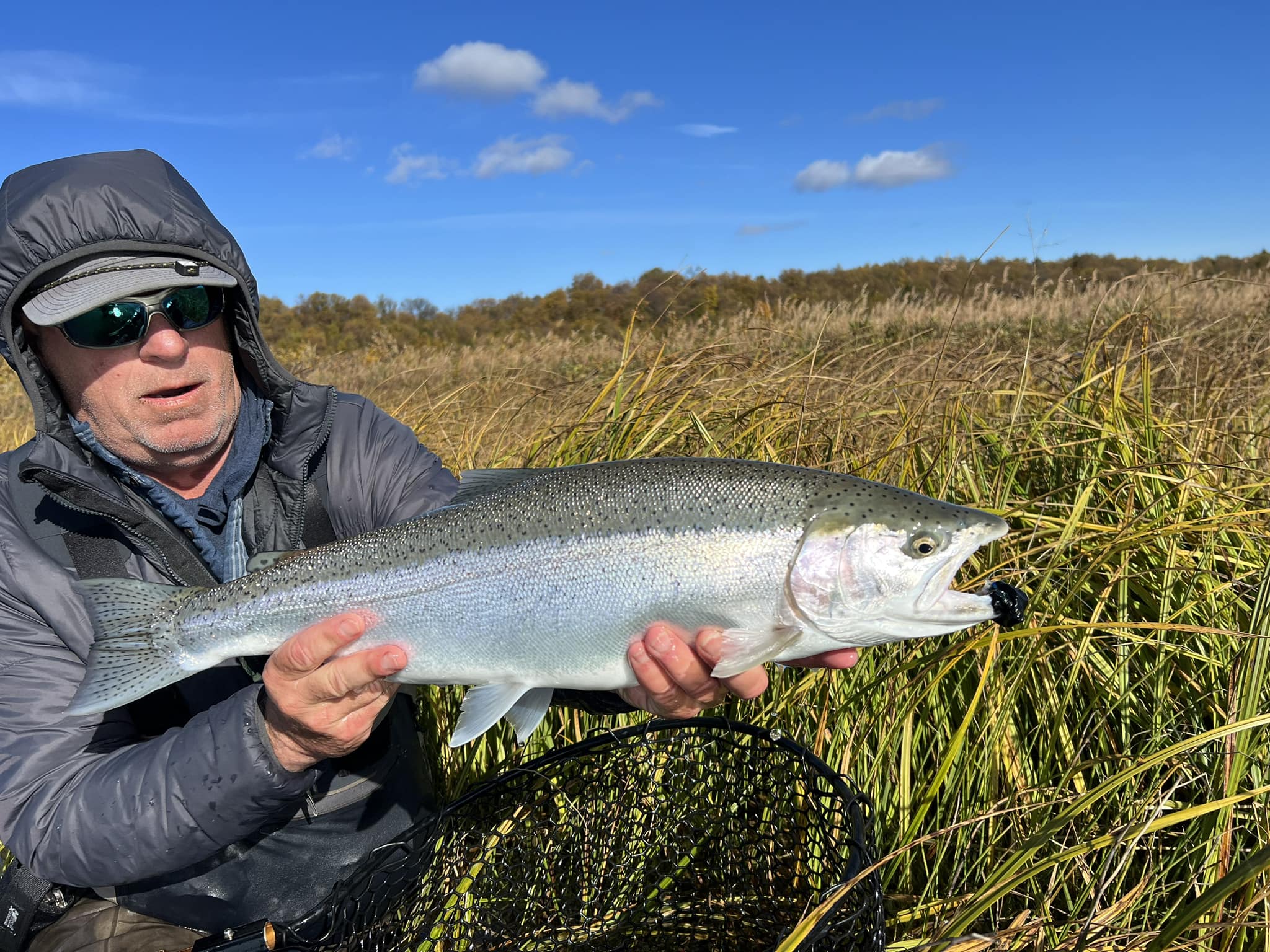
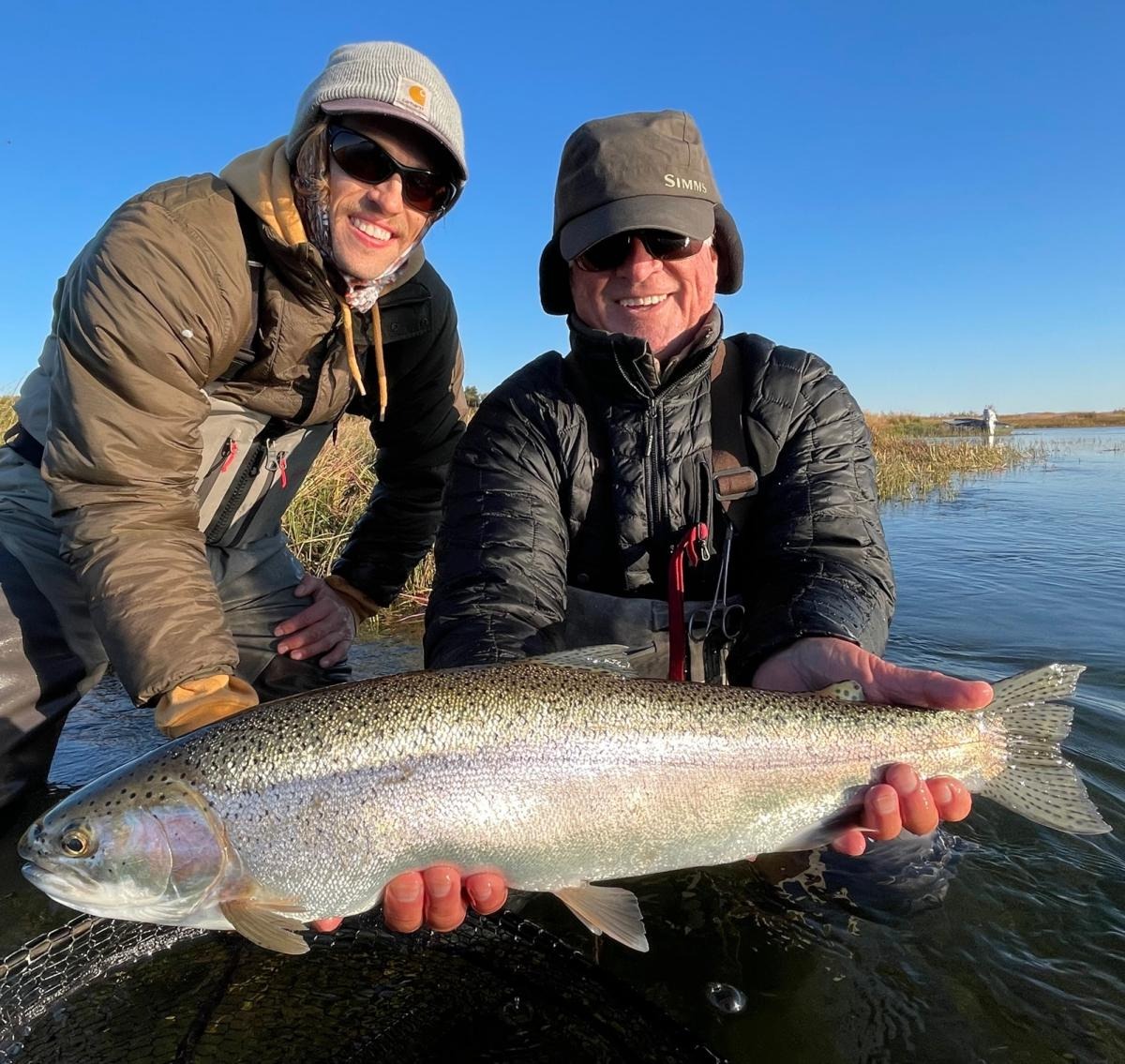
The Kvichak flows out of Lake Iliamna, Alaska’s biggest lake, into Bristol Bay. This river is famous for massive rainbow trout. Why? It’s all about the food. Millions of sockeye salmon head up these waters every year. More food means bigger fish.
Jack’s crew fishes the Kvichak in late fall when most of Alaska is empty. Their go-to method? Swinging flies. It’s the best way to cover water and find aggressive, hard-fighting trout as winter approaches. Jack runs a full lodge program at The Evening Hatch with experienced guides, good food, and a solid crew, everything you need for a real Alaskan adventure.
The Upper Columbia and Kvichak Rivers are huge. On the Upper Columbia, it’s not just about fishing the edges. Jack says the secret is finding those long, wide seam lines way out in the current. That’s where the food piles up and where the fish hang out.
As for the Kvichak in Alaska, it’s a fall adventure. Most folks leave Alaska by mid-September, but that’s when Jack’s crew shows up. The big rainbows are still around, moving between Lake Iliamna and the river, getting fat for winter.
The Kvichak is a dream for learning how to swing flies, especially with two-handed rods. Unlike steelhead fishing on the Olympic Peninsula, where hooking one fish can be a big deal, Alaska gives anglers lots of chances.
And it’s not just the fishing. You’re on a remote island lodge, with easy wading, quiet waters, and barely any crowds. Bears? Not many here. It’s a huge river, so they pass through but don’t hang around. You might spot moose, foxes, or even a wolverine if you’re lucky.
When it comes to swinging flies on the Kvichak, Jack keeps the gear pretty straightforward. His go-to? A 12 to 12.5-foot, 6 or 7wt spey rod. Switch rods can work, but they often don’t have the reach or feel dialed in for this river.
One cool tip? Your first short cast, just 15 feet out, might hook the biggest fish in the run. No need to bomb 100-foot casts right away. Those big rainbows often eat close. Keep your casts short and controlled to start.
Your first morning on the Kvichak? No need to rush at sunrise. Jack’s crew fishes a solid 9 to 5. It’s fall in Alaska. The warmer part of the day often means better fishing anyway. The key? Start short. Big rainbows often sit close. No hero casts needed.
If the Alaska trip feels a little pricey, Jack has options closer to home. His team runs three solid swing programs in Washington that still deliver epic fishing and plenty of time with a two-handed rod.
Best part? You don’t need a full week. Jack can set you up for a day, a weekend, or longer. Just give him a call, and they’ll help you build your own trip of a lifetime, whatever your budget looks like.
Episode Transcript
Dave (2s):
It started with a remote island in Alaska, a stretch of river fed by the largest lake in the state. And a fish so powerful, it makes seasoned steelhead anglers rethink just about everything. What came next was a five year run guiding the Kvichak where swinging flies for wild rainbow trout means shot after shot at a fish that fight like freight trains. By the end of this episode, you’ll know why September is the best kept secret in Alaska, what it takes to hook one of these migratory giants, and how a single 15 foot cast might be your chance at a fish of a lifetime. This is the Wet Fly Swing podcast where I show you the best places to travel to for fly fishing, how to find the best resources and tools to prepare for that big trip, And what you can do to give back to the fish species we all love.
Dave (45s):
Jack Mitchell, longtime guide lodge owner and founder of the Evening Hatch joins us today to share what it’s like running multiple fly fishing programs across the west from the Yakima to the Olympic Peninsula, and to the Hidden gems of Alaska. Jack was on the podcast last almost eight years ago. He was on the podcast almost eight years ago and talked about his steelhead program. You’ll also hear about how he built this full swing lodge on the Kvichak. And we’re gonna talk, like we said about September. We’re gonna talk about some swinging fly tips, and then what this trip is all about. Plus, you’re gonna find out what a 35 inch rainbow feels like when it’s flying through the air.
Dave (1m 26s):
Here we go. Heading back to Bristol Bay, Jack Mitchell from theeveninghatch.com. How you doing, Jack? Really
Jack (1m 34s):
Good. I think I was one of your first, wasn’t I? Or close
Dave (1m 37s):
You? You were number two, is that right? Number two on the back in 2017, December it went live, which is pretty amazing. I was thinking about that a lot the last couple days. The fact that you, before when we first got started, you know, you were gracious enough to come on and be our second guess. I think our, I’m trying to think. Well, yeah, you were actually officially the first, because the first episode was like an intro, so you were the first We had, we had you and Jim Tini and some other people that, and I can’t remember where I think we connected. I don’t even remember exactly, but I just wanna say, yeah, thanks again and thanks for coming back on.
Jack (2m 11s):
Oh yeah. Well, it’s my pleasure. Yep. Yeah, you got some good people on there. I, they’ve had some good shows. I don’t sometimes don’t have a lot of time to, to keep up with all of it, but I see it here and there. Yep. Or I’m sorry, I hear it here and there. You hear it,
Dave (2m 25s):
You hear it. Yeah. It’s hard to keep up with it. It’s, you know, we’re over getting close to 800 episodes now, so we’ve
Jack (2m 32s):
Done Wow, that’s impressive.
Dave (2m 34s):
Yeah, so we’ve done three guests a week for quite a while now, and, and it’s been pretty cool. So we’re gonna do an update, but back, you know, eight years, So we can’t update it all, but just give us high level for people that didn’t hear that first episode, which are, you know, quite a few, what do you do out there? What’s your program look like? Yeah. And who, yeah,
Jack (2m 51s):
We’ve been doing this since 1988, but we started on the Yakima and we still have people, I have people on the river today and, and then of course we have our, or we have the click attack Steelhead Ranch Lodge and, and guides on that river seasonally. And then we have the Upper Columbia Black Bear Lodge and guides on that. In fact, we’re full swing up there right now. And then we have our Olympic Peninsula operation seasonally during the Winter Steelhead program. And then we also have our Alaska program in the fall, which is kind of what we’re gonna talk about today.
Dave (3m 24s):
Yeah, we’re gonna talk about that today. And, and most of the, everything you label, you know, talked about there are pretty much focused on, you know, MICUs Right? As far as steelhead, trout, rainbows are, are there other species you’re hitting other than the, the rainbow steelhead
Jack (3m 38s):
When we were there on the Ku Jack River, you know, it’s the end. I, I chose to grab that end of the season partly because, well, there wasn’t really anybody doing it, so, believe it or not, in this crazy world, it’s a pretty light pressured river at that time of year. And, and what’s there at that time is our game is the rainbow, there’s no doubt about it. And then, you know, there’s a, there’s some grayling fishing as well and an occasional coho in the beginning of our season, but our, our focus is the rainbow. Yep.
Dave (4m 8s):
And the Ku jack, it’s, I’ve heard that name a lot. I think it’s one of those places up there, but it’s spelled a little differently. Can you spell that So we can kind of know what to find?
Jack (4m 17s):
It’s spelled K-V-I-C-H-A-K. And it is the outlet of Lake Ilena, which is the biggest lake in Alaska. And it dumps into Bristol Bay or the Alag and the Ku jack almost join each other at the same time that it goes into Bristol Bay. And then just a little bit more south and west. The Nak neck joins Bristol Bay. So there’s three major rivers that pound into or pour into Bristol Bay that are all kind of just Yeah, they’re, yeah, they’re big rivers. Yep.
Dave (4m 53s):
Kinda all of those are known for big rainbows. What is it about that area, do you think that makes those rivers kind of known? Or is it Yeah. Why is that?
Jack (5m 2s):
Well, I mean, if I answered that, I’d be, you know, if I was able to give you the, I mean, there’s a great food, there’s a food mass of obviously big Yeah. Big, big sockeye runs, which obviously increases the major biomass of everything. Right. Yeah. I mean, we’re talking millions of, of, lake Ileana actually has full-time resident freshwater seals, so they live up in the lake, meaning there’s obviously enough food in that whole system that, from which the ku jack comes from that produces enough food for, you know, seals to live in, in fresh water. Pretty special. Really.
Dave (5m 42s):
Wow. And I’m trying to get my bearings on this So that the ku jack comes in and I see how the neck, neck is down to the south. And then where is Lake Iama? How far up the river is that lake?
Jack (5m 51s):
So it’s about a, I mean, roughly 40 miles and, and you know, honestly, you fish from the lake down till about 10 miles. What happens is you have, you have some braids coming out of the lake, and then it really starts to braid about three and a half, four miles down and becomes a myriad of, of little rivers, if you will. And they all come back together eventually. And what we, as our team calls the abyss, it’s a heck of a wide spot in the river, and then it funnels again into kind of a one trough and then makes its last 30 miles or whatever.
Jack (6m 33s):
Yeah. To the salt. Yeah. And, and that, that stretch obviously has fish in it, but it’s very, very difficult to target them down there. And it’s a long ways away from anything, you know, it’s, you know, remote Alaska, So, yeah.
Dave (6m 45s):
Yeah. Gotcha. So it’s basically, it’s, so it’s the food. Yeah. I mean the, there’s tons Yeah. Millions of sockeye. Yeah. So that’s a big part. It’s not that these are some genetic strain of, of rainbow up there that are specifically built to be bigger. Right. Like, like you can’t see, I
Jack (6m 60s):
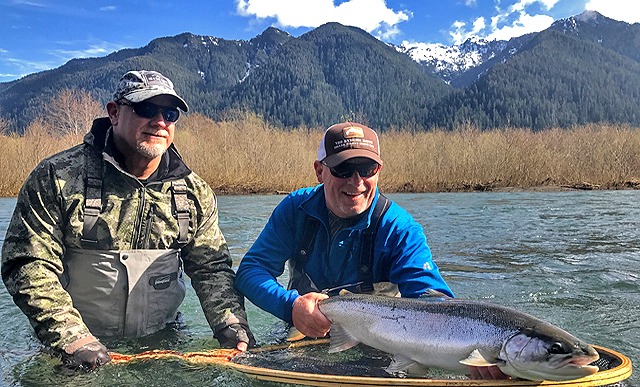
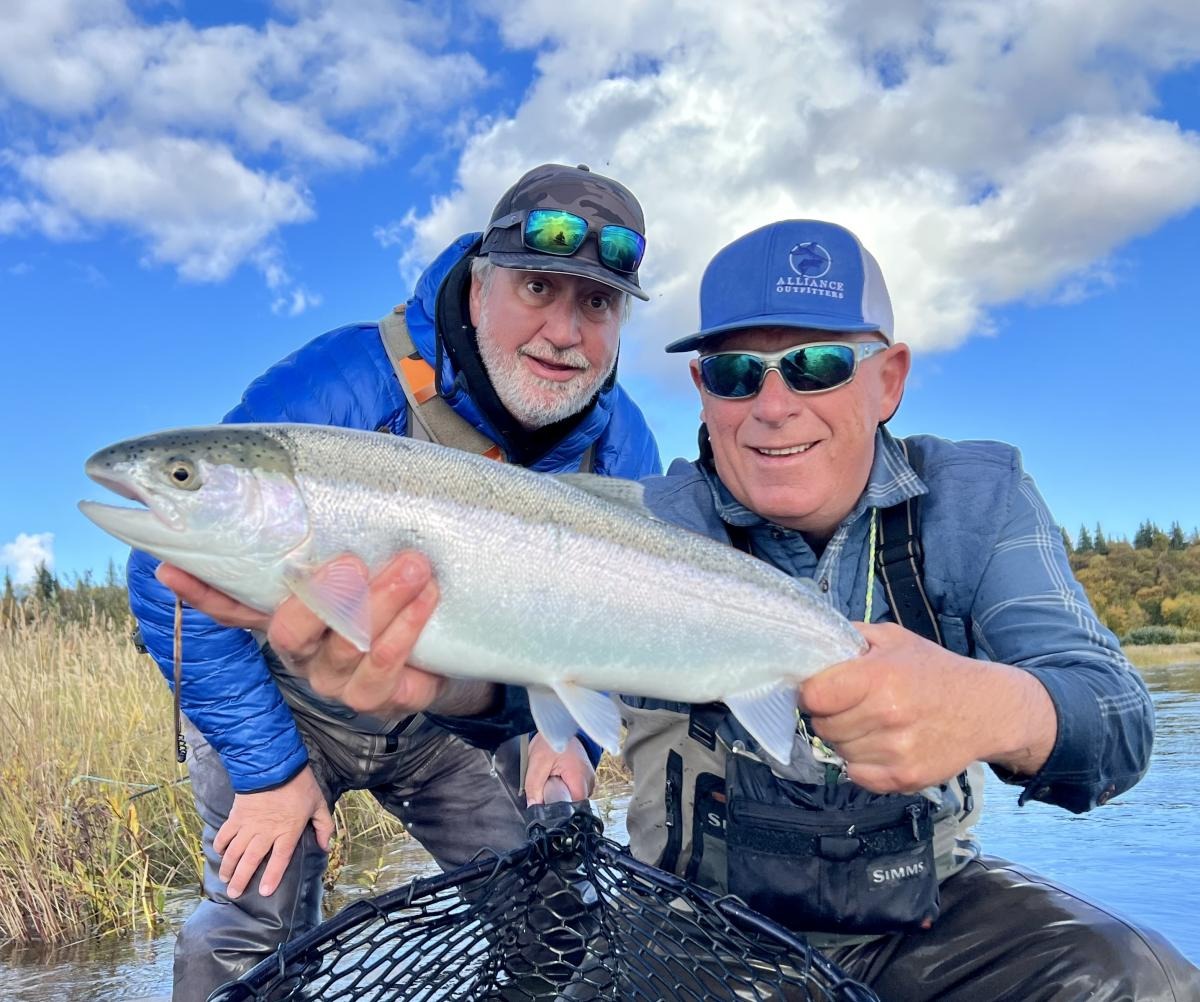
Will tell you they’re not, there are in the ku jack leopard rainbows Okay. Resident rainbows. But these fish, the ones that we target most in catch most, I wouldn’t call them leopard rainbow. In fact, they’re not. They are, they are very steelhead esque black and white fish. That doesn’t mean some of them don’t have color. But, and I think that, I think the term that some people have used, and I’m not a biologist, but I is that fluvial, I think they, you know, they, they love that lake, they love that river and they love the estuary based on food, you know, and
Dave (7m 34s):
Yeah, they’re migrating.
Jack (7m 35s):
Yeah. They’re kind of moving around, grabbing the best of what they can and or even not, some of them may just stay put in the river. Some may be, you know, moving around, but they are a black and white fish. And I would, it would be hard pressed to find a fish. Pound for pound is strong. I, I would, I, I, after all the years of guiding since from 1988, I don’t know if I’ve found a fish that is as strong pound for pound. Yeah.
Dave (8m 0s):
Huh. How similar are these fish to a, like a steelhead say in the op or the click attack? Well,
Jack (8m 7s):
They are not ocean going specifically. I mean, they’re not going out to the ocean for any period of time. When you look at some of the images, you would say, wow, that looks just like a steelhead. The, the tails are a little less sizable. They tend to be a, a little bit not as broad, although I have caught some with really big paddles, you know, so, and then there supposedly is a steelhead run in that river, a very small one. So be, it is possible that some of them we are catching may actually be quote, steelhead, you know, it’s a fine line that we’re talking there actually. I mean, yeah.
Dave (8m 46s):
But yeah, same species, right? Same species, yeah.
Jack (8m 49s):
But the majority of them do not have the big paddles that like a steelhead would and big broad wrists. The wrists tend to be a little narrower as well than, than a steelhead. But the power is unbelievable. And quite frankly, the, the amount of big fish that are hooked that are lost is the statistic is, is mind boggling actually. Partly because, you know, it’s the, the initial reaction for someone to do is lift their rod and high. And that generally contributes to losing fish. Yeah.
Dave (9m 20s):
Gotcha. Are you guys, when you’re up here, is this a, mostly a swing game? Is that what you’re doing?
Jack (9m 25s):
A hundred percent at the time, we’re there, that is the best way to get them. I mean, I don’t get me wrong, I’m, they catch fish nipping at that time of year up there. The, the pressure is way less. I mean, generally Alaska empties out September 15, you know, or let me put it this way, the majority is emptying. Yeah. And that’s when we’re just kind of kicking into gear. And so partly because there is no egg drop and you know, egg fishing can be very productive as we’re all aware. So, but the egg drop is pretty much over on that system and, and that area. And then so our, yeah, covering water with a swung fly for aggressive fish that the winter is coming and that they need to store up is a very, very, very good technique.
Jack (10m 8s):
And if I, I don’t like to quote numbers, so I won’t, but it’s Yeah, a far greater concept than steelhead fishing. And the numbers are action is, is remarkable actually. Yeah. Yeah.
Dave (10m 20s):
And are people that are coming up there, are they going up to a lodge or their DIY opportunities? What does this look like on your program?
Jack (10m 27s):
On our program, I lease a place, right on the river seasons on the fly lodge. I lease that from Greg. And we are running a full, full meal deal package. I have a chef come in and I have, well, not to toot our own, my own horn, but we have a great crew. I’m part of it. Yeah. But, but the other guys I’ve got are spectacular guides. They are dedicated full-time guides who’ve been guiding for eons, you know, I mean multiple, multiple years. And, and this is what they do. It’s not a summer thing. You know,
Dave (10m 60s):
Who’s your most tenured guide on out there? Is that, do you know who that is?
Jack (11m 4s):
I have Larry Floyd and John John’s probably got more time in Alaska than all of them. Oh,
Dave (11m 11s):
That’s right. And you have Floyd, who we talked to, I think on a recent episode,
Jack (11m 14s):
Right? You had him on because he does a togiak
Dave (11m 17s):
Exactly. Yeah.
Jack (11m 18s):
In June, he’s on the Togiak guy. Floyd also works for me on the, or with me on the Olympic Peninsula and at the Steelhead Ranch. And then he does Oh, okay. And he does some stuff also on, in Oregon during the in-betweens. And then Larry is next level Michigan angler. He, he’s swinging flies out in Michigan long before many were swinging flies out there. And then he has a charter boat service on Lake Michigan as well. He, and then John, I, John is, I mean, I, he’s done time on the Al Agac. He’s done time on the Togiak. He’s with us. He’s done, I, there’s a myriad of other, he’s done many, many years on the Olympic Peninsula, so,
Dave (11m 58s):
Nice, nice. Yeah. Yeah. It’s cool you have this Roy, I mean the area you cover seems like you got it all covered. ’cause the clicka tap brings in a little, the summer, the summer steelhead. Right. A little bit there. Then you also have the Yakima summer fall. You have the Yakima, the op with the hardcore, you know, all the winter stuff and everything and, and the Upper Columbia.
Jack (12m 17s):
Yeah. The black bear lodges. Honestly, that place right there might be one of the most unique trout fisheries. You know, there’s no other trout fisheries on earth that are at, at 180,000 CFS. I mean it, or there might be, but I don’t know of them. And it’s a massive river. Right. Anywhere from basically 50 to 200,000 CFS. Right now it’s running at a hundred thousand. I just left there and, you know, I just kind of opened up. That’s a cool fishery. Just, just because of the uniqueness of it, you know, I mean, you don’t really think of 150,000 C cf s for trout. But it works actually.
Dave (12m 51s):
No, you don’t, you think of, you know, you go to like, well the click tat I’m guessing is probably under a thousand, right? Or something like that. Or I guess in the wintertime, maybe a little more. Yeah.
Jack (12m 59s):
I mean it anywheres from 600 to 1800, but Yeah. Yeah. But I mean, if you go to the Missouri, it’s, you know, two to 4,000 CFS and you go to the Yakima, it’s a, it’s a thousand to whatever, 3000 CFS and you know, we just, you just never think of a river for trout that’s over. No.
Dave (13m 17s):
Yeah. Well, let’s take a quick tangent on that. So on, on that, and I know we probably talked about before, but how are you fishing that, is it, are you fishing it on the margin? ’cause if it’s a a hundred thousand CFS, like is it similar to at all to fishing? It
Jack (13m 30s):
Is this, that river the upper Columbia is, it’s not hard to figure it out now after many years. But at first, you know, you would think, you know, your, your main thought was let’s, let’s pound the edges. And, and edges do work at certain times of year, but at other times a year, the big predominant seam lines, there are certain seam lines that are like two miles long that you can drift that are not even close to the shoreline. Right. I mean, they are a predominant main current that holds a lot of food. ’cause there are massive hatches up there. And, and wherever that food is getting funneled, that’s where the fish are gonna be. And they move around a lot. I mean, it’s a river where, you know, kind of on your favorite stream, Dave, if you wanted to go say, Hey, let’s go catch a fish by that rock over there.
Jack (14m 14s):
Well that doesn’t happen on the upper Columbia. What you say, let’s, let’s go catch a fish in that acre over there because Right. Because it’s a different dynamic every time. You know, that zone is the zone that I’m referring to, might have a lot of rocks in it, but it is, you never really go to one rock. You kind of go to a zone and you’ll know that there are fish there. You just gotta play it out. Yep.
Dave (14m 36s):
Yeah. You gotta see ’em. Okay. So, So yeah, so the Columbia, So we might hang on some of that to another episode, but back to the, the Ku Jack, let’s kind of build that trip out. So you’re, you’re saying September and why in the late September are, is everybody leaving Alaska? Is it because it’s getting colder? Or what? Why is that?
Jack (14m 53s):
Well, I mean, as you’re well aware of, when you go to Bozeman, the most volume they see in Bozeman is June through September. Right. To go fish trout. Yeah. Well, June through September is, is a highlight,
Dave (15m 4s):
I guess you have school, right? You have the kids, the people with kids.
Jack (15m 6s):
Yeah. The fall is, you know, if you could design the fall So that you could have different layers of the fall, it should be nice because you got football school, you got the s Skeena River for steelhead, you’ve got
Dave (15m 19s):
Hunting, you hunt. I mean, I think the fall, I think the fall is the greatest time for outdoors people. Right, true.
Jack (15m 25s):
It truly is amazing. And it’s just, there’s so many choices for an outdoorsman to, to take their time that it, yeah. Anyways, the other thing about the fall and and anywhere is that you’re going into winter and you are in Western Alaska. Things do change. We have never really had any, we’ve had a couple, and in the years that I’ve only been doing it now five years, but we’ve never really had any major problems. We’ve had a couple big storms that kind of shut us down for a day, but nothing, nothing crazy. You know, usually we’re kind of, we leave there on the 17th of October. There’s, Tatiana is one of the native gals from the, from the village up there, and she fishes it.
Jack (16m 7s):
I saw her post a video just the other day, you know, well, two and a half months ago on the Ku jack. And she caught a nice trout in the middle of winter, you know, so there, you know, you can still fish it, it’s just a matter of how much weather you wanna put up with. Right.
Dave (16m 20s):
Gotcha. Gotcha. Okay. I’m, and I’m seeing it now on the map seasons on the fly lodge. Yeah, you’re right, right near the lake. Yep. You’re just downstream of the alpha. Yeah, that makes sense. Now. So you got these big giant rainbows that are living part-time in the lake and just moving down into the river and back and forth. And you’re, and you’re quite a ways up from the ocean from saltwater.
Jack (16m 37s):
Yeah. We’re fishing the really, I mean, realistically we’re fishing the first 10 miles of that river from the lake down. I mean, the, so the river is flowing at 35,000. That’s a big river. Oh, wow. Okay. Yeah. It’s not a small river. So when it hits the braids, it creates little rivers. And there’s a lot of them. I mean, you could, you know, some of those braids may be funneling, let’s just call it 800 CFS. Some might be funneling 2000, some might be funneling 8,000. But, but it just creates a whole nother world down there. And, and as the season progresses, you will see less and less fish in those braids, partly because of the lack of spawning.
Jack (17m 21s):
But they’re still, they’re still in there looking for flesh and they’re in there. You, yeah.
Dave (17m 27s):
Grand Teton Fly Fishing is a premier guide service and fly shop that has access to some of the most coveted rivers and lakes in western Wyoming. Their simple goal is to share their valued resource and have you experience a native cutthroat trout rising to a single dry fly in the shadows of the Tetons. You can check out Grand Teton right now at Grand teton fly fishing.com. Let them know you heard of them through this podcast. Experience the Waters of Bristol Bay at Togiak River Lodge, where fly fishing meets Alaska’s rugged beauty. This is the place to complete the Alaska Grand Slam with all five salmon species, rainbow trout, arctic char, and more, where each day offers a new Alaskan adventure.
Dave (18m 7s):
You can visit togiak lodge.com right now to start planning your Bristol Bay experience with Togiak River Lodge. So people, are they flying in? Maybe talk about that. They come into Anchorage. They, they take a plane over there and where they land there,
Jack (18m 23s):
Our program is you just arrive in Anchorage at Ted Stevens International Airport. And then you take, I always just suggest grab an Uber or a Lyft over to what we call Merrill Field, which is a 15 minute Uber. And then from there we got you covered, meaning we get you there at a certain time and we handle the shuttle plane or the charter plane from that point over. You don’t have to deal with anything after getting to Merrill Field. Just get there on time and, and try not to bring more than 50 pounds. And
Dave (18m 53s):
Yeah. And that drops you right in, just right in seasons, just north on, on, near the lake.
Jack (18m 58s):
It drops us in on a wheeled plane right there in yy, AIG is the name of the village. And that’s a nice village. There’s nice people there. They’re hardworking. And, and then what we do is we just commute from the little airport about a half a mile, if you will, or quarter mile down to our boat. And then we commute from town down to the lodge. ’cause the lodge is on an island.
Dave (19m 21s):
Yeah, I see. It’s on the island. Amazing. Yeah, it’s
Jack (19m 24s):
On Blueberry Island, by the way, where there are some wild blueberries on that island. It’s pretty cool. God,
Dave (19m 28s):
That’s great.
Jack (19m 29s):
Yeah, it’s a kind of a special place. And we always make sure that our guests, when they arrive, we always tell them to make sure they have a, some sort of rain gear, because if it is raining and we hop in a boat for a two and a half mile drive down the river to our lodge on the island that you, you need to be, have some sort of Yeah. You know, you’re getting off a plane and next thing you know, you’re, you’re riding down a down a river in the middle of a rainstorm. You want to make sure you have some sort of shell to put on easily.
Dave (19m 56s):
Yeah, I’d be ready to go. Okay. No, this is awesome. I love that. Yeah, it’s right on the island. So, so maybe break out, when are people arriving, typically? Is this like a week long thing? Describe that a little bit.
Jack (20m 6s):
Yeah, we don’t have a, a Sunday to Saturday program. We have a back to back program. You know, I’m, I’m leasing the place and, and I have a business arrangements with Greg. And so, you know, our first program starts on the 10th of September this year. And you arrive and we actually fish that day. We get one third, you’re taking off out of the Merrill field at noon on our day one of our program. Right. And then we arrive at one 30. It’s an hour and a half flight. Beautiful flight. If you have, if you, I mean, it’s in a spectacular flight if you have visual. And then we are actually, when we get to the lodge at one 30 to two, about two o’clock, we get you guys settled in and we have a little lunch for you and we have a little orientation, and we’re on the river at three 30 that day, four o’clock.
Jack (20m 56s):
And we’re fishing until seven o’clock. Then we get a little, almost a almost a half a day of fishing in on day one. And then we have five more solid days of fishing. And then on the, that final morning, we are transferring you back out and the new group is coming in. So we are back to back guests. And so there is no Saturday to Saturday program.
Dave (21m 18s):
How do you keep organized with all of this, these multiple overlaying trips? It seems like it’d be challenging. Well,
Jack (21m 24s):
I have to say, I do have one calendar that’s color coded with every program. So I can look at one, one program. Yeah. We come in on the 10th and you’re, and they’re leaving on the 16th actually. And, and then the 16th through the 22nd. And So we run, we run six programs, six groups of, of 8 48 guests for that period. And a hundred percent swing. You can do it with a single-handed rod if you want, but really it makes things so much easier with a two-handed rod. And if someone’s afraid of two-handed rod fishing and or, you know, the step into, you know, spay or 200 rods is this is the best program to learn how to spay fish.
Jack (22m 8s):
Partly because there’s so many opportunities when it comes to fish. You know, you go spend a day on the Olympic Peninsula with us, and if you’ve caught one, if you’ve hooked a fish on the Olympic peninsula swinging, you’ve done good. Now that doesn’t mean we don’t, that doesn’t mean we don’t hook more than one fish in a day sometimes. But there’s many a days where we worked hard and to get a, you know, have one fish on and lost them. So, you know, up here is a whole different thing. And like I said, I don’t like to quote numbers, so I won’t, there’s a lot of opportunity up there when it comes to swinging a fly. That’s
Dave (22m 37s):
Awesome. Well, that’s a cool thing about I think Alaska and any of these destinations is that, you know, the, the fishing’s definitely part of it, a big part of it. But, you know, just the experience, you know, you’re in Alaska, you know, at this remote lodge on an island, you know, in the middle of the river.
Jack (22m 51s):
Right. A lot of people really want to see bears, believe it or not. And you know, oh yeah, I will, I will say that we don’t see a lot of bears on, it’s a migratory zone. There’s, there is not really any reason for bears to be congregated in that area. Think about it, when they’re in, most of the rivers you see bears on are generally smaller rivers where they can concentrate on mass populations of dying fish. Right. Well, that is not the case of the Ku jack. Ku jack’s a huge river. And so these bears are more migratory and not really so much resident. We, you know, we usually see a handful of a handful of bears a year. We see moose often. We see, well, I saw wolverine one day and then a lot of fox and or not a lot, but we see fox if you keep your eyes open and eagles and, and all that.
Dave (23m 41s):
Yeah. It’s kind of cool. As you look at the lake, you start to think, and you mentioned your John, the Michigan guide you have there. I wonder, this would be a good question for him or really anybody out there, but it seems like that lake is kind of like the mic, you know, how the great lakes or the ocean for those migratory steelhead kind of the same, I’m guessing maybe the same thing for these rainbows. They’re using that lake, they’re kind of migratory and they’re living, growing out there and then coming back.
Jack (24m 4s):
I’m sure that they winter up a lot. A lot of the population will winter up in the lake, you know, and that’s what I’ve been told. You know, I’m not a biologist and I haven’t done tracking studies and,
Dave (24m 14s):
But that would make total sense. Yeah. And the funny thing about that is, is that there’s that thing at the Michigan, I’m not sure if you fish the Great Lakes, but they’re always like, well, they’re not really steelhead, you know, their migratory rainbow trout and actually here Yeah. You’re not calling these steelhead, you’re calling ’em migratory rainbow trout. Right. And so that’s what they are.
Jack (24m 30s):
Correct. I’ve had a great, I love Michigan fishing. It’s pretty
Dave (24m 34s):
Cool. Yeah. Have what have you hit out there in Michigan for steelhead? Well,
Jack (24m 36s):
Larry is the, is the guide out there. And he’s spent a lot of time in, I have fished the Muskegon. Oh yeah. Wow. And I have, yeah, I fished the para Marquette. I, you know, the para Marquette is a cool river. It’s just a little river. It’s a little too small for me with as many people that can be on it. The Muskegon seems like a western stream really. I mean, when you’re on the Muskegon, it is almost like you’re on a, a western stream. And then I, I spent a lot of time, or not a lot of time, but quite a bit of time on what they call the St. Joseph. Now. There’s not as much natural propagation on that river, in fact, hardly any. But it is a cool swinging river, partly because it’s a big river and, and there’s no one swinging it to speak of. And then there’s a tributary to the St. Joseph called the Dja.
Jack (25m 18s):
And I’m probably one of my best days in Michigan was on the Dwa jack when it comes to swinging a fly. And, and we had a great time on that river. It’s a little river and kind of like para Marquette size and, but it’s not near as crowded as the para Marquette.
Dave (25m 32s):
No, it’s not. And I’m guessing that’s why part of this Alaska experiences, you’re not having not as crowded as some of those Michigan rivers. Right. Is that the case out there?
Jack (25m 40s):
Oh no. This, when I went up there for the first time to fish the fall, I thought to myself, why is I should be quiet about this? Why is no one up here doing this? Right. I mean, yeah. Anyways, I don’t know if it could handle, I even, it certainly wouldn’t be fun to see. And nothing against the naknek and the nak neck, you know, has an amazing, is an amazing fishery. And, but it has become a, a very, very busy, and you’d have to understand that king salmon, where Nak, the nak neck is, is a major hub. So, you know, I can understand why, you know what I mean? There’s Airbnbs there, there’s boat rentals there. You, you know, it’s, yeah,
Dave (26m 14s):
It’s right there.
Jack (26m 15s):
Yeah. It’s a major hub. So, and it’s a different river than the Cree Jack, the Cree Jack. Most of the water we’re fishing is two to five feet deep, whereas on, on the Nak neck, you know, they’re fishing big runs. Oh,
Dave (26m 27s):
They are. Are you guys fishing these things like, you know, as far as the fishing itself, are you doing the out of the, you know, stepping and waiting down run sort of thing?
Jack (26m 36s):
Oh, absolutely. But we, we can walk the boat. It’s the easiest waiting you’ve ever seen. Okay. The, the que jack is the easiest river you’ve ever weighed. Now sometimes you gotta get waist deep, but the bottom is about the easiest bottom I’ve ever weighed, period. The, the neck, that’s a different story. That’s a completely different biomass on the bottom or you know, the river structure. And it is, I mean, it isn’t crazy hard, but it isn’t easy. I, but the que jack is easy now for those that have issues, you know, there’s plenty of, you know, I understand. I dynamically get it. As you get a little older, it’s not as easy. Oh yeah. But the ku jack is, is certainly one of those easy rivers to wade. And if they do have issues, we just leave ’em in the boat and walk ’em down swinging from the boat.
Dave (27m 17s):
Oh, you can do that. Yeah, you can. And, and the boats, what do you guys, are these sleds you guys have out there?
Jack (27m 22s):
Yeah, I actually, to be honest, use a prop on them. But we have two, we have two jet pumps and two props up there. And that river, if you know, the river is no problem with a prop. It sips, it sips the gas a little bit better, you know, meaning, and, and if you, if you, you know, and I’ve been operating for all my life. So I mean, I’m used to utilizing a prop and it’s, it’s pretty simple to use a prop on that river if you Gotcha.
Dave (27m 44s):
Yeah. What do you mean by, what do you mean by sipping the gas?
Jack (27m 47s):
Yeah, I mean a, a, a prop sips gas compared to a jet, you know, you’re going through fuel with a jet weight.
Dave (27m 52s):
Oh, you are? So the jet actually burns a lot more fuel. Oh,
Jack (27m 56s):
Absolutely. And, you know, fuel’s pretty expensive up there, so,
Dave (27m 59s):
Right. Yeah. Yeah, good point. You’re
Jack (28m 1s):
In the middle of nowhere. Yeah.
Dave (28m 3s):
Yeah. Okay. So, so basically you’re, so people are arriving there, let’s just take that week of the 10th. So they arrive on the 10th, they’re fishing that, that evening for a little bit. Are the runs or people, are you going out to specific runs? Or are you fishing out from camp? What does that look like?
Jack (28m 17s):
Yeah, we have every run named and every zone named in our crew. I mean, I mean, it’s, it’s the namings that we’ve given them. I don’t, you know, everybody, whoever guides the river probably has their own names, but amongst our crew and we just divide it out So that people are seeing different water every day. And then, and we’re not overlapping, you know, I going into a run that has already been fished an hour before now do realize these fish are migratory anyways. So it is possible you could fish a run, you know, at, at 10:00 AM and then go back there at three and even catch different fish. Yeah. There’s kind of steelhead ask in that, meaning they’re not always holding in a specific spot and they must Yeah, they’re moving.
Jack (28m 57s):
So,
Dave (28m 58s):
Okay. Yeah. So let’s talk kinda gear and all that stuff real quick. Is this your typical, like seven weight spay rod? Talk about the length and the kind of that stuff real quick. I
Jack (29m 7s):
Believe that the best rod for that river would probably, other than switch rods, which I’m not a big fan of. There are some, you gotta make switch rods need to be dialed and sometimes switch rods are not dialed. The, the, the thing about a switch rod, it never really can reach out there as well as a standard spay rod. So my favorite rod would be a 12 to 12 and a half foot, six or seven weight space.
Dave (29m 31s):
So basically you’ve got this 12 and a half foot, six, seven weight, something like that. And the lines, are you guys doing like a mix between sinking and dry? Or what does that look like?
Jack (29m 40s):
Honestly, our, I think our best line last year was a five and five T 11. Just to, just to kind of get it down with a weighted fly quick. Just get it down and boom, you’re there. But we, we also fish five and five T eights and I’ve, and I also fish 10 feet of T 14 in a couple zones, but not much. T eight, T 11 weighted fly and T 11. Okay. And generally a short head. Yeah, we’re running short headss. I like, I I do like the 20 foot on a 12 or 12 and a half foot spay. I kind of like a 20 foot Skagit head as opposed to the 24 because it allows you to, it’s inevitable when we, when we step into these spots, I always tell my guests, I said, look, this, look, this is different than steelheading here where I’m gonna step in here partly because, you know, we caught a lot of fish in this zone and your first cast, I mean, literally your first 15 foot cast, meaning just 15 feet out from your rod could be the biggest fish in this run.
Jack (30m 33s):
Partly because trout are eating actively and the big trout in that pod, if there’s a pod there is gonna be the predominant alpha fish and
Dave (30m 44s):
Right. It’s gonna be the eater.
Jack (30m 45s):
Yeah. He’s going to want to eat before anything else. And so whenever we step into a run and you make your first cast, it isn’t, we don’t need to cast a hundred feet here. I mean, that doesn’t mean our final cast won’t be 60 feet. It could very well be a 60 foot cast on our final cast. We might not even move from that spot Stand right there, make your first cast at 15 feet. It could be a fish. And then literally keep lengthening out from that spot and hardly ever even step down the run. And it could be over by the time, meaning that run might be done without even hardly stepping down the run. Right.
Dave (31m 21s):
Could be just like right out in front of you, there’s a giant fish.
Jack (31m 23s):
Yeah, exactly. So, so short headss make it real easy to fish short you, the longer your head, the more you kind of gotta get it out there to kind of turn it over. So there’s no point in if you have faith in in front of you, you better be running short to begin with.
Dave (31m 38s):
Okay, sure. And do you guys like any certain type of the brands, Rio or?
Jack (31m 42s):
Oh, they’re all good. I mean, SK Rio,
Dave (31m 45s):
Everything’s good. Just get a short head Skagit. Yeah. Yeah. Okay, perfect. So, so that’s that and leader setup, is that something where whatever leader, just throwing a short leader
Jack (31m 55s):
Personally, I run six foot of 15 or 17 pound fluoro or 15 max. Yeah. One of those two. Yeah.
Dave (32m 1s):
Yeah. 15. Okay. So short leader and then, and then fly wise, is this grab your favorite steelhead fly and throw it on there? Or what do you guys got going?
Jack (32m 9s):
The Dalai Lama is a good fly. It’s good fly. I mean, yeah, that, that one predominantly is one of our go-tos. Yeah. The problem with the Dalai Lama is that they aren’t as easy, I mean, a full a Dalai Lama that’s tied with Major rabbit, you know, once they, we, it’s kind of heavy. So we do tie some Dalai Lamas that are not as heavy So that they’re easier to cast.
Dave (32m 30s):
Okay. Because you’re imitating essentially. Yeah, just the flesh or the egg of that whole thing. You’re not so,
Jack (32m 34s):
So we’re repre Yeah. We’re representing a smolt or flesh. That’s pretty much what we’re, what we’re trying to replicate. And then there’s, there’s more scoping in that river than you could imagine. I don’t like utilizing Sculping, partly because there’s so many sculping that you’re just one in a a billion, you know, that. I mean, there, there is an amazing video, I’ll try to send you that link that a former guy up there had taken. I didn’t take it, but it, he was holding a chunk of eggs underwater and there was 150 to 300 sculpin trying to eat it out of his hand. I’m not, I’m not quitting. He was unbelievable. So when you’re trying to, you know, I’d rather be more pronounced.
Jack (33m 17s):
I’d rather be
Dave (33m 17s):
Yeah. Stick out. Yeah.
Jack (33m 19s):
As opposed to one of those 150 s scoping, I’d rather be the big smolt or a big chunk of flex.
Dave (33m 25s):
Yeah. So that’s gonna, and the fly. And then our guys, could you throw on something like an Atlantic salmon pattern or something more steelhead fly, you know, traditional You
Jack (33m 34s):
Could, in fact, we have, in fact we’ve skated some fish. I mean, we, you can skate them.
Dave (33m 40s):
Oh, you can?
Jack (33m 40s):
Yeah. I mean, I’ve used kind of a minnow pattern on the surface and got them to eat. It just depends on how many, you know, you’re gonna catch one to 10 that way, you know, probably. But yeah. Yeah.
Dave (33m 51s):
Okay, cool. Well, we have a, a, a group, you know, kind of our wetly swing pro members and Raphael was asking, you know, I think some people love the trips because you know, when they can afford it, but sometimes the DIY stuff is also cool. Is this area, not to put more pressure on this, but are these trips, do you see anybody, you know, flying in and trying to do this whole thing by theirselves? Is that even doable?
Jack (34m 14s):
Well, I mean, I would highly recommend, see, we’re running, our crew has Garmins and we’re communicating all the time with the apps. You know, the Garmin is linked to our phone. It is. I mean, you’re in the wild, wild. I did do A-A-D-I-Y program once here and I told myself I’d never do it again. Now that doesn’t mean some people have, there’s a large population of people that, you know, bless their souls, they’re adventurous, but they have never been on a big river in the middle of nowhere. And that’s probably not a smart idea unless you really have some skillset. Right?
Dave (34m 47s):
Yeah. Like coming in, I mean, I can imagine if it was me, I would be saying, I’m not even sure the distance, but it’s like, well, let’s put in the seasons on the, on the fly and let’s just float all the way out to salt. Right?
Jack (34m 60s):
Yeah.
Dave (35m 0s):
Is that doable or is that a, is that a disaster? That
Jack (35m 3s):
Would be a great adventure I’ve seen, believe it or not, I’ve seen some people come through with big, big kayaks Yeah. Wow. That are doing that. Yeah. That’s quite the adventure. I’m sure, you know, that is, it’s certainly an an angle. Yeah, yeah.
Dave (35m 19s):
Do your research. Right. I’m about, yeah. You know, again, I’m, I’m not promoting this and obviously, you know, but, but if somebody wanted to do it, there’s probably a way to do it, you know? Oh,
Jack (35m 28s):
Absolutely. Yeah.
Dave (35m 29s):
But the easy, you know, the easy way obviously is to connect with you or really any, any lodge, you know, in, in the area that they wanna fish and kind of dig into it. What is, so when they, on your program, if somebody’s interested in it, do you typically, are you booking out like, you know, a couple years in advance? Or is there availability this season? As we’re looking now,
Jack (35m 49s):
We actually, we have 50 spots a year. And we have, for one reason or another, we still have nine spots left this year. Okay. It’s a weird year that we were full last year. I have a lot of people interested in creating the, their 2026 adventure. I, my guess is we will be completely plugged next year.
Dave (36m 10s):
I feel like this year has been a little bit of a, the instability I think maybe with the government. Yeah. Like, I think that’s part of it. People are like, well, you know, we don’t know quite what’s going on. And so I feel like maybe that’s, but again, I think with the travel is that people, you know, a lot of people, it’s like, it’s these trips they plan on, you know, it’s like a trip of lifetime. You know, this trip you’re talking about here is a trip of a lifetime, you know, probably. Do you find some of these people are coming up once? Or do you find these people or people that are coming back multiple times?
Jack (36m 40s):
Well, I have a group that comes back every year because they know it’s the best swing fishing they’ve ever, I mean, I’m telling you, it is in the top short of back in the day when we had huge summer run steelhead numbers. It is the best swing fishing I’ve ever experienced.
Dave (36m 57s):
Not many companies are building their own gear these days. But Intrepid Camp Gear is changing that. Based in Boulder, Colorado Intrepid designs and manufactures some of the most rugged, technically advanced rooftop tents and aluminum cargo cases on the market. Their gear is built in-house with patented designs that stand up to the elements and the miles. Whether you’re chasing elk deep in the back country hunting for fresh powder, or heading out for your next fly fishing trip. And Trepid gives you the confidence to go further. Their rooftop tents keep you warm, dry and off the ground. Their cargo cases bombproof weather tight and ready for just about anything. So stop settling for flimsy mass produced gear, level up with the gear that’s built to last and engineered for real adventure.
Dave (37m 40s):
Go to we fly swing.com/intrepid right now to get started. That’s I-N-T-R-E-P-I-D Intrepid Camp Gear. Get started right now and on the summer run steelhead again. Another quick tangent. Your background is you fished the click tap, but back in the eighties were you also fishing other summer? What was your big river for Big summers? Well,
Jack (38m 3s):
I mean, the biggest program I’ve ever had for summer runs is on the click attack. Before that though, I did Fish the Met how quite a bit and, and the Grand Run, which are wonderful rivers. I really have a, I really have a, a place in my heart for the click ta. It comes out of a wilderness right off of the flank of Mount Adams. It’s unencumbered, there are no dams. It has some big strong wild fish and the region is spectacular. My, I, you know, I remember coming here for the first time when I was like eight because my uncle ran all the timber operation for St. Regis at the time. And then it became Champion and now it’s all owned by John Hancock, believe it or not.
Dave (38m 43s):
Oh yeah, John Hancock.
Jack (38m 44s):
Yeah. That being said, I just remember this region and thinking how beautiful it was. And now I call it home actually. That’s where I, you know, even though I have multiple programs, home is actually on the brakes of the click ta. So
Dave (38m 57s):
Yeah, it is breaks of Yeah, that’s right. Yeah. And you have the, and is it the Steelhead Ranch out there on the click tat? Yep. Yeah. Steelhead Ranch, which I’ve been to a while back. You know, we we’d, that was the cool thing about this is that I had, we’d done, I think actually one of our first trips was with you. We did that op way back in the day and then I think I met you out the click tat. You had a a little event out there. You used to do a spa clave too, right?
Jack (39m 19s):
Oh, that’s right. Yeah, we had a little two-hander day. Yeah,
Dave (39m 21s):
Yeah. You had a 200 day. Do you guys still do that, that little two-hander thing?
Jack (39m 25s):
We have not done it, but I think what we’re gonna try to do is create a fly fishing day that encompasses everything, not just the two-hander, because not everybody is all tuned into spay. By the way, if someone is interested in going, here’s a plug though, I’m plugging myself. Yeah. But if someone is interested in bringing a group or going to Alaska and they want to get familiar with their two handed rods, I have, I have one group particular coming to Alaska this year, and I’ve donated a day and a half of, they come out to the ranch and it’s basically a space school So that they can get tuned in to, you know, the two handed rod prior to their Alaska trip, which is a great little added bonus, if you will, or added benefits.
Jack (40m 12s):
So it’s a free, it’s a free day and a half clinic at the Steelhead Ranch prior to their Alaska trip. Oh,
Dave (40m 18s):
Cool. I gotcha. Yeah. So if somebody’s doing this Alaska trip we’re talking about here, they get a bonus day and a half at the, at the ranch to kinda get prepped. Yeah,
Jack (40m 26s):
They do. In fact, it’s really like a two day, a two day thing. And, and it’s worked out pretty good for some people because, you know, they, they want to feel more comfortable with it and there is no better way to learn how to two hand cast than on our program in Alaska because you’re gonna end up, even if you’ve never done it before, you’re gonna end up with fish eating your fly often, so.
Dave (40m 47s):
Right, right. Gotcha. Okay, so back to the, the KU jack. So we’re on the KU jack, it’s that first morning. Let’s just say it’s the September 11th. We’re heading out in the morning. Are you guys getting started? Is this a thing where you wanna get started early or does it fish all day long? Well, we
Jack (41m 0s):
Like, you know, we wanna put a full eight hour day in and as the evening progresses on a day, you know, the, if I mean you are in a remote area, we don’t like being out too late on a river in case there was an issue. We’ve never had one, but, you know, it’s smarter to be. So we are doing kind of the nine to five, which makes sense. I mean, it’s fall, it’s the warmer part of the day typically can be some of your best fishing anyways. So,
Dave (41m 25s):
Okay, so you got the nine to five, and then when you’re out there on, you know, on that run, are you guys just stepping through, like getting on a run, fishing it for an hour? Or is somebody sitting there? Yeah,
Jack (41m 35s):
Well, well, like, I, like some of these spots are small, let’s just say they’re a hundred feet long or a hundred, they’re transition zones. We fish a lot of transition zones and, and that doesn’t make a whole lot of sense as I say that, but there are some runs that require us to move down through literally 300 yards of water. Not a lot of those though. A lot of them are 50 feet to 300 feet runs, so they’re not, we’re not stepping through a lot of water. Right. And it’s always imperative that when we step into a run that we, we start short because we’re gonna put you right above the guts of where we believe they are and where we know they are actually. Yeah.
Dave (42m 11s):
That’s awesome. Do some of the things that you do out there on the KU jack apply to, could they apply to steelhead fishing, swinging, or even swinging for trout in other areas?
Jack (42m 20s):
Oh, absolutely. Yeah. Yeah,
Dave (42m 22s):
Yeah. What, what are some of those? What are the, if you got a couple of guys, maybe we’re out there and you’re coaching us on the water, what are a couple tips you’re telling us that day?
Jack (42m 31s):
Well, the first one is start short. Don’t we don’t need a hero shot to begin with. Secondly, keep your tip down when it comes to a fish grabbing your fly. You don’t, if you lift, you lose. I mean, I, I’m gonna throw this out there. I saw a problem. I’m just, and I don’t like to completely talk statistics, but I believe that every day I saw a fish over 28 inches on the end of our rod. And that we only landed eight of them. Yeah. Every day. I saw one on the end of our line, but we only landed eight of them, partly because they’re lifting and losing, meaning don’t lift the rod. And the thing, if, if you have a two to four feet of depth, where’s that fish gonna go? He is gonna go away and up.
Jack (43m 11s):
He’s got no hole to go down into. He’s got to go away and generally up in the air and it’s instant. And when they, the creature I’ve watched, I have stood on a bank and watched fish move 15 to 20 feet at Mach 10 to eat a fly. Wow. So when they hit it and they hit it so hard, I mean, it’s the most vicious grabs you’ve ever had when it comes to swinging. I, yeah, it is for me anyways, they are instantly in the air a lot. And
Dave (43m 37s):
They are so, they’re jumping
Jack (43m 38s):
Instantly and you better be bowing to ’em instead of lifting your rod or you’re gonna lose them.
Dave (43m 43s):
Okay. So that’s the bowing, is that the bowing to the, that’s what my dad used to say. You bow before you do anything. Right.
Jack (43m 49s):
And that’s, it was very tarpon esque. I mean, the cool, here’s the thing though, the thing about a tarpon is you kind of know oftentimes once you have a tarpon on, you know when he’s gonna come up. ’cause you watch that line start to write, you can kind of get a feeling. These things, it is so quick and so fast that it catches you off guard. It catches me off guard still to this day, you know, meaning I’ll, I lose fish too. And it’s, it’s not that we don’t lose fish either. I’ve, I’ve seen plenty of fish go by the wayside by experienced slingers, you know? So,
Dave (44m 18s):
Okay, so, so there’s, they’re gonna be going nuts on you. And, and what’s your tip? Once they’re going nuts and they’re jumping, how do you, once you have ’em on, how do you land them?
Jack (44m 27s):
Rod, low and sideways and the other, they will hit it and then hit it again Sometimes. So like, they’ll hit it so hard and I think they, they come by and hit it and then turn around and come back and hit it again. So if you lift, you’ve lost right there. ’cause that doesn’t look natural to them. If you like, if they hit it really hard and you lift really hard, you in essence pulled it away. And it just doesn’t, for one reason or another, they’re not coming back. But if you keep that rod down until you got him on, because even with steelhead, I’ve had many a steelhead eat it and then eat it, and then boom, he’s finally on. Well, if you lift, you lose. It’s the same with these fish. There’s no doubt about it. If you lift,
Dave (45m 5s):
You lose. Okay. So no lifting. And then in these areas, are you pretty much, are there other species that you’re hooking in these areas? No, no.
Jack (45m 14s):
We do not catch bull trout on that or char on that river. They must like
Dave (45m 16s):
No bull trout, no salmon. You’re, you’re, you’re too far. All that stuff.
Jack (45m 20s):
Well, we do hook coho in the beginning of the season, but not in the end. And then there’s obviously char that come through the system because there’re a char in the upper watersheds, but they just must fly through there or whatever. But we can do flyouts. I mean, it is an extra, our rate is 64 50 this year. It’ll be 69 50 next year. But if we, I have a couple pilots that I know that if we have a group that wants to go somewhere else to, to maybe target char or or another rainbow fishery while they’re there. It is an additional cost, but we can do it. Yes.
Dave (45m 59s):
Okay. So you can do Flyouts. Gotcha. But yeah, so this is a rainbow. So this is, like you’re saying, the the focus here is swinging for, for big giant rainbow trout,
Jack (46m 7s):
For the baddest rainbows on earth, as far as I’m concerned.
Dave (46m 10s):
That’s right. Cool. Well this is good. Let’s, I was gonna take it outta here. We have this segment we call our plays of the game. And you know, today it’s basically sponsored by a Smitty’s fly box who does these material boxes. They sell flies. And the cool thing about Smitty’s is, I don’t know if you’re a big sports fan, but there was a great basketball coach for Indiana, the Hoosiers, Bob Knight, right?
Jack (46m 32s):
Bobby Knight. Yeah,
Dave (46m 33s):
Bobby Knight. Well, well Smitty’s the owner. His dad was a basketball coach and actually coached for Bobby Knight was his assistant coach. Oh, wow. And I got all these great stories with, with Smitty’s. We’ve talked about this on the podcast, but, ’cause I’m a big basketball fan and I love Bobby Knight was his heart. He was amazing coach. Right?
Jack (46m 50s):
Yeah, absolutely.
Dave (46m 52s):
So, so anyways, we’re gonna give a shout out to Smitty’s and the great stuff they do and, and our ip, Bobby Knight and all that stuff here. But, but the question for you today is plays of the week, right? Same thing, right? You go to SportsCenter and you’ve got these plays of the week, you got these LeBron doing a reverse 360 jam. What is your play of the week? If you think about this river, the Ku Jack, do you have a memory something out there? Sure. That, that, yeah. Give us one of those. ’cause you’ve been talking 28 inch trout is, do you have one that sticks out?
Jack (47m 18s):
Well, let’s not even talk the 28 out. Yeah. Here’s the beautiful part of that river. We have a code that’s called five. If I, you know, if I got two guys fishing, they’re not right next to each other. Sometimes there’s one’s right around the corner and one’s on the other side. On in a side channel that’s coming in and, and they’re both swinging. And if I’m not right next to them, I want them to yell the code word five. If they got a big one on and they need the net. Right. Well, on myriad of occasions I hear five, five, I hear this five, and I come running around the corner and their seven weight spay rod is torqued and the fish is 23 inches. So these fish got power.
Jack (47m 58s):
They’re so strong that, you know, when they first grab it, you feel like you’ve got the, the biggest fish you’ve ever had on. And, and nothing to shake it. I’m not shaking it. No.
Dave (48m 6s):
23 is
Jack (48m 6s):
Good. Yeah, it’s a great hammer. I love that fish. But when the guys are shaking in their, in their pants on a 23 inch fish, they don’t even, you know, the, so you can only understand how strong these 20 eights plus, or, it’s just remarkable how, how often I hear the word five on a, on a 23 inch trap.
Dave (48m 26s):
Right. So you’re, you’re heard five all. And are the, are you getting fish occasionally that are in the, you know, like 16 inch fish or what, what does that look like?
Jack (48m 34s):
Not often. I mean, everything is pretty much eight. I mean, there are some smaller fish. Yeah. Yes. But it’s predominantly 18 to third, I biggest is 35 inches.
Dave (48m 44s):
35 inches. Really? Yep.
Jack (48m 46s):
Wow. I caught one that was longer. I just didn’t tape it. I, I, I swam it up next to a dead, a dead salmon. And I, and I didn’t wanna screw with the fish. I really didn’t. And I just let ’em go. And the fish that I swam it up next to was 24 inches and this thing worked it, so my guess it was 35 plus
Dave (49m 3s):
35. What does that fish weigh, do you think?
Jack (49m 7s):
That one was very steelhead esque. It was streamlined, but I, I think a proper 32 inch fish, you know, you’re looking at about, you know, 13 pounds anyways. Yeah. Yeah.
Dave (49m 18s):
Exactly. Wow. Yeah. This is great. Well, anything else you wanna shed light on about this trip that we missed today?
Jack (49m 24s):
No, but kudos to you for keeping the love alive in the world and doing these podcasts. It’s, you know, a lot of people, they love your show and Yeah. And I hear it all the time and, and the inspiration gathered from it from, you know, people in the industry. And so definitely good work day. Oh
Dave (49m 39s):
Yeah. No, it’s, it’s been obviously one of those things you find, just like you, I’m sure your trips, you’ve done the same thing. You found these little spots like the Ku Jack, you are like, wow, this is the place I wanna take people to, you know, and you love it. Right. That was gonna be a question I had for you because you’re doing a lot, you know, I mean, you’ve got all these big trips and you traveling, you’re doing all this stuff. It doesn’t sound like you’re getting tired at all of, of doing any of this stuff. Does the travel and everything, do you just kind of get energy from all that?
Jack (50m 4s):
You know, I have, I would have to say the energy level that Jack has, there’s a little bit higher than most people.
Dave (50m 10s):
I was just say, yeah, your energy level is another, another level. Yeah.
Jack (50m 13s):
Yeah. Yeah. I love it. I love building programs for people that, you know, some of, like you said, you are the one that stated it. Some of this is a trip of a lifetime for ’em. Yeah. So, you know, it’s great building memories, you know, hopefully we’re making memories for people. That’s the goal. That’s
Dave (50m 27s):
Awesome. Well, well let’s, you know, and I, again, I mentioned our kind of wet fly swing pro, some of those swingers, you know, I, I love the swinger too because it’s like, you know, wet fly swing swinging flies, but also the swingers, I want to call our group the swingers, but that kind of, you know, terminology isn’t good. Right. And some, there’s different meanings. There’s different meanings. So I’ve never gone to the Swingers group because that’s not quite what we wanna be. But, but for those people that are listening, you know, you’ve got all these other programs. If we were gonna, somebody came in and they said, well, maybe in 6,400 actually is a pretty good price for this trip. You know what I mean? But if they didn’t have that money and they were coming to you saying, Jack, I wanna build some trip of a lifetime, you know, and maybe isn’t quite as high a price, where would you direct them? But they wanna get the swinging in, they maybe wanna do the spay.
Dave (51m 9s):
Where would you, out of all your stuff?
Jack (51m 11s):
Well, we have three major swing programs in Washington. We have the Upper Columbia, the Olympic Peninsula, and I mean, the Upper Columbia also affords dry fly fishing as well. But, but there is the swing season and then the Clta and the Olympic Peninsula, if you’d wanna fight rain, and you know, the chance that one of the iconic winter steelhead that everybody talks about, you know, the Olympic Peninsula, if you, if you’re looking for shorts and sandals and swinging from a boat, the Upper Columbia, ’cause we do a lot of swinging from the boat. If you’re looking for, you know, shorts and sandals for summer run, steelhead the Clits had. So I mean, it, they’re they’re all great program.
Dave (51m 45s):
They’re all good. And on all those, do you do a little bit of, you know, if somebody had a day or if they had a two days, do you mix it up on the timing? We
Jack (51m 52s):
Can do anything. We can do a day trip to four. I got, I have a group coming here to the Steelhead Ranch this fall for five days out of their, from the East Coast. So,
Dave (52m 1s):
Okay. So that’s it. So they can do, So that, that’s the way to do it. I think that people maybe that didn’t have as much money, they call you up and say, Hey Jack, I want to get a day out here, or two days or something like that. And you can build something for
Jack (52m 10s):
’em. Absolutely. Absolutely. Yeah, yeah, yeah.
Dave (52m 13s):
Cool. We had one of our programs in the bucket, Brian nis is doing some of our West Coast kind of episodes. And, and he had this thing on a recent one about some tread. I’m not sure if you heard about this. It’s called Down the Path. I’m not sure. Did you hear, have you heard that story about the down there in Belize was the guy that went missing Will Rice? No. Yeah, so he, he, it kind of disappeared a little bit, but Will Rice essentially wrote this, did a podcast. I mean, there was a story, but he did a whole podcast, which is specifically on this missing angler who was down on Ila or what, what’s the name? Like one of those places down there.
Jack (52m 50s):
AK in Southern Yucatan? Yeah.
Dave (52m 51s):
Yeah. It was somewhere in there. But anyways, he went missing and never was discovered. It’s a mystery. And so he did this story, this whole podcast on, it’s called Down the Path. And I’m, and I haven’t listened to the whole thing, but I’m gonna listen here. Wow. This, this, yeah. And, and he, he was like a journalist. Like he went in and tried to discover like, what happened to this guy? Did he just disappear? Did he get murdered? And they never found, but they talked a lot about safety, right. Safety was a big thing in that episode. And I thought it was cool because Alaska, like you said, is a thing. If somebody’s going up to Alaska, what’s your safety talk? Do you have something you’re telling them?
Jack (53m 23s):
Oh, I would make sure that they had, well, nowadays our, our new iPhones actually have the ability for satellite reception. Right. But I would have a Garmin, I would have a Garmin that’s linked to a phone, which really allows you to the Garmins grab satellites all the time or just have a sat phone. Do
Dave (53m 42s):
You guys have that at the lodge or do you guys have actual internet and stuff like that, the lodge?
Jack (53m 46s):
Oh yeah, we have, believe it or not, up until a couple years ago, it was a mess because there was no but thanks to or bless the soul one way or another. Yeah.
Dave (53m 55s):
Yeah. What, what’s his name? The Tesla?
Jack (53m 56s):
Elon Musk.
Dave (53m 57s):
Elon Musk. The man. Yeah. What the what? Starlink. Starlink
Jack (54m 1s):
Starlink is a game changer.
Dave (54m 3s):
I’ve heard starlink is way better than everything else too. Even, even, oh, it’s, yeah.
Jack (54m 7s):
It’s unbelievable. It’s truly amazing. And so, So we have that there. And then of course we have a game plan. If there are, are, we’ve never had an issue, but we have a protocol if need. Yeah,
Dave (54m 18s):
Protocol if need. Okay. And a couple more random ones then. We’ll, we’ll let you get outta here, Jack, on this today. We mentioned a fly, you know, we kind of talked about that. What would be another one you’d be putting on other than the big one? What, what’s another second fly? Maybe a follow up fly or something else you’d be putting on up there.
Jack (54m 32s):
Well, we fix a lot of, I mean, Dalai Lamas and flesh
Dave (54m 35s):
And just flesh, like what is a flesh? Is that just literally a piece of bunny? And that’s, that’s all it is. Is that a flesh fly?
Jack (54m 40s):
Yeah. I mean, you know, you can get real bright with flesh. You can get real subdued with flesh. Personally, I fish a little bit more subdued, not bright, but I’m here to tell you that bright will work as well. And then sometimes in certain fisheries where there’s a lot of pressure, you need, you need to be smaller and flesh with an egg inside of it, like an egg bead or something inside of it can be more productive. I do fish a lot of big flesh on, on thewe jack, meaning I, there’s nothing subtle about our, it’s not an inch, it’s more like three inches. So, but there are, you know, when you, when you do feel like you are in a pressured zone, that is, you know, downsizing is always a good
Dave (55m 18s):
Yeah. But that’s not something you guys necessarily have to do,
Jack (55m 20s):
It sounds like. Not really. Yeah. You’re,
Dave (55m 21s):
You’re making the ca is this a just a 45 degree cast out and just like, that’s pretty much what you’re doing?
Jack (55m 27s):
There are times where I’ll quarter up and not even mend it. Yeah.
Dave (55m 30s):
Get it down. Yeah.
Jack (55m 31s):
But a lot, most of it is 90 degrees across. I let it go.
Dave (55m 35s):
Great. Well, this has been good, Jack, to catch up with you after eight years. I mean, we, obviously, we’ve been chatting over the years, but as far as the podcast, so we’re gonna have to get you back on sooner than eight years from now and see, you know, kind of what’s, what’s new coming up? Well, what is new? What do you have if you look out, we’ve talked about everything, you know, your program. Are you adding any programs or do you have what you, this is your stuff right now. What you have,
Jack (55m 55s):
You know what’s really new lately is the grand babies. Oh, they are pretty impressive. Yeah. So like, you know, kids are overrated, but the grand babies are the best, Dave. That’s right.
Dave (56m 5s):
I’m here to tell. So you’ve got a couple of little ones you’re, you’re seeing occasionally out there. Oh,
Jack (56m 9s):
Often. Often. But when it comes to fishing, I have a buddy who created a program in, in Baja. He said he spent five years looking for Shangrila and he said he found it. So I’m excited. I’m hosting my first group down there starting this Sunday. Oh,
Dave (56m 23s):
Wow. So you’re doing the ba Yeah. We’ve heard a lot about the Baja down there. What’s that? Who’s, who’s that program? Who’s doing that?
Jack (56m 29s):
Oh, Colin is his name. Colin Flanagan. And, and his partner Brett. And they, you know, they’re, they’re not online. They don’t want to be online. They’re kind of obscure out there. They don’t wanna
Dave (56m 38s):
Yeah, they got their own thing. Yeah.
Jack (56m 39s):
They just kind of wanna, they’re full already.
Dave (56m 42s):
Yeah. They, they don’t need, yeah, they don’t need extra. Yeah. Right. No, that’s awesome. I think the Baja and are we talking roosters? Is that what it is?
Jack (56m 48s):
Oh yeah, it’s, it’s next level Roosters and Jacks and, and I, you know, personally, you know, we, you know, they do a lot of sardina tossing out there where you chum ’em and keep ’em in. But I can’t wait to spend, you know, I’ll do a few of those days, but on the rest of my week will be just on the beach trying to get one from the beach. And if I don’t, I don’t, you know, I’ll be okay with that.
Dave (57m 7s):
Yeah, you’re gonna be, I mean, I think it’s the same thing, like if I was up at the Kui Jack, you know, obviously we wanna get some rainbow action, but I mean, just sitting at the lodge, hanging out on that island, looking at the river, you know, same thing with the roosters. You’re gonna be sitting there probably drinking your favorite cocktail, right. Hanging out in the evenings.
Jack (57m 24s):
Absolutely. The, the lodge they built is, it’s pretty cool. It’s, I mean, it’s not huge, but it’s really, really nice. And, you know, you’re sitting literally a hundred feet off the water. So Yeah.
Dave (57m 35s):
What, what is your, what is your, well take it out here with the cocktail hour. Are you a cocktail drinker? What’s your drink of choice in the evening? You
Jack (57m 41s):
Know, 14 years without a drink. Oh,
Dave (57m 43s):
Really? So there you go. So 14.
Jack (57m 45s):
I’ve got, I’ve got more top shelf alcohol around me all the time, and I have no problem with it.
Dave (57m 49s):
You know, you have no problem with it. I love that, that, I think that’s really cool. I’m on a, a little bit of a, what I call my 30 day no beer challenge, you know what I mean? Like, I’ve never been a huge hard alcohol drinker, but definitely love my IPAs. Which your, because that’s amazing. I think that there’s a lot of, you know, inspiration to get from that, you know, 14 years. And, and I know for me, my dad, you know, had a problem with alcohol, and that’s why I’ve always thought about it. I’ve always been like, man, I gotta be careful because this is a problem. And, but what’s your biggest tip?
Jack (58m 17s):
Yeah, I passed zero judgment. Everybody can do their own thing. I just know that there was a lot of problems in my family, or at least one, one quarter of my lineages had a problems. And I, I kind of went down that path a few times and I thought, you know, me too. I’m good. I’m good. Without it, it’s not the best thing, you know? No, I hear you. I suppose if I drank, yeah,
Dave (58m 36s):
What would it be?
Jack (58m 37s):
It would be a Modelo beer. Oh,
Dave (58m 39s):
It would be model. Well, here’s the interesting thing. So again, I I love the podcast tangent, Robin Williams, who we all know the great Robin Williams. Yeah. He told this crazy story. I heard him on a podcast. If nobody, if everybody hasn’t heard the, what the fuck, what his name of the podcast, you know, WTF and he told this story, he interviewed Robin Williams. And Robin Williams is one of those guys where you can never get him outta character. He would literally always be in character. He would never be himself. But, but, and, and, and WTF Mark Marin actually did this episode with him that got him out. And he, he and Robin talked to as himself, and it was really crazy. And he told all these really deep stories. One of them was the fact that he was sober for many years, I think, you know, I don’t know, 15, 20 years. And he had this movie, it was probably during a rough time up in Alaska, and he was sitting there, and it was so rough being in Alaska for that time, that Robin just walked in and said, you know what, God, I’m gonna go check out this bar.
Dave (59m 30s):
And he just got wasted and, you know, 15 years sober or whatever. And he, he was just, and the, and even the bartender at one point said, aren’t you sober? You know, and anyways, it was not good for Robin, you know what I mean? But there was this whole story, and, you know, I’m not sure where I’m going with this one, but I, I think the point is, is that I think hearing these stories is, is, you know, I don’t know. It’s inspirational because I think we all have struggles, right?
Jack (59m 54s):
Absolutely. And lights, I mean, I, I feel so good. I mean, I, I, you know, I’ve had a few health issues, but I never, I’ve never had a hangover. I never, you know, I feel good.
Dave (1h 0m 3s):
And there’s your secret. I think that’s your secret, Jack. The, the, like we said, the energy that is the secret. One of ’em is that, you know, alcohol is essentially, you know, it’s kind of a poison, right? It’s kind of a weird thing, but, you know, I mean, how can you do what you do with, with all this energy? You know what I mean? And I think that’s probably part of your, your success.
Jack (1h 0m 21s):
Yeah, well, I’m, I’m fortunate. I, I, I, if I were, I would not change a thing. Yeah.
Dave (1h 0m 25s):
Yeah. Good. All right, Jack. Well, we will send everybody out to the evening hatch.com if they wanna check out your website, the evening hatch on Instagram. And yeah, this has been a lot of fun. I appreciate, you know, shedding light on this program, which sounds amazing. Hopefully we’ll get some people excited and, you know, connect with you on some of your stuff. And thanks for all your time today, Jack.
Jack (1h 0m 44s):
Thanks again, Dave, and keep up the good work.
Dave (1h 0m 47s):
All right, that’s it. Check in with Jack the evening hatch.com or go to Instagram the evening hatch on Instagram. Let ’em know you heard this podcast. If you’re interested in one of his trips, check in with him. Obviously we talked Alaska today, but he mentioned a few of the other ones, and it sounds like he can build whatever you need. So if you’re interested and, and want to go a little bit smaller, if you wanna grab a day, Jack’s the man. So check in right now and, and go from there. If you haven’t yet, please subscribe to this podcast, follow the show, and you’ll get that next episode delivered to your inbox Next week. We’re jumping into the lodge at Palisades Creek. This is the South Fork of the Snake River giveaway event we’re kicking off. If you’re interested in joining that, you can go there next week on Monday.
Dave (1h 1m 29s):
And, and you can join that and, and get a chance to win a trip in all the gear, as we always do. We’re going big next week. Thanks again for stopping by today. Hope you have a great morning. Hope you have a wonderful afternoon. And if it’s evening, if it’s late in the evening and, and you’re hanging out, I hope you’re enjoying this episode and I hope you stick around for that next one. And, and check in with me anytime, Dave, at we fly swing.com. We’ll talk to you soon. Have a good one.
Outro (1h 1m 55s):
Thanks for listening to the Wet Fly Swing Fly Fishing show. For notes and links from this episode, visit wet fly swing.com.
The Kvichak River offers some of the best rainbow trout fishing on earth and Jack Mitchell knows it well. With decades of guiding experience and a deep passion for wild places, Jack has created a swing fishing program that brings anglers face to face with big, aggressive trout. If the Kvichak or even Washington’s Klickitat or Olympic Peninsula is on your radar, you can learn more about Jack’s trips at theeveninghatch.com.