The transition occurred in June 2023, with Jimmy truly stepping back to enjoy more fishing. Curtis and Cheech focused on retaining the shop’s essence while implementing significant improvements. They revamped the interior, greatly expanded the fly and fly tying selections, and introduced more brands and products.
18:34 – Curtis talks about the importance of community and relationships in the fly fishing industry. He explains that their approach includes offering high-quality, free content, such as fly-tying tutorials, to engage with the community.
21:41 – Curtis highlights the importance of immediate feedback in today’s consumer-driven world, noting that poor customer service quickly becomes known, especially with more options available for consumers. He emphasizes the need for businesses to excel in customer service and social media engagement.
26:41 – We dig into the unique qualities of Jimmy’s All Seasons Angler, particularly its emphasis on fly tying compared to other shops. Curtis highlights the extensive planning and analysis in selecting their product mix and managing inventory. He points out the importance of understanding consumer behavior, especially with the shift towards online shopping.
32:33 – Curtis advises how fly fishing beginners can get started, particularly emphasizing the value of visiting local fly shops like Jimmy’s. He said first understand where and how they plan to fish. He also recommends beginners familiarize themselves with the basics of the type of fishing they’re interested in and then explore fly tying through resources like the fly tying tutorials on their website.
40:06 – Curtis advises that newcomers to fly shops should keep an open mind, as everyone can have a bad day, and emphasizes the importance of being ready to answer questions to help shop employees provide the best guidance. He also suggests that beginners should be willing to set aside any need to appear knowledgeable, as this attitude can hinder learning and the reception of valuable advice.
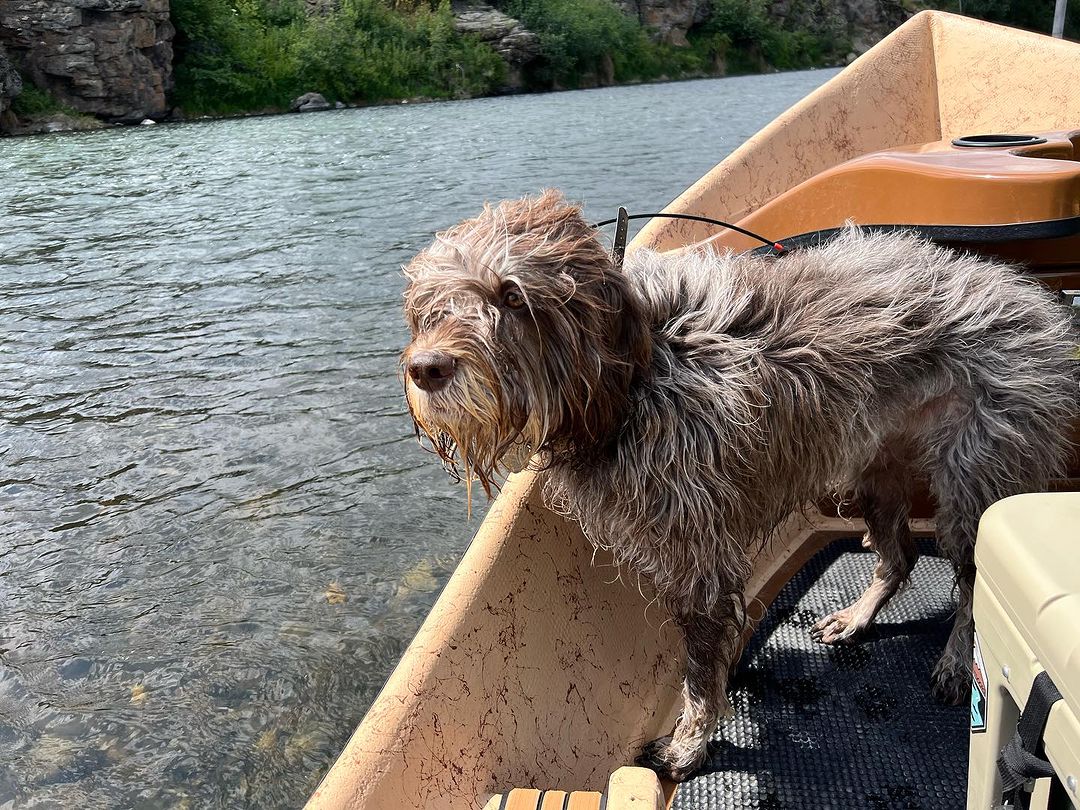
47:15 – Curtis reveals they have four “shop dogs”, a 65-pound Sheepadoodle named Gwen, a jet-black Poodle named Zeppelin who is notably annoying, and an English Bulldog named Scotty. Additionally, there’s Squatch, a Wirehaired Pointing Griffon, brought in by Curtis’s colleague, Cheech.
50:41 – Curtis advises beginners in fly fishing to take a guided trip early on, emphasizing how such an experience could significantly flatten the learning curve. He notes that while not everyone can afford it, investing in at least one guided trip can offer personalized learning opportunities, tailored to the beginner’s needs.
52:40 – Curtis shares the potential expansion plans for Fly Fish Food, which has a strong presence in various locations and is considering further growth.
Episode Transcript
Dave (2s):
Do you have any idea what makes a great fly shop? Great. And do you know what you need to do before entering a fly shop? Are you brand new and want to make sure to get the most out of your fly shop experience? And have you ever heard this advice? You don’t know what you don’t know? And how knowing this is going to help you improve your skills in fly fishing this year? Today we’re gonna take a deep dive into fly fish food and the recent acquisition of Jimmy’s All Seasons Angler. And you’re gonna find out how knowing this is gonna help you in your next Fly Shop excursion this year. This is travel where we take a deep dive into a specific region of the country so you have a better feel for what it takes to put together a great trip and how you can get better prepared for that next big trip.
Dave (45s):
Hey, I’m Dave host of Traveled in the We Fly Swing podcast. I’ve been fly fishing since I was a little kid. I grew up around a little fly shop and have created one of the largest podcasts in this country. I’ve also interviewed more of the great fly anglers than just about anyone in this country. Curtis Fry cone owner at Fly Fish Food is going to share some of the background on how they acquired Jimmy’s Fly Shop and all the details around that. And what makes a great fly tying shop. You’re gonna find out why the motto don’t be a, is what they utilize in in their daily activities and why you should be thinking about it. We’re gonna find out how they deal with vicious online feedback and we’re also gonna get three big tips on preparing for your next visit to your local fly shop or a fly shop around the country, so you’re better prepared, like we said, to jump into this.
Dave (1m 34s):
Plus, you’re gonna hear their growth strategy and how you can take away insights of scaling your own business if you’re on that track as well. This episode of Travel is presented by Yellowstone Teton territory, where you can explore great fishing, hunting, hot springs, winter sports, and much more. Okay, let’s jump into it and see where that road less traveled is gonna take us today. Curtis Fry from fly fish food.com. How you doing Curtis?
Curtis (2m 2s):
Hey, great, Dave. Good to be here. It’s been a while. Yeah. But yeah, it’s good to circle back up.
Dave (2m 9s):
I know it is. It’s been, I’ve been obviously followed you guys. You guys are doing some great stuff out there and you know, we’ve had on, you know, since then we’ve had Cheat on and Lance and you know, we’ve talked a lot about you guys. Your name comes up a lot, so it’s gonna be good to get an update here on what you have going. You guys also have purchased a, a new fly shop, which I wanna talk about. Or not a new fly shop. A fly shop that’s got a, a great name out there that’s been out there a while. We’re gonna talk about that and really just kind of get an update. So maybe let’s bring it back to you since episode 40. That was at episode, we’re above episode 600 now, so it was like, it was like five years ago I think. That’s crazy. Yeah. So tell us what’s been going on maybe in the last year or so. What’s new with Fly Fish food?
Curtis (2m 49s):
Yeah, a lot’s been going on the last year since we talked. We moved into a bigger shop and we’re slowly taking over. It’s a big building. Well we now have the whole building, so, but it’s been kind of a creep as we’ve expanded. Luckily the way it worked out for us, we’re able to push the warehouse side of things a little further into the building and yeah, so the, anyway, and then we built out our YouTube, we call our YouTube studio. It’s where we do our podcasts. Built a soundproof room and everything all hooked up in there for videos and podcasts and all that good stuff. But yeah, so that’s been coming together in the last couple years, but specifically the last year.
Curtis (3m 34s):
Yeah, we had a, an opportunity to, to look at a, a shop acquisition and it’s something that I had been prepping for kind of as, you know, one possible way to grow the business. And as with anything and, and growing a business, you have to be careful, but it’s risky, But, you do what you can to mitigate the risk and yeah, so we acquired what is formerly known as Jimmy’s All Seasons Angler in Idaho Falls, Idaho, Southeast Idaho. For those of you who are not super familiar, we’re about an hour outside of the park, Yellowstone Park. And anyway, so that’s the past year honestly has been, that’s kind of been our focus.
Curtis (4m 18s):
We’ve changed a lot of stuff with our content. We have a full team with that now. So between the studio and the whole Jimmy thing and yeah, we’ve been busy, but yeah, we still manage to fish.
Dave (4m 30s):
You do. So you guys are still getting out and are you still mixing it up with, you know, kind of Stillwater streams, all that stuff?
Curtis (4m 38s):
Yeah, yeah. We’re, I mean it just kind of depends on the timing of how the fishing is on say a river, which we’re clo I mean we’ve got the Provo River, which was, is literally, if I left here I could be there in five minutes. Oh wow. Yeah. So, and it’s, it’s a blue ribbon trout fishery. We’re kind of spoiled in that sense, but we have miles and miles of that up to the first dam, which even the first dam is only 20 minutes from us. So yeah. Good options. But yes, still water is still a big part of what we do. But, you know, we’re really just, and we’ve been doing all sorts of stuff. Fair bit of salt water. We’ve been going to Argentina, we take groups down there for trout in Patagonia and Dorado in Northern Argentina.
Curtis (5m 25s):
We’ve done Cuba and anyway. Wow. But as far as local goes, none of that. There’s, it’s trouts and some bass, maybe Bluegill and Crop we Yeah. Didn’t getting into it.
Dave (5m 35s):
Yeah, it seems like you guys just from the outside seems like you guys are now kind of everywhere. You know, they say you start out kind of niche down and then you expand out, you know, you’ve got the, the big YouTube channel, the fly shop, and now multiple fly shops. I mean, as you guys look ahead, does it seem like, you know, what’s next for you guys? You got the podcast, right? Is there a, is there a channel out there you haven’t really tackled yet that you’re thinking about?
Curtis (5m 58s):
I would say, you know, for right now with the acquisition last year, which was, took a lot of time and energy and a ton of money, but it’s, we’re recovering from that in terms of figuring out how to integrate a new shop into our processes. But next little project is, and we’re always kind of on the move somehow or another, but we did secure the final chunk of our building. And so right now we have moved our warehouse up one unit in our building and then we are turning a, what used to be the receiving bay in our warehouse is now gonna become like a oak showroom. Oh wow.
Curtis (6m 38s):
So we’re going to gonna focus largely on Stillwater boats, but also drift boats and like fly crafts and NRS Skadden, anybody that has anything that floats on water that you fish from standup paddleboards kayaks, that sort of thing. So that’s awesome. That’s the big, big move on the immediate horizon. But yeah, beyond that, I mean, never say never to getting another shop. I’ve gotten the, I don’t want to call it a secret formula ’cause it’s, it’s not rocket science, but we did learn a lot from this acquisition and that could be next on the horizon, something else if something pops up as, as good as this was.
Curtis (7m 20s):
But other than that, yeah, we’re just creating and fishing and doing all that fun stuff that’s, we call a job. That’s
Dave (7m 29s):
It. I love it. And it’s, the Jimmy’s acquisition is awesome because, you know, it was a well known name, you know, we’ve been doing a lot of episodes in that area and Jimmy’s was, I kept, and in fact I haven’t even had Jimmy on yet. I’m, I’m hopefully gonna work on getting him on. I think he’s kind of, you know, retiring partially or whatever heading out, but yeah. But yeah, he’s just got this great name. So what is it about, maybe let’s talk Jimmy’s, why was Jimmy’s the right place? I’m assuming, yeah, it was for sale and all that, but why is that shop so special? Because you hear a lot about it.
Curtis (7m 57s):
Yeah, so that’s, that’s an excellent question. I would say like in terms of our, the fly fishing industry, he’s gotta be one of the oldest shops around. He originally started in Ello, Idaho, I think about 40 years ago. And then it moved to Idaho Falls sometime in the eighties, maybe 85. And my first experience there would’ve been the early nineties, but he’s, you know, being around so long and Jimmy, if you’ve met Jimmy and gone in the shop, you know, number one that he’s probably one of the nicest guys that you will ever meet. Super fishy. Like he’s, he’s just fishing, he’s been his whole life, even growing up before he grew up in Boise, he’s got some, some cool stories fishing with his dad and, and then how he kind of got into the sport and the industry that way.
Curtis (8m 52s):
Anyway, fast forward now the last few years. So Jimmy’s father had passed away and they were close and kind of ran the shop together for years and years. and he was just early last year had been thinking more and more about getting out, getting out of the industry, retiring kind of a thing. So we, we were approached with the option and it’s funny because Cheech and I both have had a lot of experience going into Jimmy’s. We’d both tied their and their Saturday demo time sessions, which is really kind of a staple for downtown Idaho Falls in the winter. And we always knew that shop as a a tying shop, which it is, I mean Jimmy’s for people that even have only maybe gone past by and dropped in once or twice, they just know that he was known for lie tying aspect of it.
Curtis (9m 46s):
And so that became a possibility. And for us being, I mean, I guess you could say we’re fly tying oriented in that, that we’re one of the biggest fly tying resources online. But we do sell a lot of other stuff. And had been looking at potential second location options for fly fish food we’d been working on or researching and kind of looking at options for a couple of years. Nothing super seriously. But when we got this opportunity to chat with Jimmy about his retiring and wanting to move on, we chatted about it not for very long because number one, for people who have not been to that area of the country, Idaho Falls is, I don’t know how many people live, there’s 60,000 people in Idaho Falls proper, some, something like that.
Curtis (10m 35s):
And then, then the greater area there in that corner of the state, you’ve got, you know, a lot of fine fishing people and, but more than anything, if you just say Idaho Falls is your central location and you go an hour in any direction, you’re gonna find some crazy good trout water. And in fact, when I was in high school, I grew up in southwestern Idaho and southeastern Oregon. Hmm. So I was, you know, my family’s long in the tooth Idahoans, so I always just loved that part of the state and Yellowstone Park kind of greater Yellowstone area and just the amount of fishing cap options there, coupled with a really good solid fly shop that’s been around and has a such a good reputation.
Curtis (11m 28s):
So, you know, those two factors were, were big, it kind of meshed with our timing. And then given that it was a tying shop, Jimmy in his mind, and he can tell this a lot better than we can, but, and he obviously didn’t wanna have the shop just go away or, you know, be taken over or purchased by somebody who maybe didn’t wanna put that much time and effort into the fly tank side. ’cause that’s not an easy gig. I mean yeah, fly time, you’ve got tons of variations of things in small packages, so it’s a little difficult to keep track of. Anyway, so we started talking to Jimmy made a lot of sense. And then we basically transitioned over last spring, 2023.
Curtis (12m 14s):
June 1st, 2023 took ownership. Jimmy, literally, I mean you hear about, people say they’re gonna retire and don’t, but Jimmy truly did. He still has keys to the shop still comes in, but that dude does a lot of fishing and so that’s good on him. That’s awesome. He still loves fishing. Oh yeah. You’re not gonna take that out of his blood. Yeah. Yeah. So when, you know, for Jimmy who wanted to retire and, and get out there and do fishing, which he’s doing a lot of, so timing of everything worked out great. You know, he was kind of in a transition time I would say, with respect to the staffing there.
Curtis (12m 55s):
So we basically hired an entirely new crew, shop manager, assistant shop manager, and a couple of different shop employees. And then probably the biggest piece feedback that we got from all this is, you know, to Utah guys, although I grew up half my life in Idaho, my family’s settlers in Idaho and Cheech Cheech middle name is Rigby Oh right. For Rigby Idaho. And so his family settled that area. So I I, I would say even though we don’t right now technically live in Idaho, we do have strong roots there. Yeah. But they were worried about people. I think the loyal customers are worried about us coming in and doing something drastic.
Curtis (13m 37s):
Sure. But these crazy Utah guys. But we got Madison Hyde, Losie. So Madison is one, the Hyde family. She worked at Hyde growing up and she’s our manager and she does an excellent job. And then AJ Jorgensen, who’d been a guide and is from Idaho Falls originally been a guide on the South Fork for years. He’s our assistant manager. So the, between the two of ’em, they run the shop. We do manage all the logistics and finances here remotely. But it’s been a great change. I would say if you’ve been into Jimmy’s previously, we did change quite a bit.
Curtis (14m 18s):
And in the sense of we took out all the fixtures, everything’s hanging on and sitting on, we redid really everything inside the shop with no modifications to say structure. But we increased the fly selection by about fourfold. We built all new custom fly bins with really like excellent lighting. We tripled, almost quadrupled the fly tying selection, which is I think a big thing. People were, oh no, don’t you know, you’re gonna be like most other shops and not have many fly tying things. And we said, well just hold on. And so now that’s where we are there, we redid all the rods and reel displays, built a whole new custom front counter and Yeah.
Curtis (15m 3s):
But I bet, you know, at the end of the day, we do have, and there’s people we’ve known in that area for years and years, obviously people that have been loyal to Jimmy for years. And thankfully, as far as we know, most of those people still come in, still find good service, good information, and a good selection of anything fly fishing related. And hopefully more now, I mean, right.
Dave (15m 26s):
And the flight tanks still.
Curtis (15m 27s):
Yeah. Yeah. So we’re carrying more rod brands, more real brands, more line models, again, flies that area of the country. So hatch matchy, it’s like, yeah. A dream. I, it is just funny. We had a, we fished with a guy from the northeast and he was mentioning we were fishing a a may fly hatch and he had just talked about how that’s not, you know, that was so cool to him. Hmm. And it’s just, you know, this hatch matching kind of thing. And, and it’s true if you get up there in that area, there are so many different bugs to imitate. So it’s honestly a lot of fun getting flies and setting up everything up there because it’s like you’re making the ultimate shop in the ultimate fishing destination from a tire and a, you know, fisher, you’re like, wow, it doesn’t get much better than this.
Curtis (16m 16s):
Yeah.
Dave (16m 17s):
That’s it. So you guys are in it and it’s going and, and it’s not that far. I mean, what is the drive from, and you guys are, are you in, are you in Provo? What’s the city you guys are in?
Curtis (16m 24s):
Yeah, so we’re in Orum. Oh,
Dave (16m 26s):
Orum.
Curtis (16m 26s):
Yeah, that’s where our headquarters, yeah. So it’s between Salt Lake and Provo. Yeah, we are from our shop between the shops, it’s exactly, I would say three and a half hours. Okay. So you can, as long as you’re not stopping too much to fish, you’re good. But relative, it’s all freeway.
Dave (16m 44s):
Yeah. It’s all just shoot up a 15. Right. Shoot up 15 all the way.
Curtis (16m 47s):
Yeah. And Jimmy’s, for those of you who haven’t been is right downtown Idaho Falls, if you’re like flying into Idaho Falls to go to the park or Fish Madison or anything, you’d literally just right there. Yeah. Right.
Dave (16m 59s):
So that’s, that’s the key is that Idaho Falls, if you’re flying in, and we’ve done this with a couple of events we’ve done there. Yeah. You fly into Idaho Falls for the most part, grab a car and then go. So it’s an easy one. Get off the airport, swing by, you know, stop in and check it out and then head down because you guys get that, I know at your shop down your original shop. Right. A lot of people like, because they hear about you online because you’re such a big force Yeah. On YouTube, they just wanna stop by. So it sounds like maybe Jimmy’s is another place they probably wanna, people wanna check out because it’s gonna be unique.
Curtis (17m 26s):
Yes, exactly. In fact, we’ve run into a little thing we didn’t even think about until now, but we’re seeing an increasing number of people that will, let’s say come from California, Arizona, New Mexico, wherever up to fish, you know, in southeast Idaho, Southwest Montana, whatever. And they’ll stop by both shops. So we, you know, our shop here, we’ve kind of just grown that and just really, we’ve been very deliberate in our product selection and the size of the shop. And then we obviously have the big warehouse and our studio here, so people stop by and we’ll give them the grand tour. We even have a little map up on the wall to kinda indicate where they’re from.
Curtis (18m 10s):
But we’re seeing more and more people that are doing that, what’s called the fly fishing shop. The fly shop Tourism. Yep. Segment. And then they’re, they’ll go to Jimmy’s. So we’ve got, you know, we get that a lot where they’re, oh yeah, we were at Jimmy’s this morning and they’re on their way driving back down to wherever vice versa. But that’s awesome. It’s awesome. Yeah. You know, fly fishing’s a great close knit community really when it, when it all boils down to it. Yeah.
Dave (18m 34s):
That’s what it is. I think the thing about fly fishing, and maybe there’s a lot of things like this, but it’s the, we’re doing some surveying and asking our listeners about some things, and it seems like the community, you know, of people and connecting with people is huge. Do you guys find that as well? Is that something you, do you find that, and then how do you guys build that community? How do you guys make that great for
Curtis (18m 54s):
People? One of the nice things, and I call fly fishing, and there’s many, many other sports that would fit the same description, would be a passion industry. So if you’re gonna work in fly fishing as an example, I mean you inherently, as long as you are passionate about it, as most people are in the industry, you know, that’s an added incentive to kind of be in that space. So, but as a community, also being a business owner in this industry, it is also very important that we foster good relationships with customers or potential customers. But just everything in general, like if you look at our content that we deploy, it’s 100% free.
Curtis (19m 34s):
We’re not ever planning on charging people to watch a fly tying tutorial. And so I think that’s part of what we say, Hey guys, we’ll we’ll do our best to create what we think some of the best industry content. And that’s gonna be free. If you like what you see and happen to be needing some hooks, then we happen to sell hook. Right. But one of our, like, we’ve got a couple of things with our shop that are kind of non-starters, but the biggest thing is, and we just say don’t be a, yeah. That’s like number one rule when it deal when we’re dealing with customers. ’cause again, these people are just like us. They like to fish, they’re learning, everybody’s learning.
Curtis (20m 17s):
And so that level of, Hey, come on in. This is our place. Make yourself comfortable. We’ll help you with what you need. We’d like fishing just like you. So we try to make it, it’s an approachable environment with the shops and then specifically online to be able to have a lot of people that we can interact with virtually. Many of whom we never see or know. But, you know, we go to shows or even very often when we’re in an airport or something, you’ll have somebody that’s, oh hey, I love your videos. There you go. And that’s just awesome because you get, I mean, Cheech is hard to miss when he’s with
Dave (20m 55s):
The beard and everything. He’s out,
Curtis (20m 56s):
He’s six five. Yeah. Yeah. He’s, he’s iconic. And so we’ll get that. But we just love that when people come up and say hi. ’cause it’s just, again, that whole community aspect and people really, really like that. As do we. So the relationships is a huge, huge part of our business. I mean, that’s a big chunk of it.
Dave (21m 17s):
That’s it. And, and I love the, the don’t be a is perfect because you do hear some stories of, you know, around there like the, the uppity fly shot and fly fishing had this thing around it, right? Yes. Where it was this uppity thing
Curtis (21m 28s):
And knew
Dave (21m 29s):
About it. Yeah. Right. So that seems like it’s kind of going away probably, you know, mainly because of what you just said. A lot of people are realizing, I don’t know, it, it’s kind of weird to think that there was a period when that was there, but now that’s kind of going away, right?
Curtis (21m 41s):
Yes. That like, you nailed it on the head. And I think I would attribute this because I do, I’ve noticed the exact same thing in today’s world where it’s like immediate feedback. If you’ve gone into a shop and you were treated poorly or anywhere, any business, if you were treated poorly, there’s a high likelihood that that is going to come out. Yeah. And maybe one or two people know. But if it’s consistent, it will come out and that will start to show. And we’ve seen shops, we’ve heard people mention, you know, I used to go into this shop and they used to be just so mean or just not friendly or whatever. I think that changes because there will be some feedback.
Curtis (22m 23s):
And I also think that there is a lot more, I wanna say competition, but also options for consumers in our industry consume content. So you think, you know, you’re thinking goods, so I gotta go buy some flies, or you know, I need this feather to tie this fancy fly or whatever. So you’re thinking the actual product that you have, but there’s also the content aspect of it. And so as a business, if you’re going to do well in the industry, you have to have both that customer service down. And you need to have, you know, people are gonna come in and have a good experience coming in. And then virtually, if you are at least active on social media, so that people who are loyal to you, they need to have a good experience there too.
Curtis (23m 12s):
And I think back in the day, there was no, it wasn’t like two parts. It was one, it was like the shop personality and, and that was largely determined by whoever’s greeting somebody coming in. It’s just so much more, they talk about omnichannel in terms of selling in a business, but I think we’re talking omni face now. Like you can’t just be the jerk at the shop and then be, oh hey, I’m making this cool video guys, come on down. Oh, right. Yeah. It can’t be that way. Right. It’s gotta be consistent.
Dave (23m 42s):
Yeah. It’s trans, it’s all transparent. I, one of my first, you know, kind of online marketing mentors, Roy was this guy called Pat Flynn, he’s still around and he had this thing called smart passive income. Right. And, but he was transparent. He had his income stream on his website. And it was the first time I learned when I learned about online business, I was like, wow, this guy’s totally transparent. and he is a super amazing nice guy. But, you know, you hear a lot about the online marketing stuff, right? The spamming there is spammers and scammers out there. But I feel like when you run into somebody who kinda shows you that way, right? Like, what’s your take online? Because you guys, you know, you’re on YouTube, which can get kind of vicious. How do you guys do, I know you, you balance it. Like how do you make that a great experience for people?
Curtis (24m 24s):
Yeah. That’s probably the biggest downside to the online world is, and I man, if we had some time, I would play you this voicemail we got over the weekend. And these are not uncommon But, you have to deal with some people that get pretty upset over what I would say. Like, bro, we sent you the wrong hooks, right. Are bad. We’ll we’ll make it right and, and you keep the bad hooks we send or whatever. Yeah. But they just lose their mind over something that’s like, Hey, this is fishing after all. Right? Like, we’re pursuing a hobby. So, so yeah, there’s, there’s a lot of, when you’re online, you, you kind of exposing yourself to a lot of criticism just from rando people that don’t like the way you fish to Yeah.
Curtis (25m 9s):
Interfacing with customers that may have had a bad, bad experience with either. Yeah. They could have had a bad day. And that’s above all, it’s just, we gotta kinda take a breath and say, Hey, not everybody’s gonna be peachy, rosy, nice, you know, all every day, all day. But Right. And then when all said and done, we have to also work through actual issues that post office lost the package or something arrived broken or whatever, you know, so, but I think above all, in the, like for instance, if, if you go to our YouTube channel, Instagram probably is not as vicious.
Dave (25m 45s):
Yep. But YouTube is kind of known, right. YouTube is known as kind of having some of the hardcore comments.
Curtis (25m 50s):
Yeah. But one of the, our secret weapon we have is Cheech is kind of the master troll. Right. And I’m, I don’t mean troll like he’s not mean, but his, he’s good comebacks are freaking hilarious.
Dave (26m 2s):
Well, he reminds me too, I’ve heard that in about Cheech and then also Tom Rosenbaum. I’ve heard that he, he kinda loves that a little bit too. Getting in there and just being like, his style just works perfectly to, what do you call it? A hundred
Curtis (26m 13s):
Percent. Yeah. Yeah. And, and it’s like, okay, so somebody’s gonna put a, a crazy comment on, on YouTube and be a jerk. We’re not gonna come back with jerk ness. We’re going to come back with being nice or funny. Yeah. And the crazy cool thing about that is that people just don’t know what to do with that. Right. Wait a minute, I was trying to be mean. Right. You can’t be nice to me. But luckily those are like few and far between, relatively speaking. Most of the interactions are
Dave (26m 41s):
Exactly. Well, tell me this. I, I wanna wanna hear on the fly shop, the, you know, back in the day I grew up around a little tiny fly shop and, and fly ting, we always thought of ourselves, you know, as fly ting was a big part of it. Talk about that today because there’s a lot of different shops out there. What makes Jimmy’s the fly tying, how is it different from say, a shop that doesn’t really focus on fly tying? And obviously you have materials, but is, is that something you guys thought about a lot?
Curtis (27m 3s):
Oh yeah. If you knew the depth of analysis and planning that goes into crafting our product mix for fly tying and then also making sure we are optimized with in mortar quantities. Oh right. Safety stocks. So there’s a lot of stuff that goes on in the background from a pure logistics and business side that would not even enter most people’s minds, including most probably in our industry. My background is business consulting, which I did with SAP for 20 some odd years. And so I got kind of just by nature of being in that industry, I got decent at managing inventory and, and more specifically processes and platforms like that.
Curtis (27m 48s):
But probably the biggest challenge with that fly tying and with any shop is that number one, you have to have space because even though they’re small things, they can, there’s a lot of ’em. And I think you also have to understand the consumer today. Like even 20 years ago you could go into a shop and I had a a, a shop that I would go into and I tried to support locally, but it wouldn’t take more than three or four times going in there not finding what I needed that I would start to look online. Yeah. And so that’s, let’s say 20 years ago that was the case a little bit. Well today it’s like the case a hundred percent.
Curtis (28m 30s):
And I don’t mean this, this is not like a knock at anybody who’s not specializing or doing fly tying, quote unquote. Right. I don’t think there’s a right or wrong, but I would say the biggest, well, so I just say you gotta either be all in or all out. Yeah.
Dave (28m 45s):
You gotta have it, you gotta have it all.
Curtis (28m 47s):
Yeah. Like if you’re gonna invest in the space, so you’ve gotta figure out kinda revenue per square foot. And if you’re doing that and it makes sense and fly tying, again, depending on how you position it can do that. But if, if you’re not all in and you’re not willing to reorder very, very frequently across the board and learn the habits of customers and then educate, that’s a huge component of that. If you think of a shop in general, somebody walks in, there’s a level of education that needs to occur for that person to either purchase or learn something to purchase. And if you look at, say, the space that rods and reels and waiters and boots and flies, maybe let’s say take up the education, you know, it’s there how to cast, how to tie knots, you know how to read water.
Curtis (29m 34s):
There’s some, you know, lots of learning. But if you go into the fly time site and now you start to go, what are the skills and the education opportunities on the fly tanking site, holy crap, you’re talking like every microcasm of section on the wall has got an education piece to it. Right. That’s unique. You don’t get that on waiters. Like okay, I can tell you what the features these waiters are, but that’s like it and all of ’em are the same. You should put’em on and go in the water, not so with fly tying. So I think if today, if you’re gonna really take fly tying anywhere beyond just having your TCO one hundreds and and some UTC thread and just kind of your basics, if you want to go beyond that, it’s, I think a huge step because now you’re starting to look at the education process.
Curtis (30m 17s):
You gotta look at the inventory, all the logistics of that. So it gets very complex. And so I think with Jimmy’s especially, we said, Hey, we’re gonna go in, we already know really what a good product mix is from tying and knowing that he was already known as the fly time shop made this a natural thing. But again, we went in analyzed products. There were some that we kicked to the curb that were either older or we knew empirically did not sell well. And so we would swap out with something similar that sold better. And this is just, again, looking at data is nothing more than that. It’s not like, oh we don’t like this type of material. Right.
Dave (30m 54s):
It’s just the data.
Curtis (30m 55s):
But it’s, yeah, I mean, and at the end of the day, a lot of this that we do well with any business is hopefully data-based. And that’s gonna help you make some of the choices hopefully be successful.
Dave (31m 8s):
This year I ventured into the heart of Eastern Idaho’s Yellowstone Teton territory where the fish were larger than life and the waters held the secrets of the best fly fishing out west with crystal clear rivers like the Henry’s fork and the South Fork of the Snake and enough lakes to keep you going all year long. Make your way to Yellowstone Teton territory and embark on a journey to one of North America’s finest fly fishing destinations. It’s time to experience eastern Idaho for yourself and support this podcast at the same time. So basically if you walk into Jimmy’s today and you’re into flight tying and you wanna tie it, you name the pattern that’s out there, you guys likely will have the materials there on site.
Dave (31m 50s):
Yeah.
Curtis (31m 50s):
Very, very likely. And like I mentioned the other aspect of a shop that does fly tying and there are a lot of good ones, you know, look at Gallup. Yeah. Charlie Crave and on the East Coast Precision, and there’s J Stocker of course, anyway, people that we know and like have done it extremely well. And so that’s, you know, those are good examples again of some are Schultz like in Michigan, of these shops that have figured that out, you know, and they, number one, they know their customer and they know what they’re gonna be tying given the area. And then they all also know how to service those customers, whether it’s like video content or coming in class. Ty flies at night with me.
Curtis (32m 31s):
Yeah, exactly.
Dave (32m 33s):
Yeah, you’re educating ’em. So you’re basically, so let’s take this, because I love the new beginner. We’ve been doing some stuff where we have new people coming into our, you know, kind of podcast channel and stuff and, and I’m thinking like, you know, a beginner thing, you come into a, because I tell people all the time, it’s like, Hey, you know, you can learn to cast, you can get videos, you can do this. But first thing is if you have a fly shop locally, you know, go in there and check it out. So what? Oh yeah. If you have a beginner that’s just brand new to fly fishing, they just found our podcast, they’re listening now and they’re thinking, man, okay, I have, I have this fly shop nearby. Let’s just say it’s Jimmy’s, what are you telling that person to know about before he comes into the shop or that person comes into the shop? How do they navigate? Do they just go in there and start talking or should they have some tools behind them before they jump in?
Dave (33m 12s):
Yeah,
Curtis (33m 13s):
So that’s a great question. We get that one all the time. I would say first is know where you’re gonna be fishing and kind of how you want to fish. So there’s two categories here. You’ve got the, the new tire, but not a new fisher. And then you also have a person that doesn’t fish much that wants to get into tying kind of at the same time, which is certainly doable and maybe even better in some cases. But we would say, first off, know where you’re going, kind of what type of fishing. You don’t have to dial it in to say, oh yeah, I’m fishing in mergers today, But, you know, kind of know the style. So if you’re gonna say nymph, then you know, narrows it down. Then what we’d normally do, and Jimmy’s is the same as our orem shop is kind of figure out where they are in terms of tools and materials.
Curtis (34m 3s):
True beginners, we actually have a whole fly tying 1 0 1 class on our website and we put together filmed Cheech, just taking people through the basics to, you know, relatively complex. And then through to, to the making, you know, so the first few would be more mechanical things like attach your thread, whip, finish dub, you know, those types of things. And then, then it goes into a fly, so like a zebra midge or a brassie or a wooly bugger. You know, things that are relatively simple to tie that don’t take a ton of materials. And then we tell people to pick 1, 2, 3 beginner level tutorials.
Curtis (34m 43s):
And again, these tutorials would all be on YouTube on our channel. And so it’s step by step walk you through it. And then we also list all the materials. So if somebody said, Hey, I want to tie a zebra, Mitch, you go and look at the tutorial, you walk into your norm, your local shop, and you say, Hey, I want to tie zebra Mitch. Well, nine times outta 10 they’re gonna be able to help you and get you the materials you need and you’re on your way. So from a beginner standpoint, most shops should be able to at least outfit you with the stuff you need. The education piece. Not all shops have people that are sitting there ready to instruct somebody on how to tie this civic fly. Our shop’s a little different where we, that’s one of the, in the vetting process, somebody that works here, they tend to have to be a relatively decent tire or at least know how to read recipes to know, oh, we don’t have this material, you can sub this or whatever.
Curtis (35m 34s):
But yeah. So that’s how it would work. Yeah, you just go in and kind of, and we really see people go from there beyond the, the beginner course that we have, we also have a series of what we call skill builders. Oh yeah. Those are a very skill specific series of YouTube videos that there’s two categories. We have fly tying and fly fishing and they each will consist of three skills. So the fly tying one, it may be an advanced skill length stacking deer hair, or it could be something as simple as creating a dubbing rope. And we mix and match all these skills. I think we’re, I don’t know how many we’ve got, we’ve gotten hundreds of videos that are similar. But the series of skill builders, we, I think we just started ’em last really late last year.
Curtis (36m 21s):
They’ve been going extremely well. And this again is just pure teaching. Yeah. And hacks, whatever you wanna call it. These are, these are just free education, we call it edutainment. Oh, right. Yeah. So we’re hopefully allowing people to be entertained at the same time they learn stuff. Yeah.
Dave (36m 37s):
So educate, entertained. Perfect. That’s how it would look. That’s how it would look good. Yeah. So somebody, let’s just take it to Jimmy. Somebody is going out and they’re gonna fish the Henry’s fork for the first time. And they’re, maybe they’re brand new, this is would be, might be a challenge, but they’re heading out there and then they stop by by Jimmy’s and they know where they’re going. They know they’re probably gonna be fishing dry flies, and they’re gonna stop by Jimmy’s and, and ask the staff like, Hey, I’m new to fly fishing, you know, I’m, what do I need? And then the staff’s gonna be able to get ’em dialed in with the, the types of, I mean, I guess that in this situation, if you’re, if you’re beginning, you’re probably not tying tiny dry flies either, I might guess. Right? There’s a, this level.
Curtis (37m 12s):
Yeah, that’s a good point. It depends too. I mean, if there is something real, like right now we’ve got the, the beta hatch going on. Oh yeah. And it’s been really, really, really good. And so we will have a, a beginner come in that maybe is tied the zebra midges and the pheasant tails or the hairs ears, and they’re like, oh man, I think the fish are coming up. What do I tie? We get a lot of that. And so I would say they’re intermediate tires or even intermediate fisher people that are, Hey, you know, I, I want to try my hand at this so we can give them, here’s a dry fly that’s simple and it will catch fish. And then it’s awesome to see people do that. They go home, Tyson flies, they come in the next day like, oh yeah, I went out to the river and caught a bunch of fish with this thing.
Curtis (37m 53s):
Yeah. And that’s like, that’s where you put it all together. And that’s a lot of fun. Idaho specifically, you’ve got, so especially in the summer, you’ve got so many bugs overlap and it’s like, okay, take your pick. And that makes it so much, I mean, between Henry’s and South Fork and, and the park and I mean there’s so much water around there. Name your hatch. It’s probably going on at some point there.
Dave (38m 16s):
Yeah, yeah. It’s, it’s pretty, is that place, that area, how is it different from the Provo area and the fishing? Why? Why is, you know what I mean? Yeah, I know the provost’s famous too, but what’s the big difference between the areas?
Curtis (38m 28s):
You know what number one, provost’s, proximity to the Wasatch front, which, you know, you’ve got millions of people literally within throwing rock, throwing distance of most, you know, so it’s right off the freeway. Yep. It is a little bit more crowded, I would say just kind of at a day-to-day basis. Provost’s Walk and Wade the provost’s also fairly, I mean there’s some other fishing opportunities around But you, it’s kind of like the main one. Yeah. ’cause it’s got so many fish. But if you look at say the Henry’s, you got fewer people overall. Obviously a lot of destination anglers, but it’s just much bigger water. So you look at just Henry’s in the South Fork for instance, much, much bigger.
Curtis (39m 11s):
So logistically you’re floating or, or if you’re waiting, you’re waiting a bit and then covering more water, driving up to another, put in the provo’s, really just walk and wave. Oh, okay. Hatch wise, provost’s really good with betas, has some great cat stuff. Some Drakes, if you look at Henry’s though, it’s like, there’s so many things going on in the South Fork. So I’d say the bug life is a little stronger in kind of what we would say our classic match the hatch scenarios up on those bigger rivers.
Dave (39m 37s):
Is the Provo a A Tailwater?
Curtis (39m 40s):
Yeah, it’s a Tailwater. Basically two Tailwaters and then a free stone. So you’ve got, coming out of the Winter Mountains, it flows into Jordan L Reservoir. At that point it’s a Freestone to the headwaters out of Jordan L through the town midway. and he towns, it’s Tailwater and then it flows into Deer Creek Reservoir. And then Deer Creek Reservoir is at the top of Provo Canyon. And then from there it flows all the way to the lake as a Tailwater.
Dave (40m 6s):
Nice. So we, again, we’re sticking on this little beginner track a little bit here, but let’s say somebody hasn’t been into a fly shop yet and you want to educate them to know, you know, oh, how to go into a fly shop, what to be thinking about. Because you hear some of these stories about somebody goes in fly shop, they get a bunch of education and then they don’t buy anything and maybe the shop owner doesn’t like that. First of all, do you think that’s true? Do you think that’s true? That also, what would be your like maybe three tips for somebody that’s their first time going into fly shop? What do you tell that person?
Curtis (40m 32s):
You know, first off, I would just say be prepared for even a really nice person on a bad day can maybe not rub you. Right. So just going with an open mind, anybody that works retail, you’re gonna have some bad days. And I personally haven’t had very many bad experiences with any shop. And I used to travel a lot and I would go to a lot of shops. So it would be, you know, expect the unexpected.
Dave (40m 54s):
Yeah, don’t be a,
Curtis (40m 56s):
Yeah, exactly. Yeah. On that, on the flip side. And then, you know, when you go in, I would say be prepared to at least answer some questions. Because if you go in and say, well, I’m just beginning, where do I even start? That’s a very tough answer to give. Yeah. It’s like, okay, well where do you start? And so we typically go through some questions to kind of figure out where the person is. And then the other thing, and this is probably the biggest suggestion that the most helpful that I would give any beginner going in is even if you know some stuff, kind of forget it. Hmm. I’ve seen this play out multiple times where, and I don’t mean just pretend like you don’t know, but yeah, if somebody’s giving you some advice, there’s always the one upper and it’s like, oh right. Somebody who comes in that clearly doesn’t know very well what they’re doing, but they’re trying to make themselves look like they know what they’re doing and it becomes more and more obvious.
Curtis (41m 44s):
They don’t know. But then they’re also not as inclined to take advice and input. So set aside the, Hey, I gotta show these guys that I kind of know what I’m doing. Who cares, we’re all, you know, everybody’s learning at different paces. Just go in, soak it up. I’ll even do that. I, you know, I’ll go in and out to shop and ask questions and I kind of let them do their spiel and you know, I’ll learn something. So that would be, those would be probably my top is just kinda those awesome. Chill out and go in with a positive good attitude. Yeah.
Dave (42m 15s):
And on that same line, you know, you hear this about the guide trip too sometimes where people aren’t that good at letting the guide guide them. Right. They come up with their own ideas Yeah. Of what they should do. Yeah. They don’t listen. The guide tells ’em what to do and then that person, right. That’s never a good thing to be doing on a guide trip. Yep. Probably. Yeah, it’s the same thing. Cool. All right, so that gives us a little, a little firepower for somebody kind of new to it. I wanna hear more about this boats, if you know here a little bit, because I love the boats. We’ve done a whole drift boat season on this podcast. We’ve had talked rafts, everything. How do you guys choose what boats you’re gonna have in that lineup? There’s so many, you got air interests, there’s all these amazing rafts and drift boats. Like do you guys, do you already have that lined out or how do you do that?
Curtis (42m 52s):
Yeah, we’ve got it mostly lined out. We’re just kind of starting on. If you think of in terms of price and use case for these boats, let’s just call ’em all boats ’cause they’re gonna float somebody that fishes. Then you’re obviously looking at, on the lower end, you’re looking at entry level float tubes and everybody and their dogs gonna probably at some point own an entry level float tube. Yeah.
Dave (43m 15s):
So float tubes are still, so those are still a good thing to get, float tubes are still used out there on lakes and all that?
Curtis (43m 20s):
Oh yeah, absolutely. In fact, I would say I probably use a float tube a little bit more than I used to because I’ve started to get a little bit, like if we’re going to a series of lakes in the high country, rather than worry about my pontoon boat or, or even like the fly craft, which we can take on our four by fours. I ask, you know, if we’re going crazy, but it’s just, if I’m looking at fly craft, which is comfortable versus a float tube, I’ll probably opt for the float tube on some of these high mountain lakes. Just because it’s easy to, it’s easier set up and down and transport. Yeah. So we’ve, we try to cover all the bases from your entry level float tube and then all the way through to say a drift boat.
Curtis (44m 7s):
We work with hide drift boats. Oh yeah. And fly craft. And so, but as you go up from the entry level kind of lower price stuff into the drift boat range and the, and the fly crafts, you know, raft kind of style boats, luckily there’s not as many options to choose there. So we’re fly craft in and of itself kind of almost created a genre of fishing craft. And so, you know, we’ll have a, a couple of models there. We’ve known Dave Skadden for a while. Oh yeah. And his, his boats are really good, but he’s also got everything from kind of your entry level float tube all the way up to a drift boat style raft.
Dave (44m 44s):
He’s got, Dave’s got some cool stuff. I saw him at the show recently this year and yeah, he’s got these new braces, right, that are foam, they’re inflated, but it’s really hard and rigid. I got in the boat. And so he’s really, and he iss even, I mean he’s got a bunch of stuff out there, but I feel like he’s always on the innovation edge. Right. That’s maybe Skadden’s thing. He’s always trying new stuff.
Curtis (45m 2s):
Yep. The nice thing about Dave is he does fish from the boats a lot. And so his business has been crafted just over the years based on function and need. And so obviously somebody who’s heading a business that works on fishing crafts, it’s nice that he fishes and and knows what’s involved. But yeah, you’ll see hi he’ll innovate stuff that other people will copy eventually is typically how we’ve seen some of that go. But the boats are, are great. So we’ll have most of his lineup here and we will, one thing that’s different that we don’t do now is we’ve decided to start shipping the boats. They’re difficult in general to ship a big raft, but we’ve been working on some options there.
Curtis (45m 46s):
So on some of ’em there’ll be some costs to ship them, others may not. But the idea is that we’ll try to have all these fancy boats for display, but we can also send them to people.
Dave (45m 57s):
Wow. This is cool. So, okay, so, and then the float tube. Give us a that on just a, what’s the float tube you love? If somebody was gonna grab a float tube, do you have one model, one style that you really like?
Curtis (46m 7s):
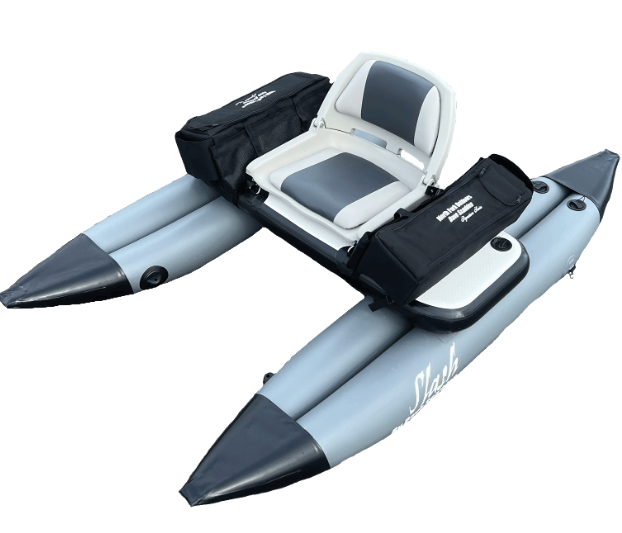
So the style that I really like right now, that is a new model from Skadden. Yeah. It’s called a slash, it’s basically kind of a, it uses the standup paddleboard rigid style of, of a platform and it sits between two pontoon basically. So that forms your seat. It weighs, I don’t know, 12 pounds or something crazy. But then that little platform that you sit on doubles as a backpack frame. Oh wow. And so Nice. Yeah. So you basically deflate the pontoons, fold them in back onto the platform thing or get your straps and then put whatever other gear you need.
Curtis (46m 47s):
And then you’re walking, you’re hiking a really capable, sitting off the water style boat up to a high elevation lake with just, it weighs as much as a pair of boots. Right. Kind of a thing. Wow. So that is, I think a game changer.
Dave (47m 2s):
I’m looking at it now. That’s skadden slash the back country float tube. This is the cool thing is, and it’s kick right? You got your, your fins. Yes. So there’s no, or so essentially it is a float tube, but it’s a pontoon float tube. Right, right. You’re up outta the water.
Curtis (47m 14s):
Yeah.
Dave (47m 15s):
Okay, good. Well I think we’re doing pretty well here. I think we’re gonna take it away today. This is our, you know, it’s Monday, but this will be like our fly shop Friday. You mentioned the dog. You had a dog earlier that was, or we talked off air on the bone. So let’s talk shop dog for a start there as we take it outta here. What kind of dog, what’s your shop dog?
Curtis (47m 33s):
Shop dogs. We have technically four of them. Oh wow. So yeah, I’ve got three. I’ve got a 65 pound she poodle named Gwen g Guinevere. We’ve got Zeppelin who is a jet black poodle and he’s also annoying. So we got black dog. Yeah, we’ve got Gwen. And then the third dog from my clan is an English bulldog named Scotty. So Gwen and Zeppelin, they come every day with me. And then Cheech brings Squat who’s a, a wire hair pointing Griffon. And she’s been in the shop since she was a pup, like literally for her whole life. So the three core dogs are here every day.
Curtis (48m 15s):
And then Scotty will come to visit a couple times a week and yeah, so they hang out with us upstairs or down where we have our studios upstairs and, but yeah, they’ll, they’ll roam the shop too. If you are a dog person and come in, you will get a very warm welcome because the dogs like to smell other dogs, but they’re nice dogs at least. Yeah.
Dave (48m 36s):
Nice. There you go. I love the shop dogs. See, and you guys don’t have any cats there? It’s all shop dogs.
Curtis (48m 41s):
Well, we do have cats that live on the side of the building and the dogs are keen on the cats. And as I pull up in the parking lot and let the dogs out every once in a while, if the cat’s dumb enough to make an appearance, oh the dogs will chase it down. It’s done. So. Right. The cats still live around here, but they’re not like very visible residents. Perfect.
Dave (48m 60s):
Okay, good. Well, and let’s say we’re gonna, this is our rapid fire round and we’ll take it outta here. So a couple of questions I’ve been having. So the Shop Talk podcast, do you guys still have that going strong and, and give us an update there?
Curtis (49m 11s):
Yeah, our podcasting is probably our least consistent of everything that we do. But we, we do have the dedicated podcast space here and we try to do, well, let’s see, we were, we were at a one a week kind of clip for a bit there and we’ve kind of pulled off to about once a month, but we’ve got some other ones planned. We try to, when people are in town for like IFTD or Oh right, yeah. Or somebody’s just in town visiting, we try to get people on Yeah. The guys from, and just different people on just kinda randomly. But yeah, we’re still cranking away with that. Yeah, it is a lot of fun.
Dave (49m 47s):
How do you like doing that? Yeah, I know you’ve, you’ve done some interviews as kind of on there and I saw one recently where I think you showed up, I think Cheech and, and Lance weren’t there, but as the host you enjoy hosting the podcast. Is that different from the YouTube stuff you do?
Curtis (50m 1s):
Yeah, way different. The podcast is nice because it’s just very laid back, just having conversation, YouTube videos, usually there’s some stuff going on in the background or we’re trying to accomplish, you know, x, y, z as we’re we film, whether it’s like on the water fishing or, or whatever it, it’s nice. We’ve had some, some great topics, great conversations. So it’s fun. Yeah, we, it is nice kind of digging into what people have going on and realizing people are sometimes way funnier than you would’ve thought or had some cool stories. But yeah, it’s, it’s awesome.
Dave (50m 41s):
Cool, cool. You’re loving it. That’s good to hear. That’s gonna keep going strong. So let’s go back, we’re gonna stay on this beginner track a little bit and take it back. I can’t remember your story. I know we’ll put a link to episode 40 where you talked about your background on fly fishing But, you know, you’re beginner self, you’re getting into fly fishing, what would be that tip you’d give yourself back then? You know, you could give yourself, from what you know now, you’d give that beginner of self.
Curtis (51m 3s):
In my case, I wish I had taken either a guided trip and, and I understand not everybody can afford that. The reason I mention that is because it really busts the learning curve. Yeah. And if you were to do that, let’s say, and you know, even somebody that’s not from the Western Rockies or whatever, if you’re gonna make a trip out and have this expense, you may as well just do one day guided trip and tell ’em, Hey, I’m, I’m learning this is what I want to get outta this day. Like nine times outta 10, the guide’s going to curtail the trip to that. So, and that is such a good learning experience just to say, lay it out there. Say, Hey, you know, I’m, I don’t know what I’m doing here. Or I need to learn X, Y, ZA little better.
Curtis (51m 45s):
I would just, if it were me getting into it, I would’ve said, Hey, let’s just skip all this learning on my own junk and dive right in. That would be probably my biggest thing that I understand. That’s not feasible for everybody. Beyond that, I would say assume that there’s always more that you don’t know because that keeps you questioning, can I do better? It keeps you questioning, is there something I’m missing? That’s what makes a good fisherman. When people are locked into this whole concept of, oh, well I already know this. So I’m, you know, in my own mind I’m the pro. Right. And they really don’t know what they don’t know because they’re not willing to assume that there’s more out there. And we see this a lot. Like somebody, oh, I’ve been fishing for 20 years.
Curtis (52m 26s):
I’m like, yeah, you’ve been fishing twice a year for 20 years, doing the exact same thing in the exact same location. Yeah. I would still say you’re a beginner. And so, yeah, I would just say be, be open to that learning. Understand, don’t assume, you know. That’s
Dave (52m 40s):
Right. No, that’s perfect. Love that. And, and we’ve talked a little bit just on some of the business end of it, but with Jimmy’s, I mean obviously that’s a, you know, a great location as you guys look out. I mean, I know you’re selling all over the place, all over the country, the world, stuff like that. But yeah. Where would be that next area? Do you look and say, oh wow, maybe the East coast, or do you just start picking out the Western states? Or do you feel like, I’m sure you guys probably don’t have it all lined out, but you know, how do you even choose? Right. How do you choose where to go next?
Curtis (53m 9s):
I would say if, and I’m, I’m not saying we’re doing this. Yeah. ’cause I’m gonna get some emails about this. Right. But I will just, I’ll just put it out there. Boise is very attractive to us and I would say the front range, even though there’s a ton of shops along the front range, I think that’s another place that we would consider. I’m not saying that’s like we’re actively going out looking, but if there were an opportunity that came up, those would probably be two potentials. We’ve also looked at some really weird ones. Hmm. That I’m not gonna mention where, but some crazy opportunities that would be kind of combo Shop Lodge. Alright. Set up. We actually get a lot of people approaching us to either co-brand or, I don’t even know what you wanna call it, but kind of help but run more of the shop side of things or a tying side of things.
Curtis (53m 59s):
So who knows, I mean, you may, you may see a fly fish food branded corner of a store should pop up somewhere crazy. Right,
Dave (54m 6s):
Right. Sounds like you keep your options open, you’re not crossing out anything, you’re, you’re willing to look at anything.
Curtis (54m 11s):
Yeah, we’re willing to look at anything and I think we, we actually did a podcast on getting into the industry kind of Oh yeah. From a business standpoint. And that’s probably been our most, you know, I probably had the biggest response and feedback to us Hmm. On people that are, oh hey, you know, this is, I find this very intriguing. Here’s some questions I have. And so we get a lot of that and, and in amongst those are some, Hey, you know what, have you ever considered doing something, da da da duh here. And so we’ve actually had some dialogues with some interesting people and interesting concepts ’cause of that. Nice. But yeah, I never say never. I mean right now, like I said, we’re really just, Jimmy’s is running full bore. We’ve got our new boat stuff going on and you know, and that sort of thing.
Curtis (54m 54s):
There’s plenty to do. Yeah, you’re busy, no shortage. Yeah, I mean we’re just having fun. I’ve got some kind of personal things that we’re looking to improve on with our business that we’re working on as well. My personal, I mean things that are my projects, my little pet projects here that I’m like, oh, I gotta squeeze some more juice outta this lemon.
Dave (55m 14s):
How do you balance that in your time? I’m guessing you add a new fly shop that’s gonna be more time that you have to put to that, although you put a staff in place. How do you balance that where you keep, it seems like you’re adding more, but it’s still, you teach. Yeah. You guys, how do you manage your time and do it all?
Curtis (55m 29s):
Well, the biggest thing is you have to hire good people. And with any business, when you scale it, if you don’t have a, I want to call it a succession plan, it’s not really succession, but it’s more of a, an offloading delegation plan. If as a business owner you don’t have that outlined, you are always going to want to keep that close to your vest. And that’s typically incongruent to a growth strategy. Like the one thing that you have as an entrepreneur or a business owner that you cannot scale is your time. Yeah. So if you look at it that way, you have to analyze what can you do with your time, what are things that you can do and you only can do currently, and what are things other people can do?
Curtis (56m 13s):
And once you get that nailed down and start to understand a bigger picture, how you scale it. So for, in our case, we hire good people that can handle tasks and, and things and, and my hope is always better than I can. And so like I’m really good at some stuff. There’s also some stuff that I’m okay at, but if I can pay somebody to do better than I can, then that’s a win. Yeah. So, yeah, so when it comes down to it, I think the biggest challenge for any business owner is just that how do you schedule your time so that you’re making the best use of it. But also, you know, like last week we went and fished the Green River here in Utah, spent the whole day fishing and I don’t like to come back to a mess.
Curtis (56m 58s):
So I try to make, you know, when, yeah, I do need to build the time to fish into my schedule if for nothing else, mental sanity, but also content and that. So it’s really just you take your time, slice and dice what you can do, what you can, what you can’t, rather than not doing it, have somebody else do it. You know, that’s kind of how it has to work.
Dave (57m 17s):
Yeah, no, that’s great. I think that’s a great tip, a great reminder there. Well let’s take it away. And so I, going back to Idaho Falls, have you spent a lot of time out there? Do you know that Idaho falls itself, the city a lot? Or is that kind of, are you learning about it?
Curtis (57m 32s):
Yeah, I mean we’re, we’re obviously still learning. I’ve spent a fair bit of time there in the last year and a half and we, we participated in the, by tying and fly fishing expo, they had their Oh yeah. And have their every spring, which is a phenomenal event now that it’s in the new Mount America Center there off the freeway even better. Yeah. So we try to be as involved as we can personally. We’ve done several different events up in the area, whether they’re fundraising or going out fishing with somebody that comes in or whatever. So yeah, we’re up there quite a bit. Like I said, I, I grew up in various areas of Idaho and grew up, like for me as a kid going on vacation was Yellowstone Park.
Curtis (58m 13s):
Right. You know? Yeah. In, in the back of the 1982 Toyota pickup with the
Dave (58m 19s):
Shell. Oh, nice. My
Curtis (58m 20s):
Dad just threw us in the back, Hey, hope you don’t get carbon monoxide poisoning back there. There you go. And here’s a sleeping bag for padding. So, yeah, I mean, so I’ve been familiar with the area for a long time and we just, we love fishing there and it’s a pretty unique.
Dave (58m 35s):
Cool. Would you have one place, do you know it well enough to, to recommend a, if somebody’s passing through like a, a dinner or some food on the way?
Curtis (58m 42s):
Well, so my favorite restaurant in falls is probably Stockman’s. It’s a steakhouse. It’s like a good Idaho steakhouse. Yeah. You got, you know, Idaho’s got potatoes of course, but man, they’re pretty good with the cattle and the beef. But it’s also a good quality restaurant and there’s a good number of different options there in Idaho Falls, which we, we really enjoy. Perfect
Dave (59m 4s):
Documents. All right, good. Well we’re just, we’re building this trip for somebody that’s gonna be coming through, so, so awesome. Chris, I think I’ll leave it there. We’ll send everybody out to fly fish food.com and they can check that out, your YouTube channel as usual. And yeah, I guess I’m gonna hopefully track down Jimmy, I wanna keep working on that and see if we can get him on and hear more of the, the whole story of the of the shop. That’s my goal. But yeah, I appreciate all your time and all the great stuff you guys do and excited to keep in touch with you.
Curtis (59m 28s):
Absolutely. Thanks for having us.
Dave (59m 30s):
Another great one with Curtis in the Fly Fish Food gang. We got an inside view of Inside the Fly Shop, the backbone of the fly fishing industry. We all love the fly shop, so if you get a chance, support fly Fish food support, Jimmy’s, or support your local fly shop this week. I hope you enjoyed that Chat with Curtis. We’re gonna continue staying in touch with the great stuff they have going there. And hope this year we’re gonna put together more, more good stuff with them as well. And I’d like to know what is your local fly shop? That’s the question of the week. Question of the week. Local Fly shop. It is Friday and it’s Fly Shop Friday. Send me an email Dave at we fly swing.com. If you haven’t checked in with me in quite a while, or if you’re brand new, I would love to hear from you and I’d love to hear where your local outdoor store, if you don’t have a fly shop nearby, where are you getting your outdoor stuff?
Dave (1h 0m 17s):
Next episode, let’s check it out right now. What do we have going this coming Monday? A big episode we’ve got, we’re getting back into spay. We’ve got a big spay episode. We’re gonna be going up to Alaska and talking about swinging for king salmon. You gotta stay in for that one because that’s gonna be good. Steve Morrow, he’s gonna break it all out Monday. And you do not wanna miss this one. You do not wanna miss this one next week. It’s gonna be one of the best that we put together in a while, so stay tuned for that. Thanks for checking out Travel today. I hope you can live that dream trip this year or, or just get back into that stream right in your backyard and experience that road less travel.