In this episode, we dig into Central Texas fly fishing with guide and musician-turned-angler Alvin Dedeaux of All Water Guides. Alvin shares how his path from the music scene, where Nirvana once opened for his band, led him to become one of the top Orvis-Endorsed outfitters in the country.
We dive into the incredible diversity of Texas fly fishing, from Guadalupe bass on the Colorado and Llano Rivers to sight fishing for redfish on the Texas coast. Alvin breaks down when and where to find the best action, what makes Central Texas such a special place to fish, and how fly fishing here blends both fresh and saltwater adventures like nowhere else.
Alvin has been fly fishing since he was 12 years old. He didn’t know anyone who fly fished. He just read about it in a school library book, stole it so he could finish it, and never looked back. After moving from Houston to Austin for college, he spent time fishing local waters, playing in a band, and hanging out at a fly shop called The Austin Angler — which later became famous for being in a 1985 Super Bowl commercial.
When the shop closed in 2004, Alvin realized guiding was the part of the business that truly worked. That led to the start of All Water Guides, a service that now covers everything from Texas Hill Country streams to the Gulf Coast. What began as one guide trip at a time has grown into a full team guiding for bass, redfish, and more — proving that passion and persistence can build something pretty amazing.
If you’re planning a fly fishing trip to Texas, Alvin says you can fish almost any time of year. The state’s mild winters mean steady fishing for bass, redfish, and even trout on the Colorado River. Here’s a quick breakdown:
You can even mix it up — fish rivers for bass one day and hit the coast for redfish the next. With year-round opportunities and short winters, Texas might just be one of the most versatile fly fishing spots in the country.
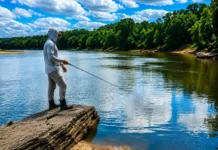
Central Texas is packed with great bass water. Alvin says their two main targets are Guadalupe bass, the Texas state fish, and largemouth bass. In the spring, his team also guides trips to the Devils River, a remote stretch near the Texas-Mexico border known for its clear water and mix of smallmouth and largemouth bass.
The best rivers for most anglers are the San Marcos River and the Colorado River:
Alvin says the Guadalupe bass isn’t picky. On the right day, you can catch dozens using a light rod and a foam hopper — making it one of the most fun fish to target in Texas.
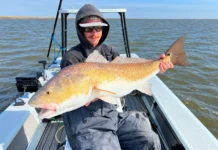
When you’re sight fishing for redfish on the Texas coast, the magic moment is spotting tailing fish — when their tails break the surface as they dig for shrimp or crabs in shallow water. Alvin says finding a pod of tailing reds, sometimes 40–50 fish strong, is like hitting the jackpot. They’re feeding hard, less spooky, and your odds of a hookup go way up.
But you’ll also see cruising fish, and those are tougher. They’re not always feeding, so your cast has to be perfect. Alvin says with redfish, accuracy is everything — the fly needs to pass within six inches of their face. As he puts it, “you’ve got to paint a mustache on the fish with your fly.”
According to Alvin, you can catch redfish year-round, but the fall months are hard to beat. From September through early December, the weather is stable, water temperatures start to cool, and fish gather in big, active schools.
In winter, redfish often move to deeper water for warmth — but on sunny days, they’ll slide back into the shallows to feed, sometimes in massive pods. Alvin says those surprise moments, when a hundred redfish suddenly appear in a foot of water, make winter exciting — but fall offers the most consistent action. If you’re planning a trip well ahead, October and November are his top picks for sight fishing on the Texas coast.
Alvin’s team at All Water Guides was recently named the Orvis 2024 Outfitter of the Year, a huge honor in the fly fishing industry. The award is based on client feedback and recognizes the best of the best. Alvin credits their success to a crew of talented, patient guides who care as much about people as they do about fishing.
He says what separates a good guide from a great one comes down to people skills:
As Alvin puts it, guiding is a service job first. And with a team like his, it’s no wonder they’ve earned one of the highest honors in the sport.
If you’re planning to chase redfish or bass with Alvin, start by working on your casting. Accuracy and speed matter more than distance. Alvin says the key is to make quick, clean casts — around 40 to 50 feet — with as few false casts as possible. Redfish often feed in shallow water, so a soft presentation is just as important as hitting the target.
For multi-day trips, Alvin’s team offers plenty of options. You can stay near the coast at Goose Island Flats or book an all-inclusive trip with Bird Dog or Devil’s River Ranch, complete with lodging and meals. Whether you’re new to fly fishing or an experienced angler, there’s a trip for you — from easygoing Austin-area outings to remote, guided adventures deep in Texas Hill Country.
Conservation runs deep in Alvin’s work. Through All Water Guides, he helped start a nonprofit called Clean Up the Colorado, which hosts an annual event known as the LoCo Trash Bash. In just seven years, volunteers have pulled over 57 tons of trash from the lower Colorado River. The cleanup is both a labor of love and a tribute to Alvin’s late wife, who helped lead the effort — complete with community support, sponsors like YETI, Patagonia, and Howler Brothers, and a big riverside celebration.
Water use remains a major issue in Texas, with every drop already spoken for. As Alvin puts it, “I don’t mind canceling a few trips because we have too much water — if we run out, we have to cancel them all.”
Before he became one of Texas’s top fly fishing guides, Alvin was rocking stages with his funk band, Bad Mutha Goose and the Brothers Grimm. The band had a full lineup cranking out classic ’70s-style funk that packed venues across the country.
They toured nationally, landed a record deal, and even had Nirvana open for them before the grunge icons became famous. Alvin laughs about it now, but back then, the music life gave him one big perk — time to fish. “When we weren’t on the road,” he says, “I was probably fishing or camping somewhere.” From those days on stage to guiding on the water, Alvin’s story proves that rhythm, passion, and flow can take many forms.
Episode Transcript
WFS 837 – Alvin Dedeaux 00:00:00 Dave: Today, we jump into Central Texas to explore the diversity of species and fly fishing opportunities in both fresh and salt water. By the end of this episode, you’re going to understand how a musician found his way into fly fishing and now is the top Orvis endorsed outfitter in the country. You’re going to find out when the best time is to sight fish for redfish on the Texas coast, and also the vast opportunities with bass, including the Guadalupe bass species, many others. We’re gonna get into it all today. This is the Wet Fly Swing podcast, where I show you the best places to travel to for fly fishing, how to find the best resources and tools to prepare for that big trip, and what you can do to give back to the fish species we all love. Alvin Dedeaux is here to shed light on the amazing opportunities that make Central Texas a fly fishing Mecca, including the Colorado River, the Llano, all the great tailwaters and still waters throughout Texas. Plus, we’re going to hear about the Texas coast and what it looks like to sight fish for redfish. You can also hear how Alvin was once in a band where Nirvana opened for them. Kurt Cobain. The Kurt Cobain Nirvana band, opened for Alvin back in the day. We’ll have some links in the notes on this, but we’re going to talk about that story today, this crazy story of funk band and and transition into fly fishing. We talk about it all today, so let’s get into it. Here he is Alvin Dedeaux. You can find him at all water guides. Com how you doing Alvin. 00:01:28 Alvin: I am doing fantastic. 00:01:30 Dave: Great great great. It’s great to have you on here. Uh, we always love a good, uh, podcast about Texas. Uh, you know, uh, what do you call it? I always start with Texas because it’s the. It’s the big state, right? It’s got it’s a little bit different than everything else. What’s your feeling on on Texas. Do you guys do everything a little bit differently out there? 00:01:47 Alvin: Well, yeah. I mean, we, uh. It’s funny, for years, Texas was kind of like the place where the state that sent people fishing everywhere else. And, you know, we we fish here, but fly fishing was, was kind of a thing that people left Texas to do for years and years. But now, you know, we’ve got a really vibrant fly fishing community, you know, all over the state, everywhere from, you know, the big cities, Houston and Dallas, Austin and, uh, you know, now Texas coast and central Texas. And so it’s kind of become its own thing. I tell people all the time, if I had the only fish in Texas for the rest of my life, I would be more than happy to do that. 00:02:31 Dave: Yeah. And you’ve been around for that time. Have you seen that transition to where it was not a lot of fly anglers to where you’re seeing a lot more? 00:02:38 Alvin: Yes, yes, for sure. I remember at one point in time, you know, especially fishing on the coast, there wasn’t anybody else fly fishing. You know, you go down to the coast and you’re fly fishing and you see somebody else fly fishing. And you definitely knew that person because there just weren’t that many people fly fishing, just a handful of us. but now it’s, uh, you know, if you’re in the back bays in the really shallow water, more than likely the people you see will be fly fishing. So that’s that’s been quite a change in the last, you know, twenty years or so. 00:03:09 Dave: Yeah. And you guys cover, uh, quite a few of the species out there. Maybe I want to get into a little bit on all the species and your background, but maybe let’s just start there. You cover, uh, kind of saltwater and fresh, right? 00:03:21 Alvin: Yes, yes, yes. So our guide service, all water guides, we fish all the water, so we fish all the small, small streams in the hill country in central Texas and the larger rivers. And that’s mostly for bass, uh, our state fish, the Guadalupe bass is a is a great stream fish, especially small streams. But then we’ve got largemouth bass in some of the bigger rivers. We’ve got great bass fishing in a lot of lakes. So you know, your your largemouth bass, smallmouth bass. We’ve got the true bass, the stripers and the white bass in the lakes. And then we also fished the Texas coast mostly for redfish down there. But you know. We have occasional tarpon. The tarpon fishing is kind of bouncing back in places here in Texas. And Black Drum and, you know, all kinds of stuff. So we’ve got we got a lot of stuff to catch and a lot of places to catch it. 00:04:14 Dave: Nice. And Texas is obviously a big state. Where are you located and what areas do you cover out there? 00:04:21 Alvin: We’re like, right in the center of Texas. We’re in Austin. So but we fish Austin, you know, as far west as, uh, the Devil’s River, which is, you know, basically on the border of Texas and Mexico, we fish the Texas coast, which is, you know, a few hours away. So we’ve got a pretty, pretty wide range. It’s it’s not not uncommon to put, you know, thirty thousand miles on a truck in Texas guiding. Right. Pretty actually. Pretty easy to do. You know, thirty thousand miles in a year is nothing. 00:04:52 Dave: Yeah, definitely. 00:04:53 Alvin: I’m a semi-retired guy that managed to put thirty thousand on your truck last year. Yeah. 00:04:58 Dave: Right. So. Well, let’s let’s bring it back there a little bit. I’d love to hear how you kind of got into fly fishing. Kind of your first memory of you. Sounds like you’ve been doing this for quite a while. 00:05:07 Alvin: Yeah, yeah. Um, I’m sixty one now, and I got my first fly rod when I was twelve. I didn’t know anybody that fly fished. I’d never seen anybody fly fish. But I read about fly fishing in a book at school. It was there was like a general book on fishing. It had one chapter on fly fishing. And I read that chapter and I was like, man, that’s what I gotta do. And so for my twelfth birthday, I convinced my parents to find me a fly rod, and I’ve been at it ever since then. 00:05:38 Dave: Wow. That book that’s pretty awesome in school. Just picked up at the library, picked up a book, and it just ran. Yeah, yeah, yeah. 00:05:44 Alvin: Actually actually stole the book and took it home so I could read. 00:05:47 Dave: Oh, there you go. Nice. 00:05:49 Alvin: I was committed. 00:05:51 Dave: You were. You were right on. So twelve years old, you get going. And then. And when do you know this might might be your path? 00:05:58 Alvin: You know, it’s funny. I never really thought that it was until I was pretty much completely into it. I always fished, um, as a kid. And then when I moved away from Houston, where I grew up, to Austin, to go to UT, I there was a fly shop in Austin. Well, shortly, I think it opened up a year after I got here. And so I hung out there a lot. I was always fishing, you know, I was, I did school, I was in a band as a musician, traveling the country. And I was always, always fishing and then hanging out at the fly shop when I wasn’t, you know, on tour with my band. And when I decided I needed to make a career change, the guy that owned the fly shop just asked me if I wanted to work at the fly shop, and I was like, yeah, sure. And so that turned into like, you know, twelve years later. 00:06:50 Dave: Wow. 00:06:50 Alvin: I was, uh, still at the shop, managing the shop, running the guide service, you know, doing all the buying and writing checks and paying employees. And, uh, but I still never really, uh, you know, was just kind of just kind of followed the, you know, followed the wind or went with the flow. And, uh, we started guiding when the shop was open. The shop shut down in July of oh four, and I was actually considering buying the shop out and being a fly shop owner. But while crunching the numbers, we decided that, you know, the only part of the business that consistently made money was the guide service. So I decided to be a guide. There you go. At that point, so two thousand and four. 00:07:35 Dave: So. And what was the name of that shop? 00:07:36 Alvin: It was the Austin Angler. The shop was famous because it was on uh, that first series of they don’t take American Express, uh, ads. Oh yeah. They played that ad during the Super Bowl in nineteen eighty seven. So at one point in time, it was probably the most famous fly shop in the country because of that Super Bowl ad. 00:07:59 Dave: No kidding. 00:07:59 Alvin: Yeah. 00:08:00 Dave: That’s crazy. I’ve never. Yeah. So I’ll have to see if we could look that up in the Wayback machine there. 00:08:04 Alvin: So it’s it’s out there still. 00:08:07 Dave: So nineteen eighty seven, the Austin Wranglers on this American Express commercial on the Super Bowl, which millions of however many millions of people and then and people are kind of puts them on the map a little bit or how does that work? 00:08:18 Alvin: Oh yeah. Yeah, yeah, for sure. Because, you know, there were only a handful of fly shops in Texas at the time, and there’s always been a ton of fly anglers in Texas. I mean, it’s it’s a huge market for the fly fishing business. Even before it was, you know, a lot of people fishing locally, there were just a lot of Texans traveling the world, fly fishing. So Orvis has always had a big footprint here. We’ve always had, you know, at least a few fly shops in the state of Texas. So all of a sudden, here’s a flash up that’s like famous in the state of Texas. So people came from all over to go to the Austin Angler. 00:08:53 Dave: Wow. That’s pretty awesome. Yeah, we’ll have to see if we can dig that commercial up. Throw it in the show notes for this this blog post as we do this when this goes live. But so okay, so that gives us a little background on on your connection there. So you’ve been doing it a while and then you start all water anglers or all water guides. Sorry. And uh you get that going and what is that like. So you start that. Is that just you, is that a few people or are you fishing the coast? Are you fishing everything or do you start small and then build out? 00:09:19 Alvin: I was just an individual guide for a while. A guy that summers in Colorado, I did like ten seasons guiding in Colorado and all all the while, you know, I put up my first website. Com which is still up. I put that site up in oh one and so, uh, what, twenty four years ago. And so I had a great online presence, so pretty quickly I was booked like I couldn’t do any more trips than I was doing. So I started sending trips out to the other guides and, you know, booking multiple guide trips. And at one point I remember somebody booked like a five guides for like two or three days. And, you know, I had four other guides I was working with, but nothing official. And so when the guy said, hey man, I’m booking so many boats with you, you think I can get a discount? And I was like, I was like, no, man, I think I need to charge you more because I’m doing all this legwork right? And I’m getting paid the exact same amount as all the rest of the guides who are going to just show up. So that was kind of like the light bulb moment for me. So it was actually twenty eleven when I started all other guides. And, you know, I think we had half a dozen guides at the start. And, you know, it Fluctuates. We have guys that come back and forth. We have guys who died in Colorado and Montana during the summer, and they’re in Texas during the winter, but we kind of branched out. I mean, you know, like I said, we’re guiding trips in central Texas on rivers and lakes and at the Texas coast as well. I think, uh, you know, during the pandemic, which was just, you know, crazy for everybody in the business. I think a couple of years there, we had twenty plus guides get, uh, ten ninety nine at the end of the year. But it’s it’s probably more like a dozen guides. It’s probably like an average that we’re running. And that’s a mix of full time guides and some part time guides. But, you know, it’s a legit guide service, especially for being in the middle of Texas. 00:11:24 Dave: Right? Right. Yeah. This is awesome. Well, if we had, uh, let’s just I always like to go back to the, you know, our travel program. And if we had a group of listeners that were, you know, talking and I know one actually, I want to give a shout out, uh, Mike, Mike Willis, he is in our group and he, I think, was one of the first people that gave me a heads up on your program out there. So it’s definitely want to give a shout out to Mike. But if I was talking to Mike and a few other people, we wanted to come fish, you know, Texas and we were talking to you on the phone. What are you telling us? Like, as far as because you cover a lot of ground, a lot of species? 00:11:55 Alvin: Yeah, yeah. I mean, it really kind of depends. The nice thing about here is that, you know, we’ve got year round fishing, so there’s always something to catch. I mean, and and the state of Texas years ago actually started by the guy that owned Lone Star Beer. They started stocking trout in the Guadalupe River. And that may be one of the busier times of the year for us is the winter. Even though we, uh, you know, we really kind of promote the native species. But we’ve got a winter time tailwater trout fishery. So you can come here pretty much any time of year and catch fish, including the heat of the summer, which is probably the toughest weather and the middle of the winter bass fishing pretty much year round. Same thing with the with the redfish. You know, prime time. I always tell people the best time for most of these species is when the weather is the nicest. So winter winters are pretty mild here for the most part. So we have some great winter fishing for the bass, as well as the redfish and the trout on our little trout stream. Um, spraying really kind of gets cranking and then fall is falls. Pretty much, you know, everything’s happening in the fall. Spring can be really good. But, you know, also, we have a lot of windy days in spring. So spring can be a little hit or miss. Winter’s a good time for locals to fish because, uh, we can have some phenomenal fishing, both fresh and saltwater. But you need to be able to kind of decide to go or not go on a moment’s notice. So I would say, you know, maybe winter might not be the time to travel to Texas to fish, but pretty much any other time of year, we can almost guarantee we can get you on the water and put you on some fish. 00:13:33 Dave: Okay. And and what is the winner? What would be the months for the winner, you think? 00:13:37 Alvin: More like weeks? 00:13:38 Dave: Yeah, weeks. As I say, because we’re not talking November through March like we are here. 00:13:43 Alvin: Yeah, now we’re talking like we’re talking December in the first half of January. Really? Winter’s pretty short here. 00:13:51 Dave: That’s right. Okay, so so if we were looking at something in February or that would probably be a decent time or March or something like that. 00:13:57 Alvin: Yeah. February is good. February, March, April, May. You know, it starts getting a little warm in June for non warm weather folks. You know you might want to avoid August maybe maybe mid middle of July through August gets a little little toasty around here. Us locals it’s not a big deal. But you know if you’re going to travel somewhere you don’t want to travel somewhere and then have a heat stroke, right? 00:14:20 Dave: We’ll stick on the February maybe that kind of winter before spring. Could you do a multi-species trip as well out here? 00:14:26 Alvin: Yeah, if you got a few days. The only thing that makes it tough is just travel distance, you know? So sometimes, I mean, we’ve got great bass fishing all over central Texas, both rivers and lakes. And, you know, you’re about three hours, three and a half hours to get to the coast. But, you know, we our guys will do a trip on a river one day and on the coast the next day. 00:14:51 Dave: Yeah, you could do it. 00:14:53 Alvin: Yeah, you could definitely do it. 00:14:56 Dave: When it comes to high quality flies that truly elevate your fly fishing game, drift is the trusted source you need. I’ve been using drift hooks, expertly selected flies for a while now, and they never disappoint. Plus, they stand behind their products with a money back guarantee. Are you ready to upgrade your fly box? Head over to Drift Hook today and use the code at checkout to get fifteen percent off your first order. That’s drift hook drive. Don’t miss out! Fish. The Fly Guide service is dedicated to sharing the incredible fly fishing opportunities around Jackson Hole, whether floating the scenic snake River in search of native cutthroat trout, are hiking into the mountains to explore pristine tributaries. Every day on the water is an adventure. You can join them for an unforgettable fly fishing experience in the heart of the Tetons at Fish Thefly.com. So you could do maybe a more central kind of bass fishing. Central Texas bass fishing. And then maybe it is also is the trout fishing with the tail water. Is that decent that time of year. 00:16:00 Speaker 3: Yeah. Yeah February. Yeah February. 00:16:01 Alvin: Is good. It is. That’s that’s if I was going to pick one time to go. They stock it. There is some holdover uh population on the river from year to year. But um, the vast majority of the fishing is during the season when they’re stocking it and they stock it from late November through February. So in February, there’s as many fish as there will be for the whole year. And the Guadalupe River chapter of Trout Unlimited is very active. Believe it or not, it’s the largest Trout Unlimited chapter in the nation. 00:16:33 Dave: Wow. 00:16:33 Speaker 3: So. 00:16:34 Alvin: So they put a lot of money into taking care of the little fishery we have down there. So, you know, February is pretty good. 00:16:40 Dave: Okay. And the bass fishing. And which species are those on the bass fishing. 00:16:44 Alvin: So, uh, two main species for us in central Texas, um, the Guadalupe bass, which is our state fish, and then the largemouth bass, which everybody knows. And then we do have, uh, in the spring, we do some trips out west on the Devils River. It’s on the Texas Mexico border. Uh, and that’s all, well, mostly small smallmouth and largemouth fishing. 00:17:06 Dave: And that’s. I was wondering, so. Yeah, you guys have Mexico right there. A big chunk of your border? Yeah. Is that something? Where are there fishing opportunities? Sounds like there’s a few around there and even into Mexico. Or do you guys stick in Texas? 00:17:18 Speaker 3: We pretty much. 00:17:19 Alvin: Stay in Texas, you know, just I mean, geez, there’s, you know, like, there’s so much in Texas. 00:17:24 Dave: Yeah. There’s no no need to head down south. 00:17:27 Speaker 3: Yeah, yeah. 00:17:28 Alvin: The Devil’s River is kind of one of those bucket list trips. Uh, I did a video out there years ago for Yeti, and and people have kind of discovered that. And so that’s that’s a pretty cool one. That’s one of the most remote places you can go. And, um, we just happen to have access to a giant ranch, which, you know, ranches in Texas are giant and, uh, on the headwaters of the Devil’s River. So that’s a pretty cool thing. Pretty special thing that we get to do. 00:17:55 Dave: Yeah. Devil’s all right. Nice and. And so the bass. So. Yeah, you kind of have it all largemouth. You’ve got the Guadalupe bass, and then even some smallmouth is that. And what is the river you mentioned the Colorado. What are the big water bodies that you’d be fishing for all these species. Like let’s just say again, let’s take it we have three or four days out there to fish. Is it one river we’d probably be hitting? 00:18:13 Speaker 3: Uh, no, no, we’ve got a few. 00:18:15 Alvin: Um, the two probably most consistent are going to be the San Marcos River and the Colorado River. The San Marcos comes out of the ground. It’s a giant spring creek, uh, in the town of San Marcos, which is about thirty minutes south of Austin. So there’s multiple stretches on that river we can fish River is about eighty miles long. We don’t fish the entire river, but we probably fish, you know, thirty or forty miles of it. So, you know, that’s multiple days on that river. And then, uh, the Colorado River is the river. If you ever come to Austin, um, Lady Bird Lake, which is the lake. That’s right in the middle of downtown Austin. It’s just a dammed up section of the Colorado River. So, uh, at the end of Lady Bird Lake, kind of like the the end of Austin is where the free flowing section of the Colorado begins, and it flows three hundred miles to the coast. So we fish. We fish about the first hundred miles or so, you know. So that’s that’s one hundred miles of river. And it is probably the least populated hundred miles of river you’re going to find anywhere. Yeah, there’s in general, the state of Texas considers our rivers sort of underutilized resources the rivers. I mean, the lakes are, you know, tons of people, you know, recreational traffic, fishing traffic. But most of our rivers, with the exception of the little trout stream, it gets quite a bit of business, quite a bit of traffic during trout season. And it’s also a summertime recreational river. But the majority of Texas rivers don’t get a lot of traffic. So like that Colorado River, we joke, but it’s probably true. On a busy day on the one hundred miles of river that we fish. There may be ten boats. No kidding. Wow. Yeah. Yeah. So. And that’s a that’s a pretty cool river. It’s a little bit of a challenge to to kind of learn it. It is used for irrigation. So flows can fluctuate. But it’s also the river that the world record Guadalupe Bass was caught out of. And, uh, I think a largemouth bass. I think the river record something like eleven pounds. So it’s a it’s a really good potential fishery. You know, if you’re into catching bass and moving water. 00:20:28 Dave: Yeah, definitely. That sounds cool. And where is the Colorado River? Where is the headwaters? Do you know that system? Where does that thing begin? 00:20:36 Alvin: Yeah. So so that’s the other thing people sometimes confuse because I used to guide on the the other Colorado River in Colorado. 00:20:44 Speaker 4: That’s right. That’s what’s confusing. There’s two there’s two of these rivers. 00:20:47 Alvin: Yeah. Yeah. This Colorado is, is completely contained within the state of Texas. It’s about eight hundred miles long. It starts out in West Texas. Some of the, you know, feeder creeks and tributaries are probably actually in New Mexico, but it’s kind of starts in like far west, kind of slightly north Texas, um, and just flows basically kind of diagonally across the entire state down to the Gulf. 00:21:13 Dave: That makes it into the Gulf. So it actually makes it. That’s interesting because there’s some West Coast streams that, you know. Well, I think it’s the, the, I guess the Colorado, the same river. The other one flows out through the the Grand Canyon. Right. And all that, all that. But it actually doesn’t even make it to the ocean. Yeah, it gets right. But that’s the interesting thing because you would think you would think water use maybe this would get sucked up before it made it to the ocean, but it doesn’t. 00:21:38 Alvin: Yeah. Um, it’s for a bunch of different reasons. We do have environmental flows that are required to send down to the coast. The Texas coast, especially Matagorda Bay, where, uh, the Colorado dumps in is, uh, you know, we have a lot of recreational activities there. We’ve got, uh, endangered species. The the whooping crane is there. So there’s a lot of different reasons, uh, that they are, you know, mandated to send a certain amount of water into the bays every year. And there’s also in industrial use, we have, believe it or not, we have giant rice farms in Texas. And a lot of that water goes to the rice farmers. And they’ve been in existence for over a century. So they’ve got water rights. So fortunately, you know, until we have a just really, really bad drought, uh, we’ll always have water in the Colorado. 00:22:29 Dave: Okay, cool. Yeah. Water and fish, like you said. And the Colorado does have the Guadalupe bass. 00:22:35 Alvin: Yes it does, it does. Yeah. 00:22:36 Dave: So it has and that’s the describe that a little bit on that species we’ve talked a little bit about in the past episodes. But is that fish. It’s um similar to smallmouth or similar to largemouth. Talk about that one a little bit. 00:22:47 Speaker 5: It’s probably closer to. 00:22:48 Alvin: A small mouth. You know, it’s it’s a member of the spotted bass family. And there’s a, there’s a bunch of different spotted bass all over the country. But this Guadalupe bass is only found here in central Texas. Not even like East Texas. West Texas only found in central Texas. We’ve got, like, this kind of unique geological feature. There’s an uplift and there’s a bunch of spring fed streams, small streams, and these fish have evolved, um, you know, in this part of Texas. And they, they will crossbreed with the smallmouth. So they’re that close to smallmouth, because that was something that the state of Texas did was stock smallmouth in some of these streams, because they’re also it’s also perfect smallmouth water until they realize that they were cross-breeding with the Guadalupe bass. Um, the Guadalupe bass is super interesting if you’re like a fish nerd, because not only is this species only found in Central Texas, they have. Because of the threat of the smallmouth introduction. They’ve done a lot of research on them in the last, you know, fifteen, twenty years. And they found out that not only are they unique to Texas, but one stream system, they’re actually unique. So we have like Guadalupe bass in the Guadalupe River. Those fish are actually different from the Guadalupe bass that are, say, in the Llano River. And those fish are different from the ones in the Colorado River. So it’s almost like you have cutthroat. You have, you know. Oh, yeah. Snake River cutthroat, right? Yeah. So it’s they don’t look different enough to be able to tell without being a scientist, you know, and DNA testing them. 00:24:29 Dave: Right. Can you guys tell when you catch them or look at them? Can you tell at all? 00:24:32 Alvin: Well, we can, you know, we can, of course, you know, usually tell immediately that it’s a Guadalupe bass. But the only thing that’s become really obvious to us is that the ones in the Colorado River are much larger, on average, than most of the other streams, because it’s the biggest stream, of course. And, uh, you know, that’s kind of the biggest difference, you know, but like, I didn’t mention the Llano River, I can’t believe. But that’s that’s probably kind of the most typical, like, hill country stream, super scenic out there. And we’ve got I think we got about one hundred miles of that. That’s fishable as well. And that’s a more remote. Not quite as remote as the Devil’s River, but, um, it’s pretty far from most of the big cities. So it’s it’s a pretty pristine stream, and that’s the place to go to catch a lot of Guadalupe bass. And you know, there’s smaller fish, but, you know, you’d fish them like you would for, you know, brook trout or something. They’re not real selective. You know, you can fish with a four or five weight rod and a foam hopper and, you know, catch fifty or sixty of them in a day. 00:25:34 Dave: Okay. So fishing to catch a Guadalupe bass is won’t be too challenging. That’s one we could add to our list probably when we get there. 00:25:41 Alvin: Oh yeah. Yeah yeah. It’s fishing so you don’t always get them, but they’re you know I would equate. Well a sunfish is probably more like a brook trout, but they’re but you know, they’re typically not, uh, not real selective. You know, conditions are good. You’re probably going to get some. 00:25:59 Dave: You will. So if we were there in February ish, somewhere in that range, what would we be doing there? We’d be on the surface there. 00:26:04 Speaker 6: That would probably still be subsurface. 00:26:06 Alvin: So, you know, March April is probably when, you know, definitely by April, then you could fish, uh, top water, you know, until it just got too hot, you know, which would be like August, probably. And, you know, Hopper’s the hopper bite can be really good, even on some of the hottest days, because the hoppers tend to migrate to the edges of the river, uh, as everything else dries up. So sometimes, you know, you’d be out there one hundred degrees and and catching fish on top water all day. 00:26:35 Dave: And then what is the if we were out there subsurface in that earlier period? What do you guys what does that look like. 00:26:40 Alvin: Closers. Closers creel axes you know kind of your typical streamers. Uh nothing fancy. 00:26:46 Dave: Yeah. And are you guys are you floating the. Let’s just take it to the Colorado. Is this floating the river and out of boats or. 00:26:53 Speaker 6: Yeah, the Colorado. 00:26:54 Alvin: Would be mostly floating and and we do float most of the rivers that most of the streams are publicly owned stream beds, but most of the property is private. So there’s not a lot of public walk in access. The land owns a smaller stream, so all the road crossings and the stream beds are public, so that’s one that’s pretty easy to to hop in and just wade fish. Um, but in order to cover any distance would be floating the smaller streams, the San Marcos Solano, we would be floating in rafts just like you would most of the other western trout streams, as well as the Colorado. The Colorado is a little bit more of a challenge because there’s not a lot of not a lot of boat ramps. So you have to cover a lot more water on that one. So we typically do that in, uh, in jet boats. So, you know, outboard jets, you know, jet sleds, you know, that type of stuff. But, you know, not like the big ones you would see out in the Pacific Northwest kind of more, uh. 00:27:49 Dave: Like John Boat style or something like that. 00:27:50 Speaker 6: Yeah. Yeah, yeah. 00:27:51 Alvin: So, you know, fourteen to sixteen foot boats and, uh, and most of the time is actually under our power. So we just use the, uh, use the jets to get from access points to cover more water, like, uh, on the Colorado, the shortest section you can float from boat to boat ramp is about five or six miles, but most of the other sections are anywhere from twelve to fifteen to twenty plus miles between boat ramps. So yeah, yeah, yeah. 00:28:20 Dave: Okay. So on. So we could, uh, be hitting this like day one, maybe doing a float trip on the Colorado out of the rafts or whatever you guys have there. And that would be. And if it was earlier, we might have some subsurface stuff we’re doing. Are you guys doing the, like, sinking lines and all that, or is it more of a dry line show out there. 00:28:38 Alvin: In the winter on the Colorado specifically? Yes, sinking lines. And we have a lot of other kind of also run species we catch during the winter. The Colorado, uh, that river in particular, some of the biggest fish are caught during the winter. The world record, Guadalupe Bass was caught by one of our clients a few years back in February. 00:29:00 Dave: It was. And how big was that? Fish? 00:29:03 Alvin: Like three pounds. 00:29:03 Dave: three ounces. 00:29:05 Alvin: Yeah. Yeah, yeah, they don’t get real big. 00:29:07 Dave: Yeah, that’s cool though. So that’s. So you literally have the world record still. 00:29:11 Speaker 7: I think I haven’t checked it. It stood for thirty. 00:29:14 Alvin: Plus years until it. 00:29:15 Speaker 7: Was broken. 00:29:16 Alvin: Uh, it may have been ten years now, but, uh. It was, you know, in, in recent history, but during the winter, you also we have, uh, a freshwater drum that’s in the Colorado River that’s probably average three to five pounds. But, you know, we’ll catch some eight and ten pounders on occasion. We’ve got the, uh, the smallmouth buffalo, which is the largest fish we have in the river. And we’ve had we’ve had folks catch those over thirty pounds. 00:29:43 Speaker 7: Really? Yeah. 00:29:44 Alvin: Yeah. 00:29:45 Speaker 7: So winter is pretty wild. 00:29:46 Alvin: And then we have the the white bass in the river during the winter. So yeah you never know what you’re going to catch during the winter on the Colorado. 00:29:53 Dave: Well that would be kind of cool. I always go back to that with the species. It would be kind of cool to be out there in the winter and and who knows? And you know what? You’re going to catch up. Would you be fishing the same technique, like we’re saying, down under the surface. And you could catch any one of these species you mentioned. 00:30:06 Alvin: Yeah. yeah yeah. So typically during the winter, uh, we fish a little differently. We fish a lot slower, we’ll fish the deep holes, and we basically, uh, you know, closers or waited crawfish patterns and all those fish will eat, eat those flies. So yeah, you can, you can catch, you know, four or five different species in a day. You know, if, if the fishing’s happening, it’s, which is pretty cool. 00:30:30 Dave: That is cool. So you could maybe have a day there and then if you wanted to, you could, you know, have like a transition day drive three and a half hours or whatever down to the Texas coast and hit redfish in February. 00:30:40 Alvin: Yep, yep. You sure? You certainly could. It’s a little bit more weather dependent that time of year, but it is a it is a year round fishery. 00:30:47 Dave: Yeah. Because you hear a lot about I mean, when you hear redfish, you either hear it seems like it’s either Texas or Louisiana. Yeah. Like that’s usually what you’re hearing about. And it sounds like there’s a difference between Louisiana. Do you think is there a big difference between what you’re hitting in redfish and you know where you guys fish versus that Louisiana area? 00:31:06 Alvin: Yeah, yeah. So Louisiana, you will catch bigger fish for sure. Louisiana though. And it is more of a winter time fishery there. That’s kind of the prime time there. But you won’t be fishing in clear water like we fish. And it won’t be typically as shallow either. You are sight fishing because. Because there are big fish. But it’s it’s a little bit different in Texas. It’s, you know, we’re usually fishing in a foot or less of crystal clear water, so it’s all pure sight casting. Oh, nice. And, uh, Louisiana, the the weather during the winter is, you know, typically people recommend you fish at least three days. And it’s not uncommon to have two days where you can’t fish. I’ve been down a few times. Or, you know, maybe you can get out in conditions are not are not great weather in Texas is a little bit more stable, partly because we fish. You know, Louisiana does have marsh and swamps and and back bays, but that coastline is a little bit more exposed to the main gulf. You know, we’ve got the the barrier island system. 00:32:13 Dave: So you’re tucked in a little bit. 00:32:15 Alvin: Yeah. We’re fishing inshore for the most part or not for the most part. We totally inshore. 00:32:21 Dave: You are. So if you were, if we were headed down there from Austin, I guess. Leaving what? Head down south through San Antonio, then head to the coast. Is that how you get out there? 00:32:30 Alvin: Yeah, yeah, there’s a few ways to go. I mean, we fish from, uh, you know, port O’Connor as far south as, um, corpus, I would say mostly around, uh, Rockport, Port Aransas area and from Austin. You know, like I said, it’s about three hours and fifteen minutes, but there’s there’s once you get there, you can you can go maybe an hour north or an hour south, just kind of depending on where you want to go. I mean, the Texas coast is pretty immense. 00:32:58 Dave: Now when you go out there, are you going to see a lot more fly anglers than you would say in the inner what we’re talking with the bass fishing or is it, you know, it’s pretty. 00:33:07 Alvin: So in the, in the back bays and the super shallow water, a lot more fly anglers now on the rivers, depending on where you go, you’re probably going to see more people fly fishing because, uh, most of the people who are fishing conventional tackle, the go to is usually one of the lakes, you know, the lake reservoirs. Yeah. You know, if you’ve got a bass boat, you’re definitely going on one of the bigger lakes. Um, we’re, you know, the fly anglers are fishing out of rafts and canoes and smaller craft. 00:33:37 Dave: Yeah, yeah. Gotcha. But it sounds like you guys, I mean, kind of have the whole thing covered, right? Whether it’s a raft or jet sled or. I guess you guys have skiffs when you head out on the redfish. 00:33:47 Alvin: Yeah. I have whittled my my personal fleet down to, to three boats. 00:33:53 Dave: Oh, three boats. Let’s hear it. What are your. Because this is I love the boat talk where I’m at, it’s like, you know, I’ve got a drift boat. It’s always like you’re thinking raft or a jet sled, but it’s similar to what you guys have. But different boats a little bit, right? 00:34:04 Alvin: Yeah. Yeah. So so um, currently I have, I’ve got a, an Air Super Puma thirteen footer. Um, set it for floating the rivers. I have, uh, my jet sled is at Hog Island s w sixteen, I got a sixty, forty, uh, out tohatsu outboard jet on that. And then my flat skiff. I’ve got a Hells Bay Waterman, and most of the guys now have at least two boats, a flat skiff and a raft or flat skiff jet. And a couple of the guys have have three. 00:34:41 Dave: Yeah, yeah. You got if you’re depending on what you’re covering. But if you’re. So let’s just say that we were heading down for a trip and are you doing still? It sounds like you’re not guiding as much as you used to, but do you do as much guiding for redfish as you do for the for the bass and all that stuff up north? 00:34:54 Speaker 8: Yeah, for me, it’s probably fifty fifty still. 00:34:57 Alvin: Yeah. 00:34:58 Dave: Nice. Yeah. So if we were going out there for redfish with you. I mean, let’s just take these crystal clear water. That sounds pretty awesome. What does that look like? You know, when you get out there, talk about a day on the water down there. 00:35:10 Alvin: Well, typically we don’t get out super early because we are fishing a midsummer. We’ll start super early. Uh, just, you know, to beat the heat. Um, but, you know, we’re sight fishing, so we typically say, you know, nine o’clock until one o’clock or two o’clock is probably prime as far as, uh, you know, the light conditions go because, you know, since we are sight fishing, we do want to be able to see them. And we’re usually, uh, going to make a little bit of a run to get from the launching point to where we fish, we we typically fish the barrier island system. And the barrier island, for the most part is not, you know, it’s not populated. So most of the boat ramps, the vast majority of the boat ramps are on the mainland. So we start on the mainland. We go across the bay, a bunch of different bays, and we end up on one of the barrier islands. And typically we’re fishing the, you know, the waterways inside the barrier islands. So there’s, you know, just thousands of small saltwater lakes and ponds and creeks connecting the lakes and ponds to each other or to back to the bay. So knowing where you are or having a really good GPS system is really important, because once you get back there, it kind of all looks the same. And then typically we’re just, you know, just like if you ever go bonefishing same type of setup, the guides pulling the skiff, you have one angler up on the bow fishing, you know, we’re just looking for fish and we spot them and, uh, and hope for the best. Yeah. 00:36:43 Dave: Right. Right. God. That’s awesome. And is that, you know, fishing for redfish? Are there also some other species you might just, uh, run into while you’re out there? You mentioned tarpon. 00:36:51 Alvin: Tarpon fishing in Texas would definitely be in a different, you know, be out in the deeper water, you know, near the passes and the jetties. We do have a couple of spots on the Texas coast where you may run into one of them in the bays. Um, we also have a lot of black drum. Um, and those guys are pretty common in the same waters as the redfish. And occasionally we’ll run into a speckled trout on the flats there, typically in the deeper water. And if we decide to target them, you know, we’ll go find some deeper water, like maybe a channel or a creek that’s connecting a couple of flats or connecting the flats to, to the bay. And, you know, typically that’s more like a blind casting with a weighted Clouser. Depending on time of year, we may even throw sinking lines for this trout in the deeper water. And we’ll pick up redfish that way too. And that’s kind of our go to if we have really poor conditions for sight fishing, if it’s if it’s cloudy or cloudy and windy, we can usually target spots where we can, you know, if we can’t see fish, we’re pretty sure there’s going to be fish there. So we’ll so we will blind cast on occasion. But you know, the sight casting is the fun way to do it. So that’s. Yeah, that’s kind of what we prefer to do. 00:38:08 Dave: Today’s episode is brought to you by Trout Routes by Onex, the ultimate mapping app for trout anglers. Whether you’re planning a big road trip or sneaking away for an afternoon session, Trout Routes helps you find and explore new waters fast. You’ll get detailed maps that include public land boundaries, stream access points, regulations, and other extras like hiking trails and parking spots. I’ve been using it to plan my trips and it’s taken the guesswork out of the process. No more bouncing between multiple tools. Everything you need in one spot. Give it a try right now at fly. Routes and download the app to start exploring smarter today. And what does the site take us there? What does the site, uh, fishing. What does that look like? Ah. These fish. Describe a moment where you’re. I guess it’s clear out. You’re getting lots. Lots of sunshine. You’ve got a good view. Describe that a little bit. 00:38:59 Speaker 8: Yeah. 00:38:59 Alvin: So you’re looking for for any sign of a fish. And the, of course, the, the ultimate. And the thing that everybody gets really excited about is when you find fish tailing either an individual fish or a group of fish, groups of fish, pods of tailing fish are kind of like, you know, you hit the jackpot when you find that. Because typically if they’re in a in a group of, you know, anywhere from three or four fish to forty, fifty fish or more, they’re going to be a lot more aggressive in their feeding, you know, because there’s competition around. They’re a little bit less spooky because there’s quite a bit of commotion going around. The fish are stirring up the water. You know, the bait is trying to get away. Sometimes there may even be birds diving, so you tend to be able to get a lot closer to them. So the, you know, your chances of hooking up are much better now. You can you know, you can have a pod of one hundred feeding fish and throw a fly in and spook them all, all right? There’s no guarantee, but the chances are much, much better. But we’re also just looking for just cruising fish. You know, sometimes it’s just dark shapes and like, okay, that’s a fish. And the individual fish are definitely going to be much more challenging to catch because they’re a lot more wary. Let’s once again, if they’re feeding, if you see an individual tail poking up, if you can get within distance to make a good cast, your chances of hooking up are are pretty good at that point. But sometimes we’re just seeing fish just cruising, you know, like they’re maybe they’re not even feeding, they’re just kind of going from one spot to the next. But a lot of times if you can get a fly in front of them, you can get them to eat the thing. That’s most challenging part of it, I think for most people, especially if you’ve caught bonefish because bonefish I think and people are, you know, like what? I don’t believe that bonefish are easier to catch on average than a redfish. And I think it’s because of the eyesight. You know, bonefish, you can land a fly ten feet away and start moving it, and bonefish will pick up on the movement and come over and eat it. If you land a fly ten feet from a redfish, the vast majority of the time they’re never going to see it. So the trick with the redfish is is super accurate casts and intersecting the fish with the fly. So, you know, we like to see the fly swim in front of the fish’s face from left to right or right to left. Within six inches. Six inches. Okay. Yeah, yeah. So you really that’s the trick with the redfish. Like the there’s a lot of different sayings that say you want to be, you want to paint a mustache on the fish’s face with the fly, or you want to paint lipstick on the fish’s lips with the fly. You know, you can’t wait for them to eat it. You have to feed it to them, you know. So, so that’s that’s kind of the big challenge with the, with redfish. But you know, it’s site cast and it’s all visual. So you can tell if the fly is going to swim right in front of the fish. And I used to tell people, you know, it’s your chances of spooking them are greater if you land the fly close, but your chances of hooking them are greater if you land the fly close. And I would much rather see the fly swim in front of the fish and spook the fish, then see the fish just continue on its way. And yeah, never even knew it. Anything happened. Yeah, at least you know you’re in the game if you spook them, right? 00:42:25 Dave: Right. So you’re going to have these two. So you’ve got tailing fish and then you’ve got fish that are cruising and are the tailing fish. Is that a little bit easier if you get either a single or a group of tailing fish to just get it again and get it closer in front of its face where it can see it. 00:42:38 Speaker 8: Yeah. Because because those fish. 00:42:40 Alvin: Are actively feeding, you know, the cruising fish may or may not be, but a tail and fish is definitely, you know, because there the tailing happens because the water is shallower than the length of the fish, and the fish is, you know, they’re bottom feeders. So they’re, you know, they’re chasing little crabs or shrimp on the bottom and therefore their tails are poking around. So, you know, a tailing fish is an actively feeding fish. So that’s, you know, that makes it your chances a lot better. 00:43:07 Dave: Okay. And back on the timing. So for redfish what would you say. It sounds like you fish you’re around. Does it. Would February be just as good as any other time? 00:43:16 Alvin: February could be. If I was gonna just pick one time, I would pick the fall. Just, um, anytime from, like, say, September through. You know, maybe the first half of December. The weather is pretty stable as long as we don’t get a hurricane, which is kind of does kind of intersect hurricane season there. But the temperatures start to drop a little bit and the water starts to cool off. And all the fish that we’re catching are juvenile fish, most of them. And so those fish will kind of start to congregate as the water temperatures cool off, because in the wintertime they’ll get in big schools and they’ll move out into the deeper water because the temperature is a little bit more stable. So they start to congregate. I guess maybe they’re putting they’re starting to eat, you know, before they go off and take a little break during the coldest part of the year. But the flip side of, you know, February is they’ll still tend to be in the big groups, you know, kind of like the wintertime groups that they form. And if you get a warm day in February or, you know, any time in the winter, the shallow water will warm up a lot faster and the fish will a lot of times move, you know, in mass from the deeper water into the shallow water to feed. And in that warmer water. So winter is a time where you, you know, you may you may motor around all day and not see anything. And then all of a sudden there’s a pod of one hundred fish in, you know, in twelve inches of water. So it can be pretty exciting. But, uh, you know, consistency is probably best. That’s probably the fall. 00:44:52 Dave: Yeah. The fall. Okay. Yeah. So that, you know, November, December sometime there would probably be early December would be decent for that. If you’re planning out a year or two in advance. Something like that. 00:45:01 Alvin: Yeah. Yeah, yeah. If you’re planning a year or two in advance, you know, October, November, if I was going to just pick two months. 00:45:07 Dave: Yeah. Gotcha. Okay, cool. Well, I also saw out there and you could, uh, tell us if this is true, the, uh, Orvis you mentioned. Orvis. So twenty twenty five Lodge of the year. Is that was that recently or was I off on the dates? Yeah. 00:45:19 Alvin: Yeah. Not twenty twenty five. Uh, outfitter of the year. They, they kind of go back and forth between outfitter of the year and guide service of the year, but so they’re calling it outfitter of the year this year. And we were the we were the winners of that. 00:45:32 Dave: Yeah. That’s amazing. I mean that’s not out of all the outfitters I mean there’s lots. How does that feel. And how’d you guys manage to put all that together. That’s pretty. That’s pretty awesome. 00:45:41 Alvin: I think the first, uh, the first cut is based on, uh, customer reviews. So, you know, we’ve had a lot, a lot of good customer reviews. A lot of people are happy. And, you know, our guys are really good. Um, like I said, I don’t guide nearly as much as I used to. And I think, you know, I have to without being immodest, I have to say I was a pretty good guide. You know, I, I wouldn’t have made it this far, I guess, if I wasn’t at least decent. Right. But I tell everybody, you know, people will reach out and say, hey, you know, you got any availability. And I was like, ah, unfortunately I don’t, but I really do feel like all the guides that work for us now are at least as good as I was. That’s right. At my peak. And a lot of them are better. I mean, I just have to be honest. They’re just really good guides. And so, uh, they’re, you know, everybody’s super patient, uh, super knowledgeable. They really try to make sure our clients have a good time. And so that’s, uh, that’s been the result. I mean, we’ve been, uh, I know at least twice we’ve been in the top, you know, like the, the runner ups, the, the top three category. So, you know, I guess, you know, we finally pulled it all together and went over the top. 00:46:54 Dave: You did it. What makes a good guy? Great? Because I think you do have some guys maybe that are missing some of the maybe they’re new to it or whatever. But yeah, what is it about your guys or just guides in general that are, you know, that kind of get you to that next level? I mean, obviously they can catch they can catch fish, right? That’s one thing. But that’s just part of it. 00:47:12 Speaker 9: Yeah. That I think that’s just a part of it though. 00:47:15 Alvin: Because I mean, there’s I’ve known some really great anglers who decided to be guides and were not really great guides. I think a lot of it has to do with people skills, you know, you know, everybody that gets on the boats, a different person, and you got to figure out a way to cater to what their needs are. I mean, one of my friends told me years ago, one of the guys that owned the Austin angler, uh, Jim Adams, he’s kind of an old school. He’s retired recently, but he’d been in the industry for years, and he moved to Montana. He was still managing Austin Angler, but he was living in Bozeman with his wife, uh, Mina Hemingway, who’s Ernest Hemingway’s granddaughter? 00:47:53 Dave: Oh, no kidding. 00:47:54 Alvin: Yeah, yeah. So I worked for Hemingway for years, but, uh, he told me once when I first started guiding, he said, you know, when you meet your clients in the morning, you have about fifteen minutes to give them both, like a full on psychological evaluation. And then you have the rest of the day to make sure that no matter what happens, it fulfills the need that they have for the day, you know? And so I think it’s just really kind of paying attention. And it’s so, so not only do you have to be a good angler and figure out how to, you know, put people on fish day after day, but I think you just really have to figure out how to, you know, it’s a service job, you know? Yeah, right. You’re you’re serving the clients. And, you know, I know there are guides who have have made a career of not being friendly, you know, but, uh, I think we don’t have any guides like that. Our guides are all are all very kind, very patient. They’re there to serve the client. Obviously it shows. 00:48:57 Dave: Yeah, definitely. It shows. And you guys, it sounds like we’re. If we were to go out there with you, we’d have a good shot at maybe getting some redfish. Even if it was maybe your first time down there. Is that pretty? If you’re a newbie to it, do you think you’ve still got a good shot? If you’re in there in the right time? 00:49:10 Alvin: I think you do. I mean, the skills if you can cast and it’s not about like, uh, distance casting, you don’t need to be able to throw the fly one hundred feet if you can consistently make accurate, you know, forty foot casts, fifty foot casts. Conditions are always an issue. But, you know, if the conditions are good, you know, the guide’s able to find some fish, put you on some fish. Yeah, the chances are good. I mean, I have once had somebody who’d never fly fished before. And, you know, we usually try to vet the clients to make sure they they know what they’re getting into because we have lots of great fisheries that are very beginner friendly. 00:49:50 Dave: Right. Like the ones we talked about earlier, some of those are a little more beginner. 00:49:53 Alvin: Yeah. The bass fishing on the San Marcos. You know, the trout fishing on the Guadalupe is all very beginner friendly. The redfish is definitely much more technically demanding. But I had one guy who somehow or another showed up and it never cast a fly rod before and managed to catch a redfish. Right. We both were shocked. Yeah, but you know, he had a good attitude. I had a good attitude. And we’re like, well, let’s just see what happens, you know? And he got one. I would recommend that. 00:50:23 Dave: No, no. Well if you had somebody that was kind of out there and they’re listening and they maybe haven’t been out for redfish, maybe done a little salt water fishing, but there are good trout fishermen. What would they do to prepare for this trip if they were going to be going out for you with you, say, in November or December this next year? 00:50:39 Alvin: Probably the main thing is really the casting. So there’s a couple of things that that are important. One is an accurate cast and the other one is being able to make the accurate cast quickly so that you know the least number of false casts possible, especially if you fish for trout and you dry fly fish, you probably got most of the skills you need. The accuracy is probably there. You maybe want to brush up on not making as many false casts, but redfish, because especially in shallow water, they can be very spooky. So a lot of times our bass anglers will struggle with making, you know, because you do want to make a fairly delicate presentation. You know, they’re in like eight, ten, twelve inches of water and even a fly, a weightless fly or, you know, just just dropping the fly line down too aggressively can spook them. But you know, if you’re throwing drives for trout, you know you’re probably pretty good at not slamming the fly or the line into the water. So so you got that on your side. You know, you just got to work on the speed and the accuracy. So that’s the two things, you know, don’t worry about trying to throw it one hundred feet. If you throw it one hundred feet that’s a total Hail Mary, because you probably can’t tell which way the fish is facing. And, you know, we will occasionally do that if it’s like our only chance to get the fly in front of a fish. But for the most part, we try to be close enough to where we can see the fish and see which way the fish’s head’s pointing, you know? 00:52:09 Dave: So yeah, so fifty, fifty feet, forty, fifty feet. That range is probably what you’re going to be. 00:52:14 Alvin: Yeah, yeah. And if you can make accurate, you know, forty to fifty foot casts, you’ll be fine. 00:52:20 Dave: Do you guys come down there and do multi-day trips. Is there like what if somebody wanted to do is there a place to stay down there in near your area. 00:52:28 Alvin: Oh, yeah. Yeah, yeah, we got lots of, uh, lots of great accommodations. 00:52:32 Dave: You’ve done that before? 00:52:33 Alvin: Yeah, yeah, yeah, we’ve got we got a couple buddies that own, uh, some, uh, little cabins that called, uh, Goose Island Flats. And we, we do like multi-day trips. We can put clients up there. We’ve got, we got a partnership with an outfit called, uh, Bird Dog. And they host multi-day trips, you know, full on most of ours. Uh, you know, our clients will come down and we’ll help them find accommodations. And then, you know, everybody kind of does their own thing as far as meals and stuff goes. But, uh, the bird dog trips and the and the Devil’s River trips, those are fully outfitted. You know, you just show up and, uh, we take care of everything. 00:53:09 Dave: So you guys still do the Devil’s River trips out there? 00:53:11 Alvin: Yes, we do, we do, we do now we do a little different trip. You know, most of the trips you see will be like a multi-day canoe camping trip. 00:53:19 Dave: Oh, nice. 00:53:20 Alvin: We’ve actually got, uh, access to a ranch on the headwaters with seven miles of water contained within the ranch. So we’ll do we do raft trips in the ranch, and then we stay at the ranch house and there’s a cook and all that. So it’s a little cushier, right? 00:53:38 Dave: A little cushier. Man, it’s hard to choose. It seems like you’d have to go multiple trips on this because you guys, these all sound great. You know, I think the redfish and even this stuff, you know, like we talked at the start up north in Austin, you know, and obviously that’s near the population. So I’m guessing there’s lots of people around the cities. Are you getting some new people out there that are just kind of coming into fly fishing brand new, and then you’re taking them out on the water and those near Austin. 00:54:02 Alvin: Oh, yeah. Yeah. I mean, we have we have people that have never even been fishing before that’ll come out with us. You know, it’s kind of funny, but, you know, they’re like, I’ve never been fishing. But I saw fly fishing. That that seems like fun. I want to try that. 00:54:15 Dave: Yeah. Were you around during the, uh. I guess I’m trying to go back nineties, you know, with the River runs through it. When that big blast happened. 00:54:22 Alvin: Oh, yeah. Yeah, yeah. I wasn’t working at the fly shop then, but I was hanging out at the fly shop and I remember them just like talking like, oh my God, this is crazy. 00:54:31 Dave: Yeah. It’s crazy. Yeah. That was the I mean, really, other than that, I guess Covid was maybe the next biggest thing is that. 00:54:37 Alvin: Yeah, it was huge for us. And I guess, you know, we were doing a lot of trips, so I’m sure all the outfitters were selling lots of stuff. I know there’s been kind of a, a Covid, uh, you know, post Covid letdown for a lot, of lot of businesses. 00:54:52 Dave: A little bit. 00:54:53 Alvin: Yeah, we we just kind of went back to normal. You know, the business was growing year over year. And there was a huge spike a couple of years during Covid. And then, you know, we went back to, you know, a little bit a little bit, uh, more business than, than we had the years before Covid. So yeah. Things are good. 00:55:12 Dave: Yeah, yeah. Nice. Well, this is good. I want to take it out of here. Uh, with our kind of conservation corner segment and, uh, and a little shout out again to some of our listeners, but, uh, today this is presented by Patagonia. Their swift current raiders were given a big shout out to Patagonia. This year we’re excited to have them on board. I’ve been wearing their stuff and it’s been great, so we want to give a big shout out. We had Yvon Chouinard on a while back and and I think they have a new book out on Pheasant Tails, which is another cool thing they got going. Oh, really? Yeah. First off, I want to give a shout out to Patagonia. They’re doing great stuff in the space. And also I mentioned Mike Willis and I’m not sure if he I might be off on that a little bit, but I think he’s fished with some of your guys down there. I think he’s in Texas. And he he gave me a shout out that I should check in with your operation. And that’s part of the reason why I’ve connected here. But you’ve obviously been out there a long time and a lot of experience. So first off, you want to do that. Give a shout out there. Let’s take it back on the conservation piece. Is that something you know obviously there’s changes in climate. We’re seeing some stuff going on down there. Are you guys um, is to maybe the best group out there to connect with or what would you say are the big issues down in your area? 00:56:18 Speaker 10: You know, we’ve. 00:56:18 Alvin: Got a few. Yeah. Mike. Mike has fished with us. Yeah, he has picked him up on the calendar. Yeah. Yeah. Okay. You know, uh, like our big conservation thing we just had, um, my personal conservation thing is I do, uh, we do all water guides, and, uh, we have, uh, our own nonprofit called Clean Up the Colorado. We do a yearly river cleanup, which we just had this past weekend. Oh, wow. And, um, so I haven’t got the totals for this cleanup, but this was our seventh cleanup. And and over the first six, we have pulled fifty seven tons of trash out of the river. Tons. So tons, fifty seven tons. So we will hopefully, um, the seventh one will will actually pass the sixty ton mark. We do that every year. It was, um, now, we hadn’t talked about this, but, uh, my wife passed away a little over a year ago. Sorry to hear she was one of the main, uh, folks who ran this this cleanup. So last Saturday was her. Would have been her fifty second birthday. So we really had, like, a, you know, we call it the Loco Trash Bash. It’s the lower Colorado River, which, you know, we call the loco and the Trash Bash. Uh, because we we come out, we clean up trash all day, and then we have a party, like a big party with free food and drinks, and then just, like, tons of prizes. So, uh, Yeti’s a big, uh, sponsor. Patagonia as well. Oh, nice. Um, Teva shoes, a bunch of other local companies. Howler brothers, one of my big sponsors. We had a custom hat this year from howler. 00:57:51 Dave: Oh, there you go. 00:57:51 Alvin: That’s kind of our big, uh, yearly conservation thing, but, um, the gr2 Guadalupe River Trout Unlimited, you mentioned earlier, is the largest Trout Unlimited chapter in the nation. And so they’ve got a ton of money. So they actually sponsor a lot of, um, projects all over the states, you know, because they have money. So, yeah, we’ve got a handful. We’ve got one of our guides is the head of the Texas Conservation Alliance, which is the Texas arm of the Federal Wildlife Foundation. Anyway, we’ve got we’ve got some pretty deep roots in conservation here in Central Texas. 00:58:26 Dave: And Conservation Alliance, sounds to me like. Right. I mean, bringing people together to support and protect the habitats out there. Is that kind. 00:58:34 Alvin: Of. Exactly. Yeah. Yep. 00:58:35 Dave: Because that’s a challenge. I think no matter where you are, you have climate change for sure that’s going on. Things are changing, but also you’ve got development. And you know, we were talking to. Oh, I was talking to the owner, Nelson of the Henry’s Fork Lodge. And we were talking about that the fact that, you know, there’s more development trying to come into that area and they’re trying to, you know, like limit it. Right? Because eventually there’s only a certain amount of development. But you guys have you mentioned it like there’s farming, there’s agriculture, there’s probably lots of people wanting the water, but it sounds like you guys have some protections down there that are in place. 00:59:07 Speaker 10: We have some. 00:59:08 Alvin: Protections, but that is the big that’s the big like, you know, we’re fortunate on the Colorado in particular because the water has to flow because the water belongs to somebody. But we’re Texas is about to vote on a big water infrastructure plan. We’re talking like billions of dollars because because we are potentially in a really dire situation with water here in Texas. You know, the allegedly every drop of water in Texas is allocated to somebody, right? Already? Yeah. So there’s no and you know, we we just just now sort of broke a big drought, but immediately, uh, have kind of like dipped back into another. So it’s definitely a pretty important issue for us around here. 00:59:56 Dave: Definitely. Definitely. Yeah. I feel like for me, it seems like some of these things are so big that there’s nothing you can do. And it feels like, man, you know, this is just kind of crazy. But then I feel like, you know, you got to think like, hey, every little thing could make a difference, right? Even if it doesn’t. Yeah. You know, because it adds up, right? These little things of conserving a drop of water or whatever it is. But, um, no. That’s interesting. I always love hearing about that because I think that we’re always trying to when we do an event, we try to find a good conservation partner as well to, to support. And because, again, without the water, we’re not we’re not fishing. Right. There’s. 01:00:30 Alvin: Yep, yep. Yeah. We we have floods in Texas and, and uh, you know, the rivers will be too high to fish. But we always say, well, I don’t mind cancelling a few trips because we have too much water, because if we run out of water, we have to cancel all the trips. 01:00:46 Dave: Yeah. That’s right, that’s right. Nice. Well, let’s. I got a couple of random ones, then I’ll let you get out of here. Alvin, you mentioned the band. I want to go back to that at the start. I always love getting a little music in here. So talk about this. What was your band? What was the name? What did you guys what was your type of music? The genre. 01:01:01 Speaker 10: The band was called Bad Mother Goose. 01:01:03 Alvin: And the Brothers. 01:01:04 Speaker 10: Grimm. 01:01:05 Alvin: And it was a seventies, like, straight up seventies style funk band. 01:01:10 Dave: Oh, wow. 01:01:10 Alvin: Big band. Three singers guitar, bass, drums, percussion, sometimes horns. And, uh, we were very fortunate. We actually were, you know, successful enough to quit our day jobs. We we traveled around the country, got a record deal, made a record. Wow. You know, like the one story everybody always loves to hear is, you know, we, uh, had one tour in particular in the, I guess, mid to late eighties. We did a tour because back then music was not different, you know, like. Yeah. Yeah. So so we did a series of shows with Nirvana as our opening band. 01:01:47 Dave: Wow. Really? You toured with Nirvana? 01:01:49 Alvin: Yeah. Well, they, they opened for us. They were. Nobody knew who Nirvana was back then. 01:01:53 Dave: Oh my God, Nirvana opened for you guys. That’s amazing. 01:01:57 Alvin: Yeah, but we knew who they were because we were all kind of in the same underground, you know, punk rock music scene. We just happened to not play, you know, we were totally different bands, but it was one, one scene back then and yeah, it was it was great. But the nice thing was because, you know, like I said, we made enough money to quit our job, so I got to do a lot of fishing. 01:02:17 Dave: Yeah. You did. 01:02:19 Alvin: I didn’t didn’t have a job so I could go fishing. Wow. If we weren’t playing somewhere or on the road, I was probably fishing or camping somewhere. 01:02:27 Dave: Oh, man, that’s so good. Yeah, I see it now. You got some YouTube videos. Bad Mother Goose and Brothers Grimm. Yeah. Hang on. Is that one of your. 01:02:33 Alvin: Yeah. That was. Oh, man. I think that might have been the first thing we ever recorded. 01:02:37 Dave: Oh, and in nineteen eighty five. 01:02:38 Alvin: Yeah, yeah. Nineteen eighty five. Wow. 01:02:41 Dave: I’m looking at. That’s a great thing about YouTube, man. It’s all out there. 01:02:44 Alvin: I know, I know, we played the first couple of South by Southwest festivals in the big music festival down here. 01:02:50 Dave: That’s right. 01:02:51 Alvin: You play any of that stuff? Uh, any of the live stuff? Definitely. Don’t play it when there’s kids. I had a little bit of a potty mouth. 01:02:58 Dave: Oh, okay. Good. Yeah, yeah. So this is something we gotta. 01:03:00 Alvin: But it’s all super positive message, though, is all like, you know, uh, it was great. We were. We were definitely a a positive message band. 01:03:09 Dave: Yeah, we’ll get it. We’ll get a link to some of these videos in the show notes so people can have a listen. I always love to get in on that. And then. And so what was that like with Nirvana? So they opened up like did you guys so way before, what were they like then when they opened for you? 01:03:22 Alvin: Oh, they were just regular dudes. I mean, there were three guys. I mean, didn’t even remember the shows until somebody reminded me later. And there was a there’s a poster somewhere out there on the internet floating around of it. The the funny story, though, is, uh, years not even years later, a couple years later, we had decided we were not going to play at the music festival here, South by Southwest, because back then they sold it as a build it as a thing for bands to get discovered. And like I said, we’d already gotten a big record company contract, so we were just going to go to the festival and watch all our friends play. And the organizers said, well, no, you have to play because, you know, you’re one of the more popular bands in town right now. And they said, if you play, we’ll let you pick the venue and we’ll let you pick the bands. And so we’re like, oh, that’s great, we’ll help some of our buddies out. So we decided we were going to play on a Saturday night at our friends club, and the two bands that were going to open for us were going to be Nirvana and Cat, but. 01:04:19 Dave: Cat, but. 01:04:20 Alvin: Cat, but was another band from Seattle that at the time was much more popular than Nirvana. 01:04:25 Dave: Right. 01:04:25 Alvin: And so, so they were going to come up and play with us and, uh, I don’t know, maybe a month ahead of the festival, Kurt Cobain called our guitar player because they were friends from the punk rock scene. And he said, man, I’m really sorry. We’re not going to be able to come to play with you guys at South by Southwest because Cat but broke up and Nirvana can’t afford to drive to Texas unless we come with Cat, but because we’re kind of like riding on their coattails. 01:04:55 Dave: No way. 01:04:56 Alvin: And then it was like maybe a year later when, you know, uh, smells like Teen Spirit was all over the radio. 01:05:04 Dave: Oh, there you go. Was that the one? Was that the one where Nirvana. That just put him on there? That that song. 01:05:08 Alvin: That was the one that put him on the map? Yeah, yeah. I remember hearing her on the radio for the first time, because I actually had a cassette tape of it that an old friend had sent me saying, oh, this is the new Nirvana record that’s coming out in a few months. And I was like, wow, this is really good. And then I heard it on the radio and I was like, I asked my friend, like, where did you get this song? He’s like, it’s on the radio, like ten times a day. I was like, really? Yeah. Wow. I was like, yeah, this is Nirvana. They’re on the radio. 01:05:37 Dave: That’s crazy. 01:05:38 Alvin: I was shocked. 01:05:39 Dave: Just like that. Yeah. And you guys. So. So when did your band how did that. Because we’ve had we actually had I’m trying to think of the name of the band. You would know them. They won an Emmy, I think. Or is it Emmy or Grammy? The music award? 01:05:50 Alvin: I think it’s a Grammy. 01:05:51 Dave: Grammy? Yeah, they won a Grammy. I’m totally drawing a blank. But the one of the musicians for that group, um, after that, he basically kind of got out of the group and became a fly, like, a beginner fly fishing guide. And he’s he’s out fishing on the West. I’ll try to think of it and get the the answer. But it was interesting because we heard his story on the podcast. He was on our In the Bucket series that we’re doing with Brian Niska. And, and he talked about the transition to being a musician and one of the biggest in the country to now a fly fishing guide. So was that what was that like for you, going from where you’re at? And, you know, it sounds like it was a different situation. 01:06:25 Alvin: Yeah. Send me a note because I gotta, I gotta, I gotta know who that guy is. Uh, you know, it was funny because I had actually, the band was doing really well, and this is totally bizarre, but the kind of. At the peak of our success, me and the guitar player decided that we wanted to do something else. Long story, but that was basically kind of like we just kind of, like, jumped out, uh, you know, when everything was was going about as well as it could. And I was contemplating moving and joining another band in San Francisco, a band that was doing really well and needed a singer. They’d they just gotten a record deal and had a couple songs on MTV. But then I had another friend that lived in Seattle, and he wanted me to move there because we both climbed together and the big climbing shop, The Swallow’s Nest, was looking for somebody and he’s like, dude, you’re perfect. You fly fish and you climb. And so that was when I got the job at the Austin Angler, because I was just sitting there talking to the guy that owned the place and said, man, I can’t decide. Should I continue in this music business or should I just jump and go do something, you know, like outdoors, business related? And he’s like, why don’t you work here? And I was like, what? I was like, yeah. 01:07:38 Dave: There you go. 01:07:38 Alvin: So that that was my transition. It was like pretty. 01:07:41 Dave: It was easy. 01:07:42 Alvin: Yeah. He as a matter of fact, he said, work here. And if it doesn’t work out, I’ll give you the best recommendation you’ve ever got from a job. And I was like, well, I’ve never gotten a recommendation from a job, so it’s already the best one. And then, you know, I stayed there for twelve years. 01:07:56 Dave: Yeah, yeah. Good. Well, and I just looked it up. It was in the bucket number eighteen. Brian Niska hosts our West Coast steelhead stuff. And it was, um, Zach Carothers from Portugal. The man. 01:08:07 Alvin: Okay, well, I need to I need to I need to look Zach up. 01:08:10 Dave: Yeah, yeah, check it out. Portugal. The man is, um. They had one song that I knew of that was out there. And this. It was pretty cool. But, yeah, Zach Crothers was. This now is a guide up in with Eric Leininger. And I think they’re guiding out in kind of Oregon, the West Coast and all that stuff. 01:08:25 Alvin: I think I recognize that name. Yeah. The brothers. Well, I’m gonna look him up. 01:08:29 Dave: Yeah, yeah. Look up, look him up. So good. Well, this is awesome. Uh, Alvin, I really appreciate you’ve got some other things I want to check in with you on. I hopefully maybe we’ll get you back on another episode. We can talk more about maybe putting a trip together with some folks that are listening now, but, um. Yeah, man, I appreciate all your time today. This has been awesome. Uh, any last words for anybody out there on any of your operation? Anything we missed today? 01:08:49 Alvin: No. Not really. I just, you know, just want to tell everybody to man, take every day like it might be your last and enjoy it if you can, Because you never know. You never know. I’m enjoying sitting here talking to you in my garage. This is like, the best thing I’ve done all day. 01:09:06 Dave: Awesome, man. Nice. I like to I like to hear that we’re we’re somehow found. Uh, found this little niche of, uh, you know, podcasting and talking to as many people as possible, and it seems to work, so people are loving it, but, uh, yeah, we’ll definitely send everybody out, like we said, to, um, all water guides dot com, and they can check in with you. And hopefully, like I said, we’ll be in touch on a future one. And, uh, we’ll see you then. 01:09:28 Alvin: All right. Have a great day, man. 01:09:31 Dave: There we go. As we said, all water guides dot com. You can check in with Alvin right now if you have any interest in trips out there or want to learn more, please let Alvin know you heard this podcast if you get a chance. And if you want to find out more about a trip here, go to Fly Pro. And if you sign up there, you can get insider information to select and plan trips. Connect with listeners of this podcast. Right now, I want to give one big trip update before we get out of here. Togiak. Togiak River. If you’re interested in fishing. Alaska. Great Chinook fishing. Great coho fishing. They’ve got everything up there. We are opening up spots right now for that. You can send me an email Dave at com if you have any interest in togiak. Learn more about how to connect with this great trip. I was out there. I was out there last year. It was an amazing trip getting into King. So I want to share more of those stories as we go. That’s all we have. Hope you’re having a great morning. I hope you have a great afternoon. If it’s evening, hope you’re going to have a great evening out there. You kick back and enjoy your time and hope you enjoy this podcast. We’ll see you on the next one. 01:10:33 Speaker 11: Thanks for listening to the Wet Fly Swing Fly Fishing show. For notes and links from this episode, visit Wet Fly com.
Alvin Dedeaux’s story is a reminder that fly fishing has a way of bringing people together whether you start on a stage or a riverbank. His passion for the water, the fish, and the Texas landscape shines through in everything he does with All Water Guides.
If you’re dreaming about exploring Texas waters or learning more about Alvin’s guiding program, check out allwaterguides.com. Grab your fly rod. There’s no better time to see what Texas fly fishing is all about.