In this episode, host Jeff Liskay and Dave Whitey Evans takes us into Bulkley River Fly Fishing. They dive into stories from the Bulkley River system, talk about what makes this water so special for steelhead, and share what life is like running a world-class fishing lodge in British Columbia. With Dave’s humor and deep experience, this episode is a mix of laughs, wisdom, and a genuine love for fishing and community.
Dave “Whitey” Evans didn’t plan to be a fishing guide. Back in the mid-80s, he was a whitewater rafting examiner traveling around British Columbia testing river guides. One day, he met a lodge owner named Colin Shadrach from Smithers who needed help on the Bulkley River.
Dave had never fished before and thought fly fishing “looked boring,” but the job sounded good—catch-and-release, rowing dories, and steady fall work. He took the job and ended up falling in love with the fish, the river, and the valley.
Over time, he learned from other guides, shared his whitewater skills, and picked up steelhead knowledge fast. That mix of teamwork and river sense helped shape the guide he is today.
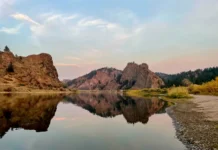
Now called Bulkley River Lodge, it’s more than a fishing spot — it’s a tight-knit crew of passionate guides and loyal guests who return year after year. The river itself is legendary, stretching nearly 90 miles of prime steelhead water, from slow freestone runs to rocky canyon pools. With strong steelhead runs, crisp fall colors, and a team that feels like family, it’s no wonder the Bulkley has become a bucket-list destination for anglers across North America.
At Bulkley River Lodge, every trip is built around the angler. Dave and his team guide across 50–60 miles of prime steelhead water, tailoring each beat to skill level. Newer anglers fish the easy gravel runs. Experienced casters tackle the canyons.
With two guests per guide, each trip is personal, focused on learning and improving every cast. The goal? To make you a better steelheader while enjoying one of the most beautiful rivers in British Columbia. Whether you’re swinging flies or fine-tuning your presentation, the crew makes sure every day on the Bulkley counts.
Dave knows that fishing the Bulkley River isn’t about one perfect day — it’s about a lifetime on the water. Some years are full of fish, others aren’t. That’s just steelheading. He explained how changing water patterns and melting glaciers are already affecting the rivers. As glaciers shrink, rivers will see:
To protect the future of steelhead, Dave and other guides focus on catch and release and push for better management. He says the key is simple — “Just get out of the fish’s way.” When salmon and steelhead run, they feed the whole system: trees, bears, and everything in between.
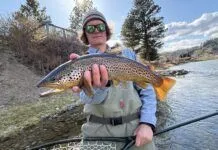
For Dave, nothing beats watching a steelhead crush a dry fly. Most days on the Bulkley River start with dries—there’s just something special about seeing a big fish rise to the surface.
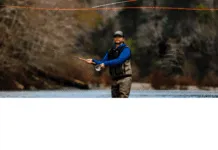
He says old-school guides used to fish deer hair patterns like the Bulkley Mouse, keeping them tight and moving with tension. Today, foam flies make things easier. They stay on top and keep waking with less effort. When fish go deep, Whitey keeps it simple: “Can’t go wrong with a wiggly fly.”
Episode Transcript
Jeff (2s): Hey, hey, this is your Great Lakes dude, Jeff Li K coming to you on the Wet Fly Swinging podcast where we’re gonna be going Rage angler on all things Great lakes from gear fly big water and swinging flies. Of course, if it concerns the Great Lakes, we’ve ve got you covered. So stay tuned to this next episode. Welcome to the Wetly Swing Great Lakes podcast. I’m your host, Jeff Liske, AKA Great Lakes dude. Well, we’re gonna do a little spin on some great lakes and we are going to be in British Columbia. That is where I am at right now. Jeff (42s): I am sitting next to a really good friend at his lodge, Dave Whitey Evans. He is the owner of Bulky River Lodge and I’m blessed to be here for this week. I was with Brian Ska down at Skiena Spay and I’m with my Canadian friends and I can’t think of a better interview to do. Super nice guy. But overall you’re gonna get a lot of good information about the Bulky River system. You’re going to be impressed of how long Dave has been doing this. And I will go on record that Dave is one of the most contagious, funniest, and when you get along with him or you get out in the water with him at the lodge, all your troubles go away. Jeff (1m 30s): So Dave, I’m gonna call you Whitey and welcome to the show. Dave Whitey Evans (1m 35s): Cheers, everybody. It’s nice to be here and sitting in my home chair and spending some time with Jeff and Crew. And yeah, it’s gonna be a fun little chat talking about my life and times here on the bulky. Jeff (1m 49s): Nice. Well, Dave, I we’re gonna call you Whitey from now. And so how, where did the nickname Whitey come from? Man? Dave Whitey Evans (1m 55s): Well, it’s kind of funny ’cause sometimes nowadays they get to the airport and they see my white hair and they go, oh, Whitey, no. Or they hear, I did some work with Sharks. And they go, oh, that’s where, no, it actually started when I first became a fishing guide and they were trying to figure who the new guy was. And I came from a, a whitewater rafting background, so I was the whitewater guy. So who’s the new guy? Oh, he’s the whitewater guy. So that nickname changed over time and now it’s stuck with Whitey. For a long time people just knew me, only in the fishing world is Whitey, but now seems to be following me around everywhere I go, you know? Dave Whitey Evans (2m 37s): So you’ll have to refresh my memory, but you started in the mid eighties, right? This, the guiding up here on the bulky system. Kind of bit of a funny story. I was one of the provincial examiners of the province for Whitewater. And so I was touring the province, you know, basically testing guides to get their license. 0 (2m 56s): And I was in a place called Kunal, which is close to here, and there was a fellow here from Smithers and he had a lodge on the bulky, and his name was Colin Shadrach. And him and I got chatting and oh, it sounded very interesting. Oh, it was catch and release was rowing Doris on Rivers. It was in the fall time, which was right. My downtime, the money sounded pretty good fly fishing. I didn’t know what the hell that was and I didn’t know what a steelhead was. And basically I said to him, yeah, it looks Denver fished a day in my life, looks like the most boring thing in the world, but I’m interested. 0 (3m 44s): And he hired me and I came up and worked for him. And that started this, you know, long journey of falling in love with the fish, the river, this incredible valley. And yeah. So then around 2000 you took over then, correct? Yeah, I, I worked for Colin Shadrach. He was, he had a lodge in Telco. He had a satellite lodge, which I went to and worked out of there. And that was kind of in the more of the canyon stretches, so it had a little bit more white water. Another funny story there. 0 (4m 24s): So all the guides were super excited to show me the rapids that they were having to, to navigate. And what they were doing was they would line them through some of the rapids and lining’s a technique where you tie your, you have a line on your boat instead of rowing it through the rapid people walk around it and then you line the boat down through the Rapid. So they were super excited. We get in and we go down to Driftwood and they’re all excited to show me this big rapid and I get out and have a look at it and then I said, okay, let’s go. 0 (5m 5s): And they were not used to rowing it and it wasn’t like I was that it was because it was so hot, it just wasn’t that hard. Right. So then, then we just jumped in and off we went. Then after that we just started to row that stuff. So, well, it looks pretty hard to me when I’m in the boat. You make it do make it look easy. Yeah, maybe. So how many canyons are on the Buckley? Well, there’s a bunch of different ones, and it was, some of it’s because the way we broke up beets or sections, we kind of designate two areas of canyons, right? So Collins operation was set up that we had these river camps, which was pretty cool. 0 (5m 48s): So there was a stretch between basically town and TR Creek. There was a camp in there. And then down below Morristown there was another camp, which was kind of a really unique situation where you would stay in the main lodge and then every second night you would go stay in one of these river camps, which was kind of cool, right? ’cause you’re right on the river, you could fish late into the day. And yeah, it was always very memorable for people. And Of course lots of stories of snores and pack rats and porcupines waking people up and scaring the out ’em in the middle of the night. 0 (6m 30s): Yeah. So it’s pretty remote down in there. I will say it’s a special place. Yeah. And especially back then, right? You know, that’s quite a few years ago that when we first started and or when I first started working for Colin and there was not a lot of people here. Right. And the interesting thing with Colin, I mean, the bulk Lee is noted for being some of the best dry fly fishing, you know, in the steelhead world. Right. So these fish definitely are looking up and definitely will come to the fly. And so for the first two years that I guided, we were only allowed to use floating lines. 0 (7m 11s): Oh. Down even in the canyon. Oh yeah. Oh my goodness. Right. And so then I didn’t really know any different as I, I wasn’t from the fishing world, so it was, it was cool. It was like, okay. And that’s what we did. We did that from the start of the season to the end. So in very cold weather. And even today when some of the guides I hear them talk about that runs not a drive fly run back, back in the day we just fished everything with dry lines, even big tanks, low tanks, all that stuff. So it was quite a, an education and where fish were steelhead pulled on this, on this particular system. 0 (7m 51s): Right? ’cause you can cover all sorts of water. Took a little while to figure it out. A couple years to start really getting a feel for it. Right? I bet. Yeah. And it was interesting that even though I had not really any fishing background, I had a bunch of crossover skills. So my learning curve was quite steep because when we first started training, I didn’t really have to worry about how to row a boat. I already knew that. And even simple stuff like trailering and all that stuff. So I didn’t need to worry about that. And I could just focus on, okay, what type of water these fish hang out in? And because I could read water fairly quickly into it, I started to realize that these fish hold in a certain water speed. 0 (8m 36s): Right? And so then all of a sudden it’s like, oh, you guys give or catch fish over there? No. And then I go over there and catch a few. It was pretty cool. And when I first started the, the guides kind of had open arms towards me because I could share a bunch of whitewater knowledge and they were more than happy to share all their steelhead knowledge that they have gained over the years. Right. So it was, it was a real open, you know, communication amongst us all, just sharing a bunch of knowledge. So you could learn pretty quickly. Yeah. The networking, you know, maybe you should tell the listeners, like the whitewater experience you have is just, just not on level one. 0 (9m 17s): It’s the level five. So once you, the ecotourism stuff you do up in the Arctic, just to let everybody know, like when you go where you’re going and you’re doing those up in the Arctic, what it is compared to like the canyon, why it made it look so easy. Why don’t you tell us a little bit about that too? Yeah, I, I’ve been running expedition rafting trips for, I’m gonna have to date myself, but for, you know, 40 years and every summer, that’s what I did. And you know, I started off doing day trips and then that morphed into do the multi-day expedition stuff. Most of those are, those rivers are in the Yukon. So big river systems, really some of the most wild places in North America and yeah. 0 (10m 0s): With a bunch of big white water on it. So that’s what I do and have been doing for 30, 40 years. Isn’t there like a reindeer migration or something like that? It goes through there. You tell me about one time. Yeah. So like the last number of years I’ve been running a, a river called the Firth River. And it’s in a Valic National Park, flows into the Arctic Ocean, actually starts in Alaska and then hooks around and goes north and dumps into the Arctic Ocean. It is one of the wildest places in North America, and it’s a really unique part of the world. It’s a non glaciated river. I think it’s like one of the oldest rivers in North America. So, you know, most of North America is shaped by ice. 0 (10m 45s): 20,000 years ago when we were outta that continental glaciers. And so that this particular river was in that ice free corridor. So it’s really kind of unique land forms for Northern River. It’s not just a tundra river. We try to intercept the porcupine caribou herd. It’s like 240,000 caribou across the river after, after calving on the north slope. And yeah, spectacular, unbelievable muskox, northern breeding ground and doll sheep, peregrines, Jer Fal cans, Of course grizzly bears. There’s, there’s grayling throughout the whole system. And then there’s darval and char that come up the river, migrate up the river spawn and then head back. 0 (11m 28s): So, but it is not a fishing trip, it’s a sightseeing trip that people go on and it’s like mind blowing. People are changed forever after going on those things. Yeah. Spectacular couple of great places in more than more than that, including the broccoli. Even on the Barkley today we saw, you know, we saw a deer across the river with a wolf follow it right outta the woods. And then we got to the water and we just, the fishing was secondary. Once you see stuff like that that he’s like, Hey, it didn’t wanna cross to pursue the deer across the river. It stopped to the water, went back in the woods. But just the fishing goes away and you just observe what’s really goes around the settings. It’s pretty cool. Yeah, it’s, I think lots of our listeners are probably fishermen, you know, and If you think of all the different environments that these that go with the fish that you pursue. 0 (12m 15s): And I had a 80-year-old woman sit at the table next to me one day and she said to me, I always remember the quote was, one of the cool things about fish white is they all live in beautiful places, you know, and with each species it has that unique ecosystem, right. That resonates with you, which matches the fish. Which Of course a big part of steelhead is big rivers, mountainous regions in the fall time. Right. So all these, yeah, just natural part of the steelhead world. We’re pretty lucky to be hanging out in, they do live in some beautiful places. 0 (12m 55s): So, well, let’s dig back into the fishing and the lodge. What drives you to run a steelhead lodge? Yeah, hard, hard to say. You know, I, when I first started rafting, I just didn’t wanna just be a guide. I wanted to lead the trips. And then when I started to get into the fishing, same thing, I was like, okay, yeah, I’d like to do that too, for sure. But then the opportunity for a fishing lodge, when I first got into it, actually my dream was like, oh, okay, cabins on a lake and float plane. I went, even got, went and got my commercial pilot’s license and had that vision in my head. 0 (13m 36s): And so, kind of always wanted to eventually want to do that. And like an incredible story for me was, I had a client, a guy named John Woodward, and him and I fished together for a long time at Collin’s Place. We hit it off, we were always chatting and we always talked about how we could do it better. And Collin was doing, and one time he came up to me and he said, Hey, why do, If you ever want to buy a fishing lodge, I’ll put the money up and you can work it off. Right. Which is pretty incredible opportunity. 0 (14m 16s): Super generous to kind of, yeah, I think he saw that I had a dream and he wanted to help fulfill that for me. Like it’s a, it is an incredible story. And hence in 2000, this one came up for sale, we bought it. And that was in 2000. It was owned by Jimmy Isman, Northland Steelhead Lodge, it was what it was called. And we bought that thing and here we are, whatever, 25 years later, still going strong, you know. Well, I think he picked the right man for the job. Yeah, maybe. I don’t know. I’m just gonna say that there’s probably not, there’s a lot of great lodges, but this is, it’s like family and like with your personality bigger than life and the whole crew and the great guide you have here, I don’t think there’s anything that a person going still head fishing with a check the box list wouldn’t get here at this lodge. 0 (15m 12s): The fish have to be there. But guess what? Sometimes, you know, there are not as many, but overall, if there’s fish around, your crew’s gonna find them. Yeah. I mean, no doubt that blessed in many ways, obviously bulky is, you know, one of the greatest steelhead, rivers, rivers in North America. So you have that, the bulky valley, one of the stunning beautiful valley in the fall with all those leaves turning as the land of the valley of gold. Right? And then you have these credible numbers of steelhead coming up here, right? And you’re gonna over winter spawn in the spring, go back, and then you put that with this kind of cool little spot at the side of the river with some cabins. 0 (15m 56s): And then have stable staff. Some of my guys have been, they’ve been working for these 16 years, right? Same guys. Same people. Yeah. So it’s this vortex of really, really good, passionate people coming here every year to kind of share a passion and a pursuit. You know, it’s pretty magical Dave (16m 17s): Experience. The waters of Bristol Bay at Togiak River Lodge where fly fishing meets Alaska’s rugged beauty. This is the place to complete the Alaska Grand Slam with all five salmon species, rainbow trout, arctic char, and more where each day offers a new Alaskan adventure. You can visit togiak lodge.com right now to start planning your Bristol Bay experience with Togiak River Lodge. Trout routes by Onyx is built for fly anglers who want better intel without spending hours digging for the information. You’ll get access to public land maps, stream access points, regulations, and even road and trail maps all in one place. It’s become my go-to app for scouting new trips. Dave (16m 58s): You can check ’em out right now. Go to westly swing.com/trout routes and download the app today. Jeff (17m 7s): So let’s dig in a little bit, maybe a little bit about the bulky river history. Right? And we know it’s one, you know, it’s still absolutely fantastic fishing. It has been this week. So let’s just, maybe a little history like from the canyon time and up to now, and just, just a brief little history of like the fisher itself. Dave Whitey Evans (17m 24s): It’s a big river, right? I think it’s like 90 miles of river that we are fishable water. So that’s, there’s a lot of water we can fish. It is probably one of the rivers that has the most singable water, water on any river that I’ve been to, right? All these sections of just endless runs that could hold steelhead and super diverse from the upper part of the rivers that are more classic slow Freestone River. And then as you go further down towards the Skeena, we get into canyon, more ledge, rocky pools, and just this kind of incredible diversity of it. Dave Whitey Evans (18m 6s): So you have that going on. You have really healthy populations. So our, our base level of steelhead is pretty high. You got steelhead that are looking up. So you have dry fly fishing, right? So, and we have a short window of opportunity to intercept those fish, which is in the fall. Right. Jeff (18m 27s): But you have the, a lot of the, a lot of the bulk of the flow comes in from the Maurice too, right? Dave Whitey Evans (18m 32s): So, so the upper reaches of the bulky is the Maurice. So the Maurice Lake outflow into the Maurice. And in that, in a town of Houston, the river changes its name and it turns into the bulky, but If you looked on a map, it is basically the same watercourse, right. But then just they arbitrarily changed it to the bulky, right. So you have these Maurice River, bulkly river heading down to the Skeena, the bulky river’s, the largest tributary of the Skeena. And the Skeena is a massive river system that drains kind of the northwest of bc. Dave Whitey Evans (19m 13s): And the Telco river is the largest tributary on the bulky, Jeff (19m 17s): so correct me if I’m wrong, the bulky system gets close to 50% or more of the s skinner run, correct? Dave Whitey Evans (19m 26s): Yeah, yeah. It’s by far the, the largest tributary as far as numbers too, right. Of fish returning. Okay. Jeff (19m 34s): Yep. I don’t think, I can’t fish at ta. I see it where it comes in. But is there steelhead that run up aqua too? Yeah. Okay. Dave Whitey Evans (19m 41s): And what they’ve done is some of the, some of the tributaries, they’ve, they are closed to guiding and then some of the rivers are closed to non-residents. So they have an attempt to kind of have some kind of almost private water for Canadian residents. So, and I think the tel was one of those, I didn’t spend a bunch of time interesting exploring the telco. ’cause I thought, oh, maybe that’s like an un, I didn’t really know of any very many people fishing it, especially up high. And so I thought, oh my God, maybe there’s, yeah, maybe there’s a bunch of them going up there. Right? And so I spent some time in there and even hiked in there in the middle of the winter to the lake. Dave Whitey Evans (20m 23s): I was like, yeah, I’m gonna go do some ice fishing and maybe that’s really over winter. Got my ice auger in there, open it up. Oh it was frozen to the bottom. So no steel head up there. So. Jeff (20m 38s): So you, we’ve talked a little bit about you setting up the camps. We’ve talked a little bit about that. So I think overall as a steel header, and I am a full on steelhead bomb, I would say the program you have here on the bulkly is my most appealing that I’ve ever anywhere on a steelhead lodge type basis. Maybe you could just tell how, what your program involves and why, why it’s so alluring to, you know, a steel header. Dave Whitey Evans (21m 4s): Yeah. We, we once again, we’re blessed with having so many sections, right? You know, or beets that we can fish and we have the ability to kind of tailor them towards angler’s ability, right? So you, If you are not a strong waiter, we have sections that you can go up and it’s more pe gravel, you got more sturdier on your feet waiters than we got canyon that we can challenge the best of them. And so you have, you have that going for you. And we have four cabins. So that’s, we have two guests per guide. So they get a lot of personal service and attention and we kind of take the approach that we are going to try to make you the best steel header that you can be. Dave Whitey Evans (21m 53s): And so a lot of effort goes into teaching and explaining and that goes from just tuning up your casting, but also to trying to get your head into the game of what we’re looking for, what type of water you’re looking for. And one, it makes it way more enjoyable for you ’cause it’s an, a massive amount of education you can get in a short period of time. But you know, ultimately you’re gonna be a more successful steel header, which then makes our job easier. ’cause you’re happier catching more fish and hey a guy’s most happy when you got guest catching fish. Yep. Right. So Jeff (22m 30s): we’re not looking for a boat ride, I guess. Dave Whitey Evans (22m 32s): No, no. And then, like I said, so basically we have four guides going out through it a day and we have jet boats, but we also have RAFs. Jeff (22m 43s): Yeah. It’s amazing to me every night in dinner when you, everybody comes back and give the report, it’s how many miles we’re apart. Dave Whitey Evans (22m 52s): Yeah. Right, right. Jeff (22m 53s): I mean, what that would be, what is that about? Dave Whitey Evans (22m 55s): Well, it could be easily 50 miles. Oh yeah. 60 miles right from one section, the lower section to the top section. Right. Even, even maybe even longer. Jeff (23m 6s): Two days ago we caught fish 50 miles apart from the the top end guy. Oh yeah. That’s crazy. Easily. Yeah. That’s crazy. I was like, wow, that’s pretty amazing. So let’s talk, you know how the fishery is now, maybe when you started, let’s talk a little bit about, maybe you can elaborate a little bit about maybe how’s the management going on the fishery? You know, something like that. So people have an awareness of, you know, what’s going on with the ecosystem with it, the management, how they do the fishery, and then just in your eyes, like is it getting better, worse or, or how could it get better? Dave Whitey Evans (23m 40s): You know, back in the days we, we ran the whole, the river in indoor. We didn’t, oh we did, Colin chose to row Doris. Right? Not jet boats. There were jet boats on the river. But we did his, you know, his philosophy was he wanted to row and drive fly, right? Sure. And back in the day it was all single handed casting and we were getting a lot of people that came from routing background. Well, casting for steelhead and casting for trout is a much different game, even though it is with a single hand rod. And so there was a lot of teaching that went on there and you know, the game there was to try to steelheading, you’re making a lot of casts, right? 0 (24m 28s): And long casts are beneficial. Not always, but overall. So being able to pick up a lot of line with very few false casts and then do a directional change and lay it out there. Right. And that was an art and that was also a skill that took a while. Right? So there was, back then If you were expert single-handed caster, that means you probably had to put a lot of time in that. Right. And the good guys that could do that caught more fish for sure. And there was always runs that only expert casters could do. One that’s tight banks, overhanging trees. 0 (25m 10s): That was really good to be able to pick up that line and lay it out there so that, that I would say 99, it would be rare back then to see us two handed rod rare. Wow. Right. So 99.9% of the anglers back then were all using signal added and you’re talking 7, 8, 9 weights. Yeah. You know, my drive setup was a 7, 8, 10 foot. Right. So you could pick up lots and layer down there. Then after we got away from only kind of being allowed to, to use dry lines, then we started getting into sink tips. Right. 0 (25m 50s): And our line of choice was a teeny 200. Oh right. And trying to learn how to cast that effectively. Effortlessly. And yeah, it was pretty cool. You could fire that thing across the river once you got to hang up it seeing pictures of you holding the shooting line in your teeth. Yeah. Right. Because you’re waiting up to your neck. Yeah. Right. Because I came in with no, no fishing background. So it was like, oh, why you trying to hold your hands? And all these loops, it’s like, just stick it in your teeth. Yeah. So that teeny line was, how long were the, were the sinking of 25 foot or so? Yeah, 24 feet. 24 feet. Okay. I wonder how that would equate to a sink tip with a spay rod, because that seems like quite a bit. 0 (26m 32s): Yeah. Heavy. So did you, like you had to actually keep it moving. ’cause otherwise it would just always tank, right? Yeah. You had to be on detention for sure. Okay. Right. But it would slink in there pretty good. Oh, I bet. Okay. But once again, it took a while to learn that. Right. So that learning curve, you know, back then was a journey. Right. You had to put your time in to get really good at it. Right. You know, and you could be proficient tr fishermen, but that did not equate to being a proficient steel header. Right. As you know. Right. And then eventually we started seeing bay casting come into the game. Right. And I remember Colin, he got a bunch of rods from Bruce and Walker, but they were like 14 foot 10 weights. 0 (27m 16s): And we, the first time we saw those was like fishing with a telephone pole heavy. Oh my god. Right. And you’re used to whipping around a, you know, seven weight, 10 footer, you know, and then all of a sudden get this thing and it’s just like, oh, this is who would wanna fish with this? So, but slowly over time people started to use them and realized that for this game Yeah. With the amount of casting that you do, that’s really the technology that works the best. You can still do single-handed casting for sure. That doesn’t stop you from catching a fish, but it’s just easier. Right. Learning curves steeper. 0 (27m 57s): You, you don’t have to be a proficient caster to have overhanging trees with a spay rod in some ways, in a very short time. You can get a lot of line out. You may may not look pretty, but it can flop it out there. Right. More so than you could with a single handed rod. For sure. I can’t even imagine. Like I could barely handle those fish in the canyon on this river with a seven or eight weight, two handed rod and you’re fishing in a single hand, seven weight and, and you get anything over 14 to 20 pounds. I can’t imagine what that was like. Yeah. Battle right. Battles like you were never in control. No, no, no. 0 (28m 39s): Yeah. They were, they they were in charge. Right. Absolutely. And, and the contest today, it would be rare to see a single Lancaster. Yeah. I haven’t seen one for a while unless you sneak out. Yeah. You see the odd one out there. Right. Every once in a while I dust off mild set up and go out there. You realize how inefficient it is. Right. How stripping in more line put ’em all on your teeth and off you go. So, but clearly, so that’s one of the other big changes. And then the other one to is way more boat jet boat traffic. They become more available obviously for a long time now, but we’ll see way more jet boats and the bulk creek’s a big river too, so. 0 (29m 25s): Right. I’ve seeing a lot of inflatable jet boats and stuff. That’s what I’ve been seeing buzzing around. Even on the skiing is like, oh, that’s, those weren’t around, you know, a little while back. Yeah. That’s definitely a change. You know, more people. Right. So I think the boat traffic, probably the, the dry fly fishing was better back then, I would think. Yeah. Less people, less things flying over their heads. And it’s not like you can’t get ’em on the dry fly here definitely can Dave (29m 52s): Step into the world where the river whispers and the fishing is nothing short of legendary. This year I ventured into the heart of Eastern Idaho’s Yellowstone Teton territory where the fish were larger than life and the waters held the secrets of the best fly fishing out West Yellowstone Teton territory is not just a location, it’s a gateway to adventures that will etch themselves into your memory with crystal clear rivers like the Henry’s Fork and the South Fork of the Snake and enough lakes to keep you going all year long. Make your way to Yellowstone Teton territory and embark on a journey to one of North America’s finest fly fishing destinations. Whether you’re planning your trip now or just dreaming it up, the YTT is where those dreams turn into reality. Dave (30m 35s): Remember Yellowstone Teton territory? That’s Teton. T-E-T-O-N. It’s time to experience eastern Idaho for yourself and support this podcast at the same time. Do you think you need a bush plane to fish Alaska’s legendary waters? Think again. Fish Hound Expeditions specializes in road accessible adventures that don’t skip on excitement. Picture yourself fishing for massive rainbow trout, arctic grayling, and plenty of salmon species all within Alaska’s epic road system. It’s doable. I fished the road system on our first day with Adam and the crew and it did not disappoint. The largest leopard rainbow I caught and landed was right off the road system. Dave (31m 15s): And we’ll be driving up again this year heading up from the lower 48 all the way up to Alaska to hit those streams again. You’ll experience the breathtaking beauty of Alaska’s wilderness from mountain streams to hidden rivers. Perfect for anglers of all levels. Fish hound expeditions makes it easy to explore Alaska. Why wait? Your Alaska adventure is just a drive away. Book your spot now before spaces fill up. That’s fish hound exhibitions.com. F-I-S-H-H-O-U-N-D expeditions.com. Don’t miss out. 0 (31m 48s): So we say, okay, the two handed sur are taken over the techniques, which we all love, right? We’re all, it’s great casting, it’s fun crane to learn, but does as far as the fishery, the health of the fishery, what’s your thoughts on the management? Or do you think, where do you think this fishery could be? Give us a little thoughts on that. I think anybody that’s steel heading understands it’s your steel has experience is not measured over a single event, it’s measured over a lifetime. So you’re gonna have years where you have tons of fish and lousy water conditions, no fish with really good water conditions. So you have weeks where the fish aren’t there, you got weeks that are high water, low water, all these things, right? 0 (32m 29s): So some of the challenges that you have as a steelhead angler is conditions. So lots of times people talk about the good old days and we for sure had good old days, but there weren’t good old days every day. Right? They were the same as what you do now. Some days you get ’em, some days you don’t. You get big ones, you get small ones, you get your ass kicked. That’s steelhead. So that is consistent, right? So, you know, wasn’t like, we had huge numbers every year back then. So we have massive fluctuations in survival rates of them in the ocean and the, and in the rivers environment. And the last number of years we’ve had some low returns and then last year like had record breaking year, right? 0 (33m 14s): So it’s kind of all over the place. You know, lots of environmental factors, right? One of the, the reality of the world of steelheading and glaciated environments is we’re losing our glaciers, right? So the predictions will be that we’re gonna get a rivers now which are filled with melting glaciers, right? That gives us the volume and the temperatures that’s stable throughout the whole season till winter, you know? Now what we’re gonna happen is as those glaciers recede and we have less of cold water reserves, we’re gonna get big volume increase in the spring, low volume flows in the summer, and then wait for the fall rain. 0 (34m 1s): So we, we started to see some of that now. But predictions are, you know, that’s, that’s where we will be heading. You know, we’re as steelhead operators, you know, we’re in it for the long haul, right? We try to do all sorts of things to make sure that we have fish coming back for generations and generations. Hence we do catch and release. And I think what we’re lacking as far as conservation is just a lack of solid overall plan that makes sure that we have steelhead coming to the upper reaches and other species too. 0 (34m 41s): Right. And the province who manages that, they don’t really do a good job at that. Right? So we’re trying to put some pressure on government to let’s make a good solid plan to make sure that we get fish coming to the upper reaches to be able to spawn and continue this amazing life cycle, right? That so many things species and people can enjoy for recreation, for food, for, you know, just the pleasure of seeing them. You know, so we’re, we’re trying to put more pressure on our provincial government to, to make sure we have that. And we certainly are missing that, but hopefully we’ll make some headways with those guys. 0 (35m 22s): I’m sure you will if you’re in Raf. Any part of that for sure. Yeah. Right. Okay. But you gotta, you gotta push hard for it. Right? Right. Sometimes they don’t like the bend, you know how it’s, it’s politics but Right. Hopefully that it will, like you said. And if they, if we just leave ’em alone for a while or dos, we don’t let it do their thing, the fish will be just fine. Yeah. I always, I always say that all we need to do is just get outta their way. Yeah. You have this massive influx every season of steelhead and salmon that come up to these rivers. It’s really a transfer of nutrient from the ocean to the river in salmon where they come and die. Right. 0 (36m 2s): And inject interior. Right. All that nitrogen base, it’s kind of a wild Right. And everything benefits from that. So it’s like a huge biomass that kind of gets taken from the ocean swim, upstream dump and die there. Trees get bigger, bears get fatter, right? Yeah. The pinks are in here pretty good. So yeah, it’s very good for the system. 100%. They’re the fertilizer, right? We talk about that. The sound being the fertilizer of our reverse. So just start wrapping up a little bit, but we should always touch a little bit on the dry fly game and your technique. I know you started with a single hand, you got a little two handed, now you started out with the dry fly and I’m sure that’s still your preferred way. 0 (36m 44s): A lot of us usually fish at least half the day with a dry fly. What’s your thoughts on the dry fly? Do you have a few favorite flies? If somebody could try? In general for steelhead, doesn’t have to be for the bulky, but in general, steelhead the steelhead, right? Yeah. Yeah. I mean here we wanna, we’re trying to fish them under tension and they are waking right and swinging right. And that waking fly, you know, definitely gets their attention and yeah. So our program here, you know, most days we’re starting off with the dryly Right. And see what’s happening and, and you know, just to see that thrill of the visual thrill of, you know, these giant, giant trout coming up and eating that bug. 0 (37m 27s): Right. You know, so back in the day we used to use the, you know, the bulky mouse, you know Oh yes. Designed and, and tied by Andre LaPorte, right? Yes. And it was a deer hair thing and you had Yeah. All sorts of techniques to keep it up on the surface and always had to be under tension and just an art to get that thing awakened. Nowadays, hey foam, it’s a magical thing. You don’t have to do anything, just wing it out there and it starts to wake. Right? So if you’re not dry fly fishing and the fish are a little doward down, do you have a certain type of fly that you is like a go-to? Wily, can’t go wrong with a wiggle, right? I think I talk to every steel header, it’s like, yeah, you do all this fancy time, but it’s like, as long as it’s wiggly, it pisses ’em off and they’re gonna go for it. 0 (38m 14s): Yeah. I always say too, with steelhead, they’re harder to find than they’re to fish. Right. Or to catch. Sorry. Yeah. It can shut down on you at times. But you know, it is, it’s the search for them, right. And, and getting into the process. Right. Just enjoy the process of looking and hanging out in the river and trying to perfect the cast, trying to perfect your knowledge of what kind of water they live in and Yeah, the tug is the drug, as we say in this game, right? Oh yeah. Sometimes it can go days and you don’t think you’re, you don’t think you’re doing anything right. It’s just a fish. They’re just like, you know, not having it. Right. They’re, they’re not in the runs ’cause air migratory. Right. And sometimes they’re just like, no, they’re just, yeah. The other day we had that all bright, sunny daylight. 0 (38m 56s): Super windy, high pressure. They were a little tough. Yeah, A little tough. That’s for sure. You know, we ended up getting some of the shades, so you know, the guides, you adjust, you adjust and you’re like, oh, we’re gonna scale down and sure enough, boom, bang, crash, we connect with a few. No that is the steel heading. Yeah. And they’re not residents, right. They’re traveling through. Right. So they’re, you know, and like Johnny, the brown trope behind that rug and he lives there and if he’s hungry and you do the great job and put the right food in it, he’s gonna eat it. Well Sammy, the steelhead doesn’t live there. He is just passing through. Maybe stop and rest for a while. But he’s, he doesn’t live Here. He is all simple thing guides like myself. Were like, oh we got him there yesterday. We’re gonna go back and start there and you make a few casts and you’re like, crickets. 0 (39m 40s): I was like, listen, they do move. Right. They do move. But yeah. And it’s a interesting, fun game, right? It does. I think you either like it or you don’t. Right. It seems like people very rarely do we get some people that, oh, it’s kind of okay. It’s either like, oh that’s too much work for me, or oh my God, I’m hooked. Right. I’m hooked. Cut me in next year. Right, exactly. Cut me in next year before they leave the lodge, you take ’em to the airport. You don’t even have to ask them. They’re just like, yeah, pencil me in. I joke with them all the time. There goes your TROs fishing, hey. Exactly. Yeah, yeah. Once you this, these are home records. 0 (40m 21s): Let me tell you, once you come up one week, one year, you’re like, man, I got I, I gotta come again. Yeah. So I will have to ask you. Everybody has this thing. It was like, and we had this conversation over the fire the other night, a little bit of tequila and when Whitey speaks or one of the guides speak around here, we all listen ’cause they’re just, their finger is plugged in the a steelhead pulse machine. When a steelhead engages to your fly, what do you do Whitey? Do you like hold loops? Do you feed them? Do you let the drag go? But give us your skinny on like once a steelhead is engaged to your fly. Yeah. There’s a bunch of different theories, right? Every guy’s got a theory on how, how you do it. 0 (41m 2s): I think the commonality is would be, don’t quite set the moment you feel it. Just kind of give it a, you know, not wait too long, but don’t like a trout. Don’t nail it as soon as you know, give it a chance, stick it in a mouth and turn. Okay. Yeah. The whole turning thing, right? Yeah. You were saying something like you even like some, you even bow the rod a little bit. Some guys, I don’t hold a loop. I don’t know a lot of Steelers that hold a loop. I think it’s an lack of salmon thing, but somehow you gotta let that fish get a little bit turned away from you. Yeah. Especially, especially dryly. Right. You have to, you have to definitely do that. Okay. Exactly. Because they’re not eating it sort of right. 0 (41m 43s): In a way. Right. So if they engage the dryly, most of the time people just pull away from, but once you get the, the nerve and the patients, you wait till you feel the weight. Is that sort of the way that you do it? Yeah. Yeah. Okay. So he’s got it. He’s turned down, he is moving. You got a little bit of slack in your system, the rod starts bending down, then you, then you go ahead. Okay. Is there anything else? I’m gonna ask you to tell me your favorite story, but is there anything else you wanna chit chat a little bit about? Yeah, there’s so many reasons why we should be going efficient. Right. It’s a process, not a goal. And so when you immerse yourself in that game, enjoy every step of the way, right? 0 (42m 23s): Of all the learning that you’re gonna require to become a good steel header. And yes, we all have the goal ’cause we want to get them and we wanna get the most, we wanna get the biggest that’s a given. Okay. Once we’ve realized that’s what everybody wants, you know, really try to just enjoy the process, right. And yeah, enjoy the ride, right. Of all these different things that you can learn from ’em. And Of course just that quiet time on the river is good too, right? Yeah. Each one of the each, each individual guide, each individual steel header, we all learn from each other. It’s amazing. You know, it’s like I probably learned five things today and you’re just like, put that in your cache memory and you’re like, all all right when I get my teeth knocked out, going up that bumpy road. 0 (43m 7s): Yeah. It’s like I should probably have a like that. A few of those smaller flies. Right. Well I, I always say too, everything that I’ve learned about steelheading in the last 35 years can be summed up into one word. Sum times. Exactly. Yeah. And when somebody tells you this is exactly how you do it, you realize you don’t really know what he’s talking about. That’s exactly. Yeah, exactly. But alright, well I’m gonna ask you, give me a favorite story. I don’t wanna put you on the spot, but If you have one In my other life I used to ride horses and jump horses and breed horses and we had a stallion that we were using for breeding and they’re valuable horses. 0 (43m 56s): So you collect the semen and then you super cool it and then you inject it into the marere. ’cause you don’t wanna have live cover as we call it, because you’re both horses, which are valuable could get hurt. So we were new to this and so it was like a big learning curve and I built this mounting dummy for the stallion. And because it was the first time that we were doing this, we had a bunch of experienced people there and I built a teasing wall, which is a T-shaped wall that you could put the mirror on the other side of the wall and you bring the stallion up to the wall and he sniffs the mirror, gets excited, you walk him around to the mountain dummy and then you collect them. 0 (44m 42s): So you, you’ve kind of got all these people around, you’ve got all the safety measures, you’ve thought it through a million times. And it’s not like you walk a stallion with a breeding mare and it’s just a walk over to the wall. Anyways, he kind of drags you over there and the wall is there to protect the ma and me the handler. But my guy decided he’s gonna jump the wall to get at the mirror and he does, but he doesn’t get quite all the way over. Oh right. So now he’s high centered and now he can’t get off and I look over there and he’s stuck on the wall and I’m thinking, oh, how am I gonna get him off? 0 (45m 28s): And now, now I’m thinking, oh, okay, now he is caught on the fence. This is an expensive. Exactly. Then okay, how am I gonna get him off? I try to push him off, pull him off. Right now everybody’s standing around like, oh my god, what are you gonna do? Run into the barn, grab the chainsaw and cut the boards off and kick it off. Normally he was always trying to kick me, bite me every minute of his life. And so kick the boards off, he gets off and all of a sudden for the first time in his life, he’s thankful. 0 (46m 9s): So he’s coming in, he is nuzzling me. I’m like, okay, what’s wrong with you? Anyways, look back. Oh, he is still excited. So I take him around to the mountain dummy, off he goes, jumps on there, we collect him and we breed the mare. And so that was my, yeah. My journey into the world of horse breeding and chainsaw work. Yeah, exactly. Well that’s a good one. ’cause that was, I didn’t know that was your past history of your livelihood. Glad you turned into a steelhead lodge owner, right? Yeah. Safer. Way safer. I don’t see any stallions here, so I think we’re good. But Well I can’t Thank you enough to coming on. I highly recommend if anybody will be giving out Whiting, his lovely wife Missy, who runs it and is his right hand wife and unbelievable woman that just keeps the place together too. 0 (47m 1s): We will love sharing all of your, your knowledge in the 35 years of steelhead and we can’t appreciate and your passion for protecting the river too. Super cool. Yeah. Well Thank you. Appreciate having the opportunity and hi out there to everybody and happy fishing. Dave (47m 19s): That is a wrap. You can grab all of the show notes@wetflyswing.com and please follow us on Instagram and share this episode out with someone you love. Please send me an email, dave@wetlyswing.com If you have any feedback or want us to put together an episode on this podcast for you. Check in anytime. I hope you enjoyed this podcast and would love to meet up with you on the water. We have new fly fishing schools going all year long and all around the country, so If you want to connect, let’s do it right now. All right, time to get outta here. I hope you have a great evening. I hope you have a great morning or great afternoon wherever in the world you are and I appreciate you for stopping by and checking out the show today. Dave (48m 1s): We’ll talk to you soon.
Whether you’ve dreamed of chasing steelhead in British Columbia or just love hearing from passionate guides who live the fly fishing life, this episode delivers. Dave Whitey Evans reminds us that great fishing is about more than hookups—it’s about the people, the stories, and the river that brings it all together.