On this episode, we’re heading to one of the most iconic steelhead destinations in the world—the Skeena River. Brian Niska, owner of Skeena Spey Riverside Wilderness & Lodge, talks all about Skeena steelhead fishing. Brian shares what makes the Skeena so unique, how the steelhead season is shaping up this year, and why having John McMillan and Jeff Liskay at the lodge is such a big deal. We also get into tips for adjusting your approach based on river conditions and how to get the most out of your steelhead trip.
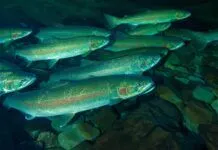
Late August into September is prime time on the Skeena River. Brian says this year has brought fewer fish so far compared to last year, but it’s still shaping up. Guests are catching both steelhead and big northern coho, and the variety is what makes the Skeena special.
The river is low and clear, which means a lot of action in shallow water. You might even see a fish flash when it hits your fly. Some steelhead are smaller this season, but they’re showing up strong and that keeps things exciting.
The Skeena is a huge river, so knowing where to fish is key. Brian breaks it down simply: you’re looking for rest stops—places where fish pause during their long swim. These aren’t random. They’re spots with structure like:
Brian is fired up about this year’s Skeena trip not just for the fishing, but because John McMillan is joining. John leads The Conservation Angler, a group that’s pushing science-driven solutions from the angler’s perspective. Brian says their work shows how fishing effort can support research and help protect wild fish, not hurt them.
One of the coolest topics they explore is residualization, where some juvenile steelhead don’t smolt and instead stay in freshwater as resident trout. These fish might not go to sea, but they can still carry key genetics for future steelhead runs. Brian’s excited to ask John more about how this plays out in places like the Thompson River and Skeena tributaries.
Brian says it’s not just about casting and stepping your way down the run. On the Skeena, you need to pay attention. If you spot a feature—like a seam, a rock, or a current break—fish it with purpose. Don’t just blow past it.
If you’re solo, slow down and explore that water. But if you’re with others, be respectful. Don’t camp out too long in one spot. When you do find a good feature, try this:
If you’re new to steelhead fishing, here are the four keys Brian recommends watching for:
Episode Transcript
Dave (2s): Today’s guest runs one of the most iconic steelhead schools anywhere in the world, right on the banks of the Skeena River. His passion for spey casting and Wild Rivers has taken him from guiding anglers on massive glacial flows to building a lodge that serves as home base for one of the most unique fly fishing experiences in North America. This is Wet Fly Swing podcast, where I show you the best places to travel to for fly fishing, how to find the best resources and tools to prepare for that big trip, And what you can do to give back to the fish species we all love. Brian Niska is here from the Skeena Spey Riverside Wilderness and Lodge. Today, he’s gonna take us into the seasons in the Skeena and how it’s shaping up for steelhead. This year, we’re gonna find out why having John McMillan and Jeff Liskay at the lodge this year for the Skeena Spey School is a game changer. Dave (48s): We’re gonna find out what simple adjustments you can make on your steelhead trip to make sure you can adjust to changing conditions and, and where to fish the river, whether that’s shallow and near, whether you’re gonna be wanting to get out further. We dig into it all today and, and it’s a fun one. You can find Brian right now at Brian Ska. You can go to skeenaspey.com and, and check with him there. Let’s get into it. Here he is, Brian Niska. How are you doing, Brian? Brian (1m 16s): I’m good, Dave. It’s nice to talk to you again. It’s been a while. Dave (1m 19s): Yeah. Yeah. I’m not even sure. I didn’t really look back at how long it’s been. I actually, it was probably the one that we did with you and Jeff Liskay when we were checking I, it was probably the last year we were talking about this trip, but now we are setting up for another big event Right now. Today as we speak, we’re launching the giveaway for somebody to win a trip to go out to your lodge on the Skeena River in 2026. And as we speak, it’s kind of weird because we’re, we’re actually doing this before the 2025 trip. Although when it goes live, it’ll be after the trip. So it’s kind of this weird before or after sort of thing. But how are things going? It’s, I mean, you guys are right in the middle of steelhead season, right? Brian (1m 59s): Yeah. It’s crazy right now. Super busy. We’ve got some nice hot weather. Finally got some proper summer weather here at the end of August. Dave (2m 6s): Gotcha. So you guys are going, going strong. And I think, like we said, we’ve got our group from last year or for this year that’s coming out here just in a few days that they’re gonna be fishing. Let’s talk about it a little bit because I think it’s really cool how, and this was your idea to set this up when you talked about this. ’cause before, the first time we did this, I went up there, it was amazing. Had a great trip. And then after that, now we have actually Jeff Liskay, who is the host of the Great Lakes Dude podcast and then John McMillan. Talk about that a little bit. Like what are you expecting this week to look like with those, those guys there at the lodge? Brian (2m 43s): Yeah, I think it’s the natural progression of the, of the school. I love the inclusion of Jeff bringing a little East coast flavor to the, the Skeena and you know, having John there is a great asset too. You know, this is going to give the people attending, you know, a tremendous amount of access to an actual steelhead expert. I mean, I mean, John McMillan, I don’t think there’s anybody else in the steelhead world who has the scientific background and is also a super duper hardcore angler and just all around good dude. So we’re really excited to have those guys. It’s gonna be a blast. And the way the river’s shaping up right now should be a pretty decent week of fishing. Brian (3m 24s): Cool. Dave (3m 24s): So is the water in good shape right now? Is, that’s always the thing, right? It could be high or low, but right now it’s looking like it’s pretty good. Brian (3m 31s): I couldn’t look any better right now. Perfect. Dave (3m 33s): Okay, well we’re gonna get, definitely dig into some tips and tricks and, you know, we’ve got a, a episode, the first one we did, I always go back to that because that was such a awesome episode we did with you, where you broke down the difference between the steelhead that are migrating up, the main stem Sena versus some of the tributaries and how to fish ’em. So we’re gonna talk about that today, but lemme just give one shout out for people. You know, we’ve got this giveaway going, wetly swing.com/giveaway. People can enter to win and one person will be winning. Just like this year you have somebody that’s coming up that won the trip. And then, but if folks wanna just save a spot, they can go to wetly swing.com/steelhead school right now. And I already talked to Jeff. He is stoked to do this again. Dave (4m 13s): So, I mean, we’re gonna have Jeff back and, and this is gonna be a good trip. So, so I wanted to start off with in the bucket, because this is the podcast that you’re hosting kind of in the, you know, the network here with the Wetly Swing and also the Great Lakes Dude podcast. We’ve been doing some cool stuff. You’ve had some pretty amazing episodes and, and the last one is, doesn’t get any better. I can’t imagine that there’s these four people that you put together, talk about what you have going and what your plans are moving ahead. Brian (4m 40s): Yeah, you bet. We had a pretty good track record going of monthly shows and I unfortunately got really busy with the lodge this summer and the episode that’s currently out has been out there for a couple months now. But I think it’s a really good one. Certainly it was a fun one to put together, unlike most of the in the bucket shows where I have two or three guests this time I had four guests. But what a group. We’ve talking about legends, we’re talking about Deck Hogan, George Cook, Scott O’Donnell, and Joseph Rossano. Anyone listening, I would encourage you to, to give that a listen ’cause those guys have a wealth of knowledge when it comes to spay fishing. Brian (5m 21s): There’s some great stories in there. One of my absolute favorites on that whole deal was listening to Deck Hogan, describe meeting John McMillan’s father and you know, getting to spend some time on the river with him. That was an absolute highlight. Dave (5m 36s): Oh, that’s right. Yeah, I remember that. Yeah, that was a great episode. I love the, I love listening to your episodes because it’s always that, I mean the putting those guys together, do you find for you as a host, is that pretty challenging when you’re there with those guys to bring it all together? It seems like that would be the challenge for me. How do you get everybody equal time talking? Because they’re all, all like ex, you know, superstars, Brian (5m 59s): You know, compared to you Dave, I’m a rookie at this. I, like I said, 19 episodes in the bag. You’re what, 700 or something now? Is that what it is? Dave (6m 6s): Something like that, Brian (6m 7s): Which is amazing. So for me, when you’ve got good guests and the conversation just happens organically, there’s gonna be some good stuff that comes out there. And the challenge is honestly, the hardest part of the whole show is lining up three or four people’s schedules to, for a couple hours to talk. That really, in this day and age seems to be the biggest challenge, but it always seems to come together. So hopefully it keeps going that way. Dave (6m 34s): That’s awesome. Yeah, so, so we will put a link out to that show in the, that episode in the show notes for sure. But yeah, let’s talk about this trip because you know, as we speak, we’ve got a crew that’s going out there this year. We’ve got a winner going out this year and we’re giving away a trip for next year. Let’s bring it to the timing of this trip. You know, it’s kind of late August, we’re going into September. If somebody was gonna be heading up there, and I have talked to a lot of people, I’m telling you the Chena, I’m not sure about the numbers there, but the numbers down, the lower 48 for steelhead are definitely up this year. You know, we’re seeing a little bump and so people are fired up and I’ve heard people talking about our local waters that they’re catching, you know, they’re catching summer steelhead. Maybe talk about that. Dave (7m 14s): If somebody’s thinking about coming up there, what is the first thing? What are you telling them to get prepared for a trip like this? Brian (7m 20s): Yeah, so specifically this year, 2025 versus 2024, so far we don’t have as many fish around as we did last year. At the same time. It’s still, you know, it’s middle of the season, so that can change. But last year was really exceptional and hopefully, hopefully this year finishes strong. This is a neat time of year, end of August. Most people consider this prime time the middle of the season. It’s a period when you have a lot of different species co migrating. You’ve got, in addition to the steelhead, of course coho, and that includes the big northern coho. That’s something, you know, that’s a fish that our guests are often equally excited to catch as steelhead. And the fun thing with the Chena is just, just the variety. Brian (8m 2s): So this year we’ve seen some exceptionally large fish, but man, it seems like there’s a lot of small ones around too. And certainly this past three or four days. Yeah, it’s just, it is really neat to see that, you know, all of a sudden these like, you know, let’s call ’em six, seven pound steelhead are just really prolifically. You know, they’re, they’re represented in the catch all the time where normally the average size is a little bit bigger. So, you know, you start to make some assumptions and say, what’s going on here? Why is there, you know, such a strong push of smaller fish? Are all these fish heading up to the Maurice and this is kind of the time when they’re coming in? Who knows? But you know, that’s the fun part of the Chena is every time you get a bite, you don’t know if it’s gonna be a a 20 inch or a 25 pounder. Brian (8m 43s): And the river right now is fairly low, super clear. You know, we’re, we’re catching those fish in exceptionally shallow water and you know, a lot of times you’ll actually see the fish flash as it goes to grab the fly. So that’s pretty exciting. Dave (8m 58s): Oh wow. Yeah. So you’re seeing it too. Well let, let’s talk about that a little bit. We know, you know, I know at least one of the people that are gonna be there, Calvin, who we definitely have been chatting with, talk about that. So Calvin’s gonna be up there with the crew. What’s that gonna look like on the water? So he’s gonna be on the water here if conditions stay the same, you know, what can he expect? Is this gonna be your kind of ankle deep and you know, catching these fish in tight or are you gonna be out there fishing a little bit deeper this week? Brian (9m 24s): The standard advice that we always deliver is wade shallow cash short and it sound advice. ’cause you know, these fish get caught in two and a half feet of water frequently with the water being clear, with the water being low, you know, it is the opportunity to take fish on a longer cast and that’s always fun. Obviously the, the river changes as it drops, the spots change a little bit here and there. And the scheme has got such a variety. And, you know, one of the really neat things to fish on the Chena are these big long diagonal bars. So essentially you have shallow water extending quite a ways out from shore. And these diagonal bars, when the water’s higher and rocks are tumbling tend to catch, you know, these decent sized boulders. Brian (10m 4s): And once you have some boulders starting to build up in an area, then they tend to catch more boulders. And obviously that provides exceptional structure. And you know, the fish just like to kind of hang out off to the side of them. So when you’re seeing the river, when it’s super low and super clear like this, you know, you’re getting to, to fish sections like, like specific holding areas that normally wouldn’t be in play when the water’s higher. So it’s, it’s almost like a new river every day at the rate it’s dropping right now and we’re getting fairly cold nights, so the water temperature’s staying good. You never know up here when you’re gonna get early snow in the mountains and a bunch of rain like we had last year, late September. But right now we’re, we’re just really enjoying seeing a, a river that’s blue and green and color floating by. Dave (10m 46s): Yeah, perfect. So, and then that’s part of that on finding the water, right? How do you find the fish? That’s always the, the first question. How do you find the fish? You’re on a big river, especially like the cheena because this isn’t a small river, right? This is a giant river. Is that, you know, these diagonal bars, talk about that a little bit. How would somebody, they’re out there in this run, how are they gonna find the fish where they’re holding? Brian (11m 6s): Yeah, so first off, you know, if you’re fishing further up the system, generally you, you’re taking the fly to the fish, right? You’re casting taking a couple three steps, you know, moving quickly is always good advice for what we do down here where the fish are migrating by. We’re trying to find places that they need to rest. And so because of that we kind of fish more like a trout fisherman in a lot of ways. So when we find some interesting structure, you know, we just talked about diagonal bars, things like that, they’re worth more than one cast. I’m gonna say that again. They’re worth more than one cast. So what you wanna do is take the rock that you see, or the cluster of rocks and fish the top of it, fish the side of it, fish behind it. Maybe you have a strong opinion that the fish are gonna be traveling on one side versus the other, but really fish it with intent rather than just cast and step and blindly cover the water. Brian (11m 54s): And that, that tends to pay dividends over time. And thinking about this giant river and looking at it through kind of two lenses, one smaller in scale and one larger. What I mean by that, and I’ll give you a good example here. If the section of water that you’re fishing is essentially, let’s say about the size of a tennis court, that’s what you’re looking on. That’s what you’re focused at. That’s, you know, what you’re paying attention to. You know, if there’s big rocks that are close to the surface, you’re gonna notice them. Everything else beyond that sort of tennis court size area doesn’t really matter in that moment when you’re fishing that. But how do you find that tennis court within the, the giant cheena? So now you’re looking at the big picture and you say, okay, well is this area close to a tributary? Brian (12m 36s): Like is there new water coming in? Is there islands, is there a canyon close by? Is there, you know, something interesting happening here with, you know, there’s some scallop bays and points or diagonal bars, you know, what is it that causes the fish to want to hang out in this section? And essentially you could think of these sections as, as rest areas off of a highway. And you know, if you were someone doing a long drive, there’s certain places where it makes sense to pull over. And you know, this is kind of the deal here. These fish are swimming a long way, they’re partway through a very multi-week type journey and they’re gonna need to rest. So what we’re doing is we’re finding the places that they rest and it’s kind of an ambush fishery and that’s probably the best way to think of it. Brian (13m 18s): And once again, you know, we’re not necessarily taking the fly to the fish, we’re putting the fly out there in the area where we think the fish are gonna be using and letting the fish find the fly. Dave (13m 28s): That’s interesting. So the difference is, is on the chena main stem, you’re lower down. So these fish are migrating up to, and, and talk about that again. So the difference between this and say the fish that are in the bulky, the Maurice, the Bain, what is the difference? The fish up there are getting closer to spawning or talk about that again, how is that different than how do you fish ’em different Brian (13m 47s): If you were fishing further up the system, you know, essentially you have a bit of a captive audience. Those fish are gonna be hanging out maybe not always in the same runs, but certainly in the same section. They’re, they’re holding fish. And when you’re approaching holding fish, it makes sense to cover as much water as possible, right? So to move quickly for what we’re doing, where the fish are moving through, we’re looking for the areas where they need to slow down areas where they need to rest. Simply put areas where they need to make a decision to make a lateral move to go left or right. You know, they’ll swim up one bank, then they encounter a point with a diagonal bar off of it. At some point they have to cross that diagonal bar, you know, where are they going to cross it? But there’s gonna be a spot there where it gives them some sort of pause, which makes them accessible to you. Brian (14m 30s): And so what we’re doing down here is we’re finding those areas typically looking for structure, whatever that means. Whether it be larger rocks, whether it be points, bays, diagonal bars, could be logs jammed in there a certain way. Anything that disrupts the current and makes seams, those are the areas that we wanna spend our time. And we just put the fly out there and, and swim to fly nice with just the right amount of tension. And if a fish comes by, hopefully they grab it. The cool thing down here is they haven’t seen a lot of other flies, whereas when you’re further up the system, you know, they’ve seen everybody’s, everybody’s gps and intruders and egg Dave (15m 6s): Sucking leches. Brian (15m 7s): Yeah. So it, it kind of makes sense to try and show ’em something different up there. Whereas down here you can put the fly that you like the best and just leave it there all week. And there’s not a real reason to change flies a bunch if it’s working for you. I’m gonna explain something in a way that I often present it to clients and, and hopefully for anyone listening, it doesn’t sound too crazy. What I do with the guests is when I’m trying to, you know, break down the river and say, okay, well current speed is really important. I tell them, imagine you’re up above looking at the river and any water that’s too slow, you know, we might refer to this as frog water, but essentially water that doesn’t have any current, that’s the color blue. Anything that’s too fast. So you know, water that’s moving beyond a, a fish length per second water, that’s, that’s really cooking. Brian (15m 51s): That water’s red and I wanna find the purple water. And once I find water that’s purple, I wanna look for purple triangles. What do you mean by purple triangles? Well, here’s what I mean. I wanna look for the part where that purple section narrows, that’s a funnel, right? So if you can find these purple areas, which are essentially water that’s moving at the speed steelhead like, and then you find where that purple area gets a little bit more constricted, you’re gonna find a good spot to try and ambush a fish. And so when you’re looking at current speed, you know, anything that’s floating by is key. You know, your fly line itself is a really good indicator. And this I think is also why, you know, you’ll hear guys talk and say, oh, I really felt like I was gonna get one. Brian (16m 34s): Or it felt fishy in there. Well what does that mean? It means that the fly line and the fly, were moving at a speed that was familiar. A speed that you associate with catching fish and people that spend a lot of time in the river can spot that from a long ways away. You know, other people have to, they have to get some positive reinforcement right to really believe in it. But current speed is important. Fly tension is important. And spending your time fishing the fly well in areas that the fish are gonna use, it’s not a guaranteed thing. But you know, luck is still a big part of it. But that definitely positions you to be lucky. Dave (17m 10s): San Juan Rod works started with a simple belief, great fly rods and gear shouldn’t cost a fortune as a family run company. They focus on building high quality fly fishing products that perform on the water without the premium price tag. You can try San Juan Rod works for 30 days risk free right now and if you’re not satisfied send it back for a full refund. You can go to San Juan rod works.com. That’s S-A-N-J-U-A-N Rod works.com Located in Boulder, Colorado. Intrepid Camp Gear is dedicated to designing and manufacturing the best and most highly engineered automotive camp gear on the market. Intrepid Camp Gear specializes in rooftop tents and aluminum cargo cases designed for skis, rods, hunting gear, and any other gear you may be hauling. Dave (17m 56s): Elevate your adventure with Intrepid Camp gear right now. Head over to wetly swing.com/intrepid right now. That’s intrepid I-N-T-R-E-P-I-D Intrepid Camp Gear. As we talked about this trip that we’re doing with our ski of Steelhead, our space school. You know, we mentioned Jeff Li case. So this is not only are the clients people that go on this trip gonna have connection with your guides who are great and we’ve talked about them before, but Jeff’s also gonna be out there, which is kind of, you know, as a host, right? How does that look with Jeff? How do you foresee that happening? You know, you’ve got a couple clients, Jeff out there, how does that break down on, on the river? Brian (18m 36s): Yeah, well I think, you know, Jeff’s a pro no doubt. And I think that it’s gonna be really motivating for anybody who’s on the trip to, you know, see how he breaks down a river that’s not as familiar as the stuff he’s normally fishing, right? I mean, this guy comes from a different environment, but he’s an absolute predator. And to see him break down the, the bigger water and you know, get his thoughts on what he’s looking for, I think that’s really valuable. And once again, having John McMillan there too. Yeah, I mean I, dude, I’m really jacked up for this trip. This is gonna be great. Dave (19m 11s): Yeah. Do you have your questions lined up for John? Yeah, Brian (19m 13s): Al always. I wanna, I wanna just take a moment and talk about John’s organization, the conservation angler. ’cause you know, it’s a really unique group that is focused on conservation, but from the anglers perspective, talking about, you know, some of the lessons that were learned in Russia when it comes to using the angular effort to gain scientific knowledge and to greater protect the fish. So this is essentially a way that angling aids in conservation. And I see the conservation angler doing big things here in North America over the next few years with John at the helm. You know, once again, you couldn’t ask for a more knowledgeable guy, a more passionate angler and just a, a really smart person when we look at what can we do with our fisheries to make them sustainable for the long term. Dave (20m 1s): Yeah, I’m, I’m on the, the conservation angler.org and yeah, they got some of their wins, you know, talking about the Olympic Peninsula, Columbia basically, I mean they’re, the areas they’re covering are kind of Oregon, Washington and I think they’re gonna be potentially doing some stuff in the future up in your neck of the woods more, which is pretty cool. What would be your, John’s coming up there, everybody’s gonna have this amazing chance to connect with John. What is one question that you would have for John, I know you’ve had him on the podcast that you’ve already asked him something, but what, anything new that you’re thinking that you’d want to hear from him while he is up there? Brian (20m 34s): Yeah, you’re right. We’ve, we’ve done a couple shows with John. One that I actually had a guy today telling me it was his favorite and that was the show we did with John Bob Hooten and Brian Morrison. And you know, Brian Morrison’s a biologist from the Great Lakes. Bob Hooten is a retired biologist who used to be in charge of the Chena area. And the other show that I did with John, he was with Tom Perro. And we actually talked quite a bit about the conservation angler. But you know, whenever John and I talk and you know, I speak with him probably about once a month, I always wanna find out more about the work he did on Residualization. I think that the sort of plastic life history of these fish in the sense that, you know, it’s, it’s not locked in, right? Brian (21m 17s): There’s a certain number of years that they might decide to stay in fresh water and a certain number of years that they might decide to stay in salt water, the potential to do a, another journey in the ocean. And then, you know what we’re talking about, which is residualization, this idea that if the fish get too big too quickly or don’t get big enough that they’re not gonna smolt, that they’re gonna ize and become resident trout. But those resident trout can play a role in preserving, you know, the genetics for future steelhead runs. And you know, John’s a world leader on that research and I think that, you know, on our, especially the central part of our BC coast, there’s some real questions there and also the interior, you know, thinking about the Thompson and why are the Thompson trout doing so well like rainbow trout, but fisheries suggest that returning number of adult Thompson steelhead aren’t doing great. Brian (22m 7s): You know, what’s going on there? Is there a chance that some of these steelhead progeny are living a life of a resident trout? Because you know, that environment has a lot of food in it. Typically coastal type rivers don’t have large populations of resident trout. The Thompson’s inland and the Thompson comes basically out of a desert and you know, anyone who’s fished it, it’s their favorite steelhead River. It really is. I hope we get to do it again. And these fish have shown over time and you know, pretty where anywhere you find them that they are capable of using habitat when it’s available. And we can make it hard with having, you know, net fisheries that intercept them. We can make it hard by having regulations that don’t protect them. Brian (22m 51s): And if we do a better job of managing, you know, these interceptions, whether it be in the approach waters of the ocean or in the river itself, we really should be able to find a way to get that fishery back to life. And I think John’s got some ideas and hopefully, you know, hopefully over time we can get the ear of government and find a way to, you know, manage these fish for the value that they have. And I don’t just mean economic value, you know, there’s, there’s the whole social value of it and at the end of the day, Dave, look, anglers aren’t the problem. Yeah. Anglers are the guardians of the resource. Anglers dissuade, poaching. If you can weaponize, you know, the angler effort for science, I think that you can learn a lot in a very cost effective way. Brian (23m 37s): And I think that it’s important to keep people connected to these wild places and you know, hopefully that’s something that the conservation angler can do. And I’m, if they do end up doing some stuff up here in bc I’m all in. Dave (23m 50s): Yeah. You know, I, I think that’s exciting to, to see that potential and have John up there and, and everything you’re talking about is really interesting. And hearing more about that, the residualization of rainbows and, and that whole thing. That’s an interesting conversation because yeah, the Cheena is known for, like you said, some of these giant fish. I mean I know when I was up to the first time back in the day, somebody caught what was close to a, you know, world record steelhead, I think it was like in the 40, over 40 pounds I think or something like that. Maybe it was I 30, I can’t remember. But it was like this giant fish. So why is it that the Chena is known for these big fish? What is that, what it’s about these fishes, they’re just out in the ocean, the life history, they’re out there longer essentially. Dave (24m 31s): Right? Brian (24m 31s): Well I think that there’s a few different things going on there, but I want to talk about one fish in particular right now. It’s a, a picture from the seventies that Bob Putin gave me. It actually appears in his, in one of his books. And the picture is of a 50 plus pound steelhead dead of course, unfortunately it’s not his photo. He was given it. And I mean, I’ll I’ll get this photo to you Dave ’cause it’s exceptional. Yeah. When you, and when you see this photo, you’re gonna look at three things. The lady holding it, we don’t know how tall she is, right? We don’t know how tall she is, but what we do know is she’s not holding the fish out. She’s holding it with both hands in front of her and, and the picture’s taken from the side profile. Brian (25m 12s): So, so the fish, it is not like today where everyone angles the fish out and it looks huge. But then you look at the guy’s, the guy’s giant hand supporting it and the whole thing’s in focus, you know, this is a picture from the seventies. She’s holding it close to her body ’cause it’s darn heavy and we don’t know how tall she is. That’s important to note. But most people have similar size heads. And so you look at the size of her head and you look at the size of the fish’s head, the next thing you look at is the adipose. And it is massive. And then the last thing if when you check out this photo, look at the wrist on this thing and nowadays when someone says, Hey, I’ve caught a 20 pounder or more, they think they have this really big fish. I always look at how they’re holding it and if it’s easy for them to grab the the wrist, I’m skeptical because, you know, a true monster steelhead, it’s even as a bigger guy, it’s hard to get your hand around there. Brian (26m 0s): Yeah. It’s, and this thing, I don’t think you could Dave, this this thing is, this thing is a tank. It looks like a big chinook and it’s a, it’s this awesome looking steelhead and I will definitely get you a picture of that. Yeah, Dave (26m 11s): Yeah. So this is good. So that’s, I mean, and that is what the ski you got a chance for, you know, maybe not a 50 pounder but something hu you know, big. I mean, you know, and even, I mean I, I feel like you get a upper teens or even a teens fish, that’s a pretty amazing steelhead, right? Brian (26m 27s): Well you’ve got this varied life history and you, you touched on it earlier, I mean you, you’ve got fish that, you know, your average skin of steel head spends four years in freshwater, two years in salt. That’s the most common life history. But you have fish that you know could stay out in the ocean much longer than that. You have fish, fish that could go out earlier, go out slightly later. You have fish that could repeat spawn. I think the last time Hootin and I talked about it, he figured there was at least 12 different life histories. Maybe it’s more than that represented in each year’s catch. So that’s a bit of a safety valve too, right? Because you know, you’re not just dealing with one year for brood stock. It’s a variety. And you know, what we may find is that certain rivers, you know, smaller fish do better in and certain rivers bigger fish do better in and within the ski of system there are some that are known for big fish, the baine where you fish being one, the kipi, the suta, the Calum. Brian (27m 19s): But you can get big fish anywhere here. Yeah, I’ll, I’ll be honest with you, the biggest one that I’ve almost landed and seen and had very, very close was just below where the Maurice and the bulky join up and that’s known for what they call Maurice chickens. Little, little small steel head. Yeah. And this thing, this thing was massive. So yeah, I think you know, the cool thing with the cheena is the variety, the variety of water to fish and the variety of type of fish swimming by. And that’s kind of a lot of fun for us. ’cause when someone hooks up you just never know what what’s gonna be there. Yep. Dave (27m 51s): Perfect. So yeah, that’s a little rundown on what makes the Skeena system so unique. You mentioned the resting versus, or we talked about the resting versus holding the difference of, you know, in the mainstem you also mentioned flies fly seems like that one thing that is people love talking about maybe doesn’t make the big difference. But talk about that. What’s your on the fly, somebody is getting their fly, they’re tying some stuff up. What’s the fly that we should be using there on the Skeena? Brian (28m 17s): Well, I truly believe anything will work. You know, you could put a shoelace out there and if it’s presented well and there’s a fish there. But that being said, it’s really important that the angler loves the fly. And it’s also especially important if you’re guided that the guide loves the fly. You don’t wanna be questioning the fly. I have guides that like a particular shade of pink. I have guides that like a dull fly. They tend to change a little bit depending on water clarity and whether it’s bright or overcast or what have you. The fly itself, I think the size is as important as anything. And what I mean by that is if someone asks me, you know, what should I tie for my trip? I don’t tend to tell them, oh tie 15 different patterns. Brian (28m 58s): I tend to say, hey, let’s, let’s pick three or four patterns and why don’t you tie them in three versions, A small light version, you know, a medium sized version that maybe has a little bit of weight just to offset whatever you have on there. Like be chain eyes. And then also maybe a heavy version that’s, you know, heavily dressed. And if we find ourself fishing, you know, some boulder gardens or really fast flowing sections that, you know, that’ll get down a little bit and have a nice large profile. And if we get hit with bad water like muddy water, then you know, a big fly that maybe isn’t super heavily weighted, it could be fished right on the edges. That can be useful. So I don’t necessarily think it’s important to have a bunch of different patterns, but I think it is important to have different sizes, like different profiles and proven color combinations that once again that, that you, the angler has a lot of faith in. Brian (29m 47s): Or if you’re fishing with a guide, hey, and here’s a funny thing, yeah, this, this happens all the time. Anglers show up and they’ve got like hundreds of dollars worth of flies that they bought special for the trip. The guide looks at them and says, oh this are pretty good, but hey let’s try mine first. Right? Or, or they try the anglers for a little bit and eventually the guide wants to put on the thing that they believe in because they’re out there all the time and they’re kind of done experimenting, you know, they’ve got strong opinions on what they want to fish and if they can get you on that, then they’re gonna feel more confident in your success. But also, you know, receptive to the idea that the angler put a lot of effort into coming up with this selection of flies. And if it looks good to them, we’ll fish it. Brian (30m 27s): But yeah, it’s Flies are very much a personal choice, aren’t they? Yeah, Dave (30m 30s): They are. They are. And I, and I, I know it was one of your episodes of in the Bucket podcasts that somebody you had on there was talking about the flies. He was a guide and he was talking about how, I don’t think it was Eric Lineer, but it was somebody that said basically the guy had some fly he didn’t think would work, but it worked. Right. And and it feels like that that’s the confidence factor, right? Put on a fly that you’re confident and just go with it. That’s the most important thing. Brian (30m 55s): Yeah. I’ll tell you a quick story from last year. One of our guides, Brady was guiding someone who had a pattern that they really liked. It was different than what he normally fished and the fly caught fish. And so Brady became a fan and then all of a sudden over the course of about a week that was, you know, that was the fly. Everyone wanted to fish this particular pattern. He called it the druid, or I think the guy who showed it to him called it the druid. And yeah, everybody wanted to get their hands on one of these druid flies ’cause they were just hot at that moment. So yeah, it’s, it’s funny how, how things, yeah, things kind of become popular for a while and then people find something else that excites them and then they stick with it till it doesn’t. Yeah, Dave (31m 32s): Definitely. When you guys are, you know, typically I think you guys leave there in the morning, talk about that day on the water. Are you fishing all day long? Does it matter kinda where you’re fishing? Describe what a typical day looks like out there. Brian (31m 45s): We’re pretty chill. We’re very relaxed with our day. We do breakfast at seven and then we generally hit the water about eight. We’re back at five. So those are kind of bankers hours. We don’t race around first thing in the morning. And it’s certainly been my experience that steelhead like the middle part of the day. They really do. Yep. Dave (32m 2s): Middle part of that. And that’s partly because you’re up there a little further north. It’s not, you know, fish, maybe the water is warming up a little bit. Why, why do you think they, they like that a little bit, you know, not the early, ’cause you know, if you’re down here in where I’m fishing this week, we’re gonna be getting started early and fishing late, you know, it’s gonna be hot, it’s gonna be in the, you know, nineties this week. But talk about that for the ski now. Brian (32m 23s): Yeah, you bet. And I, I’ve certainly hear that that’s what you guys do down there. But you know, our water’s colder and I think that they just kind of get a little bit more active as the water temperature goes up ever so slightly. Yeah, Dave (32m 36s): That’s it. It’s pretty simple. Okay. So that’s gonna be it. We’re gonna be chasing, you know, some of these fish. I mean, small, big really doesn’t matter. I mean it’s, it’s catching a steelhead. But you mentioned the other species I think when I was up there, you know, with you guys catching a coho was kind of a game changer ’cause I wasn’t expecting that. And then there’s pink salmon too, right? Are there any other species other than that up there? I know Chinook has been closed for a while, but what about, what’s the other one we’re missing? Sockeye, right? And, and chum Or do you guys have those species as well? Brian (33m 6s): Yeah, you bet. So sockeye is typically caught by people trying to harvest sockeye. We occasionally get one, usually on the, the dangle. And by dangle that’s what we refer to the end of the swing. When the fly’s just hanging there, sometimes the a sockeye will come and grab it. But mostly we’re catching steelhead, coho and pinks. There’s a lot of pinks this year, but you know, those are thinning out now. And hopefully in a couple weeks we won’t be trying to not catch pinks. ’cause that’s where we’re at right now. There’s, there’s so many of them that we’re, we’re actively trying to avoid them. Dave (33m 38s): Right, right, right. And yeah, that’s right because pink’s and yeah, pink’s just another one of those fish, you know, you’re trying to get your, get your steelhead and there’s a lot of pinks out there. So you have that. And I know when I, when I was there, I caught a few of those as well. But, okay. Well, anything else you wanna set up? Again, we’re trying to prep this trip. Somebody’s getting ready to head up there. Maybe they’re planning a trip. What else you, maybe you got a couple tips you’re telling somebody on the water, have more success, you know, before they get up there. What’s the, what’s the secret to, to land in maybe their first steelhead or or a nice fish up there? Brian (34m 8s): Yeah, so I’m gonna give you general advice for anyone coming up to ski in a country and you know, great if they’re coming to fish with us, but equally great if they’re just fishing on their own and you know, doing whatever it is. But, and that’s expectations, you know, this is in a lot of ways, hey look within the bucket. There’s been a bit of a theme at times where we end up talking to people who are skiers and snowboarders. And I think the two activities have a bit in common. And one of the things they have in common is, you know, if you wanna ski powder, if you wanna ski deep, fresh snow, it’s not there all the time. You gotta wait for conditions to, to line up for you. And if you steelhead, you’re gonna hit bad periods of bad water. Brian (34m 49s): You’re gonna hit periods where there’s not a lot of fish around. You’re gonna hit periods where the river’s rising. Sometimes you might find yourself not fishing and just waiting. And that anticipation for the river to come back into shape is, is really pretty cool. And the way you best can set yourself up for success whenever possible is to lengthen your steelhead trip. Come for the longest period possible. That’s going to give you the best chance to have good conditions. And you know, if you do end up in a situation where, you know, whatever river you’re on blows out and you have to wait for it to come back into shape, don’t let that discourage you. It’s equal for everybody. And you know, when it does come back into shape, it’s often these little high water bumps that bring in fresh fish when the water’s low and clear. Brian (35m 38s): You know, enjoy that for what it is. The opportunity to fish. Smaller profile flies sometimes the visual aspect. I, I talked to it earlier about, you know, seeing fish flash when they grab the fly but you know, just, just recognize that you’re participating with the weather, right? Yeah. And when we deal with later on in the season, like getting into October, we get snow in the mountains, then it gets warm and that snow’s gonna come down and screw up the fishing. It’s frustrating but there’s nothing you can do about it. So once again, you know, anyone coming up here, just, just have that expectation that there’s gonna be days where you might not get to fish. There’s gonna be days where you’re not gonna catch anything and there’s gonna be days where you get lucky and something fantastic happens and the best thing you can do is just stay really positive. Brian (36m 25s): There’s been lots of episodes of in the Bucket where, you know, and this is fascinating Dave, this really is, yeah, where, where it comes up that, you know, people say, oh, like the angry steel header never catches fish. The grumpy steel header never catches fish. I don’t know how we rationalize that. I just know what it, that’s the way it is and I’ve heard enough other people say the same thing to really believe it’s the truth. And that’s just, you know, the guy that’s happy go lucky and you know, stay positive. Just staying positive. That’s the guy that’s gonna hook up. And just stay consistent, stay positive and keep casting and pay attention to how things are changing. And hopefully at some point something spectacular is gonna happen and the fish of your life will grab your fly. Dave (37m 7s): You think you need a bush plane to fish? Alaska’s legendary waters? Think again. Fish Hound Expedition specializes in road accessible adventures that don’t skip on excitement. Picture yourself fishing for massive rainbow trout, arctic grayling and plenty of salmon species all within Alaska’s epic road system. It’s doable. I fished the road system on our first day with Adam and the crew and it did not disappoint. The largest leopard rainbow I caught and landed was right off the road system. And we’ll be driving up again this year heading up from the lower 48 all the way up to Alaska to hit those streams again. You’ll experience the breathtaking beauty of Alaska’s wilderness from mountain streams to hidden rivers perfect for anglers of all levels. Dave (37m 49s): Fish hound expeditions makes it easy to explore Alaska. Why wait? Your Alaska adventure is just a drive away. Book your spot now before spaces fill up. That’s fish hound expeditions.com. F-I-S-H-H-O-U-N-D expeditions do.com Don’t miss out. Pescador on the fly offers a full spectrum of fly fishing gear for any angler at any budget. By bringing high performance rods directly to the angler, they eliminate the middleman markup saving you time and money. The top tiered l ray series is designed for serious anglers with the L ray G six being the most packable high performance rod on the market. And most anglers who try the G six can’t believe it is a six piece rod. Dave (38m 29s): It performs just like a four piece. There’s no difference in performance. Whether you’re fishing local streams or embarking on your your next adventure across the world. The G six delivers precision and power wherever you go. You can get 10% off your next order right now if you use the code wet fly swing at checkout, that’s pescador on the fly.com. Use the code wet fly swing for 10% off, never fly without your G six. Discover the L race series and more at pescado on the fly.com. What happens if you get a yeah comes in the river, blows out, it gets high. How are you fishing that higher water? Talk about that like, I mean obviously if it’s like brown chocolate you’re not fishing, but once it starts coming in a little into shape, how are you fishing that differently than say your, the low clear stuff? Brian (39m 16s): Yeah, so first let’s say, hey there is definitely a scenario where you know you don’t fish because it’s the water’s coming up too much. There’s stuff in the water, it’s just generally not the best idea to be out there. But sometimes the water’s coming up slightly and the visibility is lower than normal but still viable. And in that situation, the fish are gonna be found on the edges In that situation. You’re gonna fish a larger profile fly in that situation. You’re gonna concentrate more on the end of the swing fishing towards the dangle. You’re gonna be waiting shallower. And the advantage in that situation is that the fish are gonna be hanging out in even shallower water. So what I’ve done with some level of success when the water looks absolutely hopeless is fish a very short cast, like maybe less than your head even. Brian (40m 3s): And you know, stand very shallow like ankle deep and just, you know, work your way into two feet of water. ’cause that’s where the fish will be. And once you’ve had some success in that type of situation, it’s easy to approach it with confidence. But you do need to change your strategy and hopefully, you know, hopefully that’s not something that this group’s gonna have to deal with. Certainly the forecast, you know, for the, for the wetly group coming in now it looks very positive so, you know, but it’s not always gonna be that way. You still had enough, you’re gonna hit bad water and it’s just a question of what you do with it. Dave (40m 36s): Yeah, yeah, definitely. And then, and then on the low, on the low and clear the opposite where it’s getting really low, it’s just, is everything the opposite? Are you fishing out there deeper? Talk about that. Using smaller stuff, everything there, Brian (40m 48s): There’s a couple of different strategies there and I remember years ago when I was a guide on the bulky and we would get hit with low clear water. A lot of folks would, you know, they’d be doing what you’re thinking, fishing, smaller flies, drab patterns. But then there’d be like some other anglers that took the opportunity to fish the middle of the river where there was some really truly large boulders and they weren’t shy to put on big flies. And they were basically trying to motivate fish that, you know, we’re using the low clear water to hang out in a more of a mid river type environment. Now the skin is pretty big, so we do a little bit of that type of thing. But generally speaking on the main stem cheena down here, low clear water means that we downsize the flies and you know, if we are fishing longer casts, we’re still in pretty, pretty shallow water. Dave (41m 34s): Yeah, pretty shallow. And what is, how big is the game? What, what is the flow river flow on up there? We always say, you know, CFS cubic feet per second or what is it there? Yeah, Brian (41m 43s): I don’t know why Americans are so in tune with that and Canadians aren’t. Dave (41m 46s): Oh they’re not. So you guys aren’t, what, how do you judge? How do you judge? How do you talk about how big the river is? You Brian (41m 51s): Know, I wonder if it has to do with, you know, you guys have such a culture around dams, right? Like there’s so, there’s so many of ’em. So yeah, Americans are always asking me about CFS. Yeah. And I’m like, man, I, I don’t even know. I suppose I could look it up. You know, we’re, we’re pretty lucky here at the lodge because we can look out the window of the fly shop and get a pretty good idea of what the river’s doing. But there are, there is a, a website, there’s a link to it on the bottom of my Chena spay website where you can check out the river height, see if it’s going up, going down. But if you are gonna, if you are gonna do that, it’s, it’s also important for me to mention that I don’t just look at the chena gauge if I’m trying to figure out what’s gonna happen. I’m looking at the gauges on the various rivers that feed into the cheena. Yeah, Dave (42m 31s): It’s big. I’m actually looking at it now. I just typed it into the old chat GPT here. So it’s 62,000 CFS, which in comparison, which shows you how big this is. The Deschutes, which I’m fishing this week is 4,000, right? So we’re talking an order of magnitude bigger than the, so this is a huge, huge river. It does it when you’re out there, you look at it, I mean it obviously looks big, but you know, I remember when we floated the baab back in the day, this is the first trip ever. On the Skiena way back we floated the Baab and we went through the canyon did in this raft, it was this 10 day excursion, you know, this crazy trip. We floated out the baab and it flows into the Cheena and all of us looked at each other thinking, oh my god, because we hit the first rapid and it was like we are in for some stuff, right? Dave (43m 14s): And that’s when I first knew the size of the Cheena. But yeah, it’s, it’s huge. It’s massive. 60,000 CFS Brian (43m 20s): Yeah. And, but once again, very broad but quite shallow in the water we’re fishing. So kind of unique in that regard. I guess I should mention one more thing, and this is especially true down here, but yeah, probably relevant in other parts of it. Sure. We, we catch some big fish, but the river’s very shallow and we fish very heavy line. So 20 pound Maxima is the standard leader. And the reason for this is if you do hook a good one and you know it takes a bunch of line, you’re deep in your backing, that leader is gonna get a lot of friction on it. A lot of rubbing on rocks. So, you know, fishing a lighter line is, is gonna lead to heartbreak. They’re not leader shy. If you’re coming up here, go get yourself some 20 pound maxima or equivalent. Brian (44m 3s): That non-product called xeni is a, is a good choice for similar diameter to the Maxima 20. You’re getting pretty much double and a bit breaking strength allegedly. And it does seem to be tough. So we, we tend to fish one of two things, either 20 pound Maxima or the, the non zeni, the difference being priced. The zeni is significantly more than the Maxima, but, but they’re both up to the task. So, so definitely upsize your gear, get a big reel, lots of backing and fish. Heavy tip it, if you wanna call it, tip it. But yeah, just, Dave (44m 37s): Yeah, heavy tip it. And is that your, I know, I know Jeff, when he’s fishing the Great Lakes, he fishes a really short leader, like 18 inches. What’s the length on the leader that you’re using on the 2020 pound? Brian (44m 50s): I tend to kind of do like an arm’s length, let, let’s call it three and a half, four feet. So it’s, it’s a little bit more than that, but still, you know, still fairly short. Dave (44m 57s): Yeah, so short. Okay. And then the tips and all that stuff you’re using, just depending on what you’re doing, what, what’s your typical normal conditions? What, what kind of tip are you using out there? Brian (45m 6s): Most of our guests fish reel mo tips, they, they work great. And so for anybody listening, if you’re not familiar with the MO system, it essentially works like this. You’ve got a 10 foot sink tip say, and that 10 foot sanc tip comes in different configurations. So you can get it in what they call medium, which is T 1111 grains per foot. You can get it in heavy, which is T 14. There’s a extra heavy T 17, there’s a lighter one down at T eight. But let’s, let’s just talk about T 11 for the moment ’cause that’s the most common one that we use. So that T 11 tip is available in five feet sink, five feet float, that’s a 10 foot tip, meaning five feet of it’s gonna sink and five feet of it floats. Brian (45m 49s): This is gonna weigh the exact same as the tip that’s 10 feet of T 11 sinking material. This is gonna weigh the exact same as the mo tip T 11 with two and a half feet of sink and seven and a half feet of float. And they also do this with intermediate instead of float. So you can get five feet of intermediate, five feet of T 11 sink, seven and a half feet of intermediate, two and a half feet of T 11 sink. You get it. There’s, there’s just a variety of configurations. And why do we like these? We like these because we’re fishing shallow water around big rocks. And if you have a 15 foot sink tip laid out there, it’s likely to wrap itself around a rock. Brian (46m 29s): And that gets very frustrating, very quick for everybody involved. So these, these shorter length tips allow us to fish proximity to the structure without snagging. And you might think, why don’t they just use a five foot tip that gets attached to their spay line? And the reason is it wouldn’t cast very good. Right? So the nice thing with the most setup is you’ve got the same weight tip regardless of the configuration. So the casting stays nice and consistent. They do make a longer version, but we tend to favor those 10 footers. And if I only had to pick one, I would tell you to put the five and five T 11 on there and you’d be good for just about anywhere on the mainstem skiena down here. Dave (47m 10s): Okay. So the five float, five sink of T 11. You Brian (47m 13s): Got it. That’s the one. Dave (47m 14s): Okay. And just a, a question, I’m not sure, it’s been a while probably, but the, the Chinook, which I know is closed, what was the, do you remember what line, what was your typical line you were fishing back when you fished for Chinook out there? Brian (47m 26s): Yeah, I mean that’s a bit of a political football, why that fishery isn’t available to us anymore. I’m gonna vent for just a second since you brought it up. Yeah, go for it. I mean, it’s wild times that we can’t catch and release these things in the river, but that very same fish can be caught down in Prince Rupert at the mouth of the river. And that very same fish can legally be harvested out in the Haida Gwaii. And for some reason, the, the folks fishing in the river bear the full brunt of the conservation effort. Oh, that’s crazy. When their catch rates are so much lower than, no kidding. The fishery and the marine environment and also catch and release in the river has a much higher survival rate than catch and release in the ocean. Brian (48m 7s): So even when we have periods of time where Chinook might be closed in Prince Rupert, they’re still allowed to target them, whereas we’re not allowed to target them in the river. Hopefully that changes Anyone with any power listening, I think it’s important to understand that, that river fishing is very accessible to a large percent of the population. It’s not just about guiding, it’s not just about fly fishermen, it’s about locals just wanna take their kids out bar fishing and hang out on the river in the summer. And it’s a, it’s a shame that this is a, a fishery that has essentially, you know, been closed but given priority to people fishing in the ocean. So anyways, back to your question, what are we using? Brian (48m 47s): I would generally have three rods rigged in the boat. I know that sounds excessive. It’s just what I would do and the three rods I have rigged would look like this. I would have, first off a 15 foot, it’s more like an 11 weight. I’m gonna call it a 10 weight. It’s got a long belly type line on it. Cut for a sink tip. Overall head length, including the tip is about 70 feet. And I would fish this in the biggest flattest areas where I really wanted to chuck it out there and be, you know, 130 feet plus out there. It’s a lot of work to throw that thing all day. So the other two rods are smaller. The smallest one would be, it’s a 13 foot five. Brian (49m 28s): It throws a seven 20 Skagit head. Generally that’s a floating Skagit head in front of that. I’m going to have 15 feet of T 14. That’s the one that I wanna fish that the most because it’s the lightest, it’s the easiest to carry around. It’s super capable when it comes to landing fish. And then we have the mid InBetween one. And the InBetween one has an intermediate skagit on it or, or game changer type, you know, something with a, a longer section of sinking on it, it’s gonna throw a similar weight, like 7 20, 7 50 kind of deal. But it’s a bigger rod. It’s about a 14 footer. So once again, the 15 footer with the long belly, the 13 foot five with the true S gadget. Brian (50m 9s): And then we have one that’s just a little bit bigger, round 14 feet with the intermediate and that extra rod length helps lift the intermediate outta the water. And this is the one when you really wanna reach it out and get it deep at the same time. And I would put 15 feet of T 17 on that. And remember you got intermediate behind it, that is the big daddy bomber. So those are the three rods that I, I really miss driving around with on the river. And it’s a lot of fun fishing, the big heavy stuff. You’re nowhere near the bottom. By the way, Dave, you probably knew this, like, you’re not, you’re not dredging the bottom at that point. No. You’re fishing six to nine, 10 feet of water and you’re in the middle of the water column with that heavy stuff. Right. Dave (50m 47s): Yeah, that’s cool. And and I will say is, you know, if they ever open it up on the Cheena, I’m definitely gonna be excited to hopefully get up there for it because we fished, I fished for really my first time swinging for Chinook on up in, at Togiak River Lodge. And it was just, you know, finally feeling that the chewing the gum, which George Cook mentioned, you know, has mentioned a number of times, feeling them chew the gum and then having to set the hook, you know, do that whole thing. Right. Is it the same there did, I mean probably I’m is it exactly the same? You get ’em chewing the gum and you kinda have to do the, the set the hook right. And all that stuff? Brian (51m 17s): Yeah, I mean it’s, it’s different than steelhead, right? Like your takes are are generally above the turn. So above 45 sometimes it’s almost like they see the fly coming, it hits the water, it moves about seven or eight feet and boom, there’s a fish on it ripping. Yeah. Look George, George is a true pioneer of that Chinook fly fishing and chewing the gum. That’s a good analogy for anybody trying it out. But, you know, steelhead, what we tend to tell our clients, and remember they’re coming at the end of the swing a lot of times the bottom half is let the fish grab the fly, let the fish swim away. Don’t do anything Chinook. We say let it, let it bite God. Save the queen. Hit it hard. Brian (51m 57s): That’s Dave (51m 58s): Right. God. Save the comedian. Yeah, you guys have the good, the good take on that or yeah, just let it take and then hit hard. Cool. So I guess let’s kind of start to wrap this up here pretty quick. You know, we’ve been talking obviously Steel this trip. I think that, you know, everything we have going here is, is building up for a a cool season. Let’s take it out here. I was gonna mention, you mentioned the conservation. We, we typically like to do our conservation kinda segment here where we give a shout out to a good group. You mentioned one other than the conservation angler up there in your neck of the woods. Who else is another group? I think John told me about the Baine River Foundation. I might be off on that a little bit. Do you guys have some groups up there doing some work in your neck of the woods? Brian (52m 39s): Yeah, the Baab River Foundation I think has done some good stuff up on the Bain. Dave (52m 43s): Okay, good. Well, anything else, just as we take it out here, you mentioned some tips. I know we’ll put links to the episodes you’ve done in the past where you really broke this down thoroughly. But as far as on the water, you know, I mean it’s pretty straightforward, right? You get out there, you’re swinging your flies. Is it pretty, do you feel like, is it the cast step, you know, systematic thing out there? Or are you really sticking on those buckets? Brian (53m 4s): No, we, we do move through the run, but the point I’m making is we don’t cast and step on every cast. You know, we pay attention. There’s, there’s times where we’re, we’re walking as we’re fishing until we find something that fish is nice. And what I mean by that is if you see something below you where the current slows down or there’s a little bit of a break there and nice seams created, you want to try and get your fly into there. But, you know, know when I’m moving through the run I am looking ahead and if there’s a feature there that I find interesting, like let’s say it’s a rock or something, I’m gonna try and get my fly and play with that feature as quick as possible. So I’ll extend my cast to that feature and then as I approach that feature, I’m shortening my cast, I’m being thorough on one side of the rock. Brian (53m 44s): As I pass it, I’m hanging one off, off the backside of it. If I like the way that goes through there, it’s not too swirly. Maybe I’ll park there for five minutes and, and really give it a good shake. If I’m fishing in a group, like if I’m fishing with another person, right, then it’s important to, to be a good citizen and to give everyone an equal chance and not grow roots in one spot. If I’m fishing by myself, I’ll fish a little slower with a little bit more purpose. I really, I wanna learn more about the feature I’m fishing, so I want to give it a, a solid 20 minutes to see if anything comes by. Keep in mind that traditional way to fish the lower sche was bar fishing with spinning glows. The way that is, is you throw out a bit of lead spinning glow is a buoyant little cylinder with wings on it that’s smaller than a golf ball. Brian (54m 27s): It spins in the current, but it’s, it’s static. It’s stuck in one spot. So for people fishing that way, and I fish this way with my young kids, you put that in the right spot in the traveling lane, the fish will come and grab it. If you put it in the wrong spot, you’re not gonna catch as much. And so the point being that that spin and glow in the right spot just hanging out will out fish the best fly fishermen on the river. And the reason is, you know, we’re moving through that traveling lane. We’re not just always in that traveling lane. So, you know, traveling lane’s really important and yeah, you know, I, I think I said this before on other episodes, but I’ll do it one more time here ’cause I think it’s, it’s decent advice and that if you’re a new steel header, you got a few things to pay attention to. Brian (55m 10s): So when you’re looking at the river, whatever river it is, and you’re trying to decide where to spend your time, you’re looking for structure. And most people know structure when they see it. Some of it’s really obvious, it’s, you know, things sticking outta the water, things making seams, but it can also be more subtle. It could be pink salmon reds or depressions. Sometimes ice flows scour things out. So it doesn’t necessarily always have to be like a big rock. It can also be a little, little scooped out area. So any, any type of structure is important. So that’s one. Two would be speed and depth and those kind of tend to correlate, right? You find the right, right depth and speed are gonna match up. And then the last one would be location on the river. Brian (55m 52s): And you know, certain things increase the value of the real estate. It could be, you know, proximity to a tributary. We talked about that. It could be a section of islands, it could be a really big bend, it could be a, a change in gradient. You know, there’s a rapid there, there’s certain things that cause fish to want to hang out and hey, on the cheena and probably other big rivers, this would be the same too. The fourth thing is the traveling lane. And that simply put is if you’re outside of the fish, you know, if you’re fishing water that they’re not in, you’re not gonna catch ’em. So wade shallow, cast short, that’s a good thing to keep in the back of your mind. And every now and again you can find a shallow section a little further out, narrow out your cast a bit. Brian (56m 35s): But you know, typically the, the folks that do a great job here of fishing, 60 feet of line, 55 feet of line, sometimes even shorter on the lower cheena will out fish people aiming for the fence. Dave (56m 46s): That’s right. So you don’t have to be a hero, you don’t have to do the hero cast on, on this to get fish. Brian (56m 51s): No, you just wanna fish it. Good. Dave (56m 53s): Okay, I just wanna wrap this up here. I wanna mention that, you know, we are gonna be doing this again in 2026. People can go to wetly swing.com/steelhead school right now if they wanna save a spot for next year. And we’re gonna be keeping up in touch with you and we’re gonna be doing the giveaway here this week as well. So if anybody wants to get in on top of that, they can join that as well. Alright, Brian, well thanks again for all the time today and, and, and knowledge as always and we’ll look forward to hearing the stories as you guys get done with the trip this year. Brian (57m 21s): Right on. Dave, thank you very much for speaking with me tonight. It’s a lot of fun. Dave (57m 25s): You can find Brian at the Skeena Spey Riverside Wilderness and Lodge online. You can find him@skeenaspay.com. You reach out Brian directly, check in with him, see what he has going for availability. If you wanna get on this trip with Jeff Liskay, our skiing at Space School, the best chance for you to get access to one of the limited spots is to join Wetly Swing Pro. This is where we give shots at the trips to the Wetly Swing Pro members first. So if you wanna get in on that and get all the other benefits of the Wetly Swing Pro community and everything we have going there, check it out right now. Wet fly swing.com/pro, sign up there and you will get first access to this Skeena spey trip. Dave (58m 6s): All right, what else do we have coming up on this podcast? Let’s take a look ahead. We’ve got the second episode since this is giveaway week. We’ve got the next episode of the Skeena River this week. Riley’s gonna be on Riley Lebo is on Wednesday, so we’ll be talking about that and then we’re gonna be jumping back into it next week with another follow up and hopefully we’re gonna have Jeff Liskay on here as well to help shape things up as we go. Alright, that’s all I have for you. Hope you’re having a good evening, a good morning, or good afternoon and we’ll look forward to seeing you on that next podcast episode. Talk to you then. Outro (58m 37s): Thanks for listening to the Wet Fly Swing Fly fishing show. For notes and links from this episode, visit wet fly swing.com.
Whether you’re new to spey casting or planning your next trip to chase wild steelhead, Brian drops plenty of insight in this episode. From river strategy to reading conditions to why community matters, this one has something for every angler. You can find more about Brian and book a trip at skeenaspey.com.