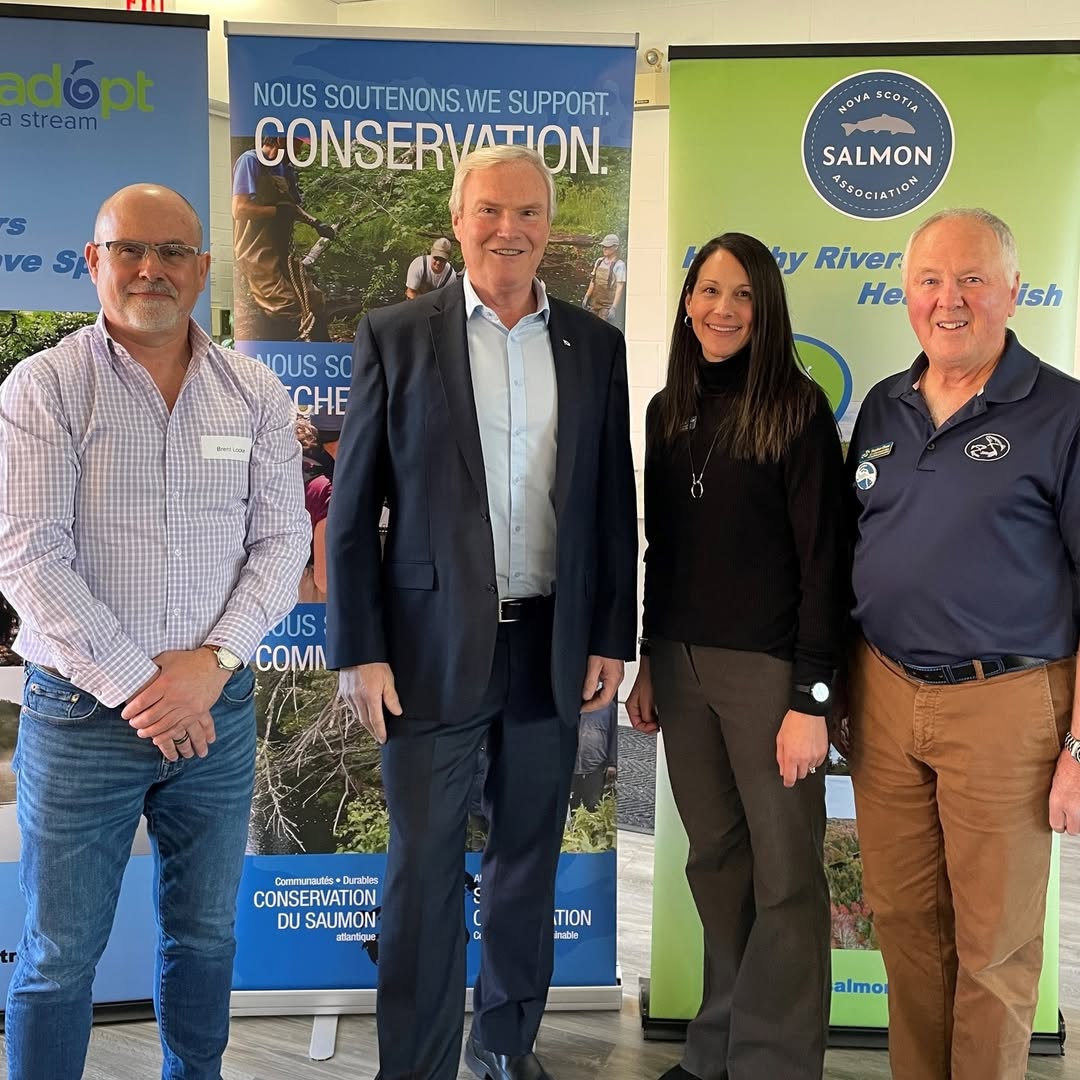
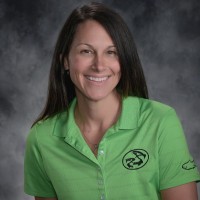
Atlantic Canada is home to some of the most storied salmon rivers in the world—and to one of the quiet powerhouses working behind the scenes to protect them. In this episode of the Wet Fly Swing Podcast, host Dave talks with Charline McCoy, executive director of the Foundation for Conservation of Atlantic Salmon (FCAS), about how a tiny team is helping safeguard Canada’s wild Atlantic salmon across five provinces.
From replacing culverts and removing old dams to planting riparian trees and funding climate-focused research, Charline walks us through how FCAS has supported hundreds of conservation projects—and helped open up nearly 199 million square meters of salmon habitat. You’ll also hear how warming rivers, shifting flows, and invasive species are changing the game for salmon, and why collaboration between governments, scientists, anglers, and local watershed groups has never been more important.
1:17 – Charline checks in from Atlantic Canada and talks about variable fall conditions, low flows, and why more rain is actually good news for salmon rivers.
7:13 – How FCAS-funded projects improve fish passage by replacing undersized culverts, removing dams, restoring streambanks, planting trees, and investing in education and signage so communities understand why salmon matter.
14:21 – The funding story: FCAS is powered by a trust created with a $30 million federal contribution. By investing the capital and using only the revenue, the foundation has provided about $17.5 million in conservation funding since 2007 and is on track to distribute a record $1.875 million in 2026.
16:40 – Why demand for funding (about $2–2.5 million in requests each year) always exceeds available dollars, and how provincial advisory committees help ensure funds go to the most impactful, long-term projects.
21:34 – How FCAS fits into the larger conservation landscape alongside organizations like the Atlantic Salmon Federation, federal agencies, and international bodies such as NASCO, each with their own role in wild salmon recovery.
24:28 – Charline’s role as executive director, following the foundation’s founding leadership, and what it’s like to lead a small but highly effective organization.
30:20 – The current state of Atlantic salmon returns: why recent declines are concerning, how local and international science communities are studying the causes, and why there is still hope through collaborative action.
32:13 – Charline talks about traveling regularly to all five provinces, the importance of seeing rivers and projects firsthand, and a quick geography tour of New Brunswick, Nova Scotia, Newfoundland and Labrador, and Quebec’s Gaspésie region.
33:10 – Travel talk: why Newfoundland and Labrador deserves more than a week, the size and diversity of the island and Labrador, and suggestions to fully experience local culture, rivers, and landscapes.
34:11 – Charline shares her family’s connection to fishing and how working with an Atlantic salmon foundation turned into a shared passion for fly fishing and wild rivers.
35:15 – How listeners can support FCAS: following their work, subscribing to newsletters and webinars, spreading the word about wild Atlantic salmon, and donating to help top up the trust so even more habitat and education projects can be funded.
37:05 – Closing thoughts: Dave wraps up the conversation, highlights the Newfoundland trip giveaway, and encourages listeners to connect with FCAS and get more involved in Atlantic salmon conservation.
Charline McCoy and the Foundation for Conservation of Atlantic Salmon show how much impact a small, focused team can have when they invest in local groups, sound science, and long-term partnerships. From opening up salmon habitat and restoring rivers to teaching kids about the life cycle of wild Atlantic salmon, their work is helping keep a defining species of Atlantic Canada in the water—and in the culture—for generations to come.
As you think about your own connection to rivers and wild fish, what’s one step you could take this year to help protect wild Atlantic salmon where you live or fish?
Episode Transcript
00:00:00 Dave: Today we’re heading east all the way to Atlantic Canada to hear how one small foundation is protecting one of the world’s most iconic fish. Our guest is Charlene McCoy, executive director of the Foundation for Conservation of Atlantic Salmon, a group that’s quietly funding hundreds of projects across five Canadian provinces. By the end of this episode, you’ll hear how their efforts are helping open up nearly two hundred million square meters of salmon habitat. What they’ve learned about climate change and the warming of rivers, and how local groups are stepping up to keep the salmon thriving. This is the Wet Fly Swing podcast, where I show you the best places to travel to for fly fishing, how to find the best resources and tools to prepare for that big trip, and what you can do to give back to the fish species we all love. Charlene McCoy shares how their team of three manages to support seventeen million dollars in conservation work restoring habitat, improving fish passage, removing dams and getting kids involved through their Fish Friends education program. And we’re going to be heading to Newfoundland this year to find out more and hopefully catch our first Atlantic salmon, if you’re interested. We’ve got some spots available and and we got it going here. So let’s get into it. You can check in with Charlene at Salmon Conservation. All right. Let’s get going. How’s it going Charlene?
00:01:15 Charline: I’m doing well. How are you?
00:01:16 Dave: Pretty good. Yeah. I’m excited to hear about your foundation that you’re working with there. Um, we’re doing a pretty cool event right now. We’re doing a giveaway for a trip to Mountain Waters Resort, and we got a bunch of great brands on, and I’m going to be heading there with the winner next year in June. So this is pretty exciting. I’ve never been to your, um, basically Newfoundland, but it’s going to be an opportunity to learn not only about the fishing, but about the fish and the species. And you guys are a conservation group, which is always really important, obviously, to everything. But yeah, maybe give me a rundown this time of year. It’s, uh, we’re in kind of, you know, November, um, what’s happening around there is the. Is it getting starting to get cold there?
00:01:56 Charline: Uh, it is starting to get a little cold. Uh. It’s funny. Some days it’s really warm, and some days, uh, it gets cold, so it doesn’t seem to know what it wants to do. However, we are because of salmon and the rivers. Hoping for a little bit more rain, to be honest with you. So that would be very nice for the rivers. Yeah. So rain’s always good. So, yeah.
00:02:16 Dave: Is it still? Are people still fishing there or is it still open?
00:02:18 Charline: Um, the fishing is, uh, there is some fall fishing. Uh, but it’s coming to a close. But, uh, yeah, in in Newfoundland, um, the fishing is pretty good. Uh, the foundation, which is a group, um, that I work for, we actually cover all five provinces here in the Atlantic, which Newfoundland is, uh, is one of them. Newfoundland. Yeah. Is very fortunate, um, that, uh, there is some good fishing down that way. So if you’re heading down to Newfoundland, you know, I’m really happy for you. So.
00:02:46 Dave: Yeah. That’s right. The more I get into this, the more I realize I think we chose a good place to go to. In fact, I had somebody who talked on, uh, gosh, I’m trying to remember the podcast, but he basically said he said he thinks Newfoundland is the, you know, last great, you know, one of the last really great places to go to because of the populations are still pretty healthy. Is that maybe first off, talk about the five provinces. What are those five provinces you’re in control of? Are you work in.
00:03:11 Charline: Yeah. So we support conservation actions, uh, in all five provinces. So that would be New Brunswick, Nova Scotia, P.E.I. and Newfoundland and Labrador, and also the province of Quebec. So, uh, so those are the five, the five provinces that we focus on. And our foundation, which is foundation for conservation of Atlantic salmon. Um, one of the main goals is to help achieve a healthy and sustainable, you know, salmon stock. And we do that through partnership, but mostly through, um, grants. So we actually provide grants to a lot of the groups and each of these provinces. And that would be watershed groups, uh municipalities, uh universities, um, indigenous groups, because they’re the ones that actually are on the river and actually do, um, the conservation efforts right on the ground. So we make sure that we’re able to provide support to them.
00:04:04 Dave: So you’re basically a larger group we had spawn on recently, and they talked about some of the efforts they’re doing with monitoring fish and and which is really important, super important. And so you’re basically supporting those groups. So you’re not necessarily doing on the ground work, but you’re getting your funding. Those other groups that are doing the work.
00:04:21 Charline: Exactly. And it’s important to support them because groups like you just mentioned, um, you know, they need resources. They need the capacity to be able to keep doing the conservation efforts on the ground just to make sure we have a future for Atlantic salmon. Uh, some of the other provinces are struggling with some of their population and stuff like that. So we want to make sure that we have reliable funding for these groups that they can depend on year after year. And we’ve been doing that since two thousand and seven, actually. So in total, throughout the years, uh, we were I’m happy to announce that we have been able to give seventeen point five million dollars across all the five provinces. Yeah. So, uh, so it’s really a great news story and, uh, we’re able to continue doing that. So and it’s something we want to do for, uh, for the long haul. And the reason, the reason we have that, um, is actually because of partnership we have with the federal government, um, government of Canada. They actually gave the foundation way back then thirty million dollars to give to a trust fund. So we invest that. So that’s why by using the revenue that’s generated by that investment, we’re able to, you know, provide support in that way, uh, to all these groups. So that way we do it every year. And uh, we’re really happy that we’re able to do that.
00:05:39 Dave: So what are maybe a couple of, uh, describe, you know, talked about a few projects. What are some other projects you might be, uh, funding out there that are helping to protect Atlantic salmon?
00:05:51 Charline: Yeah. We have like, five major categories that we focus our funding towards. Um, and that could be planning habitat. The population access and education. And to go a little bit more examples in that. It’s improving like fish passage, um, you know, replacing culverts, removing dams and obstructions, things like that. Um, you know, improving the habitat. So planting trees, some stream restoration and education and awareness is a category that’s very important to just making sure the community and folks are aware of the importance. And there’s a lot of Fish Friends program that are out there. Uh, just getting the the youth to understand the importance of salmon to, uh, to Atlantic Canada and you know, how to to make sure that we, uh, we put conservation as a priority, uh, and stuff like that. So there’s a lot of, like funds that go towards signage and those programs, uh, and of course towards research too. So we do have a research component to the foundation. And those research is to do some data collection, answer some questions so that we can come out with the proper actions to solve any issues or challenges that are happening on the river. So. So we cover all of those things. So it’s a it’s pretty wide. Yeah. So just to give you a few examples of just the amount of work and the activities that are happening. Yeah.
00:07:11 Dave: And run through that again. The top the five. So what are what’s the first category.
00:07:15 Speaker 4: So the first category.
00:07:15 Charline: Would be planning. So what we do for watershed planning and so forth where they can highlight their priorities for that specific watershed and actions and of course habitat. So habitat opening habitat that had any obstructions or improving the habitat itself and also population. So conserving restoring stock and the population of salmon and then certain access and also education is the fifth category that folks can apply.
00:07:43 Dave: Perfect. Yeah. We were we were doing an episode with, uh, Nick chambers, who is in a group called The Conservation Angler. It’s on the West Coast. It’s on the other side, But they’re studying steelhead populations, mostly around the Pacific Rim. And he was talking about how the study that he did actually in his master’s project was on the Skagit River, where he studied like spawning steelhead. And, and the fact that how fish depending on the habitat, you know, they don’t go very far from there where they’re where they’re spawned, you know, where they spawn in the wild. And he was saying he was following a similar study that’s already been published with Atlantic Salmon. How important it is. It shows that, you know, the fish that are spawning, you know, not only are they coming back to the natal stream, but they’re not going more than one hundred meters or one thousand or something like that down away from where they are, you know? So it’s really important, the habitat. He was basically saying, hey, it’s important to know where fish are spawning to actually know, because if we know where they are, then we can know if there’s a bottleneck, right. And and so I’m guessing that some of the research and stuff you’ve done is that kind of what who’s the types of projects that might be researched.
00:08:42 Speaker 4: On our.
00:08:43 Charline: Website? Uh, we have a priority list of actually research projects that we would really.
00:08:50 Charline: Like to fund, uh, and it covers questions and situations like you just mentioned and also questions of climate change and what we can do and just the the evolution and things that are happening in the pattern patterns that the salmon kind of travel in and stuff like that. So whatever we can learn, we can plan better to, to make sure that they have, you know, that great spawning, uh, area and stuff like that. So and find the right solutions, um, for that.
00:09:15 Dave: And what was the, uh, and um, the website reminds you again on the website.
00:09:20 Speaker 4: Yeah, it’s.
00:09:21 Charline: W-w-w salmon conservation. Yeah. So when you go on there, you’ll have all the information of the foundation. Uh, there’s information on how to fund your project and what those categories are. We actually have on the website. Two, uh, we list all the projects that we funded since two thousand and seven. So project descriptions, uh, what they’ve been doing. And you can search by province, you can search by category or your topic, so it’s really unique that way. We have a salmon hub with all the results. So any reports that come out about any of these projects and if you’re interested to see what that is, you can access our salmon hub and have all that information as well. So it’s a it’s a really good tool to know what’s going on and just find the best practices and and learn from that. So yeah.
00:10:11 Dave: So yeah, we verified the best website to go to is salmon conservation. And there I see it now project directory funding your project and salmon hub. So pretty much anybody can go there if they’re in one of those provinces. And if they have a project they think is worthwhile, they can learn about, you know, options and then they can actually submit an application through here.
00:10:30 Speaker 4: Exactly. Actually, our call for proposals.
00:10:33 Charline: Is open right now. We usually announce it in the summertime. And you have till November fourteenth to apply. And those are for any funding for projects for next year. So there’s a couple of weeks left before November fifteenth, maybe three weeks. So yeah. So if anybody is interested, please, uh, apply and use the information on our site. And, uh, we try to make our decisions fairly quickly before, you know, the work supposed to be actually hitting the ground. Uh, and we’ll announce that in March.
00:11:05 Dave: Do you have a, you know, you get these in. Do you get typically more projects than you have money to fund, or do you usually have enough money?
00:11:12 Charline: Yeah. Well, we do have a process that we have to take. So, um, we wish we could say yes to, to everyone. But one of our mandates that we have is that we can’t touch the capital capital of our investment, just the revenue that’s generated. So depending on year, as you know, of any investment, there’s a fluctuation in the market. But we’ve been very fortunate. We just recently announced, um, the markets have done well for us, and we are able to give one point eight seven five million dollars for twenty twenty six, uh, which is the highest amount that we’ve given the last eighteen years, so that’s wonderful. However, every year we do have a demand that is between two to two point five million. So it is a process that we use. So if I use Newfoundland Labrador for an example, we do have an advisory committee in the province with experts from that province from that region. So we have folks from government, we have folks that have conservation background and for Atlantic salmon, and they actually evaluate all these proposals that come in and they prepare recommendations for our board. So we do do a very fair, very rigorous exercise to make sure that the funds are going to like the high quality project that’s really going to make a difference in long term. And so, you know, we take that in consideration.
00:12:34 Dave: Yeah. It looks like in just some of the the projects I’m looking at looking at them here, the aquatic habitat and riparian restoration monitoring. So you have that and the Antigonish River Association, Nova Scotia. So you have that, then you have another one. Reverse the series. The series decline of Atlantic salmon. Rocky River, you’ve got rattling Brook watershed. Obstruction removal. So there’s a passage further assessment of salmon River water. So yeah it’s a little bit of monitoring. It’s a nice mix of things.
00:13:03 Charline: It’s a really good mix. And you need a little bit, you know, of everything. Um, just to make sure things run smoothly. And there’s some of the conservation results. So all these projects, we want to make sure that we measure and benchmark to make sure the funds that are being distributed, there’s actually, um, you know, an end goal in a positive result that comes out of it. And we do try if you look at our, our website, there’s like bubbles there in the middle and it shows the number of, uh, square meters of habitat access that’s been open. Uh, and that’s like, yeah. And it’s a big amount. It’s like it’s one hundred and ninety nine million square meters. So that’s huge. And these projects support like volunteers and jobs as well. So some of our funding actually help with, you know, uh, HR and equipment and things that, you know, can cause a lot of money for some of these small watershed groups. So, you know, some of our results show like almost twelve thousand volunteers with many hours of efforts. So we want to be able to demonstrate, you know, measurable, quantitative, uh, numbers to really show the difference that these conservation efforts that the groups are doing on the rivers, like how much of a difference it is making. And you can clearly see from those numbers that, uh, that it is.
00:14:19 Dave: Well, and it looks like there’s a good mix between the provinces. What is the we mentioned at the start, kind of, you know, Newfoundland how numbers have been pretty good. How does that look overall in the province. You know, just do you have a broad scope of all kind of status and how well or is there gaps out there.
00:14:37 Charline: Um, well, there is some gaps.
00:14:40 Charline: There are similarities by province, but there are also some uniqueness between them. But the majority of the provinces do have similar challenges. And that’s when we talk about, you know, pollution or even other human activities, the things that, you know, it’s hard to control climate change, of course. And then you have invasive species that we’re seeing more and more of. And then there’s other ecosystem kind of pressures that are out there. So we do have some similarities, but the ones that we’re seeing a lot here in New Brunswick and starting to creep up in Quebec and other places, is that the and even in Newfoundland is that the, the water temperature and the levels, um, are very challenging for salmon. Salmon needs a very unique habitat to, to be able to strive so and to survive in. So um, those are things that is nature and some things that we can do, you know, as humans that we can do on the river to, to help make that better. But a lot of things, you know, can be out of our control or some unknowns, right? And that’s why the science part of things is so important to be able to, to address those issues.
00:15:50 Dave: Yeah, I know a lot of my focus and I’m just learning now obviously about Atlantic salmon as we’re preparing for the trip. But but one thing so I always compare it to other, you know, stuff we know on the that I’ve worked on on the other end. But the when we were talking about Chinook salmon, you know, there’s a big decline in Chinook salmon in Alaska especially. And Roy and I was asking the same question about what’s going on. And it’s really not as much of a habitat issue up there, although there probably are some climate change and ocean conditions. But a big part of it is the harvesting, like by ocean troll fisheries, like places, you know, things like that that are really impacting kind of size and stuff like that of the fish. Do you find that? I mean, I know harvesting in other areas is pretty impactful. Is that something that you’re also digging into understanding more about kind of harvesting and that whole part, whether it’s sport or commercial?
00:16:38 Charline: Um, we don’t really touch the to commercial here. Um, at the foundation, when it comes to other topics like harvesting, it could fall under the science kind of pillar to look into. Um, but our our funding is mostly focused for conservation on the wild rivers within the province and the actual habitat. Uh, however, I know there’s so many unknowns out there in the marine out at sea because, you know, the cycle of the salmon, they do go out, uh, for, for a number of years and then come back. So there’s a lot of studies. So, so we are a part of, you know, there’s other organizations that look at those things like the Atlantic Salmon Federation and our federal government and so forth. Uh, so we all kind of have our, our expertise and we all kind of collaborate and partner together on those things.
00:17:25 Dave: Some places are just different. You feel it the second you step into the water. Mountain Waters Resort sits on the legendary Portland Creek, a place where Atlantic salmon runs strong and where fly fishing history was written. Lee Wolfe himself fished these waters, and now you get to experience the same world class fishing in a setting that feels untouched by time. Whether you’re swinging flies for fresh chrome or kicking back in a cozy riverside cabin, this is the kind of trip you’ll be talking about for years and years to come. And guess what? I’ll be there this year as well. But here’s the deal Prime time season fills up fast, so don’t wait. Check in now and join me on this historic river this year. You can head over to Wet Fly Swing Waters right now that’s Mountain Waters Resort. You can go to Wet Fly Swing. Waters right now and save your spot for this epic adventure. Yeah, that makes sense. I think that everybody’s got their role. Like we’re learning. You know, I think that the Atlantic Salmon Federation I’m guessing. Yeah is a little more on on some of that. They maybe dive in and we have the same thing in our area where you have groups that are more, um, you know, maybe have the capacity to dig into more of some legal actions if needed. Right. But there’s other groups that are more, you know, working with the local community, you know, and that’s a that’s a great thing. And that’s not in their wheelhouse getting into all that other stuff.
00:18:43 Charline: But at the end of the day, we all have the same goal, though. We want a future and a healthy and great population of salmon for forever for the next generation.
00:18:53 Dave: Yeah, I think that seems like pretty much everybody. Unless you’re kind of crazy, right? I think that, you know, even the all like commercial fishing. I feel like everybody kind of wants that because, like, who doesn’t want healthy salmon populations? And which means you have healthy, healthy environment. Right.
00:19:08 Charline: And a good demonstration of that. So in October of twenty twenty four, which almost a year ago now, actually pretty much a year ago, um, yeah, we had the first ever symposium for all Atlantic salmon, uh, in Moncton, New Brunswick.
00:19:24 Dave: And was this is this all for the the five provinces or larger?
00:19:28 Charline: Yeah, it was a.
00:19:29 Charline: five province symposium, never been done before. The foundation took that on as part of our mandate and Dating strategy, and we hosted that. We had almost two hundred people in the room. Um, folks from anglers to conservationists to watershed groups, all levels of government. We had some media coverage come. And it’s really to highlight the importance of salmon, because salmon is very unique and it’s a very integral part of Atlantic Canada. Like it’s like almost ingrained in our culture. And all these folks that are so passionate in doing all these different things, with all their roles and responsibilities that we have, we actually got in one room for a day and a half and just really had some really good conversations about the future and what was needed, and how can we partner work together to make sure that we’re really pooling our resources? And it was it was a great event, and we’re hoping to do it at every three years. It was really instrumental.
00:20:24 Dave: Wow. Yeah, that sounds like an amazing event. And probably I’m sure it will grow over time. Right. And you’ll probably have more, more impact. And then it was that as that meeting where you not only brought people together but talked about some of the the successes and projects and things like that.
00:20:38 Charline: Oh, exactly.
00:20:39 Charline: We talked about the challenges and what other folks, you know, what solutions they found and exactly the successes, the challenges, a little bit of everything, issues that we still not sure you know how to go about it. So we had scientists there as well, given their their opinion and feedback and, uh, you know, and it’s important to even have the government officials in the room. So because, you know, Canada has just announced in March, um, this year, actually their new national Canada’s National Strategy on the future of Atlantic salmon to ensure that there’s a future. So that just came out here not long ago. So it was really important to have them in the room to to hear those discussions. So there’s so many different, uh, players. Right. But they all has to be kind of, you know, we all have to be connecting and talk. And so, um, so that gave us that opportunity. So it was great.
00:21:32 Dave: And what is your, uh, Currently. What is your role there with the, uh, the foundation?
00:21:37 Charline: My current role on the executive director with the foundation, as uh, this July, coming in twenty twenty six, would have been five years that I’ve been here. The foundation is very unique. It’s been in place since two thousand and five, and it had the same president and executive director for the last all this time up until five years ago.
00:21:57 Dave: Oh it did.
00:21:58 Charline: Yeah. And they’ve done a really great job and create a great model here, the foundation. And that’s is why we’re still sustainable and striving and really, you know, giving some great support, uh, that the folks can rely on. So I my hat to my former president and executive director Steven Chase that really have put this foundation together. So for the first time ever, we have a second president that just started in March as well this year. And then I’ve been in this role for almost five years. So. So yeah. So it’s a really you know, I’m really happy to have this job. Be honest. I think it’s the best one I’ve ever had. It’s a great place to work.
00:22:36 Dave: What has been in the last five years? What’s been maybe the most challenging part of the position?
00:22:41 Charline: The most challenging is that we actually would like. I know we’re given a lot of funding every year, but we do realize that the demand is greater than even what we’re seeing as proposals coming in. Folks have told us that they only apply for a certain amount because they figure they’re not going to get the whole thing they need.
00:23:00 Dave: And projects don’t get any cheaper. Like as we go, replacing a bridge is not going to be less expensive than it was five years ago.
00:23:06 Charline: Exactly. So right now, to try to spread out as fair as we can, like every project is a maximum of fifty thousand dollars. So if if we would be able to top up our investment to generate more money, I would love to be able to change that. So make that maximum hire and be able to do some some larger projects and more priority focused like I would I would change a lot of things like is it working really well? We’re doing good. But I would like to be able to do more if we could. So um, that would be great. So hopefully that is something that we’re it’s on our strategy and we’re hoping that is something we’ll be able to, to implement here in the next year or two. So we’ll see.
00:23:45 Dave: Okay. Perfect. And who are other staff maybe talk about your other staff. Is it just you or the other folks there at the foundation actually.
00:23:52 Charline: So we actually have a very small staff. People are very surprised to hear that because even what you can see on our website, we do manage a lot, but it’s just myself and two coordinators. So, uh, we have a coordinator that’s responsible for, you know, three of the provinces, which is New Brunswick and Nova Scotia and P.E.I. that’s Gert Lawler, and then we have Kirsten Milbury that is responsible for Quebec and New Brunswick and our scientific projects. So we’re just three just, you know, pushing away. And but we’re we’re small but mighty. So yeah.
00:24:26 Dave: Yeah. Yeah. Exactly. And I’m looking at it looks like you have some webinars on your webinar schedule coming up here, I see one November twelfth. Recent advances in temperature modeling and Atlantic salmon are those webinars. Describe those who are those focused on who are those for.
00:24:40 Charline: Yeah. So the webinars part of our communication strategy. So because we support so many projects and so many great results come out of it, we feel a responsibility to be able to create platforms to transfer that knowledge. So everybody gets to hear about it. So you know I talked about the Salmon Hub already and we do the symposiums as well, which is another opportunity to share information. But the webinar series is a very unique tool and we have a great audience for it. So we do it every fall. We start from September and it goes till about May, and we try to do at least one session a month or two, where we actually have topics that folks like to hear about, some great speakers that come on and they talk about results, about best practices, uh, new, uh, new applied science research results and so forth. So we have a, you know, a contact list now of people that are subscribed. Up to one thousand five hundred people are subscribed to that. And we’re just hearing great. Yeah. So it’s really great sessions. If you miss one, we try to to promote it on our e-newsletter and on the social media. But if folks do miss it, we do have the YouTube page that you can click on at the bottom of the website and we record all those sessions. So if there is a topic that you’ve seen, you know, be promoted, but you didn’t get a chance to go see it live, you can go on that YouTube page and go back and listen to that. So um, you got and it goes back like for, for several years. So some really great information, uh, that people can learn from. Because one of the things we were hearing is that because we have covering five provinces, you know, someone from New Brunswick might want to hear what’s happening in Quebec. Some, you know, a new a new technique or something that they never tried. Uh, so this is ways for us to be able to make sure that everybody has a chance to hear what’s going on and and transfer that knowledge. So yeah. So that’s what that one’s all about.
00:26:33 Dave: Yeah, I see it I see the YouTube. This is a great channel as well. Yeah. You have uh similar embedded culvert. It looks like you’re talking about before and after of an undersized culvert you’ve got considering the role of salmon and other anatomists fish. So yeah this is a good resource to the YouTube channel. Definitely would recommend subscribing to that. Um awesome. And then on the salmon just overall again give us high level picture. Do we know how. Because we’ve heard these stories of across you know in Europe and the Scotland and some runs on the downturn. Do you have a pretty good feel for uh, you know, status currently in, in those five provinces?
00:27:07 Charline: Um, well the number of like, adult salmon coming back is increasing. Uh, and that’s a concern. It decreasing. Sorry. No, no. Sorry, sorry. I wish I could say increasing, but it is it is decreasing. I know there’s a lot of concern in the last two to three years they are seeing that decline. Um, and, uh, And but they’re still hopeful that that will change. And so I guess we’ll we’ll have to see. So, um, you know, this is being studied, uh, you know, at the local, regional, provincial and even at the international level, the Atlantic salmon covers a lot of ground. Uh, there’s.
00:27:44 Dave: Is the Atlantic Federation or is it, um, what’s the other larger group that you mentioned, Atlantic Federation?
00:27:49 Charline: Well, there’s the Atlantic Salmon Federation, uh, an advocacy group. And of course, we have our Department of Fisheries that looks into it with their new strategy. And there’s also Nasco as well. It’s the national.
00:28:03 Dave: Yeah. What is that one.
00:28:04 Charline: Atlantic Salmon Commission anyways. And he looks at it at an international level where you have different countries around the table that do have Atlantic salmon to talk about priorities and strategies at that higher level as well. So it’s just to show you, you know, how far it does go. Uh, and there is some experts and folks that do meet uh, and try to, to talk and put things in place for Atlantic salmon.
00:28:28 Dave: That’s right. And I know there’s some groups in in the US as well. They’re doing, uh, doing some similar work. I see this now. The Nasco. Yeah. North Atlantic salmon conservation organization.
00:28:37 Speaker 6: Yes, exactly. Yeah.
00:28:39 Dave: Aim to restore, enhance, manage extend through international cooperation. Right. So there’s your international I mean it’s obviously like these fish are going across international waters right as they migrate out in the ocean. And that’s why the big group is important too. I mean, you guys are obviously in the provinces. They’re super critical everything you’re doing. But you got to have a worldwide, um, you know, plan, right? You got to climate change. Do you have any is climate change is always the one that is challenging because it seems like it’s such a, you know, understanding and it’s a daunting task. Do you is that something where you’re funding climate change type projects out there?
00:29:12 Charline: Uh, we are finding it through our applied research stream. So, um, when we do a call for proposal every year, we do a general call for conservation efforts. And we also put out an RFP for scientific priorities. And climate change is one of those. It’s on the list. So if we get a proposal that is targeting that subject, of course we will looking at it and hopefully be able to fund it. So.
00:29:40 Dave: And you mentioned this year you’re going to have roughly one point eight million dollars, and which is a considerable amount given the fact that if you think you’re saying fifty thousand per project, you divide that into that, that money, that’s a number of projects, right? Is that the right math there?
00:29:54 Speaker 6: Yeah. No, it’s exactly that. It is really good.
00:29:58 Charline: Number of projects and try to divide that fairly by province as well. And and we’re even hoping that by twenty twenty seven, I do have a really great investment committee that there are experts. So they’re predicting that we’ll be able to give two million by twenty twenty seven, which would be wonderful. So, um, so I’m excited for that. Yeah.
00:30:18 Dave: Well, anything else we should know, understand about your organization or how maybe the question too is how can people listening now support if they’re listening in from not only Canada but, you know, around the around the world?
00:30:29 Charline: Um, well, they can support by, um, you know, joining, subscribing, reading our things, telling the great story of how, um, the foundation is supporting, uh, salmon, how Atlantic salmon is important for our culture or economy and etcetera. I think telling the story is very important and that we’re one of the players in that, uh, of course, we don’t fully promote it on there, but we, you know, we will never say no to donations to increase that top up. Of course. Uh, and any funds that do come through the foundation, one hundred percent goes right back to the conservation efforts on the river. So and, uh, so, yeah. So it’s just to kind of spread the word.
00:31:08 Dave: Good. So get the word out there, check out some of the maybe join a webinar. And that’s the cool thing about this day and age is that people can check check in. Right.
00:31:15 Charline: And if they subscribe with us they’ll get all that information. So um, we’ll be able to, to give them updates every month of or what’s going on, and they can join us.
00:31:24 Dave: Perfect. Well, I think like we said, at the top, we’re doing a cool, uh, event, which is, uh, we’re heading there to Newfoundland. Now, tell me, where what province are you in?
00:31:34 Charline: So we’re centered in Fredericton, New Brunswick, so yeah. So we’re we’re pretty much central to all the five. Uh, I’m very fortunate in my job that every year I get to go to all the provinces. So I do get to Newfoundland Labrador at least three to four times a year. So. And at the same for the other ones. So I get to explore the Atlantic and these wonderful provinces and rivers. So I do wish you a great trip, and I know you will when you go. So I yeah, I never got to fish or actually do those activities in Newfoundland Labrador yet, but I’m hoping that I will someday soon. So because I hear great stories.
00:32:11 Dave: Nice. Yeah. So you’re in just to get the geography correct. Yeah. You’re in New Brunswick, which is actually connected right there. It’s right across from Maine. Right. The US is is right there. And then as you go, as you go out, you have Nova Scotia, which is kind of in the same area. And then where is Newfoundland from? That’s up north right of you.
00:32:29 Charline: Uh, it would be, and we would have to take a plane or a ferry to get to Newfoundland from New Brunswick.
00:32:35 Dave: So it’s. Yeah, you head north and then of course, you have Labrador, which is the main. And then Quebec also is, is in your which is huge, right. Quebec is the biggest of the provinces.
00:32:44 Charline: It is. And um, the rivers in the Gaspésie are beautiful. Yes. So if you get a chance to take a drive in that direction, I would. Yeah.
00:32:55 Dave: If we were going to, uh. Well, we are going to Newfoundland. If we go there, where would be? I’ve heard there’s some really cool just other, you know, national parks. What would you recommend? Is there a some activity or a place there that we should see when we go to Newfoundland.
00:33:08 Charline: Or would they be the best one to to say that? But the culture and the folks in Newfoundland are so welcoming and they have their traditions there. Uh, and so, you know, the you can get screeched in, you know, just just embrace all the uniqueness of the of the island. And I would just, uh, just experience it and do it all.
00:33:27 Dave: Yeah, do it all. What would be a good time do you think we should have, uh. Is a week enough, uh, there or is enough to see some of the sights?
00:33:34 Speaker 7: I would go for a couple of weeks.
00:33:36 Charline: Because, uh, it is an island, but it’s there’s, you know, you do have to drive from one end to the next. It’s pretty, um, it’s pretty big. Uh, from the the west to the east to Labrador. There’s quite some road to cover, so it’d be hard to do it all in a week, that’s for sure.
00:33:52 Dave: And as we take it out of here, a couple of quick random ones, I know off air you were mentioning about your family, how they, you know, they were excited about your job here and you kind of got into fly fishing. Talk about that as your family. It sounds like you have some boys. Are they are they into fishing, fly fishing, all that stuff?
00:34:09 Speaker 6: Yes.
00:34:10 Charline: So my my husband and my two teenage boys, I got a seventeen year old and a fifteen year old. They absolutely love to fish. They’ve always fished fish since they’re little. So when I told him I was going to work for an Atlantic Salmon Foundation, they were like jumping for joy. They were more excited than I was because they’re like, when are we going fishing? But, uh, you know, we’re we’re we’re conservation, you know, funded, uh, entity. But we did have the occasion to go visit some rivers in Quebec and some other ones and did get to do some fly fishing. And we did it as a family, and it was wonderful. So, uh, once you start doing that, you just fall in love with with the sport and with the fish and the environment so that it’s in.
00:34:54 Dave: Well that’s great. I think we could probably leave it there. And, uh, you know, as we get ready for, you know, uh, this event we’re wrapping up or we’re just wrapping up here, um, you know, we’re definitely excited if, uh, if anybody has questions, we can send them out to the Foundation for Conservation of Atlantic Salmon. That’s salmon conservation. Does that sound like a good, uh, good place to send everybody?
00:35:13 Charline: Yes, it sounds great. And all our contact information, everything’s on there. So anybody feel free to send us an email to or a phone call. We’d be happy to hear from anybody and and happy to see what’s going to come out of the contest. We’ve been, um, promoting it and on our social media as well. So, uh, yeah.
00:35:31 Dave: Yeah, I think we’ve got a bunch of, uh, excited fly anglers that are looking forward to, uh, to winning, you know, but but I think it’s more, more important than the winning on these events is more about understanding, you know, like we’re doing now. This is what I really love, right? Getting people to understand exactly.
00:35:45 Charline: It’s part of the awareness and and all that stuff. So yeah.
00:35:48 Dave: Kind of fitting into that one of your pillars. Right.
00:35:50 Charline: You are. Yes. Great partner.
00:35:53 Dave: Good. We’re checking the box. Maybe we’ll be in for, uh, maybe we’ll put in some for some funding eventually to do a project out there. Okay. All right. Charlene, thanks for all your time. And. Yeah, like I said, we’ll get everybody sent out if they want to check out your your website. And, uh, yeah, we’ll look forward to staying in touch.
00:36:08 Charline: All right. Well, thanks, Dave.
00:36:11 Dave: You can follow Charlene’s work and learn more at Foundation for Conservation of Atlantic salmon. That’s salmon conservation. You can also find them on social media as well. If you’re interested in heading out to this big trip to Newfoundland, you can go to Wet Fly. It’s best place if you get involved there. You will get first access on some of these trips that we have going, and also want to let you know we are looking for ideas for episodes. If you have an interest in a certain topic, something you want to hear more of, send me an email, Dave at any time and we’ll put that together for you. All right. That’s all I have for you. I hope you enjoyed this one and look forward to catching you on the next episode. Hope you have a great morning, great evening or good afternoon wherever you are out there in the world today. It’s getting into the fall here as we speak. I hope you’re staying warm and we’ll see you on that next episode. Talk to you then.
00:37:03 Speaker 8: Thanks for listening to the Wet Fly Swing Fly Fishing show. For notes and links from this episode, visit Wet Fly com.