Home Blog Page 7

854 | PGA Pro Phil Blackmar Applies Tour-Level Precision to Redfish Sight-Fishing

Episode Show Notes

Today, we’re sitting down with someone who has lived two deep lives, one on the PGA Tour and one on the flats of South Texas. Phil Blackmar spent years competing against the best golfers in the world, studying pressure, tempo, and how to stay calm when everything speeds up.

Now he brings that same understanding to fly fishing, especially sight fishing for redfish and trout.

Hit play to start listening! 👇🏻🎧


apple podcasts

Find the show:  Follow the Show | Overcast | Spotify

Subscribe on Apple Podcasts

Subscribe on Android

Subscribe via RSS

(The full episode transcript is at the bottom of this blogpost) 👇🏻

Sponsors and Podcast Updates

Phil Blackmar

Show Notes with Phil Blackmar

Phil Blackmar takes us into South Texas and breaks down how to keep your cast relaxed when it matters, what changes when you’re fishing from a drifting boat, why timing beats power, and how switching hands after a shoulder injury reshaped the way he casts.

You’ll also hear stories from his days covering Tiger Woods, watching Jack Nicklaus handle pressure, making quiet presentations to spooky fish, and the moment a shark ate his cobia.

About our Guest

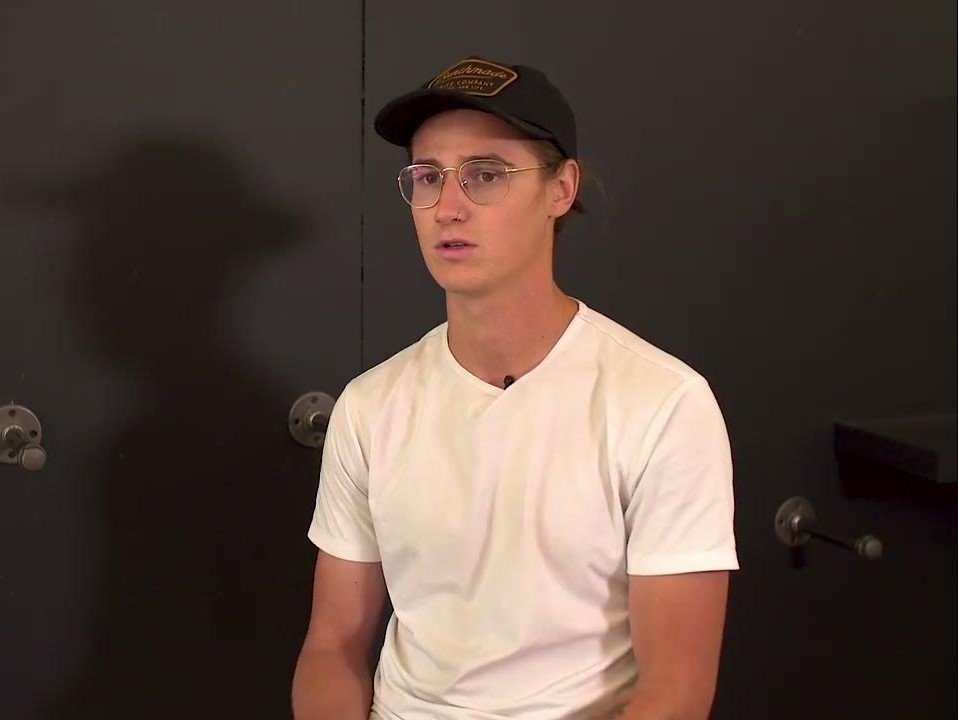
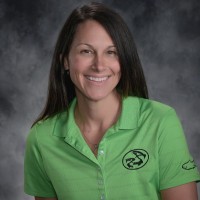
Phil Blackmar
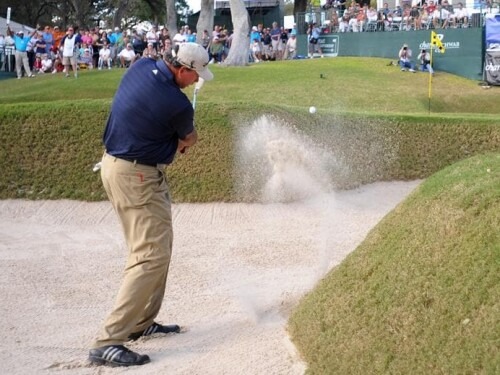
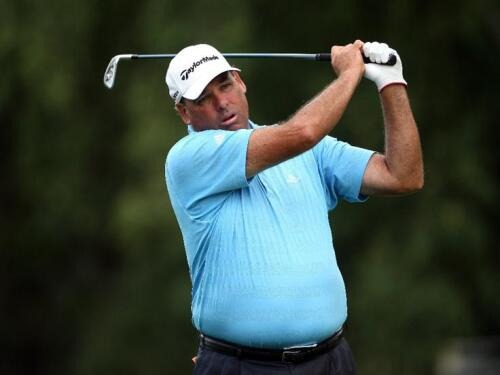
Photo via https://www.nbcsports.com/golf/news/phil-blackmar

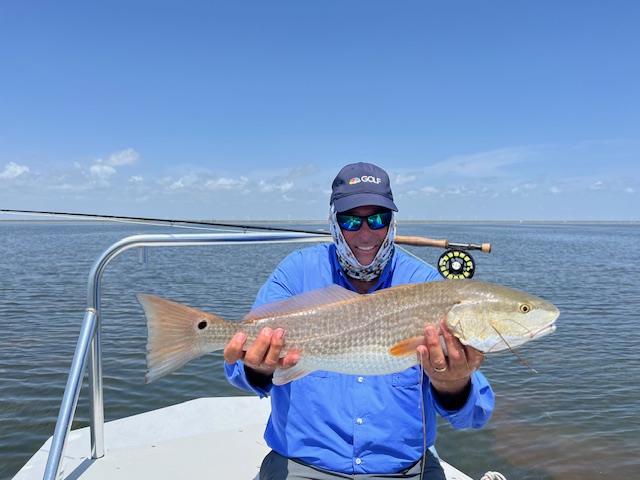
Phil Blackmar says he has been an angler his whole life, but fly fishing started for him in the early 90s when a friend brought a fly rod on their South Texas fall trip. He now rarely throws anything but a fly rod.

Phil also shares how golf shaped his life. He started playing at seven, earned a scholarship to Texas, and never planned on going pro until his uncle pushed him to try. Five or six years later, he made the PGA Tour, won Rookie of the Year, played sixteen years on tour, five more on the Champions Tour, and spent over twenty years as an on-course reporter.

Golf vs Fly Casting

Phil Blackmar says golf is harder because there are more moving parts and more gear. Even with his injury, he learned to cast left-handed in six weeks, so he feels fly casting comes quicker than a golf swing.

He remembers winning PGA Tour events, all in playoffs, and playing with legends like Jack Nicklaus and Tiger Woods. He also watched top casters like Steve Rajeff and loves seeing the parallels between great golfers and great casters.

Phil also shares a story from his first Masters in 1986 involving a downhill putt, Greg Norman, and a surprise moment with Jack Nicklaus.

Phil Blackmar

From Playing to Calling the Game

Phil says commentating was fun but tense because it was all live. You couldn’t take anything back. He had to listen to the host, the lead analyst, and the producer while knowing exactly when to jump in.

He shares a quick moment he remembers well. He was on the ground for Tiger’s 82nd win in Tokyo. One minute, Tiger was laughing on the range. Two minutes later, he was locked in with a blank, focused stare on the first tee. Phil says that the switch showed how strong Tiger’s mental game really was.

Life on the Water in South Texas

Phil mainly chases redfish and spotted seatrout. He has his own boat, and for him, the whole experience is bigger than catching fish. He even says his best moment last year was making a fast, clean 90-ft cast at a giant trout that never even ate the fly. The perfect loop was the win for him.

He likes knowing the full puzzle: tides, seasons, colors to choose, and how fish move.

Phil fishes once or twice a week and spends a lot of time with his eight grandkids. His main passion now is fly casting. He loves working with different rods, lines, and loops, and figuring out how to make the cast work in wind or distance. His favorite time to fish is the fall when the crowds drop and the weather settles.

Phil Blackmar

Soft Shots and Shallow Water Tricks

Phil says fishing now is mostly about enjoying his time on the flats. He ties his own flies and looks for quiet water away from crowds. He doesn’t need a big school of fish. Seeing a few in shallow water and getting one good cast is enough.

He’s also deep into the small details of casting. He talks about timing his haul and making a fly land soft by loading the rod, then loosening his grip so the tip doesn’t kick down.

Phil also shares one of his favorite tricks: the inverted cast, where the loop flips upside down, the fly travels under the line, and it drops in low and quiet. He uses it when fish are spooky from boat traffic.

He adds more tips for quiet, clean shots on the flats:

  • Use the lightest fly line you can, so it lands softly
  • Keep the fly leg perfectly straight so it cuts the wind
  • Be ready for fast shots when drifting because the fish and the boat are both moving

Phil says a low, quiet shot keeps the fly out of sight in shallow water, and spooky redfish won’t see it until it lands right where it needs to be.

Phil Blackmar

Phil Blackmar’s Golf Advice

Phil Blackmar says if you want to get back into golf, start with the easy stuff. The short game teaches control, feel, and coordination long before you ever need to swing hard. Most of your shots come from around the green anyway.

His tips for returning golfers:

  • Start with chipping and putting
  • Find a teacher who works with your natural swing
  • Experiment and learn the “rules” of your own motion

He says casting has some overlap. You follow basic rules like keeping the rod tip straight, but there’s still room to find your own style. He laughs that casting with no wrist is really tough, especially now that he’s been working left-handed for six weeks.


Resources Noted in the Show

Montana Fly Fishing Lodge

Intrepid Camp Gear

Yellowstone Teton Territory – Visit Idaho

On DeMark Lodge

Sponsors and Podcast Updates

 Videos Noted in the Show with Phil Blackmar

Related Podcast Episodes

Full Podcast Transcript

Episode Transcript
854 Transcript 00:00:00 Dave: Today, we’re sitting down with someone who has lived two deep lives, one on the PGA tour and one on the flats of South Texas. Our guest spent years competing against the best golfers in the world, studying pressure, tempo and how to stay calm when everything speeds up. Now he’s applying that same understanding to fly fishing, especially sight fishing for redfish and trout in shallow water. This is the Wet Fly Swimming podcast, where I show you the best places to travel to for fly fishing, how to find the best resources and tools to prepare for that big trip, and what you can do to give back to the fish species we all love. PGA tour veteran Phil Blackmar takes us into South Texas. And today you’re going to find out how to keep your cast relaxed when what matters most, what changes when you fish the flats from a drifting boat instead of pulling or sitting in one spot? Why timing matters more than power, and how switching hands after a shoulder injury reshaped how he approaches casting. There are also some great stories that we talk about. He covered Tiger Woods. He watched Jack Nicklaus handle pressure, had some great conversations there, and stories and learning how to make quiet presentations to spooky fish. And what happens when a shark decides to eat your cobia. This is a good one. Here we go. Let’s get into it. Here he is. Phil Blackmar. How are you doing, Phil? 00:01:14 Phil: I’m doing great, Dave. Thanks for having me. I look forward to this conversation. 00:01:17 Dave: Yeah, yeah. Me too. I think, um, you know, we’ve talked a lot about fly fishing and golf. You know, golf has come up a lot over the years, whether it’s, um, you know, we’ve had people talk about, you know, which one’s harder casting a fly rod or swinging a golf club. You’ve won some PGA tour championships, so you’re at the highest level there, and then you’re also a fly angler. So we’re going to talk about that today. But maybe just take us back first on fly fishing. How did you get into I mean have you been doing this a while or what’s your first memory of fly fishing? 00:01:42 Phil: No, I have actually. I’ve been an avid angler for pretty much my entire life. And a friend of mine, John Adams, who used to have a trip in the fall when the tour season was over and we’d go down. I fished the flats in South Texas for redfish and trout sight fishing, and he showed up one year with a fly rod and we made all sorts of fun of them and everything else. This was back in about nineteen ninety two or three. Oh, wow. And we made lots of fun of them. And by ninety four, I had, uh, I had started fly fishing and and I gravitated to that. And that’s pretty much all I do. I very rarely throw anything other than a fly rod now. 00:02:13 Dave: Okay, so fly fishing mostly for, like, redfish and the Texas area. 00:02:18 Phil: Pretty much. I mean, I’ve done a little bit of of bonefish and other other saltwater fishing, uh, and some different locales down in the keys and Hawaii and of all sorts of places. Um, a little bit of trout fishing. My freshwater experience. Actually, I probably enjoy upstate, upstate New York. Um, I’ve done some smallmouth fishing up there, waiting in the rivers up there. I found that to be really fun. 00:02:40 Dave: Yeah. Yeah, definitely. Yeah. We’ve done. It’s pretty cool because, like, episodes all over the country, all over North America, and there’s a species wherever you go, there’s some species, whether it’s like a sunfish or a bass or whatever, but a carp. 00:02:51 Phil: Who knows? 00:02:51 Dave: Or carp? Yeah. Carp are huge. Yeah, there’s all sorts of species. But we have been talking a lot about redfish. In fact, we’re trying to put together a trip down to Louisiana or maybe Texas to hit redfish because I haven’t fished for them yet. So we’re going to talk about that today. But I also want to hear about your golf background, because I’m really curious to hear what that sounds like to be, you know, kind of that highest level. What I’m guessing you got into golf as a young person or describe that a little bit. 00:03:14 Phil: And my father was a very good player, and he got me started in the game when I was seven, and I played baseball and golf growing up. And I went to the University of Texas on a golf scholarship and but never had any designs on playing professionally. And my uncle talked me into trying it out after I’d gotten out of school. And I did, and it was a long journey to get to the tour. But, uh, five or six years later, after beginning that journey, I was able to make it to the PGA tour and and had a great first year. I was rookie of the year the first year, and I played sixteen years on the PGA tour, and I played another five years in the PGA Tour Champions. And then I also did, uh, twenty two years, I think of television. Yeah, as on course reporter as well. So golf has been really kind to me. 00:03:54 Dave: Yeah. Golf has been great. What is the when you look at the golf, maybe going to that, the golfing and the casting, you’re probably a good person to talk about, especially now because you’ve got an injury and you’re casting left handed. Now, can you compare that? Like what is harder is the golf swing. Or if you’re brand new to it, the golf swing or the fly cast, which one’s harder? 00:04:10 Phil: I think golf is, without a doubt, harder. There’s more moving parts. There’s more, more equipment. You have fourteen clubs in your bag. There’s all sorts of different things. Of course there are on fly fishing too. I’m obsessed with fly casting and have been for fifteen years. I throw every single day. But, uh, golf just has a few more moving parts, you know, fly casting and fly fishing. It doesn’t take like I’ve shown myself I can’t do anything left handed. In a matter of six weeks, I’ve gotten to where I’m a fairly decent fly caster, left handed. I don’t know that I’m a great fisherman yet, but I’m a good fly caster, so I think you can pick that up quicker than you can golf. 00:04:45 Dave: You can. Okay. And staying on the golf a little bit, what was that like for you? Talk about the championship because you had some wins out there. Right. Uh, describe that a little bit. 00:04:53 Phil: I did I won three times, all in playoffs on the PGA tour. Birdied the first hole each time to win. I was only in three playoffs. I birdied the first hole and won all three. Uh, was it one one time on the PGA Tour Champions? And, um, I mean, I played with a lot of the best players in the history of the game. I played with Jack Nicklaus, I played with Tiger Woods, you know, I played with with all the best players. I also got to cover those players in doing television. So I’ve been able to see the game played the way it should be played. I’ve also been fortunate to watch some casters. You know, Steve Rajeff, I’ve got to watch Steve Simon though, Larry Allen and some other guys that are on the current national team. Um, so I’ve been blessed to be able to be around some people that are really good at both. And it’s interesting drawing parallels between them, what the people are that are great at whatever they do. Those parallels. I enjoy trying to figure that out. 00:05:41 Dave: Right. Yeah, that is a good I mean, Jack and Tiger, I mean, when you look at those two. So you play. Did you play in the same events as when those guys were playing? 00:05:49 Phil: I did, yeah, I played towards the beginning of Tiger’s career and I played it towards the end of Jack’s career. But, uh, actually a real quick story, I was playing in the first my first Masters, and I was putting with Greg Norman on the putting green the first time I’m there, and the green was incredibly fast, and we had a four and a half foot putt downhill. We were going, how would you hit this if it was on the last hole to win by one? And the greens as fast as a pool table and wow. And I’m, I’m talking about well I’m gonna fly it in there. I’m gonna hit it hard. Nicklaus comes over and I didn’t know Jack at that point. He says say what? And so I’m gonna hit it hard. He says, why? He. I said, because that’s the best chance I have to make it. And so that’s when it happens. I got Greg Norman, who was soon to be number one in the world, Jack Nicklaus, the greatest player of all time. And Jack looks at me and he says, well, let’s see it. And now, now I’m a rookie there. I’m nervous. Can be I miss it. It lifts out. He gets let me try. He gets up there and he gets in there, you know, and he taps this thing down the hill and he just barely breathed on it. And it seemed like it took two minutes to get to the hole. And it falls over the front edge and goes in. And the people that were watching start clapping. Well, that was nineteen eighty six. He won his sixth green jacket at the Masters that year. 00:06:56 Dave: Oh, wow. 00:06:56 Phil: Eighty six yeah. It was pretty cool. 00:06:58 Dave: That was your rookie year? 00:06:59 Phil: Eighty six that was my rookie year. Yeah, at the Masters. It was. 00:07:02 Dave: Crazy. Well, and you kind of had the overlap. So you saw some of Tiger, which I mean, he was kind of, uh, pushing. Right? He was you know, you said Jack’s the greatest, but Tiger was pretty close, right? 00:07:12 Phil: I think Tiger maybe played the best golf over a shorter period of time. Jack had the best career. He won the most majors. Yeah. And played against a longer a longer stretch than Tiger. Tiger had more injuries. Um, but I think you could argue that Tiger might have been the best player over a shorter period. Tiger had an incredible short game, one of the best short games in the world. Yeah, Jack was phenomenal in other aspects, but the one thing they had in common, both of them, were there were tremendous competitors, absolutely tremendous competitors. That’s that was what was fun to watch. 00:07:43 Dave: Yeah, yeah. I think it’s like comparing uh, Jordan versus LeBron, you know, or maybe something. Right. Like Jordan different eras As you know, and all that. But, I mean, they’re both great. They’re both the greatest. You know, it’s hard to even compare, right? You just say they’re in Tiger. I mean, who else? You know? I know there’s been a lot. Do you keep up with it now with golf like current day? 00:08:01 Phil: Uh, yeah, a little bit. I mean, I just just recently retired, so I’ve still been covering it for a long time. Yeah. Uh, it’s interesting in today’s game to see it’s going to be interesting to see what Scottie Scheffler does long term. Rory McIlroy is without a doubt one of the most talented, uh, physically talented players ever to play the game. And it seems that he’s maybe finally starting to figure out the mental side of it. But for a long time, he didn’t quite have the mental side to a level that Jack or Tiger would. But from a ball striking perspective, he was incredible. And he has just recently. Now it seems like maybe he’s figured that part out. He has that piece of the puzzle a little better, so it’ll be interesting to see what he does here in the latter latter half of his career. And Scottie Scheffler just getting started is on a tremendous pace. What will happen with Scottie. So I have to wait and see. 00:08:49 Dave: Yeah. Wait and see. Nice. Well, and so it sounds like keeping you busy. You’re out there fly fishing for as redfish. Is that your species? The one that you’re really focusing on? 00:08:57 Phil: Primarily redfish and spotted seatrout? Yeah. 00:09:00 Dave: Yep. And what does that look like for you? Are you going out there? Do you have your own, your own boat, your own gear, or are you going out with guides or how do you do that. 00:09:07 Phil: No, I have I have a boat I enjoy. For me, the fishing experience is more than just catching fish. In fact, it’s gotten to be. Probably you don’t even have to catch the fish. The my most memorable fishing experience last year, uh, actually was I was down fishing area south of here, and I saw a giant trout going away from me at about ninety feet, and I just happened to have a nine weight in my hand and a light winter light. And I made this real quick, beautiful cast, laid it right out in front of this fish, and the fish didn’t eat it and in fact, didn’t even turn on it. But for me to make a quick cast that far, that accurately, that’d be a perfect loop. Everything. That was the highlight of my season. Now in the summer time down there because of that. So I enjoy all aspects of fishing. I like to know where to fish, what time of year, on what tides. You know, what time of day, how are they moving, what should you throw? What colors should you throw? I like the entire game to me is what I enjoy, and the flycasting is just kind of the tip of the iceberg. 00:10:06 Dave: Yeah. That’s great. Is that what for somebody who hasn’t been out there for redfish? Is that what it is? I mean, it sounds like that’s for you just being out there. Maybe talk about that time of year. Do you like sounds like you fish throughout the year. Is there a time you really love to get after it? 00:10:18 Phil: Well, it’s anything else. It’s gotten pretty crowded down here on the water. Yeah. And, um, I think the fall is my favorite time of year to fish down here now because, you know, you have hunting season really kicks in. So a lot of people get off the water. So you don’t have quite as many people out there. And we get some really nice weather in the fall. Uh corpus South Texas tends to be a pretty windy spot if you can’t throw in the wind, don’t come to South Texas because it’s most likely going to blow. And, um, the spring can blow really hard, so the spring is kind of iffy. You know, great days, but not many of them. The summer. Summer can be really good, but it’s really hot and really crowded. And in the winter it’s just iffy with the weather. So the fall is my favorite time of year. 00:10:58 Dave: Yeah. So fall. So pretty much, uh, what is that? Is that kind of a September October period? 00:11:03 Phil: Yeah. First September all the way through December. I mean, we have fish on the flats year round. Um, you know, it doesn’t typically normally it doesn’t get that cold down here. We’ve had some freezes and cold snaps, but usually unless it’s a severe freeze, it might push the fish off the flats for a couple days. But as soon as the sun comes out, they’re going to move back up on the flats. 00:11:21 Dave: Yeah. Okay. And are you are you the type of person that’s out there, you know, like every day all the time or you kind of have, you know, are you doing some other stuff with your time now that you’re retired? Right. 00:11:31 Phil: I have lots of other stuff that I get into. I have eight grandkids. Oh, wow. One, you know, I occupy a lot of time. Yeah. And, um, I do I fish a couple times a week, you know, once or twice a week on average. Um, I like to pick my days and I go on the days that I want, but I. My real passion has become fly casting. I just enjoy for me it was always golf. It was been trying to figure out the swing that would work under pressure, and it was a battle. I never did get comfortable with my golf swing. I’m almost six eight. I was I’m shrinking. My gravity’s winning. But at that tall, my swing just never felt very good. But it was a constant battle trying to figure it out. Well, when I quit playing golf, I quit competing. Uh, that interest gravitated towards fly casting and trying to figure out everything I can about fly casting. And so there’s so many variables involved and and dynamically trying, you know, different types of loops and distance and curving it or, you know, most of your saltwater fish in a straight cast, you know, where a lot of your, your freshwater trout stuff might be a lot of curving stuff and men and men’s and you get some of that in saltwater. 00:12:36 Dave: Unless you’re doing some. Yeah. The low like the wind’s blowing. You got to do some weird casts because of the wind, right? 00:12:40 Phil: Yeah. You might try it if a fish is moving straight away from you, if you can curve it around so the fly doesn’t work right, right towards them is an advantage. But generally it’s pretty straight cast. But the dynamics of different weight rods, different weight flies, different which lines throwing in the wind, controlling your loop, throwing long distances. I got enamored for a while with with some of the competitive distances these guys are throwing. So the whole thing kind of interests me. 00:13:04 Dave: That’s right. Yeah. Steve Rajeff, you mentioned we’ve done quite a bit with casting because that’s a you know, for a lot of people it’s a big struggle. And we’ve had we’ve had his brother, you know, we’ve had you know, but we haven’t we haven’t talked to Steve. He’s going to be on here hopefully soon. But yeah it’s amazing the level those guys are at. You know, because the Golden Gate Casting Club is a lot. You know they grew up around that and we talk about that. Are you thinking with your casting and maybe getting into you know I know you’re retired and stuff, but trying to get into some competitions, you’re I’m sure you’re a competitive guy still. 00:13:32 Phil: No, no, no, I don’t think so. I you know, first off, I just had my shoulder replaced. So we’ll have to see how that comes around. But but I know several of those guys who are on the team. And I would be in the senior division. Um, I don’t think so. I’m not quite in that league. I can throw pretty good, but these guys are throwing. You’re throwing a five weight line one hundred, three thousand five hundred and forty feet. You know, I’ve. I’ve thrown over one hundred twenty, but I’m not out where they are. So, um, I just enjoy it. But I enjoy watching those guys who can really do it. It’s like anything else. I mean, you’re like, how did they do that? Right? 00:14:03 Dave: Right. Do you still you did a lot of when you were following golf. Talk about that. That part where you were, you retired from actually playing golf and then you’re kind of doing the commentating stuff. What was that like for you? Was that pretty enjoyable? Was that similar? As much enjoyment as golfing itself? 00:14:17 Phil: Well, it was you know, it was. Yeah, it was because it’s, uh, it’s nerve wracking. You can’t, you know, right now we’re doing a show that you can go in and edit. If you say something you don’t want to say, you can edit it out. Well, we were. 00:14:29 Dave: Not. 00:14:29 Phil: Live. And something jumps out of your mouth. You’re like, you want to grab it and take it back and you can’t take it back. But but you’re challenging the envelope, trying to be interesting, trying to say something that will catch somebody’s attention. And so sometimes you say something and you’re like, oh God, can I have that back? Um, and then the whole thing, I was on the course mostly. I did some studio stuff. I did little stuff while I was in the tower, but mostly I’m on the course. So you’re trying to figure out when to talk based on what you’re hearing? It’s all what you’re hearing. 00:14:57 Dave: Oh, so you got the guys up in the bar. So you’re watching the golf game, you’re at home watching it. You’ve got the guys there doing the play by play, and then you’re down the field on the course. Or are you sitting down there just talking or are you going, you know, talk about your role during that whole position. 00:15:10 Phil: So there was there was a traffic the way it went. It went from the host, which would be you in this case to lead analysts and then to the guy on the ground. So the the host, if there was say say Nicholas getting ready to hit his second shot, the host would say Jack Nicholas sixteenth hole, second shot, you know. And then then I would pick it up next. That would be my turn to talk. And I would say something when I got done in the lead analyst would jump in at that point or we’d have a conversation or and of course, at that time the producers in you were telling you something else or send it here, mention that. So you got all these different voices? Yeah. And then sometimes we did tape shots, too. So you weren’t watching the shot. You were remembering what happened and trying to time it out just right, too, which is a whole nother element. And so the whole thing of trying to listen to who’s talking, be able to talk while someone’s talking and listen to them at the same time, and then not say something that you want back was was a challenge and that’s what made it fun. And that that in getting to watch the best players in the game, play the game. 00:16:08 Dave: Check out Montana Fly Fishing Lodge, a twenty twenty four Orvis endorsed Lodge of the year finalist, where luxury meets adventure on one point five miles of private wild and scenic East Rosebud River frontage. Experienced world class fly fishing on numerous Yellowstone Basin streams. Gourmet cuisine made from locally sourced ingredients and rustic luxury accommodations surrounded by breathtaking wilderness. You can book your all inclusive Montana Fly fishing adventure today and discover why they are the premier destination for unforgettable fishing experiences. Head over to Montana Fly Fishing lodge dot com right now located in Boulder, Colorado, Intrepid Camp Gear is dedicated to designing and manufacturing the best and most highly engineered automotive camp gear on the market. Intrepid Camp Gear specializes in rooftop tents and aluminum cargo cases designed for skis, rods, hunting gear, and any other gear you may be hauling. Elevate your adventure with Intrepid Camp gear right now. Head over to Wet Fly. Right now that’s intrepid. I t r e p I. Intrepid camp gear. Do you have a memorable like one you watched, which was a. You know, you just can’t believe you were there for it. Is there? I’m sure you had a lot. 00:17:21 Phil: Probably. You know, I was mostly cable. I wasn’t doing networks. So a lot of the big events I didn’t cover, um, I was I covered Tigers eighty second win in Tokyo. 00:17:31 Dave: Oh, no kidding. 00:17:32 Phil: I was there for. Yeah, I was there for that. 00:17:33 Dave: Was this after Tiger returned because he got injured, right. He had some accidents. 00:17:38 Phil: Yes. This was after he came back. 00:17:39 Dave: Because he came back and you were thinking like, maybe he’s going to be the. And then it turned out the injuries just were too much, right? 00:17:45 Phil: It was too much. But he did come back and win. A lot of people thought he would never win again. Right. And, uh. And he did. He’s such an incredible competitor. Yeah. And able to do certain things. And so we were there watching. I was, uh, getting to cover that. And we were watching Tiger’s mannerisms. I know we were. Craig Perks and I, you know, Craig won the Players Championship. He was the one another announcer. And we were watching Tiger get ready to tee off the first day and on the range. You know, as he’s gotten older, he’s not quite as stoic as he used to be. So he’s visiting with Pat Perez and the range laughing, he comes over to the first tee and I say, hey Craig, look. And Tiger’s over. And the bleachers behind the tee box were about ten feet off the ground, and he’s right up against the bleachers so no one could see him. And he’s staring down the fairway with this blank, focused look on his face. And I looked at Craig and I said, perks. I said, look at that. I said, how different is that guy than the guy two minutes ago standing over there on the driving range, and Tiger had that ability to harness and touch into that. And a lot of it was due to, you know, his mom taught him meditation. She’s Asian. His dad was a ex-Marine. 00:18:52 Dave: Yeah. 00:18:52 Phil: Military, ex-Marine and, uh, special forces and trained him in situational redundancy, that sort of stuff. And he worked with the sports psychologist growing up a military sports psychologist and a lot of, um, they did a lot of, uh, hypnotic kind of stuff as well, and tapping into his feels and stuff. Yeah. And so he’s this perfect blend of these different aspects of the mental side of the game. And it’s it’s fascinating to watch. 00:19:16 Dave: It is fascinating. Is that something. So I you know the comparisons right. To fly fish I mean that’s such a different thing than fly fishing which we well we do talk about this, right. It’s meditative. There are some similarities. 00:19:26 Phil: Different. Yeah. Well it depends now if you’re on a stream and fish are rising, if you’ve got to hit that, if you got to hit a spot where you’re trying to curve it around a rock or a little branch or get it underneath something. Now you’ve got to be able to relax enough to make that shot without tightening up, right? Throwing it in the tree. And then you got to tie a whole new tippet on or leader and you know, you’re. 00:19:45 Dave: In the zone. You got to be in the zone. 00:19:46 Phil: You got to be in the zone. Now on the flats, it’s even more so because you see a fish. The fish is moving. You’ve got to get it there in a hurry. And you got to make the perfect cast, because the tendency is to tighten up and not make that good cast. And so it’s just it doesn’t matter if you’re a pitcher playing baseball, if you’re playing golf, or if you’re throwing a fly rod. The thing is to be able to relax and make that shot with focus, and it can be hard to do. 00:20:10 Dave: Yeah, we had I heard, I can’t remember if it was Jack Dennis. We had a guest on that said, um, Ted Williams was a big angler, uh, fly angler. And he said that the three hardest things to do in sports are to hit a baseball, to hit a golf ball and to cast a fly rod. And he was obviously a fly angler, but I’m not sure. I mean, have you done any baseball? Uh, any any other sports? 00:20:31 Phil: Well, I grew up playing baseball and golf. Yeah, you did. And, uh, I loved baseball. And my my youngest son played minor league baseball for six years. And so that’s probably why my shoulder wore out, because I used to pitch batting practice to him and play catch with him for more than a decade growing up. And I’d throw batting practice for two hours straight, come home, and my right arm would feel like it was a foot longer than my left arm. Yeah. So I’m sure that contributed to some of my shoulder issues. And throw on a fly rod every day. Yeah. But, uh. So, yeah, I love baseball, and I would agree with that. You know, Ted was a fabulous fly fisherman. He was, by all accounts, he was tremendous. Yeah. 00:21:06 Dave: Do you remember him out there? I can’t remember when he was out there. He was. 00:21:10 Phil: I didn’t know Ted. I met him once. I didn’t know him. He fished primarily down in the keys. Saltwater stuff, mostly. And, uh, he loved chasing bonefish, tarpon and that, you know, that old game down there. And, uh, when I heard he was really, really good caster. 00:21:24 Dave: Mhm. I feel like that’s something that, um, it probably a reason why you’re a good caster. And my dad actually was a really great caster. He was also kind of a semi-pro. I feel like the athletic thing, right? Even with fly fishing, there’s something to that. Like pro athletes tend to be really good fly anglers if they get into it. 00:21:40 Phil: I think that’s true. What’s interesting is why is it because they’re willing they’re willing to practice more? I mean, certainly I do. I mean, somebody who’s played any sort of sport at a high level has had to put a lot of time into it. So they’re used to practicing that could be part of it. Or is it their approach? Are they you know, how they’ve concentrated on something. You know concentration is so difficult. Yeah. Most people if you said I want you to, Dave, I want you to concentrate harder on this shot. Right. Well, you’re going to tighten up, right you are. I gotta loosen up. I can’t do I gotta loosen up. So. Well, then. Then you’re not concentrating. So how do you concentrate and stay loose? And I was fortunate in college. We had a couple Olympic swimmers come work with us on the art of relaxed concentration. Oh, wow. And that’s an oxymoron for most right to be. So they taught us how to concentrate harder and be more relaxed at the same time. And uh, what a great skill to have. 00:22:32 Dave: No kidding. Right. So when the pressure’s on, when you’re in that last hole and you’ve got to make the putt, you’re not stressing out. You’re kind of relaxed. Is that what happened? I mean, when you were there? 00:22:41 Phil: Yeah. I’m stressed. You’re stressed in a good way. You teach yourself, you know, like tiger in the situational training. If you think of a of a special forces, how they have redundant training in these situations over and over and over so that it becomes kind of second nature. You don’t have to think about it. Yeah. I think that the feelings you have, you train yourself to when you feel nervous, it’s a good thing, not a bad thing. Hey, that’s all that means. I can focus a little bit better. If I can learn to control my nerves, I can focus better. So you, as you practice in a manner that helps you to, uh, use that as a skill rather than have it work against you. 00:23:15 Dave: Exactly. Did you talk about your on one of the wins you had? Was that were those close calls? Were those things where you were really close or were you blowing out the competition? 00:23:24 Phil: No, no, no. All three of my wins on the PGA tour were in playoffs in sudden death. Yeah. Wow. And I birdied the first hole all three times. 00:23:31 Dave: To. 00:23:31 Phil: Win. So one of the first all three times. So it doesn’t get any more to the point than that does. 00:23:37 Dave: So you went into the final round. It was a is it typically. Yeah. You have what you do what eighteen thirty six holes. Right. 00:23:44 Phil: You play well. We play seventy two holes. Seventy two yeah. And you play eighteen holes the last day in this case we played seventy two holes and we tied. My first win was in Hartford and it was a three way playoff myself, Dan Paul and Jodie Mudd. So we went to a par three and I birdied that hole. And so I won in sudden death. It’s whoever wins. The whoever wins the first hole wins. That’s it. And uh and so I did that three times. And I had a when I won the Champions Tour, PGA Tour Champions, I had a really good up and down in the last hole to win by one shot there. So that was really close as well. 00:24:17 Dave: Yeah. Up and down and that. What is that up and down. 00:24:18 Phil: You I was in a bunker with a really tough lie. And I was able to get it up in one putt to save my par and win by one. 00:24:24 Dave: So gotcha. And who are you playing against on that that round. 00:24:27 Phil: Jay Haas Jay J. Haas finished second, but Andy Bean, who is a tremendous fisherman who unfortunately we lost Andy last year. Um, Andy was right there. Tom Kite was right there. 00:24:37 Dave: Okay. Right. 00:24:38 Phil: Bernhard Langer was right there. There were a lot of players. Really top players right there. Close. 00:24:42 Dave: Yeah. Wow. Okay. Yeah, it’s hard for me. I’m trying to, you know, because I’ve never been in that moment. But I understand what you’re saying about the anxiety. There are times where you get a little anxious and you got to know, hey, that’s not a bad thing necessarily, right? Gives you that keeps you on your edge and keeps you focused. Like you’re saying. 00:24:55 Phil: It does if you like. You say it’s something. I think some people have that naturally, that gift. Nicklaus had that gift as a youngster. He talked about how he did that, playing basketball growing up. But, uh, I think others learned learned to develop that skill. 00:25:09 Dave: Yeah. That’s it. So now as you look out to what you have going. You’ve got some projects you’re working on. But fishing wise, are you just going to stick with, um, you know, like how do you take redfish to the next level for you? It feels like, you know, you’re just enjoying your time out there. Is that what it is for you these days? 00:25:24 Phil: It is. You know, I tie my own flies. Um, and so that keeps me interested in it. And just trying to find water that’s not run over by a bunch of boats by idiots and their boats out there, their tower boats, they got all these tower boats these days and tournaments, and they run the flats looking for fish. And so they run over the top of everything. So trying to find maybe new water that people don’t, you know, I don’t have to find. I don’t need fifty shots in a day or a big school of fish to have fun. If I can go out and if I can go see five or six or seven fish in less than ten inches of water where you have one cast, that’s got to be a really good cast. Their single fish that for me, that’s what’s fun, is that if I can find that, then, then I’m happy and that. And then from the casting standpoint, I just will once I get back where I can with my right arm, with my left. Right now, it’s just I just enjoy the, the different aspects of trying to there’s all sorts of little nuances to casting. Yeah. Like are you going to the timing of your haul? Are you going to haul late? Are you going to haul early? Are you going to haul short? You’re going to haul long. Um, I’ve got a short cast that I make or that, uh, will take the rod. And the thing that makes a fly land loud is if you throw overhead overhand, that the rod tip will kick down while the fly is going to follow that it’s going to kick down also. So if you can throw to where the rod tip doesn’t recoil, where it just sort of just soft. Yeah. So the way I do that in saltwater for those quiet short shots is I will load the rod with the right hand. As soon as I feel it loaded, I’ll just loosen my grip and let go of my right hand. And I’ll control the speed with my haul and the length of my haul with the left. And you can just feather that thing in there like that, where it just sinks down really quiet. 00:27:07 Dave: Yeah, you can leave it, let it go or take it back. Yeah. 00:27:10 Phil: Yeah, exactly. So little nuanced kind of things like that. Throwing so in an inverted cast, you know how good are your inverted cast. There’s different things like that. Or I enjoy messing with that. 00:27:21 Dave: And what is the inverted cast. What is that exactly. 00:27:23 Phil: You loops upside down the flies underneath the fly line are above it. Yeah. And so that way the fly, when it goes out, instead of kicking over and down, it goes out and kicks up. Oh, wow. So now it really comes down soft. 00:27:35 Dave: And how do you do that. Is that more. How do you do that inverted cast. 00:27:38 Phil: Well you can throw it overhead but the easiest way is more sidearm. Yeah. And if you take it sidearm, if you were to make just and keep the rod in the same plane. Sidearm. The loop’s going to be horizontal. Yeah. Horizontal sidearm. Yeah. A horizontal loop. But if you take it and as you give you a little power snap at the end, if you roll the rod under, you turn your hand under the loop. The tip of the rod will now work under and the fly line will follow, and the fly leg will be below the the line. 00:28:10 Dave: Gotcha. And then it’ll come up and you do that. When would you do that cast. 00:28:13 Phil: When you’re trying to make a really, really quiet presentation. They get they’ve gotten so spooky with with all the boat traffic. The fish have gotten tremendously spooky. And so if you can take it down, they’re there. Right in there, right next to him with with just the lightest of noise, the noise will attract him if it’s not too much. And so it’s a game of. And plus it comes in low that way too. They’ve gotten to where that, you know, they can see up in the air. Oh they’ll think it’s only in there in eight or ten inches of water. And so they’ll see something coming right. Yeah. Yeah. They’re looking over their shoulder. Who’s going to eat me? You know. And so if you get that fly to come in really low, they don’t see the fly either. So low quiet presentation is really really important. 00:28:52 Dave: So that’s a big tip. What else would you for spooky uh fish on the flats for redfish. What else would you say? 00:28:59 Phil: Well, uh, you go as light as you can with your fly line because you want the line to land quietly on the water. And so, yeah, it’s easier to throw an eight or nine weight, but the line’s heavier, so the line’s going to have a little slap when it lands. And so to throw a, say a five weight and the wind’s blowing fifteen. Well, how are you going to make a seventy foot cast into the wind. Right. With the five weight. Well, you better be able to control your loop. And really, more than that, it’s not as much a loop. It’s more if you get your fly leg to be perfectly straight. Even if the loop is bigger, the fly will penetrate the wind just fine. Yeah, you can throw if you throw a small loop, but the fly leg, you know, the fly kind of releases up a little bit. Then the wind’s going to kill it. 00:29:41 Dave: Yeah, you got to keep it tight or not. 00:29:42 Phil: Yeah, yeah. Straight. It’s all about a straight fly. Like all the way to the fly. Yeah. And if you can do that, you can throw in the wind. And so for, for me down here, uh, I do a lot of drift fishing, site fishing, drift fishing. That’s an interesting game because now the boat’s moving pretty fast. The fish are moving, and you don’t have a guide back there that’s going to stop the boat, so. Okay, make three false casts and go. It’s like there’s that fish and you got almost no time to get it there. How are you going to get it there that quick and quiet. And so it becomes a speed a game of speed also. 00:30:13 Dave: That’s cool. 00:30:14 Phil: And that brings me to the the the most impressive cast I’ve ever seen in my life. Yeah, I was just learning to fly cast. I was down in Doral in southern Florida playing in the, uh, the PGA tour event down there. Steve Ray Jeff had come in to do this outing where he was casting a golf ball with a fifteen foot fly rod with a breakaway line against John Daly, who was going to hit a golf ball, and they were having a distance championship. What? And Ray Jeff threw a golf ball three casts in a row. He threw at two hundred and eighty yards yards. Unbelievable. And Daly beat him. Daly hit it just a little over three hundred feet three hundred yards. But, um. But anyway. 00:30:52 Dave: So yeah. So what did Steve do now? Describe that again. What did Steve do with the golf ball? 00:30:56 Phil: He had a fifteen. He had a fifteen foot fly rod. 00:30:59 Dave: So a big giant rod. Big like a surf, a big two handed rod or something like that. 00:31:03 Phil: Yeah. Where you make the big, big circle kind of thing they do. And he had a, he had a short distance line and then a breakaway tip it so that he would throw it and then that short distance line would come taut. Gotcha. And it would just spike and it would go, oh wow. 00:31:18 Dave: So he shot. He was casting his ball. It was shooting off. 00:31:20 Phil: His cat and he was shooting off. He said over two hundred and eighty yards three times. 00:31:25 Dave: And what is it? What is it? Yeah, a good hit. Yeah. John Daly was one of the biggest hitters of all time. Right? 00:31:29 Phil: John Daly I think at that time and we’re talking this was back in the early nineties, and John hit it like three hundred or something. To beat him. Oh, yeah. I mean, there he goes further now, but it’s. 00:31:39 Dave: Oh it does. 00:31:40 Phil: But at the time that was the deal. And so anyway I saw Steve, I was over I don’t even flycasting for about a month. And the wind was blowing about twenty miles an hour. And I had an eight weight with just a piece of yarn on it. And I’m trying to throw downwind and I’m like, hey Steve, how do you throw this thing downwind anyway? You got to be able to throw it backwards back into the wind. How do you do that? And he says, well, let me see it. So he takes my you know, he was with Loomis at that time. He takes my Loomis fly rod. He peels all the fly line off well into the backing. And about a hundred feet away from us was an eighteen Wheeler. That was our equipment trailer, where they would work on your golf clubs and stuff. And the door was open on the back of it. The door was open. This is over one hundred feet away. Straight downwind. He takes that and he holds that piece of yarn and he flips it backwards. Once up there, he throws it forward. Once he throws it back one time and he shoots that entire fly line into the backing out of the rod tip with this perfect loop right into the door of that trailer. And to this day, it remains the most incredible fly cast I’ve ever seen in my life. 00:32:46 Dave: One hundred feet away. 00:32:47 Phil: I think it is. Yeah. Quick cast. I mean, just a quick cast. I mean just just. 00:32:51 Dave: Like boom. 00:32:51 Phil: Boom. Yeah, yeah. That was tremendous to see that. 00:32:55 Dave: Yeah. He’s still, I think, pretty much the greatest fly caster in the world. I mean nobody’s there’s been a few people that have come close and there’s been some interesting stories. But he’s I don’t know. What do you think it is about him obviously practice and stuff. Is it does it does he have the physical build for it or. 00:33:10 Phil: Well you listen to people talk about it. He is he’s he’s built like a fire hydrant. You know, he’s super strong and super quick and, um, a bigger guy, but he’s super quick. And when you watch, he doesn’t have all the all the stuff today and the distance stuff has gone to what they call a one seventy. It’s a much longer cast. And actually the distance guys will take a step. They’ll walk into it and they throw off the other foot. 00:33:32 Dave: Oh, wow. 00:33:32 Phil: Steve was conventional, uh, West Coast style with a short stroke, and he would just hammer it hard and quick at the start. And people have asked, you know, I’ve watched Steve, but the people I’ve asked, okay, why is Steve so great? And they all say he has an incredible sense of timing in his stroke. His timing is is perfect. And if you think about it, throwing a fly rod at that level really does come down to timing. You just have an instant where you’ve got to hit it at that right moment where everything’s lined up just right to get that thing to go. And that’s what they say. His timing is just incredible. It’s timing, but it has changed like anything else, you know, it’s changed a different stroke. Now some of the guys are using around the world uh different game. 00:34:14 Dave: There’s a place where every bend in the river feels like it’s been waiting for you. Where the air smells of sage and pine and trout rise beneath the shadows of the Tetons. That places visit Idaho, Yellowstone, Teton territory, the heartbeat of fly fishing in the west, from the legendary Henrys Fork to the winding South Fork of the snake. This is where big fish and bigger stories live. You’ll find endless waters welcoming towns and locals who still wave as you drive by, with drift boat in tow. This is your starting point for world class fly fishing, year round recreation, and wild country that stays with you long after you’ve packed up your gear. Check it out right now. That’s wet. Fly to visit Idaho for yourself and support this podcast while you go. On to Mark Lodge offers a world class experience with one of the finest rainbow trout and brown trout fisheries in the world. They’re family owned and operated. Missouri River Lodge offers comfortable accommodations, delicious home cooked meals and personalized service that make you feel like family. Days on the water are capped off by appetizers, beverages, dinner and stories on the back deck and around the campfire. Book your stay for an unforgettable fly fishing adventure where memories are made and the fish stories are real. You can head over right now to Wet Fly. That’s. On Denmark right now to book your magical Missouri River trip. Yeah, I think I saw a video you were casting with. I’m drawing the name. There was a real casting instructor we’ve had on. Or. He’s. He lives overseas. Do you know who I’m talking about? I think you were on, um. 00:35:56 Phil: Oh, well, I was on. I did a video, a couple videos with Paul. Yeah. 00:36:00 Dave: Paul. Paul. Yeah. Sexy. Sexy lips. Yeah. We had Paul on. It was great because Paul’s, uh, one of the great casters in the world as well. True. Talk about that. How did that video what were you doing on that video? How’d that come to be? 00:36:10 Phil: Oh, we’ve done a couple. One of them we did was on the mental side of competing No, because Paul is a competitive caster and his website is built around high level casting. I mean, they do a lot. There’s a lot of stuff on there about instruction and getting people into casting and how to teach beginners or earn the novice casters, and but there’s also stuff there you can find conversations about between some of the best casters in the world and talking about very high level stuff as well. And so I’ve enjoyed, uh, trying to take my game to another level. Paul’s been very generous with his time in helping me, and so we’ve established this relationship long distance. And, uh, he is a really, really accomplished caster. And, uh, it’s interesting. On his site, he has the videos where he explains all these different casts, you know, short freshwater cast, longer casts, uh, just an incredible bank of videos that are, that are open to anybody that’s open to the public. You know, it don’t cost you anything. It’s tremendous. But an interesting guy living in living on a houseboat in Malaysia, I know it’s an interesting guy. 00:37:11 Dave: It’s a cool story. We hear all sorts of stories about this, and fly fishing is, um, you know, it’s probably, I mean, again, the passion. Right? I think that’s what we hear a lot about. But maybe all sports are like that. You have these people. But, man, I mean, I just interviewed a guy who’s, you know, living in his car, living in his van like half the year in his Honda Odyssey, so he can fish every day so he can wait, you know what I mean? Like, there’s all. And it’s like, hey, you know, that guy is living the dream. You know what I mean? Because like, when you find what you love and you can do it every day, that’s kind of what it’s all about. So it. 00:37:38 Phil: Is absolutely. 00:37:39 Dave: So the tech thing is interesting to me too, because fly rods, we had this story about you probably know about this, but Fly rod started back in the day in the eighties and they were kind of softer rods and not as fast. And they got faster and faster and faster as the time went on. And also fly lines got kind of tried to keep up with it. And there’s this weird thing going on now. Rods are pretty fast, but we’ve heard that people like that are winning championships now. The casting stuff are actually fishing rods from the eighties because they’re the better action. But the tech has changed, right? Talk about the tech in fly fishing. Then you also have the tech in golf. Is golf. Did it follow a similar trajectory where things got, um, you know, changed a lot from now versus, say, the eighties when you started or when you were out there? 00:38:18 Phil: It has they follow a similar trajectory and that people making fly rods are doing it to make money, you know, companies that are trying to sell them. And so they’re trying to make something if you’re going to sell it. Hey, I got the newest fly rod. Mine goes further than the one that you’re throwing. Remains easier to throw than one throwing. If I’m hitting a golf ball, my club hits it further than your club hits it, and my club hits it straighter. 00:38:37 Dave: The Big Bertha I remember. Remember the Big Bertha. 00:38:39 Phil: Big Bertha came out. The Callaway Big Bertha came out back around two thousand or late, I guess in the late, uh, late nineties. Um, but yeah, so golf has followed this trajectory where everything’s about distance. And so the balls are they don’t spend nearly like they used to. The clubs are high launched, no spin. So the game has changed where it used to be more of a combination. Distance has always been an advantage, but it was really hard to harness in golf, very difficult to harness. And so there was always this nice balance between control and feel and touch and distance. Well, that has shifted now more towards distance. Uh, fly casting, if you think about it, it’s done the same thing. Fly rods. They’ve gone to faster and faster rods where you have to use a heavier and heavier line to throw it. So like if you look at the, the, the weights, you know, seven weights supposed to be what, one hundred and eighty five? You know, grains roughly, I think the first thirty feet. The head. The thirty feet ahead. And um, now the rods have gotten so much stiffer and faster, you know, you really need to that seven weight line. Unless you’re really a really good caster, you really need to throw more of an eight weight line. So now the lines are started getting heavier as well, right? 00:39:48 Dave: But now the lines also now the line companies. Now instead of that they’ll have a seven weight line or they’re actually, you know, they’re changing the way they do it too. 00:39:55 Phil: Sure. They’re they’re following suit. So you might say, hey man, I’m throwing the seven eight. This is great. So yeah, but that’s an eight weight. Exactly. What do you mean? Well it’s an it’s not a seven way. It’s an eight way. So it has all changed. But for me uh, fishing the flats, you know, really fast ride if you’re going to make a really quick cast and some wind is probably the way to go. But I’ve grown to really like a little bit more of a moderately fast rod now. Okay, I got my first, uh, glass rod last year. Yeah, and really enjoyed throwing that glass rod. Really a lot of fun. What was the glass rod? 00:40:28 Dave: What company was that? 00:40:29 Phil: It’s a. 00:40:31 Dave: Oh. 00:40:31 Phil: Cts. Okay. Like. Yeah. Had CTS blank made. It’s their. What’s their turbo? 00:40:36 Dave: Okay. I’m not familiar. 00:40:36 Phil: With what it’s called. Yeah, yeah. Um, but anyway, it’s a really nice blank and it’s a, it’s an eight weight. I really I could throw it a long ways and it’s fine, but it is heavier and it’s obviously a lot softer. 00:40:48 Dave: It’s heavy and it has a lot of flex. Pretty like it’s softer. 00:40:51 Phil: Yeah it does, but I think when you learn how to use that flex, it’s really cool what you can do with it. 00:40:56 Dave: Yeah. 00:40:57 Phil: But you do need time. It’s a slower stroke. You need time for the flex to develop and to throw it. And so for drift fishing, you know, it’s maybe not the best weapon. 00:41:07 Dave: O drift fishing being when you’re drifting down and you have to make that quick shot. 00:41:11 Phil: Yeah, maybe not the best weapon to do that, but I really enjoy that. And what that got me to realize was that overall, I like a little bit softer rod. Not a soft rod, but a softer rod. And so, uh, so I’ve moved away from the super fast rods, the direction the industry has gone. I’ve gone back like what you were saying. I’ve gone backwards a little bit in time. 00:41:31 Dave: Yeah. And the drift is interesting too. Do you see people? A lot of people doing that. I haven’t heard much about that. It sounds like a fun way to do it. But your boats drifting with the wind and the current. 00:41:40 Phil: Not many people do it. Fly fishing because you have to be so quick. They most of the fly fishermen down here will wade or take a guide and pole, or take turns poling so that they have time to make that cast. There’s only a couple of us down here I know of that will get out and just drift. Wind’s blowing twenty. That boat’s moving pretty quick. Yeah. And, uh, you know, then you will go to a little, little heavier line so that you can get it out there really fast. and, um, fish won’t be as spooky with the wind blowing that hard, but it’s a difficult game. Yeah. And, uh, most people, I don’t think, really, really want that much difficulty. They find fly fishing already hard enough. They don’t need to make it more, more difficult. 00:42:20 Dave: Exactly. Yeah. There’s there’s some species that are I mean, we we see that, you know, you, you kind of do a species trout or whatever. And then you step it up to something harder. You change things, you make it harder. Have you tried have you thought about doing, you know, a tarpon some of these other species. Have you looked at those and really, you know, do you have any trips thinking about in the future? 00:42:37 Phil: I went down to Mexico last year. We didn’t. We had some bad weather and it didn’t really pan out. Like I said, I’ve caught bonefish both in the keys and in Hawaii on on a fly rod and that was a lot of fun. Yeah, but, you know, I’ll be honest with you, Dave, I, I enjoy there’s a lot Texas is a big coastline. Yeah. And I, I know about one hundred mile stretch of it. I know really, really well. Right. But there’s some stuff down South, Padre that I haven’t fished that I want to start going down there and learning it. I want to take my boat and go spend four or five days down there at a time and start learning it, maybe up the coast a little bit further and learn that I, I think I enjoy that more than going someplace and, you know, doing a guided trip. I enjoy being in charge a little bit more. 00:43:18 Dave: You got a pretty cool place. You got a boat, you’re in this place. You’re right on the Gulf Coast, right? You’re pretty close to it. Yeah, you’re right there. 00:43:24 Phil: Right on the. 00:43:25 Dave: Coast. I mean, I can imagine I haven’t been down there yet. We’re trying to get a trip, but I can imagine if it was me with the boat, I’d be cruising out there, maybe taking a siesta somewhere on a nice little place. What’s your what’s your day like out there when you. When you got your boat, you. 00:43:36 Phil: Know you’re not going to want to go with me then because I’m hardcore, I don’t stop for lunch. That’s awesome. And that’s it. It’s all hardcore, but, you know, it’s also there’s redfish and trout is my primary thing. But in the fall, the cobia, the ling migrate through cobia. And we got about a six week period there, a two month period where we have near shore oil wells. And when the weather’s right, when the wind’s not blowing one hundred, I can go out and you can work the oil wells with a trolling motor and look for them, and they’ll come up and you can sight cast at them. Wow. Um, and so, yeah, those are pretty fun to throw at, too. I haven’t caught a real big one yet. The biggest one I’ve caught about twenty six, twenty seven pounds, but geez, I’m hoping to catch. It’s pretty fun because I’ll throw for those. I’ll throw a ten or twelve weight because you’re throwing around the rig and you hook that fish and you’ve got to stop them immediately. And if you can survive the first attempted run, if he gets you in the rig, then you’re going to lose your fly line. You’re gonna lose. You’re gonna lose. But if you keep him out of the rig, then he’ll turn and go the other way. And then he can just take your time. Yeah. Now, I was down there. The biggest one I had on, um. I got away from the rig, and so my son’s fishing with me. I’m just out there taking my time playing with him. Right. And he got up by the boat, you know, two or three times, and I could tell he was tired. So I bring him up last time and I said, Mark, get my get the phone ready to take a picture of this fish. We get it up here and I’m pulling it up. And all of a sudden there’s this. I was fishing out of my shallow water boats, so the sides of my boat are only about eighteen inches tall. Fifteen eighteen inches tall. Very low. And all of a sudden there’s this big commotion and water flying everywhere. The back of the boat. And I glance back there and I see this fin that’s about about eighteen inch tall fin and a big bull shark had come up and eat my entire cobia in one bite. I had a Kobe on that was in the thirty pound range, and it didn’t take it behind the head. It ate the whole thing. 00:45:28 Dave: Just ate the whole thing. 00:45:29 Phil: Gone. Whole thing gone. One bite. Wow. That’s how big that shark was. 00:45:33 Dave: That’s amazing. And you guys are fishing right around these oil rigs out there. 00:45:36 Phil: Oil rigs? Yeah, yeah. We’re within. We’re just a couple miles offshore. 00:45:39 Dave: Okay. Yeah. And the fish kind of, uh, come to those because it’s a safe place or something. 00:45:43 Phil: They’ll they’ll migrate through and its structure. You know, there’s not much structure in the Gulf of Mexico. So they’ll go there and there’s, you know, there’s food, there’s places for them to hide or rest or whatever as they’re working their way back down south for the winter. 00:45:54 Dave: What other species are you guys are out there that you could potentially be catching? 00:45:59 Phil: Well potentially tarpon. We have tarpon here in Texas, and there were more tarpon around this year than we can remember. You know, they used to have the tarpon rodeo here. Actually, Roosevelt came down and caught tarpon. 00:46:09 Dave: Oh, no kidding down here. 00:46:10 Phil: Yeah, back in the day. He did. Um, but the the tarpon, the Texas tarpon had a tough time. They got netted out for a while, but they’re making a comeback and they’re doing really well. Uh, so you can fish for tarpon? Uh, we get big jacks if you want to fish in the Gulf. Got big jacks. Uh, sometimes you can get some snapper to come up on top. You can chum them up and throw at them or, um, Dorado, that sort of thing as well. In the bays, it’s mostly redfish and trout, black drum. A lot of people fish for black drum. You can go for sheephead as well. 00:46:39 Dave: And sheephead, right? 00:46:40 Phil: Yeah. You got sheephead also, um, in the bays. Uh, if you go down south, Padre, you’ve got some. Okay. Snook down there in South Padre as well. And there Tarpon fisheries are more consistent down there also. 00:46:50 Dave: Yeah. And South Padre is kind of on your way towards Mexico. 00:46:53 Phil: Yeah. It’s not close to Mexico. Yeah, yeah, I’m about one hundred and fifty miles from there. Something like that. 00:46:58 Dave: Oh. You are. So you could could you go down to that area? Can you even fish. How does that work down as you get into Mexico? Are there places you could actually. 00:47:05 Phil: Uh, I don’t know that you want to go across the border, how you get across the border, but you stay on the side of it. But yeah, there’s there’s some beautiful places to fish down there. 00:47:13 Dave: Yeah. That’s cool. Well, um. Yeah, this has been a great conversation. I want to take it out of here in a bit. Here. Um, and I had a few other questions to ask you. One was on, you know, again, we’ve been talking about this golf, and because you’ve kind of been in both of those worlds, what if somebody was let’s take it to the golf first and then we’ll get into the fly fishing tips. Somebody. I did a little golfing in my life. I was not a great golfer, you know, but we had this period where I did it and my brother’s really into it. My dad, all that, somebody that wanted to get back into it. What are you telling them? What do you think is the best thing that they could do if they want to get back into golf? Like, you know me, myself and want to get good at it, it’s just practice. You take a lesson. 00:47:46 Phil: Well, if you want to get good at it, start small and work your way bigger. The problem with golf is that imagine you were going to learn to ski. Yeah. Would you go to the Black Diamond first? No, no. You kill yourself. You go to you go to a green slope somewhere, you get a couple lessons, you go to the green slope and you master that stuff first, golf master your short game, half your shots and more that you hit are going to be around the greens. Yeah. So where can you chip in and putting and the chipping stroke and pitching stroke is a miniature golf swing. So it’s easier to work on your golf swing working on that. And as you’re doing that you’re working on your hand-eye coordination control on the club, all these sort of things that are so important. And then as you develop the longer part of the game, be sure if you work with somebody that is somebody that takes what you have and develops it, not somebody that says, no, you need to look like this guy, look like that guy? Yeah. Cookie cutter thing. You don’t want that. You want. There’s like, Mac O’Grady was was a very interesting guy. He played the tour for a number of years. And Mac said, one of the greatest things I ever heard. He says there’s there’s different ways to swing the club, and each way has its own set of rules. So the secret was not necessarily to change the way you swing it. The secret was to learn the rules that govern the way you swing it, and you do that with a little practice, a little experimentation. Don’t be afraid to experiment and get a set of eyes on you that can help you, but wants to work within your own, your own thing. But the short game certainly start there and stay there because that’s how you score. 00:49:09 Dave: That’s it. And I guess there’s probably overlap again to Flycasting because a similar thing, a flycasting. Is that true that everybody’s a little bit different and you got to get your cast. You can’t you’re not going to have the exact same cast as the next fly caster, right. Or what are your thoughts there? 00:49:22 Phil: Yeah. Yes, but not as much as golf. I think you can throw in different planes, but the basic rules, you know, that the Gamble’s came up with. 00:49:28 Dave: The straight. 00:49:29 Phil: Tip. You know, you got to have a straight tip and, you know, straight and level tip to have that straight fly leg. So that limits a little bit how far out there you get. But you can have a do you want to use wrist or do you not use wrist. Right. I can sit there and throw all wrist or no wrist and there is no right or wrong way. I think that throwing no risk to me is the hardest thing to do. I find that really, really, really difficult. 00:49:51 Dave: Yeah. 00:49:52 Phil: Um, so if I was going to start in fly casting, I see I’ve done this left handed the last six weeks. 00:49:57 Dave: Right. Yeah. You’ve been doing it. Talk about this journey you’ve had here, right? 00:50:00 Phil: So I started with a five weight because it’s light enough that I could feel it and I could control it. And, um, the main thing I started out first was just making loops, just with just a short distance, thirty or forty feet, just working on making loops and having a straight fly leg, which is a straight rod tip and no tailing loops, you know, don’t throw a tail. And that’s all timing, just straight rod tip and timing and work on that and then gradually starting to lengthen it out just a little bit and exploring the difference between rotation and translation and translation being the back and forth motion that your hand makes, rotation being the rod rotating around a fixed axis. Basically, it’s rotating on an arc and exploring how to use those two together, which for me, a lot of teachers, a lot of people would teach you where it’s primarily translation with no wrist. I find that so hard to do. There’s no touching that. So I want a little translation. And as the cast gets longer, I have more and more translation. And but I do have risks in it as well. And so that’s been the thing for me. Is starting short again there. Same thing. Start short short work on a good loop and a straight fly leg, and then gradually lengthen it out and then work on a double haul. And people would tell you cite Tracy and they’ll say, well, you don’t need to throw far. Well, I’ll tell you what, it’s like golf now. You don’t have to throw hit it far either. But it’s a heck of an advantage. 00:51:24 Dave: It is. Right. Yeah. That fish is out there ten more feet. It’s. You’re going to be better if you can cast further. 00:51:30 Phil: Well, the same rules that allow you to throw it further are the same things that allow you to throw in the wind or to throw a bigger fly, right? Same thing. 00:51:38 Dave: Yeah. So if it’s really raging at you, those skills are going to help you. 00:51:42 Phil: Absolutely, absolutely. 00:51:44 Dave: And so how has that been for you? So you’re casting left. You got this shoulder injury that you’re working on. Have you been out there fishing for redfish with your left hand? 00:51:50 Phil: No, I can’t use my right arm yet because I had a total shoulder replacement. So this thing is I’m not allowed to do anything with it. So and to fall would be the worst thing. So to get on a boat right now would be the worst thing I could possibly do. So I, I haven’t been fishing, but I am throwing it targets now. Yeah, I’m throwing at targets and uh, and my distance. I’ve got some for not hauling. One thing I’ve learned, I think, is that I need to spend more time right handed throwing without a haul. All I ever do is haul. I haul on everything. 00:52:16 Dave: Everybody. Right? You haul, you haul every time. 00:52:19 Phil: And going left handed. I can’t haul because I can’t use the shoulder. Uh, I have gotten to where I can throw my back cast. Isn’t that great? I’m not strong enough to really do that really well going back. But my forward cast, I mean, I’m throwing pretty good distances with a really nice fly. 00:52:33 Dave: Without. 00:52:33 Phil: Hauling, with no, with no haul. And I’m thinking I need to learn to do that. When I can throw with my right hand again, I better I need to do that also there. So I think I’m learning some things there and I’m also learning. John Waters is a champion fly caster down in Australia who’s done some work. He’s been on FFI and talking about some work that he’s done for competitive distance casting and making it similar to javelin casting or throwing, throwing a javelin and using the body how the body sequences up. And so in this no hall throwing left handed, I have started using my body a little bit for longer casts, and it’s pretty incredible how well it works when you when you take the hall out of it. How much more speed I can get with the little get the body action going properly. Right. So I’ve learned some things I think that will help me when I go back to right handed casting. 00:53:20 Dave: Wow. That’s awesome. 00:53:21 Phil: Plus, now if I’m on the flats, I don’t have to throw a back cast to the fish. If the wind’s across the wrong shoulder, throw it left handed. 00:53:27 Dave: That’s funny because we do a lot of spey casting too. You know, we have a lot of steelhead and the two handed cast is a thing where they, you know, if you’re right handed, you kind of use your top hand. But they say if you’re really good, you should learn your left hand top two, you should be able to do both. Yeah. And some of us, you know, me included, haven’t quite got to that level where we’re, you know, we’re, you know, at the pro level. Right. But it’s one of those things where we’re always working on it. And I feel like, do you feel like that with your flight cast, you’re always even though you’re at this higher level, you’re always kind of you can get better. 00:53:54 Phil: Always. And I taught for a while with a Hall of Fame instructor named Jim Flick. Tremendous guy, a wonderful, wonderful guy. And Jim used to say, golf is a lifetime of problem solving. And I think you could say the same thing about casting. It’s very similar to that, you know, if your timing’s not just right or something, you know, your your line’s not laying out perfectly straight, you know, or it’s not doing exactly what you want. It’s a lifetime of problem solving. And that’s what makes it interesting. 00:54:20 Dave: Yeah. It does. What was it like for you in golf? Um, you had this career. How did you know when you were ready to, you know, retire and get out of the, the actual playing? 00:54:29 Phil: Um, you know, for me, it just got to be, you know, supporting my family, playing golf and golf. People like to think that, hey, if you can shoot par better, then it must be easy. And it’s not. And even at the tour level, it’s not easy at all. And it just got to be emotionally just it’s really difficult to keep fighting that battle because it was a battle. 00:54:53 Dave: Because you’re getting older, it’s not getting any easier to shoot the same score. 00:54:56 Phil: Yeah. And trying to be competitive and shoot those and do that. And so, uh, I was very fortunate when I, you know, I was finally time I just, you know, I just, I just needed to do something else until I really lucked into the TV thing. 00:55:08 Dave: Yeah. And the TV thing was right there. So you had a great opportunity. 00:55:11 Phil: Yeah, I didn’t know it. My manager at the time, ESPN, was trying some people. I said, you want to try out? I said, for what? He says, TV. I’ve never thought about it. And so I was very fortunate to kind of get a foothold in and get to be able to do some of that. 00:55:22 Dave: And is that who you worked with? Was it ESPN for a while? 00:55:25 Phil: I started with ESPN. I went to USA and primarily did, uh, Golf Channel and PGA tour and, um, a little bit of a few shows for CBS and NBC, but primarily those. Yeah. 00:55:37 Dave: Yeah. That’s right. So you knew and then and you had this how long was the career in the, uh, commentating as a commentator? 00:55:42 Phil: It was, I think twenty or twenty two years, I think all told. I mean, there were breaks in there. Yeah. 00:55:46 Dave: So huge. So, so almost like a full career there. 00:55:49 Phil: It was. I’ve had a couple careers, all in golf, so. Gotcha. I said, I’ve been very, very fortunate. It’s been afforded me a lot of opportunities that I probably would not have had otherwise. 00:55:59 Dave: So the final question for you here is if you look back, say, your twenty five year old self, I’m not sure how old you are now, but what would be that advice as a twenty five year old that you’d give to yourself, knowing what you know now? 00:56:09 Phil: Um, a couple of things. Actually, number one would be to enjoy the people, take advantage of the people a little bit better. Get to know them a little bit better. The chances that people I’ve been around, uh, get to know them a little bit better. I think that, um, be nicer to myself. I wasn’t always very nice to me. 00:56:26 Dave: Oh, you mean, like. 00:56:26 Phil: Putting to one? I just, I just, you know, if things didn’t work out, I’d put myself in front of the butt kicking machine and kick myself in the butt too hard. And you know, it’s not necessary. You’re already doing everything you can do. It’s not. There’s no reason to do that because you’re already trying as hard as you can. Um, I think those are the two things and try to find a way to appreciate it a little bit more as you go. I got so caught up in trying to stay out there, stay competitive, you know, I wasn’t one of the top players, but I was able to play for sixteen years, which is pretty cool. But a lot of times it was a grind just trying to keep my status and stay there. And I didn’t take time to to enjoy it as much as I should. 00:57:05 Dave: How hard is it to get there? I think like the NBA, the all these professional sports where there’s only a few hundred people really that make it to the. Is golf a similar thing that like how many people make it. Yeah. So when you’re doing that for sixteen years you’re one of like, you know, it’s almost a better chance to win the lottery, right, than to make it to the pros. 00:57:22 Phil: Yeah, it really is. Um, I don’t remember the numbers. I actually did a little study one time. I don’t remember what the numbers were, but think of it. You know, the PGA tour is a world tour. Everybody around the world wants to get to the PGA tour because until they live, they play for more money than anybody else. That might have changed a little bit, but he probably got five thousand legitimate players around the world trying to get to the tour each year. The way it works now, I used to be a qualifier once a year for the tour, and they would and fifty guys would get their their tour cards. So of those three to five thousand entries around the world, it would get whittled down to fifty. Wow. And of those fifty, on average, six or seven of those fifty would keep their status and stay on tour for more than a year or two. 00:58:03 Dave: Crazy. 00:58:04 Phil: So annually, you’re talking about an addition of six or seven players from around the world getting on tour, staying there some years, maybe ten, but that’s it. So you’re trying to be one of ten players from around the world to get out there and stay there. Wow. That what it boils down to, you know, per year, every year. 00:58:18 Dave: Amazing. 00:58:19 Phil: And then you’re trying not to be one of those guys that those ten guys kick off. 00:58:23 Dave: Yeah. Well exactly. Yeah. And so I guess tell me that how were you able to do it for sixteen years? What was your secret? 00:58:30 Phil: I had a good short game. 00:58:31 Dave: Yeah. You did. You had a good short game. 00:58:33 Phil: Short game. And, uh, I wasn’t afraid to work and grind at it. I wasn’t afraid of the moment, of the pressure. I enjoyed the pressure. Um, so just. You just fight it, you know, you do the best you can, and you just try to figure it out. 00:58:45 Dave: Yeah. Awesome. Well, this has been great. Phil, I really appreciate you shedding some light on this. We, um, we haven’t done a ton of golf episodes like this, but we have been talking to Mark O’Meara. He’s a big fly fisherman as well. 00:58:55 Phil: He’s a fantastic fly fisherman. Yeah. Have you had him on your show? 00:58:59 Dave: No. We’re going to get him on soon, so we’ll hopefully get him on. 00:59:01 Phil: Okay. Well, be sure if you do. Yeah. Have him send you a video of his fly room fishing. 00:59:08 Dave: Okay. 00:59:09 Phil: It is amazing. 00:59:11 Dave: Really? 00:59:12 Phil: Yeah, it’s more impressive, I think, than any fly shop you might ever walk in. 00:59:15 Dave: No kidding. Oh, cool. 00:59:16 Phil: It is incredible. Get him to show you a picture of that. 00:59:19 Dave: We’ll do. 00:59:20 Phil: That. It’s phenomenal. Yeah. 00:59:21 Dave: Yeah, because Mark was obviously a good golfer himself, right? He was out there. He probably played with him. 00:59:25 Phil: Oh, yeah. Mark’s the Hall of Fame. 00:59:26 Dave: Yeah, he’s the Hall of Fame. 00:59:27 Phil: Yeah he’s Hall of Famer. Yeah. He won the Masters in the open the same year. Yeah. 00:59:31 Dave: Right right right. 00:59:32 Phil: Good stuff. Tremendous player. Yeah. Tremendous player. And a very, very good fisherman. He loves steelhead fishing. 00:59:37 Dave: He loves steelhead. That’s right, that’s right. He’s a big steelhead angler. No it’s been good. I mean this podcast is all about we’ve done every species you can imagine. And you know, with over I think we’re over nine hundred interviews now. I’ve talked to a lot of you know what I mean? A lot of anglers. So it’s been pretty exciting. But it’s good to connect with you. I really appreciate you shedding light on everything today. 00:59:53 Phil: Sure. Yeah. Anytime. Appreciate you having me. 00:59:57 Dave: You can follow along with Phil on Facebook. Say hi, reach out to Phil, let him know you heard this podcast. If you’re interested. We are going to be doing some more good stuff on Wet Fly Swing Pro. If you haven’t yet checked it out, this is your best chance to take the conversation deeper. Get first access to trips, and just connect with the community of the Wet Fly Swing community. You can do it right now. Also, I want to let you know YouTube if you haven’t already. This podcast actually is now on YouTube. We are doing some podcast episodes where there is video and if you want to watch the full video, go to YouTube. Right now I fly swing, click that subscribe button and you’ll get notified when we get new video content over there. That would be amazing. We’re not changing anything on what we do with the podcast here. It will all continue to be audio on Apple and Spotify we’ve been doing. I feel like that’s still the best way to get it out there, because you can listen on the road, you can download and do all that good stuff. But if you want to check out the video and I would love to hear if you think that’s something you’d love to hear more of, send me an email Dave at com and just say video in the subject line. Let me know if you want to see more of that. And and we’ll put that more more of that together for you. I want to give a shout out our next trip. Uh, we are actually heading for Pike if you’re interested in pike fishing. Uh, this is definitely one of the big species we haven’t done yet, and we’re going to be putting together a trip there. So if you want to get more information on this, send me an email. And I want to thank you today for stopping in and hanging out till the very end here. Hope you’re having a good morning, good afternoon or evening, and I hope to see you on that next episode. We’ll talk to you then.

Conclusion with Phil Blackmar

Phil keeps it simple: Stay curious, keep practicing, and enjoy the good shots when they show up. Golf or fly fishing, it is all the same game.


853 | Top Trout Flies with Steve Smith of Smitty’s Fly Box

top trout flies

Episode Show Notes

Some flies come and go, but a few patterns just keep catching fish no matter where you take them. In this episode, we dug into the top trout flies and materials that have stood the test of time, from the ever-reliable elk hair caddis to the rise of tungsten jigs. Timeless trout flies belong in every angler’s box, and Steve Smith walked us through exactly why.

Steve and his family run Smitty’s Fly Box and Round Rocks Flies in Utah, where they’ve been tying and supplying patterns for decades. This one is loaded with confidence flies, starter patterns, tying tips, and the stories behind why the classics still earn their keep on the river.

Whether you’re brand new to trout fishing or refreshing your fly box, you’ll walk away with a dialed-in selection to fish anywhere in the West and probably beyond.


Hit play to start listening! 👇🏻🎧

apple podcasts

Find the show:  Follow the Show | Overcast | Spotify

Subscribe on Apple Podcasts

Subscribe on Android

Subscribe via RSS

(The full episode transcript is at the bottom of this blogpost) 👇🏻

Sponsors and Podcast Updates


top Trout Flies

Show Notes with Steve Smith on Top Trout Flies

What’s New at Smitty’s Fly Box

Steve kicks things off with updates on Smitty’s Fly Box including the expansion of their website to sell individual flies and the growing popularity of their “fly of the week” bundles. Each weekly fly comes with a streamlined material pack, making it easy for tiers to jump straight to the vise.

He also previews the intermediate tying box revamp coming in 2026, where every month will feature signature patterns from Steve and Courtney Bailey.

Trout Species and Home Waters in Logan, Utah

Steve shares a little about his home rivers, where browns, stocked rainbows, and native Bonneville cutthroat all mix throughout the Logan Canyon. Dry-fly evenings in summer often come down to a simple elk hair caddis drifting through pocket water.

We talk about how trout behavior changes with pressure and why downsizing is usually Steve’s first move when fish get picky. He also notes a handful of alternative caddis patterns — X-caddis, tent-wing caddis, Missing Link — that can save the day in slower water.

Dry Flies Mentioned:

Building a Beginner’s Trout Fly Selection

For anyone starting out, Steve recommends anchoring your box with time-tested patterns: elk hair caddis, parachute Adams, stimulators, hoppers, and attractors like the Royal Wulff or a Humpy. These flies cover nearly every western river scenario.

On the nymph side, Steve leans heavily toward tungsten jig droppers fished under a dry — a simple system that works in almost any knee- to waist-deep riffle.

top trout flies
Photo via: https://smittysflybox.com/collections/tying-boxes/products/smittys-fly-tying-kit

Dry-Dropper vs. Indicator Rigs

We dig into when Steve switches between dry-droppers and full indicator rigs. On smaller trout streams, waist-deep riffles are perfect for a tungsten dropper 18–24 inches below a buoyant dry. Bigger rivers like the Snake or Green often require a dedicated nymph rig to reach six-foot runs.

Steve’s philosophy is simple: get the nymph into the strike zone fast. Tungsten and slim-bodied jigs sink quickly and vertically, making drifts more efficient in tight seams.

Old School Flies and Why They Still Work

From the Griffith’s Gnat to the Royal Wulff, some patterns remain just as deadly as ever. Steve admits that even he forgets to fish the classics sometimes, but is always surprised by how effective they still are.

He tells a great story about stumbling into a green drake hatch in Wyoming with nothing but Royal Wulffs and the trout ate them without hesitation.

Classic Trout Staples:

Getting Started in Fly Tying

For new tiers overwhelmed by materials, Steve emphasizes picking a single pattern and buying only the materials for that fly. Woolly buggers and elk hair caddis were his childhood starting points, and the materials cross over into many other flies.

Thread tension, glue, and understanding proportions all contribute to durability. Steve teaches fly tying at Utah State and uses the same principles he learned decades ago: tail, abdomen, wing, thorax — break the fly into manageable parts.

Confidence Flies: Quill Patterns, Gunslingers & Balanced Leeches

Steve shares his current confidence lineup: the Copper Quill jig, the Gunslinger, and especially the balanced leech. Originally a lake staple, the balanced leech is now one of his go-to river flies, fished under an indicator with deadly results.

We talk about the unique design — jig hook + needle + bead — and why the suspended “balanced” posture creates lifelike movement without stripping.

Streamers and Big-Fish Patterns

Streamers still have their place, and Steve highlights zonkers as one of the simplest and most effective. He fishes them in size 4 or smaller, often with coneheads or dumbbell eyes for depth.

Articulated streamers remain popular, but the humble rabbit-strip zonker continues to catch fish everywhere.

Streamer Staples:

Top 10 Trout Flies to Start Your Box

Here’s the quick-hit list Steve helped assemble during the conversation:

  1. Parachute Adams
  2. Stimulator
  3. Royal Wulff
  4. Dave’s Hopper
  5. Slim Jim
  6. Gunslinger
  7. Zebra Midge
  8. San Juan Worm
  9. Balanced Leech
  10. Zonker

Sponsors and Podcast Updates

Resources Noted in the Show

 You can find Steve Smith on Instagram @smittysflybox.

Facebook at Smitty’s Monthly Fly Box

YouTube @smittysflybox

Visit their website at SmittysFlyBox.com.


Full Podcast Transcript

Episode Transcript
WFS 853b Transcript 00:00:00 Dave: Today we’re talking about the flies, materials and patterns that have stood the test of time. From elk hair Caddis to balance Leach’s hearing. How one fly tire has built his family business around helping anglers tie better, fish smarter and keep the tradition alive. By the end of this episode, you’ll know the top flies every angler should carry in their satchel, how to match your patterns to local hatches, and why tying a few dozen wooly buggers might be the best education you ever get when you’re new to fly tying. This is the Wet Fly Swing podcast, where it’s the best resources and tools to prepare for that big trip and what you can do to give back to the fish species we all love. Steve Smith shares how Smitty’s Fly box grew from a small, family owned business into one of the most trusted sources for fly patterns and materials, and why the old favorites like the royal wolf, the hare’s ear, the zebra midge all these still belong in your fly box. We also get into a few of his home waters, including the Logan River and discuss how he’s fishing nymphs there with tungsten. And we also find out what’s next to come here and why. He believes that mastering the basics is really what you need to catch big trout. Okay, let’s get this one going. Here he is, Steve Smith. You can find him at SmittysFlyBox.com. How’s it going, Steve? 00:01:19 Steve: Great. Good to be back, Dave. Thanks for having me. 00:01:21 Dave: Yeah, I’m excited to, uh, to talk today with you about. I’m always excited about fly time because I think that flies and fly tying especially for trout fishing. Right. It kind of doesn’t get more important than that. Right? What you have on the end of your line. But then you hear people talk that, well, maybe flies aren’t that important, right? Maybe these nymphs that don’t really look anything but. So we’re going to talk about some tips for people to maybe have a selection of flies for trout in your area. But give us an update on Smitty’s Fly box. We’ve um, the last episode we did has been a little while. We talked about, you know, what you have going what’s been happening in the last year with you out there? Anything new? 00:01:53 Steve: Yeah, a lot of cool stuff going on with Smitty’s. We actually opened up our website for you can buy flies on there. It’s not we’re not just a subscription box and that’s going really well. It’s a great option to pick up a bunch of flies. Uh, we’ve got a pretty good selection on there. Great price. And then uh, we started doing a fly of the week. Every week we send out a, you know, a new fly that we announced that you can get it for a great deal if you buy a bunch of them. And then we also do a tying bundle associated with that fly. So if you see a fly that you like, one of the flies of our of the week, like this week we’re doing a royal stimulator. We put together a bundle for like twenty bucks and you can tie a bunch of them. So it’s like a really easy way to just like if you see a fly you want, you like you want to just tie it, just get a little bundle. We take out all that guesswork of having to, you know, hook what thread, you know, and it’s all put together in a nice little package. So we started doing that. That’s that’s been really popular. We post that every week on our Instagram page and um, a lot of cool stuff coming up for our tying boxes in twenty twenty six. We’re going to do in our intermediate tying box. It’s going to be all signature patterns with, uh, my patterns and and Courtney Bailey, who also works the two of us in the shop, we’re going to just focus and tie all of our flies that we’ve been working on over the years. So that’ll be a lot of fun. If you subscribe to the intermediate fly tying box, a lot of fun patterns that we’re doing. So yeah, a lot of cool stuff coming up. Tying a lot a lot of cool flies. So yeah. 00:03:17 Dave: In the intermediate box, is that a is that a fly just flies or is that include the materials. 00:03:22 Steve: We do a fly box where we actually just send you flies. It’s not tying materials at all. But we also do two fly tying box. We do a beginner fly tying box and an intermediate fly tying box. And these are just a different pattern every month. And we send a bunch of materials to tie that fly of the month. So the beginner box is geared a lot of classic flies just to help people get started, learn the techniques, kind of walk you through that. The intermediate box will do more. Like I said, signature patterns, uh, of more intricate patterns. So it’s a great way to just kind of keep the juices flowing. You know, if you’re through the winter months and you just want a new box of materials to come every month and try different flies, it’s really a good option. And it’s it’s only twenty five bucks. 00:04:07 Dave: So like you said, the royal stimulator. So if you saw that you want to tie a royal stimulator, you could get a box that just has all the materials to tell you what, like a dozen flies or something like that. Yeah. 00:04:15 Speaker 3: And that’s that’s our weekly fly. 00:04:17 Steve: For the month of, of our monthly boxes. They’re going to be loaded up even more. You’re going to be able to tie twenty five, and you get all the other goodies with it in the monthly box. As far as you know, we send tips, we send, you know, a newspaper and some of those things along with it. So the monthly box is kind of a more in depth approach. The weekly that we started doing the fly of the week is just a real quick, a quick, uh, material bundle, a little bit smaller, maybe tie ten or twelve, whereas the monthly boxes you could tie twenty five, thirty, thirty flies. 00:04:49 Dave: So right. And these are set for is it mostly focused on trout fishing, multiple species, that sort of thing? 00:04:55 Steve: Yeah. Mostly trout. Um, there is a lot of crossover there. Uh, if you’re, you know, a lot of warm water type stuff that’ll work for bass. We keep that in mind. We have a lot of subscribers in the Midwest and kind of down south. Not a lot of trout waters, but so we keep that in mind and try to mix it up a little bit. But most of it is trout focused. 00:05:11 Dave: Yeah. Mostly trout okay. And I think today we’re going to talk a little more about some of the flies. And I always think because we have some people that are beginners, you know listening. We got some people that have more experience. But at the end of the day, these flies that are even beginner flies probably will work for anybody, right? If you absolutely say top. Yeah. What would be like in your area. Let’s talk about that. You’re in kind of the Logan area. What are the species you’re fishing for down there. Is it are we talking browns, rainbows, a little mix? 00:05:35 Steve: We have a little bit of everything. So we’ve got a lot of browns in a lot of the streams here. We’ve got a lot of stocked rainbows here and there and a lot of the ponds and a lot of the rivers, actually. Then we have a lot of native cutthroat trout too, which is kind of our marquee thing here in Cache Valley Logan, Utah area. The bear River cutthroat. Bonneville cutthroat. That’s their home native waters here. So a lot of people target those, and they’re really, really beautiful fish and cool to catch. 00:06:02 Dave: So yeah. So that was that. The bear River cutthroat. 00:06:05 Steve: You know, it’s funny you asked that the Bonneville cutthroat I my whole life I’ve been they were the Bonneville cutthroat trout. But the last couple of years, a few people have said, well, the bear River cutthroat trout. So I’ll be honest. Oh, right. I don’t know how much of it. If there’s a difference, it’s kind of a name thing here and there. So. 00:06:22 Dave: Yeah. And the interesting thing about that is that names are, you know, can change too, right? You could have a new subspecies and they might lump a species you never quite know. Right. 00:06:30 Steve: Yeah. And someone’s going to correct me on this podcast. I’ll get an email or something somewhere. But I’ve. 00:06:34 Dave: Always. 00:06:35 Steve: I grew up with them here on the Logan River. Those are Bonneville cutthroat trout. Because, you know, we had the Lake Bonneville covered this, this area millions of years ago. And that’s kind of the story as far as I know. 00:06:48 Dave: Yeah. Lake Bonneville. That’s right. Okay. So, yeah, cutthroat trout and cutthroat are cool because they’re really surface oriented, right? Lots of dry fly on the surface. 00:06:55 Steve: Yes. And that’s kind of how I grew up fishing. I grew up fishing in the Logan River with an elk hair caddis. And honestly, you know, that’ll work today in the summertime. You go up there any evening. And those, those cutthroats, they love to sip little dry flies. They’ll hit humpies and attractors and all that kind of stuff, too. But but a good elk hair caddis or stimulator really is about all you need in the in the summer months up here. 00:07:18 Dave: No kidding. They’re not too protected. I was some of the flies. I think over the last year I’ve been using some of these like a, um, like the missing link, right? I think that was a fly. That was. It’s really you probably know know that. I mean, essentially it’s a similar thing. The elk hair is kind of your traditional, you know, little dry fly and you can tie it in different sizes. Right. But I mean, basically depends on pressure, right? If you have a certain amount of pressure, do you have to go smaller. Do you have to go different. Fly. What would you say if you’re fishing. Yeah. 00:07:44 Steve: Yeah. Occasionally you know they’ll get picky. They’ll get they’ll get pressured a little bit. A lot of people fishing it every night. So we’ll switch around. Usually if fish get picky I go smaller first and then from there yeah, try different patterns like maybe a little X caddis if we’re in a little bit slower water or like you say, those missing links I like these little tent winged caddis work quite well. Even little foam caddis. They’ll eat small chubbies as well. I have a fly called a chubby that’s just a small chubby. And that works well for a dry fly too. 00:08:13 Dave: So yeah. Cool. Well, I want to talk and just give folks listening, maybe a a selection of flies. So let’s go into we’ll probably mix this up a little bit. But if somebody was coming let’s take a newer angler to trout. Somebody was going to put together a general selection. Maybe they’re going to fish the Logan area where you’re at, or maybe they’re in some other area that have browns or rainbows. Don’t you guys have a box too? That’s kind of a trout selection box or are you guys still doing that? 00:08:35 Steve: Yeah, yeah. So with our fly box, actually, we, uh, you tell us where you’re fishing and we send you a selection of twelve flies. 00:08:43 Dave: There you go. Let’s do that. And again, you probably can’t do this on the spot because I’m sure there’s a lot of but just we’ll kind of work through it a little bit. So I know a stream that I went to recently was kind of in southeastern, probably not too far from where you are. It was kind of almost Nevada, Oregon, kind of right in the border there. Idaho, kind of in the desert. It was a small stream, you know, and it wasn’t far from, you know, I’m not sure how similar it was to the Logan area, but if I was going there, do you need a name of a stream or just a general type of stream? What would you need to get some information on what to use? 00:09:11 Steve: You know, we don’t get too in depth, but we just ask people when they sign up like, where are you fishing? What are you targeting? And a lot of people will be specific. They say, hey, I just fished this river all the time. So we’ll do a little bit of research on our end. And, you know, we supply flies all over the US. So we have a pretty good idea of what works well. And we’ll do a little research. 00:09:29 Dave: What about if we say just a name that’s really known? I’m not spot burning, but the Owyhee River is a river that’s kind of Oregon. Idaho border near Boise, very popular. Little stream, if that was where we were going, or maybe even some places in Boise, what would that selection look like if you had to say some top, top flies? 00:09:45 Steve: You know, again, and I have to do a little bit of research because I, I haven’t fished the Owyhee this year. But I would say this when we talk about, you know, western trout waters, you’re going to have a lot of the similar hatches. They’re going to vary here and there. But you’re going to, you know, you have your stoneflies, your mayflies, your caddisflies and your midges. So now within those three categories, what time of year and how are we matching it? You know, the summer months. You know, you have your stonefly hatches, usually early summer caddis hatches throughout the summer, bluing olives in the fall, in the spring and pmd’s throughout the summer. So what I’m trying to say is, a lot of these hatches are happening in a lot of the same, and a lot of those same bugs are happening right here in our backyard. So so I would say, you know, for a beginner that just needs a selection of bugs, you start with dry flies. Again, you can’t go wrong with the classics a nail care caddis, a parachute Adams, a stimulator, you’re probably going to want a little grasshopper. And then maybe an attractor fly like a wolf or a humpy. That’s a very good selection. Just there. Tried and true patterns. They work just about anywhere. There’s trout if you’re fishing fast water, slow water. And then you got to start talking nymphs underneath. So it’s hard to beat. Really a dry dropper really most times of the year. And I will tell you, this is kind of how fishing has changed a little bit over the last decade. I would say the introduction of a lot more tungsten style jig nymphs as droppers. And I fished, uh, I fish a copper quill as a dropper. Honestly, about anywhere I catch them on the green River, I catch them on the Madison. I mean, I catch him right here on the Logan River, and I would imagine they would work well on the Owyhee River as well. And where you’re working riffles that are waist deep, nothing much deeper than that. You’re just dropping that fly eighteen inches, two feet, Two and a half feet below a dry fly that floats good and just getting it in the seams. And that those tungsten jig style nymphs, they sink really fast. So when you start talking underwater type stuff, you know, I really simplify it. You have your classics, hare’s ears, pheasant tails, copper johns. But now I find myself fishing these tungsten jig under dry even more. I, I don’t, you know, use an indicator in a split shot as much. 00:12:03 Dave: Yeah. Because the dry, the dry dropper is cool because it’s still indicator fishing. Right. And the great thing is they could take the dry I guess there’s some situations I don’t know, where would you want to use. Just a regular indicator. Right. It seems like the dry dropper is nice. 00:12:16 Steve: Yeah. You know, I find myself if your float fishing in bigger water, like the snake River or the green River. Now you got to get down your, your fishing runs that are, you know, six feet deep, maybe seven feet. So that obviously the dry dropper is not going to work in there. Um, and you really it might be slower water and then you got to set up a more detailed nymph rig and really work on that drift and some of those situations, but like I said, most of the smaller streams, if you think about the riffles you’re fishing, they’re not going to be more than waist deep. Most of them are maybe knee deep, waist deep. So a dropper is just enough to just get down. 00:12:56 Dave: Yeah. You’re not trying to necessarily get down on the bottom with the dry dropper. 00:13:00 Steve: You’re in the strike zone. All you need to be is within that six inches to eighteen inches off the bottom. And so that dropper can kind of get in that strike zone. And you can hit all those runs and pockets and seams behind boulders and things very easily. And it’s kind of like your dry fly fishing. I mean you’re still casting. You can and that’s really the fun part of it. So so I tell people that, you know, if I dry dropper fishing, I know a lot of people fish. That’s no secret or anything, but very effective. And the tungsten bead with a slim bodied fly, it’ll get down and get vertical very quickly, whereas a brass beaded nymph, it might just not quite get down as quick so you can get a boom, a drift very quickly in those seams. 00:13:44 Dave: And you’re fishing. 00:13:45 Steve: Yep. And I always joke you would have sold me, showed me one of those pentagons, you know, twenty five years ago I would have laughed in your face. I would have been like. 00:13:51 Dave: Right. 00:13:52 Steve: Billy? Fly. It looks like nothing. 00:13:53 Dave: That’s right. I know we were talking on a recent episode. We’re talking about some old flies, and he was talking about his dad, how his dad used to use these awesome old flies. And he said, well, why don’t we use these great old flies like the Griffiths? Net is a good one, right? The Griffiths net. And his dad was like, oh, I don’t know. We just kind of the new stuff came. We started using the new stuff. Right. But that old stuff still works, right? 00:14:13 Steve: Oh, absolutely. I do the same thing. I open my box, I’m like, dang, I don’t fish those flies anymore. I’m like, why don’t I? I mean, they used to work, but you know, you you get hooked on something new and you get kind of stuck on what you caught fish on the last time you went out. So. 00:14:29 Dave: Yeah, definitely. Well, so there’s a few drives. We got some nymphs. What about one thing? You know, kind of a traditional style wet flies. Do you guys have? Is that something you ever get asked about? I know that’s kind of specific. Like fishing. People I know are doing the trout spey thing. So you’re hearing a little bit about that, but do you get me requests for wet flies at all? 00:14:45 Steve: Unlike the old traditional wet like the old coachmen’s and things like that. 00:14:49 Dave: Yeah. Like um, or even like, yeah, there could be the bigger or maybe even, like little like a soft tackle. 00:14:55 Steve: Yeah. We sell soft tackles and I don’t get a ton of requests for, like, traditional wet flies. It’s funny when people like, we post this fly of the week and I’ll mix it up, I’ll put in some old traditional and I’ll put in something that’s kind of new, but whatever’s all over social media and then that fly. Also like we did a tungsten jig nymph a couple weeks ago, kind of a newer bunny style tungsten jig. You know, in the last couple of years those have got more power. Man, those just flew off the shelf because it’s like this trend, you know. 00:15:24 Dave: Right. 00:15:24 Steve: So you know, it’s we don’t get as much request for the class. Everyone’s kind of looking for the new new thing I guess. 00:15:30 Dave: Yeah it’s a trend. You’re right. What it comes down to. We see the same thing with the podcast. If I do an episode on Euro nymphing, you know, it’s going to get a lot of traction because people are just interested and it’s just a hot topic. 00:15:40 Steve: Yeah. Yeah, exactly. 00:15:42 Dave: So you guys have all that. So you have plenty of Euro nymph style flies like the other ones. Yeah. Cool. So so that’s a few flies like we said dries nymphs. And if we’re going back to the Idaho or wherever, we’re saying summer, you got stoneflies, mayflies, cows. So out of all these flies you just mentioned, are you trying to get down to specifically matching those two that hatch? Let’s say it was a stonefly. So if there’s a stonefly hatch, you would be going with the stimulator, I guess. Right. Is that kind of how you’re breaking things out? 00:16:07 Steve: Yeah, yeah. Or, you know, an actual salmon fly pattern. The salmon fly hatch is a huge deal around here. It’s a huge deal on the South Fork of the snake River. It’s a huge deal on the Madison even here. And, you know, people want to fish the big bugs. So, yeah, we have a bunch of different fluttering salmon flies, stoneflies. And yeah, you got to match the hatch. You got to find a bug that’s really going to mimic that. So yeah. So within that core group of classic flies that kind of cover a lot of bases, then as you go from there, now you start talking about matching the hatch and paying attention to what’s on the water, and just being a student of the river and trying to create bugs that really match them. So, for example, the bluing olive hatch on the green River in Utah, it’s a huge hatch in April every year, and the fish can get really finicky, really finicky. They get really educated. So I gotta have ten or twelve different types of bluing olive patterns with me when I go to to really dial in the one that that they want, because they’ll refuse for sure. 00:17:06 Dave: Yeah. So you got different like sizes, colors. What would those different patterns look like? 00:17:10 Steve: Yeah. So you’d have a standard blooming olive. You have a thorax style that might sit right a little bit lower. We might have an a merger pattern that is on a scud hook, that might have the body down into the surface film a little bit, a small RS2 that might ride in the surface film, even a parachute where we can see it a little bit better. So we’re always changing up our tactics. Tandem flies two flies at the same time. Maybe I’ll put a hi-vis parachute on first and a really small, even a nymph like a floating nymph just under the surface. Play with all that kind of stuff until we can kind of dial it in and get them to bite. 00:17:49 Dave: Right? Get them to take something. Is that when you think of, you know, somebody newer to it, you know, they’re out there. They’ve got a I think that’s where getting the standard flies, right. Get us a few patterns that are pretty standard, like we’ve talked about here, maybe in certain specific sizes. Right. If it’s a atoms, maybe you’re getting, I don’t know, fourteen, sixteen, eighteen whatever that is. And then you kind of get those as you start out and then and then you kind of learn and then you start to expand. And maybe that’s why you’re getting into fly tying is so kind of cool, because you can actually tie your own patterns, and you don’t have to buy all these patterns because you’re talking if you have, like for example, the atoms, how many different sizes might you use for an atoms parachute? 00:18:25 Steve: We sell sizes tens to twenties. 00:18:27 Dave: Right. That’s a lot. 00:18:29 Steve: So a ten? That’s a big old Adams. 00:18:31 Dave: Dang. What is a ten? What’s a ten? Imitating. Is that just a big. 00:18:34 Steve: Like a green drake or a gray Drake or. Wow, just a big attractor too. I mean, that’s a big old dry fly, but that fly’s been around for a century, and it catches fish. So. Yeah. So to fish a big one of that, it would have to be some sort of drake. Or you’d be surprised, though in some of these fast tumbling waters were attractors work. They’ll eat a bug. Big bug like that. Drifting by, bobbing in the water. 00:18:58 Dave: Right. They will. Well, let’s go back to the elk here, because I think the elk hair I love because it’s caddis. I always love talking caddis. For some reason. I feel like sometimes it’s been a struggle for me. But on the elk hair, how small and how big might you have a selection of elk hairs? 00:19:10 Steve: We carry sizes twelve to eighteen, so I tell people most trout flies are fourteen sixteen. If you were to take really narrow down sizes and try to pick two sizes, fourteen sixteen is about right for just about any trout fly. When you start talking dries and nymphs, then you can go a little smaller as depending on where you’re at. If you’re if you’re not really catching fish, you could go a little bigger. So I use the example of the green River. Well, if you took the green River in Utah and the Madison River in Montana, I generally fish bigger nymphs on the Madison, and I fish tiny nymphs on the green, the greens, you know, deeper runs, super clear water, finicky fish. The madison’s more shallow. It’s got more stonefly. It’s got more rocks, tumbling water. So I’ll use weighted bigger nymphs up there. Down on the green. I’ll use unweighted tiny nymphs. And it’s just a matter of there are two different types of rivers. That’s that’s where. So I change up my tactics of flies completely between those two rivers. But for a good cross-section of trout flies, I would say fourteen and sixteen are the most common sizes. 00:20:20 Dave: That’s a good common. So that actually is nice to narrow it down so you can look at all these flies. Say if you’re going to pick two fourteen, sixteen, that kind of covers you. And then you can go bigger or smaller. What about on the grasshopper. That one definitely. There’s some unique ones right. Because the grasshopper is what would be the same thing on those or what would be your size range on those. 00:20:36 Steve: Um, you know, those are going to be obviously a little bit bigger bugs. So eight to tens. So for example, we, we sell, uh, Dave’s Hoppers, we sell a size six eighths tens and twelves. We have four sizes. So six is a pretty big hopper. You know, that’s getting close to your pinky. 00:20:53 Dave: Yeah. Six is good. You’re getting into steelhead fly size in the six range. 00:20:57 Steve: Yeah. But fishing hoppers is a lot of fun. That’s especially for beginners. You know, you’re fishing a big fly. You can see really well. You can plop it. The more you plop it, the better. And it’s just so fun watching a fish charge a hopper. 00:21:10 Dave: Is that hoppers is kind of summer. Like mid-summer. 00:21:13 Steve: Yep. August, September. 00:21:15 Dave: August, September. Okay. And then stoneflies. We mentioned the atoms. And then what about the wolf? The wolf is more of a just a tractor is not really imitating anything. 00:21:23 Steve: Yeah. You know, it’s it’s a beautiful fly. Royal wolf. 00:21:26 Dave: Yeah. Royal wolf. It’s got the big white post. It’s got a peacock. Is it peacock and red body. 00:21:31 Steve: Yep. And either a moose tail or elk hair for the tail. It’s a high floater. And I will tell you, you know, it’s that classic fly you see on the t shirts and everything like that. But it actually is effective, especially if you’re fishing tumbling water. Tumbling water, those two white wings, those are like little headlights going down the the river. So you can really pick up that fly on the water with those, those wolf wings. And I find myself I carry a few wolves, grey wolves, um, royal wolves in my box all the time. That brings to mind I was one time I was over in Montana or. Excuse me, Wyoming, upper northern Wyoming. I was in unfamiliar river, got up there and there was like a big green drake hatch or flowers on this small river. I didn’t have one in my box. I didn’t have a green Drake pattern. I was not expecting it. And I’m like, man, these big drakes are hatching. But all I had was royal wolves, and the royal wolf worked beautifully in that green drake hatch. 00:22:27 Dave: And was that a bigger. 00:22:28 Steve: Yeah. Like a ten, twelve something. It was in my box. I hadn’t fished it for years and it saved me that day. 00:22:34 Dave: Yeah, it did. And that was a royal wolf. Yeah. Yeah, I’ve had a similar I think I’ve mentioned this before, but when we were fishing in Virginia, same thing. Big giant fish that wouldn’t take anything. I put on a royal wolf and it took it took this royal wolf. And that was in a spring spring Creek. Yeah, it was pretty crazy. So there’s something about it. I don’t know if it’s the peacock or the white posts or or something different. 00:22:54 Steve: Maybe silhouette has a good silhouette. You know, my dad used to tell me stories, too, on the Madison River back in the seventies. He’s like, man, we used to come up here and just fish royal wolfs in the summer and just fishing all the current seams, and he goes, we tie on a big old royal wolf and just let it bob around and go on the curve. Yeah. 00:23:11 Dave: So yeah. So that’s a good one. Okay. Well again the traditional flies are amazing. I think having the old school powers are great, so that touches us a little bit on size. What about nymphs? You said fourteen sixteen. So same thing if you get a copper John or a hare’s ear in the fourteen, is that your average size range too? 00:23:26 Steve: Yeah, yeah, that’s the most popular fourteen sixteen that’ll cover a lot of bases. I tend to find myself probably going a little smaller on nymphs most of the time. I might fish more in the sixteen eighteen range. 00:23:39 Dave: Is it better to go smaller on nymph like if you have a hat? Let’s just say you see a bug on the water. I mean, I guess nymphs are kind of hard, right? Seeing a bug, but do you go smaller than the bug that you think they’re eating, or do you go larger to stand? You know what I mean? 00:23:51 Steve: I would tend to go smaller always. You know, just especially fish are shying away from stuff. I always will just downsize a little bit. 00:23:59 Dave: So that’s good there and then you know as far as so we got a few patterns. Again these are there’s your intro patterns that people are new to it. What about materials. So if somebody’s getting into fly tying talk about that. You know there’s definitely people that are listening now that are fly tying. But there’s some people that maybe aren’t into it yet. What should they get you? They have your boxes they can get. But as far as if they were just kind of getting into materials, you know, is there a good intro to it? 00:24:21 Steve: You know, the materials are endless. It’s so broad on what you can get for fly tying. And that’s the beauty of fly tying. You can use just about anything you can find at a craft store. So so it can be overwhelming to people when they start saying, well, I just don’t even know where to start. I would say this pick a pattern, a fly that you really like, that you really want to learn. You know, let’s say you took a class and you, they’re fishing wooly buggers. That’s the first fly I learned how to tie. Start there. Just get the materials for that fly and just really try to master that fly. And materials will go a long ways. A lot of those materials have a woolly bugger are going to cross over into other patterns as you move on. And that’s kind of how you start building maybe a collection of materials. Next thing you know, you’ve got a little stash. You can use that marabou for this fly. You can use that chenille for this other fly. And instead of trying to just go out and just buy a bunch of stuff. Just choose a pattern that you’re really interested in. You really like. There’s so many videos on YouTube and just master that. There’s a million hooks and hook lengths and gaps and all this kind of stuff. Just get some standard stuff and then you you’ll get familiar, and from there you’ll kind of know, oh, this one’s three x long. It’s a little bit longer. Hook shank. Um this one’s two x. Oh it’s a little thicker. I can see how it’s different than my other hook. So that’s what I would recommend is, is just start there I think I tied Woolly Buggers Nail care caddis. That was my childhood I yep. 00:25:46 Dave: Me too. That’s right. I know lots of woolly buggers. Lots of lots of, uh. Well, we we tied a tied down caddis that was a popular fly. Tied a lot of the time. Oh, really? Yeah, a little like a little, uh, it was my dad again. Back to the old flies. He. We used to fish just on the swing. So a little tied down cast, which, remember, like, the orange body tightened down. Caddis was the real popular pattern, but we used to tie it with a peacock body, you know? So basically, I don’t even think you see the tie down cast out there. Like, that’s old school. 00:26:12 Steve: I’ve never. When you said tied down, I was trying to rack my brain. If I’ve heard that, that must be a local thing. 00:26:17 Dave: Yeah, maybe not even heard of it. Yeah. So, so. And this is kind of again, I don’t even know. There’s probably a book that has it in there. But yeah. So it’s essentially instead of the elk hair, you know, which is the wing. The wing is tied down on top. So it looks like it’s got a case. So it’s like an emerging caddis essentially. Oh, cool. We’ll get a link in the show notes and get a video to it. But man we’ve caught a ton of flies again. Just fishing like a wet fly casting. Almost like steelhead casting out and swinging across, you know, riffles and runs and stuff. Yeah, yeah. But again, I think that, like we said, those traditional patterns still work. 00:26:45 Steve: Absolutely. 00:26:46 Dave: But let’s talk about on the materials again. So this is a great point. So if somebody wants to get more into fly tying pick a pattern. You guys do that with your boxes right. You yes have a pattern of the week or pattern of the month. And then you can get all the materials that go with it, which is a great way to do it. Yes. Yeah. Okay. What about like material wise go a little deeper into materials. Synthetic. Yeah. Lots of material. Synthetics. You got naturals. What’s your take on that? Is that something where they’re equal? You need both when people start selecting materials or I guess, do you tie with both equally? 00:27:13 Steve: Yeah, tie with both equally. And I don’t get hung up in. Oh, it has to be all natural or it has to be all synthetic or whatever. I’m just whatever I, I’m trying to create, whatever I’m working on, you know, you learn something every time you’re on the river. And I still say that when I come home, I’m, oh, man, I, I had to make that fly a little different or I had to change it a little bit. And so there’s a ton of great materials. Lots of synthetics have come on the market over the last few years. Lots of different flashes and chenilles and, and all kinds of stuff. So we’ll use a little bit of a bit of anything. And I like to experiment with all of that myself. Obviously the naturals, there’s not much more naturals you can create. 00:27:53 Dave: Right? 00:27:54 Steve: But if you can find a good deer hair or good patch elk hair, um, you know, CDC obviously whiting Farms have hackle. If you’re fishing dry flies, you need some good rooster saddle. Peacock is still peacock. We haven’t gotten away from, Peacock that catches fish. So a lot of flies need peacock. So a good mix of both. You can construct about anything, whatever your imagination. 00:28:18 Dave: Yeah. If somebody went to your site now and they wanted to get some, you know, a material box. Do you guys also do that where you have a selection of maybe flies and sizes, or do you think it’s better just to pick that one, get a box for that one and then then do that and then go to the next fly? 00:28:33 Steve: Yeah, I mean fly box was built on the idea of this idea. I teach the Utah State fly tying classes. So we have a beginner fly tying class and an intermediate fly tying class. And all the students after class was over there were like, hey, like, how do I get materials for that pattern? I want to do some caddis. So that’s where the idea was born. I was like, let’s just put it together for them instead of having them having to, you know, oh, here’s a list. Go buy it. 00:29:02 Dave: All right. And searching like, hey, I gotta get good deer hair and all that stuff. Right, exactly. Yeah. 00:29:08 Steve: It’s all picked out for you. We already. We already do that. And so that’s what our website. It starts there now. We we sell all kinds of synthetics and natural materials. You can if you key in on something you really like, a material, you’re going to need it all the time. Then get a big bag of it, you know, then get a full patch of elk hair. Then you can go from there. But so we do both. But Smitty’s Fly box was built on that notion of helping people just get up. 00:29:34 Dave: And get going. Yep. Just take the take that where especially for somebody new to it, take the guesswork out of it and just say, here you go, get started. And then you have videos. Is this on YouTube where people can see videos of, yeah, cool. This is great. So, so and I think that’s really important. I think that, um, another thing a struggle for fly tires is like durability and flies or. Right. That’s one big thing. What are you do you have a few tips on somebody? If they’re tying they’re getting into this. But maybe their flies are coming apart. How do you make a durable fly? What’s that look like? 00:30:01 Steve: Well obviously you need a little bit of glue a little bit of superglue or UV glue. Then understanding and learning thread tension. Thread wraps, attaching materials, little tips and tricks. You know, obviously foam flies are going to twist around your hook a little bit. So understanding that thread tension and putting applying glue in different spots, you know, are good things ahead. Cement that’s the key. Um, choosing the right thread. You know, if you use kind of flossy big thread flies might or materials might slip out here and there. 00:30:35 Dave: Exactly. There is a lot to it. Right. But again, I think like you’re saying, watch the video, watch a video. And that’s probably and find somebody who knows what they’re doing and just kind of copy that system. 00:30:46 Steve: Yeah. Yeah. Exactly. And and that’s the beauty of it. Now we used to have to sit there and try to look at a book back in the day. I know, you know. 00:30:53 Dave: I know exactly. And so are you doing the videos or who’s doing because you guys have these. Yeah. You’re doing them. So the videos that go, do they go out each week with a new video. 00:31:01 Steve: Um, yeah. So I post a new fly tying reel every week on our Instagram, and then we do our our monthly boxes every, every month. Those two videos will go on. Those are more like twenty minutes videos. And then we do a for the fly of the week. We just do a quick tie. It’s like a one minute quick video, a really quick sped up one. 00:31:20 Dave: So oh right. Yeah you do that. So if somebody wanted to follow and get the step by step, they could look at the quick video. But you also have some stuff on YouTube where they can kind of if I go back to the stimulator because I still I think part of that is because you got to have really good hackle, but that’s always been a struggle for me. Right? But if they wanted to learn, say, a stimulator, how to tie that fly, do you have a video that walks them through all those steps on that? 00:31:41 Steve: Yes. So if we chose a stimulator as one of our monthly box flies, I would do about a twenty minute video and I would really explain it. I’d be talking and explain it and show them the proportions and the size of the hackle and how much elk hair to use and how to avoid some of the pitfalls of that fly and really go in depth. This last week we we chose a stimulator as our fly of the week, and I just did a quick one. I didn’t talk on that one. I just showed it and kind of pointed what materials went where. It’s more geared to just a quick just a quick lesson. 00:32:19 Dave: Is that fly easy? Is that fly just easy for you? 00:32:22 Steve: Um, no, I wouldn’t say easy because. 00:32:24 Dave: It takes a lot of right, a lot of hackle. There’s a lot of it’s a lot. 00:32:26 Steve: Of lot going on on that. Yeah. I just think over the years just just doing it, you know, you kind of. It took me a long time. I’m trying to remember the first few times you used stimulator. Talk about tying a stimulator. Yeah. Like anything, it takes a lot of practice, and and there’s little nuances to that fly. If you use too much care, not enough healthcare, you know, you gotta learn proportions on your hook. If you take the abdomen too far to the front, well, then also you don’t have room to to do your thorax part of it. So you start marking parts of your hook to get the proportions right, and you might take a dozen flies till you get that right. 00:33:04 Dave: Yeah. That’s right, that’s right. Yeah, that is the, the challenge. So and that’s part of the proportions. Right. How do you get the proportions right I guess what is your recommendation. Is it kind of less is more on the proportions. 00:33:13 Steve: Yeah. And you know I break flies up into parts. So again the stimulator you have the abdomen and you have the thorax. Well there’s a two thirds spot right on the hook shank. When I start tying that fly I actually when I attach my thread I kind of mark that spot. And that helps me work on the back, the abdomen. And I try to make sure I keep that abdomen within that space. And then I reserve the front third of the hook for the thorax. And that helps me just kind of piece that fly together tail, abdomen, wing, thorax. And I’m thinking through that the whole way. And it’s really for all flies that way. If I’m going to tie a traditional dry fly like an Adams, well, you have your tail, body or abdomen, and then you have the hackle on the wing at the top. So as you start tying flies, they’re all kind of the same. The techniques are the same. We’re just changing up materials. So if I can tie an Adams well I can tie a pmdi I can tie a balloon. We’re just changing colors and sizes. You know, a stimulator is unique. It’s kind of like a souped up Elkhart Caddis because we have a couple more sections. But really a lot of the techniques we do in an LQR caddis are going to apply to a stimulator. And the same thing with nymphs. When you start tying hare’s ears and pheasant tails, well, those proportions are the same. The tail abdomen thorax, wing case. So I got a I got to mark those spots on my hook and keep those proportions right. And over time it just becomes second nature. You kind of understand where to, uh, stop and start certain things, right? 00:34:46 Dave: That’s right. What about a midge? That one’s a little bit different. Is that an easy one to tie? 00:34:50 Steve: Yeah. A zebra midge is the easiest flight attack. 00:34:53 Dave: Yeah, right. Easier than the woolly bugger. 00:34:55 Steve: That fly has more. The most bang for its buck. You can crank them out and you can catch a lot of fish on those things. So just a bead hook and wire and thread. 00:35:04 Dave: Are those your top? The flies you mentioned we we talked about the drys. The nymphs. Are those also your kind of confidence favorite patterns or do you have some other ones you’d add to that list? 00:35:13 Steve: I would say my confidence flies right now are a quill, a gunslinger. And I’ll tell you one other one that I’ve been fishing a lot around here is a balanced leech. 00:35:24 Dave: For lakes or for. 00:35:26 Steve: And rivers. 00:35:27 Dave: And rivers. 00:35:28 Steve: And rivers. Yes, I find myself. We fish it a lot, like on Henry’s Lake. It’s really big up there. And a lot of the reservoirs down here in southern Idaho, um, it works well, but we started fishing them as we drift in the drift boat, say, on the South Fork of the snake River. It just it’s a very simple rig. Strike indicator, straight leader to your balanced leech. That thing gets down Own and it just with that indicator. The indicator creates the movement and that thing just crawls up over rocks and. 00:36:00 Dave: And it’s imitating, uh, what, like a. 00:36:03 Steve: Like a little baitfish or a leech or a wounded minnow or something. So I’ll use different colors if I, if I’m fishing like a streamer in the river. I like grays and whites and silvers. A bruise balanced leech which is black with a little purple. And that’s very popular. That’s been a very effective fly over the last little while. And we sell a ton of those things. That’s one of our top selling flies. 00:36:25 Dave: It is. And the hook is the unique thing right in the balance. Well, the hook and the balance for somebody that hasn’t tied one of those or maybe even seen it, what is that balance leech? 00:36:32 Steve: We use a jig style hook. So the, the eye is, um. 00:36:36 Dave: Off the tip or whatever. The little, the tip, however. Yeah. 00:36:38 Steve: And we just use these sewing needles, we cut a sewing needle and we actually put the bead onto the sewing needle and tie that needle into the top. So the actual eye of the hook is sticking out kind of in the center center of the fly. So if this is your hook shank, the eye is going to be right in here. And so now you have your leader going straight up. And so that fly kind of rides balance like that. So we’re not really actively stripping it. I mean you could do that. But it’s more just a balance. Bob along like that. And it’s been pretty really effective, really effective. And we put a tungsten bead on it. So it’ll get down quick. And it’s that same concept I was talking about earlier with fishing a dry dropper. It gets down, it gets vertical. You’ve got a nice drift with your strike indicator. And if you’re fishing any sort of choppy water, any sort of movement on that indicator up top is creating the movement on the balance along the bottom. So I like that fly. That’s been a real confidence fly over the last few years as well. 00:37:43 Dave: Okay, cool. And that’s balanced. And I guess that’s kind of in towards a little bigger more like almost like a streamer right. Are there any. Are you guys selling some streamer patterns out there? 00:37:51 Steve: Yep. Yeah. You know, you have your typical streamers. You’ve got, you know, your articulated streamers that are still have a spot or, you know, very popular. Honestly a good zonker is about as good a streamer as there is still to this day. I’ll fish zonkers quite a bit. I like a white zonker. I like just a natural colored zonker. 00:38:14 Dave: Yeah, and a Zonker is just a big rabbit strip, right? 00:38:17 Steve: Yep. Rabbit strip and a mylar body looks like a little fish. And, um, they work very well. 00:38:22 Dave: What sizes are you fishing those in fours for? Yeah, big. So fours. And you might go a little smaller. Sixes. Eights or maybe bigger. 00:38:28 Steve: Yeah. We just make them in force. You know, there’s a lot of different streamer patterns that anything that looks cool, you know, streamers have, they’re going to have to have some sort of weight a little bit on the head, whether it’s a conehead or dumbbell eyes, things like that. That weight’s going to help it get get down and get some action. And then most streamers have some sort of combination of a marabou or rabbit. Rabbit hair to really make it swim. 00:38:54 Dave: Pretty standard. So anything else we’re missing here if we’re going to line this again, some of these flies, we have quite a few here. Some of your I guess it’s a mixture of confidence flies and some starter flies to get people going here. Any other patterns we throw on this list? If we’re going to give somebody our little top ten or so today. 00:39:09 Steve: Uh, top tens. Well, okay. Back to, uh, the classics. A good selection of zebra midges are great in the winter months. There’s lots of variations of zebra midges that also work. You have, you know, black beauties and miracle midges and all that. They’re all variations of of the old zebra midge that still works. It’s hard to beat a San Juan worm in the spring. I mean, say what you want. They catch fish and they’re very simple to tie if you want to. Just if you just got your first vise and you want to tie a fly and you don’t, and you just want to kind of learn the thread, just try to do a San Juan worm. That’s a great one to start and that’s going to catch fish. You’re gonna you’re going to need some San Juan worms in your box. Now, if you go to again back to dry flies. Some other ones I like for a dry dropper. My favorite dry fly for a dropper is a Chernobyl. 00:39:55 Dave: Yeah. Oh, Chernobyl. 00:39:56 Steve: I call it Chernobyl. It’s just a small, chubby Chernobyl. It just floats really good foam and it’s got little legs on it. It’s a great fly for a dry dropper. Cast. Very easy. I like it better than a regular chubby. Some of the chubbies are too big. I feel like I like to just a nice, softer one. Uh, let me think here. Chernobyl for nymphs. I like gunslingers. I like again any of the Pentagon’s. There’s a fly called a Slim Jim that I really like. It’s a Euro style tungsten. There’s one called a roughneck that I really like. It’s kind of a zebra style with the tungsten. That’s a very good fly for dry flies. I find myself fishing. Um, again, I’m pretty traditional. I fish a lot of elk hair, caddis stimulators. I fish a lot of, like, purple haze. Um, there’s a fly called a fatal attractor. When you started talking about royal wolves. That’s one of my patterns. Um, that was built as just a big, ugly attractor fly, and I. I’ll fish that in the summer when I want to just fish something big and fluffy. 00:40:58 Dave: Yep. And what does that do? And is that just a that’s just an attractor. You’re literally just just getting their attention. Yep. And they’ll eat it just because they’re fish and they want to check it out. Yep. That’s it. 00:41:09 Speaker 4: Who knows why they want to eat certain things. 00:41:11 Dave: That’s awesome. Well, we got a good list here. This is awesome. And the flies we talked about here. We’ll put a summary in the show notes so people can take a look at that. So with all these fish on say your Logan area your local are all these pretty good for you know throughout the year. 00:41:23 Speaker 4: Yeah. 00:41:23 Steve: Yeah those are great flies just depending on the time of year. Um but our main fishing season, those would work just about anywhere up here. 00:41:31 Dave: Maybe it might have to adjust the size or whatever, depending on what’s going on. Okay, perfect. Well, I think that gives us a good start there. Talk about these flies because we talked about this on the last podcast. You are not only tying for Smitty’s, but you’re still tying for a larger organization, right? Are you still tying all the flies at Sportsman’s? 00:41:48 Steve: Yeah. So our main family business is round Rocks flies. We’ve done that for thirty years. That’s still our main bread and butter. So we supply a lot of sporting goods stores, fly shops. Uh, you mentioned Sportsman’s Warehouse. Great relationship with them. We sell a lot of flies through those guys. They’re local here in Utah based or Utah based. So that’s worked well. We’ve been doing that for thirty years. So yeah, we’re still doing that cranking a lot of flies out. 00:42:13 Dave: Yeah. That’s awesome. Well, I got a little story to tell you. I didn’t mention this before, but this is a cool one. We were on our way to a family road trip. We were doing this thing, and I had my kids. They know how to fish the cast, but they haven’t been totally into it fully. But we got on this little creek and it was really cool because we got in late. It was like a late road trip, and the only thing that was open was sportsman’s, you know? So we swung by Sportsman’s on our way down halfway and went in there in their fly box, and we grabbed a bunch of flies. And I think, what did we get in there? We got, um, Craig Matthews has a pattern called the, um. It’s got a shock. It’s like a cat. The exodus. 00:42:45 Steve: Exodus? 00:42:45 Dave: Yeah. Exodus. Right. Yeah, I’m sure you have something like that. But we grabbed some of those and a little mixture. Anyways, we get down the stream and we get on this thing and we get a little hatch going on. And Mike, both my kids got these massive trout. It was pretty cool. And they. 00:42:57 Steve: Oh that’s awesome. 00:42:58 Dave: Right. And so they were on, you know, I mean obviously we had caught them on some other flies too. But they’re on your flies. And and it was just cool because like after that moment they were totally into it. Like one of my daughters was like, all right, I got to get the new vest and I got to get all this stuff. So she’s totally stoked. But but yeah, I mean, your patterns, they’re good solid patterns. This is like, like high quality talk about how have you gotten to that just because you’ve been doing it so long, right. These are not because sometimes you hear stories about flies that maybe fall apart that aren’t that great. Talk about your flies. You guys have been doing this a while, right? 00:43:27 Steve: Been doing it a long time. Pretty much my whole life. Quick. You know, long story short, but yeah, my dad and I started this business in ninety three, ninety four, and so yeah, the production we control all the production, all the materials come to our warehouse here in Logan. First we design all the patterns, we tie all the samples, we control the factories where they’re tied at. So we have a lot of control over that production side of things. And, uh, just keep a close eye on it. We’re still, like I said, small family business, tight knit. All the hooks are very well made hooks, uh, from Japan, Whiting farms, Hackel. So we’re not cutting corners on any of the materials that we’re using, and and, um, just do our best, really, to make a good fly. That. So that’s what it’s all about. So people like yourself can take your kids out. 00:44:16 Dave: Exactly. 00:44:16 Steve: To a river and catch a fish. I mean, that’s that’s the that’s our mission right there. If you if we had a mission statement, that’s it. That Dave takes his daughter and gets the caddisfly and and catches a bunch of nice fish. That’s all we want. 00:44:29 Dave: It was. Yeah, it was one of those amazing, amazing moments and stuff. So. So that’s cool. Yeah. And I think that and again, that’s what’s awesome about everything you have going, because the quality of flies that you’re selling, again, they’re high quality flies. This is going to be not just your boxes, but everything you guys have there. 00:44:44 Steve: Yeah, absolutely. Yeah. 00:44:45 Dave: Nice. Well, any other flies we’re missing here when we put together this little summary, does this sound like we’ve covered the bulk. You know, again, for somebody new to it, maybe they need that trout selection. They want to go pick any any other flies you want to throw on there. I think we’ve covered a decent amount. 00:44:58 Steve: That was a pretty good selection there. So that should get anyone started. 00:45:02 Dave: All right. Perfect. Cool, Steve. Well, let’s take it out of here. This is kind of our wet fly swing Pro segment we’ve been doing with our community trying to connect with people in there. And we’ve been, you know, building trips heading around the country. We’re just getting ready now for we’re heading to Newfoundland for the first time for Atlantic salmon. But we’re also going to be in Montana this year. We’re going to be probably near you. I think we’re going to probably fish maybe the Teton River. Some of that stuff, these flies we talked about here are great. But what do you have on your list? Are you ever thinking, I know you’re a busy guy? Are you thinking about getting out any places you want to get to on your bucket list? 00:45:33 Steve: Oh, I have a lot of places I would like to go. Um, right now, I don’t have anything on my radar. Like. Like I said, uh, where I live, it’s really nice because within a four hour drive, I can hit some of the best water in North America. So I find myself day trips, day trip, day trip in any direction. I still love to fish a lot of these waters, but I’ll get something on my radar. I need I do need to expand a four hour radius. 00:46:01 Dave: Yeah. Have you thought about the, uh, the one thing you always hear? The saltwater people start getting saltwater. Are you doing now? Saltwater? Do you cover some saltwater flies? 00:46:08 Steve: We do have saltwater flies. Yes. Um, I’ve done a little bit of bonefishing and red fishing myself, and I would like to do that again. Um, I did some redfish in Louisiana. It was a ton of fun. Um, I’ve done that. My last bonefish trip, I was actually in Hawaii. 00:46:22 Dave: Oh, there you go. 00:46:23 Steve: I think I mentioned the last time I was here. People don’t know there’s some actually good bonefishing in Honolulu. 00:46:28 Dave: Yeah, big, big bonefish. Right? 00:46:30 Steve: Big bonefish down there. And so you might want to research that if you’re down there on a family trip, you can do a half day trip very easy and catch some big bonefish. 00:46:38 Dave: So yeah, we’ve got a guest coming up from Hawaii. Actually, we already had an episode we did on on Oahu, and we’re going to be doing another one because there’s another island out there a lot of people don’t know about. It’s more of the the native island that’s really protected. A lot of people don’t fly to it. I’m drawing a blank on the name of it. But there is a Hawaiian island and our guest actually guides. He’s a Native Hawaiian, and he is going to take us on that trip. 00:47:00 Steve: Oh, cool. 00:47:01 Dave: Yeah, not physically yet, but we’re going to go through it with the podcast and hear about it. But it sounds like, yeah, there’s some good places. What is bonefish? If you like bonefish or even redfish, how does that compare to catching a big brown trout on one of your streams locally? 00:47:13 Steve: That’s a great question. You know, catching a trophy brown trout up here is still a thrill. And I think because they’re pretty elusive and they’re difficult, you know, it’s difficult to catch a twenty two, twenty three, twenty four inch brown. It really is. So when you do and there’s a lot of satisfaction to that. So it’s hard to compare. You know, they’re just uh, I think this is more of a hunting thing for me around here. And so I’m constantly working and trying. When I go on a trip somewhere, I’m kind of on vacation. I have a guide, takes me, he takes me to where they are. And I mean, it’s it’s a thrill and it’s awesome and everyone should do it. But I kind of like the challenge of working some of these waters and trying to catch a, you know, twenty three, twenty four inch brown. 00:47:57 Dave: That’s cool. Yeah, it’s totally different, right? It’s like the hunt, but it’s just like, that’s why the trout fishing is so cool, because there’s all this deep dive you can take, right? You can go in, like we said, into the mayfly and the life history of these mayflies. And you can get as nerdy as you want to get. I feel like that’s why trout fishing still is the main thing people do. Because, you know, it’s kind of what everybody knows. But it’s also super. And all these books have been written about trout flies and tying, and it seems pretty amazing, right? I’ve heard I’ve heard stories that there’s more books written about fly fishing than like, all other sports combined or something like that, right? 00:48:30 Steve: Wow. I believe it, I believe it. You know, and there’s just so much. And then I mentioned earlier, you learn something every time, and once you get down that rabbit hole, we’re always adjusting. We’re always learning. I’m always like, I know there’s a big fish in there. I know there is. I gotta figure out how to catch that thing, you know, whatever it’s going to take. And that’s how we grow as anglers and that’s how the sport grows. Is that constant pursuit of that twenty four inch brown? 00:48:57 Dave: Yep. And the way we’re going to get there is to have support. You know, even though doing it on your own is great because you do learn a lot. You got to have some support along the way. That’s that’s why we’re here and that’s why you’re doing what you do. I think everybody kind of in the industry, right, is, like you said, that moment of getting your daughter or your kid out for a trophy fish and being there to take that photo or just be there to witness it, right, is amazing. 00:49:19 Steve: You know, and I find myself though, to honestly, this day and age, we’re so connected with our phones and we’re in our computers and this and that. If I can just get up on that river, the Logan River, and I can catch a twelve inch cut. Bonneville cutthroat trout on an elk hair caddis in an evening. I can catch five or six of them. I don’t know what else I want. You know that to me, as the older I get, I appreciate that more and more. And just being able to be in the river and there’s fish still there, you know, and we can still catch them and and that, that still means a lot to me actually. 00:49:49 Dave: Definitely. Cool. All right. Steve. Well, I think that’s a good place to leave it today. We’ll send everybody out, like we said to Smitty’s Fly Box.com if they want to connect on anything we talked about here and you’re there, right? If we have questions or anything, they can send you emails, connect with you there anytime. 00:50:03 Steve: Yeah. Shoot me an email. 00:50:04 Dave: All right Steve. Well, until the next one. Thanks for all the time today and we’ll be in touch. 00:50:08 Steve: Okay. Thanks, Dave. Have a great one. 00:50:11 Dave: There you go. You can find Steve right now. Go to Smitty’s. Com. Check in with him if you want to get any access to any of these great flies. Everything Steve has going here, if you’re interested in connecting to us more wet Fly Swing Pro, this is our membership Community where you can take everything to the next level. Go to leasing.com and we’ll follow up with you on details there. And excited to see you on the inside. All right. We got some good stuff coming as always. Uh, next episode, make sure to subscribe. Follow the show so you get notified on the next episode. And, uh, it is definitely a late one tonight. Burning the midnight oil again. And I hope you, uh, are sticking with me here and hope you’re having a good evening. Hope you’re having a good morning. If it’s afternoon. Hope you have a great day, and we’ll get excited for you to have some lunch and, uh, dig in and catch some fish. We’ll see you soon. 00:51:02 Outro: Thanks for listening to the Wet Fly Swing Fly Fishing show. For notes and links from this episode, visit Wet Fly. Com.

top trout flies

 Conclusion with Steve Smith on Top Trout Flies

This episode was a reminder that trout fishing doesn’t have to be complicated. A handful of timeless flies, smart sizes, and simple rigs will take you a long way. Steve’s passion for high-quality tying and teaching shines through — and his patterns continue to help anglers catch fish all over the map.


853 | San Juan River, Streamers, and Giant Browns with James Garrettson of About Trout

Episode Show Notes

James Garrettson of About Trout takes us deep into the San Juan tailwater—well beyond the Instagram version—to show what really makes this river a world-class streamer fishery. He breaks down how big trout behave in frog water, why depth and stalls matter more than speed, and how his team consistently targets fish over 30 inches.

James shares the story behind a true San Juan giant, talks streamer setups, flow windows, guide etiquette, and why he spends every free day exploring the same river he’s guided for a decade. If you’ve ever wondered how to fish deep, slow, technical water for outsized browns, this episode is the blueprint.

Hit play to start listening! 👇🏻🎧

apple podcasts

Find the show:  Follow the Show | Overcast | Spotify

Subscribe on Apple Podcasts

Subscribe on Android

Subscribe via RSS

(The full episode transcript is at the bottom of this blogpost) 👇🏻

Sponsors and Podcast Updates

Episode Recap

00:00 – 05:03 — Dave introduces James and sets the stage for a deep dive into the San Juan’s overlooked streamer water.
The real San Juan vs. social media, myth-busting, and the 30+ inch brown that changed everything.

05:03 – 10:28 — James breaks down streamer setups, sink rates, and why stalls outperform speed retrieves.
Heavy tips, unweighted flies, vertical rises, and the importance of “burn vs. shake.”

10:28 – 16:45 — How to read frog water: deep ledges, pockets, drop-offs, and overlooked seven-foot zones.
Why trout hold deep in the San Juan, oxygen trends, and where the 33-inch fish was taped.

16:45 – 23:22 — The guided 33-inch brown: how it happened, why it’s rare, and the coaching behind it.
James discusses belief, refinement, and the guide-angler “athlete/coach” relationship.

23:22 – 30:04 — Boat days on the San Juan: section choices, creative floats, long days, and nighttime dry-fly windows.
Short quality water floats, extended floats, and the “super full day” system.

30:04 – 36:17 — Guide etiquette and river culture: pressure, creativity, and how to read crowds without conflict.
James’ take on respect, sharing water, and adjusting expectations in busy tailwaters.

36:17 – 43:20 — Two-handed trout setups: Skagit, 7-weights, hang-lifts, and using a big rod in tight quarters.
How he fishes a 7116, when to strip-set vs. trout-set, and why “the hang” is deadly.

43:20 – 49:41 — Rainbow behavior, cannibal trout, stocking cycles, and why San Juan fish crush meat.
Territorial hits, comeback eats, and why the river’s forage profile powers giant browns.

9 Streamer Mistakes with James Garrettson

49:41 – 55:18 — Understanding flows: winter 300 CFS, spring 700+, and the 5,000 CFS flush.
How flows shift seasonally, what’s fishable, and why James prefers 700–1,500 CFS.

55:18 – End — Travel logistics, nearest airports, Tiger King stories, and final streamer tips.
Durango vs. Albuquerque access, etiquette reminders, and James’ closing advice for winter streamer anglers.


Sponsors and Podcast Updates

Resources Noted in the Show

Related Videos

Related Episodes

Full Podcast Transcript

Episode Transcript
00;00;01;29 – 00;00;29;19 Dave From the frog water seems of the San Juan to the deep seven foot buckets were brown trout turned crazy. Today’s guest has built his entire life around understanding tale waters that most anglers might think they know but might not know well enough. If you’ve ever wondered whether trout in a high traffic river will eat 11 inch flies or how it’ll water, famous for 24 inch images can produce 30 inch plus trout on articulated meat. 00;00;30;04 – 00;00;46;11 Dave This episode is your window to that world. This is the Wet Fly Swing podcast, where I show you the best places to travel to for fly fishing. How to find the best resources and tools to prepare for that big trip and what you can do to give back to the fish species we all love. James Garrison from About Trout is here to break down. 00;00;46;11 – 00;01;05;20 Dave Why the San Juan is nothing like the Instagram version and why most of the myths are dead wrong. We’re going to find out how to fish streamers in frog water, deep ledges and hidden transition zones. Most anglers will pass. We’re also going to get into the truth about giant browns on the San Juan, including the one they tape 33 inches. 00;01;05;20 – 00;01;30;15 Dave And we get the story behind that fish and and how they put that together. And we’re going to find out why his crew loves seven weights, heavy coral and tips, huge flies and long stalls. Plus, James shares why despite traveling and fishing all around the West, he spends every Friday back on the San Juan exploring micro buckets, dissecting frog water, and proving that creativity not convention, is what catches the biggest fish on the river. 00;01;30;24 – 00;01;38;18 Dave All right. Here he is, James Garrison. You can find him at about Trout Dotcom. How’s it going, James? Hey. 00;01;38;18 – 00;01;42;07 James Doing great, Dave. Happy to be here. Thank you for having me on the West week. 00;01;42;15 – 00;01;57;16 Dave Yeah, I mean, this is. This is going to be fun. I know. We were talking just a second off here that you’ve been swinging supplies recently for steelhead, so we might catch up with you on that. You’re also an expert out in the kind of New Mexico area, the San Juan, a famous river we’ve heard a lot about. 00;01;57;28 – 00;02;20;01 Dave And I think streamers I also you were talking off air that you guys had recently connected to a monster fish. I, I think the 30 inch fish is that number that you hear people always try maybe trying to attain in these these amazing fisheries. About 30 seems to be that place where most people don’t get to or maybe it’s a 28 and they maybe called a 30, but you guys got one recently. 00;02;20;01 – 00;02;34;18 Dave I think that’s over 30. So we’ll talk about that. And just streamers today, I think streamers a little bit on your background on that, what you guys are doing on the San Juan. But let’s take it back real quick on your fly fishing. When did you make your way out to New Mexico? Have you been out there a while? 00;02;35;04 – 00;02;56;19 James Been out here for just over ten years. Just over ten years before that, I was in Seattle. And Makoto, I work for Ryan Smith that avid anglers shout out Ryan and then, you know, I’ve been in fly fishing since I was 14 and my mom used to drive me to Orvis. I had a Workers department, so Tysons Corner store number 55 and Northern Virginia. 00;02;57;05 – 00;03;02;12 James So I’ve been around for a little bit and that’s just it’s what I’ve always wanted to do and I always want to be a part of it. 00;03;02;21 – 00;03;12;15 Dave Nice When did the the about trout? That name is great, but when did that idea come to be and did you So ten years and what got you out to New Mexico. 00;03;12;26 – 00;03;28;22 James It’s just a change of pace. You know I was living in the northwest, freshly married. My wife didn’t like the rain as much as I did, so we kind of did a 180 on the weather there. New Mexico, great for a lot of reasons, a lot of different a lot of diversity in terms of, you know, the environments. 00;03;28;22 – 00;03;33;09 James There’s trout here. So it’s a it’s a great place to be. Is a good place to his family. 00;03;33;17 – 00;03;51;22 Dave Perfect. Yeah. I’m on the same lines with the family. I think that I don’t mind the rain as much, but the the family, it’s it’s a little bit rough, especially this time of year. You’re in November and it’s starting to rain more and more. What’s it like out there this time of year? You guys are it’s kind of mid-November going in December. 00;03;51;23 – 00;03;54;05 Dave How’s the weather out there now and what’s the fishing look like? 00;03;54;05 – 00;04;09;03 James Yeah, not too, I would say, You know, November certainly my favorite month to guide on the San Juan. It’s not as busy. You know, in the mornings it’s like, you know, high, high twenties lows. There is a can get up in the fifties and sixties and that’s a, you know, rocky about 30 degrees, you know, growing up out east. 00;04;09;03 – 00;04;27;08 James And as our client book develops so we’re Big East coasters and you know you hear 20 degrees, 30 degrees and that’s insane. But we don’t have the humidity. I mean, we were just at the trade show in Jersey. I hadn’t been on the East Coast in ten years. And it’s not bad. You know, I kind of dressed I would dress out here for 20, 30 degrees. 00;04;27;08 – 00;04;43;28 James And let me tell you, it’s like a punch in the chest when I went outside. So you have a little bit different up in the in the southern Rockies. But what is great, you know, you can still snow it’s can still be unpredictable. It’s kind of like the classic joke everywhere. Just wait one minute. So, look, we’ve all heard that one. 00;04;43;28 – 00;04;55;06 James But I would say the weather doesn’t start to get kind of harsh here until the middle of December. And then January is when it gets really cold and it’s short. And then but February, you know, it comes right back up. 00;04;55;11 – 00;05;13;06 Dave Yep, definitely. And let’s hear about kind of your home waters where you’re guiding and definitely, you know, I’ve heard probably about you as much as anybody out in that neck of the woods. So I’m interested to hear in your, you know, how you do it there on the river. So what’s describe the river a little bit and talk about are you fishing year round out there? 00;05;13;16 – 00;05;36;06 James We do. We go to 12 month season on the San Juan. It’s a tail water fishery. The dam was built in 1958 and then, you know, I love kind of the culture and the history of that place. You know, the guy had seen really got going in the 1980s. The quality water is the most famous part, you know, and that is from the dam to what they call Crusher Hill after 911. 00;05;36;06 – 00;05;54;02 James You know, you can’t fish below the dam anymore. But, you know, we’re floating about three and a quarter miles of the quality water. So we do a lot of laps, slower moving water, but we have a lot of water to fish. There’s outside of the quality water, there’s the bay water that kind of doubles the length of the flow. 00;05;54;02 – 00;06;19;06 James And then there’s a nine mile float that you can only float through during certain flow ranges. And that’s a whole different, you know, experience down there, but kind of the day in, day out guiding that goes on on that river happens, you know, within Navajo Lake State Park. So it’s pretty diverse in terms of just water types from ripples to, you know, long runs to, you know, buckets. 00;06;19;21 – 00;06;46;03 James And then it’s just a very dynamic fishery. It’s a bug factory, of course. And, you know, the river changes its personality like all rivers throughout those 12 months. And then they jack flow based on irrigation requirements. So a lot of times you only get like a 24 hour heads up. Sometimes they will release like a prolonged schedule. So, you know, again, with that varying varying flow, it keeps things fresh, keeps things interesting. 00;06;46;13 – 00;06;55;22 Dave So you’re on the San Juan. I think there’s been maybe you know, a few misnomers out there. Maybe. Describe what do you think are some of the things people think about the San Juan that maybe isn’t true out there? 00;06;56;03 – 00;07;16;06 James Yeah, I think, you know, you have to fish small flies. You’re never going to find any solitude. The fish won’t eat big streamers. You can’t grow them fed. You have to. They’re really small dry flies. You know, our fish don’t fight. I mean, you know, and listening to other podcasts and, you know, hearing the one get brought up, sometimes it makes my blood boil. 00;07;16;08 – 00;07;44;02 James Like you go on Instagram, you know, and you see. Yes. Is the salmon a popular tail or. Absolutely. You know, there’s a lot of popular rivers. The Madison, the Delaware, the west branch of the Delaware, the South Holston, you know, at the Sacramento, I mean, there’s there’s a bunch of them. And so like sometimes what people’s first point of contact with that river is they hop on Instagram and there’s a boat on two anchors and there’s six guys around him at the top of Texas Hill And then across the river, there’s another boat on anchor and the Texas coast. 00;07;44;03 – 00;08;09;09 James You could walk into it from the parking lot. You know, it’s it’s it’s literally in the parking lot. And so that’s a lot of people’s first point of contact with that river. And, you know, if that’s the reality that you want to live in, you know, hey, man, it’s 20, 25 living your truth. But if you’re willing to wake up early or fish later or try different techniques and tactics, like it’s a pretty you know, it’s like a dojo where you’re only limited by your creativity. 00;08;09;20 – 00;08;18;09 James And so whether that’s ten car, you’re out everything, you know, ribbon dancing on the side of the bank, whatever you want to do, you can accomplish that on the satellite. 00;08;18;09 – 00;08;30;13 Dave That’s. So what does it look like for you guys? If somebody was setting up a trip, you know, now or, you know, next month, December, what does the day look like? Are you what would you be taking them? Describe element? 00;08;30;21 – 00;08;48;24 James Absolutely. So, you know, right now I would say this three my fishing is is kind of spotty. We’re still I mean shoot two weeks ago you know Kyle the biggest fish any of us landed this season with the about trout crew happened ten days ago. But for us you know our big philosophy here at about trout is it’s your day. 00;08;48;25 – 00;09;05;09 James You know, I’m not none of us, you know, want to kind of tell you what to do if you have an interest, if you’re trying to learn, you know, we always say that we’re teachers first, but we try to start early, you know, right now in November with Daylight Savings time, you know, we have a ton of light. 00;09;05;24 – 00;09;30;00 James We’ll try to meet as early as possible. If we get somebody that doesn’t want to touch a barber rig, you know, we’ll start with streamers and wait for that that ambient air temperature to kind of bump the water temps, go look for heads or even start a little bit later. There’s ways to mix it up. But, you know, right now, November, there’s fish early in the morning or, you know, lower third of the water column, you know, mid-July, River and Lids. 00;09;30;14 – 00;09;49;17 James We like to throw some big bold attractor patterns. That’s that’s one thing on the San Juan where, you know things like a mop fly, you know, a big egg. You know, these these fish don’t have PhDs. They have pea size brands and they’re absolutely chain of their biology. And so, you know, understanding that and gaming it back against the trout helps. 00;09;49;17 – 00;10;05;11 James But, you know, for November, that’s that’s what we’re looking for it you know if you’re more of a nymph person deep and heavy in the morning, we’re going to look for heads, maybe try some streamers in the morning. We do get some good bait as hashes this time of year, and that’ll go till about the second week of December. 00;10;05;11 – 00;10;27;13 James So it really is a it’s a mixed bag. So our communication with our clients is, is huge pre-trip and you know, and making sure we put out a day that that they want to experience. Norm was out yesterday, did a year and everything showed up in the braids. Kyle was out yesterday and they mixed it up. You know they were throwing a kind of heavier indicator eggs and the day before that they were throwing streamers and dry. 00;10;27;15 – 00;10;31;15 James So it’s it’s really kind of a choose your own adventure, if you will. 00;10;31;23 – 00;10;51;29 Dave That’s sweet. Yeah. Yeah. Norm Open link in the show notes. Norm My time is definitely it was one of the biggest I think it’s one of our biggest episodes ever. And I think and we were talking about that a little bit about it. I think part of it here on the thing that he’s just such a, you know, such a stud out there doing his stuff and like with the Team USA and he’s just kind of a super trout bum. 00;10;52;10 – 00;11;08;07 Dave Well, I think we’ll talk a little more about Norm as we go, because I’m sure he’s a big part of your your game plan there. But but talk about streamers like of let’s say that was the plan. You know, we wanted to come there, say, in December and I wanted to try to get one on a streamer, You know, what would that look like? 00;11;08;07 – 00;11;09;29 Dave What would we be doing that day? 00;11;10;09 – 00;11;26;02 James Yeah, in December. And I would say for anyone listening that, you know, you do not have to twist our arms to get us to want to throw streamers. I would say the peak of the streamer season for the sound line, you would think it would be when those fish are produced. Bond But that’s just not what we have observed over the years doing it. 00;11;26;02 – 00;11;50;05 James I would say the streamer fishing gets really good in March when those fish are postponed and they’re putting weight back on as specifically the brown trout and pretty much, you know, through September. And then it starts to taper down around October. You can catch them every month of the year on a streamer. But we’ve noticed that, you know, once they start to move around, there’s not that much quality spawning gravel on the San Juan and our branch. 00;11;50;05 – 00;12;09;09 James Our population is 100% self-sustaining. So not that we’re fishing to fish on reds or anything like that, but those branch or they’re moving around. So the fish that were there in September, you know, they’ve moved out because they’re, you know, they’re thinking about reproducing. But for December, you know, we fish seven weights. I’m a big fan of that. 00;12;09;09 – 00;12;38;17 James Courtland Right now, even a swing of a couple degrees can really get those trout go in or slow them down. And that’s what we’re seeing. You know, if you were coming out to see your fish in December, we would be fishing. But we have like a 30 foot head and I like that. Cortland Rock. Bottom line, Kelly Gallop just hopped over to Cortland, so it’s very similar to like a stream where Max Long, you know, and making sure that streamers fishing down in that middle and lower third of the water column is what we would do. 00;12;38;17 – 00;12;55;20 James You know that streamer by once the once that hard sun hits the water can kind of shut him down but you know throw on bigger flies articulated stuff. I’m trying to get that reactionary bite out of these fish. And if that doesn’t work, you know, you can drop sized and size it down through like a small tandem rig. 00;12;55;20 – 00;13;16;14 James So like the old classic you could throw like a salt and pepper, black and white little Willie bugger rig, double scope zilla, but, you know, fishing seven way. It’s like the Douglas gauge or the echo streamer X and then dropping you know, matching that with those Cortland lines. We really like anything from a three IPS, the Cortland Sink ten to that rock bottom. 00;13;17;03 – 00;13;37;08 James It’s you do want to change your lines based on where you are in the river to get the optimum presentation. I personally, I like fish and the heavy tips with unweighted flies and really stalling that fly out, getting it to turn broadside, burning it against the current. And then there’s times to kind of back off and just shake it as well. 00;13;37;09 – 00;13;39;19 James On the vertical rise through the column. 00;13;39;19 – 00;14;03;25 Dave Yeah, amazing. Kelly was on a recent podcast of our is Real Southern podcast and have a chat We’re talking for an epic episode just on length, but he was talking a lot about that, how it’s so key to stall. You know, the burning is like anybody can burn, you know, burn the fly across. But he really says, you got to figure out that slow game and get that down. 00;14;03;25 – 00;14;13;23 Dave And it sounds like that’s something really key to you guys. What does that look like? Talk about kind of the water you’re looking for. What what’s the prime is? Are they found in different areas? Pools, riffles, everything? 00;14;14;02 – 00;14;38;00 James Yeah, I mean, you know, it’s like the kind of like the, you know, the crazy thing with the sand on it. We have so many trout. So, like, without, you know, they’re everywhere in that river. And, you know, Kyle and I, Kyle is our head guide. You know, we fish on our days off. We’re passionate anglers. And, I mean, it took us a few years to really love fishing on our days off before we felt comfortable sharing it with our clients. 00;14;38;00 – 00;14;55;01 James You know, we might do it here, but we never want to come off as disingenuous or, Hey, like I’d done this two times and now I know what I’m talking about. You know, we’re kind of the social media era that we live in. So we are finding those fish feet, ripple drops, you know, undercuts kind of your classic streamer spots. 00;14;55;01 – 00;15;14;00 James But on the San Juan, we have a lot of frog water. So sure. So for those that don’t know, just flow water, we have a lot of deep water and because our river’s so oxygenated, I mean, sometimes we’re picking these fish up seven feet down on a tip, sometimes, you know, we’re finding them in 3 to 4 foot pockets adjacent to a drop off. 00;15;14;12 – 00;15;20;09 James You know, Kyle, you know, send that photo. But they have like a 33 inch that’s taped to. I’ll show you a picture of it on the tray. 00;15;20;09 – 00;15;24;25 Dave But is. Oh, nice. So can we get a photo or throw in the show notes here so people can take a look at it right now? 00;15;24;29 – 00;15;25;26 James Oh, absolutely. 00;15;26;00 – 00;15;32;27 Dave Talk about that fish, because I think that’s one of the one of those, you know, bigger than 30. I mean, anything in that area is just crazy. It was this a brown trout? 00;15;33;04 – 00;16;05;03 James It was. And it was a streamer eater. And it like, you know, Kyle is an amazing guy and Superficie loves it, is passionate about it, you know, And it was just you know, I remember I got the call. I was actually on my way to go to Oregon to go steal heading and my phone went off and I saw that and I just, you know, to me, that’s and I think if you as you talk to more guides, you know, to really work on a technique and try to refine it and then share that with your clients, you know, like a coach and like a top level athlete or aide, and there’s no accident there. 00;16;05;11 – 00;16;13;15 James You know, they were looking for a big fish. They found a big fish. Kyle coached his guy through it. And to me, that’s I mean, that says poetry, right? Yes. You know, so. 00;16;13;22 – 00;16;15;07 Dave Right. So this was on a guided trip and. 00;16;15;07 – 00;16;20;08 James This was like, yeah. And that was I think that was the first time ever on the center line. It’s like, yeah. 00;16;20;16 – 00;16;28;12 Dave He’s room. That’s like one of those things like Catch and save the Steelhead gets into your first steelhead on a first cast or something like that. You’re kind of ruined after that. 00;16;28;14 – 00;16;34;21 James It’s over. Yeah. I mean, and it’s easy to throw these numbers around, but like, a giant trout is about. 00;16;34;24 – 00;16;38;02 Dave 20 is amazing. I would love to catch a 20 inch brown any day. 00;16;38;11 – 00;16;55;04 James Yeah, and we’re so spoiled on the salmon. But I, you know, I grew up out east. Like, I remember I used to get excited as a child, like nine inch brook trout was keeper sized, you know, And that was like, crazy to catch on that big. And not that I kept them, but, you know, it’s your perspective change. 00;16;55;04 – 00;16;59;02 James But that childlike choice still there. 00;16;59;02 – 00;17;21;01 Dave Trout Roots by Onyx is built for fly anglers who want better intel without spending hours digging for the information. You’ll get access to public land maps, stream access points, regulations and even road and trail maps all in one place. It’s become my go to app for scouting new trips. You can check them out right now. Go to west by swing dot com slash trout routes and download the app today. 00;17;21;25 – 00;17;41;01 Dave Would you like to level up your fly fishing game this year? Head over to Smitty’s fly boxcar your one stop shop for top quality flies, tying materials, gear and accessories online whether you’re hunting trout in riffles, stocking in steelhead in a slick or tie in in your garage late at night. Smitty’s has the hooks, beads, dubbing and everything you need to get the job done. 00;17;41;07 – 00;18;04;21 Dave Check out Smitty’s right now at wet flight swing slash Smitty’s. That’s awesome. I t t y s Smitty’s get what you need at Smitty’s fly boxcar. Take us to that moment. I mean, I know you’re you’re kind of hearing Kyle story, but what did they do? You know, the whole thing What were they use? And the lines you just mentioned and talk about was the water. 00;18;04;21 – 00;18;06;25 Dave Was it kind of the frog water? What would it look like? 00;18;07;02 – 00;18;30;19 James It was there was a slower water on a big depth change. You know, one of the cool things just through the guide world is just we have other peers and other guides on other rivers like Alex Laugh, Kiss on the White River, you know, comparing notes with guys like that. And it was exactly what a lot of those White River guides would describe, 3 to 6 feet of water kind of adjacent to like a drop off. 00;18;30;19 – 00;18;45;26 James And Kyle was saying he was coaching this guy through it. They were fishing a Cortland Sink 15, which is a six eyepiece. It’s got a 15 foot tip on it. And Kyle, the guy said he thought he was on the bottom and Kyle was like, No, no, no, no. That’s, that’s a fish. 00;18;45;26 – 00;18;49;28 Dave And wow. So it’s a six inches per second sinking line with a 15 foot head. 00;18;50;13 – 00;19;08;20 James Exactly. And so, you know, Kyle, Coach in that guy through it, you know, with different rod angles just like, you know steelhead swing in, right? You can manipulate the fly. You can you move that rod tip behind the fly to put it under tension so it doesn’t hang up as much and some little tricks to it. And they thought they were on the bottom. 00;19;08;20 – 00;19;14;13 James Kyle Coach’s guy threw it. I think we I was sitting down, too, which is funny. Oh, yeah, of course. Right. And then he. 00;19;14;13 – 00;19;15;10 Dave Got in a boat or. 00;19;15;10 – 00;19;30;21 James Yeah, and in the boat. Yeah. Oh wow. And yet they got the video. I mean the video of him netting it. It’s just amazing to, you know, watch that all go down and see the joy on all three of those guys and really this kind of Rudy type moment. 00;19;31;06 – 00;19;31;20 Dave Oh, yeah. 00;19;32;06 – 00;19;44;15 James So but yeah it it a white streamer and because we used seven way it’s you know they were able to really put the wood to that fish and it kicked off I got the release video kicked off super hard and you know everyone was happy. 00;19;44;22 – 00;19;49;13 Dave Yeah. Wow. And the seven way is so used pretty much the year round. You’re using seven weights. 00;19;49;20 – 00;20;15;04 James Seven or eight year round. Yes. You know, it helps to throw it, especially for throwing bigger flies. And then in different parts of the river, I’m a big fan of guiding with like tandem rigs, so like too little weighted scope zilla, too little weighted wooly bugger is kind of that family of patterns and you know that seven or eight you can kind of throw those tandem rigs without blowing up the grain window on your pod and that does a great job of handling that. 00;20;15;10 – 00;20;31;20 Dave Yeah, right. That’s always an interesting conversation. It’s not quite the eight way, which is that next up and maybe like steelhead, more steelhead focus single hand, right. But your deck, the seven is a good way. I always kind of like, you know, the way you know, what are the rods? So you guys use those out there in the lines. 00;20;31;20 – 00;20;40;11 Dave It sounds like pretty much year round. Are you guys sinking it down towards that lower third or later in the year or spring time? Are you guys changing where those those big fish are? 00;20;40;21 – 00;21;04;17 James No, that’s an excellent question. I mean, you know, I would say it depends kind of spot to spot. Dave. So, you know, depth is all relative. So there could be times where we’re in like a flat section, like I’ll just give it away a little bit. But there’s a section of the river called Lower Flats. I mean, the deepest spot in that section outside of the chute that’s in there is like waist deep during your average flow. 00;21;04;26 – 00;21;24;11 James And so that’s where I’ll get like that three inches per second sinker out, you know, have my guys quarter downstream dump it down river man you know and then I can you can tell them speed it up, you can throw an up river, mend it after stripping or strip it with the rod tip upriver that fly to put that thing under a little more attention to get it to lift so you don’t hang up on the rocks. 00;21;24;11 – 00;21;47;08 James But you know, you have a presentation called The Guides Approach to the Water. And I’m just a big believer in matching my rig to what’s in front of me and then just kind of stuffing a general rig throughout the river. So we have multiple spools in our boat. So sometimes efficient floating lines. Sometimes we’re fishing that, you know, 300 game thinking rock bottom. 00;21;47;08 – 00;22;07;09 James So we’re just going to try to meet the fish where they’re at. A lot of times we’re going to use those heavier tips to just kind of punch through like a heavy riffle drop. Not that it’s even got a present down there, but if I can just get that thing to bite six inches under the chop, you know, I can get that fly to stall out a little bit and kind of the pockets and and works of the shelves. 00;22;07;18 – 00;22;21;07 Dave Yeah. How do you know where those shelves are? Are you seeing these? Like locals say you have this spot, you want to stall it right as it’s near the shelf or wherever that is. Are you How are you finding those are how would somebody find where those shelves and those drops are? 00;22;21;20 – 00;22;42;11 James That’s excellent. I mean, I think, you know, we’re pretty blessed just because we have a year round fishery and I mean, you know, some see, you know, I’m guiding 150 to 200 days a year and I’m fishing on top of that. So just from seeing it at a low flow and standing up in the boat and then just fishing on our days off, like you see a cool new rock, you see a cool new ledge. 00;22;42;11 – 00;23;02;18 James I mean, you know, there’s been a lot of times just fun fishing where I notice something that when I have the guide blinders on, I’m not going to pay attention to. So just being familiar with that river and fishing it and guiding it so much, you just you can really, you know, in doing it in a boat where you’re high, right? 00;23;02;18 – 00;23;28;06 James And you can look down and you can see those topographic changes. I mean, to those anglers that are weighed fishing it and their minds going with the streamer thing, you know, I would say think about T for trout and then transitions or transitions in depth current structure. And that’s what’s going to hold those fish, whether they’re eating midges on the river or they’re going to eat a streamer, you’re looking for those, those transitions is where you’re going to find them transition. 00;23;28;06 – 00;23;45;16 Dave So it could be that that big, maybe slow frog water, but within that maybe there’s some microcurrent or an eddy break or there’s something going on that you notice that kind of maybe describe that. Well, are you seeing those microcurrent on the surface? Can you see some of those from just looking at if you can’t see the structure? 00;23;45;29 – 00;23;58;14 James Absolutely. And you know, we have a lot of hard saw it on that river as well. And that’s great that you mentioned. You know, I love the frog water because a lot of people hate it. And so, you know, I can find some solitude down there. 00;23;58;19 – 00;24;18;01 Dave I feel like the frog water is the place for the people, you know, like me and others that aren’t like super experts. I feel like a lot of us are like, Oh, man, the frog water around. It’s frog water. It sucks, you know, it’s for the warm water fish. But the more you I hear people talking here that are that know what they’re talking about, it seems like the frog water is where a lot of those big fish hang it. 00;24;18;01 – 00;24;22;25 Dave Maybe it changes throughout the year. Right, depending on temperature. But it sounds like that’s where you guys got that 33 incher. 00;24;23;08 – 00;24;37;13 James Yes, that one was Kyle got that one. And what I would describe as some frog your water for sure. You know, we have a section of the river and you hit the nail on the head. I mean, you know, you kind of see these big expanses of frog water and you’re like, Oh, this sucks, this is lame. There’s I like structure. 00;24;37;13 – 00;25;05;02 James I like I mean, it’s funny, you know, we have spots like guys will see like a reflection. I’m like, oh, this, this looks fishy. And it’s like, yeah, there are fish there. But I can promise you right around the corner where it looks like garbage is, there’s a lot more fish in there. And so we are looking for those microcurrent you can look at the bubble lines, you can start to see where it slicks out, especially, you know, if there is an obstruction, just subsurface and there’s a lot of topography down there. 00;25;05;02 – 00;25;25;26 James People forget that structure can also be on the lower third, the river. There could be a rock down there. You don’t see. There’s all these little top topographic pockets and dishes and bowls. And I, you know, living in the northwest for a year and really getting in the steel heading, you know, it’s it’s amazing like where these big fish can be, you know, they can just suspend in a dish and like a tail out, you know? 00;25;26;21 – 00;25;26;29 James Yeah. 00;25;27;21 – 00;25;28;05 Dave I know. 00;25;28;18 – 00;25;29;03 James So. 00;25;29;11 – 00;25;40;13 Dave Yeah, that’s pretty cool. So when you’re you’re it sounds like you guys are on the boat for the most part when you’re guiding out there. Are you What does that look like on your boat? Are you guys floating a short section, long section or river? How does that work? 00;25;40;26 – 00;25;54;19 James Yeah, it just depends on what we’re going to do for the day. You know, if someone really wants the salmons known for the for the quality water, which is the most famous and that’s where most of our big fish are, is in that three and a half or three and a quarter mile. So, you know, and we can get creative. 00;25;54;19 – 00;26;14;12 James I mean, I don’t know if I want to give away too much of it right now, but, you know, we can you know, I can go like if I go down to the village, take out that’s closer to an eight mile flow. But there’s days where I’ve burned down from Texas. Hold down there. I’ve taken the boat out, I’ve trailer that I’ve driven back up to Texas or dumped it in there, did my thing behind everybody. 00;26;14;12 – 00;26;31;00 James Or, you know, one thing we like to guide is like a super full day. So what I’ll do is we’ll go guide, you know, in the morning we’ll throw streamers all the way down the river and then we’ll take like a three hour siesta, and then I’ll meet my guys and go dump a boat in at 3:00 and fish till dark and throw a dry flies. 00;26;31;00 – 00;26;32;20 James I’m a sick maniac. 00;26;32;20 – 00;26;48;06 Dave Yeah, right. That’s smart. How do you do that when you’re when you’re fishing? Do you fish differently when you’re fishing? Behave. Sounds like if you’re going streamers, it dries. Obviously that’s different. But if fishing the first half versus the second half and say, pressure, water, are you fishing differently then or how are you doing that? 00;26;48;15 – 00;27;05;08 James Yeah, I mean, I think with the streamer stuff, it takes up a lot of real estate on a relatively small section of river and I always want to be courteous to my guy brothers and sisters out there like you can’t the gear, you’re a jerk if it’s super crowded and you’re, you know, dumping a 70 foot cast in between. 00;27;05;08 – 00;27;23;18 James Right. So I just start earlier I the goal with that is I don’t want anyone to see me and I don’t want to see anybody. And I think what helps is like, you know, Kyle and I stream official on our days off and so it’s just kind of you kind of learn the patterns and the flows of how different guides operate. 00;27;23;18 – 00;27;43;28 James And so once you know that, then you know how to not get in their way. So it’s like, Hey, if Ritchie, we don’t have a guy named Ritchie. So if Ritchie is always puts on at 832 and you’re timing him, you know, then you know, and if the sun comes out at 5:00, well I can put on at 5:00, I’m not going to see Ritchie till 32. 00;27;44;13 – 00;27;58;14 James And I think, you know, guiding the other anglers and guides there, you start to notice trends and, and that’s just guiding, adapting those trends and kind of stay ahead of that and stay out of the way. And of course, always being courteous and respectful. 00;27;58;23 – 00;28;12;23 Dave Yeah, let’s say we are on I was on your boat here this week and we were fishing against back to streamers. What would you be Tell me about the stripping. Like the speed, the retrieve. You know, let’s just say we have this spot like we’re seeing where the kind of the froggy, your water mate. We have this area. 00;28;12;23 – 00;28;17;00 Dave We think we want to stall the fish. Talk about how I would be. How you tell me to do that. 00;28;17;15 – 00;28;36;19 James Yeah, I like to say, like, I think most people, you know, strip it too fast. You know, it kind of tantalizing. I mean, we there’s different strip cadences, but one I like to say is kind of like a or, you know, like, you know, like click put, tick, tick, tick, tick, tick, tick, you know, and then erratic. You kind of have a certain baseline, but it’s slow. 00;28;36;19 – 00;29;00;07 James And a lot of our fish eat it on the pause. A lot. I would say most of our fish eat it on the pause and I’m going to T-Bone it, you know, because a lot of it is they’re not actually eating it. It’s a defensive cold water eat. So I would say anybody that’s what it is like. If they eat it head first, then yeah, but if most of these fish are just, hey, get out of my face, get in My Lai. 00;29;00;18 – 00;29;03;20 James And that’s what we’re looking for, is that’s why we fish so big. 00;29;04;02 – 00;29;05;02 Dave How big are you guys fishing? 00;29;05;15 – 00;29;09;13 James We fed them, you know, 11 inch flies out there. No kidding. 00;29;09;29 – 00;29;20;04 Dave Wow. And is that is there talk about that about that 11 inch versus say, you know, seven, eight, anything lower? Is there a difference in size of fish or why? Why the 11? 00;29;20;11 – 00;29;39;14 James No, just just so you know, I got to tell you, Dave, sometimes it’s just fun to throw stuff at the wall and see what sticks there. You can’t do this. It’s like, well, yes, I can. These trout, the they don’t speak English. They don’t speak any language. They’re trout. You know, they don’t read books. And I think that’s been the greatest joy of guiding the sand line is that like, it’s amazing. 00;29;39;14 – 00;29;56;01 James You know, I have pictures of them with, you know, seven inch mice hanging out of their face like those trap rats that we’ve we’ve mouse them up at seven in the morning, ten in the morning. I mean, it’s that’s why I’m going to guide this river forever is because there are no rules. You’re the one putting yourself in a box. 00;29;56;01 – 00;30;13;05 James I bet they’ll eat a 15 inch. I’ve seen them eat, you know, 16 inch fish. I’ve seen brown trout snap, you know, bump and rainbows like little orcas up on the surface, killing off. And then I’ll just, you know, suck them back down. But, you know, we kind of settle in that 3 to 6 inch range. You know, back to your original question. 00;30;13;21 – 00;30;14;09 Dave Three, six. 00;30;14;09 – 00;30;35;21 James Yeah, 3 to 6. It’s just more manageable. You know, like also the, you know, the way but the streamer fishing, probably the biggest thing too is your casting, you know, and so we get anglers of all skill levels. But I definitely notice, you know, the guys and gals, they can punch it out, you know, 60, 70 feet like you’re going to cover more water, you’re going to show it to more fish, especially fishing. 00;30;35;21 – 00;30;46;29 James Those sink tips in the Froggy or water, you know, those longer casts really allow that. Yep. To set up a little bit better than if you just kind of threw a 20 footer and let it hinge off the side of the boat. 00;30;46;29 – 00;30;51;26 Dave Right, right, right. Okay. So longer casts are better. And do you guys get any wind out there? 00;30;52;16 – 00;31;04;07 James We do. I would say the last two weeks, April till about Memorial Day is kind of the peak of what we would call, you know, peak of the wind. You can have some amazing days in there, but that’s when it’s the windiest. 00;31;04;17 – 00;31;18;27 Dave That’s the one is, okay. So we’re kind of we got a good start here on, you know, again on streamers, there’s a bunch of different techniques, you know, I’m sure we can talk about, but I want stick on the streamers just for a little bit. So what it look like, you know, you mentioned take us through the year a little bit. 00;31;18;27 – 00;31;22;28 Dave Does what we’re talking about change a little bit as we get into, say, through the winter? Into the spring? 00;31;23;07 – 00;31;31;25 James Yeah. I mean, you know, certainly some of our biggest fish on streamers have been caught, you know, in December, in November. I mean, I guess technically it’s not winter, but. 00;31;32;15 – 00;31;35;14 Dave Yeah, when does winter start down there? When do you think of winter starting? 00;31;35;21 – 00;31;40;07 James I think it really I mean, we’re we’re, we’re kind of in like second fall right now. Yeah. 00;31;40;16 – 00;31;50;07 Dave I think what’s the term because you’re in one of those places it’s kind of an oasis a little bit, right. Well, it’s the the right and right now today. And what’s the weather looking like? mid-November, right? Somewhere in. 00;31;50;07 – 00;32;07;23 James There? Yeah, mid-November. The day is going to start, you know, in the thirties, like low winds, 5 to 6 miles an hour and like gusts up to like 12 or 13. And then the deal kind of end around 50, 55 degrees here in San Juan County. So it’s pretty mild. And once that sun comes out, I mean, it’s awesome. 00;32;07;23 – 00;32;14;09 James And, you know, December, you said you wanted me to. I’m sorry, Dave. You want me to walk you through kind of the 12 months? 00;32;14;14 – 00;32;25;25 Dave Yeah. Yeah. Well, maybe. Yeah. Start from we’ve been on the November December, which sounds like. I mean, if we were going to pick one stream or time, it sounds like that’s a good time after I guess they’ve already spawned, Right? Or when do they spawn up there. 00;32;25;25 – 00;32;37;11 James Typically it’s all later spawn. Or are we just getting on reds kind of right before I you know, I just got back from Oregon, but right as I was leaving the last day, so that was like, yeah, November 8th. 00;32;37;26 – 00;32;40;25 Dave Okay, so November eight. So this morning, yeah, they’re going for it. 00;32;40;29 – 00;32;59;09 James They’re going for it and it spawns late. I mean, I’ve seen them, you know, they’ll sit on those reds until like middle the middle of December. I mean, you know, I’ve seen them cut reds as early as September, you know. So it’s but I would say the streamer fishing really gets going in March and your window is pretty large. 00;32;59;09 – 00;33;20;17 James March through October is what I would say. And then it kind of slows down March, like kind of march through May. You’re not going to move as many fish in the water is going to be dirtier. We have a phenomenon called the turn over. So when the thermocline inverts on the lake, it stirs the lake up. It’s not as crystal clear. 00;33;20;27 – 00;33;38;28 James And then usually it turns back over in like June or July, some years as late as August. So that’s when the water is like crystal clear. That’s when you can really see them. I mean, I think July and August are probably believe it or not, the two best streamer months because the water is clear. You can move a lot of fish, you can see them interact with the fly. 00;33;39;06 – 00;33;56;17 James And then on top of that it’s hot. But that ambient air temperature bumps, you know, the water comes out of the dam, 39, 42 degrees through to 40 degrees. So you have a couple of 90 degree days and they they can get that water temperature up into the high forties, low fifties. Like it really gets those fish excited. 00;33;56;26 – 00;34;10;16 Dave So that’s the thing. So if we’re coming to you now and the question is, is looking out a year or two or whenever you have availability, I’m asking you. Yeah, okay, we got I want to go out there, maybe we got a couple, few people, a few listeners. You’re saying July or August might be the time. 00;34;10;28 – 00;34;28;25 James Yeah. August is also the other benefit with July and August is that’s also some of our best dry fly fishing. So we can do like a super full day where, you know, three fish in the morning, take that siesta and then go back out and throw big dry flies or throw little dry flies or, you know, whatever, whatever floats your boat. 00;34;28;25 – 00;34;31;25 James You know, we’re very, you know, larvae of, you know. 00;34;32;06 – 00;34;47;00 Dave The this siesta is, I think, a nice bonus on the day of being able to take a little break because, I mean, you’re going to get mid-summer, right? Like anywhere out there, you’re going to get it could be hot or super hot. So you take a little break and then the sun’s going down and you hit it towards the evening till dark. 00;34;47;08 – 00;34;56;10 James Exactly. I mean, you got to be a little off for that one. I mean, that that’s a 10 to 12 hour day. But, you know, if if if you like fishing, then let’s go. 00;34;56;26 – 00;35;10;22 Dave Right? Right. That’s it. What’s the about trout? I think that that name sticks out, you know, in everyday. I remember when I first heard it, it was like, oh, about trout. Okay. It like, really it resonates right away. Where did you did you just pop in your head or do you have to think about that one? 00;35;11;04 – 00;35;31;24 James No, I mean, yeah, it kind of just popped into my head. I was thinking about, you know, outfitter names, branding the CEOs. Terrible. But I’ve really worked. Worked well. I’ve worked on it for the last few years intentionally, but I just wanted something that rhymed that would stick in your head and write about trying to describe it. We are we are about trout. 00;35;31;24 – 00;35;38;19 James We, you know, all of our guides. We like fishing. We fish together on our days off and, you know, Yeah. 00;35;39;25 – 00;35;54;05 Dave Yeah, that’s it. I mean, it’s simple about it’s about try. Yeah that’s a cool they actually what it is, is you think about it a little bit, you’re thinking like okay, what does that mean? And the cool thing is it probably can mean different things to different people, right? To me, I kind of think it’s like about trout. 00;35;54;05 – 00;36;08;20 Dave I’m going a little bit deeper into. I’m thinking, Oh, okay, maybe he’s got some knowledge that I don’t have on the life history of these trout, and I’m sure you do. And you’re around people like you said, Norm, my time you’ve got I don’t know, was Kyle your other head guy? Who’s your head guy? 00;36;08;28 – 00;36;09;27 James Kyle McCallum. 00;36;10;03 – 00;36;22;09 Dave Yeah. McCallum Yeah, I don’t know him as well, but I mean no, I mean he’s like an all star. Like what is it? Talk about that a little bit. What’s it like fishing with that guy. I mean I’ve, I’ve had him on the podcast. Yeah, that must be pretty sweet to have him on the team. 00;36;22;18 – 00;36;41;24 James Yeah, absolutely. I think, you know, teamwork makes the dream work. It’s just cool to, you know, fish with high level guys that have been around and see their take, you know, like one thing with Norm, he’s very he’s so humble. He’s such a beautiful person. And just like this day and age where it’s a lot of chest beating and a lot of like, you know, look at me. 00;36;41;24 – 00;37;13;16 James Look at me. Like, I’ll tell you right now, like, Norm is that guy like Norm is an incredible angler. And it’s his approach, you know? I mean, you’d think he he’d have all these secret flies and secret leader formula is normal. Just just the way he his mind works and the way he breaks down a run and picks apart the water and, you know, focuses on, you know, certain features and, you know, thinking trout first and thinking, you know, adapting to the prevailing conditions and trends. 00;37;13;16 – 00;37;38;24 James I just don’t think enough anglers understand how important that is. And that’s a big lesson that I took away from Norm as well as just slowing down, you know, assessing the situation before just jumping right into everything. You know, I think learning from Norm, it’s it’s better to use almost like the wrong fly in the right way that there is no there are no silver bullets in fly fishing unless you unless you pick up Norm’s fly is available at your favorite fly shop. 00;37;38;24 – 00;37;41;19 Dave But right, right, exactly. 00;37;42;00 – 00;37;55;24 James But yeah, I think that’s one thing. You know, Norm, with like, he really schooled us on some like random streamer stuff that, you know, we’ve done a the lower river, which has been really cool. That’s definitely a lot of norm influence there. But yeah. 00;37;55;24 – 00;38;11;28 Dave Yeah, I think that that’s what’s cool about Norm. I think that again in fly fishing the euro anything and just the comp fishing I think some people that you know people aren’t as interested in that or they’re not or maybe it even gives them the wrong, you know, take on it and stuff. But I feel like it’s pretty cool. 00;38;12;02 – 00;38;26;09 Dave I’ve talked to a ton of com fishermen and I feel like you learn a ton. You know what I mean? I don’t know where that comes. Where do you think that comes from? The competition? Is it just the fact that, like, people don’t like being if you don’t like competition in fishing, like where do you think that comes from? 00;38;26;09 – 00;38;28;09 Dave Kind of negative stuff that you sometimes here? 00;38;28;18 – 00;38;55;04 James I just think people don’t like being held accountable. I like I don’t think people you know, competition quantify is something that some would argue doesn’t need to quantified right like I you know I’ll tell you I grew up on the East Coast okay I grew up brook trout fishing. I was not a great crafter. I was you know, but because fly fishing is the solitary sport, I had this massive ego because it was me and my buddy were the only ones I knew. 00;38;55;04 – 00;39;14;13 James The fly fished right? Then I went to the University of Montana and I met real anglers. I’m like, Wow, I suck, you know? And you can either like get better or not. But I think a lot of anglers, they don’t want to go down that path of maybe I should fix my cast, maybe I should learn how to aerial and maybe I should learn how to double haul. 00;39;14;14 – 00;39;34;28 James They just want to buy a guide and get fish. And I don’t think that’s a healthy way to go about it. You know, I think that’s where the hatred for competition comes from, because it you have to look in the mirror a little bit. You know, maybe I could have caught more fish or whatever. Some people just want to throw a dry fly on a creek and catch fish. 00;39;34;28 – 00;39;36;16 James And I think that’s a beautiful thing. 00;39;36;16 – 00;39;37;29 Dave And in that that’s. 00;39;38;03 – 00;39;43;23 James Some people want to take it to the highest level. So there’s something for everybody. 00;39;43;23 – 00;40;04;21 Dave We wrapped up a 5000 mile road trip to Wisconsin last year and our project and from For Real Campers made the entire journey better than we imagined from. Remote campsites to spontaneous detours. We had the freedom to go where we wanted in total comfort. For over 50 years for Real Campers has been building ultra durable, lightweight pop up campers that fit almost any truck bed. 00;40;05;04 – 00;40;25;05 Dave The pop up design sets up in under a minute, and with the project M like we have, I can set up and still use my tailgate and truck bed whenever I need it. Whether you want a minimalist set up like mine or something fully built out like the premium Orvis Edition for Real Campers as a camper to match your adventure goals, do you have a truck head over to four wheel campers? 00;40;25;11 – 00;40;47;08 Dave Com right now customize your camper, find a local dealer, see upcoming events and more. Trust me, you’re going to love checking out for real campers we’ll talk about. So we’re on the streamer, so let’s keep it on that. Let’s take it more into that march time, you know, March and later talk about what your again let’s take it to the water and and talk about when you get the hit. 00;40;47;08 – 00;40;56;15 Dave So you’ve got this thing, you’re stalling. It sounds like they’re usually hitting it when they start. What happens when they do that? Well, what’s your first what are you doing? How do you make sure to get the hook set and what’s not look like? 00;40;56;25 – 00;41;14;25 James You want to grab the flower out with both hands and then jack on it as hard as you can? Like they’ll dance. And that is like going to give you 100% hook up. Now. I’m kidding. Please don’t do that. So it depends. You know, with the fan one, what’s really interesting is these fish are they’re like little cats. 00;41;14;26 – 00;41;30;29 James It’s like, that’s another analogy we’ll use is that you’re like teasing a cat. Like we’ll have those fish eat the fly inside the or wraps of the boats like some of these guys in Montana, in Colorado would have a conniption fit if they heard us chirp to our clients, like keep stripping to keep stripping it all the way to the boat. 00;41;31;04 – 00;41;53;18 James We get a lot of boats. It eats a lot of eats on the lift. So that’s where that 70 foot cast really comes into play because you can fish it from the bank to the boat. We’ve had fish come out from under the boat, eat it. So, you know, you’re either going to get two types that you’re going to have one kind of kiss it little plaque and you better strip set on there and, you know, they’re just mouthing it. 00;41;53;18 – 00;41;59;23 James And then you have fish that just smash it. So the ladder is the ideal, but we do get a lot of plucky eat. 00;42;00;02 – 00;42;07;05 Dave And so like plucky kind of like a like, oh, like that steelhead on the ground or like a steelhead would do a kind of a pluck, a little tap, stuff like that. 00;42;07;21 – 00;42;23;14 James Just like a winter steelhead that like the pluck, pluck and, you know, strip set on that because sometimes you just burn it and you if you don’t hit them right, they’re like, it’s over. They don’t burn on a comeback. And I don’t have like a good comeback fly, you know, we’ll move fish or we’ll move a big one. 00;42;23;14 – 00;42;44;22 James And you know, it’s fleeting because it’s like he’s not coming back. I’ve tried. I’ve sat on some big fish and tried to like, change flies, drop sized color palette. And, you know, that’s just chatter, you know? What did Dr. Seuss say? Don’t cry because it’s over. Smile because it happens so nice. But yeah, that’s what we’re looking for, you know? 00;42;44;28 – 00;42;47;27 James Yeah. Ride down river and hit him with a good strip set. 00;42;48;04 – 00;42;50;17 Dave Is it always a strip set with streamers? 00;42;50;17 – 00;43;19;13 James Unless they eat it right at the side of the body, you know. Yes. Except for we’ve had fish, like I said. I mean I could come followed the inside of the order app. So if they’re inside a rod length away, sometimes you’re not going to able to get that strip steady or get a good positive strip set. Like if they’re that close to the boat, you can hammer them with a trout set like, I would like, like loch style fishing and like a lake or same thing, like when you’re doing like a hanger lift next to the boat and a fish eats it right there. 00;43;19;14 – 00;43;30;04 James You’re not going even have time to strip set. So fishing to hang is another strategy that we use. And a fish eats it on a hang, you know, to drop your rod back down your waist and then strip. It’s that fish is gone. 00;43;30;18 – 00;43;37;04 Dave Is a hanging. Describe that a little bit Is that how do you guys do that? Is that after at the end, once you get it near the boat. 00;43;37;18 – 00;43;55;26 James Yeah. If you get it under the boat near the boat, you can just leave that fly in the water and slowly lift vertically, let that fly, hang. And a lot of times these fish will follow, just like lake fishing for your audience that’s familiar with. That’s like the streamer fish, especially in the frog water, the deep water, you won’t even see them and you’ll leave your fly there then, right? 00;43;55;26 – 00;43;58;21 James It’s like Shark Week. They pass right at the side of the boat. 00;43;58;22 – 00;44;01;26 Dave Wow. Are they hanging out? How far below the surface is that hanging? 00;44;02;07 – 00;44;23;13 James I have? It depends. You know, sometimes we’ll hang it five feet down, sometimes we’ll hang it, you know, a foot. Okay. You know, and then utilizing, you know, I’m I like to tell my people and I personally like to manipulate the fly a lot with my lying hand versus doing a lot of jerk strips. I just find that a lot of people can eat in between jerk strips and then they can’t. 00;44;23;13 – 00;44;43;27 James Or when they do, it’s not like we even get that many eats. Doing it with a jerk strip is super effective is when you get a hot fish and we see this a lot, these fish will follow at 20, 30, 40 feet. And when they get that close and you’re starting to run out of line, the strip, you know, using that strip to change a direction or drag it around the boat can usually excite them and get them to eat it. 00;44;44;10 – 00;44;57;17 James But they’re you know, they can be lazy. They can be. That’s what makes it so fun is, you know, it’s like a you never know where it’s going to come from. And that’s what keeps me it’s keeps me intrigued is it’s always different. 00;44;57;17 – 00;45;07;17 Dave Is that what you when you’re on your own and on your time off, when you’re fishing on your own, are you mixing things up with what are you or what’s your game plan look like that are you to do you go in for streamers? Mostly, or What are you doing? 00;45;08;03 – 00;45;26;02 James Yeah, it’s funny, Dave. I feel like I’m starting to become the person. Like, you know, when I was a kid and working in a fly shop, so you’d, like, listen to these guys, like, you know, fast action rods are ruining fly fishing or, oh, bobber fishing, you know? And I was like, You guys are idiots. Well, now you know, of my day off, I streamer fish and I fly fish. 00;45;26;02 – 00;45;35;20 James I will indicator nymph if I have to figure something out. And I’m not pooh poohing that. I mean, that’s what pays the bills. That is like I want to be very upfront like. 00;45;35;20 – 00;45;38;28 Dave You guys are do a lot that. So you guys have bobbers on your rig throughout. 00;45;39;16 – 00;45;58;17 James The bobber in my boat right now? Yeah. I don’t I got a light rig, a heavy rig and a medium rig. Like I don’t play around when my clients show up. My other rig. Here you go. Like, I’m not going to be gone in 30 minutes yet. We’re fishing. But, yeah, you know, if it’s me, like, you know, if I’m floating, I’m going to throw streamers and throw dries. 00;45;58;17 – 00;46;19;00 James I’ve been really getting into fishing like a Skagit set up for trout when I’m waiting. It’s not. I don’t know. I said I would never try to, like, build a program around it. But the hard part with the one is with the Wade anglers, the like. And what I mean by that is, is you now coming from a two handed background, it takes up so much space, right? 00;46;19;00 – 00;46;34;26 James And unless you’re within a two handed area, you know you’re fishing down river and so you know some guy, it’s their second time fly fishing and they walk through the bottom of the run. Your swinging, that’s your fault because you knew, right, that that poor person has no idea you don’t. 00;46;34;26 – 00;46;35;22 Dave Own the river. Yeah. 00;46;35;25 – 00;46;48;17 James Yeah. You know better. So like I got some spots Dave, with like Rob poppin with a two hander, like pop in, pop out, leave like, I don’t want anyone to see me, you know, I’m not there to get into these these guys and girls ways. 00;46;48;25 – 00;46;49;06 Dave No. 00;46;49;15 – 00;46;51;27 James But yeah, that’s my new my new thing Is this. 00;46;52;05 – 00;46;54;23 Dave What way is this a2a super organism. 00;46;54;29 – 00;47;02;18 James Yeah, I’m. I’m fishing is 7116 man. So yeah, I guess for those that that’s an 11 and a half a foot seven weight. 00;47;02;28 – 00;47;10;01 Dave So which, which is kind of like a you always go up a few couple sizes. Right. So it’s almost like a nine weight kind of if you compare the green weights. 00;47;10;11 – 00;47;27;17 James Yeah. With those water loaded cars too. If they’re on a bigger streamer it sticks. So to have that, you know, like that 475 grain had dumped that big streamer over it’s great and you know I when I was in Oregon I really wanted to skate one. I had never thrown like a triathlon until this last trip. I want to start skating. 00;47;27;17 – 00;47;35;22 James I’m on the lawn. I think that would be awesome. And I know I know some runs, I can go do that then. So that’s something, you know, my next couple of days off that right. 00;47;35;26 – 00;47;41;11 Dave When were the time that you would be skating have your best chance at any are you talking brown trout or are there some rainbows here too. 00;47;41;19 – 00;48;01;19 James Yes, some big rainbows Are going to eat the streamers as well. You’d be surprised. I mean, they, you know, the rainbows or pluck it more. You know, I think with them especially, it’s more of a territorial response than eating. But, you know, they eat fish too. They eat each other. You know, we don’t have a forage fish on the one, which is why I think it makes it such a great streamer fishery is these trout or cannibals. 00;48;01;27 – 00;48;03;01 Dave Right. 00;48;03;01 – 00;48;07;10 James And the state stocks like that’s the other crazy thing with Seattle. 00;48;07;11 – 00;48;10;01 Dave Oh, they stock it too. Their stock and little guys they stocked. 00;48;10;01 – 00;48;33;05 James Yep exactly. They stock to to seven inch rainbows to grow. We do have our rainbow trout population. The reproduction is so limited it’s not even worth mentioning. But like if you they’re all triploid females. So if you catch a male. Gotcha. You know Jurassic Park life finds a way. But remind me and I’ll send you a picture of a 17 inch brown trout with two seven and rainbows in its mouth. 00;48;33;05 – 00;48;36;06 James One coughed up. And so they can say. 00;48;36;21 – 00;48;37;20 Dave Yeah, I would love to see that. 00;48;37;28 – 00;48;42;01 James Yeah. And so and the rainbows eat them too, you know. But yeah. 00;48;42;01 – 00;48;45;00 Dave Yeah. So you got rainbow. So you got both species out there. 00;48;45;09 – 00;48;48;10 James Yeah. So the state’s basically just like feeding our brown trout. 00;48;49;13 – 00;49;02;05 Dave Yeah. Man. So you got this. So you’re doing the space. So that might be something that you do a little more bio. So when would be the time when you might be able to get a, a fish come to the surface and would that be a rainbow or a brown on a two handed spay. 00;49;02;23 – 00;49;07;16 James Either or and I’ll keep you posted if I hit one before this goes live, I’ll I’ll send it to you. 00;49;07;19 – 00;49;10;14 Dave Know. So you think this time, maybe even this time of year, you could swing something up? 00;49;10;20 – 00;49;26;09 James Oh, mean I. Yeah. Before I left, I, you know, I swung, you know, to swing for brown trout, but that’s with tips and stuff. I think I could skate one up first thing on the way, because a lot of those times, you know, in the shallow water, too, I mean, they’ll blow it up off the surface, you know, the streamer when it hits the water. 00;49;26;09 – 00;49;27;29 James So I think I could skate one. 00;49;28;00 – 00;49;28;19 Dave That’s cool. 00;49;28;25 – 00;49;29;21 James Now, but. 00;49;29;28 – 00;49;48;10 Dave I think the nice thing about that is and we know because obviously we have a ton of swingers you know in the in the group in listeners and stuff is that you know there’s people that are just just like you said, just like the streamers, but people that just want to swing, you know, they got it one way or all the way up to a ten way spay, you know, and that’s all they do. 00;49;48;16 – 00;50;04;18 Dave So this would be another every day, right? I’d love to fish the San Juan. You know, what is the the San Juan. So there’s a few kind of definitely famous rivers. What are the other ones out there? Maybe describe that somebody who doesn’t go back to the high level picture where San Juan was the closest town to the San Juan? 00;50;04;26 – 00;50;21;16 James No, absolutely. Dave. And I will say, you know, for yes, there are swing opportunities on the San Juan, but it’s very a lot of micro buckets, like a lot of little troughs, a lot of little runs that you’re maybe only going to be able to sneak six or seven steps into and then pop out. But it it’s I’ll tell you what, there’s gold there. 00;50;21;16 – 00;50;46;01 James If you know how to look for it, you will find it. But in terms of flying in the US, you know, Durango is the closest airport. We’re about 40 minutes from the Durango Airport to Navajo down where the San Juan is. The other option is flying into Albuquerque, and then it’s a three hour drive up the highway. So if you are unfamiliar, if you look at a map, New Mexico is basically like a rectangle. 00;50;46;01 – 00;50;49;24 James And the top left corner, that’s basically where the sand on it. 00;50;50;00 – 00;50;53;10 Dave That’s awesome. And what town are you in? You’re in Durango? 00;50;53;28 – 00;51;00;21 James I’m in Bloomfield, so I’m. I’m sorry. I’m in Blanco. So I’m Blanco. New Mexico. Driver’s license. Spanish? Yeah. 00;51;01;01 – 00;51;04;04 Dave Yeah. But you go back and forth or do you fish Colorado quite a bit. 00;51;04;09 – 00;51;26;11 James I you know, I got to say, I do. It’s the guides first, right? Like you’re always on the water. I it might be a hot take, Dave, but I’m passionate about fishing in the San Juan. I love that river and every day off that I can. I’m going to fish the sand lot, you know, Of course I’ll go pop over and fish the charm of New Mexico, slide up to the Animas, you know, mix some stuff up, maybe hike into a lake. 00;51;26;11 – 00;51;29;15 James But I. I don’t know, man. All I want to do is there are streamers. 00;51;30;08 – 00;51;34;07 Dave That’s the way. And what’s the KFS typically does? It gives it vary a lot throughout the year. 00;51;34;14 – 00;51;39;02 James It does. I would say, you know, like in the winter flow, it’s 300 is not a lot. 00;51;39;15 – 00;51;42;14 Dave Oh right. Yeah. But so right now. Right now is it. 00;51;42;17 – 00;52;02;14 James It’s right now. Shoot. You know, like I said because I was you know, I’ve just been communicating with all the guides like, well I was, you know, I was in an say where I was in Oregon. Yeah. I was in the mountains of Oregon, and I had to drive like 15 minutes in the cell service every day. And and I would talk to the chat with the crew. 00;52;02;14 – 00;52;18;01 James And I’m really fortunate we work with some we have a really good team at about trout. It’s we definitely it’s very cohesive and I love that culture that we we have here. I’m looking for a flowchart Well they just fall about. 00;52;18;02 – 00;52;23;01 Dave That’s right. Yeah. So just roughly roughly this time of year you’re going to get in the more of the 303. 00;52;23;01 – 00;52;23;25 James To 500 and. 00;52;24;01 – 00;52;26;25 Dave Three or 500 and then the springtime or what are you guys fishing? 00;52;26;25 – 00;52;55;26 James That same thing. They just, you know, the spring they could really like, especially in April, you could see flows 700 880, 700, 800 is actually my favorite flow. I like it up at a thousand. I like it up at 1500. The thing to note is because it’s a tributary to the Colorado River, they we have it this year, but they usually, you know, around May or June will blow the river out to 5000 CFS which is still fishable. 00;52;55;26 – 00;53;13;18 James If you’re floating you wouldn’t want to it’s not very wade friendly. You could actually die. But in the boat it’s totally safe, totally fine. But we haven’t had that just because of, you know, unfortunately the droughts and the other reason it’s it’s nice to have a tail water because no matter how hot I mean the trout shouldn’t even exist. 00;53;14;05 – 00;53;16;23 James It was only ditch in the desert, but dry. 00;53;17;03 – 00;53;21;11 Dave Yeah. Without without that dam. This is the San Juan is not the same river, right? 00;53;21;19 – 00;53;22;01 James Yeah. 00;53;22;08 – 00;53;34;01 Dave Yeah, it’s different. Okay, we’re going to take it out here in a bit, but any other items you want to kind of note on your program? I know we’re kind of we’ve hit on streamers a little bit. It sounds like you guys do a little bit of everything throughout the year. 00;53;34;11 – 00;53;56;08 James Yeah, I don’t you know, streamers definitely aren’t a monolith. I mean, day in, day out, like we’re mostly guiding indicator rigs and whether it’s your first time or your thousandth and first time, you know, we want to work with you. You know, I think the post COVID bubble is kind of over in terms of newer anglers coming into the sport, but, you know, we love seeing new faces. 00;53;56;08 – 00;54;08;00 James It I don’t think fly fishing needs to be intimidating. You know, like my dad didn’t fish, my grandparents did, and my grandparents are immigrants. Like, they definitely didn’t fly fish despite my grandma from Jordan. Like, you know, there’s no rules. So. 00;54;08;08 – 00;54;17;11 Dave Yeah, right. Atlantic salmon, maybe, maybe not that wasn’t there a movie? I think there is an old fly fishing movie about the summer out there in the Middle East. 00;54;17;19 – 00;54;18;26 James Salmon fishing in the Yemen. 00;54;19;02 – 00;54;21;19 Dave Exactly right. In the Yemen. That’s what it was in. 00;54;21;19 – 00;54;40;04 James The Yemen I wish but yeah so it’s yeah, it’s funny. Yeah I think like we just have that mentality of like, you know, we were it’s a team, you know, and I want to work with our anglers, our guys want to work with anglers and whether you want to indicator fish, you want to work on learning how to double haul, you want a year on and you want a year a half with. 00;54;40;23 – 00;55;04;06 James And my time I like the, you know, the Tiger Woods Michael Jordan type character. We have you covered. And I think, you know, that’s the other thing as we move forward with the brand and with what we do down here is the salon’s an excellent dojo. So even if you don’t like trout fishing, let’s say you have a peacock bass trip coming and you want to just throw big streamers all day to see what it’s like and just learn how to do that. 00;55;04;06 – 00;55;29;08 James Standing in a boat, that’s a great skill set. That can be a one for one or, you know, maybe you’re in Minnesota. It’s a lot warmer in January in New Mexico than it is there. You can tighten up your you’re on anything game. You can still catch them on dry fires in January. It’s hard February’s when early picks up but it’s doable and I think that’s the fun part of the one is no matter what you want to do, you know, we can make it happen for you. 00;55;29;10 – 00;55;36;09 Dave You can do it. What is the temperature wise? Is it get pretty cold? They’re like, what’s the coldest? You’re out there fishing. 00;55;36;15 – 00;55;47;04 James Oh, gosh, I got it a couple days and seven degrees in January. So, yeah, you know, if you don’t like the cold, don’t worry about seeing us until about the first week of February. 00;55;47;04 – 00;56;02;07 Dave Yeah. So but you guys get so you’re out there a little bit. So I had a recent listener was asking he was talking, he wants some cold weather tips, maybe gear, whatever. What are your you know, what would you be telling him if you guess he’s going to be out there to how to not freeze your butt off in the cold? 00;56;02;07 – 00;56;05;04 Dave Seven degrees. What are you doing? What would be your big tips? 00;56;05;06 – 00;56;35;23 James Oh, I love this. Let’s US split it into waiting. Where’s bow fishing? So waiting if you are waiting one number one wool socks, Number two, base layers. So I use the sims layering system. I just like Sims, but there’s a lot of different companies that offer that. So make sure you’re layering. And then kind of the biggest life changing thing recently has been the electronic hand warmers where you can just charge them up on a usb-c they get hot instantly and oh wow, I got to tell you, that has been life changing. 00;56;35;23 – 00;56;38;19 Dave Do you have a name brand on those or just electronic? 00;56;39;03 – 00;56;48;00 James I used I got it from my sportsman’s warehouse. They’re called Thaw. Okay, I think. And they make two models. I have the you can charge your phone off it if you’re in a pinch. 00;56;48;00 – 00;56;49;06 Dave Wow. Yeah. Yeah. 00;56;49;06 – 00;56;53;05 James I got to say, electronic cameras, I believe it’s thaw is the company. 00;56;53;05 – 00;56;58;02 Dave Yeah, I see. I see it. Yeah. Right here. Yeah. Thaw a rechargeable hand warmer with integrated flashlight. 00;56;58;10 – 00;57;24;27 James Yeah. Those have been the biggest. I have them for my clients. And so in the boat probably the best tip I can give is I like to wear a bib. And the reason why is because in the winter I can wear my MOC boots with wool socks with layers. Because if you’re going to if whether you’re coming to see us on the same line, you’re going to Montana, you’re going to go to California and do their winter fishing program, the East Coast, wherever. 00;57;24;27 – 00;57;41;17 James If you’re wearing your waders in a boat and before you step into the boat in the morning, you get water in between your boot and your bootie. If you’re wearing stocking foot waders, you’re going to get really cold, Right? So by wearing something like a bib and like MOC boots, you have waterproof boots. 00;57;41;17 – 00;57;45;15 Dave And so you wear no, no, you have your waders and then you put my boots on over the waders. 00;57;45;15 – 00;57;48;20 James No, no. If I’m in the boat in the winter, I’m guiding in a bib. 00;57;49;04 – 00;57;52;04 Dave Also, no way to see you’re not going over your knees on wading. 00;57;52;06 – 00;58;03;25 James No boat? No. If I’m my boat, I’m layering up. The Bib Revolution is a very real thing in the fly fishing world. And the boat. Got it. Okay. Yeah. Being in a boat, I hate wearing waders. If I don’t have to see. 00;58;03;25 – 00;58;17;05 Dave I’m a little of the old are the opposite. I love the waiters, you know, and I love getting although I haven’t thought about that the freezing that with the boots and stuff but I kind of love the way or especially I’m the type that I’m ready to jump out just jump out of the boat and dive for the fish. 00;58;17;05 – 00;58;25;09 Dave You know what I mean? Like it. And I feel like you can’t do that. You’re in your boat, you’re not jumping in the deeper water. You’re kind of using that net. I’m sure you guys have a massive net out there. 00;58;25;19 – 00;58;39;13 James Oh, got the extender? Yeah, absolutely. I mean, I wish really a lot of it because we get asked that like, hey, can we get out of the boat and Wade and they do that. And while we would love to do it it just it’s like it’s more of like a guts guide etiquette thing, if that makes sense. 00;58;39;13 – 00;58;42;12 Dave Like, Oh right, yeah. You don’t want people running around all over the place. 00;58;42;19 – 00;59;01;21 James It’s that and right. If I, if I’m guiding clients in a run, I could cut that run off from like a couple other boats. You know, there’s kind of what’s legal, there’s etiquette and there’s guide etiquette and in most places, etiquette guide. The guide is like whether we’re working for different outfitters or not, we’re all in the same team and out there for the same reason. 00;59;01;21 – 00;59;02;12 James So you’re. 00;59;02;12 – 00;59;02;28 Dave Stuck on. 00;59;03;00 – 00;59;05;01 James One big dysfunctional family for sure. 00;59;05;04 – 00;59;22;24 Dave Yeah. What is that like for you? And you’re a guide out there and you see somebody who is maybe not a guide in there, maybe doing some weird stuff. I mean, what do you do and what would be the recommendation for somebody else out there? Because we’ve all heard these stories, right? Whether it’s running into a landowner or another angler. 00;59;22;24 – 00;59;28;19 Dave And there’s some you know, some fight occurs or, you know, something crazy like what do you do when you see somebody doing something weird out there? 00;59;28;27 – 00;59;42;25 James You know, the river wasn’t made for me to have a job. The river wasn’t made for guides to have a job. Like if you’re you know, if you’re fishing in a crowded area like that’s on you, like, just be more creative, you know? You know, look, every once in a while things are going to happen. There’s going to be misunderstandings. 00;59;42;25 – 01;00;09;17 James Like, I get that, you know, And sometimes, you know, people just don’t like guides. And I get that, you know? But, you know, in terms of etiquette, it just varies river to river. Like if you’re fish in the top of Texas whole and expect to have that to yourself and not have five dudes around you at 830, 9:00 in the morning, that’s you know, it’s like going to the Black Friday sale at Wal-Mart for flat screen TVs and like, expecting nobody to be there. 01;00;09;17 – 01;00;28;12 James Like, that’s kind of on you. But I think, you know, in terms of etiquette, it’s it’s just respect. And, you know, my thing is like just guide better fish better like I’m not a one spot type guy. And, you know, even if I do get cut off or whatever, I’m I can just go try to find fish somewhere else and stay positive and have fun with it. 01;00;28;20 – 01;00;47;22 Dave Perfect. Well, before we get out of here, I got two questions for you here. One is going to be on the Tiger King or in finish up with the Tiger King. But before that, I want to hear about a couple of tips. So back to streamers. So you were getting ready to go streamer fishing. Maybe it’s December, you know, what are you telling me as I’m thinking about going out there? 01;00;47;22 – 01;00;52;07 Dave Maybe maybe I’ve been on the San Juan, but I’m not like an expert. What what are a couple tips for giving me? 01;00;52;18 – 01;00;57;20 James Yeah, if you’re if you’re wade fishing, looking for those depth changes, kind of having different sizes. 01;00;57;20 – 01;01;00;11 Dave Yeah. Let’s talk Wade, because we’ve been talking boats a lot. Yeah. 01;01;00;11 – 01;01;18;14 James So if you’re waiting, you know, looking for those depth changes, you’re going to want to have lighter tips. You could even fish a floating line with a lightly weighted streamer, you know, slowing it down, slowing down your retrieve with what I would tell you. And then, you know, in terms of color palettes, whites, blacks. 01;01;18;14 – 01;01;22;19 Dave How slow can you go on a retrieve? How slow as is too slow? 01;01;22;26 – 01;01;38;24 James I don’t believe in too slow. But, you know, if you’re fishing a tip, you’re going to find out real quick when you hang up on the rocks. So but I think, you know, mixing it up, think erratic, slow strip. I mean, anywhere from three inch strips to six inch strips, then you can pump it out to 18 inch strips. 01;01;39;08 – 01;01;56;05 James But just keeping a nice, you know, a wounded trout doesn’t move on a particular rhythm. You know, it’s not like tic tac to do it. It’s not like a song, you know. So just mix it up, slow it down, you know, and look for those places where clean. Believe me, anywhere you throw a streamer on that river, they’ll eat it. 01;01;56;05 – 01;02;17;24 James So just just trust the process and realize you’re not going to go out there and go like it’s not a numbers thing, You know, like on our best days in the boats, like, yeah, we’re moving 60. I hate to even talk numbers so we can shop that out, but like I’ll put it this way, like and our best days where we’re moving tons of fish, but of those half of them eat it and of the half they eat it, half of them stick and then it’s up to the anglers. 01;02;17;24 – 01;02;21;13 James So it’s about watching that interact again and. Right. 01;02;21;16 – 01;02;33;10 Dave So do those numbers again. Well, we’ll just make up a number. Let’s just say it’s a 100 fish. Go through that. Let’s just say talk about one that’s even you have one fish. You, you throw two or what was the number of what were the numbers, the odds, the percentages? 01;02;33;16 – 01;02;51;10 James Oh, yeah. I guess there’s still like there’s days where like, oh we can just do it like just sixties easy. So like, like we’ll just make up a number, like on a good day. Like, let’s say we make you move 60 fish on a streamer. I’m not taking ether blowing it, flaring at it, you know, doing what trout do of that usually half of them are going to eat it. 01;02;51;12 – 01;03;03;23 James That’s 30. And then like the set the hook and you know, no one’s given 100. So you know of that to move that many fish. It’s, it’s a low numbers game like you’re going to land, you know, maybe 5 to 7 of those. 01;03;04;02 – 01;03;13;05 Dave Yeah. So those are the eat it, you’re getting 5 to 7 which is, which is yeah, I’m bad with the numbers but yeah, it’s like ten 20% of the fish. 01;03;13;05 – 01;03;18;01 James If I was good at math I wouldn’t be a fishing guide. Let me tell you, I failed out of school. But look at me. 01;03;18;09 – 01;03;40;20 Dave 20%, which is actually, I think I always go back to the baseball, you know, the the batting. You know, they say the the difference between a 400 hitter. Not sure if you’re a sports fan, but 400 hitter, a 300 hitter and 200 hitter, which is like, you know, four hits out of ten. Three hits out of ten, two hits out of ten, the person that hits 200 is, you know, you’re kind of in that average. 01;03;41;00 – 01;03;56;22 Dave You know, the 300 is like a great hitter and a 400 as a Hall of Famer is like the greatest of all time, you know, if you average those numbers. Right. So for a ten, that’s a similar thing. We’re talking about these fish. If you hit if you hit two, two out of ten, you’re probably doing pretty good. 01;03;56;28 – 01;03;58;28 Dave You shouldn’t feel bad if you’re missing a bunch of fish. 01;03;59;02 – 01;04;18;25 James No, not at all. We miss them, too. Like when we fish for fun like I do. Obviously, everyone misses fish except me. No, I’m kidding. You know, it happens, and I just want to say I am always very leery of talking about numbers because it’s not really about that. Like what the streamer fish in. Like what we want to show our clients is that visual that that fish, you know? 01;04;18;25 – 01;04;24;02 James David Copperfield, Criss Angel Mindfreak comes out of nowhere bull and blows it up, you know? I mean. 01;04;24;10 – 01;04;25;00 Dave That’s what it’s about. 01;04;25;07 – 01;04;27;09 James Yeah, that’s what it’s about, you know, And. 01;04;27;09 – 01;04;37;21 Dave It’s not even about landing, although landing a 33 inch fish is is pretty spectacular. But it’s really. Is it for you like about seeing that the fish everything up to where it hooks up. 01;04;37;21 – 01;04;54;17 James Yeah. I mean I think you know it’s just we knew it was possible and you know, Kyle and I have done this on our days off for a long time, and we’ve had that conversation like you, one of us is it’s going to happen. It’s going to happen. And like, I’m so happy that it happened for him. And like, you know, we just believed it so much. 01;04;54;17 – 01;05;09;14 James And the hours that went into that and the discussions and the fishing and that’s what makes all that just so special is he went out looking for a big fish, put his guy in a big fish, and it usually doesn’t happen that way. So when it does, it’s it’s time to celebrate. 01;05;10;00 – 01;05;27;06 Dave Well, leave us with you know, for those people who always love a random one to take it out of here. The Tiger King, you know, for those that didn’t I mean, we’re not talking about Tiger Woods. Talk about like for those that never heard of this guy, why did you reach out to this guy and maybe describe mine from your perspective, who he was, What he why he was famous? 01;05;27;16 – 01;05;46;12 James Yeah. During the Tiger King mania, there was like a character in the series. It’s based on a true story named James Garretson. So, like, it was very weird because, like, during that time, I’d like be Time Flies and I’d listen to a podcast like, you know, this James Garretson character. I can’t believe he would do that. And that’s that’s not that common of a name. 01;05;46;24 – 01;06;01;22 James So I had reached out to James Garretson with a1ti spell Lethal, our last name with two T’s. And so I reached out to James Garretson from Tiger King and we wanted to collaborate, maybe do some content. It kind of fell through, but I would have just they would have I don’t know if the world the Internet could have handled two. 01;06;01;22 – 01;06;12;07 James James Garretson And one both sides. So it’s about it’s about having fun. I mean, we had Mark McGrath, Sugar Ray do one of our river reporters. Oh, you know, so yeah, yeah. 01;06;12;10 – 01;06;29;27 Dave So that’s so funny. I haven’t been to a lot of concerts. I’ve been to I’ve seen Merle Haggard, I’ve seen more of that stuff. Willie Nelson. But I did in college see Sugar Ray at a college. It was a just a concert. So it he had this. He had the one. What was the what was the song again? 01;06;29;27 – 01;06;30;27 Dave He had the one hit. 01;06;31;00 – 01;06;32;07 James I just want to fly. 01;06;32;11 – 01;06;33;26 Dave There you go. There you go. 01;06;33;29 – 01;06;36;24 James My Frosted Tips Landmark Bluegrass. Awesome. 01;06;37;26 – 01;06;41;21 Dave Nice. But who was the time he went to prison? Didn’t he? Didn’t James Garrison go to prison? 01;06;42;00 – 01;06;50;06 James I don’t think. I think he like I think he was the one that went to the FBI. So I forgot the name of the real Tiger King, the guy with, like, the goatee and the blond hair. 01;06;50;06 – 01;06;51;13 Dave So that’s not James Garrison? 01;06;51;13 – 01;06;54;03 James No, that. Yeah, the Tiger King was Joe Exotic. 01;06;54;03 – 01;06;55;07 Dave Oh, that’s right. 01;06;55;10 – 01;07;03;15 James Which is definitely his birth name. But James Garretson, I think was the one that like was he I think he added, I’m not totally sure. 01;07;03;15 – 01;07;09;25 Dave Oh, yeah. Tiger King star James Garrison, arrested in Florida. There you go. Yeah. So we got all sorts of good, good stuff. 01;07;09;25 – 01;07;13;10 James Yeah, he kind of looks like my Uncle John. So, I mean, maybe, I don’t know. 01;07;13;10 – 01;07;18;01 Dave Yeah, he looks different than you. Yeah, he’s got a nice beard. I don’t remember this guy. I don’t remember James Garretson from the movie. 01;07;18;08 – 01;07;22;22 James He was riding jet skis, I think. I don’t know what I think he owned Lake. I don’t know. 01;07;22;26 – 01;07;35;21 Dave And what was the what was the take off again for the quick take the Tiger king. People can watch the Netflix series but what was so weird about the whole thing what was he doing? He was collecting. He was a tigers, right? Yeah, tigers. They had a some animals on his property. 01;07;35;24 – 01;07;44;06 James Yeah, he was collecting tigers. He had kind of like a, you know, broken down zoo. I think one of his employees, the Tiger King, got attacked by a tiger. 01;07;44;06 – 01;07;47;18 Dave Oh, yeah. And somebody got their arm something got their arm eaten off. I remember. 01;07;47;18 – 01;08;04;20 James That. And then like PETA and like a lot of these, like, animal rights groups are like trying to like, put pressure to, like, shut him down. And there was like Carole Baskin’s, they had another big cat rescue. And so they were they were fighting. I think he tried to get like get her assassinated all over tigers. 01;08;04;20 – 01;08;05;07 Dave Right. 01;08;05;07 – 01;08;05;22 James So. 01;08;05;23 – 01;08;07;10 Dave That’s right. All over tigers. 01;08;07;10 – 01;08;09;29 James Yeah, that’s it’s a wild world. We live in death. 01;08;10;11 – 01;08;27;27 Dave Man. That’s the. Well, I guess it’s we’ve kind of digressed, I guess a little bit, but I always love getting some random stuff, so I guess let’s take it back here. James, any I mean, as we take it out of here, I always love the book question. I’m guessing you guys are in fiberglass skiffs as that were used out there. 01;08;28;04 – 01;08;57;11 James Yes, Ira, I have an ad oppose flow skiff. Just love the design of that. I just sold. I had a row. I had a row skiff and it was 25. I just sold it to the younger guy out there. So it’s it’s living on. And that boat was sold to me by a guy that used it. But what you’ll see on the lot on Kyle Rosa Clarke, a headhunter, lot of head hunters, a lot of ad oppose, We a lot of us rode skiffs just because in the summer we mentioned the spring winds. 01;08;57;20 – 01;09;18;11 James But the layout on that ad opposes it. I have a trolling motor block on it, too, and I have a trolling motor. I just have yet to put it on a lake, which I did with my other boat. But love, absolutely love, adipose skiff. It’s it’s awesome. Just up nice. You just upgraded the seats to those wise marine seats and the comfort levels are outrageous. 01;09;18;11 – 01;09;21;27 Dave Now, who are these with? Like, do these have armrests on them? 01;09;21;28 – 01;09;23;00 James They don’t have armrests. 01;09;23;00 – 01;09;23;22 Dave But not quite. 01;09;23;29 – 01;09;33;05 James There. No, they’re mesh. And there’s like a bar that goes back. There’s some back support in there, some lumbar. So it’s it’s like a whole different situation now. 01;09;33;18 – 01;09;52;29 Dave Sweet. Awesome. James Well, I think definitely we’re we’re going to have to follow up with you and do another one down the line, but I think we can leave it there and send everybody to about TrueCar.com if they have questions for you. And I just want to thank you for all the times that this has been a lot of fun and hopefully you can get out in your neck of the woods here and maybe this winter, maybe in the next few winters and we’ll check in with you. 01;09;53;11 – 01;09;55;17 James Awesome. Thank you very much, Dave. Appreciate the opportunity. 01;09;57;14 – 01;10;15;25 Dave There you, go. If you enjoyed that one, you check in with James go to about trout dot com and let him know you heard this podcast we’d love if you can connect with us as always on Instagram on social also YouTube go to RFI, swing on YouTube and subscribe to follow. We’re going to be having more videos coming out as we go this year. 01;10;16;09 – 01;10;38;11 Dave I would appreciate that fall over there and if you’re interested in trips, so we’ve got a good one coming here. We are heading up for Northern Pike, finally putting Northern Pike together up in Canada, up in Saskatchewan. So if you’re up in that area or you want to travel and check out Saskatchewan Pike fishing, everything we have going, we just launched a giveaway so you can go to RFI swing dot com slash giveaway right now if you want to enter to win that. 01;10;38;11 – 01;10;56;14 Dave We also have a trip for going up there too. So if you want to check out more information, send me an email. Dave, our Facebook income. All right. Appreciate you for stopping in today and share in the show or sharing this with someone you love. I hope you’re having a good morning. Good afternoon or good evening. And we’ll look forward to talking with you on that next episode. 01;10;56;14 – 01;11;03;14 Dave See you then. Thanks for listening to the wet fly Swing Fly fishing show for No. Ten links from this episode, visit. 01;11;03;14 – 01;11;04;03 James Brett Fly. 01;11;04;03 – 01;11;08;27 Dave Swing, Dotcom you.

Conclusion

If you’ve ever wondered how anglers move giant browns out of frog water, this one’s for you. James Garrettson of About Trout breaks down the real San Juan—not the social media version—and the streamer tactics behind one of the biggest browns taped on the river. Depth, stalls, micro-buckets, and the mindset it takes to fish this water right. Full episode now live — link in bio.


852 | Sight – Casting to Giants in Shallow Water with Jason Hamilton – Scott Lake Lodge

Northern Saskatchewan might sound remote, but by the time Jason Hamilton and I were done talking, I was already mentally standing on that casting deck, looking into three feet of clear water for a log-shaped shadow. If Scott Lake Lodge pike fishing has ever crossed your mind, this episode is your full preview of what it’s like to chase big northerns, lake trout, and even grayling in a wild corner of Canada that feels like its own little floating town.

Jason has been at Scott for fifteen years, and a bunch of his guides have more than two decades on the oars. They know every warm bay, cabbage bed, and river seam where these fish stack up through a short but intense northern summer.

In this post, I’ll walk you through the travel, the lodge, the fishing program, and how to get ready for that first cast at a big, toothy pike in two or three feet of water. We’ll also touch on swinging flies for lake trout, grayling options, and what makes Scott’s staff culture and conservation mindset so strong.

Hit play to start listening! 👇🏻🎧

apple podcasts

Find the show:  Follow the Show | Overcast | Spotify

Subscribe on Apple Podcasts

Subscribe on Android

Subscribe via RSS

(The full episode transcript is at the bottom of this blogpost) 👇🏻

Sponsors and Podcast Updates


Show Notes with Jason Hamilton on Scott Lake Lodge, Sight-Casting, Pike Fishing

02:04 – Jason shares how he grew up on the Great Lakes, gear fishing for brook trout and migratory rainbows, which eventually pulled him into guiding. He stepped away for about a decade to work as a biologist in far northern Canada before coming back to the outfitting world.

Watch the Scott Lake Lodge – Fly Fishing in Northern Saskatchewan

He’s been at Scott Lake Lodge for 15 years, and jokes that he’s still “the new guy,” which says a lot about their culture. Many guides have been there 20 to nearly 30 years, and that stability translates into dialed-in water knowledge and a strong community feel on the island.

https://www.scottlakelodge.com/community/

04:44 – Scott is an Orvis-endorsed lodge, so they keep a mix of softer rods for newer casters and a fleet of Orvis Helios rods for more experienced anglers.

Flies range from 3–4 inch bunny leeches to 5–6 inch baitfish patterns in loud colors like black/orange and red/yellow. Jason also mentions a deadly little 1.5-inch black bunny leech as a last-resort pattern for neutral, stubborn giants.

Giant Lake Trout on the Fly in 2 feet of Water

07:01 – Jason breaks down July, which is when our hosted trip and giveaway winner will be fishing. As the season progresses, pike gravitate toward temperature differentials between the main lake and back bays. They feed in deeper water and come shallow to warm up and digest.

09:23 – Jason explains that Scott Lake is huge and connected to other lakes, and the lodge itself sits on a 12-acre island in the middle of a star-shaped lake.

Scott Lake Lodge & Flyouts Photo Provided by: https://www.scottlakelodge.com/?s=2025

12:57 – Jason talks about late-season fishing. As August progresses, pike slide a bit deeper, holding more on weed and rock in about 10 feet of water, which is still reachable with sink-tips and sinking lines.

The real limiting factor in September isn’t fish, it’s weather and fog. By the second week of September:

15:11 – On some of their fly-out tundra lakes, ice can linger into early July, keeping lakers shallow all summer. Jason describes them as phenomenal fighters in three to four feet of moving water when hooked on swung flies.

Conservation, Big Fish Handling & Climate Variability

45:16 – On fish handling, Jason notes that a 40-inch pike might be 20–22 years old, and high-40s fish can be 30+ years. That’s why they emphasize:

  • Single barbless hooks (for fly and conventional)
  • Large catch-and-release nets
  • Guide-handled big fish photos to avoid tooth/gill injuries
  • Encouraging guests to keep some big fish in the water if they’ve already had hero shots earlier in the trip.

Conventional vs Fly & Why Flies Shine in the Shallows

28:35 – Jason talks about their mix of anglers: roughly 60% conventional, 40% fly, with fly numbers growing. In shallow water, he believes fly anglers often have an edge:

  • Easier to tease neutral fish by changing the retrieve and movement
  • Softer, more controllable presentations
  • Ability to hover a fly in the strike zone longer

Tips for Your First Day: Casting Deck & Accuracy

51:00 – I ask Jason what he tells someone on the boat on Day One to help them be more successful. His top points at 00:51:10:

  • Keep your fishing area neat. No loose bags, open boxes, or extra rods for your line to grab.
  • Practice being able to make 30-foot casts with 1–2 backcasts.
  • Don’t bomb long casts at big fish — soft, accurate shots 3–4 feet away are better.
  • Be ready to deliver quickly when guides spot cruisers.

Most anglers fish in regular summer clothes, with sun hoodies, light pants, and sandals or bare feet on the deck. The lodge has waders and boots if you want to jump into the river water for lakers or grayling.

Polarized Sunglasses: Seeing the Show

54:43 – Jason calls out one piece of gear that really makes or breaks the experience: polarized glasses.

He recommends two tints if you can swing it:

  • Amber with green mirror for bright afternoons
  • High-transmission yellow/copper (e.g., silver sunrise) for low light, cloud, or wildfire smoke

This is a perennial #2 spot in our gift guide. In our professional opinion, a quality pair of polarized sunglasses should be at the top of your gift list (you can give a pair to yourself you know). Costas are probably our Guide Team’s top choice, but Maui Jim and Oakley make great glasses as well.


You can find guest on Scott Lake Lodge Instagram and Scott Lake Website

Check out the full Scott Lake Lodge Annual Report here:
Scott Lake Lodge 2026 Annual Report

Top 10 tips with Jason Hamilton on Scott Lake Lodge, Sight-Casting, Pike Fishing Bullet Points for Blog Post:  

  1.  Loose line is the enemy. Clear bags, tools, and extra rods off the deck so your fly line doesn’t grab at the worst moment when a big fish appears.
  2. Pike show up fast. One or two backcasts and fire — the quicker you deliver, the more fish you’ll reach before they slide off.
  3. Aim for 3–4 Feet Away from Big Fish – With older, wiser pike, don’t plop a cast 20 feet past and strip through smaller fish. Land it close, soft, and in the fish’s field of view.
  4. Some pike chase 20 feet. Others want the fly to sit and wiggle on the bottom. Jason says slow, methodical strips often reveal the eat before you feel it.
  5. Pike teeth tangle fur and feathers easily. You must move the fly to bury the hook. Strip hard, keep the rod low, and then lift once they’re pinned.
  6. Jason recommends:
    • High-transmission yellow/copper for low light
    • Amber/green mirror for bright afternoons – Seeing fish = catching fish.
  7. A 9 wt works; a 10 wt shines for big, 30-year-old pike. Heavier rods shorten fights, protect the fish, and keep releases clean.
  8. Guide-tested progression:
    • 5–6” baitfish patterns
    • 3–4” bunny leeches
    • The secret weapon: A tiny 1.5” black bunny leech for stubborn giants
  9. In July, pike slide into warmer, shallow bays to digest meals. Cabbage and milfoil beds in 3–4 feet are prime sight-fishing zones.
  10. Jason says their guides often start guests in “easy water” to tune casting, knots, and strip sets — then move into trophy bays once everything’s dialed.

Sponsors and Podcast Updates

Scott Lake Lodge, Sight-Casting, Pike Fishing Videos Noted in the Show

Related Podcast Episodes

Full Podcast Transcript

Episode Transcript
852 Transcript 00:00:00 Dave: If you’ve chased predators long enough, you’ve probably heard the legends. The big water pike that act like muskie, the lake trout that hit a swung, fly like chrome, and the kind of northern fisheries you tell stories about the rest of your life. Today’s guest is behind one of the most iconic fly in operations in Canada, a place where three hundred and fifty thousand acres of water surround a twelve acre island and where guides with twenty and thirty year tenures still cover new weed beds, new bays and new fish every season. Today we get into shallow water ambush points where mid-summer giants slide in to warm their bellies to the remote tundra lakes where lake trout crushed swung flies in three feet of moving water. This is the Wet Fly Swing podcast, where I show you the best places to travel to for fly fishing, how to find the best resources and tools to prepare for that big trip, and what you can do to give back to the fish species we all love. In this episode, Jason Hamilton of Scott Lake Lodge is going to walk us through what makes their location in northern Saskatchewan. Such a unique opportunity. We’re going to get into the early season temperature differentials and how this dictates where fish are holding and hanging. We’re also going to find out the underrated world of swinging flies for lake trout. We haven’t heard about this before. We’re going to get into lake trout on a swung fly. You don’t want to miss this big Lakers pike. We’re even going to talk Grayling today. So here he is Jason Hamilton. You can find him at Scott Lake Lodge. Com. How’s it going Jason. 00:01:25 Jason: Very good Dave how are you doing this morning? 00:01:27 Dave: I’m doing great. I’m really excited to get into this one today. Northern Pike. Um, you know, just pike fishing in general. We’re going to talk about, you know, your guys’s operation at Scott Lake Lodge, what you do, how it’s different. I’ve heard a lot about your lodge over the years, so I’m excited to jump into that. And and then also, the great thing we’ve got this trip we’re putting together and we’re actually doing a giveaway right now as we speak. We’re launching this off and somebody can go to giveaway and get a chance to win a spot to come up to your live. So we’re going to paint the picture of what that looks like, uh, before we get there, Maybe take us back a little bit. Have you been at the lodge a while? What’s your history? Have you been fly fishing since a youngster, or what’s your story there? 00:02:04 Jason: Oh, I wish I could say I started fly fishing earlier, to be honest with you. Uh, I grew up in on the Great Lakes. Um, not fly fishing gear, fishing for brook trout and migratory rainbows that took me into the fish guiding world and had been doing that for quite a number of years. Um, took a brief hiatus for about a decade to be a biologist, uh, up in the far north of Canada, and got back into the outfitting world here and been at Scott Lake for fifteen years now, which still kind of the new guy, which is a testament to the culture that we have with our staff because most of our guides have been there twenty plus, nearing thirty years in a lot of cases. So it’s a fun place to work for them. A lot of water and excited to be a part of it. 00:02:46 Dave: That’s amazing. Yeah. So so what is it about? You know, because we’ve talked about just about every species. What is it about Pike? And we are talking northern pike because there’s just one species of pike. Or are there multiple subspecies? 00:02:57 Jason: Yeah, I think there’s some some subspecies further south, the chain pickerel and things and things like that. But you know, we’re chasing northern pike Esox Lucius. And they’re muskie sized pike up in our part of the world. You know, we we sometimes eclipse that fifty mark. It’s not something that happens every day or every year. But we certainly have caught fish over fifty inches. And it’s just an incredible predator. And kind of the good thing about going farther north is we’re pretty opportunity rich. You know, in a day you’re going to have a lot of chances to cast to to fish and quite often a number of chances to catch, you know, cast a big fish. So then it’s kind of up to the conditions of the day and the angler to make those fish get excited enough to hop on the hop on the fly or the lure. 00:03:39 Dave: Right. Wow. So and this is going to be sight fishing a lot of this talk about that. What does that look like when you’re out there in the water. Are you seeing these fish coming up? Are you doing the. We’ll probably get into some of the tips and tricks as well, like the figure eight and all that stuff. What does that look like when you’re on the water with the fish? 00:03:54 Jason: You know, typically what we see for for the pike fishing is it’s happening in under ten feet of water. And for the big part of our season, which is relatively short, you know, we start the second week of June and go till the second week of September. So the first six weeks of that season or eight weeks of that season, the fish are in two or three feet of water. Um, they’re feeding in deeper water. They’re coming up to the shallows, increase their body temperature, digest the food, and we’re targeting them there where you’re able to get up on the casting platform on the boat. The guide is going to be, you know, slowly creeping around these back bays and you’re seeing the fish, you know, you’re they’re often being pointed out. And even if you don’t see them, if it’s a cloudy or wavy day, the boat side strikes. You see it all happen, right? It’s it’s clear water, crystal clear water in most cases. So it’s all happening right in front of you. 00:04:44 Dave: Wow. And what is, um, maybe let’s let’s talk a little on the gear. So somebody coming in there, you know, we’re always getting ready for trips and, like, okay, I got to get that new rod. What is it? Typically, if somebody is getting ready for this trip, let’s just say somebody’s going to win this this one. What rod reel line are they using out there. 00:04:59 Jason: For the early part of the season? A nine or a ten weight fly rod. You know, floating line. And we’re just a straight thirty pound fluoro or mono liter to bite wire tippet. You know, typically that twenty pound DFW or thirty pound reel, that’s kind of the setup that we run that works really, really, really well. Really liking the outbound short. A lot of our guides have adopted adopted that as a real quick one, because the casts are often not that not that long you get into some of these small back bays. You’re not trying to cast the full fly line, you just need to pick it up and put it down quickly. And so that sort of has has been a line that’s loaded up the rods quite nice even for some beginning casters for us. Um, and you know, we kind of have a multitude of rods where we’ll, um, have some softer rods for, you know, newer casters and easier on the instruction. But then we’ve got, uh, you know, our fleet of Helios, uh, fours for more advanced casters. So that’s where an Orvis endorsed place and use their fly gear. 00:05:59 Dave: Perfect. And so you have different. Like, is this set up your program for, let’s say, somebody who’s new, never fished for pike or maybe even newer to fly fishing isn’t probably done some fly fishing, but doesn’t have a ton of casting experience. Or maybe it doesn’t consider themselves a great caster. Can they go out there and have a chance at a pike? 00:06:16 Jason: Oh my gosh. Yes, it is a perfect way to learn fly fishing. There are so many opportunities of fish of all sizes, and we have every year like just a ton of people that say, hey, you know what? That looks like fun. Let’s give it a try. And our guides are good teachers. If you can get it out ten feet, you’ve got a real good chance of catching catching a pike, you know. 00:06:37 Dave: Oh that’s it. So yeah, just all you need is ten feet. Yeah. Right. Because they’re because what they’re doing is, like you said, they’re let’s take it to July because I think that’s when we’re going to be giving away the spot for the winner on this is I think it’s July, early July when they in July. What’s going on there? So things are warming up a little bit. These fish, are they eating down their predators. So they’re eating fish. Then they come up to the warmer water. They’re shallow to warm up and digest it. 00:07:01 Jason: Yeah. And what we’re looking for is this differential between the main lake and these back bays. And before the back bays get too, too warm. So, you know, those fish will, um, sort of gravitate toward the warmer water. And then, as I was mentioning, they, you know, they’re digesting food. It speeds up their metabolism. We’re trying to catch them in there because that’s just beautiful sight fishing. But a lot of times that we’re focusing on just great ambush places, you know, the mouths of these bays. In July we’re going to start to see cabbage weed and milfoil kind of grow up. And so you’re fishing to these shallow weed beds. And again, it’s a very visual style of fishing. So, you know, a weed bed in three or four feet of water, you’re still being able to pick out those fish and you’re still seeing the follows. I’m seeing the strikes. So it’s it’s really exciting at that time of year. 00:07:44 Dave: Wow. That’s awesome. Yeah. So and you guys maybe take us back a little bit. We’re going to get into some on more on the fishing as well. But take us back to the lodge itself. What does that look like when we’re coming in there? Um, maybe talk about big picture. So let’s say somebody flying in from, you know, lower forty eight or something up up there, where do they fly into what’s what’s the airport. What does that look like. 00:08:04 Jason: So they’re they’re going to fly into Edmonton, Alberta, Canada. And it’s a ton of good connecting flights direct from major US cities. Once you get there, you head over to our charter hangar and you hop on our private private charter that takes you on a two hour flight up to a town called Stony Rapids Way on the far north of Saskatchewan. Right. You know, right on the border, Northwest Territories pretty well. You hop on some float planes there. We’ve got some otters and caravans. Then it’s about a twenty minute flight into the lodge. So it’s quite a travel day, but really cool part of the world. 00:08:36 Dave: Awesome. That sounds amazing. I feel like people with the travel is there’s some people that maybe don’t like the travel as much. I’m one of those people that love the all the stuff and stuff, especially this is kind of cool. This is like so you hop on a float plane, which is something I’ll bet a lot of people haven’t been on for the first time on that experience. 00:08:53 Jason: It’s just this iconic way to explore the North, right? It’s the northern Uber. It’s been up there opening up this country for for so long and just this cool experience to fly down low and see the trees and see, you know, lakes and maybe animals and things like that. It’s really neat. 00:09:10 Dave: That’s so cool. Yeah. That’s exciting. So you fly and then when you come into the lodge, describe the lodge a little bit. Is it, is it on? Um, you know, describe the area. It’s on a big lake. Uh, where are you flying in? Right down through the lake, near the lodge to describe that a little bit. 00:09:23 Jason: Yeah. Scott. So Scott Lake is a huge lake itself, and there’s a couple lakes that are connected. So right from the dock, there’s about three hundred and fifty thousand acres of water that’s available. So right in the middle of, of this kind of five armed lake, it’s almost star shaped is this twelve acre island. And that’s where the lodge sits. So you fly in there on a float plane. You hop off, there’s this crazy community of, like, sixty people on there. You know, you’ve got twenty six guests at a time, and you know each guest, each pair of guests share a cabin. You know, they’ve got their own standalone cabin. It’s really nicely appointed. And there’s about thirty five staff with our pilots and, you know, all our different departments. So it’s a wild little community on this twelve acre island. 00:10:06 Dave: Yeah, I’m looking at it now on the map. Yeah. Well so yeah, you’re right there, close to, like you said, to the border to the Northwest Territories. And so is. Are you fishing? Do you head out on. Describe that. Like we fly in there. I’m guessing we get there in the afternoon, get settled in and then get ready for dinner that first day. Is that what it looks like? And then then hop out on on the next day? 00:10:24 Jason: Yeah. You you bet you’ll get in. Just just about time for happy hour. We’re going to get you checked in. We’re going to, you know, get you fed, have some cocktails if you want and and then do an orientation. Make sure everybody knows what’s happening and when. Um, next morning you start fishing. You’ve got five full days of fishing on a trip. And then about four o’clock the next day or the fifth day. Pardon me. You get off the water, you know, get cleaned up, packed up, and then you head head down south to Edmonton again. Get there about nine p m at night. So five full days of fishing and kind of packs in as much as we can. And in that trip. 00:10:58 Dave: Right. Wow. What is that day on the water. So talk about that first morning. Uh, what does that look like? We get up, have some breakfast. What are the boats we’re heading out on? 00:11:06 Jason: Yeah. So you’ll get up and have breakfast, and you chat with your guide the night before and kind of come up with a plan. Um, one thing that it’s always tough for folks to to reconcile the first day. They’re so excited to get out. I want to get out at dawn. Pike fishing is not necessarily better. First thing in the morning, we want the water to warm up in those bays and fish become more active. And, uh, often the best fishing in the day is the last few hours of the day. So we’re, you know, trying to encourage people like, don’t break the door down, have breakfast, relax, get organized, kind of go through a little orientation with your guide, throw a few casts and, you know, let’s get on the water by about eight or nine o’clock, fish till about six. And then it’s, you know, it’s typically up to the group if they want to do a shore launch, the guides do these incredible launch preparation shoreside. Or you can get a packed lunch to go from the kitchen and fish hard all day, which, you know, that’s what we do on our fly outs. You know, flying to these different lakes for for the day is a big part of our program. And so we’ve got a couple float planes and a bunch of pilots sitting on our dock and we’ve, you know, got two dozen other lakes that you can hop on a plane and have your own lake for the day. And it’s just it’s just wild. The fishing pressure is spread around like two million acres of water, right? 00:12:19 Dave: Yeah. There’s there’s not a lot of people you’re probably seeing, I’m sure some occasional plane float planes flying by or around. Right. But there’s no other. Hardly anybody else out there. 00:12:26 Jason: Very few. It would be a rarity for us to see somebody else on the lake a little bit exploration, you know, work is happening up in that part of the world for mining. But, uh, by and large, you know, we’re we’re just seeing some wildlife. And the other boat that might be with you in your group. 00:12:41 Dave: What is the. So we’re we’re talking about that July. You said June, July, August kind of that summer period. Is it similar throughout that whole period, the fishing or does it change and then what happens? You know, um, kind of as you get towards the end of the season, does the fishing just shut off? Do the fish move? What’s going on, say, in October? 00:12:57 Jason: Um, you know, we haven’t been up in October in quite a while, so the fishing is pretty consistent. You know, we do see the pike as you get into sort of first, second week of August. Depends on that water temp. They’ll drop a little, uh, you know, a little lower and start to stage on, on weed and rock much more, you know, in that ten ten foot range. So certainly achievable with the sink tip or, you know, a sinking line. Uh, we can catch a lot of fish in the cabbage weeds late season. But what the limiting factor is for us as we go into the second week of September, it just gets to be fall up there. 00:13:31 Dave: Yeah. Let’s get right. You’re up there. 00:13:32 Jason: Yeah. It can be variable weather. It can get cold, it can snow. And so we’ve just found that there’s a, there’s a kind of law of diminishing returns with fog and cold and, and weather. Uh, once you get into that second week of September, it really starts to, to feel like, feel like fall. 00:13:49 Dave: Yeah. That makes sense. Yeah. When you look at when you spread out and you look at the map you, you go across, I always compare everything to Alaska since that’s kind of what I’ve spent more time in. And if you go straight across, I guess the latitude it puts you right in, right in near Anchorage. You know, you’re kind of in that same range. So, yeah, I mean, the same thing up there by the time you hit. I’ve been up in northern BC and all that and October can come quick. Right? The weather can change really quick from September to October. 00:14:14 Jason: Oh, indeed. And if you look at how the tree line runs. So the further east you go, the lower latitude the tree line goes. So it’s it’s just colder, colder climate as you get towards that interior of the continent. So we really see, you know, September this this third week of August, fall starts and you might really get some great weather later in the season. And we have this cool phenomenon where the lake trout come up shallow, you know, getting ready to spawn. And it’s phenomenal fly fishing. It’s just really incredible. But as you get towards the end of the, you know, second week of September, I mean, we could have nights in the teens and twenties and daytime highs of the thirties. And then the big factor, the lake in the air, you know obviously are different temps and fog comes in in the fall. Being a fly in only place, we need, uh, VFR flight regulations to be able to see where we’re going in the float planes. And it just it becomes a, a much tougher way to move people. 00:15:11 Dave: No. And you mentioned the lake trout. I think that’s another big piece of this. I know a lot of listeners of the podcast love talking about, you know, new species. So Pike is definitely one. But lake trout is also one that we hear a lot about, but it’s hard to get to. So talk about that is in July. In that period these fish are not going to be weighed down at the bottom. There’s going to be a chance to get them higher up in the column. 00:15:30 Jason: Yeah, there are certainly going to be a chance the trout won’t really set up into the deep holes until later in July. There’s going to be fish down there, and there’s a couple ways that you can target them at that time of year. Um, around moving water, you know, inflows and outflows, we’re going to see still some trout hanging on depending on weather and water temps up there. Um, I know a few of our guides have been, you know, casting Trout Spey for them in some of the rivers that flow out of Scott Lake and catching them into July. Really, really neat opportunity. And they’re just great fighters again on a windy day on shorelines, you can cast, you know, sinking lines and and have a chance to target them in July. And then I know that we’ve been playing around with, uh, you know, a full twenty foot section of T20 and you just drop it down and let it settle down to eighty feet, two hand, strip it up and he’s fish, you know, come rocketing up and it’s a it’s different fishing. Right. It’s not, uh, the visual side of it, but on a lot of our fly out lakes, which are often a hundred miles or more north from where Scott Lake sits. July still shows a bunch of lake trout shallow. You know, we’ve got a couple lakes up on the tundra that the trout are going to stay shallow when the rivers all year round. There’s, you know, chances to swim for them and chances to really, really have some cool opportunities that big fish in two or three feet of water is that. 00:16:52 Dave: So yeah, you guys go across the Northwest Territory and you’re fishing. You’re able to fly into there and fish those areas up there. 00:16:57 Jason: You bet. Yeah. And the ice doesn’t leave a lot of those locations until early July. So, you know, it could be still icebergs floating around if you guys head up there when you when you’re up. 00:17:08 Dave: Nice. Yeah, I see it. Yeah. That’s huge. Obviously, it’s kind of a crazy world when you look at a map, because it’s far up there. North and northwest territory goes all the way up to the, I guess. Is that the Beaufort Sea? 00:17:18 Jason: Yeah, that’s the Arctic Ocean there. And really, there’s not much north of us, you know, between us and the Arctic Ocean. We we fly up to a couple lakes about two hundred and fifty miles away. They’re just gigantic lakes on a tundra. Their fishing pressure has been extremely minimal over the years. 00:17:35 Dave: And is that like the great is the Great Bear Lake up there? 00:17:38 Jason: Uh, that’s that’s a little out of our our purview. That’s a fair bit west, but we go kind of straight north of Scott Lake and a lake called the Brant Lake, which is, you know, about sixty miles by forty miles. And it just needs a ton of exploration. There is so much water to explore there. And it’s a giant river system that that comes right north of Scott Lake. The headwaters are very close and we fish a lot of their the headwaters lakes on this river and then eventually dumps into Hudson Bay up by Baker Lake, which just a, you know, huge system. 00:18:11 Dave: So that gets us in, you know, perspective as far as the geography a little bit. What does. Let’s take it back to Pike, because I think that’s going to be the species, I’m guessing day one. Are we going to mostly be going out in boats, or are there going to be some people that might be flying out each day, these different areas and our pike, how far up are Pike? Are you getting Pike all the way up north into the Northwest Territory? 00:18:30 Jason: You bet. Well, our pike seemed to taper off about one hundred and fifty miles north of Scott Lake. That’s. That’s about where we see the productive pike fishing. Uh, taper off. It really becomes more of a trout fishery and grayling at that point. But we’re going to have a real good mix. There’s going to be half half the camp is going to hop on float planes, fly out to these different lakes, hop in boats there, and they’re going to be fishing, you know, fishing up in the territories. And the other half of the camp is going to be jumping in boats at Scott Lake, and you’re going to be fishing around there. And, you know, there’s Wiggins Lake attached to Scott Lake, Premier Lake attached to Scott Lake. So the guides will sign up for their own section. And each boat has their own section of the lake for the day. So you’re not fishing dirty water. You’re not kind of in competition with the rest of the group. You have your own your own deal that day and get to explore. 00:19:21 Dave: Experience the waters of Bristol Bay at Togiak River Lodge, where fly fishing meets Alaska’s rugged beauty. This is the place to complete the Alaska Grand Slam with all five salmon species, rainbow trout, Arctic char, and more. Where each day offers a new Alaskan adventure, you can visit Togiak Lodge right now to start planning your Bristol Bay experience with Togiak River Lodge. If you’re looking for a world class fly fishing experience, it’s time to check out Mountain Waters Resort, nestled along Newfoundland’s legendary Portland Creek. This spot has a history that runs as deep as the Atlantic salmon that call it home. Once a fly fishing retreat for the great Lee Wolf, today it’s your turn to step into these historic waters and swing up your salmon this year. You can head over to Wet Fly Mountain waters right now and make it happen. That’s what fly. Let’s get out there today. Wow. This is awesome. Yeah. Okay, so we’re kind of setting the stage here. Like we said, what is on the pike? Let’s let’s take it to the water. So we’re out there. We’re heading out. Not super early. We get out there at eight or nine or ten and that that range. What does it look like when you’re on the water? Are the guides, I’m guessing going to an area where they know there are fish maybe working? What is that first cast? Describe that day? You know, that first maybe morning on the water. What are we doing there? 00:20:39 Jason: Well, I sure hope that they’re given a safety briefing. And orientation is the first thing before you leave the leave the dock, let you know how to work all the inReach gear and stuff like that. So what I would expect is, is the guides would would not go probably right to the juiciest big fish spot right off the bat. I think they want to, you know, gauge the skill and get people warmed up a little bit, make sure the knots are good. 00:21:03 Dave: For somebody, somebody like myself who has never fished for pike before. You know, we’ve done lots of podcast episodes of but I haven’t fished. So somebody new to it, there’s that piece where you want to say, hey, okay, can they cast, you know, like all that. So yeah. So that’s the first step. So take them out to an easier place, maybe where they can get more fish and save the big ones for a little bit later. 00:21:23 Jason: Yeah, exactly. And I think if it’s a, you know, let’s just say it’s perfect conditions. It’s a sunny day. There’s a little bit of south wind. There’s a little bit of chop. Okay. Once that sun gets a little higher in the sky now we’re going to go start hunting some bigger fish. And then they’ll go into these back bays. And often there’s like a kind of a shallow rocky front to the bay. You’ve got to trim the motor up and back in over that. And all of a sudden you’ve got this, this pocket that’s kind of silty, dark bottom, you know, heats up real quick. And these fish are just laying laying in there. You kind of look like logs at first. These, these big pike. So what they’ll try and do is get the sun at your back, you know, so you’re able to see them. Polarized glasses are absolutely critical to this this process. And you know then all right there’s the fish right out there facing this way at thirty feet or twenty feet. And and try and put it right on them and, and see if they’re going to, uh, going to bite. I think, you know, a lot of times the guys are using larger flies to start. And if the fish turn out to be a bit, uh, indifferent or sluggish. Then we’ll sort of trim down on the size of the fly. And I know we’ve been having great luck on this tiny leech, you know, as the last resort, like an inch and a half black bunny leech, this tiny presentation. And then all of a sudden, this fish that has just been neutral and indifferent to all the things you’re throwing at it, you throw this tiny little fly at it and it just comes up and sucks it in. 00:22:44 Dave: And what is big? What would be a big fly you might start with out there for Pike. For Pike. 00:22:49 Jason: We’re probably not throwing muskie sized stuff too often later in the season when we’re trying to get get deeper in the weed beds, we would. But, you know, like a five, six inch, uh, you know, any sort of baitfish imitation, a lot of loud colors, you know, a lot of black and orange and and red and yellow and, but classic, you know, classic, shallow water classic early season when you guys are going to be joining us. Uh, bunny strip leech, you know, and that’s three to four inches typically that’s going to be uh, was taking a pile of fish every day. 00:23:22 Dave: That’s it. So literally, I mean, a simple bunny leach with a bunch of flash, whatever colors you want to throw on. And you’re imitating your. What are you imitating? I mean, there’s these bait. What are the bait fish that are out there like the species? Is there a bunch of different ones? 00:23:34 Jason: Yeah, there’s, uh, burbot, which, you know, the leech. The leech could imitate a burbot. And in Cisco, which would be more of a traditional sort of white silver, uh, you know, bait fish mimic. But but there are leeches in the lake. And so it’s just this shallow water snack that we sometimes see. Pike. Pike feed on, you know, they’ll go and eat themselves or lake trout or burbot or whitefish down deep and that smaller meal in the shallows, because they’re if they’re in the shallows, chances are that they’re already stuffed. And we see a lot of tails of fish, you know, when we catch these fish. So you’re trying to give them like the, you know, one more wafer thin mint here to, to tempt them into feeding a bit more that day. Yeah. 00:24:16 Dave: Yeah. Like that to see if they. Yeah. they’re just sitting there stuffed and they’re like, you know what? There’s such predators they can’t pass up even though they’re full. They’re still eating. 00:24:25 Jason: Well. They’ve gotta they gotta have that opportunistic outlook because winters are so long up in our part of the world, and I’m sure that they do feed under the ice a little bit, but it’s like an eight month period of ice cover almost. So they’ve got to recover from the spawn, which is under the ice in late May, early June, and then kind of put on that weight and get ready for a long winter ahead. 00:24:46 Dave: That’s awesome. So. So yeah. So you start, you’ve got these bigger patterns you’re working and then but when you’re seeing these fish out there, you’ll see them just sitting there just hanging out, warming up. And when you make that cast, are you making it kind of right in front of it and letting it sink down to them, or talk about that first and then and then what is the take look like when you when you do that? 00:25:04 Jason: Well, you’re you’re trying to get it close, especially with the big fish. You don’t want to cast too far away and then bring it by. Because what happens in a lot of cases, the smaller fish are going to be maybe a little more aggressive and dart in and try and you know, steal that fly. So you might spook that big fish if you cast twenty feet past it. You know, I think you want to get within three or four feet of it. That’s, you know, land it softly as possible. Sometimes, though, a little commotion works to wake them up. Um, typically a pretty slow, methodical strip. And the strikes are extremely varied. It just depends on the mood of each individual fish. Sometimes you might have to drop that fly in the bottom and just shake it there for 30s. And all of a sudden you see this, this big torpedo tip up, and then just a puff of silt in your fly is gone. Other times they hear the fly hit the water. You see them look around for what’s happening, and they’ll chase it twenty feet as you strip it back to the boat like it is kind of, you know, kind of variable. And, um, you know, you’ve probably heard this in a lot of lot of senses, but, uh, strip sets. We love strip sets. 00:26:09 Dave: Yeah. Strip sets. That’s the key. No, no, no, uh, no. Trout sets out here. Strip. 00:26:14 Jason: No. Pike are generally pretty forgiving because if they’re going to eat it, they’re gonna they’re going to eat it. But, you know, especially on some of the larger patterns, you know, they get, uh, with all the teeth, they get all the feathers and fur kind of tangled in their teeth. You got to move the fly to actually set the hook, right? 00:26:29 Dave: Yeah. You don’t want them to just be stuck with a little bit of a feather, and then he’s not even hooked up. You got to make sure to set it. 00:26:34 Jason: And we do see that a lot of times. I’m sure you’ll see that a number of times throughout the trip that the flies just kind of stuck in there and all the teeth and it’s, you know, easy to pull out. 00:26:43 Dave: Crazy. What are these teeth like when you pull that fish in? In your guide, I guess your guides. Do you ever have a client that holds that fish up? Do you get are you still getting some good photos and stuff? Is the client ever holding the fish or is it usually the guide? 00:26:55 Jason: We really try and focus on the guide holding the fish. Uh, I know there’s some there’s some clients that have had a lot of experience with it, you know, reaching up into the pike’s mouth, they’ve got a bunch of rows of teeth. The gills or gill rakers are very sharp. And there’s like a large ring of teeth around the outside of the mouth, but the top of their mouth and their tongue have these backwards facing facing teeth as well. 00:27:18 Dave: Right. So the predator. So the prey can’t get out once it’s in. 00:27:22 Jason: Oh, exactly. And if you make a wrong move, it really is going to ruin your day. We’ve had a number of people have to go for stitches, and the guides, you know, included. You’re not lifting them like the base. 00:27:33 Dave: No. How do you how do you when you get that in? Do they just tail it and then. Or do you net them first or how do you. 00:27:40 Jason: We’ve got great great big catch and release nets. So these are like muskie sized nets. Um, you know, the smaller fish the guys have handle so many fish. Typically what they’ll do is they’ll, you know, just grab the line and then unhook the fish with the barbless hook boat side. You know, if we’re not trying to get a photo of it and we’d really try and promote like, hey, if you’ve caught a big fish before this trip, let’s not take it out of the water. Um, the fish grow so slowly in our part of the world like a pike. That would be forty inches, you know, could be twenty, twenty two years old. A pike that’s like in that higher forty range, you know, could be older than thirty years old. So we really want to take care of them and make sure that they, you know, don’t don’t get injured in the sport fishing side of things. 00:28:21 Dave: Is that when you guys do, it sounds like maybe I mean, obviously we’re all fly anglers, but also we have a good chunk of people that are doing conventional stuff too, you know, in listeners, I’m sure. Do you guys have that up there where you actually have people if they want to do conventional or fly up there? 00:28:35 Jason: You bet. Yeah. We’ve been getting more and more fly every year. We certainly, you know, love those single barbless hooks and and the fly anglers, uh, just it’s a great fit for them. But we probably are like sixty conventional forty fly at this point. And you know, again we, we go barbless hooks and we, we try and make sure that that’s as easy as we can on the fish. 00:28:57 Dave: Is it uh, is the fly fly versus conventional. Is it easier to catch them with conventional gear or the flies fly guys do pretty well. 00:29:05 Jason: I think in the shallows the fly guys do better. It’s a more subtle presentation. You can control it a lot longer at a, you know, a certain part of the water column. So you’re able to show that fish to fly for a lot longer in a lot of cases than, you know, if you if you’re reeling a spinner by it, you know, you’re going to get a reaction strike, but you might not be able to kind of tease them a little bit, um, you know, as, as they get later in the season into into August and September when they’re on the rocks and, you know, it’s a little bit snottier whether I do see the, you know, the gear guys kind of catch a few more because they can get heavier lures, heavier gear, and you’re easier to fight the wind. 00:29:44 Dave: So so that’s a little on Pike, I think. Um, you know, we’re going to talk more about this too, as we go. And I think we’re going to have probably a follow up episode to dig more into this. But I also want to hear the lake trout. So. So is there a possibility we go out, let’s say, for a couple days fishing for pike? We have great days. We get pike. And then somebody like, hey, I want to, I want to go hit lake trout the next day. Do you focus a full day on lake trout or is there still a mix during that that day? 00:30:07 Jason: It’s it’s really up to you guys, uh, for the most part, that the the trout fishing, if they’re shallow, it’s going to be near good pike fishing. And so what we do is we try and get out to a lake, uh, you know, or a spot on the lake that has that inflow or outflow water. And typically that’s a spot where we see good weed growth for pike. And if we can get into some trout below the rapids, awesome. You know, we can certainly do that. Deep the deep drop, it just takes a little bit more patience. You know, I for myself, if I was, uh, went out, caught a handful of them doing that. That’s probably okay for me, but I like catching them, uh, you know, in shallow water on a swung fly, if at all possible. 00:30:48 Dave: Right. So that’s it. And so you’re able to catch these lake trout swinging flies down. So you got the, the pond you mentioned or the bay where the pike have got into and they’re hanging out, but then you got a little riffle to get in, like you said, where you where you trim up the motor to get in. And then below that, in that area you’ve got these areas you can swing that are kind of like runs. And then it goes out to the bigger lake. 00:31:07 Jason: Yeah, not not always. Like there’s a few spots that I’m thinking of that if you’re going to really go target lake trout and look for a big one on the fly that time of year, it is a full river system. You know, it’s we’re a lake just completely outflows into a river. And there’s three or four long, long runs and rapids. And actually what we’re really excited about is we just flew a jet boat into one of these giant lakes, and now we’ve got a real cool jet sled to go fish up and down these rapids. So I think the opportunity to go do that and, and try for some trout that have maybe never been messed with before is going to be really neat. 00:31:46 Dave: Amazing. Count me in for that one. That’s I know there’s people I mean we have a diversity of listeners, but I mean, there’s definitely a good chunk of swing anglers who are loving different species, whether that’s you name the species, you know, and I think that for this would be cool because you’d probably be using, you know, we were fishing for Chinook at Togiak Lodge this year, swinging for Chinook. And we’re using like nine or ten weight Spey rods. So I’m guessing is it a is it a spey rod thing up there or could you use you could probably use a heavy two hand or a single hand rod to for him. 00:32:14 Jason: You bet. Yeah. You know we’ve caught them on the single hand rods. You know, the nine and ten weight’s just fine. And the smaller rivers, we’ve had a lot of fun with the four and five weight Trout Spey setup. But if you’re going to go to some of these big rivers and try for fish, that could be twenty to thirty or more pounds, then you’re definitely going to want something in an eight or nine weight. You know, just kind of like that salmon steelhead setup. 00:32:38 Dave: Same thing. That would be amazing. Yeah, I can imagine for me this trip, you know, getting a lake trout, getting a pike even just that. But if you can get into one of those big trophies on a whatever that would be, that’d be pretty epic. 00:32:50 Jason: Oh, it’s it’s just incredible. I mean, you know, often when you catch them on gear, they have that depth. You know, they have one hundred feet of water to, to fight, but all of a sudden that you get them in moving water in three, four feet of water, they’re just gone. I mean, they pull poll extremely. 00:33:04 Dave: Is that what they do? Do they go? So if you hook them in the in the rivers, they’re just like they’re just going, you got to slow them down. 00:33:09 Jason: Yeah. And it just seems they seem to have the real big ones. Don’t even act like they’re concerned about being hooked. It’s just a slowly like, we’ll see you later. Get ready to come and chase us. 00:33:21 Dave: Yeah. Wow. And is the swinging is it just pretty standard, like any swinging for any other trout species where you’re just casting kind of across and letting it swing down and then working your way down through the run. 00:33:31 Jason: You can certainly do that. Actually, what we see a lot more, uh, moving the fly, any sort of unnatural movements, anything that makes them want to chase. There’s so much, uh, lateral behavior triggered by Chase. You know, they’ll follow things for a long time, but that erratic sort of. So you’re moving it a lot. You know, you’re kind of putting a bunch of movement in it that you would normally, you know, normally see. And then certainly on that, on that dangle, on that hang down, if you kind of strip it really, really fast, like you’ll have fish that fall into the, you know, from the run and are just coming up and nailing it. 00:34:06 Dave: So yeah, because the when you look at the species, the lake trout are kind of like, you know, the char, right? They’re more similar to brook trout, Arctic char, all these species. So it’s different than a well, Atlantic salmon I guess there’s some similarities too because Atlantic salmon are known as you put a lot more speed on them. Right. They’re aggressive versus say a steelhead, which isn’t necessarily as much. So. And what would the flies be that you’re using for those when you’re swinging for lake trout. 00:34:29 Jason: Very, very, very similar to the stuff that you’d swing for salmon and steelhead. Salmon and steelhead. Yeah. You’re looking for big flashy patterns. Certainly a little more in like baitfish, you know, white silver type things. Um, even even blue purple. Because a lot of times in the rivers, these lake trout are feeding on grayling. That’s like lake trout candy. So something that kind of has, has a little bit of flash, has a little bit of blue or purple in it really isn’t a great fly for the rivers for trout. 00:34:57 Dave: That’s right I forgot. So so you could actually if you wanted to, if you hadn’t caught a grayling, you could probably catch Grayling to there. 00:35:02 Jason: Yeah. You bet. If you go to some of the. We don’t have them on Scott Lake itself, but on the lakes, the, you know, the inflow and outflow of of those lakes, you can get grayling and, you know, it’s starting to be a time when you guys are there in July. We get the, the freshet or the spring runoff is starting to taper off and rivers set up. So they’re a little more fishable. You know, in the first week of the season, we have, you know, water kind of usually backed up into the willows. And it’s tough to really, you know, find a spot because the fish are right in your feet in the willows. 00:35:32 Dave: And is the summer up there. What are the summers like? Is it pretty much. You never know what the weather could be like. Or is it pretty nice July August in that period? 00:35:40 Jason: It is, you know, really variable. But typically July has pretty stable weather. You know, we wouldn’t see a whole week where it’s going to be snotty rainy weather. It’d be very unusual in July. You know, we would expect to see that first two weeks of July would be something that’s like, you know, wake up. It’s high. Fifties. Sixties. Overnight you get into sort of high sixties to low eighties for, you know, for your day. Then it just depends on which way the wind is blowing from, you know, south wind, little warmer north northeast wind. You’re going to have certainly a little cooler conditions. 00:36:14 Dave: That’s it. And so after, you know, you go your season September, you start to close things up. When do you what are you doing in the off season? You got eight months out of the year. Are you heading out? Going? Uh, you’re done with Scott Lake. I’m guessing you guys kind of lock things up. 00:36:28 Jason: Yeah, we we certainly, uh, you know, close things up, boarded up. Uh, but then then it’s back to sales and marketing. It’s back to hiring and procurement. And, you know, we’re we’re pretty blessed. We’ve got a great following on Scott Lake. So we don’t have a whole lot of spots that come open every year. And we try and, you know, try and do a little hunting and fishing in the off season because it’s a spot, you know, it’s a deal. I’m sure you’ve talked to a lot of other guides and outfitters that when you’re in the season and you’re running the lodge, it’s not necessarily a recipe to go fishing. A whole pile. So try and get out and chase steelhead with some pals on the BC coast and try and, you know, do some fishing in the saltwater. 00:37:07 Dave: That’s it, that’s it. So you get your time. That’s your your vacation time is in the right. The the off season for everybody else. 00:37:13 Jason: You bet. Yeah. 00:37:14 Dave: And I guess that’s the cool thing is that you do have. Yeah. You’re not too far, really. I mean, British Columbia, a little flight across and you’re out down south and wherever you want to go, hit some steel. I bet you’re also kind of in the middle when you look at it. I mean, you could head the other way. That’s the cool thing is you can go for Atlantic salmon potentially right out to, uh, you know, the whole Gaspé, you know, kind of Newfoundland, all that stuff. Right? 00:37:34 Jason: Yeah. You bet. That’s something I’ve been really hoping, you know, hoping to get to. But, uh, boy, our summer seasons are just intense, and we’re, you know, we’re up at the lodge for that. That period of time. And even in May, we’re, you know, we’re in full construction mode. Um, really been kind of doing a bunch of, um, improvements on the place over the last ten years. And so it’s a, a list that we kind of talk ourselves into every year like, oh, would it ever be nice to, you know, have that cabin renovated or build something new like this and in like over a beer? At the end of the day, you talk yourself into about ten more projects. 00:38:07 Dave: That’s right, that’s right. There’s always something to work on out there. But it’s pretty cool because yeah, when you go out there, like you said, you guys are, you guys are kind of right on this. I mean, it’s this island or not island, but it’s. Yeah, I mean, you’re essentially on an island, right, right in the middle of this huge body of water, the lake. But then you have all these little channels and bays and everything. And that’s. Do you guys have everything? I mean, I’m sure you don’t have everything marked, but how much of an area do you guys have you fished a good chunk of it or is there still like, you know, most of it that you haven’t even seen yet? 00:38:37 Jason: Oh, there’s on Scott itself. Scott is pretty well known, especially with our guide group. You know, so many of them have been there like over twenty years. So they have spent a lot of days, you know, uncovering all crannies. Um, you know, any more. The guys have, uh, these fish finders and GPS units with forward facing sonar and the ability to to really dial in depth charts and kind of look for weeds and things like that. So we’ve found some more, uh, weed beds in the last few years just using this new technology. But a lot of the fly out lakes, they’re giant. They’re bigger than what you can fit two or three Scott Lakes inside of these lakes. We have got a ton of exploring to do. Uh, up, up on these lakes. 00:39:20 Dave: When you look at the, uh, the island that Scott Lake is on, it looks almost like a little town. I mean, it’s kind of, you know, it’s not just these couple buildings right here. You’ve got places spread. You got float planes on both sides of it. You got multiple docks. Is it just. Is this just the Scott Lake? Um, this is just your your team out there, and it’s just those are all the lodges. All those buildings are just different lodges. 00:39:42 Jason: Yeah. So they’re all, you know, the waterfront on the south side would all be guest cabins. And then as you go up to the top, you know, the top of the island, that’s where the staff live. And Living in our north side is our industrial, you know, sort of mechanical complex. And in the main lodge is sitting on the southwest side of the island, right up on top of the esker. It’s a a pretty spot with a great view to have, uh, have dinner and look out over the lake. 00:40:08 Dave: Right. What does that view look like when you look out over the lake? Are you seeing mountains out there, or is it pretty flat up here? This is, like, more like tundra. 00:40:15 Jason: No, it’s it’s hilly. Uh, you’re certainly seeing, you know, some measure of topography. Uh, we’re probably about fifty, sixty feet above the water there, up on top of the hill. So there’s, uh, not mountains, not big hills, but you’re going to get, uh, you know, a couple thousand feet of of differentiation in the topography there around Scott. And it’s just you’re looking south over the big portion of Scott Lake, and you see this beautiful, uh, beautiful view. And you guys are going to be up there, uh, waiting for sunset a long time because it’s near twenty four hour daylight at that time of year. 00:40:50 Dave: Oh that’s right. So you’re getting the light. So you’re gonna have the full. That’s the other amazing thing. Yeah, I’m a big fan of, uh. Yeah. It seems like it’s cool to be there at that time. I mean, I think you probably don’t get the Northern Lights as much right as the fall or when you get. There’s too much light there in the summer, right? 00:41:05 Jason: Well, I’m sure the northern lights are happening, and we just we just can’t see them. You know, that second week of July, you’re going to be able to, you know, read your book or be outside almost twenty four hours. It gets a little dusky around two or three in the morning. 00:41:18 Dave: Yeah, I’m kind of that late at night owl sort of thing. I love that thing. Where and we did this at Togiak Lodge up in Alaska is that it was the same thing, man. It was whatever. Midnight, one in the morning, you can go out and you sometimes wake up and go out there like, wow, this is just like it’s like morning, you know, it’s light and it’s so it’s really this unique thing. How do you guys is that something is hard to get used to. Every year when you go up there and you have all this light in July. 00:41:43 Jason: It takes. I can’t speak for everybody, but I think that folks have been doing it a while. It’s second nature. Like, we don’t really worry about two blinds on the windows or trying to, you know, sleep blackout like the cabins that the guests are in are all blackout cabins, you know. And so it’s very dark in there, but you just kind of get used to it. And it’s more of a job where you sleep when you’re tired and when you know there’s things to do, you’re up and ready to go. 00:42:06 Dave: That’s right. In the off season. Do you know the history of Scott Lake? It seems I mean, like you said, it looks like it’s its own town. How did, um. You know, how long has this been out here? Is this something that’s owned by. Has it always been owned by a private company, or. Describe that a little bit. 00:42:21 Jason: So Scott Lake started out, uh, it was a commercial fishing enterprise. They had looked at, uh, getting into commercial harvest of whitefish and lake trout in the late sixties and what had helped us out, I guess, as a fishing lodge. The it wasn’t, uh, the top grade of whitefish they were looking for. And because there was no, uh, winter road in there, it was expensive to undertake this. So it transitioned into the seventies. In this tiny fishing camp. There was one building, and I think they had four or six guests up there at the time, and that had gone through two different owners into the early nineties. And so the current ownership regime had had taken things on in the in the nineties and since then kind of really been improving it, making it into, you know, the lodge that you see today. So it started out with much fewer guests and much fewer staff, and the infrastructure needed a lot of work. But it’s been been pretty wild to watch for the last fifteen years. 00:43:20 Dave: Right? Yeah. The last fifteen. You’ve really seen this thing where I mean, what do you think? What do you attribute the success of it to? Is it kind of just word of mouth or people, you know, getting up there and seeing this or, you know, because it sounds like you guys are pretty well booked up now. And it’s and I’ve heard, like I said, I’ve heard a lot about it over the years and haven’t been there, but it sounds like you guys have some good, some good stuff going. 00:43:38 Jason: It’s just a great culture. It’s a culture of like very intense and personalized hospitality and customer service has been set up there. The team buys into that. People feel like they’re friends. They’re well taken care of. We’ve got very nice infrastructure that we’ve been putting together, but it’s the community of people. It’s, you know, we put our staff and we trust them to be with the guests all the time having drinks at the bar, having fun, you know, in the service roles. And they’re great ambassadors and form these friendships and relationships with the guests and the guests form these relationships with the staff. Keep on wanting to come back. 00:44:16 Dave: And we’re and so do you. Where do you live during the off season? What town are you staying in? 00:44:22 Jason: Uh, we just moved to a place outside of Calgary, Alberta. So we’re in a place called Water Valley and pretty excited to get a little, uh, river fishing in through the winter months when it warms up. Now, before, it was all ice fishing. 00:44:34 Dave: Right. And the great thing is Calgary. Yeah. I mean, talk about a famous place. That’s definitely as far as, you know, up in Canada. That’s one of the, the what’s the big river that goes through Calgary? The, um. 00:44:45 Speaker 3: The boat. Yeah. 00:44:45 Dave: The bow. Exactly. And we’ve done some stuff there. What about your guides? Do they. Are your guides coming? Sounds like they’ve been up there. Why are they coming from all around doing other things throughout the year, other areas guiding and stuff like that. 00:44:56 Jason: Yeah, they’re anywhere from Costa Rica, Nicaragua to almost all the provinces of Canada. And a lot of them do, you know, traveling in the off season or they’ll guide for big game or waterfowl or other fishing. So it’s a pretty diverse group that have a pretty cool skill set of seeing a lot of things in the in the outdoor space. 00:45:15 Speaker 3: Nice. 00:45:16 Dave: Well, I want to take it out of here. We have a segment we we kind of call our our coffee talk segment. Again. We’re sitting here, uh, it’s morning drinking a little bit of coffee. But I want to get into, you know, maybe just a few tips and talk a little bit more on gear. And I always love to start off with Patagonia. Today’s sponsor is Patagonia. And we’ve been wearing their swift current waders. It’s been it’s been really awesome this year because they’re a great company. They do a bunch of stuff for conservation, all that. So the first question for you as we take it out of here, is is on that the conservation piece? I know Patagonia really focuses on that. Do you have have you guys seen anything up there? It seems like you’re so far north. Have you seen changes in climate, changes in water temperature or things so far up there that things are pretty stable where you’re at? 00:45:58 Jason: Well, it seems like there’s more variability. Even in the last ten or fifteen years since I’ve been there. It seems like summers when you speak to people that have been there quite a while, they had a pretty good expectation of how the summer weather was going to progress. It seems like things have shifted a little bit, so we’re nicer into the fall, maybe a little cooler in June. Again, that’s fairly anecdotal with a fairly small sample size, but it there was a number of years where the guide team has kind of shared with me where they said, you know, you could expect that June and July were very nice and hot months. And by about the third week of August with a couple of, you know, cold fronts interspersed in there, it would cool down. But boy we’re seeing like mid to late September. Just great weather now. Um, the last five years. So we’re hopeful that, uh, just keep stable. Stable is good for fishing. 00:46:52 Dave: Stable is good. Yeah, I think that’s probably what it is. The fact that you got these giant deep water, you know, reservoir, not reservoirs, but lakes versus, say, some of the other areas where maybe it’s brook trout fishing in a stream, water temperatures are warming up and fish are struggling. It feels like you guys are. And you’re up north. You’re up in the place where as things warm up down south, you know, people are probably going to migrate, you know, further north as we go. You know, in the long term maybe depending on what happens. Right. 00:47:17 Jason: Yeah, we’re insulated from a lot of those water temperature, uh, you know, related issues that you see the hoot owl restrictions on some, some rivers and things like that are ice free. Season is so short that we never really get these, like, water temperatures to a point where we’re, uh, it’s unsafe to fish in them, you know, irresponsible to to continue fishing. So. 00:47:37 Dave: Yeah. Do you guys have I know Phil Roy is a big partner with the podcast. He does our Littoral Zone podcast and he’s, well, he’s probably not far from where you are. I think he’s he’s definitely in. Um, I can’t remember if it’s he’s somewhere up in Alberta, but, uh. 00:47:50 Jason: Yeah, he’s not far, far at all. Phil’s actually been up and visited us one time up at the lodge. He filmed us. He filmed a show with us. 00:47:56 Dave: Oh, cool. Yeah. He did. Okay, I’ll have to. Yeah, I’ll have to. That’s right. I knew that might have been the first place I heard of your guys’s operation, but, um. But. Yeah, I mean, the Stillwater thing is, you know, again, is is huge. I think a lot of people are are. I’ve always loved Stillwater fishing, but do you guys find that? Do you do you think that that’s growing? Have you seen more growth in just on your end from Stillwater Fishing and kind of for fly fishing? 00:48:19 Jason: Indeed. It just it seems like there’s more acceptance for pike from fly anglers that this is a cool predator and there’s a lot of opportunity and you get a chance of catching some real big fish, you know, fishing, maybe up to thirty pounds. So we’re seeing a lot more people that I think were real focused on, you know, stream trout and, you know, anadromous fish on the coast being like, man, pike is a cool fish. Like, I didn’t realize that they would fight like this. I didn’t realize we could sight fish, you know, to them. And I didn’t realize that I could get maybe fifty chances a day to to throw cast at these fish. 00:48:57 Dave: Yeah. So, so and that’s the other and we haven’t talked about that. But that’s the other big thing is that when you compare a muskie versus pike, muskie is really that fish that’s a cast or a fish of ten thousand casts or whatever. Right. But pike, which are kind of, um, you know, very closely related. Right. Are you get a lot more shots just because of the species? 00:49:15 Jason: You bet. I mean, you know, we just have more pike in our system than a typical muskie, you know, system would have muskie. So you’re it’s not crazy to think that you could catch fifty fish for one fly angler a day. You know, we have many, many stories of people catching more. But I was out in a boat with a gentleman last year and he kept on telling me to fish like you. Throw. Throw the fly to catch the first fifty and I’ll jump in. You know when you’re done. And son of a gun. By mid-afternoon, he’s like, hey, this is forty nine. Next one. Like, you got to get off your butt and start casting. 00:49:47 Dave: That’s awesome. So you did it. So you got out. That’s I mean, that that is amazing because the numbers thing, it’s not all about numbers, you know for sure. But when you hear that, it makes you think, like, wow, I’m probably going to have some action and likely have a chance at a big fish too. That’s the other cool thing, right? A thirty pound, a fifty inch fish. Whatever it is, it would be crazy. What’s the when you hook one of those fish? Is the fight varied too, or is it. What’s that fight like? 00:50:12 Jason: You typically you get a couple a couple good runs right off the bat. It’s not going to be like something, you know, a bonefish taking you way into the backing. But a big fish is going to move some line in a hurry. You know you’re going to get the fly line out. And then there’s a if you have any sort of depth in the water, they’re going to try and stay down. You really can see the bigger fish are going to stay. Stay down on the bottom and you’re going to have to, you know, really turn them to pull them up. If you’re in that real shallow water, they’re going to be a lot more dirty. They’re going to be, you know, kind of moving laterally around just because there’s no place to really bulldog down. 00:50:45 Dave: And so as we take it out of here, I have a couple of random questions, but I want to get some tips. I always love to get a few tips. So we’re we’re going to be gone. This boat we’re going to be looking for Pike. What are you telling me? Or whoever’s on that boat that first day to have more success? Is there a couple tips you would you would recommend? 00:51:00 Jason: Keep your fishing area neat. You know, make sure that you don’t have a bunch of gear and things like that open on the, uh, the casting deck beside you. 00:51:10 Dave: And are you on a and you’re on a deck here. Describe that a little bit. Is this like a what type of boats are you using and what does the deck look like. 00:51:16 Jason: Yeah, they’re they’re at sixteen or eighteen foot um aluminum hull boats. And so it’d be like a walleye style multi-species boat. There’s an elevated casting deck on the front. And then we have a smaller casting deck in the middle for, you know, for the two anglers, but really making sure that you’ve got your, line able to get that out quickly, make a good cast. Um, that’s that’s really a big part of it is, is if you, you know, flop the cast and scare that big fish away, it might only be one chance at that fish. Often there’s more, um, but just keeping a clean house and taking the time. If you’re changing flies with your guide to, you know, make sure that you’re passing your fly box back and your tools back so you don’t have have one of those moments where the big fish strikes and then all of a sudden you’re wrapped around your your foot and away she goes. 00:52:05 Dave: And most people just out there in, you know, uh, what are they wearing? What’s the what’s the clothes? You know, I’m guessing not waders because you’re on the boat. Or are you just sitting there and your regular clothes or what is that like? 00:52:15 Jason: Yeah, just regular clothes. Often, you know, some flip flops or bare feet or, you know, those sort of ankle boots or more than enough for for what we’re doing. We’ve got a bunch of waders up at the lodge. So if folks want to, you know, jump in the water and fish some of the rapids, we can accommodate that. We that. We got boots and waders ready to go, but typically like just summer fishing stuff, you know, sun shirts, lighter pants. And if you’ve got to, uh, if you’ve got to layer up for a colder day, then it’s just the, you know, the standard sort of deal where you throw on some mid layers and then your, your rain gear. 00:52:47 Dave: Well and so and like we said, so we’re going to be on we’re going to be on the water. The the tip. It sounds like there’s not too much I mean I guess casting is something I always think about. You’re using a heavier rod, like you said, like a ten weight is typically a nine foot ten weight. Is that your typical. 00:52:59 Jason: Yeah, nine or ten weight. I really like the tens. Um, because on the bigger fish, the nines work perfect for your average pike. The bigger fish, the ten gets them to the boat quicker. You just kind of speed that fight up. You have a little more control. The fish go back, you know, release a little quicker. 00:53:17 Dave: Yeah. Okay. So so so the ten weight’s good. And I guess kind of practicing. If you’ve never casted a ten weight it’s a heavier rod. So that’s probably a good tip also to maybe practice and work on your what do you think distance wise. Thirty feet being accurate at thirty within a you can land it on a pie plate. Is that kind of like the saltwater thing a similar deal? 00:53:34 Jason: That would be more than enough. You know, again, Pike are pretty accommodating. Um, the bigger fish, though, if they’re thirty years old, there’s a good chance that they’ve seen this show before. And you don’t want to do something that’s completely crazy and, you know, just drop it on their head with a big splash and, you know, send them out of there. They’re kind of ambush spot. Um, but definitely being able to, uh, cast and and cast without a whole bunch of back casts, you know? 00:54:03 Dave: Um, yeah, like one back and then cast. 00:54:06 Jason: Yeah, that that’s great. Especially if fish are moving. You know, sometimes you’re going to see a cruising fish and you don’t want to waste a bunch of time trying to trying to get lined up there. 00:54:16 Dave: So you might see a fish actually in those shallows cruising. And you want to put it a few feet in front of it. And so it sees it and goes. 00:54:22 Jason: Yeah. 00:54:23 Dave: You bet. Yeah. Wow. This is great. Okay. And, um, I guess the last one here I’m kind of thinking I want to, you know, again, get ready for this trip. We’re going to be heading up there. The pike. Any other you know, I guess on the gear. Gear thing. Anything else to think about that would be? We don’t want to miss you. I’m guessing you guys probably have a gear less you send out to clients beforehand, but is there something, something important that’s different? 00:54:43 Jason: Typically, you know, just the clothes packing list. We’ve got a pile of rods and reels up there for, you know, ready to go for everybody. We got all all the flies up there for everybody. You know, we’ll send some some things out to both the type of flies that you want to tie. And, you know, if you get a chance to talk to some of our guides, they’re going to tell you all their all their favorites and everybody’s got their, their personal ones. Um, we’re seeing a few of the guys going towards Sparser flies, not as much material on them, and they seem to move a little bit more in the water. But what I would I’d really encourage is good pair of polarized sunglasses. And if it’s in the budget or you already have them, you know, something in that like Silver Sunrise or a I’ll higher light transmission lens and then something you know for the afternoons with the higher sun, you know, an amber lens with a green coating would be really, really important because we find people that, uh, that don’t have, you know, great sunglasses are missing a little bit of the show. And the show is so much a part of that pike. Pike fishing in the July season. 00:55:47 Dave: So the glasses. So the the amber are good for the afternoon with the high sun and then for the lower sun earlier you’re saying the more the silver. What’s the best lens for that? 00:55:56 Jason: Like the Costa does a silver sunrise. And I’m sure that the Maui and Smith, you know, do something similar, but it’s more of a yellow or copper lens and it’s a higher a higher light transmission. 00:56:07 Dave: Yeah. And I love the yellow for, for. Yeah. Just a little lower light conditions. You get more light coming in so you can still see really. Well. 00:56:14 Jason: Yeah. And if you get some cloud or you get some smoke from wildfires, which in our part of the world is it happens every summer, it just depends on, you know, how close or Closer with the wind direction is just makes for a little flatter. Flatter light. 00:56:27 Dave: Yeah, the fire stuff is definitely I mean, you know, where we’re at every year. You know, I think August, you know, on the East side, there’s always going to be fire. You know, it’s just that’s part of probably the climate change thing. Right. Things are changing a little bit on us, but um, but good. Well, the one random one I have before we get out of here is it’s kind of our music, movies or podcast question are you throughout the year, if you’re traveling, are you listening to more? Are you watching YouTube movies sort of stuff, or are you more podcast or music? What’s your go to? 00:56:54 Jason: Oh, in the truck. It’s been podcasts, podcast, study. I spend a lot of time in the truck driving around this central part of Canada. So it’s it’s podcast ninety percent. And then, you know, sometimes if I gotta stay awake, I’m putting on, uh, some classic rock or some old punk rock or something like that. 00:57:11 Dave: Awesome. What’s your do you have a podcast, uh, show that you love or, you know, what’s your what’s your. Do you listen to all sorts of stuff? 00:57:18 Jason: Yeah. Anything with the outdoors. Um, you know, Niska and in the bucket. I mean, it’s some kind of beat. 00:57:25 Dave: Oh, good. You’ve been catching this stuff. 00:57:29 Jason: Yeah. Yeah, some, you know, B.C. steelhead fishing. Like, obviously listening to that stuff, but anything, uh, hunting, fishing, conservation. I try to to listen to a lot of that and just keep up to date with what’s going on in in the outdoor space. 00:57:43 Dave: Nice. And what about music? What’s your what’s your classic rock? What’s one group or song or something? 00:57:49 Jason: Zeppelin. 00:57:49 Dave: Zeppelin. Nice. Love it. I’m gonna put some Zeppelin in the show notes for this one. I always love to get a chance to, uh. There’s there’s so much. Is there a album or a song that you a favorite album of theirs. 00:58:00 Jason: So far away? It was in a skateboard movie from when I was, uh, when I was a kid, and it was always, uh, it just it just always resonated just great. 00:58:08 Dave: I know Zeppelin was so good because they had that thing where they started out slow, you know, that slow. And then they build up, build it, and then it’s just. And then they’re just rocking out, right? 00:58:17 Jason: Oh, man. It’s just it’s just great Instrumentation. You know, it’s great guitar, great drums. It’s yeah. 00:58:23 Dave: That’s awesome. I’m going to listen to that right now. I’m gonna hit that up on Spotify Over the Hills. And that’s a song, right? So that’s the song. And that’s also I’m not sure if that was one of their albums or not, but that’s definitely one of their songs. Right? Yeah. Good. All right. Jason. Well, I think we can leave it there. We’ll send everybody out to, uh, Scott Lake Lodge. Com. And, you know, I’m excited. First of all, we got this giveaway. So somebody lucky winner is going to win a trip and all the gear up to to yours. And then also get to go on this trip. It’s amazing. You know, having a chance. And we’re going to be sharing the good word as we go. So thanks again for all your time today and we’ll talk to you soon. 00:58:54 Jason: Oh thank you. It’s been a pleasure and we look forward to hosting you guys up at the Lodge. 00:58:59 Dave: There you go. If this is in your bucket list, if you’re thinking about lake trout or pike, definitely check in with me Dave at com. We’re going to be going up there this year. We’d love to hear if you’re interested. The best way to get access to some of these trips is go to Fly swing Pro. Also want to let you know this is on YouTube right now, so if you’re interested in watching the full length and watching me and Jason are talking heads chatting. You can do that right now on YouTube and would love if you subscribe there and follow us. I’d also like to hear if you listen and watch on YouTube. Send me an email Dave at com. Always love to know if we should be doing more of that. We’re kind of testing the waters right now just to see right now, I think most people still listen on Apple Podcasts, Spotify and other apps. But if if YouTube is a place I would love to hear from you. And, uh, and that’s all we got today. I just want to remind you again, uh, we’ve got a good week this week later, we’ve got James Gerritsen talking about the New Mexico. Uh, we get into some big fish. They’re catching down here as well. So if you have anything else, check in with me anytime. This is Dave, and I hope you’re having a great afternoon. A great morning or great evening wherever in the world you are. And we’ll see you on the next episode. Talk to you then. 01:00:08 Speaker 4: Thanks for listening to the Wet Fly Swing Fly Fishing show. For notes and links from this episode, visit Wet Fly com.


Conclusion with Jason Hamilton on Scott Lake Lodge, Sight-Casting, Pike Fishing

If you’ve ever wanted a trip where you can learn quickly, see big predators eat flies in clear water, and explore lakes most people will only ever see on a map, Scott Lake Lodge belongs high on your list. Between pike, lake trout, grayling, and the fly-out program, it’s a classic northern adventure with a strong conservation ethic and an island community feel.


851 | Fly Fishing the Alaska Road System with Will Donnelly – FishHound Expeditions 

Episode Show Notes

For the last ten years, today’s guest has been fly fishing the Alaska road system and guiding the south central rivers Lower Willow, Upper Willow, the Canyon water, and Montana Creek. He’s one of the guides behind our recent Alaskan hosted trip and has a head full of stories that only come from rowing in a place where anything can happen.

In this episode, you’ll hear what it was like from Will’s seat on the sticks during our trip, why the bite shifted every day, how he chooses between bugs, beads, and buggers, and plenty of stories from the river.

Will breaks down how to actively jig, swing, and animate the Duracell and other flies while nymphing, and how they get trout, grayling, and even salmon to eat.

Hit play to start listening! 👇🏻🎧

apple podcasts

Find the show:  Follow the Show | Overcast | Spotify

Subscribe on Apple Podcasts

Subscribe on Android

Subscribe via RSS

(The full episode transcript is at the bottom of this blogpost) 👇🏻

Sponsors and Podcast Updates


Fly Fishing the Alaska Road System
Screenshot

Show Notes with Will Donnelly on Fly Fishing the Alaska Road System

Will catches us up on the last three years since his last appearance on the show. Wrapping up snowcat work, traveling Asia, lining up winter gigs, and planning a bucket-list trip to Christmas Island to chase GTs.

Will helped guide our hosted Alaska trip this past summer, and he brought a head full of stories with him — everything from cold mornings on the Upper Willow to those early-season bead bites that fire up the leopard rainbows. He also breaks down the Duracell, beads, buggers, and the exact ways he jigs, swings, and manipulates flies for trout, grayling, and even salmon along the Susitna system.

Breaking Down Our Alaska Hosted Trip

Fishing the Alaska Road System

Will looks back on the hosted trip and remembers the group, the cold mornings, and the early bead bite starting to show up. Kings were just beginning to spawn, and the rainbows weren’t fully keyed in on eggs yet, which meant mixing beads with buggy patterns.

One day was all about salmon (pinks and chums stacked heavy in the lower river), and the 8 wt rods got bent early and often.

He notes that the upper sections needed more creativity: eggs, buggers, Duracells, and combinations to match what the trout would actually eat as the bite changed each day.

Key Patterns We Used:

  1. San Juan Worms
  2. Beads
  3. Duracell
  4. Woolly Bugger variations
Fishing the Alaska Road System

Choosing Bugs, Beads, and How to Fish Them

(00:11:14) Will gets into how he chooses between bugs, beads, and buggers on the Alaska road system, and he keeps it honest. He’s not an entomologist. He just knows what the fish tell him.

The Duracell is one of his go tos. Not because he can name every bug it imitates, but because it’s heavy, it connects tight to the rig, it gets down fast, and something about that little sparkle lights fish up. Guides jig it, swing it, drop it into wood, swim it, and even the salmon will smack it when it moves right.

Will also talked about:

  • How fish behavior shifts each year with water temperatures, flows, and run strength
  • Grayling eat almost anything in the right size
  • Simple early-season choices like a white woolly bugger or a hare’s ear
  • High-sticking nymphs off shallow gravel edges where an indicator won’t work

Mousing

Will talks about how mousing can be amazing on the Alaska road system, but timing and weather matter a lot. When conditions line up, warm nights, warm water, and a late float, trout will crush a mouse. But during the trip, things cooled off fast, and the fish just weren’t as fired up.

A few key points Will shares:

  • They tried hard with Mel and his son and did get a couple grabs, but couldn’t seal the deal.
  • Cooler temps and rain shut down those big reaction bites.
  • Early summer evenings are prime for mouse eats, but by August, it drops off fast.

He still wishes the crew had landed one, but sometimes the season makes the call.

Will’s Top Five Alaska Flies of the Season

  1. Bead
  2. Woolly Bugger (black, white, olive, root beer)
  3. San Juan Worm
  4. Duracell
  5. Classic dry flies for grayling
Fishing the Alaska Road System
Duracell – photo via https://www.flyfishfood.com/

Reading Water in Tough Conditions

Will talked about a bunch of moments that show how much the river can change and how the fish react to it. Up in the canyon at Red Gate, he described those deep pools, the whitewater pouring in, and how a Dolly Lama slapped into that fast water can trigger a rainbow out of nowhere. It’s a wild setup and one of the coolest zones on Willow.

He also broke down what happens when the river blows out. In dirty water with almost no visibility, those fish slide tight to shore, right into the slowest water they can find. They aren’t chasing.

They’re sitting still, inches under the surface. That’s when high sticking a bead right along the edge becomes the only way to get a grab. You feel almost nothing. It’s like a leaf bump. But that tiny tick can be a fish just opening its mouth.

What Will says to watch for:

  • Fish push into slack water during floods.
  • In chocolate milk water, a silhouette or small movement can still get eaten.
  • As the water drops, the fish slowly slide back out and start feeding again.
  • Sometimes the best bite is right when the river settles, not when it’s rising.

Ten Years of Guiding and FishHound Expeditions

Fishing the Alaska Road System

Will hit ten years of guiding, and he says it all feels like a blur. One minute he’s looking at old photos on his phone, the next he’s realizing how far things have come. The team started small, and now they’ve grown into what Adam calls the largest guide operation in the state.

He talked about what makes their crew stand out. It’s the mix of skill, trust, and the variety of trips they run. Clear Creek demands whitewater skills, fly fishing skills, and the ability to run a full camp.

Not every guide can do that. But guides from all over the country come up because they’re looking for something different, and this place delivers.

He also laughed about how Adam is always “on” for FishHound Expeditions. He can row a boat, guide, and take calls at the same time. If you hang out with him long enough, Will says, you just accept that Adam never turns it off.


You can find FishHound Expeditions on Instagram @fishhound_expeditions

Website at FishHoundExpeditions.com

alaska fly fishing guide

Sponsors and Podcast Updates

Related Podcast Episodes

Full Podcast Transcript

Episode Transcript
00:00:00 Dave: For the last ten years, today’s guest has guided the road system fisheries of south central Alaska, Lower Willow, Upper Willow, the Canyon Water, and Montana Creek. And he’s one of the guides behind our recent Alaskan hosted fly fishing journey, and has a head full of stories that only come from guiding in a place where anything can happen. In this episode, you’re going to hear what it was like from Will’s seat on the sticks during our trip. Why the bite changed each day, how he chooses between bugs, beads, and buggers, and plenty of stories. Today. Will’s going to get into it all. This is the Wet Fly Swing podcast, where I show you the best places to travel to for fly fishing, how to find the best resources and tools to prepare for that big trip, and what you can do to give back to the fish species we all love. Will Donnelly shows us how to actively jig, swing and manipulate the Duracell and other flies while nymphing. Some of his favorite patterns in Alaska. We’re going to find out how to tight line, throw it into the wood, jig it in place, or swim it. We’re going to talk about how they get salmon to eat, how they get trout to eat grayling. We’re going to get into all the species with Will today and how to animate it all. Want to give a quick note before we jump in and make sure you listen all the way to the very end, we’ve added something very special from the Alaska trip. A few of the Wet Fly Swing Pro members who were on the trip shared what the week meant to them, and it’s a perfect way to close things out. So stay tuned. After Will, on this podcast, you’re going to hear from some wet Fly Swing Pro members that were up with me on the Alaska trip, so I’m excited to share that at the very end. All right, here we go. This is going to be a good one. Will Donnelly. You can find him at Fishing Expeditions. Com how’s it going? 00:01:43 Will: Well, good. What’s up Dave? 00:01:45 Dave: Not much man, I’m excited about this call because, uh, we did a trip last year. Uh, or actually. Now. Now, remind me again. I’m drawing my my blanks on the trip. Was it this year or last year? This is how old I’m getting. 00:01:56 Will: I just say last summer. 00:01:58 Dave: Yeah, it was last summer. 00:01:59 Will: Like last summer. The most recent summer? 00:02:01 Dave: Yeah, it was the most recent summer. Exactly. Yeah. So we did a trip this last summer, and it was amazing. We had a great crew of some listeners of the podcast that came out. It was awesome. What’s amazing about these things? We talked about a little bit, but you bring together these people that don’t know each other, and you spend a week on the river. I guess we were on the river three full days and then we had some extra time. And it turns out this epic adventure and you guys were our guides. You know, you were our guides on this trip. So I want to talk about that today. 00:02:28 Will: Yeah. Was it me, Wyatt and Dan as the guides on that trip? And we had six of you guys, right? Yep. Yeah, it was a good mix. It was a good mix of different characters on that trip. It was. And it was in the very beginning of the bead bite, the very beginning of it with those kings that were starting to spawn. Yeah. I’m picking up on the vibe of that day. Those three days. 00:02:50 Dave: Yeah. 00:02:50 Will: You remember those days too? Yeah, it was cold. 00:02:55 Dave: one of. 00:02:55 Will: Those days. 00:02:56 Dave: Yeah that’s right. So we had the yeah we had I forgot about that. Yeah. We had the Chinook that were coming in and we were focusing on obviously rainbows. Those, the leopard rainbows kind of famous for Alaska. Yeah. So there’s a lot to cover here. I want to get into a little bit on the fishing, a little bit on that. But tell me let’s just take back first. Let’s rewind a little bit. We had you on the podcast. It’s been almost three years, twenty twenty two. What’s been going on with you the last three years? Have you just been kind of doing the same old good stuff out there in Alaska, or give us an update? 00:03:26 Will: Uh, as far as this, how the seasons go, like the actual fishing seasons overall, pretty much the exact same. Um, yeah. We’re still the same old program when it comes to the winter work. I finished out driving Snowcats at one winter. The next winter I took, uh, quite a bit of time off, and I just traveled Asia for the first time. That was pretty neat. Um, this winter I got some new gig here in town, and not much has changed. Just like going from season to season, figuring out what I’m going to do in the winter. Hopefully this winter, uh, I got a chance to go down to Christmas to catch a GT, and that’s like the number one on my list. You know, seeing that video and Blue Planet of the GT coming out and eating those birds. 00:04:10 Dave: Oh, yeah, that. 00:04:11 Will: Was etched in my brain forever. And hopefully I get my chance coming up in the April. We’ll see. You know, I don’t do a lot in the winter. Just try to find a gig. Keep it easy. Stay below the radar, you know. 00:04:25 Dave: Right? Yeah. You’re not fishing. That’s one thing you’re not doing in Alaska. At least fly fishing, right? When does fly fishing stop for you? In the fall. Winter. And then when does it start again? 00:04:34 Will: You know, this year was a little unique. So up in the, uh, the Sioux Valley here where we’re fishing until about a couple weeks ago, there is great fishing because even though the temp has been going down, we had enough flow in the creeks to hold some of the fish because, you know, all these rivers in our area are connected to the Sioux and in the winter time the water drops and it freezes up too much. So all those fish have to migrate to the soo to overwinter in the big, big river underneath that ice. But since this fall was relatively warm with a lot of water all the way until two weeks into November, not October, there was still great fishing in these rivers, so that was cool. That went a little later up here, but if you want to drive down to the Kenai right now, it’s still great fishing. And there’s some monster beauts this year gorging themselves out a little bit later on in the season, more than normal because they had such an epic, uh, fishery run, uh, sockeye run. 00:05:34 Dave: Oh, right. 00:05:35 Will: Like when you go there, you’re still seeing eggs rolling around in the creek. Um, you know, like, uh, three weeks ago, there was still a bunch of spawning fish. 00:05:43 Dave: Yeah. 00:05:44 Will: And, uh. Oh, I gotta tell a good story. Yeah. So me and cam went last weekend down there, and we were doing our thing. It’s just me and him, you know, we’re playing music and. Burn this good little meat tunnel in some braids on the upper there in Cooper Land. And if you know, you know, um, and they’re in a nice little meat tunnel where all they’re all funneled up, and I hooked into one of the biggest rainbows of the season. It was massive. It felt like a steelhead. Wow. My buddy cam, he’s hooked up on a similar fish. We’re talking about twenty eight somewhere around that in inches. And they are as fat as they could possibly get at this moment. They are the biggest of you could possibly imagine. A rainbow could. 00:06:26 Dave: Wow. 00:06:26 Will: Fatten up right? 00:06:27 Dave: Yeah, it’s like footballs. They look like a football. 00:06:30 Will: Yeah. But these ones, they’re they look almost more like Chinooks. How fat they are. You know how you get, like a short thirty inch Chinook and they’re. 00:06:37 Dave: Big shoulders. 00:06:38 Will: You know, it’s nothing but no neck. You know, just shoulders. 00:06:42 Dave: Right. 00:06:43 Will: And, uh, so me and long story short, me and him are doubled up on massive fish and he’s like, he’s having to go under me. I’m going above them. And this is the first forty five seconds. This guy in a little packraft is coming down the river. He’s watching us have a good old time hooting and hollering, doing our thing. He’s watching us. He doesn’t see the sweeper coming at him. 00:07:06 Dave: Oh, man. 00:07:06 Will: And he barely touches it. He freaking rolls over in the creek. He has his hunting rifle fall out. He’s by himself. He’s with big duck hunting camo waders. And he’s like, he instantly goes for all his gear and he’s bobbing underwater and he’s going to grab for his boat, and he’s pushing it away when he grabs his boat. And I’m like, I gotta point this fish off. And we’re like, oh, because we’re no one else. 00:07:33 Dave: He’s going to drown. 00:07:34 Will: And he has nothing but sweepers and a steep bank on that side. And I’m like, so. And cam is sitting there playing his. 00:07:42 Dave: Steps, okay. He’s like, I’m gonna let my fish. 00:07:47 Will: Like as soon as I pop my fish off to really help that guy. And it’s like this five second interval, he finally grabs his boat and I could tell he’s barely making it to the other side. I’m like, wish I held that fish on just for because me and cam would have had that that like so. 00:08:02 Dave: You lost your. 00:08:03 Will: Fish? Oh yeah. I pointed it off and it’s like, you know, I like, looked up and I’m like, I, you know, it’s good karma. 00:08:11 Dave: That’s the ultimate challenge for a fly fisherman is do you land the trophy fish in your life or do you let somebody drown? You know, it’s like. 00:08:19 Will: Well, cam made that decision easy. 00:08:21 Dave: Cam did. That’s so amazing. Yeah. Cam. Of course we’ve had all the podcasts, too. Uh, we’ll get a link to that episode as well. We’re talking about the same cam, right? 00:08:29 Will: Cameron. Gordon. 00:08:30 Dave: Yes, sir. Yeah, yeah. 00:08:30 Will: Cam with, uh, Bay Island Expeditions. Right? 00:08:34 Dave: Yeah, yeah. Bay line and we haven’t chatted with cam for a little while, but he’s still got that operation going. 00:08:39 Will: Uh, yes, sir. As far as I know, him and Howard are still doing it. He had some ladies group, I think, recently go out. Um, so things are still going. 00:08:49 Dave: Yeah. Cool. Well, that’s a little update, I guess, on what you’ve been up to. You’re, you know, right now it’s mid November, so the winter is upon kind of all of us, but especially on you guys. I want to look back on that trip just to, you know, get a feel for again what it was like kind of how it went down. So talk about, you know, do you remember I’m trying to think I think we had three days on the water. What were we doing each of the days? I know we were floating the river. Talk about that a little bit. What was that trip like? What was our focus? It was kind of rainbows, but there was some salmon around, right? 00:09:18 Will: Yeah. So I know, I know at least. Okay. One of the days since the salmon fishing was so good, meaning, um, the chances to catch pinks, chums and maybe silvers were really good chums or no, pinks and chums were in the creek really heavy at that time. So I think it was possibly the first day we ran the lower Willow Creek, and we just took out the eight weights and used Use streamers and gripped and ripped on a lot of salmon. That was fun. It got people just to get bent up on a lot of nice big fish. 00:09:53 Dave: Yeah, they got some salmon. 00:09:54 Will: And then we went to the upper and we were doing a combination of bug and bead fishing. We ran into the problem when we went up there that some of those rainbows weren’t keyed in on eggs yet, and so we had to use a combination of eggs and bugs and different variations of that stuff. A buggy looking egg worked better that day. Yeah. You know something I forget? Oh, in a Duracell that. 00:10:22 Dave: Oh the Duracell. 00:10:23 Will: Better sold to like whatever. You know, I shouldn’t be saying that out loud. 00:10:29 Dave: No, no, we’ve already talked about it. Actually, Adam, I know Adam has a has a visceral reaction to this. And we talked to, I think, with him on the podcast that like there’s some changes, right? Adam loves the, you know, the the the meat. We all do right up there. But it’s changed a little bit, especially in those years when you don’t have as many salmon or they’re returning a little bit later. It changes it, right? They’re not on the eggs and the meat as much. 00:10:51 Will: Well, I wouldn’t you know, about the time they return is typically the same. Okay. That has to do with water flow and water temp mostly. And you know, like and just how healthy the run is, if it’s a real healthy run, you’re going to see fish coming earlier because you got more numbers. Um. Mhm. But like there then there is an average you know, and when they push in and stuff. 00:11:14 Dave: Yeah. So they are on those bugs though. So the Duracell which is a Euro nymph and you know it’s like you’re kind of getting down. Talk about that a little bit. Let’s go into that. You know if you are fishing bugs what were we fishing or what do you guys typically fish during the summer. And talk about how you choose. How do you know what bug to use, whether you’re going to throw some eggs on. Talk about that a little bit. 00:11:33 Will: So that’s funny. Like, uh, you know, like a lot of the people listening to your podcast, uh, you fish down in the States or like, bug experts, I’m an Alaskan fishing guide. I moved to Alaska when I was young. When it comes to bugs like I am definitely, you know, I know more than the average fisherman. But I am not an entomologist in, like, learning. Like, why are they buying a Duracell? I can’t tell you. Yeah, I can’t tell you exactly. But I could tell you the way my vibe on it is. Just because it’s a heavy fly. It connects well to your indicator or your high sticking so you could feel it. Yeah, it gets down deep fast. 00:12:15 Dave: Right. 00:12:16 Will: And the color combination of it or whatever. Just that little sparkly thing just crushes fish. They love it like something lights them up in that it like in the way you’re fishing it, like some of the guides that we were with, like Orion, he’s down hanging that thing and jigging it sometimes, and he’s able to get salmon to bite it. And it’s like, you know, you’re fishing in a lot of different ways to don’t just throw it on a bobber and forget about it, like throw it in the wood, jig it to put it in the wood, in the in the current, and drop it in this way and pull it up and then drop it again, you know, and you’re getting a lot of different bites on that. You know, I don’t can’t tell you exactly why even the salmon are in it. One of the things like, you know, when it’s swim in a certain way, it might look like a teeny little smolt, you know, swimming. 00:13:04 Dave: Yeah. 00:13:05 Will: The fish are going to try to or fry. I mean, trying to attack it. 00:13:08 Dave: Yep. 00:13:09 Will: Um, and when it comes to, like, why we use certain flies when we do, uh, like, with the grayling, they’re pretty forgiving. They’re going to bite almost anything at a certain size a few times, and you just run it through like you’re going to you got some go to. They’re being picky. And depending on the time of year, if it’s early season like a white woolly bugger. Mm. And off the drop off off like that gravel drop off you know like the shallow gravel drop off just a little bit more depth. And you can barely see the color change on the rocks down there, and that’s that edge. You’re trying to just drop that bugger or whatever nymph right off that edge and wants to hang up and put it right there. And a lot of the times you want to high stick that because your bobber ain’t going to work. Yep. So flip it upstream high, stick it down, wait for the thump like and snap that wrist up if you feel anything. Um. Mhm. Like your hair’s ear. That’s a good go to. Like we just have some go tos. We do notice like, you know like everything until last year. You’re going to see the most gnarliest mayfly hatch at some point during like the, the pink like in the beginning of August at some point on some good years and you all you got is a bohemian waxwings eating the mayflies. They’re landing all over you and the birds are crushing them, and the only thing eating them in the water is the size of your pinky. Like maybe a grayling like this, because they’re all keyed in on the the eggs happening at that time. but this year was a little different. So we started our season, you know, during breakup. And we noticed the trout were looking not as healthy a lot of the times, like two years ago when the ice broke up. You catch a trout, it’s super fat, healthy still. Like, what the hell are you eating under the ice this winter? Yeah. You know, they had a healthy winter this last winter. Not so healthy. They were very skinny. They had some of them. A lot of parasites. Those little odd looking things. Oh, I actually got my book here. 00:15:11 Dave: Oh, yes. 00:15:12 Will: My buddy’s mom actually wrote the book. So I’ll shout out Tamara Burton for Alaska Fish and Game. It’s the same thing here. That’s what’s getting them. But you’ll get the infections like that. It’s really bad. 00:15:27 Dave: Oh right. And what’s the name of that book? 00:15:30 Will: Oh it is common diseases in wild cultured fishes in Alaska. 00:15:38 Dave: Oh, wow. While cultured fishes. Okay, cool. 00:15:42 Speaker 3: Yeah. Right there. 00:15:43 Dave: There you go. Okay. Awesome. So basically, like any areas and we’ve heard this, I’m trying to think of the last one. I mean there’s just changes, right? Environmental changes, climate change. You’re seeing some effects. Who knows exactly what’s going on. But you might have a rougher winter on the fish so they don’t come out quite as fat. But you know, but. 00:16:00 Will: And healthy. 00:16:01 Dave: And. 00:16:01 Will: Healthy. 00:16:02 Dave: Yeah. 00:16:02 Will: It isn’t a little bit of a bigger double whammy for those fish too, because the previous year, uh, previous two seasons ago, our salmon run was extremely low. Everything from Chinook to silver and all the salmon’s in between. The salmon we don’t get in these rivers are the sockeye. 00:16:18 Dave: Okay. 00:16:19 Will: And then we had multiple bumps in water and flooding. And so all the eggs that did happen got washed up. A big portion of them got washed out. And so when it comes to next year’s breakup. So this seasons breakup spring, You’re supposed to have millions of baby salmon on their way out to the ocean. And that wasn’t the case in some of our our river mouths. And like, you know, I get really excited in the beginning of the summer or spring when you walk down to the mouth of a river on the Susitna, it doesn’t matter which one, and you’re seeing the turns in the air. The Arctic or Aleutian turns in the air and they’re dive bombing, dive bombing, dive bombing, chattering, chattering. They’re just big school of them. And then you’re looking out exactly where they’re dive bombing, and you’re looking for maybe a shallow ripple or a logjam, and then you’re looking for the other other like a splash, but no bird. And you’re like, okay, that’s a big old rainbow or a big old grayling right under the surface, because all these little baby fish they ride just on the film of the surface on the way. 00:17:27 Dave: Out, they’re. 00:17:27 Will: Going and, uh, that’s like on all the log jams, you’ll see the turns and pipers, Bonaparte gulls standing on the log jams, just pecking at the water, and then you’ll see a splash right next to the bird. And you know, that’s a fish, and you’re just down hanging a woolly bugger right in there creating that silhouette. And they come up and smack it. 00:17:44 Dave: How are you down hanging that? Are you kind of in that situation? Are you kind of dropping it just below the surface? What are you doing there? 00:17:50 Will: I go above the current. Let’s say it’s a corner. There’s a logjam in that corner. If I’m on the sticks, I’m back rolling. And I’m saying just. It could be as simple as leader. Bugger. Split shot. Drop it in the water. Let it pull tight to fill the bite. That’s it. Yeah. And then there’s other ways. If you’re on the bank, cast to the outside. Throw a mend. Let it pull tight. You’re swinging. You’re just swinging a bugger. 00:18:15 Dave: That’s all it is. You’re swinging a bugger. This is amazing. Yeah, we’ve heard this before. I’ve heard this from some of the best anglers. We just did an episode with team USA. You know, team USA has been dominating. They’ve won the youth, have won three world championships in a row. Best in the world. 00:18:28 Speaker 3: Let’s go. 00:18:29 Dave: I know the women won the world championships this year and then it’s this amazing thing. But I hear some of the best talk and they say the same thing you’re saying is that you don’t want to necessarily get your fly down on the bottom right away. You want to like, work it so it’s in the column and you might be nymphing it for a little bit, and then maybe it swings at the end. They talk about. Right. 00:18:45 Speaker 3: Yeah. It’s all relative. Yeah. It’s so relative. 00:18:48 Will: Like, you know, one of the I didn’t even finish it the first thing. So this last year with all those small I was supposed to come out, they didn’t really come out in those crazy numbers. So the fish were already skinny and hungry, and then they didn’t get that extra boost of fish that they want. And so one of the other big things that they might eat that time of year is, of course, a couple sculpins here and there, but as your Dalai Lamas or your lampreys. So when you’re using a Dalai Lama, most likely, in my mind, a little lamprey, a juvenile lamprey coming out of the mud and going on its way up to the ocean to. And for some reason the dollies did work okay, but it wasn’t like other times of the year. And I was honestly okay not using so many big dollies because like, even if we’re using a small hook, like a size six hook on these bigger streamers, it still will mess up some of the smaller fish every once in a while. And like one thing, when it comes to the bugs, I didn’t mind using these smaller hooks and whatnot, you know, and because it’s just, you know, if I’m going to see the same fish every other day. 00:19:51 Dave: It’s easier on the fish. 00:19:52 Speaker 3: I’d like to easier. 00:19:53 Will: On the fish, you know, and. 00:19:54 Speaker 3: Uh. 00:19:55 Dave: Right. 00:19:55 Speaker 3: Um. 00:19:56 Dave: I think it’s pretty cool to hear. I mean, obviously there’s changes every year can be different. But, you know, I’m not a dry fly purist, but I think it’s cool to have some mix and have some hatches and bugs, and maybe because we even fish mouses, right? I think one of the days with Adam, I told him, I said, hey, Adam, I really want to try mountain. So I think the full day I was using the mouse for the most part. Did you guys do a little mousing? What’s that like? 00:20:16 Will: Who’s the father and son? 00:20:18 Dave: Yeah, that was Melle Mel and his son. 00:20:20 Speaker 3: Yeah. 00:20:21 Will: So I think I had Mel for two days, and I had Melanie’s son for one day, and I really tried hard the conditions on one of those days. So when it comes to like the mousing will drop on the road system here a little bit faster than, let’s say, somewhere that they never see people, you know, because they’re just going to be a little more curious and ready to attack. Yeah. But when you guys showed up that first day, we went salmon fishing. Great, nice hot weather. But when we ran the upper I know we were trying to get, I think we had a couple mouse bites, but we couldn’t get it in all the way, and the weather wasn’t conducive to really elicit those reaction bites. It started to cool off and rainy and, you know, like in July up here, when it starts to get really warm at night, like, uh, the tents are in the fifties, the water temps are in the fifties, and it’s really nice, hot, warm day. You do a late night float and you want a mouse. It’s really fun. But during that time of year we were getting into August and the weather was turning down. It’s just a lot less likely. But yeah, I would have loved to get one on a mouse. I think we were trying pretty hard, but it just didn’t happen. 00:21:34 Dave: Yeah, yeah. That’s right. That’s why you got to have all these in your repertoire, right? You got to have all these things. You got to have the mice. So what are you. Let’s go back to that. You mentioned the flies. So in this last summer what were your top if you had to say five fly patterns you used during the season for trout, I guess for anything really. I mean, yeah, you have a top five or what do you use? And maybe not just trout just in general doing that trip we did. What are your most common patterns? 00:21:57 Will: Well, this would probably upset some people later on in the year. You know, we the salmon showed up like you guys are catching and they started dropping eggs. So the number one fly was a bead a bead. 00:22:08 Dave: Yeah. 00:22:09 Will: That yeah. That caught most of the fish okay. 00:22:12 Dave: Bead is one. 00:22:13 Will: The second fly woolly bugger. 00:22:14 Dave: A woolly bugger. 00:22:15 Will: Third fly San Juan. 00:22:17 Dave: Oh there you go. 00:22:18 Will: Those three any year, no matter what. 00:22:21 Dave: Those are always good. 00:22:22 Will: You got it. Those are going to use those. You’re to start out. You start out with a pink San Juan. Yep. Then you transition into white or black? Bugger. Maybe green and all, like olive and stuff. All those other root beer. Whatever. Depending on where you’re at. Water clarity, all that junk, but simple bead hash in both the white and the black. They represent a little smoke when looking up. Okay then. Oh man. You know, you gotta mention the Duracell that was king. It probably got more fish throughout the summer than anything else. Like before the beads. 00:22:57 Dave: Yep. 00:22:58 Will: And then like I want to say what? Dry fly like, you know. 00:23:02 Dave: Yeah. One dry fly for Grayling. 00:23:04 Will: Did a Stemi work great this year the you know yeah. All of the little classic dry flies you could think of just. 00:23:12 Dave: I think that’s what I use too. I believe Adam pointed me to a section up above the upper float. And I went on my own one day and I just went to this really classic spot. It was like huge boulders. I know you probably know the place. What was it? 00:23:24 Will: Did you use the key to get there? 00:23:26 Dave: Uh, yes, I did. 00:23:27 Will: We call it Red gate. 00:23:28 Dave: Yeah. Red gate. Yeah. So I went up there and it was super awesome. And I threw on the backpack and I went hiking. I was slipping around and stuff and it was. But I had a fun time. I was in this canyon. But, I mean, I tell you what, watching those fish rise, those grayling, I caught grayling. It was just. 00:23:42 Will: Like in that pool there. Way down there too. Way down there. Yeah, yeah, it’s super cool up in there. It’s a unique spot. Yeah. You know how you got like that deep pool? That’s kind of long. Yeah. And you got that big waterfall ish that comes in that whitewater. I love slapping that Dalai Lama right in that whitewater. And you got to get it tight, quick to fill that bite. And you skate it through in different speeds just a couple times and you’ll see a rainbow just come out of nowhere right through there. And it’s just on. It’s super fun. 00:24:14 Dave: That’s what happened. I was catching the the grayling in the deep pool, and then I was working my way up and I found this little, almost a tail outside against the wall, pretty shallow. And I was cast and I got a couple of little ones. And then I cast that and a nice big rainbow came up and just hammered it right out of nowhere. Same thing. 00:24:30 Will: The canyon is so cool. Like, that’s the one cool thing about Willow. A lot of people who fish this, they fish the lower and it’s low and flat and, you know, Woody. And then you go up a little bit and then it’s more freestone, you know, like ripple pull, ripple. Yeah. And then you go up a little farther. Now you’re in a canyon and it’s like rapid to pull to deep corner pull rapid to deep corner pool. And if you know the ways in between all these little pools or you’re good enough on the sticks to throw a boat down the cliff and and run it. Um, especially a couple years ago when you’re running it like, well, sometimes get a day somewhere around Fourth of July. I haven’t had a Fourth of July off in forever, but somewhere around that time, maybe a couple of us will try to do a fun float and rip the upper the upper upper the canyon section. Yeah, and that fishing. So fun. You’re just holding on to a rope in the bow of the boat, and you have your rod in the other hand, and you’re slapping that Dalai Lama behind all the big rocks as you’re going through the rapids, and you’re catching big grayling and big rainbows behind these big chunky rocks and all this energy. But you plug it in these certain spots. Oh, and that goes to say, like how we were talking about earlier, you’re saying USA team. Yeah. And how you fish it during certain parts of the column. Um, I got a good story like, uh, we’re me and a group of guides were floating the river, and I was going to go snorkeling to, uh, recover an anchor later on. We’re calling it operation, uh, Anchor Freedom. And, uh, and, uh, but I had the wetsuit on, and I’m snorkeling, and I’m watching the guys fish, but I’m underwater. There’s this one guide. He’s good, and he’s casting the Dalai Lama, throwing it on the outside bank, you know, in Atlanta to get deep. But I’m noticing this, like sixteen, eight inch, eighteen inch rainbows coming up and smacking it almost instantly when it hits that surface and we’re throwing a mend at that time, we don’t feel it. We’re locked in our ways. Try to get it deep and then tight to fill that bite for them. We’re not too used to them. Maybe at that water temperature they’re super froggy and ready to bite, you know. And that was different. And they’re coming up and biting. And I’m like, dude, they’re biting it. You’re not knowing it because we’re letting it sink too much and they’re calling on me. They’re like, they’re not coming up on the surface. I’m like, okay, if I raise my hand, just set the hook, even in a mend or whatever, just set that hook. Next cast. He throws it out there. This fish comes up on the bottom. Like, seriously. Like just hits it. And I raised my hand and he’s like, no way. I was like, dude, I told you I would have never done it unless I saw it, you know? Yeah. And it was just like that day in particular. They were super, you know, Froggy actor. They’re ready to go far and fast to fill that bite. And I’m a big believer like, you know like you know, like, remember when we went out to Clear Creek and it’s flooded and you had no visibility? 00:27:27 Dave: Oh. Oh, you mean the first the year we came down, did the helicopter heli trip? Yep. Yeah I do I will never, by the way will I will never forget that trip that that will always be at the very top of my list of trips, even though. Right, we get there in the river’s kind of blown out and we’re like worried. 00:27:42 Speaker 4: This much visibility. 00:27:43 Dave: Right. But I yeah. 00:27:46 Speaker 4: Literally I can’t even see my laces when I, I know him in so. 00:27:51 Will: But since I know that creek and I know there’s some fish that should have been spawning right there, even though we can’t see anything anymore, the vibe says there should have been salmon there. So where do the rainbows go at during no visibility. High water. 00:28:07 Dave: Right? 00:28:07 Speaker 4: They get sucked. 00:28:08 Will: Up on the shore in the the slowest curtain. Right. And since they can’t see, they feel comfortable being a foot underwater, six inches underwater right there, you know, Six inches close to the shore. So you creep up to the edge of the water, and you drop your bead down there until you feel a rock. Or maybe you feel a leaf, but you’re still snapping that wrist up, because that time of year, you got a lot of leads in the water too, right? 00:28:35 Dave: A lot of September. So you’re feeling right? Yeah. 00:28:37 Will: And when you’re high sticking in a slow seam, it sometimes feels like a leaf because a fish is not attacking it. He’s just opening his mouth and letting it, you know, close. And you’re just feeling a little, you know, and you’re just. And then that’s how, like, we got that one fish in the very beginning of the trip before we even got the boat set. 00:28:57 Dave: Right. 00:28:58 Will: Just high sticking right in there. And then boom, I’m like, okay, there’s still fish here. I’ve made me feel a lot better. We caught a fish there. Like, because I was stressing for you guys, I wanted, you know, I know like any other trip you want to. Yeah, you’re in good conditions. 00:29:13 Dave: But that trip, I could tell you. We got some nice fish that trip, for sure, but you know it. Just again, back to the fly fishing trip. That trip is so much more than just the fish and the fishing. 00:29:23 Will: Yeah, it was pretty epic. 00:29:25 Dave: We, I mean, just I remember that helicopter ride in. You fly in and you drop down and swirl around and drop right on that gravel bar. I mean, the thing was probably seemed like it was barely big enough to hold the helicopter. 00:29:35 Will: Yeah. 00:29:36 Dave: And we throw our stuff out, and then the helicopter takes off and we’re in the middle of nowhere for the next four days, and it’s just like, it was an amazing trip, man. And we had the Northern Lights and we had like, what do you remember most about that trip? Because it was I feel like the company. Yeah. 00:29:50 Will: The company was top notch. You had Nick, you and of course, Adam and, uh, cam and just their campfires and the shenanigans around the campfires, you know, that was. And our night walk. That was pretty fun. 00:30:05 Dave: Yeah, we had that one night where we camped. Right on. I mean, it was crazy, right? Because we camped right on the river. 00:30:10 Will: My phone is still on that island. Yeah, I lost my phone that trip. 00:30:13 Dave: Oh. You did? 00:30:15 Will: Yeah, that. So, everybody three years ago trying to call me, that’s my switch number. 00:30:22 Dave: That’s what happened. So, yeah. You lost your phone. Well, I’m glad you brought up the clear versus muddy, because that is something that comes up not only in Alaska but everywhere. You know, the water gets muddier. And you mentioned it. So those fish are when it gets really like that, they’re moving in towards the shore where they can kind of feel like they’re, I don’t know, feel more secure. Maybe out of the. 00:30:40 Will: one hundred percent, they’re not going to be hanging out in the fast water. They’re trying to eddy out wherever they can. And, you know, during certain floods, what makes it tough to catch a fish is that you got such a big frog water, eddy water. And, you know, like sometimes in the early season, if they’re really keyed in on, like, the outgoing Smolt and fry, you could use a, a bobber and a level bugger with only this much like a foot in between when you have super bad clarity in the water, if you’re noticing fish is rising and hitting, um, something on the surface, like at a river, like where it hits the sewer or something in the beginning of the season, and they’re eating, but the water is chocolate milk, which is a lot of the case along the Susitna. Um, there’s still they’re looking for that silhouette and maybe movement. So they’re going to and that’s one of the only times that you’re going to be able to get fish in the slack water like that. Now when it’s an actively in a flood and you’re getting these temperature changes and stuff, they’re in a little bit more of a like a shock. They might not be biting it on the way up well after near its peak as much. It’s when it starts coming back down just a little bit starts to settle, just barely. Yeah. The fish are gonna barely start to come back out from the shore or wherever, like a deep pocket of eddy. And you can’t really fly fish that like the other day, right? I’m at a river mouth and it changed, and I was really disappointed. It just threw a big old huge recirculating eddy and it didn’t have enough current. So when I throw my bobber out there, a fish could just come up and look at it, sniff it or something. And I’m he’s never gonna really bite it unless there was a competition factor, unless he really wanted to get it before the next bitch. Yeah. Um, so like that, I. I’m screwing this up. I don’t know. 00:32:31 Dave: This is great. This is great. I love all this knowledge. I mean, I’m starting to think, too again about the trip we were talking. Now we got multiple trips. We got the trip where we did the heli. But then also looking back at this trip from this last summer, I remember on day one we went out before we even went out with you guys on the water with the float. We went out to a place because we were we were fishing willow, but we were staying at a cabin upstream and we went to some one of the mouths of the creeks. One of the I think it might have been Montana Creek, Montana. And we went out there and I remember Will’s or Mel’s son was out there just having the time of his life catching chum. And I think pink. Do you know that that Montana, do you guys ever fish that? Is that something that can be good? 00:33:11 Will: Oh, yeah, one hundred percent. Like, you know, a lot of the people, you know, growing up in Anchorage, uh, you know, ninety five percent of the time all the anglers are going down to the peninsula. But every once in a while, when you’re going north and, you know, if I knew how good the fishery was up here, I probably would have. I would have been up here a lot more instead of fighting the crowds on the Kenai. 00:33:32 Dave: Yeah. 00:33:32 Will: You know, Montana is a really popular fishery. So like a lot of the people from Anchorage, they passed all the other good streams, which I like, you know, like just keep going to Montana because you got on Montana. I don’t know if I should be saying everything. It’s not a secret. But you got Yoder Road up there in the upper section that gets you to the three forks up there, the north, middle and the south. And you could hike all those and they get into like more smaller creeks, and you can do everything from mousing and stuff in there depending on the time of year. Really epic fishery, you know, and some really nice big fish. And then there is sections of that that you could float, um, down to the highway or just above the highway there, and then below the highway going west towards the Soo. You could hike down to the mouth. So extremely. Yeah, a lot of people fish it, we fish it. You know, typically if the fishing is good enough closer here because what that’s like almost a thirty minute drive. 00:34:28 Dave: Yeah. 00:34:29 Will: Yeah. So, you know, if I have clients and I have a good enough opportunity in our backyard, I don’t want to waste that thirty minutes, you know? 00:34:38 Dave: Yeah, yeah. 00:34:39 Will: And, uh. So. Yeah, man, they’re all good. They’re all. 00:34:43 Dave: They’re all good. I think the road system is. And I talked to Adam about this, too. It’s like, this is a pretty amazing resource that people, even if they don’t get a guide, they can DIY their way up through Alaska and the road system, and they can. You know, another thing I heard about and you probably know about this too, but we had a, um, a guest from Fish Alaska magazine who was talking about the Stillwater opportunities. Out off the system, out in your area. Do you guys ever think about that much? Have you ever touched on that? 00:35:09 Will: I should send you a picture of my biggest pike I just caught. 00:35:12 Dave: Oh, really? 00:35:13 Will: Yeah. One of our repeat buddies and clients. Um, we were going to do Clear Creek, and then we’re going to turn around and do the witness. And the witness on the. It’s a western tributary. Mhm. Um, but during that time, of course, we got flooded out like gnarly, flooded out and then got the helicopter couldn’t take off because like Danielle, she’s a badass. She is going to get us out there. But the windows were fogging up too much because the gear was so wet. And I was like, thank God we didn’t make it out there, right? But we called an audible and said, hey, Dave or not, Dave? Uh, Boyd, we could do this. Uh, Trapper Lake. I never done it yet. It’s going to be like the same flight cost as Clear Creek. So, you know, we could try that. You know, I don’t know. I hear there’s a lot of Pike’s. I’ve never done it, blah, blah, blah. I’m just letting him know. He’s like, hey, let’s do it. We go out there. His second cast wrote the Pike. Oh, like no way. Sweet. And we’re catching them. We’re pretty consistently figuring it out together. Yeah. Then we go to where the creek outlet comes in. He’s doing good, catching fish, have lunch, and he’s like, alright, I want to see you fish. And I put on the big like, so, you know, I went down to Nicaragua this last winter on one of the trips to go for a big tarpon. Never got him, not the big ones. Some of the buddies like can’t. Well, cam got his first permit. That was cool. Yeah. So but some of the other boys, the biggest tarpon we caught was seventy pounds. But long story short, all those fancy tarpon flies that I bought for Nicaragua. I brought them for the pike fishing. So I put on a giant, like, mullet fly. 00:36:56 Dave: Nice. Like how big? Like eight inches. 00:36:58 Will: Yeah, like nipple to nipple. 00:37:01 Dave: Right? 00:37:02 Will: Like like. And I let it sink in this one little, um, well, outlet. And I’m on the bow of this little rubber, you know, raft. And and I wasn’t like, you know, double hauling it away far stripping it in. I was just like, alright, I’ll be right there, I’ll let it sink and I’m just going down. I’m trying to look at it. I’m like, was that a flash? And I just dropped it more. I’m like, did my flight just disappear? And I set it in my rod, just go. 00:37:32 Dave: Oh, nice. 00:37:32 Will: And this thing just and just and it is like, I’ll send the pic. 00:37:38 Dave: Oh, so you landed it now, was this a small fish, a medium fish? What big fish? 00:37:43 Will: No, it was a big fish. It didn’t, it didn’t huh. 00:37:48 Dave: Yeah, it was a pike. 00:37:48 Will: It was a pike. Yeah it was. I didn’t tape it, but it was one of those where you’re like holding it like this. And it’s getting out of your. 00:37:57 Dave: Wow. 00:37:58 Will: Over your hand. You know, it was pretty I was. 00:38:01 Dave: So that’s a species that we haven’t talked a lot about. We’ve talked about the salmon, everything. But pike. Alaska, right, is a place for pike all over Alaska if you can find them. 00:38:10 Will: Yeah, so that’s a slippery slope when it depending on the area you’re talking about. So here when we talk about pike it’s not a good thing they’re introduced. 00:38:22 Dave: Oh right. So they’re not native to that area. 00:38:25 Will: So like back in I’m going to get these dates slightly wrong. But here’s the general gist. Back in the eighties somebody brought a pike into one of their lakes in the western Sioux to so they could have pike in their little lake. And there’s cabins on every single lake out there on the western Sioux that, like people with their float planes, fly from Anchorage or whatever, go there for the weekend or some of them live there, you know, and they get back in Snowmachine in the winter because it’s relatively short drive in the winter, you know, to the Deshka landing or something, and you’re on the road system. It’s pretty easy to get in the boonies in the winter just on a snowmachine you’re really close, you know, or a jet boat. Um, so it’s not infeasible for the average Joe to have a cabin on some lake. You know, but. Okay. I’m sidetracking. Yeah. So pike were produced in the eighties or seventies? Eighties. A flood happened, and it spread some of the pike, and they kept spreading, and they ended up in Alexander Creek. And that’s a tributary to the Susitna. So that’s when they first got introduced. And now we’re finding there’s even a lake in Willow. That little you know, when you go down to the lower, there’s a tiny little stream you cross over. Well, that’s connected to a lake that has pike in it. Now we’re finding pike in willow. One of the guides out here named Kyle Wilkerson. Really good dude, really great dude. Works for Bearpaw. One of the other guide service out here. He is like the Pike whisperer. He’s always killing him. Like, if he can’t get him to bite, he’s snagging him out of there and come home, you know, and, uh. Um, so yeah, so when we go to these lakes, the law is that you’re supposed to kill every single fish. 00:40:04 Dave: Oh, you are right. Because they’re eating. They’re killing native fish. 00:40:07 Will: And you have, like, an eagle. When we went to Trapper Lake, an eagle just follows you and waits for the certain size. He doesn’t want him too big or too small. He’s waiting for you to. 00:40:16 Dave: So you thump him and just throw him up on the bank. 00:40:18 Will: You could do that. Or you keep them. 00:40:20 Dave: Or you keep them to, like, eat them. 00:40:22 Will: Yeah. They make. Well, a couple years ago, our guides, uh, we had a Alabama and a Arkansas guide and they’re like, hey, we got Pike. And it was in this early enough in the season, we went and do the hike and pike to Red Shirt Lake out here. So you hike about a mile. Pike and you you rent a canoe out there and you go out to the grass beds and start hooking, you know, whatever. Hopefully, you know, you’re using topwater like if it it could be a piece of foam. They’re hitting it, you know. Uh. 00:40:52 Dave: Yeah. 00:40:53 Will: And you’re just feeling the bottom of your canoe with Pike and you hike them out, fly them up, and then, you know, fry them up in, like, your southern style fry, and they taste great. 00:41:01 Dave: No kidding. There you go. 00:41:02 Will: I don’t like flying them. You know, I grew up playing all the sockeye that you could imagine, right? But, uh, you know those southern boys, they loved it. They did all the work and tasted great. 00:41:14 Dave: He reminds again, you just got me thinking on this. I know we talked about this in the first episode, but you connected. When did the fly? Did you connect with Adam or were you? When did that fly fishing transition get into? When you kind of got full on? Because now you’re just you’ve been guiding for a number. I mean, how many years have you been guiding now? 00:41:32 Will: Oh, the last year was my tenth. 00:41:34 Dave: Yeah. Ten years. So you’re ten years guiding now? I mean, what first off on that, what does it feel like ten years? Like, how fast did that go? 00:41:41 Will: I feel like my brain is mush lately. It’s like trying to recall even I don’t. I’m not saying it’s from work. It’s just whatever stage of life I’m in. 00:41:52 Dave: Yeah. 00:41:52 Will: Me too. 00:41:52 Dave: Um, yeah. 00:41:54 Will: It definitely just feels like a blur, you know? Like, when I look back at my phone, I’m like, that’s ten years ago. 00:41:59 Speaker 5: I know. 00:42:00 Will: And, like, you know, and it’s like I. And then that picture brings back all these memories that you’re trying to forget, you know? And. 00:42:07 Speaker 5: Right. 00:42:08 Will: I don’t know, it feels like a blur. Yeah. 00:42:10 Speaker 5: It feels like a blur. Yeah. 00:42:12 Will: So, like, we started off small and now we’re, like, Adam says, the largest in the state. So it’s like. 00:42:19 Speaker 5: Yeah, yeah. 00:42:19 Dave: You guys are going. That’s the thing. You’re going. I mean, I remember this is what I remember. I won’t forget this either. We were on the float trip because we had six guys, and then I was there as well, right, with the crew. And by the way, I want to give a shout out. We have, um, on that trip the last night, we took the microphone at our cabin and we passed it around everybody in the group, and we asked the question like, hey, what did this Alaska trip mean to you? And everybody picked up the microphone and talked about the experience. And so we’re going to put that at the end of this episode. Will when we’re done at the end, I’m going to have that little conversation with our group just so you can everybody can hear that. But yeah, I mean, it’s just this kind of experience. It’s hard to explain, right? It’s hard to put words into what we’re talking about here. But I was on the thing with Adam, and we’re floating down the river. You guys are guiding. And I’m with Adam. He’s guiding me. He’s getting me down. He’s literally getting phone calls, talking like, hey, this is Adam from Fishtown. He’s like. 00:43:08 Will: And telling you cast, right? 00:43:10 Dave: Totally. Now, is Adam a multitask like that was like, wow, Adam, you are literally doing this. He was able to guide me, rode the boat and talk on the phone at the same time. 00:43:19 Will: Oh, man. It doesn’t matter what time of year you hang out with Adam, it’s always fish on expeditions. Is Adam like, non stop? 00:43:28 Dave: It’s just. It is. 00:43:30 Will: You know, like, you just forget about Adam for a minute. He’ll come back in a. 00:43:34 Dave: Yeah. He’s got he’s got for a minute. Yeah. Totally. 00:43:38 Will: He could be on top of a mountain about to do a run and his phone will. 00:43:41 Dave: Ring and he’s going, what is Adam doing. Because you’ve been there for quite a while now. What is it about the fishing expeditions thing that Adam’s built that, you know, you guys are. I mean, you’re as much a part of this as anybody, you know? What’s that thing that you try to explain? Like, what is it that you get here that you don’t get in any places, any other places around the country. 00:44:01 Will: Um, I think with our style, like what brings some of the, you know, random new guides up here and stuff from around this country, is that like, you know, as you work up and you, you’re trusted and, you know, you could skilled enough to do whatever version of trip we’re doing, but like, Clear Creek, you need to be good enough. Yeah, you need to be Whitewater certified. You need to know how to fly fish. You need to know how to set up camp and cater to clients. So, like Clear Creek is one of the more stringent ones. 00:44:37 Dave: Extreme. 00:44:38 Will: But like, you got a lot of very talented oarsmen in multi-day guides down in the states that are looking for something a little bit different. And, you know, one of the things that we do offer up here is that, like you have Western Alaska, you got Clear Creek, you got the Western Susitna, and you got our day use area and or day use area is one the one section of river that you float every day. You got the lower willow, the upper willow, the upper upper willow. You got little willow. Then you got the cash. Then you got goose sheep, Montana. And that’s everything between Willow and Talkeetna. 00:45:12 Dave: And you have stillwaters out there somewhere, right? You can get to. 00:45:15 Will: Yeah, you. Well, I’ll be honest with you, Dave. Like going before going to that Pike Lake. Yeah. Adams. Like, I don’t know if this is going to piss you off, but that pike trip is going to go. You’re going to go fish a lake. I’m like, it’s alright because lakes to me. 00:45:29 Dave: Yeah. 00:45:30 Will: I, I’m not like. 00:45:31 Dave: You’re not as much a lake guy. 00:45:33 Will: I’m not a lake guy. I’m not sitting there and making a twenty foot leader and bobbers or whatever. 00:45:39 Dave: That’s not your style. 00:45:41 Will: When I go in a lake, like when I hike the last lake, I really fished, you know, like, remember me and my dog when we were living in Yakutat, hike up to SeaTac Lake and I get a canoe and I’m just trolling a woolly bugger. Yeah. And I’m doing great. 00:45:55 Dave: Oh, yeah. 00:45:57 Will: Like like like if I. If we get flooded out on some rivers and we have some wind. You know what I’m gonna do? First I’m gonna row up to the upwind side of the lake, along the shore, and we’re gonna troll buggers to start the day. 00:46:10 Dave: Yeah. 00:46:11 Will: Like you can’t beat a tight line. Bugger. You know, you tight. Bit like it’s gonna work or it’s not. Yeah. 00:46:18 Dave: You know, a bugger is. I just heard Kelly Gallop. He was just on our, uh, on our, uh, CJ’s Real Southern podcast series. And Kelly, who’s the master streamer guy, he basically was saying how much the woolly bugger. Right? That pattern still is still a killer. You know, it imitates so many things, right? Whether that’s a, you know, some sort of a crab, it can imitate a ton of different things. 00:46:40 Will: And you could fish it a hundred different ways. Yeah. You know, you could literally fish it so many different ways. If I had to pick one fly that I had, like I could get in different colors and sizes. It would be the if I had to pick one fly that I could fish the rest of my life, it would be the booger. 00:46:57 Dave: I’m going back to it now. Your top five will for this one. I’m going back. Bead woolly bugger was number two. So on your list, you had woolly bugger and I always go to for me too. I mean, if you had to pick one. It’s just that all around fly. It just works everywhere. Everywhere for weather. 00:47:11 Will: In all time of year. Typically. Now, like up here in Alaska. Like when I say they won’t go up after those mayflies, it’s because they are keyed on eggs and not just an egg, a certain size, a certain color. And it better be freaking titties if they’re near the glut. And the glut is something. When the fishery is really healthy, the fish are so freaking fat and healthy you can’t force feed them anymore. 00:47:35 Dave: Oh they’re done. They can’t even eat anymore. 00:47:37 Will: That’s when they’re puking up half their belly. And it’s just like, it looks like you dumped a bag of pink Skittles in the water. 00:47:45 Dave: Crazy. 00:47:46 Will: An entire bag. 00:47:47 Dave: Wow. 00:47:48 Will: They’re. They’re that thick. And, you know, like, that’s what you’re hoping for in the early season two, when they’re eating all the baby fish. You hook one, their bellies are as gorge, and they all of a sudden you just see a bunch of little silver things in the water, like that big. Yeah, little baby like pink smolt and stuff coming out and just puking em, you know? And like, that will make the fishing slow. Like, you know, the two weeks in August on really good years. Like when I first started fishing up here, that was the case almost every year. Yeah. You go, you can’t buy a fish. You know, you’re really sometimes you’re like trying to switch it up. You’re like, okay, I’m going to use the eight mil apricot pearl. Yeah, but I’m going to put a San Juan on it. Yeah. Or maybe a nymph, you know, really throw it different. Throw it like a prince nymph for something like that on there. You got to make it different sometimes. 00:48:37 Dave: Yeah. It’s still fishing, right? It is Alaska, but you’re still fishing. You can’t just. 00:48:41 Will: Fish are curious. And if they’re full and happy and they’re seeing the same egg, but then they see like a little pink worm, they’re like, oh, maybe that’s a little bit of flesh or something. Just it might let something in their brain, even though they’re, like, so full they don’t even want to move. 00:48:55 Dave: Yeah, this is amazing. Well, well, I want to start to take it out of here with our segment. And again, this is what’s great because I can sit here and talk to you for hours and we will get it. We’ll follow up because we’re going to definitely be. 00:49:06 Speaker 6: I feel like I left a lot of. 00:49:08 Will: Tangents hanging out. 00:49:09 Dave: That’s what the podcast, the podcast is all about. Tangents. Like, you are the perfect guest because we love those tangents, but I want to take it out. We mentioned, um, the su, the big Su, right? Susitna. And we actually I talked to Margaret with the Susitna River coalition. I recently we were chatting I love we had an episode with her. So this is our kind of our conservation corner segment where we’re going to give a shout out to some of the great groups out there. Uh, Margaret is doing some good stuff. She’s out there fighting a good battle. I think there’s a lot of challenges, both politically and all sorts of stuff. But so first off, in this, we’re going to give a shout out to that for you. I want to get a couple of tips. And I got a little random segment to give you. But what are your thoughts there? Are you, uh, we’re talking about you know, I know there’s some river cleanup, stuff like that. Do you get involved? Do you know much about any of the conservation groups? Is that the big Sue? Is Margaret’s group one of the big ones out there? 00:49:58 Will: You know, Adam is the expert at that. 00:50:01 Dave: Yeah, he’s the man. 00:50:02 Will: He is the man. And like, you know, he’s so proactive, I know. Makes me feel bad. Like, I learn about things. I’m not proactive as much as he is at all. 00:50:14 Dave: Like he went to Washington, D.C., right? He literally went flew to Washington. 00:50:17 Will: D.C. now basically, like he’s got represented by some of our other, you know, leaders in our conservation groups to represent a lot of us, which I thought is really cool. He’s a good speaker in that. 00:50:29 Dave: Yeah, he is. That’s what I think. One of the things I really love about Adam and his focus is that conservation is a huge part, you know. 00:50:37 Speaker 6: You. 00:50:37 Will: Know, like my version of conservation that I do like, I like we do the river cleanup as a company every year. 00:50:44 Dave: So you do. So you do that. And that’s what I want to ask you because I’m trying to I was talking to Margaret about that. I said, Margaret, we want to help promote this river cleanup. We’ve got a lot of listeners around the country, but also up in your neck of the woods. And I’m going to try to we want to promote this next year. So tell me about that river cleanup. This will be a great little segment. What is that like? 00:51:01 Will: So for years it was like I believe Three Rivers, the fly shop in um, Anchorage or not Anchorage, Wasilla, oh, fly shop in Anchorage that I recommend is Massey. Yeah. The one in Wasilla is Three Rivers, and AJ has been sponsoring it for most of the years. And it’s like a little plaque or a surprise for most trash or most unique and stuff like that. Last year, I don’t think there was a sponsor for it. If I had correct, I could be wrong. Yeah, but we just do like just like we get together, um, and just do a float, you know, spread out and come back together and see how much trash we collected. Um, but, you know, throughout the summer, every single day, every single hike. My net is a trash bag. 00:51:44 Dave: It is. So you’re doing. 00:51:45 Will: Like, no matter what. And I think the other version of conservation that I do that’s a slippery slope is I’m not a river police. Yeah, but it’s really I am if I see you doing something wrong, I you know me. Yeah. I can’t hold it in. And I want to say sorry to the one buddy that wanted that. I rented that one day while I was cooking the hamburgers. 00:52:08 Dave: All right. Right. Who was it? I can’t remember. 00:52:10 Will: It wasn’t directed necessarily towards you. I was just letting this bad energy out because we had that one boat that come in the tree and cut off mail. I set up mail in that. Not the perfect spot, but the best spot in that area to get it done for Mel, because we’re not. Everybody was hooking fish right away before lunch there, and I got Mel in the spot. 00:52:31 Dave: Yep. 00:52:31 Will: In this boat comes crashing in while fishing over everybody. And then they bring that big old rainbow into the boat, and I. And they got the nice catch, release net, all this stuff. And then I just dry docked that rainbow into the boat, and I just, I that already got me going. Right. And and then I let all the energy out on everybody. 00:52:51 Dave: You did. No. Well that’s I think that again that’s what we love about you. Will, is that you? You have the energy. You get fired up about these things. Whether it’s some guy trying to, you know, maybe fishing illegal for kings right out there, which happens. 00:53:03 Will: The fishing, poaching the kings, and then, you know, mishandling the rainbows. I’m going to, you know, like, okay, the one of the good examples of this story is like, there’s a day fishing, there’s a father and son. They’re like back bouncing clubs on the lower. And they are absolutely hammering fish. Wow. And they’re new to fishing, brand new. And they’re like, they’re having a great day. And but they’re pulling the fish up on the sand. 00:53:27 Dave: Oh, man. 00:53:28 Will: Doing that whole thing, wrestling it and then taking pictures of a sandy fish and you’re like, hey guys, you having a good day? And they’re like, hell yeah, you know, blah blah. I’m like, cool, you know, can you guys do me a favor and just keep the fish wet? Yeah, just keep them a little wetter. Right. You know, I’m not going to tell you to pinch your barb or anything, because that’s not the law. I’m going to ask you to. But yeah, you know, that one ended up good. I say it to another guy. 00:53:51 Dave: It’s right. 00:53:54 Will: Like, you know. 00:53:54 Dave: No. 00:53:55 Will: Kidding. People snagging the pinks, you know, like that’s a slippery slope when you tell them, like, hey, can we not treat these fish like that? I know it’s a pink salmon. It’s not that big a deal, but show some respect, right? 00:54:07 Dave: Well, they’re still trying to spawn two. Right. Pinks are still trying to spawn out there. 00:54:11 Will: They’re important too. 00:54:12 Dave: Yeah. 00:54:13 Will: When you go to the bar here, you know at the Pio. Yes. Those locals in there. Oh, God. I hope some of them don’t hear this right. But like, you know, you go in there and they’re like, oh, you’re a fishing guy, blah, blah, blah, you know. Yeah. You know, the reason there’s no kings here anymore is because all the rainbows eat the eggs. 00:54:30 Dave: Oh, wow. 00:54:31 Will: Just like, yeah, you know, you’re just it hurts your soul. Yeah. It just I wish a little bit more education because, like, you know, I grew up fishing with an ugly stick. I was that family that went down to the Kenai. You snag a sockeye. If it wasn’t legal, you’re booting it back in the room. Yeah. 00:54:46 Dave: Literally booting. Right. 00:54:47 Will: And that’s how you grow up. But as I when I got into fly fishing, I’m like, whoa, okay, keep them wet. There’s a movement. And you like, I didn’t know. And I just wish there was a little bit more of an education like that somehow on like the river etiquette and how to keep fish even in the spinning fish world, you know. And. 00:55:08 Dave: Well, I think that’s part of your I think you hit the nail on the head, the education. That’s part of what the river cleanup is about. You know, the river cleanup is about cleaning up the river, for sure, but educating people, too, like, people see it, they’re like, oh, river cleanup, you know, and then maybe they join and maybe they learn that it gets them. It’s like getting them in the door. And then eventually they hear you talking about this like, oh, wow, I should keep the fish wet. I didn’t know that. I didn’t know it was hurting the fish to pull them out of the water. Right. It’s these little baby steps. 00:55:33 Will: Well, you know, like a lot of people bass fish. Right? You know, we don’t got bass up here. But how do you treat a bass or a catfish? They’re pretty tough. Freaking fish. Rainbows aren’t that great. Aren’t that tough, you know? No. And like, it’s just, you know, people don’t know, like, even, you know, and people think of it like a lot of the locals in the more rural areas, it’s like a resource to always be there. It’s, you know, they don’t need to worry about it until, you know. 00:56:00 Dave: Until you don’t. Which Chinook salmon we’ve talked a lot about in the last couple years? I mean, everybody thought Alaska Chinook, right? You know, no issues. And all of a sudden closures happen, right. And it changed the game. Well, Will this has been a lot of fun. I just want to make sure I got one random one to get you. And this is kind of random but not really. Tell me about you mentioned at the start this trip to Asia. This is a place that I haven’t been to. What? Give us a little short snippet on your travels. Did you travel to one country? Multiple. What did that look like? 00:56:28 Will: You know, that was the only trip I could remember in my lifetime that I didn’t bring a fly rod with me. 00:56:35 Dave: Yeah, sure. And you could have probably. There’s probably some places you could have fished, right. 00:56:38 Will: You know, and and I regretted it in, like places in Vietnam and stuff when I was watching some locals fish some ditches. Yeah, I was like, I don’t care what I catch, I just catch something somewhere else. But yeah, me and Cam’s buddy, uh, Shane Mogan, we’ve been going on trips together for a while, like the first year. Was Honduras going to see Cam’s place and getting dive cert and catch bones and stuff? And then the year after that we went to Asia. So we started off in Korea, then Thailand, then Vietnam. And you know, I always wish I traveled when I was younger. Yeah. And I all I got is a dog. I don’t have an old lady, you know, or kids or anything. So, um. 00:57:19 Dave: You have the flexibility. 00:57:20 Will: Yeah. And it was just. We’re just checking stuff out. It was anybody’s curious about Bangkok. It is what you think it is. It is wild. 00:57:28 Dave: They’re good. I mean, there must be. There’s some good stuff about it. It’s a good. I feel like the, um. The travel again. I’m with you. I think it’s cool that you’re able to do that. Because I feel like that, you know, getting outside of this country, traveling the world, seeing places that aren’t the US can help you. Right. You probably learned some things. You probably come back here, you think about things a little differently. 00:57:48 Will: Oh, yeah. Like, you know, the first time I went to Mexico, I’m watching the Mexicans, like, in this one. Um, it was near. I was north of La Paz on the Baja. So I forget the exact name of this Marina. I was hanging, I was in a sailboat for a little bit, and they’re handlining a spoon, like they’re across the bay. It felt like. And they’re catching these Spanish mackerel like nothing. And I can’t even with my paddleboard going out there with the fly rod, I freaking no idea what I’m doing trying to catch these fish. And I thought that was really cool. Um, yeah. You know, and. 00:58:22 Dave: It is. 00:58:22 Will: Cool. Yeah. Going to well, Hawaii is part of America, but going to South Point. Seeing those guys fishing off the rocks, you know, I don’t like their trash bags as bobbers, but, you know, like. Yeah. Um, you know, it’s unique seeing that, uh, the Nicaragua was a trip. Yeah, like we go down there and it’s me, cam. A lot of the fish down guys that we all worked with. The one guy Cody Ma. Shout out his fly shop in Gardiner. Oh, yeah. 00:58:51 Dave: Um, right. 00:58:52 Will: We all went down there and, uh, you go into these, like. So we’re going north of Bluefields, into the Mosquito Coast, one of the more remote parts we picked, like the cheapest, most remote tarpon fishing trip we could get. And it did. It was you. You what? We took a sixty to eighty mile panga ride through the jungle north from Bluefields. And then you get to this jungle hut, this like looking jungle hut in the jungle. The family gets kicked out. No way. Put up their little Coleman tent, dude. 00:59:28 Dave: Sure. This is like an Airbnb. This is perfect. 00:59:31 Will: And then they put us up in there, and you got these pigs and cows and running around. Everything’s mud and poop, right? Joking everything around. And like just the heat and the jungle and the bugs all around you. That was an experience. And then, you know, that was for half of our seven or eight day trip. And then the other half would go to Sandy Bay. It’s the bigger village along the Mosquito Coast there. Okay. And it’s a village with, like, you know, like concrete, some concrete buildings, you know, like one concrete building that holds, like the old hotel or something like that. And they put us up in there, and the village comes out on the last day of the fishing trip and do a traditional dance, and, oh. 01:00:10 Dave: Wow. 01:00:11 Will: The middle school girls are all dancing for us. And it felt like we were in National Geographic magazine. 01:00:15 Dave: Totally. 01:00:16 Will: And then you go around the corner, there’s an endangered sea turtle flipped on its back. And that’s what we’re eating for dinner. 01:00:22 Dave: Oh my God, no way. 01:00:23 Will: Wild. Yeah. I’m not sure if we should say that. 01:00:26 Dave: Out. 01:00:26 Will: Loud too, to some of the buds, but yeah, like, that’s the kind of place where we traded six beers for six lobsters, spiny Caribbean lobster or whatever they were, you know. Amazing. Because lobster is nothing for them. They just dive down and get them and we just give them a few beers and it’s a fair trade for them. 01:00:43 Dave: That’s crazy. Well, I think what you’re shedding light on is just the travel. And I think for a lot of people that haven’t been to Alaska yet, it’s the same, you know, a different experience, but the similar sort of thing. 01:00:53 Will: You’re catching the same fish in a different way, in a different spot. 01:00:56 Dave: Yeah, in a different environment. 01:00:58 Will: If you came up here this last summer, it would have been a little more familiar at certain times of the years, using dry droppers or whatever, you know, like, um, yeah. But, you know, you got the chance to get them on a mouse too, which is pretty cool. 01:01:11 Dave: You do? Well, well, this has been awesome. I think we’ll leave it there for today. We’ll send everybody out to Fishing Expeditions dot com if they want to connect with you and Adam and everybody. And you’re going to be, I’m guessing next year, another full summer of good stuff. Is that the plan? 01:01:25 Will: Unless something, you know, epic happens or can I give it up? You know. Yes. 01:01:31 Dave: Awesome. Well, well, thanks for all the time today. Like we said, always great to catch up with you and for that trip to man, I really want to thank you for putting that together and making the experience amazing for everybody. 01:01:41 Will: Yeah, I hope that could be a, I don’t know, an, you know, a more common thing. Yeah. It’s always good seeing you. And that was a great trip. You know, I was a little curious on how it was going to go, but you’re those guys that you brought up. I know they’re top notch. 01:01:55 Dave: Well, and you know how it went when you knew. When I knew it was going to be amazing. I mean, first night we get there, but after the first, I think it was the first day on the water, we were talking like I was thinking it was going to be Mel and his son Greg and his friend, you know, Brandon kind of fishing together because they kind of knew each other. But after the first night, yeah, they said, hey, I want to I don’t want to fish. I want to split up. So people that didn’t and they all fish and we mix it up and it was great. 01:02:18 Will: Well, you know, you could always fish with your dad back home. You could always fish with your buddy back home, you know. 01:02:23 Dave: Exactly. 01:02:24 Will: Get a different vibe out there. 01:02:25 Dave: Different vibe. That’s it. Cool. 01:02:27 Will: Yeah. The overall that trip was cool. That worked out pretty unique. And I had hoped trips in the future have similar outcomes for sure. 01:02:36 Dave: Cool. Will. Well, thanks again and we’ll be in touch. 01:02:39 Will: Cool. Dave, I’ll see you. 01:02:42 Dave: Before we head out of here. Today, I want to share something pretty special that we did on the trip. After we wrapped up the Alaska trip on the last night, uh, we all sat around our little cabin where we were at, and, uh, and we had a little moment where everybody shared what the experience meant for them. The river, the fish, the people, kind of all of it up in Alaska. And so here’s a quick look out of it before we get out of here. Uh, have a good listen. And, uh, and everyone who is on the trip, uh, definitely. Thanks again for the experience. And we will, uh, we’ll see you on that next episode. This is the Alaska twenty twenty five Fish Hound trip. And so what I’m going to do is pass this around and we can mix it up too. But I’m going to pass around to each person and then just give me a, you know, anything you think is memorable from the trip. Something like that. Like maybe like if it was me, I would say this trip has been like we’ve said, it’s been amazing bringing everybody together here. And the mousing today, even though I didn’t actually touch a fish, was cool to finally do, to see those fish come up and eat it and all that stuff. And so it’s as simple as that. So let’s just do that and just pass it around. 01:03:55 Speaker 7: And is it recording recording right now? Oh, um, am I supposed to say who I am? Yeah. Say who you are. Oh, uh. Hello, everybody. Listeners, I’ve been waiting forever to talk to you. Um, I finally got my chance. The stage is mine. No, um. Brandon Farley. Pretty fortunate. Third trip with Dave. Yeah. Um, Alaska has been on my bucket list for a while. But the thing I will say, and there were a lot of greats, but, uh, I’d made this comment a few times this past couple of days, I couldn’t have scripted a better, you know, first trip to Alaska. I came here with this pretty lofty goal of catching six separate species, and I knocked that out in the first two days. So I thought that was pretty cool. But to be honest, I still think the coolest thing I saw today and I did all week was landing a three inch rainbow leopard trout on a two and a half inch mouse. So pretty epic. All right, I’m passing it to my friend here, Tim. 01:05:04 Speaker 8: Okay. I’m Tim Bennett, and, uh, I’d just like to say, um, you know, I’ve enjoyed this trip. It’s my third trip to Alaska, but first trip to, uh, fish with, um, fish hounds and first trip with Dave. So, um, it’s been a great trip. Lots of fish caught, lots of good stories, lots of good entertainment on the on the river. And, you know, we just, uh, caught lots of fish. And, um, it’s been a great trip. 01:05:39 Speaker 9: All right, this is Alex. Javier. And I think the biggest impression I got was hanging out with everyone who. We all come from very different places, and it’s just like it’s very unassuming. Some of the people that you see who have these incredible backgrounds and have lived these lives that you wouldn’t expect. And yet we are all here together, and we’ve prioritized this kind of fishing expedition. And it really shows that, like even people who have very different experiences and walks in life, when you have one thing in common, you are able to connect and really enjoy each other’s company. I’m really lucky we got to fish some incredible rainbow trout, and personally, I’ve been wanting to catch a grayling since I was single digits years old. Like maybe nine, ten years old. And being able to hold a grayling in my hand is one of the biggest dreams that I’ve had in fly fishing. So it was a wonderful trip. 01:06:36 Speaker 10: That was good. That was good. 01:06:38 Speaker 11: My name is Henry Kuwahara. This is my first time in Alaska. First time fishing in Alaska. Came into the trip with no real expectations. Just came to fish with my dad and couldn’t ask for a better trip. I also wanted to touch, um, point that came together with all these guys who are a lot older than me. Um, but I haven’t. I haven’t found ever really talked to or found a group of guys older than me that I like to hang out with as much as the group of guys I’m hanging out with right now. Um, yeah. Also got to catch a lot of big fish. First time catching salmon. Accidentally hooked a very large king salmon, but great experience nonetheless. 01:07:28 Speaker 10: Edit that out to Alaska. Yeah. 01:07:32 Speaker 12: Oh, this is Mel Kuwahara, Henry’s dad. And, uh, I’m glad we were able to make the trip together. It’s good to just have to spend time with family when you’re able to. And that was one of the the main reasons that I wanted to come on this trip. I’ve been to Alaska before, a couple of times that, you know, it’s just a great place. I mean, there’s just so much to see. And, uh, and you get away from civilization, and I like the group because, uh, we have something in common. You. If you go around and meet, try and meet people, you’ll find something in common. And you don’t have to get into all that. Leave politics at home and just fish. And, uh, one disappointment is. I said, after falling in the river once, I said, I’m not going to fall in again. But, uh, it didn’t quite work out well, but I think everyone got a good laugh out of it at my expense. 01:08:33 Speaker 13: Uh, my name is Greg Mills. Um, I’ve never been to Alaska before, but I’m lucky enough to win a trip from Dave from the wet fly swing. People really do win. Yep. Um, had no expectations. Fishing is fishing. Um, catching a fish is a bonus. Uh, getting to meet this group of people. These guys that have a common theme and, you know, of fishing, fly fishing for a fish. Doesn’t matter if it’s two inches or, you know, twenty five pounds. This is the common theme of let’s be together on the water, learn something, have fun, and experience something that only God gave us. We’re out here in the in nature, and Alaska’s a awesome place. I’ll be back. It’s just check off the bucket list. Time to move on to the next place and meet new friends. This group of people get together and have a great time. Yeah. 01:09:29 Speaker 10: Well said. 01:09:30 Dave: All right. And I’ll finish it up and just, uh, say, just want to thank you guys all for coming out here and doing this. This has been, um, you know, it’s it’s like we’ve all talked. It’s pretty crazy, right? You bring everybody together from these diverse backgrounds, and we sit around and we have the common fly fishing between us. But, um, it’s just I. It never ceases to amaze me of how I do these things. And almost every time you like you said, Alex, you bring together this diverse group of people, and we’re just hanging out, having the best week. Um, so yeah, I think that, you know, there were some challenges, you know, I think, um, you know, the water was low, it was clear, you know, seventy degrees, you know, it wasn’t the perfect, uh, you know, uh, conditions. But we all managed to work hard and fish hard and had some success. And, um. Yeah, it’s hard to put it all into a nutshell, but I just want to say thanks, you guys, for doing this. And I’m excited because I think we these always build into something else, whether that’s like talking more. But I always go back to Nick at Lampson. When we did one of our first trips, he was like, after we did and actually full circle, this was the Fishtown trip that we did when we did the heli trip, Nick said. At the end of that, he was like friends forever, friends forever. And I was like, just. I remember that because it’s true. Yeah. We’ve all I mean, that’s the thing, all of us will be friends forever. And it’s kind of a cool thing to, you know, to appreciate that. So thanks guys. It’s been good. 01:11:00 Speaker 10: It’s been awesome. Thank you, thank you. All right. 01:11:05 Dave: All right. If you want to check in with Will and book a trip with him on the water, if you’re heading up to Alaska, either for another experience you want to check in with Will or Adam for a day, or want to get a full week. You can do that right now. Fishing expeditions dot com. If you want to find out more about what we have going up in Alaska, you can go to Wet Fly. Com. Sign up there. We’ll get some information out to you on details of the trip. I would love to hear from you. You can also go directly to Wet Fly Swing Community. Go to Swing Community, and you can see all the details on what it takes to jump into our community. You can do that right now. Thanks again for checking in today. I really enjoy, uh, checking in with Will. It’s always a fun one. And just want to let you know we’re heading out for Pike to Canada, so if you want to get in on that one. Learn more. Check back with me soon. All right. Uh, hope you’re having a good morning. It’s, uh, super early in the morning right now. I’m just getting ready to get the car going, get on the road. And maybe you’re also getting ready to, uh, get on the road here. Uh, it’s always fun. I think that’s the great thing about fly fishing and travel is that, uh, it’s more than just the fishing. Like we talk. It’s. It’s just kind of getting out, throwing that podcast, which I’m going to do right now. I’m going to download the next podcast. In fact, I’m going to look at it right now. I get the pleasure of kind of listening a little bit ahead of the game. And, and right now I’m going to tell you right now where I’m at. I’m looking at eight forty four. I’m going to be listening to that ahead of time to make sure it’s sounding good. And actually I’ve already listened to most of eight forty four. Uh, that is Nick with the Conservation Angler. So I am going to be going to the next one, which is eight forty five and it looks like Lance gray. Awesome. Uh, so there you go. I’ll be checking in on that one today. Hope you get a chance to listen up and follow us. Uh, right now, if you get a chance, if you want to get that next episode into your inbox and you’re new to the show, follow us. Or you can subscribe as we’re getting some stuff going here. Thanks again. Hope you have a great day. We’ll talk to you soon.


Intrepid Camp Gear: Adventure-Ready Rooftop Tents, Cargo Cases & Vintage Land Cruisers with Sloan Hiatt

Episode Show Notes

Sloan Hiatt, Manager at Intrepid Camp Gear, breaks down how his team designs rooftop tents and aluminum cargo boxes built for anglers, skiers, and backcountry travelers. He shares why Intrepid manufactures everything themselves instead of white-labeling, how they solved common space and durability problems, and what makes their gear stand out in the overlanding world.

We also get the story of Sloan’s late-night bear encounter from a rooftop tent, plus a deep dive into his restored Land Cruisers, diesel swaps, and the 4×4 community that keeps these classic rigs alive. Whether you’re camping, fishing, or chasing winter road trips, Sloan brings a builder’s perspective shaped by miles of real-world use.

Hit play to start listening! 👇🏻🎧

apple podcasts

Find the show:  Follow the Show | Overcast | Spotify

Subscribe on Apple Podcasts

Subscribe on Android

Subscribe via RSS

(The full episode transcript is at the bottom of this blogpost) 👇🏻

Sponsors and Podcast Updates

Episode Recap

00:00 – 05:02 — Dave opens with holiday prep talk and Sloan introduces Intrepid Camp Gear’s global roots.

05:02 – 10:48 — Sloan explains why Intrepid builds every rooftop tent in-house instead of rebranding existing designs.

10:48 – 15:32 — Sloan tells the story of waking up to a bear rummaging through his campsite beneath a rooftop tent.

15:32 – 21:14 — They dive into Intrepid’s aluminum cargo boxes, from the 120L to the new 190L designs.

21:14 – 24:45 — Sloan talks about who actually uses overlanding gear versus who modifies trucks just for looks.

24:45 – 30:08 — Intrepid’s approach to designing gear for multi-season use: fishing, skis, mountain bikes, and family road trips.

30:08 – 38:02 — Dave and Sloan dig into durability, repairability, and how Intrepid thinks about lifetime gear.

38:02 – 48:39 — Sloan shares his obsession with Toyota Land Cruisers and the diesel swap that transformed his 1986 FJ60.

48:39 – 52:43 — Sloan describes his travel schedule, upcoming international trips, and dream of driving a build to Alaska.

52:43 – End — Closing talk on Wagoneers, Suburbans, and classic SUVs that influenced modern overlanding culture.


 Sponsors and Podcast Updates

Resources Noted in the Show

Intrepid Camp Gear
Website — https://intrepidcampgear.com
Instagram — @intrepidcampgear

Fly Swing Pro Community
Website — https://www.wetflyswing.com/pro

Related Videos

Related Episodes

Full Podcast Transcript

Episode Transcript
00;00;01;28 – 00;00;23;09 Dave Today, we’re diving into the gear that’s redefining how anglers, campers and travelers explore the back roads from rooftop tents that set up in 30 seconds to aluminum cargo boxes built to haul everything from fly rods to skis. Today’s guest is the general manager of Intrepid Camp Gear, a company that’s breaking away from the cookie cutter white label gear you see everywhere and redesigning every piece from the ground up. 00;00;23;28 – 00;00;40;16 Dave This is the Fly Swing podcast, right? Showing the best places to travel to for fly fishing. How to find the best gear and resources to prepare for that big trip and what you can do to give back to the fish species we all love. Sloane Hyatt is going to share the background on intrepid camp gear and all the good stuff they have going there today. 00;00;40;21 – 00;00;59;05 Dave You’re going to find out how they do it. You’re going to find out what separates these rooftop campers apart. And we’re going to get a few great stories, including a bear encounter with the bear jumping in the back of his pickup while the tent was set up on top of the car. This is a great story today. Great to have Sloane on here. 00;00;59;05 – 00;01;06;22 Dave Let’s get into it. You can find Sloane and Intrepid at intrepid camp gear dot com. How you doing, Sloane? 00;01;07;01 – 00;01;09;21 Sloan Dave. I’m doing great. Thanks for having me. I’m excited to be here. 00;01;09;26 – 00;01;30;18 Dave Yeah, Yeah. It’s great to have you on here where I’m really excited to talk today about something you’ve been working on for a decent amount of time and some amazing products out there. We’ve had one podcast we did with one of your ambassadors, somebody that uses your product, and they were talking about it’s kind of the half. It’s basically a car top or tent. 00;01;30;19 – 00;01;45;13 Dave Yeah, that basically is not a full size. And it’s really interesting because I didn’t know all the details. We talked about that. But today I want to get into more just on some of your other product lines, what you do at intrepid camp gear and all that. But before we get there, take us back. How are things going this time of year? 00;01;45;14 – 00;01;51;08 Dave It’s you know, we’re in the holiday season is right around the corner. Are you are you still working hard getting ready for Black Friday? 00;01;51;16 – 00;02;13;08 Sloan Yeah. Yeah. We usually hit a pretty big slow down right after Labor Day. This business is pretty seasonal and we’re trying to develop some products that make it a little bit less seasonal, but particularly during September and October. It’s a lot of prep for Black Friday. There’s a ton of work that goes into it and ultimately ends up being probably our biggest month of the year. 00;02;13;08 – 00;02;29;11 Sloan Close to it because of that. So a lot of prep and I always like to say that my job is the most difficult. Like during this season leading up to Black Friday and then the second it hits, that’s usually whenever I go on vacation because I don’t really have much to do for the next month and a half or so. 00;02;29;23 – 00;02;31;06 Sloan So it’s always pretty great. 00;02;31;11 – 00;02;44;07 Dave Yeah, exactly. Nice. Nice. And and maybe let’s just start a little bit on Intrepid, maybe talk about we mentioned that a little bit, but what is what is it you guys do there and how do you do things a little bit differently maybe than others in your in your space? 00;02;44;14 – 00;03;02;25 Sloan Sure. Yeah. I mean, I guess I had started the background of three of the founders that we have. I’m the general manager of Intrepid, but each of the founders of the company have a bit of a different background that play a pretty crucial role in the product that we have. One of them that’s located in Boulder with us. 00;03;02;26 – 00;03;28;02 Sloan He kind of has a background specializing in marketing, which kind of plays a lot into trying to have a little more of a unique brand, something that fits a bit differently than other rooftop companies into the industry. And then we’ve got two factors that are located in Vietnam. They’re from Korea and they’re at our manufacturing facility. So one of them, he’s been doing manufacturing for probably about 25 years now. 00;03;28;12 – 00;03;49;27 Sloan And so we have a couple sister companies as well that do a lot of manufacturing in the outdoor industry. So a lot of aluminum hardware, a lot of luggage, actually. So like hybrid luggage companies. But if you can think of an outdoor company, we probably make aluminum hardware for them in the factory. And then our other founder being an automotive engineer. 00;03;49;27 – 00;04;10;11 Sloan So he’s been doing automotive engineering for about 30 years now as well. So all these kind of came together and played a pretty critical role in the product itself. And the goal is honestly, as a company to we can get in a little bit later of what white labeling is and how that kind of affects products in the industry. 00;04;10;11 – 00;04;33;08 Sloan And really what we have access to and pricing ultimately and the quality of our products. But we’re really trying to keep anything that we launch in the industry is being pretty innovative and unique and no white labeling. We’re designing and manufacturing everything that we’re doing and something we were trying to hold pretty firm to. So we’re not sourcing products that another company is ultimately selling on their shelf. 00;04;33;20 – 00;04;43;27 Sloan And so it affects everything that we do day to day, all the time. It affects how we do customer service, how we approach future product and the product that we have now. So it’s a lot. 00;04;44;06 – 00;05;05;17 Dave Right? That is amazing though, and I think that’s the cool thing about that. As you mentioned, Korea and in the fly fishing space, a lot of great when you talk about overseas fly rods being manufactured in Korea is probably maybe the top place. Really? Is it? Yeah, they’re manufactured in China and there’s lots of countries. But Korea, a lot of the some of the best brands are out of Korea. 00;05;05;27 – 00;05;18;00 Sloan Yeah. And there’s a lot of like hand type flies that come out of Southeast Asia as well. I believe, too, they’ve got some people that have been doing it for like decades. That’s right. Just consistently doing it. 00;05;18;00 – 00;05;36;02 Dave So, yeah, definitely, Definitely. So Korea has something good and I understand it makes sense. You’ve got a couple of founders in Korea on that side, and then you also have somebody here in the States. Mm hmm. Well, so the rooftop tents, I mean, let’s start there with that one. What is your do you guys have a few different options? 00;05;36;02 – 00;05;47;03 Dave Talk about the main thing and who would be a potential customer for this, because these things are, you know, pretty amazing right there on their on top of the car, they pack down in almost nothing. Describe that a little bit. 00;05;47;16 – 00;06;08;23 Sloan Yeah. So I would say generally in a rooftop tents, it can be a bit difficult to be innovative in the space. Initially, when we had started the founders one of their biggest gripes with the current tents out there was really the lack of space. And them, it’s pretty tight, especially if you’re taller. I’m not that tall. About six one. 00;06;08;23 – 00;06;23;22 Sloan But even for myself, in a typical wedge style tent, which is kind of shaped like a doorstop or it’s pretty popular, may have seen them. A lot of companies make them your feet are pretty tied up in the corner. So a lot of times you have to lay in a bit of an angle or kind of diagonal in the tent. 00;06;23;22 – 00;06;41;00 Sloan It’s hard to cram two people in there. So we were really trying to design something that can increase the space inside the tent. It’s easier said than done at the end of the day, but we ultimately did a wedge with that kind of a break in the top lid. So it’s got a hinge style in it. It’s the only tent that has it. 00;06;41;07 – 00;07;01;11 Sloan It is our patented design, which has been a process of its own to get that properly painted. And it’s pretty expensive to do in all honesty, but the benefit of it is the amount of extra space that you get inside the tent is upward of about 40%. I think it’s about 36, 37% specifically. And inside of it, you can really feel it. 00;07;01;11 – 00;07;20;19 Sloan I’d say the difference maker is when somebody can get inside of an experience that if they have an inside of a tent, I can be sitting up on my knees fully in there in about the middle of the tent. We’ve had trade shows or camping or wherever. We can usually get like three or four guys in there and play a game of cards and be sitting in there pretty comfortably, which is pretty rare. 00;07;21;02 – 00;07;33;02 Sloan So that’s the main the main selling point and design around the tent is to increase space. We believe if you’re going to spend multiple thousand dollars on a product, you might as well be able to do more than just sleep in it, you know? 00;07;33;11 – 00;07;47;01 Dave Yeah, exactly. If it’s, you know, nasty out or something like that and you need to be hanging out, you know, that might be nice to be able to sit in. And it does it also add with the 37 40% does it add the sleeping is that length the same or is that change? 00;07;47;13 – 00;08;14;17 Sloan So our tents are a little bit longer than most hands out. They’re generally there. I’ve seen them in about like the 78 to 80 inch mark and ours are about 88 inches. I’d say that’s a little bit longer than most people need. The perk to it is if you have a dog or if you’ve got like bags or anything, there’s plenty of room in there for dogs to be down at your feet or if you’ve got bags or anything, you can put those up by your head or down by your feet too. 00;08;14;17 – 00;08;22;04 Sloan So the extra space is valuable if you use it. If not, I’d say it’s like generally people are use about 80 inches in length. 00;08;22;14 – 00;08;28;13 Dave Oh yeah. Which is what is that 80 when the FT is. Yeah. That’s over six feet right. 00;08;28;19 – 00;08;30;27 Sloan Yeah. It’s about seven by seven feet. 00;08;31;05 – 00;08;46;20 Dave That’s heavy. Yes. There’s plenty of length for your, your average sized person. And so talk about that. What is the rooftop tent you know, on the roof. Is that better than being on the ground. Talk about how this is for somebody brand new to it that doesn’t know anything about a rooftop tent. Why would they want to have it on the roof? 00;08;46;20 – 00;08;49;21 Dave How is that different than just having a tent that pops out, you know, through on the ground? 00;08;49;29 – 00;09;12;26 Sloan Yeah, And I would say that this particular style of camping is not limited to, but it’s going to be for people that are mostly camping with their vehicles are what I like to describe it as is. And it’s also there’s some retailers out there that use the same terminology, but automotive supported adventure basically. So you’re not going to be backpacking or anything of that sort. 00;09;12;26 – 00;09;39;01 Sloan I mean, maybe it’s tied in or related to it, but you’re going to be camping with your vehicle whether you’ve got a kitchen set up of some sort based out of the vehicle or you’re using have to drive from point to point. But this is really a style of camping that kind of came out of places like Australia and South Africa where this is a little more it was a little more popular that say that’s really where rooftop tents kind of sprouted out of and then eventually make its way here. 00;09;39;02 – 00;10;01;27 Sloan Of course, the US and Canada is pretty well supported for doing the same thing. But yeah, these tents go on top of your car. They’re going to be heavier anywhere from £100 to some or £250. The perks to them being one. It’s a hard shelter, so they’re a little better supported. And the weather and wind, it keeps you off the ground, too. 00;10;02;08 – 00;10;29;21 Sloan With that, you have a mattress inside of the tent that comes with it. Some people kind of upgrade those and make them more plush, too. But you do get a little more of a comfortable way of camping. Lastly, I’d say the biggest benefit is really setup time. So if you are on the move, it really takes about 30 seconds to a minute to pack, pack up your tent and get going compared to a lot of the crowd tents, those in the past, which you can take a little bit longer. 00;10;30;02 – 00;10;39;00 Sloan And there are great ground tents out there that have gotten really good. A optimizing setup time, which is awesome. It’s just a different way of camping ultimately. 00;10;39;08 – 00;10;54;01 Dave Yeah, Yeah, definitely. No, and I’ve seen you know, I’ve done it all, you know, pretty much and I’m, you know, and I’m not as familiar, you know, with your tent. That’s one of the great things here. I think I’m going to get some opportunities to check them out more. But I know, I know the general, you know, concept. 00;10;54;01 – 00;11;09;05 Dave But for somebody, especially as they get older, you know, sometimes it’s nice to have that soft foam thing, you know, sleeping on the ground, you know, like is that can be good for some of the youngsters. But, you know, definitely it’s nice to have that pad. And then and like you said, just being up, I’ve done a lot of that. 00;11;09;05 – 00;11;24;14 Dave I just sleep in here. You know, it’s I guess you stay warm, right? You’re off the ground, you know, maybe not as much wind. And I think safety is also something I know I heard from people about that, that they feel like being up there is a little safer. Right. If you’re camping out somewhere, you know, what are your thoughts? 00;11;24;14 – 00;11;26;24 Dave There? Are those some of the other benefits that you hear about? 00;11;27;07 – 00;11;50;16 Sloan Yeah, I actually I have some pretty good personal experience with this. A couple of years ago, we were we were on a road trip. We were coming back from we’re coming back from a show in Flagstaff and went through we did some camping and mountain biking in Arizona and in Utah. And then when we came back in to Colorado, it was our first night back there and it was completely my mistake. 00;11;50;16 – 00;11;57;22 Sloan But I had really underestimated and forgotten that we were back in the Colorado and that bears are now a factor for us to get back in there. 00;11;57;22 – 00;11;58;25 Dave Oh, wow. Yeah, right. 00;11;58;26 – 00;12;18;25 Sloan I kept a cooler of food in the bed of the jeep. That was the gladiator that we were that I was camping and I had a a bear jump. It was a I mean, where we consider a brown bear, but I think that’s in dispute. What is actually a brown bear. But it crawled into the bed of the cheap holy cow and knocked a cooler out. 00;12;18;25 – 00;12;38;22 Sloan And for pretty much the entire night this thing was coming to and from the campsite. But at one point during the night, I had looked out the tent and it was maybe it about like a few feet below me in the bed of Fatu and the cooler, slightly startling because, you know, I can’t I can’t see anything till I show my light. 00;12;38;22 – 00;12;44;06 Sloan And we’re like, kind of like looking face to face, right? I honestly thought it was my friend’s dog. 00;12;44;19 – 00;12;46;02 Dave But oh, my God. 00;12;46;03 – 00;12;56;13 Sloan It completely my fault. But I was grateful in that moment that I was up off the ground. Yeah, I didn’t sleep great, but no, it was. It was a safe position to be in. 00;12;56;23 – 00;12;58;04 Dave Man. That’s nuts. 00;12;58;04 – 00;13;18;06 Sloan In for people that are in Colorado or wherever. They’ve had many experiences camping where you get bears just going through the campsite, just rummaging through things. It’s it’s very normal. It’s even normal. Growing up, we had bears in our trash cans just about every night. So it is kind of a normal part of being out in some states, I would say. 00;13;18;06 – 00;13;27;03 Sloan So you definitely do get a little bit of security that way. So I can say that I have felt safe, but it might not be someone whose first concern or solution. I would say. 00;13;27;06 – 00;13;38;05 Dave No. Right, right, right. Yeah. It’s just out of bed for that’s crazy. Yeah. The bear you were he was kind of rummaging around and then and then ripped out the cooler. And you realized eventually that it was a bear and not a dog during the night? 00;13;38;12 – 00;13;40;15 Sloan Yeah, once I shine the light on him and I saw. 00;13;40;16 – 00;13;42;15 Dave Oh, so you shine the light on the bear. 00;13;42;18 – 00;13;58;13 Sloan I did. I did. Because it was I was in a deep sleep. So I when I woke up and I shined a light, I thought it was a dog. And I also couldn’t really tell how close it was or if it was if it was just kind of like brushing up against a car. But it was the house directly below me in the bed of the truck. 00;13;58;13 – 00;14;02;10 Dave What did the bear what did it look like? What did it do it? You shed the light. Could you see it? Yeah. 00;14;02;13 – 00;14;27;29 Sloan You really underestimate how dark their eyes are. Really tall. Yeah, they’re. They’re super dark. And it was just. It was just looking at me and it was pretty calm. I was about. Yeah. And he kept coming back and digging through more of the cooler, but he. He ate all of our food, drank about a gallon of orange juice, and he even dug through the bottle of mayo that I had for sandwiches. 00;14;27;29 – 00;14;30;08 Sloan That was, that was really what he was coming back for. Was the mayo. 00;14;30;14 – 00;14;31;05 Dave The mayo? 00;14;31;15 – 00;14;33;04 Sloan Yeah. It’s pretty hard for him to get to. 00;14;33;10 – 00;14;45;18 Dave And that is that’s crazy. I’ve haven’t had any bear encounters like that, but that, that’s quite a story because in your tent so you’re there you’ve got a protected kind of a hard layer right between the bear and you on the bottom of your tent. 00;14;45;25 – 00;14;49;17 Sloan Yeah, it was comfortably about as close as like, I’ll get to a bear. 00;14;49;21 – 00;14;50;10 Dave Yeah. Ever. 00;14;50;10 – 00;14;56;05 Sloan So I felt fine. But at the same time, I was completely my fault that he was I was even in that position. 00;14;56;05 – 00;14;57;16 Dave So I ran. 00;14;57;16 – 00;15;14;04 Sloan But I was glad to be up in the tent rather than we had a guy at the site next to us. He was a college kid. He was just in a ground tent and the bear was going over to his side afterward and I felt bad for him if he wasn’t sleeping or if he was aware of it, because that would be a pretty tough spot to be in. 00;15;14;21 – 00;15;25;26 Dave Wow. Crazy. So that’s the grizzly bear. Sorry. Well, so we talked about here the tents. Talk about some of the other pros because you guys have some other stuff going there that’s I think probably pretty unique as well. Describe it a little bit. 00;15;26;12 – 00;15;51;07 Sloan Yeah. So the tents are our flagship product. We’ve got a few different sizes of them and more to come. We’re working on other styles of tents to against a lot easier said than done, but one of the easiest products for us to transition to too was where we wanted to do an aluminum cargo box. And the thought behind it was that the tent itself, the extrusion or the frame, is kind of split between two shells. 00;15;51;07 – 00;16;12;15 Sloan You have the lower shell and the upper shell. But if we just took out the hinge to it and we basically made the tent in a smaller box, we could make an aluminum cargo box, ended up being a bigger project. And that, of course, as it goes. But we saw mainly from one of the guys on our team is as of recently has stopped but was a professional cross-country skier. 00;16;12;23 – 00;16;34;02 Sloan And so we’ve got a couple other guys in the shop that have a lot of time spent skiing or working in ski shops as well. So they’re pretty well accustomed to it. But a lot of the ski boxes that are out there are actually they’re all composite in. They’re plastic. And it’s great because it’s more it’s lighter weight, they’re easier to install and they’re going to be probably a little more price friendly. 00;16;34;16 – 00;16;54;27 Sloan But the downside of it is the lifetime of the box is definitely much lower because it’s a composite. So we wanted to make an aluminum box. We felt like there was a good market for it. So we did that. We just made the tent in itself in a really small container, basically, and we wanted to launch with a couple of sizes. 00;16;54;27 – 00;17;12;12 Sloan There’s a couple different changes going to make to it, but we’ve got a 120 liter case in 190 liter case. The 120 is really great for, say, like hunters. We’ve even had actually a lot of fly fishers get the 126. It’s small enough that they can break the rods down and put them in the box with their other gear too. 00;17;13;00 – 00;17;32;08 Sloan We’ve been pretty surprised at how many of them have been kind of geared toward that industry. And then the 190 is great for skis, snowboards, what we thought was going to be fly rods, but actually that’s been more popular and the 120. But yeah, it’s been a product that we we just launched it about a year ago was really when we got our pilot order out there. 00;17;32;08 – 00;17;55;24 Sloan And so we up until recently hadn’t really done any marketing for them and they’ve definitely grown in popularity. We’ve had a lot of interest in them, which is really great. But yeah, it’s a unique box. There’s a lot of modularity to them and the inside is going to be modular as well. You’ve got tracks in the top and bottom, so if you need a mount or attach things on the inside, it’s quite easy to do stuff, strapping things down. 00;17;56;09 – 00;18;12;06 Sloan There’s tracks on the outside as well. There can be a little bit heavier than your typical composite box, but your gear room for modularity and working with them are doing unique stuff with your equipment is definitely going to be a lot better than a typical composite box. 00;18;12;06 – 00;18;18;01 Dave Yeah. So you’re saying you can strap stuff to the outside of them as well as the inside if you need extra. 00;18;18;09 – 00;18;39;24 Sloan Yes. So we’ve got the ability to do crossbars on the top of the box. So say you’ve got kids that you want to attach their skis or snowboards or something. You can put crossbars on top of the box and then to your ski mounts that way or say you wanted to keep your your flight gear inside of the box and then to like a fly right holder. 00;18;39;24 – 00;19;07;00 Sloan On top of that, it’s really easy to attach it on the crossbars on top too. And so it just makes it easier to have the rest of your roof space to be using for whatever you want. Maybe you’ve got kayaks or like small boats or whatever, or even a stroller, which is kind of why we designed it in the first place was we were like, All right, if we’re going to make a solo mountain and we’re making this claim so you can keep the rest of your roof space for your gear, we should probably have a solution for the rest of your gear. 00;19;07;20 – 00;19;28;15 Sloan So that was kind of the initial thought. I was like, All right, we should probably make a solution at the same time for this. So they do go hand in hand. And I believe Mackenzie, that was on your podcast. Yeah, she’s a great ambassador of ours. That’s a sub. She’s rowing with as a solo and it’s 190, which is the full length box and it’s a really, really great combo and it works really well for her. 00;19;28;25 – 00;19;38;19 Dave Yeah, definitely. It’s cool and there are. Yeah, definitely. That makes sense with the fly, right? So and there was the 120 liter. How long would that be in lake length. Why does it come in different lengths. 00;19;38;29 – 00;20;04;22 Sloan Yeah, good question. So right now we’ve just got the two, the two sizes, those are going to be just two specific products. So the 120 is going to be 55 inches in length in about 20, 21 inches in width. Interior space on those is going to be closer to like eight and a half inches. And then for the 190, it’s going to be the same with the same height, but it’s going to be 88 inches and length instead. 00;20;04;22 – 00;20;05;12 Dave So, yeah. 00;20;05;22 – 00;20;26;22 Sloan For the 120 who we designed to be the same width as our Geo 2.5 roof top ten, that’s our most popular selling ten. And so for a lot of trucks out there, a lot of them will do a tent over the bed and then they’ll typically do cargo boxes on the cab of the truck. So we wanted something that fit in the same width as the tent. 00;20;26;22 – 00;20;48;15 Sloan So it looks really great. And then the 190 is the same length as a solo because we wanted them if they were going to go side by side to look pretty cohesive and work together. So their sizes are there for a reason. We’re definitely kind of working on some other stuff. We’ve had some requests for sizes, but I’d say those two sizes cover most of our customer customer base and what they’re looking for. 00;20;48;24 – 00;21;06;25 Dave That makes sense. Yeah. And the smaller one, the 120 inches wide. Yeah, that would be perfect. Even an even a longer space rod or something really long in the you know if you divide those all break down now and you know most of our four piece rods that’s the cool thing about the fly rod so they break down easily would fit in the one tow even the longest rods which is which is great. 00;21;07;10 – 00;21;25;15 Sloan And we the guys at our were really generous and kind of helping us out and giving us some gear to kind of urbanize some gear to kind of try out in there and test out links and stuff. They’ve been really great partners for us during that time too, just helping us out marketing wise and getting in the industry. 00;21;25;27 – 00;21;37;07 Sloan It’s a tough industry to crack into. I would say. Yeah, so we’ve been really grateful to kind of just be working with them and our sister company is doing some product stuff for them too, so they’ve been really great to us. 00;21;37;15 – 00;21;55;16 Dave Yeah, I think there’s, there’s definitely plenty of overlap, you know, fly fishing, fly fishermen that are in the you mentioned hunting, skiing. We’ve talked on our other podcast series in the Bucket. I know Brian’s talked to he’s a big skier and he’s talked to a lot of skiers. And we’ve had had, you know, Reilly Lobo, who’s been on the podcast. 00;21;55;16 – 00;22;12;21 Dave He was it was a professional skier. And, you know, it’s nice. So there is a lot of overlap, you know, people because we’re all into all sorts of stuff, whether that’s running cross-country. Right. And and it’s a matter of, you know, the gear sounds like. Yeah, the rooftop tents is really interesting because, you know, I think some people that aren’t aware of why they would need them. 00;22;12;21 – 00;22;27;28 Dave Right. They think that’s kind of an interesting thing to explain. And for me, I get it because it’s like, you know, one of the things, too, you’re on a road trip being able to pop up the tent, you know, in a matter of seconds and just hop in and be sleeping without having to take out and throw all your stuff on the ground can be nice. 00;22;27;28 – 00;22;32;26 Dave Do you find people or I know Mackenzie talked about that. Is that something people are utilizing Quite a bit. 00;22;33;12 – 00;23;03;27 Sloan Yeah. It’s it’s growing. But one of our biggest directions is that we’ve tried to kind of push branding wise as being a little bit more like, I guess, expansive of the industry and who the target market is. The our direct industry is called over landing. And when we go to shows and whenever I see the companies that are either our competitors or we work with them because they make products that support ours as well, like racks, they’re generally pretty exclusive to people that are just modifying their vehicles. 00;23;04;10 – 00;23;26;06 Sloan And to me that really cuts off a lot of people out there that are maybe more so know direct market, maybe a bit harder to target because it’s a lot of different activities. But these are the people that are going to be using your product more than the people that are modifying their vehicles. I tend to look at that. 00;23;26;06 – 00;23;46;12 Sloan This is I think I’d be and people would be upset if I said this, but the guys out there that are typically modifying or ever landing rigs are pretty similar to like a Subaru guys or like guys that are like modifying their trucks. Ultimately, they might not be really using their vehicle to the fullest, but they are spending a lot of money on it. 00;23;46;24 – 00;24;17;27 Sloan And so we think we really want to try to reach out to the people that are going to be using our product a lot as well. And we really feel that activities are the way to do that. And so whether that’s winter sports, fly fishing or even mountain biking or whatever, there’s been a lot of interest because there’s people essentially outside of the gear that they’re spending their money on, are looking for ways to be a little bit more comfortable when they’re doing, especially if they’re really prioritizing it and they’re going up most weekends of the season. 00;24;18;20 – 00;24;41;09 Sloan So we’re trying to hit those people a little bit more and they value the gear that they’re using a lot. And I we feel like particularly for like winter sports and fly fishing, it is like a natural progression that eventually they’re kind of looking at like a camper set up or how or they can like how they can be a little more comfortable and better suited to go more in the year than they are. 00;24;41;17 – 00;25;03;17 Sloan So this is a product that we feel is and eventually down the pipeline for these people and we’re just trying to kind of cater to them a little bit more than a lot of our competitors are. Are other people in industry because we do feel like they’re really valuable customer and we get the most feedback from them honestly of the product and how it performs because they’re they’re going on the fringes of the season, which we really appreciate. 00;25;03;18 – 00;25;05;11 Sloan So we get a lot of good feedback from them. 00;25;05;13 – 00;25;28;12 Dave Yeah, that’s right. That is a good point. I think you’re you’re right on there in doing that because, you know, it just makes sense if you just take fly fishing, right? I mean, you you could have your your tents ready to go. You got your box all ready to go. I mean, you can have all your gear. So when you get off work or whatever it is or you know, or just, you know, you don’t have to pack up everything or spend a day packing, you know, kind of be ready to go and you’re out there, you know, And that goes for any of these things, right? 00;25;28;13 – 00;25;34;05 Dave Any of these outdoor sports. It’s nice to be ready to go. And is that that sounds like that’s kind of what you guys are thinking about. 00;25;34;14 – 00;26;00;05 Sloan Yeah. And this is how I am personally. I can imagine a lot of a lot of your listeners are too. But we’ve got customers that they really like to optimize their setups and how they’re packing so that when it comes like they have really diligent about making gear bags, sort of like your boxes are like they’re, they’re really well organized ized in for me like I, I do the same thing with my with my Land Cruiser like keep stuff really organized in there. 00;26;00;05 – 00;26;15;09 Sloan So it’s like I’m ready at all times. Like if I want to go somewhere, I’m not like, over packing, but I don’t have to really spend a lot of time organizing my stuff that I can really just get up and go in with a tent. That is really part of the beauty of it. So it’s on your vehicle. 00;26;15;16 – 00;26;34;03 Sloan If you’ve got your bedding inside of it, then like your sleeping situation is taken care of. So maybe you just need to like especially if you’ve got a car, a box, maybe you keep that stuff in your box, but you’re really just like packing food and some clothes and then you can bounce if you want and set up time as much more optimized to when you’re doing that. 00;26;34;14 – 00;26;43;20 Dave Yeah, definitely. In these tents, the rooftop, I mean, pretty much any vehicle, right? This is not just, you know, 30 cars. You guys see them on on everything out there. 00;26;44;03 – 00;27;16;05 Sloan Yeah, I’d say some shapes of tents are going to be a little bit better suited for some vehicles for us. Our tents are going to be a little bit longer. So they’re going to be great for SUVs and trucks. So we get a lot of foreigners on a cheap to come as tundras. We do have people with Subarus Subaru’s doing a pretty good job nowadays of making their bike, their wilderness, for example, from the factory is actually a really great setup for adding a weight to the roof. 00;27;16;05 – 00;27;35;11 Sloan So there are a lot of vehicles out there that we from the factory, the refracts don’t really have a great capacity. So you’re not thematically you’re spending more money if you want to put something on the roof of it. So smaller vehicles are starting to move in that direction because they’re seeing that people are trying to find a more family friendly way of camping. 00;27;35;11 – 00;27;49;15 Sloan So we’ve done quite a few Subarus in Rav4’S and in recent months and they’re great, great vehicles to be working with. So what we want to do is develop some products that fit a little bit better to their vehicle size too. But our tents do work quite well on them. 00;27;49;23 – 00;28;05;12 Dave Yeah, that’s it. Yeah. So I mean, really, that’s one of those great things that anybody, you know, can pretty much get one of these right. If, if they wanted to as opposed to say going to buy a pole behind camper. You know, there’s some cars that you’re not going to be caught probably most you’re not going to be pulling a camper or stuff like this. 00;28;05;12 – 00;28;17;29 Dave Right. And there’s all sorts of things, but this kind of fits everything. And then you’re saying it that even the bigger companies, the car companies, are actually they see this and they’re modifying their vehicles so they’re ready to go for roof, you know, rooftop tents and stuff like this. 00;28;18;05 – 00;28;36;16 Sloan Yeah, it’s growing in popularity a lot. And I think those companies are starting to see that their customer base is willing to spend the money on products that go with their vehicle. And people are buying vehicles with the intention of what they’re going to do with them maybe three or four years down the line. And which is really it’s really great. 00;28;36;16 – 00;28;57;17 Sloan It makes our jobs easier because up until this point, it’s been it is a really big research step for customers when they buy a vehicle to then be like, okay, what racks do I like? What rack do I need? How do I install it? How much is it going to cost? What can I hold with that rack? And then like really thinking five steps down the line for their ideal setup for their lifestyle. 00;28;57;26 – 00;29;23;15 Sloan It’s a pretty long thought out process and it can really rack up a lot. So the more vehicles that are doing that from the factory, the easier it is for their customers to get their ideas set up really quickly, spend much less in. Some are much better at it than others, but we appreciate it makes our jobs a lot easier because our tents to a degree are and even cargo boxes are a bit dependent on racks and other products that support them. 00;29;23;27 – 00;29;27;19 Sloan So we really have to kind of work with customers to get their setup style. 00;29;27;25 – 00;29;36;16 Dave That’s right. Yeah. You guys, you got to have a rack. That’s the big thing. That’s something you guys don’t make. Actually the the Yakima to the all these racks is where. Yeah. Going on. 00;29;36;16 – 00;30;04;05 Sloan To. Yeah yeah. And it’s doing that and not dabbling in that portion of the industry has been really great for us making partnerships with companies and working with them. You kind of have to figure out whether if you want to go into a product line, if it’s worth kind of messing with some of like the dynamics because it is a really small industry in racks or one of those sections of the industry that we’ve got a lot of good friends and a lot of good companies that we work with. 00;30;04;07 – 00;30;10;21 Sloan And so developing those close partnerships because our product is so dependent on them is really important and valuable. 00;30;10;28 – 00;30;25;20 Dave Yeah, definitely. On the you mentioned it how quick it is to put the ten up, you know, literally seconds can you take these things off of the, you know, the top, the box or the tent or people just putting them up there and they’re up there and they stay up there. 00;30;26;01 – 00;30;57;01 Sloan Yeah. So their design to be on there year round if you choose, that is the beauty of having a hard shell aluminum tent. So these sides are going to be extruded aluminum and then the top and the base are going to be honeycomb aluminum. So the benefit of that is that through the elements you can leave them on there and they operate really well to be a little more durable even during the weather compared to a soft shell tent, which is going to be like a soft cover or just like fabric, basically. 00;30;57;01 – 00;31;13;17 Sloan So a lot of people do leave money around. We do have people that take them off during the winter months or for somebody like myself, I’ve got an older I’ve got an older car. So having weight on there year round is a lot harder to drive with. So it’s going to be a lot more seasonal that I have it on. 00;31;14;01 – 00;31;31;18 Sloan And I’d say that there are ways to make it easy to take on and off. There’s some great products out there. We work with a company called Van Alterra that makes them like quick release mounts basically so you can take the tent on and off pretty quickly. The mounts of getting it attached to the rack are really what’s going to take time. 00;31;31;18 – 00;31;40;21 Sloan So there’s some good products out there that I think are worth their value and worth investing in that are great for taking tents on and off and even cardboard boxes as well. 00;31;40;21 – 00;31;57;06 Dave So yeah, so so if you’re out there in one of these and you’re say, you know, live here in Colorado so you guys don’t get as much, you know, of the rain. But sure, I’m in a place where it rains a lot you know Yeah. And talk about that if you’re in a place where it’s raining first off you know I mean, obviously it’s a tent. 00;31;57;06 – 00;32;12;13 Dave You know, it’s waterproof, it’s bomber. You know, you got the aluminum sides and everything. But what happens when you put the tent away? What’s American? You know, if it’s literally rain, one of those really rainy days, what’s the recommendation when you get home with that thing? It’s sealed up down in your you know, in your box. 00;32;12;23 – 00;32;30;24 Sloan Yeah. So this has been a pretty big learning lesson for us because it’s one there’s a lot more moving parts on the tent. And from when we first started, the first product that we had made, we had to make so many adjustments on it to really get it to work in all climates, especially in places like the PNW. 00;32;31;04 – 00;32;54;01 Sloan Are we really experience this a lot in Japan or even some areas in Germany? So we had to do a lot of design changes in the first year to really make these suitable for for all climates. I’d say that for four areas that it’s really going to be humid is one. Just making sure like we always recommend, like making sure your tent is dry before you pack it up. 00;32;54;01 – 00;33;16;10 Sloan Service training when you’re packing up, maybe it’s that’s not the best time to do that. You have to wait till you get home. But trying to dry off your fabric before you pack it up is best for a person. Like preventing any sort of like mold or like mildew from building up inside, especially if you go longer times without using it for people that have their car parked. 00;33;16;22 – 00;33;42;19 Sloan We have a cover on some of our newer tents that people can put on there if they’re trying to prevent like any sort of like UV damage the way down the line that you can put the cover on there. Or if rain is a concern, you can put it on there as well. We’ve tried to make it that it’s it’s not dependent on somebody having to worry where they’re putting their vehicle or their tent storing it at granted. 00;33;42;19 – 00;34;00;22 Sloan Like the more precautions you take, the longer the product is going to last in general for just about anything. But we try to make it so that’s like, hey, during the expected lifetime of this product, if you leave it outside, it’s not going to be an issue. But there’s definitely things like putting a cover on or making sure that you’re taking care of the inside of your tent when you’re packing it up. 00;34;00;22 – 00;34;03;08 Sloan They’re really helpful for getting life out of it. 00;34;03;17 – 00;34;21;16 Dave Right? Yeah, there’s all sorts of things you can do with it. You can. And the same thing again about like other products, waders are a good example, right? Where you can, if you want to, you can not even dry them out, throw them in after you’re done off the river and in your truck and or like I did with my rods the other day, I forgot that I had. 00;34;22;02 – 00;34;35;24 Dave This is total, but not a terrible thing. But I, you know, my rods are in the boat. They they got wet in the cases and I forgot to pull them out of the cases. And then, you know, it was wasn’t even that long, but I pulled them out like, oh man, they already had some mold. Was starting to. 00;34;35;24 – 00;34;49;28 Dave Really. Yeah. Get on the cork. Yeah. And they’re fine now, but that’s something where I just, you know, again made a mistake. But here’s the same thing. If you’re going to throw your stuff away, it’ll be fine. Probably for a while. But you’re just not going to get as much use. And I think what you’re saying is, yeah, you take care of it. 00;34;49;28 – 00;35;02;27 Dave If you can dry it off as much as possible. And then what I would do is, you know, if it was me when I got home, if it was one of those trips, I’d make sure to pop it up, dry it out in the driveway, right sort of thing. Make sure if you had to. 00;35;03;06 – 00;35;14;19 Sloan Is that a pretty common battle that people have, especially with the waders? Because like just for danger, I’m off or put Mark store. I’m in the right spot where they just they can smelly pretty quick can cause some other issues. 00;35;14;19 – 00;35;30;10 Dave Yeah yeah well waders I think I mean I’m really hard I think a lot of people are really hard on the waiters and, you know, one of our other partners this year is Patagonia and they have a great waiter, the Swift Current Waders, which I’ve been wearing a ton. And actually we just talked to some of their folks there as well. 00;35;30;10 – 00;35;48;02 Dave And they were saying that, you know, they design them to be durable and to last, but you’re just going to get more life if you keep them dry. You know, even he even mentioned washing. He said, you know, you put them in the mild solution of, you know, just like Gore-Tex, Right. Yeah. Yeah. Same thing if you you got to take care of that stuff and then the last Yeah. 00;35;48;02 – 00;35;53;07 Dave So it’s probably the biggest thing, you know that and boots, and fly fishing that kind of wear out. 00;35;53;27 – 00;36;11;01 Sloan Would you say that it’s worth like right now it’s kind of two different systems that we have on the tents and the boxes. But on the boxes we have drain ports and I’m so it’s they’re pretty easy to spray or wash out one hole right. Dirt and stuff in them. And then for the tents, we have these ports on the bottom. 00;36;11;01 – 00;36;34;11 Sloan Some people use them for like wiring and such, but some people also use them if they’ve got rain or if they’ve got condensation. You just pop USB ports and then as you’re driving, you can get some airflow to the mattress and underneath. Is that something that you would say is a valuable solution for even boxes for like really airing out a lot of the gear that’s building up moisture in those boxes? 00;36;34;18 – 00;36;39;23 Dave Yeah. So so to keep it if you did. Yeah I mean because if you don’t have something like that then it’s just all sealed up in there, right? 00;36;39;23 – 00;36;40;15 Sloan Sure. Yeah. 00;36;40;15 – 00;37;02;27 Dave And it Yeah. So that and that would be a problem. I mean yeah, I think the Pacific Northwest, I mean you’ve got all the places where you got coal and other stuff but the Pacific Northwest because it rains so much and you can 30 days or you can get one of those things where it’s just, you know, wind sideways, you know, on the coast and raining and, you know, it’s just everything’s getting shaken up and, you know, it’s pretty hard not to get water sometimes in a place. 00;37;02;27 – 00;37;13;02 Dave But yeah, you got to have it’s got to build air out whether that’s a you know, and I think like campers what they do well as they have the you know, the little thing up top that you can throw up the event. 00;37;13;10 – 00;37;13;16 Sloan You. 00;37;13;17 – 00;37;29;02 Dave Know event right so I think event that would be something you know but I I’m looking at your tent as I’m sitting here, I’m looking at a picture you probably know this one. There’s a gal in there with her dog. Everything’s pretty cool. It’s the whole site is open up completely. The back is open. You’ve got a it looks like a window up top, which is open. 00;37;29;02 – 00;37;37;13 Dave I mean, it’s that’s the other side of this is that this thing’s cool because when you’re out in the summer, you can just open this thing up and have a complete almost like you’re sleeping outside, but you have a cover. 00;37;37;23 – 00;37;59;01 Sloan Yeah. And this is maybe one of the more undervalued aspects from my position that I, I don’t think too much about it until customers tell me how much they appreciate it, but because of the height of it, how much space there is, and the doors are really big. And this is actually something that two of our founders like really were like really valuing it. 00;37;59;01 – 00;38;24;15 Sloan It was they saw this more from like a family perspective in Asian cultures that like they they really want to like, hang out and like have family time in a camping setting. It’s a little bit different from our camping. And so having really big windows like that, they felt was really, really valuable. So for people here, it might not be necessarily buying point or something that’s like kind of convince them, but when they are using it, they talk about it a lot. 00;38;24;15 – 00;38;33;28 Sloan Like, Oh man, I really appreciate how big the doors are in this. Exactly. There’s like no blocks or anything that really prevent me from seeing what’s going on, which is why they’re there. Yeah. 00;38;34;09 – 00;38;50;12 Dave Yeah. And that’s what we love. We love I mean, I’ve got a couple little kids and we love just, you know, sometimes we’ll sleep right on the ground. Like I said, you know, with the tarp, because you can kind of see the stars. It’s kind of nice. And same thing with this. You know, you’re sitting there, you can look out the side or up and be like, Oh, okay, I’m outside, I’m camping. 00;38;50;13 – 00;39;12;10 Dave You know, you’re it. Yeah, That’s cool thing about. Right? You’re camping outside, you’re seeing the stars, but you’re not looking at, you know, it’s open. So I get that. So there’s two, right? There’s, there’s that versus what we’re talking about with lots of rain and all of that. But, you know, to answer your question, I think that, yeah, I mean, having some sort of a a place, if it does get crazy, water gets in there, it can slip out is good And then and then how do you dry it out? 00;39;12;10 – 00;39;25;25 Dave But again, Pacific Northwest is so extreme that you just go with what you have, you know, if you can. And it’s one of those trips or it’s, you know, you can wait a little bit longer to dry it out or when you get home, you know, if you have a garage or or actually, I guess a garage would be one thing. 00;39;25;25 – 00;39;30;18 Dave Maybe it wouldn’t be tall enough. But you know, for me, I would just pop it up when I got home and made sure it was dry. 00;39;30;26 – 00;39;44;09 Sloan Yeah. And I tell a lot of people to bring, like on the issues that we deal with, I’m in Colorado, so it’s it’s significantly more dry. So we just actually different climates. So it’s it’s like listen you talk I said it’s just stuff I don’t expect you. 00;39;44;09 – 00;39;46;06 Dave Guys have the cold, right? You have the cold air. 00;39;46;12 – 00;40;07;21 Sloan Yeah. Yeah. And we do get seasons of rain, but it’s people really forget how dry it is here, actually just day to day. But we deal with condensation a lot because you’re inside of the tent, like it gets really cold at night. And then in the morning, the Colorado sun will really change the temperature by like ten, 15 degrees just from being in the shade or not. 00;40;07;21 – 00;40;31;09 Sloan So a lot of people, it’s like 40 degrees at night. They wake up in the morning, the sun’s beating on even a crown tent or a canopy or whatever it is that you’re in. And the condensation will just build up really quick. So you can’t eliminate it. You can only mitigate it. So we give people some pointers, but it only goes as far as they decide to use them. 00;40;31;10 – 00;40;46;10 Sloan But I always recommend people just bring a towel with them and you just keep that inside the tent. So when you pack it up, you just wipe out some of the conversation before you pack it up. So that way it’s like if you don’t open it up for six months, like there’s no surprises. Whenever you go to open it back up. 00;40;46;10 – 00;40;48;18 Sloan A few people are pretty good about that. I’m sorry. Yeah. 00;40;49;03 – 00;41;05;07 Dave Yeah. I think that, you know, it’s just a little bit of due diligence. I mean, that’s that’s I think the take home message. You’re right. You can’t you just got to be be aware of what you’re packing away and all that. But the cool thing is yeah, like I said, it packs out 30 seconds or, you know, not very long and you could just sit there and, you know, use it. 00;41;05;07 – 00;41;15;09 Dave So you know, just as we’re looking at this again, we talked about, you know, a couple products here. What else, you know, for somebody listening who isn’t familiar with these anything else or missing here you want to highlight? 00;41;15;19 – 00;41;34;28 Sloan Yeah I think it’s it’s valuable to talk about the nature of the industry and products in general. So I’ll talk a little bit like we try to educate people on what white labeling is and why. We get a lot of questions about the pricing of a lot of products that we see or why a lot of them look similar. 00;41;35;08 – 00;42;03;27 Sloan So think it’s pretty valuable. It’s a maybe one of the best pieces of knowledge people can take away, I guess. But the process of dentistry, which is just sourcing products from factories and then putting your brand or company on it as white labeling. So most of the products that we see and that’s also really is like evident in apparel in other companies or other industries as well, that you see three different companies with the same exact product with a different logo. 00;42;03;27 – 00;42;23;12 Sloan And you’re wondering why do these look same? Why do they seem like they’re the same? Is there a cheaper version of it out there that I can buy or like, why are some of them so expensive compared to others? And the reality is like for a lot of those companies, you’re paying for the brand of them and you actually are buying the same product that comes out of the same factory as them. 00;42;23;12 – 00;42;50;16 Sloan And this is just the nature of being in a global economy and the access to sourcing products from factories around the world and the ease of it up until really the last year has really inflated the market with products. And so it’s so hard to make buying decisions for consumers. So particularly you’ll see a lot of tents that look exactly the same and quite frankly are exactly the same. 00;42;51;01 – 00;43;10;17 Sloan They just have different logos and maybe some different colors on them and such. And this isn’t everybody. There are like a handful, a small handful of companies that are doing a good job of being innovative. And I have a lot of respect for those companies because they’ve really paved the way for people like like Intrepid to do the same as well because they’ve had a lot of success doing it. 00;43;11;06 – 00;43;36;08 Sloan So my advice to consumers is just doing doing your research on on your product. And if it if the company isn’t overtly like telling you what solution their product is solving and they’re not very transparent about it, it probably isn’t worth spending the money on it. So be driven toward companies that are giving you a solution to issues that they’re having or that consumers are typically having. 00;43;36;18 – 00;43;55;23 Sloan And just the eye test is a good way to do it. If you feel like you’re you’re looking at a T-shirt and it’s the same as another T-shirt with a different logo on it, they might be the same T-shirt. So it is a really helpful when making buying decisions. And creative branding plays a big role in that too, that people might be more drawn toward a particular brand. 00;43;56;03 – 00;44;19;02 Sloan But the price at the end of the day is not usually a reflection of the product that you’re buying, unfortunately. Right. And sourcing has really changing that today because it’s getting harder and harder to source. But thus far, the barriers to entry into a lot of industries have been really low, so people can source products from anywhere very easily and start a company. 00;44;19;17 – 00;44;24;22 Sloan And so yeah, it gets really hard to make buying decisions and to decipher what it is that you’re buying. Yeah. 00;44;25;01 – 00;44;44;04 Dave Right. To know what’s the cheap, the crap versus the good stuff. Right. And that’s, that’s a big thing what we’re talking about here. And, and I think that what goes along with that is service, right? I mean, I think services and we talked about this with Patagonia and some of the other great companies out there is that, you know, service is so huge, you know, because stuff could happen to any product. 00;44;44;04 – 00;44;58;01 Dave Right. It doesn’t matter, you know, who you are. And so but the key is if you have good service, you know, you can take care of the customers and they feel like they’ve got your back. And total and I’m sure there are some struggles with some companies on that. But talk about that. What is the service or service side of it? 00;44;58;01 – 00;45;02;17 Dave How do you think a service and how would somebody if there was an issue, how would you guys take care of that? 00;45;02;21 – 00;45;21;18 Sloan Yeah. So in the issues that we have had, which is just kind of a guarantee when you’re really starting something in a product from the ground up, the benefit of is because we’re we’re making it and designing ourselves. It’s really easy for us to know that in and like ins and outs of the product and find solutions really quickly. 00;45;22;01 – 00;45;49;09 Sloan So a lot of times if we do discover an issue, it’s to the point or if the customer discovers it like it’s the point where it’s actually already been resolved and it’s really easy. I wouldn’t say it’s easy, but it’s really doable for us to maintain our warranty that we have. So we have a three year warranty on the tents and if it’s something that we can fix easily, then that might just be replacing a part or sending something for the customer to be able do it, or it means us replacing the tent itself. 00;45;49;21 – 00;46;15;20 Sloan So because we’re making these and they’re evolving pretty quickly, for a typical factory that’s selling to ten companies, their quantities are massive. So if there’s an issue that they’re experiencing, it’s really hard to just create like a lapse in a new product and just change production really quickly to a new design because there’s already thousands of them already out there. 00;46;15;28 – 00;46;37;10 Sloan But for us, like we have our manufacturing cycles. So when we’re changing designs or making a new tent for next year with some minor changes, we can really update things. So a lot of times if a customer experiences something, it is pretty easy for us to replace it or or replace the part ultimately. And we try to hold a really firm to that. 00;46;37;10 – 00;47;02;28 Sloan In some ways it’s easier said than done. In some areas, it’s ends up being a really expensive for us to replace product, but it’s just the nature of the game and ultimately customers just want a solution and just to know that they’re going to be taken care of. At the end of the day, we find that, like customers are less upset with the inconvenience of something and more excited that they’re being taken care of and that somebody is like holding to their word ultimately. 00;47;02;28 – 00;47;18;09 Sloan So that’s really all we can do at the end of the day is just hold to our word that we believe in our product, we believe in what we’re doing. And when rubber hits the road, it’s like we’ll just we’ll make sure that the customer satisfied and that they’re getting what they paid for. Ultimately, even if it ends up being expensive on our end. 00;47;18;18 – 00;47;36;01 Dave Right. You know, that makes sense in the fact that you guys are yeah, this is not white label so you guys are the designer. You mentioned earlier your founders who have the design background and all that stuff. It’s like you can yeah, you can take care of people, you know. Exactly. If you hear something, something comes up, you guys can probably quickly know and and fix it. 00;47;36;01 – 00;47;46;19 Dave And like you said, that’s the same thing. We talked to Patagonia. They’re big on fixing things if they need to, you know, instead of throwing it away, you know, let’s fix this and repair it and keep on strong. So that’s good. Okay. 00;47;46;19 – 00;47;47;25 Sloan Yeah, they do a great job with that. 00;47;48;15 – 00;48;11;03 Dave Awesome. Well, I think what we’ll do is give a quick shout out to our Phase three pro community and then we’ll we’ll take it out here with a couple of maybe random questions for you here. But so today I just want to give a shout out to Mark Ro. He’s in our community. He’s he’s been traveling around. I ran into him up in Alaska on a trip, another destination, which I’m sure some people have been taking your, you know, your tents and gear up there. 00;48;11;03 – 00;48;25;00 Dave But, you know, that’s a big place where people it’s like a destination, you know, the bucket list destination. Where do you want to go if you haven’t been to Alaska, that’s a place. Talk about bears, right? Has that been now let’s just start with that for you. So first shout out to Fly, Swing Pro and Mark out there in our group. 00;48;25;29 – 00;48;35;18 Dave What do you have on your ticket? Are you are you happy being in Colorado? No. And you’re in this amazing place are used to you trying to get out to Alaska and some of these other places around the country? Anything on your bucket list? 00;48;35;26 – 00;48;54;03 Sloan Yeah, I am very happy to be in Colorado. There’s been a few opportunities of the potential of moving elsewhere. And me and my wife, who she’s not generally fond of the cold, it’s even hard for her to be able to leave. And it just you get all four seasons here and there are two seasons, which is pretty, pretty awesome. 00;48;54;11 – 00;49;19;12 Sloan But I also do get the log cabin or travel a lot for work. And so when we’re doing shows across the country, we’re driving, we’re driving a ton. And then I’m also doing some international shows too, and expos. So next month or actually this month, sorry, I’ll be in Vietnam in a couple of weeks and then I’ll be in Indonesia the following week for a little vacation during Thanksgiving as well. 00;49;19;12 – 00;49;36;04 Sloan But I’ve been fortunate to drive a lot of places in the country, but there’s still so much that we have yet to even even touch. So Alaska’s definitely out there one of these days it’s been kind of a dream of mine to do. I’m a big Land Cruiser guy. I do a lot of, Oh, yeah, Land Cruiser belts. 00;49;36;17 – 00;49;42;03 Sloan There’s just kind of a personal, personal hobby in mind, but doing a build and then driving up to Alaska, I. 00;49;42;03 – 00;49;42;19 Dave Mean, amazing would. 00;49;42;19 – 00;49;44;25 Sloan Be Yeah. Would be a really awesome thing to do. 00;49;45;06 – 00;49;46;02 Dave That’s really cool. 00;49;46;13 – 00;49;46;24 Sloan Yeah. 00;49;46;29 – 00;50;03;17 Dave The land Cruiser is interesting. We actually had an episode we did a while back with a guy who actually built a boat. He had a boat. He talked about that, but he was a big Land Cruiser guy too. And I was a little misguided because I always thought Land Cruiser, I had heard some things about Land Cruisers, maybe in, you know, problems and stuff like that. 00;50;03;17 – 00;50;11;19 Dave But he was like, no, I mean, Land Cruisers are great. Talk about that with your with your Land Cruiser. What do you do? What’s your current vehicle and what’s your specialty or what do you do out there? 00;50;11;27 – 00;50;32;28 Sloan Yeah, Yeah. So I drive in 86, 1986, after 60, and I’ve done a motor swap on it and a lot of hours grinding and fixing it and restoring it. And so I daily drive it now it’s a lot of fun and it breaks and then you fix it and it breaks. But I know every pride touched every night and bolt on the car at this point. 00;50;32;28 – 00;50;50;06 Sloan Wow. So I could fix that pretty quickly and get it back up and driving. But yeah, it’s a it’s a big passion of mine. And they are quite reliable. They are old, though. So it’s like the reality is that there’s a good amount of wear and tear and stuff based on it and you got to, you got to be pretty savvy with it. 00;50;50;06 – 00;51;07;12 Sloan There’s a really great support network for Land Cruisers. The community is massive, so anytime I’ve broken down in the middle of nowhere and not known what I was going to do and then just kind of hopped on a forum and able to figure it out pretty quick and find a solution or is like, That’s not always the case for most cars. 00;51;07;12 – 00;51;11;19 Sloan So I think where you might be thinking of is Land Rovers the. 00;51;11;23 – 00;51;27;24 Dave Oh yeah, yeah, yeah. I’m thinking of Land Rover. That’s right. Yeah, yeah. So? So there you go. So this is the car. This is my because I is the Toyota. I drive a Toyota as well. But yeah, Toyota Land Cruiser in the Land Rover. Now I’m trying to think the guy we had on I’m trying to think that he was he talking Land Rover? 00;51;27;24 – 00;51;31;20 Dave I’ll have to check that out, but I can’t remember. Yeah, So go ahead. This is Lake Cruiser. 00;51;31;24 – 00;52;05;17 Sloan And I will say this is not coming from a Land Rover hater. I actually really like all the defenders. It’s in my opinion, it’s the it’s one of the only vehicles out there that can break as much as it does. And people will love it. The same. They’re really awesome cars. But yeah, I my my first like restoration vehicle was my my FHA 60 and since then I’ve got it I’ve had a few other ones eighties 80 series Land Cruiser I’ve got a 40 series sitting out in the driveway right now that’s kind of waiting for some love That was the 1965. 00;52;05;28 – 00;52;09;20 Dave Oh, wow. So there’s a there’s another. Do you have an older one? That one out there? 00;52;09;23 – 00;52;28;05 Sloan Yeah. Yeah. It’s not running and driving but it’s got it’s got a motor and drive line waiting for it one of these days now. So that will be that kind of upcoming project making my car my FHA 60 fully tribal because I did the motor swap on it too. I pulled it out of an 80 serious Land Cruiser. 00;52;28;05 – 00;52;44;26 Sloan I said, there’s a Diesel 80 series. So I pulled it out. I got it from a guy that brought it from England. And it’s been a couple of years of kind of like working through all the small things on it to make sure it’s like fully functioning as a daily driver. I mean, driving it daily for a little over a year now. 00;52;45;06 – 00;52;48;18 Sloan But it’s always a work in progress and it’s a labor of love, that’s for sure. 00;52;48;26 – 00;52;52;19 Dave And that’s the 1965 Land Cruiser. 00;52;53;00 – 00;53;01;24 Sloan That was the that was the 86. And then the 65 will not be able to be a daily driver. It might be, but it’s a pretty it’s a pretty archaic one. 00;53;01;29 – 00;53;04;03 Dave What’s that one called? What’s that? What’s the name of that one. 00;53;04;12 – 00;53;07;29 Sloan So that one’s an FHA 40. The 65 is a 40. 00;53;08;07 – 00;53;16;03 Dave Yeah. Oh yeah. Yeah. So that’s more it looks like a That’s right. Because you have these similarities. Right. That looks kind of like in a jeep, right. Yeah. 00;53;16;05 – 00;53;37;17 Sloan Yeah. And the, the story behind those is the, the FHA 40 and the Willys cheap were kind of these like to like a World War two kind of competitor basically they were designed to do pretty close the same thing. Oh right and so that’s why they look pretty similar and as time went on, they kind of evolved differently. 00;53;37;19 – 00;53;45;28 Dave Well, that’s interesting, right? Because 19 for the 65, I mean, this is all after World War Two, but that was Toyota, right? Had their own vehicles back then. Yeah, right. 00;53;45;28 – 00;54;08;06 Sloan And so there are some there are some models as you go closer to closer to World War Two, they’re really hard to find. I actually, if I remember, I don’t think they’re considered FHA forties. They’re called maybe like an F 220 or something. I flew. Okay, I’d have to look it up. But yeah, they, they look very similar and it’s modeled kind of in the same time in use cases the cheap basically. 00;54;08;07 – 00;54;25;07 Dave Oh yeah. I’m looking at I mean f j 20 I’m seeing some of them here now I think. But yeah, it’s really interesting because I love the cars. There’s something about that style of, you know, you’re talking forties, but even the sixties. I know my dad had a while. The first cars we had was a Jeep Wagoneer back. 00;54;25;07 – 00;54;25;23 Sloan Oh yeah. 00;54;25;29 – 00;54;34;14 Dave Like the seventies, right. And it looks a little bit like the Toyota Land Cruiser. Similar right there on the first SUVs. Right. The real like what we think of as SUVs. These are some of the first ones. 00;54;34;22 – 00;54;39;06 Sloan Yeah. And I mean, a Wagoneer is definitely on my list to build. 00;54;39;28 – 00;54;42;11 Dave It is So you’re thinking yeah, Wagoneer to do it. 00;54;42;14 – 00;54;59;01 Sloan Yeah. There’s a company called Casey Highlights. They make they make like pods and other lights. It’s kind of like the the classic lights that you see that have a smiley face on them. That’s their. Oh, yeah, yeah, yeah, yeah. I don’t know if it’s the owner who it is, but he has an old wagoneer that is absolutely mint. 00;54;59;01 – 00;55;13;15 Sloan And I remember the first time I saw it, I was like, Man, I got to build one of these, right? It’s either like a Wagoneer or like an old Suburban. Oh, yeah. Or a travel like an international. Oh, yeah. All kind of like the bigger sized wagons that I. I’m pretty fond of. 00;55;13;23 – 00;55;19;26 Dave What is that? I’m just curious. I draw, I tell you. Land Cruiser, the sixth out of the 86. What does it get for gas mileage? 00;55;19;26 – 00;55;22;11 Sloan I should get. I get about 21 and half. 00;55;22;11 – 00;55;23;03 Dave 21. There you. 00;55;23;03 – 00;55;42;01 Sloan Go. Yes, because it’s a diesel. The gasser that I had in it before, I was getting 12 to 14. And it was reliable, but it was slow. I have fond memories of doing like 35 miles an hour going up mountain passes, and I’m just like holding up a line of cars, right? Like over. They know they’re down the dice. 00;55;43;00 – 00;55;44;12 Dave I remember those days. 00;55;45;01 – 00;55;55;17 Sloan It was brutal. Yeah, but that was the reason for doing the swap, was to get get a little more drivability out of it. So I’m it’s loud, but I’m getting about 2021 right now. It’s just pretty. 00;55;55;17 – 00;55;57;01 Dave And you got more power with the diesel. 00;55;57;08 – 00;56;01;17 Sloan Yeah, much more much calmer. It’s a much more rowdy car to drive now, that’s for sure. 00;56;01;27 – 00;56;24;06 Dave That’s awesome. Wow, this is great. Well, I think we’ll have to follow up with you and talk more about some of your builds there as we go. That’s awesome. But yeah, I think alone will send everybody out like you said, intrepid camp gear dot com. If they want to check in on check out anything we talked about today rooftop tents, the cargo boxes, anything you have going and yeah I just want to thank you for all your time and look forward to keeping in touch until the next one. 00;56;24;17 – 00;56;27;04 Sloan Likewise. Thanks Dave. 00;56;27;11 – 00;56;44;16 Dave All right. We mentioned you can find more of the work Sloane is doing over there at Intrepid Camp Gear icon that intrepid intrepid camp gear dot com. Check them out if you’re interested in seeing some of the best rooftop tents and cargo boxes out there, Do that right now. If you want to connect with me, you can do that with I Swing Pro. 00;56;45;07 – 00;57;07;02 Dave We’re going strong over there. Check in so many mail Dave I will fly suning.com. If you’re not already a member, I’ll get you connected. Just want to give you a shout out. Our next trip is launching next week and we are launching the Pike School. Haven’t done this yet, so this is a big one. Next week, if you’re interested in hearing about this trip up north, check in on that and follow this show and you’ll get notified when the next episode goes in your inbox. 00;57;07;14 – 00;57;25;08 Dave And I just want to thank you for stopping in today. Hope you’re having a great morning, great afternoon or evening, wherever in the world you are, and look forward to seeing you and talking to you on that next episode. Thanks for listening to the wet fly Swing fly fishing show for notes and links from this episode. Visit Wet Fly, Swing, Dotcom.

Conclusion

Sloan brings a builder’s mindset to the outdoor world — thoughtful design, real-world testing, and gear built to last through seasons of adventure. From rooftop tents to aluminum cargo boxes, everything Intrepid makes has a purpose rooted in the way anglers, skiers, and travelers actually move. Add in Sloan’s passion for Land Cruisers and his love of the Colorado backcountry, and you get a clear picture of someone shaping the future of overlanding gear one piece at a time.


GLD #16 | Steelhead Swing Tips with Pat Beahen of Bulkley River Lodge – Great Lakes Dude Podcast

steelhead swing

Episode Show Notes

When you spend enough time around steelhead guides, you start to notice something: the truly fishy ones never stop learning. That’s exactly the vibe I get every time I’m on the river with Pat Beahen. The guy reads water like it’s printed in large font, and he’s got this river-smart intensity that makes you believe a fish could grab at any second.

This episode pulls together decades of Pat’s life chasing steelhead across BC — from Whistler beginnings to long seasons on the Bulkley and the Dean. If you’re a Great Lakes angler looking to level up your swung-fly game, this one’s packed with insight.


Hit play to start listening! 👇🏻🎧

apple podcasts

Find the show:  Follow the Show | Overcast | Spotify

Subscribe on Apple Podcasts

Subscribe on Android

Subscribe via RSS

(The full episode transcript is at the bottom of this blogpost) 👇🏻

Sponsors and Podcast Updates


steelhead swing

Show Notes with Pat Beahen on Steelhead Swing Tips

Pat’s Path to British Columbia Steelhead

Pat grew up along the St. Lawrence, fishing warmwater species before stumbling into fly fishing at a shop called Fishing Buddies. Steelhead didn’t click for him until he started watching old Lani Waller tapes on repeat.

He eventually landed in Whistler chasing snow — not steelhead — but that changed fast when he met Brian Niska, who pulled him into guiding and spey casting traditions handed down from the Mike Maxwell era.

From Whistler to the Bulkley River Lodge

Pat’s first lodge gig came in 2008 after a birthday phone call from Whitey at Bulkley River Lodge. Before that, he spent years bouncing between Whistler guiding and month-long BC steelhead road trips.

He talks about that tight-knit era — the friendly competition, the early-days learning curve, and the shared obsession with steelhead among anglers like April Vokey and others.

Pat’s Year: Bulkley, Dean, and Whistler Winters

Most of Pat’s year is spoken for with two major lodge seasons plus a March–April stretch on his home rivers around Squamish. When he’s off the water, he’s splitting wood, looking for shed antlers, and hanging with his cat and wife.

But guiding months are long days — dark to dark — and he emphasizes how little downtime a BC guide actually gets.

Building a Beginner-to-Pro Steelhead Setup

Pat simplifies gear choices better than anyone. If you’re new to Great Lakes steelhead swing fishing, pay close attention here.

He likes:

  • 7 wt Spey rod, 12.5–13 ft
  • 20–22 ft Skagit head for most anglers
  • Shorter sink tips for ease and consistency

He notes that a shorter rod pairs naturally with today’s shorter heads, and the goal is simply to make casting and setup easy enough so a visiting angler fishes effectively right away.

How Pat Teaches: Flow, Speed, and Steelhead Mindset

Pat’s success guiding comes from two things:

  1. High engagement — he watches everything.
  2. Letting anglers “flow” when they’re dialed.

When a client is swinging well, he gives them space. When something’s off, he steps in immediately. It’s a balance he learned during his Whistler days guiding one-off day trips — where you had just a few hours to teach, adjust, and find a fish.

Takeaways:

  • Always be ready.
  • Always have a plan for what happens if a big fish eats near logs or fast water.
  • The swing should feel good — trust that feeling.

The Dean River: Fish That Fly Out of the Water

Pat breaks down the unique geography of the Dean River, where fish hit gradient immediately after entering from the ocean. That produces some of the most aggressive steelhead on earth.

We talk about the famous “pogo” steelhead — fish that rocket 3–4 ft out of the water for no obvious reason. Pat’s theory: they see large underwater boulders before fully acclimating to river life and launch upward in a predator-escape response.

Gradient, Holding Water, and How Fish Actually Move

Pat considers gradient the #1 factor determining where migrating fish briefly stop — and therefore where we can catch them. He explains how subtle changes in river slope can reveal the “elevator” zones steelhead slide into during their push upstream.

Quick gradient rules:

  • Look upstream to read the river better.
  • Big-fish lies often coincide with bigger substrate.
  • Smaller fish can tuck behind volleyball-sized rocks.

This section is gold for Great Lakes steelhead anglers, especially those on gradient-heavy rivers like the Cattaraugus, the PM, or Ontario tribs.

High, Low, and Clear Water: Adjusting Without Overthinking

High water:

  • Aim for 16″ of visibility or more
  • Choose flat water where the fly stays visible longer
  • Use flash, wiggle, and slightly larger profiles
  • Intruder-style flies

Low water:

  • Pat loves it — better visibility, better dry-fly opportunities
  • Spotting fish changes everything
  • Lighten up tips and flies

Sunny days:

  • Light angle matters more than shade
  • Sun straight into their eyes can reduce response
  • Cloudy days are generally more consistent

Swing Speed, Mending, and Reading Complex Water

This is one of the best tutorials on swung-fly control we’ve ever had on the podcast.

Pat’s core elements:

  1. Cast tight and clean
  2. Lift and pull the head to angle the tip upstream
  3. Dead-drift to penetrate the surface current
  4. Hold 1–3 seconds
  5. Steer the belly to maintain ideal fly speed
  6. Mend only when needed — avoid robotic patterns

Confused hydraulics?

  • Small rod lift
  • Subtle downstream mend
  • Keep the fly on its “set” track

Dry-Fly Steelhead: Aggression, Competition, and Speed

On certain Skeena tributaries — especially the Bulkley — Pat fishes dries fast and confidently. Fish there grew up competing hard for limited insect life, making them more willing to smash surface flies.

His dry-fly approach:

  • Gain tension immediately
  • In even currents: no mend
  • In mixed currents: small mend, then speed up mid-swing
  • Move with your feet to find the biter
  • Slow down only after you get feedback

Flies Mentioned:

  • Bombers
  • Wakes
  • Skaters

[PRODUCT LINK: Steelhead skating flies]

Story Time: The Retching Guide and the Rotten Chinook

Pat closes with a classic Whistler-era story involving sockeye, rainbow trout, a timid wader, a rotten Chinook at his feet, and Pat’s legendary sensitivity to smells. If you know him, you know: when Pat starts retching, everyone else starts laughing.


Sponsors and Podcast Updates

Related Podcast Episodes


Full Podcast Transcript

Episode Transcript
WFS 850 Transcript 00:00:00 Jeff: Hey, hey, this is your Great Lakes dude, Jeff Lasky coming to you on the Wet Fly Swing podcast, where we’re going to be going rage angler on all things Great Lakes from Gear Fly, Big Water and Swing and flies. Of course, if it concerns the Great Lakes, we’ve got you covered. So stay tuned to this next episode. Welcome to the Wet Fly Swing Great Lakes podcast. I’m your host, Jeff Liskay aka Great Lakes dude. Well, this episode is going to be from Canada. I have been up in BC for the last four weeks visiting my great friends in across the border in Canada here, enjoying some great steelhead fishing, visiting some friends, camaraderie, having some great times. But I’m blessed to be with some of the best steelhead guides on the planet. So I figured while I’m up here, I would take advantage of interviewing some of my great friends who’ve guided me to some of my best steelhead up here in my life, and I’m at the Bulkley River Lodge again, interviewing the head guide, Pat Beahen. And I’m going to introduce you now. Pat, welcome to the show. 00:01:12 Pat: Hi, Jeff, thanks for welcoming me to the Wet Fly Swing Podcast. And yeah, excited to have a chat with you here. 00:01:19 Jeff: Yeah. Let’s toast a little kokanee here. 00:01:22 Pat: Yeah, we’re having a little blue can as we do up here in uh, on steelhead rivers. We’re going to taste the adventure. 00:01:28 Jeff: So, Pat, I’ve known you now for about three or four years, and, uh, why don’t you just give a little introduction of how you got into fishing? Little family life gives it a quick little background, man. 00:01:37 Pat: Yeah. All right. I was, uh, born in eastern Ontario in, um, a town called Ottawa, uh, which is our national capital of Canada. I was fortunate to, um, have some parents that, uh, were kind of water people. And dad in particular, uh, really liked the, um, the water and, uh, shipping and things like that. He was a sailor in the Coast Guard. And because of. That just south of Ottawa, the Saint Lawrence River runs a drains the Great Lakes of. Course out to the ocean. And they bought a property there and um, when I was about four or five I was able to experience fishing. And, uh, very quickly Dad and mum realized that, uh, that was sort of my thing. So, yeah, being fortunate that they, uh, nurtured that and I had access to water, I just it became a thing that I that’s all I wanted. And so from an early age, I really just wanted, uh, to be on the water fishing and, uh, a river rat, I guess, is sort of what started happening. And after that, you know, through my teen years, I was able to get into, uh, working in a shop, a place called Fishing Buddies. And this was, uh, more warm water, uh, situation where we were bass fishing, and that’s really what I was interested in. It was really quite fun. And I mean, going through high school and things like that, my interests, as much as they were, should have been about girls and, uh, partying, which I made a little bit of time for. The priority was definitely fishing. 00:03:00 Jeff: You did graduate, right? 00:03:01 Pat: I did graduate, yeah, but it was like, yeah, maybe I had an extra year in there. 00:03:06 Jeff: Me too. 00:03:09 Pat: So, you know, there’s always these pivots that you have in your life and and, uh, mine fortunately surrounded, uh, fishing and, uh, working in this shop at Fishing Buddies, I was really exposed to some really cool aspects outside of bass and things like that being in the national capital. I mean, this shop tailored to people worldwide, we sold like big Tiagra like seventy and one hundred, like tuna rods, big stuff, you know, like that. People would, you know, diplomats would come and purchase things. So we got to sell a lot of cool stuff. And part of that actually had a one thousand square foot fly fishing area in Ottawa. And so although I was not really into the fly fishing techniques and angling. Because I was so involved in bass, I still got exposed to it. So one of the first parts of the fly fishing journey for me was actually that, and basically just learning the tackle and selling it. A few memories of that. The old Lanny Waller, three videos of fly fishing for trophy steelhead. Oh yeah, we used to have that on in the shop. And I just remember looking at that video over and over and over again going, wow, that looks really, really cool. 00:04:18 Jeff: Right I bet. Right. 00:04:21 Pat: So, uh, one little side note to the fishing buddies days, and then we’ll move on to that and, uh, moving out west. But, uh, the guy that ran the fly fishing section, his name was Milt McKay. And, uh, we called him the old trout. And we old nicknames, as you do in these shops. And, uh, my nickname was LBD, and that stood for Little bass, dickhead. 00:04:44 Jeff: Well, it probably suited you right at the time. 00:04:47 Pat: Yeah, totally. So there was a pivot there. Um, the shop eventually closed. It was an independent store. Things just changed for the owner. And and so the shop closed. And so that gave me an opportunity to, um, follow sort of one of my other passions, which was skiing. Right. And, uh, I had had a bunch of buddies move out to Whistler, and they were there in about nineteen ninety nine, ninety eight and ninety nine, I guess was when I moved out October, I guess. So I moved out there to ski and, uh, chased, you know, the the powder dream in Whistler and very fortunate in my first year as a ski bum, I guess, uh, one of my roommates, uh, was best friends with a good friend, uh, Brian Niska. That’s where we met. And, uh, of course, the fishing discussion happened when we met. And, uh, fortunate for me, Brian took a shine to me and showed me the ropes. And not long after that, Brian started Whistler fly fishing and asked me if I would like to be a guide in Whistler. And that’s really where the journey that takes us to present day began. And so that was now in two thousand. So we’re looking at twenty five years of guiding and most of that full time fishing guide. And so there’s been a ton of good times, but that’s sort of what has brought me to present day being a professional steelhead guide. 00:06:11 Jeff: Right. I mean, you can’t get a better mentor than Bryan, right? I just got done spending a week with him and just the overwhelming knowledge of it because he’s immersed with it. And your mentor, he’s he’s my mentor already. I just met him. Right. So it’s pretty amazing how we pass the torch along with this information, you know? 00:06:26 Pat: Absolutely. I mean, they always talk about like, do you create your own destinies or do they kind of find you? And like, there’s always a little bit of both, right. But I mean, literally, his buddy Steve ended up being my roommate. That’s all it was. And then he’s like, listen, I don’t need to listen to your fishing stories. How about you just meet my buddy Bryan, and you guys can talk fishing because I’m really not that interested. And so that’s sort of how it began. And uh, but yeah, Brian, I mean, come on, he was there for like some of my first Spey casts, my first steelhead on the Thompson. Like a bunch of good times, right? And, uh, yeah, I mean, we all had a bit of a different run in Whistler, but, I mean, we were all there for the better part of fifteen years, including the Fly Shop and all sorts of shenanigans. And, uh, yeah, we’ve been through lots of highs and, uh, the odd low and just a bunch of good times, though, and, and the and the learning curve and the, you know, the, uh, forwarding of, of tradition and sport and things like that. You know, Brian was taught by some of our forefathers, you know, uh, with, uh, Mike Maxwell and some people that, you know, had a it was basically a different era in Spey casting back then. And that’s where, you know, Brian was brought into it from an older tradition, not not into this modern style of casting and ways that we look at it today. So it was really interesting to get that side of it too. Right? We came in before sort of the modern era, let’s say. 00:07:48 Jeff: Yes. Longer lines than that. And it’s like now we have these shorter lines. And he was even a competitor and, you know, the Spey Orama then I think you are an FFI certified single hand instructor, too. 00:08:01 Pat: That’s right. Yeah. Not I mean, I don’t think I’m paying my dues and whatnot and current, but that’s fine. I still went through the process and failed my first one. I actually broke the instructors. Uh, rod on my first test. Yeah, good old Pete Morrison there. And, uh, but that wasn’t why I failed it. That was just embarrassing. Yeah, it was probably one. 00:08:22 Jeff: Of those trick questions, right? 00:08:24 Pat: Well, actually, I snagged a bush behind me and gave her a yank and snapped the tip, you know? 00:08:28 Jeff: Okay, so. So we got you up to date around two thousand or so now, and then you transferred up here, started working at the bulk River Lodge around two thousand and eight or so. 00:08:39 Pat: Uh, yeah. So two thousand and eight was first kind of lodge assignment, I guess. So prior to that, we would be doing seasonal work in Whistler. And uh, so yeah, on, uh, it was actually a birthday gift, uh, from Whitey, who owns the lodge here at Bulkley River. And, uh, yeah, it was on my birthday, and I got a call, and he we had a quick chat, and he’s like, I’d like to offer you a position at Bulkley River Lodge. So that year came up and, uh, started guiding the Bulkley. I’d fished it a few times before, Brian. Brian had guided it. And, uh, after he was done guiding, we would roll in and, you know, kind of poach for a month. You know, poach means we’d just fish on our own and bug the guides that were working currently. But and so during that time, it was really cool because we were able to hang with some of the other people that, uh, were, I guess, influential and just, you know, in those times when we were all kind of learning the gig, right, going back to two thousand, we would obviously we’d be fishing and you’d create a little posse of fishermen, but as you would travel around during the seasons to each new zone, whether it be the Skeena or back in the day when we would use to go to the Thompson, there’d be a meeting of, you know, our friends and some of them were new and some of them were new, and you would hang out and you’d share ideas. And then, you know, those were like the really early learning years and sharing of ideas and learning from others. You know, like some of my good buddies like Dave Hughes and, you know, just awesome stuff where you only got to see them for a little while. But man, they were fun times and chasing fun fish, right? 00:10:11 Jeff: Yeah. I think, uh, Brian showed me a picture of the early days of you, and I was like, who’s that? And he goes, oh, that’s Pat. And I go, oh yeah, that’s young Pat. 00:10:20 Pat: Oh yeah, we were all young back then. I mean, yeah, I mean, remember meeting like Adrian Comeau and and you know, April and Stevie and like the whole like we were just we were just hell bent on steelhead and we just, I mean, whether you, we liked each other or not, which we mostly did. Right? But we were all trying to beat each other the holes and, like, totally telling lies about where we’re going first or not and stuff like that. It was just so good, right? So yeah, those are the early days. And there’s like, I think, you know, one way or the other. I think we all kind of formed each other in a little bit of a way, you know, because we were learning. Right. And we still are. But those the early days of learning is like nothing else, right? 00:10:59 Jeff: Yeah. You can’t get enough. Right. Yeah. So that sort of brings us up to date. You’re currently working there. You do have another job, which I see in you in the summer on the Dean River. Why don’t you go over your, like, the calendar year for you? Like you have three areas you guide for, you know, the twelve months. 00:11:13 Pat: My life’s pretty, uh, scripted, uh, because I’ve got two lodge gigs that basically cover almost, you know, five, five plus months a year. And then I do a small, like, uh, winter period, basically March and April on my local rivers, which is the Squamish, Whistler area. And so that lets call it seven months of potential working time that I’m doing. And the rest of the time I like to, uh, either just hang out and gather wood or go hunting for elk antlers in the woods when they shed them. Spending time with my cat and my wife and traveling maybe to Europe and things like that. It’s sort of what I do, and any warm water destination that I can get my hands on to go sight fishing. I love the sight game. 00:11:54 Jeff: Right. Yeah. People say, oh, he’s only working seven months. Well, let me tell you a fishing guide in British Columbia. Or that the day starts O’dark thirty. And after you get done visiting and camaraderie with all the clients and the guests, you know, it’s a long day, period. Especially when we, you know, you float the canyon or something. It’s it’s almost dark to dark by the time you really get thought about. So seven months of work really boils down to way more than a year. Let’s talk a little bit about I think you are probably one of the fishiest steelhead guides I’ve ever met, because you’re always thinking, like you said in early days, that we all call you the squirrel on Red bull because you’re the most engaging guide I know. Very, very impressive. But what’s a good building like a ladder for being a successful steel header. Let’s just really base it because there’ll be some basic listeners, the basic outfit that you would say, hey, I’m going to go fish for true steelhead. Where would it be? 00:12:49 Pat: Pat basically a seven weight is sort of where I like to be with it. Um, possibly an eight, but a seven should cover it. Typically I’m going to look at the twelve and a half to no more than thirteen foot range because I’m going to want you know, certainly for it’s interesting with the lines and the setups. You know, I still go back and forth all over the place with different things, but I tend to these days gravitate to a little bit shorter Skagit style head for most casters. So if you’re if you’re an infrequent caster, so say you’re coming up to a lodge or something like that for a week or two of the year, and you’re not necessarily angling outside of that. We want something that’s going to be kind of easy and does a little bit of the work for you, for you, and so I tend to gravitate a little bit more to those twenty twenty two foot head areas. And certainly for beginners, I think that’s a good area to run. And then the seasoned steelhead can still run those once they you know once they just make the little adjustments. So yeah. So seven weight twelve and a half twenty twenty two foot head. 00:13:54 Jeff: The little shorter. We’ve all started out with the fourteen and fifteen foot big Viking sticks and stuff. And then you like the shorter rods just to match with the shorter lines. Or is it because of backdrop behind you, or is there a reason a blind control or. 00:14:08 Pat: You know, the easiest terms? It’s probably more. The shorter rod to the shorter line is where I’d go with it. Certainly there are benefits to that in tighter constraints with certain casts for sure, but I think just some of the casting deficiencies can be overcome a little bit with the just the setup in the starting point with that type of setup. And again, I’m also pushing a little bit of my personal preference into that because I tend to fish that style of rod. And so because I’ve kind of figured out how to run that, I end up teaching that style of cast to my clients because I know it’s easier. 00:14:48 Ad: Since nineteen seventy two, four wheel campers have been building rugged, lightweight campers designed to fit almost any truck and every kind of adventure. Whether you’re keeping it simple like me with the project M or gearing up for full time off the grid travel, there’s a four wheel camper built to match your lifestyle. You can head over to four Wheel Campers right now to use the builder tool to find your perfect topper, slide in or flat bed camper for your next journey. When it comes to high quality flyers that truly elevate your fly fishing game, drift is the trusted source you need. I’ve been using drift hooks, expertly selected flies for a while now, and they never disappoint. Plus, they stand behind their products with a money back guarantee. Are you ready to upgrade your fly box? Head over to Drift Hook com today and use the code at checkout to get fifteen percent off your first order. That’s drift hook drive. Don’t miss out. 00:15:45 Jeff: It’s easy for you to educate somebody in a very short amount of time to make them successful. Correct. 00:15:51 Pat: At the end of the day, we want to get that fly out there under tension and swinging. Right. And so that’s the beauty of, uh, sort of the beginning of guiding where I came from. I didn’t come from a large, uh, standpoint where we had clients, you know, that were had fished a bunch and that do it and spend big money on it. We had like day trippers in Whistler. It’s like one shot. You got one day to, like, teach them, figure them out, hopefully catch a fish and then they’re gone the next day. You don’t ever see them again. And if they really liked it, maybe you do see them again. And and of course, I do have some of my long lasting clients from those days. But most of the time in Whistler we were doing one off trips, one shot, and you had to teach him everything and also seal the deal with a fish in one day. So you had to streamline a lot of things for them as well as your, you know, how you taught things. 00:16:43 Jeff: And so being a fishing guide. Right? 00:16:45 Pat: Yeah. 00:16:46 Jeff: It goes back to the cubicle in the you know, they don’t say, oh yeah, I had a great boat ride with Pat. They’re like, show me a picture of a fish. You know, it’s like it’s that’s I hate to say it, but that is the bottom line of a fishing guide, right? 00:16:57 Pat: The it was always the call when you in this case, we’d be out of cell service most of the day. And of course, as soon as you’d roll back into cell service, there’d be a call to the wife or the kids or something. And immediately the first question, well, what’d you catch? Right? And you were like, oh my gosh, hopefully they have the right thing to say here. You know, like the pressure’s on. You know, they didn’t want to hear, oh, no, Pat taught me lots. You know, we had such a great day. And the scenery is beautiful. 00:17:21 Jeff: Yeah. 00:17:21 Pat: Exactly. Which it was. It was it was awesome. But that’s not what the kids or the wife wanted to hear. No, no. 00:17:28 Jeff: Especially their buddies back at home, at the office or at their work, you know? 00:17:31 Pat: Yeah. So in general, that’s the the, you know, the basic setup. But, you know, there’s a lot of choices out there. And, uh, clearly, I mean, one of the recommendations, as much as we have things that we throw out there to our, our new clients or, you know, old clients, what have you. And as we develop and change our thoughts on gear, clearly finding your, you know, local independent fly shop is the key between us guides and good companies that make this gear and somebody who can explain it thoroughly and set you up with it. And that’s an important conversation to have, right between either the trip planning, if that’s what you’re doing, have a good conversation with the operator and then take that to the fly shop. And things need to be set up at that point. I think that’s, you know, I can see that go wrong often and I can see it go right often. And so that’s where good communication about spending good dollars the right way should happen, right? 00:18:33 Jeff: Yeah. You know, that communication between the guide and the angler is key. Some anglers are pretty introverted. And they they feel like they don’t want to ask it. But it’s really important to open that communication line. So as a guide you understand her skill set which is obvious after a little while, but, you know, achieve their goals at the end of the day. Let’s talk a little bit about I just was with you in the summer, my first time at a Dene River. It was spectacular. The set up, everything. Hickman runs there. But just maybe the difference between the Dene, why it’s so alluring, and the bulk lake. 00:19:07 Pat: The Dene River. So for those who don’t know, it’s a it’s a remote Mid coast river in British Columbia. It’s a summer run fishery that, uh, that occurs at a time of year. It’s a little bit earlier than most summer run rivers. It’s just got a geographical difference in that the fish on the Dean experience gradient immediately out of the ocean. Uh, this is a long fjord kind of inlet. They experienced some gradient immediately out of the ocean. A lot of steelhead rivers tend to have more of a meandering, slower estuary type area, whether it be, uh, you know, for a kilometer or fifty, sixty, seventy kilometers, in the case of, like a river, like the Skeena or something. And anything in between, depending on the size of the river. But typically it’s slow meandering. So the fish kind of just roll in and kind of acclimatize to their new reality of being in a freshwater river. The dean that’s not what happens. The Dean they they basically come over the edge of, you know, they come out of a deeper water edge in the ocean, and they immediately hop up and they’re into having to swim fast and adjust to powering up a pretty heavily graded river. And so there’s a difference there because there’s not a lot of adjustment time immediately after entering the river. What I’m talking about is just like the fish is awareness to surroundings and things like that. Like any fish that just first enters a new river, they tend to be a little aggressive to things that move and they can be pretty bitey. And so yeah, the catching the fish and whatnot, if they’re there you probably get bit. If they’re not there, there’s probably not a fish there. And you’re not getting them. They pulse through. It’s it’s very much a boom or bust kind of place. 00:20:54 Jeff: We lived it right. 00:20:55 Pat: Yeah. 00:20:56 Jeff: So the one thing that, uh, Pat showed me was he’s like, wait till you see a steelhead pogo. And I’m like, what? And he tells me, so why don’t you tell the listeners like what? The deal is like a pogo steelhead. 00:21:08 Pat: I’ve been working on a theory about this, and I’ll explain that here in a second. But in general, what happens is the, uh, you’ll be kind of fishing, probably on some sort of tide change, and, uh, nothing will be happening. And then all of a sudden you’ll just see a fish launch itself out of the river like three or four feet, typically on like some sort of upstream angle. And it literally just flies out of the water and you’re generally speaking, looking downstream because that’s the way your swing is headed. Basically, what you should be thinking is, okay, here they come. And that is the case. And a lot of the times you don’t get them when you see that. But some of the times you do get them when you see it. They travel really fast in that lower Dean. It all depends on river flow and water temperatures and what area of gradient they’re experiencing, of course. But, um, here’s what I think is happening with Pogoing. And this is just my made up theory. So if somebody knows, they can leave it in the comments or what have you. But this is my best thought about this, and it’s taken me a few years to figure it out. What I think is happening is these fish come out of this, uh, you know, ocean environment where, uh, their surroundings are much different than a river environment. These fish are moving quite fast and because they’re experiencing gradient, what’s also going on on the bottom when there’s gradient is there’s typically slightly bigger rocks at times than what you would just normally find in a normal steelhead run nothing out of the ordinary, but like something that might be two to four feet, you know, round. And some of them just, you know, two feet round, you know, like cobble. Right. And so what I think is happening is these fish just start nuking up the river and all of a sudden they just see a rock beside them. They’re like and they just they literally freak out and go, wow, what’s that? And they, they launch out of the water because they don’t know what that is and they freak out. And the easiest way to get away from that thing is to launch into the air. Part of why I think that is what’s going on is that it’s very much a predator escape move that I’ve witnessed with trout, predominantly for me with bull trout predation. So when bull trout chase smaller rainbow trout, it’s the exact same escaping move that goes on. So it was sort of like that launching move that the fish did to me was a predator escape move. Did they have predators on the dean like chasing them for the most part? No. The odd time I see a seal go after him. Guess what? They do the same move. But I think they’re just getting themselves freaked out by a rock because of how fast they’re swimming, and they’re not yet acclimatized to that river environment. So I think that’s the deal with what’s going on with the, um, with the pole going thing. And it’s just an interesting steelhead behavior that you don’t see often in other areas. And the one other thing that’s led me to believe that that’s what’s going on is that when we do get periods, for sure on the dean, like anywhere else, it’s a coastal river. There’s rain, there’s glaciers. We get periods of time where the river clarity is diminished. And guess what happens when that occurs? There’s less pogoing that goes on because they don’t see the rocks as much. So this is sort of where I’ve come up with people have explained it to including some biologists think it’s very interesting and that’s where we’ve left it. 00:24:38 Jeff: I’m going to roll with them. So all these steelhead rivers, right. Some have to migrate up, you know, seven hundred and fifty kilometers. What makes them stop? 00:24:48 Pat: Well, for sure, for me, gradient makes them stop. For me, it’s probably the single biggest thing that I could use against the fish in terms of getting an opportunity to catch one. We know that if steelhead slows down and for sure if it parks, we have a way better chance at presenting a fly to that fish and having it move and take the fly. So I tend to think that gradient is a big deal. That’s very, very important on any coastal river where you have a watershed that’s, you know, maybe inside of, I don’t know, sixty miles, seventy miles, right. Certainly as they go up river and they start to hold more and they start to maybe move less. Maybe it’s a little less important. Or maybe that gradient is just more subtle, right, than these steeper gradient rivers. Right. But yeah. So gradient comes in many different ways shapes and forms. But I’m always looking at gradient for sure. And then secondary to that would be sort of water temperatures and things like that. And the ability and what’s the fish’s reality at present and at what speed they’re moving. 00:26:04 Jeff: Yeah I just got done floating, you know, a couple days ago. And uh, huge gradient. There’s a nice little elevator, flat spot, huge gradient caught a fish. The other my other buddies like, how’d you catch it? And I says, just look upstream. The gradient gives itself away. Upstream. It’s sort of hard to see going downstream, but you know, like me and you like, we always look at the river. We can read it much faster, but Mother Nature gives away the secrets when you look upriver. Right? When you’re running the jet boat up river, you’re like, oh, there’s the sweet spot, there’s the sweet spot. You can almost see it, right? 00:26:36 Pat: Oh, yeah. For sure. I mean, you can visually see it. I mean, there’s sometimes it just falls away. You’re like, oh my gosh, look at that thing going down. I mean, it may not even be a, a true rapid or anything like that, but just a heavy spill. Right. And again, it can be subtle, like it just depends on sort of like maybe what’s going on downstream. Right? You know, if it’s a long flat area. Right. And then all of a sudden a little bit of gradient, well that could be significant, right. But if it’s, you know, climb, drop, climb, drop flat climb, drop, then there’s a lot going on in there. Right? So some are obvious, some are very subtle. One thing that’s interesting, at interesting, at least from running a jetboat, you can use your just the way you apply throttle to come up things. You can kind of understand a little bit what they’re going through. Yeah, that’s kind of neat. I’ve been able to like be like, oh yeah, that makes sense why they’re sitting here, huh? I mean, other than the obvious, like, visual aspect, right? And then likewise, same thing going down with the raft. Right. But that’s kind of working in a different way. But yeah, gradients, something I think that people should pay attention to for sure. And then the other part of that is, you know, you got to differentiate migrating fish versus holding fish too, right? There’s times where they’re just pushing hard and migrating, and that’s where gradients are very important. But then when they’re kind of when they’ve kind of found where they need to be and they’re kind of now set up in areas, then it becomes a different game, right? It becomes holding water. And like more, uh, living environments, especially with summer run fish where they’re going to winter over in a lot of cases. And so identifying those differences become important as well, I guess, which would also be like the the seasonal movement of the fish. Right. It’s where that starts coming in, right? There’s times where they’re pushing hard when water temperatures are warmer generally and, you know, flows are at a reasonable rate. But then as water temperatures drop and the season pushes on and some of these summer run systems, then we’re going to be changing from moving areas to holding type areas. And again every river’s got them. They’re all designed differently. I think one of the biggest things with Steelheading like we focus on casting, we focus on the fish, we focus on flies, sink tips, all this stuff. But like understanding environments is where it really gets exciting and you have to peel back the layers of each individual river and then within each individual run and each individual situation, and like where that comes together and where that comes from is you as the angler using your eyes. And when you have experiences with fish or not, immerse yourself in that environment and peel it apart and dig it open and try to figure out everything about it, and then apply the steelhead to it and then you afterwards, right. And just use your eyes. Question everything. Why why why? 00:29:32 Jeff: Yeah. I mean as a fishing guide, you’re sitting up there watching, you know, I would say myself, I don’t necessarily have to have the rod in my hand, but just watching the cast, every cast, you could almost say like, ah, that probably was not the way I would like to see it. And if you don’t get the reaction, sometimes you’re saying like, yeah, you better do that again, where they’re just, you know, sometimes they’re just that cast swing, cast swing. It’s it’s very easy on tough years to get complacent because you haven’t had any feedback as an angler for it could be a day or two. Right. So you doubt everything, but you rely on the guide to say, nope, you’re doing it right. Do this, which you are really good at. So this is leading into my next question. I feel like you are the most successful with clients that I’ve ever seen a guide with. What do you think makes you so successful? Just being engaged or what? Man. 00:30:22 Pat: Okay. I try hard every day for sure. That’s sort of part of it, right? I mean, part of it probably comes like I look at it as a little bit of a competition, right? Not between like myself and being successful to, you know, put my clients on fish or anything like that. But, uh, fishing is a challenge, right? It’s not easy to do it every day as a career. And to be consistent is not easy. So that’s the challenge, right? Is trying to be consistent with the approach. And then of course for my guests. Right. I want to see them succeed with skill set. and appreciation of the sport. All of those things, but absolutely trying to catch fish, right? Because of the challenge of the game, you know, when I wake up in the morning, it’s already like the things are going off in the head. Okay. What’s going on? I mean, trying to figure out, okay, what are the key things today that are going to allow us to have success? And those are like so then right away, that’s what we’re going to acknowledge under these set of circumstances that we have today. And so it’s the drive to get them is the key to my success. It’s still there burning every morning. Get up. Let’s go. Sometimes with the clients that I’ve been fishing a long time with, they’re like, okay, Betty, we can just chill out. It’s all good. I’m like, no, no, we can’t. We gotta go. 00:31:50 Jeff: Every run with Pat is like, put a rally suit on, he’s cheering you on, and you might not have had a grab for a week, but he’s still cheering you on and he’s like, they’re in there. They live there. Do it, do it, do it. And it’s like you believe it’s just the enthusiasm you have that any cast could be the cast. 00:32:07 Pat: Yeah. You know, I get amped up sometimes, but there’s other times I believe, like swing fishing in particular. This is one of the fine lines of guiding for me is like, and again, you have all sorts of different clients. And so you have to run it different every day and throughout the day and through somebody’s tired moments or excited moments. But, uh, one of the things that I love to be able to do is kind of set people up in a spot, give them their key things that they need to work on in this area. Step back, observe. If they’re crushing the assignment, I want flow. I want that guest or client or whoever to get in there and feel it right, because we know that if you kind of start to sense the swing and the swing speed and you just kind of get the vibe of a certain area, you get that. You just get to an area where you’re fishing better, right? Everything’s working out. And then of course, time and time again, we’ve all been through it. As swing fishermen, you just get that little feeling inside like, oh man, this is starting to feel good. Of course, you know. And oh man, it should happen on this. Cast me. 00:33:11 Speaker 4: Oh, there it is. You know, like you got him. 00:33:14 Pat: So as much as we can be excited as guides and, you know, wanting them to get fish, I think there’s this, like, fine line where you got to, like, set them up and just step back too. And I think I do that sometimes a lot. Well, but I mean, if you step out of line, if things aren’t happening, I’m jumping in there and we’re fixing it and getting her squared up so we can have better success, right? 00:33:34 Jeff: Yeah, absolutely, man. And you’re top notch. I call you fishing in your pocket. 00:33:39 Pat: Okay, here’s the thing. I’ve heard this from a lot of clients. They’re like, okay. Uh, yeah. Oh, yeah. You saw that? Yeah. Oh, yeah. Yeah, yeah. You’re always watching. I’m like, yeah, I’m always watching. You think I’m just like, what do you think I’m doing back there? I may not say anything, but I’m always watching. And, uh, we got a little mantra too, from a few clients. It’s like, uh, I got a little patch that I wear on my waders and says, always be ready. Yep. Yeah. So everybody out there, when you’re swinging, always be ready because you never know what’s going to happen. And then always have a plan. You know, if you’re in one of those tricky areas, whether it be a logjam or fast water, think ahead to what might happen and, uh, have a plan to deal with, you know, the fight that you just picked with maybe a big fish or something? 00:34:22 Jeff: Absolutely. 00:34:23 Pat: So always be ready. 00:34:24 Jeff: Speaking about big fish, do you think they live in different places than the average fish? 00:34:31 Speaker 4: Here’s the thing. 00:34:32 Pat: First of all, I have a lot of, like, good fishing friends. And let’s just take the guiding outside of it. Just like our own angling. And they catch like there’s certain anglers, which is interesting to see that sometimes just catch big ones. You know, there’s a few of them out there, some buddies, you know, and, uh, I don’t fashion myself as a big fish. I’m not sure what it is exactly. Okay, so that’s that. But to in general, I mean, I’ve been party to more big fish with clients than I have been myself, but that’s maybe just the nature of the game. We I don’t fish that much. I just guide a lot. But I do believe that, like in general, you can somewhat split big fish water a little bit. Like there’s again, if we look at look environments we just look at like a forty inch buck. Let’s say he’s he’s going to be, you know, in that thirty eight to forty inch range. Uh, he’s going to be in the seventeen to twenty inch girth range. He’s going to have pretty sizable head. And so when we look at holding, uh, pockets, a fish of that size is going to need a hydraulic that’s going to kind of just help to hold his position. So typically, you know, those bigger fish spots might be just a little bit chunkier rock, bigger fish places. I think those fish just probably feel a little bit more comfortable resting in those areas too. They have a little bit more cover around them. Rivers being rivers, the holding areas come in many different ways, and so there can be other types of scenarios where they’re in leggit zones. I’ve seen some big fish that we haven’t caught, just like floating rivers and looking at them, I’ve also seen them sit in like just froggy goofy places too. You’re like, oh really? You’re just gonna go sit there like, okay, so but yeah, in general I would look for bigger fish sometimes in those bigger, you know, bigger rock kind of areas versus smaller rock kind of areas, you know, a six to eight pound doe. And he needs a rock size of a no bigger than a volleyball. Right. And sometimes even smaller than that to break her current. You know, we see we see them sitting there when the water’s clear. And so it’s really interesting when the water is clear to see where certain things hang out, whether you’re catching them or not. Right. Because you visually see what environment they’re in. 00:36:50 Jeff: That would be a great way we can segue into, well, water issues, high water issues. 00:36:55 Pat: For me, high water issues, of course, are probably going to come with some level of turbidity. And that can be difficult, of course, because, you know, these are, you know, steelhead one hundred percent. The number one thing why we catch them is that they’re visual feeders. They have lateral lines and they have other tools I’m sure, to, to detect, uh, whether it be prey or predators. But ultimately it’s their eyes. That’s what they’re using to, you know, again, evade predation and you know, things and how to get fish. So when the, when water clarity is diminished, um, I mean, if it’s mud with like zero to six inches of visibility, it’s going to be really tough sledding. And that’s typically at the front edge of a, of a rain event. And then what’s going to happen is there’s going to be suspended load in the system. And suspended load is any number of things from silt to, uh, debris from the bank that is being agitated in the current, and that is going to diminish their visibility. And it may in fact provide too much stimulus to their eyes where they kind of just go into a shutdown scenario. But shortly thereafter, on any system, regardless of how big or small, there’s going to be a point where things start to thin out and the clarity becomes even just marginally better. And typically that’s going to be anywhere from a, you know, it could be twelve hours, it could be three days in a bigger system. As that starts to occur right away, fish are going to be able to respond better to seeing things. Even though it may not look good to us still. So all we need to do there is kind of offer up some slightly larger presentations, maybe make them a bit more wiggly and lifelike, and always provide ample triggers, whether it be flash food, item triggers or things like that. And typically that also occurs with a dropping river. So, you know, as things tighten up, fish tend to move around, new realities become present, and then they become bitey again. That would be the high water scenario. 00:38:56 Ad: Let’s take a break and check in with Jackson Hole Fly Company right now. The right gear can turn a good day on the water into an unforgettable one. Jackson Hole Flight Company’s combo kits are built to match the rhythm of the river, giving you everything you need in one simple package. Each kit pairs a perfectly matched rod and reel with essential accessories, ready to fish right out of the box. From the beginner friendly Crystal Creek to the high performance Flat Creek, there’s a setup for every angler. And don’t forget about their packs and slings. I’ve been loving my Jackson Hole Sling pack for a number of years now. The perfect size to fit all your gear, but not too heavy and not too big to drag you down. Check out their slings and rods and much more at Jackson Hole. Fly Company.com and you can support this podcast by checking in with Jackson Hole Fly Company today, there’s a place where every bend in the river feels like it’s been waiting for you. Where the air smells of sage and pine and trout rise beneath the shadows of the Tetons. That places visit Idaho’s Yellowstone Teton territory. The heartbeat of fly fishing in the west, from the legendary Henrys Fork to the winding South Fork of the snake. This is where big fish and bigger stories live. You’ll find endless waters welcoming towns and locals who still wave as you drive by, with drift boat in tow. This is your starting point for world class fly fishing, year round recreation, and wild country that stays with you long after you’ve packed up your gear. Check it out right now. That’s wet. Fly to visit Idaho for yourself and support this podcast while you go. 00:40:36 Jeff: So high water when you think the success is actually achievable. We’re talking eight inches of visibility a foot. 00:40:45 Pat: Yeah. I mean, we always talk about this, like, uh, our knee to. I’m tapping my knee here. Right. Uh, our knee to our boots. Right. So that’s, you know, let’s call that sixteen inches ish. I think something to remember about, like, light in the water is that if we’re seeing our boot at, like, even though it’s a diminished sixteen inches the way that our eyes pick things up when we see sixteen inches down, we’re actually getting reflected back up. So it’s actually more like thirty two inches of visibility. That’s probably what’s present in there. So there’s always a little bit more visibility than what our eyes perceive it as. And their eyes are definitely better in their environment than our eyes are for sure. 00:41:32 Jeff: Yeah. I think it’s a confidence thing. Right. Obviously you’re not going to catch as many when it’s gritty, but it’s achievable. I’ve learned a lot on the Great Lakes that’s like that. And I’m sure you had a super high water last year, and I’m sure you were like, man, this is going to be you adjusted and you caught fish. 00:41:50 Pat: Okay, so what was interesting about last year on these trips and whatnot was that we were fortunate to have a fairly good, uh, return. And so because of that, there were more fish in places. And so then therefore, you were able to nail a few more fish during the turbid times. One thing to go back to, uh, so if we think about areas. So when we’re talking about that, uh, what I like to look for when fishing dirtier water because the fish sometimes will move around, but a lot of times they just hunker where they are and they take it. They don’t all move into like some special place unless it’s very volatile. Right. And they get pushed to margins. And in which case, if it’s like that, we’re probably not fishing, right. Like it’s dangerous, then you don’t need to be on the river when there’s logs coming down. It just take a day off, go tie flies or whatever. But, um, what I like to look for is more areas where I can get my presentation into whatever degree of visibility I believe is present. For the longest period of time as possible. So if I can find flat areas where I can keep the fly in there versus an area that’s like a little bit more steeper or coming in on a fast seam, and then it’s only in there for like ten feet of the swing versus forty feet of the swing. That’s what I’m going to look for. Right. So I might choose one or two runs and instead of moving around, I might just sit there for a lot longer than I would ever sit in a run and just work it until hopefully something happens. 00:43:20 Jeff: What about the opposite? We had some really hot, sunny days, and I think the fish still quite bite when it’s bright and sunny. Do they? You get in the bite, but not as good as it would be if a cloudy day, right? 00:43:32 Pat: Yeah. I mean, so sun for me, I’m definitely a light angle guy. I’m not looking for shade typically. I’m not sure I’ve seen or found that for me on my rivers. I know I’ve heard it on some other rivers, that that’s sort of the deal. But for me, I play light angle typically, so I’m not a huge fan of it directly into their eyes on a real bright, sunny day. If that’s the case, maybe I’m going to look for some really stuff to break it up a little bit. If I’m on my game and I have my choice with, uh, moving around, I’m going to typically want the sun from, you know, coming straight upstream or from the sides is sort of what I. And I’ll, you know, again, if I have my choices, I’ll run my beats and runs like that and I’ll wait till the sun’s on a certain part, but they’ll still bite sometimes, like with it straight in their eyes, too. But I maybe overthink it sometimes. You know, I. 00:44:23 Jeff: Think we all. 00:44:24 Pat: Do, don’t. 00:44:24 Jeff: We? They should be biting. They should be biting. Yeah, but they’re just not there. 00:44:28 Pat: Yeah, they’re just not there. But if I can control it, I will, you know. Um, and so, you know, and then low water. Low water, I mean, I love low water because I can see things. The low water is clear. Yeah. You got to lighten things up. And, you know, low water is cool because you can fish like things like dry flies and, you know, imitations of whatever food source they’re on. And so, yeah, low water is pretty fun cuz it just expands how you can fish to them. 00:44:49 Jeff: You spot him. You got him. 00:44:51 Pat: Yeah. I mean, spotting is really cool, right? I mean low water we can low and even just, you know, typically low clear water. I can jet around and look out from the jetboat on step and sometimes spot them and just pull over and play a fish and see if they’re going to bite. You know, the clear water situation for me as a guide and for anglers, you get to look around and see where the fish are. You’ll see them before or after, but then you just getting feedback outside of the line, right. What’s on the line. So that’s always nice. 00:45:20 Jeff: Yeah, I think anytime that you see them you’re like you have confidence they live there, right? 00:45:25 Pat: Yeah. And also you get you get to study the environments too that they’re living in. And you get some understanding as to like the rock size and the shapes and the buckets and all that stuff. Right. And so that’s I mean, again, I think everybody should be paying more attention to the environments that they live in than the fish themselves. Because if you can understand that, guess what ends up there eventually over and over again. 00:45:49 Jeff: So it’s obvious, right? That’s where they live, right? 00:45:52 Pat: Yeah. It’s just it’s cool to pick it apart though. It’s an ecosystem and they’re just part of that ecosystem. So it’s cool to understand all parts of it. 00:46:00 Jeff: Let’s chat a little bit about swing speed, because me and you’ve had some serious conversations over some cocaine. And on the river it will go through a run. And a lot of times you’ll say, I’ll say, man, you know, I don’t know if I fished that. Well. You’re like, no, I think you did. You’re like, well, we’ll have that like faster or slower, but let’s just talk a little bit about when you cast it out and you’re, you know, people hear this, you know, pull back, man. Feed it in tension. Let’s just go over a few of the key bullet point terminologies that first swung fly. I think that a lot of times it gets overlooked, You know, as a basic, you know, swung fly angler. Just getting it from the Great Lakes is this this podcast is going to be not only for British Columbia steelhead, it’s also going to be for Great Lakes. So why don’t you just engage me a little bit with like a swung fly presentation? 00:46:47 Pat: Yeah. So the swung fly, it’s a really interesting thing, right. Because at its most basic form we lay a cast out there and let’s make sure that we lay it a nice tight cast to the water, because then we want to be able to position the belly or the sink tip into an angle in which we think we can steer it, then into the lie that we’re working into. So, you know, it starts with a nice tight. Okay, let’s talk sink tips okay. So we’re sink tip fishing at this. 00:47:21 Jeff: Point. 00:47:21 Pat: Okay. Dry flies a little bit different because, uh, the speeds of the current are different at the surface than they are down below. So that’s I think it starts maybe even before we make the cast. let’s understand what the current is doing. In general, the current is moving faster at the surface and slower at the bottom. The difference is of the rock and possibly bends or little shelfs. In the case of bedrock, areas are going to affect the speed of the current on the bottom, and it’s going to be slower at the bottom, and it’s going to be a little bit faster at the top. Current kind of moves down river in a helical motion. It spins as it goes down river. So we want to make sure that in faster water areas we generally speaking with a sink tip, penetrate the surface current to some degree with whatever sink tip we’ve chosen, what density we’ve chosen, and that allows us to present the fly a little bit slower to the fish. And the reason we want to present the fly a little bit slower to the fish is so that they can see it for a period of time, so that they can acknowledge the fly and therefore pursue and actually put it in their mouth. So again, we really need to look at the depth, the speed, and then we determine what type of angle we’re going to put our belly or our sink tip and therefore our fly what angle we’re going to present to the fish in. I tend to be a big advocate of casting across, lifting the rod and pulling the head out of the water and then angling the sink tip upstream and changing it from a perpendicular or cross current situation into a slightly down current angle with the sink tip, and then give it a dead drift to penetrate the surface current. 00:49:18 Jeff: And then just let the river do its thing and straighten. They form the bow and keep it going. 00:49:23 Pat: Then I’ll typically give it a dead drift with a high rod, then I’ll slot it in, and then I’ll hold for one to three second count to apply the tension to the system. And then as I see the belly come under tension, I will then steer the fly based on what my belly is telling me to do. So if it’s just steering in a nice continuous motion with the current, I’m just going to hang on. If I see it start to stall out and slow down, I will tend to apply an inside mend to maintain the same speed that I had the fly moving at. That’s very general, but that’s typically what I want to do. I want to control speed, not necessarily get it deeper, but if we get it a little bit under the surface current, we’re going to be able to control the speed. 00:50:10 Jeff: I like that the chase, that how fast you want that fly to come. You know, if it’s going to be broadside a little faster or slower. What about you get into some a little bit confused currents where you’re making a longer cast across multiple various currents and you’ve got this nice, you know, nice arc moving. You’re moving. All of a sudden it hits this unusual water hydraulics that throws that little snake into your line. A lot of anglers that ask me, what do you do? Do you make a downstream end? Do you take it out? You know, what do you do? How do you eliminate that little bit of confused water hydraulics and get it back on track to a fishing presentation? 00:50:47 Pat: Again, once I set the fly on its initial path, I’m going to not want to upset the fly too much with what I’m doing, but if I see it getting sticky or in some sort of slow moving current, I’m going to maybe lift the rod a little bit. Very subtle. Right? And then I might maybe mend in or downstream a little bit to, to allow the, uh, head that’s stuck in some funky pocket and release it from that. But I’m not going to try to move the fly too, too much because it’s set. Once it’s set, I don’t want to be moving it too, too much. It’s on its own journey and it’s swinging and moving. but the the head can interfere with that quite a bit. So if you see that kind of getting caught up, lift the rod a little bit. Little bit of downstream. And in the case of usually a swirly current or some sort of sticky hydraulic, which tends to be kind of very flat moving, which would come off a big, big rocks and things like that. I mean, the river environment gets quite complicated at times, and so there’s times where you have to kind of change things up, right. Don’t be a robot out there, that’s for sure. It’s not cast men. And hang on, you got to be looking at things all the time and constantly adjusting to men less don’t mend or men more as you move through, even just a single run. So part of that all starts like even before you step in the water, reading the water and kind of coming up with a game plan for yourself as to, you know, how you’re going to fish it. And then the other thing is to I mean, I fish it a certain way, but there’s a lot of different ways to fish for these things, so you can fish them fast. You can fish them slow. It all depends. You know what area you want to try to catch a fish out of? What part of the run you want to catch fish out of? Do you want to fish the entire pool? Do you just want to fish insides outsides? You know you can choose. And then you have to approach it differently each time. And so, you know, it all works. That’s why I think that’s why steelhead is appealing to a lot of people, is that they will bite a lot of different types of presentations, a lot of different ways. And so come up with your own style for what works for you and how you enjoy fishing for them, right? Yeah, I fish for them. Kind of like like on a business like approach. Right. So I kind of I fish them not down and dirty, but I mean, yeah, but there’s times where like I’ll put the sink tips away because the dry fly is the better way to go on these, you know, systems sometimes, right. There’s certain years where it’s just that’s the way it is. You’re putting yourself at a disadvantage if you’re not putting the dry on. 00:53:19 Jeff: Yeah. Before we jump into the dry fly game. I’ve got a question I’ve always wanted to ask you, and I have my own opinion, but we have two identical sink tips ten foot and a twelve foot. They both have the same sink rate, regardless if it’s team material or inches per second. Does a shorter ten foot swing faster than a twelve foot? 00:53:41 Pat: I would tend to think, and it depends again, how we position this sink tip in the current, right? That’s way more important, right? Like you can take let’s just for argument’s sake, you can take ten feet of T11 and let’s go just do an older type sink tip that still exists. And you can take fifteen feet of type three. And if you put the type three in the hands of somebody who knows how to like slink it in there, that thing can get like way lower and way slower than just chucking, you know, ten feet at T11 straight. For sure, the longer ones gonna probably get down a little bit more, right? But again, it depends how we angle it in the current and then what we do with it after we angle it in the current. 00:54:28 Jeff: You know, I keep thinking of these fishing systems like you say we’ve got a little shorter rods now, little shorter heads. The ratio is now we’ve got, you know, ten foot of this or twelve foot of this, but it feels like as our shorter fishing systems get, we can maneuver those angles much better. But I’ve noticed sometimes that a ten foot tip I’m not sure why. Maybe because we can position that angle better sometimes because we’re not fishing super deep to right? So it’s like, wow, that ten foot tip seems to be catching more fish at that circumstance, right? So it’s sort of like I’ve been sort of wondering myself. 00:55:03 Pat: Well, I mean, and then there’s times where like that, you know, like these, these longer tips, if you want to sneak inside, you know, into that last third of the run, maybe that you’re a little too low then. 00:55:13 Jeff: Yeah. And I think the fifteen foot tips I remember when I first started coming up here? Your people were standing in ankle deep water in these bigger, longer rods. They were blowing their anchors. If they had a shorter one because they just because they were standing in ankle deep water with a fifteen foot row was just like, that’s all you heard. So it’s like, put it to a fifteen footer on it, solve the problems too. 00:55:35 Pat: Yeah. So and no cheater or anything like that. Right. Oh the cheaters sink tip was the cheater. Okay, here’s the deal though. Uh, shorter tips for sure. They’re day to day. No matter who we are, they cast easier and they cast more consistent. Do they cast prettier? Maybe not. You take a little bit longer tip. Yeah. And you can kind of produce a nicer loop and nicer layover. So again, that’s a casting thing. If you want your your layouts to be nicer. Right. But I mean a good cast you can lay out anything nice. But this is a steelhead truism of one of two things being deeper or too high up in the water column when angling them under any condition. Okay. Winter or summer? You’re better to be too high up than you are. To be better. Too low for a lot of reasons. But the big one is they look up. We know this. So in general, you’re better off to be a little bit more up and a little bit more controlled in the up situation than being down low is sort of where if we’re talking about lengths and how they fish, again, for the length of cast that you’re putting out there, and you want to fish the entire length of that cast from outside bucket to right to dangle, you’re better off being a little higher than too low. 00:56:51 Jeff: You’re right, because you could slink it in if you have to in the beginning, and then add that downstream to the bank, man, like you said, to speed it up, to get it, to get that last little bit. 00:56:59 Pat: Yep. And I mean, that’s again where you gotta like, don’t be afraid to change your tips every run, you know, analyze. Look at the run. Look at the situation. Look at the water temps. Look at what type of river you’re on. Look at the frequency of fish that you’re fishing to, all of those things come into play, and then you choose your approach right, right to it. And so it can get complicated. 00:57:23 Jeff: And it can also get overthinking. 00:57:24 Pat: And we can get overthinking and that’s that. So like yeah, I mean that’s the fun of Steelheading is kind of know knowing when to plug in which variable or to remove a variable that’s just not important right now. So don’t even think about that. Right. Like that’s and that comes with experience and trial and error. And you know, that’s where the mystery kind of lies with these things. You know, like and sometimes they’re just not there and all that, you know, like but yeah, just remember that they’re uh, you know, when we talk sink tips and gear, it’s all tools in the chest, and it’s better to have more of them than not. And it’s, you know, and find which ones work for you and then go fishing. 00:58:01 Jeff: Right. Let’s stop talking a little bit about dredging up, because these last few weeks we’ve had some pretty epic surface eats. What’s so different about it? Like, I mean, we know this is on the surface. We’re trying to catch a steelhead that’s going to come to the surface. Do you do anything different with the cast angles or what do you do like for dry fly fishing? We know we have a fly on a surface, but just walk us through a short little. Like the difference. 00:58:26 Pat: A little bit depends on the river that you’re, you’re fishing to. Uh, and typically we’re talking somewhere on rivers and these fish have, uh, you know, grown up in a younger, um, you know, life stage where they were smaller and they were chasing insects as they were getting to, uh, through smolt size. And then, of course, they went to the ocean and came back. And then when they come back to the river, they tend to mimic some of their, uh, life history that they had when they were a younger fish. And, um, so depending on what river you’re on, they can be really aggressive. And, uh, one of the things we see here on some of the Skeena Tribs is that some of the rivers, there’s quite a lot of competition. When they were small fish for the limited bug life that was there, and so they tended to be quite aggressive towards, you know, the food items that were present. And so when they come back on this river, let’s say the Bulkley, they, they can be pretty aggressive with the dry flies. So when we’re talking about how to fish them, typically I want my dry fly to be under tension almost immediately at the end of the cast. And then I’m going to choose whether to do nothing and just let it come across on the currents with a big belly and kind of presenting somewhat broadside at the start of the swing, and then typically straightening out and tightening up through mid-swing. And if there’s conflicting currents, meaning faster currents at the extension of my cast and moderate to slow currents down the inside of my casting length, I’m probably going to put a small mend on it and achieve tension early in the swing and kind of steer it a little slower. And then as I come to Mid-swing, I’m going to add a big belly to the inside and continue the speed around in general. So I fish them one of two ways. So in even current areas, no meant in areas where there’s conflicting currents. Even though they’re within the fishing range or the holding range, I’m going to slow it down at the far end of my cast and then speed it up. 01:00:20 Jeff: If you got everything right, you’ve adjusted your angles, you’ve adjusted the speed with your men’s. If the fish is a hot fish and we know it’s going to be the aggressive fish we’re looking for, we might bypass of other fish. But it’s pretty in no doubt. Right. They’re going to come for it. So you can fish pretty aggressively through a run with a dry fly. Correct? Oh yeah. You don’t have to really let go surgically unless it shows itself that you’re going to go back on it, of course. But you know, if it doesn’t, you’re going to move through the run pretty quickly. Right? 01:00:47 Pat: My style. So if it’s me fishing, not necessarily like working the beats with the clients, I fish super fast. One of our good buddies, Ajax, who’s just up here last week, he said, Pat, I fished that with my feet. Remember you told me that a bunch of years ago? Fish with your feet, right? And what he means by that, he’s like, get moving. Like, go after, find the aggressive fish. Find the biter. Right. Maybe there’s not a fish in that run today. So don’t waste time there and mean. And second, you get some feedback. Yeah. Then start to slow down. Right. Whether it be dry or wet. 01:01:17 Jeff: Yeah. With Tommy, I bet you it came ten feet. Ten feet. It was immediate, like, oh, there’s something coming for my ten feet away. Now, granted. Perfect conditions. Clear water. Yeah, yeah. But I like that. Move with your feet. It’s like. I can’t imagine that with you. With you fishing fast there. Uh. 01:01:32 Pat: But again, it comes down to conditions. And sometimes you do need to slow down and and be more methodical. And again, that comes down to like water temperatures, frequency of fish, things like that. Right. Yeah. And just understanding what, what’s at stake at this point in time. 01:01:45 Jeff: Yeah. We’re getting pretty close to the time to wrap it up. Do you want to bring up anything conservation out, you know, or, or some other technique that you’ve been working on. Anything you want to tell the listeners? 01:01:54 Pat: I’m pretty chill that way. I mean, this is exciting talk. And I like, uh, some of the, you know, most of the stuff we talked about on this podcast, it’s been great. Of course, I’m not a big conservation, uh, person in terms of getting involved and really doing my thing. I definitely try to like, teach my clients to be aware of what’s going on and and where they can, uh, give their support and whatnot. But, I mean, I think most of us realize that we’re dealing with a, you know, a pretty precious resource and, uh, something that’s truly special and that gives us, you know, lifetime of joy pursuing and having a career in. And, you know, I’m very grateful to have had a species that has been so giving that way. And so I, you know, first of all, for all those people out there that are doing the big fight with conservation, thank you. But I think something that came to mind and while I was angling today and, uh, with my clients and just thinking about things, I think being mindful of the resource and, you know, in our present day with things like, you know, social media and of course, we’re doing a podcast here, you know, trying to be conservative with how we how we share it and how we approach certain things with these systems. They are very sensitive, right? And we all get joy from them, and we all need to try to participate together within them. And so just maybe being thoughtful of, you know, your impact to the system through medias and things should be important. And also then of course, honoring the catch that, you know, we have always, you know, keep them wet and do your darndest to just, uh, take care of them wherever you can. 01:03:33 Jeff: Well, let me tell you, Pat, that’s a pretty good advice, no matter where you fish for these things, right? Even if they’re hatchery fish. Right. 01:03:38 Pat: Don’t expect they’ve all, uh, overcome a lot of things. Right. So that’s pretty neat to interact with, right? 01:03:45 Jeff: Yeah. Well, you have a story that you could share with everybody that sort of sticks in your memory a little bit. 01:03:52 Pat: I do have a story. And again, I was thinking about this one today because, I mean, there’s a lot of stories out there. Uh, this one’s, you know, a pretty, uh, it’s a pretty good one. It happened way back in the, uh, in my Whistler fly fishing days. It just so happened to be it was around two thousand and seven, uh, year before I came up to the Bulkley River. So the setup is there’s a river north of Whistler that gets a bunch of sockeye salmon, very similar to, like, an Alaska style river system where you get a bunch of sockeyes and there’s some other salmon in there. And, um, just something that the listeners should know about me is that I’m pretty sensitive to, like, uh, a lot of things, but, uh, in particular, I’m really sensitive to a lot of smells. And I have this knack for retching and, you know, making people laugh. But it’s a bit it’s a bit comical, but, I mean, it’s just who I am. And and so on this particular day, I had these, uh, I had this fella from, uh, California and his wife, and the fella was like a really good angler. And he had taken his wife on this excursion to go fish these, uh, rainbow trout, basically spawning or rainbow trout eating eggs behind spawning sockeye, very similar to a lot of the Alaska fisheries. So I had sent him off into a mid-river spot and say, okay, go down there and catch your fish. And then I was kind of more holding her hand, and she was a bit of a timid waiter. And we were standing on the bank and I wanted to move across a little, you know, quick section of water. And she didn’t want to do it. And below my feet was a rotting Chinook salmon. And it was absolutely like just rancid. Right. And I started retching and she’s looking at me going like, what the heck is wrong with this guy? Like he’s like, almost ready to vomit, which I wasn’t going to vomit, but I’m retching and I’m like, come on, let’s move across this little riffle here so we can get away from this thing. I’ll stop retching and maybe we’ll catch some fish and, you know, sure we did. We moved across the riffle and, um, we caught some fish. And Robert, her, her husband was there. And, uh, so that was sort of like how we wrapped up the day, and they had a great day fishing. And, uh, they were extremely happy. And I brought them back to Whistler. And, uh, so let’s fast forward one year later, they call me back and they said, hey, Pat, remember, it’s us from California. Um, we’d like to go fishing with you again, and. And, uh, this is right when I got the assignment to Bulkley River. And I explained to, uh, the fella that I couldn’t, um, I couldn’t guide him. That I had a new lodge gig to go to, and I recommended another guide to Whistler, of which he, you know, went with. And, uh, at this point in the in the conversation, he said, well, Pat, the big reason, although the fishing was great last year that we wanted to come visit with you wasn’t because of the fishing, but, uh, we wanted to talk to you about, you know, my wife and, uh, we got back to California and, and he said, well, you know, when you were like, having that moment with that salmon and like, you were retching and you were smelling it, and it was horrible. Well, um, she thought it was really odd that she couldn’t smell the salmon. And, uh, they went and saw an ear, nose and throat doctor. And it turned out that she had a tumor in her frontal lobe that was cancerous. And it had taken out her olfactory sense and was millimeters from taking out her optic nerve and she had it successfully removed. And she’s doing fine today. And they, uh, yeah, they just wanted to come and share that with me. And I felt horrible that I wasn’t there to, um, to fish with them again. But we shared that story together. And so that goes down as one of my, uh, wildest client river memories that I’ve ever had. It was all because of that big old Chinook. Well, that big sticky. 01:07:24 Jeff: That’s a pretty good story, because it was not like usually, though, the big fish we land or this and that. But that’s a heartwarming story. I mean, right, that it all worked out. And then just the fact that she remembered, like, you know, boy, I didn’t smell something. And he was like, going down. 01:07:40 Pat: No, it was really cool. They had no idea prior to that. And they just thought, wow, Pat was struggling and I couldn’t smell a thing. There’s something weird here. And they pursued it. And so that was I mean, it’s you never know. That’s the coolest part about guiding ultimately, right? Like it’s. Yeah, the big fish, the angling. That’s great, I love it. Right. That’s the day to day. But there’s these other things that happen surrounding it that are just really special and and really cool. 01:08:05 Jeff: The clients almost become family, right? Just like the lodge here. It’s just like family. Yeah, I would say. 01:08:10 Pat: We’re really, uh, I’m really privileged to have this as a career and really happy to do it. 01:08:15 Jeff: You do it, you do it. One hell of a job. Thanks. Yeah, man. But, uh, I can’t thank you enough for coming on here and sharing your wealth of knowledge about p man. We’re going to wrap it up if you have any questions to reach out to Pat through Dave or myself, we’ll be happy to answer the questions with messages. If you have that, we’d love to have you to come and visit and go, uh, have Pat guide you one day or Whitey’s crew or Brian crew would be super cool. So, uh, I’m going to sign out here with this episode and, uh, can’t thank you enough. Pat. 01:08:46 Pat: All right, Great Lakes dude. Thanks. Wet fly swing. And, uh, thanks for having me. 01:08:52 Ad: That is a wrap. You can grab all of the show notes at Wet Fly. Com and please follow us on Instagram and share this episode out with someone you love. Please send me an email at com if you have any feedback or want us to put together an episode on this podcast for you, check in any time. I hope you enjoyed this podcast and would love to meet up with you on the water. We have new fly fishing schools going all year long and all around the country, so if you want to connect, let’s do it right now. All right, time to get out of here. I hope you have a great evening. I hope you have a great morning or great afternoon wherever in the world you are. And I appreciate you for stopping by and checking out the show today. We’ll talk to you soon.
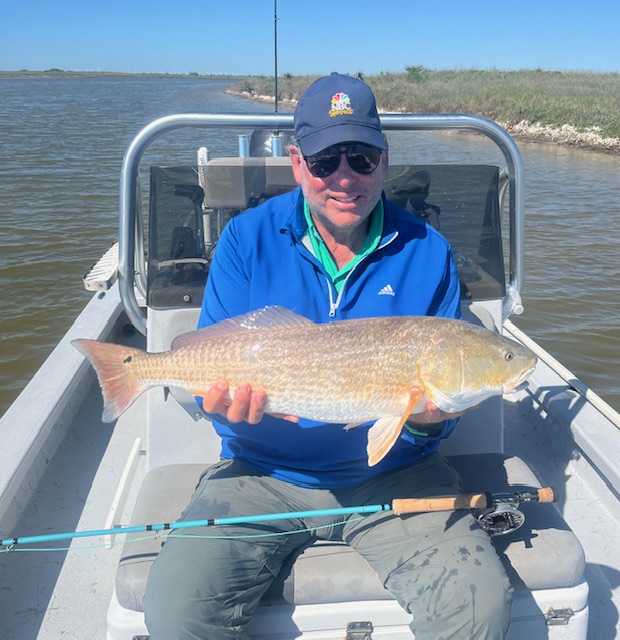
steelhead swing

 Conclusion with Pat Beahen on Steelhead Swing Tips

This chat with Pat could’ve gone on for hours — and honestly, we barely scratched the surface. But if you’re a steelheader in the Great Lakes or BC, there’s a ton here to take straight to the river. From gradient to dry flies to reading subtle hydraulics, Pat lays it all out.


849 | The Real Story Behind A River Runs Through It with John Maclean  

Episode Show Notes

Some stories follow you your whole life, and John MacLean grew up inside one of the most meaningful ones ever tied to fly fishing. In this episode, we look past the nostalgia and into the real heart of A River Runs Through It — the family, the grief, the responsibility, and the loss that shaped his father’s writing.

John is a journalist and author of Home Waters, and the son of Norman MacLean. He’s spent decades tracing the real events behind the book and the movie — the slow rise of the original printing, the truth of Paul’s murder, the guilt Norman carried, and how writing became the only way to make sense of it all. This episode also follows John’s own work, from fire investigations to his next book, marking fifty years of A River Runs Through It.

There’s a lot here — family history, Montana stories, film moments, and the deeper current that still pulls at John today.

Hit play to start listening! 👇🏻🎧


apple podcasts

Find the show:  Follow the Show | Overcast | Spotify

Subscribe on Apple Podcasts

Subscribe on Android

Subscribe via RSS

(The full episode transcript is at the bottom of this blogpost) 👇🏻

Sponsors and Podcast Updates

A River Runs Through It

Show Notes with John Maclean on A River Runs Through It

John Maclean walks through the real story behind A River Runs Through It — the book, the movie, the people, and the truths tucked between the lines. We talk about Paul’s life and death, Norman’s guilt, the writing process, and why this story still moves readers around the world.

The Slow Rise of a Classic

(02:46) The book didn’t explode out of the gate. John explains how the University of Chicago Press printed just 1,500 copies because they weren’t sure anyone would care. The early momentum came from fly shops and anglers saying, “This feels like the real thing.”

As word spread, demand kept climbing year after year, which John says rarely happens with a book. The book grew because fishermen recognized themselves in it — not techniques, but the soul of the sport. Redford’s film eventually supercharged it, but the fishing community discovered it first and carried it forward.

A River Runs Through It
Photo via https://www.amazon.in/River-Runs-through-Other-Stories-ebook/dp/B06X99WMNF

What A River Runs Through It Was Really About

(04:33) John explains that the reason anglers embraced A River Runs Through It so quickly is because it didn’t teach you how to fish — it captured the feeling of being on the water. The book carried the quiet, the rhythm, and the inner life of the sport in a way people instantly recognized.

But Norman always pushed back when people called it a fishing book. He’d hand it to someone, let them read it overnight, and then ask what they thought it was about. Only when they came back, seeing the deeper story — the relationship between the two brothers — did he feel they understood what he’d really written.

A River Runs Through It
Norman and Paul on a family camping trip.
Photo via https://johnmacleanbooks.com/

The Real Paul

(07:22) John walks through what actually happened to his Uncle Paul — the drinking, the fights, and the brutal beating that led to his death in Chicago. He used his reporter background to dig up the coroner’s report, sworn testimony, and police documents.

Here are some details John noted:

  • Paul lived in Chicago for the last year and a half of his life
  • Found alive after being beaten; died later that afternoon
  • Longstanding gambling trouble followed him from Montana
  • The family had repeatedly paid off his debts

This factual account appears in Home Waters, but John says speculation still lingers.

Norman’s Guilt

(10:11) After publishing Home Waters, old friends told John that Norman had long believed (or told himself) that an Irish gang killed Paul. John doubts it, but he believes his father needed a version of the story that carried a deeper meaning — something more than a random back-alley beating.

Norman blamed himself for refusing Paul money to pay his debts. That guilt became the emotional core of A River Runs Through It.

Norman didn’t start writing the book until he was 70. He had tried and failed to write a book for years. After losing his wife and living alone, he finally returned to Paul’s story. It was painful and liberating at the same time. John says his father was “tortured by writing,” but A River Runs Through It redeemed his brother and brought him peace.

The Movie: A River Runs Through It

Norman never saw the movie or the release of Young Men and Fire. But he did see the fishing community embrace A River Runs Through It, and it made him incredibly happy. Anglers recognized the authenticity before anyone else.

He once said, “I’m the happiest author that ever was,” because the book gave his brother an afterlife.

Robert Redford first visited Norman in the 1980s. The meeting famously went sideways when Redford showed up a day late and Norman shut the door in his face. Later, a script draft had Paul killing a trout by breaking its neck — something that horrified Norman. Redford paused the project.

But when the movie was finally made, John says they got the ending perfect. Redford himself recorded the final lines after rejecting dozens of audition tapes.

Hemingway’s Influence

Both John and Norman were shaped by Hemingway’s clean, stripped-down writing. John says reading Big Two-Hearted River as a kid made him realize he wanted to write. He still uses that story as creative fuel.

He even worked on a special centennial edition of the story.

Logging, Pimping, and Your Pal Jim — The Real Jim

(48:24) A listener asked whether Jim — the lumberjack in one of Norman’s other stories — was a real person. John says yes. Jim was a real backwoods sawyer his father worked with, and the story of the two-man saw is drawn from real experience.

  • Jim was a strong, skilled Sawyer
  • Norman started as the clueless college kid
  • Over time, they became a finely tuned sawing team
  • Jim later asked Norman to be his partner the next summer

That bond — built through physical work and mutual respect — stayed with Norman his whole life.

The Ranger, the Cook, and the Hole in the Sky

(52:51) The third story in the collection became a movie as well. It follows Bill Bell, a legendary early-day ranger in the Bitterroots. Norman spent a couple of summers on his crew and learned how to earn his place through hard work, storms, fires, and wild country.

It’s another coming-of-age story rooted in real Montana ground.

A River Runs Through It

About the Guest

John Maclean

John Maclean is a journalist, author, and the son of Norman Maclean. He spent decades as a reporter for the Chicago Tribune, served as diplomatic correspondent, and later turned to writing books, including Home Waters and several groundbreaking works on wildland fires. He splits his time between Washington, D.C., and the family cabin in Montana, where many of these stories began.

Resources Noted in the Show

You can find John at the below and follow along with his ongoing work and writing projects:

Website: https://johnmacleanbooks.com/

Facebook: John N Maclean

Jackson Hole Fly Co: https://jacksonholeflycompany.com/

Drifthook Fly Fishing: https://drifthook.com/

Fish The Fly: https://fishthefly.com/

Sponsors and Podcast Updates

Related Podcast Episodes

Full Podcast Transcript

Episode Transcript
849 Transcript 00:00:00 John: Today, we’re tracing the story behind one of the most enduring works ever tied to fly fishing, a story that quietly reshaped the sport and touched readers far beyond the water’s edge. This conversation isn’t about nostalgia. It’s about family, memory, responsibility, and the kind of grief that doesn’t fade just because the river keeps moving. By the end of this episode, you’ll see the book not as a tale about fly fishing, but as a story of love, guilt, forgiveness, and the waters that stay with us long after we leave them. This is the Wet Fly Swing podcast, where I show you the best places to travel to for fly fishing, how to find the best resources and tools to prepare for that big trip, and what you can do to give back to the fish species we all love. John MacLean grew up inside a River Runs Through It, journalist, author and son of Norman MacLean. John has spent decades following the threads behind the greatest fly fishing movie of all time, the real Paul. The truth of his death, the burden his father carried and how the loss eventually became literature. Here to share the journey and all the stories is John McClane. You can find his work at John McClane books. How’s it going, John? 00:01:06 Speaker 2: It’s going pretty well. Beautiful Indian summer weather here in Washington, D.C.. 00:01:11 John: Oh, wow. Yeah. You’re in D.C.. Yes. There you go. Okay, so this is, uh, getting off to a good start. We’ve, uh, I’ve done a little bit of fishing out on the East coast. Not as much as the west, but we’ll probably touch on that today and kind of what you’re doing. You’re, uh, you’re an author. We’re going to talk about some of the books. Probably the biggest thing here is you’re the son of Norman McLean, one of the most, I mean, not even one of the most, the most famous fly fishing book and movie of all time. A river runs through it. So we’re going to talk about that. Your connection over the years, it’s come up probably more than anything else on the podcast because people have talked, whether you’re a, you know, if you’re in the industry of, you know, a guy at a shop owner in nineteen ninety two three, a river runs through it, just like catapulted fly fishing into the next level of, you know, bringing it to the mainstream. Um, so we’re going to talk about all that today. But first, take us back. You know, you said you’re you’re in D.C.. What’s happening this time of year? Are you busy writing? 00:02:02 Speaker 2: Uh, actually, I was when you called, I forgot we were going to do the podcast, and I was, uh, working on a draft of a book, uh, that I hope to come out next year, which is the fiftieth anniversary of the publication of A River Runs Through It. 00:02:18 John: There you go. Yeah. So fifty years. That’s some unbelievable. And and I’m actually fifty right now, so that’s, uh. Yeah. 00:02:25 Speaker 2: It doesn’t seem like that long at all. 00:02:27 John: No, it doesn’t seem like fifty. 00:02:29 Speaker 2: Seems like it’s something that just happened, you know. 00:02:31 John: Yeah. So nineteen seventy five, the book was published seventy six seventy six. So the book was published in seventy six. And what was that like? Do you remember? Because it kind of had a slow like, it didn’t kind of blast off into the the, you know, universe until later, right? 00:02:46 Speaker 2: Yeah. Let’s be fair. You know, Robert Redford supercharged the thing with his movie, but it had a very interesting early history, uh, the University of Chicago Press, where my when my father taught at the University of Chicago, brought the book out and the first run of it, the first printing was fifteen hundred copies. Uh, they didn’t really believe in it. And g a lot of people liked it, and they grabbed it. And, uh, so they printed an additional three thousand. That first year, we tried to get an exact number for it, and it can’t, you know, who knows? Did the press keep running an hour later? About five thousand copies, four thousand five hundred, five thousand copies. But then every year after that, it sold more copies. That’s very unusual for a book. Usually you have a burst the first year or two, and then it tapers off. This had the opposite taper. Uh, it. 00:03:40 John: Keeps getting. 00:03:41 Speaker 2: Bigger up and up. Yeah, bigger and bigger. 00:03:43 John: Even to this day, is it still going up and up even today? 00:03:46 Speaker 2: Well, no it’s not. It’s, uh, it had a height after the movie came out. Yeah. And. No, it’s not a no. 00:03:54 John: It’s not down. Okay. 00:03:56 Speaker 2: I mean, it comes right along and it has years when it does go up. When, uh, my memoir came out, uh, home waters, it, uh, the sales went up sixty over sixty percent on a river runs through it. So these things don’t happen. But what happened with the earliest years is that you guys in the fishing industry got Ahold of it and said, this is the authentic thing. This is what it feels like to fish. You know, anybody can write a book about how you fish. Uh, not anybody. 00:04:24 John: Not anybody. 00:04:25 Speaker 2: Yeah, there are good ones and bad ones and exceptional ones. 00:04:29 John: Well, anybody can write a book, but not anybody can’t write a great book. Right? 00:04:33 Speaker 2: But this one told you what it feels like to fish. You know, it put the soul into the into the sport. And people loved it. 00:04:39 John: And it was a book about. It’s interesting because we’ve heard stories about your dad on the podcast. We’ve had people that were in the movie connected to it that helped produce it, things like that. And there was one famous one, I think it was Gary Borger. Um, mentioned, I believe. Right. It was Gary who was involved in it early on. He mentioned that he was in a later I think he was at a um, or sometime in early in that period. He asked your dad, like your dad asked him what he thought about the book. And Gary said, oh, it’s the greatest fly fishing book ever. And your dad was like, no, it’s not a book about fly fishing, right? So talk about that. What was your dad’s? He really what was his thoughts on what it was about? 00:05:15 Speaker 2: Uh, that anecdote happened with a lot of different people. Yeah. Uh, he would give the book to different people, and they would read it, and then he would ask them what they thought of it. And you can read it in a night. I mean, Jack Dennis, uh, tells me that exact same story. He was some kind of a conference, and my dad was there. And Jack is very personable. And so he introduced himself, and I said, here, take the book. And so Jack took it back to his hotel room. He read it overnight and next morning said, what did you think of the book? What did you think it was about? He says, oh, it’s the greatest fishing book ever written. He You said you didn’t get it. Go back and read it again. And Jack did. Took it back to his hotel and he read it again. And he came back the next morning and I said, what’s the book about? Said. Story of two brothers. He said, you got it. 00:06:03 John: Yeah. 00:06:04 Speaker 2: Just like that. So that’s really, I think, what has made the book, the book I’m writing now started out as a nice memoir about what it’s like to be a fly fisherman when you’re as old as I am. Mhm. Called fishing into the Twilight. And, uh, I wrote a piece that wound up in Field and Stream called fishing Into the Twilight, which talks about this, uh, a short piece and not expanding that into a book. But as I expanded it, I just kept running into my Uncle Paul and his murder. And so, you know, we go along fishing. I do a little fishing in Montana. I do a little fishing on the Missouri. I do some fishing at Penns Creek in Pennsylvania, which I love. I fished that for thirty years. Wonderful stream. And then we’ll wait, you know, let’s go back and figure how this thing ever got started. 00:06:59 John: How the whole. 00:07:00 Speaker 2: The whole chain of events. I mean, this whole business. I mean, I’ve written this is my eighth book. Uh, I wrote five books about fatal wildland fires. My dad wrote one young man in fire that he never finished it. We had to finish for him. And how did all this stuff start? And it all goes back to Paul’s murder in Chicago. 00:07:22 John: It does. Maybe you can describe that a little bit on the murder, because I think that’s something a lot of people don’t really. It’s part of the movie, obviously, a big part because that’s a tragic part of the book. But yeah, describe that a little bit. 00:07:34 Speaker 2: Yeah. You don’t see it. I mean, that’s one of the things I really like about that movie. People say, what do you think about the movie? And I’m as a fisherman, I’m supposed to say, oh, it isn’t the book, it’s the movie. Let’s take it on its own terms. 00:07:45 John: Yeah, it’s a movie. 00:07:46 Speaker 2: What’s wonderful about the movie for me is that everybody can go, a whole family can go see that movie, and the kids like Paul, and they identify with Paul, and he’s charming, he’s handsome and he’s troubled. And they’re kids, and they’ve got trouble. And they know something’s bad’s going to happen. You can’t get away with as much as he did. When it happens, you don’t see it. It’s off screen. There’s no blood, there’s no horror. There is the emotional aftermath somewhat, but not it’s it’s handled so deftly that you’re not cringing and saying, oh God, I just feel awful about this. 00:08:27 John: Right. You don’t want that. 00:08:29 Speaker 2: Yeah. Uh, so that was good. The actual murder was nasty. 00:08:35 John: Right. So you’re in your document, you’re following this in a book that you’re writing now and talking about the murder. 00:08:40 Speaker 2: Yeah, I wrote about it in home waters because I wanted to put an end to all the speculation about it, and I didn’t. I didn’t succeed in that. I succeeded in writing a factual account. You know I am who I am. And so I was a reporter in Chicago for a lot of years. I know how to do that kind of thing. And I was at the time I did the research on it. I was Paul’s closest living relative, so I could get documents like a coroner’s report that other people couldn’t get. 00:09:06 John: Oh, wow. 00:09:07 Speaker 2: And yeah, and the coroner’s inquest and sworn testimony by my father and others, the cops, the whole thing. And I put that in the book. I thought, oh, this is going to quiet down. He went out on a Sunday night after an ordinary day, taking a girlfriend to a White Sox game and having dinner. And at ten o’clock he dropped her off. And instead of going home, he went out and got drunk and tried to start fights on the street in the South Side of Chicago, which is a bad thing to try to do. It’s rough out. 00:09:36 John: There. 00:09:37 Speaker 2: And sometime after midnight, probably he was around that time, he got into an altercation with people and they killed him, beat him to death, and he was found about five o’clock the next morning, still alive. And he died about one o’clock that afternoon. So that factual account is there in in home waters. 00:09:59 John: Yeah. And these were just some people, just some random people that were he just ran into out at a bar. 00:10:05 Speaker 2: Well, that’s the question. 00:10:06 John: That’s the question. 00:10:08 Speaker 2: That’s the question that I’m dealing with right now. 00:10:10 John: Gotcha. 00:10:11 Speaker 2: After the book came out, a couple of old friends of mine and my dad’s who by the time they called me, were in their nineties. Uh, said, hey, wait a minute, John, uh, your father told a different story about this. Hmm. Uh, to us and to others. I’ve checked it out and. Yeah. And even checked my memory. I think he said something to me, but I was so young, it didn’t register. Yeah. Uh, he thought or said that an Irish gang, uh, killed his brother. And it’s true for sure that Paul had gotten into debt or gambling with this gang in Chicago. 00:10:55 John: Not in Montana. 00:10:56 Speaker 2: Yeah, South side of Chicago. Well, let’s move Paul. Geographically in the movie, he never leaves Montana. No. Uh, and in the book, he never leaves Montana. In fact, the last year and a half or so of his life, he was in Chicago. He had gotten in debt, in trouble, uh, repeatedly in Montana and gambling debts. My father said. 00:11:17 John: Gotcha. 00:11:17 Speaker 2: He must have won some time. But they had to pay off his debts to my father, and their father had to pay off his debts. And I got sick of it. 00:11:26 John: Yeah. 00:11:26 Speaker 2: They said, look, you know, you gotta straighten out your life. Go to Chicago, your brother will watch over you and help you get a job. And the guy’s in his thirties. What? Wait a minute. You know, he’s got a good job. but he did that. He went to Chicago, lived in Hyde Park. He worked for the University of Chicago publicity department. Wow. Because my dad had, uh. Your dad got a friend who ran that? Yeah. And couldn’t get a job on a newspaper with his experience. Ten years of Montana Newspapering didn’t work. Uh, I got into the Chicago journalism in a way that he hadn’t. He had applied to the city news bureau of Chicago. Uh, and they turned him down. You had to know somebody. You had to have somebody. Somebody. You had to be somebody. Somebody sent. 00:12:12 John: Right. 00:12:13 Speaker 2: And at that time, the guy who ran the press relations bureau at the University of Chicago didn’t know enough people. He just got in the job. By the time I came along, he did, and he made a call, and I got a job. Within three days, I had a press card with the city news bureau, uh, and went on. But Paul didn’t get that, and he got in debt. And then something happened. According to my father. These guys killed him. And what the callers told me. One of them told me. He said your dad didn’t say. It might have been this way. He said they killed him. They did it. Yeah. I don’t think that’s true. Mm. Yeah, I don’t, I mean, you can’t prove it one way or another. I think that that was fiction that he told himself in order to make Paul’s murder more meaningful and connected to his life than it was, even if it was connected to something kind of seamy, like, you know, being beaten to death for a gambling debt in a back alley on the South Side of Chicago. 00:13:14 John: Right. 00:13:14 Speaker 2: And this gets us into a very interesting place, which is worth getting into with A River Runs Through it, which is what’s the difference between fact and fiction. 00:13:24 John: Right? 00:13:25 Speaker 2: And when you get to grief and guilt, there’s almost it’s a very permeable barrier between those two things. Between self-accusation. Guilt is self-accusation. And you don’t stop short. You know, you go a long way on this. And my dad got into this guilt complex about Paul, and he’d been responsible. He was in charge of. All right. 00:13:49 John: And he got because he went to Chicago. Your brother was kind of looking over to him. Over him. And then he died on his watch. 00:13:55 Speaker 2: You got it, brother. Killed on his watch. And. Yeah. And he blamed himself for it because Paul had come to him and said, I need money to pay these guys off. And he turned him down. 00:14:04 John: Oh. 00:14:05 Speaker 2: Right. Yeah. Oh, boy. So this becomes the motivation for writing A River Runs Through It. 00:14:12 John: Wow. So that’s where the motivation came from, from Paul’s death. That situation. And your dad feeling like he was the reason for it. Crazy. 00:14:19 Speaker 2: And he almost didn’t do it. 00:14:21 John: He almost didn’t do it. 00:14:22 Speaker 2: Yeah. That’s just that’s what my current book is about. And he didn’t start this writing. A River runs Through it till he was seventy years old. 00:14:30 John: Seventy years old, right? 00:14:32 Speaker 2: Wow. And he had not written a book before it. And I couldn’t tell you about writing books. It ain’t easy. 00:14:37 John: No. So what was he doing if he started A River Runs Through It, writing it at seventy. What was he doing for most of his life before. 00:14:43 Speaker 2: Teaching English at the University of Chicago and fishing summers in Montana and taking care of our cabin. 00:14:49 John: Right. And he wasn’t writing for he wasn’t writing books until later in life. 00:14:53 Speaker 2: He was trying to he tried to write a book about, uh, the Custer fight. And, uh, it didn’t work. Yeah. And, uh, I think it didn’t work. Um, an analysis of that one, too. Uh, because he took on too much. He wanted to write a book about the military history. Okay. As a subject, why don’t you write a work about the social history of it? You know, the milieu wanted to write about the afterlife of the battle and how it affected, uh, life in America. Uh, he wanted to write it about an advertising campaign. The great painting. The Budweiser painting. Uh, of the cluster on the on the hill in his final moments. Thing after thing after thing. And it was just too much and it collapsed. Uh, it went right. The history of the Cheyenne Indians, and then maybe also the history of the Sioux, because there were some of them there. Yeah, right. Whoa! Pick one and stick with it. And he didn’t do that, and he finally had to abandon it. So he hadn’t written a book. Um, that first book is hard to write. 00:15:56 John: Yeah, the first one, we’ve talked a lot. We’ve had a number of authors, including John Gierach and a number of great authors, and we’ve talked about Hemingway and, you know, and I’ve read some great books, and one of them is, um, you know, called The War of Art, Steven Pressfield. And if you haven’t seen that one, this was a powerful book, because what he says is it’s he’s a writer and he was a he didn’t make it big. He was very kind of like your dad. Well, at least writing didn’t make it big. And then finally he wrote a book called The Legend of Bagger Vance. And that book became a movie as well, and he became famous. But what he says in the ah of the War of art, he says, you got to be like a marine. Writing or doing anything great is like, it’s so hard that you got to be able to, like, show up every day. You know, you got to be able to live in your car. You got to build like, which he did. You know, you got to be able to take the pain because it’s going to be hard. You’re going to continually getting you’re going to fail. And so he and a lot of people use that book because it just reminds you like, man, this is not easy a business. You know, having a writing a book, it’s all to be successful at it. So you got to keep going even when you’re failing a lot. Right? So I feel like that, um, you know, your dad probably felt some of that. 00:17:00 Speaker 2: Uh, I think he felt it acutely. Yeah, uh, that he hadn’t done it, and he he always wanted to be a writer. That’s what he wanted. He wanted to be an author. And, uh, he tried and tried and failed. And here he was. His wife had died. He was alone. He thought, you know, but that also gives you a great deal of freedom. And he hadn’t reconciled with his brother. He was still eating him alive. There’s a wonderful book out, uh, by a couple of academic people about, uh, how a River Runs Through. It was written and they spent years going over all the time. It’s academic. I’ll give you the name, but it’s one hundred and thirty three dollars retail. That’s okay. 00:17:45 John: We’ll put a link in the show notes to it. 00:17:46 Speaker 2: Here’s the story. It begins with the opening sentence of this book that has looked at everything that he ever did about or around. Norman McLean was tortured by writing. Yeah. Which is what you just said. I mean, this is a torture. This is not. It’s not a pleasant walk in the park. 00:18:03 John: No, I mean, and you could probably put that to anything. Great. You know, there’s going to be you know, there’s going to be that work to get there. You’ve got to keep working your whole life sometimes. Right. The journey. So he wrote this book at was it published when he was seventy? Did it in seventy seventy three. 00:18:17 Speaker 2: When he was seventy three? When it was published in seventy six. 00:18:20 John: Did he see the, um, some success of the book or when did the movie come out? Versus was he still around? 00:18:27 Speaker 2: He was not the movie. And his second book, Young Men and Fire, both came out after he was gone. Yeah. Uh, but what he saw was the, uh, approbation, the acceptance and the praise that came from the fishing community. 00:18:45 John: Oh, he did see it. So before the movie? 00:18:46 Speaker 2: Yes. He did. He just loved that the book. 00:18:49 John: People were reading the book well before Redford put the movie out. 00:18:53 Speaker 2: This is long before the movie. Yeah. You know that the fishing guys got on to it and they supported it, and they said, this is it. This is the real McCoy. And I can’t tell you how happy that made him. I mean, he was just joyful about that. The literary people got on to it, too. And that mattered because he was a literary guy and he talked to it, was a great teacher of English literature. So that was a big deal. So. No, he was not, uh, he was not unhappy. Studs Terkel I asked him once in an interview. He said, you know, don’t you wish you’d gotten into this sooner? And don’t you feel, you know, unhappy because it didn’t happen when you were forty years old? He said, whoa, whoa, whoa. He said, I’m the happiest author that ever was. 00:19:36 John: Yeah. 00:19:37 Speaker 2: You have to understand that it wasn’t just a book. This was his relationship with his brother and his father and his mother, but most importantly, with his brother. He redeemed his brother. He resurrected him from that stinking back alley on the south side of Chicago. And he made him beautiful. 00:19:56 John: Yeah. 00:19:56 Speaker 2: And he gave him an afterlife. And he has had a remarkable afterlife. It has gone on and on and on. And I get this. Yeah. Because people are touched by the book. Various things. They love the fishing. The one thing or another. The brother thing gets a lot of people. Oh, yeah, there are a lot of people who have had the same experience with siblings. Doesn’t matter if it’s a brother or sister. Gender makes no difference in this. But they had some sib who went astray. They tried to help and it didn’t work. They offered the absolute best of themselves and it was refused. And it came to a very bad end. And forever they felt alone. Then suddenly they read, A river runs through It, and there it is. 00:20:45 John: Check out Jackson Hole Fly Company today. Premium fly gear straight to your door without the premium price. Jackson Hole Fly Company designs and builds their own fly rods, reels, flies and gear. Delivering quality you can trust at prices that let you fish more and spend less. Whether you’re picking up a fly rod for the first time or guiding every day, they’ve got what you need. Check them out right now. That’s Jackson hole fly company, Jackson hole fly company. Com. When it comes to high quality flies that truly elevate your fly fishing game, drift hook is the trusted source you need. I’ve been using drift hooks, expertly selected flies for a while now, and they never disappoint. Plus, they stand behind their products with a money back guarantee. Are you ready to upgrade your fly box? Head over to Drift Hook today and use the code at checkout to get fifteen percent off your first order. That’s drift hook. Don’t miss out. Well, and that’s what resonated for me directly, is that I have actually three brothers, older brothers. And I had one that went through a period of we all thought he was going to die because he wasn’t taking care of himself. You know, alcohol, you know, like all sorts of stuff. And at a certain point I told him I was trying to help, and I was like, you know, there’s nothing I can do. You know, if they’re not going to listen to you. Right. I mean, you feel like you’re kind of helpless and you kind of give up. I feel like maybe your dad did that a little bit, right? He felt like there was nothing he could do to save Paul with what he was doing at the time. 00:22:14 Speaker 2: Well, I think it was worse than that. I think he thought that there was something he could have done that would have saved him. And he didn’t do it. Yeah, at the end, having tried everything else but your story, Dave, I mean, this is it. 00:22:27 John: It’s not abnormal. 00:22:28 Speaker 2: No. You belong to a large company. 00:22:31 John: Yep. And my brother didn’t die. You know, luckily, he’s getting better and, you know, getting help. But it’s still one of those things. I could see it, right? I felt what that was like to potentially lose somebody. What’s your, um. Do you remember your grandfather? 00:22:44 Speaker 2: Uh, no. He died before I was born. But I have studied him. Yeah, we have the same name. Uh, John Norman McLean. Uh, I like a lot of what he did. I live in part of the year in the cabin that he built. 00:22:58 John: Oh, wow. So you lived part of the year in the cabin? That kind of was set with. The movie was basically set on that area. 00:23:03 Speaker 2: That same area that was the. They never went to the cabin and they never used a cabin. They used the house in Missoula. That’s what they recreated. Yeah. And, uh, at the time, we were all feeling kind of touchy about it, and I’m glad they didn’t. 00:23:15 John: Oh, they were thinking about using that actual cabin. 00:23:18 Speaker 2: No they weren’t. 00:23:19 John: No, no. 00:23:19 Speaker 2: Yeah. Happened is they didn’t use the Blackfoot. 00:23:22 John: Oh that’s right. 00:23:23 Speaker 2: You know, all the fishing scenes are elsewhere, and you get various stories about why that happened. Yeah. The background for the Blackfoot River shows hills that, uh, still have logging scars. Uh, well, what do you think it looked like in the nineteen twenties? 00:23:40 John: Oh, it. 00:23:41 Speaker 2: Was probably worse when it was done. It looked worse. Yeah. They were. They hadn’t come back green. No. You see these patches of green? It looks like a snake. Green stamps in various shades of green on the on the hillsides. But they also discovered that if they had gone up to Missoula to do this in the Blackfoot, uh, scenes or sixty miles away, fifty or sixty miles away, that it would have cost them about, uh, one hundred thousand dollars a day extra for support services. And in Livingston, Montana, it’s pretty remote headquartered. Uh, they were up for it. I mean, they they’ve done this, they’ve got the services and and it all worked. That had something to do with it. Uh, my father said that when that movie is made, it’s going to be on a Blackfoot River or it’s not going to be made right. But he died before it was made. Yeah, there’s a story about that one, too. Can I tell that story? That’s a fun. 00:24:34 John: one. Oh, yeah. No. Feel free. I want to hear. I want to hear all the stories. This is great. 00:24:37 Speaker 2: Well, the, uh, Redford talked him into it. He had an option, uh, with, uh. Oh. 00:24:45 John: So. So. Redford. So before the movie goes live in ninety two, ninety three, was it ninety two or ninety three in that period? Right. 00:24:51 Speaker 2: Uh, the movie wasn’t until the nineties. 00:24:54 John: Yeah, until the nineties. So ninety three. But Robert Redford was talking to your dad before he passed away, right? Uh, but. 00:24:59 Speaker 2: He was talking to him, and, yes, in, in the eighties, at the end of the eighties, in the nineteen eighties, when my dad was in his eighties. Yeah. Redford got in touch with him and said, I want to come by and talk to you. And he said, that’s fine, come on by and talk to me. So they set a date for it, and Richard flew out to Chicago and he missed it by a day. He was a day late. 00:25:20 John: Oh, your dad was a late, late for a meeting. 00:25:23 Speaker 2: Redford was a day late. 00:25:25 John: Oh, Redford was a day late for. 00:25:26 Speaker 2: The. 00:25:26 John: Meeting. 00:25:26 Speaker 2: He knocked on the door. Um, my father opened the door and said, Robert, you’re late. And closed the door. 00:25:33 John: Oh, wow. He closed the door on Robert Redford. 00:25:37 Speaker 2: Yeah. This is my old man. Um, and, you know, people got panicky about that and fluttered around and got it straightened out. Then they sent my dad a script, and the script opened with Paul on a dock at Seeley Lake for cabinet. And he’s got a big rainbow trout that he’s just caught. And he takes the trout and he kills it by breaking its neck. 00:26:03 John: Right. 00:26:03 Speaker 2: And you had to scrape my father off the ceiling. I mean, that was his brother and. No. 00:26:09 John: No no. Not good. Not a good. 00:26:10 Speaker 2: Start. And Redford just stopped trying to make the movie at that point. 00:26:14 John: Oh, wow. 00:26:15 Speaker 2: Bob died earlier this year and we lost him. Uh, he was, you know, he could be a Hollywood movie star. Handsome movie star. He could also be a very decent, smart human being. And I think he was a really good actor. And I admire him for one thing in particular, that he kept on being an actor when he was old. You know, a lot of those pretty boys just quit when they stopped being pretty. 00:26:37 John: Oh, yeah. I mean, Robert Redford is like when you think of actors, he’s like at the top of, you know, the movie’s the stuff he’s been in, right? The Sundance Kid, um, you name it. I can’t even think of him. All right. 00:26:48 Speaker 2: Yeah. I love that movie. Yeah, yeah, but he did the old guy movies, too, and he did a lot of directing, and he did a lot of, uh, helping other people. Did everything. Sundance Festival. 00:26:58 John: Sundance Film Festival. Right. 00:27:00 Speaker 2: He’s a big conservationist. 00:27:01 John: And he’s a conservationist, which is huge. 00:27:03 Speaker 2: Yes. You know, he was like you and me. I mean, he really cared about pterosaurs. 00:27:07 John: Resource. Yeah, he was a guy. I never had him on the podcast. He was a person I always wanted. I thought, you know, Robert Redford. Of course, we still have Brad Pitt, so maybe we’ll get him on. But, you know, we’ve had a couple of well, probably one of the most famous conservationist, Brad Pitt. No, not yet, but we got it. We got a goal. But I had I had Yvon Chouinard on who’s probably one of the biggest conservationists. You know, you got his coat on Patagonia founder and, and he talked on that podcast just like this. We we talked all about conservation. It was an hour of conservation, how he was trying to save the home planet. But I didn’t realize that. Yeah, Robert Redford was also a conservationist. 00:27:40 Speaker 2: Yeah, indeed. And had people around him who were, uh, you talk about my grandfather, the guy who played my grandfather, Tom Skerritt. Skerritt and I think did an absolutely amazing job. She’s, uh, is a huge conservationist. He and I met because we’re both, uh, do occasional work for American rivers. 00:28:00 John: Oh, yeah. 00:28:00 Speaker 2: Uh, yeah. And when I was doing the book, doing some research for the book earlier this year. I got in touch with Tom because I said, I’ve got some quotes of yours that I’ve dug out, uh, where you talk about your role playing my grandfather and you say, is your favorite role of all the ones you played. Would you mind if I use these? He wrote back, and which apparently doesn’t happen very often. Yeah. And he said yes. Of all the roles I have ever played, uh, that was the best. 00:28:31 John: No kidding. That was his best role of all time. 00:28:33 Speaker 2: And it turns out that his dad was like my grandfather, who was Canadian. He was a laconic, tough guy. And he had the same habit that my grandfather and my father had. You know, we’d sit down together, be talking, and he would just pat you on the knee like that. Yeah. Kind of a, you know, didn’t do well trying to express affection with words. Oh, right. Just like, you know, you know. 00:28:59 John: You’re doing okay. 00:29:01 Speaker 2: You’re doing okay. We’re connected. 00:29:03 John: Right? So your dad did that and your grandpa did that? 00:29:06 Speaker 2: Yep. Both of them? Yeah. I’m sure my grandfather did. As I say. I wasn’t around for it, but it was a habit my father had. And I’m sure that he picked it up from his father. 00:29:15 John: Wow. What? You said. It sounds like you’ve done some research on your grandfather. What? What have you learned on that? That maybe wasn’t shown in the movie? 00:29:22 Speaker 2: Well, uh. His life had two parts that before and after Paul. I mean, he was through. Oh, really? After Paul was killed? Yeah. I mean, I don’t think they handled Paul well. I think they, you know, jumped on him and, uh, kind of half smothered him, and he didn’t handle it well. I mean, he really should have fought a lot harder for an independent life. By the time he got told he had to go to Chicago, which is the opposite of Montana. He was in his thirties. Yeah. I mean, come on, you got some independence here. He. He had ten years on a newspaper. He had a great job. He’s a political reporter in Helena, and everybody knew him and were respected him. Yeah. Hadn’t married, hadn’t really ever had a serious love affair with a woman. Uh, his best friend was my mother, who understood him more than anybody else did. Uh, they were both kind of freer spirits, and he it just it was bad. And my grandfather was a pillar of a pioneer community and brought civility and learning out to the western frontier. 00:30:34 John: Right. He was a Presbyterian minister. 00:30:37 Speaker 2: He was a Presbyterian minister. And he was a pastor in Bozeman, uh, initially, uh, where he instigated the building of a new church, which is still there. And then did the same thing in Missoula, uh, with his great friend AJ Gibson, who was the fabulous architect, uh, there in Missoula and a great family friend, and I think one of the most, the most beautiful thing I’ve ever read of his, of my grandfather’s was the eulogy he gave for A.J. Gibson and his wife when they were killed in an accident. Um, in the winter, it was, you know, a misty day. Uh, you couldn’t see anything. And they got stuck on a railroad crossing in Missoula, and the train plowed into him and killed him. Uh, but it’s a lovely thing, and I quote it in its entirety, virtually in home waters. 00:31:26 John: Oh, you do in home waters. Okay. 00:31:28 Speaker 2: Yeah. So I’ve gone back and I’ve, you know, tried to find out what he said, what he did, uh, the effect that he had on the community, he was thought of, uh, a, you know, kind of a prince of the church. That’s exactly what they called him. 00:31:44 John: And what year was this when they moved to Missoula? 00:31:47 Speaker 2: Oh. 00:31:49 John: Um, roughly. 00:31:50 Speaker 2: I should be able to just rattle that off. But in the twenties? 00:31:53 John: Yeah, in the twenties. 00:31:54 Speaker 2: Yeah, that’s when I came in there. And he stayed there for twenty five years. The Reverend. He became the general secretary of the Presbyterian Synod, which is like being a bishop in a Catholic church. And so he had to go over to Helena to do that. And he lived in Helena for a while, and actually Paul lived with him and paid rent. Uh, you know, it’s not good. 00:32:20 John: No, no. Yeah. Paul never. Really. He never really. Um. How would you say that? Is he. He kind of. He I don’t know. He didn’t find his way. It seems like he was kind of stuck. 00:32:31 Speaker 2: Yeah, he fell out of the nest. He didn’t fly out of the nest. 00:32:34 John: Yeah, he fell out, right? Yeah. Even though he had. It seemed like he had a lot. Well, at least the movie portrays in the book, right? Well, maybe not the book as much. I’m thinking the movie, but as this, you know, um, a lot of potential. 00:32:45 Speaker 2: Oh, he did. He had a lot of talent, and people really liked him. He had a lot of charm. 00:32:49 John: Yeah, and personable and all that stuff. 00:32:51 Speaker 2: And he was extraordinarily handsome. Yeah. I mean, there are stories about when he was at the University of Chicago doing this job for the PR department that the women typists would time his travel across the quadrangle so that they could go out and be on the quadrangle when Paul McClain walked by. 00:33:09 John: Wow. 00:33:10 Speaker 2: Uh, crazy. Yeah. Uh, and guys liked him. He was a fine athlete. Uh, a good handball player and a sportsman and had great charm, but just blew it. 00:33:24 John: He. Well, he had a, like, a lot of us, right? We have certain vices. And gambling was probably his worst. And maybe alcohol too. Or. No. Those two. Yeah. Yeah. Both. Yeah. That is, you know, again, back to the family stuff for me. I mean, to gambling and alcohol. I’ve known my whole life because my dad has struggled with alcohol his whole life. Um. I’ve gambling. I had a grandfather who was a big addict, had issues. So my whole life I’ve known, like, okay, I got to be careful with these two things I don’t want to. And so I never really got into gambling. And alcohol has always been one of those things where I’ve known like, okay, it’s tough, right? Because these things are you kind of get in the middle of it and all the sudden you turn around, you’re addicted. 00:34:04 Speaker 2: That’s right. And I’ve got you. You haven’t got them. 00:34:07 John: Yeah. How have you have you had any, uh, you know, struggles, uh, with your life, you know, similar vices, anything like that or. It seems like. 00:34:15 Speaker 2: A lot of links to Paul and some of them are. The less said, the better. 00:34:19 John: Yeah. Yeah. Right. You do? Yeah. 00:34:22 Speaker 2: But I don’t drink, I don’t smoke. Uh, I’ve been married to the same woman for almost sixty years. Uh, I have two sons who are both successful. Uh, I’ve written eight books. I spent thirty years in the newspaper business. I was, uh, diplomatic correspondent for the Chicago Tribune in Washington. Uh, I wound up being the foreign editor for a while. I quit after thirty years. I’ve been writing books for thirty years. Wow. So. Yes. 00:34:46 John: Yeah, that’s a full career right there. Just writing books. So it sounds like you took more after your father, who kind of had a successful career. Right. Tell me about the book for you working on the books. What’s that work been like? 00:34:57 Speaker 2: Uh, it started out, as I say, it was kind of a idle occupation. One of the things I wanted to do when I quit the Tribune thirty years ago was to kind of fill in books by writing outdoor stuff for the hook and bullet press. You know, when I was a kid, we had Sports Afield, Field and Stream, Outdoor Life, and I think Sports Afield was still around. I wrote a couple of pieces for them, uh, sporty pieces. And then they all died, you know, or became something different. 00:35:25 John: Yeah. The magazine, the whole media has changed. 00:35:27 Speaker 2: Yeah, there wasn’t any market for it, so I stopped. Then when, uh, I’d finished, uh, Home Waters and I was looking at our next project, I thought, well, I’m going to go back to do that. Maybe Field and Stream has come back. It’s come back very differently. It comes out twice a year and said, you know, it’d be really cool to write for Field and Stream because I grew up reading that. The Bob Roark, the old Man and the boy stories, all the great stuff they had. So I called the editor, who had done a really nice job, uh, with a profile, uh, of me and Home Waters. Very nice piece. Uh, Colin Kearns is the editor, and I said, Colin, I’d like to write a story for you. He said, oh, that’d be great. Go ahead and do it. So I did. And, uh, I turned it in and there was silence for a week. And so I called him up. I said, hey, Colin, did you get that story I sent you? He said, yeah, I got it. I said, well, what’d you think of it? He said, uh, I didn’t like it. Mm. I said, oh, what didn’t you like about it? He said, well, it’s a fishing story. 00:36:38 John: Yeah. 00:36:38 Speaker 2: Yeah. Right, right. Field and stream. And I said, well, what were you looking for, Colin? He said, well, I was looking for something more meditative. 00:36:47 John: Mhm. 00:36:48 Speaker 2: Uh, you know, that’s interesting. I said, I’ll tell you what, why don’t I take that thing back, uh, for a few weeks and see what I can do? He said, why don’t you do that? So I did, and he had done me a great favor. Uh, I really owe him a big one, because I went back and I spent a few days in recovery, and then, um, I started writing it and got very meditative. And I loved writing it. It was, you know, I’m old enough. So the thrill of writing about catching a fish doesn’t exist. You’ve got to have something more going on here. Yeah. And here was, you know, something more really interesting. So I wrote this piece. It wasn’t very long, twelve hundred words or so, and turned it in. And he said, we love it. We wish it was longer. I said, oh, well, better. So they got a guy to do some paintings, illustrations for it, and I looked one of them in particular, I just love And, uh, I wound up taking those paintings and the wood engravings from River runs Through It, Home waters. And the book I did of, uh, uh, a River run of Big Two-hearted River, the Centennial edition, and getting an art exhibit going from that. So suddenly things are expanding, you know, instead of, uh, just being punk, punk or hook and bullet press. Right. And that was the start of the book. And as I say, once I got into it and kept writing, it got bigger than that. It got back to this origin story. How did this all get started? How the hell did this all get started? Because it’s really been remarkable, and I’ve been able to kind of hook into it and go along with it. 00:38:38 John: You mean the whole the whole. 00:38:39 Speaker 3: The whole. 00:38:40 Speaker 2: Thing in the fire world, young men on Fire is the Bible of the Mann Gulch fire and of the Wildland Fire Service. My books are similarly thought of not. They’re different. Yeah. You know, if you know them. I’m a journalist. My dad was a half poet, and I favored that difference. You know, I did what I did, but those books all together, uh, six of them have changed the way fire investigations are made. They have made the fire ground safer. They have saved lives. I am told this regularly by people in the fire industry, and I believe it. And I certainly hope it’s true. That’s a big deal. And in the fishing world, as you said, River runs Through it ignited this breakout of fly fishing internationally. People in Japan took up fly fishing, and then they came to the Missouri River. And you. 00:39:36 John: Write. 00:39:37 Speaker 2: They dressed the way you dress in the movies? Yeah. You see them out there living the dream. So where did all that come from? I mean, how did that all get started? Because it’s something that hasn’t happened, my dad said. At one point he said, how many books do you know? How many great things were done by people in their seventies and 80s? It doesn’t happen. It happened. It happened. 00:40:02 John: Yeah. He wrote. And what is it? I mean, it’s obviously the greatest fly fishing movie, but the book is also, I mean, obviously a great book. How do people, when they talk about the book, how do they describe it and the impact to literature. 00:40:15 Speaker 2: In very personal terms? 00:40:17 John: Yeah. 00:40:17 Speaker 2: When people come up to me at presentations and things, they will often quote, especially from the last page. Um, that’s not not just the last page. 00:40:26 John: And is that the I am haunted by waters is that that’s the last line of the movie, right? 00:40:30 Speaker 2: It’s the last line of the book. 00:40:32 John: Do you know what he was, what he meant there? 00:40:35 Speaker 3: Yeah. 00:40:36 John: Is that something where you knew he told you or you just. It’s obvious. 00:40:40 Speaker 2: No. I mean, he was haunted by his brother’s death. 00:40:44 John: That’s what. 00:40:45 Speaker 2: It is. The core of it. 00:40:46 John: Yeah. 00:40:47 Speaker 2: Uh, and he had this remarkable, uh, upbringing in Montana when it was Eden. You know, I go out there now, the rivers are low, the insects aren’t there anymore. The last two years have been lousy fishing. 00:41:00 John: Yeah, there’s a lot more people. Right. Bows, bows, Angelus and stuff like Bozeman isn’t the same little town it used to be. 00:41:06 Speaker 2: Yeah, we don’t have to go into that. We both know what it is. Everybody’s been out there and knows what it is. Yeah, but what he was talking about was the his whole spiritual life. Uh, which is connected to his family. I mean, it’s all in the book. I mean, it’s not. I don’t think it’s a mystery. I think it’s all there. 00:41:26 John: Fist Fly Guide service is passionate about sharing Jackson Hole’s world class fishing, from its iconic rivers to hidden backcountry waters. The legendary mutant Stone and other fantastic hatches bring explosive top water eats during peak season. Backcountry creeks hold hidden gems where every band offers something new, and wild trout rise in untouched waters. Jackson Hole sits in the Golden Circle for trout, home to the headwaters of three major river systems the snake, the green, and the Yellowstone. Here you can chase native cutthroat trout, big browns, wild rainbows, and even kokanee on the fly. If this is your kind of fishing fish, the Fly Guide service is ready to take you there. Book your trip right now at fish Thefly.com. Was that a big part for you? The your dad or your grandfather, the Presbyterian minister? Did you have did some of that trickle down? Was your dad into? Did he stay involved in kind of religious activities and kind of all that? 00:42:21 Speaker 2: Oh, yes. But not formal ones. I mean, um, we had, uh, family friend, uh, Episcopal priest and Episcopalian and, uh, who knew my father very well and knew that he was not a formal, uh, traditional Christian. And who said that he thought that a River runs through? It was the most Christian text he had ever read outside the Gospels. 00:42:49 John: Wow. That’s something that a lot of people probably don’t think about. 00:42:52 Speaker 2: Yeah, you can leave the church, but the church doesn’t leave you. 00:42:55 John: Yeah. And fishing. You mentioned meditation, but just fly fishing. We talk about that a lot, too. It’s meditative, but it is kind of a church for a lot of people. You know, if you don’t have religion, fly fishing can. You know, you can make that connection to nature, right? The environment that that’s kind of a church, a religion in its own way. 00:43:12 Speaker 2: Yes. And, uh, you know, if you want to get really interest yourself in it about the water and the whole image of the water and the logos of water. Uh, there it is. I mean, it’s in the book. Yeah, it’s all through a river runs through it. Uh, it’s steeped in Christian spirituality without ever being been explicit? 00:43:35 John: Right. Which is amazing. Which is exactly what great writers do. You know, Hemingway, right? Was probably one of the greatest that I think. I can’t remember exactly how he phrased it, but he didn’t tell you the whole story. You know, he let you as a as you were reading it, figure things out. You know, it’s part of the is that something that resonates with you, that why your dad wrote and others. 00:43:52 Speaker 3: Well. 00:43:53 Speaker 2: Both my dad and I were very influenced by Hemingway and, uh, in my case, particularly by Big Two-hearted River. Um, I read it when I was young and said, My God, you know, you can do in words what we do. In fact, this is what it feels like to fish. I know now what I want to do with my life. I want to write. I want to do this when I’ve done it so. 00:44:13 John: Right. So Hemingway was one of your biggest inspirations? 00:44:16 Speaker 2: My dad gave me the story. He said, here. Read this. 00:44:20 John: Oh, wow. 00:44:21 Speaker 2: Read this one. That’s it. And I. And it hit. And it hit with him, too. You know, for one thing, in his day, you know, in the twenties and thirties and before I came along, Hemingway stripped the junk out of writing. Yeah. You know, he made it clean and, uh, non-victorian and non-romantic while still being pretty romantic, right? Uh, but that was all pushed into simple words. Straightforward sentences. The flowery stuff was gone, and that was great. Uh, my Uncle Paul, uh, really liked Hemingway. I’ve got his copies of Hemingway novels with his name written on them, which is nice to have. Um. Wow. So that’s going to, uh, a very big deal. 00:45:08 John: Yeah. What about on the movie? Uh, again, go back to the movie versus the book. What did the movie get right? What did it get wrong? Do you think? 00:45:16 Speaker 3: Oh. 00:45:17 John: Well. Or did it get most right, or was it more like you said, the movie? You know, your freedom to have. You know, it’s not an exact replica. 00:45:23 Speaker 3: Yeah. I mean. 00:45:24 Speaker 2: Let’s use different terms, because a movie is a movie, and a book is a book. Yeah. Uh, let me tell you one place where they got everything right. Yeah, which is the end of it. Mhm. Um, I just put that up on Facebook. So last whatever it is a minute. 20s. 00:45:39 Speaker 3: Okay. 00:45:40 John: Yeah. He’s sitting there. He’s tying on the fly. His hands are. 00:45:42 Speaker 3: Shaking on the. 00:45:43 Speaker 2: Fly. And then he’s. You see him in silhouette. He’s an old man. Yeah. And the final words of the book are read. And Redford decided to do that. And I needed somebody to do the reading. So he made a recording. He said, look, this is the way I want it done. So they went out and they tried all kinds of people and they would come back with auditions. And he said, no, no, he hasn’t got it. And finally they said to him, Bob, you got it. 00:46:10 Speaker 3: Yeah. 00:46:11 Speaker 2: You got it in the audition tape. You did it. Why don’t we use that? And that is Redford at the end reading the final words. And he got it. 00:46:21 John: He did. 00:46:22 Speaker 2: He really he he understood the whole thing. He got the pacing right. He got the feeling right. It’s just perfect. So when I’m not going to criticize the movie. 00:46:32 Speaker 3: No. 00:46:33 Speaker 2: I say they got anything wrong? 00:46:36 John: No. 00:46:36 Speaker 2: They got so much right. 00:46:39 Speaker 3: That’s good. 00:46:39 Speaker 2: And movies don’t generally do that. 00:46:42 Speaker 3: No, no. 00:46:43 Speaker 2: Uh, and so I put this thing up on Facebook and people said, oh, yeah, love that forever. And listen to it all the time. It’s got a lot of hits and likes and loves and all that kind of stuff. Make people happy, make people feel good. 00:46:57 John: It’s I mean, again, I’ve watched the movie, I don’t know how many times and read the book and, you know, all that stuff. It’s just it’s, uh, you can’t there’s nothing, you know, you could probably read it, watch the movie a hundred times more and still enjoy it. It’s one of those. It’s one of those things. Talk about the other. He had a piece and we had a listener who was had a question for you on this. And actually, this is, uh, Mark Bale, who is the, um, who was involved in, uh, you know, Rio Redington. He was kind of their part of the company for thirty years. So Mark was on the podcast recently. I asked him about this because I mentioned that you were coming on, and I said, what would you have for a question for Johnny, because he said he loved the movie and the book and everything, and he said there was a quote that your dad wrote about, and this wasn’t a River Runs Through It. I think it was in one of the other pieces that was in that that. But he said, the lumberjack. He said, your dad said he wrote that lumberjack son of a bitch named Jim. And I don’t know if you remember that part. He had. And what Mark wanted to know was, did your dad ever meet Jim, that lumberjack? Was he actually a real person? Do you know the story I’m talking about? This is from one of his other, right? 00:47:55 Speaker 2: I’m not going to try to answer that because I. It doesn’t hit. 00:47:59 Speaker 3: Okay. 00:47:59 Speaker 2: Was Jim on the other end of the saw? 00:48:04 John: Yes, I think that’s. 00:48:05 Speaker 3: What that’s what. It’s true. 00:48:07 Speaker 2: Yeah. Let me you go ahead and talk for a second. 00:48:09 Speaker 3: Let me. Yeah, yeah, yeah. 00:48:10 John: That was in um, and we can describe this because the river runs through it is one story really of talk. 00:48:15 Speaker 3: About that a little bit. Yeah. 00:48:17 Speaker 2: There are three stories. 00:48:18 Speaker 3: And so. 00:48:19 John: three stories and River Runs through. It is just one of the stories. And there’s a couple other ones. 00:48:23 Speaker 3: Logging. 00:48:24 Speaker 2: And pimping. And your pal Jim. Did he actually know the Jim that he writes about in that story? The answer is yes he did. 00:48:33 Speaker 3: Oh, he did for real? 00:48:34 Speaker 2: Yeah. Uh, actually, I’ve got a signed story in my book that I’m writing right now where my dad and I were a team. And I don’t mention Jim by name, but I talk about the experience that he had with him. Yeah. Where Jim just sort his guts out. You know, he was trying. He did keep up with him. 00:48:51 John: And this is what the big giant two. 00:48:53 Speaker 3: Person. 00:48:54 Speaker 2: Misery whip, five to seven foot long, uh, two man saw. 00:48:58 Speaker 3: Yeah. 00:48:58 John: Those giant, were they two hands? 00:49:00 Speaker 2: They called a two person saw. Yeah, but, uh, let’s not get into that. Let’s call it what it really was called at the time, which was a two man saw. And it’s very simple sounding. You pull and then your partner pulls. It’s very hard to do just right, because if you get it just a little bit off this seven, Six to seven foot long saw is going to do this and bind. And your partner, if he’s really good, is going to give you hell. 00:49:32 Speaker 3: Right. 00:49:33 Speaker 2: Tell you to straighten up. And that’s what happened with my, uh, with Jim. And eventually they became a saw team to a point where Jim in the story and in fact, uh, invited them to be his saw partner the next year, being the saw partners. It’s really something when it works. My dad and I got in the same thing at the cabin one time, with one of the stars that had been used to make the cabin, and a great big tree went down. Big, uh, larch went down near our cabin. So we started signing up for firewood. And I’ll tell you, when we started out, it didn’t work. And he had done this for real with Jim, and I hadn’t. And I was just a kid and I was screwing everything up. And then eventually we got it. So it worked. And it was amazing. The intimate It’s non-verbal communication. 00:50:23 Speaker 3: No. 00:50:23 Speaker 2: And it’s perfect. Perfect communication. 00:50:25 John: Almost like the metronome. You’re in a in a two step or a four step harmony. 00:50:29 Speaker 3: Pull it back and there’s this. 00:50:30 Speaker 2: Sawdust comes spurting out your side, and then you let it go right through. You have to kind of, uh, shepherd it through while it’s going. Your partner’s pulling it, and the sawdust is spurting out on his end, and it just gets, um. And then the saw starts to sing, it gets heated up by this, and then it goes boom! 00:50:54 Speaker 3: Like that. Wow. 00:50:55 Speaker 2: And you’re in this very different world. Um, crazy and became was really wonderful. It was one of the best times we ever had together. 00:51:03 Speaker 3: Yeah. 00:51:04 John: And so this story. And what was the name of this story? Talk about that a little bit. 00:51:08 Speaker 3: The story. 00:51:09 John: Couple stories there. 00:51:10 Speaker 2: My story or dad’s story? 00:51:11 John: No, the story in the book. In the book. 00:51:13 Speaker 2: In the book. My dad’s book. 00:51:15 Speaker 3: Yeah. 00:51:16 Speaker 2: Right. Well, logging, pimping. And your pal Jim, It’s about the encounter he had with with Jim, this, uh, backwoods Sawyer who was really strong and good at what he did. Yeah. And, uh, how he started out basically being the me that I described with my dad. He was the incompetent young. 00:51:37 John: He was. 00:51:38 Speaker 3: Incompetent. 00:51:38 Speaker 2: Uh, you know how people are who are really good working with their hands when they get a college kid foisted on them for summer work? 00:51:48 Speaker 3: Yeah. 00:51:49 Speaker 2: And the kid comes in and he can’t do anything except the guy who’s really good with his hands knows the kid is going to leave and go off and make a lot of money and have a wonderful life that this guy can’t have. And it really burns them. And that’s kind of where Jim and my father started. That is not where they ended. They ended up in this kind of wonderfully mutually respectful, uh, relationship where Jim’s in the end of it, uh, talks about, uh, having an encounter with a woman of the night and, uh, with my dad, I know, which wouldn’t, uh, rival Shakespeare, but basically saying I screwed a three hundred pound men. 00:52:34 Speaker 3: Uh, right. Wow. 00:52:37 Speaker 2: And that’s friendship. That’s respect. Yeah, and that’s what they got out of it. That’s what the story is about. That’s a real good story. 00:52:42 John: Yeah, that sounds amazing. And then was there another story in the, you know, in the book there. Talk about that. And the River runs through it in that series. Wasn’t there another story there? 00:52:51 Speaker 2: Yes. There was a third story in it, which is the ranger, the cook, and a hole in the sky that actually made that into a movie, too. 00:52:59 Speaker 3: Oh, really? 00:53:00 Speaker 2: Yeah. And it’s I think you still got it. I’ve got copies of it. 00:53:04 Speaker 3: Oh, wow. 00:53:05 Speaker 2: It is about a early day, actual Ranger, Bill Bell, who was a legend in his time as a packer and a ranger, and my dad was on his crew for a couple of summers and went through again, the same kind of, um, having to earn his his way there and did and had adventures, uh, with fire and with storms and rattlesnakes and, uh, a nice girl at the end. Um, it happened in the Bitterroot Mountains, in really wild country that still today is really wild country. 00:53:51 Speaker 3: The bitterroots. 00:53:51 Speaker 2: Uh, yeah, it’s rough there. And again, it’s this kind of coming of age story, uh, and a good one with a, a hero who is gifted in a way that we normally don’t give much respect to. And the book gives the story, respects him. Bill Bell was a great man in his way. Uh, legendary early day ranger at a time when that was the best thing you could be out there. 00:54:24 Speaker 3: Right? 00:54:24 Speaker 2: Again, it’s it’s not. You know, he’s not running, uh, a hedge fund or he’s not, uh, fiddling, uh, AI or anything like that, but he. 00:54:36 Speaker 3: Could do. 00:54:37 Speaker 2: Things. He could do real things. And my dad loved that. And then he wound up teaching English literature for decades and decades. 00:54:49 Speaker 3: Yeah, he loved it. 00:54:50 Speaker 2: Which is not the same. He loved doing that. He loved the. He loved the students. But he realized that, you know, he had a part of him that he had left and had lost. It wasn’t just Paul. It was this whole early day life on the land. 00:55:11 John: The western. Yeah, the western being out in Montana in the west. 00:55:14 Speaker 3: But we. 00:55:15 Speaker 2: Got to go to Montana every. 00:55:16 Speaker 3: Summer. We got. Yeah. You still did it. 00:55:18 John: Well, that’s an interesting one because I go back to, you know, I’ve been doing a little research and, you know, some of our founding, one of our founding fathers, but some important people in US presidents, stuff like that. But Teddy Roosevelt obviously was a huge one because he was and he told that same story. You know, he came from a wealthy family, was a great president, did a lot of great things. Um, but he when he went out West for that period and just became kind of the same thing, a Ranger, almost. Right. He was out there living off the land. It made an impact on him that he, you know, we have the national parks, you know, partly, you know, a big part because of that. Right? 00:55:48 Speaker 3: It feels like the West Dakotas. 00:55:49 Speaker 2: After his mother and his wife died. And it was a very sad time for him, and he recovered himself and really killed horses by riding. 00:55:59 Speaker 3: Them too hard. Is that what he did? 00:56:00 Speaker 2: Right by doing that? And that ranch now has been restored? 00:56:06 Speaker 3: Oh, it has. 00:56:07 Speaker 2: Yeah. Um, Teddy Roosevelt Ranch. 00:56:10 Speaker 3: Roosevelt Ranch. 00:56:11 Speaker 2: And he always kept Bob. 00:56:12 Speaker 3: Yeah. Uh, he. 00:56:15 John: Liked to hunt. Yeah. You know, not everybody. I think lots of great people. Right. Have have, uh. What’s the, you know, don’t have some things that aren’t so great about them, right? Some some characteristics. You know. 00:56:24 Speaker 2: There’s nothing wrong with hunting. And as long as it’s done right. But, uh, he came back here to DC and had this, uh, pal of his, Gifford Pinchot, who was. 00:56:34 Speaker 3: Oh, yeah. Oh, right. 00:56:36 Speaker 2: A logging family in Pennsylvania. Very wealthy logging family in Pennsylvania. Yeah. And they were both ride horses in the morning here in Rock Creek Park, which was five minutes away from my house. 00:56:45 Speaker 3: Wow. 00:56:45 Speaker 2: And, uh, I spent some time looking for the place in Rock Creek Park where Gifford Pinchot invented the American environmental movement. And I found a likely space, a likely spot. He describes it in his autobiography, Breaking New Ground. He was out one morning on horseback in Rock Creek Park, and he got up on a side hill and looking down he could see Rock Creek and it suddenly struck him. He had this epiphany. Everything is connected. It’s all connected. The air, the water, the trees. And we have to protect it all. And he went back, dumped his horse, raced into the white House and to Teddy Roosevelt’s office, and said, Teddy, it’s all connected. We have to do something about this. And that was the beginning of the American environmental movement, which resulted in the creation of the national parks and the United States Forest Service. 00:57:41 John: Was that before Teddy made his Western three years out, where he lived out west? 00:57:45 Speaker 3: No, it was after. 00:57:46 John: It was. 00:57:46 Speaker 3: After. After? 00:57:47 John: Yeah, right. So it was. So it made sense to Teddy. And so now you have, like, Gifford Pinchot National Forest out in Washington, right? As a giant national forest. So. So, Gifford, he was a he was a what was his what did he do for a living? 00:58:00 Speaker 2: He was he became the head of the first head of the US Forest Service. But his family would, uh, They have a big mansion still in, uh, Pennsylvania. That’s the museum. 00:58:10 Speaker 3: Yeah. 00:58:10 Speaker 2: Uh, they ran this enormous, uh, timber operation up there. Yeah. So he made his money as. 00:58:15 Speaker 3: Timber. 00:58:15 Speaker 2: Cutting down. 00:58:16 Speaker 3: Trees? Yeah. 00:58:16 John: Cutting trees down. Right. There you go. Wow. Well, uh, before we take it out of here in a little bit, I just wanted to check on you. Anything we missed about. I mean, there’s so much with the movie. With the book, with your dad, anything. You. Also, you want to let folks know that maybe would be, uh, inspirational or some fun facts about, you know, everything you have going. 00:58:35 Speaker 3: There’s an opera in the works. 00:58:36 John: Oh, yeah. That’s right. Yeah. Tell me about the opera. 00:58:40 Speaker 2: There’s an opera based on A River Runs Through it. I just sent an email to one of the guys working on it today. They’ve got a libretto. They’ve got wonderful actors and voices. Uh, it’s going to premiere next fall. Next fall during the anniversary. 00:58:54 Speaker 3: And where? 00:58:54 John: Where is this going to be? In Montana. 00:58:56 Speaker 2: In Bozeman, Montana and Bozeman. But they’re going to be in, uh, Brooklyn in the spring and try to get, uh, some of the New York people interested. 00:59:05 Speaker 3: You know. Sure. 00:59:06 Speaker 2: We’ll see. It’s in development. It’s in a late stage of development. 00:59:09 John: Okay. So the celebration, the fiftieth anniversary, you’re going to have that. What else is going on out there? Any other things? 00:59:16 Speaker 2: All right, there’s the opera. There’s the, um, the art show with the wood engravings and the paintings, uh, from Field and Stream. It started in, uh, the National Museum, Sporting Library and Museum in Middleburg. They were the first to put it on. And it’s now going to tour in Montana and Idaho for two years. And, uh, it may get picked up. A friend of mine in Oregon wants to pick it up for a year, uh, out in Oregon. And it’s really nice. All these wood engravings, you know, they’re very small. They’re about. 00:59:52 Speaker 3: That. 00:59:52 Speaker 2: Size. But, uh, they’re wonderful things I remember from all the reading I did of of all those junky outdoor magazines. Those were the best. 01:00:01 Speaker 3: Things. 01:00:02 Speaker 2: But they would have kind of parent. You’d call them pen and ink drawings, but they the real ones are wood engravings, and they’re very artistic. They’re fine art. Um, and that’s a lot of fun. 01:00:12 John: So these wood engravings are now describing again, what were they used for? 01:00:16 Speaker 2: They were used as illustration for, uh, three books, uh, for the Barry Moser edition of A River Runs Through It. 01:00:24 Speaker 3: Okay. 01:00:25 Speaker 2: Barry Moser was at the time, and I think it was still regarded as the finest wood engraver in the country. And he did a special edition of A River Runs Through It with his wood engravings. Uh, he gave a set of them to the University of Chicago Press to be used for an edition that they. 01:00:43 Speaker 3: Did, um, using those. 01:00:45 Speaker 2: Things. Uh, I got in touch through a convoluted series of events with the guy who had been the art director at the University Chicago Press at that time, and we talked two or three times. It was an old guy and living alone and, uh, in Virginia. And we had a really nice relationship. And I said, John, would you like to have those? 01:01:05 Speaker 3: Wow. 01:01:06 Speaker 2: He says, I’ve got them. 01:01:07 Speaker 3: I’ve got the ones. 01:01:07 Speaker 2: That the press had. I said, I’d love to. So I got them. I have originals of the ones that were used in my two books, which are conscious imitations of A River Runs Through It. The wood engravings in a River Runs through. That’s why we did it. Uh, so it would look like that. So, you know, you get to get hung for a sheep. You might as well get hung for a lamb and or a lamb or a sheep or whatever it is, you know. 01:01:31 Speaker 3: Right. 01:01:31 Speaker 2: Go the whole. 01:01:32 Speaker 3: Route. Yeah. 01:01:32 Speaker 2: And they were sitting on my desk. They weren’t doing anybody any good. I didn’t even look at them. I’d pile. 01:01:38 Speaker 3: Somewhere. 01:01:39 Speaker 2: And I was fishing with a pal of mine down in Virginia whining about this, saying, you know, I’ve got these beautiful things that don’t do anybody any good. He said, well, I got a friend in Middleburg at the National Sporting Library and Museum. And so they picked it up. Did a beautiful job of framing them and displaying them and getting a lot of people in for an opening and calling out to people in Montana, uh, to see if they wanted to pick it up. The Travelers Rest State Park in Lolo, near Missoula, is going to be the first venue. 01:02:14 Speaker 3: Okay. 01:02:14 Speaker 2: Mary Stockdale, who is the, uh, curator director there, uh, has been the spark who has got the whole thing set up. And then at tours in Montana for two years, uh, including six months at the Charlie Russell Museum in Great Falls. That’s really cool. It’s totally unexpected. 01:02:35 Speaker 3: Yeah. 01:02:35 Speaker 2: Uh, fun kind of thing. Then there’s the, uh, semi-annual, uh, biannual, uh, In the Footsteps of Norman McLean Festival, which is going to be held in the fall in Missoula, which is obviously, uh, focused on the, uh, the anniversary. 01:02:52 John: So there’s going to be a new festival. 01:02:55 Speaker 2: Yeah. So it’s a literary festival. Used to be just in Seeley Lake, but they outgrew that. Um, and now most of the people that they used to get who knew my dad are gone. 01:03:05 Speaker 3: Right. 01:03:05 Speaker 2: And so they get all in literary people with big names. Uh, and do that, and they get a lot of people to show up. 01:03:13 Speaker 3: Wow. 01:03:14 John: Amazing. This is great. Well, you know, I guess a couple more. We’ll let you get out of here first on books. We’ve talked obviously a lot about books today. What are your if somebody was going to read a few good books what would you recommend? I think we’ve talked about some of them, but what are your some of your favorites? 01:03:27 Speaker 2: It depends on interest. Uh. 01:03:29 Speaker 3: Yeah. 01:03:30 Speaker 2: You know, let’s say we’re dealing with somebody young. 01:03:33 Speaker 3: Yeah. 01:03:34 Speaker 2: Who wants to find out about the world and has the advantage of an education, which is going to have them read other books. And I would say, you know, find people you like and read their biographies. 01:03:45 Speaker 3: Okay. 01:03:46 Speaker 2: Try picking up some of the volumes of Winston Churchill’s history of World War two. Uh, get interested in the in. The great events are in fairly recent history, like World War two, uh, like the depression. And immerse yourself in who you are, where you came. 01:04:05 Speaker 3: From. 01:04:06 Speaker 2: Because these things affect you. My whole life has been affected by World War two. 01:04:10 Speaker 3: Mhm. 01:04:10 Speaker 2: Uh, yeah. I wouldn’t have gotten where I am, anywhere near it. Uh, without that happening. I could explain it, but it takes two. 01:04:20 Speaker 3: Yeah. 01:04:20 Speaker 2: Uh, so that’s the beginning of it. Find out who you are and find out what great men are really like. 01:04:26 Speaker 3: Yeah. 01:04:27 Speaker 2: And women. 01:04:28 Speaker 3: Yeah. 01:04:29 Speaker 2: And you can be kind of random about this. Uh, you could do Winston Churchill and Queen Elizabeth, right? You could do, uh, Franklin Roosevelt and Joseph Stalin. 01:04:40 Speaker 3: Right? 01:04:41 Speaker 2: You know, find out about some of the ugly customers. 01:04:43 John: I was going to say, what about the you know, you’ve got some of the ugliest around the world. Do you think it’s helpful to read up on some of them? Like, probably one of the worst is Hitler, right? 01:04:51 Speaker 2: Oh, right. Um, so it’s a good thing to find out about him. 01:04:55 John: Yeah. What do you get when you read? What do you. When you read something? Because I struggle with that. I’ve watched some documentaries on some of this, and, you know, it’s it’s a struggle because it’s so horrific. What do you get when you read about somebody like that? 01:05:08 Speaker 2: What I get is, how did we get sucked into this? 01:05:10 Speaker 3: Yeah. 01:05:11 Speaker 2: How did he. 01:05:11 Speaker 3: Happen? 01:05:12 John: Right. 01:05:12 Speaker 2: What were the events that made that kind of a man so deeply evil and wrong? Possible. And if you don’t think that that isn’t relevant today, you haven’t thought enough about it. 01:05:26 Speaker 3: Yeah. 01:05:27 Speaker 2: See, all this winds up being working into today because you got to live a life. You’re dealing with young people. You know, you’re not reading this just to amuse yourself. You’re reading this because you’re going to focus on it. 01:05:40 Speaker 3: Yeah. 01:05:40 Speaker 2: You know, it’s going to be there’s some use to you which it should be, or you’re going to go running around saying, uh, from the river to the sea, Palestine will be free and not really realize what the hell you’re saying. 01:05:51 John: Right, right, right. 01:05:53 Speaker 2: Yeah. I mean, I covered the Middle East for ten. 01:05:55 John: Oh. 01:05:55 Speaker 2: You did? Uh, yeah. And I had my problems with the state of Israel. And, uh, I thought the Palestinians had some justice in their cause and gave them a break, but. Wait a minute. You know, what’s happened recently is very different from that. So don’t just look at what it is today. Look at the whole history of Gaza. How did it wind up on October seventh? Yeah. Where did that start? From the time the Israelis pulled out to October seventh, what happened? Why wasn’t that a success? Money poured in by the billions of dollars to make that a success. They had a viable economy. You should read some things that explain to you how this these things evolve. Yeah, because the evolution of events is happening so fast now you can’t keep up with it. 01:06:45 John: Well, it’s different now, right? With social media and stuff. which is kind of crazy. 01:06:49 Speaker 2: Yeah, it just races ahead of you and there’s no tail to the comet. Yeah, there’s just the comet, right? 01:06:56 John: Yeah. No, that’s a great. And I think the history for sure is a great reminder for everybody. So so we’ll make sure to get that going. Tell me one thing before we get out. We haven’t talked much about fly fishing. Are you still. Do you. Did you get into fly fishing? Is this something that you, uh, yeah. You’ve done a little fly fishing. 01:07:12 Speaker 2: It’s wonderful. Yeah, yeah, that’s a lifelong and, uh, been very different things at different times. Uh, I don’t fish much now. As much now as I’d like to. Yeah, partly because I was been writing this book. Right. I writing a book about what it’s like to be a fly fisherman in old age. Yeah. And it takes so much time that I don’t go fishing. Uh, so I still get out. 01:07:35 John: And when is the new book going to be out? The new book you’re working on, which is talk about that. When’s that going to be out, do you think? 01:07:40 Speaker 2: Uh, well, it depends on the publisher. I’d like to get it out next year, for next year as part of the fiftieth. 01:07:45 John: Okay. And do you have a title yet? 01:07:46 Speaker 2: Fishing into the twilight. 01:07:48 John: Yeah, fishing into twilight. And remind us again that the premise right now is probably going to evolve. But what is it right now? Focused on. 01:07:55 Speaker 2: The premise? Initial premise is what it’s like to be a fly fisherman when you’re old, and you can’t do it the way you used to do it. Uh, what are the rewards, as well as the challenges are easy enough to figure out and need to talk about those a little bit. But what are the rewards of this? You know, what can you do with this when you’re like me in your eighties and you can’t wade the way you’re used to? But wait a minute. This is a this is really is a lifetime sport. Yeah. And there are things you can do, uh, get involved in conservation. You can take spiritual satisfaction from it that you didn’t before. You can take your kids fishing. Your kids can take you fishing. 01:08:32 John: That’s right. They can take you. 01:08:33 Speaker 2: That’s a big. 01:08:34 John: Deal. Yeah. 01:08:35 Speaker 2: I asked the question on, uh, on Facebook at a couple of, uh, sites that, uh, are classic fishing sites. I said, hey, I’m doing this. Well, what do you guys think about fishing when you’re old? What are the rewards? And surprising uniformity in a lot of points. One is fathers and sons. Big deal. You know, my father taught me how to fish. I taught my son, and we still go out together. Uh, it was a very common theme, uh, and a wonderful one. I don’t need to catch a basketful of fish or catch a bunch of fish anymore. It’s being out there. It’s being part of it. Yeah. Uh, that is the great reward. Right. And then there are the kind of poignant, funny, almost funny stories. 01:09:21 John: Yeah. 01:09:21 Speaker 2: Joe was a guy who loved fishing alone and, uh, did it all his life. And one day his wife called his best friend and said, Joe went out this morning, went fishing, and he hasn’t come home. Uh, could you check on him for me? So Joe’s buddy went out and said, I’ll go to his favorite spot, And he did. And I’ll go to his favorite hole. And he did. And sure enough, there was Joe on the bank. He’d had a heart attack or a stroke, and he was dead. And he had his fly rod in his hand. And so his friend said, gosh, that’s too bad. But that’s not a bad way to go. Picked up the fly rod. Whoa, whoa, wait. 01:10:03 John: Had a fish on. 01:10:05 Speaker 2: Great big brown. 01:10:06 John: No way. 01:10:06 Speaker 2: On the end of the thing. 01:10:08 John: And who is and who’s Joe? 01:10:09 Speaker 2: Joe was just a guy. 01:10:10 John: Yeah, just a guy. 01:10:11 Speaker 2: This was a story one of these guys told. 01:10:12 John: Right, right. That’s an amazing story. 01:10:15 Speaker 2: So it was a true story. 01:10:16 John: That’s amazing. And I and I resonate with everything you’re talking about because my dad, when he was getting older, uh, actually, for the last, probably fifteen years or so, you know, he always taught me how to fish, and he took me down in the boat and stuff, and eventually it switched, and I was taking him down the river and the drift boat, and it was the only way he could get out. And he did it for about probably fifteen years. And now he’s at an age where I remember he told me somewhere, maybe five or ten years ago, I asked him like, had you, you know, have you been fishing lately? And he basically just said kind of almost like he was mad. Like, you know, I can’t do it anymore. You know what I mean? He said he couldn’t do it. And it was kind of like I was like, wow. I didn’t even think about it. But yeah, he kind of got to that point and everything. So now he’s struggling with lots of other things. But for me, I have two daughters now and they’re eleven and thirteen. And like, that’s exactly what resonates with me, because, you know, we just went on a road trip this year and they both caught two of their biggest rainbows on the, you know, on the fly. And I was right there with them. And it goes back to my again my, my dad and that still and again you have that same sort of right with you. You probably think about that when you write the connections and all the time. 01:11:16 Speaker 2: That’s a wonderful story. I think one of the big things that’s happened in our lifetimes is that women have started coming in, and they do really well with fishing. Yeah. Thank you. Joan. 01:11:24 John: Yeah. 01:11:24 Speaker 2: Joan Wright, you know, she’s done a great job of introducing women. And and when you see him fish it’s a little different. You know they’re they’re sewing. Yeah very. 01:11:34 John: They’re better a lot of ways. They’re better. 01:11:36 Speaker 2: Precision. 01:11:37 John: Yeah. Yeah. Awesome. John. Well, I think we could leave it there. I’ve got tons of questions I could ask you, but maybe we’ll follow up with you down the line and get you back on. I want to say thanks for this episode. This has been great. And I appreciate, you know, all the good stuff you’re doing to help celebrate, you know, what your dad did and kind of everything and what you’re doing. So we’ll follow up with you. John McLean, Books.com if people want to follow up and connect with you. And thanks for all the time today. 01:12:01 Speaker 2: You’re very welcome. And if the book comes out next year, let’s do it again. 01:12:07 John: There you go. If you want to check in with John, we mentioned it there and get any of his books, check either, uh, things that he mentioned or things that are, uh, coming soon. Check in at John McLean Books.com and let them know you heard this podcast. And, uh, and that would be a great start to your day. Uh, if you’re interested in checking out Wet Fly Swing Pro, you can do that right now. And, uh, also want to give a big shout out to, uh, YouTube if you’re interested in watching this video on YouTube, we actually have the full video version. We’re starting to do this with some select, uh, podcast episodes. So not only is it on Apple Podcasts, Spotify, and everywhere else like normal, but check it out on YouTube, subscribe to us, follow the show there, and you’ll also support, uh, our growing YouTube channel. And, uh, and that’s what I got for that. I hope you’re having a good day. I want to let you know, the Atlantic Salmon School we mentioned on this podcast is going right now, if you’re interested. We do have a couple of spots still available for the Atlantic Salmon School in Newfoundland. Crazy fish, big fish. Uh, take and dry flies on the surface. Swinging for Atlantic salmon in Newfoundland. Check it out right now. Send me an email if you have any questions. I want to thank you for stopping in today. Hope you have a great afternoon. If it’s evening, hope you’re having a good evening and if it’s morning, hope you enjoy that morning and uh, look forward to seeing you on the river and hopefully enjoying some time on an upcoming trip. We’ll talk to you then.


A River Runs Through It


Conclusion

After hearing John open up about family, loss, and the story so many of us thought we already knew, I hope you’ll follow along with his work. It was a real gift having him on, and there’s so much more in his writing if this conversation spoke to you.


Euro Nymphing Tactics and Team USA Fly Fishing Systems with Chris Smith (Traveled #37)

Episode Show Notes

Chris Smith takes us inside the world of Team USA Fly Fishing, breaking down the systems, strategies, and Euro nymphing methods that have elevated American competitive angling over the last decade. From his first accidental competition in 2009 to mentoring youth anglers and preparing for the Idaho World Championships, Chris shares how confidence flies, rod-angle depth control, beat management, and communication across teams fuel the “medal mentality.”

He explains the difference between French and Spanish presentations, how Team USA refined its intel-sharing model, and why volunteers at Worlds get front-row seats to world-class fishing. Whether you’re learning Euro nymphing for trout or want to understand how top anglers think under pressure, this is a rare look behind the curtain of elite competition.

Hit play to start listening! 👇🏻🎧

apple podcasts

Find the show:  Follow the Show | Overcast | Spotify

Subscribe on Apple Podcasts

Subscribe on Android

Subscribe via RSS

(The full episode transcript is at the bottom of this blogpost) 👇🏻

Sponsors and Podcast Updates

Episode Recap

00:00 – 04:00 — Finding Competitive Fly Fishing
Chris recalls stumbling into his first local tournament in 2009 and discovering the community that would shape the next 15 years.

04:00 – 06:30 — Team USA and the Medal Mindset
How sharing patterns, intel, and on-water data helped turn Team USA into regular podium contenders across Youth, Women’s, and Masters teams.

06:30 – 09:00 — Why Volunteering at Worlds Matters
Controllers get unmatched access: beat maps, fish handling, session timing, and front-row views of world-level anglers.

09:00 – 12:10 — Idaho Worlds Preview
Chris outlines expected venues — Henry’s Fork, Sheridan Lake, Grays River — and the unique challenges each one brings.

12:10 – 14:50 — Water Types, Species & Reading Beats
How environmental shifts turn A-water into C-water, and why whitefish vs. trout behavior completely changes your approach.

14:50 – 17:00 — Pre-Comp Systems: Depth, Rod Angle & Leads
A systematic approach: start shallow, increase depth, test angles, build micro-corrections, and read the beat before the clock begins.

17:00 – 19:30 — Confidence Flies + Size Logic
Why “confidence” patterns outperform hatch-matching in competitions, and how Team USA standardizes fly tests.

19:30 – 23:30 — The U.S. Farm System Model
Regional comps, pipelines for youth and women, and how multi-year teams mirror European development systems.

Stop Changing Flies and Start Changing This to Level up Your Fly Fishing Season

23:30 – 26:00 — French vs Spanish Approaches
Breakdown of upstream French style vs. up-and-across Spanish presentations, including swinging, activation, jigging, and drift mixing.

26:00 – End — Beat Movement & Decision Making
Chris explains the five-minute rule, moving efficiently through long beats, and adapting quickly on kilometer-long Spanish venues.


🔗 Resources Noted in the Show

 Sponsors and Podcast Updates

Related Episodes

Full Podcast Transcript

Episode Transcript
00;00;01;28 – 00;00;22;21 Dave From discovering competitive fly fishing in a North Carolina shot bulletin to helping lead Team USA to the world stage. Chris Smith has spent the past 15 years shaping a new era of American competition. Fly fishing. We traced Chris’s journey from his first tournament in 2009 to coaching youth anglers, mentoring future world champions and representing the U.S. Masters in Spain. 00;00;22;22 – 00;00;44;28 Dave He breaks down the systems and mindset that have helped Team USA rise to the podium. From Reading Water to perfecting presentation to building a true team metal mentality. Hey, I’m Dave, host of the travel podcast series Exploring Waters of the West, the people and places that define the spirit of fly fishing. Chris Smith is here to share his best and Olympic tips today. 00;00;45;09 – 00;01;09;16 Dave We get advice on adjusting rod angle and leader length to control your depth. We find out about reading Abby in seawater. We jump into what French style upstream presentation is like and how that differs from more of a up and across versus the straight up presentation. We talk about mixing drifts, swings and subtle jigging for triggering takes on the fly. 00;01;10;00 – 00;01;26;20 Dave This episode is presented by Visit Idaho and Yellowstone Teton Territory, home to some of the most storied and scenic waters of the American West. All right, let’s jump into this one. Here we go, Chris Smith. You can find him at U.S. Angling dot org. How’s it going, Chris? 00;01;27;00 – 00;01;28;26 Chris Oh, it’s going well, Dave. Thanks for the invitation. 00;01;29;04 – 00;01;48;08 Dave Yeah. Yeah, it’s going to be a fun one. You are intertwined in all things Team USA, which is exciting. You know you’re involved. Well, it’s cool because your wife Melissa, was on the podcast already and I think she was on before the event this year and she just won a silver medal. The team took home a gold. You’ve been a youth coach. 00;01;48;23 – 00;02;00;03 Dave You are on the senior team and you’re on the Masters team, so you’ve got a lot going to you. I say, tell me, take you back there real quick. Did you like what did it take? Is it’s been a slow growth to get to where you’re all things Team USA. 00;02;00;13 – 00;02;21;15 Chris It has. It has. You know, I didn’t begin fly fishing until I was in my thirties and I competed in my first fly fishing tournament in 2009 in Lakeland, North Carolina. It was called the Olympiad Fly Masters. And so since 2009, it has been my goal, my endeavor, right, to make the national team and have an opportunity to fish at the world level. 00;02;21;15 – 00;02;24;20 Chris So that’s a good 15 years or so, 16 years or so. 00;02;24;26 – 00;02;32;18 Dave That’s amazing. So 2009, you kind of get into it and and how did you hear about fly fishing? What was your first you know, how did you even realize that was something you could do? 00;02;32;28 – 00;02;51;09 Chris Yeah, I was I was certainly an avid fly fisherman and was spending a lot of time on the water, but I saw an announcement in a local fly shop. There was a two day tournament in Lake Lure, North Carolina. The format was the first day was a casting competition. And then those folks who finished in the top ten in the casting competition got to move on to the actual fishing portion. 00;02;52;10 – 00;03;02;24 Chris I showed up in Davie. There was an all star lineup there. There was Josh Stevens from Team USA, there was Walker Parrott. He was the ESPN fly fishing Masters champion. 00;03;02;24 – 00;03;03;11 Dave Oh, wow. 00;03;03;13 – 00;03;21;04 Chris Paul Thompson, who was the field and stream total outdoorsman, was there. And so, you know, I was a little bit in shock, I think, whatever I walked into. But there were also a bunch of young anglers there, Paul Borg, who eventually was the coach of Team USA Youth and was on the Team USA senior Team Chris Lee as well. 00;03;21;04 – 00;03;37;06 Chris All these folks were there. And so long story short, I took fourth, but I feel my tribe right. I found a group of people who have a similar passion and with whom I could grow and learn more about the sport. And that really propelled me into, you know, the next 15 years of competitive fly fishing. 00;03;37;15 – 00;03;55;23 Dave Amazing. Yeah. So and what has happened over the last 15 years because I feel like it’s real. You guys have leveled up everything. I mean, youth, the youth now, it’s pretty much a dynasty. I think three in a row the women have won the gold and I’m not sure. Maybe give us an update on what’s going on at the seniors in Masters, but what’s been going on the last 15 years. 00;03;55;23 – 00;03;59;19 Dave You guys got survive. It’s like you get juiced up out there, but how are you guys doing this? 00;03;59;23 – 00;04;20;22 Chris Yeah, Yeah. We’ve certainly landed on the medal stand far more than we did in the past. And, you know, I attribute a lot of that to a concept that Paul Borg, who was one of the coaches with me on the youth team, coined the team medal mentality. The idea that much like in the Olympics, this is a team sport and our goal is to win first and foremost is to win the team medal. 00;04;21;02 – 00;04;39;05 Chris And if we share everything with one another, if we overcommunicate, if we share our flies, if we share our techniques, etc., then the likelihood that one of us is going to end up on the individual medal stand is also higher as well. And so I think back to 2014 in Poland when we took first and second on the individual medal stand. 00;04;39;05 – 00;04;52;27 Chris But we also, more importantly, Right, won the team medal. And so team medal mentality is something that we’ve seen the senior team embrace, We’ve seen the women’s team embrace and we’ve seen the master’s team embrace in the youth team embrace. And so I really think it is the key to our success. 00;04;53;10 – 00;05;11;19 Dave Nice. And in this year you guys have the seniors, which is the younger of the adults, 18 to 50 range are going to be back to Idaho, right? Because you had this year, you had the youth and the women were in Idaho, Idaho Falls, fish in Henry’s Fork and all that area. Now, the seniors are going to be back there. 00;05;11;19 – 00;05;18;06 Dave What does that look like for you? What is you going to be your role with that team? Because you don’t you won’t necessarily be competing right at that event, correct? 00;05;18;06 – 00;05;38;27 Chris Correct. Yeah. So the only the top six anglers on the senior team compete in the in the world championships and but there is a team of 15 right. That they can rely upon and so most of us will be out there well in advance of the event scouting right attempting to get a handle on the waters, what techniques, what flys, etc. and then during the actual tournament itself, it’s a huge endeavor. 00;05;38;27 – 00;05;58;21 Chris And so Glade Gunther is the international organizer. He’s also the the captain of the senior team. Many hands make light work. And so we’ll all be out there as much as we can, helping coordinate logistics, working beats, actually being controllers during the event if we need to be controllers, those types of things. 00;05;59;01 – 00;05;59;11 Dave Okay. 00;05;59;21 – 00;06;16;09 Chris And I would encourage anybody who’s listening, who’s interested to reach out either to myself or to Glade if they want to be a volunteer. I mean, it is a fantastic opportunity to see some of the world’s best fishermen. Right. Dissect our waters. You get to see their flies, you get to talk to them, you get to learn their techniques. 00;06;16;09 – 00;06;18;19 Chris And so we’re certainly going to be looking for volunteers. 00;06;18;28 – 00;06;21;26 Dave Oh, cool. Yeah. And the and what is it? Controller? 00;06;21;26 – 00;06;46;00 Chris A controller is essentially the judge that you’re assigned during your fishing session. And so over the course of the World championships, you’ll fish five different venues and you will have a controller assigned to you when you catch a fish. It is your job to bring the fish back to the controller. They’ll verify that the fish was legally hooked and then they’ll measure the fish and they’ll record the time so that the controller will be with you throughout the entire three or four hour session. 00;06;46;17 – 00;06;50;20 Chris But once again, a great opportunity, right, to firsthand observe some of these world class anglers. 00;06;50;27 – 00;06;57;13 Dave Right? Right. Okay. That’s and you’re seeing volunteers and what can volunteers do if they are interested in going there? What can they do to help? 00;06;57;23 – 00;07;19;03 Chris Well, first and foremost, they can’t be controllers. So they would go through a semi rigorous training program so that they learned right. How to identify the fish, was correctly hooked, how to measure the fish, how to release the fish safely in the water, how to record the scores, those types of things. And so the need for volunteers excuse me controllers is the greatest, but there are all kinds of logistics that need to be handled as well. 00;07;19;03 – 00;07;37;17 Chris And so transportation right to and from the venues. If you have a CD or you can drive a bus, that’s one thing that you can contribute to. Some of the venues like the the Henrys for, for example, require an extensive hike. And so just being there, right, to help direct people correctly to their beat is a real value add. 00;07;37;17 – 00;07;48;29 Chris And then of course, there’s a ton of logistics related to like getting lunches to people, getting letters to the volunteer controllers, getting lunches to the anglers, etc. just a ton of a myriad of responsibilities where folks can jump in and lend a hand. 00;07;49;07 – 00;07;59;14 Dave That’s awesome. Yeah, this is exciting. So you guys are in are they going to be back fishing, the seniors? Will they fish the same areas or will it be changed or will it be mixed up? And do you guys know when the event is? 00;07;59;26 – 00;08;21;06 Chris Yes. So the event is in September of next year. I don’t have the exact dates, but I can certainly get those to you. And then the venues are essentially the same depending upon right. Snowpack this year, runoff water levels, all of those different types of things. And so I anticipate that you’ll see at least one session, possibly two session on the Grays River, which is in Wyoming. 00;08;21;18 – 00;08;34;06 Chris There’ll be a session on the Henry Fork. There will be a session likely on Sheridan Lake, which is in the Highland Park area. And then more than likely at least one session on can lake possibly to depending of on water levels in the rivers. 00;08;34;11 – 00;08;43;08 Dave So yeah right in Are you with your experience do you kind of do you cover at all or the lakes just as easy for you as streams or are you more of an expert on one or the other? 00;08;43;21 – 00;09;02;02 Chris You know, I feel coming from the East Coast originally we had very few lakes for me to compete upon right early in my competitive career. A few years ago, my wife and I made the move to Colorado, and so I’ve spent more time on lakes in the last four years than I did in the previous 11 or 12. 00;09;02;13 – 00;09;05;29 Chris But yeah, I still feel like my forte is is the rivers for sure. 00;09;06;07 – 00;09;21;20 Dave Is the rivers, Yeah. And I think this year maybe I can’t remember was it low? I think it was a little bit lower water. How does that affect, you know, not knowing as you’re looking out next year? Do you even think about that now or is that more you wait till the month before to see what flows look like for you, start changing your game. 00;09;21;29 – 00;09;33;15 Chris Yeah. Typically we try to fish all the venues a year in advance of the competition itself so that, you know, we have some sense as to what the water levels are going to look like. And actually they weren’t too low this year. They were all they were pretty decent. 00;09;33;15 – 00;09;34;22 Dave They were good. Okay. Yeah. 00;09;34;24 – 00;09;51;24 Chris GRACE Well, yeah, the grace was essentially, I think, coming down at that point in time. Yeah. And the other river levels where we’re really, really approachable and accessible, I guess is what I would say. You know, the Henry’s for it can be a pretty big river, especially right after runoff. And so in September I think is going to be super, super manageable. 00;09;52;01 – 00;09;57;24 Dave That is okay. And are you familiar with have you fish to Henry’s Fork or any of those waters before? 00;09;57;24 – 00;10;03;09 Chris I have I have mostly in preparation for the women’s World Fishing championships, where I was where I was helping my wife. 00;10;03;14 – 00;10;04;06 Dave Yeah, that’s right. 00;10;04;06 – 00;10;22;03 Chris So, yeah, the Henry’s Fork is a fantastic river, really wide river, lots of large fish, a variety of species of fish that we’re going to see some whitefish as well as Right. Rainbow’s And then the two lakes are just fantastic venues as well. I had not fish to graze, but everything that my wife tells me tells me it was a fantastic venue. 00;10;22;08 – 00;10;35;28 Dave It was good. How did you prep? What was that like? I know when we had Melissa on, there was something she couldn’t talk about because it was, you know, they were just getting ready for the event though. What was that like in preparation? How did you prepare? You know her? How did you guys work together to get ready for that? 00;10;36;09 – 00;10;59;17 Chris Yeah, we went out several times throughout the course of the year. Once again, we certainly timed it so that we were there one year in advance so that we would see similar water conditions, temperature conditions, those types of things. But then we visited the area multiple times throughout the year. There even a couple of what we would call mini camps, regional competitions on the water leading up to the event that, you know, really helped the angler sort of dial in. 00;10;59;27 – 00;11;22;28 Chris What does the venue look like? What are those logistics like? Right, in terms of getting to the river, getting back from the river and those types of things, The more familiar you can become with all of that, right, the more the higher level of comfort you feel as you as you enter the competition. And then yeah, I mean, really it’s about getting as many people on the water and just beginning to dissect like, you know, what techniques, what water types, what flies what, what species of fish. 00;11;22;28 – 00;11;35;28 Chris Right. Are in the river and, and what’s the best way to approach each of these different species. And so, you know, we’re going to see trout. We’re also going to see whitefish as well. And it’s a just a very different technique that’s required to catch whitefish versus versus catching trout. 00;11;36;12 – 00;11;52;23 Dave Do you catch, you know, a whitefish versus a trout, you know, catching those for you both competition and just on your personal, do you have a favorite one or the other? You know, because it seems like trout, you know, most people just because Trout’s the fish. But what are your what’s your take on whitefish? Because they’re native fish, too, right? 00;11;53;02 – 00;12;05;09 Chris They are. They are. You know, the exciting thing about whitefish is just the density and the amount of fish that you will find in a a particular area of the stream. And they do require a very different technique in terms of how you catch those fish. 00;12;05;09 – 00;12;21;09 Dave So they do, Yeah. So if you guys are on on the on the Henry’s fork in the trout, we’re really picky. Could you go in a competition and just catch, you know, whitefish the whole time and, and be you know, win essentially if you caught enough sort of thing. 00;12;21;18 – 00;12;32;22 Chris Yeah. 100%. 100%. And you know the beauty of whitefish is they, they tend to be a little bit larger as well. And so in terms of the number of fish points that you’re going to get per fish, it’s generally going to be higher than what you’re going to get with trout. 00;12;32;28 – 00;12;40;05 Dave Yeah. And then what about on your on your personal why do whitefish It seems like they don’t get the respect out there is that that’s probably a true statement, right? 00;12;40;11 – 00;12;47;03 Chris I think so. I think so. Yeah. But they can be a ton of fun to fish too. And so but yeah, there are certainly trout snobs out there. There’s no doubt about that. 00;12;47;19 – 00;13;03;06 Dave That’s right. And then what about so we’re into, you know, thinking Henry’s fork. If you’re preparing for that, you know, just thinking about the way again you said September. So probably the conditions September will be fairly low right. Could be be on the dropped during that time. 00;13;03;06 – 00;13;16;22 Chris Yeah it’s certainly low when you think about you know the water flows for the Henry’s fork across the year and certainly much lower than runoff. But once again it’s a large river and and it is to my knowledge it is a dam controlled river. 00;13;16;22 – 00;13;17;02 Dave Yeah. 00;13;17;02 – 00;13;23;09 Chris Right. And so they have the ability to control the flows and and I you know, I don’t think that low water is going to be an issue, that’s for sure. 00;13;23;15 – 00;13;39;03 Dave Yeah, that’s right. Okay. And then where you guys are at in Colorado or the streams, you know, I haven’t really fish to Colorado heavily. Are there are similar a lot of similarities between where you’re fishing or are you fish and just because Team USA all around the country the world more than you are at home. 00;13;39;14 – 00;13;57;25 Chris Well, we try to get out every weekend if we possibly can. Neither my wife nor I are guides, so we’re not, you know, a member of the industry per se. And so we don’t have the luxury, the advantage of being on the water every single day. So we take advantage of that on the weekends. And yeah, we have a number of streams in the area, many of which are similar to the Henry’s for, you know, not exact matches. 00;13;58;07 – 00;14;12;04 Chris Just this last weekend we had friends in town and we spent most of the weekend on the Blue River, which is in the Silverthorne area, just absolutely fantastic river. And yeah, so we’re blessed to have both large streams and small streams within a short drive of our house. 00;14;12;13 – 00;14;30;17 Dave That’s awesome. You said the, you know, getting ready flies, techniques, things like that. So is it, you know, talking about you again, you’re getting ready for this event. You’re getting the team ready because it’s going to be the seniors there. What are the techniques when you’re out there preparing, you know, when you kind of get to the water, are do you know what you’re going to use? 00;14;30;19 – 00;14;34;04 Dave You know, the day before? Or are you kind of doing that all you know, on the day of. 00;14;34;15 – 00;14;53;11 Chris Yeah, certainly folks are doing research in advance, you know, and your local fly shops can be advantageous, not not all fly shops have anglers who historically take a competitive approach right to their fishing. And so, you know, they may not be well versed in your own thing, but all of that being said, the bugs are the bugs, right? 00;14;53;11 – 00;15;08;28 Chris And so certainly doing some research in advance, scouring some of the online forums and whatnot, give you an idea of, you know, what are the most productive fly types, but, you know, as far as me as a competitive angler, like I have five or six patterns that I would consider, my confidence flies and I’m always going to go with those flies first, right? 00;15;08;28 – 00;15;29;17 Chris Because I can catch fish with those flies anywhere in the world. It’s very rare that I find a situation where I have to, quote unquote, match the hatch. Many of the flies that we have are also very imitative of multiple of mayflies, of cats, flies, etc.. And so, yeah, I’m always going to go back to my confidence flies and and typically that’s what we’re initially going to do, right in preparation for a competition. 00;15;29;17 – 00;15;54;03 Chris But then, you know, you have your teammates on the water and so everybody’s trying a little bit something different. Everybody else who has their own system, you know, I had my system in terms of how I approach the water, both in preparation for a competition and during a competition itself. And so I just work through my system. You know, I’m trying to determine the proper depth and, you know, experimenting with my rod angles as it relates to the depth and then also experimenting with the size of my flies. 00;15;54;03 – 00;16;10;19 Chris I don’t necessarily want to put on larger flies if I don’t have to. And so how can I leverage my rod angle either a low rod angle or high rod angle to experiment with depth and find out if the fish are eating a suspended manner. Right. Or if, you know, I need to be dragging my flies across the across the bottom and on top of them underneath the rocks. 00;16;10;25 – 00;16;29;26 Chris So in there, you know, I’m also looking to see our fish hitting on the swing. Right. Are they hitting early in my drift? Are they hitting later in my drift? And so just having a system, I think every angler has a system and working through your system really helps you quickly identify, okay, here’s the depth. The water right here is the presentation that’s required and that really helps to start with you. 00;16;30;03 – 00;16;46;11 Dave Amazing. Yeah, that’s awesome. Really, That’s what it comes down to is do you think that you guys, Team USA, you it sounds like, you know, probably a lot of guides I’m sure to have a system. You know, they get out there they know says and I think a lot of the normal people like me and others out there don’t really have a system. 00;16;46;20 – 00;17;02;10 Dave We’re just out there fishing. We maybe have a spot that, you know, we’ve done well on before we go back there and maybe try the same thing and then, you know, you don’t get anything and then you’re like, Oh, okay, what do I do now? So the system is interesting. How could somebody who well, maybe before we get to the system, I want to talk about the confidence wise. 00;17;02;10 – 00;17;09;02 Dave Is that something like you’re kind of the top flies? Are those pretty standard flies that you would know or do you have your specific pattern as you tie out there? 00;17;09;11 – 00;17;26;20 Chris Yeah, Yeah. I mean, I think everybody’s confidence flies are going to vary slightly. And you know what’s really interesting, you’ll hear the saying fly still matter. And, you know, I would I would say for the most part they don’t because at the end of a competition, when the top three or four wranglers sit down and they put their flies on the table, they’re never the same flies, right? 00;17;26;20 – 00;17;32;15 Chris I mean, they may have similar or similarities between the flies, but they’re rarely, if ever, the exactly the same flies. 00;17;32;19 – 00;17;39;27 Dave Right. And what’s different? Just like a little maybe a little color or a hot spot, a size, just a little bit of whatever it could be is a little different. 00;17;40;03 – 00;18;00;16 Chris Yeah. Change in beat color, whether you have a hot spot or not, you know, whether you’ve tied the pattern with wings or not. I mean, they’re just tons of different ways, right, to vary your flies. But yeah, for the most part, I’m a firm believer that flies don’t matter. You have to be in the right range of what the fish are eating at any one given time. 00;18;00;25 – 00;18;03;15 Chris But I’m always gonna go back to my confidence. Flies first for sure. 00;18;03;24 – 00;18;09;04 Dave Yeah. And those are like a mostly you’re on nymphs. Is that what we’re looking at here? 00;18;09;11 – 00;18;26;18 Chris Yeah, for the most part. For the most part, yeah. There are certainly times, right, when dry flies are going to be the ticket. That was the case in Spain this last year. In the world. In the world. Fly fishing championships for the Masters. But yes, in terms of my system, I’m typically going to start with your anything unless I see a lot of activity on the top. 00;18;26;18 – 00;18;29;08 Chris And then and then I’ll begin to experiment from there. 00;18;29;19 – 00;18;35;18 Dave Right on. Yeah. And so that was one European, right? The Masters. You were in Spain this year with. With the crew. With the Masters. 00;18;35;25 – 00;18;53;01 Chris Yeah, with the Masters team. We competed back in September and as a, as a team, we finished fourth, which was one spot higher than we had finished the previous year in the Czech Republic. So we’re making some progress. And then. Pat Weiss Oh yeah, actually laid it on the medal stand. He was the bronze medalist this year. 00;18;53;02 – 00;18;53;23 Dave Amazing. At the. 00;18;53;23 – 00;18;54;15 Chris World Championships. 00;18;54;15 – 00;19;05;16 Dave Yeah, there you go. So you guys are you guys are slowly creeping up I don’t think have now has the have the senior or the have the masters have you guys won a gold yet and that out there. 00;19;05;20 – 00;19;18;04 Chris We have we have Oh yes yeah. So Pete Erickson and Brett Bishop and Mike Sexton and Lauren Williams in that group won the gold in DC and I want to say that was 2023. 00;19;18;04 – 00;19;34;02 Dave Yeah, that’s right. I remember that. Okay. Yeah. So you guys have taken so, so really you, you stepped up the game too. It’s not just the women and youth who are doing well. You guys are doing and then also and then the seniors. Now give me an update on on the seniors. You guys are going to be there in Idaho. 00;19;34;02 – 00;19;36;04 Dave Have the how have they been doing? 00;19;36;04 – 00;19;43;23 Chris Yeah, yeah. They’re doing really, really well. This last year they took the bronze medal and I’m trying to say because that was the second year in a row they took the bronze medal or not. I had to. 00;19;43;23 – 00;19;45;16 Dave Confirm. Okay. Yeah. So they’re doing well too. 00;19;45;16 – 00;20;02;11 Chris But yeah, they’re becoming regulars on the medal stand as well. And you know, their say, I think that they’re probably going to be the favorites for the world championships in Idaho. When I was at the the Masters World Championships in Spain, you know, lots of folks were asking me about venues and, you know, tried to get some intel, trying to get some information. 00;20;02;11 – 00;20;13;22 Chris But it was clear that, you know, those countries were worried about the home field advantage. And you should be right. I mean, you know, the anglers on the team have an opportunity to fish these water these waters on multiple occasions. And so there certainly is a home field advantage. 00;20;14;00 – 00;20;29;21 Dave There as well. It sounds like you’re you know, since 2009, you’ve really been involved in the whole process, the coaching, and you really enjoy that. What is that like for you? How have you, you know, kind of embraced that position of coach even when you’re maybe not in the events. What do you love most about the mentoring? Coaching? 00;20;30;01 – 00;20;56;09 Chris Yeah, I’ve just always gravitated towards being a coach. You know, I was a at one point in time in my life, I was a middle school English language arts teacher and I was a football coach and a track coach. And I’ve I’ve just always enjoyed teaching others. And in 2013 or so, Paul Borg came to me. He was then the head coach of the US youth fly fishing team, and he said, Chris, I would love if you would be my assistant coach in my manager. 00;20;56;09 – 00;21;20;08 Chris And so I was fortunate enough to join Paul and we had some just world class anglers on the team at that point in time. Gabriel We’re talking Hunter Hoffler and Kam Cioffi and Hunter and and Andrew Brown, and these are guys that grew up together on the water that these together. And, you know, almost every single day, if not every single weekend and really, you know, helped us coin this concept of team medal mentality. 00;21;20;08 – 00;21;33;29 Chris Like they were so unselfish, they shared everything with one another. And, you know, they knew the same three of them probably weren’t going to be on the medal stand every single year. But that was fine. Right. And so they just kind of rotated through it all at some point in time. I think every single one of them ended up on the individual medal stand. 00;21;33;29 – 00;21;48;21 Chris But more importantly. Right. We took home team gold throughout those years, gold in Ireland, gold in Poland, gold in Vail, and then silver in Spain, which was my last year when I was actually the head coach that year. So in. 00;21;48;21 – 00;21;49;20 Dave 2016. 00;21;49;21 – 00;22;08;29 Chris 2016. Yes. Yeah, yeah, yeah. So yeah, really just enjoyed working with those, those youth anglers. And honestly, it helped me up my game as well, right? Because we were experimenting and trying new things on the water and you know, that impacted me personally as an angler. And certainly it was exciting, right, to help coach those guys success. 00;22;09;08 – 00;22;14;03 Dave And you must. Do you still keep up with some of those the kids that you coached during that time? 00;22;14;07 – 00;22;33;12 Chris Yeah you know I not ironically but many members of today’s senior team so Cody Bergdorf’s. Oh he was an angler during that time Jack Arno was an angler during that time. And and Mike Kamara, he had just started his competitive fly fishing career. He came to many of the clinics that we held around the country, in North Carolina, in Montana, etc.. 00;22;33;12 – 00;22;37;06 Chris And so, yeah, many of the senior team anglers were youth team anglers as well. 00;22;37;13 – 00;22;52;28 Dave And that makes sense because I feel like when you look at, you know, I mean, the example is for a baseball, you know, a major League Baseball, you have these whatever percentage of people that make it to the major leagues, but you’ve got the minor leagues, which is huge and probably a lot more people. It’s kind of a similar thing with what you have going there. 00;22;52;28 – 00;23;05;19 Dave And then with youth, even before youth, you have kids that are competing. You know, again, it sounds like that’s kind of what’s going on, right? You’ve got these different levels of people making up through the ranks. Is that kind of how you guys see it? Is it similar to a minor league sort of thing process? 00;23;05;19 – 00;23;22;08 Chris Absolutely. Absolutely. You know, we didn’t have that system in the past and so you asked, you know, what’s contributed to our success in the more recent years, and that is that we’ve built this system, right? We have a series of regional competitions throughout the year. We have a series of interregional competitions throughout the course of a two year cycle. 00;23;22;08 – 00;23;40;18 Chris And then ultimately we have a national championships. And in all of those events you’re going to see youth anglers, you’re going to see women anglers, right? You’re going to see senior anglers, you’re going to see masters anglers. And so we’re all out there learning from one another, challenging one another, and, you know, I think it’s led to a far more robust system. 00;23;40;18 – 00;23;45;22 Chris And that’s why I think we’re seeing success. It’s a system that has been in place in Europe for quite some time. And so if. 00;23;45;22 – 00;23;46;19 Dave You go it has been. 00;23;46;23 – 00;24;01;08 Chris Yeah, if you go to the Czech Republic or you go to Spain or you go to France, I mean, there are literally hundreds, if not thousands of competitions every single year in some countries. I would consider it a national sport like the Czech Republic, for example, right? 00;24;01;16 – 00;24;16;00 Dave Yeah. So that makes sense. So that’s why they’ve been so good all these years and they’re getting basically applying. I mean, same thing with Euro and anything writer I guess, Czech or Polish shipping, all that, right. We’ve, we applied some of those techniques and tweaked them to our own, you know, methods. That’s kind of what we’ve done right. 00;24;16;06 – 00;24;33;12 Chris Yeah. 100%. I mean it started with Polish and thing I guess you could say, and Vlad Tribunes who won the world championship way back in the day and then the Czechs took that and improved upon it. And then, you know, I think the French and the Spanish also have their variations and all of them are super, super effective. 00;24;33;12 – 00;24;40;11 Chris And so we’ve benefited right, from a lot of those teachings and a lot of those learnings and and begin to adapted into some of our own style. 00;24;40;18 – 00;25;02;09 Dave Nice. Well, you mentioned before on the system, maybe we can walk through that a little bit just on what you know what you’re a high level and maybe what people can take on there. You mentioned a few things depth, right angle, you know, kind of all that even swinging right hitting on the swing maybe talk about that. So if your it sounds like typically the confidence stuff is some you know euro nymph style you get to the stream. 00;25;02;09 – 00;25;16;11 Dave You don’t know what’s going on. Maybe you think you do, but what is your first step in the system when you get there? You just take the Henrys for work, you’re there, you probably have a lot of experience. You kind of know what to expect. What is your first thing you’re doing there as you’re preparing in your system? 00;25;16;11 – 00;25;33;07 Chris Yeah, as I as I think about any competition, really, there are like three foundational skills that I feel like any angler needs to master. And these are the things that I consider right as I’m preparing. You know, first and foremost, just knowing how to read the water, how do I identify my water might be water in my seawater, a water being my most productive water. 00;25;33;16 – 00;25;56;03 Chris See, being, you know, that marginal water that I might not normally fish. But a key component here also, Dave, is knowing like, how do you know when the water the water in the seawater change and they change due to a variety of things, right? Environmental changes, but also fishing pressure. And so at fish, we’ll move around right to different water types based upon the environmental conditions, based upon the fishing pressure that they’re seeing. 00;25;56;07 – 00;26;20;06 Chris So that’s the first thing I’m trying to do, is just determine like what is the ideal water type on this. You know, during this this given time of the day. Typically we try to practice during the session times that we’re going to be fishing. So if the session times are going to be 9 to 12, then I’m going to be out there right from 9 to 12 practicing because that’s going to be the most indicative of what I’ll probably going to see during the competition and then past how to read the water, then I’m all right. 00;26;20;06 – 00;26;37;26 Chris How am I going to present my fly appropriately? So first and foremost, like determining proper depth. And I talked a lot about Rod Angle there. And so as you think about your cast, right, a shallow rod angle, a longer cast is going to give me a more shallow entry point, which means I’m likely going to be suspending my nymphs in my flies a little bit higher in the water column. 00;26;38;07 – 00;27;06;01 Chris Then if I stop my rod high and I have a a sharper rod angle between, you know, from my fly line right to my rod, essentially, if I want to achieve depth, I’m trying to essentially pendulum my flys underneath of my rod tip, and then I’m probably going to employ something like a cut, a tug cast, right. Stopping my rod higher during my casting stroke so that my flies plummet down into the water and achieve depth a little quicker than they would with that longer, more shallow angled cast that I talked about earlier. 00;27;06;15 – 00;27;21;03 Chris So I’m playing around with those different run angles and applying around the depths is to try to find out where the fish actually sitting, where the fish are actually eating, that type of thing. And then, you know, we talked a little bit then about the proper movement of the flies, and so do I want to drift my flies? 00;27;21;13 – 00;27;42;00 Chris Do I want to activate my flies and reduce them. Right. The jigging motion into them or actually pull the flies in some situations because that’s more effective. Everybody thinks you need to drift away in a place that’s not always the case. Yeah, yeah, yeah. Do I get to swing my flies? And many times, you know, I’m always going to incorporate that into my system because, you know, there may be emerging bugs on the way and. 00;27;42;00 – 00;27;45;26 Chris Right. And that swing begins to imitate. Right. That emerging pattern that we see. 00;27;46;15 – 00;27;54;05 Dave And you could do that with a whatever your own nymph. You know you can swing a your own F and make it imitate a emerging wet fly. Yeah. 00;27;54;05 – 00;27;59;27 Chris 100%. 100%. And so that is always going to be a part of my system in probably in my first 5 to 10. Gasp. 00;27;59;29 – 00;28;00;13 Dave Oh it is. 00;28;00;25 – 00;28;15;10 Chris Yeah. I’m going to dead drift, I’m going to activate my flies, I’m going to swing my flies. And then of course I’m always just being cognizant of top water. Do we see any actual fish hitting right dries on the top etc. or hitting in mergers or mergers. 00;28;15;10 – 00;28;28;05 Dave So that’s and you’re you’re analyzing that. So and when you get into competition, let’s just say it’s you’re on that Henry’s fork the guys are there what do you have there Is it you have a couple of hours to fish. Is that what is the time length on each venue? 00;28;28;13 – 00;28;30;12 Chris You mean in preparation for the actual competition? 00;28;30;12 – 00;28;32;11 Dave No, no. When they’re actually there, When they’re fishing. 00;28;32;18 – 00;28;54;20 Chris Okay. Yeah. Fantastic. So typically the bus will arrive an hour, hopefully an hour to 30 minutes before your session actually begins. The idea is that you should have 30 minutes to scout your beat, ideally, and just to really, like determine how much time do I want to spend in each section to my beat? And you know, in terms of what does a beat mean? 00;28;54;20 – 00;29;15;20 Chris Well, by random draw, right. Every venue is divided up into essentially beats that an angler has to fish during their three hour session and they could only fish within that. That beat beach range from 150 yards to you know, we saw some beach as long as a kilometer in Spain. Really, really, really long. 00;29;15;26 – 00;29;17;13 Dave 1000 meters, right? A kilometer. 00;29;17;17 – 00;29;20;22 Chris Yeah. Almost like point six, you know, almost over half. 00;29;20;22 – 00;29;22;12 Dave I’m almost a half a mile. Yeah. 00;29;22;12 – 00;29;42;06 Chris Wow. Yeah, exactly. That’s huge. Which, which makes it really challenging. And that’s the third component that I always think about, You know, when I’m preparing for a competition, making sure first and foremost, right, that I know the water type. Second, you know, what type of drift or how do I present my flies appropriately. But then third, and this is really, really important, like how do you manage your beat during a competition? 00;29;42;06 – 00;30;02;13 Chris Where am I going to spend my time during those 3 hours? That was probably candidly where I struggled the most in Spain, because the beats were, you know, over a half a mile long and it was difficult to walk the beach because many times they were on private land. And so you couldn’t get out of the water. And you certainly don’t want to tromp through all of your water in advancing a fish in your beat. 00;30;02;22 – 00;30;21;12 Chris And then there were a lot of thorns and briers and things like that that made it really difficult to get down. And so, you know, we talk about hung sort of an edge. Let me let me be clear. The Spanish were clearly the best fishermen there. And they did they did really, really well. But they had fished those beach so many times before that they had a mental map of, hey, I need to spend 30 minutes a year, I need to spend an hour there. 00;30;22;03 – 00;30;34;05 Chris And it was I suspect it was easier for them to determine pace. And I really struggled, like in my last session, I you know, I got to my best water, which was probably, you know, almost a half mile into my beat with like 5 minutes left. 00;30;34;05 – 00;30;34;17 Dave Oh, wow. 00;30;34;19 – 00;30;51;12 Chris So, yeah. So if you can do that work in advance, if you can scalp those beats in advance and in before the competition, it’s really, really advantageous to do so. But perfect rule is you’re supposed to arrive at your beat with at least 30 minutes to scout it. And so that’s what I’m going to do, right? I’m going to walk my beat. 00;30;51;12 – 00;31;02;04 Chris I’m going to say to myself, I think I can catch three fish there. I think I can catch five fish there. I’m going to spend as much time in each of those sections, and then I’ll go back and, you know, get my rods and and then just get ready. 00;31;02;07 – 00;31;20;00 Dave Get ready. That’s so cool. And and so you yeah, you scout it, you look at it and you say, Yeah, I’m going to probably catch this me fish there. And then when you go in there and you’re fishing and you catch a few fish, do you keep fishing it if it’s good or do you, you know, or do you are you stick on your system, you’re like, well I know that a water is going to have fish too, and I’m moving. 00;31;20;08 – 00;31;37;29 Chris Yeah, yeah. Well, it really depends on which station we’re talking about. I mean, is this the first session in the competition or is this the fifth session in the competition? Or because in the fish session, five for the anglers have gone through there before me, you know, I tend to have something that I call the five minute rule, which is if I don’t catch a fish in 5 minutes, I’m moving on. 00;31;38;29 – 00;31;46;23 Chris But that’s just my fishing style. I like to cover water and you know, I’m looking for fresh fish as much as I possibly can. 00;31;46;29 – 00;32;01;23 Dave So that’s cool. So this is really interesting. I think the system again, we’re talking a little about this system, which is probably for you guys in a lot of everybody. It’s pretty basic, but I think for the rest of us, it’s gives you something to, you know what I mean, too? It’s almost like you’re checking, you know, you’re systematic, right? 00;32;01;24 – 00;32;16;08 Dave It’s a system. So reading the water is one that always comes up. You know, you come to a piece of water. How do you read the water and you’re breaking it down from A, B and C, water. What is that? When you look at, you know, you come there, you look at the water, what is what is the difference between A, B and C, water in general? 00;32;16;19 – 00;32;34;12 Chris Yeah, well, easily. Once again, it depends on environmental conditions. And so, you know, I’ll tell you a little story. I was fishing the America’s Cup. I want to say it was sometime around 2012 or 2013 that I had this beat on the Blue River. It was it was an absolutely beautiful beat. And it had a lot of what most people would traditionally consider water. 00;32;34;12 – 00;32;54;12 Chris In other words, just off of the side of the of the heavier current, these little slower seems right where larger fish are going to tend to sit. And it allows those fish to move into the current right it drifting them off and then move back into the slower current and conserve their energy. And so there was quite a bit of that water in my beat and I fished it early. 00;32;54;12 – 00;33;10;29 Chris It was cold in the morning and then I fished it in and I caught a few fish. But then right around 11:00 or so, like a hatch came off. And what I discovered was that those fish were no longer sitting in that great slower current just off to the or just off to the side of the current water. 00;33;11;10 – 00;33;19;15 Chris They had actually moved into the fast water because at that point in time it was so advantageous for them to be in that fast water and just essentially sit there. Right. 00;33;19;15 – 00;33;20;06 Dave Suck them in. 00;33;20;13 – 00;33;37;23 Chris Suck him in like a buffet line. Right. Right. And, you know, I listen to a podcast one time by Gary Borger, and he said the the IQ of a fish is six. But one thing that fish know really well how to do is determine what is the caloric value, right. Of something versus the amount of energy I need to expend to get it. 00;33;37;23 – 00;33;43;01 Chris And so in this case, it was advantageous for those fish to be in the fast water. And so they were just sitting in that fast water. 00;33;43;02 – 00;33;46;21 Dave Use some energy. Right. Use some energy in the faster, but collect a lot more bugs. 00;33;46;29 – 00;33;54;27 Chris Yeah. Yeah, exactly right. So that’s just a great example of how the water changed right At that point in time, the water was the faster water. Yeah. On that heavier current. 00;33;54;27 – 00;34;10;06 Dave I see. Yeah. And so but that is typical. Yeah. You’re looking for the seams, you’re looking for structure and the be water just might be, you know, whatever that is, the faster water maybe the, maybe the slower water is be water. Could that be that really purely just slow stagnant water, the sea, what could that be in sea water. 00;34;10;06 – 00;34;11;10 Dave That could be a water too. 00;34;11;17 – 00;34;26;08 Chris Yeah. Yeah. That’s going to be your B and C water. But once again, it depends on the conditions. And so, you know, a lot of fish in the wintertime, for example. Right. Will move into less slower, more stagnant water. Yeah, right. Because at that point in time there isn’t a lot of bulk activity and they are essentially trying to conserve as much energy as they possibly can. 00;34;26;08 – 00;34;46;27 Chris So but historically, I think people look at water as a there’s it’s water where there’s protection from predators, that there is the right amount of what I call comfort for the fish. It’s the right temperature, it’s the right oxygen content. It’s a place where they can hold in the current, doesn’t exhaust them. And then last but not least, certainly there’s there’s ample food there. 00;34;46;27 – 00;34;53;14 Chris Right. And so that’s what most people would typically consider a water. Just once again, though, it changes based upon the environmental conditions. 00;34;53;14 – 00;35;10;06 Dave Yep. Perfect. And then and then when you’re looking at the flight presentation, which is huge, too, because you have all these different, you know, depth and, you know, different casts and, you know, talk about that. So if you’re let’s just say you’re in that water, you feel it’s good there’s some fish there. Where do you start with depth? 00;35;10;06 – 00;35;18;24 Dave You know, do you start kind of high and work your way down low? Because I think a lot of people get into you know, they think, oh, get down on the bottom, you got to get on the bottom. Right? But that’s not the case. 00;35;19;04 – 00;35;38;05 Chris No, no, it’s not really a factor. Consider there two is how many flies Are you fishing? Right. Are you fishing a single fly? Because there are many instances where you want to do so Pocket water, for example, are you fishing two flies? And there are some anglers who fish. Three I do not. But you know, the advantage of fishing multiple flies is that you’re fishing different layers of the water column. 00;35;38;09 – 00;35;56;18 Chris And and so you want to be really mindful, right? Am I always catching fish my drop or am I catching fish when I fly, etc. But I do. I tend to start with a shallow entry point, you know, as far as you’re an for a considered or considered, I probably cast a little longer than most, which results right in that shallow entry point. 00;35;57;08 – 00;36;08;23 Chris And I tend to fish right from top to bottom for the most part until I download it in. Right? And then once I know where the fish are, then you know, I’m not going to experiment right with my entry point at my angles unless I stop catching fish. 00;36;09;03 – 00;36;16;15 Dave Yeah, that’s right. And by far, what would be a work in farther out, what would be a distance on. And when you’re you’re an effing you, you be casting out there. 00;36;16;26 – 00;36;25;12 Chris You know, a lot of times I’m casting around 30 feet or so. Yeah. Especially know when I have spooky fish or clear water or those types of things. Yeah. Yeah. 00;36;25;19 – 00;36;43;01 Dave Okay. So 30 feet and then on that, what you’re saying is if you’re hitting that for the same, I think the youth did it this year and I think I heard about that, that they were the water was up. It was pretty the conditions were pretty crazy right, because it was high. But some of those kids were able to wait out a little deeper and hit the fast scene where people were getting pressure. 00;36;43;01 – 00;36;44;20 Dave Did you hear about that a little bit with the youth? 00;36;45;02 – 00;37;05;07 Chris A little bit? A little bit, yeah. I mean, you know, we always encourage them, right, to be safe and into approach the water with the proper amount of caution. Right. But that being said, athleticism is certainly a factor in all of this. Right. And so, you know, they had been there before and those anglers are really seasoned in fishing some of the heavier waters. 00;37;05;07 – 00;37;15;28 Chris And so they were really comfortable, I think, in doing so. And in your third, fourth and fifth sessions like that can make a real difference, right? Because you’re actually fishing to fresh fish places where the other anglers didn’t get to. 00;37;16;05 – 00;37;35;11 Dave So yeah, Okay, perfect. So, so that’s yeah, So you’re covering the depth, you’re covering it. And when you make that see that first cast out there a bit talking about that, are you dropping it down? Maybe talk about your rig setup and how you would move that into a nipping into swinging on the tail and or are you separating it where you’re swinging and then you’re changing your rig to nymph? 00;37;35;17 – 00;37;36;21 Dave Are you doing both in the same? 00;37;37;09 – 00;37;54;17 Chris No, no, it’s all on the same rig for the most part, at least in those first 5 to 10 gas right where I’m sort of working through my system and just trying to determine is there something that the fish are really dialed in on? I fish in microliter. And so I fish typically £4 directly from a you’re a nothing line. 00;37;55;11 – 00;38;20;20 Chris My leader is as long as I can possibly get it which historically is required it to be within two lengths of your rod. And so I typically fish either a diamondback ten foot seven or a Thomas and Thomas ten foot nine that I’m back to to weight. Thomas And Thomas is a three weight. So a leader is going to be somewhere around 20 to 21 feet long, built in there is is a three foot right sider. 00;38;20;21 – 00;38;35;01 Chris And so my running line is is typically a yellow color. It helps me really see it in spot where it is, right, in terms of my drift. And then I have a small pink section and I’ll use a sakura marker or something like that, Right. Just to color it up so that I can see it a little bit better. 00;38;35;16 – 00;39;02;01 Chris And then to my first fly, I’m usually going around 3 to 4 feet and then usually the minimum distance which is required, which is 50 centimeters to my point, fly o count. And so yeah, I’ll make that first gas right. Typically a little bit longer because once again, I’m doing my best not to spook fish. I’m a big proponent of I think most folks would call it the the French method, which is I like to fish upstream versus across stream. 00;39;02;12 – 00;39;08;00 Chris And so it just ensures that the fish don’t see me. Right, because They’re facing upstream and I’m below them. 00;39;08;00 – 00;39;09;05 Dave All right. They’re facing up. 00;39;09;09 – 00;39;28;17 Chris Yeah. And so that’s, that’s my favorite way of fishing. And I’m making that gas, like I said, around 30 to 35 feet up, sometimes shorter. Right? Sometimes longer, depending upon the success that I have. And then just slowly fishing down in the water column over a period of time. You know, the challenge with longer gas, though, and you have to be mindful of that. 00;39;28;17 – 00;39;47;18 Chris Right, is typically at the midpoint of your drift, like you’re going to achieve some depth there, Right, Because you’ve cast it so far. So not only can you use your rod angle to adjust the depth of your flies, but you can also adjust it via the length of your cast. And then the last way of adjusting the depth of your flies and my least favorite is by changing flies themselves, right? 00;39;47;19 – 00;39;50;21 Chris By putting on a heavier fly with a bigger B, that type of thing. Yeah. 00;39;51;00 – 00;39;56;21 Dave Yeah. And then the problem with that is that it’s just your. Why is that? Because it’s harder to cast sort of thing is that you. 00;39;57;00 – 00;40;12;10 Chris Know just because you know typically you’re wanting to match the right imitate the flies that are or the bugs that are in the water. And so as you get right larger and larger flies, the likelihood that you may be imitating right the size of the bugs in the water is less and less. Yeah. Unless they’re hitting something really large. 00;40;12;10 – 00;40;17;01 Chris Right. Like a stone fire or something like that. Or unless you’re fishing a confidence fly. Like a mop. 00;40;17;15 – 00;40;29;29 Dave Or a mop, right? Yeah. Yeah. We’ve talked about the mop before. That thing is just how it works, partly because it kind of floats, right? It stays above in the column a little bit or it doesn’t float, but it’s not like it’s not sinking to the bottom necessarily. 00;40;30;24 – 00;40;49;09 Chris It will, depending upon the size of the bead. Right. And how saturated it gets with water. You know, a lot of people question like the like what is a mop imitating? And the fact of the matter is that it’s imitating a green fly larva. If you fish the proper color and I only fish to color mops, I fish often one attain a brown one because that imitates green fly larva. 00;40;49;28 – 00;41;17;05 Chris And sometimes I’ll fish Greenland because it imitates right caterpillars and oh yeah, it’s worms and things like that. Right. That might fall in the water. Folks will fish other colors because then becomes almost like an attractor fly. It agitates the trout. Right. And and sometimes they’ll and especially stalkers. Right. They love those. Oh they accomplished. Yeah. But anyway rambling here a bit but I, you know, I like to fish them out, but I only fish those two colors because I feel it’s an imitative of, of things that we see in the water. 00;41;17;15 – 00;41;19;14 Chris But it’s a highly effective fly. There’s no. 00;41;19;25 – 00;41;35;04 Dave That’s right. No I love that you went down the mike so we talked about that. But I don’t think anybody’s really said exactly that. You know what it imitates, I think. But that’s yeah, it kind of again, doesn’t get a lot of respect for some out there. Maybe it’s just a fly that’s kind of it looks different. But yeah, I mean, I think it sounds like a green fly. 00;41;35;04 – 00;41;37;24 Dave I’ve never actually fished it, but it sounds like it. It’s effective. 00;41;38;06 – 00;41;46;20 Chris I’ve got fish in every country that I fished in the world on the map. So it’s certainly is something to have. It’s a confidence fly for me. This just put it that way. 00;41;46;20 – 00;41;49;29 Dave It is. Yeah. There you go. So everybody should probably have a up in their box. 00;41;50;26 – 00;41;52;01 Chris Probably so. Yeah. 00;41;52;02 – 00;42;00;02 Dave Got it. Okay, this is great. So and what you’re saying with the casting, so you’re casting upstream is that the Spanish is one of their kind of techniques. 00;42;00;02 – 00;42;21;04 Chris Yeah. Yeah. So the Spanish are more up and across and then, you know, doing a drift past yourself and then swinging it. The French are more straight upstream. And so as you think about like standing in the stream, right, you know, if I position my body facing entirely upstream, then I’m going to fish that French method and I’m going to stay in contact with my flies, primarily through my right angle. 00;42;21;09 – 00;42;45;18 Chris So as the flies are drifting back towards me, I’m slowly figure creating the line through the pinch that I have on my cork, and I’m raising my right tip to stay in that contact if I’m fishing that the Spanish style and yeah, I’m fishing up in a crossed I would say, you know like at the 1:00 mark and then I’m drifting down it around and then that’s where I’m going to swing for sure at the bottom of my drift to see if perhaps the fish are taking it on this way. 00;42;45;24 – 00;42;55;13 Dave Right. And that’s where the it sounds like the Spanish would be more beneficial in some places because you would be able to fish your nymphet still, but then you can swing on the on the tail end of it. 00;42;55;21 – 00;42;59;12 Chris Absolutely. Yeah. Which you can’t do right. Correctly with the with the French method. 00;42;59;12 – 00;43;10;18 Dave No. Yeah. Right, right. Gotcha. But you’re mixing in it sounds like you’re mixing the all the methods you might be casting up depending on where you’re at. Or do you, are you ever casting fishing your way down downstream? 00;43;10;18 – 00;43;31;17 Chris You know, every once in a while. But even with streamers nowadays, right, I’m primarily just using those streamers in a traditional Spanish style drift or, you know, what we may call high sticking here and then swinging them at the bottom. But there are places and there are times when I’m 100% like you want to do that in the Czech Republic in 2024, you know, we were fishing the rivers. 00;43;31;17 – 00;43;55;01 Chris We knew that there were rainbow stockers in the rivers. And so we did fish downstream. And essentially we were casting standing on the side, casting to the middle. And then, you know, there’s a technique called the seesaw that we were utilizing to to sort of induced the fish to to take our flies. And so there are times when I will fish downstream, but it’s far less common for me than it may be for some other time. 00;43;55;06 – 00;44;02;00 Dave Yeah. And the seesaw. I haven’t heard that one before. What is that? That’s a that’s like. And I’m picturing what it might be. How do you do the seesaw. 00;44;02;09 – 00;44;19;23 Chris Yeah. Yeah. So essentially, I’m going to. I’m on the side of the stream and when the cast to the middle, I’m going to initially let my flies begin to swing and then I’m going to just pull the line back to my waist from the pinch and then I’m going to release it and let it go back downstream to go, Oh, yeah. 00;44;19;26 – 00;44;25;17 Chris So you can imagine the flies. They’re moving up, right? They’re floating back, They’re moving up, they’re floating back, that type of thing. 00;44;25;17 – 00;44;45;23 Dave Yeah, I’ve done that before. I’m not sure. On the river, but something similar. Yeah, that. That’s good. And again, there’s all sorts of techniques, right? And there’s tons of stuff we haven’t talked about. And everybody’s got their own system, like you said. Do you feel like everybody on the team has their own? You know, I could talk to them and they would have a similar but completely different system as what we talked about today. 00;44;45;23 – 00;44;47;19 Dave Or is there more similarities and differences? 00;44;47;28 – 00;45;05;06 Chris No, no. I mean, that’s a great point. You know, as we talk about team mentality and how we share information with one another, it’s important that you understand the system of your colleagues. And so, you know, I mentioned Pat Weiss earlier. This year’s bronze medalist Pan Park system is entirely different from mine. 00;45;05;06 – 00;45;05;21 Dave Oh, it is. 00;45;06;02 – 00;45;25;10 Chris Yeah. Yeah, entirely different. And so, you know, I need him to walk me through his system. I need to watch him fish. I need to understand how he fishes. Right. In order for me to translate what he’s doing into how I. You know, I might to do something similar. So that’s why I think the teams that are most successful have been together for multiple years. 00;45;25;13 – 00;45;47;09 Chris So you think about that current team, the senior team that’s really beginning to experience some success, like those five or six anglers have been together for multiple world championships. They fish together on numerous occasions. They know each other systems. And so that when Michael Bradley tells Cody, you know, this is what I did, Cody can instantly translate that and understand what Michael was doing on the water. 00;45;47;09 – 00;45;58;15 Dave Gotcha. Gotcha. And what about on the he just a little bit on the drift versus on the movement. When are you dead drifting versus kind of activating or that just is up. 00;45;58;18 – 00;45;59;13 Chris All the system? 00;45;59;13 – 00;46;00;08 Dave Partizans to me, yeah. 00;46;00;13 – 00;46;15;02 Chris Is all part of the system. And so, you know, typically I’m going to try to do a drive by flies first. That’s, that’s where I go first. But if I’m not having success right, then that’s where I’m going to activate them. I’m going to introduce a little bit of a jigging motion. Maybe I’m going to pull my flies faster than the current sometimes. 00;46;15;09 – 00;46;31;09 Chris You know. Devin Olson has a great term for this. It’s called downshifting. Like, sometimes I want my flies to try to drift slower than the current, or I want to make sure that this flies right here on the bottom. Where the current is is less extreme and less fast. And so I may want to downshift them. And then and then, of course. 00;46;31;09 – 00;46;39;23 Chris Right. I’m going to try to swing as well. So and I’m just quickly going through those in my like I said, my first five, ten, 15, 20 gas just to see if there’s anything that really stands out. 00;46;40;01 – 00;46;57;11 Dave Yeah, exactly. Perfect. Well, this has been this has been great. We’re going to take it out of here in a little bit. Chris, I just wanted to do a little segment. We’ve got this new segment, A River runs through it. We’ve had it’s been interesting. My kids are had never seen the movie before. So we we watched it recently. 00;46;57;11 – 00;47;08;19 Dave And it was it was interesting. I’m not sure I always love to go back to this because I think you said 29. You got into, you know, Team USA, but were you fishing well before that? Were you around in the early nineties when that the movie kind of came out? 00;47;09;00 – 00;47;16;00 Chris Yeah, I was not a fly fisherman at that point in time. I was, I was a fisherman. But yeah, I’m a I’m aware of the movie for sure. 00;47;16;01 – 00;47;36;02 Dave Yeah, you’re right of the movie. Yeah. Well it’s interesting because, you know, there’s some things in there I hadn’t watched in a long time, but that we watched it. And one of them was on and this is kind of a random segment. So I got a few just random questions, then we’ll take it out of here. But they had a metronome right in the movie where he it’s like a two count rhythm rider with a fly casting. 00;47;36;11 – 00;47;51;19 Dave What is your you probably, I’m sure, top people or maybe I’m not sure on your history with your fly casting what is it? You know first off, is that metronome is have you ever heard of that before? Was this an old thing that was just a movie thing? Or and then talk about your casting instruction. Have you done a little bit of that? 00;47;52;01 – 00;48;03;21 Chris Yeah. Yeah. I mean, it’s a great question. I mean, historically, right, you hear folks talk about ten to and I think that was the intent of the Metrodome. Okay. You know, I think a lot of our more innovative fly casters, I think a mack Brown out of rice. 00;48;03;21 – 00;48;04;09 Dave Mack North. 00;48;04;09 – 00;48;23;17 Chris Carolina. Yeah. You know, he’s he’s really redefined right how we think about fly casting and and sort of dispel the myth of ten into and you know I wouldn’t consider myself a great flight casting instructor I am a decent caster. But you know I think it’s it is about like just keeping your elbow tight to your body right. 00;48;23;17 – 00;48;44;02 Chris But knowing that you’re going to have to adjust that the attention to based upon the distance that you’re wanting to cast. Right. The weight of your fly line, the weight of your flies. Right. All of those different types of things. And so it certainly is a good foundational skill to master. But, you know, once you’ve mastered those foundational skills and you begin to exercise autonomy and experiment with things based upon, you know, a variety of conditions that you might encounter. 00;48;44;09 – 00;49;00;21 Dave Right in class and all that and that you mentioned the Tuck cast. There’s all sorts of different casts and right angles and yeah, how you’re going to be doing it out there. Well, so on, on the couple of questions here, so we make sure it runs through it. I want to get into a little bit on, you know, your, you know, movies, things you’re watching and kind of maybe some podcast. 00;49;00;21 – 00;49;15;00 Dave You mentioned some podcasts and music and things like that. But let me get one more fishing question out here first, then we’ll jump into a couple of those random ones. So we mentioned there’s going to be probably on the Henry Faulk, probably some pressure water. I mean, the Henry’s work is known heard people talk about how technical it is. 00;49;15;14 – 00;49;26;27 Dave You know, if you guys are getting ready for that, how do you how do the anglers there or how are they going to adjust or how do you adjust to pressured water? How do you fish that differently than if it was if you’re on the first beat, you know, first time on that section? 00;49;27;06 – 00;49;43;28 Chris Yeah, Yeah. Going back to our conversation about a water be water and the water, you know, I’m going to begin testing what I would have traditionally considered the sea water. Right. The marginal water places where maybe fish are moved in to. You know, as you think about. Right, we no longer fish multiple sessions in one day. There was a point in time when we did. 00;49;43;28 – 00;50;02;01 Chris And so the way that the competition is structured now is that you fish a different venue from a certain period of time of the day, on a different day, and so on Monday I might be on the Henry’s Fork, on Tuesday I might be on happen on Wednesday, I might be on shared and so forth. But back in the day we used to have two fish beads consecutively back to back. 00;50;02;01 – 00;50;20;07 Chris And so I would fish the Henry’s for from 9 to 12 and then another angler would come in and fish it behind me, the same beat right from 1:00 until 4:00, etc.. You know, those were the types of situations where you begin to think about, well, where did the angler release his fish? Right when he caught them? And, you know, what’s the reset time for these fish and might they eat again. 00;50;20;09 – 00;50;30;19 Chris Right. Later on in the day. And so, you know, those are the things that begin to circulate through your mind as you think about, you know, where’s the fish? Where are the fish? Where’s the fish density? You know, those different. 00;50;30;19 – 00;50;43;08 Dave Types of things. That’s right. Yeah. That’s an important thing to think about. Right. You fish it in the morning. Yeah. There’s a certain amount of time where those fish are going to forget kind of their memory, right? They don’t remember everything. So they’re going to be back there. Maybe the end of the day, and it’ll be like clean slate almost, right? 00;50;43;16 – 00;50;48;03 Chris Yeah, but maybe not in the water type that they originally got in. Right. Okay. And so. Yeah, yeah, yeah, yeah. 00;50;48;29 – 00;51;03;13 Dave Okay, good. Well, I want to just ask you a few of these kind of random, but one of the things we get a lot of people love when they’re listening to these podcasts is kind of some resources. And I think that books always come out, but they could be anything videos And you’ve worked with a lot of people over the years. 00;51;03;13 – 00;51;11;06 Dave Do you have a few? Are you more a book guy or video? What do you think is a good resource we could send people out to to learn more about, say, your own living. 00;51;11;18 – 00;51;29;11 Chris Yeah. Yeah. I’m 100% well, I wouldn’t say I’m 100%. I’m a little bit of a mix of a big guy and a video guy. You know, if you if you haven’t watched Devin Olson and Lance Higgins series on an infinite right, I think there’s at least two, maybe three different videos in that series dynamic thing, right? Yeah. Yeah. 00;51;29;11 – 00;51;49;20 Chris I think those are must haves for folks who are just getting started. You know, my neighbor across the street, he’d never fly fish and I turned him on to those videos. And, you know, it’s amazing how quickly. Right. It reduced his learning curve as well as just, you know, time on the water, he and I working together. So I think that’s a fantastic video series from a Lakes perspective. 00;51;49;20 – 00;52;10;15 Chris I would also say Devin has a new book out that I think is really. Yeah, yeah. Focused on Stillwater fishing I think it’s a fantastic option as well for somebody who’s new to the of lake fishing. Right. And taking those three principles that we talked about earlier which is what, watertight like where in the lake are you going to catch fish like presentation type lake, you know, are you pulling lures, Are you static them thing. 00;52;10;15 – 00;52;26;07 Chris Right. All those types of things. And then, you know, beat management, right. How do you handle having a competitor in the boat? Right. You know, he sort of dives into and addresses all of those things. So I think those are really, really valuable from a casting perspective. You’re me missing Matt Brown earlier, so he has an older book called Casting Angles. 00;52;26;07 – 00;52;35;16 Chris I think he wrote it while he is professor Western North Carolina. If you really want to get into the science of forecasting, then in that book is is a fantastic job. 00;52;35;17 – 00;52;37;26 Dave Yeah, that’s right right angles. 00;52;37;26 – 00;52;39;11 Chris I think casting angles is the name. 00;52;39;11 – 00;52;48;17 Dave Of the work. Casting. Yeah. Yeah. Casting the perfect the great. Yeah. Those are awesome. I hadn’t heard the one from Mac. Of course Devin is in. Devin is still on. Is he still on the senior team? 00;52;48;26 – 00;52;53;00 Chris He is. He is. And he is one of the anglers that one of the six that fishes at the World Championship. 00;52;53;00 – 00;53;01;26 Dave Oh yes. Yeah. Yeah. So he’ll be out there. He’s one of the I think he’s one of the older at least on of the people fishing. Right. With a lot of the other ones are a little bit younger. 00;53;01;29 – 00;53;12;26 Chris He is he may be the the senior angler on on that world’s senior team. I’m pretty sure Michael is younger Cody and Jack and Michael all younger fish. 00;53;13;03 – 00;53;25;10 Dave Yeah. Yeah. Okay cool And on the random segment so you know first off are you you mentioned the podcast. So what are some of the podcast genres you listen to? Do you listen to a lot of are you big podcasts or big music listener? 00;53;25;22 – 00;53;45;10 Chris You know, I’m a bit of a podcaster. I’m not a great music listener. You know, I work in the in the industry and that’s my day job and I’m in a leadership role. So I like to spend a lot of time like listening to leadership related podcasts. There’s a podcast by a gentleman named Patrick Lindsay, and he it’s called, you know, Knowing Your Working Genius. 00;53;45;20 – 00;53;47;26 Chris And I like to spend a lot of time listening to the podcasts. 00;53;47;26 – 00;53;56;19 Dave Perfect. Knowing you’re working genius. That’s great. Yeah, I’m a big podcast listener as well, obviously, So I love to get I have a ton of business podcast stuff like that. So now what was the title again? 00;53;57;06 – 00;53;58;21 Chris It’s the Working Genius podcast. 00;53;58;21 – 00;54;00;07 Dave Yeah, the working genius. Okay. 00;54;00;16 – 00;54;13;03 Chris Yeah. And the idea behind the working genius is that we all have activities that drive us. They give us energy in our work. They’re called our working geniuses. And so how do you identify what your working genius is and then how do you engage right in that type of work as much as possible. 00;54;13;11 – 00;54;20;24 Dave That’s perfect. Perfect. And and on the movie, what about that are you do you watch any movies? You have a favorite, you know, genre or movie out there? 00;54;21;06 – 00;54;37;21 Chris Yeah. You know, I’m a big science fiction fan. I am or and or fantasy. And so when there’s a a good show out and then, you know, once again, I also, having been a coach throughout most of my career, you know, I like to watch sports, movies and sports. So I’m sort of right now that Chad Powers series. 00;54;37;21 – 00;54;38;18 Chris I don’t know if you’ve heard about that. 00;54;38;18 – 00;54;39;11 Dave No, What is that one? 00;54;40;02 – 00;55;05;28 Chris It’s the story of a college football player who, you know, has some real challenges and to essentially reinvent himself. And so he he essentially is is ostracized from the league. And so he puts on some makeup. And in the end in comes back as a as another another athlete. Right. And so and he makes a team and he leads them to success and all of those types of things. 00;55;05;29 – 00;55;06;09 Chris But oh. 00;55;06;09 – 00;55;07;13 Dave Man, that’s amazing. 00;55;07;16 – 00;55;19;18 Chris Yeah. It’s about the juxtaposition, though, I think, between, you know, his behavior beforehand, where he wasn’t really a very liked guy and he’s reinvented himself now as a is a player that everybody loves. Crazy, you know. Yeah, it’s pretty cool. 00;55;19;27 – 00;55;25;23 Dave That is really not it sounds like an interesting movie then and then say fiction, science fiction versus fantasy. What’s the difference between those two? 00;55;26;03 – 00;55;41;24 Chris Well, you know, science fiction is going to be more like Star Wars, right. And and whatnot. And then fantasy is going to be like The Hobbit and The Lord of the Rings. Oh, okay. And a lot of those. So yeah, yeah, yeah. But creatively, not much of a TV watcher anymore. Not much of a music listener, No. 00;55;42;00 – 00;55;46;04 Dave Yeah. You know, I’m an enough time with all the team USA stuff, right? Keeps you busy throughout the year. 00;55;46;13 – 00;55;47;04 Chris 100%. 00;55;47;05 – 00;56;02;22 Dave Yeah. Yeah. Perfect. Good. Well, I guess we could leave that there. I want to ask on your, you know, just on your fishing. Do you have anything you’re working on personally? Like maybe a weakness that you’ve been focusing on that you’re going to try to level up this year? Or do you kind of have everything dialed in for the most part? 00;56;03;00 – 00;56;22;05 Chris Well, certainly don’t write. I mean, there’s tons of opportunity to learn. One of the things that’s been revealed is that, you know, I certainly have an opportunity to refine my drive fly game. Oh, yeah. Know, it was it was crazy there, Dave. I mean, you were having to make 40, 50, sometimes 60 foot gas up underneath of like overhanging trees. 00;56;22;17 – 00;56;40;00 Chris And if you did not present your fly in the right way, and essentially that was you wanted your, you wanted the fish to take the hook in to right the tail end of your fly first. Oh yeah. Because if you were doing a traditional drift here, those fish would come up and they would nose and they would, they would feel that tidbit, right. 00;56;40;00 – 00;56;59;01 Chris That’s attached to your fly and they would away immediately. And so you had this initially present to fly in such a way that it was drifting tail in first in order for you then to take it and for you to hook up. And so to, you know, to make that quote unquote jackass, right. At 40 or 50 feet up underneath of a bunch of overhanging trees, like it was challenging, but it was exciting. 00;56;59;02 – 00;57;06;22 Chris So since I’ve came back, I’ve been spending a lot of time on, the South flat, just like practicing that technique and refining the formula, that makes it really easy to do that. 00;57;06;27 – 00;57;29;04 Dave It’s amazing. That’s so good. Awesome. Chris So I think we could leave it there today. This has been a great episode. Definitely appreciate all the time. I will send everybody out to us angling dawg if they want to connect with you and and Team USA. And like you said, there’s opportunities to volunteer. I think that’s awesome that people can actually connect and get out there and help out and see, you know, you guys out there and everybody, you know, doing their magic. 00;57;29;04 – 00;57;30;11 Dave So appreciate all your time today. 00;57;30;19 – 00;57;34;08 Chris It was my pleasure. Thanks for the invitation. Again. 00;57;34;08 – 00;57;57;00 Dave There you go. You can connect with Chris if you head over to USA angling dot org. Check in with everything they have going including a big world championship in eastern Idaho this year, 2026. They’re going to be like we talked about. They’re going to be heading there. And if you can please support, please support them. You can check in with me at Dave at Wi-Fi swing Ecom and I’ll let you know what to do to get involved here. 00;57;57;21 – 00;58;15;14 Dave And if you are, connect with us, get more involved. You can always go to Wi-Fi. Swing Pro is our community Wi-Fi swing dot com slash pro if you want to get more advice insider masterclasses everything we have going this is your chance we are opening up the cohort soon get your name on the list and we’ll check back with you soon. 00;58;15;27 – 00;58;39;26 Dave A big announcement for next week. Monday we’ve got a huge episode. John McClane, the son of Norman McClane, who wrote the greatest fly fishing book, A River runs through It and movie is Back or is on the podcast Monday, and he’s going to break down all of the details, the stuff that you didn’t know about, including what the book was written about, which was Paul, his dad’s brother, his death. 00;58;39;26 – 00;59;10;12 Dave So we get into that and it’s really amazing episode. So stay tuned on Monday for that. And that’s all I have for you. I hope you’re having a great day. I hope you have a great tomorrow. And I want to thank you for tuning in. I hope you can get out to some new waters this year. An experience that road less traveled for for.
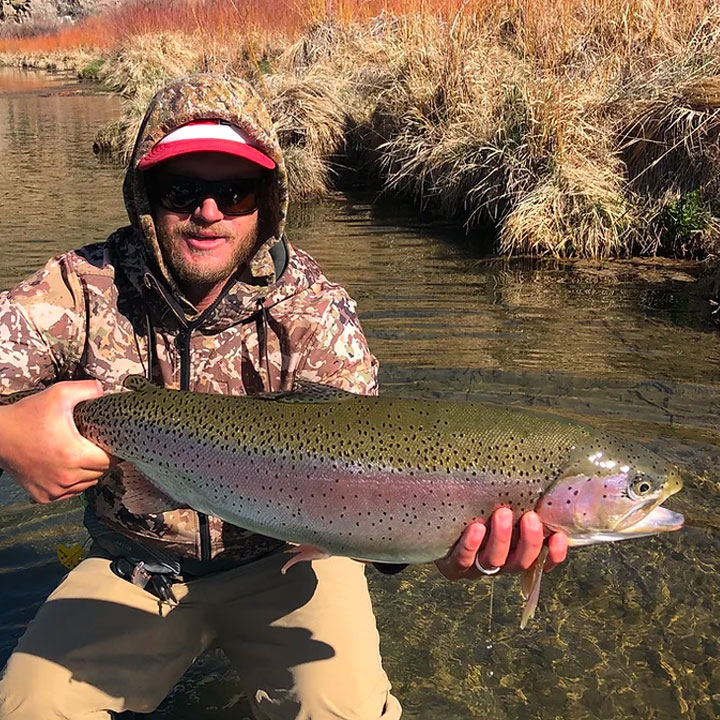
Conclusion

Chris Smith gives us a rare look inside the systems that power Team USA’s rise in competitive fly fishing. His breakdown of Euro nymphing mechanics, depth control, and beat strategy shows how intentional every cast becomes at world level events. More than techniques, Chris emphasizes teamwork, communication, and the shared “medal mentality” that defines the program. For anglers looking to improve, this episode offers a repeatable blueprint built on clarity, practice, and confidence — no secrets, just great systems.


Protecting Canada’s Wild Atlantic Salmon with Charline Mccoy

Atlantic Canada is home to some of the most storied salmon rivers in the world—and to one of the quiet powerhouses working behind the scenes to protect them. In this episode of the Wet Fly Swing Podcast, host Dave talks with Charline McCoy, executive director of the Foundation for Conservation of Atlantic Salmon (FCAS), about how a tiny team is helping safeguard Canada’s wild Atlantic salmon across five provinces.

From replacing culverts and removing old dams to planting riparian trees and funding climate-focused research, Charline walks us through how FCAS has supported hundreds of conservation projects—and helped open up nearly 199 million square meters of salmon habitat. You’ll also hear how warming rivers, shifting flows, and invasive species are changing the game for salmon, and why collaboration between governments, scientists, anglers, and local watershed groups has never been more important.


Hit play to start listening! 👇🏻🎧

apple podcasts

Find the show:  Follow the Show | Overcast | Spotify

Subscribe on Apple Podcasts

Subscribe on Android

Subscribe via RSS

(The full episode transcript is at the bottom of this blogpost) 👇🏻

Sponsors and Podcast Updates


Show Notes with Charline Mccoy on Canada’s Wild Atlantic Salmon

1:17 – Charline checks in from Atlantic Canada and talks about variable fall conditions, low flows, and why more rain is actually good news for salmon rivers.

3:13 – Overview of the five provinces FCAS supports: New Brunswick, Nova Scotia, Prince Edward Island, Newfoundland and Labrador, and Quebec—and how the foundation funds local watershed groups, Indigenous organizations, municipalities, and universities.

5:53 – Charline outlines the five core funding categories:

  • Planning for watersheds and conservation priorities
  • Habitat restoration and opening blocked habitat
  • Population and stock conservation
  • Access and fish passage
  • Education and awareness, including youth programs like Fish Friends

7:13 – How FCAS-funded projects improve fish passage by replacing undersized culverts, removing dams, restoring streambanks, planting trees, and investing in education and signage so communities understand why salmon matter.

9:17 – Inside the applied research side of the foundation: data collection, answering key questions about salmon behavior, spawning, and climate impacts so local groups can take the right actions on the river.

10:13 – Charline walks through the salmonconservation.ca website: project directory, funding categories, and the Salmon Hub, where project reports and results are shared publicly so others can learn from successful approaches.

11:07 – Details on the annual call for proposals: announced in summer, with a mid-November deadline for the following year’s projects. Local advisory committees in each province review proposals and recommend high-quality projects to the board.

14:21 – The funding story: FCAS is powered by a trust created with a $30 million federal contribution. By investing the capital and using only the revenue, the foundation has provided about $17.5 million in conservation funding since 2007 and is on track to distribute a record $1.875 million in 2026.

16:40 – Why demand for funding (about $2–2.5 million in requests each year) always exceeds available dollars, and how provincial advisory committees help ensure funds go to the most impactful, long-term projects.

19:10 – Key challenges facing wild Atlantic salmon across the region: warming water temperatures, low summer flows, pollution, invasive species, and ecosystem pressures that vary by province but are increasingly interconnected.

Protecting Canada’s Wild Atlantic Salmon - Photo provided by FCSA
Protecting Canada’s Wild Atlantic Salmon – Photo provided by FCSA

21:34 – How FCAS fits into the larger conservation landscape alongside organizations like the Atlantic Salmon Federation, federal agencies, and international bodies such as NASCO, each with their own role in wild salmon recovery.

23:02 – Charline describes the first-ever Atlantic salmon symposium in Moncton, New Brunswick: a five-province gathering of anglers, watershed groups, scientists, and government to discuss priorities, solutions, and Canada’s new national strategy for Atlantic salmon.

24:28 – Charline’s role as executive director, following the foundation’s founding leadership, and what it’s like to lead a small but highly effective organization.

Charline Mccoy, Executive Director - Protecting Canada’s Wild Atlantic Salmon

Charline Mccoy, Executive Director – Protecting Canada’s Wild Atlantic Salmon

26:35 – Meet the small but mighty team of three: Charline plus two provincial and science coordinators who help manage projects, support groups on the ground, and coordinate research and communications across five provinces.

29:14 – FCAS’s webinar series: why the foundation runs regular webinars from September to May to share best practices, research results, and new techniques between provinces—and how you can access past recordings on their YouTube channel.

30:20 – The current state of Atlantic salmon returns: why recent declines are concerning, how local and international science communities are studying the causes, and why there is still hope through collaborative action.

32:13 – Charline talks about traveling regularly to all five provinces, the importance of seeing rivers and projects firsthand, and a quick geography tour of New Brunswick, Nova Scotia, Newfoundland and Labrador, and Quebec’s Gaspésie region.

33:10 – Travel talk: why Newfoundland and Labrador deserves more than a week, the size and diversity of the island and Labrador, and suggestions to fully experience local culture, rivers, and landscapes.

34:11 – Charline shares her family’s connection to fishing and how working with an Atlantic salmon foundation turned into a shared passion for fly fishing and wild rivers.

35:15 – How listeners can support FCAS: following their work, subscribing to newsletters and webinars, spreading the word about wild Atlantic salmon, and donating to help top up the trust so even more habitat and education projects can be funded.

37:05 – Closing thoughts: Dave wraps up the conversation, highlights the Newfoundland trip giveaway, and encourages listeners to connect with FCAS and get more involved in Atlantic salmon conservation.


 You can find guest at fcas_fcsa and on their website at The Foundation for Conservation of Atlantic Salmon

Top 10 tips of Canada’s Wild Atlantic Salmon with Charline Mccoy for Blog Post:  

  1.  Wild Atlantic salmon are cultural and ecological pillars in Atlantic Canada. They’re woven into local identity, economies, and river communities across New Brunswick, Nova Scotia, PEI, Newfoundland and Labrador, and Quebec.
  2. A small foundation is leveraging a big trust to fund long-term conservation.
    FCAS uses investment revenue from a federal trust (not the capital itself) to ensure reliable annual funding for conservation projects year after year.
  3. Five key funding pillars keep the work focused and strategic.
    Planning, habitat, population, access, and education are the categories that guide grants, ensuring each project connects to clear conservation outcomes.
  4. Habitat restoration is about reconnecting rivers, not just cleaning them.
    Replacing undersized culverts, removing obsolete dams, and restoring streambanks opens up critical spawning and rearing habitat that salmon may have been blocked from for decades.
  5. Youth education helps secure the future of wild salmon.
    Programs like Fish Friends bring salmon into classrooms and local streams, helping kids understand why salmon matter and how their choices affect rivers.
  6. Science and conservation must go hand in hand.
    FCAS funds applied research to answer questions about spawning behavior, migration patterns, and climate impacts so that restoration work is based on solid data, not guesswork.
  7. Warming water and low flows are major emerging threats.
    Across multiple provinces, higher river temperatures and lower summer flows are pushing salmon toward the limits of their preferred conditions—and forcing conservation groups to adapt.
  8. Collaboration is essential—from local rivers to international waters.
    Watershed groups, Indigenous communities, advocacy organizations, federal and provincial agencies, and international bodies like NASCO all play unique roles that connect river work to ocean and climate realities.

Sponsors and Podcast Updates


Canada’s Wild Atlantic Salmon Videos Noted in the Show


Related Podcast Episodes

Full Podcast Transcript

Executive Director Charline Mccoy - Canada’s Wild Atlantic Salmon
Executive Director Charline Mccoy – Canada’s Wild Atlantic Salmon


Conclusion with Charline Mccoy on Canada’s Wild Atlantic Salmon

Charline McCoy and the Foundation for Conservation of Atlantic Salmon show how much impact a small, focused team can have when they invest in local groups, sound science, and long-term partnerships. From opening up salmon habitat and restoring rivers to teaching kids about the life cycle of wild Atlantic salmon, their work is helping keep a defining species of Atlantic Canada in the water—and in the culture—for generations to come.

As you think about your own connection to rivers and wild fish, what’s one step you could take this year to help protect wild Atlantic salmon where you live or fish?

Episode Transcript
00:00:00 Dave: Today we’re heading east all the way to Atlantic Canada to hear how one small foundation is protecting one of the world’s most iconic fish. Our guest is Charlene McCoy, executive director of the Foundation for Conservation of Atlantic Salmon, a group that’s quietly funding hundreds of projects across five Canadian provinces. By the end of this episode, you’ll hear how their efforts are helping open up nearly two hundred million square meters of salmon habitat. What they’ve learned about climate change and the warming of rivers, and how local groups are stepping up to keep the salmon thriving. This is the Wet Fly Swing podcast, where I show you the best places to travel to for fly fishing, how to find the best resources and tools to prepare for that big trip, and what you can do to give back to the fish species we all love. Charlene McCoy shares how their team of three manages to support seventeen million dollars in conservation work restoring habitat, improving fish passage, removing dams and getting kids involved through their Fish Friends education program. And we’re going to be heading to Newfoundland this year to find out more and hopefully catch our first Atlantic salmon, if you’re interested. We’ve got some spots available and and we got it going here. So let’s get into it. You can check in with Charlene at Salmon Conservation. All right. Let’s get going. How’s it going Charlene? 00:01:15 Charline: I’m doing well. How are you? 00:01:16 Dave: Pretty good. Yeah. I’m excited to hear about your foundation that you’re working with there. Um, we’re doing a pretty cool event right now. We’re doing a giveaway for a trip to Mountain Waters Resort, and we got a bunch of great brands on, and I’m going to be heading there with the winner next year in June. So this is pretty exciting. I’ve never been to your, um, basically Newfoundland, but it’s going to be an opportunity to learn not only about the fishing, but about the fish and the species. And you guys are a conservation group, which is always really important, obviously, to everything. But yeah, maybe give me a rundown this time of year. It’s, uh, we’re in kind of, you know, November, um, what’s happening around there is the. Is it getting starting to get cold there? 00:01:56 Charline: Uh, it is starting to get a little cold. Uh. It’s funny. Some days it’s really warm, and some days, uh, it gets cold, so it doesn’t seem to know what it wants to do. However, we are because of salmon and the rivers. Hoping for a little bit more rain, to be honest with you. So that would be very nice for the rivers. Yeah. So rain’s always good. So, yeah. 00:02:16 Dave: Is it still? Are people still fishing there or is it still open? 00:02:18 Charline: Um, the fishing is, uh, there is some fall fishing. Uh, but it’s coming to a close. But, uh, yeah, in in Newfoundland, um, the fishing is pretty good. Uh, the foundation, which is a group, um, that I work for, we actually cover all five provinces here in the Atlantic, which Newfoundland is, uh, is one of them. Newfoundland. Yeah. Is very fortunate, um, that, uh, there is some good fishing down that way. So if you’re heading down to Newfoundland, you know, I’m really happy for you. So. 00:02:46 Dave: Yeah. That’s right. The more I get into this, the more I realize I think we chose a good place to go to. In fact, I had somebody who talked on, uh, gosh, I’m trying to remember the podcast, but he basically said he said he thinks Newfoundland is the, you know, last great, you know, one of the last really great places to go to because of the populations are still pretty healthy. Is that maybe first off, talk about the five provinces. What are those five provinces you’re in control of? Are you work in. 00:03:11 Charline: Yeah. So we support conservation actions, uh, in all five provinces. So that would be New Brunswick, Nova Scotia, P.E.I. and Newfoundland and Labrador, and also the province of Quebec. So, uh, so those are the five, the five provinces that we focus on. And our foundation, which is foundation for conservation of Atlantic salmon. Um, one of the main goals is to help achieve a healthy and sustainable, you know, salmon stock. And we do that through partnership, but mostly through, um, grants. So we actually provide grants to a lot of the groups and each of these provinces. And that would be watershed groups, uh municipalities, uh universities, um, indigenous groups, because they’re the ones that actually are on the river and actually do, um, the conservation efforts right on the ground. So we make sure that we’re able to provide support to them. 00:04:04 Dave: So you’re basically a larger group we had spawn on recently, and they talked about some of the efforts they’re doing with monitoring fish and and which is really important, super important. And so you’re basically supporting those groups. So you’re not necessarily doing on the ground work, but you’re getting your funding. Those other groups that are doing the work. 00:04:21 Charline: Exactly. And it’s important to support them because groups like you just mentioned, um, you know, they need resources. They need the capacity to be able to keep doing the conservation efforts on the ground just to make sure we have a future for Atlantic salmon. Uh, some of the other provinces are struggling with some of their population and stuff like that. So we want to make sure that we have reliable funding for these groups that they can depend on year after year. And we’ve been doing that since two thousand and seven, actually. So in total, throughout the years, uh, we were I’m happy to announce that we have been able to give seventeen point five million dollars across all the five provinces. Yeah. So, uh, so it’s really a great news story and, uh, we’re able to continue doing that. So and it’s something we want to do for, uh, for the long haul. And the reason, the reason we have that, um, is actually because of partnership we have with the federal government, um, government of Canada. They actually gave the foundation way back then thirty million dollars to give to a trust fund. So we invest that. So that’s why by using the revenue that’s generated by that investment, we’re able to, you know, provide support in that way, uh, to all these groups. So that way we do it every year. And uh, we’re really happy that we’re able to do that. 00:05:39 Dave: So what are maybe a couple of, uh, describe, you know, talked about a few projects. What are some other projects you might be, uh, funding out there that are helping to protect Atlantic salmon? 00:05:51 Charline: Yeah. We have like, five major categories that we focus our funding towards. Um, and that could be planning habitat. The population access and education. And to go a little bit more examples in that. It’s improving like fish passage, um, you know, replacing culverts, removing dams and obstructions, things like that. Um, you know, improving the habitat. So planting trees, some stream restoration and education and awareness is a category that’s very important to just making sure the community and folks are aware of the importance. And there’s a lot of Fish Friends program that are out there. Uh, just getting the the youth to understand the importance of salmon to, uh, to Atlantic Canada and you know, how to to make sure that we, uh, we put conservation as a priority, uh, and stuff like that. So there’s a lot of, like funds that go towards signage and those programs, uh, and of course towards research too. So we do have a research component to the foundation. And those research is to do some data collection, answer some questions so that we can come out with the proper actions to solve any issues or challenges that are happening on the river. So. So we cover all of those things. So it’s a it’s pretty wide. Yeah. So just to give you a few examples of just the amount of work and the activities that are happening. Yeah. 00:07:11 Dave: And run through that again. The top the five. So what are what’s the first category. 00:07:15 Speaker 4: So the first category. 00:07:15 Charline: Would be planning. So what we do for watershed planning and so forth where they can highlight their priorities for that specific watershed and actions and of course habitat. So habitat opening habitat that had any obstructions or improving the habitat itself and also population. So conserving restoring stock and the population of salmon and then certain access and also education is the fifth category that folks can apply. 00:07:43 Dave: Perfect. Yeah. We were we were doing an episode with, uh, Nick chambers, who is in a group called The Conservation Angler. It’s on the West Coast. It’s on the other side, But they’re studying steelhead populations, mostly around the Pacific Rim. And he was talking about how the study that he did actually in his master’s project was on the Skagit River, where he studied like spawning steelhead. And, and the fact that how fish depending on the habitat, you know, they don’t go very far from there where they’re where they’re spawned, you know, where they spawn in the wild. And he was saying he was following a similar study that’s already been published with Atlantic Salmon. How important it is. It shows that, you know, the fish that are spawning, you know, not only are they coming back to the natal stream, but they’re not going more than one hundred meters or one thousand or something like that down away from where they are, you know? So it’s really important, the habitat. He was basically saying, hey, it’s important to know where fish are spawning to actually know, because if we know where they are, then we can know if there’s a bottleneck, right. And and so I’m guessing that some of the research and stuff you’ve done is that kind of what who’s the types of projects that might be researched. 00:08:42 Speaker 4: On our. 00:08:43 Charline: Website? Uh, we have a priority list of actually research projects that we would really. 00:08:50 Charline: Like to fund, uh, and it covers questions and situations like you just mentioned and also questions of climate change and what we can do and just the the evolution and things that are happening in the pattern patterns that the salmon kind of travel in and stuff like that. So whatever we can learn, we can plan better to, to make sure that they have, you know, that great spawning, uh, area and stuff like that. So and find the right solutions, um, for that. 00:09:15 Dave: And what was the, uh, and um, the website reminds you again on the website. 00:09:20 Speaker 4: Yeah, it’s. 00:09:21 Charline: W-w-w salmon conservation. Yeah. So when you go on there, you’ll have all the information of the foundation. Uh, there’s information on how to fund your project and what those categories are. We actually have on the website. Two, uh, we list all the projects that we funded since two thousand and seven. So project descriptions, uh, what they’ve been doing. And you can search by province, you can search by category or your topic, so it’s really unique that way. We have a salmon hub with all the results. So any reports that come out about any of these projects and if you’re interested to see what that is, you can access our salmon hub and have all that information as well. So it’s a it’s a really good tool to know what’s going on and just find the best practices and and learn from that. So yeah. 00:10:11 Dave: So yeah, we verified the best website to go to is salmon conservation. And there I see it now project directory funding your project and salmon hub. So pretty much anybody can go there if they’re in one of those provinces. And if they have a project they think is worthwhile, they can learn about, you know, options and then they can actually submit an application through here. 00:10:30 Speaker 4: Exactly. Actually, our call for proposals. 00:10:33 Charline: Is open right now. We usually announce it in the summertime. And you have till November fourteenth to apply. And those are for any funding for projects for next year. So there’s a couple of weeks left before November fifteenth, maybe three weeks. So yeah. So if anybody is interested, please, uh, apply and use the information on our site. And, uh, we try to make our decisions fairly quickly before, you know, the work supposed to be actually hitting the ground. Uh, and we’ll announce that in March. 00:11:05 Dave: Do you have a, you know, you get these in. Do you get typically more projects than you have money to fund, or do you usually have enough money? 00:11:12 Charline: Yeah. Well, we do have a process that we have to take. So, um, we wish we could say yes to, to everyone. But one of our mandates that we have is that we can’t touch the capital capital of our investment, just the revenue that’s generated. So depending on year, as you know, of any investment, there’s a fluctuation in the market. But we’ve been very fortunate. We just recently announced, um, the markets have done well for us, and we are able to give one point eight seven five million dollars for twenty twenty six, uh, which is the highest amount that we’ve given the last eighteen years, so that’s wonderful. However, every year we do have a demand that is between two to two point five million. So it is a process that we use. So if I use Newfoundland Labrador for an example, we do have an advisory committee in the province with experts from that province from that region. So we have folks from government, we have folks that have conservation background and for Atlantic salmon, and they actually evaluate all these proposals that come in and they prepare recommendations for our board. So we do do a very fair, very rigorous exercise to make sure that the funds are going to like the high quality project that’s really going to make a difference in long term. And so, you know, we take that in consideration. 00:12:34 Dave: Yeah. It looks like in just some of the the projects I’m looking at looking at them here, the aquatic habitat and riparian restoration monitoring. So you have that and the Antigonish River Association, Nova Scotia. So you have that, then you have another one. Reverse the series. The series decline of Atlantic salmon. Rocky River, you’ve got rattling Brook watershed. Obstruction removal. So there’s a passage further assessment of salmon River water. So yeah it’s a little bit of monitoring. It’s a nice mix of things. 00:13:03 Charline: It’s a really good mix. And you need a little bit, you know, of everything. Um, just to make sure things run smoothly. And there’s some of the conservation results. So all these projects, we want to make sure that we measure and benchmark to make sure the funds that are being distributed, there’s actually, um, you know, an end goal in a positive result that comes out of it. And we do try if you look at our, our website, there’s like bubbles there in the middle and it shows the number of, uh, square meters of habitat access that’s been open. Uh, and that’s like, yeah. And it’s a big amount. It’s like it’s one hundred and ninety nine million square meters. So that’s huge. And these projects support like volunteers and jobs as well. So some of our funding actually help with, you know, uh, HR and equipment and things that, you know, can cause a lot of money for some of these small watershed groups. So, you know, some of our results show like almost twelve thousand volunteers with many hours of efforts. So we want to be able to demonstrate, you know, measurable, quantitative, uh, numbers to really show the difference that these conservation efforts that the groups are doing on the rivers, like how much of a difference it is making. And you can clearly see from those numbers that, uh, that it is. 00:14:19 Dave: Well, and it looks like there’s a good mix between the provinces. What is the we mentioned at the start, kind of, you know, Newfoundland how numbers have been pretty good. How does that look overall in the province. You know, just do you have a broad scope of all kind of status and how well or is there gaps out there. 00:14:37 Charline: Um, well, there is some gaps. 00:14:40 Charline: There are similarities by province, but there are also some uniqueness between them. But the majority of the provinces do have similar challenges. And that’s when we talk about, you know, pollution or even other human activities, the things that, you know, it’s hard to control climate change, of course. And then you have invasive species that we’re seeing more and more of. And then there’s other ecosystem kind of pressures that are out there. So we do have some similarities, but the ones that we’re seeing a lot here in New Brunswick and starting to creep up in Quebec and other places, is that the and even in Newfoundland is that the, the water temperature and the levels, um, are very challenging for salmon. Salmon needs a very unique habitat to, to be able to strive so and to survive in. So um, those are things that is nature and some things that we can do, you know, as humans that we can do on the river to, to help make that better. But a lot of things, you know, can be out of our control or some unknowns, right? And that’s why the science part of things is so important to be able to, to address those issues. 00:15:50 Dave: Yeah, I know a lot of my focus and I’m just learning now obviously about Atlantic salmon as we’re preparing for the trip. But but one thing so I always compare it to other, you know, stuff we know on the that I’ve worked on on the other end. But the when we were talking about Chinook salmon, you know, there’s a big decline in Chinook salmon in Alaska especially. And Roy and I was asking the same question about what’s going on. And it’s really not as much of a habitat issue up there, although there probably are some climate change and ocean conditions. But a big part of it is the harvesting, like by ocean troll fisheries, like places, you know, things like that that are really impacting kind of size and stuff like that of the fish. Do you find that? I mean, I know harvesting in other areas is pretty impactful. Is that something that you’re also digging into understanding more about kind of harvesting and that whole part, whether it’s sport or commercial? 00:16:38 Charline: Um, we don’t really touch the to commercial here. Um, at the foundation, when it comes to other topics like harvesting, it could fall under the science kind of pillar to look into. Um, but our our funding is mostly focused for conservation on the wild rivers within the province and the actual habitat. Uh, however, I know there’s so many unknowns out there in the marine out at sea because, you know, the cycle of the salmon, they do go out, uh, for, for a number of years and then come back. So there’s a lot of studies. So, so we are a part of, you know, there’s other organizations that look at those things like the Atlantic Salmon Federation and our federal government and so forth. Uh, so we all kind of have our, our expertise and we all kind of collaborate and partner together on those things. 00:17:25 Dave: Some places are just different. You feel it the second you step into the water. Mountain Waters Resort sits on the legendary Portland Creek, a place where Atlantic salmon runs strong and where fly fishing history was written. Lee Wolfe himself fished these waters, and now you get to experience the same world class fishing in a setting that feels untouched by time. Whether you’re swinging flies for fresh chrome or kicking back in a cozy riverside cabin, this is the kind of trip you’ll be talking about for years and years to come. And guess what? I’ll be there this year as well. But here’s the deal Prime time season fills up fast, so don’t wait. Check in now and join me on this historic river this year. You can head over to Wet Fly Swing Waters right now that’s Mountain Waters Resort. You can go to Wet Fly Swing. Waters right now and save your spot for this epic adventure. Yeah, that makes sense. I think that everybody’s got their role. Like we’re learning. You know, I think that the Atlantic Salmon Federation I’m guessing. Yeah is a little more on on some of that. They maybe dive in and we have the same thing in our area where you have groups that are more, um, you know, maybe have the capacity to dig into more of some legal actions if needed. Right. But there’s other groups that are more, you know, working with the local community, you know, and that’s a that’s a great thing. And that’s not in their wheelhouse getting into all that other stuff. 00:18:43 Charline: But at the end of the day, we all have the same goal, though. We want a future and a healthy and great population of salmon for forever for the next generation. 00:18:53 Dave: Yeah, I think that seems like pretty much everybody. Unless you’re kind of crazy, right? I think that, you know, even the all like commercial fishing. I feel like everybody kind of wants that because, like, who doesn’t want healthy salmon populations? And which means you have healthy, healthy environment. Right. 00:19:08 Charline: And a good demonstration of that. So in October of twenty twenty four, which almost a year ago now, actually pretty much a year ago, um, yeah, we had the first ever symposium for all Atlantic salmon, uh, in Moncton, New Brunswick. 00:19:24 Dave: And was this is this all for the the five provinces or larger? 00:19:28 Charline: Yeah, it was a. 00:19:29 Charline: five province symposium, never been done before. The foundation took that on as part of our mandate and Dating strategy, and we hosted that. We had almost two hundred people in the room. Um, folks from anglers to conservationists to watershed groups, all levels of government. We had some media coverage come. And it’s really to highlight the importance of salmon, because salmon is very unique and it’s a very integral part of Atlantic Canada. Like it’s like almost ingrained in our culture. And all these folks that are so passionate in doing all these different things, with all their roles and responsibilities that we have, we actually got in one room for a day and a half and just really had some really good conversations about the future and what was needed, and how can we partner work together to make sure that we’re really pooling our resources? And it was it was a great event, and we’re hoping to do it at every three years. It was really instrumental. 00:20:24 Dave: Wow. Yeah, that sounds like an amazing event. And probably I’m sure it will grow over time. Right. And you’ll probably have more, more impact. And then it was that as that meeting where you not only brought people together but talked about some of the the successes and projects and things like that. 00:20:38 Charline: Oh, exactly. 00:20:39 Charline: We talked about the challenges and what other folks, you know, what solutions they found and exactly the successes, the challenges, a little bit of everything, issues that we still not sure you know how to go about it. So we had scientists there as well, given their their opinion and feedback and, uh, you know, and it’s important to even have the government officials in the room. So because, you know, Canada has just announced in March, um, this year, actually their new national Canada’s National Strategy on the future of Atlantic salmon to ensure that there’s a future. So that just came out here not long ago. So it was really important to have them in the room to to hear those discussions. So there’s so many different, uh, players. Right. But they all has to be kind of, you know, we all have to be connecting and talk. And so, um, so that gave us that opportunity. So it was great. 00:21:32 Dave: And what is your, uh, Currently. What is your role there with the, uh, the foundation? 00:21:37 Charline: My current role on the executive director with the foundation, as uh, this July, coming in twenty twenty six, would have been five years that I’ve been here. The foundation is very unique. It’s been in place since two thousand and five, and it had the same president and executive director for the last all this time up until five years ago. 00:21:57 Dave: Oh it did. 00:21:58 Charline: Yeah. And they’ve done a really great job and create a great model here, the foundation. And that’s is why we’re still sustainable and striving and really, you know, giving some great support, uh, that the folks can rely on. So I my hat to my former president and executive director Steven Chase that really have put this foundation together. So for the first time ever, we have a second president that just started in March as well this year. And then I’ve been in this role for almost five years. So. So yeah. So it’s a really you know, I’m really happy to have this job. Be honest. I think it’s the best one I’ve ever had. It’s a great place to work. 00:22:36 Dave: What has been in the last five years? What’s been maybe the most challenging part of the position? 00:22:41 Charline: The most challenging is that we actually would like. I know we’re given a lot of funding every year, but we do realize that the demand is greater than even what we’re seeing as proposals coming in. Folks have told us that they only apply for a certain amount because they figure they’re not going to get the whole thing they need. 00:23:00 Dave: And projects don’t get any cheaper. Like as we go, replacing a bridge is not going to be less expensive than it was five years ago. 00:23:06 Charline: Exactly. So right now, to try to spread out as fair as we can, like every project is a maximum of fifty thousand dollars. So if if we would be able to top up our investment to generate more money, I would love to be able to change that. So make that maximum hire and be able to do some some larger projects and more priority focused like I would I would change a lot of things like is it working really well? We’re doing good. But I would like to be able to do more if we could. So um, that would be great. So hopefully that is something that we’re it’s on our strategy and we’re hoping that is something we’ll be able to, to implement here in the next year or two. So we’ll see. 00:23:45 Dave: Okay. Perfect. And who are other staff maybe talk about your other staff. Is it just you or the other folks there at the foundation actually. 00:23:52 Charline: So we actually have a very small staff. People are very surprised to hear that because even what you can see on our website, we do manage a lot, but it’s just myself and two coordinators. So, uh, we have a coordinator that’s responsible for, you know, three of the provinces, which is New Brunswick and Nova Scotia and P.E.I. that’s Gert Lawler, and then we have Kirsten Milbury that is responsible for Quebec and New Brunswick and our scientific projects. So we’re just three just, you know, pushing away. And but we’re we’re small but mighty. So yeah. 00:24:26 Dave: Yeah. Yeah. Exactly. And I’m looking at it looks like you have some webinars on your webinar schedule coming up here, I see one November twelfth. Recent advances in temperature modeling and Atlantic salmon are those webinars. Describe those who are those focused on who are those for. 00:24:40 Charline: Yeah. So the webinars part of our communication strategy. So because we support so many projects and so many great results come out of it, we feel a responsibility to be able to create platforms to transfer that knowledge. So everybody gets to hear about it. So you know I talked about the Salmon Hub already and we do the symposiums as well, which is another opportunity to share information. But the webinar series is a very unique tool and we have a great audience for it. So we do it every fall. We start from September and it goes till about May, and we try to do at least one session a month or two, where we actually have topics that folks like to hear about, some great speakers that come on and they talk about results, about best practices, uh, new, uh, new applied science research results and so forth. So we have a, you know, a contact list now of people that are subscribed. Up to one thousand five hundred people are subscribed to that. And we’re just hearing great. Yeah. So it’s really great sessions. If you miss one, we try to to promote it on our e-newsletter and on the social media. But if folks do miss it, we do have the YouTube page that you can click on at the bottom of the website and we record all those sessions. So if there is a topic that you’ve seen, you know, be promoted, but you didn’t get a chance to go see it live, you can go on that YouTube page and go back and listen to that. So um, you got and it goes back like for, for several years. So some really great information, uh, that people can learn from. Because one of the things we were hearing is that because we have covering five provinces, you know, someone from New Brunswick might want to hear what’s happening in Quebec. Some, you know, a new a new technique or something that they never tried. Uh, so this is ways for us to be able to make sure that everybody has a chance to hear what’s going on and and transfer that knowledge. So yeah. So that’s what that one’s all about. 00:26:33 Dave: Yeah, I see it I see the YouTube. This is a great channel as well. Yeah. You have uh similar embedded culvert. It looks like you’re talking about before and after of an undersized culvert you’ve got considering the role of salmon and other anatomists fish. So yeah this is a good resource to the YouTube channel. Definitely would recommend subscribing to that. Um awesome. And then on the salmon just overall again give us high level picture. Do we know how. Because we’ve heard these stories of across you know in Europe and the Scotland and some runs on the downturn. Do you have a pretty good feel for uh, you know, status currently in, in those five provinces? 00:27:07 Charline: Um, well the number of like, adult salmon coming back is increasing. Uh, and that’s a concern. It decreasing. Sorry. No, no. Sorry, sorry. I wish I could say increasing, but it is it is decreasing. I know there’s a lot of concern in the last two to three years they are seeing that decline. Um, and, uh, And but they’re still hopeful that that will change. And so I guess we’ll we’ll have to see. So, um, you know, this is being studied, uh, you know, at the local, regional, provincial and even at the international level, the Atlantic salmon covers a lot of ground. Uh, there’s. 00:27:44 Dave: Is the Atlantic Federation or is it, um, what’s the other larger group that you mentioned, Atlantic Federation? 00:27:49 Charline: Well, there’s the Atlantic Salmon Federation, uh, an advocacy group. And of course, we have our Department of Fisheries that looks into it with their new strategy. And there’s also Nasco as well. It’s the national. 00:28:03 Dave: Yeah. What is that one. 00:28:04 Charline: Atlantic Salmon Commission anyways. And he looks at it at an international level where you have different countries around the table that do have Atlantic salmon to talk about priorities and strategies at that higher level as well. So it’s just to show you, you know, how far it does go. Uh, and there is some experts and folks that do meet uh, and try to, to talk and put things in place for Atlantic salmon. 00:28:28 Dave: That’s right. And I know there’s some groups in in the US as well. They’re doing, uh, doing some similar work. I see this now. The Nasco. Yeah. North Atlantic salmon conservation organization. 00:28:37 Speaker 6: Yes, exactly. Yeah. 00:28:39 Dave: Aim to restore, enhance, manage extend through international cooperation. Right. So there’s your international I mean it’s obviously like these fish are going across international waters right as they migrate out in the ocean. And that’s why the big group is important too. I mean, you guys are obviously in the provinces. They’re super critical everything you’re doing. But you got to have a worldwide, um, you know, plan, right? You got to climate change. Do you have any is climate change is always the one that is challenging because it seems like it’s such a, you know, understanding and it’s a daunting task. Do you is that something where you’re funding climate change type projects out there? 00:29:12 Charline: Uh, we are finding it through our applied research stream. So, um, when we do a call for proposal every year, we do a general call for conservation efforts. And we also put out an RFP for scientific priorities. And climate change is one of those. It’s on the list. So if we get a proposal that is targeting that subject, of course we will looking at it and hopefully be able to fund it. So. 00:29:40 Dave: And you mentioned this year you’re going to have roughly one point eight million dollars, and which is a considerable amount given the fact that if you think you’re saying fifty thousand per project, you divide that into that, that money, that’s a number of projects, right? Is that the right math there? 00:29:54 Speaker 6: Yeah. No, it’s exactly that. It is really good. 00:29:58 Charline: Number of projects and try to divide that fairly by province as well. And and we’re even hoping that by twenty twenty seven, I do have a really great investment committee that there are experts. So they’re predicting that we’ll be able to give two million by twenty twenty seven, which would be wonderful. So, um, so I’m excited for that. Yeah. 00:30:18 Dave: Well, anything else we should know, understand about your organization or how maybe the question too is how can people listening now support if they’re listening in from not only Canada but, you know, around the around the world? 00:30:29 Charline: Um, well, they can support by, um, you know, joining, subscribing, reading our things, telling the great story of how, um, the foundation is supporting, uh, salmon, how Atlantic salmon is important for our culture or economy and etcetera. I think telling the story is very important and that we’re one of the players in that, uh, of course, we don’t fully promote it on there, but we, you know, we will never say no to donations to increase that top up. Of course. Uh, and any funds that do come through the foundation, one hundred percent goes right back to the conservation efforts on the river. So and, uh, so, yeah. So it’s just to kind of spread the word. 00:31:08 Dave: Good. So get the word out there, check out some of the maybe join a webinar. And that’s the cool thing about this day and age is that people can check check in. Right. 00:31:15 Charline: And if they subscribe with us they’ll get all that information. So um, we’ll be able to, to give them updates every month of or what’s going on, and they can join us. 00:31:24 Dave: Perfect. Well, I think like we said, at the top, we’re doing a cool, uh, event, which is, uh, we’re heading there to Newfoundland. Now, tell me, where what province are you in? 00:31:34 Charline: So we’re centered in Fredericton, New Brunswick, so yeah. So we’re we’re pretty much central to all the five. Uh, I’m very fortunate in my job that every year I get to go to all the provinces. So I do get to Newfoundland Labrador at least three to four times a year. So. And at the same for the other ones. So I get to explore the Atlantic and these wonderful provinces and rivers. So I do wish you a great trip, and I know you will when you go. So I yeah, I never got to fish or actually do those activities in Newfoundland Labrador yet, but I’m hoping that I will someday soon. So because I hear great stories. 00:32:11 Dave: Nice. Yeah. So you’re in just to get the geography correct. Yeah. You’re in New Brunswick, which is actually connected right there. It’s right across from Maine. Right. The US is is right there. And then as you go, as you go out, you have Nova Scotia, which is kind of in the same area. And then where is Newfoundland from? That’s up north right of you. 00:32:29 Charline: Uh, it would be, and we would have to take a plane or a ferry to get to Newfoundland from New Brunswick. 00:32:35 Dave: So it’s. Yeah, you head north and then of course, you have Labrador, which is the main. And then Quebec also is, is in your which is huge, right. Quebec is the biggest of the provinces. 00:32:44 Charline: It is. And um, the rivers in the Gaspésie are beautiful. Yes. So if you get a chance to take a drive in that direction, I would. Yeah. 00:32:55 Dave: If we were going to, uh. Well, we are going to Newfoundland. If we go there, where would be? I’ve heard there’s some really cool just other, you know, national parks. What would you recommend? Is there a some activity or a place there that we should see when we go to Newfoundland. 00:33:08 Charline: Or would they be the best one to to say that? But the culture and the folks in Newfoundland are so welcoming and they have their traditions there. Uh, and so, you know, the you can get screeched in, you know, just just embrace all the uniqueness of the of the island. And I would just, uh, just experience it and do it all. 00:33:27 Dave: Yeah, do it all. What would be a good time do you think we should have, uh. Is a week enough, uh, there or is enough to see some of the sights? 00:33:34 Speaker 7: I would go for a couple of weeks. 00:33:36 Charline: Because, uh, it is an island, but it’s there’s, you know, you do have to drive from one end to the next. It’s pretty, um, it’s pretty big. Uh, from the the west to the east to Labrador. There’s quite some road to cover, so it’d be hard to do it all in a week, that’s for sure. 00:33:52 Dave: And as we take it out of here, a couple of quick random ones, I know off air you were mentioning about your family, how they, you know, they were excited about your job here and you kind of got into fly fishing. Talk about that as your family. It sounds like you have some boys. Are they are they into fishing, fly fishing, all that stuff? 00:34:09 Speaker 6: Yes. 00:34:10 Charline: So my my husband and my two teenage boys, I got a seventeen year old and a fifteen year old. They absolutely love to fish. They’ve always fished fish since they’re little. So when I told him I was going to work for an Atlantic Salmon Foundation, they were like jumping for joy. They were more excited than I was because they’re like, when are we going fishing? But, uh, you know, we’re we’re we’re conservation, you know, funded, uh, entity. But we did have the occasion to go visit some rivers in Quebec and some other ones and did get to do some fly fishing. And we did it as a family, and it was wonderful. So, uh, once you start doing that, you just fall in love with with the sport and with the fish and the environment so that it’s in. 00:34:54 Dave: Well that’s great. I think we could probably leave it there. And, uh, you know, as we get ready for, you know, uh, this event we’re wrapping up or we’re just wrapping up here, um, you know, we’re definitely excited if, uh, if anybody has questions, we can send them out to the Foundation for Conservation of Atlantic Salmon. That’s salmon conservation. Does that sound like a good, uh, good place to send everybody? 00:35:13 Charline: Yes, it sounds great. And all our contact information, everything’s on there. So anybody feel free to send us an email to or a phone call. We’d be happy to hear from anybody and and happy to see what’s going to come out of the contest. We’ve been, um, promoting it and on our social media as well. So, uh, yeah. 00:35:31 Dave: Yeah, I think we’ve got a bunch of, uh, excited fly anglers that are looking forward to, uh, to winning, you know, but but I think it’s more, more important than the winning on these events is more about understanding, you know, like we’re doing now. This is what I really love, right? Getting people to understand exactly. 00:35:45 Charline: It’s part of the awareness and and all that stuff. So yeah. 00:35:48 Dave: Kind of fitting into that one of your pillars. Right. 00:35:50 Charline: You are. Yes. Great partner. 00:35:53 Dave: Good. We’re checking the box. Maybe we’ll be in for, uh, maybe we’ll put in some for some funding eventually to do a project out there. Okay. All right. Charlene, thanks for all your time. And. Yeah, like I said, we’ll get everybody sent out if they want to check out your your website. And, uh, yeah, we’ll look forward to staying in touch. 00:36:08 Charline: All right. Well, thanks, Dave. 00:36:11 Dave: You can follow Charlene’s work and learn more at Foundation for Conservation of Atlantic salmon. That’s salmon conservation. You can also find them on social media as well. If you’re interested in heading out to this big trip to Newfoundland, you can go to Wet Fly. It’s best place if you get involved there. You will get first access on some of these trips that we have going, and also want to let you know we are looking for ideas for episodes. If you have an interest in a certain topic, something you want to hear more of, send me an email, Dave at any time and we’ll put that together for you. All right. That’s all I have for you. I hope you enjoyed this one and look forward to catching you on the next episode. Hope you have a great morning, great evening or good afternoon wherever you are out there in the world today. It’s getting into the fall here as we speak. I hope you’re staying warm and we’ll see you on that next episode. Talk to you then. 00:37:03 Speaker 8: Thanks for listening to the Wet Fly Swing Fly Fishing show. For notes and links from this episode, visit Wet Fly com.
         
Support Our Podcast Sponsors         
Support Our Podcast Sponsors       
Support Our Podcast Sponsors         

Support Our Podcast Sponsors

         
Support Our Podcast Sponsors         

POPULAR ARTICLES