Home Blog Page 24

In the Bucket #16 | Sandy River Spey Clave with George Cook, Mia Sheppard, and Josh Linn

Episode Show Notes

In today’s episode of In the Bucket podcast, we’re joined by George Cook, Josh Linn, and Mia Sheppard. This is an all-star cast with considerable influence in the fly fishing industry, and together, they have contributed greatly to the way we fish today. Their combined experience includes many years of guiding fly shops, sales tackle, repping techniques, equipment development, casting instruction, event promotion, and winning three Spey-O-Rama titles. 

We also dig into the upcoming Sandy River Spey Clave in mid-May, one of the most awaited events for spey-casters. We hear how it became the “Woodstock of Spey,” drawing anglers from around the world. 

Hit play to start listening! 👇🏻🎧

apple podcasts

Find the show:  Follow the Show | Overcast | Spotify

Subscribe on Apple Podcasts

Subscribe on Android

Subscribe via RSS

(The full episode transcript is at the bottom of this blogpost) 👇🏻

Sponsors and Podcast Updates

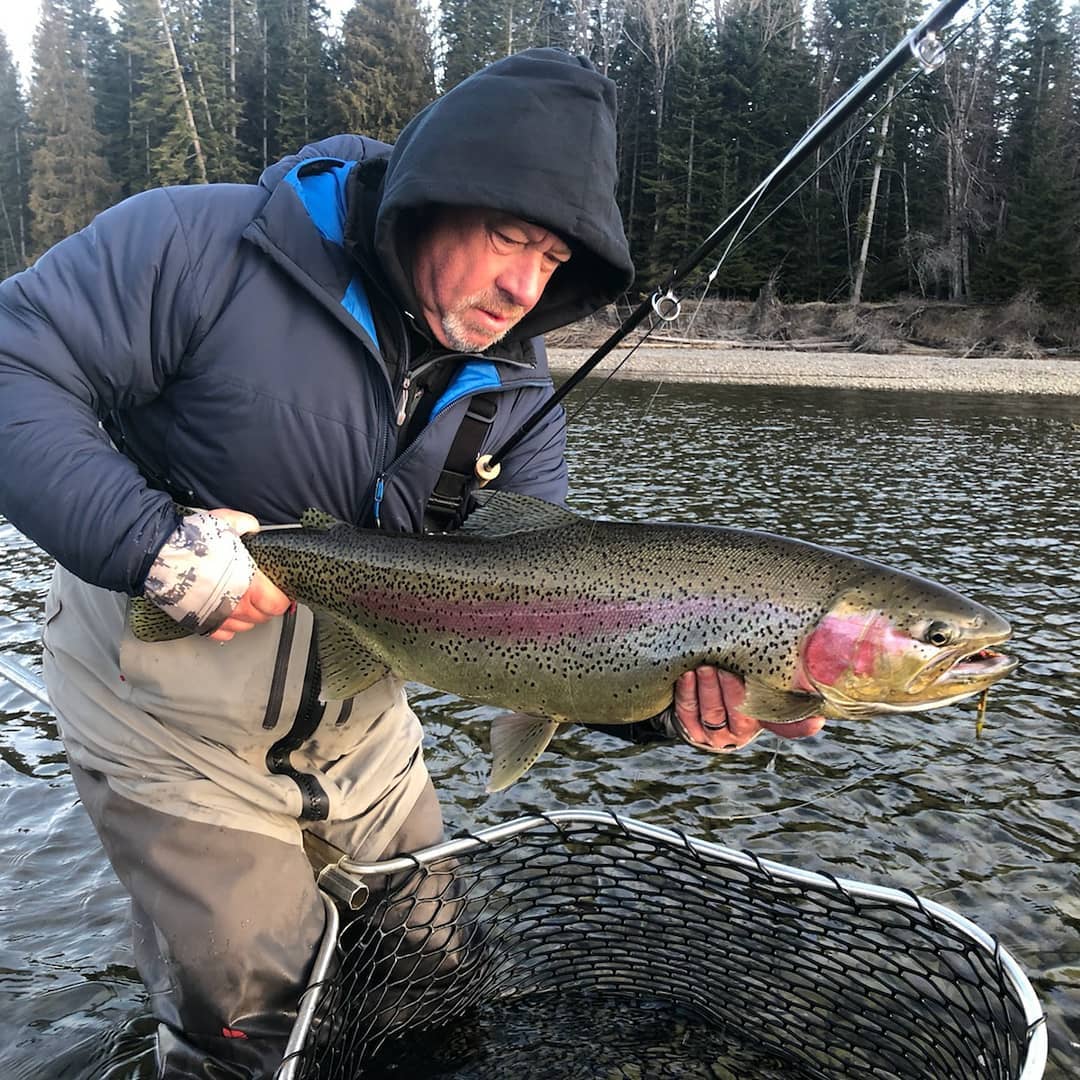
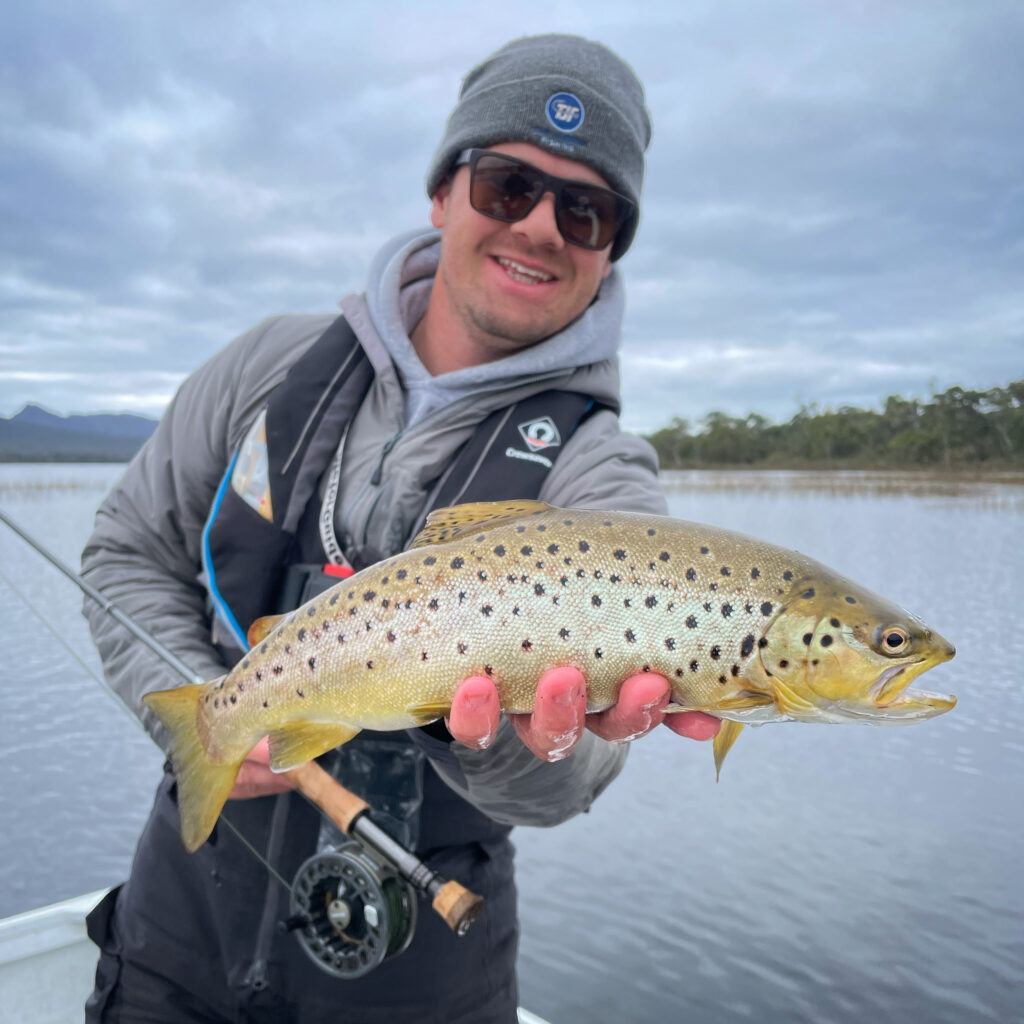
George Cook

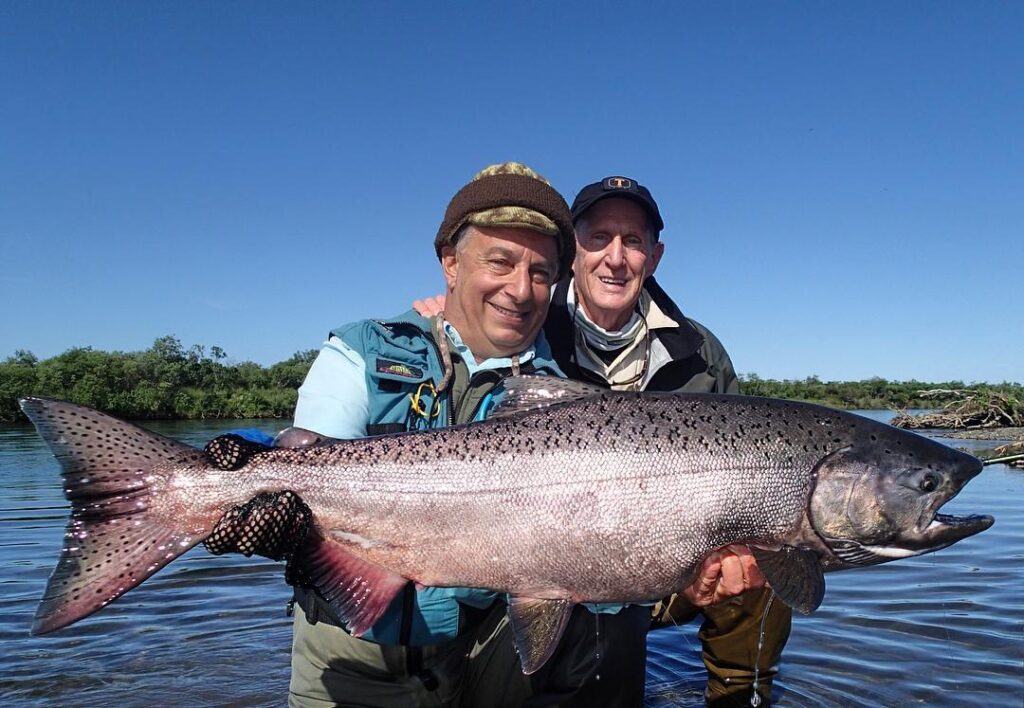
We get into the importance of line-to-rod matching, why shorter spey rods are taking over, and how bamboo rods are still holding strong. You’ll also hear personal stories from decades of guiding, gear development, and some of the most memorable fish ever fought—like a legendary 55-pound king in Alaska that got away at “Coffin Corner.”

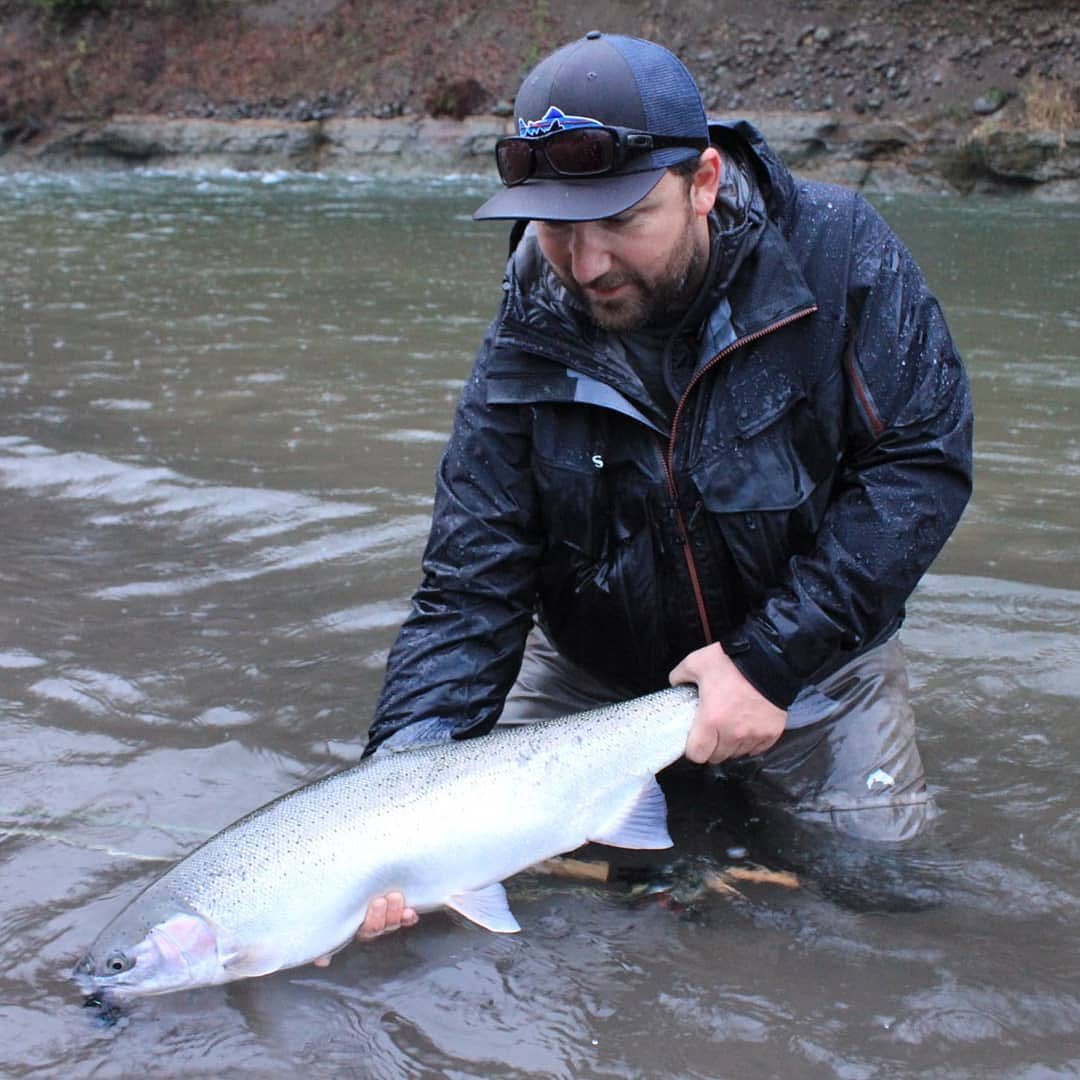
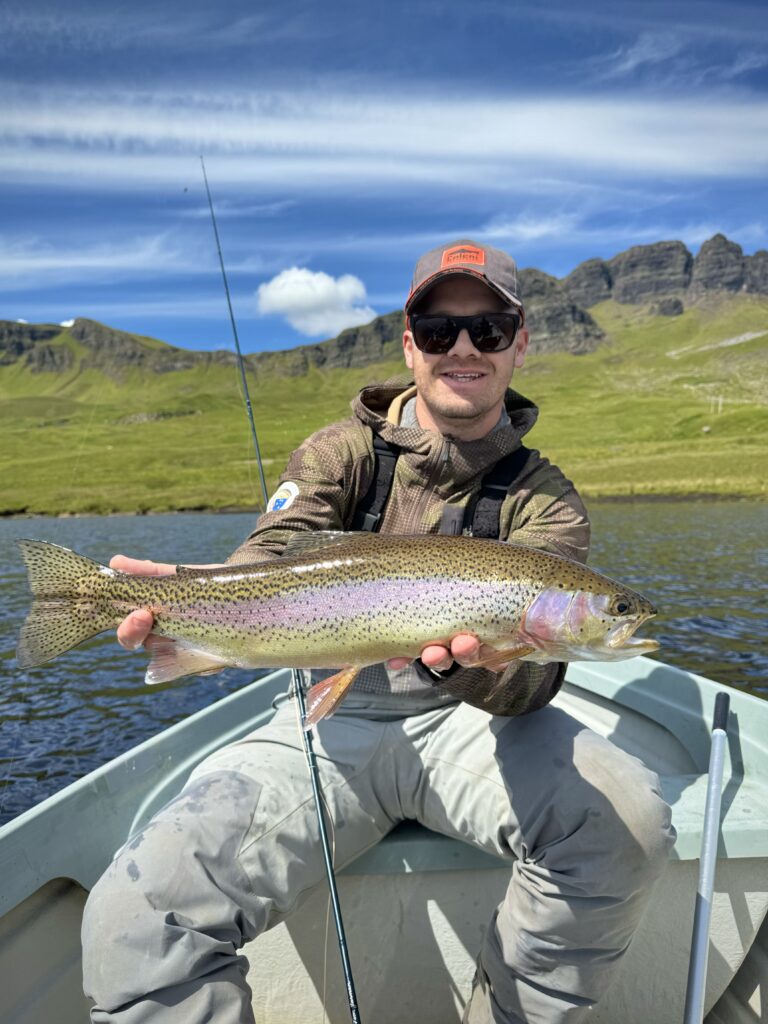
Josh Linn

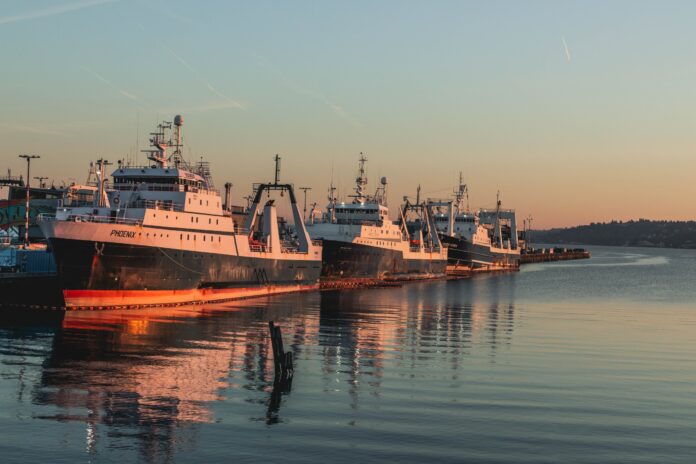
Plus, we dive into heavier topics like the decline of Chinook salmon, bycatch issues, and how guiding and fishing are evolving for the next generation of anglers. Whether you’re coming for the clave or staying for the stories, this episode brings the energy and insight that define the spey fishing community.

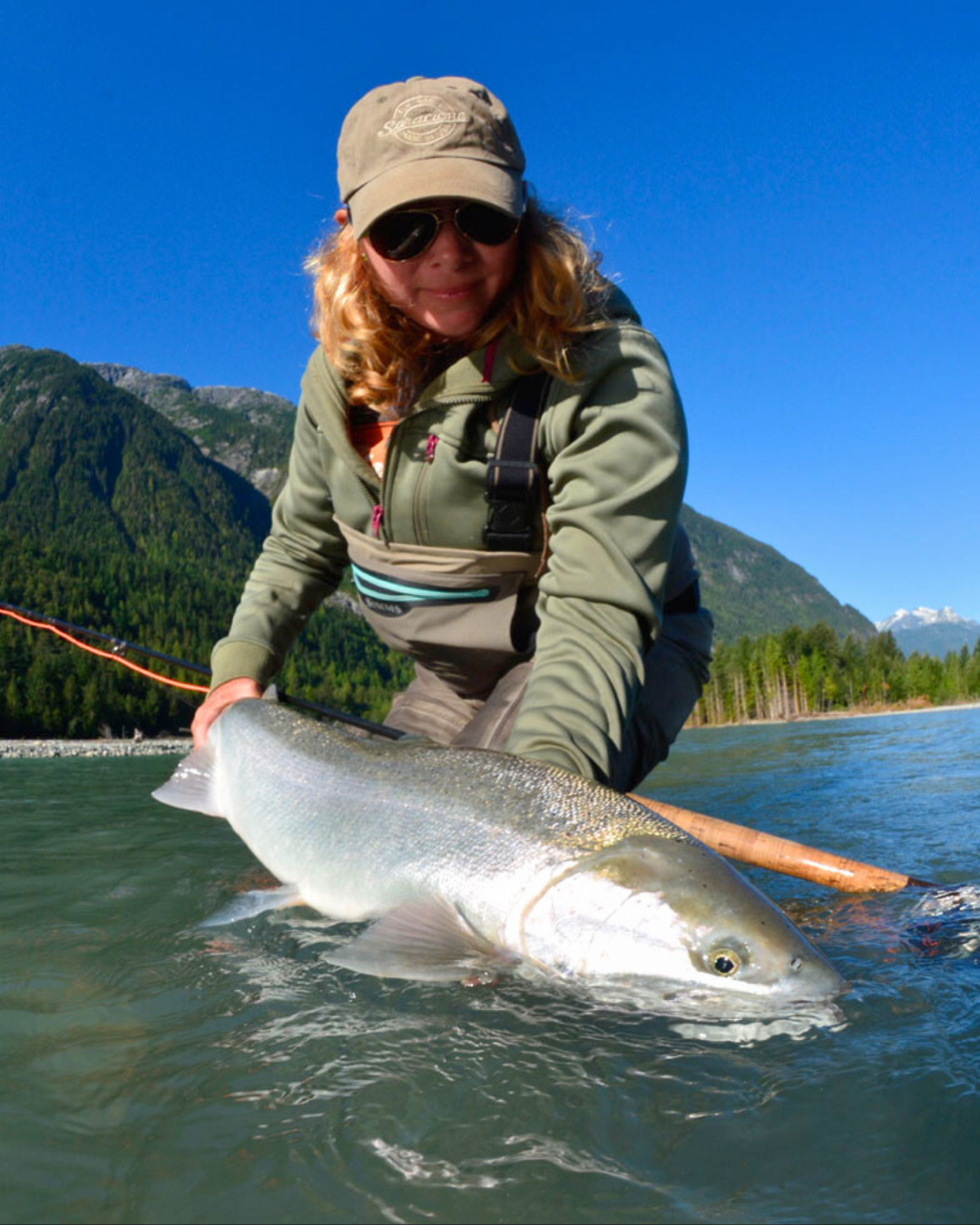
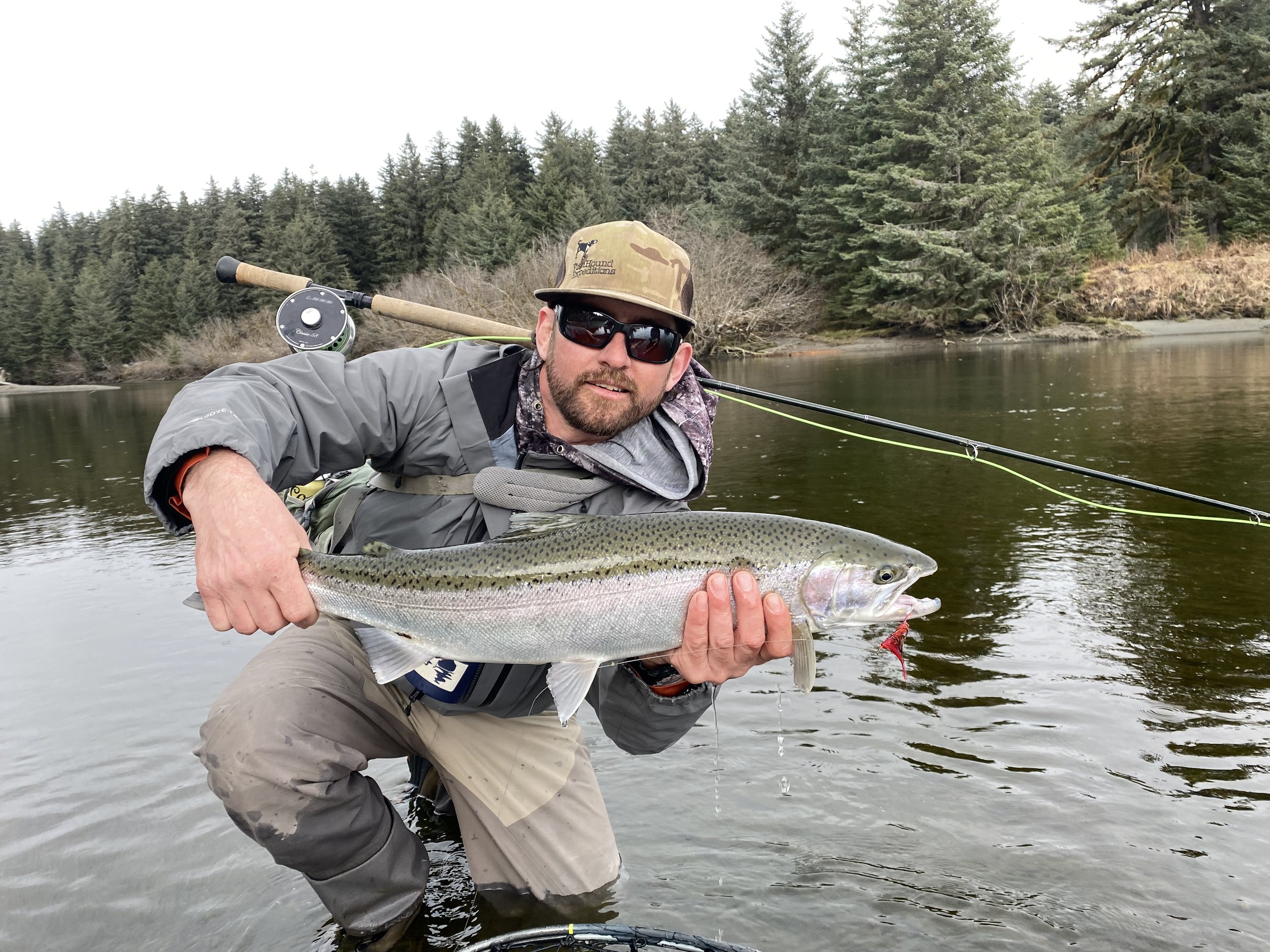
Mia Sheppard

Resources Mentioned in the Show:

🎣 Events & Community

🛠️ Gear & Brands

🐟 Fly Fishing Destinations

  • Deschutes River (OR) – Trout and Steelhead

  • Sandy River (OR) – Winter Steelhead

  • John Day River, Grand Ronde, Clackamas River

  • Kenai & Kasilof Rivers (AK) – Chinook Salmon

  • Mayfield Reservoir (WA) – Tiger Musky

  • Chile & Argentina – Chinook fisheries

  • New Zealand – Tidal Chinook fishing

⚡  Additional Highlights


Film Noted in the Show

Related Episodes

In the Bucket #15 | Steelhead on the Dry with Adrian Cortes & Richard Harrington – Classic Flies, Painting

Full Podcast Transcript

Episode Transcript
George (2s): I mean, I will tell if I tell one guy this, I’ll tell 50 guys this. At the clave there are no bad spay rods. There’s only spay rods who haven’t found the right bullet to shoot out of it yet. And so the lines really, we can save anybody’s spay rod from a, a life in a dusty garage if we can simply examine the rod and select a line that we feel that that caster can now fly the plane, as I like to say. Brian (41s): Welcome to In the Bucket, the podcast that explores the culture of spay fishing in the Pacific Northwest. A spectacular land of mountains and wild rivers where every cast has a story to tell. I’m your host Brian Ska. In today’s show, I’m gonna be speaking with Mia Shepherd, Josh Lin and George Cook. This is an all star cast with considerable influence in the fly fishing industry and together they have contributed greatly to the way we fish today. Their combined experience includes many years of guiding fly shop, sales tackle, repping technique and equipment development, casting instruction, event promotion, and winning three spay RAM titles. Today I want to talk about the upcoming Sandy River Spay, clave taking place in mid-May. Brian (1m 22s): Let’s get into it. Right on folks. Thanks for joining us today. I’m super excited to have a conversation with Mia Shepherd, Josh Lynn, and George Cook. Mia, why don’t you tell our listeners a little bit about yourself? 3 (1m 37s): Hi Brian. Thanks for having me on the show. It’s good to be here and this is gonna be a fun conversation with Josh and George and you and everybody. So anyway, my husband, Marty and I, we own a small company called Little Creek Outfitters in Oregon and we have been guiding on some of Oregon’s rivers since 2003. The Deschutes, the John Day, the Grand R and the Sandy River for Steelhead Trout and small mouth bass and yeah, that’s about it. Josh (2m 10s): Hey, I’m Josh. Thanks for having me on the show. This is gonna be awesome. I started spay casting around 2000 and have known Marty and Mia since, well, before that I work at Royal Treatment Fly Shop in Westland, Oregon. Before that I worked for G Loomis and the Welchs Fly Shop. Now I guide and travel and fish and Thai flies as much as possible. And that’s kind of my story right there. George (2m 35s): Hi, George Cook here. Brian, thanks for having me on with this fabulous trio. I’m the 35 year sage rep in the Pacific Northwest and been at it a long time with a lot of brands. Sage being, you know, one of the headliners along with Rio and some stuff on the hunt side. Prior to that I worked for Randall Kaufman, which was my, my early education into the, this business. And prior to that I guided in Bristol Bay, Alaska. And the other folks on the show here, I’ve, I’ve known for years, so this ought to be quite a go at it. Let’s go Brian (3m 15s): Right on, George. Yeah, I think it’s impossible to overstate the influence that Sage has had on spay casting in the Pacific Northwest. I know certainly the first spay rods that, that I got my hands on were the old Brown series that Peter Morrison very graciously lent to me. I’ve told the story before, but I, I took that 15 footer, the 10 weight that the three piece, which is an absolute canon up to the Thompson, walked into the graveyard and I had the wrong line on it. It was a, an old double taper that was way too light. And I thought, man, this, this space casting’s harder than it looks, but you know, I persevered and you know, the gear made it easier. Certainly George, in your 35 years of doing this, we’ve seen some tremendous improvements in equipment that have broken down a lot of the barriers to participation for folks, haven’t we? George (3m 60s): Well, no question be it Rods particularly lines various formats of lines that lend themselves to the winter game, to the summer game. The lines have probably had as big influence on things is anything that 15 foot 10 weight that you kicked it off with was similar to a 14 foot nine weight that I started with. And today I rarely use those big rods. Things have, they’ve come down to where the average stick nowadays is more like 12 and a half, 13 feet and the lines were always the complication, right. I’ll tell this story really quick, but it’s the first time I ever had a spay rod in my hand. George (4m 42s): The Hardy rep had come into Bellevue Kaufman’s And we had never seen hide a hair this guy before. And he came in and he chatted us up and he said, Hey, I got a spay rod if anybody wants to use it. And I was like, yeah, I will. And he didn’t say shit all stupid about lines. And so this was 1985 and so I put the line on it that any steel header of that age would do. I put a good old tini, teeny 300 line on it and I, I proceeded to go out to the Skykomish River the next day and I’d say after about no, maybe 12 minutes, I was dying for my 8 96 RP with the same line on it. George (5m 27s): And I didn’t pick up a spay rod again until 1990 because it was such a horrible experience. But it really comes down to lines and lines have gotten incredibly better and more useful and, And we owe a lot to the pioneers in that theater. Yeah, Brian (5m 45s): And you know, I think that, you know, we’re gonna talk a bit about the, the upcoming sandy clave ’cause that’s something I’m really excited to learn more about. But I think that if you’re in the business of selling spay rods, you have to be in the business of teaching casting and you have to be in the business of matching lines, reel’s gotta hold the line and hopefully it’s shiny and makes a nice noise if that’s your thing. But, but getting that line rod match is everything, isn’t it? George (6m 7s): A hundred percent. Without it, it can become a real exercise in frustration. Josh (6m 13s): Well, you know, being at the shop selling a lot of spay rods and that kind of stuff and seeing, guiding and seeing the consumer using spay rods and the most random mixed matched stuff that they put on there. You know, a lot of times I’m like, you spent money on this rod, you got some random line off eBay that doesn’t even match with this. It’s just as a recipe for disaster. And If you don’t want a steakhouse, go that route. But If you want to actually learn how to steakhouse the move is to go to a professional and talk to ’em, whether it’s a guide or a shop or whatever and get help with that being matched up. I mean, it’s so easy nowadays. 3 (6m 49s): Yeah, I just wanna say as a, as a guide, the number of people that come out and I’m teaching ’em how to spay cast and they’ll show up with a line and a rod and they’ll have a poly leader on a skagit line and just not knowing how all the equipment works together and they’re wondering like why they are having trouble spay casting. It’s like, okay, just a couple easy fixes here, let’s, or let’s try this, you know, four 80 on this 71 30 or let’s try just a different line. A lot of people come out on the river with heavier lines for the rod and all you gotta do is, you know, just change it and put something different on and it makes a big difference. Brian (7m 36s): And I think, you know, clave type events, you know, the ability to cast a bunch of different tackle, the ability to talk to people who know what they’re doing and to do it, you know, one after another, you know, that’s so tremendously valuable when it comes to setting yourself up for success. Josh, I know from talking to you earlier that, that you were involved in the Sandy Spay clave in its early days, weren’t you? Can you tell our listeners a little bit about how the event got its start? Josh (8m 1s): Well, I certainly was, and I don’t remember the exact minute that it happened, but I know that back in that time 2000, you know, there wasn’t a lot of easy access to information about spa casting. YouTube wasn’t really a thing. There were some message boards and If you look back at the old spa pages message board, it was basically just all text. And there was a bunch of guys and spearheaded by this one guy Fred Evans, who was trying to put together a group of guys to go meet at Oxbow Park. They didn’t have any shop affiliation, it was just a, hey, a bunch of guys want to get together, try different spay. Josh (8m 41s): Robs casting was getting really popular. This was like in September, October of 2000, something like that. They got with Mark Bachman asked him if he wanted to basically host it and provide all the fly rods. Mark is, you know, shop owner and he is like, I can try to do that, but I don’t know, you know what I can do. But I’ll see. And I think a few months later he basically was like, yeah, I’m, I’m all in. Let’s try to make this happen. And he called a couple of reps, I believe George was one of them and kind of got that first spade clave together in May of 2001. And it was basically a snowballed after that. 3 (9m 18s): Yeah, it’s been such a great event. I think the first one I attended was probably in 2003. And then from there on it was, you know, every other one. And our daughter Tegan, who is now 17, she was, she attended her first spay clave when she was born in, you know, 2007. And she would just run around each year and, and cast rods and make people laugh. And I found out that she would steal licorice from the BAH booth and they called her the licorice monster. But it’s such a community event that, I mean I felt safe having my three-year-old run around and talk to all these people. 3 (9m 58s): And it’s just been such a great, great event for many years. And I’ve met so many wonderful people. George (10m 5s): My first time Josh Mark got ahold of me about that one in 2000 and I think we sent him some rods ’cause 2001, 2002, both those dates, I was in Namibia in Africa hunting right when that went on. And when I came back from that 2002 hunt, Bachman basically scolded me and he said, you will not miss this. And 2003 was my first year Mia. And of course it ran all the way through 2019 and Covid kill shot at 20. And so, you know, here we sit. But you know, I always, I always told people anywhere I went about the cla is that it was literally a big, it was a major league baseball hitting clinic for the public. George (10m 56s): And you had all the greatest hitters there. I mean names that are ultra well known, some are sitting here, others are, you know, in, in the United Kingdom. Others are, you know, down the street so to speak. And the public had access to these folks for free, you know, and you don’t see that in the tennis of the golf world, you’re gonna sign up for some pretty expensive lessons. And so the spa clave was really a joyous community event that the public was the single biggest winner and all of us, you know, supporting it with tackle and all this, it’s just, it’s one of the great things in, in the community of fly fishing in the United States. George (11m 40s): And I used to refer to it as the Woodstock of spay because it just was this gathering that there was nothing like it. Brian (11m 47s): So George, let’s talk a little bit about participation. How many people would you see at the event in its heyday? George (11m 54s): I think the peak, now Josh will know this as well or better than I, but I believe 2011, 12 and 13 were the three biggest years. And I think there was one year in that three where the aggregate was around 1100 people. And I think that last year in 2019 it was probably more like 450 people. But the way we always judge these events, regardless of, you know, which, you know, clave or spay event, we judge it number one by the number of bodies, but number two, by the percentage of people that attend that are willing to go cast. And the spa clave always had a really high percentage, like I would say 70% of the people there would cast. George (12m 42s): And then of that 70%, I’d say 90% of ’em would cast three to six rods in a given day. So when we look and view that, we viewed that as the number one spay event in the United States. Not just based on numbers but of honest participation and willing participation and then all the help that everybody would provide these folks, you know, worked in conjunction with that and it just fantastic event and all events before, since are still judged upon that one. Brian (13m 16s): So Josh, you know, you being involved in the early days of this and not knowing, you know, how big of a, of a thing it was gonna become, at what point did you and Mark recognize that you had something really important on hand? Josh (13m 31s): I think that basically right after that, you know, maybe second year, like when George is talking about Mark scolded him, it was kind of like, yeah, this thing is moving fast and you know, we would provide lunches each day. So we had a pretty good headcount of how many participants, you know, we served 400 lunches, we served 500 lunches in the day and in those first, you know, five, 2000 5, 6, 7, something like that, you know, I think we were serving around 1200 lunches in those two days and it was like, oh this is out of control. You know, you don’t kind of expect that it’s gonna be that big. Josh (14m 11s): And so IME at that point for sure, by 2006 it was known that this was the only thing like it and it was, you know, moving, you know, for us what we compared it to, and it’s not a fair comparison, but would be like the CLA game fair. That’s what we were kind of imagining, which is a huge event in the uk and you know, we’re trying to think of how we can get more participation, what we can do for people, how we can add other things to it. And you know, we had big dreams and it, it worked out well. I mean we had people coming, like George said, from all over the uk, you know, presenters from the UK all over, you know, Denmark, you know, know anywhere in Europe all over the US I mean we had a big list of presenters that was really great. Josh (14m 58s): And then we would have consumers coming from not very many from Europe, some from Europe, but a lot of consumers from all over the US Canada. I mean, it was a really great event and hopefully this will seems like there’s a lot of interest and is kind of sparking that back up right now. Brian (15m 15s): So Mia, let’s talk about this year’s event. My understanding is you’re the, the driving force behind making it happen. I’d love for you to tell anyone listening if they come to the event, what they can expect and also, you know, perhaps talk about your experience in previous years and, and how the events evolved in time. 3 (15m 34s): Yeah, thanks Brian. You know, one of the reasons I wanted to bring this back is I just really miss the comradery. I really missed just seeing people, especially since CODI live in mopping and I just sometimes feel like I’m in this little silo over here and, and I just miss, you know, seeing people. And so, you know, that’s one of the driving forces to bring this back. Also spa casting, I I just guiding on the Deschutes, even though the steel had numbers have been low the last few years. I see a lot of younger people getting into the sport in their twenties and thirties and I just think that there’s this whole contingent of new people that have a lot of newer energy to bring into this and create some value. 3 (16m 20s): You know, I think the recreational fishing industry, it’s sometimes overlooked on how important we are to the economy to, you know, to conservation, to just the resource. And so really getting new anglers stoked on fishing and getting new anglers stoked on spay casting, which is what I love to do, I think will really create a lot of long-term benefits for the resource. And, and so in terms of what to expect, wow, well I think I might, I have a feeling I might need to prepare for more buying more food. 3 (17m 1s): So I am getting a little bit, not a little bit nervous, but in a good way. ’cause there’s been so much excitement. I know people now from Idaho, Montana, Washington, maybe California, of course Oregon that are all gonna be here and Canada. And so I know that Oxbow Park camping is booking up pretty fast. So what to expect Friday there’s gonna be a class that’s focused more on beginners from eight 30 to 11 and that’s gonna be taught by professionals in the industry. So like Josh will be there, George is gonna sign up and, and so these 50 people are gonna have the opportunity to take a class from some of the best casters and teachers in the United States. 3 (17m 51s): And so there’s that, and then there’s gonna be on water presentations from guides and outfitters and industry professionals. And then there’s gonna be also, I’m calling it a guide Olympic, but I just wanna have a fun event for anybody that really, it isn’t just for guides, it’s open to anybody after the presentations and event where, you know, just come on down and let’s do some casting or you know, maybe have a little event of setting up a a cot and see who can do it the fastest and just have some fun down on the beach. And, and then Saturday we have a whole slew of presentations lined up and so George is gonna be doing a presentation, Josh, there’s gonna be deck Hogan, Scott O’Donnell and Marty Shepherd, my husband and a whole slew of other great industry guides and, and people. 3 (18m 47s): And there’s also gonna be a fly tying, a fly tying or a space for fly tires. And we got some great people lined up that are going to demonstrate how to tie classical flies or winter steelhead flies. So it’s gonna, there’s gonna be so much people are gonna be able to try rods and reels and lines. Yeah, it’s, it’s, it’s gonna be, there’s gonna be a wealth of information there. It’s gonna be really cool. George (19m 16s): And Brian, you know, one of the great things in the clave is like Mia was talking about early on, you know, with clients is, you know, we’ll set up X amount of rods. I think the most we ever set up with reels and lines was 117 and I used to tease Eric Neufeld, the the Winston Echo rep. I’d say, Eric, I lose more than you bring. But people can try stuff, but what they can really do is they can bring their own tackle and if they’ve got a question about a line for this rod that they’ve had for eons or this rod they could never quite get dialed in, boy there’s never a better time and place than to come chat at that event because we’ll get ’em, we’ll get ’em sorted out on that line for that rod and, and ideas that’ll put make their days on the water much more enjoyable. George (20m 11s): And there’s times when I can hardly get away from just talking about lines with guys because it’s what makes the engines of these rods run are the right lines. So I look forward to that. Always 5 (20m 28s): Don’t let the chill keep you from your next big fish. Heated cores next to skin heated base layer is your secret weapon for staying warm and comfortable during those early morning fishing trips or late seasoned adventures engineered with advanced heating technology. This base layer keeps you toasty all day long, ensuring you can focus on what really matters. Gear up with the heated core base layer and make every cast count this season since 19 72, 4 wheel campers has been building rugged, lightweight campers designed to fit almost any truck and every kind of adventure. Whether you’re keeping it simple like me with the Project M or gearing up for full-time off the grid travel, there’s a four wheel camper built to match your lifestyle. You can head over to four wheel campers.com right now to use the builder tool to find your perfect topper slide in or flatbed camper for your next journey. Brian (21m 19s): So Mia, can you tell anyone listening who wants to come check it out, what are the dates for the event and how do they find you? 3 (21m 26s): Yeah, the dates for the Sandy River Bayla is May 9th and 10th and that’s a Friday, Saturday and at Oxbow Park in Gresham, Oregon and Gresham is about 40 minutes, 45 minutes from the Portland or airport. And so the best way to find out more information is to go over to swing the fly.com. I think it’s just a, it’s a landing page on their website that lists all the information. It’s gonna continually be updated with the names of vendors and more information on the presentations and presenters and everything that you need to know. 3 (22m 7s): So, and then, or you can also email me at sandy spay clave@gmail.com. There’s also an Instagram page, so it’s Sandy River spay Clave is the Instagram page Brian (22m 23s): And there’s, there’s camping on site for folks too, right? 3 (22m 26s): Yeah, there is camping there. I’m not sure how many sites, but last I checked maybe all the RV sites were already taken and there’s still a, a lot of campsites that are available. So, and I think that’s camping there is $25 a night and they also, you can even purchase wood, which is nice If you wanna have a fire. Brian (22m 48s): I think, you know, George, you’ve done a heck of a lot of sporting good shows over the years, I imagine trade shows and you know, to me the clave is really community building, you know, because, you know, not just the, the demonstrations, the instruction, but the ability to socialize with, with these people after hours. George, in your experience, do you find that, you know, am I right in this? Are, are cls a better opportunity to connect with fellow anglers than a actual trade show? George (23m 13s): A hundred percent. You know, for two to three days that these things traditionally have been it’s old home week, right? Typically would be the one time I would see Marty and Mia throughout the year. But we, consumers will show up from all parts. I mean I anticipate people from Idaho, from Texas, possibly New Jersey and it’s a reconnection, it’s a reboot of the highest order and you always learn something, you know, somebody will say, Hey, I went and did this trip and hey man, I’ve been dying to talk to somebody who’s done that and so let me sneak you off in the corner for, you know, a detox on it. George (23m 55s): So it’s a fantastic opportunity for everybody to kind of show up in one spot with one common denominator and that spay spay casting and the love of spay fishing. So it will be exactly as you described. Josh (24m 10s): I think one of the cool things is that, like you were talking about, you can bring a rod and match any kind of line that you want to try to it, but getting that knowledge from an anger that fishes on the op or has been, you know, sea run brown trout fishing or goes to Alaska king fishing and just does all of these things, you get to actually get that information in person from a real live person who’s actually done it and not someone who just is speculating about it and just kind of guessing. Yeah, 3 (24m 40s): I think that human connection is so valuable these days especially, I mean since covid OA lot of that was lost and a lot of our connection is just overline or zoom meetings or you know, through social media. And so having that one-on-one is gonna be a real special treats and just being able to meet new people and it’s gonna be a good time. Brian (25m 4s): Awesome. I wish I could come and join you guys, but I am unavailable at that time of year. 3 (25m 9s): I wish you could do. Brian (25m 11s): Yeah would be great. You know, let’s talk fishing ’cause you know, we all love to fish and is there any fishing going on at that time of year in that neck of the woods? 3 (25m 20s): Yeah, there’s, there’s still it’s kind of the tail, well it is the tail end. There’s still a few strand steelhead in there. The Sandy River is a winter steelhead fishery from, you know, December through April, the river Oregon Department of Fish and Wildlife used to supplement it at like a summer run and there’s also, but that doesn’t exist anymore. There is also spring Chinook that come in the river and I have caught some like late May and that’s a real treat to do that. So there is fishing in May on the Sandy, so Josh could also elaborate more on that. Josh (26m 3s): Yeah, well the Sandy but also the Clackamas, which is kind of the right next door river would have summer steelhead available. Obviously there’s tons of trout fishing but typically fishing is pretty good in May. It’s just a great time to be out there. And there was a spay clave, you know, I don’t remember which year it was maybe 2007 or eight where Brian O’Keefe was still coming to it and he really liked filling the freezer If you will. And he ended up catching, I can’t remember, I think two springers one morning before the clave and harvested both of them. So I mean there’s definitely opportunities around, 3 (26m 41s): I was there with him. We were, I, Brian and I were fishing one of those days together And we, we strung up a Chinook on a stick and walked it back up to the clave walking into the parking lot, all like Huck fin. It was really funny but it tastes good. George (27m 0s): There’s some other stuff going on then Brian, that is a little off the typical radar that the Khalis, which is not all that far into Washington state has got, you know, virtual year round steel heading. But the other thing that’s going on that time of the year is the Tiger Muskie thing, which Mayfield Reservoir at the top of the Cowlitz is probably the most famous reservoir for tigers in the state of Washington. I think we’ve got around nine or 11 lakes, but that’s a pretty good target time. So there’s some stuff off the beaten path going on fishing wise right then as well. 3 (27m 38s): I’m gonna also plug in really quick the Deschutes too in May is gonna, may is when the salmon flies start, start really coming off in the lower river. And so if if someone’s coming to the clave, just come on over to mop in and fish a day or two because it is beautiful and the river is gorgeous and it’s just loaded with trout. So there we go. Brian (28m 0s): So Josh, you and me are both guide on the salmon fly fishery, don’t you? Josh (28m 5s): Yep. Yeah, that’s a great time. I do a different section than she does. I’d go from the Warm Springs area, so I, If you were to imagine we talk about the lower Deschutes, the lower a hundred miles for that salmon fly hatch I’m guiding from basically mile 100 to mile at whatever, 70 or 50, 70 or 65, something like that. So warm springs down to mopping And we do mostly three day float trips with drift boats and go through White Horse Rapids and you know, it’s kind of a long good event and it’s some of the best fishing that we’ll have all year. Marty and Mia do it more in, in mopping and north and the Lower River. 3 (28m 47s): Yeah, So we, we focus on, Marty and I focus on either day trips. I do a lot of day trips from mopping all the way down river to Max Canyon and then Marty launches a jet boat at Max Canyon and we’ll do three day trips down there where he sets up a fixed camp and, and then fishes from the jet boat. And so from run to run and one thing about the Deschutes, If you don’t know, If you haven’t been there, you, you can’t fish out of a boat on the Deschutes and so you actually get out, you go to a spot and then you get out and walk and wade that run and it’s, it’s phenomenal. It’s a really good time. Josh (29m 27s): So one of the things that’s cool like Mia was just saying is that the Deschutes, because you can’t fish out of the boat, you have to be a pretty good caster to make it happen. And where we’re really targeting those fish are like tight up under the trees, you know, it’s this kind of jungle fishing. It’s super, it’s very interesting, very hard to do, very technical just because of the casting is so difficult but the fish are very hungry and are looking up. Brian (29m 54s): I gotta ask George, you brought up the tiger muskie, I’ve never fished for muskie. Is that something you’re doing with a two-hander and Josh, your, your salmon fly trout fishing, is that done with a single hand or a two hand rod? Josh (30m 4s): We’re mostly doing single-handed for a trout, but some guys now more and more are doing a little bit of two hand swinging, If you will. Almost skating flies, especially in big tail outs where the salmon flies are landing kind of mid river after they’re laying eggs and floating kind of down the river. So it has a good opportunity and a good use to use that two-hander like that. George (30m 25s): The Tiger Musky stuff, Ryan is akin to pike fishing that you would think of in parts of Canada and Alaska. It’s really kind of made to order for nine way, maybe a 10 on the top end, a eight weight single hander on the bottom. But nine weights are my favorite for that game as well as the Pike game that I do quite a bit of in Alaska every year. Brian (30m 48s): And Mia what about you? Are you using trout space or are you on the single handers? 3 (30m 51s): No, I have four trout. We’re just using single hands that time of year and you know, a couple people come out and want to, you know, fish a trout spay and, and we’ll swing like all bully buggers or just big streamers and, but definitely fishing a dry fly and a big chubby is the most effective way to catch a trout on the Deschutes that time of year. We don’t start fishing two handed rods until our steelhead season. So really from about beginning of August, all the way beginning of August is our Deschutes Summer steelhead run is when we start focusing on it and we’ll fish it the Deschutes and then the Grand Ron and then the John Day between August 15th and November end of November or December 1st. 3 (31m 42s): And then we take about a month off and then go into swinging and two hands for winter steelhead in January through April Brian (31m 51s): And then it’s clave season 3 (31m 52s): And then it’s clave. Brian (31m 54s): Wow. So to me this is a, a great opportunity for someone, a good excuse to, to fly out to Oregon, check out some diverse fisheries and and also attend the clave good little getaway. I wanted to talk about, you guys call ’em Kings, right? Not Chinook Kings. I asked John McMillan about that and he, he calls him Chinook. I thought that was kind of odd for an American guy, but he has a good reason for it. The Chinook fishing’s always been my favorite. I love the fact that the fish eat the fly way out there. I love the fact that I don’t have to let the fly swim all the way to the dangle. I just, I just, something about getting a fish that you know really is angry at you and is just gonna take all your line and go away is really appealing. Steelheading is obviously a little bit more of a, I think a, a subtle art compared to Chinook fishing and you know, personally I’ve probably had my most enjoyable time Chinook fishing on the Cheena when it was open. Brian (32m 46s): Unfortunately on the Cheena we haven’t been able to target Chinook for a few years now, which is perhaps a little bit of a political football. But you know, at the end result is, you know, you can’t fish for Chinook catch from release on the Cheena. Hopefully the numbers come back a little higher. But in the last decade or so we’ve really seen kind of a widespread decline of Chinook numbers where steelhead numbers, they go up, they go down. There is unfortunately a bit of an identifiable trend for, for Chinook salmon at least here in bc. How’s it been down in your neck of the woods? Josh (33m 15s): Well, Chinook’s in, in the lower 48 Oregon especially, you know, we really have spring Chinook and fall Chinook, So we get two main runs of them. I think that here, sadly they don’t eat flies as good as they do as you get further north BC and Alaska. But the runs for fall Chinook especially have been banner in the Columbia and the best returns we’ve had in forever spring chinooks have been mediocre at best. And I think that’s kind of the same thing that we’re seeing a little bit all over the place. 3 (33m 48s): The fall Chinook are supplemented by hatcheries and they’re a very important source for Native Americans on the Columbia River. And so in the fall, usually in August, September, If you drive down the Columbia, you’ll see hundreds of nets in the Columbia. So they’re, they’re catching those fish and using them for subsistence and also selling them. George (34m 13s): I’ll speak to Alaska Brian, this’ll be my 42nd consecutive year of fishing kings in Alaska and I started in 1983 when I was guiding in the Bristol Bay region. So I’ve seen 40, you know, 40 plus years of it and I’ve seen the whole gamut of the good, bad and the ugly and and for the most part we could look at kings in Alaska today and probably the best term would be it’s hanging on. Josh and I do a trip every year on the Noosh G And we generally hit it pretty good largely because after these 40 years I know when to be there, which is a pretty, pretty narrow period of about, it’s a five to 10 day period when it’s gonna happen and we’ve certainly had a pretty good go at it to outta the last three years, but it’s a shadow of its former self. George (35m 10s): We can go into all the reasons why and the reasons are many and varied, but I am one person who can tell you about the good old days because what we saw in the eighties, in a good chunk of the nineties and really what you Brian saw on the connect talk kind of in the fourth quarter, which I consider what you saw when you, you were getting a good crack of that, you were seeing definitely the two minute warning of the greatness. But it’s, it’s a really interesting thing to watch what has happened and it’s a lot more negative than positive, but we continue to go because as we like to call it the big pole, you know, like you’re talking about that fish, that clobbers that way out there, it’s still one of my favorite things to do in any form of fishing. George (35m 60s): Is that, 3 (36m 1s): George, do you think the limiting factor is commercial fishing up in Alaska or is it the angler retention? ’cause I know that anglers are allowed to, or it used to be able to keep a couple or you know, is it climate change I mean, or is it just all that together? George (36m 18s): Well I think it’s all gonna get a finger pointed at it, but you know, it’s pretty hard not to point a pretty stern finger at the, the bycatch in Alaska. That one’s a pretty popular one to point a finger at. And the reality of the bycatch in the Pollock fishery is that it’s been going on for decades and it probably really, I would say that the King game in Alaska really hit a wall in about 2019 in, up until then, yeah, you could say it was, it was downtrodden in various places, but it, it hadn’t hit the wall that it would hit in 2019. George (37m 2s): And I think the bycatch thing is one of the biggest issues. And then in river kill, right, you know, the Nok is a great example of this where these fish have worked so hard to just simply get there. They survived two to four seasons in the salt, they survived killer whales, they survived everything that they could survive and they make it in on that tide and they’re getting, you know, they’re getting caught on a downstream trolling spoon or a spinner and suddenly they’re in the bottom of a boat. And, and so that in river kill by sports fishermen has certainly contributed to it, but it’s just Alaska has always had this kind of harvest mentality, a mentality that I think has largely disappeared from northern California, Washington state in, in Oregon. George (37m 56s): And I mean it’s still there in bits and pieces take Buoy 10 on the Columbia for an example, but that harvest mentality has been a hard one to kind of weed weed the populace of in the state of Alaska. So that’s what I would tell you Brian (38m 12s): George, I remember you and I talked about this the other day, but I got my opportunity to go to Alaska kind of through you because for whatever reason, I guess it was probably 2007, 2008, you were unable to go and, and they needed someone to fill a guest instructor spot. So I was the lucky recipient of that opportunity. And having never been to Alaska, I wasn’t really prepared for what I was gonna experience because here in bc you know, Chinook fishing on the Lilette and the Harrison, we, you know, we worked pretty hard to find a fish every day or two. And I remember, I think it was maybe like my second or third day there, you know, the guides would take you out at night and that whole kind of pipeline zoo bar section and you could see these things blobbing in the distance and they’re coming and there was a day there where, you know, I saw everybody on the bar, everybody on the bar had fish on kind of one after another and it wasn’t, wasn’t the whole day, but I’ve just, it was like pink salmon fishing but they were freaking king salmon. Brian (39m 10s): It was unbelievable and it spoiled me, you know, it was just, you know, to have that opportunity and to see the potential. So you start talking about the eighties and I think, man, was this just kind of like what every day was like back then when it was good? George (39m 24s): Well it was straight up ridiculous in the eighties. I was on the Agac as Guide for three years in the eighties and we could actually tell you that one Fish in eight hooked, regardless of flyer gear was over 40 pounds. One in eight was over 40 on the Agac. And the nac, which everybody thinks of these days, is a fantastic big rainbow fishery, which it most certainly is, particularly in the fall that actually had the biggest chinook of any river in Bristol Bay. And all these kids that are after these giant rainbows nowadays have no earthly idea about that other than they occasionally run into one spawning in the Nak knack above, above Rapids camp where they’ll see one spawning and it’ll be, you know, a four foot long fish. George (40m 13s): But the Nak nack produced the most 50 to 60 pounders of any river in Bristol Bay in the 1980s. The Noia G when I guided it in 1985 for a full season, the numbers of fish, you know, I think a a so-so run in those days was 150,000 of them. A big run was quarter million of them. And you know, in terms of guiding people, we’d say don’t run that plug out unless you’re ready to fight ’em. Don’t put that out unless you’re ready to fight one. ’cause you’re gonna be fighting one. And it went on, you know, it went on and on for years at that level. And I fished at Connect Talk Brian for 22 straight years at one juncture and it was, you know, fantastic on the fly. George (41m 1s): I got a great zoo bar story, which if and when you wanna talk about Great Fish Lost, I’ll tell you one from Z Bar, Brian (41m 9s): Let’s get into it. What, what happened at Z Bar? George (41m 12s): Well I was there, there was a time when Alaska West had their camp on Z Bar and Zbars about 120 yards long. And it’s got, it’s got a top, it’s got a body, it’s got a quasi tail out And we named the tail out coffin corner because If you found yourself fighting one in coffin corner, more often than not something lousy would occur to you with that fish. You had the unique opportunity to go downstream and drown or you had the unique opportunity to watch your fish go into snags that were gonna become impossible or maybe just, maybe you could get somebody to start a boat and you could jump in it. George (41m 52s): And Deck Hogan came and fished with us one year and it was also the year of the infamous deck Hogan Knockout the Gear Guide. I was witness to that at Point Blank Rage, it’s one of the great stories of all time too. But I hooked a fish that week, I hooked it down in the bottom and I know sooner hooked it. I was in coffin corner and deck Manch to get a boat started. We jumped in the boat, I think I was fishing, I might’ve been fishing a 15 foot for a 10, I think I might’ve been that particular year, which I believe was 1996. George (42m 33s): And we fought this fish downstream out of the boat. I’d seen this fish roll right when I hooked it and deck was next to me and I turned and looked at him and I said 55 as in 55 pounds. And we got this fish off of seven root wads. We were seven and oh until number eight. Number eight she got us and we lost that fish And we drove the boat back to camp. You know, we had, we, we, we were defeated but boy we had seen something that was pretty, pretty awesome and Z Bar was, Z bar was so good Brian, that there were times that we would leave in the morning, go upstream a quarter mile, sit in the boat for 10 minutes and then go back to camp So we could fish zoo bar. George (43m 27s): That’s how good it was. And like you said, you’d see fish and you’d see ’em, there’d be fish in there all the time during King Seasons and they’re in there full time of some level. But three to five hours after a high tide is when you’d see that famous, the BLBs, the BLBs coming and those fish had come in and they’re chrome and purple backed and that fish saw a fly. Whether that fly was Chartres and white or purple, that fish ate the fly. It wasn’t too that fly came by that fish, that fish ate it and it was nothing like it. And I’m sure glad I was a part of it to see that because I’m not sure we’re gonna ever see that in North America at that level again. Brian (44m 9s): Well you bring up, you said North America. So I gotta ask, what do you guys think of the, the Chinook fishing, the king salmon fishing in Chile and Argentina these days? George (44m 18s): Well I’ve gone and done it, I did it in 2016. I went down there and of course everybody told me just, oh just bring your stuff that you fish in Alaska, George. And of course, you know, I had buckets of that stuff and took buckets of it. And Brian, I wasn’t in that river system 10 minutes and I knew I was screwed for the week because the rivers looked like southern Oregon. NorCal, they looked like the Smith or the Coqui or the Eel, the Lower Rogue. And these fish are in these pools and they’re, I don’t know if there’s 40 of them in the first run I was in or 240 of them, but there was a pile of them and they looked to be 20 to 60 pounds and we’re out there running, you know, typical Skagit T 14, you know, chartreuse something intruder, blah blah blah blah blah. George (45m 11s): And we’re running this, flying this sink dip through these fish and we’re just pushing ’em out of the way. We couldn’t hook one for love their money and I wasn’t there 10 minutes and I knew I was screwed because if someone would’ve just said to me and shame on me for not researching it better, but if someone would’ve just said, Hey George, this is gonna be a trip into the 1960s in Northern California, Southern Oregon, I’d have gone, ah, got it. Nine weight monofilament was shooting heads, intermediate type two, type three small comet flies, boss flies little clouds or minnows, get above ’em in the boat, quarter down, cast swing into ’em, strip through ’em. George (45m 56s): I’d have been in business, I might’ve caught some, I might’ve caught tons, but I wasn’t told that, I wasn’t able to research that. So I can tell you it ain’t Alaska, it’s not British Columbia. I think most of those fish are tootle or Tooley strange Chinooks from Washington state, which is Josh and Mia will tell you are not exactly the greatest biters to start with. And so that’s a tough game down there. It’s a game where I think for a client that wants to go down there and fish with Austria Kings or with the Tre Amigos, you’re maybe gonna hook one to three a day, probably have some days when you don’t hook any and it’s not gonna be Alaska. George (46m 38s): That’s the bad news. The good news is they got lots and lots of big ones. Big ones, Josh (46m 45s): Yeah those pictures of those things are massive man. Talk about a big fish down there. Brian (46m 50s): I have a fished firm down there, but I really wanted to just tell you guys a very quick story. Years ago I guided on a river called the Food La Fu, which is known as a trout stream. And I guided for a guy named Jim Re Pine, they used to call him Mr. Alaska when he was in Alaska. He was a writer who moved to Chile and married a Chilean and ran a cute little trout outfit there. And I’m drifting down the river and I get two locals kind of sturdy looking, couple waving at me to come to shore. I thought maybe there was something wrong. So I, I rode my boat with my, my clients over there and they had a 45 pound dead Chinook laid on the bank that they caught on a coffee can if I remember correctly. And you know, this was big news then. I didn’t even know there was Chinook in the river so I was like, what are we doing trying to catch all these little trope but the Chinook were quite colored. Brian (47m 34s): So what I wanted to ask you, George, in your experience down there, were you catching silver ones or were these fish colored? Because a lot of the photos I’m seeing, Josh, you talked about those pictures of the big ones, it seems like they’re getting them when they’re not silver. George (47m 48s): Well it depends on the river system where I think where the Austria King boys are and, and certainly where I was, we were fishing them sub 30 miles of salt. In fact the, the week I was there, the year I was there, Gary Loomis was there and Gary fished the river exactly one day hooked two on gear, they couldn’t fish bait, bait was not legal. Gary fished the river exactly one day and then Gary proceeded to go down in the estuary and he was down there, you know, basically trolling in the estuary on a little rig called a Brad’s super bait, which is a really popular thing like in buoy 10 and stuff like that. George (48m 32s): And Gary was hooking, if I remember right, ’cause I’d, I’d talk to him every night about it. He, he was hooking four to 16 a day in the estuary and those fish were basically 20 to 60 pounds and they got numerous ones over 50. All the fish I saw in the river system were bright, they weren’t colored up. But those, these ones you see on Instagram, the re amigos boys, they’re way up, they’re 90 miles up that river system and they’re fishing those fish in the Boca where the lake system dumps out into the rivers, mainly what they’re doing. George (49m 14s): So that would be like fishing, think about the connect talk, which is a 90 mile river system, whatever Chino should be in that upper 20 miles, say call it July 10th, those guys would be colored up, they’d be fire engine up there. Think of that same thing going on down there in Chile, but they’re catching monsters. I mean the, the level of 40 to 70 pounders and even bigger is astounding. I mean it’s like looking at, you know, the historical Columbia Frazier, Kenai River, Chinook strains and, and these guys have now got them, you know, in the year 2025. George (49m 56s): So Josh (49m 56s): You know, I think that also New Zealand has a huge run of Chinooks down there as well and a lot of guys are fishing ’em, you know, tidally and doing really good on catching some pretty big ones George (50m 8s): And they love red white flies in New Zealand, believe it or not. That’s their favorite color. 3 (50m 12s): Listening to you guys talk about fishing Chinook, I’m a little jealous because I have never fished for Chinook with a two-handed rod usually. And I mean when it’s happening in Alaska in June, Marty and I are busy bass fishing and taking people bass fishing. So we’ve never had the opportunity to go up there. And then also, you know, just raising a daughter for the last 17 years is also keeps us really busy in those summer months. But this June I was trying to mark out some time on the calendar to go fish the kasilof on the Kenai for for Kings because there is a hatchery run there that I know that people can still fish and the returns are supposed to be pretty good. 3 (51m 2s): I’m sure you fished at George and probably know a little bit about that. Is it still happening up there, George? George (51m 8s): Yeah, it’s not like it was, I mean there was a time, a time right around 2000 to 2004 when that fishing was awfully righteous. It’s one place where you don’t need big sink tips. Take a 15 foot, a hundred twenty nine, fifteen foot, 150 grain type six is about the right animal in there. Black, blue, purple chartreuse, orange shades is what I’d tell you to run with. And it’s got good access. It’s classic swing water below what they call the people’s hole. And you can start there and kinda work your way down River River left and give it a go. George (51m 50s): And it’s a fun time of year because you can be doing some other stuff. You could spend a few hours a day doing that. You could also go trout fish, you know, after June 11th you can go trout fish, the various parts of the Kenai and tributaries and there’s fantastic saltwater fishing up there. In fact, if you’re going to go make sure I get you the name of our saltwater guy outta Seward that we’re fly fishing with because what we’re able to do with these guy that nowadays in terms of halibut, big wings on the fly has become really a new frontier and you’re gonna want to go do this. So make sure I get that to you. Josh (52m 29s): Just to step back here for a sec, Brian, you were saying how George got you connected with the Connect talk. Well around 2004 he got me a job or got me a lead on a job to guide for Kings in Alaska on the Sandy River. So I’m kind of indebted to him also on that same sense. And that was really one of the coolest things that I ever got to do. Go to Guide on the Sandy for five seasons, just solely targeting kings was the best thing possible. 5 (53m 1s): Fish Fly Guide Service is passionate about sharing Jackson Hole’s world class fishing from its iconic rivers to hidden back country waters, the legendary mutant stone and other fantastic hatches bring explosive top water eats. During peak season backcountry creeks hold hidden gems where every bend offers something new and wild. Trout rise in untouched waters. Jackson Hole sits in the golden circle for trout home to the headwaters of three major river systems, the snake, the green, and the Yellowstone. Here you can chase native cutthroat trout, big browns, wild rainbows, and even K on the fly. If this is your kind of fishing fish, the fly guide service is ready to take you there. Book your trip right now@fishthefly.com. 5 (53m 41s): Trout Routes is the most comprehensive mapping app for trout anglers. With over 50,000 trout streams, 350,000 access points, public land maps and more trout routes is the number one resource for navigating, researching and exploring trout streams. And it deserves a place in every anglers toolkit. I was in New York fishing recently, my first time in New York fishing. I had the Trout Routes app and I was able to check out and access public access points through the maze of private property on the rivers we were fishing. And after I got into the stream and was fishing down through a run, I wasn’t quite sure I saw a house down below. I wasn’t quite sure where the property lines ended, but given that I had trout routes, I was confident where I was fishing and I was able to assure that I wasn’t trespassing. 5 (54m 29s): You’ll be fully prepared with offline maps. You can get driving directions to points of interest, drop pins, add your notes in the app all while keeping all of your data private to your account. Only you can visit trout routes.com right now to learn more and download the Trout Routes app for free in the app store today. That’s trout routes. T-R-O-U-T-R-O-U-T-E-S. Start exploring today, Brian (54m 59s): Man, the whole time I’m on the connect talk, you know, thinking that this has to be the best fishing in Alaska ’cause it’s the only fishing in Alaska I’ve done. And then you meet these clients that have been out to the Sandy and you hear their stories and then you think about just to fish in that, that setting and that environment. That would be a, a heavy lift for me to pull that off with my, my current wage. But one day I’d love to get out there and check out out and see what that’s all about. Josh (55m 21s): Yeah, you know, it’s one of those things, it’s kind of that shifting baseline, right? When I guided there, it’s like when George was talking about the eighties and you know, when I guided on the Sandy in 2004 through eight or nine, you know, there was, there’s no village out there, so it’s about as remote as it can get. There weren’t any other camps. It was our camp and a fishing game cabin. Now there’s another little small camp in the lower river and the fishing’s of course not like it was, but it’s still lights out. I mean it’s such a cool unique place and the wildlife, the amount of bears that you see, there’s wolves running around tons of moose. I mean it’s just a, the coolest experience. 3 (56m 3s): Yeah, Alaska’s a really special place. Love it there. I used to, and not a lot of people know this, but I commercial fished up there in the late nineties for a couple years and worked in Bristol Bay on gill netting boats, and then also crab fished out of Dutch Harbor for a couple seasons. And just so I love fishing. I love catching fish. I love eating fish and I love everything about it. I love guiding now and taking people on the water and it’s just a, a constant evolution and I’m gonna keep doing it. Marty and I are actually purchasing some property up there in Alaska and trying to, trying to just make it another a second home. 3 (56m 48s): So Brian (56m 48s): Nice. Me, I, I didn’t know bad about the Alaska crab fishing. I mean, I, I loved watching that show Deadliest Catch. So did you know any of those guys? 3 (56m 56s): I did. I have seen it a couple times and I was like, oh, I remember that guy. So, yeah. Yeah, there, there’s a couple of people that I recognize from, from the nineties. Yeah, I, that show kind of cracks me up because it makes everybody look so glorious and you know, like they’re rock stars and Yeah, I have a different story. So, but it’s crazy work. I mean it’s definitely, it’s hard work and it’s, you know, long days, long hours getting beat up by the ocean and yeah, it’s pretty wild. Brian (57m 32s): Yeah, I don’t know how the heck Canada didn’t figure out how to get Alaska, but I mean, I guess, I guess these days we have to worry about, about the US getting Canada, but don’t laugh. 3 (57m 43s): I know. Brian (57m 45s): So I wanna go back to the clay for a minute because I keep thinking, you know, what a great trip this would be for someone who’s, you know, maybe they’ve done a little bit of spay casting or they’re just really want to get into it, but they’re, they’re concerned about, you know, spending their money the right way and getting set up properly. George talked about it earlier and it’s certainly been my experience over time. We’ve seen a trend towards shorter spay rods and I’m of the belief that the perfect fishing rod is about 12 feet long. That’s the perfect compromise to be able to control line at distance. Not too big to carry around working close from one day to the next. Steelhead fishing, I probably got a 12 footer, maybe 12 foot 10, that’s, that’s what I’m fishing. But with the clave. And I guess this question’s probably best suited to George because you’re, you’re the, the tackle rep guy, but with the clay, have you seen over the years an interest, like I’m talking about, go from longer rods down to shorter rods? George (58m 38s): A hundred percent. Brian, you know, the rod companies, Josh at one point was with Loomis. Mia and Marty have had a lot of Loomis rods in and out their boat. Sage and Loomis brought the shorter game really into focus in the spay world. And I would say today I kind of think of 13 feet as kind of the common denominator with, you know, stuff being 12 foot six to maybe 13, four being most of what we see, what really made that possible was the advent and development of these lines, these shorter Skagit lines, the, the advent of acceptance of the scandy style lines in the United States in the Steelhead Theater. George (59m 27s): But as the lines got better and got shorter, it allowed those shorter rods to finally have their damn court for eight straight years. I went to Del Fuego and did the sea run brown thing. At one juncture in the first couple of years, all these guys were showing up with 14 foot nine weights that the fly shop in Redding had told ’em to take. And these guys would show up with these massive sticks. And of course, you know, we’d show up in our quiver. Yeah, we’d have a 91 40, but we’d also have a short eight weight and a short eight weight might have been something, you know, that was 12 foot four, 12 foot six. George (1h 0m 9s): And what you find, and what we found then, which I would say in that 2000 3, 4, 5 period is when the revolution into these shorter rods really picked up steam is that number one in a lot of wind and tear fugo, If you don’t know this, it’s got wind to the point where you can literally stand and lean yourself forward and not fall over. I mean, I ain’t making that up. And you don’t wanna 14 foot nine weight in that environment. You want a 12 and a half foot eight, a 12 foot three, 12 foot, four eight weight. You don’t want anything past 13 because the longer that rod is, the more wind affects it and you don’t produce the line speed that you need to really play in those conditions. George (1h 0m 54s): The other thing about the Rio Grande River that always shocks everyone is they see all these photos and it looks big in the photos. Well, when you get there and you actually weighed out in it, you oftentimes weighed 30% of that width of the river just where you get to a spot where you’re actually gonna cast. So it’s, it’s really, it’s a big river that’s actually not all that big and doesn’t need those kind of weapons. But to be sure these shorter lines, Skagit short, Skagit max power, the rage, various things that are out there have really revolutionized the world where the 11 foot four switch rod, the 11 foot six switch rod have become baby spay. George (1h 1m 40s): And that those 12 to thirteens are the, that’s the cash money length, the rods today. 3 (1h 1m 45s): Yeah, I definitely, for winter steel and fishing, I like, you know, the, the 12 foot, you know, 12 foot sevens, it’s just, it’s nice ’cause we’re sometimes fishing, the water is higher and you don’t have, you’re up against the trees on the sandy and, and just need to make a, a tighter, shorter cast and those work pretty well. But on the Deschutes my go-to is a, is a 71 33. I just, I love that length. I love being able to cast scandy lines with it. So that’s, and it’s just a summer steelhead or just a little bit, they’re a lot different than a winter steelhead. 3 (1h 2m 26s): And I like fish in those small classic flies, floating lines and you can do all that and it works. Brian (1h 2m 33s): Do any of you guys fish bamboo? 3 (1h 2m 35s): I do a little bit. Not as much as I’d like to. Marty about eight or 10 years ago, he dove down the bamboo road and he actually started making some bamboo rods and it’s, they’re definitely, they’re really fun, very beautiful to fish. So I don’t know if, have you fished them Josh Bamboo? Josh (1h 2m 59s): I have fished them. I don’t own any sadly, but I could see that being a thing in my future. ’cause that’s also the action of Rods that I like. Something that is slower and loads deeper, a little bit easier to cast, kind of launches it. George (1h 3m 12s): I had the good fortune, Brian, a fishing with Bob Clay when he was still guiding on the dean. And I remember one particular morning, one particular year, he brought one of his, I think it was a 12 foot five eight weight if I remember right. And he put me in a run with it and it was that I’d never fished one before. I’d certainly heard about ’em, but I’d never fished one and every cast I thought I was gonna break it, right? Like every time you came, you came around into that D Loop Ford stroke, I thought, oh my God, I’m gonna break this thing and they’re never gonna find my body. Right. And I caught two fish that morning, which I’m sure you know, Bob in, in his years of wisdom knew this was the greatest way to get steelhead customers to buy one of his rods. George (1h 4m 5s): And subsequently three of us bought one that week. And no, they were really cool. I mean, there’s nothing quite like it. And Bob had that length, you know, like you talked about that 12, 12 foot five, 12 foot eight, he had those things just absolutely mastered. And that certainly got, you know, one thinking about that length of rod, not just that action, but that length of rod as well. Brian (1h 4m 35s): I remember Bob has a very, a very interesting fish landing technique with the bamboo. George (1h 4m 40s): Well, I don’t know what I remember. I think I just remember catching a couple on it and I’m not sure what he had me do, but we did land them in. Boy, it was, it was really cool. It was just fishing with that guy was, was an experience in itself. And I had the good pleasure for about three out of eight seasons on the dean when he was there. So very thankful for that opportunity. Brian (1h 5m 7s): Bob’s absolutely a legend and his son Jed’s a good buddy of mine and my Mount Rushmore of podcast guests. I’d love to get Jed and Bob on the same show together. It’s something I was talking to Jed about before he went to Belize, so hopefully we can make it happen. What I was alluding to there with the landing is I, I think I remember watching Bob land a fish in his backyard and keeping the rod nice and safe and managing to keep the fish nice and wet and, you know, it was definitely a, a very unique way that he did it and kept everything good and safe. Talk about the clay for a second. Are there gonna be any bamboo rod builders there? 3 (1h 5m 39s): Yeah, there’s gonna be five bamboo rod builders. James Reed Poppy, a guy named Patrick, I think his company is called Jaymo and he’s down in southern Oregon. The cool thing about bamboo rods these days or these days, at least the last 10 years or so, the, from what I know, they’ve become a lot lighter in just how they’re built. So they’re a hollow taper and that makes ’em a lot lighter. The flexes. It’s not, it’s more like the rods I fish today, like a, like a G Loomis 71 33 is, it’s not real soft, it’s not real stiff. 3 (1h 6m 21s): They’re very, very pleasant to fish and I love them. Brian (1h 6m 24s): I had the opportunity to have a, a chat with Adrian Cortez a couple weeks ago and as you guys probably know Adrian, the guy just lives to fish bamboo and you know, tying flies in hand and basically setting up these guardrails for his fishing to make it as challenging as possible. But isn’t that the, the fun part about fly fishing is whatever you’re into, tan carra, if that’s your thing, Euro nymphing, any of that weird stuff that I don’t personally have much to do with, if it brings you joy, then good for you. It’s just, you know, getting people out there. And I guess one of the things that sort of does bug me about our community of spay anglers out there is when you get someone who decides that, you know, somehow because they fish a, a longer line, longer rod a scandy, not a skagit, that somehow puts them ahead of, of someone who fishes skagit in a sink tip. Brian (1h 7m 14s): And the reality from my perspective is that good casting is good casting. And so, you know, these days I have a caster rod that I don’t like. If it’s got the right line on it, everyone makes awesome equipment and I think it’s important for people to, to recognize that, you know, everything that we’ve seen in the evolution of tackle has been driven by efficiency. You know, people wanting to solve a problem, a particular fishery. George, you were talking about the approach to Chinook down in close to the salt in Chile there and, and how you, you had a different mindset going there, thinking Alaska, thinking BC but if you’d thought about it as being, you know, these other fisheries that you’re familiar with, you’d probably be more successful with the fish solving a specific problem. Brian (1h 7m 59s): And I, I don’t know enough about the history to speak on it, but I I hopefully you guys can fill me in ’cause I think it’s important. But weren’t some of the, some of the earliest Chinook king salmon anglers in Oregon actually fishing in the estuary from a boat, right? Casting and stripping. George (1h 8m 14s): Yes. Same in NorCal, you go back and they, you know, you got, you had the famous Bill Sha and a northern California guy and who was the, the artist? Russ Chatham. Russ Chatham. And you had those guys and Bob Heim who went on to start one of the early booking agencies in the west coast. Yeah, these guys were fishing estuary for both, not only Chinook but Steelhead. Oh yeah, oh yeah. No, they were doing, it was seasonal. Right. And everybody listening to this podcast today, get your mitts on that one video that’s out there called Rivers of a Lost Coast, who’s the guy that narrates it, Tom Skit. George (1h 9m 1s): He lives here in Seattle Rivers of the Lost Coast. And it really depicts the history of steelhead and salmon in the west coast dating back to the glory days in the California coast, mid California coast northward. And it’s, it’s a great video to watch Tom Scarritt, Tom Scar’s guy that narrates it. And man, it really show you what was going on back in those days, so on and so forth. And some of the shenanigans that went on with some of those guys in NorCal, bill Sha was legendary for doing stuff that, you know, would be unheard of today, throwing flies that were rigged with razor blades to cut other people’s lines. George (1h 9m 49s): I mean all sorts of stuff that went on great history. But one of the things that’ll be, that is really cool at the clave is you brought up rod length is we’ll set up all these sage rods and we’ll have all these R eight rods, the newest ones from Sage, and we’ll get these guys that you know, well what do you think about this eight weight and that weight eight eight weight? And I’ll say, well I’ve got ’em both here and you’re gonna get to cast them both and I want you to cast this one and then I want you to cast that one and then you come back and talk to me. I’m not gonna bias you on which one or what, what I think I want you to go play. George (1h 10m 30s): And then you come back and talk to me and then we’ll chat about it. And it really lets, it’s, it is just such an opportunity to play with rods and lines for people that otherwise it’s really difficult to go get your mitts on this stuff. And so we’ll be talking about lots of those shorter rods. Brian, there’s no doubt that 12 and a half and thirteens will be the dominant conversation come those days in May. This 3 (1h 10m 58s): Is gonna be such a unique opportunity where you have the guides, you got the fly shops, you have the brand representatives, and so just a wealth of knowledge so people that can explain the equipment, the people that can show you how to cast it and then where you can go buy it again, there’s just nothing else like this. So it’s gonna be a great opportunity for people. Josh (1h 11m 22s): I think one of the cool things, and not to detract from Mark Bachman doing this from the Welch’s Fly shop, but now that it’s not a fly shop run, you know, event, now you’re gonna get more participation from royal treatment, you know, the Portland Fly Shop Northwest, whatever the surrounding fly shops are. So you’re gonna have a little bit greater outreach and a little bit better experience I think. Yeah, 3 (1h 11m 47s): I have not been shy to ask everybody, as many people as I can to, to come to come to this event and all three Portland fly shops are gonna be there. And then I’ve asked, just trying to get more representation from, from guides on the river. Brian (1h 12m 5s): So I was gonna bring this up before George, you, you talked about the, the sage 14 foot nine weight, the three piece, the old brown one, right? George (1h 12m 12s): Well there was a three piece and there was a four piece and one, the three piece, Brian was more on the European fast action side of the street and the four piece was on the Jimmy Green og, you know, soulful side of the street If you will, Brian (1h 12m 28s): All great rods. But you know, that particular rod, the episode of In the Bucket that’s currently out there, this is with Tim Arseno spare Ram champion this year and Matthew Bentley who’s a guide out of Vancouver. You know, we kind of went on a little bit of a a tangent about that rod because that was just, you know, everybody loved that Rod. It was such an easy casting rod, it had power to spare. And I gotta ask the sage rods of today, in your view, are they that much better than those early ones or just different George (1h 13m 1s): Probably three points here. Are they better? I think they’re more user friendly and more efficient than they were in those days. But the lines there are, I mean I will tell if I tell one guy this, I’ll tell 50 guys this at the clave, there are no bad spay rots. There’s only spay rots who haven’t found the right bullet to shoot out of it yet. And so the lines really, we can save anybody’s spay rod from a, a life in a dusty garage if we can simply examine the rod and select a line that we feel that that caster can now fly the plane, as I like to say. George (1h 13m 46s): But today’s rods are definitely lighter from all the various major players. They’re lighter, they’re more responsive, and every Rod family from way back then, which that rod was part of the RPL family that you’re speaking of, going back to that timeframe and there’s been, you know, Sage has had some incredibly famous rods, you know, the death star, which I’m the guy who named it that, that’s probably still the most famous two hand or maybe in US history, certainly in Sage’s history. And there’s just certain rods that I just think the fairy dust got dropped into. George (1h 14m 27s): And right now, Josh will tell you from our time in Alaska, there’s the 81 26 R eight is one of those rods. It just seems like the dust got dropped into that one and it’s, it’s usually a unique combination of a given rod with a given line that just where the magic just goes on. And for us in the tackle business and me and Josh in the tackle business and the guide business, we’ve gotta make sure all these rods have got lines that support those rods to a maximum efficiency and effectiveness. And so it’s, yeah, the rods have gotten better but the lines have gotten dramatically better. George (1h 15m 9s): There were damn sure some rods Brian back in the day that I can think of that we had at Sage, there was a 91 26 RPL, there was an 81 28, there was some stuff that was really would be awesome today, but we didn’t have the fly lines to support ’em in those days. I mean you’re running around with wind cutter, you know, 7, 8, 9, 8, 9, 10, 9, 10, 11, you, we were running around with limited bullets for the guns. So a lot of the guns just didn’t end up shooting. And thank God that the Edwards and the S Scott House and those boys, you know, got enough scotch and cigars in hand and went in the chop shop and went to work, right? George (1h 15m 55s): So that we would have, you know, these next generation lines and the next generation after that to really put this stuff on the map, you know, so on and so forth. But I do wanna go back to something you said a few minutes ago, which, which I think is really important. It’s interesting at these clays, we just did one up here in Washington state, Emerald water anglers, Dave McCoy who puts on a great event late January and you know, we’ve got all these rods set up and you know, Eric Neufeld has got his Winston set up and a lot of years Jake circle’s there with Loomis, blah blah blah, blah blah. And there’s always some guys that’ll be out on the, on the river bank throwing the long lines. George (1h 16m 39s): It’s the long line crab. And these guys are often tremendous casters and they are, they are something to watch. But I watch them and people will often ask me, well what do you think about that going on up there? And I kind of poke a little fun at that bear because I look at it as the kid in basketball practice that’s doing nothing but shooting half court shots. He’s not working on his mid range jumpers, he’s not shooting layups, he’s not shooting shots off rebounds, he’s not doing much of which is gonna actually go on when you get out there. So yeah, that’s kind of my thought on that one. 3 (1h 17m 22s): Well I’ve entered spay orama, what, eight or nine times and you know, one it three times and cast those long lines and those big rods, but I’ve never fished ’em. So you know, I’m always fishing the short lines or you know, a Skagit or a scandy and because that’s what’s effective, it’s easy and I can cast a short line all day, whereas casting a 70 foot head all day long with a 10 foot, you know, 10 weight rod, nah, it’s just doesn’t, doesn’t cut it for my five foot two frame, which Brian (1h 17m 59s): It makes it especially impressive that, that you did manage to win SAMA a few times, right? Because you have to wait so darn deep in the pond. So from the tip of your rod to your anchor point is you didn’t have a ton of room there, did you? 3 (1h 18m 12s): No, not, not at all. And I, you know, there’s only one shorter person than me competing and you know, she’s five foot or five foot one and I’m five foot two. Yeah Donna. And so I’m standing in water that’s that’s right at my waist and so I’m having to lift further up, lift higher and yeah, it’s, it’s challenging but you know, luckily I row boats for a living, which gives me the strength to do it. Brian (1h 18m 38s): Josh at the fly shop there we’re all treatment, you guys are obviously selling a lot of spay equipment these days. Are you finding that there’s sort of a, a bit of an interest in longer belly casting, competition type casting long rods and big distance? Josh (1h 18m 52s): I don’t see too much of that. There is, there is an interest in maybe more mid headlines, let’s say 30 to 50 feet, something like that. Maybe not even quite that 50 foot head length but that kind of neck size up. And some guys like a little bit longer rod, but it’s guys are trying to use that on a 12 and a half foot seven weight or a 13 foot seven weight and just, I think they’re seeing that it is, as we have a lack of fish or a downturn run, fish are a little harder to catch. Everyone still wants to go steelheading and spay casting and they want to do it just like we’re talking about they’re whatever way they want to do it, however they can maximize the fund that they’re gonna have even if they’re not catching fish. Josh (1h 19m 41s): And so I think that is kind of the big reason we’re seeing a trend towards that. Brian (1h 19m 46s): Interesting. Have you guys tried Timmy’s lines, the bridge lines? Josh (1h 19m 49s): Yeah, really good. Brian (1h 19m 51s): Yeah, I like what he’s doing there. Josh (1h 19m 53s): Yeah, nice. And that’s exactly the, that kind of line length, right? That’s stepped over to like, you know, 30 to 45 foot heads kind of thing. Brian (1h 20m 3s): Nice. Is Timmy gonna be at your event? 3 (1h 20m 5s): He is awesome and he’s presenting. Yeah. Brian (1h 20m 8s): That’s great. Yeah, 3 (1h 20m 9s): Super excited about that. Brian (1h 20m 11s): You guys have to let him back into Canada when it’s all over. 3 (1h 20m 14s): I don’t know, I think we’re gonna keep him, Brian (1h 20m 18s): You know, Tim’s a guy that has worked really hard to get to where he is in casting, you know, Tim and I used to practice together a little bit down at his pond in Vancouver and, and he used to come up and see me in Squamish and we’d cast and you know, he fought through back issues and every time just always getting better. Always the work ethic that guy has and he’s such a pleasant individual. I hope he defends it well this year and I wouldn’t bet against him. That’s for darn sure. 3 (1h 20m 44s): Yeah, he is, he is a really good person. Had a, just a, a lot of laughs at the ponds with him. Yeah, Brian (1h 20m 50s): It isn’t that, I mean that’s the thing about fishing, right? Is it’s all about camaraderie, the shared human experience. It’s, you know, there’s a whole mental health component to it. There’s a lot of value in fishing and I guess, you know, through covid I this became incredibly evident and then, you know, as steelhead runs go up, steelhead runs go down. We definitely have seen periods there where, where people get this kind of feeling like, how long is this gonna last for? But the reality of the situation is that, you know, steelhead returns over recorded history, at least here in BC have always had this, this fluctuation we’ve seen on the chena very low returns in the fifties, in the seventies in the, in the early nineties, in the early nineties, 91, 92, 93, we had three of the worst years on record and you know, 98 was the best year on record. Brian (1h 21m 35s): So I think it’s important to recognize that there’s value in angling and that, you know, catch and release angling is incredibly low impact. And events like the clave, you know, they build community and it’s, it’s good to get people excited to go fishing. We don’t want people feeling bad about going fishing. I think it’s important to recognize your own impact and do what you can to minimize it. But, you know, I applaud anyone who’s putting together events that are, encourage people to get out there and fish. It’s certainly done a lot of good for me in my life. 3 (1h 22m 2s): Yeah, I think angling impact is very, is is very low. I’ve done a a little bit of research ever since 2000 or 2021, just trying to find information on that actual impact. And one research paper said, and again, they’re talking mostly research papers are mostly about gear fishing and not fly fishing specific. And so when they talk about that 5% brutality rate when it comes to recreational fishing, it’s usually a gear fishing rate that they’re looking at. I did find one paper that was fly fishing specific to trout and the mortality rate was only about 2% or under 2%. 3 (1h 22m 49s): And so anyway, but you know, fishing has so many benefits and just being on the water, it makes people feel good. Your endorphins go up, you’re out there in the wild, you’re away from your phone and all the traffic and, and the kids and you know, you’re making new friends and, and just doing something fun on the water. So it’s really good. George (1h 23m 13s): And the folks that, you know, everybody’s out there, you know, chasing the dream, chasing steelhead, those people are stewards. They, some of ’em start out as they’re stewards and advocates, but they become stewards and advocates because, you know, it’s, it, it’s a fish of a thousand cast, right? And you gotta be in love with casting to wanna spay fish for steelhead. You gotta be in love with casting and the love of the fish and the environment creates stewards. And without anglers we don’t really have stewards. Josh (1h 23m 47s): Yeah, it’s one of those things I’ve noticed when they close down a river system, you’re taking away the stewards. You certainly see that. And you know, it seems like a lot of times the angler is also self-policing the river, right? So they’re taking care of a lot of those issues that you wouldn’t see day to day, especially poaching it if there’s no one around to see you, you know, harvest a wild fish, there’s not anyone to stop you. But I think it really cuts down on that kind of thing when you have people out there thinking about it, caring about it, wanting to be part of that. 3 (1h 24m 20s): There’s definitely a place for harvest and there’s, you know, and what we do is catch and release for steelhead because that’s what we’re focusing on 80% of the time. And, and people just enjoy the process of just, you know, connecting with something that’s wild and beautiful and then releasing it and just learning those techniques and as a guide and an outfitter, you know, part of my job is teaching people how to respect that resource and how to, you know, handle the fish properly, how to release the fish and you know, just taking care of the environment, the river, you know, it’s so important for the future generations and you know, if we’re gonna have healthy resources into the future for our kids, you know, we gotta, we gotta teach ’em the right way to do it. George (1h 25m 9s): Brian, I’ll bring up something that’s kind of one of my, I don’t know, it’s one of those around the campfire talks and this is probably as good a crowd as I could possibly think of to have it with, but I’m an Olympia Washington where I’m speaking to you from and Washington state more so than Oregon has had so many dramatic closures. The Skykomish, which is 35 minutes from downtown Seattle, was one of our most famous spay Steelhead Rivers and its proximity to Seattle kind of rivals that of say the Clackamas down there with Josh and Mia and we look at these closures and, you know, these restrictions and ESA listing this ESA listing that, and I kinda look at it from the standpoint, I, I mean people know me, know that I’m an extremely avid big game hunter and I look at the steelhead thing and there really ought to be a discussion. George (1h 26m 13s): There ought to be a discussion about drawing permits to fish rivers, you have to draw permit to fish the dean unguided. You have to buy a permit to be on some of the class rivers. That’s a way of managing pressure. And I, I just think there’s a real challenge, particularly here in Washington state to consider putting some of these rivers on a draw. Literally a draw because you know, Josh in the fly shop business like myself in the old days at Kaufman’s, man, can you imagine a guy that said, Hey, I drew this guy comish for the March seven to 14. George (1h 26m 54s): That guy comes in the store, how psyched, how stoked that guy’s gonna be. And hell, he might get rained out and not make a cast, but that’s no different than drawing a deer permit in a unit. You got snowed out or you got too, you had a full moon or you had something that screwed it up. It’s no damn different. But just the idea from a revenue standpoint, a management standpoint and opportunity standpoint, I think some of these fish and game departments are gonna have to start thinking about fishing maybe somewhat in the same way they manage deer, elk, sheep, moose. Because that’d be one way to really put some perspective and opportunity back in some of these places, in my opinion. Brian (1h 27m 41s): So you’re, you’re basically talking about a way to increase the value of the fishery. And this is a conversation we’ve had a few times on this show and, and whenever you have this conversation, the same thing comes up and that’s the ZEC system in Quebec. Are you guys familiar with the Z and what do you think of it? George (1h 27m 55s): I’m not, so let’s hear it. Brian (1h 27m 56s): All right. Well, okay, so none of us have actually used it, but so many people speak highly of it. And I remember Kenny Morris talking about Jim Vincent saying, Hey Bob Hooten saying that Jim Vincent said this was such a good system. Basically it’s a reservation based system. There’s only a limited amount of spaces you go online, you know, you, you book what you get and you, you know, you’re limited to that particular stretch, exactly the same thing you were just describing. And maybe you get there and the water’s not right and there’s not a fish on your beat. But what they do is they control the access and they control the access by enabling people to book, to pay in advance. And I think it’s kind of like an airline ticket. I think, you know, if If you book last minute you can get a bit of a deal or If you, If you book in the prime time, you’re gonna pay more. Brian (1h 28m 41s): But what it does is it manages angling pressure and maintains access and opportunity while keeping the value of the resource, you know, at the highest level possible versus what we have here in bc. You know, BC is probably a little further ahead than you guys with all due respect because up on the Chena we have the, the classified water system. Now I think it’s probably not too bad, it’s maybe a little bit heavy handed in how it restricts our non-residents, but as you guys probably know, the way it works is this, as a BC resident, I pay a little bit extra for a classified waters tag. You guys, non-residents, you’re gonna pay by the day. It’s not a huge amount of money, it’s like 20 bucks. But what really sucks is there’s certain waters that you can’t fish and there’s certain waters you can’t fish on certain days and there’s certain sections of certain waters that are preserved for the locals. Brian (1h 29m 30s): And essentially this is a first level attempt at, you know, controlling angling pressure. And I think that that could be taken a step further by exactly the same system you’re just talking about George, basically it’s not new, it’s, it’s how you manage big game hunters, how you manage, you know, obviously here in BC at least, you know, tho those opportunities are pretty limited. So when someone does get a good draw, it’s exciting for ’em, right? And they’re willing to put a lot of money and time into it. 3 (1h 29m 56s): I sometimes wonder If you limited, I mean basically you would be limiting the access or the resource a little bit if everyone had to get tags differently. And you know, I think about, I go, I think about Bighorn sheep hunting and like the Bighorn, the Wild Sheep Foundation banquet that just happened and how one of the tags went for 1.3 million. And then I know the Oregon tag went for like half a million for a governor’s tag. And I just think, man, if we somehow limited steelhead fishing, if, would those conservation numbers or would people start carrying more and start putting more money, bigger money into steelhead conservation? 3 (1h 30m 42s): I don’t know. But I think about that. George (1h 30m 44s): I don’t think this sort of thing applies to every river, but I think there are rivers where it becomes an alternative to that river being completely shut down based on, you know, federal and or state decisions and regulations. But it’s certainly, you know, it’s certainly worth a discussion around the campfire at the very least. And, and I think that Eastern Canadian thing that you speak of Brian across, you know, those provinces has really set the stage for how this could look and feel. And then you’ve got similar things in Scotland, Norway, Iceland, that can all be somewhat grabbed and gravitated to, but we’ve gotta find a way to not let it go away and to allow access and opportunity, but managing that pressure because pressure mortality comes from pressure, that’s where the mortality comes from. George (1h 31m 45s): It’s repetitive hooking, you know, D mess had, who we all know said to me a couple years ago over beers, he said, I I think some of these guys guide wise, you catch two steel in a day and you’re done, you’re done. You know, you, you, you can walk the bank and look for heart rocks, you let your buddy have at it, but you don’t need to hook, you know, three or nine or 13 of them particularly on some forms of gear because that the repetitiveness of that is where that mortality actually shows up is in that fish that was caught in the lower river, caught in the middle river, caught in the upper river. George (1h 32m 29s): You know, take the Clearwater in Idaho for example, you know, what goes on in March and April on the upper reaches of that, you know, would make the average steel header cringe, right? Versus what goes on in the fall and the early winter in the lower river. But there are definitely answers out there and it’s gonna take some bold people to step up and look at different ideas and make different decisions. But I certainly applaud what goes on in Eastern Canada because it looks pretty fair to me with great fisheries to back it up. Josh (1h 33m 4s): I think kind of one of the nice things about that is, and I could be wrong here, but about most of that Eastern Canada stuff is that it’s not privately held, right? Which is if you’re in like Norway, a lot of that fishing is privately held and they just charge you whatever they want. And so that’s a great thing about that Eastern Canada situation. Brian (1h 33m 25s): Yeah, that’s, that’s actually the origins of it. My understanding is previous to the Zack, it was really kind of like, you know, Norway where you had to have a lot of money and know the right people to get on the water. And then what the Z did is it created an opportunity for everybody and you know, there’s different, you know, different stretches are are more affordable than others. So there is, there is some variety there. But you know, it’s a conversation and I think, you know, to kind of wrap this up, I would say, you know, we can’t trust the fisheries managers to make sure that our, our recreation’s gonna persist. We really need to help them to have more tools in their toolbox to manage us because they don’t understand what we do. Brian (1h 34m 5s): And you know, this has been driven by the participants, it was the anglers that chose to keep fish in the water whenever possible. It was the anglers that squished their barbs. It was the anglers that quit fishing bait. It was the anglers that chose to only catch a couple fish and then, you know, call it a day education goes a lot further than regulations and you know, it’s, it’s us. It’s, it’s the people who participate, who educate those around us. And you know, your event this clave, what a great opportunity like you guys said to connect with with all of the, you know, top casters who are gonna be there, all of the guides, industry professionals, make a bunch of new friends, maybe come in a couple days early and do a guided trip with you guys. Heck, I wish I could go one day, we’ll do it for sure. Brian (1h 34m 47s): Now I got kids to pick up from school, but I gotta get one tip outta each of you guys and I wanna give you each the opportunity to let folks know how to connect with you. So what we’ll do is we’ll start with you Josh, then we’ll go to George and then we’ll finish up with Mia. What I’m looking for is your number one tip for a new spay caster who wants to set themself up for success. Not just for casting but for actually catching a fisher too. So the number one thing you’d give someone who’s a brand new caster and second, how to find you if they’re looking. So Josh, you’re up, Josh (1h 35m 19s): I’m gonna probably have two tips here. The first one is a kind of an obvious one is go with someone, a guide, an instructor that can just give you a big boost to get you moving forward. They show you how to hold the rod, how to string it up, do that whole thing. That’s the biggest step you can get right out of the gate. Go with someone that knows coming from snowboarding, fishing. When you surround yourself with people that are ahead of you, you gain up to them really quickly moving forward, striving to get better. That’s kind of my, the easy one. But really the biggest thing that I tell people all the time is time on the water. Josh (1h 36m 0s): Just keep going. Don’t give up. You have to have a positive attitude and just stick with it and whatever that looks like, steelhead don’t come easy. They’re a fish of a thousand casts, 10,000 casts. So the more cash you make, the better it’s gonna be. But to get ahold of me, Instagram is pretty easy at Josh Fly Fisher and it’s pretty easy to get pretty, I’m on there often enough, so, George (1h 36m 25s): Well, let’s see. It could be a ton of things that we could all throw out there, but I’ll throw out one that doesn’t get discussed all that often. Don’t fish angry, don’t fish mad. I think the spay rod of all fishing tools really creates a zen, a zen-like experience. And If you can do it in a confident, calm manner, I think it really matters because I think, I think Game Fish know the angry angler on the other end of that Rod, don’t fish, angry fish happy, be happy to be there. Get ahold of me through Instagram at state of spay on the fly fishing end of it, and at Mule Deer 16 on the hunting end. 3 (1h 37m 17s): So I just wanna echo what Josh and George said. I mean, you know, number one, get a lesson that is going to be a game changer and help you out tremendously and then also show up on the water with a positive attitude. Occasionally I see people that are just downers or they haven’t caught a fish, you know, in a couple years or a couple months and they just are, you know, just not happy or, oh, I’m not gonna catch a fish. And it’s that attitude that I swear fish can feel it. 3 (1h 37m 58s): So think of your rod as a conduit and that energy, that negative energy is traveling down that rod, traveling down the rod, the line and the fish can feel it. So show up with a positive attitude. And then how people can get ahold of me is either Instagram, little Creek Outfitters, you can find me there or email Sandy spay clave@gmail.com. Brian (1h 38m 24s): Awesome. Interesting you guys bring that up because in the episode with Tim and Matt, we talked about the Angry Steel header and also also with Richard and Adrian. So you know, it’s an attitude thing, isn’t it? And yeah, you know it is pretty wild how, how the Angry Steel header never finds a fish. You guys, it’s true. I really appreciate you coming on here today with me and I wish you all the success with the new event, or not the new event, but the new version of the old event. And I, I truly hope one day I’ll be able to get down there and yeah, thank you very much. Appreciate your time. Josh (1h 38m 57s): Hey, thank you Brian. Thanks guys. Thank you very much. 3 (1h 39m 0s): Thank you. This was really fun, so really appreciate it. Brian (1h 39m 5s): Well, that was a lot of fun, wasn’t it? I want to thank Mia, Josh and George for sharing their considerable experience and expertise with us today. I’m excited that they’re bringing back the clave and hope anyone listening will consider attending. Thank you to everyone for tuning into the show today. I hope you’ve enjoyed this conversation as much as I did. You can find in the Bucket podcast online at www in the bucket podcast.com. If you’re on Instagram, you can follow us at in Theb Bucket podcast. You can reach me directly on email at info@skiaspay.com. Look for the next episode of In The Bucket Coming Your Way in the first week of May. Until then, I’m Brian Ska and once again, you’ve been listening to In The Bucket Podcast, brought to you by the wet Fly swing.
     

738 | Jim Teeny on Sinking Fly Lines – Spotting Fish, Teeny Nymph, Legendary Catches

Do you fish with sinking fly lines? You can likely thank our podcast guest for the fly line you use today.

Jim Teeny is back on the show to dive into the legacy of Teeny Fly Lines. Hear the story behind his revolutionary sinking lines and the game-changing techniques that shook up the fly fishing world (some even a little controversial), from his “I spot ’em, I got ’em” approach to throwing rocks at fish.

We’ll also get into his top steelhead tips, the crazy story behind his last-cast permit with Bruce Chard, and what it was like battling a 250-pound tarpon for four hours.

Show Notes with Jim Teeny on Sinking Fly Lines. Hit play below! 👇🏻


apple podcasts

Find the show:  Follow the Show | Overcast | Spotify

Subscribe on Apple Podcasts

Subscribe on Android

Subscribe via RSS

(The full episode transcript is at the bottom of this blogpost) 👇🏻

Sponsors and Podcast Updates


sinking fly lines

Episode Chapters with Jim Teeny on Sinking Fly Lines

Jim and his wife, Donna, have been running Teeny Nymph for over 50 years. Now, they’re looking to pass the torch so they can focus on hosting fishing trips to some of their favorite destinations.

If you’re interested, shoot Jim an email. You’ll find his contact info below!

Jim has spent years traveling and fishing in some of the best waters. He’s chased everything from giant rainbow trout to massive tarpon in places like Alaska, Argentina, and Costa Rica. For Jim, a great trip comes down to two things: timing and connection.

sinking fly lines

Teeny Sinking Fly Lines

The idea behind the Teeeny sinking lines started after Jim’s winter steelhead trip with Howard West from Scientific Anglers. Jim believed the SA lines were good, but he said they needed something that would sink faster to cover bigger rivers.

Howard later sent him the first deep-water express lines, which Jim tweaked by chopping three feet off the tip and pairing it with a floating line. But the problem was a knot or splice in the setup. So in 1983, Jim launched the T-Series lines, solid, color-coded lines with no knots.

History

43:06 – Jim got into the fly fishing industry in 1971. Years later, he had an idea to create a new type of fly line because he believed that there was a real need for it. His first batch of lines arrived on his birthday, and he sold nearly 4,000 in the first year.

sinking fly lines

The T-series

The idea behind the T-Series was to eliminate the need for a split shot. With these lines, you can get your flies down fast using short leaders without worrying about clunky weights or getting your rod hit with a split shot. Each number on the T-series sinking fly lines refers to the grains in the coating.

Fun Fact: Jim also created a line called “Chuck and Duck,” which was deadly in the right water conditions but not great for casting.

How Jim fishes the T-series lines

  • Jim said he would normally quarter cast upstream, let it sink and drift, and then swing through to the tail out.
  • If the fly isn’t sinking enough, he will throw an upstream mend right after casting to remove the tension.

sinking fly lines

Spotting Fish

For Jim, spotting fish is like hunting. It’s all about reading the water and knowing where to look. Here are some key things to take note of when spotting fish:

  1. Polarized glasses help anglers fish and structure beneath the surface.
  2. Look for deep cuts and holding water where fish might be hiding.
  3. When fishing for steelhead, using a short leader (around 4 feet) helps the fly sink faster and stay in the strike zone longer.
  4. Fresh steelheads are hard to see; they look almost like ghosts in the water. Look for key signs like a dark back, a flashing silhouette, a slow-moving tail, or a mouth opening and closing.
  5. Sometimes, a break in the water’s surface helps reveal fish below.
  6. When spotting fish, he keeps them in sight and avoids areas where he can’t see them. As Jim says, “If I spot ’em, I got ’em.”

Legendary Fishing Stories

Jim tells the story of a night fishing trip in the Florida Keys with Bruce Chard. After landing a few tarpons, they were ready to call it a day. Bruce told Jim to make his last cast, and he casually mentioned how great it would be to catch a permit. And he did! He landed a 10-pound permit that night using a Teeny Nymph in antique gold.

sinking fly lines
https://www.jimteeny.com/Teeny-Nymph–No-4-6-8-10_p_62.html

23:43 – Jim met fly fishing legend Billy Pate on a steelhead fish in the Pacific Northwest. Billy had a great time and returned the favor by inviting Jim and Steve Dorn to Florida for tarpon fishing. They had no idea how big of a deal Billy was until they saw him on TV.

27:15—Jim tells the story of battling a 250-pound tarpon in Homosassa. The fight lasted over four hours, and the fish pulled the boat for miles. Jim still considers it the greatest fish of his life.

51:37 – Jim took his steelhead fishing skills to Iceland in 2011 and landed 27 Atlantic salmon using his go-to mini tip and T-200 lines. One of those fish weighed 25 pounds, which turned out to be the biggest caught in Iceland that year. Jim used colors like antique gold, insect green, and ginger in smaller sizes (4 and 6).

sinking fly lines

What’s Next for Teeny Nymph Co?

Jim’s fly lines are still in demand, but supplies are running low. He has some T-300s and a solid stock of 8-wt and 9-wt mini tips, but many other lines are sold out.

Jim hopes to find someone passionate about fly fishing to take over the business and bring back some of the classic lines. His designs still work just as well today as they did decades ago.

If you’re interested or want to help get the word out, you can reach Jim at:

info@jimteeny.com
(503) 709-2032
Visit his website at www.jimteeny.com

You can also follow Jim on Instagram @teeny_inc


Key Tips for Catching Steelhead

  • Don’t wade too deep: Fish often hold in shallower water. Stay ankle-deep and cover the water well.
  • Use polarized glasses – They help you spot fish and find productive water.
  • Focus on line control – Follow your drift with your rod tip and stay in tune with your line.
  • Watch for subtle takes – Many fish hit mid-drift, not just at the swing’s end. If your line hesitates, set the hook!
sinking fly lines

Related Podcast Episodes

Read the Full Podcast Transcript Below

Episode Transcript
Dave (2s): One of the first sinking lines to really up the game was created by Jim Teeny back in the 1980s. Jim’s techniques were revolutionary in the fly fishing space, and sometimes even controversial from, I spot him, I got ’em to throwing rocks at fish. There’s no question that Gyms legacy still lasts today. And we’ve got Jim back on the podcast to share some more stories and provide the best tips on fly fishing all around the world so you have more quality time on your waters this year. This is the Wet Fly Swing podcast where I show you the best places to travel to for fly fishing, how to find the best resources and tools to prepare for that big trip, And what you can do to give back to the fish species we all love. Hey, I’m Dave host of the Web Fly Swing podcast. Dave (42s): I’ve been fly fishing since I was a little kid. I grew up around the Little fly shop, which we talk about today, and created one of the largest fly fishing podcasts in this country. Jim Teeny of the Teeny Nymph line company. The founder is a big influence in here today to talk sinking lines, talk about some stories. We’re gonna find out how he hunts steelhead. We’re gonna hear about this crazy permit story that came from Bruce Chard. Amazing last chance permit on the Fly. We’re gonna find out about this 250 pound tarpon that was caught by Jim Billy Pate, lefty cray. So much more. Jim’s a wealth of knowledge. This is gonna be an awesome one. Plus you’re gonna hear a few emotional stories as well. Dave (1m 22s): About one about his father’s death in 1979, back when I was four years old. I remember it. I remember hearing the stories. His dad was crossing the, the river and got swept up, And he tells that whole story about that day and how that all came down. So a good reminder for all of us on this episode today. So I am lucky to call Jim a good friend here he is, Jim tini@jimtini.com. How you doing, Jim? Jim (1m 50s): Doing good, Dave, thank you so much. It’s always great to connect with you. Dave (1m 55s): Yeah, it is, it is. It’s always good. We’ve had, now this will be our third episode. We had one way back in 2018 where we kind of got the, you know, the background on you. We did a little one on Chinook last year, and now we’re gonna jump into another update and talk Steelhead. I think I wanna talk about spotting Phish, and you know, that thing I think was a big part of what you did, and you were known for as well as obviously the sinking lines and teeny nif company and stuff like that. But maybe just gimme an update. What’s new with you, you know, in the last year? Talk about what you have going. Jim (2m 25s): Well, you know, you know, Dave, my wife Donna and I, we’ve been working our business now 53 and a half years, and we both kind of came to the point where we’d either like to sell our brand name or sell our business and maybe help out whoever has interest and move away from that and go to hosting groups and trips and friends and people to a lot of the destinations that we’ve been at through the years. And I’ve been doing that for years. But now that’s the direction that we’d really like to go. Dave (3m 0s): Yep, exactly. And some of those trips are trips that you’ve been to before, right? Argentina, Alaska. Do you wanna give us a little rundown on, on what you have going there? Jim (3m 9s): Oh, sure. You know, well, I’ve been like, I go up every year to Alaska with Dave Duncan and Son’s Outfitters. And last year went with our grandson, Garrett, Garrett Stoffer. And at the end of the trip last year, we had so much fun. We caught kings, chum, sockeye, everything, you know, he said to Brad Duncan, he goes, put me down for next year. So, so we’re going to get this year. I mean, it was, honestly, it was great. It’s just so nice to be able to be hanging with, with one of your grandkids. Right. And so it’s, it’s been a great deal. And then I’ve got a really big group and I’m getting ready. Jim (3m 49s): I’ve actually started packing, and I know I’m three weeks early. Hmm. But we’re going down March 3rd and we’re going for Golden Dorado, and then Giant rainbow trout, and then the sea run brown trout all in one trip. Wow. So we’re going to, going to Argentina, and then we’ll end up in Chile. Geez. And it’s all the places I’ve been before, but it’s really a dream trip. I, If you ever wanted, If you had a bucket list trip, I don’t know if there’s, could be better than, you know, doing all of of those things. Right. Dave (4m 23s): That’s amazing. Jim (4m 24s): I get back on on March 24th, and on April 7th there’s a, a big group of us, and we’re going to Tarpon v Lodge in Costa Rica, and we’re gonna be fishing for Tarpon Jax Nook and Mahi mahi, and probably some other subspecies too. But that’s gonna be an adventure. We’re excited to go down there. We’re going a couple days early and stay a day later So we can, you know, see the culture and the people and, and enjoy Costa Rica. Dave (4m 54s): Wow, that’s amazing. So do you, now, as you get into these, is it a lot harder to do some of these trips, or are you still, like, is it all just fun for you doing the travel and everything? Jim (5m 4s): You know what, I really, I, I love it. I mean, thank God I’m still, you know, I’m feeling good and to do with no physical, you know, handicaps or anything like that. So I enjoy, I really enjoy people and being around them and sharing, you know, what I’ve learned or learning from them or, you know what I’m saying? The whole aspect of the trip is from beginning to end for me, is it’s an adventure. Yeah. Dave (5m 31s): What do you think is the key to a successful hosted trip? Right? Because you’re bringing these people around on that are spending good money on their, what, over the years, what would be your tip to tell somebody to have the success if they wanted to host trips? Jim (5m 43s): Well, you know, I think timing is really important. I mean, so whenever I think about, okay, well, we should go do this, I always think of the timing. We don’t wanna be too early, don’t wanna be too late. That is a real big key factor. And then there’s a lot of excitement and just the preparation, you know, talking with people and email, texting and, and crc them and, and planning of your actual trip. And then when you get there, we usually have really nice dinners at the lodges and stuff like that. And I do my best to rotate around so that, that maybe at least one given day that we could spend a day, you know, I could spend a day with someone else and, and then rotate and that, and that’s kind of fun. Jim (6m 27s): Yeah. But we all share the story photos and, you know, it’s really, honestly, you become like a family. Everybody’s got everybody’s back, and we’re all in a, in a good place. Dave (6m 37s): That’s amazing. Cool. Well, we’re gonna jump into Steelhead in a bit. I wanted to just give people that are maybe new, haven’t heard, didn’t hear you on that last episode, talk about your background, maybe talk about teeny NPHs and kind of the company and, and the lines, because that’s a big part of what your contribution was. I mean, there’s been a lot, but the lines, you know, you back in the seventies, eighties, coming out with those sinking lines like today, I think, and Bruce Chard, and a lot of people have mentioned this on the podcast that, you know, were everybody’s to thank you because you came up with that idea early. But talk about that. Where did that first line, why did you come up with that idea of that sinking line? Where did that come from? Jim (7m 15s): Well, many, many years back, Howard West used to be in charge of scientific anglers, and he wanted to come out to the West Coast and fish with me. And so, and then at that time, we had a rep, Ben Silk Netter was representing our company. So Howard came out, we went fishing, it was in the wintertime. And at the end of the trip, you know, we only, I, and we caught maybe two to three steelhead in about, I don’t know, two or three days of fishing, which really wasn’t, we didn’t light the water up, but we did get a few. Yeah. And Howard then said, at the end of the trip, he says, well, Jim, he says, what do you think of our sinking lines? Jim (7m 58s): And I says, well, I said, to be honest with you, your high speed, high lines are the best, but they’re not good enough. I said, If you want to fish our bigger rivers with more, you know, volume and more current and flow, I said, you need a line that’ll sink two to three times faster than the lines that we were fishing. And he went back And he listened to me, and the very first deep water express lines were made in shooting heads. And he sent them to me. And of course, I cut three feet off of the, the tip end, so there was no taper on either one, so they sink evenly. Jim (8m 42s): So then I had a 24 foot instead of 30 foot shooting head, I had a 24. And then I married that to a level floating line, and it tripled my fish hookups. Absolutely. Huh. I mean, I, I could in, in water and currents where it was just, it was perfect to get your fly down to the level where the fish were, especially like in the winter time. Yeah. You know, although it works well in the summer also if you’re in some of the deep slots and currents and things like that. But it was, it allowed me to fish with more confidence knowing that, Hey, I’m making good cast, good presentations. The only problem I had, the rig that I had was that I had that knot or splice. Jim (9m 26s): That’s the reason that I, back in 1983, introduced the, our T series lines, you know, like 200, three hundreds, four hundreds, because they were all one piece and they were the original lines of their type, you know, integrated the floating and the sinking were all married together, all one piece. And so there was no knot, no hinging. And I had it color coded so that us as anglers could really see where the balance point of the line was at the end of your rod tip. And you could roll it to the surface, single false gas and shoot it out there. And they just went out like rockets and they still do today. Jim (10m 9s): Right. So that’s kind of the whole concept and through the time and everything and why I did these out of a necessity for all of us. Because, you know, If you ever had a knot or splice and sometimes you pulled it in too close, it might hang up on one of your guides. Yep. You know, so then you always had to make sure, hey, it’s gotta be beyond my rod tip. But we’ve eliminated any of the problems like that. Dave (10m 33s): Yeah. That’s gone. Wow. And so at the time in the eighties when you came out with the T series, were there other sinking lines out there? Jim (10m 40s): No, GLA glading Glen l Evan was the first sinking line that I ever fished. And they were really good, but it was a full sinking line. Nobody really had the concept of doing floating, sinking type and shooting, you know what I mean? Yeah. And then, then scientific anglers eventually came out with a sinking line, but not, not doing the job that we were all hoping for. I think. Yeah. I mean, it would work, but it wasn’t as efficient as getting down deep. And then the, and the waters and the ledges and the things like that. I mean, they’re pretty nice lines and people that have used them through the years, they come back and they say, man, these are, they, we’ve tried the other lines, but we come back to yours, Jimmy, you know, ’cause I scientifically really thought the lines out, put ’em together so that we all as anglers would have better casting experience and fishing experience. Dave (11m 40s): Nice. Well, maybe let’s take it to the river and just be thinking about, so if somebody, let’s say they have, you know, one of the T series lines, and maybe talk about how you would do it. You know, If you come up to a new water, were you looking for kind of smaller water? Talk about that. Maybe choose a, a type of water and tell us how you, because I spot ’em, I got ’em. Right. It was a big tagline that we, we saw a lot. So talk about that. How would you do that? How would you spot these fish? Was it always the similar thing on no matter where the river was, or talk about that. Jim (12m 8s): Well, you know, my first pair of polarized glasses, I got ’em years ago from Norm Thompson Outfitters in downtown Portland. I don’t believe that they’re still around, that I know of. But any, I got ’em. And they had a little shade over them, and they were really cool and they worked really well. But polarized glasses are the single biggest advantage that any angler has when he is fishing over the fish and maybe other, other fishermen. So I just love to be able to walk around and, and look in the water and see the, where there’s no fish. And then maybe, oh, wait a minute, that’s a little deep cut over there and I can’t quite see it, so maybe they’re over there. Jim (12m 49s): That to me is like hunting. Hmm. You know, I am hunting for the fish, and then when I’m archery hunting, I’m hunting for the elk or the deer. They’re very similar, you know, and stocking, you know, like you’re stocking your fish. But I found that like, just an example, like a line like our T 300 is probably as versatile a line for steelhead and salmon as there is, because it’ll load up and work on a seven, but works ideal on an eight, nine, all the way up to a 10 weight rod. So you could take that one line and you could use it on multiple rods If you had a couple. And then another thing is what we do when we we’re fishing for steelhead in moving water, we fish a short liter, and it, normally it’s around four feet, but we may go down to three or two, we may go up to five. Jim (13m 41s): But normally it’s, you don’t have to measure it. You’re not gonna take a ruler out, say, oh, it’s four feet. Exactly. But what it does is when you got your line sinking and going down, the short leader takes your fly down quicker. And then you have a longer period of time when you are exactly in the zone you’re going through, you’re drifting than you’re swinging, you know, at the tail end. And it’s so, it’s so deadly effective. It really balances out to the, the fact when you’re thinking it’s presentation. And the better you can do your presentation, the more fish you’re gonna hook. Yeah, Dave (14m 18s): Exactly. When you’re fishing, let’s say the T, and what is the difference that between the T 100, 200, 300? Jim (14m 24s): Well, it’s the grains, it’s the ton that’s impregnated into the coating. There’s a T one 30, a T two, a hundred, 300, 400. We used to have a 500, but not everybody’s got, all the people are really gung-ho on that. Yeah. Gosh. I mean, years back. And I still get calls and we used to have a line that I, I named the chuck and duck. Oh, right. And that line was so deadly in the right water, but it’s, it never, it was never a good casting line. You could just roll it out there, but it wasn’t made for long distance casting. So maybe up to 40 feet. But when you had really deep water and you wanted to get that fly down, there was, it was like adding split shot on your liter. Jim (15m 10s): Right. You know what I mean? Yeah. So that’s kind of the reason, David, I’m really, I’m, I’m glad that I’m thinking about it now. The reason that I designed the T series and the Ts series was so that you didn’t have to use split shot. You could just take the line short leaders, you could do normal casting. You didn’t have to worry about hitting your fly rod with a split shot. Yeah. You know, maybe make a fracture. Right. Something like that. So I tried to simplify, make everything easier for all of us. Gotcha. Dave (15m 42s): So If you had the T 300, you’re in the right conditions with the water, how would you fish? Maybe talk about the fly you would put on there for steelhead and how you would fish that. Would you be swinging that? Would you be casting across? Talk about that a little bit. Jim (15m 55s): Well see, normally I think my style might be a little bit different because I normally would quarter cast upstream, and then I’d let it sink and drift and then swing through to the tail out. But if, when I did that, if I didn’t think that I was getting down enough and I was kind of racing through, I would make my cast and then immediately throw a mend, like an upstream mend to take the tension off the line. ’cause once you do that, your line is sinking so much quicker without any tension on it. And then that way you can take a line and then, you know, throw it quartering upstream, throwing it straight out, throwing it quartering, downstream. Jim (16m 35s): That’s the thing that we found that they work in all those elements and all those different ways of presenting fish. But when you get back to spotting them, then I always tried to keep fish in my sight. And it’s like sometimes, oh, there they are, there’s a group, there’s five or six over there. And then I wouldn’t wa I wouldn’t walk or go or wait out to another spot where I couldn’t see them. And then I would fish the water. I would keep them in my site so I could see what I was doing. And if I was moving the fish, if they were moving downstream, they were moving upstream, or they were just holding, and if they were holding, then I had a really good chance at hooking those. Jim (17m 15s): That’s where I, if I spot ’em, I got ’em. Came up. Dave (17m 21s): Grand Teton Fly Fishing is a premier guide service and fly shop that has access to some of the most coveted rivers and lakes in Western Wyoming. Their simple goal is to share their valued resource and have you experience a native cutthroat trout rising to a single dry fly in the shadows of the Tetons. You can check out Grand Teton right now at Grand Teton fly fishing.com. Let them know you heard of them through this podcast. Since 19 72, 4 wheel campers has been building tough, lightweight campers, designed to fit almost any truck. Whether you’re after something minimal like me with the Project M or looking for a fully equipped camper ready for your next off-grid adventure. Four wheel campers has a solution for every outdoor enthusiast. Dave (18m 1s): You can head over to four wheel campers.com right now and use the builder tool to see which topper slide in or flatbed is ideal for you. What is the tip on spotting fish? So If you have your polarized glasses, you’re looking in, how do you, ’cause sometimes, right, it’s almost like you’re on the flats and people that are new to saltwater. Right? It’s hard to get that figured out. What would be your tip there to spot steelhead? Jim (18m 23s): Well, to spot steelhead if they’re fresh. So that means they’re real silver, bright, they’re harder to see. So you’re kind of almo, they almost look like ghosts out there in the water. So what I, you know, the, the top of the back will be darker. And then of course the sides, they blend in. But then you see, you’ll either see like a mouth opening and closing, or you’ll see a form or a silhouette, and then you’ll see the tail. And the tail will be slowly moving back and forth. So you look for kind of parts of a fish. I mean, sometimes you can see the whole fish, sometimes you just, maybe you’ll be looking in the water and then you’ll see a, a big flash when you say, well, then you study it. Jim (19m 7s): But also the surface of the water. Sometimes it’s kind of, you know, a little upset where you can’t really quite, then all of a sudden there’s a window, here comes a window down, you look down, oh, there they are. And so then, you know, and you can see them. And that’s pretty cool. Yeah. You know, and then I’ve learned that steelhead, they can take the fly so soft and so can big king salmon. Mm. They can take it so soft that you don’t even really, you think, well, I might be just hung up on something, they can pick it up and drop it before, you know. So you really, when I like to do, I love to Dave is make my cast my rod level with the water, follow my line with my rod tip. Jim (19m 49s): I’m more direct from my fly to the, you know, to the line, to my hand and, and everything. And I can feel better when I’m like that a lot better. Being more direct is just better. And then also, when you get that strike or you feel that fish, you can set the hook quite well. Dave (20m 7s): That’s right. So you’re just tight pretty much when you’re swinging it through, you’re tight on. So If you feel any little touch or movement or something like that, you’re setting the hook. Jim (20m 16s): Yeah, absolutely. I mean, it can be a rock, a leaf, a limb or whatever, but, but If you fish a little bit nervous when you’re fishing, I think you’re gonna ultimately hook more fish. That’s Dave (20m 28s): Right. That’s right. Awesome. And I remember, and this is, this is not a steelhead trip, but I, I was just talking to Bruce Char recently, And he told the story about you guys were out on a boat in down, I think it was in Florida, and it was, I think it was dark, the middle of the night. And, and you were trying to get outta there, but you, you said, Hey, gimme one more cast. I’m gonna catch a permit right here. Which was like, almost impossible. And you, and you did, did you remember that? Jim (20m 52s): Oh, I, I’ve never forgotten it. It was, it was, I was with Roger Glassby and myself and Bruce, and we were night fishing at the Bridges down in the Florida Keys. And we fished about four hours. And then, you know, you get tired. And we had jumped Roger and I that evening while in the dark. We had jumped, I think 17 tarpon. And I got one different fish before that. But then we were all tired. And I remember, this is exact, and I’m gonna tell you exactly nice. Bruce said to me, it was slack tied. Now around the bridges. He goes, homie, he says, why don’t you make this your last cast? Jim (21m 33s): And I says, okay. I says, wouldn’t it be great to end the day with a nice permit? Now at this point, I’ve never caught a permit in my life. I swear. Wow. Ever. And I just threw that out there. And he looks at me And he goes, what did you say? I said, wouldn’t it be great to end this day with a nice permit? So I made my cast, my line was sinking, I started to bring it back. I got a take. Well, we all assumed it was gonna be another tarpon, and it was about a 10 pound permit, I swear to God. Wow. Bruce went nuts. He couldn’t believe it. He goes, oh my God. Oh my God. He goes, it’s a permit. Jim (22m 14s): Wow. But to call the shot, I mean, I was just horsing around. Wow. You know what I mean? But it, but you never know. Dave (22m 21s): You never know. That’s why fishing. Right. Isn’t that why fishing’s great. You, you never know. You just gotta keep doing it. Jim (22m 27s): Yeah. And he said today, he says they had, and when he continued to do some night fishing, that nobody had ever taken a another permit. Dave (22m 35s): No way. Was that on, because you fished the teeny nin a lot. Right. Maybe you can describe that, but was that on the teeny NPH that night? Jim (22m 42s): That’s all I fished. I haven’t fished anything else since I started our business in, in 1971. Really? Dave (22m 49s): What, what color was that fly? Jim (22m 51s): That would’ve been a, like a antique gold, you know, like the natural Yeah, kind of. But I’ve been, I was just, you know, it was just like, I don’t know, it was just kind of pretty amazing really that, and it ended up, So we got some pictures of it and then put it back. But what a way to end. We had such a good day. I mean, or night, you know, as long as the tide is falling, you know, then they’re there. The carpenter there and, and I’m sure Bruce probably explained to you when it doesn’t have to be in the dark. It’s just whenever it’s leaving the, the Gulf going out to the ocean, then there’s a huge current going through the bridges. Jim (23m 32s): And then the bait fish line up, and then the tarpon line up to feed on the Bain fish and the sharks line up to feed on the tarpon. Wow. That’s kind of how it is. Wow. Dave (23m 43s): That’s great. Did you do quite a few, maybe talk about that, your travels. I mean, you’ve, did you do a lot of trips out there with Bruce around Florida? I mean, it sounds like you’ve kind of been everywhere. Jim (23m 53s): Well, one time when Donna was managing the Andro Island Bonefish Club in The Bahamas, I went down with Bruce and I stayed, and I fished with him for three weeks. He just, yeah. And then, but one of the things for me, the highlight is that my first tarpon that I ever got, and I think it was either 1980 or 1981, was with Billy Pate. Mm. Dave (24m 16s): Wow. Jim (24m 16s): Billy friend Steve and I Yep. And went out and there was about an 80 pounder, a lone fish coming. And one of the boats said, Hey Billy, there’s a fish coming. He’s swinging wide. And I remember Billy said to me, he said, Jimmy, he says, it’s a long cast, you think you can make it? I says, I know I can try. Yeah. You know what I mean? Right. And I don’t, I put it out there. It was perfect. And it was a, it was a, a black teeny leach. And that sucker just nailed it. And I got him, it was about an 80 pound fish, but it was my first tarpon. And I’m honored to have gotten that with Billy. Dave (24m 53s): Yeah. And who was Billy Pate? We’ve heard that name before. We know he’s a famous person, but what was his, you know, connection to the fly fishing? Jim (25m 3s): Oh, he was pretty much legendary. Like Stu Apt. Yeah. The two of those. And then Lefty Craig, they did a lot of saltwater fishing for Bill Fish. And, and, and Billy had his home in is Islam Marada in the Florida Ke. And he, he’s passed away now, but he, how I originally met him was a friend called from like Denver, Colorado, Chris Christensen, and said, Hey, I got a friend here. I’d like to come and steal head fish with you. I didn’t know Billy or anything like that, but I said, well, you know, I says, yeah. And I talked to Billy and I, and I said, well, come on out. So I took him up to the, we went to the Washugal and then we went to the Palama and we did really well. Jim (25m 48s): And then he wanted to go to the Deschutes. And I was archery hunting. It was kind of like in the, you know, the beginning of September type. And I, my friend Steve Dorn, and I said, Steve got a guy here. Billy paid, he’s from Florida, would really like to go to the Deschutes. So Steve had a jet sled. So Steve took him up there and then late he, Billy goes, well, I’d like to have you boys come on down for some tar. You know, so, yeah. You know, we didn’t really hardly know what a tarpon was. Right. You know, and I’m trying to, I’m trying to make this short. Sure. So one Saturday, Steve and Lynn, they’re home. They’s got TV on and American Sportsman comes up. Jim (26m 29s): She goes, honey, you remember that guy you took fishing for Jimmy on the de shoot says, yeah, he is gonna be here And he, he is gonna be on And he is gonna be tarping fishing. So Steve sat down, watched Billy Pate tarpon fishing, and this is the best part of the whole story. He calls me up and all I got to say was, hello. And he goes, I just watched Billy Pate tarpon fishing on American Sportsman. I’m calling him. We’re going. And he hung up. Yeah. Dave (27m 3s): That was it. That was it. Jim (27m 5s): And So we did that three years with Billy. I mean, you know, one year down to the Keys. And then two years at Homo Hasta Springs. Gotcha. The big target. Dave (27m 15s): Oh, right. The big ones. Yeah. The homo. And that was the, ’cause we’ve had some episodes on that too. The, that history of the collapse of, of the tarpon down there. Right. Because they had that, all the fishing and the killing. Right. Do you remember, was that before your time when that whole thing went on? Jim (27m 29s): Well, you know, I mean, I think when we first went down there, you could actually, you know, kill a tarpon If you wanted to. Now they’re protected. Yeah. Which I think is great. Yeah. I did jump a monster tarpon and fought him for four hours, 35 minutes. Hmm. And I wrote about it in my book, fly Fishing Great Waters. Oh yeah. The story. And I don’t know if we talked about that before, but, but we chased him between six and seven miles. I got him to the boat twice. And our guide, then he tried to gaff the fish. ’cause I didn’t know we were still, it was like 1981 or two or something like that. Jim (28m 12s): And I, I mean, we’re just fishing with him. So, but he met twice with the gaff, but he did have the gaff out there. And he says, look, he says it’s as long as the gaff and the gaff was eight feet. Wow. And so two other guides quit and just followed us around, you know, and they all, every time that fish would come up, they all said, that’s a 250 pound fish. And that one I took on antique gold bleach. Really? Oh God. It was so exciting that fish tried to come out of the water like two or three times, but it could only come out about halfway and just kind of breach. You know what I mean? It couldn’t make a full jump. But man, was it strong. Jim (28m 52s): Wow. And so at the very end, you know, he asked me, ’cause I jumped it at four and it was 8 35. And he says, he asked me to break it off ’cause it was getting dark. Gonna get dark. And we had to go up the homeless acid channel. Right Rick. And I said, I says, this is the greatest fish of my life. Let me bring him one more time to the boat. I brought him right to the boat, broadside floating with us. Not even up there, just, just floating along. He’s got the lip gaff, he’s laying down. And prior to that, he took all his clothes off except his shorts, his watch, his shoes, his shirt and everything. And I asked, what are you doing? Jim (29m 32s): And he said, well, if I stick him, he is gonna pull me in. Huh. And there’s no way I can hang on. So I, I know he was afraid of the fish. I, I mean, there’s no doubt about it. So now he’s got the leader hand. I stripped all my line off, you know, to take the tension off the rod. I was done. And Steve and I are hollering, get him, Rick, get him. And I think he just froze for probably close to half a minute. And that fish just floating and from the head of the fish to where he had the leader was probably about a foot to maximum 18 inches. It was, he was there. Yeah. And then, then the fish eventually, after about half a minute, got upright and started to go around the front of the boat and the leader got in the trim and all Rick said to him, he says, well, he is gone. Jim (30m 16s): Let’s go. Oh, wow. That was his word. Wow. But I caught him. You caught him. Caught him, I mean, by legal. Yeah. Yeah. When the guy gets to leave the hand and another thing. But it was such a big fish. Dave (30m 27s): Wow. So 250 pounds, how does that compare? How many of those fish? I mean, that was it, that the whole, that whole down in that area, that’s where they were going for. Right. The biggest tarpon in the world. That’s where you could find him. Oh. Jim (30m 37s): They wanted to found her. And when we got back to the house, Billy said, Jimmy had you had, had landed that fish and brought it in, he said, you’d have sent all of us home. Dave (30m 48s): No Jim (30m 48s): Kidding. That’s what he said. That’s what Billy told me. And I, and, and, but in my heart, I know I got him. I fought him. I, and I only had 15 pound was my weakest spot. Dave (31m 0s): 15 pound was Jim (31m 1s): 15. Yeah. I mean, I honestly, I did really good. Dave (31m 5s): Yeah. Right, right. And Tarpon was, that was fun. Right. That was a species that for forever still probably. Right. Is is your one of your top species out there? Jim (31m 14s): Well, you know what, it’s my favorite game fish. I, and Billy ruined me on that. And, and, and then of course then I started and I hooked up with Bruce Chard. And we had so much fun. I’m being honest to God. I mean, I could tell you story after story, but we rocked him. Right. I mean, the most we ever did any given four hour session was jumping 18 tarpon. But know that when you jump that many tarpon, you don’t land 18 tarpon. ’cause they, you got the bridges, the barnacles. And I can one, one time with Clay Ron, the time we jumped 18, the first night we went out, we had five day session. Jim (31m 54s): But the first night they tore us up. I mean, during our five days we lost about seven or eight fly lines broke. Three 12 weight fly rods. And we had a ball. I mean, we were just like, it was holy mackerel. And I remember the first evening when we walked back to our motel, he says, you build the flies, I’ll build the leaders. Right. So, so he beeped up the leaders and then we started getting some of ’em to the boat So we could get ’em in and release them. But it was a great experience, you know? Yeah. Dave (32m 30s): And the teeny NIF is, talk about that a little bit. The T nif, what is the different, there’s a lot of different styles, but essentially it’s just, it’s dyed pheasant tail, right? Jim (32m 39s): Yes. Yes, it is. Now, now I’ve added, not on all our flies, but I’ve added a little bit of crystal flash, or, yeah. I’ll take the tips of the make ’em bigger and, you know, like Golden Dorado, they really like black a lot and, and they’re very aggressive. But it’s amazing that the tarpon, your fly doesn’t have to be huge or overdressed, you know, to get ’em, they, they’ll cruise along and, and I’ve, I’ve learned we’ve got a lot of different colors, but there’s certain colors that work really, really well. Yeah. Like for example, If you were gonna go to the, the Great Lakes Yep. And you were gonna fish steelhead and the browns of our colors, the two colors out of when I think we have 10 or 11 or whatever, but it’s antique gold and ginger. Jim (33m 29s): Those are our two best. And then you go down to South America now, like I’m, I’m going pretty soon, I’m gonna be on the Rio Grande for the sea run browns. And the two colors down there are antique gold and ginger, which the ginger is kind of off white. Those are so deadly. And then when we went to Russia years ago when we were on Camp Chaka for the rainbows, antique gold and ginger. And then the other third one would be insect green. Yeah. Those were the colors. I mean, you know. So I learned, I thought, well, okay, well this is what I’m gonna do, so I’m gonna tie up a bunch. Matter of fact, last night I was tied up more for the trip. Yeah, yeah. Oh yeah. Dave (34m 9s): Nice. Yeah. And, and with steelhead, what’s the color you like for steelhead? For like, out in the, the west? Jim (34m 14s): Well, you know, black is always good. Black insect, green, anti gold and ginger. When those four would be my best. But if it’s, if it’s fresh run, you’re on the, the coastline, whether in Washington or Oregon, sometimes, you know, flame orange or hot pink really is a good one. But consistently, well also purple. Dave (34m 36s): And purple. Yeah. Purple, Jim (34m 38s): Purple comes into play. So we do our flies we’ll. Like, we’ll tie a, a purple and black or purple and pink, you know, we’ll do color combos on some of the flash flies. And those are really good. The leach style’s really good. But If you get low clear water and you can see the fish and they’re spooky, we drop down to the nymphs So we don’t have a tail. Yep. And we use like, sizes, fours and sixes, and just like your kind of trout fishing, that really does get them to not worry about, Hey, you know, is this big sucker coming down here? What is this? You know, here’s this little thing. And oh, maybe I’ll check it out. Dave (35m 17s): Yeah, check it out. Is that when you get the lower, clearer water, are you still doing the same technique with your cast, kind, casting upstream a bit and just swinging it down, getting it on the bottom and swinging it to ’em? Jim (35m 28s): I do, it’s, I take the same technique on high water and medium and low water. It just seems to work. And it gives me a, a variety of different presentations. Dave (35m 41s): What about when you’re fishing? Do you, I mean, you fished the Deschutes, right? It seems like you did a lot more of the winter, steelhead. Did you also do quite a bit of the summer stuff? Jim (35m 51s): I wanna share something with you. Yeah. My dad, I used to go up to the Deschutes River and I would catch crawdads and, and for my dad’s, he was fishing for steel. So one day I was fly fishing and my dad and I, we were in the wagon blast area. Hmm. We were taking a little lunch break and here comes two guys, you know, waiting down, you know, walking down the river. And they asked your dad, Doug, And he was with his father. Oh yeah. And he asked, he says, do you mind if I fish out here? And my dad and I said, no, fine, go right ahead. So your dad, he’s such a great aunt, I’m telling you, he casts out there, made a couple casts, nailed a beautiful steelhead. Jim (36m 35s): Then they just kind of, And he said, thanks. And then he kinda wandered off. I didn’t know who your dad was at the time. Oh, wow. And I always thought to myself, who was that mask man? Dave (36m 46s): Right, right. He comes up again. So this was in, and this was in the wagon blast area? Jim (36m 51s): Yes. Oh yeah. Wagon blast. Dave (36m 53s): Like on the east side or the west side of the river. Jim (36m 56s): We were, let me see, we went on the west side. Dave (36m 58s): Oh, on the west side. Yeah. So you walked up the railroad tracks. Jim (37m 0s): Yeah, yeah, yeah. But it was, it was, that was my first experience. You know, I don’t know If you, well, you probably heard about it, but it was in the, the late seventies. Your dad and I were terrible. We went to the Sandy River for winter, steelhead to put on. Every time we went there, we were putting on clinics for hook and steelhead. Did he share that with you ever? Dave (37m 25s): Oh yeah. I’ve, I’ve heard some of those stories for sure. Yeah. You guys, and when you were doing that, were you, was this before the T series? And what were you doing back then when you were fishing? With my dad, Jim (37m 35s): This was before the T series, So we were using like our, I made shooting heads with running lines, and it was perfect. I mean, but we just had to remember that the, the knot, you know, because I didn’t come out with 83 and our NIPS were just, I can’t tell you. I think Doug and I, in about a maybe a two month period, we probably, I think we caught it was either 93 or 97 steel had we landed. Really? Dave (38m 4s): Were there any guys fly fishing or was it mostly conventional fishing? Jim (38m 7s): Mostly conventional. There were some with bobbers and some not. Most of ’em were just, you know, using lures or bait or whatever. And they weren’t really doing any good at all. And then your dad and I, we’d go down to the lower end of the slaughter hole and wait across, and then we’d go up there and jump up on these rocks, and you’d look out in the water. And honestly, I think there was probably six to 800 steelhead at, at sometimes. I mean, you couldn’t, in some areas you couldn’t even see at the bottom. Geez. It was like, you dream and then it’s better, you know? Wow. But we just had so much, your dad and I, we, we were really good. We were really, we, you know, so I gotta open up the store. Jim (38m 49s): I said, well, let’s go early and we’ll just come back and, you know, and we did whatever we could to have our time on the water. I remember my dad. Dave (38m 58s): That’s amazing. Jim (38m 59s): One day. And just between the two of us, we hooked 32 steelhead. Dave (39m 4s): Wow. So your dad was your influence early? Was your dad, the person that got you into fishing? Got Jim (39m 9s): Me into fishing and got me into hunting. I, I ultimately got him into fly fishing and to archery, you know. Yeah. But, but, you know, no, he absolutely, my first steelhead, my first salmon, my first deer, my first pheasant, my first checker, all with my dad Dave (39m 28s): On Demark Lodge offers a world-class experience with one of the finest rainbow trout and brown trout fisheries in the world. Their family owned and operated. Missouri River Lodge offers comfortable accommodations, delicious homecooked meals and personalized service that make you feel like family days on the water are capped off by appetizers, beverages, dinner and stories on the back deck and around the campfire. Book your stay for an unforgettable fly fishing adventure where memories are made and the fish stories are real. You can head over right now to wet fly swing.com/on DeMar, that’s O-N-D-E-M-A-R-K on DeMar right now to book your magical Missouri River trip. Dave (40m 12s): And didn’t you, I mean, I remember this back again, I was probably a little kid, but I think your dad wasn’t there a tragic, didn’t he have a tragic death or something on the one I I asked this, I’ve never really thought about this, but I’m, my dad, as you know, is I, I, you start to think about this stuff as your parents. Right. My dad is, he’s struggling with some stuff. Right? He’s slowly, yeah. You know, he’s, he’s got some stuff going and, but it reminds me to appreciate Right. But I, I go back to you because I think didn’t something similar or was it on the water with your dad? Yeah, Jim (40m 43s): March 7th, 1979. Well, my dad tried to cross the river, the, the sandy and a float tube and got washed downstream. And it took the next morning, I think there was probably at least 200 people looking for him. And I was just praying that it was on the shore or somewhere, you know, trapped or whatever. But that wasn’t the case. And, and I had my friend Steve Dorn down at, is it called Qubits? I think it is. Dave (41m 13s): Yeah, qubits. Jim (41m 14s): Yeah. Then that’s where we spotted the, from the helicopter, we spotted the float tube. And Steve retrieved it was praying that my dad wasn’t in it, but, And he wasn’t, you know. But then two weeks later, I made four trips up with Dan Hannah’s helicopter, And he, he’s the one that had the rubber up car washes and all that. Oh, Dave (41m 37s): Yeah. Jim (41m 38s): But anyway, Dan said, whenever you just call and we will have the helicopter ready. Well, on my fourth time, yeah, we had revenue just coming up to revenue bridge. And I remember, I, I remember very distinctly did, I asked the Lord to loan me his eyes because I didn’t think that I could spot him on my own. And within probably two to three minutes going up the canyon, I looked down and I saw him. He was in about 10 feet of water. I could see the green waiters. And I told him, he says, there he is. I said, that’s my dad. And the, the pilot and Jack Elin who were in the plane, neither one of them could see it. They didn’t see it. Jim (42m 19s): It was just me. Yeah. Wow. And So we left the plane, then the next day they retrieved my dad. But it was quite a experience. And one of the things I’d like to share with everybody, my dad was my best friend. We were so close, and I’m so lucky that I know that, I just know the relationship that we had was real. I got to take him up three different times to Alaska, you know, before he had the accident buddy out there, that’s fathers and have sons or daughters, man. Spend as much time as you can with them as time goes by. You know? I mean, I got into this industry when I was 25 years old. Dave (42m 59s): What year was that when you got into the industry? Jim (43m 1s): It was July 1st, 1971. Dave (43m 5s): 71. Jim (43m 6s): Yeah. So I was 20. I was like 25. And now I’m, now I’m 79. Right. Dave (43m 11s): Wow. And still going strong, Jim. That’s the cool thing. This is why it’s inspirational for everybody. Right. Because you’re almost 80 years old and you’re still out there doing all these trips and you could still, and you still have the passion. It sounds like, it sounds like that hasn’t left you from since the 1971. Jim (43m 27s): I’m so excited to go on this next trip. I can’t tell you, but I’m also looking forward to going to Costa Rica with, with Donna that we’ve got five couples and a single, and we’ve got the whole lodge. And just to go down there and just to have the trips gonna be really fun. Fun, you know? Yeah. Yeah. I don’t wanna lose. I’m gonna go until I can’t. Dave (43m 48s): Yep, that’s right. Keep going, keep going. This is great. Well, yeah, I mean, this is, I think, like you said, you know, your dad’s, I mean, I’m sure that probably influenced after that moment. Did you think differently about, as looking ahead as far as what you did? Because it wasn’t long when you came out with the T series Right. And all that stuff and things were, were going well, did that change your whole life when that moment happened? Jim (44m 10s): Yes. And, and let me tell you a, a quick story about the T series, the lines. Yeah. When I got a hold of scientific anglers and I said, Hey, I want you to make a spectral line, but I don’t want you to make ’em for yourself or Orvis or anybody else. I just want ’em to my lines. And they said, well, we, well, we could do that, but you have to order a thousand fly lines a year to be private label. That held me. And they were worried, you know, I remember that it held me back, you know, for a little bit. And then I remember talking to Ben Silk Netter, and I says, Ben, I says, you know those lines? Jim (44m 52s): And he says, well, Jim, you gotta buy a thousand lines. Okay. He says, who are you gonna sell ’em to? And I says, well, I know Doug Stewart would take them. He says, so, okay, so Doug, so Doug takes 30, then you’ve got nine 70 lines. And he goes, what? And I says, well, maybe GI Joe’s, you know what I mean? Yeah. And so I didn’t do it. And then I woke up one morning with Donna and I says, I’m gonna do it. I says, and she says, you’re gonna do what? I says, I’m gonna make those lines because there’s a real need for this type of a line for us in fly fishing. I said, and there’s nothing like it out there. And so I went and did a couple of presentations to different clubs and things like that. Jim (45m 34s): And on my, my first year, and I got on my birthday, August 30th is the day that we received the very first line fly lines from scientific anglers. That year I sold almost 4,000 lines. Dave (45m 51s): Oh, wow. So it blew it away. Jim (45m 53s): Oh, it was, that was, that was our kickoff. Dave (45m 56s): Wow. And who bought those lines? Do you know? Like, who bought those? How did you sell ’em? How did you just, you know, there, there’s people out there. I guess 4,000 people wanted them. Jim (46m 4s): Yeah, I think it was like a lot of lodges and, and guides and outfit. Yeah. And then, and GI Joe’s was really a big outlet for us, and they always supported us, you know, for, you know, whatever. And then that was, that part was good. And then just a few, a few shops here and there got wind of our lines. And then on the East coast for stripers and blues, when I came out with the original T series, the original one was only 82 feet, you know? And because I didn’t really feel I had to cast any further, the nap to, you know, to fish. But they all came back and, oh my God, this T 300 is the best line we’ve ever had, but it’s too short. Jim (46m 47s): And so then I went back to the drawing board and made our Ts series where the head is, instead of 24, it was 30 foot, and then the running line was 70. So then ultimately they ended up to be a hundred feet. And then that’s, that’s been the most popular line on the East coast for stripers and blues. Oh, Dave (47m 6s): It has, Jim (47m 7s): Yeah. For years. I mean, that was way back in the beginning. And everybody’s tried to knock me off, but not everybody figured out how to do, do what we did. That’s Dave (47m 16s): Right. Well, isn’t that the thing where, I’ve heard stories about that over the years on the podcast here, where you came out with the first line and then it kind of got, kind of hijacked a little bit. Maybe talk about that. What, because you had this line and you, you have your line company still, but give us a rundown on how that, how that happened, and then where you’re at today with the lines. Jim (47m 35s): Well, you know, you know, I had our line design for about 10 years to myself. I mean, I think people thought, oh, there’s not gonna be that many people gonna fish this sinking line. I mean, floating line number one most popular in fly fishing. But there were applications to this. Like right now, I would never want to go to Alaska just with a floating line. You know what I, I mean, I know our mini tip, how deadly that line is. The little five foot sinker, that’s our favorite line. I mean, that’s the one that we, we use in lakes and, you know, for, you know, trout and we, we, everything we can fish the mini tip with just doesn’t sink like the tea series. Jim (48m 16s): But anyway, doing that, you know, making the, the lines, it just, it was just an introduction. And the people accepted it worldwide. I mean, I can tell you a lot of people, you know, like Brian O’Keefe and Billy Fate, and we had, we had a professional series and we had Bruce Chard, we had Lefty Cray, we had Dave Whitlock, we had Gary La Vonta, and we had Mel Krieger. These were all people that were friends of mine that were the highest in the industry. And I helped them make and design, we had some very special lines that we called our professional series. Jim (48m 58s): And that’s way back. But it was a great era for us. And it was, it was really nice. Now, a lot of, a lot of people are gone now, but my contribution to fly fishing is really big. And I know that, and I’m proud of it. Yeah. And I wanted, I wanted to, I wanted to help all of us, not just me. And it wasn’t just the business, but I wanted to make fly fishing more productive, more enjoyable. And like I remember a lot of the lodges and guides and outfitters, they always would recommend bring a teen ET 200, bring a teen E 300. And because their customers were gonna be able to cast good and hook more fish more consistently and, and made their trip so much better. Jim (49m 43s): I mean, it really was pretty special for that. All of this really worked out. And, and I’m very proud of that. Dave (49m 50s): That is special. Yeah. Yeah. And, and the global influence, like you said, I mean, do you understand that? Do you see some of the influences there around the world? Different techniques, like globally with your, all your products? Jim (50m 2s): Well, let me explain one thing to you. So many years back, I get a call from Lefty Cray. And he goes, Jimmy, I just got back from fishing the Rio Grande River in, in Tier Del Wago for the C run browns. And I was drooling at the mouth because I hadn’t been down there yet. So this would’ve been, you know, prior to 1999. He goes, Jimmy, I had your T 300 and I out fished everybody at the lodge because I could cast to the far bank, which you needed to do. And then he goes on, he’s talking And he goes, he goes, yeah. He says, but Jimmy, he says, the guide would not let me leave. Jim (50m 47s): Take the line. He says he had, he made sure that I had to leave that fly line. And so I, so I said to Lefty, I says, lefty, I says, are you telling me you need another T 300? And he goes, hell yes. He says, said, I won’t go anywhere on any trip, on any place that I go where I do fishing, that I don’t have a T 300. And he goes, it saved my bacon. And on so many trips, I can’t tell you. But that, and that is a true story and that, but I mean, so then I, then I got to go down in 1999 and, and it was just, it’s a great experience, you know, for anybody that, that wants to do some traveling, go on some world class trips, boy Argentina and Chile, they’ve got some great fish. Dave (51m 36s): It’s a good place. Jim (51m 37s): Yeah. Yeah. Dave (51m 37s): They do have some great fishing. What about, is Atlantic salmon, has that ever been a species you’ve been into? Jim (51m 43s): Well, it was in 2011, I got invited to go to Iceland. Dave (51m 47s): Oh, wow. Jim (51m 48s): And I didn’t know what it was gonna, you know, and I thought, oh my God, well, I’m a steelhead salmon fisherman. So I said, the best I can do is I’ve got to, I have got to, I’m gonna fisher just the same way I do. And I went to Iceland Fish, two different rivers. And I used the mini tip, the five foot sinking tip, and I used the T 200 and I landed 27 Atlantic salmon on Oury nips. And those two lines and I shared my rod time, which most people would never do that. I shared my rod time with my two different guides and they landed I think at least another eight or 10 fish on my rod. Jim (52m 32s): And one of the fish that I got in on the Sila River, it’s, I think it’s SELA, the Cila River. Okay. We got it in and we, we linked it and girthed it and it was 25 pounds. Oh wow. And it ended up to be the largest cotton in all of Iceland that year. And, and it was just a beautiful fish. And so that was my introduction, but I just, I, I know they were really on, I knew they were on ginger. They took the antique gold, insect green and black. Not so much. I didn’t, I don’t remember fishing brighter colors, but those colors, you know, and sizes like fours and sixes, not big number twos or you know, like fours and sixes. Jim (53m 15s): That was the ticket. And it was exciting. It was so, I mean, I was in a whole new place I’ve never fished before and being so productive. And it was fun to share the time on my rod with the guides. ’cause it was I, and they said, oh no, no, Jimmy, you don’t wanna do that. I says, well, yes I do. I says, I’m happy. Let me spot for you. You know what I mean? Yeah, yeah. So it was, it was a great experience for me. Yeah. Dave (53m 41s): That’s so cool. Wow. So you’ve got a round, you’ve caught it sounds like. I mean, what is the, do you think the craziest species out there that, you know, you, your flies have hooked out there that you’ve heard of or you’ve done Jim (53m 54s): Well, I don’t, I don’t think this is anything to be consistent with, but I remember years ago this Rob Patterson, he, he was fishing with his dad down on the Miami River And he saw, he saw, I don’t know, it was about a six or seven foot sturgeon move up and just kind of sit out in front of him out there a little ways. And he had our, he had a T 300 and a teen he nip on And he, And he says, Jimmy, he actually took it, you know, And he fought it and got it in there, you know, but he said the hardest part of the battle, trying to hold onto him by the tail when I got him. But, but that’s nothing you can take to the bank. Dave (54m 34s): No, that’s still, that’s crazy. A sturge don’t even think a sturgeon would come up in there into the river, right? No, that’s, that’s amazing. Jim (54m 41s): One of, one of our really big, big like heavy lines is the TS six 50. Donna got a tar, a halibut Oh wow. And a hundred feet water up out of Seward, Alaska. And it was at Slack tile. Her line was straight up and down a hundred feet. That’s pretty cool. Dave (54m 59s): That is cool. That is cool. Are you, now, are your lines, we’ve heard this from people over the years too, asking about, you know, wanting to get these lines right. Are they still out there? What, what do you talk about that and talk about where t nfa, you know, the company is going, moving ahead. Jim (55m 13s): It’s been really difficult to get lines right now, you know, for us, we have a few of the T three hundreds left. We’ve got pretty good stock on like eight, nine weight mini tips, you know, so, but other than that, I mean we’re, we’re, we’re pretty much sold out of a lot of things and it’s just, we’re just hoping that we find that person that really loves the fly fishing and would like to, you know, maybe in invest and, and buy the business and, and we would help ’em. We’ve got so many good lines that we used to have that we don’t have, that we certainly reintroduce again, that would be, they were amazing and yeah, just kind of a transformation for us. Jim (55m 56s): But they can go to like info@jimtini.com and go to our website and then of course, you know, our phone number, my cell phone and business is (503) 709-2032. And then they can direct with us and also, you know, and send us any information or questions and, and then we, we do have, if they have a question, it’s info IN info@jimtini.com and then I’ll, I’ll correspond with everybody doing that, so. Dave (56m 36s): Good, good, good. Yeah, we’ll put those links in the show notes so people, if folks are interested or you know, wanna get the word out, that’ll be awesome. So definitely wanna keep this going. There’s been, you know, obviously now, you know, sinking lines have evolved over the years and you know, there’s also, and then you got the spay game and all that stuff in there, but still, I think single hand rods are still dominating, right? Especially when you talk about streamer, phish, you know, there’s all, all these topics, right? So your lines, what you’re saying is your lines you have today are still gonna work the same as they did back in the seventies, eighties, right? Jim (57m 9s): Absolutely. Yeah. I didn’t really change ’em. The only thing that we’ve done on our, our lines is put factory welded loops at both ends, but now we’re thinking we’re just gonna do it at the tip end. And a lot of, a lot of the old time anglers actually cut the loops off. But the loops are very nice and they do work. It’s, it’s simplified it for like a, a fly shop to sell a fly line, put the backing on, put the line on. It’s kind of help them do thing quicker and easier. But a lot of us are still old school. Dave (57m 44s): Yeah, yeah, definitely. Well, let’s, before we get out here, let’s do three quick steelhead tips. This is our, our steelhead tip segment. The, you know, and again, take me back to that person. He’s on the water, maybe fishing for winter, steelhead out there. It could be the Great Lakes, it could be west. But what are you telling that person if they’re struggling to get there into a steelhead, what, what are a few things you’re telling them? Jim (58m 4s): Well, you know, one of, one of the things is I would tell them not necessarily to weigh deep, you know, a lot of times you can ankle deep water if you’re on a smaller piece of water and cover it well, and it’s not because you have test high waiters that you can weigh. You know that deep, right? A lot of times the fish are, are not in that. You’ve gotta be able to learn to read the water and understand the currents and to see that’s one of the big things because a lot of water holds no fish. So you’ve got to really kind of search. And that’s where polarized glasses come in. You know, not safety, just in waiting in eye protection, but also to look into the water and maybe see fish or don’t see fish. Jim (58m 50s): So you move on to another spot until you find them. And another thing is, it’s not how far that you cast in most situations. It’s having line control, being able to, to put it out there, follow your, your line with your rod tip and be tuned into what you’re doing and, and fish kinda like, you’re a little bit nervous, you know, like, okay, I’m, I’m, oh the line stopped there. I wonder what that was. You know, you gotta be careful and If you do all of these things, you know, it’s not always that they take on the swing, but they do. And when they do take on the swing, you know, at the tail end of your drift, those are what I call no-brainers. Jim (59m 34s): ’cause they grab it, they Dave (59m 35s): Grab it, right? Jim (59m 35s): The ones that when you’re casting and you’re line sinking and it’s drifting along, there’s a lot of fish that will pick up your fly then. And a lot of people don’t even detect that. They miss those strikes. And so watch your line. I just always love to watch my line and, and just have that inner thought with, okay, what’s it doing now? And, and if it hesitates you set up and you might have the fish of a lifetime on Dave (1h 0m 3s): Those are perfect. Awesome, Jim. Well, and your glasses, are you still wearing the same i I picture the old glasses, they were kind of the, the cool, you know, style. Do you still have the same or do you have new glasses out there? Jim (1h 0m 13s): Well, it got new glasses. The original glasses that I had are TE locators. They were made by Bolan, France and, and then new eventually came in and then they didn’t wanna sell ’em to anymore. But I will tell you, at one time in our peak in the seventies when we had the glasses, we, I made one order for 8,000 pairs of glasses. Dave (1h 0m 36s): No kidding. Jim (1h 0m 38s): And now we don’t sell any, I mean, so I, this thing’s changed, you know? I know, but it’s all good. And, and I just want you to know, Dave, I so, so enjoy talking with you and your family and you’ve done a lot for our sport. Doing these podcasts are really nice and, and it really, it really does get the word out and just how much fun the fishing end of it is Dave (1h 1m 3s): Exactly. No, we’re doing the same thing. We’re not, you know, quite at your level yet as far as the travel. But we have a program where we’re going around and we’re actually giving away trips to, you know, and doing some program. And it’s cool because I look up on my wall right here on at my desk and they have this picture. It’s kind of cool. It’s the only photo I have of my dad’s old shop. And I gotta send this to you because you just sent me a couple photos of my dad. And by the way, I asked my brother about one of them you sent was this amazing, I think my dad was in his mid forties and he’s holding up a steelhead. And I asked my brother like, how old was he? He’s like, oh, he was probably in his early forties and you could just see it. It’s crazy to see, right? Because now you know, you, you guys are closer to 80. But, but I got a picture on my wall. It’s the shop and there’s probably about 40 people in the old shop and you’re sitting up there in front doing a presentation. Dave (1h 1m 44s): Everybody’s around watching. Do you remember that when you used to do those clinics? Because that was a big thing, you know, you were a big name, you came into the shop and helped my dad. Do you remember those days? Jim (1h 1m 54s): I do remember. And your dad, your dad always put on the best clinics. I mean, honestly, he, he had quite a following, I mean, you know of, and it was pretty special. I remember him on palsy, you know? Yeah, Dave (1h 2m 9s): Palsy. Yep. Jim (1h 2m 10s): Yeah, yeah, it was, it was really cool. Those are great memories for me too. I’d love to get a, a copy of that. Dave (1h 2m 17s): I will, I’ll send you one, we’ll put a link, well actually I’ll, I’ll take it, it’s an old photo, but I’ll take a picture of it. I’ll put it in the show notes and then I’ll send you a copy as well so you can have that. But, but this has been great Jim, as always, you know, we’ll definitely have to do this again. Like I said, you know, there’s lots of people you’ve influenced. I’ve talked to a number of ’em on the podcast, but I’m excited to hear about your trip, so maybe we’ll circle back around with you next year and hear about how all your events went and stuff like that. And yeah, thanks again. Jim (1h 2m 40s): I would really look forward to it. Thank you very much. Dave (1h 2m 44s): Alright, your call to action is clear today. If you can head over to jim teeny.com, send Jim an email jim@jimteeny.com and let him know if you know anybody who’s interested in maybe picking up the teeny brand, the lines, all that stuff. It’s amazing history here, so would love if you know somebody, get that out, get the word out there and let folks know If you haven’t yet, please follow this show. You’ll get that next episode delivered right to your inbox and that next episode is gonna be a good one. We’re back in the bucket with Brian Ska and Gang. Brian always brings on multiple guests. That’s what’s amazing about this. He’s had, I don’t think he’s had four guests yet, but regularly he’s got, you know, three guests, two guests. Dave (1h 3m 25s): It’s a good mix. So Brian’s shaking it up and doing some good stuff with West Coast Spay and Roy Spay in general. One shout out next week we have the Missouri River kickoff onto Mark is here and we’re gonna be talking about how you can win a trip to Missouri. And If you want to get in on the trip right now, we’re gonna be selling a few spots to that. This is this amazing Tailwater, the Missouri, which is just off the hook as far as fish per mile size. Go to wef fly swing.com/big mo, that’s B-I-G-M-O. If you go there right now, you can sign up for your name and, and I’ll follow up with you by an email, let you know what we have available. This is gonna be an awesome one lodge on the river of the Missouri and it’s all good. Dave (1h 4m 4s): The dry fly school, we’re, we’re PAing it, but it’s gonna be everything fishing. All right, I’m gonna get outta here. Hope you’re having a great morning. Hope you have a fantastic evening or if it’s morning, hope you’re enjoying that, that warm drink, and we’ll talk to you on the next episode very soon.
sinking fly lines


Conclusion with Jim Teeny on [keyword]

If you or someone you know is interested in keeping the Teeny brand alive, reach out to Jim at info@jimteeny.com.

Jim’s fly lines have shaped the sport we love, and now he’s looking for the right person to carry it forward. Let’s keep this legacy going!


737 | Fly Fishing the Gunnison with John Radle – Bauer Fly Reels, Salmonfly Hatch, Black Canyon

gunnison river

What if your next fly fishing trip required hiking your gear a mile into a canyon, floating through whitewater, and casting big bugs at canyon walls? Would you do it for a shot at dry fly takes?


Show Notes with John Radle. Hit play below! 👇🏻


apple podcasts

Find the show:  Follow the Show | Overcast | Spotify

Subscribe on Apple Podcasts

Subscribe on Android

Subscribe via RSS

(The full episode transcript is at the bottom of this blogpost) 👇🏻

Sponsors and Podcast Updates

Today, we’re heading deep into the Gunnison Gorge Wilderness with John Radle, former guide and general manager at Bauer Reels, now working at Simms. John shares what it takes to run this iconic stretch of water during the famous salmonfly hatch, how to scout for trout by looking at water splashes on canyon walls, and what makes the Gunnison rainbow so unique.

Black Canyon of the Gunnison National Park, North Rim, Colorado, USA

We’ll also break down reel design from a guy who worked where Porsche engineering meets fly fishing, the difference between sealed and open drag systems, and why balance matters more than you think when picking the right reel for your rod. Plus, John shares his favorite drift boats, tips for surviving the desert heat, and what makes Simms gear a standout in fly fishing.


Resources Mentioned in the Episode:

Fly Shops & Outfitters:

Gear & Brands:


Related Videos


Full Podcast Transcript

Episode Transcript
Dave (2s): Across this country, many rivers see heavy fishing pressure. But like our national parks, a little effort can lead to a completely different experience. Today we’re heading into one of the most iconic rivers, the Gunnison, and we’re going to uncover the best way to escape the crowds, immerse yourself in the wild canyon, and tap into some of the most amazing dry fly fishing this legendary water has to offer. This is the Wet Fly Swing podcast where I show you the best places to travel to for fly fishing, how to find the best resources and tools to prepare for that big trip And what you can do to give back to fish species we all love. How’s it going? I’m Dave Host for the We Fly Swing podcast. I’ve been fly fishing since I was a little kid, Grew up around a little fly shop and created one of the largest fly fishing podcasts in this country Today, John Rad, general manager for Bauer and Winston now is at Sims, has been a guide, has done quite a bit of things out there. Dave (54s): He is gonna talk about the Gunnison. We’re gonna go pretty deep into the Gunnison, this amazing river journey where you gotta hike in miles, you gotta hike your boat in, you know, a mile down the canyon. And we talk about how good the fishing is here. So we’re gonna find out what this is all like, what sort of experience you need to get through the white water in this remote canyon. We’re also going to find out where a big trout lie in this river, how you can find them in the canyon by looking for splashes on the wall, what this stonefly hatch is all about. And, and also we’re gonna find out how to choose the right weight for a reel for your next adventure. We’re gonna talk about that balance in the reel. It is something that I’m not sure we always think about balancing the reel and it’s gonna be a good one. Dave (1m 38s): Plus we gonna hear the story of John Bauer Bauer Reel’s founder, how he was a Porsche race car driver, and how he uses some of the tech in those Porsches to create the Bauer reel you use today. All right, finally, we’ve got a Gunnison podcast for you. Let’s put it together. Here we go. Here he is, John Rale. How you doing John? John (2m 1s): I’m good man. Thanks for having me on the podcast this morning. Dave (2m 3s): Yeah, yeah. Thanks for setting some time here. We are gonna jump into quite a bit today. It’s, I think the challenge is gonna be to reign in the the topics because you’re in a pretty cool place in Montana. You know, the big hole, the Beaverhead, a bunch of famous waters. Plus you are working for Sims now you’ve been with Bauer Winston, all that stuff. So we’re gonna talk reels and gear as well. But maybe take us back real quick. I always love to start out on the fly fishing piece just to see how you came into where you are today. Have you been doing this a while or are you, you know what I mean? Or do you get started later in life? John (2m 36s): Yeah, totally. No, I was pretty fortunate to get introduced to it earlier on. No one in my family really fly fishes, so that was always, that was kind of a, I had an interesting start to it. I grew up in Austin, Texas, so not, there’s a little bit of a fly fishing scene there, but nothing, it wasn’t super big when I was growing up back in like the early two thousands in Austin. So my first introduction to fly fishing was actually on a family road trip up to Colorado. Saw a couple guys fly fishing the San Miguel River in the southwest part of the state and was like, that looks awesome. So pestered my dad for a while to get a, to get a trip. And he reluctantly got a half day trip up for Cutthroat Chow And we ended up just walking this real tiny cudi stream and throwing dry flies. John (3m 27s): And I had an absolute blast, had a great guide that day and that was really my introduction to fly fishing. After that, my grandpa used to work for 3M and so that was back in the days when 3M owned scientific anglers. And so I got one of those like couple hundred dollars super beginner SA kits. And so I had like a five six way sa rod with a plastic reel and I beat the hell outta that thing man. I fished so many panfish and bass and really just kind of figured it out via trial and error and YouTube university. And that was kind of my intro, which super fortunate to get into it that way. John (4m 8s): Right. Dave (4m 9s): And then eventually, when did the, that whole idea come to be where you thought like, wow, I could actually do this for a living? John (4m 16s): Yeah, totally. I was pretty big into baseball growing up and so a large portion of my life was consumed by that. And then I had a elbow injury that I suffered my like sophomore year of high school. And that was kind of really the point in which I was like, well, I don’t have baseball to do all summer now. And so I kind of started being like, well, maybe I can fly fish and maybe I can get outta this Texas heat. And so I started pesting some fly shops that I frequented while I was up in Colorado over the summer times and ended up getting a position with one of them. And so I started working up at the Telluride Angler pretty early on over in southwest Colorado. John (4m 56s): And so just started off in the shop for them and kind of doing stuff around the shop. And then once the retail game started getting a little bit boring, I was always like, man, I really wanted a guide. And so got into guiding and then kind of worked half in the shop, half guiding for a few years and then kind of eventually went full-time guiding for a year or two throughout my time in college. And so I was fortunate enough to be able to bounce between Telluride, Colorado and the summers working. And then Postman Montana in the fall and spring going to school up here at Montana State. Dave (5m 34s): Oh, Montana State. Okay. Right on. So, and then did the, is that a natural transition when you, it sounds like, you know, you get into the fly shop, which is a great place to be. You get into the guiding eventually and then, and then you get into kind of the real, the, I don’t, I’m not sure what your role was there at Winston and, but maybe talk about that. Is that like the next transition where you kind of jump out of the guiding into something else? John (5m 57s): Yeah, totally. Yeah, so that’s kind of a funny one. I, you know, I had plans to go back down to Colorado and guide and kind of help out around the shop over at to when I graduated. And then, you know, as life does, I ended up staying up in Montana and so I started looking for jobs up here and always been a fan of RO Winston, always been a fan of those fly rods. Didn’t know a lot about Bauer actually getting into it, but drove over to Winston one day and handed my resume to Jeff Evans, who was the president of the company at the time, and somehow got an interview and Jeff and I kind of hit it off And he, you know, they made me the offer to be, I guess my title wise at Winston Bauer was general manager of Bauer. John (6m 43s): But I mean, tiles are pretty fluffy there. It’s, it’s really all hands on deck. It’s a smaller company and a really good group of people that just kind of makes it happen in that building. And so I was fortunate enough to spend two years over there at Bauer Fly reels doing a little bit of a mixed bag of everything. Dave (6m 60s): Right. And I, I think I just saw out there at least, I mean there’s lots of cool awards. I think the, one of the saltwater reels from Bauer won an award. Right. Were you into everything reels, like kind of all types saltwater fresh or how’d that look as far as your, your role? John (7m 16s): Yeah, yeah. So I was kind of involved in product development for all of the reels that we do. So that saltwater project was actually a large portion of kind of my time spent at Bauer. So yeah, we were super proud of the SLT and how well it’s done so far. I think consumer feedback on that reel has been really good. And it won best salt reel for fly fisherman mag, which was a pretty, pretty awesome award to get presented for that project. And yeah, we’re excited to see kind of how that, how that project plays out over, you know, several years. I, I don’t think great saltwater reels are determined by how they do in the first year. It’s how they do in the 20th year, but really excited for how that project turned out. Dave (7m 58s): Yeah, okay. And, and the, it’s interesting ’cause the reels, I feel like, you know, the rods are, we’ve talked a lot about rods on this. We probably don’t talk as much about reels ’cause I think reels are, especially with trout fishing, I think you think, well it’s a reel, hold your line, you know, what else does it need to do? Yeah. Right. And the saltwater is different, you know, and then some of these bigger species, obviously having a drag is, is really important. But talk about that, I guess maybe Bauer, maybe talk about Bauer and Winston first Bauer, you know, what are they most known for, do you think in, in the fly fishing, you know, space? John (8m 29s): Yeah, totally. So it was started by a gentleman named John Bowers from Washington, Oregon area. He, his professional career was racing Porsches. So I think that’s kind of where Bowers history is pretty unique. And the concept behind the flywheel is very, it’s, it’s unique. It’s a unique story for the flywheel space in the fly fishing space. And so when he retired from racing, he, he loved building widgets, loved being part of the engineering and actual like performance aspect of the cars wasn’t just a driver, right. And so he, you know, he needed to kind of fill that void in his life And he started manufacturing fly reels more as a hobby when he started. John (9m 10s): But just to kind of paint that background picture, a lot of the original clutch mechanism and drag mechanism for the bowerly reels of like the early two thousands was inspired by, you know, brake systems on Porsches. And so you have this super unique clutch design that each part is manufactured specifically to do a job within that. And it’s, it’s not just a one way clutch bearing piece that was bought off the shelf, you know, from Japan or from here in the US that gets slapped into the reel that performs the function of that clutch. It’s this really technical, very unique kind of design piece that really made a big splash in the fly fishing space when it was first introduced. John (9m 54s): And so you have reels like the M four or the M series, most notably M four, which is a super popular fly reel from Bauer back in the day that people still covet and cherish and kind of paints this really cool history and lineage Bauer fly reels. And then the company was bought in 2016 by Winston Fly Rods. And so when the company was purchased it was moved over to Twin Bridges. And I would say it kind of marked a transition point in the history of Bauer. Bauer had been around for a while, but I think it was kind of becoming a little bit of a GEs stagnant company in the fly fishing space. Just wasn’t much attention to, it was a little more niche. And so after Winston had purchased it kind of, you know, that’s when you saw a big aesthetic change in the way the fly reels looked with the introduction of the RVR series and really tried to bring that company and kind of put it back at the forefront of innovation, which it had been sitting in that throne for quite a few years, you know, in direct competition with Abel and other high-end fly reels. John (10m 55s): So kind of cool to be a part of that project and that mission over there in the Winston building. You know, I think Bowie’s still got a lot of potential and a lot of awesome things down in the pipeline, but just as kind of far as the original flywheels getting from where they used to be to where they are now. That’s a little bit of the story. Dave (11m 14s): Yeah, that’s cool. That is a really cool story. So Porsche, is he And he was a, he was a racer. John (11m 19s): Yeah. So he drove for him. I think he won a Grand Prix in like 1988 or something like that, but Oh wow. Dave (11m 25s): That’s John Bauer. John (11m 26s): Yeah, that’s John Bauer. That’s the namesake of the company. He’s a super interesting individual. Dave (11m 30s): He’s still around these days. John (11m 31s): He is, he is. Yeah. I’ve gotten the pleasure of speaking to him on the phone a handful of times and he’s a great guy. Dave (11m 36s): Right on. That is really cool. Okay, so we got a little bit of the Bauer story there. And so what is on the reels itself? So you know, the drag, you talked a little bit about that, I think weight can be very important, right? Depending on what rod you’re using. What else is the, why is the reel, what else does it function? Like how else would a you separate like a really high-end good reel versus say a reel that doesn’t have as many features or benefits? John (11m 59s): Yeah, totally. You know, I think with we’re talking trout, it’s, so it’s a little bit more, you know, nitty gritty picking hairs. Yeah, yeah. But in the, in the saltwater game, a lot of this stuff does like you like, kind of like you referenced earlier, David, it really comes into play and details matter and performance matters. So a lot of what you think about when you’re manufacturing a salt water reel is gonna be kind of like broken down into like, I would say two main buckets. One bucket’s gonna be user interface. So like how easy is this reel to hold? Like is the knob comfortable while you’re reeling in 200 yards backing? Is the arbor size large enough to pick up backing quickly and store enough backing on that fly rail for it to function while during the fight? John (12m 47s): You know, is the weight good? Does it sit on the fly rod in, in an appropriate manner and counterbalance that rod appropriately? And then does it look good? Right? Like that’s a big aspect to it as well. So there’s kind of this like user interface, how do your hands function with the product? And then there is the actual internal and the fish stopping capabilities that fly reel. And so with that comes a lot of reliability that we try to bake into it. Whether or not that reel is sealed or not, you know, is a big deciding factor of a lot of things. You know, there’s TBOs out there in the world, those are, those are kind of more of an open cork drag system and those are super reliable, right? So that’s one avenue to take towards stopping a fish in a salt water setting. John (13m 31s): We kind of chose with the SLT to go a seal drag system, which poses I would say some more challenges in making that perform correctly. But really cool concept when you get it to work right? You know, having a reel that is practically maintenance free that you can go use in the salt is pretty beneficial on big trips. Dave (13m 52s): So with the salt water reels or just reels in general, there’s, it sounds like there’s kind of two types. There’s either it’s a seal drag or it’s a not a seal. I mean there’s other types but, or it’s not a seal drag. I mean, talk about that. What, why would you guys, it seems like the seal drag would be the one that would make more sense since it’s totally sealed, right? You don’t have to worry about cleaning. Is that the difference? Or maybe explain that a little bit. John (14m 12s): Yeah, totally. Yeah. So seal drag just would refer to no water is really able to come into that system in a, you know, in a perfect world. The other, you know, the challenge with that is If you build something to not let water in, it doesn’t let water out very. So making sure that system stays dry and functions well in really wet environments is pretty important. You know, a maybe a more classic style reel, like an open system. The beauty there is simplicity. Usually those systems are built to be taken apart and greased and there’s a lot more maintenance involved in those. But you know, that’s a, it’s a proven mechanical system for salt water. Dave (14m 52s): Are the majority of reels out there one or the other type? John (14m 55s): I would say that the industry is leaning toward more sealed systems now. You know, If you look at the hatches and the Mayos and a lot of these Nautilus more popular salt water reels, they’re all gonna be using a seal drag system. Really If you look back in the day, like the old M series from Bauer, older Ables, TBOs, you know, even t bor, high steel drag systems. But they have open, you know, they have open drag systems. Dave (15m 23s): They do. Okay, that makes sense. Well we’re not gonna go deep into everything reels today ’cause I wanna, I wanna keep, and I talk fishing too as well here, but, but I’m loving this because, you know, the other company too we could just touch on here briefly is, is Winston, you know, which is maybe, maybe, you know what I mean, If you say some of the biggest names out there, I mean it’s definitely one of ’em. Do you also know a little bit of history of, of Winston? I think it’s, it’s got, it’s been out there a while, right? John (15m 48s): It has been, yeah. We’re coming up on a hundred here pretty soon. Oh wow. The company is, I don’t know how I’m, I’m not as dialed on the Winston history side of things. Yeah, okay, gotcha. So don’t want to go into the nitty gritty details on that one and say something wrong or incorrect. Yeah. But yeah, super long history Dave (16m 9s): We’ll find another guest to follow up on the history of, of Winston. We’ll we’ll check in with you on that, but No, but it is obviously a great company, right? I mean they have, you know, I guess Winston, so they’re, what, what are they most known for, do you think? What, what is the Winston, you know, I mean they’re known for a lot I think obviously quality and all that. But yeah. Is there one thing that really people think of Winston about? John (16m 29s): Yeah, I think If you ask that question to, you know, people in a fly shop, they would probably say the Winston feel is what would come out. Which is kind of a arbitrary hard thing to wrap your head around. But I would say the best, the best way I could describe the Winston feel is it’s, is it’s a lineage of rod builders who take great pride in producing fine fly rods. And you know, you can talk action when you talk about the Winston feel. And sure Winston’s are known for loading deeper and having maybe a little bit more sweet action, a little bit slower action. But I think when you, when you cast a Winston fly rod, you’re feeling 90 plus years of pride and attention to detail that has been carried through from Rod builder to Rod Builder all the way from the days of San Francisco to the days and twin bridges. John (17m 23s): And so when someone says Winston Field, I think that’s what they’re talking about. Dave (17m 28s): Experience the waters of Bristol Bay at Togiak River Lodge where fly fishing meets Alaska’s rugged beauty. This is the place to complete the Alaska Grand Slam with all five salmon species, rainbow trout, arctic char and more where each day offers a new Alaskan adventure. You can visit togiak lodge.com right now to start planning your Bristol Bay experience with Togiak River Lodge. This year I ventured into the heart of Eastern Idaho’s Yellowstone Teton territory where the fish were larger than life and the waters held the secrets of the best fly fishing out west with crystal clear rivers like the Henry’s Fork and the South Fork of the Snake and enough lakes to keep you going all year long. Make your way to Yellowstone Teton territory and embark on a journey to one of North America’s finest fly fishing destinations. Dave (18m 14s): It’s time to experience eastern Idaho for yourself and support this podcast at the same time. You know, and one thing we’ve talked a lot about is, you know, the feel, especially with some of the casting instructors we’ve had on that have talked about that. Just like you said, I think that that full action rod, right, where you’re feeling the bend into the handle can be very helpful, especially for people that are new to, you know, casting, right? So they can get a feel for the, the actual line. So I think that’s really something that we’ve talked about a lot. But, so, you know, Winston, shout out obviously we’ll talk a little more about that today as well. But also let’s just throw the other company that you’re working for now, Sims. So you know, obviously you know a huge company that’s doing great things. Dave (18m 57s): There’s been some big stories about them recently, but maybe talk about that. How, how was that for you, the transition over? Was that just a, an easy transition to make there? John (19m 6s): It’s still pretty fresh. I’ve only, I’ve only been there for a little over a month now. Oh wow. Yeah. So yeah, this whole big transition between Winston and Bower River to Sims kind of recently went down. But man, loving it over there, great group of people take a lot of pride in the products they produce. I’m a little less involved with product development over in that building A lot more on the data management supply chain side. But loving it, man, it’s, it’s been great. Dave (19m 33s): And so data, without getting too nerdy about it, data management, supply chain, what, what does that, what does that entail? Well I guess you’re only a month in, so it’s probably gonna change right as you go, but is it sounds like you’re gonna be more inside, is that the idea but not as much using of the gear or how does that look? John (19m 49s): Yeah, yeah. So definitely a little, little bit less outward facing at this new position. It’s just to keep it high level, but basically when, you know, when you go out and as a consumer and place an order through whatever channel you decide, right? So that might be D two C go to a special, you know, to go to a fly shop and buy it or go to, you know, a big box where like Bass Pro and buy it, right? We take all that data from all the consumers that are purchasing in different areas and you roll that into a forecast. And then my job is to kind of understand that forecast, build, buy plans off of it and make sure that the product continues to show up on time. So when you go and decide to buy your next pair of, you know, G four Z waiters, Dave, that they show up on your front door or at the fly shop that you go to try ’em on at And we, they have all the sizes and such that they need. Dave (20m 41s): Yep, gotcha. Yeah, and I, I can imagine as Sims has grown into one of the largest, I mean not just fly fishing, right? I mean there’s all sorts of stuff going that it, that must be quite a, quite a position to keep track of all that. Right. And is Sims shipping all over the world now? Is that kind of, you’re probably new to it, so you’re probably learning about that, but is that the case? John (21m 0s): Yes sir. Yeah. Yeah. We strip ship all over the world, so international business is a pretty, is a good segment of our business for us. And primarily we do most of our business over here in, you know, north America. But a ton of businesses done overseas as well. Dave (21m 16s): Alright, perfect. Well we’ll leave some of the gear talk, maybe we’ll hit on that as we go. But I want to touch base a little bit on, you know, where you’re at and some of the, the rivers that you’re fishing. ’cause we’re gonna be doing some cool stuff. We have the big hole that’s something that’s come up recently, you know, in the last couple years just with changes in the populations over there. Right. And, and so we’re gonna have the big hole foundation on to talk more about that. But let’s hear about, you know, what is your home waters like, what are you fishing and what, where were you guiding, was that Colorado and now are you kind of more hitting the Montana area? John (21m 48s): Yeah, yeah. So I was guiding in Southwest Colorado, so primarily on the free stand rivers around Telluride area, which would be San Miguel, Dolores, and those two drainages, there’s a bunch of creeks over there that feed those two systems and it’s a really fun place to go If you enjoy high elevation, drive, fly fishing, pretty great destination. So I spent some time there and then spent a lot of time on the Gunnison as well. So lower Gunnison, which would be the Gunnison Gorge Wilderness area. And then even the section below that that flows from Pleasure park down into Delta area. Dave (22m 23s): Were you guiding, were you guiding on the Gunnison? John (22m 26s): I was, yes sir. Dave (22m 27s): Okay, cool. Yeah, I mean I, I think that’s another one of those rivers that’s probably as big of a name as, you know, the big hole or the, the Beaverhead. Right. Is there a big difference between the Gunnison and some of those other Montana streams where you’re at now? John (22m 39s): Yeah, the Gunison iss a pretty unique river man. It holds a special place in my heart. I think it’s, it’s one of them premier dry fly fisheries that doesn’t get talked about as much as other places around the country. Kind of enjoy keeping it that way a little bit. But it’s, you know, it’s a great place to go experience and it’s remote enough in that part of southwest Colorado where I feel like the pressure has been, you know, rather stable on it over the last several years rather than, you know, we’ve seen a big bump in angling pressure in Montana, even in my time up here from when I started college until now. So it’s cool to kind of have those places that have, you know, stayed a little more consistent. Dave (23m 21s): Yeah. And is that because the Gunnison is, is basically hard to, right, there’s some canyon sections getting into it. Is that thing maybe talk about that, is that why it’s, it’s hasn’t had the pressure so far? John (23m 32s): Yeah, definitely in the gorge, in the wilderness area, logistics to go float that are, are pretty intensive. Getting rafts down into that section is, is a trip and it’s, you have to drive ’em in on a dirt road that is, you know, you have to have four by four capabilities to get in there. And then from there there’s about a mile and a half walk down to the river itself that you hike down with clients when you’re guiding it. But all the gear gets mule packed in night before. So they’ll bring all the gear in on trailers and then loaded up on mules, gets packed down and in. And then you walk down with your clients the next day and set the boats up and start a three day journey down class three and class four whitewater in a canyon. John (24m 16s): Wow. It’s pretty awesome. Dave (24m 18s): Wow, this is really cool. So, and this was the area that you were, when you were guiding, were you doing a mix of areas or were you specifically focusing on this, this area that you’re talking about here? It’s hard to get into. John (24m 28s): For the month of June, I was pretty focused on this area. After June I would, you know, July and August I would kind of move more of my efforts toward either the lower gun center or back up toward Telluride. But in June it’s a pretty spectacular place. That’s when the salmon fly hatch typically happens. And if you’re lucky enough to be in there when that hatch is happening, it’s, it’s a pretty insane place. Dave (24m 55s): Wow. And that’s why the June, right, so you’ve got the salmon fly hatch is going strong in that June period. John (25m 0s): Yeah, yeah. All of your stone flies kind of start going that time of the year. So it’ll kick off with salmon flies and then kind of move into golden stones and Sally fishing, which is equally as good or if not better, more consistent. And so you get a pretty good three week window there where the fish are coming out of their spring behavior, early spring behavior and starting to move up shallow and want to eat the big bugs and the water’s warming up and they’re getting really happy. It’s funny, it’s, there’s like a weak lull after the stone flies really go where those fish are so full from just gorging themselves on nymphs and adults for weeks now that the fishing actually kind of slows down and then it picks back up, I would say like mid-July. John (25m 46s): But it’s pretty spectacular when it’s full on in there, Dave (25m 49s): When it’s gone. I’m interested in this, this canyon section that you’re talking about. I want to kind of hit on this a little more. Where would somebody go if they’re listening now and they’re thinking, man, this is something I’d love to get into. Is there a person, a shop place you would direct them? John (26m 3s): Yeah, absolutely. There’s quite a few operations down there. I worked for Gunnison River Expeditions in my time down there, so you can always reach out to them. They’re kind of the main operation out of Pleasure Park and Outer Grange owns that Al’s great dude. He’s been down there for forever and they’re kind of, they’re also one of the few operations that holds Jetboat permits, which allow you to drive up to the mouth of the, and float what we would kind of call the last, it’s the last day of the Gorge float most of the time. But If you want to get into going down the river on a trip, I would reach out to Gunton River Expeditions or Black Canyon anglers. They would be the I’d recommend. John (26m 44s): And it’s a pretty awesome trip, man. There’s only, I think there’s only four or five operations that hold permits to do that. And your days are pretty limited in how many permits are allocated per outfitter. So B, CA and GRE have the most of everybody, so your day options are a little bit, little bit more expansive with those two. Dave (27m 4s): Gotcha. And is there a chance to, could you do this If you had the skills for the Whitewater, do this on your own, get a permit? John (27m 11s): Absolutely. Yeah. So actually as a DIY angler, it’s not permitted you, you have to go sign in and get camp sites, but Oh Dave (27m 18s): Cool. So anybody can go. John (27m 20s): Totally. Yeah. And if you’re willing to hook your gear down there or pay for a meal pack, it’s, it’s definitely worth it. It’s a pretty awesome DIY trip as well. Dave (27m 28s): And where is that? So I’m looking at the Black Canyon and, and is it a national park? Is that a national park in there too? John (27m 33s): I believe so, yes. Dave (27m 35s): Right, right. So, okay, so this area that you’re talking about, where you’re packing in, that’s what would be the, you know, the tip off point. Where would you go in, what’s the area called the Gunn and Gorge Wilderness? John (27m 45s): Yeah, so you go in Chucker Trail, which is gonna be the first access when it moves from Black Canyon National Park, I think, into the Gunn and Gorge wilderness area. And so you use that trail, that’s your, that’s your put in. It’s pretty, that’s kind of as high up as really you can drop a rubber boat in. People will kayak that Black Canyon area up above. But it’s, that’s like world class kayaking. Once you get down to chucker, the river opens up a little bit more through that zone and then you’re able to get a full size rubber boat down it Dave (28m 18s): Full size. Okay. And then, and then it’s a three day trip. Is that just because it’s, you know, a certain amount of miles or could you stay longer in there? John (28m 26s): It’s really not that long of a float. It’s only, I believe, 14 miles from Chucker down to Pleasure Park. It’s just, you know, I think to fully kind of, it’s hard to even grasp what you’re floating through in three days, but really to immerse yourself in it and experience it, definitely doing the two nights in there that you’re allotted is worth it. Oh, Dave (28m 48s): Is it two light? Do you have a, a max day you can get in there? John (28m 51s): I believe so, yeah. So I think two nights is the most, you can really stay in there. I wouldn’t quote me on that a hundred percent. Yeah, sure. But that seems like the right information. Dave (28m 60s): We’ll do some research. Yeah, yeah, this is good. Okay, so this is awesome. Yeah, I’m looking at some photos of it now. It looks spec spectacular. It’s kind of a mix of mountainous canyons with, you know, and you could see it’s kind of desert, you know, arid right. Sort of thing. But it’s cool. Okay, so we got another, another bucket list. I mean I’ve heard about the Guston for years. Never fished it, but this is why, this is why it’s one of those names is that this is kinda a cool and it’s coming out of a national park, right. So it’s totally protected. So the fishing, so the dry fly action, is this your typical fishing wise? How is it different say from other streams either in Colorado or maybe where you’re at now? John (29m 35s): Yeah, definitely. It depends on flows, you know, lower water years. I’ve done that river at 300 CFS and I’ve done it a couple thousand. And it changes a lot. You know, at 300 those fish spread out a lot more. They’re gonna be kind of bank to bank. There’s a lot of mid river structure that they can hold on. And that’s a fun game to play. I would say the fishing’s a little less consistent when the water’s lower, especially during big bug season, just ’cause you don’t have that like single shot that you’re just hitting the whole day. You know, when that river bumps up to, you know, a thousand to 2000 CFS, everything gets a little bit more sporty. But those fish are kind of forced up on the canyon walls and that’s really where the big bug fishing shines. John (30m 20s): We’ll actually, you know, as you’re rowing down with clients, you’ll be looking at the walls and you’ll be looking for splash marks on the walls. ’cause when those fish eat a salmon fly or a golden stone, they splash water up on the walls and you’re like, oh, that’s where one’s sittings. So Wow. You know, instruct your clients to get the, get the flies up on that wall and it’s, it’s wild how well that works man. Dave (30m 38s): No kidding. So you literally just whack the wall with your fly cast into the wall? John (30m 42s): Yeah, it’s just bounce it off the wall, let it hit the water, man, that’s so awesome. And let it ride as close to the wall as possible. It’s pretty spectacular. Dave (30m 51s): That is cool. Yeah, that that’s, this sounds like the ultimate kind of guide trip too, because you’re not worried about snagging your, your flight necessarily on a branch right against the bank. It sounds like it’s, is it all canyon or does it change throughout the area? Throughout this run, this 14 miles? John (31m 5s): It changes. It ebbs and flows. There’s, I would say the most notable change kind of happens. There’s an upper section that is pretty canyons that you would fish typically first half of the first day or the first day. And then you drop into Ute Park, which is gonna be your kind of middle section of the river that opens up in Ute Park. And it would be maybe a little bit, I would compare that a little bit more to like standard western fishing. You know, a lot of those casts remind me a lot of fishing, the big hole you’re gonna have, not necessarily willows, but just brush overhanging the banks, mid river rocks that those fish will hold on. And the variety kind of increases there. John (31m 45s): I would say. Not to say that there’s not walls in that area as well, but it’s just not as Walden and tight. And then when you get below that, you really get into the rapids, the notable ones. And that’s where you have cable and a couple of the bigger rapids in that section that are, you know, even I got nervous every single time going through the Oh really? And you can do it as many times as possible and you always get a little nervous. Dave (32m 10s): What’s cable like? Describe cable a little. Is this one where you’re, you know, class 4, 3 4 and you’re going into like a big hole or just super technical? What, what does it look like? John (32m 19s): Most of the rapids in the go in the gorge are a little more technical than they are just big. It’s not like these gigantic, massive holes that just engulf boats and they disappear Dave (32m 29s): Not to Colorado. John (32m 30s): Yeah, totally. It’s a little bit different than that. So a lot more piecing your way through rocks. A lot of two, three move rapids. But cables this class four, you’re kind of in the middle of the gorge at this point. So If you can think, you know, 500, 800 foot plus walls on either side of you and you’re just sitting in the middle of it in a 13 foot raft going through, you kind of start off on the right hand side. That’s Dave (32m 55s): It. Tight. John (32m 56s): Yeah, it’s really, it’s tight in there and there’s a lot of big boulders. So a lot of these rapids, it happen when it rains really hard in there and then the rocks and the bank on the side slide down the canyon and into the river. And so that’s kind of how a lot of these guys form. And so cable’s an interesting one at you set up on the right hand side and you’re kind of in this slick up against this big wall that actually fishes. Great. Dave (33m 18s): Are you fishing are, are you making a few casts before you drop it? John (33m 21s): Oh absolutely man. Yeah. Yeah. Nice. You’re, you know, you’re fishing like one X or OX right? Just straight to your fly. So I, I don’t know, we’ve definitely had a few that you kind of go into the drop on that rapid and usually they don’t come out the other side with you. But no, it’s always fun to try. Dave (33m 39s): Yeah, that’s it. Wow. So you’re dropping in. So basically you come in, it’s tight, you drop in and I’m looking at some videos now of it. This is the cool thing is that we’ll get some links in the show notes so we can watch, take a look. And I’m gonna be probably watching these for the next few days. ’cause I love, I love looking at the white water video. Right? Have you ever been in there, you know, a little bit like almost dumping or have you been upside down ever? John (33m 60s): I haven’t ever flipped a raft in there, knock on wood. But it definitely can get spicy. Dave (34m 7s): Have you other places? John (34m 8s): I have, yeah. We, you know, we like to take after work laps on the Gallatin when it gets pretty big up here, which is right in the Bozeman area. And so there’s some fun holes that we will play around with and it’s a little bit less consequence than flipping a raft in the gorge. But it’s fun. Carnage is always a good time. Dave (34m 28s): Yeah. I got addicted to these videos of, we were doing a series on drift boats and we, we were covering the Grand Canyon, like the Colorado and these Oh cool. Wooden Doris, right? The, these drift boats. These wood drift boats, they take ’em down. That’s the boat on the Colorado and they’re amazing ’cause they’re decked over so you can flip ’em. So these guys would go through these giant waves and they’d flip their boat upside down, you know, guys would be swimming and then it’d take ’em two minutes and then they’d flip the thing back up. Right. And be, and keep rolling. Unbelievable stuff. John (34m 56s): So cool. Man, those wooden doors are amazing boats. I’m kind of a drift boat nerd and Dave (34m 60s): Oh you are? Oh cool. Those John (35m 1s): Things are Oh cool. Oh, I love boats, dude. Nice. The boat I’ve been rocking the last few years as a road tove. I’ve definitely settled in on that being one of my favorites, but Dave (35m 11s): Yeah. Which one was that again? John (35m 13s): It’s a ro deve, so it’s made, they’re made here in Bozeman Company called Ro or Ro is, yeah, yeah, RO, yeah. Yeah. Robert and Jane make a great boat over here, man. They, they have a pretty cool little company. Gun Dave (35m 28s): On Demark Lodge offers a world-class experience with one of the finest rainbow trout and brown trout fisheries in the world. Their family owned and operated. Missouri River Lodge offers comfortable accommodations, delicious home-cooked meals and personalized service that make you feel like family days on the water are capped off by appetizers, beverages, dinner and stories on the back deck and around the campfire. Book your stay for an unforgettable fly fishing adventure where memories are made and the fish stories are real. You can head over right now to wet fly swing.com/on DeMar, that’s O-N-D-E-M-A-R-K on DeMar right now to book your magical Missouri River trip. Dave (36m 10s): I’ve never rode a row, but definitely we’ve, yeah, we’ve seen ’em out there and stuff. There’s a bunch of great, it’s kind of cool. The drift boat scene is cool because it’s, you know, it’s been evolving, right? You got boats specifically for Montana, right. And the low side and then you got all these different in between the skiffs and it’s kind of cool. I’m, I’m more, you know, the Western style with the big higher side getting ready for whitewater. But have you ever seen that in, in the Gunnison? Are guys able to slide hard boats down there in any place and go through that section? John (36m 40s): You can run a hard boat on the lower Gunnison. So the section going from pleasure park down and then a pretty crazy scene that I’ve been fortunate enough to be a part of a couple times is since GRE has jet boat permits, we will actually slide drift boats onto the front deck of a 16 or 18 foot jet and run the boat upstream about three miles to the mouth of the canyon and you can drop it off the jet boat. And then that’s an awesome, like three quarter day trip to do from there down. Oh Dave (37m 12s): Cool. With some whitewater, John (37m 13s): There’s some like little stuff in there, but nothing of considerable nature. But that’s kind of the cool part about the, the gorge is that you have to do it in a raft. You have to break that raft down in order to go float that there’s, it’s not very accessible for, for a hard boat. I will say over beers a few nights in campfires we have talked about taking, we have a GRE, they have like a little two man hide skiff that is a little fiberglass like sneaker drift boat. And we have talked about putting that on a game cart and hiking it down in there. But I think that would be pretty highly frowned upon slash pretty dangerous. But Dave (37m 51s): It’d be, that’s like a, like a 10 foot drift foot or something like that. John (37m 54s): Yeah, yeah, exactly. Yeah, Dave (37m 56s): They have these boats, I can’t remember what they call ’em on the Grand Canyon, but again, crazy stuff. But they, they’re like mini, they’re basically mini Doris and I think they’re like nine or 10 feet, or maybe they’re even eight. They’re crazy. They’re super, they’re one man drift boats and these guys are going down through the giant Colorado in them. So that would be one that I would bet you could get down there. Slide that thing in there. John (38m 14s): Yeah, that would be pretty cool. I would be really intrigued to see how that boat would be able to get through some of the tight spots in there. But it’d be fun. I’m, I’m all for, I don’t know if, if you’ve been perusing the YouTubes for Whitewater videos, there’s a pretty epic video of two guys taken and I think it’s like an old high side or something down Bear Trap Canyon over here in southwest Montana, which there’s a rapid in there called the kitchen sink that is gigantic and it’s a pretty epic video man. Dave (38m 45s): Really? Okay, well we’ll look that one up too. Yeah, the kitchen sink. Awesome. Class four. I see it. Good, good. Upper Madison. So that’s on the upper Madison? John (38m 54s): Yeah, it’s through. So there’s the famous section of the Madison that goes from the slide where Kelly’s place is down to Ennis and then that flows into Ennis Lake and then that section below Ennis Lake where it comes out of the dam, it’s in there in the canyon and it’s rowdy in there. Man, Dave (39m 12s): It’s awesome. I’m gonna be spending my day watching videos of, of Whitewater. This is great. Cool. Yeah, I I love the talk too man. I, I love the, the drift boats, the rat, I mean it’s all good right? I think that that’s kinda the cool thing about all this. Can people also go down into this Gunnison section and just like do a hiking? Is there a trail where they can just backpack this 14 mile section? John (39m 31s): Yeah, there’s, there’s quite a few trails that access down below chucker and a couple above. There’s a couple that you need permits for in the National National Park area I believe. And I don’t think it’s, I’m, I might be misspeaking on saying National Park but, but down below in the wilderness area there is I think eight or nine different trails that you can take in to different sections of the river. You can also just walk upstream from pleasure park and the way to access fishing in there can be pretty awesome. That’s definitely, I would say friendlier on years where the snow packs lower and the flows are a little lower. So almost inverse of the boat fishing, you know, boat fishing. John (40m 12s): I would really say you’re shooting for that like 2001 to 2000 zone wade fishing. That 300 zone is really awesome ’cause you can swim across the river and access stuff that’s pretty remote, Dave (40m 25s): Right? Yeah because we’re talking the, the best times in here. Is it fishing wise, what would you say? What is that window to fish this river? Is it open year round? John (40m 33s): I would really say June through end of August is gonna be kind of prime time in there. There’s a lot of variables that go into that, but in general, June, July are probably gonna be your hottest months best months of fish in August. Depending on if monsoon season rolls in hard and strong or not can be kind of touch and go. And then the fall is actually a great time to be there as well Dave (40m 57s): In the fall. Okay. Yeah, this is cool. And, and the Gunnison, yeah. So we’re talking about this section here, but there’s, are there also some sections that are not the canyon section? Have you fished any of those where you can actually drive to or they’re more accessible? John (41m 10s): Yeah, you know, there’s the upper portion of the Gunnison River above Blue Mesa Reservoir. I don’t have as much experience fishing up there. I’ve only done a handful of days, but I would compare that to kind of like fishing the upper snake versus the main stem of the snake. Not that the rivers are the same size at all, but they, they kind of play similarly. So I don’t have as much experience up there. But the lower section down below Pleasure Park is very accessible by drift boat and I love that section. The terrestrial fishing down there can be amazing. It, you’re truly in the desert, so it’s a pretty unique environment to be catching trout in. John (41m 50s): You know, you’re looking at days where you’re getting blasted by sun the entire day and it’s a hundred plus degrees outside and it’s not really what you think of when you think western style trout fishing, but it’s a, it’s a very cool environment. Dave (42m 4s): Yeah, that is, that’s a cool, I think the desert part of the piece of is is awesome about the west. You know, you get these areas that are, you know, forests and stuff like that, but then, yeah, I mean you’ve got a lot of desert, right? Is that what this area is? Is that what, when you think of Western southwestern Colorado, is that kind of what it is as it goes down south I guess into the other states? John (42m 25s): Yeah, it’s lower elevation is very deserty around there. So montero area, it’s in a transition phase from your higher elevation, more mountainous, typical what you would think of Colorado when you think like rocky mountains and high elevation, super green, pretty ultra clear cutthroat stream. That’s really what Telluride, u Ray, Ridgeway area is. And then as you start moving down the mountains and getting into lower elevation, it does turn into desert. Dave (42m 56s): Perfect. Cool. Nice. Well we’re gonna start to take it outta here. We’ve got a segment, kind of our, our gear shout out segment here. We’re gonna get into, and this is great because I think I always love talking gear. We talked boats a little bit and maybe we will go into that. But today this is presented by Pescador on the fly. They have this rod that’s a six piece, they’ve got a few different rods, but they have this rod that’s a six piece fly rod versus say the four piece. So it packs down essentially you could throw it in your pack, in your backpack, just on your bag. And I’ve, I’ve been hearing this, I’m not sure if you’ve heard about this, but I heard in Canada, like some of the flights in there, they’re not allowing you to check or they’re not allowing you to bring on your like four piece anymore for some Oh, interesting. Yeah, they’re making you check it. So I’m not sure if that trend’s gonna continue in other areas, but the cool thing about this is six piece, it actually fits inside your backpack so you don’t have to worry about that. Dave (43m 44s): But so shout out to Pesco first on that. They got a great rod. But for, I wanna talk Sims here a little bit. You’re brand new to it. Were you a Sims person before? Do you know all the gear lineup or is this something where you’re kind of learning about it? John (43m 57s): I’ve been a, I’ve been rocking Sims waiters for a long time now. So big fan of what they’ve been doing over there since kind of the beginning of my fly fishing. Dave (44m 5s): What do you think it is about Sims that put ’em where they are? John (44m 9s): Man, I would say Sims is the original waiter maker. They’ve been doing it here in Bozeman for, for a long time and they have a lot of, a lot of knowledge through trial and error over the years, it gets instilled into every single pair of waiters. And so I would say that’s what, that’s really what makes a pair of sims waiters a pair of sims waiters. Dave (44m 28s): Yeah, I, I think it’s, and I agree. I think that they’ve been doing it while I think that they make a super durable way, I always go to like the boots, not waiter boots, but just hiking boots, you know, it’s like how long should you expect a pair of hiking boots to last? And I always go back to the 10 year thing. I say, you know what, if I get 10 years out of a pair of hiking boots, that’s pretty good. You know, I feel pretty good. Like I got my money’s worth sims waiters, man. I mean I’ve had waiters that have just been abused and beat up and drug through like, and they still don’t leak, you know what I mean? I feel like they’ve mastered that somehow. The durability. Do you find that it’s a big part of it that you, obviously it depends on your use, but the durability is a big part of what they do. John (45m 5s): Yeah, absolutely. I think that kind of goes back to them making ’em for so long. They’ve, the amount of materials that they’ve explored over the years and the, you know, the way in which the seams get taped on the boot feet and also on the waiters. Just that whole recipe for how you make a durable set of or durable waiter definitely has been perfected over the years. So Dave (45m 28s): Yeah. That’s awesome. Are you more a, I’m not sure what you call the difference. Are you the zipper, the front zipper, the newer style? Or you do you like more of the, the normal, the old style waiters where they come up to your chest? John (45m 38s): Oh dude, I’m full on zipper gang. If it allows you to use the restroom when you got like eight layers of clothes on here in the Montana winner. Oh right. I’m, I’m all about it. Dave (45m 48s): Yeah, that’s why it’s so good is that yeah, when you’re in, when you’re in an environment where it’s warm, it doesn’t really matter as much. But yeah, when you’ve got like four layers on, you gotta take four layers off every time. And, and If you like drinking some beverages, then that’s a hassle, right? John (46m 1s): Oh, totally. Yeah, no it’s, it’s pretty nice to have that zip and be able to, yeah, quick and easy access. Dave (46m 8s): That’s it. Okay, well a couple more on the gear stuff. So going back to reels, ’cause I think this is really interesting with the reels, we talked about kinda some of the reels you mentioned the, the SLT, which kind of is winning some awards there, but what do you think is a kind of a common myth anglers have about just fly reels in general? Is there anything that in your time there, you’ve, you heard a lot of that was just kind of a myth that wasn’t really true about reels in general? John (46m 30s): Man, I don’t, I don’t know if necessarily like a myth, but I would say one thing that when you’re factoring in a purchase of a new fly reel, especially if you’re gonna make the jump and go from, you know, that maybe one to $200 price point up to something in the four to $500 range and really spend some money on a fly that you should consider as an angler. And this is where I would say, please go into your local fly shop and give them your business. Like those guys are what makes this industry so special. And so giving them business and letting them kind of shed the light and their local knowledge and expertise on what you should be buying is great. But taking the balance of that flywheel in proportion of the fly route into consideration when you’re purchasing it, is big in a trout setting and a salt water setting. John (47m 16s): And you can get as nerdy or as non nerdy about that as you want. Right. That’s a great point. But I think that’s a pretty, pretty important factor just to the end user experience. Dave (47m 26s): Yep. That is a great reminder why you should go in and check him out because yeah, the, the weight, and especially depending right, if you’re a, if you’ve got a spay rod, you know, we’ve talked a lot about that, but yeah, just really any rod, right? It’s got a balance. Otherwise, what happens If you have a reel that’s either too heavy or too light? What, what does that do to you as the angler? John (47m 44s): Yeah, yeah, totally. So a reel that’s too heavy is gonna lift the tip of that rod up, right? So If you put that rod kind of in your hand in a neutral position where the cork’s laying in your hand and just relax your hand, a heavier reel is gonna take the tip of that rod and move it upwards. And a really light reel is gonna allow that rod to the tip of that rod to move downwards. Right. And so If you think about that from a fishing perspective, I would say there’s some, there’s definitely some applications where you want a heavier fly reel. I prefer a heavier fly reel in a salt water setting. I’ve heard a lot of guys at Euro NPH say that they like a heavier reel. Right? Because it’s gonna lift the tip of that rod. John (48m 24s): Kind of reasoning behind why I like a heavier or heavier reel in salt water settings is you’re not taking many casts. So it’s not like you’re swinging that system around all day long. A lot more point shoot. So when you’re on the front of that flat skiff and sitting there all day and waiting for, you know, you’re one shot at a permit or you’re maybe like 10 to 30 shots at redfish for the day, having the tip of that rod angled up and being able to release your hand and not have to worry about that line dripping down in front of the polling skiff is pretty key I think for just maintaining, for not fatiguing your hand and your wrist and your arm throughout the day of holding that product. So that might be a scenario in which you want to have your reel going into more of a trout setting. John (49m 6s): That’s where having a reel that’s properly balanced, where, you know, you put your hand on that cork or your finger at the front of that cork and that rod lays completely level. And the idea behind that is it just again, reduces fatigue on your arm and your hand while you’re casting repetitively all day long like you do in a trout scenario. And so that, that’s kind of the methodology behind how you do that. Dave (49m 29s): That makes sense. And you, where do you put your finger? You hold the cork near the top. Where do you put to feel if it’s balanced right for say a trout rod? John (49m 36s): Yeah, I like, so if you’re taking, let’s just take a cigar grip for just to kind of like help envision this, but If you put your finger at the edge of the cork on the cigar grip kind of in between the, where the hook keeper, that gap between the hook keeper and the edge of the cork, put your finger right on the edge of the cork in that zone. And that’s kind of usually where I like to see a good balance point. Dave (49m 59s): Gotcha. So right up front. So you want your finger right on the tip of that, that cork right at the top end of it. Okay. Yeah. And then if it, but If you want it balanced, then yeah, it should sit kind of horizontal balance just Right. That’s kinda what you’re looking for with trout rod. John (50m 12s): Yeah. Yeah, it’s typically, and that’ll just give you a really good feel in hand, a little bit lighter system overall and like I said, kind of reduce that hand fatigue while you’re casting all day. Dave (50m 22s): Yeah, perfect. Okay. Yeah, that’s an awesome tip. I think that’s always something that not everybody thinks about, you know what I mean? Mean that’s definitely a good one. So, cool. Anything else you wanted to give a shout out on? You know, what we talked about here with, you know, kind of going back just to Bauer Winston feels like we kind of touched the surface. Like I said, we’ll put some links to show notes, but anything we missed there before we kinda get a couple more tips and, and take it out here? John (50m 44s): No man, appreciate the time on the podcast this morning. It’s been great talking with you. I just, only thing I’d reiterate is just go see your local fly shops, buy flies, buy flywheels, buy fly rods. Those guys, I think we had an awesome couple years during Covid where the industry kind of blew up and was doing super good, but those guys still need your business, so go in there and take care of ’em and show your support. Dave (51m 7s): I agree. Yeah, I think that’s always a good reminder is on the shops. That’s super important. Well, I got a couple of random ones before we get outta here. You mentioned at the start baseball and I, I always love hitting on some sports. Yeah, that baseball was one of my sports as well. I wasn’t as good as I always wanted to be, but What were you, what was your position in baseball? John (51m 24s): Yeah, I played shortstop and then I closed a little bit, so that’s what Oh wow. Led to my elbow injury eventually, but Dave (51m 31s): Oh, you’re closer, John (51m 32s): Like to get after pitching a little bit. Yeah, Dave (51m 34s): There you go. And the fact that you were a closer makes me think that you played some upper level. Was this a college ball? Were you, I mean you didn’t have closers That didn’t seem like in the leagues that I played back in the day back in, you know, I mean high school and stuff, but yeah, what was that like? Was how far did you take your career before you got injured? John (51m 51s): Yeah, totally. I, I never made it past high school. That’s kind of when I got injured was in high school. But I played a lot of travel ball growing up and then played two and a half years in high school before I in injured my arm. And then it was kind of like, get surgery and not get to play any other sports for more than a few years and you might get your arm back or you know, let it ride and play football with the boys, which is kind of what I decided to do. Dave (52m 16s): Oh, you did? Yeah. Yeah. What was your, on the pitch as a closer, did you have one pitch? Was there a pitch that kind of threw your arm out or what was it? Do you have something kind of a crazy screwball or a curve ball or something like that? John (52m 27s): I just threw fastballs and curve balls, so kind of lived by a two seamer that moved in a curve ball that broke away and that’s kind of where I partied. But yeah, it was probably being young and not taking care of my arm like I should have and overthrowing it a little bit. Dave (52m 42s): Gotcha. Okay, perfect. Okay. No, this has, this has been great. I think, I think we can leave everything else for maybe the next one we talk more. I want to, you know, check back with you maybe once you get some time at Sims and see how all that’s going. But no, this has been great. I think the Gunnison has been one that, I’m glad we put it on the map here, but maybe before we get out here, just talk about that. Let’s say somebody’s gonna be hitting the Gunnison, let’s just say it’s June summertime here. What are a couple tips you’re giving them before they get out there planning their trip? They’re going in, maybe they’re walking in or they’re doing this big amazing float. What are you telling them before they, to get prepared? John (53m 17s): Yeah, this is gonna sound pretty basic, but just make sure you bring a lot of water or bring away to get water in a really hot environment in there. And the couple, I’ve had a couple days that got a little interesting where I ran outta water on the hike out. So always keep that in mind and just know that you’re in a desert environment. The fishing itself is, is pretty self-explanatory. So is Dave (53m 40s): It pretty easy? Is the fishing once you get in there, is it pretty easy? John (53m 43s): Yeah, I mean I, it it’s still trout fishing, right? It has its days. But I would say overall, If you know what you’re looking for, you can have a pretty good successful day in there. Yeah. Dave (53m 54s): Good, good. And species wise, give us that before we get outta here. What was the species in that river? John (53m 59s): Yeah, so it’ll be rainbows and brown trout. And the Gunnison rainbow is pretty unique. It’s, it’s its own strain of fish. Dave (54m 8s): Oh it is? It’s a native fish in there. John (54m 10s): Yeah, it’s not, it’s wild, but it’s resistant to whirling disease, which kind of plagued that river. I don’t have a timeframe off my head, but they had a pretty bad episode of whirling disease in there and then some of the fish that were already in the system became resistant to it. And that’s, that current population reside is primarily that strain of fish, which is really cool. But the gunny bow is shorter but really thick, big shoulder stacked fish. That’s powerful. And it’s used to swimming in pretty turbulent water, so they’re cool fish. Dave (54m 41s): There you go. There you go. The gunny bow. Okay. Nice. All right, job. Well, yeah, like we said, we’ll, we’ll talk more maybe on the next one, some big hole. We’ll get into some of these other rivers after you have some time to kick it in Montana. Have you been there a while now? Like in, in the Montana, you’ve been there, how many years now have you been living in that area? John (54m 57s): I’m going on year seven up here actually. So that’s Dave (54m 60s): A good chunk of time. John (55m 0s): It’s been, yeah, I, I love it, man. I don’t think I’ll ever leave. It’s definitely home now. Dave (55m 5s): That’s it, Montana. Awesome man. Well we’ll be in touch. Thanks for all your time today and we’ll, we’ll send everybody out to some of the links that we talked about and we’ll take it from there. Awesome John (55m 13s): Dave. We’ll appreciate you having me on this morning, man. And you have a great rest of your day. Dave (55m 18s): Alright, since John has no social media accounts, he has no website. He is a very hard man to track down. We don’t have a a link for John right now, and to be honest, I’m not sure how we connected with him, but we did. If you can check in with maybe Sims Bauer or Winston, let him know about this episode. Let him know you heard him on this podcast. And If you see him out there, check in and say hi. As always, follow the show If you wanna get that next episode into your inbox. We’ve got some big ones coming up here. We are getting ready to launch into the Missouri trip, Missouri River. We’ve been talking a little bit about this. Three other famous Montana Rivers come together forming the Missouri, the Big Mo, and we’re gonna be fishing this year. Dave (56m 0s): It’s got more fish per mile, a large number of fish per mile than you hear in most places, and a lot of big fish. We’re talking average 18 inches for these fish. So stay tuned for that. We’re gonna dig deep into that episode in a couple weeks here as we prepare for that. And I just want you to have a great afternoon, a great evening, or a fantastic morning wherever you are in the world, and I appreciate for stopping in and checking in with us today. 3 (56m 27s): Thanks for listening to the Wet Fly Swing Fly Fishing show. For notes and links from this episode, visit wet fly swing.com.
     

CJ’s Reel Southern Podcast #1 | Chad Johnson and Alex Lafkas – Streamers from Michigan to Arkansas

alex lafkas

Welcome to the very first episode of CJ’s Reel Southern Podcast! This podcast is all about one thing—trophy fishing. Whether it’s brown trout, smallmouth, stripers, or even musky, we’re diving deep into the tactics, flies, and mindset it takes to target big fish.

To kick things off, Chad Johnson is joined by Alex Lafkas from Michigan—a longtime streamer junkie and one of the fishiest guys I know. They swap stories about their early days figuring out the White River, compare notes on streamer retrieves, fly patterns, and how to read fish behavior. Plus, you’ll hear a quick monthly update from Morgan Guss of Diamond State Fly Shop on what to look for in the Ozarks this time of year.

If you love chasing big fish and geeking out on gear and techniques, you’re in the right place. Let’s get into it.


Show Notes with Chad Johnson and Alex Lafkas on Streamers from Michigan to Arkansas. Hit play below! 👇🏻

apple podcasts

Find the show:  Follow the Show | Overcast | Spotify

Subscribe on Apple Podcasts

Subscribe on Android

Subscribe via RSS

(The full episode transcript is at the bottom of this blogpost) 👇🏻

Sponsors and Podcast Updates


alex lafkas

Episode Chapters with Chad Johnson and Alex Lafkas on Streamers from Michigan to Arkansas

Fishing the Ozarks: March Update with Morgan Guss

March is a big transition month for fishing in the Ozarks. Water levels fluctuate, bringing both challenges and opportunities. Streamer fishing can be hot, especially near the dam during shad kills. Minnow patterns remain a solid bet throughout the river. On the lakes, stripers, largemouth, and crappie start moving as the water warms. Whether you’re fishing the rivers or the reservoirs, now’s the time to get out and find some big fish.

Photo via: https://www.instagram.com/morgan_guss_flyfishing/

Streamer Fishing: Lessons from Michigan to Arkansas with Alex Lafkas

Streamer fishing for big browns has deep roots in Michigan, but it has evolved in places like Arkansas’ White River. Alex Lafkas shares how adapting to different water conditions is key. In Michigan, extreme seasonal shifts change fish behavior, while Arkansas’ tailwaters stay within a smaller temperature range. This means retrieves, fly selection, and feeding patterns vary between the two regions. Timing also plays a huge role—understanding when and where the biggest fish move makes all the difference. Whether you’re chasing trophy trout up north or in the Ozarks, learning how to read the water is the secret to success.

Feeding vs. Aggression: Understanding the Brown Trout Bite

When streamer fishing for big browns, knowing the difference between a feeding bite and an aggression bite is key. Smaller flies, like sculpins and minnow patterns, work best when fish are actively feeding. But when targeting trophy fish, upsizing to seven or eight-inch streamers can trigger an aggressive reaction. These big fish aren’t always hungry, but they will strike to defend their territory.

In Michigan and Arkansas, seasonal changes and water conditions affect how trout react. During winter and early spring, minnows and sculpins are prime food sources. As water warms, trout shift to eating crayfish and hoppers. Understanding these seasonal patterns helps anglers choose the right fly and increase their chances of hooking a trophy brown.

The Power of Water Temperature in Fly Fishing

Water temperature affects more than just whether fish are active—it helps determine what they eat. Instead of just thinking about if it’s too hot or too cold to fish, anglers should use temperature to decide on fly selection and approach.

  • Cold Water (Winter & Early Spring): Minnow and sculpin patterns work best.
  • Warming Water (Late Spring & Summer): Trout key in on crayfish and larger prey.
  • 50-Degree Sweet Spot: Brown trout tend to jump more when water hits 50°F.

The Power of the Pause in Streamer Fishing

When fishing streamers for big brown trout, knowing when to pause can make all the difference. Brown trout naturally feed in the drift, meaning they often strike when the fly stops moving. If you don’t give them that chance, you’re missing fish.

  • A long pause lets the fly hang in the water, making it look like an easy meal.
  • Fast retrieves can work in shallow water but should still include pauses.
  • A trout that follows five feet behind the fly isn’t likely to eat—focus on the ones that charge in.

The key takeaway? Don’t overwork the fly. If a fish is committed, let it eat!

Reading the Fish: How Body Language Can Make or Break Your Catch

One of the biggest mistakes anglers make is focusing too much on their fly and not enough on the fish. Trout will tell you what they want if you pay attention. A fish that follows but doesn’t eat may need a different angle, speed, or presentation. Instead of just changing flies, try adjusting your retrieve or adding weight.

  • Watch their behavior – If a trout is tracking your fly but hesitates, try a head-first approach.
  • Use the right depth – Fish will rarely rise far to eat, but they will crush a fly that drifts naturally into their zone.
  • Stick with what’s working – If one color or pattern has been producing, keep it in the mix, even when the bite slows.

Big fish aren’t just about luck—they’re about reading the water, adjusting, and making the right move at the right time.

Chasing the Bite: Why Big Fish and Tough Days Are Worth It

Streamer fishing isn’t about numbers—it’s about the chase. The goal isn’t to catch the most fish, but to land the one that makes your whole day. Big browns, like trophy bass or muskies, take patience and persistence. The bite windows are short, the effort is high, but the reward is unforgettable.

  • Match the fly to the conditions – Olive and white is a staple, but don’t ignore subtle shifts in water color and light.
  • Read the fish – Watch their body language and adjust your retrieve. A following fish isn’t always a feeding fish.
  • Stick to your game – Whether it’s throwing big streamers, chasing a trophy, or dialing in a new technique, fish the way that excites you.

The One Thing Most Anglers Get Wrong

Want to fish big streamers? Get your casting right first. Alex sees it all the time—anglers spend thousands on a guided trip but never put in the time to practice casting. A solid double haul and accurate placement can make or break your day.

  • Tight loops matter – A sloppy cast won’t get the job done with big flies.
  • Backhand casts are key – Keep those heavy streamers away from your guide’s head.
  • Practice before your trip – A little time on the lawn or a local pond can save you frustration on the water.

A simple fix? Take a casting lesson. Spend an hour dialing in your cast, and you’ll get way more out of your next trip.

Connect with Alex & Chad Johnson

If you’re looking to book a trip in Michigan or Arkansas, Alex takes new clients when available—just email him at alex@alflyfishing.com.

For guided trips in the Ozarks, Chad Johnson is booking trips through CJ’s White River Outfitter. Whether you’re after big browns or smallmouth, he and his team have you covered.


You can find Alex Lafkas on YouTube @AlexLafkasFishing.

Visit his website at alflyfishing.com.

alex lafkas

Read the Full Podcast Transcript Below


Episode Transcript
Chad (2s): Hello, this is Chad Johnson with CJ’s Real Southern Podcast. This is our first podcast we’ll be putting out. We are working with Dave Stewart from the Wet Fly. And just to tell you a little bit about myself, I’m Chad Johnson. I live in the Ozarks. I got on the White River and the Norfolk and the Buffalo and Crooked Creek for small mouth and trout. And we are gonna be talking over the next few months about just trophy fishing, what tactics and techniques you need to use to catch the bigger fish. We will be talking Musky bass trout. Chad (43s): We’re not locked down to any species, we’re just gonna talk trophy hunting. So today we have with us Morgan Guss of Diamond State Fly Shop and Alex Lafkas. And what we’re gonna be doing is I will have Morgan come on for five to 10 minutes at the beginning of each show and he will give a report on what you can do in the Ozarks if you’re coming for that month. So it won’t be a fishing report, more of a what to look at, You know, a given month. This stripers are running, the white bass are running up the creeks and the Cass are hatching. You know, we’re just gonna give you an idea of what to look for in the Ozarks for that month. Chad (1m 25s): Now we will let Morgan Gus do his fishing report. How we doing today, Morgan? Good man. So what, what’s gonna be going on in the area for us for the month of March? Morgan (1m 40s): So starting to talk about, let’s talk about our rivers. First month of March is usually when we start seeing some of our wet seasons. So river fluctuation and water level’s gonna change quite a bit. It can be a great time of year to come out and wade fish, but as we get those rains we’re gonna see higher generation. With that higher generation. We still have great streamer fishing, we still have great low water Ming, just depends on what they’re generating at that time. So if you are wade fishing, just keep an eye out for any of those high water releases coming with those high water releases. One of the big things that I tend to see on the White River in particular, it can happen on the Norfolk as well, is we can get our shad kills. Morgan (2m 23s): I’ve had some of my best shad kill months and days in March. I think it was two years ago, I think it was about March 20th, that we had one of the most epic Chad Shaki days. Yeah. Chad (2m 37s): And just a little later than you would expect it. So it march can kinda be that changeover month. But even though the water fluctuates, like you’re saying, like it’s still a great minnow bike. Correct, yeah. Whether they’re shad coming through or whether we’re still on our minnows from just our, You know, winter time is shad, is winter time is minnow time for, for them as far as food based. So whether it’s coming from the dam or whether it’s in the river, you feel confident fishing minnow patterns. Morgan (3m 6s): Yeah, absolutely. And and those, you know, those shad kills are so unpredictable that they can just come outta nowhere. So if I see, if I’m looking at that schedule and I see a big bump of water coming, I’m probably gonna be close to the dam and can run up and get it if it’s there. And that’s, it’s really one of those things where it’s just luck of the draw. Chad (3m 31s): Right. And then, but guys don’t feel confident fishing those downstream as well, even where they’re not getting the shad because it’s minnow season, right. So you can play the Shad game, you can play the minnow game, but it’s still the same flies, the same techniques. Morgan (3m 48s): Absolutely. Chad (3m 48s): Yeah. Perfect. Okay. Yeah, Morgan (3m 50s): You can totally do that and just run down Ray’s just always worth, You know, maybe looking at that front wave and just seeing, just seeing what happens, see if there’s any birds working, anything like that. And then you can move down river and play with some very similar patterns throughout the river. Chad (4m 5s): Right. So you’re not out of position even if the shad don’t come through. Correct. Morgan (4m 9s): Yeah, you can still be on that front wave of water and, and that big water push up against the bank, throw streamers, throw minow, minow patterns along the bank, stuff like that. Talking about Shad, there will probably be some stripers still up in the water column. Chasing shad around the lakes does take a lot of idling around in the boat graphing, looking for those signs and looking for those pods of striper. But if you can stumble upon ’em, it can be really, really fun on the fly. Right. Still might have to throw some sinking lines to get down to ’em. It’s not that they’re gonna be right on the surface, which they might be, but even if they’re in that zero to 10 foot water column, they’re targetable on fly Chad (4m 53s): With us for a fly. And also I, you know, I, I actually haven’t spent a lot of time up on the lake so I didn’t really know, but here a couple of years ago I got a houseboat on the lake and it’s parked in a cove and like right now I got a call a couple of days ago, there’s shad floating in all the back pockets of all of the big coves on the dan on the lake right now. And so large mouth stripers, all kinds of things are coming up eating. And I was blown away Lo just woke up one morning and looked off the back of my house boat and was like, holy crap. The whole base covered in shot and there were a mix of everything up eating them. Chad (5m 34s): So this can be a really fun time to go up there and just kind of put around and see what you’re seeing. Morgan (5m 39s): Yeah, and I mean it does not necessarily just the stripers too. I mean you’re gonna see large mouth, small mouth, everything pushing bait towards banks and kind of starting to get into that, as those water temperatures start to come up on the lake, you’re gonna see the beginning of that pres spawn activity. So you can play around a lot of that stuff and then even, You know, even croppy are gonna gonna start coming up, you know, and getting in those little bit shallower brush piles where they’re, they are targetable on fly running a slip bobber or something. Chad (6m 12s): Yes, absolutely. I have a buddy just last weekend said was the first weekend he really got on them good ’cause we had not really had a good cold snap all of a sudden we got a good cold snap and boom they freaking kicked on for him. Morgan (6m 26s): Yeah. It turns around Chad (6m 27s): Perfect. And guys, if y’all don’t know down here, like we, You know, everybody talks about our white rivers and we’ve got the white and the Norfolk and crooked and the buffalo and a bunch of different streams down here, but we have massive lakes. So like Bull SHOs Lake has 1300 miles of shoreline. Norfolk Lake has 900 miles of shoreline. So we’re not talking, I mean there is a lot of lake. Morgan (6m 50s): Yeah. And I believe, I believe Bull SHOs is the biggest lake in the White River in Ment, if I’m not mistaken. I believe it is. Chad (6m 58s): I think that’s right. I don’t, don’t write it down or nothing. Yeah. But I think that’s right. I think it gets, Morgan (7m 3s): Yeah, yeah, yeah, Chad (7m 4s): Yeah. And if we say it, it’s gotta be said no. All right, so what else you got? Is that it for the month of March? That’s Morgan (7m 13s): Pretty much it. Yeah Chad (7m 14s): Guys March is a pretty big turnover month, so like that’s, that’s kinda what you have going on this month. So just real quick before we go, as I told you Morgan owner and operator of Diamond State Fly Shop here in Kotter Morgan, why don’t you just tell us here for a minute what you have going on. I know you just opened up and had your grand opening and, and so what do you have going on here at Diamond State? Morgan (7m 39s): Yeah, so we bought this property in over Memorial Day of 2024. We had a pretty quick turnaround, got it opened up in on Labor Day weekend. So we’re just kind of starting our first full year over here. So we’re definitely planning on a lot of events. We still have a ton of product coming in. We have a a ton of product already and that’s one of the really cool things about this area is we have so much variety of stuff to do, like planning on the lakes and stuff like that, that we carry a, a huge variety of fly patterns that aren’t just necessarily trout specific. Chad (8m 13s): Right. You got ’em covered. Yeah. Morgan (8m 16s): And then, and same with lines and Leader tip and all that kind of stuff. So we’re definitely gonna be putting on a lot more events here at the shop about mid-March, mid to late March. We’re looking to do something kind of close to when the Sal be roundup’s gonna be going off and having like a open tying night. Chad (8m 34s): Okay. And then did you, where are you putting your videos at? Because these guys are doing a lot of how tos and some tying videos and some rigging videos. So where can the people find that at? Morgan (8m 45s): Yeah, so we do a lot of stuff on Instagram. So you can check us out just Diamond State Fly Co on Instagram and then same thing on YouTube. So a lot of our longer format stuff is gonna be on YouTube but doing a lot of shorts, like 32nd time tips and things of that nature, that’ll be on Instagram. Chad (9m 0s): Sure guys, keep your eyes out for that. Go on, check him out. As you guys may or may not know Dali’s Fly Shop has closed personally I’ll be working here with Diamond State Fly Shop. We’ll be using them as a resource. We’ll be using them for all our gear. The guys are set up really nice. There shouldn’t be any bumps in the system. So yeah, you guys come check ’em out over here at Diamond State and Morgan, thanks for keeping us up on what we need to do this month for good fishing trip. Right Morgan (9m 33s): On. Thanks for having me. Chad (9m 34s): All right. And we want to introduce our second guest, Alex Lafkas from Traverse, Michigan. How you doing Mr. Alex? Alex (9m 42s): Good, Chad. Good. Chad (9m 45s): So for me and Alex, this is kinda, or for me anyway, this is kinda where it all began and the, the trophy hunting, the, the streamer fishing, Mr. Alex came down from Michigan and him and a couple of his buddies come down and if I remember the story right, threw some small bugs for a few days and wasn’t getting them. So he opted to throw some Musky bugs and started moving some fish and he broke a rod and I loaned him a rod and, and this hatched the friendship and the next few years of trying to figure out this game here on the white. Chad (10m 24s): Alex, if you would go ahead and tell us a little bit about what you do up north and what your business is and who you are. Alex (10m 31s): Thanks Chad. Oh, I don’t know, I’m just kind of a fish bum. What drew me down here, the first part was like, I always saw pictures of really big fish that came from here and You know, you didn’t hear much about people stream or fishing them or anything, but like you saw the caliber and just understanding how brown trout tend to behave. It’s like well there’s gotta be some opportunity. So I had a client who, a dear friend who used to come and visit the lodge and I’d guide him up there and he always invited me down and I finally called him and I’m like, dude, what’s going on? So, oh you gotta come down here. Oh, 30 pounders. 30 pounders. And I’m like, well You know, let’s, let’s see if we can catch five pounders and go from there. Alex (11m 12s): So we come down for a week just, yeah, like you said, me and a couple buddies and initially, You know like the first thing that drew me here was February. I’m figuring like, okay postpone. So they’re probably spawning, You know, December, January, seeing as they spawn more November-ish in Michigan, October, November. I’m like, well later in the year, whatever. So we figured that was my first jump to come down February. I was very fortunate in February that when I came down here with just my drift boat, it was one of those flood years where we was just running 25 grand round the clock. So it was like obviously Chad (11m 43s): Money stream fishing. Alex (11m 44s): Yeah. Like, You know, and I mean it was like year or two before I ever saw the bottom of the river and I’m like, oh my god, how could there even be a fish in Chad (11m 50s): Here? Seems like maybe I remember that when you come and just kinda, holy crap, where’d the river go? Like 50. And at that time it would’ve been down to 50 CFS on a river of this size, which was ridiculous. Alex (12m 6s): Oh trickle. And it was, it was really weird ’cause it was like how can there be that many fish when you see it at that flow? And it’s like, it didn’t even make sense that they could be, it could hold that many big fish. So like it was really easy the first year I came down, You know, I mean it was, it was lay down, go to the bank, rip some stuff they’d never seen and you were getting feedback obviously. Chad (12m 28s): Well and they had never seen those before. Oh yeah. They had never seen a streamer like that before. There were a couple of guys, Dave Whitlock, Dwayne Hadda Alex (12m 38s): And even Jamie Route. Chad (12m 39s): Yeah. That tied up some really big bugs and fished them. But it felt like kinda what they’d done was they went out and fished them and they caught a few fish on ’em but they didn’t see it as being a liable like tactic to catch ’em. You would catch one every once in a while but it wasn’t like the thing to do for the day. And so that was really turned around when you started bringing in like true trophy hunters. Yeah. That didn’t care if they only caught one a day or one a week as long as they got the one. Alex (13m 10s): And that was kind of, frankly it really developed in Michigan because you had like the Gallup and Lensman crew who had already pushed that to people and they were like, oh no, you just grind it out, see what you can see. And then, you know, with the younger generation, You know, like as Russ got into it with Kelly and I started to meet Russ and like, I mean we’re talking over 25 years ago now or 25 at least, You know, there was just that dude, it’s the constant chasing the high thing and that we’re doing in your twenties where it’s like, oh yeah, yeah, yeah. And you’re seeing that big play out of that fish and it gets addicting and it’s like I gotta do it, gotta do it, gotta do it. So you just go and make the fish behave and you catch ’em the way you wanna catch ’em and then you figure out how to do that the best and more effective and just get better and better and better. Alex (13m 56s): And the more days, more hours, more everything out there, the better you get at it. You know, like I feel comfortable as a streamer guide ’cause it’s like, dude, it’s what I do. You know like and Chad (14m 7s): We’re used to the grind, we’re used to the hunt. I mean that’s, that is streamer fishing. This Alex (14m 12s): Is child’s play compared to Musky fishing where I fish, You know, this is, what do you mean? Oh You know the difference between muskie fishing and doing this is you actually catch fish doing this, You know, muskie fishing, you just go and don’t see anything all day and on a good day you get one. You know like so I mean this is child’s play. This ain’t even hard. Chad (14m 28s): Yeah. Muskies fish of a thousand casts brown trout’s only 999. Alex (14m 34s): Yeah. Or the one right cast at the right time. Which is kind of how you could look at muskies too. It’s just harder to get that one cast at the right time. Chad (14m 40s): Well I’ll never forget the day we were doing a class out on the river and we kinda went down a bank and we beat the crap out of it with all our boats and then we stopped and done a little tutorial and you said, yeah, You know there were really only four cash you needed to make on that bank. Yeah. So like it’s not always like sometimes we’ll hit these little bitty spots or, or off the wall little lies and you go, but guys you gotta realize it. I only need one bite today. Right. It’s not about beating up this whole bank, it’s about putting that fly in the right spot once today. Alex (15m 15s): Yeah. And that’s also something like, You know, this river’s really interesting ’cause it’s a big river and the more you learn it, the more you’re like, no, no, no, your cast needs to be there or there, not there, there, there, there, there. But there or there. Yeah. You might catch something on occasion out of this spot or that spot. But it’s like the more you break it down and see it, the more you see no they’re gonna come out of this type of water. The big one comes out of this type of stuff. You can get some smaller fish out of this if the flows are here, they’re there. It’s really interesting. It’s actually, You know, I think to Michigan too and like dudes just go and lacerate every spot up and down the bank like they do here. And once you see it enough you’re kinda like, nah, it’s, if the big one’s gonna go, he is gonna come from here. Alex (15m 58s): The big one’s gonna go, he is gonna come from here. It’s a little different here ’cause I don’t know it as well. But the guys I know that do know it, like, I mean I’ve been with guys where they’re like, nah, nah, once it drops two more inches, that spot fish is better. Chad (16m 11s): Yeah. Right. Alex (16m 12s): And and I, and I’ll never learn that. Chad (16m 13s): And the water is everything down here because of the tail water. So is it rising, is it falling? Is it, but this is a great intro into kinda what I thought I would talk about with you today is some of the differences between what you see in Michigan when you’re streamer fishing and what you’re seeing in, in the south in Arkansas when you’re streamer fishing. Like, talk to us a little bit about what are the differences in flies? Are there any differences in retrieves? Like just kinda what are those little differences you see between Michigan and here? Because we obviously know, and from the last conversation as well, I mean this, this whole thing kind of birthed in Michigan. Alex (16m 53s): Yeah. A lot of the streamer stuff did. I think Michigan is a little different and a lot of the free flowing trout streams up there because we have real defined seasons where it’s like, I mean you guys are kind of dealing with about within a eight to 10 degree water temperature range all year. You know, and, and we’re not, we’re dealing with 30 to 40 degree temperature swings when you start looking at winter in the low thirties to summer peaks in the seventies. So, You know, like you’ve gotta, we adjust a lot more pattern presentation based on a lot of that stuff. You get a lot of reaction bite stuff here. The only time you, it seems like it really starts to slip is like as you get into March when you’re starting to get the coldest water of the year coming out of the dam, You know, that’s when I start seeing like, okay it’s slow. Alex (17m 40s): You gotta fish it deep, you gotta fish it. Slow fish aren’t necessarily pushing to the banks as quick as they tend to in warmer water metabolism’s slower. They can take two bites and sit there and not do anything. So like, You know, as You know, I used to stay through through March and anymore I’m like okay, I saw the best I can leave now. Chad (17m 58s): Right. And, and that would be the difference in like we talk about sometimes the difference in the bite and like are you feeding them or are you getting the aggression bite? Right. Because like we use a lot of like Kelly Gallup style stuff in that march, right? Yes. Like that sh that smaller, the sculpins, the six dungeons, the flat liners, the, You know, and then we have several bugs as well. The many Johnson and blah blah blah blah blah. But we, we tend to use those smaller three to five, five inch bugs on a feeding bite. Yep. But to get that aggression bite, to have a three inch minnow in front of a big aggressive brown trout is not gonna trigger him. Chad (18m 42s): It could trigger a feed but not going to trigger an aggression bite. So that’s where you’ve come in with the, the seven inch flies, the eight inch flies. Now it’s big enough for them to go, You know, basically get the heck outta my house. Alex (18m 58s): Yeah. They’re, it’s either territorial and they eat a lot of bait fish down here. They eat small rounds, You know, like you always see it, I would assume December, but when I get here in January, like yellow’s a big color ’cause there’s some spawning going on and spawning activity and browns are really aggressive towards other browns at that point in time. You know, and then I mean I see that Chad (19m 15s): No absolutely the yellows early season because they’re aggressive towards that a hundred percent. Alex (19m 22s): Yep. And then I always notice when I’m like leaving and I start getting like late February, early March, it’s like, you know, you go and try that big stuff because you do get your windows where everything lines up and, and we see the same thing in Michigan. Like you know, as we’re in those 40 degree water windows, like I hate that personally. I don’t fish that in Michigan. I fish, I’d rather have it colder or warmer when you get in 40 degrees with runoff, like you guys are seeing with your dam flows like 40 degrees in high water, man, them fish got a lot of food and metabolism’s slow so You know, I can feed ’em sculpins here and stuff like that in Michigan. I basically just write it off. That’s my pre spon small mouth time I’m done with it. Like I don’t need to go see it. When you get those windows, they’re extremely short. Alex (20m 4s): Like as metabolism slows, those brown trout don’t need to eat much. So it’s like, what I’ve seen is like right on a wind shift, on the perfect moon phase, on the right weather day you get a 15 to 30 minute bite window Chad (20m 18s): Done. Yes. And we work big off of bite windows, right? Yeah. Like how many times have I been five miles from you on the river and called and went, Alex, I just got one. And you go, yeah, us two there’s a window opening up Alex (20m 35s): And it seems like we see that more here when the river is running consistently high because it’s less water dependent at that point. When you have consistent high water down here, it really, really seems like it’s moon phase, it’s bite windows. It’s stuff like that. You gotta just, I, the way I think of it is I’m in a lake where there’s food everywhere. ’cause in lakes you see that too where it’s like, nope, here’s the hour they’re gonna go. If you’re in a changing environment with water coming up or down or river rising or dropping like it, that is the non-natural characteristic that this river has that it opens up windows at different times for people. But I always knew when we had sustained high water, it’d be like, oh that was our hour. Chad (21m 17s): Yes. And then on the water situation, when it’s not like that and it’s going up and down, a lot of times it’s the actual water coming in or the water dumping out that actually triggers the fish and opens up the window. But Alex (21m 30s): More consistently I would say that’s true. But also if they just decide to fire, it ain’t gonna matter where you are. They’re gonna fire. Like if you get the perfect environmental conditions, whether it be a strong moon phase of a pressure change or You know, something that really dictates their activity, it ain’t gonna matter where you’re on the river. They’ll go in your consistent day-to-day stable weather pattern kind of situation. It seems like, okay, we gotta do this or we gotta do that. And it changes. It changes day to day, week to week, month to month. You know, you gotta, it can be tricky, which makes it fun because it’s a challenge. The one nice thing, the biggest thing I would say down here that is the biggest difference from what you see in Michigan is, is you get so little feedback at times Michigan. Alex (22m 15s): Like some days you get these days where it’s just pure suicide and there’s like five of those a year where it’s just like whatever fly, hit water, fish Chad (22m 22s): Pipe, oh big fish river, Alex (22m 24s): Whatever. It’s about five of those a year down here. You can actually pattern these fish. You know, like you have high enough populations in certain areas where you’re like, no, they’re packed in this type of structure eating this type of thing. You know, and and you can see it and that now that changed. Chad (22m 38s): They’re coming off of wood on the push or they’re coming off a rock on a two inch fall or whatever the scenario is. Yeah. But you can pattern that a little better. Yeah, Alex (22m 48s): That’s right. Okay. That’s right. That’s what I tend to see it. Michigan gets hard to pattern it. It becomes more of like a feel of what do I need to do now? Oh okay, these, well last year in this exact situation, this was the ticket, boom, try it again. Yep. That’s the deal. Okay thought so now we’re in this situation, boom. Gotta do this. Okay. I know. And you do it enough days and you do it for 20 years and all of a sudden you put that together quicker than the next guy. Chad (23m 11s): And I think you all get to see that better up there than we do as well. We play so much off of our water that we don’t get to see some of those natural scenarios that happen that set these fish up for us to catch. We don’t see as much of that because we’re on kind of an unnatural river. And that definitely plays a part in when our fish bite and when they don’t. Alex (23m 33s): That’s very true. And, and so I think that, you know, having both ends of the spectrum and you, You know, learning this and seeing that, it’s like, okay, you can build something together but it is a lot harder. You know, like, I mean I got a worm bite, I got a leach bite, there’s a lamprey bite, there’s a bait fish bite. There’s like certain specific times. There’s also a crayfish bite, like we see specific windows open. And what I’ve been able to do down here a little is like understand that there is a change at some point where this matters or that matters or this matters or that matters. And that has helped me, You know, like seeing the cul and thing. I think also there’d be a time of year where the crayfish thing would be on fire down here. Absolutely. You know, I’ve been able to identify that. Chad (24m 13s): Well see we use a lot of, we use a lot of girdle bugs and we don’t have stone flies. They’re, they’re my, that’s crayfish in my opinion, they’re eating those as baby crayfish. That’s right. So through the summer, through the early summer, whenever all of that’s beginning to happen and we’re getting our hatch, that’s when they work the best. Alex (24m 31s): Yep. And you notice, like I always notice fish getting ’em like right there in the top lip. I don’t know if you’ve seen that here. Absolutely. And it’s like they’re crunching. Yeah. Chad (24m 38s): They’re used to getting, they’re used to eating little crawdads off the bottom. Yep. Little nose bite. Yep. And so those work so well through those times of year. So we’ll we, we kinda see like a winter minnow bite. Yep, yep, yep. And then we get a bug bite through early spring where it’s like cat and and midges. Alex (25m 0s): And I think your scalping bike kind of correlates with it’s, it’s kind of that tweener, pre catis Chad (25m 6s): Just right before. Yes. Just right before the cat. So all your olive wooly boogers, all your little cul and that type thing, You know, feed your family the crap out. Yeah. Alex (25m 15s): Feed your family with 20 inch round trout that time of year. It’s like, oh here they, let’s see if they’ve seen this sculping pattern. Chad (25m 22s): And then by the time we get to summer, we’re much into our, you know, we’re into that craw ad season and, and obviously hoppers and whatnot, but they’re definitely starting to eat crawfish that time of year. Alex (25m 34s): That’s, you know, you start, yeah. You start hitting certain water temperatures. I don’t know what it’s here, but it’s like you see it and you’re like, huh, well that orange and brown thing is catching every fish in the river. Wonder why? And it’s like, duh Chad (25m 46s): Dude. And everything is temperature related. Right? Like don’t negate the temperatures. Alex (25m 53s): Oh god no. I mean that’s, I live by what I see on our graphs. Like I got graphs, I look at multiple different rivers, I look for key numbers on that water temperature stuff and I’m like, gotta go now. Gotta go now. Gotta go now. Because Chad (26m 5s): So many guys look at temperature and that are they gonna be lethargic because it’s too cold or is it gonna be so hot that I’m gonna kill ’em? But we should really be looking at that temperature to decide food source. Food source what we’re trying to, yeah. So like, You know, use that temperature to decide what you should be doing, not just is it too hot or cold for me to fish to ’em or Alex (26m 31s): Find a bait fisherman who ain’t ching and see what they’re catching them on. That it helped too if you could find a big fisherman that Chad (26m 36s): Wasn’t, I think that might be tough. Tough, Alex (26m 38s): Tough. I know. I was like, oh I don’t know. They’re eating the sha on throwing a billion gallons of out there. Oh that’s shocking. Chad (26m 45s): Yeah. Well back on that note. As far as the small, small flies and big flies that we were talking about, I’ll never forget, Dave Whitlock told me one day, he goes, Chad, I don’t want you to quit what you’re doing. He goes, but I do want you to understand it takes a special fish on a special day to eat that eight inch fly. Every one of those fish that you’re catching will eat a three inch minnow. Alex (27m 11s): Yep. And that’s what I’ve done more in Michigan too because You know, the amount of big streamers being heaved at these fishes really shut down that program. I mean it’s, and dudes are out there just gunning nonsense. And it’s like, dude, I go to four inches a lot and I caught more fish over 25 inches on four inch flies in the last three to four years than I had years. And it’s like, because they do eat that every day. You used to be able to get the shock and awe bite like, oh my god, I’ve never seen that. I mean that was the initial name of like one of those big bucktail sad tide was a screaming Jesus. Because when you saw the fish coming you’d go Jesus. Chad (27m 45s): Yeah. Alex (27m 47s): So that was a screaming Jesus, you know, it was like, yeah. It was like, oh my, they’re angry. They’d never seen that being with a hook in it. So Chad (27m 54s): That shock and awe like, and we had it here as well. Like we know and, and so I’ve always said that like more so than catching a fish, burns him, I think watching a hundred poorly cast flies coming over their head where now they go, they question it for just that split second to go, is it real? And just that split second kills the aggression bite that initial inertia startup boom, I’m gonna crush it because there were that half a second they thought about it. Alex (28m 28s): Yeah. And they’re more particular on presentation. I watch a lot of these guys, I don’t don’t, I mean I just motor past them and I can tell you, oh they ain’t gonna catch nothing today. You know? Yeah. You watch presentations, people are doing it. I’m like you, I remember I was in the boat with Jason one day and we motored by this dude and he’s gunning it and I’m watching him fish and I’m like, that’s why he never catches anything. We got up river about, oh where we finally stopped motoring. And I looked at at Jay and I’m like, no, I know why it doesn’t catch anything. And Jay’s like, I saw the exact same thing. And it’s like, You know, you just see the presentation being off and You know, like down here there’s so many fish, anybody can get lucky and catch a great big one and be a hero. I mean hell, half the guys are calling 26 is thirties and they’re all Oh yeah, legend. Alex (29m 12s): ’cause they caught one big fish. It’s like, dude, if you wanna do something consistently produce nice fish, consistently produce nice fish, tough days, good days, everything you get your windows of opportunity. I don’t every day, but I have more good days than bad days. Chad (29m 25s): I always tell people, if you come to me and you hire me for three days, at some point in time during those three days, I’m gonna give you the opportunity of catching a big fish. That’s kind of, that’s, I mean, within reason, that’s kind of the way it goes. These guys that come, I don’t even let people book me for one day during the winter. Well why? Well I mean they’re, they’re here to trophy hunt. If I caught one every day it wouldn’t be a trophy. Right. So like I always go, not just give me a chance to produce for you, but give yourself a chance to produce something. You wouldn’t go elk hunting for a day to get your trophy. Alex (29m 57s): Well and people don’t, a lot of people aren’t comfortable with the rods and the flies and this and that. So you’re gonna have a half a day figuring it out and the second half of the day you’re gonna be too tired to really do it. Like, I mean, You know, if you’re not give, Chad (30m 8s): Give yourself time to make it happen. Alex (30m 10s): And frankly, I don’t care if you’re a saltwater dude and can gunn at a mile, that’s not what it matters here. It’s presentation at that point. It’s learning how to fight these fish and it’s not a salt water fish where you set the hook and just let it run. I’ve watched so many of those salt water guys fail because they set the hook and are like, oh just let it run now. It’s like, no dude, if you do not stand on this fish and pull on this fish and keep that line tight, he’s gonna come off. Chad (30m 31s): I’ve never seen that More predominant than with these trout. Yeah. I mean tarping. But these white river fish, these mig male brown trouts, nothing but bone. How many big ones have you caught that the hook fell out in the net? Alex (30m 47s): Enough enough to know, you know, I don’t know personally, I don’t get to fish anymore. I don’t, you know, so whatever. But that’s, you know why we’ve always talked about lighter wire hooks and stuff. Just grab something. But they do come at you and then they’ll bulldog you underneath the boat. They’re not gonna run the other way. No, it’s not that kind of fish. It’s come at you dog bulldog, you bulldog you bulldog you. And then you get your couple of shots with an net and usually on the second shot you should be able to scoop them. Chad (31m 13s): And one odd thing about here too, like do your brown trout jump up north? Because they do here. Alex (31m 20s): No, that’s, that’s what Russ always says is it’s a 50 degree thing. When the water’s in the fifties our browns jump. Oh okay. They don’t when it’s colder and they don’t much when it’s warmer. But when you start hitting that 50 oh they jump like crazy. That is Chad (31m 30s): The first time I’ve ever heard that I, okay, okay so it’s, it’s more about temperature. Alex (31m 36s): Yeah, it seems like it, you get it sometimes in the colder water, but more routinely it’s like, oh you get 50 degree arm Chad (31m 41s): Because you get this fish here over two foot. They still jump. Dude, those things aren’t necessarily going to the bottom. Now my experience has been if you get one on over 30 that they will not start fighting you when you hook ’em. They will track very slowly to the middle of the river before they start fighting you. Yeah. That’s just been my experience. If it’s that mega, mega that that is the one that just really fight you a little different. Have you seen that? I Alex (32m 12s): Don’t know. I don’t ever catch ’em that big. We, we did hook one the other day though that like dude hits it and it just stays on the bottom slowly going upstream. Head shake, head shake. And then he had a giant ball of wine he was trying to untangle. Oh. And then the fish came back towards us and the hook fell out as he was dinking with the line. So he broke my heart. That Chad (32m 32s): Kid. Yeah, those that track off slow like that dude, I wanna see ’em man, I need to see that fish. Alex (32m 38s): Yeah. And dude, it’s one of those spots that Willan moved a huge one like 12 years ago. I’ve casted that spot for 12 straight years. Never gotten a bite. And he got that bite and I’m like, you’re gonna mess that one up Chad (32m 53s): Of all of them. Yeah. Don’t mess that one up. Alex (32m 56s): And he, he fishes tan omo and he’s like, oh I caught 27 inch trout and that. Those head shakes felt really big though. I’m like, so whatever, You know, it’s like well you let me down. I just called him dead weight the rest of the time. I’m like, I don’t, I don’t need an anchor on the front of the boat. I got all the dead weight I need back there. Yeah. Chad (33m 12s): And hey and that. No, let’s be honest here. I’m not catching a crap ton of 30 inches either. I’ve had a couple of, I’ve had a couple in my boat but like that 30 inch mark isn’t it? Isn’t it kind of crazy how, I mean I know you just like me. How many 20 nines. How many? 29 and a halfs. 20 eights. But that 30 inch mark man. Two, Alex (33m 33s): I’ve seen two. Two. You know and like that’s how I know everybody’s BSing. Everyone down here. Oh I got a 30 inch today dude. If you haven’t caught 6 29 to 29 and three quarters, you ain’t caught a 30. No because I have caught personally, I’ve landed four between 29 and 29 and three quarters. Chad (33m 51s): Boom. Same. Yeah, like multiple fish. I think I’m at seven but because I live here and but Creston that 30 dude, remember the night that we went down and I got that one at the creek. Oh yeah, Alex (34m 5s): Yeah, yeah. 29 and Chad (34m 6s): A half, 29 and a half, You know, and she was the closest, like we really taped her quick and all that. Like didn’t pinch tail, she might’ve been 30 but I didn’t count her be as my 30 because it was at night And I I, it’s not even fair. I don’t even count it. I mean not beating on you got night fishing guy just saying like it, it’s obviously easier to do it with the lights off, that’s all. Yeah. It’s different. Like when we’re catching these fish during the day like that, that’s a feat man. I mean let’s be honest, these fish are nocturnal and so for us to do what we’re doing during the day is, is just really cool to be able to produce that kind of fish during the daylight hours. Alex (34m 48s): And the top end caliber obviously is is like trophy fishing. That is what you want. But the fact of the matter is if you’re coming here for a 27 20 eighter don’t bother coming man. If you can’t enjoy 22 to 25 inch fish, like dude go spend your $4,000 in Montana and not see a 22, I don’t care. You should appreciate them 22 to 25 inch fish. Those are big everywhere Chad (35m 12s): Dude. They yeah that can get a little like when you get these guys in your boat and they catch 22, 23 and all they’re doing is looking at you and going, well it ain’t 24. It’s like guys like what you do is you come, you plan a trip on an awesome brown trout fishery, you’re gonna catch some and maybe you get a giant and maybe you don’t, don’t assume because you’re coming to the white river that these fish are just jumping in the the boat. ’cause you’re, they definitely are not like we work for these fish. But you said something a minute ago, I want to go back to you were talking presentations. What do you think the main presentation difference is between up north and down here? Chad (35m 54s): Because I think this is kind of a big deal. Alex (35m 57s): I’d say that these fish see a lot of presentations. They don’t get a ton of spots to hide in. So you kind of have to feed big fish better In Michigan, those fish live miles up into wood piles and never come out. And when they’re out they can be really stupid and just rip the rod outta your hand the first thing they see ’cause they ain’t seeing a streamer in a year. You know like these fish you’re presenting to ’em a lot of times, You know they’re seeing bait being drifted at ’em. They’re, You know, they don’t have as many hiding spots. Dude, our fish can go way up in a wood pile and they can be there for 23 half an hours a day. Alex (36m 40s): They could be there for seven days and never come out. And when they come out all of a sudden they’re like, oh that’s food. Bam. Might only be out for 20 minutes Chad (36m 48s): Because they came out for a reason. Well Alex (36m 50s): The only reason they left is there wasn’t food in there for a minute. And they’ll make that mistake one time a year and you’ll never see ’em again. Ever. You might see ’em like I’ve always equated muskies and brown T trout a little different muskies. I feel like you get one chance at ’em every two years. Brown trod, I feel like you get potentially two shots at ’em a year. You get, for us up north typically like a pre-run off, there’s a spring one, let’s say pre-run off runoff, 50 degree water somewhere in there. And then there’s a fall one where you might get the shot, which is pre spawn, spawn, post spawn. I go musky fisher and the spawn. So I either see it prema or Postma, You know. Alex (37m 31s): And I think down here is probably similar. You might only get one shot at these ’cause these fish live longer than our fish. You know, if we get an extremely old fish in Michigan would be 10 years, you’re looking at six, seven, 8-year-old fish. Typically they don’t just do the winters are too hard, the summers are too hard. A lot more stress here. I know they’ve aged some at 15, 16 years. So I think when you start getting that longevity, it’s probably less frequent. They make that mistake Chad (37m 58s): Right as they get older in their, Alex (38m 0s): Yeah. So and muskies tend to be those 12 to 15-year-old fish too. Which or you know, they ain’t gonna mess up much. Chad (38m 8s): Do you find that like up north, do you not stop that fly and give big pauses and you’re a little more racing it where down here you find that you get a lot more big dead stalls? Or do you not see any difference? Alex (38m 24s): Well I’ve see people do all sorts of dumb things, but I fish it the same way everywhere Chad (38m 29s): You do. Okay. Oh Alex (38m 30s): Man, the only time I’ll go fast is keeping it up shallow, You know, and then still it’s followed up with a long pause. That’s why I’m using different lines, you know, for every situation I’m using a 30 foot type three or a 30 foot type six depending on situation, depending on river, depending on, You know, speed of current. You know like you gotta be versatile in that. And that allows you to implement those pauses. I’m a big believer, dude, brown trout naturally p prefer to feed in the drift. If you do not give ’em an opportunity to feed it on the paws, you’re gonna catch a lot less fish. It doesn’t matter where you’re, that is biological, that is something they do. Do we get more that commit suicide? Yeah. ’cause they haven’t been outta the wood pile for a month. That’s what I think I, that’s why I say like you gotta feed ’em and like, and I’d like to feed fish man, I, if I see one tracking I might miss him but I’m gonna get ’em to eat right. Alex (39m 18s): You know like usually all I gotta do is see ’em, You know there’s some, You know when they’re following five feet back and You know that it’s hard to convert that one. Chad (39m 25s): Those are looky-loos. Those aren’t gonna eat anyway guys. If you get a fish following five foot behind your fly, he’s not in play. He’s checking you out. But he’s eh, it’s hard to convert that one Alex (39m 37s): Neutral. If you see a fish coming hard or you present it right on their head and they roll on it like you should catch that fish. If you didn’t, you did something wrong. Like Elev says, let’s always say you ever miss a cheeseburger your face, you ever miss your face with a cheeseburger? Chad (39m 51s): Right? Alex (39m 52s): No. When they want to eat it, they will eat it. Chad (39m 54s): They will eat it. If they slapped it, they didn’t miss it. They meant to slap it. Alex (39m 58s): Yeah, this is, yeah. I mean I watched some kid a few years ago, fricking big fish opening his mouth coming up to eat a fly and he goes Twitch and the fish goes, Hmm not going to eat that fish had his mouth open. The next stop for that fly was down his gullet. Chad (40m 18s): All he had to do was wait Alex (40m 20s): But oh no, I gotta move it more. Oh yeah, no you didn’t. Chad (40m 23s): Okay, so here I’m gonna throw in a little thing here that I’ve kinda started playing this game where I’m fishing the fall, I’m dead drifting of these streamers. Oh yeah. Oh yeah. Right. Oh yeah. Like if I’m take a, any lead headed fly and really true jigging it where I’m jerking it up into the upper water column and letting it fall down to the bottom and those fish are eating it on the drift, not on the strip. And they love that in that like if you get these lower flows where you can’t go out and throw your seven or eight inches, do not be afraid to play the two and a half, three inch dying minnow game. Chad (41m 5s): Right? Alex (41m 6s): Yeah. Whatever. Whatever it is. Especially in colder water, like naturally as the water cools forage is heading to the bottom versus to the top, as your water attempts warm prey has a tendency to escape up more. You know, you’re looking at bait fish and minnows and stuff like that. Fish are coming up to feed. But like, dude, those fish, I just, I watch it a lot. I don’t think people really understand it. ’cause I had a client years ago, we were fishing like that 35,000 year and that dude ripped it up there and this fish rolled on it and he just kept letting it sit there. It felt like an eternity. It was over five seconds and then don’t. Alex (41m 47s): And I’m like, why did you wait that long? And he’s like, ’cause I was watching the fish drift back with it, staring at it until it grabbed it. Then I hit it. Chad (41m 58s): Whoa. Okay. Wow. And I Alex (41m 59s): Was like, whoa. And that’s 35 grand. That was a fish that pulled off the bank, boiled on the fly and just sat behind it. Sat behind it, sat behind it, sat behind it, sat behind it until it was like, yep. And you start thinking about it and you’re like, eh. And I’ve watched him do the same thing on dry eyes, You know, like I got this one client who’s like six four, he’s standing up in the front of the drift boat and this fish had been rising right here and he guns it out there. And I’m like, what in the hell is he letting it drift that far down? He’s like, I watched it the whole way swimming downstream, looking at that dry fly, looking at that dry fly. Okay. And it’s like, You know, and that’s a pressured fish thing too, you know, it’s like, woo, no, don’t do that now you don’t know if that’s real yet. Alex (42m 43s): Well body Chad (42m 44s): Language is everything. Right? Oh, that’s right. Alex (42m 45s): Watch their behavior. Chad (42m 46s): Watch their behavior. I’ll never forget. So here’s a great example. So me and you and Sammy were over on the little red I Alex (42m 54s): Remember Chad (42m 55s): And Sammy’s not the greatest. He was learning to fly fish. And so he throws out and he drags back a 21 with him that’s just following his fly. And Alex goes, put it back on him, put it back on him, he wants it. Well Sammy wasn’t fishy enough, right? So he wasn’t getting it on him. Alex takes out of the front of the boat, jams his rod down in the water, starts doing a figure eight out of the front of the boat, the dang fish swims under my ore under my boat and crushes Alex’s fly. And it was just simply, you were able to read his body language to go, no, this fish is fired up. Chad (43m 39s): He wants to eat. So like pay attention to what your fish are telling you what they want. If you go on right now, and look on my Facebook page at CJ’s White River Outfitters, scroll back into, and there is a video where I catch this big 27 inch fish and you see me like there’s music behind it, so you can’t hear what I’m saying. But you’ll see me cast over to the bank and I rip it off and I see him come at it, but he’s coming at it at the tail and he doesn’t quite finish it out. And I’m just like, oh, he wants it, but he wants it head first. And so I throw my fly over onto the bank, I feed line into the Kern and I rip it off the bank sends it down headfirst and boom, as soon as it gets to it, he just crushes it. Chad (44m 27s): Because if you watch ’em, they’ll tell you what they want, what they want. You just have to see it enough to know what it means. And this travels over to all fish. Like pay attention to what their body language is telling you. And Alex (44m 45s): The first rule on that is learn how to see the fish and look behind your fly. Don’t just stare at your fly dancing around. Try to pick up on it as early as you can. Chad (44m 54s): Yes. Don’t get drunk on your fly to the point that you’re not paying attention to what’s happening around it. Right? Alex (44m 59s): Yeah. And if those fish are following deep, You know, probably ought to have weight on your fly. Chad (45m 3s): Yep. Ought to be getting a little deeper. Alex (45m 4s): Yeah. You wanna feed ’em. And even if you’re not getting to their level, the fact that you can stall a fly and it can go towards the fish, there’s a better chance he’ll just lift up, eat it versus being like, okay, I’m coming up to get it. It’s like, no, it’s coming toward, oh now’s now’s my shot. Chad (45m 20s): Yeah. At that point they’ve got to decide how much energy they’re gonna expand. They gotta decide how hard they’re gonna push this. So if it’s too far, they’re gonna go, well I’ll get a better shot later. Alex (45m 31s): I mean it’s, and everybody wants to catch ’em on that fly dancing around looking all pretty. But dude, you’ll die trying to make fish. Do what you want them to do. You’ll get your windows. But if you just fish the way you should fish, you will catch so many more fish. Chad (45m 47s): Right. I’ve been telling the guys, even with fly choices, like we’ll go through a couple hours where we’re not seeing anything and they’ll go, okay we, we need to change and you wanna change to some crazy orange and black or purple or pink or some crazy thing. And it’s like, guys, when the window opens up, you wanna have the right bugs on. Let’s not get too crazy here. Like, Alex (46m 11s): You know, a lot of times you switch through to find those initially and if it’s a light penetration, a water clarity thing and that’s not changing or it’s more stable throughout the day, you don’t have a ton of other variables other than fish activity. So it’s like if you have that color that’s working and your light conditions and your watercolor isn’t changing much, it’s okay, maybe they’re just not on, don’t take it off if one guy wants to play around. But you always have one guy running that thing that was working Chad (46m 38s): Always right. Because you’ve patterned it over the last five days and You know that 70% of the fish you’ve caught have been on X. And so it’s like, no, I’m gonna have X on. But we can play with that color back there. Sure, sure. Yeah. Just to see if potentially it’s a color. But we know, I mean obviously colors matter. Alex (47m 1s): Yeah. About five of Chad (47m 3s): ’em. That’s right. Let’s be honest. I mean we, we could kind of very easily go through ’em and you’ve gotta have something black and gotta have something olive of them white. You gotta have something yellow and something, I don’t care if it’s yellow and brown yellow and olive of yellow and but yellow and something, Alex (47m 19s): Some sort of tan ginger thing. Chad (47m 21s): Some sort of in that tan or ginger class. Alex (47m 25s): And that’s about it. Chad (47m 26s): That’s really, I mean Alex (47m 27s): You get about two days a year where it’s like, like, oh my goodness, chart truce is actually catching them and that’s fun. Chad (47m 33s): Or even our olive and blacks and stuff, I tie a lot of sgo SLS in olive them black. And it’s like that’s a, that’s a 10 percenter. Like he doesn’t, he gets brought out 10% of the time. Alex (47m 46s): Chartreuse and white is like that to me. You know where it’s like, eh, a Chad (47m 49s): Couple, yeah, they’re sitting in the bucket going, put me in coach, put me in coach. I’m like, eh, you kind of dropped the ball a lot. Alex (47m 55s): And there’s like, dude, I remember I had a week, like this was like five years ago, I had like a week or 10 day period where all I could get bid on was cotton candy. I don’t know that I’ve caught a damn thing on it since I had like a week where it was like, oh my God, they are killing this thing. I tied a bunch of ’em, they just sit in my box rotting now I tried it and it’s like, Chad (48m 18s): And it just, whatever it was for that given week that given light that given. Yep. Alex (48m 23s): So I carry all of ’em, but I got five that like, You know, that’s, oh yeah, we’re gonna do this, this, this, this and this. If we can’t catch ’em on this, we can get creative. And then you usually just find out they’re not Chad (48m 34s): Biting. That’s what I, they say normally. And if they’re not biting one of those four or five, then they’re just not eating. And there’s Alex (48m 39s): Times you can look in the water and be like, Ooh, water’s green today. Yeah, try sharp shoes. You know, like that. Yeah. Chad (48m 45s): There are things like the last week it got muddy. I was using black pushers, You know? Alex (48m 50s): Yeah, exactly. And, and like sometimes when I used to, You know, I, man, I don’t, I ain’t out on that river much past three 30 anymore. But some days like I used to like be out there till like low light sunset ish. And I noticed both straight yellow works pretty good in this condition. Chad (49m 6s): Right. Alex (49m 7s): You Chad (49m 7s): Know? Yep. And that evening light, oh yeah, low this Alex (49m 10s): Time of year. Oh yeah. Yep, yep, yep. Straight yellow. Chad (49m 12s): And I mean, let’s be honest, I mean when it really boils down to it, it’s, it’s very hard to beat all of them white. All of them white as a general rule. And that is, that has kind of been across the board for me. I don’t know about you, but like, it doesn’t matter if I’m, what I’m fishing for, like, I mean literally from, Alex (49m 31s): I fish a lot of ultra clear water and when I’m fishing ultra clear, I kind of dull down my white. So there’s a little, and it’s a little more like gray or Sure. Dulled down, You know, just not as, not bright. But I, you guys have that stocked rainbow trout thing, which is, You know, that’s a major deal here. And a lot of what I’m fishing is more like natural environments with like, just, yeah, Chad (49m 52s): Because let’s be honest, cotton candy, when we’re tying those as rainbows, those aren’t rainbow colors and Alex (49m 57s): It’s just bright. Chad (49m 57s): Yeah. It’s just bright. It’s not truly a rainbow color. Alex (50m 1s): No. It’s just, but sometimes that, I don’t know if it’s that blue. I mean there’s steelhead rivers in Michigan where it’s that blue color egg just crushes ’em and it’s like one river or that blueish egg is just dominant. Yeah. So I don’t know what’s in, you know, there’s obviously something in the water or in the environment that makes that blue look a little different. Chad (50m 21s): It does. Like I use blue and it, when the one that I think that like my gray and white Big Johnson is much more rainbow ish than my, like a cotton candy would be. ’cause you, you’ve got those dulled down grays and blues with a little creamy white belly. That’s really more true to the, more true to the rainbows here. Which, Alex (50m 46s): But olive and white. Yeah, olive and white’s a standard. And it, it’s, it’s weird ’cause it does seem like I’ve seen a difference between the white tails and the olive tails, which I’ll never understand. But I see it. There Chad (50m 56s): Is a difference. Yeah. It’s kind Alex (50m 57s): Of crazy. It’s, I gotta have both. But like is, you know, I work a lot with Jay and I mean, I don’t even need to text him. It’s like, what you getting him on? Olive white, olive white, olive white. Like when he says something else, I’m like, oh my God, what Chad (51m 13s): Happened? Oh my God. He changed, Alex (51m 16s): He catches a ton of fish. Chad (51m 17s): So, well, because there, I mean olive white is so consistent, but it has, like I say, it’s been true for me in a lot of places. I mean like, even when I go over and fish for stripers in Oklahoma, it’s freaking all of them white. You know? It’s a min. Alex (51m 30s): Yeah. Yeah. And we see the same stuff. I, I have a tendency to, I’ve really shifted into more, You know, like I said with the fishing pressure back in Michigan where I’m doing a lot more natural type stuff, You know, where it’s like a lot more, You know, worms, sculpting, crayfish, whatever, You know something. But when I was running bait fish stuff, it was olive and yellow, olive and white. And I was like, yeah, I mean you can do whatever you want but oh man. Chad (51m 55s): But have somebody out of the boat throwing this. Somebody makes, and Alex (51m 59s): I do, I will say like on more of a sunny day, I have a tendency to go to more olive and white on overcast days I do more olive and yellow. You know, it depends on what the water looks like as well. But man, that seems to be a consistent trend for me. Yeah. I don’t dunno. Chad (52m 14s): Yeah. We won’t give ’em, we won’t give ’em all our secrets. Yeah, Alex (52m 18s): Whatever. There are no secrets. Chad (52m 20s): No, just get out and work hard man. What you need to know if you’re gonna be a streamer, fisherman or a trophy hunting is you’re not gonna catch a ton of fish. But the ones you’re gonna catch are gonna be awesome. I mean that’s just kind of the game, right? If you want to catch a bunch of fish, you need to get outta streamer fishing. ’cause that’s not really, it’s not really a thing. Why Alex (52m 39s): Do you fish? Do you fish just to catch fish or do you try to catch fish the way you wanna catch fish? I try to catch fish the way I wanna catch fish. And I think once you’ve caught enough you can get to that point. Like, I mean I get it. I take some dudes n infant every year they’re in their seventies, eighties and it’s like, look man, guys who just wanna get out and get their string stretched, that’s fine. And like at 70 or 80 maybe that’s all I’ll feel able to do. But like while I can do it, I’m gonna go throw pounder rubber baits from muskies. I’m gonna gun 90 feet on a nine weight with a 10 inch fly and hope for the best. I’m gonna do all the stuff that’s hard and try to get the most out of my fish. Alex (53m 19s): Dude, I don’t frankly care if I catch another 17 inch round streamer or a 20 inch r plus. I got a little six weight and a tiny streamer on when you’re starting picking up eight, nine weight rods and big flies. Like you just deal with it man. It’s, you’re doing what you wanna do. You’re trying to get something special fine. Like, and as an angler, the more you fish, the more you evolve into that kind of way where it’s like, no, I’ll do it my way. I’ll throw in a dry and catch a smaller fish. That’s fine. That’s fun. You’re matching your tackle to the, to what you’re trying to catch. Chad (53m 50s): Right? You got a 17 or 20 entry, you go freaking dry fly with a five. No Alex (53m 55s): It’s great fun dude. On a five weight and a dry little five x and a nip whatever man, that’s fun. Technical. If you can cite nip one and see one laying up, like that’s hard. That’s great. But like when you’re trying to do this, like, it’s like okay let’s, so I’m gonna fish the way I wanna fish. I don’t, Chad (54m 13s): And we don’t have to catch a billion fish. Really? Like, I mean what’s the, I mean, not knocking it at all, people like catching numbers. That’s great. Do your thing. We want everybody to have fun and be happy. This is definitely, I would say, You know, we’re a pretty small percentage of the fishing world. Us fly fishermen in the grand scheme of things. But Alex (54m 34s): We’re just like the big glide bait fishermen for bass. There’s due to swear button like dude, I ain’t ever wiggling a stupid drop shot again. And I don’t blame ’em ’cause I guide people taking drop shot doing drop shot fishing. I don’t care if I ever catch a fish on a drop shot again. No. Chad (54m 49s): It gets to the point where we want to caliber fish something that we we’re like gonna remember something we’re gonna hang up on our wall. Something that that, You know, we, we tried this fly in four different places and we finally like found the scenario it worked in and we caught this giant, well like things like that are more memorable for me than like going to the river and putting 30 fish in the boat. Like that’s not gonna be memorable for me. That’s just gonna be another day of fishing, that kind of thing. But if I’m out tr hunting that trophy and I’ve grinded and I’ve put in eight hours for that one bite, I don’t know why. It’s just a difference in people and places. Chad (55m 31s): But I’m gonna feel more satisfied. I’m gonna feel like I’ve actually accomplished something. It’s Alex (55m 37s): About technique. Yeah. And it’s about, You know, like one of my most memorable days, small mouth fishing. Last year I was throwing huddle stents and for small mouth and they were like the 68 specials, which are like, You know, it’s a six inch bait with a eight inch paddle tail. And I mean, I didn’t catch a fish but I was throwing it up against five foot shallow wood and I was watching these small mouth peel out of there and bash it. And I so clearly remember watching those fish do that, I didn’t catch any of them. ’cause that small mouth doesn’t eat that huddleston deep enough to get that one single hook. So I’ve been playing in my head hamma, rigged the treble on the back now this year. But like it was, because it was a different technique, it was new and I was seeing something, a behavior I’d never seen before. Alex (56m 20s): And that to me meant a lot. You know? So it’s like, that’s what I’m going for, You know, something neat that I think is different that it’s just, I don’t know. But dude, I’ve been fishing 200 days a year for a long time, so I can be a little more selective. Chad (56m 39s): Yeah. So how many years have you been doing this, Alex? When did you start? Alex (56m 44s): I started at 21 and I took a few year hiatus, tried to be married and have a job that was both, both having the job and being male married, were complete failures. So I spent about four years pretending to do that and then started guiding again. So I I, You know, I don’t know, 20 something year, 2021, whatever, fished a lot in between, you know, those four years to pretend life. And then, You know, really hard. It’s been, the first few years were like summer jobs in college where it was like, do your 70, 80 trips, You know, whatever. And then like, You know, 15, 16 years really, really hard. Yeah. Chad (57m 22s): We’re, we’re about the same. I, I moved up 20 years ago, but I had, this year it’ll be 20 years, but I had, I had a couple years in the shop and then, then the first year was just guiding kids on dry run and things like that. So yeah. And Alex (57m 36s): I was doing that stuff at, like, I started working at Gates Lodge when I was 15 for the summers. So I, I was staying up there at the owner’s house and working the fly shop, 15, 16, 17, 18, 19, you know, like getting, you know, doing the shop time. Chad (57m 50s): Okay. So when did you pick up fly fishing? Alex (57m 53s): 14. Chad (57m 54s): I, So yeah, see you got so many more years on me. Like when I was 14 I was in Mississippi hoop netting and trot line and catfish, You know what I mean? Well it Alex (58m 3s): Started like, dude, we were like trust, we were like way I would ride my bike to fish small mouth on the river with a spinning rod. And then like one time this dude had a fly. I’m like, I wanna learn how to do that. And then I had two friends that were juniors when I was a freshman in high school and they had a driver’s license and that’s when I kind of started fishing with them. I’ve been like 14, 15 years old. One of ’em has been guiding in Montana for like 25 years. He’s an author, he is written a bunch of books. He’s really good writer. And so like, we kind all started doing that stuff together, like at 15, like trespassing on golf course ponds, throwing muddler in the morning, getting kicked out, being like, dude, I’m Nick Popoff. Alex (58m 44s): And they’re like, dude, no, I know who Nick Popoff is. It’s like, we gotta go parking in some dudes across the street, trespassing through lawn to fish these ponds. Like, I mean we were just all sorts of crap going before school and stuff. And then they, when they graduated, they got outta high school like a couple weeks before me and like for some reason my mom let me go, but she’s like, oh yeah, go fish with them for the night. We’d drive the two hours up to Grayling to fish. It was like two and a half back then and I’d be showing we’d fish the evening rise and I’d be showing up at like one o’clock after sleeping in the car and then going to school the next day. I mean, it was a disaster. Chad (59m 17s): Yeah. But it also like made you the fishy guy you are today. I mean, because let’s be honest, you’re not jumping in this game and being in it a year and being some fishy guy. Like, I mean, it, it takes some years to build your fishy. I I even remember when I first got up here and started and all, I’d go out with Ben Levin. Alex (59m 37s): Dude, that guy’s a problem. Oh Chad (59m 39s): Yeah, I know. Alex (59m 40s): He’s a problem. That’s one of the, there’s like a handful of dudes. I’m like, ah, he’s gonna whip me today. Yeah. He pulls something out every time and it’s like, dude, that kid’s just got Chad (59m 48s): It. He’s so fishy, dude. He really is. Alex (59m 51s): But he’s been doing it since that 1415 with Dwayne. Chad (59m 54s): And he was, he was on the US fly youth fly fishing team and that’s Alex (59m 60s): All junk them guys. All they do now is check n infant tournament fish. Ben is a fisherman. Chad (1h 0m 4s): Oh yeah. But I mean he started that young, like seriously in it he was rowing a boat for Dwayne Smallmouth guiding at 15. Yeah. Alex (1h 0m 13s): But dude, that kid, ’cause like, I remember having like tough days with him and he is like, oh yeah, well I tried this on this bank, You know, we got a few. And I’m like, Of course you did. Chad (1h 0m 21s): Oh yeah. He’ll always pull some rabbit out of his as it Well, I mean, just last week we were coming through a spot and I I it was low water muddy. We shouldn’t have been getting them. I grabbed a 24 out of this little hole, right? And here comes Ben up the river and he literally, he drops in and he goes down the same lane I’ve been fishing, not, not, you know, he had no clue and went right through the lane and pulled a 28 right in front of me out of the same hole. I just pulled a 24 out of like, you know, it’s just, he’s always gonna just come up on your butt and just kick your butt every Alex (1h 0m 57s): Time. I remember having like terrible water one time and I was behind him or he was behind me going into ranch hat or something, and he got in those boulders and just pulled some two footer out. Like, I was like, really? We didn’t see anything all day. He’s like, well we didn’t really either, but we got this one. And I remember having tough days with him and he is like, oh, I just put on a little black leach and we got a couple. And I’m like, are you kidding me? Chad (1h 1m 17s): Yeah. And it’s the most weird random Oh, random. That’s Yep. But he’s just, he’s just a fishing Alex (1h 1m 23s): Dude. Oh yeah. You know, but the new guys like, dude, the new guys, there are so many dudes who’ve caught one fish and they’re like, yeah man, I’m a big deal. Chad (1h 1m 32s): Oh, I got it figured out. Alex (1h 1m 33s): Well, and dude, and I have problems with these people. Like there’s this whole thing where like this one kid fishes around like, or adult, whoever it happens to be, and they have like 40 guys in a club and they’re better than the 40 guys. I’m like, dude, that doesn’t mean you’re good. That doesn’t mean that like you’re good because you’re better than these 40 who are all terrible. Like when you start fishing with people that know, like there’s a reason I fish with like five dudes. I fish with like five people at most. And one of ’em, my little film buddies not real good, but he takes abuse and he takes the verbal abuse and You know, I teach him some things. And so that’s kind of fun. Alex (1h 2m 14s): But like you, you kind of find these guys you can fish with that are similar at the same level and it’s like, that’s who you grow and you advance with. Like, Russ and I fish and talk and like, we fish together for over 20 years and it’s like we’ve just written off stuff that dudes think they’re doing that are cutting edge. And we’re like, no, that doesn’t work because of this. We already tried that five years ago. Chad (1h 2m 34s): Yeah, right. There are a lot of people and, and it’s, I get it somewhat, but there’s a lot of kids coming in trying to reinvent the wheel. Alex (1h 2m 42s): Well, and the what happened was, is it never used to be that way because there were controls on like who became guides. It was people who got in with the fly shop, got to know somebody, You know, it was like, okay, here you graduated by doing this, this and this to be a guide. Now it’s like, daddy bought me a boat, now I’m good to go. I’m a guide. I caught look what I caught last year. And it’s like that, that doesn’t mean anything. Like there used to be steps like, You know, you do what you did when you start a guide. Like you’re in the shop, you’re doing like wade fishing instructional, Chad (1h 3m 12s): Then you do an Alaska stent. Alex (1h 3m 14s): You maybe I never did. I did. Yeah, I know. But, but that’s what it is. Like Chad (1h 3m 17s): That’s the way progression. Yeah. Alex (1h 3m 19s): Right. Yeah. And then like, I used to tie production in the winters and I used to do this and like, and then all of a sudden, by the time I hit 21, it was like, all right dude, let’s get you in a boat. Chad (1h 3m 28s): Yeah. Now you’re fishy, You know, you know enough above and beyond the other people that are gonna get in your boat that now you can teach Alex (1h 3m 36s): You. And I’ve seen you in the shop with customers, I’ve seen you with clients. I see how you interact your social, you’re Well, I was gonna say you’re not drunk all the time, but I kind of was in my twenties, but like, Chad (1h 3m 47s): It’s a little different now anyway. Alex (1h 3m 49s): Yeah. But like, You know, I might have been drunk a lot in the twenties, but like you could, You know, at least there was a little value brought to the table, not just like, Hey dude, yeah, I’d like to do this. And I got a boat. It’s like, cool, good for you. I got a knife. Does that mean I’m a surgeon? Chad (1h 4m 5s): Yeah. No, I have the guys coming to me going, Hey, I want a guide. And I’m like, do you have a boat? And they’re like, well no. And I was like, well, have you learned the river? Well, I, I was going to. And I’m like, guys, like you need to, you have gotta go to school, so to speak before you come and try to get a job. Like why would you be able to come into this job with no knowledge? Like, this isn’t an on the job training here, you have got to know this before you step on your boat. Alex (1h 4m 35s): No, this is not some apprenticeship to be a plumber. Like your apprenticeship in this is not getting paid and living outta your vehicle being broke. Chad (1h 4m 43s): Yeah. Fishing every single day until you figure it out enough that you go, okay, now I can get started. Right. Alex (1h 4m 52s): And now they just, whatever. Chad (1h 4m 54s): Yeah. So let’s click back. We’re, we’re gonna wrap up here in a few minutes, but let me ask you one, one more question on the deal. So I get this question a lot. What’s the number one thing you see customers doing wrong in your Alex (1h 5m 9s): Boat? Can’t cast good enough. Spend $3,000 on a trip to go fishing. Didn’t spend a hundred bucks on a casting lesson, dude, get your double hall dolled in. Be able to hit spots, be able to do all of that stuff. If you are not casting a straight tight line, you are not fishing a streamer. Chad (1h 5m 26s): Okay. And learn your backhand, right? Because we don’t want you throwing those seven inch flies over our heads either. Alex (1h 5m 32s): If you can cast that shouldn’t be an issue either. Chad (1h 5m 34s): True enough. Alex (1h 5m 35s): But, but down here you deal with when I like to throw big stuff, dude, spend a hundred bucks, get on the lawn practice. I had a girl this year who was like, yeah, well I’ve been practicing lawn, You know, I don’t take many new people. I’ve never, I’ve never taken her. She’s like, well, I’ve been practicing. And I’m like, all right, let’s see. You know, she’s like, well, I like this 7 11, 7 weight, you know, bass St. Croix, mojo bass rod. I’m like, all right, let’s, let’s see what you got. I’m like, okay. So I’m like thinking in my head, I’m like, I don’t know. I don’t like the short rod, I don’t like this. I’m gonna start her on a bank where she’s casting over the motor. You know, dude, she picked that thing up and was lasers and I’m like, oh, we can do whatever we want now. Alex (1h 6m 20s): I mean, five minutes in. She’s like, yeah, I’ve really been working on it. I fish a lot in the lakes. I’ve been throwing this thing. And I’m like, I mean darts. And I’m like, oh yeah, here, here’s an eight weight. Why don’t you try that perfect double hall darts 60 all day 70. All like, I was like, you don’t see that? And when I got, I was like, no, she has been practicing, she has been on the lake fishing. She’s from Oklahoma. I’m like, well, there’s gonna be wind here. She’s like, I’m from Oklahoma. The wind always blows. Yes. You know, so, and it was one of the coolest experiences she was with. We kind of jumped around. She was, so this was the first guide trip she’s ever done. Alex (1h 6m 60s): She was so dialed in. She caught some really nice fish. And it was just like, you just don’t see that. Chad (1h 7m 5s): Yeah. I wish, yeah, I I, I get customers jumping in my boat and I go to rig the rods and I go, Hey, what’s lines on this? And they go, oh, I don’t know, whatever you put on it last year. Alex (1h 7m 15s): Oh yeah, no, no, no. That’s right. That’s, that’s what you get. You with your guide trip. You get your free leader for the year. Chad (1h 7m 19s): Yeah. Yeah. I mean guys, you can’t pull this game off doing that. Well you, Alex (1h 7m 24s): I mean, you can do it all you want and you can donate, but just don’t ever expect any different results than what you’ve gotten the year before. Like don’t ever, if you are not willing to put, it’s like going to play Pebble Beach and you hit golf balls once a year. Yeah. Probably not gonna get better. Chad (1h 7m 38s): No, I mean, you’re going to play in the Super Bowl and you hadn’t touched a football all year, You know, whatever. It’s the same. It’s the same thing. And so why they think they can get away with it is beyond me. Alex (1h 7m 49s): I know. And it’s as simple as like, do you have some sort of large grass field? Do you have a floating line for your rod? Learn how to cast that 70 feet with a good clean double haul with your line landing straight. And then when you pick up a sink temp, oh, it’s gonna be a lot easier. Chad (1h 8m 6s): Oh dude, even me, You know, all spring and, and summer I go to the park and I throw out hula hoops and I cast, Alex (1h 8m 13s): Oh dude, when I go salt water fishing, it’s like throwing metal plates out, positioning myself 50, 30, 80 different directions in wind. So I’m fighting it from different angles. And dude, it is not that hard. But you do have to spend some time, it’s muscle memory. Develop it, you will not lose it. We Chad (1h 8m 32s): We’re pros and we practice. I have people look at me and go, why are you practicing? I’m like, guys, I don’t ever get to cast. I’m rowing all the time. Like I’ve gotta create muscle memory just like you do. Just ’cause I know the right technique. I’ve gotta create muscle memory. Alex (1h 8m 47s): Dude, I had one of the better casters. I take fishing the other day and we’re throwing like tree fittings and 10 inch stuff and like Jay hopped in the back. We kind of took turns ’cause I think I had, I think I had both a broken truck and boat that day. So we were in Jay’s boat and truck. It’s been a, it’s been a running theme this winter down here in Arkansas. And he is a phenomenal caster. He does the permit thing, he does everything. And he was watching us gun that 10, 10 and a half inch fly 80 all day. And he’s like, oh God, you guys, Chad (1h 9m 18s): You dang Michigan guys. What’s wrong with y’all? Alex (1h 9m 21s): He, he is an awesome caster. Like, dude, he is a dagger. But it’s like, okay, it’s gonna feel different now. It’s a three 50, it’s 10 inches, it’s line speed generating it. It’s 10 feet on the back, 10 foot on the forward, another 10 foot shot out the back and wherever I want it. And if you don’t think you can do it, go get in a boat with a tarping guide. He will yell at you till you understand it. Chad (1h 9m 42s): Yeah. Yeah. Alex (1h 9m 42s): It’s 10 in the back, 10 in the forward, 10 in the back. No, put it 70 55, 84. Chad (1h 9m 49s): If you’re not shooting line on your back cast and double hauling. You’re not fishing streamers. Well, Alex (1h 9m 54s): No, and the thing is, is like in Michigan, everybody’s so jaded. ’cause we fish these little stupid rivers, which it’s like you kind of flop it out there and you can catch fish. You know, you can do a crappy hook set with your rod tip. ’cause you got 25 feet of line out. It’s like, dude, that’s fine in that. But when you actually go somewhere, you actually have to fish and actually have to cast. It’s like Uhuh. Oh no, no, no, no, no. Chad (1h 10m 15s): Under the treetop, over the log around the rock. And if you’re not focused and engaged and like, dude, Alex (1h 10m 23s): You should be seeing your spot from 50 feet away. You should be halfway through your presentation going, that’s gonna be my hole into that pocket. Especially in high water here, man. Yep. And it’s like, okay, finish off my presentation. Yep. It’s, I have to come. Okay. I’m gonna have to back in because in order for me to hit that pocket correctly, I have to be downstream of that spot because that tree’s overhanging. Yep. Chad (1h 10m 45s): And you’ve got and engaged in everyone. I mean, you’ll make 500 casts and you didn’t get a fish. What makes you think you’re gonna get a fish on 501? But you have still got to be engaged and ready because not, Alex (1h 10m 56s): And you have to present it back correctly every time to note if there was something, when you get lazy and just kind of go through, you’re just robot fishing, ba ba ba Chad (1h 11m 5s): Raking. Doesn’t work. No at all, dude, if you’re just throwing out and raking it back in, that’s, that’s not, you have to fish your flaws. Alex (1h 11m 12s): That’s zombie fishing. Yes. Zombie fishing does not pay. You have to actively fish. You have to see, oh wow, there’s a big rock in the middle of my presentation. What am I gonna do? Well, I’m gonna make sure it’s deep enough that it go, gonna show it to that dark spot on that rock on the boat side of it. Pause it, wiggle, wiggle, pop stall, pull it away, pull it away, pull it away. Pause, pause, pause, pause. Okay. Nothing there. Next Chad (1h 11m 34s): Spot. Right? But fishing that spot, not just seeing a rock there and going, yeah, I threw over it, I fished it. No, you didn’t fish it, you threw over it. Alex (1h 11m 44s): You fished the rock. You didn’t fish where the fish was. You did a great, if that rock was gonna bite, he’d a bit it. ’cause and that’s one big thing down here versus Michigan too, is like, dude, a lot of times I’m throwing it wood in a foot of water. Well bang f they see it like, dude, here you’re like setting stuff up five to 10 feet upstream of the target range. You know, where it’s like, no, if I have to come down four foot deep, 10 feet above this, and then it’s gonna be about right where I want it. And a lot of times it’s that first pop in that dark spot. Chad (1h 12m 15s): This is where I tell these guys don’t get out there playing checkers when we’re out there playing chess. Like if you’re just going down the river raking at the banks and you’re wondering why you’re not catching them on the White River or any other river, that’s it. Because you’re just going down raking the banks. And that’s, that’s not what we are doing. Alex (1h 12m 33s): Go for it. Have fun. You’re a donator. Chad (1h 12m 36s): All right. Well hey Alex, this has been good. We’re fixing to get close to wrapping up. I would, like, I said something before, but I’m, I’m gonna pressure you here a little bit. Go ahead and give us like your, your name and your, like your YouTube page and all that. Like go ahead. Alex (1h 12m 53s): And so what I’ve kind of been focused on is like really doing YouTube stuff lately, which is just Alex lgu fishing. It’s been pretty focused on fly fishing, 95% of it. I’m trying to do a video a week, which kind of fall behind here. But it’s, it, it’s been interesting ’cause I’ve really tried to push the educational side of it and trying to teach people, whether it’s tie in or phishing, how to improve. Not just the, oh, here, highlight video, look at me, look what I caught. I don’t know that that adds very much value to anybody. So that’s kinda what I’ve been focused on. I’m trying to kind of push and grow. That website is al fly fishing dot com, You know, whatever. Alex (1h 13m 34s): It’s basically a brochure on the internet at this point. I’m putting all my effort into the YouTube stuff, so it’s fun. I appreciate it. It’s, it’s kind of cool. Check it out. There’s some stuff from the white bunch of stuff from Michigan, little bit of gear fishing for muskies and small mouth, but You know, whatever. Just kinda, that’s been my mo main focus only so many good fishing days out there that I’m kinda Chad (1h 13m 58s): Okay. Well if the, if somebody wanted to go small mouth or trout fishing and you were, they were lucky enough that you did take a new customer, how would they Alex (1h 14m 6s): Oh, I do all the time. Chad (1h 14m 7s): How would they get in touch with you? Through that website? Alex (1h 14m 10s): Yeah, just Alex at al fly fishing dot com. I, I do do that a lot. I take a bunch of guys out fishing new guys every year. A lot of the trout stuff, like the Arkansas stuff is basically booked a year out in advance. But there’s stuff in Michigan still that’s, I don’t know, man. Michigan’s cool. It’s different. And the people who have come up there from down south are like, wow, this is really neat. Chad (1h 14m 33s): It’s such a different fisher. Alex (1h 14m 34s): You’ve seen it. Yeah. It’s Chad (1h 14m 36s): Such a different Alex (1h 14m 36s): Fisher. They’re just like a little natural aquarium man. It’s a big spring creek that you can float down, you can throw dry, you catch wild bi trout and, and there’s some nice browns. And that’s just a totally different feel to it, man. It’s, I really have started to appreciate, like, I love the trophy hunt thing and I do it for a few months and then, then I do it in Michigan for a while too. And then when that window kind of closes, like, I’m like, dude, I just wanna go catch, try to catch some 12 fourteeners on little five weight and a little twitch bug or a little streamer, a hop or whatever. Like no pressure. Get there early fish for three, four hours. Get outta there, go take a nap, man. Chad (1h 15m 9s): There’s not that guide pressure of, I’ve gotta hunt this big one today. And it’s just, it’s actually a pretty nice season to not have that Alex (1h 15m 17s): Pressure. I don’t know why I did it to myself, but like between like, oh chase big brown trout, and I’m like, ah, You know what else? I really want to get into something worse. Musky fishing. And now I’m like, something harder. Yeah, this is great. You see one in a day and you’re like, dude, that’s a good day. And they’re like, huh? I’m like, oh, that’s a really good day. We, we just don’t see anything. Chad (1h 15m 37s): It usually doesn’t work. Alex (1h 15m 39s): So I’m just grinding my teeth all day until something happens and it’s like, oh God. Oh God. Oh God. Oh god. Yeah. So I’m real smart, but I, I get a kick out of it. It’s adrenaline. It’s the big bait, it’s the big fish. It’s the trophy hunt. You know it. Chad (1h 15m 52s): Yeah. Well, I’ll, I’m gonna tell a little gig here, eight right before we get out, I hope it’s not too harsh on Alex, Alex, one time I have this customer come back to me and he goes, man, I don’t know man. I’m thinking I might wanna go out with somebody else. Said Alex, he’s busting my butt. And I went, oh, he is busting your butt, huh? I said, let me ask you something. When you got here, were you fishing good? And he goes, oh no man, I was doing so bad. I was doing this and this and this. And I go, okay, and now you’re doing like, way better. He goes, oh man, I’m, I’m doing so much better. I was like, okay. So what you’re telling me is you learned more in the boat with Alex in the last two days than you have in the last 10 doing it by yourself. Chad (1h 16m 35s): And he stops and goes, oh, you know, I didn’t, no, You know what? I wanna keep Alex, what I’m getting by, by telling that story guys, is like, Alex is really, really good at teaching the streamer game. Alex (1h 16m 51s): Might not be the most subtle person, might not mask my feelings as well as others. Chad (1h 16m 59s): Yeah. Don’t come with your feelings on your sleeves. Alex (1h 17m 1s): You know the feelings. I don’t even remember ever having those at this point in my life. So I, I just expect nobody has those at this point either. So don’t mind me, I’m just, You know, pretty Chad (1h 17m 12s): Straightforward. But you will not regret it. So if you guys get around, y’all are somewhere around Travis, Michigan, man, hit Alex up, take you guys out and teach you something. As far as us hearing the Ozarks. You guys can in touch with me through CJ’s White River Outfitter. I know now Dali’s Fly Shop is closed down and so I will be taking on a lot of those bookings. You can just call and book straight with me. I’m still using the same group of guides and we’ll get you guys set up. I also have a CJ’s Crooked Hideaway over on Crooked Creek that I rent out. Chad (1h 17m 53s): It’s right on the creek with a great view, little cabin. So think about that when you’re coming to the area. It’s five minutes from the Cotter boat ramp. And we appreciate you guys listening to us just right here. Before you go, you guys do me a favor. Go be nice to somebody. If you guys see somebody on the side of the river and they’re casting like crap or they’re not catching anything, don’t freaking point at ’em and laugh at ’em. Go over and give them a fly, give them a tip. Don’t be a butt hole. Go try to be nice to somebody on your watershed today. Alex (1h 18m 26s): I think that’s for me. Chad (1h 18m 32s): We appreciate you guys listening, man. We’re gonna come in, we’re gonna do one a month. We’re gonna talk all kinds of trophy hunting. You guys stick with us. We’ll do a couple episodes where we sit and geek out on flies and different things, and I’ll have some pretty interesting guests for you. See you guys stay tuned and we appreciate all your listeners. Outro (1h 18m 52s): Thanks for listening to the Wet Fly, swing Fly fishing show. For notes and links from this episode, visit wet fly swing.com.


alex lafkas

Conclusion with Chad Johnson and Alex Lafkas on Streamers from Michigan to Arkansas

If you’re chasing big fish on streamers, this episode with Alex Lafkas is packed with tips to help you level up. From reading fish behavior to picking the right fly, Alex breaks down what works and why. Whether you’re fishing in Michigan or the Ozarks, the key is to stay focused, keep learning, and put in the time. Trophy fishing isn’t about numbers—it’s about the hunt. Thanks for listening, and stay tuned for more episodes coming soon.


Littoral Zone #16 | Fly Fishing Australian Lakes and Beyond with Tom Jarman

fly fishing australian lakes

In this episode of The Littoral Zone with Phil Rowley, Tom Jarman, a top competitive fly angler and winner of the 2024 Australian Fly Fishing Championships, breaks down his best strategies, tactics, and flies for fishing Australian lakes and beyond.

Show Notes with Tom Jarman on Fly Fishing Australian Lakes. Hit play below! 👇🏻


apple podcasts

Find the show:  Follow the Show | Overcast | Spotify

Subscribe on Apple Podcasts

Subscribe on Android

Subscribe via RSS

(The full episode transcript is at the bottom of this blogpost) 👇🏻

Sponsors and Podcast Updates


Fly Fishing Australian Lakes

Episode Chapters with Tom Jarman on Fly Fishing Australian Lakes

Tom was born in Melbourne, Australia, but he spent part of his childhood in England, where he first picked up a fishing rod. When his family returned to Australia in 2000, his passion for the sport grew and he got into competitive fly fishing at 15.

He later studied environmental science, while spending summers guiding in Tasmania. Now at 31, Tom has built a life around fly fishing—guiding, coaching, and sharing his knowledge with others.

Tom started his YouTube channel to showcase the incredible fishing in Victoria. His videos highlight both river and lake fishing. Tom also designed a range of flies with FlyLife Magazine, built specifically for Australia’s unique fisheries.

The Shrek Fly

Tom and Phil dive into the effectiveness of the Shrek fly. Designed by Joe Riley, this fly stands out with its metallic green and gold hues, mimicking Australia’s native baitfish. It’s so effective that even anglers from the U.S. have adapted it for their own waters.

Check out Tom’s video tutorial on How To Tie Shrek and see why this fly is a must-have in your box:

Key Tips from Competition Fishing

17:38 – Tom shares what he’s learned from competitions that every angler can use:

  1. Structure your day to maximize your chances of success.
  2. Location is key. Fish aren’t everywhere, so focus on finding them.
  3. Cover water fast. In a boat, you’d move quickly to locate fish. Apply this same mindset on the bank.
  4. Fish key spots. Target windward shores, calm areas, drop-offs, weed beds, and rocky structures.
  5. Don’t get stuck in one place too long, especially if the fish aren’t biting.

Gear Tips for Stillwater Fishing

Rod

Tom swears by a 10-foot rod for Stillwater fishing. It gives him better casting control, helps manage flies near the boat, and allows for longer leaders. Here’s what he prefers:

  1. 10 ft 6 wt – Tom’s all-around choice.
  2. 10 ft 7wt – Great for streamers and windy conditions.
  3. 10ft 8wt – Helps cast farther in competitions.

Tom also likes stiffer rods in windy conditions for quicker hook sets. A strong rod means better control, especially when fish push farther out.

Leader

Tom keeps things simple when fishing subsurface. Instead of a tapered leader, he uses a level fluorocarbon leader for better contact with his flies. He also uses a beaded fly at the end to help the cast turn over, even in the wind.

When fishing dry flies, he switches to a tapered leader to transfer energy smoothly. He trims off the extra thick butt section and the non-tapered tip, then adds a tippet ring before tying on his tippet.

Fly fishing australian lakes

44:21 – In Victoria and New South Wales, anglers can use two flies, while Tasmania allows three. British Columbia limits you to one, but other places allow more. Tom says that most of the time, two flies work best. A third fly can sometimes help but also increases tangles. If using two, spacing them 10 feet apart keeps things clean and effective.

Loch-Style Fishing

In Australia, lock-style fishing is the common. Most anglers use a drogue to slow their drift and stay in control. Some anglers buy them from fly shops, but many make their own.

Tom says one of the biggest mistakes in lock-style fishing is casting straight ahead. If you always cast in the same direction, you’re just fishing the same narrow strip of water. Instead, try casting at a 45-degree angle. This way, your flies cover three times more water, increasing your chances of hooking fish.


Follow Tom on Instagram: @jarmanfishing

Want to see Tom’s tips and tactics in action? Subscribe to his YouTube channel here.

 Check out Australia’s Best Trout Flies – Revisited


Fly Fishing Australian Lakes Videos Noted in the Show


Related Podcast Episodes

Read the Full Podcast Transcript Below

Episode Transcript
Phil (2s): Welcome to the Littoral Zone podcast. I’m your host, Phil Rowley. The Littoral Zone, or Shoal area of the lake is a place where the majority of the action takes place. My podcast is intended to do the same, put you where the action is to help you improve your Stillwater fly fishing On each broadcast. I, along with guests from all over the world, will be providing you with information, tips, and tricks, flies, presentation techniques, along with different lakes or regions to explore. I hope you enjoy today’s podcast. Please feel free to email me with your still water related fly fishing questions and comments. Phil (43s): I do my best to answer as many as we can prior to each episode just before the main content. Thanks for listening. I hope you enjoy today’s show. If you’ve been listening to my earlier podcast, you might remember episode number eight, dryly Strategies and Tactics with Stillwaters, where I was joined by Jeff Perrin. If you haven’t listened to this podcast, I suggest you do, I’ll leave a link in the show notes section of this podcast. Jeff owns the Fly Fisher’s place in Sisters Oregon. Jeff mentioned a friend and fellow Stillwater Angler, Tom Jarman from Australia. During our discussions, Jeff suggested that I follow up and contact Tom for a future podcast episode. Phil (1m 24s): I followed Jeff’s advice, subscribe to Tom’s YouTube channel, and began following him through his Instagram account. After watching a few of Tom’s videos, I quickly realized that Tom is an outstanding fly fisher on both lakes and streams. In addition to fly fishing the lakes and streams in his native Australia, Tom is also an accomplished, competitive fly fisher, not only in his country but on the worldwide stage as well. He’s finished amongst the top 25 places in every tournament he has participated in, including a fourth place finish in Slovakia in 2023. Recently, Tom just won the 2024 Australian fly fishing Championships. As you will find out, Tom is an outstanding fly fisherman who shares his knowledge and experience freely. Phil (2m 9s): I’m thrilled to talk with him today about the strategies, tactics, and flies he uses whenever he fishes Stillwaters in Australia and worldwide. I believe you’re gonna enjoy our conversation. Well welcome Tom all the way from Australia. Thanks for joining me today. 1 (2m 27s): Thank you very much for having me. Phil (2m 28s): Yeah, it’s great to have you on board here. So why don’t you tell us a little bit about yourself. I’ve got some notes here, but yeah, where you were born, where you grew up, where life took you, and especially the fly fishing aspects of your life. 1 (2m 43s): Yeah, sure. So I was born here in Australia, so Melbourne, which is the southern part of Australia. Actually, my family moved to England when I was very young, so my introduction to fishing and fly fishing was in the uk, moved back to Australia in 2000. So did most of my schooling here in Australia. Finished school, went to university or college for you guys. I studied a bachelor of environmental science, specialized in wildlife and conservation biology. And while I was studying that, that’s when I started guiding in Tasmania. So my summers were guiding and then the rest of the year was at college. I guess before that I, we’ve talked about a lot of my fishing background is competition, fly fishing, and I started that when I was 15. 1 (3m 28s): So fished, you know, ever since I was a little boy with my dad and played a lot of sport. Then I had some injuries and that opened the door to start doing some competition fishing, competition, fly fishing, and then, you know, that really just accelerated my skillset and my passion for the sport. And then that led into dieting over the summers. And then once I finished my degree, I was then allowed to do what I wanted to do. So I just, I didn’t actually go on and pursuing anything in that realm. I just, you know, kept coaching or guiding coaching, running clinics, writing out articles in a few magazines, contributing some books. And yeah, here we are now, I’m, I’m 31, so, and I’m just still plugging along in the industry, loving it. Phil (4m 12s): Good. So it was funny you said you were allowed to go do something you want, was that your parents said you’re gonna finish this thing and then you can do what you want. 1 (4m 20s): Yeah, yeah. I was allowed to do, they said, look, you can do whatever you want for a career, but you just have to go to, you know, go to college, go to university, get your degree and then you’ve at least, you know, got your fallback if you need. Yeah. And then pursue what you want. So it was just fly fishing all the way. Phil (4m 34s): Funny. My two sons were sort of the same way, you know, you need to have, because in today’s world, you know, when I graduate, I’m 62 now, God, I’m old, but 1 (4m 45s): That’s exactly double my age. Yeah. Phil (4m 47s): So you know, a high school education back then would get you a job nowadays if you don’t have that, you know, that post-secondary, as we call it here in North America education, you don’t even your resume or whatever, however you apply just doesn’t even get into the selection process. They just whittle you out. So you mentioned sports too. What did you play and how did you get hurt? ’cause I’ve got a similar life story too. 1 (5m 12s): I played a lot of soccer, so ah, football I was all in on. Yeah, yeah, yeah, yeah. I have to call it soccer ’cause in Australia we have football as Australian rules football. Yes. Phil (5m 22s): We played that in school a little bit. 1 (5m 24s): Yeah, Aussie rules. Yeah, yeah. Phil (5m 26s): Loved it. 1 (5m 27s): Yeah. So ever since like I was 11, it was, you know, training three to four days a week. I had two games on the weekend and then, you know, you hit that 14, 15 mark and you’re kind of like, okay, I think I want to, you know, pursue this. And you know, trial overseas looked to go to Scotland, China. At the time my club was sending some people to China and then I got a really bad ankle injury on my right ankle and then it was kind of like, hmm, I’m a bit of a liability now. Yeah. And then I just had injury after injury, so I kept playing soccer at a high standard here in Australia, but just never had the ability to go on. And as we’ve, you can probably tell I’m just ultra competitive. So yeah, it was a great outlet. Going into competition, fly fishing, Phil (6m 7s): What did you play? What was your position? 1 (6m 9s): So at my best, I was a really good right wing back, so I was quite a overlapping wing back, but you know, I played a lot of central midfield, like defensive midfield, controlling the tempo of the game. Phil (6m 21s): Yeah. I didn’t play it quite as your level. Then I got into other sports, then I was playing recreational softball for a company, dislocated my shoulder. Now I’ve done it eight times. I’ve dislocated my elbow playing ice hockey ’cause I thought I’d tried that. So I was, I always joke, I started writing checks my body wouldn’t cash. So I had to get out and I got into coaching ’cause my son was very much into soccer, my oldest one. And then got to about 17, 18, we were thinking about maybe he could get a scholarship and college, it’s very hard for Canadian soccer players to, you know, make it, you know, into the professional. We weren’t that disillusioned. But he said to me one day, And he was a striker, he says, I really don’t like to run. Phil (7m 1s): I went, well that’s a problem. 1 (7m 3s): That’s every striker though. Yeah. Phil (7m 5s): They don’t like to, they like kicking the ball in the net. Yeah, 1 (7m 8s): Yeah. They don’t wanna defend. They don’t have any responsibilities when they turn the ball over. Phil (7m 12s): He went on to play, you know, recreational men’s soccer and dropped back And he was a really good midfielder and then even went and played some central defense. And because as a former striker, he kinda knew what they wanted And he would deny them, that kind of thing. He, you know, I had a friend of mine who was a coach said, strikers can often make good defenders ’cause they know what to take away, you know, and play. So do you follow any of the big teams in the world? 1 (7m 37s): Look, not as much anymore because the time difference is very challenging over here. So yeah, it’s, I was always, when we lived in England, we lived in West London, so the closest team was Chelsea, Stanford Bridge, their home team was across the road. So I was a member of the blues, which was, you know, the, the club there. But then when I moved back here and then at school and by all my soccer fans, I got bullied because that was when Roman and Brach took over and all the money got spent and they became really, really good. So I got bullied and abused for just apparently jumping on the bandwagon. But I’d actually lived there. Phil (8m 13s): Well that’s me. I was born in Liverpool, so you can guess who I follow. And I am a, yeah, devout Liverpool fan. And I actually subscribe to a, a web channel we call fubu over here it’s called. And I watch, I’ll be watching Liverpool Southampton tomorrow, which is the time of the broadcast. It’s mid-November now, so, oh yeah. I’m a, a live and die scouser and yeah, so anyway, we’re digressing badly. 1 (8m 38s): It’s a shame you don’t have the access. Phil (8m 39s): No, I know, I know. It was handy when I had had it. I was like, wow. It was handy when I had it, but puberty took that away from me ’cause I was born in Liverpool so that happened. So, okay, let’s get back to fly fishing. We’ll be all over the place here. But you’re also, you designed some flies too. I see when you, because you’ve got a very active YouTube channel with some excellent content. I strongly recommend anybody listening to this podcast to check out Tom’s channel. We’ll put links in the show notes, but you’ve got just under 8,000 subscribers and growing and 196 videos and over a million views. So that’s pretty, I notice your view, you know, people are definitely interested in what you’re putting out there both on Rivers and your lake stuff, which I really like. 1 (9m 20s): Yeah, so I mean I try to do a mix of the content on the YouTube stuff. It actually, I started doing it when I moved back to mainland Australia to Victoria. ’cause I kind of wanted to be like, Hey, I’m, I’m back home now so I’m gonna be, you know, guiding and working here. And I just wanted to show people what the fishing is like in Victoria because in Australia or down here you hear a lot about New Zealand, you hear a lot about Tasmania and you don’t hear a lot about Victoria and it’s amazing. So many people who watch my stuff still think that all of the stuff’s from Tasmania, but it’s actually on mainland Australia. So there is so much to do, you know, here both rivers and lakes and yeah, it feeds in, in quite nicely because I have like my fly range with the Fly Life magazine shop. 1 (10m 8s): Yeah. So all the whole premise behind working with Fly Life, which is fly life magazine’s, like the biggest fly fishing magazine in the southern hemisphere, it’s Australia and New Zealand. And the whole premise was, you know, over here in Australia our fisheries are slightly different and you could appreciate how, you know, even from Stillwater fishing in where you are in Canada to the styles of flies you’d be using there, be it the size, the shape of the hook, the form of the hook, the gauge, the weights you’d be using are gonna be vastly different to in the uk, which would be different to here. And yeah, we wanted to kind of design a fly range, which is what I did to kind of suit the Australian context to kind of go, okay, look, all of those, the flies you can get from America and the UK are great, but there are little subtleties that I may fly are in this size rather than that size. 1 (10m 59s): And, and that was the whole premise there of going, okay look, they’re very, very similar flies, but these are purpose kind of built for this, you know, Australian context. Yeah, Phil (11m 8s): I, I under, I understand that totally. My first book was a dedicated still water fly pattern book because most of the still water flies were transfers lateral from rivers and streams. Right. That have been adapted for and they worked. But there was times, as you’ve talked about, when you need something a little more specific to handle a situation in front of you. So yeah, I totally understand that. But your flies have, one of the things I wanna mention, I, I actually have both books and I, I’ve got the original, it’s Australia’s best trout flies. So there’s the first volume and then they did a revisited volume I think it is and your flies are in there. So I was very pleasantly surprised, you know, to see that and congratulations ’cause that, that’s pretty cool. So ah, 1 (11m 47s): Thanks Phil (11m 48s): Because I, I, yeah, I tie a number of your flies. I’m just not saying that just ’cause I’m on here. But that Shrek I love, I think that’s just a very cool look and fly that kind of, you know, just uncomplicated and works. Right. 1 (12m 1s): I gotta give a shout out to Joe Riley. So he was, you know, arguably one of Australia’s best ever competition fly fishermen and that’s his fly. He’s a Tasmanian angler And we have so many galacia which are like our native bait fish over here and is just the most phenomenal fly. And it has all of the, you know, the famous trout colors in it, the metallic green, the metallic gold. Then it has that dams Lee look and it just works everywhere. And you know, at the World Championships in Colorado in 2016, my first ever event, first ever session in world championships was actually on Sylvan Lake. And sure enough Shrek was the fly that caught most of my fish there. 1 (12m 42s): And it’s been, you know, it’s wherever I go in the world, if there are wild trout, it’s just a fly that you can fish in every size from you know, a 16 to a size 10. Yeah. Phil (12m 52s): I’ll probably be taking some number tens with Feed Australia. I mean not Australia, Argentina, I’ll let you know. Yeah. What they do. And again, everybody listening, Tom does a great video on his channel on how to tie that along with a bunch of other flies so we’re not talking about something you perhaps can’t get your hands on, create demand without supply. 1 (13m 11s): I know, yeah. And I know a lot of dudes like, I’m not sure if you know Russ Miller who used to be in the American team. Phil (13m 16s): Yeah, I know Rus, I know Russ well. Yeah, 1 (13m 18s): He uses the, he after the World championships in Tasmania in 2019, everyone who fished there was like, oh my god, trek this fly is amazing. And Russ has taken it back And he fishes it with, with just olive booby eyes. So he’s just, you know, taken it, put his spin on it for his fisheries over there. So yeah, there’s so much you can do with it. Phil (13m 38s): No, you have some great, so let’s talk about your competitive year. You know, in my research in all the tournaments you’ve been in top 25 in the world and you were fourth in Slovakia in 2023. So that’s, congratulations quite an accomplishment. You were the two, one of the members of the 2015 winning team in the Oceania fly fishing Championships. You’ve been to Colorado in the States, the Dolomites in Italy, Tasmania, Astoria in Spain, Lipski Nicholas in Slovenia. Hopefully I said those right. And you just finished winning the Australian championships again. So well done. You said you’re competitive by nature. I’m I’m sure that’s to do with your previous sports background. Phil (14m 18s): What do you like about competitive fishing? ’cause it’s kind of in North America here, a bit of a love hate relationship with it. I think some fly anglers over here, you know, don’t like competitive fishing. There’s a growing competitive, you know, coming more and more commonplace here. I think some in North America it’s a little bit, perhaps some of the conventional bass tournaments may turn fly fishers off. But I think as anglers we’re all pretty competitive at most times. Especially if dinner and drinks depend on, if you’re out with a bunch of mates dinner and drinks is on the, the one who catches the least amount of fish, I think the competition is on. 1 (14m 54s): Yeah, you know, it’s interesting. There’s a lot of things I love about it aren’t what you’d expect. I mean obviously it is one of the best ways to learn and develop as an angler because the how it works from both bank competitions on a lake and river competitions, you are allocated a beat. You are allocated a section of water for say three hours only you can fish that and you have to do the best you can of it. So you are really competing against yourself. You’re not competing against other people because they’re on other water. And it forces you to catch fish in scenarios that and in water types that you wouldn’t normally choose to fish on a social day of fishing. ’cause you’d be like, oh well I won’t fish that shallow, you know, slow glide because there’s a beautiful run coming in up here. 1 (15m 37s): So I really enjoy that element ’cause it challenges you, makes you catch fish in scenarios you wouldn’t normally fish and you just learn so much because of it. You learn from yourself from other angles on the water. At the same time it’s one sport that, you know, you don’t get feedback from other, you know, people performing around you. Like I say with golf, you know, you turn up to a, a, you know, a hole and it’ll say par four and you kind of can go, okay, well this is where I’m at. Like if I’m, you know, shooting five on this bogey, you know, that’s not too bad. And I think it gives you, it really gives you a benchmark to you know, get a feel for how you are going and your development. But also I love the fact that when I actually, so the nationals just gone, I was really busy in the lead up. 1 (16m 20s): I’d had, you know, I’d just bought a house moved in, I had a lot of guiding on so I wasn’t doing the fishing for myself. And I actually loved that, you know, during the competition I had three hours on one piece of water. There’s no one else around me. You know, you’ve got your referee on the bank, your controller who measures your fish, but it’s just you and the water. And it’s interesting people go, I like to be a, you know, to fish to be on my own and just to fish and in a three hour competition session I’m just so immersed in that piece of water and trying to maximize it, catch the fish I can, you know, I just completely zone out of life. I’m just solely focused on what I need to do on the water. 1 (17m 1s): I’ll dry fly fish that little bit. I’ll you know, nim fun to dry that pool. I’ll nim the top bit there, I’ll swing a streamer through that hole. It’s really immersive. Yeah. And then afterwards you know, you can kind of switch off. You come out it’s very social. You see how the other guys went during the session and then that afternoon bang you’ve got another three hours where you zone in and yeah and it’s fantastic. Phil (17m 23s): So in regards to Stillwater fishing, what are some of the the biggest memorable lessons you’ve learned on your competitive that somebody who perhaps doesn’t want to compete, can’t compete, whatever the reasons, but certainly can use to their, you know, sort of social fishing as you call it? 1 (17m 38s): Yeah, so that’s a great one. It’s hard. I mean you know the one thing I think about lakes, well I think we’ll talk about it later. Boat fishing versus bank fishing. Yeah. So I apologize if I’m jumping ahead. No, that’s fine. We’re just, it’s interesting in a lot of the competitions are from a boat, so you are actually paired with a competitor. So you are both competing against each other but you are in the same boat. So there’s an element of actually working together to try and maximize your boat’s performance. But you know, one thing that is amazing over here is we don’t necessarily have huge fish density in a lot of our fisheries and lakes are just patchy ’cause they function in very different ways to rivers, wind concentrates, food, other things. 1 (18m 27s): So what I would say is I think location is so important. That is one of the biggest things, your location on the water. And over here I guess, you know we have a lot of bait fish driven fisheries and may fly driven fisheries and you can fish reasonably quickly from a boat to cover water to find fish. And it is amazing how much water you cover for absolutely nothing. And then when you find them, both you and your boat partner are catching them even if you are fishing different techniques. So it’s something that I always keep with me. If you are a bank angler and you are, you know, you are wishing you are fishing from a boat because you feel like from a boat you have more access to more water. What I do when I’m on the bank, often socially fishing is I try to visualize, okay, if I was in a boat setting a drift, I would’ve fished this shoreline in about 20 minutes and I would’ve expected to have caught a fish or have not caught a fish. 1 (19m 19s): And yet when we’re on the bank, people spend two hours there, say yeah. So I think the one big takeaway you can think about is water coverage and location of the fish and just your read on the lake from, okay, I wanna make sure I fish a windwood shore. So where the wind’s blowing on, I wanna make sure I fish a calm shore where there’s no, where there’s no wind. ’cause there may be some mid hatching, some cat. I wanna make sure I fish off a point where some current’s coming around when a fish off a drop off, you know, fish over some weed beds, fish over some rock. So this is a bit of a ramble, but giving yourself time parameters around it as well because in a competition session we get three hours on a lake to catch ’em and sadly you can’t afford to spend two hours bogged down in one area. 1 (20m 4s): So I often, even when I’m guiding or when I’m fishing in a competition, I have my watch on and I often go, okay, well this shoreline looks amazing. There’s a few weed beds here, I’m gonna give myself half an hour to fish that then I’m gonna jump over, you know, onto the other side. Do some short drifts onto the windward shore again, another half an hour and once you hit some fish, obviously all of that can change. But I think giving yourself, you know, a, a structure to your day is really important. And when you’re on the bank it’s very easy to get bored or to bog down in your water but you just keep moving. You know, keep moving, give yourself a system to work to rather than just aimlessly going. And you’ll find that people often go, it’s a bit boring on the bank ’cause you know you’re just flogging away or this or that. 1 (20m 47s): But I kind of look at being on the bank and I’m like, I really don’t have enough time in the day ’cause I’ve gotta fish that point down there. I’ve gotta fish that leash or up there. I’ve gotta get into the wind down there. There’s a beautiful series of weed beds over there. There’s some rocky boulders over here. So you just run outta time. 2 (21m 3s): Since 19 72, 4 wheel campers has been building tough, lightweight campers designed to fit almost any truck. Whether you’re after something minimal like me with the Project M or looking for a fully equipped camper ready for your next off-grid adventure. Four wheel campers has a solution for every outdoor enthusiast. You can head over to four wheel campers.com right now and use the builder tool to see which topper slide in or flatbed is ideal for you. Pescador on the fly offers a full range of fly fishing gear for any angler at any budget. With premium rods delivered directly to you. The L ray G six is the most packable high performance fly rod on the market performing like a four piece rod but with unmatched portability in six pieces and you can get 10% off your next order right now if you use the code wet fly swing at pescador on the fly.com. 2 (21m 52s): Never fly without your G six. Discover the Elra series and more at pescador on the fly.com. Phil (21m 59s): It’s funny, I think sometimes when you’re fishing from the bank you want to be in the boat and when you’re in the boat you’re looking at that shore going, boy I’d like to not just drift by this like you said in a limited amount of time and stop there and fish that we’re never happy. We always wanna be somewhere else. 1 (22m 13s): Oh it’s so funny and you know the biggest thing in competitions in the boat and it was the same at the nationals just gone. Yeah. When you’re setting a drift, everyone wants to be on the inside casting at the bank, you know, that is the gold a lot of the time because from a confidence point of view you feel better fishing at something. Yes. But when you’re on the bank you are trying to fish out to the middle a lot of the time. Well we Phil (22m 35s): Are, ’cause we tended in our lakes we fish a lot of anchored techniques, lock style and we’ll talk about that in a second. It’s getting more and more popular in certain situations. But we’ll anchor perhaps on the deep side for stealth so the fish can’t see us And we can fish that shoal area between us and the shore without disturbing the fish. And you, like you say, we’re either fishing straight at that shore or we’re fishing parallel to it, you know, along the edge of a drop off where fisher cruising or something like that. So yeah, we’re always seem to be enough, you know, I’d rather be there than where I am currently. Right. So 1 (23m 6s): Definitely, you know, and you don’t need a cast far, that’s the probably the biggest thing, especially if you’re on the bank for our fisheries. I mean we don’t, lakes aren’t overly deep so you don’t need a cast far to get that depth. And I think one of the, you know, the common mistakes you see is people fishing too long and you know, if they do get that taken, that opportunity at distance, your line control’s not necessarily there to always hook that fish. So, you know, starting short I think as well is super, super important. Yeah. And Phil (23m 34s): I find too, sometimes you cast long and you’re, you know, most of the insects war feeding and lakes tent, they’re not, you know, they don’t have any rockets strapped to them. They’re pretty slow moving creatures and you’re doing that slow retrieve. Your fly is on the bottom and you’re not fishing anymore. You just don’t get that effective retrieve. ’cause over time your fly is gonna continue sinking. And all that casting you did and my experiences in Argentina when you’re standing it’s all fishing from shore because it’s so windy down there. I joke if you went out there in lock style, you’d die, you’d get rolled over and pounded against the rocks. It’d be nothing. There’d be nothing left of you. But the guy, they all want you casting, you know, not quite parallel but on an acute angle ’cause that’s where the fish are in cruising that wave action you talked about that windward shore, it’s churning up food and you watch these giant swim through and all those scuds are just like, you know the, I always joke like the turtles in Finding Nemo all in the current spinning around having a great old time. Phil (24m 28s): And these, these travelers, they’re gliding through like basking sharks. They don’t even move. They just kind of ooze through the water and they just, whatever they see. Yeah. Right. And yeah, it’s exactly what you talk about. So we’ll come back to your lakes in a second. Let me, let’s talk about a little bit about gear and tactics you like to the gear you like to use. We’ll talk about some dryly stuff, washing line, sinking line, and then we’ll come back to the lock style bank style and then maybe sort of summarize it by sort of how you, the local lakes you like to fish and give a little bit of a, give yourself a shout out to the waters you fish. How’s that 1 (24m 59s): Sounds perfect. Okay. Phil (25m 2s): All right. So let’s talk about your, the rod. What rod weights you’re using. Everybody likes to talk gear, let rod weights lengths, those kind of things. Just go ramble. 1 (25m 11s): Perfect. All right. So it’s definitely first of all has to, for me 10 foot, you know, I love 10 foot. The main reason for that is managing one, you have a longer lever to cast with. You have a longer lever to manage your flies when they are close to the boat when you’re fishing the hang when you’re, you know, if you’re trying to manipulate your flies close to you. And you can also manage, did I say longer leaders? You can manage longer leaders and greater spacings between your flies. Yep. So that is a huge one 10 foot, I mean 10 foot six weight is, it’s a hard length and weight to beat. So I like the 10 foot six weight zone. I also use a 10 foot seven weight a lot when I’m fishing streamers and just slightly. 1 (25m 56s): And when I say streamers, not like I know in America you guys have like, you know, I’m not talking articulated streamers, giant streamers. When I talk about streamers I’m Yeah, yeah, yeah. I’m talking about like a five centimeter long streamer. That’s an Australia, that’s a stream we use here. Phil (26m 10s): I think that’s one of the people, sorry. One of the things in our waters when people come over from river and fishing are used to fishing, you know, seven inch articulated and they say Okay, we’re gonna fish streamers. Well our streamers here imitate leeches and small bait fish. So they’re, you know, they’re that five meter two or three inches long, like a size six is a big streamer for us. We’re mostly each and tens. 1 (26m 32s): Yeah, I don’t think I even have a six over here. It’s too much. I Phil (26m 35s): Haven’t used them much in years we’ve gone smaller and smaller. It seems to be more effective. 1 (26m 39s): Yeah, I, I do like a 10 foot seven weight and then I also use, sometimes if I’m comp fishing off the bank, I’ll actually use a 10 foot seven weight or a 10 foot eight weight and I underline it so I can cast further. ’cause that allows me to aer realize more line and I can cast further. You know, you can cast 110 feet with a, not that you often need to in bank competition, sometimes the fish push out and out and out. So under like using a six, seven weight line on an eight weight allows you to cast a lot further because your rod can handle the weight of that line before it buckles. And I also on really windy occasions on some of my lakes here in winter, I do like the 10 foot seven weight, do eight weight because it is a lot stiffer. 1 (27m 22s): So when you are fishing in the weed wind and casting in the wind, it’s just more resilient to it. It doesn’t get buffeted blown around. And then also when you’re hanging your flies you are a lot quicker on the strike ’cause the ru actually doesn’t flex kind of counterintuitive to it doesn’t cushion the tip it or anything. I just almost wanna stick. So the moment something touches my fly, if I turn my wrist, that actually sets the hook on it. So, but look, as I said, 10 foot rod must have, if you can’t get that nine foot six is still is still a nice length. And then yeah, six, seven weight is probably is bang on. Phil (27m 59s): Yeah, we’re very similar here. I think sometimes in Stillwater fishing we have in North America there’s such popularity of fishing, you know, nine foot five weights is, you know, some people said that’s the only rod you ever need. And it’s like I don’t even take one of those, you know? Yeah. 1 (28m 14s): It’s an InBetween weight. Yeah. Phil (28m 16s): We use, you know, I’m a, you know, when I was a younger, more energetic I would, I remember my first competition I went in, I fished a 10 foot five weight my first session I was exhausted. There’s a lot of, you know, when you’re fishing lock style there’s a lot more casting and you know, moving and and casting than there is sitting still and fishing under an indicator or a b as you call it when you’re fishing social. Yeah, I, I stepped it up right away and, and sixes and sevens. And we’re also starting to do with some of our bigger lakes, pyramid lake for those big cutthroat and down in Argentina on those, we’re actually starting to use a little two handed switch. It’s just better in the wind ’cause you’re just doing a big roll cast. You’re not doing a lot because there’s high banks and you know, a lot of things that, you know, overhead casting, just one big roll cast and get it out there and and a lot of times we’re fishing under indicators are fishing very, very slowly. Phil (29m 5s): So they’re sort of becoming, I’m starting to use those a little bit more. I don’t know if you’ve tried any of that there but you know, my 10 footers work just fine as well. 1 (29m 13s): Yeah. So there’s actually one exception which I, I didn’t mention there at times and it happened on one of my local lakes here. You know, in really calm conditions when the fish get really tough, when there’s a lot of pressure, if I do need to fish lighter tip it on the lake. And this was the case that the world championships just gone in France in the Pyrenees on those high alpine lakes where you are actually fishing for very spooky fish with tiny dries eyes or very small nims. We were fishing six seven and atex tippets. So the lightest you’d I’ve ever fished on a lake before. And the reason being is if you are fishing a really small dry, having you know, thick tippet going to it, that tow point in that hinge is just absolutely awful. 1 (29m 58s): Your tipt really needs to scale with the size of the flight a lot of the time, especially in those calm conditions in the wind you can get away with it a lot more ’cause there’s a lot more going on. So at the worlds I actually fished a nine foot six four weight and a nine foot forward on the lake. So that is the only time I’ll fish something a lot lighter as if I need to fish lighter tippet because the conditions are so tough or the fish are so tough and you just need a rod that’ll protect that tippet when you strike and set the hook. So that is the only exception. But that is like a 1% of the time, you know, like until then I haven’t really encountered that around the world. Phil (30m 35s): So next to Rods, one thing that, you know, any of the seminars I do or people I talk to is leaders. Everybody just stops in their tracks and becomes obsessed with leader formulas of construction. Our leaders I find lakes are not, are relatively straightforward. So what’s your basic setup like for pulling lake subsurface? 1 (30m 54s): So pulling subsurface is pulling streamers or small wet flies or any weighted nymph. I actually go level so no taper so I’ll just go straight through because you know, we all like to think subsurface that are flies there, there’s this beautiful straight line between our fly line and and our flies and that’s just not the reality. So there are curves and waves with the way the water pushes and pulls. So having a thick tapered leader subsurface for me is a negative because it puts you slightly more out of contact with your flies. So if I have, whenever I have a beaded fly on the end, that’ll give me the kick to turn over the cast. ’cause there is so much energy going through a six or seven weight rod. 1 (31m 36s): Even if you have, you know, a 15 foot straight, you know four x liter, the like four x fluer carbon the whole way through, it’ll always turn over. And especially for us on the lakes we’re off, we’re fishing from boats, mainly fishing lock style with fishing downwind or at angles downwind. So it’ll always kick and turn over and even into the wind it will kick and turn over ’cause that that weighted fly on the, on the point on the bottom will kick and punch over. Yeah. So that is, if I’m pulling level fluorocarbon the whole way through when I’ll use tapers is when I’m needing to turn over unweighted flies, you know, for accuracy. So if I’m fishing a single dry or a team of two or three dries, naturally you need a taper to transfer the energy from your fly line down your lead to turn over that relatively unweighted fly. 1 (32m 27s): So often, a lot of the time I’ll use about four or five foot of a tapered liter. So you take a nine foot liter, I’ll chop a bit of the butt off ’cause that’s just really thick and is kind of irrelevant ’cause it’s the same diameter as your fly line almost half the time. Almost. Yeah, almost. It’s like 80 pound or something. And then I’ll take a little bit off the tip end ’cause I only want that section of tapered liter, which is tapering. That’s the whole point of having it that it tapers. As soon as that tapered liter levels out in that bottom end, the thin end, I chop it. Once that taper stops, I pop a tipper ring on there and then from there down I’ll fish my tipper. Phil (33m 7s): Yeah. So, but I think more and more people are, are are going that way. I think the big thing everybody worries about, at least I talk to people over here is we tend to fish a lot longer leaders in lakes than they’re used to in, in rivers and streams. If they’ve come from that, you know, a nine a 12 foot liter is long and we’re kind of like wow that’s just not even, that’s to my, you know, I’m not Joe almost to my first fly. It’s not really that way but you know, they get worried about tangles. So any sort of thoughts of advice you can have for people that are concerned about fishing that level setup because you’re fishing your, your multiple flies off independent tags too, right? You’re not Yes, off North America here tying to the bend, which I personally don’t like to do. 1 (33m 46s): Ah, that’s the worst. Phil (33m 47s): Yeah. For it’s probably the least tangled prone ’cause all the flies are following along like a train. But after that it loses its appeal pretty quick for 1 (33m 56s): Me. Do you guys have kebabs kebabs? Do you have, do you know what a kebab is? It’s like the skew, it’s a skewer. It’s meat on a skewer. Phil (34m 4s): Oh yes. Yeah. Okay. Yeah I was thinking the fishing term, yes. It’s 1 (34m 7s): Like you’re expecting them to like inhale a piece of meat off the middle of a kebab. Yes. And it just doesn’t work. Phil (34m 16s): No, because 1 (34m 17s): It, a trout doesn’t necessarily bite a fly. They inhale a fly. So how is it meant to go with the fish? Yeah. If it’s in line like that. Yeah it just doesn’t, it just fundamentally it doesn’t work Phil (34m 27s): Well and I just think even the, the action, if you have a, a fly with lots of action and you tie something to its back end it, the fly doesn’t move in the same way it is does if it’s independent. I joke it’s like putting a towing your boat with a Porsche. It’s not the same car when it’s towing your boat. You know, if the boat represents that other fly you’ve tied on the bend, right? 1 (34m 51s): Yeah. So yeah. So I’ll tie all my flies. If I’m fishing multi fly rigs, they’re always off a dropper. So I use a triple surgeons not to tie off and I use the bottom tag. The length of that. Obviously a huge advantage as you’d know is your ability to change flies is just fantastic ’cause you don’t need to change your whole rig for that. But the length to eliminate tangles on that, it’s very important that your drop of length is scales with the diameter of tip it you’re using and the size of the fly you are fishing. So if you are using a larger fly off your dropper, you want to shorten that dropper because there’s gonna be more resistance in the air, which makes it more prone to tangling. 1 (35m 31s): Likewise, if you are using thinner tipt, it is gonna be subtler. So it is gonna be more likely to spin and potentially tangle around the dropper. So it’s just, if you’re a fishing light tip it or a big fly shorten your dropper up, you know, to maybe, I don’t even know how long that is. 10 centimeters. Yeah. Phil (35m 49s): So we’re still, we’re kind of metric here in Canada, but I’m in the wrong, I changed, well no I 1 (35m 55s): Changed. Yeah I didn’t even know what Phil (35m 56s): It grade seven. So I’m half metric, half standard. A lot of colleagues in this, they’re, you know, full imperial measures still. So we usually say about four to six inches, you know, for a dropper length. I joke some days I could fish a, you know, a 12 inch tippet and have no problems and other days I couldn’t fish one inch, you know, I couldn’t fish two and a half centimeters. I’d have a tangle. I just, you have those bad days where it’s just not your day. 1 (36m 20s): Yeah. So there’s that. And then also when you’re fishing a multi fly rig on a, you know, for me a six weight or a seven weight rod is a lake rod where a three, a two, three and a four weight rod is a river rod. Yeah. When you are fishing your late gear, the energy going through your fly line is so much greater. And to make the cast a lot of the time you don’t need the world’s tightest loop. If you are fishing a multi fly rig, you can just open that loop up and just don’t have your flies going near one another. So obviously that’s one option to avoid tangles. Another one, you can always use a constant tension cast or like an oval cast, make sure you’re clearing your flies so they’re not tracking on the same lines. 1 (37m 2s): So there’s no risk of wind blowing into them. But I, it, it’s surprising everyone that I take out for a day on the lake that is kind of like scared of these, you know, multi fly rigs and, and droppers at the end of the day you ask ’em if they noticed it and everyone’s like, oh I just completely forgot. Phil (37m 18s): Now if they’ve got good casting skills, you know, smooth application of power, good rod, stop all the basics you’re taught casting the leader in flies are just along for the ride, right? There’s 1 (37m 29s): Yeah. Phil (37m 29s): Yeah. And I think there’s also a benefit to the 10 footers helping you throw a more open loop. Because if you look at, I sat down once and did this, if you take a, the the rod path that a nine foot travels with your, the same motion and you did the same motion with a 10 foot rod because of that extra foot, the casting arc is going to be more open. It’s gonna help you throw that more open loop just by the length of the rod. 1 (37m 55s): 100%. Yeah. You’ve just got a longer lever so the tiniest movement of your wrist or your forearm or however you like to cast is gonna, you know, if you take that out to the tip, it’s gonna move it further. Phil (38m 6s): Yeah. Oh that’s cool. So let’s talk, you know, some of the techniques you mentioned dropper talk, washing line, very, very popular in the competitive world and I use it a lot. I love fishing washing line tactics from the surface to the bottom of the lake. Depending on what, what’s required. You use ’em a lot too. 1 (38m 23s): Well yeah. So it’s interesting believe it or not. No. No. Okay. No I don’t, we don’t seem to wash, we don’t washing line much over here. You know, I’ll very occasionally do it with, you know, you might fish a blob on the point and a two nymphs above it or you’ll fish a fab like a foam. Foam blo or a boo. I love, that’s my favorite. That’s my favorite Boyo and fly. Yeah. Yeah. Or sometimes like a dry is good on the point but I find a lot of the time if our fish are up and they’re looking to, if you are trying to like our, we talked about before we went live like our lakes over here aren’t overly deep a lot of the time. So you know, 5, 6, 7 foot, 10 foot, like that’s your water. 1 (39m 7s): The fish are often down around the weed or they’re up. There’s not generally a huge spread and a lot of the time on our lakes, like a couple of lakes north of me here like lake ee and I’ve actually, I’ve got forward facing sonar on my boat just so I can at least watch the behavior and I have an understanding of how they behave and it’s very rare that our fish hold outta depth. So they’ll very rarely hold on that lake for example two foot beneath the surface and stay there. They are pretty much down and then they come up and eat and then they go down again. So often I find if I was going to washing line, because I think the fish are feeding really high a lot of the times our fish just want to eat a dry. 1 (39m 51s): Yep. Can’t that our fish just love eat, especially Tasmania’s like that the fish just love a dry so much, so much of their food is above them. So if they’re up they will eat a dry and doesn’t matter if it’s sunny, it’s cloudy, calm, windy, they’ll just eat it. So a lot of the time, you know those scenarios where you’d go, I think the fish are feeding quite high, just a lot easier to just throw the dry because it’s more pleasant, more enjoyable. I agree. So yeah, I don’t washing line heaps for that reason. Okay. And then if the fish are at a very specific set depth rather than washing lining to them, I’ll often fish the bung because indicator I can just indicator Yeah, yeah. 1 (40m 35s): An indicator you can get the fly to that depth, eliminate all human error. ’cause ultimately we are our own worst enemies. So you can take, you know, no matter how tense you might be getting as you’re fishing going, come on, I really want to catch one here. Sometimes you might be speeding up your retrieve or slowing down your retrieve, which is affecting your depth fishing. An indicator of the bung just allows you to go that’s, I want that three foot down and I just want it down now and I want keep it down. Cool. Okay. What about your And watching my having said that, sorry, I was gonna say yeah like when I was in the UK after the world championships just gone in France on lake of man teeth, like the rainbows were like didn’t want to eat off the top super well and they were like a foot down and you could sometimes see them when the sun came out. 1 (41m 25s): Yeah. So in that scenario you kind of have to washing line ’cause you need your, you don’t want your flies dropping beneath them because they’re just not gonna eat it. So you know, it’s a phenomenal technique when it’s right. I just over here there are times when it is good but it’s not always the best way. Okay, Phil (41m 43s): Well that’s good and that’s why, you know, I’ve invited you on here for that, the different ways of doing things ev we all learn from that. So you’re dropper spacing. Do you have any, any rules whether you’re fishing near the surface or deeper about keeping or you’re always keeping them roughly the same, same distance apart. Any factors in there you think about? 1 (41m 60s): They’re pretty much, you know, if you’re fishing on a floating line or a sinking line and I’m fishing slowly or retrieving flies, it’ll pretty much be at a standard five or six feet apart. Yeah. That’s very common for us over here. And one of the, I like the space or if I’m fishing two flies I love two flies, 10 foot apart. So 10 foot from my fly line to my first fly, 10 foot to my point fly. And you know, one of the reasons behind that is I fish love the drop, they love the plop of the flies hitting the water. It’s one of ’cause our fish, like I said, are so focused up, they are very like our fish just look up naturally the majority of their food is up. 1 (42m 42s): So that plop and the initial landing of the plot is so important and if you can have a greater spacing of your flies on the initial landing yeah then you’re essentially covering more water and you can pull ’em from a greater range to your flies. So for that reason, yeah I like to have them spaced as far as reasonably as as is manageable and a lot as well. Our lakes are quite, our lakes are very clear so you know you don’t like if they are clo the closer they are together, well you’re covering the same fish with the same fly anyway. Yeah. So I like having them well spaced. It’s just a little bit more natural And you know when you go to at Europe at the world championships on the lakes, it’s very common for them all to fish stream as one meter path. 1 (43m 26s): Which is like, seems crazy short but it works so, so well over there. So I generally find over here further apart is better. And then also our fish are hor our fish fight so dearly and if your flies, if you space your flies close together a lot Here. I was just talking with a friend Josh actually the other day at the Nationals. ’cause we were talking about why in Europe on a lot of their lakes they’ll fish, you know, three streamers, one meter apart and a lot of the times you can get double if the fish are tightly bunched together. You get more doubles when you flies are close together. Yep, we do. Yeah. Which doesn’t, we don’t get many doubles over here, but as soon you hook a good brown over here, like a 40 centimeter brown or or bigger, it just rolls. 1 (44m 11s): You know, you get it close to the boat and it rolls and your flies just come back in a giant mess. So having them spaced that little bit further apart is a lot cleaner as well. When you fighting the fish. Phil (44m 21s): Yeah. Do you fish two flies or three flies? 1 (44m 24s): So in Victoria where I live, it’s two flies is the rules. So the the state rules, like in British Columbia, it’s one fly in BC isn’t it? Is that right in Canada? Phil (44m 34s): One fly in BC and then everywhere else in North America, the best of my knowledge, you’re allowed multiple flies where I live I can fish up to three. Yeah I know other states and provinces it’s two so you make a great point there. You gotta check the local ra I most of the times fish too. It works. Yeah. I just find sometimes that third fly just adds a whole nother level of tangle in there some days. 1 (44m 55s): Yeah. So where two flies in Victoria, new South Wales is the state north of me where Sydney is. That’s two flies as well. Tasmania is three flies. But competition fishing, we actually have a, you know, everywhere. So recreationally here, two flies. So that’s generally what I fish. And so if I’m fishing, two flies like two nims or two streamers, two flies, 10 foot apart is beautiful. Phil (45m 21s): Do you compress the fly distance at all if you’re fishing to surface rising fish or is it still the same four to five feet apart? 1 (45m 29s): No, it’s about the same distance. Yeah. Phil (45m 31s): Sometimes I compress it if I’m just trying to make sure my flies again, that plop of a surface feeding fish, he’s looking up if two flies land in closer vicinity, there might be a better chance of he or she taking one of them. ’cause just two pieces of food landed in the area as opposed to one and the other one may land outside of of their their view or something. But you know, it’s just a thought. 1 (45m 53s): Definitely. It definitely would work. Yeah. If a lot of the time if I’m covering a rising game of flies, I just go one big long slow draw and they artificially love the animation of the dries. Yeah. It moves and they just straight up to it. So Phil (46m 6s): Yeah. Even if the bug you’re imitating doesn’t move like a mayfly usually just sits still. It’s the, I always tell I same way give it a pull but it doesn’t move. It doesn’t matter. It’s that if there’s lots of bugs on the surface too. It separates yours from all the naturals. Right. You wanna be seen. 1 (46m 22s): I fly fishing is both on lakes and rivers is probably one of the most underdone things I see. Yeah, because fish love it. Like it’s just like you said, it’s different. They’re inquisitive, it moves, you know, insects move. It’s not ab, it’s not that abnormal and it draws their attention 2 (46m 40s): Step into the world where the river whispers and the fishing is nothing short of legendary. This year I ventured into the heart of Eastern Idaho’s Yellowstone Teton territory where the fish were larger than life and the waters held the secrets of the best fly fishing out West Yellowstone Teton territory is not just a location, it’s a gateway to adventures that will etch themselves into your memory with crystal clear rivers like the Henry’s fork and the South fork of the snake and enough lakes to keep you going all year long. Make your way to Yellowstone Teton territory and embark on a journey to one of North America’s finest fly fishing destinations. Whether you’re planning your trip now or just dreaming it up, the YTT is where those dreams turn into reality. 2 (47m 23s): Remember Yellowstone Teton territory, that’s Teton. T-E-T-O-N. It’s time to experience eastern Idaho for yourself and support this podcast at the same time. Phil (47m 35s): Okay, let’s talk lock style a little bit. Again. The culture in Western Canada at least is a lot of anchored techniques where you sit, you anchor and you fish that way and it’s very effective. But I think with the increasing popularity of competitions and just the way the world works nowadays, more open communication, more the internet, those kind of things, lock style. I see you do a lot of that on your channel and I like it. I really enjoy it. Great way to cover water dynamic. You’re always doing something. Talk me a little bit your setup, your boat and just some of the tactics you like to use. 1 (48m 11s): Sure. So well over here it’s very, very rare to have anyone not lock star fishing. Yeah. Like if you see a guy anchored, you’re kinda like, what is he doing? It’s so abnormal. Phil (48m 23s): I’m working on a little bit the opposite like, and the two methods don’t work well together. You know, somebody’s in the middle of your drift or somebody drifts through where you’re anchored. There’s usually some colorful words coming out. 1 (48m 36s): Yeah. So yeah. So I use a drug as pretty much most people do over here. So a drug is like, for those that may not know it’s a C anchor essentially. Big Phil (48m 46s): Parachute. 1 (48m 47s): Yeah. So it’s a big rectangular. So my drug is, I think it’s a three meter drogue. So it’s three meters along the top and I think it’s about one and a half meters or one meter down. And so it’s that big rectangular shape and it attaches it the the bow of the boat and the stern of the boat. And you adjust the length of line, like the rope to the dr, you adjust that length so your boat drifts straight because all boats aren’t, you know, perfectly uniform. So they catch the wind differently. So sometimes if you wanna drift straight, you, you know, you may need to have your stern line in a little bit more than your bow or something. 1 (49m 27s): So the aim is to, for the drug, is just to slow your drift up, to give you more control, give you more time over the water and yeah, it’s great. The ones over here, here commonly you have the drogue has like, it’s almost, do you know what a pool noodle is? Oh yeah. You know kids when they play in a swimming pool? Yep, yep. Yeah. They jump on those like noodles. Those foam noodles. Yep. So our drugs have those in the top built into the material. So it floats on the top. And then the bottom is chain. So it’s just like linked chain. Like you might have the chain connecting from a, you know, your boat trailer to your boat for your security chain. Okay. That Phil (50m 5s): That heavy. Okay. 1 (50m 6s): Yeah. That’s what makes it set. So as soon as you pop the drone in, it says, so it floats along the top and then you’ve got the chain along the bottom. And the first drug I ever used was actually one my dad made because they’re very easy to make. They’re like a shade cloth. Do you know, do you guys have shade cloth? Phil (50m 26s): Probably. It’s probably known by a different term, but it, you know Yeah. Facing it on the, 1 (50m 30s): It’s the concept of it. Like yeah, you have them over children’s playgrounds. So light still penetrates, but Oh, okay. It’s not harsh. Phil (50m 36s): Yeah. Kind of a tarp. But we have a lot of plastic. I think I understand what you’re, 1 (50m 40s): Yeah, it’s, it’s a tarp, but it doesn’t, it’s not a solid like tarp. It actually water can pass through it. That’s the key. ’cause if you just use like a tarp for your drug, which some people do, when you lift it into the boat, it’s hard ’cause it’s heavy and it just pulls water in. Yeah. So it’s literally a shade cloth, a cut bit of that, that shade cloth. You lay the pool noodle along the top, a lot of ’em come with holes in them and you can pass the rope the whole way through. And then the shade cloth, it’s literally folded like over and sewn. So it locks that noodle in that foam in the top. And then at the bottom it’s the same thing. The chains laying along it and then it’s just folded. 1 (51m 23s): The she cloth is folded over and sewn again. And that’s it. And my dad made it for me. I think I was, oh, how old would I have been? I would’ve been like 13 or something. And dad, dad did it with old fishing line. Like he actually sewed it closed with fishing line And we still got it today and it still works a treat on one of our other smaller boats. So. Okay. Phil (51m 41s): All So you can’t Yeah. Get them commercially made in Australia. 1 (51m 45s): So not, I don’t believe so. You can buy them from a couple of places. Like in Melbourne there’s a fly shop called the Fly Fisher and they, I’m pretty sure they make one or they, you know, outsource one and sell some the fly fishing club. I’m a member of the Ballarat Fly Fishing club. Yes. A couple of guys there make them and sell ’em as a hobby for the club. And that’s where Jeff got his from Jeff Perrin. Phil (52m 13s): Yes, because I saw your drove, ’cause I’ve got, you know, we in Canada here until recently, it was very hard to, you had to order them from the UK and they’re, they have no, you know, no fold in and definitely no weight. And I find sometimes with those strokes, if the wind is up and this, you’ve got a bit of rolling chop, it kind of doesn’t allow, it pushes the drug closed and it’s very hard to get it to open to inflate water and slow. It takes a long time to set. Right. But your, you know, I thought of clipping weights on, but when I saw yours in your video, I’m like, what’s he got? I wanted it. 1 (52m 49s): Yeah, that’s right. Phil (52m 50s): So if I put a link to the, the fly fisher in Melbourne and, and maybe your fly club in the show notes, am I gonna perhaps create a stampede? Nobody wants for people trying to find those drugs? 1 (53m 3s): I dunno. I mean the shipping will be the hardest part, but Oh yeah. Phil (53m 6s): But you know, fly fishers if we want it, we don’t care. 1 (53m 9s): That’s right. If you search, if you look in Australia, if people search for a drug, D-R-O-G-U-E is the spelling. Yeah. They’ll be, you’ll they’ll find him somewhere. Yeah. Okay. Phil (53m 22s): Alright, we’ll do that then. Okay, so tricks, techniques, when you’re lock styling anything top three tips kind of 1 (53m 29s): Thing. Yeah, so my, the biggest thing that is just don’t cast because if you are drifting, moving from all of the same water over and over and over, if you cast at any angle other than straight down the middle, you are covering multiple, you know, you are covering more water. So the analogy I give to people is, so take, let’s take a bird’s eye photo or a bird’s eye view of your boat. If you are drifting straight down wind, if you are watching your cast, if you are casting straight down the middle, all of your cast are overlapping and you are fishing essentially that one avenue of water. 1 (54m 14s): Correct? Yep. Is if you now are looking bird’s eye, let’s say you are sitting at the front of the boat and you are casting on a 45 degrees angle out towards the nose, like not 90 degrees to your right, but you know, 45 degrees now if you look from a bird’s eye view and see the areas that your fly has traveled through, it is covering like three times or more water. Does that make sense? Yeah, Phil (54m 45s): No, we do a similar thing when we fish anchored style, we, I call it wind drifting. Or if I’m fishing under the indicator bump, moving the strike zone where I quarter out and let it swing or I move it through just to cover more water, kind of fan cast, you know, cover different area. Not always in the same lane over and over, unless obviously the fish are sitting there. But that really happens. Yeah. You want to cover as much water as possible. That’s a great tip. 1 (55m 11s): Yeah. Look, other than that, I guess the biggest, the other biggest thing is the hang. So yeah, let’s talk about that. I’m not sure if you guys Yeah, sure. Do you guys call it the hang? Yep. Yeah. Yep. So Phil (55m 24s): Got hang markers on our lines, all kinds of things. 1 (55m 28s): See I don’t like hang mark. Phil (55m 29s): Oh really? I love them. 1 (55m 31s): But that’s a, we can talk about that in a sec. Yeah, sure. Yeah. The hang is obviously where you’re retrieving and let’s say just before you recast your flies, if you’re fishing subsurface, let’s say with NIMS or streamers, you typically, if you weren’t to hang, you’d just go strip, strip, strip, strip, strip or retrieve and then pick up and recast. The hang is that stage before the recast where you lift and then stop your rods. So your flies ascend through the water column, stop them dead. And it actually gives the fish a chance to eat that fly static just before, just after it’s ascended, before it leaves the water and hanging the flies from a, when you’re lock styling is sounds simple, but people do it. 1 (56m 11s): People aren’t always very thorough with it because naturally as you are lifting and then you, you lift and then hang your flies, you stop them dead. What happens is the boat keeps drifting onto the flies. So if you are not able to keep up with, if when you stop your flies, you must gather the slack or move your rod to compensate for the drift of the boat. Yeah. So that your flies are still static, but you have contact your relatively tight to them. Because what often happens is people will lift, hang the boat drifts onto their flies, a fish eats them, but slack is accumulated because the boats kept drifting onto them. And that is the hardest skill. It’s managing that fine line between actually getting your flies to lift hang, stop dead. 1 (56m 55s): Yeah. But then still be able to detect a take of a fish does eat them. And it’s just one of the ones where so much of Stillwater fishing is doing the simple things really, really well. Control and take detection is everything. And just understanding the speed of the drift of your boat, how that affects, you know, your slack management on the hang and even how it affects the speed of your retrieve. Because you need to deduct the, the speed of the drift of your boat from the speed that you, you are retrieving and that’s your actual retrieve speed. Yeah. A lot of people think their fly is moving at the speed that you are retrieving, but your fly is actually moving at the speed that you are retrieving minus the drift of the boat. 1 (57m 35s): Yeah. Phil (57m 36s): I’ve had discussions with people who think they’re moving their fly and if they’re fishing, floating line is all this man, I says, you’re not even moving the fly. Yeah. It’s not until that comes tight, you’re not moving it right because it, they’re just gathering line and think they’re doing well and you can see everything’s, you know, no tension. Yeah. You can’t feel anything. You’re not even the flies just on 1 (57m 57s): The Totally. Yeah. Yeah. Phil (57m 59s): No that’s brilliant. Seems like you thought of a lot of different things when you’re out there, all like you said, and you beats by yourself. It’s funny, isn’t it? Just thinking things through everything. I always say to myself, everything happens for a reason. Why did I get, what did I do? Because I got, I did something different, you know? And sometimes it’s a total mistake. You stepped on something, pulled on something when you shouldn’t. And that was the, the thing that it’s like why did that work? Why did that make the difference? Because I’ve been casting, you know, four or five times previous, nothing happened. I did something slightly different. What was that? Yeah, it wasn’t an accident. Something you did something a little different. So very thoughtful. Very thoughtful. Okay. Bank style. You mentioned that, you know, in North America, not a lot of it, not all of our lakes, we can fish from shore, you know, the shore is muddy, there’s trees and rocks behind you. Phil (58m 47s): Private property, you know, as you mentioned, you know, the boat certainly does give you good access, but you know, there are t you know, fishing from the bank is, I find it when I go I, I have to really downsize the amount of kit I can bring with me. ’cause a boat, I’m sure you’re like me in your boat. I’ve got a lot of kit in my boat ’cause it can, I’ve got everything I got, you know, 20 fly lines, I’m, you know, a bit of a gear junkie, but I’ve got everything I need. Whereas in the, on the bank I’ve gotta make some. 1 (59m 15s): Yeah, definitely. Well do you use for start, do you use cassette reels? Phil (59m 20s): No. And not, I, I certainly understand the real supplier I’m aligned with doesn’t do cassette. So that’s why I, I do it. But I certainly, okay, 1 (59m 29s): There you go. Yeah, we won’t go into it then. Yeah, you got But that helps me. Yes. That helps me when I’m off the bank because having, you know, the spare spools with no weight makes it very easy to carry stuff. I’m very minimalistic in my fishing so I’m probably the opposite to you as far as you know, what I carry. I mean I was just, before we got on I was arranging my river flies, which I mean people can’t see. But that’s all I carry on the river as far as NIMS go. And my lake stuff is very much the same. It’s a, and that was the whole premise behind the fly life fly range. It’s having flies that serve a purpose and a function and fit in with a technique rather than having so many different options. 1 (1h 0m 10s): Having pheasant tails with every different color hotspot or every different color this. And I think when you’re on the bank, so much of it is positioning of fish and actually finding the fish. So that comes as the priority. And you know, on our lakes at least, you know, our fish are very, very opportunistic here. It’s, and like I fished over over in North America and it’s amazing your fish us can get so locked in on something like Cal or you know, it doesn’t happen a lot over here. So that’s very easy for us in Australia. ’cause I don’t, we don’t need to have the exact fly or this or that. ’cause our fish don’t tend to be as hatch driven. We get more trickles of stuff throughout the day and the fish will kind of eat whatever I envy Phil (1h 0m 52s): Devoted Corona in Fisher were, you know, I was fishing with my wife this year And we had to get them under an indicator they wouldn’t take ’em retrieved. And I had to hang them a foot off the bottom and my wife wasn’t getting the same amount of fish. She was four inches out on her depth set and that made. Yeah. And it’s just stuff that you know, drives you to drink at the end of the day because it just, please. Yeah, 1 (1h 1m 15s): So I mean, I mean bank phishing, the good thing about being on the bank is you can do a lot with a floating line and adjusting your leader and the weights of your flies, that is one of a floating line is probably the most versatile fly line. And it’s very easy for us to get sucked into mid tips that are five foot in length, 10 foot in length, this and that. And that stuff is brilliant. And you know, I, under having spent more time in the UK this past year, I have more of an appreciation for how important that is on some of their still waters where the fish get hugely pressured and you’re standing in a peg like you’re standing in a spot. Phil (1h 1m 56s): Yeah, I saw your video of that one. You were on a, you know the peg a little, a little, a little dock or wharf. We were yeah. 1 (1h 2m 2s): Jet and sometimes yeah, yeah, totally. And sometimes you can’t cast further to get more depth on a cert, on a intermediate. So you don’t have the luxury of being able to lengthen or shorten your cast to affect your depth. So you have to do it in the line. And that is where a, a lot of that stuff comes into it. But with a floating line, if you have, you know, nylon tapered leader, fluorocarbon tapered leader, they in, they fish very differently. If you have, you know, a range of tungsten bead heads on the point that again can anchor and get your flies to different depths. So if I was off the bank floating line, maybe an intermediate, that’s probably all I would take really, you know, a floater, maybe a sink of intermediate and a full sinking intermediate. 1 (1h 2m 46s): And that would cover me here in Australia. That Phil (1h 2m 48s): Would cover most as well. Most of the times where fishing shallow from shore, there are a few times, you know, I have fished where it’s steep bank and it goes in and the fish are there for whatever reason, then I might, but even then floating line with an indicator or B would work. But not a lot of the sinking line stuff. ’cause the wet, the sinking line’s a little more challenging to manage when you’re knee deep or waist deep in the water. Totally. Without some kind of gripping a and it’s around your legs and your feet and just, yeah, lot of fun thing. 1 (1h 3m 17s): And one thing I’m not sure if you do the same, I’m huge on all of my, like all of my lines, even from the river, from year influence to everything, I’m huge on having a loop on the end of them. So on my floaters, I make sure I keep the manufactured welded loop on the end and my leader is a completely terminal part of my fly line. So I like to think of my leader as being as changeable as the tip it in the flies. So I don’t nail knot, I don’t do anything like that. I just tie, for me the smoothest connection is literally a clinch knot of like three or four turns not locked to the end of the welded loop on the fly line. 1 (1h 4m 0s): And it’s super smooth and it means that I can fish that. And if I need to change, you know, if I wanna change to get more depth, you could tie a poly liter on and you could tie, you know, a fluer, carbon tapered liter lyric Caron tapered leader on chop that knot there, tie another one to it. It’s very simple. You’re not worrying about loop to loop. You’re not worrying about nail knots eating into your fly line. That makes it even more versatile for me. Phil (1h 4m 22s): Yeah. I do a similar thing with the line manufacturer I work with. We’ve actually put a tipt ring on the end of the line for that reason. Perfect. Goes through the guides and I can change. Perfect. Right. Because everybody does loop to loop connections here, which are problematic and that loop to loop connection can actually jam up on rod tips and totally the, it h it’s, it’s more the leader the line goes through, but the leader, especially if you’ve got a high rod angle when you’re landing a fish. Yeah, 1 (1h 4m 49s): Yeah. And horrible Phil (1h 4m 50s): Sound. 1 (1h 4m 51s): Totally 100%. Yeah. Yeah. So exact same concept. And I think having that versatility and flexibility is really important. Phil (1h 4m 58s): Yeah, no, I agree with, so any tips on choosing the right bank? I know local knowledge and things come in, but you know, in the competition environment you don’t, obviously you get assigned your peg where your session is and sometimes that can make or break you. ’cause you could get a really crappy place. You would never, but you know, if you have the choice, do you have certain banks that you’d gravitate to more than others? 1 (1h 5m 23s): Look, if I had a choice, I would always be on the windward shore. The shore where the wind’s blowing in. Give me that every single day of the week. Yeah. Phil (1h 5m 29s): And most anglers would shy away from that. Yeah. 1 (1h 5m 31s): Right. Yeah. Phil (1h 5m 32s): Because they’re, they’re envisioning they have to push into the wind and really you don’t wanna do that, do 1 (1h 5m 36s): You? You don’t have to, you can go at all angles other than straight into the wind. And you know, even whether the lake’s, a terrestrial lake where the food’s from above that gets blown in on the surface and washes in, or whether it’s a lake where, you know, a lot of our lakes are just jammed with bait fish where weed gets dislodged and then, you know, bait fish feed on, you know, algae and whatever gets washed into that edge, the bigger fish come in as well. So just give me a, a windy shoreline to be standing on with the wind blowing it onto me and a beanie. Phil (1h 6m 6s): And I find those scenarios as well because that wind pushes the fish in that surface chop. I think it also, they feel a little more safe in there. Correct. They’ll come in so close. You don’t have to power a big long cast out, as you mentioned earlier, that usually works against you anyway. But God, you can fish a short 20 foot cast off to an angle either side of where you’re standing and get all the fish you want all day long. 1 (1h 6m 30s): 100%. Yeah. And they’re just, they’re definitely so much more comfortable and confident to eat in that. Yeah. Phil (1h 6m 37s): Yeah. ’cause it’s, you know, with bank fishing, when I talk to, you know, in North America so much of our trout fishing is river and stream dominated for good reasons. Like you, I love fishing rivers and streams, but I think a lot of people wanting to come over to lakes view Lake, oh I need a boat. There’s a lot of cost to that. I don’t have one. Yeah. And you can have some really good sport just fishing from shore and get right into it. Yeah. So, okay, you’ve mentioned your lakes. Before we let you go, talk to me about, a little bit about your, your lakes. We’ve got the tactics now, fishing, boat bank, different lines, different leader setups, all that wonderful stuff you’ve been talking about. I’ve been writing notes here feverishly. 1 (1h 7m 15s): So Phil (1h 7m 16s): Very analytical. I find your approach to Stillwater fishing very analytical and thoughtful and I’m attracted to that. Oh, very 1 (1h 7m 22s): Cool. Phil (1h 7m 23s): It’s the same way I, like I talked about here, everything happens for a reason. Why did that happen? Yeah. I wanna know why. Yeah. And how can I impact that, you know, in certain situations or to make it even better. So I like the way you think. So let’s talk about your, your Victoria area and the Tasmanian, the lakes in Tasmania. Tasie you fished. 1 (1h 7m 41s): Yeah, so, so where I am in southwest Victoria, I’ve got two kind of very different fisheries, lake fisheries around me. So the west, we’ve got the crater lakes, which I’ve talked to you before. They’re volcanic, they’re actually lakes in volcanic craters. So they’re very crystal clear waters, extremely fertile because of the volcanic soil. And they’re fisheries that are at lower altitude, they’re about, you know, a hundred, 200 meters above sea level and because of the depth of the lake. So they’re about 45 meters deep. Okay. So what’s, I dunno what that, what’s that feed? A hundred and 150 feet or something like that? Phil (1h 8m 18s): Yeah, something like that. Yeah, 1 (1h 8m 19s): Yeah. They fish best in winter. You know, when the water temperatures on the surface are optimal, the fish pull up shallow. They also feed on our galacia, which are our bait fish that spawn on the rock and weed beds on the edge of the lake. So those fish come up and predate on them in winter and they grow really big because of that. So that’s pretty much from May, June, July, August. That’s my fishing and what I do, and they’re not big number fisheries, but they’re big number, like they’re large, they’re trout fisheries where, you know, if you caught five fish for the day, that’s a great day and they’re gonna be some absolute crackers if you go. So that’s west me, north of me. You head to the, like the broader western Victorian lakes, which are probably the closest lakes to Melbourne. 1 (1h 9m 2s): And they’re lakes. They’re the lakes that have the most mayfly in Victoria. So Lake Weee, mul and Reservoir Hepburn lagoon, mur, there’s a lot of them. A lot of them are water storages. Some of them you can put a boat on and some of them you can fish from the bank and they’re very, very shallow lakes. So Lake Weee is probably the best Mayfly lake. That’s actually the one in the middle of that town. That’s the Phil (1h 9m 25s): One your fly club’s located on, isn’t it? Yes, 1 (1h 9m 28s): Correct. Yes. Sensational lake. And it’s about five foot deep, so extremely fertile, extremely weedy and just lots of brown trout. And you know, you get the same in winter, you still get the fish feeding on bait fish. But spring and autumn it’s mayfly hatches are varying, varying species. And on all of our lakes, you know, there’s a spattering of Midge as well like, but we haven’t talked about it. The one thing about our lakes is Midge fisheries go, our fish don’t lock into them like they do in the UK or Phil (1h 9m 60s): Out here in western Canada. They lock in, you know, that is your bread and butter. You know our mayfly, our call beta is a narrow, you know, they’ll feed on ’em in certain lakes on the nymph stage, you know, throughout the year. But the actual hatch itself is quite narrow. Whereas our Carin, our midges will hatch from the second the ice comes off, till the ice goes on again. And even if there’s no hatch coming on, those fish will respond to a well presented fly. ’cause they’ve just seen and eaten so many of ’em. They’re kind of like peanuts, jelly beans, whatever your favorite can. They just see trout sees one and goes, I, you know, eats it out of reflex almost. So yeah, very important here. Phil (1h 10m 40s): But it’s surprising to hear that yours is not the case. But you know, it’s, 1 (1h 10m 44s): That’s the beauty different place we get. Like we have so many on those lakes. We have so many mayfly, so many snails, so many scud, a lot of bait fish, lot of damsels we get, it’s very popular. We get Do you guys, oh yeah, you have, you are from the home of the gums aren’t you? Phil (1h 10m 60s): Yes. The dragonfly nims. Yes. Mud eyes as you call them over there. Yes. 1 (1h 11m 4s): Mud eyes. The mud eye fishing down this way is spectacular in the evening and night over summer. Yeah. Yeah. I got, I had a friend in the Canadian team who actually came over and gave me some, some of the fus my name and they’re fantastic. And Phil (1h 11m 17s): We do ’em either in the natural deer for those of you don’t know, I’ll put a link in the show notes to the fu so you know what it is. But it’s a dragonfly nymph that we have two families of dragonflies here in North America. The DERs, we, the common name we call ’em their slender hourglass shaped big, very aggressive. I actually used to have an aquarium tom that I would study insects in. And I had one get I I accidentally, well what’s a one inch one of these DERs gonna do? Right? I had a 30 gallon aquarium that I dropped this guy in when he was an inch long in July. And by October 1st he was almost two and a quarter inches long and had eaten just about everything in the tank. Phil (1h 11m 58s): It was like alien. It was just going like, just does not play well with others. They stalk, you know, the weeds like a cat. And then they all dragonfly nips have that ability to jet water out their back end where their gills are. And that’s what they used to PI used to sit and watch ’em how they’ll eat each other. They’re just, whereas the fu actually imitates a, a sprawling nymph we call it that is more sedentary in its habits. It shuffles into the weeds and just sits in ambush and lets things come to them little more, you know, a little more laid back in its approach to destroying everything down there. Still equally voracious. But so the gofi is more, again, back to the, is more squat and spider like, you know, a back, a wider body section, a front head. Phil (1h 12m 41s): And we just spun and clip deer hair bodies a fussy pattern to tie, not hard, just deer hair and horrible. Yeah. And you end up trimming half the legs off if you’re not careful and all that stuff. But it’s a great flight. Very popular. We tie it in natural deer hair and olive. Yeah. But you could probably take a permanent marker, tie a natural one and color it to whatever color you see on your water. So yeah, it would work. I’ll put a link to that. But yeah. Yes, 1 (1h 13m 7s): For that I use, I’m a lazy lazier attire. I love a like a little booby. So a booby with a blob body, an olive blob body or a brown or a black blob body and a little mabu tail. ’cause that’s perfectly here. But yeah, gum is, is such classic pattern. So yeah, we have those, those fisheries around Ballarat, mayfly, lots of damsels mud eyes. And then you know, you go right up into the northeast where the national championships just were And we have some alpine lakes around our ski fields. So they’re wild brown trout, that very barren lakes. Not much food. Very opportunistic fish where you know, you’re fishing terrestrials, you know, they look, they eat Midge ’cause that’s a lot of the time all there is. 1 (1h 13m 51s): But those fish are just hungry and they want to eat. Phil (1h 13m 53s): So what terrestrials do you have there? We, over here we’ve got hoppers and beetles and ants are probably our big three. 1 (1h 13m 59s): Yeah, exactly the same. So we have grasshoppers there, we have ara, so many different types of beetles of a range of different colors. We get ants in summer on warm, you know, stormy kind of evenings. So we get flying ants and termites that are like anywhere from black brown to orange in color. We get a lot of, on our rivers and lakes like orange ants, orange termites. Phil (1h 14m 21s): And we, we nicknamed those cinnamon ants. Yeah, 1 (1h 14m 23s): That’s that’s that’s actually, yeah, that’s the color almost. Yeah, that, so that’s Victoria. Tasmania. There’s a lot. So in Victoria we have a lot more rainbow trout and than Victoria and New South Wales have more rainbow trout than Tasmania. Tasmania is more of a brown trout with some rainbows. Whereas a lot of the places over here is 50 50 where I am. Yeah. And then we also have some areas with some tiger trout and those lakes, the cradle lakes near me, we have chinook salmon in them. That’s one of the big appeal. Oh Phil (1h 14m 53s): Yeah, I saw one of your videos on that. Yeah, that looked like a fun fishing. 1 (1h 14m 57s): Yeah, so that’s that. Tasmania is very brown trout focused. So a lot of the lakes, the really iconic fly fishing ones where the world championships were in 2017, like little pine lagoon, penstock lagoon. The lakes that I took Jeff Perrin to when he was over fishing with me. They are very much may fly waters so lush weed beds very fertile. They get beautiful, they get like a highland done there, which is like a brownie. And then you also get Canaan, which are like the, you know, the tiny black may fly, which the fish are horribly painful to catch when they’re on. 1 (1h 15m 41s): And then in Tasmania you get a lot of terrestrials as well. So gum beetles from obviously gumtrees gum beetles falls are very big. And then you get some ant falls and other stuff. So yeah, Tassie has, the central highlands is, it’s about 1,800 to a thousand meters above sea level. And that’s kind of the main hub of, of trout fishing. That is lakes all around the state. Tassie’s, if there’s water, there are brown trout in it in Tasmania pretty much. But yeah, sounds horrible for like the Mayflower fishing. Yeah, that’s right. Yeah. So And Phil (1h 16m 15s): You’ve got tigers. We’ve got tigers here too. They’re fun fish. Little aggressive at times. Yeah, we have some good fun with those here. 1 (1h 16m 23s): They definitely, it’s interesting ’cause they, they stock them in in a number of the lakes around here and the tigers really affect the behavior of the brown trout on the lakes here. Our browns don’t like on like my lake, local lake rum beat the browns just do not want to compete with them. So the tigers go in and occupy the weed beds, you know, tied to the bank and on the edge. And they’re so aggressive and so territorial. The catch rate of browns just plummeted for me in the last two years when the tigers were in and they didn’t put more tigers in. And this last winter just gone, I was back to catching the numbers of brand trout I was used to. So it’s like the brands just didn’t wanna have anything to do with them ’cause they’re just so aggressive and fiery. 1 (1h 17m 6s): Yeah. Phil (1h 17m 6s): The ones we’ve got, you know, I, I got to meet them in a, a province of ours called Manitoba. There’s a lake there that, and they grow big, like some of the ones I’ve seen that are 25 plus inches long. And yeah. And we get them in the evening stripping mouse pattern stripping Chernobyl ans long English pattern. Your, what’s it called? You know, with a foam post in front of, I’ve got blank right now. Your suspender minnows or your, you know what they fish 1 (1h 17m 31s): Papa fry. Phil (1h 17m 32s): Papa fry. Exactly. Yeah. And they love that. And I’ve stripped that, you know, like we’re casting right into the weeds, right into the pockets of the bull rushes. And, and they’re in there chasing minnows and they come at it like a great white shark taking a seal. They just come out and goes and it’s like your heart stops. You almost miss the take ’cause it’s so violent, so aggressive. Right. And it, it’s a lot of fun. They become a very popular fish here because of that aggressive nature. And it’s interesting ’cause the last lake I fished before our lakes froze up ’cause we get a nasty winter here. It’s a mix. It was originally a rainbow fishery, then they added the tigers and now they put the browns in it. Phil (1h 18m 12s): And I was very surprised to get a brown because you’re right, they, as I think on it, they’re a little more few and far between. The rainbows seem to, they seem to occupy diff they’re just, they seem to play well together. Yeah. But different habitats. But yeah, the browns sort of, and that’s why I think in those lakes, if you get a brown, it’s a big deal. Right. Yeah. It’s a brown. 1 (1h 18m 33s): Yeah. Phil (1h 18m 34s): So this has been great. I could sit and talk with you for hours. We’ve been chatting for a long time here and it’s just been fantastic. I, I really appreciate you taking the time to talk with me today. And yeah, I wish you all the best and maybe one day I’ll get over there and spend some time with you on the water. I’d really enjoy it rather than just living vicariously through your YouTube channel. So how can people get ahold of you? What’s the best way they can do that? 1 (1h 19m 1s): So they can go to my web. So from my website you can, they there, there’s also a page where they, there’s some of my YouTube videos on the website they can find, they can see my fly range up there. If they follow me on Instagram jam and fishing is my handle there. You’ll see, you know, there’s a whole bunch of stuff that goes up there. Be it tying flies, fishing ins, all of that stuff. There’s obviously my YouTube channel Tom Jarman fishing, which is a mix of fly tying and some instructional videos and then some just hopefully edutainment, which is just me fishing a day on the water or an afternoon on the water. Just talking through what I’m doing and why. And yeah, they’re probably the best ways to, to see what I’m doing and hopefully yeah, learn and get something out of it hopefully. 1 (1h 19m 43s): Yeah. Phil (1h 19m 44s): Okay, well good. We’ll have all those links to all those places you can contact Tom, Instagram is YouTube channel, all of that stuff, plus a lot of the stuff we talked about today. Anything else you wanna say, Tom? Have we not covered anything you were hoping to touch base on or, I know we kinda rambled all over the place and I take you down bunny holes, bunny rabbit holes and 1 (1h 20m 4s): All kinds of things. Yeah, yeah, you can talk better than I can. I, Phil (1h 20m 9s): Yeah, that’s not hard. 1 (1h 20m 13s): No, I think that’s about it. I mean, just, yeah, like, I’m just very, very passionate about our fisheries here in Australia. ’cause you know, everyone New Zealand is amazing, it’s absolutely phenomenal. But Australia is, you know, equally unique and beautiful in its own way and there’s so much to do down here. So I just, yeah, highly encourage people, whether it’s fishing with me or anyone, you know, any guy in Australia or anything. The, the beautiful thing about fishing in Australia, you know, compared to fishing in, in America, which I love fishing in America, I found it quite challenging with private access land, all of that in America, in Tasmania and Victoria, if you come over here, you can jump in at a bridge and you can fish your way up, walk along the bank. 1 (1h 20m 57s): There’s no restrictions. The land issue, the private water, there’s no such thing as private water. Phil (1h 21m 3s): Yeah. Very similar to here in Canada. Yeah, there’s a few places with private water. It’s not really private water. The land around, it’s private so the access is governed. But yeah, we call it crown land here where everybody has, you 1 (1h 21m 16s): Know, it’s exact same here, access to Phil (1h 21m 17s): It 1 (1h 21m 18s): Fish. Yeah. So it’s just super accessible. The fishing’s fantastic. The dry fly fishing here in Australia is absolutely magic. Like our fish just look up and, and want to eat off the top. So that is definitely, you know, one of the highlights and one of the cool things fishing here can, you know, the more I travel around the world and like I get to go away and compete at the world championships every year and love it, but every time I go away it makes me realize how lucky I am to be here in Australia where the, like, like you guys, you have public water everywhere over here, one license fee, I think like $30 and you can fish for a whole year anywhere you like. Well Phil (1h 21m 55s): That, that’s great. Tom, I, I, again, I really appreciate you taking the time. I’ll let you get on with your day. I know you’re 18, 19 hours ahead of me when we recorded this, so I’m, I think I’ll go upstairs and have a bite to eat for dinner and you’ll probably be getting towards lunchtime and you’re a day ahead of me too, aren’t you as well? So yeah, that’s different. So you’ve got all fired up to spend more time with you. So I’ll probably be pestering you by email a lot more often now. So, but really great to meet you and thank you for spending the time with me today. I hope you enjoyed my discussion with Tom. I found his approach and insight into fly fishing lakes. Fascinating. I could have talked to them for hours. Phil (1h 22m 36s): I found Tom to be a brilliant fly fisherman who thinks about every aspect of his techniques, strategies, and tactics. Reviewing our conversation, I forgot to circle around to one comment Tom made about not liking hang markers. Subsequently, I emailed Tom to find out why he didn’t like them. Here’s what Tom had to say. I don’t like them for a few reasons. From a drifting boat in different conditions and on different fly lines. For example, intermediate compared to a type seven full sink, you’ll want to start your hang at different distances from the boat. So the hang markers aren’t super helpful. I guess they may give you a rough starting point though. Also, if you rely on your hang marker, you aren’t thinking hard enough about where the line and flies are during the cast. Phil (1h 23m 22s): Knowing the length of your cast, your speed of retrieve and feeling the change in the thickness of the fly line with its taper through your fingers, et cetera, you could know almost exactly where your flies are. Naturally. It’s different from a moving boat to an anchor boat. Interesting. As I sort of rely on hang markers myself, I guess I’ll have to start integrating some of Tom’s thoughts into my approach to still water fly fishing. You never stop learning. That’s my motto. If you wanna learn more about Tom’s approach and methodology to fly fishing lakes, I suggest you check out his YouTube channel and subscribe so you don’t miss out on any of his fly fishing and fly tying videos. You can also follow Tom through his Instagram account. Phil (1h 24m 4s): I’ll place links to both his YouTube channel and Instagram account. In the show notes section, you’ll also find links to the Australia’s best Trout Flies Revisited book I mentioned where you can learn more about Australian trout flies and Tom’s patterns. In particular. Thanks for joining Tom and I today.


Conclusion with Tom Jarman on Fly Fishing Australian Lakes

I hope you enjoyed this deep dive into stillwater fly fishing Australian lakes with Tom. Check out Tom’s YouTube channel and Instagram, the links are above. 👆


734 | The Bycatch Crisis with Adam Cuthriell: How Trawlers are Killing Alaska’s Wild Salmon

bycatch

Did you know that large-scale trawling is wiping out Alaska’s wild salmon, halibut, and other key species? In this episode, we talk with Adam Cuthriell of Fishhound Expeditions about the bycatch crisis—where thousands of fish are caught and discarded every year.

Adam breaks down how trawlers operate, the impact on fisheries, and what we can do to fight back. From signing petitions to making smarter seafood choices, we all have a role to play. Tune in to learn how you can help protect Alaska’s fish and fishing communities.


Show Notes with Adam Cuthriell on The Bycatch Crisis. Hit play below! 👇🏻

apple podcasts

Find the show:  iTunes | Stitcher | Overcast

Subscribe on Android

Subscribe on Apple Podcasts

Subscribe via RSS

(The full episode transcript is at the bottom of this blogpost) 👇🏻

Sponsors and Podcast Updates


bycatch

Episode Chapters with Adam Cuthriell on The Bycatch Crisis

The Fight Against Bycatch: What You Need to Know

Alaska’s fish populations are under serious threat, and commercial trawlers are a big part of the problem. Adam Cuthriell breaks down the devastating impact of trawling, where massive ships drag enormous nets, destroying everything in their path. The biggest target? Pollock—the fish found in fast food sandwiches and fish sticks. But the real cost is the destruction of salmon, halibut, and other species, which is hitting indigenous Alaskan communities the hardest.

How You Can Help:

The Devastating Impact of Bycatch in Alaska

Adam shares shocking numbers—tens of thousands of Chinook and chum salmon, millions of pounds of halibut, and even orcas are being caught, killed, and tossed overboard. Meanwhile, indigenous communities and small businesses that rely on these fish are suffering.

What’s at Stake?

  •  Indigenous Communities – Many rely on salmon for food, but fishing bans leave them with nothing.
  • Small Businesses – Fishing lodges and guide services are shutting down due to dwindling fish populations.
  • Alaska’s Economy – 93% of revenue from trawling doesn’t even stay in the state.

Sustainable Seafood Choices: How You Can Help Alaska’s Fisheries

Trawling is devastating Alaska’s fish populations, but there are better ways to harvest seafood. Adam shares how other sustainable methods could help—but big corporations aren’t making the switch. Why? Because trawling is the cheapest way to fill freezers with fish sticks and imitation crab.

How You Can Take Action:

  • Skip the Fish Sticks – Many frozen fish products come from unsustainable trawling.
  • Avoid Imitation Crab – Most fake crab in sushi is made from trawled Pollock.
  • Choose Wild-Caught Seafood – Look for labels that confirm responsible sourcing.

Fighting for Alaska’s King Salmon – Why Action is Needed Now

Adam shares his firsthand experience witnessing the decline of Alaska’s once-thriving Chinook salmon population. What was once an abundant and essential part of life—both for Alaskan culture and the economy—is now disappearing at an alarming rate.

Key Takeaways:

  • Spring Chinook are disappearing. Once plentiful from late May to early July, these fish are now nearly absent from the rivers where they used to spawn.
  • A personal loss: Adam recalls catching kings in ankle-deep water after guiding trips. Now, his daughter may never get to experience the thrill of landing a wild Alaska king.

Alaska’s salmon can recover, but only if we act now. Let’s make sure future generations can still witness these incredible fish running up the rivers where they belong.


You can find Adam on Instagram @fishhound_expeditions.

Visit their website at fishhoundexpeditions.com.

fishhound expeditions


Related Podcast Episodes


Read the Full Podcast Transcript Below

Episode Transcript
Dave (2s): Have you ever eaten a frozen fish stick? How about a fillet-o-fish from McDonald’s? Did you know that most of the fish in those products come from ocean trawlers who are heavily impacting wild salmon species, sharks and many other wild creatures in the ocean? And today their impacts have gotten so bad that we are seeing closures of Chinook salmon fishing in Alaska right now. Today you’re gonna find out what you can do to assure these iconic salmon species do not go extinct in Alaska and beyond. This is the Wet Fly Swing podcast, where I show you the best places to travel to for fly fishing, how to find the best resources and tools to prepare for that trip And what you can do to give back to the fish species we all love. Hey, how’s it going? I’m Dave host of the Wet Fly Swing podcast. Dave (43s): I’ve been fly fishing since I was a little kid, grew up around a little fly shop and have created one of the largest fly fishing podcasts in this country. Adam Cuthriell of Fishhound Expeditions, Alaskan Fly Fishing Guide, who has been fighting many of these issues for quite some time, is going to describe what the By catch report is all about. And just in general, what this bycatch problem we’re talking about here is he’s also gonna give us some ideas of how we can turn around. What you can do today, you can actually take some action today. We’re gonna find out what these massive ocean trawlers are killing out in the sea and some different things we can do, including checking in with the salmonstate.org right now. If you contact them, they are fighting the battle trying to keep these trawlers from killing the last remaining stocks of Chinook salmon. Dave (1m 30s): And as always, we’re gonna get a passionate rant today from Adam. As we get into this, I can’t wait for you to listen to this podcast and get some actions. Our main man from up north here he is, Adam Cuthriell from fishhoundexpeditions.com. How you doing Adam? Adam (1m 46s): Doing good, man. Dave, pleasure to be back on the show talking with you bud. Yeah, Dave (1m 49s): Yeah, definitely. As always, we just got done with, I think just recently, right this week we got done with the meeting with our crew. We’re, we’re heading up there. I’m excited because we’re gonna be back to fish with you guys and this time it’s gonna be kinda off of the road system. And we talked to, you know, the crew that’s gonna be up there, everybody’s really jacked because we talked about some of the trout species, the, the salmon. And I think today we’re gonna get into, You know, some issues right, that are going on. And I think the bycatch, you’re going to explain what that is, like, why that’s important, what people need to know, and maybe what we can do. ’cause I feel like you hear a lot about Chinook. We’ve talked a lot about it on this podcast. You know, the fact that Chinook runs have, have not been doing well, especially in the Kenai, some areas like that. Dave (2m 32s): So we’re gonna talk about all that today. But maybe before we jump into that, give us a little update since last time I, I can’t remember when you were on last, but we’ll put a link in the show notes. But what’s been going on for you, like this year, early year of 2025 and maybe late last year? Yeah, Adam (2m 46s): Yeah, we’re gonna talk about some conservation and given some folks a little bit of call to action and some of the issues that we’re facing. But yeah, it’s winter here now in Alaska. I’ve been getting alder out on the slopes, a bunch skiing and snowboarding, ripping around a bunch on the snow pony and backcountry snowboarding and riding the resort and getting ready for this season. It’s crazy how fast the, the winter is, is flying by when I’m talking with guests and getting folks out fishing, you know, it used to be so many clicks away on the calendar, it’ll be booking trips and now it’s, it’s getting really close. It’s gonna be go time. You guys will be up here before we know it. Adam (3m 26s): Looking forward to Dave (3m 27s): It. Yeah, definitely. Yeah, July is right around the corner and back to the, the land of the midnight sun. Right? That’s what we’re, we’re excited for this year. It’s gonna be good. Hell yeah. Well let, let’s start off, let, let’s just go straight from the top on, you know, bycatch the report talk about, and I know you were at a meeting last night, maybe shed light for somebody who’s brand new, doesn’t know anything about the, the issue of what bycatch is, how it’s impacting, and kind of what’s going on up there. Adam (3m 51s): Yeah, definitely. Thank you Dave. So bycatch is the referral to species that are caught by a type of commercial fishing that is called T trawling. There are both midwater, t trawling fleets and bottom t trawling fleets. They will say they are different, but they are not. The long and short of trawling is these massive ships dragging massive nets behind them that just rape pillage and destroy everything in their path. They are targeting Alaska Pollock, which is basically fish that is used for fish sticks, big fish sandwiches. Adam (4m 37s): It is the most harmful form of fishing in the world. There are other ways that commercial fishing can be done, but T trawling is absolutely decimating our fish stocks in Alaska. I’ve been working with salmon state trout, unlimited wild salmon conservation and they’re really trying to bring to the forefront what is actually happening in our oceans. And the numbers and facts are staggering and that’s why I wanna thank you, Dave, for letting me get on your platform to try to tell fly fishermen and what’s going on so that we can give a call to action to folks in the lower 48 who don’t know what’s going on. Adam (5m 25s): Because the big money that’s involved in this industry is doing its best at trying to keep it silent and not let the public actually know what’s going on. Right, Dave (5m 35s): Right, right. Well, what is, maybe just straight up, before we get into the deep dive on some of this, what is the, do you have a call to action? Like what if somebody’s like here listening now, is there something they can kind of take action on just as we’re getting going? Adam (5m 47s): Yes, they can go to salmon state.org. They have a petition on bycatch that they can sign. They can contact their local congressman senator. They can let them know. They can go to the North Pacific Fishery Management Council, N-F-M-P-C and let ’em know what they’re doing sucks. There’s lots of calls to action that you can do, whether it’s just signing a petition, subscribing to Salmon State so that you know what’s going on. And then, like I said, going to the North Pacific Fishery Management Council and letting them know what they’re doing is wrong, contacting their local senators, congressmen, just brief email like, Hey, you’re killing a bunch of your stuff that we don’t want to be killed. Dave (6m 31s): Yeah, and I think that there’s a couple of examples. I think, You know, as you can look at winds, You know, up there, right? The, the Bristol Bay one, I think is one that is a constant, seems like it always comes back up. But you know, that was a success. I think that was partly a success because of the same sort of thing, right? The public got out and the word got out and people spoke. Do you know much about that, that issue? And is that kind of how that happened? Do you think this could play the same way? Adam (6m 56s): 100%. So Salmon State used to be the No Pebble Mine company. It was started by a fishing guide. You had Tim Bristol on a little bit ago. And it was very much a grassroots organization such as this, bringing awareness to fishermen, to the public, getting the word out, writing emails, signing petitions, emailing your senators and congressmen. Yes, this was very much a grassroots, just like pebble. This is the next step that we are taking to try to fight for our fish and our people here in Alaska. Dave (7m 29s): Right, okay. And who are you maybe talk about who are and the species, right? You got a couple things going here. What are the most impacted species then? Who are some of those people in the country that are most impacted by this bycatch? Adam (7m 43s): On the broad side of things, everyone is affected by this. You know, I mean, healthy oceans, healthy planet, all that stuff. Native Alaskans, indigenous Alaskans are suffering. Like we were saying, I was at a meeting last night and I was there representing sport fish and future generations of being able to get out and fish. But hearing some of the indigenous people up there talking, telling their stories, I mean, it is heartbreaking. The, a lot of the indigenous people here in Alaska, their whole way of life revolves around subsistence fishing. It’s, it’s their food, it’s their food stability. And they have not been able to fish for the last four years longer in some places. Adam (8m 26s): Meanwhile, the t tra fleet is out there raping and pillaging with no consequence. We can get into some of the numbers later, but again, back to the how it affects people. I mean, these folks who live in these villages, I mean, salmon is their life and fish camp is their life. It’s their food stability. And they haven’t been able to do it. They closed it down. They have no, they have no food. And it’s just heartbreaking to see some of these elders and their, their kids and their kids’ kids and just the blank look in their face just like, this was what we did and now we can’t do it. Meanwhile, these multi-billion dollar seafood companies are out there just killing everything, throwing it overboard dead as bycatch. Adam (9m 12s): Wow. And these people, they have no food. I mean, it’s so much of their culture. Anyone who lives in the northwest, you know, right, wrong or indifferent, knows that indigenous people rely on salmon and fish. But here, especially in rural Alaska where they don’t have a Freddy’s, they don’t have a Costco, they don’t have a Safeway, they don’t have a king soupers, whatever grocery store you are used to, those don’t exist. They get their food from the land and the federal government is telling them they can’t fish, they can’t feed themselves. All the while these massive corporations out there are just dredging and killing everything. It’s so sad. Dave (9m 53s): So that, that is the crazy thing. Yeah. It’s not like you’re in here where you can just go down to your local, you know, Costco Right. In some of these villages or probably most of them and, and get food. So, and then what you’re saying is essentially the numbers are so depressed from lots of things, including the bycatch, but the federal government says nobody can fish. Right. For some of these species. And, and so which species are, are there, we talked about Chinook, but what are the, are there multiple species that are, that are closed down as you know, being impacted by the bycatch? Adam (10m 22s): Yes. So the big numbers we can kinda get into, those are obviously kings. So this year alone, and this is just what was reported. So on these vessels, on these traw vessels, some of them have actual physical human reporters that count bycatch. Others will have automated means. But it’s readily known that everything that they count isn’t the exact numbers. And the, the numbers for 2024 are staggering for the amount of chinook salmon, AKA kings, it was 38,751 kings caught, killed, thrown overboard for chum salmon. Adam (11m 6s): It was 48,643 just thrown overboard. And the next number that I’m gonna give is, is staggering for halibut. Four and a half million pounds of halibut were caught, killed. Dead thrown overboard. There were 3 million pounds of herring caught, killed, thrown overboard. 950,680 individual crabs. That’s tanner crabs, king crabs all just thrown overboard. One orca this year, last year there were nine orcas caught and killed. This year there was only one woo-hoo. Big improvement. Adam (11m 46s): Right? And salmon sharks, they don’t even report salmon sharks at the meeting that I was at last night. They’re showing video of these T tra nets coming up and the amount of sharks that they’re just pulling in there and throwing overboard is, it’s just atrocious. I mean, if this was being seen on land, right, it would be done. No one would tolerate this. But the fact that it’s under the water it’s way up here in Alaska, no one knows. Dave (12m 12s): And who’s doing the, who’s running these boats? Are these American or is this international? Who’s doing this? Adam (12m 17s): So there are troll fleets from all over the world, but right now we are talking about just the American troll fleet. And the really sad thing is, is most of these are from Washington. They’re not even Alaskan boats. 93% of the T traw fleet money that they make, and that is made here in Alaska, goes outta state. 93% of their revenue goes outta state. It’s not benefiting Alaska in the slightest. Right. Dave (12m 48s): It’s not even staying in the state. So this is kind of crazy. And, and it doesn’t look like, I mean, things obviously aren’t getting better. I mean, what, so we talked about that, about signing the petition, you know, who are some of the other, I mean, obviously you’re affected, right? May maybe talk about that. Just you, yourself, your family, people that are up there. How has that impacted you? What’s been going on? You know, recently Adam (13m 10s): It’s really sad, Dave. ’cause it affects everyone. You know, it affects our food stability as a nation. It affects small business. I mean, personally, this has affected me so negatively. As we know, I’m a fishing guide. You take people fishing, it’s Alaska. People want to come to Alaska, they want to catch salmon. For the last three years, people call me up and they’re like, Hey, it’s always been my dream. It’s been my goal to catch an Alaskan salmon, Alaska king in a river. Let’s go. Like I wanna go too. They’re like, what? What do you mean it’s closed? What do you mean it’s closed? We haven’t been able to sport fish for kings for the last four years here in the majority of South central Alaska. Adam (13m 54s): And when people come up, they’re like, oh, I want to go salmon fishing. Sorry, it’s closed. I mean, it is affecting small business. When I was in the meeting last night, there’s a great river here in Alaska called the Dsca River. And the Dsca River used to have some of the best king runs in the world. Massive kings, massive kings. And that river supported probably four or five lodges like big, beautiful lodges. It supported 20 plus guide services, countless guides. And the fact that it’s been closed for so many years, it’s a ghost town. It’s just vacant. Adam (14m 34s): It’s boarded up. And if we don’t start taking action, that is the fate that the rest of Alaska is going to have. It’s gonna be a ghost town. We all know people who like to travel and fish. We all know that We can look at research, go to places to fish. We are gonna go elsewhere. People are gonna not come to Alaska because we’re not gonna have the fish. And that’s gonna turn Alaska essentially into a ghost town if we don’t step up and fight for these fish. Dave (15m 3s): Yep, exactly. What, what are the, with the, the t trawl or you know, the, I guess it’s the, the trawlers, right? That’s basically the, the thing we’re focusing on here, because that’s mostly, is that where most of the bycatch comes from? Adam (15m 15s): Correct. Yes. So the, with trawling, the way it’s done, as I mentioned earlier, these are massive ships that drag massive nets. And they, even the ones that say they’re midwater t trawling, they’ve done studies. There’s been other independent organizations out the nets don’t t trawl in the Midwater Ocean column, they’re dragging the bottom. That’s why they kill all the crabs. That’s why they’re killing all the halibut. I mean the, the pictures, if you guys go on to salmon state, you can see the before and after. And the images that they show of the ocean floor before and after is horrible. Adam (15m 55s): I mean, it’s just gone. I mean, just think about it, these nets, they’re massive. They can pull in orcas. Geez, orcas are huge. Dave (16m 4s): Yeah, they’re miles, right? These nets are, can be like miles long, right? Adam (16m 8s): Huge. Yeah, huge. So they’re just dragging the floor. They’re killing all the life. I mean the, like I said, the amount of crabs. Crabs really don’t swim. Crabs are on the bottom and they kill damn near a million just this year. So they’re obviously dragging the bottom. And it’s just, it just is When you see these photos and you see the pictures of the before and after, it is just so abhorrent and appalling that this is still allowed to be going on. Dave (16m 35s): We’ll do a little search and put some photos and videos of kind of what you’re talking about. So what are the alternatives to the trawler, right? Instead of this, what other methods are more sustainable that we could change like right now and then do it better? Adam (16m 48s): It really just comes down to money. So just dragging a net behind a massive ship is the easiest way for us to get our Mick Fish sandwiches and our fish sticks. There are other means, whether that be long lining that are more specific to the, the Pollock. There are other means to getting these fish. And don’t get me wrong, I am all for commercial fishing. Commercial fishing in Alaska is a lifestyle. It’s part of our economy. There are small businesses that do it, but these massive trawlers are all owned by billion dollar corporations. Adam (17m 30s): It’s the, the Alaska Pollock fleet. They say they’re sustainable. It is not, it is all a wool being pulled over our eyes for these type of fish and this type of fishing. It is not sustainable. And there are other ways to harvest these fish that will not result in the massive bycatch that is currently going on. Dave (17m 52s): Yeah, okay. So yeah, there’s obviously some things and, and where is it at right now? I mean, we’re, it feels like, it feels like the world kinda knows about this now, right? Do you think that’s true or, or do you think most people still don’t understand what is going on up in Alaska? Adam (18m 8s): I do think more people are becoming aware of this, but just like from my business, you know, back to the lens that I see everything through. So many people call me up and like, Hey, I want to do this. I want to go fishing. You know? And people aren’t aware. And every time that goes on, I do tell people like, Hey, this is what you can do. And it has been very nice in the fact that like a lot of clients that I’ve spoken to after letting them know what’s going on, they email me back. They’re like, Hey, I’m gonna let you know that I signed up for Salmon State. I signed the petition, I emailed my senator, I emailed my congressman. So people are starting to become aware and just like with Pebble Mine and how we halted that, just this grassroots movement, it does take time, but it’s getting pretty bad. Adam (18m 57s): I mean, like I said at the meeting last night, just with the halibut, there’s a gentleman up here who’s been a, a halibut charter boat captain for 40 years. I mean, he is just a, the dude’s a yeah, he’s a salty badass, right? And he’s probably one of the fishies dudes up here for halibut. And he stopped. Oh wow. He stopped fishing. ’cause everything they’re getting is not of mature age. And he, he just stopped because he is like, I can’t be a part of this. I can’t be a part of this decimation. And the fact that a guy that has been up here for so long and seeing what is happening and stopped his business, ’cause he doesn’t want to be a part of the downfall of this species is paramount. Adam (19m 42s): I mean, it’s so bad. Dave (19m 44s): Yeah, no, I, and I’m st I’m looking now at the website. Yeah, there’s a whole thing on, what is trawling? They got some videos and photos here now. We’ll, we’ll put a link. It’s sam salmon state.org/bycatch right there. You can just go there and there’s a whole, there’s a whole page dedicated to it. Okay. So this is, yeah, obviously this is a, you know, a major alike, a lot of these things, I mean, I think we can go back throughout history, right? And see things that have gone on, you know, whether you start in the 1970s with the, the killing of the DDT, right? And all the, the bird stuff, you know, and we made some changes there, but you know, we mentioned the pebble mine, so it feels like there’s still opportunity here. I feel like there’s still some things we can do. So people are gonna be signing up for this petition, calling their local representatives. Dave (20m 26s): Do you think it makes sense if somebody’s down not in Alaska, let’s say they’re in you name the state Michigan, does it help for them to call their representatives there or there’s senators or, or do they need to call Alaska folks? Adam (20m 38s): They need to call their senators. They need to call their representatives. And just letting them know that they don’t approve of this. And really the best way folks in the lower 48 can help. This is where you spend your money. Don’t buy the fish sticks. Don’t buy imitation crab. You know, the Pollock are used in the fish sticks, the imitation crab. You know where you spend your money counts, right? What you buy counts. And if you don’t support these factory trawlers, they will see it in their bottom line. And that’s how we can really make an impact right now. Don’t buy it. Buy real salmon. Adam (21m 19s): Don’t buy farm salmon. Dave (21m 22s): Do you think you need a bush plane to fish Alaska’s legendary waters? Think again. Fish Hound Expedition specializes in road accessible adventures that don’t skip on excitement. Picture yourself fishing for massive rainbow trout, arctic grayling, and plenty of salmon species all within Alaska’s epic road system. It’s doable. I fish the road system on our first day with Adam and the crew, and it did not disappoint. The largest leopard rainbow I caught and landed was right off the road system. And we’ll be driving up again this year, heading up from the lower 48 all the way up to Alaska to hit those streams again. You’ll experience the breathtaking beauty of Alaska’s wilderness from mountain streams to hidden rivers perfect for anglers of all levels. Dave (22m 4s): Fish hound expeditions makes it easy to explore Alaska. Why wait? Your Alaska adventure is just a drive away. Book your spot now before spaces fill up. That’s fish hound expeditions.com. F-I-S-H-H-O-U-N-D expeditions.com. Don’t miss out The fish sticks, I think is a great thing to just reiterate, right? The fish sticks. Not, not only are they probably not, probably not that healthy for you, right? Compared to eating regular fish. But that’s a good example, right? That’s what we’re talking about. And the fake crab that you can get in sushi, right? You get some sushi from the store, it’s probably got fake crab in it. So if you stay away from that stuff and stick towards what wild caught, right? Dave (22m 45s): You wanna see the, the wild caught is that, how do you know what, what is the right fish to buy? Adam (22m 50s): That’s a tricky question. Yeah. A lot of these big companies do a pretty good job at marketing their product. Well yeah, Dave (22m 56s): They hide it. They hide it, right? Like the chum salmon, they, they call it CAA in the store, right? They call it caa, but that’s actually chum salmon. Adam (23m 2s): Exactly. Exactly. You know, when you see, when you go to the store and you want, Hey, I want have fish for dinner, buy a real filet of fish, You know, buy a real cod, buy real halibut. You know, anything that says imitation or farmed, you know, just these, these big companies. And I don’t wanna, I mean it’s Trident and Icicle and Peter Pan avoid anything that has those names on it. Dave (23m 30s): Oh, that’s it. So Trident icicle, Peter Pan. Yep. Gotcha. So these are the mega, the mega companies that are running. Yep. Gotcha. Wow. All right. So this is, and like we said, Chinook is a species that, and you know, it’s, it’s the king, right? It’s the king salmon. It’s the biggest fish. It’s the one that, do you have any idea, I mean, we talked to Tim, I think when we had salmon state, and I think it’s a big question, right? I think he had some ideas about why Chinook, but it feels like it’s just, it’s the biggest one. So it’s the easiest one to kill. Do you think that one, like why have not, you know, say the chum coho, I guess there probably have been some impacts, pinks, you know, the other fish sockeye. Are we seeing similar things to those other species? Adam (24m 10s): So kings and chums are definitely taking the brunt of the impact. And the main reason for that is they are pelagic fish. They go out from the rivers where they, they’re born, they grow out into the Gulf of Alaska and they go all the way over to Japan, all the way to Russia and back around. And they’re, they’re predators, you know, they are out hunting fish. That’s why they’re such awesome fish for us to target on the fly on lures unconventional tackle, because they’re predators, they hunt and they go out into the ocean. That’s where they’re just getting demolished. Whereas sockeye runs are still doing good because they are krill eaters. They’re not predatory fish. Adam (24m 52s): So a lot of the sockeye, they go out into the estuaries and they mill around the bay. They’re not going out and in the blue where these trawlers are. And that’s why the kings and the chums are just getting slaughtered out there because they’re predators. Dave (25m 5s): Wow, okay. That makes total sense. So yeah, so that’s, so essentially it’s just where they’re going. So these fish and I, I’m guessing steelhead maybe, is this because they’re out there too going for it? Or is that why we’re seeing, do you think some of these impacts with steelhead? And I know that that’s not a fish, well you have, obviously you have Kodiak, right? You’ve, you’ve Yep. Been in Kodiak. But do you think steelheads similar or is there a lot of differences with the steelhead? Adam (25m 27s): Again, I’m not an ocean fisheries biologist, but just from being here and seeing the numbers, yes, steelhead are, are also suffering the same plight. And you know, just to bring back up, like can things change? Yes. Perfect example. In southeast Alaska it took 10 years, but trawling is no longer allowed in the Southeast. And they stopped it from a grassroots movement, just like this spreading awareness, spreading knowledge to, to stop it. So it definitely can happen just through knowledge and beating on doors so that people realize what is going on to end this type of barbaric fishing. Adam (26m 8s): Yeah. Dave (26m 8s): So there’s still some opportunities here. And like I said, I think this is a good chance to, you know, get people fired up. And, and these meetings that you’re going to, is this kind of a, a monthly type meeting? You also mentioned the, the PFMC. Maybe you could talk about that. And some of these meetings that are out there, are these meetings that are mostly you have to be in person or can you see these online? Or what would that be if somebody wanted to take another step? Yep. Adam (26m 29s): You can definitely testify. The N-P-F-M-C meeting is this weekend. They do have Zoom testimonies. They have written testimonies. Yes, you can do this now and take action. Dave (26m 44s): You can. And, and that is the organization that kind of manages the fisheries? Is that kind of what what you’re looking at there? Adam (26m 50s): Yeah. Manages would be using that word very loosely. Right, Dave (26m 53s): Right. Yeah. Because it’s a, it’s kind of a, a free for all right, this stuff’s going on. Okay. And just for the record, and at least from what you’ve seen, you haven’t seen a lot of positives and changes or have there been any changes where they’ve tried to reduce t trawling and, and stuff like that? To this point, Adam (27m 12s): The t traw fleet will say that they have updated technologies and methods so that they don’t have as much bycatch. Last year when I went to a meeting with one of our senators and they had me come up to represent sport fish and the t traw fleet went first and this woman from icicle was like, oh, we’ve done all this and blah, blah, blah. We’ve changed the net diameters and we’re only pulling in a hundred kings on each net. As before, we were pulling in thousands of kings. Each set a hundred kings each set. How many babies are those kings gonna make? How many sets do they run a day? Adam (27m 52s): They say they’re doing stuff, but it is not having effect. I mean, on the, the Yukon River alone, 97% down for return rates for chum salmon on the Kaska Quim region 76 below historical average for the return for Norton sound, 72% down below historical average. I mean, these numbers are just appalling. There are other factors that are going on in our oceans that are affecting our salmon, but those can’t be controlled. The trawl bycatch can be fixed and it can be controlled. Adam (28m 33s): I mean, I’m looking here at the, the total numbers, it’s just abhorrent. I mean, millions of fish caught, killed, thrown overboard as bycatch. If those fish were able to return to the rivers to spawn and create future generations of fish, we wouldn’t be in this plight right now. Numbers would probably be down a little bit, but not 97%. God, the native indigenous folks here would still be able to feed their families. They would still be able to go out and live their subsistence life, but they can’t. All the while the troll fleet is out there going away the entire season. Dave (29m 11s): I know. And I, and I’m looking now at a website. This is kind of a, a government US government accountability office. Here you go. I’m looking at one here and it’s talking about the Federal fisheries management efforts to reduce and monitor unintentional catch and tracking. It says right here that the percentage of, for instance, only 2% of fishing trips in the Gulf of this is talking about the Gulf of Mexico, but has an observer. I’m guessing that it might be the same for here is there’s just not enough observers. So these boats out there, given the chance without any observation, are gonna probably take advantage. It sounds like that’s probably what’s going on up here. Adam (29m 43s): 100%. Yeah. Dave (29m 45s): So, okay. And I think we made it start, what would you say next steps we talked about at the start, you know, sign the petition, sam state.org, call your representatives, You know, anything else as we’re in with a phish too, like don’t eat fish sticks, right? Realize where you’re coming from. Any other things that you are doing, people locally are doing or you recommend that are trying to kinda make the move? I mean, obviously you made a trip to Washington dc. Are there some bigger things people can do out there on top of what we talked about here? Adam (30m 14s): I mean, I think the, the biggest thing that we can do as individuals is, like I mentioned earlier, where we spend our money and what we buy. Don’t support this industry. Don’t fall into it. Buy real fish. Don’t buy fish sticks, don’t buy a mc, fish. Spend your money where you know that it’s going and don’t support these companies. Dave (30m 38s): Yeah, yeah. No, and like you said, that’s, that’s good health advice and it’s good and it’s good advice for what we’re talking about here. Okay. Well given where we’re at, You know, I think that this is pretty, pretty straightforward. We talked about some of the groups. Let’s talk about that. We’ve had a few on here. We’ve had Tim from Salmon State, we’ve had the Sait River Coalition on, we talked about some of the road, you know, things going up there, trout Unlimited, those are kind of some of the main groups up there, right? Are there anybody we’re leaving out here of other groups that people can connect with, maybe sign up to and support? Adam (31m 9s): Salmon and State is definitely the, I would say the biggest, just because it is an Alaska organization that has been here forever and they have boots on the ground supporting them. Trout and Limited definitely a great organization to protect our fishery. But yeah, salmon State is definitely the one that has the biggest footprint here in Alaska. You know, we really helped stop Pebble Mine and they are transitioning their focus to try to stop bycatch. So Salmon State is definitely a great organization that you can support there in the lower 48, both by listening to their newsletter, signing the petitions, donating money. Adam (31m 53s): They have boots on the ground. Yeah, Dave (31m 55s): Great. And I feel like the, the indigenous people up there, and I, I will put a link out the show. We had a really cool episode with Ariel tto, who is part of the show, flying Wild Alaska. It was actually on for three seasons. And then it got, she told this story about how her dad was such a true Alaska, this is really cool, right? We did this amazing discovery show, but the discovery producers started to get to the point where they’re like, well, you know, you don’t have to fly today. We’ll just make up this skit Right? And act like you’re flying. And he was like, Nope, that’s the end of the show. So, so they canceled, they broke the contract off after three years. She told that story, but it really went down to, ’cause we talked about the indigenous people with her, you know, ’cause she’s indigenous up in Alaska in the village where she grew up and, and she loved it so much. Dave (32m 36s): But she said there was a lot of challenges. You know, the suicide rate’s really high for people listening now who aren’t indigenous, I feel like some people don’t understand, like, why should they care? Even some people, I’ve heard people say that like, well, let’s you know, the Native Americans, the indigenous, you know, we, let’s pay ’em off and let ’em do their thing. Right. What’s your take to people that are maybe not understanding why we should care so much about indigenous people? ’cause I feel like we should, right? Adam (33m 2s): For people that don’t have empathy, who can’t reach out to another human and see how they live their life and just say whatever. I know we’re on a, a podcast here and I shouldn’t use atrocious language, but off Yeah. You know, have empathy for your other human beings. Have empathy for people who live a different way of life. Have empathy for people who don’t have the opportunities that you do. And also, I mean, half of these villages, these indigenous people are living a life we should all strive for. They focus around family, they focus around friends, they focus around fish, they focus around hunting, they focus around gathering their own food. Adam (33m 46s): I mean, that is pretty badass. It’s how many of us white people wanna go and live off the grid and live subsistence? These people are doing that. And for us to say that, oh, just pay ’em off. It doesn’t matter is ignorant. And not everyone wants to go to McDonald’s and eat a mc fish sandwich. Some people actually want to go and catch their own fish and eat it and cook it over a fire and smoke it in a house that has been there for hundreds and hundreds of years. I mean, for these folks who live in these villages and live this life, that’s what they know. That’s what they love. It’s a part of them. And guiding in these villages and meeting these indigenous people, you know, I mean, it’s so cool how they are able to still live this life. Adam (34m 29s): And the fish to them as their life, bud Salmon are family to them. And we are taking it away from them. Dave (34m 35s): Yeah, that’s well said. I think that, and that’s what Ariel said too. I think I asked her at that. I said, what was it like? ’cause she actually lives now, I think, well she doesn’t, she lives around the country, but she’s in California part of the year, you know, but I asked her like, what was it like growing up in her little village? And she said it was amazing, you know, she said, it’s like, man, we were out there, my mom, we would be running in like below Sub-Zero temperatures within wind, you know, crazy storms. And they’re out there jogging and she just said how the community, like you said, was so impactful. And, and so I feel like a lot of people in lower 48 and probably around, you know, the kinda your typical white person doesn’t understand. Right. And although we’re trying, you know, I think the fishing is what brings us, like, like this trip we’re doing with you, right? Dave (35m 16s): We’re all coming up to Alaska because we want to experience Alaska. We want to experience what a little bit of, you know, a little bit of what that feels like. Do you, do you find that’s, that’s what people are coming up there for on these trips? Obviously they wanna catch a fish, but do you think the experience of Alaska is a almost an equal part? Adam (35m 32s): A hundred percent. I mean, we all want to catch fish, but it’s not just the fish we’re after, it’s the experiences and places that go along with the fish. And Alaska, it’s, it, this is Alaska. Like this is the last frontier. This has created so much history in our nation from people coming up to Alaska, whether it be the gold rush or the fish boom or new way of life, you know, that’s, it’s what brought me here. I mean, I dreamed about Alaska since I was 13 years old and picked up a fly rod. You know, seeing fishing magazines of Alaska wild rivers, wild salmon bears, just vast untouched. Adam (36m 13s): Yeah. Nature Dave (36m 14s): Is that, when that first came to you, Adam, when that first came to you was when you, you were 13 when you realized, wow, Alaska is this amazing place. Adam (36m 21s): Yeah, yeah. I mean, when I, I always, you know, I used to be a big fan of Discovery Channel and the nature documentaries on BBC and just seeing, you know, the herds of caribou, massive mountains, tons of snow. And then when I got into fly fishing and put two and two together, I was like, holy crap. Like that still exists. I mean, I’m from Colorado, there’s great fishing, obviously great fishing in the Rockies, but there’s roads everywhere. There’s evidence of humanity everywhere. And Alaska was always this last frontier of nature in wild places. And it still very much is. But we are at a precipice in Alaska with the T tra fleet, with mining, with oil, and it’s in the crosshairs to be forever changed. Adam (37m 8s): And that’s why it’s so important that people from the lower 48 pay attention to what’s going on up here. Because if we don’t pay attention, it’s gonna be gone and there will be nothing left. Dave (37m 19s): Yeah. That’s it. We’re we’re, the time is now. Right. There’s no more thinking, like, you know, something’s gonna change. Like, we’ve gotta take action. So I think that’s the, the focus of today’s episode is take action. We’ll put links to all everything we talked about here, and we’ll be following up. What would be a next, you know, follow up from this story. So we’re talking about the bycatch, this trawlers. If we were to go into the next storyline of, of this podcast and, and sharing more of Alaska and some of the impacts things people can do, where would you send us? Adam (37m 48s): I would say just keep doing it. You know, as a society, our attention spans are so, are so short. Yeah. Right now, you know, it’s, we’re always dealing with something and we’re like, all right, what’s next? What’s next? What’s next? What’s next? But just to stay perseverance and pay attention to these issues so that they are changed and that they are fixed. My advice would be to, to not give up, stay vigilant and keep fighting. Dave (38m 16s): That’s awesome. Quick question. And this is, we, we mentioned this a little bit on the, the Steelhead program. Is that something that is still out there for you? Have you seen when you fished that? I’m not quite sure on an update on that. Are you seeing changes with the steelhead? Last time I heard you guys had great, great success out there, right? Adam (38m 33s): Yeah. Numbers for wild steelhead are still doing good here. And one of my good, good friends, good clients, he lives down in, in Washington and just talking with him and, you know, a lot of the rivers down in Washington that have been closed forever are now opening up and having good returns of fish. So it shows that it does matter. I mean, look, for instance, like in Northern California where they remove the dams and in the first year, Kings are returning. I know. You know, just like, you know, to quote Jurassic Park, nature will find a way, you know, if we remove these dams and allow fish to come back, they will come back. Adam (39m 16s): Nature is resilient. We just gotta do our part and stay vigilant so that nature can find a way so that our fish will come back. Dave (39m 25s): That’s the truth is that we can, we can’t get there. And I actually just saw some footage on that, and it was within two weeks of removing, because they had the four Klamath River dams after they removed the last one within two weeks, fish went all the way from the ocean all the way up into Oregon in responding. Yep, yep. Right. And that was like, after literally, I mean, a hundred years of no access, that, that just shows you Right. How powerful, how resilient, you know, even with everything that’s going on, right. That they’re still resilient. So as long as we don’t, You know, extricate ’em, right, as long as they’re still there, we, we have a chance. So I feel like we’re still in a place where we are on that precipice. Right. We’re, we’re very close, but we still have an opportunity to make change now. Dave (40m 5s): Right. Adam (40m 6s): A hundred percent agree with you, Dave. You know, not to sound all doom and gloom with the numbers and the bycatch, but we can affect positive change. You know, if we limit the trawling, stop the trawling, our fish will come back. We’ll be able to fish for kings again. I mean, I remember when I first got here going out, going king fishing, throwing the spay rod. It wasn’t if you were gonna catch a king, it was how big and how many. And just to see that absolutely plummet is so sad and horrifying. But if we do take these small actions, the fish will come back and we can’t have this again. Adam (40m 47s): I mean, small business and fishing and tourism in Alaska is our largest industry. And if we allow this to come back, people will be able to continue to come here, go out fish, have a good time, do everything that we love, all while impacting positive change for our fisheries. Dave (41m 6s): Yeah. That’s what it feels like for this. And you’ve seen this in some areas, other areas, but the, you know, getting outdoors, right, the whole thing versus impacting the habitat. You can actually create this place where, you know, you reduce the, the bycatch, right. Maybe eliminate the bycatch and now there’s more fish in. Now you bring back all those people who wanna fish and all the resources and money that come back to Alaska, I’m sure is gotta, it feels like that’s gotta outweigh the other end of, of killing all these fish. Is that something that comes up? I, I guess that’s gotta come up at these meetings, right? The fact that that’s where we want to get, where we have this place where people, you know, don’t have to kill things, they can just experience nature. Adam (41m 41s): Yep. Very much so. I mean, sport fishing alone in Alaska generated $1.4 billion, $1.4 billion. That’s just sport fishing that doesn’t take into account, like in our, our economy, backcountry snowboarding, backcountry skiing, guided hunts, photo tours, river rafting, You know? Totally. You know, just sport fishing generated $1.4 billion for our economy. And we are on the risk of losing that. And if we lose that, Alaska will be a ghost town. There’ll be nothing left. Right. Dave (42m 18s): Did you see that in yours though? You know, on the area. So the, maybe talk about that real quick just for the reminder. The Sait comes in and then you have the Kenai, are those coming into the same General Bay area, or are they kind of separated quite a Adam (42m 30s): Bit? Nope, they’re, they’re all coming into the Cook Inlet. Dave (42m 33s): Yeah, the Cook Inlet. So it all comes in there. So it’s this massive inlet. And I’ve heard things about the Siit, just these, about the size and everything, but were you, so were Chinook coming up into these creeks where you’re fishing now or you still occasionally see, do you still see Schook even though you can’t fish for Adam (42m 48s): ’em? Man, it’s David’s, it’s, it’s so sad. I mean, because Dave (42m 53s): When would you see those, you would see those in the Chinook, right? These are kind of, these are fall Chinook. Right. So you’d see ’em in the coming through there in Adam (42m 60s): The No spring, so Oh, these are spring. Yep. In Alaska it’s, yeah, so it’s spring salmon. Okay, Dave (43m 5s): So August, September you’d be seeing a on, so you’d be catching potentially Yeah, in July, like June, July. Adam (43m 10s): Yep. Yep. We used to have king season kind of the end of May through the first part of July. And yeah, we used to see ’em all over the place. We used to, when we could fish for ’em, they were everywhere. I would get done guiding and wouldn’t even put my waders back on. I’d just put my, my muck boots on, my extra ts go stand, you know, ankle deep throwing the spay rod catch kings after work. Oh, wow. And now it’s, it’s gone. We would see where our fish camp is in our backyard. We would walk down, walk the dogs, and we would see schools of kings spawning everywhere. Adam (43m 51s): We don’t see ’em anymore. Dave (43m 52s): Yep. So not just gone, they’re just not there at all. Adam (43m 55s): They’re just gone Dave (43m 56s): Crazy, Adam (43m 56s): You know, and it’s, it’s negatively impacted our economy. It’s negatively impacted our livelihoods. It’s negatively impacted everything in Alaska. I mean, salmon in Alaska, whether you are an indigenous person or just your average white person, like fish is a part of life. You see it up here, it’s everywhere. It’s in our culture, it’s in our artwork. And to not see the kings anymore is just so sad. I mean, last night when I was speaking, you know, I brought up economy, I brought up business, and then the main reason we’re doing this, I brought up my daughter, she’s four and a half. Adam (44m 39s): I really, really, really wonder if she’s ever gonna be able to catch a king in Alaska, because we’re killing them all. And for her and for her generation is why we need to fight so that she can see kings running up the river returning to their spawning beds to create their own future generations of fish. We have the ability to fix this. We do. We, this isn’t an unattainable goal. We can fix this. We can right the train. We just gotta do it. And that’s the hardest thing is doing it. And how we, you know, bringing it back to what you can do, what we can do. Don’t buy fish sticks, don’t buy a mc, fish sandwich. Adam (45m 20s): Buy real wild caught fish. Don’t buy this crap that these massive corporations are selling us. We can do it super easy. Dave (45m 29s): All right, Adam, well I think we’ll leave it there. That is a, a, a perfect summary and, and kind of digging down into this one, like we said, we’ll have lots of links and show notes and we’ll be following up. The cool thing is, is definitely we know our listeners love to hear these episodes and take action on this stuff. So we’ll be getting the word out and I’ll be spreading this as I go, you know, throughout the year and, you know, hopefully we can look back here in, you know, maybe few years, you know, whatever that time and say, wow, okay, that this was back in 25 and, and here’s, here’s what we’ve done. And, and look what’s happened. So I’m gonna, I’m gonna stay positive in this, Adam, but we’ll send everybody out to fish hound expeditions.com if they wanna track you down and ask you any questions or find out what else they can do. But dad, man, thanks for all your, your hard work on this, you know, and, and just putting in the, the good fight, right? Dave (46m 13s): Because I think that’s about all we can ask, right? Adam (46m 15s): That’s all we can do. You gotta try. Cool. Dave (46m 17s): All right Adam, we’ll see you soon. All Adam (46m 18s): Right, Dave, later, bud. Dave (46m 20s): All right. Your call to action, your CTA is clear today. Go to salmon state.org right now. You can sign that petition. You can also connect with your state representatives right now. Check in, find out. If you don’t know who that is, find out and let them know you are very concerned and you want them to do something. This is how it happens. This is how as we talked, Bristol Bay, some of the pebble mine stuff got halted, partly in a large part because of this work right here everybody’s doing. So if you can speak your voice, get out there and do it. Alright. If you like shows like this and you wanna hear more of this, you can check in and follow this show at any time. And also wanna check with what we have coming up next. Dave (47m 3s): Okay, our next episode, we’ve got the Lato zone on Monday, Phil Roy is back, baby, he’s back again. And this time you don’t wanna miss it because he’s always gonna bring the goods. I also wanted to let you know that Chad Johnson, the Real Southern podcast, is getting ready to kick off. I’m gonna have a great episode with him. We’re gonna talk streamers. The big great Chad Johnson is gonna be awesome. So don’t miss that as we kick into our next major series on this podcast. Alright, hope you’re having a great evening. I hope you’re having a fantastic morning or if it’s afternoon and maybe you’re getting lunch, maybe you’re eating in your car along the way, listening to this podcast, getting ready to get out on the river. Dave (47m 45s): I appreciate you for stopping In today and hope to see you on the next episode and we’ll talk to you then. Outro (47m 50s): Thanks for listening to the Wet Fly, swing Fly fishing show. For notes and links from this episode, visit wet fly swing.com.
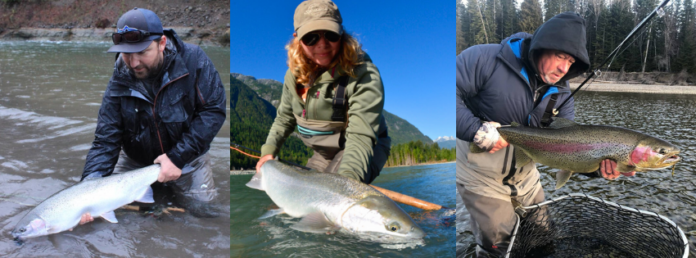
Conclusion with Adam Cuthriell on The Bycatch Crisis

The fight to protect Alaska’s salmon and marine ecosystems is at a critical point. The impact of large-scale trawling is devastating, but as Adam Cuthriell shared, there are real actions we can take. Signing petitions, contacting representatives, and making conscious seafood choices can all make a difference. History has shown that grassroots efforts work—Bristol Bay is proof of that. Now, it’s time to do the same for Alaska’s Chinook salmon. Visit salmonstate.org to take action today. Let’s keep these waters thriving for future generations.


733 | 5 Rules for Streamer Fishing with Gunnar Brammer – Predator Flies, Musky Fishing, Minnesota

What makes streamer fishing so different from dry flies and nymphing? Is it about imitating baitfish, triggering aggression, or just throwing the biggest fly you can? 👇🏻👇🏻👇🏻


Show Notes with Gunnar Brammer. Hit play below! 👇🏻


apple podcasts

Find the show:  iTunes | Stitcher | Overcast

Subscribe on Android

Subscribe on Apple Podcasts

Subscribe via RSS

(The full episode transcript is at the bottom of this blogpost) 👇🏻

Sponsors and Podcast Updates

Today, Gunnar Brammer, streamer master and fly designer, is back on the podcast to break down predatory fish behavior, how to cast oversized flies, and why natural materials like bucktail still outshine synthetics. Gunnar shares his five essential streamer fishing rules, the biggest mistakes beginners make, and how to design flies that fish actually want to eat. Plus, we talk about casting the right fly line, why fast-action rods aren’t always the answer, and his new Articulated 2.0 streamer design. If you’ve ever wanted to fish bigger flies, target aggressive fish, and rethink everything you know about streamers, this one’s for you.


Gunnar Brammer’s 5 Streamer Fishing Rules:

  1. Always fish the fly to your feet – Many fish will follow the fly all the way in, so don’t pull it out too early.
  2. Leave your fly in the water – If you’re moving, talking, or repositioning, keep the fly in the water; accidental catches happen more than you think.
  3. One-third head, two-thirds body – When tying streamers, keep the thickest, most prominent part of the fly in the first third behind the head.
  4. Never take a long hair and cut it short – If you need shorter fibers, use short fibers. Cutting ruins the natural taper and movement​.
  5. Always fish it before you walk through it – The best streamer water is often right in front of you, don’t wade in before making a cast​.

Resources Mentioned in the Show:

Guest & Business Links:

Fly Fishing Gear & Materials:

Fly Fishing Communities & Conservation:


Related Videos

Related Episodes

WFS 367 – Streamer Flies with Gunnar Brammer – REPLAY from 2019 – Predators, Kelly Galloup, Bass

Full Podcast Transcript

Episode Transcript
Dave (2s): When you think about streamer fishing or tying flies for predatory fish, what do you think is the most important factor in creating that fly? Is it the silhouette? Is it the size, the color, or is it something else? Today’s guest is going to show us how to tie and fish predator style flies. And after this episode, you are going to have some key rules to apply next time you’re tying or fishing streamers on the water this year. This is the Wet Fly Swing podcast where I show you the best places to travel to for fly fishing, how to find the best resources and tools to prepare for that big trip And what you can do to give back to fish species we all love. Hey, how’s it going? I’m Dave host of the Wet Fly Swing podcast. I’ve been fly fishing since I was a little kid, Grew up around a little fly shop and have created one of the largest fly fishing podcasts in this country. Dave (47s): Gunner b Bramer is back on the show to walk us through how he fishes streamers. And he’s gonna be focusing a little bit on the Minnesota area. You’re gonna find out why he loves national materials and why synthetics are a distant. Number two, you’re gonna get some tips on casting a big fly, what flies you need and how to fish them effectively. You’re also gonna find out about his articulated 2.0 series and and methodology coming up. Stay tuned for that. Plus you’re gonna find out gutters five rules for streamers and how you can apply them today. If this episode is half as good as the first one, you’re in for a big treat. Here he is, gunner Bramer. How you doing Gunner? Gunnar (1m 26s): Doing pretty good. How are you? Dave (1m 28s): Great. Great. Yeah, it’s really exciting to get you back on here. You know, it’s been like five or six years since you, the first episode you were here, it seems like it was yesterday. We talked about, You know, how you got into it, the connections to Kelly Gallup and the streamers. So today we’re probably gonna jump right into streamers, You know, kind of go strong on this because I think that’s a topic that people love hearing about, but also it’s a big struggle for a lot of people. So it’s Gunnar (1m 51s): The only topic. I don’t know what you’re talking about. Dave (1m 54s): That’s right, that’s right. And do you think streamers, do you teach streamers? I’m not even sure on that. Are you? I’m not even sure what you’re up to, more on that, that end, but is it, do you think it’s a big, the biggest challenge for people to learn streamer? Why do people feel it’s so challenging? Gunnar (2m 7s): Because they’re fly fishermen and not fishermen, right? Oh, was that a zinger? Did I start the show with a zinger? Nice. I’m sorry you guys don’t turn me off yet, right? I’ll reign it in a little bit. But no, I don’t think stream fishing’s hard at all for people who gear fish and for people who fish for predators and, and understand essentially reading still water or reading big rivers and and the right presentation. But when you come to it from the fly fishing perspective, I feel like people are so, I don’t know, told right and wrong, right? Like dry fish, dry fly fishing, nit fishing. There’s like right and wrong, right? Like dead drift. There’s right and wrong mending. Gunnar (2m 48s): There’s right and wrong. And so when they get to streamer fish and they’re kind of like, am I doing this right? And I’m like, dude, just smack it everywhere. There’s no wrong answer. Fish are everywhere. Smack the fly down really hard, hard fish it really fast and be mean, mean be mean about it, and they’ll be mean back. And then all of a sudden you start, You know, you’ll get reactions and see fish and yeah. People just don’t ask questions, right? Dave (3m 11s): And Gunnar (3m 12s): I don’t mean they don’t ask their guide or their buddy, that’s all they do. I mean, like when they’re on the water, they don’t ask the fish questions. Like they want you to tell them what’s right or wrong instead of just cast there. It, it only takes a cast to ask the question, just cast, Dave (3m 28s): Right? So you cast, so some of the questions you might ask yourself, okay, do I have the right fly on? Do I have the right size? Gunnar (3m 34s): Yeah. Or fast or slow color depth, right? You know, are, are they and the slack, are they in the current, are they on the ledge? Are they on the rocks? Are they in the grass? Are they in the eddy? It’s like just nonstop. Yep. And I think the best way to get over that is wade fishing, right? Because you have to work the water usually a lot slower. You have to be more methodical. And you have to realize that literally every nook and cranny is a potential opportunity. And if you’re gonna cover even like a mile of river on foot, it’s gonna take you a long time and you just have a lot of time to ask questions and you should, because you’ll learn your river really, really, really well. Yep, Dave (4m 11s): Yep. Exactly. Yeah, I was looking at one of your videos there. Yeah, I think it was, might’ve been the most recent one, but you came to this pool, it looked like it was a tail out of nice. And you said this is the spot you, you hiked in for a mile and it was just this nice slow section below it drops into a riffle. Is that, maybe describe that little spot there. Is that your secret route? Is that your home water? Is that your out there? Gunnar (4m 30s): Yeah, that’s right here in town. Yeah. Dave (4m 33s): And where are you? Just for those that don’t know, where are you at? Gunnar (4m 35s): I live in Duluth, Minnesota. I’m a transplant. We’ve been here about nine years now. And You know, when we moved here And we started having kids, well, I kind of drew like a 40 minute circle around my house and I’m like, okay, that’s, that’s where I go fishing, right? So if you ever see me fishing, it’s, I mean, it’s within 40 minutes of my house. Like I don’t, I’m not going anywhere special. And the crazy thing is, is we have wonderful warm water rivers. There’s only like two in town. I mean you have the Cloquet and the St. Louis. I don’t want to like name drop, but there’s two, like there’s two rivers in town that are within my area and there’s no pressure. I never see anybody there. Nobody’s fishing them. Nobody wade fishes them. Gunnar (5m 16s): You know, people use it like a, a canoe kayak tubing type river. And it’s just loaded with small mouth and pike and channel cats and walleye. Oh wow. Just loaded. Yeah. Nobody’s there. It’s the best. No Dave (5m 30s): Kidding. Nobody’s there. Nobody’s there. No fly anglers or just nobody fishing. Gunnar (5m 34s): Nobody. The people who do our own canoes. And so like I’ve made the point, You know, wade fishing, you, you have to be more methodical. The speed is not in your favor. And you’ll see you canoe guys and kayak guys will come fishing down the river and it’s like, I couldn’t care less. They get one cast at my hole and then they’re out. They’re gone. You know, it’s like a drift. Boat’s a little different ’cause you might anchor up or you might have somebody on the oars back rowing and slowing you down. So you get multiple looks. You might have two anglers, but like a doing a canoe, especially if there’s fast water up ahead, You know, they’re rods in the boat, paddles on, oh, pay attention. Oh yeah, there you go. It’s like they miss 99% of the fishable water because they have to canoe. It’s like, yep, if you just get out Dave (6m 16s): Right Gunnar (6m 17s): Dude, they touch nothing. They literally touched no part of that stream. I could just watch a hundred canoers come by and I’m not worried at all. I’m not the fish, don’t know the difference. I have a video, I don’t know, it’s gotta be like three years ago. And it’s the only time in any video I think I’ve made in five years where I actually capture a canoeist. Like there’s, it’s the first time there’s somebody else in my videos. That’s how un unpressured this kind of water is, right? And it’s right. I look up and I’m like, oh, look at that. Going right past the good part or something kind of sarcastic. Yeah. And I flip the fly down five feet in front of me and a bass comes up and eats it like on command. It was so funny. Oh, nice. Gunnar (6m 56s): And it’s like, You know, they’re 50 yards off of where I would wanna fish anyway. And they’re forced into that by necessity of having to navigate the river. It’s like they can’t even canoe in the fish water. Like it, yeah. It just works to your disadvantage. Dave (7m 12s): So that’s one tip right there is, is get out and get in your feet and start waiting to fish out there. Gunnar (7m 17s): So the best thing, I love this. I told you you’re gonna have a the impossible task of keeping me under Dave (7m 22s): An hour. Let’s hear it. Yeah, go for it. Gunnar (7m 24s): So I have had the pleasure to experience a drought condition. Now most that doesn’t sound wonderful, but even if it’s so low, you don’t get to fish, walk the riverbed, walk the trails, go out there and learn every single hole because like some are lowest, you’re talking like July and You know, August I will ruin my fishing spots intentionally and I’ll walk to places I normally wouldn’t walk. Or when the water’s high, I can’t get to it just to learn what’s on the other side because when it’s, You know, a medium flow and I can just kind of get over there, what was useless and low and clear has now turned into a nice little duck bunk that’s gonna have two or three bass in it. Gunnar (8m 5s): Yeah. And I know it is like I have the entire Riverbed channel left and right banks mapped for like, You know, two or three miles above and below every access that I can get into. Dave (8m 17s): Right. Gunnar (8m 17s): Because it’s like, as soon as it’s July and August you’re like, oh, I’m gonna fish two or three days a week, I’m gonna memorize this. Yeah. ’cause then when it’s high and it’s dirty, it’s like you are so much more restricted. But now You know, every little honey hole Dave (8m 33s): Got it dialed. Gunnar (8m 34s): Just makes a huge difference. Yeah. Dave (8m 36s): Are these streams that you’re fishing mostly? What’s the bottom? Is it gravel? Do they change a lot over the years? Are the bedrock slots, what’s that look like? Gunnar (8m 43s): It’s all gravel. Most of it. I mean, I keep telling everybody the wade fish, most of it’s not safely wadeable. I mean, it’s like ankle sprain territory up the wazoo. You better have felt or bars on your boots if you wear shoes or sneakers like I do all the time, be prepared to, You know, sprain toes. Oh. Or break a toe or something. Dave (9m 3s): Right. It’s is it just super slick and bouldery Gunnar (9m 6s): Or It’s super slick. Yeah. And the rocks are big. Most of them are big boulders. Yeah. Dave (9m 10s): So Duluth, I mean, you’re right at the head of Lake Superior, is that right? Gunnar (9m 16s): Yeah, it is the headwaters of superior. Dave (9m 18s): Yeah. That’s the headwaters of Superior. What is that like? There’s so much water out there, right? Do you, are you staying in the streams? Gunnar (9m 24s): I stay where nobody is. If I find a spot where nobody is, that’s not my spot. Yeah. Dave (9m 30s): That’s where you’ll go. Is it hard to find out there? I always, we just went up there And we drove kind of more drove through that area. Well we didn’t even get that far over to the east, but is it busy up there? Like during the peak times? Are you seeing, are there places you can go and see like, oh wow, there’s a bunch of fly anglers everywhere? Gunnar (9m 46s): Yeah. Like if you want to fish the North shore during steelhead season, good luck. Yeah. That’s it. Right? If you want to go fish the brule during the fall, steelhead run the brule. Good Dave (9m 54s): Luck. Yeah. The brule, right. Gunnar (9m 56s): First off, when it’s fall, I have to cross way too much musky water to go steelhead fishing. I never make it steelhead fishing, I just go musky fishing because Yep. Right. Dave (10m 5s): I why would you musk? I Gunnar (10m 6s): Never make it there. Yeah. And then the spring stuff, man, I used to be so much more diehard fishermen about it and now it’s just like, I don’t want to deal with it. I don’t wanna be around all the people. And I got kids and family stuff. It’s like I, I fish when I can now, not when I want to. Right. Dave (10m 24s): Yeah. Gunnar (10m 25s): Big difference. Big difference. Dave (10m 27s): So you mentioned a few of the species. So muskie, small mouth bass walleye, was it channel catfish? Yeah, Gunnar (10m 34s): Channel cats. Dave (10m 35s): Channel cats. What outta all those species? Okay. You gotta pick one out in that area. What, which one do you go for? You have, you can only pick one. Gunnar (10m 43s): I mean, I prefer muskie fishing above the mall, but you can only do it for so long. I have seasons. It’s so wonderful. Right. I can only really fish muskie in the spring for about a month, month and a half. And then the water’s too hot. So even though I would probably want to, I don’t, and I just bass fish until fall anyway. And that’s when the rivers are low and clear and I’d rather bass fish anyway. Right. So it’s like my seasonal desires, there’s no conflict. It’s just like, hey, spring, let’s go musky fish as soon as it’s open for about a month. And then that becomes miserable anyway. So then you go bass fishing and you get all happy because you actually have slimy hands that smell like fish. Gunnar (11m 25s): It’s Dave (11m 26s): Like you actually touched something. Gunnar (11m 27s): I actually catch stuff. Dave (11m 29s): What, what is the, on the flies, we’re gonna talk about that a little bit too fly design, but are the patterns you have you use similar for all those species? Are you using similar stuff? I mean, obviously bigger muskie might be bigger, but are you using the same types of flies with the same action and all that? Gunnar (11m 45s): I mean, I would say yes, but it’s kind of been like, I kind of just fish whatever I recently tied whatever it is. And, and I, I had mentioned this, I, I forget who I was talking with. I was essentially, I was just saying I’m stubborn, right? I’m, when I tie something and I’m excited about that thing, I’m gonna fish that thing. And I don’t really care if the fish want to eat it or not. I, I am going to find a fish that will eat it and that will make me happy. And so I know that’s not helpful to anybody because nobody can follow that advice. But just, I mean, fishing’s about you, Dave (12m 21s): Right? Gunnar (12m 22s): It’s about you enjoying creation and the environment and, and enjoying that time outdoors. And so I’m gonna do whatever makes me the happiest. And usually that is me just tying on one fly and be like, Hey, I’m gonna fish this and they’re gonna eat it and trust me, I’m, I’m gonna find one that’s gonna eat this fly. Dave (12m 44s): Yeah. Right, right. So that’s, that’s good advice because basically you’re saying stick with it, you’re gonna eventually find a fish even no matter what fly you have on there. Is that what you’re saying? Gunnar (12m 54s): Well, I think fly design gets maybe a bad rep at being too complicated. Yeah, it does. And certainly it’s complicated, but it doesn’t have to be. And what governs something being successful more often than not is does it have the right size and silhouette proportions? Is it proportionally food? Like if a fish looks at it, does it proportionally resemble food so that they instinctively react to it? And then are you fishing it as such? Are you, are you animating the lure the fly in a way that resembles what you’re actually imitating? And if you just have the right silhouette and you just fish it aggressively, it doesn’t have to be more complicated than that. Dave (13m 37s): Right. So silhouette. So silhouette is the, just overall the size, the shape, that’s the biggest thing. Gunnar (13m 43s): That’s my biggest thing. You know, everybody, everybody prioritizes it differently. Yeah, everybody likes to talk about maybe action and whatnot, but I am a silhouette. That’s where I draw the line as the most important bait fish or bugger or, You know, crayfish characteristic is what is the silhouette? And usually that comes down to the artistic proportions of how the fly is taper. You know, having a certain head diameter or, or You know, roundness or width that’s tapering relative to the length to imitate a sculpin or a Gobi or a chub or a sucker or whatever it is. Or it could just be all of the above, You know, at three inches, four inches, five inches. Gunnar (14m 24s): Most bait fish kind of have the similar FuseForm silhouette where you can kind of sculpt the fly. And like, so you could talk about, well why is it silhouette versus action? Why do you hold silhouette to be more supreme or or at a higher level of priority in your time? And it has to do with the fact that I fell in love with Bob Popovich’s Bucktail stuff. Oh yeah. And I started tying bulkheads on a single hook that were four or five inches long. And all’s I, the only action I have is just some bucktail coming out the back. Like no hackles, no flash, no nothing, no shanks, no bu You know, like all the stuff that all the trout guys are really hard on, You know, like even Blaine’s game changers, it’s like alls I had was like a stick of bucktail, like a stick, like a stick bait. Gunnar (15m 7s): But it was tied out a bucktail and it just moved enough, it looks awesome in the water. They have just some subtle life to ’em. Like they, they don’t look dead. It’s way better than fishing like a jerk bait. And yet the silhouette, because I can sculpt the bucktail butts and really get a nice proportional blunt F form shape out of the whole head and shoulders, it just looks like food. Put white bucktail, tie a bulkhead, flip that thing down and just start stripping it. It’s Musky food, it’s bass food, it’s pike food, it’s trophy trout food. It’s peacock bass food, it’s striped bass food, it’s blue fish. It’s Dave (15m 44s): Like, it’s everything really. And this is just a bucktail. This is basically just bucktail, white bucktail. That’s all that flies. Gunnar (15m 50s): I love bucktail. Dave (15m 52s): So what is it that, about the bucktail that, because it’s cool, right? It’s the natural material with all the synthetic stuff you hear so much about Why do you still like the bucktail? Gunnar (16m 0s): Because it’s hard to tie with. Dave (16m 2s): Yeah, it is. It is hard to tie with, yeah, Gunnar (16m 4s): It would be boring if it was the same every time, which is exactly what synthetics offer you, right? It’s the trade off. You can have the same thing every time you pull it out of the package, which is an awesome thing for a beginner or somebody who’s learning to have that kind of consistency. You know, you can take off a stack being like, Hey, I’m using this much, this is the density, this is how we use it, this is, You know, the technique and the recipe. And they can imitate it and they’ll get the same result. They’re pretty close. But as soon as you take a natural material and I’m like, Hey, I have this beautiful five and a half inch tail and you have a really gross three inch tail, we’re gonna not tie the same fly. Not only that, but it’s not gonna respond the same. Mine might have the perfect amount of trapped air in it where I can get it to compress and flare or control the butts, or they’re gonna have a nice wave to it. Gunnar (16m 51s): And I have hundreds of tales to comb through and find those characteristics. And a beginner’s gonna be overwhelmed by that anyway. I mean, you’re talking about nuance upon nuance of, hey, I’ve spent a thousand dollars on bucktail and I’ve spent 10 years tying with it in order to feel comfortable tying off the cuff. Like you don’t just tie off the cuff because you can’t appreciate the nuance of the variation. It just leads to frustration, which is what you gotta do to get there. But that’s why I feel like the natural materials always come back into rotation. They, they always cycle back into, You know, whatever’s trending or something. And it’s because they’re always difficult. Gunnar (17m 33s): And so they always have the challenge of, I want to master this, I want to pursue this. And then man, once you get it and you understand the castability is better, I will, I will talk about this for hours. The castability of natural materials is so superior to synthetics. Dave (17m 52s): Grand Teton Fly Fishing is a premier guide service and fly shop that has access to some of the most coveted rivers and lakes in western Wyoming. Their simple goal is to share their valued resource and have you experience a native cutthroat trout rising to a single dry fly in the shadows of the Tetons. You can check out Grand Teton right now at Grand teton fly fishing.com. Let them know you heard of them through this podcast. Don’t let the chill keep you from your next big fish. Heated cores next to skin heated base layer is your secret weapon for staying warm and comfortable during those early morning fishing trips or late seasoned adventures engineered with advanced heating technology. This base layer keeps you toasty all day long, ensuring you can focus on what really matters. Dave (18m 34s): Gear up with the heated core base layer and make every cast count this season. And is that because, I mean, I know deer hair is kind of hollow a little bit, right? Or I guess elk here, but why is that? Why, why is it that it’s better? You know, because you would think the synthetics, they could make this whatever they wanna make Gunnar (18m 51s): Sure. So obviously we’re talking about streamers, keep it in that context. Yeah, yeah. Streamers, and we’re talking something decently, large flies, like let’s just say 5, 6, 7, of course you get bigger, bigger, bigger, bigger, bigger like 10, 12, You know, 14 inch pads for muskie, right? Yep. The problem with the synthetic is that it, first off, synthetic materials are usually gonna be crimped, right? That’s how they get the volume out of them. So they take a uniform material that’s made out of plastic and they will essentially heat it up and crimp it so that it has some sort of zigzagging pattern and the degree of the zigzag will give it volume, right? So all those zigzags push off each other to create volume. Gunnar (19m 32s): Now when you cast this, the air has to go around all those zigzags and it slows it down tremendously. So when we think about casting, one of the things we’re always trying to do is we’re trying to create the most castable pattern, which is a pattern that doesn’t interact negatively with the fly line. Now, something that’s only slowing the fly line down is a negative interaction. I don’t want that, right? It’s, it’s literally pulling and taking energy away from this entire system that’s trying to deliver a fly. And so if you are adding air resistance, that’s a problem. But the nuance of this whole shindig is it’s not always a problem because let’s say you have a sock and you try to throw a sock, right? Gunnar (20m 19s): A sock is only air resistance. It’s not gonna go very far. Well if you put a small rock in the sock, now I can chuck it across my yard, right? So when we have these synthetic flies, usually the best way to make them castable is to put them on a big, huge gauge salt water hook. This is, I think, where the whole idea of synthetics cast better comes from. It comes from you took a wind resistant material, you didn’t really know it, but you haphazardly put it on this huge, You know, heavy blue water hook, like four off for tuna or something like that. And you’re like, wow, this casts really well. Well all you did was put a rock in your sock. There Dave (20m 54s): You Gunnar (20m 54s): Go rock. And so the two rock sock and you put a rock in your sock. So the two balance each other out and you can cast it really well. But one of the problems is as the fly gets, let’s say big, like you want to try like a eight inch hollowly or like a beast or an extended body bulkhead, you start to get into pike and musky fishing, you’re trying to imitate large fors like suckers and, and chubs. You can only add so much weight. And usually the best triggering mechanism in this whole shindig of streamer fishing are flies that hover, they’re flies that are neutrally buoyant. They’re flies that suspend and change direction, in which case adding weight is now not becoming beneficial because you’re getting the negative action impact on the fly. Gunnar (21m 38s): And so when we tie flies weightless, or we’re trying to tie flies out of neutrally buoyant material to be fished on say intermediate lines or light sinking lines, then we want hang time, we want glide, we want hover. Well now I don’t have any weight. I don’t have a rock in my sock. And so when you go to the natural, understand the natural is usually gonna be perfectly rounded on diameter, no zigzag, and it’s gonna be tapered, meaning it’s literally gonna get, You know, it’s fat at the butt, skinny at the tip like a fly rod. So as the wind and air travel across this material, it’s literally kind of accelerating. It doesn’t have to follow the zigzags. And it’s not uniform in friction as it goes, but it’s able to accelerate around the material on top of the fact that when that material gets wet and absorbs a little water weight and you pull it out of the water, it all slinks down. Gunnar (22m 27s): There’s no air resistance to begin with. So now you take like a fresh water hook, like a four out or a six out, something that’s not blue water, crazy heavy. And you have this completely slicked down natural material that has no zigzag to it whatsoever. And its own water weight that’s absorbed in the hair becomes the rock, if you will, in the sock. It is the most superior material for tying a weightless suspending batter. Dave (22m 54s): That makes total sense. Yeah. So you have, and what is the hook? What’s your typical four aught hook Would you be using? Like is there a brand or a type of hook? Gunnar (23m 2s): Yeah, You know, I think the old Partridge attitude streamers were sick. The attitude extras, the universal predators Aex, You know, has the, the TP six 10, the trout predator. I think the four OTT in the TP six 10 is almost perfect. The six. So gets a little bit, a little bit and it needs a slightly heavier wire. But they take, came out with the TP six 12. I know this is like product numbers, but Dave (23m 31s): Yeah, now it is a good, Gunnar (23m 32s): Yeah, the six 12 is the trout predator short. That is musky perfection. I love that hook. The four aught, six shot. Oh they’re just sweet. Dave (23m 42s): That’s it. Okay, good. So yeah, so that’s good. So we hit on a little bit, I mean, again, I wanted to ask you about casting because I think that’s all another thing that comes up like, God, how do I cast these giant flies? But what you’re saying that’s a good reminder. It’s like the fly is a big part of this equation, right? Getting the right fly on that. What is the right fly? Let, let’s take it to a species. Let’s, you mentioned Musky maybe, maybe let’s talk small mouth bass for a second. What, what is that pool you, we talked about at the start where you went out to your perfect pool, what fly line are you throwing there? Is that like a dry line or what? What do you typically have for bass? Gunnar (24m 15s): So I fish, I mean you could give me any species on the planet. I only fish three fly lines, which I have a box in the garage, it’s probably got a 90 fly lines in it. I’ll have to take a picture. It’s nuts. All the different stuff I’ve tried over the years, Dave (24m 29s): Really. Gunnar (24m 30s): But like, I like ideas, like I like to pursue ideas. So if I see potential in something, I will buy it and screw around with it. But all of this has come down to, as I learned, fly line taper and, and the purpose of it and the engineering behind it. I fish Rio’s elite predator. That is my all time favorite wade fishing fly line. I fish Rio’s outbound short, which is my favorite still water line and huge fly line. Like if you’re gonna fish beasts and stuff, that’s preferable over the elite predator. Even though they’re kind of designed to do the same thing. They have opposite tapers, which we could talk about. Gunnar (25m 10s): But it’s, it makes a huge difference in, in big fly carry ability at distance. And that’s really relative to casting, really relative to casting. And then if I’m gonna fish something fast sink, I’m gonna fish like an outbound custom or like the Rio striper line. But something that’s just level, I just love a level heavy, fast sink that I can cut the head back, right? Because if you gimme a fly line that’s tapered, I’m not gonna cut it and mess with it. But if you gimme a level line now I can start to screw around with the grain windows and how long it is and how easy it is to slip and shoot and do all the fun stuff. So those three elite predator outbound, short and outbound custom are really the only three I fish. Gunnar (25m 51s): And I like you could, You know, I love Rio if you’re a different company, dude, just look at the taper diagrams and take those tapers to whatever company you enjoy and support and all that. It’s the taper that is, it is, I mean the taper is what makes it happen. And, and Rio has a lot of really good tapers. But those three, that’s the bread and butter. Dave (26m 12s): Yeah. Okay, perfect. So that gives us the, the line. And then, sorry, Gunnar (26m 16s): When you were asking me about that hole and you said something about dry, were you talking about, You know, are you fishing a sinking line or a triple density line or a floating line? Because I went, I went straight to kind of the different, Dave (26m 27s): No, I was thinking what you said. I was thinking big picture, like the three lines. I love simplifying it. So that helps. So we got to simplify and then, and now I’m just thinking more like, yeah, you’re on the water, you got your fight again, we’re experimenting, we’re out there, You know, you’re gonna, somebody is gonna learn on their own and we’re gonna say get out there. But what, what do you do in there? So you make your cast, You know where that little slot is, where those fish are holding. Are you typically casting across and down and then stripping it? Talk about that. How are you, what action are you putting on the fly? Gunnar (26m 54s): Everything. Dave (26m 55s): Yeah, everything. Yeah, you’re doing it all depending. Gunnar (26m 56s): So it’s like I’ve worked that hole from the top down. I’ve worked it on the right side, I’ve worked it on the left side. I work it from the bottom up. Usually if I work from the bottom up, then I swing on the way back down again. I just, I ask every question. And so when I’m walking up to the hole, You know I’m walking up and I’m standing at the tail out. And So what you have is you have a pinch point, you have a riffle section, it kind of has a nice little cut or gouge that then turns into this pool that rises up to this wonderful tail out. And typically you’ll get a lot of small bass at the back that’ll be like eating bugs and stuff. I mentioned as soon as I came up, I was like, oh, someone just ate a, You know, he just ate a mayfly or he just, I saw a fish rise or something like that. ’cause bass do that. I mean you could dry fly fish bass if you wanted. Gunnar (27m 38s): They’re not that picky. I guess that’s what people do with boole bugs. Everybody knows that anyway. And so I’m gonna start to kind of fan cast the back of that hole. And obviously I’m forced to cast upstream, retrieve down just by context of where I’m standing. But I’m gonna work that with, You know, short cast. I probably start like 20 feet or something, not very big. And I’m gonna make a fan cast. It’s essentially like if you were to fish still water, you find a productive spot, you hit spot lock or something and you’re gonna fan cast and then you’re gonna move over 50 feet and then fan cast and then move over 50 feet. Dave (28m 13s): What is the fan cast exactly? Yeah, it’s Gunnar (28m 15s): Blind casting, right? Because I’m working a tail out, which is essentially a large pocket of consistent water. I’m gonna cast, You know, let’s say straight across and then I’m gonna cast at 11 o’clock and then 10 o’clock and then nine o’clock and then eight o’clock, right? I’m gonna work the full clock spectrum of what’s visibly open to me. And each one’s gonna be like a different angle of attack because there’s not structure, it’s a tail out, it’s just a pool. And then as I start to move up one of the sides, the right or left side, it doesn’t really matter. Well now I’m gonna throw one straight up at 12, which is gonna be, You know, parallel to the bank. And then I might come off at one and then I might come off at two and then three. Gunnar (28m 55s): Right? So I’m gonna clockwork out from that as I start to walk up slowly. And part of this that people have to understand in my context, ’cause it won’t be explicit unless you’ve seen the video. My water clarity is a foot or a foot and a half. And so I am forced by necessity to almost never target specific structure unless it’s like a side channel and I can actually see a log or a boulder or a little, You know, a pocket or something. But usually I can’t, my rivers are, have so much tannic staying to them that the best way to approach it is honestly just to walk at a slow pace, work the full spectrum, You know, from noon down to six or whatever, noon down to three, and let it swing out. Gunnar (29m 44s): And then just walk up slowly and keep rinsing and repeating that. Because I can’t actually be more specific. I can read the water, I can see the current, I can understand, You know, the current velocities and what fish are gonna hold in to feed or, or, okay, that’s way too fast. Nothing’s gonna hold there. That’s too soft. That’s slack. They’re not gonna hold there. Oh, here’s a perfect amount. Kelly Gallup would call it soft water, right? It’s like it’s water that’s moving, but it’s not fast. It’s not hard, it’s not super flowy. It’s consistent. It’s even, it’s soft. As soon as you learn to identify what soft water looks like, that’s kind of the biggest thing that’s telling me I need to cast there and ask the question really? Gunnar (30m 23s): Because I don’t know the depth, I don’t know the bottom structure. If there’s a boulder or a log or something that they can hold onto, I can only identify what is probable based on current velocity. And when you can identify what is soft water, well you can stop asking a lot of dumb questions. Yeah, right. Soft water, my my encouragement’s to ask all of them. But eventually you’re gonna learn which ones are more intuitive and which ones are the better question to ask. Dave (30m 50s): Right? So for small mouth bass, if we stay on those for a second, you’re looking for that softer water. You’re not really looking for fish in like riffles or any of that faster stuff. Gunnar (30m 59s): My fish don’t hold them the fast stuff. Dave (31m 0s): Yeah, they don’t, Gunnar (31m 1s): They love a run. There’ll be an entire school that’ll just hold out in a run Dave (31m 6s): And a run. Right? Yeah. They don’t like the fast. Yeah, Gunnar (31m 9s): I don’t find ’em in the holes unless it’s like off of a side channel. Like if, if the river come down and there’s a little like, You know, let’s say the main current is fast. There’s this weird little nook off to the side where the current gets cut in half and it drops down two or three feet, a hundred percent chance there’s a bass in there, 0% chance there’s a bass in the fast water, right? I’m, I’m, yeah, I’m walking through the fast water looking for those little, little nooks and crannies that, You know, the difference between one foot, one foot, one foot two and a half feet. Oh there’s a bass there, You know, it’s like, and you learn that by walking and low and clear and just walking around. You have to walk, just walk across the river back and forth and back and forth and back and forth. Gunnar (31m 53s): ’cause I can’t see the, I can’t see the bottom. It’s like you, you don’t know. Dave (31m 57s): So you’re just covering Yeah, you’re being systematic about it. Covering all the water. Gunnar (32m 1s): I wish it was different. I’ll tell you what, I went to visit my brother-in-law once and I stopped on the bank of the Mississippi in Grand Rapids, which is like an hour and a half north. Oh yeah. And I could see the bottom and it was like six feet deep. And I was like, are you serious? Like, is this what it’s like for normal people to go fishing? Like I can’t, I have gone fishing with the most ridiculous chartreuse neon green fly before and stripped it into my guide because I couldn’t see it. Wow. Like all the way to the front guide and just ripped it right into it. And I was like, good grief, this is not good. Like, Dave (32m 34s): That’s your water. Now I’m going back a little bit now on, on more of your, your history, but what was, because I wanna get into the fly design and give people a little heads up on that, but was it Kelly Gallup, right? Was your first influence in Yeah. In this fly design stuff? Is that talk, talk about that a little bit. Give us a reminder on, on on that and how your design got to where you are now with what, what you do. Gunnar (32m 55s): Yeah. Okay. So I think it was my, my junior year of college I got to work for Kelly and moved out to Montana, lived in a trailer and fished Oh, that’s right. In Madison River. Yeah. You know, for about four Dave (33m 7s): Months. And where’d you come from? Where, where were you, where were you, where were you coming from? Where were you living before that? Gunnar (33m 11s): I went to school in Michigan Tech. So I was up in Houghton, Michigan. Oh, okay. Dave (33m 15s): Yeah, Michigan. Gunnar (33m 16s): Yeah. And that was wild because I didn’t know anything and I was horrible. And I told Kelly I didn’t know anything and he told me that was fine. And I just went wade fishing every single night for four months straight. And that’s what taught me what soft water was. And You know, it’s like obviously I had trophy water to learn it. On Dave (33m 38s): On on the Madison. Gunnar (33m 39s): On the Madison, yeah. And this is, You know, it’s, it’s right below Quake Lake. It Dave (33m 44s): Was. Oh Gunnar (33m 44s): Right. Yeah. It’s like two miles below Quake Lake. So it’s in between Ness and West Yellowstone. Right. And it’s just beautiful white water. And it’s above the, the, it’s the Wade only section. Right. So from like quake down to Lions Bridge I think is wade fishing only people can take a drift boat. But you have to get out of the boat to fish. And one of the coolest things that I ever got to experience was, it was, must have been like the first week of June, we had crazy runoff coming outta the mountains. The rivers, You know, climbed 1500 CFS in about two days, three days by every person’s consideration driving over that river. Gunnar (34m 25s): They would’ve said it was blown out, you couldn’t fish it. And what’s the most beautiful thing is every single person drives across Reynolds Pass to go into Idaho to fish for salmon flies to fish the salmon flash. Yeah. And the streamer bite on the Madison. Yeah. If you give it like two or three days for the fish to get used to the new flow, it’s off the charts insane. It was like, You know, like when you’d see like a field and stream magazine and they like put a circle where every trout should be. It, it was real. There was a trout where they set a trout. Should be, it was like you just like walk the river smack a fly down with like a five and a half foot cast, three inches from the bank, six inches from the bank. Gunnar (35m 13s): Yeah. Dave (35m 13s): Like Gunnar (35m 13s): A drive five inches behind the boulder. Like it was the most ridiculous thing. And you just like 16 inch trout, 17 inch trout, 18 inch trout, 14 inch, they just out of the woodwork to try to eat these cul and patterns that are like five inch black pieces of meat. It was nuts. So that’s, that was kind of my, I went from being a really bad fisherman to being a really spoiled fisherman really quickly. Yeah. Dave (35m 38s): And that’s right. Yeah. And you were around Kelly and all of his, You know, the sex dungeon and all that stuff. You, you kind of got a Gunnar (35m 46s): Yeah, I, I always wanted to be like a competent fly tire and I sucked at it for, I don’t know, ever for like 10 years. And then I got Kelly’s DVD, it was like called streamers on steroids. And it was the first time I had a visual, like, You know, someone took me through it, start to finish visually. I’d never had that, I had never taken a class, You know, like the pictures in the books didn’t do it because I had missing gaps of information. Right. Pe I don’t, like kids don’t understand that anymore. Like we have YouTube alright. Like it’s not a problem. But as soon as I saw it, I was like, oh, like I don’t have to go from, You know, A to DI understand A, B, C, and D now. Gunnar (36m 27s): Like I see the whole progression. I saw it on video and so I just ripped all of Kelly’s stuff off. Like alls I did was tie Kelly, gale variations, boogeyman variations, sex dungeon variations. And I would just, it turned into something where when I started my tying company, You know, looking back, right, this is what hindsight’s wonderful for. But when you look back at kind of all the stuff the trout guys tie, especially in the Russ Madden kind of style of our, it’s essentially articulated buggers with a head. Right? Right. And what everybody does was they would tie the articulated bugger, but then they’d wing it with something like Kraft fur and you’re like, oh, it’s a Goma. Oh yeah, right. Or like Arctic Fox and you’re like, oh, it’s stroll headbanger. Gunnar (37m 9s): It’s like, it’s still an articulated bugger. They just took a wing material that somebody hadn’t used yet and then they put a head on it, whether it was Laser dub or Kraft Fernal loop. And I’m not trying to take anything away from that because in my own journey, those jumps aren’t intuitive. Like when you’re walking through it step by step in real life, like I have so many patterns that are so similar, but you only see the similarity when you look back like four or five years and you’re like, why didn’t I think of that? That was so obvious. But in the moment you, you are like, man, this made a huge difference. Oh dude, Arctic fox is sick. How come nobody did this before? It’s like, well, if you just skeletonize the recipe, You know, it’s like bu hackle body in a wing bu hackle body in a wing and then a head and you can change the head to whatever you want. Gunnar (37m 56s): Wool, deer, hair, lead eyes, no lead eyes, You know, synthetics. And so you start to kind of like see the different segmentations of a fly, whether that’s like tail body weighing head, and you can honestly substitute nearly anything. And as long as you scale it appropriately, you understand how it’s gonna build so that you get the right taper and proportions, you’re gonna get a pretty successful fly. Dave (38m 20s): Right. Okay. And and you mentioned bu well you talked about a couple things. We talked about the deer hair, but I’m trying to get a picture of what is the Kelly’s, what is the sex dungeon? Is that Gunnar (38m 32s): It’s a stacked deer. Her head over lead eyes. Dave (38m 34s): Yeah. Yeah. That’s what it is. Yeah. So it’s stacked here, here. It’s been five years since we’ve talked. Has there been, have there been any changes in the streamer? Have you seen, have you changed your style at all? Is there new stuff out there? Or is this pretty much Gunnar (38m 47s): Thing five? Oh, I’ve gone totally off the walls. Saltwater East coast striped bass style. Yeah. Anybody, anybody who’s, who’s kept up with the YouTube knows that I, I very quickly became a, a disciple of Bob Popovic and spent, I don’t know, probably the past seven. So I guess this would’ve been part of our last talk. I bet the past seven years, I have dedicated almost everything to Bucktail fly design based off of all the innovations that Bob Provi brought to the table. Dave (39m 15s): Oh, okay. Yep. Gunnar (39m 17s): And so I’ve gone, You know, like I don’t really tie articulate it anymore. I’ve gone almost all the single hook. I do use naturals, but the big thing I’ve been working on is, is adapting my old Kelly Gallup style patterns to a new shank hook layout that allows them to be single hook, but still have the same tie space so that the recipe’s not actually forced into being changed. And so you can take the same recipes but superimpose them onto a totally different chassis layout. And I, I call it articulated 2.0, nobody knows about this. I haven’t made any videos about it because life right now is, is really difficult. Gunnar (39m 57s): Yeah, yeah. But hopefully, You know, Lord willing, in six months from now or next year, I’ll get to kind of bring this idea to light. But when you, the videos you’ve referenced so far, those are all fishing the Hot Fuzz 2.0, they’re all fishing the season Geezer 2.0, the Triple Sculpt Daddy 2.0. It’s all part of a series where I was trying to build up a little bit of hype around this idea of, hey, I don’t fish articulated flies, two hooks connected by a wire joint anymore. I, I can’t stand fishing two hooks. It just doesn’t fit me. And that wire joint has driven me absolutely bonkers as a tire for years. I hate putting that joint in at the vice. Gunnar (40m 39s): But then on the water, they get kinked and they get weakened. Oh yeah. They break and they fray and they foul. And trying to find a way around that, it’s like hybridizing articulated flies with game changers, but you take the same recipe that the articulated fly was, that’s 2.0 in a nutshell, Dave (40m 59s): It’s time to talk about something that elevates your fishing experience. Stonefly nets nestled in the heart of the Ozarks Ethan, a master craftsman dedicates his skill to creating the finest wood landing nets. They aren’t just tools, they are works of art blending tradition and craftsmanship. You know, every time I set my stonefly net in the water, it’s not just the fish that catches my eye, it’s the beauty of the net itself. These nets are tailored to your fishing style with options to customize the size handle and even the intricate wood burrows. They are a perfect mix of functionality and aesthetic appeal. And let’s talk about the memories. Just like Ethan, many of us cherish fly fishing as a way to connect with our past and creating lasting memories. Dave (41m 40s): Stonefly nets are more than just nets. They are part of our story. Each cast and every cast. Are you ready to make fishing trips? Unforgettable? Visit stonefly nets.com right now and discover the difference a handcrafted net can make. How do you get the articulated is, makes it longer. You got a hook out there long, how do you tie your same length of the fly and get the hooking? Are you getting short strikes and stuff like that with the style? Gunnar (42m 8s): The only hangup is that I’ve had to test it all on small mouth bass, which are kind of notorious for smashing the head. Dave (42m 15s): Oh, okay. They t-bone don’t, don’t a lot of the predators T-bone stuff, isn’t that how they’re, are they getting hooked that way or they come from the side? Gunnar (42m 23s): Well, yes and no. It depends a great deal on how their mouth is shaped. So if you look alike pike muskie and trout, and you look at their teeth structure and how their mouth opens when they eat something, their teeth are designed essentially to kind of poke or stab or hold prey. Wound prey. They’re like, you would, you would identify them as a slash and grab style mouth type. Whereas if you look at bass, you look at schnook, you look at tarpon, that would be like a bucket mouth where they use literally the, the suction of dropping their jaw to draw in water, turning a bait fish’s head into their mouth so that they can eat. You know, even Tarpon will eat a huge thing. Gunnar (43m 3s): Headfirst striped bass will eat, You know, a 14 inch mullet head first because of their mouth shape. A barracuda’s not gonna eat a mullet head first. He’s gonna slash it in the middle because his teeth are designed to slash and grab, he’s not worried about sucking in water like that. He’s gonna cut pierce injure and then consume. Whereas the bass species bucket mouth style species use the water suction to orient bait fish’s head so that they can swallow head first and kill. So when I’m taking something that is essentially a articulated trophy trout style pattern, which is very much more slash and grab, and then I’m catching a 12 inch bass on it, you’ll see in those videos, I, I’m like, oh, he missed it. Gunnar (43m 48s): Or like, I’ll I’ll say that just kinda like off the cuff and it’s like, man, if it was articulated, maybe I would’ve got ’em. Yeah. But that’s, it’s not, I’m not trying to target 12 inch bass either. Right. And so it’s like, where do you, as the designer, it’s like, well shucks, because if it was a 30 inch pike that was game on, if it was a Musky game on, if it’s a 16 inch bash, he’s got, he’ll fit the whole thing in his mouth. Dave (44m 14s): Yeah, that’s right. That’s actually a good thing. That’s actually, you’ve, you’ve created a, a fly that keeps the small ones away. You don’t have to worry about Gunnar (44m 21s): The small ones. I know it’s like, but do you let that deter you? Because sometimes the recreational guys, You know, it’s like every fish matters and every every fish makes you happy. And it’s like, well shoot, if I was fishing a willy bugger I would’ve caught twice as many fish today. Dave (44m 35s): Yeah, yeah. Right. Well you’re, you’re a, you’re a musky fisherman too, so my guess is your style, you’re not as worried about catching numbers of fish. Gunnar (44m 43s): I told you it’s I’m gonna fish the fly I tied on. Yeah. And I’m gonna make them eat it. That’s the game. The game that I am there to play is I’m gonna make you eat this slu I’m not here to figure it out. I’m not here to pattern fish. I’m not here to be the most successful fisherman. I’m here to enjoy myself. Which means you’re going to eat it. Dave (45m 3s): Yeah, totally. So that’s awesome. So, so this is it. So, so you’re, I mean, we’re simplifying it here I think a little bit, which is cool. What, what would you tell if somebody was gonna get down at the vice, just look up a popovic style. I mean, you could see ’em all, they’re giant, they’re all bucktail. Like what would you say if somebody wanted to tie some of these or pick these up, what would they go in the store and buy? Or could they Gunnar (45m 25s): Yeah. Do you narrow it down more Pike Musky bass size? Dave (45m 28s): Yeah. Let, let’s keep on the, let’s keep on the bass. I think that’s a good topic to stay on. Yeah. Gunnar (45m 33s): If I was gonna go, I mean, I would probably take a, a one knot TP six 12. I’d run the, the, You know, like a, a short shanks but thick gauge. One knot would probably get you by just fine. I would grab two bucktails and I would select them by hand. And you’re just gonna look for two different lengths of tail. You’re gonna try to find something around four and a half, which is actually pretty common in shops. And something around three and a half. The four and a half is gonna be your tail and your mid-body section. So you’re gonna have a longer out the back and then you’re just gonna go to that three and a half to finish it so it gets shorter and denser upfront. It’ll get a nice teardrop to it. You’re just gonna tie either bucktail receivers or bulkheads. And then to get a little extra length, you can either do like the strung saddle, which is super easy, or just a little flash tail, like a flash tail whistler. Gunnar (46m 20s): Just a wad of like a original flashabou and silver out the back. Dude that, Dave (46m 26s): That’s it. Gunnar (46m 27s): That’s it. And you could tie it, I mean you could tie it half and half style. You could tie it klauser style, you could tie it Bob pops bucktail Deceiver style. Bulkhead style. The bulkheads gonna be neutrally buin suspend bucktail deceiver is gonna be about half and half, but the hook weight will slip it under. The clouder is obviously gonna bottom dredge it and jig it. You could tie it bend back if you wanted it. Weedless and weightless. It’s infinitely versatile and it’s like a four and a half inch catchall, You know, it’s like a finess minnow essentially. It’s like fishing a soft plastic that’s four and a half inches long. Right, Dave (46m 60s): Right, right. Okay. Gunnar (47m 1s): Not, not soft plastic like worm, like a, You know, a plastic minow molded type Dave (47m 5s): Tape. Yeah. Minow. Right, right. Gunnar (47m 7s): Alego, I’ll, I’ll give you a Dave (47m 9s): Slug. Yeah, a sluggo. Okay. So now you were back, back to your pool. So in on the line again. So what, what was the line? So you, you talked about three lines there on that pool that day, on that video, what was the line you were using that day? Gunnar (47m 22s): So that was Rio’s Elite Predator. It was a six weight, I believe it was the float intermediate sink three. So they got three different line densities. Dave (47m 31s): Oh yeah. Flow intermediate sync three. Okay. Gunnar (47m 33s): The beautiful thing about that line, you got like a 32 foot head. So it’s got a really short compact head for streamer fishing, which is what you want. Your head length should be 35 feet or shorter. 30 is about ideal. Yeah. Dave (47m 44s): Okay. Gunnar (47m 45s): The taper diagram on it is a spay taper or a heavy rear belly or a triangle taper. It’s all the same nomenclature essentially. Right. Yeah. What you’re describing is that out of that 32 feet, the heaviest part is the closest to the rod’s tip. Dave (48m 1s): Yep. Gunnar (48m 1s): This creates control and accuracy and stability because as it is unrolling, it’s getting the taper is helping the energy towards the fly. Right. And so it’s a really stable, really stable, controllable, accurate line that doesn’t feel clunky or bouncy or splashy. Right. Lands down really well, but because it’s compact at 32 feet, it can handle a payload. And so I’m casting a five and a half, six inch fly on a six weight line. I’m carrying it probably 40 feet and shooting it out to 50, 60 feet with a rod from the 1940s. Dave (48m 41s): Right. I was gonna say that Rod, what is that rod you’re using there? Looks like a bamboo rod. Gunnar (48m 45s): Is it like five dust? There’s, there’s no markings on it. I couldn’t tell you what it is. It’s old. Yeah. It’s got a full wells cork on it, but it’s seen better days. Dave (48m 54s): Is it bamboo, Gunnar (48m 55s): Uhuh? It’s it’s glass. You Dave (48m 57s): Know what’s cool about that Rod? I love seeing that because right away when I saw that we had, we’ve had a Reese, a bunch of casting episodes recently, and one of the guys, I’ve mentioned this before, one of the guys we’ve had on was Chris Corch, and I’m not sure if You know Chris, but he’s a casting instructor and he’s the guy that took Maxine McCormick, who was that 13-year-old girl who won the championship, the world. Cool. She was like the caster. But what he said, the take home message, and I’ve been saying this a lot because I’m trying to preach it because I think he’s basically said the, the fly fishing space went into this nuclear arms race with like faster, faster, faster rods. But he’s, what he’s saying is like, you don’t want a super fast action rod, especially if you’re new. You want a rod that bends all the way into the cork because then it allows you to feel the line. Dave (49m 38s): So he feels like the fly fishing industry has really got that wrong. And so it sounds like, and that’s what he said, the championship, the people that are winning championships with right now are wish fishing with 1980s rods not new rods these days. Right. So it seems like that’s the same rod you have. Gunnar (49m 52s): Yeah. Dude. That thing’s ancient. Yeah. So I love glass. I I, I was talking to a friend yesterday on the phone and it became really clear to me just, I mean, there is personal preference. People like different things and different feelings, but I would fish, I don’t even know where I’m going with this. He, he was telling, he was talking about new technology, he was all excited about some of the technology that these rod companies were talking and, and coming out with. And I essentially said to him, I was like, look, like, I agree that that’s exciting, but taper is what determines whether a rod is successful or not at its intended job. And then roll it out of whatever you want. Gunnar (50m 32s): Because I love glass. I’ve, I fish my grandpa’s 1961 Wonder Rod all the time. I have, You know, like a blue halo zenas. Love it. I have that 1940s fiberglass. That’s what I fished for the whole season. Nice. I just fished a 1940s fiberglass fly rod. Like, I don’t, I don’t need some thousand dollar rod to catch fish. Like, Dave (50m 56s): And what do you like about that 1940s rod, when you cast it? Gunnar (50m 59s): So I, I like, so you talked about how, You know, feeling it through the cork. I have a really slow cast. I don’t like a punchy, jumpy cast. I have a really slow cast. I like a really long kind of lateral movement of my hand. Yeah. Right. I think it’s fun. It’s, it’s like dancing. I like to be a part of the casting experience. To me it’s not about efficiency. Like I want to enjoy what I’m doing. Yeah. Dave (51m 22s): Like a big, you have like a bigger arc typically. Gunnar (51m 25s): Yeah. Yeah. And so that’s, as my stroke length increases and my arc increases, I need to bend your rod to match my style. Yeah. Dave (51m 34s): Right. Gunnar (51m 35s): And so when I fish a fast rod, it’s not that I can’t, I do it all the time. It’s just that I have to think about it and be consciously aware because I’ll throw tailing loops because I have such a long kind of stroke with such a big throw arc. And so I can very easily fish something that’s 50 years old and it just fits me. And, and I have no problem casting it 70, 80 feet either. Like people, it’s, it’s like I’m pretty sure 30, 40 years ago people could still cast really, really well. Dave (52m 7s): Yeah. They Gunnar (52m 7s): Could, when you put a modern fly line on it, I think the fly lines would have what changed the game. The fly line is what makes streamer fishing possible. The whole point of that video, the title of that video is the, the line is Mightier than the Rod. Dave (52m 19s): Oh, that’s right. Yeah. And Gunnar (52m 20s): I, I meant it kind of as a joke, but it’s like people, when they get into streamer fishing, the first thing they think of is, I need a new rod. I need a streamer rod. Yes. I need to get a six wave. I need to get a Dave (52m 29s): Set something. I need something heavy duty to cast so I can cast in big case. Gunnar (52m 33s): Absolutely. You don’t, what you need is you need a fly line with a 30 foot head that’s designed to throw streamers. You could put that line on any rod ever manufactured ever. And cast streamers really well on it. Dave (52m 45s): The big stuff you can cast six eight inches with that. Heck, Gunnar (52m 48s): I was fishing a six inch fly on that rod. Yeah. With a six weight line. It was nothing. If you gave me the same rod in a heavier rod class, I could throw beast flies. I, I would go musky fishing with it. I don’t care. And of course I like that style, so I’m drawn to it. And I think the history’s cool. And I think part of it’s me. I don’t, I don’t like where the industry’s going. I, I don’t like the idea of if you just had this rod, you’d catch more fish. Right. Yeah. You do it like, it’s just, it’s a lie. It’s a marketing lie and I don’t like that. And it’s like, if I could just change your perspective on that and just, hey, what you need to do is practice casting in your grass one hour twice a week for an entire summer, and then enjoy fly fishing for the rest of your life. Gunnar (53m 32s): Like, just invest one summer into being better and then that skill won’t really diminish that much and you’ll just have gained perspective and understanding and skill and you’ll have invested time that makes it more valuable. But buying a rod, that’s the cheater’s way to getting better. And honestly, it’s not gonna help you. Dave (53m 51s): Doesn’t work. No, it doesn’t. And it’s not, and it’s not gonna help you. Right. You gotta like anything great. You know, like to get good, you just gotta get your hours in your, do your reps and Gunnar (54m 0s): It sucks. Dave (54m 1s): Do your reps. It Gunnar (54m 2s): Sucks because I know the rod companies, I know half of ’em, You know, they’re well intentioned. They want to make the best fly rod ever. Dave (54m 10s): Right. Well, and I think there’s some situations where there’s truth to that. You know, when you’re at it’s truth. Oh yeah. When you’re at a, when you’re at a high level and you’re on the salt water flats and the wind’s blowing, You know, having that super fast or that specific rod is gonna be important probably. Right. Yeah. There’s some situations, but for most people you probably don’t need that. Right. In a lot of situations. Gunnar (54m 29s): Right. I don’t wanna belittle it. Yeah. ’cause I understand the advancements have done a great deal of good, but the marketing behind it has done a great deal of damage. Yeah. And it’s like, you don’t need that new rod to catch fish. You just need to stop sucking at fishing and get better at casting. Dave (54m 47s): Exactly. Gunnar (54m 48s): But it’s, You know, the ancient saying is it’s, it’s the Indian, not the arrow, it’s you. Oh yeah. You need to practice. That’s okay. Own that. Dave (54m 57s): Yeah, Gunnar (54m 58s): Own that. Dave (54m 58s): Yeah. Yeah. Good, good, good. Well, let’s, I, I want to talk rule. You had these, it’s kind of funny because you had the rules of streamer fishing, which was kinda, you’re kind of joking in there. I think you had rule 21, rule 37. So I’m not even sure if the numbers, You know, what’s going on with the numbers, but arbitrary, could you break? Yeah. Could you break it down and say again, just let’s say streamer phishing and say, what are a few rules? You know, are there any rules? Are there things that somebody listening now should know? We’ve been talking about stuff just kind of high level, but, You know, are there rules? Like what, why’d you say that first? Why did you, what gave you that idea? To put down rule number 21? Gunnar (55m 33s): I didn’t want to do rule number two because I didn’t want people to think I was being super rigid or intentional. Right. And so I went from rule one to rule 21, hopefully, so that everyone who was paying attention realized instantly it was meant as a joke. Like, okay, let it go. There’s there, there’s not, Dave (55m 50s): But you did say rule, you did throw the word rule in, which means something’s, Gunnar (55m 55s): I don’t know if it’s click bait, but it grabs people’s attention. Yeah, Dave (55m 58s): It does. Gunnar (55m 59s): And I do, maybe, I don’t think there’s rules, but I definitely think there’s sins. Let’s call ’em that. Right? There’s peccadillos to streamer fishing that beginners ignore and they do it to their own detriment. And usually they’re frustrated by it. So it’s like perfect example. Right. I think rule number one’s like always fish it to your feet or something. Mm. Yeah. Something like that. Always fish the fly to your feet. Maybe that was rule 21. Dave (56m 23s): That’s a good Gunnar (56m 23s): Rule. That’s a good rule. But I, I have a buddy who’s never been stream or fishing before, but he has a trout fishing background. A fly, You know, dry fly fishing background. And typically when you drive fly fish, you’re casting out to where you want the fly to land, you’re gonna get a drift. And then once it starts to drag, you pick it up because it’s not fishing anymore. So you’ve ingrained this habit that you’re only fishing when it’s out there, and as soon as something changes, it’s wrong. Right. And the fish aren’t gonna eat it and you pull it out of the water. But that’s not how streamers work. Yeah. And so we’re fishing together, he casts out, he starts to retrieve and then he picks it up. Yeah. And I’m like, whoa, whoa, whoa, whoa. Like, what are you doing? What are you doing? Gunnar (57m 4s): Like bass pike and muskie, large mouth, everything, everything will follow. They, they will Right. Tail it all the way. And what’s really interesting is not only do they follow, which is a great reason to leave it in the water, but fisher, they’re not as spook as some people think. So I, in the, in the first video, I’m literally talking and I’m explaining this lie of water between me and the bank. And I flop the fly down five feet in front of me as I’m talking. And I catch the biggest fish of the day right there. I didn’t cast, I didn’t slip line, I didn’t carry line, I didn’t work it. I wasn’t animating it, I wasn’t stripping it, I wasn’t trying to catch a fish. Gunnar (57m 48s): He was just five feet in front of me on a rock shelf. And I’m, I had stood there long enough that he wasn’t spooked by me. He didn’t think I was a threat. He didn’t care. You know, the, obviously the water’s a little dirty, so he’s like, whatever. And my fly just swings right over his head and he smashes the crap out of it. Yeah. Dave (58m 5s): There you Gunnar (58m 5s): Go. And it’s opportunities like that where the beginner thinks the fish are out there. Yeah. Right, right. The thought is is they’re far away from me. I have to cast. Right. I have to strip it, I have to fish it. Once it gets close to me, they’re not going to eat it. There’s nothing, why would something? And of course it’s like, well, if you’re standing on the bank, sure. Don’t fish it. You know, it’s like, but if you’re in the water, keep the fly in the water. If you’re walking, keep the fly in the water. If you’re fishing, it fish the fly all the way to where you’re standing. Dave (58m 35s): To where you’re standing. Yeah. How do you, when you’re, you make that cast out there, how are you fishing that fly all the way to where you’re standing once you get in, maybe out of the current, are you doing stuff with your rod stripping a certain strip, but what is, what are you doing there? Gunnar (58m 48s): I wouldn’t say I’ve, I’ve abandoned Kelly’s jerk strip. I use it once in a while. Yeah. The strip. Yeah. But like with a soft rod, it’s not an effective technique. The rod doesn’t have the power to drive the fly. And so that’s, You know, that’s one of the big things around Kelly’s rod design is he has one of the only rods designed around fly animation, Dave (59m 6s): Which is, which is like a super, what is it? Is it a soft tip with a, a powerful rod? Or what, what is his rod? Gunnar (59m 12s): It’s definitely kind of a tip. Flex style with Yeah. With a quite a powerful butt and heavy medium. And it’s because he wants, You know, the tip to drive the fly and then recover quickly back to it. That’s right. But you have to have the nuance. Right. So the tip has to be soft enough to have nuance, but when you have like a soft midsection and a soft butt with no recovery, it’s kind of just like mush every, if you, if you try to use a jerk strip, Dave (59m 38s): It’s not re it’s not recovering. You’re just, it’s like, yeah. Gotcha. You’re Gunnar (59m 42s): Just pulling it at that point, right? Yeah. You’re pulling the rod cannot snap, the rod can’t whip the fly. It can only pull lethargic. Dave (59m 49s): Yeah. Gunnar (59m 50s): So there’s no difference essentially between that and stripping, I fish a lot under arm. Right. So I’ll throw the rod and reel up under my arm and fish hand over hand, like salt water style really fast. And I’ll, I’ll animate flies with men’s, You know, there’s no right and wrong. Sometimes I’ll just stop it halfway through the retrieve and let it swing out and then I’ll just twitch it in the current. I’ll just leave it there and twitch it. You know, if you cast across, you can fish up real slow and you can be quite methodical about where fish are and really hang it in front of their face and tease ’em and kind of do cat and mouse and give it to ’em and pull it away. If you’re casting upstream, I mean, you can only come down and it should be a little faster than the current, so you gotta be pretty quick on your, that’s a hard thing for beginners to get used to. Gunnar (1h 0m 34s): ’cause it’s fast. You gotta be stripping real fast to keep up with current. Yeah. But like I said, You know, it’s, I cast the whole spectrum 12 o’clock down to six. Yeah. Dave (1h 0m 43s): Just cover it. Gunnar (1h 0m 44s): And so you, you, You know, you start, you come up on that hole, you’ll find where you’re gonna stand. And I’m usually casting like one or two to get to the top of that pocket, and I’ll fish it downstream fast and I’ll start casting at three and I’ll kinda work across that hole, You know, probably underarm because it’s enough slack water. And then as I start to get down to four or five, I’m gonna let it swing now up onto that ridge line, and then I’ll just dead stick twitch upstream real methodically. So just, it’s all context driven. Dave (1h 1m 12s): Yep. And, and you’re like you said you got the sinking line, the fly that’s neutrally buoyant, so it’s kind of down below the surface. Are you, like, how far on those bass do you think your fly, how deep is it? So let’s take it to that pool again. How, how deep foot and a half, how deep do you think you’re, oh yeah. So you’re kind of under there and that’s just the fly line, getting it down, you’re letting it sink as it’s swinging across and then, and then you’re doing some stuff as you pull it across. Gunnar (1h 1m 34s): Yeah. So like all the 2.0 streamers all have Yeah. 2.0, You know, like medium led eyes, they’re like 0.6 grams. Oh, okay. The hot fuzz is weightless. Those fish, you can see ’em boil on it, You know, that’s like two inches under the surface. So they’re, they’re presence behind the fly. Everything. They’re awakened behind it. It’s so cool to watch. But that line will, You know, it’ll get a foot down, which in three or four feet of water is plenty. Those fish are looking up. They, they’re always looking up, moving two feet up in the water columns. Absolutely nothing for a fish. It’s not like in a lake, let’s say you’re in a lake and it’s 10 feet deep and you’re fishing a fly a foot deep, that’s a problem, right? Like, that ain’t gonna work. But in a river that’s two and a half, three feet deep and you’re a foot up, no big deal. Dave (1h 2m 18s): Yeah. That’s really do Gotcha. Gunnar (1h 2m 20s): Absolutely. No big deal. Nice. The walleye, that’s a big deal for walleye. Walleye don’t go up. Oh, Dave (1h 2m 23s): Walleye. Oh yeah. Walleye Cow. And we haven’t talked walleye yet. I, that was one. So, so walleye is, that’s the one species that I, I love, we’ve talked a little bit about, but I know that’s a popular sport fishing not, not, and conventional guys love it right there because I think they’re good to eat. But are you fishing walleye just as much as you’re fishing smallmouth bass throughout the year? Gunnar (1h 2m 41s): No. Dave (1h 2m 42s): No. Gunnar (1h 2m 42s): Okay. It happens accidentally depending on the fly’s design. So, You know, I I I told you I’m gonna fish what I, whatever I tide. And so part of that experimentation process is I have to adapt my day and my presentation to the fly because the fly might not come out perfectly. It might not do exactly what I wanted. I might have to fish it faster or slower or wait it more or whatever. So it’s like you get to the water and let’s say I’m working on a design to kind of be dead drifted or swung, maybe it’s tied on like a shank stinger, steelhead style. I take it to the water. I’m like, oh, okay. I’m really gonna have to fish this kind of slow and deep That didn’t work well on the jerk strip. Gunnar (1h 3m 22s): I moved it too fast, it rolls up on its side. I really gotta let it hang. Right. So I, I immediately look at the fly and I’m like, okay, I can’t fish the way I thought I was going to this fly demands. I fish it the way it wants. So I’m immediately locked into trying to figure out how to maximize the fly. And so then maybe I’m gonna dead drift and swing this fly in the bottom. And because of the line and real combo I brought, okay, it’s gonna get down about three or four feet. So I’m gonna go and fish this hole in that hole or whatever. So I walk downstream to those holes that I know are deep enough. And that’s where the walleye inevitably show up, is when I’m fishing something slow and methodically on bottom where they don’t go up because the bass will beat ’em to it every time. Gunnar (1h 4m 3s): And it turns out they’re almost always in the same water. Like the walleye love tail outs. They’re at the same tail house that the small mouth bass are on. They’re just eating leeches and stuff that are like right in front of their face. They won’t go up for a bait fish. But if you take like the same pattern, like a clouder, you could tie that same bucktail, deceiver clouder style and fish it on the bottom and you’ll start catching walleye instead of bass. Dave (1h 4m 27s): Oh, no kidding. Yeah. ’cause they’re just, they’re down deeper. That’s the with wall, it’s like, Gunnar (1h 4m 32s): So the only difference essentially between the two is, You know, the, the spectrum of the water column that they occupy. It’s the only difference kind of in their niche. Oh Dave (1h 4m 41s): It is. Yeah. Gunnar (1h 4m 42s): It’s like bass are like, Hey, we’ll take the middle, you guys take the bottom deal. They’re like, yeah, sure. Like we’re lazy. Do what you want. Right, Dave (1h 4m 49s): Right, right. Yeah. Gunnar (1h 4m 50s): Sounds good to Dave (1h 4m 50s): Us. Okay, nice. This is good. Okay, well, well let’s, and I do want to try to get a couple more of these rules outta you here, but before we do, I wanna take it away here and get, this is our getting into our wrap up segment here. But I’m gonna do a listener shout out. And today I had a really cool Alex, I ran into Alex just randomly at, at one of the shows. He works for Bench Made the Knife Company. And we were just chatting about Knives. I was up there looking at these amazing knives and all this stuff stuff. And it turns out he was a huge fan. He is. Listened to all the episodes. So I wanna shout out to Alex with Ate Who we Connected with today, which was amazing. And today this is, we always do a listener shout out. This is presented by Mountain Waters Resort. We’re heading out Atlantic salmon fishing this year. Dave (1h 5m 31s): I’ve never fished for Atlantic Salmon. We’re heading out to the northeast part of Canada and, and we’re chasing it. So I wanna give one big shout out to Mountain Waters Resort today in this episode. But for you, the question is, and this is our random segment, first off, I know you’re busy, you got a lot of stuff going, but have you been looking out, is are trips, are you doing anything outside of Minnesota? Do you have anything you’re thinking about or you’ve been in the last few years? Is that, is travel or are the kids keeping you? Because I know for me the kids don’t allow me to travel much. I’ve got a couple of young kids. I think you’re the same way. Is that how it’s looking for you Gunnar (1h 6m 3s): Right now? It’s definitely the kids. Yeah. Well, I should, right now it’s, it’s the cancer stuff. Yeah. Dave (1h 6m 7s): Right, right, Gunnar (1h 6m 8s): Right. But once that’s behind us, I think we’re gonna try to go up to Walton and Dave (1h 6m 14s): Doon Gunnar (1h 6m 15s): Pike fly fishing. Dave (1h 6m 16s): Oh, is that up north in Minnesota? Yeah, Gunnar (1h 6m 18s): It’s in Manitoba. Dave (1h 6m 19s): Oh, Manitoba, okay, cool. Gunnar (1h 6m 21s): Yeah, I think it’s in northern Manitoba. Dave (1h 6m 23s): Yeah. Okay, nice. Yeah, that’s right. You, yeah, you’re not far. Gunnar (1h 6m 25s): At least I have to drive to Manitoba in order to fly. To fly in. Dave (1h 6m 30s): Oh, okay. Yeah. Gotcha. Gunnar (1h 6m 31s): That’s where I have to get to, Dave (1h 6m 33s): Man. I know that’s, there’s so much country up there, You know, you guys have just unlimited from where you are, but okay, so we got that. Let’s, let’s again, we, we talked Kelly A. Little bit here, but talk about if somebody wanted to take the Bob Vic’s stuff more, what resource do you talk about his book? Gunnar (1h 6m 51s): Yeah, dude, fly Design is Yeah. Is the best book Dave (1h 6m 53s): And it’s fly design. Why is it the fly design F-L-E-Y-E? Is that, is that actually, does that make sense to you? Gunnar (1h 7m 1s): I’m pretty sure Bob did that because the, i, the, the I spot is such a critical feature on a lot of bait fish patterns. Oh. Dave (1h 7m 8s): Oh, there Gunnar (1h 7m 9s): You go. He kind of did it almost jokingly, like fly, that’s it. Fly. Right. It spells the same. Dave (1h 7m 14s): Okay. Is Bob, is he a joker? Is Bob a joker? Jokester? Gunnar (1h 7m 19s): He’s he’s a salty guy, man. Is he? That’s hard to say. Yeah. I don’t know why he did it, but I know that the, the, the prominence of the eye and the bait fish patterns, especially in the East coast, is something that he wanted to imitate in his, his fly patterns. Dave (1h 7m 37s): Yeah. Okay. Okay, cool. Gunnar (1h 7m 38s): That’s where it comes from. Dave (1h 7m 39s): All right, good. So we’re definitely gonna throw some Bob Popik in the, in the show notes, some resources there, but, and a couple random ones for you. And then we’ll, we’ll jump outta here. Do you wanna jump into a few of these rules or, or what do you think this rule segment do? Do you have a couple rules you could throw in here? Gunnar (1h 7m 54s): You know, off the top of my head it’s gonna be pressure, but Dave (1h 7m 57s): It’d be pressure. Yeah. Well you mentioned always fish to your feet, which I think is always Gunnar (1h 8m 1s): Fish to your Dave (1h 8m 1s): Feet is a great rule. I for just fly fishing. Right? Yeah. I mean, that’s a good one. Gunnar (1h 8m 6s): I think the second one was always leave your fly in the water. You know, especially if you’re moving, right? Because when you’re wade fishing, if you’re walking upstream, downstream, you gotta go around a little Eddie, just throw it in the water, drag it, swing it. If you’re talking to the camera, leave it. If you’re showing your friend how to do something, put your fly in the water. In the water, you catch so many accidental fish, it’ll blow your mind. Nice, Dave (1h 8m 29s): Nice. Gunnar (1h 8m 29s): You know, the, the line is mightier than the rock. Right. Understand. Dave (1h 8m 33s): What about tying, what about a, a rule for tying these streamers? Are there any rules for that? Like you like the stuff you tie Gunnar (1h 8m 40s): The rule of one third head, two thirds body. Dave (1h 8m 43s): Oh, one third head, two thirds body. Gunnar (1h 8m 45s): So if you just look at kind of f deformed bait fish, that’s the proportion that most of my flies are tied to. So as far as the thickest, widest most shoulder part of the flies that the one third mark. Okay. Behind the head. Dave (1h 8m 58s): Behind the head. Gotcha. Gunnar (1h 8m 59s): And then it tapers out to a tail from there. And so two thirds, You know, tail body, one third head and shoulders is, okay, that’s food. Right. We talked about that food. That’s food profile. Dave (1h 9m 9s): That’s your typical, typical bait or whatever that fish is. They all kind of have that, like whether it’s a sculpin Yeah. Or they all have that bulky little head area, right? Yeah. Kind of whatever. What about, So what about the rule for choosing the right deer hair for these flies? Any rules there? Gunnar (1h 9m 26s): Fish? Good luck with that. Dave (1h 9m 29s): Yeah, that’s hard because you, you’re the type that goes through like hundreds of deer hides to find the right Gunnar (1h 9m 35s): One. So almost everything we’re talking about specific, just so we’re Dave (1h 9m 40s): Accurate Yeah. Is just Gunnar (1h 9m 41s): Dreamer bucktail, Dave (1h 9m 42s): Right? Bucktail. Right bucktail. Gunnar (1h 9m 43s): We’re talking about the whitetailed deer’s bucktail Dave (1h 9m 45s): White tail deer bucktail. Yeah. Gunnar (1h 9m 46s): And what I would encourage you to do is to not, I’ll give you one of Bob’s rules. That’s what I’ll do. Dave (1h 9m 52s): Okay. Yeah. Gunnar (1h 9m 53s): Never take a long hair and cut it short. Right. Oh wow. So if you need short hair, use short hair, Dave (1h 9m 59s): Get short hair. Yeah. So find the short hair. Yeah. Gunnar (1h 10m 1s): People undervalue it because obviously when you’re tying big flies, everybody wants long hair because you need the length. That’s understandable. But then people will do sacrilegious things like take beautifully tapered long hair and they’ll cut it short to meet a shorter need. But now you’ve cut the taper out of it, you’ve cut the compressible butts out of it, you’ve cut the ability to trap and flare and sculpt the hair out of it. You’ve lost the progression and action and the tips ’cause you distorted the taper of the, the material. So use the length hair relative to the need. Never manipulate the length of the hair, get other tails. Dave (1h 10m 37s): That’s awesome. And what about, are you stacking this hair ever? Gunnar (1h 10m 40s): It’s mostly done in a 360 format. So I’ll stack it on top, shove my thumb into it to get it to move around the hook in a 360 format. But you can high tie, low tie, totally. You can high tie, low tie. You can do like, Bob’s got a 3D fly right. Where you’re doing short belly stacks with long back wings to create the, the silhouette that you want. Something like a bunker belly. They have a really nice deep Oh okay. Profile belly. And the short hair allows you to sculpt it, but it also doesn’t follow around the hook. And then the long hair out the back gets your taper. It gets a nice long, shallow, sweeping back section. But it also helps stabilize the fly with the longer back wings. So, yep. Gunnar (1h 11m 20s): I don’t know why I just said that. I don’t, I forget what you asked, but, but that was my answer. Dave (1h 11m 25s): Yeah. Good, good, good. Well let’s keep this going. So the rule, high tide, Gunnar (1h 11m 27s): Low tie, we were talking about high tide, Dave (1h 11m 29s): Low tie. Yeah, high tide, low tie. What about, what about a Kelly gallop rule? Gunnar (1h 11m 33s): A Kelly gallop Dave (1h 11m 34s): Rule. Does he have any rules? Gunnar (1h 11m 36s): Always fish it before you walk through it. Dave (1h 11m 38s): Oh yeah. Always fish it. That’s a good Gunnar (1h 11m 40s): One. It’s a Kelly Gallup rule. Dave (1h 11m 41s): Always fish it. Yeah. No matter what. Like he loves the, Gunnar (1h 11m 44s): So like people when they walk up to a river, right? We talked about this. People look out, they think the fish are out before you walk through that water to get to that good spot that you think is good. It’s probably not, you better fish through what you’re about to walk through because you’re probably gonna disturb the best streamer water. You’re just gonna blow right through it. That’s Kelly’s point. You’re gonna walk through the good spot to get to the bad spot fish before you walk. Dave (1h 12m 9s): That’s it. Okay. Well, any is that, I think that’s probably pretty good. Do you want any other rules you, you’re thinking about here? That that’s Gunnar (1h 12m 16s): A decent list? Dave (1h 12m 17s): That’s pretty good. I like, I like, I like five is a good number. So, okay. I got a couple random ones that I’ll let you get outta here. And one is on, I saw a video, this was a couple years ago, I think I saw you popped up on social media shooting a gun. And I was like, oh, okay. That, that’s pretty cool. What, what’s going on here with the gun? So are you, are you into the target practicing? What, what was that gun? Did you do that quite often or was that like a one-off thing? Gunnar (1h 12m 38s): No, kind of new to it. I picked it up maybe two or three years ago. And You know, part of it is I’m a husband and a father and I want to be a capable protector. I also feel like I’m fairly levelheaded. Right. And it’s like, Dave (1h 12m 55s): Yeah, Gunnar (1h 12m 56s): I, I want to be capable of protecting life and protecting innocent people and being able to say, hey, like, You know, I’m a civilian, but guess what, these people are under my care. And so I kind of took a, You know, defensive kind of tactical. Dave (1h 13m 13s): Oh, you did. Same class. Gunnar (1h 13m 14s): You know, I’ve, I’ve had nice pistol one and pistol two training from Warrior Poet Society and John Love pretty big on the EDC, You know, kind of everyday carry Glock 19 stuff. Dave (1h 13m 25s): Sure. Yeah. What is the, is that the gun? What’s the, what’s the, is the Glock or what, what is the, the good gun? The good carry gun? Gunnar (1h 13m 31s): I mean, Dave (1h 13m 32s): Are you into that? Are you like the fully, ’cause I’ve had some people tell me about, Gunnar (1h 13m 36s): It’s like fly rods, right? Like I don’t really care about the nicest new, I want the most reliable Right. Thing. Glock 19 is is the most universal, ubiquitous, most military police firearm. Dave (1h 13m 48s): Oh, it is. That’s your standard Gunnar (1h 13m 50s): Ever produced. That’s Dave (1h 13m 51s): Your Glock. Gunnar (1h 13m 51s): It’s a hundred percent reliable out of the box. Okay. Most aftermarket accessories you could ever hope for, like, forget it. Okay. Dave (1h 13m 57s): And is the Glock, is that the style of gun, the Glock? Or is that the name is the Glock, the name Gunnar (1h 14m 1s): Glock is the, the manufacturer. Dave (1h 14m 2s): Yeah, that’s the manufacturer. Yeah. Glock. All, all right. Okay. Gunnar (1h 14m 6s): Nineteen’s the compact size. Dave (1h 14m 7s): Oh yeah. 19. Okay. So you got the, the Glock and, yeah, no, I mean, I I I totally hear you. I feel like I am the same thing. I mean, I, I’ve grew up hunting a little bit right. Deer hunting, so we always had guns around, but, and I think my dad, yeah, we had pistols too, but I just never really into it. But I think, yeah, you, you have a family and you just, you realize like, You know, there is stuff that could happen. So you feel better about having something like that around. Gunnar (1h 14m 31s): I get a lot of crap for carrying in some of my videos. Not a lot. Oh, do you? But Dave (1h 14m 34s): Enough. Yeah. Yeah, you do. Like people are saying like, what, just Gunnar (1h 14m 37s): So I have, I have a 10 mil, a Glock 20 that I carry usually in a shoulder holster when I’m out on the river. And I don’t think people understand that Minnesota has the highest wolf population out of any state in the lower 48. Dave (1h 14m 50s): Oh really? Gunnar (1h 14m 51s): And that entire population is in the top third of the state where I live and go fishing. And we have a pretty healthy bear population. Well, guess what? They’re all in the top third up here too. In fact, I, I get my trash broken into about 10 times a year and Dave (1h 15m 5s): Oh, no kidding. These are, these are black black bears. Gunnar (1h 15m 8s): Yeah. Three or four black bears a year. I’d probably see. And me and my dog walked up on one in the middle of the neighborhood at like 6:00 PM last year. Yeah. Really? So when I’m, I’m, You know, a mile and a half from my truck and nobody knows where I am, and I’m up a creek in the middle of nowhere. You’re darn right. I have a firearm on Dave (1h 15m 26s): Me. Yeah, yeah, totally. Yeah, yeah, yeah, yeah. It makes you feel, and if nothing else, it makes you feel a little better, a little bit better out there in case something happens, You know? Gunnar (1h 15m 36s): Yeah. It takes one mama bear who I piss off and I don’t come home that day, so. Dave (1h 15m 41s): Yeah. Yeah, definitely. Yep. Cool. All and the, the other one I was gonna check in, I love in the, on your videos again too, I occasionally see some music out there. What, what is that? Remind us again. I think you’re into the, some of the heavier stuff or what, what’s your, you got any tunes you wanna give us for the Yeah, Gunnar (1h 15m 55s): I’m a Christian Metalhead big to Dave (1h 15m 57s): Oh yeah. Christian metalhead. So, so metal just like, hard rock, loud? Gunnar (1h 16m 1s): Well, no, I mean, it’s metal man. And it’s, it’s not like someone like the, I mean, like there’s, there’s bands who have, let’s say, Christian beliefs and they make like positive music. This stuff is like Preacher Corps, you’d call it Preacher Corps. It’s like super heavy reformed, doctrinally dense. Like for today Sleeping Giant, like old school cool metal bands. That Dave (1h 16m 27s): Is that, is that the name for, for Today Sleeping Giant? Is that the name of the Gunnar (1h 16m 30s): For today is a band, sleeping Giants a band. Okay. Yeah. Living Sacrifice. Dave (1h 16m 34s): Oh good. Okay. Gunnar (1h 16m 36s): Nice. Saving Grace. These guys are intense, but it’s perfect. Dave (1h 16m 39s): All right, we’re gonna, I’m gonna grab some of this from Spotify. Hopefully we can find some of this out here. Those Gunnar (1h 16m 42s): Are my jams. Dave (1h 16m 43s): Okay. Yeah, we’ll throw out in the show notes. Awesome. Nice. Well you’re right Gunner, from the the start. I do, You know, it’s gonna be hard to, because if we could talk about, I think what we’re gonna have to do is just, just bring you back on more regularly so we can kind keep, keep this rolling out, something like that. But yeah man, this has been a lot of fun. Definitely appreciate what you have going. We will like send everybody out, we set at Gunner Bramer on social or check out your YouTube channel. Yeah, man. Does that all sound good to you? To you? We’ll maybe stay in touch looking ahead and maybe put another one together down the line. Gunnar (1h 17m 13s): Yeah, right on. For future talks, we gotta talk about two-handed Musky Casking. Oh yeah. We got some custom lines that we’re working on for those rods, which are gonna be sick. Dave (1h 17m 23s): Okay. Yeah. Two handed Musky, like, like we’re talking how Gunnar (1h 17m 28s): Like, like 10 foot foot compact overhead casting Dave (1h 17m 31s): Rods. Yeah. And you’re doing that because You know, you can’t, because it’s just too heavy. You just can’t cast single hand Gunnar (1h 17m 36s): The swing weight on your wrist when you’re getting Dave (1h 17m 38s): To Yeah, it’s too much, Gunnar (1h 17m 39s): You know, a 12 weight, 500 plus grains and a 14 inch fly. It’s just not, yeah, it’s too much mechanically possible. Dave (1h 17m 46s): So 500 grains. I was just listening to your Gunnar (1h 17m 48s): 500 is nothing, that’s the start. Oh Dave (1h 17m 50s): Really? Gunnar (1h 17m 50s): The two handers go like 600, 6 25, 7 50, like they go way up for that. And that’s a 30 foot head. I mean, you’re talking some heavy gear. Dave (1h 17m 59s): Oh, a 30 foot head with 700 grains. It’s Gunnar (1h 18m 2s): Mind blowing. But you can cast, I was gonna say, you can cast a wet sock. Dave (1h 18m 6s): Wow. Yeah, that, that’s Gunnar (1h 18m 8s): Heavy. It’s, it’s, it’s cool. Dave (1h 18m 9s): That’s heavy. Yeah, the guys went in, actually Tim Arsenal, who just won the spay casting champion at Spay Aama, who’s, I think they’re cast in somewhere in that, I have 14, I can’t remember what the length is, 14, 15 foot rods, whatever they are. But they’re casting like up to 1100 grains sick, but they’re longer, You know, I think the lines are a little bit longer, but still it’s just heavy, heavy stuff. Right. But awesome. Well, I, it sounds like a good topic for the next one, gutter. So yeah, we’ll be in touch man. And thanks again. Gunnar (1h 18m 35s): Alright, thanks Dave. Dave (1h 18m 38s): All right. If you get a chance, head over, check in with Gunner at his YouTube channel, you can do that. Or on Instagram, either Instagram or YouTube. Gunner, bramer. Check in with him, get some streamer tips, let him know you heard this podcast. And, and we’ll go from there if you haven’t already, if you’re new to the show, please follow that show, that plus button you’ve get the next episode, deliver right to your inbox. And in that next episode is gonna be a good one. And that next episode that’s gonna be coming to you next week, we got a big lineup next week. We’ve got a La Toro Zone podcast with Phil Roy, and we’ve got a big surprise. We’re gonna be getting back in even deeper into streamers down in the southeast part of the country. Stay tuned for that big announcement next week. Dave (1h 19m 19s): Click that subscribe button so you get notified. All right. That’s all I have for you today. It is, it’s fairly early in the morning. Nice and quiet here. I’m not sure where you’re at, but if it’s morning, it’s morning. I hope you’re having a good morning. Hope you’re enjoying your beverage. Maybe that’s a, a hot cup of coffee or a cup of tea. Maybe you’re on the, on the vice right now. I’m not sure where you are, but no matter where you are in this country, in North America or the world, appreciate you for stopping in today and look forward to seeing you and talking to you on the next episode. 3 (1h 19m 49s): Thanks for listening to the Wet Fly, swing Fly fishing show. For notes and links from this episode, visit wet fly swing.com.


732 | Chad Johnson’s Reel Southern Podcast – Streamer Fishing, White River, Big Johnson

If you’ve ever wanted to level up your streamer game, this one’s for you! We’ve got legendary White River guide Chad Johnson breaking down the secrets to targeting trophy browns. You’ll hear a classic Dave Whitlock story, learn when the big fish bite, and find out why Chad still loves the area—even after the famous Dally’s Fly Shop moved on.

Plus, there’s a big secret dropping today about a brand-new podcast. Don’t miss it!

Chad Johnson’s Reel Southern Podcast Show Notes. Hit play below! 👇🏻

apple podcasts

Find the show:  iTunes | Stitcher | Overcast

Subscribe on Android

Subscribe on Apple Podcasts

Subscribe via RSS

(The full episode transcript is at the bottom of this blogpost) 👇🏻

Sponsors and Podcast Updates


Episode Chapters with Chad Johnson’s Reel Southern Podcast

01:26 – Chad Johnson talks about some big updates, but first, he clears up the rumors. Although Dally’s Fly Shop may have closed, Chad isn’t going anywhere. He’s still guiding on the White River with CJ’s White River Outfitters, and the fishing is just as good.

CJ’s Reel Southern Podcast

And the big news… Chad is teaming up with us and is launching his own podcast series, CJ’s Reel Southern Podcast. He will bring a fresh take on fly fishing in the Southeast. Chad’s no tech guy, but he sure knows how to talk, and that’s exactly what makes this a perfect fit. Get ready for real stories, real fishing, and so much fun along the way!

White River Fishing

08:39 – Chad shares how the White River went from being mostly for bait fishing to a fly fishing destination. He said that back then, hardly anyone went there to fly fish until people started catching massive brown trout on streamers in the winter.

Steve Dally helped make sure those big catches got plenty of attention online. Now, the river is half fly fishing, half bait fishing, and it’s one of the best trout spots in the country.

14:10 – In the ‘80s, Dave Whitlock planted brown trout eggs in the White River, but it took decades for those fish to grow into the giants we see now. Around 2010, an invasive algae nearly wiped out the river’s insect life, but luckily, the river’s strong currents helped flush it out.

Since then, the bug life (mayflies, caddis, and even big sulfur hatches) at the White River has thrived and turned the White into a fantastic dry fly fishery, something CJ said it never really was before.

22:43 – We’re gearing up for a trip to the White River this year with Chad and his team in September. This event is part of Project Healing Waters, a program that helps wounded veterans recover through fly fishing.

Listen to some of our episodes on Project Healing Waters here:
Heroes Mending on the Fly with Gervais Jeffrey
Fly Fishings Impact on Veterans and Volunteers with AJ Gottschalk

White River Boats

Chad talks about the unique Shawnee/Supreme boats they use on the White River. He says these fiberglass john boats are 20 feet long with a jet motor and oars, built specifically for the changing water levels of the White River.


Follow Chad on Instagram: @flyhead73

Visit their website: CJsWhiteRiverOutfitter.com

Related Podcast Episodes

Read the Full Podcast Transcript Below

Episode Transcript
Dave (2s): If you ever had any questions about what it would take to elevate your streamer skills, today’s episode is just for you. That’s because we have one of the great streamer anglers who guides in one of the greatest, most remarkable rivers in the country. And today, you’re gonna get some of his best tips and find out about a new podcast that was created just for you. This is the Wet Fly Swing podcast where I show you the best places to travel to for fly fishing, how to find the best resources and tools to prepare for that big trip, And what you can do to give back to the fish species we all love. Hey, how’s it going? I’m Dave host of the Wet Fly Swing podcast. I’ve been fly fishing since I was a little kid, Grew up around a little fly shop, and have created one of the largest fly fishing podcasts in this country. Chad Johnson, legendary guide on the White River, is gonna take us back into his amazing world. Dave (45s): You’re gonna find out how the White River came to become this legendary fishery. It wasn’t always that way. It starts back with Dave Whitlock, a great Dave Whitlock story, and you’re also gonna find out when the best time is to target big browns and big fish on the white with streamers. And we’re also gonna find out why he’s still excited about the area, even though the famous DaLiss fly shop has moved on. And I don’t wanna forget that big secret. It’s gonna be unveiled Today. You don’t wanna miss this one. It’s about a podcast. It’s about CJ’s. This one’s gonna be good. All right, let’s get into it. Here we go. Chad Johnson from CJs white river outfitter.com. How you doing, Chad? Chad (1m 26s): Doing great, Dave. Thanks for having me. Dave (1m 28s): Yeah, yeah, this is another good one here. I was just looking back, episode 5 24, which actually wasn’t that long ago, really. It was, I think November, kind of a fall winter 2023. And You know, we’re 25 now and looking ahead. So I think that episode that we did was so amazing. And we’ll have a link in the show notes. It got me going on a couple things. One was that I wanna do another podcast with you and talk more about the White River and everything you do. But also we have a big announcement that we’re gonna talk about today, which is something that we’re gonna really be taking, I think, this podcast to the next level, talking about, You know, fly fishing for, You know, not only streamers, but just for big fish and kind of what you do. So, but first off, thanks for joining here. Dave (2m 8s): What’s been going on the last kind of year and a half for you? I know you’ve had some big things, there’s been some big changes in all that, but what’s been going on on the fishing end and everything else? Chad (2m 17s): Yeah, there’s been a lot of changes this year. You know, we have, I guess the number one big change here that I should kinda clarify with some people that know us and have visited us here in the Ozarks, that Dali’s fly shop that we have worked out of for the last 20 years is no longer. Hmm. The fly shop has closed down as of a couple of weeks ago. Me and Dally are still in the area doing our thing. We’re running our outfitter services. Most of you guys know I’m CJ’s White River Outfitters. Yep. So we’re just gonna kinda start seeing what’s next and what’s in the future for us. Chad (3m 3s): We’ve got some things on the burners that we’re not ready to turn loose yet, but just to kill any rumors or anything that’s going around out there, like we’re still here. Dave (3m 13s): You’re still here, you’re, you’re not retiring anytime soon. Chad (3m 16s): We’re still fishing. We aren’t leaving the area. Yeah. All of our customers that have booked with Dolleys for years can come book through me or Dally Steel. And we’re still running the same guide services and guide teams. We’re just doing it without the money man supply shop, that’s all. Gotcha. And so we’re still in there, but yeah, big change. But, You know, it’s pretty exciting. Dave, for me, just a little side note, it was really funny for me. You know, you called me with the new news and big announcement. Yeah. Literally the day before the shop closed. Wow. And I lost my media outlet. Chad (3m 58s): You popped up. And so like, I just feel like, yeah, change is coming, but things are falling into place. You never know where life takes you. Right. Dally was good for us for a season, and we appreciate everybody that let us do what we love to do for the last 20 years. You know, like, obviously, I mean a little cliche, but we couldn’t have done it without ’em. I mean, our customers are what allow us to do the jobs that we get to do. So anyway, I know that’s kind of a bummer thing or whatever, but I just, right off the bat, just kinda wanted to get that out of the way. It’s kind of the buzz out there surrounding us right now. Chad (4m 42s): And so I just, just a little clarification. We’re here. Everything’s good. The white ribbon still going good, blowing. There’s still brown trout that live in it, You know? Dave (4m 52s): Yeah, yeah. There’s still fish to be had. It’s just that, You know, and change is part of, I’m glad you started off with that first off, You know, because that’s a big, a big change. But like I said, I think the cool thing is, is that, yeah, we’ve got this new potential, You know, thing we’re doing well, we are doing this thing and, and basically just to shed light on this, just so people don’t have to hold to the very end, You know, what we’re doing is a series. We’re gonna be doing a series of podcast episodes where you’re gonna be hosting. And I’m excited about it because we’ve been doing this around the country. And the ones we’ve done so far have been really a big hit because I think it’s focusing more regionally. So we’ve been in, You know, now we’ve got steel water, we’ve got like West coast stuff, we’ve got Great Lakes, and the one place was the Southeast. Dave (5m 32s): You know, I always think about it, the Southeast is a place that I really, we’ve done a lot of episodes there, but I don’t have as much of a connection. And, and when we did that episode after we got done, I just had this right away. I was like, man, that was amazing. You know, that was one of the best episodes I’ve ever done. So I felt like it was just, it was kind of meant to be. It sounds like maybe we’ll see how the episode goes. Is that kind of how it’s feeling for you to get to like test the Chad (5m 54s): Waters? Yeah, it, well, and you gotta, You know, me like, You know, it’s, I’m looking at this media outlet type, You know, scenario in my business. And it’s always been through Dali’s and Dali’s such a great media guy and You know me, I’m no tech guy. Yep. Don’t pretend to be. And so I was sitting there looking at where my media outlet was gonna go. And the reality is, is the one thing I do not struggle with, Dave is talking. And so you’re good at it. It was such a perfect matchup with just where my capabilities or where I shine goes potentially, or just such a perfect fit and timing for me. Chad (6m 41s): And just such good response as well. Dave. Like I can’t tell you how many people after that last podcast week goes, oh man, you really hooked up with the right guys, the guys from Wetly killing it. Yeah. And just like every since I’ve been on it, I’m hearing just more and more and more about you guys. That’s every time I mention that name. Right. So like, it just feels very comfortable. It feels like things are gonna fit in. I’ve kind of picked the name I felt like would kinda be true to myself. And we’ll see. We’re going to go with CJ’s real Southern podcast. Chad (7m 22s): Yeah, Dave (7m 22s): That’s perfect. Chad (7m 23s): And that’s kinda what I’m gonna do. I hope I don’t get too redneck for everybody. No, I’m sure they can hear from my voice what part of the world I come from. So real southern makes a lot of sense. Dave (7m 39s): It does. It does. No, I think it’s perfect. Chad (7m 42s): And don’t get mad at me if all of a sudden we pop up and we’re talking about kitchen carpet out of a mud hole. Oh yeah. So just kinda be prepared. Dave (7m 51s): That’s what we’re looking forward to. I think that’s what’s cool about this is that I always find that the, You know, it’s the best podcasts really are just, You know, I think a conversation. You know, you’re just sitting there talking about fishing, You know, and You know, so you’re not gonna be necessarily the streamer guy all the time. You’re gonna cover everything, You know. And I love the, the CJ’s, You know, real southern podcast is perfect. So, so that’s great. I think we gave a big shout out there to that. So we’re gonna be working on that. And as this, I think the first episode you’re gonna do won’t be too far in the, in the future. That first one. And then you’re probably gonna do, I think one a month, something like that. You know, we’ll kind of be flexible, but, and you’re gonna have a mix of probably some guests and maybe even some solo episodes. But again, we wanna give a big shout out. I want to go back really quick to the Fly Shop and talk about, just main thing is like on the history, I wanna know how did that shop become such a big name? Dave (8m 39s): ’cause I feel like I’ve heard that name out there a lot. Maybe that goes back to the White River itself. Like how did the White River become such a destination? Were you, I mean, you’ve kind of been there to see this whole thing. Chad (8m 49s): Okay, so 19 years ago, I come up with some friends of mine, a cousin of mine and fished and ended up, I won’t go into, we told the story last time. Yeah. But I ended up getting a job at the Fly shop. Most everybody, when we got here, there were way more bait fishermen. Oh, there were. And guides. Then there were fly guides in fishermen, like 75, 80% bait fishermen. And this fly shop was started at a resort over here called Rim Shoals. And then they moved to town to a bigger place. Chad (9m 30s): And I come in contact with him, got up here, got started. And a gentleman, Alex L, which I’ll have on one of my episodes, come down and started doing some streamer fishing. Me and him got together on it. He taught me a little streamer fishing. I taught him the river. We started working on it. And as we started working on it, what we come to realize was that wintertime was a great time to fish our bigger streamers. And we began to come and work that season. As we began to come and work that season, we just started because of the trophy brown trout we were putting into the boat with a fly rod versus that a spinning rod or bait. Chad (10m 17s): We started getting loads of clout. And then here, I’ll drop back to the shop with Dally. At the point in time when we started catching those trophies, 24 to 30 inches on flies, dally come to us and said, if you and Alex will give me content Yep. Continue to gimme this content, I’ll make you famous. I remember him saying that. That’s awesome. And I was like, yeah, yeah. All right. Whatever Dally, we’ll keep giving you pictures and holy cow, like he did. Little did we know what Dally could do with that. Right. To be honest, the snowball started rolling. We started getting more clout. Chad (10m 58s): We started getting more guides moving to the area from out of town. Even the baked fishermen, they never went. They took off from October to March and now every one of ’em start working January. Well, all of that came place was because they seen us out there catching those fish during the winter. Yeah. It’s kind of a love hate thing. ’cause we brought a lot of pressure to the river when we brought a lot of clout to the river. Right. So where our fly fishing world boomed here and there was room for more guides and fly shops and all the things we love, also brought a little more crowded river. Chad (11m 42s): But that’s kinda when that river and us as the fly shops started gaining this notoriety. And because US guides were out of galley’s, dally actually wasn’t guiding at the time. At the time, galley was a hundred percent managing the shop and doing a phenomenal job. And he made sure that everything we’d done on the water was out there. And over the last 20, or I would say over the last 15 years, the river has totally changed. And now we are 50% fly fishermen and 50% bait fishermen. Chad (12m 27s): Yeah. Dave (12m 27s): 50 50. 50 Chad (12m 29s): 50. And it went from like, You know, 80 20. Dave (12m 32s): Yeah. Yeah. Gotcha. Chad (12m 33s): Over a matter of 15 years, we have begun to get some really nice regulations. Dave (12m 40s): Oh, okay. Chad (12m 41s): Due to the pressure, I think that the gaming fish has seen pressure coming in, began to make some changes to try to accommodate that pressure. You can’t keep a brown trout unless it’s over two foot. Dave (12m 56s): Oh, okay. Chad (12m 57s): And really the only people that are catching the fish over two foot are people that are going out with guides. Yep. And the people that are going out with guides, the guides, you’re making sure they throw ’em back even though they are over two foot. Dave (13m 11s): Yeah. Right. Chad (13m 12s): So I would say that barring your bank fishermen, like most of your browns on the white are being turned back. Now. They put a ruling restriction in place with the, with the rainbows, you can only keep one over 15 inches. And in other words, I guess what all I’m saying is the pressure has also brought some really nice regulations. It’s brought attention to the river, both in the law enforcement and by the fishermen themselves. So I think you’re just seeing the White River and this Ozark area mature as a trout fisher because 15 years ago that wasn’t a thing. Chad (13m 54s): Yeah. 20 years ago that wasn’t a thing. You tell people that you were going to trout fish in Arkansas and they looked at you like, right. Dave (14m 3s): Well, Chad (14m 3s): It was this mentality. Well why are you going down there to the trout parks instead of going to a real trout fishery? Dave (14m 10s): Right. And that tailwater Right. And the White River is a tailwater. Right. So it’s been a tailwater for quite a while. Right. Chad (14m 17s): It’s been a tailwater. Our downs were made in the fifties, early fifties. Yeah. It’s long, late fifties. And what you’re seeing though, as this Tailwater, so we’ve got a couple of unique things, and we’ve touched base on this once before, so I won’t go into detail, but just to touch base, You know Dave Whitlock? Oh Dave (14m 37s): Yeah. Chad (14m 38s): Yes. Okay. He planted virum boxes in this river from 1980 to 1990 with Bitterroot brown trout. Hmm. And so we have a naturally self sustaining population of brown trout. Those bitterroot brown trout are the strain that you’re seeing that’s being caught of these massive fish Dave (15m 3s): Now. Oh right. Chad (15m 5s): Okay. And so that, and the reason that that’s happened is because of Dave. Well, you’ve seen it mature over these last few years. Yeah. You know, when Dave first started doing it, we weren’t seeing the results because those fish had to get to that caliber and begin to reproduce. Wow. And so now you’re seeing 20 years later, or You know, 40 years later, 40, you’re seeing the results of that. Dave (15m 32s): Wow. That is so cool. Chad (15m 34s): And then the other part of the white that’s becoming, so we never fished it that way before. Right. We weren’t catching those big caliber fish because we weren’t doing it that way. And then over the last 40 years, our river is actually maturing Mr. Dave, is it? You know what I mean? No, in other words. Yeah. What is it doing? So to begin with, we had saddle bugs and scuds. And midges. Okay. That was your typical tail water Ozark. That’s what everything’s feeding on. You couldn’t walk into the river without walking out with your boots covered in scuds. Chad (16m 18s): And so bugs. Okay. A few years ago we had some Diddy mow, which is like this rock snot probably come in on somebody’s boots or what have you. And it actually killed a lot of our crustacean. Oh. We were really worried there for a period of time. Dave (16m 38s): So you had an evasive species that came in. When did that, when did you start hearing about that? Chad (16m 44s): I would say that that would’ve been in the like early 2000. Okay. Oh wait, no, that would’ve been 2010 to about 2016. Okay. And it’s really cool, there’s a lot of rivers across the pond that got that Diddy mo that it just took over the bottoms. Our saving grace was that we run this big generated power, so it would be low and that stuff would get a lot of sun and it would grow, grow, grow. But then they would cut on eight generators and it would just rip it off the bottom. Oh Dave (17m 23s): Wow. Chad (17m 24s): And so that was our saving grace. It never let that stuff root real well. And it ended up finally getting flushed out. Dave (17m 33s): No kidding. Chad (17m 34s): Yes. It was amazing. It ended up getting flushed out and I mean, we still see some here and there, but like just nothing with the, that we used to deal with. And so since that time over these last probably I would say 12 to 14 years, we have seen a prolific catis hatch come about that we did not have before. Well, that’s the river maturing. Those bugs are finally getting settled in and matured in. Huh. And then we started seeing sulfur and we would always have a few sulfur here and there, but now we’re having prolific hatches. Chad (18m 17s): Oh wow. Where they’re just hatching in your cup holders and and getting in your glasses. And so it is becoming a dry fly fishery. And we never had that before. And so now at some point through the day from basically April to September, I’m getting a fish, some sort of dryly through the day. Nice. I didn’t get to do that, but like 10 years ago, even 10 years ago, I didn’t get to do that. We didn’t have that many bugs that I could pull that up where, like you say, almost every day you can pull off something on a dry. Chad (18m 60s): And so it’s just really cool to see that river maturing. I think the river maturing, this is a long, long answer to your question, but I think the river maturing at the same time that us guys, me, Alex, Steve, Ben Love and Gabe love and all these different guys come in and started fishing at different Yep. All correlated at the same time with Dali’s Media. Yeah. Steals. And that’s the correlation of what you’ve seen Dali or how you’ve seen Dali’s blow up. It was a matter of a core three or four guys hitting the river at the exact right time with the exact right media guy for all of it to come to fruition. Chad (19m 51s): That is awesome. And that’s what made Dali’s blow up into what it was. Dave (19m 56s): Grand Teton Fly Fishing is a premier guide service and fly shop that has access to some of the most coveted rivers and lakes in Western Wyoming. Their simple goal is to share their valued resource and have you experience a native cutthroat trout rising to a single dry fly in the shadows of the Tetons. You can check out Grand Teton right now at Grand teton fly fishing dot com. Let them know you heard of them through this podcast. Since 1972. Four wheel campers has been building tough, lightweight campers designed to fit almost any truck. Whether you’re after something minimal like me with the Project M, or looking for a fully equipped camper ready for your next off grid adventure. Four wheel campers has a solution for every outdoor enthusiast. Dave (20m 37s): You can head over to four wheel campers.com right now and use the builder tool to see which topper slide in or flatbed is ideal for you. I can’t help but think you, I, I just watched the movie, I can’t remember the name of, there’s this new Elvis movie that came out. It’s a really interesting take. I’ll put a link in the show notes of it. But what it covers is the background of the person who basically hit the me Elvis’ media guy. And he was this really kind, crazy guy who was in a lot of ways bad for Elvis, You know, but he was a very good producer and he got him, You know, basically got him to become the most famous person in the world. But I can’t help but think about Dally here is that he’s this media producer, You know, this great. So where does that come from him? Dave (21m 19s): Is he, do You know much about that? Is that something like he’s always had the production. Chad (21m 23s): I know a little. So You know, he’s from Australia. Dave (21m 28s): Okay. Wow. Chad (21m 30s): He’s an Aussie and he wrote, I don’t wanna get this wrong Sure. But I’m, I’m pretty confident here. I know this. He was a sports writer for a magazine over there. Oh wow. Okay. And he somehow got a gig over here. He’s also a photographer. He got a gig over here to come take pictures and do Right. For this magazine. Sure. And met his wife and ended up moving over and working at a shop up in Missouri for a while. Oh yeah. Where his wife was from. And then got hired by Mountain River Fly Shop where I was already working to come and be our media guy. Chad (22m 15s): And then he came to be our media guy started getting everything set up. Shortly after that in oh nine, we had that big downturn in the economy. The owner lost the shop, so on, so on, so on. Dally ends up getting a money man and buying the shop. There Dave (22m 37s): You go. Chad (22m 37s): And then it just, the rest is history all blew up and that’s the point it really started taking off. Dave (22m 43s): Right, right, right. And I’m sure you’re gonna have over time, this is what’s great about this podcast that you’re gonna be doing is I’m sure Steve, you might be on the show and you can talk more about the history. ’cause I, I really love the history. I think that for me, being an outsider and the cool thing about this is that we, I’m not gonna be an outsider anymore. Not only will we be working together, but I’m gonna be hitting the White River with you. And maybe let me just shed light on what we have going here with this trip because I think it’s pretty amazing is Yeah, we’re heading out to the White River and I’ve been thinking about this for a long time, but the cool thing is it’s a Project Heating Waters event. So we’re actually gonna be raising money for Project healing waters through this. So by having you on board and your team and stuff like that, it’s gonna basically, You know, again, promoting what we have going, which is helping, You know, wounded veterans, You know what I mean? Dave (23m 29s): Recover and stuff like that. So I’m excited about that. And you said you would be willing to help with this. So let’s start there with the trip. So those people, there are gonna be a couple people that are gonna win a trip here. And then we’re gonna be fishing. I think we, I, I can’t remember how many people, how many boats, but we’re gonna have some people on the water you’ll be guiding. Let’s talk about the timing. We’re thinking early September maybe for those people who might be there. What’s that look like? How is that different from say right now in the fishing? Chad (23m 56s): Yes. So the Y is so seasonal. I try to tell people to make sure they book for what they want to come and do. You know, so like right now is like the Super Bowl. We’re out throwing giant flies for very few fish. Yeah. Hunting for trophies. That’s gonna go on through the beginning of March. Dave (24m 18s): Beginning of, and right now, just for people listening, it is kind of Superbowl time, right. We’re kind of coming to the end of, end of January, early February. Chad (24m 25s): Oh yeah. We’re in streamer season late January, all through February the 1st of March. This is when You know you better enjoy just fishing. ’cause we do just a little catching. Yeah. But when we catch ’em, they’re gonna be nice. Like this is just the Super Bowl, right. This is where you go fishing all the time in hopes to catch a big one. Yeah. This is your opportunity to come for three days and, and really have the opportunity of putting that fish of your lifetime in the boat. But you’re not gonna come catch a bunch of fish. That’s what I sell this time of year. Chad (25m 5s): I don’t want people thinking they’re coming to catch a bunch of fish. We’re not gonna have some blowout day where we catch five over two foot or some crazy, like that’s not the way it works. Dave (25m 17s): What you might think on social media, right. That that happens. Right. Chad (25m 20s): Yeah. Well that’s ’cause all we ever show is our pictures of big fish. We don’t show you the three days before it where we didn’t catch anything. You know? And so I very much that time of year, I’ve had people go, Chad, are you trying to talk me out of coming? No. I just really want people to know what they’re coming for. Yeah. That it is the Super Bowl and it is a grind, but it is also your best shot and the best place you can go to try to put that fish of a lifetime in the boat. Dave (25m 52s): A big one. Why is, we talked about this probably on the last episode, but why is this time of year the best time to get one of those giants versus say, later in the year? Chad (26m 2s): Right. Well, it’s really funny. A lot of people think that the huge brown trout season for streamers would be fall because most areas of the country have a great fall bite where those people, those fish will go on a pres spawn bite before it gets cold and before they spawn. We don’t really have that major temperature change here that pushes those fish into a pres spawn bite. They pretty much get the feed year round here. And so the best time for us to try to catch those fish is pon when they come off. They have been protecting beds, they haven’t eaten in good in a while. Chad (26m 45s): They’re super aggressive to other fish because they’ve been running all these other fish off of their beds protecting their eggs. And so they’re just super aggressive that time of year and they put on the feed sacks before they go sit back down in their holes. So we just have a little different bite regarding that spawn bite. So we just wait until they get done with their spawn and then we catch ’em before they go back to their holes. Versus most people catch ’em on the early transition when they’re going from their holes to their spawning grounds. So we’re just in a little bit of a opposite play because of our temperatures. Chad (27m 25s): But then we will quickly after the streamer season’s over come April, may cata dry into May, June, early July, sulfur dries mixed with nip fishing in on the mornings and things like that. And then when you guys are coming, it’s kind of the, y’all will be here through the hopper season. So most of the time hopper season would be like June, July, August and September. And normally for hoppers, just like you guys, I would wanna bring you in early September. Chad (28m 6s): I’m not really gonna bring in any hopper guys any later than September. But we have chosen to put that in that time because one, we are doing a fundraiser, it’s this time of year is a little more fish and friendly. They’ll, there’ll be more numbers called. We’ll have a big mixed bag of rainbows, cutthroats, brown trout. You’ll kind of be targeting everything versus just going and targeting a big brown trout for the day. You will have those opportunities on all your low light situations where in the morning and in the evening, we’ll probably be focusing on hoppers for your dry fly fishing. Chad (28m 50s): And then through the day when the sun’s high and those fish don’t want to come up to my hopper, that’ll look like it could be drifting girdle bugs on, if the brown trout bite is strong, it could be drifting girdle bugs on the bank. And just because they won’t come up to a hopper, don’t mean they won’t eat a girdle bug. Yep. Fish tight to the bank just like you would fish a hopper. Or it may be, depending on the water flows, it may be jumping out on the current seams with a couple of bead head nmps, a dally still water jig down to a Midge that’s a may fly to a Midge. Chad (29m 30s): You may do a girdle bug to a Midge where you’re still in the game for a brown, but you got a Midge on that could catch a rainbow. And we just kinda will mix it up through the middle of the day just to keep some action going and then have ample opportunities on front end back in for Hoppers. And that will run till about the end of September and then October, November really look like I try to bring a lot of families that time of year. I try to bring a lot of beginners that time of year. It’s a great time just to come catch rainbows, maybe have a shot at the occasional brown. Chad (30m 11s): They have started moving at that time, but that’s more of a time of year. I try to do that program. So I have very specific programs for very specific people and just as they call, I try to fit ’em in the right places. And then I have a lot of guys that just call and go, I don’t care. Just take me fishing. Right. Dave (30m 31s): Take me fishing whenever. Chad (30m 32s): Right. So like we, we we’re able to just accommodate people per what they need. But that’s just kinda what the year looks like as we go into the podcast. Yep. I’ll be breaking that down more and more. The plan is, is to kinda have a 10 minute segment at each, on each one that’s kinda just letting You know what’s going on on the White River today. Yeah. Or this month. And so there’ll be a tag in there. So we’re gonna kinda work that out where we somewhat have our guests and do our podcast. But then I’m gonna give you a little 10 minute gig at the end on just what’s going on that month here in our waters. Chad (31m 12s): And so I’ll keep you guys up on that and kinda how we do that. But very excited about this program with these guys in September. This is, yeah. I don’t know if we can’t give back, what are we doing? Right, right. This is kinda what it’s all about. So it’s, it’s really cool that y’all have, that y’all reached out to these guys and that these are the kind of programs that y’all are trying to run. You know, we do a lot of conservation stuff, but giving back to our veterans, man that’s, it’s just kind of, it’s another step man. It is. It’s just, it’s a really, it’s very admirable. Well Dave (31m 51s): It’s cool and I want to give a shout to, to Stonefly Nets because Ethan is the really, the person that kinda kicked this off as we’ve been working together the last few years. But he really, we were thinking about this and You know, I think Project Healing Waters just came to the forefront for him. And, and I haven’t done anything specifically. We’ve done some Project Healing Waters episodes, but nothing like this. And the cool thing is, is that I think the, You know, who we’re working with there, AJ at Project Heating Waters, he’s really stoked and excited about this and things that can be like, this could be a really cool annual event, You know, if, if it works out well. So I feel like, You know, again, it’s kind of a good timing, good fit. And then we’re gonna be also, right. Have some opportunity at fishing. Do you think we’re also gonna have some opportunity at catching one of those 24 inches in early September? Chad (32m 36s): Okay. So on. I’ll give you a little short rundown. Yeah. This is kind of a generic, all right. So when we’re fishing those streamers, we’re catching fish anywhere. And this is a, the broadest spectrum I got, we’re catching anywhere from 20 inches to 30 inches Dave (32m 54s): And why? Oh, and it’s just size, right? Because you’re using the big five. So the little fish, they’re still there, the 15 inches, they can’t, it’s just too Chad (32m 60s): Big. We’re just kinda rolling them out. Yeah, yeah. We’re rolling them out with those bigger bug. Yeah. So that’s what is gonna give kind of a size rundown within, You know, within perimeter. So I’m looking at that caliber 20 inch to 30 inch and I mean, there’s been a couple over that caught, but that’s a, that’s a large target when you get over that 30. I’ve only had a couple caught outta my boat. Yep. Over 30. Geez. And then when we get into our cattle season, just basically April, may, I’m catching browns and from 17 inches to about 23 inches on those dries, 23 would be getting into a big one. Chad (33m 41s): And then if you got over that, that holy grail and then when I get on my sulfur into May, June and early July, that’s gonna be the same gig. I’m gonna catch ’em 17 to 23 inches with anything over that being a holy grail. And then when I get to my hopper girdle bug season that June, July, August, September, I can pull some bigger fish on those at times, at times I, You know, I can get ’em up to 25 inches on the hopper and I can get ’em up to 25 inches on a girdle bug. And I have seen some bigger ones caught on girdle bugs. Okay. Girdle bugs can catch some slipping sometimes. Chad (34m 22s): But yes, I have opportunity to catch fish up that two foot to 25 inches on a hopper. As a general rule, they’re gonna be 18 to that 23 inches. But you are more likely to catch a two footer on a hopper or a girdle bug than any of my other dries. Okay. They seem to be that caliber up to two foot that focuses on those smaller fourteens and 16 jars. And then I can get some of those bigger fish to eat a meatier, You know, that’s a, that hopper’s a little bigger meal, that girdle bug’s a little bigger meal and I can get up into that two foot class with those and then October, November, or generally, no, I’m not gonna catch anything of that caliber at that time of year. Chad (35m 10s): That’s, You know, I’m, I’m doing other things. That time of year, Dave (35m 15s): Pescador on the fly offers a full spectrum of fly fishing gear for any angler at any budget. By bringing high performance rods directly to the angler, they eliminate the middleman markups saving you time and money. The top tiered l ray series is designed for serious anglers with the L ray G six being the most packable high performance rod on the market. And most anglers who try the G six can’t believe it is a six piece rod. It performs just like a four piece. There’s no difference in performance. Whether you’re fishing local streams or embarking on your next adventure across the world, the G six delivers precision and power wherever you go. You can get 10% off your next order right now if you use the code wet fly swing at checkout, that’s pescador on the fly.com, use the code wet fly swing for 10% off, never fly without your G six. Dave (36m 1s): Discover the L Race series and more at pescador on the fly.com. So yeah, that’s great. So there are some opportunity, and again, this is not about, You know, and that’s a cool thing, it’s not about the catching the biggest fish, this is about generating some, You know, some, You know, sponsorship, some support for project heating waters. Right. And we’re gonna have some fun along the way. Is this, and this is a drift boat, right? The the White River, is it mostly a drift boat type of thing for with the fly? Chad (36m 30s): No, no, Dave (36m 32s): No it’s Chad (36m 32s): Not. No, I can hear that. You’re surprised. No. So y’all are gonna come to Arkansas and see a boat that you’ve never seen anywhere else. It’s literally made here in our hometown. The only like three or four companies that make ’em are all right here. It is known as a White river boat with a very unique story. So we have a fiberglass John boat that is four foot wide bottom that’s 20 foot six inches long with oars on them and a jet motor. Gosh. Chad (37m 13s): Yeah, I know. It sounds so crazy. Dave (37m 15s): It’s almost like a big canoe. Chad (37m 17s): Yeah. Like a river sled. It’s, the principle of it is, is like in super high water, your boat’s still big enough that it’s stable because we’ll get these big flows of like 26,000 CFS. Right. Wow. So you need a boat that’s big enough that’s stable and high water, yet we’ll get all the way down to 500 CFS where there’s rocks showing everywhere and you need to be able to get on plane and, and be able to float in skinny water. Well, with us having that much surface, the boat floats really high. And so it’s kind of the best of both worlds. Chad (37m 58s): So what we end up finding ourselves doing is jetting to where we’re gonna fish and then jumping on our oars and rowing through the section and You know, we need to cover water. So we’re a tailwater. We may be sitting in 5,000 CFS and I can’t get ’em to bite a streamer in that for anything. Well they just turned on 10 grand at the dam. Well I need to be able to run up and get on that 10 grand where my streamers work. Dave (38m 31s): Oh, Chad (38m 31s): Right. Well I can’t run upstream in a drift boat. Nope. Now mind you, there are some trips when the water’s steady. We all have drift boats. Dave (38m 41s): Oh you do? Chad (38m 42s): Yes. Yeah. And if the water’s steady and da da da da da, then yes you can carry your drift boat. Yeah. We carry our drift boat on all our, You know, that’s what we guide small mouth out of on our creeks. We got small mouth over here as well. And we do that out of drift boats and rafts. But on the big river, we’re generally in that jet boat. I was gonna tell you what’s really cool is back in the day, the way that boat originated was anything under 20 foot has to be coast guarded certified. Dave (39m 14s): Oh right. Chad (39m 16s): And to be Coast Guard certified means that you have to have enough flotation in it to float the boat. If it flips Well on a river, if your boat floats when it flips, then all it’s gonna do is beat and bang its way down river and tear your boat apart. Yep. We would rather it go to the bottom and sink and sit there and when the water goes back low, we’ll go get our boats. Oh wow. So we want ’em to sink and stick to the bottom. So we went 20 foot six inches to beat that Coast Guard rule. That’s Dave (39m 51s): Sweet. Chad (39m 52s): So we actually designed our boats where they would sink instead of float. Wow. And then when one sinks, we take a leaf blower with a big long hose on it and run the hose underneath the boat and start blowing air under it till the boat lifts up to the top. Then we flip ’em over and then pump the water out of ’em. Dave (40m 15s): No way. Chad (40m 16s): Oh yeah. Dude, it’s crazy to watch Dave (40m 19s): A leaf blower underwater. Chad (40m 20s): I’ve never flipped one, but I’ve had to get ’em out before. Dave (40m 23s): No kidding. Chad (40m 24s): Yeah. But it works man. And that way that’s like, You know, a drift boat flips, you see it going down river, nose up, anchor down and it just beats and bangs its way down river till it tears to pieces. Oh Dave (40m 39s): Yeah. Well and we’ve seen, You know, in the river that I’m at on the, You know, our home water, the Deschutes River has, You know, lots of white water and I’ve seen lots of boats, aluminum boats, wooden boats, like just tin can, once they flip and they lose the structural integrity, they’re just like squash, You know? Yes. But it’s amazing to hear these boats, which are basically fiberglass, don’t, like you said, they just sink and then they hold their structure. Chad (41m 1s): Yeah. And just suck to the bottom of the river and stay there until I can go back and get ’em. Dave (41m 7s): Wow. And then the motor, you probably what? Just yeah, flush it out and it’s a, is it a pump? Chad (41m 11s): Yeah, lots of ’em. Depends on how long you had to set and wait to get it out. But most of the time they can go in and flush ’em. Wow. And get ’em back going. Dave (41m 20s): How long have these boats been out there and do You know who actually invented, was there like one person that invented this? Chad (41m 27s): So Al, a guy by the name of Al Reinhardt started the first company making them, but I don’t want to get this wrong. Yeah. But I really think that one of the first original molds of that boat, a gentleman that worked at Champion Boats came up with it. Hmm. And then somehow down the road, a gentleman by the name of Al Reinhardt bought the mold from him and began making them, and then it changed hands and that guy made it bigger and it changed hands again. And that guy made it bigger and then it changed hands one more time and that guy has made it even bigger yet. Dave (42m 12s): Gotcha. What would you search on Google to look at the boat? What would be the name of, to see a picture? Chad (42m 18s): The name of the company is the or Dave (42m 19s): Or just the name of it? Crane. Yeah. Or like a boat like you would have out there. What would be a name Chad (42m 22s): We could, right. Well you’d have to look up this company name because they’re the ones that built it. Okay. Remember I was saying it’s only built here in the Ozarks. In other words, I can’t just tell you like Dave (42m 33s): Yeah. Type Right. Chad (42m 35s): It’s, well the type is, it’s a white riverboat. Yeah. Dave (42m 37s): It’s white Chad (42m 37s): Riverboat. And so like, So what you would actually look up and if you start typing in River Skiff and all that, all kinds of other things pop up. So just look up the name of the boat. They’re great guys. It’s, the name of the company is called Supreme and Shawnee Dave (42m 53s): Supreme and what? Chad (42m 55s): Shawnee. Okay. And that’s the boat company name. And if you look that up, you’ll see the kind of boats we run. Dave (43m 2s): Oh yeah. Shawnee. Yeah. S-H-A-W-N-E-E. Yeah. Oh wow. Okay. Now I’m seeing it. So, and do you guys have, I’m seeing one now here that’s popping up Riverboats Supreme and Shawnee Boats and it’s a, it’s got a, a platform, like a polling platform. Chad (43m 16s): Yeah. So we don’t have polling platforms on ours for the river, however, we put polling platforms on ’em and we take ’em down to the coast and catch a bunch of big red fish out of them. Dave (43m 29s): There you Chad (43m 30s): Go. As long as You know. Now I can’t go out to the islands like the barrier islands and all, but we go fish that Louisiana flat marsh and all we go, I’ve been fishing them out of that boat for 20 years. Dave (43m 43s): It’s so cool. I see it now. It’s exactly what it is. I’m looking at this Shawnee boat. I mean it is a, yeah, like you said, it’s like a jambo mixed with a, a jet sled mixed with, You know, kind of a drift boat, a skiff, Chad (43m 56s): A drift boat. It’s even got a backdrop anchor on it. See that anchor off the front Dave (44m 1s): Deck? Oh yeah. Oh, it’s got an anchor on the front. Right, right, right. Chad (44m 4s): So it’s considered, if you get that, if you get the anchor and you get the oars, that’s just the drift boat package. Dave (44m 11s): That’s the drift boat package. Right, right, right. Wow, I’m glad we got into this. ’cause I, I’m a big, You know, big boats is I love boat talking boats and we, Chad (44m 20s): Okay, well check this out. Yeah. So what you’ll see when you come is all of your bait fishermen are gonna have that same boat with a prop motor on it. Oh. And they are gonna run their motor all day long. Huh? They’re gonna run up and then they’re gonna kick it in reverse and add an angle and they’re gonna start drifting backwards and controlling their boat. Oh yeah. With their motor running while they’re catching fish. Dave (44m 49s): Yeah. Back trolling. Like what are they running like spinners and spoons and stuff like that? Chad (44m 54s): Spinners? Nah, they’re running a lot of these guys up here. Dude. They’re fishing Dave (44m 58s): Bait bait. So like what would be ba like eggs and stuff? Chad (45m 1s): Minnows minow straw dads. Oh yeah, worms. That is the one thing, like we’re in Arkansas, baby Dave (45m 9s): Bait is good. Chad (45m 10s): That part has not changed. Dave (45m 12s): Bait’s not going away anytime soon. Chad (45m 14s): Has not going away anytime soon. Yeah. And then you’re gonna see all of your fly guides are all gonna have a jet boat with a rowing package. Oh right. Because we’re gonna jet to where we’re going and we can get in skinnier water with our jets and we’re gonna go run to those skinny places and then row row our guys back through ’em. So that’s why we go with jets so we can get to all that skinny shoal water and still row our guys through it. So there’s really two different setups for the same river, but we’re both using the same boat. Just set up two different ways. Chad (45m 54s): Yeah. Wow. Very unique to our river. Dave (45m 56s): It is. No, this is really cool. And I could see why, You know, obviously it wouldn’t work everywhere because it’s the narrowness, right. There’s probably some disadvantage of having such a narrow boat, which is what you lose room inside. What would be another disadvantage of having the narrow forefoot? Chad (46m 10s): Why? Well, but you gotta figure it’s a four foot wide bottom, not beam. Dave (46m 15s): Oh right. Just the bottom. So it’s wider, Chad (46m 17s): The bottom’s four foot and then we actually make one that’s a foot bigger if you want the bigger boat. And so you can get one that’s five foot bottom. So heck, it’s actually, you figure when you get four or five foot and it’s 20 foot six inches long. I mean my fishermen are in a boat together standing 15 foot apart. Dave (46m 40s): Is it pretty stable? Chad (46m 41s): Oh dude, that’s the whole principle of it. The way I normally explain it to people is like it’s got enough surface that it floats high in skinny water and it’s got enough surface that it’s stable in high water. Right, Dave (46m 55s): Right. Chad (46m 56s): Dude, I mean, guys are walking around my boat and it’s barely tipping. Dave (47m 0s): I wonder why people, maybe they are. Maybe. Maybe it’s, but why I’m sure these could probably be used in other areas around the country. Right. I mean like a Stillwater boat. Chad (47m 9s): So in 2009, the boy that bought that company came to me and made me an offer I couldn’t refuse and I left the fly shop and went to work for him for a year. Huh. Dave (47m 22s): Wow. Chad (47m 22s): As his salesman. Dave (47m 23s): No kidding. Chad (47m 24s): And I was taking that boat all over the place and I would pull into places out in Tennessee and Georgia and all over these places and I’d pull up with that boat and they’d go, why in the world would I want a 20 foot fiberglass john boat? And I’d try to explain it to ’em and they weren’t having it. Right. Dave (47m 46s): The 20 foot is a big boat. Right. Versus say a like a skiff, which are pretty, which you do see out there, right? Or not, maybe not in your area. Yes. But the 16 foot of the, Chad (47m 54s): I see some of ’em. Yep. Yeah, Dave (47m 55s): You see some of this, the 16 foot skiff is probably a little more manageable when you’re floating. When you’re rowing. I, I’d guess maybe it’s easier to get down a river, You know, Chad (48m 4s): It is easier to turn these boats. We say you don’t row ’em, you steer ’em, Dave (48m 9s): You steer ’em. Right. It’s more like those, those giant rack, well maybe not, this is a good comparison, but some of those gear boats on the middle fork of the salmon, which are just keep ’em straight. Chad (48m 18s): Yes, that’s right. You just kinda steer those things down. You ain’t just like rowing and back rowing and holding them in a little Eddie or nothing. Dave (48m 27s): No, you’re not doing that. You’re anchoring, you’re finding a spot in anchoring up and like fishing. Chad (48m 31s): It’s a tank. Dave (48m 32s): Yeah, it’s a tank. That’s Chad (48m 33s): Really cool. Somewhat. Yeah. Dave (48m 34s): I got That’s pretty awesome that you had a, a sales gig there for a little Chad (48m 37s): Bit. Oh dude, I tell one quick little gig. Yeah. So I have the owner at the time, he goes, all right Chad, I got this boy over on the kaney fort that says if we can take him from his house to the dam that we can sell as many of these boat, he can sell as many of these boats as we want. They need a boat over on that tail water. He goes, meet me over there, bring me a boat. And so I loaded up a boat and met him over there and he goes, well when we get there I’m going to drive him up to that dam ’cause Chad, I’m going to get him up there. I don’t care if I tear up the boat, I’m going to get him up there. And I was like, all right, I’ll bring you a boat. Yeah. So we get over there and he had never seen that candy fort before and he looked at it and he went, Chad, You know, you weigh a little less than I do, you might oughta run it, you Dave (49m 26s): Better take Chad (49m 26s): It. But she started realizing that it was, this was fixing to be a chore. Well if I’m being honest here, dude, I don’t, I had just went to boat for that work for that company and I had been rowing a drift boat. Dave (49m 38s): Oh, it was new to you too. Chad (49m 40s): I didn’t know how to run that jet boat like that. I mean I had run it a bunch, but not like that. Dave (49m 46s): Not through like technical water. Chad (49m 48s): Yes. And so he looked at me and he goes, Chad, I don’t care if you tear it up, but you better not let off that gas till you get your nose to the dam. And I was like, all right dude. And I took off in this thing. Oh man, David. Really? And I was puckered the whole way. I’m running through all this stuff. I’m running through five inches of water. Oh Dave (50m 12s): Wow. And are there obstacles? Are there rocks and shallow bars and stuff? Oh Chad (50m 16s): Dude, there’s rocks, there’s gravel bars. Oh wow. Yeah, there’s logs. Like and dude, I am, if I let off, you’re Dave (50m 24s): Done. Chad (50m 24s): I’m just stuck because I mean, we’re in nothing water. Right. And so like, I burned about a mile up this river and geez, I idle down in this pool and I go, Hey man, so where’s this skinny water that you brought us up here to test? Dave (50m 43s): No way. Like this was nothing. Chad (50m 44s): And then he literally turned around to me, I’d never met him before in my life. And he turned around to me and he goes, you little SOB, You know, we just went through a bunch of that water and I was like, now are you telling me that you brought me all the way from Arkansas just to see if my boat would go through that? Well that ain’t even a test for this boat. Yeah. This and this boy goes, Of course at this time I’m trying to sell ’em. Right, right. And he goes, well I tell you what, Chad, over here by this island, there’s a place even the canoes have to drag through. And I was like, now that sounds like a test. And at this point I’m going, oh god, money you keep your mouth shut. Right. Chad (51m 24s): You had him, why’d you say a word? Yep. And I take off over this place and I try to get up it and I, I bought ’em out. I don’t make it, it’s on gravel. And I bought ’em out. Yeah. And I start backing up and I realize it’s two inches deeper to the right little bitty channel. And I back up about 50 yards and I, he thought I was turning around and I take back off again and he goes, whatcha doing? Whatcha doing? And I seen his butt clench into that seat and I whipped up around that island where those canoes come through and I got to the other side and smiled real big and idled down. And he goes, okay, take me back to the house. Chad (52m 6s): We don’t have to go the rest of the way to the dam if it’ll make that, wow. It’ll make any of it. Dave (52m 13s): No kidding. And Chad (52m 14s): I don’t wanna ride with you no more. Dave (52m 16s): So you made it. Chad (52m 16s): I made it. And he bought five of them and I went home and told my boss. Wow. I was like, dude, at some point me and you gotta go on a ride. You have no idea what your boat will do. Dave (52m 28s): No kidding. Chad (52m 30s): So that was like one of my first experiences like running that kinda crazy water in the jet boat or whatever. But as soon as we got ’em over there and those guys realized what they could do with them, they bought a ton of them. Dave (52m 43s): They did. Chad (52m 44s): But it was just a matter of guys like really realizing what those boats could do. Dave (52m 49s): Right. Like putting ’em to the the, the test. Right. That’s what you did. Chad (52m 52s): Yeah. Not telling them, showing them, showing ’em. And then we actually started making some money, but they’re just, they’re really nice boats. They’re just really different. Dave (53m 0s): Yeah. Well this is good Chad. Well I think You know like all these, and I think this is the way I hope you, the podcast series that you’re doing will go is that you start talking and then You know, you get on one topic and I love it. You know, you just go deep in it and I think that this is what I enjoy. So before we get outta here, let’s just do a couple little wrap ups here on everything. Okay. So, You know, like we said, it’s kind of January, February now, so it’s streamer season. We’re gonna be looking at hitting kind of that early September. Anything else you want to give a shout out to? You know, what’s kind of new for you coming up here? Anything with phishing you wanna before we get outta here in a little bit? Chad (53m 33s): Yeah, well one super stoked about the new podcast. Yeah, I think it’s gonna be a lot of fun. Can’t wait to make chat with you guys and bring you guys some information. Hopefully everybody enjoys it. Another thing is I just want everybody out there right now, everybody’s a little confused about what’s going on with the shop and all. Just know like, just call my service. All you’ve gotta do is call CJ’s White River Outfitter. Dave (54m 4s): Right? So nothing’s changed with you. I mean the shop is closed, Chad (54m 7s): My website’s up and going. The shop has no affiliation with my business. My business is still running like it always has. I have no ties in that manner with the shop. And so if you were used to booking with a shop and now you’re wondering where to go, just give me a ring. We’re running the same services. And then I would also like to throw one little plug out. My buddy Morgan Guss at Diamond State Fly Shop is a new fly shop that’s opened up down the road. He was actually one of our managers at one point and when he seen the shop starting to go, he went and opened a new one. Chad (54m 51s): We’re gonna be happy to send our guys over there. Leaders tip it Rods reels, everything you would need, he’d be able to accommodate you. So we’re gonna be using him as a resource guy. So we still have a fly shop for you guys to pick your things up at. So yeah, things are gonna look just a little different, but guys, we still have everything going that we did before. You’ll just be calling a different phone number. Dave (55m 14s): That’s so good. And I’m glad you said that because I was kind of thinking about that. The Fly Shop Friday, our little segment of what other fly shops are in the area. So you, you answered that one. So, so that’s good. And then like we said, the cool thing is, is that, You know, typically we would be signing off and we wouldn’t be hearing from you for maybe, You know, a while years. But now we’re actually gonna have some episodes with you coming up. Maybe give a heads up on that. What do you feel like your early episodes are gonna look like on this as far as who might be on the show? Can you give us some little, without giving away too many secrets? Chad (55m 44s): Yeah, so I am going to, so I know for me a lot of guys want to hear about the streamers. Yeah. Everything I’ve got going on there and we will guys, we’re gonna be talking streamers, we’re gonna be, but what we are gonna do is we’re gonna be talking about targeting trophy fish more than we are just streamers. There’s many ways that we catch those trophy fish and there’s so many customers and people out there that want trophy fish that may not enjoy throwing streamers and they are not limited to streamers aren’t the only way that we catch these nice fish. Chad (56m 25s): And so we’re gonna be talking a lot about that. We’re gonna have on some Musky guest, we’re gonna have on some small mouth guest, we’re gonna have on some streamer guest, we are gonna kinda touch base on trophy hunting as a whole. We’re gonna do a monthly episode. There will be a 10 minute, I don’t wanna call it a fishing report. Yeah. Because, right. So else may else, may or may not tell you what rock to stand on. Sure. But I’m just gonna kinda give a 10 minute, maybe even opener on just what’s going on in the area, in the Ozark area, what’s hot, whatever, maybe what fishery just to hit that month. Chad (57m 9s): Just gonna give a quick 10 minute. If you’re in the Ozarks this month, this is what you ought to try. We’re gonna do that. We’re gonna try to be somewhat more than just a feel good two guys chatting. We are somewhat just like yourself, gonna be somewhat informative. We’re gonna be working with some conservation guys, some different things. But we’re gonna try to be informative and bring you guys some things you can actually use on the water and or know what waters you need to travel to and what guide services you can use there. And then we’ll bring in that pro to talk to you about that. So we’re gonna do some guests, I’ll do some here with a couple of local guys. Chad (57m 54s): Probably have on the Buffalo River Boys, Alex Que, we’ve got some surprise guests for you guys. I don’t wanna let too many cats out of the bag on guests. Dave (58m 6s): Don’t let too much out. Chad (58m 8s): Yeah. Yeah. But dude, I’m excited about it. Think I got some things for you guys and like just kinda ready to get started. I’ll have the opening one up by next month. All right, good. And we’ll get started and we’ll kind of go off some feedback too, guys, as y’all give us feedback. You know, the end podcast could change and look different depending on what kind of feedback we’re getting. So you guys don’t be like, be involved. Right? Hit us back up, let us know what you’re thinking. Dave (58m 39s): Yeah. Where’s the best place if somebody’s listening to the podcast this year and they want to like ask you a question or give you feedback on it, how can they get in touch with you? Chad (58m 49s): So emails are gonna be the best for any questions. Dave (58m 54s): Yep. For questions. Okay. Chad (58m 56s): And then for any bookings, there’s actually a booking number on there. Oh, Dave (59m 2s): There’s a phone number. Okay. Chad (59m 4s): And just to put out there guys, I mean you guys with shops, you guys with different things you have going on, if y’all are interested in me or any of my guys coming and doing like tying classes, casting events, don’t be afraid to reach out. That can be done by email as well. Dave (59m 26s): So you’re doing some of this, so some of the stuff you’re gonna cover are not, the topics won’t just be for White River, it, it could apply to other areas around the country. Chad (59m 34s): Oh no, it definitely will. Yeah. I’m going to, so several of my guests will be from certain destination places, and so those are gonna be destination places that we’re gonna talk about as you go. So like when I have Alex, we’ll talk some about the White River, but we’ll also talk about small mouth fishing, musky fishing on the Great Lakes, You know, well some of my other guests, Montana, well we’ll talk about the must to hits over there in that area. And then there’ll be the 10 minute clip on the Ozarks. I’m gonna be able to cover most of what I got going on in the Ozarks with my 10 minute clips at the beginning. Chad (1h 0m 16s): And so most of the fishing will be on other places other than the couple of episodes that I just do myself. And so yes, this will be the where to and how to hunt trophies across the us. Dave (1h 0m 31s): Perfect. And right now, as we’re gonna be kicking this off, we’re looking at CJ’s real Southern podcast as the title and that that can be flexible, You know, but I think that sounds amazing to me. And then like we said, CJ’s white river outfitter.com is the best place to kind of track you down there. And yeah, Chad, I’m, I’m really excited about this because for everything we talked about, so I think we can leave it there today and just get fired up for this first episode coming up here. And yeah, I just wanna thank you for all your time today and definitely, like I said, I’m just as excited to jump into this. So thanks again. Chad (1h 1m 4s): Yeah, David, this is just great time and I think it’s gonna line up really well. I think we’re gonna have a lot of fun and the more we can do for our veterans and that type thing, as far as I’m concerned, the better off we are for it. And I just really like the whole program, man. I’m excited to be a part of it. And I just reiterate one more time. Yeah, you guys let, let us know what you’re enjoying out there. Like feedback is good because end episodes could change depending on what you guys are giving back to us. So just, You know, don’t be afraid to put in your 2 cents. Love Dave (1h 1m 40s): It. All right, Chad, we’ll be in touch. Chad (1h 1m 42s): All right Dave, thank you. Dave (1h 1m 45s): Okay, You know what your call to action is right now. Check in with Chad and let him know you are excited about the new podcast we talked about here. Checking in with him and let him know you heard this episode and make sure you subscribe because if you subscribe you will get that upcoming episode with Chad. The new podcast will be delivered right into your inbox. You don’t wanna miss that. So subscribe on whatever app you’re on and make sure you are ready to roll. Alright, a couple updates before we get outta here. We’ve got that next episode. Coming up here is gonna be Gunner Bramer that’s going live on Wednesday this week. Don’t miss that. Gunner is another big streamer guy and he has a different take on everything as well. So you don’t wanna miss Gunner. It’s one of our best episodes ever, the first one he did. So we’re excited about this one as well. Dave (1h 2m 26s): We also have a coho clinic. If you are interested and you’re on the West Coast and you wanna learn about fishing for coho, we’re gonna be up in Washington state with Waters West if you’re interested. Waters West Outfitters Waters West. We’re gonna be doing this Coho clinic style. So check in with me dave@wetlyswing.com if you have any questions or wanna get more information on that. And, and I’m gonna get outta here. I hope you enjoyed this one. I’m glad you stick around to the very end and I hope you have a great afternoon. Hope you have a fantastic evening or if it’s morning, I hope you have a great morning. I hope it’s, it’s gonna be a good day for you. We’ll talk to you soon.

Chad Johnson’s Reel Southern Podcast Conclusion

Make sure to check in with Chad and let him know you’re excited about the new podcast we talked about. If you enjoyed this episode, subscribe so you don’t miss the next one with Chad!


Traveled #26 | The South Fork Lodge with Justin Adams – Salmon Flies, Snake River, Cutthroat

south fork lodge

The West is home to some incredible bug hatches, but only a few can match the size and intensity of the great salmon fly hatch. Today, we’re diving into the magic of this hatch with Justin Adams of the South Fork Lodge.

We will talk about the Middle Fork, the Salmon River, and even the Grand Canyon. Find out how Justin puts a 90-degree bend in the leader to fish nymphs more effectively. Plus, he’ll share the #1 thing he tells his clients and why fish on the South Fork have scuffed noses!

Show Notes with Justin Adams on the South Fork Lodge. Hit play below! 👇🏻


apple podcasts

Find the show:  iTunes | Stitcher | Overcast

Subscribe on Android

Subscribe on Apple Podcasts

Subscribe via RSS

(The full episode transcript is at the bottom of this blogpost) 👇🏻

Sponsors and Podcast Updates


South Fork Lodge

Episode Chapters with Justin Adams on the South Fork Lodge

04:54 – Justin started as a part-time guide while working for the Forest Service for 10 years. It was around 2018 when he went all in and started guiding over 100 days a season.

Fishing the South Fork

Justin says the South Fork is one of the best-known fisheries in the region. It holds a lot of fish per mile and can handle plenty of fishing pressure while still producing great days on the water. You can fish for cutthroat, brown trout, rainbows, and even hybrids called cutbows.

Seasons & Timing

Winter (December to February)

  • Fishing slows, but snowmobiling and skiing take over.
  • Ice fishing is possible on nearby reservoirs.

Spring (March to May)

  • High water from runoff, but big browns are on the move.
  • Worm patterns and big nymphs work best.

Summer (June to August)

  • The legendary Salmon Fly hatch happens around July 4th.
  • Dry flies dominate, with fish looking up for big bugs.

Fall (Sept–Oct)

  • Low water levels make for easier wading.
  • Brown trout start spawning, so target deep holes away from the beds.

Most anglers visit in July, especially around the 4th, when the salmon flies hatch.

Justin’s Go-To Set-Up for the South Fork

13:13 – Justin swears by a simple but deadly setup, which is the double Pat’s Rubber Legs or what they also call “two turds”. He usually runs it under a mini bobber with a swivel setup, and if he needs more depth, he says he’ll add a split shot.

Guides also swear by the Mic Drop, a simple olive-bodied fly with an orange collar. It looks like a zebra midge but could imitate just about anything. Sizes 16 to 20 work best, depending on the conditions.

Rods

Justin swaps between 9 ft and 10 ft rods for nymphing. He uses the 10 ft rod (usually a 5-weight with a 6-weight line) for easier mending. Since they’re mending all day, he says the extra length helps control the drift. It’s all about keeping the fly line behind the indicator for a slow, natural presentation.

Leader

Justin builds his leaders instead of using store-bought tapered ones. His setup uses a hinge system under the indicator, creating a 90-degree rig.

South Fork Lodge

Why Fish on the South Fork Have Scuffed Noses

During the salmon fly hatch, the trout on the South Fork get aggressive. They’re actively picking them off the rocks instead of just waiting for bugs to land. Many fish end up with scuffed noses or even a bit of “road rash” from rubbing against the rocks while feeding.

The One Fly

The One Fly is a fly fishing competition and fundraiser on the South Fork and Upper Snake River. Anglers get just one fly. If they lose it, they’re out. Bigger fish earn more points, so strategy matters. The event brings in top anglers from all over, but local guides lead the way.

The Rainbros Tournament

Jimmy Kimmel and his crew fish every spring in their dry-fly-only competition. The rules are simple: Topwater fish are two points, subsurface is one, and a whitefish is a minus point. Michael Keaton, Jason Bateman, and Huey Lewis get in on it.

south fork lodge

Follow Justin on Instagram: @ja_fishski

Visit their website: SouthForkLodge.com


South Fork Lodge Videos Noted in the Show

South Fork Lodge Related Podcast Episodes

Read the Full Podcast Transcript Below

Episode Transcript
Dave (2s): The West is home to some incredible bug hatches, but few can match the size and intensity of the great salmon fly hatch. These massive aquatic insects have a wildlife cycle, and when they start climbing on the banks and fluttering clumsily over the water, trout lose all sense of caution. Today we’re diving into the magic of this hatch and what it means for anglers fishing one of the most diverse rivers in this region. By the end, you’ll have a few extra tips and tricks up your sleeve for when you’re casting to a not so graceful terror narcissist on the water this year. Hey, I’m Dave host of this podcast. I’ve been fly fishing since I was a little kid, Grew up around a little fly shop and have created one of the largest fly fishing podcasts in this country. Dave (42s): I’ve also interviewed more of the greatest fly anglers and guides than just about anyone out there. Justin Adams, south Fork Guide and Master Behind the Oars is gonna take us into his world of the Snake River. We’re gonna talk about the middle fork, the salmon. We’re gonna get into even the Grand Canyon today. You’ll find out how he puts a 90 degree bend in the leader and how this helps him fish nips more effectively. You’re gonna find out what the number one thing is, he says to his clients every day, and why fish have scuffed noses from the rocks on the South fork and why and how this can help you find more fish. Plus, you’re gonna hear about the rainbows and who they are and why Jason Bateman, Michael Keaton and other celebs are heading to Justin’s lodge to fish this challenge. Dave (1m 27s): I, we get into the rainbows. This episode of travel is presented by a Yellowstone Teton territory where you can explore a great hunting, fishing, ski, joing, hot springs, and much more. Lots of good stuff. And Justin talks about today that just the relaxing is something he enjoys in the wintertime. So here we go. Justin Adams from the South Fork Lodge. How you doing Justin? Justin (1m 49s): Great, thank you. How you doing? Dave (1m 51s): Good. Yeah, I’m excited about today’s podcast because we’re gonna jump into the South Fork, which I have fished once and it’s a pretty cool river. We’re gonna also talk about some of the stuff you’re doing traveling around the country. And I think it’s interesting, I had Oliver, we’ll put a link in the show notes on the podcast a while back. I guess Oliver and Jimmy’s Lodge, right? Jimmy Kimmel. So this is gonna be cool, but yeah, maybe take us back. Let’s just go back to start real quick before we get into this, before we get into your guiding and all that, how, what’s your first memory of fly fishing and how’d you get into it? Justin (2m 20s): Oh gosh. Probably some of the younger memories. You know, when I was younger, I fished a, a bunch on the North Fork of the Big Lost River with my grandpa. They had a cabin up there, really neat little brook trout stream, a lot of little rainbows and stuff. And so we used to, I had a lot of cousins and stuff, so we used to go out and spin fish a lot when we were, You know, young and then fight over grandpa’s waiters and fly rods once we got old enough to know better. And, but yeah, I had a ton of cousins so my grandma would kick us outta the cabin and get your asses out there and go fishing. And so we didn’t drive her nuts, but that’s a lot of the younger, You know, walk a lot of walking and wade fishing when I was a younger lad out there and didn’t really have a drift boat back then. Justin (3m 6s): Just a lot of walking and wade and we float tubed a lot. I had float tubes that we’d kick around in, stuff like that. But my grandpa showed me a lot on the fly fishing in Dave (3m 15s): Yeah, you did. Okay. And, and that was in, is that the, the loss now? Where is that exactly? Justin (3m 21s): Kind of central Idaho, near Sun Valley. Dave (3m 25s): Oh, okay. Sun Valley. Yeah, I was gonna say. Okay, so not right in like the wood, the wood river, big wood and that Justin (3m 30s): Wood river runs through Sun Valley. This would be north of that. Okay. Yeah. Cool area up there. The Pioneer Mountain range, their cabin overlooked the Devil’s bedstead. It was called really cool mountain range that we’ve actually skied since. So it’s kind of cool. Dave (3m 45s): Oh wow. Right on. Is and is that where your cabin is at, near where you grew up? Justin (3m 50s): Yeah, just the grandparents cabin. I’m originally from Pocatello, but we spent a lot of time up there at, at grandpa’s cabin. Dave (3m 57s): Yeah, he did. That is really cool. And is the cabin still out there? Did grandpa pass it on? Yeah, Justin (4m 2s): Both of the grandparents have passed away, but they sold the cabin. It’s still there. Unfortunately it didn’t stay in the family. Dave (4m 9s): Oh it didn’t, there you go. Yep. Those are always the the, the tough right, the tough one. You look back on it, especially as you get into it fly fishing and you’re like, oh man, we still Justin (4m 18s): Jump the fence and still go fishing in there still though. Oh, Dave (4m 21s): Can you? Yeah, you can still get in there. Justin (4m 22s): Yeah, we might piss some people off, but we still know the honey holes. Dave (4m 25s): Oh, right, right, right. Is that with Idaho? Is that on the river laws? Is there access, how has that worked? Is there public access up to the high water mark? Justin (4m 34s): Yeah, a lot of it. And a lot of those people, if you just ask, they’ll let you go through there. They’re Dave (4m 39s): Fine. Justin (4m 40s): Yeah. There’s a lot of, You know, Idaho is the high water mark though. Dave (4m 43s): It is high water, yeah. Gotcha. Okay. And so you got that grandpa early days. And then is the, the fly fishing, have you been the guiding with, You know, south Fork and everything doing that a while? Justin (4m 54s): Yeah, I worked for the Forest Service up here for about 10 years and I guided part-time, You know, when people got sick or were kind of getting burned out. So I guided part-time for a long time and then worked for the Forest Service and did a lot of river patrol with the forest. So I was on the river a lot. But I think I started hitting it hard around 2018, doing over a hundred days of a season, You know, from about 2018 till now, it’s hard to find housing up here. So I had free housing with the Forest service, so I used that to kind of root down in Swan Valley and then, You know, got a boat, started rowing a lot more and I borrowed everybody’s boat. Justin (5m 34s): I could get my hands on before started guiding so I could learn the river and stuff. But I had fished the South Fork for, You know, from being from Pocatello. It was only an hour and a half from my house. So fished to a lot. So yeah. Dave (5m 46s): Yeah, the South Fork is kind of the biggest, most known best fishing, is that kind of what the South fork’s about out there? Justin (5m 52s): Yeah. Yeah, it’s a really great fishery. A lot of fish per mile. It can take quite a bit of pressure. It gets a lot of guy days, but it fish is pretty good. So we’re fortunate to have that. Dave (6m 6s): And are those, is this the mostly cutthroat? Justin (6m 9s): Yeah, cuties, brown trout and rainbows and then we have the hybrids, the cut bows. Yeah, Dave (6m 13s): I gotcha. Okay. And what’s your boat you’re running now? Justin (6m 16s): I do a 16 foot low pro CL of craft. Yeah, Dave (6m 19s): Low pro. Okay. Justin (6m 20s): Most of the guys are running clackers or hides up here. You’re starting to see some more of those boulder boats. Oh yeah. Some GIF and stuff, but for the most part, a lot of these guys are running cl Yeah. Dave (6m 30s): Cls. Okay, perfect. And so when does your, You know, this time of year it’s, it’s pretty cold out there right now? Justin (6m 36s): Yeah, it’s negative 12. Dave (6m 37s): Yeah. So it’s cold, right. So you’re not doing, unless you’re into ice fishing, is that, are you pretty much in the wintertime just hitting your skiing in the winter sports and stuff? Justin (6m 44s): Yeah, in fact those guys, they wanted me to go snowmobiling yesterday and I told ’em no, it was too cold. Yeah, it’s just rough on your face and your hands and stuff when you’re out there. But yeah, there’s not much else to do. I don’t fish a whole bunch. We’ll go ice fishing like on Rory Reservoir and poke around on the river a little bit. Just a lot of the access is on the river. You have to have ropes and stuff to get in and out of the ramps right now. Oh right. And it’s ob, it’s super cold. So we’ll go snowmobile and ski around here in the snake ranger. There’s a ton of backcountry skiing, so it’s not far from the house. So we’ll load up the snowmobiles and use the snowmobiles to get close and then we hike up and ski down, so Gotcha. Exercise too. Dave (7m 24s): Yeah. So that’s, so you got the winter time. When does your, when does the winter end or when does the fishing start picking up for you? As far as like either personal or the guiding? Justin (7m 33s): I usually start May one through end October. Yeah, we’re usually, it depends, a lot of people, we don’t get a ton of bookings in May. It’s, it’s getting better. I think I have right now in the books, probably a dozen days in May as of now. But yeah, it’ll fill up quick and then we’ll go, You know, mid-October or to the end of October depending on if clients wanna come. Dave (7m 56s): Gotcha. Yeah and depend and usually October’s a pretty, it can be a pretty decent weather, a good time to go out there. Justin (8m 1s): Yeah, October’s really good actually. Yeah, it’s usually low water, so the river’s low and it’s easy to find for the bigger fish. And then the browns are starting to spawn in the fall too, so those guys are making beds and stuff. So we usually leave those guys alone and once you, You know, you start seeing their beds, let them do their thing, then there’s obviously a ton of white fish that are starting to spawn at that time as well. A lot of the winter fishing, there’s a ton, you’ll catch a lot of white fish. Yeah. But it’s still fun catching fish. Dave (8m 32s): Sure. I saw you mentioned on email before we got going some other trips like Mexico. Are you traveling also around after You know, the off season? Justin (8m 41s): Yeah. Right when we got done, in fact, we had the employee party at the lodge and then they picked me up. I actually stayed at the lodge and they picked me up the next day and we went to Mexico and we go down to Kay’s Lodge in Butan Allen. And I’ve been down there twice, but we do 10 days down there. Jose and Lily run that lodge and a couple of the other guides hosted some trips from our lodge that I kind of piggybacked with them this trip. It was raining a lot, tough weather conditions, but I ended up getting a really nice permit about a 25 pound permit. Wow. One of the biggest permit I’ve ever caught. So it was pretty Dave (9m 19s): Cool. No kidding. Justin (9m 20s): So yeah, we wanna do anything but trout fish when we get done. So it’s nice to go to the salt water and, and do a little dip fishing. ’cause honestly you get sick of tracing trout around all summer. Yeah. Dave (9m 33s): So, right. ’cause you’re doing it pretty much. Are you doing it every day or what’s your summer look like? Justin (9m 38s): Pretty much. I’ll grind it out. Do as many days. I’ll probably do, I usually do like 10 days, take a couple off, 10 days, take a couple off. It just depends. But usually I’ll crank out, You know, as many as my back will let me. Yeah. Dave (9m 52s): Yeah. Okay. And and where was the, was that a lodge you guys went down to in Mexico? Justin (9m 57s): Yeah. Yeah. It’s called Kay’s Lodge. Dave (9m 59s): Oh, K Kay’s Lodge. Okay. Justin (10m 2s): A YS. Yeah. I’d recommend people go and check it out. It’s a really nice fishery too. They’re famous for permit tarpon, CUDA bonefish. Obviously it’s cool for me to go down there and get guided too. It helps me, You know, be a better guide when I get back here and it, all the guides there are really good. Yeah, it’s a blast. Have a good time, good food, all that good stuff. So, Dave (10m 25s): Yeah. That’s awesome. This is really cool. So you got that going and then, and then, yeah, you’re pretty much in the season when May starts, well, whenever you start getting trips, you’re going, what, what is it, what do you think is the most popular time? Or is it pretty much busy? You know, June, July, August, all summer out there, Justin (10m 41s): Most of the people are shooting for that, You know, 4th of July au the month of July or when the salmon flies get here. Dave (10m 49s): Yeah. The month of July. Yep. Justin (10m 50s): Yeah. And it’s, it varies each year, but usually 4th of July they’re, they’ve hatched and that a lot of the people freak out about the salmon flies. Yeah. And it, and it’s good, You know, that’s one of the, one of the biggest hatches we have. And there’s usually multiple hatches and there, there’s, I mean these bugs are thick. You hit ’em with on your car, on the, on the highway and Dave (11m 15s): Stuff. Right, right. These are the big, the giant salmon flies. Yep. Yeah. Is it like kind of a, it’s a short window or what’s the window look like? Justin (11m 21s): Well, we’ll start ing them, You know, there’s a ton of NPHs and you’ll start seeing ’em, You know, and then they’re all over in the bushes when they hatch, obviously. And once we start seeing them, or you start, a lot of times they’ll start trying to eat your bobber, You know, fishing with strike indicators and that. And once they start, You know, hitting out bobber or we just start putting on big bugs just ’cause we know they’ll eat it. Yeah. Basically when we start fishing those, I don’t really deviate from the big bug droppers, so unless I really wanna fish deeper with, You know, with the bobber or whatnot. But pretty much from July, You know, all the way clear into, You know, October and now I’ll still fish big, big dries too, if You know. Justin (12m 3s): Oh, okay. Because they’re still hoppers and golden stone flies and Right. They like to look up. So Dave (12m 10s): Yeah. So that hatch starts. So on the salmon flies you’re saying, so before even the hatch starts, when might you be fishing some of the big, You know, when’s the earliest you might fish those big nims? Justin (12m 21s): It kind of depends on the clients. You know, if they’re antsy to fish top water stuff, a lot of these guys, You know, that’s all they want to do sometimes. But I’d say as soon as you start seeing them, those nips and You know, they’re, and we fish ’em a lot, it kind of works its way up from the Henrys fork. Okay. And then works way to the South fork or You know, where the confluence is down lower on the snake. So we, we kind of get, You know, it starts, You know, the hatch down there, so we kind of know when it somewhat, when it’s coming and or we’ve already fished down there, so we’re kind of anticipating it. Same with the fish, I think the fish anticipated as well. So if you throw those big bugs on, they’re going to eat ’em eventually. Justin (13m 3s): So Dave (13m 3s): They are okay. Justin (13m 4s): Put ’em off. Yeah. Dave (13m 5s): Right. So what’s your nipping setup if you’re fishing a big nph? You know, are you always using an indicator or how, what’s that look like? Justin (13m 13s): We use, like, the thing with bobbers a lot and, and just for the newer like mini bobbers with the little swivel setup, You know, deadly setup here is just two pats rubber legs. I do a lot o on a tag, You know, you can use split shot if you want it to get down, but a classic deadly rig here is just double rubber legs. Dave (13m 34s): Really double. That’s awesome. Justin (13m 36s): I’ve caught tons of fish with just two turds we call it. Yeah. Dave (13m 39s): Two turds, just brown or black, Justin (13m 42s): Orange too orange. And there’s colors, there’s tons of different colors. And then you get your Sharpie game too. You can sharpie and stuff. So a lot of times we’re using, You know, the rainbows are spawning in the spring and the cuddy follow them. So we’re using a lot of our tractor stuff, You know, subsurface, You know, pink beads, stuff like that. Pheasant tails and more attract flies with. But that rubber leg is a staple in my box. Dave (14m 6s): It is, it is. Okay. Yeah. How do you, what, what’s your, and are you using kinda like a six weight, nine foot, six weight? Justin (14m 12s): Yeah. Yep. I’ve got two nine foot six weights for nipping and then two 10 footers that I’ll use for nipping. And then, You know, nine foot, we have tons of Dave (14m 23s): Rocks. Yeah. Why do you guys, why would you go for the 10 foot or the nine foot or why not just stick with the 10 foot? Justin (14m 29s): Well, a lot of times I’ll do my 10 foot as on a five weight, but line it up. So I’ll put a six weight line on the five weight, 10 footer, just ’cause you’re mending all day. You’re not, not a huge fasting game. It’s more of that, You know, big jump rope style men’s. And so that longer, that 10 footer nice for that just for mending your face off all day. Dave (14m 50s): Right. Oh, the 10 foot. Yeah. It gives you a little more leverage. Justin (14m 53s): Yeah. There’s, we say mend all day long. Dave (14m 56s): It’s yeah, like mend, because what happens is you, you’ve got your indicator, let’s just say your indicator. So even that you’re mending all day with the indicator. Justin (15m 4s): Yeah. You’re keeping that fly line behind the indicator as much as you can getting Right. You know, nice slow presentation and, and getting those flies down. Dave (15m 12s): Yeah. Yeah. What, what is the, so let’s say you got the 10 foot five weight out there. What is your leader typically? Like? How long is it? What’s that? Is that a pretty custom build there for that Justin (15m 23s): I build all my leaders. A lot of these guys have, You know, all the tapered leaders and stuff. But I generally will build mine and I, and it’s all on a hinge system from the indicator. So it’s on a 90 degree reig we call ’em, You know, you do a couple loop knots or there’s several ways you can attach it knot wise, but it basically creates a hinge system underneath the indicator so your flies aren’t, You know, dragging parallel Dave (15m 48s): To the right to 90. Justin (15m 50s): Yeah. And so they hinge in a lot of times instead of mending, I’ll have ’em just rip, lift the raw tip up Yeah. While we’re moving in the boat and it’s kinda like a mini men and it works well with those 10 foot rods. Dave (15m 60s): Right. It just kind of move it. Yeah. And Justin (16m 2s): It brings, it moves the flies up into little more current sometimes and, and it triggers a reaction from the fish to move, You know? Dave (16m 8s): Yeah, right. Instead of, yeah. Move it a little bit. So you got this 90 degree off of the bob, is it kind of from the bobber then? It it goes down 90. Yeah. Justin (16m 16s): Yeah. I’ll run depending on, You know, what time of year it is. If we’re in heavy, You know, blow as far as runoff and the, the water’s a little off color, whatever, you can usually run two x or You know, pretty heavy one X to two X to your first bug and then go accordingly. But towards the end of the year, I’m, I’m down to like five x you gotta be sneaky, so, oh yeah. It just depends on what time of year as far as You know, your leader. So. Dave (16m 41s): Gotcha. Okay. So, so if you were starting out in, let’s just say that July period, you’d be using more like heavier stuff? Justin (16m 48s): Yeah. In fact when we’re fishing for the, You know, salmon, well during that salmon fly hatch, a lot of times I got my guys on two x seven foot, two x just rope so they can throw in the bushes and get the flies Dave (17m 1s): Back out. Get it back. Yeah. Justin (17m 3s): And they’re not gonna be, You know, the fish aren’t super, you can line ’em and stuff, but they’re not super leader shy when they’re eating those big sandflies, they’re hammering those things. So. Yep. In fact, I, a lot of times I have ’em, You know, smack the water and I don’t have ’em present the fly, You know, nice and pretty, a lot of us really slapping the water, hitting it, triggering the reaction, You know, they see that and look up and go, ooh. You know, so it triggers a reaction and so it doesn’t have to be super pretty. Yeah, Dave (17m 29s): That’s cool. Justin (17m 29s): And that’s what’s fun too. You can, You know, fish your, your six or, You know, little heavier rod and then huck it in the bushes and still get your flies back, so Yeah. Dave (17m 38s): Right. That is, that’s smart. Yeah. Justin (17m 40s): He but tuck them in underneath stuff and get ’em into pots. Dave (17m 44s): Right, right. That’s cool. Yeah, we were, we had a podcast with, God, I can’t remember exactly who it was, but he, he was talking about, we were, they’re in a canyon and they could see where the big fish were by the splash the fish would make on the side of the wall. So they’d be going down, they Right. They’d see a big tail splash and be like, okay, there was a big one living there. Justin (18m 0s): Yeah. We have a bunch of cliffs on our river like that. And, and these fish, especially during the salmon fly, a lot of their noses are scuffed up. Oh Dave (18m 9s): Wow. Justin (18m 10s): From running, You know, picking the bugs off the rock while they’re Dave (18m 13s): Oh, crazy. Justin (18m 14s): They got road rash on their, on their beep. Dave (18m 16s): That’s so awesome. Yep. And so you’re doing the same thing. So down there are you like, I think they were saying that you just pretty much hit the wall with the fly, that’s real easy. Just get Justin (18m 24s): Bank shot. Yeah, bank shops. Dave (18m 26s): Yep. Justin (18m 27s): Yep. Dave (18m 28s): Man, that’s great. So the, yeah, the South Fork has, does it have a lot of diversity? Is it, is there areas where you’re like, in a nice deep canyon, it’s tight and then it opens up a little bit? Justin (18m 37s): Yeah, you start up at the dam and that’s pretty much pavement to the dam and that most of the sections are, we break ’em out in about 12 mile sections. So we break it down in five different sections and it’s about 65 river miles or something like that. And you get kind of, I call it kind of like the town float or whatever from the dam to say our lodge. And that goes to Swan Valley and Irwin. We call that the upper stretch. And that, that’s got a ton of really nice fish. It’s really pretty in the, in the spring and fall when there’s still snow in the mountains or like when the leaves are changing and stuff. But then you, once you get down in the canyon, there’s no roads, You know, boat or horseback or by foot and it’s all wilderness. Justin (19m 24s): It’s really pretty. So that’s kinda like the primitive stretch of the river. And then you get down to section three and four and you start getting into the bottom of the canyon and then you kind of go into a bunch of braids and more like agricultural areas, but the, there’s a lot more brown trout down there. It’s super fun to row a lot of that. ’cause it’s, it’s a little more technical rowing ’cause there’s a lot of junk in the water, like cottonwood trees and a lot of different side channels. You gotta be careful and know where you’re, You know, you can’t just take a random side channel ’cause you’ll end up in somebody’s farm field. There’s, You know, in an irrigation ditch. Oh wow. Yeah. So you gotta know where you’re going. But it’s super fun rowing down there. Justin (20m 4s): I like to row those sections. Dave (20m 6s): Yeah, there’s, so there’s a little bit, a little bit of white water in there. Justin (20m 9s): Not anything technical. It’s just, you gotta be a lot more on your toes. There’s a lot more water. Yeah, Dave (20m 15s): Yeah. A lot more. Yeah. Just whatever. You just gotta be ready and you guys are doing. Yeah. Justin (20m 20s): Yeah. You’ll go down there and if you’re not careful with some of these clients, they’ll lose every one of your flies on all these snacks. Dave (20m 27s): Oh man. How, how do you avoid that when you got a client that’s kind of tends to get snagged up? How do you keep him, what’s the, what do you do? What’s the tip there? Justin (20m 35s): Well, you gotta risk it for the biscuit we always say, but when it starts getting a little outta hand, You know, you’re like, you don’t have to fish all the time. Just when I tell you it’s gonna be really good, make sure you’re getting good drifts through there and or don’t be snagged up before we get to the good spot. Dave (20m 52s): Yeah, right. That’s the worst where you’re like, okay, there’s the spot, You know, there’s a nice fish and then he breaks off before you get there. Justin (20m 59s): Yeah, they’re hung up on something. Yeah, sure. But that’s part of the game. Yeah, I mean Dave (21m 4s): It is, you gotta risk it, like you said. Justin (21m 6s): Yeah. And so you just gotta take, take plenty of flies and expect to lose a bunch of flies down there if you’re putting ’em in the spots. But yeah, it’s, there’s a lot of really nice brown trout down there. And like I said, that’s where the confluence of the Henry Sport comes in down there. Then it, it goes all the way to the little town called Manan. And yeah, we fish all, all the way down there and then we can fish clear down on the lower snake too down by American Falls and that, that’s kinda where I grew up. I went to Idaho State and Pocatello and so we fished below the American Falls a ton and out in Fort Hall on the reservation and stuff like that, so. Oh Dave (21m 43s): Wow. Is that still considered a tailwater down there? Justin (21m 47s): Yeah, below American Falls is, but all the reservation stuff’s like Spring Creeks and stuff. Dave (21m 53s): Wow. This is great. Yeah. So you got that and then you’re, you’re rowing, I think you have some skills. Have you done like the, the Grand Canyon, the middle fork, some big white water? Justin (22m 1s): Yeah, that’s kind of how I started was rowing, You know, whitewater and fishing, stuff like that. But yeah, I’ve been down to Grand Canyon twice, 2 21 day floats. I used to float the middle fork of the salmon almost every year. My mom actually lived at the Flying Bee Ranch on Oh wow. The salmon up there. And when we were kids, they’d fly us in, I was probably like 13, but they’d fly us into the Flying Bee Ranch and we had to do chores and stuff, but we had kind of a commissary so we could have candy or whatever if we worked it off. But we rode horses and fished and my mom kind of was the do all down, she did a lot of the cooking housekeeping, so like that for the ranch and we’d stay there for a couple months. Justin (22m 46s): And so yeah, I love the Middle Fork. It’s a really cool fishery too. A lot of good cutthroat and bull trout. Dave (22m 53s): Oh, bull trout too. Yeah. That’s Sweet Justin (22m 55s): Streamer Fisher on there. So fun. And then the Cell Way River’s really neat. That’s another really cool one in Idaho. Both. That one’s pretty technical as far as we’re, Dave (23m 6s): Is the Cell way. I’ve been on the Middle Fork once. Is the cell way a lot more technical than the Middle Fork or, or just different? Justin (23m 14s): Yeah, I’d say there’s just some spots where there’s like class three, class four, class five, like ba boom, boom, boom, boom. Like if you swam one of ’em you’re gonna swim ’em all kind of thing. Right. That’s why that one’s a little more scary, but it’s just real bony. It can be and and low water. But yeah, I’d say it’s a little more technical than the middle fork. A Dave (23m 31s): Little more. Okay. Justin (23m 32s): Yeah, depending on the flows though. Yeah. Dave (23m 34s): Did you see any of those when you were on the Grand Canyon? The, the Dory, the wood boats floating down? Justin (23m 40s): Oh yeah. Yeah. In fact a friend of mine had a, a dory, an old one that they didn’t take it down. I wrote it down the Upper snake where it goes into ADE’s Reservoir, You know, from ho the Hoback where everybody does the whitewater stretch up there, lunch counter and what’s the other one? There’s a couple of big Rapids in there, but I actually ran that in the Grand Canyon Dory. Dave (24m 3s): Oh you did? Oh, so you took a dory through the canyon. Justin (24m 6s): Yeah, on the upper snake here. It was pretty cool. Dave (24m 8s): Wow. Yeah, that is really cool. Was it, was it one of those boats from the grande, the, the decked over and all that stuff? Yep. Okay. And what was it like, what did they make those, are those like 18 footers? Are they bigger? Are they about, are they 16? Yeah, I think Justin (24m 20s): That one that I rode was 18 feet. Dave (24m 22s): What’s it like when you road, is it a lot different than your typical standard drift boat? Does it feel different like when you’re Justin (24m 29s): Yeah, it, the high, the high sides on it are a lot different. You can definitely take on a lot more water than, than the lac. Dave (24m 36s): Oh right. Yeah. Well it’s unlimited, right, because you can, because it’s stacked over. Yeah. Justin (24m 40s): You can run some big water in those boats. Yeah. I think when I ran that it was like class four or something when it, when we did that. But there’s Big Kahuna is the other wave in there. They call it Big Kahuna and Launch Counter. Okay. They’re kind two little, they’re just big wave trains in there. But they’ll definitely eat up your low profile drift boat. So mainly these guys are doing it in rafts, so Dave (25m 2s): Oh yeah, rafts, right. Justin (25m 3s): Yeah. That door is fun out there though. Dave (25m 5s): Yeah, I know. That is a, that’s a cool, cool deal they have going there. Nice. So you got, yeah, you got some of that experience. And then, You know, I guess going back to the fishing with, and I’m kind of sticking on the ni because I wanna make sure I, I get this doubt. So you, you’re back to that you were talking about the 20 or the 90 degree curve. So if you’re fish in the double nymphs, is it, so you, you’re saying like a two x liter down to your first line, do you, Justin (25m 28s): Depending on, depending on the flows and stuff in the spring on minimum two x and a lot of these bigger fish, you’re not gonna land unless you are using some heavy hit and stuff. ’cause in fact a lot of the bigger fish in the fall that I, that my clients lost, some of it was probably my fault, not fishing heavy enough, tip it or liter. But you can’t, ’cause they just won’t eat it. They can see it, You know, and it doesn’t sink as fast. Yeah. So generally I’m spending two to three X to the first fly and then I’ll run it on a tag and then I’ll run, You know, three x or four x under that. So I’ll, I’ll taper it myself when I build the, the leaders and I, and I just do basic kind of hinge. Justin (26m 12s): No, they call it, a lot of people call it orvis knot. There’s a bunch of tags. You can do million different knots. But this tag system works pretty well and you can, you can run it to two x to a swivel and then run a tag off that swivel and then another fly under that as well. And that works pretty good. Dave (26m 27s): Oh, I see. So yeah, so you use the swivel so you can run your main fly off and then off of that swivel, that’s where the tag could go. Yep. Oh, I see. Justin (26m 34s): A lot of times too, you can just, once you, when you tie that on the swivel, you just leave that tag in longer and then tie your bug on that and then just tie it that way. If you want to change flies, you can change one fly easy and not have to chop the whole rig. So you can just take, You know, if you wanna change the top or bottom, it’s easy to swap ’em. And then you, you can mess with the, the depths as far as how far you want the flies in be, You know, from the in between, from each other, if that makes sense. Dave (26m 60s): Right. But typically your leader is seven feet. Are you adjusting it quite a bit depending on the water depth you’re fishing? Justin (27m 7s): Yeah, and it’s all, all size, depth colors, all I’m doing figuring out what’s, You know, what size of flies, what depth, what color. Yeah. A lot of times we’re, I’m fi shallow nit fishing, so you’re fishing a wing, You know, deep would be your wingspan. So I’m, I’m under six foot, so it’s gonna be under six foot. A lot of these new figs with the double and we’re fishing a lot of aloe flats, You know, little drops runs, You know, stuff like that. So. Right. And we’re constantly changing. A lot of times people fish way too deep. So I, I like shallow MFRs, they’re pretty effective here. And, and the fisher usually will tell you what you need to be doing. You know, if you’re not deep enough you’ll figure it out really quick. Justin (27m 50s): So Dave (27m 50s): Yeah, just, just ’cause you’re not getting the feedback. Is that how You know you’re too deep or? Yeah, Justin (27m 54s): Yeah. And we know where the fish are, You know, and so a lot of days it’s, some days it’s tougher, but a lot of times you just gotta go a little deeper or add some split shot stuff like that. So Dave (28m 4s): Yeah. So you guys are using splits, so this isn’t just like tungsten beaded flies. Justin (28m 9s): Yeah, a lot of, we are using heavy weighted flies as well, but sometimes you gotta get ’em down quick, especially when they’re, You know, when it’s cooking in the spring, so. Dave (28m 17s): Gotcha. Where would the split shot go on that setup? You talked about how far Justin (28m 21s): I’d put it above that swivel so it won’t slide when you cast it Dave (28m 26s): Like a foot above it or something like that. Or even closer. And Justin (28m 29s): I put it right up on the swivel so Oh, Dave (28m 30s): Right on the swivel. Yeah. Justin (28m 31s): Yeah. So that way it’s a, it stops it. Yeah, Dave (28m 33s): It stops it. Right. Justin (28m 35s): Yep. And like I said, that’s gonna be more when the water clarity’s off so the fish can’t see. Yeah, you can’t do that when the water’s real clear. Dave (28m 42s): No. So we’re talking more earlier season. Yeah. Justin (28m 45s): We’re talking May early June when the water’s, You know, anywhere from 18 to 20,000 CFS and it’s off color. Dave (28m 53s): Yep. So you got that early rig where you’re setting, where you’re going, kind of going big and and targeting mostly. Are you targeting more of those big browns rainbows or just kind of whatever? Justin (29m 2s): Both. Yeah, you’ll get a mixed bag, but a lot of times when you’re early on you’re gonna get some really nice brown trout. Yeah. Dave (29m 9s): And then the water, as far as reading it, if you didn’t know where the fish are at, you’re just floating down looking for like little what ledges drop off, stuff like that. Justin (29m 18s): Yeah. Seams, riffles, foam lines, any structure. And that’s the thing about the south for, is you can be rowing down and be like, oh that looks really good. You know what I mean? Yeah. And it, and it is good, but if you don’t fish here all the time, they, these people that You know, like the general public will just bounce around to the spot that they say, oh that looks good. You know what I mean? Yeah. And so they, a lot of the bigger fish I get is when we’re moving and not like stopped anchor fishing, it’s a lot of ’em are like moving through some of these runs and stuff and shallow a lot of shallow or shallow water. Dave (29m 53s): Oh really? Is that nipping in dries? Justin (29m 55s): Both, yeah. A lot of the big browns that I caught were in real shallow water that where you would not have thought they’d be sitting. Yeah. Dave (30m 4s): They’re coming in to feed or right into the shallow Justin (30m 6s): Water. I just surfing, You know, surfing in there and any bug that comes by, they eat it and they don’t have to work a lot, it’s coming to them. Right. So we fish a lot of stuff where these fish, they’re lazy, they’re like us, they don’t want to eat, move to eat that much. So, You know, they’re just in there surfing and when the food’s coming down they eat it. So. Dave (30m 24s): Yeah. Right. So you might be, if you’re floating down river, you might not only looking for those deeper seams, but maybe some of the, is this shallower water, like maybe on the side of a gravel bar or what, what does the shallow water look like? Justin (30m 35s): Yeah, right. Like on these runs where you’ll have a, a real shallow gravel inside edge, You know, and I sitting on those edges and then you can, a lot of times we’ll anchor up and, and just, You know, fish these riffles like that and you start close to the boat and work your way out or vice versa kind of grid the whole riffle. Gotcha. That’s the thing a lot of the, these guys don’t think outta the box and go fish, You know, some weird shallow runs or we’re on the river every day so we have to mix it up. You can’t just go from honey hole to honey hole ’cause eventually it just doesn’t work. So even streamer fishing, we’ll throw those streamers in, ride off those shallow inside edges on the gravel bars like that and those fish eat ’em up on, You know, right as it hits the water on or on your, You know, second or third strip. Justin (31m 20s): Mm. Like six inches of water. Dave (31m 22s): Gotcha. So it’s the same stuff. You’re fishing streamers and the same waters you fish the dries. Justin (31m 27s): Yep. Dave (31m 30s): Step into the world where the river whispers and the fishing is nothing short of legendary. This year I ventured into the heart of Eastern Idaho’s Yellowstone Teton territory where the fish were larger than life and the waters held the secrets of the best fly fishing out West Yellowstone Teton territory is not just a location, it’s a gateway to adventures that will etch themselves into your memory with crystal clear rivers like the Henry’s fork and the South Fork of the Snake and enough lakes to keep you going all year long. Make your way to Yellowstone Teton territory and embark on a journey to one of North America’s finest fly fishing destinations. Whether you’re planning your trip now or just dreaming it up, the YTT is where those dreams turn into reality. Dave (32m 13s): Remember Yellowstone Teton territory, that’s Teton, T-E-T-O-N. It’s time to experience eastern Idaho for yourself and support this podcast at the same time. So that’s a good reminder. Yeah. That it’s not just in those deep runs where the big fish are holding, you’re getting some of those big. And what is a, what’s a big brown or rainbow? I know the cut through lower is smaller though. What’s that look like for those species? Justin (32m 37s): Yeah, I mean you get anything 1820 inch fish on our river, that’s a nice fish. Anything above twenties I consider a nice trout. I think the biggest at our lodge was 31, 31 inch brown this year. Oh really? Dave (32m 52s): Wow. You got over 30 this year? Yeah. Justin (32m 54s): Yeah. Several 20 fours, 20 fives, 20 threes, stuff like that. Dave (32m 58s): And these are browns or the, the big fish usually browns or there’s some rainbows that get up there too. Justin (33m 2s): Yeah, I think one of our guys got a 27 inch cutthroat, which is huge. Dave (33m 8s): Dang. 27 inch Cutty. The, the not west slope. These are the snake river cuts. Justin (33m 12s): This is the Yellowstone fine spotted. Dave (33m 15s): Oh okay. Justin (33m 16s): This is massive for that fish that that fish. Right. And it was like 17 inches around huge fish. And that was caught in section three. So yeah, there’s still some really big cuds in there too, so. Wow. A lot of these guys too are fishing worms and eggs and stuff in the spring, so that’s why they’re getting these big brown trout as well. Dave (33m 37s): Oh right. So there’s guys out there fishing conventional with bait and stuff. Justin (33m 40s): Yeah. Or we’re using, You know, like San Juan worms or You know, these blobs and egg patterns. I don’t fish a lot of eggy stuff, I just don’t like to do it. But occasionally we’ll fish, You know, big burgundy worms or You know, San Juan looking style worms and stuff. ’cause a lot of these fish they will gorge on worms. Yeah. Especially in the spring. Dave (33m 58s): In the spring. Right. It’s ’cause that’s what happens, right. The water comes up from a lower and then the water’s over in the banks where all the, the worms are at. Right. And they’re coming out. Justin (34m 6s): Yeah. And then you get all these tributaries that feed the South fork. So all these, You know, rainy Creek, Palisades Creek, pine Creek, all these tributaries coming in are blown out. So there’s a lot of sediment coming in and there and pumping worms and coming outta those. Yeah. Yeah. A lot of other insects as well. But yeah, these tributaries pump a lot of food into the system. Dave (34m 26s): That’s sweet. Yeah. So the San Juan worm is not something you’re afraid to fish that one and definitely works. Justin (34m 31s): Yeah, no, we, we’ll fish the whatever works. Dave (34m 35s): Yeah, right. Exactly. Yeah. No that’s awesome. I feel like that’s the way it should be, You know, and even like the rubber leg, I mean you think about the bats rubber leg, it’s like that is not much different than a San Juan worm when you think about it. Right. It’s some shail and some rubber. Justin (34m 50s): Yep. I don’t tie a bunch of those just ’cause I hate tying them, but we go through tons of those at our shop and I mean if that’s one, You know, like one fly that you have to, A lot of people don’t fish them though. But I, it’s a staple for me. And a lot of times, You know, there’s a million different sizes obviously, but a lot of times I’m using that as a a, You know, the sink or fly too. Dave (35m 12s): Oh, okay. With with like weight, are you lining that with weight? Justin (35m 15s): Yeah, there’s lead wraps or whatever. Yeah. Weighted wraps you have. But I’ll use that a lot as my point fly and just as a sinking fly too. And those rubber legs too, they, they don’t, You know, the stone flight nims, they don’t swim so to speak. They kind of just trundle down the river then they kind of curl up. So a lot of times I’ll bend the hook a little on the rubber legs and kind of make ’em look like, almost like that potato bug or whatever that curls up and then use that as my sink or fly and then put a bead behind that, You know, 18, 20 inches behind that or something. But yeah, we’re constantly mixing it up, so Dave (35m 49s): Yeah. Gotcha. So on the pat’s rubber leg. Yeah, it’s, so like you’re saying you’ll have that one as maybe the heavy fly to get things down then off of that, off the tag you might have a little, like what would it be? Would you also fish something smaller if you weren’t doing the double rubber legs? Justin (36m 2s): Yeah. Yeah. And a lot of guys will fish the rubber leg like a drop shot as their second fly so to speak. So the heaviest ones on the bottom and then tag a lighter fly on top, just depends how you want ’em to swim. But yeah, we’ll do, I’ll use, You know, betas, flies any, any may fly nymphs Cass nymphs basically whatever food’s there, I’m trying to match the hatch all the time, midges. And a lot of times if you’re not matching the hatch, you’re fishing something that, I don’t know what it is, but they like it kind of thing. Yeah. So duracells stuff, like a lot of tractor flies, You know. But yeah, we just kind of, You know, a lot of it we, we go out every day so we get back to the lodge, You know, and we’ll talk about, You know, where’d you go? Justin (36m 48s): What’d you do? How was, so we get a lot of beta and we have so many flies at our shops. Dave (36m 53s): Oh you do? Justin (36m 54s): Yeah. A lot of the flies that I tie are just guide flies that work well that we put on better hooks and just make ’em more durable so we don’t, You know, catch one fish and the flies toast or one fish. Dave (37m 6s): What, what’s a couple of guide flies you’d be using to like, what’s typical, Justin (37m 12s): We call it one called the mic drop. There’s some, what do they call that one? Dave (37m 19s): Is it just when it’s the mic drop of these other ones? Is it just a similar to just a less material, just kind of simpler? Justin (37m 26s): Yeah, a lot of it thinner, You know, thinner profiles. Dave (37m 30s): What is the mic drop? What if you could describe that, what, what’s that thing look like? Justin (37m 35s): It’s basically, it looks like a, a zebra midge almost with orange collar and it’s olive body super easy. Dave (37m 46s): So it’s imitating a, a guy could imitate anything any may fly any cadis. Justin (37m 50s): Yep, exactly. It’s Midge Cadi may, I don’t know exactly what they think it is, but they like it. Dave (37m 56s): Size range. Are you varying with that stuff? Kind of 1616 Justin (38m 1s): Eighteens yeah. 20 pins. Yeah. And then we will, we’ll do the, there’s a one, I actually did the one fly and did really well and that we called it the devil jig and it’s just basically a mayfly nymph that’s got some CDC soft tackle around the collar red body. But yeah, that one did well and the one fly when I fished that and we just fished that single under a strike indicator. Yeah. Dave (38m 24s): So the indicators, it sounds like, I mean I know like in the boats right, indicators are really nice, especially with clients. Do you find there’s places where maybe you don’t use an indicator for nipping, maybe you do more like euro nipping stuff? Justin (38m 35s): Yeah, you and if you want to swing flies and You know, we’ll, we’ll swing wet flies every now and again. It’s, it just kind of depends on the client when we go out. I’m usually gonna try and dry fly fish or stream or fish when I’m fishing. Yeah. ’cause we bobber fish all the time and you stick is staring at the bobber Dave (38m 51s): So. Right, right. Justin (38m 52s): But on on this river though, we want, I want my people to be able to do it all. You know, I want you to be able to nmp do it all because some days are different. You need to be able to nm fish and You know, or pull out in the streamers when you need them. So that’s Dave (39m 8s): Sweet. What is it the south fork, You know, I know it’s in this amazing place. What is it about the fishing or You know, that makes it so unique or You know, that people are coming for? Is there one thing, what do you think? Justin (39m 20s): Well, like if you stayed at our lodge, you’re not, you’re gonna get, especially if you stay multiple days, obviously you’re gonna get, You know, three different rivers so to speak. ’cause it’s each section so different so you’re not gonna the same water each day. It’s, You know, constantly changes. So, You know, it’s kind of day to day. And a lot of these guys, if they want to go back to the same section we can, but You know, I like to mix it up too. I don’t like to sit and count the same water every day. So no, it’s nice we get a, You know, fish all these different sections and then obviously kind of adapt to, You know, your clientele as You know, as far as their skill level and stuff like that. So Dave (39m 57s): Yeah, that’s, that’s great. So what is the, so the one fly, I’ve heard a little bit about that and you had a, did you had some success out there? Was that this last year? Justin (40m 6s): No, I didn’t do it. I haven’t done it in what, two or three years? I can’t remember. Yeah, I think I got fifth place last time I did it. And those were on flies that I tied. And the years that I didn’t do well, I had my guys streamer fish and I shouldn’t have ’em do that ’cause they lost their flies. But you get one fly, you lose it, you’re done. But the one year, yeah, we, I just nmp fished and had drew the upper sections and ended up getting fifth hung out by the dam and did a bunch of laps up by the dam and ended up getting like a 22 inch cuddy up there and Dave (40m 38s): Right. Is the one fly, is it on the South fork every year? Yeah. Justin (40m 42s): And on the upper snake as well. On the, in the hoback section. Dave (40m 46s): Okay. Upper snakes, hoback. So that’s up towards like Jackson? Justin (40m 49s): Yeah, so they do it on the upper snake and the south work of the snake. Dave (40m 53s): Oh, upper snake and the south. Okay. And then is the one fly, maybe describe that a little bit. We haven’t talked about it in a while. How does that competition work? I think it was that one of that’s been going for a while, right? Justin (41m 2s): Yeah. Long time. It’s a fundraiser, big bucks. These guys, I can’t remember how much they pay per boat, but it’s a lot. And you’ll get a guide to two anglers and the anglers are on different teams. So they’ll get on a boat together, different teammates that way they get a, I think they do like half hour rotation or 15 minutes, they rotate front back of the boat, but they’re on different teams so they can’t cheat. Then the guides keep track and You know, measure all the fish and you can score, I think it’s six fish that you can score. So you kind of gotta be careful which ones you wanna score. And over 18 inches you get more points and they have the whole scoring thing, but you’re basically just trying to catch the most and biggest fish. Justin (41m 45s): And it’s just two days, two different sections on the south fork and then on the upper snake as well. Gotcha. Dave (41m 51s): Wow. And, and when that happens, is the, does the river close down for that event or are there’s lots of people still out there? Justin (41m 57s): We guide during the event. It’s, there’s just a lot more boats. It doesn’t really, not a big deal. Yeah. There’s a lot of really good anglers that’s, if anything, that’s the only thing is you get some good sticks out there that are gonna catch some fish. Dave (42m 10s): Right, right, right. Yeah, Justin (42m 11s): You can tell who’s in the competition and who’s not. So really don’t affect the river that much. Dave (42m 16s): Okay. And is that, are people, are the guides mostly guides in that area or are they coming from all around the place? Yeah, Justin (42m 21s): No, these guys are, the anglers are coming from all around and then they’re using the south fort guides. Oh, okay. Dave (42m 27s): Yeah. Justin (42m 28s): So they know what’s going on here. I think some people, they might have other guides come that have done it, but most of the time you’re getting guides from all these outfitters from around here. Dave (42m 38s): Yeah. Yeah. I think that was one of, was that Jack Dennis’s brainchild coming up with that thing? Justin (42m 43s): I, I am not sure. It might be he, I’m sure he is been involved with it. I’m not positive though. Dave (42m 49s): Yeah, yeah, that’s right. Nice. So, so cool. Well we’ve talked definitely a lot about, You know, in past episodes kind of the lodge, but it’s pretty amazing. Right. And you have Of course Oliver, who’s well known out there and then Jimmy Kimmel, who also is well known. What is that like there, do you see Jimmy a lot? Is he, he’s fish, he fishes there for like a month straight or something like that, doesn’t he? Justin (43m 9s): Yeah, yeah. It’s cool. Yeah, he’s, he loves to fish and he brings a crew out. He comes in the spring. He has it several times that he comes, but he, he spends about a month like you said and yeah they have the, they call em the rain bros. Dave (43m 25s): Rainbows. Justin (43m 25s): Yeah. Rain bros. And their competition, You know, and it’s dry fi only you catch a subsurface. It’s one point top water’s two points. If you get a white fish, it’s negative two points. And so they have this scoring deal and Michael Keaton’s in on it and Jason Bateman a lot of this Huey Lewis and the celebs. So they do this rainbow tournament when he comes the first time, which is usually in the spring. And they try and dry fly fishing when the dry fly fishing sucks. Yeah. So, but that’s what they like to do. So Dave (43m 59s): That’s pretty good. The rainbow is awesome. Justin (44m 1s): I fished Jimmy several times, he’s chill, listens to music fishes. He’s a good angler. Fished with Huey Lewis several times. He’s dry fly only I, I even put on two dry flies and he is like, no, no, no, no, no. And I’m like, well what if the one fly works? And he goes, we’ll just take the other one off then. Dave (44m 20s): So, so Huey like, Huey likes one fly. Justin (44m 23s): Yeah. And he’s super cool. I fished with him and his son Austin and those two were, You know, barking at each and Huey can’t hear very well from all the music, so he is a little hard of hearing. But yeah. So we get a little bit of bickering with him and his kid and Huey likes to fish way out in front of you, so to kind of reel him in so to speak, to get him and his from killing each other. Dave (44m 48s): Right. That’s so good. Yeah. Huey, Justin (44m 50s): All those guys that come are really cool. Dave (44m 52s): Yeah. That’s awesome. Do you guys get any, we don’t talk, You know, rarely about politics here, but is with, with Kibble, do you hear a little bit of that just because of, You know, kind of the political stuff? I’m sure. Justin (45m 3s): Yeah. And I’m sure some of the people don’t even come to our lodge anymore because of the political stuff. Yeah, yeah. But either love or hate him Yeah. Kind of thing and they’ll let You know. Dave (45m 12s): Yeah. They’ll let You know. Right. That’s, that’s the first thing. Yeah, I know it’s interesting ’cause it’s this, we’re in this kind of crazy world right. Of politics just of of of total opposites of, You know, it’s just kind of a rough place to be. But, but yeah, I think being able to laugh at stuff is important. Right. I think that’s what’s cool about it is if you can’t laugh at yourself. Yeah. This stuff, Justin (45m 32s): No it’s not, it’s scripted for him and so it, You know, he’s doing his thing and he is a good guy. Dave (45m 38s): Yeah, that’s good. Cool. Cool and awesome. So you got the CELs out there going. So other than the, the rainbows time, is it pretty much standard throughout the year as far as what you’re doing, the operation you got? Are the clients coming in, repeat clients or a lot of these people new coming in? Justin (45m 55s): As far as with Jimmy? Dave (45m 57s): No, just in general when you’re guiding throughout the year. Justin (45m 59s): Yeah, so usually I try and have like my say, a hundred requests. I try and get a hundred people that want to come fishing with me and then the rest will fill and I, I’ll do like 120 days usually. But a lot of ’em we want requests so we want, You know, we fished with, so I’m trying to get all the repeat PE customers and then, You know, then the rest are people I haven’t met and or You know, new to the lodge and stuff. So they’re basically go out in the morning and they say, hi, I’m Justin, I’m your guide, and we go, go from there kind of thing. So, Dave (46m 34s): Yeah. Yeah. Cool. Well let’s take it outta here, here in a few minutes. This is our kind of outdoor, random, You know, activities segment here and I wanted to hear, You know, just a little bit about, You know, what you’re doing. You mentioned a couple things, skiing, So what are the activities out there. I know that part of the world has a ton going on in the winter. Other than fly fishing, what are you interested in? Have we talked about everything? Justin (46m 56s): We just got back one of our guides, grant, I used to do it quite a bit. I’m too old to do it now, but ski joing where you get pulled behind the horse. Dave (47m 5s): Oh wow. What’s it called? Ski Justin (47m 7s): Joing. Dave (47m 8s): Ski joing. Like J How do you spell that? Justin (47m 10s): J-O-R-I-N-G. Dave (47m 11s): Okay. Joing. Gotcha. Justin (47m 13s): And they, they, there’s a circuit they, they do like big sky Montana. There’s four or five all around, You know, in Colorado, Idaho we used to travel and, and race and make money skiing behind the horses. My buddy Grant, we just went and he had a race. We went to support him and he ended up winning it actually. Dave (47m 31s): So this is like a, would this be kinda like dog, like a dog sled thing instead of dogs? You’d have your pulled with a horse. Justin (47m 36s): Yeah. You’re going fast behind a horse on skis and there’s gates and jumps and Oh Dave (47m 41s): Man. Justin (47m 42s): Yeah, it’s pretty crazy. Dave (47m 43s): Holy cow. Is that going on in Idaho there? Justin (47m 45s): Yeah. And Dre, there’s actually a race coming up in Driggs. I think it’s not this weekend, but next. And that’s a pretty big one in Driggs. And then like we have a few of the cowboys and stuff here in Swan Valley that they actually have a course at their house that we’ll go practice and they’ll pull this with horses or snowmobiles yank us around there. Oh man. Their wow. Dave (48m 8s): So, wow. So do you have a quick release? Like if you take a a slip, are you able to just let go of the horse? Justin (48m 13s): Yeah, you should let go of the rope. But a lot of people, there’re like this last race, there are a lot of people crashing. They just did the big sky one. Check it out, you’ll see the highlights from it. Google the big sky ski drawing. Okay. And they had like snowmobiles doing back flips and oh man, hitting jumps and there’s flames. This one pretty big race. But yeah, we’re, we’re doing a little bit of that skiing a lot. We go to Targe Jackson Hole, do a back country skiing here. Dave (48m 41s): Skiing’s good. Is it good Snow, everything’s great out there for skiing, Justin (48m 45s): Powder skiing, we ski a lot of deep powder. There’s been a lot of blanches so we’ve been having to be real careful so we’re constantly looking at that kinda stuff. But yeah, it’s pretty quiet here in Swan Valley in the winter it is, You know, after fishing all summer, every day it’s nice just to sleep in sometimes, You know? Dave (49m 3s): Yeah, yeah. That’s it. Justin (49m 4s): It kind of slows down here in the winter. It’s nice. Dave (49m 6s): Yeah, yeah, definitely. Yeah, because you mentioned if you like snowmobile, ice fishing, there’s definitely lots of winter activities right there out there. Stuff you can do. Justin (49m 13s): In the fall we elk hunt so I try and get an elk. Oh Dave (49m 17s): Cool. Is that bow or rifle? Justin (49m 20s): This year I drew a muzzle loader tag. Oh wow. Was the old, You know, powder? Dave (49m 25s): Yeah. What was that? What was that like? Did you hunt it? Justin (49m 28s): Yeah, I spent a week. I just couldn’t get close enough to hit ’em. Dave (49m 32s): Yeah. Was this in, was this near your hometown? Justin (49m 34s): Yeah, yeah. But yeah, these muzzle loaders are open sites. Dave (49m 38s): Oh man. So it’s like bow, are you kinda getting the same distance as if you’re shooting a bow? Justin (49m 43s): Yeah, about that. You can shoot a little further. A hundred yards is about as far as I try. Yeah. You know, is that accurate? But yeah, they were, we were getting close but just not close enough where I could hit ’em. Wow. So we had no elk meat this year and Yep. That’s my favorite. Dave (49m 59s): Oh man. I know. See the elk is, I, and I haven’t had elk be in the freezer for a while, but it is nice. Yeah man, you get an elk ’cause that that really loads it up. A deer is nice, but you can burn through a deer elk. Right. You gotta really, You know, work on it. Yeah. Justin (50m 13s): Loads where I live up here on Rainy Creek, we have a ton of white tail there, You know, I have a, I bought a drone impulse buy it. Costco bought this drone, so I’ve been practicing the drone thing, but you can see the whole deer migration through here. It’s kind of cool with the drone. Oh Dave (50m 29s): That’s Justin (50m 30s): Awesome. But yeah, I’m gonna, working on that, I’m gonna do some cool drone shots on, You know, following us down the river, so. Dave (50m 36s): Right, right. That’s a good idea. While you’re guiding, just throw the drone out there and get some shots. Justin (50m 40s): Cool. Follow mode. So practicing with skiing, so pretty sure I can do it down the river and not to swamp it. Yeah. So, Dave (50m 48s): God this is great. So yeah, so lots of good stuff there. Well, any other may, maybe we’ll take it outta here with just a, a couple of tips. We were talking nymphs, I, I was kind of focusing a little bit on nymphs, although, You know, dries is obviously everything’s good. What are a couple of nymphing tips? You know, somebody’s out there again, maybe it’s their first time, You know, fishing the South fork. Justin (51m 7s): I always tell my clients, cast less and hunt your flies more. And that’s like we talked earlier by using, you’re gonna be mending, mending, mending. That mend is super important. Long slow drifts. A lot of times these guys are not getting the flies down where they need to be and, and then they recast when the flies get to where they need to be. So a lot of being patient and letting those flies hunt, let ’em get down there, use those mens, use the lifts. And I always say the fish live in the river to quit casting. Yeah. You know, the people cast way too much. Dave (51m 41s): Keep it in the water. When you do that lift instead of the roll cast, do you kind of just pull the rod up and upstream like a few feet? Yeah, Justin (51m 48s): It’s kinda like jigging if you’re jigging ice fishing. Yeah. It’s just like a jig. Dave (51m 52s): Oh right. Lift it up and then the current kind of keeps it, straightens it out and gets it down. Yeah, Justin (51m 56s): Exactly. Yeah. Dave (51m 57s): Yeah. Yeah. That’s awesome. Okay. And then, then pretty much you’re floating when you’re going, are you, rods are floating, are you pretty much just steering that fly right in the slot? Justin (52m 6s): Yeah, I’m, that’s what I tell clients too. Let me drive your flies to the fish. I’ll drive you to the fish and a lot of times keep your rod tip down, keep that tip of your rod pointed at the indicator and I’ll drive you to the fish. All you gotta do is I tell ’em answer the phone and that’s when you set Yeah, just like answering the phone. Dave (52m 27s): Right. Answer the phone. Yep. That’s it. Justin (52m 29s): And then keep that round tip up once you’re hooked up, You know, and then you’re gonna turn the heads and, and I’ll drive the fish, You know, to the net so to speak. But yeah, a lot of it, yeah, we’re, we’re, and I can even, You know, with an or stroke, kind of tweak the boat to throw a mend in for someone that’s struggling, kind of mend for them with the boat. So there’s little tricks that we, we use all the time like that if people are having a hard time with their mends. Right. Dave (52m 54s): Yeah. Gotcha. Okay. Is there any like a hidden gem fishing spot, maybe not on the South Fork, something that we couldn’t, You know, or that maybe people know about but You know, we could mention here Or is there, I know you can fish trips, right? You can fish some of the trips there. Justin (53m 8s): I get, I get in trouble, but there’s a really cool, we, it’s called Bear Creek. Yeah. And it goes into Palisades Reservoir, which goes into the South Fork. But Bear Creek’s an awesome cutthroat fishery. There’s a ton of big cuties up there. They eat small dry flies and hoppers and stuff and then, and you just drive up there and walk and wait. It’s a cool little creek. Dave (53m 29s): Okay, perfect. Yeah, that’s one. And then this is good. Well, well let’s, I always love to hear a little bit on, on the music just to kind of round things off here. Are you listening to more music or a podcast when you’re out there heading to the river Justin (53m 41s): Music? Dave (53m 42s): Yeah. What, what’s your music? What’s usually in there? Is this on Spotify or Apple? Justin (53m 47s): I have both. I like all sorts of music. Yeah. It’s hard to say. I, I’ll go from country one day to death Metal the next. Yeah. Dave (53m 58s): Yeah. What, what is the country? Something like more something you’d newer, you’d hear more old stuff. Justin (54m 4s): I like the older country. Some of the, I don’t like the, the newer pop country stuff. Dave (54m 8s): Yeah. What would be an old, what would be one person or band or, Justin (54m 14s): That’s a tough one. You can’t, some good, good old Brooks and Dunn. Dave (54m 19s): Yeah, Brooks and Dunn. There you go. Yeah, Brooks and I love it. I don’t think we’ve had a Brooks and dud sighted yet, so, we’ll, we’ll throw a, a video in the show notes for that too. So Brooks and Dun, I’m trying to think of a song, but I, I remember that was the nineties, right? Justin (54m 32s): Neon Moon. Yeah. Oh Dave (54m 33s): Neon Moon. Yeah. Right, right, right. Good. Okay, cool. And and what about on the nightlife around there? Is there any, any food, anything you had mentioned in the evening? Like if you’re going into town? Justin (54m 44s): No, well there’s two restaurants here and one one’s open Wednesday through Sunday and the other one’s you never know when it’s open. So there’s not much is no’s nothing. We have one, we have a bar in Irwin now that’s, they remodeled so we have kind of a bar, but other than that, yeah, Dave (55m 3s): Yeah, Justin (55m 4s): We spend a lot of time about the lodge Dave (55m 5s): Too. That’s the, that’s thing right? The lodge is nice. Justin (55m 8s): Yeah. Yeah. It’s super nice. So, and they encourage us to, You know, hang out, talk to the clients and stuff so. Oh sure. Dave (55m 15s): What’s the bar called? Isn’t it have a name there? The Machete. Machete bar. Justin (55m 19s): Yeah. Dave (55m 20s): Right, right. You got the bar and it’s just super nice. Yeah, I mean Justin (55m 22s): We have new Fly Shop now that has a bar in it as well, so. Dave (55m 26s): Oh, so there is it so there’s a new fly shop on the lodge grounds. Justin (55m 29s): Yeah. And it’s awesome. It’s a huge full Yeti endorsed fly shop. Yeah, it’s super nice. Yeah. Dave (55m 38s): Oh wow, this is awesome. Okay. Yeah, I didn’t realize that. Nice. Well this has been awesome Justin. I appreciate the time today. Maybe on the, You know, if we get you back here we’ll talk more about some of the other, You know, hatches and things and some of your explorations. But yeah man, this has been a lot of fun. Appreciate the time and we’ll definitely look forward to keeping in touch with you. Justin (55m 56s): Yeah, no problem. Thanks man. Dave (55m 59s): Alright. Your call to action is clear. You can head over to Instagram, check in with, at JA Fish Ski J Fish Ski and let Justin know you heard this podcast. Check in with him. If You know Justin, just say hi today and if you’re interested in the South Fork, check out the South Fork Lodge and, and check out some of that action we talked about today. I want to let You know we are going live on YouTube regularly now and we’ve got sessions, flight time sessions, we’ve got some upcoming webinars. The next one that’s coming here is gonna be Bruce Richards. If you’re interested in elevating your fly cast, we’ve got one of the best on the planet. Dave (56m 39s): Bruce Richards is gonna walk us through his webinar presentation and some actions that are gonna include the six step method to get you leveled up for your casting. Go to wew.com/webinar right now and you can sign up for that next webinar. We got a big one, one last one here. A big one, new episode, a new podcast series on this podcast, CJ’s real Southern Podcast. You don’t wanna miss this one. I’ve got the new host of CJ’s Real Southern podcast, which is gonna be one of our podcasts in our feed. Chad Johnson is gonna break it out. We’re gonna be talking streamers, it’s gonna be a big one. I can’t wait to launch this one out. I want to thank you for checking in travel today and I hope that you can live that dream trip this year and get out and experience that road less Traveled.
south fork lodge

Conclusion with Justin Adams on the South Fork Lodge

If you enjoyed this episode, don’t forget to check in with Justin on Instagram and say hello. And if the South Fork is on your radar, check out the South Fork Lodge for an unforgettable trip.


731 | Fly Fishing Massachusetts with George Sylvestre – Cape Cod, Tailwaters, Midges

Fly Fishing Massachusetts

Switching from freshwater to saltwater fly fishing isn’t always easy, but today’s guest makes it simple. In this episode, we talk with guide George Sylvestre about fly fishing Massachusetts and the flats of Cape Cod, the Tailwaters of the Northeast, and how to make a smooth transition between fresh and saltwater. George shares his top three differences between the two, plus expert tips on casting, reading the water, and targeting fish in both environments. Whether you’re a seasoned angler or just getting started, this episode is packed with insights to improve your game.


Show Notes with George Sylvestre on Fly Fishing Massachusetts. Hit play below! 👇🏻

apple podcasts

Find the show:  iTunes | Stitcher | Overcast

Subscribe on Android

Subscribe on Apple Podcasts

Subscribe via RSS

(The full episode transcript is at the bottom of this blogpost) 👇🏻

Sponsors and Podcast Updates


Fly Fishing Massachusetts

Episode Chapters with George Sylvestre on Fly Fishing Massachusetts

Mastering the Transition: From Trout Streams to the Saltwater Flats

Many fly anglers start on freshwater rivers and lakes, but making the switch to saltwater fly fishing comes with some challenges. In this episode, guide and instructor George Sylvestre shares insights on fishing Massachusetts waters, from the tailwaters of the western part of the state to the flats of Cape Cod. He also introduces his Cape Cod School of Saltwater Fly Fishing, designed to help anglers confidently step into saltwater fly fishing.

Key Differences Between Freshwater and Saltwater Fly Fishing:

  • Casting in the Wind – Saltwater fishing almost always involves wind, so anglers need to adjust their casting technique.
  • Longer Casts – Unlike trout fishing, where accuracy matters at short distances, saltwater fly fishing often requires reaching fish that are farther out.
  • The Strip Set – Trout anglers often instinctively lift their rod when setting the hook, but in saltwater, a strip set is crucial to securing a strong connection with fast-moving fish.

Fly Fishing in Massachusetts: A Diverse and Exciting Fishery

Massachusetts offers fly anglers a wide range of fishing opportunities, from technical trout streams to expansive saltwater flats. George shares what makes this state a special place to fish, with its mix of tailwaters, freestones, reservoirs, and a world-class saltwater fishery.

Top Fishing Opportunities in Massachusetts:

  • The Deerfield River – A productive tailwater that holds brown trout, rainbows, and brook trout year-round.
  • The Miller’s River – A freestone river that challenges anglers with changing conditions and a variety of techniques including dry flies, nymphs, and streamers.
  • Stillwater Reservoirs – Great for targeting smallmouth and largemouth bass, plus a fun spot to take kids fishing.
  • Boston Harbor & Cape Cod – Striped bass fishing at its finest, with miles of coastline and ever-changing fishing spots.

Exploring the Brewster Flats: Fly Fishing Cape Cod’s Hidden Gem

Cape Cod is known for its stunning coastline, but for fly anglers, the Brewster Flats offer one of the most unique and exciting fisheries on the East Coast. 12,000 acres of tidal flats create an ever-changing landscape where anglers can walk for miles in search of striped bass and bluefish.

Why Fish the Brewster Flats

  • Diverse Species – Stripers in May, bluefish in summer, and albies in the fall.
  • Easy Access – Public access points make it simple to explore.
  • Changing Conditions – A 12-foot tide swing means careful planning is key.

Guides like George help anglers navigate this fishery with clinics and guided trips focused on timing, casting, and reading the water.

Chasing False Albacore and Stripers in Cape Cod

September fly fishing in Cape Cod is all about variety. Mornings start with chasing albies as they crash bait along the coast. These fish are fast, picky, and put up a serious fight. Instead of constantly running after them, George likes to find their pattern and let them come to him.

Once the sun gets higher, it’s time to head to the Monomoy rips, where strong currents create standing waves that attract striped bass, bluefish, and more albies. Fishing here is full of action—big fish, heavy flies, and rods bending deep into the backing. If you’ve never had an albie on a sinking line in rough water, you’re missing out on one of the best fights in saltwater fly fishing.

For those looking for a more classic flats experience, Monomoy’s Great Flats offer prime striper action. As the tide pushes bait into shallow channels, stripers line up like cars in a traffic jam, waiting for the perfect ambush. It’s sight fishing at its best—just be ready for fast-moving water and changing conditions.

fly fishing massachusetts

From Freshwater to Salt: How Cape Cod Became a Fly Fishing Obsession

George’s fly fishing journey started young, thanks to his grandfather’s curiosity about the sport. Growing up on the Connecticut coast, he spent his days chasing bluefish and learning the rhythms of the water. His fly fishing passion really took off later, after a trip to the Catskills that changed everything.

Over time, he found himself drawn back to Cape Cod, a place he visited every summer as a kid. What started as freshwater fishing in kettle ponds turned into a deep love for saltwater fly fishing. Eventually, George left his corporate career, got his captain’s license, and never looked back. Now, he spends his days guiding anglers through the diverse waters of Massachusetts, from tailwater trout to stripers on the flats.

Steelhead Dreams and Boat Tweaks: George Sylvestre’s Off-Season Adventures

When he’s not guiding on the flats of Cape Cod, George is chasing steelhead on the Lake Erie tributaries. Every fall, he packs up his truck, cranks some Bob Marley, and makes the eight-to-ten-hour drive from Massachusetts for a few days of battling these powerful fish. This year, he’s heading out in the spring for the first time, eager to see how the bite compares.

Back at home, George can’t stop tinkering with boats. Whether it’s his 22-foot hydro sports skiff for saltwater or his drift boat for local rivers, he’s always making small tweaks to improve the fishing experience. Cape Cod’s tides and chop require a boat that can handle waves while still sneaking into quiet estuaries. It’s a balance he’s always fine-tuning, making sure his anglers get the best ride possible.

Winter Fly Fishing in Massachusetts: Midges, Tight Lines, and Cold Water Challenges

Winter fly fishing in Massachusetts means small flies, light tippet, and patient presentations. The Deerfield and Swift Rivers are prime spots this time of year, but they demand precision. With crystal-clear water, fish can see you just as well as you see them. That means size 22-26 midges and 6-7x tippet are the name of the game.

George uses a mix of tight-line nymphing and indicator setups, depending on conditions. In his Avon Path Maker raft, he floats the Deerfield and Ware Rivers, sometimes stopping to let anglers wade into productive sections. In winter, trout sulk low and slow, so getting your fly right in front of them is key. It’s not easy, but for those willing to bundle up and put in the work, the rewards are well worth it.

fly fishing massachusetts

Mastering the Wind: Saltwater Fly Casting Tips from George Sylvestre

Saltwater fly fishing demands adjustments in casting technique, especially when dealing with constant wind. George shares three key casting strategies to help anglers adapt and make accurate presentations even in tough conditions:

  • Sidearm Casting – Tilting the rod horizontally moves the fly away from your body, keeping it out of the wind.
  • Casting Across Your Body – Shifting the rod to your non-dominant shoulder helps when the wind is coming from your casting side.
  • Delivering on the Back Cast – Sometimes, turning around and making your back cast the delivery cast is the best way to fight the wind.
fly fishing massachusetts

Practicing these techniques before your trip—even in your yard—can make a big difference on the water. Whether you’re fishing the Cape Cod flats or any windy saltwater spot, these casting adjustments can save the day and help you land more fish.


You can find George on Instagram @sylvestre_outdoors.

Visit his website at sylvestreoutdoors.com.

fly fishing massachusetts


Read the Full Podcast Transcript Below

Episode Transcript
Dave (2s): Many fly anglers start in freshwater and eventually add salt water at some point, but the transition isn’t always smooth. And today’s guess is a freshwater and saltwater guide and runs schools in the northeast part of the country. And today, you’re gonna get some of his best tips on fishing the flats of Cape Cod and the Tailwaters of the Northeast, so you can more easily make that transition to saltwater. This is the Wet Fly Swing podcast where I show you the best places to travel to for fly fishing, how to find the best resources and tools to prepare for that big trip, And what you can do to give back to the fish species we all love. Hey, how’s it going? I’m Dave host, the We Fly Swing podcast. I’ve been fly fishing since I was a little kid, grew up around a little fly shop, and have created one of the largest fly fishing podcasts in this country. George Sylvestre, a guide in Massachusetts, is gonna walk us through his fishing program throughout the year. Dave (47s): You’re gonna get his top three differences between fresh and saltwater and how to prepare for these changes. You’re also gonna discover how to find and hook fish on the flats out in Northeast, in Cape Cod and around and around the arm. And also, we’re gonna get some great casting tips and some other tips and tricks along as we go. Plus, you’re gonna get a few bonus tips today on the Northeast and fishing winner, Midges and Tailwaters. It’s all here today, plus a little history here. He is George Sylvestre from sylvestreoudoors.com. How you doing, George? George (1m 19s): I’m great, Dave. Thanks for having me. Dave (1m 21s): Yeah, yeah. Thanks for making time today to put this together. We’re gonna talk, I think today all things, you know, Massachusetts a state we haven’t really dug into specifically. We’ve been all around the East coast, but I think that’s one state that we haven’t dug into. We’re also gonna talk some salt, probably some fresh, and just everything else you have going at Sylvestre Outdoors, so, so yeah. Well, first off, how are things going? What are you up to this time of year? It’s kinda, as we’re talking, it’s, it’s early February, this episode’s probably gonna go live in March. So what, what’s been going on? Well, George (1m 51s): You know, when Mother Nature allows us, we’re still doing freshwater trips. We’ve got some great tail waters out in the western part of the state. Mother nature hasn’t been all that cooperative lately, Dave, to be honest with you. It’s, it’s pretty cold here. So, you know, like most fly anglers, I’m tying flies, filling up the fly boxes, getting my gear ready, actually tearing apart one of the boats and trying to put it back together again. And yeah, we’re, we’re, we’re actually now starting to promote saltwater fly fishing school that we just kind of kicked off. It’s gonna have its first session in May, so pretty busy with that. George (2m 31s): And this time of year with a little bit more downtime, I could spend a little time, you know, in the gym. I, I try to spend some time training jiujitsu. Oh, wow. Which is kind of a, a cool hobby of mine that I think has some surprising similarities to fly fishing. But yeah, just trying to pass the time, be on the water as much as we can and, and get ready for the salt season. Dave (2m 53s): Nice. And, and is the, the Saltwater School, what, what does that entail? How does this school, you know, we do some of our own schools, but how is that different? Maybe describe that a little bit. George (3m 3s): Sure. It’s called the Cape Cod School of Saltwater Fly Fishing, and we actually have two formats. We run an intensive two day school where students come in, they’re gonna get all sorts of techniques, tactics, you know, discussion of target species, and a whole lot of casting instruction that takes up two days. We have a great group of folks coming in in May, and we also do what we call 90 mini clinics. And we do ’em in a series of five. It takes folks, you know, through the very beginning of salt, saltwater fly fishing, casting, the, the tackle, the techniques all the way through in the end of the fifth in the series, you know, sort of more advanced techniques. George (3m 45s): And the idea with both of these formats is that as students come in, we’re introducing them as they leave, we’re wishing them good luck, and they’re ready to go out and really sort of get after it on the salt. Dave (3m 56s): Gotcha. Go after it. What is the, when you’re getting into that, do you find you have a mix of kind of people that are brand new experience? What’s that look like? George (4m 4s): We have folks that are, maybe some folks are brand new to fly fishing. Other folks have some experience on the salt. And we do have a lot of folks that tend to come from the trout world and are interested in salt. And our philosophy is just to meet every student right where they are, have, you know, a good understanding through a discussion with them of what their goals are, and then really do the best we can to get them from where they are, wherever they’re starting, right. To, you know, that that sort of angling experience that they want to have. Dave (4m 33s): That sounds great. And, and what is the, when you get into it, if you have somebody that’s new coming from the trout and they’re, what’s the biggest challenge? I, I guess is the casting or are there other big challenges? George (4m 43s): Yeah, it’s, I actually do, this whole presentation I’ve been doing at fly shops recently, it’s really focused on the difference between fresh water and salt water fishing. And I’d say there’s a few things, certainly casting, it’s not to say that there’s never wind over fresh water, but there’s almost always wind over salt water, right. So specifically focusing on casting techniques that will help an angler deal with the wind distance, you know, is another aspect I think that’s pretty different between fresh and salt. So working on that double haul, working on some accuracy at longer distances. And then, and this is something if it gets me every time when I transition from the fresh to the salt is sort of, you know, the old trout set versus strip set. George (5m 32s): And it’s probably when I’m on the salt, probably the number one reason for fish not making it to the boat. So we, we really try with this sort of transition from fresh to salt to show anglers, you know, the skills that you have on freshwater are useful and we can build on those, but there’s some important differences and we really encourage people to sort of understand what those differences are. And more importantly, practice, practice, practice before you get out on the salt, it’s gonna make your salt trip so much more worthwhile. Dave (6m 5s): Nice. What is the, if you had to pick, say a few, the biggest differences between trout, like if you were to have a, a headline, you know, the top five differences between the two, how would you, would you say there’s five or is there more like 20? George (6m 18s): There’s probably more like 20, but, but I would say, you know, things like, you’ve gotta be able to deal with wind in any direction in, in freshwater, you know, we’re making some aerial mends that help to get that fly to really dead drift fly first down a current seam. So we use slack when we cast, and the salt slack is not your friend at All, right? Because the wind is gonna do whatever it’s gonna do with that. So casting without slack and, and really techniques to, to not only reduce slack, but increase line speed. And then I think maybe if I just sort of pick the top three in the salt, we’re, we’re always, I think, very focused on staying in contact with the fly. George (7m 5s): When that fly hits the water, you need to be ready to strip in some cases right away. In some cases, even I have angler strip before the fly hits the surface of the water, which, you know, in the fresh water, you’re really, you’re using a different technique. You’re letting the river sort of move the fly in salt water. You really need to impart action into the fly. So yeah, those, I guess those would be my top three. Dave (7m 31s): Yeah, that’s huge. So that’s a big difference. So yeah, so those are definitely a few key differences. We’re gonna talk more about this today. I think we wanted to kinda tee this up so people understand your program, what, we’ll obviously have links out to your, you know, your website as well. But let’s get in more. I wanna talk to, because you not only do salt, but you cover do some trout stuff. Maybe we can start high level with Massachusetts, kind of the area you are, talk about what are the opportunities like in mass? Is this different from a lot of the surrounding Northeastern states, or is it very similar to say, if you pick any of the Northeast states, what, what you offer? I, George (8m 3s): I’d say it’s similar in nature, of course, I’m, I’m biased, so I’m gonna say it’s, it’s probably better. And I think the best part of it, and this is not unique just to Massachusetts, but it’s, it’s really David, it’s the diversity of fly fishing that, that you can, you can experience. Let’s say we start all the way out west and we’re fishing rivers like the Deerfield, which is a great tail water, A place that we spend time this time of year, that place fishes great. Honestly, all throughout the year you’ve got brown trout and rainbow trout. You can pick up some book trout, if you go even farther down, more sort of the central part of Massachusetts. George (8m 45s): The Deerfield itself turns into a great small mouth river, which I think is kind of an incredible opportunity for folks to experience different species of fish even on the same river over the course of the year. We also have a bunch of great Freestone rivers. There’s one that we fish that I in particular am really fond of. It’s called the Miller’s River. And that river, as opposed to the Deerfield, I would call it a more technical river. All right. It’s, it’s, I call it technical and moody, because as a freestone it, it’s really more susceptible to variations of water flow, temperature, things like this. So it’s a place that you can really go and use almost every fly fishing technique that you’d like to try. George (9m 30s): There’s dry flies, certainly this time of year we’re gonna go with small nymphs. In the fall, there’s, there’s great streamer fishing. It’s great because in one river over the course of a year, you can really practice for whatever technique that you want and really try to work on it. So just two examples I think of, of some really nice rivers. There’s a bunch of still water, some great reservoirs right here in the central part of Massachusetts that you can, you know, you can target all sorts of species, small mouth, large mouth bass, you know, take your young kids out and hook some blue gills, lots of fun there. And then, well they, I mean, I wouldn’t be truthful if I didn’t say I was biased towards the salt. George (10m 15s): I mean, we’ve got just, whether it’s, you know, the North shore, which is that part of Massachusetts up towards Cape Ann, north of Boston, the South shore, that area south of Boston, Boston Harbor, Dave (10m 28s): Right. Boston Harbor. There’s nothing more famous than Boston Harbor as far as just, just the history. George (10m 33s): Yep. Have some tea. Right. Commemorate that. And, and I mean, there’s, there’s just, there have been years where there’s schools of, of monster stripers in there, and then of course my hometown of Cape Cod, you know, to 70 mile sandbar with more than 400 miles of coastline to fish. Wow. And I contend, and I don’t know, maybe I’m in the midst of it right now, but you could fish there your whole life and not fish everything. Right. It, it’s just, it’s a really unique fishery. God, Dave (11m 1s): That’s great. And is that what, I mean, you hear a lot about Cape Cod probably for a number of different reasons, but what is it about that that is so unique? You know, I mean, it looks unique. You look on the map. Is that a natural, is that all a natural, whatever that’s called Island? It’s not island, but look, it sticks out. George (11m 16s): Yeah, it’s, I think it’s probably called the Peninsula. And yes, I think, I think it is, is all natural, probably formed through the, the Ice ages and, and stuff like that. But you know, I think Cape Cod is probably, there’s at least two big things that make Cape Cod great. One is accessibility, and the other is diversity. And, you know, accessibility where about 70 miles south of Boston, which is, you know, depending on that infamous Boston traffic, maybe it’s an hour, it might be two hours of travel, but not, not far at all. Lots of different kinds of places to stay, different venues for recreation, great restaurants, it’s, you know, I think everybody kind of thinks about Cape Cod as a, a family vacation spot, which it is. George (12m 5s): But from a fishing perspective, I think this is where the diversity aspect comes in. I mean, from a fly angling point of view, we’ve got some really great species over the course of the year, of course, the iconic stripe bass blue fish, which are probably an underrated species as far as fly angling is concerned. You know, we get into August and we’re visited by Benito and then later on by, by false albacore. So you’ve got, you know, a diversity of species, but there’s a diversity of terrain that I think makes it really interesting. You know, Cape Cod Bay, the very southern part of Cape Cod Bay has the Brewster Flats, which maybe not everyone is aware of, but it’s actually the largest flat system in the northern hemisphere. George (12m 54s): Oh Dave (12m 54s): Really? What would be the nearest town to this? George (12m 57s): So starting on the western side, east Dennis Cess Wood Harbor, which is a place I go out in and out of quite a lot, really, in this central part of the peninsula of Cape Cod. And it really kind of goes all the way through, you know, the inside of the arm up into Eastham. Even as far as Wellfleet, it’s 12,000 acres of tidal area that you can walk out, you know, you could park your truck at the, at the beach parking lot, and you can walk maybe a mile and more on some of these big low tides and, and just a huge area to fish. You have to, you do have to be careful though, there’s a about a 12 foot tide swing that comes in there. George (13m 42s): So low tide, you could be sand on dry sand, and then six hours later, the top of the high tide, it could be 12 feet deep. Wow. So there’s, Dave (13m 51s): Is this in the Buzzards Bay? Is that what we’re talking about here? George (13m 54s): Well, no, actually this is east of Buzzards Bay, sort of, if you think about Cape Cod, you know, like an arm that’s curled up fifth at the top. Dave (14m 3s): Yeah. It’s like an arm that’s flexing its muscle. Yeah. George (14m 5s): So this area, the Brewster Flats is really like where the bicep would Dave (14m 10s): Be. Oh, okay. George (14m 11s): Of that arm on the northern side. Dave (14m 13s): Yeah, I see a Brewster. Yeah, yeah, Brewster. Gotcha. Okay. So you’re on the inside. Yeah. You’re on the Cape Cod Bay side, right? George (14m 19s): Cape Cod Bay. Exactly. Yeah, we call that the north side. And, you know, even, even as much as I think Brewster Flatz is iconic and interesting, and for all the right reasons, there’s, there’s even more out Dave (14m 32s): There and even more so. That’s pretty amazing ’cause you come down to it, so you can just take yeah, highway six or right in and just hop in there and hit for Brewster. And you, like you said, you got miles of, of flats, essentially just explore. Is that how it works? Is it public? Is it all public water? George (14m 47s): It’s all public water. There are private beaches kind of interspersed along there, but the public access is, is, is really plentiful there. You should have no trouble getting out on the flats at all. Dave (14m 58s): Wow. Cool. And then what would be, like, how do you do it? Are you doing, what is your program when you’re out there guiding? Are you doing as much guiding or is it more like the schools and clinics? George (15m 7s): I’d say it’s a mixture in the beginning of the season, for sure. The majority of the work that we’re doing is schools and clinics, and it’s, you know, getting folks ready to go out and fish for the season in the season. And I think when we’re talking about the north side, normally that’s where we begin the season, around about the, the middle of May. As far as guiding is concerned, those clinics, they’ll sort of happen maybe last part of April into the first part of May. And they’ll, they continue through the summer, but the concentration really is before the season gets started. In mid-May. mid-May, geez, you know, we, we, we have some great spring tides that are wonderful to fish. George (15m 52s): You know, there’s a lot of water moving in and out. And so really what it is, it, it’s waiting usually around about two hours before the bottom of the low tide. We’ll fish through that fish a little bit, you know, sort of in the middle there, and then two hours on the incoming tide. And, and really what happens is that because of the water depth, you can walk the flats beginning around two hours before the bottom of the low. And as the water comes in, it really chases you back to the parking lot. So once the, once the tide turns, you’ve got about two hours to, to make it back, which, which makes for some terrific fishing Dave (16m 34s): Experience. The waters of Bristol Bay at Togiak River Lodge, where fly fishing meets Alaska’s rugged beauty, this is the place to complete the Alaska Grand Slam with all five salmon species, rainbow trout, arctic char, and more where each day offers a new Alaskan adventure. You can visit togiak lodge.com right now to start planning your Bristol Bay experience with Togiak River Lodge. What species would you be getting off, off these flats? George (17m 3s): So in the beginning of the year, it’s stripers for sure. We have a big migration of stripers that they come through the Cape Cod canal for the most part. And, you know, many continue north, they’ll head into Boston Harbor and even points farther north. But there’s a group that break off and sort of take a right hand turn and they take up residency in Cape Cod Bay. So those are the fish that we’re really targeting really that first part of the year. Dave (17m 30s): And when is the first part of the year? What, what months would those be? George (17m 33s): So we’re looking at, you know, middle of May in terms of some consistent fishing. And then, I mean, those stripers are, are in the bay for the most part through the course of the summer. But, you know, I think around about July 4th, the water temperatures in Cape Cod Bay can get a little warm. And when they do the level of dissolved oxygen goes down. And so what happens then is that we start to turn our focus on the south side of Cape Cod. So if you were to look again there, you sort, you’ve got that flexed arm, you’re looking at the bicep, that’s Cape Cod Bay. If you go directly south off the elbow Yeah, if you will, of Cape Cod, there’s this feature called Monomoy Island. George (18m 21s): And Monomoy Island has its own series of flats. They tend to fish pretty well even into July. And that’s because those flats are exposed to the Atlantic. Right. So the water temperatures stay lower, generally speaking, than in Cape Cod Bay. But the, the feature of most interest, I think down that way are these shoals that sort of extend from the elbow of Cape Cod all the way down to Nantucket Island, which is about seven miles off the tip of monomoy. And these shoals, they can really produce some amazing fishing. What happens is that we get these strong coast wide currents. George (19m 3s): They travel along the coast, coast wise, I should, I guess I should say. And when those big currents come up against these giant mountains of sand, these shoals, they create standing waves and, which is like very visually cool to see, but it tends to really attract a lot of bait and therefore a lot of game fish. And that’s where sort of we shift our focus there second, third week of June. Really, you’re, you’re looking at stripers from that point on, the blue fish tend to come in a little bit later. And then as we continue through the season, you get into the late part of August, early part of September, and we get those false albacore starting to show up and and that’s a real party right there, Dave (19m 51s): Right. So that’s a false, yeah. And when, when did those start coming in? George (19m 54s): You can probably start to find them in the very western part of Cape Cod, sort of the last week of, of August. You know, we’re out on the boats, you know, looking intently in anticipation that time. But really, I, I think it’s probably the first part of September before they’re there, you know, in numbers and that that really, that throws the entire fishing community into a frenzy at that point. Dave (20m 19s): Oh, is, is that more of a frenzy than, because I’ve heard some things about the, you know, the, the striper fishermen that are just kinda like, you know, living outta their van, going for if you have the same thing for the false albacore. George (20m 31s): I, yeah, I, I really do think so. Yeah, the, we don’t have the, the alies around for all that long. And I think because of that, people really focus on them very intently for that period of time. But for sure, I mean, I know guys that have lost their jobs, wreck their boats, you know, and, and strain their marriages for sure over that course of sort of September, October, Dave (20m 56s): September. Is, is that when the in the bay, like temperatures change back to the cooling down? Is that why That’s good. George (21m 2s): Yeah, that, so September and October are a little bit like, you know, Christmas, your birthday and, and any other holiday you want to put together because yeah, you’re right. So not only do we have on the south side the ALBs that show up, but you begin to start to see the southern migration of the Stripe bass. And they do come back onto the flats. They’re swinging around the outside of Cape Cod and they’re, they’re in numbers and in size. And I think part of the reason it’s such an exciting time to fish Cape Cod is that there’s plentiful bait, and those bait have grown, you know, they’ve become pretty mature, so you could throw some big flies and catch some big stripers and yeah. George (21m 47s): Yeah, it’s, it’s a magical time of year for sure. Dave (21m 51s): Wow. So that might be, if you’re gonna pick one week to go up there, you you think maybe September october might be, might be the best. That’s George (21m 59s): What I would suggest. In fact, looking at my calendar, the month of September for 2025 was already fully booked before Christmas, got here in 2024. So folks definitely, they, they know when to come and they’re focused on that time of year. Dave (22m 15s): Gotcha. And then are you pretty much, for you when you’re guiding, are you out taking the boat around and talk about that a little bit? George (22m 22s): Yeah, I think it’s a real mix. So we do a bunch of waiting trips, you know, primarily in the first part of the year. I also have a flat skiff, which I use up on Cape Cod Bay on those flats. It’s tremendous casting platform. It’s a great way to sneak around and change locations and, and find concentrations of fish. And then for the bigger water on the southern side of Cape Cod, I’ve, I’ve got a Jones Brothers 1910 light tackle edition, 20 foot center console. And that hull, I mean, it is the quintessential saltwater fly fishing boat, but I can personally vouch for that hu being just one of the best platforms of, of any boat that I’ve Dave (23m 8s): Oh, really? Like, like, so it’s good in kinda rough waters And also good for the, like a skiff style. George (23m 13s): It is, I mean, it, it’s really good. It, it makes two to three foot chop seem like it’s almost not even there. It handles three to four feet of chop without any kind of problem at all. And one of the best parts about that Jones Brothers boat is that it can get into pretty skinny water. I mean, I can get into less than two feet of water with that boat. So it’s kind of a, it’s go anywhere, do it all kind of a platform. Dave (23m 38s): Gotcha. Cool. So, so let’s just imagine you had some open spots and we were heading out there in kind of end of September. Talk about that. What would that look like potentially? What would we expect? Let’s say we were gonna be out there for a few days. George (23m 50s): It’s a great mixture of approaches that we could take. One of my favorites is I usually leave at a Chatham, which is sort of right there at the elbow. And in the morning Al’s will, will sort of surface feed, right? They, they don’t feed in the dark, they need light. So normally what I like to do that time of year is pick up my clients and Chatham and then we’re gonna head west down towards Hyannis, kind of hugging the coast. There’s quite a bit of structure there. And what you’ll find is you’ll find, you know, schools of Albee’s that are crashing bait at the surface. And man, they are fun to chase and they are really hard to catch. I mean, you might, you might have a shot or two, they’re here and they’re gone. George (24m 33s): There’s a group of folks that will do sort of the run and gun. They’ll, they’ll chase those schools around. I tend to try to identify a pattern because those schools will swim sometimes in a circular pattern, sometimes just some kind of identifiable pattern. And I can kind of wait and, and let them come to me. We’ll have a ton of fun doing that in the morning. And then as the, as the sun comes up, those EYs can be pretty picky. They’ve got some great eyesight. So at that stage what I like to do is run out to the rips off of Monomoy. And from there, you know, you you, there’s any number of species you could run into, you know, a a big pile of blue fish on your way out to Monomoy and have a blast with those guys. George (25m 17s): I mean, pound for pound one of the best fighting coastal fish that you can find up here. Make our, our way out to monomoy and, and fish those rips. Certainly there’s plenty of big stripe bass out there, but you can most definitely hook into Albee’s as you’re fishing the standing waves of the rips. And in fact, last year we found those ALBs, for whatever reason to be a little bit more difficult, a little trickier, a little pickier than your typical season of ALBs. So we tended to have the best luck for Albe in those rips when we’re sort of drifting, you know, heavy flies on sinking lines low and across the, the tops of the shoals and the ays would take ’em. George (26m 1s): And man that’s one heck of a flight right there, right? It’s kind of chaos, right? You’re bouncing around and and chop that’s two or three feet and, and the wind’s blowing and, and the al’s taking you right to the end of your backing and you’re wondering what’s gonna happen next? It’s pretty, pretty exciting stuff. Dave (26m 19s): Are you kinda chasing them down in the boat when they’re running? George (26m 22s): There are definitely times when we have to chase ’em. I did that a few times last year. I’m not sure exactly why, but you know, we had bigger ALBs last year than we’ve had in the past. Some in the 10 to 12 pound range. And yeah, for sure when you start to see the end of the backing coming up, you’ve gotta get the boat in gear and try to chase that guy down a little bit. Dave (26m 44s): Gotcha. And then what is the, and then the stripers, would you be out say in that same time, end of September be you mentioned off the tip there, would you be going out also on some flats and doing some of that? George (26m 55s): For sure. You know, Monomoy itself is this, this great island that forms a very unique ecosystem and part of that ecosystem is a small area of flats called Great flats actually. And the stripers will go in there chasing bait, you know, corralling them up against the shore in that, that shallow water. And there have been times where you can get into some of these small channels and they look like, you know, a traffic jam on, on, on the Massachusetts turnpike just to filled with with stripers. Yeah. But it’s a very dynamic environment. Again, there’s a, a tidal swing is is pretty steep there, not as steep as in the bay, but the currents that move through there really push a lot of water, you know, in a lot of different directions. George (27m 40s): So again, something if you’re sort of weighting the, the tidal flats of Monomoy, you gotta be real careful out there. Dave (27m 48s): Gotcha. What, what is the, do you know a little about the kinda life history of stripers? Like why they’re coming in to the bay and kind what they’re doing and all that stuff? George (27m 57s): Sure. You know, stripers are, are, they’re, first of all, they’re ISTs, right? You can find them in fresh water, you can find them in right in salt water. And, and I think kind of the life cycle of stripers that, that we pay most attention to, you know, starts in their, in their spawning time of year, which is, is coming up here pretty soon. And, and that takes place for the most part in Chesapeake Bay in the Hudson River. There are other locations for sure. But as far as the population of stripers that visit Cape Cod, they’re principally from, from Chesapeake Bay. Oh, they Dave (28m 33s): Are? So they’re now Chesapeake is is south of there. George (28m 36s): Yeah. Sort of, you know, Delaware or Maryland Del Marva Peninsula. Dave (28m 41s): Basically they spawn in the, the spring and then they’re heading up north after that. George (28m 45s): They do, yeah, they spawn in the spring. They actually need mostly fresh water to spawn in. And then after that what they’re doing is they’re basically chasing concentrations of bait north as the water temperatures warm and as that bait moves north, you know, so do the stripers. And there’s actually a magazine here that publishes an online version that shows the migration of stripers up the east coast Oh yeah. And sort of a heat map style. And it’s, it’s interesting because everybody’s sort of ch chattering about, you know, where are they and how soon will they be here? And, and, but in, in terms of the, the striper migration, you know, that they kind of come in at the Cape Cod area around the middle of May. George (29m 30s): They’ll head, you know, as far north as the Canadian Maritimes. We’re lucky in Cape Cod because the stripers stay for the summer, which is not the case in all locations. If you happen to fish maybe further south in New Jersey, you know, there’s a part of the summer where the temperature’s warm enough that the stripers won’t hang out there, but they do hang out all summer in Cape Cod and that’s pretty cool. Dave (29m 55s): Right. Wow. So you have ’em all summer. So there, there’s that window where it’s a little bit warm, so you’re not really targeting ’em, but you’ve got the, like you said, the June, maybe you’re taking a break in what, July later July, August, kinda that period, then you’re back to it. George (30m 9s): And the sort of the warmer months in July and August we’re, we’re on the southern part. Oh, Dave (30m 14s): Just hit the Southern. Yeah, George (30m 15s): Yeah. You know, it’s, it’s incredible to me how much variation there is in water temperature down there between Cape Cod and Nantucket is, it’s kind of a, a funny story I’ll tell you. Yeah, I remember this last year very clearly. It was the 14th of July and I remember ’cause it was very foggy and I was listening to the radio frequency that all the guides use and we’re out there bobbing around in the middle of the fog and one of the guides says, Hey, look at your, your electronics and tell me if you’re seeing what I’m seeing. The water temperature was 48 degrees on the 14th of July and had something to do, I’m sure with a variation of maybe the Gulf Stream or something like that. George (31m 1s): But it’s the coldest temperature that any of us could remember happening in July. And you know, oddly enough in a few days time, you know, the fog cleared, the sun came back out and the water temperatures, you know, bounced right back into the sixties and and seventies. And it was just, it’s kind of the way Cape Cod goes every day is something different. And, and that makes it both, you know, challenging and exciting. Dave (31m 25s): So it’s always changing and that, and so when it gets down to the cooler temperature, is that kind of the prime? Like is there a temperature that’s like the perfect temperature for, for fishing, find these guys? George (31m 35s): For sure. I think the preferred temperatures for stripers for feeding anyways is somewhere in the sort of middle sixties to middle seventies. But having said that, they will feed in cooler temperatures. I don’t think that they’ll feed much above sort of 74, 75, but I think they’re, they’re sort of preferred. Where they like to hang out is, is sort of mid sixties, mid seventies. Dave (31m 59s): Okay. And then, and back to, you know, I’m kind of going back to the flats ’cause that’s kind of interesting I think what, yeah, so they’re basically going on there to, like you said, they’re pushing the bait in and trapping them essentially. What, what is it like when you’re sitting there on the boat, if you’re kinda on the flats, talk about how you’re setting up for the fish and how you’re kinda hooking into ’em. George (32m 18s): Yeah, yeah, for sure. Well, on the boat we’re, we’re gonna take into account, you know, things like what’s the direction of the wind so we can, if we have the ability to set up a drift, you know, over the top of, of a likely spot and you know, a likely spot is on the outgoing tide where one of these estuaries empties out into Cape Cod Bay. And the reason that’s a likely spot, and this is, you know, in a way similar I think to fishing for trout in a river is that, you know, the marsh that’s being drained through at that estuary is really bringing all sorts of food from that marsh area out into the bay. George (32m 58s): And stripers, you know, they want to be, they want to be efficient in their use of energy, so they’ll wait there. So a good drift on an outgoing tide takes advantage of the wind sometimes. And, you know, early part of the year we can catch a favorable southwest breeze, not too strong of a breeze and just sort of let the boat very stealthily move over that area and have anglers cast into it. The thing about the flats, I like to say they’re not flat. Yeah, they’re, they’re a series of, you know, channels and, and gies and, and sandbars. So we try to be as stealthy as possible. George (33m 39s): I’ve got a, a trolling motor that I use, you know, sort of to get from here to there when I’m not, I don’t have the outboard fired up and I’ve also got, you know, a polling platform. So once we find ourselves, you know, sort of in that spot where we think fish will be i’ll, I’ll put the trolley motor away and, and just pull that skiff right over the top of them if I can. Dave (33m 58s): Gotcha. Gosh. So you have kind of this period we’re talking about and, and I mean going back to the trout. So when do you, or maybe talk about that, why, why are you choosing trout versus the salt? Or is there one that you would, you know, go all in? It sounds like salt’s pretty exciting. What brings you back to the trout stuff? George (34m 16s): Well, you know, by the time October, November comes around, the stripers have migrated south of us and you know, I like to think about that time of year that that trout they need to get ready for the winter. So the anglers that I fish with are very happy to feed them and get them ready for the winter. So, and you know, to be honest with you, I personally just really like the variety I, I like, you know, during the, the salt season to really sort of fully concentrate, you know, on what’s going on out there. But over the course of the year it, it’s really nice to change it up and I, I think, you know, there’s certainly similarities and you can carry some things across from fresh to salt and, and back the other way. George (35m 2s): But you learn stuff I think on, on the fresh water that you can bring over to the salt that’s different and vice versa. So it’s a nice nice to change it up. Dave (35m 11s): Yeah. Okay. And we’ve, we’ve done a little bit, well more than a little bit of some episodes on New York, which is kind of right, right there adjacent to it. Yeah. Is that just mainly, you hear more about New York, you think ’cause it’s a bigger state, there’s more waters more because you guys have a little history there too, like we said, but is it, is kind of Massachusetts, do you feel like it’s still kind of off the radar compared to some of the other ones? George (35m 33s): I think you’re making a good point. I I do in a way. You know, you hear the iconic stories of fishing stripers off of Montauk and, and for all the right reasons, right? It’s a beautiful place. And those fish in their southern migration just, they just, that’s their highway. And so why not fish there? I do think maybe Cape Cod is still yet a bit underrated maybe. And you know, in my opinion, I, I think it ranks up there with some of the most, you know, world class fly fishing fisheries that I can think of. Certainly different, you know, than fishing for let’s say bonefish or tarpin or permit. George (36m 13s): But yeah, I, in a way I’m glad that we can have this conversation and just sort of introduce people a little bit to fishing Cape Cod. Yeah, Dave (36m 22s): Definitely. I think, like I said, we’ve, we’ve talked stripers and, and the albacore, but it’s, you kinda never get tired of it. ’cause it sounds like, it sounds like there’s this addiction to it, like a lot of these species. So George (36m 34s): I’ve been doing it my entire life and I’m not tired of it yet. So, Dave (36m 38s): So have you now maybe take us back there a little bit. Let, let’s go go big picture. Did you, you’ve been fly fishing for quite a while here. Like when, when did that get started? Yeah, George (36m 47s): You know, I was really fortunate growing up. My hometown is a place called Stonington, Connecticut. It’s right on Fisher’s Island sound. My grandparents were next door neighbors and they both lived on the water. So I spent my growing up time on, on the water. I had this grandfather. He was just a, a real central part of my life. And, and he, when he wasn’t working, he was fishing and, and he introduced me to fly fishing because he was kind of curious. He is mainly a bait fisherman, but he was curious about fly fishing and I would follow him around everywhere. I just wanted to be him. So I did everything that he did. And when I was nine years old, he took me to a yard sale and bought me a fly rod. George (37m 30s): And you know, I think over the course of time we explored fly fishing, but neither of us really had enough patience for it. Right. We just wanted to get out there and, and, and chase mainly blue fish at that point in time. And then, you know, time goes by and, you know, I, I grew up and, and started a career and started a family and all that sort of stuff and you know, it’s kind of, it’s a little bit of a funny story. At one point I was, I was pretty deep into golf and I had some injuries that I had sustained when I was in the army and eventually, you know, like they caught up with me, it kind of ended my golf career and I was kind of looking around, what am I gonna do next? George (38m 12s): And a college buddy of mine said, Hey, I’m taking a trip to the Catskills, would you wanna, you wanna join me? And it was kind of never looked back, you know, at from that point and have gotten, I think you never touch bottom ’cause there’s always stuff to learn, right? But it’s, it’s kind of at this point it’s consumed my entire life. It’s how I make my living. It’s kind of all I think about and dream about at night, so. Dave (38m 39s): Right, right. That’s awesome. So you, so yeah, so the Catskills and then where does the kinda, the Massachusetts, how does that all fit into it? George (38m 48s): Yeah, my family would come to Cape Cod every summer when I was a kid. We used to camp out here and, and back then would mainly fish in the kettle ponds fresh water on, on Cape Cod. And, and normally really great fishing. But having started from a salt water background and kind of learning a little bit more and more over time about salt water fly fishing in, in Cape Cod, it pulled me in and it was kind of nothing I could do about it. I, it just, it kind of took over my life. And when we moved to Cape Cod, I was in the process of kind of transitioning from a, you know, a corporate career I’ve been doing, guiding for salt water and freshwater there, you know, as kind of a part-time thing that I, I was doing with my kids. George (39m 36s): And my corporate job just sort of ended and I was out of excuses at that point for not guiding fly fishing full-time. So the next thing I knew I had two boats and a captain’s license and we were off and rolling. Dave (39m 50s): There you go. Never looking back then. George (39m 52s): No, there’s no looking back at this point, Dave. It’s, that’s this is it. Dave (39m 56s): Gotcha. That’s cool. So I love, I love the always the story on that because it goes back to your grandfather, right? You had this connection and there was a fly rod along the way, and then it’s like the planting the seed and then eventually, you know, years later you find yourself buying two boats and you know, going all we, I hear that story a lot. I think it’s, I’m not sure what it is. I think it’s because, you know, fly fishing kind of hooks you there somewhere along the way and then yeah, there’s a life change and you have this opportunity right. To go for it. Yeah. George (40m 23s): Somehow kind of, I found the more people I talk to, the more clients I fish with. It. It’s something that happens at one point in your life and it’s just sort of the right place, right time. And then from there, people just take off with it. Dave (40m 39s): On Demark Lodge offers a world class experience with one of the finest rainbow trout and brown trout fisheries in the world. Their family owned and operated. Missouri River Lodge offers comfortable accommodations, delicious homecooked meals and personalized service that make you feel like family days on the water are capped off by appetizers, beverages, dinner and stories on the back deck and around the campfire. Book your stay for an unforgettable fly fishing adventure where memories are made and the fish stories are real. You can head over right now to wet fly swing.com/on DeMar, that’s O-N-D-E-M-A-R-K on DeMar right now to book your magical Missouri River trip. Dave (41m 23s): I want to hear about a little bit, we’ve been talking a little bit about Midges, you know, I mean the tail waters, especially this time of year, you think of February, you know, January, February, March, it’s winter time. But the cool thing is on tail, especially in these cold areas or around the country, you can still fish, right? Are you still fishing this time of year, like right in the middle of the winter when opportunities arise? George (41m 42s): When opportunities arise, that’s the key. Yeah. It’s pretty darn cold. And, and you, you can run into a lot of problems with ice and the guides and things like that, but for sure and in these tail waters, you know, ’cause of the nature of tail waters, they generally speaking don’t have as much sort of bug life as maybe a a, a freestone. So for sure you’re gonna go with those, those small Midges you know, maybe in, you know, tandem or, or or three at the end of, at the end of your leader and you’re gonna fish ’em slow, right? Yeah. ’cause those, the metabolism of trout at this point in time, given, I mean some of our rivers are, are even frozen. George (42m 22s): Those that don’t move very much. So the metabolism of trout are pretty slowed down and it’s a pretty technical form of fishing. I think people in my experience who are fishing this time of year up in this neck of the woods are, you know, their expectations are adjusted accordingly. But they’re, you know, they’re happy to be out, they’re happy to be fishing if they happen to hook a trout. While that’s a, a pretty nice thing, but the expectations are pretty low at this point. Dave (42m 50s): Gotcha. So it’s been a cold winter so far. I’ve heard there’s been some cold temperatures. Yeah. George (42m 56s): You know, this one reminds me of those good old fashioned New England winters when I was a kid, relatively speaking. We’ve had more cold days and, and more sort of snow and ice this year than, than the most recent years. And, you know, it’ll be interesting to see what happens both in terms of how these rivers wake up over the course of the spring and then if the ocean temperatures have cooled as a result, you know, will that affect the striper migration? Hard to say. Dave (43m 24s): Yeah. Gotcha. That’s awesome. Well, I wanna start to slowly take it outta here and, and we’re gonna be thinking about, I’m gonna get some, some maybe some midge fishing tips outta here in a few minutes, but I want to do our kind of our fly fishing travel spotlight segment. And today it’s presented by Mountain Waters Resort. So we’re heading up to fish for Atlantic salmon up north of you. And this is out of like Newfoundland and there’s a, a cool area that we’ve been looking at and it sounds like the fishing’s pretty good up there. So I wanted to give one big shout off that. The other cool thing about this, talking about history, which you have a lot of in your state, but this lodge was where Lee Wolf, you know some people that are may know about Lee, he’s kind of an old, you know, famous iconic. Yeah, iconic, right? Dave (44m 4s): Well he used to, this was the lodge he used to fly his plane up to and fish for Atlantic salmon. So we’re gonna be fishing some of the same pools that Lee we’re actually gonna be staying in the same cabin Right. Essentially that he was in. So it’s gonna be this Roy. That’s amazing. I know. It’s amazing. And for me, I’m a big, I’m a big steelhead angler, so it’s gonna be cool to finally compare Steelhead Atlantic salmon. And so I wanna give a big shout out to Mountain Waters Resort. So for you on the, you know, the travel segment here, what is, you know, we’ve talked about Massachusetts today. What is on your travel segment, do you have other places that you’ve been to or you want to go to around the country, the world that, that you haven’t been to yet or that maybe that you’ve been to? You wanna go back? George (44m 40s): Yeah. Well I know you’re a steelhead guy. Yeah, I am. I am secretly a steelhead guy. Oh, nice. Myself, I’m in the early part of the spring. I’m gonna head out to the Lake Erie tributaries. I I go there every year in the fall. Never been there in the spring, but those fish, I mean, well, you know, probably even better than I do. They’re just, they’re really something else. So Dave (45m 5s): Yeah. So that’s it. So you can travel in probably from, what is it from Boston? It’s what, like a 10 hour drive or something like that to get over there? George (45m 13s): Yeah, eight to 10 hours. Not so bad at all. Usually pretty solitary driving up through that northern part of New York, but yeah. Worth the drive for sure. Dave (45m 22s): Worth the drive. Are you gonna be Yeah, I’m probably some of the same rivers we fished up there. So is that drive, you know, what is that? Just hop on the road, throw in some, some music podcasts. Is this something you’re doing on your own or what do you got going there? George (45m 36s): Throw the gear in the back of the truck, pop on some Bob Marley and just go for it. Dave (45m 40s): Just go for it. Nice. Awesome. And what, what’s your, what’s your on the, this is the start of our random, you know, segment in the podcast, but what’s your, are you doing the, like hoteling it ca well you’re probably not camping, it’s in the fall or what, what, what’s that look like? Are you traveling through George (45m 53s): Yeah, pretty cold, but you know, just whatever cheap motel, all you need is a place to lay your head down. You’re gonna be fishing otherwise, so. Dave (46m 1s): Yeah, exactly. Nice. Okay. So that’s kind of the, you know, like I said, kicking this off, that’s a spot. I love that you’re into steelhead. We obviously have a lot of steelhead episodes we’ve talked about. Let’s hear a little bit, I wanna hear about the, the boat. So you’re talking about you’ve got this boat, we’ve done a few, some episodes on like drift boats, but are you into, are you’ve tearing your boat apart? Are you a big boat maker? George (46m 22s): Oh, I can’t stop tinkering with boats. I mean, I, I guess properly, I have three, I’ve got two salt water boats and I’ve got a, a drift boat that I use for the rivers out here. And I, you know, honestly I wish I could stop with all this tinkering and tearing apart and putting that together, right. But every time I fish one of these boats, you know, I think about something we could change that would make it a better fishing platform. And so it’s kind of irresistible to try to tweak it and make it better for my anglers. Dave (46m 51s): Right. And is the, is the what the boat you need there different from say if you’re fishing in any other flats around? I mean, it sounds like maybe the high tides make it, you need a more stable boat for that. George (47m 2s): Yeah, no, you’re making a good point. The flats boat I run is a 22 foot hydro sports ocean skiff. And the way to think about it is that it’s got a more, more of a v hole than a flat, like a chitum or, or something like that. And that’s because, you know, we’re always gonna be with a little bit of chop and I wanna be able to get out onto the bay, you know, if it’s maybe rolling one, one and a half, two foot, get out there and be able to get into some of these estuaries and you can get into the estuary and you’re not dealing with any kind of wave action at all. But the ride there and the ride back, you know, you need a little bit of a, a v haul to get you there. Dave (47m 42s): Yep. Yeah, because without the vha you’re, you’re not doing well going through the waves. George (47m 46s): No. You’re getting, you know, kind of brutalized on the way out and back. Dave (47m 50s): Yeah, yeah. Okay, cool. Well let’s maybe talk about that just before we start to kinda wrap this up on, on the tips. So we, we talked a lot, you know, about, you know, the Cape Cod and if people again want to follow up with you, we can send ’em out to sylvere outdoors.com. But yeah, let’s hear some, you mentioned maybe a couple there on the Midge fishing. What, what would be your main tailwater or for fish and Midges? Is that the, the deer field? George (48m 12s): Yeah, the, the deer field. There’s, there’s another river folks will recognize that in central Massachusetts called the Swift River. And, and that river very, very clear water. You can see the fish, they can see you. So you’re, you’re down to some pretty small, you know, sizes of Midges. Maybe you’re in the 22, 24 or 26, you’re, you know, sometimes Oh wow, small, real small. Yeah. And you’re gonna be fishing six seven x tbit, which, you know, is pretty tough to tie on a 22 if it’s 30 degrees high. Right. So yeah. But that would be, that’s pretty much the approach you have to take at this point. Dave (48m 53s): You gotta go small and the reason you go small is because you why it just, the images are smaller. Is that kind of why you’re going small? George (48m 60s): Yeah, it’s, it’s more of a match the hatch thing. Dave (49m 2s): Yeah. Yeah. And then, and then the techniques. Are you typically fishing more down to the bottom or more emerging or what, what’s that look like? Well, George (49m 10s): My personal preference is, is to have, have a fly low, have a fly sort of in the middle part of the water column. But I, I think, I think you’re concentrating probably on that point fly for the most part these times a year. Yeah. They’re, let’s try their sulking, you know, it’s cold. Yeah. And they’re sulking down low and, and yeah, you gotta get run, gotta Dave (49m 29s): Get in George (49m 30s): Front of him. Yeah. He gotta pretty much bonk him on the head with it. Dave (49m 32s): Right. Well, what’s your nipping, is the nipping like a euro style or is it indicator? What does that look like? George (49m 39s): I do a little bit of both. I, it, it kind of, this time of year, I think probably your, your tight line nipping is gonna be your bet or bet. But you know, again, if we’re in the drift boat, we’re gonna be doing some indicator, nipping Dave (49m 51s): Indicator. Okay. Oh, right. So you, and you have the drift and, and the drift boat is like a fold. Is that kind of where you just hop out on the water even during the wintertime, you’re using that boat if it’s conditions? All right, George (50m 1s): For sure. Yeah, we do a couple of different trips. The deer fields is usually just a fully float trip. We, we do a trip on the Ware River, which is a little closer into central Massachusetts, and that’s, that’s a trip where we, we drift for a while, then we’ll anchor up, allow our anglers to kind of wade certain sections of the river and then drift down to the next, next pool. Dave (50m 25s): Okay. And what’s your, what’s your drift drift boat? You, you got there? George (50m 28s): So I have a Avon path maker. It’s, it’s one of the, it’s an inflatable raft. Oh, really? Yeah. Yeah. Dave (50m 36s): So you have a, you have a, a drift boat and a raft or That’s George (50m 38s): That’s my drift boat. Yeah. You know, the, the, the rivers here not really friendly for a drift boat, like a cl or, or something like that. It gets super skinny in places. These rafts are, are really what folks use up here and they’re super comfortable. Dave (50m 54s): Yeah. So you’re using a raft, you’re not using a hard boat. Right. Yeah. I gotcha. But it’s set up with the, the frame and the, all the casting. Exactly. Playing Okay. George (51m 2s): Casting platforms. So two anglers, one on the back, one on the front, and there’s me shoveling water in the middle. Yeah, that Dave (51m 8s): Makes sense. Okay, perfect. I was gonna say, yeah, I, you know, you don’t tend to see as many drift boats out east, right? There’s definitely some, there’s some rivers, but mainly that’s because yeah. Why is that on, on your rivers? Mainly because it’s just a little too technical or rocky. George (51m 21s): It gets really skinny, you know, in some places that you’ve gotta get through, which is, I mean, when I fish the Catskills, which I still do every year with my college buddy. And that’s, you know, that those, that’s where you see a lot of drift boats and much fewer rafts. And I just think that, you know, systems like the Delaware are just more amenable to those boats, different to the systems that we have up here. Dave (51m 43s): Gotcha. Nice. Okay, well a couple more and then we’ll kind of get outta here. One thing I was thinking about was just, you know, there’s always changes in, you know, whether that’s gear or technique, stuff like that. What, what is one, have you seen one big change in fly fishing maybe in the last year that’s really, you know, you think of has made a big difference in your fishing? You could, you could bring it back to the stripers if you want, but anything come to mind there? Yeah, George (52m 7s): The thing that leaps to mind is, is that these fly rods are getting faster and, and faster. And I think especially from a, a salt perspective, that’s good because they’re better able to handle the wind. The downside is, is if there is one, is that you have to adjust your casting technique between, you know, a, a rod that’s slower action versus a rod that that’s faster action. And I, I get a lot of this in my, my casting lessons where a student will come, they’ve purchased this really fantastic rod, it’s a super fast rod, and it’s really difficult for them, you know, to make a, a good cast until we break that cast down and, and really get them to understand how to use that particular rod, Dave (52m 53s): Right? So you can take a person that gets a really fast action rod that doesn’t have the skills yet, and you can take them and actually teach them to give them the skills to cast it. George (53m 2s): Exactly. Yeah. And sometimes, you know, just as a, as an approach if, if this would work, I’ll step them back to a slower action rod and get them to really have a sense for how a rod loads and unloads and then move them back to the faster action rod. And just, it’s a matter of, you know, adjusting that casting stroke for that particular rod. Dave (53m 23s): That’s perfect. No, I love, I love that you, this seems to keep coming up now that we’ve opened up the casting, you know, questions. And I think that the, I’ve heard this from some of the best that, that that’s a big challenge is that people get a rod that’s too fast, you know, because the industry is promoting faster and faster rods and, but at the time, especially if you’re newer, you’re not that good at casting a fast action rod, so you actually want a slow action. Yep. Good. Well this is great. Well, what would be a, like a casting, let’s just take a casting tip. Like if somebody’s listening now and we were putting this into a bunch of ca they could do like today, like what could they do today as a casting? Maybe a, not, maybe not even a tip, maybe it’s a casting exercise to kind of get ready. Dave (54m 3s): What would be one, George (54m 4s): You know what I think remember that over the course of a fly cast, whether it’s your back cast or your forward cast, that rod is never moving at the same speed. It’s either accelerating or decelerating. Right? And that’s, that’s really with the physics of getting that rod to bend or load loading and bending are the same thing, right? And then unloading, so maybe two things to remember is that you’re always either accelerating or decelerating, never moving, you know, at the same speed. And one of the things that, that I really find is a common casting error for clients or students is really bringing that rod to an abrupt stop. George (54m 49s): It’s really that point. And the cast at which, you know, the moving line overtakes the stationary rod, and that’s where the loop forms. So I tell people, you know, make sure you stop the rod, don’t blow, blow past that stopping point, stop it and then lower it. But don’t, don’t just lower Dave (55m 5s): It. Yeah. What would be, would there be something if somebody was getting ready for, let’s just say a salt water trip that you would say, Hey, do this. I don’t know if there’s an exercise or something they can do in their lawn or on the water practicing. George (55m 18s): I guess maybe the simplest way to get somebody ready that, that maybe doesn’t have a whole lot of time is, is to think about how you would handle wind, because there’s always gonna be some, right? And, and, you know, if, if the wind is coming onto your casting arm, I think the simplest, most straightforward approach is to basically just tip that rod from vertical to horizontal, essentially moving that fly away from your body, right? Dave (55m 43s): Oh, right. George (55m 44s): Yeah. And, and the way I teach this in my advanced saltwater fly casting lessons is, is that, you know, if if you do that and you’re not able to either make an accurate cast or you’re not able to compensate for the wind enough, you gotta take that rod and move it over to your other shoulder. And maybe now rather than that wind blowing onto your casting arm, you’ve moved, you know, the rod across your body, your casting over your non-dominant shoulder. But you still need to be able to make that cast in that case, you know, the fly is now downwind from your body. Dave (56m 18s): Right? So not necessarily changing your hand from a right to left hand, but just using your right and casting across your body. George (56m 24s): Exactly. Yeah. I mean that, that’s, that’s saved trips. I mean, sometimes you’re out on the flats and you know, you can’t, you’re constrained by where you can stand because of the water. You can’t change the direction that the wind’s coming in. Moving that rod from one side of your body and being able to cast it across your body has saved trips for me. Dave (56m 42s): No, that is a good tip. And really exercise you could do, right? You could be in your yard absolutely. Instead of just casting like regular, you can practice casting across your body, like figure, act like the wind’s blowing against you and you gotta cast over there. And then also the side arm, right? You could practice that. You can just go out in your yard. And I think there is a couple of exercises, we’ve had some casting instructors who’ve been on, they’ve talked about doing the, you know, where you have the rod just down to the side like you said, and it’s in front of you and then you just cast back behind George (57m 8s): You. Oh yeah. Delivering in the back cast that, that’s, that’s super handy. It’s a little bit more complicated than the first two examples that I mentioned, but you know, if you have time, really handy skill to have and that’s sort of on the boat or on the flats or, or sort of whenever. But yeah, if you’ve got a real strong win, you can’t compensate in either of those two more sort of simple approaches. If you could turn around and deliver in your back cast something I personally practice a lot because I think it’s a real useful skill. But yeah, that, that’s the third of the three, I think Dave (57m 40s): That is. Okay, perfect. And, and I just wanna get a couple you mentioned at the start, I wanna take it back here as we, as we kind of wrap this up, the jujitsu, let’s talk about that. You mentioned it’s kinda like fly fishing. So what, what’s the, what’s the connection? How are they similar? You George (57m 53s): Know, it’s, it’s so interesting. I think it’s just something that over the course of time my brain kind of absorbed. I, I think they’re similar in that, you know, they both have these sort of broad concepts that you have to think about, but the only way you can get better is really kind of working through a more and more detailed view of the broad concept. You know, both of them take a lot of practice. And the other thing that I think is interesting and, and similar is that neither of these two are about strength. It’s about technique and timing. And that’s maybe the biggest similarity that, that’s occurred to me lately. Yeah. Dave (58m 29s): As technique and timing, right? So you could be a of small or a big person and be good at jujitsu. George (58m 35s): Absolutely. Lots of examples of Dave (58m 36s): That. Gotcha. Okay. And what about, what about sports? I always love to hear some sports questions. Are you, are you a fan? You mentioned golf, is that, were there other sports out there other than golf? George (58m 45s): I, I, I’ve always been a fan of, I don’t know, martial arts and sort of combat sports. I, I was, a long while ago I was, I was doing some amateur boxing here in, in Boston. My wife very rightly talked me out of that. Wow. For all the right reasons. Dave (59m 4s): And amateur boxing means that you’re still boxing, like full people are hanging. Oh yeah, it’s like boxing. George (59m 9s): Oh, for sure. Yeah. In front of crowds and, and, and all that stuff. It was holy cow. I mean, it was, Dave (59m 15s): What was that like? Did you ever get like knocked out or knocked down? George (59m 20s): No, fortunately for me, I’ve never had either of those two experiences. But I, I will say that the very, I remember my very first fight, you know, I was in this gym and there was 200 some odd people there. Wow. There was a band playing in the, the corner. There was like three or four kegs by the door. Oh my god. And I was so nervous climbing into the ring I thought I was gonna pass out. Just, wow. Dave (59m 45s): What’s that like when you get up into the ring, you’re nervous, you get up there and then you gotta go and look across, are you looking across at the guy that you’re fighting and thinking, wow, that guy’s bigger than me and or what’s that look like? George (59m 57s): It was exactly the case in my very first fight, I fought a, a guy that, man, I think he was, seemed like he was three feet taller than me. I’m sure he wasn’t that much, but much taller longer. And it’s, it’s all by weight class, right? So that’s kind of how you get matched up. And I, I remember thinking to myself, this is gonna be a problem, Dave (1h 0m 15s): Really. So, so what happens, the, the bell rings. What is your tactic to stay alive? George (1h 0m 20s): The bell rings and this particular fight is kind of funny, right? So I’m, I’m relatively short. This guy was long, had a long reach, so anytime I tried to get close to him, he would just, he would throw jabs and, and keep me on the outside. And that was pretty much how the first round went. So I went back to my corner between the first and the second rounds and my corner man says, look, this is what you do. Put your hands in front of your face and just walk straight at ’em until you back ’em up in the ropes. And then just get in the inside and go to work. And you know, I, I came out the second round, they rang the bell, I walk into this guy, landed a few punches on the inside, and the rest of the fight was me chasing him around the ring. Dave (1h 1m 2s): No kidding. Oh wow. George (1h 1m 5s): Yeah, because I don’t think he wanted, he didn’t want any more of that, so he just wanted to kind of stay away. Dave (1h 1m 10s): So you were, you were hitting him, you were like going in the ribs and sort of stuff like those punches? George (1h 1m 14s): Yeah, yeah. I mean, my corner man said, look, you’re gonna take some shots on the way in. You just gotta expect that. But once you get inside of his elbows, you’re, you’re, you’re home. Dave (1h 1m 22s): That’s it. Wow. So how did, was this, how many rounds was the fight supposed to be? George (1h 1m 26s): This one was three. Most of these amateurs rounds are three, three minute rounds. Dave (1h 1m 30s): Gotcha. So you went three rounds and then you guys basically called it chose a winner. Is that how that works? George (1h 1m 35s): Yeah, yeah. I think I, I ended up winning that one, but man, I got tired chasing that guy. Right. Dave (1h 1m 42s): Wow. George (1h 1m 43s): Amateurs, we don’t know what we’re doing. We’re just in there having fun, you know, and Dave (1h 1m 46s): Oh, totally. Well, it just seems like, I mean, I, the fighting right is, is interesting because it is entertaining to watch, you know, you go back to like Mike Tyson, Muhammad Ali, you know, any of the greats like watching those fights, but it’s brutal, you know, it’s brutal too. At the same time you’ve got like Muhammad Ali, all these fighters are, are getting brain damage, you know? Exactly. Right. So it’s this brutal thing. It’s crazy. George (1h 2m 8s): It’s crazy. And I was getting into my forties and I remember my wife looking at me going, Hey man, I don’t think this is a long term thing for you. Why don’t you pick something else? I was like, oh yeah, okay, how about Jiujitsu? That’s good. So that’s where I went. There you go. Dave (1h 2m 22s): Cool. All right. And, and, and what about, what about the football? I, I hear you hear a lot about, I remember the, the Tom Brady days and all that stuff. Are you, are you a big football fan or other sports? George (1h 2m 32s): Well, living here, I mean, you have to be, this has been like title town for, you know, whether it’s the Red Sox or the Bruins Oh yeah. Celtics or the Patriot. We’ve, we’ve had, you know, some really great years. Right now we’re in a little bit of a dry spell. I mean, I, I’m not disparaging the Celtics, they won the championship last year. I’m just not Oh, a big, yeah, a fantastic year after having built, I think, you know, seasons for it. I’m, I’m just, I’ve never been a basketball fan. I’m more of a football fan I think. Yeah. Dave (1h 3m 0s): Yeah. I gotcha. So you were loving the, the Tom Brady years. George (1h 3m 3s): Oh, it was great dude. Winning all those Super Bowls. Absolutely. Dave (1h 3m 8s): That’s good. Cool. Well, anything else before we get outta here on, you know, we’re talking if people are interested in checking out your trips. Anything we missed today on anything? George (1h 3m 15s): Not really. I would, I would just put this out there for folks that are interested in, in learning all things sort of fly fishing. I do work as the education committee chair for Fly Fishers International. Oh, cool. And you know, I just, I, I’m not sure actually how familiar most people are with FFI or the amount of resources that are available. It’s just, it’s a vast amount. And so yeah, I would just put a plug in there for, for FFI come check it out. There’s something there for you. Dave (1h 3m 44s): Good. We’ll we’ll put a link in the show notes to that as well. Yeah, we’re doing some cool stuff I think in moving ahead with FFI too. They’ve got a ton, like you said, casting is a huge part of, you know, that. But all sorts of other stuff. Good. Well, we’ll send everybody out till we set at the start. Sylvere outdoors.com. And then same thing, remind us again on Instagram, where can they find you? George (1h 4m 1s): Same thing, handle Sylvere Outdoors. Perfect. Dave (1h 4m 4s): All right George. Well thanks again. This has been great today. Hopefully we’ll be in touch with you in the future and maybe get, get on the water. I’d love to check out those flats sometimes. And yeah, definitely. Thanks for all your time. George (1h 4m 14s): Absolutely Dave. Thank you. Dave (1h 4m 16s): Alright, quick, quick call to action for you. If you’re interested in stripers, albacore, maybe even some trout fishing in the winter, check in with George. You can do that right now at his website. We’ll have a link in the show notes. Let him know you found this podcast there. Also, if you haven’t yet, you can follow this show. Just click that plus button on any app you’re, you’re on right now. I wanna give you a quick heads up next episode. Going live Monday is gonna be a big one. We got, we got CJ Chad Johnson’s back and he’s gonna be going deep oz always on streamers. Plus we got a big bonus surprise that we’ve been talking about. Stay tuned and subscribe so you get updated on that one. And, and that’s about all we have now. Hope you are having a great day. Dave (1h 4m 56s): Hope you have a great afternoon, great evening, or a great morning, and we’ll talk to you and see you on that next episode. Outro (1h 5m 3s): Thanks for listening to the Wet Fly, swing Fly fishing show. For notes and links from this episode, visit wet fly swing.com.

Fly Fishing Massachusetts

Conclusion with George Sylvestre on Fly Fishing Massachusetts

From the expansive flats of Cape Cod to the technical tailwaters of Massachusetts, George Sylvestre shared invaluable insights on both fresh and saltwater fly fishing. Whether you’re transitioning from trout to stripers, chasing false albacore in the fall, or perfecting your casting technique, his tips can help anglers of all levels refine their skills. If you’re looking to experience these fisheries firsthand, check out George’s guiding services and saltwater fly fishing school at sylvestreoutdoors.com. Tight lines, and see you on the water!
     
Support Our Podcast Sponsors         
Support Our Podcast Sponsors       
Support Our Podcast Sponsors         

Support Our Podcast Sponsors

         
Support Our Podcast Sponsors         

POPULAR ARTICLES