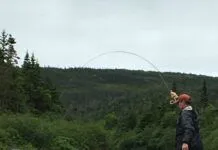
On a fall weekend in South Bend, Indiana, you can hear the Notre Dame marching band from the river while swinging a fly for steelhead.
Tim Scott has spent more than 30 years fishing these waters where steelhead, St. Joe smallmouth, and streamer fishing are all part of the experience. He is also the co-founder of Tie-A-Thon, which started with a goal of a couple thousand flies and has now passed 400,000, supporting groups that use fly fishing for education, therapy, veterans, and kids.
We also dig into Tim’s steelhead setup, his sink-tip system, and a Clouser-style minnow inspired by the work of Fox Statler and Kevin Feenstra.
Tim Scott takes us from the early days of Tie-A-Thon to swinging flies right through downtown South Bend. We cover Skamania and Michigan-strain steelhead, five-pound Saint Joe smallmouth, cold-water habitat projects, Tim’s two-handed setup, and the streamer patterns he trusts after more than three decades of tying and fishing.
The annual campaign typically runs from November through April 15, though flies now arrive year-round. Tie-A-Thon has received flies from all 50 states, six Canadian provinces, Scotland, England, Australia, New Zealand, and American Samoa, with fly-fishing clubs and organizations helping spread the word.
(11:48) Tim lives about five minutes from Michigan, giving him access to waters in both southern Michigan and northern Indiana. The area has some cold-water trout opportunities, but he says warm-water fishing is the best bet.
He also swings a six-weight two-hander for smallmouth, using the fishing as a way to practice his Spey casting. He typically gets about one five-pound smallmouth to the net each year.
(17:50) For anglers passing through South Bend, Tim recommends fishing right downtown. The Saint Joe has public access, and Leeper Park, about seven blocks from downtown, offers smallmouth fishing and a chance at Skamania steelhead.
Skamania begin showing up in late June, but Tim recommends waiting until Labor Day weekend, when water temperatures are safer for catch-and-release. Michigan-strain steelhead arrive in spring and are shorter, thicker, and more football-shaped.
Tim mostly swings flies and has had days with one steelhead and days with 15. In colder winter conditions around Niles, anglers may switch to nymphing, although swung flies can still work.
(24:11) The Saint Joe receives stocked steelhead, but Tim says there are also naturally produced fish. Cold feeder creeks provide important nursery habitat before young fish head toward Lake Michigan.
Tim chairs the conservation committee for the Saint Joe River Valley Fly Fishers, which has spent years improving local streams. The club’s habitat work on Dowagiac Creek includes lunker structures and other improvements documented by the Michigan DNR.
His favorite is an older Winston VSL he picked up at a club fundraiser. He has caught steelhead and smallmouth on it and can cast about three-quarters across the Saint Joe with a Skagit head.
That rod nearly became part of the river. After landing a fresh Skamania steelhead, Tim dropped it in six inches of water above a deep pool. The next morning, he and a friend found it 20 yards from a large tree, with the line caught underneath.
Covered in moss and gunk, the rod was still intact. Tim slowly pulled it free, recovered the entire setup, and then bought a lottery ticket.
Some donors go far beyond the standard 100 flies. One sent about 1,000 colorful bead-head flies for bluegill and bass, while another donated roughly 1,200 steelhead and streamer flies after his father died.
Every donated fly goes to that year’s nonprofit recipients. From November through April, Tie-A-Thon shares updates on fly totals, while recipients send photos of people catching fish on donated flies.
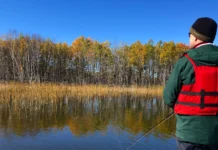
As late summer turns to fall, weed growth in the Saint Joe holds huge numbers of minnows. Cooling water triggers aggressive smallmouth feeding, with baitfish spraying from the river and sometimes a fish on nearly every cast.
Instead of bucktail, Tim uses Angel Hair, 7/32-inch Spirit River Real-Eyes, and a size 4 Mustad double-kink hook. The setup creates a longer, slimmer profile while maintaining the Clouser-style hook-up orientation.
After more than 31 years of tying, Tim still tries to tie every day. He contributes at least 200 flies to Tie-A-Thon each year and has donated more than 5,000, while Bear Owens and a longtime club member have each surpassed 7,000.
(42:29) As Tie-A-Thon has grown, donations have reached beyond the Great Lakes. Tim says they have sent flies to Colorado and helped North Carolina organizations that were short on inventory after hurricanes.
Large national organizations can use huge numbers of flies. Tim has offered Trout Unlimited around 27,000 flies at once, while The Mayfly Project can go through roughly 20,000 flies in a season.
By donating flies, Tie-A-Thon helps nonprofits put more of their money toward their programs rather than replacing fly inventory.
Tim’s home-water list starts with the Saint Joe, followed by the Jack River, Muskegon, Manistee, and Au Sable systems. He also recommends a Michigan road trip from South Bend toward Traverse City that passes several Great Lakes rivers.
Tim Scott is a co-founder of Tie-A-Thon and has been part of the South Bend fly-fishing community for more than 30 years. He chairs the conservation committee for the Saint Joe River Valley Fly Fishers and spends much of his fishing time swinging flies for Saint Joe steelhead and smallmouth.
Tim studied photojournalism at the University of Missouri and previously worked as a news photographer. He has tied flies for more than three decades and has personally tied and contributed more than 5,000 flies to Tie-A-Thon.
Episode Transcript
WFS 980 Transcript 00:00:00 Dave: On a fall weekend in South Bend, Indiana. You can hear the Notre Dame marching band from the river while swinging a fly for steelhead. Tim Scott has spent more than thirty years fishing this water, and today he takes us into swinging for steelhead in Indiana. We’re talking Great Lakes steelhead, smallmouth on the Saint Joe streamer, fishing, local conservation work and a fly time project that started with a goal of two thousand flies and now has passed half a million. This is the Wet Fly Swing podcast, where I show you the best places to travel to for fly fishing, how to find the best resources and tools to prepare for that big trip, and what you can do to give back to the fish species we all love. Tim Scott’s going to take us into the tie a thon, a nonprofit effort that collects flies from tires around the country and gets them into the hands of organizations using flies for education, therapy, and all sorts of good stuff. We’re going to get into this. We’re going to talk about the Saint Joe smallmouth bass fishing. We’re going to find out what Tim’s setup looks like a fish in Indiana for steelhead, including the sink tip system he uses. We can get into all that today. And some of the flies, including Clouser minnows. The style is a little bit different. It goes back to some of what Kevin Finster teaches. And and this is going to be a good one. Definitely haven’t done a lot of Indiana focused episode and this is a good one. You can check in with Tim anytime at the tython dot org. All right. Let’s get into it. Here he is. Tim Scott, how are you doing, Tim? 00:01:24 Tim: Great. Thanks for having me, Dave. 00:01:26 Dave: Yeah. Thanks for setting some time here to talk about the tie a thon, something I’m sure you’ve got a lot of passion in. And we’re going to I’ve been hearing about this in our community, in our pro community, that there’s some people that are connected to the tie a thon. And I wanted to bring this up to talk about what you do. And maybe we’ll also dig into a little bit on your home area, Indiana, which is a place we don’t we haven’t talked a lot about for fly fishing, but, um, but yeah, before we jump into all that, maybe take us back on the tie a thon. When did this idea come to be? Is this something that you’d been thinking about for a while? 00:01:57 Tim: So no, it was kind of something instant with. Terry and I were the co-founders of the telethon, and it was literally driving to a Kalamazoo Valley Chapter two meeting twenty. Oh, well, now we’re going on twenty one years ago. Wow. So we were driving up. I’m in South Bend, Indiana, home of Notre Dame. And, um, Kalamazoo is about a forty five minute drive. And, uh, that’s where the closest to chapter was. Terry was a member of it. And I had just joined and we were driving up and they didn’t have enough flies for their, um, their kid’s camp coming up in the fall or the, actually the summer of the next year because we kicked this off in the fall. And, um, I said, Terry, I know twenty guys, if I could get them to tie one hundred flies each, two hundred or two hundred flies, would you be good? And he said, that would be fantastic. And that is literally how it started. And now we’re, uh, we’re over five hundred, zero zero zero flies later. 00:03:00 Dave: Really? 00:03:01 Tim: So. Yeah. 00:03:02 Dave: And where do the flies now? How does the process work? If somebody’s listening now and they want to get involved, how does that work? 00:03:09 Tim: So, uh, we have patterns, you know, we got a website, you know, tython dot org, uh, in Facebook. And you can, if you want to donate, what you do is pick a pattern. There’s about twelve to fifteen patterns, just common stuff like prints, nymphs, um, caddis, you know, elk hair, caddis, you know, even wooly buggers and small streamers, closers, that type of thing. So generic kind of flies, uh, that people can use and pick a pattern, tie a hundred flies of that one pattern, one hook size. The whole idea was to make it easy on you with the inventory. So tie that fly, send it in, and then we pass it on to organizations that use fly fishing for education or therapy that are registered nonprofits. 00:03:58 Dave: Gotcha. So like, what would be some of those organizations that you’d be some of these five hundred thousand flies have been passed to? 00:04:04 Tim: Um, uh, mayfly project. Um, casting for recovery. Real recovery project. Healing waters. We’ve done some smaller local nonprofits in the area. So, um, Flying heroes is one in Michigan where, um, you know, they take veterans out. So just a lot of different organizations like that, some dealing with mental health issues. Uh, we did a camp Kita one year, which is a camp. It’s a camp up in Maine, a summer camp that, uh, they have fly fishing in that. And the camp was designed around kids and teenagers that had some type of suicide in their life, say their father or someone who died. So, you know, causes like that. 00:04:49 Dave: Wow. That’s cool. So five hundred thousand, that’s a lot of patterns. How do you guys do the, you know, like, is there like quality control? You know, like, can anybody tie? How does that work? You know, like, yeah. Are the tires. 00:05:02 Tim: Yeah. Anybody can tie. And we do get some first tires that tie. And we do get some pros that tie, you know, as well. But, uh, we all know even our first flies have caught fish. So, you know, some flies, uh, are maybe a little bit rougher than others. But, um, for the most part, there hasn’t really been a batch of flies that people can’t fish with, you know, so you get a variation of that. And then what we do is we collect all those and then distribute out to four or five organizations each year. So in the past, we, we would typically do one organization and now we’re up to about four or five because, uh, we’re averaging about forty four thousand flies each year for the past five or six years. 00:05:45 Dave: So it’s increasing over time. You’re getting more outreach. Yeah. Gotcha. 00:05:50 Tim: In the past ten years, it’s just exploded. Our first year we did two thousand five hundred flies. Um, three years ago we did fifty five thousand four hundred flies. 00:06:01 Dave: Yeah. Wow. How do you guys do all the who’s doing all the behind the scenes, you know, uh, inventory and all that stuff. 00:06:08 Tim: This guy you’re talking to right here? 00:06:10 Dave: Yeah, you’re doing it all. So how do you have a as it gets bigger, do you have some limit to how many you know, you could do? Like what if, you know, could you get to a million, that sort of thing. 00:06:20 Tim: Um, in a year. Are you talking Dave or. 00:06:23 Dave: Well, I don’t know. I mean, I’m just thinking in general, like, you know, is there a scaling issue you’re going to eventually have here if you get too big? 00:06:29 Tim: Well, we got a board of five people, so we got a small board. We’re a nonprofit so others can help too. But I would love to have that problem. You know, right now, you know, we kick off a campaign like in November and then flies aren’t due until April or May the next year, usually April around April fifteenth, you know, tax day. Yeah. And, uh, they just filter in. Now, it’s gotten to the point where I get flies all throughout the year, so I’ve already gotten like four thousand flies and we haven’t even announced recipients yet. So usually in November, we pick four or five recipients and then make that announcement. And that kind of gears people up, you know, because they believe in the causes, uh, they get motivated to tie. 00:07:14 Dave: Yeah, definitely. Do you, how do you reach out or are you reaching out to new groups? Or do you have mostly people that reach out or how does that how does the growth happen for you guys? 00:07:23 Tim: Um, as far as recipients or, or donors or tires? 00:07:27 Dave: Uh, yeah, a little bit of everything. Like, you know, how would a, if somebody wanted to. Yeah, maybe talk about that. 00:07:33 Tim: Yeah. We’ve been, uh, publishing a bunch of different, uh, national magazines. People find us on Facebook. A lot of fly fishing clubs are starting to promote the tie a thon. So like, um, Colorado women, fly fishers, fly girls of Michigan, you know, clubs around the Great Lakes, uh, know about us. And then like Columbia River basin, um, fly fishers, uh, donate every year. And then like, um, we’ve gotten flies from all fifty states, six Canadian provinces, uh, Scotland, New England or Scotland, England, Australia, New Zealand and American Samoa have all donated flies. 00:08:15 Dave: Gotcha. Wow. That’s cool. And and are you now this is, uh, you originally got started with the two chapter. Is that still a big part? Sounds like a lot of two groups involved. 00:08:24 Tim: Yeah, there’s a lot of two groups and a lot of FFA groups. So, um, Terry and I both belong to Saint Joe River Valley Fly Fishers, which is a fly fishing group that’s been around since like nineteen seventy four in the Titan really originated out of those two groups. So the idea was Kalamazoo, which is just north of us, and Saint Joe River Valley fly fishers, which um, is in the South Bend, northern Indiana, southern Michigan area. It was a way to get the two groups together. Um, have some collaboration, tie some flies, have a good time. And that connection is still there today. 00:08:59 Dave: Right. That’s cool. And then it raises money. How does that work on raising money for the, the local nonprofit? If they, uh, how does that work? 00:09:07 Tim: You know, we do get financial support because it’s gotten a little bit big. And, um, for every person who ties a fly or ties a hundred flies and donates up until two years ago, we were handing out t shirts. So you’ll see artwork on Facebook or, um, the website. Andy Kitson, one of our board members, he does original artwork each year for the tie thon. And, um, you know, we print that off on a t shirt and, uh, we were sending those out. So we were averaging about three hundred and fifty tires every year. So, um, now we’ve, uh, it’s gotten so big that we’ve gone to, like hats and stickers and, um, so, but what we do is for everybody who donates to us, we send them a t shirt or a sticker or hat or, you know, some type of swag. So that’s where our cost kind of adds up because, you know, we’re a nonprofit, we don’t make any money off of it, but we figure we owe someone, you know, who’s going to tie one hundred flies a little bit of something. 00:10:11 Dave: Definitely no shirts. Great. And that’s good promotion too out there, right? Little marketing. 00:10:15 Tim: Yeah. It was funny. My wife was coming back from Denver. We go to Colorado a lot and I fish out there a lot. And she’s getting on the plane back to Chicago. And here’s a person getting on with a tie on t shirt. 00:10:28 Dave: Nice. 00:10:29 Tim: And sits down across from her and she goes, oh, do you have you heard of my husband, Tim Scott? He, you know, helped start the tie thon. And the guy’s like, nope, never heard of him. But I donate it. And she goes, where are you from? He goes, Alaska. 00:10:44 Dave: There you go. That’s cool. That’s true. It’s got gotten bigger than the founders, right? There’s people. 00:10:49 Tim: Yeah, yeah. And that’s what we want. 00:10:51 Dave: Yeah. 00:10:52 Tim: But back to your original question, is a lot of the clubs support financially and donate flies. Uh, part a lot of, you know, fly fishing clubs and nonprofits, their mission is some type of community service. And a lot of clubs use the tie thon as part of their community service and giving back. 00:11:11 Dave: Yeah. Gotcha. Wow. And, and so back to that funding. So the shirts funded, uh, and all that stuff. You guys are kind of doing that out of pocket sort of thing. Yeah. Yeah. Gotcha. Okay. 00:11:21 Tim: We’ll have clubs donate. And then, uh, we’ve been doing a raffle the last couple of years. Uh, this past year, buddy of mine, uh, Jeff Loosmore, built a nice custom Winston, uh, Tom Morgan favorite fly rod. And we donated that. So our expenses are fairly low, about a five thousand dollars or so, um, each year. So, the fundraiser typically pays for what we’re doing, plus donations that roll in. 00:11:48 Dave: Perfect. And you’re also in the Indiana area. That’s a place we haven’t talked a ton about for, you know, fly fishing. What is what does that look like in Indiana? Are you doing a lot of fishing around your home state home? 00:12:00 Tim: Oh yeah. Yeah. So we’re five minutes to Michigan. So we get to take advantage of a lot of the, you know, a lot of the waters in Michigan, which I’m sure, you know, you’ve, uh, you’ve talked about, um, in northern Indiana, there’s trout, there’s, uh, brown trout, there’s, uh, hatchery that our one club helps support that probably over, uh, since the seventies have donated, you know, or are stocked, you know, probably over a million trout in the area. So Indiana is not the greatest on catch and release. There’s only a few waters for catch and release, but it’s got some great warm water. And, uh, the Saint Joseph River’s warm water. Um, and it runs to Lake Michigan. So in the summertime right now, we’re doing a lot of smallmouth fishing. So typically every year we get about a five pound smallie to the net. So a lot of streamer fishing, really great smallmouth fishing on the Saint Joe. And then it does get runs of steelhead. So we get runs of steelhead. And when they were stocking salmon, we got runs of salmon too. So I’ve landed probably over two hundred and fifty steelhead over the years. And for years I’ve been here in Indiana, in Indiana, and I do a lot of spey fishing. So a lot of a lot of swinging. Dave. No kidding. 00:13:23 Dave: Um that’s good. 00:13:24 Tim: And the other thing is like some other guys that started in, there’s a bunch of people that, um, you know, have spey rods and switch rods and that, and we’ll swing for flies. And one of the great exercises I got a six weight that I swing for flies for smallmouth in the summertime. 00:13:40 Dave: Yeah. Perfect. Yeah. It’s. You don’t hear as much about Indiana. I think mainly because of at least with the anadromous fish or migrating to the lakes, just because it’s a small little chunk of Indiana’s got a small chunk of Lake Michigan, right where Wisconsin and Michigan have a huge chunk. And so obviously there’s less of a chance for rivers, but you’ve got at least one big one there. And then other than that, the state as you go south is just kind of like a lot of the states in that area where you don’t have a ton of trout streams necessarily that are kind of flowing out of the mountains. It’s more kind of warm water, right? 00:14:12 Tim: Yeah, it’s pretty much warm water. That’s the best bet. There’s a few cold water streams near us. There’s two in Indiana and about five in Michigan, you know, within forty minutes of us. So, you know, some really nice trout, uh, in the area too. So the tie a thon and the clubs involved in the areas, you know, like I said, the one club they’ve been around since the seventies and in fly fishing in the area since the seventies. So, um, we got some really good connections to some local farmers that have some cold water streams that we fish. 00:14:46 Dave: Nice. Were you in for the, uh, swinging flies for bass? Is that on Saint Joe? Saint Joe’s? 00:14:52 Tim: Yeah. On Saint Joe? Yeah. Yeah. It was really a great way for me to practice, you know, casting. So. 00:15:00 Dave: Yeah, definitely. And where is the Saint Joe? Where does that flow into the the lake. What’s the closest town to that. 00:15:06 Tim: Into Lake Michigan. It’s in Saint Joseph, Michigan. So it’s a actual river that flows east to west and north. So in South Bend was named after a southern bend in the river. 00:15:21 Dave: Oh, really? Oh, that’s where South Bend comes from. 00:15:24 Tim: Yep. 00:15:25 Dave: That’s okay. So now that puts in perspective. So it goes through. So the Saint Joe. Yeah. Goes through South Bend and that’s where it’s making the South bend up into. Oh okay. Yeah I see it now. 00:15:35 Tim: Yep. 00:15:36 Dave: Gotcha. Oh, wow. So this river goes from essentially it flows into Lake Michigan, in Michigan, but it flows up into Indiana. 00:15:45 Tim: Yep. It’s a northern flow river. So I think there’s, what, five of them in the world that do that flow. 00:15:51 Dave: Well it’s yeah, like you said, it flows west and then goes north. Yep. Wow. That’s amazing. And, and then, um, and so it’s got a lot of opportunities. So you mentioned steelhead. What are the other species that you’d find in that river? 00:16:02 Tim: Uh, that’s pretty much it. Smallmouth steelhead, uh, occasionally salmon. So, um, we used to have, uh, when they stocked the Indiana DNR stocked, we had, um, tons of king salmon. So I’ve caught a forty two inch king salmon on a fly while it’s pouring rain in the fall in, in Notre Dame, you can hear the band, you know, I mean, we’re almost downtown. We can hear the marching band at halftime at Notre Dame Stadium. 00:16:32 Dave: Yeah, that must be pretty big. Is that that town? You know Notre Dame. It really doesn’t get much bigger than that for college football. Is that pretty much what drives the South Bend? 00:16:42 Tim: Um, no. South bend, uh, stands alone pretty much. It’s one hundred and thirty zero zero zero people. Um. Oh, wow. And yeah. Um, yeah. And then there’s the outside region and that. But Notre Dame is a big factor. I mean, they, they bring in, you know, there’s eighty thousand people that pack that stadium every Saturday when they’re in town. So it has, uh, one Notre Dame’s in town and they win. It has about twelve to fifteen million dollars impact on South Bend for the week. No kidding. And and when they lose, it’s it’s eight million to about ten million. 00:17:17 Dave: So they, they lose a couple million there. And so that are you a big sports fan? Is that are you been into football? 00:17:25 Tim: Uh, yeah. I grew up in Saint Louis though. I am a University of Missouri grad. So in, in journalism. So um, Um and moved here thirty four, thirty two years ago. And it’s great to see Notre Dame. It’s a fantastic stadium and Ashland campus if you’re ever out this way. So are any of your listeners are out this way? It’s it’s it’s a great experience. 00:17:50 Dave: Let on to Mark Lodge give you the Montana fly fishing experience. You deserve the gin clear waters of the Missouri River offer a world class experience with one of the finest rainbow trout and brown trout fisheries in the world. Whether you’re a seasoned angler or new to the sport, their family of guides will tailor a trip just for you. You can head over to Onda Mark lodge dot com to fish, one of the great trout streams in the country. Golden Fly Shop isn’t your average fly shop. They have a twelve foot shark painted like a cutthroat, hovering over a huge selection of the best rods in the business, a massive assortment of tying materials and their famous steakhouse streamer display. And it’s the hub for a community of anglers who never stop tinkering with new ways to catch fish. Sometimes the conversation behind the counter includes what hatches are going off and what techniques are working best. Then tales of destination fishing, adventures, sought after species, or a good old congratulations when a customer brings stories of finally connecting with that fish they’ve searched for forever. With a growing online store and a budding YouTube channel, you’ll be able to follow along with their fun antics, international adventures, and helpful fly fishing tips. Golden fly shop where the community is hanging out even if they’re supposed to be working. That’s Golden Fly shop dot com. Check them out right now. Yeah. What would you recommend if somebody was traveling through that area? Maybe they’re heading up to Michigan or something like that. Where should they go? Where should they stop to do some fishing? 00:19:16 Tim: Oh, come downtown, downtown South Bend, the city of South Bend, uh, has public access along the river. And you can pretty much jump in a way just about anywhere. And if you contact, like Saint Joe River Valley fly fishers or me through the tie thon. I’ve taken some people out and showed them spots to fish in that. So it’s a fairly weighable river, you know, um, when the flows are right, especially in the fall, when the water is really low, there’s spots where you can wait across the entire river. But um, it’s just great to get out and wait it and you can stay downtown. And, uh, about seven blocks from downtown is, uh, leaper Park and you can go down to Leaper Park and right now catch a ton of smallmouth. And there’s, uh, Skamania run steelhead in right now. So you might be able to pick those up. 00:20:09 Dave: Is that the time? When is the time to, to have a chance at steelhead there? 00:20:13 Tim: Steelhead definitely is in the spring when they’re spawning. We uh, of course we don’t fish to the spawners. We wait for the drop backs. Yeah. So, uh, a lot of pools, a lot of, uh, fish, a lot of pools where fish are holding or moving. So But right now, uh, we were smallmouth fishing three weeks ago and and hooked up on a steelhead, you know. 00:20:37 Dave: Oh. You did? 00:20:38 Tim: Yep. 00:20:39 Dave: Wow. So early August. Early August. You hooked a steelhead? 00:20:41 Tim: Yep. Yeah. They come in the skamania come in around, um, late June. And um, temperatures aren’t right for them to spawn like they would in the Pacific Northwest. So they come in, they hang out and they wait till spring, they spawn and then they go back out to the river. 00:20:59 Dave: Right? Yeah. So these are essentially summer steelhead that are coming in. Yep. Wow. That’s amazing. That’s so cool. And Skamania stock, which we’ve heard about, you know, they’ve been spread out around out in the Midwest. It’s pretty cool. So they come in in June like a summer wood and then they hold off all the way and then winter. So when’s the key? So you’re not fishing them in the summer just because the water is too warm. 00:21:20 Tim: Yeah. You know, do catch and release. Uh, right now, uh, it’s cooling off right now, which is really nice, but it’s been way too hot. You you hook a steelhead and, um, you’re going to kill it. So, you know, we don’t recommend that. I, I usually tell people don’t start steelhead fishing until Labor Day weekend. So usually it cools off around here. 00:21:42 Dave: Oh okay. So you can start fishing. So the fall. So you can fish for steelhead in the fall there. 00:21:47 Tim: Yeah. You sure can. Yeah. Fall and winter. So that’s great. Yeah. You can almost do it all season. And then you um in the spring we get the Michigan run steelhead. So um where Skamania look like a torpedo. 00:22:01 Dave: Oh you got a different breed. 00:22:03 Tim: Yeah. We got a Michigan strain and it looks like a football. It’s a shorter squatter fatter um steelhead. Um, in run like tanks. Wow. 00:22:14 Dave: So that’s amazing. What’s the, uh, you know, because we were fishing in Ohio with Jeff Liskey on the south shore of Lake Erie. And it was amazing. You had tons of action. Uh, and it was great. What’s it like? What’s the experience like there? Are you getting is it kind of, you know, a fish, you know, you’re happy if you get one fish in a day or you get is there times where you can get more activity. 00:22:35 Tim: You can get a lot of activity, you know, especially in the spring, the rivers really stack up with fish. And I have days where, you know, it’s just one steelhead and I’ve had days where it’s been fifteen. 00:22:48 Dave: Yeah. And is this mostly swinging flies? 00:22:51 Tim: Yeah, I just swing, uh, there’s guys a little nymph arm, you know, um, it when it gets colder and you can do it in the winter time in like rivers close to us. That’s in Michigan. That’s, uh, in Niles, Michigan, which is only about a twenty minute drive from here. You can, um, we, we fish that all winter, but sometimes you get a nymph, you know, when it gets way too cold. But other times, you know, you can swing in the, in the winter time too and pick up a fish. 00:23:22 Dave: Yeah. You can. Right. Wow. So this is amazing. So literally right down in South Bend, you can, you know, go to a Saturday, go to a football game, watch Notre Dame. And then if you get tickets and then fish swing for steelhead on Sunday if you wanted to. 00:23:34 Tim: Yep. I had two guys contact me their their daughters were on the volleyball team at Notre Dame. And um, they were coming in because the volleyball games were around the same as football games or, um, they were like the Thursday, Friday before and then they were in for Saturday and they’re like, hey, uh, can you take us out steelhead fishing? And yeah, so I showed them some spots, put them on some water, gave them some rods and let them swing away. 00:24:02 Dave: So that’s really cool. Yeah. 00:24:03 Tim: I thought it was really cool. One was from New York and one was from Indianapolis. So they’re like, we’ve never done this. And it’s like, yeah, it’s right here. 00:24:11 Dave: That’s great. Yeah, I think I could already see the title for this, uh, this episode, you know, whatever it is, something about steelhead in Indiana because I think a lot of people don’t think about Indiana. You know, I’ve done lots of episodes and it usually comes up where it’s not. You just don’t hear about steelhead in those two in the same sentence, you know? But it’s cool to hear. Yeah. It sounds like you got a really great program there. And these are mostly, like you said, you got fish that are coming, the Skamania. So they’re stocking these fish and obviously they’re coming back and returns. And then you’ve also got. Now the Michigan fish are those also, is that a mix of stockfish or are there some wild fish out there too? 00:24:43 Tim: Yeah. There’s stock. There’s. And we do get returns wild of both. Yeah. So yeah, we’ve had, uh, we’ve had a few scientists study and you know, they’ve shown some of the feeder creeks and that’s why feeder creeks are so important is um, even when the Saint Joe River is very warm to, you know, because some of the DNR say, well, you never produce a, a wild fish off the Saint Joe. Sure. Know what happens is the little smolt hatches out and they find cold water streams that they grow up, get bigger, and then they then head to the river. So we do get wild fish, um, even up to Saint Joseph. 00:25:22 Dave: That’s so amazing. Yeah, I would love to talk to whoever is in charge of that program to hear more about that. Right. This here’s maybe some because I mean, I would imagine for you, you talked about, I mean, we just recently had Chris Wood, kind of the head of to on and he talked about some of their big programs, which were, you know, right now there’s a big one going on with all the public, um, with lands, you know, that’s always a big challenge right now. But he also talked about, um, some other areas, but there’s these little small pockets like you’re talking about, which are so critical, you know, like the Saint Joseph’s, if you could find these cold water areas and protect them, right, you might be able to protect and restore these wild populations. What is that? Is that something that your local group is thinking about? You guys are doing some projects there. 00:26:02 Tim: Yeah, we do, uh, stream improvement projects here. I’m the chair of the conservation committee for, uh, stream work with Saint Joe River Valley fly fishers. So right now we’re working on a Cobas Creek, uh, in Elkhart County. We’ve done one project. We’re going to do more over the years, we’ve worked a lot on Dowagiac Creek. You know where we were before we started. We walked the creek and it was ankle deep and just filled with silt. And now we got it to the point where it’s knee to waist high, deep and gravel on the bottom. And that and that that literally was like twenty years of work on some private property that allows us to fish. So and then right now we’re working in a county park and. 00:26:47 Dave: Yep. 00:26:48 Tim: And, uh, you know, putting in, um, you know, some Jay hooks and different things to habitat structures. 00:26:56 Dave: Yeah. 00:26:56 Tim: Yep. And lunker structures and things like that. 00:27:01 Dave: So it sounds like, like a lot of the challenges. I mean, water quality and quantity is, is one, right? You mentioned the cold water. So that’s part of it protecting those fish that are in there, giving them some refuge to kind of rear right throughout the year. 00:27:13 Tim: That’s right. Exactly. Yep. 00:27:15 Dave: Amazing. Yeah. Sounds like a great river. What is? And it’s the Saint Joe. You guys say Saint Joe, not Saint Joseph’s, Saint Joseph. 00:27:21 Tim: Yeah, we say Saint Joe. Yeah. 00:27:23 Dave: Yeah. Saint Joe. 00:27:24 Tim: Yeah. Saint Joseph. 00:27:26 Dave: Yeah, yeah. What is your, your. It sounds like you got the space six. Wait, what is your set up you’re using for the, um, are you using syncing lines in the fall or like talk about that? Has that changed throughout the season? 00:27:38 Tim: Yeah, no, I do a lot of sync tips off of Skagit Head. So, uh, do a Skagit. I’ll tell you this. It’s an old, uh, s a line. It’s a multi tip line. And, uh, I just love it. It works really well. I do that because I got a, a eleven foot Winston B2. MM. Or no boron two eleven foot seven weight that I, uh, swing with that too. So, um, okay. And then this is I got it off an auction, uh, a club auction for fundraiser. It’s a v SL uh, the, the old Winston. I think they were made in Korea or somewhere. They weren’t made in Montana. And I’ve beat that thing up and, uh, that thing’s caught steelhead and smallmouth and everything on it and throws a Skagit had. I can get three quarters across the river. 00:28:33 Dave: So nice. 00:28:34 Tim: Kind of fun. 00:28:35 Dave: That’s amazing. Yeah. The more I do these episodes, talking about rods and gear and from some of the best instructors in the world, you hear you realize that the old rods aren’t worse. You know what I mean? It’s not that these rods are better, you know? I mean, in fact, a lot of times, you know, these instructors are using older rods because the action is more right. You know, it’s different, slower. And so I feel like no matter what rod, you pull out, that’s what’s kind of cool about you could go buy the brand new whatever rod you want, but you could also find a rod, like you said, from an auction. That might be even better for what you’re doing, right? 00:29:06 Tim: Yeah, it just seems to be my go to all the time. In fact, I lost it on the river one time. 00:29:13 Dave: No kidding. 00:29:14 Tim: So it was spring swinging through this hole. I get this just beautiful fresh, uh, Skamania steelhead. Get it up. I had it under my arm. I’m, I’m netting this fish with, you know, it’s a eleven. No, no. What was it twelve. Six rod. It was six weight. Sure. And, uh, had the rod under my armpit and, uh, I’m messing with the fish, getting the hook off, getting it out of the net, messing around. I dropped the rod. Didn’t realize it. Only in, like, six inches of water and, uh, get the fish off everything. And then I’m like, oh, Lord. Uh, where’s my rod? It’s gone. And I’m standing above, uh. I’m in a ripple above a big deep pool. And you couldn’t wait in it. And it was late in the evening and everything. And, and the guy I fish with, he’s got a drift boat. He stopped by on. This is downtown South Bend to or, you know, close to downtown. 00:30:16 Dave: Oh, wow. You’re right downtown. You’re like, you’re looking at the buildings right around you. 00:30:19 Tim: Yeah. And, um, it’s down a little bit further, but, um, it’s like he’s looking from shore. We can’t find it. I’m sick because I got, you know, um, nice real light, that line rod. Everything is gone. And I had clipped the fly off and I’m thinking, oh, God. So the next morning he goes, we’ll jump in the boat, we’ll motor up and start looking. And I didn’t sleep at all last that night. And we get in the boat, we motor up in like, I’m thinking of every snag, every everything to Lake Michigan where this rod could be, you know, uh, basically with the current blowing on it for, you know, twenty four hours straight and we’re motoring up and there was this big tree hanging out in a snag just down from the pool that I was fishing. And he’s motoring up. He’s got a lack of craft. And, uh, I point like, you know, I’m up front. Move over. There’s the rod hanging at the surface of the water about twenty yards down from the the tree. 00:31:30 Dave: Wow. Hanging it literally poked up and. 00:31:33 Tim: Literally went under. It went under, the tree came up and the line was all caught underneath it. And it’s like covered in moss and gunk and everything, but it’s hanging the the line held it to where the rod was hanging at the surface. I just reached down, picked it up, and slowly pulled the line out and had the whole thing. 00:31:55 Dave: Wow. 00:31:55 Tim: So then I went and bought a lottery ticket. 00:31:57 Dave: Yeah, exactly. Yeah. That’s it. Wow. So that’s a good story. And it’s a good story about the fish too. So these fish come in here. If you hit it right, you could get a chrome bright fish that’s coming in. 00:32:07 Tim: Oh yeah. 00:32:08 Dave: Yeah. That’s great. And are these fish could you if you wanted to take home a fish to eat? Is that a doable thing? 00:32:15 Tim: Oh, yeah. Yeah. Yeah. 00:32:16 Dave: So these fish are good to eat. 00:32:18 Tim: I think it’s a fish a day. 00:32:19 Dave: Right. And since they’re hatchery fish, it’s like, that’s a good thing, right? You’re not hurting the. Yeah. 00:32:25 Tim: Yeah. It’s a good thing. And you know, the DNR, you know, kind of wants you to take a fish, you know, just to, you know, for that reason. And there’s plenty of people, you know, they think it’s a grocery store and they come down and, you know, they poach fish and that in the springtime. But, um, but, you know, and then everybody’s like, oh, why would you eat a fish? And, you know, a post-industrial river? And it’s like, hey, they’re only in the river for a short period of time. You know, they’re, they’re out in Lake Michigan. So, you know, whatever’s in the river is in Lake Michigan, too. So, but there’s plenty of people that smoke, you know, steelhead and it’s darn good. 00:33:02 Dave: Yeah. That’s great. So you’re so you’re there, you’re swinging throughout the the year, it sounds like. And then you’ve got, you can mix bass in there as well, which is right now like August says, we’re talking August. September is a good time to target bass. 00:33:13 Tim: Yeah, it gets really good. Um, right now with the weather cooling off, um, there’s a lot of weed growth in the, in the river that gets up high. All the minnows, um, just congregate in the, the weed area in probably in the next three weeks or so. The smallmouth bass. Once it cools off, they’re just putting on a feeding frenzy. They’re trying to get as fat as they possibly can before winter. And, uh, they’ll school up and we will literally chase schools, a smallmouth that are just attacking baitfish. And it’s kind of like fishing in the ocean. All of a sudden you see baitfish fly out of the the river, and it’s a school of smallmouth attacking the baitfish. So, um, that’s fun. That can be, uh, a fish on every cast. 00:34:06 Dave: Yeah. Sounds like you don’t have to go very far out of Indiana to. I mean, it sounds like you’ve got some good opportunities right there around your hometown. Yeah. 00:34:14 Tim: Yeah, it’s a pretty good spot. 00:34:17 Dave: Today’s show is brought to you by Visit Idaho and Yellowstone Teton Territory, a place that should be on every angler’s list, from the Henrys Fork to the South Fork of the snake, and all the hidden creeks and alpine lakes in between. This region is built for fly fishers who like a little room to roam. You can head over to wet fly dot com slash right now for guides, lodges, and trip ideas to plan your next adventure. That’s Teton T e t o n. Check out Jackson Hole Fly Company today. Premium fly gear straight to your door without the premium price. Jackson Hole Fly Company designs and builds their own fly rods, reels, flies and gear, delivering quality you can trust at prices that let you fish more and spend less. Whether you’re picking up a fly rod for the first time or guiding every day, they’ve got what you need. Check them out. Right now. That’s Jackson Hole fly company dot com. Jackson Hole fly company dot com. What you mentioned we talked about earlier. Are you guys also tying a diverse like steelhead flies. Is that in the mix too? 00:35:22 Tim: Uh, for the site or just in general? 00:35:24 Dave: Yeah, for the Python. 00:35:26 Tim: Not particular. We’ll, we’ll mix up flies every now and then. If an organization so like project healing waters, like their official flies of Patriot. So instead of doing atoms, we’ll ask people to do patriots in that type of thing. But, um, you know, uh, flying heroes up in Michigan, they do a lot of streamer stuff. They do do some steelhead. We, we’ve mixed in some steelhead every now and then for them. So we’ll tweak the list a little bit for people. And then we get people that are just rambunctious that will, um, you know, hey, I’m going to tell you, you know, uh, a thousand little bead head, colorful, almost like mini mop flies and things like that for bluegill and in bass and stuff like that. So. So we get a gamut right now. I did get, uh, a person heard about us through Columbia River basin and he said, hey, my father died. I got all this. He had about one thousand two hundred steelhead flies, streamer stuff that he swung. Yeah. He goes, I want to give it to a good cause that will do good things with it. And I’m like, and he sent it to us, you know, out of the blue, which was pretty cool. 00:36:40 Dave: Yeah, that is cool. I think that’s what’s cool about your, you know, your nonprofit is that it’s not just you. You know, you’ve got these connections to these other great organizations which are doing good stuff. You mentioned right casting. So everything that people. So when they support you guys, they’re actually supporting all these other groups. Is that a big part of what people I’m guessing they hear about and they want to. How does that how is that? What’s that kind of that process look like when somebody first hears about you? How did they get involved? And are they thinking tie a thon? Are they thinking about these other orgs? 00:37:08 Tim: Uh, a lot of times they’re thinking about other organizations, but a lot of times it’s curiosity. And in the amazing thing is they try to overcomplicate it. And I said, no, it’s really easy. Tie one hundred flies and send it to us. And they’re like, that’s it. I’m like, yeah, that’s it. And, um, your flies, every single fly goes out to the nonprofits that we select for that year. So and then, you know, throughout the campaign, so we kick off in November and we go to like April. So a lot of people can tie over the winter time. And, um, you know, we give them updates, you know, throughout the year, you know, of what’s going on, where we’re at, how many flies have we collected, that sort of thing. So we keep people engaged as much as possible. What’s going on? And then what’s great is the recipients will take pictures of, uh, their people out fishing and say, here, The this person caught this fish on your fly, you know. Yeah. 00:38:07 Dave: So right, right. And and back in on those steelhead flies. So what is your like if you had to go out here and fish swinging up a fly this fall, what would be your fly, your go to fly you’d be using? 00:38:18 Tim: Um, I have a small, uh, clouser minnow pattern that either I dress it to look like a baby brown trout or, um, a little, uh, kind of fathead minnow or, um, a baby smallmouth. That’s my go to. Yeah. And, um, there’s a a tire. He’s deceased now. He was down in, uh, northern Arkansas called Fox. Stadler and Fox Stadler did a whole series of tying Clouser minnows. He literally mapped and recorded all the minnow species in the north. And white, uh, are the black and white River systems in southern Missouri, northern Arkansas. And he’s got a book out there. It’s not the greatest book in the world, but it takes the complication of a Clouser minnow a step further. And he literally makes up it’s called fishing, what you see. And, uh, he takes these minnow patterns and makes them realistic, uh, making a Clouser minnow style fish, you know, pattern. And, um, I’ve been doing variations off that and it’s just been so successful. 00:39:32 Dave: And these are just using like, is it Bucktail mostly as the material? 00:39:36 Tim: Nope. It’s, uh, a lot of angel hair. So instead of bucktail in that for the minnows, it’s angel hair and it’s tied. Um, Clouser, uh, like spirit River eyes, real eyes, um, like a seven thirty second and you put it on like a number four mustad double kink hook, which is they’re getting harder and harder to find, but it’s a double kinked hook. 00:40:01 Dave: So double kink. 00:40:02 Tim: Yeah. You use the little well on the second little bump, uh, to drop your eyes in and it gives you a little longer nose profile to the fly. I’ll send you some pics. Dave. 00:40:15 Dave: Yeah. So the double kink the kink took, what is that for? Mainly what is the kink? That’s just where the you’ve got a normal hook, but on this one, on the shank, it’s just got this little kind of V shaped kink. What is that for? 00:40:27 Tim: Yeah, it’s got a kink up and a kink down. And then I don’t know what the original purpose of the hook was, but Fox Statler used it for closers and you would drop in the valley. Well, you would drop your eyes and tie your eyes on so it would hook up. And, um, it just gives it a little longer, slimmer profile. And that’s usually my go to swinging that for, uh, steelhead. 00:40:53 Dave: Yeah. That’s right. God, this is great. Yeah. The kink took and again, I’m sure there’s lots of, uh, flat tires that I already know and I just haven’t used. I’ve seen them before. I just didn’t know it, but it looks like it’s mainly for keeping on these big flies, keeping your materials from spinning. Yeah. When it’s kinked, I guess that’s, but there’s probably other things that’s used for. So yeah. So you and you’re obviously you’re doing all you’re seeing lots of flies, right? So you’re. Oh yeah, you’re kind of an expert in this field. Like, have you been fly tying, um, tying flies for a long time. 00:41:22 Tim: Yeah. For um, let’s see, I’ve been in South Bend thirty two years. I’ve been tying for like thirty one, a little more than that. So it’s gotten crazy. I, I have a, uh, very nice fly tying setup. Um, and I almost tie every day, even if it’s just one fly. 00:41:41 Dave: That’s it. 00:41:42 Tim: Yeah. 00:41:42 Dave: And you tie every day because you’re tying probably for the same thing. You’ve got this, uh, nonprofit and you’re probably, are you contributing your own flies to the cause even though you don’t have to. 00:41:52 Tim: Yeah. Um, no, I tie at least two hundred flies every year for the tie on. Some years I’ve done more. I’m. I’m now third on the all time list with um, well over, I think five thousand flies that I’ve donated. Yeah. We had one gentleman, his name is bear. Um, a bear owns in from South Carolina area who in four years passed me with like seven thousand something flies. So yeah, one long time club member who’s been there from the beginning. He’s got over like seven thousand flies. 00:42:29 Dave: Right. And when you divide that up, that’s a decent amount. It’s a lot of flies. Yeah. A dozen flies twelve. Yeah. Into that. And are you guys with the groups. Are you doing uh it sounds like all around the country. Do you have some areas where you’re doing more sending more flies to certain regions of the country or the world? 00:42:45 Tim: Well, realistically, it’s been in the Great Lakes more because we were more regional. But as we’ve gotten to become more national or international, Um, we’re taking suggestions from a lot of different clubs. Um, we’ve set things out to Colorado because we got a lot of tires from Colorado and in North Carolina right now we, you know, in with the hurricane and everything that had gone on down there, some of the fly fishing organizations down there were hurting for inventory. And then then we support national groups like, uh, casting for recovery, uh, national tea. You, you mentioned Chris Wood. I talked to Chris Wood a lot. And, um, we’ve done two national a few times. I’m like, Chris, do you want like twenty seven thousand flies? And he’s like, sure, we’ll take them. Right? So they can give them out. But in the whole purpose, you know, the whole purpose is like, you know, West, uh, uh, Jess Westbrook at, you know, like mayfly project. Um, yeah, they’ll go through like twenty thousand flies in, in a, in a season. So if you think about what that would cost the nonprofit, that’s one of the reasons we do it is, you know, defer that cost, make sure that their nonprofit is doing what it needs to be doing with the money and not just buying flies. 00:44:11 Dave: Yeah, not just buying flies. That’s really cool. Yeah. We’re doing, you know, kind of trips and schools and stuff around the country. And I think it would be cool to connect, you know, where you can write with some of these groups and maybe do something similar, right? Where we’re working with you maybe to get some flies out to those local groups. 00:44:27 Tim: Yeah, absolutely. 00:44:28 Dave: So there might be a chance, and I’m sure there’s some people listening. I mean, to you and FFA, lots of great groups. So if people were interested, they could probably connect with you and learn more on all this. Yeah. Good. Perfect. All right, Tim. Well, let’s take it out here. We’ve got a little bit of our kind of rapid fire segment. We’ve been rekindled here recently. It’s just a couple of super easy kind of random questions, but I like to start off with kind of some tips, resources. You mentioned a book or two along the way for fly tying, maybe, or just maybe fly fishing in general. Is there a resource or book you really love you’d recommend? It’s on your shelf for people to check out. 00:45:05 Tim: Oh, um, Kevin Feenstra if you haven’t talked to Kevin Feenstra. 00:45:09 Dave: Oh, yeah. 00:45:11 Tim: So, uh, Kevin Feenstra has a bait fish book that is geared towards, like, pike and smallmouth, and he’s got a steelhead book, and I’m drawing a blank on the names. 00:45:24 Dave: Um, yeah. 00:45:25 Tim: I think bait fish for the Great Lakes area. It might be one of them, but like amazing tire. I’ve known Kevin for a long, long time and, um, his patterns look very complicated and they’re not, they’re very simple to tie in very, very effective. So if I’m not like throwing my little minnow pattern, which I call the Dennis Miner, uh, after, uh, a friend of mine, Um, it’s a lot of Kevin Feenstra patterns. 00:45:54 Dave: Kevin Feenstra. And I see it here, I think. Is it matching warm water? Baitfish? 00:45:58 Tim: Yep. Yep. That’s the one. And then he’s got another, um, a streamer book for, uh, steelhead. 00:46:04 Dave: So good. I mean, just looking at the cover of this book is worth the effort because he’s, he, I know he’s a photographer and he’s got this picture. I can’t even tell if it’s art or not. I think it is a photo. Yeah. It’s all photos of bass. Yeah, it’s all photos, bass. And he’s got a bunch of smaller fish. Like, man, that is a great photo on the cover. 00:46:21 Tim: Yeah, he does a lot of scuba diving. Uh, I remember when Kevin was not a photographer, um, and he self taught on all that. I got a photo journalism degree from University of Missouri. 00:46:32 Dave: Oh, wow. 00:46:32 Tim: Yeah, yeah. I used to be a news photographer. That’s cool. So Kevin just knocks it out of the park. 00:46:37 Dave: Yeah, that’s the great thing about it. I think this time in this day and age is pretty amazing, right? Because you’ve got this higher level degree, which is amazing, right? It’s pretty, you know, not a lot of people can do that. But then you could also kind of teach yourself right and get out there and spend enough time and create that craft just through whatever. However he did it, you know? 00:46:54 Tim: And the other thing is like, I would love to hear from your guys that are fishing and gals that are fishing out west, swinging flies and fishing some of Kevin’s patterns out west, because I think that would work out great. 00:47:09 Dave: Yeah. What’s one of his what do you know, a pattern that he that’s I know we’ve talked about some. He’s known for those really natural. A little bit of flash colors, but that green. Right. Some of the what’s one of his patterns that would be known. 00:47:22 Tim: So two that are on top of my list. One for. This is funny. I caught smallmouth with this all day long fishing with Kevin. It was experimental fly at the time. Uh, it’s a yellow chub. It’s like yellow and pink, uh, that’s in a warm water book. And then for steelhead, you can’t go wrong with it inside the bend. It’s this just very simple sculpin pattern that works out really well. You can tie it big, you can tie it small, you can go minimal on it. But the profile that it gives, I think that would be a great Western fly. 00:48:03 Dave: Yep. Now I know there’s definitely some overlap. I feel like, you know, again, like you said, it’s the I mean, literally the same species that you guys have there. And I’m guessing that guys have probably tried some of that. I just, I haven’t and, and again, it’s a little different too, because there’s some areas depending on the river, you know, out west, you might be fishing a river where, you know, you’re using tiny size eight little, you know, for summers small stuff. Right, right. But the big stuff works too. 00:48:26 Tim: Yeah. Inside the band, you can tie that down to about an inch long, you know, pretty small. 00:48:32 Dave: Okay. Right. So these don’t have to be giant flies, right? Nice. Well, good. So and Kevin Feenstra has definitely been a guy we had on quite a while back early on in the podcast, but we’re looking to do a follow up with him and maybe even put together a trip. I think his river. So how far is the like? He’s on the Muskegon, right in those rivers up there. How far are those from you? 00:48:51 Tim: Two and a half hours. 00:48:53 Dave: Oh, wow. They’re just right there. 00:48:54 Tim: Yeah. Muskegon is like probably my third river. I hit. 00:48:58 Dave: So Saint Joe is number one. What’s your number two? 00:49:01 Tim: Uh, Jack River, which is, uh, just north of us. Very short little river. Uh, but a cold water, uh, holds trout all year, holds browns, and then gets influx of steelhead, too. 00:49:14 Dave: Yeah. And then, and then the Muskegon, then what’s your fourth? 00:49:18 Tim: Um, then I’m into the Manistee, uh, Sable River systems. 00:49:24 Dave: Oh, right. 00:49:25 Tim: So, um, one thing you should check out is if you want to do a trip, which is pretty cool. We, I was gonna do it with a buddy and film. It is route thirty one. Um, or no, I take that back. Route thirty seven. You should look that up in Michigan and see how many roads it crosses. It crosses like. Something ridiculous. Like almost. I think it’s almost like twenty rivers. Yeah. But you could literally go from South bend up. Thirty one thirty one would be a good route to thirty one north all the way to Traverse City. And you would have. 00:50:03 Dave: Like, there you go. 00:50:04 Tim: Saint Joe. The, you know, you’d have Saint Joe, the Jack, uh, you know, the Muskegon, the white River, the Manistee rivers, um, you know, all the way up to the Boardman, the Platte, the Betsy. There’s so many great rivers. 00:50:20 Dave: Yeah. You’re definitely the more we talk, the more you realize that you’re in one of the, the sweet spots and really probably the world really, to be honest with you, if you think about the opportunities you guys have with. That’s the thing about the Great Lakes is that, you know, you just have so many, you know, opportunities. And, you know, we just had, uh, Jerry, uh, Darcus was on, on our hunting with a fly podcast with Rick and they were talking about lake trout, you know, again, a species I’ve never even really thought about. But I mean, the great thing about that is that’s your native fish of the Great Lakes, right? Lake trout. 00:50:49 Tim: Yep. Yeah. Jerry, darkness is great. Yeah. I’ve known him for like thirty years too. So it’s such a small community. And I, you know, even going to the Titan, you know, just reflecting back on the Titan, we’ve been doing this, you know, twenty years with the Titan, been involved with fly fishing. I probably have had only two bad experiences, you know, dealing with people in all those years, you know. 00:51:17 Dave: And that’s pretty cool. 00:51:18 Tim: Yeah, it is just it’s just absolutely fantastic because I think you’re putting out good karma. The good karma comes back and people can sense that it does. And, uh, reflect on that. 00:51:31 Dave: You’re doing good stuff. Yeah. How far is it to drive from South Bend to Cleveland? 00:51:37 Tim: Uh, about four and a half hours. 00:51:39 Dave: So four and a half hours. That’s I mean, that’s the cool thing about it too. As you look around, because, you know, I’m of course coming from the West and I’ve been less time in the East, but, you know, four and a half to Cleveland, we were fishing the south shore of Lake Erie, which is just outside of Cleveland. Right. You got that to New York. I’m guessing you add on a couple more. You’re probably only seven hours to fish those New York streams, right? Or something like that. 00:51:58 Tim: Yeah, that’s on the list to drive from South Bend to New York. 00:52:02 Dave: Yeah. Because and you think about it again, I’m looking at right now, I’m like, okay, next month I’m driving from, you know, kind of the west coast of Oregon out to, you know, Billings or Bozeman. 00:52:12 Tim: Oh yeah. 00:52:12 Dave: It’s going to take, you know, it’s going to, it’s going to take, you know, a good chunk of time, fourteen hours, thirteen hours. But I’m kind of a driving. I could drive forever without even worried about it. But I’m kind of like thinking, you know, I could fly, but I kind of like the road trip sort of thing. And but you’re like, half the way. I mean, to get to New York, you’re half that drive, right? It’s kind of like you’ve got a huge chunk of streams and rivers around you. It’s pretty amazing. 00:52:36 Tim: Yeah. And not that we don’t know it. We are literally from where I’m sitting. We’re twenty four hours to Bozeman. 00:52:42 Dave: Oh, is it okay? There you go. Twenty four. That’s funny. So you’re coming in on me. You’re not that much different than you know. That’s pretty good. 00:52:49 Tim: Well, we go out west a lot. We go. My wife and I love Colorado. And in Montana was in Glacier last year. And about four years ago I spent a week on the North Umpqua. 00:53:02 Dave: Oh. No kidding. Oh, wow. Yep. One of the I mean, one of the steelhead railway meccas of the West. Yep. How’d that go? Because I know that, you know, that is not an easy river to fish. Did you have any. Did you find any fish? 00:53:15 Tim: I got two small fish and I swirled three very large fish. And then all of a sudden, here’s some sea otters that are. Oh, river otters. 00:53:28 Dave: Yeah, the river otters. 00:53:29 Tim: Right at the kitchen. 00:53:30 Dave: They’ll mess your hole up. You’ll mess your whole o in the kitchen hole. 00:53:33 Tim: Yep, yep. We stayed at a house right across from the kitchen hole. So it was absolutely fantastic. But my God, those rocks are slick. 00:53:43 Dave: Yeah, we got some slick rocks, but that’s cool. You raised some fish and had some action. Yeah. Um, that’s really cool. Nice. Well, I guess, yeah. I mean, I think that, uh, go back to sports because I think that’s always fun to wrap it up on. Um, and you’ve got some, uh, you know, we talked about Notre Dame, but just give us a little rundown for those that I haven’t been in the sports recently. Is Notre Dame always are they still always kind of a dominant for national championship? Do you. It sounds like you keep up with that a little bit. Or are they good right now? 00:54:10 Tim: Yeah, they’re really good right now. So they’re in national championship contention. They feel this year again. So they’re always loaded for bear. They always seem to do really well. Even you know they’re down years. Um in like, you know I went to University of Missouri and like you go on campus at Notre Dame and it’s. Hello, sir. How are you? I mean, it’s such a higher level of. 00:54:37 Dave: Oh, really? It’s different. 00:54:38 Tim: It is so welcoming. It’s so just wonderful to experience, to go go to Notre Dame and and just even walking around the campus and everything. And they raised the bar on everything. They keep the standards and the levels of everything in. And how nice they can be to people is right there with it too. So. 00:55:01 Dave: Right. Is it hard to get a ticket to a football game there? 00:55:05 Tim: Yeah, they’re pretty well sold out. 00:55:06 Dave: So yeah, they’re sold out. Right? Yeah. There’s lots of tailgating and. 00:55:12 Tim: Yeah, yeah, yeah. Um, you can get tickets, you can kind of find tickets. But yeah, it’s, it’s not easy. They hold some back, you know, the day of the game. So, um, there are some there, but you know, everybody kind of knows the trick and knows when to be there to, to get those tickets. 00:55:28 Dave: So yeah. Cool. So good stuff. Um, well, Tim, I think we could probably, uh, go down the rabbit hole with some different random stuff, but I think we’ll leave it there for today. This has been great. Um, you know, the tie a thon, we’ll send everybody out to tie a thon, I guess dot org or dot com, right. They go to the dot org. 00:55:46 Tim: They’re yeah. 00:55:47 Dave: Dot learn about steelhead in Indiana. And uh, we’ll hopefully keep in touch with you and talk to you soon. Pause. And yeah, thanks for all the time today. This has been great to learn about steelhead in Indiana, and we’ll hopefully keep in touch with you and talk to you soon. 00:56:00 Tim: Yeah. 00:56:03 Dave: All right. Today’s takeaway. Uh, if you want to get involved and help some great non-profit groups, check in with the tie a thon. You’re not only supporting one great non-profit, but you’re supporting a bunch of great ones who they’re working with all around the country. I want to let you know, we got a big boot camp coming up pretty quick. Go to Facebook dot com slash bootcamp. We’re going to be letting you know what we got going. We got twenty of the best speakers you can imagine. Um, we are excited for this one. Everything and fly fishing. We’re going to cover all sorts of great topics. Fire pack in four days. Stay tuned for the fly Fishing boot camp. And before we get out of here, I just want to remind you, we got a bunch of great episodes coming up this week and next, including the Littoral Zone podcast. Phil is back for a solo episode. We love Phil’s solos. He’s going to go deep on indicator fishing, so stay tuned for that. Phil Roy on the Littoral Zone podcast. All right. That’s all I got for you. It’s definitely getting late tonight, so I’m gonna let you get out of here. I hope you’re having a good evening. If it’s late out where you are, maybe it’s morning, maybe this afternoon, wherever it is, whenever it is, around the country, around the world. I appreciate you for stopping all the way till the end. And we will talk to you on the next episode. 00:57:08 Speaker 3: Thanks for listening to the Wet Fly Swing Fly Fishing Show. For notes and links from this episode, visit Wet Fly swing dot com.
Swinging for steelhead in Indiana offers a unique Great Lakes experience, with Skamania and Michigan-strain steelhead running through South Bend. Tim’s experience shows how understanding the Saint Joe, adapting to conditions, and choosing the right setup can make a difference.
His work with Tie-A-Thon adds another side to the story, bringing anglers together to donate more than 400,000 flies to nonprofits. It’s a great example of how fly fishing can connect people both on and off the water.