Paul Bowen has spent over 50 years fly fishing and tying flies throughout eastern Idaho. From the South Fork of the Snake to Henrys Lake, Hebgen Lake, and a variety of lesser-known reservoirs, he’s developed a reputation for effective stillwater patterns and thoughtful fly design. This conversation covers his favorite lake tactics, fly modifications, and the long-running Eastern Idaho Fly Tying Expo.
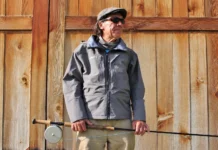
Paul Bowen is a lifelong fly angler, fly tier, guide, conservation volunteer, and educator based in eastern Idaho. He has spent more than 50 years fishing and tying flies throughout the region, with extensive experience on the South Fork of the Snake River, Henrys Lake, Hebgen Lake, and numerous other stillwaters.
Over the years, Paul has guided for respected operations including Henry’s Fork Anglers and South Fork Outfitters while remaining deeply involved with Fly Fishers International, Trout Unlimited, and the Snake River Cutthroats chapter. He continues to teach, tie flies, and participate in the Eastern Idaho Fly Tying Expo each year.
Paul has been involved with fly tying demonstrations and educational events for decades, including Fly Fishers International conclaves and regional expos. This year’s Eastern Idaho Fly Tying Expo features his PMD emerger on the event pin, a fly based on the Quigley Cripple but modified with his own materials and design choices.
The expo combines fly tying, casting instruction, destination presentations, youth education, workshops, conservation fundraising, and vendor exhibits. It has grown significantly over the years and now attracts fly fishers from across the West.
One of the biggest themes throughout this conversation was Paul’s belief in UV materials. Fish can see further into the ultraviolet spectrum than humans can, and he has repeatedly found that UV-enhanced flies outperform otherwise identical patterns.
When Paul talks lakes, he’s referring to places like Henrys Lake, Hebgen Lake, Mackay Reservoir, Chesterfield Reservoir, Daniels Reservoir, and several smaller waters scattered across southern Idaho. Many of these fisheries offer excellent chironomid, leech, and scud fishing throughout the season.
Unlike river fishing, Paul’s stillwater approach centers on depth control. He commonly fishes three flies under an indicator, allowing him to cover multiple feeding zones simultaneously while targeting suspended trout.
One of Paul’s most effective stillwater systems starts with a fish finder. Rather than guessing where trout are holding, he locates fish and adjusts his indicator depth accordingly.
Once anchored with both bow and stern anchors, he methodically covers water around the boat, casting indicators out and slowly retrieving them back. If fish are suspended at ten feet, that’s where the flies stay.
The Thin Mint Leech remains one of Paul’s confidence patterns. While it resembles a Woolly Bugger, it incorporates three distinct tail colors including mint green, black, and brown, creating a unique profile that trout often respond to.
Paul frequently modifies established fly patterns rather than inventing entirely new ones. His theory is simple: heavily pressured fish see the same flies repeatedly. Sometimes a subtle color change, a different bead, or a small amount of UV material is enough to trigger strikes from fish that have already rejected more familiar offerings.
Paul’s fly fishing journey started in the late 1970s after buying an inexpensive fly rod and a handful of flies from a sporting goods store. A friend convinced him to skip the large flies he was accustomed to using with spinning gear and instead start with size 16 patterns. That advice changed everything.
Not long afterward, he received a beginner fly-tying kit and taught himself to tie Adams flies using a simple instructional book. Decades later, he’s still tying, teaching, and experimenting with new patterns.
The Eastern Idaho Fly Tying Expo helps support these efforts by generating funds for restoration materials, fencing projects, and ongoing fisheries work. The event also continues a tradition that traces back to the early Fly Fishers International conclaves that helped shape fly fishing education across North America.
When asked to narrow it down, Paul pointed anglers toward a handful of proven stillwater patterns that consistently produce on waters throughout the region. If you’re planning a trip to Henrys Lake, Hebgen, Mackay, or the surrounding reservoirs, these flies belong in your box.
Episode Transcript
WFS 944b Transcript 00:00:00 Dave: You can fish the same water for years and still feel like you’re only scratching the surface, because sometimes the difference isn’t where you’re fishing, it’s how you’re looking at what’s right in front of you. Today, we’re sitting down with a guy who’s been tying flies and fishing for over fifty years, right in the heart of eastern Idaho, with a South fork of the snake basically in his backyard. And when someone spent that much time on the water and at the vice, you start to see the little things that most people miss. This is the Traveled podcast series where we bring you the best places to fish in the West, and the stories of how this region became what it is today. In this episode, Paul Bowen is here and he’s going to break down everything from Stillwater tactics to fly design and what’s really happening behind some of the most effective patterns out there. Today, you’re going to hear his three fly chironomid setup he uses for covering multiple depths at once. What makes the Thin Mint Leech so effective, and how he modifies it to meet his needs? How you’ve material can trigger fish in ways that we don’t fully understand yet, And what’s really going on at the Eastern Idaho Fly Tying Expo and why it’s more than just tying flies. This episode is presented by Visit Idaho and Yellowstone Teton Territory, home to some of the most diverse and wild trout waters in the West. All right, let’s get into it. Here he is, Paul Bowen. How you doing, Paul? 00:01:19 Paul: Very good. It’s a good day. 00:01:20 Dave: Yeah, yeah. It’s great to have you on the show here. We’re going to talk, uh, a little fly tying, a little fishing. We’re going to get into what you do out there and kind of the eastern Idaho area. We’re going to talk about the the expo that’s coming up, uh, the big fly tying expo, uh, East Idaho Expo. And so we’re going to kind of dig into all that. And I know Stillwater, we just had an episode, uh, Phil Roy, our lateral zone host, just did an episode on Henry’s Lake. So I’m sure you’re familiar with that, uh, you know, that lake, but, um, but take us back real quick on fly fishing. Have you been, uh, you’ve been doing tying in fishing for quite a while. 00:01:54 Paul: Yes. Uh, probably over fifty years. 00:01:59 Dave: That’s a good chunk. What is your home water now? Are you you’re in kind of the Rexburg area. What is the. Would you say is it more Stillwater or river fishing? 00:02:08 Paul: It’s plenty of both. I the South Fork of the snake River is in my backyard. 00:02:14 Dave: And then at the Tying Expo, which is coming up. Actually, this is coming up this weekend as we’re talking here. What are you going to be focusing on at this event? For people that show up and want to see, see you tie in. 00:02:29 Paul: Okay, I’m going to be tying two days both Friday and Saturday. On one day I will be doing a lake patterns Chironomids leeches the other day. This year we have a we have a pin that they give out each year at the expo, and there’s a fly on that. And my fly is a featured PMD merger. And that’s the artist rendition on the pin we’re giving out this year. 00:02:56 Dave: So there you go. Pmdd merger. And is that fly? I guess we can look up the pin. We’ll try to get a photo of that in the show notes. But is that something that you created a long time ago or more recently? 00:03:07 Paul: Uh, I’ve been fishing it for quite a few years. It’s a it’s not original to me. It’s a Quigley cripple that’s been highly modified because a lot of different, different materials, but the basic design is a Bob Quigley Quigley cripple. 00:03:23 Dave: Maybe you could describe that. What is the Quigley uh, that that was a pretty unique pattern. What? Describe that one a little bit. 00:03:29 Paul: Yeah. Bob, when he tied that, he tied it with, uh, a forward facing elk hair wing. And then he had a hackle right behind that with a small dubbing ball behind that. And the body was done with, uh, uh, just pheasant tail. And then it had a trailing shackles. Ellen trailing behind it. 00:03:51 Dave: Yeah, exactly. So and then your pattern. How is it different than that one? 00:03:56 Paul: It’s different that my long trailing chuck also has one strand of UV crystal flash in it. The body is a goose biot, kind of a rusty spinner color. And then that UV crystal flash is also wrapped over the top of that. So there’s a little purple UV highlight to that. That’s probably one of the things that’s most unique about it. Instead of instead of the elk hair wing, minus CDC. 00:04:22 Dave: Oh, and CDC. Okay. And what is the UV? Is that something? Describe that. What is the UV? There’s is that give it a different look under the water. 00:04:31 Paul: Yes. It’s, uh, I mean, I’m a big fan of UV stuff in flies for some reason. Well, fish can see into the UV spectrum and the ultraviolet spectrum further than we can as humans. And for some reason that UV seems to trigger and make a lot of difference. I’ve tied them both ways and the UV works the best, triple hint when the light hits it just right, you know? 00:04:56 Dave: Yeah. Is that UV? Is there a time of day or you know that that is going to work better? Or, you know, when you’re using UV type materials? 00:05:04 Paul: Well, usually efficient for PMD. So it’s kind of a ten to four o’clock pattern. Yeah. That’s when you’re fishing them. 00:05:11 Dave: Yeah. Ten to four. Okay. And on the lakes what are some of the common is, is Henry’s the big one out there that you’re fishing or are there. 00:05:18 Paul: Is probably the closest one to my house, but also Hebgen Lake there in Montana. And then we have some in southern Idaho down about a two hour drive from here. There are several other lakes are smaller lakes, Chesterfield, Daniels. Some people have heard of those, uh, treasure like that, and also Mackey, which would be out west. Mackey reservoirs, a place I spend a lot of time on. 00:05:44 Dave: Yeah. And there’s a bunch out there, right. If you if you go out there, there’s a ton of reservoirs out in that in that area. 00:05:49 Paul: Yeah. Like I say, down south, especially toward the Utah border. And there’s a lot of them. Most of them are small irrigation reservoirs, but they’re fish and fish really well. Mackey’s a larger reservoir. 00:06:01 Dave: And what about Chesterfield? I’ve heard of that one before. Is that a is that a small or big one? 00:06:05 Paul: Uh, it’d be a medium size. It’s not as big as Mackey, but it’s a lot bigger than Daniel’s or, uh, Treasure and Hawkins. 00:06:12 Dave: Nice. What? On your flight timing. When did you start doing the, um, the shows or when did you start getting. Was there a time where you kind of started getting serious, or was this like a slow evolution where you started doing the shows? 00:06:23 Paul: Oh gosh, it’s been a long time. I’m a life member of the was it the Federation of Fly Fishers? It’s now Fly Fishers International, and they used to have a conclave, a week long conclave every year. And I started tying for that. So I doing some programs there and I’d done that for well, since my kids were little tiny kids. Yeah. 00:06:46 Dave: That’s it’s been a while. 00:06:47 Paul: Thirty four years probably. 00:06:49 Dave: Okay, so you’ve been with FFI for like forty years. 00:06:52 Paul: Yeah. Or longer and Trout Unlimited as well. I’m a life member also to you. So. And what’s the connection with the Idaho Falls Club? We have a local FFI club here in Rexburg, but then the life members of both of those organizations. 00:07:08 Dave: Yeah. In Rexburg. So you have an FFI. And the difference between because we hear about FFI and to a lot, you know, they’re similar in some ways and they’re doing a lot of great stuff. Do you see a lot more similarities or differences between the two groups or in what you do with them? 00:07:23 Paul: A little difference in them. But basically the same objective is conservation oriented, you know, and, and education. And both of them do a lot of educational work. And just like the expo, that’s what it’s there to educate people in fly tying. There’s a lot of destination programs and there’s all kinds of commercial booths and that kind of stuff. So. 00:07:43 Dave: That’s right. Because the Idaho has grown a little bit over the years. Right. It feels I feel like it was it’s there’s more vendors now. Do you notice it when you sit out there? The difference between what it’s like now versus back in the old days. 00:07:54 Paul: Oh, absolutely. Rexburg, when I grew up, was a town of about, oh, probably eight thousand people. And now there’s twenty five, thirty zero zero zero plus. BYU Idaho is there. That’s got about another twenty six zero zero zero students to add on top of that. So it’s it’s got quite a bit bigger. Yes. 00:08:13 Dave: Oh yeah. Right. Yeah. So BYU-Idaho is in Rexburg. 00:08:17 Paul: Yes it is. 00:08:18 Dave: Oh okay. I didn’t know that. Yeah. Gotcha. 00:08:20 Paul: Idaho Falls has grown the same way. You know the Idaho National Laboratory, uh, out on the desert there really made Idaho Falls grow. So it’s it’s more than doubled in that same amount of time. Makes the streams more crowded. But that’s okay. 00:08:36 Dave: Does it? Yeah. Are you noticing that a little bit? The streams are a little bit more crowded than they used to be. 00:08:40 Paul: Yes. 00:08:41 Dave: Yeah. I guess that’s kind of everywhere. That’s just part of the part of the thing. And but at the show you are getting for sure. Like describe that a little bit. Like the show. Were you there last year in twenty twenty five? 00:08:52 Paul: Oh, yes. 00:08:52 Dave: What was that show like? How would you describe that? Do you come in there, you ty for a couple days, people come through. Maybe describe your experience at the show. 00:09:00 Paul: Well, the way it’s set up, there’s a lot of commercial booths around. It’s in a bigger event center. And then these tables are set up at any given time. There’s probably seventy five to one hundred tires tying. 00:09:14 Dave: Yeah, there’s a lot. 00:09:15 Paul: Of tables and there’s usually three shifts during the day. So you have three different time periods. And they then they change another tires. Along with that, there’s a lot of destination programs that people can go to, and there’s a fly tying theater, which is just a place where one tire sets for an hour and tie, specifically those kind of things. And workshops. There’s a lot of workshops. Some of them are done with casting all kinds of different types of fishing, fly fishing workshops, plus a lot of youth youth area where they take young kids and they can sit down and tie their first fly. And so it’s just a big educational thing. All the commercial stuff, right? 00:10:00 Dave: Right. And the profits to these go to the FFA. Is that how it works out there? 00:10:05 Paul: Actually this would be this is a two club. Well it’s a two and FFA both snicker cutthroat. But we do a lot of conservation projects. And the money goes to pay for the materials for fencing and styles stuff that we do you know. 00:10:20 Dave: Yeah. What are some of those things that you’re doing? So you’re out there doing some of the conservation work, or you guys do a meet ups and things like that out there in the area? 00:10:29 Paul: Yeah, we’ve the clubs have been ongoing. The snake River cutthroats have been doing a lot of work on tributary streams to the South Fork, uh, stream restoration projects. Of course, everybody kind of ends up with a roadside cleanup every year. And those are some of our biggest things. We’ve done some out towards salmon on some of the steelhead rivers out there, too. In conjunction with Forest Service. And but there’s it gets all over this air general area. There’s a lot of different projects that we do every year. 00:10:58 Dave: So basically conservation education and people that attend the show, that’s kind of, you know, what they’re going to be supporting all that, you know, the local populations of fish. And in that area, what is the, you know, again, at the show, we’re talking tanks. Let’s go to Stillwater’s a little bit. What are your go to Stillwater patterns for fishing? And would you say whether you’re fishing Chesterfield or Henry’s, you’re going to have the same patterns in your box? 00:11:23 Paul: Well, yes, my box is a bag that’s probably got two hundred dozen flies in it. 00:11:28 Dave: Oh, really? Yeah. 00:11:30 Paul: And when I go out on the river, I’ve got two. One with streamers and one with regular flies that are the same way. 00:11:36 Dave: So how do you fish? Uh, like, let’s take it to Chesterfield. What is your boat? Are you using a boat out there or what is your craft? 00:11:43 Paul: I use a boat. Yeah. For years I have a drift boat that I float the rivers with. And I just had a motor on that, that I do. But I just bought a new bass tractor. So I’m going to be using a little bigger boat this year, especially on the bigger lakes like Henry’s and Hebgen Lake. Uh, the little five horse motor doesn’t kick you around very fast. This bass tractor will work a lot better for just for the lake. It’s about the same size. 00:12:08 Dave: Yeah, you have a boat with a decent sized motor on it. 00:12:10 Paul: Yeah, it’s got a fifty horse motor on it, so it’ll move around. 00:12:14 Dave: Nice. Yeah, I’ve heard that on on especially Henry. Some of those like you can get some weather changes pretty quick in there. And the lake can get kind of kind of big. 00:12:21 Paul: Oh yes. And Mackie and Hebgen. 00:12:24 Dave: Yeah. All of them. 00:12:25 Paul: All. All three of them. Can you the smaller ones don’t get as big a waves, but they just get too nasty to cast, you know, when the wind comes up. 00:12:32 Dave: Oh, okay. Okay. And, and what is your selection of flies that you’re going to be tying at the show that you’d probably be using out there on these lakes. 00:12:39 Paul: I’m going to be doing some micro leeches and some full size leeches, and I’ll do several different chironomid patterns bloodworms some that I’ve come up with my own modifications. And there’s just a lot of the ones that are it’s Toronto ones are crazy. You know, if we fish, Toronto was under a strike indicator. Uh, specialized leader actually fished three flies usually. So I’m fishing three different depths. It’s a lot different than what you fish on a river. 00:13:05 Dave: Yeah. It is. So you’re doing indicator with the corona and three different chironomids. 00:13:10 Paul: Sometimes three chironomids. But I’ll probably have a leech of some kind, a balanced leech or a micro leech on the bottom. And then the other two upper flies would be different chironomid patterns or bloodworm and a common, maybe a scud. Now fish are sinking line with a with a stripped leech, and then maybe trail it with a scud behind it. You know, a lot of times. 00:13:32 Dave: Yeah, definitely. So if somebody was going to meet you at the show and when they’re going there, is it typically you’ve got, you know, hundreds of tires, and then people are just kind of filtering through, sitting down in front at a chair watching you tie. Is that kind of how it looks at the show? 00:13:46 Paul: That’s exactly what it’s like. Yes. 00:13:48 Dave: Yeah. And are you when you were, you were there. Are you tying a couple of patterns? Are you sitting there tying, filling your box while you’re there? 00:13:54 Paul: Oh, you give away a lot of flies. 00:13:57 Dave: Yeah. You do. 00:13:58 Paul: Awesome. For iron boxes. Maybe for display for them to look at too. But while I’m tying. But they’ll watch me tie a pattern. I’ll tie one pattern for maybe a half hour or forty five minutes, and then switch to a different pattern and just keep doing it. If I have any extras, I bring them home, put them in a box. Yeah, but a lot of them are just giving away. 00:14:16 Dave: Okay. And what is on that? Maybe take us to one of those chironomids you’re going to tie. What is that? Are these name patterns or just kind of your own creation, you know, variations of other patterns? 00:14:27 Paul: Um, I remember variations of other patterns. I use some that are well known, like, uh, Lance Egan’s Frenchie Pyramid. It’s a good pattern. I used his. You know, if you know Lance. 00:14:39 Dave: Yeah. Oh, yeah. The French, the Frenchy. 00:14:41 Paul: Yeah. It’s a it’s a Frenchy. Corona is what he calls it. This was the one pattern that I use, but it’s one of his patterns. Okay. All kinds of most of the balanced leaches and Chromas, even Bloodworms and Bloodworms was just red worm. But they’re tied in so many different variations. And I have probably five or six different variations and sizes in my box, you know, that I’m using. 00:15:06 Dave: So yeah. What is the tip on those? What’s your variation sizes? How small and how big are you going on? Say that Frenchy, that Lance’s pattern. 00:15:14 Paul: About a size fourteen and that Frenchy. I tie a lot of size fourteen Scud hooks. So they’re smaller, you know, body style on them that size, sometimes sixteen, sometimes down to eighteen, uh, sometimes a two x long curved shank hook, you know, which is a big one. They call those bombers in Canada, but we don’t have any of those great big midges here. Most of them are smaller. So they’re in that, uh, I’d say eighteen to twelve size mostly what we time. 00:15:46 Dave: Yeah, eighteen to twelve. That’s typical size. Okay. And those, those Canada, those bombers, those up there like bigger, bigger than a twelve up there. 00:15:54 Paul: Yes. They are, they come over ten. You know, they’re an inch, inch and a half long. So that’s a big midge. 00:16:00 Dave: Yeah. I see the, uh, fly fish food has a tutorial for the Frenchie aka Silver Lancer. Is that the one? The Stillwater Slayer? Yeah. 00:16:10 Paul: Yeah, that’s that’s the one I that’s effective. I don’t know why it doesn’t look like anything like a Corona, but but it works. Yeah. 00:16:16 Dave: And how is that one different than your typical Frenchie or is I guess the Frenchie has a lot of variations, but. 00:16:22 Paul: Oh, Frenchie is more of a nymph pattern for rivers and basically what it was designed for. But like I say, it works there and some of the patterns will work good in in Stillwater as well as the rivers. You know, it’s just some days fish just eat what they want to eat because it looks different. But things like the thin mint, you know, you’ve probably heard of the good leech pattern. I tie a lot of Thin Mints and trail scud behind it. And that’s again, that’s fished usually on a sinking line, but you can tie a I tie a micro version of that same basic idea, but it’s got different colored hackle and stuff on it. But it’s a small, I don’t know, about a size fourteen jig hook, you know, and so that’ll be right. That’ll be my point. Fly down below and it’ll take some days. They like it, some days they don’t. They like bead. Some days they like orange beads. You know, fish are fickle and no two days are the same. 00:17:19 Dave: Yeah. How do you decide on the bead color? Do you have a favorite color on the beads? 00:17:23 Paul: I think chartreuse is probably the most effective, but there are days when that fluorescent orange or a fluorescent pink or just a plain black one or brown one. They don’t. Don’t need that hot color. So just every day is a different day. Yeah. That’s why we keep fishing. If we ever get out, we quit doing it. 00:17:43 Dave: Exactly. Yeah. Just mix it up. Is that pretty much, you know, however you feel that day. I guess chartreuse, if that’s a good color, start there. And if that’s not working, switch it up on. And would you be doing that on the thin mint. Would you be putting different colors on that pattern? 00:17:56 Paul: Yeah, that same idea. I have those you know, it’s basically a woolly bugger, you know, thin mint, but it’s sometimes just a plain old black wooly buggers. A good leach pattern, you know, works fine. 00:18:07 Dave: Yeah. What makes it a thin mint? I’m looking at a pattern here. It’s got like a olive tail mixed with a brown marabou tail, and it looks like a woolly bugger. What makes it a thin mint versus a woolly bugger? 00:18:18 Paul: Well, it’s got three colors in it, actually. It’s got a mint green color, a black and brown. So there’s three colors stacked in the tail and then, uh, a peacock body, some kind of peacock herl. But I use peacock, uh, ice dub. A dubbing loop is what I use. It’s a little brighter. 00:18:38 Dave: Oh, you use Ice dub for the body instead of peacock? 00:18:41 Paul: Yeah, but in a dubbing loop, so it’s still tight. And then a hackle like you would a brown hackle. Brown hackle. Yeah. Just like you would a regular woolly bugger. 00:18:51 Dave: Yeah. Regular. Okay. I’ve heard um do you know, I mean you’ve I’m sure you know of Bill shish very well. 00:18:57 Paul: I know Bill very well. 00:18:58 Dave: Yeah. I’ve heard some good, uh, good things about Bill. He um I’ve heard that he ties a lot of his or some of his patterns of like these, these buggers type with a much shorter hackle wrapped, right. Instead of a normal size, it might be a couple sizes small. Do you find that that’s something you’ve seen or you do out there? 00:19:15 Paul: Yeah, I do, I do a lot of that, in fact, for Henry Lake. And I don’t know why. That’s why we where we use them the most. I’ve used them in Chesterfield like that or to Mackey. But actually it’s just, uh, like a size sixty fourteen or sixteen saddle hackle. So it’s not tapered, it just goes around and you use crystal chenille, you know, underneath it and they’ll tie it still basically a bugger pattern. But, uh, I don’t know why, but it works. Copper coloured ones work really good, you know, in the fall on Henry Lake. 00:19:45 Dave: Oh the copper do. 00:19:47 Paul: Yeah. 00:19:47 Dave: Nice. So that says so. Something about in that hackle. Why do you think that shorter hackle works better than say a longer. It’s your typical if it was a size you know. Twelve just having the normal twelve hackle versus say a six size sixteen hackle. Why do you think that shorter hackle works. 00:20:03 Paul: Can’t know. I just know that it does. 00:20:05 Dave: It does its bill. Yeah. Goes back to yeah. So and Bill bill actually wrote a book right on Henry’s Lake a while back. 00:20:11 Paul: Yeah. Bill’s got a little book on it. It’s a little outdated, but it’s still a great reference material. I’ve got one back in my flatiron room. 00:20:19 Dave: Yeah, that’s a good one. Okay. And then on the, um, the thin mint, do you know, I’m not sure who tied that. Is that a pattern? I feel like you’ve got the bugger, but you know, at what point does that bugger become the thin mint? What do you think? Or the thing that makes it so unique that it kind of gets its own name? 00:20:35 Paul: Mostly the three colors in the tail and that mint green. I think that’s what they named it as. It’s got that thin mint colored green in between the black and the brown. 00:20:46 Dave: Yeah. And do you know who tied that one? 00:20:48 Paul: I do not. I should know, but I don’t. It’s been around for a long time, though. 00:20:53 Dave: It’s been out for a while. 00:20:54 Paul: Yeah. 00:20:54 Dave: Okay. Yeah, we’ll look that up and see if we can track that down. But, um. But yeah, I think it’s cool. I think these little subtle changes in a fly, right can make a big difference. I feel like that’s, that’s kind of the fun thing about fly tying is you could take a pattern, you know, a standard pattern, you name the pattern and tweak a few things on it. And it can be, it might work, you know, better, right? I mean, how do you decide that when you’re sitting there tying, you’ve got maybe this pattern like the Frenchie or some known pattern that’s been fished. How do you decide what to tweak on it? You know what I mean? Like, like change of color here. Do you just is that just a free flowing kind of artistic type thing or what’s your take? 00:21:28 Paul: Yeah, that basically, but I modify, I tie a lot of standard patterns, but it’s my own version of it. And the reason I think that they work really well is because people go out and especially guides, you know, are using the same stuff out of the fly shop. Most fish see thousands of that pattern, sometimes a little subtle tweaking. It makes all the difference in the world because fish will eat it when they. And I’ve seen that before, I’m not going to eat that, you know? 00:21:56 Dave: Yeah. Right. It’s just a typical like a, a brown woolly bugger that’s just got a, you know, it’s just brown versus say a thin mint, which has definitely a different color. And peacock obviously makes it look flash different in the light. Or like you said, UV, UV materials can give it a different spin. Yeah, yeah. That’s cool. Okay, so we talked to the Thin Mint and then you mentioned the Chironomids. So is that going to be your focus on the first day as tying those kind of two styles. 00:22:22 Paul: Yes it is. I’m going to think I’ll do the coroner and the leeches first. I’d tie a coroner. That’s a. I’ve seen it before from people up in Canada, but it’s. Again, I’ve modified it a little bit, but it uses a, an antistatic bag material, abs, they call it for a base and then it’ll be ribbed with a, a brown or a wine colored wire. And then the uses a brown bead because most of Toronto woods have a brown head. And I put the gills, you know, on it, the white breathers on the front of it. But it’s, it’s done just a little bit different than that. But that’s most of the the general coroner, if you see pictures of most of them are not. They’re silvery color with a definite brown in the joint and the head’s usually brown. And then those, the wing pads are very dominant on them, and so are the gills on the fronts. You know, those breathers. So so I put those on there and it’s usually coated with a UV resin, but the abs is not as bright. But it’s not like silver flash, for instance. It’s too bright. It’s too, too much silver mylar. The abs is just a little bit crazy, you know, it just a little subdued and looks more like the naturals. 00:23:39 Dave: It does. Okay. And is that typically the fishing you’re fishing the chironomid with? Uh, under an indicator? Is that your typical, uh, way you do it? 00:23:49 Paul: Yeah, it’s under an indicator. 00:23:51 Dave: Yeah. Cool. Give us a little heads up on what else. So on day two, what are you going to be tying their day two? 00:23:57 Paul: I’m gonna be tying that most of the day. I’m just going to tie that, uh, emerger because that’s because that’s what the pin is. That’s what the logo is for this year. 00:24:06 Dave: Oh, okay. Yeah, yeah. And that’s the merger. That’s the Quigley cripple. Uh, variation. 00:24:11 Paul: Yes. I’ll probably try that for the three hours that I’m dying. Okay. Get a lot of those away because some people want the actual fly to go with their pen, you know? 00:24:20 Dave: Oh, sure. Sure. Yeah. You’re gonna be okay. And the Quigley crippled. Describe that again. Did you know it was Bob Quigley? Was he from that area? 00:24:27 Paul: No, I don’t know where Bob lived. Sure, but he’s a I know the type. You know, he tied all the things right. 00:24:33 Dave: He’s. He tied a few different patterns, including the the Quigley, I feel like is the one that’s kind of the most popular famous pattern. 00:24:40 Paul: It is. Yeah. It is. You know, Mike Lawson and Rene Hair. Those guys have modified it slightly to to they call it the Henry’s Fork cripple. But it’s, you know, very similar to what I do. But I was doing it before they were so. 00:24:55 Dave: Oh, okay. 00:24:56 Paul: It’s the same kind of a thing. We all just. This area has a plethora of some of the finest tires in the world, you know, names like Renee Harrop and Mike Lawson and those guys, you know, they’re they’re all right in this area. 00:25:13 Dave: Yeah. That’s right. Yeah. Renee and Mike and. Yeah, lots. You got a ton of people. That’s the cool thing about it. It feels like that part of the state really. The region is just it’s loaded right with. And I guess that’s because you’ve got these famous waters right, right out your back door. You mentioned the South Fork of the snake and all those areas. 00:25:29 Paul: That’s a lot of it. You know, Mike and Renee are both good friends of mine. I’ve known them for many years. And in fact, I guided for part time for Mike for a while. 00:25:37 Dave: Oh you did? 00:25:38 Paul: Yeah, I was I retired from the body Shop after forty years and I was selling real estate. He called and said, well, can’t you take some extra trips when I. Yeah. Overbooked. And I said, well, I’ll try. It just depends. So they call me the night before and it depended on what my schedule was for the next day. If I could go, I’d go cover. I did the first three or four years with him and. 00:25:58 Dave: Were you fishing the like the South Fork or. 00:26:01 Paul: At the time he was running South Fork Lodge and Henry’s Fork Anglers. And so I was licensed on both of those rivers. It just depended on which shop needed me. And I’d go to either one nameplate because I could just put on those screws on the side of my drift boat, because you had to have to have a name on it, and it’d either be Southfork Outfitters or Henry’s Fork Anglers, just because everyone I was guiding for that day. 00:26:25 Dave: There’s a place where every bend in the river feels like it’s been waiting for you. Where the air smells of sage and pine and trout rise beneath the shadows of the Tetons. That places visit Idaho’s Yellowstone Teton Territory, the heartbeat of fly fishing in the West. From the legendary Henrys Fork to the winding South Fork of the snake. This is where big fish and bigger stories live. You’ll find endless waters welcoming towns and locals who still wave as you drive by with drift boat in tow. This is your starting point for world class fly fishing, year round recreation, and wild country that stays with you long after you’ve packed up your gear. Check it out right now that’s wet fly swing dot com slash Teton T e t o n. Visit Idaho for yourself and support this podcast while you go. How would you like the guiding? Did you enjoy the guiding? 00:27:16 Paul: Yeah, it was fun to try for a while. I wouldn’t want to make a living than doing it. I like to fish too much. I can’t imagine babysitting every day for all summer long. 00:27:25 Dave: Yeah, yeah. It’s hard. It’s a hard job. The guiding is not. I mean, those guides are amazing because they’re they’re doing something that’s not easy to do, right? 00:27:33 Paul: There’s a lot of hard work. Yes it is. 00:27:36 Dave: Yeah. You’re dealing with a lot of different personalities. And then you got to then you got this thing. You got to try to get fish on the line, which is not always a for sure thing, especially I feel like lake fishing. Henry’s I we hear about this, how tough it can be. It can also be really great. Do you feel like overall, what is the. Are there are the lakes out there pretty. Would you say challenging to fish or you know, is Henry’s the most challenging. 00:27:59 Paul: Henry’s has not fished well the last couple of years and I don’t know exactly why. I don’t know when they do their gills sets, you know, to do their populations. The populations have been off for the last two or three years. And so there’s something going on there and they’re still, you know, there’s fishing games, working at it hard, trying to figure it out and try to compensate for it. But it’s just it’s been a tough place to fish the last two or three years. Hebgen is pretty much the same always, but it’s a big lake. There’s a lot of water. It’s, uh, it’s probably two or three times the size of Henry’s Lake. 00:28:35 Dave: Yep, yep. And, and the patterns that we were talking about, the I mean, that’s the thing about the lake fishing. It seems like it’s not on the patterns. It’s not rocket science, you know? Do you think the pattern how critical do you think the pattern is to success out there on these lakes? I guess if the highly pressured lakes, it probably is really important because you’re you’re making yourself stand out. What’s your take on that? 00:28:54 Paul: Well, again, it depends on the day. Yeah. This pattern work today probably won’t work tomorrow. You’re probably gonna have to find a different one. 00:29:03 Dave: Right, right. 00:29:04 Paul: But generally speaking, there’s a few patterns that they’ll, you know, you can always catch a few fish on You just fish until you, you know, you give it fifteen twenty minutes. If you don’t have any luck, you change. 00:29:15 Dave: Yeah. Is that how you do it? So you give it fifteen twenty. And if you’re not getting and you know, because you know the techniques you’re doing work. So if it’s not happening, either the fish aren’t there or it’s the fly. And how do you know that? How do you determine whether maybe you’re in a place where the fish aren’t there versus say, the pattern’s not working. 00:29:31 Paul: Called a fish finder. 00:29:32 Dave: Oh, there you go. That’s it. Yeah. So you use a lot of tech. Is that the key. 00:29:37 Paul: Find the fish in depth so you can see well these fish are holding ten feet. You know you might be in twenty feet of water but the fish are all ten feet. So you set that indicator. So you’re fishing ten feet. It kind of gives you an advantage that way. 00:29:52 Dave: Yeah it does. Do you guys do more? Are you anchoring up in spots or are you like drifting? What are you doing when you’re doing the indicator. 00:29:59 Paul: Indicator on a lake? I’m anchored on both ends of the boat to the wind move you around. You’re not spinning. So you got a front and a rear anchor, and then you just. Usually I cast out with an indicator. I’ll cast it out thirty, forty feet maybe, and then just very slowly walk it back, you know, the hand would retrieve or something or twitch it a little bit and then let it set you just so you’re covering a lot of water, a lot of area that you’re coming back. If stripping, you know, you’re casting way out there and then letting it sink and then you’re stripping it back, you know, either slow with different retrieve speeds and until you find what they like that day, right? 00:30:39 Dave: So anchor up. So you got your two anchors. Well, first you find you have your fish finder. So you find a spot that, you know, there are fish there, anchor up, and then you just sit there on that spot and you kind of find, try to get to the right depth. And then basically, yeah, you can fan cast your way and cover all the water around you. Is that how you do it? 00:30:56 Paul: Yes. Yeah, three hundred and sixty degrees. You know, you’re working your way around and both sides of the boat. And, and if you’re there for, you’ve been there for an hour or an hour and a half, and you still haven’t caught any fish, even though there’s fish there. You go find some happy fish somewhere, right? Because sometimes they’re just not willing to eat. 00:31:16 Dave: Right, exactly. And are most of the lakes out there, you know, boat wise? Are they decent size? So most people have motors out on these boats or on the lakes. 00:31:24 Paul: Yes. But there’s a lot of people in just kick boats. And a lot of the kick boats have got electric trolling motors on them now to get them out there, you know. 00:31:32 Dave: Yeah. Is it busy at the boat ramps occasionally. If you get out there, you know, like you hear some of these rivers in Montana where there’s a lineup of boats putting in. Is it kind of like that at some of these lakes? 00:31:43 Paul: Not very often, but, uh, that you have to wait. You know, you might be there might be three of you trying to put in at once. And so you have to wait for somebody else to get in here. Well, you’re all breaking up. 00:31:53 Dave: That’s it. Not too bad. What about your, um, just going back. It sounds like, you know, pretty much everybody out there. What was it like? You know, when you take us back to that, when you got started, did you start tying flies or fly fishing first? Do you remember that? 00:32:06 Paul: I was actually living down in Pocatello at the time when I decided I wanted to take up fly fishing, and I had a had a friend that run the sporting goods department at Montgomery Ward’s, and I knew he’d done a little bit. So I bought a bargain reel. I think I got eight dollars for the rod and reel and bought a line. I didn’t know anything about matching. I didn’t know anything about what I was doing. I just it was a level line. And who knows whether it was even the right size or not. But I went to him and I says, what flies do I need? And I says, I want to buy just a dozen flies. And he says, well, what size do you want? And I says, well, I don’t know, sixes or so I that’s what I use for spinner and worm, you know. All right. He says, well, he says, I wouldn’t do that. He says, if I were you, I’d tie you some small ones. And I says, well, what size do I want? And he says, sixteen and I says, sixteen. How can I ever hold a fish on a sixteen, right? But anyway, I listened to what he said and I bought twelve flies, twelve different patterns, some three pound test leader and I headed out to the Portneuf and went fishing. You did? I wasn’t a very good instructor back then. Yeah. 00:33:19 Dave: But you got started, right? 00:33:21 Paul: I started and I and the flies were, I thought, expensive back then. They were probably thirty five cents or something like that, you know, but. 00:33:29 Dave: Yeah. 00:33:29 Paul: Right. But anyhow, I, my, I had a friend that I fished with and our wives bought us a, a cheap fly tying kit for Christmas that year. And I had a brother in law that lived in Idaho Falls who was a, I knew was a fly tyer and fly fisherman. I went and talked to him. He gave me a little book. It’s called A Tie Your Own Flies. It was just a little thin paperback book, and I went and taught myself how to tie a size sixteen Adams. 00:33:56 Dave: There you go. 00:33:57 Paul: It wasn’t long before you taught me some of those, too. And so I work in a little commercial thing in and out of my house, you know. 00:34:06 Dave: Oh, you did, so you did some commercial. 00:34:08 Paul: So I, but I started with size sixteen flies. Well, that teaches you a lot. That stuff’s a lot harder to tie than size six wooly buggers, you know. 00:34:19 Dave: Yeah, right. 00:34:20 Paul: And I did that cause I was down in nineteen seventy seven. I moved back to Rexburg, back where I was from right after the Teton Dam broke and had the flood. And I tied a little bit commercially here off and on for different people. And it’s just just evolved. I’ve just been doing it for over fifty years. Like I say, that was a long time ago when I started. 00:34:41 Dave: Yeah, that was that was fifty. Yeah, that was definitely a nice chunk of time ago. And so the Teton Dam, yeah, we’ve heard about that was Rexburg, the town that got kind of wiped out from the dam. 00:34:50 Paul: Yes. 00:34:51 Dave: Oh, wow. Yeah. So your hometown where you grew up got wiped out. 00:34:54 Paul: Yeah. Like I said, I didn’t really grow up in town. I live about eight miles out of town, like I say, right on the banks of the South Fork of the snake River. In fact, I bought two acres of my dad’s farm and built a house on it so that I’m right back where I was born and raised. 00:35:07 Dave: Oh you did? Yeah, yeah. Gosh, yeah. That Teton Dam was quite a thing. And pretty much to this day, now it’s just been free flowing right since that nineteen seventy six time. 00:35:16 Paul: It has. There’s a lot of talk about putting it back in again now, but I don’t know how that’s going to happen. But maybe. 00:35:23 Dave: Yeah. It sounds like it’s a pretty cool river as it is free flowing. Is it one of the only free flowing streams kind of out there? Most of them have dams, right? 00:35:31 Paul: Yeah. All of them. I mean, the South Forks got the Palisades Dam on its huge Henrys forks, got Island Park Reservoir and Henrys Lake on it. But that’s at the very headwaters. And it’s so they are freestone streams. Henrys fork is kind of unique because it’s kind of it really is a huge spring Creek because there’s like the Buffalo River that flows into. It is entirely spring fed and. And Big Springs is the headwaters running into Highland Park Reservoir, and Henry’s Lake has a lot of springs, so it’s more of a hybrid Spring Creek and Freestone than it is a. Like the South Fork of the tree of a Freestone stream, you know, would be classified as such. But the fall River is one that you probably never heard of. But it’s no. There is one small lake way up almost on the park boundary of Yellowstone Park. It’s just a small lake, but it’s just for irrigation storage and it doesn’t affect the flows much. So it’s pretty much a natural flow. River. The Teton, of course, is all natural flow as it goes. 00:36:39 Dave: Yeah. What was the, uh, you’ve done some workshops at the expo. Is that something you’re doing this year? 00:36:44 Paul: I’m not this year. Last year I worked my tail off. 00:36:47 Dave: What did you do last year? What was the workshop you did last year? 00:36:50 Paul: Yeah, it was just fly tying workshop I think we created in that two hour period. We probably did eight or ten patterns. You know, they were intermediate to advanced tires. They weren’t beginners. 00:37:02 Dave: Okay. So the difference on the workshop is you have the like just for those that haven’t been there, you’ve got all these tires that are out there on the floor where you’ve got hundreds of tires, they can come and just sit down next to you. And then you have workshops which are more focused for like, uh, you know, intermediate level where you sit down with people and show them how to tie these flies. How is it? What’s the difference between like that workshop and just sitting on the floor and watching people? 00:37:24 Paul: Well, it’s a classroom for one thing. They’ve got their own fly tying vise. They’re usually everything’s projected up on a screen behind me or a big TV or screen, so they can see what I’m doing. And we just take them step by step through the flies. I mean, that’s one way that’s done. I’ve done them on just South Fork patterns before, and there’s several different types of workshops like that. People do all kinds of things like that. And so they’re that way. Some of them are two days long. Some of them are only just half a day, you know. Four hours. And that’s the type of workshops. That’s what I did last year, was just it was just multiple patterns. But we went through, I think, eight or ten patterns in the four hours that we went through. And some of them get it and some of them was over their head and but they we got the idea. 00:38:12 Dave: Yeah, they got the idea. Exactly. Yeah. I’m looking at the, uh, some of the workshops here this year. It looks like there’s a women’s workshop, a tying workshop, which sounds like that’s what you were doing. They got, um, Scott Sanchez who will be there. He’s been on the podcast, um, and then some casting workshops, fishing. Yeah. So I mean, pretty much a little bit of everything. Even Brian O’Keefe’s going to be there doing a photography session. 00:38:32 Paul: So yeah, we do a lot of also besides the workshops, there are destination programs. They’re usually an hour long. You know, it used to be Scott goes, now it’s all, you know, done with computers and projectors, but it’s, uh, and I’ve done a lot of those over the years, both at the conclaves and yeah. 00:38:50 Dave: So like fishing, like if you wanted to fish Henrys Lake, you would do a session on. Here’s what it’s going to, what it’s going to be like. 00:38:57 Paul: Or the South Fork or you’re doing, you know, just there’s, there’s all kinds of destination stuff, people coming in for this because it’s a pretty big event. Now they come in from there might be they may have a fly shop or a outfitting business in Alaska and they’ll come to Alaska program or, you know, there’s anyway that type of destination stuff. And people can go to those. There’s, there’s, they change every hour, you know, all through the day they can do. That’s the other things they can do. At the expo, Moscow kind of came out of the Federation of Fly Fishers used to have that conclave. It was for a week. And they that’s what they do there. And all the commercial stuff and tires and all these programs and work and stuff. And, uh, t u group there in Idaho Falls decided they’d do. And in fact, I think they called it a mini conclave. The first one they did. And instead, rather than an expo. But it really originated in Idaho Falls. That’s where it all started. 00:39:55 Dave: Oh, it did like the first one. 00:39:57 Paul: First one? Yeah. And now there’s a lot of, you know, one in Utah, there’s one in Boise or, you know, they’re all over now that they’re doing this same thing patterned after what we did there. 00:40:07 Dave: Oh, right. So East Idaho, so the east and it’s the thirtieth annual this year. So if you if you go back, that puts us into what does that put us into the whatever the date there thirty years ago. But it’s. So the first one was back in thirty years. Is that kind of where we’re at? That was the first conclave or before that? 00:40:24 Paul: That’s correct. Well, the conclaves have been going on before that with the Federation of Fly Fishers, but they were a week long and where this was just a one or two day event, you know, these X. So it’s a mini version of what the conclave used. 00:40:38 Dave: I see. And the conclave. So you went to some of those conclaves. 00:40:41 Paul: Yes. I did programs there and I tied flies. And yeah, I used to take my family to it Trying to teach my wife how to fly fish. And you know, you can only do so much tracing your own life and that Lee and Joan Wolf put on a school for three days. And I put her in that, and that really polished her off. She can handle a fly rod real well now. 00:41:02 Dave: Oh, she went to she went to Joan’s school. 00:41:04 Paul: Yeah. I put her in that school. 00:41:05 Dave: Oh, cool. 00:41:06 Paul: But my kids in what they call the youth conclaves all week long, they were doing little classes on entomology and fly tying and casting on the streams, and they’d seen some bugs and, you know, so that’s how my kids grew up too, was going to those each year. 00:41:22 Dave: Yeah. And then the conclaves, what happened? They just slowly they phased out and went to these expos. Is that kind of was that a quick transition there? 00:41:29 Paul: I think it kind of did. It slowly phased out. I can’t I kind of quit going to them because I’d been so many years and and they were good because they brought in big names. You know, I, I met Lefty Cray and Gary Borger and Gary Lafontaine and Mel Krieger. 00:41:44 Dave: And where were those conclaves at? 00:41:46 Paul: Those were held all over the West. Yellowstone was where lots of them were done. Then they moved the headquarters to Livingston, Montana, and it was done there. And then as the thing got bigger and bigger, they started doing them all over the United States. They’d do them back east one year, and then they’d do them out west another year. And. But they’ve completely quit doing those now. They, they do a lot of stuff with the certified casting casters. In fact, I was one of the first two certified flight instructor flight instructors. 00:42:16 Dave: Oh no kidding. 00:42:17 Paul: The FFA program, me and a lady guide from Montana were the only two that passed the class. Mel Krieger that class that year. 00:42:26 Dave: Oh really? 00:42:27 Paul: We were the two that passed, and the rest of them had to come back another year to work on it a little bit. 00:42:32 Dave: Yeah. What year was that when you passed your class there? 00:42:35 Paul: Yeah, I can’t remember. 00:42:36 Dave: Somewhere in the eighties. 00:42:37 Paul: A long time ago. That was when the conclave was in Kalispell, Montana that year. 00:42:42 Dave: Okay. Kalispell. Right. 00:42:44 Paul: That’s where I was at. now there was a board of governors in these different. They were all over in the United States teaching these things. But that’s where they’d go. So these kind of shows and stuff. Certified people and you could go do it. And it’s expanded now into the Spey casting and and there’s master series and stuff. I, I don’t, I quit paying the dues every year and to certify. 00:43:06 Dave: Yeah. 00:43:07 Paul: The idea was that it was like a golf pro. They get people so that everybody was teaching kind of the same type of thing. That was the idea behind it. So we were teaching hit and miss kind of stuff. But it was, you know, casting clinics over the years and stuff around here for our local club. 00:43:24 Dave: Yeah, it makes sense. And, and so now it’s pretty much the smaller events. 00:43:28 Paul: It’s kind of taken the place of the conclave. And like I say, the fly Fisher International doesn’t do that anymore. Don’t do those conclaves anymore. But it’s got to be a worldwide organization now. And they just do lots of different things. But their biggest thing right now, like I say, is these casting instructors and those kinds of things. 00:43:48 Dave: Yeah, that’s the big thing. Yeah. It feels like right now FFI is yeah, the casting certification is huge. And then they’re still doing lots of education and conservation, right? That’s a big part of it. But yeah, and that’s what when you go back to the Mountain American Center right here, the Idaho Fly Tying Expo, it’s like you said, it’s Trout Unlimited and FFI, it’s a co almost co-branded kind of event or it’s supporting both. 00:44:09 Paul: Yeah it is because they’re both of them. Like I said, your expert club is just FFI, but the Idaho Falls one is T u and FFI and I’m like members of t u and FFI. So like I belong to both of them automatically. 00:44:24 Dave: Yeah. You’re part of them. Yeah. You can’t get out, right? You’re a lifetime member. You’re in it. Well, let’s take it out here quick with our kind of our tips and tricks segment. And today we’re going to be focusing, as we mentioned, the East Idaho show. We’re going to hopefully get people fired up to attend if they’re out there. But it’s in Idaho Falls. So Rexburg, Idaho Falls, how far is that from you? From where you live there. 00:44:44 Paul: To just over twenty miles from Idaho Falls? 00:44:47 Dave: Yeah. Twenty miles. Okay. And do you find people are coming in just from the surrounding, you know, Idaho kind of the you get a mix of people coming from outside of Idaho there. 00:44:56 Paul: Yes. In fact, the tires will be on a. Utah to curb on the other side of the state. Boise. But sometimes from California. Yeah, we we have some big name tires that come in. Scott Sanchez of course, he’s out of Wyoming and out of Jackson area. And so, you know, Colorado and it’s it’s a big deal. 00:45:18 Dave: Yeah. It is. And like you said, it’s the first. I mean, this was what you’re saying is this East Idaho show is essentially a one of the first of these of its kind when it started. 00:45:28 Paul: Yeah, it was one of the first, if not the first one that was done on this smaller basis like that. Well, we did a conclave, an EF conclave in Idaho Falls one year. We sponsored the whole thing. 00:45:42 Dave: Yeah, and that’s the snake River. Snake River cutthroats is kind of your, uh, the nonprofit local chapter. 00:45:47 Paul: Yes. 00:45:48 Dave: Snake River cutthroats. Okay. And, uh. Well, we’ll have a link out to the. It looks like it’s s r c expo dot org. Um, and that’s, I guess, snake River cutthroats expo dot org. That’s it’s got everything updated. I can see that on the site. What are your. Let’s take it back to the flies as we go out and take it out of here. Give us a pattern. You know we’re going to be heading to fish that area this year. What are like maybe five patterns that you got to have to fish. You know, some of those lakes out in that area. 00:46:14 Paul: Lakes you’re going to want micro leeches as well as full size leeches and chironomids. 00:46:20 Dave: Yep. Any size like you’re saying twelve to eighteen. 00:46:23 Paul: Yeah. Twelve to eighteen sixteen and fourteen is probably the the most common. Bloodworms. You’ll want Scuds. You want that basic that’ll cover the lake stuff for the rivers. You know, you’re going to want to have your typical all your Pmdd patterns. You’re going to have green drakes, grey drakes, the big mayflies. We have those here and all kinds of streamers. You know, these big rivers out here, this big Western rivers are great for streamers fishing. 00:46:55 Dave: Do you do more of the streamer fishing on your rivers or more, or you mix up a little bit? 00:47:00 Paul: Uh, I’m going to be mixed up a little bit. I may start early in the morning with a streamer, and as the day warms up and the hatches start, then I’ll switch to dry flies or nymphs, and I’ve usually got three rods rigged up in the boat at the same time. So I just switch. 00:47:14 Dave: Right. And you got the new boat. So this is a brand new boat that you’re the first time you’ve used it out there. 00:47:19 Paul: Yeah, I used it just one day. I put it on the water, but the motor’s not broke in yet. So I’m planning to go again Thursday this week. So. 00:47:26 Dave: Oh cool. What was your boat before. So you had a drift boat before this. 00:47:29 Paul: Yeah, I drift boat that I used. I had another friend that had another boat with a thirty five horse. You know, I Faced with him a lot, but I just decided I’d try to get me a regular lake boat as well as the drift boat. 00:47:43 Dave: Yeah, and the lake boat that you got. Remind us again, what’s the style or the company? 00:47:47 Paul: It’s, uh, call it a bass tracker then by Bass Pro. 00:47:51 Dave: Okay. Yeah. So it’s got a little cut. It’s got a V cut in it and it’s kind of made for lakes. 00:47:57 Paul: It’s great. Flat bottom. 00:47:59 Dave: Does it have a standing platform on it so you can cast off of the deck. 00:48:03 Paul: Yeah. Both front and rear. 00:48:04 Dave: Oh it’s got. Yeah I see it now. Okay. Yeah. It looks sweet. Wow. And it’s got like a what, eighteen foot or sixteen foot. 00:48:10 Paul: It’s sixteen. That’s the exact same size as my drift boat basically as far as the side. 00:48:15 Dave: But oh it is just different. It looks way. I mean I’m a drift boat guy, so I know, I know drift boats are great because they’re kind of the they’re like the Swiss Army knife of boats, right? They can kind of do everything. But you know, specializing this. I could see it’s got the decks. It’s got a seat up there. I mean, you’re comfortable, you’re up on top. You can see better. I mean, when you fish out of it, you must be excited because this is probably going to be a game changer, having better visibility and all that stuff. Or what are your thoughts? Or is it more comfort? 00:48:41 Paul: Yeah it is. It’s like I say, the one I’ve been fishing. My friend has the one that I’ve been using, but it’s a, it’s a V haul, but it’s all open and it has a, you know, flat areas to where you can stand to fish. So it’s just a modified version. It’s a little higher platform than. 00:48:57 Dave: Yeah, yours is decked over. You have those, you have the higher decks right where you’re sitting. Cool. Well, that’s, that’s the boat. We always love a little boat talk. What about your vice? What do you tie in there? Do you tie with one vice? Have you been using the same vice for years? 00:49:09 Paul: Well, yeah, I have three vices, but what’s your. 00:49:12 Dave: What are you using at the show? 00:49:14 Paul: Regal vice, when I’m tying great big streamers. Because nothing that holds a hook like a Regal Vice, it just does. But I tie most of the time on a barracuda. 00:49:25 Dave: Is that the name of the brand, or is that a style? 00:49:27 Paul: Uh, it’s one of the models of it. 00:49:29 Dave: It’s a oh, of a yeah, I see it. Yeah. Dynacin the Dynacin barracuda. 00:49:33 Paul: Yeah. now I’m brain dead here this morning. 00:49:35 Dave: Yeah. No, we got it. 00:49:37 Paul: A seventy seven year old man, you know, his memory’s not as good as it used to do. 00:49:40 Dave: That’s right. No, I have a Danny King. Those are my two two Diana King and Regal. But, yeah, Diana Kings are great. So you got you got that. And then, um. And then what about the show when you go out there, are you, uh, are you going up tie in for the day? I guess it’s just a two day event. So you arrive, you tie Friday. Is it Friday and Saturday? Is that typically how it works? 00:49:56 Paul: Yes, it’ll be Friday and Saturday. And I think I’ve got a I think there’s four sessions during the day. And so it’s the mid or the late morning session. So like like ten to one or two or something like that. 00:50:08 Dave: Okay. And what about if we were going to be attending the show, we were going to be looking for some dinner in the evening. Do you have any recommendations on where we’d go out there in that area? Is there some good restaurants? 00:50:18 Paul: Yeah, there’s some very good restaurants. Idaho Falls has a plethora of restaurants of all types and sizes. The banquet is Saturday night. If you can get tickets for the banquet, that’s. 00:50:28 Dave: Oh, the bank, the banquet at the show. At the event. 00:50:31 Paul: At the event? Yeah. 00:50:32 Dave: That’s what you’d recommend. Yeah. Get tickets for the banquet. 00:50:35 Paul: I’m eating. That’d be good. And then you can get in on the auction items. And that’s the other thing. During the day, there’ll be a lot of silent auction stuff and people can do besides the commercial booths, you can do stuff like that all day long. 00:50:48 Dave: Amazing. It sounds like a great event. I’m excited. Are you are you planning on continuing to go? Uh, you know, in upcoming years as well? 00:50:56 Paul: Yeah, probably for foreseeable future. I think of the thirty years I think I’ve only missed like twice or three times. 00:51:04 Dave: That’s cool. 00:51:05 Paul: I saw the first one. 00:51:07 Dave: Yeah. What is it when you go there, what do you love most about these. Going to these tying these just the event in general. What do you love about them. 00:51:14 Paul: A lot of us seeing a lot of people that you know, you only see there, you got acquainted with them and they come back year after year and make those acquaintances. Those are fun. And it’s always good to see the new equipment, you know, that comes out and there’s a casting pond, you can try a new rod, whatever you want to do. That’s my thing of it. You know, I do it all. Sit down. And, you know, I’ve never met anybody I couldn’t learn something from yet. So it’s good to sit down in front of a tire and watch him and pick up another technique or two. 00:51:41 Dave: And definitely, yeah, lots of good tire. And there’s going to be a lot of the we’ve had quite a few of them on the podcast, but there’ll be a mix of people tie in from not just for that area, right? Like you said, there’ll be tying patterns from all over the region. 00:51:54 Paul: Oh, yeah. There are you may have people trying Atlantic salmon flies, you know, for flight and, and watch them do that. There’s there’s everything you can imagine. 00:52:05 Dave: Yeah, it’s all there. Cool. Well, this has been this has been great. Paul. We’ll send everybody out to, um, we mentioned it before s r c expo dot org. And, uh, and they can take a look and connect with you there at the show and, and all the other great tires. So we’re excited for this. I appreciate your time, Paul, and we’ll look forward to hopefully meeting you in person and see you at the show. 00:52:25 Paul: Okay. Very good. Thank you. 00:52:28 Dave: I hope you enjoyed that one. If you want to connect, uh, with the fly tying Expo, you can go to Expo dot com. And better yet, put on the calendar for March and plan on attending. You can see Paul in person and some of the other great fly tyers that have been at the show that are going to be there this year. So please do that and mark your calendar for March and, uh, and check it out. Snake River cutthroats, the Expo. It’s a good one. I want to let you know that you can check in with me anytime. Send me an email Dave at web dot com. I always love to hear from either new listeners or people I haven’t connected with in a while. Let me know you heard this podcast. Would love to hear if it was helpful. And I want to thank you again for tuning in today. And we’re going to get out of here. I hope you get a chance to explore some new waters and experience that road less traveled. We’ll talk to you then.
This episode is a reminder that even after fifty years on the water, there is always something new to learn. Whether it’s a small material change, a new chironomid variation, or a conversation with another fly tier, the pursuit never really ends.
If you’re interested in stillwater fly fishing, fly design, or connecting with some of the best fly tiers in the West, this conversation with Paul Bowen offers plenty of ideas to take back to your own waters.