There are plenty of lakes where you can catch trout. Then there are lakes that challenge you to think differently every time you launch the boat. Henry’s Lake is one of those places, and that’s exactly why this Henry’s Lake Stillwater School is so exciting. With Phil Rowley and Darren Huntsman leading the way, this episode dives into the strategies that help anglers unlock not just one lake, but any stillwater they fish.
Henry’s Lake has long been known for producing some of the biggest trout in the West. From giant cutthroat-rainbow hybrids to brook trout and Yellowstone cutthroat, this shallow, fertile lake offers endless opportunities and endless puzzles to solve.
In this conversation, we break down seasonal fish behavior, water temperature, fly lines, retrieve strategies, and the lessons anglers can take home to their local waters.
Phil Rowley is one of the most respected stillwater educators in fly fishing. Through guiding, schools, hosted trips, writing, television appearances, and his work with The New Fly Fisher, Phil has helped countless anglers become more effective lake fishermen.
Darren Huntsman is a longtime Henry’s Lake expert whose local knowledge comes from decades spent studying the fishery. His ability to interpret seasonal changes and solve daily fishing puzzles has made him one of the most trusted stillwater anglers on the lake.
Together, they bring a combination of global experience and local expertise that makes the Henry’s Lake Stillwater School unique.
Henry’s Lake is a unique fishery because nearly the entire lake functions as productive trout habitat. With an average depth of roughly 12 feet and a maximum depth around 22 feet, fish have access to food almost everywhere they go. The lake supports:
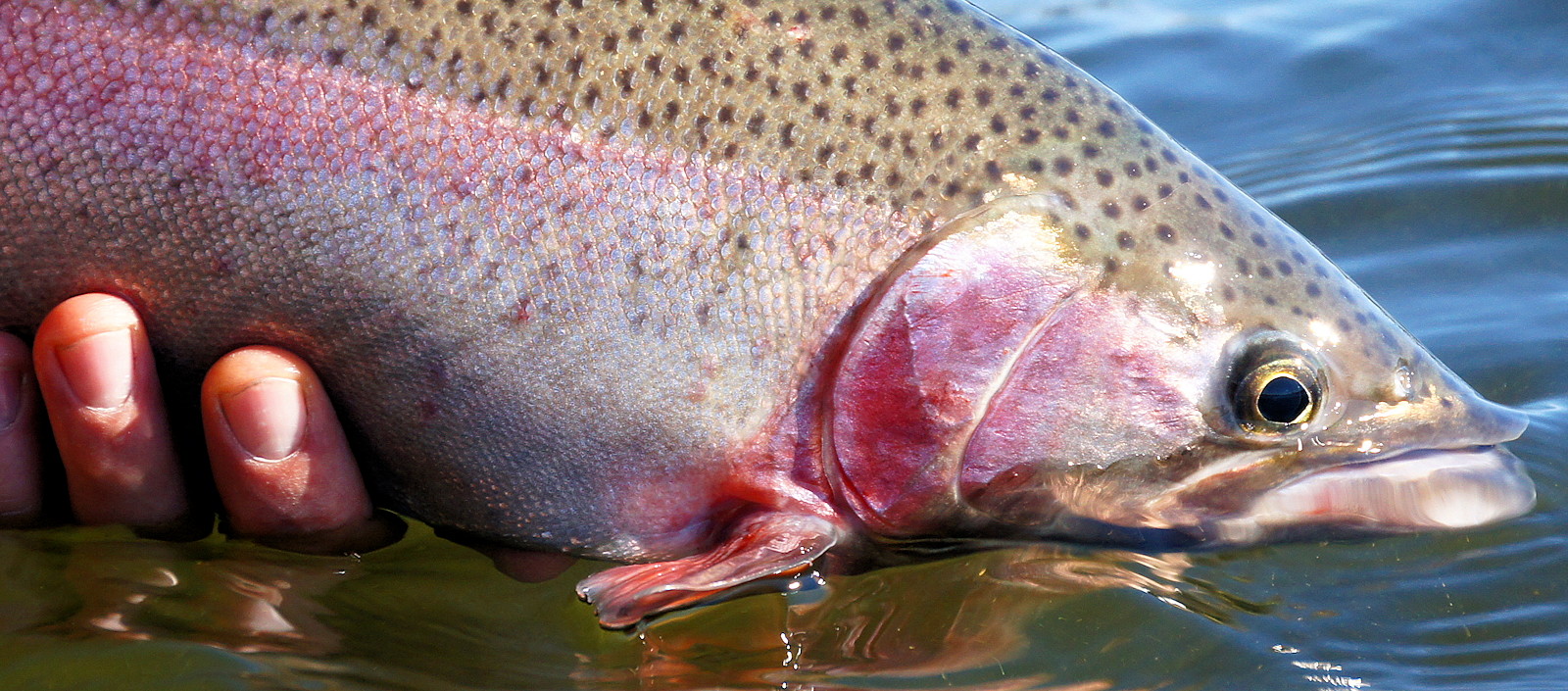
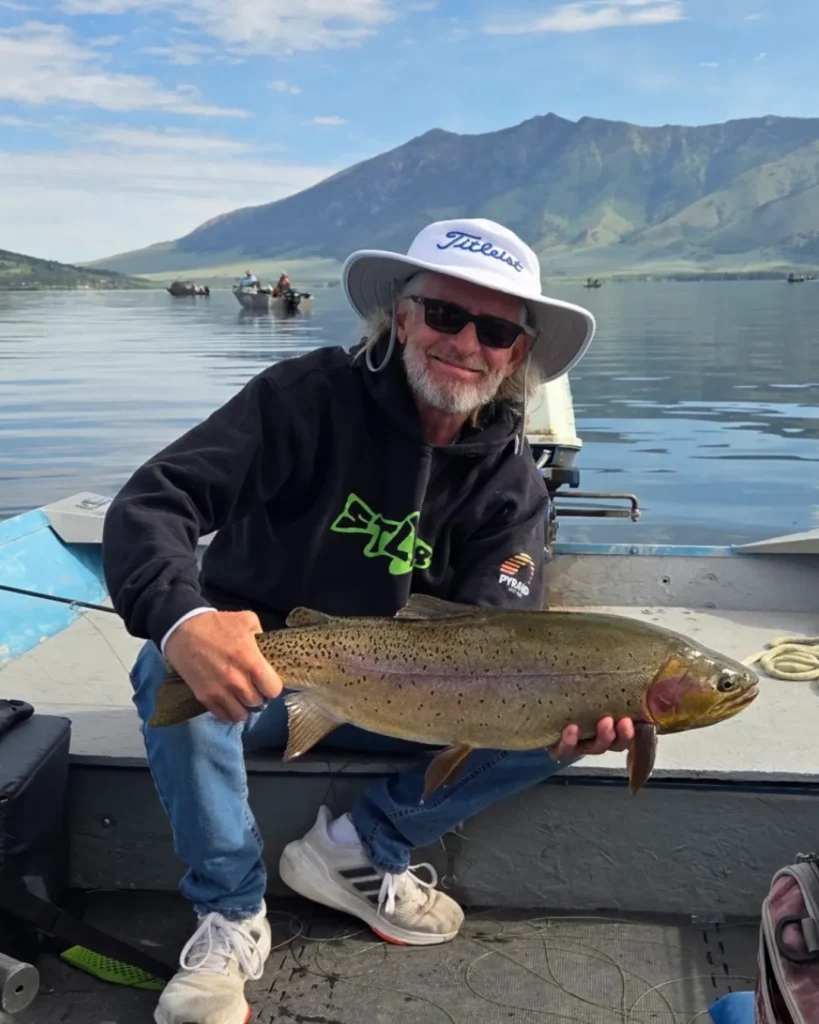
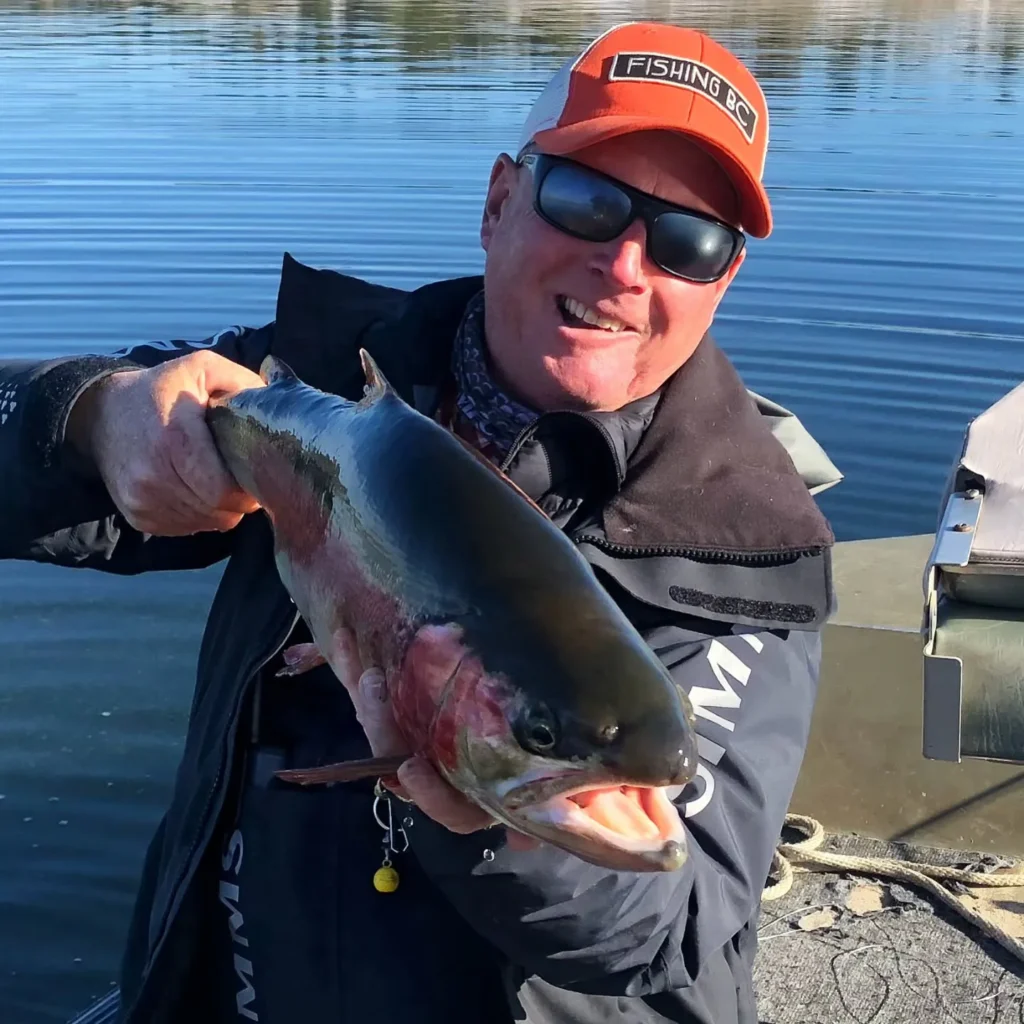
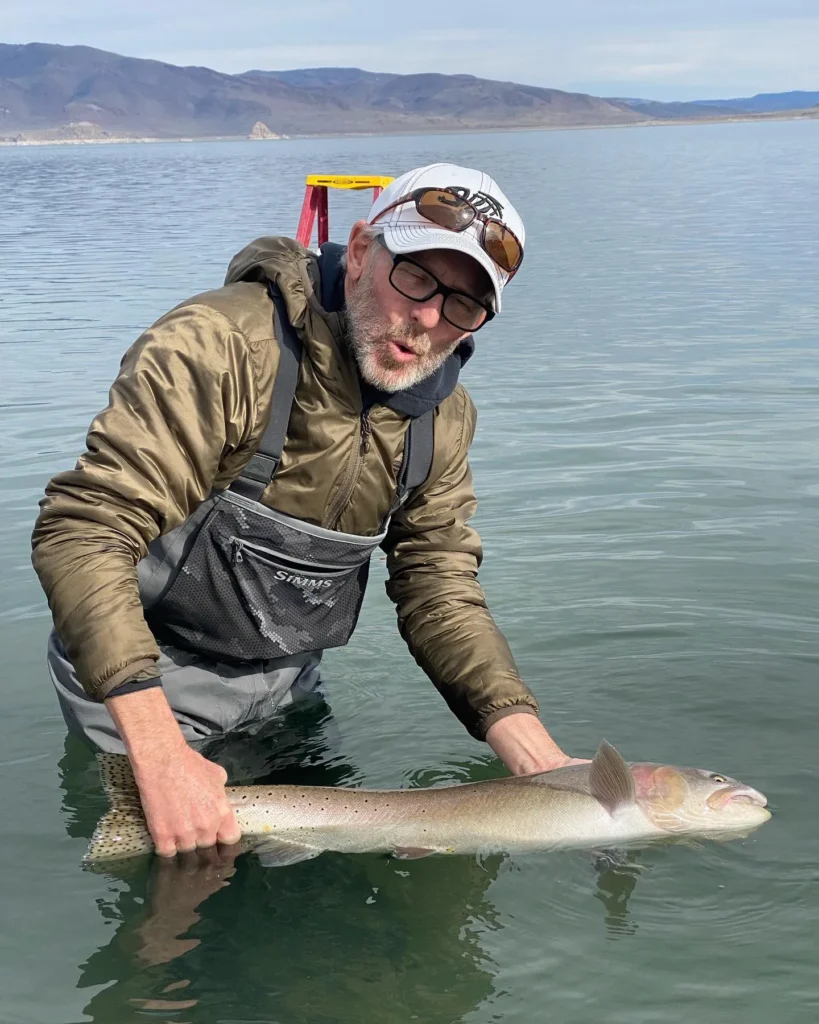
Those hybrid trout are famous for reaching double-digit sizes. Darren noted that fish over seven pounds have already been showing up this season, with several fish reaching the ten-pound mark.
One of the biggest themes throughout this episode is that the school is not about memorizing one lake. The goal is learning how to approach any stillwater and quickly solve the puzzle. Phil explains that the strategies they teach can be applied almost anywhere, regardless of whether you’re fishing Idaho, British Columbia, or your local lake.
The school also provides direct access to Darren’s decades of local knowledge and Phil’s worldwide stillwater experience.
If Darren could check only one thing when launching the boat, it would be water temperature. It determines where fish hold, what they eat, and which techniques to start with. One key number kept coming up: 50°F
In spring, water temperatures moving above 50°F help trigger major insect hatches. In fall, temperatures dropping back through that range signal trout to begin aggressive feeding before winter.
During the school, anglers will learn how to use water temperature as a roadmap for finding productive water throughout the day.
The school takes place during one of Darren’s favorite periods of the season. As water temperatures cool, trout begin feeding heavily on:
The result is some of the most aggressive trout behavior of the year.
Another advantage is reduced predation pressure. Ospreys and pelicans begin leaving the area, allowing large trout to move into surprisingly shallow water with more confidence. This creates exciting opportunities to target trophy fish in only a few feet of water.
One of the most practical discussions in the episode centered on fly line selection. According to Darren, four lines will cover nearly every situation on Henry’s Lake:
Phil and Darren both emphasized the importance of the hover line, which sinks at approximately one inch per second and allows anglers to fish effectively over shallow weeds while maintaining precise depth control.
Phil uses midge tip lines in both shallow and deep-water scenarios, including chironomid fishing in depths exceeding twenty feet.
One of the most valuable lessons from this episode is how Phil and Darren approach trout behavior.
Get the fly to the fish first, then refine retrieve and fly selection.
Because Henry’s trout can become extremely selective, finding the exact fly pattern often becomes the critical piece of the puzzle. Small differences in size, color, or profile can completely change results. Examples included:
The lesson is simple: once fish tell you what they want, believe them.
Both Phil and Darren appreciate indicator fishing because it offers precise depth control and shortens the learning curve for newer anglers.
However, both anglers admit they personally love stripping flies.
As Darren puts it: “The tug is the drug.” Stripping flies allows anglers to actively cover water and trigger aggressive fish, especially during fall feeding periods.
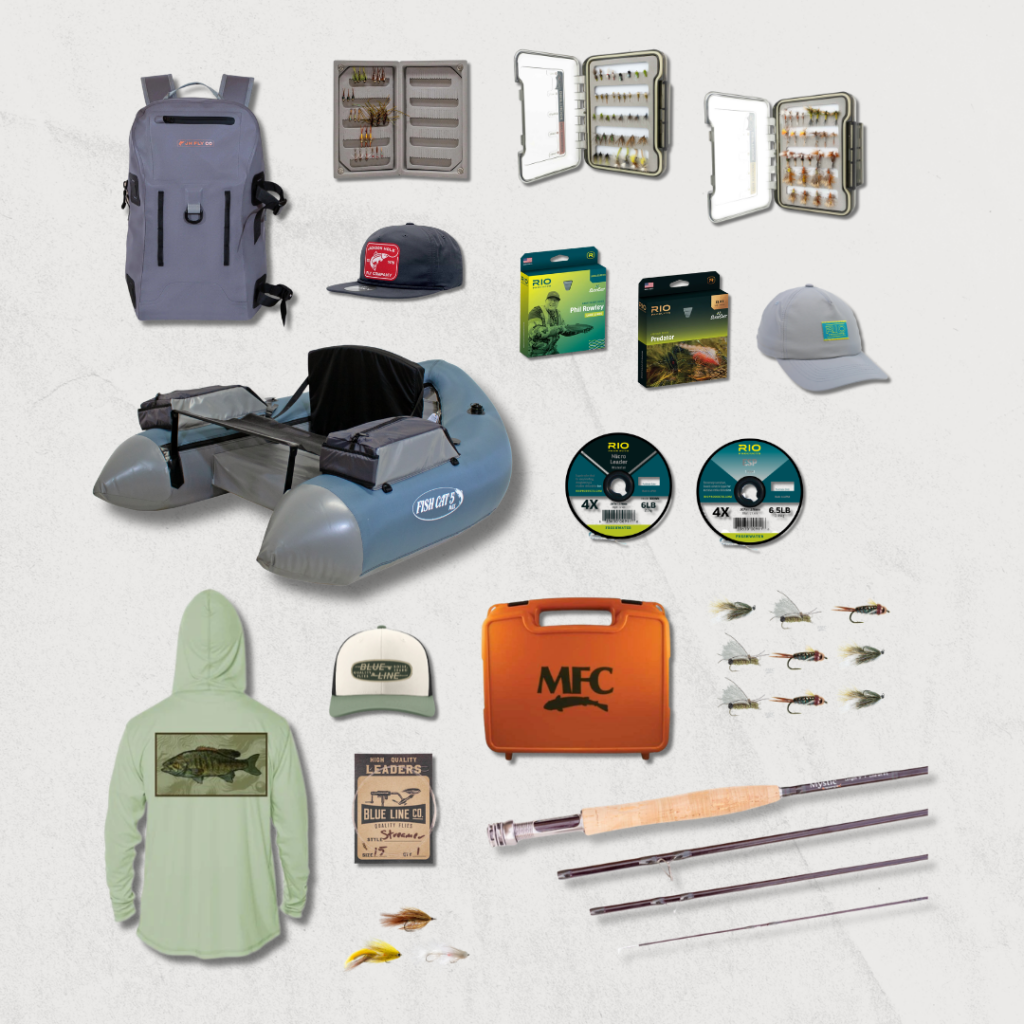
We have an ongoing giveaway where one lucky participant will win a premium stillwater gear package from our sponsors. The giveaway will run until July 1st. Click here to enter.
Episode Transcript
WFS 940 Transcript
00:00:00 Dave: The goal isn’t to learn one lake. The goal is learning how to unlock any lake you fish. Today we’re heading into Henry’s Lake with two of the best Stillwater anglers around, and we’re breaking down the strategies, seasonal patterns, line choices, and decision making processes that can help you solve the puzzle on lakes all around the country this year. Joining us today are Phil Roy and Darren Huntsman. Together, they’re going to give us a preview of the Henry’s Lake Stillwater School, and they’re going to be sharing the lessons they’ve learned from thousands of days on the water. This is the Traveled podcast series where we bring you the best places to fish in the West, and the stories of the people that made this region what it is today. In today’s episode, you’re going to learn why Henry’s Lake continues to produce some of the biggest trout in the West. We’re going to find out how water temperature drives trout behavior throughout the season. We’re going to discuss the fly line setup that both Phil and Darren rely on most often. We find out about DPR and DRP depth pattern retrieve. We’re going to talk about that a little bit today and why the fall may be the best time of the year to target Henry’s Lake’s largest fish. This episode is presented by Visit Idaho and Yellowstone Teton Territory, home to some of the most diverse and wild trout waters in the west. If you’d like to connect with Phil, you can find him at Phil Roy Flyfishing dot com and you can find Darren at Stillwater Skeeter on Instagram. All right, let’s get into it. Here we go. Phil Roy and Darren Huntsman, let’s get into it. How are you guys doing?
00:01:27 Darren: Doing good.
00:01:28 Phil: Doing good Dave. Doing good. Busy time of the year.
00:01:30 Dave: Yeah, yeah. We’re going to get an update from both of you guys. I know Phil, you’re out there. You’ve got. This is the only day we could track you down to, to get a podcast in. So I know you’re busy Darren. You as well. We’re, we’re going to be talking about Henry’s Lake today. And I know we’ve covered that before, but we’re going to go in depth and talk about the Stillwater school that we’re planning here with both of you guys and how this, uh, you know, this trip is going to be different maybe than some other ones out there around the country. But, uh, but first off, maybe let’s start with a little quick update since we had you on. I guess it’s been a while. Maybe. Darren, we could start with you. What’s been keeping you busy this year? Any changes in the last year for you and your your fishing?
00:02:08 Darren: Oh, there’s going to be so many changes for this year. The lake is on the upturn. Uh, in fact, the last couple of weeks Henry’s has been fishing as as well as any may I can remember in the last twenty years. So it it’s on fire. So anybody that wants to get out and do some fishing under an indicator. Yeah. We’re having some banner days and we’re getting some big fish, a lot of fish over seven pounds.
00:02:36 Dave: Wow. Okay. And so we’re going to talk about that. What makes Henry’s because I want to hear more on that. Like what’s going on now? Why, you know, maybe what’s happened in the last few years and what’s going on now. But but before we get there, Phil, give us an update on you. I know you’re a busy man. You’ve got stuff going on. What’s the update for you? If you could give folks heads up?
00:02:54 Phil: Yeah, it is busy. I’m right in the middle of my sort of spring, early summer school and trip season. I just finished in May. I was in the province of British Columbia. Uh, I do two schools there with Brian Chan each year, one at Corbett Lake Lodge. Just finished another one at, um, Ruddock’s Ranch, uh, both located in British Columbia. On for a few days. Uh, Friday I fly to Iceland for the first time to, uh, visit a lodge there. So I will be there chasing Arctic char and brown trout. One of the things they’d like me to do is check out, uh, and help them with a lake that’s full of big brown trout. So I hate those. I hate those kind of assignments.
00:03:34 Dave: Really?
00:03:35 Phil: Yeah. And then and then, uh, you know, I was inquiring about flies and, uh, they said chironomid. So I was like, oh, okay. That sounds. I’ve heard about those bugs. I think they’re pretty cool. So yeah, doing that, uh, I get back for a day and then I fly into, uh, fortress Lake, uh, wilderness retreat, which is a trophy brook trout destination nestled amongst the Canadian Rockies. You. Helicopter in there for a week long chironomid clinic there. Then I come out and I’m home for a few days to do laundry, repack, maybe tie a few more bugs, and then I’m off to BC for two back to back Stillwater schools at Stoney Lake Lodge with Iron Bow fly fishing. As a Calgary based fly shop, I’ve been doing Stillwater schools with them for the past four or five years now, and they’ve been really good. So the crime and fishing out there at that time of the year is really good. July, I’m home for the most part, doing, you know, got to charge up the family account again with my wife. And then August, the first two weeks of August, I’ll be doing two hosted trips at Northern Rockies Adventures up in northeastern BC, some spectacular daily flights we do based out of Muncho Lake to all the remote lakes in that area for trout, bull trout, lake trout, grayling, rainbows. Do some rainbow fishing on rivers and lakes, and they have some huge trophy pike lakes up there that are not too well known, all in crystal clear, pristine water. It’s pretty cool. And then September again is another couple of Stillwater schools in British Columbia, one again at Corbett Lake Lodge with Brian, and then another one at, uh, up at caribou in the Cariboo region of the province. Um, it’s about northwest of Kamloops by an hour or two, working with Lone Butte Sporting Adventures. And then I come home, I think I’m home in October, probably do a little bit of guiding. And then early November, I’ve got a week long trip to Eastlake, uh, Paradise Lodge for bonefish, Tarpon permit, Snook, small group we take there. I think we have still a couple of spaces left. So by the time this airs, if anybody’s interested, they can let me know. And then I’m home for about ten days after that. And then I do my annual trips to Argentina, a week at the Golden Dorado River cruiser chasing Golden Dorado, and then head on to Jurassic Lake at Estancia Laguna Verde. And then I’m home for Christmas and then show season starts. So that’s pretty well the rest of my year.
00:06:01 Dave: It sounds like you’re, uh, it sounds like you’re out more than you’re at home with, with that sort of schedule.
00:06:06 Phil: Uh, that’s the way my wife sees it. Yes.
00:06:09 Dave: Yeah. That’s right. Amazing. Well, I want to hear on, you know, because Henry’s like you talked about a bunch of amazing places around the world, you know? But Henry’s Lake, I feel like, you know, is one of those places that has something special. Maybe you guys can describe that. You’ve both fished it, obviously. Darren. And this is like your home water. Talk about what you think. First off, this Stillwater school we’re doing here, how this might be a little bit different or how this, you know, why is Henry’s Lake the place that we should be doing this?
00:06:38 Darren: Well, number one, uh, you won’t find a prettier lake to fish. Uh, there’s a lot of times I’ll get frustrated, or, you know, if the fishing’s slow. I have to sit down and just look around, you know, be in the moment, get myself back to to realize that I’m fishing in one of the prettiest places there is. And at on top of that are the fish. Henry’s has got three species of trout. We’ve got a brook trout, a which they supplement with Triploids. We’ve also got still some wild fish in the lake. Uh, we’ve got, uh, wild Yellowstone cutthroat. And then we’ve got, uh, what we all seek. And that’s the, the cutthroat rainbow hybrid. And they’re all triploid. And so all they want to do is eat and they can get to some big sizes. Yeah. We’ve seen, we’ve seen several fish in the double digits already this year. So yeah, this year is looking really good. But that’s, that’s the number one reason people come up here is the fish.
00:07:37 Dave: Yeah. The big fish. And Phil you’ve you’ve been there before. How does this lake um, put it in place with everything else you’re covering around, around the country you mentioned.
00:07:46 Phil: Well it’s definitely, definitely up there within the top ten list on my personal list anyway. Um, I can remember, I think what was that book? Darren. Fly Rods, float tubes and other essays by Marv Taylor. Yeah, I remember that book when I was just, uh, you know, uh, a sponge. Well, I’m still a sponge for knowledge, but a sponge for knowledge on on lakes back then, and grabbing every Stillwater book I could find. And there wasn’t too many out back then. So reading that one and that sort of lit my fire and just the stories of Henry’s Lake, the large fish there, the diversity of species like you mentioned, Darren, those big brookies, the Yellowstone cuts to keep you busy. And then the chance of, uh, one of those huge hybrids. And I’ve had a I was with you, Darren, last fall on me. I was fortunate enough to be with you. And I got one around nine, just over nine pounds. And when I filmed with the new fly Fisher, uh, the first time I fished on Henry’s Lake, I got one. We believe it was around thirteen. So yeah. And it’s it’s a neat lake because it’s just. It reminds me of a couple lakes up in British Columbia, one called Tonka. It’s very shallow, somewhat large and very, very productive. So that gives the the perfect climate for fish to get big. There’s lots of things for them to eat. Um, but the challenge is, is because that water is so big, they can roam almost anywhere. The, you know, there’s not a lot of other Stillwater lakes have a lot of could have a lot of deep water areas that the fish don’t feeding fish don’t frequent that much. And it makes them a little more predictable. That doesn’t make them any easier, just gives you a better idea of where to anchor yourself or place yourself. Um, but, um, Henry’s they can scatter anywhere and that makes it fun and challenging. And as Darren alluded to, the, the lake sits in that confluence of those three valleys. So some days you’re, you’re caught gawking just looking around and, you know, remembering one of the primary reasons we, we fly fish is just to go sit in some of these beautiful places trout live.
00:09:42 Darren: Yeah. To just to add one more thing there. The fun thing about Henry’s is it’s the whole lake is almost a littoral zone.
00:09:50 Phil: Yeah, it’s a giant.
00:09:51 Darren: Deepest spot in the lake. When the lake is full is between twenty one and twenty two feet. So it’s not a deep lake at all? No. And the vast majority, it only averages about twelve feet. So, yeah, the food sources in this lake right now, the hatch is coming off and it’s I mean, it’s fine out on the lake. You know, you can brush them away from you if you get on shore, like where I camp. It’s just they are just. Yeah. And yeah, yeah, the fish are really on them right now. But the, the food in this lake is astounding. I mean, besides the cronides and the basics, like your your leeches, the lake is full of Scuds. In fact, that’s one of our problems is because there’s so many Scuds in the lake, it makes these fish real good table fare. And so we’re that’s that’s one of the problems we fight is, you know, before the weeds get going real good. We have a lot of hardware guys up here dragging stuff, and they’ve been pounding the big fish this spring so far. And it it hurts me. It’s like having your pet puppy at home and somebody walking in and wanting to kill and eat it. Yeah. So yeah, a lot of food. It’s a fly tyers Paradise because anybody that wants to match a hatch, goodness, you. Yeah. You anything you want to match, it’s here.
00:11:09 Phil: Yeah. I’ve seen you know as Darren talked about Scuds, leeches, baitfish, uh, damsels chironomids um you know.
00:11:18 Darren: Dragonflies, caddis.
00:11:20 Phil: It’s got it all there. Um, you know, it’s just. And that’s a function of its productivity because of that shallow littoral zone. Um, and that’s, uh, those shallow areas get bathed. A lot of sunlight down there stimulates weed growth. And that provides the homes for all these food sources to live in and these trout to roam through and graze at their at their leisure almost. And that makes it challenging both trying to find them because they can be anywhere. And then when you find them getting your fly into some of those areas, you know, Darren, we were fishing last fall, right? And we were motoring out from the, the county launch on our way somewhere else. And we were running through what, four feet of water?
00:12:01 Darren: Yeah. It was real shallow.
00:12:02 Phil: And all of a sudden there was just these big hybrids scattering everywhere, like you’d see on a bonefish flat. Just there’s one, there’s one, there’s one. Darren and I are like, put the brakes on, put the brakes on. And, uh, you know, we anchored up in a or, or set up in a spot and just, you know, we were fishing four feet of water and two feet of that was weeds. So you had a little two foot corridor between the weed tops and the surface of the lake to get your flies in. And we were just Darren has a great little, uh, crystal buggery ties, a little root beer, brown one and an olive one. And we were just fishing those on hover lines or midge tip hovers just to slow the hover sinks at about one inch per second. For those who aren’t familiar with that and very, very slow sinking unweighted flies because, uh, it was a challenge to keep those flies out of the weeds. But if you did, things often got locked up and got crazy because we hook a fish of that size, you know, four to ten pounds in that skinny water, they tend to go a little crazy.
00:12:59 Darren: Yeah. That’s there’s nothing more fun in the fall. That skinny water is really fun because our predation, our ospreys leave, the pelicans leave. Uh, and so those bigger fish feel more confident that they can move in there without, you know, something eating them. And, uh, yeah, that can be really fun in the fall. That’s why we like to have the school there.
00:13:18 Dave: Yeah, exactly. That’s setting the stage very well because this is getting exciting to hear about this. So, so we’ve got some potential big fish that people can get into. And also, I think the school part of it is big, right? Because the idea being people come there and they can learn some techniques that they can apply to maybe some other areas as well. But talk about that, you guys, what is this school, what does that fill? You mentioned yourself. You do these things around the country, North America, well, really around the world now it sounds like. But what is the school? What are people going to expect to get at this school that we’re talking about here?
00:13:49 Phil: Well, they get to spend time with, uh, Darren and I, both on the water and on the shore. Um, we usually do some sort of daily seminars, uh, every day that covers, uh, techniques and tactics, not only for Henry’s lake, of course, to make their trip as successful as possible. But I think what’s key is you’ll find that a lot of the stuff we do is applicable to any Stillwater. You may have to make the odd tweak or change a little bit, but for the most part, um, the techniques I use are, uh, universal, which makes it very valuable. And you get the chance, as Darren said, to run into those big fish. Um, just sort of punctuates everything. And with Darren’s knowledge of the lake, you know, he’s been fishing it for longer than he probably wants to admit. Because if anything, like me, Darren, that means you know how old you are. Um, but, uh, he’s got that experience and knows it’s, it’s, uh, seasonal tendencies and, and fluctuations. And there’s one thing about when you visit an area is, you know, local, you can’t beat local knowledge. And anytime you can find a source such as Darren to, uh, get that local knowledge, it just adds an extra level of confidence because you’re not out there by yourself struggling and banging your head against the wall, trying to figure it out. Well, the guy next to you who you don’t know is doing really well. Um, we’re all out there together working on the same problem, um, debriefing all that stuff. And we’re providing this in a nice location, uh, with food, accommodation, everything you need, uh, place to store your boat, all of that. Um, so you can, um, you know, come back every night and we can, it’s just a total immersive experience, I guess might be the best way to phrase it.
00:15:30 Darren: And the thing I like about it too, Phil, is, you know, this is this will be our third school together, and the guys, even from our first school, still stay in touch with me. And the thing that tickles me is, in my opinion, Henry’s Lake is about as major league of a Stillwater in North America as you can get. These fish can be as finicky as any. Any. Henry’s fork, Madison River. South fork of the snake. Any of those fish that are real snooty and finicky. There are times when Henry’s. They can be the divas of all fish.
00:16:04 Phil: Yeah, yeah, that’s with public water. You get that, right? You know the. You know you. Darren and I both get the luxury of fishing private water from time to time, and it’s nice, um, you know, reduce crowds. A lot of times you’re the only persons on that lake, but, uh, those public fish keep you honest. Keep your skill level high, keep your brain constantly in gear. Um, because they’re, they can be as fickle as anything out there.
00:16:30 Darren: And what you learn at this school, I guarantee you you will take to any Stillwater and be able to use the same things that we teach and be successful in your home waters.
00:16:41 Phil: Yep. And that’s, I guess that’s one of the primary goals is to not, you know, it’s to me, it would be kind of, um, you know, be obviously the fish Henry’s and all that’s fun. But if, if you can’t take the skills and the tactics and the strategies and the thought processes to another body of water, that makes you pretty one dimensional. And I think that’s an important skill that we’re going to show everyone how you can take what we’re doing at that time of the year for those fish and go, this will work. You know, and I’m fortunate enough that I do get to Dave, you mentioned I get to travel a bit. You know, my theories are based on that because I often get put in those situations on new bodies of water. When I’m working with a new Fly Fisher television show, um, doing Stillwater stuff, it’s there’s the lake, go figure it out. And, and, you know, hopefully come out of there with a TV show that, uh, is enjoyable, educational and supports the show sponsors as far as locations and things like that. So sometimes it’s a bit of pressure, you know, a little nervous, a little nausea in the morning when you get out there. Oh, I hope I can pull all this off. That’s right. Um, so, you know, these are these are very transferable skills. You’re not going to come and, and have a one dimensional experience going, well, that’s great on Henry’s Lake. But what do I do on Lake X? Exactly the same thing. Or maybe this and a little bit of a tweak here for that and you’re off and running again.
00:17:59 Dave: Wow, I love this. I, I actually am reading a book. I think we all know Lee Wolfe, a famous Lee Wolfe. He, he fished, uh, Atlantic salmon was a big species. He chased and, and he, uh, mountain Waters resort is a place that I’m going to this year to fish the same basically lodge where he used to fish. But he talked about that in the book. He talked about how he produced all these movies for fly fishing. And it was amazing. Some of the stories, the fact that you had to produce, he was the A, B, C that series that ran back in the day, the the sportsman. Right. That that whole series.
00:18:30 Phil: American Sportsman wasn’t that with Curt Gowdy?
00:18:32 Dave: Yeah. Curt Gowdy exactly. He did a ton of those, but he talked about that, how he was on the spot. You know, they had to produce whatever it was. So Phil, you’re you’ve done that. What is that like? You know, is that a it sounds like that’s a pretty anxious part of your, your job.
00:18:46 Phil: It can be usually you’re set up for success because the location really wants to showcase what they’ve got. So the two episodes I filmed on Henry’s Lake were both picked, you know, prime times of the years to go. But you know, the second show we had was, was a little more challenging because the lake was low. Um, there was a lot of algae, uh, big algal blooms then, um, which, you know, made it, um, you know, algae. Some people just think it’s not pretty. I think Darren and I look at that and kind of rub our hands and go, that’s a sign of productivity, you know, but it can, you know, in certain situations, algae can create in the summer months, the summer kill situation when it’s you’ve got warm water that’s low in oxygen. And then you put algae in there and the algae starts to die. And it it then starts stripping the water of oxygen through the decomposition process. That can be a pretty, pretty toxic mix for trout. But, um, you know, Henry’s being spring fed sort of gets through all that. Um, and it’s just a good barometer of its productivity. So yeah, we, you know, you’ve got to scratch your head and think about, um, you know, areas that the fish are going to find food where they’re going to find comfort in the form of oxygen content. And with Henry’s weed growth, um, one of the byproducts during the daylight hours of weeds is photosynthesis. Well, photosynthesis occurs all the time, but it’s stripping carbon dioxide out of the water and replenishing it with oxygen, which is very beneficial for fish. Of course, the springs, the food sources, you know, and just understanding the times of the year and where fish go. And we’re going to cover all of that. And those those skills and knowledge is applicable to still waters everywhere.
00:20:22 Dave: This is great. Well, I think, uh, you guys mentioned it, you know, we kind of set the stage here. So Phil, you will be there. Obviously, we’ll be doing the school like similar things that you do around the country. Darren. You know this place better than anybody. So we’ve got a good shot to know what’s going on. And and I will also be there this year. So we’ll have a little bit of comic relief. So wet fly swing and the whole crew. So we’re going to bring this together into, I think a pretty special trip. But talk about the time of year that we’re going to be doing this because we’re kind of setting this up now. What do you guys think maybe describe kind of the time of year we’re going to be doing this, and then how that when you fish Henry’s and how that changes throughout the year.
00:20:59 Darren: Yeah. The fun thing about the fall is when our water temperatures start to drop and get down in the fifties. Again, these fish, that’s just a dinner bell for them. They know that the cold weather is coming. And, uh, yeah, they put their feed bib on and go to eating. And that’s, that’s fun. It’s, you know, you, you still have to find the fish. You still have to get the, you know, the, your bug in the right zone and you have to have the right bug if you figure that puzzle out. Yeah. It can. We’ve we’ve had some epic days in the fall, last fall. In fact, the last few falls have been just really, really good fishing.
00:21:35 Phil: Yeah. Because it’s what that fifth Darren mentioned that that fifty Fahrenheit temperature is a key temperature we use in lakes both in the spring. Once things get above fifty, it tends to be a hatch trigger for a lot of bugs to get moving. And Darren mentioned the chironomids that are currently coming off. That’s sort of their let’s go number. And then in the fall, once temperatures start to drop below that, that’s Mother Nature’s polite kick in the pants to a trout to strap that feed bag on and start feeding. And in the fall months, things are a little that doesn’t make them easier. I don’t want to make it sound easier, but the food sources are often a lot less complicated. They’re. They’re feeding on scuds, immature damsels, leeches, baitfish that are present there. The chub, they’re targets of opportunity there. I call them bread and butter food sources. They’re just there all the time. And those fish are those are high protein food items too. So, um, they’ve got a strap on that feed bag, build up those fat reserves. Um, that’s going to get them through that long, cold winter. Right. Darren.
00:22:35 Darren: That’s exactly one other thing about the fall is that’s generally when fish and game, uh, does the majority of their planning of our fry. And when they plant, you know, when they plant thousands and thousands and thousands of these little two and three inch fry, that is just I mean, that’s like dumping a bunch of French fry on a bunch of hungry people. They’re just they go to mowing on them. Yeah. And so yeah, last in fact, last fall, uh, when Phil was with me, there were, there were times of the day when you could fish a little baitfish imitation and just strip it as fast as you could. And yeah, we had a, we had a couple of fun mornings doing that.
00:23:15 Phil: Yeah. We did, we did. Yeah. Those, those fish are in shallow. Um, the water conditions are ideal. You know, they’re, you know, in that temperature range that their metabolism is functioning efficiently. So they’re eating, they’re digesting, packing on that fat. And then they got to go eat again, right? They’re just in this constant feed mode.
00:23:36 Darren: Yeah. That’s what their focus is on is, is feeding. Yeah. So that yeah, I love those fish.
00:23:41 Phil: Yeah. That process where they sterilize the fish right after conception is, um, you know, they, they don’t have that desire to reproduce because trout and lakes, uh, they need, uh, moving water and a lot of your best lakes are pretty landlocked. Henry’s is a little different because it is has influence from, from streams that come into it. Um, that also bring nutrients in from the surrounding area as well. That whole area where Darren is located is so productive, you know, with the right nutrient loads and, and all that good stuff that provides a perfect environment to grow big fish.
00:24:17 Dave: Wow, this is cool. Well, talk about that. So there’s quite a bit going here. You mentioned the triple eight. Explain that a little bit maybe. Let’s get into the techniques. And I know you guys have a lot of similarities, but maybe kind of riff on this a little bit the maybe some of the differences between, you know, first let’s talk about what we’re going to be doing there. You mentioned a few ideas, but talk about that and then how you guys differ in your techniques. Or do you guys think you’re more similar than different on, on your Stillwater fishing?
00:24:42 Phil: Probably more similar.
00:24:43 Darren: More similar.
00:24:44 Phil: Than different?
00:24:45 Darren: Very much so.
00:24:45 Phil: Yeah, not in an adversarial way. If Darren and I are out together and we’re doing, we’ll do different things just to find out what different thing might be working, right. It’s when you’re trying to find fish. That’s one of the things is if Darren’s doing stripping something, maybe I’ll hang something or vice versa. Um, or maybe we’ll fish different lines or different bugs, uh, just to try and narrow things down. And once something becomes consistent, you know, we talked about that example last fall where we were ended up fishing, you know, really slow sinking lines to keep an unweighted flies, to keep our flies out of the weeds in an area where the fish can find them and eat them.
00:25:23 Darren: I love to fish alone out of my boat, but I absolutely cherish the days that I have my son with me. Because not only is it fun to fish with him, but Justin is a good enough fisherman that when we put two and two together, now you’ve got two people trying to solve that puzzle. And you know when you solve the puzzle, it’s really fun. Henry’s can be a tough puzzle, and sometimes you can be in a, you know, on a marquee place on the lake and you’ve got a dozen boats around you. And if you’re the one that figures the puzzle out, then, uh, you’re the boat that’s catching fish. And, and of course, that’s, that’s always our goal is, is to figure out what that puzzle is, get the right bug, get the right depth, get the right presentation. And, you know, that’s what makes it so fun and rewarding.
00:26:10 Phil: Yeah, yeah. And you know, in the group setting we’re going to have with the school is if that turns on, we can all communicate with each other through little two way radios, or you’ve got decent cell service out there. Just send we send up a a group text and hey, we’re here in this kind of conditions, fishing this line with this retrieve and this bug. And you know, if you’re in a similar area, give that a try or come on over. Right.
00:26:35 Darren: You know, one of the fun things about Henry’s to Dave is it’s a very social fishery. There are a group of locals up here that have fished this lake for decades. And you know, when the fish are in a certain area and you get a group of guys out there in the mornings especially, it could be so calm and so quiet that, you know, you can talk in a normal voice and converse with some of these guys. Now that can be a double edged sword too. You have to, you know, if you figure out a bug, you’re whispering or you’re using code names for bugs and locations because everybody within two hundred yards can pretty much hear what you’re saying. Yeah. And, uh, you know, that’s a, that’s a unique feature on Stillwater. So sometimes it can get so quiet that you can learn a lot just by listening to what other people are saying. But yeah, that’s again, if you’re trying to keep that secret, you need to be a little bit more soft in your voice.
00:27:27 Phil: Yeah. It’s funny, I’ve, um, often had guiding or something. Somebody else was catching fish. I’ll just, you know, politely ask it. Just be quiet for a second and listen. Um, because even the most secretive anglers get swept up in the moment and all of a sudden are releasing information they probably don’t want. I’m not so worried about the fly sometimes because sometimes people use a name of a fly. Who knows what that means? Uh, but, uh, you know, if they’re talking about, you know, some insight as to the depth they’re fishing or how they’re moving those flies or the lines they’re using. And, you know, and sometimes you can just sit there with a, a pair of binoculars and just, you know, sort of check out and see line color and, you know, with a little bit of understanding of fly lines and fly line color and seeing if they have an indicator on or not. All this kind of stuff. It goes okay, I can see what they’re doing and then kind of mirror that to find success as well. So but again, with the school we’re doing, we are the, the group. So we’re going to be quite social and letting people know what’s what’s happening. Um, so everybody can enjoy that success as well.
00:28:30 Darren: We have a good time doing that too. Yeah.
00:28:33 Dave: This is good. Now I’m excited for this. I think this is going to be fun. I think you guys have explained what makes this pretty special, right? Being able to hang out this community, you know, approach to it where we’re all kind of in this and then again, taking away some tips and tricks and all that stuff, which is great. So but you mentioned Darren, the puzzle. I want to talk about that a little bit because that’s always the thing. And I know both of you guys have covered on this podcast about, you know, you go to a new lake, how do you fish it and all that stuff. And we’ll have some links to those episodes. But talk about that like Henry’s, what do you think we’re going to be doing there in the fall when we do this trip, will there be a bunch of different techniques that will all be open and to figure things out, talk about how we figure that puzzle out when we’re out there.
00:29:12 Darren: Absolutely. The fall is the fun time because like I mentioned before, we can have fish in two feet of water, you know, chasing bait fish and, uh, immature damsels and stuff like that. Or we can have fish out in a little bit of a deeper water, uh, depending on what our weather is. And then we’re hanging indicators or, uh, even doing some dangling and, and some of that stuff. So just like with any new lake that you go to, you’ve got to figure out, you know, where you’re going to start. Very first thing I do in the morning is when I turn my sonar on is find out what my water temperature is. That’s pretty much my key to where I’m going to go, what kind of technique I’m going to use, what bugs I’m going to start with. Generally speaking, we like to to start early in the morning, and that puzzle changes throughout the day. In the morning, those fish will eat big things and stripped fast. And as soon as the sun hits the water, that puzzle, it’s like somebody sweeps off the puzzle you just completed and emptied out a brand new box on you, and you got to try to figure it out again. But yeah, the fall is fun because like I said, the predation leaves. And so the shallow water opens up and a lot of the weeds are starting to to die. When the water gets colder, we lose about an inch a day on weed growth. So it can go down real fast. And it opens up a lot of opportunity in in some of the corners. One of my favorite places in the fall is the the southwest corner. It’s called Hope Creek. And all summer long it’s so weed choked, there’s little holes in it and a lot of the tubers or the pontoon guys will get out and, and be able to fish those those holes with their indicators. But in the fall, when those weeds start to recede, those fish come out of there and they haven’t seen a fly all season. And so they’re, I don’t want to say they’re more susceptible to being caught, but maybe they are. It’s yeah, that little corner could be really fun when the weeds start dying. Lots of opportunities in the fall.
00:31:03 Dave: So water temperature is the first thing getting out there, knowing what’s going on there. And, and by the fall, we’re talking about kind of that September period. Is that is that what we’re looking at here?
00:31:13 Darren: The last couple of days of September first few of October. October is a sleeper month on Henry’s because it’s almost opposite of the rest of the year on Henry’s. We love to have a little bit of breeze, a little bit of chop on the water, those calm days where it’s just glassy and gorgeous. Those aren’t our favorite days in the fall. It’s just the opposite. If the weather’s good, the fishing’s good. If the weather’s lousy, it’s not worth going out. I don’t know why it is with that, but that’s that’s just kind of one of our little facts.
00:31:43 Dave: That’s it. And is that typical Phil, you fished around around? We talked about all these other lakes. Is that typical where the weather is bad, fishing is bad.
00:31:51 Phil: Or you go to if you go to, um, you know, both Darren and I have fished um, uh, pyramid and the uglier it gets, the better it gets. But in most situations, I think probably what Darren’s talking about is in the fall, your angle of light is less. So Those fish are usually the worst conditions on our lake. On any lake are, you know, reasonably clear water, bright blue skies, and not a stitch of wind. Um, very, very challenging. You know, fish are very aware of their surroundings and are, they’re naturally a spooky critter to start with. And in those situations, your presentation techniques have to be pretty well spot on. If you drop a cast and slap the water. Um, you know, your tippet diameter starts to come into it. Um, you know, maybe when your indicator fishing it later in the year you use swivels and the shallow clear water, you don’t, because any little flash of that swivel will put a fish off. It’s just a more challenging, uh, environment to, uh, to present in. And it just keeps you on your toes. But in the fall months, as Darren’s alluded to, you’ve got low angle of the sun, so it’s not as much direct light. The fish are feel a little bit more safer and secure. They’ve still got that security of the weeds around them. They’re not dare mention they’re dying off, but they’re not. It doesn’t turn the lake into a, you know, a desert. There’s, you know, because you still want some weeds in there because if there’s too much weed die off in one area, that decomposition strips oxygen. The fish may not be there. You know, if a fish came to me, that’s one of the most important factors is what I call comfort is if fish can’t breathe properly, um, they’re probably less inclined to eat or do anything and be active. It’s the parable I use. The metaphor I use is if I was crazy enough to enter the Boston Marathon and actually did it without dying along the way, and Darren says, way to go, Phil, here’s a cheeseburger right after the the race, I’d be like, you know what, can I just get my body back in order and get my breathing right? As much as I love a good cheeseburger from Darren, especially if he’s paying. Yeah, I’m not going to be too keen to eat it. So again, as Darren alludes to that late fall, you know, that late September into October, uh, right through until freeze up fall fishing just seems to get better and better and better as the season gets closer and closer to winter. And a lot of times we joke it’s all about your pain threshold and how much cold can you stomach? How prepared are you? Some days you’re going out there looking like you’re going on a, you know, an Antarctic or Arctic expedition somewhere with all the clothes and hand warmers and layers. And, you know, as Darren alluded to, you could be starting the day in subzero conditions by eleven o’clock. You’re stripping everything off because the sun’s come up and the heat’s on and life is good again.
00:34:38 Dave: And is that Darren for you out there? Henry’s? Are you how long are you fishing that? Are you is it wrapping up there come November or what’s that look like?
00:34:46 Darren: Yeah, it all depends on how cold it gets. As soon as it gets really cold. You know, if I if I walk down and have to break ice away from the boat. Yeah. No, I that’s, that’s too cold for me. We got and luckily we’ve got a lot of, of reservoirs on lower elevations that we can go chase to. So yeah, but up until yeah, up until it gets too cold, this lake just yeah, the fish love to eat.
00:35:11 Phil: Yeah. And getting there. Darren. Sometimes the lake’s good, but you gotta come through some, some mountainous areas and and some risk of snow. And I’ve gone down there a couple times where I’ve had to tow my boat through a snowfall. Not one of my most fun experiences. And I can recall one time actually getting stuck in in the Island park area because where I come down through highway fifteen up to the Canadian border, that entire corridor was blanketed with snow. I think I recall Great Falls got forty inches of snow in a twenty four hour period. It was just crazy. And I just, you know, looked at that weather map and went, Phil’s not driving in that. So I got to stay an extra day or two and fish, which was all right, because the where Henry’s was located was, was nippy and cool and, but the snowfall, um, the mountains that surround it took it all. So it’d be the best of times and the worst of times.
00:36:03 Dave: Right on. Yeah. It’s amazing country out there. I’ve, uh, I’m excited to get back out there just because you guys are mentioning it. There’s the mountains and the, you know, and that whole area. Right. And you’ve got the Henrys Lake, which is part of the obviously the Henrys fork and everything there. But talk about again, we’re fishing in the fall. What is going to be do you guys think, can you say right now you pretty much bring all lines. Maybe talk about that a little bit on the gear. Is this something where we want to have everything ready to go here? Talk about what you guys think people should be ready for as far as the lines and techniques.
00:36:36 Darren: Yeah. The fun thing about Henrys is where it’s shallow a person basically, if you’ve got four lines, you can cover all your situations. On Henrys, you always want a floater for your indicator work. Sometimes we get those mornings where the fish are feeding right underneath the surface, and it’s not real breezy. You can still use a floater or, you know, a midge kit. Generally speaking, I like to use the Hubbard line when I’m doing shallow water work because it gets my line underneath the surface so that that wind doesn’t affect it at all. After your hover line, your clear intermediates or your camo intermediates that sink one and a half to two inches a second, they’re probably the most widely used line on the lake, because a lot of our fishing is in six to ten feet of water. So, you know, if you’re in that shallow, you don’t really need anything else. Sometimes I’ll use a hover in that kind of water. If I’m working something really slow, and I’ll go to a type three, which is the only other line you really need. You know, there’s always your specialty lines that you can fill your, your golf bag up with, as we like to use that analogy. Everybody can start with a basic set of clubs, but as soon as you get more proficient at it, then you want a line for each specific, uh, situation that you get into. So yeah, if you, if you have four basic lines, a floater, a hover, an intermediate and a type three. There’s no water on Henry’s that you can’t fish.
00:38:00 Phil: As Darren alluded to, that floater is great for indicator work, but it’s also a good line just fishing a a longer leader and a and a single fly and work. And, you know, maybe on a flat calm day, you may, you know, that stripping that floating line on the surface may create a wake that the fish become aware of. Uh, in those situations, you can go to that midge tip or the hover line, which Darren and I both love those lines. Sinks of one inch per second. Uh, just a great line for Henry’s Lake because you, you know, you can cast out and you just let it sink to 10s fifteen seconds. It’s only going to go down fifteen inches in theory, and you can cover all that water. So, so effectively, especially if they’re they’re not, as Darren alluded to, maybe early in the morning, they’re a little more aggressive and willing to chase. But as the sun comes up, their, uh, response to your flies may change and you may have to slow things down. So you’ve got a line that allows you to keep those that all of that under control. You know the misstep I like because if a fish rolls only that tip sections under the water and you can pick it up with minimal disturbance and cover the fish, sometimes with a something that’s under the water, you’ve got to strip it back in close to you, get it up, cycle it up with a roll pickup, and then hit your target. And you might miss the opportunity because the time it takes to go through all of that. So it just varies. Usually we’ve got a couple of rods rigged and we can pick one up and put one down and make those changes. And sometimes when Darren and I fish together, it’s like, well, I’m going to give this a try. Okay, good idea. And you keep doing that and I’ll do this and, and see if one outperforms the other.
00:39:31 Darren: Doesn’t take long. And we’re both using the same stuff.
00:39:34 Phil: Yeah. Usually one or two fish. It’s like, okay, I got it right. Just do what Darren says. Darren’s the local. He’s got the knowledge. You can’t beat that.
00:39:44 Dave: There’s a place where every bend in the river feels like it’s been waiting for you, where the air smells of sage and pine and trout rise beneath the shadows of the Tetons. that places visit Idaho’s Yellowstone Teton Territory, the heartbeat of fly fishing in the West from the legendary Henrys Fork to the winding South Fork of the snake. This is where big fish and bigger stories live. You’ll find endless waters welcoming towns and locals who still wave as you drive by with drift boat in tow. This is your starting point for world class fly fishing, year round recreation, and wild country that stays with you long after you’ve packed up your gear. Check it out right now that’s wet. Fly dot com slash Teton T e t o n. Visit Idaho for yourself and support this podcast while you go. The Mitch tip. How is that different than the the other ones you guys talked about? Describe that one a little bit.
00:40:37 Phil: Well, Mitch tip is a floating line with a very subtle and I mean by secret tip on it. And there’s different manufacturers real that I’m familiar with uses the the Mitch tip, I believe essay calls it a merger tip. I believe airflow probably has a variation as well. I can’t remember they might call it a tip as well. And it’s just um, you know, there’s different sink rate tips now you can get, you can get clear tips that sink in about an inch and a half per second. You can get hover tips that sink at one inch per second. So a slower tip, and then you can get different tip lengths. You can get them in three foot lengths and six foot lengths. And it’s a subject unto itself because they can be. It’s a very versatile line in still waters. But I think, uh, misunderstood because there’s so many different things. You know, in the fall scenario Darren’s talking about, we can use that to, to strip leeches and things like that. But I also use it, um, in the summer months or in the spring months, fishing chironomids in deep water. Um, I mentioned that Stony Lake school I was at, um, I hold each year in June last year, fish were feeding in twenty to twenty five feet or deeper on a big basin, gorging themselves on huge bloodworm, a common way to fish that is fishing vertically. Darren mentioned it with full sinking lines dangling where you literally suspend your fly about a foot or so off the bottom and just let it hang or dangle for jokingly say, as long as you can take it and the fish swim along and eat it. And the takes with this method are just thunderous, very aggressive. You can have rods ripped out of the boat if you’re not careful, but the drawback to that method is the fish have to basically come to you. And when they’re on a big flat like they were, they’re, they’re meandering all over the place, feeding. They’re moving around in little gangs, pods and terrorizing the bottom. So I wanted something to cover that. So I opted for a midship line fishing. I was fishing from an anchored position. Uh, I put a three foot, uh, tip on with a clear intermediate tip. We had a little bit of chop. So one of the benefits of a midge tip is if it’s a little chop, it’ll get under the water and basically anchor your presentation. So you stay in contact with your flies. Sometimes that water chop can get so much that you’re floating. Line is following the contour of that chop, and you have moments where you’re in and you’re not in touch with your flies and you can miss takes. So I was using that. I think I put a twelve foot tapered leader on just to give the cast some support. From there, I added eight feet of tippet to a small barrel swivel because we had a little bit of wind. I wanted to get it down and another six feet I was fishing twenty six feet of leader. Yeah, casting this out and everybody freaks like you can cast twenty six feet. You just you just don’t obviously make a lot of false casts. But those lines are designed to cast cast that out. And I sort of quartered across the wind reach cast some men’s just to. It’s almost like swinging a wet fly to let it descend because the fish can eat that fly as it’s falling through the water. And it’s fun because everything just takes off and starts running. Craziness ensues and but I was letting it sink anywhere from a minute, forty five to two minutes to get down there and just slowest of retrieves to bring it back. But it really worked well and a lot of fun. Um, you know, with casting that the challenge is getting twenty six feet a liter out of the water because everything’s anchored down. So you just got to do a series of roll casts, almost what we call a roll pickup, to cycle that leader out of the water. And then as soon as it comes out of the water, one false cast with a little breeze behind your back and, you know, good casting, you know, smooth application of power. Let that back cast lay out a positive rod. Stop. That line wants to go and the leader follows and off it goes again. So yeah, minimal false casts and good casting technique. And you can cast long, long leaders. That’s probably an extreme example, but you can see how that line you what we’re talking about, what we’re going to do in the fall at Henry’s is using it to really, uh, surgically probe and explore the shallows. But it’s also a line. It’s very versatile and has a lot of different applications. I’ve even fished dry flies with it.
00:44:37 Dave: Yeah. So and what was the line again, you were describing with that, the twenty six foot leader, which line were you using?
00:44:43 Phil: That was the midge tip. The midge tip in a three foot clear tip section. But you know the ones Rio makes that I work with them on, especially my ambassador series of lines. We have a three foot clear tip, a six foot clear tip, a three foot hover tip and a six foot hover tip. And they all have their their time and their place. You know, Darren used that golf club analogy, which is one I use as well. Is, is, is very good. It’s, um, it’s got lots of, you know, and personal preference comes into it sometimes, but it’s, uh, as Darren alluded to, it’s that the hover line in that tip, either in a hover tip or the original three foot clear intermediate tip or two sort of backbone lines for those situations and a floater for a little bit of indicator work or early morning stuff if the lake’s not too calm, um, you know, your floating line is not going to disturb the surface and certain situations where you want to work a deeper pocket or strip something faster, a type three would work as well.
00:45:39 Dave: Wow. That’s cool. And so in the hover line we mentioned a few, but I mean, I guess, Darren, to you this probably is a hard one, but what do you think is the most common line throughout Henry’s Lake when you’re fishing throughout the season that you’re using?
00:45:51 Darren: I probably well, I don’t know, it’s it’s a cross between and my intermediate. Now, right now we’re all using floaters and indicators. Our water temperature is fifty two degrees and the chronometers are coming off real good. And yeah, everything’s indicator right now. I am a stripping fanatic. I that’s yeah, the tug is the drug for me. And so even the other day, I, I would like to think that if, if a fish can be caught stripping, I can do it, but had to go to an indicator the other day because that’s what was producing.
00:46:21 Phil: The one thing the indicator does is it really allows you to surgically control the depth of your presentation and have real control over your retrieve. Because with the indicator not allowing the fly to touch the bottom or the weed tops, you can let it sit still. You can let the wind drift it around. You can slowly retrieve it in, you can give it little strips, all that stuff. I’m like, Darren, everybody, I think say one thing, everybody thinks I indicator fish all the time. I indicator fish a lot because I do a lot of fishing and it’s a really effective method for that. But if I had my preference, my favorite way to fish a lake would be stripping either with a floating line or a long leader or a midge tip. With those two lines, I can cover a wide variety of different food sources and a wide variety of depths. But you’re it’s a little more. There’s more balls to juggle with the indicator. Once you set your depth pretty well and get your leader formula right, which is a discussion unto itself. But in summary, you want to have a level leader from indicator to fly. So when you suspended eight feet, it’s going to hang vertically down at eight feet. If you use tapered leaders because of their differing thicknesses, you’re going to have a leader that’s going to sink at a different rate along its length, and it sinks in more of an arc. And that can rob you. You think you’re getting down to a depth and you’re not, and it really magnifies it when they’re on the small bugs, as Darren’s talked about with the chironomids and things like that, where fish can feed in a very narrow band of water because it’s efficient. There’s all the food they need. Is that, you know, it could be ten feet of water and nine feet six inches down is where the food is. And that’s where the crews and those are small food sources are rich in calories, but they’re not going to chase one all over the place. They don’t have to. They just basically swim open and, and almost filter feed them. But, uh, you know, with the, what we call the naked technique or the English call it, uh, straight line nymphing you’re just, you’re playing with your leader length, you’re playing with the speed of your retrieve, you’re playing with your sink time and you know, the weight of your pattern. And once you get those four variables in balance, you can be as effective or some days more effective than an indicator, but it’s a little harder, more finesse to, to learn and to stick with. But that’s how I first learned to fly fish lakes was with British Columbia, and its predominance of chironomid fishing in the spring. Indicators didn’t exist back in the days when I first started. So you had to learn you were fishing, you know, not very, you know, floating lines that were not specific to still waters. We were fishing leaders. We made knotted them together. Darren, you probably remember this knotting leaders together. And we used maxima, which was not a great Stillwater leader material because it’s buoyant, it tends to float. And our patterns were unweighted. Bead heads didn’t exist. You if you’re fishing, you couldn’t wrap it with lead or anything because the fly would look bulky and unnatural. So you had to just use the natural weight of the pattern to get down. The materials we use a lot of times, um, were not, you know, they were more, you know, we used to use Centex yarn to make poly yarn basically to make bodies on chironomids because they had little luminescence to them. Just strip out the fibers and thin it down and wind it up to make a slender body. Well, that’s that material is kind of more buoyant than it is dense. So it, it, it, the whole system was fighting you, it seemed. And that’s how you fish chironomids and, and other small nymphs, mayflies, damsels, scuds, leeches. You know, it’s a it’s a very versatile way to fish lakes. Uh, but it’s, it’s fancy and it’s got lots of variables. And a lot of times it’s dependent on the food sources that you’re trying to imitate the time of the year, the water depth. So it changes everything. It keeps you, keeps that brain bouncing around in your head.
00:49:58 Darren: One of the things about that indicator though, is it, it has changed the learning curve.
00:50:03 Phil: Oh yeah.
00:50:03 Darren: You know, for new, new guys, I get clients in my boat and I don’t worry about having kids in my boat and worry about getting them on fish because I can use that indicator. Last weekend, just a prime example of being able to move that indicator to get that fly into the, into the right zone. We, you know, we always start real close to the bottom with our with our bottom fly. And the other day, the first few fish that we were hooking were all on our top bug, which is three above that. And so, you know, it didn’t take very long to decide that those fish were spending a little bit off of the bottom. Or maybe that’s where the bugs were suspended. And we just yeah, we lifted everything up and now our bottom fly was three feet off the bottom. Our top five was five feet off the bottom. And we started catching fish more on both bugs instead of just that top one. And so it allows you to lift that fly up and make sure that you’re in the zone. You know, as Phil and I both teach, that depth is the number one key. You can be very best bug in the world guaranteed to catch fish. And if you’re not down where the fish are or up where the fish are, you’re, you know, you’re not going to catch fish. So that depth is, is key. And that indicator allows us to keep that bug in the zone, especially if people have the experience to be able to keep a, a strip bug where they need it to be.
00:51:25 Phil: Yeah. Now the indicator, you know, both Darren and I guide it certainly saves our arms if somebody, uh, can’t cast as well. So sometimes you cast for them and then give them the rod and let them strip. And, you know, you start doing that all day. It gets tiring. Um, and you know, you can, you don’t have to cast long distances with indicators. In fact, typically the deeper I’m fishing below my indicator, the closer I keep that cast because you need to be able to not all indicator takes are, you know, these aggressive bubble trails, the indicator. We love those, but it’s not always that way. Sometimes that indicator just slides left or right. What I call pulls half down. It kind of is a little deeper down on the surface than it normally was. Very subtle. And if you have too much distance between yourself and the indicator, you’re not going to be able to react or even see those takes. So works very well for that. And, you know, I’ve had, uh, new anglers or kids and you can teach them a basic role cast. They may not win any casting competitions, but they can flop a fly out there and it can hang and they can catch fish and then they get hooked on this great sport and, and, uh, get the enjoyment out of it. You know, the learning curve I went through, I described where you might go a year before you hooked anything, right? You were watching everybody else do this, so you knew it worked and you were just trying to refine your technique and, and get those all those variables. I talked about the retrieve the leader length, the sink time and the pattern weight, all in balance to for that situation in that day, you know, there was a lot of like, God, this is, I’m never going to learn this, right? So the indicator was, has really knocked that learning curve down and made it, you know, stillwaters, I think more accessible. The only curse, I would say of it is those that don’t face lakes think that’s all we do is. And then how easy, how dumb is that? And, and, you know, there’s a lot of people that aren’t indicator fans, but it’s, uh, you know, it’s, it’s just one thing. It’s not the only, it’s not the only thing in lakes, you know, and I think Darren and I talked about when we were on Henry’s last fall, we didn’t indicator fish at all. We stripped. That’s what they wanted. They were. Oh, wow. Yeah. So we never you know, frankly, the indicator wouldn’t have worked because we would have had to hang a fly two or three feet below an indicator. A lot of times the indicator landing and a fly underneath of it that spooks the fish out. Um, the, the, a regular in, in, uh, so, you know, it’s just like nymphing on a river. You a one end of the run. It’s three feet below the indicator is fine. A little further down, you’re hitting that log or that rock in the run and you’re hanging up all the time. So when you’re casting and stripping, you have a little more control of your depth. You can, you know, you can sometimes read where your fly is roughly and say, oh, there’s a big weed clump there. I’m going to pick up the pace of the retrieve a little bit, almost to hop it over that weed clumping, and drop it right back in that hole and slow down again. So indicator fishing is not the only way we fish lakes.
00:54:10 Darren: Those indicators. That’s why we like to use a little bit longer rod. I, I prefer a ten foot six weight and it makes those row casts for those, you know, less experienced anglers, it makes it way easier than if we were using shorter rods also.
00:54:25 Dave: Yeah. So ten foot or so a good all around Stillwater Rod is going to be ten foot. Is that.
00:54:30 Phil: Yeah. And that anywhere from a five to a seven week. Probably a six. Darren, is that you and I are using pretty well those.
00:54:37 Darren: Sometimes if we’re fishing in the wind up here, I’ll switch to seven weight just, you know, to get the line to cut through the wind a little better. But yeah, generally speaking I’ve, I’ve got a six weight in my hand, six weight.
00:54:47 Dave: Okay. And talk about this came up on another podcast I brought up because I was thinking about you guys. I know you guys were talking, I think it was the last one you did. You were talking about the DRP or maybe DPR, maybe talk about that. I think this is something where you guys have depth where I think you’re set, right. That is the thing. But on Henry’s Darren, do you feel like, you know, retrieve or pattern talk about that a little bit and how maybe you guys differ there a little bit?
00:55:11 Darren: Just about every other lake I fish, I do what what Phil does depth retrieve pattern. Uh, Henry’s like I’ve, like I mentioned before, these fish can be so finicky, they can zone in on one bug. And if you don’t have that bug, You’re just. Yeah, you’ll pull your hair out because. Fish let you know that they’re feeding the. You know, they’re around you. They’re they’re showing themselves and. Yeah, so, uh, Henry’s, I teach, uh, depth pattern retrieve because if you don’t have that right pattern, that’s one of the biggest puzzle pieces to Henry’s is, is finding the bug they’re going to eat. And they, they let you know pretty quick when you right pattern. They’ll, uh, they’ll accommodate you and want to play. But if you don’t, you’re casting a lot of times.
00:55:57 Phil: Yeah, yeah. And that’s, you know, I do follow that depth retrieve pattern most times. But as Darren says, there are and what he just talked about is one example. And again, I keep referring to Chironomids. You know, you can have the depth, right and the retrieve, right. But you’ve got to now they don’t want a black one anymore. They want a black one with a red rib, or they want one that’s a little more gassed up. So a little shinier. Chironomids go through this process where they’re, they generally start in a kind of a dull coloration as they just transform from the larval stage and is suspending just above the bottom. But they’re gathering gas and they get shinier and shinier, and this gas provides buoyancy and helps helps their ascent to the surface and then their hatching process. Those bugs will get so they’ll, you know, in the morning, a more somber bug will work. And then as the hatch is progressing, they start to get gassed up, they get shinier and you get the ultimate scenarios. That pattern of mine, the chrome, that’s almost all silver is the ticket. So it keeps your, you know, pulling your hair out and driving you crazy because there are times that you get the retrieve and the, the depth, right? But you got to have the right bug in that situation. Whatever flips the switch that day. And, and some days is, you know, in that situation, there’s a pattern to that. But other days, like Darren and I experienced in the fall, they like that root beer, brown color. They didn’t like the olive color so much. Same pattern, just slight color variations. They seem to respond to it better. So you go with it.
00:57:19 Darren: Yeah.
00:57:19 Phil: Keeps you coming back.
00:57:23 Darren: All the big difference was same color of bug, same size of bug. They wanted a Gil. Yeah. Little piece of that glow. Bright coming out the top of the Gil. And that made the difference in in fish picking it up. You know, every five minutes versus sitting there for fifteen minutes waiting for a take down.
00:57:41 Dave: Yeah. Right. That seems to be one of the challenges, right? You’ve got the pattern. How often are you changing that pattern to get to the right one? You know, maybe you have the depth. The retrieve is the pattern. And how do you know what to use? Do you just have your, you know, your files of flies that you’re kind of going through? Describe that a little bit.
00:57:59 Darren: Yeah, we, we do up here. We, you know, there are certain bugs. There’s a book out there that was written by a guy back in the night called Fishing Henry’s Lake. Anyway, it’s written by a guy named Bill Chase. Some of his bugs we’ve made variations of over the years. Uh, added little things, taking things away. Bill was a a fan of waited bugs. He used a lot of, you know, the lead wire to rap on the bugs. And I very rarely do I ever fish a bug that’s got weight on it, other than maybe a bee or a chronometer or some of my baitfish imitations might have a small bead, but I personally, I give a bug. If I know the fish are in the area, I will give a bug six casts. If they don’t eat it, I’m changing. And like I said, Henry’s, you can change bug after bug after bug after bug, and then all of a sudden you find the right bug and they let you know real fast that you’ve got what they want it keys in. It’s it’s like, uh, I was just getting ready to get a bunch of stuff for camp and I, I wanted some shelled pistachios. They come in a bright green box or a bag and, uh, I walked on to the snack aisle and here’s all of this food for me to eat. And I had my eye on one thing and I was, I was scanning up and down. I was, I saw it, it was like, ding, there it is. And those fish, I think are the same way. There could be some food in the water, but if they have a preference for something or there’s one bug that’s hatching, you know, dominantly, that’s what they’re picking up. And that’s they just it’s almost like they have eyes only for that bug. And it’s frustrating until you find it. And then and it’s frustrating for everybody around you.
00:59:40 Phil: Yeah. Those fish, if they, they want it, they tell you right away they’re not going to watch you fly. Go past them four or five, ten, fifteen times and then finally lose their mind and nail it. They usually fish if they’re in the area and they’re feeding. That’s usually why they’re there. They’re feeding all the time. It’s a beautiful thing about trout. They’re constantly grazing on food. They don’t. They’re not like a pike or a muskie or a bass that eats a large food item and has to that’ll satiate them for a while until that digests. Trout are grazing and cruising constantly. You know, you put something they like, they’re on it right away. Um, you know, I think Jason, you probably had Jason Randall on before and, and Jason in his book. Um, his trilogy did, uh, he called it search image optimization. And we, we call it selectivity, I believe, and we just believe that those trout are, are really smart and, and know that that’s there, but they tend to, once they figure out what they want to eat, they sort of that’s the search image in their head that they’re looking for the size, the shape, the color, how it moves, and anything that doesn’t fit that criteria, they just, they don’t almost don’t even see it. So once we figure, as Darren says, once you figure out that bug and, and sometimes it can be the same bug in brown, but they want it not on a size ten today. They want it on an eight. They want it a little bigger. And that’s, you know, that really causes hair loss and stress and other things. But, uh, you know, it’s the analogy I use is as humans, we do it to a degree as well. If you’re, if. Dave, Darren, and Phil are in a big mall shopping at Christmas and, uh, Darren takes off on us and we can’t find him. And if Darren’s wearing a red jacket and Dave and Phil are trying to find him, all we’re looking for is someone of Darren’s stature in a red jacket. That’s what we’re looking for, because we don’t have the time to individually look at every person to see if it’s Darren. Right? So as soon as we. That’s what we’re looking for. And that’s sort of the analogy, maybe a bit simplistic, I use when trout get really focused on, on one particular thing or size or color. It’s the same thing. Um, they’re doing that and just not if nothing meets that criteria, they don’t respond to it, but that criteria can change. It’s just sometimes just when you got it figured out, they go, well, today, maybe, maybe an hour from now, I’ll eat all of.
01:01:55 Darren: one of the most popular bugs up here. We have a really good caddis hatch. And so one of the most bugs that we have is called a Henry’s Lake Renegade. And it, it looks like an old fashioned renegade. It’s got hackle on the front and the back. It’s got a, a body of peacock girl, but Henry’s we, we tie it kind of with a, a size down hackle and we use a small piece of wire and counter wrap that over our Peacock-Farrell to keep that, you know, more than one fish fly. And so a lot of times we’ll, we’ll tie that fly anywhere from a size eight to X long to a size fourteen, one x short. And so that bug, we have so many different species of caddis in the lake that that bug in different sizes will represent one of those species. And when they get keyed on one of those species. Yeah. Finding the right size, the right color is key.
01:02:50 Dave: Do you guys have in your box? Darren. If we were to look at your box, would it have. You’d have. It sounds like when we talked to these a lot of the Euro nymphing you know the team USA pros, they have like a sick their confidence flies and they’ve got all sizes, all colors. It sounds like that’s kind of. Is that how your box looks as well?
01:03:06 Darren: Yeah, absolutely. I, you know, like I said that Henry’s Lake Renegade, I’ve got that probably in a dozen different variations in sizes of that single fly. I always have my confidence fly. I in the mornings at Henry’s and I, I’m I’m one of those believers of being out there, you know, if it’s light enough to see to tie a knot, it’s time to fish. In the summer, if I’m fishing by myself, I leave the dock at five. And that first hour, hour and a half before the sun hits the water can be magical. Uh, the sun can come up and hit the water and that lake can die. Now, it doesn’t do that very often, but it can do that that first hour. My favorite bug is it’s kind of a variation of a woolly bugger, but it’s a we call it a Halloween, and it’s got a brown and orange variegated body with a brown hackle and then almost a it’s a burnt orange tail, but almost borders on orange. And I don’t know why they like that in the morning, but first thing in the morning, when it’s dark and stripped fast, sometimes that bug can just be magical. Uh, and that’s my go to. If any place on the lake first thing in the morning. That’s the fly that is on my the end of my tippet. Again, it gets six casts. If it doesn’t produce that morning, then I’ll change out. Usually I’ll go to black to start with after that. But yeah, that first out in the morning and a big bug. And then after the sun hits the water, then the bugs start moving and now you got to match the hatch just like you do on rivers.
01:04:37 Dave: Yeah. How about you, Phil? Do you have a few? Uh, I know you’ve got some of your own patterns. Are those your confidence? You have just a couple or do you got more like twelve?
01:04:45 Phil: No, I probably got a, you know, a half a dozen to a dozen flies, but it, you know, it depends time of the year. They’re constantly in flux. But, you know, leech style patterns like Darren talks about, you know, and I have sort of more confidence patterns for Henry’s than I do for, for other lakes as well. Right. You just the benefit of going to these places a few times and seeing what’s going on. But, uh, yeah, you know, I like fishing micro-moments because it’s such a dominant food source. The lakes I fish up here in Western Canada, um, leeches are always, uh, on that um as well. And um, you know, my area, we have more bait fish than do that and we fish the blobs, the zooplankton, uh, as well. Um, but you know, I, I haven’t done as well down there and Henry’s using those and that’s, that’s just you learn, you know, you give that a try for, as Darren says, fifteen, twenty minutes, it doesn’t work. You might as well change up and do something else. Banging your head against the wall over and over again just gives you a headache. So change something up. Try to find a door somewhere else to get through. So, um, and that’s, you know, the benefit with folding back to the school is having someone of Darren’s, uh, stature and knowledge on hand. He knows the nuances of the lake and, and the flies. You know, a lot of times people ask me and I’m like, talk to Darren because he fishes this all the time. He knows, you know, so I, I follow Darren’s lead a lot. Um, and we’ll often, if we have the good fortune to fish together, we’ll have some discussions. We talked earlier and says, okay, let’s try this and let’s try that. And two people in a boat, you know, eliminating the working your way through the problem twice the pace of one person, kind of like how droppers work, right? Darren. Eliminating depth of water at twice the rate of a single fly as you are with two flies.
01:06:28 Dave: So yeah, that’s it. Awesome guys. Well, let’s just take it out here real quick. And I want to give a shout out to our giveaway event we have going, we are giving away a bunch of great products. And a lot of the stuff we talked about today will be here. People can enter that right now at our giveaway fly dot com slash giveaway. But we’re also going to be, uh, selling some spots here for people that want to go out and take advantage of this school. So if people want to do that, they can connect with me, Dave at web dot com. We’ll have some information there. But as we take it out of here, guys, just maybe let’s get a couple of tips from each of you as we get out here. We’ve we’ve really nailed this one, I think, as far as what we can expect. But but again, Phil, let’s start with you. Um, you know, you fished this a while. You’ve done some videos. We’ll have links, by the way, to all the videos, the new Fly Fisher stuff in the show notes here and everything else today. Plus we talked lions, but you’ve got a whole series of podcasts. You did. I think you did a couple episodes on lines, great resources there. We’ll have those in the show notes. But tell us again, somebody’s thinking about Henry’s or maybe really any lake. What are you telling them right now as they get prepared? There’s a couple of tips that you would throw out there.
01:07:33 Phil: If you have never fished a lake before. And you can, and there’s a guide service on there, somebody such as Darren, again, you can’t beat that local knowledge. Um, they can get you started in the right way. Um, show you what works. Don’t, don’t use it as a spot thing, you know. Oh they were fishing that spot or this spot. You gotta remember in, in, in lakes fish cruise and move so they can be there one hour and gone the next hour. So um, focus more on the, the techniques that, uh, the lines they’re using and how they’re using them somewhat. The flies are using as well, obviously, and, um, you know, leader setups, all that kind of stuff. So you can use that to maximize your time. You know, we talked about DRP and the, and Darren mentioned as well the importance of water temperature. For me, still water fishing, I’m looking for that water between fifty and sixty five Fahrenheit. Most trout char species, that’s their happy zone. Each species has different tolerances. Some fish, probably brown trout, are probably a little more temperature tolerant. Brook trout or char. Um, they’re a little they like cooler oxygenated water, those kind of things. But you know, your thermometers, you can eliminate a lot of water. And by just dipping the thermometer and going, that’s a little warm depending on the time of the year or, or what have you. It also governs your retrieve speed. If it’s if it’s water temperature is really cool. Um, the fish being cold blooded, their metabolism slows. So you may have to slow things down to be more successful. They may not respond to quick things. And conversely, it could be the other way around.
01:08:59 Dave: So those are awesome. And when it’s below fifty, what are you doing?
01:09:04 Phil: Are you still fishing? You’re just fishing a lot. You know, this is, you know, late fall when it’s. You know, you might be. I’ve got some, you know, from my local lakes where on any time after Halloween, we’re on borrowed time because it can go from comfortable to frozen in a day. You know, I fished in water temperatures in the the high, you know, mid mid to high thirties. You know, those sometimes that’s the indicators. The only way because you have you can just let it sit there with a balanced fly and just let that slight ripple just subtly move that fly in the water, you know, leaves a lot of soft mobile materials, marabous, rabbits, rabbit fur, things like that to move and breathe on their own underwater and just let the fish casually swim up and take it. They just won’t respond to something moving too fast or metabolisms. You just got to slow down and kind of go with their mood.
01:09:55 Dave: Awesome. And Darren, how about you? You’ve nailed this thing, I think, today. But give us somebody getting ready for Henry’s Lake. And what are you telling them? You’ve already given us maybe a good fly to start with, but let’s say it’s the fall. What would you tell us out there?
01:10:09 Darren: I think one thing that a lot of people miss up here is their leader length. I think a lot of people do a Stillwater from a river or a stream environment. Uh, you know, they’re used to that nine foot, twelve foot leader, twelve foot leader would be very rarely do I ever fish anything shorter than twelve. Usually it’s closer to fifteen. And yeah, longer leaders. They’re not you know, I mean, it’s not twenty six feet like Phil’s.
01:10:35 Phil: That’s extreme.
01:10:36 Darren: Yeah. Fifteen feet. If you’re if you’re throwing a nice little you know, I step it down just a couple of sizes when I build my leaders. But the vast majority is the same diameter, uh, here on Henry’s I, I like, uh, my seaguar red label in an eight pound. And that’s generally what I do. If the fish get real finicky, sometimes I’ll go down to six, but usually you don’t have to. I think a longer leader is something that people miss, and one little equipment tip that I could give people is a stripping guard for your middle finger, your index or your your birdie finger, I guess you’d say on your right hand, because, you know, if you’re fishing a floating line and you’re fishing an indicator, that indicator goes down, your rod goes up. Usually you’re stripping like crazy to get that, that line tight on the fish. And if you’re doing that with, with some of these new textured dry lines, they can, they’ll burn your finger. So that’s, that’s a good protective thing. Now, the reason I like them so well is because when I’m, when I’m casting and retrieving, I’m stripping my bugs. It keeps that my skin from being tacky on my fly line. I had an old gentleman a long, long time ago tell me that the the difference between a good Stillwater fisherman and an exceptional fisherman is being able to recognize those real subtle takes, whether it’s an indicator just barely sliding sideways or just the straightening out of your line when you’re stripping it in, and that tacky wet fly line on a wet finger will create just a little bit of a drag. And there’s some times when I will drag against my finger. If I don’t have my my stripping guard on, I’ll wonder, oh, what’s that my finger and the fly line? Or did I just miss a real soft take? And so when you do that, it takes all that friction away from the line versus the finger. You’ll fish that, uh, you wouldn’t normally. So that’s, that’s my equipment tip is a little, little guard for your birdie finger on your rod hand.
01:12:33 Dave: Love it. Love it guys. Well, I think we leave it there as, as always, you guys, uh, bring the knowledge. I’m excited for this big trip. Uh, like we said, people can connect with, uh, with me here and, and I’ll be setting some stuff up for the trip and, uh, yeah, guys, until the next one, we’ll send everybody out. We’ll have links, maybe just give us another shout out. We talked about this at the start, but, uh, Phil, uh, give us a heads up. Best place to go right now if people want to follow your stuff.
01:12:59 Phil: Yeah, my personal website. Phil Rollie fly fishing. So Phil really fly fishing dot com. We also, myself and Brian Chan also have our own online Stillwater fly fishing store as well. What do we carry? A lot of the the flies and all the the weird gear we like to use in lakes. Um, there as well. That’s uh, Stillwater fly fishing store dot com and other ways to contact me. Facebook, Instagram are probably my two social media poisons of choice right now. Got an active YouTube channel. Uh, there, there are links on my channel. Dave. Uh, there’s a new Fly Fisher playlist that features all the shows I’ve done. Uh, Stillwater shows I’ve done primarily I fill canned fish rivers, you know, but that’s right.
01:13:37 Dave: Yeah. You’re not, you’re not just we know.
01:13:40 Phil: Yeah. Um, that’s on there too. My YouTube channel and again, just Google Phil Rollie and that usually brings all of that together is probably that’s why I say the easiest thing, rather than having to jot all of that, all of those other different, uh, uh, outlets down.
01:13:54 Dave: Okay. We’ll get that and Darren, remind us again where we can find you.
01:13:57 Darren: Yeah. I don’t have any videos. No TV shows, no YouTube channels.
01:14:02 Phil: He’s just out there doing it and living it.
01:14:04 Dave: Yeah, exactly.
01:14:05 Darren: I have a podcast. Not for TV. You both? Yeah. On Facebook. Uh, and then on Instagram. Uh, Stillwater. Skeeter. Uh, also on Instagram, Stillwater Fishing co, uh, I am, I gotta throw this out there. This is the season that I am guiding full time on Henry’s with Henry.
01:14:26 Dave: Oh, nice guide service.
01:14:27 Darren: So look them up. They’re big on Facebook and Instagram. Uh, you can give us a call. I would absolutely love to teach somebody, anybody that wants to learn this cool lake. It’s it’s an awesome lake. And, uh, yeah, I love taking people out and teaching them, uh, techniques that they can take home and use on their home waters, but also show them what this lake can offer.
01:14:51 Dave: Love. It reminds again on that. Darren, what’s the guide service you’re working with their.
01:14:54 Darren: Henrys Lake Guide service. Yeah, you can get a hold of us. Yeah, there’s there’s several different ways. Just Google that. It’ll come up. We, we actually our outfitter is Eagle Ridge Ranch, but, uh, Henry’s Lake Guide service is the guide service for Eagle Ridge Ranch. And we, yeah, we, we have a, a gym that we’d love to show off to.
01:15:14 Dave: People love it guys. Well, thanks again for all your time. We’re excited for this trip and, and we’ll be in touch very soon.
01:15:20 Darren: Thanks.
01:15:21 Phil: Dave. Thanks for having me.
01:15:23 Dave: One of the biggest lessons today is that successful Stillwater fishing isn’t about collecting more flies. It’s about understanding the relationship between depth, retrieve and pattern. If you’re serious about improving your lake fishing, take one idea from this episode and put it into practice for your next trip. If you’re looking for more resources, live events, masterclasses, and the Fly Fishing Boot camp, you can find us at webflow dot com slash pro. Sign up there and you’ll get access to first access to new trips we got going and this trip right now, Henrys Lake Stillwater School. If you want to get access. Your best chance is to join Wet Fly Swing Pro, and we’re going to be opening that up as soon. It’s right around the corner, so get your name on the list. Want to let you know that the Henrys Lake School is open now? Uh, along with the giveaway. But if you want to get any information on the school, send me an email Dave at web dot com. And I would love to hear if you’re interested. And we’ll get you more details there. Want to leave you with this today. The best anglers aren’t the ones who know all the answers. They’re the ones who know which are the questions to ask next. All right. Hope you enjoyed that one. Looking forward to the next one. I want to thank you for tuning in today, and I hope you can get out and explore a few new waters this year and experience that road less traveled. We’ll talk to you soon. Have a good one.
Henry’s Lake is much more than a destination known for giant trout. It’s a classroom where every day presents a new puzzle involving depth, retrieve, fly selection, and trout behavior.
Whether you’re planning to attend the Henry’s Lake Stillwater School or simply looking to improve your lake fishing, the lessons Phil Rowley and Darren Huntsman share here can help you approach any stillwater with greater confidence and a clearer plan.