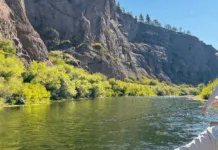
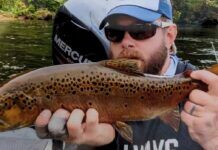
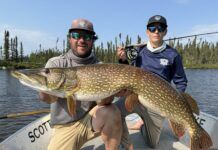
Jani Himanko owns Kellankoski Lodge in central Finland, where anglers target native brown trout, grayling, pike, and other species in a low-pressure river system connected by lakes and rapids. The fishery is known for aggressive trout feeding behavior, migrating baitfish, and a unique streamer technique centered around the surfboard fly.
This conversation digs into the technical side of streamer fishing, Finland’s trout culture, and how protected private water helped preserve giant native browns in their original range.
Jani Himanko is the owner of Kellokoski Lodge in Finland’s Lakeland region. He started guiding more than two decades ago before eventually purchasing the lodge business with his wife.
Before becoming a full-time lodge owner, Jani worked for Rapala and represented several major fly fishing brands in Finland, including G. Loomis, Hatch, Winston, and Bauer. Today he guides selectively while also helping run lodge operations, including meals built around local ingredients, fish, wild game, and traditional Finnish dishes.
Jani explains that central Finland’s Lakeland region is one of the last strongholds for native brown trout in the country. Their river system remained protected for decades because the water was privately controlled and lightly pressured.
The fishery includes interconnected lakes and rapids, allowing some trout to migrate between the rivers and larger lakes. Those migratory fish often return silver-bright and grow substantially larger than resident trout.
One of the most interesting parts of this episode is Jani’s breakdown of the surfboard fly. He describes it as “the bastard son of a dry fly and streamer,” built to imitate wounded baitfish migrating through the system.
The fly rides high with foam similar to a gurgler, but anglers fish it aggressively upstream or across current with fast strips. At times, the trout hit so violently they never actually eat the fly on the first strike.
Todd Moen from Catch Magazine filmed at Jani’s operation several years ago alongside guide and photographer Bussi. The crew focused heavily on surfboard fly fishing and the visual violence of trout attacking baitfish.
Jani believes the finished film captured brown trout feeding behavior better than almost any trout film he’s seen. Much of the footage focused on trout hunting baitfish rather than simply landing fish.
The entire fishery revolves around baitfish migrations. Jani explains that smelt arrive first in late April and early May, followed by roach and juvenile perch. The trout key heavily on these movements throughout the season.
By June, massive schools of bleak move into the rivers and trigger some of the most aggressive trout feeding of the year. Even later in the summer, trout continue feeding on baitfish while gradually shifting toward caddis and mayflies.
Jani says one of the biggest mistakes anglers make is trying to cast farther than necessary. Most fish are much closer than people realize, especially when fishing streamers or surfboard flies.
He recommends short, controlled casts under 30 feet whenever possible. That helps maintain direct contact with the fly and improves hook-up rates dramatically.
During June, Finland’s long northern daylight changes everything about the fishing schedule. The best brown trout action often happens between 8 PM and 1 AM.
The trout become more active once light levels soften, even though the sun barely sets. By August, anglers shift more toward daytime dry fly fishing as water levels drop and insect hatches increase.
While brown trout are the main attraction, Jani says anglers can also target pike and grayling throughout the system. Pike often sit lower in the river near lake inflows while trout hold in stronger current.
During slower daytime periods, many guests switch to grayling on dry flies or chase pike from boats around the lodge lakes.
When Dave asks for universal trout advice, Jani keeps it simple. His core recommendation is to always carry caddis patterns, woolly buggers, and baitfish-style streamers.
He also stresses that anglers should avoid ultra-light tackle when targeting aggressive brown trout. Stronger rods and controlled presentations make a huge difference when fishing larger flies.
Episode Transcript
WFS 935 Transcript 00:00:00 Dave: There’s a place where brown trout hit the fly so hard you don’t even feel the take. You just see the explosion. Today we’re heading to Finland’s trout land with Jani Himanko breaking down a fishery that’s built on migrating baitfish. Aggressive trout and one fly. That’s changing how people think about streamers. This is the Wet Fly Swing podcast, where I show you the best places to travel to for fly fishing, how to find the best resources and tools to prepare for that big trip, and what you can do to give back to the fish species we all love. Jani Marko is here, owner of Kellokoski Lodge in Finland, where anglers target big native brown trout, grayling and pike in a low pressure system that fishes completely different from most of what we see out in the US. In this episode, we’re going to find out why Finland’s brown trout feed more like predators than your typical fish. We’re gonna talk about this surfboard fly and why it’s really not a streamer. We’re going to talk about how to fish this thing and how baitfish migrations, including smelt, roach and perch, drive a big chunk of the season out here. And also we’re gonna find out about the biggest mistake anglers make with technique and how they fish all day long Up in Finland. This is gonna be a good one. We’re gonna get Jani’s journey as well. From guiding early on into coming to own this lodge. We’re gonna get a little bit of that back story today as well. All right, let’s get into it. You can find Jani at troutland.fi. Here he is Jani Himanko how you doing Jani great. 00:01:26 Jani: Great. It’s just a you know one week and the season is on and I’m happy to talk to you again. 00:01:31 Dave: Oh wow. Yeah. So you’re you’re right on the cusp of another big season up in uh well, maybe you could tell people where you’re coming from. You’ve been on the podcast. It’s been about three years since you were on the show, but, uh, give a heads up where you’re at because you’re not in the US right now, right? 00:01:45 Jani: No, I’m not in the US, but, uh, we are in, in Jyvaskyla, Finland, like three hours from Helsinki, North by car, three and a half. Uh, so not in us, but Northern Europe, uh, between, you know, we are next to the Sweden, Norway and Russia. We have, uh, we are part of Scandinavia and northern countries. Uh, and, uh, yeah, easy to get here, actually. 00:02:11 Dave: Yeah. Yeah. Good. Well, we had actually an episode that we did. It was, uh, episode four sixty two. I have a link in the show notes to that where we kind of did a high level of your operation and it sounds amazing. Brown trout, you know, Pike, you’ve got a bunch of topics we talked about. We’re gonna take a deeper dive today, maybe on streamers. Talk a little dry flies. Give us a heads up. What’s been going on? We saw you at the show. That was the great thing, right? We saw you in Denver. 00:02:36 Jani: Yeah. Yeah, we we thought it was funny to see you at the Denver show. Uh, actually, three years ago when when we talk, uh, last time on the podcast with you, it’s, uh, I was still planning to, to hit, you know, more the US market. We had some, uh, us, uh, anglers before, but not, not, not too many. And I remember we were talking about going to new Jersey or maybe Denver. Fly fishing source. But, uh, since then, uh, I’ve been doing a lot of these, uh, fly fishing shows in the US. And I’m gonna do next year as well. We’re going to do new Jersey and Denver. Uh, maybe, maybe California also not sure yet, but and since then, uh, we had a lot of us clients, like a lot of anger from us. Uh, I would say that almost half of our, our guests are from us. Wow. And, uh, so we are, we are growing a lot over there. So it’s, it’s good. And, uh, you were the first podcast that I was on ever. 00:03:32 Dave: There we go. 00:03:33 Jani: Yeah. And then after that podcast, I’ve been doing some others as well, but also the, I think our, you know, the, the large scale name is now, you know, it’s not big. I know that we are not we are a small operator, of course, but well, more people know us in us nowadays. We have like, uh, like most of our guests are coming. Like the three biggest countries are our US, UK and Switzerland. So we have a lot of people from UK and, and a lot of people from us. 00:04:05 Dave: Yeah. Because you have Finland, you have a few out, right. The countries up there, we’ve talked and we’ve had some podcast episodes. Maybe we’ll have that link in the show notes for six. Two people can see the whole background, but give us a high level on kind of how Finland, maybe your operation and Finland is just different than maybe some of the other countries up there. And, and also the species, it’s brown trout, right? It’s one of the focus. 00:04:25 Jani: Yeah. Brown trout is the one species that people really travel to us. And also we have grayling, uh, we have pike, northern pike, and of course, Perch and Zander. Those are the normal, normal ones. But the brown trout, native big brown trout is the thing why people travel here. Uh, and grayling also. Yeah, but the fish are big and they are happy. And with this only the private waters. So it means that we don’t we don’t suffer the, you know, the big fishing pressure. So it keeps fishing fun. You don’t you don’t have to do a urinary thing at our borders because the you can catch a fish by fly fishing. 00:05:04 Dave: Yeah. Right. Right. Yeah. What is the what’s the the streamer technique. Maybe describe that a little bit. Or is this a new type that a thing you’re doing? Or is it similar to what we’d be doing over here, you know, in the US? 00:05:17 Jani: Yeah. It’s a little bit different than we don’t really do with the streamers. You know, the first of all, we use two kinds of streamers. Of course some basic streamers. They could be very large big ones for you. They might look like a, you know, saltwater flies even and they’re pretty or maybe some pike flies because they could be like, uh, three, four inches in length. And, uh, and also, of course, we have our wooly buggers like you do as well. And they are very effective flies. But we don’t, we don’t usually cast like forty five degrees downstream. And you know, we don’t do the swing thing a lot. We cast upstream and we strip fast usually, but it’s it’s multiple things. But the, the thing that we are most famous might be the surfboard fly, which is like a, it’s like a bastard son of the, of the dry fly and streamer. 00:06:10 Dave: All right. Oh, what’s it now? What’s this called? How do you how do you spell this surfboard. 00:06:15 Jani: You know, the surfing surfing USA. 00:06:17 Dave: Oh surf. 00:06:17 Jani: Yeah. Surf surfboard. And it’s it’s uh, if you if you have seen the movie, uh, you know, the cats magazine that got mine, he did a film here and it was all about this surfboard fly. 00:06:28 Dave: Oh, it was the surfboard fly. 00:06:30 Jani: Yeah. Surfboard. It imitates the, you know, the, the wounded bleak or the, the, you know, the bait fish that runs to the rivers and the trout, they, they, they really like to, you know, the hit that fly. And, uh, yeah, that’s like I mentioned, it’s like a bastard son of the, you know, of the of the dry fly and streamer. It’s not a streamer. It’s not a dry fly. It’s something else. It’s a little bit the same. You have the gurgler, you know, you know, the Gurgler. 00:06:58 Dave: Yeah, the gurgler. 00:07:00 Jani: It’s pretty much similar, like a foam on top of it. And you know all that and you can, you can use a fly, you can use it like a, you can let it swing, you can, uh, trip it fast or, or my favorite, it cast, you know, forty five degrees upstream and do the dead drift just like fishing the caddisfly. That’s my, my favorite thing to do. That’s how you get the best hookups. You know, you don’t lose fish, but when you when you use that fly with the with the high speed stripping, you will lose the you know, the hits a lot. 00:07:34 Dave: Yeah, I’m looking at it now. So yeah, we’ll have a link to this one to the Finland fly fishing, the legendary bait fish migration. Yeah. Catch magazine. So we’ll have a link. We’re going to be watching that after this is done. We’ll take a look at that. And we had Todd on the podcast recently too. So that was awesome. 00:07:50 Jani: Yeah, he’s a genius. He’s a genius. I want him to come back. 00:07:54 Dave: Yeah, definitely. What is the, um, on that pattern? Maybe describe what is the bait fish species. What is it that you’re imitating? 00:08:01 Jani: It was born to imitate the bleak. We have, like a several different bait fish that that, uh, affects our fishing. Basically, the first bait fish that we have is the smelt o smelt. 00:08:15 Dave: You’ve smelt? 00:08:16 Jani: Yeah, smelt is the first one. Oh, wow. And now it’s, it is a big you know, the best time for that. 00:08:21 Dave: It is. And smelt migratory aren’t smelt coming in in different years. Different runs. 00:08:25 Jani: Yes. It lasts for like a week or so plus minus week. And uh, it’s, it’s about now. 00:08:31 Dave: Is it. It’s right now. 00:08:33 Jani: Yeah. End of April, early May. You never know. And not all the spots got that big migration. It’s they don’t I don’t know the reason, but they are not coming to all the spots. But we have some some of the spots that we have the not the bleak, the smelt, uh, the smelt migration and and the big trout follow and they, they really go crazy after them. And that’s like a peak season for the first two weeks of fishing. 00:09:00 Dave: Okay. European smelt. It looks like it’s the. Yeah. The European smelt. 00:09:04 Jani: Yeah. Like a little bit like blue and silvery and yeah. 00:09:07 Dave: Known in Finland as curi a q or a k u o r e curi. 00:09:13 Jani: It’s you can see, you can see it. 00:09:16 Dave: I can’t do the rumble, the tongue thing. 00:09:19 Jani: Yeah, yeah. A lot of consonants and you know, angry. 00:09:21 Dave: Yeah. 00:09:22 Jani: It’s very easy quarter season. So after quarry smelt uh, and then around the same time the roach will hit the waters and the roach is the, you know, the one, the hangover. 00:09:32 Dave: Oh. Roach. 00:09:33 Jani: Yeah. Roach. Yeah. With the red eyes. And that’s also something that, you know, our big trout likes to eat in Finnish. That is Saki. 00:09:43 Dave: Okay. 00:09:43 Jani: Saki in Finnish and yeah, and they will come also like in May. And, uh, they could, you know, they might stay, they might go away and they, they are like, uh, they really can’t make their minds. Yeah. They can stay or, or go away. But it’s, it all, all matters, you know, the, uh, the, the, how warm the water will be. Oh, okay. That’s why roads will come. And then we have the purge also. And, uh, the first purge that will arrive are smaller, like purge could be like only like a one inch and these, uh, smells and the roads could be like a three, four, five inch. They could be big, but the purge that arrives to the rapids, they are like one to two inch only. 00:10:29 Dave: Wow. So you got these fish that migrate in and then you’re. And then what are the what? Describe that pattern again. What was the name of that pattern you use. 00:10:36 Jani: To surf butterfly? And the main thing that that will happen that, uh, it’s usually, you know, the first or second week of June that the big schools of migrating plague will hit the rivers. That’s like, you know, the final nail of the coffin for trout. Like, they will go nuts when that happens, because the schools of bleak are so big that they will have a blast. Then people are always asking me that, okay, when is the best time for this migrating baitfish? It’s it’s the basically the whole season. The biggest difference is that, of course, the bleak is the, you know, the biggest numbers are the bleak. And that will happen like in June. But we we also have a great season in May that most people doesn’t know. And also the people don’t get it that that the baitfish season that the whole migrating baitfish thing will last until the end of the season. But it will change that like end of June, mid-June. They also they will start to eat, you know, the caddis flies and mayflies. It’s just not the feast. Like by by late June, early July, it’s more and more also caddis flies and mayflies. And, and when we go to the August, it’s like they could even more eat like they eat more caddis. 00:11:57 Dave: Because those flies are going away. The baitfish are kind of going away slowly. 00:12:01 Jani: No, but they’re just I think they don’t have the chance. Like in, in early season there are no caddis flies that many. They have so much fish. And also the water is big, it’s bigger. But now we have low water, which is not normal. But usually we we have a big water in May, May and June, but in August. It’s like I always said, that fifty fifty streamer fishing, surfboard fishing and then dry fly fishing. We have a low water and uh, and, uh, more insects like mayflies and caddisflies, especially caddis flies in August. And fishing is easier in August, of course, and a little bit different. But you can like you cast your caddisfly and you can you can hook like a twenty five inch brown trout, right? 00:12:48 Dave: What’s the caddisfly you’re using? What’s the pattern you’re using for caddis. 00:12:52 Jani: Uh, my favorite Scott caddis. 00:12:53 Dave: So dry fly you’re not fishing anything. So they’re all pretty much dries dry. 00:12:57 Jani: So if you pass but but dries now, like, uh, we try to keep it fun, you know? 00:13:04 Dave: Right. So and then when does your season end and when does it open? 00:13:08 Jani: End of August at this time. End of August. 00:13:10 Dave: So end of August and then it opens back up. When does that start up for you? 00:13:14 Jani: At first of May. So it’s it’s basically just three and a half months because we keep the rivers closed. Uh, the last, you know, mid-July we closed just for safe, uh, because there’s always a danger for the, for the heat wave in July. So it’s, it’s better just, you know, have a two, two or three week break and not to, you know, have a huge stress about how hot the summer will be, and by August everything is fine again. And if you think about August and June, the biggest differences are like August. We are fishing daytime. Also a lot of daytime fishing. Uh, and we, we stop fishing by nine or ten p m, uh, June. We don’t fish that much during the daytime, but, uh, we fish until maybe one a m, sometimes even two a m, because the best fishing usually happens between eight p m and one a m. So you have to be prepared to stay awake pretty long. 00:14:12 Dave: And why is that? Why is that? That late night? So. 00:14:14 Jani: Uh, I think because the sun doesn’t, you know, go down at all in June. So the trout is more active when it’s a little bit darker. It’s not getting dark at all in June. So they don’t like the daylight. 00:14:27 Dave: Right. So you guys get so in the summertime, I guess I forget that, right. Because you’re you’re up north just like if you’re in Alaska. So you guys have kind of the land of the midnight sun, right? You’re getting. 00:14:37 Jani: Yeah, yeah, yeah. 00:14:38 Dave: Same thing. 00:14:38 Jani: Yeah. And that’s the best part of the Finnish summer. I love it. 00:14:42 Dave: You do? So are you. Are you the type that just pretty much stays up all day long for, you know, get two hours of sleep per night. 00:14:49 Jani: Well, let’s put it this way. We have a breakfast at the lodge ten a m so we don’t have six a m breakfast if you want to have breakfast. Seven a m that’s not an option. It’s ten a m in early season. 00:15:01 Dave: There’s no reason to get up going early at that time of year. 00:15:04 Jani: No. And it’s easier to stay awake later than than, you know, wake up like four o’clock. 00:15:10 Dave: Gotcha. Okay. And so that’s the operation. And then describe your, um, you know, just kind of the, the lodge, the whole area itself. How is it maybe different than some of the other places up there? Or is it similar to other Finnish lodges? 00:15:22 Jani: Or if you’re thinking about Finland, we don’t have any other similar place in Finland that we have, but we are the only one. 00:15:30 Dave: You mean the only like the type of fishing or the river? 00:15:34 Jani: Uh, yeah. 00:15:34 Dave: And you have drift boats too, right? 00:15:36 Jani: Yeah. We have drift boats. Yes. And those are the only in Finland. I don’t I think in Norway one guy has also in river or river. Yeah. In Norway there’s some drift boats and we have some, but I don’t know if there are any other drift boats in Europe than we are. And this actually the guy in Vienna, he’s from us. I think so. 00:15:55 Dave: Yeah he is. Yeah. That’s right, that’s right. And what boats are you guys running now? 00:15:59 Jani: Uh, we have the McKenzie drift boats from Willie Boats. 00:16:02 Dave: Oh, you got Willie’s. Okay. 00:16:03 Jani: Yeah. We have two aluminum Willie boats. They are. They are nice boats. 00:16:07 Dave: That’s cool. Yeah. Willie’s. 00:16:08 Jani: Yeah. And the. Well, if I want to describe the lot, it’s the. We have a six rooms and two private cottages in the same yard. We can take. We can take maximum fourteen people per week, which is not a lot. But usually we are full with, you know, eight, nine, ten because so many anglers wants to have a single room. So if people are booking single rooms, then we have less people for the week, and the lodge is situated like in the middle in the central of all the fishing areas. So we always have to go to the spots by. We take the boat or we. We drive a car, but you know, the, you know, they all are within ten or fifteen minute drive from the lodge. So they are pretty nearby. But there’s spots that we take the boat and we go by the boat. That’s pretty nice as well. And the thing is, we have like a little more than ten miles private waters, which we are fishing. And it means that we have this plus minus ten people fishing every week. We don’t have more. And you don’t have to compete with the local fishermen because I’m the one who is, you know, saying who is fishing and when and where. 00:17:21 Dave: Trout Routes by Onex is built for fly anglers who want better Intel without spending hours digging for the information, you’ll get access to public land maps, stream access points, regulations, and even road and trail maps all in one place. It’s become my go to app for scouting new trips. You can check them out right now. Go to webflow dot com slash routes and download the app today. Today’s show is brought to you by Visit Idaho and Yellowstone Teton Territory place that should be on every angler’s list, from the Henrys Fork to the South Fork of the snake, and all the hidden creeks and alpine lakes in between. This region is built for fly fishers who like a little room to roam. You can head over to wet fly swing dot com slash Teton right now for guides, lodges, and trip ideas to plan your next adventure. That’s Teton T e t o n. What’s the closest town to where you guys are at or what town are you in? How do you spell that? 00:18:18 Jani: Uh, K o n n e v e s I. 00:18:22 Dave: Okay. Yeah. And what’s the name of the river that you’re. You’re on. 00:18:25 Jani: Well, it’s Rautalampi Water Road, but it’s it goes like this. There’s lakes, there’s always lake, smaller lakes. 00:18:33 Dave: Yeah. There’s tons of lakes. 00:18:34 Jani: Yeah, yeah, yeah. Between the lakes we have uh, the first one where we’re fishing is siikajoki, which is like a, we call that the president’s place. Like you’re, you’re, you know, Jimmy Carter, your late president. Yeah. He was in that place. 00:18:47 Dave: Oh he was. 00:18:48 Jani: Yeah. He was like twenty five years ago. 00:18:52 Dave: Did you ever see or meet Jimmy Carter out there. 00:18:54 Jani: No, I didn’t, I just heard from the locals that that no one was allowed to go like near the more than, you know, three hundred yards away. There was like Secret Service blocking the roads and. Yeah, but he was fishing there. That was a big news back then. And also our late presidents were there back in the day. And that’s a long story about the whole river system. And that’s the because it’s always been like private owned waters. And now the now it’s just there’s a lot. I don’t want to make it make it too long, but I just I’m leaving those waters now. And that’s the key for the success for, for our operation. Because the you know, the main thing is that that the water road is the last resort of the Finnish native brown trout. That’s the last place where we still have these big ones left. 00:19:45 Dave: Oh it. 00:19:46 Jani: Is. And we don’t have any, you know, dams there. Well, we have one dam, but it’s, it’s not on the river. We have the dam is like they built a, you know, the like uh, what’s called like a, not a detour for the dam. So if they are fishing at all. So it’s, there’s no the water is so clear. There’s no factories, there’s no dam. So it’s, it’s the last waterway that is still almost like pure. And the reason that it’s been one hundred years or so, it’s been private, owned by the one big Finnish company. Nobody was fishing there, only like presidents and prime ministers and, uh, like a very high class. People were allowed to fish there before. So. And of course, me and others and most local people didn’t like it because it felt like only rich, rich and famous and rich. And, you know, the powerful people were allowed to fish there. But that’s on the other side. That was the the reason why the fish are still there. Because it was it was the time when the catch and release was not a thing yet. So every trout, a cat, the cats, they they kill them all. So you can imagine if if those waters were like a public waters, they wouldn’t be any native trout anymore. 00:21:05 Dave: No. When were those native. Are those brown trout in there? Are those native fish? 00:21:10 Jani: Yeah, yeah. 00:21:10 Dave: Yeah, those are all native. So you’re catching just giant native brown trout in their home waters. 00:21:15 Jani: Yeah. There’s occasionally you can because all the rivers and lakes are connected in Finland. 00:21:21 Dave: Yeah. That’s right. Because when you look at Finland you see basically water. It looks like lakes everywhere. And so. But these you’ve got streams connecting and those are the streams. You’re fishing between the lakes. 00:21:31 Jani: Yeah. And they call this the area where we are that they call it as a Lakeland. It’s Lakeland, Finland and we call it a trout land because because Lakeland doesn’t say anything for for our guests. 00:21:43 Dave: But so do these, do these eventually, if you were to follow it before, I’m not sure how many dams are there, but could these brown trout make it out to the ocean from where, you know, eventually. 00:21:52 Jani: No. 00:21:53 Dave: Not even naturally before humans or whatever. 00:21:55 Jani: Before. Yeah, yeah, yeah. Before the dams. Yes. But nowadays, well, there’s a, there’s a, you know, the, how you call them like a fish steps or like a, you know, these, uh, man made steps for the fish. 00:22:09 Dave: Oh yeah. Fish ladders, fish ladders. 00:22:11 Jani: A ladder. Yeah, yeah. Fish ladders. They are there. 00:22:13 Dave: But but but they’re not everywhere. There’s lots of places where there’s not fish ladders. Right. 00:22:17 Jani: Yeah. From the lots. There’s like five hundred kilometres to sea maybe by borders. So it’s, a long way. But yeah, the there’s like a in theory. 00:22:28 Dave: Yeah. In theory. Yeah. You could, you could if you fix. But the point is with these fish, these are probably a mix of historically probably resident fish and migratory fish. Or do these brown trout, do they migrate in the system where you’re fishing. 00:22:40 Jani: Yes, yes. I was just about to get to that, that like, I don’t know, plus minus half of them are like migrating and half of them are like, you know, stationary. They stay in the river for the whole year. And you can, you can see the difference because some of them, they are when they come from the lake back to the river, they’re like, they look like a salmon. They’re like a silver bright, like they’re really great fish. And, and also even the residential fish, they are big. Even there. They could be like twenty, twenty five thirty inch fish and never been on the lake, or at least like a, you know, the last couple of years they haven’t been on the lake because they, I don’t know what’s the reason for that, but the scientists, they are always like saying that we need even more of those migrating fish that you know they are. That’s like the only downside of our fisheries that we we should have like a ninety percent of the fish migrating, not like half. But it can’t be perfect all the time. But these migrating fish, they are usually they are pretty large. They are huge fish. And they are so beautiful when they are like silvery, like, and they’re my favorite fish, right? 00:23:54 Dave: So they’re getting yeah, they’re migrating to the lakes. It’s kind of like their ocean, right? 00:23:58 Jani: Yes. Not, not to the ocean. They go to the lakes and because there’s a big lakes in between. And also it all started, there’s a, you know, lake, which is like a big, very clear, almost like a well, it’s, it’s like drinkable water. But I don’t say anyone to drink it because they will sue me if they get a diarrhea. But, but the local people still drink it a lot and even get there, you know, the household water from there. And actually the water at lots comes from the lake. But and it goes it comes to the sandbank. Like most houses in the area get their drinking water. They don’t use any chemicals. There’s just a sandbank what they’re using. And, and we are drinking the water. But I don’t like people to go and take your muck and take it from the river, but I, I have done it several times. Never got sick, but I don’t I’m not saying to it because you know, it’s, you know, you never know. 00:24:54 Dave: Yeah. You don’t want you got to be careful. 00:24:56 Jani: Yeah. You have to be careful. But I’m trying to say that it’s very pure. It’s clean water. And it’s, it’s a very like a rural area. And, uh, it’s not in the middle of nowhere. 00:25:07 Dave: Where do you fly into up there? 00:25:09 Jani: Uh, Helsinki or you vascular usually you fly to Helsinki and then you take the train or you, you hire a car or you fly to Jyvaskyla. 00:25:18 Dave: How far of a drive is it from Helsinki? Up to your your place. 00:25:22 Jani: Three and a half hours. 00:25:23 Dave: Yeah. So not bad. So it’s a nice little drive. Looks it looks like a cool drive. And basically. Yeah. I mean you’ve got a highway, right. You’re just kind of hop on the highway and go for it. 00:25:31 Jani: Yeah. Most of it is highway and we don’t have any traffic jams. You don’t, you know. No. Hey, we have like five and a half million people living in that country. 00:25:41 Dave: Yeah. What about Helsinki? How many people are living Helsinki? 00:25:44 Jani: I think it’s in in the city of Helsinki I don’t have million. And in the metropolitan area of Helsinki, like a little bit over a million. 00:25:52 Dave: A million. Yeah. Right. So it’s about a million. So it’s like a small, smaller city. 00:25:57 Jani: Yeah. It’s nothing like, uh, New York City. There’s no traffic jams in Finland. 00:26:01 Dave: That’s great. So and on the brown trout, you know, do you find brown trout throughout all of Finland? You’re down more in the southern part. But if you go up north. 00:26:10 Jani: Yeah, a little bit. But you know, we have these regional fishes in Finland and like in some southern part of Finland, It’s pike, and our place is brown trout. It’s like official fish of our area is brown trout. That’s the one reason why we call it trout land. So it’s the most famous place in Finland to fish for brown trout. Is this Lakeland or central Finland? Yeah, yeah. We have some brown trout basically everywhere. But you know, some good actually some good rivers in eastern part. And then we have this. See also. 00:26:45 Dave: Oh you do. 00:26:46 Jani: Yeah. We have sea run brown trout in West Coast. 00:26:49 Dave: Where do you have to go to get to the sea run Browns. 00:26:51 Jani: You have to have a boat. But now actually it’s the season for that. It’s for brown trout. The best season is March, April and then October. November, December. 00:27:03 Dave: Okay, so you guys are like you said, you’re near Helsinki in that southern part. Where are the Browns that are going? To the ocean. What streams are they? 00:27:11 Jani: Uh, there’s a plenty of places like actually you can, you can have a boat or a guide from the city of Helsinki and go for fresh air and browns. The. All the South Coast and West coast are the places for browns, and when it. When it’s good, it’s really good, and when it’s bad, it’s. It’s awfully bad. 00:27:29 Dave: Yeah. They might not be there at all. Are people coming in for a typical like a week. Talk about that. What is your program look like there. 00:27:36 Speaker 3: Yeah yeah. Week. 00:27:37 Jani: We usually do Sunday to Sunday, but most people actually fly in like two or three days before. And they might even stay like two or three days or four days after afterwards. And they stay in Helsinki or travel to area or some people actually now we are talking about us. Guest. Um, a lot of people from us, they fly in and they might go to Iceland at the same trip, or they might go to a Holland, France, Sweden, Norway. I would say like one third of them, like travel somewhere else besides Finland on the same trip, maybe even more. 00:28:14 Dave: That makes sense. Can you drive? Yeah, you can pretty much drive over. Is it easy to drive around over to Sweden from there? 00:28:21 Jani: Yeah, you can drive. You just if you want to drive from from Finland to Sweden, first of all, you have to tell your rental company that you’re doing it right. Yeah yeah, yeah. But you can, you can drive to basically you can go by car to Estonia. You can go to Sweden. Norway. Uh, the easiest way is we have these ferries like party boats. They are a little bit smaller than your cruising boats, but a lot smaller. And they go, you know, you can have a boat from Helsinki or Turku to Stockholm or Estonia and, you know, two or three days there and then, you know, come back. So because if you want to drive to Sweden from Finland, you have to first drive the north and then go like west from there, because there’s a Baltic Sea in between. So it’s probably it’s easier to just take this. 00:29:14 Dave: What about you? Ever been into Russia? Many times. Over there. 00:29:18 Speaker 3: Mhm. 00:29:18 Jani: Too many times. 00:29:19 Dave: A lot, a lot, a lot of times. 00:29:21 Jani: Yeah. I feel bad for it now because it’s now it’s it’s I some of my best fishing trips ever were in Kola Peninsula, Russia. Oh, really? Yeah. Every time we went there, it’s it’s all my friends and we were talking about it that, you know, we are in Russia, but it looks like Lapland, Finland. So let’s pretend that we are not in Russia. But they used to have a lot of good brown trout waters and salmon waters. I’ve been there like maybe twenty times, twenty times. And, uh, because the fishing, what we have in our lots, like in our waters, it’s very similar fishing like technically that they had in Kola Peninsula, Russia. And now we have a lot of these same people who used to travel to Russia. They travel to Finland to fish with us because the fishing it’s it’s very similar and the fishes are like pretty similar. Our fish are bigger, but we don’t have the numbers. But they had in. When you went to, you know, Kola Peninsula, like a trout camp or trout camp. The numbers were bigger, of course, because it was middle of nowhere. But on a good day in our lots it’s same or sometimes even better. But the biggest difference is that when you travel to Finland and you don’t have to scare anything, you. You don’t have to fly with the Russian helicopter, right? 00:30:48 Dave: How far is it on the Kola Peninsula? How far is that from where you guys are? 00:30:51 Jani: Well, it’s like eight hundred miles. Nine hundred miles. There was a two way to go there. We usually we drove to northern Finland and then we had some, uh, suffer from from Russia, Murmansk, because someone who took us to Murmansk all over zero, another small town near Murmansk. And then we flew with the Russian helicopter like me to the camp there. And also, sometimes we flew from Helsinki to Murmansk. Like, uh, they had this frontiers travel, uh, charter flight. So we also sometimes we flew with that charter. Uh, that was pretty easy. 00:31:28 Dave: You’re there. I mean, yeah, because when you look at it on a map, I mean, it’s just it’s that peninsula up north of you. It looks like it’s closer to you connected to Finland than it is Russia. 00:31:37 Jani: Yeah. And did you know that, that some parts of it were, you know, part of Finland like a hundred years ago? 00:31:42 Dave: Oh, was part of it. Oh, really? 00:31:44 Jani: Yeah. But after the Winter war, they took it. 00:31:46 Dave: Oh. No kidding. 00:31:48 Jani: Yeah yeah yeah. 00:31:49 Dave: Yeah. What was the war? What was the war where they took the Kola Peninsula or part of it? 00:31:53 Jani: Uh, winter war. 00:31:54 Dave: It’s called winter. Winter war. 00:31:55 Jani: Winter war. Uh, there’s a lot of. If you want to study the Winter war, you will you will find a lot of stories about Finnish Winter war. 00:32:02 Dave: Oh, yeah. There it is. It began with a Soviet invasion of Finland on November thirtieth, nineteen thirty nine. So that was during World War Two, right? 00:32:09 Speaker 4: Yeah, yeah. Yeah, exactly. 00:32:11 Dave: That was part of World War Two. Wow. God, what a crazy time, right? That’s nuts. 00:32:15 Speaker 4: Yeah. 00:32:16 Jani: That’s one of the reasons why, like, my my relatives, they were all always giving me a hard time when we went to fish in Russia. Like, uh. Oh, what the hell are you doing? We have the agreement. When we cross the border, we have our guns with us. 00:32:30 Dave: Right, right. 00:32:32 Jani: Like, it’s it was funny. And then and, you know, honestly speaking, my generation was the first generation ever that had, like, a normal relationship with Russians. Like, uh, they are nice people. Well, most of it like. 00:32:47 Dave: Well, it’s like anywhere. It’s like any, any country you’ve got, you’ve got the people and then you’ve got the government sometimes, which is, which is kind of. 00:32:54 Speaker 4: Yeah. 00:32:54 Jani: But now it’s all ruined. Like there’s, it’s gonna take like another thirty, forty, fifty years to, you know, get it, you know, the relationship back when all these, you know, when when this is done. 00:33:05 Dave: Yeah, I know, well, it’s the same thing. We’ve been talking about Kamchatka a little bit too, on the other side. 00:33:10 Jani: Yeah, that was my bucket list. 00:33:12 Dave: Yeah. People are going there. There’s definitely people going there. We were talking to Will Will Blair and he’s he’s actually doing trips right now so you can do it. 00:33:20 Jani: Okay. I wouldn’t put my foot on Russia land now, especially now because we are in NATO now. Finland is also part of NATO and and most of these best rivers in Russia. They are in a military zone. So that means that the Russians, they can do whatever they want to do. If there’s some, you know, like a NATO soldier. Now it’s a little bit different with you because you don’t have to go to Army if you don’t want to. But in Finland, all the men have to go to army. So that that makes us the NATO soldiers. 00:33:54 Dave: Oh, right. So you’re saying everybody is has kind of a duty. 00:33:57 Jani: Yeah, yeah. It’s mandatory in Finland. So that’s why we have such a large, you know, army that’s always been like that. And we have one reason for that and that’s honest. So we are not like worry about it because we’ve been preparing for like a since nineteen forty five. 00:34:15 Dave: Right, right. Exactly. You’ve been ready. 00:34:18 Jani: Yeah. So but we never had any issues. We never had any, you know, concerns. Maybe, you know, the biggest issue with the Russians, you know, lately it’s within Finland. It’s that they, you know, they try to send, uh, you know, some Iranian or Iraqi refugees across the border, like thousands and thousands that they, you know, they they’re teasing and they are sometimes they’re hammering our GPS and, and, you know, that kind of stuff. But, uh, nothing like, uh, nothing to like, really worry about it. Like nobody’s scared or anything like that. 00:34:54 Dave: Check out Jackson Hole fly company today. Premium fly gear straight to your door without the premium price. Jackson Hole Fly company designs and builds their own fly rods, reels, flies and gear, delivering quality you can trust at prices that let you fish more and spend less. Whether you’re picking up a fly rod for the first time or guiding every day, they’ve got what you need. Check them out right now. That’s Jackson Hole Fly company dot com. Jackson Hole fly company dot com. Fly fish with me. Utah discover year round blue ribbon trout fishing on the famed Provo River. Choose a guided walk and wade or a scenic float and experience big trout, stunning canyons and unforgettable days on the water. You can book your adventure right now at Fly Fish with Utah dot com. World class water. Incredible fishing. That’s fly fishing with me Utah dot com. But I want to hear about is the, um, that Todd Moen video that you guys did. What did you guys when Todd was there? What was that like having him there filming? What did you was he there for a week? Did you get on the drift boats? Talk about that a little bit. 00:36:01 Jani: Yeah. We did a little bit drift boats, but he we didn’t want to do a drift boat film. And he was doing a film with one of my guides, Percy. Percy is like a very famous Finnish fly angler and very good fly angler. And he’s, he’s guiding for us as well. And actually the story behind the film was that part. And they, they knew each other for a long time because buses also very well known photographer like fishing photographer in Finland. And he’s been doing some stuff for, for, for cats and dogs. Been asking from that when I can come to Finland to do a film. And Percy was always like, uh, we don’t have the good enough fishing for you to do that. And for many years it was like that. And then when, when we started the operation, what we’re doing now, the Kellen and Buzzy was working for us. And then he was like, I should, I should ask, you. Got it. Now we have the stuff that he could feel like a, you know, the that could stand, you know, the taste of the of the word, what people want to see. And so it was basically bussy who, who made it happen. We thought and uh, then, uh, it was, I think it was like three years ago when he came and, uh, and luckily we had like half of the week was canceled. So it was like half empty week. We don’t, we didn’t have that many, many anglers for that week. It was like a last week of June, I believe. And, uh, yeah, he was here like, uh, he was supposed to be like two weeks, but, uh, I think he spent like, uh, one week or maybe a little bit more only because like, he told me that I had enough. 00:37:47 Dave: He’s got enough big fish. 00:37:48 Jani: Yeah. It’s, it’s only ten or fifteen minutes. I had enough. So but it was, it was very nice experience. And they were because they were funny. There are so many funny stories, you know, behind the scenes and like, they were like sleeping like two hours a day. Because when they went on the evening, when it was good and but it was missing so many big fish for me. And most of the viewers might be, you know, funny to see when he’s losing all the fish, but he was like a first three or four days just losing these fish. He couldn’t, you know, hook him up. And he was so frustrated and he because he was like, he, he invited her to come. And, you know, it’s amazing fish. And of course, when you do the fishing film, you you shoot, you need the fish. You have to show the fish, not just the strikes. So he was, I think he was a little bit pushing that thought didn’t sleep much because he. But he was okay, let’s, let’s try again after like two hours of sleep or something like that. 00:38:47 Dave: Right. And you’re fishing those dry or you’re fishing those not the gurgler, but that pattern, the stripping, the surfboard. 00:38:53 Jani: Yeah, yeah. He was, he, he wanted to do only surfboard. 00:38:56 Dave: How do you do the surfboard? What’s that technique? Describe that a little bit. How you do it. 00:38:59 Jani: Yeah. The surfboard is like buzzy all the way. We always we have some arguments in Finland because there’s a different schools about it. You know, there’s a couple of basic things. It’s like you cast it upstream or side stream and strip it, make it move, give it fast speed. 00:39:17 Dave: Like as fast as you can. 00:39:18 Jani: Yeah, almost as fast as depending if the water is very warm, then you make it faster. And when the water is colder, let it go a little bit slower. And also it depends, you know how high the water is, how big the water is, is it? And and so on. But the other techniques is, like I mentioned before, you know, use it like a like a dry fly, catch it upstream and let it come down as like a dead drift because the fish, how they hit it, they hit it like, uh, sometimes they don’t even take it to the mouth. They just hit it like, you know, like time travel or tuna. They just hammer it and. 00:39:57 Dave: T-Bone it like across its body. 00:39:59 Jani: Yeah. And after that, they will collect the prey. So that’s why you keep losing those. And, uh, I remember usually when, when I, they were coming back from the busing and start from the river and, and I was like, always after show me something. And he was so, so mean meat those clips from the camera or laptop and oh, they look so nice. I have never seen such a beautiful image and such a good filming from our waters or whenever actually that film, even though it’s, it’s filmed here in Finland, even if it would be filmed in Australia or Sweden and Norway, I would say that that might be the best film on, on brown Trout ever. 00:40:38 Dave: Really? 00:40:38 Jani: Yeah. It’s because it’s not just catching fish he captured so well. When this big brown trout are feeding on the, you know, bait fish, it’s not just fishing. It’s in. He concentrated so well on the on the fish, on the trout. So that’s the fact. I like it so much. And a lot of food is great food. 00:40:58 Dave: Yeah. Good. Well, we’ll definitely be watching that one to get inspired. Talk about that a little bit. What are a couple of other tips you would tell somebody? I mean, I’m guessing you could probably apply what you’re doing around to some other areas, but you know, is it pretty easy casting out stripping or do you have any other tips on hooking those browns? 00:41:16 Jani: First of all, you have to have like a, you should have seven weight or even eight weight rod. But my favorite, I would say like a seven weight rod with the eight weight line. And you know, you can cheat a little bit. You don’t have to be perfect. And when you have a little bit heavier line, it’s much easier to cast a fly. And, and you have to be able to, well, you don’t, you won’t have to be able to do a double hull. But if you can do the double hull, it’s, it’s easier. And one of the main thing is that what most people do wrongly that take cash too far, they try to, you know, impress themselves or somebody else, or maybe the birch who are watching them. 00:41:55 Dave: Yeah. So you don’t have to cast far. You don’t have to cast very far. Yeah. 00:41:59 Jani: You don’t have to carry. You have to cast accurate. And you have to because, you know, if you can reach the fish with the shorter cast, it’s much easier to hook the fish. And also it’s much easier to control the fly and your fly line. But when you’re casting, like, I don’t know, like ten feet or fifteen feet, it’s much harder to have a hook up because there’s always a delay or the line is like, um, I don’t know how to call it in English, but you don’t have to control for your, your fly line. And it’s much, much harder to hook the fish and control the fly. And actually, it’s much harder to even get the fish interest that fly. So my first, first tip for using that fly or any other, you know, streamer or any other fly is don’t cast too far. People always are trying to cast too of all. That’s stupid. 00:42:53 Dave: So how far? How far is it? Good. Like forty feet. 00:42:55 Jani: That’s too far. 00:42:56 Dave: Oh, really? Okay, nice. 00:42:58 Jani: Well, if you can. Because sometimes the fees can be like a, I don’t know, ten feet from you. Like, they can be, like, very close to you. Forty feet is it’s too much. You know, it’s sometimes for me, it’s hard, you know, when I’m trying to convert the meters and feet because in Europe it’s meters. 00:43:15 Dave: Yeah. What would be meters. Tell us the meters. How far. 00:43:17 Jani: Yeah. The normal cash is. I would say like good cash is, you know, could be less than ten meters, which is like less than thirty feet. 00:43:24 Dave: Yeah, it’s about three feet per meter. So yeah, three feet per meter. Yeah. 00:43:28 Jani: Yeah, less than thirty feet. Yeah. It’s good. But when you’re like going these twenty five meters, which is like fifty, sixty feet, it’s too much. 00:43:37 Dave: What about the, um, a species we’re going for this year is up on in Canada up to Saskatchewan, upper northern Canada. And we’re fishing for Pike. And you guys have talk about your pike there. Is there a lot of pike there? 00:43:49 Jani: Yeah, we have, uh, some people say that we have too many pike, but yeah, the pike are actually because the pike on the rivers, they are after the same, same, same fish and the trout. 00:43:59 Dave: Are the pike in the same. Are you able to fish for pike one day? The same day? 00:44:04 Jani: Yeah. Sometimes you accidentally hook a pike when you are trying to hook a trout. 00:44:08 Dave: Oh no kidding. So you could hook pike and browns in the same same day. 00:44:11 Jani: Yeah, yeah. The biggest difference between the pike and the trout is that the trout, usually they are staying and hunting on the harder current like a whitewater even. But the pike, they usually at the tail end or you know the. Yeah. Inflows of the rivers when they go to the lake they are a little bit you know the downstream and the trout are upstream, but it’s, uh, it’s good fun to go and catch, you know, the big pike during the daytime because sometimes we try to avoid fishing like afternoon when it’s like sun is shining and it’s, it’s nice weather to have a have a coffee or beer or something, but not nice to. It’s not so easy to catch a brown trout and it’s. When they are not happy and. And when they are not willing to eat, it’s stupid to go there and and hit them with the fly line like a whip them. It doesn’t make any sense. Then we are, you know, usually try to, you know, say people, okay, let’s let’s do you want to try some pike fishing? Or maybe we have two options. Basically what we do during the daytime, early season when we are not after the trout, it’s that we try to put people on grayling fishing with the dry flies, because also those graylings are usually a little bit on the different spots than brown trout. Or if that doesn’t, you know, work out. Then we said, okay, let’s go for the pike. And by the lots there’s a lake also. And by the lots you can easily, you can guarantee that you will catch like a, you know, between three six pound pikes with the fly rod easily. Just take the boat and go for the bike and. And those who wants to get the, you know, the big mamas like ten to twenty to thirty pounders. We have the spots for that as well. Uh, because they are not, you know, under the heavy fishing pressure at all. They nobody are aiming for them. They’re like, you know, the big cats. 00:46:07 Dave: Yeah. That’s crazy. So nobody there’s no so pike isn’t the big species up there. 00:46:12 Jani: No, it’s not done. Back in the day, the pike was like, uh, you know, the big or C class citizen, so to speak, on the river, like, oh, Pike. 00:46:22 Dave: Right. Well, yeah, that’s amazing. It’s kind of interesting. And what are the other species around there? So you got pike. Is it Arctic grayling? Is that what you have there? 00:46:29 Jani: Yeah. The grayling. Yeah. And then we have the zander and perch. Zander is like your walleye and we don’t have the walleye that many near the lot we have there’s a little bit bigger lake downstream from the lot, right. 00:46:42 Dave: Deeper. They like deeper water, right. Or is it. Yeah. 00:46:45 Jani: Yeah, yeah. And they also like to have a little bit, you know, more colored water and the water near the lots and the, you know, the main main river system that we are fishing. It’s very pure. So it’s not, you know, dark, humid enough for the sander, but we have one, uh, like a satellite pool or satellite camp that is a little bit more humid and a little bit more, uh, brownish water. And then you can basically, you can catch a sander from the white water by the streamer, which is kind of fun. And, uh, because they also, they are eating the same bait fish. And in that one spot, there’s plenty of them that’s like, that’s actually the place where we first started a lot. We first started a lot there nearby the Pynkoski. And we were renting that lot. And then when we get the lease, these waters, uh, I think year or two after that, we bought this lots that we are running now. And, and now these lots we own with my wife. 00:47:44 Dave: And who did you, uh, who owned the lodge before that? Before you? 00:47:48 Jani: It actually, it was, uh, one couple elder couple who actually, I started my guiding working for them, like twenty five, twenty six years ago. And then, uh, well, a long, long story short, I, I bought their business with my wife years ago. Then they still, you know, own the building and we rent a lot from them and so on and so on. And that that’s how I started this, you know, to be a lodge owner, so to speak. And, uh, because like before I was just guiding. And then I also, and in between guiding and lodge owning, I was working, you know, I had a corporate job. I was working, you know, the Rapala, the law factory, I was working for Rapala for twelve years. And, and at the same time I was doing, I was handling the distribution for the Loomis and Hatch here in Finland and also the Winston and Bower afterwards. So that was my like first introduced adjustment for the, you know, the fly fishing industry. 00:48:49 Dave: Right, right. That’s cool. So you’re kind of a rep. You’re basically a rep for Finland. 00:48:54 Speaker 5: Yeah, I was, yeah, I. 00:48:55 Jani: Was repping here. Yeah. So then then after that, I, I don’t know what happened, but now I’m a lodge owner with my, with my wife. 00:49:03 Dave: Right. Just like that. 00:49:04 Jani: Yeah. Everything happened like sometimes like an accident. 00:49:08 Dave: Yeah. Is it harder being a lodge owner or being a rep? 00:49:11 Speaker 6: Well, I, I. 00:49:12 Jani: Let’s put it this way, that, that I made a bigger money being in a working for Rapala and selling stuff. 00:49:18 Dave: Oh no. 00:49:18 Jani: Kidding. Yeah, but I’m much happier now. 00:49:22 Dave: But you got your own thing. Yeah. You’re doing your own thing now. Are you guiding? Are you actually on the water guiding? 00:49:27 Jani: Well, I do some guiding still. Uh, I’m also working in the kitchen. Sometimes I’m. Because I’m. I studied to be a chef when I was like sixteen, seventeen, eighteen. 00:49:37 Dave: Oh no kidding. 00:49:38 Jani: Yeah, yeah. But I haven’t worked as a chef Before the lots. 00:49:42 Dave: Right. What are the what are the meals you have there? You’re in for dinner. What’s that look like there? 00:49:47 Jani: We like to serve all the you know, the game. We like to share fish. A lot of locals like basically like from the forest to the kitchen or farm to kitchen. But we try to use all the local, you know, the stuff and. 00:50:00 Dave: All the species. 00:50:01 Jani: Yeah. And of course, reindeer because we’re in Finland, we use reindeer. 00:50:05 Dave: Oh, yeah. You got reindeer? 00:50:06 Jani: Yeah, yeah, yeah. Of course. 00:50:08 Dave: So do you guys still have some pretty. So. Yeah. The caribou. Right. Some big caribou herds. 00:50:12 Speaker 6: Yeah. 00:50:12 Jani: They’re basically the same thing. Reindeer and caribou. It’s. I think the DNA is the same. 00:50:16 Dave: Yeah. Are there still big herds of caribou up there? 00:50:19 Jani: Well, North Lapland like you have to drive like six hours. But we, we buy some reindeer from the Sami people. So that’s good stuff. Once or twice a week we serve reindeer. And sometimes during the summer we also have a, you know, some barbecue on the yard. And, you know, the basic stuff is when when people arrive in Sunday, I try to always make a salmon soup. Not from the Atlantic salmon not not from salmon, but rainbow trout. You know, farmed rainbow trout that because we don’t really use these Norwegian salmon anymore that much in here, but it’s not good for salmon rivers. 00:50:57 Dave: No, the the farms, the fish farms or the what do they call them? The net pins up there. 00:51:01 Speaker 6: Yeah. 00:51:02 Jani: Net pins. Yeah. Yeah. They are not good. 00:51:03 Dave: Because of the disease. Right. Disease and all that stuff. 00:51:06 Speaker 6: Yeah yeah yeah. 00:51:07 Jani: And they are, they are harming a lot. And you know the wild Atlantic salmon. 00:51:11 Dave: Well, I think the cool thing about the you know, I think one thing people really love, we probably talked about this last time, but the fact that you’re catching a brown trout, big brown trout on their native, you know, range, right. These these are brown trout are all over. And we talk about them over here a lot. But you know, they’re German browns, right? They’re from your basically. 00:51:30 Speaker 6: Yeah. 00:51:30 Jani: I think if you if you check the DNA of your brown trout, you can they’re pretty close to ours because you know the Englishman, I don’t know, one hundred and fifty years ago, a hundred years ago, everywhere when the Brits moved, they took the brown trout with them because they loved fly fishing so much. 00:51:47 Dave: Yeah, that’s what happened. 00:51:48 Jani: Yeah. They spread the trout. 00:51:49 Dave: Yeah. Everywhere. So pretty much. Can you go? Yeah. I mean, all over, all over Europe. Right. You can find brown trout. 00:51:54 Speaker 6: Yeah. 00:51:55 Jani: And even South America or Asia. And I don’t know even. But basically everywhere when they went like southern Africa, southern Africa there as well. 00:52:05 Dave: Yeah, I guess they’re as distributed as rainbow trout, right. It feels like rainbow is always the one. But I think browns are kind of everywhere too, aren’t they. 00:52:12 Speaker 6: Yeah yeah yeah. 00:52:13 Dave: Yeah. But not big one. Like what your guys and what would be a what’s the biggest fish you guys have seen or heard of out there in your area? 00:52:21 Jani: Well, I don’t want to promote a lot with the biggest one. 00:52:24 Speaker 6: Yeah. 00:52:24 Jani: Yeah. But let’s put it this way. They can they are like over thirty inch fish. 00:52:29 Dave: Yeah. You can get, you can get because thirty seems to be when you talk about these, we hear that a lot down here where people say, you know, thirty but thirty is hard to get, you know, even on the best streams. You can even go to the white River. I know Chad Johnson’s talked about that in Arkansas. He’s like thirty inches there, there. But you know what? Maybe you’re finding one of those a year. 00:52:48 Jani: Yeah. You know, thirty plus feet is something that doesn’t happen every week, not even every month. But we have every year a few of them. 00:52:57 Dave: Yeah. What is the best chance you have a better chance to catch a one of the bigger ones on that surfboard? 00:53:04 Jani: Uh, I would say the best chance is it’s it is May and June. 00:53:08 Dave: You think it’s easier to get one on the surfboard, on the streamer or on the the caddis. 00:53:12 Jani: Streamers and surfboards? Both. 00:53:14 Dave: Okay. Not the caddis though. 00:53:15 Jani: Well, you will hook them with the caddisfly, but you usually you never land them because they will bend your hook. Right. But they will eat your caddisfly for sure. 00:53:25 Dave: That’s awesome. Well, give us Jani before we get out of here. Give us a couple of, uh, just tips on trout fishing just in general. Like if somebody is wants to, uh, implement some of what you do. What are you telling them? What else would you tell somebody? Like just just brown trout in general. Is there anything that you think about this stuff you’ve learned about them that you know, maybe you guys do there? 00:53:44 Jani: Yeah. For Brown Trout Journal, I would say that, you know, you have to have your color caddies like caddis. Caddis is, I don’t know, maybe everywhere you can find the caddis. 00:53:53 Dave: Right. And the Goddard caddis, is that basically just a deer hair? Right. 00:53:57 Jani: Trimmed deer hair. Yeah. Yeah. And size like for example, we don’t use any, any small flies at all because we use like, uh, I think sixteen is the smallest we use here. So take your twelve, fourteen and sixteen color caddies with you everywhere on all of course. Woolly bugger. Yeah. Right. You know, black woolly bugger works everywhere and then surfboard. And then we have the super tinsel which is like a it’s tinsel, super tinsel which looks like a Christmas decoration, almost silver or bronze or gold. It looks like a surfboard, but it’s not. And it’s also surprisingly great pattern. And and then if you go to Iceland, you just need your Black Coast. 00:54:45 Dave: Oh, really? Black coast. 00:54:46 Jani: Yeah. Black ghost is is awesome in Iceland. But, uh, those are my tips. And also my tip is like, don’t use two light tackle. Try to have like a six weight, six weight is good. You know, all arounder and then do not cast too far. That’s another. And also many times the fish is laying next to the bank. Don’t step on the fish. That’s also a very good rule. 00:55:15 Dave: Yeah, that’s a good rule. What’s your, uh, you mentioned, uh, beer earlier. You guys have any pubs there? What’s your local beer if you’d be drinking the local one in Finland. 00:55:24 Jani: Yeah. Well, we have of course we have pubs in Finland. We are not Irish, but we are Finns. Yeah. 00:55:31 Dave: What’s it like? Is it different? Is that beer? Is Finland beer different? 00:55:34 Speaker 7: No. I mean, you know. 00:55:35 Jani: Everybody keeps saying that they like to drink, but Finns can drink too. And all those candies like Norway and Swedes. And I think it’s because of this, uh, northern climate and dark winters. 00:55:46 Dave: Oh, yeah. You don’t want to drink a bunch of cold, right? What’s the most popular drink there? Do you think people are drinking? 00:55:52 Speaker 7: I don’t know, well, I. 00:55:53 Jani: Think always everywhere is beer, but I think longer. 00:55:56 Dave: What is that? 00:55:57 Jani: That’s like a they invent that drink for the Finnish Olympics. 00:56:01 Dave: Oh. How do you how do you spell that? 00:56:03 Jani: Uh, l o n k e r oh. 00:56:08 Dave: Oh okay. Okay. And that’s a type of is that a type of alcohol or beer? What is it. 00:56:13 Speaker 7: Yeah, it’s. 00:56:13 Jani: It’s grapefruit and gin. 00:56:15 Dave: Oh. Grapefruit. Gin. Cool. Okay. And that’s a Finnish beer. 00:56:19 Jani: It’s very Finnish. And it’s because it’s, uh, it’s very good if you, if you go to somewhere in the middle of nowhere and your lack of food and sometimes you have to work like, no, let’s say like ten miles a day and you’re running out of food and you have to walk back to your camp or something. Then having a one or two long arrow in your back because you drink one fast and then it, it takes away the hunger, right? 00:56:49 Dave: The pain. 00:56:50 Jani: It takes away the pain. Yes, exactly. Because there’s so much sugar and also there’s enough alcohol to make you feel good. 00:56:56 Dave: So we’ll have some lunch. Can you get lunch at the with you guys at your lodge? 00:57:00 Speaker 7: Yeah. 00:57:00 Jani: We don’t serve alcohol, but you can get that from the town. You can drink your own alcohol, but we don’t have the license to to sell alcohol. But we always have some longer at the camp, at the lodge. 00:57:11 Dave: Yeah. I find that’s not a big thing. We went up to Togiak River Lodge this year, and it’s also no alcohol because it’s on the, uh, Native American reservation or, you know, area up there. And I find that it’s not a big thing. I feel like when you get up there, people are more interested in fishing than they are drinking, you know what I mean? 00:57:28 Jani: Yeah, well, people drink well. Fly fishing and drinking goes sometimes on hand in hand, but it’s not getting drunk. 00:57:37 Dave: No, exactly. That’s what I mean. 00:57:38 Jani: It’s not like getting hammered or something. You just, you know, you’re having a good time. You’re having some, you know, some Roman or some whiskey or some lunch or beer. But it’s not about getting hammered. 00:57:51 Dave: So people could do that there. If they come up there, they can find some, some long corro, but they just can’t buy it from your drink at your place. 00:57:57 Jani: Yeah, they can drink or, you know, they can go to the shop and buy the longer or sometimes I, I can offer some longer, but I want, you know, let’s get serious. I can’t sell alcohol because the authorities will kill me after that. 00:58:11 Dave: Right. You’ll be in trouble. Yeah. We don’t want to get you in trouble. Nice. Well, any, uh, anything else we missed today? I know we kind of touched on some of this. Uh, what would you tell somebody who’s thinking now, man? They want to. Finland might be on their list. What would you tell them? 00:58:22 Jani: Feel free to to email me to, you know, some more questions. Uh, you can also contact New Frontiers Travel. Uh. Frontiers are selling us in us and, uh, where you can also, you know, contact directly to me. No problem. Uh, and go to YouTube and check to, you know, talk more and. 00:58:40 Dave: Yeah, that’ll be the first thing we’re gonna do. That’s what we’re gonna do right now. We’re gonna check out Todd’s video. 00:58:45 Speaker 8: Yeah, that that’s good. 00:58:47 Jani: Or check our Instagram Brown trout land. That’s good. And also keep in mind that tune is not the only month that fishing is good. It’s the may especially the mid to late May could be fantastic. And if you’re into the fly, you know, dry fly fishing, then August and even in August you can have this, you know, bait fish. They are there still. But it’s not just that in June, it’s ninety percent streamer and surfboard, but in August fifty fifty. 00:59:16 Dave: So if you want, if you want to get some on dries, then you probably want to go in August. 00:59:20 Speaker 9: Yes, exactly. 00:59:21 Jani: And also, um, I forgot to mention that, that if you, if you like to go to these fly fishing shows. Uh, we will be in new Jersey next year and we will be in Denver for sure. Maybe some others as well. But come to say hi. 00:59:34 Dave: That’s a good call out. We’ll plan on meeting you at the show again this year. Have everybody go out there and check in with you. Okay, Jani well, thanks for your time. Like I said, trout land dot fi and, uh, we’ll look forward to talking to you on that next one. 00:59:46 Jani: Okay. Great to speak to you again. Thank you so much. 00:59:50 Dave: Hope you enjoyed that one. If you get a chance, please check in with Jani. Uh, this is amazing. Uh, obviously is amazing. We would definitely love to get out there and check on brown trout in their native range. And we’re excited about this this year. So hopefully you check in with Jani. If you heard this podcast, just let him know you, uh, you checked it out and, uh, and that would be awesome. Start today. Matt Bernhart is on the podcast tomorrow from Drift Hook. We’ve been talking about Drift hook for a while. Matt’s here to share his whole story. We’re gonna find out how Drift Hook was built, so stay tuned for that tomorrow and want to let you know. Also, we’ve got a big trip with Fish Hound expeditions. If you want to check in on that, go to fishing expeditions dot com and and check in with Adam there. Just want to leave you with one memorable moment from this episode and and this comes from something Yanni said. He said in Finland, where they’re fishing, it’s not about distance, it’s about control, timing and understanding what the fish is actually doing. If you missed that, nothing else matters. There you go. Yanni, appreciate the episode today. Appreciate you for stopping all the way till the end, and I hope you are having a great morning and great afternoon or evening wherever in the world you are today. I appreciate your support and we will talk to you on the next episode. Have a good one. 01:01:01 Speaker 10: Thanks for listening to the Wet Fly Swing Fly Fishing show. For notes and links from this episode, visit wet fly dot com.
This episode gives a great look at a trout fishery most anglers never hear about. Between the migrating baitfish, aggressive brown trout, and Finland’s protected water, it’s easy to see why more traveling anglers are putting this trip on the list.
Jani also reminds us that successful trout fishing often comes down to simple things: shorter casts, better control, and understanding how fish are feeding in the moment.