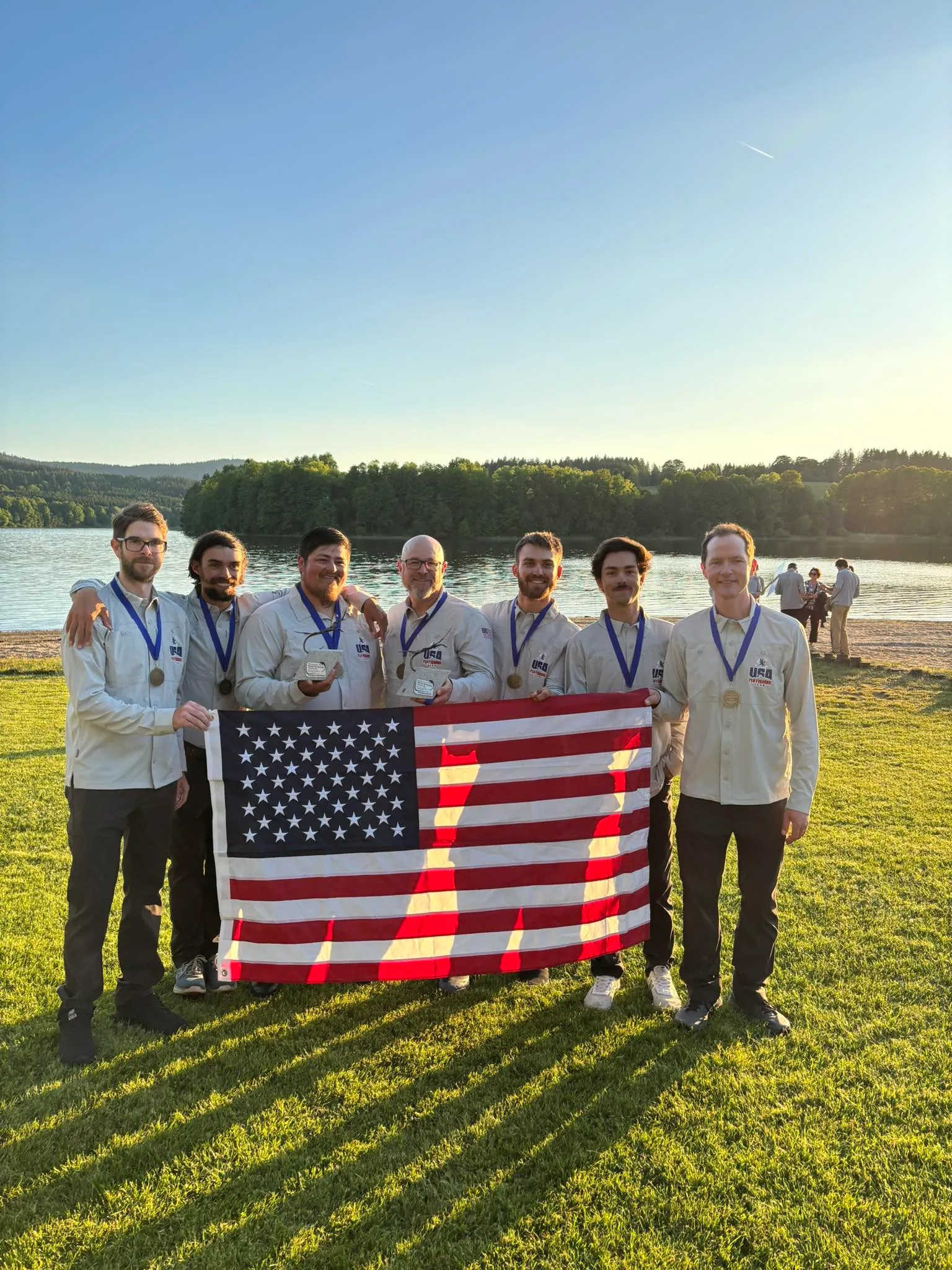
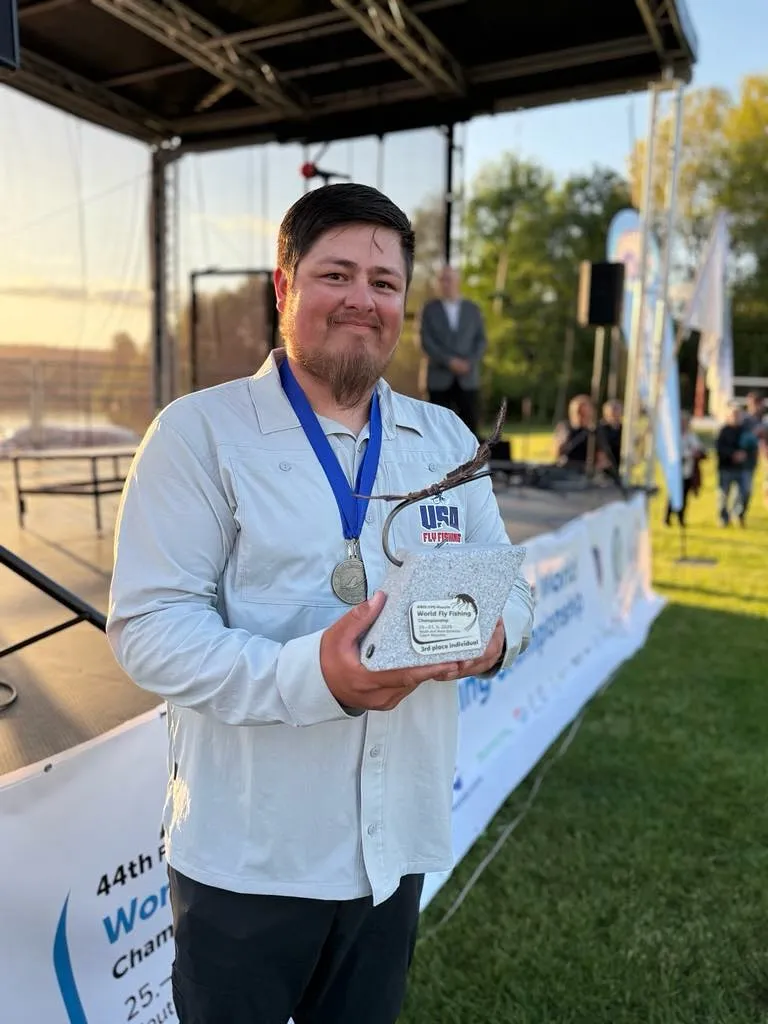
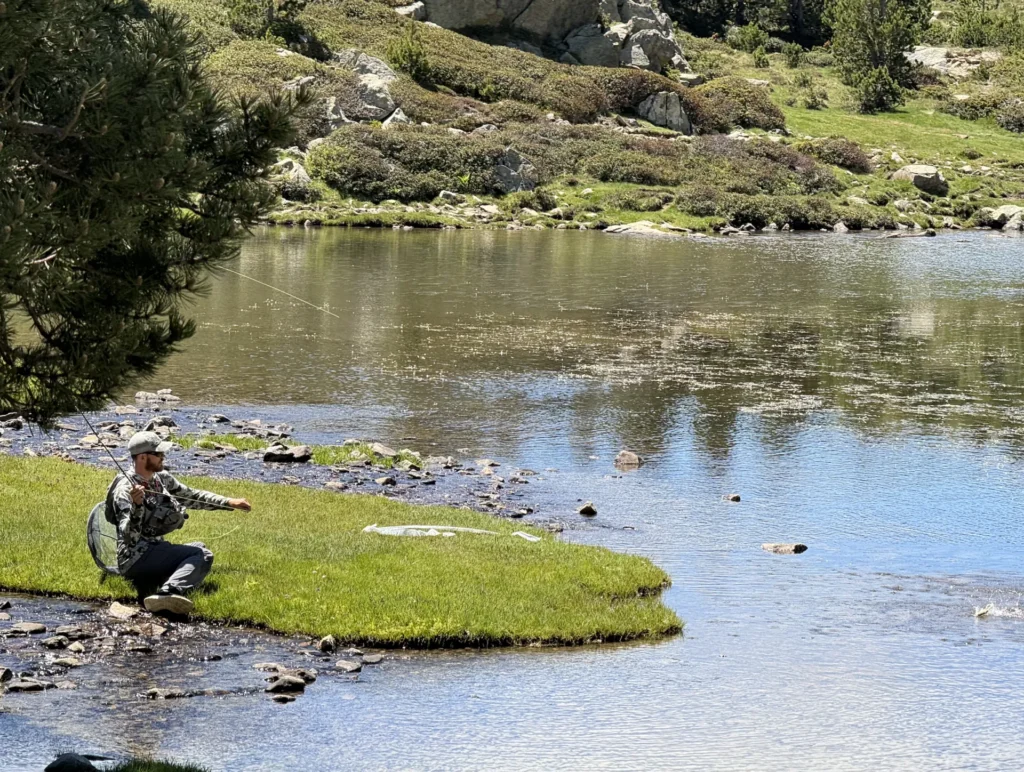
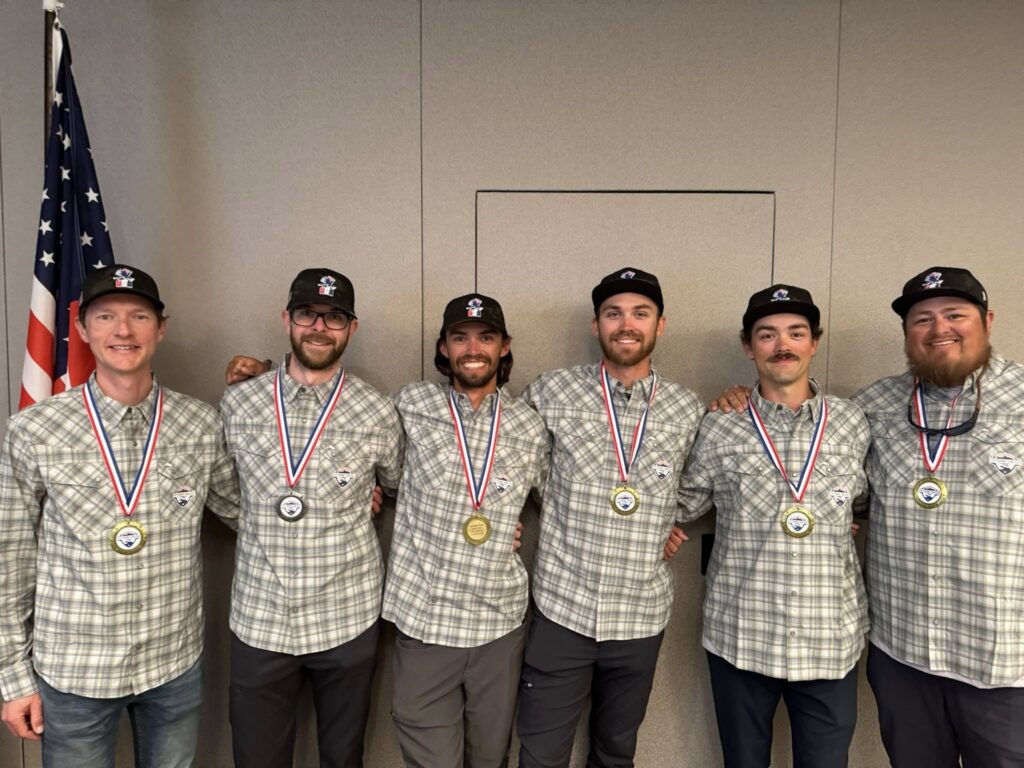
Mike and Michael are two of the five starters representing Team USA at the upcoming World Fly Fishing Championships in Eastern Idaho. They’ve spent years refining modern Euro nymphing tactics, and this episode digs into one of the biggest changes in competitive fly fishing over the last decade: the move from traditional sighter systems to fully colored micro leaders.
The discussion also covers team strategy, competition preparation, dry-dropper adjustments, minimalist gear systems, and how presentation often matters more than the fly itself.
Mike Komara is a Pennsylvania-based guide and competitive angler representing Team USA at the World Fly Fishing Championships. He’s known for his technical Euro nymphing approach, minimalist competition style, and teaching-focused guiding work through Innovative Angling.
Michael Bradley is based in North Carolina and fishes under the Fly Fish Cherokee brand. He brings a highly intuitive style to competitive fly fishing and has become known for simplifying fly selection, carrying minimal gear, and adapting quickly under changing conditions.
Both anglers are heading into the championships with a little home-field confidence, although preparation looks different for each of them. Mike has been guiding nonstop leading into the event, while Michael admits he’s just starting to tie flies for the championship box.
One of the more interesting takeaways here is how few flies these guys actually rely on. Michael mentions that most of his confidence patterns are simple pheasant tail variations, while Mike jokes that he mainly fishes Walt’s worms, pheasant tails, and mops because they’re fast to tie.
Mike explains that most micro leader systems are built around thin level monofilament roughly in the 5X range. In competition, anglers are restricted by FIPS rules, but outside competition he recommends anglers simply spool up 40 to 50 feet of thin colored mono instead of worrying about specialized Euro fly lines.
The major advantage isn’t just reduced diameter. The fully colored leader allows anglers to visually track the entire drift from fly line to tippet. That added visibility gives anglers far more information about depth, drag, and subtle strikes.
Michael explains that many newer Euro anglers still begin with hand-tied sighters because they’re easier to understand initially. But at the highest level, most competitors have shifted toward fully colored micro leader systems.
Mike adds that many anglers still add a small contrasting painted section near the tippet connection to improve visibility in changing light conditions. That tiny adjustment helps track drifts more efficiently without needing a traditional multi-color sighter section.
One of the surprising takeaways is how often these competitors prefer fishing a single fly. While FIPS rules allow up to three flies in some waters, both anglers usually stick to one fly whenever possible.
The reason is simple: fewer tangles, faster rigging, and more efficient fishing under pressure. Mike notes that rebuilding complicated rigs after break-offs can waste valuable competition time.
Both anglers adjust micro leader diameter based on conditions. Mike stays around 5X for most situations, but increases diameter when fishing larger fish or heavier tippet systems. Wind also becomes a huge factor.
Thinner micro leader can become extremely difficult in gusty conditions because they behave almost like airborne kite string. Heavier mono helps stabilize the system, although it reduces long-range control.
Michael points out that lighter leaders are especially effective with tiny flies and smaller trout in the 8–13 inch range.
The dry-dropper conversation highlights how adaptable these systems can be. Michael shortens the leader slightly to create more depth between the dry fly and nymph, while Mike occasionally increases leader diameter for better casting in windy conditions.
Both anglers agree that pocket water is where dry-droppers really shine. In fast, broken currents, fish have less time to inspect flies and often react more aggressively. Mike also explains that truly fishing a single dry fly effectively usually requires switching back to a dedicated fly line setup.
Both anglers primarily fish long Euro rods in the 10-foot to 10.5-foot range, mostly in 2- and 3-weight models. Michael fishes the Highland Stealth series for nearly everything from nymphing to dry flies.
Mike also explains solid-tip rod technology, where the final section of the rod is solid carbon instead of hollow graphite. These rods load better with extremely light flies and help protect tiny fish during competition scoring.
One of the strongest themes in this episode is simplicity. Mike and Michael both describe moving toward highly minimalist setups over the last several years.
Michael explains that during the World Championships in Italy, he stripped his setup down because bulky chest packs made wading difficult in chalky water. Since then, he’s continued refining his system into just a handful of slim fly boxes and basic tools.
Both anglers admit they don’t actually change fly patterns very often. Mike especially focuses on presentation first before swapping patterns. If he changes flies, he tends to make major changes instead of subtle variations.
The team dynamic also becomes critical during world championships. Anglers constantly share information between sessions, but teammates must trust one another enough to fully commit to the program.
One of the best stories in the episode comes from the France championship, where Michael discovered fish feeding nose-down in lake mud. That unusual observation led to multiple fish after dragging nymphs directly through the mud bottom.
When it comes to casting these ultra-light systems, both anglers recommend starting with water-loading techniques. Using the water tension to help load the rod makes learning much easier.
Mike also emphasizes reducing overall casting motion. Most anglers move the rod far too much when trying to cast micro leaders. Compact movements and controlled rod-tip travel produce far better accuracy and turnover.
Episode Transcript
WFS 928b Transcript
00:00:00 Dave: If you can’t read your leader, you’re guessing no matter how good your fly is. Today we’re breaking down microliters how they’ve changed modern fly fishing, and why the best anglers in the world are simplifying everything. To see more and miss less. Today we’ve got Michael Bradley and Mike Kimura on the podcast from team USA. And today they’re getting ready for the World Championships right here in the USA, Eastern Idaho. We’re going to be breaking it all down today on the podcast. This is the travel podcast series where we bring you the best places to fish in the West and the stories and the people that made this region what it is today. Mike and Mike are on the show today, and they are two of the five starters for team USA this year. This is going to be the World Championships today. They’re going to break down how the shift from traditional ciders to fully colored systems has been taken effect over the last number of years. Here we’re going to find out how liter size impacts casting, drift and control in the wind. We’re going to get the exact simple rigs these guys trust under pressure. When the when the pressure’s on, they got to make the decision. We’re going to share that today. And why most competitors fish fewer flies than you think. We’re going to talk about a handful of those flies. Plus we’re going to find out when to change flies and when to stay put and adjust your presentation instead. This one is packed with real competition level insight, and you can check in with Mike Chmura at innovative angling dot com, and you can follow Michael Bradley at Fly Fish Cherokee on Instagram. Let’s get into it. Here they are. Mike and Michael Fly Fish Team USA. Are you guys doing doing great.
00:01:32 Mike: Yeah. Doing awesome. How are you?
00:01:33 Dave: Great, great. Yeah. This is I’m excited to be back here again. We we’re doing a series of episodes, which is pretty cool. It’s, uh, team USA. You guys are going to be in, in eastern Idaho. The world championships are there this year, twenty twenty six. And we had Devin and Jack on and they were on. We’re going to have probably three or four more episodes here where we’re going to kind of lead up to the event and maybe after the event and check it out and, you know, give people some tips and tricks, but tell me where you’re at right now. It’s kind of almost meh. Or how are you guys feeling about this, uh, this event coming up here, are you pretty much ready to go or you got a lot of work to do?
00:02:06 Mike: Yeah, I mean, I, I think we’re, we’re all pretty, pretty excited to, uh, to have a little home field advantage and, uh, all feeling, feeling pretty good as far as world championships go. I know me personally, I’ve been guiding pretty much nonstop here, so I haven’t, uh, had the as much time to think about it as I’d really like, but I’m going to have some, some time off as it cools down through June. So, uh, I’m gonna really put the.
00:02:33 Dave: Yeah. Get going. How about you, Michael? You, uh, you geared up and ready to roll.
00:02:37 Michael: Uh, I am hardly ever geared up and ready to roll.
00:02:41 Dave: Yeah, I.
00:02:42 Michael: Procrastinate a little bit. I actually did start tying my my worlds box a couple days ago. So I’m forty eight flies into that. So that’s, that’s a good start for me.
00:02:52 Mike: Yeah, that’s forty seven more flies than, uh, than Michael usually fishes during world championships.
00:02:58 Michael: Yeah, I, I usually show up with just a few flies and do all my tying at the championships. And, uh, it’s a little nicer to have some flies already that are confidence patterns for, for our team and have those in the box already.
00:03:13 Mike: Yeah. I mean, it’s nice to have some, some ideas of what to tie, but it’s almost always for everyone. You end up fishing the flies that you tie the night before your session, no matter how many flies you show up with.
00:03:25 Michael: So one hundred percent. And that’s usually why I wait so long to start tying. But I just went ahead and knocked out some of my confidence stuff.
00:03:33 Dave: Nice. And is some of that confidence stuff a little mix? We’ll get into this today. We’re going to talk a little bit about Microliters and kind of let it take, you know, where it takes us today. But yeah, what do those look like? I mean, is that something where it’s just a couple of patterns tweaked in different variations?
00:03:48 Michael: I mean, for me, it’s like, I don’t know, just a simple pheasant tail And a few variations of that and not a whole lot else.
00:03:57 Dave: Right?
00:03:58 Mike: It’s pretty, pretty much the same for me.
00:04:00 Dave: Yeah. Awesome. Well, I know Microliters are a big part of this because I know we’ve talked on the podcast about it, right? I mean, a lot of guys that are up there, where you guys are at are using these microliters. Where do you guys start with that? If you’re going to educate somebody who’s not totally familiar with how it works? Where would you start describing what a microliter is, how you fish it all that?
00:04:20 Mike: Yeah. So I mean, for Microliter system, you know how I start a lot of people off on it when I’m, when I’m guiding and I’m introducing people to Euro in general. And then, you know, the competition tactics. But, um, you know, basically I introduced it as a five x liter roughly around their up or down a size is generally what we’re, we’re all kind of fishing and, you know, for us, for me going by my competition rules, we’re coming off of a euro fly line. So zero point two two diameter, zero point two two inch diameter fly line with about, you know, fifteen sixteen feet to the tip it and then to the flies. For a lot of people that aren’t competing, I just recommend instead of that fly line fishing a, you know, forty, fifty feet of that, that material, that thin five X range material so that your, your fly line doesn’t come into play because that actually makes it a little bit more efficient and easier to use, easier to cast distance. But, uh, as far as materials go, there’s pretty much endless options out there. You can, you can try as many as you want, but there are some, some purpose built ones. So like the Pierre Sempé is probably one of the more popular ones. Um, from a, it’s a French company, it’s basically just a colored monofilament. There’s nothing super special about it. It’s not, it doesn’t have any, any crazy qualities besides the fact that it’s relatively opaque and chartreuse or neon orange or whatever color you want so that you can see it while you’re fishing. Um, and I think one of the, the biggest advantages outside of just the, the size of them, um, you know, the being thinner, having less mass, making it easier to fish lighter flies further away from yourself. Um, is the fact that now we’re, we’re mostly fishing fully colored systems. Um, so you can see the leader from, from fly line all the way to tippet. And that gives you a lot more information about your drifts, your flies, kind of what’s happening under the water lets you do some, some other cool things with it. So there’s, there’s a lot of advantages to it. And it’s, it’s a probably one of the biggest steps forward, I think, in the Euro game in the last, last decade or so.
00:06:39 Dave: Yeah. Describe the colored versus say, you know, you hear a lot about ciders and all that stuff. I mean, is this are you still using some sort of a cider is this whole thing. Describe that, how that factors into this.
00:06:51 Michael: I think there’s there’s several different ways you could look at that for the cider. I mean, I would say ninety nine percent of your newer anglers that are coming into Euro Nymphing are doing the hand tied ciders, which is what we were doing, like twenty fourteen, fifteen, sixteen. And then somewhere around twenty eighteen, we kind of went to the level or the micro leaders, but there’s there’s still a lot of people that are new to Euro nymphing that are using the hand tied ciders, which it’s not terrible. It is probably a little easier to fish for new anglers. And if you got a good teacher, which I think people like Mike and Jack and Cody are great teachers of that. I think the micro leaders, probably the number one leader for all competitors, that is.
00:07:41 Dave: So now you’re not seeing anybody out there with the the tight end cider anymore.
00:07:46 Michael: Not hardly ever.
00:07:48 Mike: Rarely. I know a few people that fish a microliter system with a, you know, like a non visible but section of whatever material. And then they have a micro liter material site or tied in there. So it’s still basically level, you know, four or five X range size, but it’s just has a only one part of it is visible as opposed to the entire thing. But it comes down to a little bit of personal preference. I do think there’s a big advantage to being able to see the entire thing, but what a lot of us will do as well is they have the either the waxes or the solid paints, like the neon paints or waxes that will put a little bit of a, you know, a foot, eighteen inch section of that color in the bottom of our, our leader so that there’s just a little bit of contrast in there. So like I use a, a fluorescent green or yellow leader. Um, and then I have, you know, eighteen inches of pink or orange wax or paint down there. Um, towards the end, like three inches from the tip. That’s, uh, you know, just making it stand out a little bit different helps in different light conditions. But that’s kind of the closest thing that most of us are using to like a true like sighter section on our leaders these days.
00:09:05 Dave: Gotcha. So yeah. So you’re still. Yeah. Painting it in or coloring it in. Is this when you’re, you’ve got these microliters. You’re using these for all types of, you know, the, you mentioned the dry dropper kind of everything. Are you guys pretty much using the same liter setup for all your different types of fishing?
00:09:21 Michael: I do sometimes if I know that I’m going to like jig a streamer, I’ll go to a heavier, slightly heavier leader, like maybe six pound or something, something of that diameter and I’ll do the jig streamers. But for the most part, I use all like three or four or five pound level line.
00:09:39 Dave: That’s always the interesting thing too, at the pound and the X, right? Because you’ve got both. Because Mike, you said five x. Is that what denotes the microliter would you say? Is it the five stuff five x or smaller. And then how does that factor into the three for the pound stuff. How’s that. Is that pretty easy to how do you guys think about that? Do you think about both?
00:09:58 Mike: I mean, I would say in general I would consider microliter anything under like eight pound slash two X material and I’m using the X and you know, Michael’s probably using the pounds because most of this stuff is measured in millimeters and a lot of anglers don’t think in millimeter diameter.
00:10:19 Michael: I definitely don’t.
00:10:20 Mike: Yeah. Well, when you buy this stuff, it’s all, you know, the spools are usually from from Japan or from Europe, from countries that use the metric system. They’re measured in more in millimeter diameter, you know, classes than, than the X system, than the pound system. And it, you know, you try to convert it, it doesn’t always convert perfectly. It almost never converts perfectly. And the other thing to remember with these materials and any, you know, any of the lines that we use is that they, they swell when they come out of the die, that they’re, they’re made in so that they’re always going to be a little bit bigger than advertised. So here, for example, is about three quarters of a size bigger than it’s, it’s advertised as. So the point twelve millimeter material they have, which would be around six x if it was true to size, is closer to probably five and a half x. If I was to, to try and put a number on it. So it’s, it gets very confusing. There’s a lot of stuff around it.
00:11:19 Dave: So roughly the idea. Yeah, it’s basically thin though for the most part these are thinner leaders and it’s the whole thing is what it sounds like. The whole forty. Did you say? Well, if you guys have a limit, right, it can only be what, twice the length of your rod for your leader. Is that the rules.
00:11:33 Michael: Yeah. From the from the butt of the rod to the tip and back down to the point. fly can be two times the rod length.
00:11:41 Dave: Yeah, yeah it was. So if you had a if you had a ten foot rod, it would be what, twenty feet or a little less than twenty feet.
00:11:48 Michael: Twenty feet with the the leader plus tip included.
00:11:52 Dave: Okay. So that’s what you guys are said to. But what you said, Mike, was that if we were out there not in competition, you might as well just use a bit longer forty or fifty foot full thing.
00:12:00 Mike: That’s what I usually recommend to people. You know, one save, save fifty bucks or seventy bucks on a line that you don’t entirely need. If you’re, you’re not trying to stay within either competition rules or your state’s rolls because some, some states, national parks clubs have leader length limits as well. Um, so that’s another place that those lines can come in handy. But, uh, you know, if you’re, you’re just fishing regular water, there’s, uh, you know, no reason not to spool forty feet of that, that material up and make some, some super long casts and, and do some, some cool stuff that with the Euro line, you get kind of hindered because as you try and cast that out of the tip creates a really big hinge in the system and it just doesn’t cast well. So we’re pretty much limited casting wise to that leader length out of the rod tip and maybe a little bit more.
00:12:51 Dave: That makes sense. Maybe describe that on. Let’s take it to the. If you’re nymphing describe your, you know, from the fly up to the leader. Is it pretty simple? Like if you had to describe what that looks like, what you guys are fishing typically, or is there a lot of diversity in depending on the fly, the size of the fly and all that?
00:13:07 Michael: I feel like mine’s pretty simple. About sixteen feet of leader. The normal is like four pound, whatever’s close to that and the millimeters or x five X leader and, uh, just a couple feet of seven or eight X to a single fly.
00:13:24 Mike: Mine would be about the same thing, you know, same length leader, same length of tippet, roughly four, four and a half feet of tippet. And then I also prefer single fly in all the situations possible, you know. And if if it calls for double fly, you know, it’ll it’ll be be a double fly rig. But as far as the leader itself goes, that doesn’t really change what what I’m doing personally with my, my leader setup.
00:13:49 Dave: And when would it call for a double fly? Describe that. Can you fish double flies at all events? Is that something you can do.
00:13:55 Michael: If the local rules allow it? We go by local rules first and then the Fips rules are three flies, Max.
00:14:02 Dave: Okay, so you can fish up to three. Okay, so and most places you can fish two, right. At least in the I think where you guys are going. Henry’s is that Henry’s you’re going to be fishing. Well, a few of the waterways in there. But are those two flies or three.
00:14:15 Michael: Well we were going to be on Hebgen and it’s I believe it’s two flies, but I don’t I don’t know what’s going to happen with Hebgen. So.
00:14:22 Dave: Oh with the low flows. Yeah.
00:14:23 Mike: And every everything else over there is three I think.
00:14:27 Michael: So it’s not often that we have three flies on in the river though.
00:14:30 Mike: Yeah. I’ve never personally done it ever really in a competition? In a competition?
00:14:36 Michael: I did at the Cherokee Nationals, excluding.
00:14:39 Mike: I’ll do like a dry double dropper sometimes, but, uh, never. I’ve never, never fished three three nymphs at once on my my rig. It’s, uh, for competition stuff for me, that’s, that’s a lot of rigging and a lot of a lot of time to replace if I break that off.
00:14:55 Dave: Right. Are you guys breaking this off? You guys occasionally breaking stuff off like the rest of us out there?
00:15:01 Mike: No. Never.
00:15:02 Dave: Never never.
00:15:04 Mike: No. All the time they are.
00:15:06 Michael: I don’t I don’t hardly ever lose flies or leaders.
00:15:09 Mike: Yeah. That’s that’s why he he can go in with seven flies and come out with eight.
00:15:14 Dave: Oh, really? Now, what’s your secret, Michael? How are you doing that?
00:15:17 Michael: I don’t know, a lot of luck. Probably all the years I spent getting hung up. I just learned how to not get hung up.
00:15:25 Dave: Yeah, it seems like it would be. Well, that’s a challenge. I think, for a lot of us. You know, you’re fishing nymphs. You’re trying. Well, I guess you’re not always trying to get down at the bottom, right? You guys are probably fishing these things through the water column. Maybe talk about that a little bit. Let’s stick on the nymphing for a little while. How would you describe your would you say you guys are similar the way you nymph? Do you know exactly how you both of you guys fish. Have you fished together long enough that you kind of know exactly what that looks like?
00:15:48 Mike: Yeah. I mean, I’d say we’re probably more similar to each other than, you know, to the West Coast guys. As far as style goes, I think there’s probably a decent bit of overlap and we fish each other’s waters. But enough that, you know, we, we have a pretty good idea. But definitely I don’t think I don’t know exactly how Michael fishes all the time. And I don’t think he knows exactly how I fish all the time. Right. And it’s, uh, you know, definitely some personal style and, and all that in there.
00:16:18 Michael: I know exactly how you fish all the time, right? I won’t turn on or off or mop.
00:16:24 Mike: Well, that is true. That’s, those are my three flies of choice for sure.
00:16:27 Dave: So mop pheasant tail. What was the other one?
00:16:29 Mike: Walt’s worm.
00:16:30 Dave: Oh, in the waltz. Yeah.
00:16:31 Mike: All the flies that I can tie in under a minute.
00:16:34 Dave: That’s the key. No, this is cool. And and you guys are in. So, Mike, you’re in Pennsylvania, and, Michael, you’re in North Carolina. Yeah. That’s right. Has there been a world’s event? When was the last one on the East Coast?
00:16:45 Mike: There’s never been an adult championships on the East Coast. But they did a youth world championships. I want to say in twenty ten or eleven. Uh, where I live in Pennsylvania, you know, right around my area.
00:16:59 Dave: Okay. So it’s here this year, like we said, in Idaho or in that area. Where has it been before? Has it been here one other time or has it been here a couple times?
00:17:08 Michael: It was in Vail in twenty sixteen, I guess like Vail Eagle and I don’t know where the blue is. Is it Silverthorne?
00:17:16 Mike: Yeah. Silverthorne. Yeah. It’s all all around Colorado. And I don’t think there was any before that. I think there was actually one a long, long time ago.
00:17:25 Michael: I wouldn’t be upset if that’s where it was going Again, if it was going back towards Vail in that area. Yeah.
00:17:31 Dave: What about like if they got a pull to East coast up there somewhere where it would be a good place to do it on the east coast?
00:17:37 Mike: Not many places.
00:17:38 Dave: Really. Why is it why is that? Because you’ve got all these storied waters and we’ve heard. You mean you’re in two pretty popular places for fly fishing where you guys live? Why wouldn’t it be great out there?
00:17:48 Michael: If I could pick a place, it would be probably in Pennsylvania.
00:17:51 Mike: Yeah. I think Pennsylvania is probably one of the best options. I think the the problem is our rivers are not like the good trout sections of a lot of our rivers are not super long. So if you get a get a lot of countries involved, like, you know, usually us worlds are a little smaller because it’s a little bit more expensive. But you know, for, for the Czech Republic, I think we had thirty four teams. So there’s not a lot of rivers in Pennsylvania that I could could set thirty four beats on and have them be the same, or at least in any way fair from the the top beat to the bottom beat.
00:18:27 Michael: Well they’re not, they’re not like that at any world to go to.
00:18:29 Mike: So they’re not like that at any world. But I think Pennsylvania you would you would be catching trout at the top and you’d be catching bass at the bottom. And it would, you could do it, but it wouldn’t be, it wouldn’t be one that I, I would enjoy fishing at, put it that way.
00:18:43 Dave: Right. So the microlitres sound like they’re pretty straightforward, at least the nymphing you’ve got the sixteen foot, you’ve got a two to four foot section of tippet, a fly on the end there. And then maybe describe how you guys fished those. Like how would you describe the the way you fish? Is it pretty, pretty technical on how you do it?
00:19:01 Michael: For me, choosing leaders, uh, if I know I’m going to be fishing like slightly heavier flies, I’m going to go with, uh, the five x closer to five x size, the dry dropper. I’ll probably drop down, I don’t know how do you measure those? Mike? Is it oh one two and oh one four and oh one six.
00:19:19 Mike: Yeah. One oh one two millimeter is six x Six x I one four is five x o one six is four x roughly.
00:19:28 Michael: Yeah so I would do like the four x with heavier flies or bigger fish. The oh one four. I would do just more of like a neutral. You can handle some big fish, but probably not a lot of them. I’d worry about it breaking after a couple fish.
00:19:45 Mike: Yeah, that’s, that’s a good point, Michael. The longevity of some of these.
00:19:49 Michael: Yeah. And not that it’s like snapping in the middle or anything, but like your tippet might break off from the the connection there, whatever you’ve got. And then the oh, one two for really light flies and fish in the eight to twelve or thirteen inch range mostly.
00:20:06 Mike: Yeah, I’m pretty similar. I mean, I, I stick with a one four like the five x for I’d say probably like eighty percent of scenarios. You know, when I have big fish, heavier Tippets like I was in New Zealand for, for a few months this winter and I fished like zero point one eight, which would be closer to like three X the entire time because we were fishing heavier tippets and chasing big fish down the river through rocks and stuff, where the leaders getting kind of marred up. So, you know, it kind of got to match the leader to the tippet size you’re fishing. That’s kind of the primary consideration. And then the wind speed can be a little bit of consideration for me at least. If I’ve got a really gusty day, I’ll go up to, you know, the point one six or point one eight something with a little bit more mass, uh, that’ll hold a little bit steadier in the wind. You know, it’s going to limit your, your ability to fish at distance because it’s going to have more sag. But if it’s that windy, you’re probably not going to be fishing at distance anyway. So going up in, in that size a little bit can, can help fight that. Because if you go down to, to the lighter sizes, you know, like the, the six x or something, they can be really, really wispy in the wind and just kind of like levitate there. So it’s hard to actually get into your drift.
00:21:21 Michael: Yeah. My flies today were blown like a they were a kite in the wind just flapping in the air.
00:21:27 Mike: Yeah. I think wind wind is the, the biggest enemy of, of a microliter system. It’s probably the hardest, hardest obstacle to get around when you’re, when you’re fishing one.
00:21:37 Dave: Yeah. So wind is one of the variables. And so that’s kind of the toughest thing out there when you’re, I mean, when you’re choosing that day, let’s just say, well, you guys are kind of going to know what’s going on. But yeah, you choose by fly size and then conditions. What about the kind of water flows, clarity, things like that. How are you guys doing? Is that helping decide what you guys do?
00:21:56 Michael: Oh, I would say that that more so determines like the tippet size. Not necessarily the leader size.
00:22:01 Mike: Yeah. I’d say the leader leader size is mainly what we just talked about. And then tippet size is going to be more condition based as far as like what the fish want to see what the, the clarity is going to be like, what the flies were fishing, you know, that kind of stuff.
00:22:17 Dave: Okay. Perfect. And and then we mentioned, I guess, Michael, you mentioned the dry dropper is the, the dry dropper. That’s kind of the same sort of setup and you just put on a dry or describe that. Is that different than just fish in the straight euro or straight nymph setup?
00:22:30 Michael: Yeah. I mean, usually just a slightly shorter leader because with the dry dropper, you want a little extra depth between the, the dry fly and the nymph. So you might do like three feet distance there. And so your leader might be a foot shorter or something like that.
00:22:45 Mike: Yeah. I’ll sometimes go up a little bit in size if I’m fishing a dry dropper, like a really light fly. Like if I, if I’m in shallower water, I have to fish a, you know, two zero or something under a dry, you know, a little, little heavier leader can sometimes help cast that a little bit better.
00:23:02 Michael: You think so?
00:23:03 Mike: I think so if you go up heavy enough, you know, if you go up one size, it actually I think makes it worse. Like if I go from zero point one four to zero point one six, it’s actually a little harder, I think to cast. But if you go all the way up to like Two or zero point two two like that. One or two X size. It can make it a little bit easier if you’re if I’m trying to like do a dry dropper because it’s windy and I’m trying to fight the wind, and I’m going to have that leader kind of on the water for a lot of the drift. Anyway. Um, I’ll go to the, to some of that heavier stuff, but that’s pretty rare that I’ll do that little opposite.
00:23:36 Michael: I’ll go thinner.
00:23:37 Mike: Interesting, interesting.
00:23:38 Dave: Yeah. That’s awesome. That’s cool to hear the differences because I think that, you know, I think a lot of us sit back and we’re like, oh, you know, you guys are all on the same, but it’s cool to hear because there’s a lot of different ways to do this. You know, I think that’s what’s cool.
00:23:49 Michael: I will say that Mike fish is in the wind a lot more than I do.
00:23:53 Mike: And I think it probably has a little bit to do with water types too, because like down there, you guys have a lot more pocket water stuff where you’re kind of holding that that leader up. Whereas up here I’m in more of the Spring Creek stuff where I have a lot more opportunity to lay that all on the water for most of the drift.
00:24:10 Michael: Yeah, I think that’s an accurate statement there.
00:24:13 Mike: I guess I’d say I’m a fisherman. More like a traditional dry dropper where you’re where you’re laying that on the water a little bit more and then picking it up as it as it gets close. And the only reason I’m not going to something like a true taper leader for fishing, that is so that I can, if I get to something where I want to fish a single nymph or go back to Nymphing, you know, I still have that relatively lighter leader that I can can go to Nymphing for a little bit and then switch back to dry dropper. But when I dry drop, if I’m doing like big slow pulls or something, I’ll do it on a regular line as well. And then, you know, for, for a single dry, we’re going to actual fly lines and dedicated setups for that. Can’t really can’t really fish a single dry on a microliter with too much effective range, right?
00:24:55 Dave: You need some weight on there.
00:24:56 Michael: You probably can’t throw that thing past your rod tip.
00:24:59 Mike: Yeah, it’s it’s you get about the rod tip in a foot or two extra if you’re lucky. You know, like I had, I had a client out today and we were, we were working on some microliter stuff and we had a little bit of a hatch come off and just quickly switched up to. We had to go to a dry dropper to fish that dry fly. You know, we weren’t fishing the nymphs, we were fishing the dry. But, you know, there’s just no way that we could have effectively casted that, you know, that dry on the microliter to the distance that the fish were out from us. So you either have to add a little weight under the dry fly to get it out there, or like I did, run back to the car, you know, after the hatch got really heavy and get a dedicated dry fly rod.
00:25:41 Dave: There’s a place where every bend in the river feels like it’s been waiting for you, where the air smells of sage and pine and trout rise beneath the shadows of the Tetons. That places visit Idaho’s Yellowstone Teton Territory, the heartbeat of fly fishing in the west, from the legendary Henrys Fork to the winding South Fork of the snake. This is where big fish and bigger stories live. You’ll find endless waters welcoming towns and locals who still wave as you drive by with drift boat in tow. This is your starting point for world class fly fishing, year round recreation, and wild country that stays with you long after you’ve packed up your gear. Check it out right now that’s wet fly swing dot com slash Teton T e t o n. Visit Idaho for yourself and support this podcast while you go. What’s the rod you guys are typically using here on kind of weight and size? Is it same for it sounds like it’s different for the dry versus the nymphing rod.
00:26:37 Michael: For the microliter.
00:26:38 Dave: Yeah, for the Microliter.
00:26:39 Michael: I use the same rods. Yeah. I’ve, I’ve got a Highland stealth, ten foot two, eight, ten foot three weight and a ten and a half foot three weight. And yeah, I can do all three things through a single dry, dry dropper, single nymph on all three of those rods. Not all with a microliter, obviously, but switching to single dry, I can put a two weight fly line under the three weight, throw it fifty sixty feet if I need to.
00:27:01 Mike: Yeah, yeah, I’m the same way I, I can do pretty much everything off of my rods. I also fish a Highland stealth the ten and ten and a half foot three weights, and they actually make pretty exceptional dry fly rods. I actually use a a euro line off mine because it loads the ten foot pretty well as far as, you know, actual casting and then a tapered leader off that for like my single dry stuff and then a micro leader when I’m just doing the nymphing or some micro liter dry dropper. But then I do have some rods that are a little lighter, like the, they have some of the new solid tip like technology that they’re using. So the tips are really light. I would say those are good for really light flies on the microliter stuff like single two O’s, single one five millimeter tungsten beads. But they do not really do, you know, dry fly or dry dropper. Well, they just don’t have the, the backbone to, to cast that. Well, they feel a little bit soggy.
00:28:00 Dave: Yeah. What is what is that solid tip, Mike, if you had to describe that versus say just your normal tip.
00:28:06 Mike: Normal rod tip is hollow. It’s rolled around a mandrel, so it has a larger overall diameter. The solid tip couldn’t tell you how they make it, but it’s it’s rolled so that, you know, it doesn’t have that. The majority of the tip is hollow still. But then the last six to twelve inches are solid rolled carbon. And so because it has a thinner diameter, it has an easier deflection. So it deflects under less weight. So they’re very bendy. They have a really high bend radius. And they they load under really lightweight. So they’re they’re good for casting lighter rigs. You know like I said the really light flies. They’re also good for landing really, really small fish. So the fish that are just going to score for us, for us in um, the like world championships or like in a lot of our local competitions, we don’t measure fish. It’s just any fish. Any trout that you get to the net is the counts. So you know, those solid tip rods because they. They deflect under light loads. When those little fish flop around, they’re not going to be just flopping on a, you know, basically a broomstick. They’re going to have a little cushion to, to that, that movement. So you land those a little bit better.
00:29:19 Dave: Gotcha. Yeah. So they’re a little more. Well it sounds like a little more flexible.
00:29:23 Mike: Yeah. Yeah. They’re a little more flexible. They have pretty fast recovery. So they’re, they’re kind of kind of specialty situations. Like I wouldn’t fish one in probably the majority of situations. But for a lot of our Pennsylvania streams where we’re dealing with, with smaller fish and lighter flies, uh, they do come in handy for, for certain times of year.
00:29:44 Dave: Maybe go higher level on gear. We’ve talked rods and leaders a little bit. What’s the other gear you guys are focusing on or it’s important out there for your for your events and everything you guys are doing. You guys have a lot of gear or what’s that look like?
00:29:56 Mike: The interesting thing is that, you know, conversely to what a lot of people think, most of us are pretty minimalist with gear. I know Michael is and I am to pretty pretty good degree. You know, we’re we’re not lugging around tons and tons of rods and reels and extra stuff, you know, on my pack, my pack is basically two fly boxes strapped to my chest. You know, I have a net on the back for for landing fish hemostats nippers and fly floating and as well as that wax or paint that I was talking about earlier. And, uh, some like leader grease for when I’m fishing dry flies or floating the cider. And that’s pretty much all, all that I carry on me, you know, on my rod and reel, obviously, and sunglasses and a hat are important. Can’t go to a session without those. But realistically, if I just had that on me and nothing else, I would feel pretty much fine fishing. Whatever I had to fish, whether it be competition or just a day on the water and tip it, of course.
00:30:59 Michael: So for me in twenty eighteen It’s kind of when I started going the minimalist route. I think Mike was still a little kid.
00:31:07 Mike: Yeah.
00:31:08 Michael: Carrying ten thousand flyers.
00:31:10 Mike: I had, I think back then more of those four page fly boxes completely full on me at any time. Yeah, my my chest pack weighed about twenty pounds. I would be surprised if it was any less than that.
00:31:28 Michael: But I started doing that back then because we went to our first world championship and or my first one in in Italy, and the water was kind of chalky looking. And with my chest pack, I couldn’t see where I was stepping real good. And I wasn’t trying to get over there and get hurt. So I just packed all my flies into one box and had one little, uh, flip page c f box or the little, I don’t know what those are called, the ones you can clip on your packs and stuff. Just a real small box. But, uh, I had one of those and just kept my go to flies in it and kind of liked it, and then I just tinkered it for the last couple of years. And I’ve even gone less than that to just a few slim boxes and the two C and F clip on boxes, and that’s it. I’ve got all my other essential items like the fly float and powder and, uh, nippers. I don’t carry hemostats and turns out I always need a pair. So it’s like every time I buy a pair, I lose them.
00:32:30 Mike: Is there anything you carry that I don’t? Michael?
00:32:33 Michael: I think half of our team is on that trend of going to the minimalist side of competition stuff. We’re only out there three hours. And if you need, I don’t know, I don’t know how many flights some of those guys carry. It’s kind of crazy, I know. I mean, it wasn’t long ago. Mike was carrying a couple thousand flies out on the water, and I was like, we’ll talk about it. And he said he was going to try it out. It was right after France.
00:32:58 Mike: Yeah. Back. Back in France. I was still, still rocking the big Umpqua chest pack, chock full of fly boxes.
00:33:05 Michael: That was just two years ago.
00:33:06 Mike: Yeah. And actually, what what made me kind of. I mean, part of the reason was that my last session, France, I had a fly box malfunction and my fly box fell apart. And I lost basically all the flies that I had for the session, you know, specifically. And, uh, I just worked off the, the other flies I had laying around in my bag and my, my pack and stuff and kind of came to terms with the fact that, you know, the flies weren’t the important part there. So, you know, I was like, if I can get rid of some of this weight and make my shoulders feel a little bit better, at the end of the day, I’ll do that. And after that, I really started trying to, to trim things down. I think now I’m about as trim as I want to be. I have one of those four page fly boxes for all my nymphs and dries, and I’ve got a fulling mill slim box for for all my junk flies, and I just have those basically glued in and strapped to my chest.
00:34:00 Dave: Nice. And when you guys are out there, I mean, how often are you guys switching up flies? Is this something where it depends on the situation, or are you pretty much switching a lot out there?
00:34:10 Michael: Oh, for me it depends on the fish density. If I know there’s a lot of fish, I’m going to change a lot of flies. I’ll change flies even if I catch one a couple casts later. If I don’t, if I don’t get another, I’m swapping. If there’s not a lot of fish, I’ll kind of work an area for a while with with one fly or two if I’m fishing double flies.
00:34:29 Dave: Is that because the fish are changing there, like within the. How the bugs are changing and you’re so you’re hitting different depths, things like that. Or what’s the. Yeah. Like when do you know when to change? It sounds like you just keep changing. If you’re not getting something, you’re going to change up. Is that kind of how you guys you’re doing? Is that what you’re going to kind of. Mike you the same way? Or is that is that off?
00:34:48 Mike: Um, I mean, similar, I guess the similar. Michael. Like if there’s, if I’m, if I’m in a spot that I know there’s fish and I’m not catching as many as I would generally expect, you know, which sometimes what you expect is, is wrong. You know, sometimes they’re, they’re just not happy or not there. And, you know, you’re just not going to catch a lot of fish no matter what you do. And sometimes there’s, uh, you know, they are keyed into to one, one thing over another and switching up flies is going to get a net. You a few more. So some sessions, you know, there’s, you’re going up and you’re changing flies between a few of them constantly because the, the fish want to see multiple things. Not every fish is going to eat the same fly. You know, some sessions you you’re just not catching the number of fish you think you should. So you just kind of keep changing as you go change through some of the good spots to try and dial it in a little bit more. But I’d say in general, I don’t switch up through flies very much, and I’ll switch weights and sizes a little bit and I’ll switch. I’ll make big changes. Like I’ll go if I’m fishing a pheasant tail and I don’t catch anything that I’ll throw on something like a mop or a worm, something that’s completely different, that’s totally couldn’t be be confused for one another so that I am kind of covering more, more room with, with one change. But, you know, like kind of like we were talking about earlier, I don’t, I don’t fish that many patterns. I’ve got three, three main patterns and maybe six total that I really carry on me. So, you know, I’m a big, big presentation person over over fly in general. So I try and switch things up presentation wise before I’ll switch flies.
00:36:26 Michael: Yeah. I’m kind of in the same boat as that. I don’t have a ton of flies. I might, I might have ten different patterns that I like, but it’s not, it’s not anything crazy for me at all.
00:36:36 Dave: When do you guys know to switch to the dries you’re nipping if you put a dry dropper, is that something where you’re based on seeing something hatching or something like that, or is that when would you do that for me?
00:36:47 Michael: If I see any kind of bug life, I’ll. Anything flying, I’ll at least try it just to see.
00:36:53 Mike: Yeah. I mean, for me to switch to, like, a single drive from nymph and I kind of have to see a fish rise or have prior knowledge that the fish are going to eat, you know, blind fish dries, you know, like, like when we go to, to Europe a lot like for, for whatever reason, European fish tend to be a little more surface oriented, at least than my fish here in Pennsylvania. So you can kind of pick them up just fishing a dry fly up through the water, whereas that’s a little bit harder to do here. You’re probably going to be better off nymphing for, for the most part, if there’s nothing, you know, actively coming off. But, uh, yeah. And then I mean, for dry dropper, I don’t fish dry dropper a ton. You know, it’s for me more of a pocket water tactic. Um, where, you know, one, you got fish that have to make quick decisions whether they want to eat your fly. So you tend to catch a little bit more on dries and that type of water. Um, and two dry dropper I just think it was a good, good presentation for that type of water because you can kind of ride the the seams and stick your flies in the pockets a little bit better. Um, with that, that dry track in the surface currents, but I don’t have a lot of that near me. So I’m not, uh, not a main tactic, but when I come across water like that or situations like that, it’s, you know, definitely in the, the top changes I’ll make when I’m trying to figure fish out.
00:38:14 Dave: So you’re saying pockets of water that you want to fish that you called it pocket water, right? So that’s kind of around boulders, things like that. Little pockets within a run or riffle or maybe describe that. What is that, that type of water?
00:38:26 Mike: Yeah. I mean, for me, like when I say that, I’m thinking like higher gradient water, where you’ve got a lot of, you know, like you said, current coming around rocks and other stuff and basically a lot of complex currents. So places where having something kind of stuck on the surface currents riding, you know, a specific current through the entire drift can help you get a little bit of a better presentation just because, you know, it takes kind of the, the guesswork about how to lead the fly and where your nymph wants to go and wants to track out of it, you know, and you know, there’s fish in faster, higher gradient water like that. They get to see your fly for less time. They tend to be a little bit more opportunistic. And in general, a lot of those waters tend to be a little bit lower nutrient, uh, have a little bit lower biomass when they’re real high gradient like that. So those fish will, uh, be a little bit more eager to, to eat, you know, a terrestrial or something falling on the water.
00:39:22 Dave: Are you guys, as you look out at the, um, the waters, you’re fishing, do you know, have you fished those before or are you guys going out there to fish beforehand?
00:39:30 Michael: We went out back in September and fished. We honestly don’t know if they’re going to be the same this year or not. So we’re I don’t want to say clueless, but we’re just not sure.
00:39:40 Dave: Right. Just because the water, it’s a lot lower. Yeah. Are you guys seeing the. I mean, there’s a big thing about West the out west, it’s low water, low snowpack, everything is that. I mean, obviously that’s probably going to be the case. And how are you guys thinking it’s going to fish differently? It sounds like you might not even be able to fish some waters. Is that is that what you’re thinking?
00:39:57 Michael: Apparently. And some of the lakes maybe. I don’t know about the rivers, though.
00:40:01 Mike: Yeah. I mean, I think the Idaho had a pretty decent snowpack if I’m not wrong. I think they they hit one hundred percent in at least part of the drainage. We’re going to fish. So hopefully I and I know there’s a lot a lot of dam control and stuff on there. So I don’t know if, if that’s going to play a role one way or another, but, uh, the Henrys fork and stuff should be similar to, to what we, we know, but, uh, you know, other than that, I’m not not sure about anything.
00:40:32 Dave: That’s right. Yeah. No, I think I’ve heard that too, that there are some places that had more snow than others for sure. Maybe people listening. Now for the events. It sounds like you guys could use volunteers. Do you guy? I know that’s probably not totally set up. How does that look? How would you explain that? What are the people doing that are volunteering at these events?
00:40:49 Mike: So for the most part, I think we’re looking for controllers. Um so that would be people that are going to watch the anglers fish, make sure they’re staying within the rules and not doing anything, you know, glaringly, glaringly illegal. And then also measuring the fish, writing down the fish sizes and keeping track of the scores, basically. So it’s a pretty cool opportunity to potentially get to watch some of the best competitive anglers in the world from, you know, all these different countries that probably would never have the chance to meet in, in real life other than this and see how they fish, see how they cover water. I can say if I wasn’t in the competition, I would definitely try and sign up and go out there and watch because it is really cool. Yeah. So we’re we’re looking for controllers. I think we have a good few already signed up. I’m not entirely sure, but I know we still need more. And I think there’s. There’s also some other opportunities for for being involved with other roles. I’m not sure what exactly those are, but I know we, we need, uh, you know, as many, many hands as possible. So if anyone has any, any interest in it, I think you’re going to put the website in the show notes here. You can always, always reach out to one of us individually as well.
00:42:08 Dave: Yeah, we’ll be doing that for sure. We’ll have, uh, if anybody wants to check it out and get out. I mean, it sounds like it would be great, you know, go out there and maybe fish some days on your own and then, you know, watch the best in the world, go for it. And that’s the other cool thing about the way we do it here, right? It’s different than France and some of the other countries where they’re, they kind of have basically it’s, you know, nobody else is fishing. But here in Idaho, there’s going to be potentially other people fishing around you. Is that kind of the big difference?
00:42:33 Michael: Yeah. In all my other world championships, I’ve never had a single person fishing in my bait. And at nationals out there I had several people fishing just. I had one guy stomping down the Henry’s fork, throwing streamers through my bait, and I was like, huh, yeah.
00:42:49 Dave: Probably that changes it a little bit, right? The dynamic. You got somebody in your water or, you know, it.
00:42:53 Michael: Honestly had me wondering where you crossed that river.
00:42:56 Mike: Yeah, yeah, it’s it’ll be an experience. I’m the same way, you know, I’ve never had or heard of another angler fish in a beat in in a world championship. So I don’t know how, how many people will have out there, I guess, especially depending on what the conditions are, if there’s a lot of people still going out there for fun, but, um, it’ll be an experience and, uh, hopefully it won’t, uh, won’t get, uh, anybody messed up.
00:43:24 Dave: Yeah. What do you think the, your guys’s chances are this year, obviously you’re going against the best. And I think you guys had some success right, in recent years. But how are you feeling? I know you’ve got the youth last year at this same location And the women both took the gold, right? Is that true? And then how are you guys feeling about this year?
00:43:42 Michael: I’m sure there’s going to be some extremely high expectations for us. But the senior anglers from the other countries, some of them are absurd how good they are. So I think it’s going to be tough, but I think we can do it.
00:43:56 Mike: Yeah, I definitely I have high hopes for us. You know, I think we’re I mean, we first championships that I did in France, you know, we were pretty pretty new team. And now by this point we’re we’re all pretty pretty close. We fish well together and share info well. And I think we’re, you know, as a team fishing as well as we we ever have, you know, better than we ever have. So.
00:44:19 Dave: And what does that mean when you’re fishing together as a team because you guys are out there. Describe that. What is the team? Because I’ve heard that a couple of times from I think others where this you guys are doing this really working as a team. What does that mean? How are you doing that?
00:44:31 Michael: Just the way we share info. It definitely takes time to learn how other people share their info and how you translate that to your fishing. So like if I know if Mike tells me he caught them, I don’t know, doing a certain anything, however, I can go out there and translate that. And I think the biggest thing is not being afraid to use what your teammate was successful on.
00:44:54 Dave: So if you hear, yeah, if he’s got a pattern, even if it’s not one that you’re, you’re used to using, you might, you might go with it just because you’re trusting your, your teammate.
00:45:02 Mike: Yeah, you definitely gotta have trust in the people on your team know that they however, they did in, in the session that they did well and fished well and to the best of their ability, whatever info they’re going to give you. Even if they didn’t do well, you know, whether or not that was the beat, uh, whether, you know, they’ll tell you if they figured it out or if they feel like they didn’t figure it out, you know, whether they think their advice is going to be be useful or not to you on the water, you’re fishing. So it’s, you know, just that the ability to, to communicate with each other, understand what what we’re saying, and trust the fact that they probably tried a bunch of stuff and what they tell you is what they figured out that worked. I’ve seen a lot of a lot of anglers from other countries really kind of go off the program of, of what their, their team was doing or what their team told them to do and, uh, end up performing pretty, pretty poorly, you know? So you really have to, to just trust your, your team Intel and, and stick with the program to some extent.
00:46:02 Michael: Yeah. Sometimes you run into the, the situations where it’s really hard to describe what happened. I ran into that in France when we were on the lakes, my second late day. I could not describe how those fish were acted. It was just so random. Every single one of them fish eating nymphs out of mud and oh, it was weird. So weird. So I watched one of the brown trout kind of nose down into the mud, and his tail was out of the water and eat something. I was like, I don’t understand. But I threw a nymph over there at it and drag it in the mud, and he ate it. So it was hard, hard to relay all.
00:46:40 Mike: You remember, Michael, because this was a strange situation in which his teammates. We actually ended up fishing the same beat because we. We rotated through the lakes and they had an odd number of lakes. So you ended up fishing one or two of the lakes that one of your teammates fished. And both of us happened to fish this lake. And, uh, I did not figure the fish out up there. Uh, I think I only got one one fish off that lake. And, uh, you know, he came back and I was like, oh, what did you do? And he was like, oh, I just, I crawled up to going through the mud and I was like, why?
00:47:16 Michael: Cost six doing that?
00:47:18 Mike: Yeah. Unbelievable. Wow.
00:47:20 Michael: Three doing that and then three on a dry. But still the three on the the mud thing was I never seen it before just happened.
00:47:28 Mike: But yeah, you run into that stuff, like just stuff that you, you never, never seen before or never, never thought to do that you, you ended up doing in your session and catching fish and it, uh, got to figure out how to, how to explain that to, to people, you know, to your teammates. And there’s a lot of things that you just don’t say to, you know, like, you know, I’ll, when we, we’re not explaining everything about what our rigs were like, what our flies and hooks were like, like there’s some stuff that you just have to kind of know about your teammates and how they’ve been fishing, you know, during practice and during the championship so far. So that when they, they give you that info, you don’t have to go, you know, so detailed that it takes an entire night to explain. They can tell you the high level of what they were doing. And you can work out the, the rest from, you know, just knowing how each other fishes.
00:48:18 Michael: Yeah, I think that’s extremely accurate. What you just said there.
00:48:22 Dave: Yeah. The team obviously this is a this is a big a big part of it. It’s cool to hear. I think it’s going to be fun to watch you guys because this is, uh, I’m not sure if it’s going to be quite. Uh, I know Glades got some ideas as far as tracking the event, and so that’ll be one way we’ll definitely be keeping in touch here. Maybe just give a, give a one tip. Let’s let’s take it. We haven’t talked casting at all. I think that’s another challenge with, you know, when you’re casting these light kind of leaders, how would you describe that? What would be each of you guys give us a tip on casting. What are you telling somebody to help them if they’re going to be trying to get better at casting these light, I guess, mono kind of light rigs.
00:48:57 Michael: For me, mine would be start out water loading it.
00:49:01 Mike: I would tend to agree. Yeah, water, water. Loading. The cast is definitely the the best way to start out. You can do it with any, any way to fly. You know, sometimes with the light flies, these get hard to cast if you’re casting overhead and stuff. But, uh, you know, my, my tip, I end up teaching, you know, a ton of casting stuff when I guide. And the number one thing that, that I tell people is, however much you think you have to move your arm and the rod tip during the cast, you know, cut it down by fifty percent and you’ll be about halfway there.
00:49:30 Dave: Oh, really? Oh. So you so you don’t want a big stroke?
00:49:32 Mike: I don’t use a very large stroke when I’m making these casts. I’m moving the rod tip for the most part, at least with a single fly, you know, moving at twenty twenty five degrees, which translates to not a lot of hand motion, you know, just a little, little bit of form, a little bit of a bit of wrist, you know, a little, little bit of a different casting style than, than a lot of guys on the team. And there’s, there’s a lot of ways to skin a cat. There’s a lot of ways you can, you can cast and make that cast fairly well. As long as you’re doing the mechanics, the overall high level mechanics. Right? But I like to keep things really condensed.
00:50:08 Michael: I don’t know how to explain it, but I think speed, the speed and power of your casts is probably your number one, like accuracy and get just overall getting the fly out there. I just don’t know how to explain that. For me, it’s a feel thing.
00:50:23 Mike: Yeah, it’s super, super hard to explain, you know, without, without showing someone and having them feel it and just see how, how it reacts. It’s such a more of an art than a science, I guess.
00:50:36 Dave: Well, cool guys. I mean, this is, this has been great to, to get a little bit of information here. Um, we’ll definitely be sending everybody out. Maybe give us a heads up again on your where we can track you guys down. Mike what’s your website there?
00:50:48 Mike: Yeah, mine’s innovative dot com and uh, all my socials, YouTube, Instagram is just at innovative underscore angling.
00:50:55 Dave: And then Michael, where are you at on Instagram?
00:50:58 Michael: Uh, fly fish Cherokee.
00:50:59 Dave: And is that going to be your, your site coming out? Is it going to be, do you got the URL? Is it going to be fly fishing, Cherokee dot com or fly fish or do you have that ready yet?
00:51:06 Michael: I don’t know. Uh, we’re waiting till whenever Mike gets some free time and he’s going to help me build a website.
00:51:13 Dave: Yeah.
00:51:14 Mike: Yeah, yeah. After after I stopped guiding every day and, uh, get it, get a chance to to sit down. We’ll, uh, we’ll get, we’ll get one out there, but, uh, probably won’t be by the time this episode comes out. But maybe the next one. I’ll get it to you for the show notes at some point.
00:51:29 Dave: Yeah, yeah, we’ll keep in touch with you. We’ll definitely be staying in touch after, after this event. You know, we’ll, we’ll kind of see how all this goes and, uh, definitely get you guys back on here. And I think we are, like I said, I think there are going to be a couple, at least a couple more episodes we’re going to do in this series, this kind of team USA getting ready. So, um, so awesome guys. Well, we’ll have links, like I said in the show notes to all this and we’ll follow up with you guys. And yeah, good luck on the event and we’ll be in, be in touch with you.
00:51:52 Michael: Alrighty. Thank you so much.
00:51:53 Mike: Yeah. Thanks for having us, Dave.
00:51:56 Dave: All right. Hope you enjoyed that one. If you get a chance. We mentioned it today. Your call to action is to check in with team USA. And we’ll have some links in the show notes. If you want to be out there and check these guys out, if you want to help out and volunteer, that would be amazing. Glade Gunther is leading the charge here, so you can check in with team USA. And if you can’t find a link there, check in with me, Dave at web dot com. If you’re going to be out in eastern Idaho in that part of the world, the Henrys Fork, South Fork, the snake, All those lakes and waters in between. Please check in with me and let me know. I want to let you know we got a big episode tomorrow. Uh, this one’s been coming for a while. Todd Moen is here. The great Todd Moen, uh, YouTube videos off the charts here. So we’re going to talk about his background, how he put it all together, what’s coming up here. So stay tuned for that. Uh, if you haven’t yet, please follow the show and you’ll get updated automatically when that next one goes live. And just want to give you a heads up and say thanks again for checking in today. Really appreciate you for, uh, listening this year, this month, this day. And we’ll let you know that. Hope to see you on the water this year. And, uh, and I want to hope you get a chance to explore a few new waters this year and experience that road less traveled. We’ll talk to you then. Have a good one.
This episode is a solid reminder that modern competition fly fishing isn’t really about carrying more gear or memorizing hundreds of patterns. It’s about efficiency, observation, and learning how to control your presentation at a very high level.
Mike and Michael share a ton of practical insight here, especially if you’ve been curious about micro leaders, Euro nymphing, or how Team USA prepares for world championship competition.