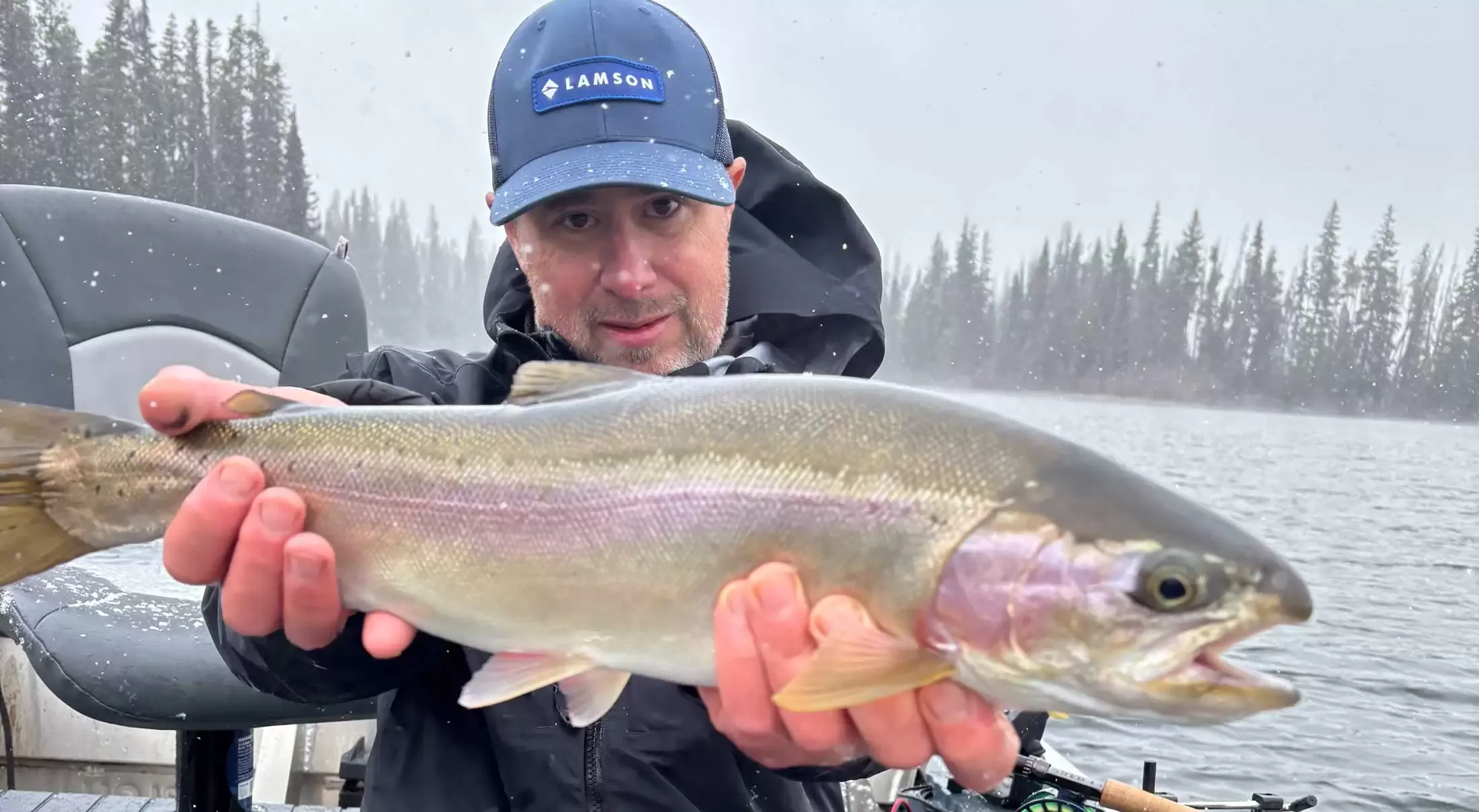
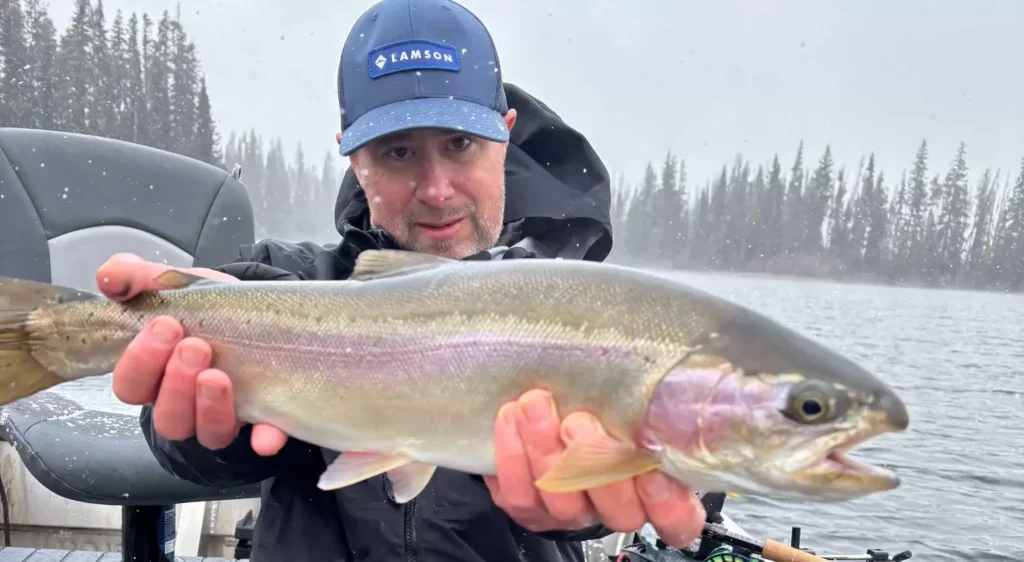
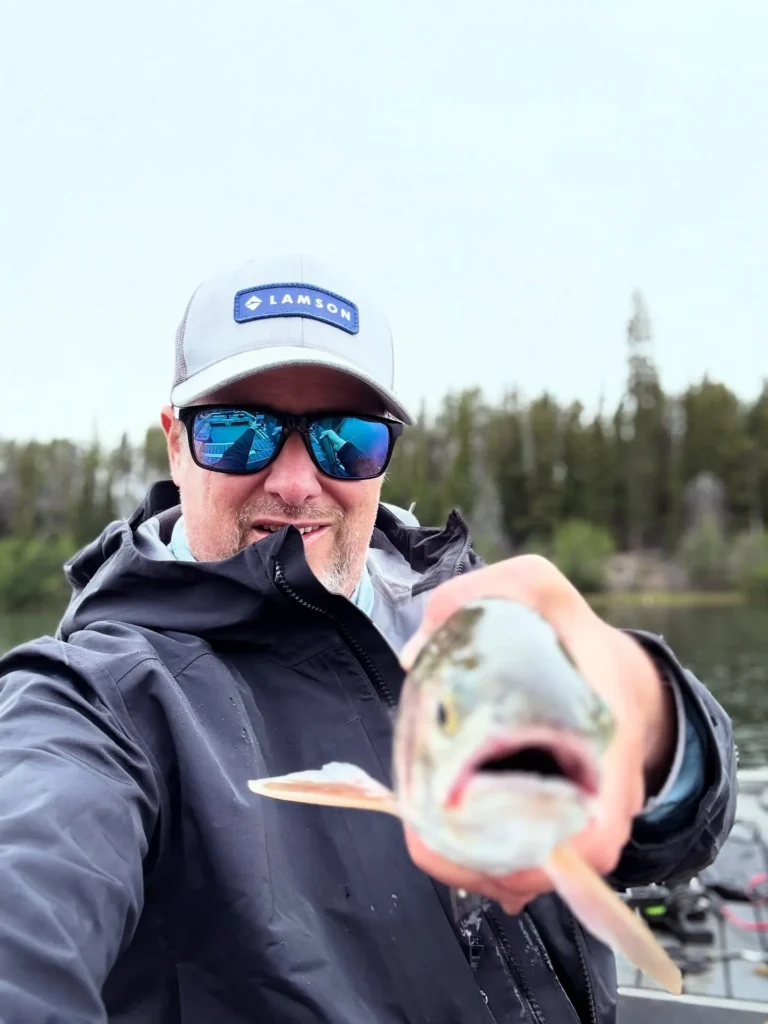
Greg Keenan is back on the podcast to talk all things stillwater fly fishing, from early season ice-off opportunities to advanced presentations for selective trout. Greg guides and teaches on the lakes around British Columbia and has become one of the go-to voices in stillwater education through his schools and YouTube content.
This conversation covers everything from reading lake structure and finding productive shoals to fishing chironomids, leeches, and naked line presentations more effectively.
Greg says the weeks right after ice-out can produce some of the best stillwater fishing of the year. In British Columbia, lower elevation lakes can fish well as early as March, while higher lakes may not turn on until June or July.
One of the biggest factors is lake turnover. During turnover, oxygen and water layers mix throughout the lake, which temporarily disrupts trout behavior and feeding patterns. Greg usually avoids lakes during this period and instead “lake chases” by moving between elevations to stay on the best fishing.
Greg explains that most trout spend the majority of their time in the littoral zone rather than deep open water. The littoral zone is the shallower structure area where food, weed beds, shoals, and drop-offs create feeding opportunities.
One of the best lines from the episode came when Greg pointed out that anglers on shore are usually casting toward the middle of the lake, while anglers in boats are often casting back toward shore.
Greg credits Phil Rowley for helping teach the DPR approach to stillwater fly fishing.
Depth is the first key. Greg says anglers often fail because they’re simply fishing above or below the feeding zone. Once depth is dialed in, the next step is matching the food source. Greg stresses the importance of throat samples over stomach samples because throat samples reveal what trout are actively feeding on right now.
Finally comes retrieve. Some days trout want a static presentation under an indicator, while other days they want movement and animation from a stripped fly.
One of Greg’s biggest “dirty secrets” is fishing tiny natural-colored micro leeches, especially on pressured trophy lakes. He often fishes:
Greg says many anglers make the mistake of going larger when fishing gets tough. Instead, he often downsizes dramatically to fool selective trout. He fishes these flies:
Greg breaks down one of the most important stillwater concepts in the episode: static versus animated presentations. Indicators serve two purposes:
But Greg explains that trout don’t always want a static fly. Sometimes fish respond much better to movement. The naked line technique removes the indicator entirely and allows anglers to:
Greg explains that many strikes happen right as anglers begin retrieving a fly that had been sitting motionless under an indicator.
Greg strongly encourages beginners to troll flies while learning stillwater fishing. Trolling helps anglers:
He explains that trolling is often the easiest entry point because anglers don’t need advanced anchoring systems or specialized setups to begin catching fish. Once anglers begin finding fish consistently while trolling, they can transition into:
Wind can either help or hurt depending on conditions, but Greg says moderate wind often improves stillwater fishing.
Greg specifically targets wind-blown shorelines because trout know food gets concentrated there.
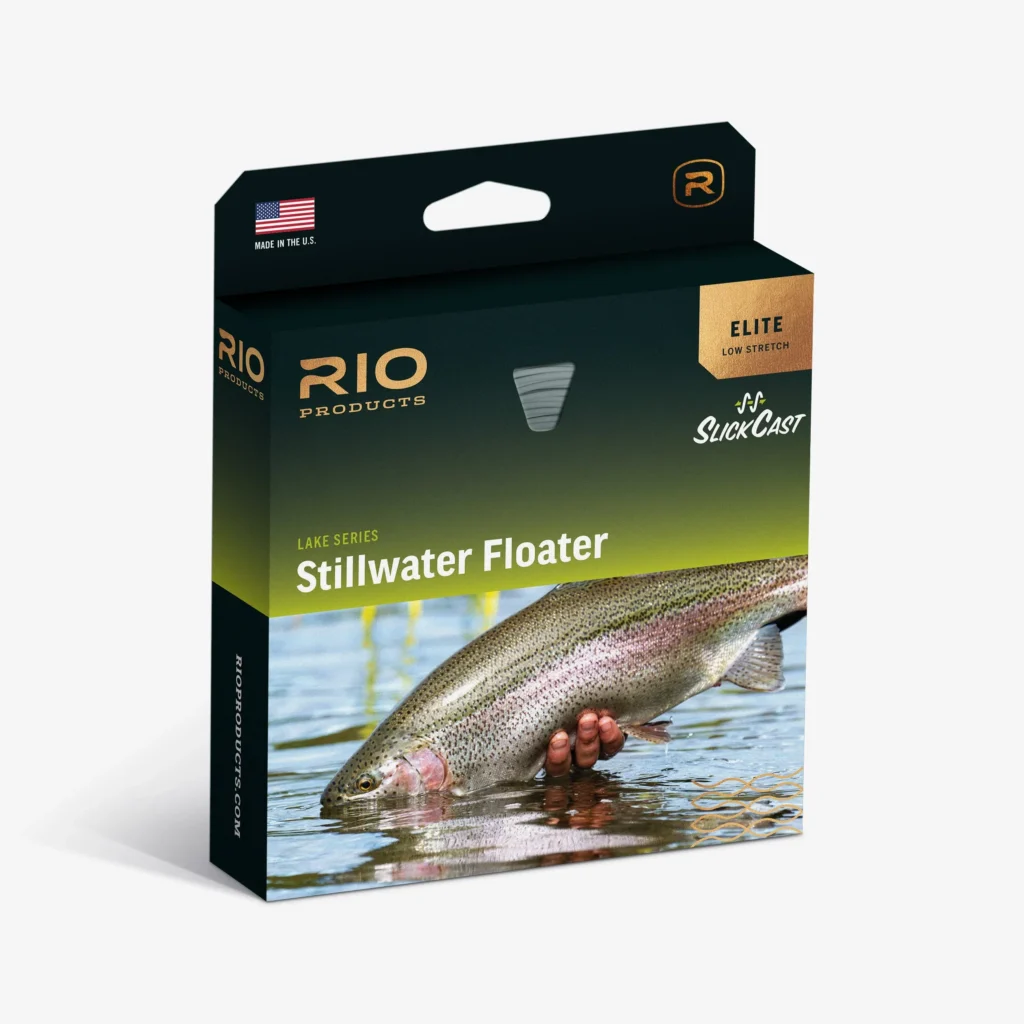
Greg shares several gear recommendations from the episode.
Greg says the line excels for indicator fishing because the head design turns over long leaders efficiently, even in wind.
Episode Transcript
WFS 926 Transcript
00:00:00 Dave: Have you been excited to improve your Stillwater fishing skills and maximize your success on the water this year? Whether you’re a seasoned angler or just starting out, knowing when and where to fish, what techniques to use and how to read the lake can make a huge difference on the water. In this podcast, Greg Keenan of Stillwater Edge is back to share some big insights into timing, tactics and the gear you’ll need to have success this year. Fishing Stillwater Lakes. From understanding lake turnover to choosing the right gear, Greg breaks down the complex topics into simple, bite size, actionable tips. This is the Wet Fly Swing podcast, where I show you the best places to travel to for fly fishing, how to find the best resources and tools to prepare for that big trip, and what you can do to give back to the fish species we all love. In this episode, Greg Keenan is here and he’s going to break down a few of his top tips that he uses when he’s out fishing and guiding on lakes around Canada. We’re going to find out when the best time is after ice out to hit it and how to optimize your fishing during lake turnover periods. We’re going to talk about depth, pattern retrieve and how to think about these things. We get into this today. We’re going to also find out about reading the lake, how to know where to go, where to start, how long to stick around in each spot when you’re there, and what patterns to use. We’re going to be breaking it out all day today. The lateral zone inflow areas, top places to target. It’s all here today. I hope you enjoy this one. You can find Greg Keenan at the Stillwater edge dot com. Here he is Greg Keenan how’s it going Greg.
00:01:34 Greg: Great. Dave how are you doing.
00:01:35 Dave: Good good good. We are always excited to jump into a Stillwater episode. I think, you know we do occasionally talk about it on the podcast. So and we had you on I don’t have the exact episode number, but we’ll get a link in the show notes to that last one we had you on. But give us an update of first off, I always love to hear what’s going on. I know you’re up just across the border and kind of the famous stillwater’s of the world, you know, up kind of the Kamloops area. But give us an update. What’s going on this time of year? Are you getting ready for fishing here pretty quick?
00:02:03 Greg: Great. I’m glad you asked, Dave, because right now, this time of year is fantastic. So the ice has come off of many of our Stillwater legs up here a lot earlier, a lot of anglers hit the ice and myself included, early February to early March this year, which is unheard of. So it was a great winter for that. Hopefully forest fire season holds off, but Stillwater wise we are on fire. Things are going. Um, and this is one of the prime times. This is actually one of the prime times we’re coming into like that April, May time where the kids are hatching. And those are these are those high number days that many anglers dream about, um, where it’s not unheard of to get thirty, forty fish per day per person. So it’s crazy. So this is like a Stillwater anglers dream this spring.
00:02:44 Dave: This is it. So it starts in typically. What’s a typical ice out on an average year. What do you think I.
00:02:50 Greg: So usually the end of March for those really low lying lakes. Um, and then it’ll go right up to, oh, probably the end of April on those high altitude lakes. So it’s really cool. And I like chase, right. So I’ll start low and then I’ll end up high and I’ll wake Chase and I’ll have a really good opportunity to fish many different lakes and follow those lakes because of the turnover and whatnot. I don’t really like to fish too often during turnover, and partly because I’m surrounded by an abundance of lakes I can pick and choose. Do you know that that makes a huge difference as well, right, as to other people in other areas. So, um, I’ll definitely Lake Chase and I, you know, hit the hit the lakes in the prime of it. So right after I give it a day or two and it should be good to go, it should be on fire. Those fish should be woken up and hungry and aggressive. Um, until that change comes in and all of a sudden they’re, they’re grumpy and moody through a different way.
00:03:44 Dave: What happens there? Is that what happens? So you have the ice out. It’s going what turns it off. So when you know you’re ready to go to another lake.
00:03:51 Greg: The oxygen in the lakes. next thing I like. I always say, I always like to claim I’m not a scientist, I’m not a biologist or anything like that. But, um, the oxygen in the lake mixes. Things are changing. The environment is changing. All I got to, to sum it up is the lake’s turning over. So the bottom’s mixing everything with the waves, and the fish are unhappy. Their environment is shaken up upside down. Right. So they they’re just put off. But once that lake is settled after that, that turnover, which could be anywhere from four days to seven days, essentially those fish are on fire. Like it’s, it’s go time. And that is when like the like I said, those high number days kick in. Those are booming. Everything. The life of the lake is coming, coming alive, which is fantastic, right? Like that’s one of the best things.
00:04:37 Dave: So yeah, so early season, so April, May, you know, those times.
00:04:42 Greg: June, yeah, mid June. And again, with different altitudes, those dates are going to get pushed back as the lake because you know, there’s some lakes that are, you know, four or five thousand feet up. Uh, is it feet or meters, I don’t know. High altitude. Right. Those like for instance, they, they don’t get good till July. Oh, yeah. Right. Which is great where we are because most of the time in July, lake fishing is suppressed. Right. Especially on those lower level lakes where the water temperatures way too hot. Those fish are very you have to choose your windows on that as well. So.
00:05:14 Dave: Right, right. Are you, uh, when you’re out there, the high mountain lakes, is that something where you go in there with more of a float tube sort of thing versus a boat?
00:05:22 Greg: You know what you can. Absolutely. And that’s what’s cool about still waters is so, so many people think the misconception is you actually need a boat, right? You don’t, you don’t. Right. You absolutely do not. You can get started from shore. Think about it. When you were a kid fishing away. My kids, they they fish a little local lake and they don’t have boats. And I’m sure it’s not letting them mine. So they fish from shore. They fish from docks. That’s still water fishing.
00:05:46 Dave: Yeah, that is cool. That’s what’s great about Stillwater. Is that. Yeah. I mean, there’s a lot of ways to do it. You know, if you have a great boat, sure. Go for the boat. If you have a float tube. What are the you know, I know your channel. I want to give a shout out to that because your YouTube channel, you’re doing some good stuff over there. I did see one of the videos. I think it was like pontoon versus float tubes. Maybe you could take us there. What was the, you know, how do you choose between that? Because it feels like I’ve done lots of both, but which one is the easier, the better one.
00:06:11 Greg: It’s a great video and it covers a lot of content. And I highly suggest people that are interested in learning the difference between the two watch it. However, with that said, I’m going to sum it up really quickly. You need to figure out what’s going to work best for you. So budget wise, what’s going to work best for you? How many times per year if you’re only going to go Stillwater angling twice per year, a flow tube, the way to go, right.
00:06:31 Dave: So it’s just cheaper. It’s just a lot cheaper than a pontoon.
00:06:34 Greg: But if I were going to travel to Europe twice a year, I’m not buying a, you know, a g g six. Do you know what I’m like? I might as well just take the airline. So at the end of the day, I think it’s what breaks down to what it’s going to work for you. However, the pontoon has way more benefits, right? You know, and I’m a pontoon kind of guy. I own one. I think I’ve done some videos where people have seen me in the pontoon. So um, and there’s nothing wrong with the flow tube because the flow tube is way more accessible to get into some of these higher lakes where I don’t want to drag a pontoon and, you know, one hundred and twenty pounds through the bush, right?
00:07:08 Dave: Exactly. Yeah. That’s nice about the tube is that you can get super light. I mean, yeah, this thing’s can roll up. And so that’s a big part of it. Well, I’ve got a bunch of questions here for you and I, and I just want to walk people through, you know, there’s all sorts of Stillwater questions that always come up. I think one of them you mentioned the lake. You get to the lake, you know, maybe it’s a new lake. You haven’t been there before. What’s the first thing that you’re looking at? You kind of have the depth, you know, food source, location. What are you thinking about first to find the fish. What’s your biggest thing?
00:07:35 Greg: So are you kind of nailed it right there yourself. So if you already know the depth, as you just got to the lake and you already know the food source, then that’s like, that’s like fifty percent of the puzzle. The biggest thing with lakes is we got to watch lakes and let them talk to us, right? Watch them. Let them talk to us as to what’s going on. Um, however, depth is key. Always try and fish that littoral zone that is the primary littoral zone with drop offs and that. And for anyone that doesn’t know that littoral zone is basically from the shore out until it starts getting down to about fifteen, twenty feet, that area is the littoral zone. That’s where the bug life is. That’s where everything, you know thrives. That’s where the fish feed and whatnot. It’s such a misconception. Stillwater fishing is everyone on shore and actually feel, really feel really. And I were talking about this one day when we were fishing. Everyone on shore is trying to cast in the middle of the lake, and everyone in the middle of the lake is trying to cast a shadow.
00:08:29 Dave: That’s true.
00:08:29 Greg: Right? Yeah, it’s this misconception. And I’m like, you’re I’m like, yeah, we’re absolutely right. It’s so funny. Um, so yeah, so the fish are rarely in the middle of the lake. Let me state that.
00:08:39 Dave: Yeah. Rarely in the deep. So the deep stuff is not the best place to find fish.
00:08:43 Greg: It at certain times. I mean, you know what I mean? But like, uh, three quarters of the year. No. Right. How’s that sound? Yeah. It’s, uh. And you, you know, take your chance. But that littoral zone, it’s where the life is. That’s where the food is. Um, there is food in the deep. Don’t get me wrong. For all those people that want to challenge it, I get it right. There is not as much, not an abundance. There’s not a buffet, right? It’s selective. So the next thing is, is you just want to look for your typical stuff, your shoals, your drop offs, your weed beds. Those are key areas, right? Those are what attract fish. That habitat attracts fish kind of like humans, where if we were going to eat, where do we go? Restaurants, grocery stores, kitchens. Do you know what I’m saying? Right? There’s no point in you, no point in us, you know, going to a shopping mall to try. You know what I’m saying? Like the fish have a pattern. They have a rhythm as well. And understanding that it’s really going to break down like intersecting points is another key thing. Points of interest, right? Shoals. Um, like jet oats. Like where the land comes and jets out. Those are prime areas. Those are areas that fish love. And these trout just cruise along our super highways and they just love to hunt them. So when you dissect or break down a lake, look for that. Look for inflows, look for where possibly water, uh, or like a stream or a water source is inflowing into the lake that’s going to carry food sources into that lake. Again, all key areas, um, for, and you know what, breaking down a lake is, is literally ninety percent of the problem right there. Once you figure that out, it becomes so easy.
00:10:13 Dave: Are you doing that when you get to a new one? Are you breaking it down online? Like using maps and stuff beforehand? Or can you just get to a new lake and kind of figure it out by looking at it?
00:10:23 Greg: Absolutely. So you can I do suggest to people, if you’re going to do some reconnaissance or something like that in your area. Definitely. Because if I was to go, let’s say, if I was to go to where you live down in Oregon and I was to go fish, I’m like, I would definitely pull up online some maps. I would look for contoured maps to try and figure this out. Try and have an idea in advance, but I wouldn’t put too much energy into it, just with my own base knowledge. Right? That I could build upon and ever get again. I would let that lake talk to me right as we’re there. Because I don’t know, like the maps aren’t going to tell me what the bottom is or what like it’s going to just tell me depth. But I mean, I would have I would have a starting point for sure. You always have to have a game plan in stillwaters. Otherwise if you don’t, it becomes frustrating, I think. And I think that’s any kind of fishing, you know, having that game plan, right?
00:11:10 Dave: Yeah it is. Okay, so we mentioned depth, you know, food source, uh, kind of all that. What is that? You know, is it time of year? So, so if it’s April May, do you just know it’s this is when chironomids are there? How do you figuring out what they’re eating? What’s your tip there?
00:11:24 Greg: Well, that’s again, uh, so you would the biggest clue is looking in the water right there. So if you see Chironomid chucks there, then you know, they’re eating chironomid chucks. And it’s the next biggest piece of feedback in Stillwaters is the throat sample. So once you get that first fish and you get a clean sample, right? Not not a stomach sample, a throat sample, what they recently ate. Right. That’s a misconception as well too. Everyone thinks, oh, it’s in the stomach. Well, that could be two days. That could be a day or two old. It’s digest. A digestive leech is not going to give you a much clue, but a positive throat sample. That feedback is instant feedback and that is key.
00:12:01 Dave: Does it matter on size of fish? If you get a six inch fish versus a sixteen inch fish, is it the same?
00:12:06 Greg: You know, it’s a funny thing that those little guys go after so much more because it’s competition and everything like that. So you could be misled if it is a six inch fish. Again, that’s my opinion and that’s been through my experience. But they’re they are actively feeding. That’s what it tells you. So that’s what that feedback you got hit, you got your thing. But I mean, sometimes those six inch fish, you can catch them on a dry. Even though there’s not a dry around, you know what I’m saying? It’s only because they’re they’re scrappy and aggressive. Right? So you’re, you know, take that feedback with a grain of salt, however, you know. Uh, I would, I would definitely, I would, I would hit it up.
00:12:40 Dave: So yeah, that makes sense. Okay, so we got that a little bit on the food and it feels like chironomids are just kind of everywhere. I mean, when, when are you fishing? You know, I guess you see something else. What are some of the other bugs maybe break that down other than chironomids throughout the year? Or is it pretty much eighty percent of the time you’re fishing?
00:12:56 Greg: Chironomids you’re not actually not. No, not at all. Eighty percent of the time you’re fishing other bugs. Uh, however, eighty percent of the time I’m out there, there’s always a tournament nearby that I’m going to try because fishing is just so much fun. There’s something, something about catching, you know, a double digit trout on the tiniest fly you possibly have.
00:13:18 Dave: Right?
00:13:19 Greg: Like, it’s just crazy. It’s just crazy. You test you as the angler and you have this tiny fly and this massive, massive body of water compared to the fly size. And you caught a huge trout, right? So that’s what’s cool. Um, and I think that’s the, the allure for me. Uh, however, most of the time it’s, it’s going to be bigger bugs. Uh, and again, yes, as time of season, it’s time of year. Like, you know, in June, there’s a massive, there’s a great damsel hatch. Uh, after, after June, there’s the dragonfly nymphs like a goldfish, right?
00:13:50 Dave: Yep. The goldfish. Right.
00:13:51 Greg: Yeah. Other times of year, like in the early ice off times, you might be just hanging what’s called a blob or stripping a boot or a boobie, which is a Daphnia mimicking daphnia, which is like a zooplankton. And I think I’ve actually narrowed it down again on the YouTube where it’s like there’s like ten major bugs that I believe is, is really, and I think I called it ten flies you must have or something like that.
00:14:14 Dave: Oh, cool. Let’s hear this. Can you break this down? This would be awesome.
00:14:18 Greg: So you got your you got your leeches. You got your balance leeches. You’d have your, uh, your goldfish, you’d have your bloodworms. You’d have, uh, caddis. We’d have. What else is there?
00:14:29 Dave: Damsels, mayflies.
00:14:31 Greg: You would have your dries. Yeah, you’d have your dries for sure. Right. So that’s eight.
00:14:35 Dave: There’s a couple more. Do you have a video out there.
00:14:37 Greg: I do, yeah, yeah I do.
00:14:39 Dave: Yeah. Okay. There we go. See we got it solved. So we’ll get a link to the video out there so we could finish up. But that’s going back through these chironomids leeches now bounce leeches versus a leech. Is this what’s the is it the same? That’s the same. It’s not an insect leech. How do you describe what a leech is?
00:14:53 Greg: Yeah, a balanced leech. Probably my favorite fly to fish because the fish is year round. A leech fish is year round. A leech is an abundance. It’s a power. It’s a steak for a trout, right. And for an, for an animal or whatever. That opportunity for a fish with that, that’s just it’s just a huge meal. And that’s what they want, right? They want to get in, get out, have that meal and get back to safety. Right? So, and the fact that every lake, almost every Stillwater lake almost contains leeches, right? They’re just in a you go to, you go to um, what’s it called? You go to pyramid. They’re fishing leeches. You go to Argentina.
00:15:28 Dave: Oh they.
00:15:29 Greg: Are. You go to Argentina, they’re fishing leeches. You go to Canada fishing leeches. I go to Oregon. They’re fishing leeches.
00:15:35 Dave: Yeah. Leeches are. And that’s just the. It could be just the woolly bugger. That’s your most standard leech. Right. A woolly bugger.
00:15:40 Greg: A woolly bugger is actually a bit different than a leech. And again, if you if you look at the video leech versus woolly bugger on my on my YouTube.
00:15:47 Dave: Oh, there you go. You got that one covered too. So yeah. What is the difference between woolly bugger to leech?
00:15:51 Greg: To me a woolly bugger is a great searching pattern because of the because of the materials. And I and I will state this on record. I’m not a tire. Right. I don’t have time to tie. I just don’t. But but the materials that make up a woolly bugger push water way more than a. Than a leech, right. A leech is more streamlined if you think of like bunny fur as opposed to woolly bugger, which is going to have your marabou, and then you’re gonna have your Chanel and you’re gonna have like some other kind of feathery wrap stuff in there, right? Chaplin or whatever it is. It’s just to really push water. I find a woolly bugger is a great searching pattern.
00:16:22 Dave: What is it imitating? What’s a woolly bugger.
00:16:25 Greg: Is the thing. So when I when I look at what a woolly bugger imitates, imitates not only a leech, but it also imitates like a fleeing baitfish. It imitates a bunch of bigger, bigger, predatory things for for fish and fish. See that? And they, they either hit it out of aggression or they hit it out of curiosity, or they just hit it because they just want to eat it. And that’s what’s really cool about that pattern. A leech imitates a leech, and a leech is a lot more the profile of a leech. If you think about a leech, particularly with Stillwaters, I’m not. You know that a lot of our patterns are sparse, right? They’re pared down, small, like I’m fishing micro leeches a lot of the time. That’s my dirty secret. A lot of people don’t know. But there you guys go.
00:17:06 Dave: Pescador on the Fly offers a full range of fly fishing gear for any angler at any budget, with premium raws delivered directly to you. The El Rey G6 is the most packable, high performance fly rod on the market, performing like a four piece rod but with unmatched portability in six pieces, and you can get ten percent off your next order. Right now, if you use the code Wet Fly swing at Pescador on thefly dot com. Never fly without your G6. Discover the El Rey series and more at Pescador on the fly dot com. Check out Jackson Hole Fly Company today. Premium fly gear straight to your door without the premium price. Jackson Hole Fly Company designs and builds their own fly rods, reels, flies and gear. Delivering quality you can trust at prices that let you fish more and spend less. Whether you’re picking up a fly rod for the first time or guiding every day, they’ve got what you need. Check them out right now. That’s Jackson Hole Fly company dot com. Jackson Hole fly company dot com. What’s a micro leech? How’s that different than a regular leech?
00:18:08 Greg: Way smaller.
00:18:09 Dave: What size would a micro leech be?
00:18:11 Greg: I’ve got micro leeches in like fourteen. I got micro leeches in sixteen.
00:18:16 Dave: Oh, wow. Yeah. Small. So little small little tiny leeches.
00:18:20 Greg: Small tiny leeches. And I got them in natural patterns. So if anyone’s ever wondering what it is, it’s natural, natural, plain, boring, tiny little.
00:18:28 Dave: So no flash. No flash at all.
00:18:30 Greg: No flash, no gotcha.
00:18:31 Dave: How do you fish that? How do you fish that now? Do you fish a leech versus a balanced leech differently?
00:18:36 Greg: You would. Yes you can. Absolutely for sure. So these micro leeches, I’ll often fish under an indicator because I’m just going to let because they’re so small, the the natural wave of the lake will give that movement of fish. It, you know, it could be four feet off the bottom doesn’t matter. So mid column, if you will, um, right on the bottom, wherever the wherever I’m tagging fish, right wherever I’m spotting fish, wherever I want, I’ll just put that under the indicator. Could be right under it could be in the surface film even. Right. And that would just let it out, do its thing. You could be casting and stripping on something else. And that honestly, I’ve caught more. Even clients, some of their biggest fish have been on that micro leech under the indicator. When we’re out there, it’s kind of crazy. It’s, it’s really cool, really cool. It’s and it’s surprising And honestly, the natural color always wins.
00:19:23 Dave: It does. What’s your favorite natural color?
00:19:26 Greg: My favorite natural color is got to be black or green.
00:19:28 Dave: Black or green. Okay. And that’s like a green. Is that olive green or what is that? Green.
00:19:33 Greg: Olive green. Yeah.
00:19:34 Dave: Olive. Okay, so you’ve got the indicator. When do you decide to fish a micro leech versus just a larger regular sized leech?
00:19:41 Greg: If I’m doing a searching pattern right and I want to trigger a strike, then I’ll start stripping that bigger leech in for sure. Micro leeches is when it’s when it’s selective, when it’s hard when when you’re fishing, when I’m actually fishing trophy lakes, I’ll pare down because when trophy lakes get hammered hard, those fish are smart. They’re selective. They’re unwilling to bite. So you got to outthink them. And honestly, most of the time most people go bigger. You try going smaller and you’ll win. It’s funny, like it’s just and that’s at least at least from my experience on the lakes out here, if you actually look at pyramid, there’s a great lake. It probably gets hammered. I haven’t fished it, but I’ve seen a lot of content on it. Yeah, right. And all the flies that I see are tiny little crumbs or tiny little like, um, bloodworms or something like that, you know, and then you see other guys trying, trying big leeches and they’re just the success isn’t as high. Again, I haven’t fished it, so I can’t contest that. Right. But like I said, um, the lakes out here, the natural patterns, they just hands down win for those trophy lakes that get hammered. And that’s, uh, that’s a dirty secret.
00:20:47 Dave: That’s great. Yeah, that’s awesome to know. So and then what about so a couple of things here, you know, getting again to the fish. What is so you got this indicator set up. You’re using say a micro leech. How do you find that depth of where the fish are. You know, they could be let’s say you’re on the shoal, you’re on the shallower. Is that pretty easy? Because you know, they’re roughly going to be in a couple feet of water or how are you finding them?
00:21:06 Greg: So your easiest thing is just to go up a foot or two off the bottom and start working it up there. You could easily, if you see them, if you’re seeing them on your on your finder, that’s going to be your biggest clue right there. So if you see them and you’re in, say, fifteen feet of water, right, and you’re fishing your micro leech in say twelve and a half feet, thirteen feet, that’s fine. But if they’re if they’re hanging at ten, then move your I mean, there’s your answer. Move your leech up to ten.
00:21:32 Dave: That’s it. And you can see on your in your finder exactly the depth or where they’re at roughly in the column, you can.
00:21:38 Greg: And if you don’t know, start it. If you’re in. Fifteen and I use that as an example. If you’re in ten feet, five feet, whatever, go, go a couple feet off the bottom.
00:21:46 Dave: Yeah. And how do you know that? How do you figure that out? How do you set your leader so you know, you’re exactly ten feet off?
00:21:50 Greg: You know what the number, the number one thing in Stillwater fishing, I’ll say it again right now is depth. When you key in that depth, you’ve got the game almost figured out, right. It’s just so funny how that that matters so much to us. And there’s really not like ninety percent of the time, there’s like a twenty foot difference between like your boat and twenty feet down is where the fish are twenty feet. That’s about it. It’s not far.
00:22:12 Dave: Yeah. So depth is key. And I think of I’ve heard, you know, Phil and, uh, and, uh, Darren Huntsman on a podcast and they were talking, I think Phil said, I always get these confused. He, I think he says deeper depth pattern retrieve. But then I think Darren Huntsman, because it’s a very like Henry’s Lake, he fishes a lot, which is very crowded and technical. He was saying it’s pattern first. I think he says it p d r maybe, but what’s your take on that? It sounds like depth for you is the first thing.
00:22:39 Greg: Yeah. I’m with Phil, in fact. In fact, you know, all credit goes, I think I talk about this. I’m like the DPR system was taught to me by Phil when back in the early days when Phil and I were doing the, uh, the classes and stuff like that.
00:22:53 Dave: Yeah. Deeper. So you get the, so you get the depth correct, which we’re talking about. Now you get the pattern, which we’ve talked about a little bit, and then it’s to retrieve, right? Then you’re like, okay, what is now take us to that. What is the retrieve you’re doing? Let’s take it to this micro. You’re an under indicator micro sounds like you’re not doing much retrieving with that one.
00:23:10 Greg: That’s right. There’s no retrieve. You retrieve is a static presentation. That’s it. That’s what an indicator does. It’s a static presentation. It keeps your fly in the feeding zone consistently. That is the job of the indicator is you have an indicator out that fly is consistently in that depth that you set where the fish are feeding. So if it’s at fifteen feet and you’re in twenty feet of water or eighteen feet of water, your fly is consistently in fifteen feet of water. That is the key and the purpose of the indicator, in addition to indicating that you have a fish, right?
00:23:43 Dave: Right. It’s the whole fish. You got that to the indicator.
00:23:45 Greg: So it’s literally literally it has two jobs, right? It’s to indicate, hey, you got a fish and to keep your fly suspended in that depth.
00:23:54 Dave: That’s right. So you’re when you’re on that micro, what are you looking for? Are you sometimes feeling it before you see the indicator go down? How do you know when you have a fish on you?
00:24:02 Greg: I mean, yeah, you could see your indicator will go down. That’s how you’re gonna know, right? If you’re gonna feel for something, that’s usually when you’re doing what’s called a technique called the naked lining technique, right? So you’re going to cast that out and you’re slowly going to strip that back. When you have a fish, you will see your line actually straighten before you even feel it. So it takes, it takes a real like you’ll see. And when you take, when you feel that take, it is a nice take. I’ll tell you that it’s a great. It’s an advanced technique, something I do cover in, in the schools, but it’s definitely an advanced technique. It’s a great technique for again, stealthy, super stealthy, um, presentations and, and it’s a next level Stillwater skill.
00:24:44 Dave: Well, this is great. This is a great, good point to kind of check in on that. You mentioned the school. I think that you’ve got a ton of resources out there. You’ve got this YouTube channel, you’ve got a podcast, we’ve done some episodes, but tell us about what you have coming for people I know and you’ve been giving away. Two, we’ve been doing these events where you’re giving away some trips to winners in these big events.
00:25:00 Greg: But I think, you know what I can’t think I love I love the fact that I get so many anglers from, from the states that are they’re booking, they’re coming up here, they’re pumped. They had never done Stillwater before. I’m like, great, so I’m going to run you through the school, but I’m going to do it in like a day kind of thing because that’s, that’s what, you know, the that I’ve, I’ve made with you on that, right? So yeah, but for those anglers that do want to come up and, and I do offer a three day Stillwater school, we cover everything. It’s more about the techniques so that you can learn the skills and the foundation. In three days with me on water, we can actually catch fish, apply those skills, apply so many of these different skills and drills so you can take it back to your home waters and be successful. That’s the gist of it. But we cover so much. You get your PDF in advance so that you have your pre-reading in advance. So you kind of have an idea of what Stillwater is about, why we fish still waters, you know, the breakdown of still waters, all the ins and outs. So you have that knowledge base prior to coming up to, to Canada, hanging out with me for three days and fishing and, and learning these techniques.
00:26:03 Dave: Were you guys, uh, like on the Stillwater? Does it depend like, where are you fish and maybe talk about that where you’re at, because we mentioned this before, but I always think of I always go back to Kamloops, but you’re not exactly in necessarily writing Kamloops, right?
00:26:14 Greg: No, I’m so I’m in West Kelowna. Right. So someone would, if they were to come up here, they would fly into west, into Kelowna. And then, you know, they could get a hotel, whatever. And then I would pick them up at their hotel and then we would go fish. The areas that we would fish are those high mountain lakes on the, on the, uh, it’s called the Okanagan connector. And it’s, there’s an abundance of lakes up there. I don’t know, probably seventy. Wow. Maybe more. Right. Um, out of those lakes, I’m gonna choose three, um, lakes that we’re going to fish. Some days it might be when we do these schools. Some days it’s like a new lake every day. So it’s a challenge for that, for that student angler or for that for that angler. Or if a lakes fishing super hot and it’s a trophy lake, I’d rather catch trophies all day long. Right. So we might stay on that lake. Right. And that’s kind of how we do it, choosing those different options and whatnot. Oh, in the Okanagan connector.
00:27:07 Dave: What makes it a trophy designated lake? Is it just is there a certain size class or, you know, what does that look like?
00:27:15 Greg: I don’t know, I think like a ten pound rainbow or.
00:27:17 Dave: twelve pound ten pounds pretty good.
00:27:19 Greg: On a tournament.
00:27:20 Dave: And getting qualified.
00:27:22 Greg: You know, is a trophy in my opinion. But there’s a few lakes that are, you know, like catch and release only. And there’s some damn big fish in there. Damn big fish, you know. Um, I’m actually just talking about it right now. Pumps me up because like that, that’s a trophy or having a client be like, oh my God, that’s the biggest trout I’ve ever caught. And I couldn’t believe I caught it on a lake. And there’s such a misconception like lakes produce bigger fish because the food, the food source is like, there is an abundance of food and these fish don’t have to work as hard in a river for it, right?
00:27:52 Dave: There’s no current really. There’s not much current. They’re just sitting there.
00:27:55 Greg: Yeah. The current brings the food to to a fish in a river. Right. And then I just have to dart out, grab his food, go back. But it’s selective, right? In a in a lake, like man. Like when you have a hatch going on, there’s just like they’re just swimming with their mouth open.
00:28:09 Dave: Dang.
00:28:10 Greg: Right. And there’s an abundance of food. But the only problem is, is the fish in the lake have to go and search for where that hatch is happening. They are consistently moving. So people always wonder like, hey, this spot was really good in the morning. I’ve been here all day and now I’m not catching nothing. Well, it’s because you’re not moving.
00:28:25 Dave: You gotta keep moving. So that’s a good that’s a good point. So you’re fishing a spot. How long are you fishing that spot before you move to another spot?
00:28:32 Greg: Oh, man. You gotta you’ll probably burn that spot out. And then you’ll know.
00:28:35 Dave: If you’re not catching fish, if you make it like what if you’re there for ten minutes and you don’t touch a fish, something like that.
00:28:40 Greg: All right, a couple hours, right? If you’re there for a few hours and it’s good, good, good. And then all of a sudden you know nothing and you’ve moved your fly up in the water column. That’s another thing too, right? You definitely want to move up in the water column because maybe because there’s corona, especially for corona, they’re emerging, right? So you might be a foot off the bottom, but if you move your indicator down so that your your fly comes up, you know, two more feet. All of a sudden you’re in the zone again, right? You know, in the thick of it. So just little things like that. But if the spots stop producing and it’s not hot anymore, go find a new spot.
00:29:15 Dave: Yeah. What if you get to a spot, you’re like, okay, that looks like a cool, great shoal area. You go there and you and you just don’t catch a fish. How long are you casting before you decide to leave?
00:29:24 Greg: Anywhere between twenty to thirty minutes. For myself, for sure. Absolutely. I don’t waste a lot of time on that. I burn out like I’ll go burn around and find the fish. And I think again, I talk about that too, right? Even sometimes like fifteen minutes, like if it’s, if it’s really dead and you’ll know, like, and it just, it’s experience, unfortunately that tells you like the spot. It’s burnt. It’s not, nothing’s going to happen here. And it’s a good spot. It, it absolutely could be everything that textbook that we’re teaching right of that spot that you chose. But if there’s no fish there, don’t sit there. Right? Don’t wait for them to come. I mean, hey, you’re a steelhead dude. I remember the first rule that someone taught me in Steelheading was like, don’t fish the same hole. Like you gotta move, you gotta walk.
00:30:05 Dave: You gotta cover water. Unless you know exactly where that bucket, you know, it’s so well that, you know there’s a fish even then. That’s the great thing about the crazy thing about Steelheads. Even then, when it’s the perfect spot, you’ve caught fish there that you still might not catch a fish there. You know, you might get I mean, Stillwater fishing feels like it’s not quite as hard as that. It feels like there’s always a chance. But do you get some days out there? That can be, I guess, some pretty rough on the catching, maybe even skunked days out there.
00:30:29 Greg: Absolutely. I’m not. I’m not a god. Yeah, absolutely. For sure. And it’s frustrating, right? Or there’s days where you just, you know, you put the time and the energy and the effort and you’re just pulling in one fish and they’re just harder days, right? And, and that’s just the game. But that’s what keeps you coming back because you’re like, what could I have improved upon? What could I do better? What? And, and it happens to everyone. I don’t care who the heck you are. It happens. It definitely happens. And the biggest thing is, is why that happens ninety percent of the time. If you’ve done everything like you should have and you didn’t freak around. It’s not the anger, it’s it’s the environment. Something is putting those fish off. Something has changed in that fish’s environment that’s making them not want to commit to anything. And it could be a pressure system coming in. It could be a pressure system leaving. It could be the lake turning. There could be so many environmental factors. And you know what? Like I said, you’re not God, so you can’t control that. All you can do is do your best to try and trigger up that strike, work it out, make it happen, you know?
00:31:27 Dave: Do you ever go out there when you get to a lake and it’s just like, man, it’s not happening. And the same day you’re going to multiple lakes covering different areas.
00:31:35 Greg: I don’t, because my rig is just a, you know, the setup of it and everything like that. I’ll just put the effort in it. Honestly, I would rather just try and bust it out and grind through it and muster up a fish, because it makes me a better angler. And it and it tests me and it tests me. And then on top of that dirty secret is if it’s really slow, I might just break out the old camera and pull out some, do some, uh, some videos and content.
00:32:01 Dave: So yeah, you got that’s the cool thing about it, right? You got everything else. You got the fishing. I always kind of say that sometimes, you know, and it’s like, well, you got the fishing, but man, you’re at this really cool place too. You can just, it’s okay to hang out and not cast every every second.
00:32:14 Greg: And I’ll, and I’ll do that like in like, oftentimes, like in the, the height of it where it’s like smoking hot and, you know, nothing’s going to happen. Right? And you just maybe dangling your, your, your rod off the edge there. And, uh, it’s like, oh, let’s just do some double dip, right? Try and try and be more efficient. So.
00:32:30 Dave: Well, one question I’ve been thinking about, and this is an interesting thing for me because I used to do a lot of this on the Stillwater is the trolling. And I think you had a video out there on the trolling. I think it was like something like the Secret Weapon. But, you know, sometimes you hear like trolling. Uh, maybe not. That’s not the best thing. But I’ve had, I mean, I’ve caught some big fish trolling, like literally just getting from one side of the lake to the other in the drift boat and trolling a woolly bugger or something behind. Talk about that. Is that something that people should be aware of? Understanding what trolling is?
00:32:58 Greg: Absolutely. So you know what? And I’m glad you brought that up because you know, down where you guys are down, down in the States, uh, Stillwater is really starting to explode. A lot more people are getting into it. And, and it is, it’s a complex fishery. It’s a very complicated fishery. Um, there’s a lot of technical aspects to it and it can be very overwhelming. So I always tell beginners, get your confidence up like this. Troll your first fly, just troll the damn thing. Okay? Troll it, get some fish, figure it out. Remember where you’re catching them. Remember the areas that you’re catching them, not the exact location, but like, hey, am I in that littoral zone? Oh, look, I caught fifteen feet of water, right? Not in not in fifty feet of water. Right. Pump their stomachs. See what they’re eating. This is your slow introduction into things, right? And trolling builds your confidence faster. You cover a lot of water trolling, right? And you you can catch fish effectively trolling because fish will chase a fly that’s trolled. There’s no doubt about it. And then cast and strip. Start doing that cast, anchor, cast and strip in the same areas that we were trolling. I can see it’s it’s a skill builder, slow skill builder, and it builds anyone’s confidence. And the easiest thing about trolling is if you have a boat or a float tube or a canoe, whatever, you can effectively do that. You don’t need dual anchor system. If you want to fish stillwaters out of a canoe or a kayak, you can get going and start doing it. So that’s the cool thing. So it’s so open, it’s easy.
00:34:23 Dave: You don’t need like a drogue, which is a whole nother level of like, right? The sea anchor thing.
00:34:28 Greg: Yeah. Like you don’t need any of that. And that’s why I say it’s so easy to get started. And as Stillwater’s down, down in were you again where you are in states, it’s it’s the popularity is hugely growing. Look at fly fish food guys. Okay, this is a great example. They are so focused on stillwaters, so focused on Stillwaters. They’re one of the biggest channels in America. And that is like a huge, you know, Lance Egan talking about it. You have talked about it. You have Phil working with those guys now. That’s because they see the future of the fishery one in, you know, me being Canadian, looking down at you guys again, I don’t know one hundred percent about your fisheries, but I can see that there’s a rampant growth. Not only that, a lot of my clients come from the states. They come up here to learn it so they can go down there, and your lakes are not crowded down there.
00:35:19 Dave: Not as much. Not as much. No, no. Yeah. Yeah. There’s definitely some, there’s definitely some. Well, you mentioned, I think some of the, the real famous ones for sure. You’re going to get more people.
00:35:29 Greg: We got this thing with Landon Mayor and there’s Stillwater. There’s Stillwater aspect about it.
00:35:33 Dave: Well exactly. Yeah. No he’s we’re gonna have a Stillwater. I think whenever I say that to, to the, you know, all the people that are going to be coming or that I’ve said that they’re like, oh, yeah, you know, I mean, me too. I want to learn from the best. I want to learn Stillwater. I’ve done a lot of it, you know, but I want to learn more. I want to get at that next level. Right?
00:35:50 Greg: It truly is. I mean, if you’re a river guide, that fish is still waters. You’ve just opened up so much new water to you, your fishing season. You know, the river’s blowing out great. The lakes can’t blow out. So you’re good, right? As long as you’re like, you know. And if a lake’s turning, you can still catch fish when it’s turning. You just have to change your your skills and adaptability on, on how you’re going to do that. So there’s a lot more opportunity with that. So, I mean, I would never fish a river that was like, you know, raging and blowing out. Like it’s just impossible. But even though lakes turning or lakes difficult, you can still always catch that, um, a fish. It’s just, you know, how windy is it? Or if it’s unsafe or something, that’s the only difference. And you guys have reservoirs down there. And you also also, and here’s another statistical fact. I’ve googled where the biggest fish are in North America in, in lakes, because I want it’s on my bucket list. And like most of those lakes are in are in America.
00:36:41 Dave: Oh, really? See that? This goes back to the old the history that I love because my dad, who I remember I’ve told this story before, but when I was a little kid, he had all these photos. He’d go up to Kamloops and I always have this Kamloops thing. He’d come back and it was always like, oh man. And for me, I remember growing up, I was like, gosh, I’ve got to get up there someday because this is the greatest place in the world to go Stillwater fishing, you know, all these giant fish. But what you’re saying is actually, you don’t think that’s I mean, obviously you guys have big fish too, but that’s not necessarily the case.
00:37:10 Greg: We do have big fish, right. And we are we would be in that list. However it’s not consistent.
00:37:16 Dave: And the difference is is you’re north. You guys are obviously are further north. So you have the temperatures and all that. It’s a little cooler. So you don’t have quite and you don’t have as many reservoirs. Is that also the case?
00:37:25 Greg: We don’t have we don’t have yeah.
00:37:28 Dave: There’s some reservoirs in the Montana here. You know, about these ones. You hear about these. And Henry’s Lake is another good one. Henry’s reservoir.
00:37:34 Greg: Exactly. And you guys have monster fish in those lakes. You know, and and pyramid like monster fish.
00:37:39 Dave: Yeah. And stuff in California. I’m sure a lot of the California lakes probably are reservoirs as well.
00:37:44 Greg: Exactly. We have a few things up here that we have that are fantastic is we have a wild lakes with wild trout, which are like insane, which pound for pound. I would definitely take that for sure.
00:37:54 Dave: These are rainbow rainbow trout mostly.
00:37:56 Greg: Yeah. Wild wild rainbows for sure. We have big fish, don’t get me wrong. We have massive fish up here. And you know those those lakes do contain that. But you know, it’s just again I’m going off Google here. Right. What Google did right. Because I want to build a Stillwater tour, a Stillwater bucket list. Right.
00:38:12 Dave: Oh, right. Yeah. Well, let’s let’s hear that for you, Greg. So, you know, the cool thing about this is people are listening. Now, if they’re in the States, they can go up and connect with you and fish some of your waters up there, which I think we should all do that. But if they’re also if you’re coming down here, what have you from your research, do you think are the top maybe. Yeah.
00:38:29 Greg: There’s a lake in Washington. Oh, what’s it called? Um, you did a podcast with him. Uh, was it George somebody?
00:38:36 Speaker 3: Oh yeah. Yeah, yeah. With George Cook.
00:38:37 Greg: Yes. There you go.
00:38:38 Dave: Yeah that’s right. Yeah. That’s right. The Lake George’s. Yeah. So George Cook we’ll get a link in the show notes to that. There’s a there’s a lake that he’s fished for many years and it’s a definitely a trophy lake. I, we’ll get a link. But so that’s one. So definitely that’s one.
00:38:51 Greg: I gotta, I have to hit pyramid before I die. There’s a few other lakes, I think in Montana. There’s another lake I was talking to, uh, a few guides out there asking them about it. And I forget the lake in Montana.
00:39:02 Dave: Yeah, yeah, you got, you got the stuff around in the Madison River and that’s correct.
00:39:06 Greg: Yeah. I think it’s Hagdan or.
00:39:09 Dave: Yeah. Hagdan. That’s Hagdan. That’s right. And you got Henry’s right. Henry’s lake is probably on that list.
00:39:13 Greg: And Saint Henry’s is definitely on there. So for sure. I mean, those lakes alone are prime. There’s a few in California that I’m scoping out. And, uh, obviously Jurassic is the holy grail of like, I have to fish that one as well. You know, if there’s any, any doubt in my, in my mind, that’s, that’s definitely something that I want to do.
00:39:31 Dave: Yeah, there’s a lot that’s the thing I think the lakes definitely. You hear more on the West Coast. You know, I think eastern United States you don’t hear as much about the Stillwaters. I’m not totally sure. I’m sure there’s some good waters out there. We just don’t hear as much about them.
00:39:43 Greg: The cool thing with the East Coast is you can have a multi-species lake, right? With bass and stuff like that, which is, you know, a huge opportunity to fish the waters. Um, so I’m talking specifically for me for the lake trout, right? Is where I’m, where I’m going after, but um, for multi-species stillwaters, um, there’s probably some great opportunities I know in, in, uh, northern Ontario or northern Saskatchewan, stuff like that, like pike, walleye again, all still waters. Right. And that’s again, that’s the beauty of stillwaters. There’s not just like, you know, uh, one fish. Yeah. It’s not just trout.
00:40:18 Dave: God, I know there’s, there’s a lot of opportunities. Yeah, yeah. That’s right. Still, I mean.
00:40:21 Greg: Aren’t you going pike fishing in Canada?
00:40:23 Dave: Yeah, yeah. I’m going up to I’m going up to Scott Lake Lodge for my first time ever fished for Pike to one of the great, great locations.
00:40:30 Greg: Still waters right there. Man, that’s still waters.
00:40:32 Dave: I know it’s going to be fun. Yes, it’s northern Saskatchewan. It’s on. We’re actually going to be fishing like half Northwest Territories, half Saskatchewan. They’re right on the border.
00:40:41 Greg: So I wonder if it’s going to be twenty four hour daylight for you.
00:40:43 Dave: Oh that’s a good question. I’m not sure it’ll be up there. It’s in July.
00:40:47 Greg: So it might be it might be twenty four hour day.
00:40:49 Dave: Yeah. I’m going up. I’m actually traveling up. I just bought the plane ticket for the guy who won. And we’re going up there and it’s, uh. Yeah, it’s going to be cool. We’re going up together with Paul. Shout out to Paul, who won the trip to Saskatchewan. He’s stoked. He’s coming actually, he’s coming up from California and it’s going to be an awesome deal.
00:41:07 Greg: Sweet. That’s awesome man. That’s awesome that you do that too.
00:41:09 Speaker 3: So the Gallatin River Lodge is the kind of place that makes a Montana fly fishing trip work the way it’s supposed to. You’re staying just minutes from private access on the Gallatin River with the Madison Yellowstone. Close enough that you’re choosing water based on conditions, not spending half the day driving. If you belong on the water, you belong at Gallatin River Lodge.
00:41:30 Dave: Thoughtfully designed rooms, local guides who know these rivers inside and out, and a private casting pond right on the property. And when the day is done, you’re sitting down to some of the best food in the Bozeman area. Right at the lodge, you can call Gallatin River Lodge or head over to GR lodge dot com and start planning your next Montana adventure today. Well, I think we got to go. We got your list now. We got your top five list. We won’t worry about the Canadian list. We’ll let people connect with you to figure out where their fishing.
00:42:01 Greg: Yeah, I will. I don’t want to burn. Plus I want people to come up here and experience it.
00:42:04 Dave: So yeah, we won’t do that. Well, tell me this wind is another big one. I think wind for casting win for where to fish. What are you telling people that are listening now that are thinking, man, this wind comes up. How do you use wind to your advantage?
00:42:16 Greg: Well, it depends how windy it is.
00:42:18 Dave: Yeah. Let’s say it’s let’s say it’s not sixty knots or something. It’s still, you know, doable. It’s kind of just a little wind.
00:42:25 Greg: Well, the wind will animate your fly. So if you have a suspended presentation with the right size indicator on, so you can still see it because there’s obviously with the wind, it’s going to create a surface disturbance. Um, the wind will definitely animate your fly which is going to do something for you. The wind will also push food into a pockets or shoals or bays or whatever you want to call it, or windward shores, um, any of those areas so that it’ll push food in there, which the trout know. So that’s a great place to start fishing because the trout know, hey, the winds up, it’s going to push the food here.
00:42:58 Dave: Yeah. So on the downside. So where the wind’s blowing towards the shoal area, that’s where you want to be.
00:43:02 Greg: Yeah. Especially like a bay or something like that. It’s just like corralled of food, right? So you can use that to your advantage. When will keep your line straight. Absolutely. So you’ll detect, uh, takes a lot quicker, right? If you cast out, um, with the wind, right? You never want to cast into the wind, obviously in Stillwater. I mean, if you are, make sure you’re mending your line, like pulling it in. So it’s a bit different than a mend. You can use wind for wind drifting. Another great tactic. So if you’re um, if the trout are deeper Because they’re put off from the wind would say. And they’re just putting leeches or goldfish or something that’s deeper. Uh, again, you can go up with the wind with your boat and then just sort of let the wind push you down and you’re casting and stripping your line and casting, stripping your line in right as it went, you know, doing your countdown method, letting that that full sink line or whatever sink line you have on, um, hit the bottom and just let it kind of play. It’s kind of like trolling, but you’re not trolling, you’re standing up and it’s more of a controlled method as you’re picking up line and you’re fishing that the bottom up through the water column up to your fly rod again, rinse and repeat. So that’s a wind drift, really effective method. And it’s natural. It’s, it’s natural. It goes with the wind. So it’s gonna, your presentation is gonna look really good. Those are a few ways that wind do help. There’s also also a lot of ways wind does not help if you’re a poor caster, if you have long leaders, if you’re casting your indicator, a split shot, a swivel, and a the fly multiple flies on a thing, if that. And especially long leaders like sometimes like I will not cast a leader pass twenty feet. It’s just, it just becomes a mess. Right. Um, in water fishing.
00:44:40 Dave: All right. I know because twenty feet then you got your line is thirty feet. It’s almost half of it’s your leader, which doesn’t make it easy.
00:44:46 Greg: Literally. You might as well just do a dangle at that point.
00:44:49 Dave: Yeah. Just cast out. What is your typical leader? Do you have a let’s just say, well, I had a couple questions. Fly lines and leaders. So first off, like if you had to pick one line, do you have one? I know that’s probably hard to do.
00:45:01 Greg: It’s so hard. It’s so hard to do. It’s like asking like a woman to pick one pair of shoes, you know, like it’s just, it’s so hard. It really is. And again, and, and I’m so torn. Is it between a, like an intermediate sink line or a float line for me? And what I mean, like, I just don’t, I just don’t know. You know what I mean?
00:45:20 Dave: Yeah. Do you ever get hatches where there’s bugs that you’re actually on the surface with bugs hatching? You’re fishing dries.
00:45:25 Greg: Yeah, absolutely. For sure. And, that’s a fun time hitting dries. I mean, I you went to kitchen with me, right?
00:45:33 Dave: Yeah, yeah.
00:45:34 Greg: Some of the best dry fly was was there. I mean, when Phil and I go there, when we go there, like it’s just like dry fly, dry fly drive. So much dry fly. I’m like, just crazy. Like the hatches are insane. Last last year when we went, there was just nonstop dry flies, cool dry fly. But yeah, it’s, uh, I love that.
00:45:52 Dave: So it does happen. It does happen. And dry flies. What’s your typical, what’s your most typical bug hatch that’s coming out on the surface?
00:45:59 Greg: You know, I like sedges. I like if we can get a good sedge hatch.
00:46:02 Dave: Oh the cat. So caddis.
00:46:03 Greg: Yeah. Caddis. Yeah.
00:46:04 Dave: Man, there’s so much it feels like the more you get into it, the more you realize there’s a lot to still, you know, there’s a lot to learn for sure. But you can simplify it, right?
00:46:12 Greg: You can do streamers. There’s so much you can do. It’s, it’s it’s a super technical fishery. It’s funny when the other day I was out with Phil and I was told him, I’m like, man, Phil, I’m dying to go mousing. And I still haven’t gotten a trout on a like a Stillwater trout on a on a mouse while he’s like, are you going early morning? Are you going late evening? I’m like, yes, I’m doing all these things and I’m fishing a specific, um, strain of trout, like in Stillwater, the horse fly, right? They’re super aggressive little buggers.
00:46:41 Dave: Aggressive.
00:46:41 Greg: Right, right. And, uh, go into a lake that stocked with horse fly right for, uh, to try and get, try and trigger up these, uh, I want to get, uh, like a mouse pattern. And I just want to get that top water explosion of one of these damn, uh, horse flies on a mouse, right? It’s just insane. I know you, you have a guy that you’ve interviewed as well, uh, Kyle Glass. Oh, he’s that mousing expert down there, and I’m like, I’m tempted to. I’m tempted to reach out and ask him like, hey, dude, like I’m, I’m still water fishing. It’s, it’s so hard. It’s hard for me. I’m just due to our lakes because there’s such an abundance of food. These fish don’t see the mice, you know?
00:47:16 Dave: Right? Yeah. There’s so much.
00:47:18 Greg: It’s crazy, but I know it can be done. I know it can instill one of my missions, so.
00:47:22 Dave: Exactly. Nice. And then what about on that Stillwater on the on the leader setup. What is your you said you don’t go longer than twenty. What’s your typical, let’s say a line. So if you’re using a let’s say on that micro leech. So you’re fishing the micro leech. What’s your typical length of a leader there?
00:47:36 Greg: Well, it depends on my depth that I’m fishing. Right.
00:47:38 Dave: Yeah. Let’s say it’s a you’re off the shoal area. It’s dropping off into a shoal to a deeper area.
00:47:43 Greg: If you have like a fifteen foot leader going on, you should be able to cover almost every, every situation. And I talked about my leader build on your last show. I do remember that.
00:47:52 Dave: Yeah you did. That’s right. Yeah. We’ll put a link to that. Yeah. So let’s not go deep into leader. So you got you got that. That’s right.
00:47:57 Greg: But make sure if you are going to do a leader, like listen to the episode and definitely have that swivel in there. It’s key.
00:48:03 Dave: Okay, cool. Well, anything else before we kind of take it out of here on, you know, just high level, we’ve covered quite a bit today on what you have going.
00:48:11 Greg: You know, I think the biggest thing is, you know, as Stillwater explodes down in the States, if you are interested in learning Stillwater and you have three days and you want to invest in yourself, come up here to Canada, I will teach you. I only do ten of these per year now. That’s all I’m offering. I just don’t have the time. I’m crazy busy with everything else, so I only offer ten of these, these three day schools per year. Um, so it’s thirty days out of the year that I commit to it. Let’s get you on the water. Let’s get you focused. Let’s get you dialed in. Um, we go through everything and let’s get you learning so that you can take this and go fish your own waters back home. And that’s the opportunity. That’s, that’s what I want to, to really stress and, and get that knowledge and get that key knowledge under your, under your belt.
00:48:51 Dave: So yeah, definitely tell me this. I’m interested. We’ve been talking about kind of us, Canada, what are some of the and I’ve talked to a few of them, some of the brands that are up there that you use up in Canada or is there. I know there’s a few we’ve talked about. There’s some reels, there’s some. Are there any. Rod.
00:49:07 Greg: You know what I am lamps in through and through. And that’s only because I have such a strong relationship with, uh, with Nick from and, and years ago, we met in twenty nineteen when I had the fly fishing insider and we just did some some projects together. And I’ve always been honest and true to their brand and their service and quality. And honestly, I’ve been fishing those reels since twenty nineteen. So what is that like six, seven years now? And then some of those are the same reels that that, you know, I’m fishing from them and they’re bomb proof.
00:49:38 Dave: They’re super light. They’re bomb proof. Yeah.
00:49:40 Greg: And here’s the thing. Let me, let me stress this too. The reason why one of the main reasons why I fish lamps is, I suppose a lot of guys up here that’ll fish other brands is. Okay. So a lot of the reels up here in Canada, there’s a particular reel company in Canada that, you know, if you’re not sponsored by them, you’re going to spend a thousand dollars a real. Well, it adds up because I have ten reels, I guess ten or twelve reels. Well, who wants to spend twelve grand just on reels? They don’t need rods. Then you need lines. Now you’re in it for almost, what, twenty grand in rods and lines and reels like, oh my God, that’s fun. Because Stillwater angling, we have so many different lines and rods and reels, right? And when clients are with me, I have like seven of them rigged up at all times so that we’re not fussing between the two. Like it’s just go, right. So, you know, like lying companies loves to watch so lamps and allows that affordability because I just, I choose their speedster and their radius, which are both bomb proof. And it gives that Stillwater opportunity. In fact, you know what the guys from, uh, fly fish food, they’re saying the exact same thing I’m saying.
00:50:43 Dave: Yep. They’re loving Lampson, too.
00:50:44 Greg: They’re loving it. Because for us on a Stillwater, it’s it’s above entry. It’s it’s overbuilt, underpriced, undervalued. I mean, I don’t want to, I don’t want, I, hopefully Nick’s not listening to this because you can charge way more. But they don’t. And that’s what I like about it.
00:50:59 Dave: Well I think there’s some brands that do that. I think it’s it’s smart. Like Grundon is another one I think has been up recently. They came out with a new pair of waders and we had them on the podcast and, and they’re like, they’re like, hey, we could charge a lot more like other people are. But you know, we, we are like a working class company. You know what I mean? So they make a great product for the working class. You know, that’s their target market, right? And so I think Lampson is similar. There’s no reason to go higher because you know they’re doing fine.
00:51:26 Greg: Honestly Dave, when it comes to fly lines, I you know what? I’m on the real train.
00:51:31 Dave: Yeah. The real I was going to say real because because that’s the big right. You got real. You got s you got all these companies. But but Rio has some good Stillwater lines.
00:51:39 Greg: They are really paring down and really focusing in on Stillwater’s. And so especially with their Stillwater floater right. It is by far, in my opinion, one of the best Stillwater indicator fly lines out there. Um, you can either use fills with the, with the um tippet ring or you can use the loop, the loop, whatever it is, it’s just that head, right? The head on it is, you know what your, your steelhead guy. So imagine fishing a forty foot Skagit head turning over a long twenty foot. It’s just like a one roll cast. Boom, you’re out there. You’re not none of this false casting. So when it’s those windy days and stuff like that. That’s still what our floater is designed. It’s just it’s just insane.
00:52:18 Dave: So that’s the line. So the the Rio it’s called the Stillwater float. Is that the name of the line or what would be the name that you’d look up.
00:52:25 Greg: Stillwater floater or, or Phil Rollies um, uh, version of it, which is the same thing just with the tippet ring. Plus it has, you know, it has a built in cider.
00:52:34 Dave: Yeah. The elite, the elite Stillwater floater line from Rio.
00:52:38 Greg: Yeah. Yeah. It’s. Yeah. It’s insane.
00:52:40 Dave: Oh, there you go. Well, I love that because I need a new line for Stillwater. And this is this is going to be the one the elite Stillwater.
00:52:46 Greg: You will not be disappointed right now. The best technology in my opinion out there for right now as of this date.
00:52:53 Dave: Yeah. There you go. So perfect. And then that you could pair with, you know, the indicator or maybe as we take it out or maybe talk about that. So you got this in, you’re out there fishing indicator versus no indicator. When are you choosing to put the indicator on?
00:53:05 Greg: Depends, right. Like, I mean, it depends if you want to fish that naked method.
00:53:09 Dave: Yeah. Why would you want to fish the naked. I feel like the indicator would be kind of more systematic. Why would you want to go naked? That’s always the I’m not sure who came up with the naked term, if that was Phil or who.
00:53:22 Greg: The naked term is. There was no indicator.
00:53:23 Dave: No, I know, I know, I get it, but it just it sounds funny, right? We’re talking about.
00:53:27 Greg: It. So let’s get back to that DRP. Right. Okay, so we know the depth. We know the pattern. So what’s the what’s the r. The r is the retrieve. So what did I say earlier in the show that an indicator is two jobs. Or to do keep your flight consistently static at a depth and to indicate that it’s in you have a fish on the naked system is to keep your fly consistently at that depth, but you’re pulling that line towards you in the naked method. So your pattern is animated.
00:53:59 Dave: Is it more with the naked? Are you going, is it going to be more animated than what you can move with the indicator?
00:54:04 Greg: Of course, because you’re stripping line in, you’re casting it out sixty feet, right?
00:54:09 Dave: Yeah.
00:54:10 Greg: That’s it. Stripping that line and back towards your boat, you’re covering more water. An indicator. You have your fly down and you’re covering that one little spot.
00:54:18 Dave: Yeah. So there’s going to be times where the fish maybe want more movement than the static more static indicator.
00:54:24 Greg: Thousand percent. I can’t tell you how many times we’re um you I’ve had a fly in indicator fly on an indicator just sitting there for fifteen minutes. Okay.
00:54:35 Dave: Well, really, you just. So you just let it sit out there sometimes.
00:54:38 Greg: Yeah. You sit watching it, right? Fifteen minutes is sitting there. I’m like, okay, I’m gonna go recast. So you start stripping line in to to recast. You lifted it, you’re lifting your rod out, you strip it in, you go to lift your rod out to cast and boom, you get a fish or you that, that chironomid is dropping. That’s telling you the feedback is telling you these fish want to move in, move in. They don’t want a static presentation. They want to hunt it. They want to eat it. I mean, I’m not a fish. So I they want to move in presentation. So that naked method allows you to do that. That naked method allows you to cover more water. That naked method allows you to animate that fly for that fish. Again, it comes down to the to the retriever, the presentation. If the foundation is like the DRP. So it’s funny. I’m glad you asked that because again, we got to circle right back to that. That’s so cool.
00:55:23 Dave: Yeah. And see, I’m already getting myself. Uh, the DRP always gets me confused because I got the depth, but yes, depth retrieve pattern. That’s I think that’s how Phil Phil talks about it. But I think, yeah, that’s the difference is that when we were talking about Darren was on with Phil, he was talking about the pattern. He calls his DP. Ah, because he says the pattern comes before the retrieve. Right. So you got to. So the retrieve is interesting because you’ve got the depth and then you’ve got the retrieve, which is actually figuring out, you know, like, okay, what do they want, you know? But again, the pattern seems to be pretty critical because depending on the pattern, you’re going to have a different retrieve, right? Whether it’s a leech or a midge, you’re going to have a different or is there one retrieve pattern you think is kind of the standard?
00:56:04 Greg: There’s like six core retrieves, Right. And I want people to watch the videos on that because there’s I talk about that in, uh, in five or six retrieves, um, that you must know for Stillwater’s. Absolutely. So much videos and content out on that. And plus I’m producing more content and video on that sort of thing.
00:56:20 Dave: Yeah. You are. So you’re not and are you on your, uh, so you got the show essentially, you know, podcast video, there’s kind of lots of overlap, but are you still because you had a podcast out there? Is that still going, going out there?
00:56:31 Greg: Yeah. I mean, I just moved it to Spotify, um, to be honest. Uh, right. So I’ve moved it to Spotify and I’m, I’m really more narrowed and focused on, on YouTube because YouTube to me is just such a powerful search engine, right? And, you know, a Stillwater, you know, people want to watch more. So, so here’s the feedback. Okay. Here, I’ll be honest with you guys. So the feedback that I got from, from like so many people were like, man, Greg, your stuff’s great. Awesome. But we want to see visuals. They want to see the visuals. And I’m like, okay. So it’s one thing to explain how to build a lidar system on a podcast with you, Dave. But like.
00:57:08 Dave: Yeah, I.
00:57:08 Greg: Know there’s another thing to show it. And that’s where I’m like, okay, my audience is giving me the feedback. Like, you know, they’re telling me this is awesome, or, you know, this sucks because they can’t see it. And I’m like, oh my God, right. Like, I’m like, okay, I’m like, it’s a podcast. And I’m like, you know, I have to, I had to transition from that. So yeah, I still call it a podcast because it’s a video podcast. I have one hundred episodes or whatever. I don’t know how many episodes, one hundred episodes of small, super niche focused stuff, but now people want the video. And that’s where I’m like, okay, I’m not a good video creator. I don’t know how to edit on the back end. And I’ve looked into it and stuff like that. And it’s going to cost, you know.
00:57:45 Dave: Yeah, that’s a lot. Video editing is not cheap.
00:57:47 Greg: Yeah. It’s a financial thing. So where I’m at with that is yeah. So I will create those videos all day long. I just need to, I just need to push into the editing of it. So and I’ll figure that out as we go, but I will, I will give that to my community for sure.
00:58:01 Dave: Yeah, I see it now. I’m looking at it. So Spotify. Yeah, you got it on there. And the one thing that’s cool that I’m not sure if you realize which is coming up and then so on Spotify, you actually have the videos people can watch on there.
00:58:11 Greg: Yeah. But it shouldn’t be in a talking head, right?
00:58:13 Dave: So yeah, yeah, it’s just you being a talking head. Exactly. Well, that’s cool because, uh, and so Apple Podcasts is coming up with this year. They say video just like Spotify.
00:58:23 Greg: Okay.
00:58:24 Dave: Yeah. So that’s, that’s coming. So there, you know, I think video is going to become more and more, but there’s no question YouTube is the best for by far. You know, YouTube has done. I think they did some studies on, you know, they did research on how much our YouTube shared, how much they make, you know, how much revenue they’re making. And I think when you combine all channels together, you know, major channel, you know, network, they don’t even come close to how much YouTube is making.
00:58:48 Greg: I could see.
00:58:48 Dave: That YouTube is huge, right? People are watching on YouTube. I mean, that’s the thing people that’s their TV is YouTube.
00:58:54 Greg: And it’s the growth, right? More people are getting the cable and my kids probably watch YouTube. I think they don’t even know what cable is. and you know, so that’s the next generation, right? And it’s just so easy. Like if I want to Google something, how to that’s the number one thing. How to. And I watched a YouTube, how to change my cabin air filter YouTube right away and right. Done. So it’s how to do the naked line setup. Perfect. You know, Stillwater thing. And then you’re going to watch me do it like, and I show you how to do it. And then you have an idea.
00:59:22 Dave: I always say it pairs nicely with the podcast because I think YouTube definitely has that. There’s no question. But the podcast really can take a deep dive on some other areas, right? You can get some more stories like we did today, which is.
00:59:33 Greg: Yeah, you break into the authenticity. You got to pull me out of my shell, which is cool because you know, you’re listening to my story. Yeah, right. The podcast tells a story and it shows who I am and it shows who your guest is right for you in that interviewing space. For me, I don’t have guests on my show.
00:59:50 Dave: That’s right. It’s just you.
00:59:52 Greg: Super niche focused topic. And, and we cover that, right?
00:59:56 Dave: Which is great.
00:59:56 Greg: Yeah. I mean, it’s what people want, right? It’s to the point. It’s direct. It’s just, you know, bang out that one topic. Right?
01:00:02 Dave: Nice. Well, let’s give a I want to give a quick, uh, wet fly swing pro shout out to, uh, to Tim out there. I know he’s actually familiar with your you’ve talked to him. Greg. He’s, he’s a Stillwater. He’s not a Stillwater junkie, but he’s been getting into it more. And, uh, so I want to give Tim a big shout out. He actually, we’re doing some stuff he’s doing, uh, we’re setting up some actually tying videos in there and stuff like that. But big shout out to Tim. So as we take it out here, tell me this, Greg, we’ve talked about a bunch of stuff today. What is your big tip? Somebody listening now they’re going to be fishing Stillwater this year. What’s one thing you think they should know so they can have more success out there?
01:00:37 Greg: Don’t be afraid of it. Don’t be afraid of Stillwater. Just get out there. Have fun. You’ll catch a fish. Like I said, if you just start trolling, you build that confidence up and it’s not as complex. Plus, in my opinion, I think it’s going to be a really big fishery and especially in the future. Tom, are you guys are as more and more restrictions come in and and politics play into things, this is a huge opportunity for people to to explore those still waters. And it’ll open up way more water to, to people.
01:01:02 Dave: So yeah, get out and do it. Yeah, man. Awesome, man. Well, that sounds perfect. We’ll send everybody out to Stillwater edge dot com if they want to follow up with you and check out your schools and everything and, and on social media. So cool. Greg. Well, thanks again for another great one. We’ll be in touch and hopefully we’ll get on the water with you soon.
01:01:18 Greg: You’re right. All right. Thanks, Dave. Thanks for being on allowing me to be on here.
01:01:23 Dave: All right. Quick shout out. Thanks for Greg for doing that. If you want to check in with him, go to the Stillwater edge dot com. Let him know you heard this podcast. If you’re interested in getting a trip, definitely check in with Greg. Check in with me. I am hopefully going to be going up there. I would love to get back on the water with Greg. Sounds like he might be coming down south as well. Uh, and so we’ll be on the water, but we will be on the water for the land and mayor trip this year, which is exciting. If you’re interested in hearing more about that, we are likely doing another one of those. So you can check in with me, Dave at web dot com. Really excited to get out on the water for Stillwater this year. Hope you are too. Lots of good stuff to come here and. And if you get a chance, check in with me. If you haven’t talked before, I respond to every email Dave at leasing dot com. All right, we’re out of here. Hope you have a wonderful morning. Hope you have a spectacular afternoon. If it’s evening and you’re hanging out like I do sometimes late into the night, uh, maybe working, uh, maybe reading, maybe sitting there enjoying a fire, which I also love. Uh, definitely. I’m there with you. Enjoy that fire. Uh, kick back and let me know if that’s you. And, uh, and we’ll see you on the next podcast. Talk to you then.
01:02:30 Speaker 4: Thanks for listening to the Wet Fly Swing Fly Fishing show. For notes and links from this episode, visit Wet Fly swing dot com.
Stillwater fly fishing can seem technical at first, but Greg does a great job simplifying the process into manageable pieces. From understanding lake turnover to dialing in depth and retrieves, this episode is full of practical stillwater strategies anglers can use right away.
If you want to improve your stillwater fishing this year, Greg’s approach offers a solid roadmap whether you’re fishing from shore, a float tube, or a boat.