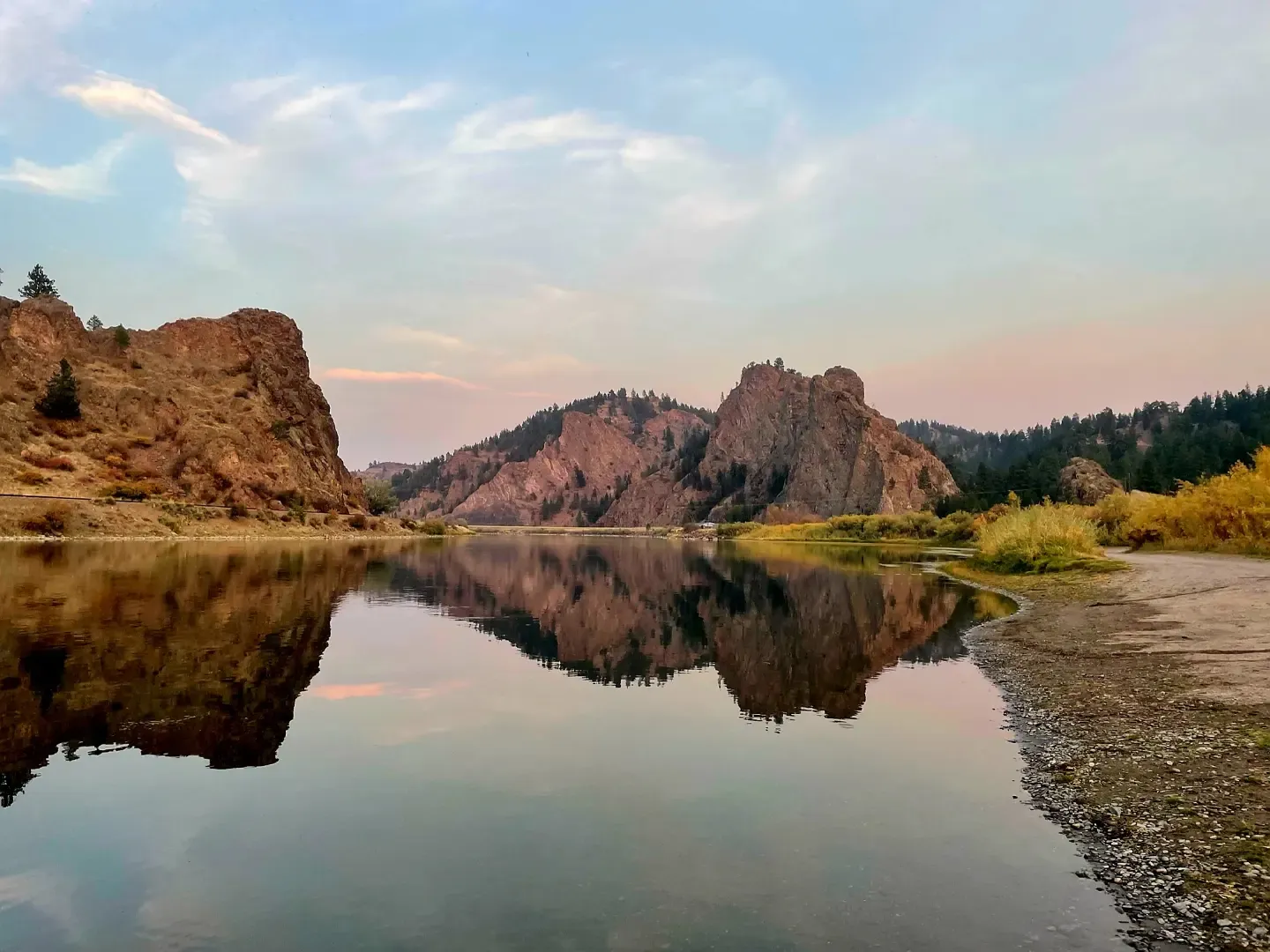
If you’ve ever wondered what really keeps a world-class trout river healthy year after year, this Upper Missouri watershed conversation goes deep into the details that most anglers never see.
We get into flushing flows, bug data, and what it actually takes to protect a river when the solutions aren’t quick or obvious. This one goes beyond fishing and into the long game of conservation.
Josh Sickinger and David Stagliano break down how science, partnerships, and boots-on-the-ground work all come together to keep the Missouri River thriving.
Josh shares what the organization is all about and how it’s evolving with its first full-time role.
The focus is simple but powerful: improve river health while working with the people who depend on it. It’s not about regulation, it’s about cooperation.
David explains how decades of entomology work are helping track the health of the river through macroinvertebrates.
The team focuses on fall sampling because it predicts what hatches will look like the following spring.
This is one of the biggest takeaways from the episode. Without periodic high flows, the river starts to lose key insect species.
When flows don’t hit around 15,000 cfs, sediment builds up and favors worms and scuds over mayflies and caddis.
The wild part is how fast the river responds. One good flush can reset the system within a season.
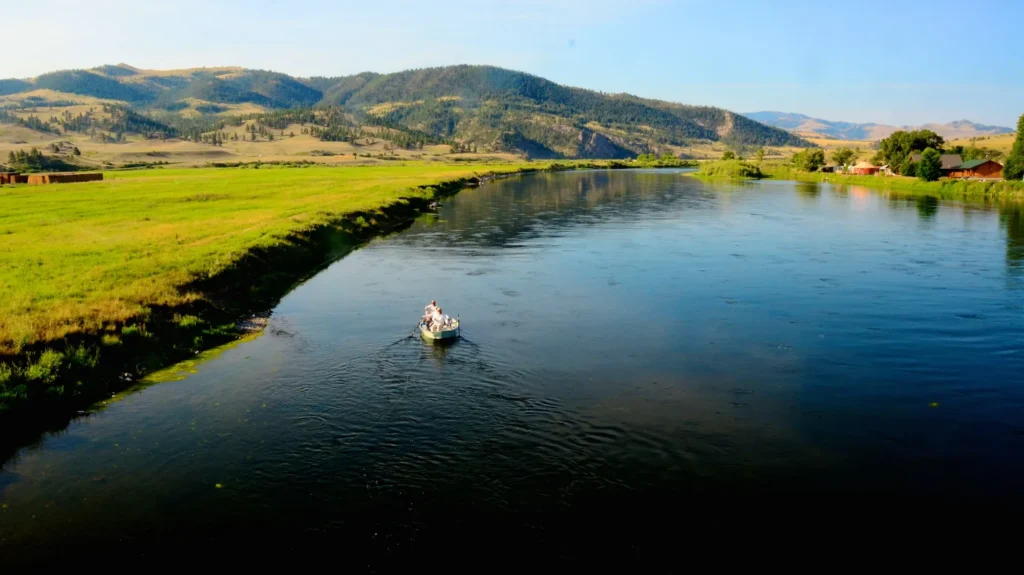
The Missouri near Craig is a tailwater system controlled by multiple dams, and that’s why it fishes so well year-round.
But those same dams also limit natural flushing events.
Without dams, this stretch would likely become too warm in summer to support trout the way it does now.
The team discovered elevated nutrient levels coming from upstream tributaries, especially near Townsend.
This was significant enough to trigger attention from the state.
Josh talks about how they’re working with landowners to reduce nutrient loading and improve habitat.
One key strategy is restoring natural stream function.
These slow down the water and allow it to filter naturally before entering the Missouri.
A big part of their work isn’t in the water—it’s along the banks.
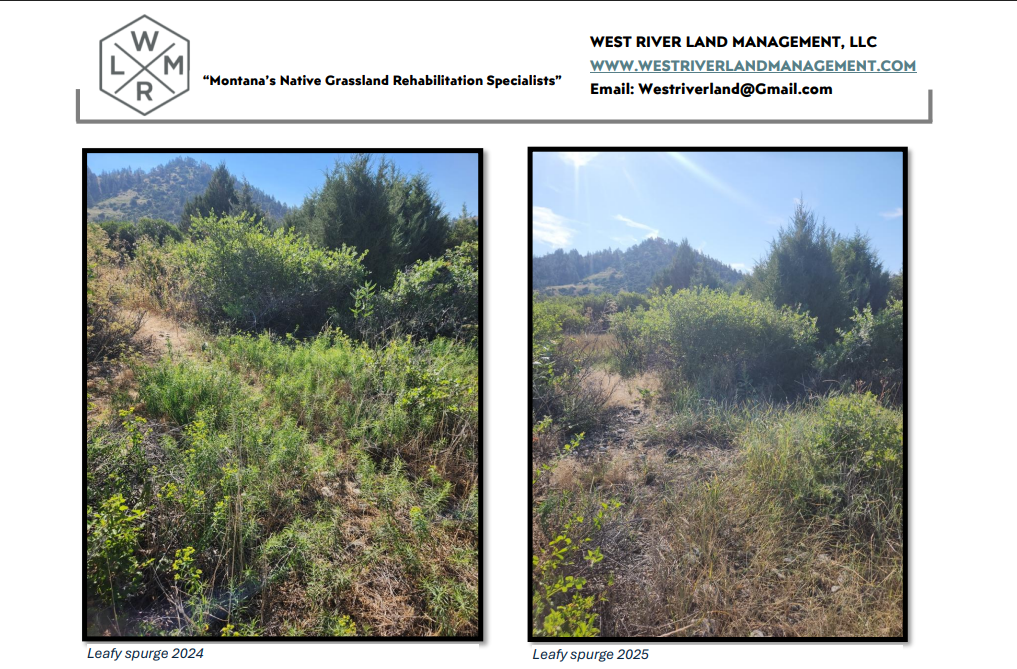
The team is actively managing invasive plants like leafy spurge and cheatgrass.
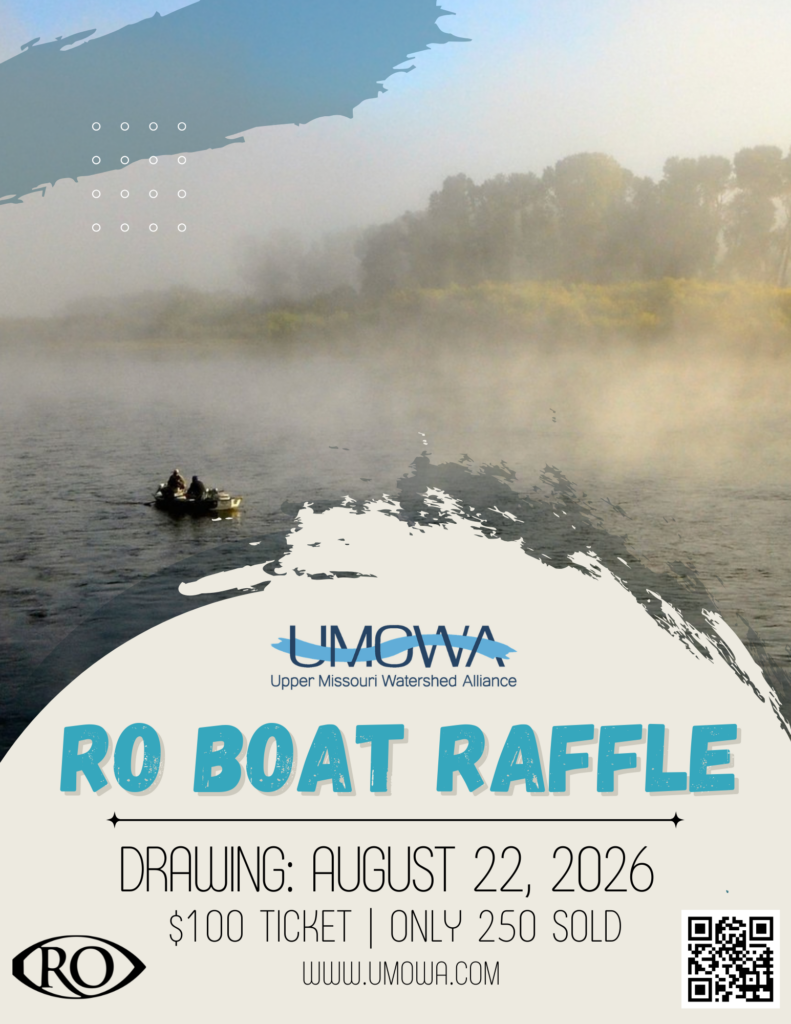
The annual rendezvous in Craig, Montana is their biggest community event.
It’s part education, part gathering, and part fundraiser.
Episode Transcript
WFS 904 Transcript
00:00:00 Dave: How do you protect a river for future generations when the winds are slow? The work is steady and the payoff isn’t always visible in a single season. Today’s guest joined to talk about the work the Upper Missouri Watershed Alliance is working on this year, a group that gathers long term scientific data on water quality macroinvertebrates and flushing flows in the Upper Missouri watershed, then uses this information to guide effective actions on things like stream work, stream restoration, invasive species control, and the health and monitoring the stream. We’re also going to get into some random tangents a little bit on fishing, a little bit on music. It’s going to be a fun one. This is the Wet Fly Swing podcast, where I show you the best places to travel to for fly fishing, how to find the best resources and tools to prepare for that big trip, and what you can do to give back to the fish species we all love. Josh Seckinger and David Stagliano are here today with the Upper Missouri Watershed Alliance. They’re going to walk us through what they do throughout the year. We’re going to talk about the long term data they’re collecting on macroinvertebrates and water quality, and how this is playing into protecting the river and making sure things are good for fishing. We’re also going to find out about more on on what they’re working on. Moving ahead, what the biggest challenges are and what you can do to help out. We’re also going to be talking about a big trip we’re doing this next year. And if you want to get a chance right now, you can go to web dot com slash giveaway. We’re going to be giving away a trip to the Missouri. I’ll be there along with some other folks. And if you want to get a spot for this trip, we also have some paid spots. You can do that right now. Dave at web dot com. All right, let’s jump into it. You can find the Upper Missouri Watershed Alliance at u m o w a dot. Here they are. How are you guys doing?
00:01:51 David: Doing great. Doing great. Thanks for having us, Dave.
00:01:53 Dave: Yeah, yeah, thanks for being here. Um, we’re going to get into a little bit about what you guys do. We’re doing a big trip, and hopefully we’re going to be connecting to an event that you guys have out there. I know we’re going to talk about the rendezvous. You do what that’s all about, but just a whole, you know, kind of year in review of the projects you have going. And I know Josh, you’re new, they’re fairly new. So we’re going to talk about that as well. But why don’t you guys just introduce yourself first? David, maybe we’ll start with you since you’ve been there a little while and who you are, just give us a little quick little elevator pitch on what you do, and then we’ll do that for Josh and we’ll jump into it.
00:02:25 David: Okay? Yeah. This is David Stagliano, and I am the sole proprietor of Montana Biological Survey, a consulting firm in Montana. I’ve been at that position since twenty fifteen, but I’ve been in the state working on state projects since about two thousand and three. And I actually came on with the MOA in twenty fifteen when they wanted to start some of these projects. And I was a pretty, pretty, uh, good scientific name in Montana. So they brought me on.
00:02:54 Dave: Perfect. How about you, Josh?
00:02:55 Josh: Yeah. Um, my name is Josh Sickinger. I wear many hats. I’ve been a fishing guide for, I don’t know, sometimes you hear fishing guides talk about how long they’ve been guiding in dog years, and that’s what it feels like. Um, well, over a decade on the Smith and mostly around Bozeman. I have the unique distinction of being maybe the only fishing guide who hasn’t worked on the Missouri.
00:03:19 Dave: Oh, okay.
00:03:19 Josh: I’ve never taken a paying client down to Missouri, and I got hired in November to run this organization. And it’s been really interesting so far.
00:03:30 Dave: Yeah. November. So you’re we’re talking now in February. So you’re kind of four months into it. Just you’re. Yeah, you’re the new, new person out there on the job.
00:03:38 Josh: Yeah. It’s really interesting to me. I mean, just a brief overview of Yamoah. You know, we, we work to strengthen the health and the resilience of this watershed while supporting the people who depend on it. And our focus is on practical solutions that work for the land, the river corridor, the water and the communities that use this river all at the same time. You know, we’re locally driven. We’ve been all volunteer organization until I got hired in November. I’ll say it this way. We’re not adversarial. We’re looking for cooperative agreements with landowners and and so on. And we’re definitely not a regulatory body. I think that’s that’s worth saying. So it’s a cool organization. I’m looking forward to expanding capacity over, you know, my tenure here, however long that may be. And we’ll see where it goes.
00:04:32 Dave: Nice. And David, what does your company do? What are the samples that you’re doing out there?
00:04:37 David: Yeah, I was brought on as a, I guess, scientific consultant to Uemoa. And the big need that they saw when, uh, you know, they first put the organization together in twenty fourteen was a lot of the guides were complaining about the hatches. You know, the fishing hatches weren’t the same as they used to be. They’re lower in numbers. And they said, well, we should look at this. And since I’ve been an entomologist, like a lot of people claim to be entomologists, but I actually graduated.
00:05:09 Dave: You are you are actually you have a degree in entomology.
00:05:12 David: I do multiple degrees. Cornell and then Kansas State. And, you know, just, uh, I’ve been doing bug samples since nineteen ninety. So we’re going on thirty five years of doing bugs. Yeah.
00:05:27 Dave: There you go.
00:05:28 David: So yes, I am the scientific arm of Uemoa. And we bring on other contractors when we need like the plants to look at plants. But I am, I am doing the water quality and our water chemistry, uh, analysis guy.
00:05:43 Dave: Okay. And does this similar because when I was, uh, the salmon Fly project is another group that’s out there that analyzes bugs, I think, or how are they? I’m sure you’ve heard of them or know of them. How are they? Are they similar to what you do?
00:05:54 David: Yes. And in fact, full disclosure, I am a consultant for them as well.
00:06:00 Dave: Yeah. So you guys are and it makes sense. Montana. And it it’s funny because the etymology thing is almost become a little bit of a joke because I’ve been struggling to find analogies over the years. You know, we’ve always had this, um, you know, kind of old friend Rick Haifley, you know.
00:06:14 David: Oh yes.
00:06:15 Dave: Wrote Western hatches and obviously a great, you know, he’s kind of an all star in the field, but it was like, he was like the only guy I knew for a long time. And now I’m running into a few more. You know, Rick.
00:06:24 David: I do know Rick. Yes. Fantastic. Entomologist.
00:06:27 Dave: Yeah, definitely. So, so good. So we’re going to jump into that and there’ll probably be a lot of overlap here, but maybe start us off. Um, let’s just go to the rendezvous because I think that’s something that I’m hoping that we’ll be able to connect to. Um, maybe you guys don’t know who wants to take it, but maybe describe the rendezvous and why people would want to attend that event.
00:06:43 Speaker 4: So yeah, we.
00:06:44 Josh: Do an event every year and Craig Montana, the trout capital of the world. Um, it’s our event. You know, we basically just get a bunch of people together, kind of talk about the river. We listen to people’s concerns about what’s going on out there. Talk to landowners about specific needs they’re seeing. Uh, there’s free beer, there’s food, uh, all of that this year. Uh, we will be raffling off a I was looking for the manufacturer of this old bamboo fly rod that someone graciously donated. So we’re going to raffle that off.
00:07:21 Dave: Oh, nice.
00:07:22 Josh: Or at least start the raffle at the rendezvous that the rod will be there. Our boat raffle, which we do every year, will also start probably before that actually, but we’ll be selling tickets for that. I think most of our board is going to be present to field questions and talk about the organization. It’s a good time of year to be in Craig. It’s June sixth this year.
00:07:45 Dave: Is it usually the first week, first Saturday of the month. When is it typically.
00:07:49 Josh: Somewhere around there? Yeah, it’s depends on people’s availability. But this year we’ve been locked in for June six. So that time of year, the Missouri is one of few places in Montana that’s actually fishing because of runoff.
00:08:08 Dave: Oh so it is fishing so that in June. So you’re not getting the huge runoff. You don’t get as big of a runoff there.
00:08:13 Speaker 4: Well, yeah.
00:08:14 Josh: So it’s because of the nature of the river. Craig sits below Holter Dam and Holter sits below Hauser Dam. Well. And Hauser sits below Canyon Ferry. So there’s three dams immediately upstream of Craig to keep that water clear and fishable. So just the nature of the location, you know, when the freestones are kind of either blowing out or blown out. Craig is becomes the center of the universe there for a little bit.
00:08:42 Dave: Right. That’s right. So Craig is where everybody. It’s the only place to fish. So you got you got everybody there. So June is a good time because everything else is kind of blown out usually in that in that time frame. What is the so on the dams and we probably won’t get into a huge conversation on the history there. But what were they mainly built for?
00:09:00 Josh: Hydropower.
00:09:01 Dave: Yeah. Hydro. And are they still producing a lot. Is that still a big part of the the electricity?
00:09:06 Josh: It’s part of Northwestern’s portfolio. It’s it’s changed. Thirty years ago they used to do generation spikes on a regular basis. So, you know, one of our board members, Bill Ryan, has a cabin right there in Craig. And he would talk about going up there when he was a kid and they’d pull up to the river and just go, is the river up or down? Now those dams have been turned into run of river dams. So there’s not these huge daily spikes like you might see, say, on the white in Arkansas.
00:09:37 Dave: I was going to say the whites, the great example, right? It goes way up to tens of thousands and then it drops way down, right?
00:09:43 Josh: Based on, you know, demand for electricity so that it doesn’t work that way anymore, it still fluctuates, but not these huge spikes on a daily basis. So yeah, the dams, because they run a river, it’s, it’s the fishery is stabilized. Does that make sense?
00:10:00 Dave: Yeah. Yeah, it’s stabilized. So it’s a so it’s good and everybody loves it because it makes a more stable environment for kind of everything, right? The fish and all that stuff. And fish passage is probably not as big. Or are those passable? Is that something where fish are able to get up and down through there?
00:10:17 Josh: No, I mean, these are we don’t have steelhead. We don’t have salmon. So rainbow cutthroat and brown trout just bang their head against the dam. But there’s no yeah. They’re not going up or down. Yeah.
00:10:30 Dave: They’re trying. But yeah. And it’s not critical to their, their life history, although there probably are some advantages of being able to migrate up and down, but not an issue. So okay, so we got that that, you know, kind of covered there. Let’s go into a year of what you guys have going. What is the work you do? It sounds like David, you’re doing a lot of field sampling. Talk about how all that plays into it. What are you guys learning there? What have you learned? It sounds like you’ve been doing this a number of years. Do we? Do we know exactly the bug? You know, um, where they’re at, who they are. All that stuff.
00:10:59 David: Yeah. We have a really good handle on the river from Holter Dam all the way down to cascade. And at cascade, it starts to transition. Actually, before that, the dam effects, uh, you know, the, the dams are a blessing and a curse in a lot of these rivers. But the blessing is like Josh was saying, we get to fish that thing year round. Uh, there’s never a time when it’s unfishable and turbid up so bad that, you know, you can’t get some fishing in. But the curse of the dam is also what we were describing with the flushing flows. And, um, because they’re not, they’re not flushing the river as often as they could based on pool levels in those three reservoirs. And they’re kind of maintaining just a steady state flow. So when one reservoir gets really full, they’ll start pulsing that through and the river comes up a little. But we, you know, what we found through the years is that we really need those flushing flows to clear out silt. So, you know, the tail water system is a low diversity system in terms of bugs and macroinvertebrates, but also highly dense. They’re very dense and and unfortunately scuds and worms and some of those critters that don’t hatch out and produce a hatch are the ones that take over when the flushing flows do not occur. So you kind of start to lose. Our mayfly hatches, our caddis hatches. Those become minimalized. When a drought period happens and we’ve got enough data now to show that it really takes a good flow of about fifteen thousand cfs to. Clear out a few miles below the dam. And once we do get that flow, our caddis hatches and our mayfly hatches are phenomenal. The next year.
00:12:50 Dave: Oh wow.
00:12:51 David: Yep, yep.
00:12:51 Dave: So that happens quick.
00:12:53 David: It happens quick. They respond because they’re not gone. Like our Pmd’s. The Ephemerella Excrucians. Species, the PMD and also the betas. The Bwas. They will rebound very quickly because the betas will have two cohorts a year. So you could get two betas hatches on a good year in the Missouri. And the strength of those hatches relies on better habitat. And the habitat gets cleared out when we have that flushing flow.
00:13:22 Dave: Nice. And now are these is that the plan to get to a point where you have at least one of these big flushing flows every year to keep things clean?
00:13:29 David: We have tried to work with, uh, with the Bor, which is the Bureau of Reclamation. And it’s tough because they’ve got a set threshold of what they can release based on snowpack, which we know in the West is declining on a yearly basis. So it’s all it’s all.
00:13:48 Dave: Not getting easier like a lot of these things, right?
00:13:50 David: It’s not getting easier. And of course, the fishermen want to see those big PMD and caddis hatches. So it’s a tough balance. It’s a tough balance.
00:13:58 Dave: But it’s cool that the cool thing is, is that since you’ve been there with all these years, you got this data, which is great. Imagine if you were there and you had no data, right? It would be a lot harder to make the the argument to try to change things. So it sounds like probably, you know, you know, like you said, uh, Josh just kind of like keep the partnerships going and hopefully, you know, people can, you can switch it eventually because I think there are places, I mean, everybody’s different. You mentioned the white River. You know, that seems like a lot, right? These giant flows, but it’s working and they have some of the biggest brown trout in the country. And then you got Colorado, I think, right. That whole thing with the South Platte, they’ve got a whole system set up. It’s I’m sure a lot different, but it sounds like there’s a lot of these partnerships around the country that are built around fly fishing, where they manage it for multiple things, but fly fishing is a big part of it. That must be a big part of it there in Craig, right? As far as the management.
00:14:46 Josh: Where it gets interesting is Northwestern Energy owns Holter and Hauser dams, which are the bottom two in the situation we’re talking about, but they don’t own Canyon Ferry Dam. That’s Canyon Ferry dam is owned by the Bureau of Reclamation. Now, Holter Lake and Hauser Lake have a Ferc Federal Energy Regulatory Commission water level, where they have a foot of leeway. And northwestern manages that, that foot of leeway within the middle three inches of that. So from five to seven inches. So what makes it complicated is that we’re actively trying to get these flushing flows. You know, if we have a year or two of drought. What we would like to see happen is that the Bureau of Reclamation holds back some more water. Um, northwestern would kind of would cut their flows downstream through Holter and Hauser. And then in the spring we could push three days of, of fifteen thousand cfs. Now the problem with that is we need that during a drought. So we’re asking them for water that they don’t necessarily have to give. Um, and this, this goes back to the whole waters for our whiskey is for drinking water is for fighting.
00:16:08 Dave: Right? Well, there’s the book on water wars, right? Which is a great book that’s like, that’s, this is the big going to be the big it already is. It already is the big thing, right?
00:16:17 Josh: Yeah. It really depends on where you are. And it’s, uh, the old saying, it’s better to be upstream with a shovel than downstream with a water. Right is, uh, really problematic. So what we’re getting into is a federal oversight of our water here. Here in Montana.
00:16:36 Dave: Right, right. Which is not abnormal either. You could look at the you know, the Columbia system is a good example of all the dams there. And I think they were they have been doing trying to release more flows to get fish, you know, sent more that I think the more of that is to get fish downstream. So they’re not stuck in those pools. But again, it’s like you said, it’s a partnership thing. It’s like, you know, how do you work together to figure it out? And, you know, I guess the only way to do it is to stay at the table, right? It’s probably the only way you guys. I mean, is it something where you’re able to, um, have regular meetings and chat about that and have that conversation on solutions?
00:17:09 Josh: Absolutely. Yeah. It’s, uh, the Bill Ryan, who’s our, uh, treasurer currently on the board. And I had a meeting with Northwestern Energy a little over a week ago. Um, I’ve got a meeting with the Bureau of Reclamation here in about a week. Right now, we don’t know where the hurdles are. So we’re trying to figure out, you know, if this is the problem, how do we get past that?
00:17:34 Dave: Right. What would happen if and this is again, probably will never happen. But what would happen if you just all three of those dams were gone? Would fishing be better or worse if that happened? Not to say that that that’s going to happen.
00:17:46 Josh: You can’t see me right now, but I’m shaking my head.
00:17:49 David: Yeah, I’m shaking my head too.
00:17:50 Dave: Yeah. You need you need those things to basically, the reason it’s such an amazing world class fishery is because of those. That’s the big. Because in the summertime you’d have. Without them, you’d have super low flow. It’d be way up and way down, right?
00:18:02 Josh: Roughly the same situation as the Yellowstone, where you get a huge spike in June and then it slowly drops till September, and then it kind of levels off.
00:18:10 David: Since we are downstream of three forks by many, many miles. Um, we actually would be transitioning to a more cool water fishery back, you know, pre dam in the early nineteen hundreds, there was westslope cutthroat all the way down to Great Falls, Pre-dam. But as the summer came around, it would kind of transition to more suckers and whitefish and native or native fish. Whereas those trout would, uh, the native trout. I mean, we had browns and rainbows way back in the day, but they would start heading up into tributaries, uh, to get out of that main stem because, because by the time they would get to Craig, it would be, it would be too warm during most summers, uh, for really good salmonid reproduction and year round fishery. So the dams are sustaining that coldwater fishery for us.
00:19:02 Dave: Yeah, that makes sense. Cool. Well, I think this is good. We went down the, you know, the road they’re on on the dams. I think it’s interesting because there’s always a lot depending on where you are, you know, things change, but that makes sense where you guys are at. It’s more figure out those water flows, right? So you get those flushing flows. What else do you have going? Maybe give us you know, the rest of the year we talked about the rendezvous. What else are you working on Joshua. David. It sounds like you guys are staying busy. Is, is the bug thing going on throughout the whole year or what are the big other than the water? What’s the big thing you guys can do to help protect these populations?
00:19:34 David: So we used to our first few years of sampling to get an idea of the Macroinvertebrate community throughout the river system. We did sample spring, summer, fall, but budget restraints and all that, you know, kind of scaled us back. And our most efficient sampling, which still tells us a lot, is our fall benthic macroinvertebrate sampling, because that will tell us what’s going to pop out in the spring and how the class the year classes did through the summer after all the hatches have happened. And even in in September, when we do sample those, we’ll start, we’ll see the betas that are about to pop out in that second cohort. So we do get a lot of information from that fall sample.
00:20:14 Dave: You do. And the fall is like, is that a like September, October period or.
00:20:19 David: Yeah, we’ll we’ll adhere to the Montana Department of Environmental Quality. Period of study. So their threshold is to sample before September thirtieth to allow it to be entered into their database and used as comparable data.
00:20:35 Dave: Okay. Yeah. Before September, before the higher or the changes into the winner is that or maybe describe that a little bit. Why is the fall the best? And then what are you maybe give us again a high level of how you’re sampling collecting them.
00:20:47 David: Okay. Sure. Yeah. So we’ll do three replicate test samples, which is a defined area. Think of like your trash can, like a size of a trash can with a hole on the bottom and you put that down and there’s a net that pops out. So you can, you can disturb all the, all the cobbles and gravel and all that goes right into that, that net. So we’ll take three of those samples per riffle. And that’s a pretty good, you know, that’s a pretty good amount of information. Usually three replicates in a riffle will give you ninety percent of the taxa that’s there. and you’ve got some some good replicates and some, you know, you can encompass that variability of one sample to another.
00:21:28 Dave: Okay, so you stick your, your sampler down there, you disturb, you collect the bugs and then take those back and analyze them at the lab.
00:21:34 David: Correct. And, uh, then we can get density estimates for all the taxa that are there and how the mayfly caddisflies are doing. We start to see, you know, get into the, the community composition a little bit. You know, we start to see a transition once the Dearborn River comes in. It’s one of our bigger tributaries. And the Dearborn down low still has a little bit of a salmon fly hatch. So we’ll start to pick up some some stoneflies once the Dearborn comes in and some different caddis and that sort of thing. So there is, uh, you know, above the Dearborn, it’s kind of still that like a tail water system.
00:22:13 Dave: It’s more more tail water, like.
00:22:15 David: Correct. And then once the Dearborn comes in, the characteristic changes a little bit.
00:22:19 Dave: So because the Dearborn is free, free flowing.
00:22:21 David: It is a free flowing river and that’s got some water issues as well. But usually it pumps in some nice cold water because it comes from some wilderness areas. So yeah, we have we have some of these tributaries that will contribute some nice diversity of insects that come in. And in fact, I mean, a lot of people fish that area. You know, once you get down to the Dearborn for different hatches, like that’s where some of our caddis hatches will be better and some different caddis. So, so yeah, it’s a neat system because what Ummo is, is sampling is basically a tail water all the way to almost the transition to almost a freestone type system by the time you get down to cascade. So yeah, so going into the fall with that data from those eight sites, we can, we can see, you know, how the bugs are going to be doing in the next spring. And we can make some predictions based on, you know, because most of their life cycles are going to be one year. So we’ll be able to say, hey, the caddisflies are going to be looking good down here, you know?
00:23:26 Dave: Yeah. So you’ll kind of know. So you guys, so you’re probably getting the guides are calling you up and asking like, what’s the, is everybody waiting on your surveys to come in and get those analyzed?
00:23:35 David: Uh, you know, the guides pretty much know, you know, they’re, they’re on the river more than I am. But yeah. So yeah, it has borne out, though, when we’ve announced in a newsletter that we put out in the fall or winter that, you know, the pmd’s are looking good this year. And sure enough, in May and June, the PMD hatches a little stronger than, than usual. So yeah, sometimes it works. Sometimes we give him some good advice on to.
00:24:01 Speaker 5: Mark Lodge offers a world class experience with one of the finest rainbow trout and brown trout fisheries in the world. They’re family owned and operated. Missouri River Lodge.
00:24:10 Dave: Offers comfortable accommodations, delicious home cooked meals, and personalized service that make you feel like family days on the water are capped off by appetizers, beverages, dinner and stories on the back deck and around the campfire. Book your stay for an unforgettable fly fishing adventure where memories are made and the fish stories are real. You can head over right now to wet fly swing. That’s o n d e m a r k on Denmark right now to book your magical Missouri River trip. And Josh, you’re out there. You guide. Right? Also, you’ve got the couple, you’re the executive. Are you still guiding and not not on the Missouri, but these other rivers.
00:24:53 Josh: Yeah. So I’ll be guiding in on what I would call a limited capacity this season. Typically I start my season on the Smith here in Montana, which is a five day, four night overnight. It’s the only lottery permit in the state. Through that, you know, May through June. Um, and then I come home and mostly guide on the Yellowstone if I can keep it that way. If we get a big rain or something like that, I’ll go over and guide on the upper Madison outside of Ennis. But yeah, I mean, I’m planning on guiding a little bit and I might actually have to break this whole. I’ve never guided on the Missouri thing, um, to take. Right. Some of our folks out fishing.
00:25:35 Dave: Yeah. That would be a fundraiser. Right. For a fundraising event. Yeah, I could see that would be a good thing.
00:25:39 Josh: Yeah. And then I just want to add, because we haven’t really touched on it, it’s yamoah covers two hundred miles of this river. Um, we started three forks and we end in Great Falls. And one of the reasons I was brought on was to expand capacity because we really focused on about fifty miles of the river. You know, there’s inputs upstream specifically out of the Townsend area, where it’s my hope that we can get some nutrient mitigation Done on some of these tributaries. There’s just a lot of river that we haven’t had the capacity to take care of. So, you know, I’m entering into conversations with landowners upstream of of the area that we’ve been talking about, trying to expand awareness that our organization exists to the landowners around Craig. You know, we’re starting a big push for people to get involved and show up at the rendezvous and just learn about what we’re doing. And then we’re in conversation about expanding our purview up the Smith River and joining forces with it’s called the Smith River Habitat Project, and they have pre-existing agreements with Montana Fish, Wildlife and Parks, the Forest Service, the BLM that would enable us to do some work up to Smith under their banner. And it’s all it’s just I think my my number one goal is to expand our capacity and raise public awareness that we exist. So.
00:27:14 David: Uh, we as an organization decided that the water chemistry samples that we take. So we do take, uh, seasonal water chemistry may, July and in September. And we do get that analyzed for nutrients. And down below Holter Reservoir, we basically have similar nutrient levels from the dam all the way down to cascade, other than a few deviations where some tributaries come in. So what we get down below Holter is the sum of all those tributaries above. And since our values below the reservoir were, you know, sometimes they’d be high, you know, we’d get some high nitrates, we’d get some high phosphates, and other years they’d be low and we’d be like, well, what’s going on here? So in twenty twenty one, Uemoa decided that we were going to address some of these tributaries that Josh was talking about. Above all the reservoirs and that Townsend area. So we sampled those tributaries and we found some hot, hot nutrient levels. And we reported this to DEQ, our environmental agency and the state. And they were concerned. So it took our organization to bring that to their attention that what we see going into Canyon Ferry is dependent on what’s coming out below Holter. And sometimes we get some nasty nutrient levels, you know, spiraling through, and it’s all due to what’s going in. So yeah, we brought that to their attention and they and they’ve done some more surveys to kind of build on our work.
00:28:53 Dave: Gotcha. And the nutrients, what are those elevated levels? Where is that coming from mostly? Is that a lot of different things?
00:28:59 David: Yeah, a lot of agriculture. There’s a lot of a lot of pivots. There’s a lot of pivot and irrigation returns. and that tossed into Townsend area. They grow a lot of wheat and alfalfa and all the usual.
00:29:12 Dave: How do you address, uh, when you know, you have high nutrient levels? How do you try to find the work back to find where they’re coming from? Or how do you do that without, you know, with, with working with, I’m sure there’s some bigger players up there, you know, what are the steps to take, you know, to help fix things a little bit?
00:29:27 David: This is where Josh comes in and sits down with some of these folks to talk a little bit of like remediation and maybe, you know, not allowing so much ag return to happen.
00:29:38 Josh: One of the best ways, as far as I can tell, is wetland mitigation. So you reconstruct, you take a creek that’s straight with vertical banks, uh, kind of meander it through a wetland, create some beaver dam analogs, uh, let the water slow down, filter itself. And there’s, there’s plenty of smaller tributaries that dump into the Missouri up in that section around Townsend. This work would theoretically, it would cut the nutrient load a lot. So we’re actively seeking out partnerships with our friends in agriculture to facilitate this. And furthermore, there’s there’s money in DIC. The Department of Environmental Quality, it’s called three nineteen money that funds projects of this sort. So as soon as we get some willing partners that’ll let us go to work, we’ll go to work. And actually that brings up another project on the Ssmith drainage, uh, Lower Hound Creek. We’re going through a grant application right now with many, many partners. Uh, conservation districts, other non-profits to do some streambank rebuilding on lower Hound Creek to, for the same purpose to try to cut some nutrients out of that the Smith River.
00:31:00 Dave: And what is the Smith River? Where does that flow in?
00:31:04 Josh: It flows in at Ulm or as the locals say, Ulm.
00:31:09 Dave: How do you spell it?
00:31:10 Josh: U o n.
00:31:12 David: There’s a great buffalo jump right outside of Ulm.
00:31:15 Dave: A buffalo jump.
00:31:16 David: Yeah. Where the Native Americans used to drive the bison over the little outcrop. And then they’d die and they’d cut them all up.
00:31:23 Dave: Oh, Buffalo. Jump! Right, right, right. Gotcha. Yeah, yeah, that’s pretty amazing. And you pronounce it. Yeah. Ulm. So at that area is that one of the bigger maybe describe that a little bit high level. What are the biggest input streams into the Missouri in your area and maybe describe that too. We haven’t talked about that. What are the boundaries of the Upper Missouri of your alliance?
00:31:42 Josh: Yeah. So for our purposes, the Moas quote jurisdiction is from Three Forks to Great Falls. And at Three Forks you have the big three, the Gallatin, the Madison, the Jefferson, and the Jefferson is formed upstream with the Beaverhead big hole in Ruby. So those big three come together at Three Forks and then downstream you have, I mean, my God. Uh, sixteen mile you have. I’m going to skip down to the next kind of bigger one, which would be the Dearborn and then the Smith. And there’s a bunch, like countless smaller tributaries that flow in.
00:32:23 Dave: Yeah. What is. And then above Three Forks, are there other groups like yours working up there too?
00:32:28 Josh: Yes. And on each of those rivers, it’s oftentimes there’s more than one with slightly different missions or slightly different goals.
00:32:38 Dave: That’s right. Yeah. We had, um, there was one I believe we were talking to them there. They do part of the river cleanup right in that area somewhere in there. Is it the Stillwater? I’m not sure if you know the watershed Group council there, the.
00:32:52 Josh: Stillwater flows into the Yellowstone. So that wouldn’t be kind of our neighbors. But I mean, you got the Gallatin River Task Force, the Gallatin River Watershed Council, the Madison River Foundation, Big Hole Foundation. It’s there. The long list. And we’ve got good relationships with them. What they do up there directly affects us down here.
00:33:13 Dave: This has been good so far. So tell me. I don’t want to miss anything. I know we’re not going to be able to cover everything, but are there any other big items we want to make sure to cover today before we take it out of here in a little while?
00:33:24 Josh: Well, so you may find this interesting. We do a lot of weed spraying. Our board president, Sherry Middaugh, is just all over this invasive weed mitigation throughout the corridor. And so we’re we’re hosting an event in cascade, Montana, catered to ranching families to try to partner with them so that we can we can spray weeds throughout that whole corridor. Developing relationships with landowners. We get money from the state we trust fund and partner with landowners to take care of their weeds, specifically along the corridor. You know, it’s real easy when you’ve got someone who owns fifteen thousand acres. You’re talking to one person. Generally the ranch manager, not the landowner. And they say, yeah, go nuts. And the further upstream you get and the more kind of subdivided the land gets because there’s a bunch, you know, everybody’s got their little cabin. It just gets harder and harder to try to take care of this problem. So that’s what we’re hoping to pull a bunch of landowners in. Not to say smaller, but, you know, cabin owners and say, hey, let’s you own riverfront property. We can see the noxious weeds. Let us take care of it. So that’s a huge project. I think we just asked for seventy five thousand dollars in funding from the state that that’s matching funds. So we’ll we’ll take care of half the landowner takes care of half. And hopefully we can stop the march of some of these noxious weeds upstream.
00:35:05 Dave: Yeah. Is there a few that are the big invasive species?
00:35:10 Josh: Yeah. I mean, it’s so we’re we’re dealing with terrestrial noxious weeds. So leafy spurge, cheatgrass, white top, it seems to be marching up the corridor, but there is a pretty distinct line where like the, the leafy spurge is below that, but not above it. And I would like to say that’s largely due to our efforts. Uh, there’s a bunch of islands in the river that we’re, we’re really focused on. You know, it’s people coming. I mean, the vector is mostly people, right?
00:35:42 David: Right. Yeah.
00:35:42 Dave: It’s people. Right? It’s the whole back to the boots, you know, the right the felt. Remember everybody. And I think where is that at now? Right. I think we went to this period where it seemed like the whole country was going to no Feltz. You know just rubber. I feel like that. That’s kind. Of come back and what’s your take on that. Is that is that a big part of it?
00:36:00 Josh: I honestly don’t believe it matters what soul you’re wearing on your boot. It’s about where you were and what species was there specifically for the. Terrestrial, noxious weeds. You know, if you get a little seed stuck in your. Gravel guard and then you get out of the boat, you know, it’s. You just introduce that.
00:36:22 Dave: What’s like cheatgrass? I mean, cheatgrass is. Oh, yeah. I mean, think of that stuff you get out there and I mean, you look at the. And I’m not sure what it looks like exactly, but in some parts of the West, I mean, it’s all cheatgrass, just hills and for miles. Right. And it used to be probably these native bunch grasses. Right. That’s the difference, right.
00:36:38 Josh: So I think your average angler doesn’t really think about that much. And that’s I don’t I don’t blame them. It wasn’t something I was thinking about much. Not all that long ago, but it’s a huge part of our portfolio.
00:36:50 Dave: It is no it’s important. It’s kind of being aware so people what they can do. What would you be the recommendation. You’re out there fishing. Say you’re you’re coming in to Craig or you’re going from Craig somewhere else. What’s the best thing anglers can do to decrease or help out?
00:37:03 David: Yeah, just like with the aquatic invasives, you know, really, really clean those boots off, you know, get all the mud and the seed pods and everything off your gravel guards and your pant leg or, you know, the boot itself, a good drying overnight and brush that stuff off. We’ve been fortunate on the Missouri that even though we’ve had a few, uh, New Zealand mud snail infestations over the years, they really haven’t taken over. It wasn’t this mass takeover that was predicted. They’ve kind of just reached some equilibrium. They will increase and some of the areas during droughts because they don’t get flushed out, just like, uh, silt in the gravels, you know, they can, they can survive in some lower velocity flows. But, but once we do get a good flush, we notice that New Zealand mud snail densities go down as well. So the flush is good for everything.
00:37:56 Dave: Yeah, it seems like you guys are back to the start of the conversation. It feels like it’s you got to have kind of that natural right. That would be the natural thing. You get a big spring blowout, it cleans things out. But because of the dams you’ve got to balance that, right. That’s the world you guys are in trying to figure out that nice where we can have our human finger on it to control it, but then also to get the natural variation. Is that kind of the struggle there, trying to figure that out. And then you also have, you know, water climate change too.
00:38:22 Josh: Yeah. It’s, uh, if we can get to some sort of agreement with, uh, northwestern, the Bureau of Reclamation to facilitate these flushing flows, it’s we’re living in a different world, I think.
00:38:35 David: And for trout spawning as well, uh, we used to have a lot more trout spawning in the main stem river and some side channels, uh, back in the day of, of more frequent flushes and the fisheries folks have, you know, some old data that kind of bore that out. There was a lot more spawning going on in the main stem, whereas now a lot more of the the fish are running up tributaries or, you know, kind of using just specific side channels that kind of flush themselves a little. If there’s a little bit higher velocity areas, they can clear out some nice clean gravels for those trout.
00:39:09 Dave: Yeah. How does it look right now I guess. You’re talking about predicting it’s February. We’re looking out the winter. Why is it looking like it’s pretty light? Like not not lots of. I’ve heard some in the West. It’s not not a ton of snow. Right?
00:39:22 Josh: Yeah. I don’t want to be alarmist or anything. It’s, um, there’s no snow on the valley floors. The snow lines at about seven thousand five hundred feet above that. You know, I’m looking at the NRC’s website right now. It’s we’re in the this basin is in the high eighties percentage wise, but you know, that’s that could change tomorrow.
00:39:46 Dave: Yeah. You could get dumped, right? I mean, you hear about these stories where it it snows or rains. I mean, up in, uh, the other side of the country, they just had this crazy winter. You know, there’s seven feet of snow up in Newfoundland. Yeah. So it feels like it can come in a, in a blast, right? You can get hit that winter could happen next week or whatever.
00:40:02 Josh: One hundred percent. Winter’s not over till winter’s over and we’re nowhere. It’s early February. A lot can change in the next couple of months.
00:40:11 Dave: Yeah, but it hasn’t been a super like this. The skiers and snowboarders aren’t super stoked right now. Or so far.
00:40:16 Josh: No.
00:40:17 David: Same here. Uh, it’s going to be fifty eight or sixty degrees here today.
00:40:21 Dave: Sixty degrees? Yes. And where are you at? Where are you located?
00:40:24 David: I’m in Helena, Montana, sixty degrees.
00:40:27 Dave: So it’s going to be. That’s pretty amazing. Yeah, that is warm. I mean, again, there are lots of ups and downs, but uh, sixty is not not typical for February.
00:40:35 David: No. The lower part of our drainage in Great Falls, they’re going to have a heat wave and maybe be close to seventy.
00:40:42 Dave: Wow. Seventy.
00:40:43 Josh: Yeah, I’m seeing sixty seven and Craig today.
00:40:46 Dave: That is unbelievable.
00:40:47 David: People will be out fishing for sure right.
00:40:49 Dave: Fishing. Fishing will be open, right. This is definitely bonus bonus days on the water. Although there might be some implications later. Right? The after effects. But hopefully we’ll keep the fingers crossed that we’re going to get a big snow blast before the the winter is out. Well, before we get out of here, you guys just let’s do a couple random questions. Then we’ll take it out of here. And I guess, Josh, you were saying skiing. Are you more into skiing or snowboarding?
00:41:11 Josh: Snowboarding? Yeah, I used to ski as a kid. And then at some point I switched.
00:41:16 Dave: Yeah. Are you in Helena too?
00:41:18 Josh: No, I’m actually in Bozeman. There’s some real local gyms around here. You know, there’s a handful of ski areas in Montana that are open, like Wednesday to Sunday or Thursday to Sunday. And it’s just a real mom and pop. Very chill. No, it’s a ski area. Like there’s no hotels. You go home at the end of the day.
00:41:41 Dave: Oh right. Yeah. There’s there’s no giant lodge.
00:41:43 David: Yeah. There’s one up in, in the Smith River basin, uh, Sheep Creek, which flows into the Smith that, that actually you could buy three ski passes for one hundred and fifty dollars.
00:41:54 Dave: That’s a pretty good deal. Cool. And and Dave, what about you? What’s your hobby if you’re not collecting bugs out there? What are you doing?
00:42:00 David: Yeah, right now, I wish I was skiing, I but, uh, yeah, it’s pretty bleak right now, but, uh. Oh, the usual fishing, hunting, mountain biking, the usual outdoor pursuits. A lot of rafting when there’s some good water.
00:42:15 Dave: Oh, nice. Nice. Do you guys get some some whitewater in that area? What was the rafting look like? What does that consist of?
00:42:21 David: Pretty mellow. Uh, around us, like the Madison and the Gallatin. They’ve got some, you know, hairy sections that you could get some whitewater in, but like the Dearborn that we talked about, one of our tributaries when that’s running, it’s a beautiful canyon, the Smith River. When that’s running, it’s another beautiful canyon to float through. So a lot more scenic and fishing rather than whitewater adventure.
00:42:42 Dave: I see. So good. So you have that and then on on. The boats don’t want to leave you. You guys mentioned you’re giving away. Let’s go back to the rendezvous. So what is the boat that is you’re raffling off this year.
00:42:51 Josh: So we are raffling off a row drift boat made here in Bozeman. It’s whatever model you want. You contact them after you win. They will figure out with you. You know, paint model, all of it. And, uh, yeah, it’s a pretty good deal. A hundred bucks a ticket. We’re going to sell two hundred and fifty tickets. Basically, you get to pick your own boat.
00:43:14 Dave: There you go. And that’s the cool thing about the area. There’s a ton of obviously the west, right? Lots of big, great companies out there with good boats. What’s your um what are you rowing or do you have a boat or a raft?
00:43:24 Josh: Josh uh, I have a drift boat.
00:43:27 Dave: We’re, uh, I mean, we kind of. I haven’t had everybody on, but we did a whole, you know, a drift boat season essentially, and had a number of different manufacturers on. But there’s, um, yeah, I mean, there’s a bunch we’ve talked to, we’ve talked to adipose, we’ve talked to hide. Well, actually, actually, we haven’t talked to hide, but we’ve. I’ve been in hide. I’m trying to get around and there’s more boats coming. You know, that are out there. What about on the raft? It sounds like. David, are you are you using the raft? Do you have a boat that you love out there?
00:43:55 David: Yeah, yeah. More of a rafter. I’ve got a raft. Yeah, I’ve got some dns’s raft setups that I’ll switch out the frame if I’m going to fish or switch it out for like a multi-day. So.
00:44:07 Dave: Yeah, yeah. Okay. Yeah. And there’s lots of great rafting brands out there as well. Well, let’s just take it out. We love to hear on the podcast and your music question or either of you guys listen to any other podcasts, or are you more into listening to music when you’re on a road trip?
00:44:21 Josh: Cornell seventy seven.
00:44:24 Dave: Cornell seventy seven.
00:44:26 Josh: Yeah.
00:44:26 Dave: And now we have to guess, is that is that a is that music or is that a podcast?
00:44:31 Josh: That is a Grateful Dead show from nineteen seventy seven.
00:44:35 Dave: Oh, there you go. Nice. That’s Cornell seventy seven. So just plug that in, search that and listen to that. That would be good.
00:44:41 Josh: Yeah, it might be their, uh, their best show of all time, I don’t know.
00:44:45 Dave: Oh, this is so good. I don’t think in all the years I’m not sure. Well, I’m sure the Grateful Dead has come up, but we’re going to take it out of here with some Cornell seventy seven. That’ll be in the show notes.
00:44:54 David: Yeah.
00:44:55 Josh: Sure, baby.
00:44:55 Dave: And maybe we’ll get an extra. Maybe we’ll get it on our, um, if we can, maybe we’ll get that also on the, uh, Instagram reel so we can listen to that right now as it’s going out. Good. So we got, we got some music and David, how about you more music or podcast on the road?
00:45:08 David: I’ll generally like do a Spotify mix some, whether I’m feeling mellow or want to rock out a little bit.
00:45:15 Dave: Yeah. What would be the, what would you put in there to get your mix?
00:45:18 David: Well, for the rock out mix, it’d be like a Soundgarden, Pearl jam, some sort of alternative 90s mix, or like a mellow, like a one of those Spotify generated mixes are pretty good.
00:45:31 Dave: Yeah, that’s that’s kind of how I work it too. Good. So so we’ll get those, we’ll find some. Maybe we’ll throw some Soundgarden in there as well.
00:45:37 David: A little black hole sun.
00:45:38 Dave: That’s right, that’s right. Black hole sun. Perfect.
00:45:41 David: And I have to make a comment on that. Cornell seven seventy seven. That’s that’s my undergrad alma mater. And I actually did my registration in the building that they played.
00:45:52 Josh: Oh, really?
00:45:53 Dave: Oh, nice.
00:45:53 David: Yes. And every one of us, I think, had bootlegs of that, of that recording. Uh, it was awesome. It was an awesome show.
00:46:01 Dave: Oh, wow. Cornell seventy seven. So. And what was that building like?
00:46:06 David: Uh, it was Barton Hall. It wasn’t that big. You could probably cram maybe, I don’t know, six or seven thousand people in it.
00:46:14 Dave: Okay. That’s a decent. Yeah. Decent size. In seventy seven, the dead were going. They were like at the top, right.
00:46:20 David: Oh, yeah. And they actually during the show in the in the tape, they would say everybody back up two steps because they were smushing the people in the front.
00:46:29 Dave: Oh God.
00:46:31 Josh: Yeah. That’s uh, the beginning of the Scarlet Fire on that album is, uh. Everybody back up.
00:46:39 David: Yep.
00:46:40 Dave: Scarlett. Okay, Scarlett. We’re gonna play that right now. Scarlett. Fire! Okay. So did you guys, either of you get a chance to, uh, see the dead, or were you Deadheads or any of that?
00:46:50 Josh: Well, I was born in nineteen eighty five, so I was, uh.
00:46:52 Dave: Okay. So. Well, they were still. Were they still? They were going right in the eighties, but kind of getting towards the end.
00:46:57 Josh: Yeah. My mom was a little more into like U2 and that sort of thing.
00:47:02 Dave: Yeah, yeah, the eighties stuff. Yeah. The kind of the weirder stuff. Well, I guess the dead were kind of weird too. But how about you, David? Are you were you old enough to see them?
00:47:10 David: I was, I was, uh, pretty much an undergraduate when they were still touring around in the eighties and early 90s and got to see him about six or eight shows in the northeast. So a lot of Albany, a lot of, uh, Pittsburgh.
00:47:24 Dave: What was it like for somebody that’s never been to one of those dead shows? And what year was it when you were doing those?
00:47:30 David: Let’s see. I saw eighty six and eighty eight. Couple and ninety and ninety one.
00:47:36 Dave: Which one was better the earlier or the later? Are they about the same?
00:47:39 David: Oh, uh, well, I think Touch of Gray. When they came out with Touch of Gray. That kind of ruined them a little bit.
00:47:45 Dave: Oh, but why was that kind of mainstream or it changed?
00:47:50 David: Yeah, they kind of went mainstream a little bit with some of the, the newer stuff.
00:47:54 Dave: Yeah. That was mainstream, right? Not as much of the long like twenty minute jam sessions and more. Oh, they always made sure.
00:48:00 David: They always threw some of those in there for sure.
00:48:03 Josh: I have friends who are real Deadheads who refer to that era as the, quote, junk era, like, uh.
00:48:10 Dave: The eighties. The eighties. Well, isn’t the eighties. I always thought it was kind of maybe the worst decade of music, but I’ve I’ve had people tell me that that’s not true.
00:48:17 Josh: I would tend to agree with you or right now.
00:48:21 Dave: Yeah. Right now. Right, right.
00:48:23 David: There’s definitely a shift in that eighties to something weird, right?
00:48:27 Dave: Yeah. The eighties. Something happened there. The I don’t know. Well, it was probably wasn’t the drive, but something happened that it was just a. And then you get into the nineties and like you said, you’ve got Soundgarden and this whole another thing which.
00:48:37 David: Right.
00:48:37 Dave: Pearl Jam, everybody’s got different tastes, right? Yeah. Pearl jam, Nirvana.
00:48:41 Josh: I will say I, I think for the, the Grateful Dead specifically, it was the drugs and like running into the eighties, they were all on the same drugs. And then in the eighties, they started, each individual member was on different drugs and it did not mesh well.
00:48:59 David: No. No it did not.
00:49:00 Dave: No. Yeah. It’s that whole thing is kind of weird because it’s, uh, it probably helped them in some ways to create some of their art, right? Or whatever. But, and then it also took them down. Yeah. You know, imagine how much longer they would have lived if they didn’t go through all that. And Garcia. Right.
00:49:16 Josh: Bobby lived till, what, two weeks ago. Rest in peace, Bobby Weir.
00:49:20 Dave: That’s true. Yeah. And you had, um, look at the Rolling Stones, right. What’s his name? The guitar guy that’s been smoking. I don’t know if he’s. Is he still going out there.
00:49:28 Josh: Yeah. He’s just. I think his blood is drugs. Yeah. Mhm.
00:49:33 Dave: Nice. Nice. Good. Well, this has been one of the best random segments. Uh, you guys, this has been awesome. So. So I think we’ll leave it there. We’ll send everybody out to, um. Yeah. Where’s the best place? It should just send them to you. Oh, and people can follow up with you guys and, and follow you.
00:49:48 Josh: Yeah. Uh, u m o w a dot org. And, um, we’ve got all the river health that Dave has talked about up there under our river health dashboard. We got the current weather, we got, you know, what the dam’s doing. Um, and then a whole bunch of other stuff on there. So yeah, go to the landing page and if you’re going fishing, stop there first. We’ll tell you what’s going on on the river.
00:50:12 Dave: Perfect. All right guys, well, thanks for all your time. We’ll be in touch and yeah, hopefully we’ll be seeing you on the river and maybe, maybe get some time on the water and we’ll go from there.
00:50:20 David: Great. Thank you. Dave.
00:50:22 Dave: All right. If you get a chance, if you’re interested in any of the events we talked about, head over to the Upper Missouri Watershed Alliance. Um oh w dot org and sign up there and you can get some information on when that event’s coming and where you can meet us in town. And Craig, that’s going to be coming up this year. And also, if you’re interested in one of those spots for the paid trip to the Missouri, you can send me an email, Dave at webplace dot com. We’re also doing a giveaway and you can enter at wet dot com slash giveaway. Uh, we got a big year going, so we’d love to see you out on the water if you get a chance. And thanks again for stopping in today. Hope you have a great morning, afternoon or evening. We’ll see you on that next episode. Talk to you then.
00:51:03 Speaker 6: Thanks for listening to the Wet Fly Swing Fly Fishing show. For notes and links from this episode, visit Wet Fly dot com.
This one really shows how much work goes into keeping a river healthy behind the scenes. It’s not just fishing—it’s data, partnerships, and long-term thinking.
If you care about the future of trout rivers, this episode gives you a clear look at what it actually takes.