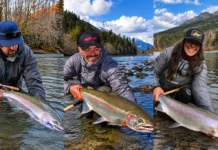
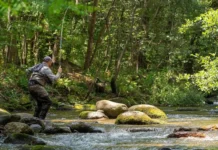
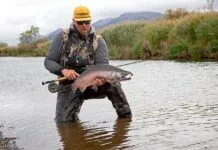
In this episode, I sit down with Jim McLennan to explore Bow River fly fishing across generations. We talk about the shift from classic dry fly fishing to streamer fishing, increased boat traffic, and the challenges of managing a well-known tailwater fishery in Alberta.
We also get into key hatches like golden stones, how dam operations impact river conditions, and how fly fishing techniques have evolved on the Bow River. Jim shares stories about legends like Lefty Kreh and Gary LaFontaine, along with insights from his books, including Blue Ribbon Bow.
Jim McLennan is based in Diamond Valley, a small town about 40 minutes southwest of Calgary. Over the years, Jim has worked across books, TV, and film in fly fishing. He’s created two shows, including Iron Blue in the 90s and later Fly Fusion TV with the Fly Fusion team.
Before and after these books, Jim spent years writing magazine articles, building a strong base of knowledge around Alberta fly fishing.
Alberta is a big province, but most of the best trout fishing is in the south. That’s where the majority of the well-known rivers are.
Jim breaks it down by drainage. The Bow River is the most famous, especially outside Alberta. Then you’ve got the Oldman River system.
As you move north and west of Calgary, you’ll find more brown trout streams. These can be tougher. Fewer fish and harder to figure out. Closer to Edmonton, you move farther from the mountains. That means fewer trout streams and more lakes instead.
The Bow River starts in the eastern slopes of the Rocky Mountains in southern Alberta. It flows through Calgary, then joins the Oldman River.
From there, it becomes part of the Saskatchewan River system. What surprised me is where it ends up. All that water eventually flows into Hudson Bay.
Jim also pointed out that most rivers in Alberta drain north. Very little water goes toward the Mississippi system.
One of the biggest issues right now is trout getting pulled into irrigation canals. Fish can swim into these canals easily, but when the water gets shut off, many don’t make it.
This problem has been known for over 100 years, and it’s still happening today. There have been fish rescue efforts for years, with crews going in to move fish back to the river, but it only helps in the short term and doesn’t solve the root issue.
If you’re looking for bigger trout, the stretch from the south end of Calgary down to Carseland is the one. Jim says it’s the most accessible part of the river, with solid access points and boat launches.
Below Carseland, there are still plenty of fish, but it gets harder to reach. That’s why most anglers stick to that 50 to 60-mile stretch below the city.
Jim says there might be fewer fish overall now, but there are more big ones than before. Fish over 20 inches, even pushing two feet, are showing up more often. This reminds me of the episode we did with Josh Nugent, where he talked about offering a money-back guarantee for landing big fish on the Bow.
But he adds that the Bow isn’t always easy. It’s a temperamental river. You can have a great day, or you can get skunked. That’s just part of fishing here.
Jim started guiding in the mid-70s while he was still in university. Back then, there were barely any guides and hardly anyone fishing the river. That early timing gave him access to some of the biggest names in fly fishing:
Jim’s book looks at the whole river, but most of the focus is on the Calgary to Carseland stretch. That’s the main zone where people fish. He walks through the seasons, hatches, fly patterns, and even touches on conservation.
Most people fish the Bow from a drift boat. It’s a big, gentle river, so it’s very doable. You’ll also see rafts and pontoons out there.
Back in the early days, they mostly fished streamers. Leeches, Muddlers, casting to the banks, then getting out and swinging flies through runs. That was the program.
Jim said it started as a streamer game. Then he began noticing rising fish. The more he looked, the more he found.
Strong hatches like PMDs, caddis, and Blue Winged Olives had fish up most days. It built a reputation as a dry fly river, and Lefty Kreh called it one of the best.
Now it’s a bit different. The fish are still there, but hatch fishing isn’t as consistent.
The focus now is more on bigger bugs. The golden stone hatch in July is a good example. Fish them early, before sunrise, tight to the banks. You’re covering water, not waiting on rises.
Jim also mentioned that things just feel different now. Warmer temps and fewer bugs overall are hard to ignore.
Quick one for you. The Bow River we’ve been talking about eventually flows into a much larger system. The question is simple:
Jim and his wife have spent the last 20+ years focused on teaching fly fishing. Their website is where everything lives, from beginner schools to more advanced, on-the-water instruction.
Episode Transcript
WFS 901 Transcript 00:00:00 Dave: A river can teach you different lessons depending on how long you stay. Spend a season out there and you learn where to stand. Spend a decade and you learn when to move. And when you spend forty years. You start to understand how it breathes. Today’s conversation traces the bow River across generations from the early days of light pressure and dominant dry fly culture to the rise of streamer fishing. Heavier boater traffic and management realities of a major tailwater. We’re going to talk about the golden stones in this nocturnal insect hatch. How dam operations shaped one of the famous rivers in Alberta. And then we’re going to dig into the early years. We’re going to get back to how Lefty Cray and Gary La Fontaine. All this came to be. Jim’s got some amazing connections. We’re going to hear all the stories today. We’re also going to get into and hear about some of the books that Jim wrote, including Blue Ribbon, Bow and some other books around Alberta. This one’s jam packed. Excited to share it with you. Here he is, Jim McLennan. How you doing, Jim? 00:01:05 Jim: I’m doing all right, Dave. 00:01:06 Dave: Great to have you on here. I’ve heard a lot about you over the years. Um, you know, we’ve done a few episodes up in Alberta, but I know you’ve traveled a lot. So we’re going to talk about that. And some of the, the books you have going today and, and probably just focus on a good chunk of Alberta in the bow River, which is obviously a big famous river today. But, um, maybe before we get into it, take us back. Are you still in, uh, where are you at in Alberta these days? 00:01:29 Jim: I’m in a little place called Diamond Valley, which is a town of about five thousand people, about forty minutes southwest of Calgary. 00:01:38 Dave: Okay. 00:01:39 Jim: Far enough from the big city, but close enough to the big city, if you know what I mean. 00:01:42 Dave: Yeah, exactly. Yeah. Nice. Um, let’s start it off because I know you’ve done a lot in fly fishing, you know, shows, books. Where do you start when you’re trying to give somebody your bio on on things? What do you think is the biggest impact you’ve had out there? Do you feel like you know the books, the shows? What is the thing you really love? 00:01:59 Jim: Oh, the biggest impact I’ve had. Oh, I don’t know. Um. 00:02:04 Dave: Or maybe. What do you think is the stuff you really love doing? Do you love the the TV shows or do you love writing more? 00:02:10 Jim: Um, I like them both. They’re really completely different. Um, when you’re writing, you, you really, at least theoretically, have complete control over what is going to turn up when you’re finished and when you’re doing a television program or any sort of video stuff to do with fly fishing. There’s so many variables that you try your best but you really don’t know. It’s, you know, a script is just a, a possibility when you start. 00:02:38 Dave: Right? Yeah. You’ve got a script, but do you, do you find when you were doing your shows and we’ll talk more about the details on them, but when you were doing them, did you kind of have this script? And then it kind of got thrown out the door and you just went with it? 00:02:49 Jim: A lot of the time, yeah. You kind of have a hope what you’re going to, what you’re going to see and what you’re going to do. But we learned this pretty quickly, Actually, I have done two fly fishing TV shows over the years. The first one was back in the nineties called Iron Blue Fly Fishing. We did two seasons for Outdoor Life TV network and very quickly we learned this will give you an idea of what we’re talking about that we would. The very last thing we would do that we would shoot would be the introduction to the show. I mean, because you just there’s no point in doing it at the beginning because it’s probably not going to be quite accurate. So you do the show and get everything you think, okay, well, this is I think this is what this is about. So let’s introduce it that way. Yeah. 00:03:32 Dave: Yeah, that’s exactly how we do it here too. The podcast episodes are always the best when they’re not scripted. You know, you just kind of go with it, right? And then you do the intro after. And what was your other show that you did? 00:03:43 Jim: Well, more recently, like ten years ago or so, I did three seasons of Fly Fusion TV, which was done by the Fly Fusion magazine people. 00:03:53 Dave: Yeah, definitely. Yeah. Fly fusion, we’ve had. I’m trying to think of the name of the the gentleman who runs that. But, um. 00:03:59 Jim: Oh. 00:03:59 Dave: Chris Burke yeah, yeah, we’ve had him on the podcast and talked about, I think he talked about the Upper Columbia, which, which I guess that’s part of, maybe take us back there where you fit with the let’s get into the bow River piece a little bit there. Maybe talk about the bow. It’s we’ve talked a lot about it, but how does it fit into that? What does it flow into? What’s it connected to in the bigger system up there? 00:04:19 Jim: Okay. Yeah, sure. The, the bow comes from the, the east slopes of the Rockies in southern Alberta and flows through Calgary, and then is joined by another one of our best trout streams, the Old Man River. And it carries on as part of the Saskatchewan River basin. And, uh, this part, I suppose, surprises people because it ends up in Hudson Bay. 00:04:42 Dave: That’s right. 00:04:43 Jim: It’s, uh, we have only one tiny bit of water in Alberta that flows into the the Missouri and Mississippi drainage, and that’s the milk River. But, uh, everything else goes either. Uh, well, I guess everything goes to the Arctic Ocean, either via Hudson Bay or, you know, the farther north drainages in Alberta go more directly to the Arctic Ocean. 00:05:03 Dave: Right? Yeah. That is amazing. 00:05:05 Jim: Not Missouri. Mississippi drainage. 00:05:07 Dave: No, no. What’s your substantial. But yeah, I mean, the fact that it travels all the way across Canada. Oh yeah. Right. And towards Ontario. And then. Yeah. That’s amazing. Yep. 00:05:17 Jim: Long ways from here. 00:05:18 Dave: Yeah. Yeah. So good. So that’s kind of the boat where you’re fishing. Maybe take us out even higher level. Let’s talk about we talked about the shows. We’ll get more into all this as we go, but I think a couple of the books you’ve written will shed light on Alberta, maybe describe those books that you’ve put together. 00:05:33 Jim: Yeah. Well, the first book I did was a book on the bow, and it was called Blue Ribbon Bow. It’s out of print really completely now, except for, uh, whatever you can find in a used bookstore, sometimes online at a, at an outrageous price. Yeah. But, um, it was done in, um, I guess it was, I think it was nineteen eighty six, it came out. So it’s, um, and then it was revised, uh, sometime, I can’t remember, maybe late nineties or something like that. So if you find a copy, it’s going to have, uh, I mean, it’s going to be dated for sure, but that was the first one. Then I did one called Streams of Alberta, which just talked about, well, trout streams of Alberta. Yeah. Looking at each drainage and what the, um, you know, with the fish species and the type of fishing and the bugs and fly patterns and all the usual stuff. And, and that one has just basically just gone out of print recently. And there were talking about a revision. There actually was one revision. We were talking about possibly another revision in the future, but nothing has really been settled on that yet. So that’s where the that’s where the book writing started. Prior to that, I had written some magazine articles and things and carried on through the whole the whole time. 00:06:49 Dave: That’s perfect. No, I think that’s the perfect, um, kind of segue into, you know, talking about this because I think Alberta, it’s, you know, all the provinces are huge, right? But, but I think that it’s interesting because Alberta has the bow. It’s got some big cities and it’s got all the northern areas. How do you describe, you know, when you break that down or maybe how did your book break down Alberta? How did you talk about that? I guess it’s focused on trout. So does that mean it was more south, more southern? 00:07:14 Jim: Uh, there was there would be more certainly more words written about the South. Um, because that’s actually where the there are more of our good trout streams are in the south. I mean, Alberta is it’s a big province. I mean, you know, I guess not all the Canadian provinces are big. The Maritimes are not. But um, yeah, Alberta, it’s really big if you look on a map. Uh, northern Alberta is way up there. The northern boundary of Alberta is with the Northwest Territories. So, um, anyway, so yeah, most of the, the trout streams of Alberta book is dealing with the more southern streams. Now there. I took a drainage by drainage. So there’s a chapter on the, on the, um the northern drainages, the Athabasca River system and that, but, but they take up less space in the book. Yeah. And so that’s what I did. I went sort of drainage by drainage started with the old man in the south, then the bow bridge and then the Red deer and then the North Saskatchewan and then, uh, the Athabasca, and then the peace with the peace River system up way up north in Alberta. 00:08:21 Dave: Okay. What is the when you break down the, you know, the top or the most famous rivers, I’m guessing the bow is number one. How would you break that? What are the maybe the top ten trout streams that are out there? And did you also add Stillwater in those. 00:08:35 Jim: Uh, no, no, no, it was just just moving water. Moving water. 00:08:38 Dave: Okay. 00:08:39 Jim: Um, the top ten. Well, certainly the ten. Well, I don’t know if I’ll get. 00:08:42 Dave: Or maybe not or. Yeah. Just give us the top. Yeah. 00:08:44 Jim: No, the old man or the bow is certainly the best known beyond Alberta. And then it would then it would be the Old Man River system, which is like one drainage south of about, oh, two hours from Calgary. You’re into the old man system and there’s a a bunch of streams there, the old man itself. And it has some, you know, main tributaries, you know, the crow’s Nest River, which is would be on that list for sure. And, and a couple of other tributaries of the old man. Um, those would be the best, the best known once you get north of Calgary, northwest of Calgary, there are quite a number of, uh, brown trout streams in our, in our foothills coming off the mountains, they’re mostly pretty temperamental streams. They, um, they don’t have high numbers of fish and, uh, they’re, it’s very easy to take a kind of random visit to one of these and not really see much. So. 00:09:37 Dave: Right. Are these cutthroat streams? 00:09:39 Jim: Uh, no, these would be brown trout streams. 00:09:40 Dave: Oh. Brown trout. 00:09:41 Jim: Uh, the old man and its tributaries are rainbows and cutthroats and bull trout too. We still have bull trout, but northwest of Calgary it’s mostly. It’s mostly brown trout. 00:09:51 Dave: And then as you get up to Edmonton in that area, does it just start to get more, less trout and more kind of Stillwater as you go from there? 00:09:59 Jim: Yes. Yeah. Um, if you look at the the placement of the Rocky Mountains, they, they sit on, on an angle through Alberta kind of running. Let’s see. 00:10:10 Dave: The border, the border of B.C. and Alberta, right? 00:10:12 Jim: Yeah. B.C. and Alberta border is sort of diagonally, uh, from right to left, top to bottom. If you’re looking at a map. So Edmonton is much farther from the mountains than Calgary is. And, um, and there are so Calgary is closer to the mountains and closer to the cooler streams where trout can live and a different type of streams too. Um, the best concentration of our moving water fisheries are certainly from, um. Oh, maybe there’s a city in between Edmonton and Calgary called Red deer. Maybe from west of Red deer to west of, uh, all the way to the Montana border. That’s where the best of it is. 00:10:55 Dave: Yeah, that’s the best. Okay. And that’s all the trout streams. Awesome. Well, and then, of course, the bow River we mentioned and you wrote another book on that. Um, where do you start with the bow River when, you know, if somebody, you know, kind of new to maybe fishing it? Maybe you could take us into that book, the first book you did there. How did you cover the bow? Because it’s got some different segments, right? It’s got some segments, areas that are known for really big fish and then some places higher up. Describe that. How do you describe the bow? 00:11:21 Jim: Well, it’s interesting and I guess fairly complex. Maybe it comes out of the mountains in Banff National Park. And up there it’s entirely a freestone stream, not particularly productive as far as, um, you know, water chemistry and bug life and, um, the native fish throughout the Bo system were, uh, westslope cutthroat and bull trout, and they are mostly gone from the Bo system. Not actually, not entirely. They’re pretty much gone from the Bo proper except for the, uh, the real extreme sort of upper ends. There’s still some bull trout there. Um, there are brown trout throughout the river from about the town of Banff on downstream until well below Calgary. But the part of the Bo that people will have heard about most is the park sort of in and downstream of Calgary for about fifty miles. And that’s pretty interesting because it’s, uh, there’s about one point six million people in Calgary. And the river that flows right through it is a really good trout stream. And that, I think is probably the distinctive thing. And a unique thing about the Bo is that there’s not many streams going through that many people that are still hospitable to trout. 00:12:44 Dave: Still blue ribbon. Right. Great. 00:12:45 Jim: Yeah. Yeah. I mean, blue ribbon is not an official designation here like it is in some places in the States, but it’s just kind of a descriptive. Yeah. Yeah. 00:12:55 Dave: And what was the name of your book? It was the blue. What was the name of the. 00:12:57 Jim: Blue ribbon bow? 00:12:58 Dave: Yeah, yeah. Blue ribbon bow. Yeah. Yeah. What do you call the in Canada? Do you have a name for the. If it’s not blue ribbon, what are your top streams? 00:13:05 Jim: No, we don’t have anything I know. I guess Montana’s got blue ribbon and Colorado’s got what? Gold medal or something? 00:13:11 Dave: Oh, yeah. I always think blue ribbon in the in the States is kind of a just a general. Maybe. Yeah. Maybe there isn’t an official thing for all states, but. Yeah, blue ribbon seems to be the name. 00:13:20 Jim: Yeah. No, we don’t have an official official naming system. It’s just what people kind of glom on to for description. And the publisher thought it was a good title and I did too. 00:13:31 Dave: So yeah. Yeah. No, I think it is. I think they’re both good titles. So. And then and then is it a it’s a tail water coming out. Is there a big reservoir out there? 00:13:39 Jim: Yeah. well, there’s a number of dams upstream of the city of Calgary between the mountains and Calgary. And, um, the last one, the most downstream one is a, it’s called the Bearspaw reservoir. And it was actually built in, I think, nineteen twenty five, really to stabilize the flow of the river through the city. Um, the instability was caused by some power dams further upstream. And so it’s, it’s kind of a stabilizing dam and, uh, which helps, you know, stability is a nice thing for, for trout. And so that’s one of the things that has created the, the exceptional fishery in and downstream of Calgary. The other is the, the water treatment plants in the city that, that, uh, Calgary through the years has done a pretty good job of keeping up their, their water treatment. Um, so that what goes back into the river is not killing everything downstream. It actually provides some nutrients and some phosphates and nitrates that allow for a, you know, a heavier growth of insects and aquatic plants. So the combination of the, of the more stable river because of the, the bearspaw dam and then the, the addition of some nutrients allowed the river to carry more fish and fish that grow more quickly than most other places, certainly in Alberta. 00:15:05 Dave: Right, right, right. Yeah. 00:15:06 Jim: That’s a little unusual that way. There is sort of debate over whether it’s a true tailwater or not. It doesn’t have all the things we think of the tailwater, which would be, you know, bottom drawer, deep reservoir, cold water temperatures doesn’t have that. The reservoir is not a not that kind of reservoir. No, but it is downstream of a dam. If that’s how you define Tailwater, then yeah. 00:15:31 Dave: San Juan roadworks started with a simple belief great fly rods and gear shouldn’t cost a fortune. As a family run company, they focus on building high quality fly fishing products that perform on the water without the premium price tag. You can try San Juan roadworks for thirty days risk free right now, and if you’re not satisfied, send it back for a full refund. You can go to San Juan roadworks dot com, that’s s a n j u a n roadworks dot com. Pescador on the fly offers a full range of fly fishing gear for any angler at any budget, with premium raws delivered directly to you. The lre G6 is the most packable high performance fly rod on the market, performing like a four piece rod but with unmatched portability in six pieces, and you can get ten percent off your next order right now if you use the code Wet Fly swing at Pescador on Thefly.com never fly without your G6. Discover the LRE series and more at Pescador on the fly dot com. Yeah, it’s kind of unique. It sounds like because of the the way the water quality is managed, it’s the perfect fit for that area? Is it managed? Is that a focus? Is the trout fishing a big focus? Are there other things that take precedent over over that area? For the river, um. 00:16:45 Jim: Almost everything takes precedent over the over the quality and the requirements of the river as a trout stream. The fact that it’s still here is, um, probably more good luck than any sort of intention. 00:16:59 Dave: No kidding? No kidding. 00:17:00 Jim: Yeah. Um, you know, as the city grew, the needs for more sophisticated and larger treatment of its, um, you know, domestic water increased and, and, and so it was done. And that helped, you know, both both the people and the fish. But it’s never been, it’s been kind of a sore point with a lot of us who’ve been around the river in the fishery for a lot of years that it’s never really been, um, what’s the word cared for as carefully as it should be. And we’re really pretty fortunate that it’s still around and still a good trout stream. You know, lots of bad things could have happened. 00:17:39 Dave: And could there be some things that could still happen? Looking ahead. 00:17:43 Jim: Oh yeah. Everything that, um, that puts stress on the river is increasing. You know, from the, the, the number of the population of the city, um, the climate change, increased water usage. Um, one of the things we’re, we’re dealing with now is there has been an identified decline in the number of particularly of rainbow trout in the last ten years or so. And the, the Alberta government has identified three main causes of this. One is um is still the instability in more minor ways of the flows through the city. Um, because of the requirements of the, from the power dams and things, it’s not completely stable. Uh, and that’s one of the stressors. The other one is, uh, catch and release fishing mortality, which they believe has a significant effect on the population of fish. And the one that I’m currently involved with, with a new conservation group up here is, um, what’s called entrainment of trout in irrigation canals, uh, in and downstream of Calgary. There’s a, there’s two places where water is diverted from the river for irrigation and goes into canals and out to the irrigated farmland, uh, east of Calgary. And, um, these are fairly significant canals and the fish just have an unrestricted access to these, um, just because there’s nothing to stop them from going down these canals. So they significant numbers of fish move into these irrigation canals and they’re probably happy, happy enough through the summer. But come the end of irrigation season, in the fall, the, uh, the water to the canals is shut off. The tap is shut off actually, and the canals dry up. So, um, whatever. Fisher is still there. Um, are pretty much doomed now. The the local Trout Unlimited chapter for many years has conducted a, what they call a trout rescue. They go down and fish the canals. 00:19:44 Dave: Oh, yeah. Yeah, we’ve heard about that. 00:19:45 Jim: Yeah. You might have might have heard that. It’s a neat um, initiative. What’s wrong with it is that it started, I think in nineteen ninety eight. And the idea was not that this is going to solve the problem of losing fish to the irrigation canals. It was going to return a few of them to the river and kind of make a point and make a statement that this ought to be addressed properly, which would be, uh, the installation of, um, devices that can keep the fish out of the. 00:20:14 Dave: Yeah, you got to keep them out of them in the first place. That would solve the problem. 00:20:17 Jim: Yeah. Because they, I mean, they catch a lot of fish in these fish rescues in a tiny portion of the canals. And that’s what’s so disturbing. I mean, it’s over the years, it’s it’s been over a million fish now, not all trout, but lots and lots of trout. Every year it’s thousands of them that they put back in the river. Um, but I think the if I get my numbers right, the main fish rescue on one of the canals, uh, takes place and I think about three. Okay, I’m going to go all Canadian. 00:20:47 Dave: Yeah. Let’s hear it. 00:20:48 Jim: Three kilometers of the canal and the canal is sixty six kilometers long. So. 00:20:53 Dave: Yeah, which is a kilometer. Yeah. I mean, we, I think we got that a thousand meters. That’s pretty decent size. Like a kilometer is like a quarter of a mile or something like that. 00:21:01 Jim: Yeah. And a quarter and a half, I think. 00:21:03 Dave: Yeah, yeah. 00:21:04 Jim: So anyway, the fish rescue was never intended to be a solution. It was intended to help a little bit and to make the government aware of the problem. But so far nothing has been done. So there’s this, um, this new conservation group that started in Alberta called the Trout Trust that I’m involved in with the another half a dozen people who are concerned about the same thing and trying to, to push the provincial government to solve this problem because it’s so clearly the right thing to do. As you know, I sometimes tell people when we’re talking about this, nobody thinks it’s okay. 00:21:38 Dave: No. Yeah. Nobody loves us. Even the farmers, I’m sure, don’t love it. Yeah. 00:21:42 Jim: It’s just time for something to be done. And what really gets people’s attention. We’ve put together a about a fifteen minute film on this on this issue of entertainment. And in there we one of the points we make is the idea or the knowledge of fish lost to irrigation canals in Alberta first appeared in a in a government report or a report, I guess it was a report to the government. And, uh, we put a big pause in the film here or a short pause while we say that the year that this report came out saying there’s significant damage to the trout populations in the rivers because so many fish are caught in irrigation canals, that was first identified in Nineteen ten. 00:22:27 Dave: Yeah. 00:22:28 Jim: Yeah. So it’s been going on, uh, whatever that is, one hundred and fifteen years. One hundred and sixteen years. No attempt to fix it. 00:22:34 Dave: No attempt. Yeah. No. And you have you have some not easy fixes, but I mean, you could put fish screens, right? I mean, that’s the thing that you could put in there. They’re pretty common all around the world keeping fish out. 00:22:44 Jim: Yeah there are lots. We’ve been looking into it. There are a lot of different technologies. A simple screen wouldn’t work on the go because there’s it would get clogged with there’s a lot of plant life. 00:22:54 Dave: Oh yeah. 00:22:55 Jim: And we have a runoff and lots of debris comes down in the spring and it’s a big river anyway. But there’s other technology. Some of them are really interesting. Some of them use light, some of them use sound, some of them use sort of, uh, I guess the opposite of decoys. They put a predator sort of, um, statues or whatever. Oh, wow. Over the water to keep, you know, I guess probably bird predators too. Anyway, yeah, it’s the opposite of decoys, whatever you call them. 00:23:24 Dave: Sure, sure. 00:23:25 Jim: And some of them like they’ll, they’ll make a barrier of bubbles. Um, kinds of things. It can be done depending on the specifics of the. Of the situation. And um, we’re just pushing the government to figure this out. And because it’s frankly, it’s just stupid to allow this to keep going. And the reason it keeps going is because there’s other priorities. 00:23:45 Dave: There’s other priorities. Yeah. It comes back to a funding thing, right? I’m sure the sure, the government would love to fix it, but they’re probably thinking, well, we got these other things. And yeah, so really it’s finding, you know, finding some funding, right. Which two does have funding? You know, they there’s funding sources, but we’re probably talking millions and billions of dollars probably to fix this. 00:24:03 Jim: Probably in the millions, depending on which structure would make the most sense and be the most successful. Yeah. One of the things we’re going to try and push for while the thing is it’s going to take some more. Oh, I guess investigation to figure out which is the best structure and then what it’s going to cost and then who’s going to pay for it. And, um, the other thing we always point out in this business is that, um, we’re not this group of ours, this trust. We’re not opposed to irrigation. We know. 00:24:31 Dave: Right. 00:24:31 Jim: Farming is a big deal in southern Alberta and. 00:24:34 Dave: Yeah, we gotta eat. We gotta eat food, right? 00:24:35 Jim: We gotta eat. You know, it’s dry out there and we need irrigation. Uh, we’re not saying, uh, we don’t want we don’t want the water. 00:24:41 Dave: Yeah. You don’t want to, like, remove all the dams and make a natural stream. 00:24:45 Jim: No, we don’t want to stop irrigation. We just want to stop. Stop the fish from getting out. 00:24:49 Dave: Well, it sounds like a pretty good, uh, something that we could maybe, you know, get involved with. So where would be the place is the. You mentioned that video. Where can we find that video to look it up? 00:24:57 Jim: Uh, well, we’ve just it’s just been finished up. Um, if people can find out more about this specific problem at, uh, we have a website called the trout trust dot. 00:25:08 Dave: The trout dot com. 00:25:11 Jim: actually dot com or dot c a will. 00:25:13 Dave: Get you there. Okay. The trout trust okay. 00:25:16 Jim: There’s a whole bunch of information there. And before long the film will be, uh, placed there. We just had the first showing of the film. Well, last week at the, uh, the IFC Film Fest in Calgary. 00:25:28 Dave: Oh you did? Is this running at the I because I think i4 is running at the fly fishing shows down here too. 00:25:33 Jim: It is. But our film is not part of the festival films. It was kind of a special presentation in Alberta. 00:25:39 Dave: Yeah. We see at the Trout Trust com. It’s um. It’s awesome. Yeah. You got the sign? The petition? Yeah. You got it all here. So this is a great place. So we’ll send, we’ll put that link in the show notes so people can take action. 00:25:49 Jim: That would be. 00:25:49 Dave: Great. That’s awesome. Yeah. We’re always, uh, you know, I mean, I think that all the streams have some of these issues, right? And it’s a matter, it’s amazing. The bow has been, you know what it is, right? It’s still this powerhouse. Maybe describe that where, you know, uh, you hear about these big fish, you know, when you think of the bow, are there certain segments that really have the chance to find those bigger fish? What does that look like? 00:26:08 Jim: Yeah, it’s really from, oh, the southern part of Calgary, the downstream part of Calgary. Down, down mostly, I suppose about fifty miles. There’s a um the little town called Carseland. It’s a farming town downstream of the city, downstream of Calgary. And, um, certainly the brown trout and the rainbows continued downstream of there. There is an irrigation. Well, that’s where one of the canals comes off the river at Carseland, downstream of there. There is still it’s still a very good trout fishery. It’s just really inaccessible there. It, uh, enters an Indian reserve shortly downstream. And, um, the only way to access it down there is with a powerboat. And there’s some people, you know, that do that, but the more accessible part of the river is always considered to be the Calgary to Carseland stretch, because there’s a number of public accesses and drift boat, okay, boat ramps and that sort of stuff. So. So there’s fifty or sixty miles of the river where you can find the the big fish. And one interesting thing is when I guided on the bow a long, long time ago, back in the seventies and 80s, it was still a river known for big fish and lots of fish in the sixteen to twenty inch range back then. But what there are more of now. There are fewer fish overall. Still a good average size, but the chance at a fish of two feet or longer is. There’s more of those caught now than there really ever was when I was working on the river. Um, I’m not really sure why that is. Well, we’ve, it’s had, uh, pretty restrictive regulations, you know, about catching at least for quite a long time. And that’s probably something to do with it. And, but yeah, this past summer especially, it was, uh, it was a really, um, there was an awful lot of big brown trout being caught at least. And the reason I know this is because I saw it on Facebook. Yeah. Um, you know, it’s true. 00:28:09 Dave: Yeah. You’ve seen the photos. You see the photos. Well, that’s the interesting thing always about the social media is you see, you know, you see the best of the best and you don’t see the days when people are getting skunked and stuff, but no, that’s good to hear. It’s some pretty good stuff. And we’ve done a couple of podcasts on and I’ve heard about some of these fish. In fact, one of the guides there, I think he has a fly shop. I can’t remember. I’ll have to track down. We’ll put a link in the show notes. But he was talking about when he started, he had this guarantee. I think it was something like you would catch a fish over twenty inches or twenty four inches or something huge or your money back. You know what I mean? Really? Yeah. 00:28:40 Jim: That’s bold. That’s bold. Because the other thing that’s always been true in my sort of observation is that it’s a temperamental river. Yeah. 00:28:48 Dave: Yeah, exactly. 00:28:50 Jim: I always tell people, you haven’t been skunked on the boat yet. You haven’t fished for very long. 00:28:53 Dave: Yeah, and I just found a link to it. So it’s, um, episode seven seventy seven. It was, um. Josh Nugent. Oh, okay. Yeah. Josh Nugent so he. I don’t think he’s still guaranteeing that. Um, but, but it worked for marketing. It was good. And then we had another good episode, episode four hundred sixty one that was back in twenty three with Barry White, which I’m sure you’re aware of. 00:29:13 Jim: Yeah. 00:29:13 Dave: He talked about some of the high level stuff on floating the river and stuff. So yeah, I think we have a couple of great episodes and out there, but maybe, you know, like you said, what was it like when you were guiding? Did you do that for quite a number of years or. 00:29:25 Jim: Well, it was it was very different. I started in probably about it was nineteen seventy five or nineteen seventy six maybe. I was, uh, in university going to university in Edmonton. That’s where I, where I grew up and I was, uh, keen on fly fishing and I’d fly, fished the bow a little bit. And a friend of mine was running a little, um, a little tackle shop in Edmonton, and he was going to expand to Calgary and open a second shop in Calgary. This wasn’t just a fly fishing store, but a general store. And, and, uh, he also knew about the, the fishing in the bow and was going to start a guide service. So because I had fished the river a little bit and had my summers off from, uh, one university, I got to be the guide. So I was, um, perhaps the first, quite likely the first sort of full time guide, if you want to call it full time back in the seventies. 00:30:20 Dave: Were you first in the seventies? What was the were there a number of guides on the bow then? 00:30:24 Jim: No, no. There. This was sort of the beginning of it. I think it pretty much started with, uh, with this story I’m talking about. 00:30:32 Dave: No kidding. 00:30:33 Jim: I came down for the summers and guided, and then it wasn’t too long before we got some other guides to work with us. But it was pretty interesting because there was, there was essentially nobody fishing. And um, when we got, um, a few other guides, maybe by the, by the early eighties, maybe we maybe had four guides working the river. And I remember we would get together at the hotel to pick the clients up in the morning and we would, uh, if somebody claimed one stretch of river, one ten mile stretch of river, one of the other guides would say, well, I wanted to fish that stretch today. 00:31:09 Dave: Right? Wow. 00:31:10 Jim: So yeah, that’s what am. 00:31:12 Speaker 3: I going. 00:31:13 Speaker 4: To be there if you’re there. 00:31:14 Dave: Right? Right. Was Barry White out there then? 00:31:16 Speaker 4: Yep, yep. Barry worked for us. Oh he did? Yep. 00:31:19 Jim: Shortly after we started that. 00:31:21 Dave: Gotcha. 00:31:21 Jim: I really like to point out that the way the, um, the CEO got known was through some, um, prominent American fly fishers and writers who, uh, sort of heard about it through the grapevine and then came up and we actually invited some of them. Um, Lee Perkins, the CEO of Orvis for all those years. He came up, he was actually a friend of my father’s. I had known him since I was five years old. 00:31:48 Speaker 4: Oh, wow. 00:31:49 Jim: And so he came up and he wrote about it in the Orvis news. And then, uh, AJ McLean came up and Ernest Schwiebert came up and Gary Borger came up in later years, and all the big guys came to fish here because of the bow. And especially in the early years when somebody was going to take him fishing, it was usually me because there just wasn’t anybody else around. So the perhaps the best thing, you know, that circumstance did for me was I got to fish with almost all of my fly fishing heroes. 00:32:22 Dave: Right? The greatest fisherman out there. You did. And what was that like? Did you kind of pinch yourself as you were going. 00:32:26 Speaker 3: Oh, yeah. 00:32:27 Jim: For once, I think I was aware enough to try and make the most of it. And I, uh, I asked a lot of questions and I, you know, I stood beside lefty when he was fishing to rising fish. And the same thing with Lee Perkins and yep, Gary Borger and Doug Swisher and all those guys. And I just soaked it in, you know, I soaked it up. So it was it was a wonder. It’d be like, I don’t know, some young golfer getting to caddie for all the greats. 00:32:55 Dave: Well, it’d be like, yeah, I go back to any of the sports, you know, you’re sitting there with whoever your hero is. 00:32:59 Speaker 3: Yeah. 00:33:00 Dave: And how old were you when you first when you were out there with Lefty Kray? 00:33:03 Speaker 3: Uh, well, let’s see. 00:33:04 Jim: I think it was nineteen eighty, so almost thirty. Yeah, twenty seven or something. 00:33:10 Dave: Yeah. So thirty. So yeah. Right in your prime and left you. Yeah. What was he out of all those guys you mentioned? I mean, you know. Lefty. Um, I’m trying to think. Well, yeah. Gary’s still alive. There’s a number of. Yeah, but, um, who was the most. You know what I mean? Like, out of all of them was lefty who stands out. 00:33:26 Jim: Well, lefty stood out because he was, uh, well, he was lefty. He was, uh, you know, so gregarious and personable and knew more jokes. 00:33:37 Dave: He did. He was a joke teller. 00:33:39 Jim: He was a joke machine. Yeah. Yeah. And you could bring up any topic you’d say. He’d say, hey, I got one here for you and tell you about that. And he was really, you know, he, he was really big on, as he described it, uh, sharing knowledge rather than just displaying knowledge. Um, and so I learned a bunch of neat stuff from him. 00:34:01 Dave: Yeah. What does that mean? So sharing versus displaying, what’s the difference there? 00:34:05 Jim: Well, I think he was saying that, um, maybe some of some of the other writers that he felt were more trying to make themselves look, um, look good rather than helping the reader learn something. And, and, uh, he made that distinction and he certainly carried through with it. I, you know, all these guys that I fished with, I didn’t find any of them that were anything other than personable and willing to share. Yeah. I think they kind of, I wasn’t too subtle, probably in my, uh, quest for knowledge with them. And I think they were almost all kind of picked up on that. Here’s this young guy. He’s really soaking this stuff in. And so I think that I’m going to help him if I can. 00:34:49 Dave: Sure. 00:34:49 Jim: And a number of them, uh, you know, I kept in touch with, uh, Charles Brooks, who, uh, wrote a book, some books. He lived in West Yellowstone and wrote a number of books. He became a really good mentor to me and did a foreword for one of my books. 00:35:02 Dave: And yeah. 00:35:03 Jim: Charlie Waterman, who was, uh, I know I’m talking about guys who are gone now. 00:35:06 Dave: Yeah, yeah, we’ve heard of them. Yeah. 00:35:08 Jim: Yeah. Did it forward and Lee Perkins did it. Forward. 00:35:10 Dave: Oh yeah. Yeah. What was your. Sorry. No go ahead. 00:35:15 Jim: I was going to say that I have this probably the strongest connection or had to Lee Perkins from Orvis because of the long connection with my dad and, and uh, he came up to fish quite a number of times and I subsequently. And he was also a bird hunter. That’s the other bird hunting. And I hunted with him for quite a few times. And he was never, uh, you know, he never say, now sit down over there, Jim. I’m going to teach you something. It was never like that. I just was was watching and doing stuff with him and, you know, realizing how he knew how well, how good he was at enjoying the hunting and the fishing. And, uh, he would love to laugh. And I know one time he told me that he’s talking about both hunting and fishing. He said that if you’re only if you’re only happy when it all turns out perfect, you’re not going to be happy all that often. 00:36:06 Dave: No. 00:36:07 Speaker 5: No, you gotta be completely okay with partial success. 00:36:10 Dave: Exactly. How does your dad know Lee? 00:36:13 Speaker 5: Well. 00:36:14 Jim: Uh, this was before Lee was, uh, before he bought our office, which, uh, happened in nineteen sixty five. He worked for a company in Cleveland where he was from, and, uh, that made, uh, automotive equipment like welding machines and stuff like that. My dad in Edmonton sold some of the stuff that the company Lee worked for manufactured. 00:36:38 Speaker 5: Wow. 00:36:38 Jim: So Lee would come up. Um, he on a on sales trips. And after the first sales trip, he realized that, uh, he and my dad had a lot in common. Mostly the hunting stuff. Then because my dad was, uh, not that much of a fly fisher, but he was a really avid, um, waterfowl and upland bird hunter. And so one of the stories they both used to tell was that after they realized this connection, Lee would always schedule his sales trips to Alberta in October so that his dad could go hunting before or after their meeting. The sales meetings. And the joke was that back in those days, businesses were always closed on Sundays. Uh, this was like in the well, after sixty five and before sixty five, uh, businesses were closed on Sundays. So my dad would say to his staff, okay, well, this Sunday you’re going to and also you couldn’t hunt on Sundays. 00:37:32 Dave: Oh. 00:37:33 Jim: So he’d say they’d have to have the sales meeting on Sunday so that the dad and Lee wouldn’t lose another possible day of hunting. So that was not all that popular with my dad’s staff. But that’s the way they did it. 00:37:44 Dave: Oh, wow. So they worked on Sunday. 00:37:46 Jim: They worked on Sunday. Uh, because dad and Lee couldn’t hunt on Sunday. 00:37:49 Dave: Yeah. Gotcha. Wow. Wow. There you go. That’s some pretty hardcore dedication. 00:37:53 Speaker 6: Oh, yeah. Yeah. 00:37:54 Dave: And then when did Orvis. When did Lee buy Orvis? 00:37:57 Jim: Uh, nineteen sixty five. 00:37:58 Dave: Oh, that was it. Yeah, nineteen sixty five. Yeah. Wow. And of course, it’s still the Perkins family. It’s still it’s been an amazing story because. And I have a connection to Orvis as well. I mean, my dad had a little fly shop back in the day and, and Orvis was a big, um, you know, a big brand that I knew. I mean, everything I had was it was great. You know, a great company. And then I’ve learned a lot about, you know, over just through the podcast, the conservation and how great of a company they are, you know, and. 00:38:21 Speaker 6: Yeah, I always. 00:38:22 Jim: And I, and I told you this even a long time ago, I don’t think Orvis ever gets enough credit for their conservation work. 00:38:28 Dave: No, they don’t. 00:38:29 Jim: You know, they don’t brag about it. 00:38:31 Dave: They don’t, they don’t brag about it. No. And that’s why it’s fun to talk about it because I think that they’re just quietly, you know, doing their thing and people. You know what I mean? Doing the right thing. 00:38:40 Speaker 6: Yeah. Let’s see. So it’s, uh. 00:38:42 Jim: third generation Perkins now running the show. 00:38:45 Dave: Yeah. We’ve had, um, we had, I think it was the son of Leon. Um, yeah, we had perk. A perk was great. He talked about his trip down to the Bahamas for a year. He took off and fished the, you know, perk a little bit. 00:38:56 Jim: Yeah, I know, but yeah, um, I haven’t been in contact with him, but yeah, do some kind of a sailing trip or something. 00:39:04 Dave: Yeah, yeah, he went down, he bought a giant boat. You know, he described I’ll get a link in the show notes, but he got this giant boat and he just basically it was his, whatever you call it, you know, his, his, um, you know, he took a year off and it was like, who wouldn’t? You know what I mean? We should all be doing that, taking a year off and going. But yeah, he caught Barracuda. He just and he was it was his boat. He was like he was the captain. It was a pretty cool story. So yeah. And then and now of course they’re still going, you know that family. 00:39:30 Jim: Now it’s not her son. Simon. Yeah. Simon. 00:39:33 Dave: Yeah. Simon. Cool. Well, so that’s the connection back. Did you guys start with your dad? You said, were you living in Edmonton when your dad was working there with with perk, or was that or with. Um, yeah. 00:39:42 Jim: No, I lived there. Well, basically until I moved down to Calgary to start the guiding stuff in the mid seventies, I guess. 00:39:50 Dave: Gotcha. So what were you guys fishing? So were you in, uh, not the, um, the founder was, uh, yeah. Lee Lee was the founder. So were you were your dad. Where were they fishing or were they just hunting? 00:40:02 Jim: They were just hunting. Yeah. It was quite a long time before Lee came up to fish. After I had started guiding, I’d stayed in touch with him and. And I just said, you should come up and and fish. We got, we got a pretty good river here. And finally he and his, his other son Dave came up for, for one day in September. And uh, we had really, really good fishing. And then he wrote about it and then, you know, and that’s when I think we were contacted by McLean and AJ McLean and some of the other guys and stuff who wanted to come up, and that sort of got the ball rolling on the whole thing. Yeah. 00:40:36 Dave: We’ve heard many of the stories on this podcast. Togiak River Lodge is one of the great destinations for swinging flies, for Chinook, stripping for coho all day and unwinding in a lodge right on the riverbank of the Togiak River with access to all five salmon species plus rainbows, Dolly Varden and more, Togiak offers a true Alaskan experience. Picture over thirty miles of river, seasoned guides, high quality boats and low fishing pressure. It’s fly fishing Alaska at its best. I’ll be heading up this summer, so reach out to Jordan and the crew to see what dates they have available. This year you can learn more right now at Wet Fly. That’s t o g I a k. Alaskan fly fishing like you’ve always dreamed about. That’s really cool. And so yeah, so that’s a good backstory there. What, you know, on the river, let’s again take it to there. So we talked about some of those big browns in your book that you wrote. How did you break that down? Did you talk about the bow River book? Did you talk about that section or how did you describe, you know, was it like tips and tricks? 00:41:42 Jim: Uh, yeah, there’s some of that. I talked about the whole river because that’s what the publisher wanted to do. But certainly the most focus was on that Calgary to Carseland section. And, and I went through the seasons and the hatches and the and fly patterns, the usual sort of stuff. And, uh, and then later on in the book, there was, um, you know, some conservation stuff about what was going on in the river back then and what, what the concerns were for the future were all that kind of thing. 00:42:09 Dave: Yeah, yeah, yeah. 00:42:10 Jim: Okay. It’s pretty tried to be pretty comprehensive. 00:42:13 Dave: Sure. And most people are floating that in drift boats. Is that the common way people are fishing it? 00:42:17 Jim: That’s the most common way. Yeah. It’s a very gentle river. You can certainly do it in a raft and people do it in, you know, pontoon boats and stuff like that too. So it’s that section, the river. It’s a it’s a big gentle river. It is kind of like the Missouri. It has more, um, more riffles and broken water than the Missouri does. But it’s. 00:42:35 Dave: Okay. Yeah. 00:42:36 Jim: It’s not a dangerous river. It’s. You’re doing something really dumb. 00:42:39 Dave: Yeah. What were you, what were the techniques you were guiding on mostly when you were guiding on or when you wrote the book? 00:42:45 Jim: Yeah. Well, when I was first on the river. What? Everybody. Not that there were that many people, but yeah, those are those fishing and guiding. We started out fishing streamers, um, Leach and, um Muddlers and that sort of stuff. And, uh, you know, casting them to the banks while we were, you know, on the drift and then stopping and getting out and waiting a nice run and swinging the, the streamers and leech patterns downstream. And, but it wasn’t very long until I started, uh, finding rising fish and, you know, I don’t know if they were there all along and I just never saw them or whether they just started doing that. But sometime in the late seventies, I started finding rising fish. And then the more I looked for them, the more I found them. And we had really good pale morning dun hatches and really good evening caddis. And then bluing dolls. We have most of the, you know, the big tough bugs. And when again, this was sort of timed with the surge in, um, famous fly fishing visitors. Okay. Is when, when lefty was here and. 00:43:53 Dave: Like the was this like seventies 80s? 00:43:55 Jim: Yep, yep. Exactly. Yeah. Late seventies and through the most the eighties. And, uh, we had just, just really good, really reliable rising fish, dry fly fishing, huh. You could, um, expect to find rising fish most of the time most days. And so that’s, that was the initial reputation of the river was as a well left, he called it the best dry fly stream in the world. He did after he fished it. Yeah. And um, so that part of the river or that type of fishing has fallen off. 00:44:26 Dave: Oh it has. So the bug catches aren’t there as much. 00:44:28 Jim: It doesn’t seem like it. Um you know, there certainly it still supports a reasonable number of fish and some great big fish, but a lot of the, the best dry fly fishing now is probably with big dry flies. We have a pretty good hatch of one of the, the golden stone flies, the one that. 00:44:45 Dave: Oh yeah. 00:44:46 Jim: Sometimes night stone or a short wing stone that uh, that and hoppers are probably the way. 00:44:52 Dave: So you guys, you don’t get the giant salmon flies, but you get the Goldens, right? 00:44:56 Jim: We get that particular that golden that’s almost completely nocturnal. So you don’t hardly ever see them. 00:45:01 Dave: Oh yeah. This is the one with the yeah. The wings that aren’t totally developed. 00:45:04 Jim: The half length wings, the males. Yeah. 00:45:06 Dave: Yeah. Wow. That’s cool. Yeah. So those are the ones that are well, I guess they’re all crawling to shore, but so you do get some big fish and big bugs on the near the banks and stuff. 00:45:14 Jim: Yeah. Yeah. You do. And it’s kind of an interesting way to fish because it seems like pretty much everything about that bug is nocturnal. They emerge at night, um, they mate at night and the females lay eggs at night. So you wouldn’t even. It’s very hard to you don’t see the adults much unless you’re out at the right, you know, in the dark with the light or. But if you start looking around the rocks, you’ll see the, you know, the empty. Shucks that tells you this is going on. But they just do not like the sun. So, you know, there’s a number of different golden stoneflies. Yeah. And some of them are perfectly active in a nice sunny afternoon. But not this one. 00:45:52 Dave: But not this one. How do you fish these nocturnal ones? 00:45:54 Jim: Well, um. And I can’t take any credit for figuring this out, but some of the, um, some of the, you know, for a while there was some. Well there still are I guess, but the guys who have become some of the prominent guides on the bow, um, who started fishing the river and, and guiding on the river like twenty or twenty five years ago, kind of figured this out. And what they do is they, um, they float the river starting really early in the morning. Once they know these, these bugs are around, you know, kind of by the calendar or by seeing the shucks on the rocks and, uh, I mean putting the boat in before sunrise, uh, which at our latitude means, um, cold by by five five. 00:46:40 Dave: And then and in what month is this like, uh, June. 00:46:42 Jim: This would be, um, July. July. 00:46:45 Dave: Yeah, yeah, July. 00:46:46 Jim: And, uh, just fishing the big bugs blind, you know, they’re not looking for, you know, fish actively eating them. 00:46:53 Dave: So you’re fishing dry flies. 00:46:55 Jim: Yeah. Fishing. You know, big foam, the size six. 00:46:58 Dave: Chubby Chernobyl or something like that. 00:47:00 Jim: Exactly. Or what’s that other one called, I can’t remember. 00:47:02 Dave: Yeah, yeah. The sofa pillow was an old classic sofa pillow. 00:47:06 Jim: Exactly. Yeah. Yeah. The fishing, the foam versions of those and fishermen in quite shallow water because most of the the theory being. And it seems to be true that um, when the, the female stoneflies are laying their eggs, they’re doing it. Um, they don’t fly out into the middle of the river. It’s a big river there along the banks along the edges, and the fish will move in there and be working on them. Um, and the fish will, they’ll stay there until something moves them out in the morning and maybe just, you know, sunlight or it may be, you know, the first boat that goes by or something, but, uh, kind of counting on there being some fish in relatively shallow water really early in the morning because they spent the night there working on these stoneflies. So you throw these big bugs and catch a few. It’s some of the biggest fish are caught that way. I mean, I guess the absolute biggest is probably caught on streamers, but there’s lots of these twenty to twenty four inch fish every year caught on. Um by doing this. 00:48:08 Dave: No kidding. 00:48:08 Jim: And of course they probably you’re probably trip is done by noon. 00:48:12 Dave: Yeah, yeah. You got you got plenty of and this is July. So July’s are pretty amazing up there. I’m guessing that time of year long days. 00:48:18 Jim: Yeah. You can fish till ten at night if you want to. 00:48:20 Dave: Yeah that’s great. You could do a half. Do your golden stone in the morning, take a little mid-afternoon break and then hit streamers in the later. 00:48:27 Jim: Yep, yep. That’s a good plan for the summer, that’s for sure. 00:48:30 Dave: Wow, that’s so cool. So you got the stones and then what are some of the other. So it sounds like the other hatches other than streamers. Wet flies. Is that something you ever got into out there? 00:48:39 Jim: Um, a little bit. Not an awful lot, but um, we had the other, I think the probably at least my two favorite hatches. The ones I was most familiar with were the Pale Morning Duns, which was a sort of late June through late July deal. And um, and then the caddis all summer long and even we have a pre run off caddis like a Mother’s Day caddis. And then that after runoff, which should be like sometime in mid to late June, then we get the, the summer caddis flies that are really a late, late afternoon evening deal. And um, they just, it would be really heavy hatches. There’s, there’s still some of that going on. Um, that fishing was, is quite late, like the last hour of daylight maybe. And uh, so that, that was good was then we had bluing olives in the fall and varying numbers and tricos in the fall in a kind of unreliable numbers maybe, or not quite as reliable as it used to be. Those would be the main ones. 00:49:41 Dave: Those are the main ones. And it’s probably, I’m guessing, changing a little bit with, you know, climate change. Does it feel like things are getting less snow up there, a little bit warmer during the year, during the winter? Yep. 00:49:51 Jim: It sure does. Um, we had a day, um, last week. We’ve got a, we’ve had a really warm spell over the last three weeks here and we haven’t really had much cold weather at all, but we had a day of, uh, here I go Canadian. It was eighteen, I was eighteen degrees, which is about sixty five. 00:50:09 Dave: Yeah. Sixty five. So that’s yeah, we were just in Denver at the show and it was like mid sixties, like same warm. Yeah. We’re not far. Yeah. Just that’s just down south of you. Right. Just follow the Rockies down. 00:50:19 Jim: Yeah, exactly. So yeah, and there’s, I think there’s, I’ve read a little bit and you probably have too. There’s seems to be something going on in a negative way regarding, I guess aquatic insects and insects. 00:50:34 Dave: Just insects in general. 00:50:36 Jim: In the world, I think. Yeah. There’s a, I don’t know what I don’t think anybody knows what it is, but I know um, Certainly there’s a couple of like somewhere I can’t remember what river in the US, maybe it was in Oregon River that had a good salmon fly hatch. Doesn’t have it anymore. 00:50:52 Dave: I’m not sure. Oregon definitely still has. At least the Deschutes is the big river that does. 00:50:55 Jim: Okay. 00:50:56 Dave: Yeah. Yeah, that one’s still. But you know, I think there’s definitely some changes. We’ve been talking to the Salmon Fly project. We’re going to have them on the podcast. They’re doing some bug. Okay. Etymology and they’re collecting. In fact, I met with the, um, yeah, one of the hardy ambassadors at the show and he was talking about how yeah, it’s, it’s a big push. I’ve always etymology has been a big thing for me. I’ve always loved learning. And I think that the more we can document, you know, that’s the first part. Like knowing what species are there and then knowing how that’s changing, right? That’s a big part of it. 00:51:23 Jim: Get the baseline data. So, you know. 00:51:26 Dave: Well, so I think, yeah, like I was saying, I think it’s interesting with the, the bugs, the entomology, because it tells us a lot, you know, like you said, stoneflies, you know, if those species are there or missing, you know, it teaches us. So we’re going to be following the Salmon Fly project and doing some research there. And hopefully we can. I think there’s a lot of good things we can do here, but maybe I want to hear a little bit more too about your we talked about the the shows you did maybe when that first show you did, what was the name again? And when was that going? When was that airing? 00:51:53 Jim: Yeah, the first TV show was called Iron Blue Fly Fishing. And I think we did it like ninety seven and ninety eight. Okay. And so we did thirteen episodes each year. Uh, an idea that a friend of mine had, he, he was sort of looking for something to do. And he’s a real creative guy. And so he and another, another friend started a little production company and decided, well, let’s see if we can make a fly fishing TV show. And they wanted me to sort of be the guy. And so we, we did a pilot show, you know, that’s the way it used to work and how it works now. But you make a show and you send it to networks and say, do you want a season’s worth of these? And so we did that and Outdoor Life Network said, yeah, we’ll sign a contract to get, uh, have you produced thirteen of these shows? And back then they they didn’t pay a lot of money, but they paid some money for the shows. I don’t even think it works like that anymore. And so we did these shows and, um, we learned all kinds of things about, uh, as we talked about earlier about the, the unreliability of fish when you’re right. 00:52:59 Dave: It was and was this on? Were you guys fishing mostly the Bo? 00:53:03 Jim: Uh, no, we did, we did a show on the boat. We actually, we, we went up, we moved around a little bit in the northwest. We did quite a few of them here in Alberta. We did, uh, quite a few in Alberta we did or the rest of Alberta and we did several in BC. We did a few in Montana. We did one, uh, fishing for Arctic Grayling in the Northwest Territories. So we did move around some and the, the way it worked, then you could afford to do that. Oh yeah. So yeah, it was, you know, we, I guess the main lesson was you just never, never trust a fish. 00:53:35 Dave: Never trust a fish. And where can you can you find those, uh, that series out there anywhere. 00:53:40 Jim: I’m not sure if you can or not. I’m blue fly fishing. Yeah, there used to be some up on YouTube, but I really haven’t looked for a long time. 00:53:49 Dave: That’s one of those things that’s interesting. You know, it’s like you have these things and you wonder, you know where they’re going to be, how long they’re going to be out there. But I’m sure. Yeah, I’m sure YouTube, we could probably track it down. 00:53:57 Jim: It might be able to. 00:53:58 Dave: Yeah, yeah. And then the show with Fly fusion, when was that? When did that release? 00:54:03 Jim: That was, um, I think that was about ten years ago. Yeah, we probably started and we did three seasons. Now those are only six shows each. 00:54:11 Dave: Yeah. 00:54:12 Jim: And in fact, the last, the last series of shows, uh, was really turned out to be just for, uh, just for online. It never did go directly to TV. And, uh, it was sort of frustrating because apparently the proper length of a TV show that’s being shown on, on online was about seven minutes. Oh, really? Yeah. So we were shooting with the, you know, the intention of, uh, getting whatever it is, twenty three minute show for television. But everybody said, no, that’s too long. They won’t watch it all on, uh, if it’s online, people have such a short attention span, you got to keep it short, which was really annoying to me. 00:54:54 Dave: Right, right. Wow. Yeah. How do you in six or seven minutes. 00:54:58 Jim: You don’t. 00:54:59 Dave: Yeah, yeah. That’s like, how would you do it? It’s almost like a, it’s a yeah, that’s a short that’s not even a show. 00:55:03 Jim: First time I saw one, I thought, well, that’s, that’s kind of a nice preview. I’d like to watch the whole show. 00:55:07 Dave: Right. 00:55:08 Jim: I said, that is the whole show. 00:55:09 Dave: Oh that’s funny. Yeah, yeah, yeah. I feel like part of it is. Yeah. Obviously people’s attention spans have gotten smaller, but I think, you know, what we’re doing right here is a testament to the fact the long form still works. 00:55:20 Jim: Well, that’s true. And you know, my argument that never got anywhere was, well, if people don’t want to watch the whole show, they’ll turn it off. 00:55:26 Dave: Exactly. And that’s the same thing with this for five minutes. 00:55:28 Jim: But the people who want to stay can stay. 00:55:30 Dave: Yeah. And I mean, I’m right now, you know, like there’s a bunch of I listen, I’m a podcasting addict myself and I was just listening to, you know, Joe Rogan, you know, he’s always got he’s got Alex Honnold, who’s the guy that just, you know, free soloed. I’ve been on this free solo climbing kick watching. Oh okay. It’s the guy. I don’t know if you heard Alex Hall he basically free solo climbed El Capitan without ropes. 00:55:49 Jim: I think I heard about that. 00:55:51 Dave: Yeah. So he just recently claimed the tallest. The eleventh tallest building without ropes. You know what I mean? Like crazy. But I was listening to that. And in that episode is three hours long. Wow. And so I’m not listening the whole thing, but it’s on my Spotify right now. And I listen to I just drove an hour, I listened to it and later today, I’ll probably listen to it. And so it’s long form. People listen, but you don’t have to listen to it all. Like right now. You know, that’s the great thing about like, this episode will be out there indefinitely and people can listen to a chunk of it, right? It’s kind of cool. 00:56:18 Jim: Exactly. That’s a good thing about the whole, you know, computer digital world is that the lack of, uh, you know, time restrictions or space restrictions and, you know, internet magazines and stuff. 00:56:31 Dave: Yeah, that’s the good thing about it. Awesome. 00:56:32 Jim: No matter what your story is. 00:56:34 Dave: No, no, it doesn’t, it doesn’t. Cool. Well, I think we’ve covered a good chunk of your background. Anything else you want to make sure you know that we missed today that you want to highlight here on on what you’ve done. And you know, gosh, it’s been a number of years, right? 00:56:47 Jim: Yeah, we covered a lot of ground. I don’t nothing really springs to mind. I’m glad we got to talk about the entertainment stuff. And I always like talking about the good old days. I’m an old guy, so of course I’m trying not to be that grumpy guy. I said, well, it’s not as good as it was back then, you know? 00:57:04 Dave: Right. 00:57:05 Jim: Although it’s, uh, it’s kind of easy to get like that. 00:57:08 Dave: Yeah. 00:57:09 Jim: I guess if I had the message would be support the conservation organizations that are, you know, doing, learning and figuring out what these natural resources need. 00:57:19 Dave: Yeah. 00:57:20 Jim: And, you know, I’ll just go back for one second to the the Orvis connection with both Lee and perk. Their big thing was if, especially if you have some kind of a business that relies on fishing or hunting or the outdoors. You gotta you gotta give back. You’ve got to support the conservation organizations and spend your money and your time. Uh, that’s the perk said at one point he said, that’s the cost of doing business. Cost of entry? 00:57:48 Dave: Yeah. Cost of entry. No, I love that. I love that. 00:57:50 Jim: Too. And so that’s really important, I think. 00:57:52 Dave: Yeah. And that’s a big thing for us too. We love supporting all the good conservation work. Well all right. So Jim, we’re going to do our Toyota trivia segment today. And uh, and today this is a great question. So the way this is going to work is we’re going to ask a question. And for those listening, they can go, we’re going to have a post on Instagram where people can just answer the question there. And whoever gets the right question, I’m just going to select somebody randomly out of the people who got the right question, and then we’re going to give them some swag from Toyota and wet fly swing here. So, um, and so the question is, is the bow River we’ve been talking about the day it flows into eventually, where does it flow into? So that’s the question very straightforward. And if you know the answer, make sure to mention at Toyota Prairies and at Wet Fly Swing today. And some lucky person is going to win some swag here today. So good. So we got our Toyota trivia. So this is the start of our random segment. Jim and I love doing these because they’re always fun. Um, first off we talk in Toyota. Um, are you a big what type of car do you drive? Are you like a truck or what are you driving around? 00:58:54 Jim: Well, um, I think everybody’s going to like this. Uh, we’re at two Toyota family. 00:58:59 Dave: There you go. 00:59:00 Jim: I have a two thousand and six forerunner with, uh. Okay, here I go again. Four hundred and forty thousand kilometers on. 00:59:06 Dave: It. Oh, kilometers. Yeah. Which is about probably. Yeah, half that or something like that. 00:59:11 Jim: Yeah. And then we also have that’s the main hunting and fishing vehicle. And we have a twenty twelve Rav4. 00:59:17 Dave: And a Rav4. Yep. There you go. 00:59:18 Jim: And we have, uh, we really, really like them both. And they, there’s no trouble and they’re exactly what we need. 00:59:24 Dave: Yeah. That’s it. Yeah. Toyota is great because that’s what you hear. It’s just like you don’t have to worry about any problems. They just can’t. 00:59:31 Jim: That’s kind of why we got. 00:59:32 Dave: They just kind of go. Yeah. That’s awesome. No good. So that’s a good shout out. Toyota’s going to love that. We’re we actually did a podcast that’s coming up with, uh. Probably the most expert, uh, person in up in your neck of the woods for Toyota. And he described all the new tech that’s coming out and all these cars and trucks and stuff. We talked about tundras. And yeah, it’s really interesting. You know, I mean, like gas mileage, we talked about it, right? That’s a big part there. You know, I don’t think they make a V8 anymore. You know, it’s all they’ve got. Yeah. So like even the tundra I have, it has a turbo V6, you know, that’s partly for gas mileage trying to get better mileage. Um, plus all the, of course the, the, uh, the Toyota, you know, the first Prius, right? The hybrid that was okay. Sure. You know, still, they’re still leading the way there, but so good. So we got our shout out to Toyota. We got your Toyota driver. So that’s great. And then as far as like we talked trips, you know, it sounds like you’ve been around a little bit. Do you have any any trips, travel bucket list, places you haven’t been to, you’d still love, love to get out to? 01:00:28 Jim: Well, yeah, it’s a pretty big list. For whatever reason. And part of it is because of my living in these oddball ways, which is means that I’ve never been particularly wealthy and never really been able to do the saltwater thing. Oh, yeah. And that would be what’s the main thing that’s missing? I fished a lot of quite a lot of the, you know, the North American West in the in the New Zealand. Oh, cool. Wow. Recently, but um, and actually fished Pennsylvania a couple times, but, um, I have not done the, the tropical saltwater thing. And that would be the, the main thing that I haven’t done but would like to do. 01:01:04 Dave: Do you have a species you would love to start hit first or. 01:01:07 Jim: I don’t know, everybody says start with bonefish and then when you get bored with them, then, you know, try the tarpon and permit. And I’m sure you like everybody else there. 01:01:15 Dave: Yeah, exactly. Yeah. That’s right. We’re heading to, uh, Blue Bonefish, uh, Belize, uh, this year. And actually I’ve had, uh, Chris, my assistant, was already down there and had a great trip and with bones, His his first time down. Oh alright. A bunch. Yeah. Caught a bunch using the. We talked about earlier. Earlier. Um but um you know, it’s pretty cool. Yeah. I think that it’s unlimited. That’s always the challenge, right? We have a limited amount of time. We can’t go everywhere. So, you know, how do we prioritize it? So that’s great. 01:01:43 Jim: Yeah, exactly. 01:01:44 Dave: Okay. Um, so while you’re driving, so again, keeping our random questions going. So while you’re on the road, driving to your next destination, maybe you’re fishing the bow. Are you, what do you listen to on the radio? Are you listening to podcasts, music or quiet? What’s that look like? 01:01:58 Jim: Um, I would probably listen. I listen to either a sports station, maybe. Okay. Or we have a really good, um, radio station in Alberta that’s very eclectic and plays all kinds of music. Uh, and that would be I listen to because I know I’m going to hear things that I’m not going to like everything I hear, but I’m going to hear things I wouldn’t hear anywhere else. 01:02:20 Dave: What’s this radio station? 01:02:21 Jim: It’s called c k u a. 01:02:23 Dave: C k u a Alberta. 01:02:26 Jim: Yeah, you can look him up. It’s a it’s a fabulous. 01:02:29 Dave: Yeah, there it is. Secure.com right there. We can listen. We’ll put that. We’ll be listening to that on the way out today. Arts and culture. This is great. 01:02:35 Jim: Yeah. And people in case they want to see what kind of music they play, they’ve got a playlist and you can look up, listen live. 01:02:40 Dave: There’s a there’s a listen live again. I think that’s what’s amazing about today in this world. You know, forty years ago, you wouldn’t be able to just listen to it right now. But now we can go over and actually listen to it. And so, so we got that. Awesome. So we got some music to take out of here. What about your sports? Sounds like are you is this all hockey or do you listen to some other sports? 01:02:57 Speaker 7: No, I like hockey. 01:03:00 Jim: I’m very, very excited about the Olympic hockey that’s going to start tomorrow. Um, and, uh, and I’m also a really big baseball fan. I’m really, really. Oh, nice. I mean, I don’t know if you’re a baseball guy, but, uh, yeah, that. 01:03:12 Dave: Was one of my sports. 01:03:13 Jim: Blue Jays went to game seven of the World Series last year. This whole country was nuts, and it was really disappointing. 01:03:19 Dave: Oh, yeah, they lost. That’s right. I watched some of that. Yeah. 01:03:22 Jim: Extra innings of game seven. 01:03:23 Dave: Yeah yeah yeah I know. Gosh, I remember when my always I’m not as much into it. But you know. Baseball has been in my life my entire life. But I remember the Blue Jays win. What was his name? The guy with the walk off Homer back in the. 01:03:36 Jim: Oh Joe Carter. 01:03:37 Dave: Yeah. Joe Carter. 01:03:38 Jim: Yeah. Oh yeah. 01:03:38 Dave: Right back. And they won back to back. I mean that is when I think of Toronto. That’s my that’s what I think of. 01:03:43 Speaker 8: Well that’s a good one. That’s a good one. They’re putting the statue up. 01:03:46 Jim: Of Joe Carter I think outside. Yeah. 01:03:48 Dave: And did you play any sports as a kid or any of that? 01:03:51 Jim: Uh, I played I played hockey more than anything else. And I played baseball a little bit, um, about it. And I was, you know, fishing and hunting and stuff. So yeah, I didn’t stay with the other ones very long. 01:04:02 Dave: Sure, sure. Awesome. Well, this has been great, Jim. I think we could probably leave it there today. This has been, you know, always good to catch up with folks like yourself who have such a history and all the connections to all the great anglers. Um, yeah, any maybe give us a heads up again if people want to follow up with you. Is it just maclennan fly fishing dot com? Is that the best place if they want to connect and follow you. 01:04:22 Jim: Yep. That’s the website’s got. Uh, we didn’t really get talking much about it, but, uh, my wife and I have our main sort of thing, and we’re kind of retiring. 01:04:30 Dave: Oh, yeah, let’s hear that. Give us a little take on that. Yeah. What do you want to say about that website? 01:04:34 Jim: We both have done a lot of teaching of fly fishing. And that’s what you’ll mostly find on, on our website. And, uh, with, you know, beginner schools and sort of intermediate level fly fishing schools and, and on the water stuff and classroom stuff and some corporate things and stuff like that. So we really, since about two thousand and four, that’s been our main kind of focus has been on teaching fly fishing. And now we’re, um, I’ve kind of retired from the teaching. Linda’s still doing some. Okay, we’re cutting it down a little bit. We’ve got grandkids and stuff we like to spend time with and yeah, in the summer. So. But that’s a big part of what we’ve been for the last whatever it is, twenty years, twenty years. 01:05:15 Dave: Okay. So yeah, so you’re still doing. So if we were to put together a little group of listeners who wanted to come up and maybe do some fishing up there and do the school instruction. Would you still be have time for that potentially. 01:05:27 Jim: Oh yeah. Yeah, we could definitely figure out. I mean, that’s the kind of thing we do is we can also put something together for people. Oh yeah. 01:05:33 Dave: And I see on this, I see an instructor’s. I’m just looking on your page here for the private group instruction. I see you have alad. Um, one of your instructors. Yeah, yeah, yeah, we know him. He’s been actually, I fished with him out in BC. Oh, we fished the Skeena. We’re working with Brian Niska. He’s one of our podcast hosts. 01:05:49 Jim: Yeah, I know Brian a little bit. Yeah. Okay. Sure. Yeah. Allard’s been working for us for years. 01:05:53 Dave: Yeah. Awesome. Yeah. Super awesome. So shout out to our and actually, I see you got a bunch of. Yeah. So I think obviously there are tons of connections here. We, we’ve been doing some, we have a big Spey contingent, people that love swinging flies for steelhead. So Brian’s been awesome and he has a in the bucket is his a show that he does in our network. 01:06:11 Jim: Oh, okay. Okay. Is he still in Whistler? 01:06:13 Dave: Uh, no, he’s up in terrace. 01:06:15 Jim: Okay. Okay. Yeah, he’s at Whistler. 01:06:18 Dave: Yeah. He owns the lodge there in terrace, right on the Skeena. 01:06:22 Jim: Okay. Oh, great. 01:06:22 Dave: And so, um. So yeah, I met Howard up there, but no, it’s all obviously fly fishing is this tiny niche. It’s always cool to make the connections. But yeah, we’ll put a link out to that. I see you have some good stuff and we’ll keep in touch with you. Maybe down the line we’ll connect and maybe if you’re still doing it, we’ll follow up with you on a school there. 01:06:37 Jim: Sure. That would be great. 01:06:39 Dave: Okay. All right, Jim, thanks for all your time today. We’ll be in touch and we’ll talk to you then. 01:06:43 Jim: Okay. Thanks, Dave. You guys keep up the good work. 01:06:47 Dave: All right. I wanted to give a big thanks to Jim. If you get a chance, check in with Jim at mcclennan dot com. That’s mackinnon dot com and let him know you heard this podcast. Uh, we are excited to hopefully get up to the bow in the coming years. And, and we’ll be connecting with Jim as we go. Also want to let you know we’re kicking off the big dry fly school with on to Mark Lodge that starts next week. So if you’re interested in a trip or a spot, send me an email Dave at fly dot com. Uh, going to be a big trip this year, going a little bit earlier and we’re going to hit a different hatch. So if you want to get the dry fly school and fish with me, I will be there in some other listeners of the podcast. Uh, send me an email. All right. It is late, late, late, late, late, late in the night. So late. It’s almost morning. It’s raining out there. It’s cool. It’s winter time still, but, uh, spring is right around the corner. I’m excited to get into it. We all know, especially in those colder environments, we’re getting ready to get out and go fishing. Hope you’re getting some flies tied. Hope you’re enjoying everything around and, uh, and appreciate you for stopping all the way till the end on this podcast. Thanks again. We’ll see you on that next one.
The Bow River is one of those places that keeps changing, but still holds onto what makes it special. Big fish, a long history, and a lot to learn every time you’re out there.
If this one got you thinking about your next trip or your own approach on the water, this is a good place to start.