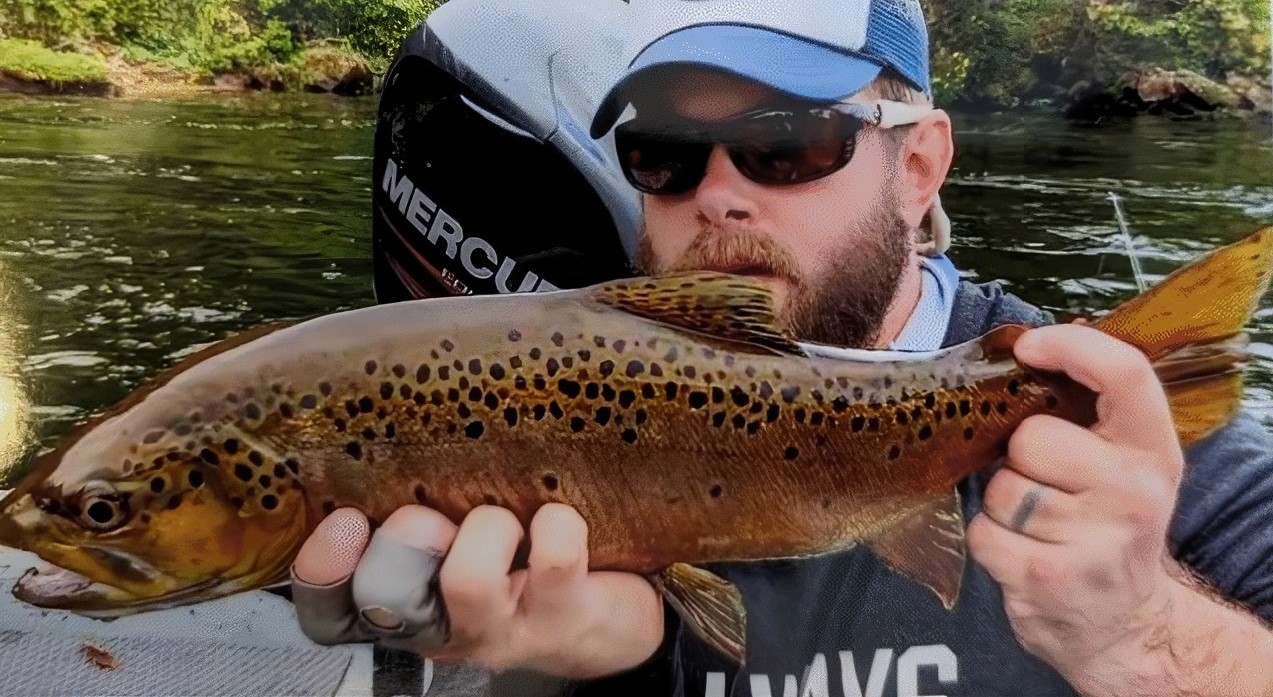
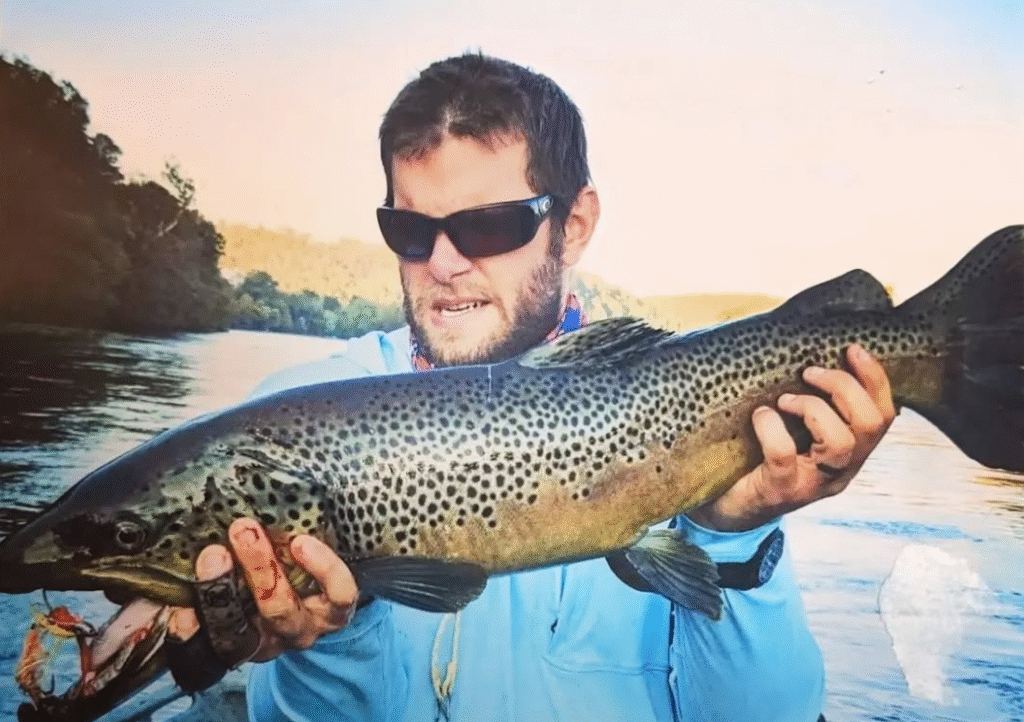
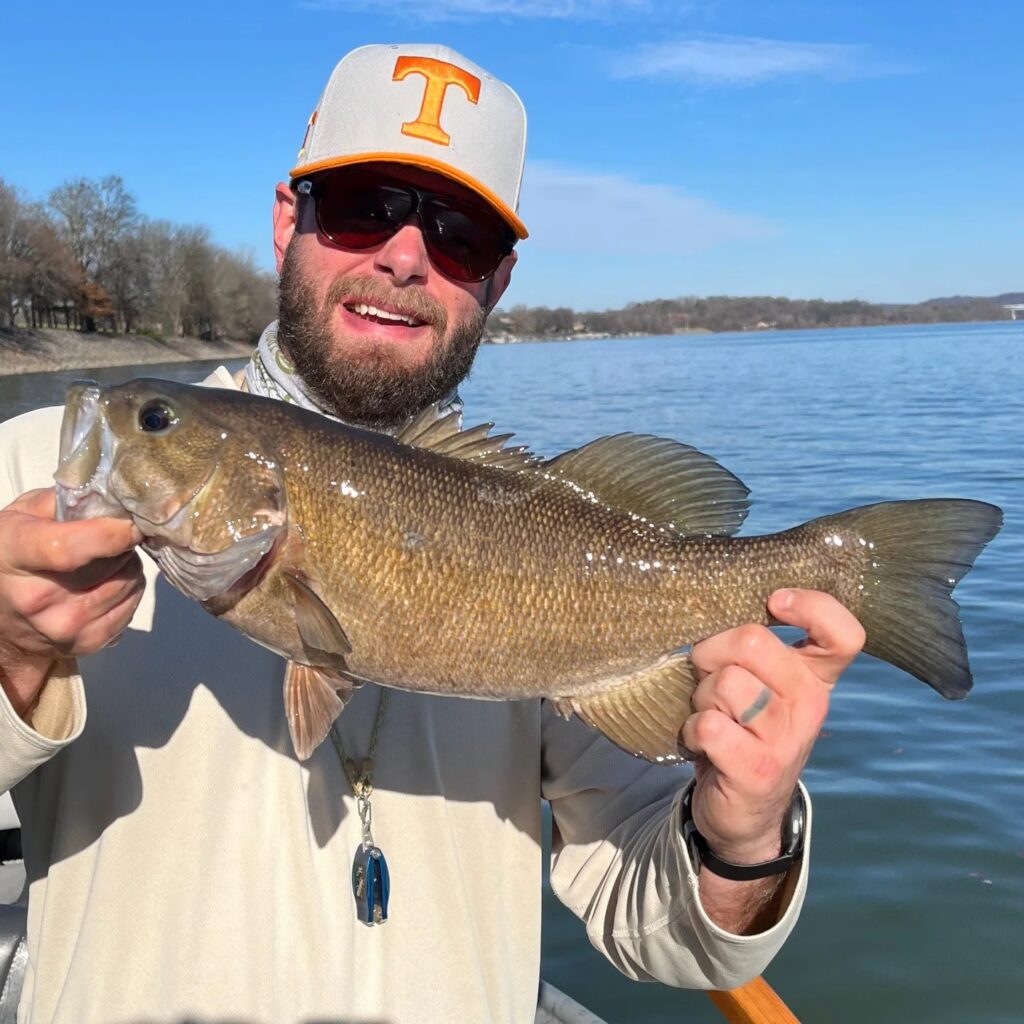
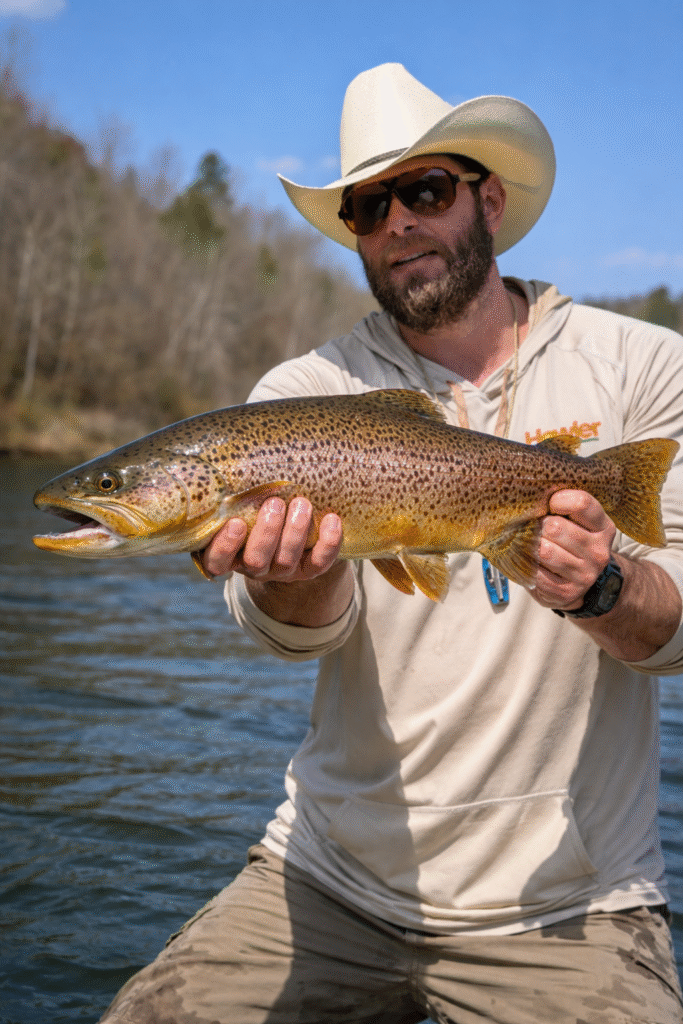
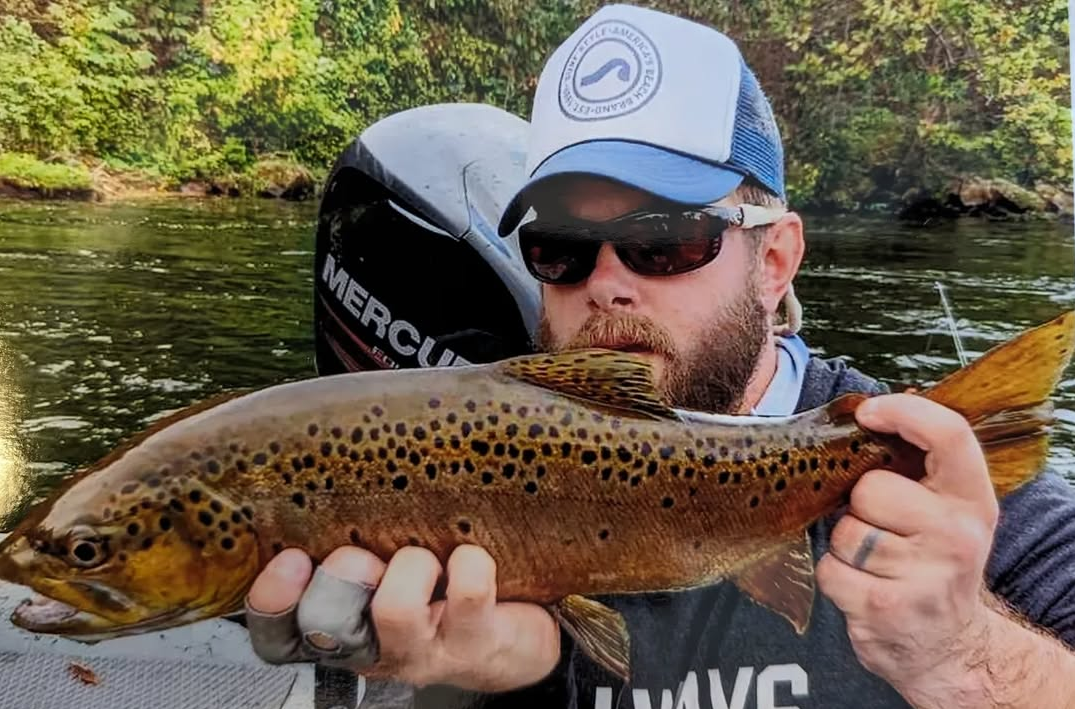
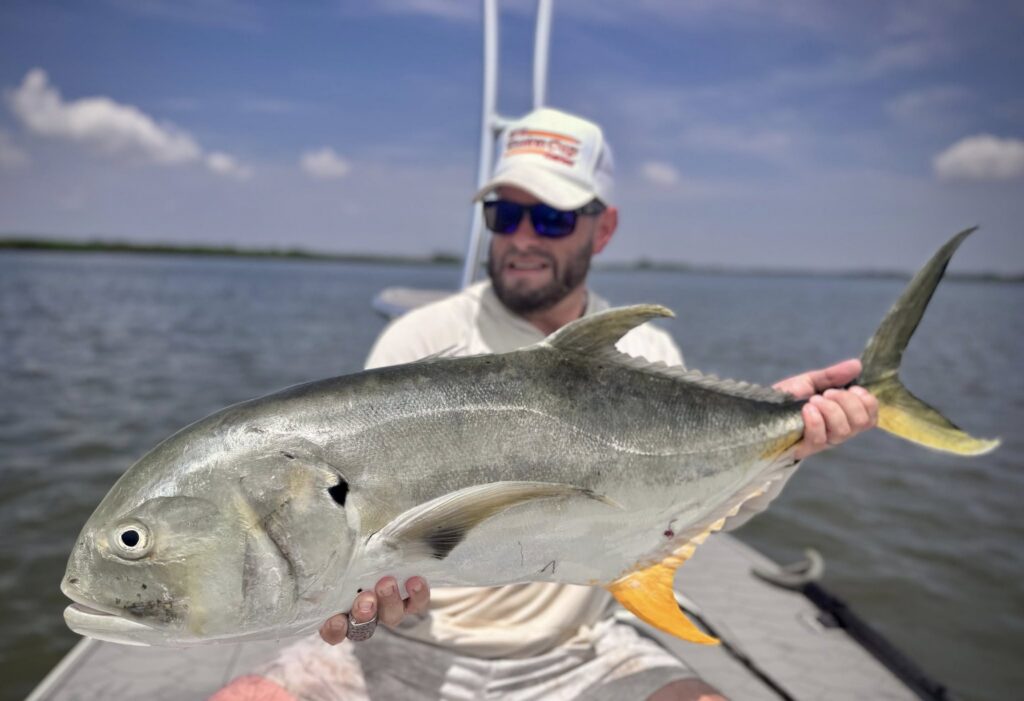
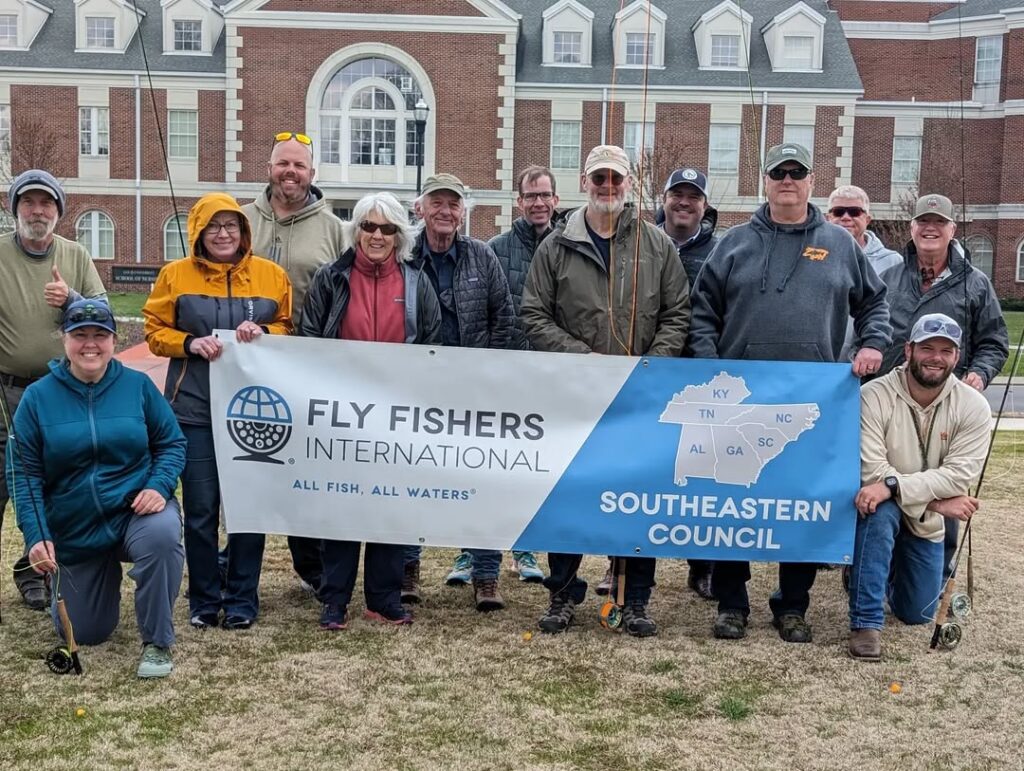
Progress in fly fishing often happens when you stop treating techniques as separate lanes and start combining them. In this episode, Brian DeLoach shares the hybrid system he’s developed by blending Euro nymphing principles with heavy jig-style streamer fishing to efficiently target predatory fish.
Brian explains why stout leaders and heavier rods protect fish during the fight, why drift matters more than tippet visibility, and how changing retrieves—including dead drifts, jig motions, and active strips—can trigger aggressive eats. If you’ve ever wondered how to fish streamers more efficiently without sacrificing control, this episode gives you a complete system to try.
For people interested in becoming a casting instructor (CI), either single or two-handed:
For those interested in Shad jig heads Brian uses: 1/16 oz – best general-purpose weight for this.
Episode Transcript
00;00;02;00 – 00;00;25;22
Dave
A lot of fly fishing. Progress happens when you stop treating techniques as separate lanes and start asking what happens if you combine them. That curiosity is a center of today’s conversation. Brian DeLoach, a certified FFI casting instructor who spends his time fishing and teaching throughout the Southeast from the legendary tale Waters of the South Holston to the warm water, rivers and carp fisheries that he’s deeply involved with with Fly Fishers International.
00;00;26;14 – 00;00;45;21
Dave
In this episode, we’re going to get into the technique Brian’s been developing that blends your own living principles with streamer fishing, using heavy jigs style flies, stout leaders and intentional retrieves to start and target predatory fish efficiently and ethically. This is the Way I Fly Swing podcast, where I show you the best places to travel to for fly fishing.
00;00;46;01 – 00;01;03;25
Dave
How to find the best resources and tools to prepare for that big trip and what you can do to give back to the fish species we all love. Today, Brian DeLoach is going to describe how he combines the only thing concepts and streamer fishing in one versatile system. Why wait, drift and retrieve matter more than tippet visibility in this approach?
00;01;04;14 – 00;01;25;00
Dave
To find out why jig hooks are key and why you don’t need to spend a lot of money on them. And when pauses, changes in retrieve and contrast trigger the strike. All right, we’re going to get into it. There’s a ton of information here today so you can find Brian at Fly Fishers International. Here he is, Brian DeLoach.
00;01;25;09 – 00;01;30;09
Brian
Aidy Bryant doing great, getting ready for this huge winter storm set to hit us this weekend.
00;01;30;16 – 00;01;33;02
Dave
Oh, Roy, are you guys getting some good winter weather there?
00;01;33;08 – 00;01;44;06
Brian
Oh, yeah. I’m excited about it. Looking about 12 uninterrupted days, a hard freeze. So it’s going to be better for the rivers, better for the trout, and it’ll send the mosquitoes and ticks back to hell where they belong.
00;01;44;09 – 00;01;48;02
Dave
All right. And remind us again what part of the country you’re in right now.
00;01;48;07 – 00;01;53;08
Brian
I’m in Cleveland, Tennessee, just outside Chattanooga, about an hour and a half south of Knoxville.
00;01;53;16 – 00;01;58;09
Dave
Knoxville. Okay. Yeah. And so this time of year, has it been pretty warm or pretty mild so far?
00;01;58;17 – 00;02;10;09
Brian
It’s been freezing cold. I went fishing last weekend and I had to keep cleaning the ice off of my guides. And or as my buddy Mike Helms says, my homemade tank car right after the guide’s freeze. So.
00;02;10;23 – 00;02;31;25
Dave
Right. Right. That’s right. Nice. We got a bunch of things to cover today, but I will probably going to break it down a little bit and focus on casting because you’re a casting instructor if you’re certified FFI, we’re going to chat on I know we’re going to talk a little about airflow. We’ve got a bunch of things, I think, and also you’ve got a technique of nipping with streamers that I think is really interesting.
00;02;31;25 – 00;02;43;23
Dave
That sounds like it’s been working really well for you, but maybe take us back first on, you know, kind of fishing, the area you cover there. Can you walk us around that part of the the state, the country and talk about what you do, you know, throughout the year?
00;02;44;06 – 00;02;49;13
Brian
Yeah. So are you talking about the fishing techniques in the species that me and my club target around this region.
00;02;49;18 – 00;02;55;17
Dave
Yeah. Yeah. Maybe talk about. Yeah. Species. And maybe if there is a main river or waterway, whatever. You guys are fishing.
00;02;55;19 – 00;03;23;23
Brian
Oh, yeah. Okay, perfect. So probably the the area that Tennessee’s most famous for is the South Holston River. Yeah. Yeah yeah. It’s legendary for its and very consistent sulfur patches from May till about July cold clear water even in the heat of June and just fantastic consistent dry fly patches probably most of your listeners have heard of the Puff Daddy fly.
00;03;24;06 – 00;03;48;28
Brian
That’s the most successful pattern on that river. In addition, we’ve got the Clinch River for a really healthy brown trout trophy. Brown’s it’s some people call it the Grinch instead of the clinch because the trout can be very finicky and ultrafine, you know, six x tippet, 6.5 tippet, things like that. We also have the caney fork, which is 2 hours away, the Toccoa River, which is 45 minutes away.
00;03;49;06 – 00;04;01;08
Brian
We have access to all those rivers in North Carolina, which is just about an hour drive from Cleveland. And we’ve also got my home waters, which is the Horsey River tail water.
00;04;01;14 – 00;04;14;26
Dave
Oh, yeah, right. We’ve talked about that one too. So you’ve got you’ve got a number. I mean, that’s the thing. I guess this makes sense of why, you know, where you’re at is pretty famous, right? As far as the waters you’ve got at least, you know, a handful of pretty, you know, waters that a lot of people. Right.
00;04;14;26 – 00;04;25;06
Dave
Heard about around the country. And I know we’ve done a few podcasts over the years. What’s that look like for you over the year? Like I know we talk FFI and some of that stuff. What keeps you busy?
00;04;25;19 – 00;04;48;29
Brian
So obviously I’ve fished for Trout hard in the fall and the spring in the wintertime when I actually do get out, it’s very rare. I mainly spend that time at my vice, but if I do get out, it’s going to be bass fishing, deep bass fishing on a fly rod on conventional, whatever. And then in the summertime it’s bass fishing, trout fishing, if the water is cold enough.
00;04;48;29 – 00;05;13;10
Brian
But where my heart is is carp fishing on the fly and the river for that in my region is the portion of the French Broad River concentrated around Knoxville. You can sight fish for carp just like you would hillbilly bone fish from a flat boat. And it’s my favorite thing to do on a fly rod. For me, it’s if I’m out for 8 hours and I get four eats and two to the net, I consider it a banner day.
00;05;13;11 – 00;05;20;27
Brian
Carp fishing is the most fun yet the most frustrating time you can have with a hour on my opinion. But yeah, that’s that’s what my season looks like.
00;05;21;06 – 00;05;36;12
Dave
And so, yeah, I’m just looking around. I always love to kind of take a look at the map and look at where you’re at. You’re you’re smack dab in the middle of a few things we’ve been talking about. You know, I think that down south of you and, you know, you get the white over to the west. What about just to the north?
00;05;36;12 – 00;05;47;20
Dave
What’s going on there? When you think Kentucky, Indiana, Illinois, you’ve got this little area that maybe isn’t the hot spot that you hear as much about fly fishing out there. But Tennessee, you do hear a lot about the why is that?
00;05;48;07 – 00;06;10;09
Brian
We just have a wonderful confluence of streams and it’s geography has a lot to do with it. But also we have a really strong trout, unlimited presence for our presence here in the whole state of Tennessee, but also in western North Carolina, most of my time in Tennessee. But I do love the Cumberland River, which flows through Kentucky and has some really healthy and hard fighting trout.
00;06;10;29 – 00;06;31;02
Brian
It’s a pretty technical, dry flat fishery. GRIFFITHS Nats try Cosigners, ultra tiny zebra midges, things like that and you can sit there in the evening and instead of, you know, just throwing it out there and getting eaten during a prolific hatch, you’re looking at a single feeder and you’re hunting that single feeder and that can be really excited on the Cumberland.
00;06;31;02 – 00;06;54;13
Brian
And also it’s a great streamer river. There’s some gigantic fish up there, but it’s on that really mountainous portion of Kentucky rather than the more hilly side as far as fishing in other parts of the country. I’ve put in many, many hours on the white with some incredible guides. Matt Milner’s Rising River Got Service comes to mind. If you’re planning a trip out to the White River, contact Matt Milner.
00;06;54;16 – 00;07;17;21
Brian
The Rising River Guides. They have got some of the most knowledgeable, patient friendly and fun guides out there, and they’ve. They’ve taught me a lot on the White River. So I love the Cumberland, Kentucky, the White, of course, the little red out in Arkansas. Georgia’s got the Toccoa, the Chattahoochee, which is an incredible fishery. And the Chattahoochee River keepers have played a huge role in that, keeping that river healthy and safe.
00;07;17;21 – 00;07;47;08
Brian
It’s pretty incredible that you have a trout stream flowing right through downtown Atlanta and it’s healthy and the trout are happy. And that’s thanks to people like the Chattahoochee River keepers in Alabama. I love the bass streams in Alabama. Crappie, Shell Crackers, Bluegills bass, all that on a fly rod There’s tons. Yeah. And if you’re in South Carolina or Georgia, you got to mention the incredible saltwater opportunities for redfish and other species and everything else.
00;07;47;08 – 00;08;00;18
Dave
Yeah, your ear. And I mean, the more you talk about all of this, the more of the. Yeah, you’re definitely in a hot spot here in a place that I think a lot of people, you know, if they haven’t been there, you know, we’ve talked about some of the species, right, Redfish and then all the bass and all the unique species.
00;08;00;18 – 00;08;17;03
Dave
So we might touch on that as we go. I think today we’re going to focus a little bit on Tennessee and, you know, because I think that’s what you do you spend most of your time doing here. But maybe before we jump into it on a little bit, the techniques talk about your casting instruction. FFI Maybe describe first on FFI versus TI you.
00;08;17;03 – 00;08;24;01
Dave
I know there’s a lot of similarities. Are you working with both of those groups or what’s the difference between the two, if you had to say between those two groups?
00;08;24;09 – 00;08;53;00
Brian
Sure. So I would say the majority of the people in FFI in the United States also hold a membership with TI you. I would consider ti you and FFI to be sister organizations, whereas FFI does do some lobbying and conservation work, scholarship work and research, as well as donating both volunteer and financially to a lot of charities and conservation organizations like Casting for Recovery Direct clean up groups, whether they’re affiliated with TI or not.
00;08;53;00 – 00;09;15;21
Brian
But our main thing is education and community. And as you said, there’s plenty of crossover there because ti values that as well. But t U is mainly about conservation and direct lobbying and direct cleanups and we really honor that. And there’s been instances where FFI has donated to T U led products, so we don’t consider them competition, we consider them a partner.
00;09;15;21 – 00;09;35;13
Dave
That’s all working together. That’s great to hear. Nice. So maybe talk a little about I think we want to talk casting, you know, for somebody getting into it. But before we jump into that, maybe talk about I love start with the technique first on, you know how you catch it. And when you talk about streamers and your anything, is that mostly for trout or do you use that technique for all species?
00;09;35;13 – 00;09;36;17
Brian
I use it for all species.
00;09;36;27 – 00;09;46;01
Dave
You do? Okay. What is that look like? Describe that. The euro, because we’ve talked a lot about your sniffing, we’ve talked about streamers. It sounds like you’re kind of bringing these two together. How do you describe what you do out there?
00;09;46;08 – 00;10;21;05
Brian
All right. And I find that in sports like this, innovation comes between, you know, hybridizing two seemingly disparate techniques like streamer fishing in your own thing. But I notice that with your own knitting, you’re limited to the size of of you have specific streamers that are micro streamers, tungsten, head and they’re little bitty. And although we know that a streamer on the smaller side can still elicit strikes from big trout, if you’re hunting for a predator to get that aggressive strike rather than that hungry strike, sometimes a bigger flash or louder pattern is what you need.
00;10;21;13 – 00;10;40;24
Brian
And using ultra thin tippet on a for weight is tough. Not to mention after you get the eat on a four weight ten foot six, say Cortland or Syndicate or whatever euro stick you’re using. And I don’t call it tight, like let’s call it what it is. It’s your own thing. It’s fine. Yeah.
00;10;41;05 – 00;10;44;20
Dave
Yeah, right, right. Is there a difference between your sniffing and tight lining?
00;10;45;02 – 00;11;07;09
Brian
I’m sure the the parents would say so, but I consider it underneath the same umbrella. I mean, you can talk about Spanish style and mono leaders and the French curlicue style, Czech versus Polish. It’s all European. It was all born from that 1980s World Cup that went down where, according to legend, they didn’t have rules. And we’re just tying mono to the end of their tip tops.
00;11;07;09 – 00;11;07;21
Brian
Oh, that’s.
00;11;07;21 – 00;11;12;29
Dave
Right. Yeah. Yeah. There’s that. The one where Vlad won. Like he beat all the countries all combined or something like that.
00;11;13;07 – 00;11;35;08
Brian
Yeah, it was, it was back in the eighties and Yeah. Again this is a lot of that’s lost to legend. So that was what actually happened. But I believe it. I believe it. Yeah. So once you get the fish on, if you’re looking at a 20 plus inch trout and you’ve got a four weight rod with six sex tip it, we need to quit thinking about that in terms of, oh, look at the skill that we used to fight this fish.
00;11;35;08 – 00;11;59;26
Brian
And that’s going to take you at least 5 minutes. I mean, a four weight on a 20 inch hard fighting wild trout. That’s going to take a long time. That’s terrible for the trout. It’s not really good for you because the longer you keep in mind, the greater the likelihood that he’s going to come on buckle. So I’d prefer to have some really stubby tippet and a big backbone rod to be able to drag that fish to net quick in under 60 seconds.
00;12;00;09 – 00;12;29;13
Brian
And so what I’ve started doing is keeping a ten foot seven weight in the boat or carrying with me. And so my terminal fly is always a white, crappy jig tied up fly style with marabou and the chenille of your choice. I prefer the Hobby Lobby chenille personally, but then that fly was actually a fly that I stole that pattern from Jeremy Gilmer, who was a guide for Matt Milner’s Rising River guys.
00;12;29;21 – 00;13;02;21
Brian
And we had a lot of luck fishing that style out on the White with just a five weight. But again, a big old trout comes on that thing and it just takes forever to turn that big old head and get him into the net. So by bypassing the fly line and just treating it as a big monolithic style, culminating in £10 test, tip it are you see GWAR, Black Dragon or Tatsu, and I use £10 test and I come up from that marabou jig to a patch, perhaps rubber legs or a girl bug or a turd.
00;13;03;05 – 00;13;23;14
Brian
And it’s really heavy and I attach those with a swivel rather than doing it with a tag or it coming directly off the hook. I use swivels. That’s two reasons. It keeps it from getting untangled and b a heavy swivel adds just a touch of weight and functions effectively as a split shot. So it’s getting down fast and getting down heavy.
00;13;23;25 – 00;13;31;06
Brian
And I know you’ve heard the old adage, What’s the difference between a great day fishing and a lousy day fishing? It’s split shot, baby, right?
00;13;31;06 – 00;13;31;17
Dave
That’s right.
00;13;31;17 – 00;13;57;18
Brian
Split shot. It’s split shot. That’s the difference. Yeah. So you can use a big heavy swivel and have it serve that dual purpose, both to keep it from tangling, but also add a little bit of weight. I found that the majority of your infers and other types of numbers are not using enough weight either. They’re their flies are too light and you want to feel it tumbling along the bottom when you’re fishing and you want to be getting hung up sometimes.
00;13;58;01 – 00;14;15;07
Brian
But I’ve just found that it’s never heavy enough. And those who say that, oh, adding a pinch of split shot to your euro rig is going to decrease sensitivity. You should never do it. Yeah, it’s going to decrease sensitivity a little bit. But guess what? I’m still hooking up and getting my flat out. So there’s a trade off there.
00;14;15;14 – 00;14;26;15
Dave
Yep. So you get down and that’s a key part of the sounds like this technique. Are you trying to get down with these flies? You know, stay close to the bottom. Are there any times where you’re getting them higher up in the water column?
00;14;26;29 – 00;14;56;07
Brian
So I try to fish all parts of the column. I always start with a dead drift, just a dead chad floating in the water. And then I follow that up with a couple of active jigs. And then I followed up with a couple of a dead drift and then a head turn at the end and a jerking it back like the old school quarter down term streamer Retrieve technique and then I will cast it out and strip it across and strip it downstream because George Daniel says you want the head to be facing downstream.
00;14;56;07 – 00;15;13;03
Brian
That’s a natural presentation. And the thing about there being no wrong way to fish streamer, ultimately that’s correct. There are more correct ways to fish a streamer, but with this technique there’s no wrong way to do it, which is why it’s a great technique for beginners as well.
00;15;13;07 – 00;15;21;27
Dave
Yeah, and essentially kind of like a mono rig in your casting. It is that typically what you’re and what is the rest of the leader of the £10 what is the all the way up to the flat line.
00;15;22;13 – 00;15;42;29
Brian
Stops at about 15 just so I have a slight taper in case I want to actually make a long cast across the stream. And that’s another advantage of the versatility of this technique. But you’re looking at about 20 feet of fly line, culminating in £10 test. And because you’ve got a heavier lure on the end, you can cast it really far, right?
00;15;43;11 – 00;15;48;18
Dave
Can you cast it like effectively like a normal cast? So you kind of hook it and Chuck and Duncan and all that stuff.
00;15;48;27 – 00;15;59;12
Brian
It’s not going to Chuck. And I mean, if you want your arc enough, you can get a wide loop. But as with most heavy streamer fishing, it’s not the prettiest thing in the world.
00;15;59;21 – 00;16;07;25
Dave
Yeah, you’re trying to get down in Is this technique better for, you know, faster, deeper rivers or can you fish this in pools and other shallower habitats?
00;16;08;09 – 00;16;30;02
Brian
Both. And again, I’m going back to conventional wisdom. The only difference is in fast water, I’m more likely to dead drift with small micro jigs, micro jigging action, whereas in that in slow moving water, I’m moving it very fast to force the fish’s hand the whole like in fast water. Move it slow and slow water. Move it fast.
00;16;30;10 – 00;16;31;22
Dave
Yeah. So you follow that mantra.
00;16;32;00 – 00;16;34;17
Brian
I do. And I’ve found that it’s that it’s effective for me.
00;16;34;24 – 00;16;53;00
Dave
Okay. I love that. That’s something good to be thinking about. What is the difference? You know, if you think you mentioned a tight line tipping, you know, streamers, what is the difference between what you’re doing versus, say, Thailand and fishing? And then same thing V versus say, streamer fishing. It sounds like you’re bringing them together, but do you feel like there’s more similarities and differences?
00;16;53;17 – 00;17;08;09
Brian
I do. I’m using streamer equipment and a tight line your own employing leader philosophy, but I could not cast this heavy jig with five x tip. It just couldn’t do it.
00;17;08;18 – 00;17;22;22
Dave
Yeah, that’s the biggest thing is the way. And the other thing on that is, you know, what do you get the advantage of going really thin, right? You hear some of this sometimes that there is an advantage of going thin. Maybe it cuts through the water. Is that true? And then is there a difference between what you do?
00;17;22;22 – 00;17;25;25
Dave
How do you deal with that? Or is it not an issue because of the weight?
00;17;26;08 – 00;17;42;28
Brian
It’s not an issue because of the weight. That’s the beauty of it. And we can’t say this enough. I’m sure that hundreds of people that you’ve had on your podcast have mentioned this in some form or fashion. I’m not concerned with the visibility. I’m concerned with the drift that dictates my tippet selection. A big heavy, stubby tip it.
00;17;43;07 – 00;18;08;20
Brian
I don’t believe that visibility is going to be a significant factor. If I was fishing, say, £8 test fluorocarbon versus £4 test fluorocarbon, I think its drift rate and the interference and the drag that’s being caused from the line, not the visibility of it. So I think it’s the way that it makes the nymph behave. But as you said, because the shag is so heavy, it’s behaving somewhat normally.
00;18;08;20 – 00;18;13;24
Brian
Like if it’s just a scaled up big nymph on stubby or tippet.
00;18;13;24 – 00;18;33;06
Dave
Would you like to level up your fly fishing game this year? Head over to Smitty’s fly boxcar, your one stop shop for top quality flies, tying materials, gear and accessories online whether you’re hunting trout in riffles, stocking, steelhead in a slick or tie in in your garage late at night, Smithies has the hooks, beads, dubbing and everything you need to get the job done.
00;18;33;06 – 00;19;00;12
Dave
Check out Smitty’s right now at Wet Fleiss. Wine.com slash smitty’s. That’s s m i t t y s smitty’s. Get what you need at Smitty’s fly Vox.com Check out Montana fly fishing Lodge a 2024 Orvis endorsed Lodge of the Year finalist where luxury meets adventure on 1.5 miles of private, wild and scenic East Rosebud River Frontage Experience world class fly fishing on numerous Yellowstone Basin streams.
00;19;00;12 – 00;19;24;00
Dave
Gourmet cuisine made from locally sourced ingredients and rustic luxury accommodations surrounded by breathtaking wilderness. You can book your all inclusive Montana fly fishing adventure today and discover why they are the premier destination for unforgettable fishing experiences. Head over to Montana, Fly fishing, lodge ecom right now. Describe the fly of a pattern in that jig pattern that you’d be fishing.
00;19;24;00 – 00;19;27;04
Dave
Is there a name of one out there? What is your fishing typically?
00;19;27;16 – 00;19;50;20
Brian
Jeremy Gilmer just called it a shad jig, and I want to make it again clear that he is the inventor of this pattern. As far as I know, it’s just a crappy jig with a white head. I prefer red eyes and pinch of marabou for the tail and some Palmer chenille. Coming up, you could use 3D Chenille from Orvis, or you could use some Hobby Lobby stuff, which is what I use.
00;19;50;25 – 00;19;57;19
Dave
Yeah. So it’s pretty straightforward. So it’s pretty much white with a red head or red eyes or something like that. And size wise, what do you use?
00;19;57;19 – 00;20;04;10
Brian
And let’s see, maybe 116 ounce will take you everywhere you need to be.
00;20;04;17 – 00;20;09;18
Dave
Okay. And what size? What would be the hook that you would be using there? So I wanted to tie some of these up.
00;20;09;29 – 00;20;13;29
Brian
You’re looking at about a size I’d say a size 626.
00;20;13;29 – 00;20;15;23
Dave
4624. Okay.
00;20;16;00 – 00;20;18;07
Brian
Yeah. So you’re going big. It’s streamer size.
00;20;18;15 – 00;20;24;00
Dave
Yeah. And it’s got a tail, marabou tail chenille, some type of chenille body and a red hat, essentially. That’s what it.
00;20;24;00 – 00;20;36;21
Brian
Is. That’s it. And you can throw some for higher, dirtier water. You want a little bit of visibility, you can put some flash of blue in the tail to give it some sparkle. And you could even put some wire along the body to give it a ribbing effect.
00;20;36;28 – 00;20;48;29
Dave
Right, right, right. Okay. And then the secondary fly on the dropper that goes right off the swivel and then that’s some sort of other, you know, turn or tractor paddle. What’s your favorite one to use in tandem with this parts?
00;20;48;29 – 00;20;54;27
Brian
Rubber legs. Parts. Rubber legs is a devastating bug in the southeast. How does it work up in Oregon?
00;20;54;28 – 00;21;04;29
Dave
Oh, wow. I mean, everywhere. I think it’s great. Yeah, it’s just the I mean, it’s imitating. I think a lot of times maybe the stone fly or something out west. But what do you think it’s imitating out there?
00;21;05;16 – 00;21;26;00
Brian
Obviously, it’s advertised as a stone fly. I like to think of it as a drowned wolf spider or a drowned cricket, especially if you tie it with a dark nickel head in that coffee brown color, man, It just looks like a there’s just a general bugging. Is that that I think arouses their their mind and in their response, I don’t know if they know what it is either.
00;21;26;06 – 00;21;27;03
Brian
Right. So.
00;21;27;03 – 00;21;28;05
Dave
Right. That’s awesome.
00;21;28;13 – 00;21;45;13
Brian
But fishing this in tandem, you can also strip it back and it looks like a little baitfish chasing something and whatever color you choose, it needs to be on the other end of the spectrum from whatever your terminal fly is. I like a salt and pepper pattern. So white jig and then something dark up above it.
00;21;45;24 – 00;21;59;26
Dave
Gotcha. White jig on the bottom, something dark about it. So you have that contrast. And what is that? Is that just covering it? What does that do when you put the controls? Like what would be the biggest between white and say, black? Is that different color? You throw a flash on someone. What is the biggest difference there?
00;22;00;11 – 00;22;20;13
Brian
So about that, this is just a hypothesis. I don’t have any citation authority to back this up, but I believe that if I’m coming up to a new stream that I’m unfamiliar with and there’s a lot of strong opinions over color, there’s no use if it’s not chartreuse and any colors, flying is fine as long as it’s black.
00;22;20;13 – 00;22;21;24
Brian
So what I’ve heard for best.
00;22;21;26 – 00;22;25;18
Dave
And pink is the only thing you need in Alaska, right? There’s all these places. Yeah.
00;22;26;00 – 00;22;54;29
Brian
Right. Yeah, right. And so whatever your confidence pattern is, I believe that if you’re saying multiple fly rigs, whatever your confidence pattern is, the other pattern needs to be the opposite of what your confidence pattern is, not necessarily in size, but in color. So if you just look at the spectrum of what your terminal fly is favoring and look at what the corresponding and equal distance color spectrum is from that, I think that’s a good model for tying your bugs on.
00;22;55;11 – 00;23;31;09
Brian
So if I’m approaching a stream and you’ve got unfavorable turbidity, okay, well, I’ve got I’ve got black to compensate for that, that lack of visibility in the water, the high flow, dark day maybe. However, I know there’s a shad kill happening. Well, Wahoo, I’ve got both. I’ve got both bases covered. But I found that the contrast is going to give you greater visibility and cover more of your bases if you have an unknown fishery, because you can look at Kelly Gallop’s recommendations for approaching streamer fishing and bright day bright fly, dark day, dark fly.
00;23;31;14 – 00;23;47;11
Brian
Well, a lot of the times the sky and the conditions are very ambiguous, so it behooves us to play towards the middle. And by doing a salt and pepper light, dark or high contrast combination, we cover both our bases. Despite all the conflicting law.
00;23;48;01 – 00;24;01;14
Dave
When you’re setting this up with, I mean, kind of heavier duty, right? You’re almost like steelhead gear is what you kind of use in your seven way. But I guess technically, since it’s a zero rod, right? This is a lighter, more like a five. We describe that a little bit is what are you going for here on the way to the rod?
00;24;02;02 – 00;24;13;27
Brian
First off, is stiffness. And I need that rigidity when I’m reaching far out to make those tight line drags. You can’t have a floppy rod with heavy bugs and high currents.
00;24;14;01 – 00;24;23;21
Dave
Does this still have a really soft tip on this ten foot rod you’re talking about here? No, no. Okay. So this is not a euro sniffing type rod, right? This is what would be the action of the rod.
00;24;24;03 – 00;24;38;22
Brian
It is a salt. Okay. I’m just going to go ahead and tell you what it is for this purpose only. It is a seven weight Redington predator and ten foot. So it’s a tank. It is designed for the salt and heavy streamer fishing.
00;24;38;22 – 00;24;44;00
Dave
Gotcha. So any subway for steelhead or whatever salt is would do well for this.
00;24;44;11 – 00;24;48;24
Brian
Yeah. Just make sure it’s ten foot long. Or if you can get something custom, get it even longer.
00;24;48;25 – 00;24;50;08
Dave
Even longer. Okay.
00;24;50;19 – 00;24;55;16
Brian
Yeah, maybe a six way you could get get away with, but I’d drop everything down to £8 test.
00;24;55;25 – 00;25;13;23
Dave
Yeah I see. Okay. So heavy stuff. And then, and then you’ve got the lidar set up in the lidar. You mentioned. Is that have you tried some other stuff for a view like you know we talk about Maxima and I have heard Dom also make some really good heavy duty LiDAR. What’s your favorite You mentioned I think, but what is your favorite LiDAR for this whole setup?
00;25;14;03 – 00;25;40;20
Brian
So I’ve done the, the mono rigs that have been advertised by, I think fly fish food and several other publications have really good mono lidar formulas. And by the way, if you do conventional, conventional your own thing, you have got to transition your set up to a monolayer. It’s about 30 feet and you can drive full out the dang thing if you run into a hatch out to about 35 feet and if you’re waiting, the stream’s like we wait around here 35 feet enough.
00;25;41;02 – 00;26;06;14
Brian
But for this, I like tapering down from 15 to 12 to £10 test. Think of just a three section based lidar about 10 to 15 feet long and it still casts beautifully. And I also trim the the blood knot tag’s extremely close and seal them up with UV resin. So make kind of a bubble that clicks through the gods and doesn’t you go.
00;26;06;23 – 00;26;11;01
Dave
That’s a good tip. So you build your sounds like you’re building these leaders ahead of time before you get out there.
00;26;11;11 – 00;26;24;16
Brian
Yes. Yes. I highly recommend getting in. The leader building will actually save you money, unlike getting into flight time right? Yeah. Everybody said I would save money when I started tying my own flight. Nope.
00;26;24;23 – 00;26;28;09
Dave
No, it’s not. No, no, it’s the rabbit hole. It just keep going down deeper.
00;26;28;15 – 00;26;47;01
Brian
It’s terrible. But yeah, if you actually commit to time your own leaders, you can save so much money and you need to be tying your own leaders anyway for bass fishing. You’re talking about three sections for tarpon fishing. Yeah, you got to learn some specialized knots and all that. But if you’re trout fishing, there’s a formula for everything.
00;26;47;19 – 00;26;55;05
Brian
They’ve even got formulas that taper up and then taper back down to intentionally kill the cast for, like, try go fishing.
00;26;55;12 – 00;27;01;28
Dave
Oh, wow. Right. That’s pretty cool. Yeah. So a tapered so fat in the middle and then on both ends.
00;27;02;13 – 00;27;03;15
Brian
Yep. That’s right.
00;27;03;23 – 00;27;18;05
Dave
Yeah, that’s cool. Okay, so we got a little taste of what you have going here. This heavy set up. Let’s say I was going to be meeting with you, but where are we? We ought to be a good place to go and test this out on the river. Which river do you think is maybe the most popular one out there?
00;27;18;15 – 00;27;39;27
Brian
I’ll take you to the whole RC for a very specific spot. It’s right below what we call Fox’s cabin. We park the boat on a on a back eddy, and we’d sit there and we’d essentially be fishing eight feet down and jigging this streamer and girl up. And we would, we would slam absolutely slam Really? Oh yeah. Oh yeah.
00;27;39;27 – 00;27;48;09
Brian
Any place where you’ve got a deep pool. And by the way, there’s some myth going around that says that you can’t your own from a boat. Hmm. Yes, you.
00;27;48;09 – 00;27;49;10
Dave
Can. You can.
00;27;49;11 – 00;27;53;26
Brian
What are people talking about? Especially with the mono leader, where you can really reach out and touch it.
00;27;54;04 – 00;27;55;11
Dave
Right, Right. Yeah.
00;27;55;14 – 00;28;04;24
Brian
I mean, are you going to are you going to tell me that syndicate makes an 11 foot check rod and you can’t fish from a boat? Namath Yeah, that’s right.
00;28;04;24 – 00;28;14;01
Dave
Yeah, the boat is. It seems like the cool thing about the boat is it gets you, like, above out there, right? You’re above the water. It’s probably easier. It would seem like it’d be easier to get down to those fish.
00;28;14;06 – 00;28;16;08
Brian
Absolutely. There’s no danger of falling in.
00;28;16;15 – 00;28;24;29
Dave
Yeah, right. Nice. So the pools are the end. Define those big fish. Is that where you got to go? Do you got to find those deep pool, that slack water.
00;28;25;11 – 00;28;42;03
Brian
This time of year for sure. And in the spring, there’s no telling where you might find the rainbows and spring, especially on the horsey. But in the summertime like this, it’s usually deep. And if you can’t get them on the midge, we can always force them out of their complacency by a big flashy streamer.
00;28;42;14 – 00;28;50;16
Dave
If I want to do this technique, what would be and I was there. What do you think would be the most common mistake I may be making? Are you see when people are doing this for the first time?
00;28;51;01 – 00;29;17;16
Brian
All right. I got to not doing an active jig and changing up the retreat just like when you’re with conventional streamer fishing or sink tipped streamer fishing, you need to be changing up your retrieve every 10 minutes. And a good way to do that is when we took CPR training. You know, you’ve got the stayin alive retrieve I like the jingle bells retrieve because it’s inconsistent and a wounded baitfish is not going to be moving with rhythm.
00;29;17;25 – 00;29;42;06
Brian
So changing up the retrieve is very important for conventional streamer fishing. And with this technique, it’s equally important to change up your drift. As I was saying earlier, starting with a dead drift and then going to a jig and then going to a quarter down, down stream retreat, right. And doing the slow zigzag lift and then of course casting it across and retrieving it both directions.
00;29;42;19 – 00;30;10;17
Brian
So I would say that that’s that’s the biggest thing is just trying to dead drift it and treat it as a just standard ero drift instead of treating it like a streamer, which is what it is. Yeah. The second thing is being scared to lose your fly. I’m a firm believer in that if you’re not losing fliers hanging up, you’re not fishing hard enough, you’re scared of losing your book and not casting into the gnarly stuff is there’s plenty of people not casting into the gnarly stuff.
00;30;10;17 – 00;30;19;08
Brian
Everybody’s fishing the holes that are obviously holding fish, but the ones that aren’t and the ones around, the gnarly stuff you got to cast into it.
00;30;19;18 – 00;30;24;03
Dave
And the gnarly stuff, could that be like, like heavier, like water, even rapid sort of stuff?
00;30;24;03 – 00;30;35;12
Brian
Sure. Absolutely. And also the undercut the stuff close to the undercuts where you’re likely to snag. Yeah. Need to be fish in those you need to be you need to be losing bugs or you’re not taking risks right.
00;30;35;16 – 00;30;41;28
Dave
That’s right. So on this technique you want to be occasionally if you’re getting down, you want to feel the bottom occasionally tipping it.
00;30;42;07 – 00;30;46;09
Brian
Yes. Yes. And that’s where the euro influence comes in.
00;30;46;19 – 00;30;54;25
Dave
I see this and you mentioned the the couple of the jingle Bells and the Stayin Alive. Describe those two. What are the techniques there? What is the jingle bell?
00;30;55;20 – 00;31;08;25
Brian
All right. So think about the so think about everybody knows Jingle bells, jingle bells, jingle bells, jingle all the way. So if you think about that rhythm and that tempo, that’s what you should be retrieving your streamer to.
00;31;08;26 – 00;31;11;11
Dave
Oh, nice. Right, Right. That’s perfect.
00;31;11;11 – 00;31;19;29
Brian
And just retrieve your streamer keeping time with the song. And then when it’s time to change up, change the song, just start humming. Just start humming your favorite song.
00;31;19;29 – 00;31;24;01
Dave
A different song. So change to Stayin Alive and that gives you a different retrieve.
00;31;24;09 – 00;31;38;23
Brian
Exactly. And so instead of getting on YouTube and trying to figure out, okay, what type of retrieve should I have? If you’re teaching a beginner to say a strip to the strip to the beat of your favorite song, Oh, that’s good. And then change it every 10 minutes.
00;31;38;23 – 00;31;42;22
Dave
Man, people are going to love this. This is this is the greatest ever. Maybe so.
00;31;43;08 – 00;31;46;11
Brian
It’s what I. It’s what I do on the river, man. And I swear it works.
00;31;46;11 – 00;31;54;10
Dave
That’s great. Although you have the tendency now to get that song stuck in your head the rest of the day. Does that ever happened to you? Did your wish that you didn’t? He didn’t have that.
00;31;54;11 – 00;31;56;23
Brian
Yeah. But if you got great taste in music, it’s all good.
00;31;56;23 – 00;31;59;18
Dave
That’s right. And if you’re kitchen first, should probably. I’m sure it doesn’t matter.
00;32;00;19 – 00;32;14;03
Brian
And if you’ve got it, although this goes against the ethos of the thing, you could always get the Bluetooth speaker going on in the boat and just have a playlist built up of completely like eclectic music and just change up. You retrieve every time the song changes.
00;32;14;03 – 00;32;22;13
Dave
That’s good. I love it. Yeah, the music is always a funny one because I think, God, what was it to Turtle Box? I think back quite a few years ago we had Turtle Box.
00;32;22;14 – 00;32;23;18
Brian
Oh yeah. Familiar with that.
00;32;23;18 – 00;32;37;22
Dave
But yeah, we had some somebody I think it was, I can’t remember we had some hate mail that came in because I think we were talking about Turtle, but I think it was more on Stillwater like fishing. They’re like why would you have music out? But, you know, obviously every place is different, you know what I mean? I think there are places where music is probably fine.
00;32;37;23 – 00;32;38;13
Dave
Not a big deal.
00;32;38;26 – 00;32;46;25
Brian
Yeah, yeah. I’ve listened to some music on the on the boat before, much to the dismay of some fellow anglers. But I’ll get over it. It’s all good.
00;32;46;26 – 00;33;05;07
Dave
Yeah. Yeah. Nice. Okay, so. So it sounds like the technique or the big part of this is, you know, diversifying. Like you’re also mixing up streamers and euro and you’re keeping things diversified As far as your stripping and how you’re covering the water in rod length 11 foot 11 half, what would be a max on length if you go that far?
00;33;05;17 – 00;33;23;02
Brian
I’d say 11, because after that, you’re getting into you’re getting into like trout spray, which is not necessarily the taper that you want for this kind of technique. But if somebody is using trout spray for this technique and the rod is heavy enough and the effective rod length is heavy enough, I’d be interested to see how that works.
00;33;23;02 – 00;33;24;16
Brian
Right. I bet there’s somebody doing it.
00;33;24;24 – 00;33;32;25
Dave
Yeah. And you could just do the two handed. You could probably. I’m not even sure it might. Could you do? Yeah, potentially. Some sort of a spray cast or something to hand the cast right to cast these things out.
00;33;33;16 – 00;33;35;08
Brian
Who? I don’t know, man. It might.
00;33;35;08 – 00;33;35;25
Dave
Be tough.
00;33;35;25 – 00;33;36;27
Brian
That might be very tough.
00;33;37;06 – 00;33;50;12
Dave
Yeah. The line you’re using is a Well, let’s hear about the line, because I think airflow is another. We’ve been talking off air about airflow and some stuff they have going. Is that your go to line? Do you just get a standard wait for line or do you want something special for this technique?
00;33;50;12 – 00;34;11;29
Brian
So I use the the super flow flats universal from airflow. It’s a very versatile line. They don’t use the term universal lightly, but when I finish the whole, of course I make that long cast, but I’m really casting, really making those cast with this technique. But yeah, the airflow universal is is what I use. And now pretty much all my rods, I use air flow as well.
00;34;12;05 – 00;34;48;00
Brian
I found that there, you know, they don’t use PVC. See like the rest of the manufacturers, they use polyurethane and they’re just they’re they’re service minded company. I’ve loved every single one of their lines that I’ve used, specifically the universal tape or the power taper and the tactical taper, which if you’re a fan of triangle or Delta style tapers such as Wolf makes and Rio makes with their single hand spray line, the airflow tactical taper is a magnificent evolution in that in that design thinking.
00;34;48;08 – 00;34;53;10
Dave
Okay. The tactical taper and is that something you could use for this this nipping heavy, anything set up.
00;34;53;21 – 00;34;55;11
Brian
You could on a six weight on a.
00;34;55;11 – 00;34;55;23
Dave
Six way.
00;34;55;24 – 00;35;03;02
Brian
Maybe on a six way. But this is you know, this isn’t a subtle technique. It’s still streamer fishing. Yeah. Without the delicacy.
00;35;03;12 – 00;35;13;19
Dave
Right. So what is the biggest when you think of say, just stream or fishing If we had Kelly here, somebody else talking about streamers, how they fish them, what’s the biggest difference from what you’re doing here versus that.
00;35;14;13 – 00;35;35;09
Brian
They would probably say something along the lines of we’ve been doing something similar to this for years. Yeah. And I’d say right on and I’ve read I’ve read Kelly’s books, I’ve read George Daniel’s books, and looking at some of the things that they’re doing, this is just kind of putting some of those things together in a tight line, your own package and and rolling with it.
00;35;35;09 – 00;35;38;23
Brian
It just seems to be working. And so I’m going to keep doing it.
00;35;39;00 – 00;35;50;27
Dave
It’s working. What is when you’re out there, what do you think is the biggest thing that triggers ultimately the kind of the eat when you’re fishing? These things? Is there a pause? Is there a type of, you know, when are they hitting it and when are they even?
00;35;51;13 – 00;36;12;15
Brian
I found it on the pause. I found that not only for a trout, but for bass. The idea that you don’t want to ever pause your fly because it turns off the predator response from the from the fish. I understand the thinking there, but from anecdotally, I found the pause to be the place where my biggest fish heavy.
00;36;13;11 – 00;36;39;18
Brian
And that’s not just using this technique that’s also unconventional streamer fishing, the pause. There’s something about it, especially if you have a if you have a bug that keeps undulating after the pause so for example, a game changer or a squirrel pattern or something with a lot of marabou or like a shaky headed slug. So that is still undulating and and breathing and moving even though you have stopped the retrieve.
00;36;39;29 – 00;36;46;23
Brian
Yeah right Sometimes giving the fly a chance to do what it was designed to do can make all the difference.
00;36;48;24 – 00;37;16;11
Dave
Do you think you need a Bush plane to fish Alaska’s legendary waters? Think again. Fishing expedition specializes in road accessible adventures that don’t skip on excitement. Picture yourself fishing for massive rainbow trout, arctic grayling and plenty of salmon species all within epic road system. It’s doable. I fish the road system on our first day with Adam and the crew, and it did not disappoint the largest leopard rainbow I caught and landed was right off the road system.
00;37;16;20 – 00;37;38;16
Dave
And we’ll be driving up again this year, heading up from the lower 48 all the way up to Alaska to hit those streams again, you’ll experience the breathtaking beauty of Alaska’s wilderness from mountain streams to hidden rivers perfect for anglers of all levels. Fishing expeditions makes it easy to explore Alaska. Why wait your Alaska adventure is just a drive away, but you’re spot now before spaces fill up.
00;37;38;16 – 00;38;08;19
Dave
That’s fish out expeditions dot com. FISA hh0. U n d expeditions dotcom. Don’t miss out. Today’s episode is brought to you by Trout Roots Bionics, the ultimate mapping app for trout anglers. Whether you’re planning a big road trip or sneaking away for an afternoon session, trout roots helps you find and explore new waters fast. You’ll get detailed maps that include public land boundaries, stream access points, regulations and other extras, like hiking trails and parking spots.
00;38;08;28 – 00;38;31;04
Dave
I’ve been using it to plan my trips and it’s taken the guesswork out of the process. No more bouncing between multiple tools. Everything you need in one spot. Give it a try right now at web fly swing, dot com slash trout roots and download the app to start exploring smarter. Today. When you’re fishing that jamming, could you do some of these techniques without a jig hook?
00;38;31;12 – 00;38;33;11
Dave
Is the jig hook important part of this?
00;38;33;24 – 00;38;41;17
Brian
I think it is. And it’s because when you look at the tungsten headed euro style flies, comp style flies, all of them are on jig hooks.
00;38;42;08 – 00;38;43;18
Dave
They are, they say.
00;38;43;27 – 00;39;03;29
Brian
You know, ostensibly to keep the point facing up so that we don’t get as many hang ups. And that’s probably true to some degree. But also, what if you got an upward facing hook? The idea is that it’ll pierce the that bony upper jaw plate of the fish and lead to a better fight. I mean, if you’re controlling the nose, life’s good.
00;39;04;07 – 00;39;15;00
Dave
That’s right. So that’s a there’s a couple big things that the fly as the jig style gets down, the hook is riding up, which is huge. So you’re getting a better hook. So what are the other reasons the jig arc What that you’d somebody love the jig hook.
00;39;15;18 – 00;39;35;16
Brian
It is the weight is built into it. So most of the time you’re not going to need more weight. You’ve already get that swivel in that parts rubber legs in there helping it as well. And if you need less weight drop sizes use the 1/32 ounce. Yeah, love jig style. And by the way jig style’s not just for your own dipping.
00;39;35;24 – 00;39;44;18
Brian
You can throw a jig out there. Jig style nymphs and jig style streamers out there on a thing of a bobber. And it works just as good as a conventional Jay Hook does.
00;39;44;23 – 00;39;48;01
Dave
So you can do the indicator with all this, too, with a jig.
00;39;48;06 – 00;39;50;29
Brian
Absolutely. You got to have a big old indicator, the.
00;39;51;01 – 00;39;55;17
Dave
Big one here. What would be the big one? You need to float size four jig hook like this.
00;39;56;00 – 00;40;06;03
Brian
Biggest one they make. Yeah. Just get the you know when you go into the slash up they have the big one that one. Yeah and don’t worry about disturbing water because you’re going to be eight feet down from that anyway.
00;40;06;09 – 00;40;22;22
Dave
Yeah. Yeah. You’re way down. Wow, this is cool. So cool. Brian, What we’re going to do here is our this is our Toyota trivia segment. We’ve been loving this. It it rolls, it flows. And we’ve got a great partner on this year with Toyota on board. So what we’re going to do is we’re going to ask a question about your area.
00;40;22;22 – 00;40;39;14
Dave
And it’s something that some people will probably know. You don’t have to answer this. You’re just going to enjoy this. But for folks listening now, we’re going to have a post for this up. So that’s going to go live on Instagram. So as the listeners are listening now, they can if they if you know the answer, just go over there to that post and just make a comment of the right answer.
00;40;39;23 – 00;40;52;23
Dave
And then just at mentioned what fly swing in at mentioned Toyota Pacific. If you do that, you get entered to win. And actually we’ve been talking about this, we’re talking airflow, right? Or do we have something to give away today that that’s easy to give away to a winner?
00;40;53;04 – 00;40;53;26
Brian
We do indeed.
00;40;54;01 – 00;40;56;10
Dave
What do you got there? What’s something easy we can give away for this one?
00;40;56;21 – 00;41;02;14
Brian
So I’ve got a super flow flats. Universal eight wake floating fly light from air flow.
00;41;02;18 – 00;41;19;16
Dave
Perfect. There you go. That’s the exact perfect product we could do. So if you want a brand new air flow fly line today, you just have to answer. I’m not going to go over there as soon as we’re done with this and I’m going to just select from the correct answers. I’ll select one winner at random. It’s not going to be the first person, but it’s whoever I see there.
00;41;19;16 – 00;41;42;20
Dave
When I click over to Instagram, I’m going to select a winner, and then we are going to give away a fly line and have some fun with it. So like I said, correct answer at mentioned went fly swing at mention Toyota Pacific and then we will choose a winner. Here’s the question. The question is you mentioned earlier, SLUG Oh, is this amazing pattern that we’ve heard about before And there’s a bunch of patterns around this, I think similar style.
00;41;42;20 – 00;41;57;20
Dave
But the question is, is what does C.J stand for? If you know the answer to that, go ahead and post that and then I’m going to choose a winner and we’re going to do this and it’s going to be fun to give away some air flow stuff. And I think we’ve also got so that’s the Toyota trivia. A big shout out to Toyota today.
00;41;58;10 – 00;42;06;07
Dave
We’ve been driving I’ve been in a Tundra lately, which has been great. What’s your go to? Are you more of a pickup person or what? What do you like to drive around there?
00;42;06;15 – 00;42;26;12
Brian
Oh, I am I’ve got a pickup truck, a Ford F-150 with a rod volt. There you go. You had to have it. I attached a towing package to my wife’s Kia Sorento and then had to get basically towed out of the river myself twice by somebody with a truck. So after before that happened, the third time, I was like, okay, I need a truck.
00;42;26;14 – 00;42;41;04
Dave
Yeah, I know, I know. Sometimes you got to. Yeah, you can do it for a while. But yeah, when you start getting stuck, that’s that’s never a good thing. So get So you work in the Ford, we go, we shout out to Toyota. So yeah, we talked about this. Give us a little summary on on FFI as we kind of take it out of here.
00;42;41;04 – 00;42;47;25
Dave
What is, is the casting instruction is it for mainly for people that want to be pros or you talk about that a little bit.
00;42;48;08 – 00;43;14;11
Brian
It is for anyone who wants to be better and learn how to teach. It’s for people who run programs and want to run their programs better to get their students casting more efficiently. The instructor pathway doesn’t necessarily doesn’t necessarily teach you how to make fish casts. We already have a program for that with fly casting skills development, and it’s for people just looking to to be proficient on the water.
00;43;14;29 – 00;43;41;14
Brian
However, for an instructor, it teaches you to draw everything with big crayons and make exaggerated motions and slow everything way down so the student can see your casting. The good news is it doesn’t make you a worse thing, that’s for sure, because when you’re on the water and you’re getting tired and you start getting sloppy with your technique, you know exactly why you or your fish and buddy made the mistake they made and exactly how to correct it.
00;43;41;14 – 00;44;07;27
Brian
And it saves a lot of time in that regard. Now, a lot of guys that I know do have either fire training, if not their certification or even master certification, because a good guide is not just a guy. A good guy is teaching you to cast while you’re on the water. A good day on the water should be as much of an educational experience as it is a fishing experience, and FFI provides that framework to professionals within the industry.
00;44;07;27 – 00;44;20;07
Dave
Yeah, that’s exactly. And what is your what are you doing throughout the year? What’s taking your time? I know you’ve got a bunch of things going on here, but Oh yeah. What’s your biggest focus in the fly fishing space? Are you doing some guiding out there? What does that look like?
00;44;21;02 – 00;44;44;26
Brian
No, not not formally. I don’t receive any money for guiding. I do it mainly through our fly fishing program at the university. We’re an affiliate chapter of Fly Fishes International, and I’m also the acting president of Southeastern Council of Fly Fishes International. So we run events, we donate to charities. We participate in direct lobbying for conservation and keeping public waters public.
00;44;45;09 – 00;45;15;09
Brian
We partner with a thon. We partner with Trout Unlimited. We partner with all of our affiliate charter clubs, for example. We’ve got a huge spring tune up planned for Atlanta for, Georgia Women Fly Fishers, great nonprofit program, and it’s just a bunch of just badass lady anglers in the Atlanta region and they’re looking to get better. They’ve got a couple of aspiring instructors in their ranks and we all get together in a park and we focus on that technique.
00;45;15;09 – 00;45;37;19
Brian
So in March, when the Browns start running, they will be ready. We’ll be having another one in Atlanta the following month. We’re working on a an educational event at Clemson University and we’re looking at having a major testing instructor testing event at the university in July. So it’s a it’s a busy time. And in addition to all this, we’re running the university fly fishing program.
00;45;37;19 – 00;45;42;26
Dave
Yeah. And is that program set for describe that program there And where is where is that university?
00;45;43;06 – 00;46;05;01
Brian
It’s in Cleveland. So about 20 minutes from Chattanooga. Let me tell you a little bit about that, the inception of that program. So when I was when I was young, like maybe 15 years old, my dad and I were hang glider pilots and we lived over by Memphis, Tennessee, in Jackson. And we would travel every other weekend to Trenton, Georgia, to fly.
00;46;05;14 – 00;46;32;22
Brian
And my dad was a phenomenal pilot. I was okay at best, but we kept coming over and you can’t fly a hang glider and whiteout or a thunderstorm or when the wind is tailing on top of Lookout Mountain, you can’t launch in a tail it. And so we just hit a bad stroke of luck where we came up three times in a row, put our gliders up and were grounded the whole weekend and realized, hey, we need to figure out like a backup plan for when we come over here.
00;46;33;00 – 00;46;57;19
Brian
Like, what else is there to do in North Georgia? In east Tennessee? Hey, I hear there’s fly fishing around here. So we went to YouTube videos and went to Mart, got some some cheap scientific rods. Wow. Went out there and gave it a shot and hired a guard one time. And then I ran into my first dry fly hatch on the Elk River and day.
00;46;57;21 – 00;46;58;17
Brian
The rest is history.
00;46;58;17 – 00;46;59;20
Dave
Yeah, the Elk River.
00;46;59;27 – 00;47;11;18
Brian
Yeah. I ran into my first drive flash, and it was like, This is it. This is as good as it gets. This is the best that God has for us. It doesn’t get any better than this. I think within a year we sold the hang gliders, we sold the harnesses, we let our gliders.
00;47;11;18 – 00;47;12;21
Dave
Got rid of the head gliders.
00;47;12;21 – 00;47;17;19
Brian
Yeah, we we let our licenses expire so we could buy fishing. Crap.
00;47;17;23 – 00;47;20;20
Dave
That’s so good. So you gave up hang gliding for fly fishing?
00;47;20;29 – 00;47;26;19
Brian
Yeah. Yeah. And then ended up moving over to this part of the country so that we could pursue this passion.
00;47;26;23 – 00;47;30;10
Dave
All right, So where were you at when you were? What part of the state were in when you’re hang gliding?
00;47;30;18 – 00;47;34;07
Brian
So we lived in Jackson, Tennessee, about 45 minutes from Memphis.
00;47;34;07 – 00;47;37;21
Dave
Oh, from Memphis. Okay. Yes. On the other side of the state, basically, Yeah.
00;47;37;22 – 00;47;39;12
Brian
Driving for hours just to fly.
00;47;39;22 – 00;47;43;22
Dave
Right. So you’re driving all the way over to where were you flying? What part of the state?
00;47;44;01 – 00;47;47;15
Brian
Trenton, Georgia. It’s a it’s a north Georgia right across the border.
00;47;47;15 – 00;47;58;16
Dave
Oh, north Georgia. Yeah. So just. Yeah. Okay. Gotcha. So you’re flying out across the state towards North Georgia to fly. Okay. Wow, this is crazy. And then you finally. And then you get into fly fishing. The rest is history.
00;47;58;28 – 00;48;08;15
Brian
Yeah. The crazy thing is, I don’t even miss it. I don’t even miss hang gliding, cause it’s. If I had a choice to be in a drive, fly hatch or jumping off a mountain, I want to be in a dry fly hatch. Yeah.
00;48;08;19 – 00;48;22;27
Dave
So what is that like as well? I’ve thought about that before. I’ve never been hang gliding, I’ve never jumped out of a plane, although I’ve thought about it. What is the. I’m sure there’s a big rush there. How would you compare that to I mean, fly fishing is totally different, but what is it like when you’re hang.
00;48;23;17 – 00;48;29;00
Brian
After the initial adrenaline rush of jumping off a mountain? Right. You’d be shocked at how quiet and peaceful it is.
00;48;29;00 – 00;48;29;11
Dave
Yeah.
00;48;29;20 – 00;48;33;27
Brian
It’s just quiet and peaceful. All you hear is the wind and usually it’s a nice day.
00;48;34;03 – 00;48;35;02
Dave
How fast you gone.
00;48;35;14 – 00;48;44;15
Brian
So it depends on the airspeed, but your ground speed can actually be negative. You know, where you just kind of sticking it. You’re staying in a thermal lock and soaring.
00;48;44;15 – 00;48;47;28
Dave
Oh, and soaring. Right. Like the bird’s like, soaring up. A thermal going higher.
00;48;48;05 – 00;48;58;05
Brian
Right, Right. My dad had a knack for finding thermals. He can stay up for hours at a time. I mostly did what they called sled runs, where you just run off the mountain and go to the L.Z. because. Yeah.
00;48;58;11 – 00;49;04;12
Dave
Wow. So your dad would catch a thermal just like a bird, and he’d just be like, be able to even climb in elevation.
00;49;04;18 – 00;49;20;10
Brian
Yeah, that’s right. He had a knack for it. He had a knack for it. But like I said, having done both, I choose fly fishing. Yeah, it’s better for your mind. And it was a stressful job. This is what you want. But we’re all, you know, we’re all cults are our individual disciplines.
00;49;20;10 – 00;49;33;19
Dave
Right in the hangar, I want to steer clear. Just a couple other random, but I’m on it. So, I mean, when you’re doing it, is it. You know what happens? There’s something ever happened. You have a you know what happens if I guess has ever been in close calls with it?
00;49;34;00 – 00;49;36;17
Brian
Not me personally, but we do fly with parachutes.
00;49;36;27 – 00;49;39;07
Dave
As I say. So you do have a parachute on, right? Yeah. Yeah.
00;49;39;07 – 00;49;53;01
Brian
And the idea is, if you get into a situation where you have an equipment failure or maybe you forgot to clip in when you ran off the mountain, right. Ripped the chute off your chest and you throw it at blue sky. That’s what the instructors told us to do.
00;49;53;05 – 00;49;55;21
Dave
Also, your wings pop off if you had to throw the chute.
00;49;55;26 – 00;50;04;11
Brian
No, it actually is designed to bring the whole thing down. Oh, wow. As a complete piece, she’s. You might even be able to salvage it after a failure up high.
00;50;04;18 – 00;50;07;10
Dave
That’s nuts. And your dad had some close encounters?
00;50;07;13 – 00;50;28;07
Brian
Yeah, he broke his leg on the training hills. The way they start you off is they start you on the ground, and then you run off a 65 foot hill, and then you start running off 125 foot hill to practice turns and stuff. And then once you’ve proven proficiency there, they throw you off the mountain. Because the difference in a fall between 265 feet and half a mile up is nothing.
00;50;28;16 – 00;50;30;04
Brian
You know, it’s all right.
00;50;30;04 – 00;50;31;00
Dave
They’re both going to kill you.
00;50;31;01 – 00;50;36;15
Brian
Yeah, No, it’s going to kill you. So my dad broke his leg. A brother broke half of his face.
00;50;36;23 – 00;50;37;11
Dave
Ooh, I.
00;50;37;11 – 00;50;42;07
Brian
Broke a lot of what you call down tubes, but I stayed pretty injury free other than some bumps and bruises.
00;50;42;15 – 00;50;48;16
Dave
Yeah, they are people still. Do you still keep up with it or is hang gliding still popular sport out there?
00;50;48;22 – 00;50;57;03
Brian
Oh, very popular. But I don’t keep up with anymore. As I said, if I got a chance to go outside, I want to be I want to be standing in a river, not jumping off a mountain anymore.
00;50;57;13 – 00;51;08;25
Dave
Right. That’s okay. Get So the hang gliding is behind you. Yeah. What else should we be doing? I know we had a few things we were going to touch on. Any other items before we start to head out of here today? You want to make sure we touch on?
00;51;08;25 – 00;51;26;29
Brian
Yes. So we came to this part of the country. We started the university program, and after we approached the university start the program, they said you have to have some sort of certification. You can’t just be like, Hey, I’m good at this. And All right, by the way, there is nothing more ignorant and awful than an angler with three years of experience.
00;51;27;05 – 00;51;47;11
Brian
And yeah, I was. That’s right. Yeah, I was that guy like, yeah, hey, I had a 40 fish day and I had that simple, arrogant thought that so many guys with three years experience have a I should be a guy like. Right. No the stocking truck just left yesterday you moron. Yeah. So yeah. So they said yeah well you have to have certification.
00;51;47;11 – 00;51;58;09
Brian
So that’s how we discovered FFI and they sent an evaluator out, Eric Cook, who’s a master instructor and former Board of Governors, to evaluate us. And we thought we were just going to just kind of breeze it.
00;51;58;09 – 00;51;58;29
Dave
Zip through it.
00;51;58;29 – 00;52;17;13
Brian
And he evaluated us and says, Yeah, you guys got about a year to go. Yeah. So right. He gave us, he gave us the curriculum and we practiced every day for we practiced every week for two days a week for like a year and a half. 18 months later, a test for the exam under Mack Brown.
00;52;17;22 – 00;52;19;06
Dave
And under my board, I.
00;52;19;25 – 00;52;22;02
Brian
Said, You know, Mack, he’s a legend. Of course.
00;52;22;08 – 00;52;24;02
Dave
He is. Mack is a legend. I’ve heard.
00;52;24;06 – 00;52;52;25
Brian
Yeah. And I’ll tell you, he doesn’t bring simplicity. He brings complexity. And for certain people, that’s a good thing. Yeah. Four years later, I tested for my master instructor license under Keith Richard and the late Dr. David Diaz, and we started the program. The demand has been steadily strong for the past ten years. We’ve had people come into the program and go on to work as guides and industry professional is in the tackle manufacturing business and we’re real proud of what we’ve done over the years.
00;52;52;25 – 00;53;02;02
Brian
We also have a service learning component where our kids participate in direct stream clean up. So we’re real proud of that program. But yeah, about FFI, what do you want to know?
00;53;02;12 – 00;53;17;15
Dave
Well, I didn’t know. I think that clarifies. I was interested to hear how the university program came to be. So there’s that. That is like an affiliated or accredited class. Like kids coming through there could take fly fishing, casting one on one or describe that, how it’s connected there.
00;53;17;15 – 00;53;20;24
Brian
That’s correct. We are fully accredited. They receive college credit.
00;53;20;29 – 00;53;21;18
Dave
Oh, nice.
00;53;21;26 – 00;53;25;10
Brian
Yeah, it’s fully accredited program under under campus rec.
00;53;25;22 – 00;53;36;18
Dave
That you mentioned. George Daniel. Right. I mean that’s the great thing, right? He’s up there and north of you, who’s probably one of the most famous I’m not sure if that was the first school but that that you probably know about that history a little bit.
00;53;36;27 – 00;53;44;13
Brian
University, Pennsylvania. Yeah. Oh, yeah. We’re very envious of George and we’re looking forward to partnering with him very soon.
00;53;44;18 – 00;54;01;26
Dave
Yeah. Sounds like it’d be a great partnership. It’s interesting because, you know, you hear about some of these university and I know they’re not everywhere. You know, it’s only a select few universities that have people like yourself that are starting them, right? You got to have somebody that’s leading it. What does that look like now? Is this something you hand off eventually down the line and just it works?
00;54;01;27 – 00;54;04;00
Dave
Is there already working on it alone on its own?
00;54;04;14 – 00;54;23;18
Brian
Man, I hope not. It seems to be working and fortunately, I have a lot of help. I have a lot of volunteers, just absolute fine human beings who are as committed to passing on being a custodian of the sport for generations to come. And it’s like Lee Wolf said, when you create a fly or you create a conservationist.
00;54;23;18 – 00;54;30;23
Brian
So we’ve all got a vested interest into pouring into these kids. So I’m hoping to do it until I physically can’t anymore.
00;54;31;02 – 00;54;40;08
Dave
Yeah, that’s sweet. Yeah, lovely. Wolf. I’m reading a biography on leave Off as I’m getting ready to head over to fish some of his waters from in Newfoundland, you know?
00;54;40;14 – 00;54;42;05
Brian
Oh, man. Wow.
00;54;42;08 – 00;54;59;26
Dave
Yeah. His story is really cool. He grew up, you know, in Alaska. It’s really right in Alaska, in Valdez. Can you imagine a better place? Right. Salmon out the back door. But but what happened is his dad had to move back to New York. Right? And that was like a bummer. But he found his groove and quite a story.
00;54;59;26 – 00;55;05;03
Dave
Right? All these guys you imagine leave off, they have these really amazing stories, right, of how they got to where they are.
00;55;05;03 – 00;55;08;29
Brian
So no doubt we all fall into this thing. It’s almost destiny.
00;55;09;09 – 00;55;22;09
Dave
Yeah. Yeah. It feels like it is out when you look back. But you miss all of the work, the hard work to get to where you like yourself, to write, to get to where you are today. I’m sure it wasn’t easy getting all these things set up along the way. But let’s talk about just take it out here.
00;55;22;09 – 00;55;32;20
Dave
A couple of tips. I always love to get a couple. Before we were talking Nifong today, you know, so we’re getting ready to do this trip out or maybe just somebody wants to try this technique around the country. What are a couple of the biggest tips you would be telling them?
00;55;33;16 – 00;55;38;13
Brian
Well, the first thing is buy the cheapest shad jigs you possibly can because you’re going to lose.
00;55;38;20 – 00;55;42;10
Dave
Oh, no kidding. So don’t worry about you don’t need high quality, expensive stuff here.
00;55;42;21 – 00;55;48;14
Brian
Now you’re going to lose you be hanging up. You should be hanging up a lot with these and you’re going to lose them. So buy the cheap ones.
00;55;48;23 – 00;55;55;26
Dave
And what would be those? You know, if you’ve never bought Shad jigs before, what would those be called? Or just search shad jig and pick up whatever.
00;55;56;16 – 00;55;57;07
Brian
Crappie jig.
00;55;57;13 – 00;55;58;10
Dave
Crappie jig. Okay.
00;55;58;17 – 00;56;02;24
Brian
The type that a conventional angler would just shove into a plastic bait. Yeah.
00;56;02;24 – 00;56;04;12
Dave
Okay. Just that. That’s it.
00;56;04;19 – 00;56;12;19
Brian
Yeah. That should give you everything you need, but you can bomb anywhere on online or at your local tackle shop and just get the cheap ones.
00;56;12;28 – 00;56;13;18
Dave
Okay?
00;56;13;18 – 00;56;16;05
Brian
And make sure you snap that barbel. We want the fish harmless.
00;56;16;08 – 00;56;17;15
Dave
Yeah, Fish harmless. Okay.
00;56;17;29 – 00;56;41;10
Brian
Yes. The second thing would be you don’t need to feel like you have to go out and buy a brand new rod. You can get away with this with a nine foot rod and try it on a seven or eight weight, not a six. You’re going to be tempted to do it on a six. You need a seven or eight weight to do this, but if you’ve already got a nine foot one, do try it out before you go buy a new rod with that rod.
00;56;41;17 – 00;56;50;18
Dave
Okay? Yeah. Try it out with that. Yeah. Okay. And could you go heavier? What if you had a seven or eight weight? That probably right. You wouldn’t need to go up to a nine weight or anything like that.
00;56;50;26 – 00;56;57;09
Brian
Now, I don’t think you need a non weight to fight a trout. I’ve never been in a situation where I needed a non weight two to fight a trial.
00;56;57;19 – 00;57;03;01
Dave
No. And you don’t need a nine weight to cast this heavy stuff. An eight weight would be the max. You’d be pushing it with this eight weight like a.
00;57;03;01 – 00;57;03;20
Brian
Cigaret.
00;57;03;20 – 00;57;04;18
Dave
Size rod. Yeah.
00;57;05;08 – 00;57;05;22
Brian
Correct.
00;57;05;22 – 00;57;19;26
Dave
For sure. Yeah. Okay. Now it’s great. Okay. And that’s awesome. I mean, keep it simple. Basically, it sounds like like all everything Get out there and start testing it out and trying it and, and being diverse that it seems like that’s our message today. Don’t stick with one technique. Just mix it up.
00;57;19;26 – 00;57;39;00
Brian
Yeah, for sure. So for those of you who are wanting to wanting to become a casting instructor or master casting instructor, these links will be available to you on the show notes. But I can promise you that it is hard, but it is so worth it. It’s so worth it. It becomes very Zen. It’s like doing yoga with a fly rod when you practice.
00;57;39;14 – 00;57;40;00
Dave
Right?
00;57;40;00 – 00;57;55;11
Brian
There’s a resource that I’m going to send to Dave to be linked in the show notes. That is the CI roadmap that has all the resources you need and tell you how to get started and the exam is going to be available to you. And you can look at some of these tasks and say, Hey, I can do this, or Hey, what is this?
00;57;55;11 – 00;58;28;08
Brian
Let me research it on YouTube. There are resources for you to find a mentor. I bet that if you’re listening to the show right now, there is a certified casting instructor or master casting instructor or two handed casting instructor 2 hours from you, a one hour lesson with one of these people will change your life. And if you’re just interested in just getting better on the water and being a more deadly angler, whether freshwater saltwater fishing, we have the fly Casting Skills development program, which is a fantastic place to get started and often does lead into people pursuing their instructor certification.
00;58;28;18 – 00;58;42;15
Dave
Nice. Nice. This is awesome. There’s a ton of resources and we will we’ll definitely be linking up to all this. Like you said in the show notes, if people have questions and they can track I guess CC Phys.org right. That’s the main site for you guys. Southeast.
00;58;42;16 – 00;58;50;28
Brian
Yes, in the Southeastern Council. But you want to go to fly Fishers International dot org to get the full service and access all these resources that I’ve mentioned.
00;58;51;10 – 00;59;05;27
Dave
Okay, cool. Brian. Well, I think, you know, this has been great. Definitely we will have to bring you back on here because we got a ton more to talk about. I think we took a nice little dive into some napping and it has been great today. Appreciate all your time and look forward to keeping in touch with you.
00;59;06;08 – 00;59;10;02
Brian
Sounds great, Dave. Really appreciate you having me on.
00;59;10;02 – 00;59;31;24
Dave
All right. You can head over to Fly Fishers International right now if you want to check in with Brian and take this further. We’re also going to be doing our fly fishing bootcamp next month and Brian’s going to be teaching the bass segment and we’re going to also have potentially an entomologist on as well. Clark Entomology is going to be covered in our session, our fly fishing boot camp.
00;59;31;24 – 00;59;49;01
Dave
You can go to where fly, swing, dot com slash fly fishing bootcamp. We’re going to get more information on that and save your spot for that. We’ve got at least right now 12 instructors and be covering everything in fly fishing this year and you can connect with Brian here further. I just want to give you a heads this week.
00;59;49;08 – 01;00;14;19
Dave
We’re heading our next episode is out to Germany. We’re heading across the pond back to talk about some of the local fishing there. Stay tuned for that. And we are also launching this week the Teton Valley Lodge Give away. We’re giving away a trip to the Teton Valley in eastern Idaho and a bunch of gear as usual. So if you’re interested in checking out the Teton Valley giveaway, you can go to wet flight swing dot com slash giveaway to enter next week.
01;00;14;19 – 01;00;27;06
Dave
And then also, if you want to get an access to this trip, just let me know. All right? That’s all I have for you today. I hope you enjoyed this one. We’ll see you on that next episode on Wednesday this week. And we’ll be heading back to Germany, like you said. Hope you have a good morning. Good afternoon or evening.
01;00;27;06 – 01;00;29;02
Dave
And we’ll catch you on the next episode. Have a good one.
01;00;29;22 – 01;00;32;07
Brian
Thanks for listening to the wet fly Swing fly.
01;00;32;07 – 01;00;33;00
Dave
Fishing show.
01;00;33;06 – 01;00;34;05
Brian
For notes and links.
01;00;34;05 – 01;00;35;02
Dave
From this episode.
01;00;35;04 – 01;00;36;17
Brian
Visit Wet Fly swing dotcom.
Brian’s hybrid jig streamer system challenges traditional boundaries between nymphing and streamer fishing. By prioritizing depth, contrast, controlled drift, and faster fights, anglers can fish more efficiently and ethically. The biggest takeaways are simple: get deep, vary retrieves, use contrast, and don’t fear heavier gear. Sometimes the best way forward in fly fishing isn’t choosing a side—it’s combining them.